St James Cemetery crematoriumI stay sane these days by walking industrial wastelands, edges of construction fields, less travelled ravine trails and the dead-quiet side streets of Toronto’s east and north. Last time I clocked in just over 9.5km – it was raining, then overcast with nasty winds – while listening to This Jungian Life, a podcast in which three Jungian psychoanalysts talk amongst themselves. The recent shows have all been about the current situation, with titles like Facing the Fear, and When Everything Changes: Is There Opportunity in Crisis, and Nigredo: Finding Light Out of Darkness. As I was rounding the final stretch of Rosedale Valley Road where it joins Bayview Avenue, past the outlier graves on the slopes of the St James Cemetery, I could hear the analysts in my earphones saying, When the darkness descends, when the Nigredo is upon us, we will have to sit in it for a time. We can’t deny it away. We will have to stay in it, and then survive it. But the only way is through.

It’s been impossible to read fiction these last few weeks. I’ve been searching for something escapist and plotted, precisely the books I don’t enjoy in ordinary circumstances. My own library doesn’t contain anything carefully plotted and neatly resolved, so I call Book City on the Danforth and bike over for a curbside pickup. I’m now nursing what turned out to be the least-plotted thing Patricia Highsmith ever wrote, Found in the Street. Jenny Offill’s Weather was pointless; Jean Frémon’s Now, Now, Louison non-immersive and even self-indulgent. It’s been impossible to listen to recorded music too because you can’t give over to it. Seconds in, you’re besieged by thoughts about the future of live performance. I’m not a techno-optimist on the topic of performing arts. Every now and then a few singers start the conversation online with “how we can change and improve our profession for the future,” presumably by adding an aspect of digital distancing to it. You can’t. We can’t. Things are either live, or they’re not performing arts. Anything consumed on a screen at home is a different shebang.
We’d already begun self-isolating too much before the pandemic lockdown forced us to go full hermit. We as a society have already started preferring screens to live performance, digital communication to people in the flesh. Maintaining friendships outside the family unit was already made hard. Ticket sales for opera and song recitals have already been slowly but steadily declining in Toronto. We’ve already been living as citizens weary of other fellow citizens, not bothering to abstract out of our own condition to the life of the commons, in the public square. The end of the lockdown won’t reverse this trend.

Read more: Sojourn in the Deep Shade: The Only Way Is Through

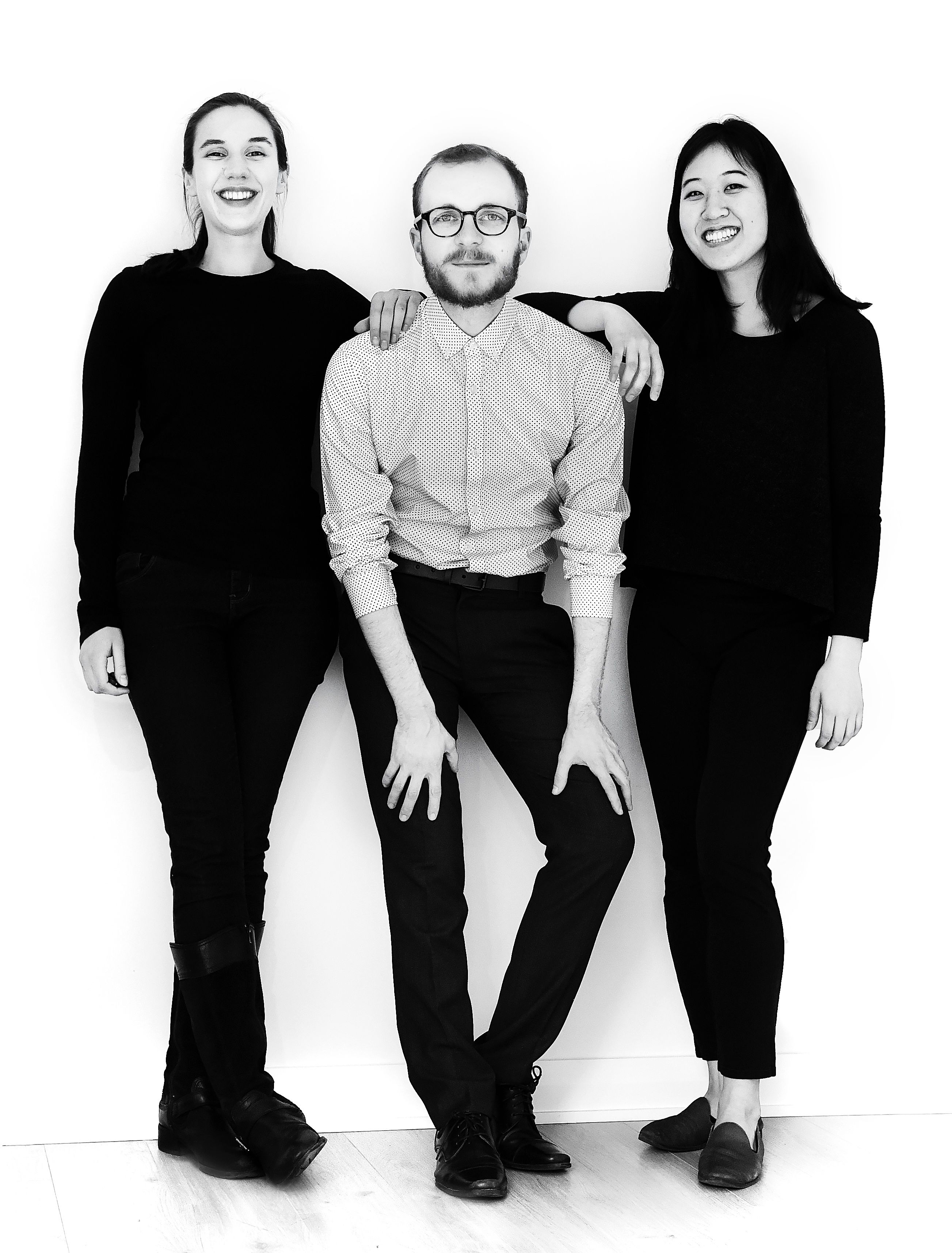
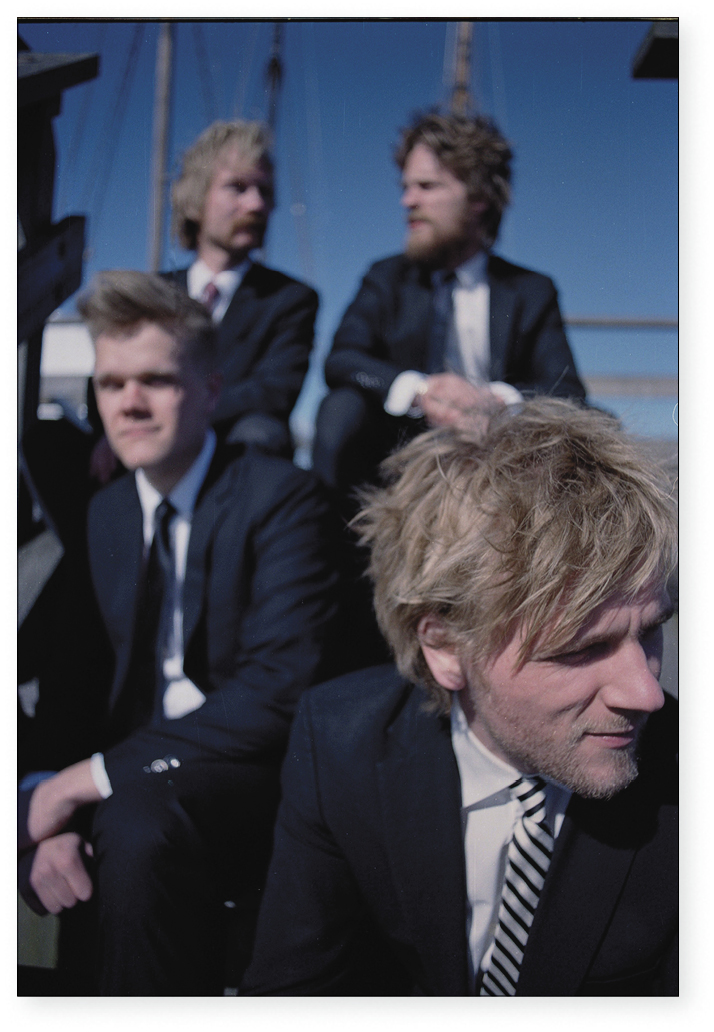
Vesuvius Ensemble - Photo by Scarlet O'NeillIf anything’s desperately needed in Toronto in December, it’s a dash of the south. The Vesuvius Ensemble to the rescue: the trio that specializes in Southern Italian music (mostly from Naples and Campania but also Calabria and Puglia) is preparing a pastoral Christmas program for mid-December, just as the Toronto winter is about to take over.

Vesuvius is a three-lad enterprise: Francesco Pellegrino is the voice of the group, while Marco Cera and Lucas Harris play a variety of plucked string instruments, and are most likely to be found manning Baroque guitar and theorbo respectively. Various other period instruments are added depending on the songs chosen, like tammorra, a large tambourine with bells, or ciaramella, an early oboe with an ear-trumpet-like shape. This instrumentarium is there to accompany the songs both folk and composed, roughly from the same period, the 1500s and 1600s. The most interesting part of the Vesuvius mission is this mix of the popular and the authored material. There have always been song composers open to the influence of the folk, and among those who have used either folk music or folk lyrics you are likely to hear in Vesuvius concerts are Andrea Falconieri (d. 1656), Giovanni Girolamo Kapsberger (1580-1651), Athanasius Kircher (1602-1680), Leonardo Vinci (1690-1730), and Francesco Provenzale (1624-1704).

The study of Italian folk song got a significant boost in the 20th century thanks to recording technology. In the mid-1950s, Alan Lomax and Diego Carpitella travelled to villages up and down Italy to record traditional peasant songs sung in dialect. Some of the songs were work songs, some were dances like the tarantella (which, myth has it, cures poisonous spider bites and bilious moods of other kinds), and others were laments, or love songs, or wedding songs. Commercially released recordings of some of the Carpitella-Lomax treasures still exist – the Italian Treasury series of CDs divided into regions is not exactly easy to buy (an Amazon search will yield second-hand, vinyl or MP3 offers) and is best sought out in large and university libraries. Puglia: the Salento (2002), Calabria and Folk Music and Song of Italy: A Sampler (1999), for example, are available at the Toronto Reference Library and each includes booklets with lyrics and translations.

Another important figure of the Italian folk revival of the 20th century is the musicologist, theatre artist and composer Roberto de Simone (b. 1933). In addition to the research and archiving of the popular chant, de Simone incorporated folk practices into his own writing and stage directing and is probably best known internationally for the opera La gatta Cenerentola. (Look for Secondo coro delle lavandaie – The Second Chorus of the Washerwomen – on YouTube.)

Which of the Italian traditional and composed treasures will Vesuvius perform in their Christmas concert? We’ll find out on December 17 or 19 in Heliconian Hall, though a few days earlier is also a possibility since the group will perform a similar program at the Four Seasons Centre’s Richard Bradshaw Amphitheatre on December 12 at noon. When I spoke with Francesco Pellegrino for this article in mid-October, the program had not yet been finalized. What is certain is that Tommaso Sollazzo, a connoisseur of the Italian bagpipes called zampogne, will be joining in. The trio performed with him in Italy a few years back and now he’s making the trip to wintry Toronto.

And since the tarantellas and the tammurriatas are so danceable, will Vesuvius let the audience dance during their concerts, maybe preceded by some dance instruction? “Not yet,” says Pellegrino, “but we are expanding this program and in the next couple of years our concerts may also have dancers from Italy who are well versed in tarantella or tammurriata. We’re working on it.”

Outside Toronto, you can hear (though not yet dance to) Vesuvius’ Christmas concert on December 18 in Hamilton and December 20 in Montreal.

January

Twenty-five years after its world premiere, the song cycle Honey and Rue is still regularly performed by symphony orchestras and coloratura sopranos in the US. Carnegie Hall commissioned it and André Previn composed it for Kathleen Battle, who was a keen reader of Toni Morrison and wanted her as a lyricist. We don’t hear the cycle that often in Canada, and it’s St. Catharines, not Toronto, that got lucky this season, with two Honey and Rue performances with the Niagara Symphony Orchestra in January. Morrison’s poems are a rich and intense read and should be relished without the music first (keep those programs, concertgoers: the poems are not easy to find).

Young soprano Claire de Sévigné will sing. Last time I heard de Sévigné was in the COC’s Arabella, where she effortlessly produced the coloratura for the Viennese ball ingenue, Fiakermilli. There probably isn’t another Canadian soprano whose timbre more resembles Battle’s. I caught up with the travelling soprano via email to learn more about her take on the piece.

Claire de SévignéWhen I ask her what it is that she likes about Honey and Rue, she starts with the orchestration. “Singing with an orchestra is always thrilling but singing a piece that’s in the style of ‘classical-jazz-blues fusion’ feels like a real jam. The fourth song is a huge contrast to the rest of the cycle in that it is a cappella, and this moment can be magic. I also adore the lyrics. Very strong text with stunning imagery.”

I tell her that my first impression of it was that it was extremely high. Her answer doesn’t surprise me: “I don’t notice it being all that high actually – but that’s coming from a coloratura soprano and my voice lives in the clouds, haha. I think that Previn knew how to write for the voice, since the performer doesn’t notice it being all that high! I actually find the set quite lyric – the highest note is only a B flat, a whole fourth lower than my high notes, and the set sits in quite a nice place for a light soprano’s voice to spin and shimmer while still being able to sing the text… It’s quite a pleasure to sing.”

The cycle was written by an African-American writer for an African-American singer originally, and although it’s still frequently sung by African-American singers, it’s become a cycle for any talented soprano who can meet its challenge. I ask de Sévigné what she thinks of the recent rise in discussions about what cultural material can be performed by who, and in what context. “It’s true, the cycle was originally commissioned after Battle read The Bluest Eyes by Toni Morrison. The poems of Honey and Rue are different however – they don’t explicitly or exclusively portray the same themes from the book, with the exception of the sixth song, which I would say is outwardly about slavery and abuse.” The final poem is based on the African-American spiritual Take My Mother Home, though with added lyrics and musical material. “The cycle as a whole,” writes de Sévigné, “explores questions around equality, suffering, freedom and acceptance, which are themes that humanity as a whole has experienced and can appreciate.”

This will not be the young singer’s first encounter with the piece. “It’s the second time I’ve been asked to sing it. I first performed it with piano in the Aspen Music Festival concert series in 2012 and have performed excerpts over the past years in several recitals. I find something new every time I perform it. I have found that my best way to interpret the songs is by switching between the first person and the narrator.”

And what is next on her schedule? “I’m currently doing a concert tour in China with the Hantang International Music Festival in collaboration with the Salzburg Festival (writing to you from Beijing right now!). I’m back to Canada in December for the Messiah with the Edmonton Symphony and in February, I’ll be at the Canadian Opera Company singing the role of Blonde in Mozart’s Die Entführung aus dem Serail. There’s also a Mozart C Minor Mass this season, and a Carmina Burana with the Grant Park Festival in Chicago.” 

But as the first thing in the new year, Honey and Rue: January 20 and 21, 7:30pm, with the Niagara Symphony Orchestra. Also on the program: Wagner’s Siegfried Idyll and Ravel’s Mother Goose (complete ballet). Bradley Thachuck, conductor. FirstOntario Performing Arts Centre, St. Catharines.

Lydia Perović is an arts journalist in Toronto. Send her your art-of-song news to artofsong@thewholenote.com.

There was a time, not so very long ago, when Toronto in the summer was a cultural desert and if one wanted to see or hear anything, one had to go to the Shaw Festival at Niagara-on-theLake or to Stratford for either the Stratford Shakespeare Festival or Stratford Summer Music. That changed when Soulpepper began its summer season and when the Toronto Summer Music Festival opened. This year the festival will present two outstanding singers: the bass-baritone Gerald Finley and the tenor Colin Ainsworth.

Finley has sung in opera and in concert in many cities: he is especially well known as a Mozart singer, particularly in the role of Count Almaviva in Le Nozze di Figaro and the title role in Don Giovanni, both of which he has performed in many of the world’s leading opera houses. He has also sungthe title role in Tchaikovsky’s Eugene Onegin at the Royal Opera House, Covent Garden, and Hans Sachs in Wagner’s Die Meistersinger at Glyndebourne. As a recitalist he is especially well known for his performance of Schumann’s Dichterliebe. In recent years he performed in Toronto twice: in May 2010 he gave a recital with the pianist Julius Drake (Schumann, Ravel, Barber, Ives) and last February he took part in the Aldeburgh Connection’s 30th anniversary gala. Finley’s recital for this year’s Toronto Summer Music is on July 18 at 7:30pm (Koerner Hall, Royal Conservatory) when he and pianist Stephen Ralls will perform a recital that begins with Carl Loewe and ends with Benjamin Britten. Finley will also give a masterclass (July 19 at 10am, Walter Hall, U of T Faculty of Music). He will sing baritone arias at Westben in Campbellford on July 22 at 2pm. He has made a number of CDs and DVDs. I would particularly recommend the DVD of the Helsinki production of Kaija Saariaho’s L’amour de loin. This opera was done by the COC last season (the baritone part was taken by Russell Braun). Although musically the Toronto performance was also very good, it was hampered by too busy a production; by contrast the Helsinki production by Peter Sellars was much sparer and that brought out the tragic quality of the story much better. Finley will be back in Toronto in May 2013 to sing in Brahms’ German Requiem with the Toronto Symphony.

Read more: Song Aplenty

2106-Art_1.pngRachel Andrist and Monica Whicher jointly direct the Mazzoleni Songmasters Series which consists of three vocal concerts each season. Andrist is a member of the music staff at the Canadian Opera Company. Her first appointment as a vocal coach was at the La Monnaie in Brussels. Since then she has held similar positions with the Salzburg Festival, with Glyndebourne, with the English National Opera, with the Bavarian State Opera, with Netherlands Opera and with Scottish Opera. She is also a collaborative pianist and she finds both kinds of work support each other. As she points out, one meets a singer as a vocal coach and that opens up the possibility of a joint recital. Whicher is a soprano well known for her work in recitals (including a number of appearances with the Aldeburgh Connection) and her part in opera productions by the Canadian Opera Company and Opera Atelier. Both Andrist and Whicher also teach in the Glenn Gould School at the Royal Conservatory.

When Andrist and the pianist-composer John Greer began the Recitals at Rosedale series two seasons ago, the time seemed just right for such an undertaking. The Aldeburgh Connection had ceased to exist and a real vacuum developed. Yet the concerts were a mixed success. Although Rosedale Presbyterian is not all that difficult to get to, it would seem off the mental map of many, so that audiences were disappointing. Another problem was that the space at Rosedale was small and the acoustics very live. Not all singers were able to scale their voices down to an appropriate level. The move this season to Mazzoleni Hall at the Royal Conservatory seems a wise one. The hall is familiar, the acoustics are good and the series, now retitled Songmasters (with a punning reference to the already existing Mazzoleni Masters) now has the backing of the Conservatory with its good publicity.

Their next concert takes place March 6. The singers are the soprano, Mireille Asselin, and the baritone, Brett Polegato. The pianists are Andrist and Peter Tiefenbach. Andrist believes strongly that for a recital to make sense it must be structured round a central theme. The theme chosen for this concert is the way in which composers have been inspired by paintings. The major work in the program is Poulenc’s Le travail du peintre. These are settings of poems by Paul Éluard and evoke the work of seven contemporary painters: Picasso, Chagall, Braque, Gris, Klee, Miró and Villon. The program also includes Debussy’s Fêtes galantes. These are based on the Commedia dell’ arte but mediated by Watteau’s painting. Two Schumann songs from the collection Aus dem Liederbuch eines Malers follow. The next group contains settings of four poems from William Blake’s Songs of Innocence: two of them by British composers (Walton, Britten); and two by Walter MacNutt (1910-96), a composer now chiefly remembered as the music director at St. Thomas’s Anglican Church in Toronto.

Asselin was a student at the Glenn Gould School (where Monica Whicher was one of her teachers) and subsequently was a member of the Canadian Opera Company’s Ensemble Studio. She has performed with the Metropolitan Opera, with the Toronto Symphony Orchestra and (many times) with Opera Atelier. Along with the tenor Lawrence Wiliford, she sings in Ash Roses, the CD of music by Derek Holman issued by the Canadian Art Song Project. You will also be able to hear her in Opera Atelier’s production of Mozart’s Lucio Silla, starting on April 7.

I first heard Polegato in the wonderful CD, To a Poet, settings by several composers of poems by Flecker, de la Mare, Housman and Hardy (CBC; not currently available). The first time I heard him live was in a Tafelmusik performance of Handel’s Messiah. I thought then that I had never heard the bass solos better sung and I have not changed my mind since. Polegato is now much in demand. One of the roles that he has made very much his own is that of Kurwenal in Wagner’s Tristan und Isolde. This spring he will again be singing it in Paris.

Bach and Brahms at Metropolitan United: In the Christian calendar Good Friday is the holiest day of the year. This year it falls on March 25. In the evening I intend to go to Metropolitan United Church for a performance of three works: the Brahms Requiem (with the soprano Gisele Kulak and the baritone Jordan Scholl as soloists), Brahms’s Alto Rhapsody (with Laura Pudwell, mezzo) and Bach’s Cantata No.78 (with soloists Alison Campbell, Claudia Lemcke, Charles Davidson and Jordan Scholl).

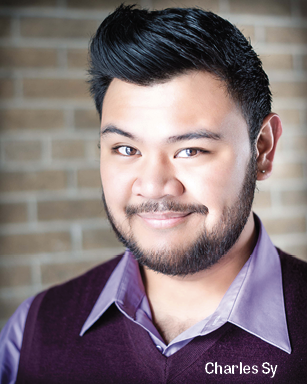
Lunchtime at the Richard Bradshaw Auditorium: The free lunchtime recitals at the Richard Bradshaw Auditorium in the Four Seasons Centre resume on Mar 15 when Kyra Millan, soprano and opera educator, presents a concert of arias and sing-along choruses, with artists from the COC Ensemble Studio. On Mar 17 Bob Anderson will conduct “Choral Journeys,” from the Renaissance to contemporary Canadian works, with Charles Sy, tenor. On Mar 29 you can hear four tenors: Jean-Philippe Fortier-Lazure, Aaron Sheppard, Andrew Haji, Charles Sy.

University of Toronto (Walter Hall): Megan Quick, contralto, and Andrew Haji, tenor, will sing, on Mar 21, in Schoenberg’s arrangement of Mahler’s Das Lied von der Erde. Quick will also sing Die Waldtaube from Schoenberg’s Gurre-Lieder. Mar 31 you can hear a free recital by the winners of the Jim and Charlotte Norcop Prize in Song and the Gwendolyn Williams Prize in Accompanying. “The Art of the Prima Donna” on Apr 1 is a staged and costumed program of romantic opera with works by Bellini, Donizetti, Verdi and others. The recital by the Cecilia Quartet on Apr 4 includes a new work by the composer and soprano Kati Agócs.

Quick Picks: Ilana Zarankin, soprano, and Laura McAlpine, mezzo, are the soloists in the Talisker Players presentation of “Spirit Dreaming: Creation Myths from Around the World” at Trinity-St.Paul’s Centre, Mar 1 and 2. The program includes works by Somers, Kuyas, Beckwith, Tanu, Ravel, Villa-Lobos and Jaubert. Paula Arciniego, mezzo, will sing works by composers ranging from Grieg to Theodorakis in Heliconian Hall, Mar 4. Alliance Française de Toronto presents Guy Smagghe in a selection of songs from Félix Leclerc to Francis Cabrel, Mar 5. Evelina Soulis celebrates her 50th birthday with mezzos Maria Soulis and Katerina Utochkina in music by Monteverdi, de Falla and others in Heliconian Hall, Mar 13. Bruce Ubukata will give a vocal master class at York University’s Tribute Communities Recital Hall, Mar 15. Xin Wang, soprano, and Derek Kwan, tenor, will sing an all-Canadian program with songs by Ho, Beckwith, Rickard and Tsuromoto on Mar 18 at the Canadian Music Centre. On Apr 7 the Women’s Musical Club of Toronto presents a program by the violist Steven Dann and family, including  soprano Ilana Zarankin.

And beyond the GTA: Bach’s Mass in B Minor can be heard in the Centre in the Square in Kitchener on Mar 25. The soloists are Carla Huhtanen, soprano, Allyson McHardy, mezzo, Colin Ainsworth, tenor, and James Westman, baritone. Ainsworth will also give a free noon-hour recital at Conrad Grebel University College in Waterloo on Mar 23

Hans de Groot is a concertgoer and active listener who also sings and plays the recorder. He can be contacted at artofsong@thewholenote.com.
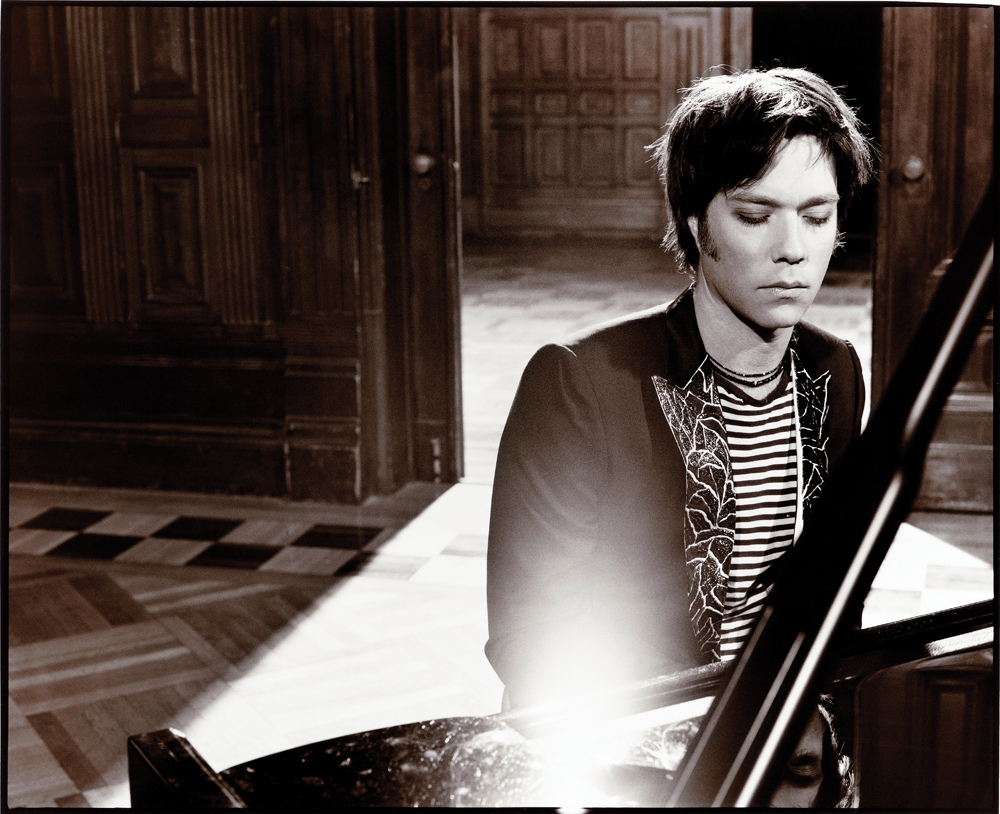
11_VOCAL_Wainwright_at_pianoIf you were quick off the mark picking up this month’s magazine or one of the smart/lucky ones who have registered on our website to receive a “heads-up” when the online facsimile edition is up (usually 24–48 hours ahead of the print edition) then you still have time to make it down to the St. Lawrence Centre for mezzo Wallis Giunta’s March 1 recital, with very busy collaborative pianist Steven Philcox at the keys. The Music Toronto Discoveries Series concert was originally billed as “a recital of English language songs,” but a very interesting turn of events has technically made a liar out of Giunta. As reported in this column last month, half of the programme will now consist of a song cycle, All Days Are Nights: Songs for Lulu, by Rufus Wainwright.

It should be an intriguing evening. Wainwright performed the cycle himself at the Winter Garden Theatre two summers ago, as part of the lead-in to the North American premiere of his opera, Prima Donna, at that year’s Luminato festival. The audience that night consisted, to a very large extent, of legions of longtime Wainwright fans who were baffled and frustrated by the request to refrain from applauding between the individual songs. Hearing it sung through will provide an opportunity to hear it as a true song cycle, a single work with a compelling emotional arc to it, in the hands of a mezzo/piano team whose stars are both on the rise. The other half of the programme will feature Britten, Purcell, Vaughan Williams, Barber and others. So the evening will be a true test of all concerned.

(If you haven’t already done so, check out my video interview with Giunta, part of our “conversations@thewholenote” series. She says quite a bit about the choice of repertoire for this concert.)

Steven Philcox

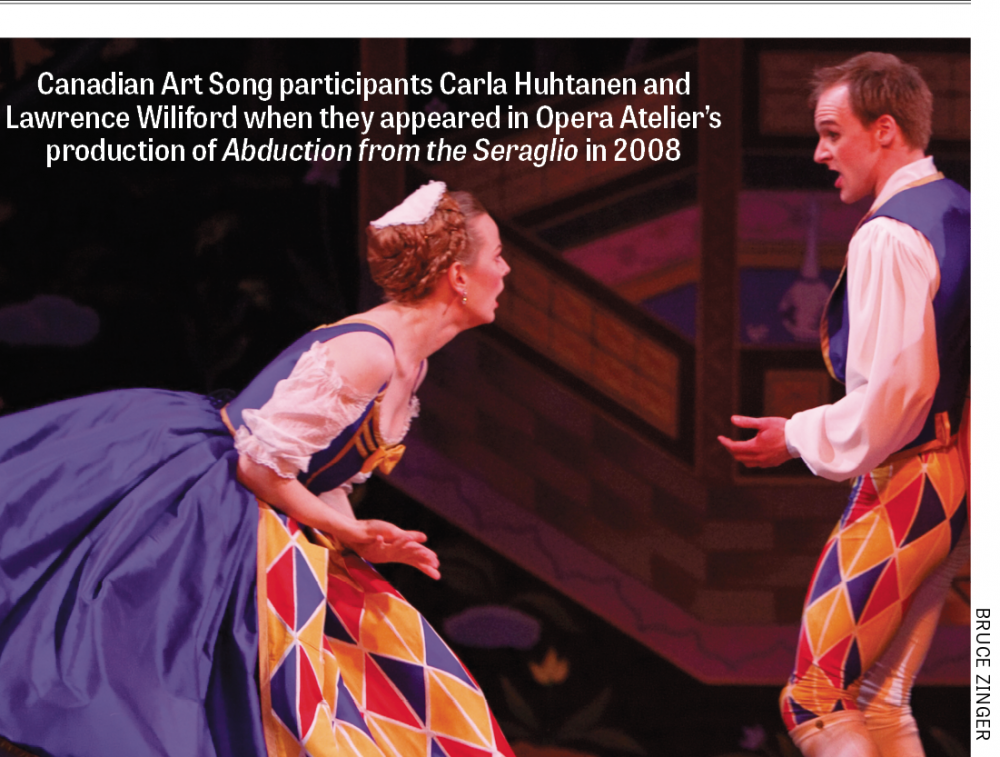
As mentioned, collaborative pianist Philcox is a busy man this month. In addition to the March 1 Music Toronto recital, he will be at the piano for a March 6, 12 noon, “Celebration of Canadian Art Song,” part of the COC’s Bradshaw amphitheatre concert series. He will be accompanying soprano Carla Huhtanen, mezzo Krisztina Szabó and tenor Lawrence Wiliford in a programme of works by Harman, Passmore and Glick. And March 12 at 7:30pm, at Walter Hall, in a U of T Faculty Artist Series concert, he will accompany two of the finest, soprano Monica Whicher and baritone Russell Braun, in a programme of works by Barber, Rorem, Fleming, Vivier, Greer, Beckwith and others. (Composer Samuel Barber’s name, incidentally, crops up in these vocal listings as often as Philcox’s.)

In addition to the concerts already mentioned, Barber is one of the featured composers in Off Centre Music Salon’s March 25 event titled “Ah! Sweet Mystery of Life: inaugural American Salon,” featuring works by Bernstein, Copland, Gershwin, Kern and the aforementioned Barber. Tenors Keith Klassen and Rocco Rupolo, baritone Giles Tomkins and Ilana Zarankin will do the vocal honours, with Off Centre co-founders, Boris Zarankin and Inna Perkis, collectively or individually, at the piano.

Song Cycles and — Cyclists

Complete song cycles are, in truth, in somewhat short supply this month, but seasoned song-cyclists we have a-plenty. I’ll come back to the seasoned cyclists soon, but first a nod to the one cycle that jumps out: March 17 at 8pm, the astonishingly consistent and prolific Kitchener-Waterloo Chamber Music Society presents baritone Matthew Zadow, accompanied by Dina Namer, piano, in Schubert’s Die Schöene Müllerin. (Zadow then crosses to the other side of The WholeNote’s “Beyond” for an appearance, on March 25, with the Kingston Symphony in Haydn’s The Creation, along with Laura Albino, soprano, and James McLean, tenor.)

Returning to our veteran “song cyclists,” as mentioned last month Aldeburgh Connection’s Bruce Ubukata and Stephen Rawls, fresh off their sold-out triumphant gala at Koerner Hall, return to their more customary format and venue for their 14th (or is it 15th?) annual Greta Kraus Schubertiad, at Walter Hall, on March 18. TitledSchubert and the Esterházys,” it will feature soprano Leslie Ann Bradley, mezzo Erica Iris Huang, tenor Graham Thomson and baritone Geoffrey Sirett.

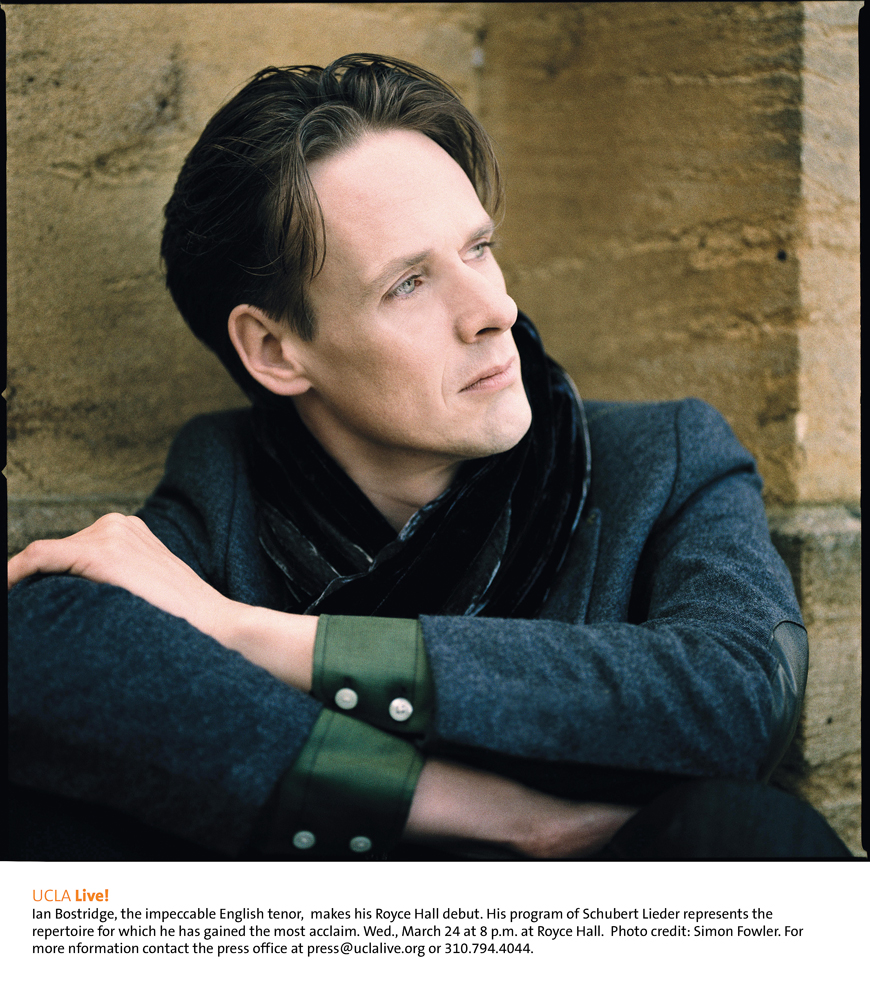
12_VOCAL_Ian_Bostridge_01_SimonFowlerThree other recitals to mention here: March 4, at Koerner Hall, the Royal Conservatory presents acclaimed English tenor Ian Bostridge, with Julius Drake, in a mainly Schumann and Brahms programme; Michael Schade, who seems more comfortable in his musical skin every time out, comes to Roy Thomson Hall March 30 with Italian bass-baritone Luca Pisaroni and accompanist Justus Zeyen; and reminding us that the continuum of art song reaches from some of the city’s largest venues to it’s most intimate, in between those dates, on March 25, Nocturnes in the City presents Marta Herman, mezzo, with Timothy Cheung on piano at St. Wenceslaus Church, in a programme of works ranging from Mozart to Kapralova.

“Art of Song”

Keen-eyed readers of this magazine will have noticed that by including this article among our “Beat by Beat” columns this issue, we are taking steps to ensure that “the Art of Song” takes its regular place here (although almost certainly not with the publisher as its regular writer!).

In truth, this little essay barely scratches the surface of a genre as nuanced as any we cover. Take cabaret for example: Max Raabe & Palast Orchester at Koerner Hall, March 8 and 9; Ute Lemper with the Vogler Quartet at the same venue April 4; Alliance Française’s March 9 presentation of “Quand la ville nous habite” (The city inside us)” with Patricia Cano, vocals and Louis Simao, multiple instruments at the Pierre-Léon Gallery; Against the Grain’s March 13 presentation of Kurt Weill’s Seven Deadly Sins at Gallery 345; and an ongoing programme of vocalists with serious credentials at the Green Door Cabaret (Peter McGillivray on March 6 for example) ...

We are looking forward to exploring this new beat, in all its diversity, in the months ahead.

2209 art 1While Toronto’s concert scene is winding down for the summer, it’s still possible to work out a solid, if lighter and necessarily more travel-filled, art song schedule for the next three months.

June kicks off close to home, with the Music Gallery and Off Centre Music Salon/DÉRANGÉ co-presenting #IMWITHHER, a June 8 concert that puts women composers and soloists centre stage. An evening of electro-pop, modern jazz and contemporary art music is an intriguing enough mix; the contemporary segment with the mezzo Lucy Dhegrae and Lara Dodds-Eden at the piano, which includes so many composers that never get heard in Toronto, makes it a must.

One of Pauline Oliveros’ Sonic Meditations, “Heart Meditation,” is on the program. Oliveros was a fascinating twentieth-century avant-gardist – she passed away last year at the age of 84 – whose creative life spanned all the way from deep experimental electronics to an almost total withdrawal from performing and to sound creation as personal practice for staying sane and capable of listening in a disintegrating world. She also studied movement, kinetic awareness and the effect of social conditioning on the human body, and gradually merged her kinetic awareness and sonic practices into one. A group of women formed around these musical practices at the same time that the Second Wave of feminism began creating consciousness-raising groups. This new performing ensemble formed and reformed each time it would meet at Oliveros’ home. “They had been held down, musically, so long,” Oliveros said, explaining the reason behind the women-only group in an interview in late 1970s.

That composing is a whole-body activity, that it can be done by a collective, and that it can effect social and psychological change are notions that will sound foreign to our ears, but that just shows how far back our own era has retreated from the questions on the philosophy and politics of music that the musicians of the avant-garde have left us with.

Since there is no such thing as the definitive edition of Sonic Meditations, and since they tend to be textual (one recommends walking in absolute silence; another teaching oneself how to fly), what Lucy Dhegrae will do in this “Heart Meditation,” we can only guess. Actually, we probably can’t even guess. But to give you an idea of the Oliveros magic, I would recommend her Sound Patterns and Tropes, recorded on the 25 Years of New York New Music CD set, and her early Four Electronic Pieces 1959-1966 (both recordings are available in the Naxos free online music library via your library card).

Icelandic composer Anna Thorvaldsdottir’s song Hvolf, Sky Macklay’s Glossolalia and Tonia Ko’s Smoke and Distance are also on the program. Each has already been performed and digitally preserved and can easily be found on Vimeo and SoundCloud. The art song section completes with an as-yet untitled world premiere by NYC-based composer Leaha Villarreal. And that is just one third of #IMWITHHER: Toronto-based electro-pop band Bernice will perform a selection of old and new songs (their new EP Puff is out in June) and FOG Brass Band, headed by the trumpeter Rebecca Hennessy, will complete the program. June 8 at 8pm at Heliconian Hall; tickets via Off Centre Music Salon and the Music Gallery websites and at the door.

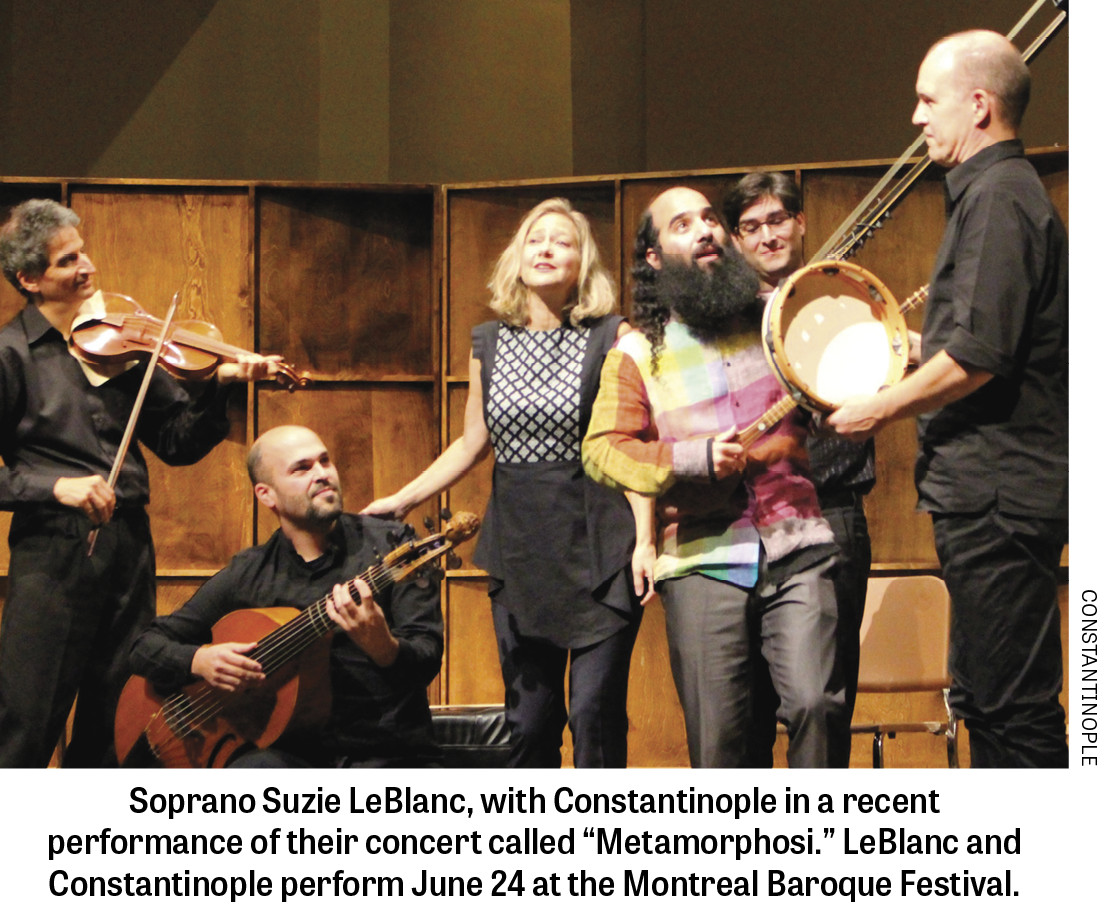
Later in June, and quite out of town, there’s the Montreal Baroque Festival with some promising vocal offerings. On June 23, “Le Cracheur de feu,” with soprano Andréanne Brisson-Paquin and the ensemble Pallade Musica, is a program consisting of Purcell, John Eccles, Angelo Berardi, Alessandro Stradella and a world premiere by the young Quebec composer Jonathan Goulet. On June 24, Suzie LeBlanc and the musicians of the ensemble Constantinople will perform “improvisations on Italian masterpieces” (that is all the festival is willing to give away). Equally cryptic is the description of the concert by the ensemble Sonate 1704 with soprano Jacinthe Thibault scheduled for June 25, but we do know that that it will be a battle of sorts between Catholic and Protestant cantatas and sonatas that were written or published in France around the time of the early Reformation.

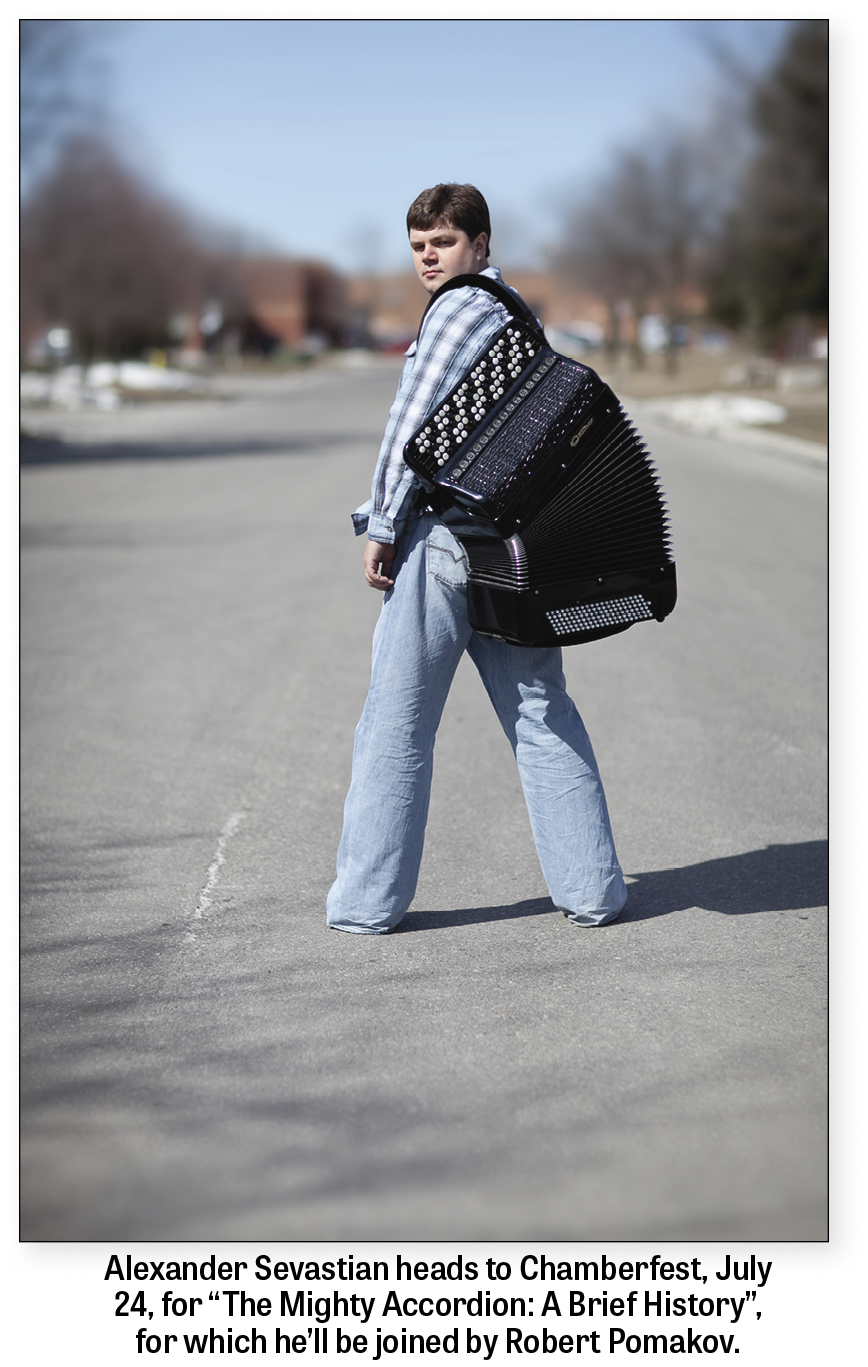
2209 art 2July: My suggested art song trip is to Ottawa for the Chamberfest (July 22 to August 4). July 24 is going to be particularly packed. A free daytime concert at the National Gallery led by accordionist Alexander Sevastian, titled The Mighty Accordion: A Brief History, will include operatic bass Robert Pomakov singing a selection of Russian folk-songs to accompaniment by Sevastian. At 7pm on the same day, the Toronto Consort is reprising the Catherine de Medici concert originally performed last November in Toronto, this time at Ottawa’s Dominion-Chalmers United Church. The Consort’s Laura Pudwell, Michele DeBoer, Katherine Hill, music director David Fallis, Paul Jenkins and John Pepper sang back in November, and I expect that the lineup of voices will remain similar for Ottawa. Most of the composers on the program, with the exception of Orlande de Lassus, are little known today, though some of the poets will score better (Ariosto and Pierre de Ronsard are still being read today). For those among us who regret having missed The Italian Queen of France in November, this second chance will be travel-worthy.

On that same night at 10pm at La Nouvelle Scène Gilles Desjardins, the Bicycle Opera Project presents a new production of Juliet Palmer and Anna Chatterton’s garment workers opera, Sweat. I remember seeing its precursor, Stitch, on the night of its world premiere at the old and decrepit Theatre Centre almost ten years ago, and am curious to see how the musical ideas in that similarly themed opera have evolved into Sweat in the intervening years. Sweat was commissioned by Soundstreams and premiered at National Sawdust in Brooklyn last year. It’s still a cappella with five soloists, but with an added chorus, about 15 minutes longer and, in addition to English, includes lyrics in Cantonese, Ukrainian and Hungarian.

Think of August as the month for classical music in unusual venues. Classical Unbound Festival opens on August 18 in Prince Edward County, with a concert in a privately owned restored barn that doubles as a wine-tasting hall: the Grange of Prince Edward Estate Winery, which seats an audience of 80. There are two “libation-intermissions” which can also be used for the consumption of comestibles, given that picnic baskets will be on hand too. Prince Edward wine country meets Glyndebourne? Why not: Canadian land- and mansion-owners, take note, and consider starting your own festival or concert series.

Krisztina Szabó headlines the event, which opens with Haydn’s “Sunrise” Quartet Op. 76 No. 4 with Yosuke Kawasaki (violin I), Jessica Linnebach (violin II), Yehonatan Berick (viola) and Racher Mercer (cello). Berick and Mercer will return for John Burge’s Pas de deux for violin and cello (2011) and the entire quartet will accompany Szabó in Respighi’s Il Tramonto (1914) at the end. In the first two vocal pieces, however, the mezzo will be paired with Joanna G’froerer on flute. Szabó will sing John Corigliano’s Three Irish Folk Songs Settings for Voice and Flute (1988) and after the second intermission, Harry Freedman’s Toccata for Soprano and Flute (1968).

I asked Szabó how unusual the voice and flute pairing is in art song. “I have performed with flute before – with the Talisker Players, André Caplet’s piece Écoute, mon coeur – but I haven’t experienced this pairing more than a couple of times prior to this,” she emails back. “I think there is a fair amount of repertoire for voice and flute out there, though probably more for soprano.” Does the timbre react to the brightness of the flute, I wondered? Brightness is not the first image she associates with flute, Szabó tells me. “Of course, brightness is an aspect of its tone, but what strikes me about the flute is its warmth and roundness of tone, particularly in the middle register. I think that warmth will lend itself well to Corigliano’s Songs.” 

Freedman’s vocal piece uses phonemes for their sound rather than meaning and comes with its own set of demands and pleasures. “Because the voice and flute are equal partners and there is interplay and no words, I will be focusing on being more of an ‘instrument’ in duet with the flute. Freedom from words in art song really frees the singer up, I think, to play with colours more, and this piece has an improvisational, almost jazz-like feel.”  

Respighi’s Il Tramonto Szabó has sung before – in 2010 with Thirteen Strings – and knows it well. What should we be listening for? “It’s a beautifully expressive piece and I think audiences will be struck by the intimacy of the sound world created by the voice and ensemble, and the poetry and the drama of the storytelling. The dramatic arc makes the piece almost operatic: there is a real climax and dénouement to the story, a real scena. The music is lush and yet intensely intimate.”

Perfect for bringing summer to a close.

Lydia Perović is an arts journalist in Toronto. Send her your art-of-song news to artofsong@thewholenote.com.

Erika Switzer (left) and Martha Guth. Photo by Colin MillsCompetitions are not unusual in classical music. Every few months, young voices and pianists are competing somewhere in the world – in standard repertoire by composers from the past. No new songs get commissioned especially for the Queen Elisabeth Competition in Belgium, or the BBC Cardiff Singer of the World, or the Operalia. For new works by living artists one goes to poetry slams and literary death matches, where poets and novelists turn their writing into a performance and the audience, to a greater or lesser degree inebriated, decides the winner. We can go to competitions in old music – and watch them civilly and in silence – or competitions in new writing, spoken without music, where a certain degree of audience responsiveness and noise is in fact encouraged.

Those were the choices, that is, until spring 2017 and the inaugural songSLAM concert before a standing-room-only crowd in New York City. It’s when soprano Martha Guth and pianist Erika Switzer decided to give a spin to this new and (fair to say) populist format for presenting new art song creations. The two musicians, while pursuing independent careers, have, in their spare time, also been running Sparks & Wiry Cries, an organization and online magazine dedicated to the “preservation and the advancement of art song.” The new-song-competition format became popular almost overnight: after the NYC songSLAM, two new cities, Minneapolis and Ann Arbor, immediately wanted their own. There will be seven songSLAMs in three countries this season, says Guth via email from NYC when I get in touch with her to ask about the upcoming Toronto slam.

Scheduled for January 16 at the more formal Walter Hall at the University of Toronto, the Toronto songSLAM will otherwise remain true to the established slam practices: drinks (cocktails will be served 30 minutes before the 7pm start time, says Guth), all songs by living composers, and performers from all career levels – students, young professionals and established musicians from Toronto and Montreal. She could not confirm the final list of participants, as the 12 accepted composer-performer teams and five alternates were still being notified at the time of the interview, but at least two young singers have already shared on Twitter their excitement ahead of the concert – sopranos Sara Schabas and Danika Lorèn (who will be singing her own songs accompanied by Darren Creech on the piano).

“We created the songSLAM in order to get audiences excited and invested in the creation of new music,” says Guth, “and to build a sense of collaboration and interaction between composers and performers in each city where events are held. This social event has so far exceeded all of our expectations everywhere it has happened. The audiences have been incredibly enthusiastic, and the musicians taking part have told us that even if they didn’t place in the competition, they loved taking part because of the community-building aspects.  For us too, it is an amazing way to hear up-and-coming talent.” Ever on the lookout for new and exciting art songs, the pair have commissioned new music from some of their favourites from the slams, some of which will be performed in the 2019 songSLAM festival in NYC.

NYC songSLAM CREDIT Martha GuthTo put together song slams in different cities, partnership with a local organization is key. For the Toronto event, Sparks & Wiry Cries partnered with Women on the Verge, aka the sopranos Elizabeth McDonald, Emily Martin and Kathryn Tremills, the performing trio on a mission to tell the stories of women’s lives through song. The University of Toronto’s Voice Studies Program is the second Toronto partner that made the slam possible. After the Canadian edition, slams in Chicago, Denver and Ljubljana (Slovenia) are in the works, the latter scheduled to be televised on Slovenian TV.

Toronto-based tenor Jonathan Russell MacArthur and pianist Darren Creech took part in the first slam in NYC last year. The two musicians met while working on a production workshop with FAWN Chamber Creative, and “definitely clicked, being two queer boys who live in Toronto,” says MacArthur in an email when I ask about the experience. “There was always something to talk about.” When he heard of the competition and proposed a collaboration to Creech, the young pianist didn’t need much persuading. They agreed to do a piece by Wally Gunn, MacArthur’s Aussie friend who lived in the NYC borough of Queens. “Wally wanted to tell a story of Captain Moonlite – a gay Australian bushranger and outlaw – so he wrote that piece for us.” Once in NYC, they stayed with Gunn and rehearsed in Brooklyn. Their performance now lives on YouTube. “We had a great time.”

But first, December. The year is not over yet.

Just the other day I received an email from Happenstance’s clarinetist Brad Cherwin describing their next concert … or shall I call it experiment. As soprano Adanya Dunn is out and about travelling and auditioning, Happenstance will this time present themselves as a duo, “Alice” Nahre Sol (piano and composition) and Cherwin himself. On December 11 at Gallery 345, free admission, they will present PAPER, an exploration of that mundane yet essential material through music and visual art.

How is that going to work? “Expect a 30-minute performance piece, incorporating all new music by Alice and improvisations by both of us, alongside projections and painting. It’s going to be our first attempt at wrestling with the concert form. We’re pushing ourselves out of the standard recital paradigm.” The visuals will not be narrative but abstract, to match the music, he says. They won’t be incidental but fundamentally connected to the sound. In other words, we have to come and see what they have concocted. (To check out some of Cherwin’s art – he does all the visuals for the Happenstance programs – head over to Instagram, his account is public.) Meanwhile this fall, Nahre Sol has started a fellowship at the RCM in partnership with the 21C Music Festival, and Happenstance has received some TAC funding for the new season. The 2019 concerts will be announced on December 11, and the odd detail remains to be worked out, but Cherwin can confirm North American premieres of works by Wolfgang Rihm and Pascal Dusapin for soprano, clarinet and piano, as well as a world premiere of a new trio by Nahre Sol.

Meanwhile, across town, in the Amsterdam Bicycle Club on the Esplanade, Against the Grain Theatre, known for messing with traditional operatic repertoire to great effect, will launch its record label and its first release on December 7. Ayre, Osvaldo Golijov’s 2004 song cycle for soprano and chamber ensemble that uses Sephardic, Arabic, Hebrew and Sardinian folk material, has been recorded in a live concert by the AtG’s founding member, Lebanese-Canadian soprano Miriam Khalil. Songs from the disc will be performed at the launch, which will be an art song recital that keeps all the informality of an AtG Opera Pub. And did I mention cocktails, which seem to be the recurring theme of this end-of-year column?

A few song-themed tips for the gifting season

For the new music eccentric in your life, consider the recently released CD of songs by Andrew Staniland to the poetry of Robin Richardson, Go By Contraries. SongSLAM’s Martha Guth and baritone Tyler Duncan lend their voices, with Erika Switzer at the piano. For the early music jester, get Sallazzo Ensemble’s debut album Parle qui veut: Moralizing Songs of the Middle Ages (Linn Records). And for those few people in your life who still read books (not a huge number of us are still kicking about), look for Robert Harris’ Song of a Nation, on the eventful life of the composer of Canada’s national anthem, Calixa Lavallée. 

ART OF SONG QUICK PICKS

DEC 22 AND 23, 8PM: Heliconian Hall. The Istituto Italiano di Cultura di Toronto presents the Vesuvius Ensemble’s “Christmas in Southern Italy.” Francesco Pellegrino and the lads of Vesuvius see the year off with their traditional December concert of secular Southern Italian songs around Christmas themes. Pellegrino, Marco Cera and Lucas Harris are joined by Romina di Gasbarro at the guest vocals and Tommaso Sollazzo on the bagpipes. Knowing Vesuvius, I expect some high quality arrangements of Italian pop songs as well – at least in the encores.

JAN 26 AND 27, 7:30PM: Trinity College Chapel, U of T. Cor Unum Ensemble and Sub Rosa Ensemble bring to the fore the little-known works by women composers from the 16th and 17th centuries.

JAN 27, 2PM: The Royal Conservatory of Music. Mazzoleni Songmasters Series: “Winter Words.” Mezzo Lucia Cervoni and tenor Michael Colvin sing Britten, Mahler and assorted other music around the broad theme of winter.

FEB 3, 7:30PM: Vocalis: The Song Narrative Project, curated by Stephen Philcox and Laura Tucker. The Extension Room, 30 Eastern Ave. Meet University of Toronto Faculty of Music’s outstanding master’s and doctoral students in concert. Free admission.

What stood out for you this year? Send me your highlights to artofsong@thewholenote.com. Wishing you a merry and song-filled end of the year.

Lydia Perović is an arts journalist in Toronto. Send her your art-of-song news to artofsong@thewholenote.com.

Erin Wall as Arabella in the Canadian Opera Company’s production of Arabella, 2017. Photo by Michael CooperWhat is a thriving artist to do if serious illness strikes while everything else in life is going gloriously? Erin Wall, an elegant Straussian soprano in demand on both sides of the Atlantic, who defined Arabella and Kaija Saariaho’s Clémence for Torontonians and redefined Mozart’s Countess in a recent COC Figaro, had an extraordinarily difficult December last year. That winter, amidst all that bloom, professional and familial – she is happily partnered and a mother of two – she was diagnosed with breast cancer.

While looking at the treatment options, she also had to decide how to redraw the dense schedule of her professional engagements. She was going to have to invent for herself a new way of being in the world for some time to come: a much-travelled soprano who’s also in cancer treatment.

It’s crucial not to abandon everything – and to continue with life as you know it as much as possible, she tells me when we meet on a mild weekend afternoon in mid-August. Her hair, growing back after chemotherapy, is in a short boyish cut, which gives her a touch of punk. We met to talk about her upcoming song recital with Carolyn Maule at Prince Edward County Chamber Music Festival, but soon enough move on to the much bigger issue: how to go on living and working while healing.

“Generally the week after the chemotherapy is not easy – you feel sick and don’t want to go out – but the second week I would start to feel better and by the third I felt normal. Luckily a lot of the gigs fell on those second and third weeks. I only had to cancel, like, two jobs.” A few dates had to be negotiated. “Staff at Princess Margaret Hospital at first thought I was crazy. They’re used to saying to the patients, ‘This is when your surgery will be, just show up, and this is when your appointment will be, and you show up.’ They’re used to sort of everybody abandoning everything, and I’d go, ‘That date is not going to work for me, I need it to be next week so I can go to Cleveland and record Beethoven’s Ninth.’ And they worked with me.” Meanwhile, with her manager she let all the symphonies know that she may not feel okay the day of the concert. “He told them, if you’d like Erin to back out now, she will, and most of them said: ‘No, we’ll hire a cover and we’ll play it by ear.’ People were wonderful about it.” This summer, she’s keeping her two engagements at the British Proms: the first concert was on July 21, four weeks after her surgery, and the next one is coming up on September 6, Britten’s War Requiem with the Royal Scottish National Orchestra conducted by Peter Oundjian.

Erin Wall as Clémence in the Canadian Opera Company production of Love from Afar, 2012. Photo by Michael CooperSinging has been a lifeline in the thick of the treatment; when we talked in August, she was undergoing radiation, which she was finding much easier. Singing, and also the rituals around getting ready and being in concert. “It was really nice to do, put on a dress and a wig and pretend that life was normal and not just be a cancer patient sitting on a couch watching Netflix.” You travelled quite a bit too? “It was fun actually because every time I got to go sing between the chemos, it’s like a vacation from cancer. Cancer treatment is like having a job. I rode to the hospital every day on the GO Train with the businessmen in suits, and it’s for weeks in a row, no gigging while this is happening-- it becomes your job.” As soon as she’s recuperated, it’s back to singing. “I’ve never sung more Beethoven Ninths in my life,” she jokes. “Which I love! And they’re easier to handle than, say, Mahler 8. I did a Mahler 8 I think between chemo four and five, and that put me absolutely to my limit.” This was in the Netherlands, with Yannick Nézet-Séguin. “Any other time when I’m healthy, the amount of effort in Mahler 8 is between six and seven but there, I was at eleven out of ten.”

How does the chemotherapy affect a singer’s body? “The thing that it affected the most is breathing,” she says. As a later side effect, it turned out that she was becoming anemic; the red blood cells were not able to bounce back as quickly as the white cells until with the help of medication, they did. “I had to stop running toward the end of chemo.” You maintained your running schedule?! “I was sort of able to keep it up in the beginning, going slower and slower, but toward the end it became impossible as your blood can’t carry enough oxygen.”

I rewind the conversation back to the wigs and ask her about the practicalities around that. As soon as she was diagnosed, Wall emailed a friend who’s a professional wigmaker at the COC to ask her if she could create a wig specifically for her performances. Then she cut her hair short – she was told by girlfriends who’ve been through treatment that it’s easier to mourn the loss of short hair – and sent all the hair extensions she used over the years to the wigmaker friend to incorporate in the wig about to be created. “A week or two after chemo, when it was about to start to fall out, I had my husband shave my head. We had a party in my bathroom with my kids and my parents. I was about to go to Calgary and sing Mendelssohn and I didn’t want chunks of hair in my hands in the hotel room, and also didn’t want to carry hair brushes, and hair dryers and shampoo AND a bagful of wigs. It was all too much: I’m going to go to Calgary with no hair.” But what grew back since that bathroom symposium actually did fall off while she was in Calgary. “I woke up in Calgary and it was all over the pillow. It was still traumatic because it was real.”

She doesn’t dwell too much. “It’s nice to have hair again. I dyed it bright magenta a while ago, and will try platinum on Tuesday.” Then she shifts into a comedy mode. “I used a long straight wig for social occasions, but they’re so hot and itchy when you have no hair on your head.” There are also the hot flashes to contend with, another side to cancer. “When you’re getting hot flashes and you have a wig on, it’s un-bearable. There were times when I was in public and decided that the wig has got to come off. I’d go somewhere and 30 minutes in, the wig would go into my bag and I would put a little cap on. And people give you looks, they know you’re a cancer patient… but you stop caring.”

As she’s made me laugh multiple times during our conversation, I tell Wall that she’s coming up with some stand-up quality stuff that reminds me of Tig Notaro, the first US comic to talk about her cancer onstage and to, in fact, turn the illness into comedy material. Wall’s eyes lit up. “I love her work! Her comedy about having cancer and all the horrible things that came with it, I could not stop listening to it. It’s what got me through December. Everything is so true. The most horrible thing about it – she had a double mastectomy – is, she says, that nobody can hug you after surgery. It’s the thing you most need and you can’t stand to be touched.” The first Notaro video that went viral and broke new ground in comedy? Wall keeps it on her phone. “She made the hard things funny. And I love that bit where she talks about making fun of her breasts for being so small, and how they have turned on her and went ‘we’re gonna kill her now’… I just love her. I remember driving through Texas with my sister – my aunt passed away from breast cancer in March – my whole family went there to say goodbye and as we were driving back through Dallas after, really depressed about it all, I was like: you need to listen to this, it’s about when life is really really horrible and how you can ache and still be funny. So we listened together.”

Erin Wall. Photo by Alexander VasiljevAlready in August when we spoke, in between the preparations for the Proms, Wall was rehearsing the songs for the September 14 recital in Picton with Carolyn Maule. A beautifully crafted program awaits, with long, complex songs by Debussy and Duparc, the three Korngold songs of the Opus 22, the delightfully mad Poulenc cycle Fiançailles pour rire, and a three-song cycle by the fin-de-siècle American composer Charles Tomlinson Griffes. “They’re all songs that I like and know really well, that are fresh in my mind, body and voice,” she says. “These Debussy songs – I started singing them about 13 years ago. Which was ambitious of me then because I didn’t always have the low part of the voice to sing them. So I put them away for ten years, and then came back to them a few years ago, after I became a mother.” While she’s sung Thaïs and quite a few Marguerites as a fledgling singer, and had a French repertoire specialist for a coach, she’s more often asked to sing German rep now.

Which will also soon enough include Wagner. The recital program is capped off by Elsa’s Dream, the soprano aria from Act 1 of Wagner’s Lohengrin – something she’s never sung before. Is this a sign of things to come? She smiles but can’t divulge too much. “There may be a staged Lohengrin in the cards. In a couple of years. But I can’t say more.” Can we at least know in what country? “…Spain.” Then adds: “I always thought my inroad to big Wagner roles would be either Elsa or Eva from Die Meistersinger… you know, the blonde ones. And that’s exactly how it turned out: Elsa it is.”

September 14 at 7:30pm: Prince Edward County Chamber Music Festival presents “An Evening of Song” with Erin Wall, soprano, and Carolyn Maule, piano. St. Mary Magdalene Anglican Church, 335 Main St., Picton. 613-478-8416. $35. www.pecmusicfestival.com/erin-wall.

Lydia Perović is an arts journalist in Toronto. Send her your art-of-song news to artofsong@thewholenote.com.

Brad Cherwin: photo Kristian PodlachaA lot has happened since 2018, the year I described the Happenstancers in these pages as part of the future of chamber music and song recital. A year later, two of the ensemble’s three founding musicians (mezzo-soprano Adanya Dunn and pianist Nahre Sol) departed Canada, which left Brad Cherwin in Toronto with room to invent from scratch and experiment – and experiment he did! The Happenstancers are now a large informal band of musicians with Cherwin as the artistic director, with several busy performance seasons under their belt each more ambitious than the last, an annual festival, a visiting guest conductor, a concert space in a Lutheran church out on Bloor West, a part-time production manager, a video artist, and a solid record of success with granting bodies. And most importantly, an audience which –  the Holy Grail of classical music – skews under 40 years old. 

Next step would be to have repeat performances and to take them outside Toronto, Cherwin tells me when we meet in a coffee shop to talk about yet another iteration of Happenstancers’ all-choral West End Micro Music Festival (WEMMF), Revelations, a contemporary music shindig pushing boundaries and rethinking the concert form, happening November 22-23 and Nov 29-30 at Redeemer Lutheran Church,1691 Bloor St. W. 

“We would love to tour, but it’s hard to make the finances work,” Cherwin says. They performed one year in New York (where pianist-composer and recurring Happenstancer Nahre Sol lives) and at a festival in PEI, but the logistics around performing even in places as close as Hamilton remain daunting. 

Read more: Still pushing boundaries: West End Micro Music Festival

You don’t often find yourself discussing the concepts of evil and ethical conduct ten minutes into the phone conversation with somebody you’ve never met before, but that’s exactly what happened during my phone interview with the playwright and hip-hop artist Donna-Michelle St. Bernard. I rang her at the agreed time to ask about her latest project, the libretto for the opera Forbidden, and while phone interviews usually take time gearing up, she was immediately deeply engaging and generous. A Tapestry Opera production that runs February 8 to 11, Forbidden is created out of scenes of interdiction, loosely held together by the character of a girl who is visited by Lucifer. As a hip-hop emcee, St. Bernard brings the song into the mix, and how!

Donna-Michelle St. Bernard in the Theatre Passe Muraille production of The Sound of the Beast, 2017. Photo by Matthew Cooper.How did Forbidden come together?

Director Michael Mori and composer Afarin Mansouri started the project, and Michael invited me in and we just hit it off. It was a very collaborative process. We generated about 40 story ideas – the piece now has a number of vignettes that are stitched together – and we started out by asking what is forbidden and what interests us about the forbidden. We went with stories that both of us found most intriguing. And then talked them out. Afarin was able to describe to me scenes that she actually experienced that absolutely captivated my imagination. And I would take that back to the text and mix it with my own experience and then go back to her.

I won’t ask you what the libretto is “about,” as that’s always the hardest question, but still – what is the libretto going to be like?

We looked at questions around the management of women’s bodies, around religious restrictions, around political oppression. In the stories that we’ve chosen, the thread was rules and restrictions imposed by authority figures. I’m really interested in the conflict between the letter of the law vs. the spirit of the law. I come from a Catholic upbringing and I’d get into these arguments as a child when I was trying to understand: Why don’t we bring that homeless person to our home, mom? Well that’s not what you do, was her reply. OK, but here in the Bible… Yeah, but that’s not realistic, she’d say. What does realistic have to do with it, you told me this is absolute truth!

And as an adult I am exactly that unreasonable. If you have something that someone needs, you give it to them. I don’t understand why churches lock their doors and are gilded in gold when they can feed people instead.

So when you accept what you’ve been taught from a moral authority, and that moral authority seems to be inconsistent with what they’ve imposed on you, you have to question the teaching, you question the teacher and you have to re-orient your understanding of how the world works. That’s the territory that we’re living in. Why are things forbidden, who has the authority to forbid things, and what moral ground are they standing on – and am I following them as a matter of choice or is this somehow imposed on me? And that kind of thread runs through all of the stories in the opera.

Do all religions share a fear of the female body and the will to control it?

There are people who are drawn to leadership in those faiths who misuse the intentions of the spiritual teachings in that way. There are very few faiths with female spiritual leadership. In most faiths of which I have any experience, formal religious training happens from a male authority in a formal institution, while personal individual spiritual training happens in a home from a maternal authority. We found that to be an interesting dichotomy; institutional leadership in any faith tends to be male, but then the ongoing management of that faith tradition tends to be female-led. We are being taught to self-manage and to impose on each other rules that are not our rules; you are handed the rules and then handed a stick to keep other women in line with.

Should women not abandon all existing religious traditions, then? Why try to reform and salvage something that proscribes you?

I am very interested in Christian faiths that have women ministers. I attended a wedding once that had a woman minister officiating and I was really confused. And I have from then till now retained great disappointment in myself for how confused I was by that. Women who are fighting for leadership within the church are kind of doing it alone – women of the faith are not supporting them because we are taught not to question the religious authority. I have mixed feelings about it because as a child I thought being a nun was the greatest thing one could achieve. I really wanted that, until actually one day – I went to an all-girl Catholic school – one day a nun who was teaching there punched a student in the face. And that day I understand that being a nun would not make me a better person. That I would still be the person that I am. And that I can be the person that I am in my own clothes. And still do what I consider to be God’s work.

This is a roundabout way to say: when we think about salvaging, I think about how people who are oppressed by patriarchal structure have a desire to be absorbed into that patriarchal structure just because of the absence of alternatives – and the inability to imagine alternatives. Myself included. When I say, for example, that we should abolish prisons, that’s just obvious to me, and when people ask me then what should we do with people who break the law, all I can say is I don’t know because we haven’t been permitted the space to imagine things being any different. Maybe the institution can be salvaged, but what would it look like if we rethink the institution?

Are you in favour of the Catholic church finally allowing women to be ordained and priests to get married?

Wouldn’t that be awesome? I mean, I grew up with deacons who are married and have children and if I had a question for somebody I’d go to a deacon before a priest because I understand that they know what life is – that they’re not living in a way that’s separate and above me and at a distance from all the experiences I’m struggling with.

I guess I hope for those things, but at the same time the church has become such a political organ, and I don’t mean now with this new Pope, or with the evolution of what Islam is right now… Catholicism, and Islam, and Buddhism, it’s all becoming quite perverted in a political way and my understanding of what Christianity is is not a political Christianity. It’s so unreasonably and childishly absolute and whole. I care for everybody. I value all light. It’s hard to do, yes. That’s why it’s a goal; your spiritual life is not supposed to be easy. It’s not supposed to be, in my opinion, all about serenity. The way that the Buddhists teach that all life is a struggle, and that the struggle has a reason – yeah. Yeah. There will be poor people – give them stuff. It’s that easy to me. Yet it’s not easy. It’s simple, but nothing simplistic about it. I think that all the faiths have a valuable core. Religion is like driving or work or anything in the world – what’s wrong with it is people. And people will always be flawed, so this will always be a problem. But at the core most faiths have really valuable guidance for us. And this is not to say that if you’re atheist or agnostic, you don’t have a moral code – you do, it’s just based in something else. We all look to find things that make us our best selves.

Donna-Michelle St. Bernard (left) and Afarin MansouriLucifer too features in the Forbidden. How does that play out?

In our story, Lucifer is both the catalyst to enlightenment, and an object of pity. The central interaction is between Lucifer and a child and there’s some negotiation there. Lucifer says something I believe to be true, which is: you can’t just blindly follow this authority, you have to question things. What we’ll be seeing is a child – in my understanding, everyone’s spiritual positioning is childlike – who’s torn between the intellectual understanding that rules have to be followed, and the visceral alignment with what Lucifer is saying, You know that that guy is not always right, so why follow? Look at the world; is the world what they’ve told you?

Probably the longest conversations that I’ve had were on the nature of Lucifer. Both Afarin and I spent a lot of time looking at our respective traditions. In both cases, Lucifer has always wanted nothing but to be close to God, and my concept of how not to be allowed to be close to God is what is done to Lucifer…. I feel like western pop culture has inflated the importance and the power of Lucifer. Because it’s “juicy.” The idea that the devil wants all the souls, and evil for evil’s sake. I don’t believe in evil for evil’s sake; I believe that every villain is trying to achieve an objective, and we don’t always agree that that objective is worthy. I think that Lucifer is on this eternal punishment, and who would not be spiteful, who would not be bitter and angry in such circumstance? Who would not hurt so much that they would want to hurt everyone that they can reach?

How can I not have some compassion for that? We’re bunch of saps, I tell ya. We are a couple of soft-hearted saps, Afarin and I. But we really worked from aspects of Lucifer that are consistent between our faiths. And sort of negotiated a shared story about Lucifer. I honestly think that the devil from the movies is for people who haven’t read the Bible. If you really read the story and really look into the fallen angel concept, it’s the saddest story every told.

I don’t know if you’ve read J.M. Coetzee’s Elizabeth Costello? The title character, who’s an atheist, says something that struck a chord with me, also an atheist: evil, as a concept, survives even for the atheists. We’ve all seen it – if not in person, then in the news of war crimes, concentration camps... You don’t need an elaborate religious system; the concept remains useful, unfortunately.

Yes. There is such a thing as certain things being wrong. And if there was no God, those things would still be wrong.

But let’s return to the libretto. And the music. The opera will have Persian, Western classical and hip-hop music. Hip-hop is there thanks to you?

Yes, hip-hop is my primary artistic form. And because it’s TAP:EX, we want to experiment with form, we want to see what happens when the aesthetics collide. It’s not only a matter of rapping on opera, which is not a brand new thing, but it’s also a matter of engaging hip-hop aesthetics. We’re going to be doing something that’s probably uncomfortable for the singers - coming into rehearsals and going, like, “Switch it up!” Equally, we’ll be doing some things that are uncomfortable for the rapper. In the kind of hip-hop that I practise, you do not speak what you didn’t yourself write. And in this performance, that’s not the case. I’ll be writing rap for another emcee. In Tapestry Lib Labs, we worked on how opera is structured, and how different roles interact, and how it comes together. And then I went back home to hip-hop, and did a show where if I didn’t feel like saying a thing, I wouldn’t say that thing and would say something else instead. Now we’re trying to work in this way, with a certain amount of prepared material. And then every day – we unsettle it. Which to me is at the heart of what we’re doing: we’re unsettling both practices. And then, if possible, unsettling your entire spirit.

TAP EX: Forbidden runs February 8 to 11 at the Tapestry Opera Ernest Balmer Studio in the Distillery District, featuring Neema Bickersteth, soprano; Shirin Eskandani, mezzo; Alexander Hajek, baritone; Saye Sky, Farsi rapper/spoken-word artist; and Michael Shannon, conductor.

Lydia Perović is an arts journalist in Toronto. Send her your art-of-song news to artofsong@thewholenote.com.

September is never the best month for vocal concerts: the summer festivals have come and gone and the regular series that take place in the fall may not have started yet. Nevertheless there are some interesting concerts coming up:

COC Vocal Series:The 2012/2013 free lunchtime concerts at the Richard Bradshaw Amphitheatre, Four Seasons Centre for the Performing Arts, will begin on September 18. The first, kicking off the Vocal Series, will be given by members of the Canadian Opera Company Ensemble Studio who will be singing their favourite arias. For the second concert in that series, artists of the U of T Opera Division will perform highlights from some of the best-loved operas by Britten, Donizetti, Offenbach and von Flotow on October 3.

At the festivals:On September 21 at 8pm, a concert will be given as part of the SweetWater Music Festival at Leith Church, in the hamlet of Leith near Owen Sound. The concert is billed as “Early Music” and will include music by Biber and Telemann, but also Dover Beach, the song cycle for medium voice and string quartet which Samuel Barber composed in 1931, to the text of Matthew Arnold’s poem of the same name. Over the years the baritone part has been sung and recorded by many distinguished singers such as Thomas Allen, Gerald Finley, Thomas Hampson and Thomas Stewart. Barber himself was a baritone and his recording of the work is also available on CD. The baritone soloist at Leith will be Philippe Sly, who is at present a member of the Ensemble Studio of the Canadian Opera Company. He is to sing Guglielmo in Mozart’s Così fan tutte for the San Francisco Opera next June.

artofsong virginiahatfield photo  2 courtesy of domoney artistsThe tenth Colours of Music festival kicks off in Barrie on September 21 and includes several vocal concerts. On September 22 at 7:30pm, Virginia Hatfield, soprano, Kristina Szabó, mezzo-soprano, and Giles Tompkins, baritone, are the soloists in “Night at the Opera,” featuring music by Mozart, Puccini and Gershwin; on September 27 at 2:30pm, mezzo-soprano Leigh-Anne Martin will be the soloist in a concert of music by Mozart, Brahms, Spohr and Gershwin; and on the 30th at 7:30pm, there will be a concert of music by Ivor Novello and Noel Coward with soprano Hatfield and baritone James Levesque. All these concerts will take place at Barrie’s Burton Avenue United Church.

At Picton’s Prince Edward County Music Festival, soprano Ellen Wieser will perform another Barber work, the Hermit Songs of 1953, a setting of English translations of Irish medieval songs. The concert, which is on September 22 at 7:30pm, at the Church of St Mary Magdalene. will also include works by César Franck and Marjan Mozetich. If you want to sample Wieser’s voice, go to YouTube where you can hear her perform Atys by Schubert and Nuit d’étoiles by Debussy.

Back in Toronto … :A performance will be given of Claudio Monteverdi’s great Vespers of 1610, also at 7:30pm on the 22nd, at Toronto’s Metropolitan United Church on Queen St. E. There have in recent years been several performances of this work in Toronto but this one is going to be different. There will be no chorus; instead the whole work will be performed one on a part. This is a great chance to hear experienced choral singers performing as soloists or as part of small ensembles. The singers are: Ariel Harwood-Jones and Gisele Kulak, soprano; Christina Stelmacovich and Laura McAlpine, alto; Charles Davidson, Cian Horrobin, Robert Kinar and Jamie Tuttle, tenor; John Pepper and David Roth, bass.

On September 23 at 8pm, (with a pre-concert talk at 7:15), New Music Concerts’ “Cellos Galore” at the Betty Oliphant Theatre will include Winter Words, a commissioned work by James Rolfe for tenor and eight cellos. The soloist will be Lawrence Wiliford.

There will be a concert dedicated to the music of Claude Debussy at the Heliconian Club on September 28 at 8pm. Many of the selections will be instrumental, including a great deal of piano music and the late sonata for violin and piano, but there will also be two of the song cycles: Ariettes oubliées (set to texts by Verlaine and composed between 1885 and 1887) and Proses Lyriques (settings of Debussy’s own texts and composed between 1892 and 1893). The singers will be sopranos Barbara Fris and Janet Catherine Dea.

On September 29 at 8pm, in the Glenn Gould Studio, Kerry Stratton will conduct the Grand Salon Orchestra in “Tribute to Edith Piaf.” The Acadian singer Patsy Gallant will be the soloist.

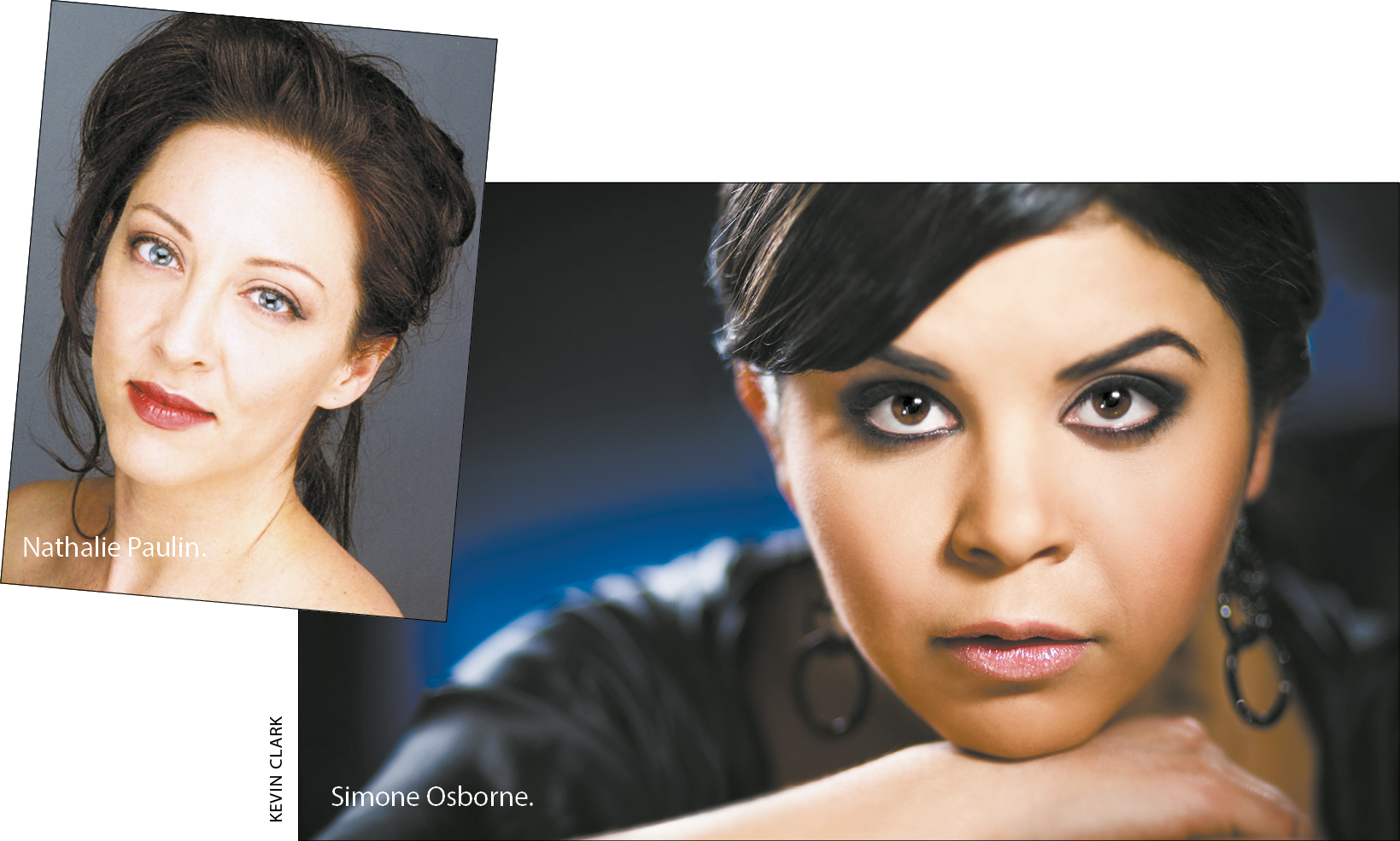
And down the road: If these concerts, while interesting, seem rather few in number, do not lose heart. There are plenty of exciting singers coming in the course of the year: Colin Ainsworth, Allison Angelo, Françoise Atlan, Alexandru Badea, Isabel Bayrakdarian, Isaiah Bell, Scott Belluz, Gordon Bintner, Lesley Bouza, Leslie Ann Bradley, Adi Braun, Russell Braun, Measha Brueggergosman, Benjamin Butterfield, Lucia Cesaroni, Ho-Yoon Chung, Layla Claire, Neil Craighead, Gregory Dahl, Elena Dediu, Alexander Dobson, Klara Ek, Gerald Finley, Hallie Fischel, Gordon Gietz, Carla Huhtanen, Joseph Kaiser, Miriam Khalil, Emma Kirkby, Marie-Josée Lord, Allyson McHardy, Amanda Martinez, Angela Meade, Shannon Mercer, Ileana Montalbetti, Nathalie Paulin, Ailyn Perez, Sophia Perlman, Sandrine Piau, Susan Platts, Brett Polegato, Robert Pomakov, Shenyang, Geoffrey Sirett, Annalisa Stroppa, Daniel Taylor, Erin Wall, Monica Whicher and Dave Young. Stay tuned!

Two postscripts:We mourn the death and celebrate the life of Jay Macpherson: poet, scholar, teacher, political activist, colleague, friend. There was some fine music at a service of remembrance on June 11: we sang two hymns that Jay had herself chosen, and listened to Teri Dunn’s performance of Houses in Heaven (words by James Reaney, music by John Beckwith), one of Jay’s political poems (sung by Mary Love) and Sarastro’s aria “O Isis und Osiris” from The Magic Flute (sung by Michael-David Blostein). The last selection was especially apt as Jay had, in the last years of her life, been working on the Masonic background of the opera. The bass voice is rare; it is even more rare to hear it fully developed in as young a singer as Blostein; he is still a student (he studies with Adi Braun) and can probably be called pre-professional. We shall hear more of him.

One of the best things in a Toronto summer is the Summer Opera Lyric Theatre and Research Centre. Each year the company performs three operas with young talented singers who are given extensive coaching. This year, all three Figaro operas based on the plays by Beaumarchais were performed: The Barber of Seville (Rossini), The Marriage of Figaro (Mozart) and La Mère Coupable (Milhaud). The last-named is very rarely done and is, as far as I know, only available in an unofficial recording. In 60 years of opera-going I had not come across it. The standards were very high with an especially outstanding performance by the soprano Elisabeth Hetherington as Countess Almaviva. The pianist, Nicole Bellamy, was also brilliant.

Hans de Groot is a concert-goer and active listener who also sings and plays the recorder. He can be contacted at artofsong@thewholenote.com.
11In october 1995, in the second ever issue of this magazine (then known as Pulse), we ran as a cover image, not a photograph but a kind of abecedarius — a stylized alphabetical list consisting for the most part of presenters, performers or composers featured in the issue’s concert listings. The Penderecki Quartet came to our rescue for both P and Q. For Z we resorted to jazZ (where were you that month, Winona?), which was a bit lame. And A was as problematic as Z, but for the opposite reason — too many candidates rather than too few.

Read more: The Aldeburgh Connection at 30

There are several song events worth your time this month, but the one that stands out will require a trip to upper Parkdale and Gallery 345, an unusually shaped space that’s becoming the recital hub of West Toronto. On the program for “The Imperfect Art Song Recital” (September 23 at 6pm), conceived by the soprano Lindsay Lalla, there is music by two living composers – Toronto’s Cecilia Livingston and Brooklyn-based Christopher Cerrone – as well as Strauss’ Mädchenblumen, an Anne Trulove recitative and aria from Stravinsky’s The Rake’s Progress, and a brief musical theatre set with Carousel and Showboat songs.

Lindsay Lalla - photo by Marc BetsworthThe imperfect as a recital theme may sound unusual, but it’s a question as old as the arts. It’s also a personal notion that kept Lalla focused on teaching and the vocal health of her students and at a distance from performing and concert stage. “My strong technical focus in my teaching carried over to my singing and I felt almost paralyzed trying to find perfection,” she explained when I asked what the story was behind the title. After years of working on other singers’ voices, the minutiae of their development, health and rehabilitation, the goal of perfection struck Lalla as a little overbearing. What if she created a whole program around the fact that there’s no such thing as perfect singing, a perfect lover, a perfect human?

The theme of imperfection runs loosely – er, imperfectly – through the texts of the pieces on the program. “The Strauss songs compare women to flowers and to me represent ‘old school’ classical music where perfection is an appreciated aesthetic,” she says. Livingston’s songs “explore the theme of an absent lover, and I find it really interesting that absent lovers are always perfect.” The character of Penelope, that mythical perfect wife of antiquity, appears in a Livingston song as well as Lalla’s own drawings (she admits to something of an obsession about Penelope) which will be on display at the gallery along with art by clarinetist Sue Farrow created during rehearsals.

Then there’s the Cerrone song cycle on the poetry of Tao Lin. The 18-minute piece for soprano, clarinet, percussion and piano, I Will Learn to Love a Person, can be found in its entirety on the composer’s website; on first listening it sounded to me like plainchant meets American minimalism, with shades of Ann Southam. Its engagement with text is fascinating – and I don’t use this word lightly. Lin is now primarily known as a novelist – Shoplifting from American Apparel, Taipei, Eeeee eee eeee – but he had published poetry as a young writer and Cerrone made a selection of poems that rang particularly true to his experience. The composer’s own statement highlights Lin’s accuracy about “millennial lives” and Lalla agrees, but this Gen X-er can tell you that Cerrone’s piece, like any good music, speaks to all cohorts. (Some of Lin’s fiction, Shoplifting for example, a novella of young impecunious lives in NYC’s emerging ‘creative classes’ flowing on vegan smoothies, band following, brand savvyness, internet, psychological opaqueness of characters and overall scarcity of explicit feeling will remind of Douglas Coupland, who’s probably an ancient writer to the millennials.) Lin made a selection of his poems available online, and I’d recommend listening to I Will Learn to Love a Person alongside the poem i will learn how to love a person and then i will teach you and then we will know to appreciate fully how they enhance one another.

The first piece by Cerrone that Lalla ever heard was this song cycle, and it impressed immediately. To wit: “It hit me hard!” She decided to do the chamber music version and invited two of her best friends, husband and wife Brian Farrow (percussion) and Sue Farrow (clarinet). The pianist and Lalla’s accompanist in other songs on the program, Tanya Paradowski, happens to be their niece. “We’ve been rehearsing up at their cottage, with the sounds of vibraphone over the lake… I can’t imagine what the neighbours must think.

“Because there is so much repetition on just a few notes, the focus goes to the text,” she says of the inner mechanism of the cycle. “Just like in the recitative of an opera, it’s now about the words, and the emotion behind the words. And the accompanying instrumental part is very repetitive, so you instinctively listen to the words to find out what’s going on. So, over top of this unconventionally textured background (quite an unusual mix of instruments!), you get just words. And they happen to be on notes. I think this is a brilliant way that Cerrone is highlighting the directness of Tao Lin’s text.”

Cecilia Livingston - photo by Kaitlin MorenoIt was actually composer Cecilia Livingston who first recommended Cerrone among a few other composers to Lalla (the two women have known each other from high school). Livingston’s own songs, too, Penelope, Kalypso and Parting, are going to be in the recital. Livingston’s website lists an impressive number of commissions, collaborations and fellowships – including a recent research fellowship at King’s College in London with one of the most interesting Verdian thinkers today, Roger Parker – but also an array of publications and papers both academic and journalistic, including her U of T PhD thesis on “the musical sublime in 20th-century opera, with a particular focus on the connections between the sublime, the grotesque, minimalism and musical silence.” There are also audio files of her work, including a good number of songs. I was eager to ask this vast and curious creative mind about her work.

In which art song features prominently, it turns out. “I just finished a commission for the Canadian Art Song Project, which reminded me that art song is one of my favourite things to write, period! It calls for this very strange close reading: scrutiny of a text combined with a huge, bird’s-eye view of its emotional terrain,” Livingston says. “Northrop Frye wrote about this, and he titled his book from Blake: The Double Vision – seeing a text both for what it is, and for what it can be in the imagination. And then also – for a composer – in the musical imagination, in the ear.”

Her three songs in the Imperfect recital explore a style that she describes as “somewhere between art song and torch song. Penelope and Kalypso are both portraits of Homer’s characters, of women who are waiting; both songs have weird, dark middle sections: one is sort-of-aleatoric and one isn’t, and I can see I was working out different solutions.” With Kalypso, Livingston was looking for a new way to write for coloratura soprano and ended up thinking about scat singing and the Harold Arlen songs she loves, like Stormy Weather. “I think Duncan [McFarlane]’s lyrics for Kalypso are one of the most extraordinary texts I’ve ever worked with: beautiful, intricate layers of language; so much that the music can shade and shadow and shape.”

A pianist by training, Livingston composes by singing as she writes: “It helps me build on the natural prosody of the language and makes sure the vocal line is comfortable: that there’s time for breath, that it’s well supported musically, that it sits comfortably in the tessitura, etc. – even when it’s challenging.” The process of finding a text that will lead to a song is more intuitive, harder to pin down. “I’m looking for something that catches my inner ear: an image, mood, the sound of a phrase. When I come across that, I can sort of hear the music for it, and then I know I can work with it. I don’t hear actual music yet, but I can hear the intensification that music can bring. Which sounds slightly bizarre; it’s probably easier to say I get a particular feeling in the pit of my stomach.”

She doesn’t entirely buy the argument that simple, unambitious or bad poetry makes better (because easier) text to set to music. “Look at the riches of Alice Goodman’s libretti, or the ways that Britten illuminated all sorts of texts. If a writer savours language – its sounds and its meanings – then I’m interested.”

Among the larger projects on Livingston’s agenda, there’s a full-length opera in the works for TorQ Percussion Quartet and Opera 5, with the world premiere in Toronto scheduled for the 2018/19 season and a European premiere in 2020. “I’ve admired TorQ Percussion Quartet’s musicianship since we met in 2008, and I wanted to write an opera with them the moment I saw their incredible performance of John Luther Adams’ Strange and Sacred Noise,” says Livingston. “They have a dramatic physicality to their performances that is perfect for contemporary opera.” And Opera 5 produced her first chamber opera: “We built the kind of really supportive friendship that I wish all young composers could have.”

And what does her music feel like to a singer? Let’s let Lindsay Lalla have the last word: “I adore how lyrical and melodic Cecilia’s songs are. I feel that they were written like mini operas, with so much emotion to explore in once piece… One of her musical instructions in the Kalypso (over the introductory coloratura) says: “Ella-Fitzgerald-meets-Chopin, vocalise-meets-scat.” As a singer, I fell in love with her just from that.”

Lydia Perović is an arts journalist in Toronto. Send her your art-of-song news to artofsong@thewholenote.com.

1906 artsongThere have been a number of suggestions in recent months that in Toronto the vocal recital is in a very delicate state. The music critic John Terauds referred in his blog to “the near extinction of the vocal recital from Toronto’s concert scene over the past two seasons.” It is easy to back up that statement: the Aldeburgh Connection ceased to be after 31 glorious seasons; the celebrity recitals at Roy Thomson Hall all but disappeared a few years ago; the four-recital series at the Glenn Gould Studio, which was not well publicized and which was poorly attended, has gone. Mervon Mehta, RCM’s executive director of performing arts, said in a recent interview that Koerner Hall was simply not the right place for vocal recitals. He mentioned that the tenor Ian Bostridge, whose 2005 recital in Roy Thomson Hall had been well attended, drew only a small audience there.

But not everything is doom and gloom. As Terauds acknowledged, there have been many vocal recitals in the (free) lunchtime series in the Richard Bradshaw Amphitheatre in the Four Seasons Centre; Music Toronto, although its programs centre on the piano and on chamber music, has in the last two years presented Erin Wall and Phillip Addis; a new (four-concert) series has started at Rosedale Presbyterian Church directed initially by Rachel Andrist and John Greer and now by Andrist and Monica Whicher. Vocal recitals have also come back to Koerner Hall: recently we had the bass-baritone Luca Pisaroni and the baritone Dmitri Hvorostovsky will be singing there on June 1; the 2014-15 season promises the tenor Marcello Giordani, the baritone Christian Gerhaher and the mezzo-soprano Anne Sofie von Otter. Last summer Toronto Summer Music gave us Philippe Sly and Sanford Sylvan. Their line-up for the summer of 2014 has not yet been announced but we already know that the baritone François Le Roux and the collaborative pianist Graham Johnson will be among the mentors. And we should not forget that young singers (or their agents) from time to time book venues like the Heliconian Hall for song recitals.

Wiliford and Philcox: One of the most interesting recent developments is the Canadian Art Song Project, initiated and directed by the tenor Lawrence Wiliford and the collaborative pianist Steven Philcox. The aims of the Project are best given in its mission statement: “To foster the creation and performance of Canadian repertoire by commissioning Canadian composers to write for Canadian singers; to facilitate a collaborative process between the composer and the performer; and to promote artistic excellence and the Canadian experience in the living art of song.” Past commissions have included Sewing the Earthworm by Brian Harman (2012; sung by the soprano Carla Huhtanen), Cloud Light by Norbert Palej (2013) and Extreme Positions and Birefringence by Brian Current (also 2013; recently performed by the soprano Simone Osborne). 2014 brings us Moths by James Rolfe (text by Andre Alexis) and a new work by Peter Tiefenbach (text by James Ostine; to be performed by the baritone Geoffrey Sirett). For 2015 Marjan Mozetich will be writing a new work to be sung by the mezzo Allyson McHardy; for 2016 there are plans to perform and perhaps record unpublished songs by Healey Willan (apparently 100 or so exist!); for 2017 Canada’s sesquicentennial will be marked by a new composition by Ana Sokolović for soprano, mezzo, tenor and bass with texts from across Canada, to be performed by members of the Ensemble Studio of the Canadian Opera Company.

This month the Canadian Art Song Project will unveil its first CD, on the Centredisc label. All the works on the disc are by Derek Holman and they include Ash Roses (1994; written for the young Karina Gauvin), Now Sleeps the Crimson Petal (2007), The Four Seasons (2009; written in commemoration of Richard Bradshaw) and three Songs for High Voice and Harp (2011). The CD will be launched at a recital by Mireille Asselin, soprano, Lawrence Wiliford, tenor, Liz Upchurch, piano, and Sanya Eng, harp (Canadian Music Centre, March 7). The songs performed by Wiliford were written with his voice in mind; he also gave the first performances of The Four Seasons (with Upchurch) and the Songs for High Voice and Harp (with Eng). The Holman disc will also be available at “A Celebration of Canadian Song” in the free lunchtime series at the Richard Bradshaw Amphitheatre on March 27. At this concert the premiere performance of James Rolfe’s Moths will be given by Brett Polegato, baritone, and Steven Philcox; Colin Ainsworth will be singing excerpts from Derek Holman’s A Play of Passion; the soprano Monica Whicher will perform songs by the young British Columbia composer Matthew Emory as well as a set by Pierre Mercure. Ainsworth and Whicher will be accompanied by the pianist Kathryn Tremills.

Clearly this is a very worthwhile project; it deserves everyone’s support. Tax-deductible donations can be made through the Project’s website (canadianartsong project.ca). Anyone interested in commissioning a new work should contact Wiliford or Philcox (canadianartsongproject@gmail.com).

The Ukrainian Art Song Project: a recording of songs based on the poetry of Taras Shevschenko is now available. It features the bass-baritone Pavlo Hunka and a number of Canadian singers: Russell Braun, Krisztina Szabó, Benjamin Butterfield, Allyson McHardy, Elizabeth Turnbull, Colin Ainsworth, Monica Whicher and Isabel Bayrakdarian. A second CD with 80 Galician songs will be launched in November. Hunka will also sing on March 23, along with local Ukrainian choirs and the Gryphon Trio at Koerner Hall.

Other Events in the GTA:

On March 8 Measha Brueggergosman will sing works by Brahms, Ravel, Turina, Copland, Ellington and Joni Mitchell at the Flato Theatre, Markham.

March 16 and 18The Talisker Players present “Creature to Creature: A 21st-Century Bestiary,” with Norine Burgess, mezzo, and Geoffrey Sirett, baritone; works by Poulenc, Rappoport and Hoiby (Trinity-St. Paul’s Centre, March 16 and 18).

March 26: Jennifer Taverner and Lesley Bouza, soprano, Jennifer Enns Modolo, mezzo, Isaiah Bell, tenor, and Michael York, baritone, are the soloists in the Toronto Mendelssohn Choir’s performance of  Bach’s B Minor Mass at Koerner Hall.

On March 30 Kristine Dandavino, mezzo, and Dillon Parmer, tenor, will be the soloists in a performance of Mahler’s Das Lied von der Erde at the Kingsview United Church, Oshawa.

On April 3 Claire de Sévigné, soprano, Charlotte Burrrage, mezzo, Andrew Haji, tenor, and Gordon Bintner, bass-baritone, are the singers in Brahms’ Liebeslieder Walzer, a free noon-hour concert at the Richard Bradshaw Amphitheatre.

And beyond the GTA:

On March 8 Leslie Fagan will be the soprano soloist in Schubert’s Shepherd on the Rock. The program will also include Brahms’ Clarinet Sonata no.2 and his Clarinet Quintet at the Maureen Forrester Recital Hall, Wilfrid Laurier University, Waterloo.

March 22: Mendelssohn’s Elijah. Daniel Lichti sings Elijah and other roles are taken by Anne Marie Ramos, soprano, Sophie Roland, alto, and Chris Fischer, tenor at River Run Centre, Guelph.

March 23: Allison Angelo, soprano, Jennifer Routhier, mezzo, Christopher Mayell, tenor, and Bruce Kelly, baritone, will be the soloists in Mozart’s Requiem  at the Kingston Gospel Temple.

A Correction: A mistake crept into my February column as it moved from an e-mail attachment into print. I had tried to make a distinction between the Purcell Consort directed by Grayston Burgess and the Deller Consort directed by Alfred Deller (and after his death, by his son Mark). In the printed version of the column the two were conflated.

Hans de Groot is a concertgoer and active listener. He also sings and plays the recorder. He can be contacted at artofsong@thewholenote.com.

It must be well over 50 years ago (I think I was still an undergraduate) that I heard a recital by the countertenor Alfred Deller. I remember that the reviewer in the student newspaper was rather unkind. He said something like: “It is said that Deller never had any voice lessons and I can well believe it.” I liked Deller’s performance well enough, even if he never aspired to the kind of virtuosity that we can now admire in singers like Philippe Jaroussky or Max Emanuel Cencic.

bbb - art song - alfred dellerCountertenors were an important part of English music in the time of Purcell and Handel. The tradition was kept alive in the Anglican cathedral choirs, as it was here in Toronto, at St. James Cathedral, St. Simon-the-Apostle and Grace Church on-the-Hill. Deller was an alto at Canterbury Cathedral and his emergence as a soloist was the result of being discovered by the composer Michael Tippett, who conducted Deller in a Purcell concert at Morley College in 1944. Soon there were others, notably John Whitworth and, in the U.S., Russell Oberlin, who founded the New York Pro Musica Antiqua in 1952. A slightly younger singer was Grayston Burgess, who had been the head chorister at Canterbury Cathedral at the time that Deller was singing alto there. Burgess sang in Handel’s Semele at Sadlers Wells in 1958; he founded the Purcell Consort of Voices in 1963. Deller’s son Mark, who had become a member of the consort in 1962, directed the group after his father’s death in 1979.

Interestingly, a number of modern composers have started to write for the countertenor voice, beginning with Constant Lambert in The Rio Grande (1927), in which the alto part was sung by Albert Whitehead. Benjamin Britten wrote for the countertenor voice in A Midsummer Night’s Dream (the role of Oberon), in Death in Venice (the voice of Apollo) and in two of the Canticles. More recently, Peter Eötvös, in his opera Three Sisters (1996-97), based on the play by Chekhov, has the roles of all four young women sung by countertenors.

In Canada the pioneers were Theodore Gentry (who died in 2003), Garry Crighton (who died in 2012) and Allan Fast (who died, far too young at 41, in 1995). Gentry sang the alto solo in Handel’s Messiah (with the TSO and the Toronto Mendelssohn Choir) and the role of Osric in the North American premiere of Humphrey Searle’s Hamlet. He performed the role of the King in R. Murray Schafer’s Ra, a part written for him, and also the title role in Schafer’s The Black Theatre of Hermes Trismegistus. His career was cut short by a stroke in 1996. Crighton was a founding member of the Toronto Consort and the male sextet The Gents. He was also the alto soloist in St. James Cathedral and sang with The Musicians of Swanne Alley. He taught at the University of Toronto and the Royal Conservatory of Music. He left Toronto in 1983 and was active in musical groups in Belgium and Germany for many years after that. I heard Allan Fast once, a magnificent performance. His singing can be heard on two recordings of Buxtehude with the McGill Chamber Singers and Collegium Musicum and on a recording of Bach’s cantata Was Gott tut, das ist wohlgetan, conducted by Joshua Rifkin.

Frank Nakashima had been a student of Crighton in high school. Crighton encouraged him to sing countertenor and he did so at St. Thomas on Huron Street, at St. Mary Magdalene and at St. Simon’s. He too was a founding member of the Toronto Consort, where he sang both tenor and countertenor. In recent years he has been a central figure in the organization of the Toronto Early Music Centre. Carl Stryg sang alto at St. Simon’s under Derek Holman in the early 80s. He had a relatively brief solo career and is now chiefly known as a maker of shortbread.

bbb - art song - sir thomas allenNow there are many Canadian countertenors: Scott Belluz, Gary Boyce, Stratton Bull, Daniel Cabena, Stephen Chen, John Cowling, Richard Cunningham, Peter Mahon, Andrew Pickett, Matthew White, Richard Whittall, Timothy Wong. The best known Canadian countertenor is Daniel Taylor. Taylor studied privately with Allan Fast and later at McGill with the late Jan Simons. We have had a number of recent opportunities to hear him in Toronto and he has a large and impressive discography. In 2001 he founded the Theatre of Early Music. He is now also the head of Historical Performance at the University of Toronto and he directs the Schola Cantorum there, a group that consists partly of professionals and partly of music students. In January both groups sang in performances of Purcell’s Dido and Aeneas and in a reconstruction of the Coronation of King George II with music by Gibbons, Purcell, Tallis and Handel. Still to come is a concert of music by Schütz (Musikalische Exequien) and Buxtehude (Jesu meines Lebens Leben). Taylor will also be the alto soloist in the Tafelmusik performances of Handel’s oratorio Saul (Koerner Hall, February 21 to 23). The other soloists are: Joanne Lunn and Sherezade Panthaki, sopranos, Rufus Müller, tenor, and Peter Harvey, baritone.

Free Concert Series in the Richard Bradshaw Amphitheatre: there are a number of vocal recitals: Tracy Dahl, soprano, and Liz Upchurch, piano, on February 4; Paul Appleby, tenor, and Anne Larlee, piano, on February 11; Sir Thomas Allen, baritone, and Rachel Andrist, piano, on February 13; artists of the COC Ensemble Studio and the Atelier lyrique de l’Opéra de Montréal on February 20; the Capella Intima and the Toronto Continuo Collective with La Dafne by Gagliano on February 26. These recitals begin at 12 noon and end at 1pm. There will be additional performances of La Dafne on February 22 at the MacNeill Baptist Church, Hamilton, and February 23 at Trinity-St. Paul’s Centre.

Other events: Opera in Concert will perform Hippolyte et Aricie by Rameau on February 2 at the Jane Mallett Theatre. The soloists are Meredith Hall, soprano, Allyson McHardy, mezzo, Colin Ainsworth, tenor, and Alain Coulombe, bass.

At the University of Toronto, Faculty of Music, Sir Thomas Allen will give the Geiger-Torel lecture in Walter Hall, February 3 and Tracy Dahl will be giving a masterclass in the Geiger-Torel Room, February 7.

The third concert of the Recitals at Rosedale series will take place at Rosedale Presbyterian Church on February 9 at 2:30. Its title is “Love...Actually” and it will feature Nathalie Paulin, soprano, Lauren Segal, mezzo, Zachary Finkelstein, tenor, and Anthony Cleverton, baritone.

Brenna MacCrimmon will sing new works inspired by Persian and Balkan traditions at Hugh’s Room on February 16. The concert will launch a new CD release by the Ladom Ensemble.

Catherine Arcand-Pinette, soprano, and Erika Bailey, alto, will be the soloists in Pergolesi’s Stabat Mater at St. John’s United Church, Oakville, March 1 and March 2 at Mary Mother of God, also in Oakville.

A Postscript: In 2012 the competition for entry to the COC Ensemble Studio was held in the Richard Bradshaw Auditorium with piano accompaniment. Last November, for the first time, the competition took place on the main stage at the Four Seasons Centre with the COC orchestra under Johannes Debus. The soprano Karine Boucher, who had wowed the audience with a performance of an aria from Handel’s Giulio Cesare, won both the Jury and the Audience Prize. Second prize went to Jean-Philippe Fortier-Lazure and third prize to the bass-baritone Iain MacNeil. All three will be members of the 2015/16 COC Ensemble Studio, where they will be joined by the collaborative pianist Jennifer Szeto.  

Hans de Groot is a concertgoer and active listener. He also sings and plays the recorder. He can be contacted at artofsong@thewholenote.com. 

Liz Upchurch accompanies Jane Archibald in the COC’s Free Concert Series in the Richard Bradshaw Amphitheatre, 2018. Photo by Kevin LloydNot a lot of people know that Liz Upchurch, the head of the COC Ensemble Studio and a key figure in operatic training in our country, started her career as an art song buff. The Royal Academy of Music graduate and London-born pianist who studied with Roger Vignoles first came to Canada for a lieder course led by Martin Isepp in Banff, where she met Mary Morrison, Michael McMahon and John Hess, who all had extensive opera experience. “At the time I had just started to lose my sight,” she remembers. “I have a retinal disease which started to manifest seriously around that time… it had been a difficult year. I’d just been given an okay by the specialist to go for the summer.”

After the course, Isepp asked her to come with him to Italy, to an opera summer program he was running. “I wasn’t in love with opera then,” she admits. “I was in love with singers and art song. When I asked what we’d be working on, and was told a Mozart opera, I thought, hmm. But I’m so glad I went: it changed the course of my life. He became a mentor. I wanted to have that kind of artistic sensibility where I can be in both worlds, opera and art song.”

Liz Upchurch. Photo by Chris HutchesonUpchurch is celebrating her 20 years with the COC with a noon concert, “Some of My Favourite Things,” on May 7 at the Richard Bradshaw Amphitheatre (RBA), and the program will be back-to-back-to-back art song. “I did a double first at the RAM in solo and chamber music, but I always played for singers, for their classes and recitals, and was kind of crazy for singers. There’s nothing as amazing as the written words set to music – the human voice. Human voices send me.”

Back in Banff, John Hess, in particular, became a fast friend, and opened further doors into opera – and hiking. “John would always lead these hikes. I couldn’t do the hikes with other singers and pianists – when you start to lose your vision, you’re seeing in two dimensions, the whole up-down thing is confusing. He said, ‘I’ll take you on walks at the end of the course.’ And he got me over a couple of fears that I had.” Banff was also the place where Upchurch met her future wife, theatre director Jennifer Tarver, who was then assisting Rhoda Levine. But that was to come later. “Then John on that hike said, ‘Look, I do this course in the winter, it’s called Dramatic Integration, for Canadian singers doing contemporary music. I can’t really explain the course, it’s a bit crazy, but I think you might be the right kind of crazy to do it.’”

Two things were immediately evident, Hess tells me when I ask him about the experience. “Liz was a beautiful pianist. Superb sound, great fingers, deeply musical and a superb ensemble player. The other thing was a wicked sense of humour.” She was also, he writes, a dramatic sight to see while playing. “She was already beginning to have vision issues and she would often play with a tissue draped over one side of her glasses.” She accepted this unknown disease in stride, almost in an off-hand manner. “This was vintage Liz. She had an unabated appetite for the beauty of the Rockies and even with her physical challenges she was undaunted in getting to the top of whatever mountain she could.”

Young pianist Jennifer Szeto, now Montreal-based former Ensemble Studio member and Adler Fellow, also remembers that sense of humour and the cheek. They met by accident, when Szeto played an audition for a friend whose regular pianist cancelled. “It’s a story which Liz likes to tell in a completely different way. But we met at that COSI audition. I walked in, played the audition, the singer left and Liz looked at me at the piano and went Who are you?! Um, I’m Jenn Szeto. I was a second-year student at that point. She asked me if I’ve ever seen an opera before. Which is a funny thing to ask someone. And thankfully I had seen an opera, as I was dating a young baritone. Liz invited me to the COSI program on the spot, and I spent the summer immersing myself in opera. Martin Isepp was coaching Cosi fan tutte, conducted by Stephen Philcox and featuring all the ensemble members at the COC. Sam Chan was there. Kinza Tyrrell conducted a Haydn opera, Aviva Fortunata was singing. I had an amazing introduction to the world of opera. That’s how Liz found me and I joined the Ensemble eight years after that. I’ve been learning and working in opera for about ten years since that first encounter. If I hadn’t agreed to play that audition, I’d never have met her; if she hadn’t asked who I was, I wouldn’t have the career that I’m building right now. It’s really because of her. And I’m sure I’m not the only person.”

The two kept in touch over the years, but when Szeto inquired too early about trying out for the Ensemble Studio, she got an honest answer. “Jenny, she said. You’re not ready. I needed to wait a few more years. She is always honest with her advice. And I auditioned when I was ready.” Upchurch is known for keeping an eye on young musical talent across the country, and Szeto confirms it. “She likes to keep tabs. She likes to keep a good pulse on everything. I think that’s what makes her so good at her job: she has a remarkable eye for talent. She is a fabulous teacher and mentor, but really has an eye for spotting that thing that makes you different.”

Liz Upchurch with the 2018/2019 COC Ensemble Studio. Gaetz PhotographyBy the time the first round of taped submissions for the Ensemble Studio auditions arrives, Upchurch will have heard a good number of applicants already. She spends a chunk of her year travelling to vocal programs and festivals. “By the end of a summer, I’ve heard between 50 and 80 Canadian singers from undergraduate level up, and several pianists. That allows me not just to hear young people with a lot of potential and watch them and be at the significant point to guide them over the next few steps, but also to interact with their teachers and people that they are with. So: there are no real surprises, honestly. The talented people rise. It’s important to have that big radar.”

What is she looking for in the 130-plus submissions that they get? “Extraordinariness. Beauty. People with amazing sense of message: communicators. You can have a wonderful voice and not know how to communicate. You’ve got to sort of have it all and then you’ve got to really want it. It has to be a calling. It’s a very hard discipline, singing. It looks incredibly glamorous, but the fact is it’s a very difficult life.”

The international success of Canadian singers thrills her, but she’s not entirely sure how to explain it. “It’s a miracle. I’ve said it for years: for a country this size, how is it conceivable that everywhere you go, any of the major opera houses right now, you will fall over a Canadian on the stage. Frankfurt’s now become a mini-Toronto, in a way.” There are Canadians in Berlin, and Paris, and across France. Doesn’t it also speak to the quality of training here? “Yes. When you have such a plethora of amazing training, there’s not necessarily work of a certain type for everybody,” she adds, and the singers travel abroad.

What about the training program, developed over the years, at the COC that she now heads up? “I have a small army, basically,” she says. Because it’s a large art form, it can be broken down and taught in separate ways. “You’ll do movement in one room, you do German diction over here, you have a vocal session here, you have coaching over there, everything is silo’d in boxes. For the singers who’re trying to put it all together, if there wasn’t a unified language, they are starting to ping pong.” She is first and foremost a pianist and she plays for all the trainers that she brings in, which means that she can see first-hand whether this trainer is a good fit for that particular group of singers. “It took me a long time to find this team. I have people like Wendy Nielsen, and Tom Diamond, and Jennifer Swan whom I met in Italy ten years ago, who’s an expert on breathing and physicality. It’s taken years to develop a sort of language, an understanding, a philosophy, and a method – a repeatable method. Sometimes we have four trainers in the room. We’re very good at sharing who needs to go when in the room, who needs to talk. The teamwork is essential. They also teach them separately.”

The new Studio members are always introduced to the audience of the noon-hour concert series as a group, but they say farewell individually, in the Les Adieux concerts. Near the end the repertoire is often ambitious. “They sometimes want to do big song cycles, and we created space for them in the series for that. I’ve already spoken to the incoming studio members about their Les Adieux concert. For a Schubert concert like Samuel Chan just did, that is two years’ work.”

“The song aspect has been elevated during Liz’s tenure with the Ensemble and that’s been a fantastic thing,” says Wendy Nielsen, the head vocal consultant at the Ensemble Studio and the head of voice at U of T. The two women did a recital together in 2011 in the RBA and after meeting as teachers at the Ensemble Studio, Nielsen invited Upchurch to come to her own summer program in St. Andrews in New Brunswick. What is Upchurch after in a young singer? “She’s primarily focused on helping them to develop their artistry,” says Nielsen. “Obviously voice matters, that’s their instrument, but she has a real ability to bring out the artist inside them.” And if that includes singers or pianists who also compose, like Danika Lorèn and Stéphane Mayer, she will find ways to bring forward their original work. “She is very respectful of what each ensemble member needs, and aware that they all need something different. One of her strengths is that she meets someone where they are. The recipe is not the same for each person. While providing training, the program allows for a lot of growth in different directions.”

When I ask Upchurch what composers she favours personally, she takes the Romantic lane. “Brahms was my first love – and Schumann. I get Schumann. I was obsessed with the letters, with the relationship, with how he wrote, how he changed from improvising to seeing text for the first time, that whole thing. The Brahms-Mendelssohn-Schumann-Wolf axis was a major love affair for me. All of the piano trios, Brahms piano trios, Brahms cello sonatas, violin sonatas, how violin sonatas bleed into art song – all that.” But Brahms and Schumann won’t be on the program on May 7, giving way to some contemporary music, as is only right. Schubert, though – “a god of writing for text” – will make an appearance, with An die Musik.

It was hard reducing her favourite things to an hour-long concert, she says. “I was really stuck – and I’m never stuck. It gelled about a month ago when I really knew exactly who I could have. I decided it should be about the Studio – the first year Simona Genga and Anna-Sophie Neher, who are friends, will do duets and rep that they love. The COC orchestra concertmaster, Marie Bérard, will play the violin solo in Strauss’ Morgen, with Genga singing.” Among the songs by living composers, the Ana Sokolović cycle Dawn Always Begins in the Bones will be well represented, as will Derek Holman’s The Four Seasons. “It’s an incredible set, which I’ve already recorded with Lance [Wiliford]. The Fair Daffodils is a true gem – Anna-Sophie will sing it.”

Upchurch also composes. “Monica Whicher and I used to perform this song that I wrote, but this time it will be with a violin since Marie is there. It’s a lullaby for my son, who’s now nine, and who I have to go collect right after our interview. He’s never fallen asleep to it, not once in nine years,” she tut-tuts.

Lydia Perović is an arts journalist in Toronto. Send her your art-of-song news to artofsong@thewholenote.com.

artofsong robbie burnsRobert Burns was not a musician but he liked music; he was especially fond of traditional Scottish airs. He wrote several times that his main goal in writing texts for them was to preserve the music. After Burns’ death, that process was reversed by composers like Schumann and Loewe, who wrote new settings for Burns’ texts. More recently, Benjamin Britten did so in A Birthday Hansel, a song cycle beautifully performed at the Royal Conservatory on April 14 by soprano Lucy Fitz Gibbon and harpist Ingrid Bauer.

The relation between text and music in Burns is actually more complicated than his own statements would suggest. O My Love is Like a Red Red Rose was first published by Pietro Urbani, an Italian musician active in Scotland. Burns gave him the words of the song and essentially told him to use them as he saw fit. Urbani then came up with his own composition, an elaborate setting featuring two violins, viola and harpsichord, with an instrumental introduction and with the notation “Largo con Molta Espressione.” James Johnson republished the song in 1797 and used the tune that Burns had himself suggested, Major Graham. Then in 1821, long after Burns’ death, Robert Archibald Smith proposed an alternative tune, Low Down in the Broom. It is that tune that is now generally used. The case of Auld Lang Syne is different but also complicated. Burns wrote, in a letter, that he “took it down,” that is to say he took the words down, from an old man’s performance. Johnson published it in 1796 to an old tune, but two years earlier Burns had already written to another publisher, George Thomson, that he did not like that tune; he added that there was another, which “you may hear as a Scottish country dance.” It is that other tune that everyone now knows. It is clear then that in some cases Burns wrote, or wrote down, the texts first and then looked for a traditional melody that he liked and that fit metrically.

art of song virginia hatfieldSeveral Toronto musicians sing Scottish songs. Lorna Macdonald has done so in a number of her recitals, Allyson McHardy included a set in a recent concert and there is a fine performance of a Burns song on an ATMA CD by Meredith Hall with Ensemble La Nef. There will be another chance to hear songs by Burns in a concert entitled “The Star of Robbie Burns,” with Virginia Hatfield, soprano, and Benjamin Covey, baritone at the Church of the Redeemer, June 7. R.H. Thomson will narrate Burns’s life, while the second half of the concert will feature songs from the musical Brigadoon. The pianist is Melody McShane. And just in case that is not enough, the ticket price includes tea and shortbread. The concert will be repeated at the Festival of the Sound at the Charles W. Stockey Centre for the Performing Arts, Parry Sound, but with a different soprano, Charlotte Corwin. A different Burns/Brigadoon concert will be given at the Westben Festival in Campbellford with Donna Bennett, soprano, Colin Ainsworth, tenor, and Brian Finley, piano, July 13. You will also be able to hear Burns’ songs Ae Fond Kiss and Auld Lang Syne in a concert titled “A Celtic High Tea” at St. John’s Church, Ancaster, August 11.

Read more: The Songs of Robert Burns

Art_of_Song.pngBy the beginning of June most regular concert series have ended and will not resume until September, their place taken by a number of summer festivals. First and foremost, there is Toronto Summer Music (TSM). This year’s theme is London Calling: Music in Great Britain and the programs include not only music composed in Britain but also recreations of musical events that have taken place in Britain in the past. There is one vocal recital: the mezzo Jamie Barton, winner of the Cardiff Singer of the World Competition, will give a recital on July 25. The program will include songs by Turina, Chausson, Schubert and Dvořák and will conclude with three spirituals. The pianist is Bradley Moore.

Also of interest is the opening concert on July 14 which features Nicholas Phan, tenor, and Neil Deland, French horn, who will perform Britten’s Serenade for Tenor, Horn and Strings. On August 4, TSM is presenting a homage to The Last Night of the Proms. The vocal soloist is the mezzo Allyson McHardy (all three concerts are in Koerner Hall). An important part of TSM has always been to present and to help develop newly emerging talent. The fruits of this can be sampled in “Art of Song reGENERATION,” two separate concerts on July 22 in Walter Hall. The coaches are the soprano Anne Schwanewilms and the collaborative pianist Malcolm Martineau. Since 2010 the administrator of Toronto Summer Music has been Douglas McNabney. TSM has now announced that 2016 will be McNabney’s last season. He is a violist as well as an administrator and, while he never stopped playing the viola, the move may mean that he will have more playing time. That is good news, for him and for his audiences. He will be succeeded by Jonathan Crow, well-known to Toronto audiences as the concertmaster of the Toronto Symphony Orchestra and the co-leader of the New Orford String Quartet.

Luminato, now in its tenth year, will present a performance of Stravinsky’s L’Histoire du soldat, directed by Jonathan Crow, in which Derek Boyes will be the narrator at the Side Room of the Hearn Generating Station, June 18; there will be another performance of the Stravinsky at the AGO Walker Court, June 12 at 2pm. Rufus does Judy is a recreation of Judy Garland’s 1961 concert at Carnegie Hall, performed by Rufus Wainwright at the Hearn Generating Station, June 23 and 24.

Tafelmusik presents several free concerts as part of their Baroque Summer Festival. Among these is one featuring the Tafelmusik Baroque Orchestra and Chamber Choir directed by Jeanne Lamon and Ivars Taurins, with soloits Ann Monoyios, soprano, and Peter Harvey, baritone, on June 6 at Trinity-St. Paul’s Centre.

Other Festivals

The Kincardine Summer Music Festival presents a concert which aims at bringing together the sounds of Broadway, the improvisations of jazz and the sensibility of pop. The performers are Heather Bambrick, Diane Leah and Julie Michels at Knox Presbyterian Church, June 17.

Among the offerings at this year’s Westben Arts Festival is a concert of Schubert’s music, both songs and instrumental chamber music. The singers are the sopranos Donna Bennett and Kathryn Shuman at Westben Concert Barn, Campbellford, July 17.

The Leith Summer Music Festival presents a concert of songs taken from The American Songbook with special emphasis on the work of Leonard Cohen. The singer is the soprano Patricia O’Callaghan, accompanied by Robert Kortgaard, piano, and Andrew Downing, bass, at Leith Church, August 27. O’Callaghan performs “Hallelujah,” songs of Leonard Cohen and others at Stratford Summer Music, July 23 at Revival House.

The Elora Festival will be presenting four concerts of interest, all in St. John’s Church, Elora. Tenor Russell Braun teams up with his wife and accompanist, Carolyn Maule, and the Elora Festival Singers for an afternoon concert of works by Vaughan Williams and others, July 9. Soprano Marie-Josée Lord joins the Elora Festival Singers in a performance of selections from her JUNO Award-winning CD, Amazing Grace, as well as music by Gounod, Gershwin and others, July 14. Acclaimed early music specialist, soprano Suzie LeBlanc, joins with harpsichordist Alexander Weimann, July 16, in a celebration of Shakespeare on the 400th anniversary of his death. Star countertenor, Daniel Taylor, Elora Festival Singers soprano, Rebecca Genge, and pianist, Steven Philcox perform “Songs of Love,” July 23.

Elsewhere, Leslie Fagan, soprano, and Peter Longworth, piano. perform Schumann’s Frauenliebe und leben, Op. 42 as part of the Festival of the Sound, July 21. And I am looking forward to the return of Capella Intima, who will present a concert of canzonettas, arias and motets from 17th century Northern Italy. The music will be complemented by contemporary travellers’ accounts. The performers are Bud Roach, tenor and director, Sheila Dietrich, soprano, Jennifer Enns Modolo, alto, and David Roth, baritone, at Trinity-St. Paul’s Centre, June 22; donation requested. The program will be repeated at St. John the Evangelist in Hamilton on June 26.

QUICK PICKS

June 1: Bach’s cantata, Die Himmel erzählen die Ehre Gottes BWV76 will be performed by soloists from St. James Cathedral and the organist Ian Sadler.

June 2: Christina Stelmacovich, mezzo, will sing a free concert at Metropolitan United Church.

June 3: Show One Productions presents Tamara Gverdtsiteli singing Yiddish songs, with the Moscow Male Jewish Cappella at Roy Thomson Hall.

June 4: Ermanno Mauro, tenor, will sing popular opera arias along with emerging singers coached by him at Columbus Centre.

June 4: The Aradia Baroque Ensemble presents arias by Handel to be followed by Peter Maxwell Davies’ Eight Songs for a Mad King at The Music Gallery.

June 4: The Etobicoke Centennial Choir presents opera arias and choruses by Mozart, Verdi and Offenbach.  The soloists are Andrea Naccarato, soprano, Erin Ronniger, alto, Lance Kaizer, tenor, and Lawrence Shirkie, baritone, at Humber Valley United Church.

June 5: Maeve Palmer, soprano, sings Five Poems by Tyler Versluis at Gallery 345.

June 6: Melanie Conly, soprano, and Kathryn Tremills, piano, perform Mozart’s Exsultate Jubilate as well as songs by Case, Holby, Gershwin, Gounod, Porter and Purcell at the Church of the Redeemer.

June 7: The Toronto Concert Orchestra presents highlights from Rigoletto, La traviata, La bohème and other operas. The singers are Sara Papini, soprano, Eugenia Dermentzis, mezzo, Romulo Delgado and Riccardo Iannello, tenor, and Bradley Christensen, baritone at Casa Loma.

June 8 and 9: Michael Donovan, baritone, will sing his own new songs at Gallery 345.

June 12: Schubert’s Mass in G will be sung in a free concert with soloists Jennifer Krabbe, soprano, and Dennis Zimmer, bass at Humbercrest United Church.

June 16: Charlotte Knight, soprano, is the singer in “It Shoulda Been Me: A Cabaret,” a program of songs by Sondheim, Billy Joel, Joe Iconis and others at Gallery 345. The show is also being performed in St. Catharines, June 10 and Guelph, June 18.

June 17: Rachel Fenlon sings and plays the piano in a Schubert concert at Gallery 345.

June 24: Inga Filippova, soprano, Stanislav Vitort, tenor, and Andrey Andreychik, baritone, sing opera  at Lawrence Park Community Church.

And beyond the GTA, June 1: Maryem Tollar, Brenna MacCrimmon, Jayne Brown and Sophia Grigoriadis, who comprise the group Turkwaz, perform “Sounds of the Eastern Mediterranean” at the Kitchener-Waterloo Chamber Music Society Music Room.

Hans de Groot is a concertgoer and active listener who also sings and plays the recorder. He can be contacted at artofsong@thewholenote.com.
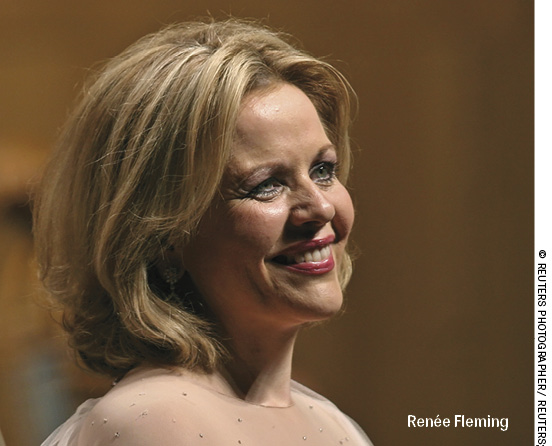
2204 Art of Song 1Many years ago, in the mid-90s, I sang in the Toronto Classical Singers. When an orchestra was needed, the choir as often as not engaged a newly formed group, the Talisker Players Chamber Music Orchestra, to accompany us. Talisker was set up under the leadership of the violist Mary McGeer and violinist Valerie Sylvester to provide amateur choirs with needed instrumental accompaniment. Within ten years, the Players were accompanying between 20 and 30 choirs a year and they maintain an active schedule to this day, with McGeer still active in the ensemble. Important as the orchestra is on the choral scene, within five years of its founding, the Talisker Players Chamber Ensemble had also come into being, and it is for the latter that the group is now best known, particularly for their ongoing series of chamber concerts (four or five a year) at Trinity-St. Paul’s Centre, which almost always offer carefully curated thematic explorations of the relationship between poetry/spoken word and a widely eclectic and challenging range of music.

2204 Art of Song 1.5Their concert on January 29 is their second for this season and is a bit of a departure from the norm, in that the words and music are not separate. Titled “’S Wonderful,” it presents the music of George and Ira Gershwin, who gave us some of the most memorable songs of the 20th century. The soloists are Erin Bardua, soprano, and Aaron Durand, baritone.

The Talisker Players’ two remaining concerts this season are “Land of the Silver Birch” and “A Mixture of Madness.” Both are more reflective of the Players’ trademark style.

“Land of the Silver Birch” on March 28 and 29 is an exploration of folk song reflective of British and French settlement in Canada over time, with music ranging from Ludwig von Beethoven’s Scottish Folk Songs to Four Canadian Folk Songs for flute, viola, cello and piano, a new work by Alexander Rapoport. Whitney O’Hearn, soprano, and John Allison, baritone, will be the soloists, and John Fraser is the reader.

“A Mixture of Madness” on May 16 and 17 is trademark Talisker. Featuring rising soprano Ilana Zarankin, and Bruce Kelly, baritone, as soloists, and with Andrew Moodie as actor/reader, it promises to be an erudite and yet entertaining romp from Aristotle to Peter Maxwell Davies’ Eight Songs for a Mad King, by way of Purcell, Vaughan Williams and (a new commission) Alice Ping Yee Ho’s The Madness of Queen Charlotte (for flute, violin cello and piano).

Looking back (and looking forward): The Canadian Opera Company has announced the winners in its annual vocal competition. Top prize went to the mezzo Simone McIntosh, while Samuel Chan and Gregory Schellenberg (both baritones) received the second and third prizes respectively. The audience prize went to the soprano Myriam Leblanc (and that marks the first occasion, as far as I can recall, that the first prize awarded by the jury and the audience prize did not coincide). Winning a prize does not automatically guarantee entrance to the COC Ensemble Studio but most prizewinners are offered a place there and I look forward to hearing them in opera or in concert.

2204 Art of Song 2Anyone who has ever sung in a Canadian church choir will be familiar with Healey Willan’s anthems, but the November 18 concert presented by the Canadian Art Song Project presented us with a much less familiar part of his compositions. Willan composed over 100 art songs, most of them now out of print. They were beautifully sung by Martha Guth, soprano, Allyson McHardy, mezzo, and Peter Barrett, baritone. A particular pleasure was to hear Guth sing O Littlest Hands, a song composed in 1920 for Willan’s baby daughter Mary. Mary, now Mary Mason and in her mid-90s, was in the audience and the concert provided the first occasion for her to hear the song. The Canadian Art Song Project intends to make a new volume of Willan’s art songs available. Will there eventually also be a CD? I certainly hope so. I recommend the Project’s next concert: on May 17 you will be able to hear Dawn Always Begins in the Bones, a newly commissioned work by Ana Sokolović.

Canadian Opera Company Free Vocal Concerts:

Dec 1: Chelsea Rus, soprano, the winner of the Schulich School of Music’s Wirth Vocal Prize, performs.

Jan 5: Marion Newman, mezzo, sings in Echo/Sap’a by Dustin Peters among other works.

Jan 24: Goran Jurić, bass, sings works by Tchaikovsky and Sviridov.

Jan 26: Jacqueline Woodley, soprano, sings Baroque music with members of the COC Orchestra Academy.

Jan 31: Philip Addis, baritone, and Emily Hamper, piano, perform works by Ross, Ravel and others.

Feb 2: The soprano Elizabeth Polese sings Debussy and Stravinsky.

U of T Faculty of Music Free Concerts:

Jan 19: Colin Ainsworth, tenor, and William Aide, piano, perform works by Duparc, Schumann and Liszt.

Jan 25: Singers from the faculty of music will perform as part of the Singer and the Songs Series.


QUICK PICKS

Dec 1: Music Toronto presents a recital by Suzie LeBlanc, soprano, and Robert Kortgaard, piano, with recently commissioned settings of poems by Elizabeth Bishop. The program, at the St. Lawrence Centre, will also include works by Schumann and Villa Lobos.

Dec 2: Toronto Early Music Centre presents Emily Klassen, soprano, and Meagan Zantingh, mezzo, in “Stella di Natale: A Journey from Advent to Christmas,” in a concert featuring a cantata by Scarlatti and other works, at St. David’s Anglican Church.

Dec 3: Kelsey Taylor, soprano, and Eugenia Dermentzis, mezzo, will be the soloists in an Oakham House Choir Society concert. The main works to be performed are Vivaldi’s Gloria and Mendelssohn’s Christmas cantata From Heaven on High, at Calvin Presbyterian Church.

Dec 10: Soulpepper presents “What the World Needs Now (Songs of Love and Hate),” a musical journey through the Mad Men era. The singers are Wendy Lands and Jim Gillard, at theYoung Centre for the Performing Arts.

Dec 11: OriginL Concert Series presents Brenda Enns and Susan Suchard, sopranos, and Hubert Razack, countertenor, in “Celebrate Life!” at Lawrence Park Community Church.

Dec 11: The Aga Khan Museum presents Maryem Tollar in “Arabica Coffee House Concert” featuring traditional songs from Syria’s Arabic classical and popular repertoire.

Dec 12: Andrea Ludwig, alto, and Bud Roach, tenor, will sing in “O Tannenbaum: The Tree of Life,” presented by the Toronto Masque Theatre at The Atrium at 21 Shaftsbury Avenue.

Dec 13 to Dec. 23: Coal Mine Theatre presents Louise Pitre singing in A Coal Mine Christmas which includes Dylan Thomas’ story A Child’s Christmas in Wales read by Kenneth Welsh.

Dec 31: Attila Glatz Concert Productions and Roy Thomson Hall present “Bravissimo! Opera’s Greatest Hits.” The soloists are Donata D’Annunzio Lombardi, soprano, Diletta Rizzo Marin, mezzo, Leonardo Caimi, tenor, and Lucio Gallo, baritone (Roy Thomson Hall).

Dec 31: Free Times Cafe presents Sue and Dwight, Michelle Rumball and Tony Laviola in a concert celebrating the folk songs of Pete Seeger, Joan Baez, Peter, Paul and Mary, and Woody Guthrie.

Jan 19 to 22: The baritone Peter Harvey will perform with Tafelmusik, at Trinity-St. Paul’s Centre, in a concert of German Baroque music that will include the lament Wie bist du denn, o Gott? by Johann Christoph Bach and the cantata Ich habe genug by J. S. Bach. Jan 21: Harvey will give a free masterclass beginning at 1pm in the same location.

Jan 20: John Greer will give a free vocal masterclass at York University’s Tribute Communities Recital Hall.

Jan 20: Lorna McDonald, soprano, will sing songs from New France at the Alliance Française, as well as selections from the opera The Bells of Baddeck (libretto by Macdonald, music by Dean Burry). Jan 29: Alliance Française presents Judith Cohen leading a concert of medieval songs of courtly love, with Michael Franklin, Andrea Gerhardt and others.

Feb 1 and 2: Karina Gauvin, soprano, and Russell Braun, baritone, are the soloists with the Toronto Symphony Orchestra in Fauré’s Requiem by and Detlev Glnert’s orchestration of Brahms’ Four Serious Songs by Brahms.

Hans de Groot is a concertgoer and active listener who also sings and plays the recorder. He can be contacted at artofsong@the wholenote.com.

1806 art of songOne of the most accomplished accompanists (or, as we now prefer to say, collaborative pianists) of the late 19th and early 20th centuries was Coenraad V. Bos. It was Bos who played the piano in the first performance of Brahms’ Vier Ernste Gesänge in 1896. In his autobiography, The Well-Tempered Accompanist (1949), Bos wrote about his long association with singers like Helen Traubel and Elena Gerhardt but he also mentioned an unfortunate experience with the Wagnerian tenor Ernest van Dyck. In a London recital van Dyck and Bos were performing Schumann’s song “Ich grolle nicht,” a song which ends with a piano postlude. Bos was disconcerted to find that people started clapping before he had had a chance to play that postlude. He was even more disconcerted when he found out why. Van Dyck had bowed as he sang his last note and left the stage. Bos insisted on playing the postlude and managed to silence the applause. Van Dyck was furious.

A central figure in Bos’ autobiography is the tenor Raimund von zur-Mühlen. While von zur-Mühlen was initially very critical of Bos’ playing, he became more appreciative later. At one point, after a recital in Berlin, he sent Bos a note which read: “Last night you must have played well, because I was not conscious of your playing throughout the recital.” When Gerald Moore came to write his autobiography, the ironically titled Am I Too Loud? (1962), he quoted that passage and expressed his dissent, something that would not surprise anyone who had read Moore’s earlier book, The Unashamed Accompanist (1943). Throughout the autobiography Moore expressed his appreciation for the singers and instrumentalists with whom he had worked, but like Bos he too had some unfortunate experiences. One of these was with the soprano Frieda Hempel. A recital she was giving with Moore included two songs by Hugo Wolf with substantial postludes. Hempel told Moore: “Just play a chord when the voice part ends — else my applause will be spoiled.” Moore wanted none of this — as one would expect.

Moore, more than anyone else, raised the profile of the accompanist through his recitals, his recordings and his books. He had a long career: when he was quite young (“my voice still unbroken”), he became the organist of St. Thomas’s Church on Huron Street in Toronto. His career ended with a farewell recital in 1967. The other performers were Elisabeth Schwarzkopf, Victoria de los Angeles and Dietrich Fischer-Dieskau. Moore had the last word — the concert ended with a piano transcription of Schubert’s song “An die Musik.”

We are fortunate that in Toronto we have many accomplished collaborative pianists: in recent months we have been able to hear Sandra Horst (with David Pomeroy), Steven Philcox and Rachel Andrist (in the COC Ensemble Studio competition), Jennifer Tung, Brahm Goldhamer and Peter Tiefenbach (with the artists of the Glenn Gould School at the Royal Conservatory) and Stephen Ralls and Bruce Ubukata (in the concerts of the Aldeburgh Connection).

On March 7 at the Jane Mallett Theatre at 8pm, John Hess is the pianist in a recital with the soprano Erin Wall. The program will include works by Schubert, Korngold, Strauss and Ricky Ian Gordon. Hess is especially known as an authority on contemporary opera and song in Canada. He has worked with many singers, including Valdine Anderson, Jane Archibald, Ben Heppner and Wendy Nielsen. He teaches in the Faculty of Music at Western University.

On March 10 at 2:30pm at Walter Hall, Stephen Ralls and Bruce Ubukata present the Aldeburgh Connection’s annual “Schubertiad.” The singers are Monica Whicher, soprano, Isaiah Bell, tenor and Gordon Bintner, bass-baritone.

Also on March 10 Peter Longworth will be the pianist in a concert with Melanie Conly, soprano, and Anita Krause, mezzo, in works by Fleming, Chausson, Raum, Schubert, Barber and Delibes in the Heliconian Hall at 3pm.

The Canadian Voices concert at 2pm on March 24 in the Glenn Gould Studio features New York-based pianist Ken Noda with mezzo Wallis Giunta. Noda has worked with many distinguished soloists including Jessye Norman, Kurt Moll and the late Hildegard Behrens. The main work on the program is Kurt Weill’s Die sieben Todsünden, a work originally produced as a sung ballet in 1933. The text is by Bertolt Brecht. As the work’s full English title, The Seven Deadly Sins of the Bourgeoisie, makes explicit, the emphasis is on what sin means in a capitalist society. Giunta is a former member of the COC Opera Studio Ensemble and is at present a member of the Lindemann Young Artist Development Program at the Metropolitan Opera in New York. We recently saw her as Annio in the COC production of Mozart’s La clemenza di Tito — a tomboy Annio because that is how the director, Christopher Alden, saw the part. She will return to the COC next January as Dorabella in Mozart’s Così fan tutte, a roleshe sang in an acclaimed Lindemann/Juilliard production in New York last fall.

Other events: On March 5 and 6, 8pm at Trinity-St. Paul’s Centre, the Talisker Players presents a program of musical settings (by Buczynski, Finzi, Good and Toch) of poems by de Pizan, Hardy and others on the changes that time will bring. The soloists are Carla Huhtanen, soprano, and Peter McGillivray, baritone; Stewart Arnott is the reader.

On March 9 at Metropolitan United Church at 7:30pm there will be a concert of music from the French baroque including the achingly beautiful Leçons des Ténèbres by Couperin. The soloists are Ariel Harwood-Jones, soprano, and Christina Stelmacovich, mezzo. Another concert at Metropolitan will present music by Gilles, Duruflé and Lili Boulanger on Good Friday, March 29, at 7:30pm.

March 12, in a 7pm free concert at University of Toronto’s Scarborough campus, AA303 Arts and Administration Building, tenor Lenard Whiting will sing Schubert’s Die schöne Müllerin with the pianist Brett Kingsbury.

On March 16 at 7:30pm in the Bloor Street United Church, Capella Intima performs the anonymous 1650 oratorio Giuseppe. The soloists are Lesley Bouza and Emily Klassen, soprano, Laura McAlpine, alto, Bud Roach, tenor, and James Baldwin, bass. The same program will take place at McNeill Baptist Church in Hamilton on March 16 at 2pm and at Kingston Road United Church in Toronto on March 17 at 2pm.

On March 26 in the Richard Bradshaw Amphitheatre, there will be a free concert at noon of art songs and poetry by the artists of the University of Toronto’s Voice and Collaborative Piano departments. The conductors are Darryl Edwards and Steven Philcox.

On April 3 the Toronto Latvian Concert Association presents Vestard Shimkus, piano, and Elina Shimkus, soprano, in works by Wagner, Vasks, Shimkus, Mozart and Rossini at 7:30pm at the Glenn Gould Studio.

And beyond the GTA: on March 10 at 3pm Primavera Concerts presents Shannon Mercer, soprano, and Andrew Ager, organ, in a concert of works by Bach, Ager and others at St. Barnabas Church in St. Catharines. 

Hans de Groot is a concertgoer and active listener. He also sings and plays the recorder. He can be contacted at artofsong@thewholenote.com.

Judy Loman at Crow’s Theatre. Photo by Trevor HaldenbyA harp can sing: this we’ve learned from Judy Loman and her extraordinary career. The now-retired principal harp with the TSO has several harp-centric world premieres to her name by the composers like R. Murray Schafer, Kelly-Marie Murphy, Glenn Buhr and John Weinzweig, and has often accompanied voice in art song recital, notably on records with Lois Marshall in Folk Songs from the British Isles, Eleanor James in Schafer’s Tanzlied and Monica Whicher in Lullabies and Carols for Christmas. On April 14, she will be reuniting with Whicher in song and trying something entirely different: a selection of Mahler and Strauss arranged by Loman for the harp.

There’s going to be much else on the program, ranging from the Elizabethan era to Britten and spanning multiple countries, but the Mahler and Strauss songs re-tailored for the harp are the most exciting challenge, explains the 82-year-old harp virtuoso when I meet her at her midtown west-end home. I take a peek at the program that they are preparing, and much of the Strauss set is one lavish melancholy hit after another. The languid, soft “Ruhe, meine Seele” (Rest, My Soul) opens the set, followed by the bright melancholy of “Allerseelen” (All Souls’ Day) and sombre “Morgen!” (Tomorrow). Then, a change of mood for the finale. The playful “Heimliche Aufforderung” (The Lover’s Pledge) and the altogether brighter and vast “Zueignung” (Devotion) complete the Strauss set.

The upbeat “Frühlingsmorgen” (Spring Morning) with its fluttery ornaments opens the Mahler set, which proceeds to the deceptively simple and short, but devastating in effect, “Phantasie” and finishes with the highly dramatic song of farewell “Nicht wiedersehen!” from the cycle Des Knaben Wunderhorn.

That, in addition to the Ravel and Britten sets, three Italian songs from the Baroque and classical periods, and the Elizabethan-era sequence that includes the gloriously melismatic “Chloris Sigh’d” and a song attributed to Anne Boleyn. The harp will also sing on its own in a nocturne by Marcel Tournier (d. 1951).

Monica WhicherThe two women have decided to name this Mazzoleni Songmasters program at the RCM simply Monica & Judy. They’ve known each other for a long time, says Loman; they originally met through a common acquaintance who was a member of a group advocating for better care of autistic children that Loman, parent of a now-adult son on the autism spectrum, used to belong to. Some of the paintings on the living room wall behind me, she later tells me, are her son’s.

The harp naturally occupies a prominent spot in her living room. On the coffee table, a monograph on the work of the visual and media artist and Guggenheim Fellow, Penelope Umbrico, Loman’s oldest daughter, who was born in the US, shortly before the young Curtis Institute of Music alumni Loman and her husband, trumpeter Joseph Umbrico, moved to Canada for good. The small family moved to Toronto in 1957 so Umbrico could take up the principal trumpet position with the TSO, and as luck would have it, two years later the orchestra needed a principal harpist. When she joined the TSO, Loman was by no means the only woman, she tells me; while some of the internationally prominent orchestras to this day struggle with the issue of too few women in the ranks, she wasn’t an oddity in the TSO of the 1960s. Though she did help set a positive precedent that eventually changed a particular bit of orchestral culture that will sound unusual to us today. “Well, a funny story. If a female player got pregnant,” Loman says, “she was expected to stop playing in the orchestra as soon as the pregnancy was beginning to show. But what happened with me is that I stayed for as long as I could comfortably embrace the instrument, because there weren’t many harpists that the TSO could hire while I’m away on maternity leave for months. So I played through pregnancy, and after that, other women in the orchestra could too.”

What is her theory; why is the harp now an almost exclusively female instrument? “I wonder as well … Perhaps a lot of girls do as I did – see a beautiful harp at the music school and decide, wow, this is the instrument for me.” Loman’s parents both had great affinity for music – her father was a gifted jazz pianist, her mother had keen interest in dance – but neither ended up going the professional route. When they went to register their five-year-old for piano lessons, the child spotted a small golden harp on the premises and decided there and then that was the instrument for her. (Piano came much later in life.) Orchestral brass, on the other hand, remains largely a male purview. “My husband too used to be a little chauvinistic on that topic,” says Loman mischievously, “but he changed his mind later in life, once women brass players started coming through the ranks in greater numbers.”

The couple raised three daughters and a son and remained together until Umbrico’s death in 2007. Both Loman and Umbrico frequently played pieces by living Canadian composers, and over the decades Loman built up a remarkable recorded legacy in harp repertoire with the emphasis on the 20th century. The first harp concerto written specifically for her was the 1967 Concerto for Harp and Chamber Orchestra by John Weinzweig, a piece which she now describes as “perhaps a little dry.” (Readers of CanLit and chroniclers of Canadian literary modernism will have noticed the recent and well-deserved surge of interest in the novels of Helen Weinzweig, the composer’s wife, due in large part to the NYRB Classics reissue of Basic Black with Pearls in 2018). Loman’s encounter with Murray Schafer was more fortuitous. She approached him after the TSO performed a piece by Schafer inside U of T’s Convocation Hall and suggested he consider creating something for the harp. “I mentioned to him that I’ve been talking with Toru Takemitsu about a possible harp piece for which the harpist would wear bracelets with bells, and I think this was what fired up his imagination,” remembers Loman. Soon after, Schafer dropped by her house with the score for The Crown of Ariadne, the now legendary six-movement segment of Schafer’s opera cycle Patria, which he set for the harp with an assortment of percussive instruments and prepared tape. Loman premiered it, recorded it, won a JUNO for it and most recently awed in it in an all-Schafer Soundstream production appropriately called Odditorium. In the darkened Crow’s Theatre, Loman alone on stage performed Ariadne Awakens and the dances. When I tell her that her performance created a religious experience for this atheist, she laughs and offers a more-down-to-earth comment: “It’s a very difficult piece, and I sometimes make the odd mistake, but I was so well prepared for that, I don’t think I made any during that run.”

Following Ariadne, Schafer went on to compose six other works for the harp, all of which were finally gathered on the same disc in 2016, Ariadne’s Legacy. Loman plays in five of the seven in addition to The Crown of Ariadne (1979), the 1986 Theseus for harp and string quartet, the 1987 Harp Concerto with the TSO under Andrew Davis, the 1997 Wild Bird with Jacques Israelievitch on violin and the 2004 Tanzlied with Schafer’s wife, mezzo Eleanor James.

Even with such a career behind her, the national treasure that is Judy Loman is not anywhere near the end of her bucket list. Her hearing is not 100 percent today but when did a little reduced hearing ever prevent great musicians from doing anything? “I’m 82 and not sure how long I’ll be able to play, so I’m busy getting into pieces that I haven’t yet done and really want to do,” she says.

More religious experiences brought to us by Loman at the harp to look forward to then.

ART OF SONG QUICK PICKS

APR 5 AND 6, 8PM: Confluence Concerts presents an all-Purcell program at Heliconian Hall, “Tis Nature’s Voice: Henry Purcell Reimagined.” Larry Beckwith, Anna Atkinson, Andrew Downing, Patricia O’Callaghan, Drew Jurecka and Suba Sankaran, among others. $20-$30, with the pre-concert chat on each night starting at 7:15pm.

Allison AngeloAPR 14, 3PM: The new edition of the Off-Centre Music Salon (which takes place not at all in a salon but at Trinity-St Paul’s Centre on Bloor West) presents “To the Letter: An Epistolary Celebration,” a showcase of composers who have been known for their prolific and skillful letter writing. Soprano Allison Angelo, mezzo Andrea Ludwig, tenor Ernesto Ramirez, baritone Giles Tomkins and Kathryn Tremills at the piano appear in a program of Chopin, Brahms, Debussy and Mozart. Tickets not cheap at $40-$50, though there are deep discounts for young adults.

MAY 1, 6:30PM: Tongue in Cheek Productions’ latest is titled “Democracy in Action” and I’m told will involve “integrated online polls available to the audience throughout the concert”. My guess is as good as yours. Pianist Trevor Chartrand will accompany a solid lineup: mezzos Krisztina Szabó and Julie Nesrallah; sopranos Natalya Gennadi and Teiya Kasahara; tenors Asitha Tennekoon and Romulo Delgado; baritones Alexander Hajek and Stephen Hegedus. Lula Lounge, $35 ($25 arts workers); seating is a mix of dinner tables and theatre seating.

Finally some folk and pop content in the picks this month. Gordon Lightfoot is touring Ontario in April, including, among others, Richmond Hill (APR 3), Barrie (APR 8), St Catharines (APR 11 AND 12) and Mississauga (APR 15 AND 16). Ticket prices vary.

And on APR 27, 7:30PM: Music at Metropolitan presents” L’Aigle noir: The Music of Barbara,” the songs of the late French singer-songwriter in a cabaret-style tribute by Charles Davidson (singer-actor) and Jesse Corrigan (accordion). Metropolitan United Church, 56 Queen St. E. $20.

Lydia Perović is an arts journalist in Toronto. Send her your art-of-song news to artofsong@thewholenote.com.

Praise the Lord, O Jerusalem! Praise thy God, O Zion!

—Psalm 147

Allah, May He Be Praised, said of Jerusalem: You are my Garden of Eden, my hallowed and chosen land.

—Ka’ab al-Ahbar

I will not cease from mental fight,
Nor shall my sword sleep in my hand,
Till we have built Jerusalem
In England’s green and pleasant land.

—William Blake

And come forth from the cloud of unknowing
And kiss the cheek of the moon
The New Jerusalem glowing

—Leonard Cohen

artofsong kiya tabassianJerusalem is sacred to three faiths: Judaism, Christianity and Islam. On January 27 at 3pm, in Koerner Hall, Soundstreams will explore music and poetry centering on the city of Jerusalem. The singer will be Françoise Atlan, who was born in a Sephardic family in France but now lives in Morocco. She has performed and recorded several kinds of medieval music: Sephardic, Arabic and Spanish. In the Soundstreams concert she will perform Sephardic songs as well as a new work by James Rolfe. Persian music will be represented by the setar playing of Kiya Tabassian, a musician born in Iran, who now lives in Montreal. As for the Christian tradition, there will be a performance of Claudio Monteverdi’s motet Lauda Jerusalem, Dominum, a setting of Psalm 147. There will also be poetry readings from Blake, Cohen and John Asfour as well as new poetry by André Alexis. The musical direction will be in the hands of David Fallis, well known to Toronto readers as the artistic director of the Toronto Consort and the musical director of Opera Atelier.

artofsong francoise-atlan-070-alan-keohaneAround the venues: The Aldeburgh Connection will present its season’s second concert, “Madame Bizet,” December 2. The performers are Nathalie Paulin, soprano, and Brett Polegato, baritone, with readings by Fiona Reid and Mike Shara. The music is by Bizet, Debussy, Ravel and Hahn. The third concert in the series will take place January 27. Its title, “Valse des Fleurs,” is an allusion to Sacheverell Sitwell’s evocation of Imperial Russia. In this concert the singers are Leslie Ann Bradley, soprano, Anita Krause, mezzo, and Andrew Haji, tenor (with readings by Ben Carlson). The music is by Glinka, Borodin, Mussorgsky and Tchaikovsky. Both concerts are at Walter Hall at 2:30pm.

The Canadian Opera Company announces three free concerts in its Vocal Series: “GrimmFest,” arias and duets inspired by the Brothers Grimm, December 4; music by Mozart and Salieri, January 8; songs on the theme of travel and homeland, January 24. All three concerts are in the Richard Bradshaw Auditorium in the Four Seasons Centre at 12 noon.

Opera Five presents “Waking up the Senses,” with works by Hindemith, Rachmaninoff, and Granger at Gallery 345, December 4, 5 and 6 at 7:30pm.

There will be a recital of French carols and other Christmas music with singers Aurélie Cormier, mezzo, and Bruno Cormier, baritone, a freewill offering at the Newman Centre on December 7 at 7:30pm.

At the Heliconian Hall on December 8 at 7:00pm, Carla Huhtanen, soprano, and Heidi Saario, piano, will perform Finnish songs from Sibelius to Saariaho.

Also at the Heliconian Hall, on December 16 at 2:00pm Jacqueline Gélineau, contralto, and Brahm Goldhamer, piano, with John Holland, baritone, and Darlene Shura, soprano, will perform works by Brahms, Reichenauer and Handel.

Bravissimo: On December 31 at 7:00pm at Roy Thomson Hall you can hear “Bravissimo,” an anthology of opera’s greatest hits ranging from Don Giovanni to La Bohème. Two of the soloists are Canadian, the tenor Gordon Gietz and the baritone Gregory Dahl. The others are the Spanish soprano Davinia Rodriguez, the Italian mezzo Annalisa Stroppa and the Korean tenor Ho-Yoon Chung. I remember Dahl from a fine performance in Britten’s Paul Bunyan when he was still a student at the University of Toronto Opera School; Gietz made his debut at the Met in the role of the Nose in Shostakovitch’s opera of that name (I suppose we can call it the title role). On New Year’s Day at 2:30pm, also at Roy Thomson Hall, there will be a performance of “A Salute to Vienna,” with soprano Elena Dediu and tenor Alexandru Badia as soloists.

artofsongoption laylaclaire credit lisamariemazzuccoLayla Claire: Every January at Roy Thomson Hall the TSO presents a mini-Mozart Festival. This year the series is titled “Mozart At 257” and will include two concerts with the soprano Layla Claire. On January 9 at 6:30pm, Claire will sing Susanna’s recitative from The Marriage of Figaro,“Giunse alfin il momento,” but she will then not go on to the aria “Deh vieni non tardar,” but will substitute the aria which Mozart wrote for the 1789 revival of the opera: “Al desio di chi t’adora.” In the January 10 concert at 2pm, she will also sing an aria from La Finta Giardiniera. The “Alleluia” from “Exsultate Jubilate” will be part of both concerts. Claire is a Canadian singer (she was born in Penticton, B.C.), who studied in Montreal and now lives in New York City.

Mad Dogs and more: On January 13 at 3pm the Talisker Players will present “Mad Dogs and Englishmen: the Noel Coward Songbook” at Trinity St. Paul’s Centre. Also on January 13, at 6:30pm, Ariel Harwood-Jones will give a recital as a Prelude to Evensong, a freewill offering at St. Thomas’s Church.

There will be a free recital by voice students at York University January 18 at 1:30pm in the Martin Family Lounge, Room 219 Accolade East Building.

Monica Whicher, soprano, Liz Upchurch, piano, and Marie Bérard, violin, will perform a program of English-language songs by British, American and Canadian composers at 8pm on January 27 in the Mazzoleni Concert Hall.

The soprano Angela Meade will be the soloist in a performance of Richard Strauss’ Four Last Songs with the Ontario Philharmonic, conducted by Marco Parisotto. The concert, in Koerner Hall at 8pm on January 20, will also include Bruckner’s Fourth Symphony. And Adrienne Pieczonka performs the same work with the Hamilton Philharmonic led by James Sommerville on December 15 at 7:30pm in Hamilton Place.

On February 2 at 7:30pm in the Mazzoleni Concert Hall, the Glenn Gould School presents a concert in which voice students at the school perform art songs and arias.

And beyond the GTA: Anne Morrone, soprano, Marianne Sasso, mezzo, Anthony Macri, tenor, and Ian Amirthanathan, baritone, will be the soloists in a Christmas Concert December 14 at 7:30pm at St. Mary’s Roman Catholic Church, Nobleton.

A postscript: I always have an eye (and two ears) open for newly emerging singers and it gave me great pleasure to attend the double bill offered by the Glenn Gould School at the Royal Conservatory on November 16. The works were the modernist Three Sisters Who Are Not Sisters by Ned Rorem (libretto by Gertrude Stein) and the romantic Le Lauréat by Joseph Vézina. The latter work was written in 1906 (it is an opéra comique with spoken dialogue but with arias and duets which reminded me of Puccini); the production was updated to the 1960s. The casts in both works were accomplished and there were especially fine performances by the soprano Lucy Fitz Gibbon and the mezzo Ekaterina Utochkina. In February the Glenn Gould School will mount its annual production of a full-length opera. This year it will be Mozart’s Don Giovanni and that will be something to look forward to. 

Hans de Groot taught English Literature at the University of Toronto from 1965 until the spring of 2012, and has been a concert-goer and active listener since the early 1950s; he also sings and plays recorder. He can be contacted at artofsong@thewholenote.com.

artofsong philippe-slyIt seemed only yesterday (though it was probably 18 years ago) that I travelled up to North York to hear Elly Ameling's farewell recital in the George Weston Recital Hall. A fabulous concert it was. Well, Ameling is back – this time as a mentor to the eight singers and four collaborative pianists who have been selected as fellows in this festival. Other mentors will be baritone Sanford Sylvan and pianist Julius Drake. Sylvan will also perform Le bal masqué by Poulenc in Walter Hall, July 19 at 7:30pm.

Read more: Toronto Summer Music Festival 2013: Performers, Mentors and Fellows

ArtSong 33The countertenor voice had been prominent in English music in the late 17th century, the time of Purcell, but was only kept alive afterwards in the cathedral choirs. That changed in 1944 when the composer and conductor Michael Tippett plucked Alfred Deller from the choir stalls in Canterbury Cathedral and helped him to develop a solo career. Initially many people found the experience of hearing a man sing in the alto register odd. There is a famous story of Deller being confronted by a woman who asked him whether he was a eunuch. The story goes on to say that Deller did not miss a beat but replied immediately: “I think Madam the word you are looking for is ‘unique’.” Well, si non è vero, è ben trovato, but the very fact that the story rings true even if it isn’t, and has been repeated by many tells us something about the way audiences felt about this high male voice. Things have changed: now there are many countertenors and only the naive and inexperienced will be nonplussed by what they hear. The other day there was a very good countertenor, singing Schubert’s Ave Maria during the evening rush hour inside the Bloor-Yonge Station. Nobody seemed to take any notice (I suppose people had trains to catch) but nobody there seemed to find it at all unusual either.

Countertenor Daniel Cabena will be a new voice for many. I remember hearing him with the Toronto Consort and I was recently listening to the splendid recording by Les Violons du Roy and the Chapelle de Québec of the Mozart Requiem. Cabena sings on that recording too. In 2004 he moved to Montreal, where he studied at the Université de Montréal; since then he has been a student at the Schola Cantorum Basiliensis in Basel and has performed in Switzerland with Musica Fiorita and La Cetra and in France with the Concert Spirituel and Le Parlement de Musique. He recently returned to Canada and now lives in Guelph.

December and January are going to be busy months for him. On December 7 at 3pm he will be performing a free concert with the pianist Stephen Runge at Hart House. The countertenor voice is now largely associated with early music but Cabena has chosen late 19th and 20th century works, mainly British, for this recital: songs by Stanford, Vaughan Williams, Ireland, Finzi, Warlock, Quilter, Howells, Butterworth, Gurney, Britten and William Denis Browne. Of special interest are two songs by Barrie Cabena, Daniel’s father. The elder Cabena was born in Australia, studied in England with Herbert Howells, moved to Canada and taught at Wilfrid Laurier University in Waterloo from 1970 until his retirement. 

On December 13 and 14 Daniel Cabena will sing in a concert of sacred music by Bach, with the Nota Bene Baroque Orchestra in Hamilton and Waterloo, respectively. On December 20 he will be the alto soloist in Messiah with the Guelph Chamber Choir at the River Run Centre, Guelph and on January 31 he will sing with the ensemble Scaramella in a program of 17th century German music at Victoria College Chapel.

Tenor Sean Clark is another busy singer. Fresh from his performance of Tamino in Ottawa’s Opera Lyra children’s version of The Magic Flute (set in space), he has begun rehearsals for another Mozart role, that of Don Ottavio in Against the Grain Theatre’s #UncleJohn, an adaptation of Don Giovanni at the Great Hall’s Black Box Theatre  December 11, 13, 15, 17 and 19). He is giving a recital of Canadian and American music that consists of Verlaine settings by Mathieu as well as folk-song arrangements by John Beckwith and John Jacob Niles at the Canadian Music Centre on December 13. He is also the tenor soloist in Pax Christi Chorale’s performance of Bach’s Nun kommt der Heiden Heiland as well as part of the Christmas Oratorio and in Stephanie Martin’s secular cantata Winter Nights at St. John Vianney Church in Barrie on December 5; Grace Church on-the-Hill on December 6 and 7. Clark has been a member of the Canadian Opera Company chorus for some time and is continuing in that role. But he is interested in developing a solo career and these concerts may mark an important stage in that development.

Other Events: On December 3 Erin Bardua, soprano, Christina Stelmacovich, mezzo, Charles Davidson, tenor, and Graham Robinson, baritone, sing Bach’s cantata Wachet! betet! betet! wachet! at St. James Cathedral, PWYC.

Miriam Khalil, soprano, and Julie Nesrallah, mezzo, are the singers in a concert of Arab music on December 4 at Koerner Hall.

Two concerts on December 7: Off Centre Music Salon presents Ilana Zarankin, soprano, and Erica Iris Huang, mezzo, singing works from Russia (Glenn Gould Studio); Marie-Lynn Hammond will sing with the Echo Women’s Choir at Church of the Holy Trinity.

On December 8; the soloists in the Toronto Masque Theatre Christmas concert are Lizzie Hetherington and Jean Edwards, soprano, Jessica Wright, mezzo, and David Roth, baritone  at 21 Shaftesbury Avenue.

The third and final installment of the International Divas series takes place on December 21; the singers are Rita Chiarelli, Maryem Hassan Tollar, Lara Solnicki, Sharlene Wallace, the Ault Singers and Hisaka at Trinity-St. Paul’s Centre.

Whitney O’Hearn, mezzo, and Bud Roach, tenor, will perform songs from the Irving Berlin songbook, with the Talisker Players at Trinity-St. Paul’s Centre, January 11 and, 13.  

Nathalie Paulin, soprano, Laura Pudwell, mezzo, Lawrence Wiliford, tenor, and Sumner Thompson, baritone, will be the soloists in Beethoven’s Mass in C with Tafelmusik. The concert at Koerner Hall, January 22 to 25, also includes Beethoven’s Fifth Symphony; the conductor is Kent Nagano (Koerner Hall, January 22 to 25).

On January 25 Emily Klassen, soprano, and Jean-Sebastien Beauvais, countertenor, will sing Pergolesi’s Stabat Mater at St. David’s Anglican Church.

On February 1 Melanie Conly, soprano, will sing Brott, Purcell, Berlioz and Schubert at Heliconian Hall.

And beyond the GTA: Marie-Josée Lord, soprano, will perform songs and melodies from Spain and Latin America at All Saints’ Anglican Church in Peterborough, January 17.

Catherine Carew, mezzo, performs at the Glenn Crombie Theatre, Fleming College, in Lindsay January 18.

Two Postscripts: I enjoyed Opera Atelier’s production of Handel’s Alcina. Most of it was very well sung and Allyson McHardy was spectacular in the role of Ruggiero. I wish though that the company had not advertised it as a Canadian premiere as there was a fully staged and very successful production of the work by the Opera School in the Faculty of Music at the University of Toronto in November 2002. This was with a modern orchestra but Essential Opera also performed the work with a chamber orchestra with period instruments in May 2012.

I have been reading with great pleasure the memoir of Mary Willan Mason, The Well-Tempered Listener: Growing Up with Musical Parents (Words Indeed, 2010). Mason is the daughter of Healey Willan, the composer, organist and choirmaster, and of Gladys (“Nell”) Hall, who had been a distinguished pianist and singer before her marriage. Mason is now 94 and retains a lively interest in musical events in the city. One of the many details in the book that struck me was an account of how during the Depression Evelyn Pamphilon “augmented her piano-teaching income by producing a pamphlet, What’s On, listing local concerts and recitals.” This was clearly a forerunner of The WholeNote. Do any copies survive, I wonder.

Hans de Groot is a concertgoer and active listener who also sings and plays the recorder. He can be contacted at artofsong@thehwolenote.com.

beat - artsongAdi Braun was born into a distinguished musical family. Her father was the great baritone Victor Braun, who died in 2001 (and who almost certainly crossed paths with this column’s second subject, Aprile Millo, at the Met, in the years following Millo’s debut there in 1985). Not many of Victor Braun’s recordings are at present available but I would recommend the Solti recording of Wagner’s Tannhäuser, in which he sings Wolfram and is easily the finest singer in the cast. Adi Braun’s mother is Eraine Schwing-Braun, a mezzo-soprano who in recent years has taught at the Royal Conservatory and has also acted as German language coach for the Canadian Opera Company. The elder of Adi Braun’s brothers is the now-famous baritone Russell Braun, who is currently appearing as Ford in Verdi’s Falstaff and whom we shall be able to see as Don Giovanni in the spring (both for the COC). The younger of her brothers, Torsten, is the lead singer in the alt-rock band Defective by Design.

Braun’s training was classical and she appeared in productions by the COC and by Opera Atelier. Some years ago, however, she decided to concentrate on singing jazz since she felt that she was able to bring out the essence of the music in ways she could not do in opera or in the art song. This change of field also marked a change from Adreana Braun, the opera singer, to Adi Braun, the jazz vocalist. She performs jazz regularly and now has four CDs to her credit. Her concert on December 6 at the Royal Conservatory of Music is best described as “cabarazz,” a blend of jazz and cabaret. It features the songs of Kurt Weill with pianist Dave Restivo, bassist Pat Collins and drummer Daniel Barnes. Braun gave an earlier version of this recital last season at one of the Richard Bradshaw Auditorium recitals at the Four Seasons Centre. I was at that show and I very much look forward to hearing her again on December 6, a performance which will include some additional songs as well as readings from the correspondence between Weill and his wife, the singer Lotte Lenya.

Braun also maintains a busy teaching schedule through her studio as well as through the RCM. She was formerly a conductor and accompanist with the Canadian Children’s Opera Company and still coaches there. She has succeeded her mother as the German language coach for the COC. This month she is also giving a three-lecture series on the history of cabaret at the RCM November 12, 19 and 26, 6:30 to 8pm.

beat - artsong2Aprile Millo.There is a rare opportunity to hear the soprano Aprile Millo on November 15 at Trinity-St. Paul’s Centre. The collaborative pianist will be Linda Ippolito; guest artists are Mary-Lou Vetere, soprano, Giacomo Folinazzo, tenor, Gustavo Ahauli, baritone and Merynda Adams, harp. The recital will include works by Donaudy, Strauss, Wolf, Verdi, Bellini, Donizetti, Boito and Puccini.

Millo began singing professionally in the late 1970s but her big break came in 1982, when she replaced the indisposed Mirella Freni in the role of Elvira in Verdi’s Ernani. Since then she has become especially famous as an interpreter of Verdi, in I Lombardi alla prima crociata, La battaglia di Legnano, Luisa Miller, Il trovatore, Un ballo in maschera, La forza del destino, Don Carlo, Aida, Simone Boccanegra and Otello. Recordings of many of these operas in which she sings the soprano part are still available on CD as is a recital of Verdi arias (EMI). She has also performed in operas by other composers, notably Puccini’s Tosca, Boito’s Mefistofele, Ponchielli’s La Gioconda, Rossini’s Guillaume Tell as well as the rarely performed verismo opera Zazà by Leoncavallo (you can hear an excerpt of her performance in this work on YouTube).

Critics have often seen Millo as one of the few singers still active who can be placed in a tradition which goes back to Maria Callas and Zinka Milanov, Renata Tebaldi and Magda Olivero. On the other hand, Millo does not see herself as the embodiment of a lost art and she has recently written about her admiration for Anna Netrebko’s singing in Verdi’s Macbeth. Millo is now 56, an age at which many singers think of retirement, but she will have none of that. On her blog she points out that the great Kirsten Flagstad did not find her true voice until she was 39. She herself feels that as a singer she is in the prime of her life and is only now emerging as a true spinto. “Fine wine gets better with time. It was and is supposed to be that way with voice too.”

Millo is also strongly interested in the future of opera. The recital on November 15 will be preceded by a concert in which Millo will present young Canadian singers from the Vetere Studio November 13, also at Trinity-St. Paul’s Centre. This studio is directed by Mary-Lou Vetere, a soprano and a musicologist with a special interest in Italian opera of the late 19th century, who also plays piano and accordion professionally.

beat - artsong3Other Events: The mezzo-soprano Catherine Wyn-Rogers will give two masterclasses (opera on November 3; art song on November 4) as well as a concert with student singers November 5. All in Walter Hall, the events are open to the public and are free of charge.

On November 7 Opera By Request presents the soprano Tsu-Ching Yu will sing works by Clara Schumann, Chaminade, Eric Whitacre, Tchaikovsky and others

The Art of Time Ensemble presents songs and the poems which inspired them (Petrarch/Liszt, T. S. Eliot/Lloyd Webber, Whitman/Crumb, Cohen and others). The reader is Margaret Atwood and the singers are Thom Allison, Gregory Hoskins and Carla Huhtanen at Harbourfront, November 7 and 8.

On November 8 Kira Braun, soprano, will sing works by Schubert, Rachmaninoff and Ravel at Calvin Presbyterian Church. Also on November 8 the baritones Serhiy Danko and Alex Tyssiak will sing with the Vesnivka Choir and the Toronto Ukrainian Male Chamber Choir at Runnymede United Church.

Recitals at Rosedale begins its new season with “A Walk on the Dark Side: Myths, Legends and Fairy Tales.” The works are by Mahler, Debussy, Szymanowski, Weill, Gershwin and others. The singers are Leslie Ann Bradley, soprano, Allyson McHardy, mezzo, and Geoff Sirett, baritone at Rosedale Presbyterian Church, November 9.

Kirsten Fielding, soprano, Scott Belluz, countertenor, Rob Kinar, tenor, and David Roth, baritone, will be the soloists in Bach’s cantata Nur jedem das Seine at St. James Cathedral, November 12; PWYC. Also on November 12, Responsories from the Office of the Dead by Victoria, Lassus and Palestrina, along with Gregorian Chant will be sung, with soloists Richard Whittall, countertenor, Paul Ziade and Jamie Tuttle, tenor, and Sean Nix, bass, at Holy Family Church; free.

Leslie Bickle, soprano, will give a free noontime recital at St. Andrew’s Church on November 14.

The next Tafelmusik concert will present music from the English Baroque. The director is the violinist Pavlo Beznosiuk and the singer will be the American soprano Joélle Harvey, who will perform arias from Handel’s Rinaldo at Trinity-St. Paul’s Centre, November 19 to 23.

Allison Arends, soprano, Christy Derksen, mezzo, Lenard Whiting, tenor, and Jesse Clark, bass, will be the soloists in Bach’s Christmas Oratorio at St. Matthew Catholic Church, Oakville, November 22 and 23. There will be another performance of this work on November 28 at Runnymede United Church with soloists Monica Whicher, soprano, Allyson McHardy, mezzo, Lawrence Wiliford and Colin Ainsworth, tenor, and Russell Braun, baritone

On November 25 Soundstreams presents Vespro della Beata Vergine by Monteverdi and Les Vêpres de la Vierge by Tremblay. The soprano soloist is Shannon Mercer.

The second instalment of the three-part series “International Divas” will take place at Trinity-St. Paul’s Centre on November 27. The singers are Eliana Cuevas, Fern Lindzon, Nathalie, Samidha Joglekar, Chloe Charles and Kathryn Rose.

On November 29 there are a number of concerts to choose from. The Eastman School of Music Bach Chamber Orchestra and Soloists present two cantatas by J. S. Bach, Alles nur nach Gottes Willen and Schwingt freudig euch empor. The soloists are Paulina Swierczek, soprano, Katie Weber, alto, Steven Humes, tenor, and Joel David Balzun, bass at Grace Church on-the-Hill. A performance of C. P. E. Bach’s oratorio Die Israeliten in der Wüste will have as soloists Emily Ding, soprano, Michelle Simmons, mezzo, Alex Wiebe, tenor, and Geoffrey Keating, baritone, at Bloor Street United Church. The soprano Lesley Bouza will perform Rachmaninoff, Chopin, Canteloube and others at Metropolitan United Church. The soloists with the Oakham House Choir in Haydn’s Nelson Mass are Zorana Sadiq, soprano, Adriana Albu, mezzo, Riccardo Iannello, tenor, and Michael York, bass, at Calvin Presbyterian Church.

On December 3 Bach’s cantata Wachet! betet! betet! wachet! will be sung by Erin Bardua, soprano, Christina Stelmacovich, mezzo, Charles Davidson, tenor, and Graham Robinson, baritone at St. James Cathedral, PWYC.

Pax Christi Chorale performs work by Bach and Martin, in which the soloists are Michele Bogdanowicz, mezzo, Sean Clark, tenor, and Doug MacNaughton, baritone at Grace Church on-the Hill, December 6 and 7.

And beyond the GTA: Melanie Conly, soprano, and Bud Roach, tenor, sing Noël Coward, in Grace United Church, Barrie November 9. What may be the first Ontario performance this year of Handel’s Messiah takes place on December 6. The soloists are Jennifer Taverner, soprano, Kimberly Barber, mezzo, Cory Knight, tenor, and Daniel Lichti, bass-baritone  at the Centre in the Square, Kitchener.

And looking ahead: TorontoSummer Music has announced that the mentors in the 2015 Art of Song program will be the soprano Soile Isokoski and the collaborative pianist Martin Katz. Steven Philcox will coordinate and will also act as coach (as he did in 2014).

Hans de Groot is a concertgoer and active listener who also sings and plays the recorder. He can be contacted at artofsong@thewholenote.com.
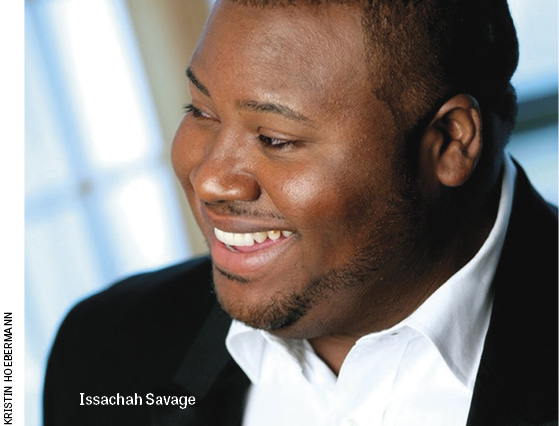
There is, in ontario, a number of companies which have long histories: the Toronto Choral Society was founded in 1845, the Toronto Mendelssohn Choir in 1894, the Bach-Elgar Choir of Hamilton in 1905, the Toronto Symphony Orchestra in 1922, the Canadian Opera Company in 1950, the National Ballet of Canada in 1951. But there are, in Toronto and Southern Ontario, other more recently founded companies.

art of songOne such company is Capella Intima, founded and directed by Bud Roach. Roach decided to start this ensemble in 2008 and the initial performances were in 2009. Before Roach became a tenor, he was a professional oboist; he was a member of a number of orchestras including the Toledo Symphony Orchestra and the Buffalo Philharmonic. In his high school years he had been a rather weak baritone who conked out when confronted by a high F, so he put thoughts of singing aside in favour of the oboe. But in 2005, after having left the orchestral world, he discovered that he had high notes after all and from then on he has concentrated on singing. He managed to persuade Lydia Adams to allow him to sing in the Amadeus Choir’s performance of Bach’s Mass in B Minor. Adams must have liked what she heard and, soon after, Roach became a member of the Elmer Iseler Singers. We have also been able to hear him in appearances with ensembles such as the Toronto Consort and the Aradia Ensemble. He now enjoys an active solo career. At the Fringe concerts in last June’s Boston Early Music Festival he performed excerpts from the third volume of arias by Alessandro Grandi (1626), accompanying himself on the baroque guitar. These performances are now also available on CD (on the Opera Omnia label).

Capella Intima specializes in the performance of 17th-century Italian sacred works, sung one to a part with a small instrumental ensemble. Last spring it gave three performances of the oratorio Giuseppe, which may or may not be by Luigi Rossi. This September Capella Intima will perform music by Chiara Margarita Cozzolani (September 21 in Hamilton at McNeil Baptist Church; September 28 in Toronto in the Great Hall at St. Paul’s Anglican Church on Bloor St.; both at 3pm) in a program titled “Celestial Sirens” which the ensemble first presented in 2010 and has since performed at the New Hamburg Live Festival and, most recently, at the Bach Festival of Canada in Exeter. (Another concert, also titled “Celestial Sirens” and featuring music by Cozzolani and others, was given by the Toronto Consort in May 2011.) It is only in recent years that the music composed by 17th-century cloistered Milanese nuns, like Cozzolani, has been given the attention it deserves by both musicologists and performers. I am myself greatly looking forward to this concert.

The other comparatively new company is the Toronto Masque Theatre, directed by Larry Beckwith, now entering its tenth anniversary year. When I first knew Beckwith, he was primarily a tenor (he was a member of the Tafelmusik Chamber Choir). As time went by, he became more interested in playing the baroque violin and performing chamber music. Before founding the Toronto Masque Theatre, he was a member of the Arbor Oak Trio along with Stephanie Martin, harpsichord, and Todd Gilman, viola da gamba (replaced by Mary-Katherine Finch after Gilman left Toronto). The Trio did not confine itself to chamber music but also staged several 17th- and 18th-century operas, including Love in a Village by Thomas Arne and John Gay’s ballad opera, The Beggar’s Opera. (I played the Beggar in the latter. Can I call it the title role?)

Literary historians tend to define “masque” rather narrowly and see it as a 16th- or 17th-century courtly entertainment with strong allegorical elements. Beckwith has always thought of the masque in a much wider sense, as a work that provides a fusion between opera, dance, song, chamber music, theatre, puppetry, visual art and film. The company has performed several 17th-century operas such as Purcell’s Dido and Aeneas and John Blow’s Venus and Adonis but it has also commissioned a number of new works by composers like James Rolfe and Dean Burry. Its most recent commission was The Lesson of Da Ji (music by Alice Ping Yee Ho, text by Marjorie Chan), which won a Dora Mavor Moore award.

The first TMT event of the new season is a ten-year retrospective salon on September 30 at 21 Shaftesbury Ave. Beckwith and others will speak and there will be musical contributions by, among others, soprano Teri Dunn and lutenist Lucas Harris. Tickets for a suggested donation of $20 are bookable through the TMT website or by phoning 416-410-4561. Their first regular concert will give us Patrick Garland’s dramatization of Brief Lives by John Aubrey with actor William Webster and soprano Katherine Hill at the Young Centre, October 25 to 27. It will be followed by the cabaret Arlecchino Allegro featuring mezzo Laura Pudwell at the Enoch Turner Schoolhouse, January 23 to 25. The final concert on April 25 and 26 at Trinity-St. Paul’s Centre, will give us three versions of the myth of Zeus and Europa; the soprano soloist will be Suzie LeBlanc.

Other Events

On September 26 at the Richard Bradshaw Amphitheatre, in a free noon hour concert, the young artists of the 2013/14 Canadian Opera Company Ensemble will introduce themselves by singing their favourite arias.

The season at Koerner Hall will open with a concert on September 28 featuring Audra McDonald. She will sing a mix of Broadway show tunes, classic songs from movies and pieces specially written for her.

Soundstreams opens its season at Koerner Hall on October 1 with a concert devoted to the music of Arvo Pärt, James Rolfe and Riho Maimets. Shannon Mercer will be the soprano soloist.

The opening concert of the Recitals at Rosedale series will be on October 6 at 2:30pm at the Rosedale Presbyterian Church. Its title is “The Seven Virtues” — the series will pair that concert with “The Seven Deadly Sins,” but not until May.

And beyond the GTA

The Colours of Music Festival in Barrie will include “A Song in the Air” on October 3, including music by Mozart, Mendelssohn, Brahms and Britten sung by mezzo Jennifer Krabbe and baritone David Roth. “I’ll Be Seeing You” on October 6 features songs from wartime, sung by Wendy Nielsen, soprano, and Patrick Raftery, tenor. Both concerts will be at Burton Avenue United Church. 

Hans de Groot is a concert-goer and active listener
who also sings and plays the recorder. He can
be contacted at artofsong@thewholenote.com.
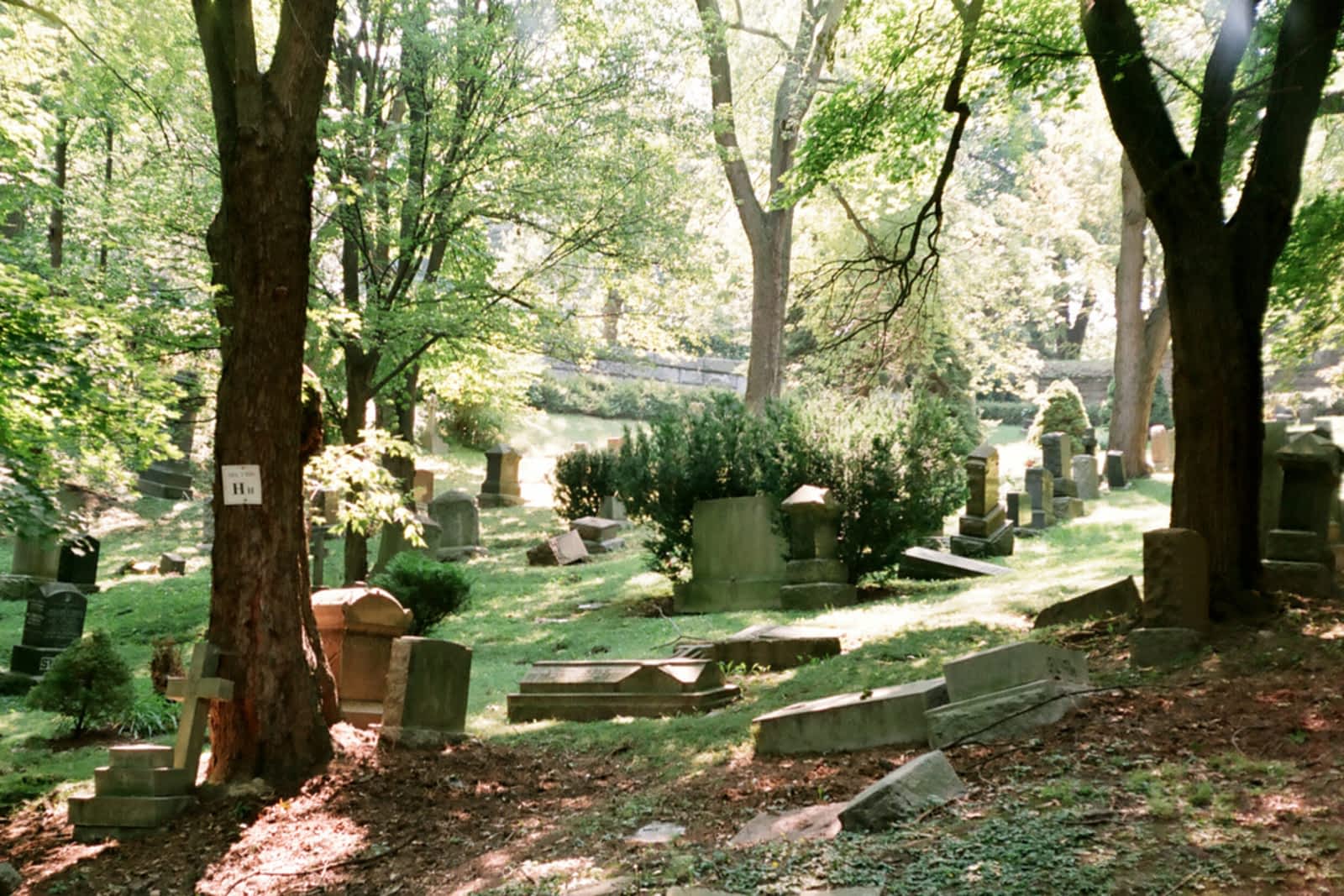
Even the most cursory look at the listings will show that the upside of living in Toronto is the many concerts that take place here every day. That, of course, is a good thing but the downside is that it is impossible to go to all of them. In December I wrote about the tenor Sean Clark and had every intention of catching him in one of his performances with the Pax Christi Chorale, but, alas, it was not to be. On the Saturday I went to hear Adi Braun sing Kurt Weill; on the Sunday afternoon I heard Daniel Cabena’s recital. While I am glad that I went to these, I regret that I didn’t hear Clark. Much the same thing happened on January 9, when I heard a lovely recital by Anne Sofie von Otter and Angela Hewitt, but this also meant that I could not go the Bach concert at Metropolitan United which featured all six of the Bach solo violin sonatas, or to the plainchants and motets which the Schola Magdalena performed at St. Mary Magdalene.

2005_-_Beat_-_Art_of_Song_-_Christian_Gerhaher_and_Gerold_Huber.pngHowever, this is nothing compared with the choice I have to make for the afternoon of Sunday February 1, when there are four concerts I would like to go to: the recital by Melanie Conly at the Heliconian Hall, which features one of my all-time favourites, Schubert’s The Shepherd on the Rock, with its lovely clarinet obbligato (the concert also includes works by Brott, Purcell and Berlioz); Bach’s second cello suite played by Rachel Mercer at Seicho-No-le Toronto; the VOICEBOX performance of Kurt Weill’s Street Scene at the St. Lawrence Centre with Allison Angelo and Jennifer Taverner, sopranos, and Colin Ainsworth, tenor; and the concert at Mazzoleni Concert Hall given by the Amici Chamber Ensemble and the New Orford String Quartet, which features, among other works, Brahms’ Clarinet Quintet

No such problems will interfere with my going to hear the baritone Christian Gerhaher and the pianist Gerold Huber in their performance of Schubert’s Winterreise on February 26 at Koerner Hall. Schubert wrote this work for a tenor voice but it has been successfully performed by baritones, bass-baritones, basses, even sopranos and mezzos. The baritone with whom the work is especially associated is Dietrich Fischer-Dieskau. Views about his singing vary. He always made sure that every detail registered and some listeners find that fussy. Others (and I include myself) feel that, in the words of Keats, he loaded every rift with ore. It will be interesting to hear how Gerhaher’s performance compares.

I am also looking forward to the performance by Monica Whicher, soprano, and Russell Braun, baritone, with the pianists Carolyn Maule and Stephen Philcox, of Hugo Wolf’s Italienisches Liederbuch at Walter Hall, February 9.

2005_-_Beat_-_Art_of_Song_-_Charles_Sy.pngThe Faculty of Music in the University of Toronto will present a free workshop for singers, composers and librettists. It will feature the soprano Barbara Hannigan, the composer Hans Abrahamsen (who is the Michael and Sonja Koerner Distinguished Visitor in Composition) and the music critic and librettist Paul Griffiths (who is the Wilma & Clifford Smith Visitor in Music) on March 2. The following day Griffiths will give a lecture with the title “Contemporary Music: A Plurality of Worlds?” Both events are in Walter Hall and are free. Hannigan is a Canadian soprano who is especially known for her work in contemporary opera. Abrahamsen is a Danish composer whose very accessible works form a sharp contrast with the serial music that dominated the mid- and late 20th century. His let me yell you is dedicated to Hannigan and was first performed by her with the Berlin Philharmonic on December 20, 2013.

Other Events: The Canadian Opera Company presents a number of free performances at the Richard Bradshaw Amphitheatre in the Four Seasons Centre: on February 3 the sopranos Aviva Fortunata and Karina Boucher will be the soloists in Messiaen’s Poèmes pour Mi (with Kerry DuWors, violin, and Liz Upchurch, piano); on February 9 members of the COC Ensemble Studio will perform and compete in the biennial Christina and Luis Quilico awards; on February 10 the soprano Jane Archibald and the pianist Liz Upchurch will perform a program titled “Songs of Love and Longing”; “Urlicht” is the title of the recital by Janina Baechle, mezzo, with the pianist Rachel Andrist, on February 17 (Baechle is singing the role of Fricka in the COC production of Wagner’s Die Walküre.). The recital by Barbara Hannigan on February 24 is titled “Rapture.”

On February 3 students from the classical vocal music performance program at York University will take part in a masterclass with the soprano Rosemary Landry; the singer Brenna MacCrimmon, with Bill Westcott, piano, will perform “Classic Blues” on February 12; singers from the studio of Michael Donovan will perform “Five Mystical Songs” by Ralph Vaughan Williams on February 24.All three recitals are free and will take place in the Tribute Communities Recital Hall, Accolade East Building, York University.

On February 8 the soprano Virginia Hatfield, the mezzo Maria Soulis and the pianist Kate Carver will perform duets by Britten, Brahms, Mendelssohn, Tchaikovsky and others in a program titled “Sisters in Song” at Rosedale United Church. This is a benefit concert for Rethink Breast Cancer.

Jessika Monea, soprano, is the singer in a free noontime recital at Metropolitan United Church on February 12.

The Art of Time Ensemble presents “Magic and Loss: A Tribute to Lou Reed” with Sarah Slean, John Southworth, Margo Timmins and Kevin Hearn at Harbourfront, February 27 and 28.

The soprano Kimberly-Rose Pefhany will be the soloist in Mozart’s Exultate Jubilate, with Sinfonia Toronto conducted by Nurhan Arman, on February 28 at George Weston Recital Hall.

And beyond the GTA: On February 1 the Spiritus Ensemble will perform a free concert of cantatas by Bach (Nach dir Herr verlanget mich), Buxtehude (Der Herr ist mit mir) and Schein (Vater Unser) in the St. John the Evangelist Anglican Church, Kitchener.

There will be a recital at the Isabel Bader Centre for the Performing Arts, Queen’s University, February 8, titled “Intimate Expressions - Dances, Stories and Songs” as part of the Queen’s University Faculty Artists Series. The artists are Elizabeth MacDonald, soprano, Jeff Hanlon, guitar, and Karma Tomm, violin.

A cabaret on the lives of Debussy and Ravel will be performed by Tom Allen, Kevin Fox, Lori Gemmell, Bryce Kulak and Patricia O’Callaghan at All Saints’ Anglican Church, Peterborough on February 27 and at Fleming College, Lindsay on March 1.

And looking ahead: Toronto Summer Music has announced the formation of a chamber choir for advanced amateur musicians, to be held from August 2 to 9. The instructors will be Matthias Maute and Laura Pudwell. The Canadian Opera Company has announced that three musicians will join the COC Ensemble Studio in August of this year. They are the tenors Charles Sy and Aaron Sheppard and the collaborative pianist Hyejin Kwon. Both Sy and Sheppard were prizewinners at the most recent COC Ensemble Studio Competition. Sy, who won the first prize, is a former Fellow of the Toronto Summer Music Art of Song Program. But you don’t have to wait until the summer to hear him. March 1 Sy joins soprano Carla Huhtanen and mezzo soprano Emilia Boteva to perform the “glorious music inspired by the most tempestuous relationships” in Off Centre Music Salon’s “On Love and Other Difficulties.”

A Correction: in my recent CD review of the Handel & Haydn Society performance of Messiah I mistakenly wrote that the duet He shall feed his flock was originally a soprano aria. I should have written “an alto aria.”

Hans de Groot is a concertgoer and active listener who also sings and plays the recorder. He can be contacted at artofsong@thewholenote.com.


art of song - vmas offer early singing startLast summer my daughter Saskia turned 12. Turning 12 is a rite of passage since most primary schools in Toronto do not go beyond grade six. Saskia chose, with encouragement from her parents, to move to the Downtown Vocal Music Academy on Denison Avenue, a stone’s throw from Toronto’s Kensington Market. The two VMA schools in Toronto (the other is the suburban Heather Heights PS in Scarborough) are the brainchild of Mark Bell, a man known in musical circles for his leadership of Canada Sings, a community singalong that meets every second Tuesday of the month somewhere in East Toronto (the next meeting is on November 12 at Mustard Seed, 791 Queen St. E.).

In February 2007 Bell convened a meeting of directors and managers of children’s choirs and officials of the Toronto District School Board to explore the possibility of setting up one or more schools which would specialize in singing. The TDSB came onside and a few years later Bell became vice-principal of the Downtown VMA and started preparing the 2012-13 school year. That year the program began in grade four and went up to grade six. This year grade seven was added and grade eight should follow next year. Bell would like it to continue until grade 12 eventually but there are no immediate plans for that. For now the intention is to steer students to high schools that specialize in the arts, such as Rosedale Heights.

Every day the last period at the Downtown VMA is choir (except for the afternoon, once a week, when the pupils go swimming) but there is also singing at other times during the day. It was felt impractical to offer an extended program in instrumental music, but on Friday there are after-school optional classes in piano and guitar (in cooperation with Soul Music of the University of Toronto) as well as steel pan (in cooperation with the Regent Park School of Music). Violin classes were also offered but there were no takers. At present the children are preparing for their first concert of the season December 3, “The Four Elements: Celebrating the Power of Nature in Song.” The total number of students participating is 90, but we shall also be able to hear them in smaller groups. The concert will also include the inauguration of the newly restored Heintzman grand piano.

Suzie LeBlanc is a lyric soprano, especially known for her early music performances. But her concerts are not confined to early music. A glance at her discography shows that she has also recorded classical (Mozart, Gluck), modern (Messiaen), contemporary (Peter-Anthony Togni) and traditional Acadian music. Of particular interest is a new disc with songs set to texts by Elizabeth Bishop (the composers are Emily Doolittle, Christos Hatzis, Alasdair MacLean and John Plant). She will be singing Purcell and Carissimi, with the tenor Charles Daniels and the Tafelmusik Orchestra and Chamber Choir November 6 to 10. There will be another chance to hear her this month with the viol consort Les Voix Humaines for the Women’s Music Club on November 21. That concert will be repeated November 23 in Sault Ste. Marie and November 24 in Brantford. LeBlanc will also lead a master class at the Faculty of Music at the University of Toronto November 20.

Simone Osborne is a former member of the Canadian Opera Studio Ensemble and has since performed several major roles for the COC: Pamina in Die Zauberflöte (while a member of the Studio Ensemble), Gilda in Rigoletto, Lauretta in Gianni Schicchi and, most recently Musetta in La Bohème. Next spring she will return to the COC in the role of Oscar in Un ballo in maschera. She is the inaugural winner of Jeunesses Musicales Canada’s Maureen Forrester Award Tour. One of the concerts on this tour will be a noontime recital in the Richard Bradshaw Auditorium on November 12. She will sing Schumann’s song cycle Frauenliebe und-leben as well as songs by Bellini, Strauss, Hahn and Current. The concert will be repeated at Midland, November 21 and at Prescott, December 6.

Other Events

Voice performance classes in the Faculty of Music, University of Toronto, will be held on November 5, 19, 26 and December 3 at Walter Hall.

Adi Braun is the singer in a concert based on the songs and letters of Kurt Weill and Lotte Lenya at the Richard Bradshaw Amphitheatre, November 6.

Erin Bardua and Maureen Batt, soprano, Stefan Fehr, tenor, and Giovanni Spanu, baritone, will be the soloists in a performance of Haydn’s L’isola disabitata at Heliconian Hall, November 8.

Eleanor James, mezzo, will be the soloist in Tanzlied by R. Murray Schafer. The concert will also feature the harpists Judy Loman and Angela Schwarzkopf and will include music by Brophy, Livingston, Buhr and Lau in the Mazzoleni Concert Hall, November 10.

Shannon Mercer, soprano, Krisztina Szabó, mezzo, Christopher Mayell, tenor, and Jesse Clark, bass, will be the soloists in a performance of Mozart’s Requiem at the Cathedral Church of St. James, November 13.

Students from the Glenn Gould vocal program will perform The Silent Serenade by Korngold at the Royal Conservatory, November 15 and 16.

Sara Papini, soprano, will sing compositions by Andjelika Javorina at the Glenn Gould Studio, November 15.

Janet Obermeyer, soprano, will sing Der Hirt auf dem Felsen by Schubert at Metropolitan United Church, November 16.

Nathalie Paulin is the soprano soloist in a concert of 20th century music at Walter Hall, November 18.

York University Department of Music presents vocal masterclasses with Che Anne Loewen, November 19 and with Leslie Fagan, November 22 at Tribute Communities Hall, November.

Lesley Bouza, soprano, and Colin Ainsworth, tenor, will be the soloists in a Britten concert by the Toronto Mendelssohn Choir at Yorkminster Baptist Church, November 20.

Darlene Shura, soprano, Jacqueline Gélineau, contralto, and John Holland, baritone, will sing selections from Bach’s cantatas at Heliconian Hall, November 30.

At Calvin Presbyterian Church November 30, Allison Cecilia Arends, soprano, and Stanislas Vitort, tenor, will be the soloists in Mendelssohn’s Symphony No. 2 (Lobgesang) with the Oakham House Choir. The concert will also include a number of works composed or arranged by John Rutter.

Recitals at Rosedale presents “Opera nella chiesa” with music by Handel, Massenet and Menotti. The singers are Laura Albino, soprano, Laura Tucker, mezzo, Timothy Wong, countertenor, and Anthony Cleverton and Jason Howard, baritone, at Rosedale Presbyterian Church, December 1.

And beyond the GTA:Bethany Hörst, soprano, Bud Roach, tenor, and Alexander Dobson, bass, will perform baroque opera arias, with the Bach Elgar Choir at the Royal Botanical Gardens in Burlington, November 9 and 10.

Nicholas Phan, tenor, and Martin Limoges, horn, will perform Britten’s Serenade for Tenor, Horn and Strings with the Kitchener-Waterloo Symphony. The concert will also include Tchaikovsky’s Symphony No. 6 at the Centre in the Square, Kitchener, November 29 and 30.

Charlene Pauls, soprano, Erica Iris-Huang, mezzo, Bud Roach, tenor, and James Baldwin, bass, will be the soloists in a performance of the Magnificat by Bach and the Magnificat by Rutter at St. Matthew Catholic Church in Oakville, November 30.

The first of many complete Messiahs will arrive on December 6 and 7 presented by the Bach Elgar Choir. The soloists are Jennifer Taverner, soprano, Michele Bogdanowicz, mezzo, Chris Fischer, tenor, and Andrew Tees, bass at Melrose United Church in Hamilton. 

Hans de Groot is a concert-goer and active listener who also sings and plays the recorder. He can be contacted at artofsong@thewholenote.com.
Art-Mattila.jpgFor the last ten years, summer in Toronto has for many lovers of vocal music revolved around the Toronto Summer Music Festival. This year, the year of the Pan Am Games, the focus is on the music of both North and South America. The festival kicks off on July 16 with a concert featuring the music of Gershwin and Copland, in which Measha Brueggergosman will be the soprano soloist. The great Finnish soprano Karita Mattila will give a recital on August 7. Both concerts are in Koerner Hall. Among this year’s Art of Song fellows (eight singers and four pianists) are soprano Danika Lorèn, baritone Samuel Chan, bass-baritone Erik Van Heyningen and collaborative pianists Maria Hwa Yeong Jung, Jérémie Pelletier and Andrea Van Pelt. Their mentors are Soile Isokoski, Martin Katz and Steven Philcox. The 2015 Art of Song fellows will perform on July 24 in two afternoon concerts at Walter Hall.

Elora: the Elora Festival opens with a performance of Handel’s oratorio Solomon on July 10; tenor Mark Masri will sing on July 15; there is a performance of Bach’s B minor Mass on July 17; and Jackie Richardson will perform with her trio and the Elora Festival Singers on July 25. These concerts are all at the Gambrel Barn. St. John’s Church will be the venue for the July 19 concert by the Studio de musique ancienne de Montréal, conducted by Christopher Jackson and also for two performances of “Dark Days, Bright Victory,” a program of the words and music of World War II on July 18. The vocal octet, Voces8, will sing at Knox Presbyterian Church on July 16.

Parry Sound: At the Festival of the Sound in Parry Sound, Patricia O’Callaghan will sing in “From Weimar to Vaudeville” on August 4. On August 8 Leslie Fagan, soprano, Mark DuBois and Keith Klassen, tenors, and Bruce Kelly, bass, perform in “Love, Laughter, and Passion.” This concert will also introduce three young singers: Julia Obermeyer, Emma Mansell and Elisabeth DuBois. Adi Braun sings songs from the repertoires of Rosemary Clooney, Judy Garland and Peggy Lee on July 31. Leslie Fagan sings Pergolesi arias on July 28 and performs in “Songs and Dances of the Americas” on July 29. These concerts are all at the Charles W. Stuckley Centre.

Huntsville and Leith: The Huntsville Festival of the Arts presents Buffy Sainte-Marie on July 29 and Molly Johnson on August 1, both at the Algonquin Theatre.

At the Leith Summer Festival you can hear three singers: Rebecca Caine in “A Soprano in Hollywood” on July 18, Julie Nesrallah in “Voyages à Paris” on August 8 and Isabel Bayrakdarian in a program of Spanish music ranging from classical works to zarzuelas and tangos on August 22. All concerts are in the historic Leith Church.

Art-Taylor.jpgThe Music and Beyond Festival in Ottawa offers several vocal concerts. Dominique Labelle, soprano, and Daniel Taylor, countertenor, will sing in “Love and Betrayal” on July 5; there will be a coffee concert featuring the Theatre of Early Music with Rebecca Genge and Agnes Zsigovics, soprano, and Daniel Taylor, countertenor and conductor, the morning of July 6. Both concerts are in Christ Church Cathedral. Two other concerts will be given in Southminster United Church: a recital by the mezzo Wallis Giunta on July 9 and one by the soprano Donna Brown featuring the music of Schubert and Brahms on July 11. The soprano Yannick-Muriel Noah sings a selection of first and last works by various composers including Richard Strauss (the Four Last Songs), Bizet, Puccini, Brahms and Verdi, on July 16 in the Dominion-Chalmers United Church.

Stratford Summer Music presents Rebecca Caine on July 25 at Revival House; Daniel Taylor and the Theatre of Early Music in a re-enactment of the Coronation of George II on August 6 at St. James Church; R. Murray Schafer’s Music for an Avon Morning on August 7 and 8 on Tom Patterson Island; a concert of Schafer’s Sacred Music on August 7 at St. James Church; and Michael Schade, tenor, in a program of opera arias on August 9 at St. Andrew’s Church. The 2015 Vocal Academy will be in session during the week beginning August 10; their work will culminate in a final concert on August 15 at St. Andrew’s Church. Mozart’s Magic Flute will be performed on August 15 and 16 at Revival House.

Westben: At the Westben Arts Festival in Campbellford, the soprano Marie-Josée Lord will sing spirituals, opera arias by Puccini and Gershwin as well as music by Bernstein and Cole Porter on July 18.

Other Events:

June 5 Ann Monoyios, soprano, and Peter Harvey, baritone, will be the soloists in a free concert by Tafelmusik, at Trinity-St. Paul’s Centre.

June 7 the Off Centre Music Salon will celebrate its 20th Anniversary with a concert which will feature a whole array of singers ranging (alphabetically) from Isabel Bayrakdarian to Ilana Zarankin at Glenn Gould Studio.

June 8 the soprano Sara Swietlicki will sing songs by Stenhammar, Rangström and Sibelius as well as arias by Mozart and Puccini at Heliconian Hall.

June 20 medieval songs connected with the pilgrimage to Santiago de Compostela will be performed by Linda Falvy and Mary Enid Haines, sopranos, and Catherine McCormack, alto, at the Church of St. Mary Magdalene.

June 22 Maria Soulis will sing classical and folk music from Turkey, Greece and Spain at the Church of the Holy Trinity.

June 27 at the Aradia Ensemble Baroque Ensemble concert, mezzo Marion Newman will sing in the new composition Thunderbird by Dustin Peters, based on a legend popular among the native peoples of the Pacific Northwest and sung in Kwakwala. The concert at the Music Gallery will also include pieces by Purcell and Locke.

July 16 Summer Music in the Garden at the Harbourfront Centre presents Michael Taylor, countertenor, in a concert of music by Handel and others.

August 3 Monique McDonald and Irina Rindzuner, sopranos, and Ricardo Rosa, baritone, all soloists from the CUI International Music Festival, will sing in a program featuring works by Schumann, Wagner and Gershwin at the Church of the Holy Trinity.

Looking back: I don’t normally go to two concerts on the same day but I could not resist the double attraction of the Off Centre concert and the recital by Meredith Hall and Brahm Goldhamer on April 26. The main item on the Off Centre program was Schoenberg’s Pierrot Lunaire, which was brilliantly performed. It dates from 1912 but, a century later, it remains a difficult and I don’t think altogether successful work. The program was rounded off with arias and ensembles by Mozart. I was particularly impressed with the baritone Jesse Clark and the soprano Maeve Palmer.

Hall’s superb recital that evening included Haydn’s cantata Arianna a Naxos as well as parts of the Pyramus and Thisbe cantatas by Hasse and Rauzzini. Here too Mozart rounded off the recital. A particular delight was to hear Jean Edwards join Hall in the letter duet from The Marriage of Figaro. Edwards is now 88, but her voice is as pure and as fresh as it was when she was the soprano soloist in the Toronto Consort.

And looking ahead: Soundstreams will begin its 2015/16 season with performances by soprano Adrienne Pieczonka and mezzo Krisztina Szabó of music by George Crumb, Kurt Weill (in Luciano Berio’s arrangements) as well as Lennon and McCartney on September 29. 

Hans de Groot is a concertgoer and active listener who also sings and plays the recorder. He can be contacted at artofsong@thewholenote.com.
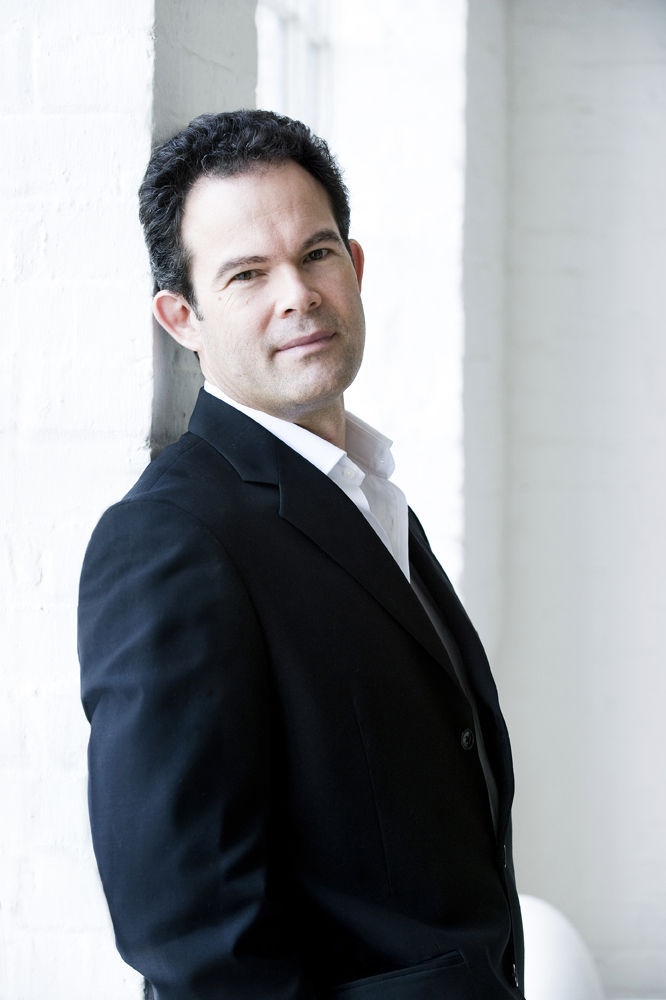
art_of_song_aaron_jensen_colour_1It’s a funny thing how an event can suddenly explode onto the scene with little or no prior buzz, emerging fully formed and ready to rumble. A case in point: the first annual SING! a cappella vocal festival, set to debut April 13–15 at Harbourfront Centre, comes accoutred not just with the necessary headliners (like last summer’s abortive BlackCreek faux summer festival), but also with a fine array of local talent, and a very healthy mix of workshops, singalongs and other opportunities for the public to feel part of it all. Needless to say, the illusion that SING! sprang up out of nowhere is just that — an illusion.

“Informally, the festival has been a going concern since March 2011,” says Aaron Jensen, SING!’s artistic director. “The idea was first bounced around by myself and J-M Erlendson, the business manager of Countermeasurea Toronto-based a cappella ensemble that I direct. We then approached entertainment agent, Pat Silver and artist manager, Paul Ryan. Shortly thereafter, the Harbourfront Centre came on as business partners, and bit by bit, we enlisted an all-star board of directors made up of some of Toronto’s top arts agents, marketing experts, sponsorship co-ordinators and innovators, including Robert Missen, Patti Jannetta Baker, the Hon. Sarmite Bulte …” (Demonstrating at least one of the skill sets necessary for the helmsman of an enterprise like this, he goes on to name them all.)

Jensen has been an active member of the Toronto vocal community since moving to the city in 2001 (he was born in Prince Albert, Saskatchewan). “I’ve done so as a performer (Cadence, Retrocity, Countermeasure, The Amadeus Choir, WIBI, Dina Ledi), as a composer (I was the composer-in-residence for Univox Choir from 2007–2009, and have written commissioned choral works for The Swingle Singers, Vox Humana, Windago, Serenade! Washington DC Choral Festival, etc.), and as a music educator and clinician (U of T, CAMMAC, and various arts schools through Prologue to the Performing Arts.)”

Why a cappella? “Arguably a cappella vocal music is the foundation of all music,” he says. “Every genre of music can be traced back to a vocal tradition. Also it doesn’t hurt that television programs like Glee and The Sing Off have popularized a cappella music for a whole new demographic. In the midst of this vocal renaissance, we felt that the time is ripe to launch an a cappella festival, because despite this resurgence of interest in a cappella music, festivals are often slow to include vocal groups in their series. This initiative will be the first international a cappella vocal festival held in Toronto.”

“Through my involvement in these circles, I have become acquainted with the abundance of vibrant and exciting singing groups that Toronto has to offer. With so much talent and variety, it seemed a shame that there was no platform that celebrated this wealth of talent. It is our goal with SING! to host a large-scale international a cappella festival that will act as a summit for singers, educators, and all lovers of vocal music,and in doing so, to cultivate a growing audience and body of patrons.”

Beyond the headliners (Swingle Singers, Nylons, New York Voices) and outstanding supporting cast (Cadence, Darbazi, Cantores Celestes, Iselers, Toronto Chamber Choir), it is the festival’s extensive outreach that fires Jensen’s evident enthusiasm for the job.

“Educational Outreach is a cornerstone. In addition to the Friday school outreach event, we’ve also programmed eleven masterclasses geared toward singers of all ages and skill levels, led by top vocal educators such as the Swingle Singers, Heather Bambrick and Orville Heyn. We have launched a YouTube Contest that will give groups the opportunity to open for the Nylons, and whose prizing includes a guaranteed showcase opportunity in Canadian Music Week 2013. We’ve also planned a Mass Sing-Along which will be open to everyone attending the festival.”

And again he emphasizes that the time is right. “The fact that the Toronto District School Board is opening two special interest vocal arts academies in the fall speaks to Toronto’s growing appetite for vocal music.”

For more detail on the festival’s concert component see our GTA concert listings, and for more on the festival’s extensive non-concert component, our “ETCeteras” (commencing page 60).

19_bobbymcferrinSerious Star Power: in terms of visiting star power on the vocal scene, April is turning out to be a stunner. Bobby McFerrin brings his incomparable and indescribable vocal act to Roy Thomson Hall, April 16. Dawn Upshaw, whose interpretive gifts have made modern repertoire not only accessible but beautiful to audiences worldwide, is at Koerner Hall, April 22, with the Australian Chamber Orchestra. Friday April 20, Renée Fleming comes to Roy Thomson Hall with pianist Harmut Höll, in a very fresh program including works by Zemlinsky, Schoenberg, Korngold, Duparc and others. And, in two concerts added very recently to the calendar, on April 19 at the Marham Theatre and April 20 at Trinity-St. Paul’s, Measha Brueggergosman launches her I’ve Got A Crush On You CD.

Brueggergosman’s new CD is not your standard opera diva repertoire. “I’ve looked for pieces that are an extension of myself,” she explains. And the extensions in this case include a hefty dose of jazz standards (the Gershwins, Cole Porter, Errol Garner), some Lerner & Loewe, spirituals, some Feist, Joni Mitchell, Ron Sexsmith and more. Supporting cast (on the album at least) includes Holly Cole perennial sidemen, Aaron Davis (who co-produced) and Rob Piltch, as well as bassist George Koller and Davide Direnzo on drums (to name just a few). Expect Brueggergosman, to paraphrase the words of one of the songs on the album, to “spread her wings and do a thousand things (well, at least 14) she’s never done before.”

On the topic of jazz vocalists, Nikki Yanofsky comes to Massey April 21, Lauren Margison is at the Bradshaw amphitheatre in a “New York state of mind” April 24, and Kellylee Evans is at the Glenn Gould Studio April 27. And there will be two opportunities to catch Adi Braun, jazz “offshoot” of a famous operatic family, who just keeps getting better and better. Her main appearance is as part of the Kabaret at Koerner series April 15 with Jordan Klapman (piano), George Koller (bass) and Daniel Barnes (drums). Her other appearance will be two days earlier April 13 at a fundraiser for the Canadian Children’s Opera Company (see our “ETCeteras” on page 60) where Braun and Klapman will share the billing with vocalist Sophia Perlman and pianist Adrean Farrugia (to whose indisputable collective talents our editorial rules on nepotism forbid me to sing praise).

And speaking of solo vocal turns at galas and benefits: April 11 the luminous Adrianne Pieczonka, with Stephen Ralls on piano, headlines a VIVA! Youth Singers gala evening at St. Lawrence Hall; and May 6 Shannon Mercer, soprano, Krisztina Szabó, mezzo, Keith Klassen, tenor, and Roderick Williams, baritone, frontline Pax Christi’s 25th Anniversary Gala Concert presentation of Elgar’s The Kingdom at Koerner Hall. Stephanie Martin conducts.

All this, and I have not even scratched the surface of the art song recital treasury that waits to be discovered in the month’s listings.

Those quick off the mark will not want to miss Mooredale Concerts’ April 1 Walter Hall presentation of Stéphane Lemelin, piano, and Donna Brown, soprano, performing works by Debussy, Fauré, Schubert, Mahler and Wolf. Ottawa-born Brown, better known on the concert stages of Europe than in her own home, is an all-too-infrequent visitor.

And those wanting to be quick off the mark in spotting an up-and-comer should circle soprano Layla Claire’s May 3 Glenn Gould Studio appearance in the Massey/ RTH Art of Song series, performing works by Britten, Canteloube, Strauss and Golijov, with Stephen Philcox on the piano. Claire will make a splash, I predict, in early 2013, performing Mozart with the TSO, so grab some career-spotting bragging rights while the getting’s good.

It’s a good month too for Toronto’s longest established practitioners of salon-style concertizing, Aldeburgh Connection and Off Centre Music.

April 29, at Walter Hall, Aldeburgh Connection presents the final concert of this, their 30th anniversary concert season. It’s titled “A Country House Weekend: an English idyll,” and features soprano Lucia Cesaroni, mezzo Krisztina Szabó and baritone Peter Barrett, with Stephen Ralls and Bruce Ubukata at the piano.

And May 6 Inna Purkis’ and Boris Zarankin’s long-running Off Centre Music Salon makes its usual Sunday afternoon Glenn Gould Studio touch-down with a salon titled “Spanish Ballade with a Russian Interlude.” Soprano Joni Henson, baritone Peter McGillivray and mezzo Leigh-Anne Martin do the vocal honours.

Aaron Jensen had it right. “Vocal renaissance” is indeed a good way to describe the current state of things.

David Perlman can be reached at publisher@thewholenote.com

In the dog days of Toronto’s musical summer, while the halls are lying dormant and musicians gigging on the Ontario festival circuit, two weeks of intense art song training will take place at the Toronto Summer Music Festival (TSM). Out of 90 applicants this year, eight singers and four pianists chosen by video auditions will work on all aspects of art song with international mentors, Christoph Prégardien and Julius Drake, and the head of Collaborative Piano at U of T and Canadian Art Song Project co-artistic director Steven Philcox. Tuition fees are covered by scholarships, which in turn are underwritten by TSM donors. Each week of work will be crowned with a group recital, in a program that will emerge organically from the training repertoire tackled.

Christoph Pregardien - Marco BorggreveThere will also be the opportunity for the Art of Song Institute singers and pianists to join forces with the fellows of the Chamber Music Institute, the other arm of the Toronto Summer Music Academy. A lucky precedent was set last year, explains Steven Philcox when I phone him on an early morning in May; song students enjoyed working with string players and TSM artistic director Jonathan Crow so much that a repeat was in order. This year, two pieces that call for inter-Institute collaboration will be in the final concert: a Menotti number and Chausson’s Chanson perpétuelle for soprano, piano and string quartet.

Each of the international mentors is here for one week, though their time will overlap enough to allow for a Prégardien-Drake recital on July 17. Their young mentees will be required to prepare eight songs for each week of the program, 16 songs total. “There will be daily sessions with Christoph, Julius and myself, and a lot of focused diction and language study,” says Philcox. “Michael Albano, resident stage director at the U of T Opera, will give a full session on recitation of poetry, away from the music – getting back to the words – and this is both for singers and pianists. They’re all required to prepare a piece of poetry from memory.”

Steven PhilcoxWhat songs exactly the singers end up working on during those two weeks of close collaboration with Drake, Prégardien and Philcox depends in part on their own interests. The repertoire is discussed early on in the selection process. “We audition everybody through the Young Artist Program tracker, and singers can upload their videos and submit their repertoire online. That way we can audition internationally.” The TSM artistic panel then looks at the applications and makes the selection.

Both the Festival and its Academy are loosely programmed around a theme each year, and this time it’s Reflections of Wartime. “At least some of the songs that the singers bring will be required to fit the festival theme. I ask the singers for 16 to 20 songs and out of those I am able to assemble the rep,” says Philcox. The final list of songs will also depend on who the mentors are and what their area of specialization is. “Christoph Prégardien’s wish was to focus on German lieder and we’ll have quite a bit of Schubert and Schumann – and a lot of students really wanted to work on Schubert with him.” There are two tenors, two sopranos and four mezzos, and in the self-generated repertoire there wasn’t much overlap. “Even within the same voice type,” he adds. “One mezzo happens to be closer to alto and she’s looking at some of the Mahler Kindertotenlieder and Debussy’s Chansons de Bilitis.”

Here is the class of 2018: pianists Frances Armstrong, Leona Cheung, Pierre-André Doucet and Jinhee Park, sopranos Maeve Palmer and Karen Schriesheim, tenors Joey Jang and Asitha Tennekoon, and mezzos Lyndsay Promane, Danielle Vaillancourt, Renee Fajardo and Florence Bourget. A couple of the local names will be familiar to Torontonians – Promane and Palmer certainly, as well as tenor Asitha Tennekoon, who has just wrapped up in the first run of the newly composed The Overcoat at Canadian Stage here and in Vancouver.

The young tenor moved to Toronto only four years ago, but since then we’ve seen him in roles in just about all the core companies of the indie scene: Tapestry, Against the Grain Theatre, MY Opera, Opera Five and Bicycle Opera Project. I caught up with him over Skype while he was travelling through BC to ask him about his interest in the art of song and the kind of detailed work that the TSM Academy offers.

“My first TSM Academy was two years ago, actually,” he says. “This year when I found out who the mentors are going to be, I decided to apply again. I’ve listened to Prégardien for a long time, and know his work. Whenever I have to work on Bach cantatas and passions, I look for his versions. As a tenor, I think I might end up doing a lot of rep that he’s done.”

Tennekoon’s rep this year will be British songs and a lot of Schubert lieder. “I’ve done Schumann, I’ve done Wolf, but somehow never taken the time to study Schubert.” And since working on Schubert’s larger song cycles would be somewhat impractical in the context of a two-week summer school, he ended up choosing a few songs from Schwanengesang. “I love those pieces; they speak to me,” he says.

“Lieder in general. There’s something about the way those songs delve into human psyche that really engages me. How the poet and the character in the song put something across, deal with something in a matter of just a couple of minutes – and often so powerfully. That really makes me want to work on it and figure out why and how this happens.”

Part of it, he says, is that there are no operatic visuals, no plot development and no colleagues onstage to help build the character and help you make your case. “There’s an immediate spotlight – you dive straight in. I love that challenge. You can’t move around, there’s nowhere to go.”

One particular song from Schwanengesang in particular drew him in: Der Doppelgänger. “When I first heard it, it surprised me that it was Schubert. The way the harmonies worked, it all felt like Mahler – that sense of pathos and death to it.”

Asitha TennekoonAfter the Academy and in addition to Schubert, Tennekoon will continue to explore Britten’s vocal opus. “I love the way [Britten] writes for the voice,” he says. “I’ve already done a bunch of Britten songs and would like to continue singing Britten as much as possible.” Schumann too, and the French rep eventually. Contemporary music almost goes without saying. “Doing new music is the most enjoyable thing about my time in Toronto so far. Working with Tapestry, you kind of get thrown into it and I absolutely love it. Taking part in something out there that’s never been heard before, getting to talk to the composer and librettist and ask them questions and suggest your own ideas – it’s one of the most exciting parts of this business.”

But first , back to Bach. Tennekoon returns to Stratford Summer Music for the Coffee Cantata later in the summer, and there are a few solos in the Matthew and John Passions in the near future. And in the spring of 2019, a house debut at the Opéra de Montréal in what’s been billed as a jazz opera with boxing, Champion.

The joint reGENERATION recitals by the Art Song and Chamber Music fellows take place on July 14 and 21, 1pm and 4pm on each day in Walter Hall, Toronto; tickets are available at TSM’s website.

June Pick

Tapestry Opera is partnering with Pride Toronto for a three-day festival of naughtiness titled “Tap This” on June 7, 8 and 9. Soprano Teiya Kasahara will subvert operatic tropes about female characters in her haute butch style. Joel Klein (as his drag alter Maria Toilette), Kristina Lemieux (as Vadge) and Gutter Opera Collective will present “Cocktales”: salacious and tender first-person retellings of early sexual experiences. There’s more: the complete program and tickets can be found on Tapestry’s website. 

Lydia Perović is an arts journalist in Toronto. Send her your art-of-song news to artofsong@thewholenote.com.

Most songs are not created for the purpose of fighting injustice. There is, however, a definite period in the history of the English-language song when the political potential of songwriting craft became obvious: the 1960s and 1970s in the US, with roots reaching back to the 1930s and the odd branch extending into the 1980s. It’s this period, which we now call the golden age of protest song, that Art of Time Ensemble’s artistic director Andrew Burashko homes in on for the three-day festival “All We Are Saying” at Harbourfront Theatre. The festival runs May 10 to 12 with “The Songs Program” performed on May 10 and 12 and “The Classical and Folk Program” on May 11.

Andrew BurashkoWhere was the cutoff point for the protest song, I ask Burashko when we meet to talk about the festival. (It seems to me that few popular songs come out of political grievance these days.) They continue to be made, he replies, but generationally and aesthetically, he feels closest to the songs from this period, when the political songwriting was at its most creative. “Much of the first song program in our festival comes from the African-American experience. Nina Simone’s To Be Young, Gifted and Black, Sam Cooke’s A Change is Gonna Come, Gil Scott-Heron, Marvin Gaye. Billie Holiday in the extraordinary Strange Fruit.

“Then there’s Stevie Wonder’s Village Ghetto Land, which he opens with a string orchestra and gives it a surprisingly light, almost ironic tune, while the lyrics talk about extreme poverty and ghettoization,” Burashko says. How do you explain that discrepancy? Perhaps as a distancing of sorts, avoidance of sentimentality? “It’s hard to tell, but it’s fascinating, and Stevie Wonder did it in some other songs too.” For this occasion, Burashko asked a few Canadian composers to create original arrangements for the songs. “We had to find the fine line between too complex and ‘classical’ arrangements, and remaining true to the spirit of the song. There’s such a thing as being too clever as an arranger.”

Music in songs like these is there to amplify the words, not distract. And the lyrics have a core meaning that should be honoured. “In all fairness, some of the legendary singer-songwriters like Dylan and Cohen haven’t been particularly great musicians. They have been great poets, though. Words are what matters.”

As they do, I suggest, in hip-hop today, though only some of the hip-hop is political or concerned with injustice. And in pop and electronic music there are even fewer instances of songs concerned with broader societal issues. At the risk of sounding like an old person complaining about “the kids today,” I ask him, are today’s songs across popular genres largely apolitical and indifferent? Burashko demurs: young people surely have their own causes in pop song, it’s just that perhaps we aren’t following them very closely. An interesting coincidence, he says: just before this interview somebody sent him a piece by Theodore Adorno in which the German sociologist of music was being typically sceptical about the freeing potential of pop music. In Adorno’s view, the so-called popular song is opium for the people, crafted by corporations and selling the illusion of happiness and the illusion of political engagement. “And what we usually find in Top 40 is not far from that description,” says Burashko, unlike the best protest songs which have had mobilizing effects, have voiced the previously unsaid, and served as a form of collective memory.

The largely American program of the song night won’t be entirely devoid of Canadian creators. Buffy Sainte-Marie’s Universal Soldier, Bruce Cockburn’s ’Red Brother Red Sister and Joni Mitchell’s Big Yellow Taxi are also on the program. One wonders what a heavily Canadian program of political song would have looked like; it would certainly have more Quebec and other Canadian Francophonie in it, possibly the reggae remix of Michèle Lalonde reading Speak White (which exists on YouTube). On this occasion, it’s the performers who will bring in the Canadian component: singers Shakura S’Aida and Jackie Richardson, guitarist and vocalist Colin James, and instrumentalists Rob Piltch, Lina Allemano, Rob Carli and John Johnson, with Burashko at the piano. Among those Canadian composers who have be asked to rearrange the protest song classics are Andrew Staniland, Jonathan Goldsmith (who composed the music for Sarah Polley’s excellent Take This Waltz and Stories We Tell and who is an Art of Time Ensemble founding member) and Kevin Fox, composer, cellist and frequent Steven Page collaborator.

Jackie Richardson and the Art of Time EnsembleThe second program of the “Festival of Protest Music” is a classical- and folk-flavoured night on May 11. It will feature the Rolston String Quartet in George Crumb’s Vietnam War-era Black Angels for electric string quartet, and Burashko himself at the piano in a selection of variations from Frederic Rzewski’s The People United Will Never Be Defeated. A set of roots and folk songs will be performed by Skydiggers’ Andy Maize and Josh Finlayson. Jay Gorney/”Yip” Harbur song of life on a skid row, Brother, Can You Spare a Dime, made famous by Bing Crosby, will be heard, as will Dylan’s Masters of War, which borrows its melody from a late-medieval English folk ballad. Pete Seeger was an important link in the survival of the Black civil rights anthem Keep Your Eyes on the Prize and it’s his version that will be honoured on May 11.

Before saying goodbye to Burashko, I ask him who his all-time favourite songwriters are. He lists Lennon and McCartney, Tom Waits, George Gershwin, Paul Simon. “The last Leonard Cohen album I thought was exceptional,” he says. He also loves P.J. Harvey. Radiohead is still good – and will be touring Canada this July. And he really liked the 2010 album that John Legend released with The Roots, carried on the wave of activism well past Obama’s election.

But The Roots and John Legend compiled an album of songs from the 1960s and 1970s, not the Bush-era and Obama-era original content, I thought on my way back home. Not even Obama, the most youth-mobilizing US president in recent memory, managed to inspire much original political content in song. So far Trump’s presidency hasn’t ignited much either, Eminem’s anti-Trump song being one prominent exception. Or have I missed it, while trying to avoid being completely engulfed by American culture? Beyoncé’s performances and video art are certainly more political than her song lyrics, and her brand of feminism does mean a lot to a lot of young women. Kendrick Lamar’s Pulitzer Prize-winning album DAMN. has only two or three songs that struck me as being of the politically conscious hip-hop kind.

Björk, Alicia Keys, Lauryn Hill and Erykah Badu are extraordinary artists, yet remain mostly non-political in song. Janelle Monaé’s recent single ‘Pynk’ and its accompanying video directed by Emma Westenberg is rightly adored far and wide but it won’t turn anyone into an activist. Kate Tempest’s songs are political – see her album Let Them Eat Chaos – but Brits are on the other continent and do things differently: it’s American and Canadian song that strikes me as privately focused.

Ani DiFranco, Kathleen Hanna and Amanda Palmer are still around, though working for smaller, not planetary audiences, and not very much in the media. Was punk the last crowd of musicians who were overtly political in their work? (Grunge wasn’t exactly political, despite a political lyric here and there.) To echo Marvin Gaye, what has been going on, reader? When were you last stirred and made to pay attention to a problem in the world by a song? Or does the issue lie with the media and the Internet: pop artists who are multinational corporations hog everybody’s attention broadband?

Let me know your thoughts through the email below. Meanwhile, the protest song festival on May 10 to 12 is for taking stock, and maybe even inspiration.

Lydia Perović is an arts journalist in Toronto. Send her your art-of-song news to artofsong@thewholenote.com.

On a pleasantly cold February evening, Toronto Masque Theatre held one of its last shows. It was a program of songs: Bach’s Peasant Cantata in English translation, and a selection of pop and Broadway numbers sung by musician friends. An actor was on hand to read us poems, mostly of Romantic vintage. The hall was a heritage schoolhouse that could have passed for a church.

The modestly sized space was filled to the last seat and the audience enjoyed the show. I noticed though what I notice in a lot of other Toronto song concerts – a certain atmosphere of everybody knowing each other, and an audience that knows exactly what to expect and coming for exactly that.

I was generously invited as a guest reviewer and did not have to pay the ticket, but they are not cheap: $40 arts worker, $50 general audience, with senior and under-30 discounts. And the way our arts funding is structured, this is what the small-to-medium arts organizations have to charge to make their seasons palatable. Now, if you were not already a TMT fan (and I appreciate their operatic programming and will miss it when it’s gone), would you pay that much for an evening of rearranged popular songs and a quaint museum piece by Bach?

The stable but modest and stagnating audience is the impression I get at a lot of other art song concerts in Toronto. Talisker Players, which also recently folded, perfected the formula: a set of readings, a set of songs. Some of their concerts gave me a lot of pleasure over the last few years, but I knew exactly what to expect each time. Going further back, Aldeburgh Connection, the Stephen Ralls and Bruce Ubukata recital series, also consisted of reading and music. It also folded, after an impressive 30-year run. It was largely looking to the past, in its name and programming, and it lived in a cavernous U of T hall, but it could have easily continued on and its core audience would have continued to come. Stable audience, yes, but also unchanging.

The issue with a stable and unchanging audience is that the programming will suffer. It’ll go stale, ignore the not already converted, abandon the art of programming seduction. And the ticket will still cost at least $50.

I’ve also sat in the Music Gallery’s contemporary music recitals alongside the audience of eight so it’s not entirely the matter of heritage music vs. new music. Empty halls for contemporary music concerts are as depressing as book events in Toronto, to which nobody, not even the writer’s friends, go. (I know this well; don’t ask me how.)

So, where is art song performance in Canada’s largest city going?

Due to the way they’ve been presented for decades now, there’s a not-negligible whiff of Anglican and Methodist churchiness to Toronto’s art song concerts. They usually take place in a church (Trinity-St. Paul’s, Rosedale United, Trinity Chapel, St. Andrew’s, etc) or a place very much like a church (Heliconian Hall). They are often programmed as an occasion for personal edification – as something that’ll be good for you, that will be a learning opportunity. Why are we being read to so much in recitals – instead of, for example, being talked to and with? Does anybody really enjoy being read to in a music concert?

I sometimes wonder if the classical music infrastructure of concertgoing, its comportment etiquette, regulation of space, fussy rituals of beginning, presentation, breaks and ending wasn’t built to control and disguise classical music’s visceral power over humans? And to keep tame its community-expanding, boundary-blurring potential?

In other words, getting out of the church and the U of T will benefit Toronto’s art song performance. Classical music, including art song, is a pleasure, not homework; it’s inviting the stranger over, not getting together with the same group each time. Some of those who program art song and chamber music in Toronto are already grappling with these questions, fortunately.

Collectìf

Among them is the ensemble Collectìf, consisting of three singers and a pianist: Danika Lorèn, Whitney O’Hearn, Jennifer Krabbe and Tom King. They scour the city for locations and choose places off the beaten path. They held a recital in an Adelaide St. W. loft, and a raucous songfest at an old pub in Little Italy. For a Schubert Winterreise, performed in the more familiar quarters of Heliconian Hall, Danika Lorèn had prepared video projections to accompany the performance and the singing was divided among the three singers, who became three characters. For an outing to the COC’s free concert series, they created their own commedia dell’arte props and programmed thematically around the poets, not the composers who set their poems to music. Collectìf is a shoestring operation, just starting out, yet already being noticed for innovation. Lorèn is currently member of the COC’s Ensemble Studio, which is why the Collectìf somewhat slowed down, but when I spoke to her in Banff this summer, she assured me that the group is eager to get back to performing. Winterreise toured last fall to Quebec and an art song program around the theme of nightmares returns to the same festival later in the year.

Happenstance

Another group that caught my eye did not even have a name when I first heard them in concert. They are now called Happenstance, the core ensemble formed by clarinettist Brad Cherwin, soprano Adanya Dunn and pianist Nahre Sol. That’s an obscene amount of talent in the trio (and check out Nahre Sol’s Practice Notes series on YouTube), but what makes them stand way out is the sharp programming that combines the music of the present day with musical heritage. “Lineage,” which they performed about a year ago, was an evening of German Romantic song with Berg, Schoenberg, Webern and Rihm and not a dull second. A more recent concert, at the Temerty Theatre on the second floor of the RCM, joined together Françaix, Messiaen, Debussy, Jolivet and Dusapin. The evening suffered from some logistical snags – the lights went down before a long song cycle and nobody but the native French speakers could follow the text – but Cherwin tells me he is always adjusting and eager to experiment with the format.

Cherwin and I talked recently via instant messenger about their planned March concert. As it happens, both the pianist and the clarinettist have suffered wrist injuries and have had to postpone the booking for later in March or early April. Since you are likely reading this in early March, reader, head to facebook.com/thehappenstancers to find out the exact date of the concert.

Happenstance (from left: Adanya Dunn, Brad Cherwin and Nahre Sol)In the vocal part of the program, there will be a Kurtág piece (Four Songs to Poems by János Pilinszky, Op.11), a Vivier piece arranged for baritone, violin, clarinet, and keyboards, and something that Cherwin describes as “structured improv involving voice”. “It’s a structured improv piece by André Boucourechliev that we’re using in a few different iterations as a bridge between sections of the concert,” he types.

I tell him that I’m working on an article on whether the art song concert can be exciting again, and he types back that it’s something they’ve been thinking about a lot. “How can we take everything we love about the chamber music recital and take it to a more unexpected place. How can repertoire and presentation interact to create a narrative/context for contemporary music. How can new rep look back on and interact with old rep in a way that enhances both?”

He tells me that they’re looking into the concert structure at the same time – so I may yet live to see recitals where the pieces are consistently introduced by the musicians themselves.

Will concerts continue to involve an entirely passive audience looking at the musicians performing, with a strict separation between the two? There were times, not so long ago, when people bought the published song sheets to play at home and when the non-vocational (better word than amateur) musicianship enhanced the concert-goers’ experience of music. Any way to involve people in the production of at least a fraction of the concert sound or concert narrative?, I ask him, expecting he’ll politely tell me to find a hobby.

“We’ve thought a lot about that actually,” he types back. “It’s a difficult balance. Finding a way to leave room for collaboration while also having a curated experience.” Against the Grain Theatre, the opera company where he now plays in the permanent ensemble, also wants to push in that direction, he tells me.

Boldly Go

There is a corner of the musical avant-garde, it occurs to me as I thank him and log off from our chat, that actively seeks out non-professional participation. There are Pauline Oliveros’ tuning meditations, of course, but more locally there is also Torontonian Christopher Willes, whose various pieces require participation and are fundamentally collective and collaborative. Though he isn’t a musician, Misha Glouberman’s workshops in social behaviour, like Terrible Noises for Beautiful People, are arguably a process of music-making.

But how to achieve an active audience in the small, chamber or lieder situations? It’s easier with choruses and large production, where sing-alongs are possible – some smaller opera houses are already doing it, for example Opéra-Comique in Paris. The Collectìf trio did get the audience to sing at the Monarch Tavern that one time (the Do Over, January 2016) but the experiment hasn’t been repeated in Toronto.

Speaking of pub recitals, Against the Grain’s Opera Pub is a glorious project (first Thursday of every month at the Amsterdam Bicycle Club), but it’s more operatic than art song, at least for now. ClassyAF are a group of instrumentalists who perform in La Rev and The Dakota Tavern, no vocals. Drake One Fifty restaurant in the Financial District has just started the Popera Series with opera’s greatest hits performed in a restaurant full of people, but again, it’s opera, the more glamorous and easier-to-sell sibling to the art song.

Against the Grain's Opera Pub at the Amsterdam Bicycle ClubWill Happenstance, Collectif and similar innovative upstarts, and their more established peers like Canadian Art Song Project, endure over the years, obtain recurring arts council funding and renew art song audience?

With that goal in mind, my immodest proposal for the present and future art song presenter: move out of the churches and university halls. Musicians, talk to people, introduce the pieces. Program the unfamiliar. Always include new music, maybe even by composers who can be there and say a few words. If the music is danceable, allow for concerts with audience dancing. (I’m looking at you, Vesuvius Ensemble.) Engage the people. If live music is to be different from staring at the screen, make it different from staring at the screen.

Some March highlights

Meanwhile, here are my March highlights, which are of the more traditional Toronto kind, though still of interest.

March 19 at 7:30pm, Canadian Art Song Project presents its 2018 commission, Miss Carr in Seven Scenes by Jeffrey Ryan. Miss Carr is Emily Carr, and the song cycle, based on her journals, was written for Krisztina Szabó and Steven Philcox. At (alas) U of T’s Walter Hall.

March 4, as part of Syrinx Concerts Toronto, mezzo Georgia Burashko will sing Grieg’s Lieder with Valentina Sadovski at the piano. Baritone Adam Harris joins her in Schumann duets for baritone and mezzo, whereas solo, he will sing Canadian composer Michael Rudman’s The City.

March 11 at Temerty Theatre, Andrea Botticelli will give a lecture-recital (I like the sound of this) on the Koerner collection, “Exploring Early Keyboard Instruments.” Vocal and keyboard works by Purcell, Haydn and Beethoven on the program with tenor Lawrence Wiliford singing. The only U of T chapel to which I will always gladly return, the Victoria College Chapel, hosts the Faculty of Music’s Graduate Singers Series, also on March 11.

Finally, if you are in Waterloo on March 7 and up for some Finnish folk, the U of W’s Department of Music presents the EVA-trio (cellist Vesa Norilo, kantele player Anna-Karin Korhonen and soprano Essi Wuorela) in a noon-hour concert.

Am I wrong about the future of art song in Toronto? Send me an email at artofsong@thewholenote.com.

BBB-ArtSong1Soon after the death of the distinguished Welsh contralto Helen Watts, in October 2009, a letter appeared in The Gramophone which argued that Watts’ death signalled the end of the contralto voice since all lower-voiced singers were now mezzos. I think there is some truth in that statement but only some.

First of all, there are a number of singers now who see themselves as contraltos and are generally regarded as such: Anna Larsson, Sara Mingardo, Ewa Podleś, Sonia Prina, Nathalie Stutzmann, Hilary Summers. Second, there is considerable overlap between the mezzo and contralto voice. (I am not now thinking of high mezzos such as Cecilia Bartoli and Magdalena Koźená, who could equally well be described as second sopranos, but have in mind a dark voice like that of the very fine English mezzo Sarah Connolly.) Anna Larsson made her international debut in the lower solo part in Mahler’s Second Symphony, a part which in the past has been sung by Stutzmann and by Maureen Forrester. Yet many mezzos have sung and recorded it: Connolly, Bernarda Fink, Lorraine Hunt Lieberson, Christa Ludwig, Jard van Nes, Christianne Stotijn and, of course, Janet Baker. On the other hand, Larsson has recorded the role of Kundry in Wagner’s Parsifal, a part nobody would think of as a role for contraltos.

And then voices may change: I first heard Baker, on records and on the radio, in the early 1960s and it seemed to me then that she represented the natural successor to Kathleen Ferrier. Such a statement must seem absurd now but I am not sure that it was absurd 50 years ago. Baker extended the higher range of her voice over the years and in the end even sang soprano parts (although they were generally transposed down). If a singer extends her range at the top, she is bound to lose part of her bottom range.

Marie-Nicole Lemieux: These reflections lead to a reminder that one of the great contraltos of our time, Marie-Nicole Lemieux , will be in Toronto soon. She is singing Mistress Quickly in Verdi’s Falstaff, in a series of performances with the Canadian Opera Company, beginning on October 3. Lemieux received her training in Chicoutimi and Montreal. She first came to international notice when she received First Prize as well as the Special Prize for Lieder at the Queen Elizabeth Competition in Brussels in 2000. She made her operatic debut in Toronto in April 2002, when she sang Cornelia in Handel’s Giulio Cesare. She is especially distinguished for her work in baroque opera (Monteverdi, Handel, Vivaldi), for which her strong but agile voice is eminently suitable, but she also sings later opera. Lemieux has sung the role of Mistress Quickly (a mezzo part!) many times: at Covent Garden, at La Scala, in Paris and in Montreal. She is also a fine singer of German lieder and French chansons as shown by her recordings of Brahms, of Schumann’s Frauenliebe und-Leben and, in L’heure exquise, a recording of songs by Hahn, Chausson, Debussy and Enescu.

Canadian Opera Company: lunchtime vocal recitals at the Richard Bradshaw Amphitheatre in the Four Seasons Centre continue apace! On October 2 arias and ensembles from operas based on Shakespeare will be sung by students at the University of Toronto’s Opera Division; on October 7 Colin Ainsworth, tenor, and Stephen Ralls, piano, will perform three song cycles by Derek Holman; Jean-Philippe Fortier-Lazure, tenor, and Iain MacNeil, baritone, will sing Fauré and Mahler on October 9; singers and dancers from Opera Atelier will perform excerpts from Handel’s Alcina on October 14; artists of the COC production of Falstaff will perform art songs on October 23. All of these concerts are free.

A busy October 4: There are several concerts on October 4: Suba Sankaran is the singer in a presentation which will show how global traditions can be and have been integrated into Canadian new music (Canadian Music Centre). Voice and Collaborative Piano students from the University of Toronto will illustrate the interaction between poetical and musical language in the classical art song (Edward Johnson Building). Both are free as part of Scotiabank Nuit Blanche. Allison Angelo, soprano, and Geoffrey Sirett, baritone, will be the singers in a concert commemorating the Great War (St. Andrew’s Church). Emily D’Angelo will be the soprano soloist with the Greater Toronto Philharmonic Orchestra at Calvin Presbyterian Church.

International Divas is an ambitious three-concert series (world, folk, roots, jazz, classics) in natural acoustics. The first of these will take place on October 5 at Trinity-St. Paul’s Centre and will feature the voices of Jackie Richardson, Laila Biali, Luanda Jones, Cindy Church, Saina Singer and Patricia Cano. The other instalments will follow on November 27 and December 21.

Two by Arends: On October 11 Allison Arends, soprano, will sing at Montgomery’s Inn. She will join Barbara Fris, soprano, and others, in a Heliconian Club program of music from Jane Austen’s family collection, at Heliconian Hall, October 17.

BBB-ArtSong2Last but not least: “Songs of Peace and Protest” will be presented by singers/songwriters James Gordon, Evalyn Parry, Len Wallace, Faith Nolan, Mick Lane and Tony Quarrington at Trinity-St. Paul’s Centre, October 18.

There will be three free midday concerts by vocal students at Tribute Communities Hall, Accolade East Building, York University October 21, 23 and 28.

Katherine Hill, Thomas Baeté and Joe Carew will be the vocal soloists in a program that includes songs by Rogers, Purcell and Brassens as well as 14th- and 15th-century Italian polyphony at St. Bartholomew’s Anglican Church, October 26.

Also on October 26, Allison Angelo, soprano, will sing with Giles Tomkins, baritone, in Off Centre Music Salon’s 20th annual Schubertiad at Glenn Gould Studio.

On October 28 and 29 the Talisker Players present “Songs of Travel,” music by Applebaum, de la Guerre, Vaughan Williams and Weigl, with readings from the journals of explorers. The singers are Virginia Hatfield, soprano, and Geoffrey Sirett, baritone at Trinity-St. Paul’s Centre.

Catherine Wyn-Rogers, mezzo, Stuart Skelton, tenor, and John Relyea, bass-baritone, will be the soloists in the performance of Elgar’s The Dream of Gerontius by the Toronto Symphony Orchestra with the Elmer Iseler Singers and the Amadeus Choir, at Roy Thomson Hall October 30 and November 1.

The tenor Michael Ciufo will sing at St. John’s United Church on November 1. You will also be able to hear Ciufo, along with the soprano Beatrice Carpino, in a concert given by the Ontario Christian Music Assembly Choirs at Roy Thomson Hall November 7.

Not to be missed, as part of the ongoing Ukrainian Art Song Project, music from Galicia will be sung by a top-flight group of singers (Monica Whicher, soprano, Krisztina Szabó, mezzo, Russell Braun, baritone, and Pavlo Hunka, bass-baritone) at Koerner Hall November 2.

The Art of Time Ensemble presents a program of poems and their musical settings: Petrarch/Liszt, Eliot/Lloyd Webber, Whitman/Crumb, Leonard Cohen. The reader is Margaret Atwood and the singers are Thom Allison, Gregory Hoskins and Carla Huhtanen at Harbourfront November 7 and 8.

And beyond the GTA: Daniel Lichti, bass-baritone, will sing in a free noon-time concert at the Maureen Forrester Recital Hall, Wilfred Laurier University on October 9. The countertenor Daniel Cabena will sing in a free noon-time recital at the University of Guelph’s MacKinnon Room November 6.

Hans de Groot is a concertgoer and active listener who also sings and plays the recorder. He can be contacted at artofsong@thewholenote.com.
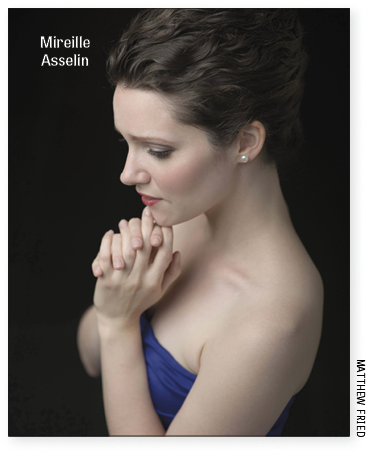
Messing with Winterreise is a growing and delightful industry within classical music performance. Schubert’s best-known song cycle has been fully staged and orchestrated for a chamber ensemble (Netia Jones/Hans Zender/Ian Bostridge), divided between three female singers (Toronto’s Collectìf ensemble), multi-mediatized (William Kentridge’s video projections), arranged for singer, puppet, guitar, and piano with animated drawings (Thomas Guthrie) and staged with the piano and illustrated backdrops (Ebbe Knudsen). On January 17, Toronto will have a chance to see another contribution to the conversation on the meaning of Winterreise, when Le Chimera Project, with baritone Philippe Sly, bring their klezmer- and Roma-inflected take on it to Koerner Hall.

Philippe Sly. Photo Courtesy of Columbia Records.“The inspiration came when I saw a video clip of two friends, Félix de l’Étoile and Samuel Carrier, performing Gute Nacht on accordion and clarinet at a recital,” says Philippe Sly on a Skype call from San Francisco. “I thought, Oh my God, that sound suits this musical content so well. I approached Felix and asked what he thought would be the best arrangement if we were to continue with this klezmer-Gypsy-like aesthetic and he came up with the idea of having trombone, clarinet, violin and accordion instead of the piano.” De l’Étoile and Carrier wrote the draft arrangement and the entire group with Sly worked intensely on the piece for two secluded wintry weeks at the Domaine Forget in Charlevoix, where the Chimera Winterreise had its premiere.

Read more: Winterreisse Unmasked - Le Chimera at Koerner

High and Dry: Zorana Sadiq at Music Mondays in July of 2014.One-woman show. A listening room. A melding of narration and sound-making. Personal and universal. A monologue but also very much a dialogue with the musical tradition. I’m seated at a picnic table in Leslie Grove Park with Toronto-based soprano Zorana Sadiq, trying to tease out what her new creation opening at Crow’s Theatre on November 9 is going to be like.

Read more: Zorana Sadiq at Crow's

Spring is here – and by association I think of people in the spring of life, who are well represented in The WholeNote’s listings this month.


Lang Lang 2International Touring Productions brings the Slovak Sinfonietta, conducted by Kerry Stratton, to Toronto and six other cities in Southern Ontario in late April and early May. With the orchestra will be two pianists: Haiou Zhang, who will perform Beethoven’s Piano Concerto No.5 in E Flat (the “Emperor”); and Elaine Kwon, who will play Rubinstein’s Piano Concerto No. 4. Both pianists are young artists, still in their 20s.

There’s yet another orchestra visiting from Europe this month, the Schleswig-Holstein Festival Orchestra, which according to its websiteis comprised of the world’s finest young musicians under the age of 27, hand-picked through a rigorous auditioning process.” The young musicians are given an extraordinary opportunity to grow together as an orchestra under the direction of principal conductor Christoph Eschenbach, in a community setting based on “mutual understanding, respect, tolerance and awareness of the universality of music and life beyond it.”

The Toronto stop on their first North American tour will be at Roy Thomson Hall on April 6. On their programme will be Mozart’s Piano Concerto No.17 in G K453, performed by Lang Lang – who, speaking of youth, is only 27. I recently read on his website that when he was only two years old, he saw a Tom and Jerry cartoon on TV, in which Tom was attempting to play Liszt’s Hungarian Rhapsody No. 2 in C-Sharp Minor. This first contact with Western music at this incredibly young age is what motivated him to learn piano! I hope the creators of Tom and Jerry have come across this story!


The Kitchener-Waterloo Symphony Orchestra’s three concerts on April 23, 24 and 25 are called simply, “Zeitouni Conducts Brahms.” At a relatively young age, Jean-Marie Zeitouni, another product of the fertile musical soil of Quebec, was appointed associate conductor of Les Violons du Roy. With a long and impressive list of guest conducting appearances to his credit, including the Toronto Symphony Orchestra, he has become a big enough name to draw audiences.


Sibelius at the TSO

The Toronto Symphony Orchestra has put together an ambitious Sibelius Festival, highlighting the orchestral music of Finland’s most famous composer. Over the course of five performances, taking place from April 14 to 22, all seven of Sibelius’ symphonies will be performed, as well as several lesser-known works for violin and orchestra. Guest conductor Thomas Dausgaard will be on the podium for the whole week – no stranger to the TSO or Toronto audiences. The featured violin soloist will be Pekka Kuusisto, the first Finn ever to win the International Jean Sibelius Violin Competition. He’s no stranger, either: Kuusisto played with the TSO in September 2008, and he’s also appeared in recital at Hart House.


“Spring” Quartets

Martin_BeaverA frequent visitor to Toronto, thanks to Music Toronto, is the Tokyo String Quartet. While the quartet’s genesis was in the 1960s at the Toho School of Music in Tokyo, and it has been quartet-in-residence at Yale University since 1976, it also has a strong Toronto connection through Martin Beaver, its first violinist. When you hear the Tokyo String Quartet, you are hearing not only one of the best string quartets in the world, but also “The Paganini Quartet,” a set of Stradivarius instruments named after the legendary virtuoso Niccolò Paganini, who acquired and played them during his illustrious career. The Tokyo String Quartet will perform Beethoven’s Quartet in C Major Op. 59 (“Razumovsky”), the Quartet in E-flat Major Op. 74 (“The Harp”) and the Quartet Op. 95 (“Serioso”) in Music Toronto’s last concert of the season, on April 10


There are several more fine opportunities to hear string quartets. Also on April 10, the Lindsay Concert Foundation presents the Cecilia String Quartet, and the Oakville Chamber Ensemble will perform string quartets by Mozart and Mendelssohn. On April 19, a quartet composed of members of the string section of the TSO will play quartets by Schubert, Beethoven and Brahms as part of the Associates of the TSO’s “Five Small Concerts” series. On April 25, Mooredale Concerts will present the Afiara Quartet, which some people think will be the next great Canadian string quartet. Flutist Robert Aitken, who needs no introduction to WholeNote readers, joins the Quartet in a Boccherini quintet, Alberto Ginastera’s Impresiones de la Puna, and Donald Francis Tovey’s Variations on a Theme by Gluck. The quartet will complete the programme with the Lyric Suite by Alban Berg and Mendelssohn’s Quartet in F minor. On April 29, the Silver Birch String Quartet will give a concert for the Kitchener-Waterloo Chamber Music Society.


Student Talent

Last but not least, there’s plenty of student talent to be heard in April. The Toronto Secondary School Music Teachers’ Association “59th Annual Student Concert” on April 15 stands out. Others are the university choir visiting from East Stroudsburg, Pennsylvania on April 9, the benefit concerts for the St. Simon’s and University Settlement music programmes on April 16 and 18 respectively, the Toronto Symphony Youth Orchestra on April 16, the Toronto Wind Orchestra on April 30 and the Toronto Children’s Chorus on May 1. On April 17 and May 2 respectively, the Canadian Sinfonietta and Arcady are presenting concerts showcasing young artists. The post-secondary music schools, of course, are hotbeds of music-making by young people – and even though many of the student ensemble concerts took place in March, there are still several in April. There are also student solo recitals at York University, the University of Toronto, Wilfrid Laurier, Waterloo, Guelph, Western, Queen’s and the Royal Conservatory’s Glenn Gould School.


Allan Pulker is a flutist and a founder of The WholeNote who currently serves as Chairman of The WholeNote’s board of directors. He can be contacted at classicalbeyond@thewholenote.com.

James Ehnes and Jonathan Crow at a TSM launch in the Richard Bradshaw Amphitheatre. Photo by Chris HutchesonOf all the musical events I’ve taken in online recently, the highlight was watching new TSO music director Gustavo Gimeno in Amsterdam conducting the regathered Concertgebouw, the orchestra in which he played percussion for 11 years beginning in 2001. 

Both Beethoven’s Seventh Symphony (recorded June 2 and broadcast June 3) and Dvořák’s Symphony No.8 (livestreamed on June 5) are now available on YouTube. The Dvořák, its live aura palpable, struck special notes of smooth and sweet, its dance movements floating effortlessly. The musicians observed quite distinct social distancing rules, with the strings separated by 1.75 metres, the winds and brass by two metres, which led to many members being placed on the steps behind the stage.

I was in the midst of a telephone conversation with TSO concertmaster and Toronto Summer Music artistic director, Jonathan Crow, when I wondered. Had he seen it? Yes, he had. Wasn’t it extraordinary, I asked rhetorically.

Read more: “As Live as We Can Do It” – TSM Reborn

13_counterpoint_1_captmondo_may30-09_cocj-703006If you’re looking for something in the realm of classical music in December — and I mean “classical” as in not baroque or renaissance music — you’re in luck … sort of. I say “sort of” because while there are indeed December offerings that don’t involve one adaptation or another of Handel’s baroque masterpiece, Messiah, or lovely renaissance-themed Christmas concerts, the pickings are slimmer than usual. However, the “luck” part lies in the fact that, at least for December, you will not be completely overwhelmed by the sheer number of “Classical & Beyond” (C&B) concerts from which to have to choose. (Let’s face it, that is usually the case with this beat, covering as it must everything from Haydn to Bartók, from solo recitals to orchestras.) So, amid the hustle and bustle of the season, hop on and enjoy the “less is more” C&B sleigh ride for December while you rest up for January!

TAKING STOCK: Any readers inclined to contest my thesis of December’s “less is more” vs. January’s “abundance,” should work their way through the listings as I did, taking stock. They will find 27 concerts in December that fall within C&B’s purview, 42 in January, and 11 in the first seven days of February. They will also doubtless find other interesting patterns emerging. They may notice as I did that of the 27 December concerts, seven offer Mozart, as do 12 in January and one in February. That translates into over 25% of December/January/first-week-of February C&B concerts that have some Mozart in their programmes. Not an insignificant number.

I also noticed six concerts specifically geared to the “younger set”; while not a huge number, the concerts are, nonetheless, pleasing and varied. And I spotted four concerts featuring a Viennese theme, two each in the GTA and beyond the GTA, with one very interesting connection surfacing: two concerts — one GTA, one beyond — actually have “Vienna” in the concert title and both are holding matinees on New Year’s Day. So, armed with all of the above info and analysis, let’s dive into the details.

DECEMBER’S DELIGHTS: Toronto’s Counterpoint Community Orchestra, the “first lesbian/gay/gay-positive orchestra in the world,” celebrates the opening of its 28th season in grand fashion, with a performance of Mozart’s Symphony No.41, the “Jupiter,” on December 3. Directed by Terry Kowalczuk, the CCO’s programme also includes works by Khachaturian, Shostakovich, Schubert, Sousa and von Suppé’s Light Cavalry Overture. St. Luke’s United Church on Sherbourne is the venue. (And if you’re itching for a second dose of the “Jupiter,” you’ll have your chance when the Toronto Symphony Orchestra performs it (twice) in January — details below.)

14_classical_jan_lisieckiOn December 4, both the Kawartha Youth Orchestra and Orchestra Toronto have matinee performances that are “youth/family friendly.” An even more striking coincidence: each is performing Wieniawski’s Violin Concerto No.2, with 16-year old soloists! The KYO features Claire Motyer on violin; Clarisse Schneider does the honours with OT. (Schneider is the winner of OT’s first Concerto Competition: Marta Hidy prize). The KYO also performs works by Sibelius and — you guessed it — Mozart. You’ll find them at Market Hall Theatre in Peterborough at 3pm. Also starting at 3pm, OT’s concert, titled “The Musician Storyteller,” includes Berlioz’s March to the Scaffold and Humperdinck’s Hansel and Gretel overture, as well as works by Khachaturian and Villa-Lobos. All OT’s concerts are at the George Weston Recital Hall, Toronto Centre for the Arts.

Staying with youth-oriented fare for a moment, Mooredale Concerts, which operates a youth orchestras programme (in addition to its two other established series), presents three levels of orchestras comprising 100 players (ages 6 to 18) on December 11, 3pm, at Rosedale Heights School of the Arts. The Junior Orchestra, under William Rowson, performs Handel’s Gavotte in A, Pichl’s Pastorella and Menuett in G by (“Mr. 25%”) Mozart. Rowson also conducts the Senior Orchestra and it performs Elgar’s Serenade for Strings Op.20 and — yes, indeed — Mozart’s Divertimento in D Major K136. The Intermediate Orchestra will play Handel’s Concerto Grosso Op.6 No.4, Clare Carberry conducting.

Kudos to Mooredale Concerts for exposing so many youth to the riches of the orchestral repertoire. In its “Music and Truffles” series, an adjunct to its regular concert series, Mooredale shares the wealth of chamber music with young people, ages 5 to 15. At 1:15pm, on January 15, for example, you can take the munchkins in your life to hear music by Mendelssohn, Tchaikovsky and Piazzolla; the “adult” concert starts at 3:15pm the same day, featuring the same repertoire played in full.

Returning to our “less is more” December theme, in a concert titled “Holiday Charms,” December 9 at Glenn Gould Studio, Sinfonia Toronto performs Mozart’s Violin Concerto No.1 under guest conductor Robert Bokor and violinist Sanghee Cheong. The programme also includes Wolf-Ferrari’s String Serenade, Corelli’s Concerto Grosso Op.6 No.8 “Christmas Concerto,” and Ricercare by Buhr. (ST offers more Mozart on January 20, in its concert titled “Black and White”: Clarinet Quintet K581, orchestral version, with James Campbell, clarinet; and Divertimento K137; this January concert also features the orchestral version of Shostakovich’s Piano Quintet, with Dmitriy Gordin, piano.)

Mozart is also on offer when the Junction Trio presents its “Celebrating the Season with Sound” concert on December 15, 7pm, at the North York Central Library auditorium. The trio also performs works by Bach and Handel. The concert is free, but we are asked to give them a call to register.

Continuing our fine-combing of the listings, it’s not often we get the chance to attend a “Doctoral Recital in Orchestral Conducting,” for free, no less. At 1:15pm at Walter Hall (University of Toronto Faculty of Music) Kerim S. Anwar will conduct Debussy’s Prélude à l’après-midi d’un faune and works by Stravinsky and Schoenberg. Good luck Mr. soon-to-be-Dr. Anwar! And since we’re at the U of T, the Faculty of Music’s free, three-day “PianoFest” happens December 12, 14 and 16, at 7:30pm each night, featuring the advanced students of the piano department.

Just two more December concerts and then I’ll move on to January. Amici Chamber Ensemble presents “Critics Choice: What do they really want to hear?” on December 16 at 8pm. Sounds like fun, especially since they’ve invited critics John Vandriel, Colin Eatock and John Terauds as their guests, along with Yehonatan Berick and Min-Jeong Koh, violin and Barry Shiffman, viola. Hopefully, everyone attending will enjoy hearing the programme of works by Beethoven, Poulenc and Elgar. (What? No Mozart?)

Syrinx Sunday Salons presents a splendid afternoon of works by Chopin, Liszt, Rachmaninoff, Gershwin, Alexander Levkovich, Dmitri Levkovich and others. Pianist/composer Dmitri Levkovich and pianist Anzhelika Fuks will also perform a piece dear to my heart, Schubert’s Fantasie for Four Hands in F Minor Op.103 D940, a copy of which sits atop my piano, at the ready, should someone drop by who can handle the secondo part; I always play the primo. A young friend of mine in Vancouver and I have valiantly attempted to make our way through it many times, over many years; she is my primo secondo! I’m excited to hear these two young and dynamic players do it justice on December 11, 3pm, at Heliconian Hall!

JANUARY’S JEWELS: With over 40 concerts, there’s much from which to choose, making the decision of who and what to include (and exclude) that much more challenging, As a solution, I’m simply going to “rattle off” as many as I can, allowing for as many concerts — and presenters — as possible to get some print:

Let’s start with the New Year’s Day “double-header in Vienna,” I alluded to earlier. Attila Glatz Concert Productions’ “Salute to Vienna” features the Strauss Symphony of Canada, András Deák, conductor, with Renee Schüttengruber, soprano, Wolfgang Gratschmaier, tenor and dancers from the Kiev-Aniko Ballet of Ukraine, at Roy Thomson Hall, 2pm. An hour later, the Guelph Symphony Orchestra presents its “Tour the World Series: Dreams of Vienna” with arias, duets, waltzes, polkas and marches. Judith Yan conducts, with Mark Dubois, tenor and Corinne Lynch, soprano, at the River Run Centre in Guelph.

Music Toronto has two fine and wonderfully varied offerings: on January 12, 8pm, at the Jane Mallett Theatre, flutist Leslie Newman and harpist Erica Goodman perform traditional South American folk songs and music by Ravi Shankar, alongside works by Bach, Saint-Saëns, Doppler/Zamara and others, for MT’s “Discovery Series.” And a week later, on January 19, (same time/same place), we are treated to a concert by the divine Lafayette Quartet performing Wolf’s Italian Serenade, Shostakovich’s String Quartet No.2 in A Major Op.68 and the String Quartet in C Minor Op.51 No.1 by Brahms.

The Toronto Symphony Orchestra prevails, hands down, however, in the “Much Mozart” department. Mozart@256 Festival, the TSO’s eighth annual celebration of the composer’s birthday, offers no fewer than eight concerts in which to immerse yourself, including two for kids; all but one is at Roy Thomson Hall. Mozart@256 runs January 11 to January 22. Some of the highlights include: the Concerto for Three Pianos and Orchestra K242 (with Stewart Goodyear, Katherine Jacobson Fleisher and Leon Fleisher doing the honours); the aforementioned Symphony No.41 K551 “Jupiter”; a “Young People’s Concerts: Mozart’s Magnificent Voyage,” featuring 23 excerpts from Mozart’s works; astonishing young Canadian pianist Jan Lisiecki in the Piano Concerto No.20 K466; and the Requiem K626 with a luminous cast. Phew! For all the details, see the listings.

And if after all that you still crave more Mozart, you’re in luck. In my October column I referred to a certain all-Mozart programme, adding that you’d have to wait for it. Well, it’s here! On January 25, Toronto Philharmonia Orchestra, in its first concert with Uri Mayer as artistic director and principal conductor, presents “Celebrating Mozart” at its home in the George Weston Recital Hall. The programme? Mozart’s Serenade No.6 in D Major K239 “Serenata notturna,” Piano Concerto in C Major K467 “Elvira Madigan” and Symphony No.40 in G Minor K550. The pianist is André Laplante.

In winding up, I want to mention Trio Bravo’s February 5 recital at All Saints Kingsway Anglican Church at 2pm. The trio’s November 6 concert was cancelled due to the ill-health of one of its members. It’s nice to see that they’re back on track with a robust programme of works by Bach, Beethoven, Bruch and Schubert. Bravo, Bravo!

Wishing you all sustained good health, a festive, music-infused holiday season and a soul-nourishing New Year and beyond!

Sharna Searle trained as a musician and lawyer, practised a lot more piano than law and is listings editor at The WholeNote. She can be contacted at classicalbeyond@thewholenote.com.
Toronto Summer Music Festival celebrates its tenth edition by paying homage to the Pan Am Games being held in Toronto from July 10 to 26. Festival artistic director Douglas McNabney has focused his fifth season at TSM on an exploration of the culture of the Americas in the 20th century. How the musical heritage of waves of European immigrants merged with that of indigenous peoples and Americans of African descent is an ongoing narrative that never gets old. To that end, McNabney has curated several programs that will keep any serious concertgoer’s mind off the noise of the hemispheric contests simultaneously raging in the realms of physical culture throughout our fair city.

Soprano Measha Brueggergosman headlines TSM’s July 16 opener, “Americans in Paris,” spotlighting the music of Gershwin and Copland, whose careers were elevated by their European experiences. “The Hollywood Connection” and “American Romantic” are other concerts that promise beautiful music from Barber and Dvořák to Korngold, Beach and Antheil. Arts patron Elizabeth Sprague Coolidge was typical of the classical music lover of the New World, commissioning works by Prokofiev, Poulenc, Britten and Bloch. McNabney cleverly includes a concert July 24 of the fruits of her largesse performed by a collection of topnotch chamber musicians led by TSO concertmaster Jonathan Crow. The final thematic evening "American Avant-Garde,” features the Afiara String Quartet, Pedja Muzijevic, piano, and Harumi Rhodes, violin, performing Cage, Ives, Feldman and Zorn. This kind of stimulating programming is part of what makes summer festivals and TSM, in particular, so compelling.

Argentinian pianist Ingrid Fliter performs Ravel’s Piano Concerto in G Major with the YOA Orchestra of the Americas, conducted by Carlos Miguel Prieto, in a concert that also includes Mexican composer Carlos Chávez’s infectious Symphony No.2 “Sinfonia India” and Dvořák’s ever-fresh Symphony No.9 in E Minor Op.95 “From the New World.” Panamanian pianist Danilo Pérez brings his considerable jazz skills to an all-star Koerner Hall evening July 22.

Garrick Ohlsson, the first American to win the International Chopin competition (in 1970), and coincidentally, a musical inspiration for the young McNabney, brings his sizable pianism and imposing six-foot, four-inch frame to a noteworthy program (in Koerner Hall on July 23) of Scriabin – Désir, Op.57 No.1, Sonata No.10, Op.70, Fragilité, Op.51, No.1 and Sonata No.5 in F-sharp Major, Op.53 – and Beethoven (Sonatas Opp.109 and 110).

Classical-Borromeo.jpgEven more impressive is the Borromeo String Quartet’s complete traversal of Bartók’s six string quartets which will take place August 6 at 7:30pm in the intimate confines of Walter Hall. As David Patrick Stearns wrote in The Philadelphia Inquirer in 2012: “Compared to the Emerson Quartet’s famous Bartók marathons at Carnegie Hall in the 1990s (one of which I attended), Borromeo’s at Field Concert Hall had musicians, music and audience contained in a smaller room that, over the three-hour-plus concert, became laudably claustrophobic: the performances never coasted or let you coast. While the 1990s version of the Emerson Quartet used vibrato so unceasingly as to form a safety curtain between your ears and the music’s intensity, the Borromeo Quartet is much more judicious about such matters, giving performances with more nuanced contrasts of light and shade, as well as more open windows that your ear can’t help but enter. The music’s mystery, violence and sorrow become absolutely inescapable. Spanning the period from 1908 when the composer was 27 to the eve of World War II in 1939, Bartók’s quartets ask to be performed in a single concert not just because they represent one of the highest peaks in 20th-century music, but because there’s an easily traceable progression.”

TSM also acts as a mentoring academy to 28 young musicians on the threshold of a professional career. Chosen by a jury headed by McNabney, 14 fellows in the Chamber Music Institute program for piano and strings (July 13 to August 8) and 14 in the Art of Song program for singers and pianists (July 12 to 25) will study under violinists Martin Beaver, Jonathan Crow, Mark Fewer, Ernst Kovacic, Harumi Rhodes and Axel Strauss; violists Paul Coletti, Steven Dann and Eric Nowlin; cellists Henrik Brendstrup, Denise Djokic and Mark Kosower; soprano Soile Isokoski; and pianists Martin Katz, Pedja Muzijevic, John Novacek, Steven Philcox and Huw Watkins. The “Mentors & Fellows” concerts at Walter Hall feature artist mentors and festival guest artists sharing the stage with TSM Chamber Music Institute fellows at 4pm and 7:30pm on July 18, 25, August 1 and 8. These are unparallelled opportunities for the aspiring professionals to gain invaluable experience making chamber music in front of the public while performing with seasoned musicians of the highest calibre. Which makes them fascinating to attend as well.

In a free TSM preview concert at the Richard Bradshaw Ampitheatre May 28, violist McNabney and violinist Axel Strauss anchored a hushed, lyrical performance of Dvořák’s tuneful Piano Quintet No.2 in A Major, Op.81. Pianist fellow Todd Yaniw was a sensitive keyboardist; cellist fellow Sarah Gans and violinist fellow Aysel Taghi-Zada blended in nicely. The noontime recital proved McNabney’s point (in his introductory remarks) that (young) musicians learn how to project their feelings about music by playing in public. In Dvořák they had a most willing partner. The first and second movements were filled with so much melody that if you were on a walk in the woods, dropping notes like breadcrumbs, you would have no trouble finding your way back home.

Classical-Lewis.jpgStratford Summer Music: The Liverpool-born pianist Paul Lewis discovered classical music by listening to records in his local library as a child. Curiously, the first pianist he heard was Alfred Brendel, whose affinity for Schubert and Beethoven was echoed in Lewis’ own critically acclaimed recordings many years later. His WMCT Toronto debut playing Schubert’s last three sonatas in the fall of 2012 still lingers vividly in my mind; his recent Koerner Hall recital with the violinist Lisa Batiashvili was memorable for its Schubert and Beethoven. So it makes for a kind of cyclic balance that Lewis’ Stratford recital July 29 will consist of Beethoven’s last three sonatas, Opp.109. 110 and 111. His Harmonia Mundi recording of these pianistic touchstones was named Gramophone Record of the Year in 2008. This is one of the destination concerts of the summer; the fact that it follows Garrick Ohlsson’s TSM recital, which also includes Opp.109 and 110, by a mere six days adds another layer to its attraction – the opportunity to compare artistic interpretations.

Another reason to make the trek to Stratford is the chance to hear budding superstar Jan Lisiecki play all five of Beethoven’s piano concertos with a string quartet! Having heard his trio of concerts with the TSO last November when he performed Nos. 3, 4 and 5 under the baton of Thomas Dausgaard, I can’t wait for the added intimacy the Annex Quartet and the Revival House venue will provide August 27, 28 and 29.

Another innovative piece of programming finds three Tafelmusik violinists each performing a Bach unaccompanied sonata and partita in a “Musical Brunch” on two separate weekends. The series begins July 25 and 26 with Julia Wedman playing Partita No.2. Aisslinn Nosky follows with Sonata No.1 August 1 and 2; Christina Zacharias performs the Sonata No.2 August 8 and 9; Nosky returns with Partita No.3 August 15 and 16; Zacharias follows with Partita No.1 August 22 and 23; Wedman completes the cycle August 29 and 30 with Sonata No.3.

Classical-Tselyakov.jpgFestival of the Sound: The 36th summer of this long-running vibrant festival has much to recommend between July 18 and August 9 beginning with “Flute, Harp and Strings” on July 21 when Suzanne Shulman, Caroline Léonardelli, Gil Sharon, Ron Ephrat and Yegor Dyachkov perform Debussy, Saint-Saëns and Villa-Lobos among others. An overview of Brahms promises much over three concerts July 22, while July 23 features a wealth of chamber music from Haydn, Beethoven and Schubert to Bruch, Saint-Saëns and Poulenc culminating in a 7:30pm concert of Beethoven’s Piano Quartet with André Laplante and Schubert’s seminal Quintet in C. Violinist Moshe Hammer performs two recitals on July 30; in the later one his Beethoven Violin Sonata “Spring” is followed by the Penderecki String Quartet playing the composer’s great String Quartet Op.131. On August 4, the Afiara String Quartet gives us Beethoven’s final quartet Op.135. The next day violinists Martin Beaver and Mark Fewer lead a cast of supporters in Beethoven’s irresistible Septet. August 7 Beaver and Fewer are joined by festival artistic director, clarinetist James Campbell, the Afiara String Quartet and others for intimate concerto performances of Haydn’s Violin Concerto in D and Mozart’s sublime Clarinet Concerto. Earlier in the day, you can hear Stewart Goodyear’s take on Beethoven’s Diabelli Variations Op.120. Two days later, Goodyear is joined by Boris Brott and the National Academy Orchestra for Beethoven’s Piano Concerto Op.73 “Emperor.” A festival of many sounds.

Music and Beyond: Running from July 4 to 17, this Ottawa classical music and multi-disciplinary festival highlights the delightful Vienna Piano Trio (whom I profiled in my March column earlier this year) in three concerts July 8, 9 and 10. Then on July 11, the trio’s pianist, the voluble and charming Stefan Mendl, joins soprano Donna Brown for an afternoon of “Song and Conversation” with music by Schubert and Brahms.

Clear Lake Chamber Music Festival: The tenth anniversary of this August long-weekend festival (July 30 to August 3) under the artistic direction of pianist Alexander Tselyakov features seven musically rich concerts, two of which are jazz-oriented. The five classical recitals are well-programmed and varied, with Tselyakov himself, and his talented pianist son Daniel, collaborating with violinist Marc Djokic, hornist Ken McDonald, cellist Simon Fryer and others in music ranging from Beethoven to Piazzolla, Mendelssohn and Schumann to Franck, Sarasate and Corigliano, all of which only enhance the natural beauty of Riding Mountain National Park, Manitoba, where the festival takes place.

Classical-Danish_String_Quartet.jpgOttawa Chamberfest: There is a feast for the ears here from July 23 to August 6. Belgian violinist Augustin Dumay’s July 24 recital of Brahms, Debussy, Ravel and Beethoven is a chance to hear this patrician musician before his Koerner Hall concert next year. The strong Haydn component begins July 28 with “Haydnfest I,” the first of two programs by the kinetic St. Lawrence String Quartet. The Calidore String Quartet also play two Haydn recitals, as do the Cecilia and Eybler String Quartets, making a total of eight “Haydnfests.” The Calidore quartet joins up-and-coming Russian pianist Pavel Kolesnikov July 28 in a performance of Schnittke’s Piano Quintet following a selection of Scarlatti sonatas and Beethoven’s Op.109. Stalwart Canadian pianist André Laplante’s solo recital July 31 includes Bach, Mozart, Schubert, Beethoven and Liszt. In “Metamorfosi” soprano Suzie LeBlanc joins the Constantinople Ensemble August 1 in works by 17th-century Italian composers Monteverdi, Kapsberger, Landi and Strozzi. The celebrated Danish String Quartet performs two evening programs August 5. Beethoven’s Op.18, No.1, Schnittke’s String Quartet No.3 and Nielsen’s String Quartet No.1 comprise the earlier concert; the later one is devoted to Wood Works, their CD of traditional Nordic folk music. Four days later, the Danes play the Beethoven and Nielsen as part of their TSM recital, a must-see for those who cannot be in Ottawa. In the meantime, there are worthwhile musical moments every day in this packed festival.

Quick Picks

Tafelmusik Baroque Summer Festival: This annual Toronto event provides an invaluable introduction to our world-class baroque orchestra. Even better, admission is free, on a first-come basis. Check the Summer Festivals listings for details on programs and venues for the June 5, 10, 14 and 17 concerts.

Summer Music in the Garden: July 5 Elinor Frey, cello; July 19 Shauna Rolston, cello, and the Cecilia String Quartet play Schubert’s glorious Quintet in C; July 30 Ton Beau String Quartet; August 13 Blythwood Winds play Barber and Rossini.

Music Mondays at the Church of the Holy Trinity: June 8 Angela Park, piano; June 29 Raphael Weinroth-Browne, cello; July 6 Cecilia Lee, piano; July 20 Mary Kenedi, piano; July 27 Chris James, flute, Lara Dodds-Eden, piano.

Kitchener-Waterloo Chamber Music Society: June 24 Pianist Su Jeon and violinist Andrea Tyniec have included Schubert’s vital Violin Sonata D574 and his Fantasy in C along with Arvo Pärt’s mesmerizing and iconic Spiegel im Spiegel in their intelligently designed program; July 26 pianist Alexander Tselyakov’s program includes Brahms’ Horn Trio and Beethoven’s Horn Sonata in what is in effect a preview of his own Clear Lake Festival recital five days later, only with different musical partners.

Toronto Symphony Orchestra: June 10 and 12 the TSO led by Peter Oundjian performs Mahler’s essential Symphony No.2 “Resurrection.” June 26 the TSO performs Holst’s indispensible The Planets in a Luminato “Late Night” concert. June 28 the TSO’s free Luminato concert, “A Symphonic Zoo,” runs the gamut from Tchaikovsky’s Swan Lake and Stravinsky’s Firebird to Rimsky-Korsakov’s Flight of the Bumblebee, Prokofiev’s Peter and the Wolf, the Bulldog from Elgar’s Enigma Variations and the Mule from Grofe’s Grand Canyon Suite. 

June 17 and 18 HanVoice presents a benefit concert with Scott St. John and friends, including cellist Roman Borys and pianist Angela Park, performing Bach’s Brandenburg Concerto No.3, Mendelssohn’s Octet and Dvořák’s Piano Quintet.

June 20 and 21 The Night Dances” presented by Luminato, finds Charlotte Rampling reading Sylvia Plath and Sonia Wieder-Atherton playing selections from Britten’s Suites Nos. 2 and 3 for solo cello. Anthony Tommasini wrote of its American premiere in The New York Times on April 24, 2015: “During some stretches of ‘The Night Dances,’ music and poetry overlapped. For me, the greatness of Britten’s music came through with special force when Ms. Wieder-Atherton played alone and Ms. Rampling just listened, with an acuity as gripping as her recitations.”

June 23 Nine Sparrows Arts Foundation presents flutist Allan Pulker in a free lunchtime concert.

July 29 St. Stephen’s in-the-Fields Anglican Church presents the Ton Beau String Quartet in a free midday concert. 

Paul Ennis is the managing editor of The WholeNote. he can be reached at editorial@thewholenote.com.
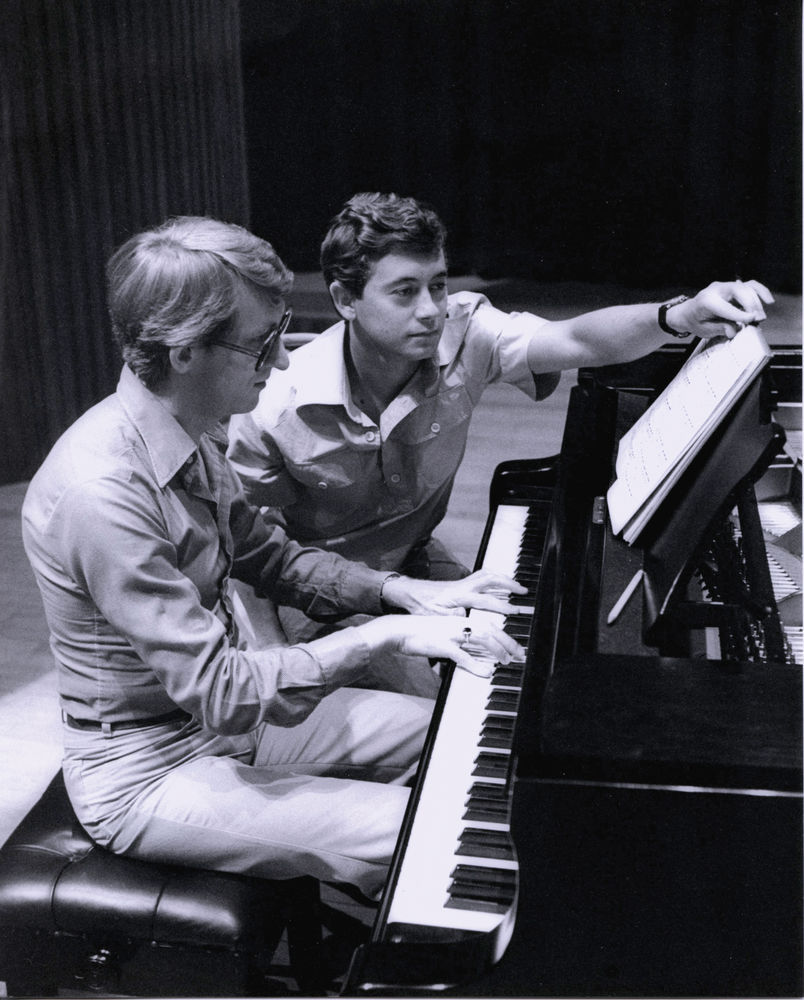
Sheku and Isata Kanneh-Mason. Photo by JAMES HOLE

The fearlessness it takes

Cellist Sheku Kanneh-Mason’s meteoric rise began when his passionate playing won him the 2016 BBC Young Musician Competition. Then he upped his fame quotient when he performed three short pieces at the wedding of Prince Harry and Meghan Markle for an audience of more than two billion viewers. Now, he and his older sister, pianist Isata (b. 1996), both of whom are acclaimed Decca recording stars, will be making their much-anticipated Toronto debut on May 6 at Koerner Hall.

The young cellist (b. 1999) told The Violin Channel in November, 2016 that he has been very lucky to be surrounded by his family. “My six siblings, all of whom are also classical musicians, have been there to support me, give me advice, perform with me and generally keep me concentrating on the music. Coming from such a supportive musical family has been a great strength and has always made my approach to music a collaborative one. Although I love solo playing, I feel that it is in the interaction between soloist and accompanist, or within a chamber group, orchestra and concerto soloist that music comes alive.”

Read more: A house full of richness: Sheku and Isata Kanneh-Mason

The Canadian Brass PHOTO NINAYOSHIDA NELSENAs live music venues open up, summer music festivals get ready to party like it was 2019. Here, I am going to focus on just two of them, in no small part based on my own lifelong predilection for the piano.

Festival of the Sound

The roots of this venerable attraction extend back to the summer of 1979 when renowned pianist Anton Kuerti purchased a summer home near Parry Sound and organized three concerts by outstanding Canadian musicians. The enthusiastic response to these programs inspired him to propose an annual concert series, and the 1980 Festival of the Sound became Ontario’s first annual international summer classical music festival. In 1985, James Campbell began his tenure as the Festival’s second artistic director, a position he still holds today.

This year’s festival is not all about the piano, though. It opens Sunday night, July 17, with a joyous celebration of choral music by the Elmer Iseler Singers; July 18’s sold-out evening concert marks the 50th anniversary of the Canadian Brass. Then, after clarinetist Campbell and the Rolston String Quartet perform Brahms’ Clarinet Quintet, among other works on the afternoon of July 19, the festival takes an unusual pianistic turn, hanging its musical summer hat on a piano festival featuring some of Canada’s finest keyboard artists, with 20 concerts underpinning a cleverly designed series of connected recitals. Jazz, personified by Dave Young, Heather Bambrick, Campbell himself, and others, then takes over the last weekend of July.

Read more: A piano-lover’s feast at Parry Sound and Lanaudière

Now in its 13th year and divided into six smaller series – vocal, chamber music, piano virtuoso, jazz, world music and dance – there are very few series in town that cover so many WholeNote areas of interest as the Canadian Opera Company’s remarkable Free Concert Series in the Richard Bradshaw Amphitheatre. This month, for example, in addition to five concerts that jumped out at me, both Lydia Perović in her Art of Song column and Jazz Notes columnist Steve Wallace found noteworthy concerts in their respective beats. It struck me as an opportune moment to ask the series’ program manager Dorian Cox how the curatorial process works.

He told me that he programs each series in a slightly different way. The vocal series, for example, “is largely comprised of artists who are already involved with the COC (on the mainstage or part of our Ensemble Studio), whereas the world music and jazz series are largely comprised of artists who have approached me or whom I have sought out.” Overall, about a third of the performances are COC artists, a third are presented in collaboration with other institutions and the last third are independent artists.

Cox is always on the lookout for artists who he thinks might want to participate and whom he thinks his audience will appreciate. “It’s a 24/7 job in that way,” he says. “The wheels are always turning and I try to see as many concerts as possible, which can truthfully get a bit overwhelming when I already have 72 that I’m presenting this season.” He feels fortunate to be approached by many performers and connected to others through mutual contacts. And based on what his network is interested in, he finds social media to be a helpful tool.

“Remembering Kristallnacht” on November 8 was the first concert that caught my own eye this month. Cox told me that a meeting last January with the German Ambassador to Canada, Sabine Sparwasser (“a huge supporter of the COC”), led directly to it. “She was keen to present a concert and it was her idea to do something that would commemorate the 80th year since Kristallnacht – the wave of violent anti-Jewish pogroms which took place across Germany on November 9 and 10, 1938. Berlin-born pianist Constanze Beckmann (a recent RCM graduate from the studio of John Perry), joins her regular chamber music partner (Glenn Gould School faculty member, Lithuanian-born violinist Atis Bankas), to perform music by Edwin Geist, Joseph Koppel Sandler, Szymon Laks and other persecuted Jewish composers. With the support of the Consulate General of Germany in Toronto, the concert is also part of the Neuberger 2018 Holocaust Education Week.

Cox has a strong connection to “From the Diary of Virginia Woolf” (November 13) which is a major focus of this month’s Art of Song column. It’s the first project of Muse 9 Productions, the brainchild of stage director Anna Theodosakis and pianist Hyejin Kwon, both of whom he knows well. Kwon is a graduate of the COC Ensemble Studio and Theodosakis has been the director or assistant director of many projects at the COC. “This particular project was very engaging when I saw its premiere [in April].”

Sae Yoon ChonNovember 14’s “Piano Teatro” program features Glenn Gould School fourth-year B.Mus. student Sae Yoon Chon performing Bach’s Chromatic Fantasy and Fugue in D Minor and Brahms’ Piano Sonata No.3 in F Minor. Chon recently won First Prize at the Dublin International Piano Competition and Cox calls him “a pianist who is on the rise in the international music scene.” (I was fortunate to hear Chon’s impressive playing of the Bach for Leon Fleisher in a masterclass on October 12, where Fleisher told Chon he was “filled with admiration for the way you play the piano, for the amount of finger control you have.”)

“Like the Glenn Gould School, the Schulich School of Music at McGill University is another powerhouse music school and another one of our educational institution partners,” Cox says. “November 20, their critically acclaimed cello professor, Matt Haimovitz will be travelling to Toronto with Uccello, an all-cello ensemble, to showcase the best of the best from their program.”

The Golden Violin Competition has been held every year at McGill since 2006. The 2017 winner of its $25,000 prize, Maïthéna Girault, performs on November 21 at noon. Her program had not been finalized by the time our November issue went to press; but programs for each week are posted on the COC website on the Friday before.

You can read why “Songs in the Key of Cree” (November 28) caught Steve Wallace’s attention in his Jazz Notes Quick Picks this month. As for Dorian Cox, it “is an example where I was connected to one artist through another. Ian Cusson a Canadian composer and pianist of Métis and French-Canadian descent, had worked with Tomson Highway, Patricia Cano and Marcus Ali on this project as a rehearsal pianist. Ian will be performing in a concert of his own compositions on March 5 and during those conversations I asked about his work with Tomson Highway. Ian connected me to Patricia and I was thrilled that everything fell into place from there!”

David Dias da SilvaClarinetist David Dias da Silva and pianist Olivier Hébert-Bouchard have been touring “Portraits and Fantasias” across Ontario and Quebec with the support of Jeunesses Musicales du Canada (JMC). “JMC is yet another one of our amazing partner organizations,” Cox said. “They help young professional musicians to develop their careers and are experts in coaching the artists to create cohesive and unique programs.” The November 29 concert has yet to be finalized but will include a portion of their touring program: Luigi Bassi’s Fantasia da concerto su motivi del Rigoletto; Debussy’s Première rhapsodie for B-flat clarinet and piano; Schumann’s Fantasiestücke, op.73: I. Zart und mit Ausdruck.

The Free Concert Series is justifiably popular. Seating and standing room are limited. Plan on arriving at least 30 minutes in advance.

Mandle Cheung conducts his orchestra.One of a Kind: Mandle Phil

“The very first piece of classical music I heard was Saint-Saëns’ Third Violin Concerto,” Mandle Cheung writes on his website. “I was 13, listening to a pocket-sized radio with earphones. I was born and raised in Hong Kong, and though my family wasn’t particularly musical, from that point, I was hooked on music ever since. “ After he moved to Canada in 1968, he stuck to a sensible major, computer science – but he managed to pick up some music courses along the way, eventually taking up conducting with Arthur Polson and leading the orchestra in Beethoven’s Third Piano Concerto for their graduation concert. Later, he was invited to perform Arthur Benjamin’s Harmonica Concerto with the CBC Winnipeg Orchestra, Eric Wilde conducting.

That was his last musical activity for a few decades. He moved to Toronto in 1975, working for large corporations in software and networking. In 1987 he struck out on his own, which brought him business success. Then one day in 2015, “I woke up thinking that if I still dream of conducting, I better get researching.”

At 70, Mandle Cheung decided to pursue that longtime dream. And with his brand-new orchestra, comprised of almost 70 professional musicians based in the GTA, “All Awakens with Joy.” is finally happening. Mandle Cheung and the Mandle Philharmonic perform Beethoven’s Symphony No. 5 in C Minor, Op.67 and Mahler’s Symphony No.4 in G Major. (Jennifer Taverner is the soprano soloist in the fourth movement of the Mahler.) November 9 at 8pm at the Glenn Gould Studio will see the dream fulfilled, fuelled by passion and hard-won through tireless rehearsal and meticulous study. Admission is by donation. Proceeds will go directly into a career development grant fund – grants will be awarded to promising early career musicians, to aid in professional development.

Gallery 345

There’s a cornucopia of concertizing at Gallery 345 this month. Here is a sample of the bounty. On November 1, fans of Gregory Millar’s chamber music get an opportunity to hear him as a soloist in the Gallery’s ongoing Art of the Piano series. His recital ranges from CPE Bach to Barbara Pentland, from Beethoven and Chopin to Brahms and Prokofiev. The Mexican-born Alejandro Vela continues the series on November 10 with a program of Gershwin, Granados and Chopin, anchored by Rhapsody in Blue and the Funeral March Sonata.

Cellist Noémie Raymond-Friset was recently named one of the 30 hot Canadian musicians under 30 by CBC Music. For her contribution to the Art of the Cello series on November 11, she will perform music by Schumann, Stravinsky, Poulenc and WholeNote contributor David Jaeger (Constable’s Clouds). Peter Klimo is the collaborative pianist. Pianist Jean-Luc Therrien teams up with violinist Jean-Samuel Bez for a program of music by Schubert, Fauré, Lili Boulanger, Enescu and Kreisler on November 22. And TSO assistant principal cello Winona Zelenka continues the Art of the Cello series – with the Gryphon’s Trio’s pianist, Jamie Parker – on December 1, with a fascinating program of Bach, Ligeti, Pärt, Crumb and Bjarnason.

Music Toronto

The long-running chamber-music series continues its 47th season with three auspicious concerts.

On November 15, Ensemble Made in Canada bring their ambitious Mosaïque project to the Jane Mallett stage. This recently commissioned suite of piano quartets by 14 Canadian composers, each inspired by a particular region of Canada, is currently on a nationwide tour of all ten provinces and three territories. After intermission, look for the Ensemble to bring out the subtleties of Schumann’s Piano Quartet in E-flat Major, Op.47.

Next, the whole world is the subject of pianist Louise Bessette’s November 27 recital. From John Adams’ China Gates to Percy Grainger’s In Dahomey, Bessette’s musical grand tour consists of 15 diverse selections.

Music Toronto stalwarts, the Gryphon Trio, celebrate their 25th anniversary season on December 6, with a variety of works – Mozart, Silvestrov, Pärt and others – before moving into Paul Frehner’s Bytown Waters (commissioned to celebrate the Trio’s milestone), and Brahms’ fully packed Piano Trio in C Major, Op.87

CLASSICAL & BEYOND QUICK PICKS

NOV 2 AND 3, 8PM: Pianist Charles-Richard Hamelin (recently named piano mentor at TSM 2019), is the soloist in Brahms’ dramatic Piano Concerto No.1 with the Kitchener-Waterloo Symphony led by Andrei Feher.

NOV 4, 6:30PM: Sheila Jaffé, violist in the COC Orchestra, puts on her violinist hat as she joins violinist Jeffrey Dyrda (who recently concluded three seasons as second violin of the Rolston String Quartet), Emmanuelle Beaulieu Bergeron (TSO associate principal cello) and Pocket Concerts co-director, violist Rory McLeod, in Mendelssohn’s String Quartet No.2, Op.13 and Garth Knox’s Satellites, one of the Kronos’ Quartet’s 50 for the Future commissions.

NOV 12, 8PM: The Kitchener-Waterloo Chamber Music Society presents two former members of the fondly remembered Cypress String Quartet, Cecily Ward, violin, and Ethan Filner, viola, and Aaron Schwebel (concertmaster of the National Ballet of Canada Orchestra and associate concertmaster of the COC Orchestra), performing works for two violins and viola by Dvořák, Prokofiev, Kodály and more.

NOV 15, 7:30PM: York University Faculty of Music presents Duo Forte – Christina Petrowska Quilico and Shoshana Tellner – in a program of danceable four-handed piano repertoire that includes Barber’s Souvenirs, Gershwin’s Cuban Overture, Arthur Benjamin’s Jamaican Rhumba, Kapustin’s jazzy Slow Waltz, Ravel’s brilliant La Valse and Piazzolla’s urgent Libertango.

NOV 16, 7:30PM: U of T Faculty of Music presents the New Orford String Quartet and guests performing two cornerstones of the chamber music repertoire: Brahms’ masterful Piano Quintet in F Minor, Op.34 and Mendelssohn’s dazzling Octet Op.20.

John Storgårds conducts the TSO in November. Photo by Marco BorggreveNOV 21, 8PM; NOV 23, 7:30PM; NOV 24, 8PM: Pianist Kirill Gerstein brings his improvisatory sensibility to Beethoven’s free-flowing Piano Concerto No.4 in G Major, Op.58 while John Storgårds conducts the TSO; the not-to-be-missed program also includes Ravel’s kinetic Boléro.

NOV 25, 2:30PM: Violinist Aisslinn Nosky returns to conduct the Niagara Symphony Orchestra in Beethoven’s essential Symphony No.3 “Eroica,” as well as taking the solo part in Haydn’s Violin Concerto in G Major.

NOV 30 AND DEC 1, 8PM: Stewart Goodyear, piano, Bénédicte Lauzière, violin, and John Helmers, cello, join conductor David Danzmayr and the Kitchener-Waterloo Symphony in Beethoven’s Triple Concerto in C Major, Op.56, a rare opportunity to hear this underrated work for an unusual combination of soloists.

DEC 2, 3:15PM: Mooredale Concerts presents the aptly named Artistic Directors Trio in works by Schumann, Handel and more. Pianist Wonny Song is the artistic and executive director of Orford Music (Quebec) and Mooredale Concerts. Violinist Tien-Hsin Cindy Wu is artistic partner of the Da Camera Society (Los Angeles) and assistant director of the New Asia Chamber Music Society (New York City). Violist Wei-Yang Lin is artistic director of the New Asia Chamber Music Society. Intriguing.

Paul Ennis is the managing editor of The WholeNote.

This month’s column is all about singing!

Two names jump out at me because of their involvement in four different events. They are Shannon Mercer and Carla Huhtanen, both young sopranos already with a wealth of experience behind them – and, I suspect, brilliant careers ahead. Of Mercer, Toronto composer and organist Andrew Ager says, “She is a true artist for whom I have unbounded admiration. What I like most is her consistent commitment to delivering the meaning of the text with an instrument of great flexibility and beauty, always with an unusual intensity of expression.” As for Carla Huhtanen, Boris Zarankin, co-artistic director of the Off Centre Salon, had only to hear her once (at last year’s Soulpepper Cabaret Festival) to know that she met the exacting standards of his highly respected concert series.

The two sopranos appear together in Queen of Puddings’ November 12 performance of Swedish composer Karin Rehnqvist’s Puksånger-Lockrop, a category-defying composition described in Queen of Puddings’ press release as “a fearless, hair-raising, primal and exhilarating tour-de-force for two female singers and timpani inspired by Swedish folk music and herding calls.”

13a_huhtanen Huhtanen admires Queen of Puddings directors in general for their challenging repertoire choices, and says that this piece is challenging not only to the performers but also to the audience, in a way that engages rather than alienates the listener. Rehnqvist, she says, does this by using contrast as a musical development strategy, varying colours and textures, moving from passages that are almost hypnotic to gradual accelerations to traditional Swedish folk music techniques. These include the raucous and penetrating “kulning,” formerly used out of doors for herding cattle and communicating over long distances – Huhtanen calls it a “sung shout.”

On November 29 Huhtanen will join pianists Inna Perkis and Boris Zarankin, mezzo Krisztina Szabó and baritone Jesse Clark in Toronto’s longest running Schubertiad (their 15th!) at Glenn Gould Studio. The programme for this concert is of particular interest because it was all composed in the last year of Schubert’s all too short life. While it will include well known masterpieces, such as Shepherd on the Rock, and the posthumously compiled song cycle Schwanengesang, it will also include less known lieder.

“While I really enjoy doing contemporary music, I also love to sing lieder,” commented Huhtanen, “which is like a yoga class for the voice. With Schubert it is all about telling a story, communicating the words, it all starts with the words, with simplicity. It is so simple and so intimate; it’s just being there with the pianist and the audience. It has also been almost a discovery, after not singing any German repertoire for some time, to experience how good it feels to come back to singing in German.” Zarankin also looks forward to working with Clark and Szabó – and with flutist Robert Aitken, who will perform Schubert’s very last song, “Tauben Post,” as a solo flute piece.

13b_mercer The third concert, on November 22, St. Cecilia’s Day (Cecilia being the patron saint of music) and also Benjamin Britten’s birthday, is called simply “Blessed Cecilia.” It’s the Aldeburgh Connection’s second Sunday concert of the season and will mark the 350th anniversary of the birth of Henry Purcell and the 96th of Benjamin Britten. The Aldeburgh Connection at this event, according to their website, will “seize the opportunity of celebrating the songs of two English masters,” and will “acknowledge the healing and sustaining power of music.” The soprano soloist in this concert will be Shannon Mercer, who will share the stage with tenor James McLean, and bass-baritone Giles Tomkins.

The fourth event is Toronto New Music Projects’ December 6 performance at the Music Gallery of Philippe Leroux’s “Voi(REX)” for six instruments, electronics and soprano. Carla Huhtanen, the soprano in this performance, describes the work as “difficult,” but also “fun and witty.” Leroux, who was associated for many years with Pierre Boulez’s IRCAM in Paris, is not yet well known in Canada, but his works are performed around the world.

The singers I’ve written about are of the rising generation of Canadian vocal artists whose talents are in demand, not just at home but abroad as well. In fact, at the time of writing, Mercer was in London rehearsing Eric Idle’s comic oratorio Not the Messiah – she performed in its world premiere in Toronto in 2007 – and Szabó was in Ireland performing in the Wexford Opera Festival.

They, of course, are the latest in a long line of internationally renowned Canadian singers, the first of whom was probably Emma Albani, whose career began around 1870 – eight years before the birth of the legendary Canadian tenor, Edward Johnson, who not only sang at New York’s Metropolitan Opera but later became its director. Since then many more Canadian singers have performed on opera and recital stages around the world.

Two of the greatest artists in our long tradition of vocal artistry were soprano Lois Marshall, and contralto Maureen Forrester. The two did a tour together in 1973, which will be commemorated by soprano Lorna MacDonald, and mezzo Kimberly Barber, in a special recital, “Celebrating Marshall and Forrester” on November 10 in the Maureen Forrester Recital Hall at Wilfrid Laurier University, where Barber is the co-ordinator of vocal studies, and on November 19 in Walter Hall at the University of Toronto, where MacDonald is the head of vocal studies. I see this not only as a tribute to two great singers of the past but also as a celebration of the singing tradition, to which these two great Canadians added so much.

I’m reminded of something one of our great Canadian singers, Richard Margison, said to me a dozen or more years ago: “I like The WholeNote because it covers the local scene, and that’s where we all start our careers.” How true! So keep in mind that great talent may be found even at small events in humble venues. By all means, do go and hear the great ones in our midst, but also get out and support a smaller event in a smaller venue as well. It’s rewarding to be able to say – as I can of bass Robert Pomakov, whom I heard sing in a gymnasium at University Settlement House 15 years ago – that you heard so-and-so before he/she was famous!

Allan Pulker is a flautist and a founder of The WholeNote who currently serves as Chairman of The WholeNote’s board of directors. He can be contacted at classicalbeyond@thewholenote.com.
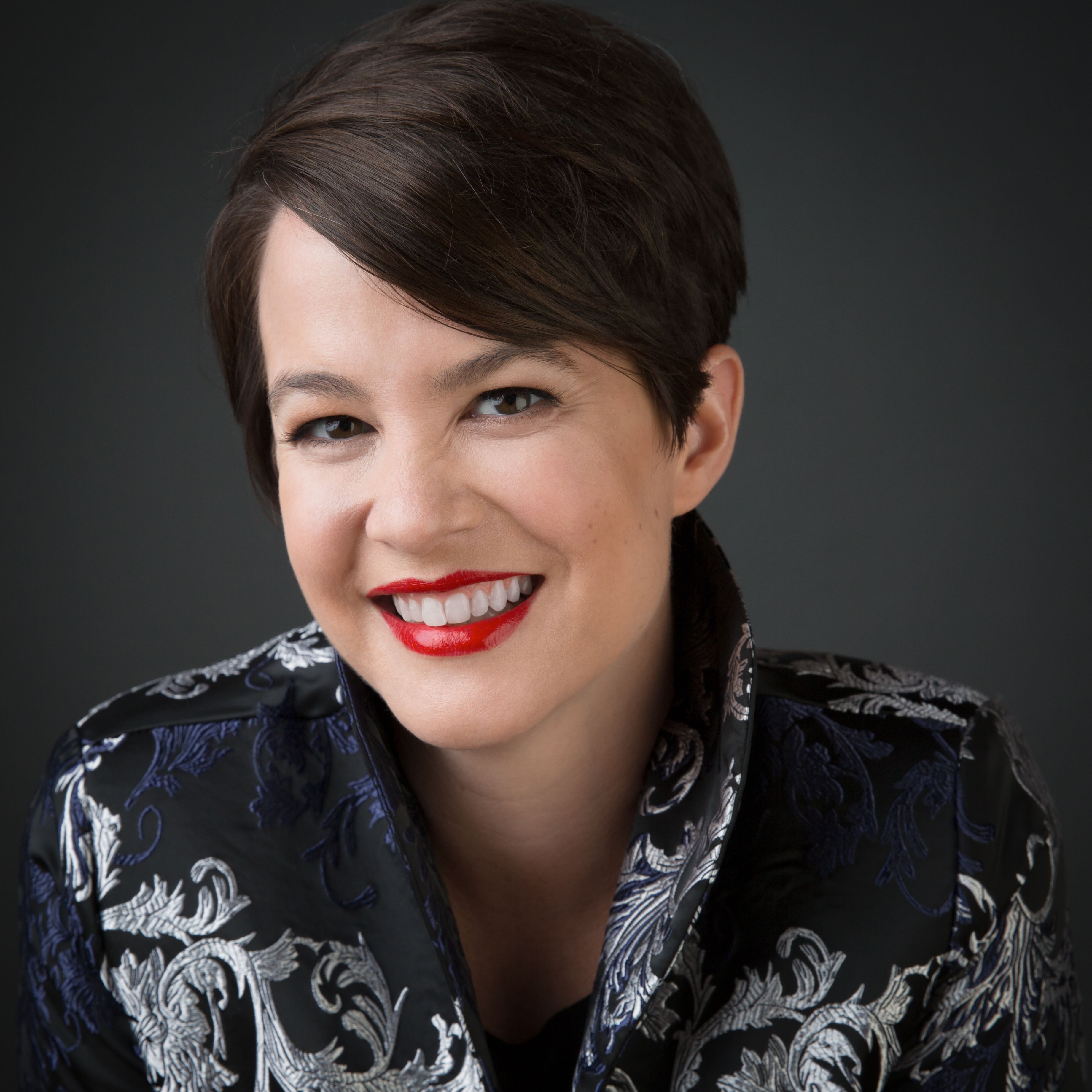
 

Classical_Banner.jpg2201_-_Classical_1.jpgMy musical life in Toronto this summer was bound up in Toronto Summer Music’s “London Calling” season, 25 days of activities spurred by the idea of musical life in London throughout the centuries. That clever conceit enabled the program to broaden its content beyond English works to encompass music heard in London, particularly in the popular 19th-century concert-giving associations. TSM’s 11th edition, the sixth and final under its personable artistic director Douglas McNabney, was its most extensive to date, unfurling a huge amount of repertoire between July 14 and August 7. I was able to take in ten concerts, three masterclasses and a rehearsal, making for many memorable moments, much of which I have already written about on thewholenote.com. Here are some highlights:
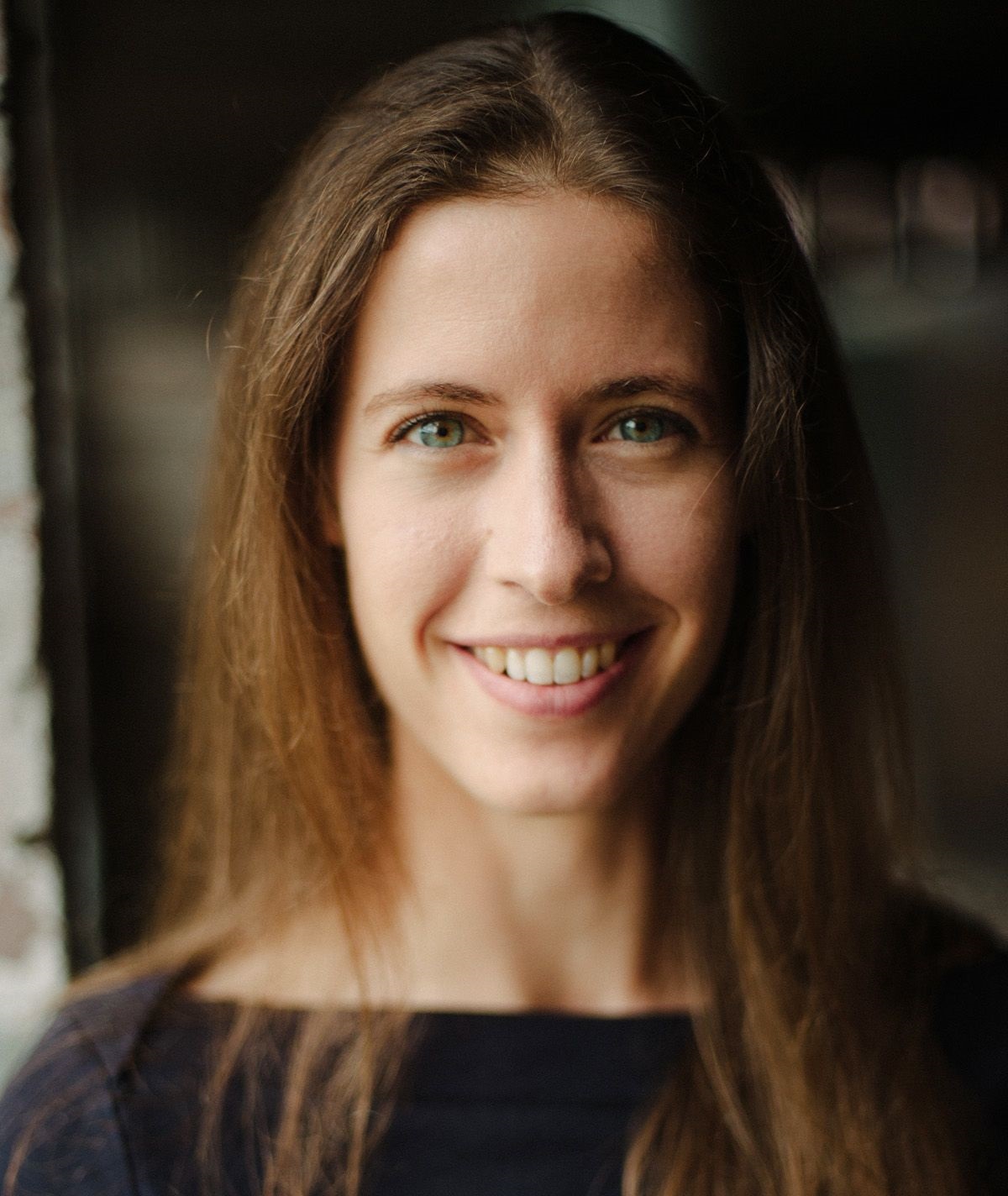
McNabney’s farewell season got off to an impressive start with a concert of English music for strings conducted by Joseph Swensen. He introduced the evening and noted that Britten’s Serenade for Tenor, Horn and Strings, which we were about to hear, was the first piece he wanted to program in the festival. The remarkable performance which followed - by American tenor Nicholas Phan, TSO principal horn Neil Deland and the TSM Festival Strings - was breathtaking in its execution. Deland’s horn playing was unforgettable for its purity of tone, a wondrous support for the mercurial tenor and the assorted poetic anthology, the text taken from some of Britten’s favourite verse by the likes of Tennyson, Blake and Keats; the powerful Blow, Bugle Blow, the foreboding horn of The Sick Rose, the anguished and awestruck Lyke Wake Dirge and the seductive voice of To Sleep. What a rare treat!

In a refreshing concert July 19, pianist Pedja Muzijevic’s presented “Haydn Dialogues,” a 75-minute performance of four Haydn sonatas separated by pieces by Oliver Knussen, John Cage and Jonathan Berger. Passionate about mixing old and new music, Muzijevic is also a genial talker, combining a delicious wit and the occasional catty comment with a streamlined historical sensibility that made it easy to relate to Haydn and his relationship with his patrons, the Esterházy family, and to the timely invitation by the British impresario, Salomon, to live and work in London. (“Talk about London Calling,” Muzijevic added in a clever aside.)

The Coronation of King George II took place in October of 1727; Handel was commissioned to write four anthems for the ceremony. On July 26 in Walter Hall, Daniel Taylor led his Theatre of Early Music in a delightful hour-long re-imagining of the event that literally and figuratively was the grand centrepiece of TSM’s season. In addition to using music of the day, Taylor had the wisdom to include three anachronistic elements: Hubert Parry’s I Was Glad and Jerusalem, as well as John Tavener’s Hymn to the Mother of God, which broadened the evening and extended the ceremonial maelstrom into the 20th century. The effervescent Taylor and his company had the musical smarts to carry it off.

A week of exceptional musicality (which also included TSO concertmaster and TSM artistic director designate, Jonathan Crow, headlining an enjoyable evening of mostly British chamber music, July 28) concluded July 29, with an outstanding recital by the talented Dover Quartet. It was TSM’s nod to the Beethoven Quartet Society of 1845, the first public cycle of the composer’s complete string quartets, a series of London concerts each of which included an early, middle and late quartet. So, in that spirit, the capacity Walter Hall audience was treated to Op.18 No.4, Op.59 No.3 and Op.132.

The Dovers’ playing of the early quartet was empathetic, subtle, impeccably phrased, marked by forward motion, drive and energy. They played up the inherent contrasts in the middle quartet’s first movement, the innocence and aspiration, warmth and solidity of the third and the controlled freneticism of the finale. But the heart of the evening was the third movement of Op.132, a work of naked supplication and beauty transformed into optimistic assertiveness. The feeling of divine well-being has rarely been better expressed. Musically mature, vibrant and uncannily unified in purpose and execution, the youthful players brought passion and grace to the first two movements, took a decisive approach to the fourth and emphasized the rhapsodic character of the finale.

TSM’s celebration of chamber music became a showcase for artists like TSO principal oboe Sarah Jeffrey, who showed off her rich tonal palette in Arthur Bliss’ Oboe Quintet Op.44, beaming like a beacon and blending in well with her string collaborators, always with grace. And pianist David Jalbert, who put his string collaborators on his back in Vaughan Williams’ Piano Quintet in C Minor, supporting and coming to the fore as needed in this vigorous, dramatic, sweetly melodic work. Two days later, Jalbert again proved a most conducive collaborator in Salomon’s arrangement of Haydn’s Symphony No.102 in B-Flat Major for keyboard, flute, two violins, viola, cello and double bass. After a rehearsal in which he felt the piano to be overpowering and excessively percussive, Jalbert had a fortepiano brought in for the concert. It made for a terrific sense of ensemble and Jalbert’s passion was contagious. The evening ended with a spirited whirl through Beethoven’s Septet in E-Flat Major Op.20 with Crow in charge, in yet another outlet for his artistry, while Nadina Mackie Jackson’s soulful bassoon provided invaluable support.

Jeffrey, Jalbert and Crow were among the more than 20 mentors to the 29 emerging artists who were members of TSM’s Academy. It’s one of the key components of the festival, one which undoubtedly has a lasting effect on all involved. Unable to attend any of the “reGeneration” concerts in which one mentor sat in with academy members for eight chamber music concerts, nor the art of song or chamber concerts by the academy members themselves, I nevertheless did get a sense of the coaching side of the festival in the masterclasses and rehearsal I witnessed.

Mezzo-soprano Sasha Cooke had several revealing ways into the music she was hearing in her masterclass: “You can’t sing Duparc until you’ve lived life and been heart-broken”; and “Art song is not painting a picture, it’s stepping into it.” In an open rehearsal, Dover Quartet first violinist Joel Link spent close to two hours working on the first movement of Sibelius’ Piano Quintet in G Minor, note by note with scrupulous attention to dynamic markings. A naturally inquisitive collaborator, he solicited ideas from his fellows and when he agreed with a suggestion, he would invariably enthuse: “Totally.”

Jonathan Crow’s masterclass was intense, generous and informative. Early on, he had so many musical ideas to impart, he spoke quickly so as to get them all out without losing time to have them executed. But he was also sensitive to the young musicians, relating stories of his own student days. When he was about their age, he found himself playing Haydn’s Quartet Op.76 No.3 (“Emperor”) with one of his heroes, Andrew Dawes, then first violinist of the original Orford String Quartet. Dawes used to record much of what he played for learning purposes. Crow had felt the performance had gone well and looked forward to hearing the playback, which turned out to be at an excessively slow speed so that every note was exaggerated.

“Jonathan,” Dawes said. “You only did four wiggles of vibrato while I did seven and a half.” Everyone in Walter Hall laughed and Crow pointed out that Dawes was noted for the clarity of his playing.

2201_-_Classical_2.jpgJason Starr’s Mahler DVDs. Crow returns to his main gig on September 21 when he and the TSO under Peter Oundjian, with guest soprano Renée Fleming, open their new season with Ravel’s lush song cycle Shéhérazade, Italian arias by Puccini and Leoncavallo and songs from Rodgers and Hammerstein’s The King and I. Two days later, Henning Kraggerud is the violin soloist in Sibelius’ majestic Violin Concerto, one of the cornerstones of the repertoire. Rachmaninoff’s Symphony No.2, which drips Romanticism, completes the program. Then, on September 28 and 29, Oundjian conducts what promises to be one of the must-see concerts of the year, Mahler’s Symphony No.3; Jamie Barton, fresh from her well-received TSM recital at Koerner Hall, is the mezzo soloist alongside Women of the Amadeus Choir, Women of the Elmer Iseler Singers and Toronto Children’s Chorus.
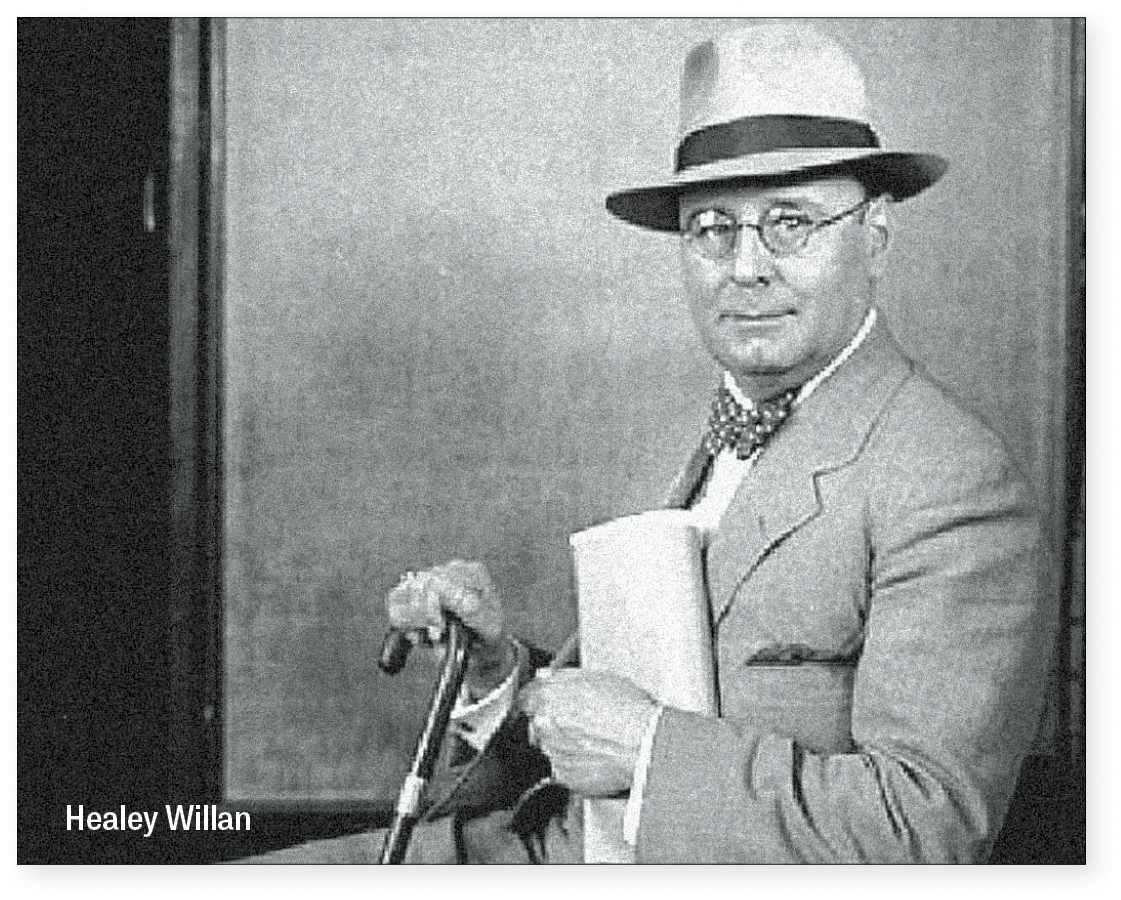
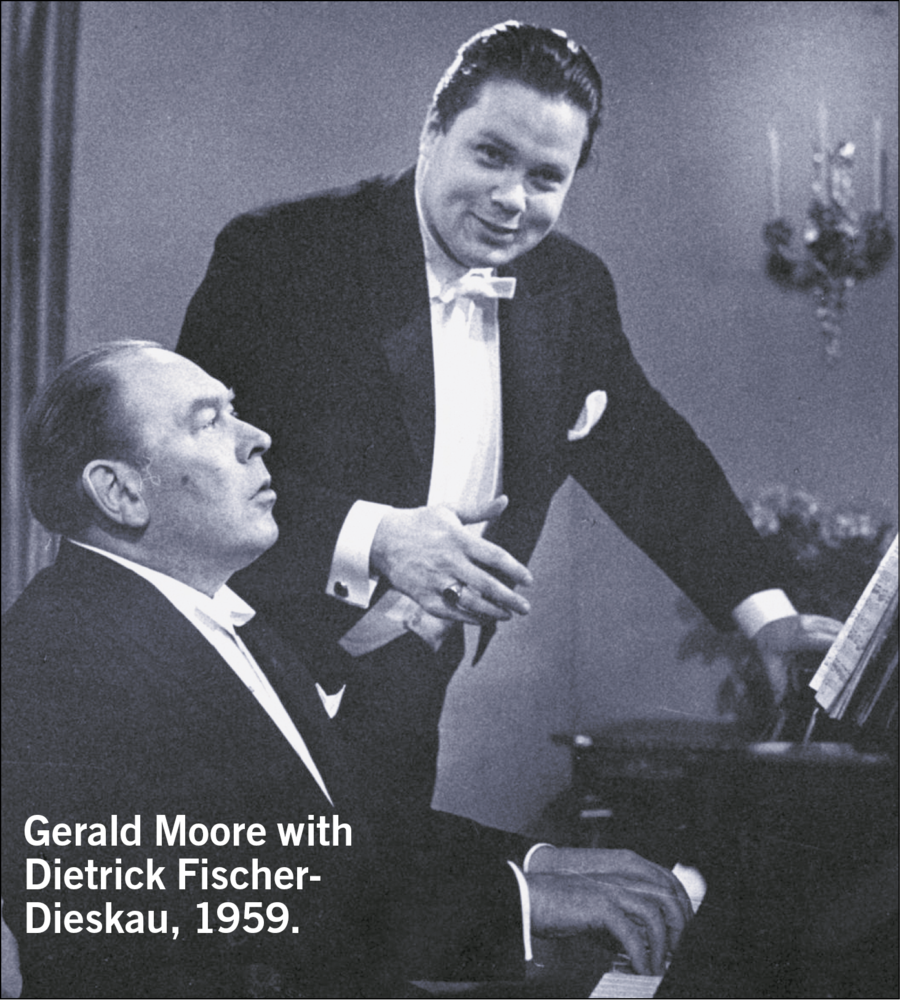
Coincidentally, I was recently given a package of Mahler DVDs produced and directed by Jason Starr, a prolific maker of dozens of video and films from classical music and modern dance performances to documentary profiles of artists and cultural issues. He began his Mahler odyssey in 2003 with a splendid deconstruction of what Mahler himself called “a musical poem that travels through all the stages of evolution.” What the Universe Tells Me: Unravelling the Mysteries of Mahler’s Third Symphony, Starr’s impressive 60-minute film, intercuts a performance by the Manhattan School of Music conducted by Glen Cortese, with analysis by baritone Thomas Hampson, scholarly talking heads like Henry-Louis de La Grange, Donald Mitchell, Peter Franklin and Morten Solvik and timely shots of the natural landscape, all in the service of furthering our understanding of Mahler’s vision. “Imagine a work so large that it mirrors the entire world,” he said.

How Schopenhauer and Nietzsche figure into Mahler’s mindset, the beginning of the cosmos, the oboe as the guide to the beauty of nature in the second movement (its notes illustrated by flowers in a high Alpine valley), are just a few examples of the myriad of details Starr and his methodical examination of this massive masterpiece reveal. Watching it (and its extras) will enhance my enjoyment of the TSO’s upcoming concert.

The same coterie of Mahlerians turn up in Starr’s most recent films completed in 2015: Everywhere and Forever: Mahler’s Song of the Earth and For the Love of Mahler: The Inspired Life of Henry-Louis de La Grange. Again Starr’s thoroughness, cinematic touches and attention to the biographical, cultural and philosophical context are invaluable for our understanding of the Song of the Earth. Since he first heard Bruno Walter conduct  Mahler’s Ninth Symphony  in 1945, “the symphonies of Mahler have become a world for me which I’ve never tired of exploring,” says Mahler biographer de La Grange. From the medina of Marrakech to a convent in Corsica, Toblach in South Tyrol and the Mahler Mediatheque in Paris, Starr follows de La Grange (now 91) over several years, bringing to light his passion for life and music. “Every time I hear a work of Mahler, I think I hear something I’ve never heard before,” he said. Anecdotes by Mahler’s granddaughter Marina, Boulez (“Transformation of Henry-Louis’ personality by Mahler gives him authority on Mahler.”), Chailly, Eschenbach and Hampson add to the pleasure of this essential document.

QUICK PICKS

Sept 12: Trailblazing cellist Matt Haimovitz brings his new Overtures to Bach to the intimate space of The Sound Post for a recital featuring commissioned works by Philip Glass, Du Yun, Vijay Iyer, Roberto Sierra, Mohammed Fairouz and Luna Pearl Woolf, each of which precedes a different first movement Prelude from each of Bach’s six cello suites.

Sept 14: Haimovitz brings the same program to the Kitchener-Waterloo Chamber Music Society (KWCMS). Among other performers in the Music Room of the indefatigable Narvesons this month are French cellist Alain Pierlot and pianist Jason Cutmore on Sept 25 in works by French composers (including sonatas by Debussy and Saint-Saëns). Sept 28: French pianist Alain Jacquon makes his KWCMS debut in a program of Sibelius, Ravel and Nazareth. Oct 2: Jethro Marks, principal violist of the National Arts Centre Orchestra, offers Schubert, Mendelssohn and a Beethoven violin sonata (transcribed for viola), with pianist Mauro Bertoli, currently artist-in-residence at Carlton University.

Sept 17: Stewart Goodyear takes a trip down the QEW to open the Hamilton Philharmonic Orchestra’s new season with Brahms’ first major symphonic work, the formidable Concerto No.1 in D Minor Op.15. Conductor Gemma New completes the evening with Brahms’ friend and patron, Schumann, and his visionary Symphony No.4.

Sept 17: Owen Sound’s Sweetwater Music Festival “Virtuosity” concert features clarinetist James Campbell, violist Steven Dann, percussionist Aiyun Huang, violinist (and artistic director) Mark Fewer and the Gryphon Trio in a varied program that spotlights a new commissioned work by David Braid. Sept 18: The same performers wrap up the weekend festivities with “A Classy Finish” which includes Prokofiev’s Overture on Hebrew Themes Op.34 and Beethoven’s Piano Trio in D Major (“Ghost”) Op.70 No.1.

Sept 18: For any WholeNote readers who may be in P.E.I. on the third weekend of the month, don’t miss Ensemble Made In Canada’s performance of piano quartets by Mahler, Bridge, Daniel and Brahms (No.1 in G Minor Op.25), part of the Indian River Festival.

Sept 25: Bassoon marvel Nadina Mackie Jackson is joined by string players Bijan Sepanji, Steve Koh, Rory McLeod, Bryan Lu and Joe Phillips for her “Bassoon Out Loud” season opener; works include Vivaldi’s Concerti Nos.14 & 27, Lussier’s Le Dernier Chant d’Ophélie Op.2 and works for solo strings.

Sept 30: TSO concertmaster Jonathan Crow shows his versatility as he joins with fellow TSO members, principal violist Teng Li, associate principal cellist Winona Zelenka and COC Orchestra concertmaster Marie Bérard (who comprise the Trio Arkel) to play Ligeti’s early String Quartet No.1 “Métamorphoses nocturnes. Mozart’s masterful Divertimento in E-Flat Major K563 completes the program.

Sept 30, Oct 1: Conductor Edwin Outwater leads the Kitchener-Waterloo Symphony in two bulwarks of Romantic music: Rachmaninoff’s Piano Concerto No.3 (with Natasha Paremski, whose temperament and technique have been compared to Argerich) and Tchaikovsky’s Symphony No.4.

Cecilia String Quartet at Mooredale

U of T Faculty of Music quartet-in-residence, the celebrated Cecilia String Quartet, opens Mooredale’s 2016/17 season September 25 with works by Haydn, Mendelssohn and Emilie LeBel. Second violinist Sarah Nematallah and cellist Rachel Desoer graciously and eloquently answered a few questions about the repertoire they will be playing in their concert at Walter Hall. I hope you enjoy their insights and that the the answers will enhance your experience of hearing them play.

2201_-_Classical_Snapshot.jpgWN: Please tell me about the qualities of Haydn’s Op.33 No.1 that appeal to you.

Sarah Nematallah: I love the elusive nature of this work. There are so many moments where Haydn begins to lead you down one path and then immediately steers you in another direction - we feel momentary comfort that is quickly shaken, sweetness that suddenly turns sour, aggression that bursts into joy. I feel that this quality makes for an edge-of-your-seat experience!

WN: How does recording a work, for example the Mendelssohn Op.44 No.1, affect your subsequent performance of it?

SN: The amount and type of detail one must consider in preparing the piece and working in the recording sessions is immense. It’s intense work, but rewarding in its own way. After you’ve been through that experience, performing the piece feels very freeing - it allows you to live through the work along with the audience again, as opposed to solidifying something concrete. The experience of performing the work has a new dynamism to it that is really exhilarating.

WN: Does recording a piece focus your attention on it more than playing it in concert? Have your ideas of the piece changed or evolved since it was recorded?

SN: Recording a work requires a real commitment to one particular interpretation of a piece, and so performers must feel confident that this interpretation is something that they feel will have merit for decades to come. However, after the recording process is done, one is free to return to explore and experiment again. Sometimes it is hard to let go of the interpretation you recorded, but over time you realize that music is a fleeting artistic form that is constantly changing, and embracing that idea can give rise to interpretations you may not have thought possible in the past.

WN: How did you come to program Taxonomy of Paper Wings by Emilie LeBel?

Rachel Desoer: This piece by Emilie is part of our large project this season of Celebrating Canadian Women Composers. Over the past two years we have commissioned four outstanding women composers to write string quartets for us and this season it is all culminating. We will be presenting all four pieces at the 21C Festival in May and looking towards recording all the works. We chose Taxonomy of Paper Wings for this concert for two reasons. First, it’s a great opportunity to present Emilie’s work in her hometown. Second, her work has a calmness and a subtlety we thought would contrast greatly and provide an oasis in the middle of this busy program!

Paul Ennis is the managing editor of The WholeNote.

The extra coverage in this double issue of The WholeNote has prompted me to consider its entire nine-plus weeks of listings as fodder for constructing my personal musical winter wonderland. You are welcome to come along for the ride!

On thewholenote.com I find the LISTINGS tab and click on the indispensable JustASK feature. It’s early in planning my journey so I opt to see the entire listings for the first week in December. (Later in my wanderings, to refine my search I may choose to JustASK specifically for chamber music or piano.) In this case, I decide on a free RCM event, pianist Francine Kay in a Sunday Interludes recital at Mazzoleni Hall on December 3. Chopin’s Barcarolle has always been a personal favourite and its rolling rhythms will get my festive juices running. Besides, the eminent Princeton University faculty member (and Analekta recording artist) will be giving two masterclasses the following Friday in the same space. Depending on what the students will be playing, I may sit in.

My next stop brings me to Koerner Hall on December 5 for a concert I wrote about in the November WholeNote: Messiaen’s Quartet for the End of Time, a 20th-century touchstone, played by some of the newest stars in Europe’s musical firmament. I have high hopes for pianist Lucas Debargue, violinist Janine Jansen, cellist Torleif Thedéen and clarinetist Martin Fröst. Next stop, December 10 (and I still haven’t budged from Bloor Street) I’m looking forward to the return of Khatia Buniatishvili. This time she’s opening with Mussorgsky’s majestic and intricate Pictures at an Exhibition before moving on to Liszt showpieces. (And while I’m waiting, there’s the Rebanks Family Fellowship concert December 6 in Mazzoleni Hall, where young musicians on the cusp of professional careers display their craft.)

Sorry to say, you’ll have to JustASK for yourself for the balance of December. That’s because my annual visit to longtime friends in the cabin they built themselves in the middle of a hundred-acre wood will take me through the month. A festive Christmas feast of turkey and trimmings baked in a wood stove will serve all of us well while a curious, sociable parrot provides live entertainment.

January 4 and 6, Ryan Wang: When Ryan Wang was five years old he performed at Carnegie Hall in the American Protégé International Piano and Strings Competition. A charming child with no pretentious airs, his celebrity shone soon after, in his first appearance on The Ellen Show. When not playing a concerto with the Shanghai Symphony, for example, he enjoys biking, road hockey and Harry Potter in West Vancouver. In a YouTube video made last year, he talks about being a piano prodigy who began playing when he was four. “Kids in school think I’m just a famous pianist,” he says unabashedly. “But I’m just an ordinary kid.” He calls Harry Potter his hero “because he’s brave. And if you’re brave, you can overcome anything … Sometimes life is really challenging, but I never give up and never lose hope.”

Martha Argerich debuted at four, Claudio Arrau at five. Ryan Wang at ten has been on the stage for half his life. The Li Delun Music Foundation presents him on January 4 at the Fairview Library Theatre in recital playing Bach’s French Suite No.6 – his Bach on YouTube is refreshingly without any affect – a Haydn sonata, a Poulenc Villageoise, Debussy’s Arabesque No.1, the two Chopin Waltzes Op.64 and a Bartók Romanian Dance. An excursion to North York may be a New Year’s resolution worth keeping. Two days later, January 6, Wang is the soloist in Beethoven’s Piano Concerto No.2 with the Toronto Festival Orchestra conducted by Dongxiao Xu in the Li Delun Music Foundation’s “New Year’s Concert 2018” at the George Weston Recital Hall.

January 7, Rachel Barton Pine: She began learning the violin at three; at five she “self-identified as a violinist.” At ten, she performed with her hometown band, the Chicago Symphony Orchestra; at 17, she won the Bach International Competition in Leipzig, Germany. At 20, her violin case straps caught in the closing doors of a Chicago commuter train; the accident cost her part of a leg and mangled a foot. Her determination and discipline from her years of violin study brought her all the way back musically. On January 7, she performs the first Sunday Interludes concert of the year in Mazzoleni Hall.

January 10 to 21, Mozart @ 262: I’m back on Bloor again for some of this next part of my private winter festival. I am about to come face to face with the TSO’s Mozart @ 262 Festival that begins January 10; it will be the TSO’s 14th annual celebration of that prodigy’s genius, and the final one with Peter Oundjian (the festival’s creator) as TSO music director. Roy Thomson Hall (three performances), Koerner Hall (two) and the George Weston Recital Hall (one) will all be involved. On January 17 and 18 concertmaster Jonathan Crow and principal violist Teng Li will be the soloists in Mozart’s Sinfonia Concertante for violin and viola K364/320d in what might very well be the single highlight of the festival.

Adrian AnantawanOundjian’s sole conducting gig, however (January 19 to 21), is the one program I’m most focused on, though (and the only one that’s in all three venues). Anchored by Mozart’s exhilarating final symphony, No.41 in C Major “Jupiter,” the concert showcases two talented young Canadian artists. Charles Richard-Hamelin will weave his colouristic alchemy in the Piano Concerto No.23 in A Major K488 – the understated grandeur of its Adagio served as the main theme of Terrence Malick’s film The New World, underscoring the pristine beauty of its first act. And Adrian Anantawan will be the soloist in the Rondo for violin and orchestra K250/248b “Haffner,” and the Adagio for violin and orchestra K261. Anantawan, who grew up in Toronto, was born with no right hand, only a stunted appendage with tiny stubs instead of fingers. At nine he took up the violin, which proved to be a great equalizer for him. Needless to say, it changed his life. Now in his early 30s, he works with cutting-edge technology to help others; he’s also given a TED Talk. He told CNN in 2013 that “it’s never about the technique or technology that is important, but the desire to live life authentically and creatively. We often forget even ‘traditional’ musical instruments are technological adaptations in their own right – they are tools to manipulate sound in a way that we couldn’t do with our bodies alone.”

January 11, Brentano and Dawn Upshaw: I plan on abandoning Mozart to take advantage of a rare opportunity to hear Schoenberg’s pivotal String Quartet No.2 when Music Toronto presents the Brentano String Quartet and soprano Dawn Upshaw in the Jane Mallett Theatre. Completed in 1908, the quartet’s extreme late-Romanticism loses its harmonic bearings by its final movement, a change that can be considered the beginning of atonal music. The third and fourth movements are settings of poems by the symbolist poet Stefan George. Alex Ross in The Rest Is Noise talks about the extraordinary moment in the fourth movement when the soprano sings the line I feel the wind of another planet and then the “transformation,” I dissolve in tones, circling, weaving … The Schoenberg is preceded by Respighi’s intimate, lyrical setting of Shelley’s Il Tramonto. Before intermission, the Brentano (without Upshaw) will interweave Webern Bagatelles with Schubert Minuets before performing Argentine-American Mario Davidovsky’s String Quartet No.4 (1980), a piece I look forward to hearing for the first time.

The next morning, January 12 at 10am, Upshaw will give a masterclass in Mazzoleni Hall. I’ve marked my calendar. Maybe I should just move to Bloor Street!

Sunday, January 14, David Jalbert and Wonny Song: these two top-rank Canadian pianists return to U of T’s Walter Hall and Mooredale Concerts following their acclaimed 2014 appearance there, for “Piano Dialogue,” a program inspired by dance, theatre and visual art. Rachmaninoff’s Suite No.1 for two pianos and his four-hand arrangement of Tchaikovsky’s Sleeping Beauty Waltz share the stage with Milhaud’s Scaramouche Suite for Two Pianos and Stravinsky’s kinetic Petrouchka, also for two pianos. Elsewhere in this issue Alex Baran writes in his DISCoveries Keyed In column about Jalbert’s latest CD of music connected to what Jalbert and Song are playing in their recital: “[The CD] shows why he’s considered one of the younger generation’s finest pianists. His performance of Dance russe from Petrouchka explodes into being with astonishing speed and alacrity. Jalbert possesses a sweeping technique that exudes ease and persuasive conviction.”

January 23, Stephen Hough: In October 2016 the brilliant British pianist Stephen Hough revealed on BBC Radio 4’s Desert Island DIscs that he discovered he liked playing the piano when he went to visit his aunt’s house and could pick out more than one hundred nursery rhymes on her piano. After much pestering, his parents bought him a cheap second-hand piano from an antique shop. So began the storied career of this polymath, whose first novel, The Final Retreat, is to be published in March 2018. On January 23, he makes his fourth appearance for Music Toronto since 1996 with a program mixing four Debussy works (two of which, Images Bk 1 and II, appear on his latest Hyperion CD, anticipating the centenary of the composer’s death in 1918) with Schumann’s rapturous Fantasie Op.17 and Beethoven’s colossal Sonata in F Minor, Op.67, “Appassionata.” The next morning, Hough will make the trek north to Mazzoleni Hall for a public masterclass. Having been to two of these, I have no doubt it will be an insightful and inspirational experience.

January 27, the Dover Quartet: The Dovers came to wide attention in 2013 when they won the Banff International String Quartet Competition. I wrote about their memorable Beethoven concert at Toronto Summer Music in 2016: “Musically mature, vibrant and uncannily unified in purpose and execution, the youthful players brought passion and grace to the first two movements [of Op.132], took a decisive approach to the fourth and emphasized the rhapsodic character of the finale.” Chamber Music Hamilton, a top-flight regional series, is presenting the young Americans in a recital of Schumann’s Second, Ullmann’s Third and Zemlinsky’s Second String Quartets, Sunday January 27 at 2pm at the Art Gallery of Hamilton.

January 30, RCM and Hot Docs Ted Rogers Cinema (although the name has changed, the address remains Bloor Street) present Stefan Avalos’ compulsively watchable Strad Style, a film I saw at Hot Docs 2017. The documentary chronicles the improbable but triumphant story of a reclusive Ohio violin maker, Daniel Houck, whose confidence that he can produce a copy of “Il Canone,” the Guarneri violin built in 1742 that Paganini played, carries him through an eight-month journey that threatens to be derailed more than once. A violin aficionado who loves listening to old masters like Oistrakh and Heifetz and idolizes violin makers Amati, Guarneri and Stradivari – all from Cremona, Italy – Houck suffers from bipolar disorder but functions with medication. He befriends Razvan Stoica on Facebook when he discovers the Romanian-born violinist has won the Strad Prize at a Salzburg festival and offers to make him the Canone replica. There is magic stuff here.

After the screening Jonathan Crow will bring out his own Guarneri for what promises to be a fascinating show-and-tell Q&A. And that’s why I’ll be there.

And on into February: The astounding young pianist Daniil Trifonov continues his homage-to-Chopin tour February 1, with a sold-out concert at Koerner Hall. I’m lucky to have a ticket but unlucky to miss the St. Lawrence String Quartet’s annual Music Toronto visit the same evening. Fortunately I can attend the SLSQ’s masterclass in Mazzoleni Hall the next day at 10am.

In 2008, clarinetist Dionysis Grammenos became the first wind player ever to be named European Young Musician of the Year. Two years later at 21, having been guided by Bernard Haitink, Christoph Eschenbach and Robert Spano, he made his conducting debut with the Vienna Chamber Orchestra. Johannes Debus hired him as assistant conductor for the COC’s 2018 production of Mozart’s Abduction from the Seraglio February 7 to 24. “You find in him a musician who exudes an enthusiasm for music from every single pore and who equally has the talent to communicate and share his enthusiasm and euphoria with others – no matter if it’s about an audience or fellow musicians,” Debus says. Grammenos’ appearance at noon on February 7 in the Richard Bradshaw Amphitheatre with Ensemble Made in Canada (they will perform Brahms’ late masterpiece, the sublime Clarinet Quintet in B Minor Op.115) is the last stop in my winter festival.

Given the abundance of live music available to all of us in the Toronto area, there’s an ad hoc personal winter festival out there for the making for every musical taste. How? JustASK.

Paul Ennis is the managing editor of The WholeNote.

Back to top