Credit: Royal Conservatory of Music | Lisa SakulenskyThe Royal Conservatory’s early June unveiling, in Koerner Hall, of its upcoming concert season has become something of an event over the 17 years since Mervon Mehta agreed to take on curatorial responsibility, in 2008, for the RCM’s programming of Koerner Hall and the RCM’s other concert venues, going back to the Hall’s opening season. More than 1,500 concerts have taken place under his artistic aegis since then, and he has hosted an astonishing number of them himself – indicative of his own adventurous musical appetite at least as much as out of a sense of official obligation. 

Typically he has hosted these early June season announcements himself as well, but not so this year. The packed hall, artists and audience alike, was mostly there to say goodbye to him, and he sat in the right parterre, less comfortably than in his more usual emcee role, through heartfelt tribute after tribute, interspersed with enough memorable musical moments to keep most of us comfortably in our seats. 

He did get his opportunity to speak, after the announcement that the stage door at Koerner would be named the Mervon Mehta Stage Door, in recognition of  the seminal role he has played in expanding the RCM’s concert programming far beyond the classical core one might have assumed would be its comfortable niche.

Read more: Comings & Goings | MERVON MEHTA: Farewell notes June 4, 2026

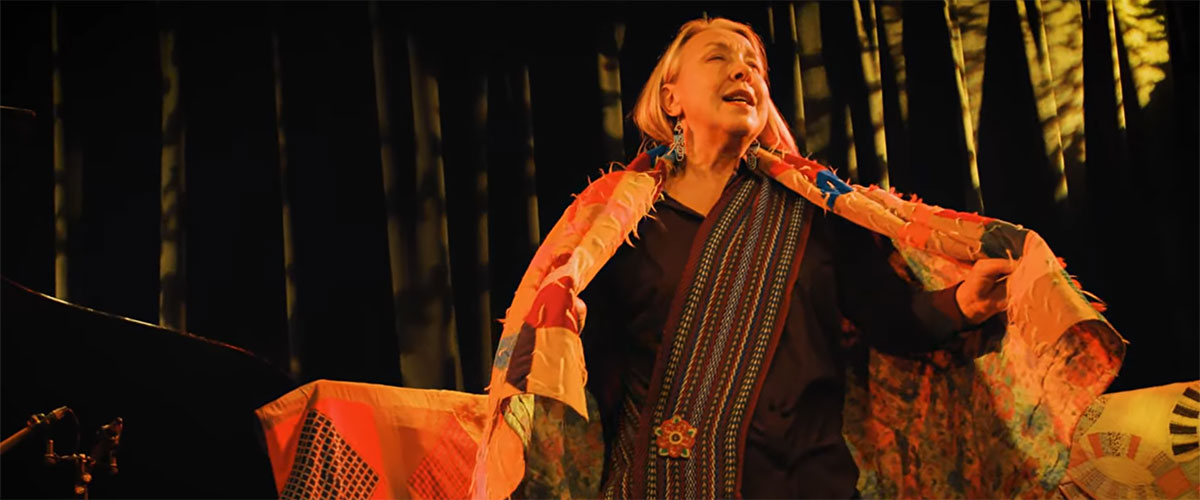
Dear Lara (trailer) "I was 14, my teacher was 78. We spent hours one on one together ..."Over two years ago, I interviewed violinist Lara St. John for the Dec 2023/Jan 2024 issue of The WholeNote. We spoke not only about her upcoming performance at the Royal Conservatory’s 21C festival, but also about her experiences of being sexually abused by her violin teacher Jascha Brodsky while a teenage student at the Curtis Institute of Music in Philadelphia during the mid 1980s.  

WHOLENOTE 2903 coverHer allegations, initially dismissed by the institution in question, became public in a 2019 Philadelphia Inquirer article. In the aftermath, St. John received a flood of letters of support, along with accounts from many other women. She decided to interview some of them. The 94 minute documentary film Dear Lara  released earlier this year was the result. I missed its original Canadian screening, but it was recently made available in Canada for a limited time on Kinema, and after watching it, I am grappling with the sheer extent of abuse it reveals, not only within musical educational institutions, but throughout the profession. 

As St. John observes in the film, the flood seems endless. Even when people knew what was happening, there were often few consequences for the abusers, while women who spoke out frequently faced devastating repercussions. Former Washington Post classical music critic Anne Midgette remarks, “The amount of vitriol that’s waiting there for women in this field is really striking.” And as violinist Zeneba Bowers notes, the unspoken prevailing expectation was that “the [abuser’s] artistry is so incredible, it merits a lifetime free pass.” 

Oboist Katherine Needleman connects the dots: “Women are missing virtually everywhere in classical music. Sexual harassment, sexual assault, and exclusion of women are all related.”

As St. John remarked in our December 2023 conversation, “Exclusion of women correlates directly with violence against women, and that’s something that really nobody can get behind. What I am campaigning for is systemic change throughout the culture.”

ON June 22, 2026, Royal Conservatory of Music President and CEO Alexander Brose announced an independent investigation into allegations of historical sexual abuse on its campus and how those allegations were responded to. Anyone wishing to share their personal experience is invited to contact lawyer Katharine Montpetit at rcm@rubinandco.ca. “Ms. Montpetit’s investigation is fully arms-length from the institution, Brose states: “She has the latitude to follow what she finds, wherever it leads. The people whose lives have been affected deserve an investigation that is independent, complete, and credible.” 

This investigation is long overdue. Throughout my own career, I have met numerous women who have experienced sexual harassment within Toronto’s musical community. One can only hope this action on the part of the RCM marks the beginning of meaningful accountability and lasting change. 

I, for one, will be watching closely.

Wendalyn Bartley can be reached at sounddreaming@gmail.com

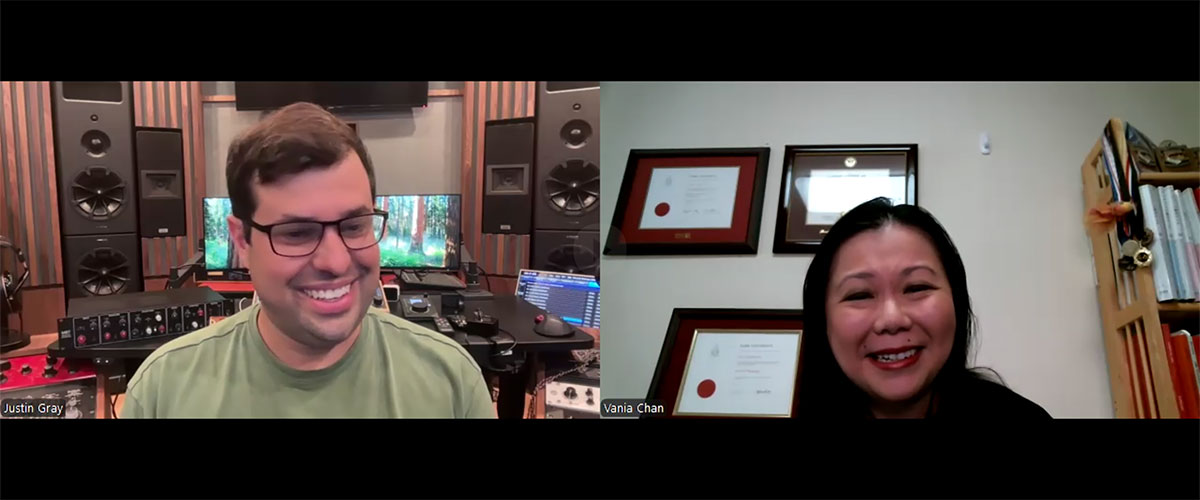
screengrab The need for connection is constant and ever present in life, and artists are particularly sensitive to that need, which is why I started “When Music Meets Mindfulness” – to have conversations with fellow artists that encourage us to learn from each other, to ground us, and to keep us anchored in a fast-paced world that often threatens to sweep us off our feet.  

In this conversation with multi-talented world/fusion artist Suba Sankaran, I found myself uplifted and motivated by her warmth and nurturing presence. She emanates joy as she speaks about what she loves to do most – reaching out and connecting through honest artistic expression, as a performer, a choral director, educator and arranger. She has composed and produced music for music theatre, film, radio and dance including collaborations with Deepa Mehta, the CBC, Stratford Festival, Shaw Festival, and the Barbican Theatre in London for the debut of her original music for Why Not Theatre’s Mahabarata. 

Through all these career-defining moments, she remains the same deeply rooted person with an open heart and voice that I met years ago at York University, where we shared a connection: membership in the collegiate a cappella choir Wibijazzn’ (now known as WIBI). We were not in the choir at the same time; nevertheless the legacy of the group initiated a bond between us, and has opened up opportunities to collaborate, including this interview. 

As always in this series, the three principle precepts of Mindfulness – Calming the Mind, Organizing Thoughts, and Flow – provided a roadmap for our exchange.

Read more: When Music Meets Mindfulness: Suba Sankaran, connecting the cultural dots

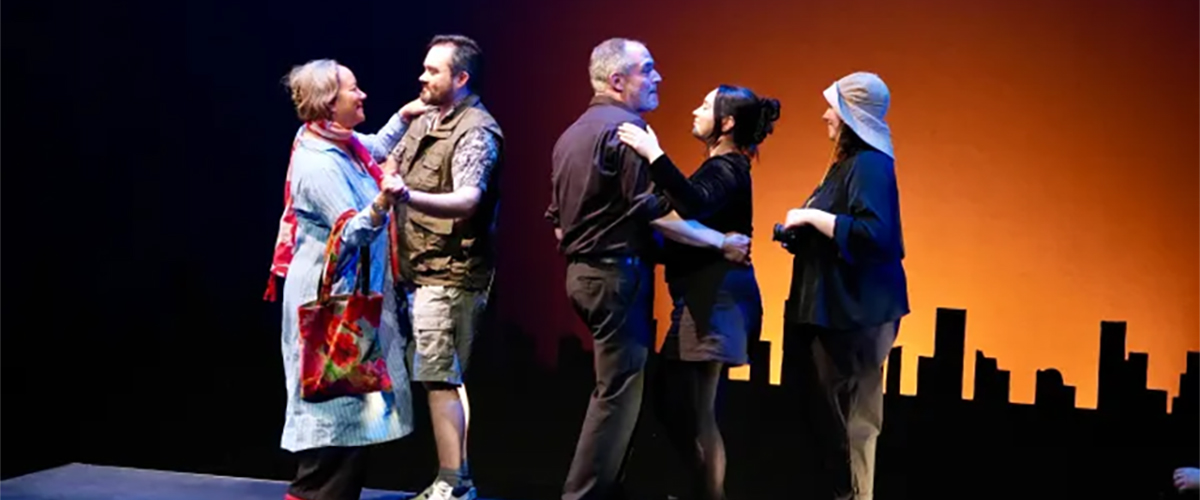
The Stories Don’t Die company:   Keely McPeek (Didi) Giles Tomkins (Oz), Ian Cusson (Composer), Marion Newman (Mimi), Royce Vavrek (Librettist), Evan Korbut (Bird), Danlie Rae Acebuque (Eugene) and  Asitha Tennekoon (Desi) photo:  Lauren HalaszWhen decorated author Thomas King revealed last November that he, in fact, could not verify his claim to his Cherokee ancestry, the reaction was swift and negative. Notably, scheduled operatic stagings of his novel Indians on Vacation in Edmonton (Edmonton Opera) and Toronto (Against the Grain Theatre) were cancelled, with Edmonton Opera stating that “moving forward would not align with our commitments to reconciliation, cultural respect, and responsible partnership.” 

But among those in the Indigenous community actively supporting the opera’s cancellation, one group of people was noticeably absent – namely, the cast and creative team of composer Ian Cusson and librettist Royce Vavrek’s opera based on King’s novel. Cusson, director Yvette Nolan, and all main cast members are Indigenous. Among them, there was consensus on two points: that outright cancellation of the fully developed but not yet staged Indians on Vacation was a solution they could not wholeheartedly endorse, and that unqualified support for bringing it to the stage as originally conceived was not an option either. 

Read more: “Stories Don’t Die” – Creative countering of cancellation culture

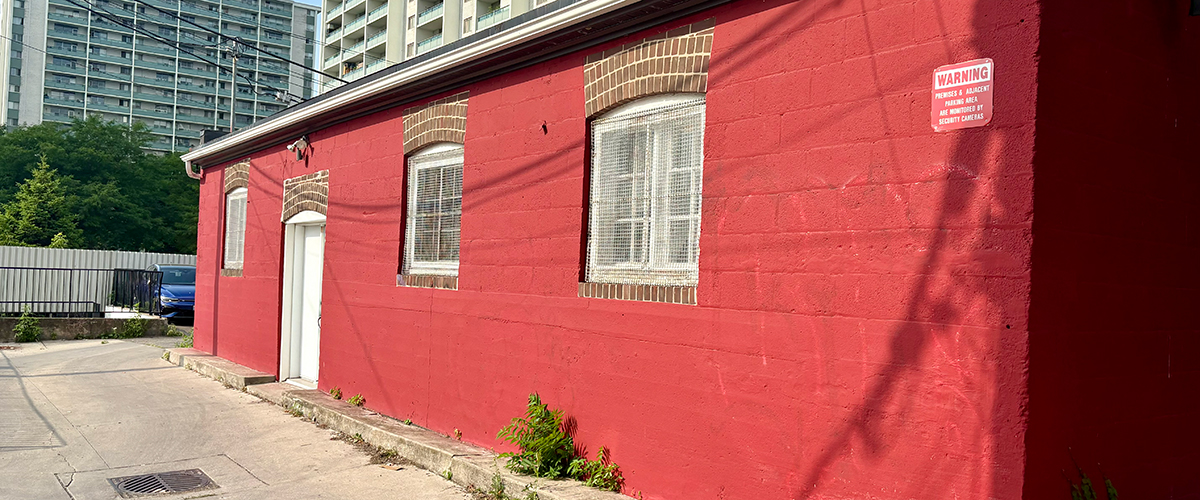
CONTXT BY TRANEEditor’s note: Gloria Blizzard’s  story” Black History at the Pilot Tavern” this past March/April looked back at a Black History Month weekly series at the Pilot Tavern – the brainchild of Trevor Bazilio, a long-time attendee at the venue, who queried the paucity of Black jazz musicians regularly featured at the venue.

Laudable as the series is, Blizzard wrote, “five nights of Black jazz musicians programmed to play at the Pilot Tavern, a jazz venue, calls attention to an absence on the musical landscape.” She goes on to note the efforts over time of some of  “the many others at work on changing the jazz landscape [by ensuring] environments where Black audiences, with an embodied knowledge, even if not explicit history of segregation, could feel at ease.” 

That work continues, as new venues arise, filling programming gaps in Toronto’s musical landscape and welcoming in new or underserved audiences. 

Read more: Stories that don’t die (2) | Fuelling musical empowerment: Contxt by Trane & Davie Studio
Back to top