In 2009 Blue Griffin Recording was brought to our attention by Canadian mezzo-soprano Patricia Green who had released two discs on this small, independent Lansing, Michigan-based label. In April of that year Pamela Margles reviewed both in these pages, The Ice Age and Beyond: Songs by Canadian Composers, and Unsleeping: Songs by Living Composers, on which Green was accompanied by Midori Koga and John Hess respectively. In the decade following we reviewed more than two dozen subsequent Blue Griffin titles, including Green’s La Voix Nue: Songs for Unaccompanied Voice by Living Composers (R. Murray Schafer, Judith Weir, Hilary Tann, Jonathan Dove, José Evangelista and György Kurtág) in 2013, and fellow Canadians Jerome Summers and Robert Kortgaard’s The Transfigured Nightingale: Music for Clarinet and Piano, in 2014. After a brief hiatus, earlier this year we received a shipment of new releases dating from 2018 to the present, which provided the impetus for the following article.

David Olds, recordings editor
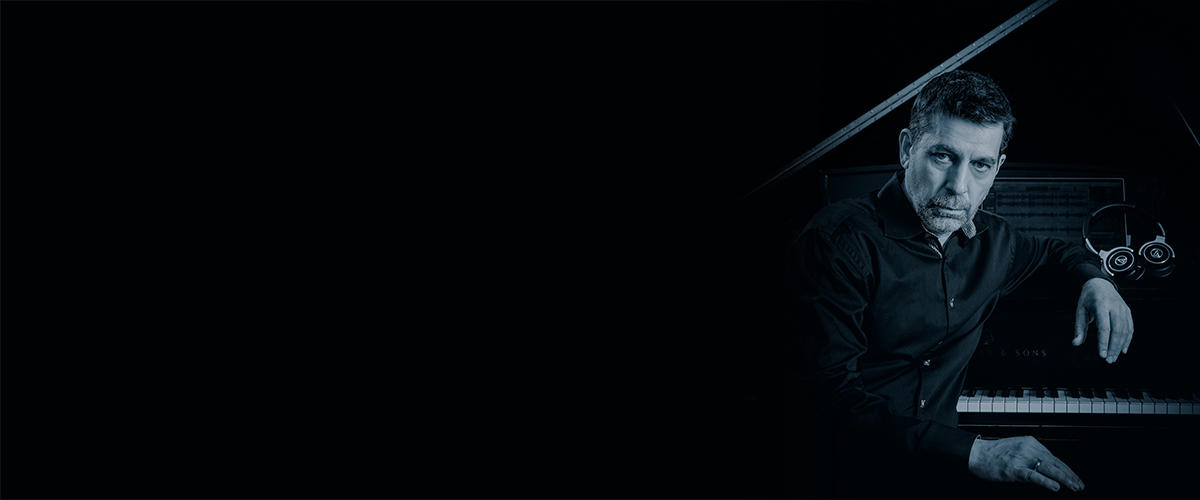
Sergei KvitkoBoasting over 200 titles to date, Blue Griffin Recording celebrated its 20th anniversary on June 1, 2020. Fresh off the heels of a Latin Grammy Award nomination and the unveiling of a new website, label founder Sergei Kvitko recalls the early days when he found his way into a recording studio, before the label’s birth in 2000. 

He began to offer his recording engineering services to friends and colleagues at Michigan State University, where he was completing a doctoral program in piano performance. Based on an early enthusiastic response, he decided to pursue his talents in audio engineering more thoroughly, setting up a for-profit recording company. His very first client made a complete set of Schumann’s piano music and the fire was lit: Kvitko thought “Let’s print a few copies and see what happens” and after a modest distribution scheme and favourable reception, it all “snowballed,” as a second project was conceived and then a third; another artist came on board and Blue Griffin (bluegriffin.com) was born. Now, 20 years later, this latest crop of releases is indicative of how far the label has come. 
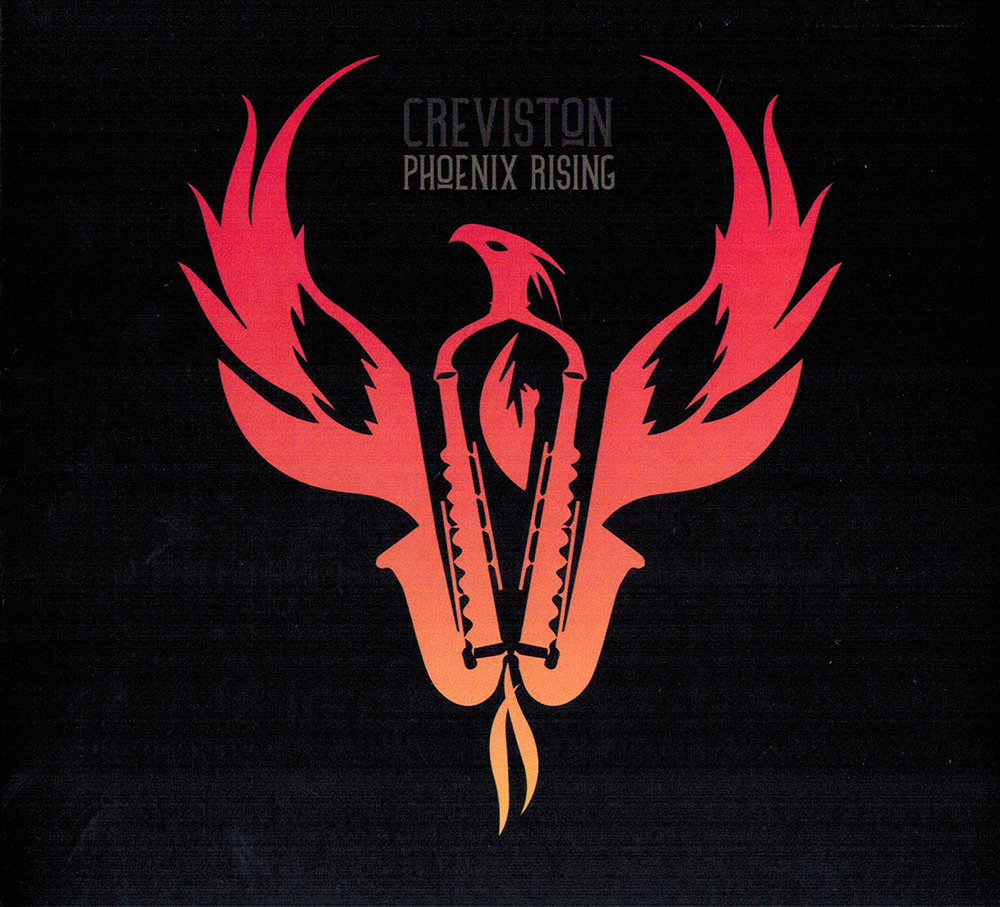
01 Phoenix Rising Creviston ScanOne of the newest releases from the label in 2020, Phoenix Rising (BGR519), features dazzling saxophonist Christopher Creviston. This disc is a consummate example of the vision and breadth conceived in a Blue Griffin production. Comprised entirely of premiere recordings, Creviston coyly guides the listener through seven different works, five with pianist Hannah Creviston and one with the Arizona State University Wind Orchestra, conducted by Gary Hill. The musicianship and expertise here is compelling, with the title track – written by composer Stacy Garrop – a solo highlight of the disc. Names of movements pique our listening curiosity further, with evocative phrasing such as The Pulsar Wind in Taurus, The Phantom Dancer and Dying in Embers – Reborn in Flames. Imaginative and rewarding, the album must surely have been a joy to curate, record and produce. No wonder that Kvitko is rather proud of this release – the kind of sexy and slick musical program that is hard for any to resist. The album’s cover art (by Hosea Gruber) should also be mentioned: a red emblem set upon black, with flames of a Phoenix. Look closely and two alto saxophones entwine as they spiral up into the bird’s wings. 

Kvitko considers the cover art and graphic design of his releases carefully. He shies away from developing album art that has a universal look, citing labels such as Deutsche Grammophon that retain a monothematic design throughout their catalogue. Kvitko aspires, he says, to something more akin to “tapestry” for his records. He appreciates that his releases employ different colours, varying characteristics and visual profiles. For those of his artists who are unsure of what to feature on their record cover, Kvitko offers his seasoned advice and curates this aspect of the product as well. He functions ostensibly as pre-recording curator, producer, audio engineer, post-production and PR manager and photographer. He even has an eye for well-written liner notes, impishly affirming, “Proofread liner notes? I do that too, because well, I catch things!”

By dint of heart and hard work, Kvitko has built a record company renowned for many fine things. He provides a unique experience for the artists with whom he works: refined musical ears, a rich and vibrant quality of recording production and an integrity of engineering that is increasingly hard to come by these days. The label has long had a proclivity for vocal, reed and solo piano projects, not to mention exceptional fondness for uncommon configurations of ensemble. In only 20 years, Blue Griffin has released an admirable catalogue of music from all corners of the repertoire. 
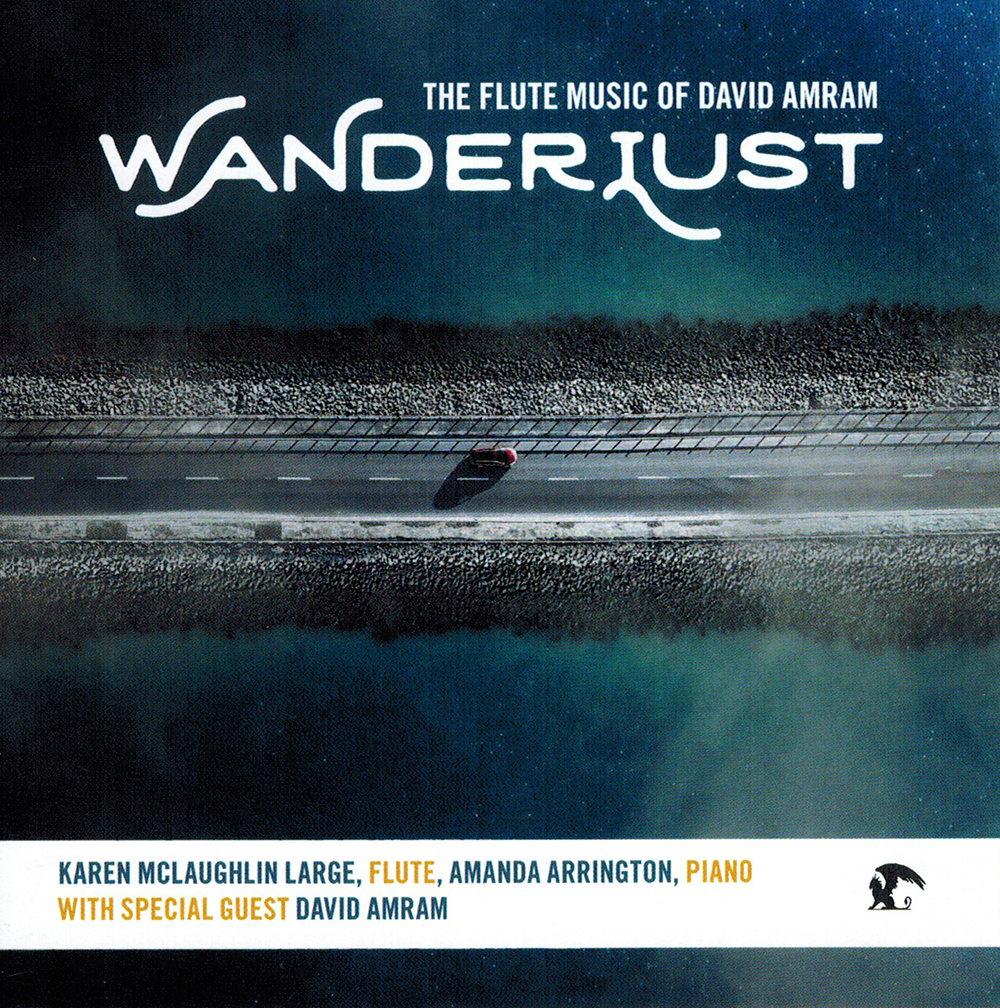
02 Wanderlust Amram Scan webAnd he still loves what he does. Always upholding a keen professionalism and high standard of music-making, he nevertheless also knows how to have fun along the way. A jovial romp of a disc that might exemplify this is Wanderlust (BGR537), a recent release showcasing flute works by David Amram. “A threading of music of many cultures and peoples,” this record is unique in its synthesis of styles, focusing on Amram’s compositional voice. Flutist Karen McLaughlin Large and pianist Amanda Arrington trace a path through Amram’s attractive scores, many of which are inspired by jazz. Amram’s illustrious career has included film composing (The Manchurian Candidate) and time spent as composer-in-residence with the New York Philharmonic. One immediately hears a joy for this music directed from the performers. (They worked closely with Amram on this recording and he plays the Irish Double-D Whistle on one of the tracks!) An idiomatic brand of writing for flute is on full display here. The Allegro con Gioia (For Dizzy Gillespie) and Zohar for solo flute are among the disc’s tuneful highlights, not to mention the charming (and keyboard-centric) Theme and Variations on “Red River Valley.”
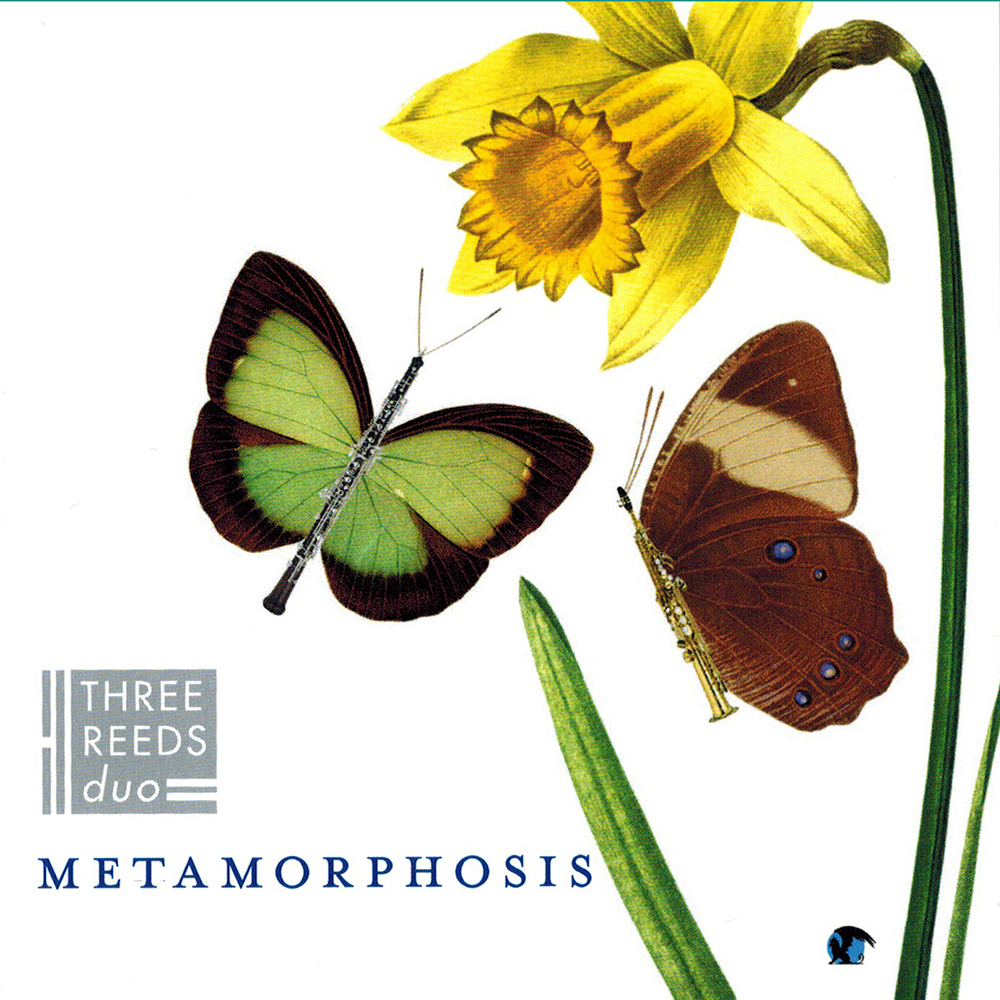
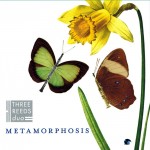
03 Metamorphosis Three Reeds Duo Scan webWhile on the subject of rivers, another newish release of note opens with Peter Lieuwen’s Little Rivers (2018), a work commissioned by the Three Reeds Duo, co-founded by Leah and Paul Forsyth. The record, Metamorphosis (BGR523), spotlights the unique instrumental combination of oboe and saxophone. It lends a delicate, almost serene profile to an entire album devoted to works by contemporary composers (notwithstanding the title track by Benjamin Britten.). There is skilful execution, bright-eared and flawless in ample measure. Few recording labels would put their faith in a disc such as this one, and the trust has been handsomely repaid. 
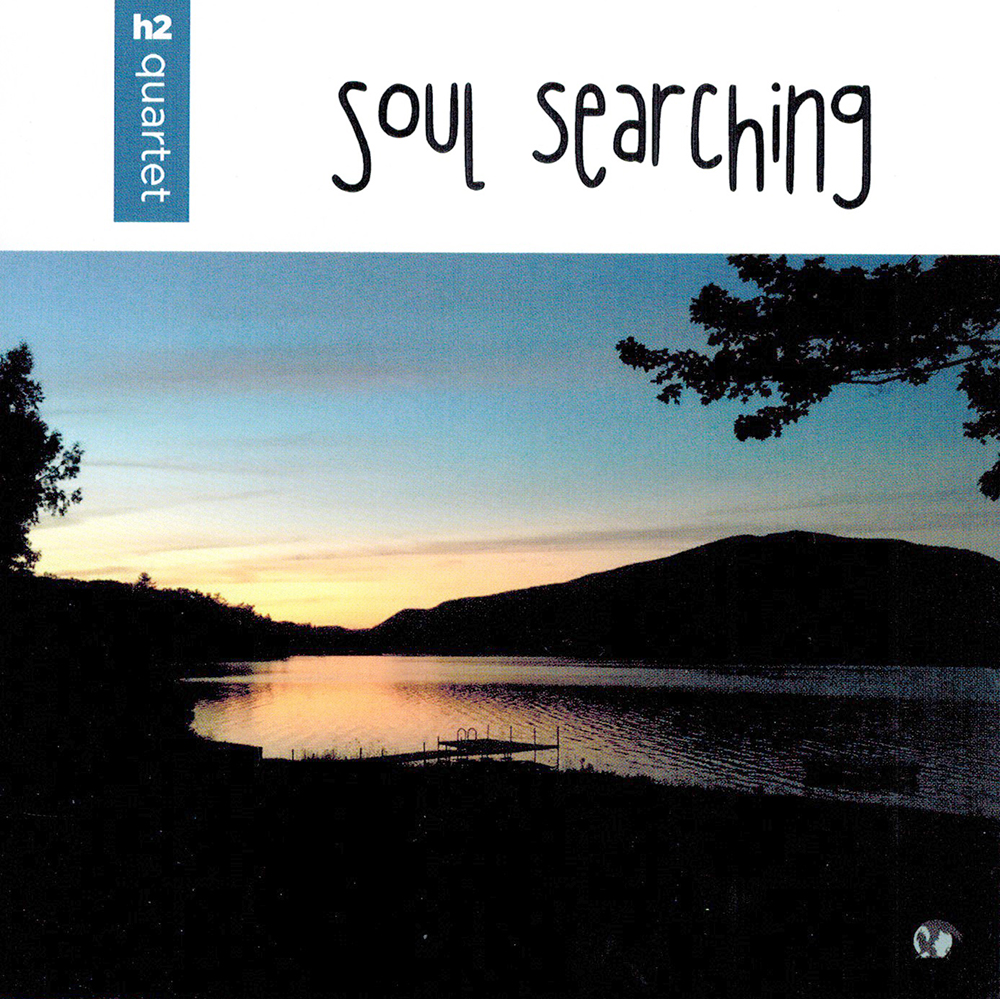
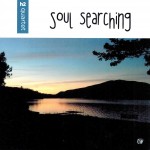
04 Soul Searching H2Quartet Scan webHard-hitting, avant-garde music also finds voice in the catalogue at Blue Griffin. A sensational new release from the h2 quartet came out last year. Titled Soul Searching (BGR499), it headlines this maverick sax quartet in two works by Jeffrey Loeffert, one by Georg Friedrich Haas and a title track by Kerrith Livengood. The mastering here is sublimely balanced and conceived. Layers of expressivity and kaleidoscopic textures shine through what is certainly demanding repertoire. Despite the technical demands, effortlessness shines through. With the h2 quartet, we immediately feel at home, in safe hands, even amidst irresistible invention. The centrepiece of the record, Ten Years of Silence (2012), was composed for the h2 quartet in commemoration of their tenth anniversary as an ensemble. Loeffert clearly knows his tools, commanding utter mastery as he wrangles incredible tonal palettes from the four saxophones, suggesting multiple takes on familiar sonorities and challenging the listener: one imagines hearing instruments other than saxophones. Loeffert acutely understands the idiosyncratic qualities of each saxophone and writes to those strengths. Is it really a saxophone? Or flute or clarinet, even bassoon or trombone? (This is, of course, due in no small part to the virtuosity of the players!) The ten movements have a choose-your-own-adventure aspect to them. Titles such as Bleak; Gruff, Barreling, Nimble, and Cold Sober offer further glimpses into extra-musical content that hangs in the air. At times intimate, quirky and brazenly emotional, this music speaks verily, born of a serious bout of soul searching. The dedication of the performers is rewarded by the production quality from Blue Griffin and a deft sense of programming. This release is, undoubtedly, a creation to be proud of.

Kvitko relishes such projects – giving platform to lesser-known works and to the performers by whom they are championed. Frequently, artists will cold-call Blue Griffin and propose a recording. If Kvitko likes their ideas, he “goes with the flow” and engages them. He claims to “simply enjoy the process of making things that would [otherwise] not have happened without [him]. Especially with new music – and working with living composers.” He is still irrepressibly appreciative, two decades on, of the whole experience. “I enjoy the process. People find me from all over the place and [we] make recordings. It’s really been fun because I do love music and I do love computers, technology, gadgets and gear. It’s kind of a perfect world for me.” 
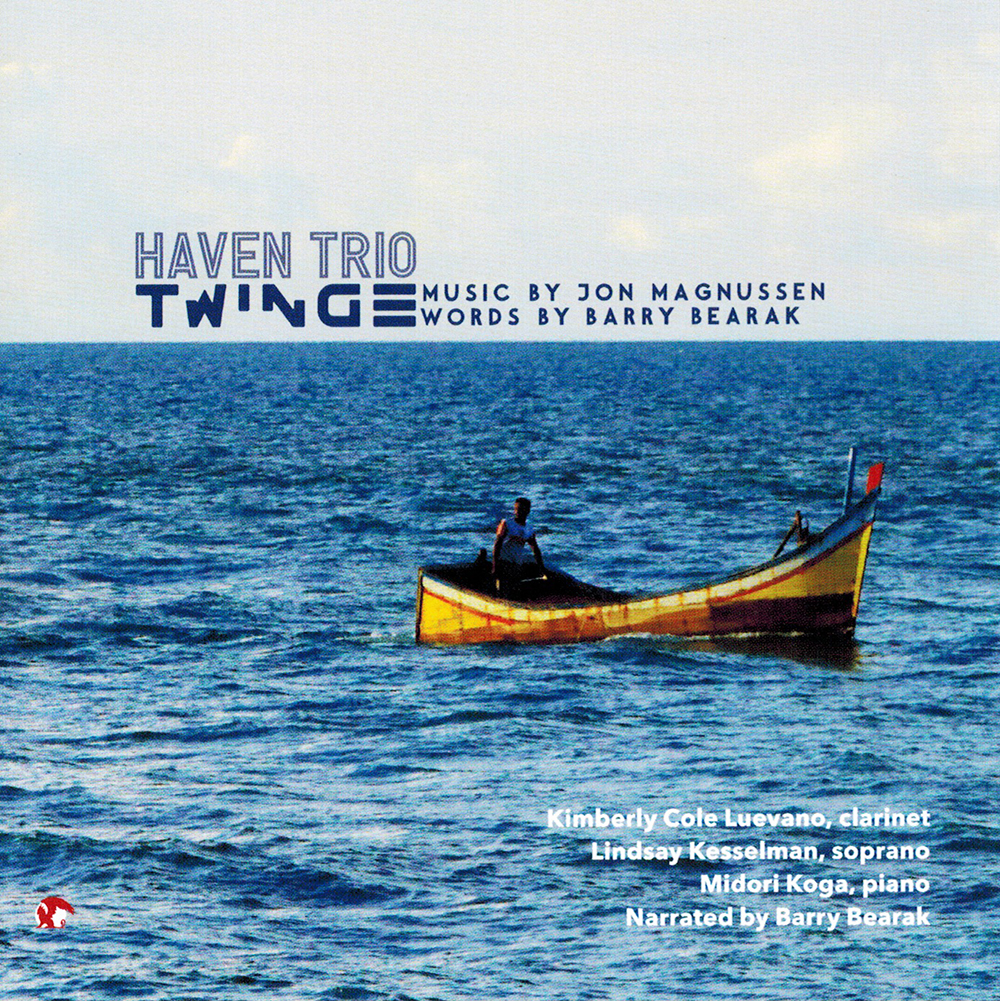
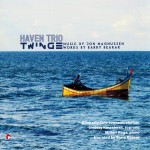
05 Twinge Haven Trio Scan webKvitko’s “perfect world” extends to his myriad talents as a bone fide photographer and concert pianist in his own right. He has outfitted his historical home in Lansing, Michigan with a top-of-the-line recording studio, providing an inspired, spacious atmosphere for artists when they come to work with him. And he is never fearful of going out on a limb, as witness the curious convergence on a recent disc featuring the music of Jon Magnussen with words by Barry Bearak. Twinge (BGR527) was recorded by the Haven Trio, comprised of soprano, clarinet and piano. The album’s fare is a 15-movement work, “dedicated to the memory of the hundreds of thousands of victims of the December 26, 2004 Tsunami.” The text is adapted from Bearak’s New York Times Magazine cover story, The Day the Sea Came. (November 27, 2005). The album unfolds in a commingling of spoken text, (narrated by Bearak himself), and instrumental/vocal episodes that elevate the drama of the cover story and develop the narrative arc with striking aplomb. The combination of soprano, clarinet and piano is a most attractive one. The vaulting soundscapes give an urgent depiction of the human drama as it unfolds: an archetypal battle of man vs nature; the coalescence of spoken word (in a kind of reportage style); singing and instrumental interjection bringing home the significance of human loss, set against a backdrop of geological insignificance: “for the earth, it was just a twinge.” The results are poignant as they are rare, particularly in a world awash with conservative recordings of traditional works. 
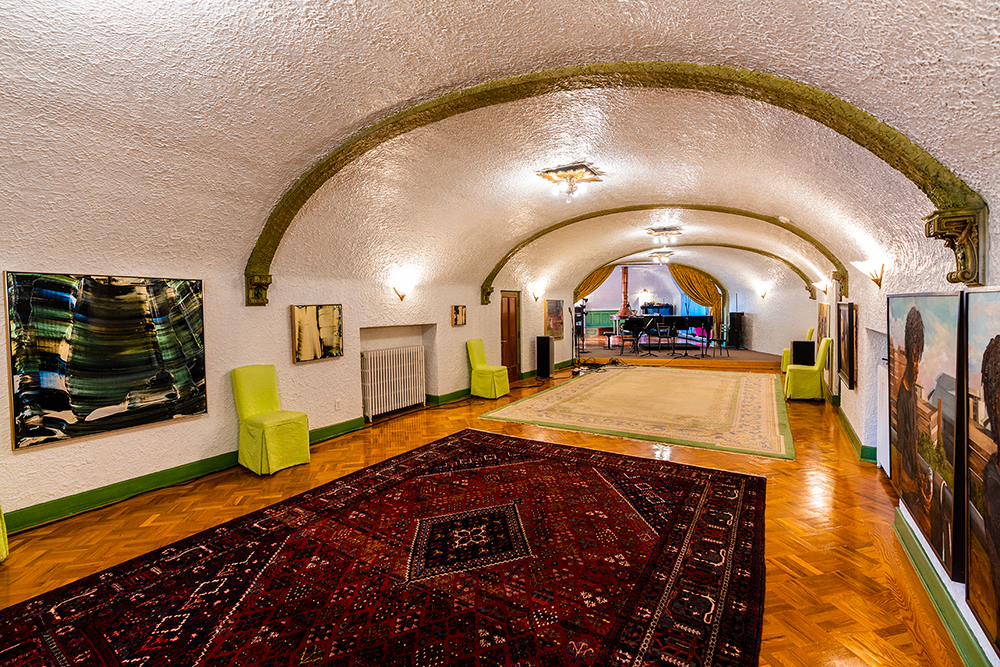
The Blue Griffin’s Studio The Ballroom

Blue Griffin steps up to the plate in such projects, proving that Kvitko is unafraid of the brave and the new. Moreover, he prides himself on knowing when, in turn, to be supportive and opiniated toward his artists: “All of my friends and clients – my artists – know that I’m very opinionated. But I can be nice and kind enough to know when to keep my opinions to myself as necessary. Everybody approaches it differently: some require more guidance and some ask more questions or require more help. And there are others who know exactly what they want. They have a vision in their head.”

Kvitko continues to be widely respected by artists throughout North America and abroad. He acutely understands, to splendid effect, just where his expertise lies and how his plentiful gifts can benefit his collaborators. And there are times when he also returns to his own piano: “I still play concerts and I still make recordings [at the piano] when I can. I do it for myself; I feel like it’s good for my soul.”
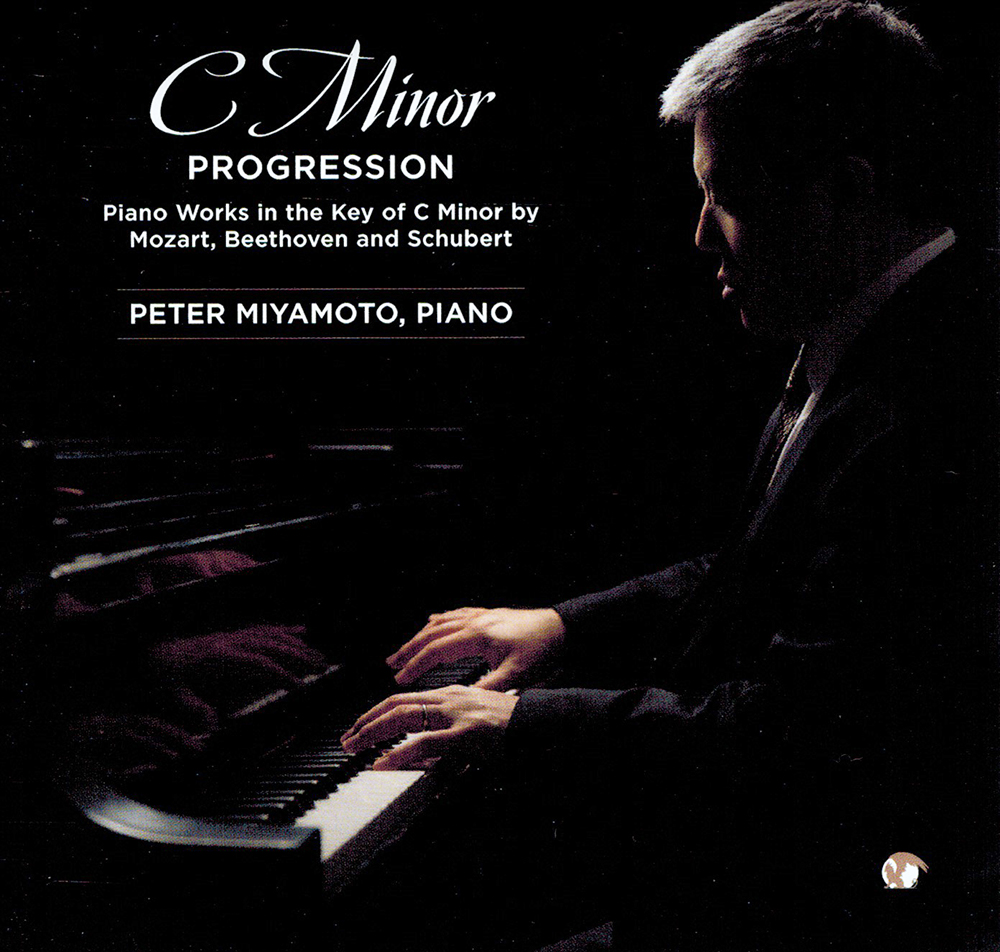
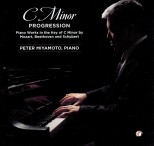
06 C Minor Progression Myamoto Scan webDespite Kvitko’s commitment to new music and its proponents, he also keeps up with productions that celebrate music from the traditional canon. A current release from pianist Peter Miyamoto includes the anomalous theme of progression in C Minor Progression (BGR503). Solo keyboard works by Mozart, Beethoven and Schubert fill this album, each of them in C Minor (a seemingly artist-imposed mechanism). The profile of this key, heard through the pianistic lens of three masters, offers an unusual slant on what would otherwise be a very usual program. Miyamoto plays exceedingly well, bringing a discerning sense of style to each of the composers’ works. There is most certainly a gentle sort of revelation here, regarding the nature of C Minor. At the risk of becoming entrapped within monochromatic sound planes, Miyamoto turns such rules – such necessity – to his invention, spurring us to hear well-trodden music anew. Again, here is an example of the perennial craftsmanship that Blue Griffin brings to the game, where care of execution so often intersects with pride of product. Few labels alive and well today can boast such attributes. 

During a prideful moment, an otherwise self-effacing Kvitko recalls a conversation he had back in the early days of his label’s founding. A business manager friend asked him what his goals and dreams consisted of: “So what do you want five years from now? Ten years – even 20?” The first words to leave his lips were, “I want to win a Grammy Award.”

“And you know,” he beams through the phone 20 years hence: “One of our latest discs is nominated for a Latin Grammy and we’ll find out next week!” And so it would seem that a full Grammy Award is very much within the label’s sights. Here’s to another 20 marvellous musical years at Blue Griffin Recording.

(Interview by phone conducted with Sergei Kvitko with permission.)

Composer-pianist Adam Sherkin is a regular contributor to The WholeNote DISCOVERIES section. 

Listen to these titles in the Listening Room: 
 

01 Phoenix Rising Creviston Scan 02 Wanderlust Amram Scan web 03 Metamorphosis Three Reeds Duo Scan web
04 Soul Searching H2Quartet Scan web 05 Twinge Haven Trio Scan web 06 C Minor Progression Myamoto Scan web


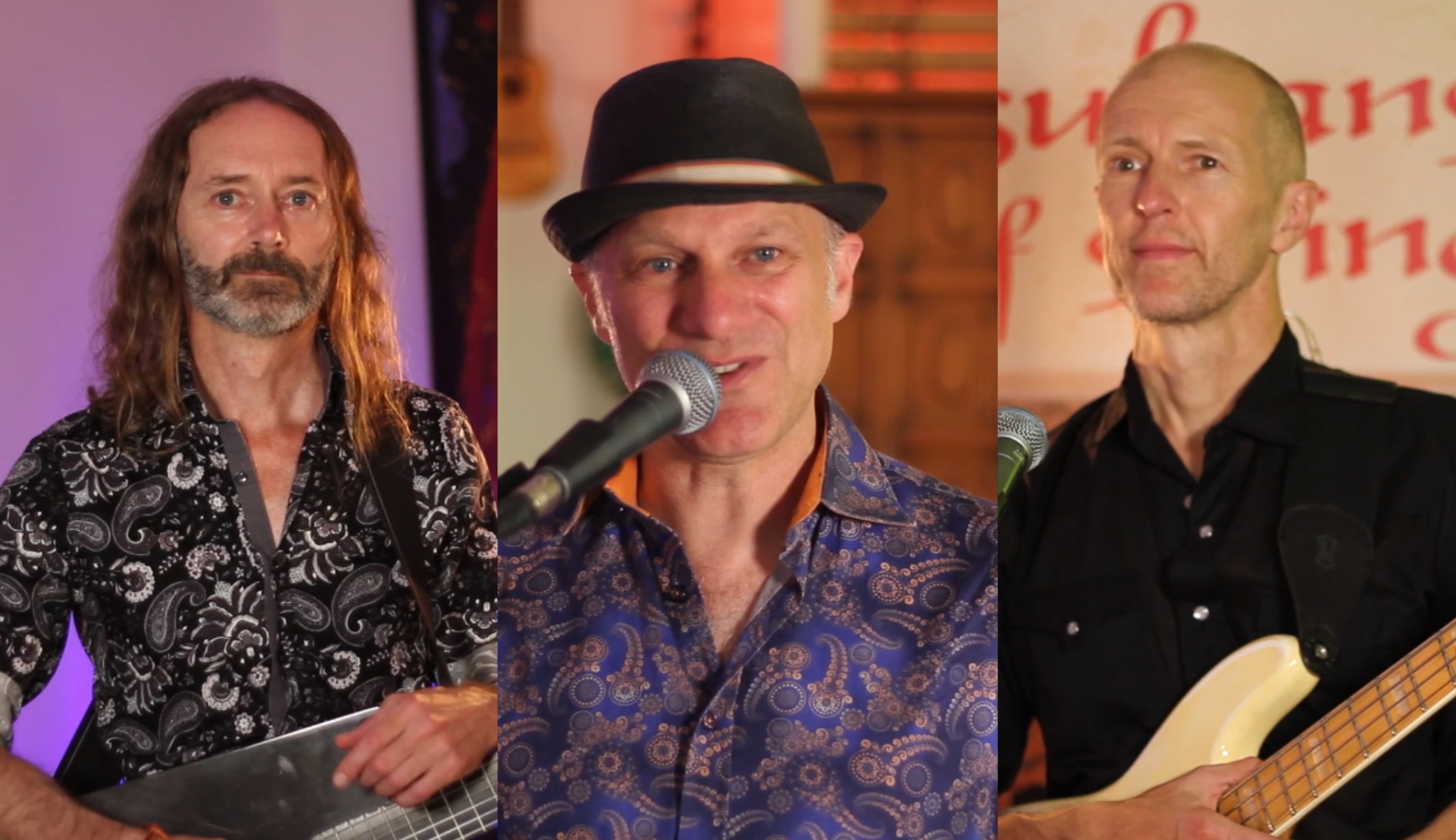
Kevin Laliberté, Chris McKhool, Drew Birston, from their first ever livestreamMusicians are starting to get their feet back under them and are finding new ways of releasing new and recent recordings. We checked in with a few stalwarts to find out how it’s going in the “brave new world.” 

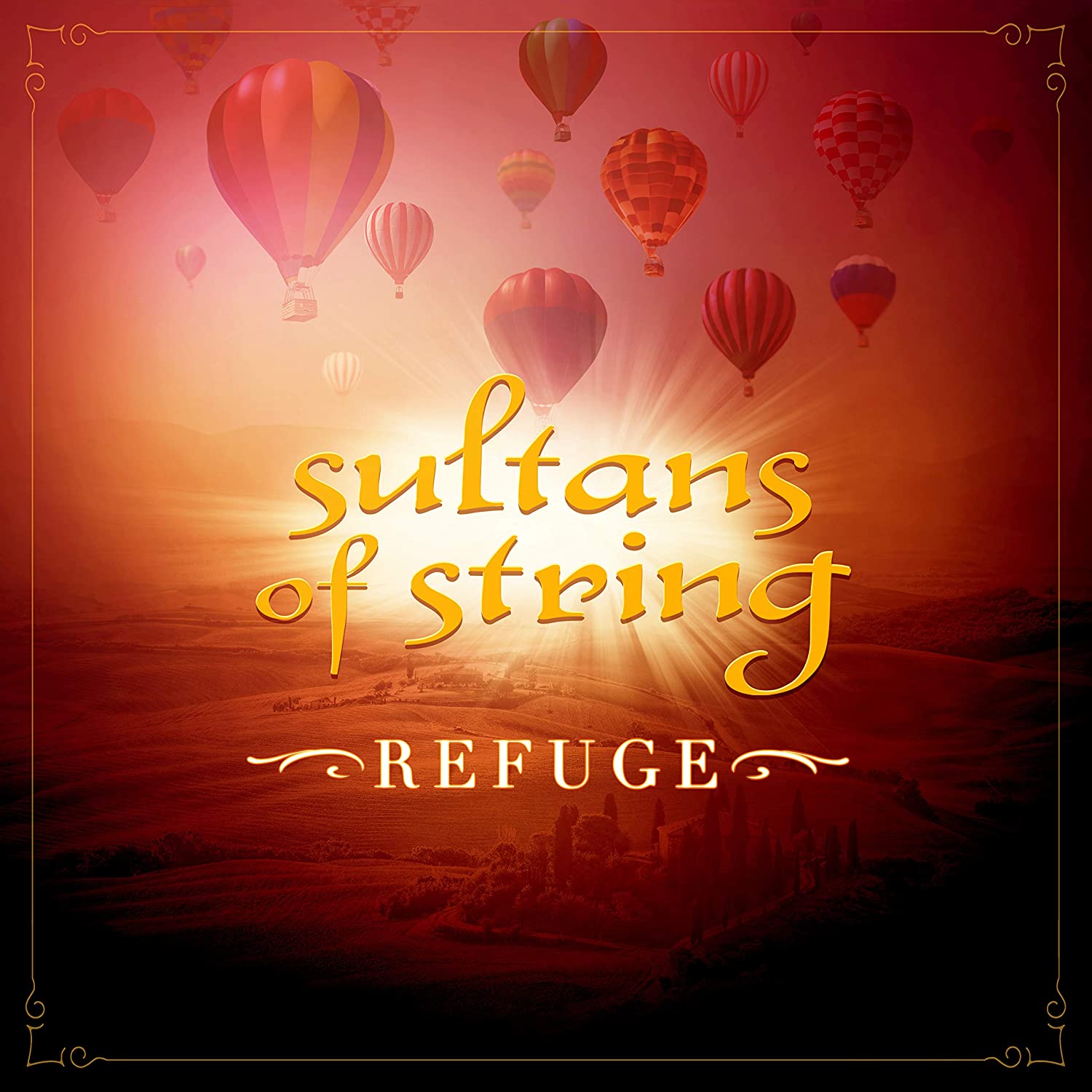
McKhool CD REFUGE album coverWhen Chris McKhool first conceived of his latest album, Refuge, back in 2018, he had no way of knowing how the rug would be pulled out from under him when it came time to launch it. As the leader of the group Sultans of String, this was the biggest project of the fiddle player’s 25-year career. Two years in the making, the project brought together more than 30 guest artists – such as  Bela Fleck, Yasmin Levy and Duke Redbird – from multiple genres and locales as far away as Turkey. 

The initial launch concert was envisaged as a massive undertaking involving nearly all the musicians on the recording and was being billed as a “Woodstock of World Music.” It was to take place in May 2020, then was supposed to be followed by a full-day remounting at Luminato in June. About 80 shows, including a big U.S. tour, were scheduled throughout 2020/21. McKhool saw all the pieces of the plan crumble one by one as the pandemic unfolded and the shutdown happened in March.

“To say I was disappointed when we had to cancel everything is an understatement,” said McKhool. “I was devastated.”

As he and his bandmates gradually came to grips with the fact that months of planning were going out the window, they tried to adapt as each new phase presented itself. Although McKhool has done some press for the project and has taken part in events such as an online talk and video presentation at Luminato, he and the band realized that they were going to have to adjust how they do things in order to stay active and relevant. 

Livestreaming was becoming more and more the norm for presenting performances, and that meant McKhool learning a whole new skill set. So he invested in five video cameras and other recording equipment and set about teaching himself how to shoot and edit video. 

“I must have spent a hundred hours this summer learning about the world of video,” said McKhool. “But I figured this new way of doing concerts isn’t going to go away anytime soon, so I’d better invest in the equipment and learn the skills so I can stay on top of things.”

The band (McKhool on violin; Kevin Laliberté, guitar; and Drew Birston, bass) also decided to try using Zoom to present concerts. The first one took place in September and there was a lot of trepidation about whether they could pull it off. It took days of preparation and fiddling around with cameras and microphone placement, in order to have multiple camera angles and a rich experience for the audience, rather than just one camera pointed at the band.

“That first Zoom show was a really emotional experience for me,” said McKhool. “Seeing how the audience not only connected with the music and the band, but how they connected with each other was really heartening.”

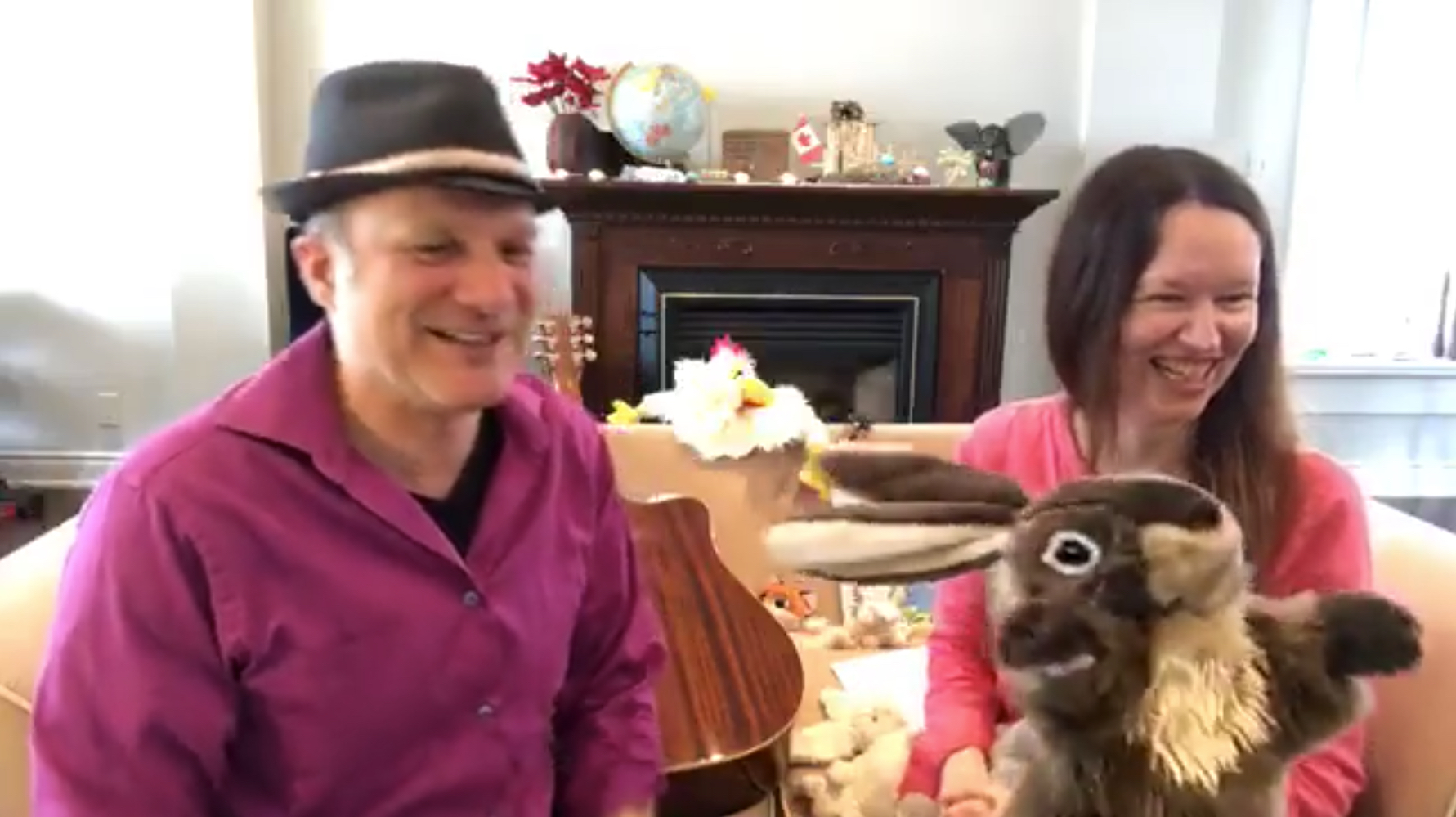
McKhool and the Gang: I make music for families stuck at home due to covid-19 with my educator wife Catherine Kurucz and our nine-year-old daughter working the puppets.McKhool realized that doing interactive Zoom concerts enabled audience members from diverse locations to come together, unlike with live shows. They can congregate via video prior to the show and chat and get to know their fellow fans in a way they probably wouldn’t at a live show. They also had a robust Q&A between the band and audience after the concert. 

“People were really engaged and curious. We were able to talk with them in a way we can’t normally at a live show. There’s a surprising sense of intimacy and give and take that happens doing a Zoom show as opposed to the one-way push of a live show.”

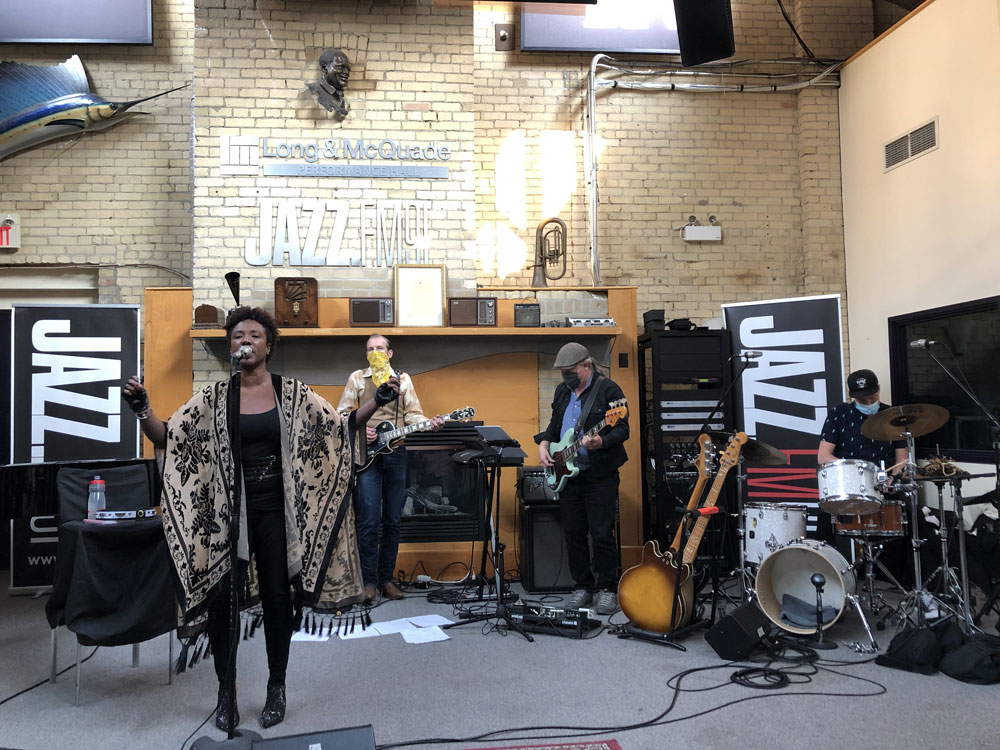
JAZZ.FM91’s FRIDAY LIVE live-to-air concert series, October 9: Dione Taylor performed music from Spirits in the Water with Nichol Robertson, guitar, Mark McIntyre, bass, and Lyle Molzan, drums. Photo by Sandy Mamane

TAYLOR CD Spirits in the Water Dione TaylorDione Taylor takes a more philosophical approach. When her fourth album, Spirits in the Water, was supposed to come out in March and everything came grinding to a halt, the veteran blues/roots singer and songwriter decided to just put things on pause. Then, after several months of reflection on world events and discussion with her team, she decided September was the right time to bring Spirits in the Water to people.

“I don’t believe in coincidences,” said Taylor. “Even though we wrote many of these songs a couple of years ago, a lot of the meaning and messages in them are relevant right now.”

Inspired by mythical folklore, Taylor took an insightful road trip to Nashville to find inspiration for her new album. The songs have themes of perseverance, mystical truths, race inequality, homesickness and transformation, while staying true to her signature “prairie blues” style, which is a mix of roots, blues and Americana. 

“My sense is that people will feel empowered by our music,” said Taylor. “Plus everyone’s at home a lot more right now and people like to hear something new.”

Taylor said she loves touring and playing live and she’s definitely missing the exchange of energy that happens with an in-person audience. 

“We’ve been doing some livestreaming via Facebook and Instagram and it’s been a huge learning curve doing those,” said Taylor. “We’ve also used this as an opportunity to produce a video for each song on the album, using existing images and footage, since we weren’t able to shoot original footage. That was a fun experience.”

Not being able to play live has taken a toll but she’s optimistic it won’t last forever.

“I did a live to air on JAZZ.FM91 with my band that reminded me what a good feeling it is to play with musicians,” said Taylor. “Connecting is what makes the arts so vital but it takes a lot of courage to do that right now. I hope non-arts people will realize it and be kind to musicians because of that.”

Bocana: Steve Webster and Emilie-Claire Barlow. Photo by Karen WikstrandJUNO Award-winning singer, arranger, producer and voice actor, Emilie-Claire Barlow, has been collaborating with musicians and recording remotely for years, so she was prepared when the pandemic hit.

“My partner Steve Webster and I have been splitting our time between Mexico and Canada for some time now,” said Barlow. “We have a portable set-up to record pretty much anywhere we are. I’ve been doing voice work for commercials and cartoons and music recordings like this for years now, so the pandemic has not changed this part of our process in any big way.” 

BARLOW Bocana new singleNo stranger to traditional studio work, of course, Barlow has done many group sessions over the decades and misses the magic of in-person work, especially when it’s with the 70-piece Metropole Orkest she worked with on her Clear Day album. There’s no recreating an experience like that remotely, she says, but enjoys the freedom to make music anywhere in the world with musicians who are anywhere in the world. “Right now we have several musical projects on the go, and are recording singers and instrumentalists in Toronto, Montreal, Chicago, Berlin and LA.”

Which isn’t to say, even living in Huatulco, that it’s all been a day at the beach for Barlow. (Pun intended.) 

“I miss my bandmates terribly,” said Barlow. “I definitely miss some parts of touring – the music and the audiences, the camaraderie with my band. But I will say that staying put in one place for these seven months has been healing and restorative in some ways. Even as I say that, though, I hesitate, because I’m incredibly sensitive to the fact that for some musicians, touring is their whole livelihood. But for me, while I miss the live music experience, there have also been some positives.”

Barlow explained that she and Webster were finally able to work on some musical ideas that had been brewing for years but just hadn’t had the time to develop while touring. Making their new duo, Bocana, a priority has resulted in six singles being released and a substantial listenership on digital platforms.

“It’s been a hugely rewarding and freeing experience to collaborate together in this capacity to make music that lives in its own space apart from ‘Emilie-Claire Barlow.’ We truly feel free to make our own rules and defy genres.” 

Cathy Riches is a self-described Toronto-based recovering singer and ink slinger.

The 2020 JUNO Awards take place on Sunday, March 15.As always, come JUNOS time, there’s much for us at The WholeNote to be pleased by, looking at the lists of nominees and seeing how many of the albums in question our recording reviews editor David Olds and his industrious DISCOVERIES team managed to review – this year 25 out of 40 in the categories that are the closest musical match with what we do. There are, of course, some nominees in those categories who we missed out on reviewing (or simply haven’t got to yet…so keep the recordings coming).

There are also, of course, lots of other JUNO categories outside the musical genres we cover – and many of these other categories will be front and centre in the televised JUNO broadcast (which many of the categories we cover will not!). All the more reason to read about them here, as a reminder that the JUNOS are a bigger musical tent than what you will see on TV during prime time on March 15.

So, here for your interest, are all the nominees in categories of music we normally cover, with albums we reviewed over the course of the year highlighted, and with links to those reviews, including magazine section and month of the review, along with, in many cases, links to tracks from the albums in question.

Vocal jazz album of the year

Jazz album of the year: solo

Jazz album of the year: group

Instrumental album of the year

Classical album of the year: solo or chamber

Classical album of the year: large ensemble

Classical album of the year: vocal or choral

Classical composition of the year

Traditional roots album of the year

World music album of the year

Recording engineer of the year

  • George Seara: "If I Can't Have You"
  • Jason Dufour: "Push For Yellow,"
  • John "Beetle" Bailey: "Dividido (feat. Silvana Estrada)" (Alex Cuba, Sublime); "Shotgun" (Monkey House, Friday) 2019 – 10 Pot Pourri
  • Ryan Worsley: "2 Myself"
  • Vic Florencia: "Midnight," "Over Me" (Brooke Palsson, Midnight)

The 2020 JUNO Awards take place on Sunday, March 15, 2020. A complete list of nominees can be found here.

David Olds, left and Ken Whitely. Photo by Sharon LovettI’m writing this on my 72nd birthday, so I’m going to indulge myself a little. But actually, it seemed as if my birthday came early this year. On an unseasonally mild day in early March the telephone rang and a voice said, “This is Ken Whiteley and I’d like to bring you my new CD.”  

I’ve been a fan of the Whiteley clan’s various musical adventures for more than half a century but had not previously had the pleasure of making Ken’s acquaintance. As I said it was a nice day and so I decided to sit on my porch and play my 1966 Martin D12-20 12-string while I waited for him to arrive. After initial pleasantries, much to my delight, Ken said he’d like to try out my guitar – see the accompanying photo – and commenced to demonstrate how such a venerable instrument should be played. I’m a pretty good strummer but man, my Martin has never sounded as good as it did under his finger-picking finesse. What a treat!

Last June at Hugh’s Room I attended the 60th anniversary/reunion celebration of the Original Sloth Band’s first gig back in 1965 in Bracebridge. It was the first two LPs by this band, featuring Ken and his older brother Chris with Tom Evans, that began my interest in these multi-instrumentalists and their eclectic repertoire that spans roots, blues, early jazz, gospel and folk traditions. The eponymous first record came out in 1973 and in the intervening years Ken has released more than three dozen discs, many under his own name, others with family (The Whiteley Brothers), friends (Mose Scarlett and Jackie Washington) and such sundry groups as The Beulah Band and Junior Jug Band. 

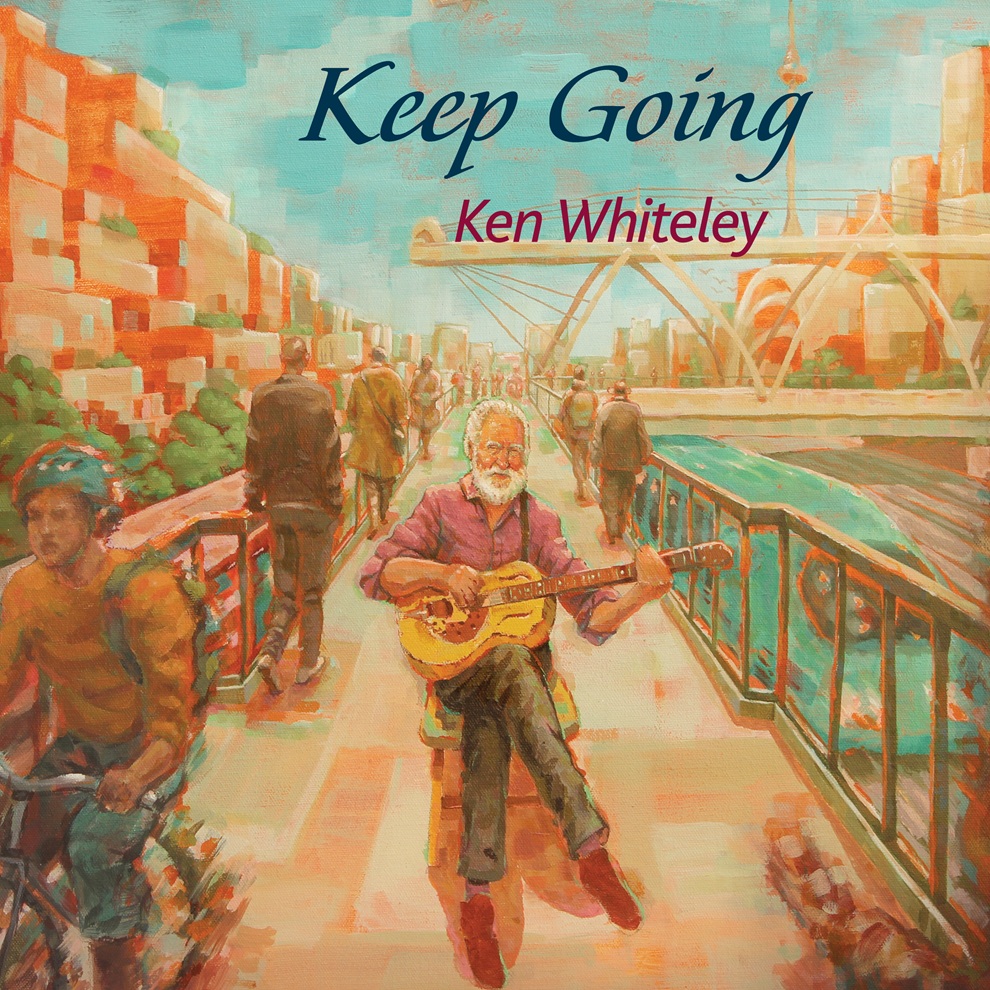
01b Ken WhiteleyAlthough Ken contributes the lion’s share of the accompaniments on most recordings, he is always joined by a host of stalwart journeymen (and women) and his latest CD, Keep Going (kenwhiteley.bandcamp.com/album/keep-going), is no exception. It’s an engaging mix of cover versions, original songs, and Whiteley arrangements of traditional tunes. He’s joined by brother Chris (harmonica and cornet), Bucky Berger (drums), Gord Mowat (bass) and vocalist Ciceal Levy, whose distinct harmonies blend marvellously and give an edge to Whiteley’s lead vocals. Eva Goldberg co-wrote and sings on the closer At the End of the Day, which features a haunting bass harmony by Pat Patrick.  

Whiteley’s notes are like a masterclass, giving the origin story of each tune and how he came to learn it. A case in point is Noah Lewis’ Going to German which Whiteley first performed in the 1960s as a member of Tubby Fats Original Allstar Downtown Syncopated Big Rock Jug Band. The backstory: German is a place just outside of Memphis where a state penitentiary is located. Another confusing title is Aberdeen, not in Scotland, but a town in Mississippi where Bukka White lived in the 1930s. 

On the opener Everybody’s Got to Be Tried Ken plays National steel guitar, Hammond organ and Fender bass, with Berger on drums and Chris on harmonica. On Going to German he plays 2 mandolins, mandola and mandocello, harmonica and bass harmonica. Other tracks find him adding string bass, washboard and piano. 

Although vocals and well-articulated lyrics are front and centre on most tracks, there is one instrumental, Whiteley’s own arrangement of Benny Goodman’s A Smooth One played on a Laskin acoustic guitar, which he says he believes is the first totally solo guitar piece he’s ever released. It’s sweet! 

Of particular note is the title track, a balladic anthem that came about after a fall on the ice in 2025 that resulted in a broken ankle. “Take my rest when I’m tired; I’m not fighting with nature’s laws; When I’m done I’ll keep going; This rest is just a pause; …While my heart keeps on beating; I’ll get back up when I’m down; Keep going, keep going…” Advice to live by. 

Concert Note: Ken Whiteley will celebrate his 75th birthday in a concert with friends (and family no doubt) at Hugh’s Room on May 2. It’s on my calendar. 

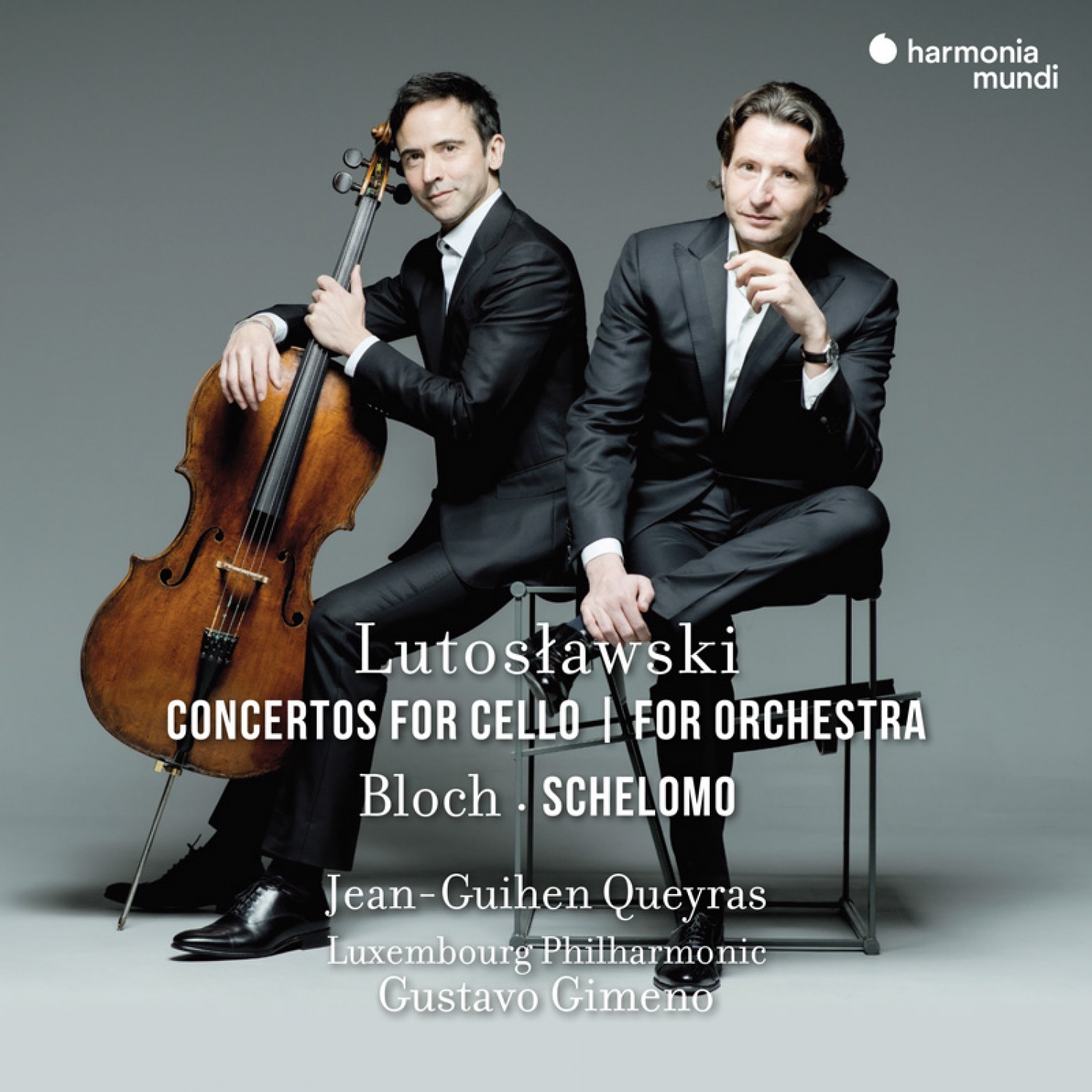
02 Jean Guihen Queyras LutoslawskiMany of my most memorable concert experiences have been shared with my dear friend André Leduc. For many years of my tenure at New Music Concerts (NMC), André was our photographer and documented the residencies of some of the most distinguished composers of our time. He and I agree that top among these were Witold Lutoslawski, who conducted the NMC Ensemble in 1993 just months before his death, and Pierre Boulez, laureate of the Glenn Gould Prize in 2002, who led our ensemble in the programme at Glenn Gould Studio during which the prize was presented. The ceremony also included the Toronto Award, given to a “protégé” selected by the winner, in this case the Montreal-born cellist Jean-Guihen Queyras, who has a thriving career in Europe. 

Lutosławski – Concertos for Cello | for Orchestra; Bloch – Schelomo (Harmonia Mundi HMM902714 store.harmoniamundi.com) features Queyras in Lutosławski’s cello concerto and the Bloch, with the Luxembourg Philharmonic conducted by Gustavo Gimeno, the Toronto Symphony Orchestra’s current music director. 

The Concerto for Orchestra is given a stunning performance to open the disc. It’s a relatively early work, written between 1950 and 1954, and owes an obvious debt to Bartók’s masterpiece in the same genre, while adding some contemporary stridency. 

Ernest Bloch’s Schelomo: Rhapsodie Hébraïque for Violoncello and Orchestra was completed in 1916, before the Swiss composer’s move to the USA, and is the final work in his Jewish Cycle. The cello is in full cantorial mode, declaiming what was originally conceived as a vocal text based on the Book of Ecclesiastes. Queyras is convincing in capturing the voice of King Solomon (Schelomo) that ranges from meditative to stentorian. 

For me (and André) the highlight of the disc is Lutosławski’s Concerto for cello and orchestra, written in 1970 for Mstislav Rostropovich. In the words of Dave Kopplin, it “consists of many simultaneous strands that at times seem related, at other times not, woven together in a fantastic quilt of sound…  conjuring up an image of controlled chaos.” It is acknowledged as one of Lutosławski’s most effective works and is a personal favourite. Queyras is in top form, rising to all the challenges and curves the composer throws at him, and Gimeno has full control over his orchestra in this stellar performance. 

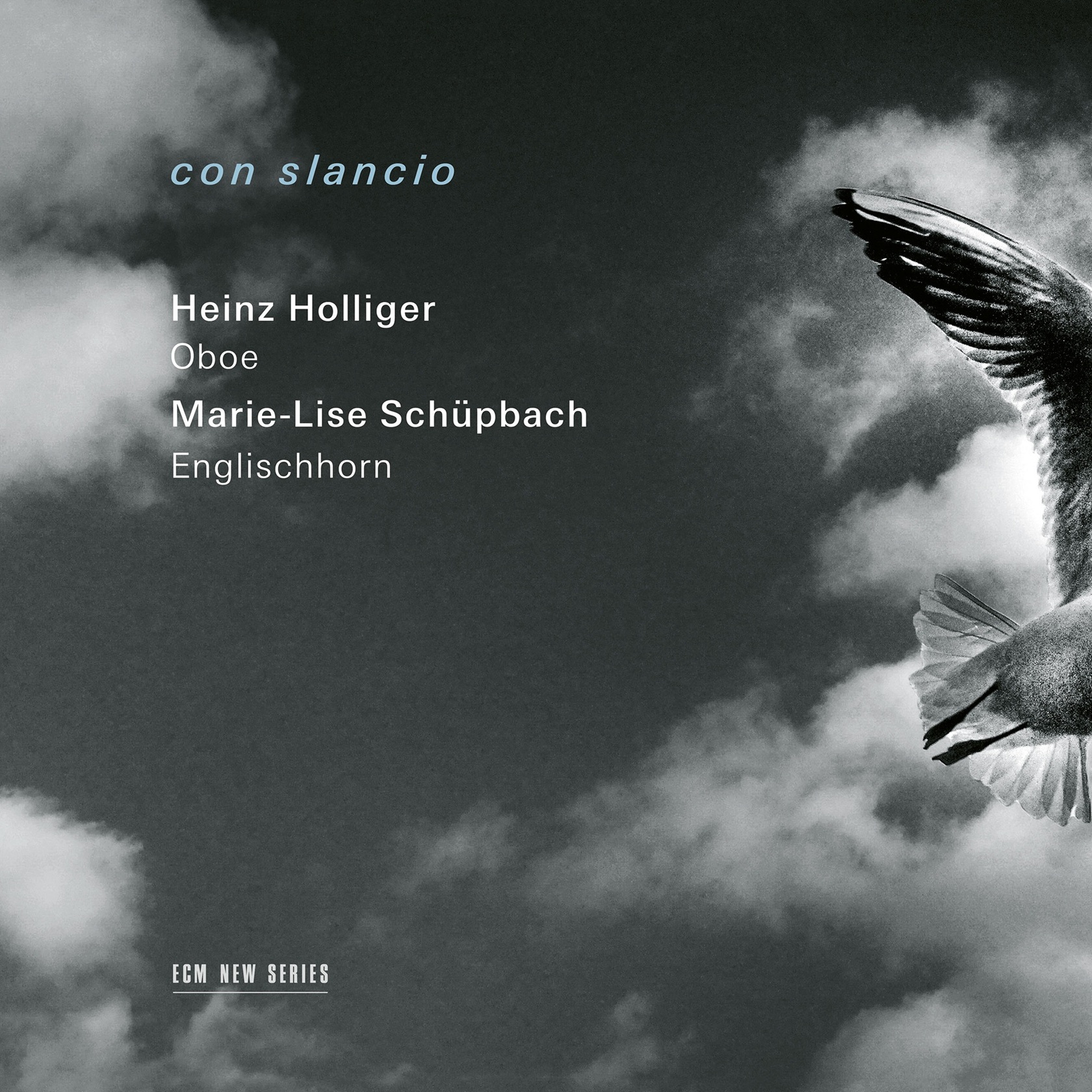
03 HolligerAnother towering figure we had the pleasure of meeting was oboist and composer Heinz Holliger who spent a week working with NMC musicians in March 2005. He was featured with members of Accordes in Elliott Carter’s Oboe Quartet, conducted his own Turm-Musik for flute solo (Robert Aitken) and 23 players and supervised performances of several smaller works. Renowned as a pioneer of extended techniques for double reed instruments, he would often provide charts and instructions for realizing these new, often “non-musical” sounds to the composers he would commission. “Many of the pieces written for me were almost like recipes: the composers would receive a list from me of all the extended techniques available.”

With these often-extreme sounds in mind, I was quite surprised at how lyrical his latest CD con slancio is (ECM New Series 2807 deutschegrammophon.com/en/catalogue/products/con-slancio-marie-lise-schuepbach-heinz-holliger-14336). The title is Italian for “with enthusiasm, momentum or vigour” and the disc pairs recent solo works and duets by Holliger with pieces written for him by Toshio Hosokawa, Jürg Wyttenbach, György Kurtág, Rudolf Kelterborn and Robert Suter. Holliger is joined by Marie-Lise Schüpbach and they alternate on oboe and its darker-sounding sibling, the English horn. 

Holliger’s title work for solo oboe from 2018 opens the disc, and is later answered by Kurtág’s con slancio, largamente composed for English horn the following year. In this latter the lyricism I mentioned above comes to the fore, and we even hear a snippet of Bach. Both these pieces last roughly two minutes, as it the case for most of the works presented here. Notable exceptions are Hosokawa’s Musubi (2019) and Wyttenbach’s Sonata für Oboe solo (1961). Incidentally André and I got to know both of these composers during the time they spent with NMC in 2005 and 2009 respectively. Hosokawa’s duet for oboe and English horn, like its name would suggest – to tie, to bind – “knots the two players together only to let them unravel again.” 

Holliger describes Wyttenbach’s sonata thusly: “Jürg treats the oboe’s sound almost abstractly at times, creating a wonderful music that doesn’t always lie comfortably on the instrument. But that resistance is precisely what’s good about it. […] It is extremely demanding without ever lapsing into empty virtuosity.” Virtuosity abounds on this disc, but it is never empty. At more than an hour’s duration, one might think the sounds of just one oboe, or English horn, or the two combined, might get tiresome. But in the hands of this master and his associate, there’s no fatigue. It is an hour well spent. 

04 Gershwin in ViennaMy own knowledge of contemporary music is largely self-acquired, from reading books and, more particularly, from the liner notes of my extensive collection of LPs and CDs. Oh, and the 20 years I served as Robert Aitken’s assistant at New Music Concerts. Although I pride myself on my competency, this mode of acquisition has left a few gaps, and some prejudices as to what qualifies as “serious” music. After repeated urgings from my friend André, I belatedly – almost two decades after its publication – picked up The Rest is Noise: Listening to the Twentieth Century by Alex Ross. It’s a marvellous book – selected as one of the “Ten Best” of the year by the New York Times – that puts the art music of the whole century into perspective. 

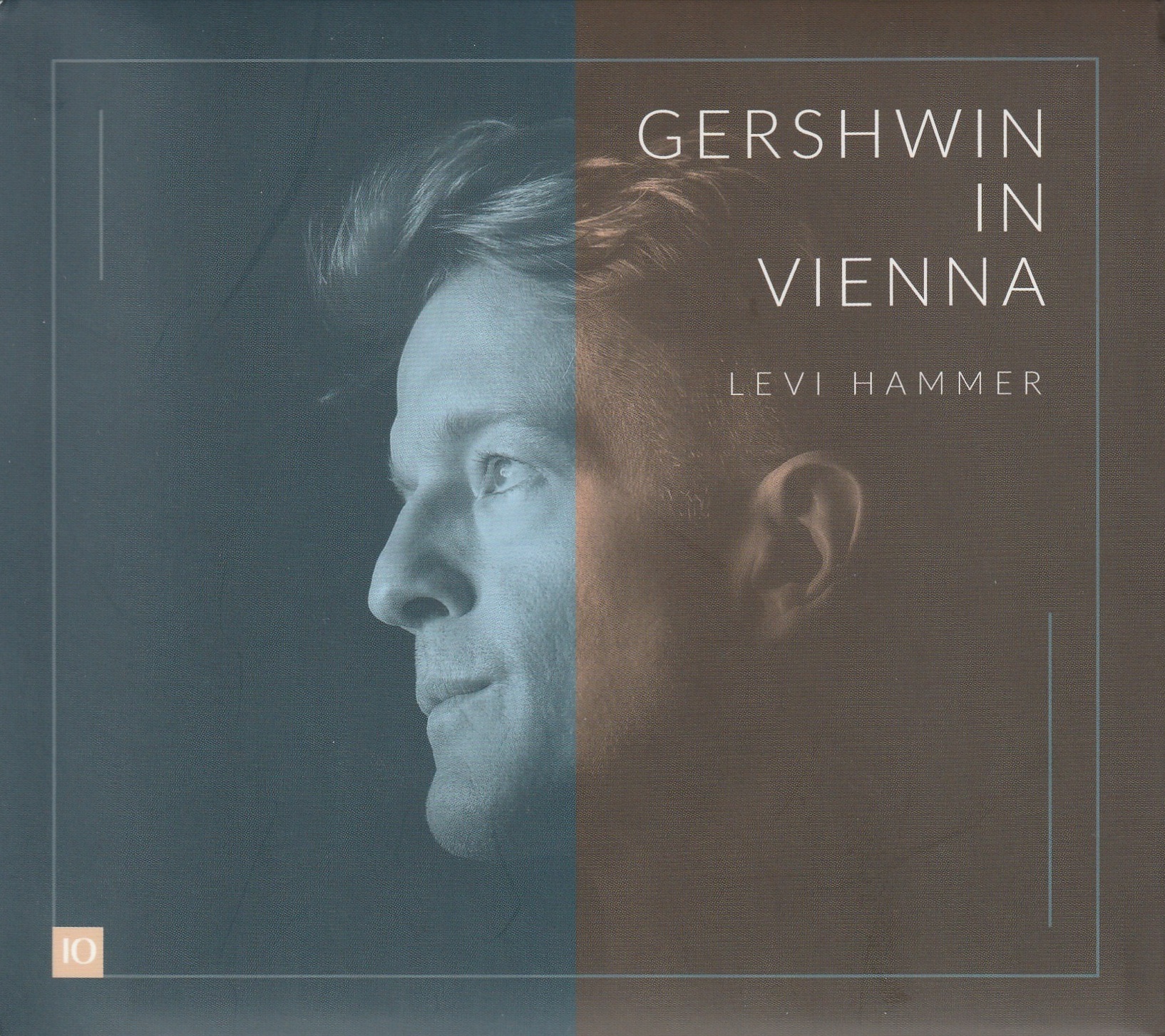
I had never taken the music of George Gershwin terribly seriously, so I was surprised to learn from Ross that several heavyweights – Arnold Schoenberg and Alban Berg – did. This is the premise of the recording Gershwin in Vienna, conceived and performed by American pianist, conductor and curator Levi Hammer (Decurio DEC-015 awaiting URL from publicist). Hammer says “For two composers with vastly different backgrounds, Schoenberg and Gershwin mirrored each other in uncanny ways. Both were largely self-taught, both Jewish, both painters, and both relentlessly devoted to refining their craft.”

The disc includes Gershwin’s Jazzbo Brown Blues, Three Preludes, and 18 of the composer’s own piano transcriptions from the Great American Songbook. These are interspersed with Schoenberg’s Three Piano Pieces, Op. 11, and Six Little Piano Pieces, Op. 19; Berg’s Piano Sonata, Op. 1; and Webern’s Variations for Piano, Op. 27. I occasionally find the juxtaposition of Gershwin’s mostly sunny and rhythmic pieces with the austerity of those of the Second Viennese School somewhat jarring, but Hammer makes a strong case for his thesis in the liner notes. 

Gershwin spent time in Vienna in 1928 and did indeed interact with Schoenberg and Berg, who seem to have accepted him as the “real deal.” Berg arranged a private performance of his Lyric Suite for the American composer and Gershwin, at Berg’s urging, played some of his own piano works. Hammer draws convincing parallels between the Lyric Suite and An American in Paris and I must admit that on repeated listenings I am hearing hints of Gershwin’s sensibility in the middle piece of Schoenberg’s Op.11 (although it was written two decades before that encounter). 

Schoenberg’s grief at Gershwin’s death at the age of 38 – they had become friends after Schoenberg moved to California – is audible in his thick Viennese accent in a moving radio tribute included at the conclusion of this album, in which he says “…there is no doubt that he was a great composer. What he has achieved was not only to the benefit of American music, but also a contribution to the music of the whole world. I want to express the deepest grief at the deplorable loss to music, but may I mention that I lose also a friend who was very dear to me.” 

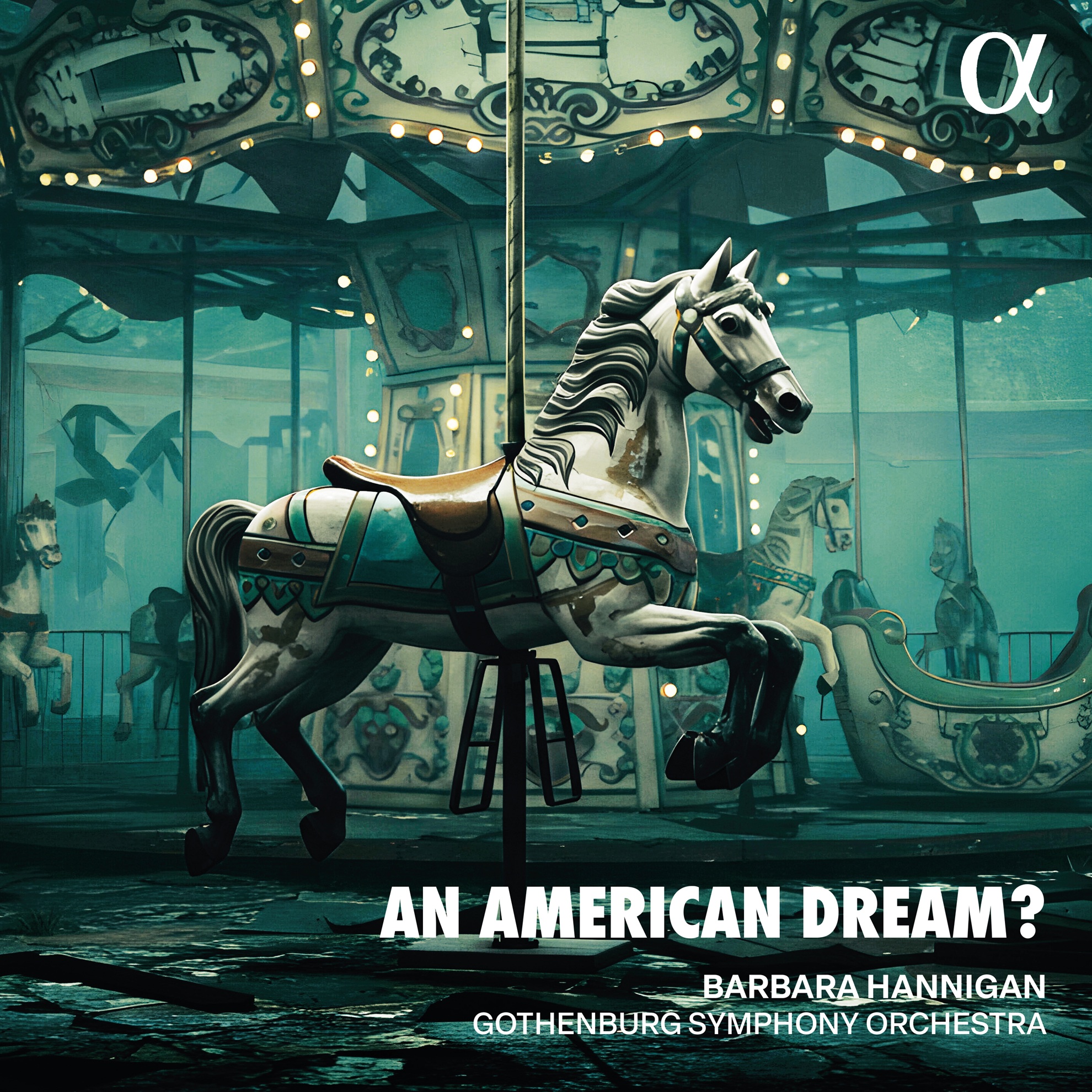
05 Barbara HanniganAn American Dream? is the latest release from Barbara Hannigan, a Canadian soprano whose career has blossomed on the international stage in the past three decades. To tie this in with earlier paragraphs I will mention that her first professional engagement was with New Music Concerts back in 1990 in a piece for multiple ensembles by Henry Brant. 

Hannigan is now as renowned as a conductor as she is as a singer, and even more surprising, as someone who can do both simultaneously, as she does here from the helm of the Gothenburg Symphony Orchestra (Alpha 1222 outhere-music.com/en/albums/american-dream-0). The context of this album is a celebration of American music, and I feel a little uncomfortable with that given the current state of the world, especially in relation to the current American president. With that in mind I’ll let Hannigan explain its origins:

“Growing up as a northern neighbour to the United States, I have been fascinated (and also intimidated) by aspects of the USA which seem built on an entirely different foundation than my country, Canada. America’s exuberant patriotism, embrace of capitalism, and flashy dominance in industry, sport, and entertainment have cast a long shadow. ‘The American Dream,’ an elusive notion popularized in 1931 during the Great Depression, promoted the ideal that ‘the United States is a land of opportunity that allows the possibility of upward mobility, freedom, and equality for people of all classes who work hard and have the will to succeed.’ It is indeed a dream, and for many, an impossible one, considering the various obstacles facing so many because of ongoing prejudices firmly attached to race, gender and social or financial standing. The divisions we now are witnessing in American society which have international repercussions, as an elected leader and supporting government behave in a manner that is difficult not to see in any other way than narcissistic and bullying, was an even stronger inspiration for me to put this album together. […] With this repertoire, I wanted to express my admiration for the incredible creativity and tenacity of America’s immigrants and their descendants, and also my sadness in observing what seems to have been lost.”

So obviously I’m okay with that, and it explains the question mark in the title of the disc. The programme begins, understandably enough, with George Gershwin. In 1942, five years after his death, conductor Fritz Reiner commissioned a suite from Gershwin’s masterwork to be arranged by Robert Russell Bennett, knowing that Bennett would be faithful to the composer’s wishes of style and sound. The resulting Porgy and Bess: A Symphonic Picture is a half-hour long tour de force that Hannigan brings masterfully to life. 

Did you know that Aaron Copland wrote a vampire ballet? It was news to me... but it seems that inspired by the film Nosferatu, and encouraged by his teacher Nadia Boulanger, he did indeed create a work based on an evil sorcerer named Grohg, who would bring cadavers to life and make them dance. Grohg was not a success, but some years later Copland resurrected (if you’ll excuse the pun) the work and published it as Dance Symphony. It is this incarnation of the ballet that is presented here.

The disc continues with The Carousel Waltz, the overture from Rodgers and Hammerstein’s wildly successful musical Carousel, and concludes with At the Fair, a suite of show tunes arranged by Hannigan and Bill Elliott, who also orchestrated the 12-minute bouquet of bonbons. The suite is bookended by two songs, the poignant Have I Stayed Too Long at the Fair?, and the showstopper Don’t Rain on my Parade from Jule Styne’s Funny Girl. Hannigan tells us “Both songs I sing in this suite were made famous by one of my great idols: the American singer, actor, director, producer and activist, Barbra Streisand. I wanted to juxtapose the personal and intimate nostalgia of the first song’s ‘older and wiser’ reflective mood with the final song’s youthful chutzpah and joie de vivre.” And joyous it is! 

David Olds can be reached at discoveries@thewholenote.com

As Torontonians learned several years ago when Dundas Square was renamed, the word Sankofa, originating from the Akan people of Ghana, comes from a Twi expression whose literal meaning is “Go back and get it!” a command to pay due regard to the lessons and practices of the past and to draw on them to inform the present and the future. The symbol of Sankofa, is often depicted as a bird with its feet facing forward (progress) while its head is turned backward (reflection), carrying a precious egg in its mouth (future/wisdom).

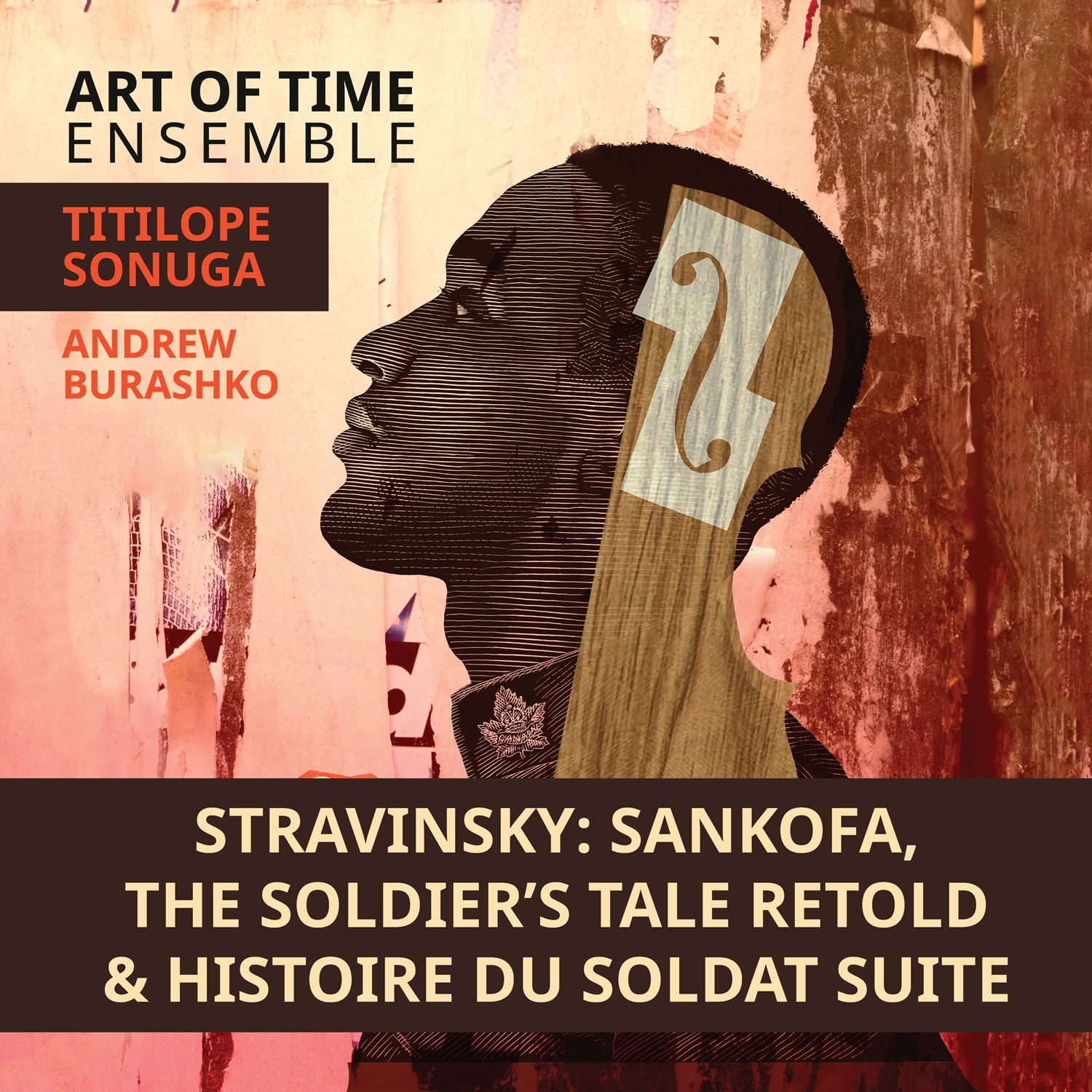
01 Stravinsky SankofaIn October 2024 the Art of Time Ensemble produced Sankofa: The Soldier’s Tale Retold under Andrew Burashko’s direction, Nigerian-Canadian poet Titilope Sonuga’s reimagining of Stravinsky’s L’Histoire du Soldat. As their contribution to this year’s Black History Month Leaf Music released a recording of this stunning work (LM304 leaf-music.lnk.to/lm304c)

The original story by Charles-Ferdinand Ramuz told of a First World War soldier who encounters the devil to whom he barters his violin for the promise of eternal riches, a bargain that has dire consequences. Sonuga’s version tells of a (fictional) Jamaican man of African heritage in Halifax in 1914 who wants to enlist in the Canadian army but is turned down because people of his skin colour are not welcome to join. He meets the devil who cajoles him into accepting a magic violin in exchange for his bird amulet, a gift from his mother. “Sankofa, is what he calls the bird, who holds his history in a word. A symbol, an ancient guide, resting near his heart with pride.” With the devil’s help he is accepted into the only entirely black battalion in the Canadian army, the historical No.2 Construction Battalion, which suffered abuse at the hands of their white officers and was relegated to digging ditches because their commanders refused to give them arms. 

Spoiler alert: As in the original, and many other such tales, selling your soul to the devil never turns out well, although there are a number of exhilarating moments along the way. 

Stravinsky’s music is used throughout the hour-long performance. Burashko says “I asked [Sonuga for] an homage to the original in the following ways: that the libretto be written in rhyming verse; for the same characters (Soldier, Devil and Narrator); that it follow the original structure by having the Devil appear in different guises and that the new libretto make perfect sense with the original music.” It does indeed, and also makes for a powerful story. 

The skeletal orchestration – violin, clarinet, trumpet, trombone, bassoon, double bass and percussion – is said to represent the scarcity of musicians in Stravinsky’s Paris in the wake of the devastation of WWI. The excellent members of the Art of Time Ensemble, led by violinist Benjamin Bowman, capture the score brilliantly, and the actors – Ordena Stephens-Thompson (Narrator), Olaoluwa Fayokun (Soldier) and Diego Matamoros (Devil) – bring the story compellingly to life. The jam-packed disc also includes a stellar performance of the 28-minute instrumental suite that Stravinsky extracted from L’Histoire. Kudos to all concerned.

Listen to 'Sankofa: The Soldier’s Tale Retold' Now in the Listening Room

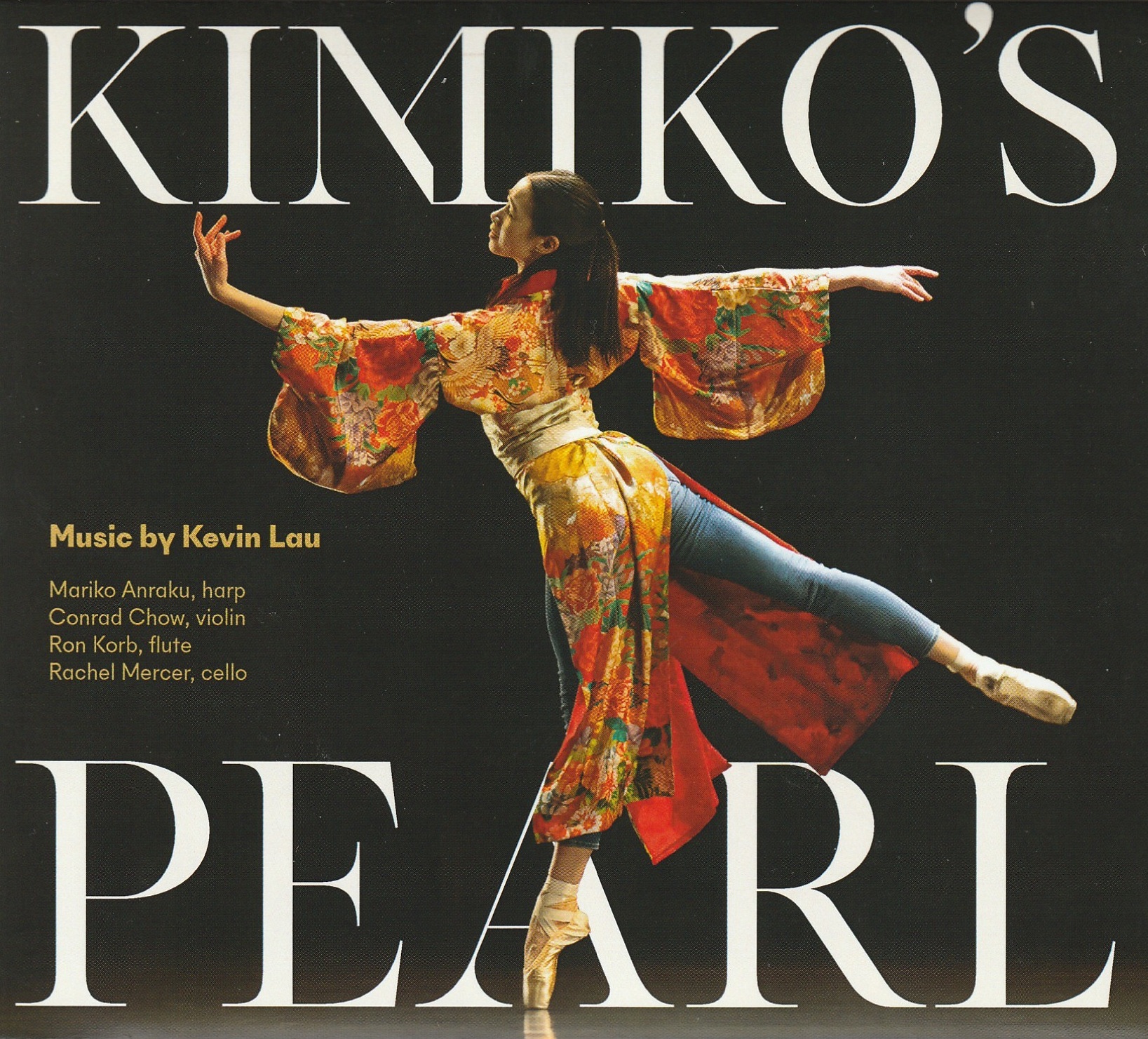
02 Kimikos PearlThere are many parallels between Stravinsky’s tale and Kevin Lau’s Kimiko’s Pearl, a ballet developed in conjunction with Bravo Niagara in 2024, now available on CD (BNCD001 kimikospearl.com). The story is centred around the internment of Japanese Canadians during the Second World War and, like the Stravinsky, also uses minimal instrumental forces: harp (Mariko Anraku), violin (Conrad Chow), Japanese and Western flutes (Ron Korb) and cello (Rachel Mercer). 

Founded in 2014 by mother-daughter duo Christine Mori and Alexis Spieldenner, Bravo Niagara is based in Niagara-on-the-Lake and dedicated to amplifying underrepresented voices through the arts. Lau says Mori and Spieldenner’s family experience of the Japanese Canadian internment inspired the narrative with its encompassing of universal themes: love, devastation, grief, resilience, and the reclamation of identity. Based on a story by Howard Reich, four generations of the Ayukawa family are represented from the great-grandfather’s arrival in Canada in 1917 through to 15-year-old Kimiko’s discovery of a mysterious trunk in their basement in Toronto a century later. There are some magical moments, such as when an antique radio broadcasts news of the Second World War, along with a wedding dress, a pearl ring and the diary also found in the trunk that help bring the family story to life for Kimiko. 

The Ayukawa family trunk, currently in the collection of the Canadian War Museum, is a real artifact built by Shizuo Ayukawa in the New Denver internment camp in British Columbia. Kimiko’s Pearl reflects the tragedies, triumphs and perseverance of Japanese Canadians before, during and after the internment they endured during WWII. A parable particularly relevant today, it attests to heroism and hope in the face of racism and intolerance. 

Lau’s lush yet crystalline score is brilliantly realized by the quartet of musicians with supplemental sound design aspects (including taiko drums and other enhancements) developed by Aaron Tsang. The CD booklet is beautifully illustrated with stunning photos from the stage production. It includes a detailed synopsis of each of the eight scenes and biographies of all involved. It’s easy to see why this very impressive package has received two JUNO-nominations, for Classical Album of the Year (small ensemble) and Classical Composition of Year.

Listen to 'Kimiko’s Pearl' Now in the Listening Room

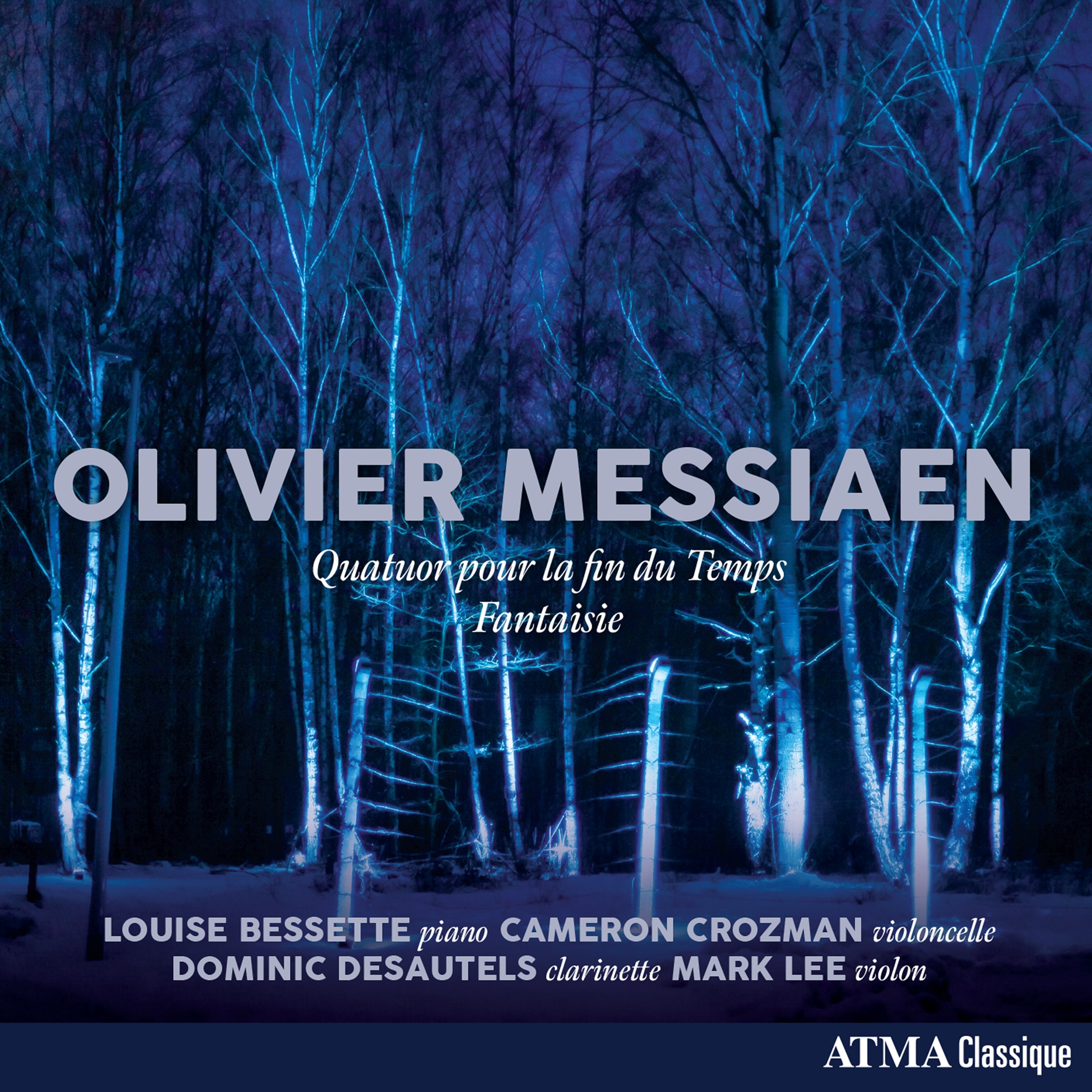
03a Messiaen ATMAPerhaps the most famous example of military imprisonment leading to the creation of a masterpiece is the story behind Olivier Messiaen’s Quatuor pour la fin du temps. Messiaen was serving in the medical auxiliary of the French army when he was captured by the Germans near Verdun in 1940 and transported to Stalag VIII-A, a prisoner-of-war camp in Görlitz, Silesia (then German territory, now Poland). During the nine months he spent there he was treated decently and with the help of a friendly German guard, Carl-Albert Brüll, who provided manuscript paper and pencils, Messiaen was able to compose. Using the meagre materials at hand – a dilapidated upright piano, a cello with just three strings, a violin and a clarinet – he wrote what would go on to be recognized as one of the greatest chamber works of the last century. The quartet reflects Messiaen’s profound religious faith, with each of its eight movements devoted to a different aspect of praise to God and Nature. The instrumentation changes from movement to movement, with each musician, except for the piano, given a solo turn. Most striking is the Abîme des oiseaux, where the clarinet, alone, rises out of nothingness to depict the abyss of the birds. 

There are two new recordings of this iconic work, and I confess that I am hard-pressed to choose between them. Thankfully I don’t have to! The first features Montrealer Louise Bessette, renowned for her performances and recordings of Messiaen’s solo piano music, having worked extensively with the composer’s wife Yvonne Loriod. She is joined by young cellist Cameron Crozman, the recipient of the 2021 Canada Council for the Arts Virginia Parker Prize, the Council’s largest award for emerging classical musicians, Dominic Desautels, principal clarinetist at the Canadian Opera Company and violinist Mark Lee, assistant concertmaster of Symphony Nova Scotia. This new disc (ATMA ACD22940 atmaclassique.com/en/produit/olivier-messiaen-quatuor-pour-la-fin-du-temps-fantaisie) is available on streaming platforms in the immersive Dolby Atmos process with exceptional clarity and depth of sound. As a bonus the disc also gives a taste of a younger, pre-mystical Messiaen with the less frequently performed and somewhat bombastic Fantasie for violin and piano (1933). 

03b Messiaen AnzuFormed in 2020, the Anzû Quartet is dedicated to the music of our time and the recent canon. Comprising Olivia De Prato (violin), Ashley Bathgate (cello), Ken Thomson (clarinet) and Karl Larson (piano), Anzû pays homage to Olivier Messiaen’s Quatuor pour la fin du temps by actively commissioning and performing new works for this iconic instrumentation. The name anzû refers to a massive, fire and water breathing bird found in Babylonian and Sumerian mythology. In these ancient texts, Anzû is linked to death and destruction as well as birth and creation, reflecting the juxtaposing themes of calamity and salvation often expressed through birdsong in Messiaen’s quartet. 

The notes to this recording (Cantaloupe Music anzuquartet.com/quatuor-pour-la-fin-du-temps) include “Thoughts about Quatuor pour la fin du temps” by Anzû’s mentor, cellist Fred Sherry, whose own group Tashi studied the work with Messiaen in the late 1970s, so advice from the horse’s mouth, if once removed. The resulting performance is one to be treasured, with all the nuance and dynamic range this exhilarating work demands. 

04 Osvaldo Golijov Ever YoursThe music of Argentine-born American composer Osvaldo Golijov is featured on a new disc entitled Ever Yours (Phenotypic Recordings phenotypicrecordings.com). Golijov tells us “Ever Yours was the last piece I wrote for and dedicated to Geoff Nuttall, who was, and still is, my brother in music and life. I was inspired primarily by two things: brotherhood, as embodied in the letters that Vincent van Gogh wrote to his brother Theo—which he always signed with the words ‘Ever Yours’—and the String Quartet, Op.76, No.2 by Joseph Haydn, who was the composer Geoff loved and admired the most […] I wrote Ever Yours, primarily, as a conversation about music, Haydn, friendship, life, and death, between Geoff and me. Geoff is now gone, and his (and my) beloved St. Lawrence String Quartet, which he co-founded and led for more than 30 years, has disbanded. But the idea of a conversation between friends continues to live…” 

Haydn’s quartet finds its way into each of the four movements, but we also hear snatches of Beethoven’s final quartet in the third. Originally written for string octet, Golijov has added a double bass in the current version for which the Arethusa and Animato Quartets are joined by bassist Nicholas Schwartz. For Tintype, violist Barry Shiffman, another founder of the St. Lawrence Quartet joins the Arethusa in a work that began its life as a soundtrack for the film Elie Wiesel: Soul on Fire. A theme inspired by several animated sequences in the film, in which Wiesel dreams of his father, who died in the Holocaust, was later expanded and became the second movement of Tintype. The first movement is based on a traditional Hebrew melody, and the third is based on a version of the prayer, “Ani Maamin” [I Believe], that Wiesel sings in the last minutes of the documentary. Here, Golijov says, “it alternates between sparse, expressionistic fragments of the prayer, and driven, motoric sections inspired by Philip Glass’s string writing. I hear the spirit of Schubert in his chamber music, as I hear it in my own music.”

The disc concludes with two shorter tracks. K’vakarat [As a Shepherd…] is a prayer from the Yom Kippur liturgy originally written for cantor Misha Alexandrovich and string quartet here performed in an arrangement for viola and strings by Shiffman. The concluding Esperanza [Hope] from 2025 is a love theme composed for the soundtrack of Francis Ford Coppola’s film Megalopolis, performed by the same nine musicians from Ever Yours, bringing the disc full circle.

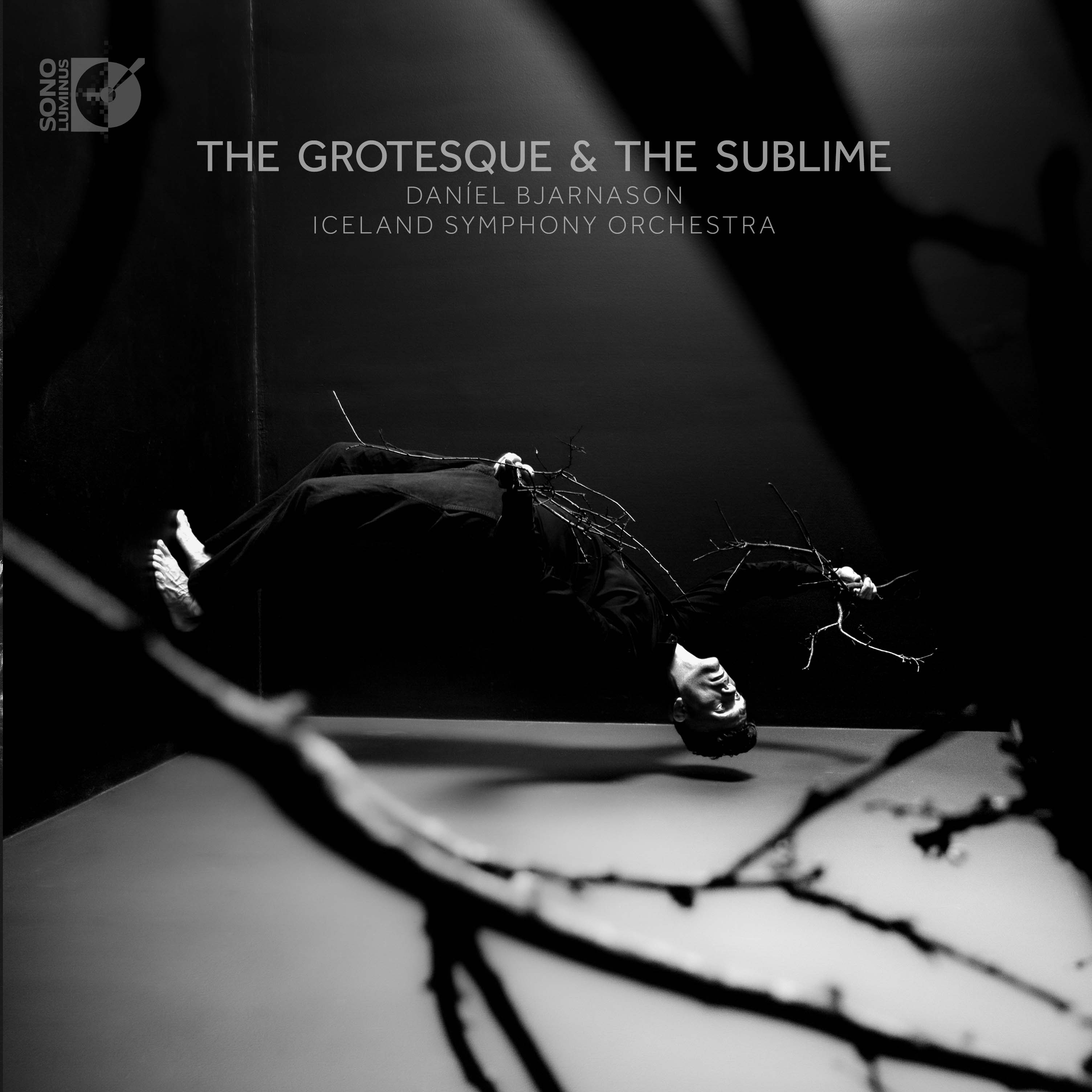
05 Daniel BjarnasonIn June 2023 the Toronto Symphony Orchestra under the direction of Gustavo Gimeno gave the premiere performances of Daniel Bjarnason’s Trilogy for Orchestra: I Want to be Alive, a work they had co-commissioned with the Cincinnati and Iceland Symphony Orchestras and the Helsinki Philharmonic. Bjarnason is currently Artist in Collaboration: Iceland Symphony Orchestra, where he previously held posts as Principal Guest Conductor and Artist in Residence. He has also worked extensively with the Los Angeles Philharmonic and one of his collaborations there resulted in the piano concerto FEAST performed by its dedicatee Vikingur Ólafsson in 2021 under Gustavo Dudamel. 

That majestic near-half-hour work opens the CD The Grotesque and the Sublime in a new performance with pianist Frank Dupree and the Iceland Symphony Orchestra, who are featured throughout the recording with the composer conducting (Sono LuminusDSL-92287 sonoluminus.com/sonoluminus/grotesque-and-sublime). Bjarnason is a hub-like figure in the group of composers who could be said to constitute a First Icelandic School. But his own music sprawls beyond the borders of the school’s typical aesthetic, its characteristic gradual transformation of vaporous orchestral sounds, akin to the shifting shape and colour of a North Atlantic cloud. This difference is amply displayed in FEAST with its seven dramatic and dynamically boisterous movements. Also of note here is an external narrative – Edgar Allan Poe’s short story The Masque of the Red Death – reflected in the phantasmagorical movement titles such as “the brazen lungs of the clock” and “domination over all (skeletal procession).” The score follows the trajectory of Poe’s story, opening with a dense and decadent party punctured by its own ‘reverie’ for solo piano. Some 25 minutes later, after the skeletal procession, the flamboyant concerto dissolves into dust.

The centrepiece of this recording, Fragile Hope – In memory of Jóhann Jóhannsson, is more like the atmospheric works of the Iceland School, and fittingly so as Jóhannsson was a seminal figure in that movement. It is dark and brooding, full of angst and longing, although there are bright moments where hope shines through. 

The final work Inferno is a percussion concerto featuring the rising young German star Vivi Vassileva. Although the three orchestral percussionists play a vast range of instruments, the soloist is limited to only a few: drum kit, wood blocks, txalaparta (a traditional Basque instrument constructed of wooden boards on a platform), marimba, Japanese taiko drums, kick drum and timpani. Bjarnason says “the primary objective was sonic: a focus on particular sound worlds, rather than a mad dash between many instruments.” The unusual sound of the txalaparta, which is featured extensively in the first and third movements, is especially intriguing and to my ear reminiscent of some of the instruments invented by Harry Partch. There is an extended and effective timpani cadenza reinforced by low strings and woodwinds. Inferno provides a stimulating climax to a scintillating disc. 

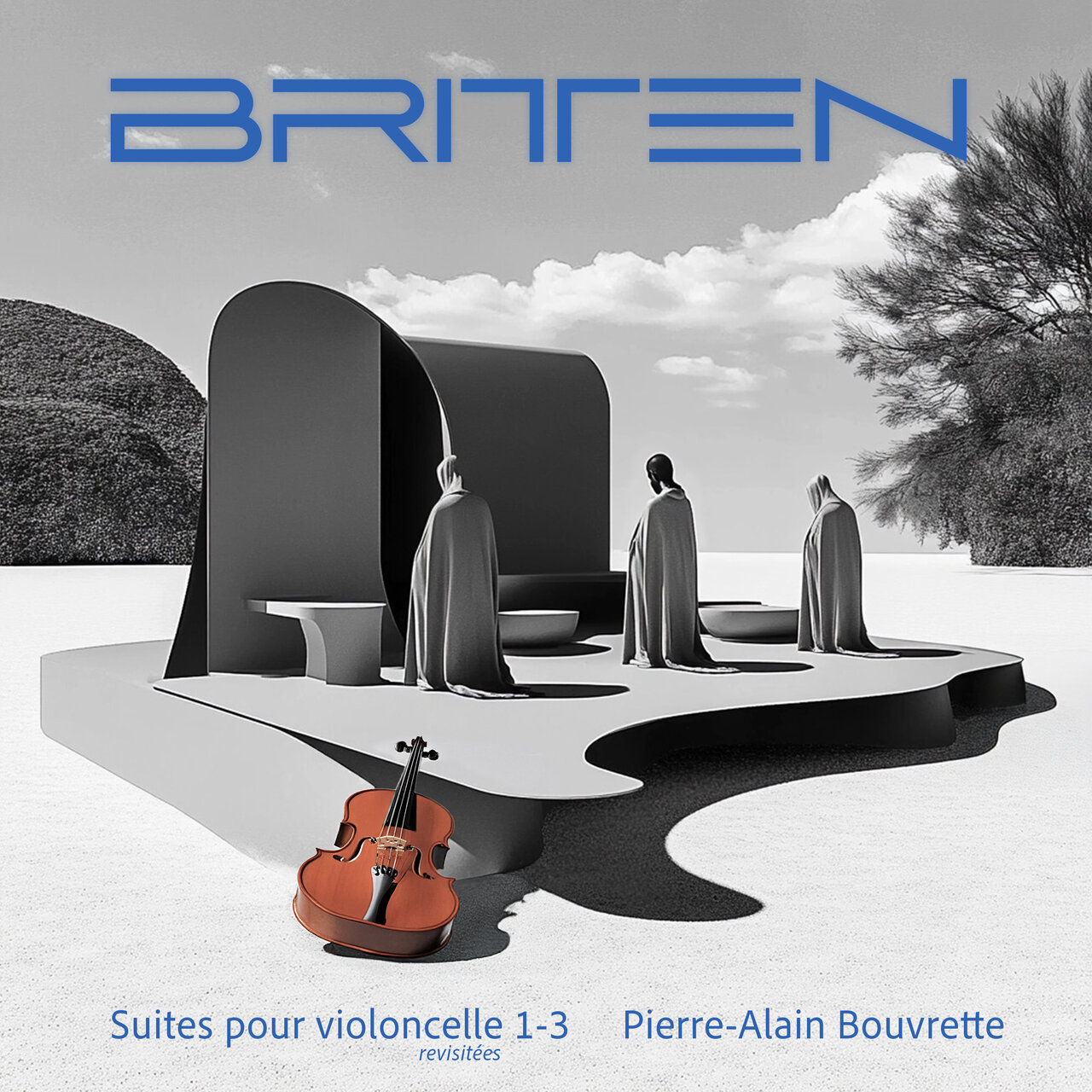
06 Bouvrette BrittenBritten – Suites pour violoncelle 1-3 (revisitées) features Montreal cellist Pierre-Alain Bouvrette. This is a digital release which unfortunately does not come with much documentation. I say this because these are very complex works, unlike most of Britten’s oeuvre and it would be useful to be given some analysis or at least some background and context to their composition. When I asked Bouvrette about this absence he responded that many digital platforms don’t support anything but audio files and cover art, so he did not produce a programme booklet. He did however send me an artist’s statement from which I have adapted the following: 

The leading element of my approach was driven by the nature of these works with their polyphonic ambitions for an instrument that is mostly monophonic. The cello can certainly be bi-phonic but it is realistically impossible to play more than 2 notes at the same time. Therefore, polyphony becomes a pure illusion. […] I have produced a studio recording, exempt from the constraints of a false linear time frame, existing only as a sound object on its own. Using every tool available in the studio I have created a version of this music, one that could be imagined through the lens of an interpreter/sound technician/sound designer. […] This was made with utmost respect for these works that I love but not without a touch of humour and lightness, which I hope may be forgiven. This version should not be taken as a reference for these works and I hope that if a listener falls in love with what they hear, they will also go listen to a more traditional version.

That all being said, I find Bouvrette’s renditions convincing and satisfying, with all the extreme dynamics and rhythmic nuances intact. The recorded sound is exemplary, and I was not aware of any obvious instances of studio manipulation. I did, however, take his advice and listened to my traditional favourite performances, those by the dedicatee Mstislav Rostropovich, and more recent recordings by Truls Mørk and Pieter Wispelwey. It was great to have an excuse to immerse myself again in these masterworks. You can find Bouvrette’s Britten on most streaming platforms, or here: palmaresadisq.ca/en/artist/pierre-alain-bouvrette/album/britten-suites-pour-violoncelle-1-3-revisitees

David Olds can be reached at discoveries@thewholenote.com

Back to top