I’m writing this on my 72nd birthday, so I’m going to indulge myself a little. But actually, it seemed as if my birthday came early this year. On an unseasonally mild day in early March the telephone rang and a voice said, “This is Ken Whiteley and I’d like to bring you my new CD.”
I’ve been a fan of the Whiteley clan’s various musical adventures for more than half a century but had not previously had the pleasure of making Ken’s acquaintance. As I said it was a nice day and so I decided to sit on my porch and play my 1966 Martin D12-20 12-string while I waited for him to arrive. After initial pleasantries, much to my delight, Ken said he’d like to try out my guitar – see the accompanying photo – and commenced to demonstrate how such a venerable instrument should be played. I’m a pretty good strummer but man, my Martin has never sounded as good as it did under his finger-picking finesse. What a treat!
Last June at Hugh’s Room I attended the 60th anniversary/reunion celebration of the Original Sloth Band’s first gig back in 1965 in Bracebridge. It was the first two LPs by this band, featuring Ken and his older brother Chris with Tom Evans, that began my interest in these multi-instrumentalists and their eclectic repertoire that spans roots, blues, early jazz, gospel and folk traditions. The eponymous first record came out in 1973 and in the intervening years Ken has released more than three dozen discs, many under his own name, others with family (The Whiteley Brothers), friends (Mose Scarlett and Jackie Washington) and such sundry groups as The Beulah Band and Junior Jug Band.
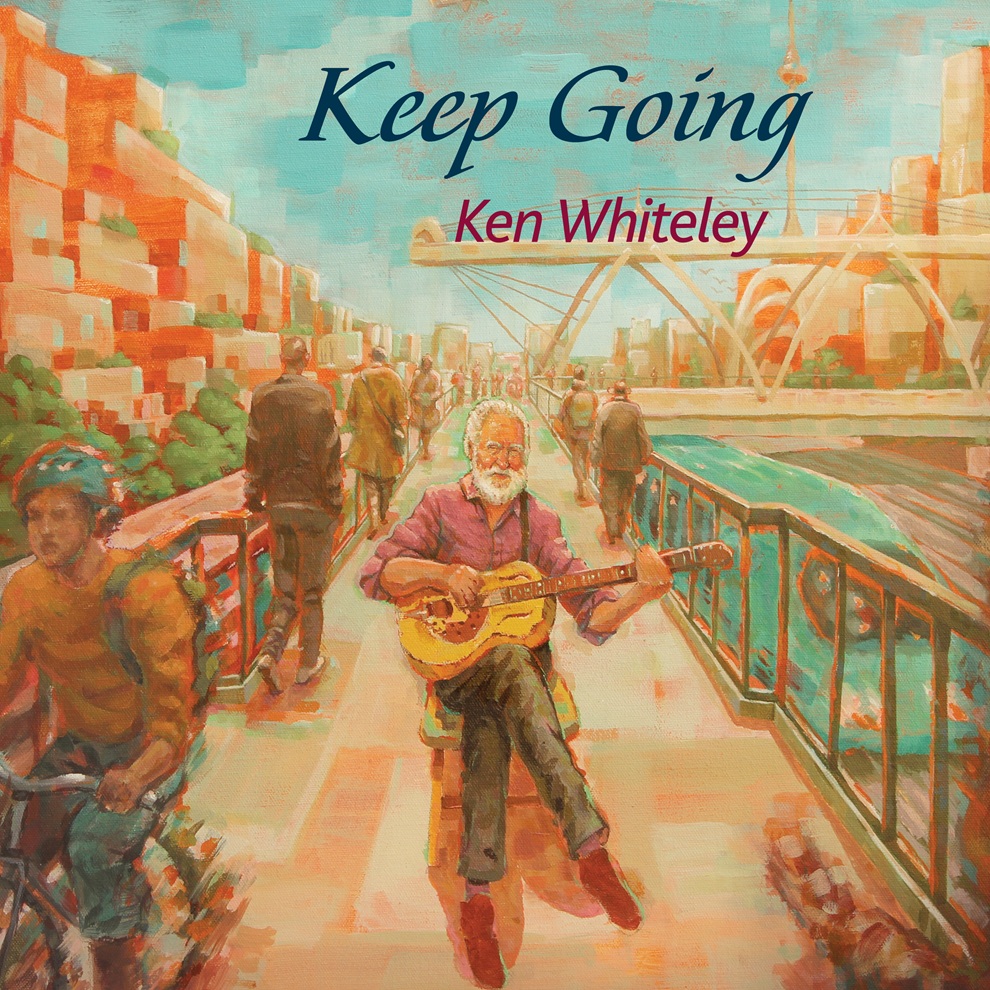 Although Ken contributes the lion’s share of the accompaniments on most recordings, he is always joined by a host of stalwart journeymen (and women) and his latest CD, Keep Going (kenwhiteley.bandcamp.com/album/keep-going), is no exception. It’s an engaging mix of cover versions, original songs, and Whiteley arrangements of traditional tunes. He’s joined by brother Chris (harmonica and cornet), Bucky Berger (drums), Gord Mowat (bass) and vocalist Ciceal Levy, whose distinct harmonies blend marvellously and give an edge to Whiteley’s lead vocals. Eva Goldberg co-wrote and sings on the closer At the End of the Day, which features a haunting bass harmony by Pat Patrick.
Whiteley’s notes are like a masterclass, giving the origin story of each tune and how he came to learn it. A case in point is Noah Lewis’ Going to German which Whiteley first performed in the 1960s as a member of Tubby Fats Original Allstar Downtown Syncopated Big Rock Jug Band. The backstory: German is a place just outside of Memphis where a state penitentiary is located. Another confusing title is Aberdeen, not in Scotland, but a town in Mississippi where Bukka White lived in the 1930s.
On the opener Everybody’s Got to Be Tried Ken plays National steel guitar, Hammond organ and Fender bass, with Berger on drums and Chris on harmonica. On Going to German he plays 2 mandolins, mandola and mandocello, harmonica and bass harmonica. Other tracks find him adding string bass, washboard and piano.
Although vocals and well-articulated lyrics are front and centre on most tracks, there is one instrumental, Whiteley’s own arrangement of Benny Goodman’s A Smooth One played on a Laskin acoustic guitar, which he says he believes is the first totally solo guitar piece he’s ever released. It’s sweet!
Of particular note is the title track, a balladic anthem that came about after a fall on the ice in 2025 that resulted in a broken ankle. “Take my rest when I’m tired; I’m not fighting with nature’s laws; When I’m done I’ll keep going; This rest is just a pause; …While my heart keeps on beating; I’ll get back up when I’m down; Keep going, keep going…” Advice to live by.
Concert Note: Ken Whiteley will celebrate his 75th birthday in a concert with friends (and family no doubt) at Hugh’s Room on May 2. It’s on my calendar.
 Many of my most memorable concert experiences have been shared with my dear friend André Leduc. For many years of my tenure at New Music Concerts (NMC), André was our photographer and documented the residencies of some of the most distinguished composers of our time. He and I agree that top among these were Witold Lutoslawski, who conducted the NMC Ensemble in 1993 just months before his death, and Pierre Boulez, laureate of the Glenn Gould Prize in 2002, who led our ensemble in the programme at Glenn Gould Studio during which the prize was presented. The ceremony also included the Toronto Award, given to a “protégé” selected by the winner, in this case the Montreal-born cellist Jean-Guihen Queyras, who has a thriving career in Europe.
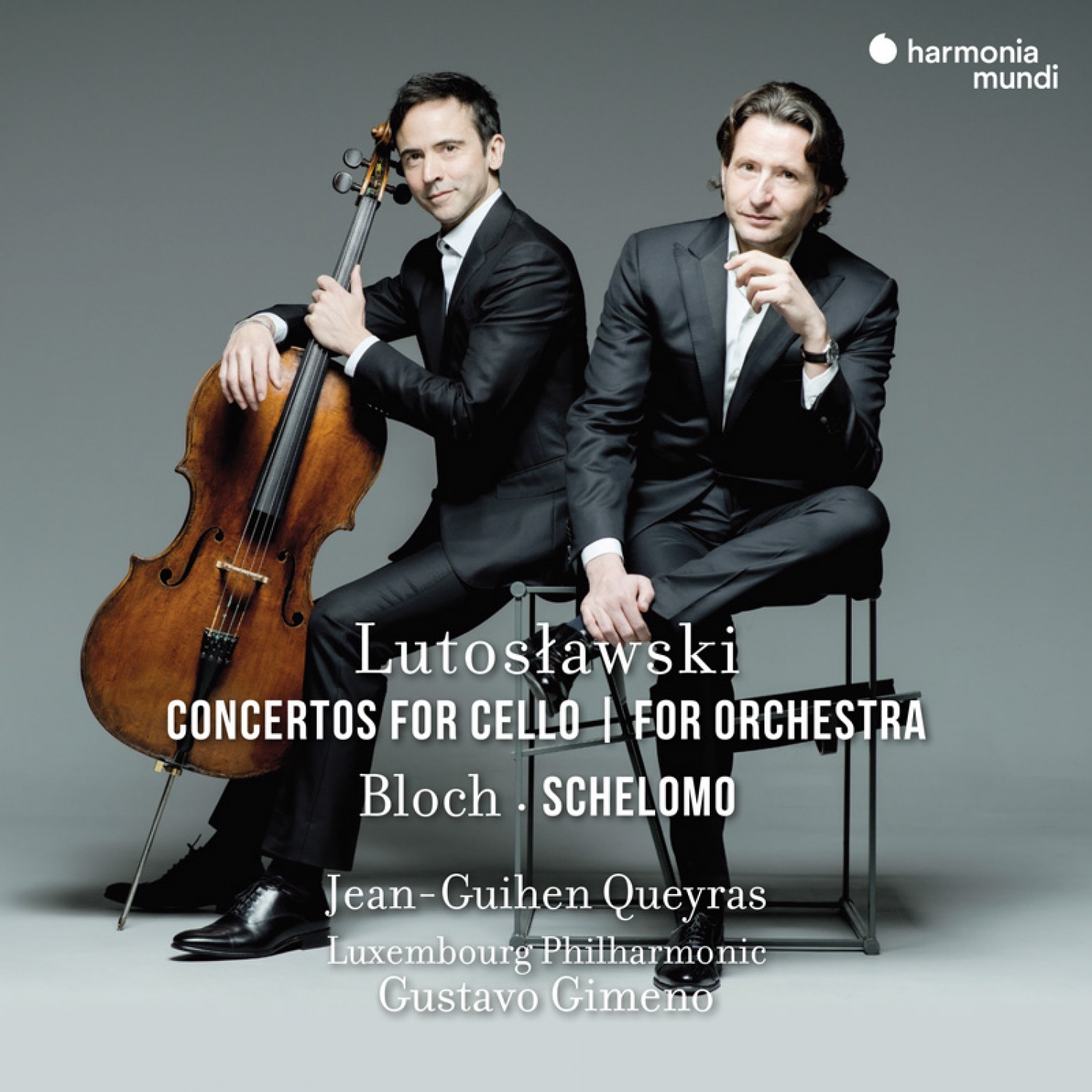
Lutosławski – Concertos for Cello | for Orchestra; Bloch – Schelomo (Harmonia Mundi HMM902714 store.harmoniamundi.com) features Queyras in Lutosławski’s cello concerto and the Bloch, with the Luxembourg Philharmonic conducted by Gustavo Gimeno, the Toronto Symphony Orchestra’s current music director.
The Concerto for Orchestra is given a stunning performance to open the disc. It’s a relatively early work, written between 1950 and 1954, and owes an obvious debt to Bartók’s masterpiece in the same genre, while adding some contemporary stridency.
Ernest Bloch’s Schelomo: Rhapsodie Hébraïque for Violoncello and Orchestra was completed in 1916, before the Swiss composer’s move to the USA, and is the final work in his Jewish Cycle. The cello is in full cantorial mode, declaiming what was originally conceived as a vocal text based on the Book of Ecclesiastes. Queyras is convincing in capturing the voice of King Solomon (Schelomo) that ranges from meditative to stentorian.
For me (and André) the highlight of the disc is Lutosławski’s Concerto for cello and orchestra, written in 1970 for Mstislav Rostropovich. In the words of Dave Kopplin, it “consists of many simultaneous strands that at times seem related, at other times not, woven together in a fantastic quilt of sound… conjuring up an image of controlled chaos.” It is acknowledged as one of Lutosławski’s most effective works and is a personal favourite. Queyras is in top form, rising to all the challenges and curves the composer throws at him, and Gimeno has full control over his orchestra in this stellar performance.
 Another towering figure we had the pleasure of meeting was oboist and composer Heinz Holliger who spent a week working with NMC musicians in March 2005. He was featured with members of Accordes in Elliott Carter’s Oboe Quartet, conducted his own Turm-Musik for flute solo (Robert Aitken) and 23 players and supervised performances of several smaller works. Renowned as a pioneer of extended techniques for double reed instruments, he would often provide charts and instructions for realizing these new, often “non-musical” sounds to the composers he would commission. “Many of the pieces written for me were almost like recipes: the composers would receive a list from me of all the extended techniques available.”
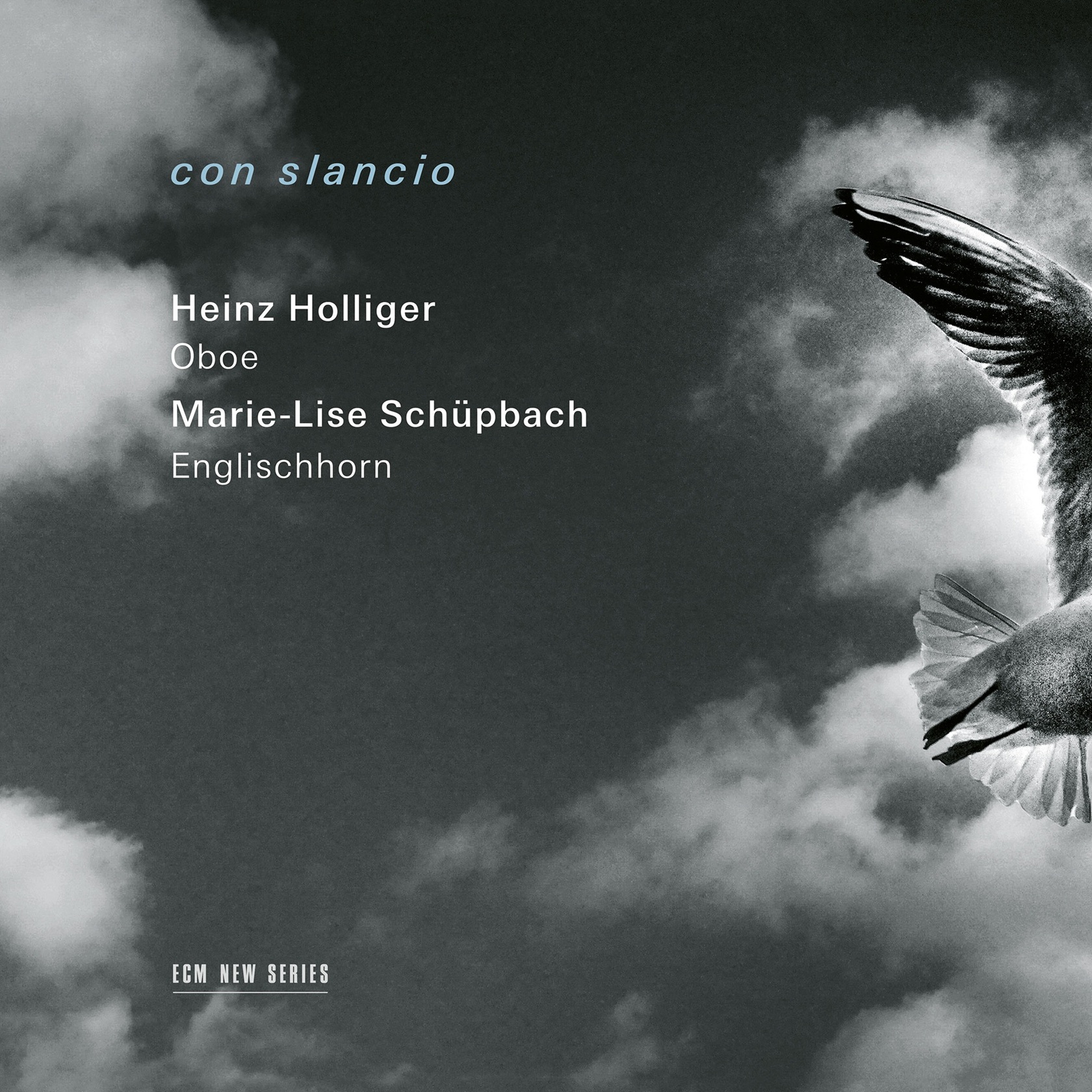
With these often-extreme sounds in mind, I was quite surprised at how lyrical his latest CD con slancio is (ECM New Series 2807 deutschegrammophon.com/en/catalogue/products/con-slancio-marie-lise-schuepbach-heinz-holliger-14336). The title is Italian for “with enthusiasm, momentum or vigour” and the disc pairs recent solo works and duets by Holliger with pieces written for him by Toshio Hosokawa, Jürg Wyttenbach, György Kurtág, Rudolf Kelterborn and Robert Suter. Holliger is joined by Marie-Lise Schüpbach and they alternate on oboe and its darker-sounding sibling, the English horn.
Holliger’s title work for solo oboe from 2018 opens the disc, and is later answered by Kurtág’s con slancio, largamente composed for English horn the following year. In this latter the lyricism I mentioned above comes to the fore, and we even hear a snippet of Bach. Both these pieces last roughly two minutes, as it the case for most of the works presented here. Notable exceptions are Hosokawa’s Musubi (2019) and Wyttenbach’s Sonata für Oboe solo (1961). Incidentally André and I got to know both of these composers during the time they spent with NMC in 2005 and 2009 respectively. Hosokawa’s duet for oboe and English horn, like its name would suggest – to tie, to bind – “knots the two players together only to let them unravel again.”
Holliger describes Wyttenbach’s sonata thusly: “Jürg treats the oboe’s sound almost abstractly at times, creating a wonderful music that doesn’t always lie comfortably on the instrument. But that resistance is precisely what’s good about it. […] It is extremely demanding without ever lapsing into empty virtuosity.” Virtuosity abounds on this disc, but it is never empty. At more than an hour’s duration, one might think the sounds of just one oboe, or English horn, or the two combined, might get tiresome. But in the hands of this master and his associate, there’s no fatigue. It is an hour well spent.
 My own knowledge of contemporary music is largely self-acquired, from reading books and, more particularly, from the liner notes of my extensive collection of LPs and CDs. Oh, and the 20 years I served as Robert Aitken’s assistant at New Music Concerts. Although I pride myself on my competency, this mode of acquisition has left a few gaps, and some prejudices as to what qualifies as “serious” music. After repeated urgings from my friend André, I belatedly – almost two decades after its publication – picked up The Rest is Noise: Listening to the Twentieth Century by Alex Ross. It’s a marvellous book – selected as one of the “Ten Best” of the year by the New York Times – that puts the art music of the whole century into perspective.
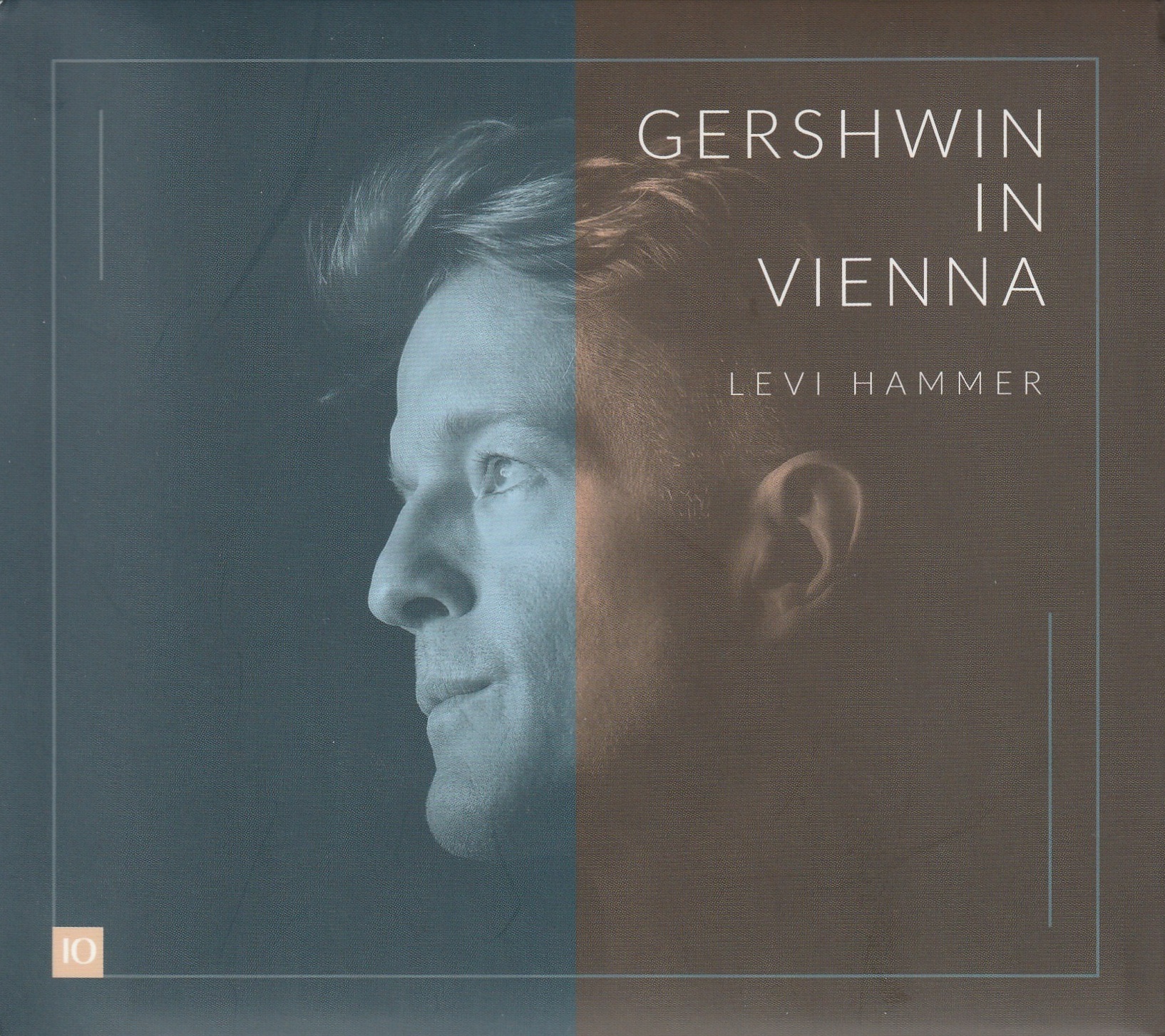
I had never taken the music of George Gershwin terribly seriously, so I was surprised to learn from Ross that several heavyweights – Arnold Schoenberg and Alban Berg – did. This is the premise of the recording Gershwin in Vienna, conceived and performed by American pianist, conductor and curator Levi Hammer (Decurio DEC-015 awaiting URL from publicist). Hammer says “For two composers with vastly different backgrounds, Schoenberg and Gershwin mirrored each other in uncanny ways. Both were largely self-taught, both Jewish, both painters, and both relentlessly devoted to refining their craft.”
The disc includes Gershwin’s Jazzbo Brown Blues, Three Preludes, and 18 of the composer’s own piano transcriptions from the Great American Songbook. These are interspersed with Schoenberg’s Three Piano Pieces, Op. 11, and Six Little Piano Pieces, Op. 19; Berg’s Piano Sonata, Op. 1; and Webern’s Variations for Piano, Op. 27. I occasionally find the juxtaposition of Gershwin’s mostly sunny and rhythmic pieces with the austerity of those of the Second Viennese School somewhat jarring, but Hammer makes a strong case for his thesis in the liner notes.
Gershwin spent time in Vienna in 1928 and did indeed interact with Schoenberg and Berg, who seem to have accepted him as the “real deal.” Berg arranged a private performance of his Lyric Suite for the American composer and Gershwin, at Berg’s urging, played some of his own piano works. Hammer draws convincing parallels between the Lyric Suite and An American in Paris and I must admit that on repeated listenings I am hearing hints of Gershwin’s sensibility in the middle piece of Schoenberg’s Op.11 (although it was written two decades before that encounter).
Schoenberg’s grief at Gershwin’s death at the age of 38 – they had become friends after Schoenberg moved to California – is audible in his thick Viennese accent in a moving radio tribute included at the conclusion of this album, in which he says “…there is no doubt that he was a great composer. What he has achieved was not only to the benefit of American music, but also a contribution to the music of the whole world. I want to express the deepest grief at the deplorable loss to music, but may I mention that I lose also a friend who was very dear to me.”
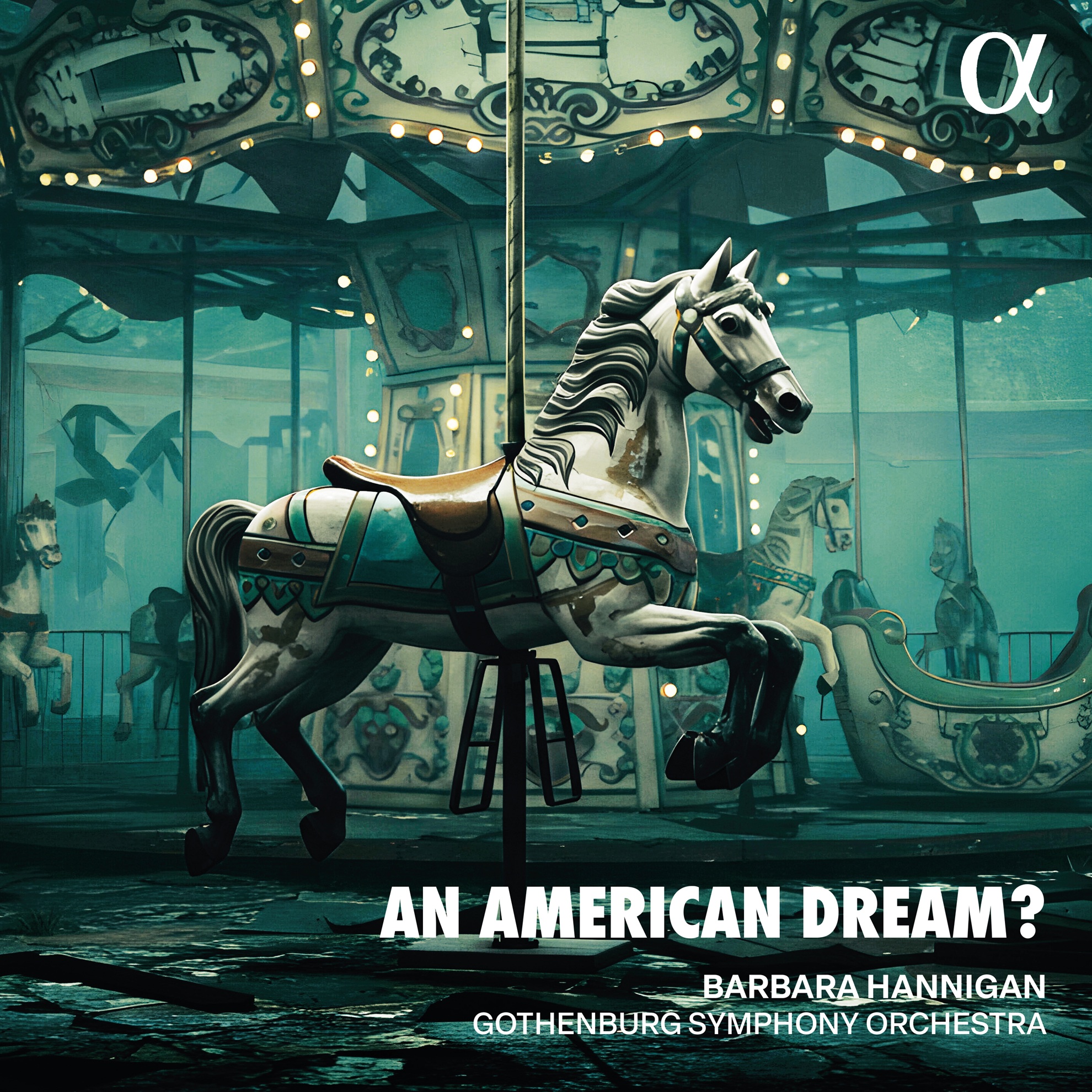 An American Dream? is the latest release from Barbara Hannigan, a Canadian soprano whose career has blossomed on the international stage in the past three decades. To tie this in with earlier paragraphs I will mention that her first professional engagement was with New Music Concerts back in 1990 in a piece for multiple ensembles by Henry Brant.
Hannigan is now as renowned as a conductor as she is as a singer, and even more surprising, as someone who can do both simultaneously, as she does here from the helm of the Gothenburg Symphony Orchestra (Alpha 1222 outhere-music.com/en/albums/american-dream-0). The context of this album is a celebration of American music, and I feel a little uncomfortable with that given the current state of the world, especially in relation to the current American president. With that in mind I’ll let Hannigan explain its origins:
“Growing up as a northern neighbour to the United States, I have been fascinated (and also intimidated) by aspects of the USA which seem built on an entirely different foundation than my country, Canada. America’s exuberant patriotism, embrace of capitalism, and flashy dominance in industry, sport, and entertainment have cast a long shadow. ‘The American Dream,’ an elusive notion popularized in 1931 during the Great Depression, promoted the ideal that ‘the United States is a land of opportunity that allows the possibility of upward mobility, freedom, and equality for people of all classes who work hard and have the will to succeed.’ It is indeed a dream, and for many, an impossible one, considering the various obstacles facing so many because of ongoing prejudices firmly attached to race, gender and social or financial standing. The divisions we now are witnessing in American society which have international repercussions, as an elected leader and supporting government behave in a manner that is difficult not to see in any other way than narcissistic and bullying, was an even stronger inspiration for me to put this album together. […] With this repertoire, I wanted to express my admiration for the incredible creativity and tenacity of America’s immigrants and their descendants, and also my sadness in observing what seems to have been lost.”
So obviously I’m okay with that, and it explains the question mark in the title of the disc. The programme begins, understandably enough, with George Gershwin. In 1942, five years after his death, conductor Fritz Reiner commissioned a suite from Gershwin’s masterwork to be arranged by Robert Russell Bennett, knowing that Bennett would be faithful to the composer’s wishes of style and sound. The resulting Porgy and Bess: A Symphonic Picture is a half-hour long tour de force that Hannigan brings masterfully to life.
Did you know that Aaron Copland wrote a vampire ballet? It was news to me... but it seems that inspired by the film Nosferatu, and encouraged by his teacher Nadia Boulanger, he did indeed create a work based on an evil sorcerer named Grohg, who would bring cadavers to life and make them dance. Grohg was not a success, but some years later Copland resurrected (if you’ll excuse the pun) the work and published it as Dance Symphony. It is this incarnation of the ballet that is presented here.
The disc continues with The Carousel Waltz, the overture from Rodgers and Hammerstein’s wildly successful musical Carousel, and concludes with At the Fair, a suite of show tunes arranged by Hannigan and Bill Elliott, who also orchestrated the 12-minute bouquet of bonbons. The suite is bookended by two songs, the poignant Have I Stayed Too Long at the Fair?, and the showstopper Don’t Rain on my Parade from Jule Styne’s Funny Girl. Hannigan tells us “Both songs I sing in this suite were made famous by one of my great idols: the American singer, actor, director, producer and activist, Barbra Streisand. I wanted to juxtapose the personal and intimate nostalgia of the first song’s ‘older and wiser’ reflective mood with the final song’s youthful chutzpah and joie de vivre.” And joyous it is!
David Olds can be reached at discoveries@thewholenote.com.