

As Torontonians learned several years ago when Dundas Square was renamed, the word Sankofa, originating from the Akan people of Ghana, comes from a Twi expression whose literal meaning is “Go back and get it!” a command to pay due regard to the lessons and practices of the past and to draw on them to inform the present and the future. The symbol of Sankofa, is often depicted as a bird with its feet facing forward (progress) while its head is turned backward (reflection), carrying a precious egg in its mouth (future/wisdom).
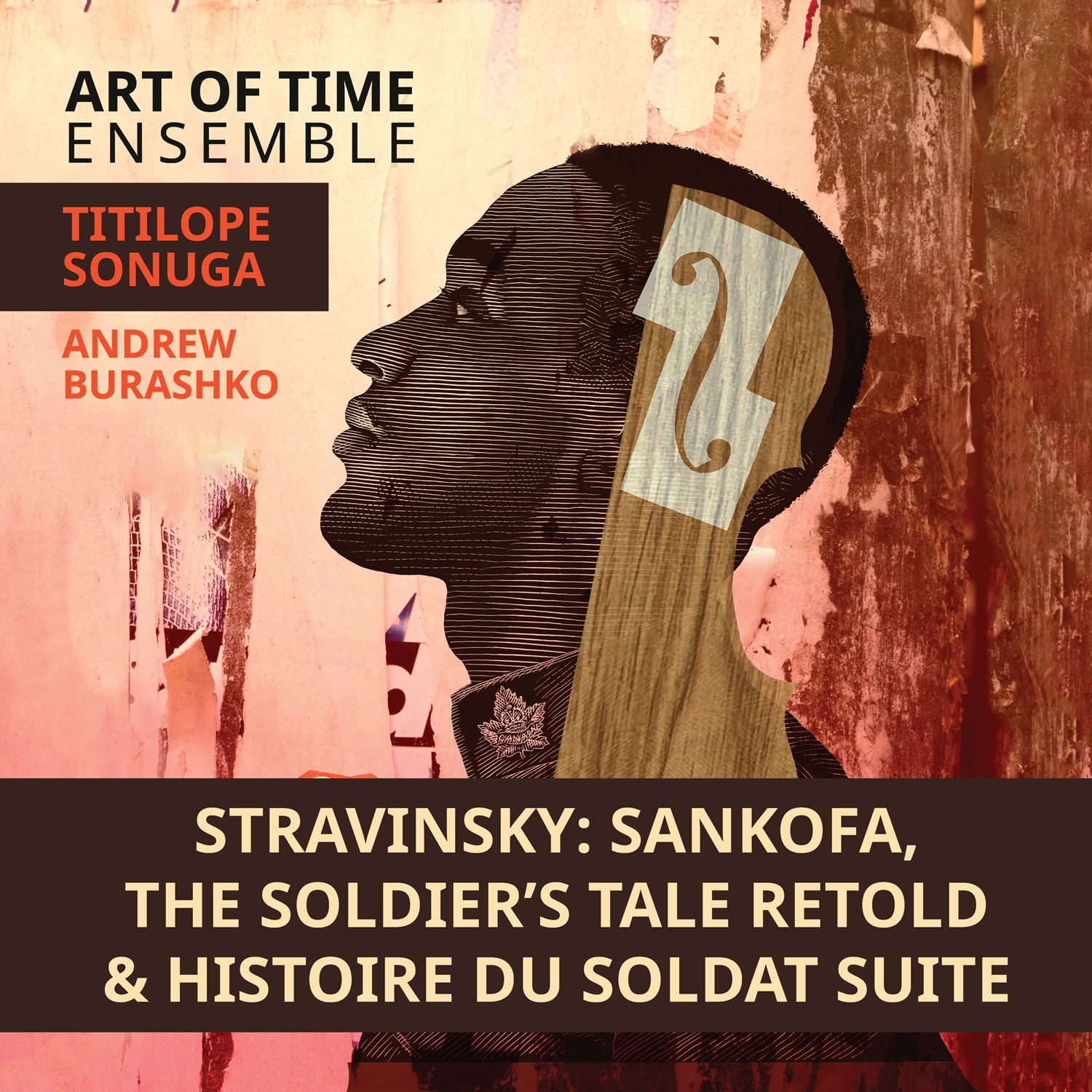 In October 2024 the Art of Time Ensemble produced Sankofa: The Soldier’s Tale Retold under Andrew Burashko’s direction, Nigerian-Canadian poet Titilope Sonuga’s reimagining of Stravinsky’s L’Histoire du Soldat. As their contribution to this year’s Black History Month Leaf Music released a recording of this stunning work (LM304 leaf-music.lnk.to/lm304c).
The original story by Charles-Ferdinand Ramuz told of a First World War soldier who encounters the devil to whom he barters his violin for the promise of eternal riches, a bargain that has dire consequences. Sonuga’s version tells of a (fictional) Jamaican man of African heritage in Halifax in 1914 who wants to enlist in the Canadian army but is turned down because people of his skin colour are not welcome to join. He meets the devil who cajoles him into accepting a magic violin in exchange for his bird amulet, a gift from his mother. “Sankofa, is what he calls the bird, who holds his history in a word. A symbol, an ancient guide, resting near his heart with pride.” With the devil’s help he is accepted into the only entirely black battalion in the Canadian army, the historical No.2 Construction Battalion, which suffered abuse at the hands of their white officers and was relegated to digging ditches because their commanders refused to give them arms.
Spoiler alert: As in the original, and many other such tales, selling your soul to the devil never turns out well, although there are a number of exhilarating moments along the way.
Stravinsky’s music is used throughout the hour-long performance. Burashko says “I asked [Sonuga for] an homage to the original in the following ways: that the libretto be written in rhyming verse; for the same characters (Soldier, Devil and Narrator); that it follow the original structure by having the Devil appear in different guises and that the new libretto make perfect sense with the original music.” It does indeed, and also makes for a powerful story.
The skeletal orchestration – violin, clarinet, trumpet, trombone, bassoon, double bass and percussion – is said to represent the scarcity of musicians in Stravinsky’s Paris in the wake of the devastation of WWI. The excellent members of the Art of Time Ensemble, led by violinist Benjamin Bowman, capture the score brilliantly, and the actors – Ordena Stephens-Thompson (Narrator), Olaoluwa Fayokun (Soldier) and Diego Matamoros (Devil) – bring the story compellingly to life. The jam-packed disc also includes a stellar performance of the 28-minute instrumental suite that Stravinsky extracted from L’Histoire. Kudos to all concerned.
Listen to 'Sankofa: The Soldier’s Tale Retold' Now in the Listening Room
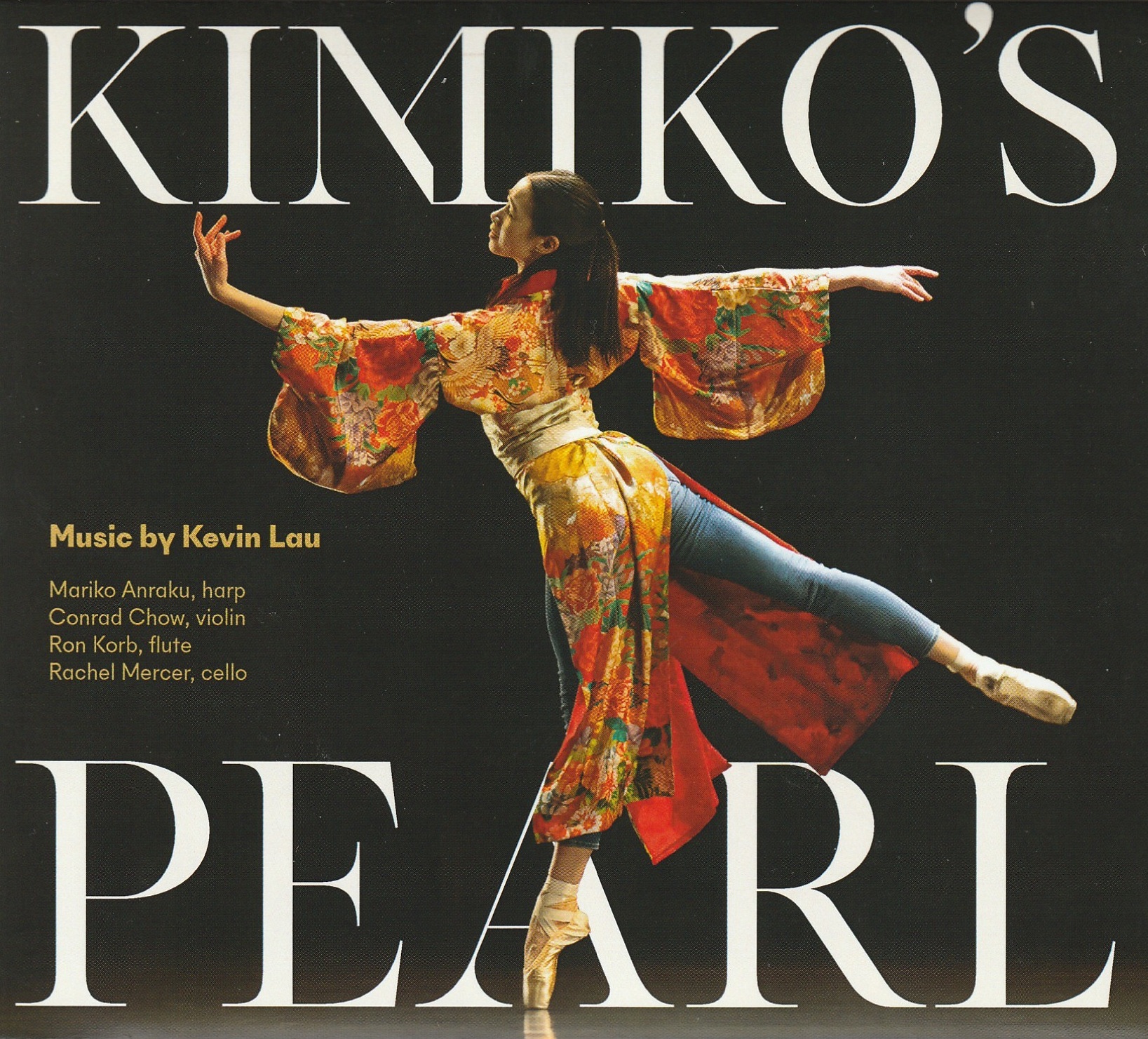 There are many parallels between Stravinsky’s tale and Kevin Lau’s Kimiko’s Pearl, a ballet developed in conjunction with Bravo Niagara in 2024, now available on CD (BNCD001 kimikospearl.com). The story is centred around the internment of Japanese Canadians during the Second World War and, like the Stravinsky, also uses minimal instrumental forces: harp (Mariko Anraku), violin (Conrad Chow), Japanese and Western flutes (Ron Korb) and cello (Rachel Mercer).
Founded in 2014 by mother-daughter duo Christine Mori and Alexis Spieldenner, Bravo Niagara is based in Niagara-on-the-Lake and dedicated to amplifying underrepresented voices through the arts. Lau says Mori and Spieldenner’s family experience of the Japanese Canadian internment inspired the narrative with its encompassing of universal themes: love, devastation, grief, resilience, and the reclamation of identity. Based on a story by Howard Reich, four generations of the Ayukawa family are represented from the great-grandfather’s arrival in Canada in 1917 through to 15-year-old Kimiko’s discovery of a mysterious trunk in their basement in Toronto a century later. There are some magical moments, such as when an antique radio broadcasts news of the Second World War, along with a wedding dress, a pearl ring and the diary also found in the trunk that help bring the family story to life for Kimiko.
The Ayukawa family trunk, currently in the collection of the Canadian War Museum, is a real artifact built by Shizuo Ayukawa in the New Denver internment camp in British Columbia. Kimiko’s Pearl reflects the tragedies, triumphs and perseverance of Japanese Canadians before, during and after the internment they endured during WWII. A parable particularly relevant today, it attests to heroism and hope in the face of racism and intolerance.
Lau’s lush yet crystalline score is brilliantly realized by the quartet of musicians with supplemental sound design aspects (including taiko drums and other enhancements) developed by Aaron Tsang. The CD booklet is beautifully illustrated with stunning photos from the stage production. It includes a detailed synopsis of each of the eight scenes and biographies of all involved. It’s easy to see why this very impressive package has received two JUNO-nominations, for Classical Album of the Year (small ensemble) and Classical Composition of Year.
Listen to 'Kimiko’s Pearl' Now in the Listening Room
 Perhaps the most famous example of military imprisonment leading to the creation of a masterpiece is the story behind Olivier Messiaen’s Quatuor pour la fin du temps. Messiaen was serving in the medical auxiliary of the French army when he was captured by the Germans near Verdun in 1940 and transported to Stalag VIII-A, a prisoner-of-war camp in Görlitz, Silesia (then German territory, now Poland). During the nine months he spent there he was treated decently and with the help of a friendly German guard, Carl-Albert Brüll, who provided manuscript paper and pencils, Messiaen was able to compose. Using the meagre materials at hand – a dilapidated upright piano, a cello with just three strings, a violin and a clarinet – he wrote what would go on to be recognized as one of the greatest chamber works of the last century. The quartet reflects Messiaen’s profound religious faith, with each of its eight movements devoted to a different aspect of praise to God and Nature. The instrumentation changes from movement to movement, with each musician, except for the piano, given a solo turn. Most striking is the Abîme des oiseaux, where the clarinet, alone, rises out of nothingness to depict the abyss of the birds.
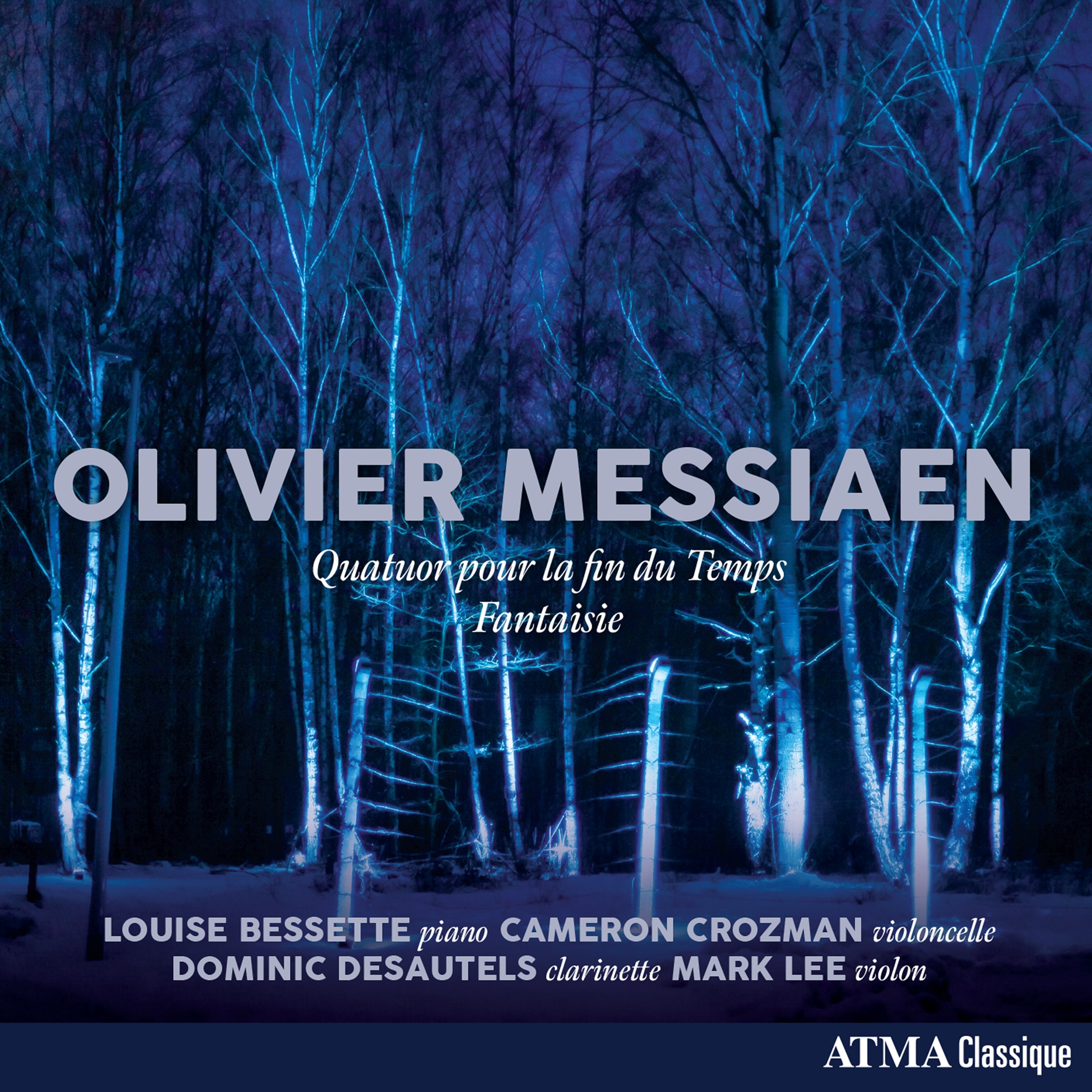
There are two new recordings of this iconic work, and I confess that I am hard-pressed to choose between them. Thankfully I don’t have to! The first features Montrealer Louise Bessette, renowned for her performances and recordings of Messiaen’s solo piano music, having worked extensively with the composer’s wife Yvonne Loriod. She is joined by young cellist Cameron Crozman, the recipient of the 2021 Canada Council for the Arts Virginia Parker Prize, the Council’s largest award for emerging classical musicians, Dominic Desautels, principal clarinetist at the Canadian Opera Company and violinist Mark Lee, assistant concertmaster of Symphony Nova Scotia. This new disc (ATMA ACD22940 atmaclassique.com/en/produit/olivier-messiaen-quatuor-pour-la-fin-du-temps-fantaisie) is available on streaming platforms in the immersive Dolby Atmos process with exceptional clarity and depth of sound. As a bonus the disc also gives a taste of a younger, pre-mystical Messiaen with the less frequently performed and somewhat bombastic Fantasie for violin and piano (1933).
 Formed in 2020, the Anzû Quartet is dedicated to the music of our time and the recent canon. Comprising Olivia De Prato (violin), Ashley Bathgate (cello), Ken Thomson (clarinet) and Karl Larson (piano), Anzû pays homage to Olivier Messiaen’s Quatuor pour la fin du temps by actively commissioning and performing new works for this iconic instrumentation. The name anzû refers to a massive, fire and water breathing bird found in Babylonian and Sumerian mythology. In these ancient texts, Anzû is linked to death and destruction as well as birth and creation, reflecting the juxtaposing themes of calamity and salvation often expressed through birdsong in Messiaen’s quartet.
The notes to this recording (Cantaloupe Music anzuquartet.com/quatuor-pour-la-fin-du-temps) include “Thoughts about Quatuor pour la fin du temps” by Anzû’s mentor, cellist Fred Sherry, whose own group Tashi studied the work with Messiaen in the late 1970s, so advice from the horse’s mouth, if once removed. The resulting performance is one to be treasured, with all the nuance and dynamic range this exhilarating work demands.
 The music of Argentine-born American composer Osvaldo Golijov is featured on a new disc entitled Ever Yours (Phenotypic Recordings phenotypicrecordings.com). Golijov tells us “Ever Yours was the last piece I wrote for and dedicated to Geoff Nuttall, who was, and still is, my brother in music and life. I was inspired primarily by two things: brotherhood, as embodied in the letters that Vincent van Gogh wrote to his brother Theo—which he always signed with the words ‘Ever Yours’—and the String Quartet, Op.76, No.2 by Joseph Haydn, who was the composer Geoff loved and admired the most […] I wrote Ever Yours, primarily, as a conversation about music, Haydn, friendship, life, and death, between Geoff and me. Geoff is now gone, and his (and my) beloved St. Lawrence String Quartet, which he co-founded and led for more than 30 years, has disbanded. But the idea of a conversation between friends continues to live…”
Haydn’s quartet finds its way into each of the four movements, but we also hear snatches of Beethoven’s final quartet in the third. Originally written for string octet, Golijov has added a double bass in the current version for which the Arethusa and Animato Quartets are joined by bassist Nicholas Schwartz. For Tintype, violist Barry Shiffman, another founder of the St. Lawrence Quartet joins the Arethusa in a work that began its life as a soundtrack for the film Elie Wiesel: Soul on Fire. A theme inspired by several animated sequences in the film, in which Wiesel dreams of his father, who died in the Holocaust, was later expanded and became the second movement of Tintype. The first movement is based on a traditional Hebrew melody, and the third is based on a version of the prayer, “Ani Maamin” [I Believe], that Wiesel sings in the last minutes of the documentary. Here, Golijov says, “it alternates between sparse, expressionistic fragments of the prayer, and driven, motoric sections inspired by Philip Glass’s string writing. I hear the spirit of Schubert in his chamber music, as I hear it in my own music.”
The disc concludes with two shorter tracks. K’vakarat [As a Shepherd…] is a prayer from the Yom Kippur liturgy originally written for cantor Misha Alexandrovich and string quartet here performed in an arrangement for viola and strings by Shiffman. The concluding Esperanza [Hope] from 2025 is a love theme composed for the soundtrack of Francis Ford Coppola’s film Megalopolis, performed by the same nine musicians from Ever Yours, bringing the disc full circle.
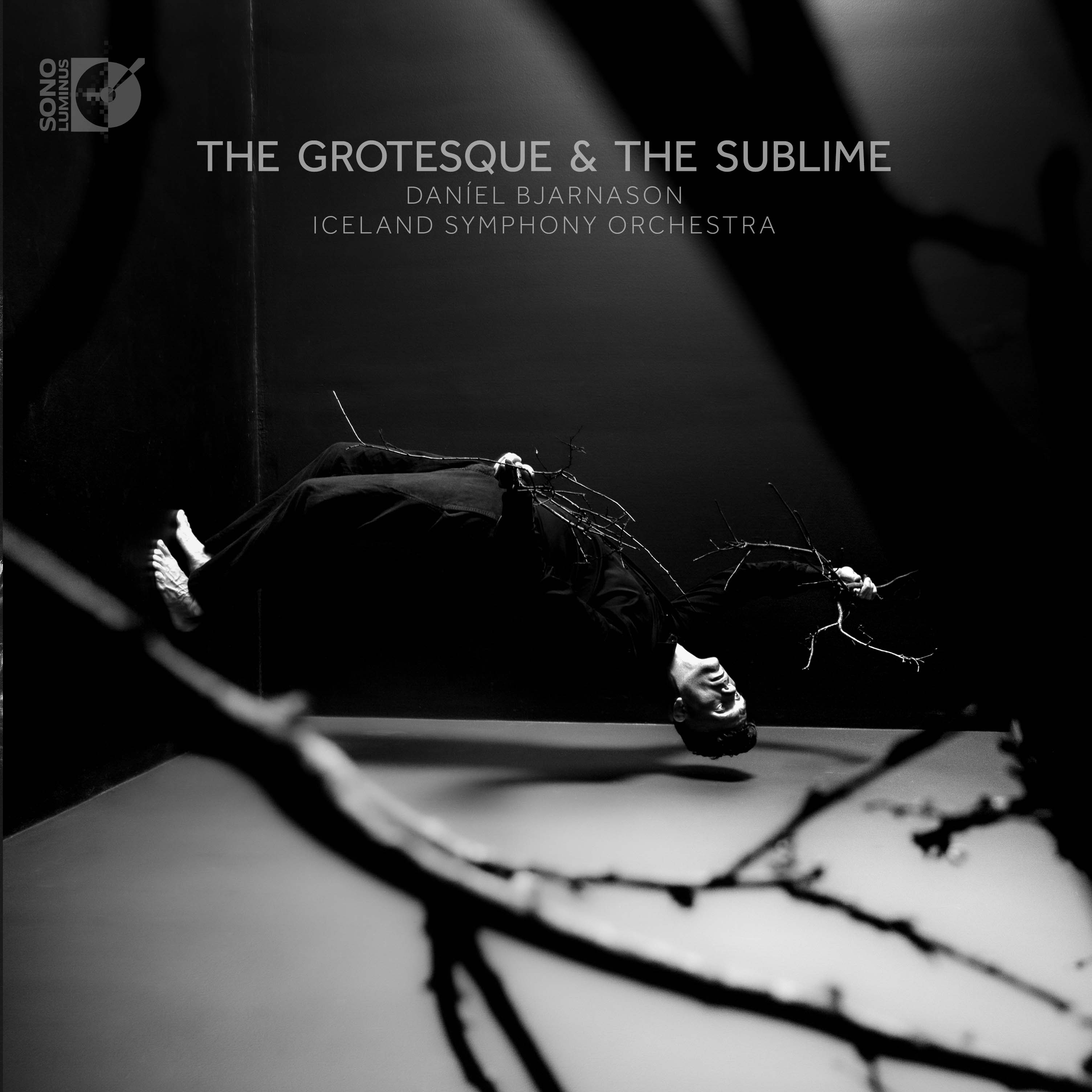 In June 2023 the Toronto Symphony Orchestra under the direction of Gustavo Gimeno gave the premiere performances of Daniel Bjarnason’s Trilogy for Orchestra: I Want to be Alive, a work they had co-commissioned with the Cincinnati and Iceland Symphony Orchestras and the Helsinki Philharmonic. Bjarnason is currently Artist in Collaboration: Iceland Symphony Orchestra, where he previously held posts as Principal Guest Conductor and Artist in Residence. He has also worked extensively with the Los Angeles Philharmonic and one of his collaborations there resulted in the piano concerto FEAST performed by its dedicatee Vikingur Ólafsson in 2021 under Gustavo Dudamel.
That majestic near-half-hour work opens the CD The Grotesque and the Sublime in a new performance with pianist Frank Dupree and the Iceland Symphony Orchestra, who are featured throughout the recording with the composer conducting (Sono LuminusDSL-92287 sonoluminus.com/sonoluminus/grotesque-and-sublime). Bjarnason is a hub-like figure in the group of composers who could be said to constitute a First Icelandic School. But his own music sprawls beyond the borders of the school’s typical aesthetic, its characteristic gradual transformation of vaporous orchestral sounds, akin to the shifting shape and colour of a North Atlantic cloud. This difference is amply displayed in FEAST with its seven dramatic and dynamically boisterous movements. Also of note here is an external narrative – Edgar Allan Poe’s short story The Masque of the Red Death – reflected in the phantasmagorical movement titles such as “the brazen lungs of the clock” and “domination over all (skeletal procession).” The score follows the trajectory of Poe’s story, opening with a dense and decadent party punctured by its own ‘reverie’ for solo piano. Some 25 minutes later, after the skeletal procession, the flamboyant concerto dissolves into dust.
The centrepiece of this recording, Fragile Hope – In memory of Jóhann Jóhannsson, is more like the atmospheric works of the Iceland School, and fittingly so as Jóhannsson was a seminal figure in that movement. It is dark and brooding, full of angst and longing, although there are bright moments where hope shines through.
The final work Inferno is a percussion concerto featuring the rising young German star Vivi Vassileva. Although the three orchestral percussionists play a vast range of instruments, the soloist is limited to only a few: drum kit, wood blocks, txalaparta (a traditional Basque instrument constructed of wooden boards on a platform), marimba, Japanese taiko drums, kick drum and timpani. Bjarnason says “the primary objective was sonic: a focus on particular sound worlds, rather than a mad dash between many instruments.” The unusual sound of the txalaparta, which is featured extensively in the first and third movements, is especially intriguing and to my ear reminiscent of some of the instruments invented by Harry Partch. There is an extended and effective timpani cadenza reinforced by low strings and woodwinds. Inferno provides a stimulating climax to a scintillating disc.
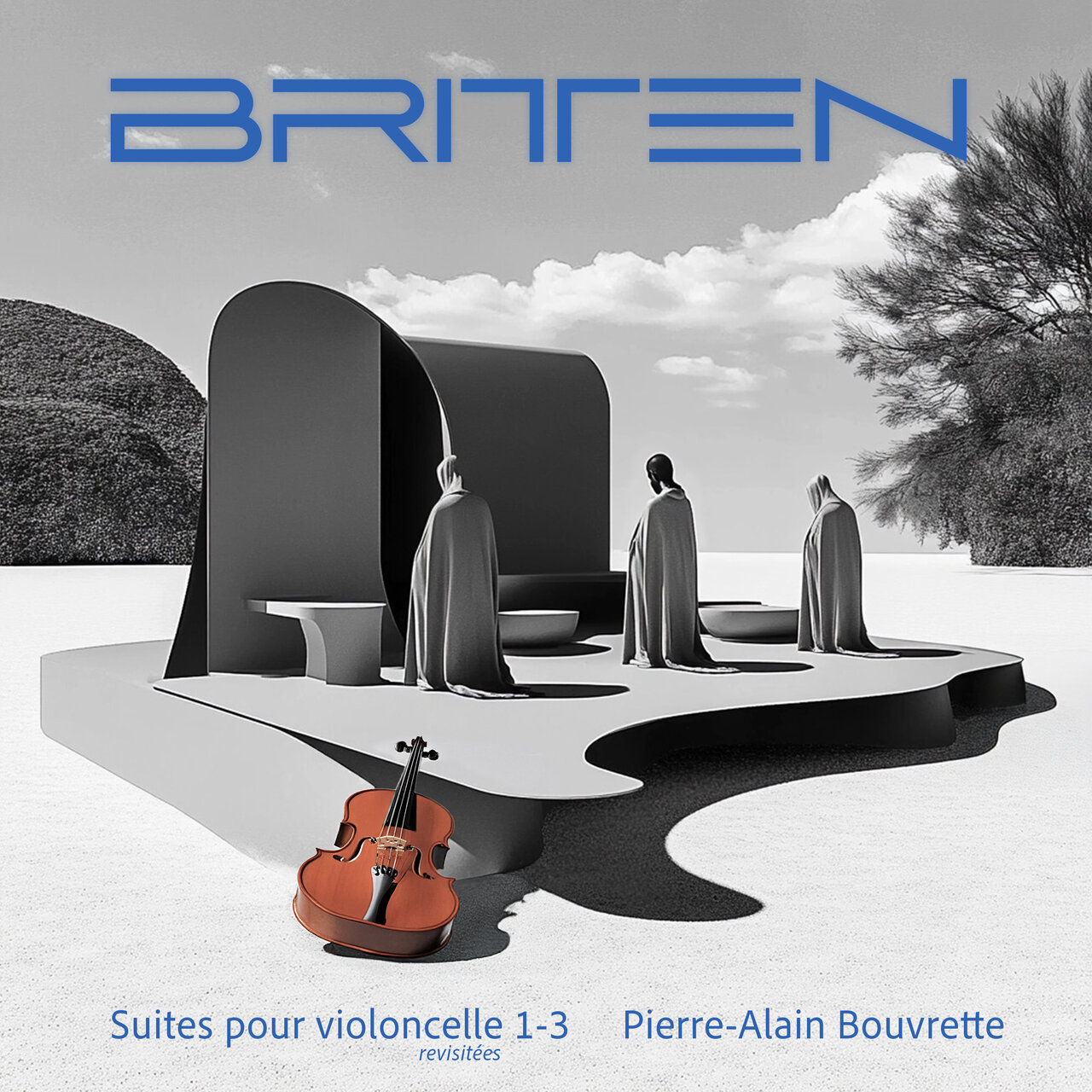 Britten – Suites pour violoncelle 1-3 (revisitées) features Montreal cellist Pierre-Alain Bouvrette. This is a digital release which unfortunately does not come with much documentation. I say this because these are very complex works, unlike most of Britten’s oeuvre and it would be useful to be given some analysis or at least some background and context to their composition. When I asked Bouvrette about this absence he responded that many digital platforms don’t support anything but audio files and cover art, so he did not produce a programme booklet. He did however send me an artist’s statement from which I have adapted the following:
The leading element of my approach was driven by the nature of these works with their polyphonic ambitions for an instrument that is mostly monophonic. The cello can certainly be bi-phonic but it is realistically impossible to play more than 2 notes at the same time. Therefore, polyphony becomes a pure illusion. […] I have produced a studio recording, exempt from the constraints of a false linear time frame, existing only as a sound object on its own. Using every tool available in the studio I have created a version of this music, one that could be imagined through the lens of an interpreter/sound technician/sound designer. […] This was made with utmost respect for these works that I love but not without a touch of humour and lightness, which I hope may be forgiven. This version should not be taken as a reference for these works and I hope that if a listener falls in love with what they hear, they will also go listen to a more traditional version.
That all being said, I find Bouvrette’s renditions convincing and satisfying, with all the extreme dynamics and rhythmic nuances intact. The recorded sound is exemplary, and I was not aware of any obvious instances of studio manipulation. I did, however, take his advice and listened to my traditional favourite performances, those by the dedicatee Mstislav Rostropovich, and more recent recordings by Truls Mørk and Pieter Wispelwey. It was great to have an excuse to immerse myself again in these masterworks. You can find Bouvrette’s Britten on most streaming platforms, or here: palmaresadisq.ca/en/artist/pierre-alain-bouvrette/album/britten-suites-pour-violoncelle-1-3-revisitees.
David Olds can be reached at discoveries@thewholenote.com.

