2207 Feat BachBethlehemAccording to Chaucer, April is the month that with its sweet showers “pierces March’s drought to the root,” causing all kinds of people, music lovers not excepted, to get a bit giddy and take themselves off on all manner of “sundry pilgrimages.” As a lifelong chronic agoraphobe who typically gets on airplanes only for trips revolving around grim duty of one kind or another, I was until last year, a steadfast exception to the Chaucerian rule. But 2016 was different. Not once but twice I noted my nearest exits, turned off all electronic devices and faithfully obeyed the fasten seatbelt sign as I took off into the wide blue yonder for the purpose of attending music festivals in other parts of the world.

I am, therefore, now an expert on the subject of music festivals. So pay attention.

Rule number one: Other than the ones that take place in your hometown and can therefore be ignored unless you have guests, there are only two types of festivals.

One is the kind of festival that is sufficiently compelling in its own right that it causes you to journey some place you never have thought of visiting, even if you had heard of it.

The other is a festival you never heard of but taking place somewhere so special in its own right that you feel compelled to go there at least once in your lifetime. And when you do, you discover that there’s a festival there that tickles your musical fancy, so you go to it because you are already there.

There’s one of each kind in this story: the 2016 first annual Jerusalem Summer Opera Festival falls into the second category; the 110th Annual Bethlehem Bach Festival falls into the first.

2207 Feat BachBethlehem2The Bethlehem Bach Festival takes place in Bethlehem, PA, nestled in the Lehigh Valley region of Southeastern Pennsylvania, this year on the weekends of May 12-13 and May 19-20. Colonized in the first half of the 18th century by Moravian settlers, Bethlehem became also, in the 1860s (across the river from the old town), the site of Lehigh University, a private school established by businessman Asa Packer. (The church that bears his name, on the Lehigh campus, remains the venue for the performance of the Bach Mass in B Minor that is the climax of each year’s festival.) And between the two halves of the town, along the riverbank is the looming rusting hulk of what was, from the 1880s till the 1990s, the steel mill from which Bethlehem Steel derived its name. Twelve years after the mill was built, in 1898, the Bethlehem Bach Choir came into being. Two years after that it gave the first ever complete North American performance of Bach’s B Minor Mass. Through that whole galvanic century, the choir and the festival have endured through thick and thin, because they bring to the music not just a consistently high standard of musicianship, but a precious intangible – the fact that the music is a living expression of community.

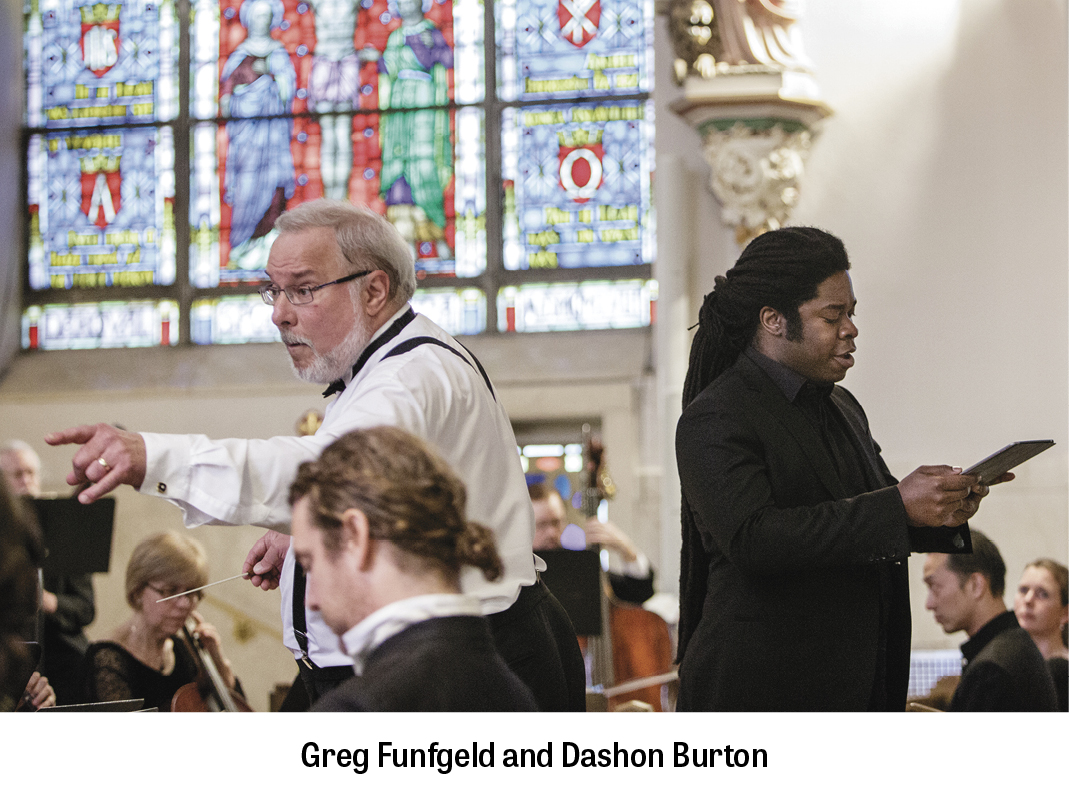
I’ve written before about how my first awareness of the Bethlehem Bach Festival came about because of the non-stop procession of top-flight Canadian soloists to the festival, especially since Greg Funfgeld took on conductorship of the choir in 1983. Countertenor Daniel Taylor, for example, returns for the 19th consecutive year, joined again this year by soprano Agnes Zsigovics (a protégée of Taylor’s at the University of Toronto, and surely a performer to watch) and by Benjamin Butterfield, also a frequent visitor but absent last year. The three US soloists are also regulars: soprano Rosa Lamoreaux, baritone William Sharp and Dashon Burton, bass. One of Funfgeld’s gifts as a conductor is his sense of balance and blend; another is his loyalty to his performers. Talk to the soloists and they will tell you that as much as anything, the opportunity to renew beloved musical relationships in a consistent context is one of the things that keeps them coming back.

It’s been said that North America (at least from a colonial perspective) has too much geography and not enough history, while the problem in the Middle East is just the reverse. But if one thinks local rather than global, the distinction starts to blur. Walk from the Hotel Bethlehem (built in the 1920s with Bethlehem steel!) through the old Moravian Quarter, across the bridge past the hulk of the steel mill, where signs of civic landscaping and urban renewal are visibly starting to happen on the river edge, up the opposite hill to the Packer Church, and take your place in the audience. There will always be more than one generation of the same family in the choir that looks back at you. And the music, when it starts, will have a healing sound that is only possible when it is as current as it is timeless.

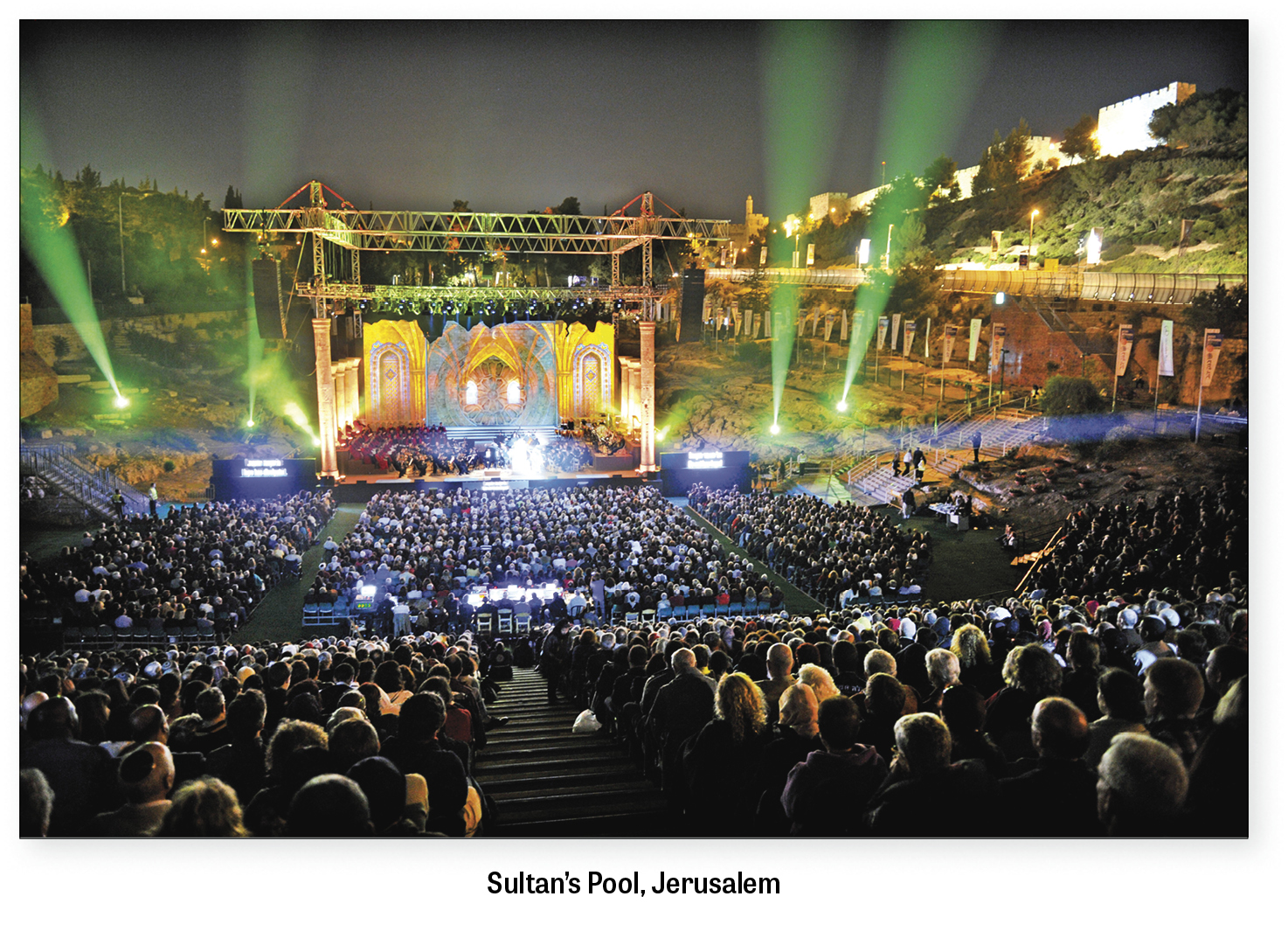
Jerusalem Opera Festival: Last summer’s trip to the Jerusalem Opera Festival had several memorable moments. One was sitting, late at night, on the rooftop licenced patio of the Mamilla Hotel in downtown Jerusalem, after returning from the evening’s main event, a thoroughly enjoyable outdoor performance of Rigoletto at the 6000-seat Sultan’s Pool amphitheatre, a few hundred feet down the hill. There’s something infinitely less annoying about amplification and outdoor acoustics when the surroundings are as genuinely imposing. (Although I do remember thinking, as an ambulance barrelled down the hill, klaxon blaring, alongside the amphitheatre, right on cue, that maybe this time Gilda would be saved! The second night’s performance, at the Sultan’s Pool again, titled “Opera Paradiso,” was, to my taste less successful, featuring a range of operatic moments from film, sung and performed live by singers and orchestra while the related movie excerpts flickered silently onscreen.

I found myself wondering if there was perhaps a trap for the festival in trying to attract the same 6000 people two days in a row to the one venue, rather than setting the goal of doing the same show twice in a row to grow the audience, and to lay on other things, large and small, for each audience on their “other” night. A better way to build partnerships in the community, said my small-town brain.

As it happens, this year’s Jerusalem Festival has just been announced, and someone else must have been thinking along the same lines I was. There will be two performances of Nabucco, June 21 and 22 at Sultan’s Pool. It will be very interesting to see what else, if anything, operatic or not, gets programmed head to head with those two performances.

My favourite story from the whole visit indicates the size of the challenge ahead. We were in Tel Aviv, home base of the Israeli Opera, at the end of the visit, being shown around the props and costumes room, backstage. Our guide, an opera staff member, was talking frankly about how the two cities were completely different worlds. (“It’s an hour’s drive at a speed of 30 centuries an hour,” someone said.) The NIOC staffer described how her own children, growing up backstage among the props and costumes, had never even been to Jerusalem until they were five or six years old. Holding tight to her hand as they walked through the souks with their dizzying variety of cultural and religious garb, one of the children turned to her, pointing at someone walking by in unfamiliar attire. “Mommy, what costume is that?” the child asked.

The greatest challenge for this particular festival, it seems to me, is that Jerusalem as a city is itself a living opera, on a grander, more viscerally demanding scale than anything the arts can hope to muster. It will be interesting to see how much attention this particular festival can hope to grab moving forward.

David Perlman can be reached at publisher@thewholenote.com.

Banff CentreIt happened the day after I got back from Banff. My flight had arrived late the previous night, and I got back to my apartment around 11pm, after a lengthy wait in line for a taxi outside of Pearson International Airport in minus-20-degree weather, which I’d endured without the aid of toque, gloves or scarf, as I’d packed these items deep in my carry-on luggage. Imprudent though this decision might seem when viewed in retrospect, it made sense at the time: 

I hadn’t needed my woollen accessories on my last day in Banff thanks to a timely Chinook wind that raised the daytime temperature to a balmy two degrees.

After getting back to my apartment, making an abortive attempt to unpack, and falling asleep with every available blanket piled on top of my wind-bitten body, I awoke to further delights: frosted-over windows, an insufficient supply of drinkable coffee, and a refrigerator, empty but for an assortment of condiments, a few cans of beer, and a sad, desiccated apple, which in my haste to leave some four weeks earlier I’d evidently forgotten. The remedy to this dearth of comforts:
I had to go to the grocery store.

And so it was in Whole Foods – coffee in one hand, avocado in the other – that I, upon making eye contact with a nearby man who was also perusing the produce section, smiled, nodded and said a brief “Hey.” To the man’s credit, his gently startled response of “Uhh… okay” probably had less to do with any rudeness on his part than it had to do with the fact that he, unlike me, had not just spent two weeks at the Banff Centre, where it was common practice, upon encountering a new face in the close quarters of an elevator, or at a dining-hall table, to smile, nod and say a brief “Hey.” This salutation, simple though it was, constituted a layered acknowledgment of a number of implicit statements related to the unique circumstances of being at the Centre, including (but not limited to): “It’s nice to see a friendly face” and, “Isn’t it wonderful to have access to such outstanding facilities?” and “Isn’t the divide between our day-to-day lives and the pampered, unstructured, logistically streamlined lives that we’re leading in our respective residencies so great as to make you feel simultaneously lucky, grateful and slightly embarrassed?” My fellow plant-fat enthusiast couldn’t have known.

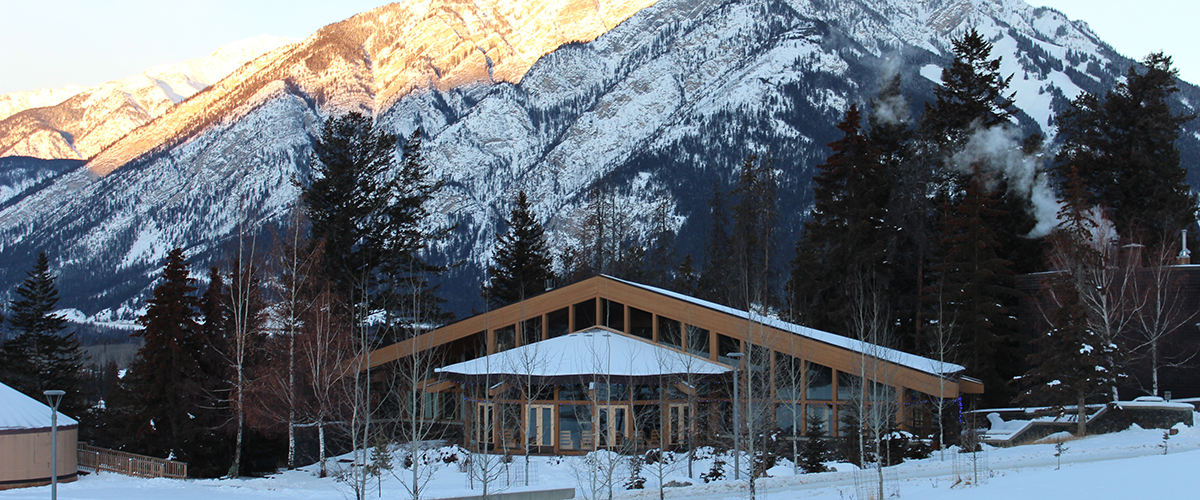
He also likely wouldn’t have known that the Banff Centre – founded in 1933, current full name Banff Centre for Arts and Creativity – hosts a number of programs throughout the year, from short-term summer workshops in disciplines such as dance, theatre, jazz and chamber music, to long-term practicums, in fields such as audio engineering, that run for the better part of a year. I was at the Centre to attend the Banff Musicians in Residence (BMiR) program, a self-directed residency that occurs annually in three separate five-week sessions throughout fall and winter. Successful residency applicants can stay for the full five weeks, although most tend to stay for three, at least in the sessions that I’ve attended. While I don’t know what internal criteria are at play in the selection process, a typical BMiR cohort will consist of approximately 25 Canadian and international musicians who specialize in a wide variety of different practices; this residency included artists such as Corey Gulkin, a singer-songwriter from Montreal, Mark Taylor, a composer from New York, and Rosa Guitar Trio, a classical ensemble from Australia.

Each week of a residency also features a guest faculty member, who hosts a master-class-style session in their studio, is available for one-on-one coachings, and who performs in the concert session that ends each residency week. These concerts tend to alternate between Rolston Recital Hall, a classical-style venue in which primarily acoustic music tends to be programmed, and The Club, the creatively named space in which jazz, pop, folk and other groove-oriented music tends to be programmed. (Blunt titular charms aside, one imagines that the Banff Centre must simply be waiting for the rightly named donor-partnership opportunity.) A BMiR session also sees the selection, through an application and interview process that takes place in advance of the residency, of an artistic associate, a resident who acts as concert curator, social convener and liaison between program participants and Banff Centre administrative staff. The artistic associate in my most recent session was Sophie Gledhill, an English cellist, who successfully wrangled our herd of a cohort with patience, humour and generosity.

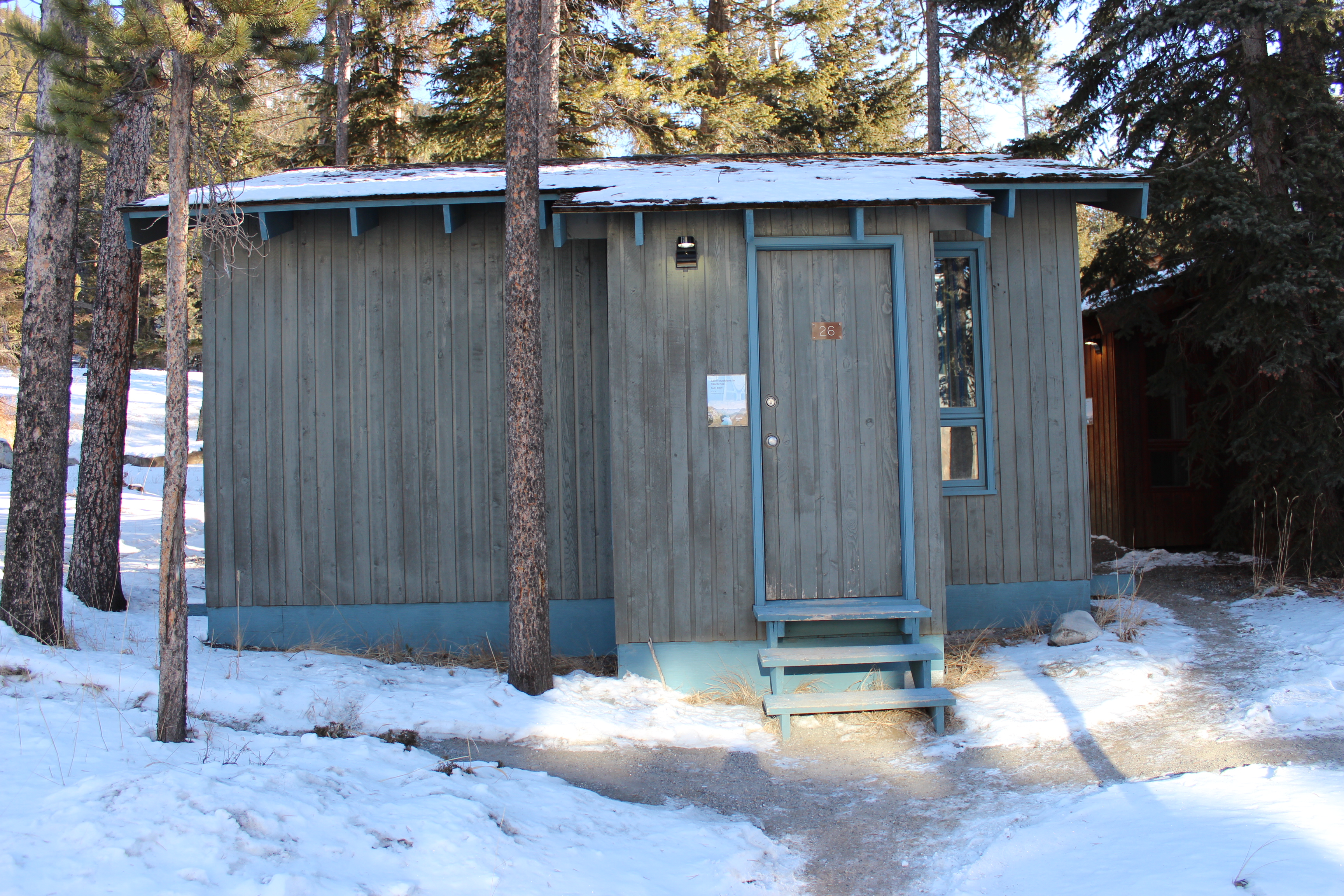
At its core, a BMiR works by giving its participants the space, time and resources they need in order to do their unique artistic work, free (to a certain extent) of the stress and responsibility of their ordinary routines. Physically, the Centre resembles a small college campus, and being there mimics a kind of post-secondary experience: participants stay in one of several residence buildings, they have access to the gym, and they receive a Banff Centre ID card, which is loaded with funds on their flex-meal plan; funds they are free to spend at any of the on-campus restaurants (though not, it should be noted, on alcohol). Musicians are assigned a studio space, either in the Music and Sound building, or in one of the 28 huts located in nearby clusters. Equipment requests are processed about a month before the start of a new session. The Banff Centre has a robust inventory of gear, and will help to accommodate any unusual items needed in a given artist’s studio. As drummer Mackenzie Longpré puts it: “One of the most unique aspects of the Banff Centre is the seemingly limitless access to a large array of facilities and musical equipment. During my residency, I felt like I could request and use whatever gear I wanted, and was never made to feel like I was overstepping my bounds.”

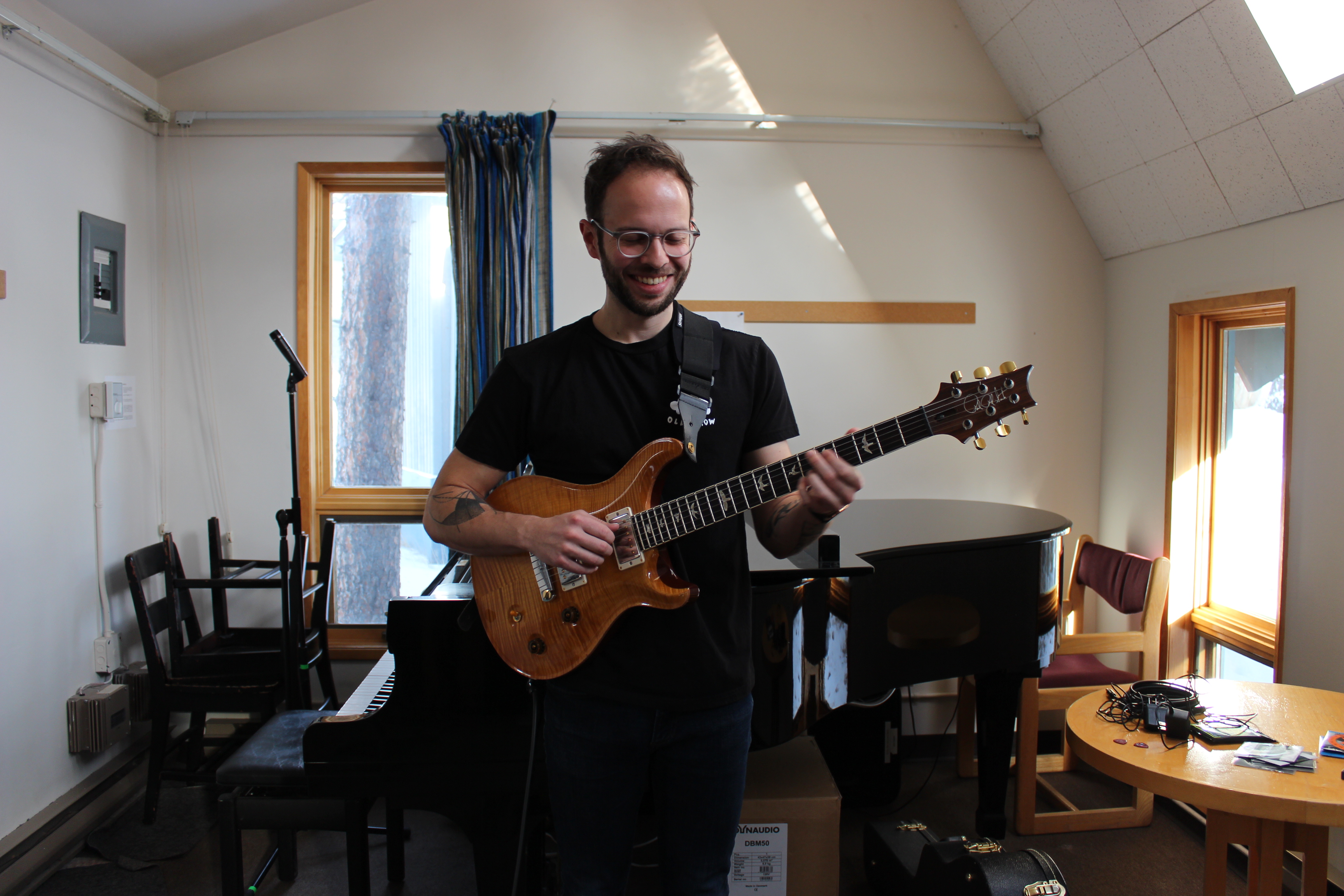
Colin Story inside his hutAside from overeating, staring at the romantic splendour of the mountains, and promising yourself that you’ll definitely, definitely go to the gym tomorrow morning, the point of attending the BMiR program is to work on a specific musical project. These projects can differ widely from participant to participant; a classical pianist might be preparing for a concerto that she’ll be performing with an orchestra in eight months’ time, while a singer-songwriter might be writing new material for an album that addresses itself to the themes of climate change and the Canadian landscape. The first BMiR session that I attended was in late 2016; I came to the Banff Centre with a band, to rehearse and develop material written in advance by the group’s leader, in order to prepare for a recording session in early 2017. I spent two weeks during that stay at the Centre, and my artistic goals were fairly straightforward: my job was to play the given material as well as I could, to experiment and develop strategies to expand upon the songs the group was working on, and to advance my own instrumental skills through individual practice. By contrast, I attended this year’s residency by myself, to compose and develop material for a forthcoming recording project. As I was preparing for my time in Banff, I imagined that it would feel more or less the same as my first time, and that my artistic trajectory would look fairly similar by the end of my stay. This assumption, as it turned out, was wrong.

Hut exteriorBeing provided with the space, time and resources to do my unique artistic work – free of the stress and responsibility of my ordinary routine – produced, in me, an unexpected feeling: an anxious dread that if I wasn’t operating at peak efficiency, I would be squandering this precious opportunity. For as idyllic as a Banff Centre residency may be, it also represents a considerable personal investment of time: time away from family, away from work, away from the real world. The idea that I was not making the absolute most of my experience became increasingly debilitating; perhaps unsurprisingly, I became a bit sick at the end of my first week, and spent a day away from my studio, recuperating in my room.

The key to overcoming this anxiety, I was to find, was not round-the-clock access to excellent facilities, or picturesque views, or all-you-can-drink cafeteria coffee: it was the mutual support and encouragement of the musicians with whom I shared my residency. It is surprisingly difficult to be open and vulnerable, particularly with people you’ve only just met, but actively connecting to the BMiR community became the key to doing better, more fulfilling work. As Gulkin wrote to me after the residency, this peer support “was one of the most important parts of the residency. While everyone was working on a different project, we all realized we were experiencing similar ups and downs,” in going through the sometimes “extreme emotional process” of creating art.

The Banff Centre is a special place, and, as I walked home from the grocery store on that frigid morning, having just warmly greeted a man I did not know, I thought about the things I hadn’t been able to take back to Toronto with me: the world-class facilities, the crisp mountain air, the clamour of Australian accents at every coffee shop and bar in town. But I was reassured that work, even in the most ideal of settings, doesn’t suddenly become easier, and that what turned out to be the most important part of the experience – participating in the cultivation of a supportive community of artistic peers – was, in fact, something that I could bring home.

Colin Story is a jazz guitarist, writer and teacher based in Toronto. He can be reached at www.colinstory.com, on Instagram and on Twitter.

bannerL to R: First pressing of "Livery Stable Blues" by ODJB, 1917; sheet music for the ODJB version under the alternate title "Barnyard Blues", from 1917, and a 1998 “Giants of Jazz” re-release of Ellington’s 1929 recording.As a first-year undergraduate at Capilano University’s Jazz Studies program in 2005, I, like the rest of my cohort, was automatically enrolled in a mandatory jazz history course. It was a survey course, designed to teach us how to listen actively, to distinguish between Armstrong and Parker and Coltrane, and to develop a sense of the historical arc of jazz in the 20th century. Our very first listening example was Livery Stable Blues, by the Original Dixieland Jass Band. 

Something of a novelty song, its name derived from the horns’ imitation of animal sounds in stop-time sections, Livery Stable Blues has the distinction of being the very first jazz recording, released by New York’s Victor record label in 1917. It also holds a more dubious distinction: all five members of the ODJB, who billed themselves as the “creators of jazz,” were white. 

To his credit, our instructor mentioned this unexpected fact, though we, as a class, did not investigate it further. There was much we could have considered: the circumstances behind the recording, the tricky concept of artistic ownership, the way in which Black American Music gets repackaged by white performers – from the ODJB to Elvis Presley to Justin Bieber – and profitably sold to white audiences. But we didn’t; instead, we moved on to the next song, and focused on learning to correctly identify excerpts for our upcoming exam. 

This experience is indicative of what is still a defining characteristic of Canadian post-secondary jazz programs: namely, that they are primarily concerned with teaching students how to be competent professional performers, and that teaching students to engage with issues of race, gender and equity within their field is outside of a program’s purview. On the surface, there’s an undeniable logic to this: students come to learn performance skills, and that’s what programs deliver. One of the unintended consequences of this outlook, however, is an erasure of the lived experiences of jazz’s canonical figures, the vast majority of whom are Black. 

Read more: Back to the Future: The Struggle for Equity in Jazz Studies programs

wholenote_cover_story_february_2011__6_of_25_

I.


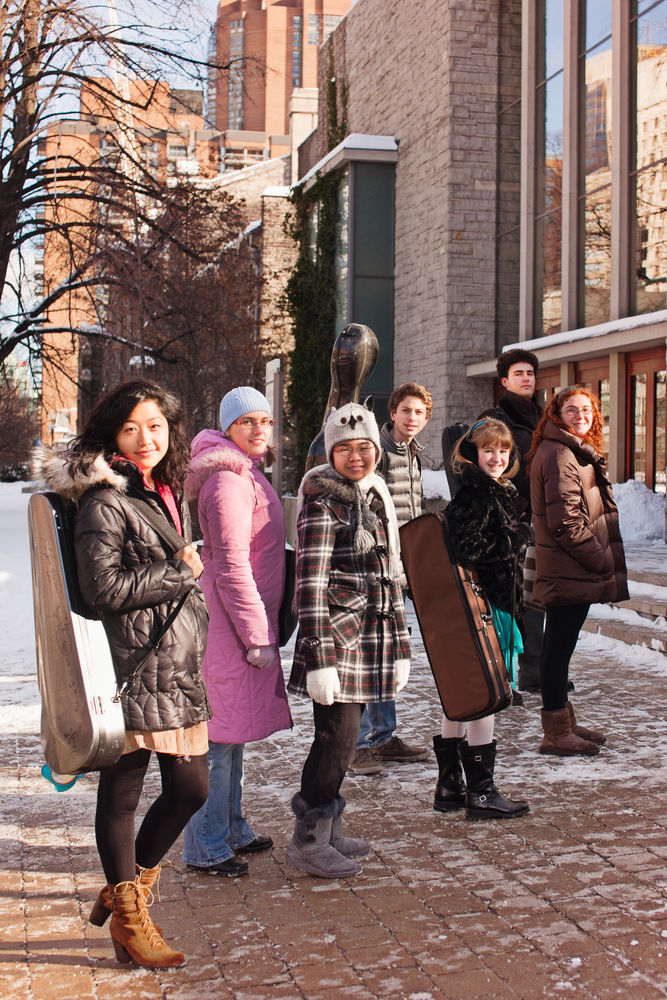
IT WAS A BIT COLD, I grant you – one of those crisp January Sundays that gets called “twenty below” because it’s windy. If you didn’t know better, you’d have thought the sign saying “Isabel Bader” must be for a hockey rink, what with all the minivans rolling up, full of kids and gear. And who else in Canada but a hockey parent would sacrifice their day of rest like this, on the coldest Sunday afternoon of the winter? Who else indeed?

One of the dads of the seven musicians assembling for the hastily scheduled photo shoot comes up to me. (My standard issue cherry-red Quest Nature Tours Arctic expedition Gore-Tex windbreaker must make me look like I know what’s going on). “So whose bright idea was this one?” he asks. His shivering son or daughter is huddling with the other six young musicians, while WholeNote photographer Air’leth Aodfhin explains the shot we are looking for, and Toronto Sinfonietta music director Matthew Jaskiewicz looks on.

Read more: Bader-Bound... and Then? Toronto Sinfonietta’s Fifth Annual Concerto Competition

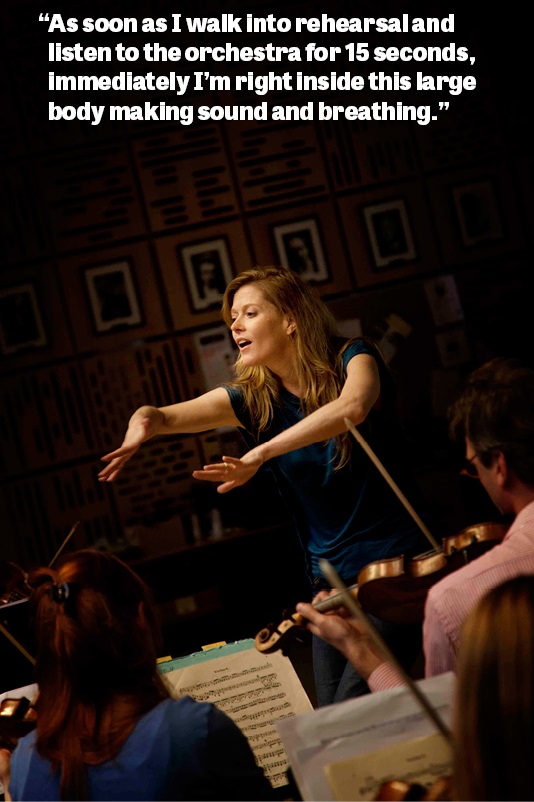
2005_-_Feature_-_Barbara_Hannigan_Conducting_1.jpgBeing the music. This is how Canadian-born soprano and now conductor Barbara Hannigan describes her approach to performing. Two questions come to mind: How does one do this? And what are the ingredients needed to so completely embody the music as to become it? George Meredith’s words from his poem The Lark Ascending that inspired Ralph Vaughan Williams’ work of the same name suggest one answer: “The song seraphically free, Of taint of personality, So pure that it salutes the suns.” Hannigan herself gives a hint when she states: “I’m happy with my performance when I know I’ve made the connection between breath and sound, when the whole body is singing.”

Fourteen years ago the then Toronto-based Hannigan appeared on the cover of The WholeNote magazine. At the time she was performing the lead role in the operetta The Merry Widow and her European career was beginning to take off. Now living in Amsterdam, with bookings four to five years in advance, she is returning to Toronto as the featured performer at this years’ New Creations Festival presented by the Toronto Symphony. In three concerts scheduled between February 28 and March 7, Hannigan will be performing both Canadian and North American premieres of works by British composer George Benjamin and Danish composer Hans Abrahamsen.

Read more: Barbara Hannigan - Being the Music

10aThe recording sessions for Mulroney: The Opera were organized pandemonium.

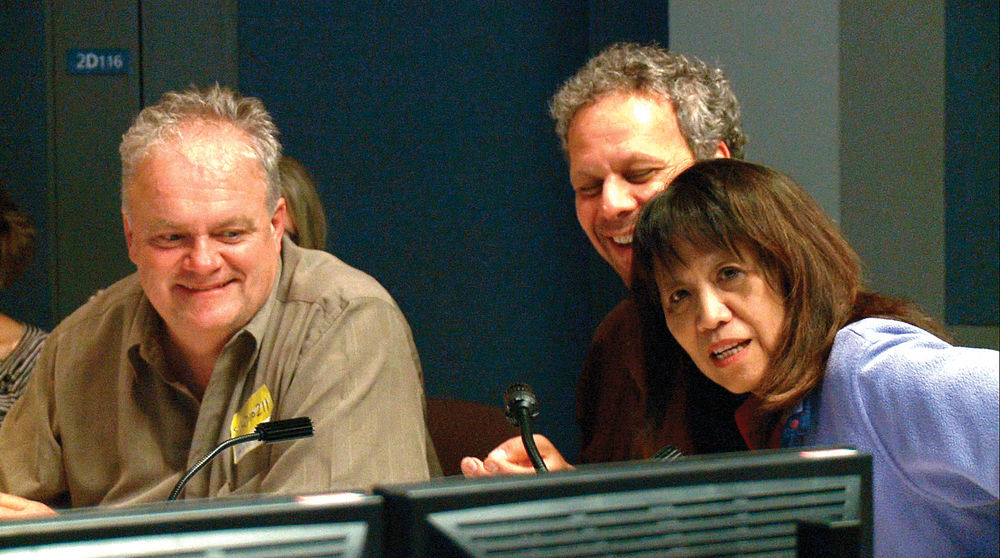
The Esprit Orchestra and conductor Alex Pauk were in one booth, with the soft harp and heavy percussion each being given its own booth for sound mixing purposes. The singers were in another, and in the so-called peanut gallery were composer Alexina Louie, librettist Dan Redican and film director Larry Weinstein. And then there were the technicians in the control room. They were all connected together by headsets.

Since this was an opera, the music was not a background film score. Rather, music in Mulroney: The Opera was dominant, or, as they say in the trade, extended foreground. As Louie rightly points out: “It is the dialogue!” As a result, attention had to be paid to every nuance, with Weinstein directing the singers. Everyone was under the pressure of a tight schedule. Says Pauk: “There is just not the same rehearsal time for record mode as there is for a concert or a staged opera.”

One of the hardest things for the orchestra, according to Pauk, was recording in chunks, and then making sure that the various pieces would segue together in the editing room. “Alexina’s score was continually changing in styles, rhythm and pacing,” he says, “so that every corner of the musicians’ talent had to be utilized. They had to be sharp on the uptake because it was difficult to get a sense of flow. Yet, tempi had to be strictly observed for every take, because the playing had to fit a timed film sequence.”

Because Weinstein would not allow subtitles, every word sung had to be crystal clear. With all the forces finally ranged together, musical and libretto problems inevitably cropped up, so Redican was forced to do rapid fire rewrites on the spot – more words needed here, fewer words there, different words altogether – changes which the singers had to immediately absorb. They also had to be aware of tempi through maestro Pauk, and stay in time. Says Pauk: “Things were coming at them fast and furiously, and they had to keep jumping through hoops.”

Photo by DAVID HOWELLOne of Canada’s busiest conductors is just back from Hong Kong, where she conducted Don Quixote from a COVID-proof orchestra pit. She spoke with Lydia Perović via Zoom from her home in Guelph.

LP: Hi Judith Yan! Oh, what’s that artwork behind you? 

JY: This here is a print of Jackson Pollock. But then this round one here, this is our favourite. It’s by a Guelph-area artist, Chelsea Brant; we have two of her works. She’s fabulous. And this one over here, that’s by Amanda. [Yan’s partner Amanda Paterson, the artistic director of Oakville Ballet and Oakville School of Classical Ballet] And then there’s the dog, have you met the dog? Mexxie, come here buddy, come say hi! He’s the best. 

(Mexx the black and white Shih Tzu comes into the frame, checks out what’s going on.)

What were the last eight months like for you? I expect you had a busy start to the year, and then mid-March happened! 

Read more: Beautiful Exceptions: In conversation with Judith Yan

Summer’s turning out to be another scorcher, beckoning with promises of endless sun-kissed days filled with music festivals. There’s always an embarrassment of riches on display, but the ones brimming most with energy and enthusiasm, abuzz with imagination and excitement— the most toe-tapping and hum-inducing — seem to be the open-air concerts.

Everyone loves them: families with boisterous young children, courting couples, friends exploring new music, aficionados revisiting old favourites, thrill-seeking tourists seeking out novel experiences. And then there are the homing pigeons, the ones who return season after season, the ones who think they know all the best-kept open secrets, and very often want to share them!

This column is being launched in that spirit of sharing, of shining the spotlight on the obvious, and the not-so-very obvious: on the role that programming plays in the myriad musical discoveries that everyone shares, and the personalities that shape the journeys we all take. These are the people who work tirelessly behind the scenes to create a very public experience. They might even be people with very public personae or, equally, very private ones. What they all share, unequivocally, is a sense of passion, an infectious enthusiasm and the ability to get things done.

Read more: Behind The Scenes

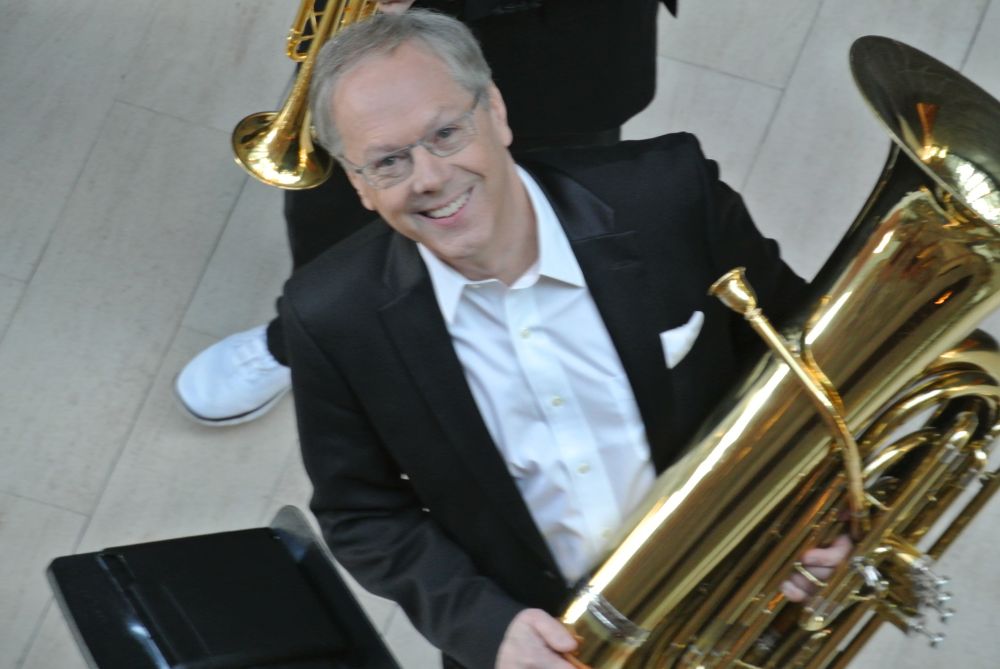
chuck-daellenbach-koerner-hall-lobbyIn anticipation of the Canadian Brass’ upcoming appearance April 27, the final concert in this year’s Mooredale Concert Series, I tracked tuba player Chuck Daellenbach down for a thoroughly entertaining hour-long chat at his south Rosedale Toronto home, middle of March 2014.

What follows is a full length transcript of  that chat: a conversation that roamed here and there over the whole 44 years of the Brass’ existence: commissioning and arranging, their momentous 1977 groundbreaking trip to China, recording, media, player personnel and more. Or you can click HERE for a flip through replica of the article the way it appears in the April 2014 print edition of The WholeNote Magazine. (Story commences on page 11.)  Either way, what follows gives a taste of the indefatigable Daellenbach, now the only member of the original quintet still in full-time performing harness with what is undoubtedly the best-known Canadian chamber ensemble of our (and perhaps all) time. Enjoy.

Read more: Behind the Scenes - Chuck Daellenbach

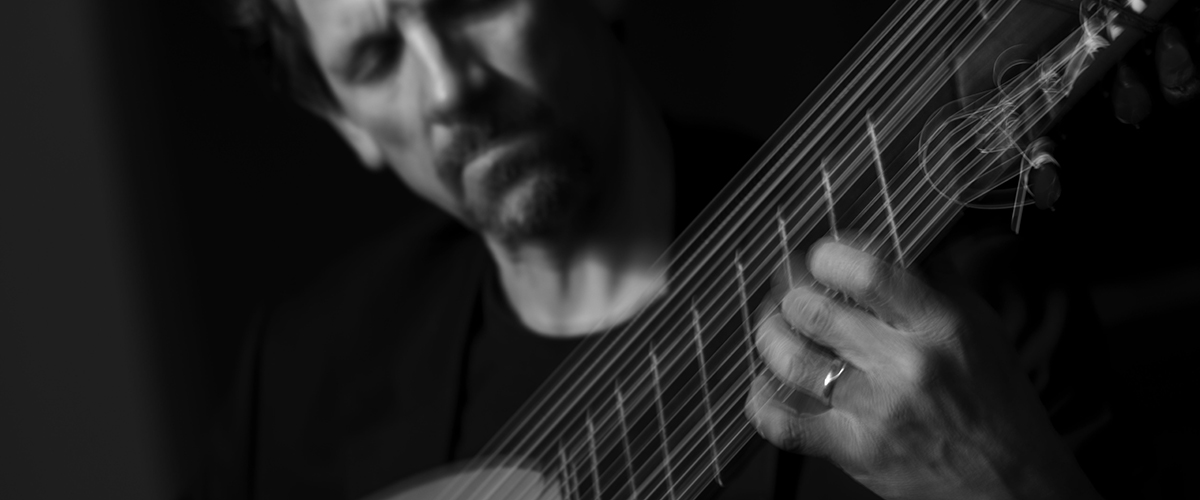
Ben SteinThe specific concert that sparked this conversation takes place Sunday, November 19, 2017, in the Music at Metropolitan concert series at Metropolitan United Church, one of a cluster of major downtown religious edifices that gave Toronto’s Church Street its name. The Met United congregation will be celebrating its 200th anniversary in 2018. This particular concert celebrates music that goes back 200 years before that, but in an intriguingly modern way.

Titled “Jazz Standards of the Seventeenth Century,” it promises “ground basses, lute songs and madrigals sung and played with the freedom, invention and unpredictability of modern club performers” and is the brainchild of lutenist Ben Stein. Under the rubric “Musicians on the Edge,” it features Stein on lutes along with the Rezonance Baroque Ensemble (Rezan Onen-Lapointe, violin; and Dave Podgorski, harpsichord), along with co-conspirators Emily Klassen, soprano; Charles Davidson, tenor; and Erika Nielsen, cello.

A few days after our initial discussion, Stein got in touch, balking at the idea being characterized as his “brainchild.” “I hope what I’ve written doesn’t give the impression that this is a new thing I’ve come up with. If anything, I’m late to the program. There are a good number of [early music] groups building programs and ensembles around improv – but they are European for the most part. There are a few ensembles in the USA, and very little in Canada, which is why I’m pushing for it. And while places like the RCM are starting to add these elements, in my opinion they start too late. That was the key with the Neapolitans and their antecedents – it was built into early training. … Also we are being a bit liberal with the 17th century thing in the title; we`ve got a few bits of 18th- and 16th-century rep as well. It`s more about looking at the forms that musicians were aware of – ground basses, dances – that you can find in different centuries, though they evolved and changed during that time. …”

But let’s start at the beginning.

WN: So, how, why, when did you propose this idea to Pat Wright [Patricia Wright, music director at Met United]?

BS: Last year I presented a concert called “The Mystery of the Partimento” as part of the Music at Met series. It got a very good response from audience members who didn’t know quite what to expect, because no one knows what a partimento is. I didn’t until recently, even though I’d been playing early music for a number of years.

And what is it?

Essentially a bass line over which musicians were expected to extemporize melodies. Partimenti were a central element of Italian Baroque and galant music training, especially in the Neapolitan conservatories that produced some of the most popular performers and composers of that era. They resemble basso continuo accompaniment lines, but they weren’t just for chord harmonization. You were expected to use partimenti to create interesting melodies, and the Italians were renowned for their mastery of this skill.

Seeing how much people enjoyed having classical extemporization taking place before their eyes, I thought: if I was going to play a couple of rock or jazz sets for a club gig, I’d pick music I Iiked, find some musicians I was comfortable with and jam on the chord changes. Why can’t I do the same with classical repertoire I enjoy, playing melodic variations in a historically informed manner? So my colleagues and I are going to treat songs and madrigals, as well as partimenti and ground basses, as jumping-off points for improvisation, and no two renditions will be the same from rehearsal to concert.

Patricia Wright regularly programs early music at concerts and church services … The Rezonance Baroque Ensemble are actually Met’s artists-in-residence this year, playing at church services throughout the year, and also the featured ensemble for the Marg and Jim Norquay Celebration Concert in April 2018 – I’ll be joining them and other players for a collaboration/jam on Baroque concertos and sonatas. I’m planning to play the Vivaldi Lute Concerto in D, improvising on the the famous Adagio movement with the freedom of a player of the era.

I remember Jim Galloway, our long-time Jazz Notes columnist once remarking, in a column significantly on the topic of how to listen to jazz, saying (very loosely paraphrased), words to the effect of “If you want to find the structure and the beat listen to the bass, not the drums, It’s all built from that.” So when I saw this listing I immediately thought “Aha, the man with the lutes, especially the theorbo, must have had something central to do with this.” Is Renaissance/Baroque continuo as backline the way the word is used in a jazz context a far-fetched idea?

Jim was right! It really is “all about the bass.” Baroque and Renaissance musicians were aware at all times of the intervallic relationship between bass and treble voices. Beginner sight-singing exercises in the Neapolitan conservatories were not one-voice melodies, but two-voice duets, with the vocal line  accompanied by a maestro or more experienced students. Musicians learned to improvise in melodic counterpoint to bass lines. They even had a name for musicians who possessed this skill:  contrapuntisti. But contrapuntal knowledge is not fostered effectively in modern training; it’s reserved for advanced theory class, which is the worst place for it. So yes, I agree – if you truly want to understand a melody, play the bass line first! That  should be de rigueur for all instrumentalists and singers.

“Freedom, invention, unpredictability.” These are the words chosen in the Music at Metropolitan release to try to capture the jazzy essence of the concert. But often in the jazz context the platform for those things working is the strong sense the players, and at best their audiences, have of the structures that allow for the apparent spontaneity of the “improvisations.” How far would you push the comparison in terms of the two musics structurally  and in terms of the kinds of spontaneous on-the-spot negotiation that will take place among the players on stage during the performance? And would you say a jazz-lover in the audience might even have an edge over a typical period music aficionado, in terms of recognizing what is taking place?

Audiences of the Baroque court were aficionados, quite similar to the denizens of the jazz club. They were very aware of the components of composition – dance forms, ground basses, structural elements that recurred from composer to composer – and they expected invention and variation. I’ve found that classical audiences really enjoy hearing a model – a ground bass, madrigal or partimento – and then having a musician vary it before their eyes, composing on the fly. It’s as fun and engaging as watching a jazz musician take a solo, and rarer than it should be in early music performance, especially in North America.

So, problems of tuning aside, do you see the potential for an ensemble like yours, which is becoming comfortable with working from charts, actually rocking out with a jazz quartet capable of reading a Pergolesi oboe concerto score so you have a text to work with?

I am very interested in any kind of stylistic interaction that gets people challenging their preconceptions about how to play and sing - and most crucially, how to listen to music. I think classical musicians have a lot to learn from the jazz approach. And harmonically and structurally, there’s a lot more connection between rock, folk and early music repertoire than people understand or acknowledge. I’ve played Bach and 12-bar blues; Cole Porter and Caccini. I see more similarities than differences in them all. And I like to think of a score as something to be adventuresome with, to alter and vary, rather than to execute like a script within strict parameters. I’m advocating an approach that is serious, but not solemn; historically informed, but not historically constrained; and respectful, but not reverent towards the written score. If I feel like interrupting a composed set of variations to add my own,  I’m going to do it – and encourage others to do the same.

So, all going well, what happen from here?

I’d simply like for the skill of improvisation to be more widespread among classically trained players.  Why stop at the Baroque era? What if young musicians were given the tools and skills to improvise in a Classical or Romantic style? For that to happen, it’s got to be bred in the bone from the beginning of training, which means that our current approach has to be rethought. Even with various pedagogical attempts to develop creativity and stronger aural skills, we’re still very focused on correct execution of the written score as a primary goal, to the exclusion of all else. Score reading is a professional necessity, of course – but increasingly, so is improvisation. Baroque musicians could do both, and jazz musicians can do both, so it’s time for us to get with the program! The Neapolitans learned this approach from the very start of their training. Their beginner drills were simple, but the effect of them on young musicians’ ability to listen and create was profound.

This pushes your musical buttons, I see!

I’m a bit evangelical about pushing this, for sure, especially in Canada. It’s happening elsewhere, and has been for a while, but it’s not at all prevalent here. Very few people know about partimenti, and I’ve met players from all over the world who struggle to improvise Anyhow, ranting again! I could add that there’s a terrific website about partimenti, at Northwestern U which might entice people to have a look. Just google “Gjerdingen Partimenti” and you’ll find it. The guy who did it is one of the top two researchers in this area.

Better still, come on Sunday, November 19. Hopefully you’ll hear what I mean.

David Perlman can be reached at publisher@thewholenote.com.

Luciano Berio (1925–2003) is one of the great icons of New Music. Among the Italian composer’s towering works is Sequenza, a series of solos he wrote for individual instruments and voice. The sequenze are a throughline in Berio’s long and distinguished career. Sequenza I for flute was written in 1958, while Sequenza XIV for cello was completed in 2002, a year before the composer’s death. Each solo explores the fullest possibilities of the individual instrument.

wholenote winter 2012 altOn Jan 21, 2013 at Walter Hall, the entire Sequenza will be presented, all 3 hours and 40 minutes of it, as part of the University of Toronto’s New Music Festival. The concert also includes the poetry written by Edoardo Sanguineti that precedes each solo. This is the first time that the complete Sequenza will be presented in Canada, and the concert features an outstanding group of soloists. (Please see page 11.)

The artistic directors for the Berio Sequenza Project are cellist David Hetherington and accordionist Joseph Petric. Hetherington is the Toronto Symphony Orchestra’s assistant principal cellist and a well-known solo performer. Petric tours the world as a much-in-demand classical accordionist. (Both men will also be performing their instruments’ sequenze.)

The WholeNote had a lively, early morning, three-way telephone conversation with Hetherington and Petric about Berio, his sequenze, and the upcoming concert.

Click Read More for the interview.

Read more: Berio’s Sequenza Back to Back

Bob BeckerWith a career spanning half a century, renowned Toronto-based percussionist Bob Becker has garnered a global reputation for his instrumental mastery, interpretive skill and rigourous commitment to his art.

Reading road kill on balding tires
In the 1996 issue of Percussive Notes, veteran marimbist Leigh Howard Stevens summed up the prevailing opinion of Becker: “Everybody who knows anything about xylophone knows you are not only the greatest living xylophonist, but also the greatest xylophonist who has ever lived. Everybody who knows anything about … ‘world percussion’ knows you are a black belt on tabla and African hand drums. Anyone who has heard you perform the Toru Takemitsu From me flows what you call Time with Nexus knows you have a golden touch on steel drums. Anyone who is familiar with your performances with the Steve Reich Ensemble has to admit that you are a hot marimbist and vibe player, and anybody who knows you well, also knows that you are a superb all-around orchestral percussionist and timpanist who can read road kill on balding tires.”

Having established Becker’s percussion street cred, Stevens cheekily continued, “[but] … how are your drum set chops?”

Read more: Best of Both Worlds: Composer-percussionist Bob Becker

“And what rough beast, its hour come round at last,

slouches towards Bethlehem to be born?” W.B Yeats

With apologies to W.B. Yeats, “slouching towards Bethlehem” is a perfect description of me as I walk the 15 minutes down Bathurst Street from home to the Toronto Island Airport. I am Newark bound, with my one overstuffed carry-on bag on my shoulder. It’s 6:30am on a Friday, and I have to be on the bus to Bethlehem at 10am. So I have not had time for shower, shave or coffee this balmy May 8 morning.

But I make my Porter flight to Newark with time to spare and find my bus; my little spring adventure is underway.

Read more: Bethlehem and Beyond: In conversation with Daniel Taylor

after the rainReviewed Thursday June 4, 2025 Tarragon Theatre

It is not often that I walk out of a new show opening knowing I have witnessed the birth of a hit. Thursday night I did.   After the Rain, a new musical by Rose Napoli (book) and Suzy Wilde (music and lyrics) is unlike anything that I have seen before. It’s so much fun, so rock and roll, and so moving that I had shivers up my spine at the end. 

After almost three years of development under the aegis of Tarragon Theatre and the Musical Stage Company the show feels pared down to its essentials and yet still has room enough for important detail and goofy comic moments. It feels real and important while also being thoroughly enjoyable. Inspired by a song written by composer Suzy Wilde more than fifteen years earlier (about which someone told her “this story is a show”) After the Rain takes us on an expected, fun, and satisfying journey. 

Read more: Birth of a Hit - After the Rain

Aline Homzy bannerAline HomzyIn the United States in the 1970s, the concept of the musical bitch was big. There was the Rolling Stones’ recording Bitch from 1971; David Bowie’s Queen Bitch from later that year; and Elton John’s The Bitch Is Back in 1974. And, perhaps most importantly, there was the precursor to them all: Miles Davis’ 1970 release Bitches Brew, a jazz-rock album that would eventually garner seminal status in the world of improvised music.

According to musicologist Gary Tomlinson, Davis’ album title referred to the skill of the musicians themselves – best-of-the-best improvisers, brought together for the recording. And though 1970 was coincidentally the same year that Jo Freeman published her feminist BITCH Manifesto (seminal itself, in other circles), the album’s connection to “bitch” as a gendered term was supposedly just that – coincidental.

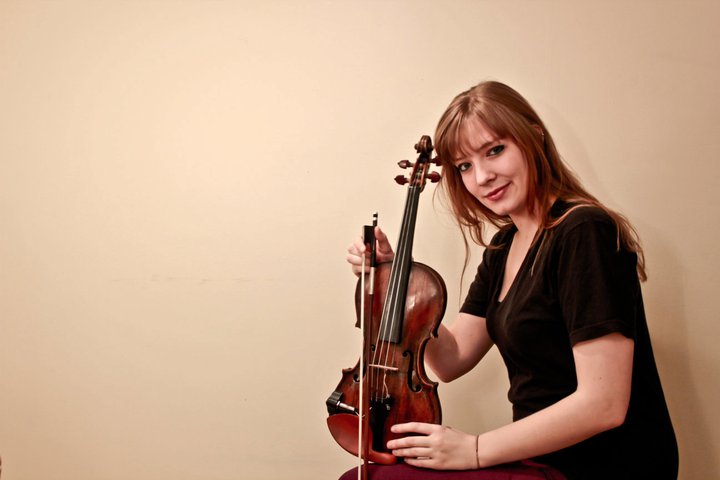
These words have weight, though – and as they go in and out of vogue, the connotations they carry change in the process. So when violinist Aline Homzy submitted an application to this year’s TD Toronto Jazz Festival Discovery Series for a project called “The Smith Sessions presents: Bitches Brew,” she had a lot of musical and linguistic history to reckon with. And when her application was selected, with a concert of the same name slotted for this April 28 at the Canadian Music Centre’s Chalmers House in Toronto, she knew it would be a starting point for something new.

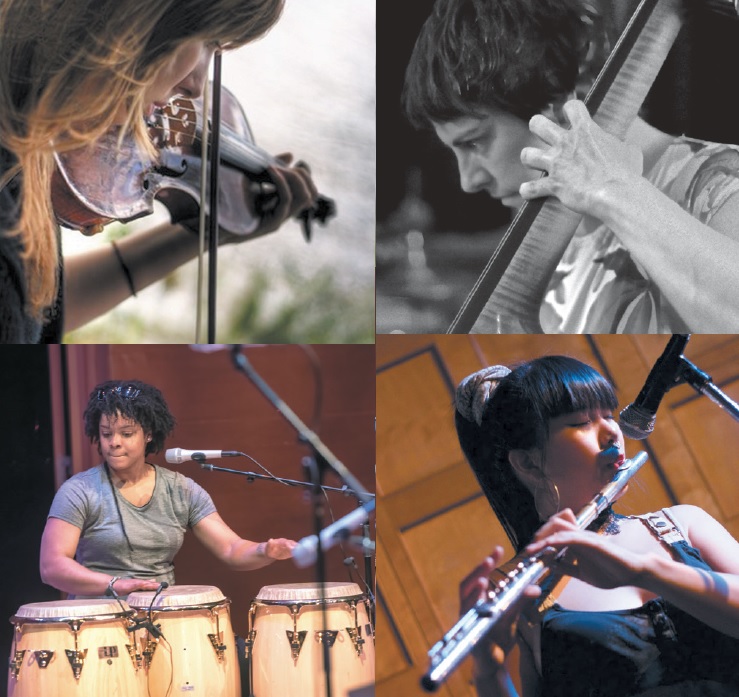
“Bitches Brew” is a quadruple-bill show, featuring four different women-led ensembles. With groups fronted by Homzy, flutist Anh Phung, bassist Emma Smith and drummer/percussionist Magdelys Savigne, the concert is Homzy’s 21st-century take on what it means to equate “bitch” with musical talent, and on how our community thinks about musical artistry today. Same name, new vibe – in a very good way.

“Toronto needs this”

The project comes to Toronto via Edinburgh, from a concert series of the same name run by bassist Emma Smith. On her website, Smith writes that her Bitches Brew sessions are a response “to the eternal assumption that the only woman in the band must be the singer” – a way of highlighting local Edinburgh talent while confronting stereotypes that women often face in improvised music. After playing on one of Smith’s sessions in August 2017, Homzy started to talk with Smith about bringing the series to Canada. When the applications opened for the 2018 TD Toronto Jazz Festival Discovery Series – a concert series that gives Jazz Fest branding and support to innovative local projects – the timing felt right.

On April 28, Homzy and Smith will play a violin/bass duo, featuring some of Smith’s compositions; flutist Anh Phung will improvise with bassist Alan Mackie, in their duo project HaiRbraIN; Magdelys Savigne will lead a trio project, singing and playing percussion alongside Elizabeth Rodriguez (violin and vocals) and Danae Olano (piano); and Homzy will bring her own band, Aline Homzy’s étoile magique, where she’ll be joined by Chris Pruden (piano), Daniel Fortin (bass) and Thom Gill (guitar).

At her Toronto apartment last week, Homzy spoke about how for her, this project came out of a feeling of something lacking in the local jazz ecosystem – and about wanting to bring it to light.

“I told Emma, ‘We have to do this in Toronto. Toronto needs this,’” she says. “Normalizing the roles of women in bandleader positions. As a student, I felt like that was not at all present in school. I don’t think there’s a single full-time woman professor at U of T [in Jazz Studies]; I think there are only a couple at Humber. It’s important for the community for students – women students – to see that it’s possible. And also to provide role models for younger people as well, however they identify… it’s important for them to have a diverse roster of people who are successfully doing what they do, and who are really good at it.”

Having gender-diverse leadership is important for any industry, but it can be particularly crucial in fields like the performing arts, where so much of what happens onstage is guided by performers’ offstage social relationships. In a 2013 article for NewMusicBox, Ellen McSweeney talks about how women performers often pay a hidden “likability tax” when they come off as too self-promoting, assertive, or success-oriented. And in an ensemble situation, where performers rely on having both a supportive fan base and a network of collaborators to survive, being seen as unlikable can carry a high cost.

“I’m doing ‘bitch’ in quotations right now, because I understand it’s a swear word as well,” says Homzy when she explains the project. “But for us, it’s reclaiming that word – especially as a woman leader, when women often get called that name for being too bossy.”

It’s a mentality that impacts how women musicians operate within jazz culture – and one that extends to the way that they perform. In his book Swingin’ the Dream, Lewis Erenberg writes about how during the 1940s, women musicians were often seen as temporary, annoying replacements for the men who went to war – and that the prevailing opinion was that they should either act like “good girls” or “play like men.” Seventy-five years later, Homzy still encounters that attitude in the field.

“I think one reason why a lot of women don’t show up to jam sessions is because you feel like you really have to prove yourself,” she says. “Everyone feels intimidated by that situation, but as a woman, it’s like – doubly that. And some people – some guys – will see a woman come in and on purpose count in the hardest tune, really fast, because they want to see you fail. It’s really discouraging to witness.

“It becomes about [whether] you’re able to, we say, ‘Hang with the guys,’” she continues. “If you can ‘keep up’ then it’s like you’re considered ‘ok’ in the guys’ books. I think that some women take that position: ‘I’m like one of the guys.’ And I think it’s really dangerous. I’ve been in that situation too, where I’ve been like ‘I feel like the guys are accepting me.’ You soon realize that there are sometimes ulterior motives for that, which are quite disturbing.”

Homzy says that it’s a particularly big problem for younger women artists who are early-career or still in school, because it can make it difficult for them to realize their worth. “It took a lot of work for me to realize that wanting to be in the ‘boys club’ was a really toxic way to think about myself,” she says. “I feel like it’s hard to know how good you are, when you first come out of school. As a female instrumentalist, you’re always told, ‘Play more like this,’ or relating to my instrument, ‘Play more like a saxophone, play more like a horn.’ [I had to] come out of school and realize, no – that’s not what I’m doing. I’m a violinist, this is my sound and this is my style.

“You [begin to] realize that sometimes you’re maybe even better than some of your male colleagues – which is interesting, because a lot of male colleagues tend to think that they’re better than you,” she adds. “And it can be really uncomfortable, because [those colleagues] really want to take over – in conversations, and in music.”

Being heard

For Homzy, that gendered feeling of being unheard has particular amplifications within the jazz world as a whole. It’s a big part of why she chose the Canadian Music Centre – a space not often seen as a jazz venue, and a first for the TD Toronto Jazz Festival – for this show.

“Part of the reason that I applied for this project was that I wanted it to be at a venue that wasn’t just a bar or a club,” she explains. “I wanted it to be in a ‘listening room,’ where people listen and don’t talk – where we’re all there to listen to the music. All four of us write original music and we all consider ourselves artists. I wanted to provide a place to play where people are going to listen, as opposed to talking over you.”

I ask if there are many spaces in Toronto like that for jazz; she says there aren’t.

She mentions that she came to the violin from a classical background, and that the feeling of being undervalued as an artist is a chronic issue in the non-classical world. From her perspective, the difference is night and day.

“We’re just not taken as seriously,” she says. “You see it with the way we get paid. You see it with how people think it’s ok to talk over what you’re doing [at any point]. I want to bridge that gap, and show people that improvised music can be – and is – really awesome.”

Clockwise from top left: Aline Homzy (violin), Emma Smith (bass), Anh Phung (flute), and Magdelys Savigne (drums/percussion)‘Women’s music’

In December, The New York Times published an article claiming that 2017 was a “year of reckoning” for women in jazz – a time when we saw a number of standout women instrumentalists presenting projects that were bold, musically inventive, and squarely their own. It’s an idea that shouldn’t be that shocking – but Homzy talks about how even today, people seem to have a hard time coming around to the idea of women authorship in music.

“The info about this project is all there. But so many people have seen it and asked me, ‘Wow, so are you playing the whole Bitches Brew Miles Davis album?’” she laughs. “It’s funny, but also kind of disappointing in some way. Because they completely missed the point.”

Still, Homzy is dedicated to lifting up the work of women creators. Not because there’s anything inherently distinctive about their music – far from it – but because there’s a lot of valid experience and perspective there. And when our music doesn’t represent the demographics of our communities, that perspective, and the power and beauty that go along with it, is something we miss out on.

“I realized, after so many years: I’d been doing these things, playing or writing-wise – not specifically because I wanted to please other musicians, but because I’d been influenced by that [oppression],” she says. “And now, I’m writing music in a way that is influenced by those experiences. We’ve experienced different challenges; I think that makes a lot of women’s music sound unique and different.”

That 2017 New York Times article references the same thing. “There’s nothing to suggest that these...musicians expressed themselves in any particular way because of their gender,” it reads, “but what we know is that until recently they might not have been in a position to stand up onstage alone, addressing the audience with generosity and informality, empowering the room.” As Homzy seems to attest, that’s its own rare and powerful thing – and an experience that, without question, is worth seeking.

“The Smith Sessions presents: Bitches Brew,” featuring Aline Homzy, Emma Smith, Anh Phung and Magdelys Sevigne, will be presented on April 28 at the Canadian Music Centre’s Chalmers House in Toronto, as part of the 2018 TD Toronto Jazz Festival Discovery Series. The event will also be livestreamed by the Canadian Music Centre, at https://livestream.com/accounts/13330169/events/8050734.

Sara Constant is a flutist and music writer based in Toronto, and is digital media editor at The WholeNote. She can be reached at editorial@thewholenote.com.

Brett Polegato. Photo by Shayne GrayI had heard through the musician grapevine that baritone Brett Polegato owns a remarkable library, but putting in a request to poke around someone’s house and then write about it is not the easiest of asks. This March, however, after a sudden flurry of cancellations of his Lebanese, Italian and Nova Scotian engagements due to You-Know-What, Polegato found himself spending an unusual amount of time at home and we easily scheduled a get-together. I visited the three-storey row house he shares – or shall we call it his three-storey library – in the Carlton and Church area on one of the last evenings before the city went into a complete lockdown. Like a majority of working artists, he’s been hit hard by the loss of income due to cancellations. But this evening we decide to focus on what brings joy.

We skip the ground floor, which houses the piano, the CD collection in the middle of a major clearing out, and the downstairs books to which we’ll return, and go up to the living room. There are already bookcases here, behind glass doors in cubes on each side of the sofa, and I spot Naomi Alderman’s Disobedience in one of those. But that’s just a teaser for the main event upstairs, with the first stop in what looks like a linen closet. Packed with books.

Read more: Bitten by the Book Bug: Baritone Brett Polegato

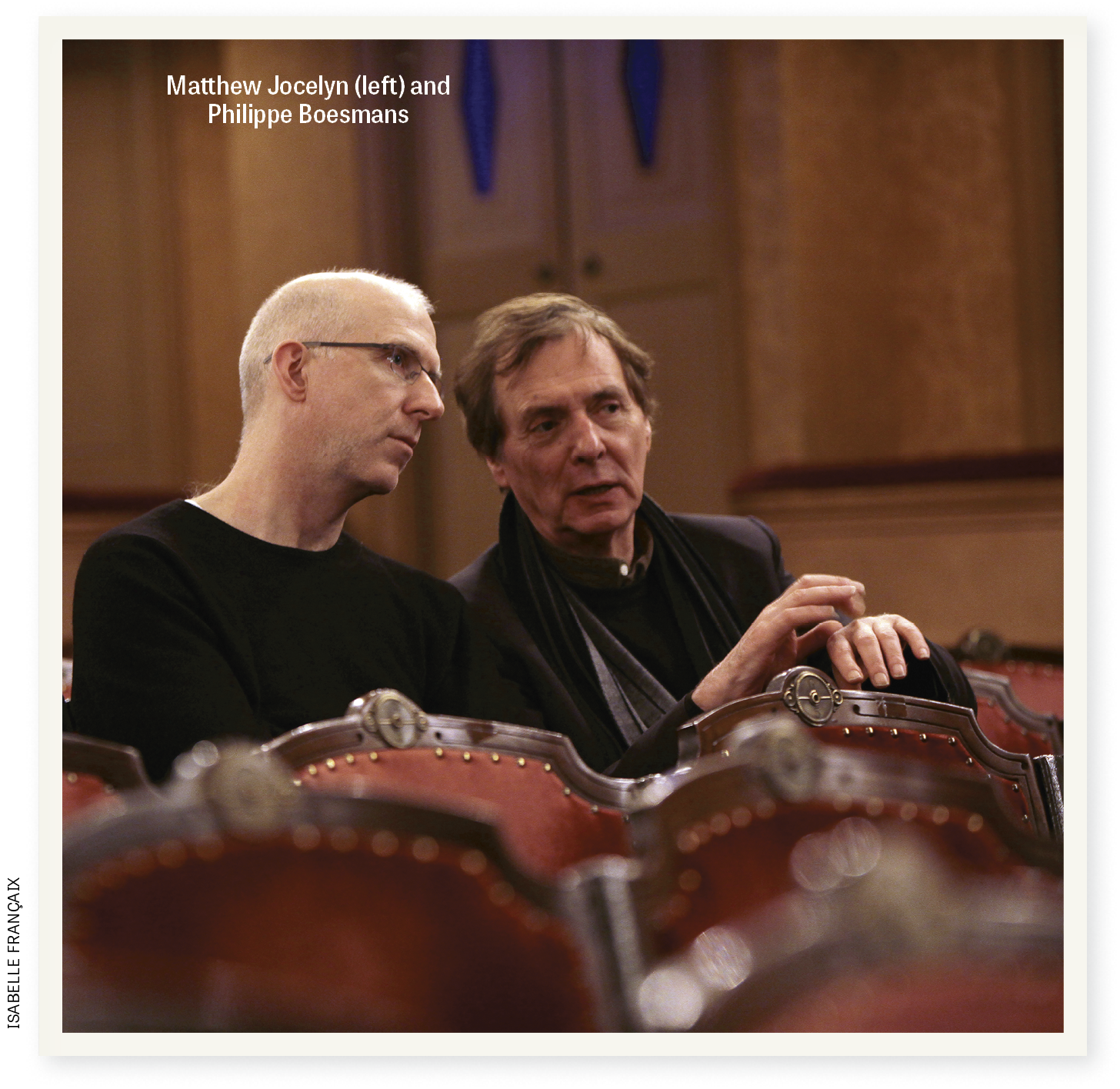
Matthew Jocelyn and Phillipe BoesmansAn unusual event that bodes well for opera in Toronto takes place in November. Canadian Stage and Soundstreams have combined forces to produce the chamber opera Julie by Belgian composer Philippe Boesmans. This will not only be the North American premiere of Julie, but, amazingly, the North American premiere of any opera by Boesmans, one of the most highly regarded contemporary composers of opera. This will also mark the first time that an opera has been included in Canadian Stage’s subscription series.

Read more: Boesmans’ Julie Comes to CanStage

Hornepayne to BramptonFor those reliant on public transit, Brampton may seem impossibly north. From this writer’s current location, it’s 1,063 km south. With that in mind, it seems fair to say that Brampton On Stage’s wonderfully diverse programming (music and otherwise) across five venues in that city make a compelling argument for downtowners to take the 43 minute ride from Union Station on the Kitchener or Brampton/Orangeville GO lines.

Read more: Brampton, Braun, Broadsway & Beyond

2206-Feat- Bravura 1.jpgEminent pianist, writer and pedagogue William Aide is the curator of “Piano Bravura: The New Generation,” a piano series beginning March 9 at the historic Church of the Holy Trinity.

“Last February,” Aide told me via email, “our music director Ian Grundy, Reverend Sherman Hesselgrave and I were on the hunt for a new piano for Holy Trinity, and we had already auditioned several Steinway and Baldwin instruments. All three of us play, but it was up to me to test the resources of prospective instruments with concert repertoire.” Steinway Piano Gallery’s Alex Thomson led them to a private home in Oakville where Aide tested the piano for its tonal range, colours, beauty of sound, pedalling response, and even its rapid repeating-note action, with Mozart, Chopin’s Études and D-flat Nocturne, Ravel’s Alborada del Gracioso and a Debussy prelude. “We all three fell in love with it and through a generous anonymous donation were able to acquire it,” he said. “On April 7, 2016, flutist Robert Aitken and I offered the first concert featuring the piano as an accompanying and solo instrument.”

From there it seemed obvious to Aide that a series of piano recitals would display the new instrument’s fine qualities. Aide’s decades of teaching and adjudicating had kept him in touch with “younger pianistic talent” and Piano Bravura was born. He chose the initial three pianists because “I know them and their playing at close quarters.” Aide also told me that he was pleased with the repertoire the three selected for the series. “[Their] choices cover a wide range of styles and feature some unusual items.”  

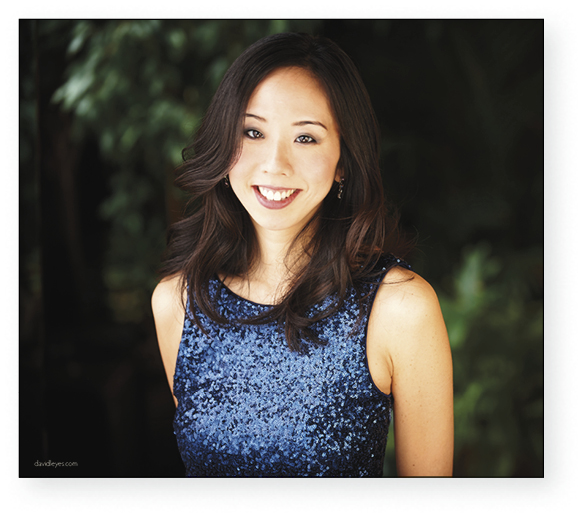
2206-Feat- Bravura 2.jpgAngela Park: “As adjudicator, I first heard Angela Park play the Schumann concerto in a London festival when she was 14. ‘This is the real thing,’ I thought. We worked together for nine years and I was so gratified to help prepare her masters’ graduating recital in 2003, the year of my retirement from U of T’s Faculty of Music. Angela is a much sought-after chamber music player, as the pianist in Ensemble Made in Canada and duo partner of such artists as cellist Rachel Mercer and violinist Jonathan Crow. Her solo playing is outstandingly expressive and her concerto performances second to none. She occasionally still plays for me and we are good friends.”

Park’s recital March 9 begins with Mozart’s irresistible Sonata K333 before moving to the impressionistic Images: Book II of Debussy and Liszt’s revolutionary Années de Pèlerinage Book I: Suisse. Aide had no part in choosing the content of the recitals but he told me that he did coach Angela in the Debussy Images II set years ago.

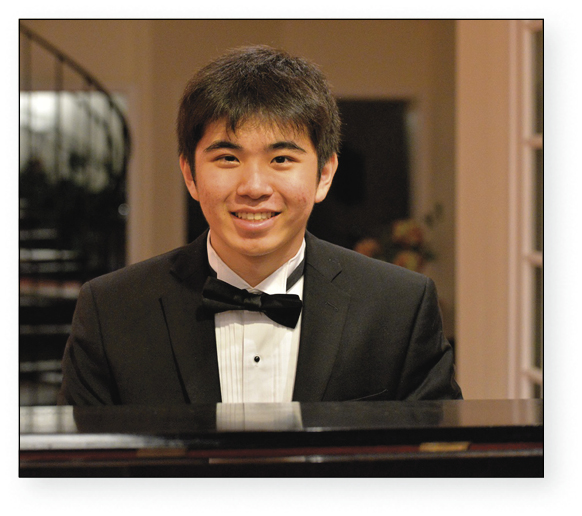
2206-Feat- Bravura 3.jpgTony Yike Yang: As a juror, Aide heard Tony Yike Yang in the last National Chopin Competition which was held in Mississauga several years ago. “I remember fondly that he liked my Chopin Berceuse, an item in a recital the jury members offered during that event,” Aide told me. “We sent Tony to the International Chopin Competition in which his laureate playing was so compelling.” Yang was 16 in 2015 when he became the youngest prizewinner (he finished fifth) in the history of the competition. “I have recently reheard his Chopin E Minor Concerto and B-flat Minor Sonata from that competition on YouTube and was astounded once again by his inspired, world-class playing. By the way, in his emails he confers an honourary doctorate upon me.”

Aide asked Yang, now 18, to include that Chopin sonata in his April 2 recital. Mussorgsky’s monumental Pictures at an Exhibition was Yang’s own choice.

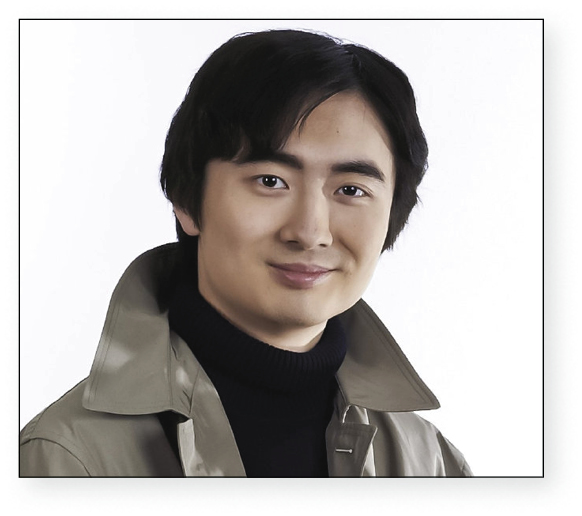
2206-Feat- Bravura 4.jpgSheng Cai: “In 2003, I was musical advisor to the Toronto Symphony Orchestra Concerto Competition,” Aide said. “That year the jury chose Sheng Cai to play the Chopin E Minor Concerto. At the reception after his incredibly poetic performance we fell into a lively pianists’ dialogue and we have continued these conversations ever since. Sheng comes over to our house several times a year and brings with him his most recent CD concerto performances. I must be some kind of mentor. At any rate we enjoy swapping CDs and discussing the challenges of forging a career as a concert artist. His exuberance is contagious.”

Cai’s program comprises two Scarlatti sonatas, Mozart’s Sonata K332, Chopin’s addictive Barcarolle and two pieces “one doesn’t often hear,” according to Aide: Schumann’s Humoresque Op.20 and Villa Lobos’ Rudepoema, written for Arthur Rubinstein.  

As for other ideas in the works for additional musical events in the church:

“There was a time, especially under the aegis of CBC producer, Srul Irving Glick, when Holy Trinity was a favoured venue for national broadcasts. Its luminous acoustic and, of course, the new piano suggest future chamber music and voice series as well as a continuation of these superb piano recitals. I know a number of musicians of the next generation who will easily fill the bill. We will keep you posted.”

Paul Ennis is the managing editor of The WholeNote.

CBC-Early-Banner.jpg

2106-CBC1.pngThe presence of both Australian composer/conductor/violist Brett Dean and Scottish composer/conductor Sir James MacMillan in Toronto for concerts the same week (March 5 to 12) creates the possibility of the artistic equivalent of a seismic event. Dean is the curator of this year’s TSO New Creations Festival at Roy Thomson Hall and MacMillan conducts Soundstreams’ Choir 21 at the Trinity-St. Paul’s Centre, as well as concerts in Waterloo and Kingston. Dean and MacMillan, both in their mid-50s, are both prolific composers and winners of major international honours. They’re also in great demand, conducting their music around the world; it’s a fortunate coincidence that they should both be in Toronto the same week. It’s also fortunate that the concert dates do not conflict: the New Creations dates are March 5, 9 and 12; the Soundstreams Toronto concert is March 8.

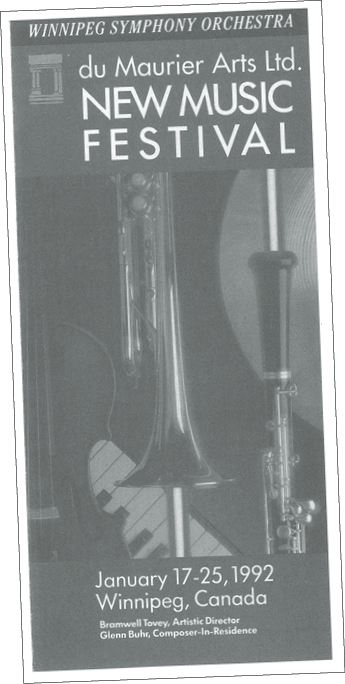
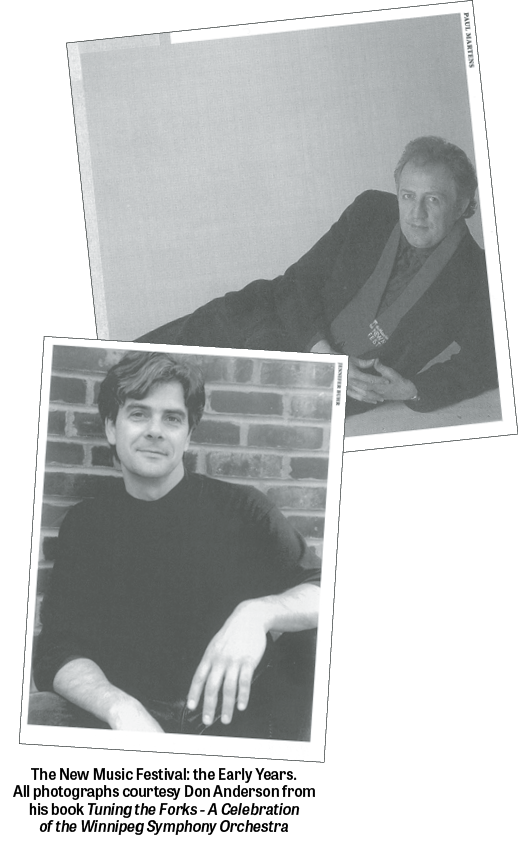
Another interesting coincidence is the fact that both these artists came into prominence in the early 1990s, the same time as many Canadian orchestras seized upon the new music festival format as a way of introducing audiences to contemporary repertoire. This happened first in Winnipeg, and in fact, this past January, the Winnipeg Symphony Orchestra celebrated the 25th anniversary of their New Music Festival. The WSO’s festival has been so successful that it remains one of their signature events, one that has contributed to the rebranding of the orchestra, so much so that its last two music directors, Andrey Boreyko and Alexander Mickelthwate, were both attracted to Winnipeg on the reputation of the New Music Festival. The WSO’s concept of presenting new orchestral music in a festival format was copied soon after by orchestras in Vancouver, Toronto, Montreal, Edmonton and other communities. The music of Dean and MacMillan was first heard in Canada in such festivals.

The significance of the WSO’s bold initiative in 1992 cannot be overstated. It was the first time a major Canadian orchestra had committed its full organizational resources to the production of a week-long contemporary music festival, one that featured both new Canadian orchestral works as well as important international works. Music director Bramwell Tovey, composer-in-residence Glenn Buhr and the late executive director Max Tapper had contacted me in 1991 to ask whether I, as executive producer of Two New Hours on CBC Radio Two, would be interested in broadcasting music from the contemporary music festival they were planning. I saw this as an exciting opportunity and immediately promised that not only would we broadcast as many concerts from their festival as the Two New Hours budget could afford, but I would also be prepared to contribute an event which we would broadcast live, to show our support for the WSO’s innovative programming approach.

2106-CBC2.pngOn Sunday night, January 19th, 1992, Two New Hours presented a contemporary piano recital by Christina Petrowska Quilico, live to air on CBC Radio Two, from the Centennial Concert Hall in Winnipeg. The recital included music by Canadians Omar Daniel, Steven Gellman, Peter Paul Koprowski, Sid Robinovitch and Ann Southam and acclaimed international composers Frederic Rzewski and Toru Takemitsu. The WSO’s production team, not sure how best to market a recitalist in their 2,500-seat hall, decided to put up risers on the stage, as the main seating area, in case the attendance was small. Those 700 riser seats filled quickly, and the WSO’s management team watched in amazement as another 1,000 people then took “overflow” seats in the main section of the hall. It was clear from that moment that the New Music Festival would be a great success. And needless to say, Christina played a brilliant program, cheered on, as she was, by the enthusiastic mob of listeners who surrounded her, which in turn made a wonderfully sparkling live broadcast.

The early success of the WSO’s festival attracted more than just ticket buyers. Composers, publishers, arts councils, soloists and indeed other CBC Radio Two network music programs also took notice. By the next year, the WSO’s New Music Festival could already call itself an international festival, thanks to the worldwide distribution of our CBC Radio broadcasts over the program-exchange protocol managed by the European Broadcasting Union (EBU). Through an alliance I built with other CBC radio music shows, we were able to broadcast all the festival concerts for the next several seasons. By the time the WSO’s New Music Festival celebrated its tenth anniversary the list of international “star” composers who had been featured incuded Americans John Corigliano, Aaron Jay Kernis, David Del Tredici and Christopher Rouse; Estonian Arvo Pärt, Englishmen Gavin Bryars and Mark-Anthony Turnage; Dutchman Louis Andriessen and Austrian HK Gruber. Literally hundreds of Canadian works had been performed. A memorable moment at the end of the 1996 New Music Festival was the spectacle of the usually taciturn Arvo Pärt, receiving an ovation on stage, and crying out, “Thank you, Winnipeg.”

The success of the Winnipeg festival proved that a well-programmed and properly promoted new music festival could draw substantial audiences. It also made for exciting, irresistible radio programming. Brett Dean, this year’s TSO New Creatons curator, was featured as both viola soloist and composer in the 2003 edition of the WSO’s festival, including a showstopping performance of Styx, the dramatic viola concerto by Georgian composer Giya Kancheli. Dean had been introduced to Canadian radio listeners when we programmed his clarinet concerto, Ariel’s Music, on Two New Hours in 1995, after it was selected at the International Rostrum of Composers in Paris. At that time Dean was just emerging as a composer, having spent 14 years in the viola section of the Berlin Philharmonic Orchestra.

But now, Dean and the aforementioned Sir James MacMillan are both recognized as mature composers, and we’ll have excellent examples of their best works during their respective appearances here, thanks to Soundstreams and the TSO. MacMillan will conduct a choral program with Soundstreams’ Choir 21 that includes his profound and powerful Seven Last Words from the Cross and his lovely setting of Robbie Burns’ The Gallant Weaver, along with works by Canadians James Rolfe and Murray Schafer and Norwegian Knut Nystedt. Dean and the TSO, with music director Peter Oundjian, will bring us Dean’s Viola Concerto (with Dean as viola soloist), his trumpet concerto, Dramatis Personae (Hakån Hardenberger, trumpet soloist) and the cantata, Knocking at the Hellgate (Russell Braun, baritone soloist), along with world premieres by Canadian composers Kevin Lau and Paul Frehner and other international repertoire.

March 5 to 12 promises to be a sublimely raucous and exciting week of new music in the community. I’ll definitely be going to it all!

David Jaeger is a composer, producer and broadcaster based in Toronto.

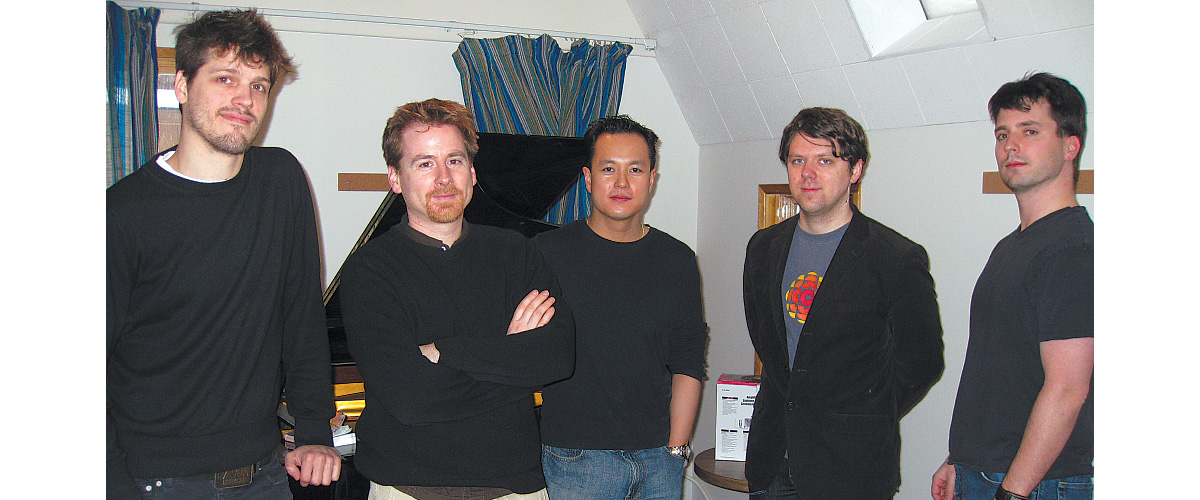
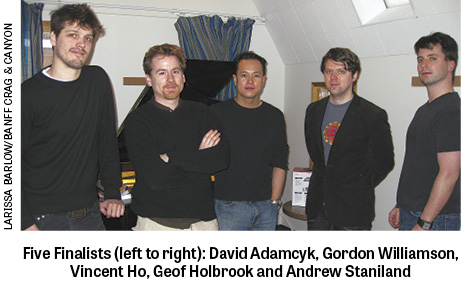
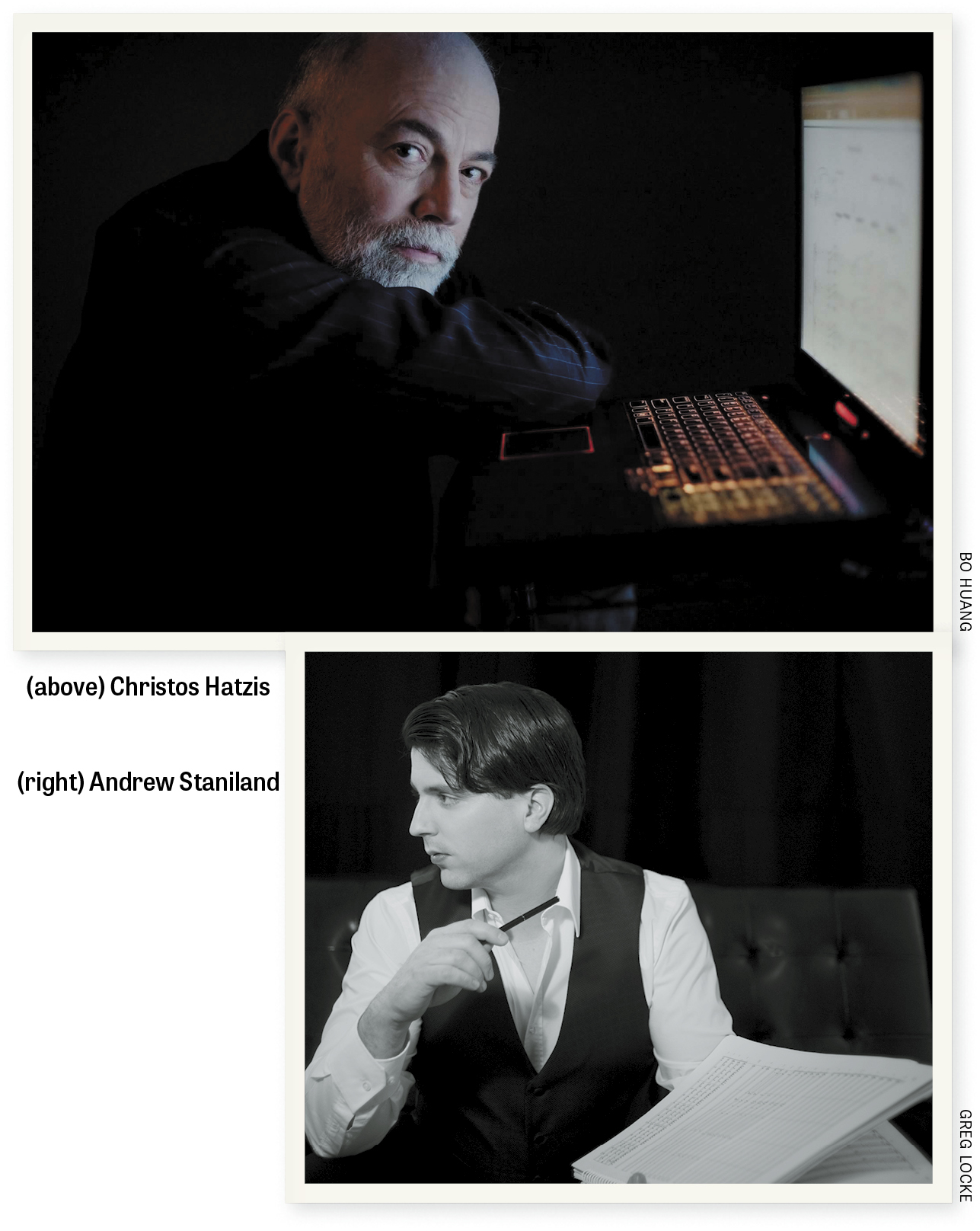
AI_Images.jpgFive Finalists (left to right): David Adamcyk, Gordon Williamson, Vincent Ho, Geof Holbrook and Andrew StanilandOn March 26, 2009, during a live radio broadcast and webcast from the Rolston Recital Hall of the Banff Centre in the Alberta Rockies, the young Canadian composer Andrew Staniland became a double winner. The jury in the CBC/Radio-Canada Evolution competition for young Canadian composers named him the winner of both the National Grand Prize ($20,000) and the Prix de l’Orchestre de la Francophonie Canadienne ($5,000) for his composition Devolution, a work composed during a month-long residency (along with his co-finalist composers, David Adamcyk, Vincent Ho, Geof Holbrook and Gordon Williamson at the Banff Centre). The live audience and the online listeners voted too and, accordingly, the People’s Choice award ($5,000) went to Vincent Ho.

CBC/Radio-Canada’s Evolution Composers Competition was a unique event. It followed in the footsteps of the earlier CBC/Radio-Canada National Radio Competition for Young Composers, which had been the principal means by which the national music departments of both CBC Radio and Radio-Canada (with the collaboration of the Canada Council for the Arts) identified and developed emerging young Canadian composers. I served as English Radio coordinator of that competition, which ran from 1974 to 2003.

It had been a productive investment in talent development; its laureates, collectively, form a Who’s Who of Canadian composers of the present, people such as Denys Bouliane, Brian Current, Chris Paul Harman, Melissa Hui, Kelly Marie Murphy, Michael Oesterle, James Rolfe and Ana Sokolovic. The Grand Prize winner of what turned out to be its final edition, in 2003, was Analia Llugdar.

Following that 2003 competition, when we would have begun planning the next edition of the project, my Radio-Canada co-coordinator and I were advised that a new direction would be required for any future competition. A small group of producers from both CBC and Radio-Canada was formed, and we drafted a number of proposals that addressed several criteria, especially a desire for the inclusion of a much greater new media component. The process of discussing, debating the details of the proposals and persuading all the various authorities in both networks proved to be a very long one. Eventually, the CBC/Radio-Canada Evolution competition launched in 2008.

Canadian composers under the age of 35 were invited to submit samples of their work to a pre-selection jury. There were 150 entries, and five composers were selected by the jury as finalists to advance to the second round, which was held at the Banff Centre. Each finalist composer received a $5,000 grant as recognition of their selection.

In March of 2009, the five finalists arrived in Banff and participated in a draw to determine the final details of the orchestration of the competition pieces they would write during their month-long residency. While at Banff, the composers also produced blogs describing the experience of composing competitively. A team of videographers documented the residency. The blogs, videos and other assets were posted online, providing the public a window into the finalists’ experiences as they composed their competition pieces.

The Ensemble contemporaine de Montréal (ECM+) and their artistic director, Véronique Lacroix, were chosen as the performing entity for the final phase of Evolution, due in part to their demonstrated commitment to the mission of encouraging emerging composers. The members of ECM+ arrived in Banff at the end of the composition process, rehearsed the newly composed works and then performed the five compositions in a live broadcast/webcast in the presence of the final-round jury. Andrew Staniland and Vincent Ho prevailed as winners; all five composers gained valuable experience and international visibility, not to mention the performances and broadcasts on both radio networks.

The Evolution competition was praised as a resounding success. The new format, combining both new media and conventional broadcasting, appeared to achieve the goal of encouraging emerging young Canadian composers, while providing audiences unprecedented access to and involvement in the various stages of the competition. In fact, the members of the organizing team, producers Sandy Thacker at CBC, Pascale Labrie at Radio-Canada and I were awarded a CBC President’s Award later in 2009 for our efforts. Unfortunately, major structural and budgetary changes were under way at both CBC and Radio-Canada that gradually reduced their capacity to produce original content; despite efforts to continue and develop the young composers’ competition, it was to be no more.

For the participating young composers, however, the Evolution experience proved to be a watershed moment.  Looking back, Andrew Staniland makes the following observations: “In retrospect, 2009 was a turning point for me ... On the positive side, it was a year of winning the National Grand Prize at the CBC's Evolution Composers Competition, and the year I was offered an amazing job at Memorial University, a place I am proud to call home. On the negative side, it was the last year of the CBC Young Composers Program. I was one of the last young composers to enjoy the mentorship and visibility that the CBC had so richly offered to previous generations. While I am grateful for the support I received and the relationships made, I know that composers coming after me will have a harder go of it.

“I remember the final night of the Competition in March 2009. It was a capstone event preceded by a wonderful month surrounded by creativity, amazing colleagues and the natural splendours that Banff is well known for. I was stunned when they called my name as the grand prize winner. Stunned not only for the honour, but by the palpable contrast in the room. Many of the CBC crew working that night were given notice that very evening that their jobs were gone. On the stage, a prize bestowed; in the control room, layoffs and the final dismantling of new music at the CBC. That last CBC young composers competition was a very bright light in a very dark time.”

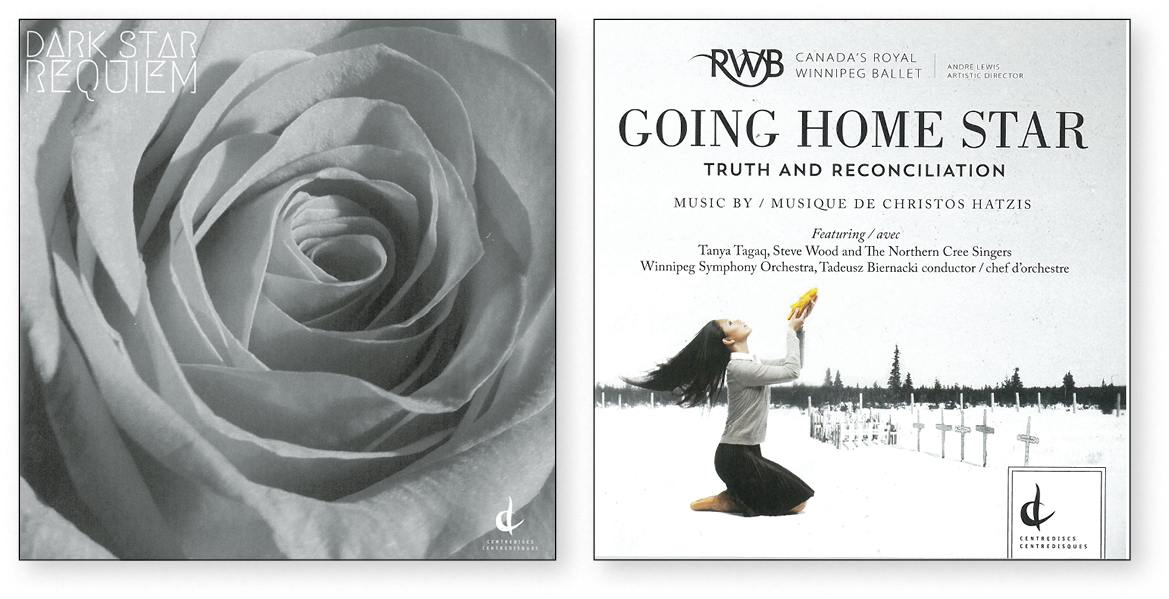
A dark time indeed. The years between 2007 and 2010 marked the cessation of the various projects that had supported the development of  Canadian composers at CBC Radio, including the CBC Radio Orchestra, CBC Radio’s participation in the International Rostrum of Composers, the CBC Records label, CBC commissions, CBC composition competitions and the network contemporary music program Two New Hours. In spite of this, young composers who had enjoyed earlier support from CBC Radio continued to develop and flourish. For example, Andrew Staniland’s requiem for the AIDS pandemic, Dark Star Requiem (words by Jill Battson, commissioned by Tapestry New Opera) was a highlight of the 2010 Luminato Festival. Our CBC Radio recording of this major work has recently been leased by the Centrediscs record label and is now available to the public. The release of Dark Star Requiem will receive special notice this fall as we approach World AIDS Day on December 1.

The long legacy of CBC Radio’s development of Canadian composers was a proud one, inspired by The Broadcasting Act and marked by the creation of significant works by distinctive Canadian artists. I was pleased to play a role, along with many gifted colleagues, in that history. Whether the road ahead offers similar promise for future generations of emerging Canadian composers remains to be seen.

David Jaeger is a Toronto-based composer, producer and broadcaster

Denise Williams. Hair, Make Up & Photography by Amina Abena AlfredThe way Linda Litwack tells this chapter of the Denise Williams story, she and Williams (who have known each other since about 1990, when Williams joined the Toronto Jewish Folk Choir as their soprano support singer/soloist) bumped into each other at the premiere, in October 2015, of David Warrack’s ambitious oratorio Abraham at Metropolitan United Church. (Litwack was the publicist.)

“It involved Jewish, Christian and Muslim singers, instrumentalists and dancers in a celebration of the father of the three major monotheist faiths,” Litwack explains. “There we encountered Salima Dhanani, a lively, young (compared to us anyway) woman, who told us about her Ismaili Muslim youth choir, and said she wanted them to learn some Yiddish songs. That hasn’t happened yet, but we started a series of meetings that has ultimately led to our organizing this concert. As producers, in honour of the common founding father of our backgrounds, and the circumstances of our first meeting, we called ourselves Children of Abraham – even though we have always intended for this to be a secular concert, not religious.”

Antiguan-born, Canadian soprano Denise Williams is a bridge builder in all kinds of ways: a true crossover artist comfortable with opera, oratorio, lieder, 20th century art song, spirituals, musical theatre and jazz; a founding member of, and soloist with, the Nathaniel Dett Chorale (most recently as Monisha in their concert performance of Treemonisha at Koerner Hall); soprano soloist in David Fanshawe’s African Sanctus with both the Pocano Choral Society in Pennsylvania and with the Toronto Mendelssohn Choir; trail-blazing soprano Portia White in in the world premiere of Lance Woolaver’s Portia White: First You Dream, for Nova Scotia’s Eastern Front Theatre in 2004; and an accomplished solo recitalist with venues such as Massey Hall, the St Lawrence Centre, the Toronto Centre for the Arts, and concert venues in the US and the Caribbean under her belt.

Her introduction to Jewish music via the Toronto Jewish Folk Choir sparked a strong musical connection; it also led, over time, to her witnessing and participating in not always easy dialogues between Black and Jewish cultures.

“I have an always growing interest in celebrating artistic harmony with other communities and cultures and in building bridges, which I will continue to explore,” Williams says. “Growing up in the inner city of Toronto, I have embodied the multicultural music community all my life: singing and teaching, reaching out. A large part of my motivation is simply the understanding that comes from connecting.”

Walk Together Children, one of her most popular programs, arose from that sense of motivation. It has been performed at the Toronto Centre for the Performing Arts and was broadcast from the Glenn Gould Studio on CBC Radio’s Music Around Us. In various iterations it has been performed at Ashkenaz (Toronto’s Jewish music festival), the Yiddishland Café, and more recently, last October, three performances in Stratford’s SpringWorks Festival, for which the repertoire included traditional African song, spirituals, Ladino, Yiddush and traditional Antiguan repertoire and more.

It would be tempting to paint the upcoming Children of Abraham production of Walk Together Children: A Cross-Cultural Concert Celebration at the Toronto Centre for the Arts, October 14 as some kind of grand culmination for the project, but by its very nature, it is a show destined to remain a work in progress, an in-the-moment snapshot of a lifelong mission.

The list of participants for this performance tells the story of where the show is at right now: slated to join Williams, at time of going to press, are  pianists Brahm Goldhamer and Nina Shapilsky, percussionists Sam Donkoh and Daniel Barnes, winds player Ben MacDonald, and a choral contingent of Ismaili singers, led by Salima Dhanani. Guests include tenor Mitch Smolkin, sitar player Anwar Khurshid (composer of music featured in the Oscar-winning film Life of Pi and Kama Sutra), tabla player Jaswinder Sraa, pianist Babak Naseri, and dancers Shakeil Rollock and Geneviève Beaulieu.  M.C. is dub poet Clifton Joseph, and First Nations singer/songwriter Aqua Nibii Waawaaskone will open the afternoon.

 And after that? Short answer: Denise Williams will continue to live a multifaceted, committed musical life. No Strings Theatre, which aids youth in developing their performing arts skills, on and off stage, and where Williams is artistic director, will be an ongoing part of the picture; her role as a private voice teacher, a mainstay for over 25 years, an M.A. in Community Music at Wilfrid Laurier University (for which this project serves as a capstone) will be part of at least the short term future.

“I also have a few interesting pending projects in Cuba,” Williams says. “Working with a youth choir/orchestra, an adult ensemble (Orpheo de Santiago), and a performance opportunity with the symphonic orchestra of Santiago de Cuba. Understanding of other cultures that are around us, in our community, that form our pluralistic identity, striving for unity through inclusion. That is what motivates me.”

More information about Walk Together Children: A Cross-Cultural Concert Celebration is available at denisewilliamssoprano.com. Tickets are available at Civic Theatres Toronto box offices and at Ticketmaster.

David Perlman can be reached at publisher@thewholenote.com.

8_optional_christina_quilico-by_philip_litevsky_-_favorite_-6315When we contacted Christina Petrowska Quilico early this past summer, she was, no surprise, busy on more than one front. For one thing, she was busy writing program notes for her 26th CD. The CD features two piano concerti written for her, by Heather Schmidt (Piano Concerto No.2) and by George Fiala (Concerto Cantata for piano, opera chorus and chimes). “I gave the world premieres for both pieces” she explained. “And I am stuck on finding a good title so that was what I was working on right now.”

“For another thing,” she said, “I am looking forward to taking one of my daughters to see Alice in Wonderland with the National Ballet of Canada. My daughters and I love the ballet and we have all taken lessons.”

“So no slacking off during the summer?” we asked.

Read more: Busily Weaving a Musical Life - Christina Petrowska Quilico

RUR Torrent of Light A by ElanaEmerSeptember waits for no magazine! School is back, and our mailbox is jam-packed with stuff that can’t wait for our September 20 print pub date. 

CASMA

Surfing the TIFF tsunami, The Screen Composers Guild of Canada has announced the nominees for their first ever Canadian Screen Music Awards (CASMA). Awards in nine categories, covering screens little and large, will be presented in person at a live streamed event at the El Mocambo in Toronto on September 21st, 2022, preceded in early September by the announcement of the recipient of the Distinguished Services to the Industry award in early September.

Barrie Concert Series

BarrieConcerts Bruce Owen by Dana RobertsThe Barrie Concert Series was founded in 1946 by eminent Simcoe lawyer Bruce Owen. Having chosen, as did many small and mid-sized presenters, to lay low during pandemic times, they have announced they will resume performances on September 10. “We lost our founder and guiding spirit, Bruce Owen [in February 2022]” their release states, “and this concert will be an homage to Bruce.” Music will feature pianist Sheng Cai playing Barber and Schubert, and and Sinfonia Toronto under the direction of Nurhan Arman playing Puccini and Dvořák. Tickets can be purchased through the Barrie Concerts website

Read more: Can't Wait to Tell You...

HHO OttawaThe Hart House Orchestra is used to doing tours in February—but not one like this.

A community orchestra of about 90 alumni, students, staff and faculty of U of T, Hart House typically plays a few concerts per season in Toronto, and one winter concert in another city in southern Ontario. This year, however, a significant donation, coinciding with the 40th anniversary of the orchestra, gave them the impetus they needed to take their winter concert program to New York—performing at the one and only Carnegie Hall.

It will be a whirlwind trip. The orchestra will play their concert program—Gershwin’s Rhapsody in Blue, Brahms’ Symphony No.1, Barber’s Adagio for Strings, and works by Glick and Elizabeth Raum—first in Toronto, at Hart House on Thursday, February 16. They'll then leave for the States first thing the following morning, where they will reprise their program at Carnegie on Sunday, February 19. They’ll be back by Monday.

For many, it’s a confusing and difficult time to travel to the States. And while at the Hart House Orchestra, none of their musicians expect to encounter difficulties entering the US, for some members it feels as though history is repeating itself. “The orchestra used to do trips to the States all the time,” said violinist Eric Ordonez, when I spoke with him and cellist Blanche Israel after their 3-hour Sunday rehearsal at the beginning of February. According to Eric, the orchestra was forced to make the decision to stop touring in the States in 2001, because of the difficulty of traveling across the border after 9/11. But now, 15 years since their last visit, the orchestra is determined to make international trips a regular occurrence again.

The orchestra typically rehearses weekly, on Tuesday nights, but they've been putting in extra hours this year in preparation for the trip—and it’s paying off. “This week, it’s all really starting to come together,” agreed Blanche and Eric two Sundays ago.

The orchestra had just finished playing some details in the Brahms, Glick and Barber pieces. Under the direction of conductor Henry Janzen, they sounded focused and engaged—and for a group of people who had had to come to school on a Sunday afternoon, they sounded like they were having fun. “Sometimes conductors in community settings don’t come in with the right mindset, and don’t understand the diversity of a community orchestra,” said Blanche. “But Henry gets that. He really understands that everyone is coming from a totally different place, when they show up at rehearsal on a Tuesday night.”

The range of age and experience in the orchestra is astounding. Blanche is a U of T alumna who currently teaches arts management at UTSC; Eric is a student at the downtown campus, specializing in nuclear medicine. They point out another member of the orchestra, a faculty member who is involved with the tour preparations, and note that he recently received the Order of Canada for his contributions to the field of astrophysics. Interestingly enough, all of this means that on the concert stage, the orchestra’s strengths as an ensemble are many, and wide-ranging. It’s this breadth of experience, according to Blanche and Eric, that makes community ensembles like this one so special.

“A lot of people make great connections here,” said Eric. “We have students, alumni, faculty...it’s a great place to meet people.” He and Blanche give off the impression that this ensemble is just what it claims to be: a community. One that, on top of everything else, is playing some pretty incredible music.

The Hart House Orchestra performs its winter concert, led by Henry Janzen and featuring Benjamin Smith on piano for Rhapsody in Blue, on Thursday, February 16 at 8pm, in the Great Hall at Hart House, U of T (suggested donation: $10). They will reprise the same program at the Judy and Arthur Zankel Hall at Carnegie Hall on Sunday, February 19 at 3pm. For details on both concerts, visit http://www.harthouseorchestra.ca/.

Sara Constant is a Toronto-based flutist and musicologist, and is digital media editor at The WholeNote. She can be contacted at editorial@thewholenote.com.

Harry SomersThe recent funeral service for Marion Aitken (1935 - 2015), the late wife of New Music Concerts’ artistic director Robert Aitken, brought back sharply into my mind the world premiere performance of Harry Somers’ Dickinson, which I recorded with New Music Concerts in 1975 for broadcast on the CBC Radio program Music of Today (1966–1977).Zen, Yeats and Emily Dickinson was one of the earliest works commissioned by New Music Concerts and the new work featured Marion, as a member of the Lyric Arts Trio, together with husband Robert and soprano Mary Morrison. The Aitken family chose to play Marion’s extended piano solo from this work among the many pieces shared at her funeral service, and hearing her brought back a flood of memories from the 1970s and 1980s.

Read more: CBC Collaborations with the New Music Community

Staniland BW 3458Johannes Debus will take the podium at Koerner Hall on May 24 to launch the 2017 edition of the Royal Conservatory’s 21C Music Festival, along with the Canadian Opera Company Orchestra, the Elmer Iseler Singers and soloists.

The program they will offer includes two works by 21C Festival artistic advisor, Brian Current, one of four composers featured during the festival who are former grand prize winners in one of the CBC/Radio-Canada national competitions for young Canadian composers. Current, Chris Paul Harman, Ana Sokolović and Andrew Staniland all have premieres of major works during the festival. These four composers, who won the CBC competition when they were in their 20s, 30s or, in Harman’s case, teens, have all demonstrated the promise and the purpose of the composition competitions by developing into successful professionals, now among the nation’s leading mature composers.

By way of background, the CBC/Radio-Canada National Radio Competition for Young Composers (1973-2003) was initiated by John Peter Lee Roberts, who was head of CBC Radio Music from 1965 to 1975. Roberts, who commissioned over 150 original Canadian compositions for broadcast during his tenure as head of music, saw the development of emerging composing talent in Canada as one way of fulfilling the objective, as defined by the Broadcasting Act, to “Encourage the development of Canadian expression by providing a wide range of programming that reflects Canadian attitudes, opinions, ideas and artistic creativity.”

Clearly, the development of artistic creativity spoke to Roberts in a strong voice, and he grasped the need to develop the next generation of Canadian composers. He brought together his colleagues at Radio-Canada, as well as the Canada Council to help fund the competition in its first year, 1973, and then received additional support from several provincial arts councils the following year. When Roberts handed me the Young Composers project at the end of his time at Radio Music, in 1975, it was already the most important vehicle for young and emerging composers in Canada. The creation in 1978 of the national new music series Two New Hours provided a national network radio vehicle to share the unfolding story of the emergence of Canada’s musical future. And through the system of international program exchange between the world’s public broadcasters, we were also able to introduce the music of these young creators to listeners around the globe. The linkage of a national contemporary music network series with the young composers competition produced a generation of new Canadian composers. The list of winners reads like a Who’s Who of contemporary Canadian music.

2208 CBC2 CurrentReturning to Brian Current, he was a finalist at age 24 in the 1996 CBC/Radio-Canada competition but he won the Grand Prize when he entered again in the 2001 edition. He told me that just being a finalist opened a door that inspired him to raise his composing to a higher level. Current is represented in the 21C Music Festival by performances of two movements from his large-scale multi-movement oratorio, The River of Light, for soloists, choir and orchestra. Current says that “The River of Light is about transcendence and is based on the texts of several traditions (Hindu, Christian, Jewish, First Nations Canadian, Sufi, Maori and Chinese) that describe mystical journeys towards an exalted state.”

The first part, The Seven Heavenly Halls, won the inaugural Azrieli Commissioning Competition prize in 2015. The world premiere was last October in Montreal with the Montreal Symphony Orchestra and Chorus under Kent Nagano. Mervon Mehta, the Royal Conservatory’s (RCM) executive director of performing arts, was present for the premiere and was so moved by the work, he persuaded Debus to perform it with the Canadian Opera Company Orchestra, together with tenor soloist Andrew Haji and the Elmer Iseler Singers at the 21C opening. Debus describes his feeling about the piece this way: “I would like to call The Seven Heavenly Halls an ecstatic, overwhelmingly colourful, opalescent, kaleidoscopic and at times turbulent journey through a galaxy of mystique and vision. It feels as majestic and luminous as a temple.” The text of the work is based on the Zohar, which Current’s longtime collaborator and librettist, Anton Piatigorsky calls, “The most mysterious of Jewish mystical texts.”

Part III of The River of Light will receive its world premiere in the concert. It’s a work for narrator, choir and orchestra titled Nàaka, and is based on stories of the Northern Lights in the Tłįchǫ Dene tradition. “I was grateful to meet the remarkable Tłįchǫ Dene author and storyteller Richard Van Camp, who is quite justly treated like royalty wherever he goes in the Northwest Territories,” says Current. “Spending just one minute listening to Richard’s stories is to be immediately put under his spell.”

In Nàaka, (meaning Northern Lights, in the language of the Tłįchǫ Dene), Van Camp will narrate his text accompanied by the orchestra and choir. The translations and pronunciations were prepared by Tłįchǫ Elder Rosa Mantla. The work was commissioned by the Royal Conservatory/Koerner Hall with support from Kris Vikmanis and Denny Creighton. (The May 24 opening concert also includes music by American composer/conductor Matthew Aucoin, Korean composer Unsuk Chin and Canadian composer/conductor Sammy Moussa.)

Chris Paul Harman was 19 years old when he won the CBC/Radio-Canada Young Composers Competition Grand Prize in 1990, making him the youngest laureate of the competition. Similar to Current, he had been a finalist in an earlier edition of the competition, in Harman’s case at the age of 16. Harman’s two works, included in the May 28 21C concert, presented by Soundstreams Canada, are both part of a series of pieces he based on the music of the English popular composer Ray Noble (1903-1978) and, in particular, songs recorded in 1934 by singer Al Bowlly, Love Locked Out and It’s All Forgotten Now. Harman wrote that, “The popular music of this era appeals to me for its elegance, melodic and harmonic sophistication and subtly nuanced orchestration.” His Love Locked Out was commissioned by the Philharmonia Orchestra in 2014 and premiered in London, England. Harman notes that “in alluding to the popular music of a bygone era, Love Locked Out likewise chronicles developments in the classical music of the same period, by quoting or adapting excerpted material from seminal works by Anton Webern (Klavierstücke, 1925) and Béla Bartók (Music for Strings, Percussion and Celesta: first movement, 1937), both of which contain the opening five-note pattern of Ray Noble’s tune.

It’s All Forgotten Now, receiving its world premiere, was co-commissioned for Soundstreams and 21C by Stanley Witkin and the Royal Conservatory.

Canadian Arts Song Project (CASP) co-artistic directors Steven Philcox and Lawrence Wiliford created a program for the 21C Music Festival on May 25 that celebrates the Canadian sesquicentennial with Canadian art song. They commissioned Montreal composer Ana Sokolović to create a cycle of songs that sets poetry from every province in Canada, Dawn Always Begins in the Bones. And they also included the Canadian premiere of a song cycle by Andrew Staniland, Peter Quince at the Clavier.

Sokolović and Staniland complete our quartet of former CBC grand prize winners featured at this year’s 21C. Ana Sokolović was the Grand Prize winner in the 1999 CBC/Radio-Canada competition and St. John’s composer Andrew Staniland won the 2009 CBC/Radio-Canada Evolution Young Composers Competition, which was a one-time event, created as a new vision of the earlier competition. For both young composers, their respective grand prizes raised their standing in the musical community. “It gave me, an emerging composer, crucial visibility at an important time in my creative career,” Sokolović said, “like a Cinderella moment.”

Sokolović told me that her search for the right poetry for her new cycle took two years. She was assisted by University of Toronto professor Linda Hutchinson. Staniland’s cycle, on the other hand, sets a long, four-part poem by American Wallace Stevens. The CASP concert, which takes place at the RCM’s Temerty Theatre, also includes Lloyd Burritt’s Moth Poem. Lawrence Wiliford said, “We are thrilled to have commissioned and to be presenting an incredible new work by Ana Sokolović in recognition of Canada’s 150th anniversary of Confederation and are delighted that we will be presenting the Canadian debut of a brilliant set of songs by Andrew Staniland as part of the the 21C Festival at the RCM.” Baritone Ian MacNeil will sing the Staniland and Burritt songs with pianist Mélisande Sinsoulier. COC Ensemble director Liz Upchurch will accompany the Sokolović cycle, sung by soprano Danika Lorèn, mezzo soprano Emily D’Angelo, tenor Aaron Sheppard and baritone Bruno Roy. In fact, it’s an all-Canadian cast!

The 21C Music Festival consists of nine concerts and 31 premieres in the space of five days, May 24 to 28. Besides the concerts already mentioned, there are performances of contemporary music by the Bang on a Can All Stars, violinist Benjamin Bowman with pianist Claudia Chan, the Cecilia String Quartet, Cinq à Sept, Angèle Dubeau & La Pietà and the Soundstreams Emerging Composers Workshop. The affordable Festival Pass makes it possible for every new music lover to take in the entire program. The major sponsors of the 21C Music Festival are Michael and Sonja Koerner.

David Jaeger is a composer, producer and broadcaster based in Toronto.

Photo by Carol FriedmanJessye Norman (singing), New York City.

Hunt down the photograph of Jessye Norman that graces our cover in the Prints & Photographs Online Catalog of the US Library of Congress in Washington D.C. and you will discover that it was taken in 1988 by acclaimed photographer Annie Leibovitz and titled “Jessye Norman (singing), New York City.” (The cutline for the image in the version we received from Universal Music to make our cover from is titled “Jessye Norman is Carmen,” but we’ll get back to that factoid once we’ve browsed the Library’s holdings a little further.)

The photo on our cover seems to be the only Leibovitz photo in the library’s print and photo online catalogue. But it’s far from the only Jessye Norman image listed there: there are photos of her singing during Bill Clinton’s 1997 inauguration and, the previous year, at the 1996 Democratic National Convention; there are sketches of her, alone and with conductor Seiji Ozawa, by illustrator Tracy Sugarman; and there is a photograph listed of her singing, in the Capitol Rotunda in June 1999, during a ceremony to award the Congressional Medal of Honour to Rosa Parks, the Alabama seamstress whose 1955 refusal to give up her seat on a Montgomery bus to a white man could be said to have sparked the campaign of disobedience that launched the American civil rights movement. ‘’This will be encouragement for all of us to continue until all people have equal rights,’’ the then-86-year-old Parks said in accepting the medal, just moments after Norman’s voice filled the Rotunda with the strains of John Rosamond Johnson and James Weldon Johnson’s anthemic Lift Every Voice and Sing.

Sing a song full of the hope that the present has brought us;
facing the rising sun of our new day begun,
let us march on till victory is won.

“Jessye Norman is Carmen”

If one searches a list of all the Library’s holdings beyond prints and photographs, a sense of the full scope and scale of Norman’s artistic contribution over the decades starts to emerge: films, interviews, her own 2014 memoir, Stand Up Straight and Sing!, and almost 100 audio recordings, from spirituals to song cycles, from sacred works to the grandest of grand opera, reflective of an astounding technical range (she has sung soprano, mezzo-soprano and alto roles throughout her career), broad and adventurous musical tastes, and a lifetime of collaboration with artistic colleagues who, like her, are among the greatest of the great.
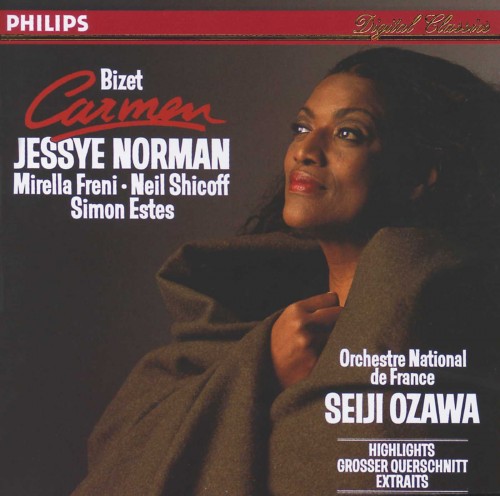
Carmen record cover artTucked away among these recordings is one from 1988, the year in which our cover photo was taken, which sheds light on the “Jessie Norman Is Carmen” cutline under the file of the photograph sent to us by Universal Music for our cover use. It is a Philips recording of Bizet’s Carmen, with Norman in the title role, and Mirella Freni, Neil Shicoff, and Simon Estes, among others, in the cast. It was made between July 13 and 22 1988, in the Grand Auditorium de Radio France, with Seiji Ozawa conducting the Orchestre national de France. Sure enough, if you hunt out images of the cover of that record, you will find yourself face to face with this same photograph, only in colour. You would never think, though, looking at the photograph in that context, that it was ever intended for any other purpose. It seems to be a picture of Norman inhabiting a role as fully and easily as the blanket drawn around her.

It’s worth noting too, though, that by 1988, fully two decades after a major vocal competition win in Munich in 1969 launched her on an A-list European career, Norman was only five years into a Metropolitan Opera mainstage career, albeit one that would continue until 1996. But Carmen was not a role she ever played at the Met.

JESSYE NORMAN, GGF Laureate, Toronto 2019

On Wednesday February 20, 2019, at the Four Seasons Centre for the Performing Arts in Toronto, somewhere during the course of a gala concert titled The Glenn Gould Prize Celebrates Jessye Norman, she will accept, in person as all the Prize’s laureates do, the Glenn Gould Foundation’s Glenn Gould Prize awarded her in April 2018. In a line of 12 Laureates stretching back to R. Murray Schafer in 1987, Norman is the first woman to receive the award.

Glenn Gould Prize laureates seldom perform at their own concerts, but generally have a significant say in who will perform; even by GGF standards this year’s promises to be quite a lineup: the Canadian Opera Company Orchestra; soprano Nina Stemme and lyric soprano Pumeza Matshikiza; tenor Rodrick Dixon and bass-baritone Ryan Speedo Green; soprano Sondra Radvanovsky and mezzo-sopranos Wallis Giunta and Susan Platts; American jazz singer Cécile McLorin Salvant, and the Nathaniel Dett Chorale directed by Brainerd Blyden-Taylor. Conductors Bernard Labadie, Donald Runnicles, Jean-Philippe Tremblay and Johannes Debus will also participate. And Viggo Mortensen, chair of last April’s Glenn Gould Prize Jury that awarded the prize to Norman will also be there.

It’s a stellar array (with of course the attendant danger of turning into an all-aria-no-recitative operatic highlight reel – all climaxes with no foreplay or interplay). But what the heck, there’s a place for those things too. And there are two participants in particular, about whom I’m particularly curious.

 Cécile McLorin SalvantOne is jazz singer/songwriter, Cécile McLorin Salvant, whom Norman, as each GGF laureate gets to do, has chosen to receive the Protégé Prize that goes with the award. It’s always an interesting insight into the mind of the laureate to see whom they choose as protégé: in 1996, pioneering Japanese composer Toru Takemitsu selected fellow composer Tan Dun; in 1999, Yo-Yo Ma chose pipa player Wu Man who became one of his closest Silk Road collaborators; in 2008, Sistema founder José Maria Abreu named Gustavo Dudamel, Sistema’s best-known alumnus; and in 2011 Leonard Cohen, not untypically, broke the pattern by naming the Children of Sistema Toronto, rather than an individual, as his protégés. In naming McLorin Salvant, Norman said this: “Singer, songwriter…a unique voice supported by an intelligence and full-fledged musicality which light up every note she sings. There is an intense, yet quiet confidence in her music-making that I find compelling and thoroughly enjoyable.”

The other participant I’m particularly looking forward to hearing in the context of the gala is the Nathaniel Dett Chorale, under conductor Brainerd Blyden-Taylor, for the simple reason that, when people’s chosen creative pathways intersect, there’s always a chance that, at one of these intersections, the individuals in question will actually cross paths to interesting effect.
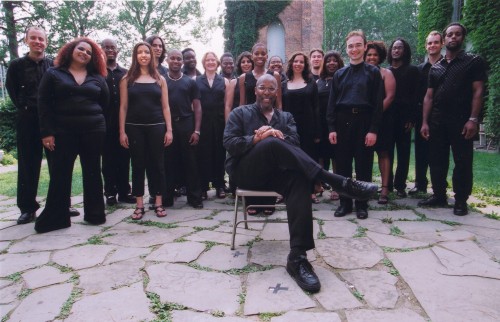
Nathaniel Dett ChoraleFor Blyden-Taylor and the Chorale, the Norman Celebration concert comes at an interesting juncture. The week before, on February 13, the day after Norman arrives in town, they will be celebrating their own 20th anniversary as a choir; the following month, March 23, they will head to Hampton, Virginia for the 70th anniversary of Nathaniel Dett’s founding of the school of music there.

Norman has long been part of Blyden-Taylor’s inspirational musical frame of reference. “My consciousness of her goes back to my youth in Barbados in the mid-60s” he says, “and even more so after I came to Toronto in 1973 to be musical director at my uncle’s church. She was an ongoing part of my listening in terms of a sound ideal in terms of performance of spirituals, in my work with the Orpheus Choir, and workshops I was asked to do across the country, helping other choirs with interpretation of spirituals. You’d have to say she was one of those voices that were pivotal in terms of reading of the spirituals.”

Norman was top of the list of people Blyden-Taylor approached to be honorary patron of the Chorale when they started in 1998. “But she very respectfully declined at the time, and as you know, Oscar Peterson, also a Glenn Gould Prize laureate, in fact, accepted, and remained so until his death. Maybe it’s time to ask her again!”

With the number of events Norman will be attending in the week leading up to the celebration concert on February 20, Blyden-Taylor is unsure whether the Dett Chorale’s concert at Koerner Hall will make it onto Norman’s dance card. “It would be nice. But the fact that this is all happening during Black History month means there’s no shortage of partners already predisposed to program events this month. So she will be busy!”

Regarding the fact that, for whatever reasons, this celebration has been timed to take place during Black History Month, Blyden-Taylor is philosophical. “I think back to a time in my life when I was rather upset that I seemed only to be asked to do workshops on Afrocentric music and spirituals. But one of the people to whom I was lamenting, invited me to look at it as a glass half full, as a doorway to communication. We constantly have to be pushing the boundaries, in fact we are constantly pushing the boundaries, even when nobody is watching, so it’s better to simply accept that Black History Month gives an entrée to audiences we might otherwise not reach at all. After all, to take another example, the United Nations declared 2015 to 2024 to be the decade of people of African descent, and the decade started then, even if it took till January 2018 for our own Prime Minister to publicly acknowledge the fact.”

As to the Dett Chorale’s role in the gala concert, they are slated to perform three pieces. “Two by Moses Hogan, I’d say – our Youtube video of his Battle of Jericho has logged thousands of hits. And his Didn’t my Lord Deliver Daniel?” The third piece will, fittingly, be by Nathaniel Dett himself. “His Go Not Far From Me, O God is a wonderful example of Dett’s writing, juxtaposing two melodic ideas from the canon of spirituals and with a wonderfully high baritone/low tenor solo part to it; I have suggested that one of the visiting operatic soloists might want to do it with us. I don’t know whether it will happen or not, but we’ll be ready. I know Jessye asked for there to be spirituals on the program. It’s music very near and dear to her heart.”

The Glenn Gould Foundation in 1988

Cycling back to the year our cover photograph was taken, it’s worth noting that in 1988, with Jessye Norman already in her artistic prime, the Glenn Gould Foundation was in its infancy, having awarded its first prize just the previous year to composer and visionary R. Murray Schafer. In the words of jury member, Sir Yehudi Menuhin – who went on to be the laureate of the Second Glenn Gould Prize – Schafer was being honoured for his “strong, benevolent, and highly original imagination and intellect, a dynamic power whose manifold personal expression and aspirations are in total accord with the urgent needs and dreams of humanity today.”

It’s important to note the Janus-like nature of Menuhin’s citation for Schafer’s award: the words could as easily be about the individual in whose name, and spirit, the Prize is awarded, as about the laureate of the day. As such, this first citation was an aspirational benchmark that has remained fundamental to the GGF’s sense of mission to this day: Gould himself, as a timelessly creative original, sets a standard of engaged creativity for the GGF’s jurors that demands of them that they choose worthy recipients. It’s win-win. The Prize adds lustre to the achievements of its laureates; over time the consistent, cumulative calibre of its laureates adds lustre to the Prize.

Another throughline in the GGF’s 30-year history of presenting the award is the care taken in planning not just a celebration concert, but all the events leading up to, or surrounding it. For it is often in these other events that a more fully rounded portrait of the laureate can emerge.

Starting things off, a three-day festival of film, February 11 to 13 in partnership with TIFF, titled “Divine: A Jessye Norman Tribute” features screenings (including a 1989 film, Jessye Norman Sings Carmen, by Albert Maysles on the making of of the Seiji Ozawa-conducted recording mentioned earlier in this story), and a conversation between Norman and the Canadian Opera Company’s Alexander Neef.

There will also be a rare, public, three-hour Jessye Norman masterclass for voice and opera students, in Walter Hall at the U of T Faculty of Music, on Friday February 15. Free to the public, it should afford the opportunity to witness Norman directly engaged in arts education, a cause for which she is an untiring and passionate advocate.

And an all-day symposium titled “Black Opera - Uncovering Music History” at the Toronto Reference Library, on Saturday, February 16 from 11am to 5pm, in partnership with the Toronto Public Library, will “trace the heroic struggles of pioneering artists of African origin to enter the operatic world, their fight for acceptance and recognition, their triumphs and accomplishments.” It will include, in its final hour, a conversation with Norman herself. Interestingly, the indefatigable Norman’s own latest multimedia project, launched in 2018, titled “Call Her By Her Name!” revolves around “the name and legacy of the first African-American opera singer to perform, in 1893, on the main stage of Carnegie Hall – Madame Sissieretta Jones.” So this should be a fascinating conversation.
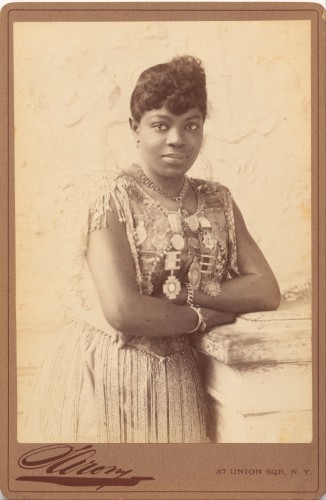
Madame Sissieretta Jones - Google Art ProjectOf all the events programmed, so far, for the visit, there’s one that for me captures the essence of why the match between the GGF and Norman is a lustrous one; and, fittingly, it will happen out of the public eye. Titled “Freedom Through the Arts Workshops” it will bring together students from the Jessye Norman School of the Arts and the students of Sistema Toronto (laureate Leonard Cohen’s 2011 protégés).

Norman helped establish the Jessye Norman School of the Arts in her hometown of Augusta, Georgia, in 2003, to provide arts education to students from economically disadvantaged neighbourhoods. In 2011, following the presentation of the Eighth Glenn Gould Prize to Dr. José Antonio Abreu, Sistema Toronto was founded to bring the power of music education into the lives of children from this city’s priority neighbourhoods. In this potentially transformative exchange, 15 students from a Jessye Norman inspired initiative in Augusta will travel to Toronto for four days of workshops and collaboration with students engaged in a thriving Toronto initiative directly inspired by the existence of the Glenn Gould Prize.

Drawing each new role afforded her around her shoulders like a blanket, out of the spotlight, away from the footlights, Norman’s work continues, even when no-one is watching.

David Perlman can be reached at publisher@thewholenote.com

Bryan Holt (left) and Amahl Arulanandam. Photo by Alice Hong.When I visit Toronto cellists Amahl Arulanandam and Bryan Holt in rehearsal, the first thing that I get is a warning. 

“We’re already talking over each other,” they say, laughing. “You’re going to have to just look at
one of us. Or point.”

It’s a testament to the type of eagerness – the kind of warmth and energy – that they bring to their music. As much as they are colleagues, Arulanandam and Holt – together, cello duo VC2 – are clearly friends. They also clearly care, in a very earnest way, about what they do.

And it’s an enthusiasm that’s catching. Since its founding in 2015, VC2 has performed across the country and internationally, including appearances last year at the Royal Conservatory’s 21C Festival, Ottawa Chamberfest and the soundSCAPE Festival in Maccagno, Italy. This month, they’ll be playing a duo program on February 2 at designer Rosemarie Umetsu’s Yamaha Recital Space in Toronto, before taking the program on a two-week tour to New Brunswick, Nova Scotia and Newfoundland with Debut Atlantic. Once they’re back in Toronto, they’ll play another duo set March 2 at the Music Gallery at 918 Bathurst, in a double bill with violin/percussion group Duo Holz. And following that, they head (slightly) eastward again, to reprise their tour program on March 18 at St. Thomas’ Anglican Church in Belleville, Ontario.

The program for the tour, and for the February 2 concert preceding it, is based around the idea of Beethoven. More accurately, it zeroes in on three cellist-composers of Beethoven’s time – Anton Kraft, Bernhard Romberg and Jean-Louis Duport – who operated in Beethoven’s inner circle, and whose music influenced Beethoven’s own. They’ve also commissioned five new works, from five modern-day Canadian cellist-composers, that take Beethoven’s five cello sonatas as their inspiration.

Arulanandam and Holt pride themselves on what they call a “multi-genre” performance practice. Both having studied under Matt Haimovitz at McGill and with Shauna Rolston in Toronto, they’re now voracious musical generalists: chamber musicians, but also new music specialists, and between them, fans of jazz, world music and heavy metal.

Here, it all comes to the fore: classical masterworks by Beethoven paired with the lesser-known music of his contemporaries, plus new music by five cellists – Fjola Evans, Hunter Coblentz, Raphael Weinroth-Browne, Matt Brubeck and Andrew Downing – whose influences span far beyond that scope. It’s a series of constellations that together form an image of Beethoven and his friends as inventors and innovators – and of this present-day group of cellists as modern incarnations of the same.

This interview has been condensed and edited.

Let’s talk about your upcoming show, “Beethoven’s Cellists.” How did that idea start?

Arulanandam: Part of it had to do with Bryan’s doctoral thesis research on cello pedagogy. He came across the names of these cellists who all were very deeply linked to Beethoven.

Holt: All these guys who were around Beethoven weren’t only phenomenal cellists, they also were inventors of a kind. Romberg, who was one of Beethoven’s earliest colleagues, is actually the whole reason why the cello’s fingerboard has this sort of divot in it for the C-string to vibrate.

A: There were a bunch of actual equipment innovations that they came up with. The modern bow that we use was invented right around that time; Beethoven would’ve first come across it with Romberg.

I was reading recently about how that bow really influenced Beethoven’s cello writing. If you look at his first two cello sonatas, you’ll see a lot of long slurs and phrases that, with old-style Baroque or transitional bows, wouldn’t really have been possible. And so he would’ve met these cellists with all this new equipment, and started really exploring extremes of colour and dynamic range for the cello in a way that composers hadn’t done before.

H: I think that’s what made him such a great composer, in the end. Because Beethoven’s all about experimentation, and contrast. In Opus 1, he’s already experimenting with extremes. And by Opus 5, he’s already “Beethoven.”

Amahl Arulanandam (left) and Bryan Holt. Photo by Alice Hong.How did you first present the idea to Debut Atlantic?

A: We applied to Debut Atlantic two years ago – two seasons in advance, for them.

H: And it was very much just a skeleton [at the time]. We’d identified these composers [from Beethoven’s time], and we decided that we were going to commission cellists to write new works. But we hadn’t assigned pieces to individual people. So over the last couple of years we sort of figured out how that was going to go. And we scheduled the concert at Atelier Umetsu over a year ago, because we knew we were going to have the tour and that this was going to be the big jumping-off point.

What really struck me about the program for the tour was that it seems like a perfect microcosm of how you describe yourselves as a duo – taking these classic masterworks and finding the contemporary parallels.

A: That’s what we were going for. A lot of our MO as a duo – and even individually – is sort of reinventing the old. Because that stuff is still great. There’s a lot of amazing music being made now that has nothing to do with any of that, but I don’t think it takes away from how important and necessary music [like Romberg’s] was. They were breaking new ground in that time. They helped Beethoven break new ground. And we felt like the people we commissioned are people who are also constantly pushing boundaries in terms of the cello. They’re all doing their own thing; they’re all completely different.

How did you settle on those five composers? Were you just looking for Canadian composer-slash-cellists, and that ends up being a short list?

A: There are more than you would think!

H: It still wasn’t a super long list. But with all of them we had a history, or at least one of us did. Fjola Evans and I went to high school together and had the same teacher. And then Hunter Coblentz – Amahl’s known him since he was little.

A: Hunter came to mind immediately because we had played a duo of his that he wrote – one of the first non-pop tunes that we ever did. And we picked Raphael because we loved his music, and because he and I both really connect [because of our interest] in metal. The second Beethoven sonata is like – really, really, heavy metal. Like it’s metal before metal. And Raphael was the first guy that sort of jumped out when we were thinking about that sonata.

H: And then with Andrew and Matt, we both worked with them in the jazz context. I think we both had lessons with Andrew at some point. And we’ve both taken lessons with Matt Brubeck, to learn how to improvise on the cello.

Amahl Arulanandam (left) and Bryan Holt. Photo by Alice Hong.Have you two been playing together for a long time?

A: We’ve known each other for a long time, and we’ve played together in other contexts, other chamber ensembles and cello ensembles. But we’d never really played together as a duo. A few years ago, Bryan got contacted by a friend of a friend who was an event planner and was looking for a cello duo to do some Michael Jackson and Guns N’ Roses, that kind of stuff. So we got together and did that. And it was fun. And did a few more of those, and realized “Hey, we work well together in this context. Let’s see what else is out there.”

We started off as a cover band, and then–

H: –We’re still a cover band.

A: –We’re still a cover band. Just of different stuff.

How has your process changed over the last couple of years of playing and rehearsing together?

H: I think we’ve become a lot more efficient at rehearsing. It was a little too much like best friends hanging out, at the beginning. And [we’ve become] better at delegating tasks between the two of us. We’ve figured out each other’s strengths and weaknesses.

A: With rehearsing – it just gets more efficient each time. The last few rehearsals we’ve had, we’ve kind of just gone with it, and before we realized it, two and a half hours had gone by. We’re now more able to separate the business and being friends...and we can get things done. Quicker.

After the Music Gallery, what’s next?

A: We’ve thrown all of our focus at this right now. But we also have these germs of ideas that we need to put into motion. We’re hoping to go into the studio in April and record all five of these commissioned works. We want to put those down and release an album.

H: There are also a few commissions [in the works], and some possibilities of projects with dance as well. And there are other cellist-composers [who we plan to work with]. We’ve been in touch with a couple others, whose names I won’t reveal – but there are a lot of possibilities. This is only the beginning.

VC2 presents “Beethoven’s Cellists” on February 2 at the Yamaha Recital Space at Atelier Rosemarie Umetsu, Toronto, followed by a two-week tour in Atlantic Canada.
For tour dates, visit www.debutatlantic.ca.

Sara Constant is a flutist and music writer, and is digital media editor at The WholeNote. She can be reached at
editorial@thewholenote.com.

Dave Douglas. Photo by John AbbottSince launching in 2014, Hamilton’s Something Else! Festival has created its own distinct format, making it one of the key events for the more creative edges of jazz and improvised music in Southern Ontario. 

For 2022, the festival has grown substantially in both the number of performers and the number of events. Featured musicians include trumpeter Dave Douglas and clarinetist Don Byron, among the most acclaimed musicians of their generation. American clarinetist/alto saxophonist Michael Moore, singer Jodi Gilbert and percussionist Michael Vatcher have contributed mightily to the diverse and idiosyncratic Netherlands scene for decades, while Dave Rempis, appearing here with regular collaborator drummer Tyler Damon, renews the legendary Chicago lineage of forceful tenor saxophonists. Added to this is a strong complement of far-flung Canadians – from Montrealers Lori Freedman and Nicolas Caloia, to Torontonian Allison Cameron, and Vancouverites Peggy Lee and François Houle.

Outdoors and in: There are three full afternoon programs at Bayfront Park and four evening programs at the Cotton Factory, a revitalized industrial space. Each program includes five different groups, from solo performances to tightly arranged bands, but what distinguishes Something Else! are the opportunities to hear musicians interacting spontaneously in ad hoc ensembles, as likely to surprise and delight one another as the audience. It revives the spirit of early European free jazz and improvisation festivals, like Berlin’s Total Music Meeting, Amsterdam’s October Meeting and London’s Company Week. 

Read more: Cem Zafir’s Something Else! Hamilton, ON June 16-19, 2022

For the first time in the history of Centrediscs, the small but significant record label operated by the Canadian Music Centre (CMC), two of its recent recordings have current JUNO nominations in two different categories. Dark Star Requiem by composer Andrew Staniland and poet Jill Battson is nominated in both the Best Classical Recording, Vocal or Choral and in the Best Classical Composition categories. Christos Hatzis’ full-length ballet, Going Home Star: Truth and Reconciliation, is nominated in both the Best Classical Composition and Best Classical Recording, Large Ensemble or Soloist(s) with Large Ensemble Accompaniment. This is a significant milestone for Centrediscs, a label created in 1983 by then CMC Executive Director John Miller. “The idea of Centrediscs was originally proposed by my predecessor, John Peter Lee Roberts,” Miller told me, “but it fell to me to make it work.”

2206- Feat - CBC1.jpg

Miller certainly found ingenious ways to nurture the new recording label. He formed a working group, of which I was a member, to advise on the mechanics and technical aspects of running a label. Harold Redekopp was Head of CBC Radio Music at the time and he and Miller agreed that the Radio Music Department would, up to a practical limit, provide production and technical personnel to make the recordings. And, in return for doing so, CBC music programs would have the right of first broadcast. This arrangement provided Two New Hours, the national network new music program I had created in 1978, additional new productions of recent performances of Canadian music to blend with the concert recordings that were the core of our broadcasts. In those first few years of Centrediscs we recorded soloists and ensembles who specialized in contemporary repertoire, like the Canadian Electronic Ensemble, clarinetist James Campbell, the Purcell String Quartet, violist Rivka Golani and Anton Kubalek. We made LPs of these artists playing the works of CMC Associate Composers, and soon added the first records devoted entirely to the music of a single Canadian composer. These included titles such as Vivier, music of Claude Vivier; RA, with excerpts of Murray Schafer’s night-long ritual; Louis Riel, the opera by Harry Somers, recorded at the Kennedy Center in Washington DC; and Chalumeau, chamber music of Harry Freedman. Many of these were later reissued on CD, and those original LPs are, in fact, now highly valued collectibles.

In 1986, Centrediscs released its first recording on CD, Impact, a production of performances by percussionist Beverley Johnston. In fact, Impact was manufactured in three media: CD, LP and audio cassette. The composers represented on it were Serge Arcuri, Gary Kulesha, Alexina Louie and Jean Piché, and the disc attracted rave reviews. In the Centrediscs catalogue, Impact is described as: “A tour de force of percussion and electroacoustic music, the disc has often been used by stereo component stores to demo new hi-fi lines, because of the high audiophile quality of the recording.” The performances were included more than a few times in Two New Hours programming and, on occasion, Jean Piché’s Steal the Thunder, the lead track in the album, served as the program’s opening theme. In 1989 the CMC decided to submit one of the tracks from Impact to the JUNOs in the recently created category of Best Classical Composition. It earned a nomination but didn’t win the JUNO. – Alexina Louie’s Songs of Paradise on CBC Records did. It was a remarkable statement as to how far the Centrediscs label had come in just a few years.

The JUNO category, Best Classical Composition, introduced in 1987, came about when representatives of classical labels, who formed a separate classical committee within the Canadian Academy of Recording Arts and Sciences (CARAS), convinced CARAS that the category was needed to more completely represent the spectrum of music in Canada. Deborah MacCallum, hired by Harold Redekopp as manager of CBC Records in 1985, and Norman Miller of CBS Records Canada were the primary voices pushing for the creation of this new category. MacCallum told me that Daisy Falle, president of CARAS, wanted assurance that the category was sustainable. MacCallum needed only to point out the collaboration between Two New Hours and Centrediscs as evidence that the production of contemporary Canadian repertoire had increased and that this had strengthened the storehouse of recordings in this category. Interestingly enough, the very first JUNO for Classical Composition, awarded in 1987, went to the late Malcolm Forsyth, for his orchestral work, Atayoskewin, on CBC Records.

Centrediscs recordings continued to garner nominations in the new classical composition category, year after year. It wasn’t until 1991 that the CMC’s label would actually win a JUNO when Schafer Five, the Orford String Quartet performing five string quartets by Murray Schafer won not one, but two JUNOS: Best Canadian Classical Composition for Schafer’s String Quartet No. 5, and also Best Canadian Chamber Music recording for the set of five Schafer quartets. It was a rewarding way to finally break into the winners’ circle! And in fact, in this case, the recording was independently produced by the CMC, as the collaborative arrangement with CBC Radio Music had by then expired. Nonetheless, it was the same team, but working outside the CBC, of David “Stretch” Quinney and me who delivered the finished master to the CMC.

Another of my independent productions for Centrediscs won the Best Classical Composition JUNO in 2011, and this time it was another Schafer work, his Duo for Violin and Piano, in a recording with Duo Concertante, the husband and wife team of Nancy Dahn, violin, and Timothy Steeves, piano. The recording was produced at Glenn Gould Studio with engineer Dennis Patterson. In fact it was Schafer’s fourth JUNO in the Best Classical Composition category and his fifth overall. Schafer has won the most JUNOS to date in the classical composition category.

Centrediscs’ most recent JUNO came in 2012, when Patterson and I recorded the St. Lawrence String Quartet during their 20th anniversary tour. To celebrate the anniversary, the St. Lawrence commissioned five Canadian composers from different regions of Canada to create five new quartets which constituted their 2012 touring program. The live recording, made at the University of Toronto for broadcast on CBC Radio 2’s Sunday afternoon network classical music program, In Concert, was leased by Centrediscs from the CBC and mastered for CD release. Of the five newly commissioned string quartets, it was Nova Scotia composer Derek Charke’s Sepia Fragments that won the Best Classical Composition JUNO.

2206- Feat - CBC 2 and 3.jpgIn a curious coincidence harkening back to 1987, when CBC’s Deborah MacCallum and CBS’ Norman Miller championed the addition of the Best Classical Composition category, another classical category was also added that year: that of Best Classical Recording, Vocal or Choral. These two additions 30 years ago made it possible for Dark Star Requiem, by composer Andrew Staniland and poet Jill Battson to earn nominations in both those categories in 2017. Commissioned by the Luminato Festival and Tapestry New Opera, it premiered at the Luminato festival in 2010 at Koerner Hall, Toronto. Recording Engineer Steve Sweeney and I recorded Dark Star Requiem for broadcast on CBC Radio 2’s The Signal. The CMC subsequently leased the master from CBC Radio Archives for release on Centrediscs.

Composer Staniland explains the piece as follows: “Jill and I had the very best of circumstances to develop this work: take four incredible singers (Neema Bickersteth, Krisztina Szabó, Peter McGillivray, Marcus Nance), Canada’s foremost chamber ensemble, The Gryphon Trio, the legendary Elmer Iseler Singers, and percussionists Ryan Scott and Mark Duggan. Add a lengthy and meticulous development process spearheaded by Tapestry New Opera, and a premiere that would open Luminato, a world-class international festival. Such a constellation of circumstances is quite special. I am thrilled to be able to share this remarkable live recording through this release on Centrediscs.

Dark Star Requiem is in every way my most ambitious artistic endeavour to date. It is at once intended to be challenging and joyous, complex and beautiful. A sequence of 19 poems charting a short history of HIV/AIDS unfolds over the course of 14 movements. The poems vary stylistically from linked haikus, to ghazals, to praise poems and back to free verse. The musical movements are unified through a haunting melody and driving rhythm derived from the numbers attributed to HIV-1 and HIV-2 by the International Committee on Taxonomy of Viruses: 00.061.1.06.009. and 00.061.1.06.010. In musical terms these numbers are interpreted in both melody and rhythm.

“It is difficult, from an artistic point of view, to approach a subject as multifaceted as AIDS with its myriad attendant themes including disinformation, illness, death, infection, sexual and social taboos, colonialism, fear and guilt – and still maintain a message of hope. My and Jill’s hope is that after listening to Dark Star Requiem you will leave inspired to contribute to the fight against AIDS in your own way. AIDS, despite outliving its own media fatigue, has killed over 25 million people. Forty million people worldwide live with the disease today.”

David Jaeger is a composer, producer and broadcaster based in Toronto.

CCMC 1 608x608 webThe Music Gallery in 1975An August 13, 2019 press release from the Music Gallery, Toronto’s bastion of new sound presentation was not the usual early season announcement of upcoming concerts. It read in part: “David Dacks, artistic director of the Music Gallery, has announced that 2019/20 will be his last season of programming. Prior to stepping down, David will pass on his knowledge and experience through a new Music Gallery mentorship program, which will see him train and collaborate with two artistic associates during the Music Gallery’s 2019/20 season.”

My interest was piqued.

For more than four decades, and several different locations, the MG has been many things: home of the pioneering free improv group CCMC; a leading Toronto producer and co-presenter; and a cultural hub, recording studio and rehearsal space/concert hall for numerous musicians and ensembles of many genre affiliations. It has also served as exhibition space for visual and sound art, the home of a record label and radio show, and beginning on a cold 1978 January, Musicworks magazine’s original incubator. Against stacked odds, the plucky print magazine and Music Gallery both still serve as homes for “curious ears.”

I once opined in The WholeNote that “young Toronto musicians toeing one musical edge or another made the MG the proving ground for their early gigs. Had it been situated in SoHo, NYC, it might have long ago been widely recognized as a key downtown music institution.”

David Dacks. Photo by Sean HowardDacks began programming at the MG in September 2010 and since January 2012 has served as artistic director. Two years into his mandate I interviewed him for The WholeNote (published September 29, 2014). He stated his aims clearly: “I believe in music programming which possesses multiple points of interest, and is not necessarily confrontational, but rather fosters a community-building environment.”

Dacks’ background as a club DJ, radio broadcaster and journalist gave him an outlook which encouraged, in his words, “synthesis, multiple affiliations and opportunities for fluidity in music. My work in DJ culture is rooted in creating interesting music mixes.” X Avant 2014, his fall MG concert series, explored the theme Transculturalism: Moving Beyond Multiculturalism, challenging expectations about culturally defined music, and building on the MG’s (and Toronto’s) reputation as a seedbed for cultural multiplicity and emerging hybridity. In subsequent years Dacks’ imaginative and adventurous programming and collaborations have broadened the scope of the Toronto creative music scene in several directions.

How does he see the MG’s role today, its future relevance? And why leave now? I emailed him in the middle of September to find out.

“The Music Gallery remains Toronto’s centre for creative music,” Dacks replied. “I think the concept of creative music, which, among other characteristics, requires a space which encourages community for people to experiment musically, remains vital to a healthy city and society. Never before have so many hybrid identities and stories been a part of Toronto’s ever-expanding musical narrative. The MG provides a space for people to unpack themselves and generate new ideas that would be difficult or impossible to present in a bar-type setting.

“There are many institutions which offer residencies or project development, but very few are dedicated to music. Additionally, we present all season long in a home venue which creates a more continuous sense of community than a once-a-year festival. This is our present and future.”

It’s been fascinating to watch the way the MG’s music programming has evolved during Dacks’ tenure. I asked him to what extent it was influenced by his own pre-MG music tastes and career.

“It was very influenced by my pre-MG tastes,” Dacks replied. “My musical background is fundamentally as a DJ and beatmaker and, unlike any previous MG AD, I gravitate to music that is informed by that. Also, my journalism career has really helped me to value stories which drive outreach events like our History Series and higher-concept events like our Hugh Le Caine tribute a few years ago.’

Have Dacks’ tastes changed during his MG years? “I knew very little about contemporary classical music before starting at the MG,” he frankly admits. “I think that was a point of concern for the MG Board when I was hired. Over the past seven years I’ve made a point to explore this field, and to get to know more about new music in general. I’ve heard so much great music and met so many talented people that I think I at least trust my ears more, [know where to] get good advice/curation, know who’s in the community and have a sense of what audiences gravitate to.”

During his MG career Dacks has become known for his commitment to equity both on stage and off. What’s left to do in this area?

“Seeking equity is a neverending struggle. I would say both MG staff and audiences should look and feel like Toronto,” he says. Furthermore, “I would love to see accessibility improvements at our venue, more emphasis on projects developed in-house, a greater presence internationally and more Indigenous perspectives informing what we do.”

Finally, I asked Dacks about his plans for post-MG adventures, career and otherwise. He began, “I am still planning a few projects in our 2020/21 season, so I won’t be 100 percent done until the spring of 2021. I would like to move on from programming into areas that support the arts such as funding, cultural space making or teaching. Beyond that, I’d like to low-key start making music again and maybe learn music theory,” he concluded, sounding like a musician itching to get back to the act of creating and shaping sounds.

On September 11, 2019 the MG announced it had hired two artistic associates for the new mentorship program it had talked about in the August 13 release: Olivia Shortt and Pratishtha Kohli.

Dacks explained the backstory: “When I knew it was time to step down, I wanted to pass on the knowledge and perspective I’d gained over the past ten years. As you probably know, most administrative transitions at the Music Gallery have been fraught, and I wanted to create something much smoother. When I started, I had to educate myself on the MG’s milieu: I had no training or knowledge of artistic practices of the organization. I feel like a lot of organizational memory was lost in that transition, so I was determined not to let that happen now.”

The artistic associates’ posting extends for seven months, starting in September 2019. I asked Dacks what he hopes to accomplish in that time, how the mentorship program might affect programming and what will happen after March 2020.

“The associates will each program two concerts during X Avant, a concert during the season, plus an additional outreach event,” Dacks answered. “They are going to help determine the theme and the vast majority of the programming of X Avant 2020, our flagship fall event. So this isn’t an internship program; we are trusting them with the MG brand. While the artistic associate program ends in 2020, they will see their ideas through to production and will essentially be curators during the 2020/21 season helping the new AD get up to speed with their experience.”

I then reached out via email to the two incoming artistic associates.

Olivia Shortt. Photo by Alejandro SantiagoOlivia Shortt, Artistic Associate

Olivia Shortt recalled her first trip to the MG. “After moving to Toronto for music school, the Music Gallery was the first place where I attended a concert. I’ve been an audience member at numerous concerts at the MG and have also performed in several over the years, so it means a lot to be able to give back and be a part of the imaginative and forward-thinking programming at my favourite music organization in the city,” she wrote.

How will she share responsibilities with her fellow artistic associate Pratishtha Kohli? “I think we were selected from the pool of applicants not only for our experience but for our ability to work in a team. Pratishtha has a wealth of knowledge that I’m so excited to learn from. It’s pretty easy to share responsibilities with someone who shares similar values as you.”

Judging from Shortt’s bio, she’s had extensive professional experience including as a saxophonist, composer, sound designer, activist, curator, teacher, actor and producer. I asked for a few highlights.

“One would certainly be my saxophone duo Stereoscope working with Robert Lemay in a number of capacities, including being presented by the 5-Penny New Music Concerts in Sudbury, Ontario, as well as performing on a new work Fragments Noirs that Robert had written for our duo. We recorded the work in partnership with poet Thierry Dimanche and SNOLAB (a neutrino lab in Northern Ontario). I don’t know if I’ll ever do anything as unique or as exciting as waking up at 5am to go into an elevator with miners two kilometres underground, having to change outfits a few times and have our saxophones and equipment go through the cleaning area called the ‘car wash’. The music we recorded is now available as an album. I’ll always treasure that experience.

“I also appeared in the Atom Egoyan film Guest of Honour that premiered this year at the Venice Film Festival and had its North American premiere at TIFF on September 10, 2019. Atom invited our Dialectica Saxophone Quartet to fill out the saxophone section of the high school band as actors in the movie. We recorded the music plus spent three days filming in Hamilton dressed up as high school teenagers, which was pretty hilarious considering I’m almost 30,” she recalled.

How will Shortt’s artistic practice inform her MG programming? “My work has always involved an interdisciplinary approach; I love working with artists in dance, theatre and visual arts especially. … My artistic practice is deeply rooted in my belief to push boundaries and the systemic issues that can be incredibly oppressive towards marginalized artists. The lens that covers all of the work I do incorporates equity and creating more equitable practices within my artistic practice. I come from a classical background and a world that can often be very insular and exclusionary, so that’s why I’ve broadened my artistic practice to be more of an interdisciplinary approach.”

Pratishtha KohliPratishtha Kohli, Artistic Associate

Pratishtha Kohli, the other new MG artistic associate, also replied to my email inquiry:

“I’m really looking forward to working with David Dacks and Olivia to curate and research shows that are multidisciplinary and experimental over the next year,” she says.

“I hope to learn about and contribute to every aspect of producing a show, from working with the tech team, to artist liaison, to managing day of operations for shows,” she continued. “I’m going to … put forward my vision for what 2020 at the Music Gallery should look like, working with the local community around the 918 Bathurst space and connecting the local with some cool musicians from across Canada and globally.”

Kohli reflected on the impact of her current studies. “I’m near completing my master’s at OISE, U of T. Through my study in Adult Education and Community Development I have gained significant insights into equity-based learning and the importance of decolonization. As an immigrant, my self-journey of learning as well as my formal education and work in the arts have significantly impacted my understanding of grassroots movements, activist spaces and anti-hegemonic programming.”

Working at the Aga Khan Museum recently, Kohli spoke of her job “supporting their diverse programming. My ultimate career highlight however (and I am just starting out) is founding The Tawoos Initiative. My co-founders, Haris Javed, Auoro Maksud and I wanted to create programming that highlights the independent, urban music that is being created in South Asia by individuals and also by groups in the South Asian diaspora.”

How will her studies and artistic practices inform her MG programming? “I hope to bring the lens of decolonizing public spaces to the MG,” Kohli stated, “and to work with the existing traditions that have existed at the MG, pushing audiences even more when it comes to actively listening to what is being created by Canadian, North American and global talent. A lens of equity, particularly one where women support women, is very important in my practice….”

Kohli wraps up our interview with an affirmation of music as a unifying and inclusive factor across cultures. “I hope to bring Indigenous, black and POC musicians to the forefront, focusing on each group’s or individual’s strengths, and connect them with one another through the language of music. As someone who has lived in a bunch of places growing up, with roots extending to each, I find we are able to find common ground regardless of what appearances or language may suggest.”

Andrew Timar is a Toronto musician and music writer. He can be contacted at worldmusic@thewholenote.com.

Sharing a laugh in the rehearsal hall – internationally renowned Canadian soprano Measha Brueggergosman (left) plays the virtuoso role of the Moon, a gorgeous maternal presence overseeing all, shining her light where the characters need to see, particularly Caroline, played by Jully Black (right). Photo by Dahlia Katz“Change your mind and change your life.” This is what Canada’s beloved “Queen of R&B” Jully Black said to herself when she agreed to make her musical theatre debut as Caroline, the leading role in Caroline or Change for The Musical Stage Company and Obsidian Theatre, opening this month.

At first, she told me, she had said “No” to the invitation. “I said no to myself, no to my agent, mostly out of fear and dealing with vocal challenges.” Yet, when she realized in hindsight that those challenges were coming from emotional trauma, she began a deep research process into “the connection between silence and holding things in, between emotions and your vocal chords, between spirituality, neural pathways, and cognitive reflexes,” and came to the courageous decision that taking up this invitation would be – a thought she would repeat several times in our conversation – “a great opportunity to be a living witness and example of ‘change your mind and change your life’.”

Read more: Changed by Caroline: Jully Black

The Marigold Music Program, summer 2021, left to right: Manasvi Naik, Nailah Padilla, Ali Loisy, Charlotte Siegel (behind), Jadzia Elrington (in front), Kevin Mulligan, Vera Sevelka and Spencer Persad Credit: DANIELLE SUMNineteen-year-old opera student Charlotte Siegel is getting frustrated as she sings an aria from Mozart’s The Marriage of Figaro over and over again in a cramped rehearsal studio at the University of Toronto. She wants to impress her new teacher and is concentrating hard on getting every element right. But the more she tries, the more her body tenses and the notes get stuck in her throat. 

“[Singing] is not a gentle thing,” says her teacher, Frédérique Vézina. “It’s like jumping off a cliff – you have to just let go.” 

Siegel takes a deep breath. She turns off her brain and lets her instincts take over. The song’s energy pumps from the ground to her face; every part of her vibrates like a pitchfork.The pounding pulse of the music takes over her being, annihilating her worries. The moment shimmers. Times like these, when the “controlled scream” of opera whisks her right out of herself, make all the effort worthwhile. “It’s the most luxurious feeling in the world,” says the soprano. 

Learning to immerse herself in the moment has benefitted Siegel in both music and life. But it hasn’t been easy. Like many musicians, Siegel tends towards perfectionism, over-analyzing situations and undercutting actions.

Letting go is another of many life lessons that music and her mentors have taught her: learning to communicate and collaborate have bolstered her confidence both in singing and in general. “I question who I would be if I hadn’t had those experiences,” says Siegel.

Read more: Charlotte Siegel: Transformative powers and watershed moments

Latvian Radio ChoirSoundstreams’ presentation of the Latvian Radio Choir (LRC) with artistic director Sigvards Klava, in concert at Metropolitan United Church on November 17 at 8pm, has significance in a number of ways. Founded in 1940, the 24-voice LRC is one of the few professional choirs that owes its existence to a national public broadcaster. It was created for the purpose of providing Latvian Radio with a high-quality choral group that could serve the diverse needs of the broadcaster in making its music programs. One of those needs was to allow Latvian composers to not only create new Latvian choral compositions, but also to experiment with the art of choral writing, through creative lab sessions with the choir. This has no doubt contributed to the rise of the tiny nation’s highly respected status in the choral world.

Choral music is at the heart of music making in Latvia, as it is in the entire Baltic region. Every school has a choir and music training is considered a core subject. The well-known Singing Revolution, as it was dubbed in Estonia at its start, in the late 1980s was a broad expression of cultural and political independence that affected the whole region. The 2018 tour by the Latvian Radio Choir, furthermore, is part of a broader celebration of independence from czarist Russia that Latvia and all the Baltic countries gained in 1918.

Peteris VasksThe November 17 concert will be the third time that Soundstreams has presented this widely esteemed choir. The program includes, among other things, music by three leading Latvian composers: the renowned Petēris Vasks (b. 1946) and the much younger, but already well-established Santa Ratniece and Ēriks Ešenvalds (both born in 1977.) Ratniece has composed a large and growing number of quite varied works for the LRC. For example, the choir’s current North American tour follows on the heels of an Australian production of Ratniece’s multimedia opera, WAR SUM UP. Music. Manga. Machines (2011), an ambitious work, in which choir members appear as soloists. By contrast, her first work for the LRC, Saline (2006) is a quiet, delicate, introspective piece containing much subtle detail. At the November 17 concert, the choir will sing Chu Dal (2009), which won her a Copyright’s Infinity Award in 2011.

Santa RatnieceRatniece first came to worldwide attention in 2004 when Latvian Radio presented one of her works to the international delegates at the International Rostrum of Composers (IRC) in Paris. The IRC describes itself as “An international forum of representatives of broadcasting organizations who come together for the purpose of exchanging and broadcasting contemporary art music.” Think of it as a contemporary music meet-up sponsored by public broadcasters from some 35 countries and organized by the International Music Council. Latvian Radio presented works by Ratniece to the IRC three times between 2004 and 2012, including her choral music as performed by the LRC. Each time her music was presented there, the international delegates voted her works to the top ten list of the best works heard. By the end of this period she had become quite well known on the international scene, and I had the pleasure of witnessing this progression. In 2002, I had been elected president of the IRC, after having served as the official delegate for CBC Radio for 25 years. Over that time, I had seen the benefits of exchanging original productions of new compositions from around the globe, benefits that accrued not only to the composers whose music was being made available, but also to the broadcasters themselves, in the form of fresh, high-quality content for use in their programs.

Eriks EsenvaldsLatvian Radio also presented the music of Ēriks Ešenvalds at the IRC in 2006; a choral composition, in a production with the LRC. Like Ratniece, Ešenvalds’ piece was voted as the top selected work by a young composer, and his name spread to all the countries participating in the IRC, resulting in dozens of international broadcasts, a tribute to how effective Latvian Radio, together with their world-famous choir, have been in bringing the story of emerging Latvian composers to international public view. Ešenvalds’ two choral works on the Soundstreams program are Stars (2011) with poetry by Sarah Teasdale (1884–1933), and A Drop in the Ocean (2006) which includes biblical texts, a prayer of St. Francis of Assisi and words of Mother Theresa.

Omar DanielThe November 17 concert will also include a world premiere by Canadian composer Omar Daniel (b. 1960). The work was commissioned by Soundstreams Canada, with the financial assistance of the Canada Council for the Arts, to create the work for another choir, the Estonian Philharmonic Chamber Choir. The Estonian choir has yet to perform the work in its entirety. Daniel, who is an Estonian-Canadian, chose to set a poem by the world-renowned Estonian poet Marie Under (1883–1980), Sõduri ema (The Soldier’s Mother). Daniel told me that he had always wanted to set the poetry of Under, perhaps Estonia’s most famous poet. “There is only a vague narrative to the three sections of the poem: the son arrives for a visit, stays for a brief time, and then leaves to once again join the war. But nothing really occurs in the poem; only fleeting images of hands in prayer, snow, the visage of the son. The images appear as if emerging ever so briefly out of the shadows of the mother’s sadness. The essence of the poem, and I hope my composition, is in its intimacy, in its soft dynamics and use of silence to express quiet grief of the woman who must quietly come to terms with her son’s brief presence and impending departure. It is a highly spiritual poem as it embraces the ideas of hope, faith and sacrifice.”

Like Ratniece and Ešenvalds, Daniel enjoyed the support of his country’s national broadcaster in the development of his career as an emerging composer. Daniel wrote: “It is not an exaggeration to say that CBC radio’s commitment to broadcasting contemporary music in the 1980s and 1990s shaped the musical culture of Canada. Simply put, I would not have become the composer that I am had it not been for the broadcast opportunities that I was privileged to be part of through CBC radio. I remember in my early professional days as a graduate student at U of T, mounting concerts at the old Music Gallery with the then fledgling Continuum; David Jaeger offered to record our concerts for broadcast on CBC’s Two New Hours. We were shocked and ecstatic: They took a risk on an upstart group like ours, and gave the composers, performers and organization a profile boost that we could never have obtained otherwise – national radio exposure. I have the fond memory of, after the soundcheck, all of us (including the iconic David Quinney) having dinner at the Elvis restaurant on Queen Street.”

Daniel goes on to reflect on how throughout the last two decades of the 20th century, he became friends with many of us at CBC in those days: “Radio producers, hosts and engineers who were true believers in the value of homegrown contemporary classical music. Another one of my favourite memories is an episode from one of the many years I spent attending the Winnipeg New Music Festival during the 1990s and early 2000s. It was a live-to-air national show, and there was a rather extensive set change between two pieces on the stage of Centennial Hall in Winnipeg. The legendary Larry Lake, microphone in hand, called me quickly to the stage and conducted an interview with me while stage hands, engineers and musicians were charging across the stage all around us. All broadcast live across Canada.”

He also recalls the 1990 CBC Radio Competition for Young Composers, held in Quebec City that year, as another highlight. “It was my first real experience being part of an event that was of national significance, one that was given national press exposure. I remember being quite overwhelmed by the high level of music-making, impeccable organizing, and respect that my composition colleagues and I were afforded. And having some success at the competition, the CBC immediately commissioned me to write a work for Toronto’s Amici trio. I felt at that time as if there was a true living art form of contemporary music in Canada, with CBC radio as one of the most significant contributors.”

Tālivaldis Ķeniņš (1919–2008) was born in Latvia and emigrated to Canada in 1951. His career as a prolific composer, teacher, organist and music director has been celebrated not only in this country, but also in his native Latvia, where he is remembered and respected. Ķeniņš himself was the recipient of numerous commissions from the CBC’s Radio Music department throughout his creative life. The LRC will sing his Alleluia for choir and organ, composed in 1981.

The LRC’s recording of Sergei Rachmaninoff’s (1873–1943) All-Night Vigil, composed in 1915, gained a Grammy nomination in 2013, and has become a sort of a signature work for the choir. The countless reviews of this recording are all complete raves. The Soundstreams concert will include several movements of this Romantic Russian showstopper.

Latvian Radio has achieved a sustainable strategy for the development of its talented artists, a model that could serve broadcasters, composers, performers and listeners around the world.

David Jaeger is a composer, producer and broadcaster based in Toronto.

Classical Guiter FeatureIn mid-February David Perlman and I, along with a few dozen others, braved a bitterly cold Toronto winter evening to attend the Heliconian Hall launch of Mosaic, the second solo CD by the outstanding Toronto-based classical guitarist Michael Kolk.

An hour or two later, having just witnessed as fine a display of classical guitar playing as either of us had ever seen, we found ourselves wondering: If an artist of Kolk’s world-class quality was launching a solo CD in such a small, intimate venue with 30 people attending, was the classical guitar, if not exactly on the solo concert instrument critically endangered or endangered lists, at least on the vulnerable list? Furthermore, in this age of downloading and ubiquitous social media, was the whole concept of venue even relevant any more?

Read more: Classical Comeback - Kolk and Karadaglić on the Concert Trail

neef and debus

Their birthdays are a month apart. They have just turned 40. They are both German, but they never knew each other in their home country. They also just happen to be the leading lights behind the Canadian Opera Company.

General director Alexander Neef was appointed in 2008, and music director Johannes Debus the following year. Together they represent the wunderkind generation who are the new movers and shakers in the arts.

We three met in Neef’s office for a wide-ranging conversation about the COC in particular, the arts in general, and, of course, living in Toronto. Debus came across as an idealist, Neef as a realist.

Read more: COC’s Johannes Debus and Alexander Neef

CBC1.jpgThe decade of the 1990s witnessed a flourishing of Canadian musical creativity, in terms of both the composition of significant new works and the growing maturity of several organizations that commissioned and presented performances of them. Two New Hours, the contemporary music program I created for CBC Radio Two, turned 12-years-old on New Years Day, 1990. We had already commissioned over 100 new Canadian works, and were just “hitting our stride,” as the saying goes. Included among the many outstanding Canadian works whose world premieres were yet to be broadcast on Two New Hours in the 1990s were Glenn Buhr’s Cathedral Songs, Harry Freedman’s Borealis, Jacques Hétu’s Concerto for Trombone and Orchestra, Alexina Louie’s Shattered Night, Shivering Stars, Murray Schafer’s Concerto for Accordion and Orchestra, Harry Somers’ Third Piano Concerto, Ann Southam’s Webster’s Spin and hundreds more works of exceptional quality. It was already clear that the investment CBC had made in new musical creation was yielding large-scale returns.

In November 1990, in a live network broadcast from Quebec City on both CBC Radio Two and Radio-Canada, Chris Paul Harman, then a 19-year-old, became the youngest Grand Prize winner in the National Radio Competition for Young Composers. At the end of that decade, the Grand Prize went to Brian Current. In both instances, Harman and Current were subsequently voted top young composers at the International Rostrum of Composers in Paris, launching their careers on the international stage. It was clear that CBC’s investment in identifying and developing emerging young Canadian composers was providing a high-power talent pool for the future.

Karen Kieser (1948–2001) was head of CBC Radio Music as the 90s began. Karen was a firm believer in the CBC’s role as an institution that developed Canadian musical talent, not only to assure that there would be Canadian artists of international standard available to future CBC programmers, but as a fulfillment of the Broadcasting Act, the cornerstone legislation that created the CBC, and which is still in force today. The effort that Karen put into talent development in the 1980s planted the seeds for an explosion of musical initiatives in the 1990s. She was particularly supportive of the CBC’s talent competitions and she made it a priority to increase their public visibility by investing in the promotion of the concerts and broadcasts of the CBC/Radio-Canada Young Performers, Young Composers and the choral competitions.

Among her many accomplishments, we owe the existence of Glenn Gould Studio to her. Her formidable determination ensured that it was included in the plans for the Canadian Broadcasting Centre, against all odds. As crunch time approached to finalize the plans for the Broadcasting Centre in the late 1980s, Karen battled those planners who considered a dedicated music studio to be an unnecessary frill. I remember that dark Friday, when word arrived that the “performance studio,” as it was then labelled, had been officially purged from the design plan. It was a temporary setback, as Karen counterattacked, rallying support and seeing to it that a world class music production facility would be in the music department’s tool kit when the Centre opened in 1992.

Karen moved to the new Canadian Broadcasting Centre in 1992, not as head of Radio Music, but rather as executive director of Glenn Gould Studio (GGS). One of her first production decisions in this new capacity was to set aside budget for programming contemporary music. She asked me to conceive and produce concerts that would broaden the range of otherwise standard classical repertoire she was offering in GGS-sponsored concerts. A highlight of that first season was our presentation of the percussion group, Nexus: Bob Becker, William Cahn, Russell Hartenberger, Robin Engelman (1937–2016) and John Wyre (1941–2006). All were eager to exploit the perfect acoustics of the new hall, and to accomplish this, we designed a concert titled “Classics of Contemporary Percussion.” The program included Drumming (Part 1) by Steve Reich, Third Construction by John Cage, Rain Tree by Toru Takemitsu and The Birds by William Cahn. The sold-out concert was a brilliant success, a fabulous broadcast, and it certainly showed off the Nils Jordan-designed acoustics of Glenn Gould Studio.

Encounters: In 1993 Karen also asked me, as executive producer of Two New Hours, to create a new music concert series at GGS in partnership with Lawrence Cherney, who was busy transforming his organization, Chamber Concerts Canada, into Soundstreams Canada. With Karen’s support, Lawrence and I created Encounters, a series of concerts pairing music by a significant Canadian composer with works by a composer who was internationally recognized. The series was co-presented by GGS and Soundstreams Canada and broadcast on Two New Hours. In the first season we produced concerts in GGS that paired Canadians Ann Southam, Michael J. Baker and Barry Truax with Estonian Arvo Pärt, American Terry Riley and Englishman Gavin Bryars, respectively. Encounters was a successful format, both for concert and radio audiences, and the series continued to the end of the decade. A highpoint of this collaboration was in 1997, when Soundstreams expanded the Encounters concept and produced the Northern Encounters Festival, a large undertaking described as “a circumpolar festival of the arts.”

Another signature feature of the new Canadian Broadcasting Centre was the Barbara Frum Atrium. The design team had conceived the ten-story, glass-topped atrium as a public space, where people could gather in a friendly atmosphere. There was always a notion that the space might serve to host performance events, but it wasn’t until 1995 that the appropriate grand statement was realized. In 1993, on the heels of the success of the Winnipeg Symphony’s New Music Festival, I asked WSO composer-in-residence, Glenn Buhr, to compose a piece of music that would be an expression of musical community building. The work would be designed as a surround-sound symphony for performance in the Barbara Frum Atrium: on the ground floor, up in the balconies, and with antiphonal brass groups sounding from the very top floors. Glenn responded to the challenge and he began composing Cathedral Songs, a work that included the Toronto Symphony, Nexus, the Toronto Children’s Choir and the Hannaford Street Silver Band. In March of 1995, these forces were assembled for a concert titled Cathedral Songs, in which the eponymous composition by Glenn Buhr had its premiere. Each participating group performed separately in the first half of the concert, and then all together in Glenn’s composition in the second part. The Atrium’s 700 seats were full, and the concert was broadcast live-to-air, yielding an audience of thousands of listeners across Canada. The concert, the broadcast, the new work and all the other pieces performed that night made a statement. Canadians, creating together and aspiring for excellence, can achieve greatness. Alec Frame, vice president of CBC Radio at the time, told me, “I wish that concert could have gone on forever!” It was a highpoint of Canadian music in the 90s, and there was still half a decade to go!

David Jaeger is a composer, producer and broadcaster based in Toronto.

CBC_1.jpgIt was 3:40 in the morning. The forest was in absolute stillness, the canoe slipping into the water, barely making a sound. It was a cool September morning on Wildcat Lake in the Haliburton Forest in 1997. My cargo – two condenser microphones and a portable digital recorder – and I were heading out to a floating platform on the far side of the lake, where I would, in the pitch black night, attach the gear to a pre-positioned mic stand bolted to the float, start the recorder, head to the nearest shore, hide with my canoe behind a boulder and await the start of Murray Schafer’s opera, Princess of the Stars. At the same time, my two colleagues, recording engineers David (Stretch) Quinney and Steve Sweeney paddled to two more locations and engaged two more recording positions. We were about a kilometre apart from one another, and we would record several performances of Schafer’s “environmental opera” over the course of a week, to be mixed and assembled for broadcast on our contemporary music show, Two New Hours on CBC Radio Two. That broadcast would eventually, in 1999, win a medal for excellence in performing arts broadcasting at the International Radio Festival of New York.

1997 had been a remarkable year for the Two New Hours team. In June of that year we recorded and broadcast a concert from the Barbara Frum Atrium in the Canadian Broadcasting Centre, a surround-sound event that featured not only the first authentically staged performance of Harry Somers’ (1925–1999) spatially animated Stereophony, but also the world premiere of Borealis, a work we commissioned especially for the occasion by Toronto composer Harry Freedman (1922–2005). This event was produced in collaboration with Soundstreams’ Northern Encounters Festival, described as, “a circumpolar festival of the arts.” Borealis combined the forces of the Toronto Symphony Orchestra, the Danish National Radio Choir, the Swedish Radio Choir, the Elmer Iseler Singers and the Toronto Childrens’ Chorus, all under the direction of conductor Jukka-Pekka Saraste. These combined forces surrounded the audience from the ground floor, up into the various levels of balconies ringing the ten-story atrium. The effect of the music was stunning. Harry Freedman himself considered it one of his finest achievements in writing for large-scale musical forces.

We subsequently presented Freedman’s Borealis to the International Rostrum of Composers (IRC) in Paris in 1998, where it was voted fourth overall among the submissions by the delegates from public radio services in 30 countries around the world, leading to broadcasts in those countries. Harry was very pleased with this accomplishment, comparing it to the experience of “being shortlisted for the Booker Prize.” Naturally, he was also pleased to receive the royalties from those many broadcasts.

Earlier in 1997, another of our CBC commissions, Wonder, a work for soprano, orchestra and electronic sounds by Canadian composer Paul Steenhuisen, had even greater success at the IRC. Wonder had been commissioned in 1995 for the CBC Radio Orchestra in Vancouver. The premiere took place in June of 1996 at the Vancouver International New Music Festival, presented by Vancouver New Music. We presented our production of the work at the IRC in 1997, and not only was Steenhuisen’s composition voted third overall, and broadcast on the participating countries’ public radio programs, but the delegate from Austrian Radio was so impressed by the work that he organized an Austrian performance at the Musikprotokoll Festival in Graz. But it didn’t stop there. Christian Scheib, the same Austrian delegate who had been so impressed by Steenhuisen’s Wonder at the IRC, also commissioned a new work by him, for the esteemed Viennese ensemble, Klangforum Wien. Austrian Radio produced the premiere of the new work, Bread, at the Musikprotokoll Festival, conducted an extensive interview with Paul Steenhuisen, and broadcast the premiere of Bread, along with several more of Steenhuisen’s compositions. Writing to me about our original commission of his work, Wonder, Paul said, “Reflecting on it, the piece has had a nice life for itself. So many good things came from its presence at the IRC, so thanks again for taking it there.”

A few years before that, our production of Chris Paul Harman’s Oboe Concerto, was voted second in the Young Composers category of the IRC. This was in 1994, when first place went to the emerging English composer, Thomas Adès for his famous composition, Living Toys, the work that more or less signalled to the world of contemporary music that a new genius had appeared. Harman, in his typically humble manner, told me that “in retrospect, Living Toys should have been ahead by many, many, many more votes – I consider it to be one of Adès’ best works, among a selection of very good works.”

These examples were typical of what we did throughout the 1990s. We found ways to work in larger-scale, and we dared to encourage Canadian composers to develop and excel, and to feed their creative imaginations with the ambition to create works of significance. And when we submitted these larger works in international forums, such as the IRC or the International Radio Festival of New York, our successes were a clear message that our composers, with the help of CBC Radio Music, were seen to be advancing the art form. Our work developing Canada’s composers was beginning to give them international recognition. Interestingly, all of this development came during a climate of cuts to the CBC’s budget. Harold Redekopp, who was head of CBC Radio Music in the mid 1980s, and then vice-president of CBC English Radio from 1992 to 1998, remarked that, for the relatively modest budget allocated to Two New Hours, we created an enormous amount of good will in the musical community.

One of our principal methods of increasing the impact of our limited budget was through creative partnerships with medium- to large-scale organizations. Once our major orchestras began creating new music festivals, first in Winnipeg in 1992, but soon after in Vancouver, Toronto, Montreal, Kitchener-Waterloo and Windsor, we suddenly had the means to create programming that included many more Canadian orchestral and larger-scale compositions. We found that offering to commission ambitious new works by Canadian composers often provided the key to innovative programming, works such as Chan Ka Nin’s Iron Road, Marjan Mozetich’s Affairs of the Heart, Ann Southam’s Webster’s Spin and Murray Schafer’s Thunder: Perfect Mind, all of which, curiously enough, are now accessible on YouTube. Such initiatives often unlocked resources that had been previously uncommitted by potential partners. The programs we were then able to offer our listeners gave them a ringside seat as the music of the future was created.

David Jaeger is a composer, producer and broadcaster based in Toronto.

David Fallis. Photo by Paul OrensteinHow come I never heard of these guys before?” is on balance a good thing to overhear from a departing concertgoer, if you’re the artistic director of a musical ensemble watching an audience file away after the final performance of your season. For one thing it means there was at least one new person in your audience that night. For another it means that, all things being equal, the individual in question is likely to be back.

When the performance in question is not just the final one of your season but the final one of your final season, though, it’s likely that the pleasure you take from the remark will be tinged with at least some regret.

Two upcoming performances this May both fit the “final finale” description, albeit in different ways. For Larry Beckwith’s Toronto Masque Theatre, “The Last Chaconne” on May 12 at the Jane Mallett Theatre will be the last performance before the company disbands. While for Toronto Consort, their May 25, 26 and 27 concert performances of Monteverdi’s signature opera Orfeo will signal the final appearances of David Fallis as their artistic director after almost
28 years in the role.

Lucky for us, Fallis’ and Beckwith’s respective decisions, to step aside and to disband, sparked opportunities for The WholeNote to sit with each of them for lengthy and wide-ranging conversations, which we will bring your way in more extended form once their May “last hurrahs” have been hurrayed.

TORONTO CONSORT | The Beat Goes On

David Fallis didn’t start out as Toronto Consort’s artistic director. As a matter of fact, in 1979 when he joined, they didn’t have one; Fallis, a self-described “novice, who didn’t know all that much about the music” came aboard as part of a collective that included Garry Crighton, David Klausner and Alison Mackay. “One of them would just shoot us programs, and they’d do all the research, run the rehearsals and it worked well for 12 or 13 years,” he recalls.

Things evolve and change, though, and when the need arose for a steady curatorial hand at the helm, the role fell to Fallis.

Fast forward 27 years to the beginning of this past season, and Fallis went to the group saying he’d like to make this his last year as director and what should they do? “Full circle,” was the agreed answer: nine people who have worked together “in consort” for at least ten years, and in many cases longer, don’t necessarily need an artistic director.

Paradoxically, it’s because Toronto Consort is what is technically known as a “broken consort” that not much needs to be done to fix it! Broken, in consort terminology, means made up of instruments from a range of different families and types, as distinct from a “whole” consort, such as a family of viols. Because of that, the members of Toronto Consort are already strong individuals with different ideas, used to bouncing musical ideas off each other, figuring things out and, as necessary, taking turns at being the lead.

The coming year reflects this spirit of artistic collectivity: of the five concerts announced for the 2018/19 season, one will feature a guest ensemble, two will be curated by members of the ensemble who have previously curated events (Katherine Hill and Alison Melville); one will be co-curated by Fallis and Hill, and the tried and true Consort favourite, Praetorius Christmas Vespers, will be Fallis’ to direct.

That being said he’s not trying to pretend that there isn’t a special feeling about the upcoming show. Partly because of the place it played in the history of his time as artistic director, partly because of some favourite people he gets to include as guests – tenors Charles Daniels, Kevin Skelton and Cory Knight, and with Jeanne Lamon playing violin.

“As the last act – me officially as artistic director – you couldn’t do any better than a piece about the power of music, a man who is such a beautiful singer and musician that he can charm even the powers of hell” Fallis says.

Hail and Farewell | Toronto Masque Theatre

As even his closest collaborators over the past 15 years (company manager Vivian Moens and artistic associate Derek Boyes) would agree, without Larry Beckwith Toronto Masque Theatre would not have come into existence in the first place, or survived this long. He’s always carried it on his shoulders. And it was hard for even his closest collaborators over the years to envision carrying on. It was one of those “What am I going to do with my life calendar things?” – turning 40 – that led him to start the company. At 55 it just feels like the right time to stop: “not walking away, not fading away, just another chapter.”

Once the decision was made, last summer, TMT decided on a course of full disclosure that this season would be the last. “Hopefully to make this last season celebratory rather than funereal,” as Beckwith put it in one of our chats. And a signature season it has been, reflecting the full range of presentational styles, from intimate salon to large-cast spectacle, and of musical eras from early to contemporary to commissioned works that have become TMT’s trademark.

Larry Beckwith. Photo by Tara McMullen“The Last Chaconne” promises to be a fitting climax to it all, with a cast of collaborators that would be astonishing, if they were being roped in randomly for a special occasion, but in this case simply reflect TMT’s relationship-building musical history.

There will doubtless be a moist eye or two, a twinge of regret as they celebrate what they’ve achieved in the context of their collective passion for beautiful words, music and dance: excerpts from Acis and Galatea, The Fairy Queen, The Lesson of Da Ji, The Mummers’ Masque, Orpheus and Eurydice, a new commission from bassist Andrew Downing, and some beautiful dances featuring Marie Nathalie Lacoursière and Stéphanie Brochard … and more.

“The phrase ‘the means of grace’ has always stuck in my mind” Beckwith reflects. “In fact at one time it might have been the name for Toronto Masque Theatre, but someone, probably Vivian, thankfully, talked me out of it. In one sense of the word, grace is what Baroque dance is all about, but the phrase actually comes from a general prayer of thanksgiving in the Anglican book of common prayer.” He quotes from memory. “‘Being unfeignedly thankful for the blessings of this life, for the means of grace and the hope of glory, we show forth our praise not only with our lips but in our lives.’ Music has always been that for me.”

Simple questions sometimes lead to interesting answers:

“How did you know it was time? Do you even know how to relax? What will you miss and not miss?” And (of course) “So what will you be doing next?”

To the last of these, both Fallis and Beckwith respond with some variation of the response “All will be revealed in the fullness of time.” Clearly putting their feet up is not high on their respective lists of priorities.

Meanwhile, if you “haven’t heard of these guys before,” now’s your chance! Every finale is the start of something new.

FINAL FINALES:

Toronto Masque Theatre presents “The Last Chaconne: A Celebration” May 12, 8pm at the Jane Mallett Theatre. On the stage where it all began, a star-studded array of singers, actors, dancers and instrumentalists comes together for a farewell celebration at the end of their final season.

In David Fallis’ last concert as artistic director, Toronto Consort presents Monteverdi’s Orfeo, May 25 and 26 8pm, May 27 3:30pm in Jeanne Lamon Hall, Trinity-St. Paul’s Centre. The world’s first great opera, and one of the most moving love stories of all time, starring English tenor Charles Daniels in the title role, many returning Toronto Consort favourites, and the Montreal-based early brass ensemble La Rose des Vents.

Community-orchestrasEvery year for almost two decades, the surest sign of spring at The WholeNote has been the steady stream of canaries, with early birds starting to arrive at our office just before March break, to latecomers, just under the wire, straggling in just before our mid-April deadline for the May issue. (Somewhere between 140 and 150 of them by the time it’s done.)

These “canaries,” as faithful WholeNote readers know, are not the avian kind, but rather the individual short profiles (120 words or so) submitted by Ontario choirs for inclusion in our annual Canary Pages – the name we give to our annual directory of Ontario choirs.

The directory, now in its 18th year, always appears in print in our May magazine and remains online as a resource, year round, on our website. It’s an extraordinarily eclectic read, because any choir active in our region can join, amateur or professional or a mix of both, auditioned or not, geared to the social or spiritual pleasures of regular meeting to sing, or to the focused pursuit of excellence in public performance. Its main purpose is to talk about the opportunities for singing that exist in our region, at all ages and levels of skill.

For me this directory affirms the way music making contributes to a sense of community and how it affirms the human need (stronger than all the digital isolationism society tempts us with), to come together for the purpose of participating in the making and sharing of live music.

Every spring, without fail, the canaries flock to The WholeNote, and every spring, without fail, as the canaries arrive, someone on our team (usually me) says “One of these years we should try to do the same thing for orchestras, because orchestras fulfil the same role as choirs do.”

And every spring, because by then it’s too late to get organized to do it properly, we say “Yes we should, so maybe next year.”

This year, at that moment, I decide instead to reach out to Katherine Carleton, executive director of Orchestras Canada. The last time we talked must have been even longer ago than I thought, because at that time their offices were on College Street, just west of Bathurst, ten minutes’ walk from The WholeNote office. This time, by contrast, we find ourselves chatting by phone, two area codes apart: Orchestras Canada, she tells me, relocated its headquarters to Peterborough in 2014!

“Was the 2014 move from downtown Toronto to Peterborough a case of Orchestras Canada following you there, or you following it?” I ask. “It followed me,” she says. “One of those cases of family members reaching a time of life where they needed one of us closer to home.”

Katherine Carleton. Photo by Esther VincentCarleton, who has been executive director of Orchestras Canada since 2005, grew up in Peterborough, and made her way to Orchestras Canada via, among other things, a stint as a granting officer in the music section of the Ontario Arts Council in the early 1990s, “a time when there was adequate funding and a strong feeling that the health of orchestras was vital to healthy cultural life. Large or small, they were all of interest to us,” she says.

“So, has the change in location from College and Bathurst to Peterborough also changed your perception of the role of the organization?” I ask. “I mean, is it possible for a national arts service organization to thrive outside of the 18 blocks of downtown Toronto that we all know the world pivots around?” (Her laugh, in response, has at least a couple of my co-workers turning their heads, wondering what I could have said, on the topic of arts service organizations, funny enough to elicit that response.)

“No, and for a couple of reasons,” she says. “First is that the organization, and this includes my predecessors, as well as in my time here, has always thought nationally, which means being equally available to all our members. OC has 130 member orchestras, none in the territories, but member orchestras in every Canadian province. These days we should be able to operate from anywhere where there’s high-speed internet. Is my life as a concertgoer more challenging now, from a mindset of ‘gosh it’s easy to get to Roy Thomson Hall or Jeanne Lamon, or Koerner because it’s on my way home’? Sure. But in terms of OC as an organization, no. As I said, the focus has always been on orchestras nationally, reinforced by a board of directors that is recruited from across the country. Especially for all the conversations we’re engaging in these days, everything we do is carefully curated so we have representation from orchestras of all sizes and types, and from all parts of the country.”

Of Orchestras Canada’s current 130 members, 65 are in Ontario, with 39 of those being outside of the GTA. And of those 39, two, the Peterborough Symphony and the Kawartha Youth Orchestra, are right in Carleton’s back yard. “Does being up close and personal with their particular challenges as smal-town orchestras put a different slant on things?” I ask.

“No, and I’ll tell you why,” she says. “But before I do, I need to out myself, as a performing member of the Peterborough Symphony (clarinet and bass clarinet). ‘When asked to serve, I do so.’ That kind of thing. And I also teach a number of the members of both the Kawartha Youth Orchestra and their Junior Youth Orchestra, privately. So my sense of them is definitely up close and personal. But as for how being here impacts on my slant on things, it really truly doesn’t. As I mentioned, my insights and attitudes go right back to my Arts Council days, at a time when there was a strong feeling that orchestras were vital to community health right across the province, whether small budget or major institutions. And Orchestras Canada has always cared and understood the same thing. These are things I have pursued right through my own life, so it’s hard to separate where the organization stands from where I do in regard to them – whether the organization is responding to me as executive director or where it’s simply that in taking this job I found exactly the right work for me. The Venn diagram in this case is truly a circle.”

“I did some digging into your website before calling you,” I say, “and a couple of things really jumped out at me. One was the information on the site the upcoming OC conference in Ottawa, June 12 to 14, which I’d like to come back to, because the title of the conference dovetails with my main reason for getting in touch. The other is the changes I noticed to the way the member orchestra directory on the OC site is organized.”

The directory in question has gone through some really interesting changes since I last looked at it as carefully as I did while preparing for this interview. It’s deceptively simple: a five-column spreadsheet: name of member; province; membership type; annual revenues; and, last, a column headed simply “Go to Website.”

“I remember, back in the day, that the column called ‘annual revenues’ used to be something way more complex” I say. “As I recall, you used to classify orchestras by type – regional, community, large, middle-sized, small – things like that. And I remember trying to persuade you that you should partner with us on a directory something like the ones we do, where the members submit short profiles about who they are and what they do.”

“Yes” she says, “I remember that, and thinking long and hard about it. But we went a different direction, putting the onus on members to keep their own information up to date on their websites.” As for the change from describing orchestras as ‘community’ or ‘regional’ to grouping them by annual revenues, she explains, the beginning of that shift goes back to project funding they got from the Ontario Arts Council. (“I’m not going to even try to put a year on it,” she says.) The money was given, in the terminology of the day, to study “the situation, interests and needs of smaller budget orchestras” in Ontario. “We started out, perhaps naively in retrospect, calling them community orchestras, and put together a research plan that involved travelling around to five or six parts of the province – and having regional meetings with folks from these orchestras.”

It was an extraordinarily rich series of conversations, she says: What became abundantly clear was that there were more differences among orchestras with “small budgets” (revenues from $0 to $600,000 a year), than there were among orchestras with “large budgets” (revenues from $650,000 to $33 million). “There was every shade of music making in that $0 to $600,000 range” she says, “from orchestras where only the conductor gets an honorarium through to fully professional ensembles with very short seasons, but all fitting within that so-called ‘small budget’ space we had preemptively defined as ‘community orchestras.’”

Orchestras Canada (home page)It became clear, from this exercise, that trying to define the concept of a “community orchestra” based on budget ran the risk of making the designation so amorphous as not to be useful, or else trying to refine it further, to those groups with very little professional participation, with the danger that “community orchestra” would become almost a pejorative term – “taken as symptomatic of volunteer bumbling rather than ‘we are darned proud of being called that’.”

The new way of designating orchestras in the directory, purely by annual revenue, removes a layer of artistic value judgment from the equation.

Viewed in this light, the Orchestras Canada member directory in its current form becomes a much more nuanced resource, amenable to searching and sorting in all kinds of ways; and with orchestras rising to the challenge of keeping their own websites up to date, (something that, from my perusal of the 65 Ontario orchestras in the directory, the vast majority are managing to do) it makes for fascinating reading.

Removal of “community orchestra” as a loaded label from the Orchestras Canada member directory is an improvement there, but the word community itself remains fundamental to what Orchestras Canada is about, as one digs through the resources and information on the website. The word may have ceased to be useful in describing what orchestras are, but that creates, if anything, an even greater responsibility for OC and the constituency it serves to dig even more deeply into what the term “community” is useful for in talking about the always uncertain future of our orchestras. And that’s where the upcoming June 12 to 14 Orchestras Canada conference at the National Arts Centre in Ottawa, titled Designing the 21st Century Orchestra: Embedding Canadian Orchestras in Canadian Communities, promises to be rather useful.

The notion of “embedding orchestras in communities” is catchy, but not if it becomes a lazy catch-all. It is ultimately only useful as a starting point for minutely specific exploration of what the two-way chemistry that needs to exist between communities and their orchestras actually consists of. Carleton thrives on this kind of detailed delving, fascinated by what it can uncover.

“I’ll give you an example,” she says. “One of the fascinating conversations we have been involved with lately – quite amazing to me actually – led to becoming aware, among smaller groups with volunteer musicians, of the competition among these orchestras for the finest volunteer musicians. The clear sense from these players is that if the orchestra is not giving them the opportunity to play the repertoire that they want to in a setting that is congenial for their artistic goals and standards, musicians will go orchestra shopping; so when orchestras like that are asking the question What is our definition of the community we serve? the musicians themselves are going to be very high on that list, because if the entire trombone section walks, and we can’t attract trombones, then what do we do?”

“So what are some of the other good questions, like that one, then?” I ask.

“The question of where excellence fits in,” she says, “that’s a good one. Poor old Beethoven, you know. He often comes in for a bit of a beating in conversations like this. A bit ironic, really. We’ll be sitting around a table and someone will sometimes say, ‘Is our purpose to play Beethoven better every time that the group has the honour of engaging with that music?’ And sometimes it may simply be fine to say YES. That is our job, that is our role, that is our goal as an organization. But maybe there are times where it needs to be a ‘Yes, ... and’ as the improvisers say. Or maybe a ‘Yes … until’ as in ‘’Yes, until it becomes so highly prioritized, in some cases, that volunteer musicians are no longer welcome.’”

“And more?” I ask.

“Perhaps most important, because orchestras are complex contraptions, with lots of people with strong opinions, who are the people involved in these conversations about which way forward? What are the differing perspectives that are coming to the table? The musicians, highly trained and with very specific skills: how are they involved? Board and staff. Volunteers? Is there a living conversation at the place?”

A pause … and then, “This is not dull work,” she says.

David Perlman can be reached at publisher@thewholenote.com.

Middle of April I sent out an email  (you might have seen in your inbox) containing four or five questions that would form the basis of a story planned for the May/June issue of The WholeNote, and inviting anyone who wished to respond, to complete the  questionnaire and mail responses to me at publisher@thewholenote.com

Well here are the fruits of that invite, both the replies that came in in time for publication in the May/June issue, and those that are still coming in, using the online form at the foot of this article. And the invitation is still open.

Responses are still coming in and being added, so consider yourself invited. We are hoping that this compendium of views can online, over time, help us share and compare as our music community, collectively and individually, finds our way through these gnarly times.

I hope you get the same pleasure out of reading it as I have putting it together. If you feel a little less alone at the end of it, that’s a good day’s work done. If you feel like adding your voice to the mix, better still.

David Perlman


To browse a list of all community voices profiles, click here.

View the community voices map

fd8dfd471bad1f3374ca6a7b888221dbec69b264 s2 n1 1

Join the community voices map

Marion Newman as Dr. Wilson in Missing. Photo by Dean KalyanThis past September 20, soprano Melody Courage posted the following on Facebook:

What an incredible evening last night! It was such an honour to perform the world premiere of Ian Cusson’s beautiful aria ‘Dodo, mon tout petit’ with Alexander Shelley. Ian was commissioned by the Canadian Opera Company and National Arts Centre Orchestra to replace the opening aria in Act 3 of the opera Louis Riel. It will forever be inserted in the opera, taking the place of the original aria which used a sacred Nisga’a melody without permission. It was a monumental evening in this time of reconciliation, and I am so honoured I was asked to sing! … I was proud to share this moment with, not only the incredibly gifted Métis composer Ian Cusson, but my colleague Marion Newman who gave a beautiful performance of Barbara Croall’s Zasakwaa: There is a Heavy Frost. Marion, your passion and voice within the indigenous community continues to inspire me! I can’t wait to see where the future takes us!

The “incredible evening” she was referencing was a concert, on September 19, at the National Arts Centre in Ottawa, of the NAC Orchestra, and it serves as a useful narrative starting point for this story, which will, eventually, journey towards another significant evening, November 26, and repeated November 27, at Heliconian Hall, titled An Evening with Marion Newman. It will explore, in words and music, the question “What is classical Indigenous Music?” with the musical participation of Newman herself, mezzo-soprano Rebecca Cuddy, baritone Evan Korbut, and pianist Gordon Gerrard, with music by composers Ian Cusson, Barbara Croall and others. 

Some of these participants were involved in the September 19 Ottawa concert, some not. All will be people whose artistic lives have intersected significantly with Newman’s. Some, but not all, are of Indigenous background. All have significant classical credentials. And all are committed participants in an emerging nationwide conversation about the ways classical music can and must move away from a model in which Indigenous song and storytelling have been up for grabs by non-Indigenous composers, artists and academics, at the same time as the Indigenous custodians of the words and works in question were forbidden to utter them. 

En route from Ottawa in September to Yorkville in November, we must first detour to the West Coast, which is where I caught up, by phone, with Marion Newman in Victoria, BC, in late October, where she found half an hour to chat, very early in the morning of her first day off, halfway through a two-opera engagement with Pacific Opera Victoria (POV). 

The first of the two productions, Puccini’s Il trittico, was already up and running. It’s better known by the names of its one-acter constituent parts: Il tabarro (The Cloak), Suor Angelica (Sister Angelica), and Gianni Schicchi. They are seldom performed together this way, but when they are, they pack a cumulative punch, gaining perspective by congruity. Newman’s role in Il triticco is in Suor Angelica, where she plays two rather forbidding roles: The Mistress of the Novices and the Abbess, in this tragic tale of a noblewoman banished to a convent for bearing a son out of wedlock. 

The second of the two POV productions, Missing, just going into rehearsal as we spoke, is a piece that Newman has been involved with since its inception. It will run November 1 and 2 in Victoria, then, to Newman’s delight, travel to Regina Performing Arts Centre, November 8 and 9, and finally on to Prince George, BC, November 15, 16 and 17, on the Highway of Tears that, along with Vancouver’s Downtown East Side (DTES), is this searing work’s primary setting. Missing was created “to give voice to the story of Canada’s missing and murdered aboriginal women and girls, and to show that each and every one of these missing people is honoured.” It premiered on November 1 2017 during Vancouver’s DTES Heart of the City Festival, before an invited audience of families, friends and the DTES community of the missing. This was followed by runs of five performances each at Vancouver City Opera and POV. Newman reprises her original role in this run.

A review of the first run in Vancouver Magazine stated that Missing “lays the foundation for a bridge between two cultural solitudes that must work together ... to give birth to a new Canada.” And Opera Canada called it “an important piece of theatre that builds over its short 80 minutes to a shatteringly emotional conclusion... [it] is something every Canadian should see.”

It also offers, in the way it was created, some clues to how to build that bridge between solitudes. One example: Marie Clements, who is Métis-Dene, fully developed the libretto prior to the selection of a composer; the composer selected, Brian Current, was one of four composers asked to set a portion of it, with their settings sung before a jury who did not know their identities. 

For Marion Newman, the fact that Missing is going to Regina is a source of great satisfaction, because of her relationship with Gordon Gerrard, music director of the Regina Symphony Orchestra, who will be the pianist for Newman’s Heliconian Hall November concerts. As she explains: 

“Gordon was really key in bringing Missing to Regina; he wanted it two years ago. He was very determined. This is very much with the support of the Indigenous advisory council there, which I’m proud to be a part of. He has a board member who’s an Indigenous woman from Regina and he asked her if she thought it would be possible to have an Indigenous advisory council from all walks of life in Regina, and she thought that was a great idea, to help guide the RSO towards being more involved in telling Indigenous stories in music and community – really leading the way in terms of symphonies engaging the people on whose lands they exist.”

A recent manifestation of Gerrard’s commitment to meaningful collaboration was his role in the March 2019 mounting of the new opera Riel: Heart of the North by Métis librettist Suzanne Steele and composer Neil Weisensel (in which Newman, along with mezzo-soprano Rebecca Cuddy, who will be at the Heliconian with Newman, both had roles). But according to Newman, Gerrard’s commitment goes back further than that. 

“Well before Riel, going back to the beginning of his tenure … the first big thing we did was a festival for the symphony not part of the regular season, focused on social change and community. The first one was about truth and reconciliation and they partnered with the Art Gallery of Regina to make that happen, to create a unique space. Almost all the content was Indigenous performances in both dance and music. This coming year it’s about LGBTQ themes, planning for a different focus each year – related to people who don’t normally get a voice at the symphony – and to how to bring the community to the symphony, and the symphony to the community. 

“He has been there when things got awkward and people stuck their foot in their mouth about Indigenous people with me right there, watching how that affected me and others. So bringing Missing there is a no-brainer … and so is including him in a concert that is about Indigenous classical music. Besides, he is a wonderful pianist as well as conductor; so many of my ideas have grown out of conversations we have. I really want him to be part of this.”

Marion Newman. Photo by Liz BeddallDigging down into some of Newman’s other recent roles, the connections and bonds between her and the other November 26 Heliconian participants becomes clearer. For example, both Evan Korbut and Rebecca Cuddy were in Tapestry Opera’s production of Dean Bury/Yvette Nolan’s Shanawdithit in which Newman, as seen on our cover, played the title role. 

“We keep meeting up here and there, and Rebecca and I have become very good friends as well as colleagues and I’m always delighted to work with her. I think she’s a really smart and interesting artist – she’s very young but very grounded and centred and learning very quickly how to speak up when that’s what’s needed in a great way. She’s definitely that next generation who are going to do incredible things, and so it was an easy one to want to have her on board. And Evan … Evan has a beautiful voice – he’s from the Garden River First Nations in Ontario. And I think … he could sing anything – it doesn’t need to be Indigenous music but I think that he does have an important voice there, and I really want to let him to know he is welcome in that place and I hope one day he is also helping lead where we’re all going – where there is truth in music, bringing our culture forward.”

In its mushiest sense, the word “confluence” is a bit like the word “synergy,” descriptive of any old kind of coming together – good for grant applications and things like that, but not particularly helpful as to how to go about it. But its narrower meaning is both intriguing and instructive: namely the junction of two equivalent rivers: each strengthened by the other as they continue, downstream. True confluence means neither accepting or demanding tributary status of the other. 

The Heliconian event itself is a collaborative work in progress. “Evan and Rebecca are part of developing the plan. We need to make sure it’s not too wordy, but still offer some context … a bit like introducing songs like at a potlatch or powwow, you talk about the permission granted to perform a work, about who you need to be naming. In ceremony there is speaking and music, so seeing this as a ceremony of sorts makes sense. We’ll be singing in Gitxsan and Odawa and a little bit of Kwak’wala. It’s an amazing opportunity to sing those languages back into the air. And we are drawing from repertoire I’ve been involved in over the years, that come with really good feelings – ones where collaborations worked beautifully. Some of it is new for Rebecca and Evan, but they are really cool at saying yes, this is an opportunity.”

There’s nothing abstract about Newman’s personal understanding of what true confluence entails: “I have understood this idea of Indigenous classical music my whole life. At five I was already steeped in the cultures of both sides of my family. There’s a picture of me wearing my kilt … and my moccasins and my dad’s toque, with a pair of wooden spoons crossed on the floor, and I’m doing a highland dance. For my parents it was such a snapshot of how I was being raised, living all of my cultures. What it was like to be able to just be everything without anyone questioning. I began piano lessons – Suzuki – and right away did my own composing, like Kinanu, my lullaby, in its first iteration. I found my worlds could meld organically. Now it’s about getting other people to understand, and embrace, the possibilities.” 

David Perlman can be reached at publisher@thewholenote.com

Jennifer Tung. Photo by Joseph Pepelnak.

A fascinating yet seemingly ordinary scenario forms the basis for a tension-filled new opera by composer Rodney Sharman and librettist Atom Egoyan. The last time these two creators collaborated was for their opera Elsewhereless in 1998, which received over 35 performances both across Canada and the Netherlands. The new work, commissioned by Continuum, is titled Show Room, and a concert presentation will be performed at the Music Gallery on March 18 and 19. The story reveals a complex relationship between a mother, her son, the mother’s clothing, and a woman who runs a haute couture business. The instrumentation consists of soprano, mezzo-soprano, baritone, two soprano recorders, alto and tenor recorders, an alto and tenor sackbut (a Renaissance- and Baroque-era trombone), percussion, piano, toy piano, violin, cello and double bass.

Read more: Continuum’s Show Room and Soundstreams’ Reich

With repatriation of our “studio” facilities and means of production to our own office at the Centre for Social Innovation, 720 Bathurst, our Conversations <at> The WholeNote video series looks set to gather steam heading into the 2014/15 season.

Conversations-EdisonDuring September, publisher David Perlman continued his series of conversations with Toronto’s musical players with a wide-ranging interview with Noel Edison, conductor of the Toronto Mendelssohn Choir and the Elora Festival Singers, and artistic director of the Elora Festival. Fresh from the Mendelssohn’s second rehearsal of a very busy new season, Edison spoke of the choir’s new blood and the rigorous audition process involved in adding it, of the juggling act to keep his organizations in sync and the ingenuity needed to stoke the flames of budgets approaching one million dollars a year.

It was also fascinating to hear him speak of the connection his mother had to the Mendelssohn in the 1950s. (She was in the soprano section.) Because of his parents’ friendship with the MacMillans (“Lady Mac and Sir Ernest”), they used to host the post-Messiah parties at their house in Rosedale, all-night affairs since in those days Messiah would start at eight and end five hours later. “Oh you know, those tempos in the 1950s,” Edison recounted. “I mean, ‘Comfort ye in every valley’ took close to 15 minutes!”

And detailing the audition process: “I don’t hear them sing until they get through a really tough rhythmic audition first and once that’s done, if they pass that with flying colours, then I’ll listen to the voice. But the rhythm has to be first and foremost. And it’s proved to be very successful.”

Edison spoke effusively about the sound of the choir: “It’s a very different sound now. It’s a far warmer tone – to me. It’s the tone I love. I love that warmth, I love that rich sort of Mahlerian, chocolatey sound. That’s the sound I very much express with.”

For an unforgettable anecdote involving a party at Edison’s own Elora home and countertenor Daniel Taylor’s singing of Lois Marshall’s signature folk song “Ae Fond Kiss,” watch the full interview with Edison on The WholeNote’s YouTube channel. (You can access the channel directly from our website by clicking on “Our Videos” under the News tab.)

The interview with Edison is only one of dozens you will find there.  The most recent before the Edison finds publisher Perlman in conversation with David Fallis, artistic director of the Toronto Consort.

Conversations-FallisFallis’ enthusiasm is contagious as he outlines a brief history of the Consort and his own involvement with the group – he joined in 1979; the Consort began in 1972. After a few words on the nature of consort music – “what’s on the page is very much just the beginning of the beginning” – he moves on to Renaissance singing. He points out that a vocal treatise (on how to sing) was basically a compendium of ornaments, “which is to say you can’t be a singer if you can’t ornament.” He discloses how each Toronto Consort concert season is constructed, using the current year as an example, including The Play of Daniel, “the pinnacle of medieval music theatre,” and likely the high point of what promises to be an engaging season.

He twinkles especially as he speaks of “Paris Confidential” the opening concert of the new season November 7 and 8. It was designed by Alison McKay (his wife) “who is a wizard at designing programs with imagery and spoken word and music and weaving them in fascinating ways.” It plunges right into Renaissance Paris roughly in the 16th century, which he points out, was a very critical time in the development of both the city and early modern France itself. Paris then was an intellectual centre and a hub for the new technology of publishing with very important printers. He compared the fact that lute music was written in tablature to apps today. Then as now, figuring out how to make the best use of new technology was key.

The three years of Conversations <at> TheWholeNote are becoming an interesting archive of insights into a whole range of people, caught at a particular moment in time. While the interviews may rapidly lose the topicality of the specific moment that was the reason for the visit, it’s especially diverting to revisit them when the subjects are back in town. Wallis Giunta, for example, has been the subject of two conversations in the past two and a half years. From October 23 to November 1 she’s singing the role of Bradamante in Opera Atelier’s production of Handel’s Alcina. And it’s instructive to see Jan Lisiecki’s poise in his conversation a few days before he turned 17, given that in November he will be back playing Beethoven’s Piano Concertos 3, 4, and 5 with the TSO.

Conversations-OundjianAnd as for Peter Oundjian, the TSO’s peripatetic music director, Conversations <at> TheWholeNote caught up to him just two months before the orchestra’s recent European tour, the outcome of which, you can read about in William Littler’s article “Waving the Musical Flag,” elsewhere in this issue.

Among others captured in these conversations, and active in this month’s concert scene: Amici Ensemble’s Serouj Kradjian, soon after joining the group; new music champion, pianist Christina Petrowska Quilico; and Stephen Ralls (interviewed here with Aldeburgh Connection partner Bruce Ubukata before their final season gala concert).

Like the magazine itself, the series is a work in progress, always putting substance before style. Like the magazine, it is also a priceless archive-in-the-making.

Paul Ennis is managing editor of The WholeNote.

Leah Roseman. Photo by Curtis Perry.Life the way most working musicians across the spectrum knew it came to a standstill in March 2020. For Leah Roseman, a violinist with the National Arts Centre Orchestra (NACO) since 1997, the effect was immediate, manifesting itself from day one as “a need to engage with people and help.” Finding herself teaching online for the first time, she began recording videos of herself playing etudes, scales, orchestral excerpts, and offering tips about learning violin for her students. “I was just going to put them in some Dropbox file, but I thought ‘Well, I could just put them on a [private] YouTube channel.’ And then I thought if I made it public maybe people would stumble upon it.” And stumble upon it they did. Ultimately, Roseman created over 1,000 videos on her YouTube channel, attracting over 400,000 views, and laying the groundwork for her path to what I call “other-level pivoting.”
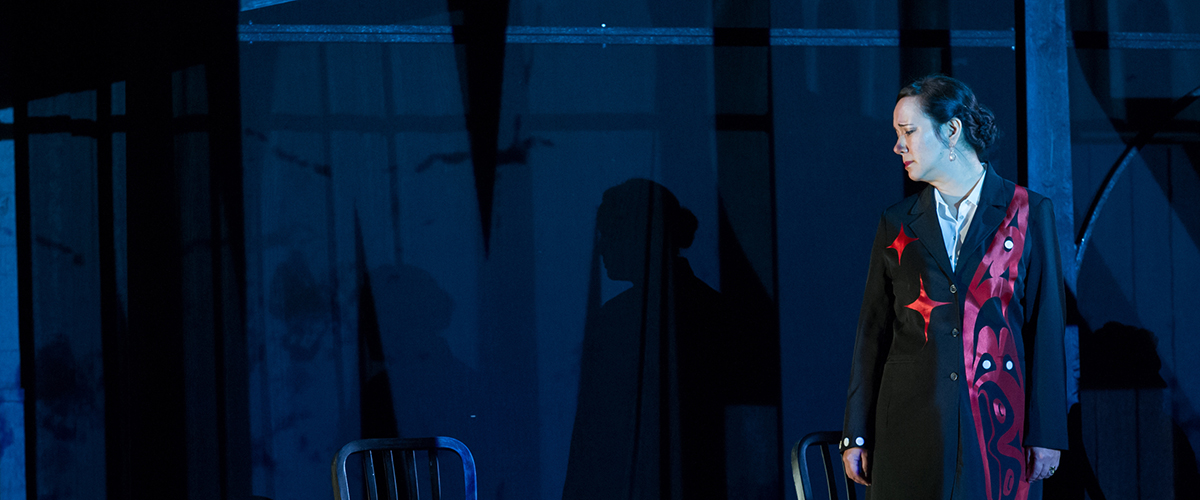
Read more: Conversations with Musicians: Violinist Leah Roseman’s “other-level” podcasting pivot
Back to top