04 Messiaen SmithOlivier Messiaen; Linda Catlin Smith
Apartment House
Another Timbre at143 (anothertimbre.com)

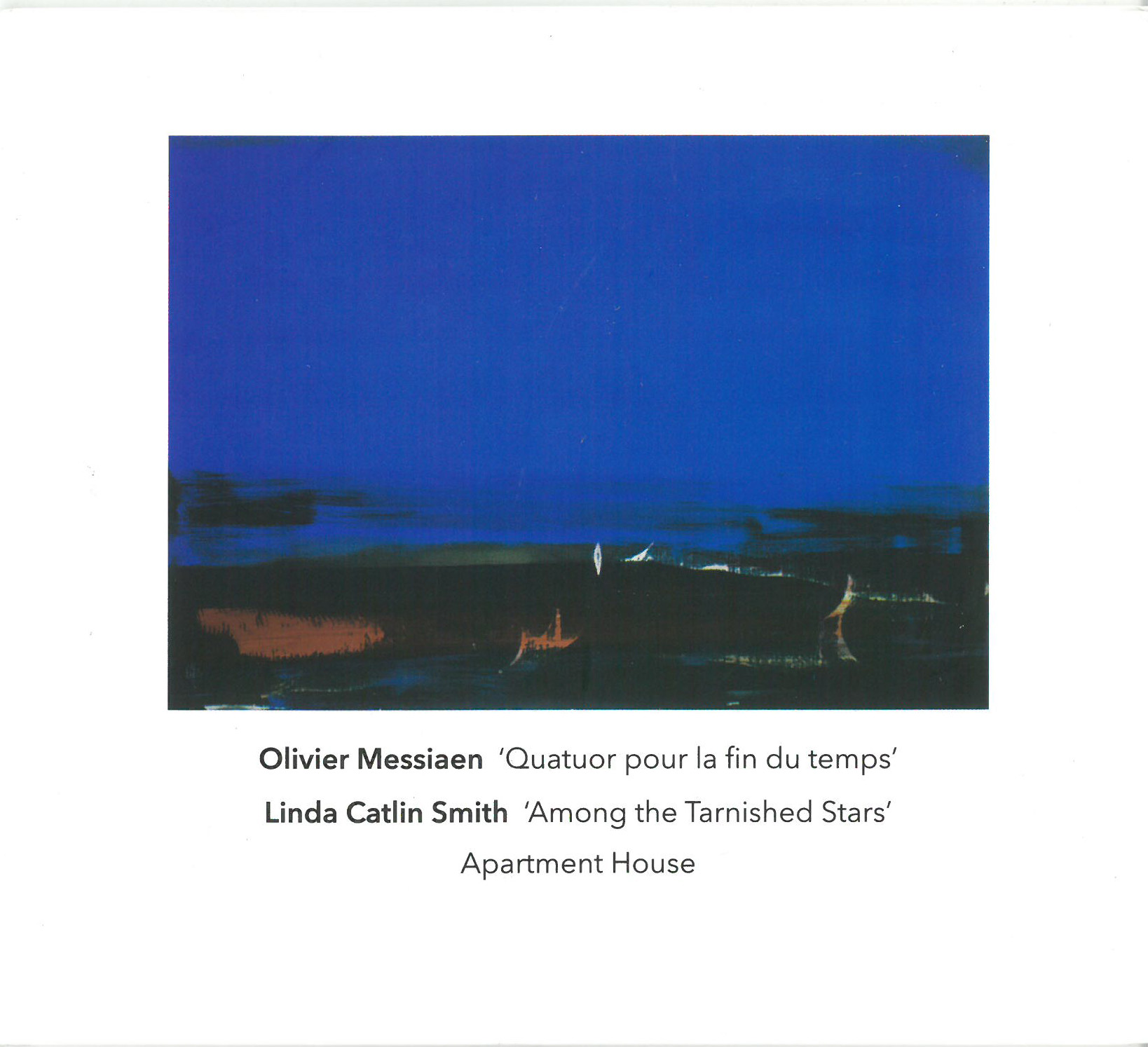
Toronto-based composer Linda Catlin Smith has been well represented in Another Timbre’s ten-volume release of contemporary Canadian composers, including the eight varied pieces of The Wanderer and the two-CD set, The Drifter. Here she shares a disc with that work of concentration-camp genius, Messiaen’s, Quatuor pour la fin du temps. They’re performed by the English ensemble Apartment House, and share the instrumentation of violin, cello, clarinet and piano.

This is the second recording of Smith’s Among the Tarnished Stars (1998), following the Toronto ensemble The Burdocks. Apartment House stretches the piece to 28 minutes, making the most of Smith’s subtle sonic exploration, from the opening’s ascending arpeggios through an almost accordion-like blend of clarinet and strings to some wonderfully resonant ensemble clusters that ring out into the emptiness of space.

The resonance and harmony make Among an ideal companion for Quatuor, a piece that transcends the grim circumstances of its composition and initial performance. Apartment House doesn’t do anything to contort the work into a post-modern aesthetic, but they do give its gestural elements new life in a rendering that never struggles to add overt emotional content to Messiaen’s materials. Clarinetist Heather Roche, however, does succeed in finding a sonority of rare resonance in the brief Intermède.

Perhaps what’s most interesting about the CD is the way in which the two works live side by side, the proximity emphasizing the celestial spirit that informs Smith’s work.    
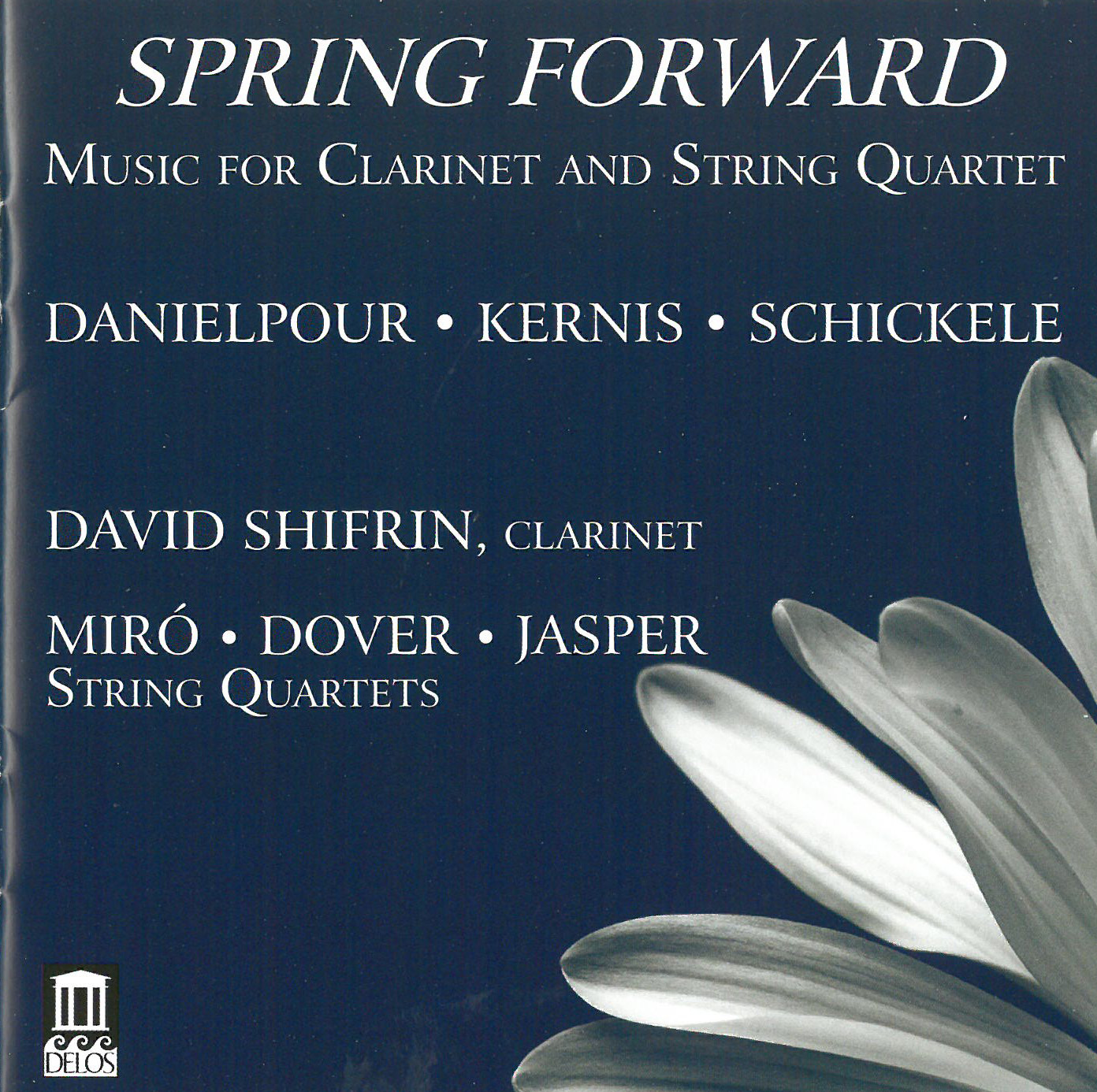
06 Spring ForwardSpring Forward: Music for Clarinet and String Quartet
David Shifrin; Miró; Dover; Jasper String Quartets
Delos DE 3528 (delosmusic.com)

Since 1981, David Shifrin, former principal clarinet of the Cleveland Orchestra, has served as artistic director of Chamber Music Northwest, the Oregon organization that commissioned these works by three well-established American composers.

In Spring Forward (2014) by Peter Schickele (aka P.D.Q. Bach), Shifrin performs with the Miró Quartet. The 22-minute, five-movement piece, typical of Schickele’s gently rocking, listener-friendly charm, evokes warm memories of springs past, including A Perfect Picnic (the last movement), fondly recalled by Schickele as one he shared with his wife at sunset by the Hudson River.

Richard Danielpour’s 18-minute Clarinet Quintet (2015) is subtitled The Last Jew in Hamadan. Danielpour’s father was born in Hamadan, the Iranian city traditionally known as the burial place of the biblical Queen Esther. Danielpour writes that the first movement, Agitato, con energia, with its bouncy mix of klezmer and the Middle East, derives from vivid childhood memories of visiting Iran with his parents. The following Adagietto e triste is a meditative lament for Iran’s mostly vanished Jewish community under the ayatollahs. Shifrin is joined by the Dover Quartet, recent performers at Toronto Summer Music.

Finally, Shifrin and the Jasper Quartet perform the 18-minute Perpetual Chaconne (2012) by Aaron Jay Kernis. Kernis writes that the piece “maps an emotional journey from mournful lyricism to increasingly abstract, harsh gestures and back.” It’s all rather bleak, lacking Kernis’ usual tendency to sentimentality. A bit of sentiment would have helped, much as it enhanced the pieces by Schickele and Danielpour.

07 Danny GranadosA Tribute to Danny Granados
Fidelis String Quartet and Friends; Danny Granados
Delos DE 3562 (delosmusic.com)

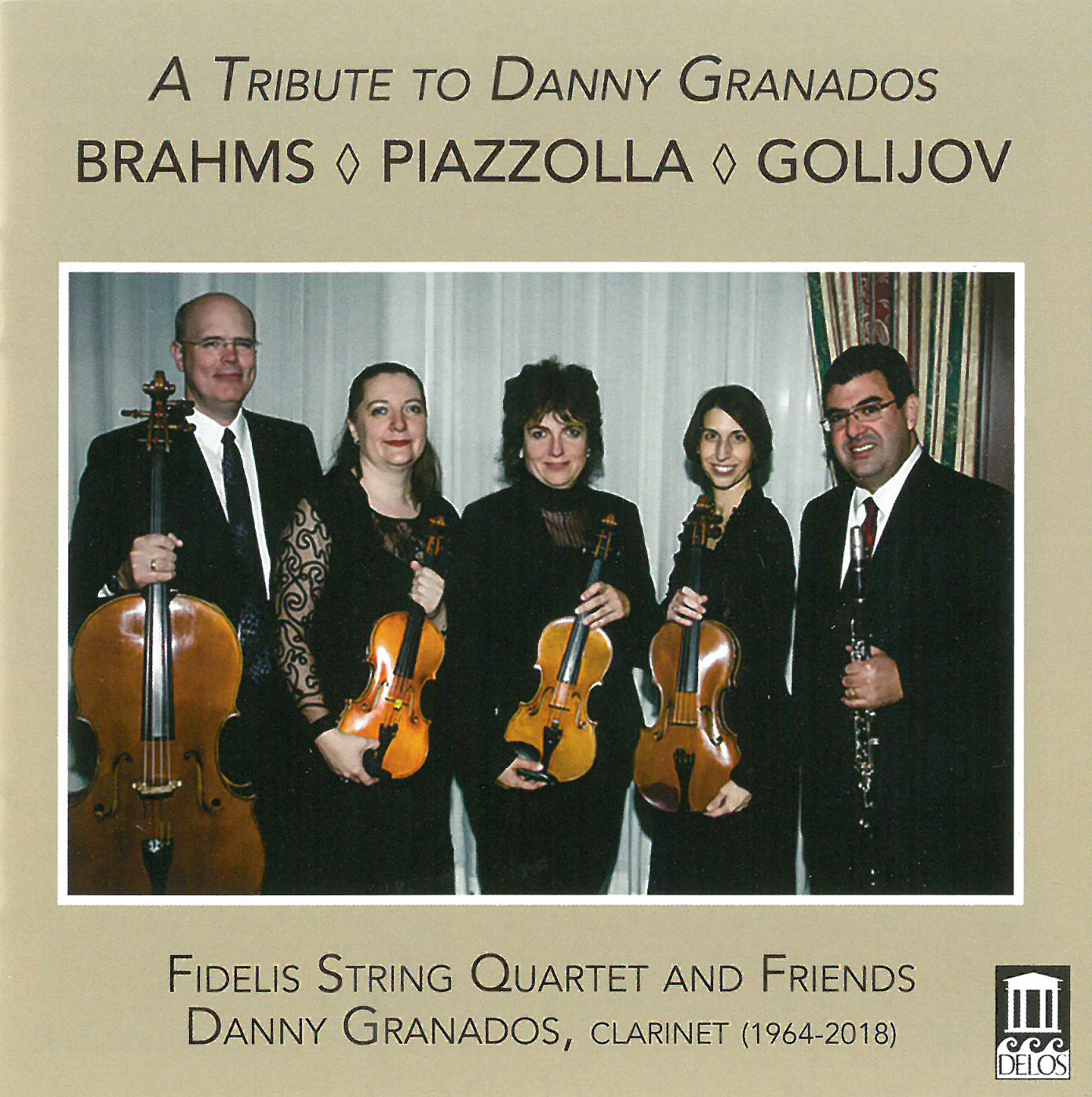
Member and subsequent CFO of the Houston Symphony Orchestra, Danny Granados (1964-2018) was a brilliant clarinetist. As he writes in the liner notes, three works were recorded by him with the Fidelis String Quartet and three other musicians in 2011 after a conversation about Brahms’ beginnings, and all artists’ struggles and setbacks. After his death from cancer, the other players’ released the recording in 2019.

The Fidelis String Quartet is a tight ensemble with great musicality. Granados fits in so well that his unique colourful clarinet playing never overwhelms the quartet as it blends with the strings. Brahms’ Clarinet Quintet in B Minor, Op.115 is a challenging work to play. Of note is the opening Allegro movement as Granados plays the moving clarinet melodies with luscious tones, subtle colour changes and slight rubato touches as it converses with the string lines. More clear string and poignant low-pitched clarinet conversations in the second Adagio movement.

Osvaldo Golijov’s Lullaby and Doina, from the 2001 film The Man Who Cried, offers a welcome abrupt change with its plucked strings opening, quasi klezmer intense clarinet doina, higher pitched strings, flute and bass, and a fast toe-tapping closing. Piazzolla fans should enjoy the four tango selections. Highlight is pianist Pablo Zinger’s arrangement of Libertango. A piano start leads to a breathtaking legato clarinet cadenza based on its familiar tune developing into a fast instrumental rendition

Timeless performances make this a moving musical memorial tribute to Danny Granados.

08 David SampsonChesapeake – The Music of David Sampson
American Brass Quintet
Summit Records DCD 639 (summitrecords.com)

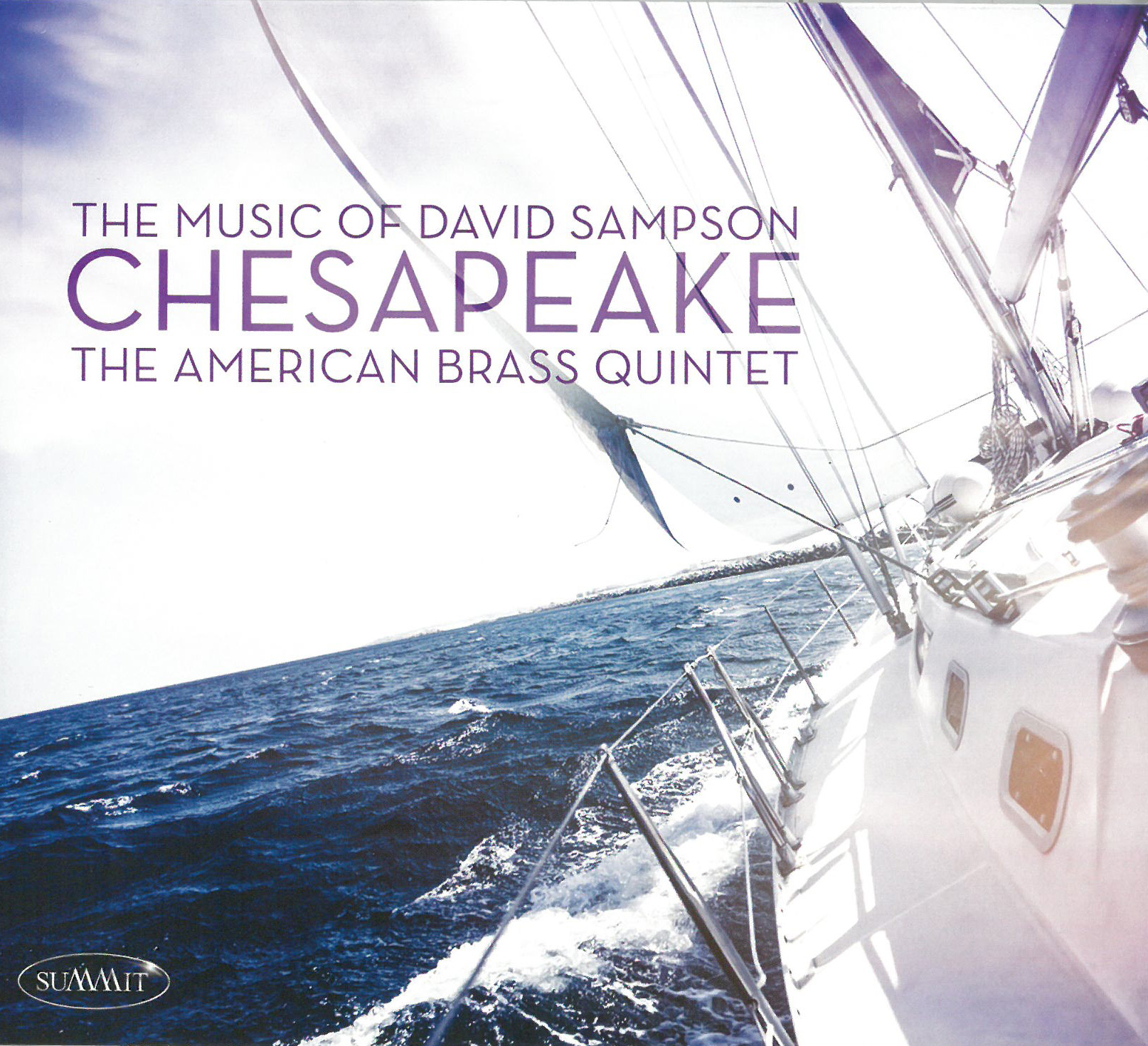
This CD, writes American composer David Sampson (b.1951), “came from my long-held desire to write for the members of the American Brass Quintet as individuals and close friends, amplifying their unique talents and sequencing the pieces to stand as an extended composition.” What I found particularly fascinating was Sampson’s varied sonic mix of one or two brass instruments plus electronics or percussion and piano in the first four pieces, each in three or four movements.

The opening, Breakaway, for two trumpets and electronics, presents echoes of Copland’s Fanfare for the Common Man and propulsive jazzy riffs that surround a darkly funereal cortege. In Powell Trio for trombone (the quintet’s Michael Powell), marimba and piano, two snappy, nervously syncopated movements, Flow and Eddies, burble around Stillwater, the quietly mysterious middle movement. Three Sides for trumpet/flugelhorn, vibraphone and piano begins with cheery repeated staccato brass notes over a rumbling accompaniment, followed by a slow bluesy solo supported by gentle arpeggios, before ending in playful, quirky syncopations and percussive punctuations. Just Keep Moving, for horn, bass trombone, marimba and piano, is more modern-sounding, rhythmically and harmonically complex; true to its title, though, it just keeps moving.

The concluding four-movement Chesapeake, for the entire quintet, depicts, writes Sampson, sailing trips with his friends down Maryland’s Chesapeake Bay. Sampson’s enjoyment of these trips is reflected in the bright, celebratory music, a fine conclusion to this fine, enjoyable disc.

08 South of the CircleSouth of the Circle
Siggi String Quartet
Sono Luminus DSL-92232 (sonoluminus.com)

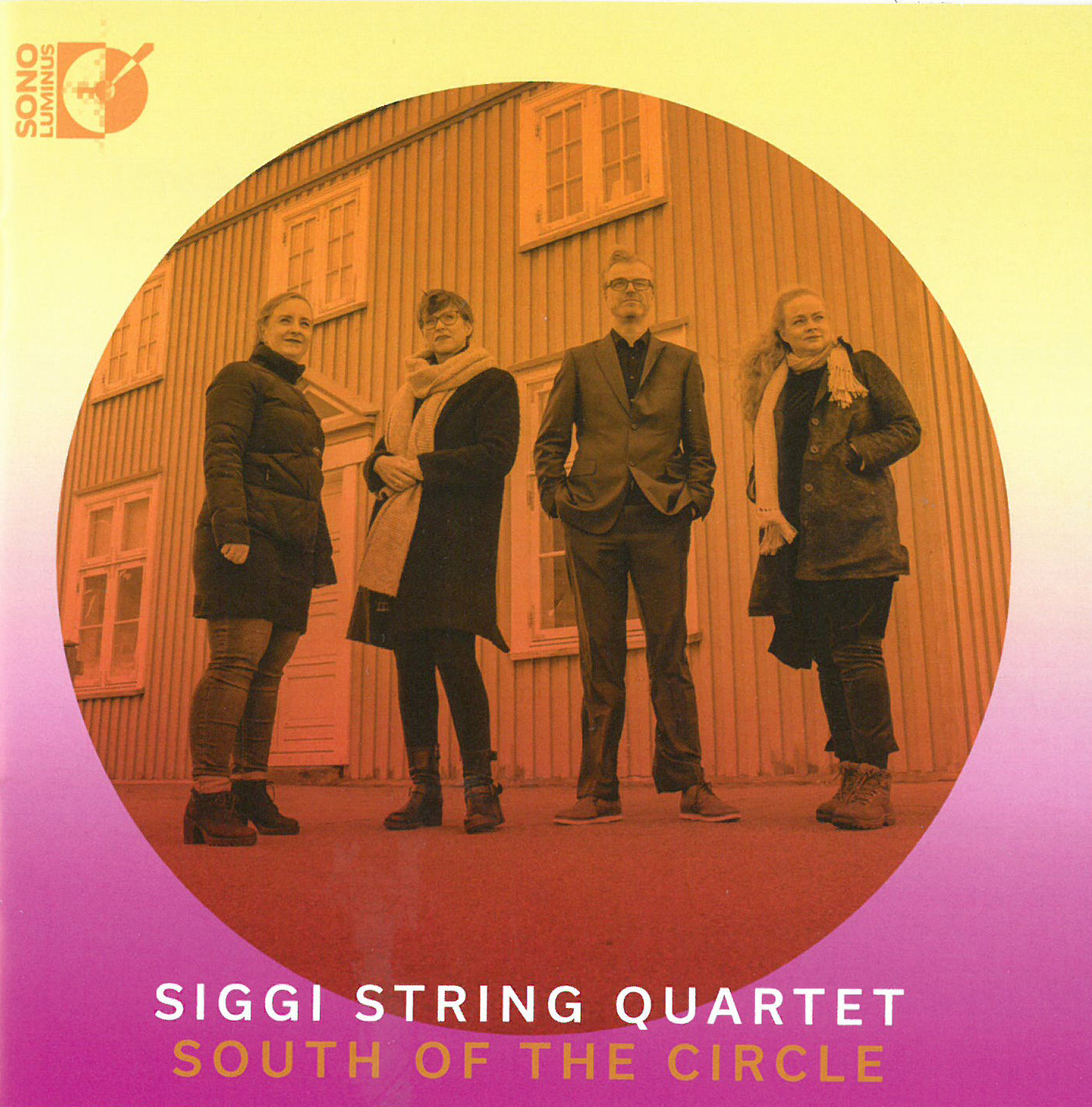
While it should come as no surprise that contemporary Icelandic music should have – like music elsewhere across the globe – come of age, the sheer scope and breadth of its soundscape is, nevertheless, quite breathtaking. Riding the crest of a new wave created by Björk, Atli Heimir Sveinsson and Jóhann Jóhannsson is the dazzling Siggi String quartet founded by violinist and composer Una Sveinbjarnardóttir, whose work Opacity forms one of the five pillars of the quartet’s 2019 recording South of the Circle.

This follow-up to Philip Glass: Piano Works, the 2017 recording that the quartet shared with celebrated pianist and countryman Vikingur Ólafsson, is both sparkling and deeply reflective. The quartet’s interpretation of Sveinbjarnardóttir’s composition and those of three other Icelanders is marked by the poignancy of their playing. The music becomes part of a natural landscape that mixes beauty and danger. Whether evocative of freezing nights or long rainy days, each track takes us to a place – often wildly exhilarating – with trusted and inspiring musical friends.

Such warmth comes at no expense to either classical elegance or avant-garde subversion.

Throughout the quartet creates a compelling sound-bed for four voices of contrasting character. Although best expressed in the long inventions of the solos contained in Opacity, the virtuoso playing of the quartet is also expressed in their sculpting of the music of Daníel Bjarnason’s Stillshot, Valgeir Siguròsson’s Nebraska, Mamikó Dis Ragnarsdóttir’s Fair Flowers and Haukur Tómasson’s Serimonia.

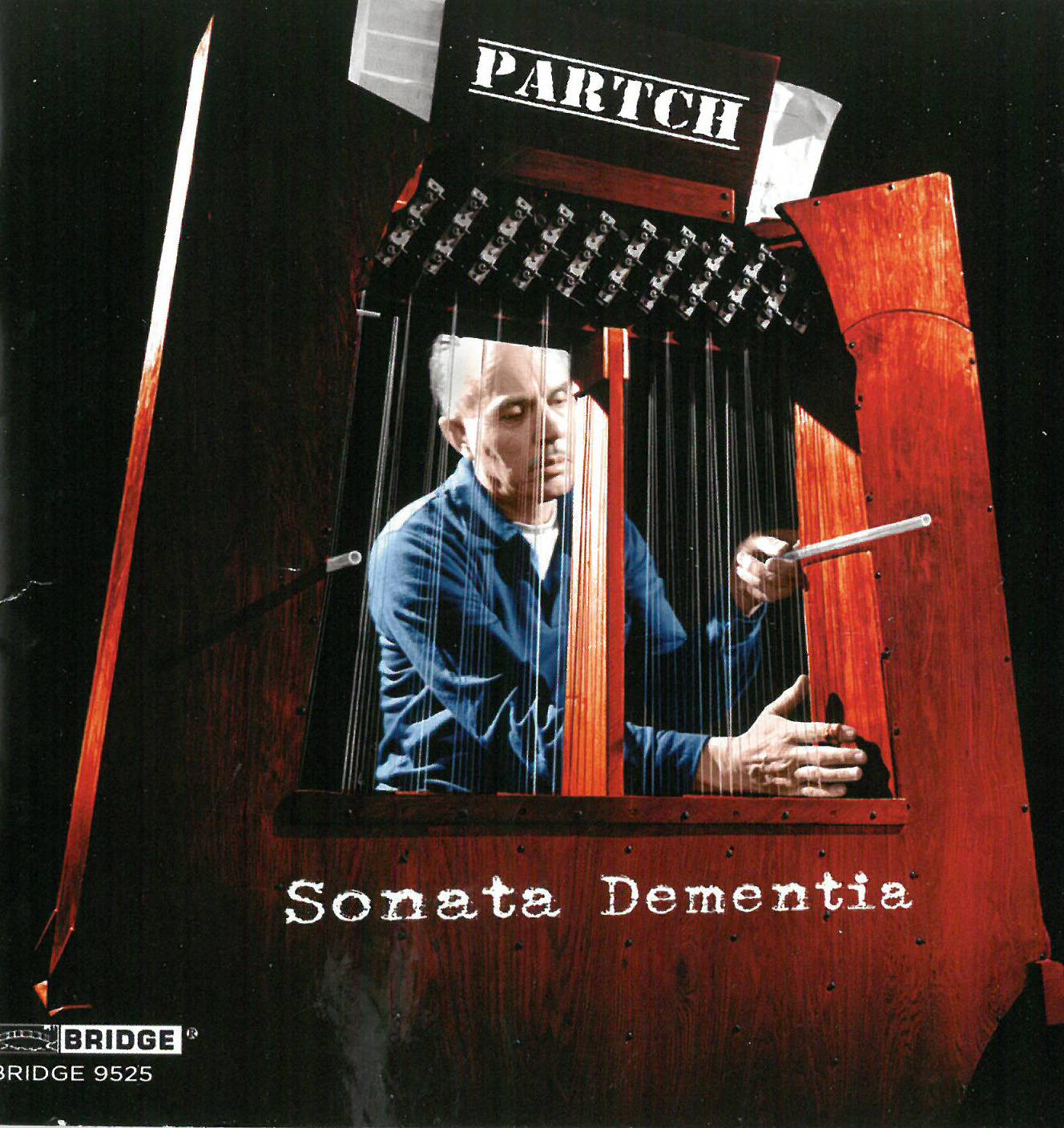
10 PartchHarry Partch – Sonata Dementia
PARTCH
Bridge Records BRIDGE 9525 (bridgerecords.com)

Harry Partch (1901-1974) was a paradigmatic California outsider composer, embracing the pitches and rhythms of world music – Ancient Greece, Japan and Africa – and substituting a 43-tone scale in just intonation for the equal temperament of Western tradition. A romantic figure who constructed microtonal guitars as a depression-era hobo, he gained a significant audience when Columbia Records recorded him in the 1960s. His home-made instruments emphasized bending string tones and hyper resonant percussion, some made from the refuse of radiation experiments.

The ensemble PARTCH is as true to the letter and spirit of Partch’s music as his own groups, and John Schneider’s intoned vocals even sound like Partch. The group has been recording landmarks and unheard works alike and supplementing them with Partch’s own archival recordings. The opening Ulysses at the Edge of the World immediately suggests the breadth of Partch’s inspirations: originally composed for jazz trumpeter Chet Baker, it combines bass marimba, tuned bamboo drums, trumpet and baritone saxophone, and ends with a joke about wanderers (i.e., Ulysses, Baker, Partch) being arrested. Twelve Intrusions (1950) is a song cycle, alive with intoned vocals, elastic pitches, and a concluding chant transcribed from a recording of the New Mexico Isleta tribe. Windsong is a collage-like film score, while Sonata Dementia includes a Scherzo Schizophrenia, indicative of Partch’s multi-directional wit.

The CD concludes with Partch’s own 1942 recording of Barstow, the brilliant setting of hobo inscriptions here faster (and funnier) than the later Columbia recording.

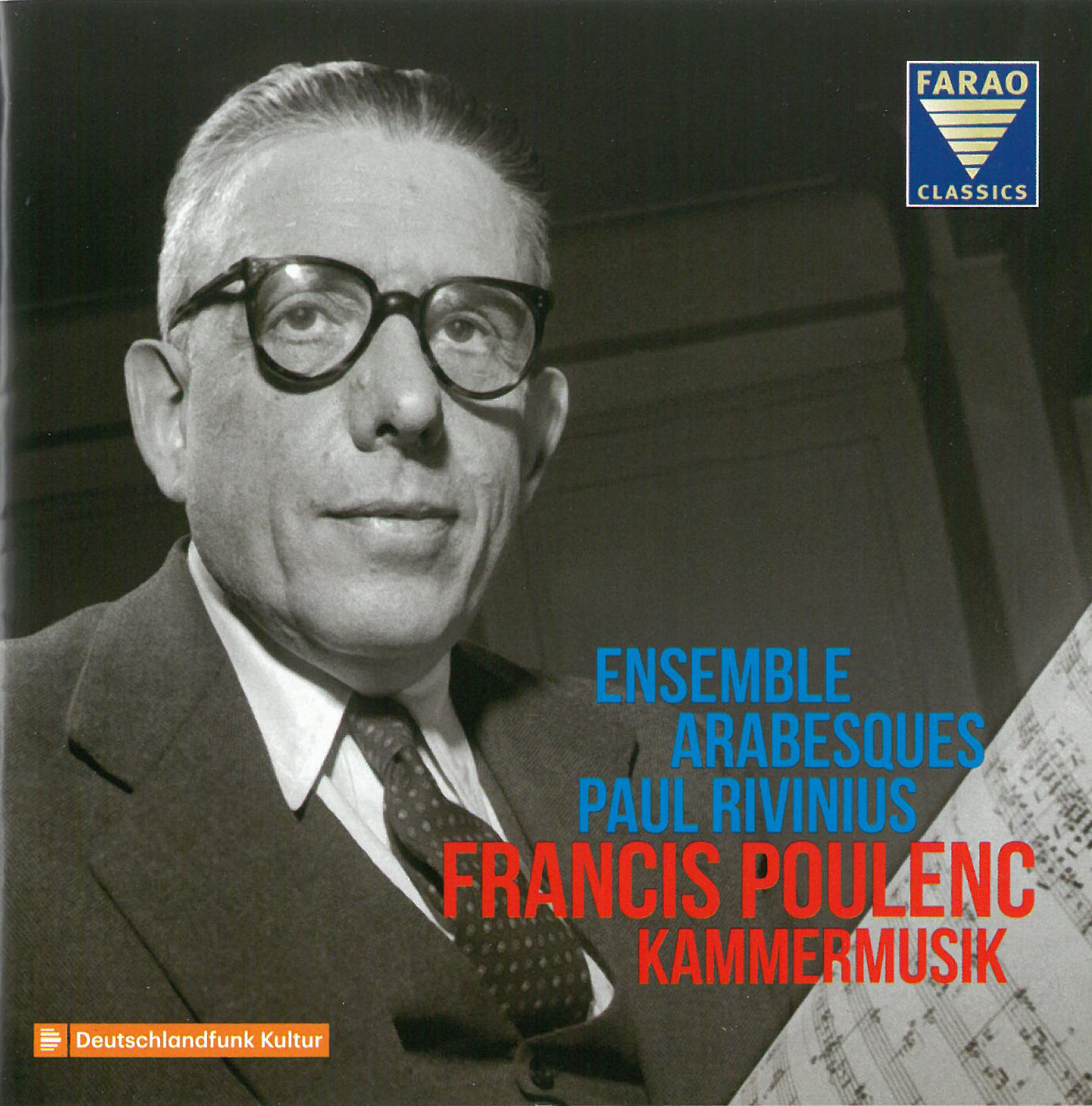
01 PoulencFrancis Poulenc – Kammermusik
Ensemble Arabesques; Paul Rivinius
Farao Classics B 108103 (farao-classics.de)

Certain composers of the 20th century were determined to complete cycles of works for all of the orchestral wind instruments. Paul Hindemith largely succeeded, Carl Nielsen fell short of his intention to write a concerto for each member of the Danish Winds, and Francis Poulenc gave the world a wealth of pieces for all of them. His contributions are given a representative sampling on this disc featuring the wind quintet Ensemble Arabesques, joined by the excellent Paul Rivinius on piano.

The largest work (from 1932, revised 1939) is the Sextet for Winds and Piano. In it you’ll hear echoes and precursors of material Poulenc used in all of his smaller ensembles, notably of his final three wind sonatas: for Flute (1956), Clarinet (1962), and Oboe (1962). He intended to add a sonata for bassoon, but died shortly after completing the oboe work. The sextet is full of fun, played with sparkle and élan, but also with the disguised melancholy found in the three later works. Like Matisse’s paper cutouts, Poulenc’s pieces can seem like collages of recurrent musical gestures and tropes, and his forms repeat through most of these pieces. For my money, naturally, the clarinet sonata is the most beautiful, played here by Gaspare Buonomano. The second movement is heartbreaking and so simple. Buonomano’s rendition is understated, elegant and respectful of the music, though sadly not without the clarinet’s most vexing pitch peccadilloes. Eva Marie Thiébaud’s flute sonata is utterly fine; likewise Nicolas Thiébaud on oboe.

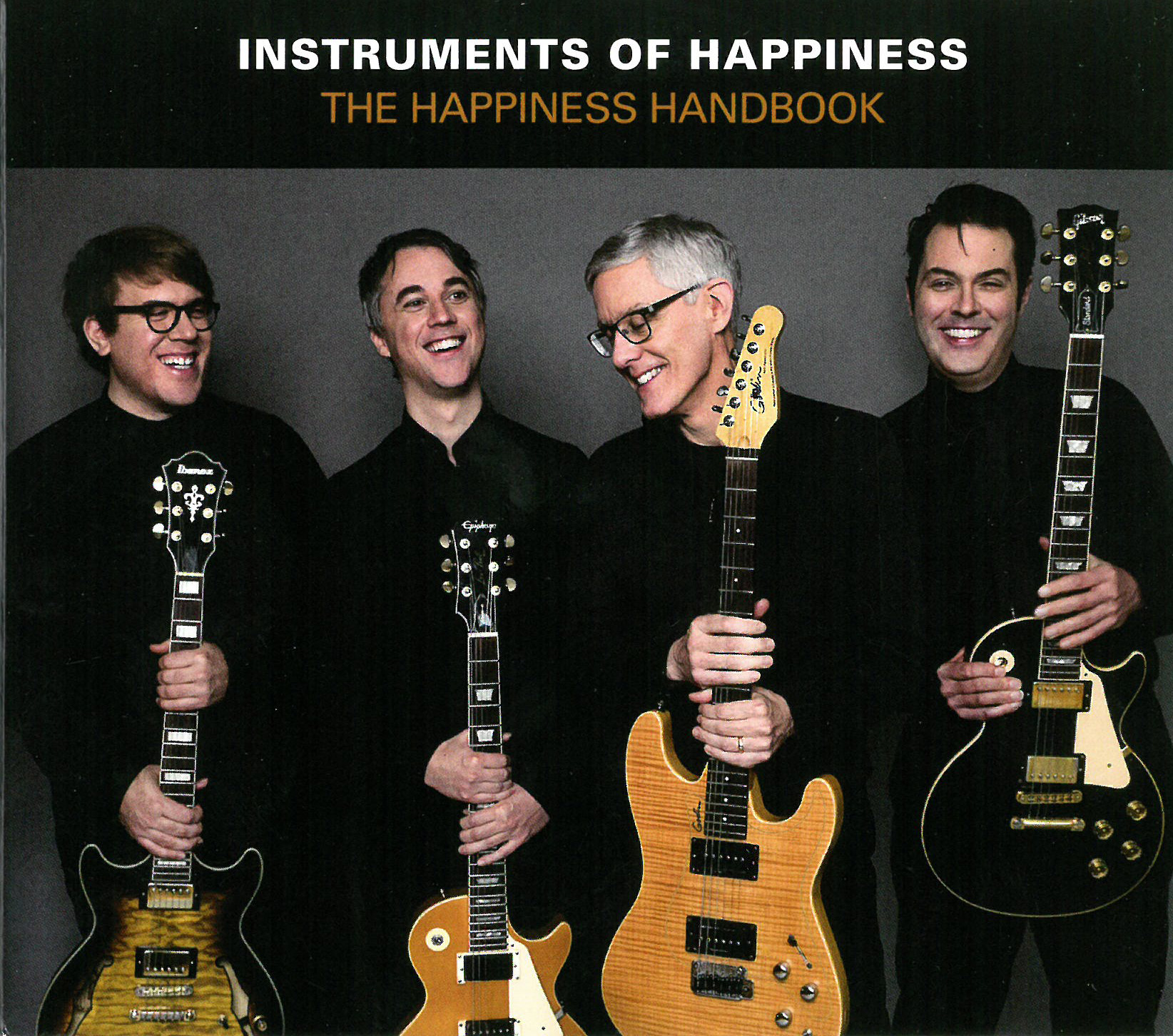
02 Instruments of HappinessThe Happiness Handbook
Instruments of Happiness
Starkland ST-232 (starkland.com)

Tim Brady is internationally recognized as a leading experimental guitarist and a prolific composer of chamber, orchestral and music theatre works. He writes, “For over 30 years I have been exploring a new approach to the electric guitar, a vision as both a composer and a guitarist. Instruments of Happiness [IOH] is … the next step in this evolution.” Leader of IOH groups, Brady considers the guitar an “instrument of happiness,” and he gave that title to the electric guitar ensembles he formed as a platform for his wide-ranging music projects.

IOH performs in three formats: as a 100-piece electric guitar orchestra rendering site-specific new works; as a 20-piece ensemble; and as a quartet performing new compositions. It’s the last configuration we hear on The Happiness Handbook in premiere recordings of works by six Canadian composers: Brady, Jordan Nobles, Scott Godin, Maxime McKinley, Gordon Fitzell and Emily Hall. The music on the album reflects many of Brady’s own musical interests. These include contemporary classical, experimental and musique actuelle, but also embrace guitar-based vernacular genres such as blues, progressive rock, flamenco and the electric guitar sounds popularized by 20th-century innovators Duane Eddy and Link Wray.

If you enjoy virtuoso electric guitar shredding, edgy minimalism, jaggedly incisive rhythms, noisy textures and rock’s propulsive energy paired with the guitar’s gentler voice – soft harmonics, cantabile slide guitar and sustained tones – then this is an album to savour and add to your collection.

03 John RobertsonJohn Robertson – Virtuosity
Sofia Philharmonic Orchestra; Anthony Armoré
Navona Records NV6223 (navonarecords.com)

In my review of a CD of orchestral works by John Robertson (Navona NV6167) that appeared in the September 2018 issue of The WholeNote, I called his neo-Romantic music “unfairly neglected” and praised his “lyrical gift… colourful and inventive scoring, unpretentious and essentially cheerful.”

Not all of Robertson’s music is “essentially cheerful,” however, as shown by this latest CD. In three concerted works featuring as soloists three principal players of the Sofia Philharmonic Orchestra, the Kingston-based Robertson (b.1943) reveals his more inward-looking side, at times tinged with melancholy. His “lyrical gift,” though, remains evident and continues to please in his Concerto for Clarinet and Strings Op.27 (1989), Concerto for Trumpet and Orchestra Op. 58 (2013) and the tone poem Hinemoa and Tutanekai Op.22 (1987), based on a legend of two Maori lovers from rival warring tribes. In it, Hinemoa hears and responds to the plaintive sound of Tutanekai’s flute as it wafts across the lake that keeps them apart.

Robertson’s even darker side is displayed in the opening Andante of his 27-minute Symphony No.3, Op.71 (2017), filled with dramatic foreboding, sinister repeated arpeggios and pounding rhythms. The mood lightens with the syncopated, Latino-like accents of the Vivace, while the concluding Allegro is lighter still, even “cheerful.”

In my previous review, I wrote that Robertson’s music “should be welcomed by Canadian orchestras and audiences.” The increasing exposure of his music on CD might just be what it takes to make that happen.

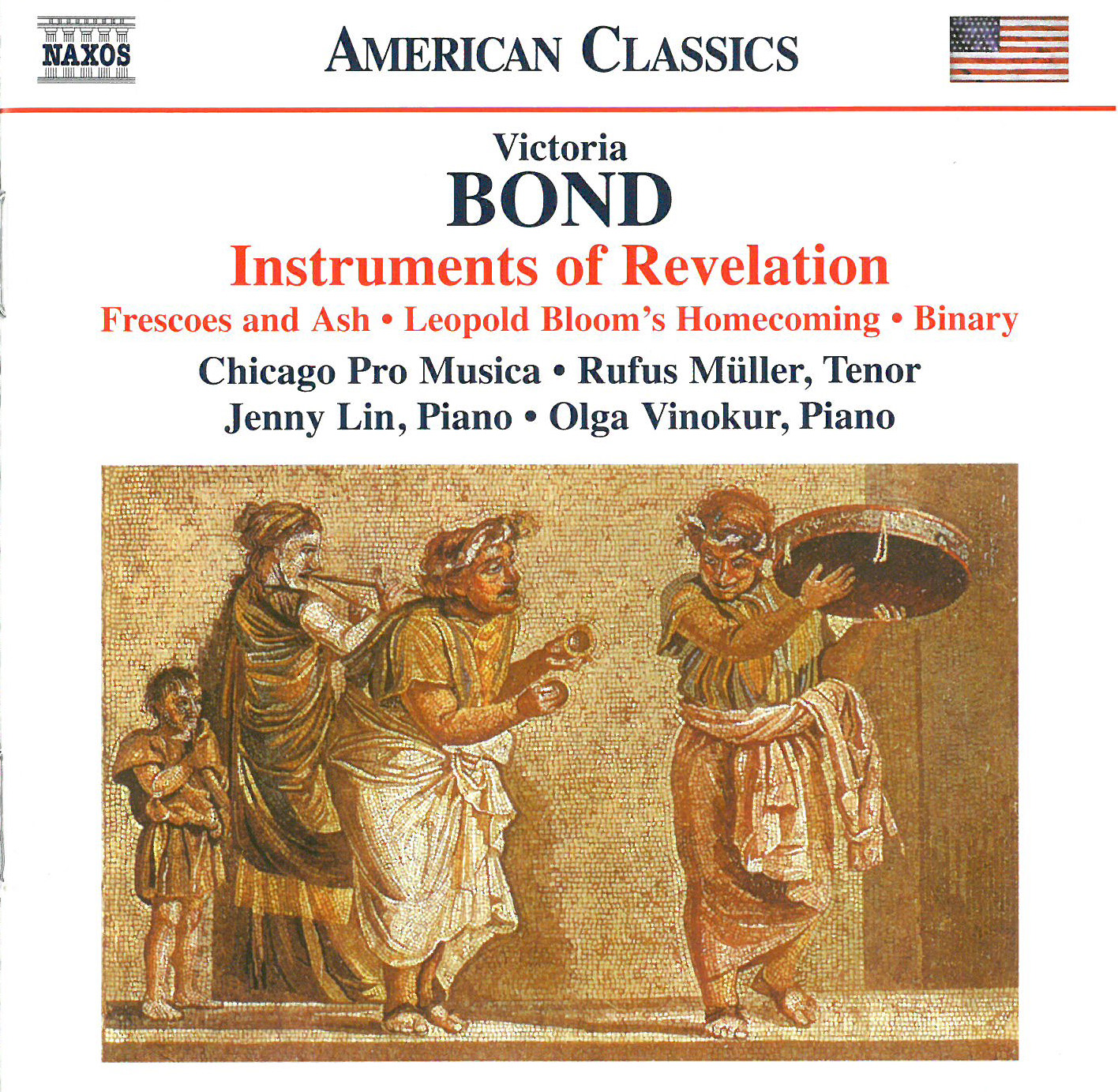
05 Victoria BondVictoria Bond – Instruments of Revelation
Chicago Pro Musica
Naxos 8.559864 (naxos.com)

Four works dating from 2005 to 2011 display some of the wide expressive range of American Victoria Bond (b.1945). Three figures from tarot cards are portrayed in Instruments of Revelation: The Magician (in Bond’s words “mysterious…dexterous”), The High Priestess (“wisdom…passion”) and The Fool (“comedy…chaos”). Cleverly scored for flute, clarinet, violin, cello and piano, the first two movements are very engaging and attractively descriptive, while The Fool, in wild confusion, lurches and falls across many slippery glissandi.

In Frescoes and Ash for clarinet/bass clarinet, string quintet, piano and percussion, six artworks from Pompeii are depicted, most strikingly in the raucous Street Musicians (the CD’s cover image) and the languid rippling of Marine Mosaic. The seventh movement, Ash: Awareness of Mortality, is a haunting dirge for the doomed city.

“I’ve been drawn to Ulysses… since high school… because the writing resembles the way I think… in fleeting images and allusions, in a stream of consciousness.” Bond previously set Molly Bloom’s soliloquy and here, in her 20-minute Leopold Bloom’s Homecoming (from Episode 17), tenor Rufus Müller, accompanied by pianist Jenny Lin, speaks the questions and sings Bloom’s answers. However, Joyce’s convoluted text, included in the booklet, renders moot whether the music, lyrical or dramatic, fits the words.

Finally, pianist Olga Vinokur performs Binary, a heavily percussive seven-minute piece whose first movement reminded me of Thelonious Monk, followed by a set of variations on a Brazilian samba, ending a disc of very mixed imagery, pleasures and perplexity.

06 Fuego QuartetMigration
Fuego Quartet
Ravello Records RR8010 (ravellorecords.com)

The Fuego Quartet (Nicki Roman, soprano; Eric Elmgren, alto; Harrison Clarke, tenor, and Gabriel Piqué, baritone) was founded in 2015 at the Eastman School of Music. Their album Migration’s sophistication shows how far the saxophone quartet’s repertoire has moved from predominantly French composers and Scott Joplin rags. For example, David Maslanka’s five-part Recitation Book recomposes Bach chorales. Many of the pieces are quite meditative and the Fuego Quartet blends together seamlessly with little vibrato to create a gentle wall of harmony. The final track, Fanfare/Variations on “Durch Adams Fall,” is a lengthy piece combining the boisterous with the liturgical.

William Albright’s Fantasy Etudes is a six-part work opening with a Prelude which combines elements of the other sections and then moves into A Real Nice Number, an ironic homage to Debussy’s Claire de Lune. Pypes is a lilting piece evoking bagpipes; The Fives for Steve is dedicated to the memory of a composer friend; and the Phantom Galop was inspired by the Lone Ranger. Harmonium, based on childhood memories of the instrument, possesses an incredible and quiet intensity and could be my favourite on the album. The final section, They Only Come Out at Night, is a tribute to 50s and 60s cop shows on TV.

David Clay Mettens’ Ornithology S is a ten-minute tour de force based on Juan Fontanive’s animated sculptures of birds that are a remarkable re-imagining of flip books. It involves complex rhythmic sections, intricate pad clicking, subtle multiphonics and delicate slap tonguing, and demonstrates how impeccably the quartet plays together as they interpret difficult pieces.

07 Liptak Dove SongsDavid Liptak – Dove Songs
Tony Arnold; Alison d’Amato; Renée Jolles; Margaret Kampmeier; Dieter Hennings Yeomans; Steven Doane; Barry Snyder
New Focus Recordings FCR224 (naxosdirect.com)

American composer David Liptak composes texturally rich, colourful and contrasting musical sounds in four compositions here. The title track, Dove Songs, is a six-part song cycle composed for soprano Tony Arnold, who performs it with superb pianist Alison d’Amato. Arnold’s enchanting voice grasps all the contrasting storytelling/musical elements of the work, based on poetry by 1987 Pulitzer Prize-winner Rita Dove. Great moments include the dramatic vocal high pitches and piano tinkling like snow and frost in The Snow King, short phrases with subtle humourous undertones emulating domestic life’s ups and downs in Beauty and the Beast, and faster lighter lines with a final high-pitched vocal note and piano flourish in Flirtation.

More intense lyricism and held notes feature in Impromptus, composed for and played by violinist Renée Jolles with pianist Margaret Kampmeier. The duo shines in the contrasting conversational solo lines which shorten until they overlap simultaneously in the second movement, Lyrical. The seven-movement guitar solo suite, The Sighs, explores the melancholy of seven artists. Guitarist Dieter Hennings Yeomans brings out the clever compositional use of Rameau’s Baroque counterpoint in the fluctuating guitar line in the Les Soupirs and Petite Reprise movements. The extremely moving musical sentiment of Beautiful Dreamer, based on the Stephen Foster song of the same name, is unforgettable. Sonata for Cello and Piano has cellist Steven Doane and pianist Barry Synder perform a zippy second-movement race to the finish!

David Liptak’s memorable, lyrical, original compositions are timeless!

Listen to 'David Liptak: Dove Songs' Now in the Listening Room

01 French Flute20th Century French Flute Concertos
Ransom Wilson; BBC Concert Orchestra; Perry So
Nimbus Alliance NI 6375 (naxosdirect.com) 

No nation’s composers have contributed more to the flute repertoire than those of France. From the Baroque era to the present, French composers have excelled as weavers of iridescent, gossamer musical tapestries, employing as a favourite filament the diaphanous sound of the flute. On this CD, American flutist Ransom Wilson, conductor Perry So and the BBC Concert Orchestra present three rarely recorded, captivating works by Jean Françaix (1912-1997), Jean Rivier (1896-1987) and Jean-Michel Damase (1928-2013), plus a repertoire staple by Jacques Ibert (1890-1962).

In the opening Moderato of Françaix’s Impromptu for Flute and Strings (1983), the flute dances sprightly filigrees over the strings’ waltz beat. Two sweetly dreamy movements, Largo and Andante poetica, containing echoes of Poulenc (I’ve always thought of Françaix as “Poulenc-lite”), frame a playful Scherzando. It’s an irresistibly charming piece!  

The Allegro moderato of Rivier’s Concerto for Flute and Strings (1956) alternates wistful and animated passages for the flute, followed by the central Lento sensibile, in which the flute seems to wander in a subterranean labyrinth, before emerging into the light and sprinting to the finish line in the Molto vivace.

The three connected movements of Damase’s Sérénade for Flute and Strings, Op.36 (1956), all marked Très large, encompass mystery, joy, angst-filled disquiet and a pair of hauntingly beautiful melodies. Even with its gentle, non-virtuosic ending, it should have become “standard rep” by now.

A warm-hearted performance of Ibert’s familiar, audience-pleasing Flute Concerto (1933) ends this extremely enjoyable, extremely recommendable CD.

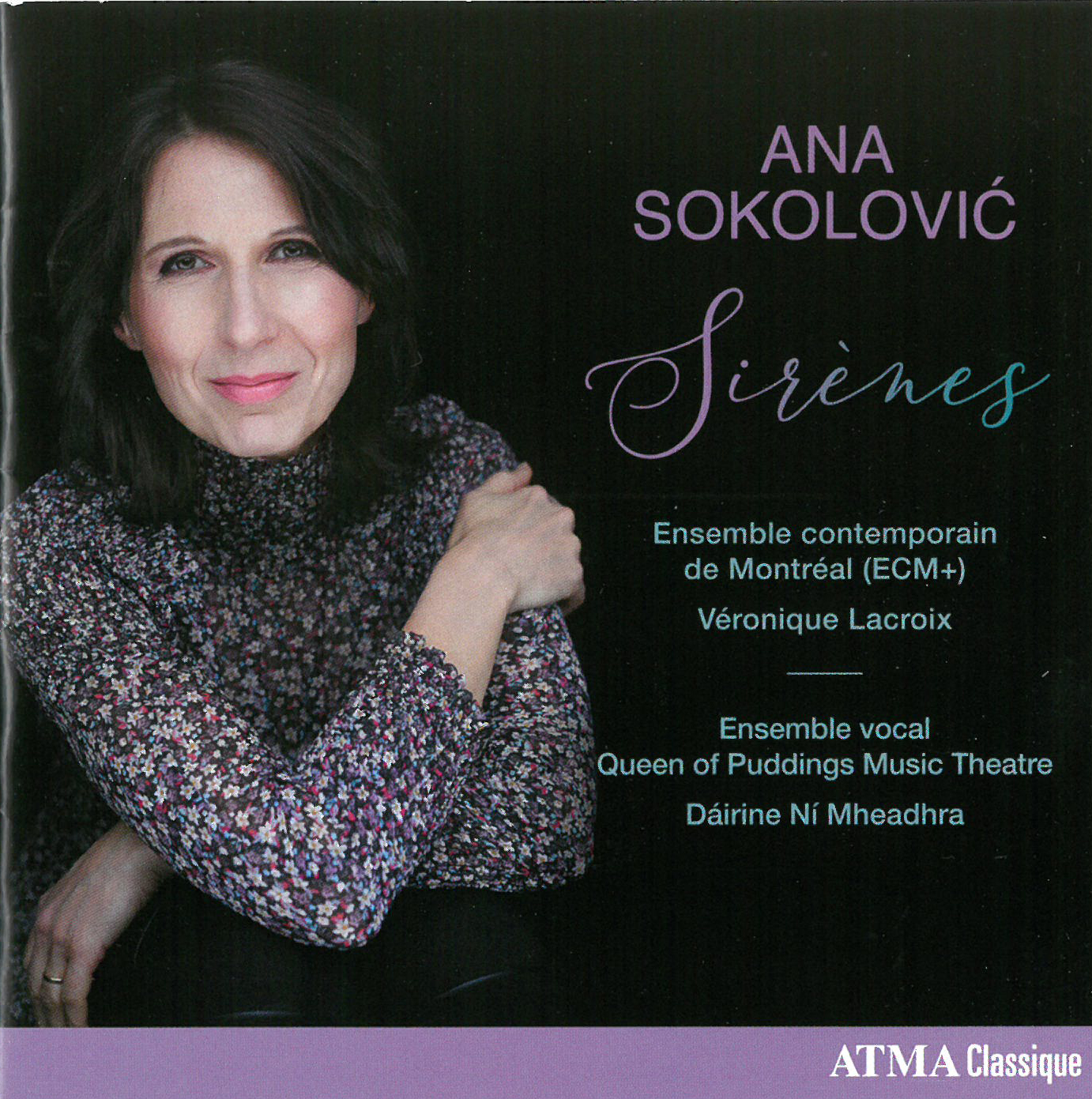
02 Ana SokolovicAna Sokolović – Sirènes
Ensemble contemporain de Montréal; Véronique Lacroix; Ensemble vocal Queen of Puddings Music Theatre; Dáirine Ní Mheadhra
ATMA ACD2 2762 (atmaclassique.com)

2019 JUNO Classical Composer of the Year Ana Sokolović composes with her highly identifiable tonal/atonal soundscapes in four works here. Sirènes/Sirens (2000) is performed perfectly by six female voices of Queen of Puddings Music Theatre Vocal Ensemble. Inspired by ancient Balkan voices of the Sirens legend, high-pitched female voices, quasi-wobbly, humorous yet haunting vocal effects, shrieks, quieter moments, and driving vocal rhythms are intense. The five-movement Tanzer Lieder (2005) is set to five German, French and English poems by Austrian poet Francisco Tanzer. A slightly more operatic work, soprano Florie Valiquette embraces Sokolović’s trademark loud high pitches and dramatic held notes above such instrumental accompaniment as reflective flute/piccolo, piano and cello plucks. Mezzo-soprano Krisztina Szabó shines especially in her colourful lower pitches in the five-movement/language Pesma (1996-2007) above the ECM+ instrumentalists under the direction of Véronique Lacroix.

The title of the violin concerto Evta (2017) means “seven” in Serbian Roma. Seven joined movements are inspired by chakra colours and associated with each note of the scale as Sokolović now explores her characteristic sounds with only instruments. The ECM+ ensemble, with soloist Andréa Tyniec, performs with technical and musical greatness, executing more rapid ascending lines, held notes, pizzicatos and plucks, touches of Gypsy-flavoured sounds and the occasional more tonal sections in this less intense composition.

One can only imagine how gratifying it must be to successfully perform and compose such complex contemporary works. Yes it is intense, but worth the time to listen to and understand Sokolović!

03 Dawn DaviSweet Apple
Dawn Davi
Independent (dawndavi.com) 

These subtly musical performances are a telling document of pianist Dawn Davi’s compelling, life-affirming compositional gift. The nine pieces on her second album Sweet Apple are also sufficiently exceptional to stand out in what is becoming a rather crowded field of young musicians who feel compelled to express themselves. Certainly the expressive way in which Davi’s music suggests quiet humanity also gives us a fine example of the self-effacing poetry that appears to be the hallmark of her style.

Her use of synthesizer and sustaining pedal give this music a degree of harmonic blurring which in turn – when listened to in consonance with the brass and strings that are added to these songs – also conveys the ethereal effect that she intends us to hear in her music. Davi takes a decidedly elegiac view of life in the expressive music of this disc. In doing so she offers a performance of mellowness and beauty. On Eyes of a Tree (for instance) she coaxes the strings into gentle harmonic enjoinders to her stoic melody which she essentially plays pianissimo, but with exquisite dynamics throughout.

This is typical of Davi’s eloquence and her ability to create a hauntingly beautiful soundscape evocative of a bard contemplating the natural world and the glories that lie within it. With Sweet Apple, clearly Davi has succeeded in celebrating the mysteries of life with music of exceptional stoicism and beauty.

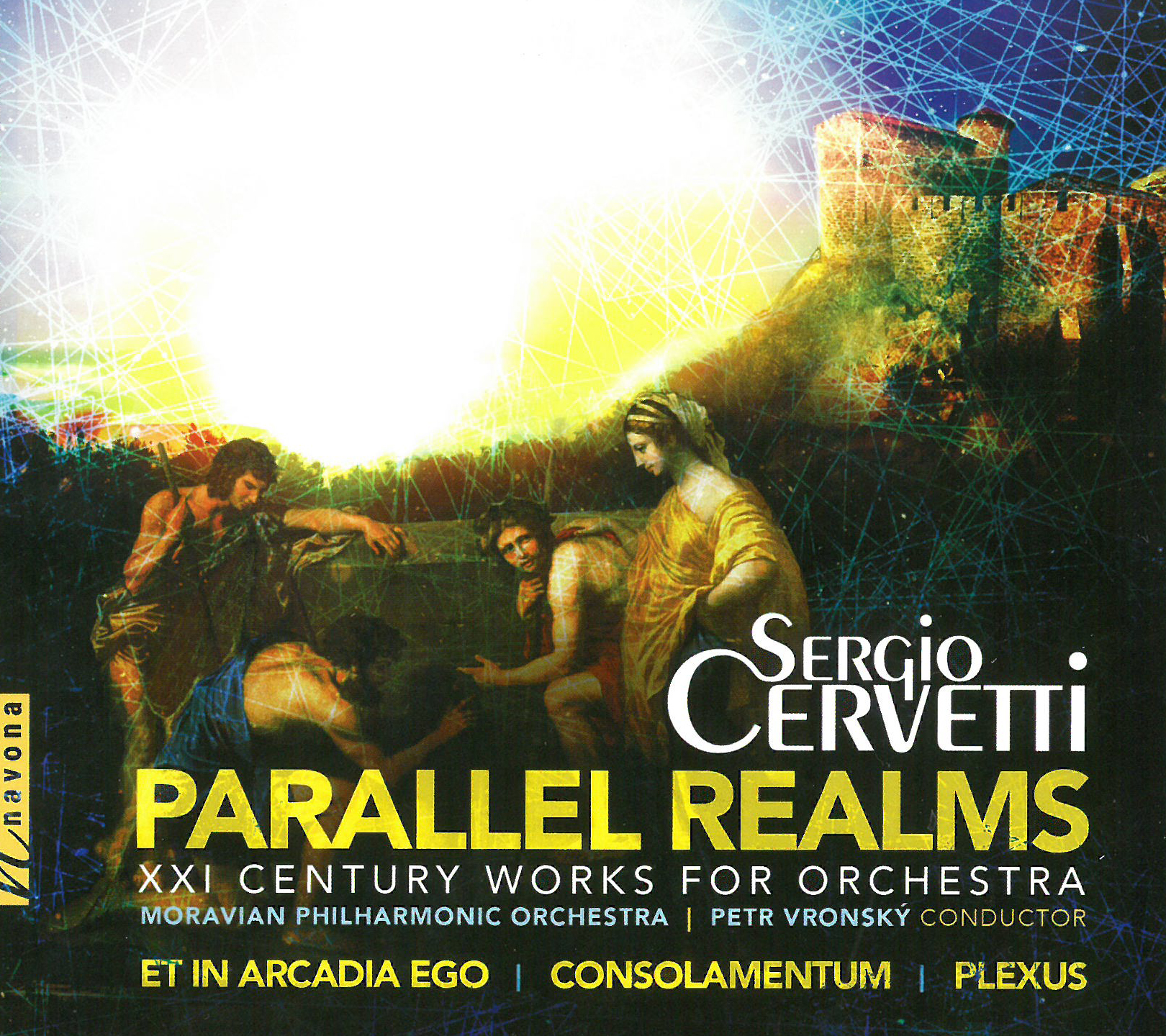
04 Sergio CervettiSergio Cervetti – Parallel Realms: XXI Century Works for Orchestra
Moravian Philhjarmonic Orchestra; Petr Vronsky
Navona Records nv6217 (navonarecords.com) 

The Uruguayan-American composer Sergio Cervetti has long enjoyed a celebrated career as composer and educator (a former professor at the Tisch School of the Arts at New York University), and has clearly cultivated an impressive work ethic in his life, creating and releasing challenging and provocative new music at an impressive rate. Realized here by the Moravian Philharmonic Orchestra under the skillful direction of conductor Petr Vronský and captured beautifully in the sonically satisfying Reduta Hall in the Czech Republic, Parallel Realms is comprised of three single-movement symphonic works, Et in Arcadia ego, Consolamentum and Plexus, in which Cervetti uses religious and scientific themes to musically confront childhood memories that have remained with him throughout his life.

The selections contained on this 2019 recording combine new music with a reimaging of a 1970 semi-graphic score (Plexus) that thread together the composer’s desire to bridge the deeply religious and spiritual with the metaphysical. Vacillating between the tumultuous swirl of the orchestra and quiet minimalism, Cervetti uses the ensemble to its fullest, finding beauty in opposite extremes of the group’s dynamic range. Clearly this is modern music, but anchored as it is to the strong narrative of biography and religious themes (as captured in the accompanying liner notes), the recording presents here as timeless, capable of tapping into universal human emotions and feelings.

The eighth Cervetti recording to be released on the Navona Records label, Parallel Realms comes recommended for fans of symphonic music who hope to be challenged in their listening and satisfied in their quest for exciting and beautiful new music.

Back to top