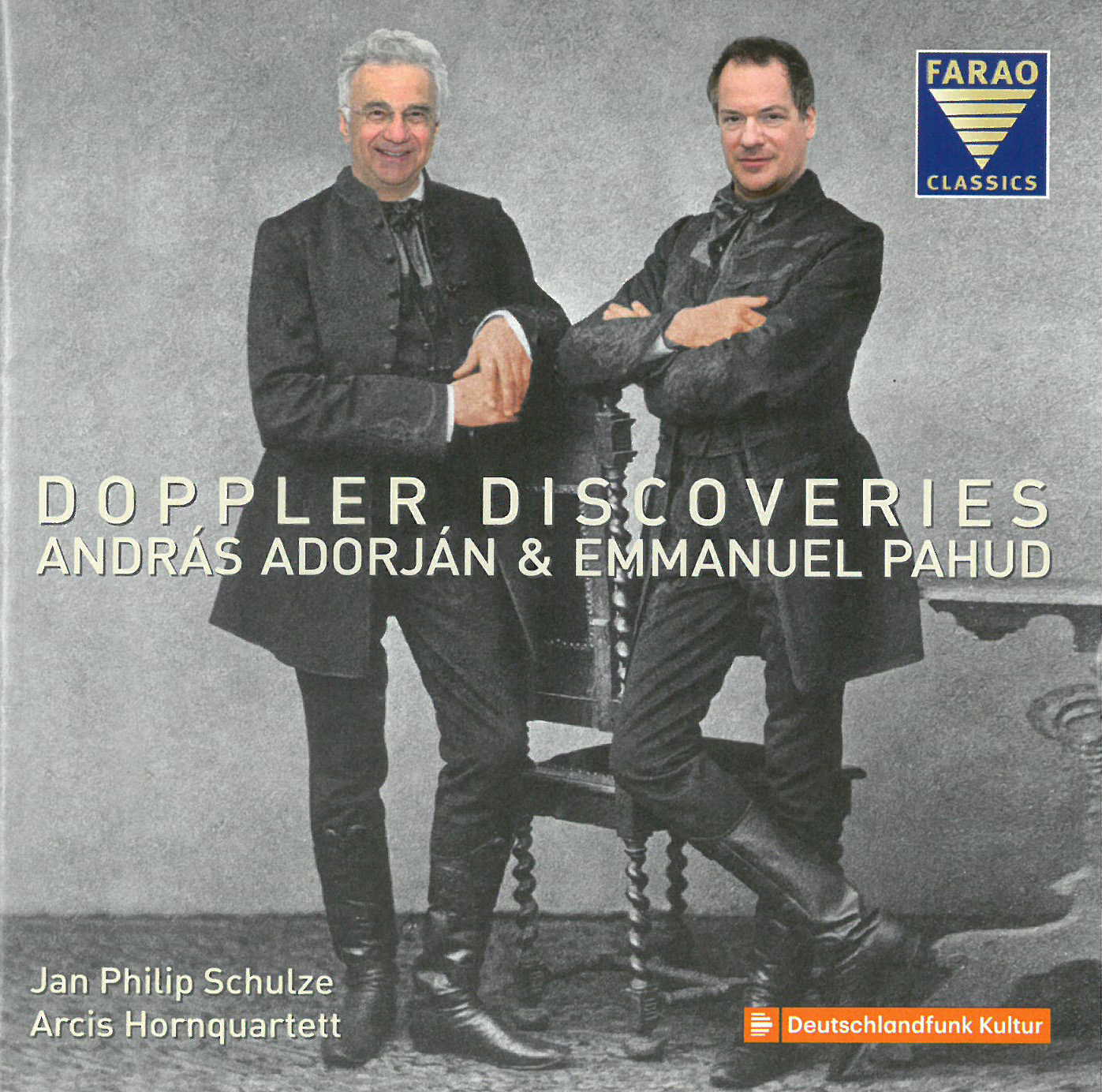
05 DopplerDoppler Discoveries – Flute Compositions by Franz and Carl Doppler
András Adorán; Emmanuel Pahud; Jan Philip Schulze; Arcis Hornquartett
Farao Classics B 108104 (farao-classics.de)

Brothers Franz (1821-1883) and Carl Doppler (1825-1900), their era’s leading flute virtuosi, worked chiefly in the urban centres of the Austro-Hungarian Empire. Both were engaged as flutists in major orchestras, toured Europe as soloists, and were successful conductors and composers of recital repertoire, opera and ballet (mostly in Budapest). They hobnobbed with music celebrities of the day like Liszt and Brahms.

Then, sadly, they were all but forgotten. Until well past the mid-20th century the Doppler name was virtually unknown save for classical flute players. Due to research begun in the 1970s by the Hungarian flutist András Adorján however, that neglect has begun to be remedied.

Adorján’s discoveries challenged the long-held misconception that a Doppler flute composition consisted of hackneyed paraphrases and facile variations. But when he found Franz Doppler’s unpublished Double Concerto for two flutes, the work proved so attractive that it immediately became part of the standard repertoire. Seven such Doppler compositions, featuring one or two flutes, played by renowned flutists Adorján and Emmanuel Pahud, grace the Doppler Discoveries album. The works are delightful and the playing aptly brilliant.

The biggest revelation for me is how convincing the three Hungarian-themed works are, reflecting the Dopplers’ deep engagement with Hungarian vernacular music and society of the mid-19th century.

I typically choose a favourite track or two in my CD reviews. On this album that isn’t possible: they’re all terrific. Just try not to smile while listening to two of today’s crack flutists revive long-lost scores by those fascinating Dopplers.

Listen to 'Doppler Discoveries: Flute Compositions by Franz and Carl Doppler' Now in the Listening Room

07 SerenadesTchaikovsky; Dvořák – Serenades
Archi di Santa Cecilia; Luigi Piovano
Arcana A 457 (naxosdirect.com)

Nice surprise, hearing again my two favourite Serenades for strings back to back on a single disc, the Dvořák E Major and the Tchaikovsky C Major. These two are probably the most beautiful of the genre that began with Mozart and later, Beethoven, Schubert and Brahms. Serenades are light symphonies, with less complex structures, written for entertainment like divertimentos with the emphasis on melody.

I first heard the Dvořák at a concert with a very young István Kertész conducting in Budapest around 1954, but not even once ever since, so it comes back as an old friend, opening with a heavenly melody one hears and never forgets. The five movements vary in mood, tempo and dynamics, each bursting with gorgeous, fresh melodies and even a Czech folk tune in the presto Finale, ending in a festive spirit. The Tchaikovsky is a masterwork of the first order with an all-pervasive melancholy and one of Tchaikovsky’s best-loved waltzes as its second movement. The virtuoso strings amazed me particularly in the first movement’s polyphonic intricacy and the third movement Elegy, so heartrending one could cry. The boisterous Russian dance Finale bounces along with energy and excitement.

This superb new recording by Archi di Santa Cecilia, formed from the best string players of Rome’s famous Santa Cecilia Orchestra and led by an equally talented conductor, Luigi Piovano – and how! He delves into the music with body and soul and I imagine the orchestra moves with him and his every gesture. A tremendous rapport, like hypnosis, that only a Gergiev, Ozawa, Solti or the great Karajan could muster. Highly recommended.

08 Bruckner 4Bruckner – Symphony No.4 “Romantic”
Philharmonia Zurich; Fabio Luisi
Philharmonia Records PHR 0110 (opernhaus.ch)

Great Bruckner conductor Sergiu Celibidache once put a question to his conducting class: “Why is the second scherzo different from the first scherzo?” Only one student knew the answer: “Because we already heard the first scherzo.” Well, Fabio Luisi certainly kept this in mind in his new recording of Bruckner’s Fourth as the scherzo repeat brings many surprising, previously unheard details like birdcalls, strange little chirpings on the woodwinds and other bells and whistles.The famous “Hunt” Scherzo, rarely sounded better. The Zurich brass is gorgeous, the Ländler Trio graciously shaped. A real auditory adventure.

I first came across Fabio Luisi as principal conductor of the Met when he bravely took over their revolutionary Ring project in 2011 after James Levine became ill. So it’s not surprising, being also an outstanding interpreter of Italian opera, that his approach to Bruckner is essentially melodic. This becomes immediately apparent in the secondary theme of the first movement which is lovingly handled and sings so beautifully. Right at the outset the emerging horn theme from the near inaudible tremolo of strings creates a mystical atmosphere, and the crescendo at the end of the movement is carefully paced to a resounding Brucknerian brass peroration.

This is a very relaxed reading; the tempo is slow, which helps to uncover all the wonderful details the conductor brings to attention, such as after the tremendous climax in the second movement when everything calms down, all is quiet with only the tympani pounding softly like a heartbeat and the horn quietly answering. It’s pure magic.

Beautifully detailed, gorgeous modern sound, eloquent and gracious Bruckner.

11 Saint SaensCamille Saint-Saëns – Symphony No.2; Danse macabre; Symphony in F
Utah Symphony; Thierry Fischer
Hyperion CDA68212 (hyperion-records.co.uk)

Is Camille Saint-Saëns an undervalued or unjustifiably obscure composer? An answer is proposed in the recording and accompanying liner notes released by the Utah Symphony under Thierry Fischer. The argument presented suggests both are true, with the second being attributed to the fact that his later compatriots such as Fauré (student of the master) and Debussy gathered more attention while his own material was overlooked by conductors and thus by the musical public. His elder, Berlioz, famously summed up the young composer thus: “He knows everything, he lacks inexperience.”

Two symphonies form substantial brackets to a rousing rendition of Danse macabre (with violin soloist Madeline Adkins). Symphony No.2 in A Minor, Op.55 opens the disc. At just under 23 minutes, the work is modest, beautifully structured and completely delightful. The scherzo movement is what Saint-Saëns should be known for, wit and agility.

Saint-Saëns no doubt felt that seriousness and long-windedness were the province of the Germans, or maybe he was atoning for the heavy-handedness of his previous effort: Symphony in F Major “Urbs Roma” (the subtitle was the pseudonym required by the terms of the competition in which it was entered). This is a more ponderous work, nearly double the length of Symphony No.2 and lacking the inspired brevity of the latter. One almost hears the composer ticking the boxes beside all the elements he knew would sway a jury on Bordeaux, and he was right; the piece took the prize, but remains on the shelf today.

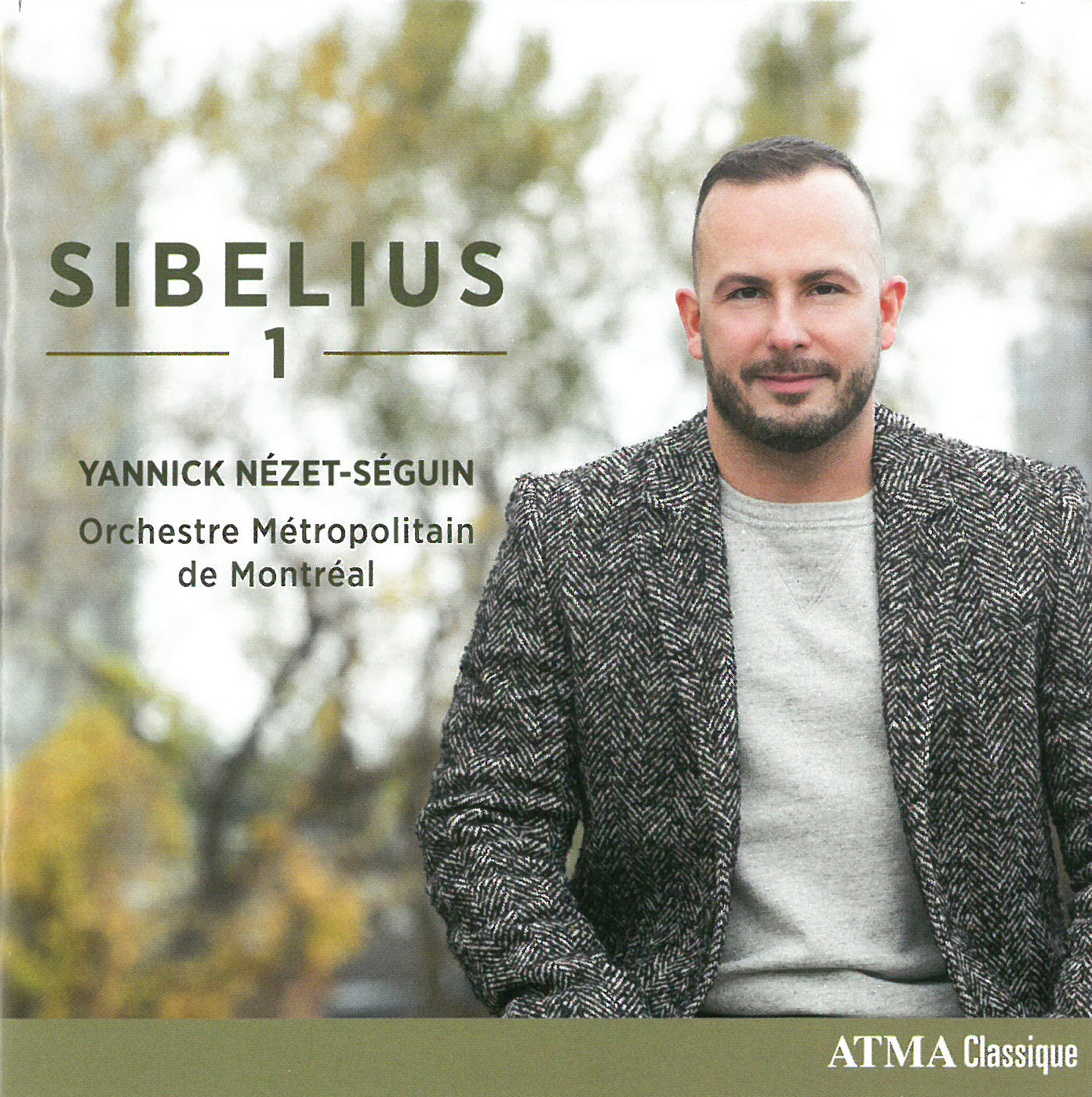
12 Sibelius 1Sibelius 1
Orchestre Metropolitain; Yannick Nézet-Séguin
ATMA ACD2 2452 (atmaclassique.com/En)

Jean Sibelius was still under the influence of Tchaikovsky when he wrote his Symphony No.1 in E Minor Op.39, but these Russian overtones coexist with assuredly individualistic orchestral textures and themes. At the very opening, for example, in a highly original stroke, a clarinet over a gentle timpani roll introduces the main theme, which achieves its apotheosis at the climax of the finale.

In the second movement the debt to Tchaikovsky is clearly revealed in the way the languidly mournful opening theme is developed prior to the stormy climax. An emphatically rhythmic Scherzo reveals another influence: Bruckner, a composer whose music Sibelius had first encountered in Vienna in 1890. The finale, marked quasi una fantasia, veers between frenzied agitation and a grandly refulgent big tune in which the strings predominate.

As this disc reveals, in the right hands the First Symphony can be an extremely exciting work. Yannick Nézet-Séguin seems to give notice that he is one of the great Sibelians of the contemporary era, as he finds just the right level of energy. His control of the mood and poetics of the work – its gradations of bleakness and majesty – is affecting. As the symphony unfolds the Orchestre Métropolitain de Montréal, for its part, responds with a brilliance that is never forced.

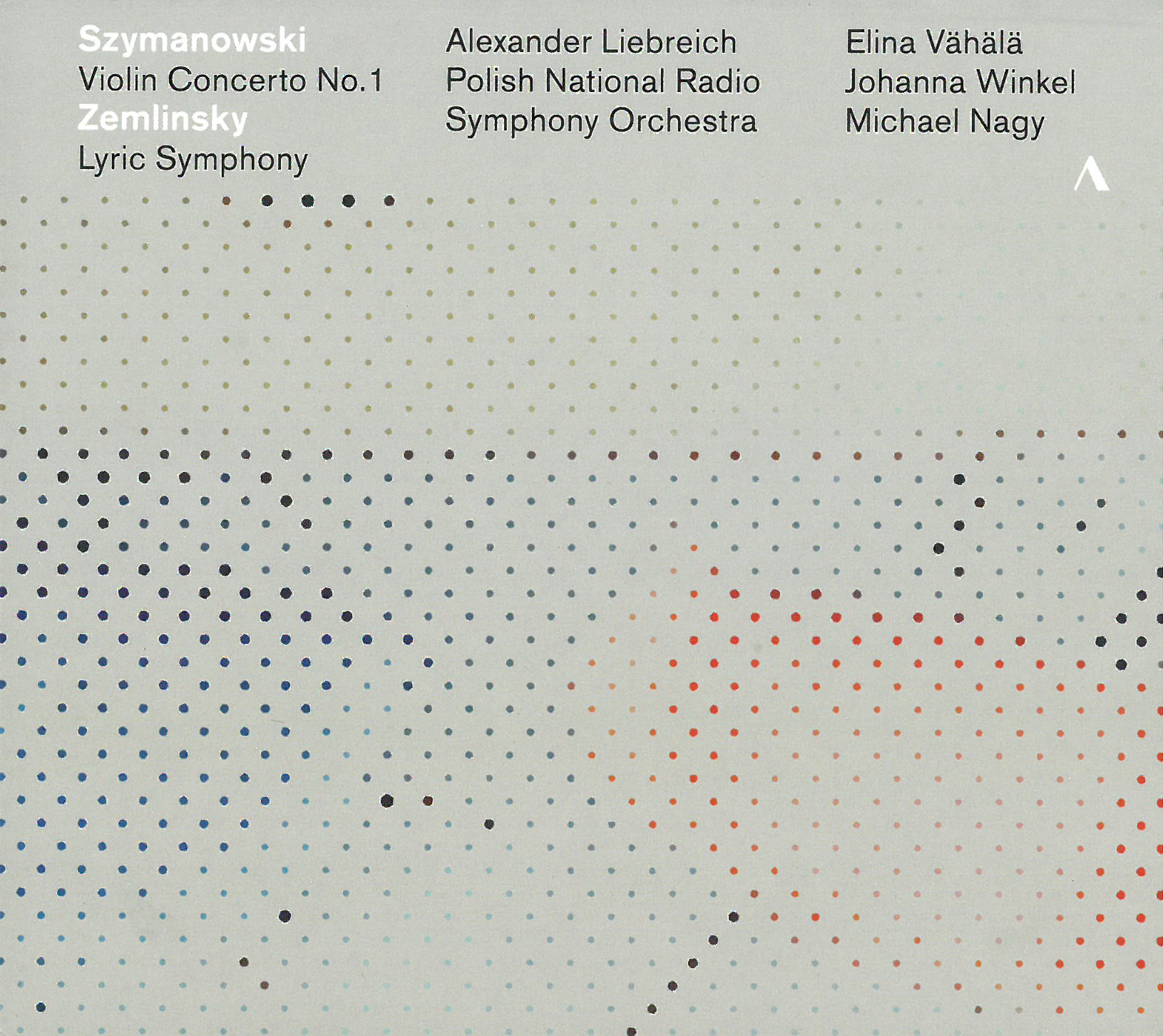
13 SzymanowskiSzymanowski: Violin Concerto No. 1; Zemlinsky: Lyric Symphony
Elina Vähälä; Johanna Winkel; Michael Nagy; Polish National Radio Symphony Orchestra; Alexander Liebreich
Accentus Music ACC 30470 (accentus.com)

Many recordings that include the Violin Concerto No.1 by Karel Szymanowski (1882-1937) or the Lyric Symphony by Alexander Zemlinsky (1871-1942) are now available. This Polish CD features idiomatic orchestral playing of the Szymanowski; also, its particular pairing points up what the two composers have in common. French-Impressionism-influenced exoticism, romance and fantasy figure in their works, and both set Rabindranath Tagore poems from the same translation (Szymanowski in Four Songs, op. 41). Violinist Pawel Kochański’s 1915-16 collaboration gave Szymanowski great confidence; here, the resulting concerto’s fiery virtuosity and sensual melodies receive nuanced, secure treament from Elina Vähälä. By contrast, Anne Akiko Meyers’ 2017 Avie recording with the Philharmonia Orchestra features more assertive bowing and tone, with a broader sweep to lyrical passages and the cadenza.

Zemlinsky’s Lyric Symphony (1923) includes seven Tagore settings, presenting a love affair’s successive moods. In the central fourth movement (“Speak to me...”), Johanna Winkel’s soprano is magical, its long tones suspended over a soft ostinato plus harp and celeste glissandi. Michael Nagy brings a powerful, attractive baritone to the following riposte, “Free me ...,” whose swagger fails to mask underlying despair. I find the Polish National RSO orchestra led by Alexander Liebreich excellent; the recorded sound, however, needs more instrumental definition, as in the Orchestra de Paris version (Capriccio, 2007) conducted by Christoph Eschenbach. Still, for those whose collection lacks these two works, this Accentus disc would be a valuable addition.

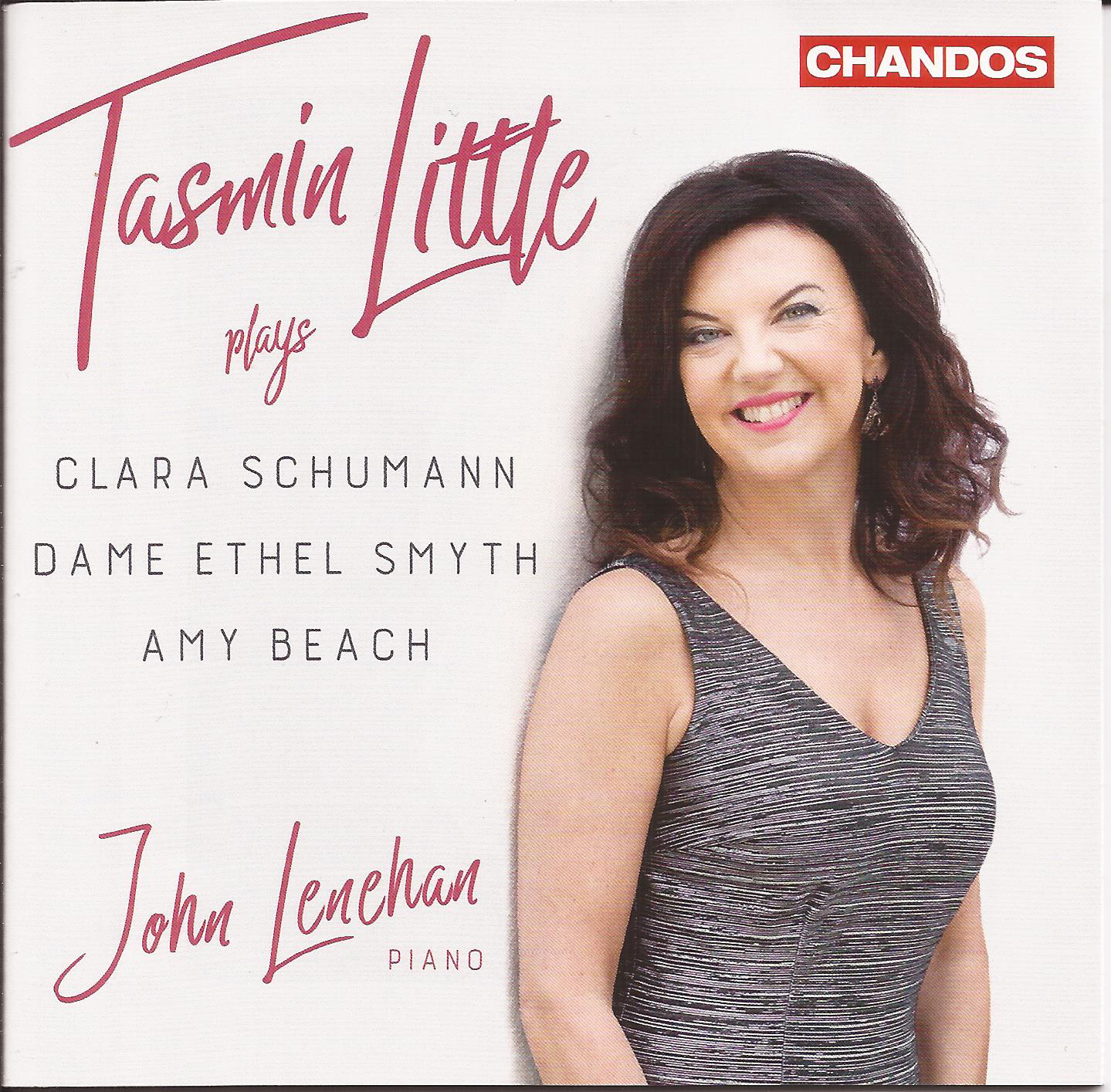
01 Tasmin LittleOn her latest Chandos CD Tasmin Little plays Clara Schumann, Dame Ethel Smyth & Amy Beach (CHAN 20030 chandos.net), the outstanding English violinist is accompanied by her longtime recital partner John Lenehan. All three women composers were encouraged by their families in their early musical endeavours but experienced far less support, if not outright opposition, when it came to pursuing professional careers.

Beach’s Violin Sonata Op.34 from 1896 is a full-blooded work with sweeping melodies and rich harmonies in the German Romantic tradition; music critics in Berlin noted its indebtedness to Robert Schumann and Brahms. It draws big, strong playing from both performers.

Clara Schumann’s compositional activity declined – by choice – after her marriage to Robert, and the Drei Romanzen Op.22 from 1853 was her final chamber work. Originally described as being for piano and violin these lovely pieces again feature flowing melodies for the violin over quite demanding passage work for the pianist.

Ethel Smyth’s Violin Sonata Op.7 from 1887 also shows a strong Germanic influence, hardly surprising given that ten years earlier the then-19-year-old composer had moved to Leipzig to study and had spent the subsequent decade on the continent, being encouraged by both Clara Schumann and Brahms.

Two lovely short pieces by Beach – Romance Op.23 and Invocation Op.55 – complete a terrific CD. Little has announced her decision to retire from the concert stage in 2020 when she turns 55. Presumably – and hopefully – it won’t include an end to her outstanding series of superb CDs.

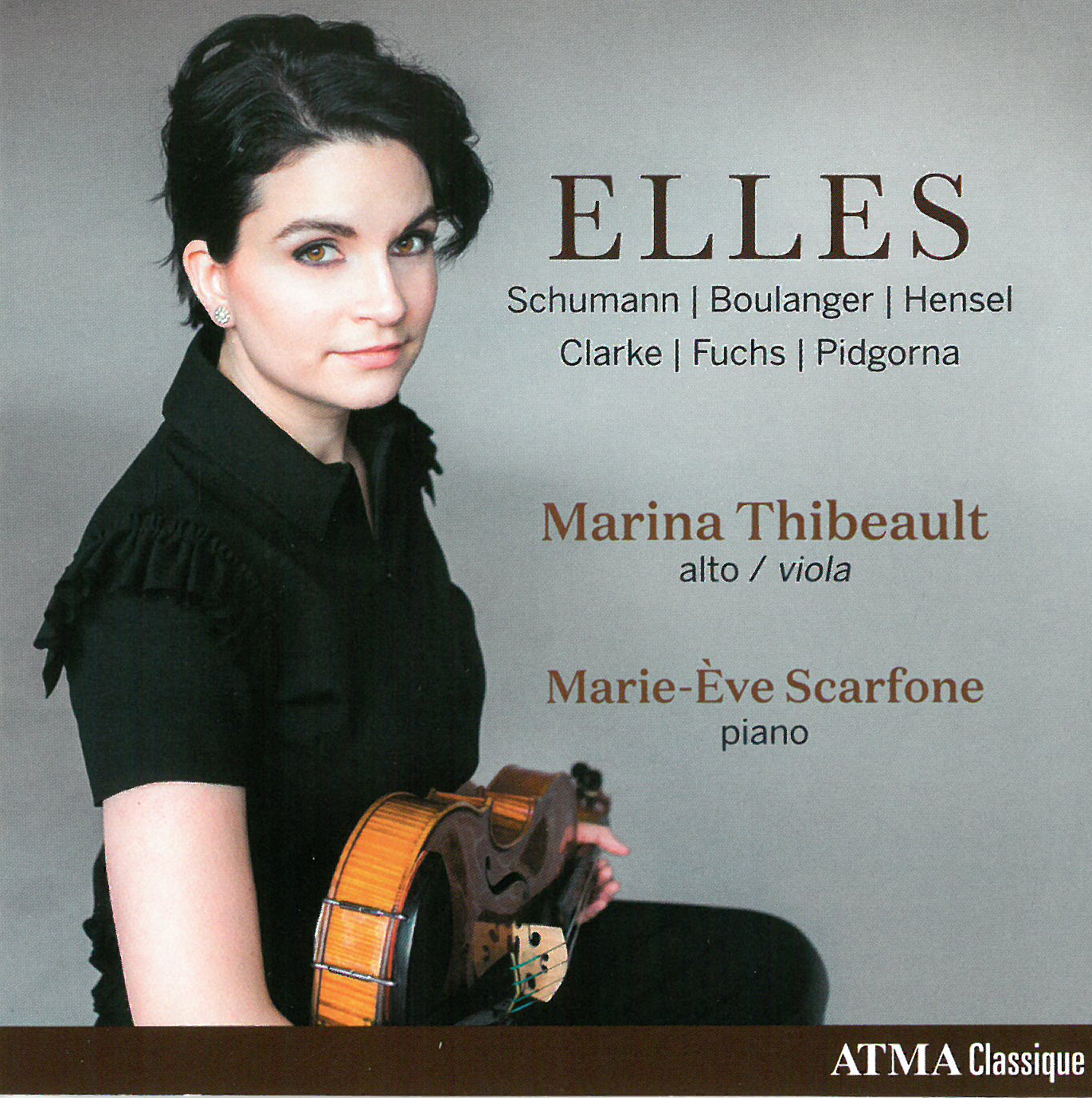
02 EllesClara Schumann’s Three Romances Op.22 appear again on another recital of works by women composers, this time as the opening tracks on ELLES, featuring the Canadian duo of violist Marina Thibeault and pianist Marie-Ève Scarfone (ATMA Classique ACD2 2772 atmaclassique.com/En). There’s no word on the transcription source (a viola version was published in 2010) for this or the following work on the CD, the Trois pièces pour violoncelle et piano by Nadia Boulanger. Written in Boulanger’s mid-20s, some seven years before she gave up composition to concentrate on teaching, the piano again features prominently in three brief movements, two of which were transcriptions of organ improvisations.

A very brief setting of a Goethe poem by Fanny Hensel, Mendelssohn’s highly talented sister, precedes the two major works on the disc: Rebecca Clarke’s Sonata for Viola and Piano from 1919; and the Sonate Pastorale for solo viola by the American violist Lillian Fuchs. A professional violist, Clarke left a wealth of viola works that finally seem to be attracting the amount of recording attention they richly deserve. Written in New York, her sonata is redolent of contemporary French music.

In all the viola and piano works, Thibeault plays with a pure tone and a smooth melodic line, ably supported by Scarfone; there are times, perhaps, when a stronger attack could be used. That, however, is exactly what we get in the two unaccompanied works that follow. Fuchs wrote little in a long life (both she and Clarke made it into their 90s) but the three-movement Sonate is a simply terrific work that brings the best playing on the CD from Thibeault.

Another solo work that began as a piece for cello, young Canadian composer Anna Pidgorna’s The Child, Bringer of Light from 2012, ends the CD. Its eight continuous sections use a variety of techniques to great effect and once again show just how talented a player Thibeault is.

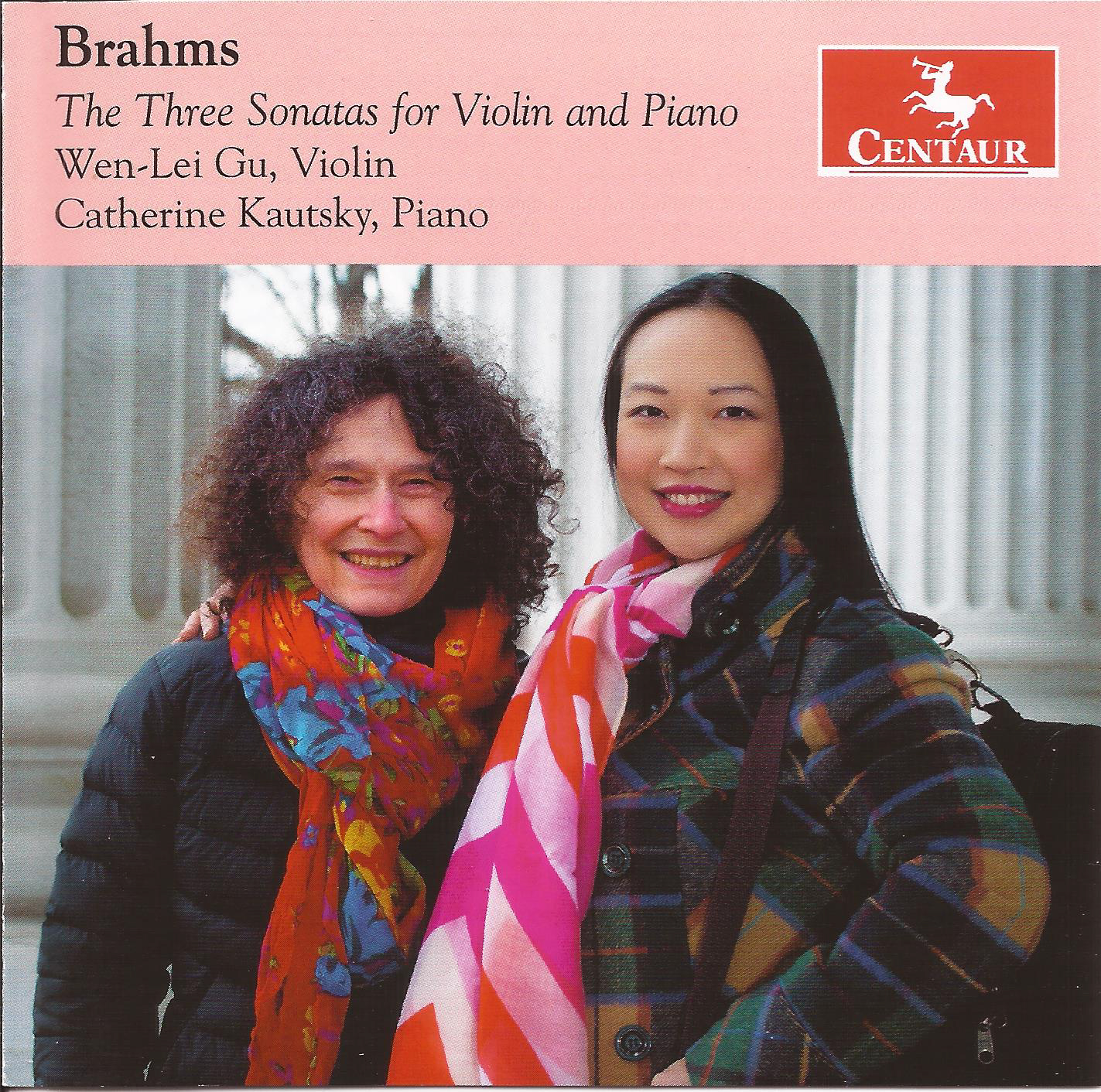
03 Brahms Wen lei GuThere’s a really lovely set of the Brahms Three Sonatas for Violin and Piano featuring the duo of violinist Wen-Lei Gu and pianist Catherine Kautsky (Centaur CRC 3684 naxosdirect.com). Both performers are on the music faculty at Lawrence University in Appleton, Wisconsin.

The opening bars of the Sonata No.1 in G Major Op.78 always seem to set the tone for all three works, and it’s clear from the outset here that we are in excellent hands. From the autumnal feel of the first sonata through the warmth of the Sonata No.2 in A Major Op.100 to the passion and restlessness of the Sonata No.3 in D Minor Op.108 the playing here is all you could ask for, with warmth, sensitivity, passion when needed and an ever-present sense of innate musicality.

If you collect different performances of these lovely sonatas then this will make a strong and welcome addition to your CDs; if you’re just looking for one set then this one has a great deal to offer and will certainly not disappoint you.

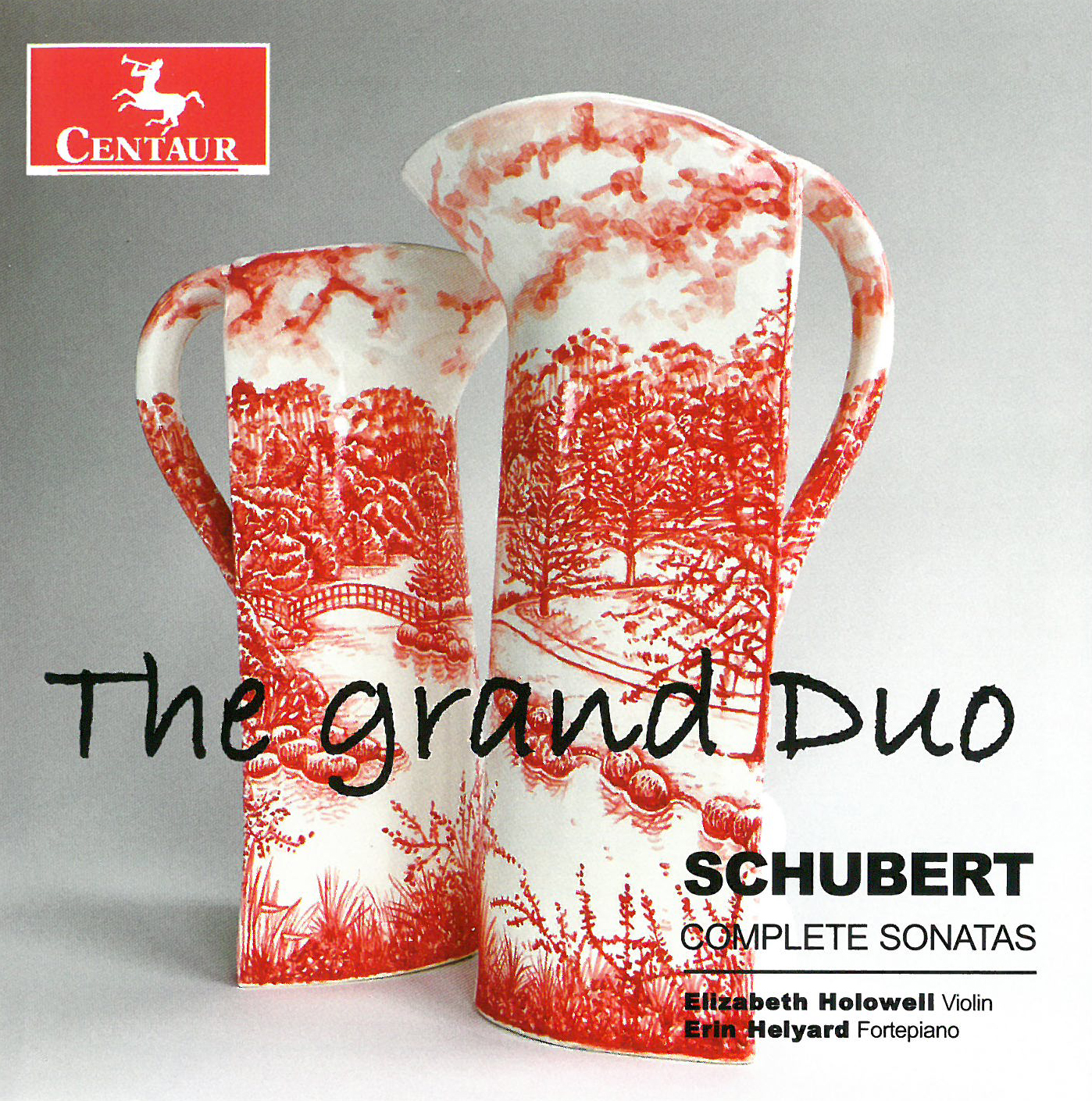
04 Schubert Grand DuoThe Australian violinist Elizabeth Holowell studied Viennese string performance practice during the 1780 to 1820s in her postgraduate work – studies which had a major influence on The Grand Duo, her recording of the Schubert Complete Sonatas for Violin and Piano with Erin Helyard at the fortepiano (Centaur CRC 3665 naxosdirect.com).

The result is an attempt to recreate as far as possible what a contemporary performance of the music would have sounded like. The violin here is without modern fittings and has gut strings; the bow is described as a pre-Tourte transitional model. More significantly, the fortepiano is a new copy of a contemporary Viennese model by Conrad Graf that has six pedals that provide a variety of special tonal effects, including one for Turkish or janissary bells and drums.

Holowell says that interpretation of the notation of these works led to reassessments of tempo, dynamics, phrasing, bowing and articulation. The recording levels also reflect the fact that the three 1816 sonatas – in D Major D384, A Minor D385 and G Minor D408 – were published as sonatas “with violin accompaniment.” The Sonata in A Major D574, known as The Grand Duo completes the CD.

The results are, at times, quite startling. It’s part Historically Informed Performance, part early Romantic in style: vibrato comes and goes; there’s portamento and elasticity in tempo and phrasing; and very occasional pitch issues with the gut strings. Above all, the fortepiano sound varies a good deal, including adding crashing bells and drums to the occasional chord. It’s intriguing and always more than merely interesting, but it will probably come down to a matter of personal taste as to whether you feel that this approach really enhances the music and your understanding of it, or merely serves as a historical demonstration.

Either way, it’s not your standard Schubert recital!

There are two quite superb guitar CDs from Naxos this month, both beautifully recorded at St. Paul’s Church in Newmarket, Ontario with the ever-reliable Norbert Kraft as producer, engineer and editor. At the Naxos retail price they are both simply must-buys for any lover of the classical guitar.

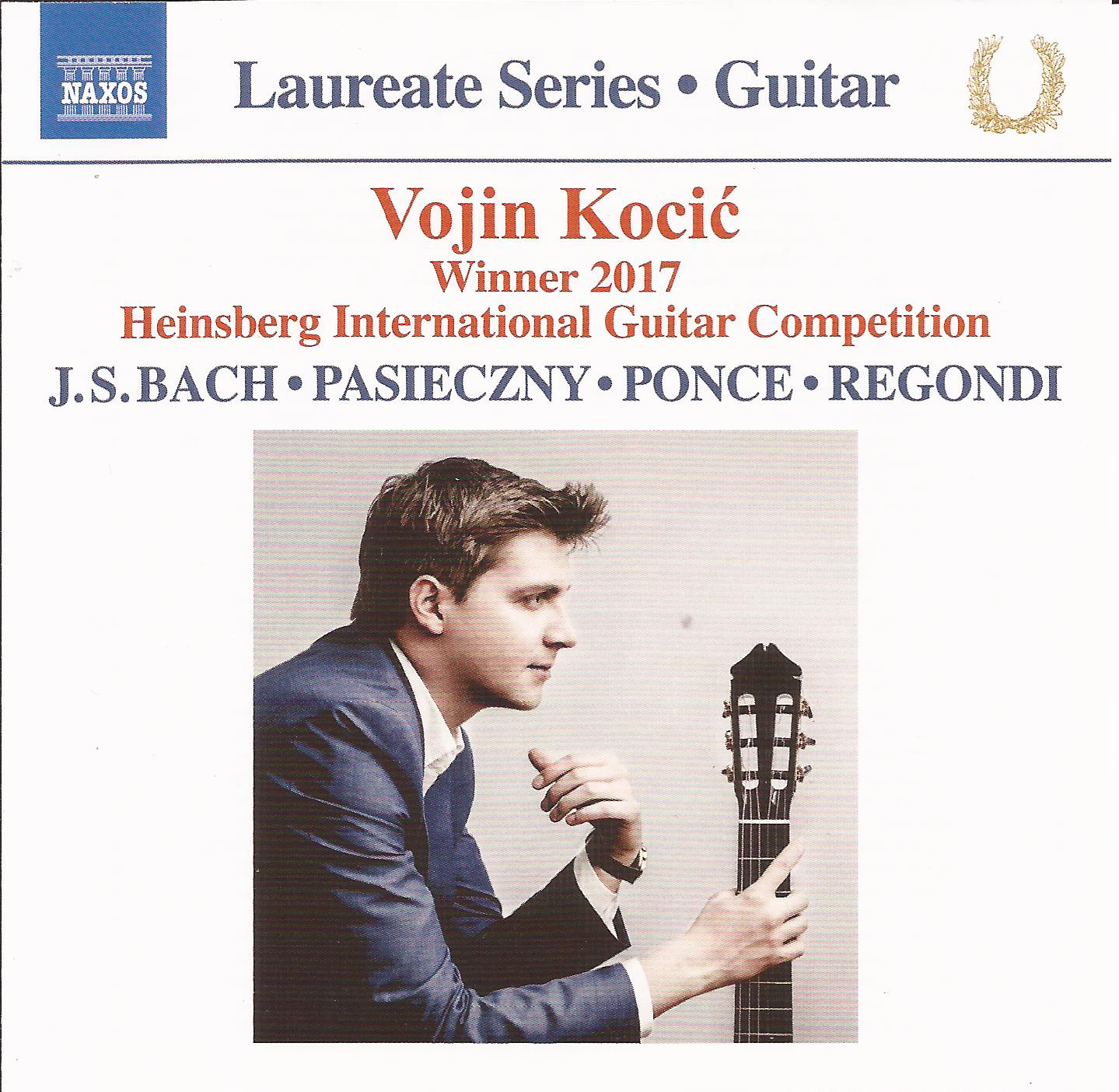
05 Vojin KocicThe debut CD by Serbian guitarist Vojin Kocić (born 1990) follows his win at the 2017 Heinsberg International Guitar Competition in Germany – and what a debut it is, with music ranging from the Baroque to the present day (8.573906 naxos.com).

Kocić’s own arrangement of the Bach Partita No.2 in D Minor BWV1004 for solo violin works beautifully. It’s essentially the violin score note for note, with a crystal-clear line, superb articulation in the numerous fast runs, a lovely sense of pulse and a warm resonance that allows the implied harmonies to sound through. In particular, the guitar’s chording ability means that the multiple stopping – always a stumbling block for violinists – ceases to be a problem. It makes the Sarabande and, in particular, the monumental Chaconne (with its quadruple stops) smoother, calmer and – appropriately – more stately. Add beautifully shaped phrasing that displays musicianship to match the impeccable technique and you have a performance that will stand comparison with any.

The standard never drops in the other three works on the CD. The Introduction et Caprice Op.23 is a dazzling work by Giulio Regondi, the 19th-century prodigy whose music fell into oblivion before being republished in 1981. Manuel Ponce wrote his Diferencias sobre la folía de España y Fuga for Segovia in 1930; it’s one of the more challenging works in the standard repertoire.

Marek Pasieczny’s Phosphenes (After Sylvius Leopold Weiss) was commissioned by the International Guitar Festival as a set piece for their Guitar Masters 2016 competition in Warsaw. It’s a fairly short but tough work that shows Kocić equally comfortable in the contemporary field.

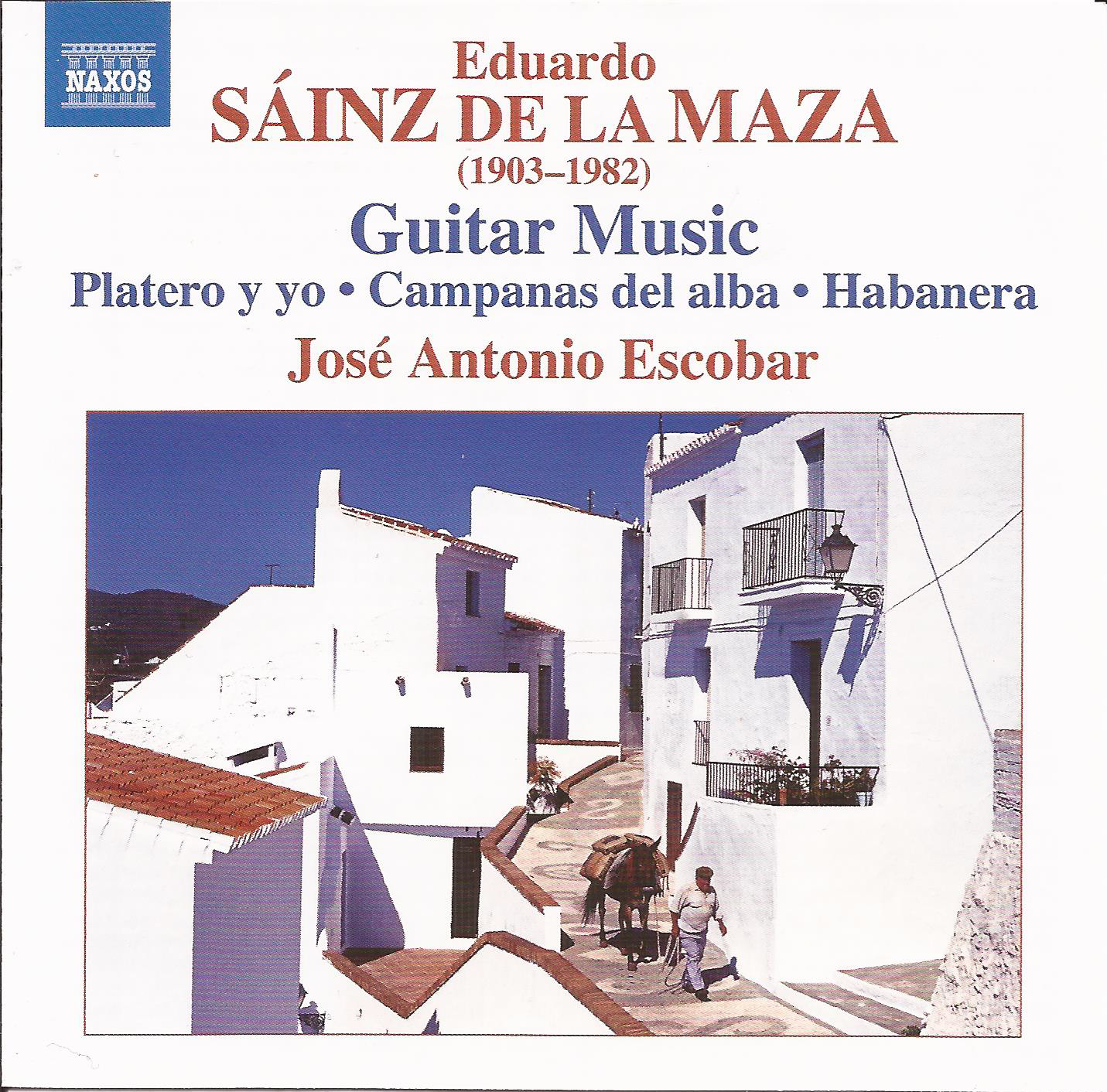
06 de la MazaThe Chilean guitarist José Antonio Escobar (born 1973) is the soloist on the second CD, Guitar Music of Eduardo Sáinz de la Maza (8.573456 naxos.com). The composer’s life spanned most of the 20th century, and the works here are mostly from the period 1961 to 1973.

The main work on the CD is the lovely Platero y yo (Platero and I), a suite of eight scenes from the 138 prose-poems of the same name by the Spanish poet Juan Ramón Jiménez that illustrate tales of the donkey Platero and his owner. It’s a work full of tenderness and colour. Ten shorter works that still serve to illustrate the composer’s technical and expressive breadth fill out the CD, including a delightful Habanera that involves tuning down the two lower strings and three Homenajes – homages to Haydn, Toulouse-Lautrec and the guitar itself.

Again, the playing here is clean, warm, resonant and full of colour, and with impeccable technique, the fast tremolo in the Campanas del Alba (The Bells of Dawn) being particularly brilliant. 

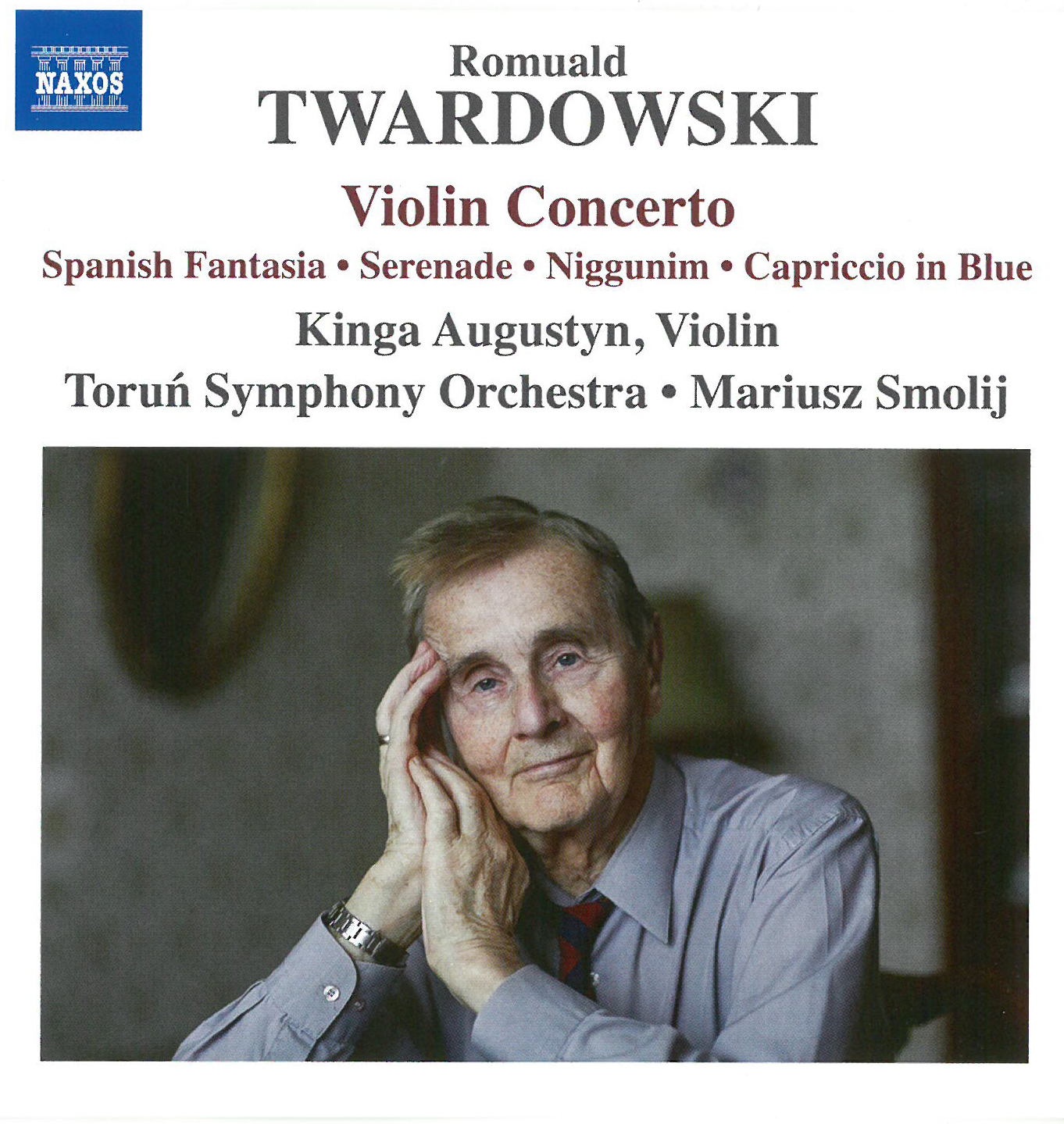
07 TwardowskiThe music of Lithuanian composer Romuald Twardowski (b.1930) is presented on Violin Concerto, featuring the New York-based Polish violinist Kinga Augustyn with Poland’s Toruń Symphony Orchestra under Mariusz Smolij (Naxos 8.579031 naxos.com). Twardowski’s music is described as blending tradition and modernity with what the composer calls “a clarity of expression,” and the works here are all highly accessible and finely crafted.

Three pieces – the brilliant Spanish Fantasia from 1984, Niggunim “Melodies of the Hasidim” from 1991 and Capriccio in Blue “George Gershwin in memoriam” from 1979 – were originally for violin and piano and later orchestrated by the composer. The respective influences – Andalusian music, Polish/Ukrainian Jewish melodies, and jazz – are captured effectively and give the soloist ample opportunity to display a range of styles.

The major work is the quite lovely 2006 Violin Concerto, a mainstream work with a challenging cadenza. The Serenade for string orchestra from 2003, another lovely work with a lush Andante movement, completes the CD. Augustyn’s playing is clear, warm and assured, untroubled in the technically challenging passages and with a flowing line in the many melodic sections. Orchestral support and recorded sound are both excellent.

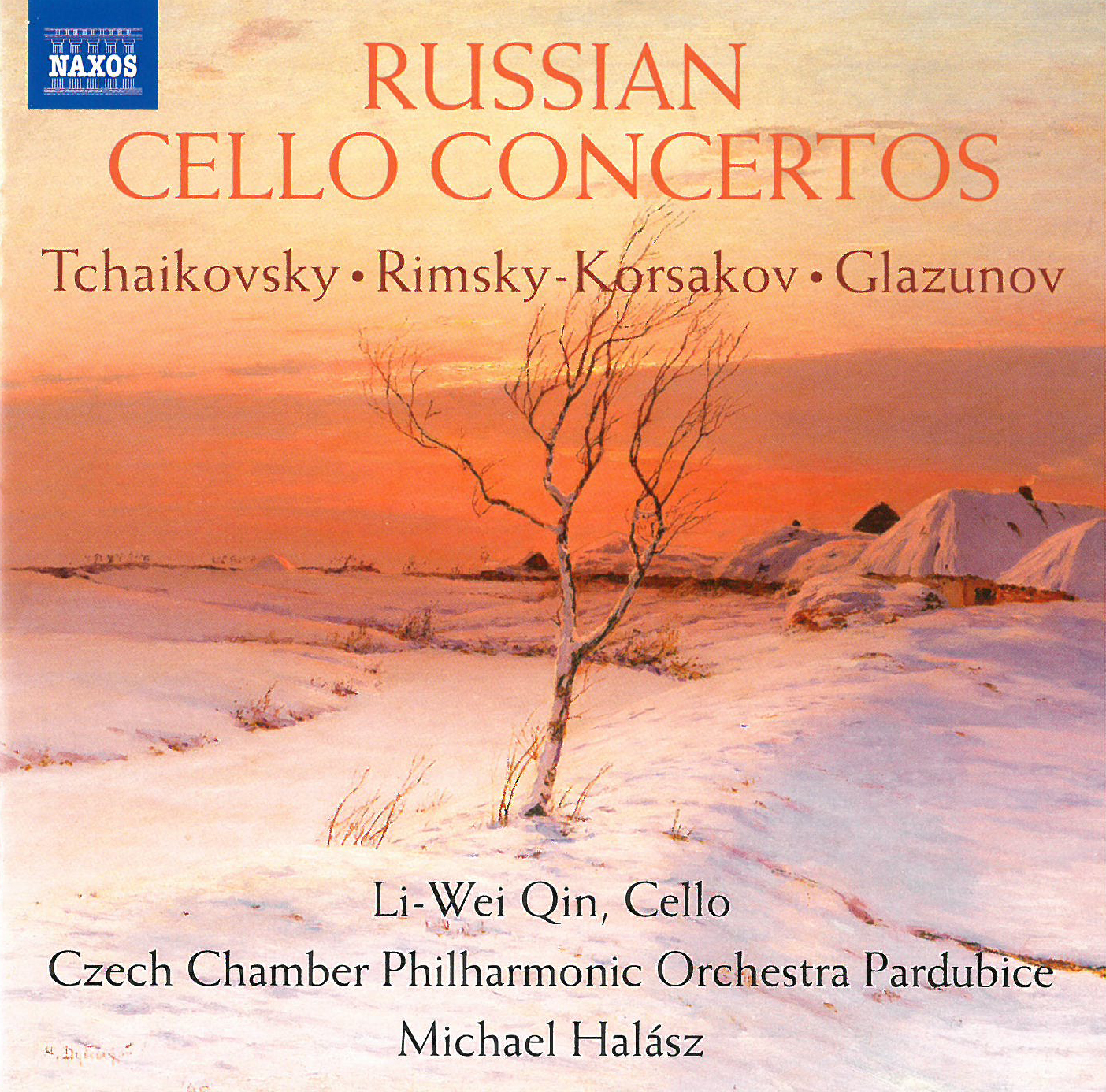
08 Russian CelloLi-Wei Qin is the cello soloist on Russian Cello Concertos with the Czech Chamber Philharmonic Orchestra Pardubice under Michael Halász (Naxos 8.573860 naxos.com). It’s a somewhat misleading title, given that of the seven works on the CD only one – Glazunov’s Concerto ballata in C Major Op.108, written in 1931 after he had left Russia – is anything like a true concerto, although admittedly Tchaikovsky’s Variations on a Rococo Theme in A Major Op.33, heard here in the usual revised and rearranged version by the composer’s colleague Wilhelm Fitzenhagen, does come close.

Qin draws a lovely sound from his 1780 Guadagnini cello in the two major works as well as in the shorter recital pieces: Glazunov’s Deux Morceaux Op.20 and the Chant du ménestrel in F-sharp Minor Op.71; Tchaikovsky’s Pezzo capriccioso in B Minor Op.62 and the Andante Cantabile from his String Quartet No.1 in D Major Op.11; and Rimsky-Korsakov’s Serenade Op.37. 

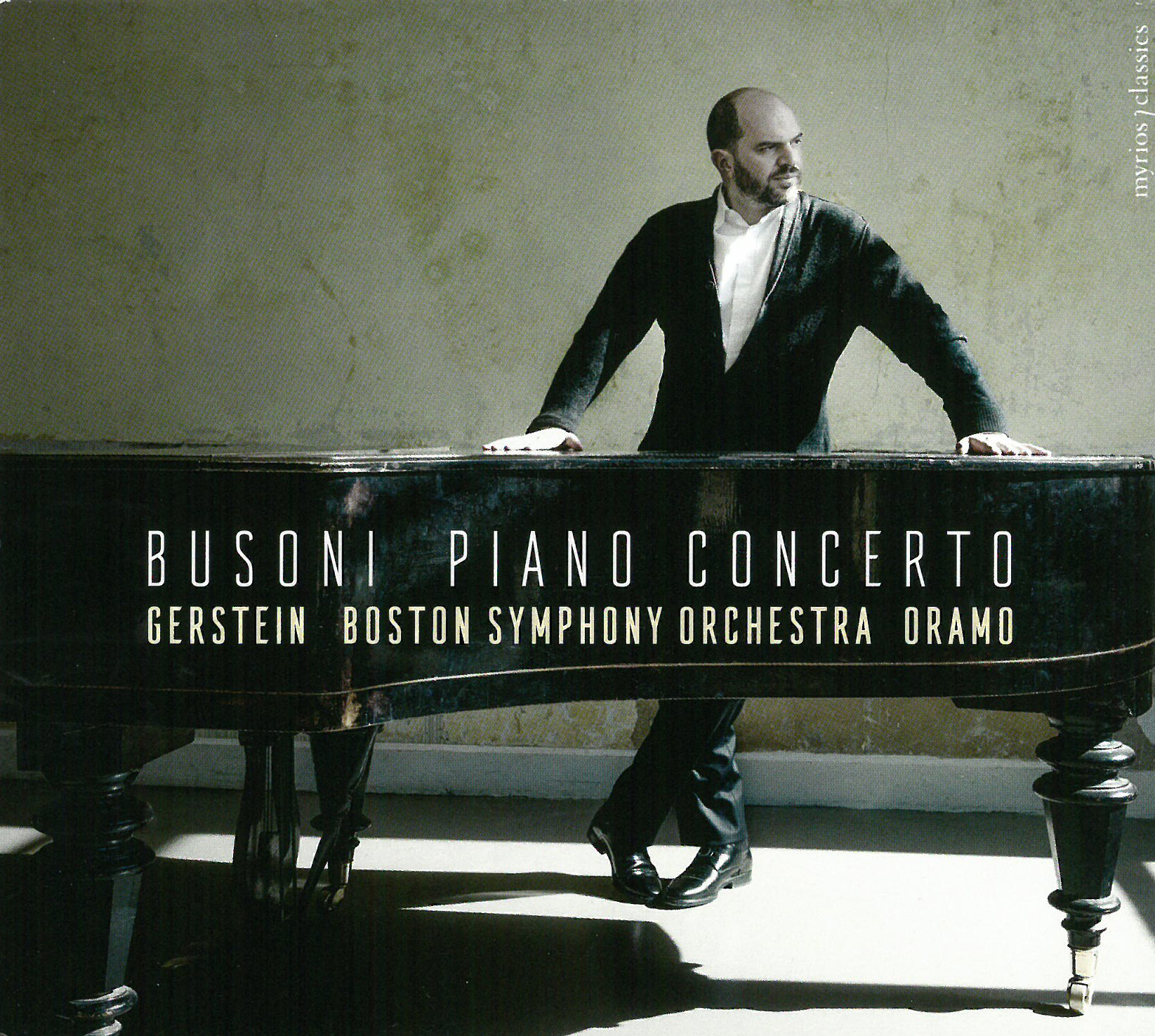
01 Gerstein BusoniKirill Gerstein’s new recording of the Busoni Piano Concerto (Myrios Classics, MYR024, naxosdirect.com) is a mammoth production in every way. The Piano Concerto in C Major Op.39 is a five-movement work that takes more than 70 minutes to perform and calls for a large male chorus that sings extensively through the final movement. Premiered in late 1904, it displays a breadth of conception and orchestration stylistically similar to later Mahler symphonies and Rachmaninoff piano concertos. And while it predates the modern cinema by many decades, the music has a grand sweep of musical ideas for both the piano and the orchestra that conjures up epic films on big screens.

Busoni has made the piano very much an equal partner with the orchestra in this work rather than having the two engage in a contest of wills. Some of the critical writing about the concerto sees the work as the final iteration of this late-Romantic form, the end of one era rather than the beginning of a new one. But there is so much forward-looking writing in the concerto that grounds for the counter argument are very strong. Busoni’s own personal evolution toward modernism and experiments with keyboard tonality are further evidence of his contribution to music in a time of profound transition.

This disc was recorded live at Symphony Hall in Boston. Gerstein’s output of sheer pianistic energy for the duration of this enormous work is amazing. For many, this Busoni concerto will be new material, and because of its superb performance, should be eagerly acquired.

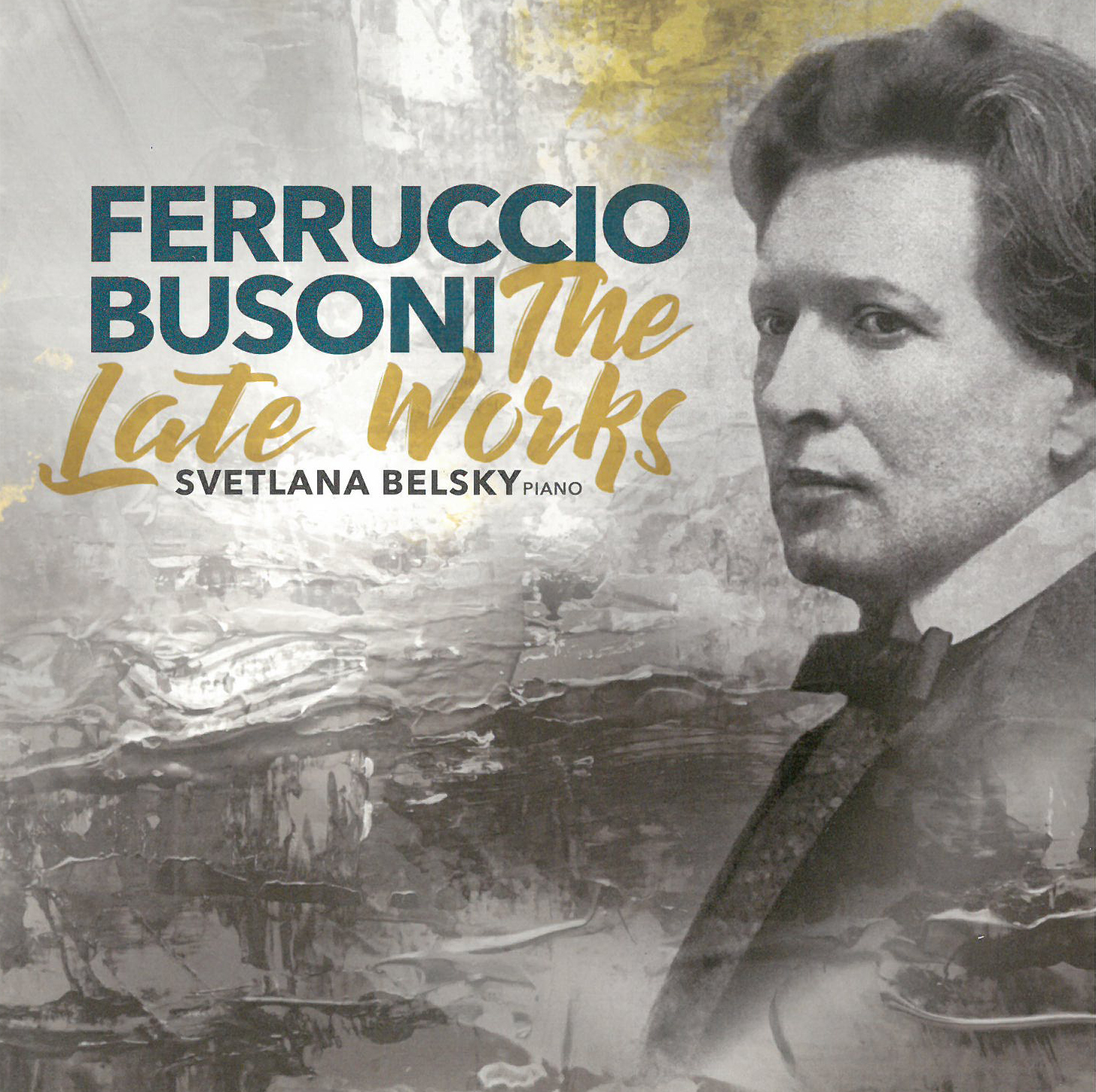
02 Busoni Late WorksSvetlana Belsky has an enduring fascination with Busoni whose life as a pianist figures centrally in her doctoral dissertation. Her new release Ferruccio Busoni – The Late Works (Ravello RR8007, ravellorecords.com) reveals Busoni’s emerging modernist views on tonality and eventual rejection of late-Romantic performance practices.

Busoni was renowned for his technique, as any who have played his transcriptions of Bach organ works will know. Massive chords, dense harmonies and seemingly impossible reaches speak to his mastery of both composition and performance. These familiar baroque transcriptions make it all the more intriguing to hear Busoni writing in a voice so firmly early 20th century.

Belsky opens the disc with Sonatina Seconda, a striking example of the composer’s inclination to challenge conventional tonality. The Nine Variations on a Chopin Prelude follow with their increasing degree of technical difficulty. The last work is the set of six Elegies, each dedicated by Busoni to one of his piano students. A curious feature of this set is the appearance of some material from his Turandot Suite. Busoni mistakenly thought the tune Greensleeves was a Chinese folk melody and used it as such in this setting (apologies still owing to Henry Tudor or an anonymous contemporary).

This disc is an important document. With it, Belsky reveals a little-known side of this composer whose original works are refreshingly innovative for their time. 

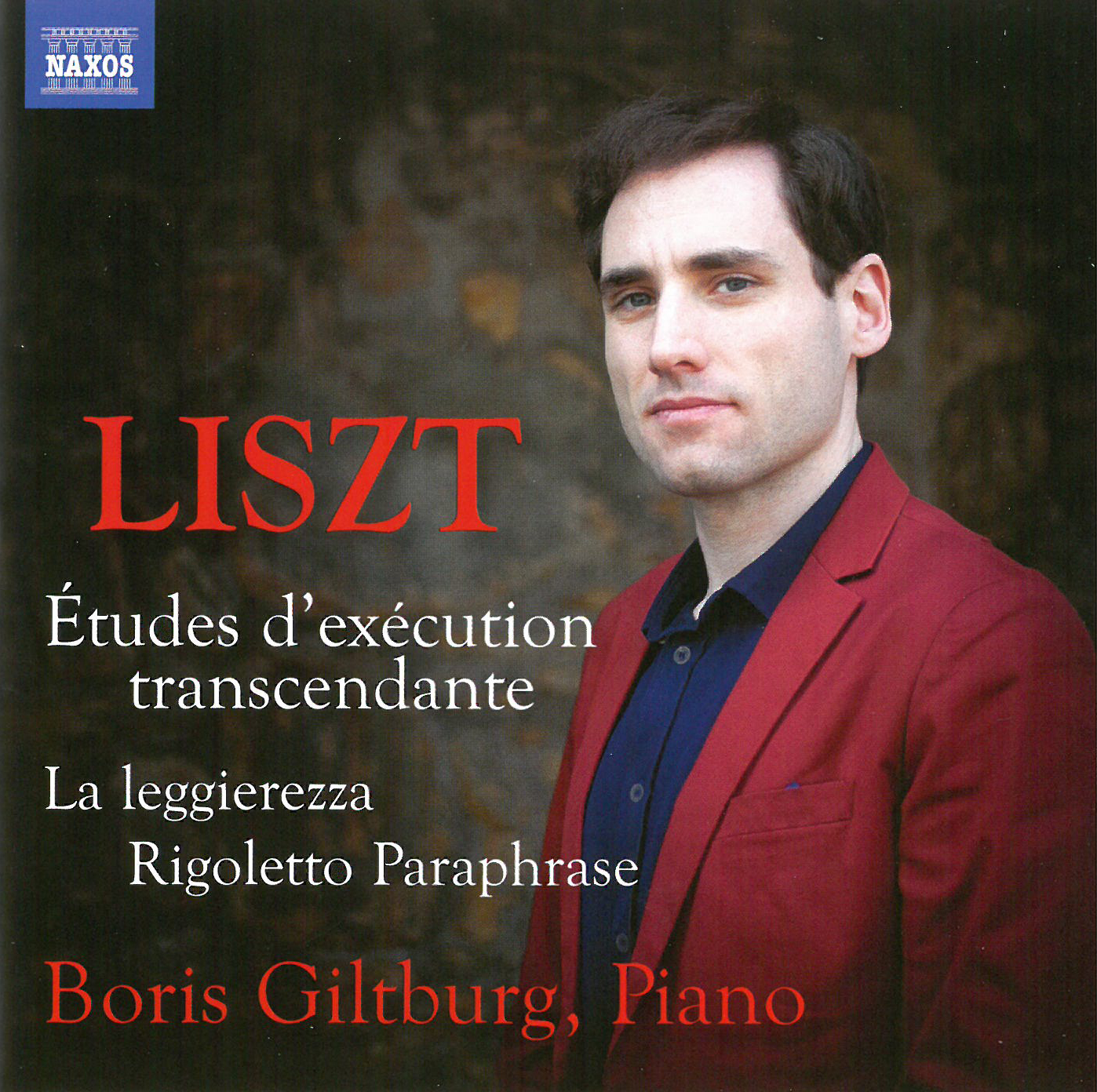
03 Boris GIltburgBoris Giltburg’s new Naxos release Liszt Études d’exécution transcendante (8.573981, naxos.com) expands his impressive and growing discography for the label.

A good many musical scribes have opined on the way that Liszt’s work, in the hands of the finest performers, forges a powerful single expression in which the components are indistinguishable. Composer, performer and instrument become a unified artistic force. Giltburg plays Liszt? Or Liszt plays Giltburg? Such ambiguity can only arise because of the brilliance of this performance. There is both total surrender and total control. Ambiguity and contradiction, the powerful drivers of the highest artistic experience, are everywhere in this recording. Any one of the Études could serve as an example of peerless performance but No.4, “Mazeppa” stands out for its captivating rhythm as well as the three harmonic suspensions in the middle section that add a brief contemplative moment to the maelstrom.

The Études alone would be enough to fill a disc but Giltburg also adds Liszt’s Paraphrase de concert sur Rigoletto and the second of the 3 Études de concert, S144/R2b. The Verdi Paraphrase is an example of the distance that any of Liszt’s paraphrases lie from their original material. With only the melody intact, Giltburg wraps the composer’s harmonic and ornamental creation around the operatic excerpt in a way that reimagines it as wholly new.

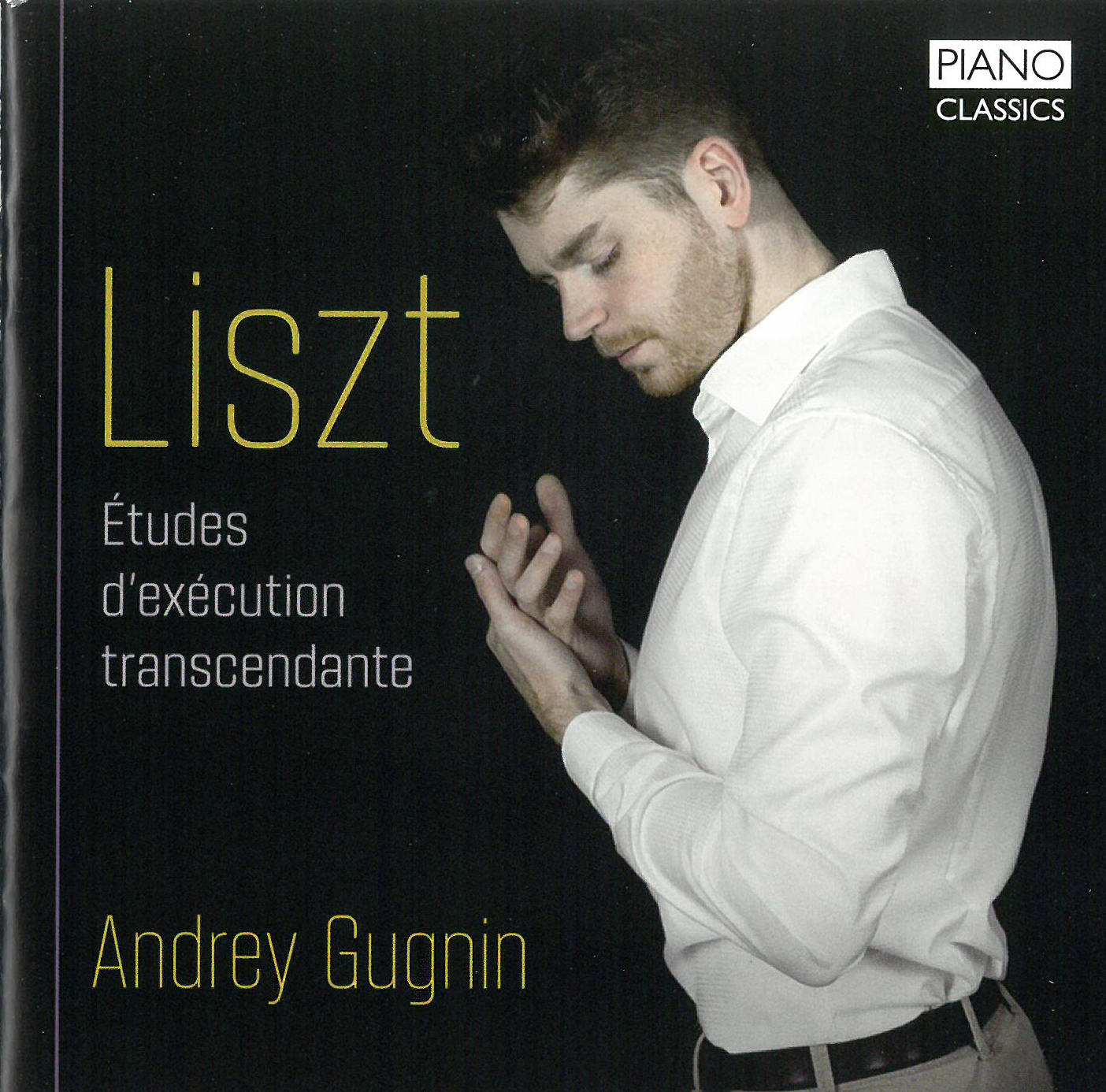
04 Andrey GugninAndrey Gugnin has also recorded the Liszt Études d’exécution transcendante (Piano Classics, PCL10158, naxosdirect.com). This award-winning, festival-conquering young pianist plays with a towering technique. More poignant, however, is the affinity he displays for Liszt’s writing. From the very outset of the Études he plays with the single-minded conviction that the piano is no longer just a piano. Gugnin, like Liszt, is seemingly unburdened by any limitations that he or the instrument might have. Herein lies the transcendental nature of this music. The pianist’s extraordinary technique moves the music beyond conventional levels of comprehension to a richer understanding of what the sounds can actually convey. Having transcended the physical challenges of the music, Gugnin brings a mysticism to his playing that matches the composer’s, note for note. It’s the perfect pairing of master and disciple with the tantalizing promise that the student may even surpass his mentor.

Gugnin’s entire performance blazes with energy – yet his ability to retreat into the quiet moments of Paysage and Harmonies du soir is as impressive as his explosive eruptions of Lisztian genius. Feux follets displays a beautifully sustained and controlled line that runs through the piece, with unassuming determination providing the backdrop for Liszt’s main ideas.

This performance is the rare combination of youthful athleticism and an unnatural early maturity.

05 Buchor GoldbergAnne-Catherine Bucher is among the latest to record the Johann Sebastian Bach Goldberg Variations (Naxos 8.551405, naxos.com). The peculiar challenges of the Variations seem to place them among the peaks that many keyboard artists want to conquer at least once in their performance lifetime. Considering the illustrious performance history of the work and the height at which that bar has been set, the undertaking can be a career risk. In this recording, however, there is no such hazard.

Bucher, an organist and harpsichordist, performs on a modern instrument by builder Matthias Griewisch. The two-manual harpsichord (cembalo) is a replica of a 1745 instrument from the workshop of Flemish builder Johann Daniel Dulcken. With three choirs of strings and at least one buff stop, the instrument offers a variety of individual and combined sounds along with opportunities to solo a voice on a separate manual with a different sound. This is something Bucher does first in Variation 7 and many times subsequently with wonderful effect. Bucher also has a profound grasp of the larger progressive structure Bach uses through the 30 variations. She makes this obvious both in her playing and in her concise liner notes.

The Goldberg Variations are, like any piece of music, a window into the soul of the performer. Choice of instrument, tempi, phrasings, etc. all say something about the player sitting at the keyboard. While Bucher’s recording is scholarly and informed, it rises quickly to gratifying levels of inspired creativity that have a lasting emotional impact. It’s a performance of thought and substance.

06 Mendelsson Piano ConcertosRonald Brautigam has a new recording of the Mendelssohn Piano Concertos (BIS, BIS-2264, naxosdirect.com) in which he performs on a modern fortepiano, a copy of Pleyel Op.1555 from 1830 which is still preserved in the Paris Museum of Music. The instrument’s sound is an immediate clue to the period project in which Die Kölner Akademie also performs with period orchestral instruments, historical seating plan and critical editions of scores.

Brautigam’s instrument is remarkable. While it has the characteristically short resonance of all fortepianos, it is 244cm (8 ft.) long and offers plenty of power against the volume of the orchestra. Equally impressive is the quick keyboard response to the extremely fast passages. The Presto movement of the Concerto No.1 is an example of this amazing key action technology from 1830. It’s unlikely that Pleyel had yet developed his own double escapement action to match his competitor Érard who’d invented it just a decade earlier. But Pleyel’s hammers and actions were known to be lighter and very responsive to the need for speed and repetition. Additionally, Brautigam’s modern copy also holds its tuning remarkably well for all the rigour that Mendelssohn’s score imposes on it. The upper register in particular is beautifully pitched and voiced.

In addition to the two Mendelssohn concertos, the disc also includes his Rondo Brillant in E-flat Major, Op.29, Capriccio Brillant in B Minor, Op.22 and Serenade and Allegro Giojoso, Op.43.

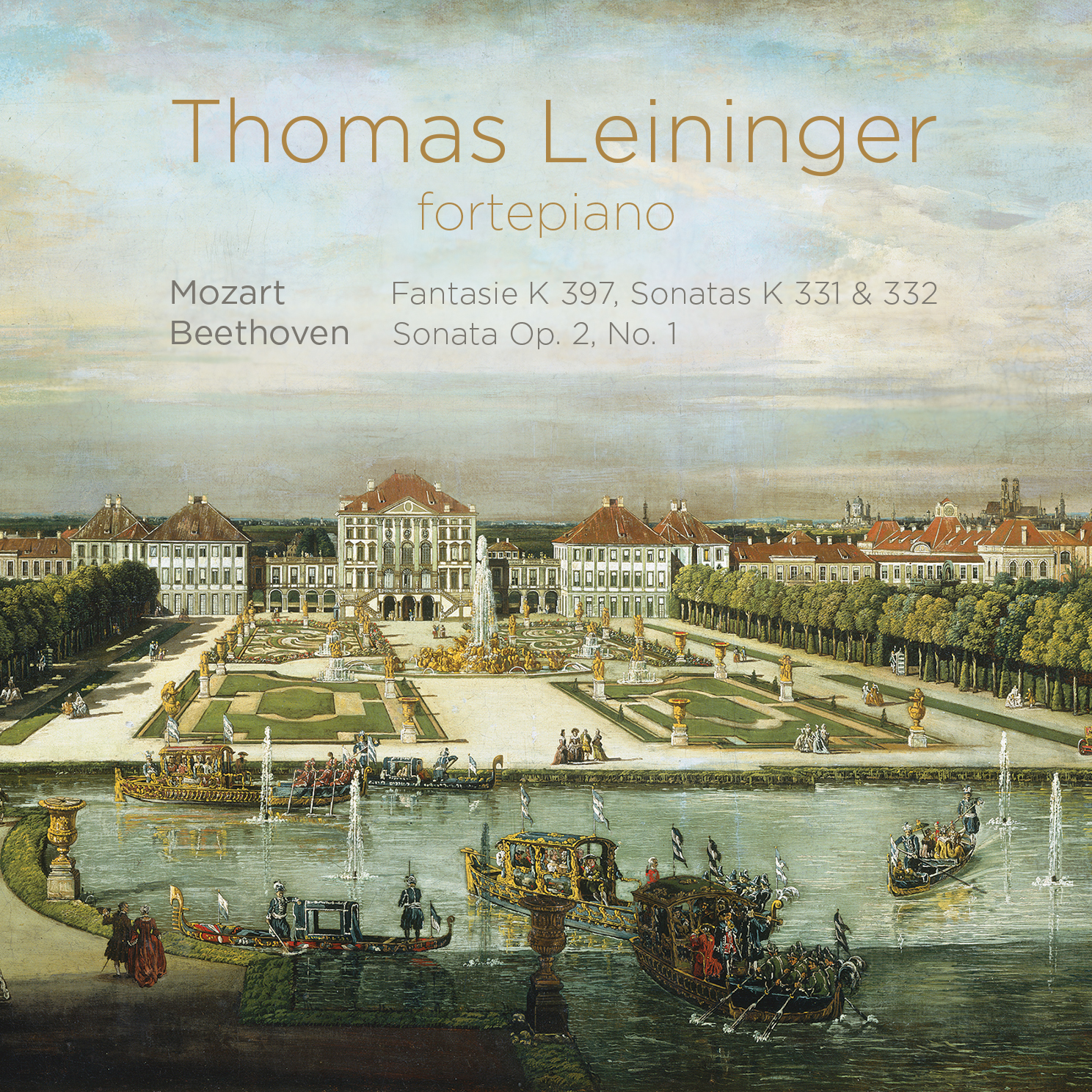
07 Leininger fortepianoThomas Leininger – Fortepiano, Mozart, Beethoven (Talbot Records, TR 1901, talbotrecords.net) is a new disc recorded at Von Kuster Hall, University of Western Ontario. Leininger plays a modern fortepiano built in Freeport, Maine after an instrument by Anton Walter, a German-born builder who ran a successful business in Vienna for nearly 50 years.

Leininger is a trained organist and harpsichordist. His recognized specialization in early music has attracted invitations for him to compose missing passages, many of them extensive, in fragmentary works by Handel and Vivaldi. On this disc, his performance of Mozart’s Sonatas K331 and 332, and Beethoven’s Sonata Op.2, No.1 demonstrates not only how such works could have sounded to their composers and audiences, but how differently phrasings, speeds and dynamics must have been understood. These period instruments respond differently to touch, produce different colours and offer a musical experience unlike what we know today.

Leininger knows his instrument extremely well. He uses the lighter, simpler mechanical action to shape the tone of his notes with great effect. His playing style uses the well-documented freedoms of tempo and ornamentation that are common for the repertoire period. An intriguing feature of this recording is the brief prelude that Leininger improvises before each of the sonatas. The production is well informed, and intelligently and beautifully played.

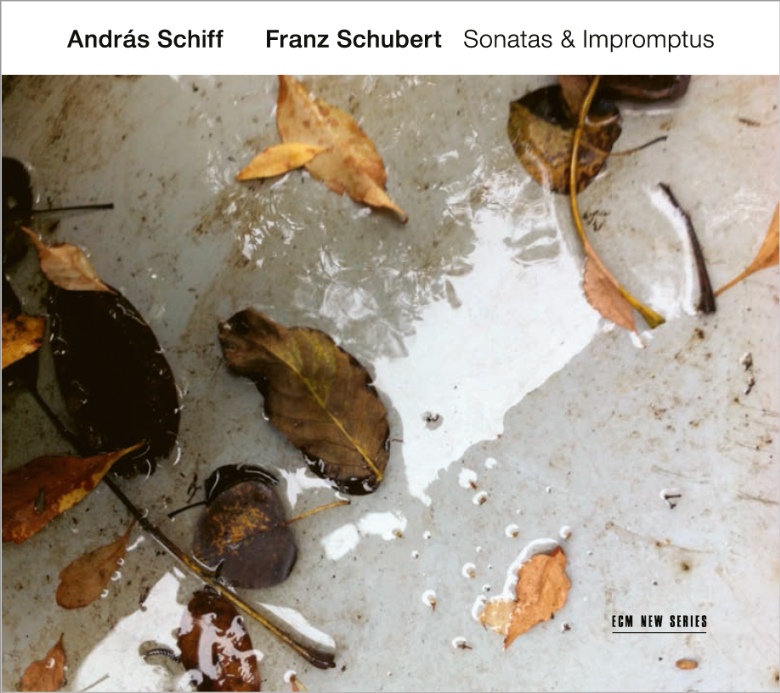
08 Schiff Schubert ECMIn 2010 Andras Schiff acquired a stunning walnut Brodman fortepiano built in Vienna ca. 1820. Brodman was one of Vienna’s finest builders whose instruments were, not surprisingly, owned by the Austrian Royal Family. The last Austrian Emperor took this one into Swiss exile with him in 1919. One of Brodman’s young apprentices named Bösendorfer in time took over the business and made it the familiar name we know today. This instrument underwent some restoration in 1965 and has been on loan to the Beethoven Haus in Bonn since Schiff took ownership. Schiff brought the instrument to London for a recital at Wigmore Hall in early 2015 where he performed a program of three Schubert Sonatas. The following year he used it to record this disc Franz Schubert Sonatas and Impromptus, (ECM, ECM 2535/36, ecmrecords.com) in the Kammermusiksaal at the Beethoven Haus back in Bonn.

Schiff’s fortepiano exhibits all the mechanical and tonal characteristics of its period: very brief open resonance, comparatively little overall power, and a unique tonal colouring that makes this recording a real gem. Each of the high, middle and low registers has its own quality. Additional mechanisms create a gentle bassoon-like buzz in the bass and a general dampening of the strings in play. But the most striking feature is the intense intimacy, the true smallness of sound that Schiff is able to create from the keyboard. Whether for historical reasons or out of pure curiosity, this recording is a must-have. 

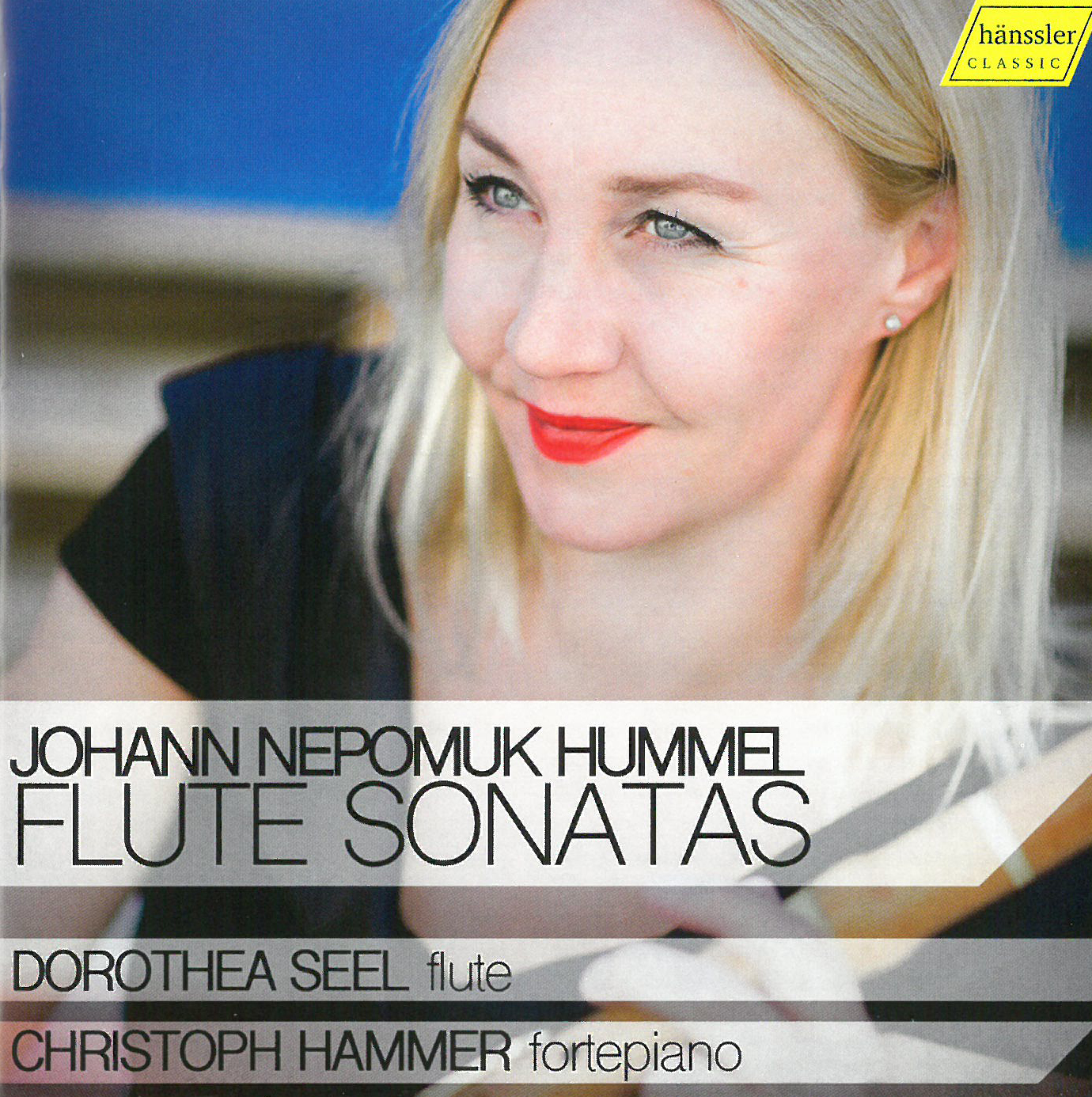
01 Hummel FluteJohann Nepomuk Hummel – Flute Sonatas
Dorothea Seel; Christoph Hammer
Hanssler Classics HC18103 (naxosdirect.com) 

Dorothea Seel is both a flutist and a musicologist, whose area of research is the playing techniques and sound aesthetics of 19th-century flutes. She has presented her research in her dissertation, Der Diskurs um den Klang der Flöte im 19. Jahrhundert (The Discourse about the Sound of the Flute in the 19th Century), published earlier this year by Kunstuniversität Graz, for which she has received the Award of Excellence from the Austrian government.

Her collaborator on this recording, Christoph Hammer, also a specialist in the music and instruments of the 19th century is, according to the liner notes, “also committed to the revival of less-well-known composers and the research and editing of their works.”

What I heard listening to this recording was something of a shock; it revealed an entirely different sound aesthetic from that with which I am familiar and, I would say, have come to expect, listening to recordings of music for the flute. As the liner notes explain, Seel’s research led her to “forgotten playing techniques... many of which would meet with the disapproval of modern-day exponents.” When I left behind my expectations, however, Hummel’s music took on an almost exotic quality, revealing the forgotten zeitgeist of a world long gone.

So, while I am not about to abandon my Boehm flute for an early 19th-century Viennese Ziegler instrument of the type played by Seel on this recording, I am extremely grateful for her work and her ability to translate her research into practice.

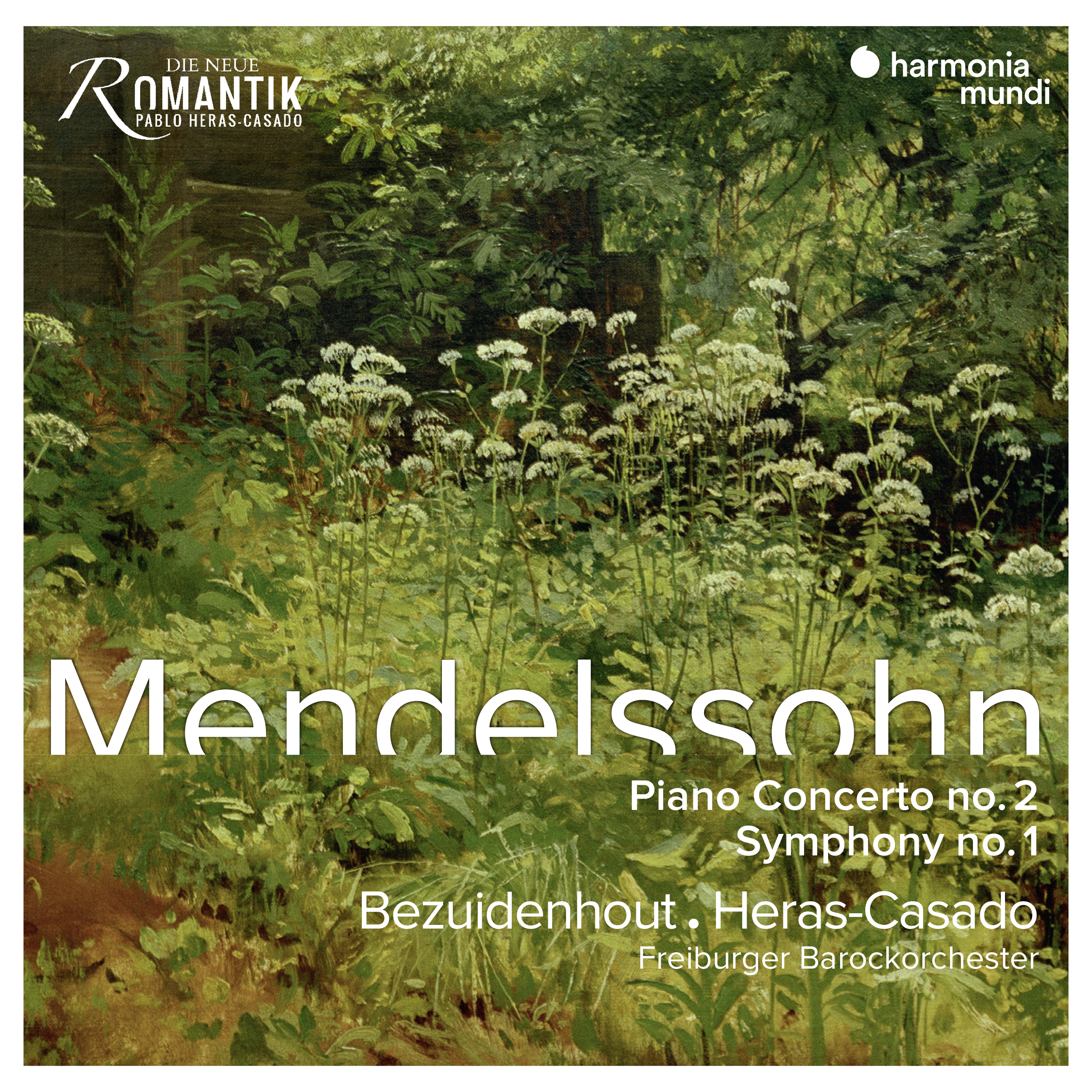
02 Mendelsson Piano Concerto 2 and Symphony 1Mendelssohn: Symphony No.1; Piano Concerto No.2
Kristian Bezuidenhout; Freiburger Barockorchester; Pablo Heras-Casado
Harmonia mundi HMM 902369 (smarturl.it/xs369d)

This brand new issue belongs to a series initiated by young conductor Pablo Heras-Casado’s Diving into German Romanticism and what better way to start than Mendelssohn? Mendelssohn was probably one of the most gifted musicians that ever lived and was capable of composing a symphony for full orchestra at the age of 12!

Perhaps due to the superiority of his later mature works, Symphony No.1 has been unjustifiably neglected but it’s certainly worth hearing as it is performed here. Typically sturm und drang and written in the sombre key of C Minor, the first movement is full of sound and fury at a frantic speed of Allegro di molto with strings rushing like a whirlwind demonstrating this orchestra’s amazing virtuosity. Peace and solace relieve the storm in the beautiful second movement that sings like one of Mendelssohn’s Lieder Ohne Worte where the interplay of woodwinds is a pure delight. The dominating C Minor stormy mood returns Allegro con fuoco piu stretto in the fourth movement with interesting contrapuntal episodes but ending the symphony triumphantly in a major key.

The Piano Concerto No.2 in D Minor was regrettably completely overshadowed by Mendelssohn’s popular, irresistible first foray into the genre. However, South African Kristian Bezuidenhout’s agile brilliance yet gentle touch on the Fortepiano Érard (Paris 1837) plus a highly precise and exciting period instrument accompaniment, makes this concerto truly shine.

As the recording progressed I found myself falling in love with Mendelssohn over and over again. And that energetically driven, passionate rendition of the Fair Melusina Overture tops it all. I haven’t heard it played as beautifully since Sir Thomas Beecham.

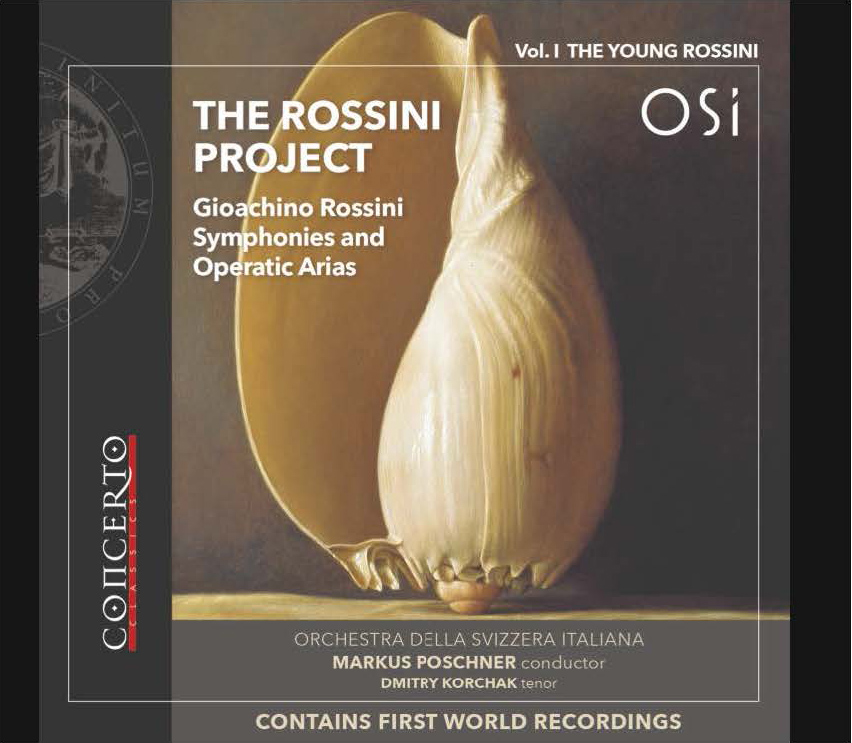
03 RossiniThe Rossini Project Volume 1 – The Young Rossini
Orchestra della Svizzera Italiana; Markus Poschner
Concerto Classics CD 2112 (naxosdirect.com)

Rossini was a wunderkind who came on the musical scene like a comet and music just poured out of him, much like Mozart. His creative genius never diminished and his greatest works came near the end of his long life. Last year was the 150th anniversary of his death and this ongoing ambitious project, which includes some first recordings, has been created with the Lugano-based Swiss orchestra to explore and record much of his lesser-known and hitherto unedited works. It certainly starts off splendidly with a wonderfully pointed, sparkling rendition of the Overture to L’Italiana in Algeri. Though not at all unknown, it immediately demonstrates the gifted young German conductor Markus Poschner’s obvious affinity to Rossini. The overtures that follow are youthful attempts but already showing the lion’s teeth of the master emerging, as in the alternate version of L’equivoco stravagante (1811) with its beautiful horn solo and subsequent brilliant use of woodwinds, and the first manifestations of the Rossini crescendo in Tancredi Overture.

The period covered (1808-14) is mostly from Venice, young Rossini’s first major stop, just up the Adriatic coast from his birthplace Pesaro where he ran away as a teenager to become the toast of the town in a few years. The Venetian sojourn produced a dozen operas, two of them masterpieces: L’Italiana in Algeri and Tancredi , the latter duly represented here by excerpts and sung by virtuoso, strong Russian tenor Dmitry Korchak, who proves to be very much at home in Rossini’s murderous tessituras.

Highly recommended – a most enjoyable inaugural release in a series worthy of Rossini.

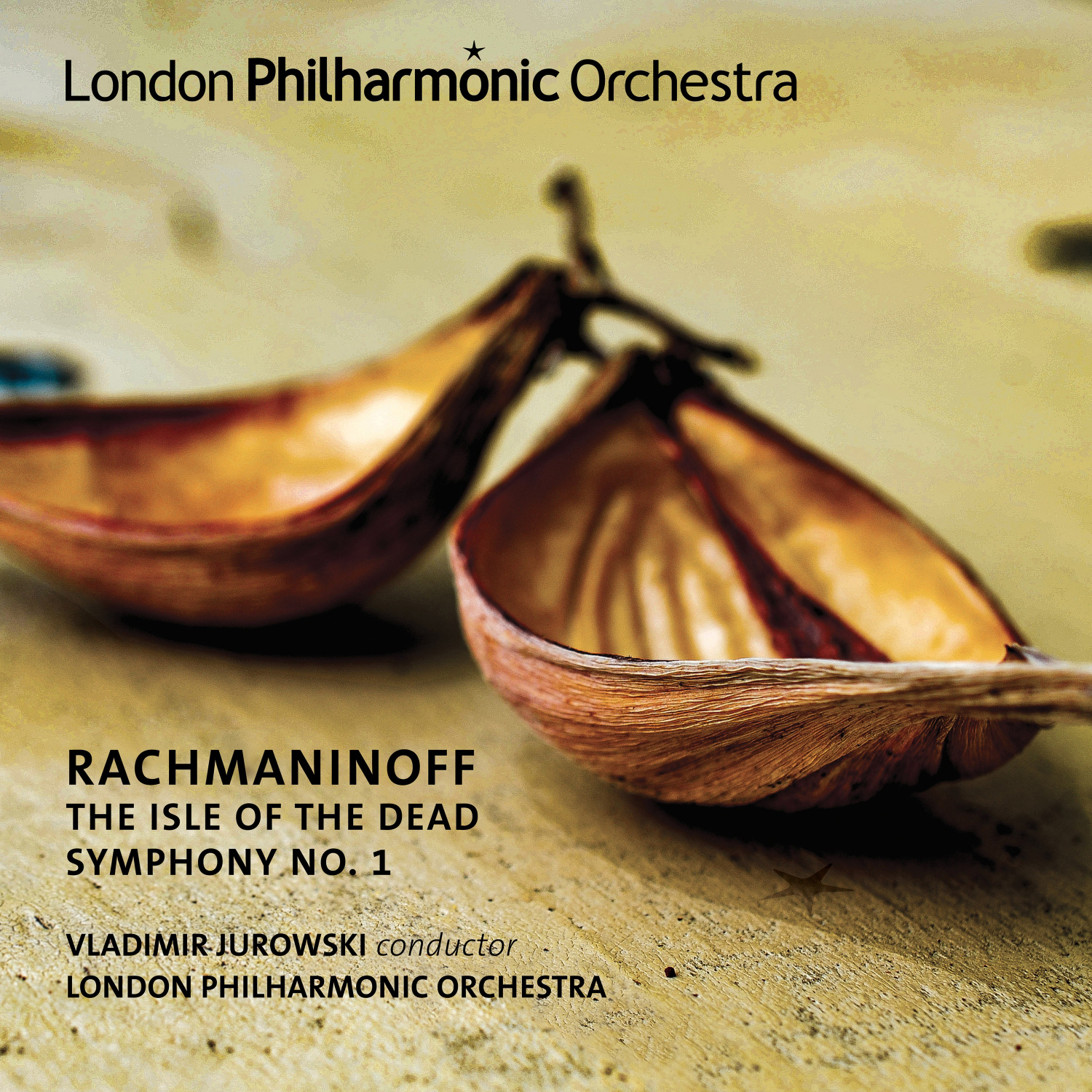
04 Rachmaninov Symph. 1Rachmaninoff – The Isle of the Dead; Symphony No.1
London Philharmonic Orchestra. Vladimir Jurowsky-cond.
LPO Live LPO 0111 (lpo.org.uk/recordings-and-gifts)

Rachmaninoff’s First Symphony hasn’t had an easy time. Conductor Glazunov was drunk and made it a dismal failure at its premiere in 1897 and the discouraged young composer locked the score away vowing never to perform it again. The original score was never found, but miraculously the orchestral parts were discovered in 1944 and it was performed once more in 1945 in Moscow.

This new performance comes from a recent concert in London conducted by Vladimir Jurowsky and what a concert it must have been! The audience went wild and the critics were raving and I imagine Rachmaninoff must have been very pleased and the symphony vindicated. Royal Philharmonic Society 2018 award winner Jurowsky’s name may not be too familiar, but he is one of the most sought after conductors and has a tremendous worldwide reputation that’s well proven here.

None of this music will come to you easily, in fact it requires several hearings and total concentration to appreciate Jurowsky’s “hypnotic drive,” especially in The Isle of the Dead’s sinister 5/8 ostinato undulating motion representing Charon the oarsman rowing a boat towards the other shore. It brought an “eerie chill” to the Festival Hall, one critic remarked.

The Symphony itself was a triumph. Rachmaninoff is the connecting tissue in Russian music between Tchaikovsky and Shostakovich and here you can see why. It has youthful excitement, intense passion and a tremendous emotional depth Jurowsky brings out to the utmost. The last movement Allegro con fuoco is where it all comes together; it’s both “frightening and triumphant” and one could feel the intensity and frisson of the live performance.

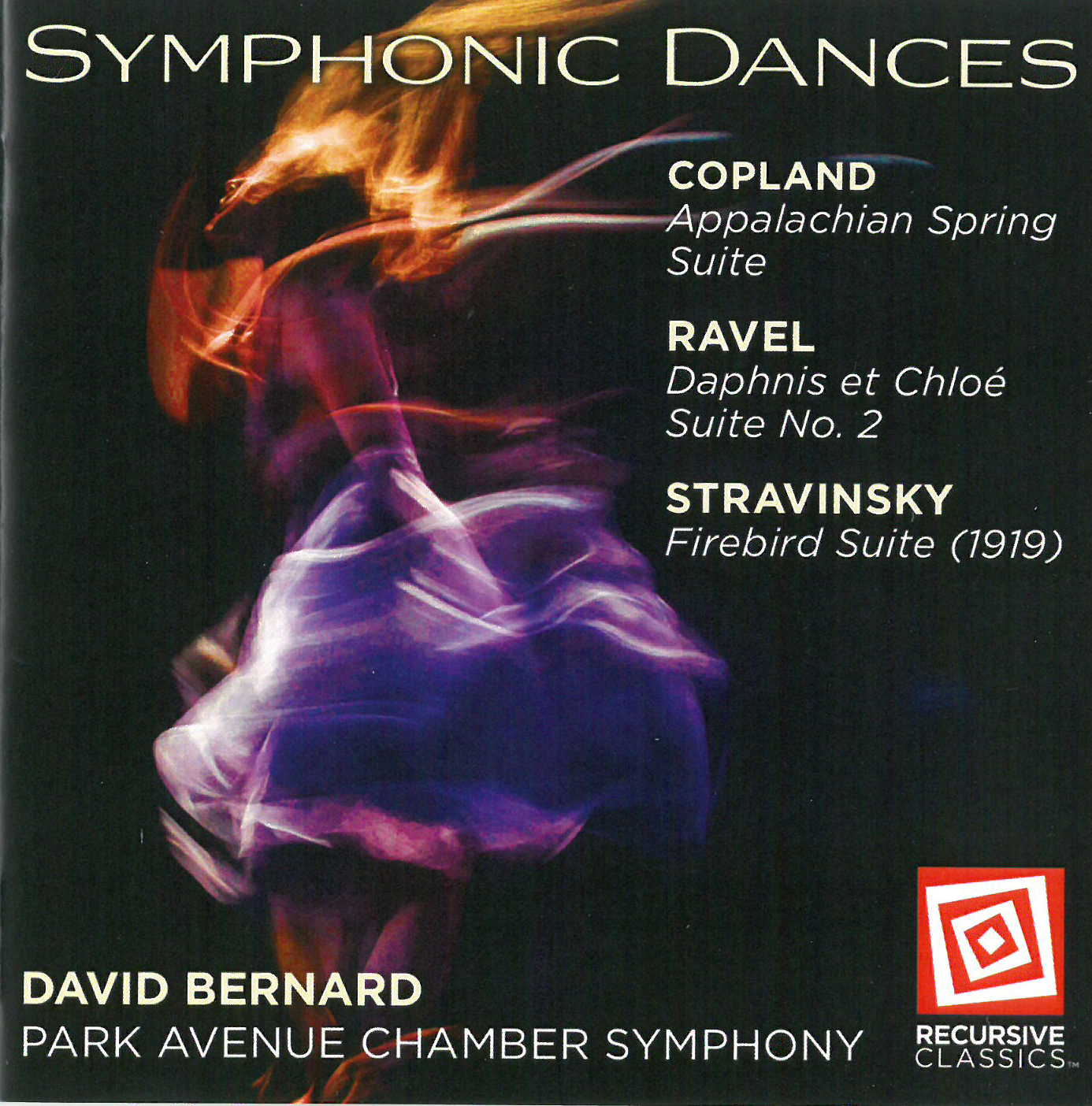
05 Symphonic DancesSymphonic Dances – Copland; Ravel; Stravinsky
Park Avenue Chamber Symphony; David Bernard
Recursive Classics (naxosdirect.com)

Pity the ballet orchestra musician; so much great music gets borne away from their pit by the changing tides of dance fashion. The 20th century is littered with scores from the early moderns that were introduced as dance accompaniment and became, instead, great works for the symphony stage. Hardly anyone stages Stravinsky’s The Rite of Spring anymore, and almost all of Ravel’s works are similarly banished from the standard ballet repertoire.

The Park Avenue Chamber Symphony, under conductor David Bernard, has recorded three modern masterworks: Aaron Copland’s Appalachain Spring Suite, Ravel’s Daphnis and Chloe Suite No.2, and Stravinsky’s Firebird Suite. With time and space, one could discuss the ways ballet scenarios changed from the mythic to the mundane as reflected in the selected works, but better to leave that to dance critics. These are, above all, wondrous works that orchestral players love to sink their chops into, and symphonic audience members love them as much.

All three are now period pieces of early- to mid-20th-century French and American music. Don’t tell me Stravinsky was neither; he wrote for the tastes of his audience, and The Firebird often sounds a lot like Ravel. And of course, Copland was deeply influenced by Nadia Boulanger.

The recordings took place in three different locations, the orchestra may well have had a few interchangeable players, and the 1919 Kalmus version of the Firebird score was edited, possibly to suit the size of the orchestra. The playing is uneven, especially as regards intonation, and microphone placement brings the wind soloists uncomfortably close, but the performances are careful and loving; in fact it’s just nice to hear a scrappy, not-quite-perfect recording of any of this material, which might make it more period-authentic than anything else.

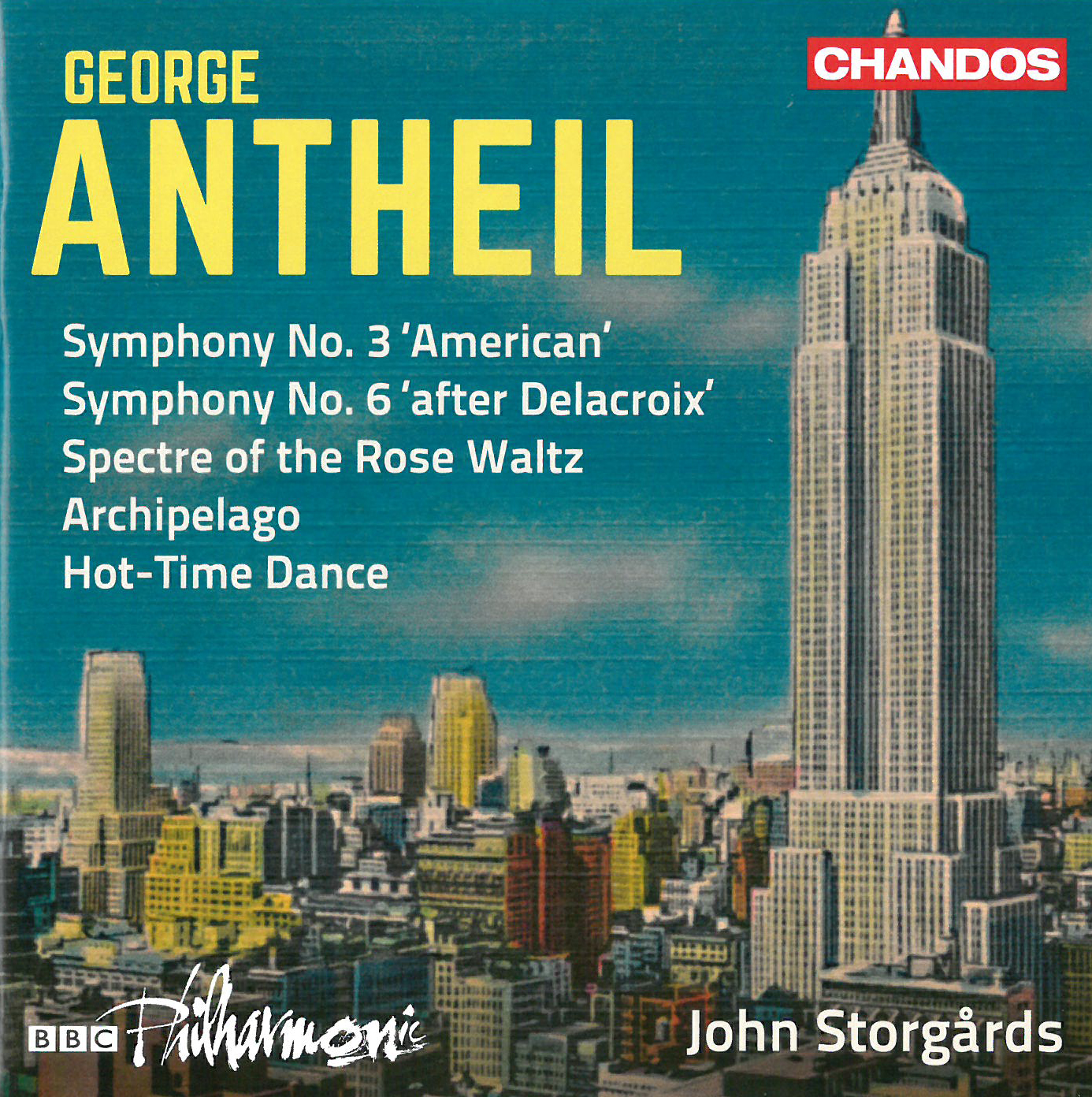
06 AntheilGeorge Antheil – Symphonies 3 & 6
BBC Philharmonic; John Storgårds
Chandos CHAN 10982 (naxosdirect.com)

The 1940s was an especially busy decade for the prolific American composer, pianist, author and inventor George Antheil (1900-1959). With the spectre of WWII looming in the USA, in 1941 he and the actress Hedy Lamarr set out to develop a code-based radio guidance system for torpedoes. He also continued to turn out scores for Hollywood features (his catalogue lists 30), while his 1945 autobiography Bad Boy of Music – referring to the international avant-garde reputation he attracted in the 1920s – became a best-seller. As well, Antheil continued to compose for the concert stage, completing several symphonies, a violin concerto and other works in the 1940s.

This second Chandos album of his symphonic output by the BBC Philharmonic and its chief guest conductor, John Storgårds, delights listeners with outstanding performances of two of those symphonies plus three shorter orchestral works. Symphony No.3 “American” (completed 1946) is cinematic in its conservative harmonic language and highly episodic block treatment of themes. In parts, an Aaron Copland-esque American populism is jump-cut with syncopated jazzy sections and a marked stylistic eclecticism: Antheil leans strongly on the musical legacies of Sibelius, Mahler and Prokofiev. The work concludes with a triumphalist finale.

Symphony No.6 (completed 1949-50) is overall a more sombre and artistically ambitious work. The influences of Shostakovich, and in parts Ives, permeate Antheil’s patriotic portrait of American life in music in a manner both touching in its heart-on-sleeve Romantic lyricism, and evocative of the vernacular regionalisms and dynamism of post-war USA.

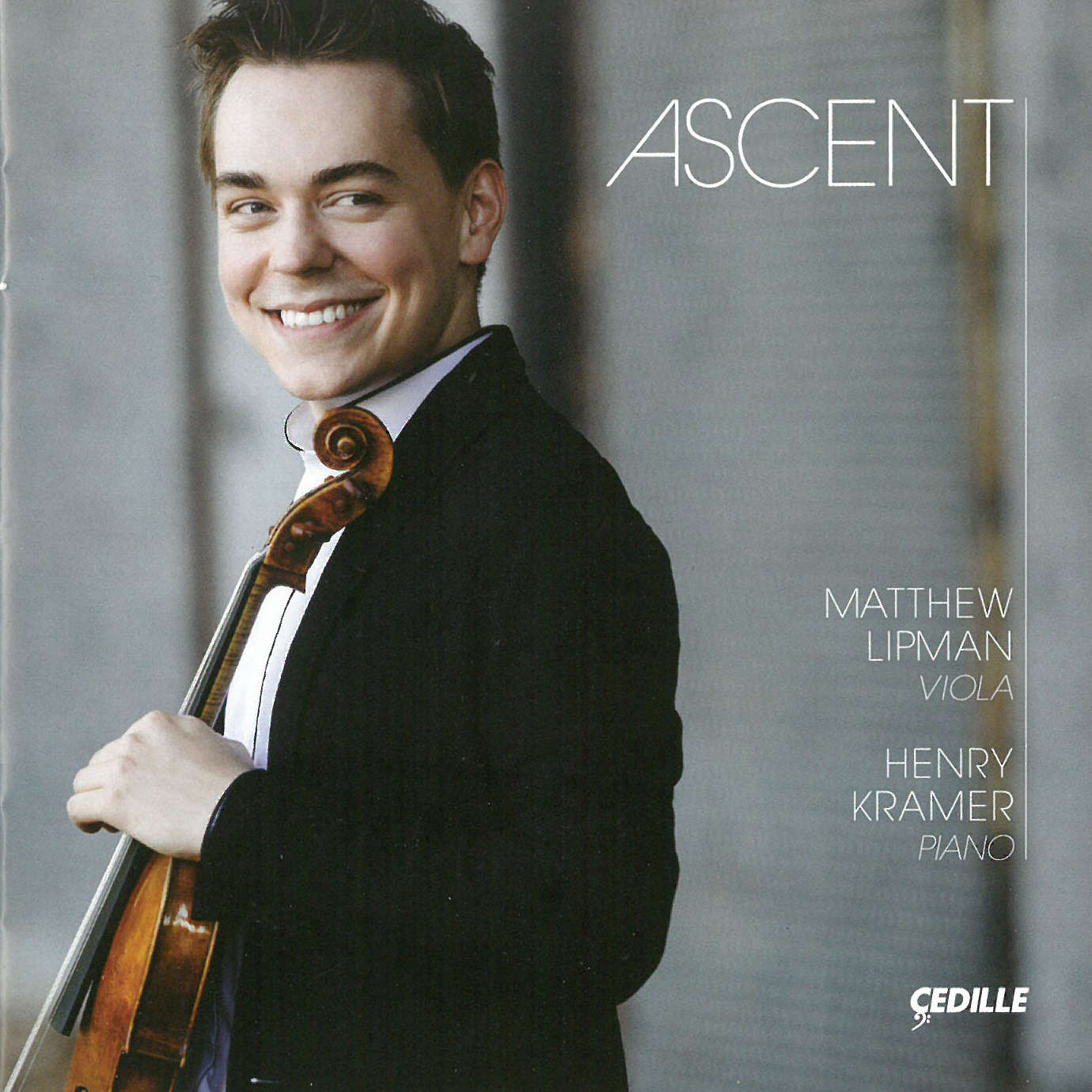
01 Matthew LipmanAscent is the first solo album by the 26-year-old American violist Matthew Lipman, and also marks his debut on the Cedille Records label (CDR 90000 184 cedillerecords.org). He is accompanied by his regular duo partner, American pianist Henry Kramer. The creative process behind the CD started when Lipman asked American composer Clarice Assad to write a fantasy piece for viola and piano in memory of his mother. Lipman chose the Ascent title to describe the album’s music and “the upward movement that happens throughout life and after.”

The opening track is the Phantasy for Viola and Piano Op.54 from 1914 by the English composer York Bowen. It’s a simply gorgeous work which perfectly showcases the warmth, lightness and agility of Lipman’s playing as well as the top-notch contribution from Kramer. The standard never drops throughout the world premiere recording of Assad’s two-part Metamorfose or Robert Schumann’s four Märchenbilder Op.113.

Fuga libre by the Irish violist and composer Garth Knox is the only solo viola work on the CD. Written in 2008 for the Tokyo International Viola Competition, it uses some really interesting effects, including quite fascinating harmonic glissandi.

Shostakovich’s very brief (at 1:56) Impromptu for Viola and Piano Op.33, written in 1931 but not discovered until 2017, is another world premiere recording, Lipman having managed to obtain a pre-publication transcript of the score from the DSCH Publishing House. A viola arrangement of Franz Waxman’s virtuosic Carmen Fantasie brings an outstanding CD to a close, Lipman’s flawless technique, beautiful tone and consummate musicianship making for viola playing as fine as any you will hear. 
02 Vierne FranckIt’s difficult to think of a more exciting duo than violinist Alina Ibragimova and her long-time pianist partner Cédric Tiberghien. Their 3-CD live recital set of the complete Beethoven violin sonatas contained some electrifying performances, and they bring the same level of playing to their latest CD, Vierne & Franck: Violin Sonatas, a recital of works that pay homage in their own ways to 19th-century musical thinking, their fairly dense textures and serious nature being qualities that would be rejected in post-WWI Paris (Hyperion CDA68204 hyperion-records.co.uk).

The Poème élégiaque Op.12 by Eugène Ysaÿe opens the CD – and what an opening it is! Published in the piano version in 1893 and the first of Ysaÿe’s nine Poèmes for string instruments and orchestra, it was inspired by the death and funeral scenes from Shakespeare’s Romeo and Juliet and employs scordatura tuning for darker colour, the low G string being tuned down to F. It’s a rhapsodic, passionate work that perfectly showcases this duo’s strengths: tone, nuance, intelligence, passion, commitment, and flawless technical assurance.

César Franck’s Violin Sonata in A Major was written in 1886 as a wedding present for Ysaÿe; it’s been popular for so long that hearing it again is like revisiting an old and treasured friend, and the visit here is a truly lovely one. The connections between the works on the disc continue with Louis Vierne’s outstanding Violin Sonata in G Minor Op.23. Vierne was a pupil of Franck, and this sonata was written at Ysaÿe’s request and premiered by him in 1908. It’s a sweeping work much in the style of the Franck, and deserves to be much better known.

The brief Nocturne from 1911 by the 18-year-old Lili Boulanger, Nadia’s younger sister, acts as a light dessert after the richness that has preceded it, and ends a CD of music-making of the highest order.
03 ShostKab CDWhenever there’s another CD from the always wonderful Steven Isserlis in the new releases, you just know you’re in for something special, and so it proves yet again with Shostakovich & Kabalevsky Cello Sonatas, Isserlis being joined by his recital partner of over 30 years, pianist Olli Mustonen (Hyperion CDA68239 hyperion-records.co.uk).

The Shostakovich Sonata in D Minor Op.40, written in 1934 when the composer was in his late 20s, sets the tone for the whole CD, Isserlis displaying his usual full-blooded and passionate, yet always sensitive and musically intelligent playing, especially in the opening movement and the fiendish and demonic second. Mustonen is his equal in every respect.

Prokofiev’s Ballade in C Major Op.15 is an early work from 1912 when the composer was only 21; it is essentially in two halves, Prokofiev referring to it as “similar in form to a sonata in two movements.”

There’s no doubting the strength and quality of Kabalevsky’s Sonata in B-flat major Op.71, written for Rostropovich in 1962. Isserlis notes that this is a work that should really be heard more often, and his performance here makes an even stronger case.

Three short works round out the CD. Shostakovich’s brief (at 2:31) Moderato was only published in 1986 after being discovered in a Moscow archive alongside the manuscript of the Cello Sonata. It’s believed to be from the same period, but its real provenance remains unknown. Prokofiev’s Adagio – Cinderella and the Prince is a 1944 arrangement of a section from his ballet Cinderella. Kabalevsky’s Rondo in memory of Prokofiev Op.79 was the third of three test-piece Rondos he wrote for the Tchaikovsky Competition in Moscow – one for piano in 1958, one for violin in 1962 and this one in 1965. It’s quite substantial, with more than a hint of Prokofiev’s music, especially the wispy “wind-in-the-graveyard” effect from the first violin sonata.

In his usual outstanding booklet notes Isserlis includes his customary exact timing references to salient points in the works, adding an extra touch of class to a simply outstanding CD.
04 Gerhardt Bach CDIn his introductory booklet notes to Bach: The Cello Suites (Hyperion CDA68261 hyperion-records.co.uk) the German cellist Alban Gerhardt reveals that, like so many others, he was reluctant to even try recording these challenging works before turning 50 – which he does this coming May. He is also aware that any recording can never be a final word.

For some time Gerhardt studied Baroque performance practice, but felt his attempts to assimilate historically informed techniques didn’t work for him, his playing sounding “neither authentic nor musically very interesting. I came to realize that just turning off the vibrato and using a sound which barely touched the surface of the string actually had very little to do with historical performance and didn’t sit well with me as a musician.”

He consequently uses vibrato “with great care and control” and aims for “a seemingly effortless articulation with as much depth to the sound as possible.” Add Gerhardt’s 1710 Matteo Gofriller cello and the results are simply beautiful. It’s a set that easily holds its own in a very competitive field.
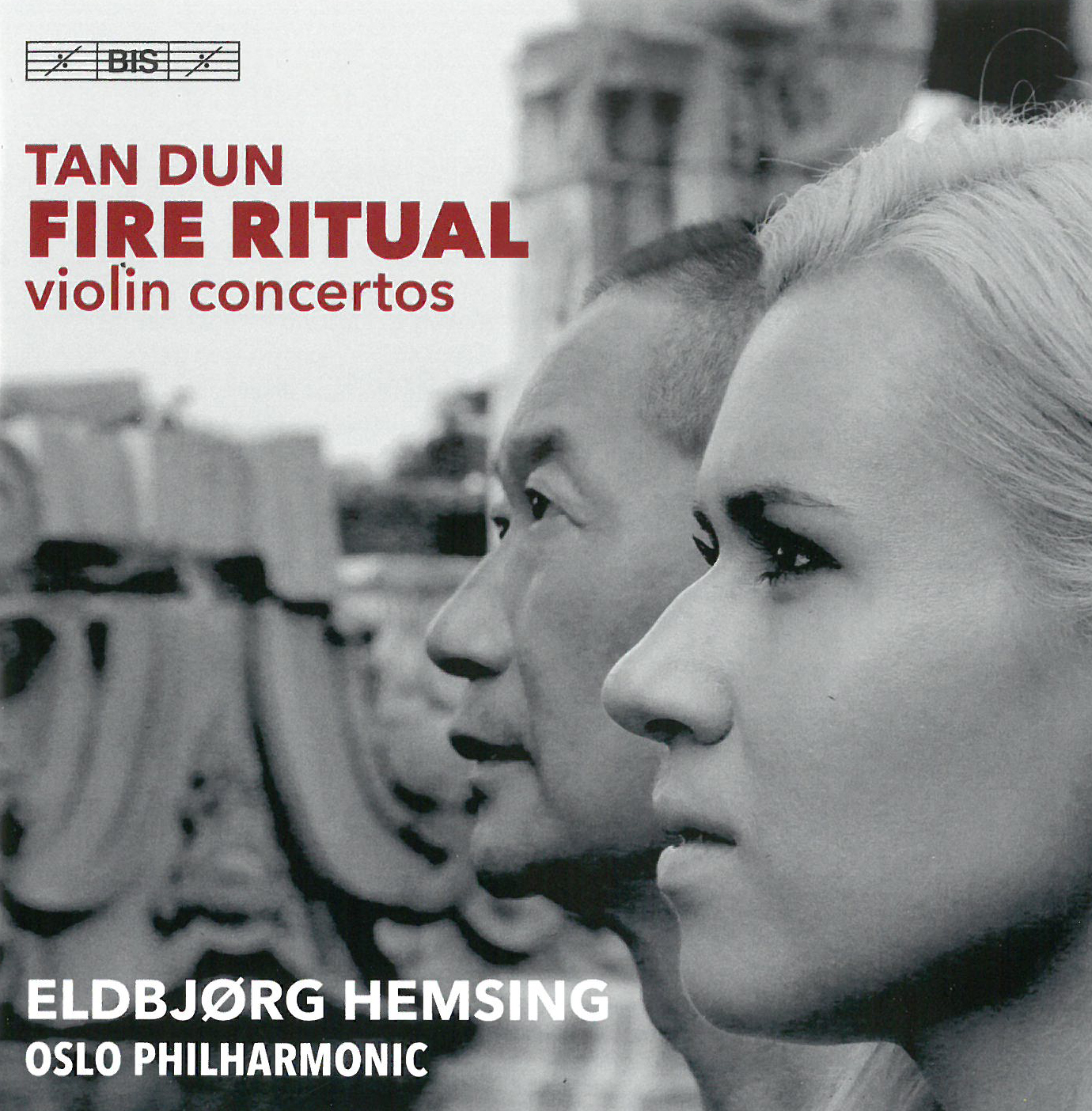
05 Tan DunWith the BIS Super Audio CD Tan Dun: Fire Ritual – Violin Concertos we enter the distinctive sound world of the Chinese composer Tan Dun, now in his early 60s. The Norwegian violinist Eldbjørg Hemsing has been collaborating with the composer since 2010, a relationship which resulted in the creation of both of the works on the CD: the violin concertos Rhapsody and Fantasia and Fire Ritual. Tan Dun conducts the Oslo Philharmonic Orchestra (BIS-2406 bis.se).

An early version of the Rhapsody and Fantasia was originally written over a decade ago, but the work is heard here in the 2018 revision for Hemsing. The two movements, each of three parts, have their roots in ancient Peking opera melody, Tan Dun having been a conductor of a travelling Peking Opera troupe in his teens.

Fire Ritual was written for Hemsing and premiered by her in Oslo in September 2018. Subtitled A music ritual for the Victims of War, it unfolds from – and stays centred on – the single note D, using its status as “Re” on the solfège scale as a prefix meaning “again,” as in the Renewal, Resurrection, Return and Rebirth of souls who were lost in wars.

Both concertos have a similar sound, with little Western melodic (or harmonic, for that matter) material, prominent percussion sections (four players with at least 20 mainly Chinese percussion instruments) and a distinctly Chinese flavour to the solo violin writing. Hemsing is outstanding in what must be considered definitive performances.

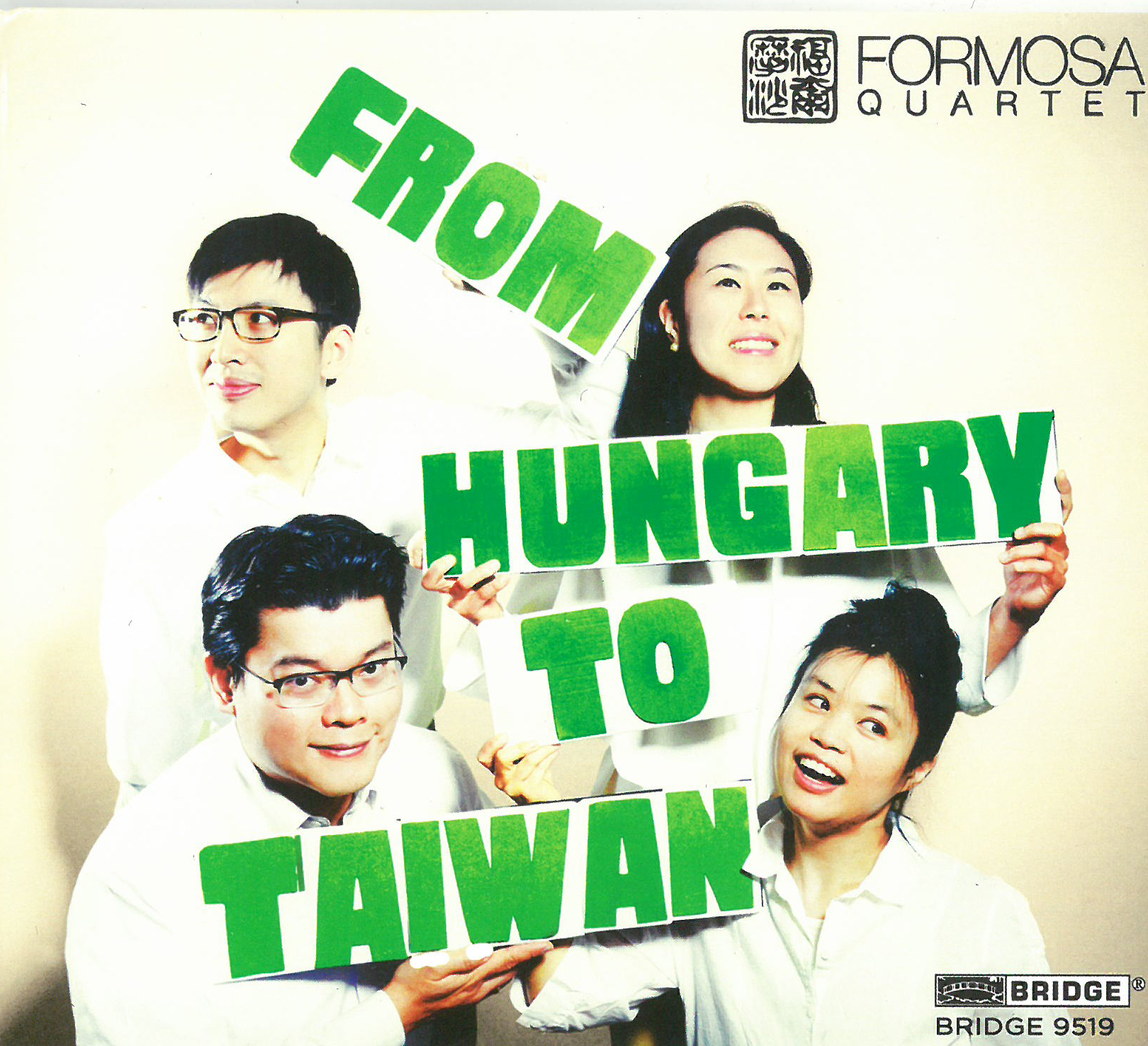
06 Hungary TaiwanFormed in 2002 for a concert tour of Taiwan, the Formosa Quartet celebrates its members’ Taiwanese heritage on From Hungary to Taiwan, a project that pairs treatments of folk music from the two countries and explores their similarities (Bridge Records 9519 bridgerecords.com).

Dana Wilson’s Hungarian Folk Songs was commissioned by the quartet as “a sort of entrée” into Béla Bartók’s quartets. Wilson says that he tried to capture key aspects of the traditional music itself and not just write his own music inspired by it, and he certainly succeeded. The Formosa Quartet perfectly captures his remarkable folk music effects and nuances.

In Song Recollections, another work written for the group, Chinese composer Lei Liang studies Taiwan’s art, songs and people. His settings of five songs from four native tribes are mostly quiet and atmospheric, with a distinctly Chinese feel.

Béla Bartók’s String Quartet No.4 from 1928, constructed as a five-movement symmetrical arch with the Night Music slow movement at its heart, is the major work on the CD.

Another Formosa Quartet commission, Wei-Chieh Lin’s Four Taiwanese Folk Songs from 2017 ends the disc. These clearly popular and much-loved melodies, two of them written in the 1930s, are given lush, Romantic treatment, and draw rich, warm and evocative playing from the quartet.

A bonus track, Spring Breeze, is available only through an online link; it turns out to be the first of Five – not FourTaiwanese Folk Songs, so its omission from the CD is a bit odd. Still, it’s a gorgeous piece, and you can watch the quartet performing the complete set on YouTube. It’s well worth watching, and well worth a listen.
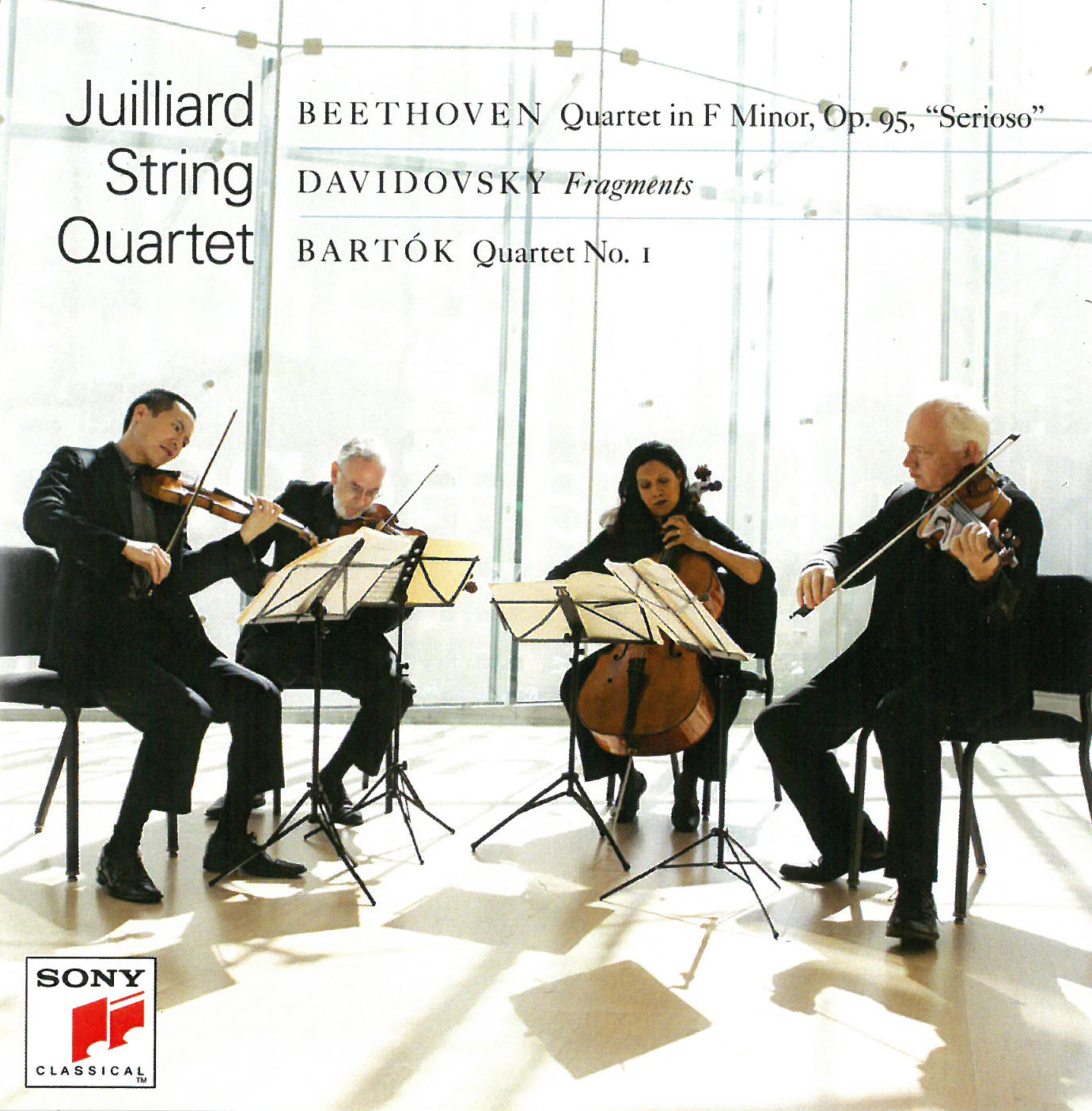
07 Juilliard QuartetThe Juilliard String Quartet has been around since 1946, and although founding first violinist Robert Mann lasted for an astonishing 51 years and two subsequent members for over 40 years each, the ensemble has had a total of 17 members during its existence. The 2017 lineup (first violin Joseph Lin left in 2018) is featured on Juilliard String Quartet: Beethoven, Davidovsky, Bartók, a CD recorded as part of the group’s 70th anniversary celebrations (Sony Classical 19075 88454 2 sonymusicmasterworks.com).

The quartet’s longstanding commitment to both the classic repertoire and new contemporary works is fully evident here. A suitably tense and energetic performance of Beethoven’s String Quartet in F Minor Op.95 “Serioso” opens the disc, and the centrepiece is Mario Davidovsky’s Fragments, String Quartet No.6 from 2016, written on a commission for the Juilliard. Davidovsky explains that the title refers to broken and scattered parts that, “moved and processed by some creative force, can aggregate to become something.” It certainly gives you a good idea of what the quite brief work sounds like as it moves from a fairly abrasive start to a more integrated ending.

A passionate and powerful performance of Bartók’s String Quartet No.1 ends the CD. It’s a work with a distinct post-Romantic feel, and no hint of the Night Music of the later quartets – more an indication of where the composer has come from than where he is going.

The playing throughout is of the exceptionally high standard we have come to expect from this ensemble. 

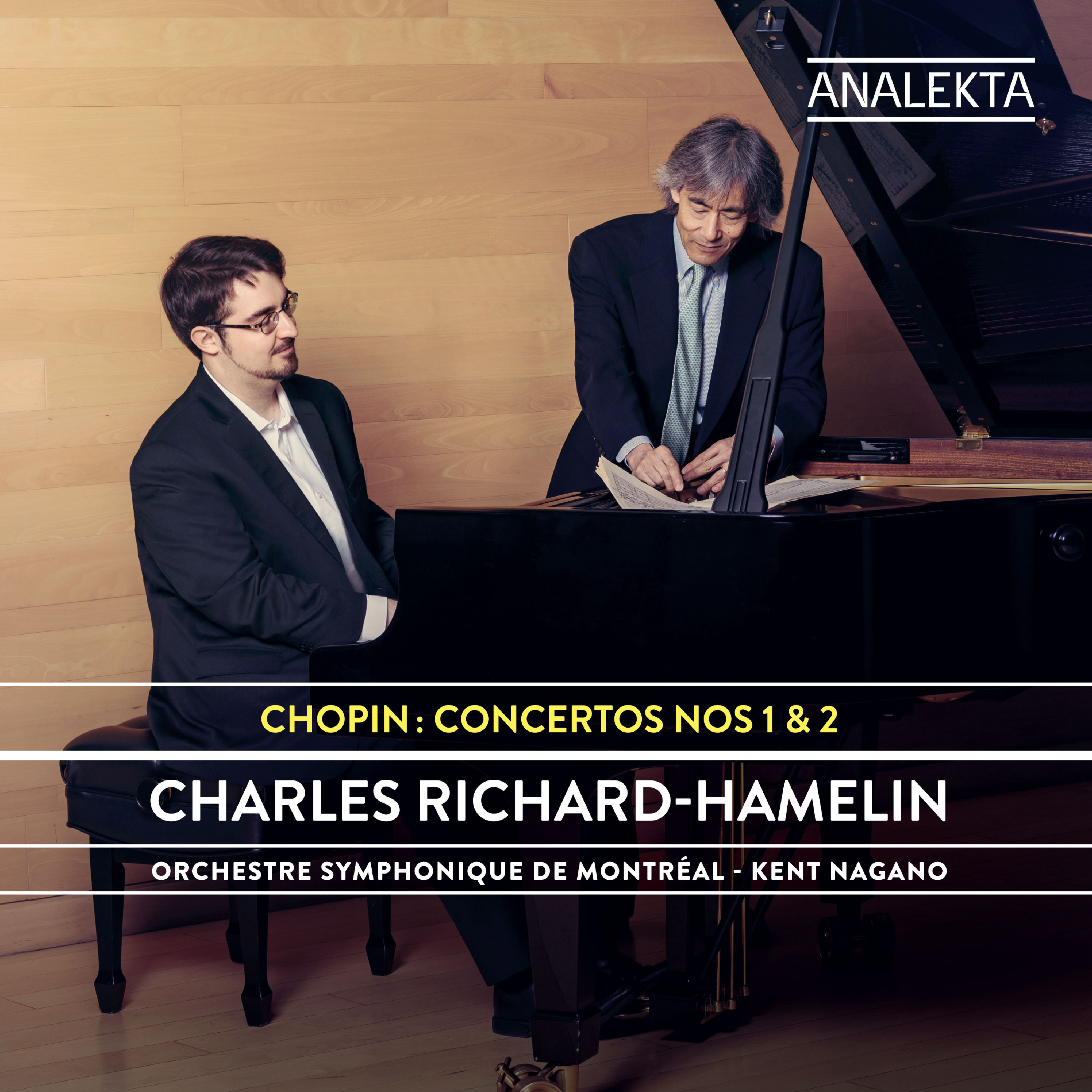
01 Chopin Piano Concertos COVERCharles Richard-Hamelin’s recent recording Chopin: Concertos Nos. 1 & 2 (Analekta, AN 2 9146, analekta.com/en) is an exhilarating encounter with these two items of standard repertoire. There is a freshness in this performance that owes everything to its collaborators. Kent Nagano and the OSM are deeply aware of how much Chopin has vested in the piano’s role. Their ability to morph into something purely ethereal for the slow movement of Concerto No.2 is magical. The balance and unity across the ensemble, in this and similar passages, support the piano exquisitely. So much of the piano part in this movement is in simple octaves, albeit often very ornamented and fast. Richard-Hamelin performs it with absolute fluidity, as if it were an extended keyboard recitative. The time signature seems to dissolve, leaving only a hint of anything resembling a beat as the soloist and orchestra flow toward some distant ending.
The essence of dance that is inherent in Chopin’s writing saves the pianist from a conflictual role with the orchestra. The two are instead a pair of dancers elevating the solo instrument above the ensemble. While historical criticism of these works has focused on Chopin’s weak orchestral writing, Hamelin and Nagano have delivered such a transcendent experience that the criticism seems somehow lost if not irrelevant in the overwhelming beauty of this performance.

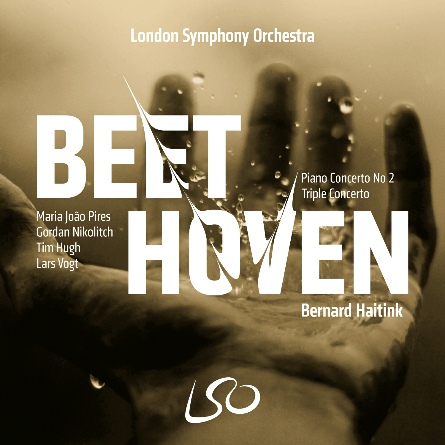
02 Pires VogtMaria João Pires appears in a new collaboration with the London Symphony Orchestra under Bernard Haitink, Beethoven Piano Concerto No.2, Triple Concerto (LSO www.lsolive.lso.co.uk). Despite the numbering, the piano concerto is actually Beethoven’s first and much of it recalls Mozart, especially in the opening movement. But the young Beethoven is unmistakably present in the piano writing where his unique keyboard figurations are now recognized as familiar vocabulary. It’s a careful and measured performance that reveals the caution with which Beethoven wrote it. No angry rebel here, just an explorer testing the waters for the journey to come.

All this presents a considerable challenge to the performers because listeners tend to have an expectation of what Beethoven should sound like and aren’t usually prepared to hear something so Mozartean and Haydnesque. Haitink keeps the orchestra firmly in classical territory, helped by reduced instrumentation. Pires follows suit technically and stylistically but exploits every opportunity to remind us of the voice she is interpreting. The slow movement, despite its delicacy, carries an intensity that can only be Beethoven, even if it’s the young version. The final movement, however, leaves nothing to doubt. Pires plays with the lightness, clarity and impeccable phrasing that have made her career.

While the Triple Concerto offers more substance, here in a reissue featuring Gordan Nikolitch (violin), Tim Hugh (cello) and Lars Vogt (piano), the piano part was written for Beethoven’s patron and pupil, the Archduke Rudolph, and so doesn’t have quite the virtuosity of its string partners. Still, Vogt shapes every keyboard utterance into a masterful line. The recording is, in every way, a classic.

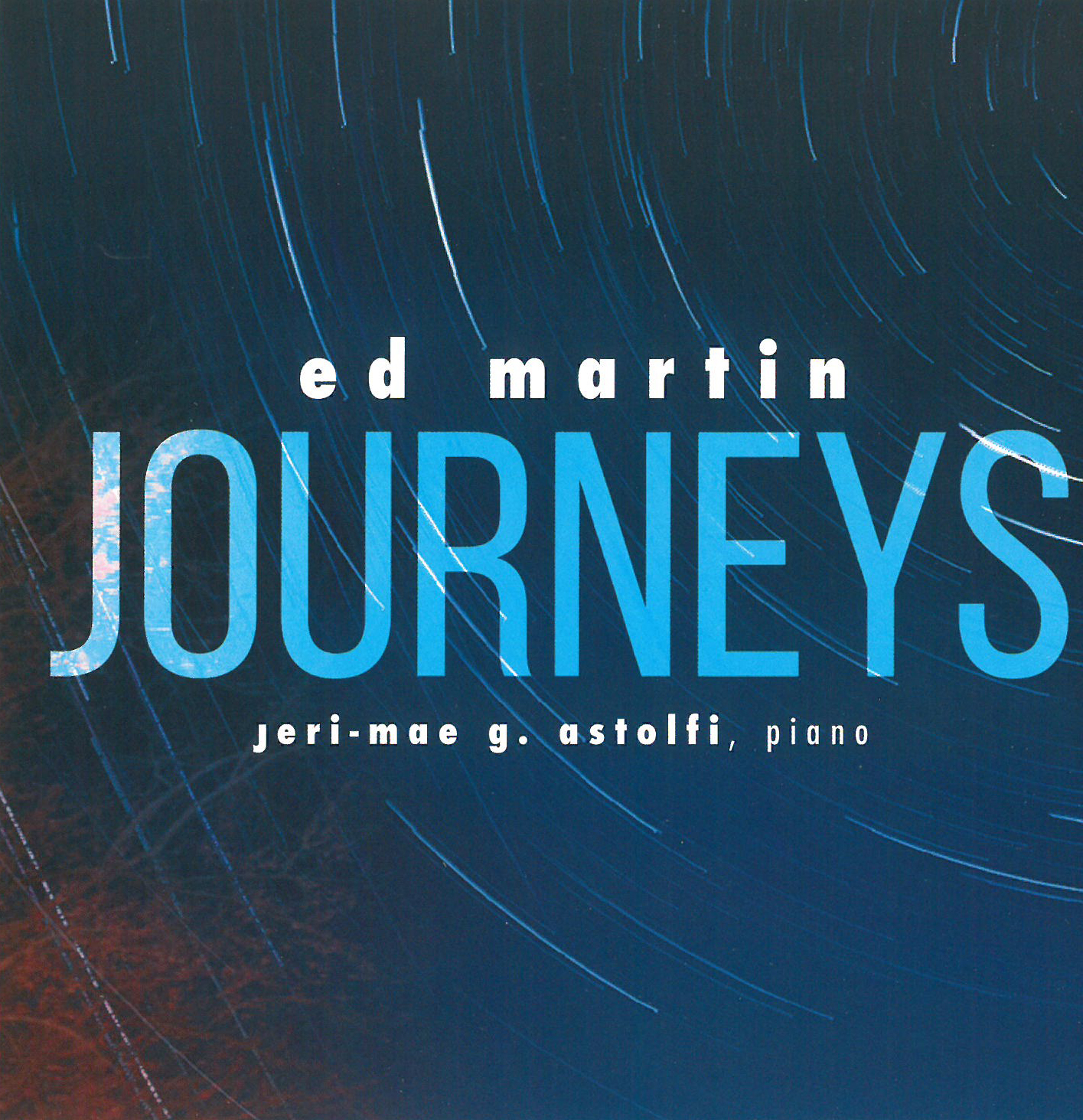
03 Ed Martin JourneysJeri-Mae G. Astolfi is a Canadian pianist working principally in the US as a performer and teacher. Her new CD, Ed Martin – Journeys (Ravello Records, RR7995, www.ravellorecords.com) demonstrates her interest and commitment to contemporary piano music. She plays three works by one of her contemporaries, American composer Ed Martin who wrote two of them specifically for her.

The major piece on the recording is the title work Journey. Laid out in 11 sections, it charts the progress of life through a range of experiences that Martin uses as his program. Astolfi’s performance of Journey makes its impact through the startling contrasts between agitated movements with titles like Vexed, Obsession and Manic and the more serene sections with names like Soul, Lament and Transcend. One of the intriguing characteristics of Martin’s music is that he doesn’t shy away from long fermatas or extended rests. Silence and decay are an effective part of his vocabulary. Astolfi surrenders completely to this language producing a performance so intense that it seems more like channelling than playing. Her entanglement with the essence of this music is absolute.

Two other works, Swirling Sky and Three Pieces for Piano, while shorter, are equally effective programmatic expressions. Martin is a composer who sees and feels things tangibly in his music and Astolfi is a ready interpreter with an undeniable affinity for his writing.

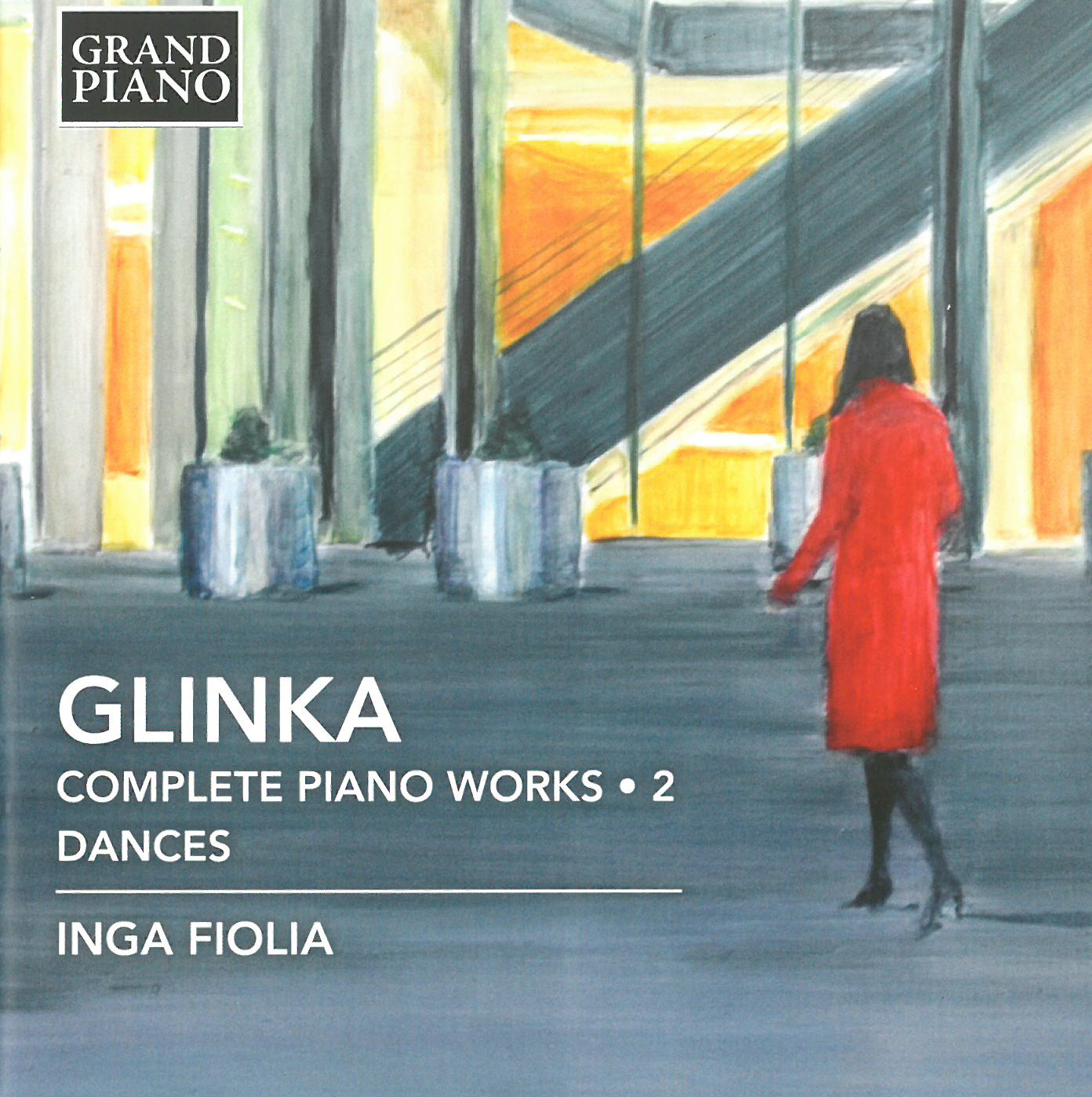
04 GlinkaInga Fiolia’s new disc Glinka – Complete Piano Works Vol.2, Dances (Grand Piano, GP 782 www.grandpianorecords.com) follows her first volume that focused on Glinka’s variations compositions. The 23 tracks are predictably brief though some are arranged in longer sets of quadrilles and contredanses.

Glinka’s place in Russian music history acknowledges his contribution to a national style that began to set Russian composers free from their cultural debt to the French, German and Italian influences of the 18th and 19th centuries. This contribution is not particularly obvious in this music, designed as it was to accompany light-hearted times in the parlours and salons of Russian society.

Fiolia is a natural performer for this genre. Something about the dance form, regardless of its origin or style, seems to draw from her a fluid response that sways with the music. Her keyboard technique makes an instant impression. She has a touch that in rapid repeats throws the hammer against the strings in a way that must challenge the double escapement action that makes it possible. She relies less on pedalling than many pianists and the result is a highly articulated clarity that respects the inner harmonies of Glinka’s writing.

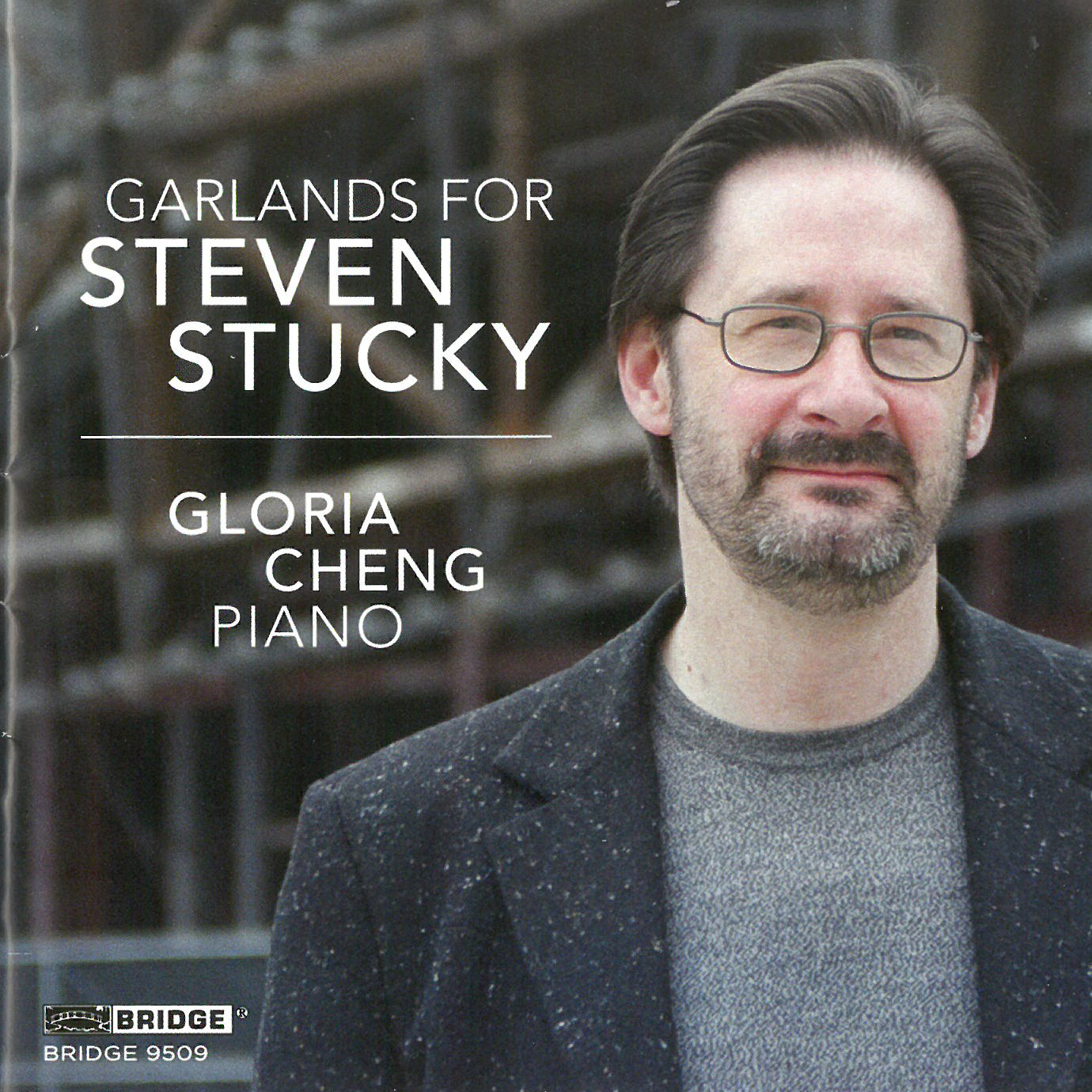
05 Garlands for Steven StuckyPianist Gloria Cheng played a major role in the creation of Garlands for Steven Stucky, (Bridge, Bridge 9509, www.bridgerecords.com). She led the call for invitations to write short works of tribute in memory of the American composer who died in 2016. Over his lifetime, he wrote well over a hundred works in nearly every form and won dozens of awards. Cheng included some of Stucky’s piano music on a Grammy Award-winning 2008 recording.

The 32 compositions Cheng compiled for this tribute are very personal musical statements from Stucky’s colleagues, friends and composition students. They’re each accompanied by brief anecdotes and dedications to Stucky’s memory. What emerges from these tributes is the picture of a person who was not only a gifted and skilled composer but even more, someone remembered for his kindness and humanity. Stucky’s ability to build close rapport with anyone he met opened countless opportunities for creative collaboration, instruction and deep personal friendships. In his work with the Los Angeles Philharmonic and other orchestras, Stucky made a point of getting to know each musician personally. This direct openness accounts for much of the affection the LA Philharmonic and Essa-Pekka Salonen had for Stucky and his music. It seems fitting that Salonen’s tribute Iscrizione is the disc’s opening track.

This recording is a remarkable collection of utterances by composers old and young; ultimately, it will bring Stucky’s work to a wider audience.

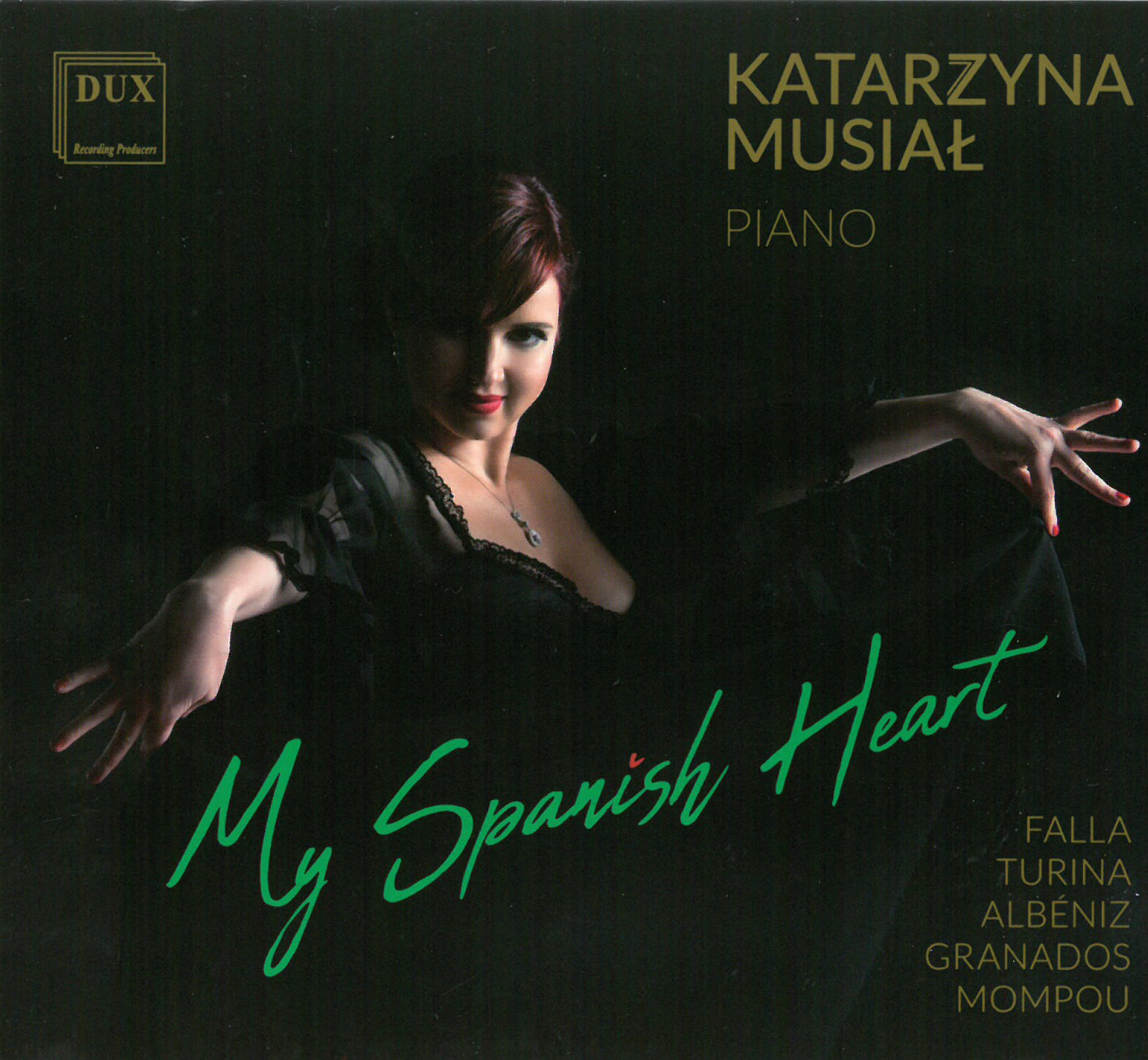
06 Katarzina MusialKatarzyna Musiał’s new recording My Spanish Heart (Dux, Dux 1448, www.dux.pl) is beautifully planned with repertoire that leaves no doubt about where her cultural affections lie. “A Canadian pianist with Polish roots,” as her agent describes her, Musiał is undeniably at home with this repertoire. Whether playing Albéniz, Granados, Turina, Mompou or de Falla, she takes to the idiomatic rhythms like a flamenco dancer, delivering characteristic Spanish melodic snaps as if her keyboard had castanets.

The Danzas gitanas Op.55 by Turina are especially impressive for the atmosphere of seductive mystery in which Musiał wraps them. But the tracks of Manuel de Falla’s own piano transcriptions of his ballet music, The Three-Cornered Hat and Love the Magician are the most impressively played. In these, Musiał combines the piano’s best percussive and legato qualities to deliver a full range of orchestral effects. The entire CD is an energized performance of music for which she has a fiery passion.

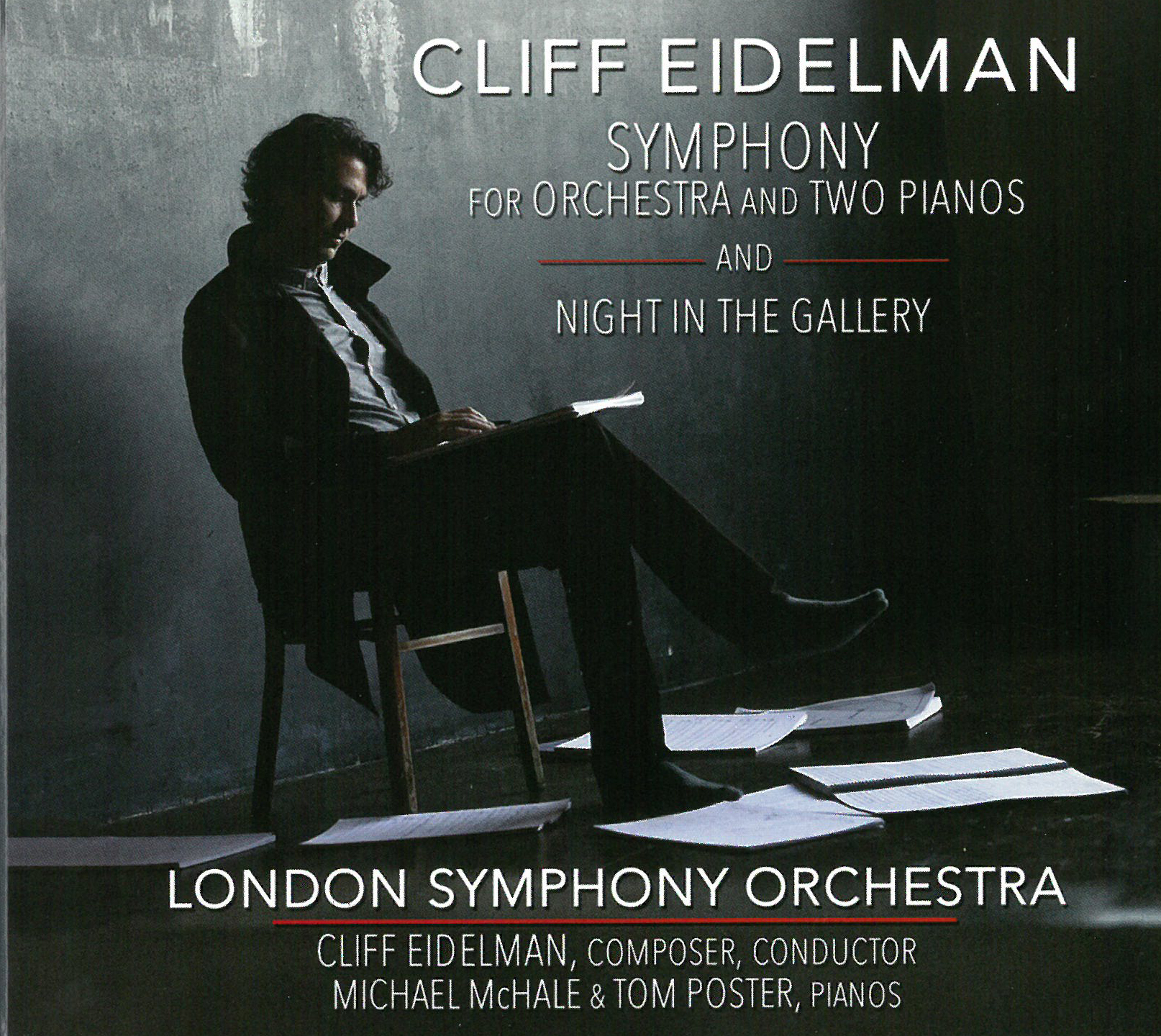
07 Cliff EidelmanMichael McHale and Tom Poster appear as the two pianists in Cliff Eidelman – Symphony for Orchestra & Two Pianos and A Night in the Gallery, (EN001, www.cliffeidelman.com). Eidelman is an American composer and conductor with a lengthy and impressive career, most of it writing for film. His relatively few ventures into the world of large-scale orchestral forms include a symphonic tone poem, ballet music and similar works.

McHale and Poster perform neither as soloists nor as players fully integrated into the ensemble. Eidelman has, unusually, created a flexible role for the two pianists that lies somewhere between the concerto form and a fantasia featuring the keyboards, perhaps akin to Saint-Saëns Carnival of the Animals. The two pianists do appear convincingly as full-scale soloists in the second movement’s cadenza. For the balance of the work, however, they emerge from and retreat back into, the ensemble at the composer’s will.

As a highly skilled orchestrator, Eidelman’s mastery of colour and subtle shading is superb. He describes finding the inspiration for the Symphony in the reflection of water and writes in a way that uses the pianos to enhance the emotional image of its various characters, whether still, flowing or turbulent. It’s easy to hear why his film scores like Star Trek VI and Christopher Columbus have been so successful.

The disc’s second work is Eidelman’s Night in the Gallery for orchestra and piano. Here pianist Michael McHale becomes part of the composer’s palette for recreating the impressions he experienced on viewing specific paintings by acknowledged masters.

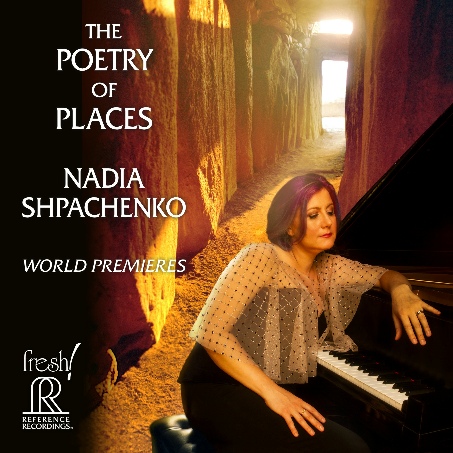
08 ShpachenkoNadia Shpachenko’s latest release The Poetry of Places (Reference Recordings, FR 730, www.referencerecordings.com) is a collection of original and highly imaginative works for piano, assorted instruments and effects. The concept for the recording project is an exploration of the relationship between music and its space. Shpachenko writes briefly about her experiences of space on performance, including the performers and the audience. Her curiosity has led to commissions from eight composers to write specifically about their impressions of spaces and places as represented by architecture.

The variety of this repertoire is remarkable. Shpachenko performs a veritable tour of structures ancient and modern, producing extraordinary colours and textures from her Steinway D. Her composers sometimes add a second piano, voice, a toy piano, percussion and electronics to build their works. The subjects include Ireland’s 5,000-year-old Newgrange, Aaron Copland’s home in upstate New York, Bangladesh’s National Assembly, a small cottage on an island in rural New York state, the American Visionary Art Museum and a couple of architectural projects by Frank Gehry.

Each composer provides a few notes on the subject of the commission and it’s immediately striking how much common ground they share with Shpachenko on this abstract challenge. The strong affinity between the principal performer and the composers has produced a thoroughly engaging disc. 

Back to top