01 Andrew ScottThe Brightest Minute
Andrew Scott Quartet
Cellar Live CL022817 (cellarlive.com)

Skilled guitarist, composer, arranger and highly respected jazz educator Andrew Scott has just released his new Quartet CD under the fine auspices of the internationally noted jazz label Cellar Live. Co-produced by Scott and pianist Jake Wilkinson (who also engineered), the CD features eight tasty original, contemporary jazz compositions by Scott, as well as a fine lineup of players including Scott on guitar, Wilkinson on piano, Jon Meyer on bass and Jeff Halischuk on drums.

Kicking things off is My Ears Can’t Hear Your Voice. Scott’s swinging, soulful, full-bodied guitar sound brings to mind elements of Tal Farlow, Herb Ellis and Grant Green. Combine that with a tight, grooving, acoustic quartet, propelled by the jaunty, well-written material and Scott’s facile soloing, and you have a dynamic jazz track. Wilkinson’s rhythmic and emotional piano style is clearly featured here, and is reminiscent of a young Hampton Hawes.

A highlight of the recording (and in contrast to the rest of the high-octane tracks) is the thoroughly gorgeous ballad For Marilyn, dedicated to Scott’s late mother, Marilyn Elizabeth Scott, who died in 2016. Scott is capable of such direct communication through his music that one can easily feel the love that inspired this piece. Also of note is the title tune – a high-intensity, New York-ish cooker that features not only the musical tightness of the ensemble, but also the high level of unspoken communication between the band members. A final favourite is Dreamin’ – rendered with an almost Basie-like simplicity and Scott’s perfect, rhythmic comping and in-the-pocket soloing. Easily one of the best small jazz group recordings of the year.

02 Jamie ReynoldsGrey Mirror
Jamie Reynolds
Fresh Sound New Talent FSNT 528 (freshsoundrecords.com)

Canadian-born and New York City-based jazz pianist Jamie Reynolds has just released a challenging and deeply moving recording, featuring himself on acoustic piano and Wurlitzer as well as special guests Matthew Stevens on guitar (who also served as co-producer), Orlando LeFleming on acoustic and electric bass and Eric Doob on drums. Other key players on this project are the noted brass quartet, the Westerlies, featuring Andy Clauson and Willem de Koch on trombones, and Zubin Hensler and Riley Mulherkar on trumpets.

In the planning stages Reynolds determined that in order to achieve the artistic expression, depth and meaning that he was looking for, he would arrange most of his 14 original compositions on the CD to be played in two diverse ways – by his trio plus Stevens and also by a brass quartet… thereby illustrating in a very real way, the constant, and often distorted and contradictory mirror images of nature.

The opening track, The Earliest Ending, is first expressed as a brief intro of stunning, warm and moving brass lines, and later as an almost Satie-like piano solo which seamlessly melds into sensual, lush guitar lines. The same juxtaposition occurs with Small Worlds, a hard-driving, face-melting guitar-centric quartet take, followed later in the program by a smooth and beautiful brass arrangement of the same composition. Other superb tracks include the evocative title track, which features excellent solos from the quartet and the stirring Good Help, replete with the distinctive, percussive sound of the Wurlitzer electric piano as well as concise and solid bass work from LeFleming.

03 Kite TrioSlightly Higher in Canada
Kite Trio
Sunset Hill Music SHM-021703 (kitetrio.com)

With their third release, this fine Montreal-based jazz trio has pushed past the boundaries of contemporary jazz and into a zone of pure expression and freedom. Produced by Dave King (The Bad Plus), the recording is both raw and experimental. Of the 12 explorations here, half are composed by the trio, and half by the talented individual members of the ensemble, which include Eric Couture-Telmosse on guitar, Paul Van Dyk on bass and Eric Dew on drums, synthesizer and banjo.

On the opening track, Pidgin, the ensemble creeps in with a subtle, and then an insistent, guitar-defined rhythm and melody. The seemingly simple becomes complex as the composition dis-assembles into molecular form and re-assembles into kinesthetic harmonic and percussive exultation. The next track up is Paul Van Dyk’s Estranged – a solemn solo journey to the netherworld of the acoustic bass, where dark double-stops transport the listener deep into the chasm of the bass clef. The appealing That Good Old Feeling features the trio in an energetic and joyous light. Bombastic and masterful drum and guitar work as well as solid, innovative bass lines (arco and pizzicato) and some well-placed banjo embellishments define this fine arrangement.

The dynamic title track establishes a complex pulse of opposition and contrast, while lyrical sections seductively lure the listener into a thrilling guitar-infused realm of vibrancy, rife with the goose-bump raising excitement of possible danger. Another standout is Milkman, which represents the perfect integration of rock and free jazz sensibilities, and also features more superb Richter-scale musicianship from the trio a well as intriguing synthesizer sequences. 

Sometimes Y
Lina Allemano Four
Lumo Records 2017-7

Squish It!
Lina Allemano’s Titanium Riot
Lumo Records 2017-8 (linaallemano.com)

04a LinaAllemanoFour SometimesYTrumpeter Lina Allemano has been playing in Toronto for two decades, becoming a central figure among the city’s more creative musicians and developing enduring musical associations that tip over into a variety of bands. In recent years, Allemano has been splitting her time between Toronto and Berlin, where her musical life includes work with improvising ensembles from duos to the Berlin Improvisers Orchestra as well as studies with Axel Dörner, whose exploration of extended techniques has given the trumpet new life. On the home front, Allemano is releasing work by her two ongoing Toronto bands, each CD testifying to the virtues of longstanding partnerships combined with questing musical minds.

The Lina Allemano Four first recorded in 2003 and the current lineup has been in place since 2006, with alto saxophonist Brodie West, bassist Andrew Downing and drummer Nick Fraser. The group has apparent roots in classic free jazz ensembles like the Ornette Coleman Quartet, with similar emphasis on the leader’s compositions and an almost stark principle of dialogue consistently informing the music. There’s a frequent emphasis on speech patterns in Allemano’s compositions, sometimes consisting of short, emphatic truncated phrases, and their realizations here are just as conversational, with West consistently adding supportive counterlines to Allemano’s solos and the trumpeter returning the favour. Kanada, a high point, ends with an extended group dialogue that grows naturally from Downing’s arco lead.

04b TRiot SquishItAllemano first assembled Titanium Riot in 2013 and released the group’s debut Kiss the Brain a year later. Including Ryan Driver on analogue synthesizer, Rob Clutton on electric bass and Nick Fraser on drums, the group, devoted to free collective improvisation, undoubtedly benefits from the years working together in different contexts. The 2017 recording Squish It! is a dramatic continuation of the process. In this context, Allemano combines a distilled and pointed lyricism with striking timbral explorations to provide the music with an essential focus. It’s evident in the opening moments of the title track as she concentrates on long tones and a sound that’s a striking combination of subtle muting and the light buzz of air through the horn, the effect suggesting more than one trumpet. The quartet’s close listening and attention to texture consistently create an almost orchestral feel. Allemano’s focused concentration on sonority dovetails with Clutton’s rich sustained bass tones and mobile lines, Fraser’s shifting, energizing patterns and Driver’s creative mix of environmental, vintage cartoon and sci-fi sounds. The results range from the playful to the genuinely mysterious.

While the methodologies of Allemano’s two quartets differ, the groups share a collective passion for creative interaction as well as admirable results.

06 Collective OrderVolume Two
Collective Order
Independent (collectiveorderjazz.com)

What separates Volume Two from the 2016 album Volume One by Collective Order is the fact that on this second edition the music comprises original charts written by members of the ensemble, a “community,” as it is referred to in the notes to this package. While it is impossible to imagine a group without at least a musical director, Collective Order prefers to keep that function anonymous in its determination to maintain the communal spirit of these large-ensemble works, no doubt. So far this strategy appears to be working to the group’s advantage, as these 12 charts prove yet again and with good reason.

Incredibly the work of composition too is well-spread, including contributions from Andrew McAnsh, Liam Stanley, Ethan Tilbury, Ewen Farncombe, Jocelyn Barth, Connor Newton, Chris Adriaanse, Laura Swankey, Jon Foster, Connor Walsh, Belinda Corpuz, Andrew Miller and Joel Visentin. This represents a total of 13 members from the 19-member ensemble; something unusually democratic in any configuration of a music group. Even more remarkable is the fact that despite coming from so many different pens, there appears to be a wonderful uniformity of sound suggesting a kind of rare musical intimacy between the members of the band.

Whether evocative of rarefied realms, such as in Laniakea, or for a deep attachment to terra firma, as in Outside My Window, each chart takes us into some wild or wonderful place with trusted and inspiring musical friends.

07 Brad CheesemanThe Tide Turns
Brad Cheeseman
Independent BCM1701 (bradcheeseman.com)

This exploratory borehole into the atmospheric stratum of contemporary music is only the second in the career of bassist Brad Cheeseman. Unlike other early recordings made by musicians of his generation, The Tide Turns redeems itself from self-indulgence by being original (all but one of the compositions is by Cheeseman) and moreover, each is accessible enough to not require any decoding on the part of the listener. Secondly, this is a musical snapshot captured in the process of – as the bassist puts it – “change, self-discovery and reinvention.” To those aspects of the music’s source one might also add a blending of idioms in music that also retains much emotional intensity and originality.

On this disc Cheeseman shows that a musician can set out to find his own voice; and coming ever closer to doing so, might still retain the early echoes of his idols and those who influenced his playing. Happily the accolade of winning the 2016 Montreal Jazz Festival’s Grand Prix de Jazz has not made Cheeseman either wool-headed or a musical stuffed shirt. This is immediately recognisable in the music, which is all born of a questing quality combined with a rhythmically rock-solid yet splendidly discursive style designed to create music that seems to be contemplative rather than chatty. Despite moments which are unnecessarily garrulous and interrupted by frequent solos, this is energetic music exemplified in the swinging of Falling Forward.

08 Tom RaineyFloat Upstream
Tom Rainey Obbligato
Intakt Records CD292 (intaktrec.ch)

There’s a special relationship between jazz and the Great American Songbook, that collection of old popular songs, Broadway show tunes and movie themes largely assembled from the 1920s to the 1950s. Whether approached casually, romantically, harmonically or ironically, that songbook links performers from Louis Armstrong to Anthony Braxton and almost everyone in between. Drummer Tom Rainey has explored it in depth in association with pianists Fred Hersch and Kenny Werner; with his band Obbligato, he has found a distinctive path, combining standards with collective improvisation.

Obbligato includes frequent Rainey collaborators, saxophonist Ingrid Laubrock and the émigré Canadian pianist Kris Davis, along with the similarly distinguished trumpeter Ralph Alessi and bassist Drew Gress. They establish an identity immediately, the collectivist Stella by Starlight extending the theme’s moody haze with the horns’ exchanges until Davis initiates a bright, fluid approach, animating the piece along with sparkling eruptions from Gress and Rainey as well.

The advanced harmonic language suggests composer George Russell at times, but Laubrock and Alessi also thrive on the original melodies, developing pointillist moments on Sam Rivers’ Beatrice and a pensive luminosity on I Fall in Love Too Easily. The counterpoint and sheer rhythmic energy of What Is This Thing Called Love? recall the invention of Sonny Rollins at his most exploratory, while the extended What’s New? takes the quintet furthest afield, a unique cross breeding of 50s cool jazz lyricism and contemporary impulses that’s at once familiar and fresh.

09 Bill EvansAnother Time – The Hilversum Concert
Bill Evans Trio
Resonance Records HCD-2031 (resonancerecords.org)

In 2016, Resonance released Some Other Time, an unknown studio recording by the Bill Evans Trio from 1968, only the second recording issued by the group that included drummer Jack DeJohnette as well as Evans’ longstanding bassist Eddie Gomez. The label has now released this live radio studio broadcast from the Netherlands, recorded just two days later. The recording quality is every bit as good and the presence of an audience adds to the performance’s vitality.

Evans was a master of ballad reveries that extended the harmonic language of jazz with a Scriabin-like passion for modes and chromaticism. On his greatest recordings, however, he thrived on the most aggressively creative supporting musicians that jazz ever had to offer, the bassist Scott LaFaro and the drummer Philly Joe Jones, who never appeared together in Evans’ recorded legacy. This trio with the relentlessly busy Gomez and DeJohnette, a highly inventive drummer between appointments with Charles Lloyd’s quartet and Miles Davis’ band, is as close as we’re liable to hear.

The complex dynamic exchange adds to You’re Gonna Hear from Me, Evans’ dense chords subtly ambiguating the song’s determined self-confidence, and it only develops from there, whether it’s illuminating the contemporary Who Can I Turn To? or animating the superior ballad Emily. The concert unfolds beautifully, through DeJohnette’s feature Nardis to superb renditions of Evans’ own Turn Out the Stars and a brief, explosive version of Five. It’s an essential recording for Evans enthusiasts. 

10 Vein RavelVein plays Ravel
Vein (featuring Andy Sheppard)
Challenge Records Int. DMCHR 71179 (vein.ch)

Claude Debussy was at the head of the re-emergence of a complete French school in music that began as a reaction against Wagnerism. His most famous lieutenant was Maurice Ravel who, however, never completely followed Debussy’s lead into the world of extreme formal and tonal ambiguity. It was Ravel who cultivated a style that combined the Classical with the contemporary and famously – especially in Le Tombeau de Couperin – fostered a more complex hybrid that included Romani music, jazz, Spanish culture and the music of the Far East. It is with that iconic suite composed originally for solo piano that Vein begin their unusual tribute to Ravel.

On Le Tombeau de Couperin Vein employs the jazz trio format to re-imagine Ravel’s suite, adding to the subtle colours and evanescent textures of the music. In the hands of pianist Michael Arbenz, bassist Thomas Lähns and drummer Florian Arbenz, the listener is not merely dazzled by sound, but rather introduced to Ravel’s marvellous sense of melody and structure. This tribute to the dead, written during World War I, is brought back to life by Vein with unconventional and progressive harmonies. A horn section on Bolero finds saxophonist Andy Sheppard its most skilful advocate. Florian Arbenz never loses concentration either, adopting a well-judged pulse and joining the full group in moulding a wonderfully rich orchestral texture. Vein plays Ravel is classic jazz.

11 DolphyFlauto Dolphy
Dominik Strycharski
Fundacja Sluchaj FSR 03/2017 (sluchaj.org)

Jazz avatar Eric Dolphy (1928-1964) was proficient playing alto saxophone, bass clarinet and especially flute in Charles Mingus’ and John Coltrane’s groups. Here, his compositions and improvisations are saluted by Dominik Strycharski. Moving confidently through the eight tracks during a live session that leaves little space for miscues, the Polish polymath serves up unaccompanied interpretations of the Dolphy canon using soprano, alto, tenor and bass recorders, as if this is the most normal musical showcase.

Such Dolphy classics as Gazzelloni (named for the classical flutist) and Hat and Beard (saluting Thelonious Monk) are sophisticatedly reconstituted. That’s because Strycharski’s technical skills allow him to build up the second piece from atom-sized bites that are both percussive and triple-tongued, to a selection of dissonant pitches. Meanwhile Gazzelloni divides into exploding multiphonics seemingly squalled from more than one recorder at once, only to descend into a delicately tonal coda. Screeching atonality that brings out the instruments’ pseudo-metallic buzz on Iron Man confirms Strycharski’s skilful appropriation of both solo and accompaniment functions. Meanwhile his own composition, the concluding Sam, sets up ecstatic airy whorls and whirls that are as vocalized as they are played, yet still manage to capture and salute the melodic as well as the militant attributes of Dolphy’s art.

12 GolanGolan Volume 2
Hubert Dupont
Ultrarack UT 1005 (ultrabolic.com)

More cosmopolitan than curious, French bassist Hubert Dupont’s idea is for his quintet to intertwine Arabic-rooted sounds with strands of improvised music. Golan does so by stripping away the tinge of exoticism, treating the Middle Eastern instruments and melodies no differ-ently than if both were part of the Western canon. Having players flexible in both idioms helps. Besides Dupont, who has worked in many jazz formations, the band includes countryman clarinetist Matthieu Donarier who has similar improvised music experience. Flutist Naïssam Jalal is French/Syrian, and she and Tunisian violinist Zied Zouari play jazz as well as traditional music. Meanwhile Palestinians, oud player Ahmad Al Khatib and percussionist Youssef Hbeisch, work both in Europe and the Middle East.

Accept the Changes, with its dual-meaning title, is a perfect example of this formula. Beginning with spiccato lines from the violinist that are quickly given jazz underpinnings by double bass strokes, a Maghreb-like rhythm from Hbeisch’s darbouka joins at the same time as contralto clarinet glissandi arrive as counterpoint. With cymbal slaps and conga-like raps added, the piece crosses and re-crosses figurative borders without losing fluidity.

Themes expressed by various soloists include a flamenco-like showcase for Al Khatib’s oud on Furatain completed by sly contemporary plucking from Dupont, plus a harmonized clarinet and flute lilt on Midday Promise that suggests 17th-century Graz more than present-day Gaza.

01 Jordana TalskyNeither of Either
Jordana Talsky
Independent JT-17-02 (jordanatalsky.com)

Although Neither of Either is the second album released by Jordana Talsky, it feels a little like a debut, since this one is almost exclusively original songs. The Toronto-based singer-songwriter (and lawyer) teamed up with JUNO Award-winning producer, Justin Abedin. It’s a happy collaboration, for although the songs are harmonically and rhythmically straightforward at their heart, the textures added by the arrangements and production lend complexity and richness.

The predominant style of the album is indie-pop but there are touches of jazz and soul throughout, making it an interesting listen. It’s even a little bit country on Ways, which has a hook worthy of any Nashville hitmaker. Sick veers into fist-pumping rock-song territory except it’s done almost all a cappella, which gives it an unusual twist. The techno-tinged Bitter Sweet Heart (co-written with J. Gray) is another standout with its pretty chorus.

Talsky’s voice is warm and appealing – powerful when needed, at times pure and sweet – and her style is refreshingly free of artifice. Her singing and arranging skills really shine on the unaccompanied pieces (like her take on Alanis Morissette’s You Oughta Know, the only cover) where it’s all her – no other singers, no band – and it’s impressive.

02 WillowsTea for Three
The Willows
Flatcar Records FCR-005 (flatcarrecords.com)

There is a plethora of upbeat happy performances in the debut release by the vocal trio The Willows – Krista Deady (contralto), Lauren Pederson (mezzo-soprano, composer/arranger) and Andrea Gregorio (soprano). Their website bios state that they were involved in dance together from childhood, both in their hometown of Edmonton and here in Toronto at Ryerson University’s dance program. A chance public Ryerson music class vocal performance encouraged them to further explore the music world together. They are definitely dancers who can confidently sing with clear diction, colour, pitch, love of life and tight harmonies.

There is nothing really adventurous in the music – all the tracks have Pederson penning the songs either alone or with other composers. Her music is reminiscent of many female vocal trio jazz and ballad styles of past decades, with support from brilliant background musicians. Breakfast in Bed has a great upbeat sing-along melodic hook, while Dear Gussy is a klezmer-flavoured toe-tapping tune. Valentine is a mellower jazz ballad with storytelling lyrics that showcase their vocal nuances. All the string and horn instrumentalists are great, with special mention to George Koller (bass), William Sperandel (trumpet/flugelhorn) and Tom Szczesniak (accordion), and the recording/production teams.

Just like they buoyantly sing the words “never judge a man by his cover” in the closing track Never Judge, don’t judge The Willows by their self-proclaimed different hair colours but instead indulge in their exploration of easy listening jazz.

Tea for Three
The Willows
Flatcar Records FCR-005
(flatcarrecords.com)

There is a plethora of upbeat happy performances in the debut release by the vocal trio The Willows – Krista Deady (contralto), Lauren Pederson (mezzo-soprano, composer/arranger) and Andrea Gregorio (soprano). Their website bios state that they were involved in dance together from childhood, both in their hometown of Edmonton and here in Toronto at Ryerson University’s dance program. A chance public Ryerson music class vocal performance encouraged them to further explore the music world together. They are definitely dancers who can confidently sing with clear diction, colour, pitch, love of life and tight harmonies.

There is nothing really adventurous in the music – all the tracks have Pederson penning the songs either alone or with other composers. Her music is reminiscent of many female vocal trio jazz and ballad styles of past decades, with support from brilliant background musicians. Breakfast in Bed has a great upbeat sing-along melodic hook, while Dear Gussy is a klezmer-flavoured toe-tapping tune. Valentine is a mellower jazz ballad with storytelling lyrics that showcase their vocal nuances. All the string and horn instrumentalists are great, with special mention to George Koller (bass), William Sperandel (trumpet/flugelhorn) and Tom Szczesniak (accordion), and the recording/production teams.

Just like they buoyantly sing the words “never judge a man by his cover” in the closing track Never Judge, don’t judge The Willows by their self-proclaimed different hair colours but instead indulge in their exploration of easy listening jazz.

03 Two RoadsTwo Roads
Julia Seager-Scott
Pipistrelle Music PIP1706 (harpmusic.ca)

In her inaugural solo recording, classically trained local modern pedal harpist Julia Seager-Scott embarks on an adventurous musical journey performing/arranging on two new instruments for her – the Baroque triple harp and the clarsach or traditional Gaelic wire-string harp.

Handel’s Harp Concerto in B-flat Major, third movement, is the only non-arrangement performance here. Seager-Scott writes that she learned this staple of the pedal harp repertoire as a teenager but was thrilled to relearn and record it as originally written for triple harp. Her clear melodic lines against the lower contrapuntal notes are perfect, along with glorious Baroque ornamentation. Equally memorable is her performance of Monteverdi’s Pur ti miro from Poppea, which showcases her confident sense of Baroque tempo and style. Seager-Scott also experiments with improvisation in two tracks with Monteverdi bass lines, as one take in the opening track, and layered takes in Harp Party Improvisation.

Her numerous tracks on clarsach harp of the traditional Irish folk music of Turlough Carolan (also known as O’Carolan) are a welcoming musical contrast to the Baroque music. Planxty Burke/Planxty Drew features an uplifting melody against a toe tapping lilt. Equally memorable is the slower emotional and touching performance of Clergy’s Lamentation.

Production is clear and successfully captures the performer’s musical nuances. The detailed liner notes are informative though the tiny print may be difficult to decipher. Keep listening to the end as a secret track with harp and singing complete Seager-Scott’s multifaceted adventure.

Sympathetic dynamics and mutual compatibility are attributes ascribed to notable musical groupings. That’s why so many are made up of players from the same country or even the same region: think of the Budapest String Quartet, Liverpool’s The Beatles or the New York Jazz Quartet. But as music becomes more global this nationalism is increasingly rare. Here are CDs whose direction has been changed – or not – by adding a foreign player to an existing local combo, by creating a new entity with one expatriate element, or when players from various national backgrounds root themselves in one place.

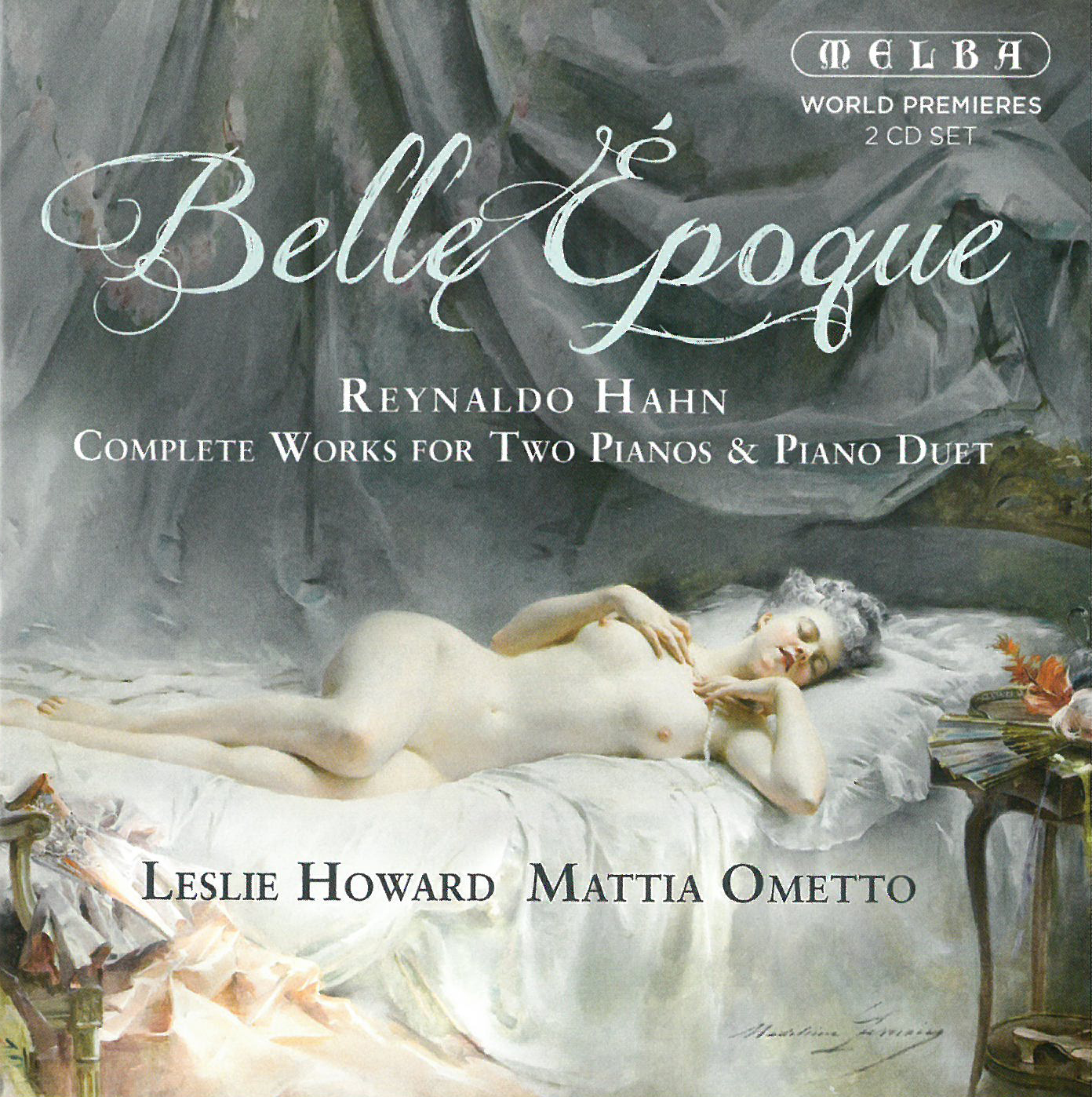
01 Ghost LightsJudging from the results on Ghost Lights (Songlines 1621-2 songlines.com), French pianist Benoît Delbecq joining the Vancouver-based trio of clarinetist François Houle, guitar and oud player Gordon Grdina and percussionist Kenton Loewen was more like mixing two complementary compounds than introducing an unstable element to a scientific formula. That’s because the Houle/Grdina/Loewen trio has been together since 2014, while the clarinetist and keyboardist have worked as a duo since 1996. Delbecq’s familiarity with non-Western scales coupled with Loewen’s skill on the Arabic lute give pieces such as Ley Land and especially Soft Shadows an Eastern cast. Ley Land’s moody and crepuscule feel is further advanced by slurred string fingering and Houle’s chalumeau slurps. Meantime Soft Shadows’ Eurasian tinge is intertwined with minimalist tones as organ-like drones from processed loops create a continuum. Placing a wispy reed narrative atop sharp guitar lines, percussion shuffles and restrained pianism as on Ghost Lights only works for so long. Like a dainty tiara perched on a massive head of hair the wrong movement can upset the balance. Luckily equilibrium is maintained due to contralto clarinet cries matched with modulated piano tones. The CD’s most jazz-like piece is Gold Spheres which evolves into a suite of multicoloured, almost Africanized tinctures. Ghostly and atmospheric via reed snarls and plucked inner piano strings, the wavering theme is both percussive and succoring. Underlying harshness is relieved with slurred guitar fingering while the quartet demonstrates perfect control of the material, since neither this timbral softening nor the preceding firmness prevents the tune from attaining a notable finale.

Review

02 FillFreeA similar situation is delineated on the aptly-titled Everything is a Translation (Fiil Free Records FFR0916 larsfiil.dk); a suite composed by Danish pianist Lars Fiil and interpreted by the Fiil Free septet of five Danes, Swedish guitarist Henrik Olsson and Polish trumpeter Tomasz Dąbrowski. Composed so that each subsequent track bleeds into the next, the five sequences go through sections of speed and static, Arcadian lulls and aggressive outbursts. Symbolically the session also marks how completely Dąbrowski has integrated Scandinavian ethos. Unlike some showcases where the soloist seems to be jammed on top of the ensemble, the trumpeter’s muted grace notes are present from the first track Why Search for Common Ground, with textures reflecting back onto Fiil’s low-frequency, Lisztian chording and offhanded cracks and swats by drummer Bjørn Heebøll and vibraphonist Martin Fabricius. There’s such bonding that the tempo speeding up and becoming more swinging almost passes unnoticed. Later instances such as a blustering brass call plus piano pumps show how to fearlessly inhabit the groove between hard bop and cool. That piece fades seamlessly into the neo-pastoral title tune, where sour brass whistles in counterpoint to smeared reed lines also don’t upset the narrative flow or detract from the overall beauty. At the same time, since the suite is sturdy and organically constructed to highlight beautiful colours, it never lapses into mere landscaping. To demonstrate its modernity and the versatility of the players, a track like Is It Doubt includes brass shakes and mouthpiece kisses from the trumpeter that keep the relaxed piano and decorative vibraphone narrative from sounding too comfortable.

03 Clarinet TrioA distinct variation of this add-a-foreign-player appears on Live in Moscow (Leo Records CD LR 781 leorecords.com) where the 15-year-old Berlin-based Clarinet Trio – consisting of Jurgen Kupke (clarinet), Michael Thieke (clarinet, alto clarinet) and Gebhard Ullmann (bass clarinet) was joined by Russian alto saxophonist Alexey Kruglov. Recorded in real time, the CD initially showcases four instances of the trio’s near-telepathic interactions as the members build a collection of layered sonic edifices. In low- or high-frequency elaborations, the sense of perpetual discovery is obvious with Kupke’s bugle-call timbre-stretching, Thieke decorating the themes with jagged glissandi and Ullmann puffing along freight-train-like preserving the bottom. Adding the saxophonist turns the interface more dissonant, but without losing the connective thread. Collective No.9 (Part 1-4) intensifies the reveille-like yaps, squeaking bent notes and foghorn-pitched smears from the clarinets with the saxophonist contributing tongue slaps, reed bites, then builds to a cacophonous crescendo where all four explore the deepest regions of their horns. Yet not only do the four on Kleine Figuren No.2 immediately unite high-pitched glissandi to create peppy, yet comforting harmonies that are almost as tonal as a Christmas carol, the preceding sounds are prelude to the concluding 14-minute-plus News? No News! Perfectly harmonized as a Baroque chamber ensemble, but with finger-snapping energy, they take turns propelling the theme, taking it apart and reconstituting it. Furry slurs from linked alto and bass clarinets suggest a Romantic tone poem, while Kruglov’s jagged and jiggling split tones describe an alternate sound portrait. Finally, a melancholy crescendo of crackling tones is attained and regularized by Ullmann’s rhino-like snorts. The four’s interlaid harmonies end the piece without schism and without sacrificing its cutting edge.

04 DefibrilatorKruglov’s potential disruptive forces were actually melodiously linked to the Trio’s longtime sound strategy. But an additional element can also push an already dissonant game plan to a strident peak. Consider Conversations About Not Eating Meat (Border of Silence BOS 001 borderofsilence.com). Here the Basel-based Defibrillator trio, made up of Polish brothers Sebastian Smolyn on electronically processed trombone and Artur Smolyn on electronics, plus Berlin-based drummer Oliver Steidle, invite powerful German multi-reedist Peter Brötzmann to record with them. The result could be likened to an aural record of North Korea’s nuclear tests. While a true defibrillator uses electrical shocks to help control arrhythmias, and although Brötzmann’s reed blasts have usually been linked to power from the guts, it’s mostly the trio’s electronic boosts which pump out a blitzkrieg of themes so that obbligatos from the saxophonist sound almost moderato. This aural landscape of industrial noise also gains traction from the trombonist’s extended plunger forays. With the processed oscillations arriving as unexpected as a prolonged power outage in a city’s downtown core, on pieces such as The Man with One Ball and Fuckir Brötzmann’s doggedly straightforward improvising, trombone siren calls and drum bumps cut a path through the swooshing wave forms like a bowling ball scattering pins. Asserting the primacy of human lung power through a combination of multiphonic growls and altissimo screams is further proof of the saxophonist’s skill. In fact, by the climactic Cellulite Guru finale, many of the underlying drones and signal-processed timbral distortions have become so regularized and dampened that Brötzmann’s usual overwrought reed narratives seem as mellow as Sonny Rollins elaborating a tune backed by a conventional rhythm section.

Review

05 TernionThe final variant of our theme involves trombone, saxophone, bass and drums. That’s the configuration of Danish-born Anne Mette Iversen’s Berlin-based Ternion Quartet (Brooklyn Jazz Underground Records BJUR 062 bjurecords.com). Iversen organized the group in 2015 with alto saxophonist Silke Eberhard, percussionist Roland Schneider (both German) and trombonist Geoffroy De Masure (French). Working in classic contemporary fashion with round-robin solos from the frontline firmly grounded by Iversen’s bass pulse and rattling drum beats, the four never stray far from swing. This emphasis on foot-tapping also means that except for the odd cymbal slap and snare clunks on tunes such as Trio One Schneider stays in the background, with the bassist. Overall, the quartet’s most notable work occurs on a trio of tunes placed in the CD’s centre. Debacled Debate gives the trombonist space for vocalized cries, which evolve to bel canto grace notes decorated with twisted trills from Eberhard and a squirming bottom from the rhythm section. Reversing pitch roles, the saxophonist and trombonist extend A Cygnet’s Eunoia by moving brass tones upwards and reed timbres downwards. Slippery smears from Eberhard and bottom burrs from De Masure result in harmonies that join to produce skipping swing. The trombone tone remains in the basement during Escapade #7. But before De Masure and Eberhard engage in some jaunty tune-ending call-and-response she constructs a Dolphyesque solo that’s harsher and more dissonant, but doesn’t upset the tune’s forward motion.

Such coherent playing is an indication not only of the band’s mutual musical understanding, but also marks an instance in which individual nationality is an invisible part of the performance. It’s this connection to which all these ensembles aspire.

Carl Schuricht was an esteemed German conductor in the first half of the 20th century. He was born in Danzig into a dynasty of organ builders in 1880 and studied at the Berlin Hochschule from 1901 to 1903. During his first years as a conductor he was to be heard in Mainz, Kreuznach, Dortmund, Goslar and Zwickau. From 1909 he conducted the Rühl Oratorio Society in Frankfurt-am-Main. From 1912 to 1944 he was the chief conductor and general music director of Wiesbaden and was also active as a guest conductor. He was a guest of the St. Louis Symphony in 1927. After 1944 he conducted and recorded with the finest orchestras, the Vienna, Berlin and London Philharmonics, the Swiss Romande Orchestra, etc. In 1956 he returned to North America with the Vienna Philharmonic on a 12-city tour, appearing in Washington, New York, Cleveland, Cincinnati and elsewhere on the East Coast, and including Toronto’s Massey Hall on November 28, winding up before the General Assembly of the UN in New York on December 10. He continued to conduct concerts and record in Europe over the next decade. He died in 1967.

Today, as time and technology march on, his name is really familiar only to collectors such as those who support the long list of his recordings at amazon.com (far fewer at amazon.ca and elsewhere). Newer editions appear from time to time, the most recent from Audite and Decca which contain interesting and engaging performances reflecting his sensitivity and understanding of the composer’s intentions.

01a Schuricht DeccaDecca’s CDs are in a compact box, Carl Schuricht; The Complete Decca Recordings (4831643, 10 CDs). Part of this set is contained in Decca’s Original Masters five-CD set from 2004 with some interesting additions. There is a Beethoven Second taken from the 1947 78s with the Swiss Romande, produced by the renowned Victor Olof, who produced just about all the (then) state-of-the-art recordings in this collection, all of which, barring this one, sound very clean and dynamic. Another 1947 Swiss Romande recording features violinist Georg Kulenkampff and cellist Enrico Mainardi in the Brahms Double Concerto. There are many others worthy of attention leading to the tenth disc, an all-Wagner program played by the Paris Conservatoire Orchestra, France’s leading orchestra at the time consisting of professors from the Conservatoire and their pupils. Heard are the Prelude and Liebestod from Tristan and Siegfried’s Rhine Journey leading into Siegfried’s Death and Funeral March from Gotterdämmerung. Heaven only knows how many times I’ve heard these but I do not recall being so affected by the poignancy of the Tristan nor the sweep of the Siegfried. There is a wealth of superior performances here, sounding clean and dynamic, so do check them out at arkivmusic.com for complete details, except recording dates.

01b Schuricht LucerneThe Audite CD (Lucerne Festival Historic Performances, Vol. 11: Carl Schuricht Conducts Mozart & Brahms, Audite 95645) finds Schuricht joined by pianist Robert Casadesus with the Swiss Festival Orchestra playing Mozart’s Piano Concerto No.27 in B-flat Major, K595 on August 19, 1961. Schuricht had been appearing at the Lucerne Festival since the end of 1944 when he conducted Beethoven’s Missa Solemnis. He was welcomed there as “the only representative, apart from Otto Klemperer, of the generation of old German conductors still remaining active.” The Neue Zürcher Zeitung later reported that “Even if the 81-year-old has difficulty walking to his podium, his music making has remained astonishingly young. His economical, precise beat and the security and suppleness with which he effects modifications of the basic tempo give no hint of fatigue or decline of mental or emotional faculties.” The second item of concerts from Lucerne is the Brahms Second Symphony from September 8, 1962 with the Vienna Philharmonic. A listener might care to compare this performance with the 1953 version also with the Vienna Philharmonic in the above Decca set. It certainly shows what this 82-year “old German conductor” could draw from an orchestra.

02 GiesekingI remember years ago collecting the recordings of Walter Gieseking, including the various Schubert shorter pieces that he played with such élan and affection that one would think that they were personal friends. Appian has released a four-CD set of Gieseking’s complete solo recordings of Brahms, Schubert and Schumann that he made for English Columbia in the 1950s (APR 7402, 4 CDs). After looking over the list of contents, I put disc two into my player to hear again Gieseking playing the eight Klavierstücke, Op.76; the Seven Fantasies, Op.116; the Three Intermezzi Op.117 and the six Klavierstücke Op.118. There were some disappointments but many more were just as I remembered. Perhaps the overload of hearing one piece and then another and another is not really an ideal way to judge a work, nor fair to the artists. An overload.

Of interest is that the above four works were recorded over three days, June 20 to June 22, 1950. Unlike many of his colleagues Gieseking enjoyed making recordings. He just sat there and played, so this must have been a treat for him. Also he claimed that he never practised as giving recitals was practise enough. He had the score clearly in his head. The third disc contains the two sets of Impromptus Op.90 and 142. The fourth and last disc with Schubert’s Six Moments musicaux Op.94 and Three Pieces D946 concludes with two Chopin pieces, the Berceuse Op.57 and the Barcarolle Op.60 and two Scriabin pieces, Poème Op.32 No.1 and Prélude Op.15 No.4.

A better way to clear one’s musical taste buds would be to return to disc one for Brahms’ Klavierstücke Op.119 and the Two Rhapsodies Op.79 followed by some music by Brahms’ close friend, Schumann. Here is a gentle reading of Kinderszenen Op.15 and an enthusiastic, at times passionate version of Carnaval Op.9; then a farewell with Schlummerlied, No.16 of Albumblätter Op.124 and some parting notes from the enigmatic Vogel als Prophet, No.7 of Waldszenen Op.82.

There was nothing pretentious about Gieseking’s playing. One gets the distinct feeling that he is sharing his thoughts. Simply, the art that conceals the art.

Back to top