05 Fawn FritzenHow to Say Sorry and Other Lessons
Fawn Fritzen; David Restivo
Chronograph Records CR-081 (chronographrecords.com/releases)

Canada bristles with artistry from coast to coast to coast. Still, you cannot but be awed by this one from Yukon’s own. The inimitable Fawn Fritzen is a wonderfully seductive vocalist and a superb lyricist who writes not with a pencil but rather with the raw nerve endings of her very fingers.

We experience her emotional musicality throughout the repertoire on How to Say Sorry and Other Lessons. This is wonderful songwriting, and singing, of course. Fritzen tells us: “My life was in chaos” but that she found “the right tools… Compassion, Letting Go, Grief, Healing.” She wears her heart on her proverbial sleeve through this recording. While we are struck by her candidness, we must also admire the fact that Fritzen navigates her emotions without an ounce of gratuitous sentimentality – through music that balances deep song and unfettered swing. As a result, this emotional musical journey is also buoyed throughout by a sense of recovery.

I would be remiss not to recognize her co-producer and pianist, David Restivo, whose contributions cannot be overstated. This astute partnership is particularly evident on Kintsugi, a song with diaphanous, yet delicate, Japanese inflections. Bassists Doug Stephenson and John Lee; drummers Tony Ferraro and Kelby MacNayr are superb throughout. Meanwhile, when called upon to lend a helping hand to Fritzen, vocalists Melody Daichun and Laura Landsberg add superb colour and texture to Show Me Your Heart and Dragonfly to close out the recording.

Listen to 'How to Say Sorry and Other Lessons' Now in the Listening Room

06 Matty StecksLong Time Ago Rumble
Matty Stecks & Musical Tramps
Matty Stecks Music RAC-530/digital available (mattystecks.com)

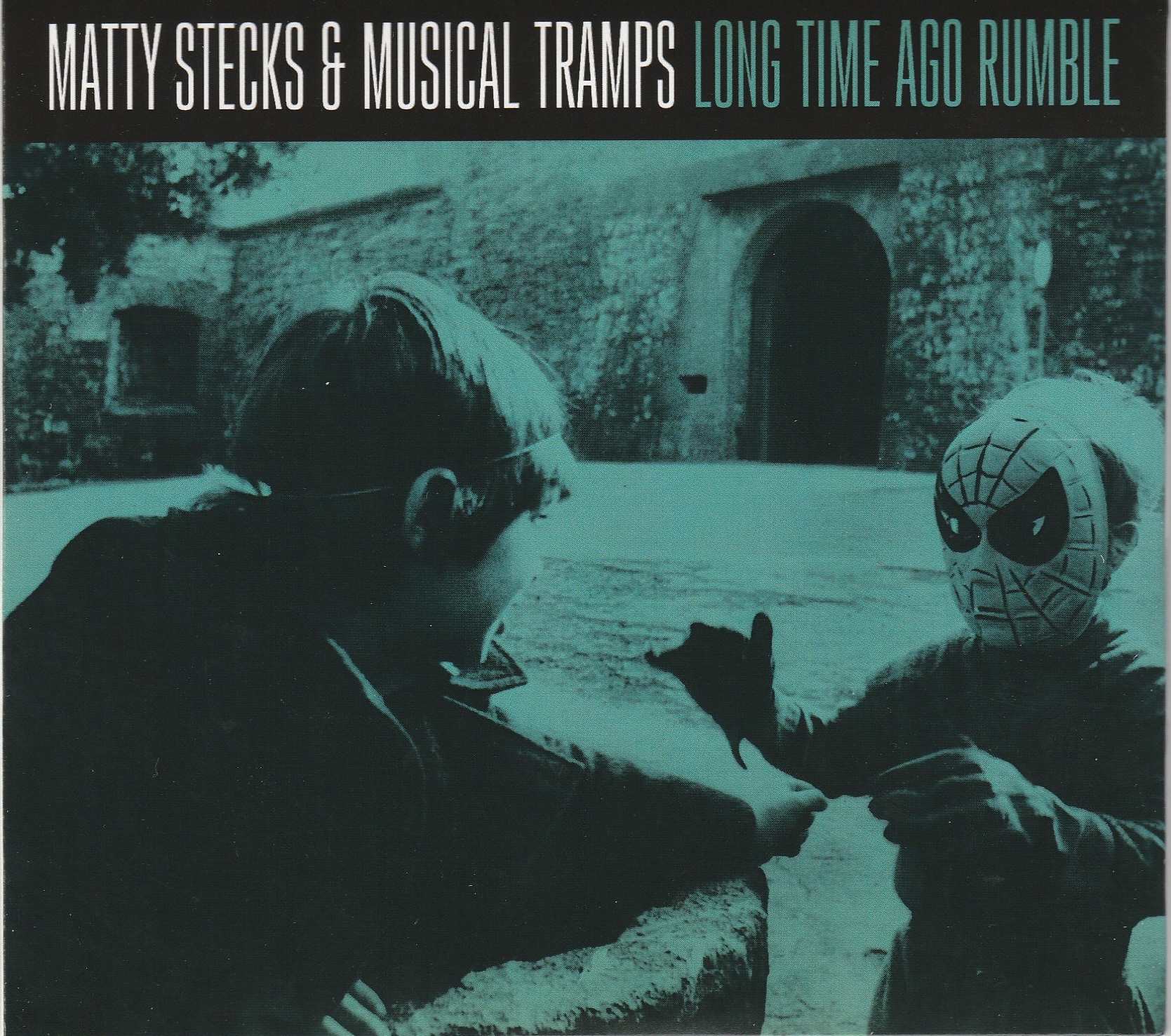
One of the main difficulties artists face is that of fully realizing their ideas. In the case of Matthew Steckler however, the Manitoban seems blessed with both the burden of an abnormally creative mind and the gift of being able to make the most of his artistic impulses. His latest experiment began life as a debut concert with a virtuosic band he meticulously assembled and later blossomed into what he describes as a conceptual research project in the stylistic marriage of jazz, pop, film score and musique concrète. Taking after his hero Charlie Chaplin, Steckler (aka Matty Stecks) goes the auteur route with his involvement in this album. He is one of two producers, writes all the material, does all the arrangements, contributes field recordings, acts as bandleader and expertly plays several instruments. Steckler particularly shines on saxophones, his Dolphy-esque phrasing as unpredictable as the music. 

This may be the most eclectic jazz release you hear this year. Each track could be labelled as a different genre, and one could make comparisons to artists ranging from Chaka Khan to Frank Zappa. The track list alternates between traditional structure and collective improvisations structured around field recordings provided by various band members. While at first glance this album may not appear to work as a uniform statement, what connects these pieces is the sense of adventure Steckler maintains throughout the runtime. Highly recommended.

Listen to 'Long Time Ago Rumble' Now in the Listening Room

07 Frothing MorseFrothing Morse
Audrey Chen; Phil Minton
Tour de Bras TDB904 (tourdebras.bandcamp.com/album/frothing-morse)

Phil Minton, just turning 80, may be the world’s most creative vocalist. Elsewhere his repertoire can include The Cutty Wren, a Peasants’ Revolt song about eating policemen, and Lieber & Stoller’s Jailhouse Rock lyrics applied to a serial melody (both to be heard on the recent Ways for an Orchestra with Veryan Weston and a Bologna chamber orchestra [i disci di angelica]). If you want, however, to hear a human approximation of a tone arm bouncing across the surface of a vinyl LP of a cat screeching, Minton, the free improviser, is also your man; his duet partner, Audrey Chen, similarly in possession of titanium vocal apparatus, might very well be your woman, and Frothing Morse is the place to hear it. The two have been singing together for a decade, previously releasing both duet and quintet CDs (on Sub Rosa) and there’s a recent COVID-lockdown performance on YouTube.  

Recorded at an Italian festival in 2015, the single 37-minute Frothing Morse covers extraordinary ground, from madness to code, the two singers following or diverging from one another’s inspirations, whether they’re Chen’s whistling highs, abrasive choking and ringing throat-singing tones or Minton’s machine and animal impressions, yodelling, babbling and multiphonics. Their work is usually surprising, often visceral, strangely moving, but most significantly, liberating, a crash course in the sounds that can come out of humans’ mouths with barely a trace of speech, a panoply of emotion in a moment.  

08 PedernalPedernal
Susan Alcorn Quintet
Relative Pitch RPR1111 (relativepitchrecords.com)

Over the past 20 years, Susan Alcorn has emerged as one of the most creative figures in jazz and improvised music, brilliantly exploring the sonic resources of the pedal steel guitar, especially the pitch bending and shifting possibilities little explored in its country and western home. In Alcorn’s hands, the instrument is a self-contained orchestra, able to suggest the elegance of Astor Piazzolla, the wandering mysteries of Harry Partch, the cosmic majesty of Olivier Messiaen or the raw energy of Ornette Coleman. 

Here Alcorn introduces her compositions for a mostly string quintet with violinist Mark Feldman, bassist Michael Formanek, guitarist Mary Halvorson and drummer Ryan Sawyer. Named for the Pedernal Mesa in New Mexico, the CD’s compositions abound in geographical references. Along with the personnel and general musical quality, it suggests another recording: Nate Wooley’s 2019 masterpiece, Columbia Icefield, on which the trumpeter debuted a quartet with Alcorn, Halvorson and Sawyer. 

Alcorn’s melodic and textural visions come to the fore on the title track, the extended Circular Ruins and A Night in Gdansk. There’s an affinity with Morton Feldman in the rich sustained tones, and a near twinship with Halvorson, whose pitch-bending guitar hardware can ambiguate the source of some burbling, microtonal washes of notes. The concluding Northeast Rising Sun may allude to Maryland highway signage, but the music is a playful romp, beginning with clapping accompaniment then combining a Sufi refrain with elements of an Irish community dance. It’s delightful stuff.

09 Yannick GebildeGebilde
Yannick Chayer
Small Scale Music SSM 023 (smallscalemusic.bandcamp.com)

A dialogue from a single musician, Montreal’s Yannick Chayer has designed this CD’s ten tracks so that his soprano saxophone is constantly reacting to or against programmed samples of reed improvisations and other intonations propelled by his synthesizer. Rife with static crackles, noises and pauses, the results are as changeable as if he were duetting with another player. 

With advances in programming, timbres from the synthesizer take on multiple identities from bagpipe-like tremors to plastic kazoo-like screeches; yet most frequently, organ-like motifs serve as several tracks’ continuum. Meanwhile Chayer’s parallel acoustic tone is snarly and metallic, dedicated to high velocity fluttering or calm multiphonics. 

Extended tracks such as Organisation Off and Master Forgery play with the implicit plasticity of the program. For instance, the former positions a biting reed solo atop massed saxophone timbres and climaxes as the soloist squeals past altissimo with key percussion echoes below. The latter track balances calliope-like patterning that remains unchanged as vibrating reed split tones expand to twitters and trills, sometimes vamping roughly against one another. 

Like a Pimp may be the defining track however, as newer samples keep being added to the stop-time exposition so that a simple melody is present from a singular reed line along with electronic flanging and reverberating tongue pumps. 

Chayer’s stated aim is creating reed programs that move between analog noise and musique concrète. Adding a hearty dose of improvisation, Gebilde proves that he has attained this goal.

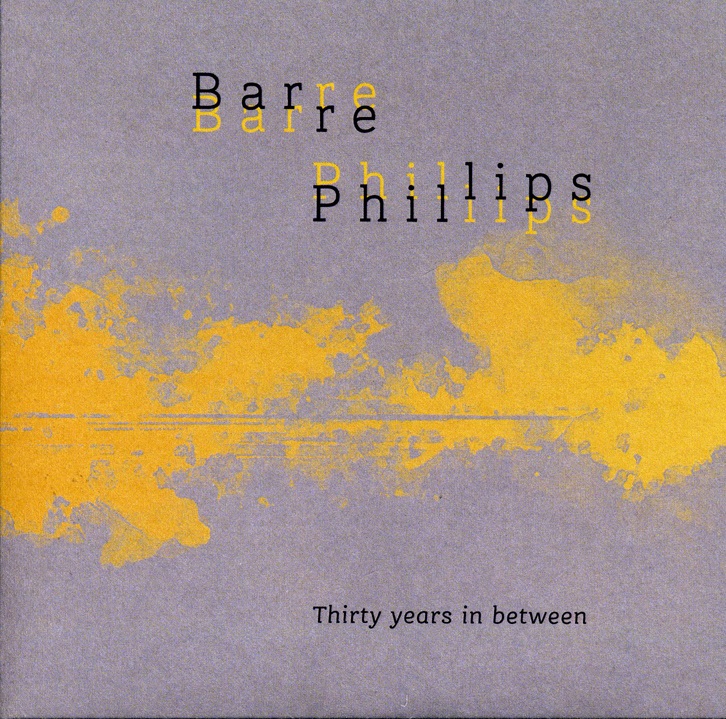
10 Barre PhilipsThirty years in between
Barre Phillips
VICTO cd 132/08 (victo.qc.ca)

Proving that an old double bass soloist can still learn new tricks isn’t the point of Thirty years in between. Instead, coupling a genre-defining 1989 solo disc from the now 85-year-old American bassist Barre Phillips with a new set of live solos from FIMAV 2019 makes clear how mature savvy has replaced adroit swagger. Not that the 1989 tracks aren’t dazzling, as Phillips was pioneering a novel approach to soloing. With fluid variation at both ends of the timbral spectrum, he maintained a warm expansive tone, whether he was pummelling pumping variables from the bottom tones or using hard-edged spiccato to extract narrowed multi-string squeaks,

By 2019 however his strategy has been distilled to its essence. Pared away from sometimes baroque-like formalism and showy staccato runs, he concentrates on moody narratives. Mellow in his echoing tones, Phillips still makes use of col legno slaps and spiccato reverberations, with some passages taken prestissimo. But by keeping most interpretations at a low simmer he isolates rubs and pops then plays up the suppleness of variously angled string sets and the instrument’s woody reverb. Animated with harsh stropping when needed, as on Abate? Arise?, silences are also prominent. The concluding A new take strings together old and new techniques. Alternating between cultured sweeps and gaunt shrills, a display of triple stopping is followed by thin moderated slides to the finale. Obviously Phillips was a master solo bass player three decades ago – and he retains that skill.

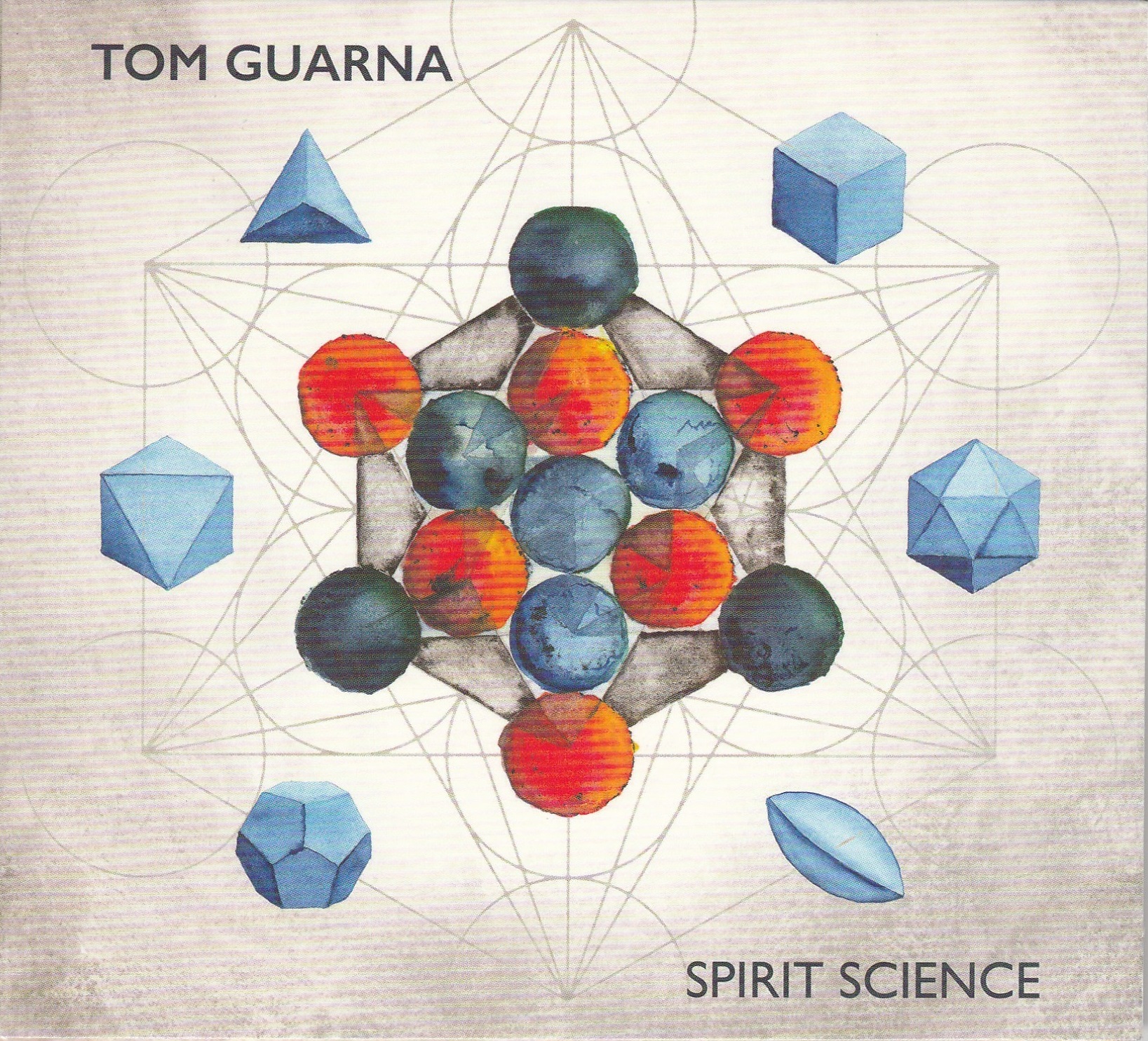
11 Tom GuarnaSpirit Science
Tom Guarna
Destiny Records DR-0030 (destinyrecordsmusic.com)

Renowned jazz guitarist Tom Guarna, often named alongside greats such as John Scofield and Bill Frisell, has released a delightful record, taking the listener on a pleasing and progressive journey through a spacious jazz world; each track like a different chapter of the trek with its own distinct moods and soundscape. All tracks are penned by the guitarist himself and feature an all-star group of musicians including Ben Wendel on tenor saxophone and bassoon, Aaron Parks on keyboards, Joe Martin on bass and Justin Faulkner on drums. Such a unique instrumentation only serves to further highlight Guarna’s compositions and breathe an additional energy into them. 

The album has been mentioned as having a cohesive theme that is inspired by “the science of sacred geometry” which is reflected in each piece; while singular instruments meander on their own set melodical paths within the songs, they come together as a satisfying and coherent whole that calls to mind a geometric shape. Specifically, in Metatron’s Cube, this organized progressiveness is noticeable, with the rhythmic groove and distinct bass melody lending structure to the piece while soaring sax, guitar and piano solos create the sense of spaciousness and freedom. Crossing over seamlessly between progressive rock and traditional jazz, the album is a must for fans of either genre that are looking for a fresh perspective on how Metheny-esque synth and electric guitar use can be taken a step further into a new and unique dimension.

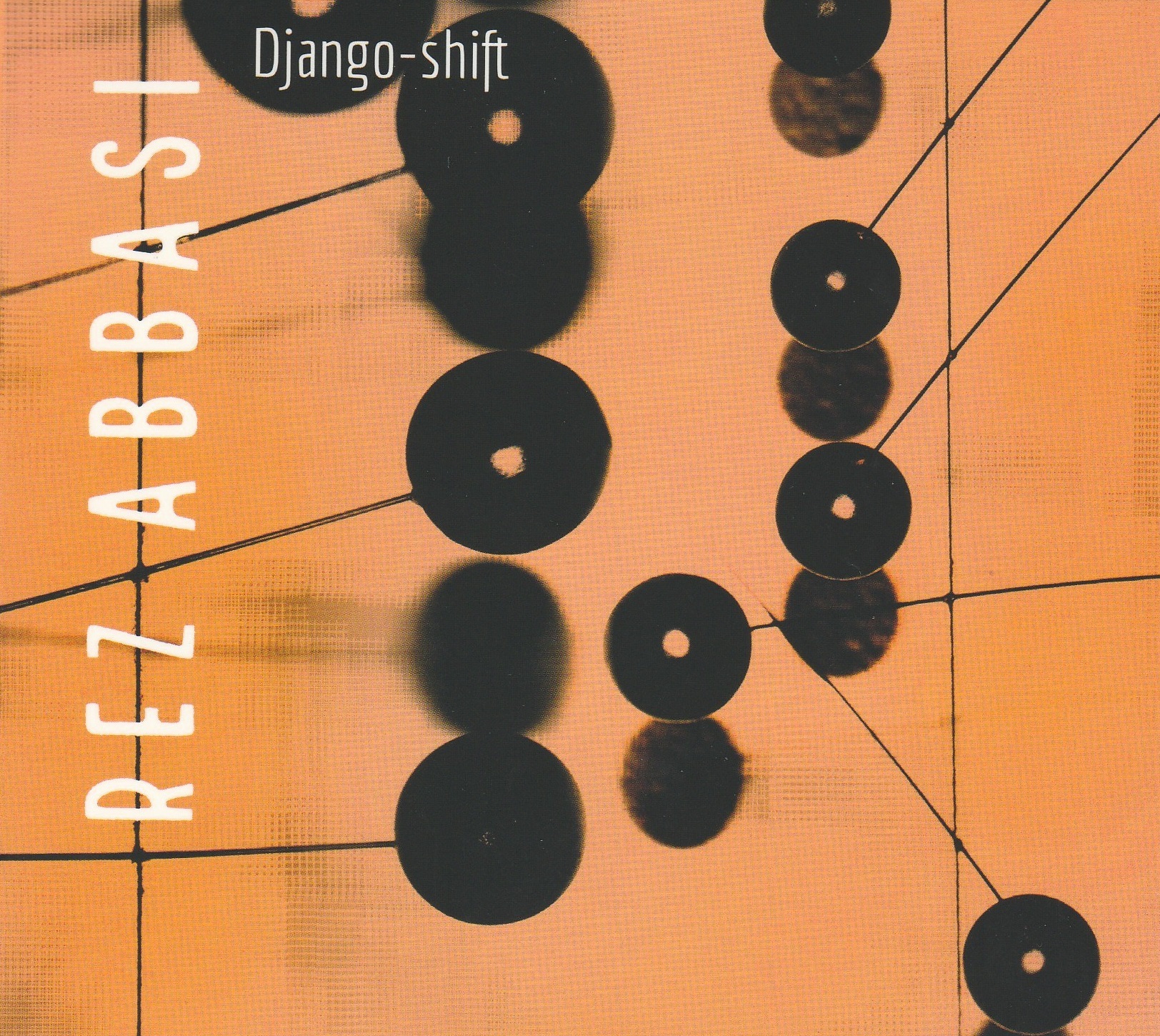
12 Django ShiftDjango-shift
Rez Abbasi
Whirlwind Recordings WR4762 (whirlwindrecordings.com)

In 2019, commissioned by California’s Freight and Salvage’s Django Festival to present a Django Reinhardt-centric recording project, skilled Pakistan-born and NYC-based guitarist/composer Rez Abbasi was challenged by his desire to present Reinhardt not only as a unique, mesmerizing and beloved guitarist, but also as a composer. He plumbed the depths of Reinhardt’s considerable catalogue and came upon seven stunning Reinhardt tunes, as well as two more that were strongly associated with the magical, Roma-Hungarian guitarist. In order to bring his present-tense, genre-blending vision to life, Abbasi called upon the uber-talented Neil Alexander (organ, synthesizers and electronica) and Michael Sarin on drums.

Abassi’s rhythmic, 6/8 arrangement of Django’s Diminishing feels like a tip of the hat to the great Thelonious Monk – and Abassi freely admits that Monk’s odd, juxtapositional style influenced several tracks. Abbasi’s organic understanding of complex rhythmic patterns and his exquisite guitar technique defines this standout project, and longtime collaborators Alexander and Sarin have jumped down the proverbial rabbit hole right along with him – never missing a nuance. 

Of particular innovation is the invigorating use of organ and synthesizers (including guitar effects), coupled with the contiguous, pulsing drum work by Sarin. Reinhardt’s classic Swing 42 is barely recognizable here, but this new perspective on the tune brings an unbridled urgency and the gorgeous ballad, Django’s Castle, displays the fine trio at their lyrical best. A favourite of Django’s, Anniversary Song (Ivanovici), is arranged here as an odd-metered funky trip and one of the most compelling tracks is certainly Abassi’s take on Kurt Weill’s melancholy September Song. Abassi’s sumptuous tone and emotive interpretation of this classic are beyond compare.

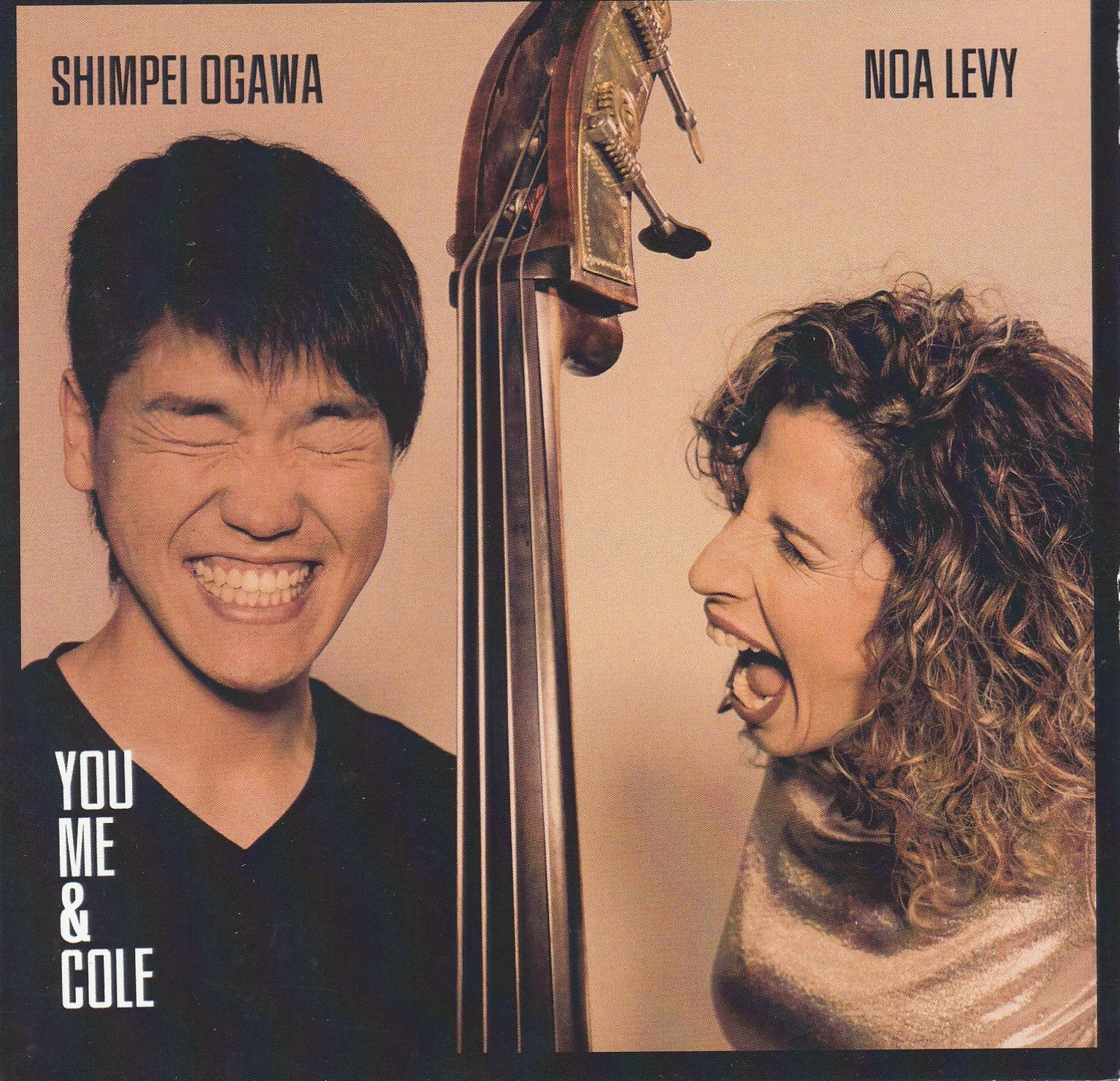
13 You Me ColeYou Me & Cole
Noa Levy; Shimpei Ogawa
Belle Records BEL-002 (noalevylive.com)

Over the years, there have probably been as many Cole Porter jazz renditions as there have been people on the planet. However, against the odds, vocalist Noa Levy and bassist Shimpei Ogawa manage to deliver a truly fresh set of Porter classics on their new release. Firstly, to set the obvious aside, a bass/vocal duo coming out with a songbook album is a rare sight indeed. Trying to play and improvise over standard changes without anything resembling chordal accompaniment is no simple task. This particularly rings true when dealing with contrabass and voice, as those may be the two instruments in the jazz idiom where tuning is of the biggest concern. In spite of the challenge, Ogawa’s intonation is spotless to the point of being superhuman and Levy’s ability to adapt to these circumstances is nothing short of incredible. 

The biggest draw of this album is how beautifully the arranging talents, diverse musical backgrounds and novel ideas of the duo converge. Levy and Ogawa season the proceedings with pinches of everything from klezmer to Bach, and the brightest moments come with their shared fluency in tango. Their chemistry is something to marvel at, as they constantly take unexpected risks and play in seamless dialogue together without so much as a misstep. Renditions are also sprinkled with charming gifts to the listener, including overt Mingus and James Bond references. Refreshingly fun.

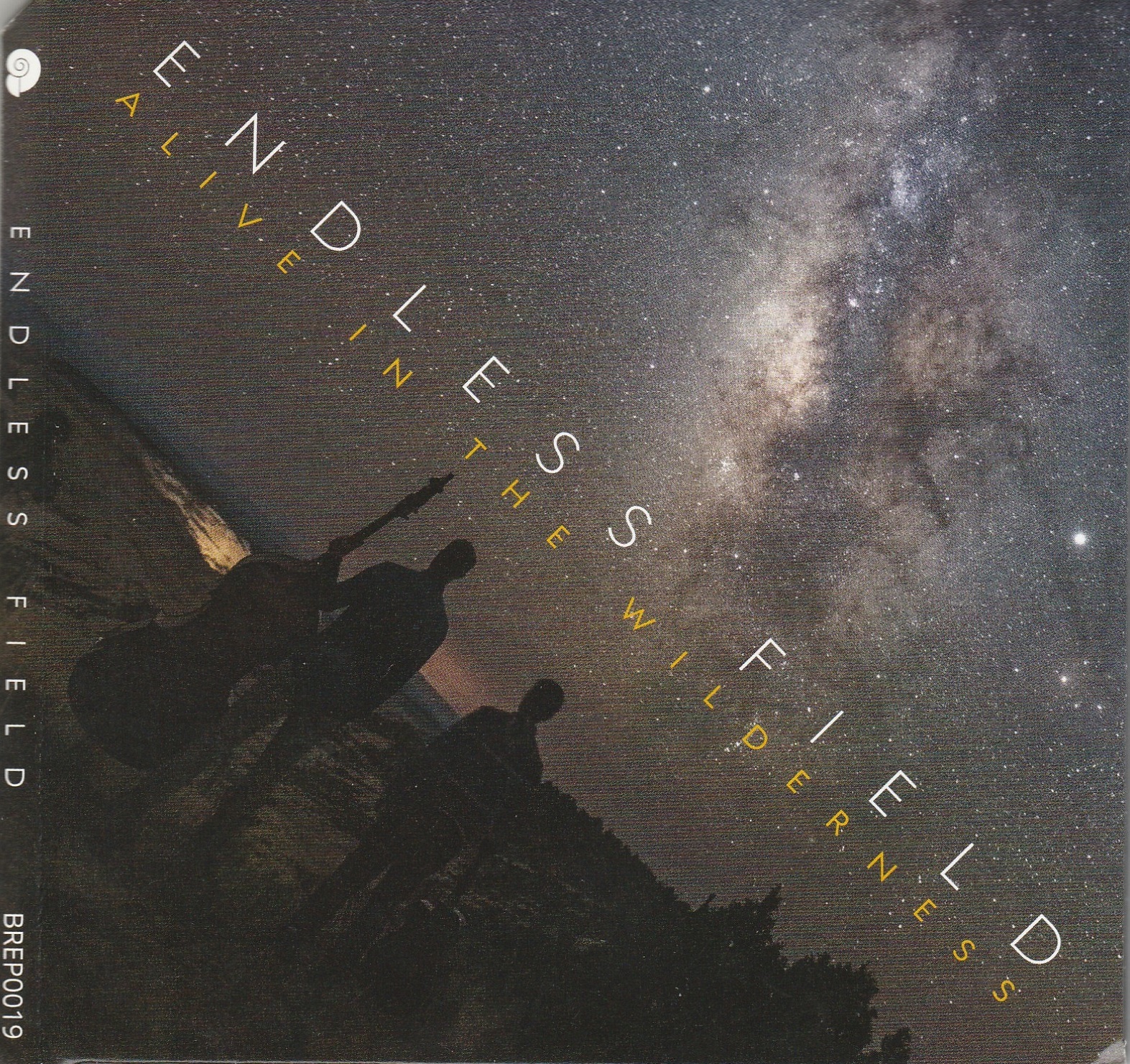
14 Endless FieldAlive in the Wilderness
Endless Field
Biophilia Records BREP0019 (endlessfieldband.com)

Two well-known NY players, Ike Sturm, bass, and Jesse Lewis, guitar, have teamed up together to become the duo Endless Field. Their album Alive In The Wilderness is a thoughtful road trip descriptive of our connection to the natural elements; songs which carry titles such as Life on Earth, Wind, Fire¸ Water… The album is beautifully played, with great energy and dynamic interaction between the players. Resonant bass and gorgeous lush melodies evoke a film score. With both of their backgrounds being in jazz, the album is a surprisingly laid-back, free-play wander around streams and underneath stars (literally); spontaneous feeling with lots of breath, some folk elements and some just genuinely beautiful storytelling. 

The selections are diverse but manage to hang together with the earthly theme, helped by the continuous backdrop of running water or birds in many of the tracks. A road trip between friends, I especially enjoyed the rhythmic play in Zim and loved the looseness and the sweetness of the journey of Old Man.

The album comes as a download only, which is intended to save on plastic as well as the toxins used to create CDs, and all proceeds are donated to conservation. There is however a gorgeous hand-folded origami album sleeve available from the NY label Biophilia; their artists are united by a common interest in having a positive impact on the environment and communities, and collaborate with organizations that specialize in conservation, sustainability and outreach initiatives. Check them out, they do good stuff and represent some really top NY players.

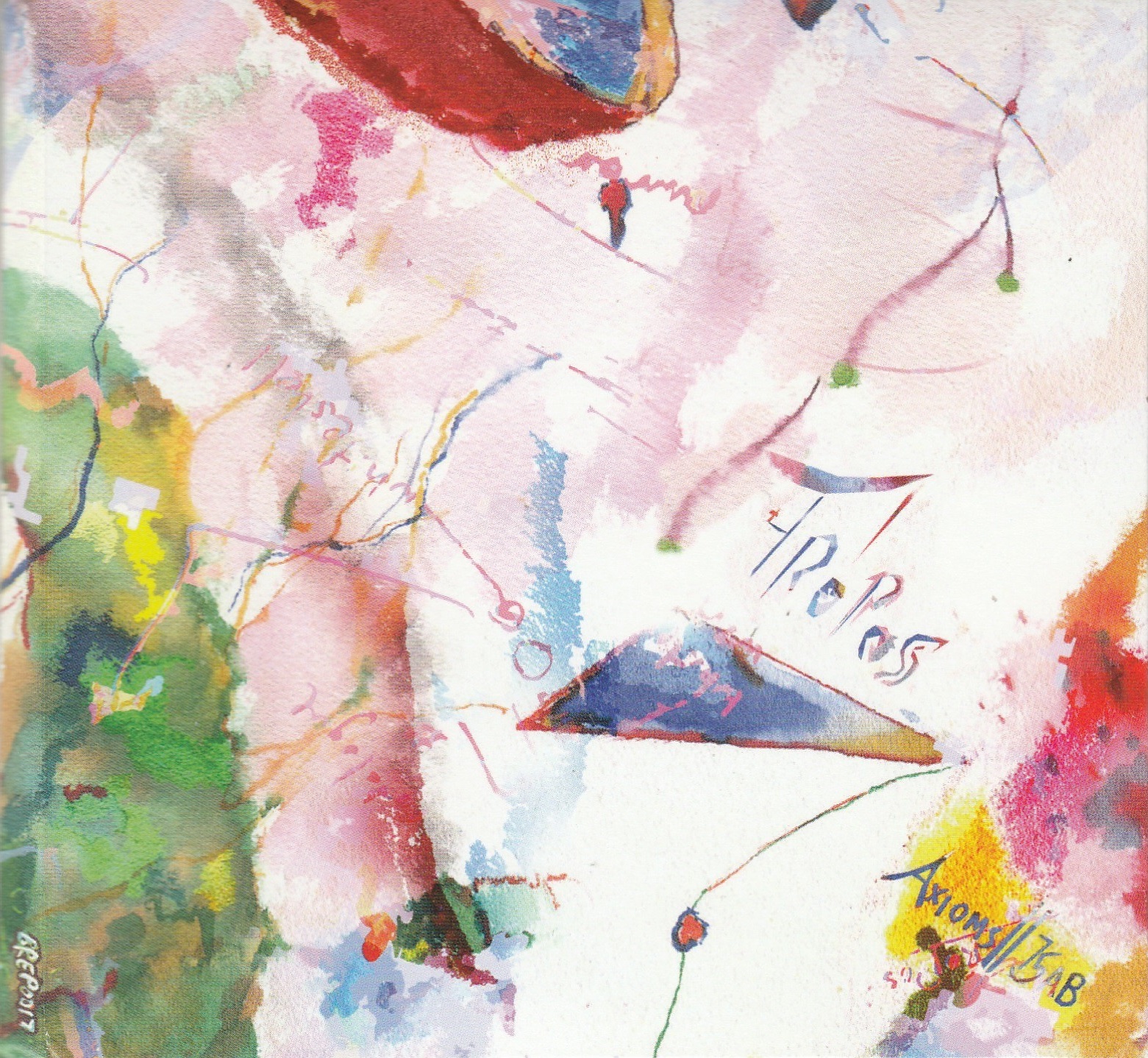
15 Tropos AxiomAxioms // 75 AB
Tropos
Biophilia Records BREP0017 (troposensemble.bandcamp.com)

The enigma of Axioms // 75 AB begins with the CD jacket which unfolds like an elaborate origami to ten panels: on one side is a mural which includes a quote from George Lewis, the other side contains track information, instrumentation, abstract diagrams and liner notes hand-printed in a small font. If you prefer clearly typed text, you can head to the Tropos Bandcamp site. In fact, you must head there anyway, because the CD jacket contains no CD, just a download code! Axioms // 75 AB is a tribute to Anthony Braxton on his 75th birthday (June of 2020). Of the 11 compositions, the first five are by members of Tropos while the rest are by Braxton and all contain both composed and collectively improvised elements. Vocalist Laila Smith, saxophonist Raef Sengupta, pianist Phillip Golub, bassist Zachary Lavine and drummer Mario Layne Fabrizio met at the New England Conservatory and created this album as a token of their love for Braxton’s music. Many of Braxton’s works have always presented an alternative and highly original reality for jazz: they certainly swing, yet are in a very different tonal realm to Stardust or Ornithology

Tropos delivers exciting and intense playing and it is clear they are steeped in the tradition of Braxton, Ornette Coleman, Lewis and others. One quibble is that on some pieces, like Braxton’s 23c, Smith’s vocals add nuance while balancing with the rest of the group, but in other cases it is mixed too prominently and overshadows the collective.

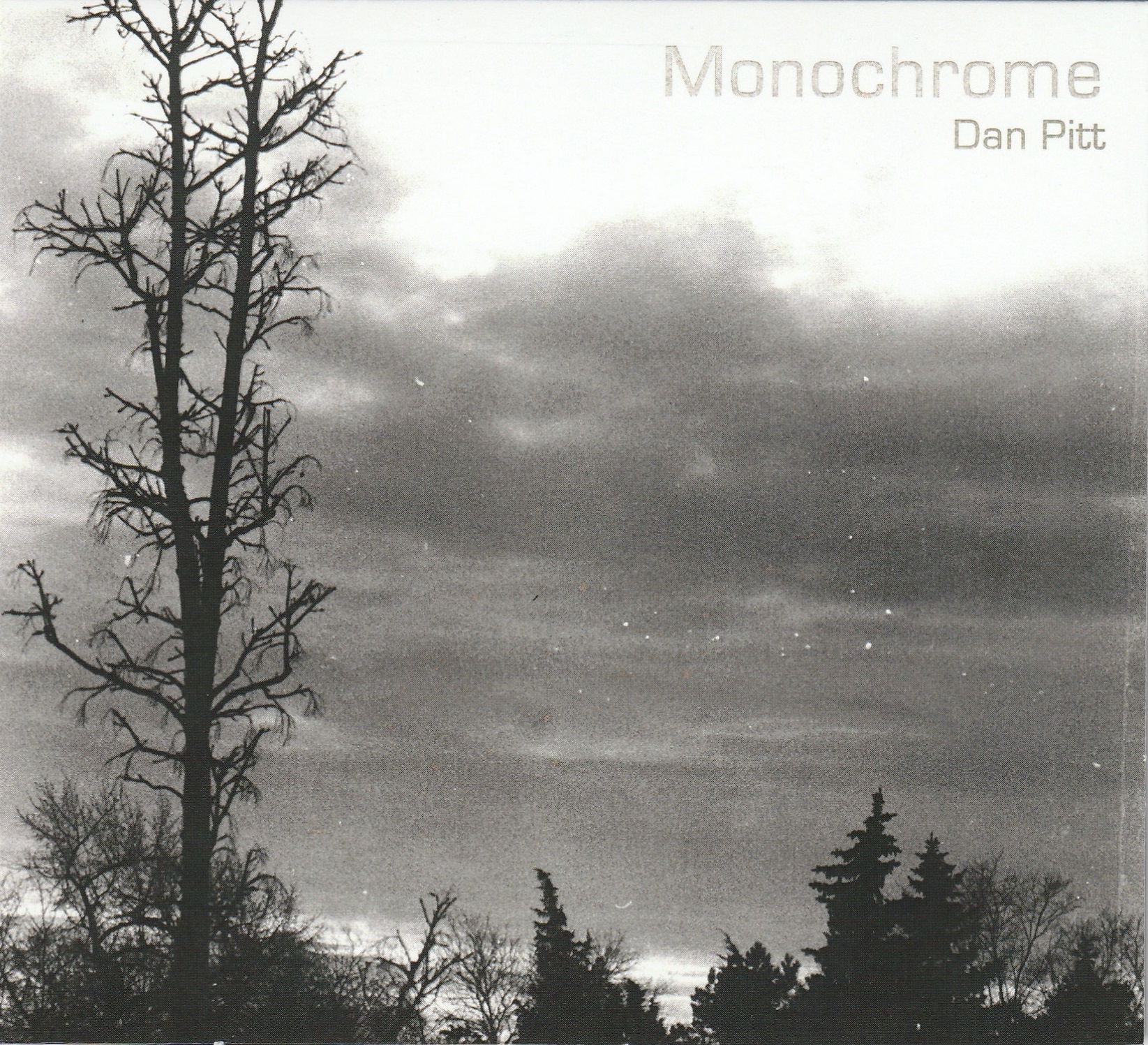
01 Dan PittMonochrome
Dan Pitt
Dan Pitt Music (dan-pitt.com)

Call this a cynical outlook, but I generally see likening one artist to another, particularly in music, a cheap trick employed by unimaginative writers. A saxophonist with avant-garde tendencies quickly “calls to mind Ornette Coleman.” Likewise, any legato-leaning guitarist post-1990 becomes “Metheny-esque” when described in banal jazz prose. During my second listen to Dan Pitt’s Monochrome, I ate my above words as I subconsciously likened many of his tones and textures to modern guitar greats like Bill Frisell and Ben Monder. On this 2020 release of contemporary solo guitar music, I would argue these influences merely show that Pitt has done his homework. The music presented is far from ever sounding derivative, but its uniqueness as an album also largely stems from diversity throughout its ten tracks. Pitt’s use of electric and acoustic guitars, as well as effects and samples, creates tasteful contrasts to the pieces presented, without taking away from the album’s cohesiveness as a whole. 

As the COVID-19 pandemic places many aspects of our lives in limbo, I am not envious of those releasing albums this year, forcedly adapting to the new normal of limited capacity and online album releases. To offer a silver lining for Monochrome, I hope that this album can benefit from the quarantined or working-from-home audience, who now have time to give it the uninterrupted 38 minutes of listening it deserves.

02 OKANEspiral
OKAN
Lulaworld Records LWR011 (lulaworldrecords.ca)

Afro-Cuban music fused with jazz elements and rhythms from around the world, this album is impossible to listen to without moving one’s feet and occasionally breaking into dance. These talented women have heart, they have a groove, and they are backed up by an impressive list of talented musicians. Elizabeth Rodriguez (vocals, violin) and Magdelys Savigne (vocals, percussion), classically trained Cuban-Canadian musicians and JUNO nominees, are the force de jour behind this lively album. Their music is colourful, sassy and engaging. Both use their respective instruments in a way that draws the listener right into the centre of creation, resulting in divine violin solos and driving crossover rhythms. 

Nested among seven original songs are three beloved standards: Cumba, Cumba; Besame Mucho (a much livelier version than expected); and the closing Pie de Foto. OKAN’s original tunes stay within the boundaries of the respective genres but make good use of the crossover elements. 

Espiral is based on Cuban musical heritage and around the themes of immigration and love. The title song opens the album in a bright manner, using a traditional blend of instruments and chants. Trocada is more jazzy, with bewitching violin solos, colourful percussion and an impressive piano solo (Miguel de Armas). Aguila’s Latin groove is filtered through sultry violin lines and beautiful vocals. 

With Espiral, OKAN continues doing what they do the best – creating music that transcends borders and brings in the joy.

Listen to 'Espiral' Now in the Listening Room

Freed from the tyranny of section accompaniment, solo string concertos have long been a feature of notated music. A similar liberation for violins and violas happened years ago in improvised music. However it’s only during the past few years that use of these four-string instruments have been treated as more than a novelty. Sessions such as these, which feature a violin or viola as part of different ensembles, show how the prototypical instrument of so-called classical music is forging an equally impressive role creating freer sounds.

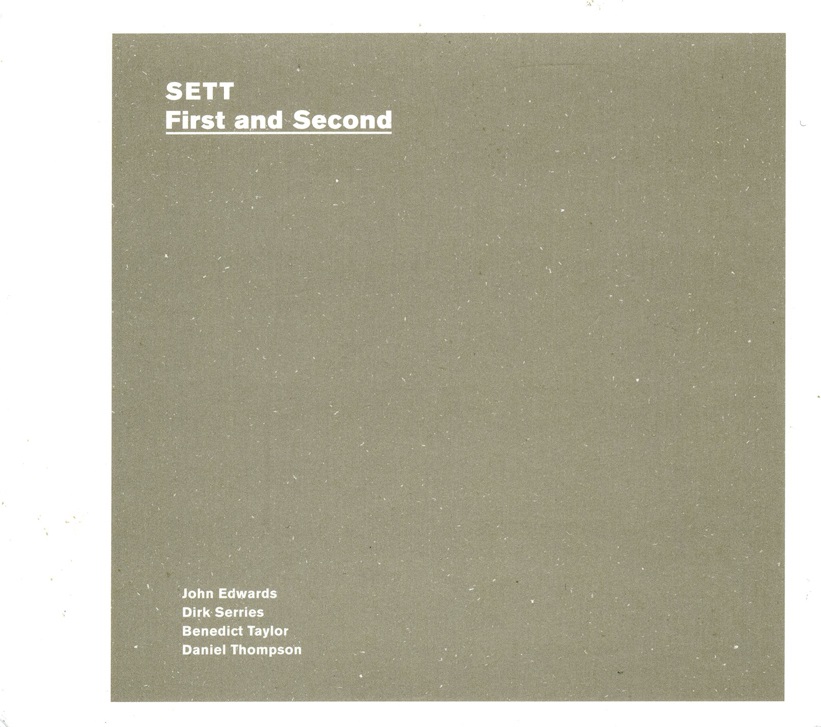
01 SettProbably the answer to the question, “when is a string quartet not a string quartet?” is illustrated on SETT’s First and Second (New Wave of Jazz nwoj033 newwaveofjazz.com) during two extended improvisations. Consisting of one linchpin of the traditional string ensemble, the viola, played by the UK’s Benedict Taylor, the disc stretches the chamber music staple’s role by including a double bass, played by Briton John Edwards, and breaks the mould by adding the two acoustic guitars of England’s Daniel Thompson and Belgium’s Dirk Serries. Mercurial and harsh without being coarse, and fluid without depending on an expected groove, both polyphonic tracks contain numerous sequences of both calm and agitation. As viola and bass move through spiccato sweeps and ratcheting pressure, it’s often dual guitar strums which steady the pace and shepherd squeaks, slaps and shakes from all the players into crescendos of jagged glissandi and, later on, speedy intersection. Second SETT is more assured than the First as the collective guitar licks, plus swelling plucks from the bass, set up a clanking backdrop upon which Taylor’s stridently pitched strokes ascend to spectacular flanges. By midpoint, buzzing arco pushes and taut guitar finger picking define a communicative theme. With Edwards’ plucks creating an ambulating ostinato, the narrative stays constant to the end, while allowing for a series of stressed variations from the violist and some below-the-bridge plinks from the guitarists that almost strip strings of their coating. As spiccato sweeps rub against muted glissandi, SETT defines a form that is both exploratory and connected.

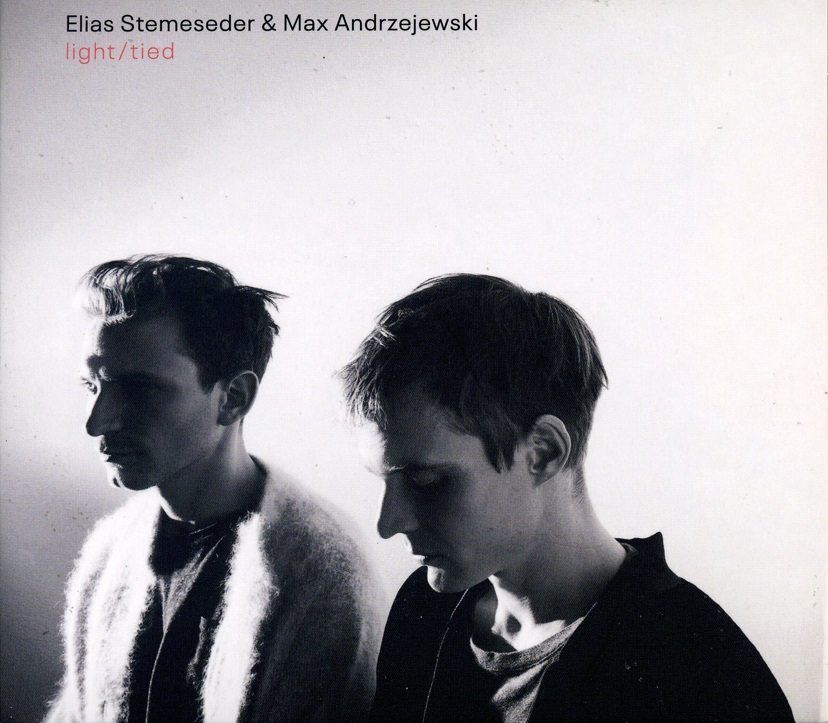
02 lighttiedBerlin-based pianist/synthesizer player Elias Stemeseder and drummer Max Andrzejewski create a more standard ensemble to show off their original compositions on light/tied (WhyPlayJazz WP J 054 whyplayjazz.de). During the program nine pieces are interpreted by the two leaders’ sometimes intensely percussive playing; clarion or deeper-pitched  smears from Joris Rühl’s clarinets; creamy Paul Desmond-like lines from alto saxophonist Christian Weidner; moistly decorative, but at times bordering on dissonant, shimmers by violinist Biliana Voutchkova and cellist Lucy Railton; plus additional programmed electronic whizzes. Furthermore, Stemeseder and Andrzejewski provide the rhythmic undercurrent; and churning wave form electronics undermine the string players’ more formalist impulses. The result is discordant at points, but without being off-putting. Paced by brief interludes of expansive string plucks and bass clarinet lowing, the compositions are gentle and melodic, as well as atmospheric. The best instances of how the admixture works are illustrated on Stemeseder’s Tied Light 1 and Andrzejewski’s Héritage. The first works its way from a tinkling piano and trilling clarinet duet to turn harsher, as thinner clarinet runs meet percussive slaps from the piano and drum beats contrast with alto saxophone calm. Until the end, the timbres vibrate between irregular and expressive without losing the thematic thread or slackening the pace. Sunnier, Héritage finds proper string swells intersecting with crackling electronics. as Rühl’s moderated clarinet defines the slightly off-centre exposition while string plucks vibrate sympathetically. Finally, a dramatic finale is constructed out of swift piano chording, sprightly vibrations from both reeds and stabbing string motions.

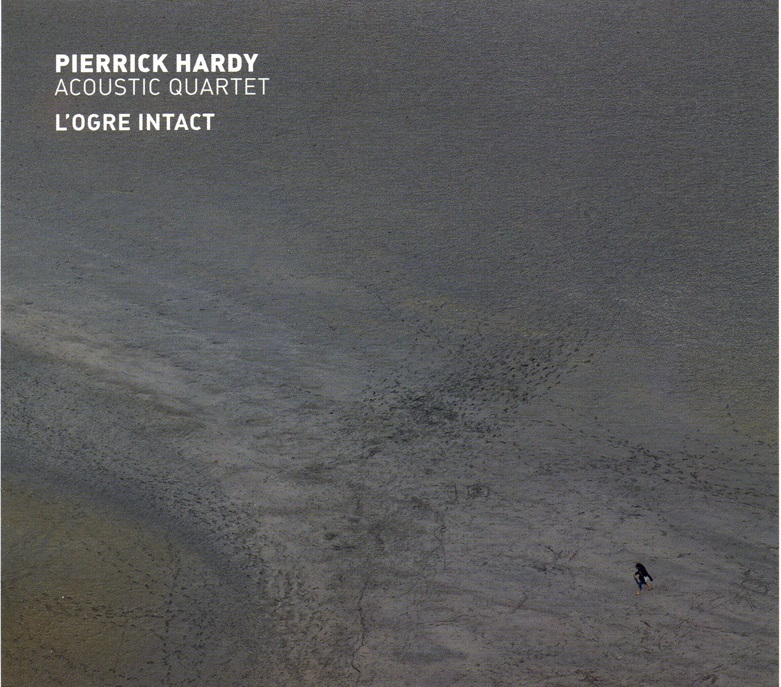
03 Perrick HardyAdapting the textures of a violin – or viola – so that it plays with equal prominence as other instruments in a small group is the preoccupation of other improvisers. Instances of this are expressed by Swiss violinist Laura Schuler’s quartet; French guitarist Pierrick Hardy’s quartet, featuring violinist Regis Huby; and the trio of American Jason Kao Hwang, who plays both viola and violin. Proclaimed an Acoustic Quartet perhaps because no electric instruments or drums are present, Hardy’s L’Ogre Intact (Émouvance emv 1041 tchamitchian.fr) includes bassist Claude Tchamitchian and clarinettist/basset horn player Catherine Delaunay. A hint of the fusion that informs Hardy’s compositions comes from clarinettist Delaunay’s other instrument. Throughout the disc the quartet aims for relaxed, pastoral interpretations that flow rather than upset. Yet between double bass thumps and acoustic guitar strums, a rhythmic groove is maintained. Flottements is the most realized instance of this traditional/innovative approach. Blending the basset horn’s muted tone with violin mid-pitches and a buzzing double bass continuum, an antique-styled introduction is attained, but it’s soon replaced with a contrapuntal melody from the fiddle that’s lively and dance-like. As the theme swells with spiccato squeaks from Huby, coupled with thin frails from Hardy, Tchamitchian confirms its contemporary relevance with a repeated rhythmic motif. Playing clarinet on the other tracks, Delaunay adds to the warm elaboration of the mostly largo narratives. Concerned with synthesis not confrontation, supple solos are worked into the warm-blooded adaptations. With his violin output usually caressing romantic themes, only rarely, as on Avant dire/Tamasaburö, does Huby demonstrate his command of multi-string coordination and swift triple stopping. Hardy’s skills are more prominent, with an approximation of folk-blues picking on La Violence du terrain; he moves past positioned strums to propel relaxed swing on the final La Fresque with tougher mettle via spectacularly chunky, rhythm guitar licks.

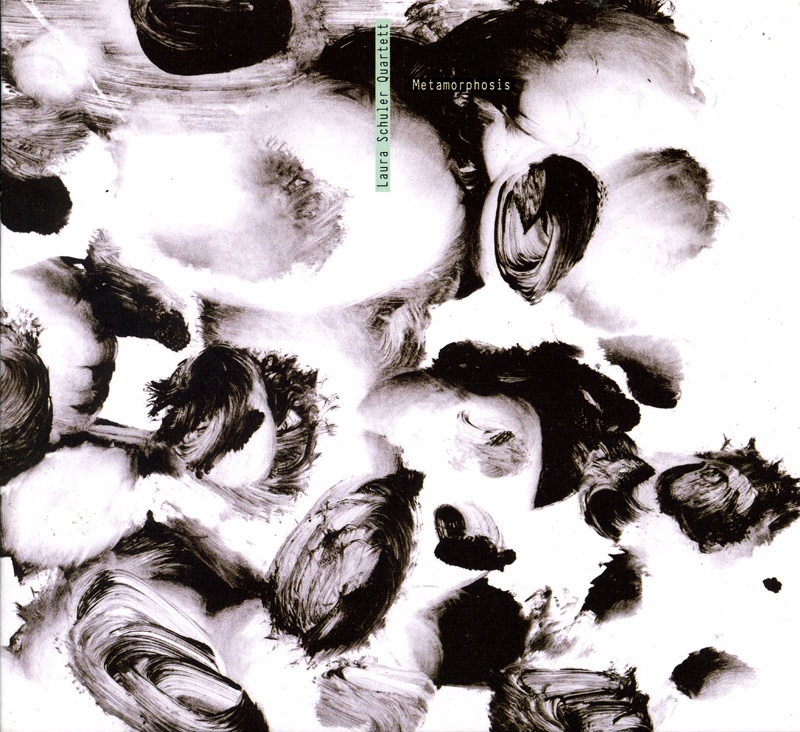
04 MetamorphosisIf Huby’s violin and the Acoustic Quartet include echoes of the 18th century, then Schuler’s quartet music is strictly 21st. The other members of the group are German tenor saxophonist Philipp Gropper, and fellow Swiss, drummer Lionel Friedli and Hanspeter Pfammatter playing synthesizers. Besides Schuller’s ability to move swiftly from formalist to semi-hoedown to pure improv and on to near fusion in her playing, the contemporary resonance on Metamorphosis (Veto-Records 020 veto-records.ch) centres on Pfammatter’s instrument, whose sonic permutations allow it to replicate the sounds of an acoustic piano, an organ, an electric guitar and even an accordion. Especially on more groove-oriented tracks such as Dancing in the Stratosphere, Friedli projects a popping backbeat which glues together various sound shards from the others; although elsewhere, his nerve beats and patterning help confirm other tunes’ jittery but relaxed melodies. Capable of romantic interludes or strident squeaks if needed, Gropper’s usual role is to serve as a foil for Schuller’s string elaborations. With ghostly synthesizer washes behind, they meld ribald squeaks on his part and banjo-like pizzicato clanks from her on the title tune; or with Pfammatter’s church organ-like chording on Broken Lines, harmonize barbed reed tremolos and rugged string strokes. Z, the CD’s wrap-up, projects variations of these tone permutations, with the outpouring compassing instances of sound unity and severance from all four. As drum ruffs and synthesizer pushes make the narrative more intense and heavier, positioned col legno stabs from the violinist lead to a measured and ambulatory last section and finale.

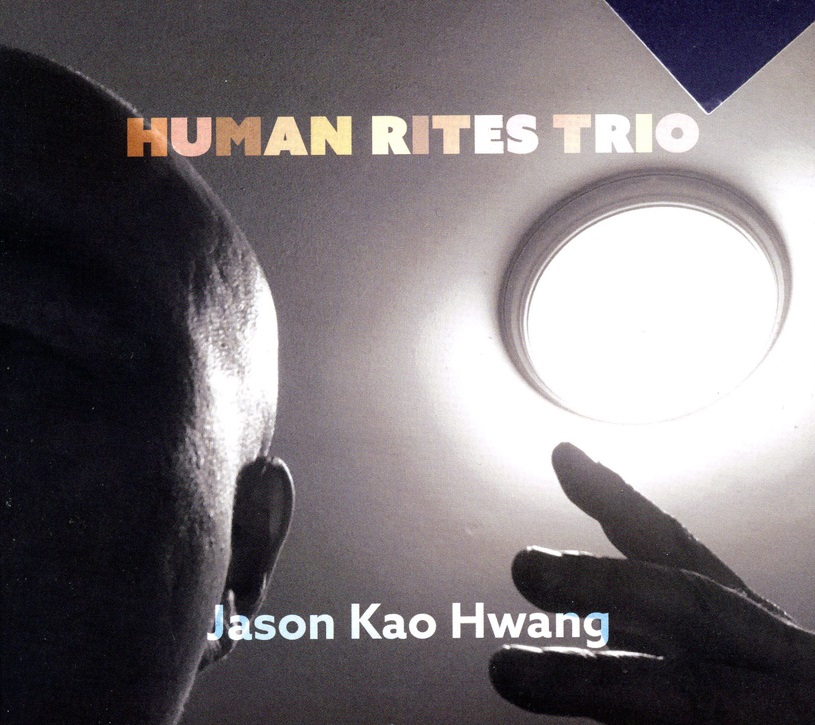
05 HumanRitesConfirming his allegiance to intense improvising Hwang uses his violin and viola as doubling lead voices in the role soprano and tenor saxophones or trumpet and flugelhorn would take elsewhere. Luckily he and his associates on Human Rites Trio (True Sound Recordings TS03 jasonkaohwang.com), bassist Ken Filiano and drummer Andrew Drury, are perfectly matched, having worked in this configuration for years. Taking a far different approach to the viola than SETT’s Benedict Taylor, Hwang plays it almost exclusively pizzicato, treating it like a four-string mandolin. Most spectacularly, on the foot-tapping Conscious Concave Concrete he manipulates the instrument so at various junctures it takes on sitar and guitar-like affiliations as well as mandolin twangs. Without disrupting his low tones, Filiano also achieves guitar-like facility with fluid solos. Incorporating Drury’s cymbal clashes and steel drum-like suggestions, the trio achieves a singular sound which touches on the blues, as well as international inflections. Playing violin, as on Battle for the Indelible Truth, Hwang’s stretches and multiple stops are as pressurized and extended as the other two’s intense rhythm. Moving into an andante swing section, he backs Filiano’s Slam Stewart-like simultaneous bowing and vocal humming with high pitched trills; but later he creates a pseudo-violin concerto adding a romantic tinge to the tune’s dynamic unrolling. Still, the most dramatic display of the trio’s in-the-moment affiliation is heard on the two-part Words Asleep Spoken Awake. Setting the scene on Part 1, the three create an ambulatory introduction that is rounded and mellifluous until propelled to double in speed by drum rim shots and spiccato violin strokes. This leads to a repetitive multi-string motif that defines Part 2. As the violinist triple stops his strings at prestissimo tempo, Drury’s martial beats and striking pumps from Filiano prevent the narrative from breaking apart while maintaining intensity. Climactically altering his lines by loosening and tightening strings while strumming complementary tones, Hwang supplely and spectacularly demonstrates his skill with a final section where string splays bring up reed or brass intimations as the musical thoughts expressed at the CD’s beginning track are completed.

It’s clear that the variety of ways violins and violas can be integrated into improvised music are as individual as the person playing therm. These discs confirm this truism.

During 2020, the classical music world celebrates, or at least recognizes, the 100th anniversary of the Salzburg Festival. Each year, for five weeks beginning in late July, Salzburg is teeming with all things Mozart, who was born there on January 27, 1756. It is a joyous time of music and theatre with a special focus on opera.

01 SalzbergOver the years Unitel, in cooperation with Austrian Broadcasting, preserved these operas and has selected ten titles to issue in DVD and high-definition Blu-ray video discs in an Anniversary Edition boxed set, Salzburg Festival 100 (Cmajor 755704 naxosdirect.com/search/755704). Here are the operas, year, set designer, conductor, orchestra and leading voices: Verdi Otello (2008) [George Souglides] Riccardo Muti, Vienna Philharmonic Orchestra, Aleksandrs Antoņenko, Marina Poplavskaya, Carlos Álvarez; Handel Theodora (2009) [Annette Kurz] Ivor Bolton, Freiburger Barockorchester, Christine Schäfer; Janáček The Makropulos Affair (2011) [Anna Viebrock] Esa-Pekka Salonen, VPO, Angela Denoke; Schubert Fierrabras (2014) [Ferdinand Wogerbauer] Ingo Metzmacher, VPO, Michael Schade; Strauss Der Rosenkavalier (2014) [Hans Schavernoch] Frans Welser-Möst, VPO, Krassimira Stoyanova; Strauss Salome (2018) [Romeo Castellucci] Welser-Möst, VPO, Asmik Grigorian; Rossini L’Italiana in Algeri (2018) [Christian Fenouliiat] Jean-Christophe Spinosi, Ensemble Matheus, Cecilia Bartoli; Mozart Die Zauberflöte (2018) [Katharina Schlipf] Constantinos Carydis, VPO, Matthias Goerne; Tchaikovsky Pique Dame (2018) [Christian Schmidt] Mariss Jansons, VPO, Brandon Jovanovich; Verdi Simon Boccanegra (2019) [Harald B. Thor] Valery Gergiev, VPO, Luca Salsi. 

I wonder how these ten performances were selected from what must have been quite an assortment of available choices. Most probably these were acclaimed productions that deserve the opera lover’s attention. As such, here is an esoteric collection that, from those I have watched, fills that bill. 

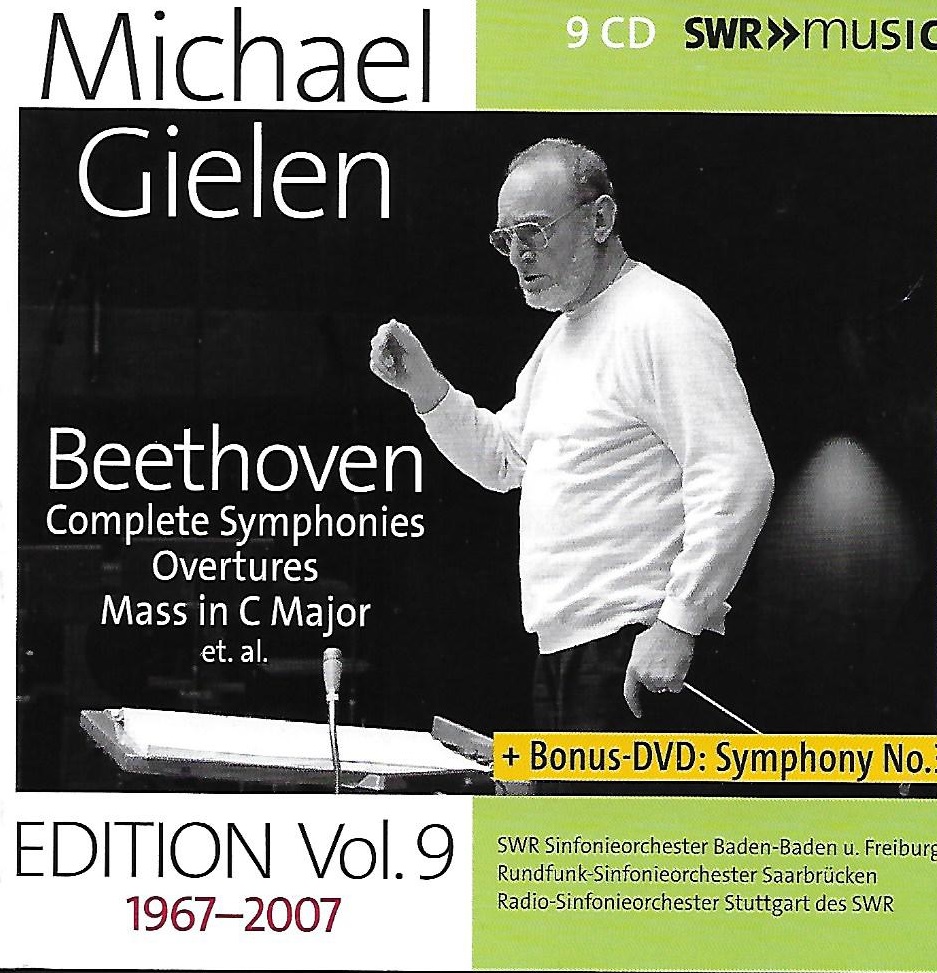
02 GielenThe latest edition, at this writing, of the Michael Gielen Edition is Volume 9, the Beethoven Complete Symphonies, Overtures and Mass in C Major (SWR19090, nine CDs and one DVD naxosdirect.com/search/swr19090). For those who are unfamiliar with Michael Gielen, he was a German-Argentinian conductor and composer who studied piano, composition and philosophy in Buenos Aires. He performed Schoenberg’s complete piano works there, and was also coach and assistant conductor of the Teatro Colón. He joined the Vienna State Opera in 1951 and was permanent conductor there from 1954 to 1960. He was also assistant and répétiteur for conductors such as Karl Böhm, Clemens Krauss and Herbert von Karajan. No better way to immerse in the classics than rehearsals and performances. From 1960 he was the first conductor of the Royal Swedish Opera, Stockholm. Gielen was principal conductor of the National Orchestra in Belgium from 1968 to 1973 and of the Dutch Opera in Amsterdam from 1973 to 1976. He later conducted the West German Radio Orchestra in Cologne and from 1977 to 1987 was general music director of Oper Frankfurt. Concurrently from 1980 to 1986 he was music director of the Cincinnati Symphony and from 1986 to 1999 principal conductor of the of the SWR Orchestra of Baden-Baden and Freiburg. 

In Europe, Gielen was the most radical innovator of Beethoven’s music. He conducted the first live performance in Germany of the Eroica based on Beethoven’s tempo markings, in Frankfurt in October 1970. That performance is to be heard on the sixth CD in this set.

Outside the opera house he conducted contemporary music. He was a performer and promoter of works embracing the Second or New Viennese School, having premiered several works in the new tradition of Ligeti, Stockhausen, Zimmermann et al. His own works were premiered by respected soloists and ensembles of the day. 

Along with his involvement with the New Viennese School, throughout his career he paid particular attention to the First Viennese School of Haydn, Mozart and Beethoven. His first recordings of Beethoven were Symphonies Two, Seven and Eight which had been allocated to him as part of a complete Beethoven Symphonies edition with various conductors, made for Vox and later available on Audio Fidelity. The orchestra, incidentally, was composed of members of the Vienna Volksoper, identified on the label as the Wiener Staatsopern-Orchester.

Now, back to 1980 in Cincinnati where Vox made a widely discussed recording. During October of Gielen’s first year there, he recorded Beethoven’s Third Symphony, observing the composer’s prescribed tempos and markings in all four movements, particularly effective in the first, previously ignored by traditional conductors. Those were the days when it was claimed that Beethoven’s metronome was defective, only to be countered by the growing number of groups observing original performance practices. This collection offers the listener three performances of the Eroica. The 1970 from Frankfurt mentioned above, the celebrated 1980 from Cincinnati and another from the Festspeilhaus, Baden-Baden in February 2000 that is also to be seen on the enclosed DVD. Of the three I am attracted to the 2000 performance because of the distinct feeling that everyone in the orchestra, as a group and individually, is very happy to be there playing this music. That stood out to me on the first hearing and has not lessened in subsequent listenings. 

Along with the symphonies, Gielen offers these overtures: Egmont; Consecration of the House and two from Fidelio. Also, Gielen’s orchestration of the Grosse Fuge, and the Mass in C Major, Op.86 for soloists, choir and orchestra. There are many exciting differences from the accepted practice here. For instance, the first movement of the Fifth Symphony is not a proclamation of defiance or victory, but simply Allegro con brio. We hear with new and different ears throughout. In every respect, the SWR orchestra plays with effortless virtuosity. Note that these are modern instruments and not original instrument performances. The sound is uniformly ultra-realistic and articulate wherein the various instruments are clearly located. 

This could be the first choice for anyone thinking about a Beethoven set updated from the same-old, same-old weighty, routine editions. 

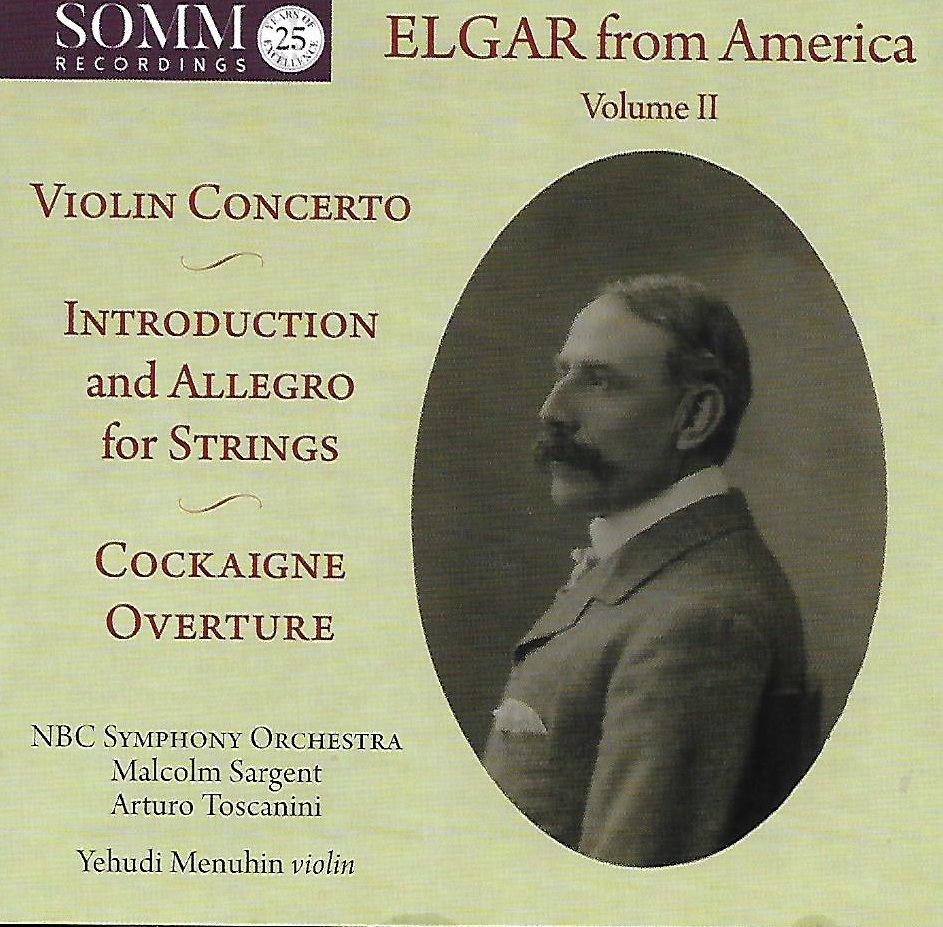
03 ElgarSOMM has issued Volume II of Elgar from America containing three archive performances of his music played by the NBC Symphony Orchestra (Ariadne 5008 naxosdirect.com/search/ariadne+5008). On this disc we are treated to three favourites, all from Studio 8H in New York’s Rockefeller Center, now the home of SNL. In 1945, Arturo Toscanini, conductor of the NBCSO, had invited Malcolm Sargent to conduct four concerts of English music. On February 18, 1945 Sargent conducted the Cockaigne Overture (In London Town) Op.40. One week later, Yehudi Menuhin joined Sargent for the Violin Concerto in B Minor Op.61. The Introduction and Allegro for Strings Op.47 had been in Toscanini’s repertoire since 1911 when he prepared the orchestra there for Elgar’s impending arrival. This is the third work on this disc in a hugely impressive Elgarian performance from April 20, 1940. Toscanini evinces a rounder sound, more akin to a British orchestra than Sargent does in the overture and the concerto, but both performances are most enjoyable and Menuhin is inspired. 

The restoration, from available sources, is produced by Lani Spahr, who was responsible for earlier discs devoted to historic Elgar performances.

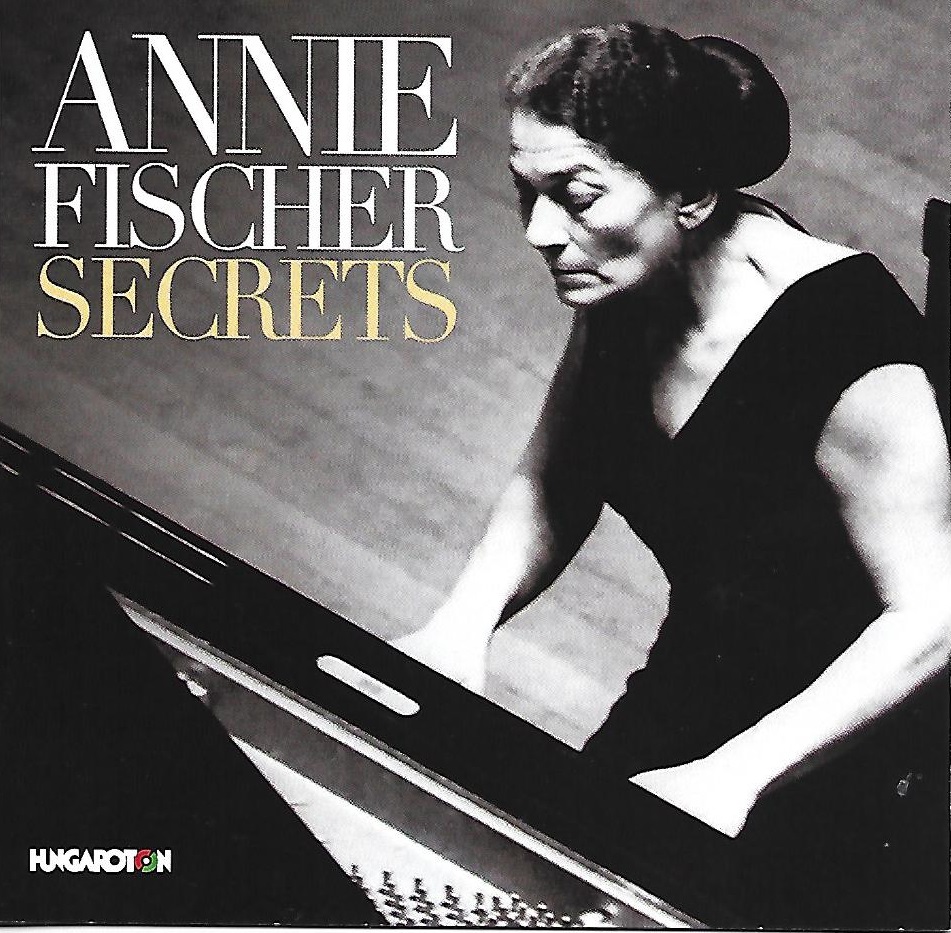
04 Annie FischerAnnie Fischer was a Hungarian pianist who was born in Budapest in 1914 and rose to become a much-admired artist for her freedom of expression over half a century. But she is not so known nor appreciated here, although she had a loyal following in the Classical Record Shop where news of a new Fischer disc spread… albeit mostly to Hungarians. She died in Budapest in 1995. Annie Fischer SECRETS (Hungaroton HCD 32845-46, 2CDs, naxosdirect.com/search/5991813284525) features two of her beloved composers, with Schubert Sonatas D845 and D959, and Schumann’s Fantasiestücke Op.12 and Kreisleriana Op.16. As a little encore, Chopin’s Nocturne in C-sharp Minor, Op.27 No.1. The “secret” of these recordings is quite fascinating but too long for here. You’ll just have to check it out for yourself. You’ll find it well worth the effort!

It’s been a couple of months since I last mentioned New Music Concerts, my day job until retiring last year, and I thought perhaps I had gotten it out of my system. I guess it’s not surprising that it is hard to put two decades of history behind me. While general manager at NMC I had the opportunity to work with the JACK Quartet on two occasions. The first was early in my tenure, and very early in their career, back in 2003 when I organized a masterclass with Helmut Lachenmann for the members of the quartet who were then studying at the Eastman School in Rochester. The quartet returned to Toronto in January 2016 for a concert co-presented by NMC and Music Toronto. In the pre-concert talk with Robert Aitken, they spoke about just how influential that afternoon spent with the German avant-garde composer a dozen years ago (and later attending NMC rehearsals for the Lachenmann portrait concert) was to their development as an ensemble, solidifying their commitment to contemporary music and their understanding of the importance of working directly with composers.

That program at the Jane Mallett Theatre included works by Xenakis, John Zorn, Rodericus (a 14th-century work adapted by violinist Christopher Otto) and John Luther Adams (b.1953). It is the latter which gives occasion to today’s reminiscence. On that concert they performed the American composer’s first string quartet The Wind in High Places, about which Adams says, “I imagined the quartet as a single sixteen-string Aeolian harp, with the music’s rising and falling lines and gusting arpeggios coming entirely from natural harmonics and open strings. Over the course of almost 20 minutes, the fingers of the musicians never touch the fingerboards of the instruments. If I could’ve found a way to make this music without them touching the instruments at all, I would have.”
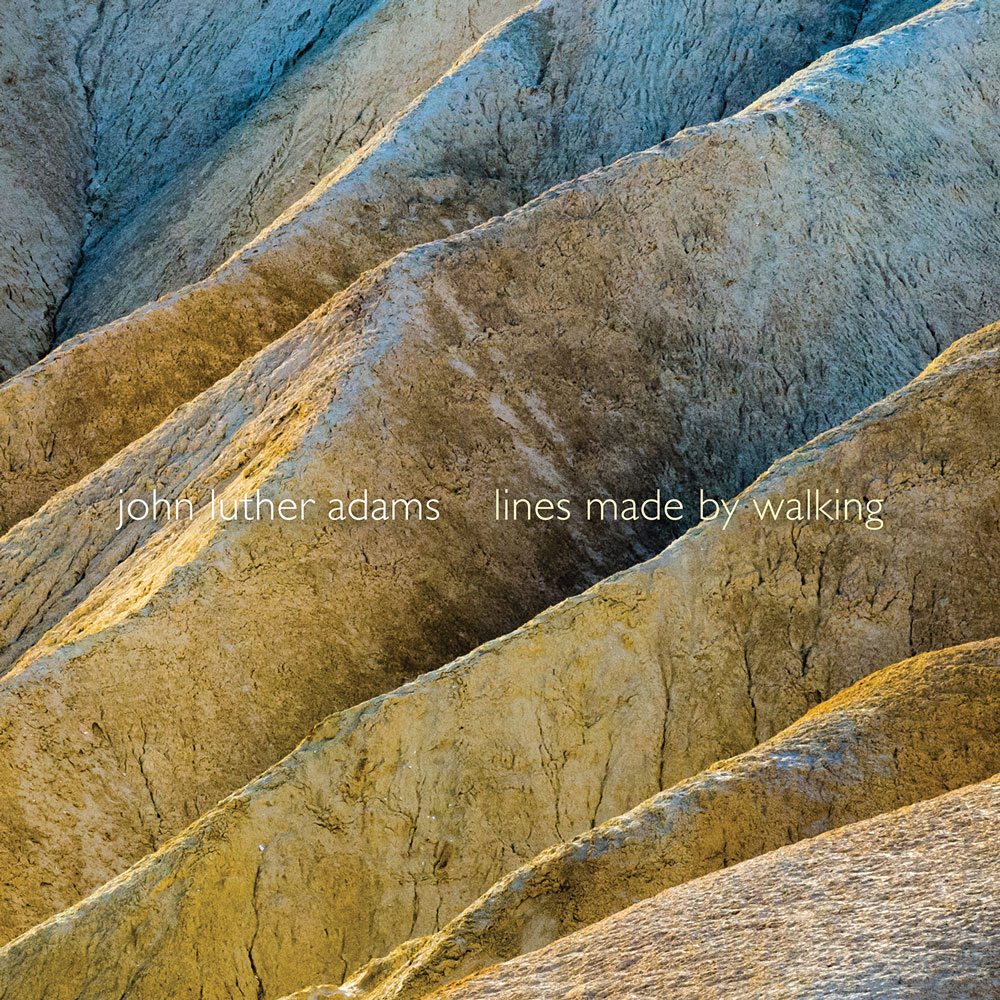
01 John Luther AdamsJACK’s latest CD Lines Made by Walking (Cold Blue Music CB0058 coldbluemusic.com/new-releases-2) features two subsequent quartets by John Luther Adams. His string quartet, untouched (2016), is a further exploration of the delicate and ethereal sound world of harmonic overtones, with the fingers of the musicians still not touching their fingerboards. 

Compared with the two quartets described above, Lines Made by Walking (2019) is a veritable torrent of sound. But in reality, when taken on its own, it is a dreamy, contemplative work which proceeds at a gentle walking pace. Adams says “I’ve always been a walker. For much of my life I walked the mountains and tundra of Alaska. More recently it’s been the Mexican desert, mountain ridges of Chile, and the hills and canyons of Montana. Making my way across these landscapes at three miles an hour, I began to imagine music coming directly out of the contours of the land. I began work on my fifth string quartet […] by composing three expansive harmonic fields made up of tempo canons with five, six, and seven independent layers. (This is a technique I’ve used for years, in which a single melodic line is superimposed on itself at different speeds.) Once I’d composed these fields, I traced pathways across them. As I did this, each instrument of the quartet acquired a unique profile, transforming the strict imitative counterpoint of the tempo canons into intricately varied textures.” The work is in three movements and their titles – Up the Mountain; Along the Ridges; Down the Mountain – are aptly depicted by the music’s endlessly rising, and later falling, canons.

Although there have been personnel changes in the quartet since its first collaboration with Adams – only two original members remain – their understanding of and devotion to his music remains intact and undaunted. I can only imagine the patience it takes to master this gradually unfolding music in which seemingly nothing happens, but in which a marvellous stasis is achieved.
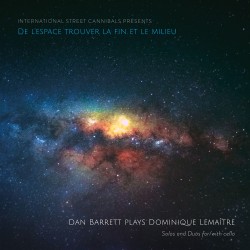
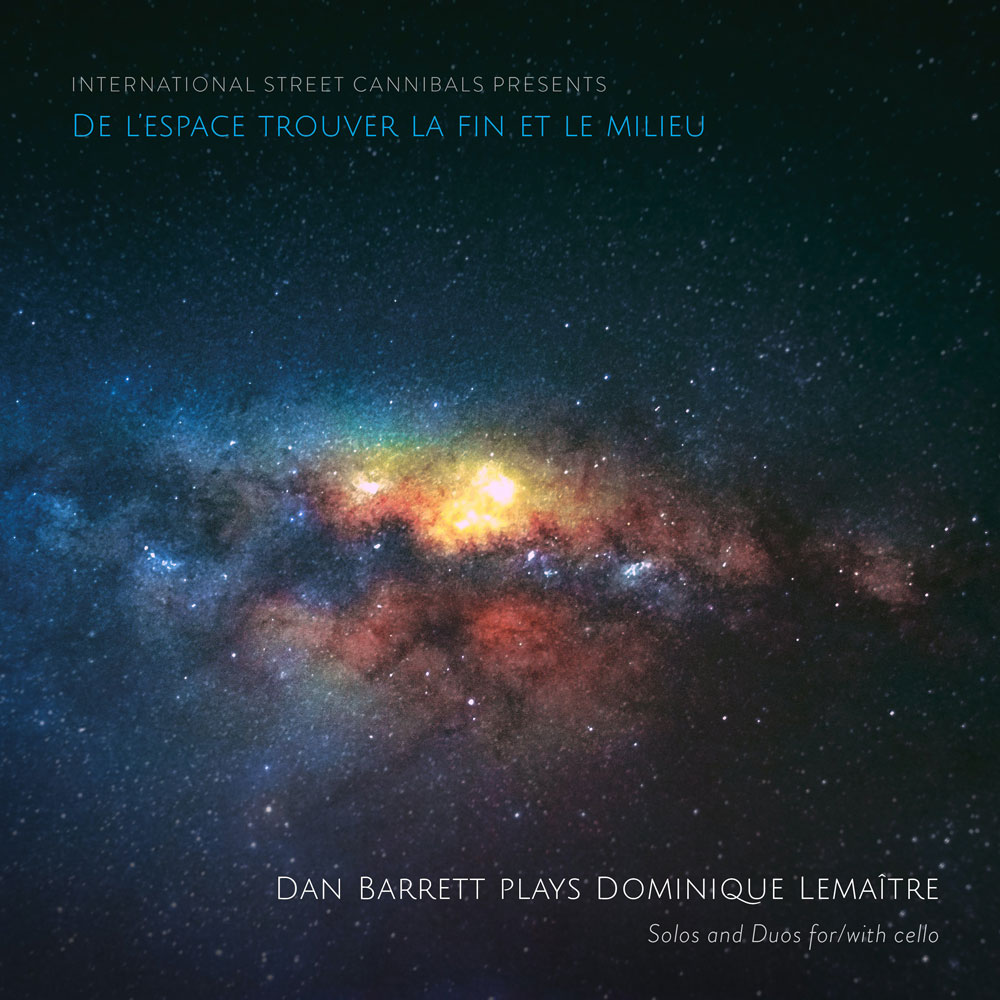
02 Dan BarrettAs Terry Robbins says a little further on in these pages, “It’s been a simply terrific month for cello discs.” There are three that I scooped up for myself, beginning with De l’espace trouver la fin et le milieu: Dan Barrett plays Dominique Lemaître – solos and duos for/with cello (New Focus Recordings fcr276 newfocusrecordings.com/catalogue). French composer Dominique Lemaître, born the same year as John Luther Adams (1953), studied humanities and musicology at the University of Rouen and later electroacoustics and composition at the Paris Conservatoire. Infused with the music of Bach, Debussy, Varèse, Ligeti and Scelsi, but also with extra-European influences, Lemaître ‘s works blend superimposed metres, polytextures, looped repetitions and an underlying modality. American cellist Dan Barrett, creator and director of the music ensemble International Street Cannibals (ISC), has been hailed as “a brilliant and driven cellist, composer, and conductor” (Huffington Post), whose instrumental playing is described as “fire and ice” (The New York Times).

The disc begins with the cello duo Orange and Yellow II, performed with Stanislav Orlovsky. It pays homage to Morton Feldman and is a transcription of a piece originally written for two violas in 2009. The title makes reference to the eponymous painting created by Mark Rothko, to whom Feldman himself paid homage in Rothko Chapel, composed for the meditation room of the building of the same name. Although purely acoustic in nature, the layering and looping of the two instruments, and the reverberant space in which it was recorded, give the impression of electronic enhancement. Thot, referring to the Egyptian god Thoth, is an earlier work dating from 1994. It is a duet with clarinetist Michiyo Suzuki that begins from silence with a gradually building clarinet tone reminiscent of the Abîme des oiseaux movement in Messiaen’s famous Quatuor pour le fin du temps. The contemplative mood continues throughout the six-minute work, intermittently interrupted by bird-like chirps. The next piece, Mnaïdra for solo cello, opens abruptly and almost abrasively, although it, too, gradually subsides into warmer tones. Mnajdra is a Bronze Age temple situated to the south of the island of Malta, the isle of bees or the isle of honey, as it was called in ancient times. 

Pianist Jed Distler joins the cellist in Stances, hommage à Henri Dutilleux, the famous French composer from whom Lemaître received both encouragement and compliments. It was written in 2015 and is dedicated to Barrett. The disc ends with another solo cello composition, Plus haut (Higher), which, although still in a quiet way, is the most virtuosic piece of the collection. Barrett shows himself astute across the spectrum from the softest nuance to the soaring heights.

Listen to 'De l’espace trouver la fin et le milieu' Now in the Listening Room

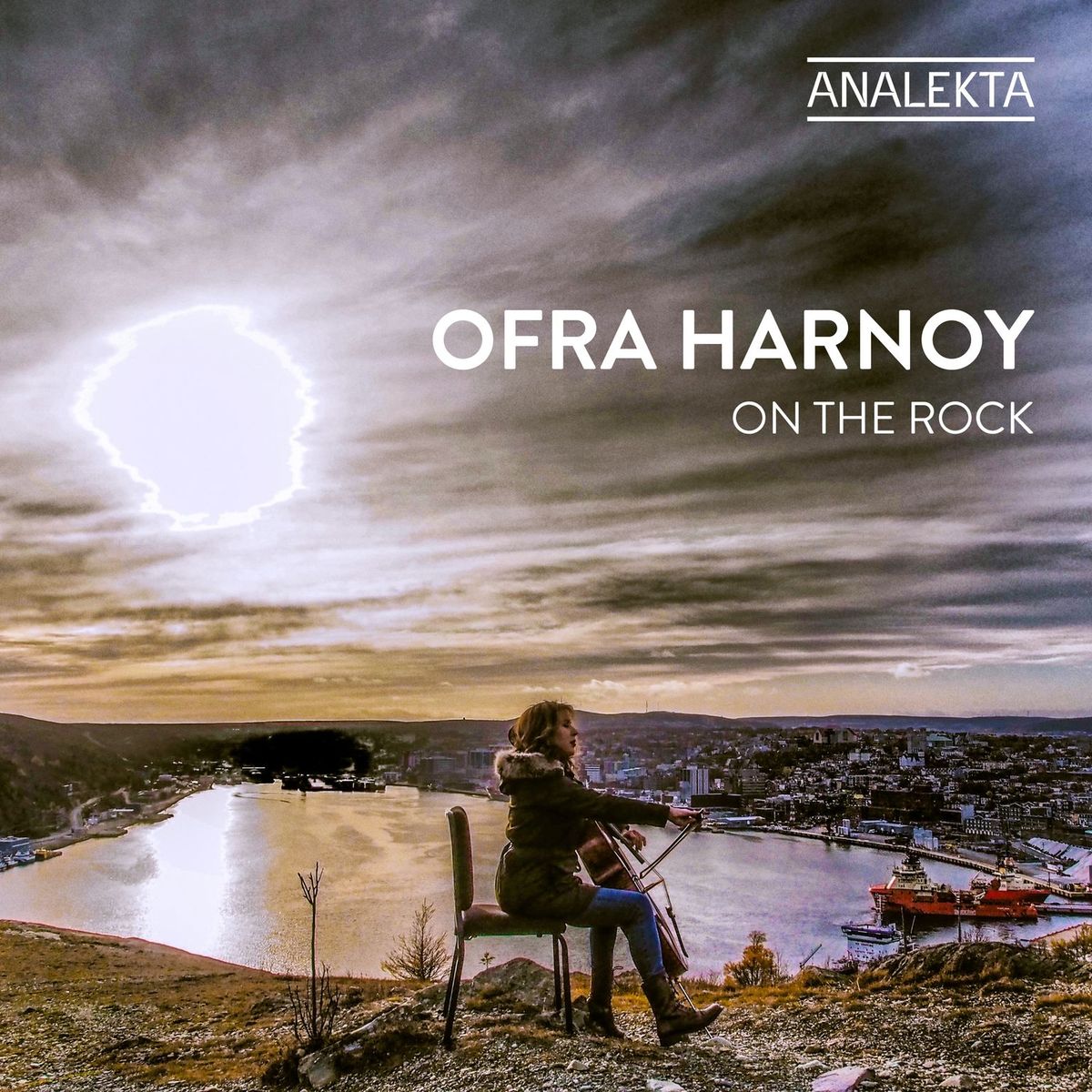
03 Ofra HarnoyRenowned Canadian cellist Ofra Harnoy and husband/collaborator Mike Herriott have just released On the Rock, celebrating the music of Newfoundland (Analekta AN28909 analekta.com/en/albums). With 43 previous recordings, five JUNO awards and the Order of Canada to her name, Harnoy needs no introduction to the discerning readers of this magazine. The same can be said of multi-instrumentalist Herriott whose accomplishments in both the classical and jazz worlds run the gamut from lead trumpeter, jazz improviser, orchestral soloist, bassist, arranger and composer. In the summer of 2018 Harnoy and Herriott took a vacation in St. John’s, where Herriott had spent his formative years. Evidently she fell in love with the place and people of Newfoundland, one of the few locations in the world her career had not previously taken her, and they decided to buy a house and settle there. After their first collaboration for Analekta, Back to Bach, was released in 2019 they embarked on a journey to explore the island and research its music. The result is this charming disc, a mixture of traditional and popular songs in instrumental and vocal renditions, all arranged by Herriott, with the participation of singers Alan Doyle, Amanda Cash, Kelly-Ann Evans, Heather Bambrick and Fergus O’Byrne. O’Byrne also adds guitar and banjo to the instrumental contingent of guests Maureen Ennis (guitar), Bob Hallett (accordion, mandolin and Irish flute) and Kendel Carson (fiddle). All of the other instruments, and there are many, are played by Herriott except the solo and ensemble cellos of Harnoy.  

The album begins with a haunting rendition of the traditional She’s Like the Swallow performed by Harnoy and Herriott, who are then joined by Amanda Cash in Wayne Chaulk’s story/ballad Saltwater Joys. In a nod to Harnoy’s classical background, and perhaps to their previous disc, Herriott’s arrangement of Ron Hynes’ St. John’s Waltz begins with a solo cello line cleverly modelled on the Prelude from Bach’s Suite for Solo Cello No.1 in G Major which later develops into an ensemble of cellos accompanying Great Big Sea founder Doyle on vocals. There’s an instrumental interlude where Ennis joins Harnoy to perform Cara’s Waltz which she penned with Doyle. Although much of the album is mellow and balladic, especially in the tunes that feature Herriott’s flugelhorn stylings, things really get cooking in Harbour Buffett Double, a quartet with cello, fiddle, accordion and bass (with Herriott doubling on spoons) and the following Mussels in the Corner. This mainstay of local dance music sees Hallett playing all three of his instruments along with Harnoy and Herriott, all to the accompaniment of a rowdy pub crowd. 

One interesting artistic choice is the mournful arrangement for 11 cellos of Stan Rogers’ rousing a cappella anthem Barrett’s Privateers, bringing an entirely new slant to the broken sailor’s lament. A further contribution to the sombre mood of the disc is Evans’ beautiful interpretation of Hynes’ Sonny’s Dream, another iconic tune by the unofficial poet laureate of Newfoundland. In his introductory notes Herriott suggests that this is just the beginning of their exploration of the music of his home province. As beautiful as this maiden voyage is, I hope that the next installment will include some of the roughhousing found in Newfoundland and Labrador’s traditional jigs and reels. 
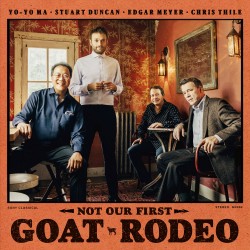
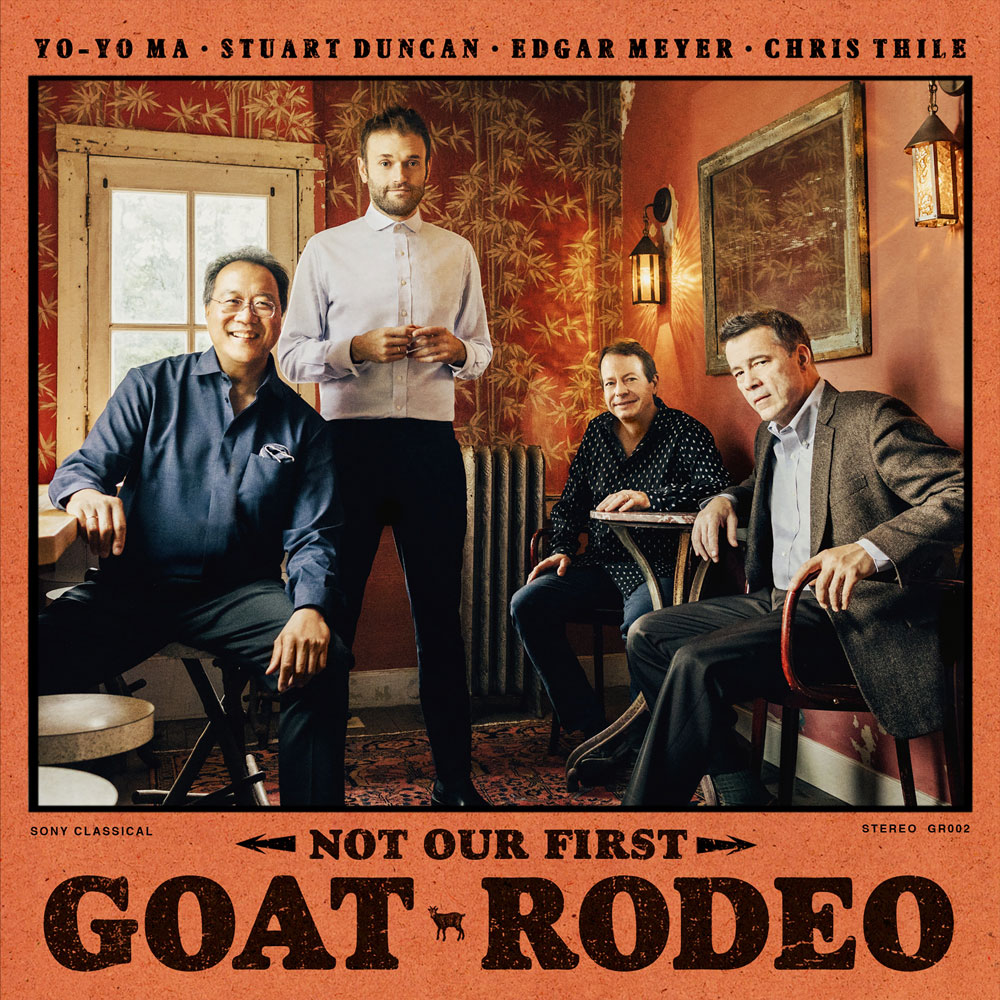
04 Goat Rodeo 2The final selection is not a cello disc per se, but having spent a large part of last month’s column on Yo-Yo Ma’s Bach Project I think I should mention at least in passing that his collective with Chris Thile (mandolin), Stuart Duncan (violin) and Edgar Meyer (bass) has released a second CD, Not Our First Goat Rodeo (Sony Music GR002 sonymusic.com/masterworks). The players are all top rank in their fields – bluegrass, country, jazz and of course, classical – and work wonderfully together. As with the 2011 album The Goat Rodeo Sessions – “Goat rodeo” is an aviation term for a situation in which 100 things need to go right to avoid disaster – we are presented with a wonderfully diverse album of original material which, while firmly rooted in American folk traditions, incorporates a wealth of influences. Once again the super stringband is joined by the lovely voice of Aoife O’Donovan for one tune, The Trappings, which you can check out here: youtube.com/watch?v=6yR-nFBnd9E. 

We invite submissions. CDs, DVDs and comments should be sent to: DISCoveries, WholeNote Media Inc., The Centre for Social Innovation, 503 – 720 Bathurst St. Toronto ON M5S 2R4.

David Olds, DISCoveries Editor
discoveries@thewholenote.com

Back to top