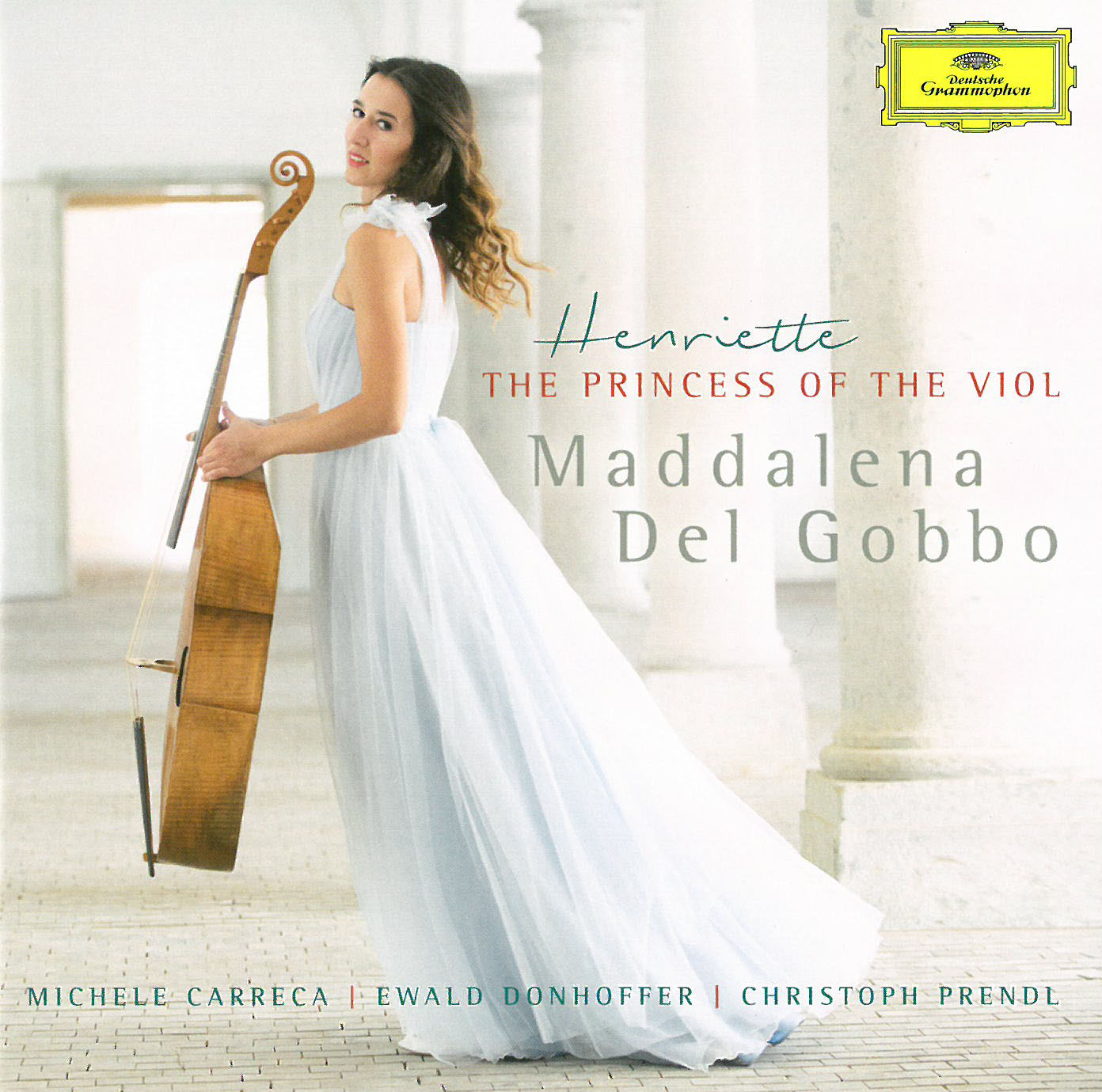
01 Maddelana del GobboHenriette, The Princess of the Viol
Maddalena Del Gobbo; Michele Carreca; Ewald Donhoffer; Christoph Prendl
Deutsche Grammophon 481 4523

All too often reviews published in The WholeNote evaluate works by artists who die tragically young. Princess Anne Henriette de Bourbon was one such. Princess? If she had lived beyond 24, she might have become a queen: she was Louis XV of France’s second daughter.

In this CD, Maddalena Del Gobbo evokes the legendary genius of Henriette’s viola da gamba playing. Del Gobbo – who is quite taken with her subject – includes music by Marin Marais, as might be expected, but also arrangements of country dance music which disprove the idea that the viola da gamba was some highly formal, sombre instrument, along with other music of the time for viola da gamba.

Jean-Baptiste Forqueray became Henriette’s tutor. How fitting that two pieces by him feature on the CD. One is a slightly subdued composition, played compassionately by Del Gobbo. In contrast, the other is more lively and demanding, particularly with the divisions that conclude this piece with such a flourish.

The dance pieces by Marin Marais from Suite in A Minor are indeed rustic and vigorous, even the Allemande, but special mention must be made of Del Gobbo’s performances of Muzettes throughout the CD. She brings out the original meaning of Muzette, namely bagpipes, and it is her expertise that brings home the drone effect of the bagpipe.

Add to this Del Gobbo’s vigorous interpretations of movements by a contemporary of Henriette, Louis de Caix d’Hervelois, and you understand the versatility of both princess and modern performer.

02 RosenmuellerJohann Rosenmüller in Exile
Jesse Blumberg; ACRONYM
Olde Focus Recordings FCR909 (newfocusrecordings.com)

I first heard the music of Johann Rosenmüller in a Tafelmusik concert some years ago. I knew the music of Schütz and Biber, and I was delighted to find that here was a third major 17th-century composer. In the early part of his career he worked in Leipzig and he was apparently assured that he would be the next Thomaskantor, a prestigious post that would later be held by J.S. Bach. Nothing came of this. Instead he became involved in a homosexual scandal and spent time in prison. He escaped and made his way to Venice. That would have been important for his musical evolution as he got to know Italian music, in particular the work of Carissimi. Eventually he was able to return to Germany by becoming the Kapellmeister at the Ducal court at Wolfenbüttel.

This CD contains seven items: four Latin cantatas for solo voice and strings, and three five-part sonatas for strings. The singer is the baritone Jesse Blumberg. The works receive fine performances from singer and instrumentalists alike. An attractive recording of relatively unfamiliar material.

06 NYOCLisboa 2016 – Excerpts from the 2016 TD Tour to Portugal
National Youth Orchestra of Canada; Perry So
Independent NYOC2016CD (nyoc.org)

The National Youth Orchestra of Canada is an idea as much as it is an ensemble, a very grand idea whose premise is to bring together the finest students of orchestral performance from across the country and give them the invaluable experience of hearing themselves and one another perform the magic that is symphonic music. Hogwarts indeed. Full disclosure: I am a former member of the NYOC.

Lisboa celebrates a tour the band made in summer 2016 to Portugal, and it serves as an example embedded in time of what the idea generates on a yearly basis. The players on this disc likely will be or currently are members of the professional musical community and, while concert reviewers consistently sum up their achievements with qualifications like “they make up in enthusiasm what they lack in polish,” reviewing an artifact like this prevents one from falling back on hackneyed faint praise. What the band lacks in terms of professional polish is entirely consistent with more mundane realities like string instruments that might not be acceptable in a truly professional ensemble, and newness to one another, much like any other all-star national team.

The Overture to Tannhauser opens the collection. It is beautifully played, sculpted, committed to. Even if you avoid Wagner, as I do, stay and hear him out in this instance. Imagine how this piece drew these players together. Then prepare to get up and dance as they move on to Prokofiev’s Fifth Symphony Op.100.  If the Scherzo doesn’t knock you on your ass it’s because you weren’t standing. The Adagio movement is the only weak link: there are ensemble lapses towards the end. In the manner of any seasoned orchestral player, I blame the (clearly able) conductor, Perry So. The task of uniting the voices of this group when uniform phrasing is called for is on the conductor’s to-do list, daunting though it may be.

The rest of the double disc presents two brief new pieces: Spacious Euphony, by Christopher Goddard (the NYO/RBC Composer in Residence), and Hope – The Gift of Youth by Chris Meyer (an NYO commission through the Canada Council). The former zigzags in and out of tonality. The latter develops from amorphous clouds of sound to anthem, with a lovely woodwind choir and a stormy tutti ruckus encountered on the journey. Fittingly, both composers are relative tyros with great chops.

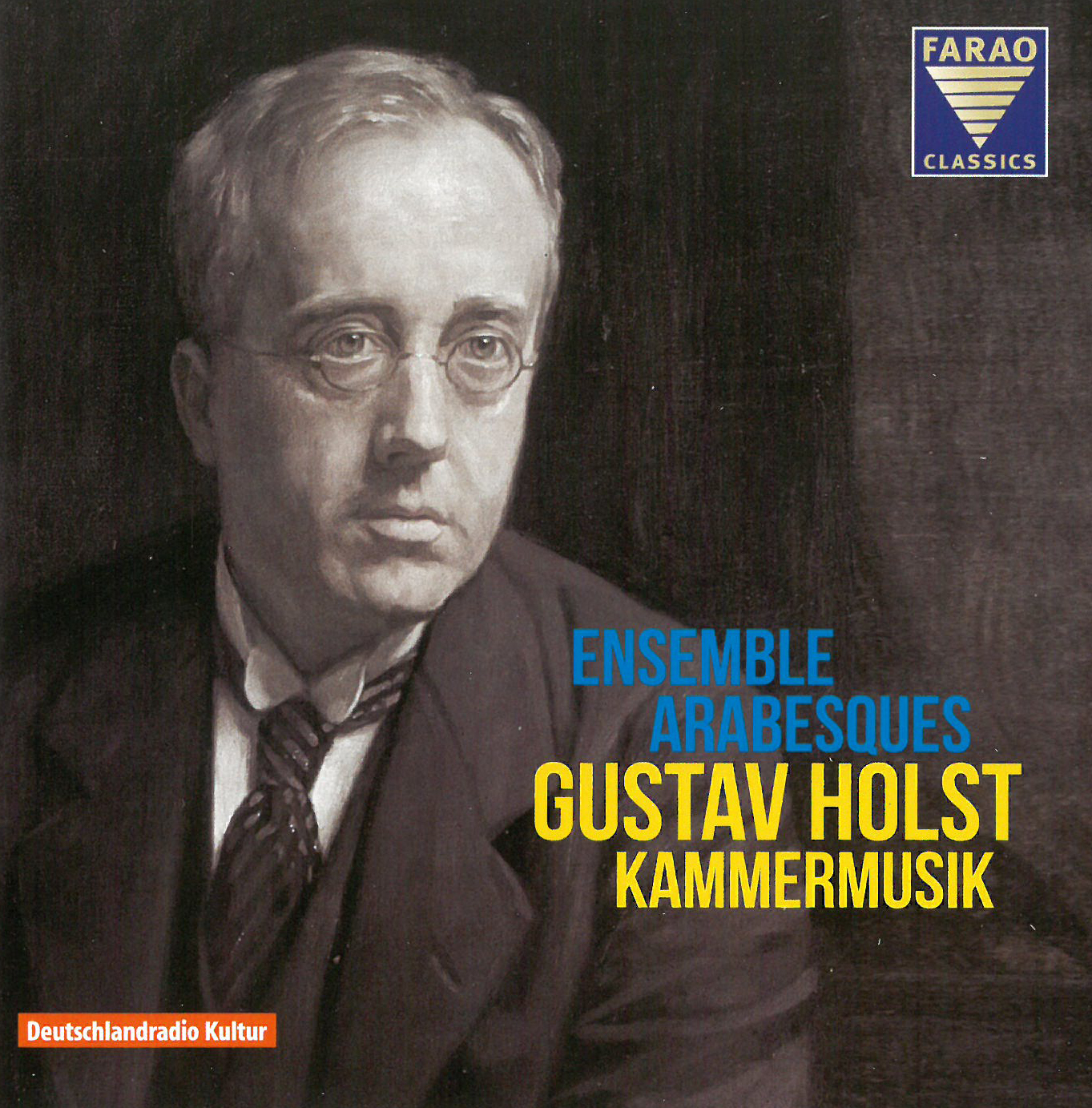
07 Holst ChamberGustav Holst – Kammermusik
Ensemble Arabesques
Farao Records B 108098 (farao-classics.de)

Gustav Holst composed lots of orchestral and vocal music besides The Planets, but hardly any chamber music or solo piano pieces. This CD presents the bulk of Holst’s chamber music, ably performed by Hamburg’s Ensemble Arabesques.

In the Quintet in A Minor, Op.3 for piano, oboe, clarinet, horn and bassoon (1896), the wind players are joined by pianist SooJin Anjou. This student composition boasts a lovely chorale melody for the horn in its first movement, and a striking, solemn, processional Adagio. The Sextet in E Minor for oboe, clarinet, bassoon, violin, viola and cello (1900), only recently discovered in the British Library Archives, here receives its first recording. It comprises a sweetly sentimental Moderato, a graceful Scherzo, a mournful Adagio and a final set of variations in which Holst cleverly mixed and matched the six instruments, while giving each its turn in the spotlight.

Both the Woodwind Quintet Op.14 (1903 but unpublished until 1983) and Three Pieces for oboe and string quartet (1910) reflect Holst’s fondness for Renaissance and Baroque dance forms, coloured by touches of English folksong. The two-movement Terzetto for flute, oboe and viola (1925), here played by flute, oboe and clarinet, is the most modern-sounding of these works, with a melancholy Allegretto and sprightly Un poco vivace finale.

These “vivace” performances of very ingratiating music showcase a seldom-heard but rewarding side of a composer still known mainly for his single “greatest hit.”

08 Neurodegenerative musicMind Music – Music related to neurodegenerative conditions
Northern Chamber Orchestra; Stephen Barlow
Divine Art dda25138 (divineartrecords.com)

Mind Music: Music related to neurodegenerative conditions began as a fundraiser for Parkinson’s UK. It honours musicians or relatives touched by brain diseases: Felix Mendelssohn (stroke); Richard Strauss (late-life depression following influenza); John Adams and Kevin Malone (fathers with Alzheimer’s); clarinetists Elizabeth Jordan and Lynsey Marsh (project initiators, who lost parents to Parkinson’s Disease). Yet these readings of clarinet music are upbeat, featuring Jordan, Marsh and conductor Stephen Barlow with the Manchester-based Northern Chamber Orchestra. In Richard Strauss’s Sonatina No.1: From an Invalid’s Workshop (1943), the wonderfully rich, well-tuned sound of 16 wind players suits the work’s melodic lyricism and harmonic suavity perfectly. Mendelssohn composed his short Concert Piece No.1 (1833) for clarinet, basset horn and orchestra in exchange for his clarinetist guests’ cooking of Bavarian dumplings and strudel. Here, Marsh and Jordan meld the solo instruments with orchestra into a cheerful, satisfying whole.

Digital delay evokes memory in Kevin Malone’s The Last Memory (1996) for clarinet, the composer exploring events and feelings around his father’s illness. Composer John Adams honours his clarinetist father’s tutelage, American musical roots and final years in the intriguing Gnarly Buttons (clarinet and small orchestra). Agile solos by Jordan, and Stephen Barlow’s precise conducting, are complemented by jazz timbres, sampled sounds, and pert banjo or mandolin interjections. Amidst this bundle of surprises, the peaceful opening of the finale, Put Your Loving Arms Around Me, is extraordinally calming.

Review

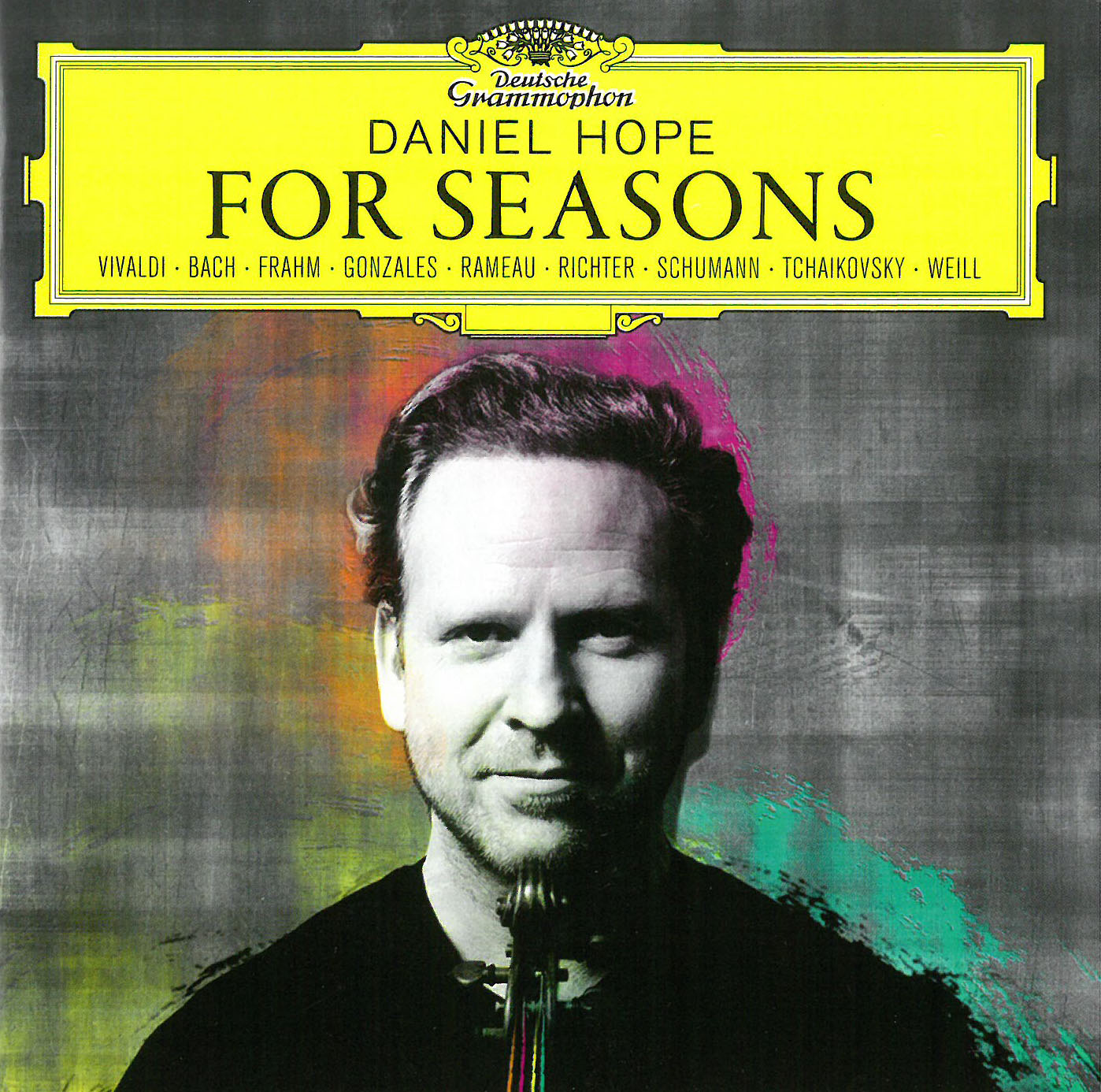
01 Hope SeasonsFor Seasons is the new CD from violinist Daniel Hope with the Zurich Chamber Orchestra and 11 individual collaborators (Deutsche Grammophon 479 6922). The album’s title is carefully chosen, as the disc contains not only Hope’s first recording of Vivaldi’s Four Seasons but also 12 short pieces linked to the months of the year, a concept Hope came up with 20 years ago and which he calls a very personal celebration of the seasons.

It’s fascinating to see how the Vivaldi concertos retain their freshness despite what seems like a neverending series of new recordings. The performances here are simply lovely – crisp, clean and warm, with some brilliant playing from Hope and an excellent continuo sound from the harpsichord, theorbo and baroque guitar. It’s another terrific interpretation to add to the already extensive list.

The rest of the CD is an absolute delight, although the connections with the months of the year – if they exist at all – are somewhat tenuous. Only Aphex Twin’s Avril 14th, Tchaikovsky’s June, Chilly Gonzales’ Les doutes d’août and Kurt Weill’s September Song are specifically linked to the appropriate month, with the remainder of the brief tracks apparently intended to convey the feelings and emotions associated with the changing seasons.

No matter, for they’re all real winners, with the January of Nils Frahm’s beautiful Ambre and the December of Chilly Gonzales’ Wintermezzo framing music by Rameau, Max Richter, Robert Schumann, Bach and his contemporary Johann Molter, and a particularly striking improvisation on Amazing Grace with Dom Bouffard on electric guitar. The Zurich Chamber Orchestra provides the accompaniment on four of the tracks. Hope’s lovely solo violin arrangement of Brahms’ Lullaby, Guten Abend, gut’ Nacht, provides a beautiful close to an outstanding CD.

The CD booklet, incidentally, includes the accompanying artwork produced by 12 visual artists in response “to the music and to the seasons” in Hope’s For Seasons project.

Review

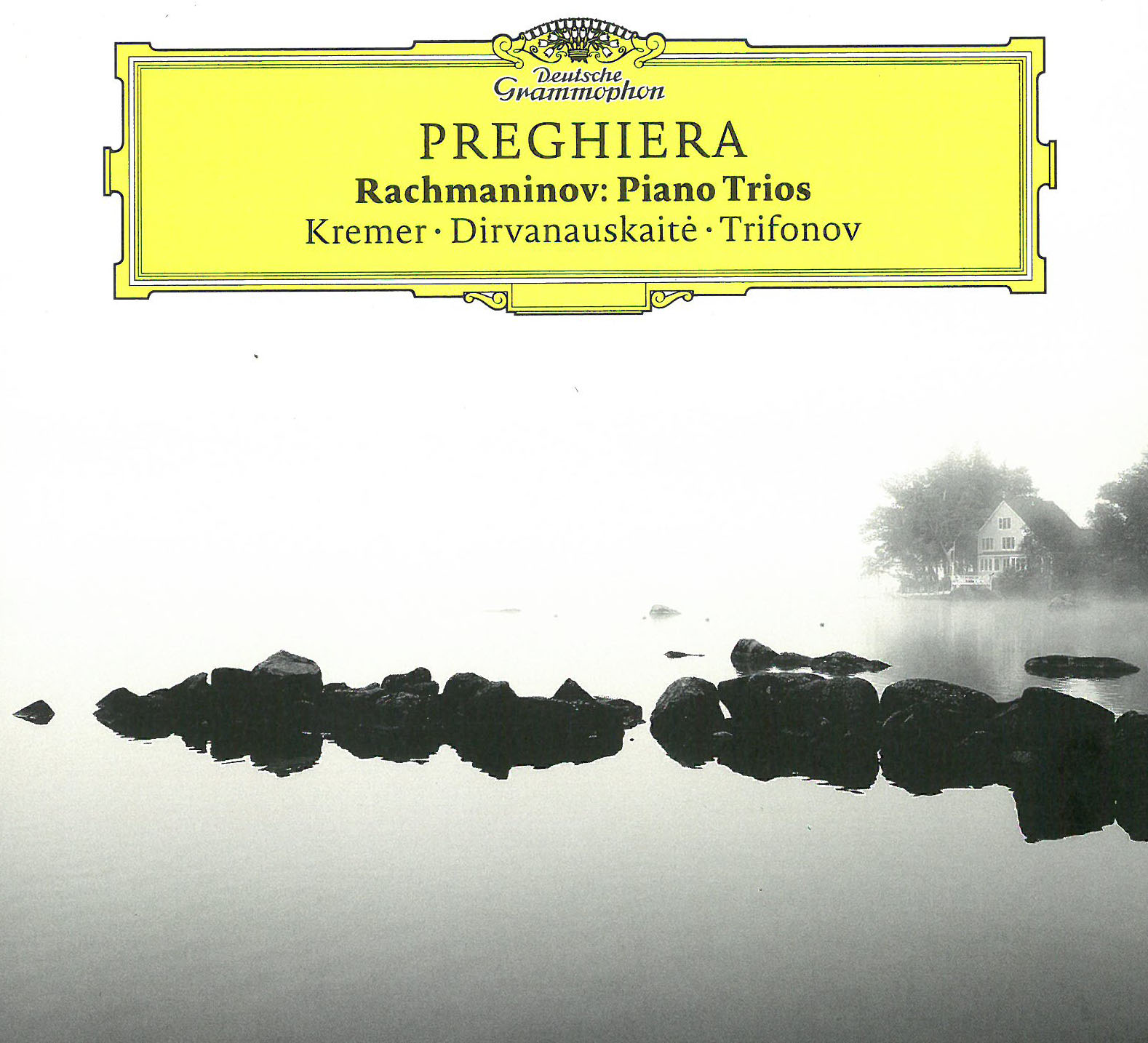
02 Rachmaninov TriosAnother terrific Deutsche Grammophon CD, PREGHIERA Rachmaninov: Piano Trios features outstanding playing by violinist Gidon Kremer (celebrating his 70th birthday with this release), cellist Giedrė Dirvanauskaitė and pianist Daniil Trifonov (479 6979).

The CD’s title is taken from the opening track, Fritz Kreisler’s Preghiera, a violin and piano collaboration between Kreisler and Rachmaninoff that reworked the Adagio sostenuto from the composer’s Piano Concerto No.2. It’s a short but beautiful work that serves as an effective curtain-raiser to the two piano trio works.

Dedicated to “the memory of a great artist,” the Trio élégiaque No.2 in D Minor was Rachmaninoff’s response to the death of Tchaikovsky, whom he revered; it was started on the very day of Tchaikovsky’s death in 1893. Rachmaninoff said that all his thoughts, feelings and powers were devoted to it, that he tormented himself the entire time and was “ill in spirit.” Those sentiments are certainly reflected in the music, for this is a large-scale work written in what the booklet notes call “a musical idiom of almost unbridled emotionality.” The performance here is outstanding, perfectly capturing the melancholy and passion of the work and with a particularly ravishing piano sound.

The Trio élégiaque No.1 in G Minor is a short, one-movement student work that again features a prominent role for the piano and that offers more than a hint of Rachmaninoff’s mature elegiac style. Another fine performance rounds out a top-notch CD.

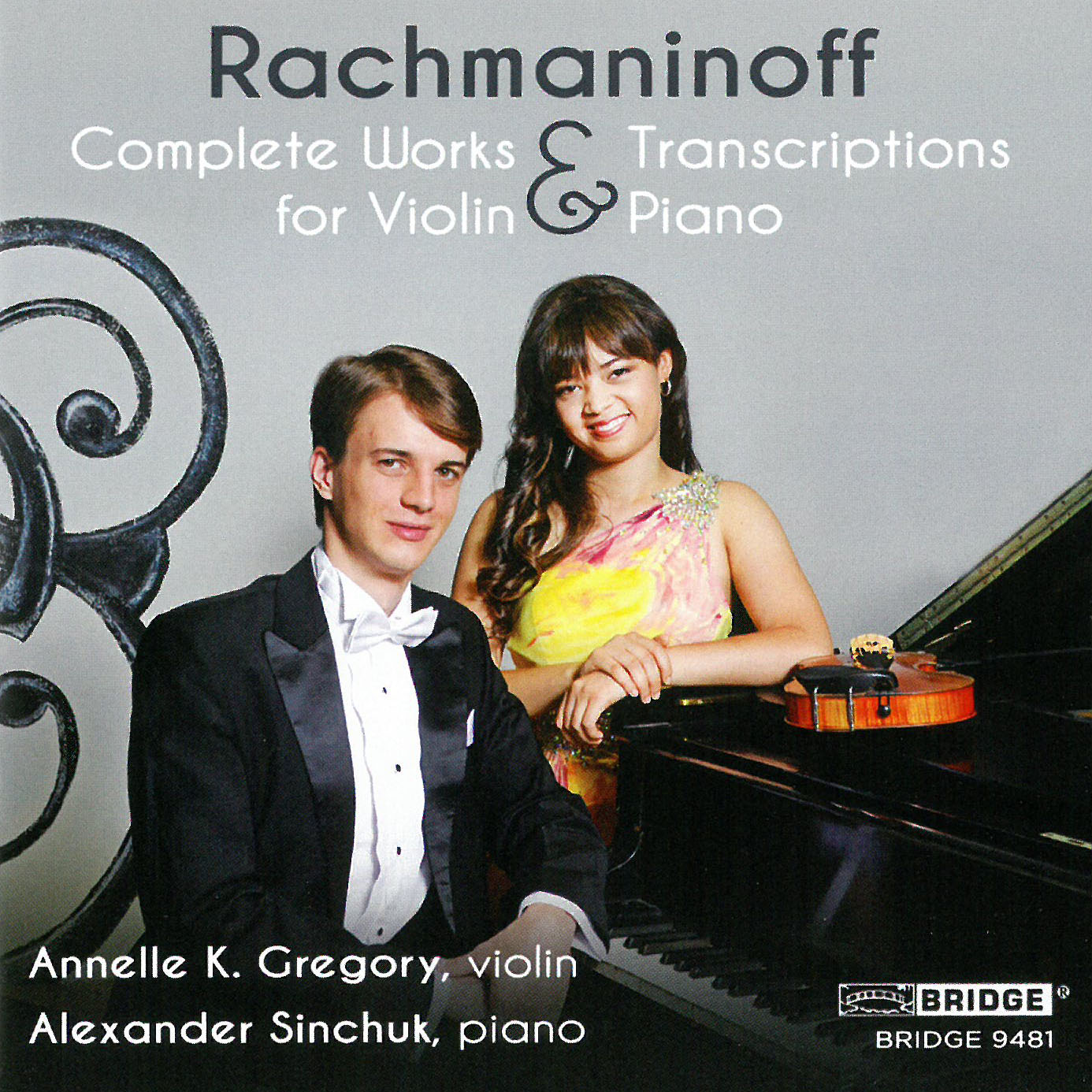
03 Rachmaninoff violin pianoThe Kreisler Preghiera turns up again in Rachmaninoff Complete Works & Transcriptions for Violin & Piano, a simply stunning CD from the American violinist Annelle K. Gregory and the Russian pianist Alexander Sinchuk (Bridge 9481).

From the opening bars of the Romance in A Minor, a very early student work when the composer was scarcely into his teens, it’s clear that this is going to be a very special album. Gregory has a quite gorgeous tone, is absolutely secure technically and plays with power, richness and assurance. Sinchuk matches her every step of the way.

And what music this is to display such deeply glowing and emotional playing! Given that 17 of the 20 tracks are arrangements or transcriptions it feels like Rachmaninoff’s Greatest Bits at times, but with performances like these, who cares? Rachmaninoff wrote only three pieces for violin and piano – the opening unpublished track, which remained unknown until 1951, and the Deux Morceaux de Salon Op.6; of the transcriptions here from other sources six are by Jascha Heifetz and five are by Fritz Kreisler.

The Preghiera is perhaps a bit more rhapsodic than Kremer’s version, the latter’s feeling more like the prayer suggested by the title, but both are simply beautiful interpretations. There’s a lovely Vocalise in an arrangement by the early-20th-century Russian-American violinist Mikhail Press, whose students included the legendary Dorothy DeLay, and Kreisler’s transcription of the 18th Variation from the Rhapsody on a Theme of Paganini brings a dazzling CD to an end.

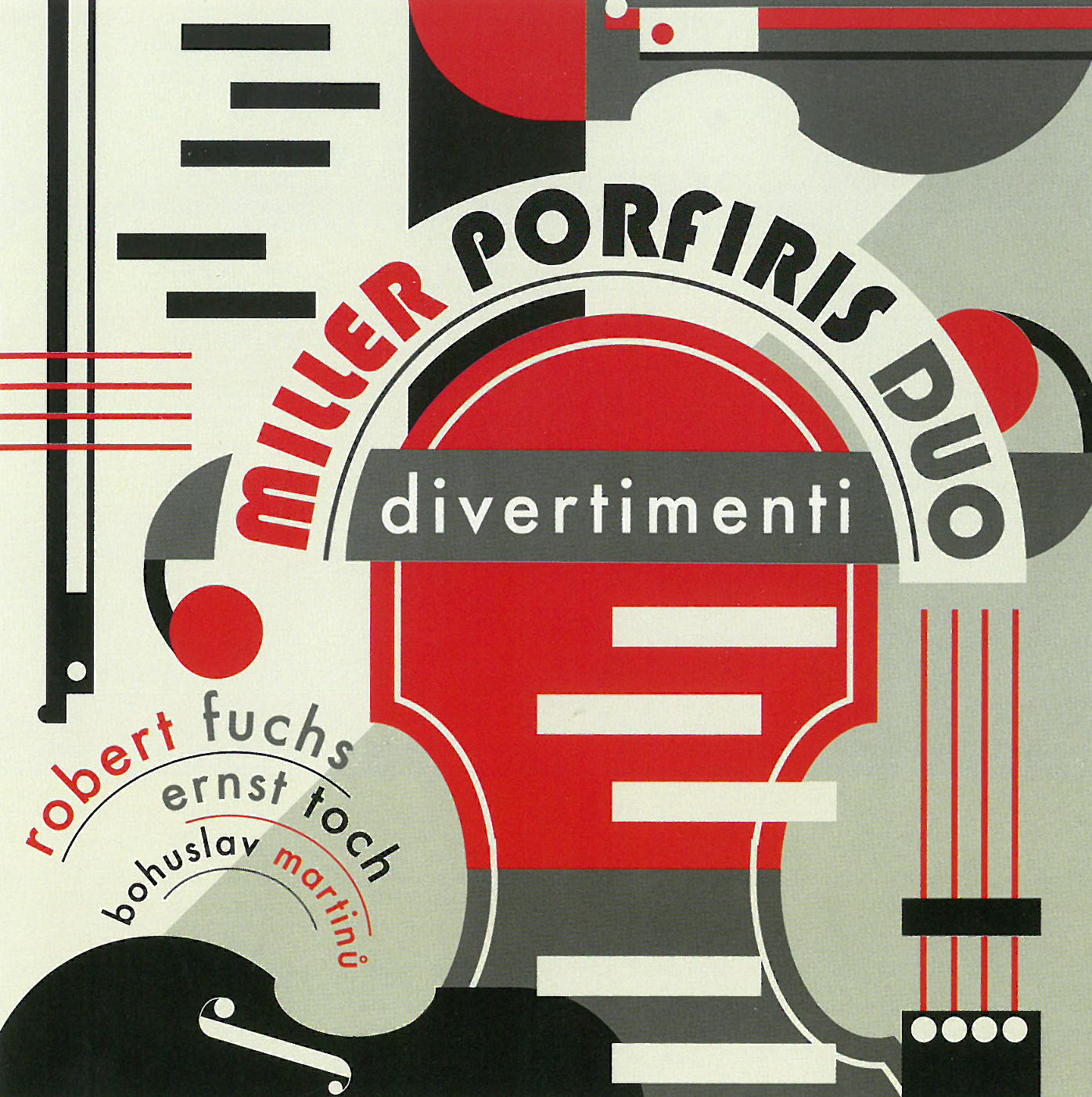
04 Miller PorfirrisThere is more superb string playing on Divertimenti, the new CD from the Miller-Porfiris Duo (millerporfirisduo.org) of violinist Anton Miller and violist Rita Porfiris featuring duos by Robert Fuchs, Ernst Toch and Bohuslav Martinů. The players, who met at Juilliard over 20 years ago, have been playing together since 2005, and you would have to go a long way to hear better duet playing than this.

Fuchs died in 1927, and consequently did not experience the growing Nazi influence in Austria in the 1930s. His students included Erich Korngold and Alexander Zemlinsky (both of whom fled Nazi Europe for the United States) and Gustav Mahler. His 12 Duette Op.60 date from 1898, when Fuchs was on the faculty of the Vienna Conservatory, and are beautifully crafted short pieces redolent of Vienna in the years before the Great War.

Toch was born in Vienna and entered Fuchs’ composition classes at the Conservatory in 1900 at the age of 12. He emigrated to the United States in 1934, settling in Los Angeles and writing numerous film scores. His Divertimento Op.37 No.2 for Violin and Viola is a short (under ten minutes) three-movement work with a brilliant Vivace molto that packs a real punch. Porfiris quite rightly notes the work’s “expressive dissonance and frenetic energy.”

Martinů also emigrated to the United States, in his case in 1941 after being blacklisted by the Nazis in France. He was successful in America, but never really felt happy or settled, finally returning to Europe in 1956. His Duo No.2 for Violin and Viola H.331 was written in 1950, and is a bright, melodic three-movement work with decided Czech rhythms.

Miller and Porfiris are in great form throughout the CD, both playing with a warm, rich tone and with a clarity, spirit and brightness that serves these delightful works perfectly.

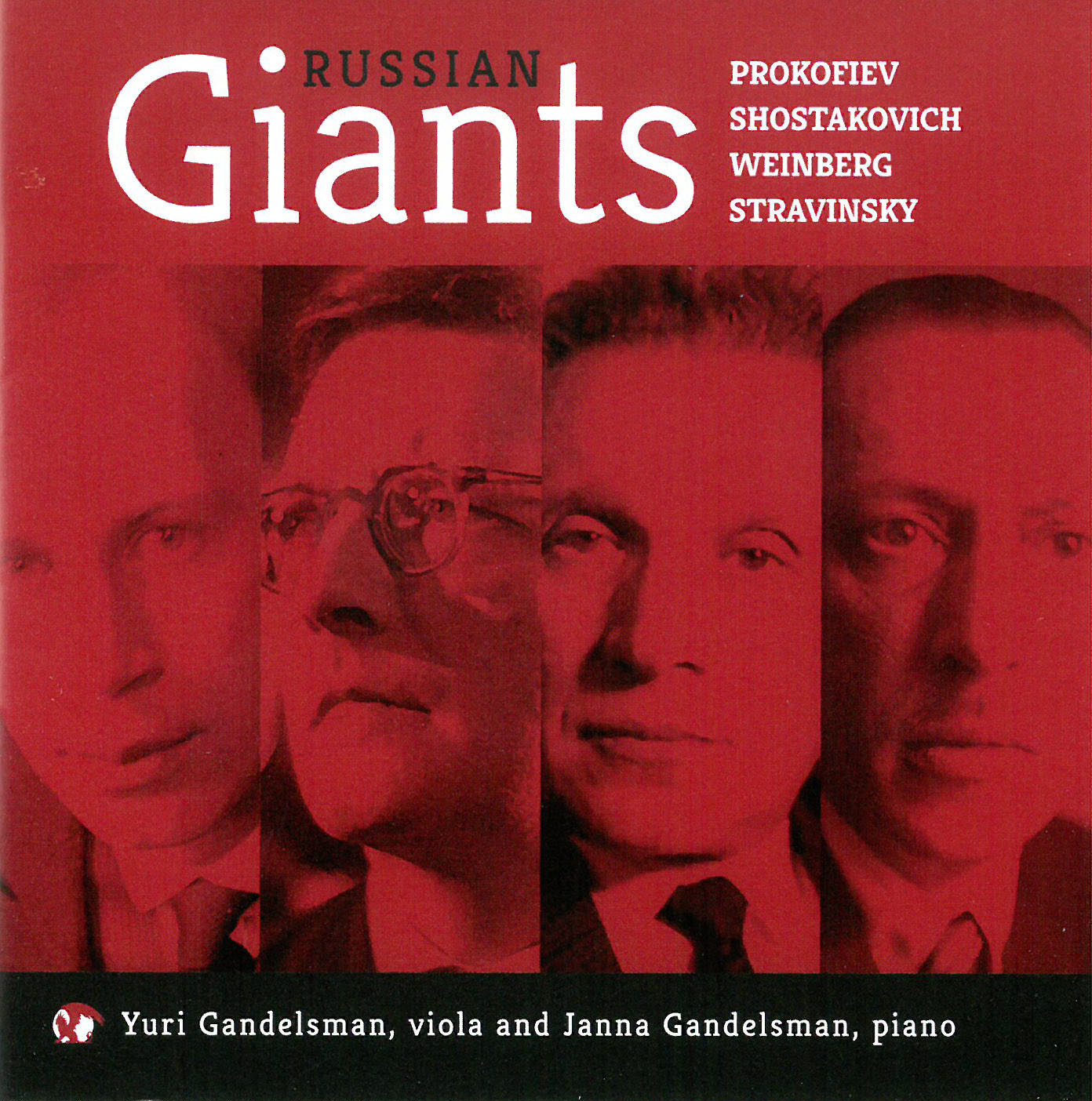
05 Russian GiantsThe husband and wife team of violist Yuri Gandelsman and pianist Janna Gandelsman are the performers on Russian Giants, a CD of works by Sergei Prokofiev, Dmitri Shostakovich, Mieczysław Weinberg and Igor Stravinsky (Blue Griffin BGR 413).

Prokofiev’s Suite from Romeo and Juliet is a selection of six short pieces from the composer’s Ten Pieces from “Romeo and Juliet” Op.75 for solo piano, which was extracted from the ballet score between its composition in 1935 and its premiere in 1938; the transcriptions for viola and piano were made by Prokofiev’s contemporary Vadim Borisovsky, the founding violist of the famed Beethoven Quartet.

Shostakovich’s Sonata for Viola and Piano Op.147 was the last work the composer completed, mostly written in his hospital bed as he lay dying of lung cancer in the summer of 1975. Replete with references to the composer’s own works as well as to those of other composers, the music belies Shostakovich’s weakened physical condition, its harmonic ambiguity finally resolving with a quiet C-Major ending that the composer called “radiance.”

Weinberg was a close friend of Shostakovich and much influenced by him; indeed, his 1945 Sonata for Clarinet and Piano Op.28, heard here in its official viola version, makes specific references to the latter’s music in the opening movement. Weinberg’s Jewish heritage is clearly felt in the middle movement.

Stravinsky’s brief Elegy for Solo Viola was written in 1944 on a commission from the Pro Arte Quartet violist Germain Prévost in memory of the group’s founding first violinist Alphonse Onnou, who had died earlier that year.

There is fine playing throughout the CD from both players, although the tone of Gandelsman’s1748 Paolo Testore viola doesn’t seem to have quite the dynamic range that it did on his 2012 Hindemith CD. Balance and recorded sound are excellent.

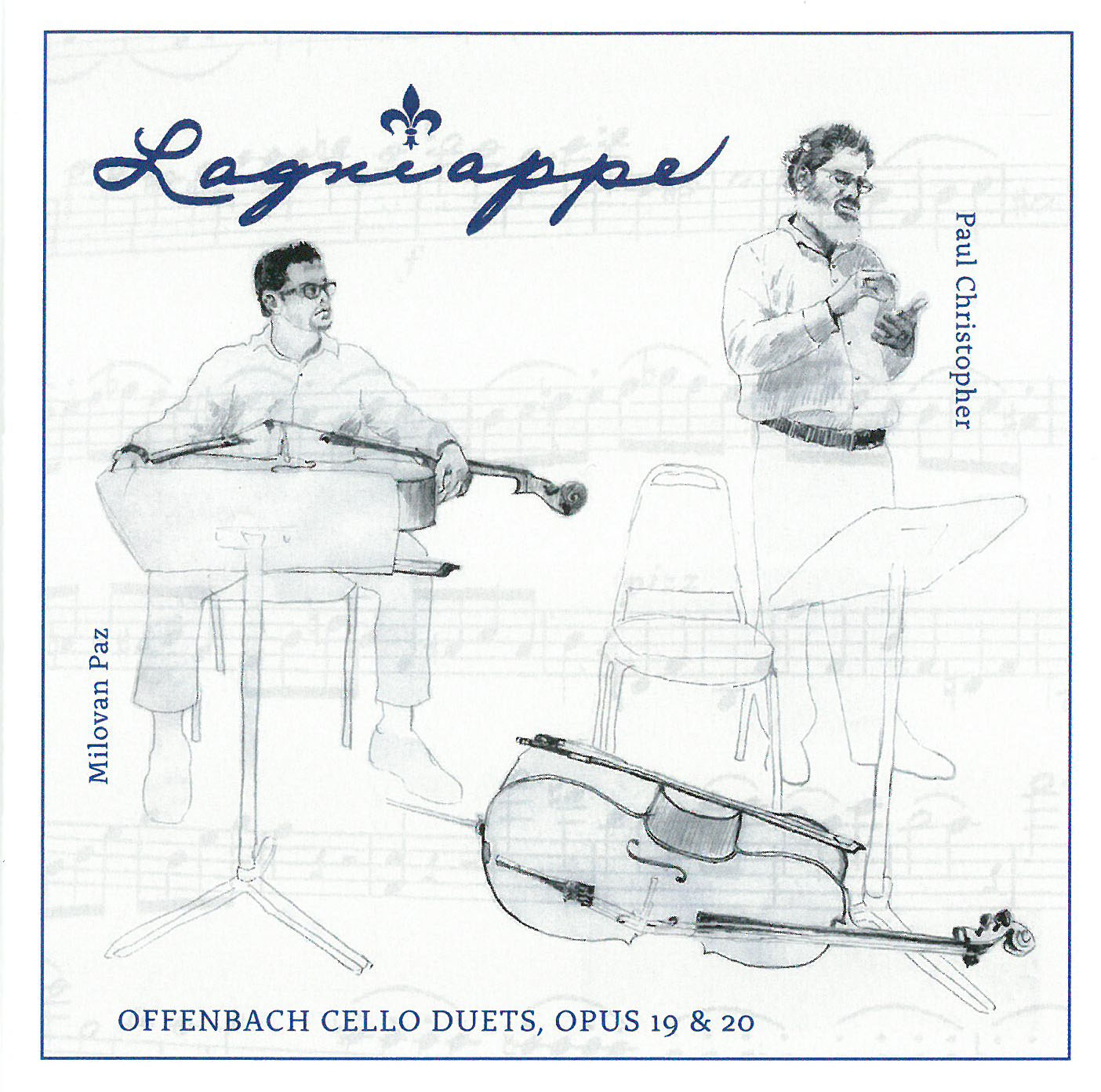
06 Offenbach DuosLagniappe! (the Louisiana Cajun French word for a bonus gift or something extra) is the seventh volume in the series of Offenbach Cello Duets from Human Metronome (humanmetronome.com), this one featuring the Duets Op.19 Nos.1-3 and Op.20 Nos.1-3 in performances by Paul Christopher and his student Milovan Paz (HMP 107-2016).

Offenbach was a virtuoso cellist who earned his living as a performer before establishing himself as a composer. He produced three sets of cello duets, usually of increasing technical difficulty: Op.19-21 and 34 (École de Violoncelle); Op.49-54 (Cours méthodique); and Op.78. The complete Op.49-54 was covered in five of the first six CDs – the final volume was reviewed in this column last September – with Op.21 being included on a separate volume. Christopher notes that they haven’t yet found all of the music for Op.34, so there may well be an eighth CD in the future. I can’t find any mention of a recording of Op.78 anywhere.

Don’t be misled or discouraged by the use of titles like School and Method: these works may have had pedagogical intent behind their composition, but they are full of the melodic invention and beauty that made Offenbach’s operettas such a success, and can – and should – stand alone as concert recital pieces.

Christopher and Paz play as superbly and have as much fun as they did on the previous volume, where Christopher said that he felt the duets “transcend their original purpose and are the high water mark for the cello duets genre.” Everything here continues to support that view.

This whole series adds up to a pure delight for cellists of all ages and abilities.

Review

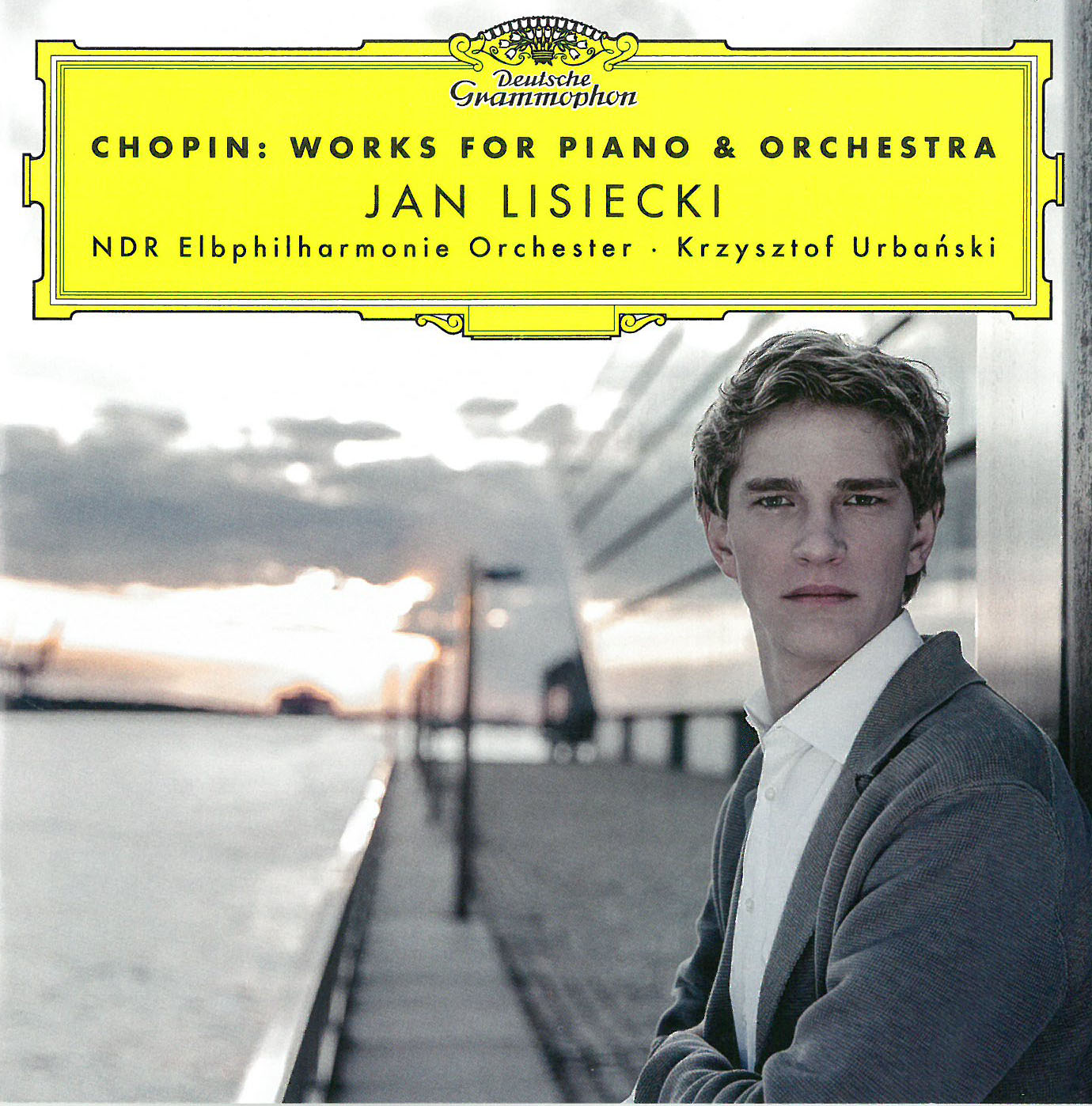
01 Chopin LisieskiOne of Canada’s brightest young talents is Jan Lisiecki. The Calgary-born pianist has been astonishing audiences since his orchestral debut at age 9. Now 22, his list of international performances with major orchestras and conductors grows yearly. His newest recording Chopin: Works for Piano & Orchestra, NDR Elbphilharmonie Orchester, Krzysztof Urbanski (DG 479 6824) is his fourth for Deutsche Grammophon.

Lisiecki’s playing is unerringly precise with a lightness of touch that gives him astonishing tonal control, speed and clarity. He approaches Chopin with calm introspective depth unusual for an artist so young. The Nocturne in C-sharp Minor Op.Posth. demonstrates this with its mellow left-hand accompaniment of a brighter line in the right. Lisiecki’s finish is astonishing in its balanced perfection.

Every track on this CD is extraordinary. But what really emerges as the showpiece is the set of Variations on “Là ci darem la mano” from Mozart’s Don Giovanni, Op.2. Speed, technique, astonishing rapid octaves and other devilish Chopinesque devices make this performance an example of genius running joyously amok.

Lisiecki plays beautifully with orchestra. A natural ease keeps him in step with the ensemble through the Rondo à la Krakowiak in F Major Op.14 and the Andante Spianato & Grand Polonaise Brillante Op.22.

Almost all of this disc also appears as part of DG’s 20-CD set The Complete Chopin, featuring Lisiecki along with other performers.

Review

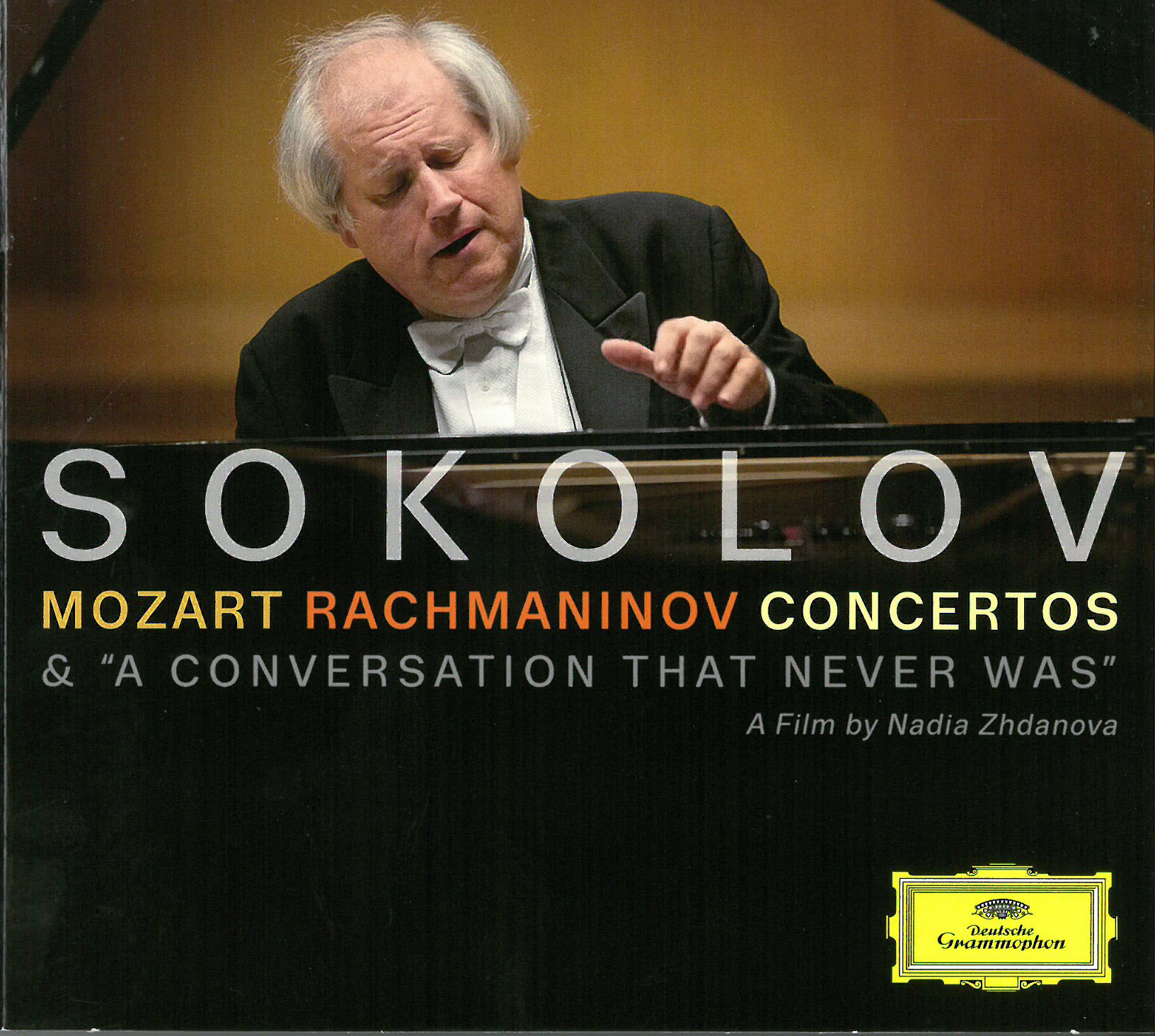
02 SokolovGrigory Sokolov is legendary for his rejection of celebrity. He gives no interviews and for some years now has stopped performing with orchestras. He also dislikes and avoids recording studios. It’s something of an achievement therefore, for Deutsche Grammophon to have obtained Sokolov’s agreement to reissue two live performances from 2005 and 1995 in Mozart, Rachmaninov Concertos & “A Conversation That Never Was” A Film by Nadia Zhdanova (DG CD/DVD479 7015). The addition of the film (on DVD) makes this set unusual. Zhdanova interviews Sokolov’s friends and colleagues and adds newly found archival material to create a portrait of this very private and sometimes reclusive artist.

The Mozart Piano Concerto No.23 in A Major K488 is the more recent performance. Recorded in 2005 in Salzburg with the Mahler Chamber Orchestra under Trevor Pinnock, it’s an intimate reading with Sokolov’s characteristic crisp, clear staccatos punctuating the opening of the final movement.

The other performance is with the BBC Philharmonic at the Royal Albert Hall in 1995. The Rachmaninoff Piano Concerto No.3 in D Minor Op.30 is loved by audiences and equally feared by pianists for its technical challenges. The speed at which Sokolov takes the opening of the final movement is scarcely believable. The same rapid repeats of chordal passages appear in the first movement, where Sokolov gives the piano such a pounding that some notes in the upper register begin slipping out of tune and make for a few interesting effects as the performance proceeds without a pause to correct the matter. Still, the scale of Sokolov’s interpretive conception is awesome and often startling.

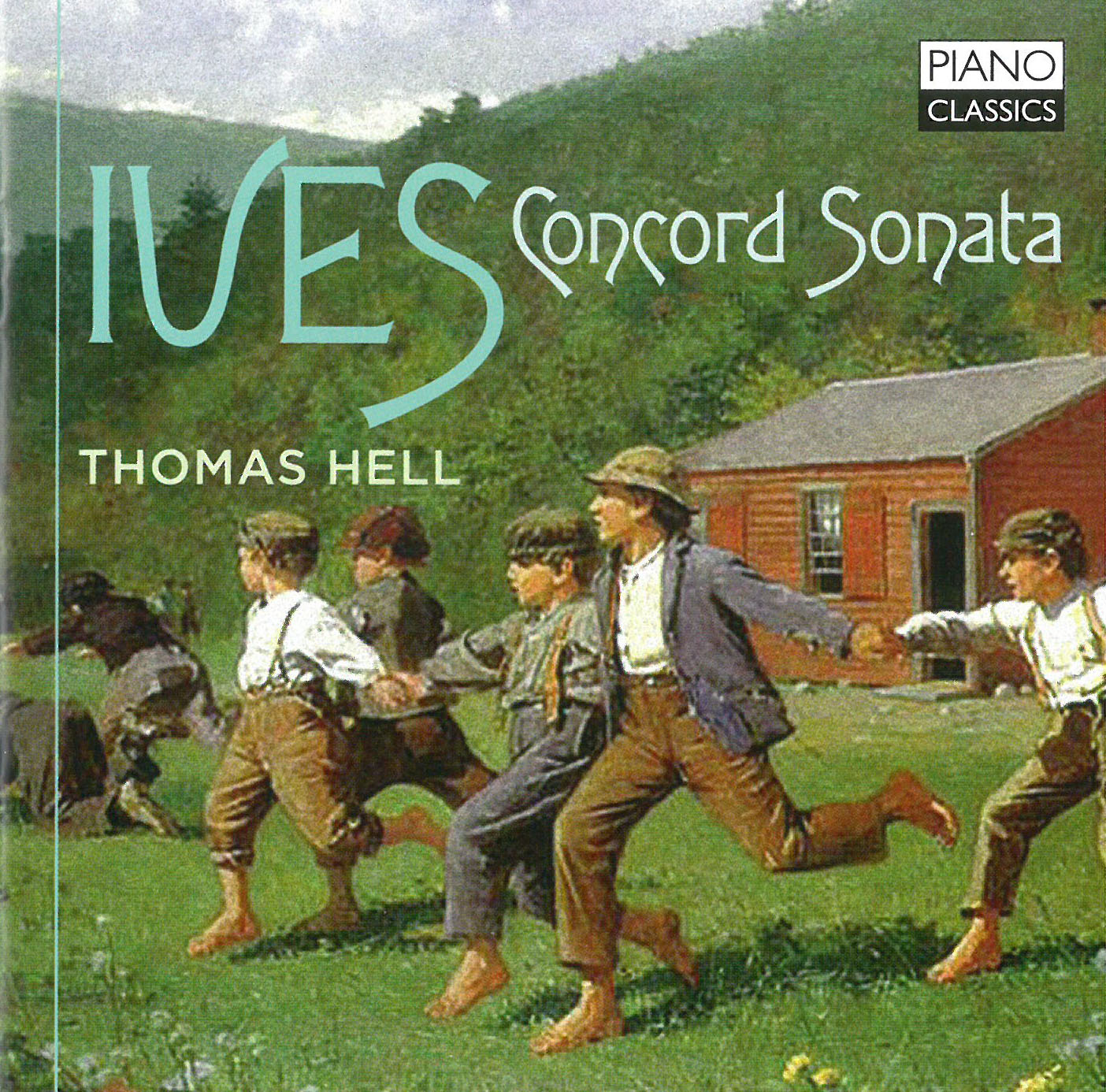
03 Ives ConcordThomas Hell has tackled a work with a stormy critical past, in his new recording Ives Concord Sonata (Piano Classics PCL 0112). Subtitled Concord, Mass. 1840-1860, Ives wanted to reflect the changing tide of American literary and philosophical thought in the mid-19th century. Each of the four movements carries the name of a significant figure of the period: Emerson, Hawthorne, The Alcotts, Thoreau. The work is quite large requiring nearly 50 minutes to perform.

Hell provides some useful thoughts on his approach to this piece. Given Elliott Carter’s early criticism of its lack of form, Hell describes the sonata’s components and how its disparate elements actually hold it together. This intellectual commitment to the work is what sustains Hell’s performance through the daunting challenge of the first two movements. The technical demands are considerable. Hell even claims a few of the pages could be the most difficult in all the piano literature.

Ives enjoyed making musical references in this sonata, alluding to material from Beethoven to Stephen Foster along with a little ragtime. It’s a rich work and a challenge to deliver. Hell has a very solid understanding of what Ives is doing, and the benefit of having spent a good deal of time considering it. His real task, however, is to make much of it accessible to the listener at first hearing. On that count he exceeds expectations. Hell plays with dexterity, intention and focus. His grasp of the material is obvious and his ability to convey it is compelling.

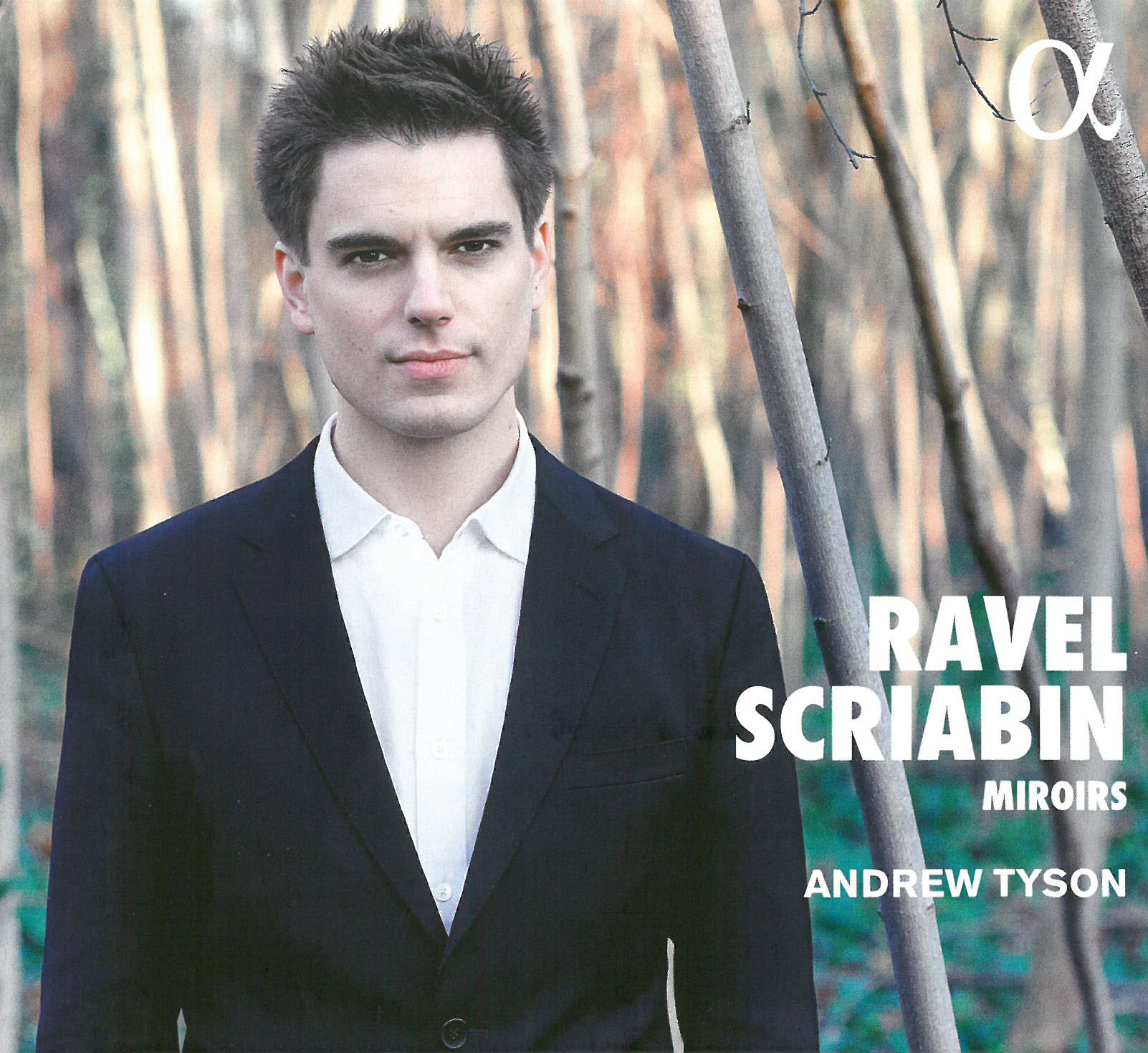
04 Andrew TysonAndrew Tyson takes on an enormous task in his latest disc, Ravel, Scriabin – Miroirs, (Alpha Classics Alpha 277). His objective is to give voice to composers wandering through the universe of free-flowing impressionism in search of transcendence over their instrument and its musical forms.

Scriabin’s Piano Sonata No.3 is the first challenge with its daunting stream of keyboard consciousness. The writing is replete with countless inner voices and Tyson masterfully brings them each to the surface for their brief appearance. It’s an amazing technique and quite magical in its effect. Tyson is never completely bound by any rhythmic strictures. He’s clearly at ease with the ebb and flow of Scriabin’s language, even in the second and fourth movements, where stronger tempos dominate.

Ravel’s Miroirs calls for more containment and Tyson senses this innately. His restraint is subtle yet his playing as seductive as ever. His command of colour is remarkable. The Bechstein used in the recording surrenders harp-like glissandos throughout his playing of Noctuelles. La vallée des cloches, similarly, is exquisite for its distant, mellow echoes and brighter tolls.

Scriabin’s Piano Sonata No.10 Op.70 concludes the disc’s program. It’s Scriabin’s final published work in the form. Tyson recaptures the mysticism of the earlier work on the recording and takes it even further. His execution is fluid and unbroken. His playing is passionate and ethereal. He’s a truly gifted artist with an extraordinary bond to this repertoire.

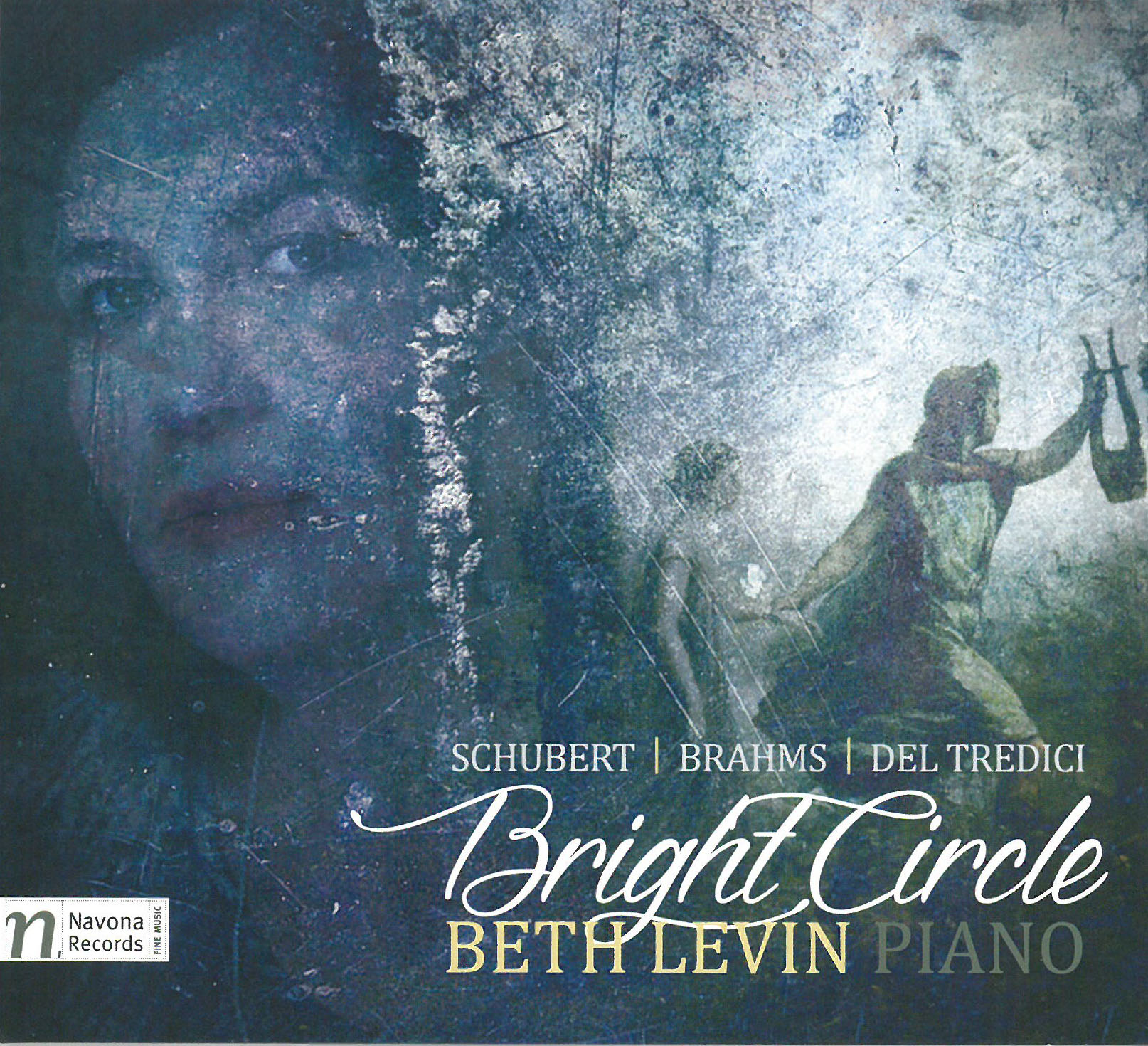
05 Beth LevinBeth Levin has a distinctive and unmistakable presence at the keyboard. Her newest recording, Bright Circle – Schubert, Brahms, Del Tredici (Navona Records NV 6074) demonstrates how her nearly pedal-less playing can open new perspectives on standard repertoire. Her performance of Schubert’s Piano Sonata No.20 D959 is a good example of how a drier sound benefits the musical material by reducing sustained background harmonies. The resulting clarity emphasizes the core elements of Schubert’s ideas as well as allowing other nuances to emerge unimpeded. The third movement Scherzo is a terrific example of how Levin is able to reset our expectations of familiar material using a relaxed tempo and crisp articulation. This may well have been how early pianos sounded, with their lower string tension and shorter resonance times.

Levin is, nevertheless, a deeply expressive player who never misses an opportunity for dynamic contrast and tonal shading. In the Brahms Variations and Fugue on a Theme by Handel Op.24, Levin uses her light pedalling to great effect in keeping the inner voices of the closing fugue wonderfully accessible. Other variations, No.2 and No.4 in particular, are perfectly supported by an economical and tasteful application of sustained legato playing.

The CD concludes with David Del Tredici’s Ode to Music. Schubert’s often sung An die Musik is the thematic kernel of this work. Del Tredici apparently offered to transcribe a favourite piece for the Dorian Wind Quintet, who responded with the choice of the Schubert Lied. Once completed, the transcription was further transcribed for keyboard by one of Del Tredici’s friends who was so impressed that he wanted his own version for piano performance. While it begins conventionally, the work evolves quickly into its contemporary iteration but does so without ever letting go of its strong Romantic impulse.

Review

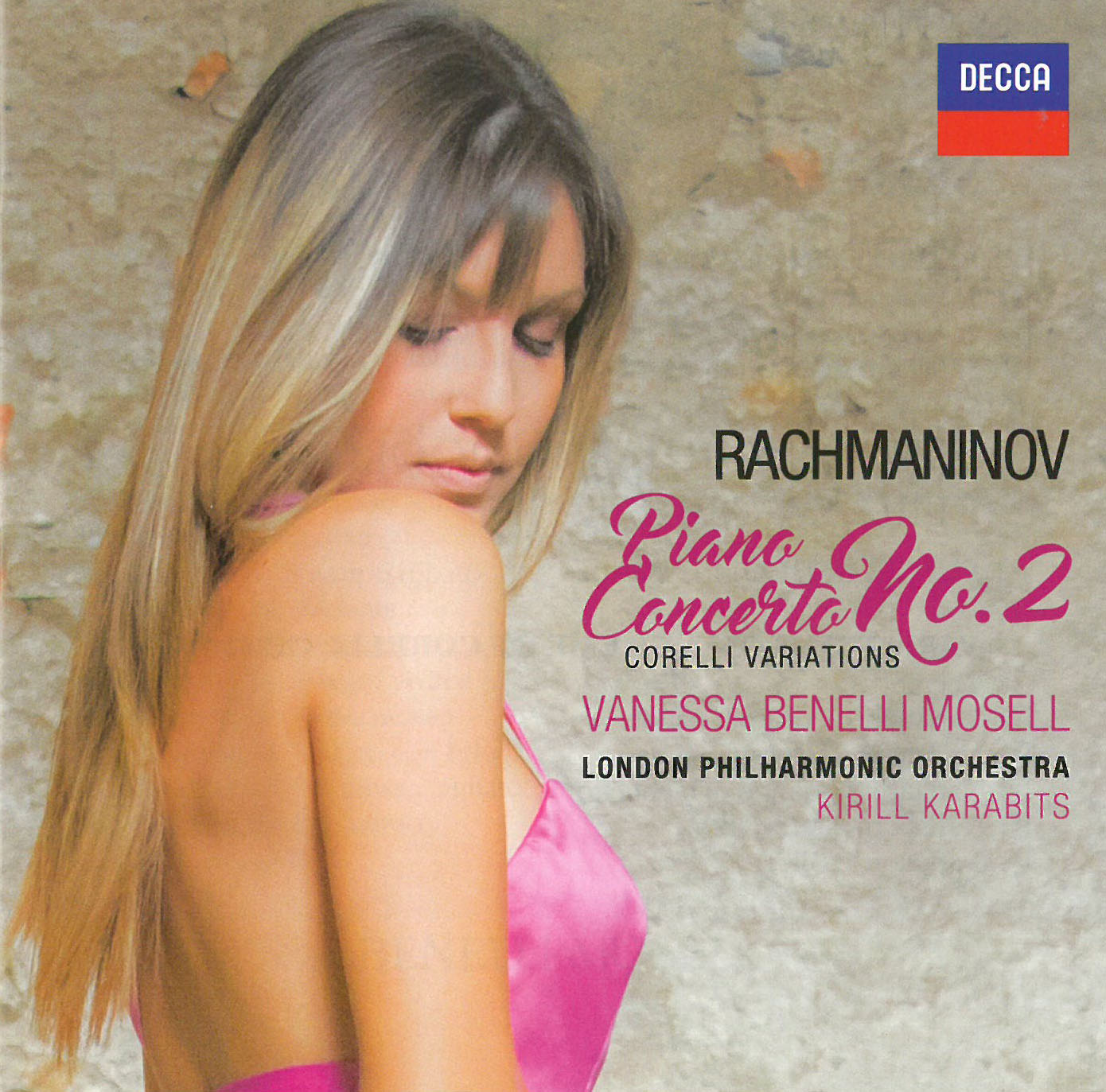
06 Benelli Mosell RachmaninovWith a handful of recordings already in her discography, 30-year-old Italian pianist Vanessa Benelli Mosell has now added her orchestral debut with the London Philharmonic Orchestra on Rachmaninov Piano Concerto No.2, Corelli Variations (Decca 481 393). The concerto is a staple in the repertoire. The sheer beauty of Rachmaninoff’s writing makes it a good choice for a young performer breaking into the market. The real test of this work is, however, the second movement and it’s here that Mosell truly proves herself as a musician. This movement is much less dense than the outer ones and leaves the performer quite exposed with sparse lines and slow tempos. What holds this movement together for Mosell is the honesty of her playing. Nothing’s contrived. Her phrasings are straightforward but clearly the product of much thought. She and Rachmaninoff are the perfect match.

The disc also includes Rachmaninoff’s Variations on a Theme of Corelli Op.42. The 20 variations are an extremely demanding set to perform. Mosell plays through them with impressive ease, meeting every demand for big powerful sound as well as the deepest introspection. It’s obvious she has invested a great deal in her interpretation and the impact is even more profound than her performance of the Concerto No.2. It’s quite surprising that the small filler piece on the recording’s program steals the show so convincingly.

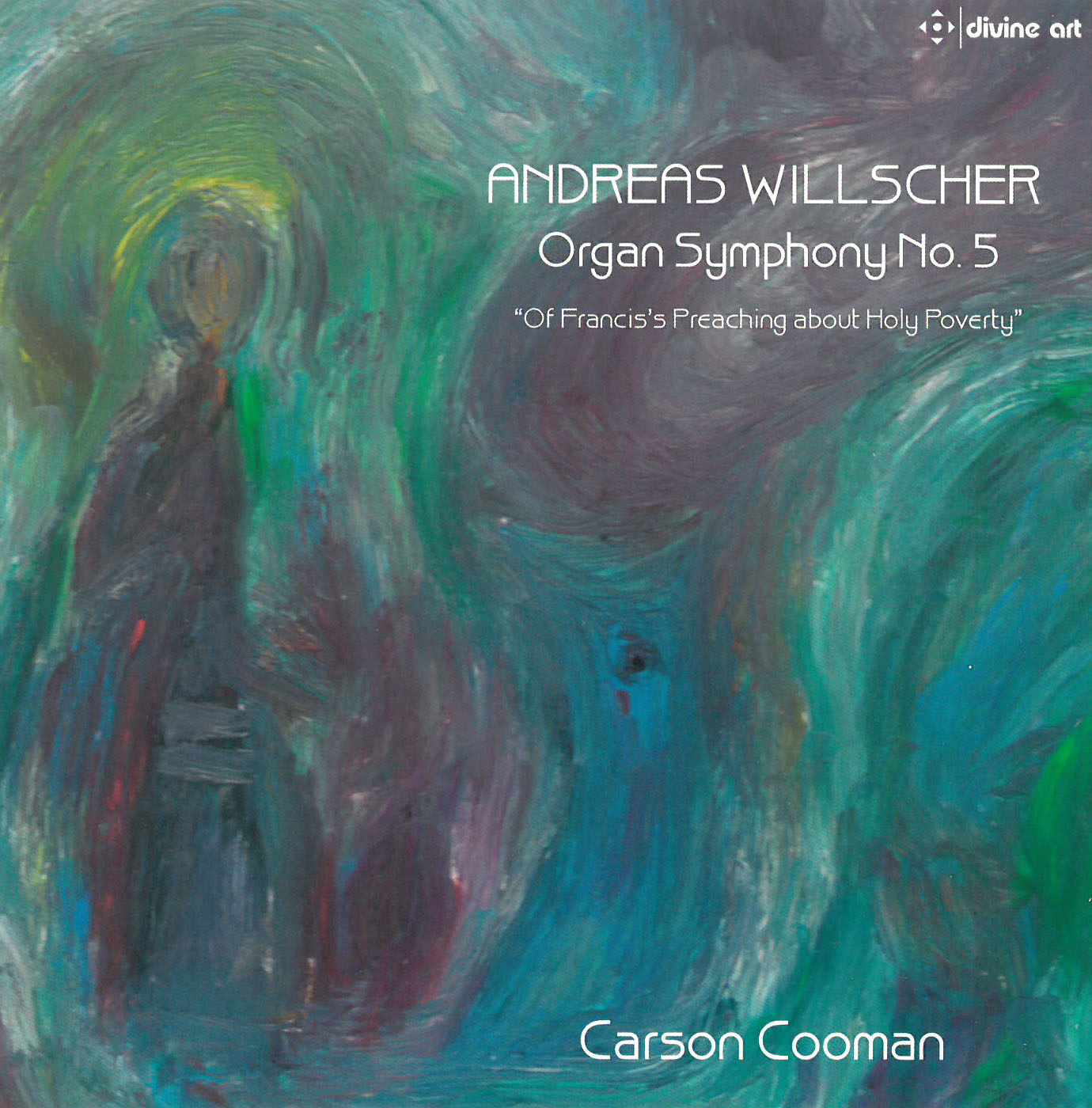
07 Willscher OrganOrganist Carson Cooman brings another hi-tech pipe organ recording to the market with his new release Andreas Willscher, Organ Symphony No.5 (Divine Art dda 25150). This CD is another performance using the Hauptwerk system whereby digital samples of entire pipe organs and their acoustics are played back from stored memory in live performance at a location other than the original site. In other words, not in the church where the organ resides.

The authenticity of the sound produced through this method is indistinguishable from a recording made in the church, in this case, the Laurenskerk, Rotterdam, Netherlands. The instrument recorded is a Danish build of 1973 by Marcussen & Son.

Cooman has chosen to record the 12-movement Organ Symphony No.5 by German organist and composer Andreas Willscher. It’s a substantial work of 73 minutes and rich with colourful registrations and dynamic effect. Its mildly programmatic subject is “Of Francis’ Preaching about Holy Poverty.” The four movements marked Allegro are each brilliant and thrilling, with bold pedal lines that need durable speakers to deliver them without distortion. The quietest movements are equally impressive for the reverberant space around their sounds. The symphony’s longest movement is half silence, set between long held chords. A meditative injunction comes with this movement and listeners should be prepared.

These Hauptwerk projects are important for the access they offer to instruments whose onsite recording costs would otherwise leave them unheard. Cooman has made an excellent choice of combining instrument and repertoire.

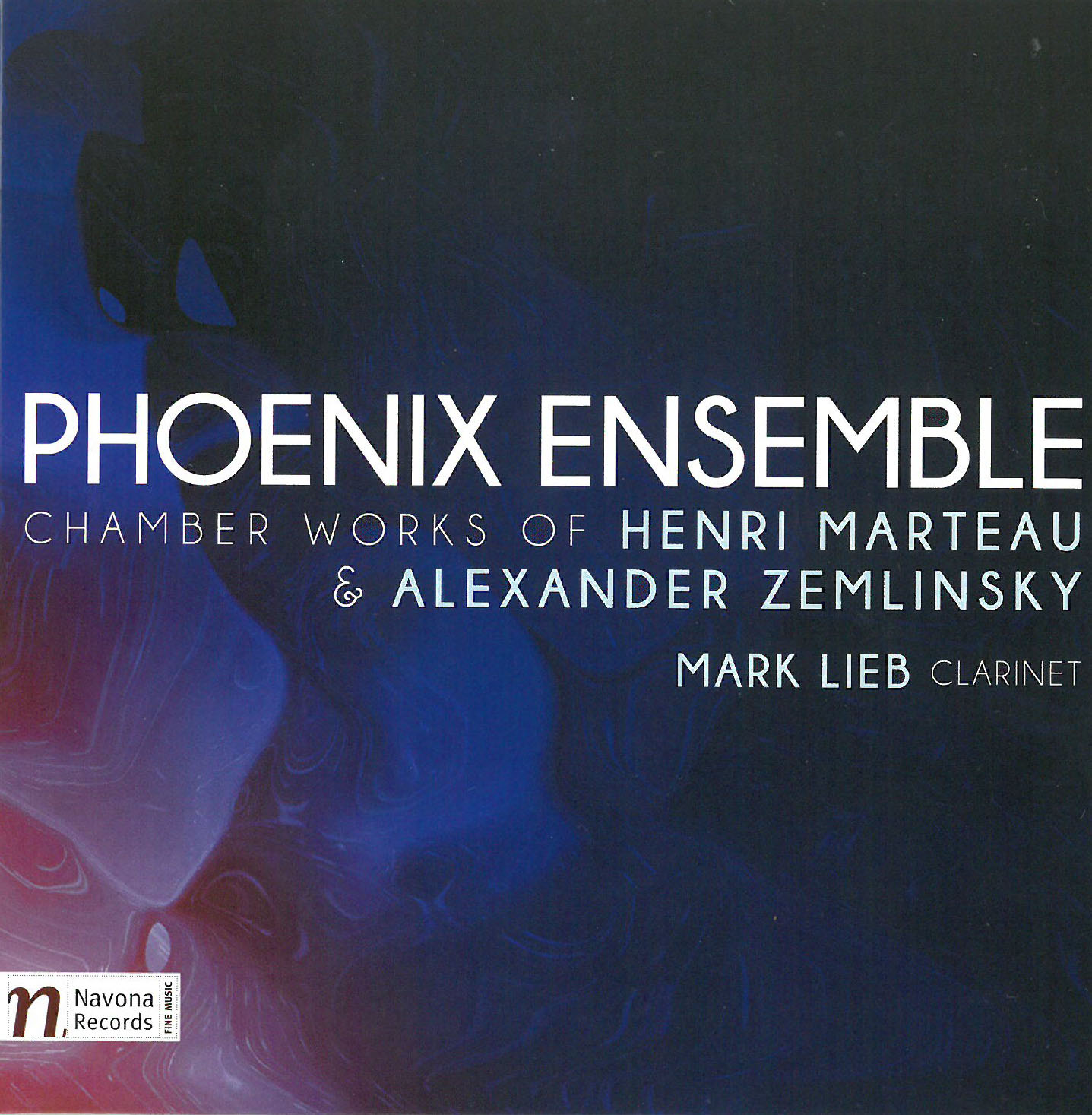
01 Phoenix Ensemble clarinetChamber Works of Henri Marteau & Alexander Zemlinsky
Mark Lieb; Phoenix Ensemble
Navona Records NV6076

Admiration for excellence of execution blends poorly with even mild disappointment in the material presented. Still, one must applaud the playing on this new release on the Navona label. In it, the Phoenix Ensemble presents chamber works of Henri Marteau, a little-known French composer, and Alexander Zemlinsky, a well-known Viennese one. The playing is clean and true, articulations are matched scrupulously, intonation is carefully maintained, all in service of pleasant if somewhat banal material.

Zemlinsky’s Trio in D Minor Op.3, for clarinet, cello and piano, is almost a retelling of his mentor Brahms’ late chamber work (Op.114) for the same grouping. Zemlinsky became, with Arnold Schoenberg, a major influence on European modern music, but in this piece we hear the emergent student demonstrating his ease with an idiom already becoming dated when it was published (with help from J.B., who recommended it to Simrock, the elder’s publisher). Full of wild passionate gestures and chromatically lush harmonies, the trio is high art conceived by a relative tyro, celebrating the grandness of fin-de-siècle Vienna. Mark Lieb on clarinet, Alice Yoo on cello and pianist Wayne Weng match one another flawlessly in service of this charming work.

Henri Marteau’s Quintet for Clarinet and String Quartet Op.13 opens with a kind of call and response between solo clarinet and ensemble, leading through a saccharine Andante into an aimless Moderato. And on and on. Marteau seemed to possess the means to say a great deal, yet have only platitudes to speak. I wondered if I was missing a cryptically concealed form, but my attention kept reverting to the question: what is going on here? The remainder of the disc is a woodwind Serenade by Marteau. Listen for anything beyond diverting and deft bits of fun if you will. I stand in admiration of any chamber group that puts flutes beside clarinets and makes it work.

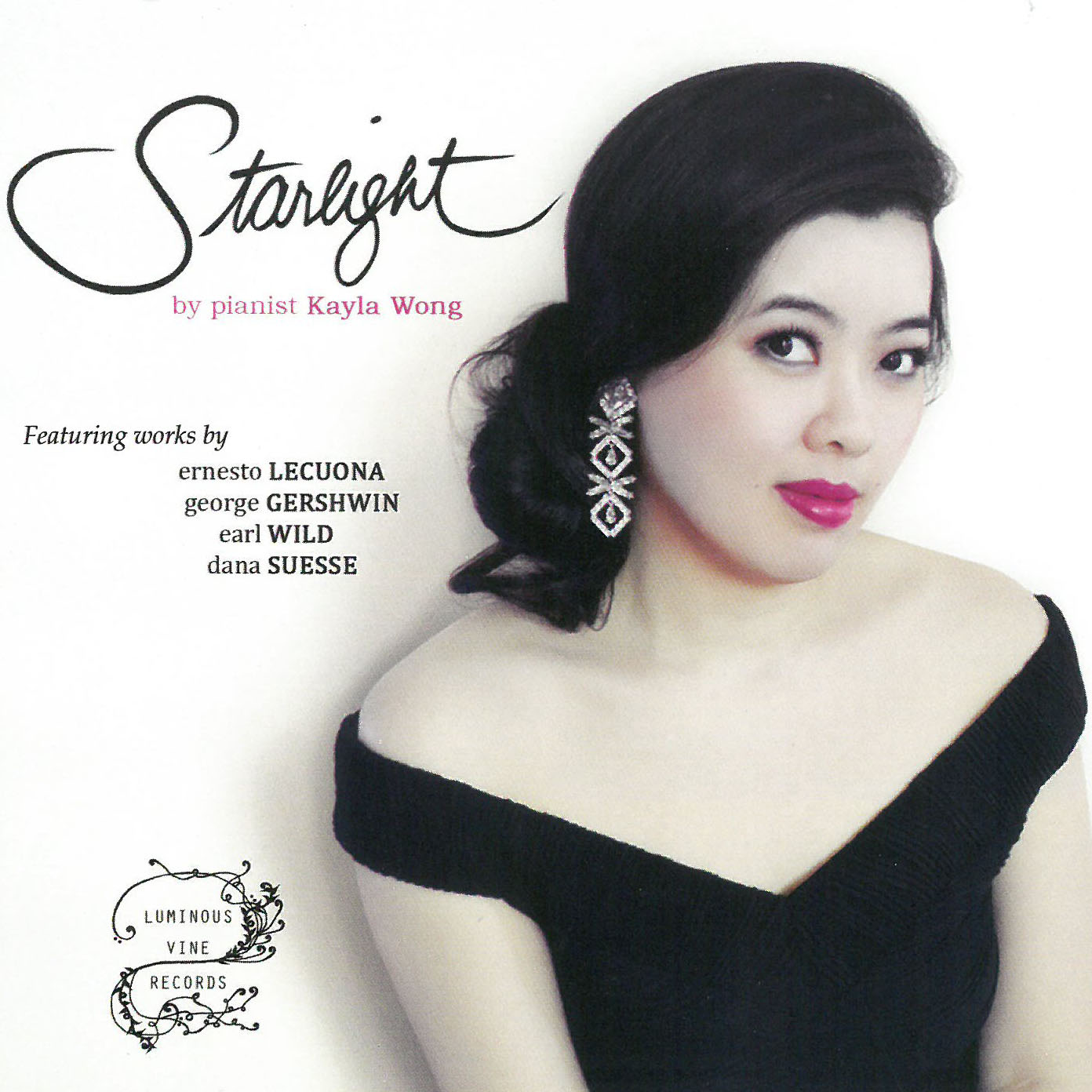
02 Kayla WongStarlight
Kayla Wong
Luminous Vine Records (kaylawong.net)

Music from the golden age of Hollywood is the premise behind Kayla Wong’s suitably named second disc Starlight. Was it really more than two years ago that she released her exemplary debut recording Allure? Since completing her studies at UCLA, this Saskatchewan-born artist continues to enjoy a notable career as a soloist and chamber musician, including recitals at Carnegie Hall and Hong Kong’s Cultural Centre.

The disc opens with a set of six pieces by Ernesto Lecuona. Clearly, Wong has an unmistakable affinity for Spanish-inspired repertoire, in this case, by the “Cuban Gershwin.” Her performance of these contrasting musical miniatures is polished and elegant – from the rhythmic Cordoba to the sensuous and lyrical Preludio en la Noche. While these pieces may have been recorded not far from the rumbling of TTC streetcars, they are firmly stamped “España.”

Earl Wild’s three Virtuoso Études (from a set of seven) based on popular songs by George Gershwin are virtuosic show-stoppers. The lyricism and charm of the originals are ever present, yet these pieces also require a formidable technique and Wong approaches the challenges with great panache.

In keeping with the Hollywood theme are six pieces by the New York songwriter Dana Suesse. With their syncopated rhythms, and bluesy harmonies, tracks such as Jazz Nocturne and Serenade to a Skyscraper are indeed worthy tributes to Hollywood’s golden age.

Starlight is a delightful respite from our less-than-perfect world of 2017 – highly recommended.

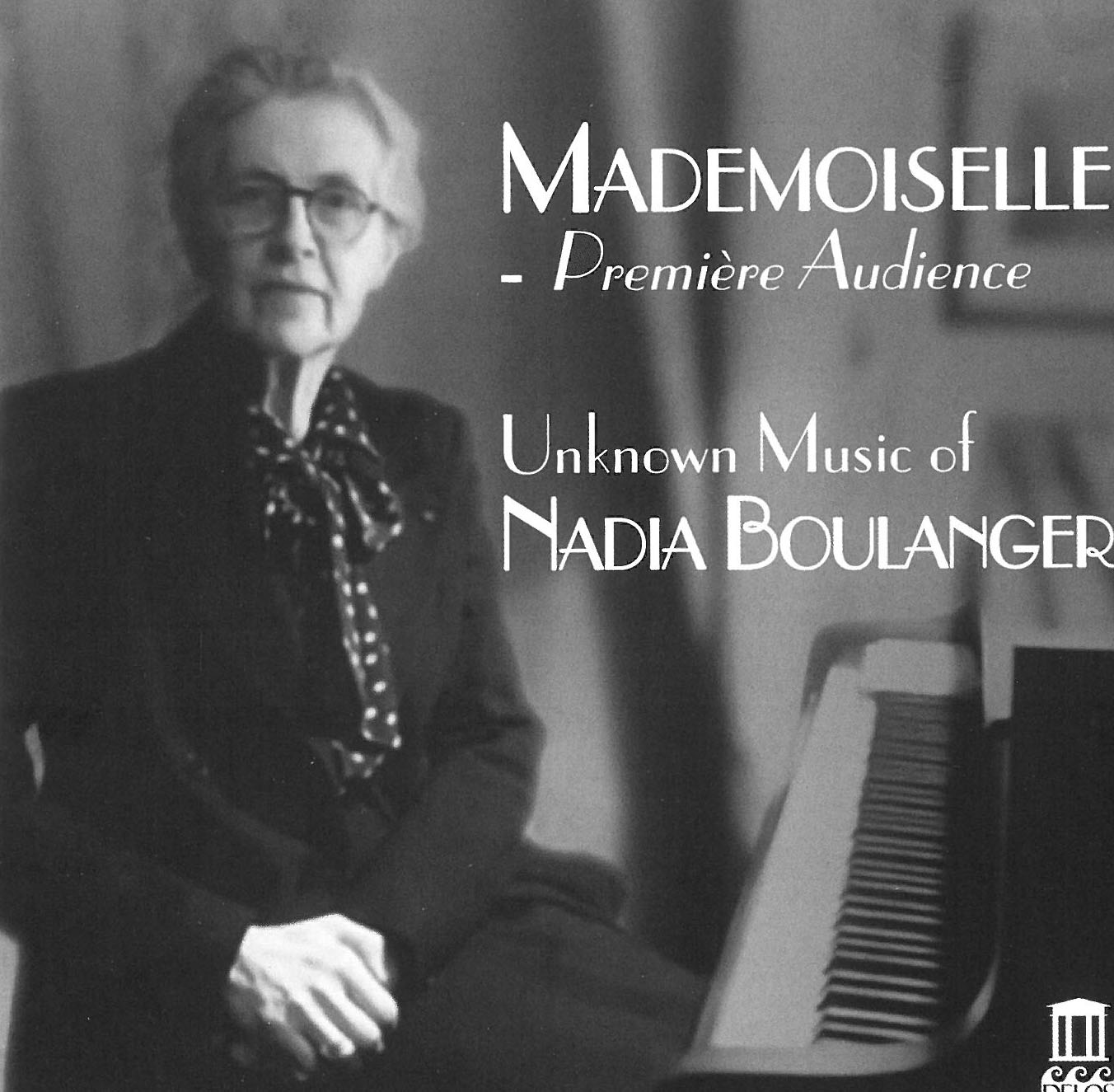
03 Nadia BoulangerMademoiselle: Premiere Audience – Unknown Music of Nadia Boulanger
Various Artists
Delos DE 3496 (delosmusic.com)

In her own time, Nadia Boulanger was truly a legend. A pianist, organist and conductor, as well as composer, she was a renowned educator who taught well over a thousand students during her long career. From Canada alone over 70 young musicians sought her out, including Jean Papineau-Couture, John Beckwith (who managed to get to Paris on a hockey scholarship to study with her) and Peter Paul Koprowski.

Today, almost 40 years after her death, her legendary stature remains undiminished. But her compositions are largely overlooked – unjustifiably, as this fascinating 2-disc set shows. Of the 37 pieces here, almost half are being recorded for the first time.

By all accounts – including memoirs from former students like Beckwith, Elliott Carter, Leonard Bernstein, Philip Glass and the producer of this set, Carol Rosenberger (who includes a touching booklet note) – Boulanger insisted her students build a solid technical foundation. She had little interest in experimentation. Simple textures and clear voicings were what she encouraged, though she valued a personal style. And these qualities are what you hear in her own music. It’s polished – overly, at times – warm, witty, disarmingly tender and unexpectedly charismatic.

The 26 songs prove worthy of being in every recitalist’s repertoire, especially as performed by these fine singers – the thrillingly expressive soprano Nicole Cabell, the robust yet nuanced baritone Edwin Crossley-Mercer and the versatile, characterful tenor Alek Shrader.

The Trois pièces for cello and piano are Boulanger’s most frequently performed works. Amit Peled’s impassioned cello and Lucy Mauro’s elegant, sensitive piano provide the most engaging interpretation I’ve heard.

But it’s organist François-Henri Houbart’s dramatic yet delicate performances of the Trois improvisations which I found most thrilling. Fittingly, he recorded on the Cavaillé-Coll organ in the Madeleine Church in Paris, which is the very one Boulanger used to play (a photo of this magnificent instrument is included in the booklet).

 After her beloved younger sister and fellow composer, Lili Boulanger, died in 1922, Boulanger stopped composing. This set contains most of the music she wrote. By offering the fine performances these pieces deserve, it provides a convincing argument for making her music heard more often.

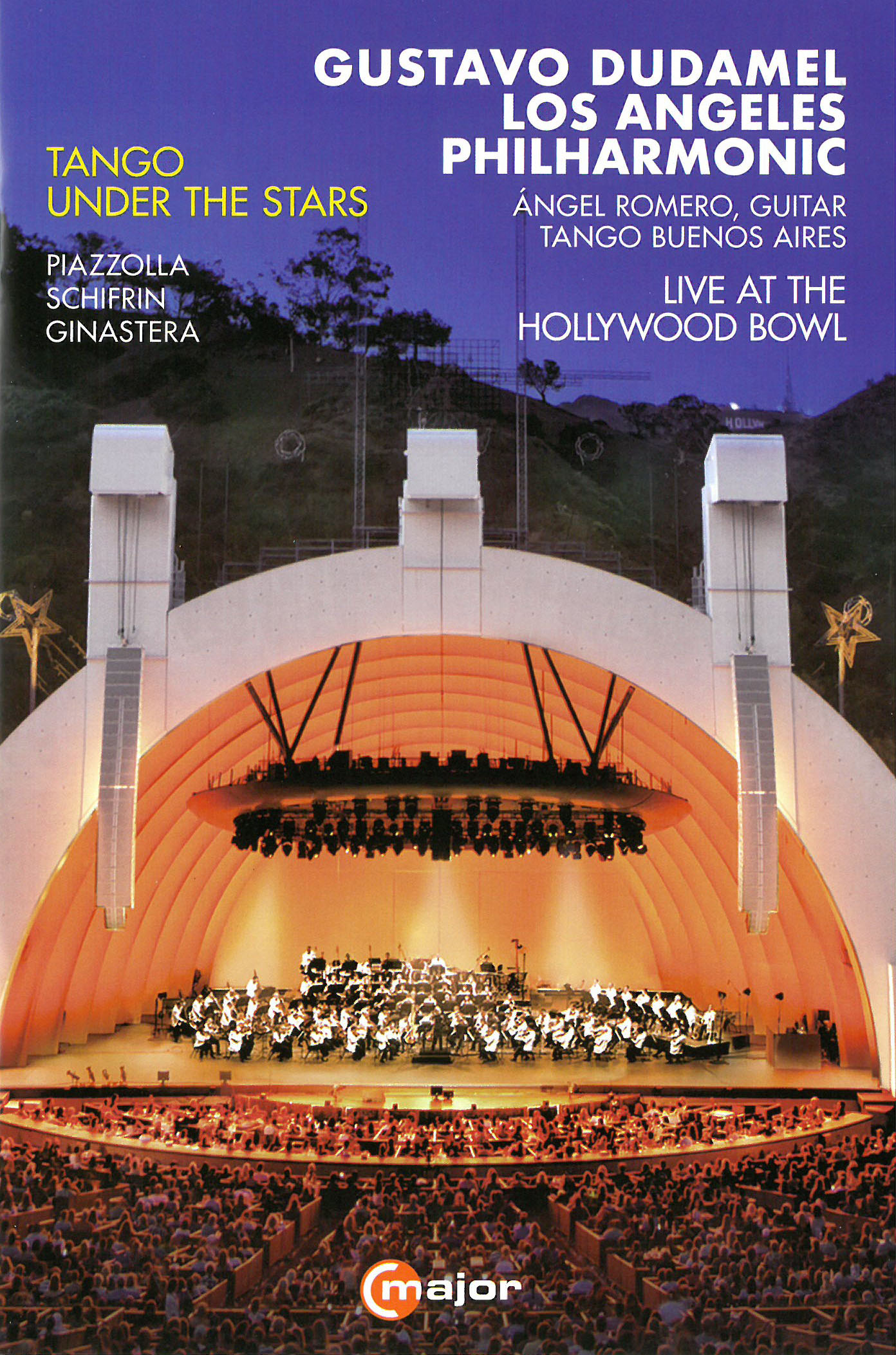
04 Tango Under the StarsTango under the Stars
Los Angeles Philharmonic; Gustavo Dudamel
Cmajor 739608

There is so much toe-tapping enthusiastically performed music in this DVD of Gustavo Dudamel conducting the Los Angeles Philharmonic live at the Hollywood Bowl on August 2, 2016. From the opening dramatic distance shot of the stage, orchestra and audience, to the final closing stage close-ups of rhythmic boisterous playing and swirling tango dancing, every visual complements the composers, conductor, musicians, soloists and dancers.

Three great Argentinian composers are performed. Lalo Schifrin is best known for his film scores (especially Mission: Impossible). His Concerto for Guitar and Orchestra No.2 “Concierto de la Amistad” is a salute to his friend, guitar virtuoso Angel Romera, who performs his lyrical lines, faster strumming sections and closing guitar taps masterfully with the orchestra. Alberto Ginastera’s Four Dances from Estancia tells the story of life on the farm. The lyrical second movement aurally represents wheat swaying in the wind while the closing fourth movement is a fast alternating 3/4 and 6/8 time work.

And what is tango music without Astor Piazzolla? His Tangazo opens with low strings leading to more rhythmic sections and flute, oboe and strings counterpoint. To close the show, a “Best of Astor Piazzolla,” four Tango Nuevo pieces are given rousing orchestral performances with master bandoneonist Seth Asarnow and the energetic spicy dancers from Tango Buenos Aires.

Dudamel conducts with passion and precision. Sound quality is superb. Three bonus interviews are included. Listen, watch, dance and enjoy!

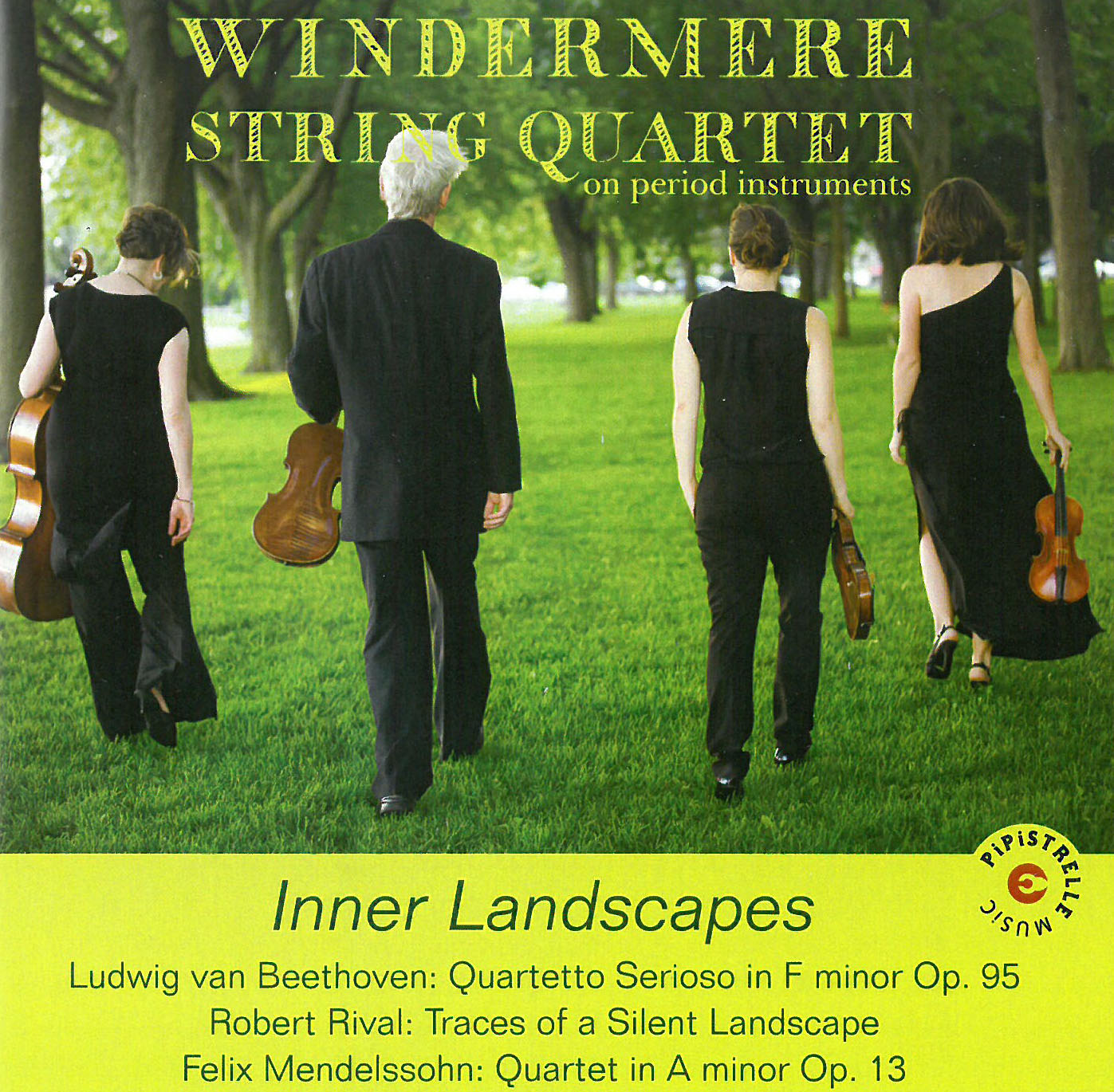
It’s been quite a while since the terrific 2012 debut CD of Toronto’s Windermere String Quartet, but their second CD release turns out to have been well worth the wait. The ensemble’s name is usually followed by “on period instruments,” but their repertoire has never been restricted to works from the Classical period and their regular concert series frequently features world premieres of new works by Canadian composers.
01 Windemere QuartetTheir sophmore CD, Inner Landscapes (Pipistrelle PIP 1216) follows this same pattern, with Beethoven’s Quartet in F Minor Op.95 and Mendelssohn’s Quartet in A Minor Op.13 acting as bookends to Traces of a Silent Landscape, a 2011 work by Canadian composer Robert Rival that was commissioned by the quartet.

The Beethoven and Mendelssohn works both receive exemplary performances, with intimate and sensitive playing that never lacks strength and power when needed. The Mendelssohn in particular has an achingly beautiful slow movement and a simply dazzling Presto. All the hallmarks of this ensemble’s playing are here: a judicial use of vibrato; delicate nuances; excellent dynamics; finely judged tempos; and an overall balance that always allows the identity of the individual instruments to be clearly felt.

The Rival quartet, which was inspired by a snowshoe trek in Algonquin Park in the dead of winter, is a striking and very effective work, quite modern in style but with clear traditional roots. One gets the immediate impression that the quiet, wispy nature of the music is not only perfectly suited to the particular sounds that these period instruments produce but was also inspired by them, a feeling confirmed by the composer, who says that while composing the work he had in mind “…the subdued, airy quality of gut strings and the sparing use of vibrato, in particular.” The delicate ending of the final Forest’s lullaby is quite stunning.

Rival also paid tribute to the two works with which his new work would be premiered – and which accompany it on this CD in a re-creation of that recital – by starting with a slow fugue; both the Beethoven and Mendelssohn quartets incorporate fugues in their slow movements.

What continually impresses me about this ensemble is the way they can convey depth, conviction and an emotional range and intensity without ever overwhelming you with either volume or gesture. It’s very easy to imagine that the Beethoven and Mendelssohn works sounded like this at their premieres, but very difficult to imagine that they sounded better.

Recorded at the wonderful St. Anne’s Anglican Church in Toronto’s west end with the always-reliable Norbert Kraft as engineer, the sound is exemplary, catching every delicate nuance in another outstanding CD from the Windermere players. Hopefully we won’t have to wait another five years for their next one.

Concert note: The Windermere Quartet presents “Mozart by Any Other Name” including works by Joseph Boulogne, Chevalier de Saint-Georges, Rossini, Joseph Kraus and Mozart at St. Olave’s Anglican Church on April 2.
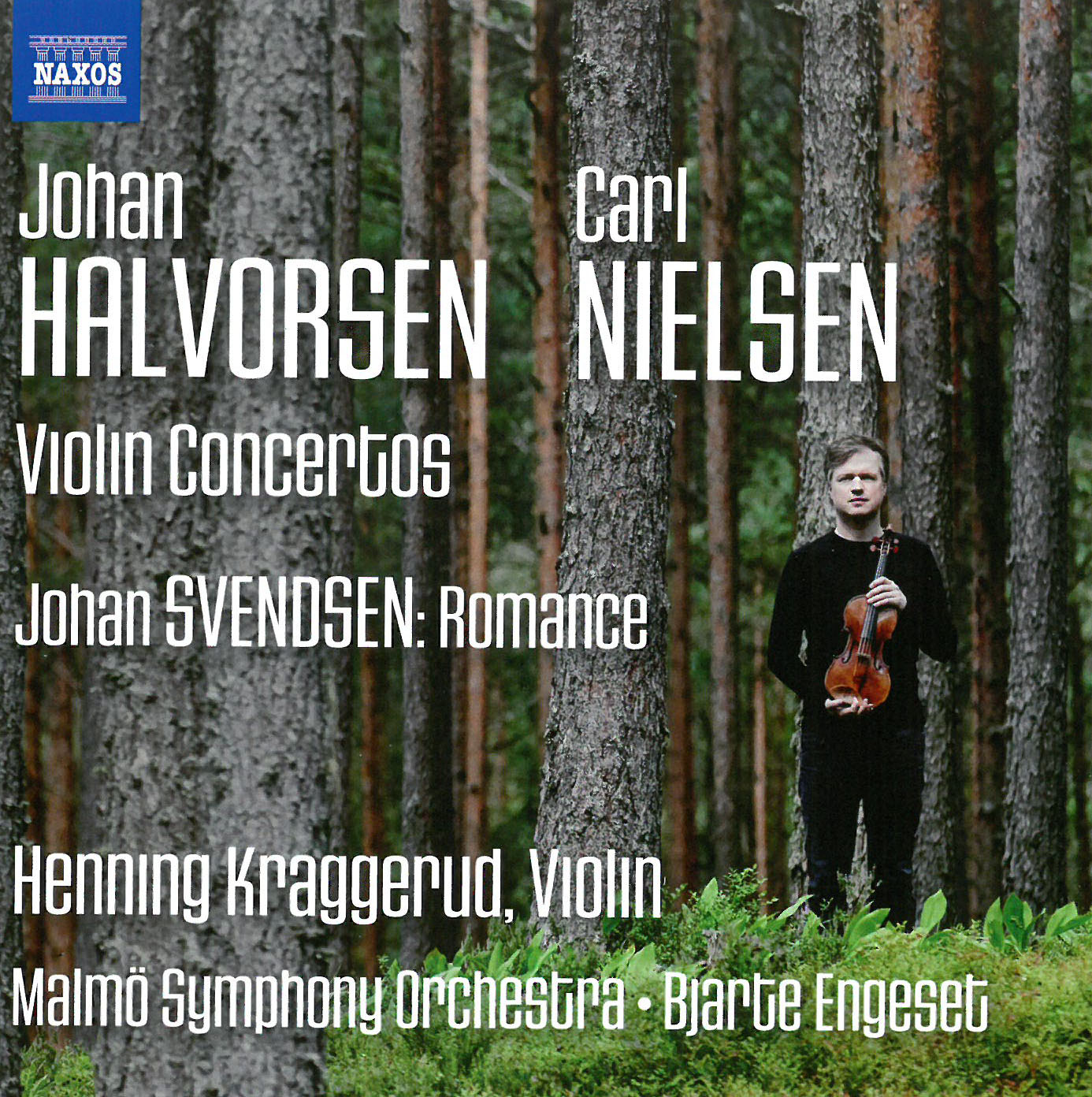
02 Johan HalvorsenGiven his wonderful playing on the Mozart concerto DVD reviewed here last month, I was delighted to see that this month’s offerings included a new CD of Henning Kraggerud playing Nordic Violin Concertos with Bjarte Engeset conducting the Malmö Symphony Orchestra (Naxos 8.573738). The Violin Concerto Op.28 by Johan Halvorsen is paired with the Violin Concerto Op.33 of Carl Nielsen, with the well-known Romance of Johan Svendsen completing the disc.

The concerto by the Norwegian Halvorsen (1864-1935) has an interesting story. He was an outstanding violinist and a self-taught composer, and his violin concerto was introduced by the 18-year-old Canadian violinist Kathleen Parlow in the Netherlands in 1909. After only a handful of performances by Parlow the work was not played again during Halvorsen’s lifetime. When he retired in 1929 he destroyed several of his manuscripts, his wife stating after his death that she believed the concerto to be among them. But in 2015 the score and parts were discovered in Parlow’s papers in the University of Toronto’s Faculty of Music Library, where they had resided since 1963. Kraggerud gave the first modern performances in Norway last July, making this world premiere commercial recording in Sweden a short while later. It’s a lovely work, full of lyrical themes and redolent of Norwegian folk music, with more than a hint of Hardanger fiddle music. The solo part is technically demanding, but Kraggerud is clearly in his element with a work which will hopefully find a place in the regular repertoire.

The Nielsen concerto, written just a few years after the Halvorsen in 1911, continues to be a work which should be much better known, but hopefully this is changing, Haggerud’s terrific performance here coming not long after Baiba Skride’s equally excellent 2015 recording.

A lovely performance of the Svendsen Romance rounds out an outstanding CD.
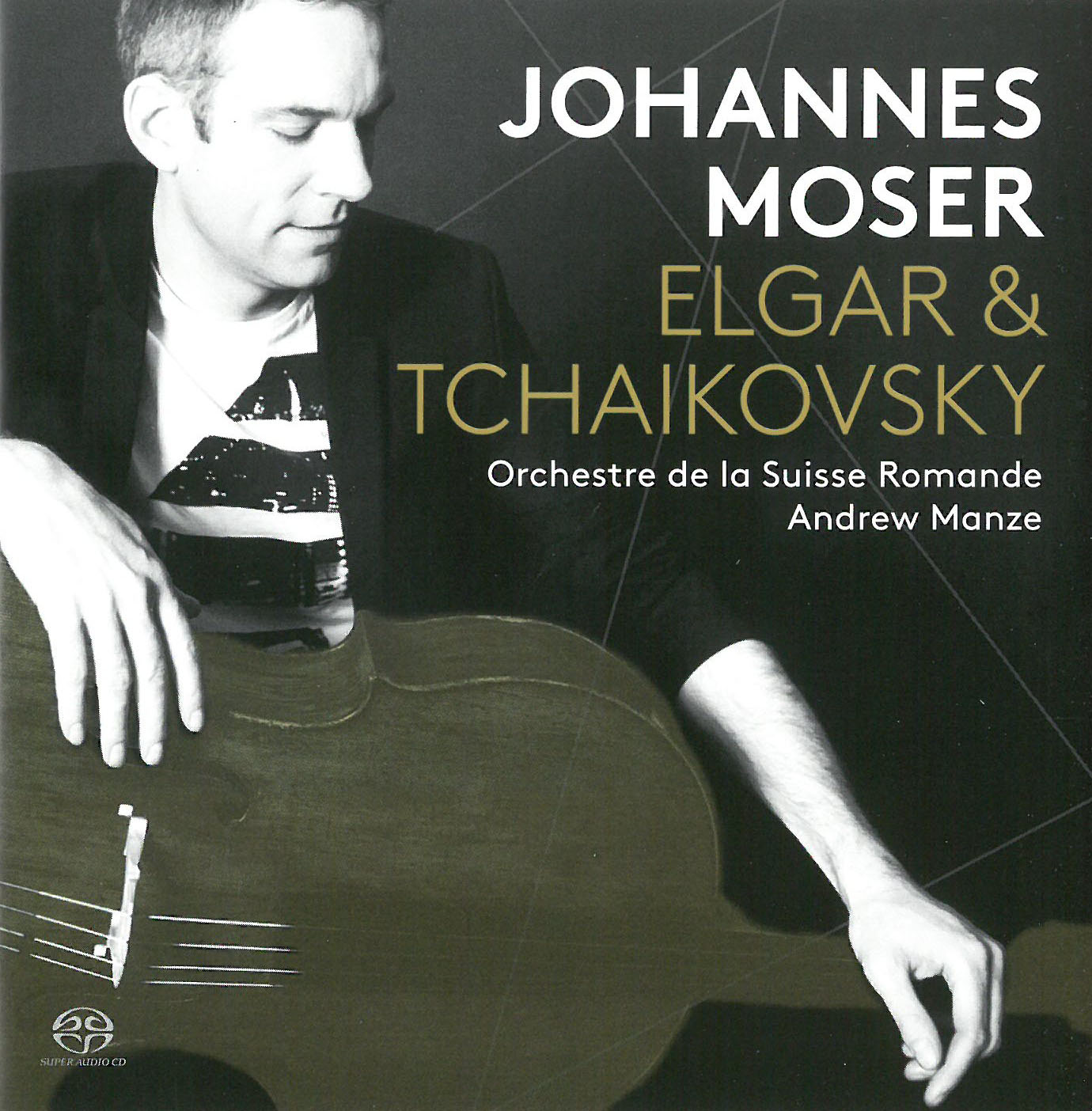
03 Johannes MoserIf you love the Elgar Cello Concerto then you should really try to hear the new Super Audio CD Elgar & Tchaikovsky from the outstanding cellist Johannes Moser with the Orchestre de la Suisse Romande under Andrew Manze (PentaTone PTC 5186 570). Moser is simply superb in the emotional work that essentially marked the end of the 62-year-old Elgar’s compositional activity. Written in 1919, it is essentially a lament for the composer’s Edwardian world that was destroyed by the First World War, and Moser beautifully captures the very soul of the music.

Moser notes that both Elgar and Tchaikovsky were looking back to a brighter past – Elgar to the pre-1914 world and Tchaikovsky to the music of Mozart, using an original theme written in Mozartian style as the basis for his Variations on a Rococo Theme Op.33. It’s the original version that is performed here, and not the modified and altered version by the cellist Wilhelm Fitzenhagen that constituted the original 1877 publication and is still frequently heard in the concert hall. Moser’s performance makes you wonder why anyone would ever want to hear the Fitzenhagen version again.

Three shorter Tchaikovsky works for cello and orchestra complete the CD. The Nocturne from Six Pieces for Piano and the famous Andante cantabile from the String Quartet No.1 were both transcribed by the composer, and the Pezzo capriccioso Op.62 is a lovely original work.

Manze and the orchestra supply great support throughout a simply lovely CD.
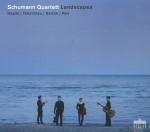
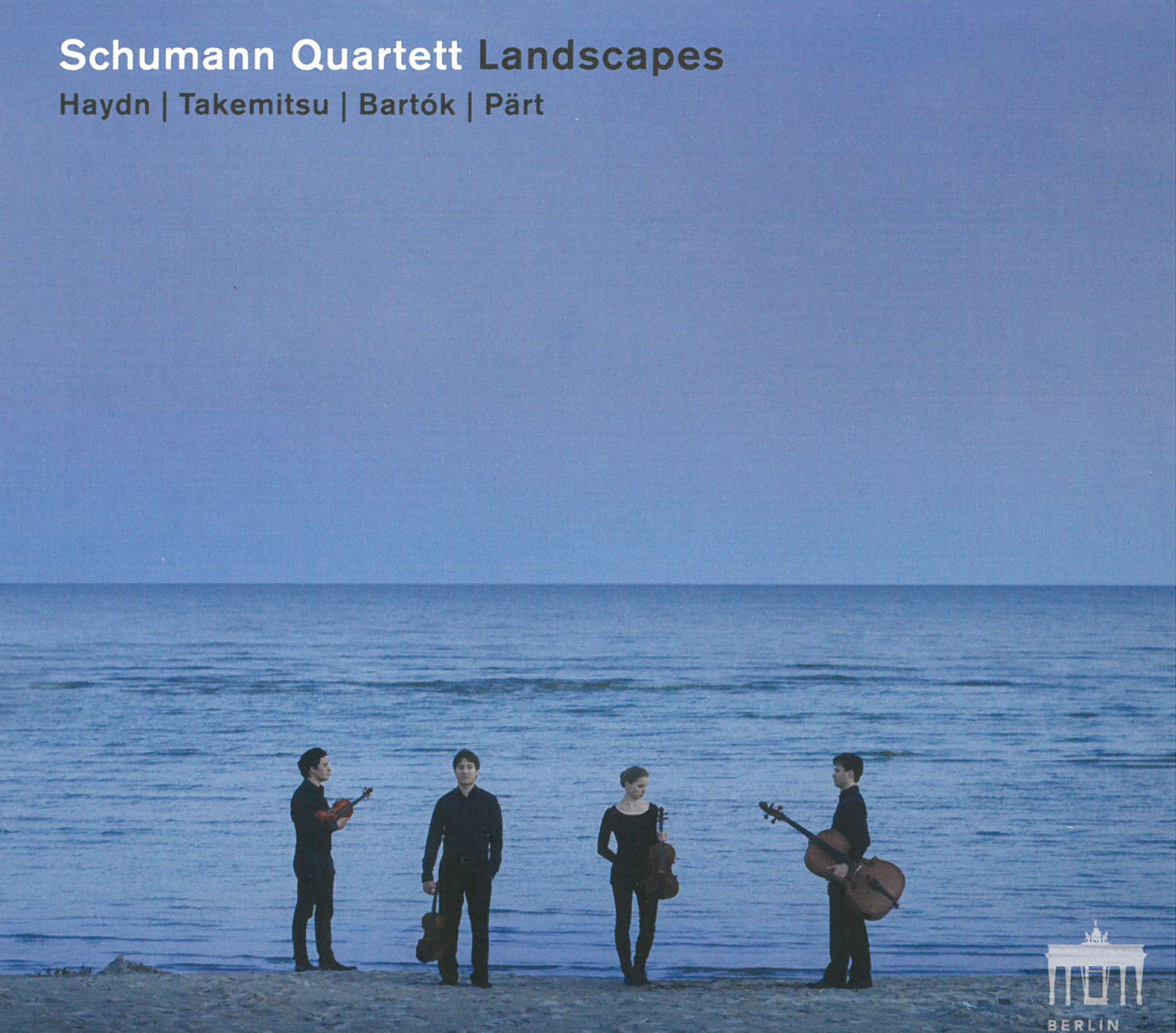
04 Schumann QuartetThere’s more excellent quartet playing on Landscapes, the latest CD from Germany’s Schumann Quartett in a program of works by Haydn, Takemitsu, Bartók and Pärt (Berlin Classics 0300836BC). It’s clear that these are works that the quartet – brothers Erik, Ken and Mark Schumann and Estonian violist Liisa Randalu – has played and cared about for some time.

Haydn’s String Quartet in B-flat Major Op.76 No.4, the “Sunrise” makes for a lovely opening to the CD, the emerging radiance of the opening particularly well captured. Landscape I by the Japanese composer Toru Takemitsu acknowledges the Schumanns’ family roots – their mother is Japanese – and is a somewhat bleak piece with a decidedly meditative stillness about it.

Bartók’s String Quartet No.2 Op.17 is an expressive post-Romantic piece written during the First World War when the composer was forced to take a break from his Hungarian folk-song collecting. The folk-music element is clearly present in a work dominated by an air of melancholy.

The final piece, Fratres, by the Estonian composer Arvo Pärt, was prepared with the composer and recorded in July 2016 in a church near the Estonian capital of Tallinn. It’s one of several instrumental versions of this very effective work.
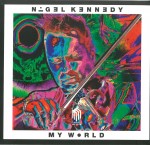
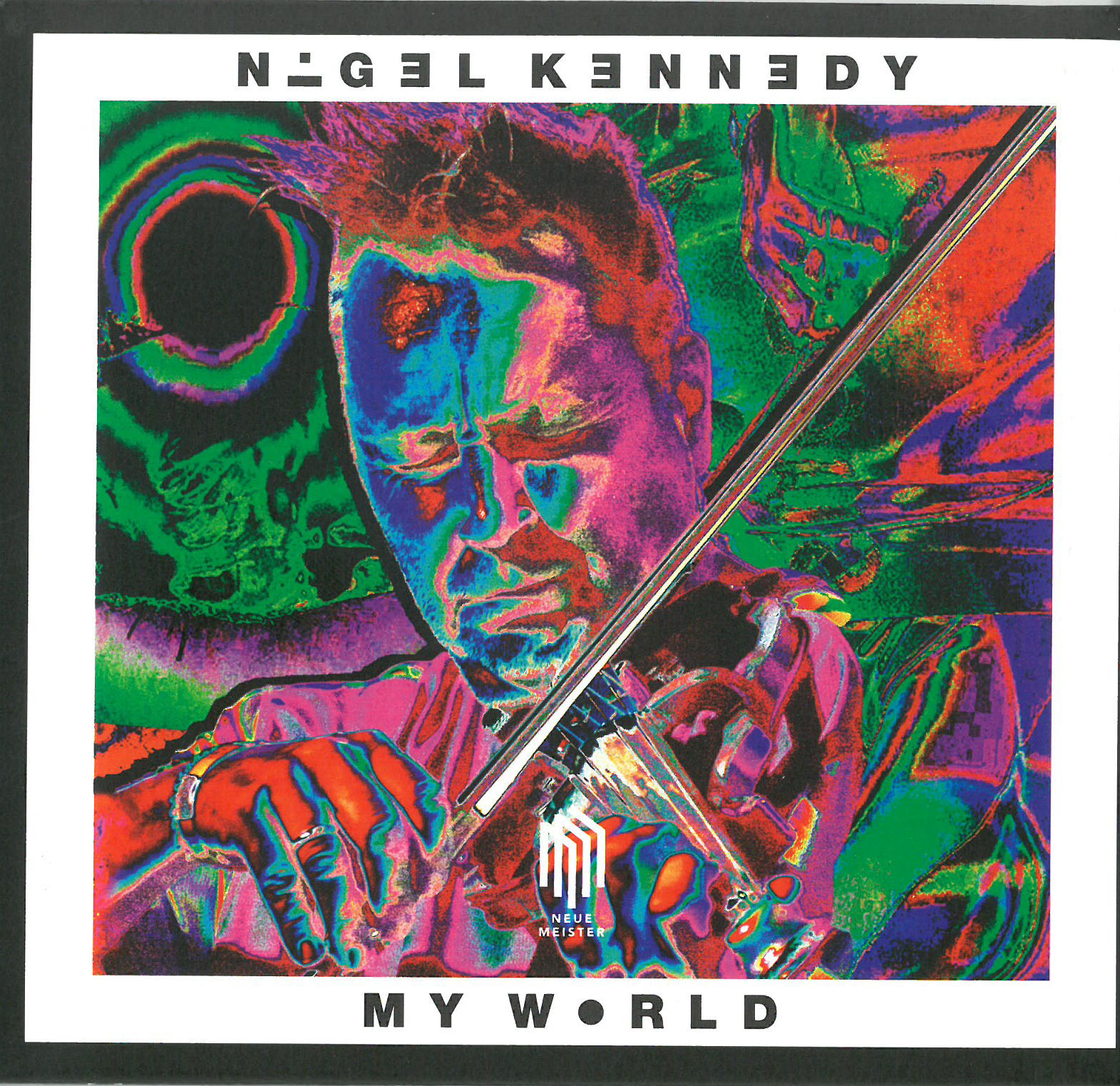
05 Nigel KennedyThe enigmatic Nigel Kennedy is back with another non-classical CD in My World, a program of his own compositions on the German label Neue Meister (0300878NM). Launched just over a year ago, the Berlin label features “…music by artists and composers who recognize no boundaries between the classical orchestra world, experimental art, electronica and pop music,” which should give you some idea of what this new release sounds like.

There are two distinct sections to the CD: Dedications, five pieces dedicated to the Polish musician Jarek Śmietana, Isaac Stern, Stéphane Grappelli, Yehudi Menuhin and Mark O’Connor; and Three Sisters, a suite of incidental music that Kennedy wrote for a run of the Chekhov play that his wife was producing. The Oxford Philharmonic Orchestra is listed on the CD cover, but it’s a bit misleading both from a participation and expectation viewpoint: the main musicians listed in the booklet are a six-piece guitar, bass and percussion combo, an oboist and an accordionist and anonymous Friends from the named orchestra.

It’s certainly the combo that seems to be front and centre most of the time, and even when there are strings present the sound seems to be more synthesized than live. There’s a clear jazz influence in the Dedications, along with the occasional melismatic Eastern feel, some pleasant melodic writing, and a rhythmic rock-fiddle drive in the number dedicated to O’Connor.

There’s a thicker orchestral sound with much the same feel throughout Three Sisters, but with added electronic effects and more of an improvisatory feel – one wonders just how much of the music was actually notated.

All in all, it’s typical Kennedy – spiky performances of varying effectiveness from a huge talent who simply refuses to follow what could be called standard career paths. When he gets away from the normal classical fare it tends to be hit or miss with him a lot of the time, and which category this particular CD falls under will probably depend on your own musical tastes.
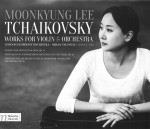
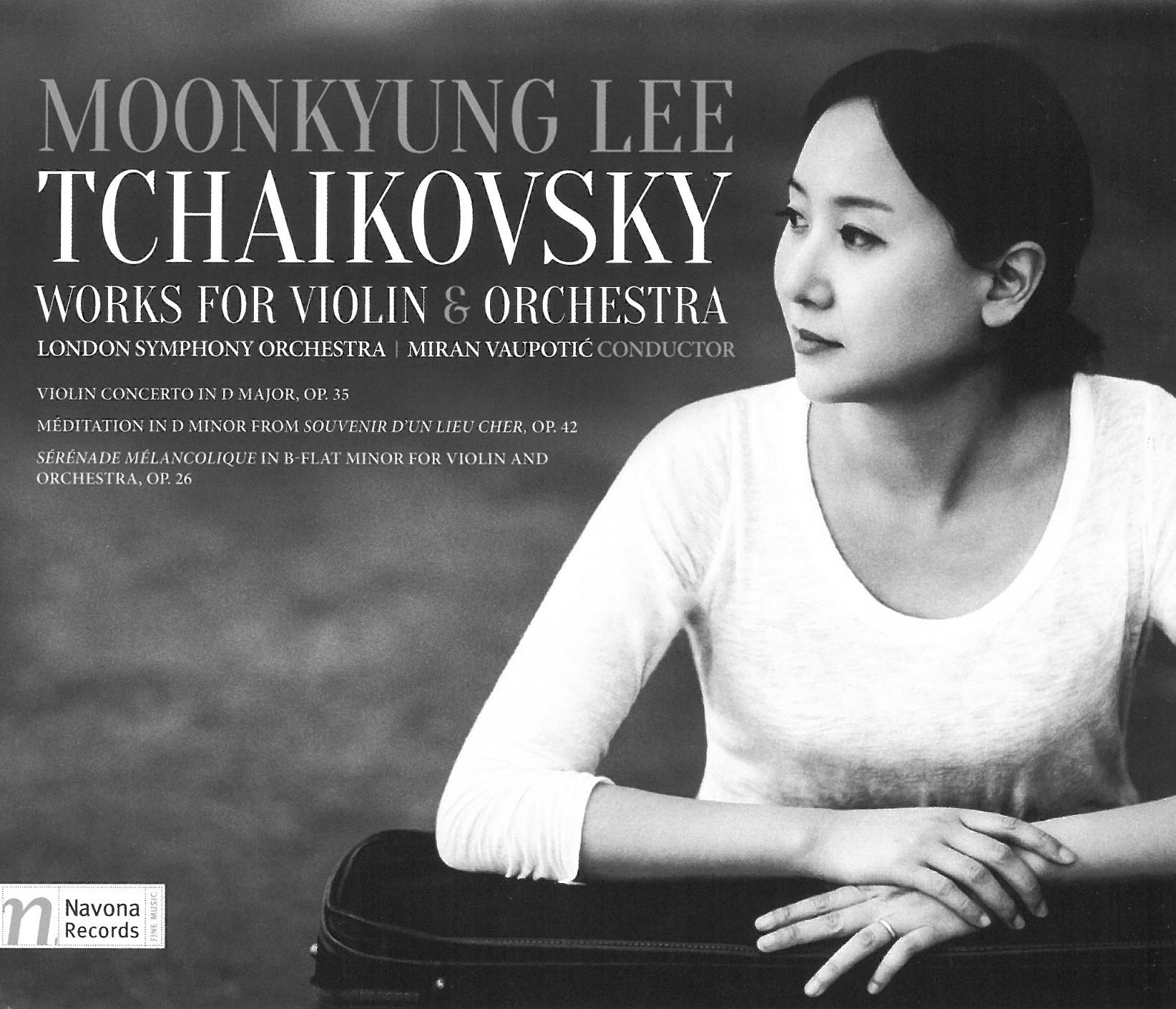
06 Moonkyung LeeFinally, there’s another recording of the complete Tchaikovsky Works for Violin & Orchestra, this time by the Korean violinist Moonkyung Lee on her debut Navona Records CD (NV6079) with the London Symphony Orchestra under Miran Vaupotić.

Her performance of the Violin Concerto in D Major Op.35 is a competent one which never quite reaches the heights, although the rather lacklustre contribution of the LSO under Vaupotić may well be a contributory factor; certainly the tempos tend to drag in places, and the orchestral balance tends to be a bit muddy and the sound quite dry. It’s a performance that just doesn’t take flight.

The other two works here – the Méditation in D Minor (the original slow movement for the Violin Concerto) and the Sérénade Mélancolique in B-flat Minor Op.26 – fare better, as the soloist’s rather dark tone is more suited to the slower tempos and the minor keys. Certainly the performances seem to get closer to the heart of the music.

The problem, though, is that given the fierce competition in recordings of these works – especially the concerto – a competent performance, while nothing to be sneezed at, will inevitably struggle to compete with the absolutely top-level recordings available.

The soloist’s instrument, incidentally, is the 1845 Vuillaume violin once owned by Jack Benny.

Review

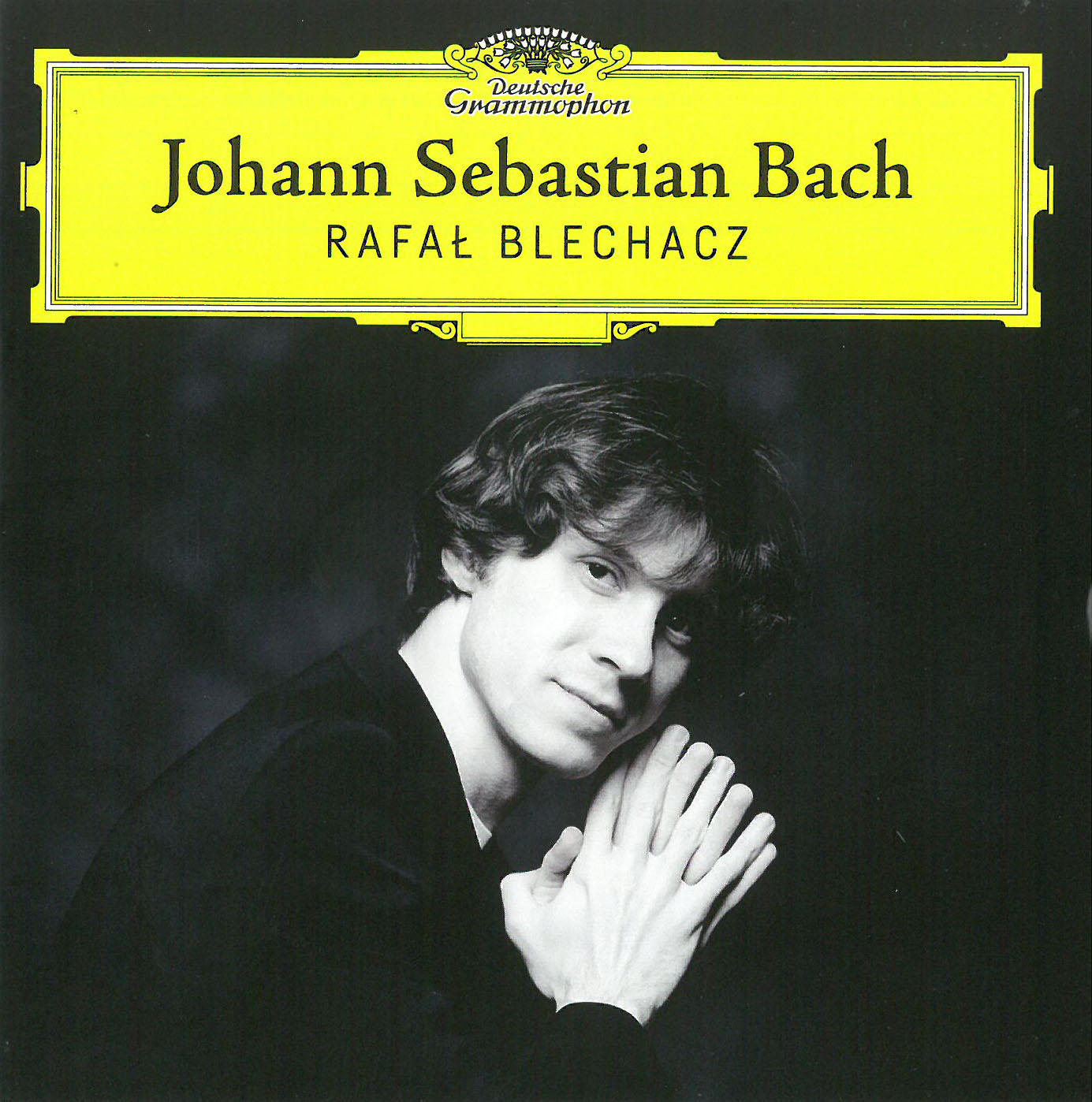
01 Rafal BlechaczWords fail spectacularly in trying to describe Rafal Blechacz’s performance on Johann Sebastian Bach (Deutsche Grammophon 479 5534). Playing Bach demands rigour, stamina, discipline. It also requires a profound intellectual grasp of Bach’s contrapuntal intentions. Critical too, is an innate ability to draw from Bach’s writing that unique idea that can be credibly shared by composer and performer as jointly original. In some speechlessly wondrous way, that happens on this disc.

The Partitas Nos.1 in B-flat Major and 3 in A Minor are the familiar collection of Baroque dances. They are, however, raised to a remarkable standard of exhilarating technical display, framed by tasteful expression. Blechacz plays them with emotional vulnerability and unmatched lyricism. Each set concludes with a memorably blazing Gigue.

Blechacz plays the Italian Concerto in F Major BWV 971 at a sustained speed that hasn’t been matched since Alexis Weissenberg broke the sound barrier with his recording in the mid 1960’. Still, there is striking clarity throughout the first and third movements that offers every opportunity to discern the inner counter melodies racing past each other to the final measure.

The Fantasia and Fugue in A Minor BWV 944 offers an unbelievably long and complex fugal subject that cascades through its development section with ease under Blechacz’s hands. He ends the disc with a rapturous performance of Jesu, Joy of Man’s Desiring – Dame Myra Hess’ arrangement.

Blechacz was the winner of the 15th International Chopin Piano Competition. This is his sixth recording for Deutsche Grammophon in addition to a handful of others. You might as well start collecting them now.

Review

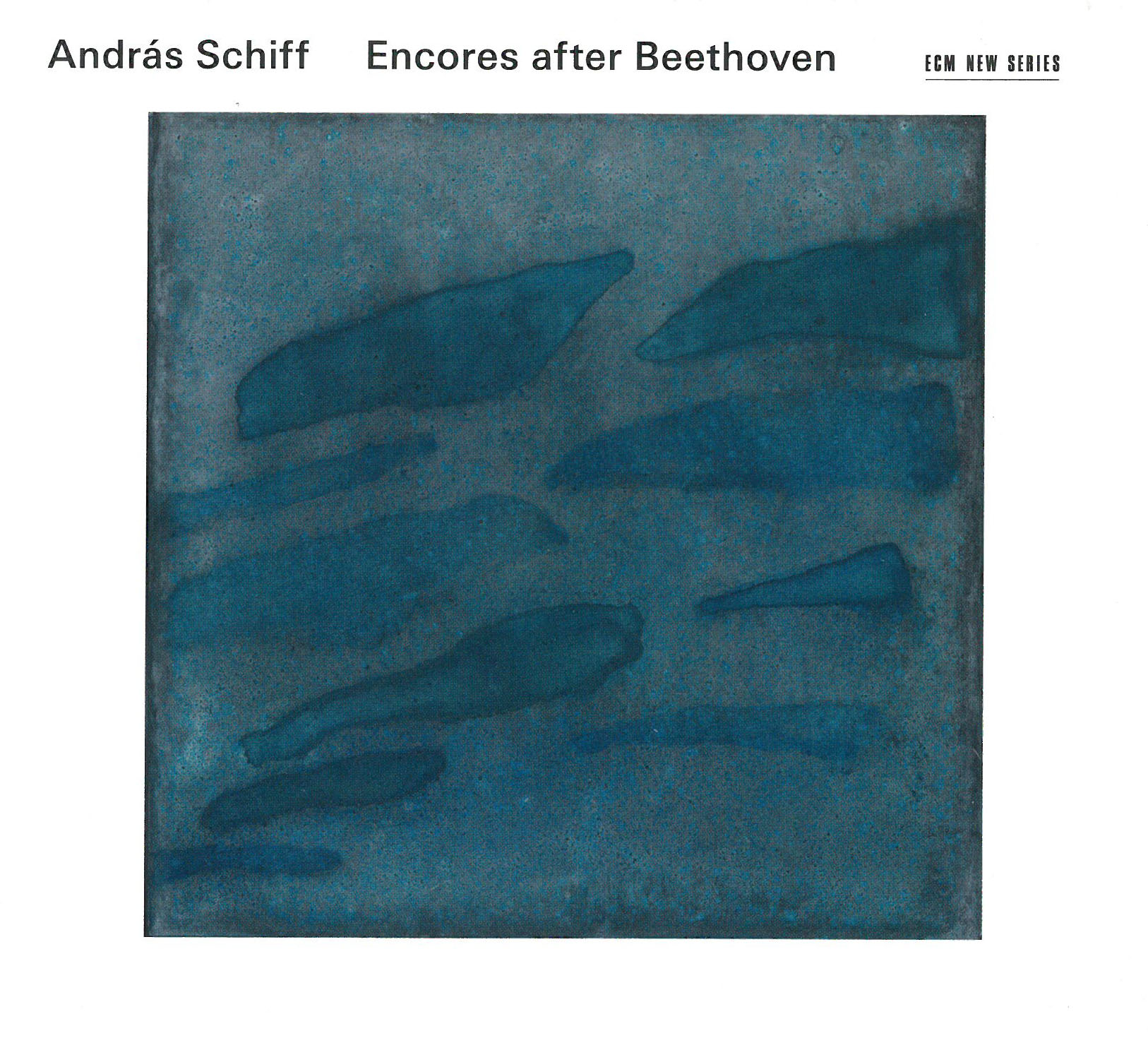
02 Andras SchiffAndras Schiff presented his cycle of the 32 Beethoven sonatas at the Zürich Tonhalle from 2004 to 2006. His choice of encore after each concert was quite deliberate and they have now been compiled into Encores after Beethoven (ECM New Series 1950 B0025872-02).

Schiff sought to link the encore in some musical way to the sonatas he’d played on the program that night. These live recordings document his choices. Although now separated from their original context, they still carry a residual connection to the music that preceded them, and Schiff uses his notes as a brief outline to explain these relationships.

The opening selections by Schubert, from Three Piano Pieces D946 and Allegretto in C Minor D915 are linked by a strong conceptual kinship to Beethoven’s Sonatas Op.2 and Op.7 as well as Op.10 and Op.13. The Mozart encore Eine Kleine Gigue in G Major K574 is a humourous study in fugal form like the finale of Beethoven’s Sonata Op.10 No.2 on that evening’s program.

Beethoven had originally intended the Andante Favori in F Major WoO57 to be the second movement of the Waldstein Sonata Op. 53, before eventually setting it aside. Schiff used it as the encore for his performance of the Waldstein.

The final movement of the Hammerklavier is an enormous fugue, understood to reflect Beethoven’s admiration for Bach and his evolution of the form. Schiff’s choice of encore for that performance was Bach’s Prelude and Fugue in B Flat Minor BWV867.

The encores are presented on the disc in the date sequence of their performance and show the program information that preceded them. The Zurich audiences listen in rapt silence and reveal themselves only to applaud enthusiastically.

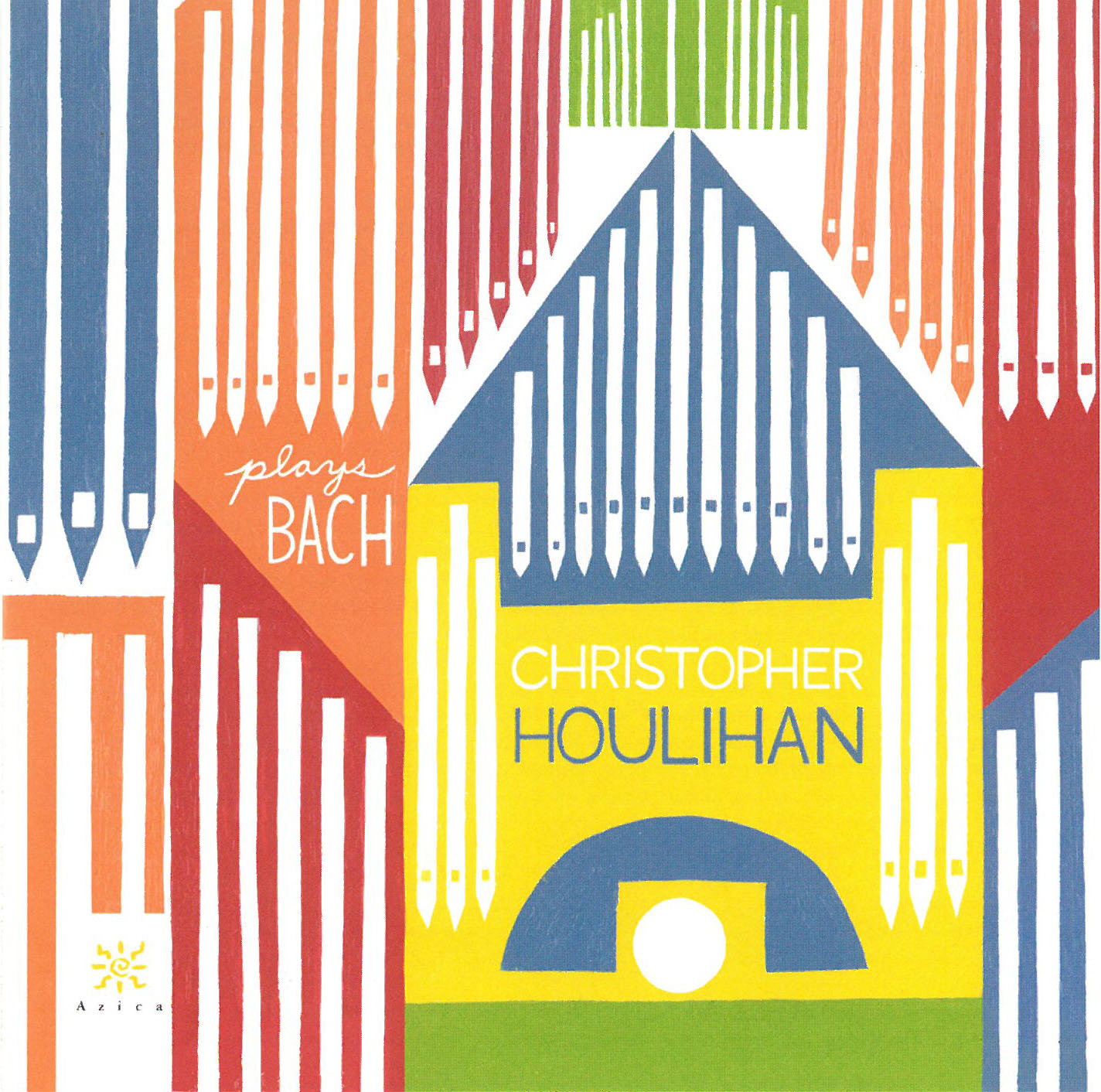
03 Christain HoolihanOrgan music fans have another CD to add to their collections with Christopher Houlihan Plays Bach (Azica ACD-71314). The instrument is always a critical ingredient in these projects and the Austin organ at Trinity College Chapel in Hartford, Connecticut, provides ample reason to pay attention.

Organist Christopher Houlihan puts plenty of familiar Bach toccatas, preludes and fugues into his program, but what begins to emerge only moments into the performance is how brilliant a colourist Houlihan is. The instrument offers an enormous selection of reeds, strings and beautifully mellow flues. It’s built and voiced to provide the greatest possible dynamic range for the building it occupies.

Houlihan’s clever choice of stops is nowhere more impressive than in his own arrangement of the Italian Concerto BWV971. It’s playful, celebratory and sparkles with colour. Every track on this CD takes advantage of this remarkable instrument and its gifted performer.

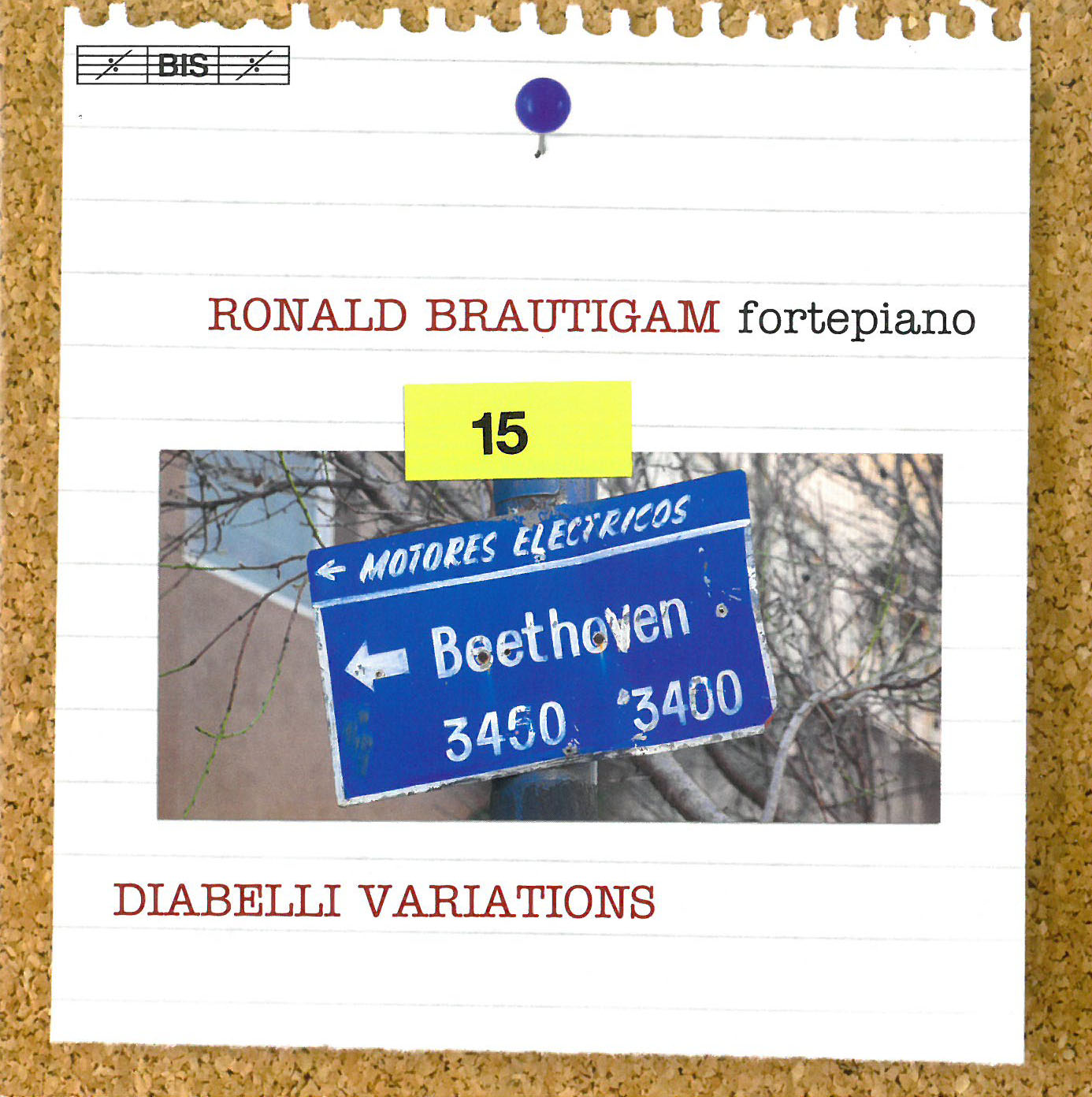
04 Diabelli BrautigamBeethoven’s exhaustive treatise on the variation form that we know as the Diabelli Variations Op.120 is the heart of Ronald Brautigam’s latest recording Beethoven – Diabelli Variations Ronald Brautigam (fortepiano) (BIS-1943). The disc is the final production in Brautigam’s complete set of Beethoven’s works for solo piano, performed on fortepiano.

This alone would suffice to set it apart for special attention. An added feature, however, is its recording on a modern fortepiano modelled on an instrument built by Conrad Graf in 1822. We know that Beethoven admired Graf’s fortepianos and eventually came to own one himself. One of Graf’s unique features was his quadruple stringing of notes, giving added volume and power to the sound – though it must have been a tuning nightmare. The copy used in this recording demonstrates a wide dynamic range and an impressive responsiveness to touch, not only for dynamic expression but in clarity of strike, release and repeat in the very fast passages.

Brautigam concludes the disc with the Six National Airs with Variations Op.105. This is just one of several such sets Beethoven wrote for British publisher George Thomson. The relationship with Thomson helped spark some interest in folk-songs which Beethoven pursued in 15 further sets. The tunes in this one are Welsh, Irish, Scottish and Austrian. Best known among them is The Last Rose of Summer.

The disc is another of the outstanding recordings by Brautigam, produced in a career-long devotion to performance on original instruments that includes the complete keyboard works of Mozart and Haydn.

Review

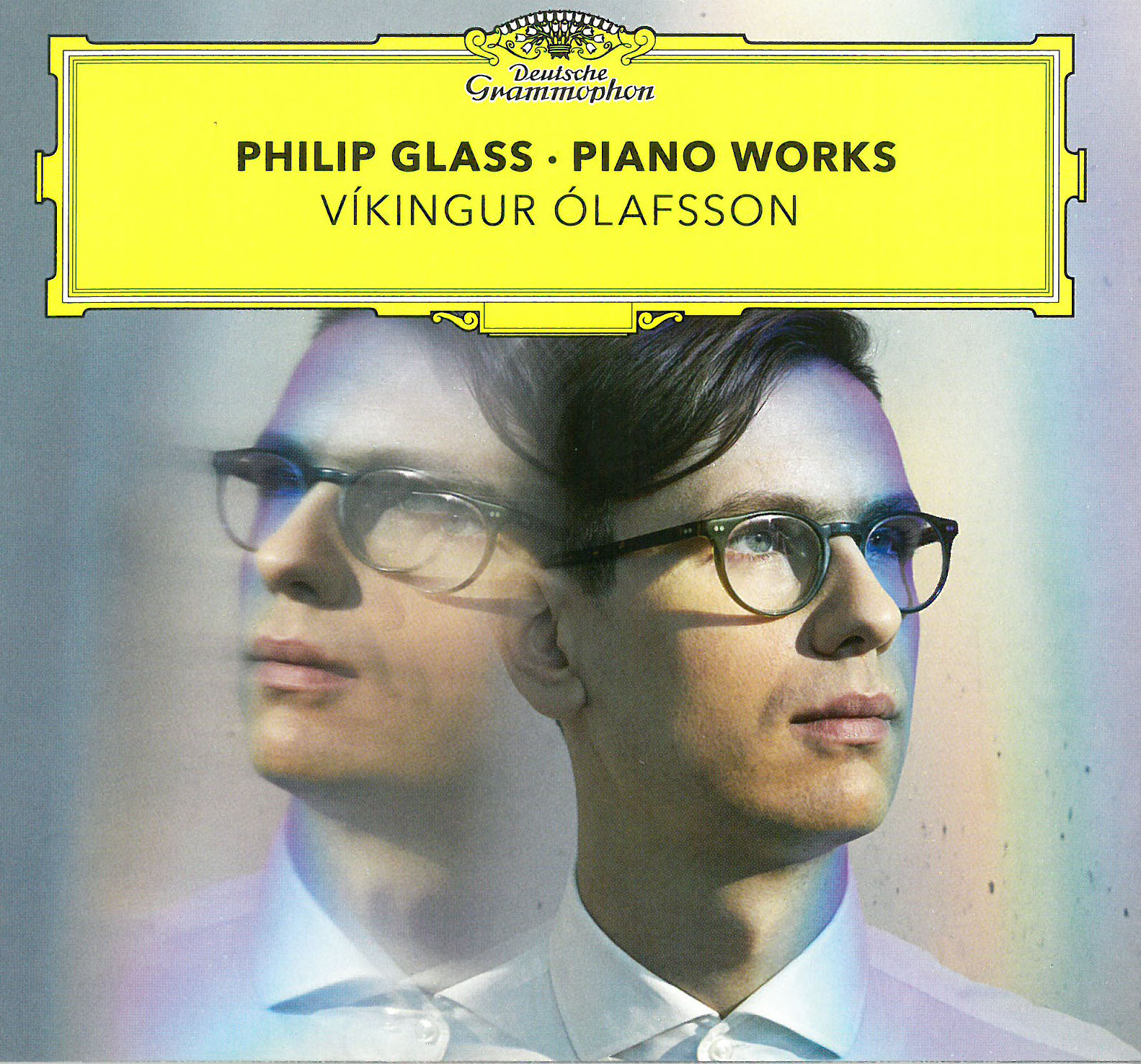
05 Glass OlafssonMid-30s Icelandic pianist Vikingur Olafsson is a Juilliard graduate and a busy concert performer with a passion for contemporary music. His acquaintance with Philip Glass makes for fascinating reading in the liner notes of his new recording, Philip Glass – Piano Works (Deutsche Grammophon 479 6918).

The recording is largely devoted to 11 of the 20 Études that Glass wrote between 1999 and 2012. Olafsson plays them from a personal place of detachment but with all the subtlety and nuance they require. His performance of the final Étude No.20 is striking for its otherworldly feel. He relates the story of asking Glass how this one étude came to be so different and how the composer answered that he didn’t know, he just somehow found himself out in space.

The disc also includes the now well-known Opening from Glassworks as its first track. The same piece appears again as the final track, but reworked for piano and string quartet. It’s a very satisfying comparison. The reworked version comes across with richer sonority, and with the piano taking on a much lesser role than might be expected.

Olafsson has produced a very fine performance in a field growing ever more populous. The calibre of his playing assures he will always stand out.

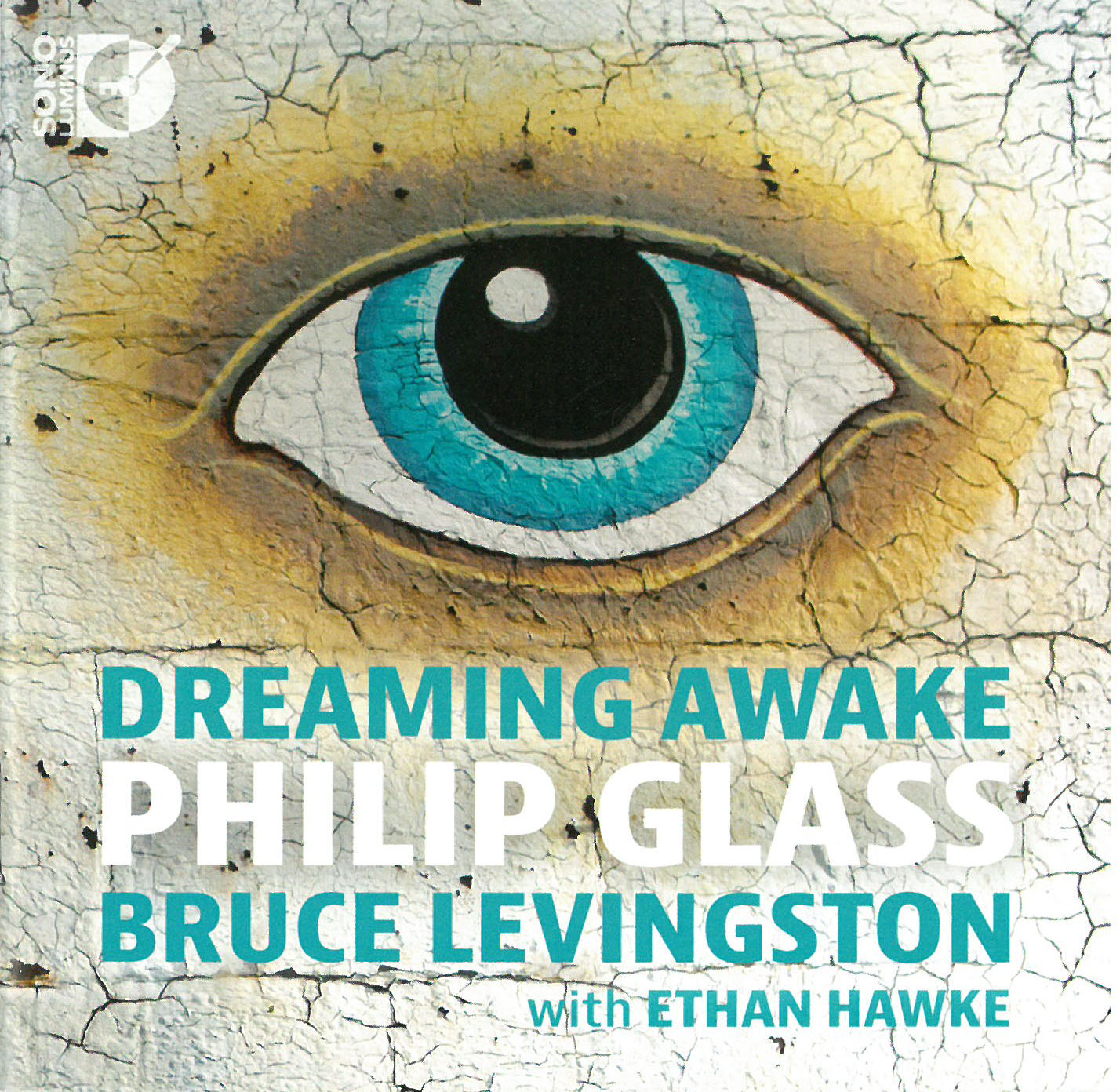
06 Levinson GlassBruce Levingston is a widely recognized interpreter of Philip Glass’ music. His new 2CD set Dreaming Awake – Philip Glass – Bruce Levingston (Sono Luminus DSL-92205) contains a superbly planned program. Covering a period from 1966 to 2005 the music presents, among others things, an overview of how Glass’ music has evolved.

The earliest work is Wichita Vortex Sutra played by Levingston and narrated by actor Ethan Hawke. Written by poet Allen Ginsberg during the years of the Vietnam War protests, it and the music speak jointly to the injustice of the war and a universal call for peace. It’s a work that reveals more of itself on repeated listening.

Much of the two discs is devoted to ten of Glass’ 20 Études. Written primarily for his personal keyboard practice, they each contain a handful of specific technical challenges. It’s not surprising though that Levingston immediately seizes upon the composer’s creative germ in each of them, and sets them on the creative plane Glass must have intended from the outset.

Levingston gives a rich and colourful performance of the enigmatic, Buddhist-inspired Dreaming Awake. It’s an active work of frequent movement between places of intense feeling and moments of great repose. His playing reveals a deep understanding of the music and its composer.

Compositions for film make up a large part of Glass’ oeuvre. While Metamorphosis No.2 is a frequently recorded work, it is also quoted in the soundtrack of The Thin Blue Line. The Illusionist Suite offers another example of his remarkable writing for the screen.

Levingston is a master in this genre, with complete interpretive access to Glass’ work, whether originating in poetic protest or the cinema, whether written for study or meditation.

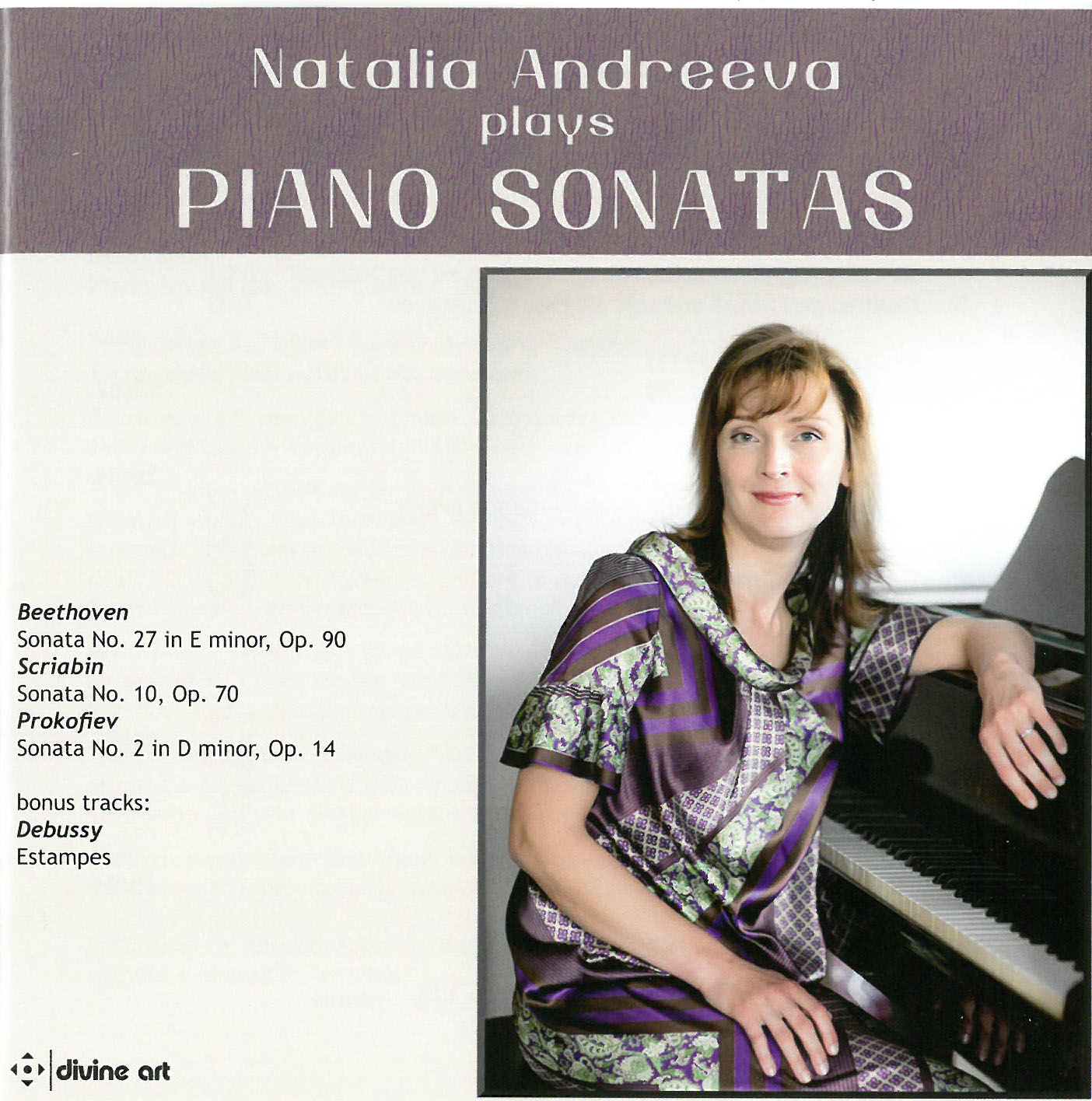
07 Andreeva SonatasAn eclectic combination of piano works appears on Natalia Andreeva plays Piano Sonatas – Beethoven, Scriabin, Prokofiev (Divine Art dda 25140). Andreeva is a gifted performer, researcher and teacher. Her program choices are deliberate, balanced and artful. Her approach is methodical, yet inspired. For example, Beethoven’s directions in Sonata No.27 in E Minor Op.90 call for the pianist to play with “liveliness, sensitivity and expression.” Andreeva lets these instructions guide her through a beautifully considered performance of this two-movement work. She takes an especially Romantic posture in the second movement, arguing in her notes that Beethoven always wrote with pictures in his mind. Whatever image emerges from this movement is, according to Andreeva, bound to be one of love. Andreeva builds her phrases with care and balance. Their shape and motion in this sonata are elegant and very often quite exquisite.

Andreeva takes her research seriously, looking for interpretive clues in diaries, letters and other original sources. In the case of the Scriabin Sonata No.10 Op.70, her sleuthing has convinced her that the key to this work’s content is the composer’s notation “radieux” in the score. For Andreeva this single-movement sonata is about light. Consequently, the delicate upper filigree and frequent trills become important textures in the mood Scriabin wants to establish. Andreeva delivers a masterful performance of this 1913 Russian work.

Prokofiev’s Sonata No.2 in D Minor Op.14 is an early work in his series of nine sonatas and dates from almost the same time as the Scriabin. Andreeva’s approach to this underscores the principal traits of Prokofiev’s creative personality: harmonic adventurism, rhythmic drive, playful grotesqueness and classicism. Each movement becomes a stage for these elements as Andreeva constructs a complex picture of Prokofiev’s musical world.

Andreeva is a deeply thoughtful artist and definitely worth hearing.

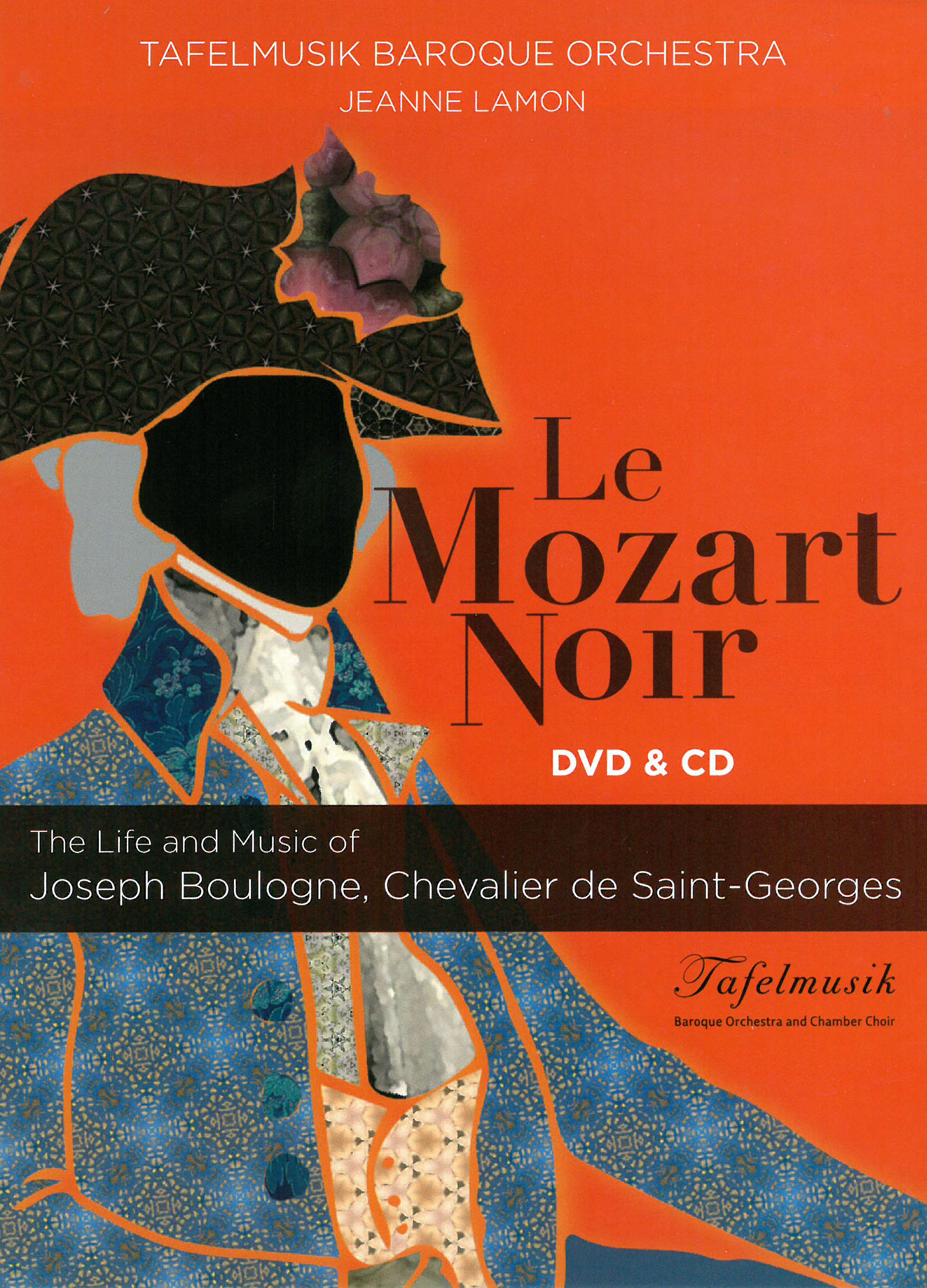
01 Mozart NoirLe Mozart Noir
Tafelmusik Baroque Orchestra; Jeanne Lamon
Tafelmusik Media TMK 1031 DVDCD (tafelmusik.org)

Review

This is a welcome re-release from 2002, featuring an hour-long DVD docudrama on the life of the significant 18th-century Parisian composer Joseph Boulogne, Chevalier de Saint-Georges, who was the son of a slave. There is also a full-length CD recording of several of Saint-Georges’ compositions, as well as a movement of a Leclair violin concerto and a symphony by Gossec.

The docudrama is well-researched and engaging, despite rather stilted dramatic performances in period costume. What is most interesting is R.H. Thomson’s narrated story of Boulogne’s life, the lively Tafelmusik performances, the interviews with his biographer and with Tafelmusik director Jeanne Lamon and soloist Linda Melsted. Together they make a good case for the complexity, grace and beauty of Saint-Georges’ music. One clip of Lamon explaining in detail the beauty of a particular theme and accompaniment is wonderfully articulate and a powerful insider’s explanation of how music is put together.

The DVD is entertaining, educational and quite moving in its presentation of the life of this remarkable and unique musician, athlete and military leader. The accompanying booklet includes a beautifully written essay on Saint-Georges by Charlotte Nediger.

As Tafelmusik heads into a new era with the recent appointment of Elisa Citterio as their music director, this recording is a poignant reminder of what a powerhouse the orchestra has been over the years under Lamon’s direction. The recorded sound is excellent and the performances are first-rate, most notably the solo playing of Melsted and Geneviève Gilardeau.

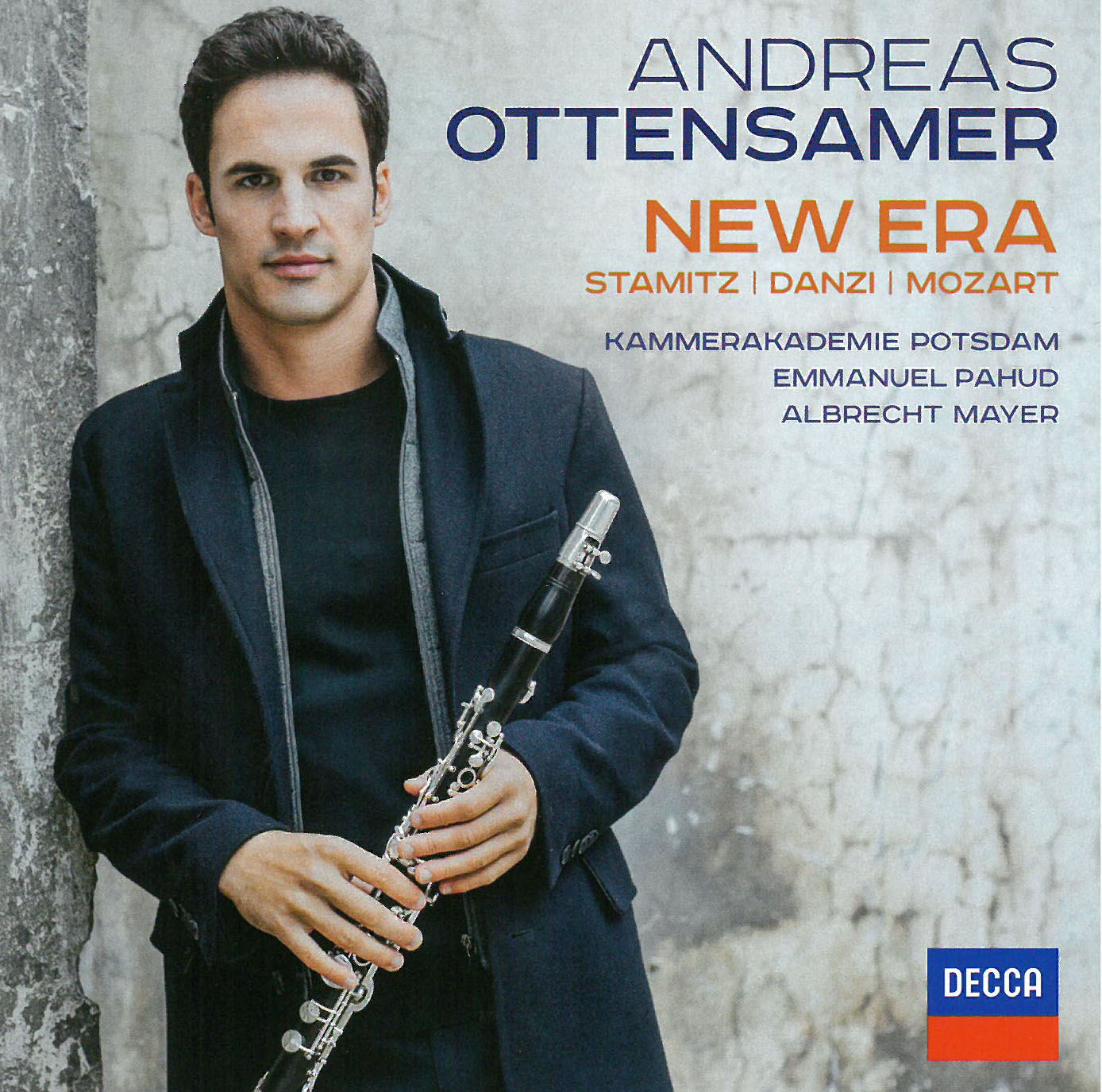
02 Ottensamer New EraNew Era – Stamitz; Danzi; Mozart
Andreas Ottensamer; Kammerakademie Potsdam; Emmanuel Pahud; Albrecht Mayer
Decca 481 4711

Review

Andreas Ottensamer, principal clarinet of the Berlin Philharmonic, has released a delightful assortment of tracks on a disc designed to educate and entertain. New Era refers to the period in Mannheim from the mid- to late-18th century, an epoch in which composers and performers consorted, collaborated and so consolidated what we now call the Classical Style.

Most wind players encounter Johann (père) and Carl (fils) Stamitz, as well as Franz Danzi, en route through undergraduate performance courses. Seldom are these composers heard outside of the academic recital hall, perhaps owing to the tendency in our own era to reduce and highlight, so that we use Mozart as a stand-in for an entire range of musical peaks, as we might with Everest for the Himalayas. These four composers are represented here. For once Mozart’s sublime Concerto K622 is left off the menu in favour of two transcribed arias (from Mitridate and Don Giovanni), and a fantasy on the beloved La ci darem la mano, written by Danzi. For substance, there is a concerto from each Stamitz, and a delightful Concertino by Danzi for clarinet and bassoon (transcribed to great effect for cor anglais). Danzi’s Fantasy is an early iteration of the virtuosic form where a technical tour de force is derived from the music of a popular opera.

Ottensamer plays with fluid precision and a surprisingly bright tone that suits the material; perhaps long gone are the days when to be a member of the Berlin Philharmonic meant using the darkest possible set-up. His articulation is crisp, his intonation trustworthy, and his improvisational cadenzas in the concerti are like rifts in the time-space continuum, somehow joining that New Era with our own. Collaborators include flutist Emmanuel Pahud (on both of Stephan Koncz’ transcriptions of the arias) and Albrecht Mayer on cor anglais, both colleagues of Ottensamer in Berlin, and like him brilliant instrumental musicians. The back-up band, Kammerakademie Potsdam, is equally brilliant under the clarinetist’s direction.

03 Haydn Handel HaydnHaydn – Symphonies 8 & 84; Violin Concerto in A Major
Aisslinn Nosky; Handel and Haydn Society; Harry Christophers
Coro COR16148

This is the latest in a series of recordings of the symphonies and concertos of Haydn by the Boston-based Handel and Haydn Society, under the dynamic direction of Harry Christophers. The Toronto connection is the orchestra’s concertmaster – and violin soloist on this disc - Aisslinn Nosky, a former member of Tafelmusik and one of the driving forces behind I Furiosi.

Haydn’s eighth symphony – nicknamed “Le soir” – is a sinfonia concertante, meaning it features solo passages from several of the orchestra’s principals, including Nosky. It’s a great pleasure to hear the freedom, humour and tenderness each soloist brings to their playing and the whole performance has a tremendous buoyancy and elegance to it.

The A-Major concerto is difficult to bring off the page because of its rather pedestrian themes and somewhat predictable turns, but Nosky and Christophers give it a convincing and lively reading. It’s exciting to hear Nosky let loose in the cadenzas, unencumbered by the regular phrasing and symmetry of the main body of each of the movements.

The disc finishes with a glorious performance of Symphony No.84, one of Haydn’s Paris symphonies. Christophers coaxes clean, balanced performances from his charges without sacrificing drama and expressiveness. The second movement goes to some dark places, which are enhanced and deepened by a wonderful attention to dynamics and accents.

It’s clear that Christophers and Nosky are a powerful team. We will await the next Haydn disc with great anticipation.

Back to top