04 Strauss AriadneStrauss – Ariadne auf Naxos; Bourgeois Gentilhomme (Suites)
Buffalo Philharmonic Orchestra; JoAnn Falletta
Naxos 8.57346

Now here is a real gem I wouldn’t mind listening to over and over again. This brand new release from Naxos comes from Buffalo, NY, by an orchestra, one of the best in North America, whose skills were honed by such names as Josef Krips, Lucas Foss, Semyon Bychkov and now led most ably by JoAnn Falletta. If you’ve never heard of or cared for her, you certainly will after listening to this rock-bottom, bargain-priced disc, a deal not to be missed.

Strauss’ love of the music of Lully inspired this absolute jewel of incidental music for Molière’s comedy Le Bourgeois Gentilhomme, first performed at Chateau Chambord for Louis XIV in 1670. Strauss’ Suite (1912/1920) is written for a small but virtuoso orchestra, difficult and intricate but played here with flair, charm, delicacy and humour one rarely encounters even from the very best conductors. The violin solo by concertmaster William Preucil is an unforgettable delight.

The Suite from Ariadne auf Naxos is quite new (and a world premiere) by a young American, D. Wilson Ochoa, who put it together from the highlights of the opera of the same name. He certainly knew what he was doing and the suite now enriches the concert repertoire like a new symphonic poem by Strauss and surely will be so welcomed. Strauss said once that “melody strikes him like a bolt of lightning from the clear blue sky” and that’s well proven by the exquisite finale when the god Bacchus appears in his radiance curing Ariadne’s sorrows by falling in love with her and we hear wave upon wave of radiant music pouring forth from Falletta’s magic baton.

05 Bruckner BarenboimAnton Bruckner – The Complete Symphonies
Staatskapelle Berlin; Daniel Barenboim
Deutsche Grammophon 479 6985

Review

There is a story about Karajan that once when he got sick and had to cancel a few concerts, the Philharmoniker decided on Daniel Barenboim to substitute. As soon as he heard this, Karajan exclaimed “OMG not HIM!!” and sick no longer, he jumped out of bed and ran back to conduct.

Barenboim’s approach to Bruckner is different from the holier-than-thou century-old Germanic tradition, trademark of many venerable conductors, mostly dead by now. I remember the great Celibidache stopping the orchestra (the BPO) 15 times before reaching the end of the first bar of the Seventh Symphony to get the opening tremolando just right, his tempo so slow, the symphony ended up a half-hour longer than anybody else’s. Now Barenboim, a consummate musician, does not revere anything but the music, making it as enjoyable, interesting, even exciting as possible and his tempi in Bruckner have always been faster, but never rushed. This is true for this new, beautifully recorded set of the nine numbered symphonies, already the third such cycle in his career, but now on his own label Peral Music, under the aegis of Deutsche Grammophon. The orchestra this time is the Berlin Staatskapelle, one of the oldest in the world, once upon a time the Prussian Court orchestra which the maestro, being its director for the last 20 years, had moulded it into perfection. It even gives the famous Berlin Philharmoniker a run for its money.

There is a unified approach, a remarkable consistency, and the orchestral playing is incredibly precise. Most of the players are young, highly skilled, enthusiastic, very devoted to each other and simply revere their conductor. I have watched some of the performances (televised by medici.tv and Mezzo) and his conducting style avoids all histrionics and, being past 70, he budgets his strength and gets maximum effect with very little effort. All performances are solid, high-quality and the symphonies throb with life, infused with rhythmic vitality. One will discover previously unheard details in the tremendously rich orchestral palette and the conductor’s stamp is always felt. The fff outburst in the Largo of the Seventh Symphony has never been more impressive on record and made even me jump out of my seat practically hyperventilating. Incidentally this had been the moment of my own conversion to Bruckner some 40 years ago.

If you want to enjoy Bruckner rather than worship it, this is the set for you.

Review

01 Montreal Guitar Trio

If you’re a regular listener to Tom Allen’s Shift program on CBC Radio then you’ve probably already heard two of the tracks from DANZAS, the new CD of Spanish guitar music from MG3, the Montréal Guitare Trio of Glenn Lévesque, Sébastien Dufour and Marc Morin (Analekta AN 2 8791).

By pure coincidence the CD arrived in the mail the same afternoon that Allen played a movement from Agustín Barrios Mangoré’s La Catedral, so I knew how good the CD was going to be before even opening it. And “good” is putting it mildly. From the dazzling flamenco runs and rhythms of the opening track of Al Di Meola’s Mediterranean Sundance and Paco De Lucía’s Rio Ancho, the MG3 return to the Spanish roots of their student days with a program of terrific arrangements of mostly standard works.

In addition to the Mangoré Catedral there are six tracks of dances and songs by Manuel De Falla, De Lucia’s Canción de amor and finally Charlie Haden’s Our Spanish Love Song. All arrangements are by the guitarists, either together or as individual efforts by Dufour or Lévesque. The outstanding playing is beautifully captured in a resonant recording made last October in the St-Benoît-de-Mirabel Church in Québec.

Review

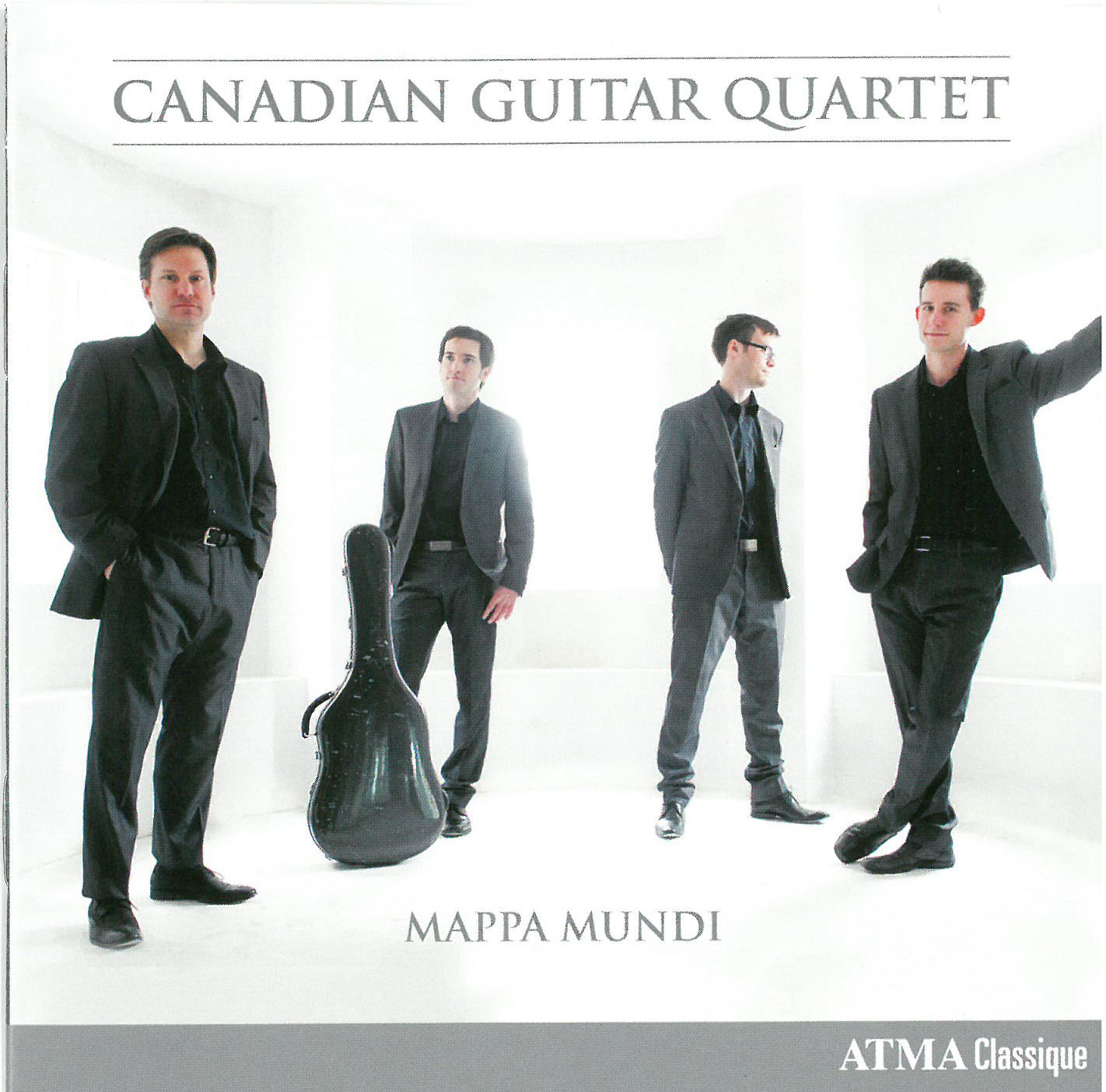
02 Canadian Guitar QuartetThere’s more terrific guitar playing on Mappa Mundi, the new CD with a mixture of old and new works from the Canadian Guitar Quartet of Julien Bisaillon, Renaud Côté-Giguère, Bruno Roussel and Louis Trépanier (ATMA Classique ACD2 2750).

Vivaldi’s Concerto in G Minor for Two Cellos RV531 works extremely well in Roussel’s arrangement, with all four guitarists sharing the two solo lines at some point in the three movements.

The other four works on the CD are all comparatively recent compositions. Fille de cuivre (Copper Girl) by quartet member Côté-Giguère explores the conflicting emotions when outward persona is not matched by inner self; it was inspired by the metal-welding works of Québecois sculptor Jean-Louis Émond, whose sculptures include a woman with a perfectly polished front but an open back revealing the rough inner welds.

Concierto Tradicionuevo by Patrick Roux (b.1962) is a terrific homage to the Argentinian tango, with particular nods to the 1930s singer Carlos Gardel and – in a particularly dazzling movement – Astor Piazzolla.

Octopus, by the German composer Hans Brüderl (b.1959) was originally a work for eight guitars (hence the title pun: Oct-Opus) written for the Canadian Guitar Quartet and the Salzburg Guitar Quartet; the former enjoyed it so much that Brüderl adapted it for four guitars. It’s a delightful piece with a real “Wow!” factor.

The CD’s title work Mappa Mundi was written by the Canadian composer Christine Donkin (b.1976) and is a portrayal of four of the images on the 14th-century world map held at Hereford Cathedral in England. Cellist Rachel Mercer joins the quartet in the Tower of Babel movement, the cello representing the voice of God!

These are all substantial, captivating works, beautifully played and recorded.

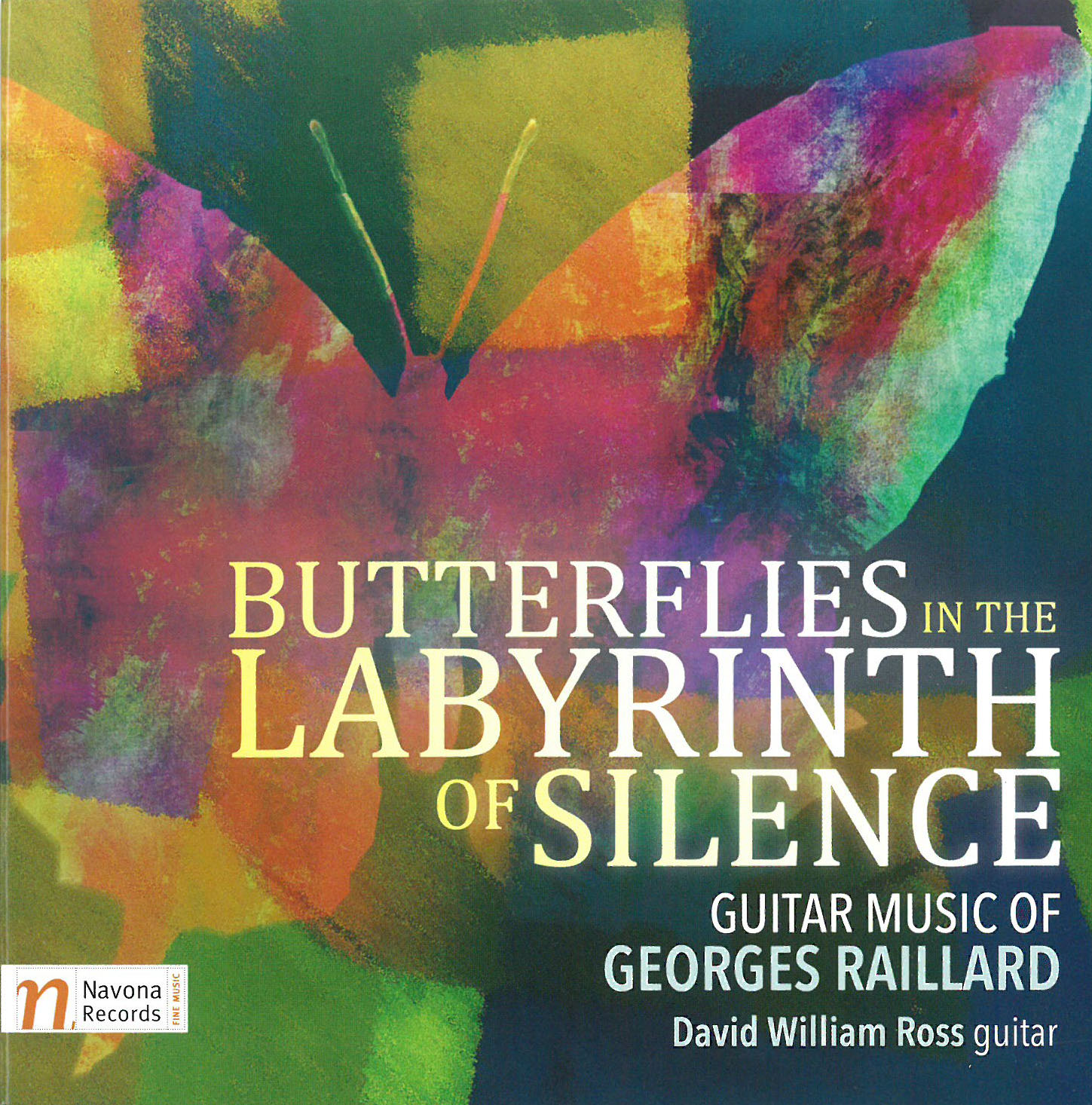
03 Butterfly LabyrinthButterflies in the Labyrinth of Silence features the guitar music of the Swiss composer Georges Raillard (b.1957) in performances by the American guitarist David William Ross (Navona Records NV6071). Raillard studied classical guitar and composition in the mid-1970s, and his guitar compositions are available for download through his website at georges-raillard.com.

The works here date from 1999 to 2008 and, with titles like Shells on the Beach, Summer Evening at the Rhine, Butterfly and Measuring Clouds, are clearly essentially light classical pieces. Although somewhat limited in technical range in comparison to many contemporary works – often with the feel of classical guitar études – they are consistently pleasant, well-written and competent pieces by someone who clearly loves and understands the instrument. There is lovely clean playing from Ross throughout a thoroughly enjoyable CD.

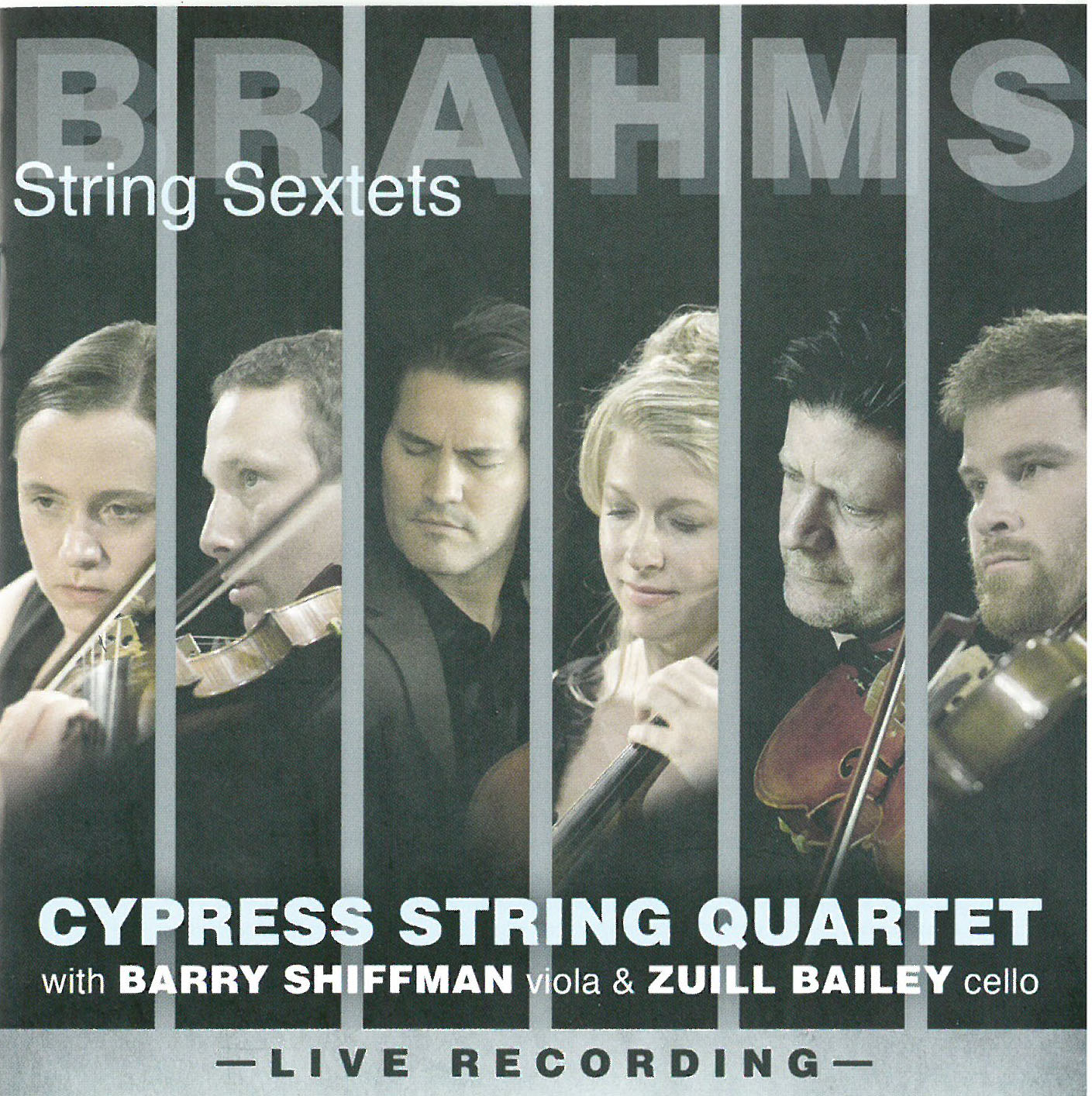
04 Brahms SextetsThe Cypress String Quartet celebrated its 20th anniversary and its final season in 2016, and for its final recording in April chose the two String Sextets by Brahms, asking longtime friends and collaborators violist Barry Shiffman and cellist Zuill Bailey to join them (Avie Records AV2294). The performers also opted to make the recordings in front of a live studio audience, although there is no hint of audience presence on the CD.

The Sextets No.1 in B-flat Major Op.18 and No.2 in G Major Op.36 are given simply beautiful performances. Brahms always seems to have that quality of wistfulness and yearning, but the G Major work is particularly appropriate here, Brahms having learned from Robert Schumann the device of using musical notation to denote the names of people in one’s life and consequently turning this work into an emotional farewell to his lost love Agathe von Siebold.

It is hardly surprising then that this work should make such a fitting conclusion to the Cypress Quartet’s career. As the quartet members note, the works were an obvious choice for this final CD: “these monumental String Sextets . . . with their warmth and reflective qualities, are perfectly suited to saying farewell.”

The Cypress Quartet will be greatly missed, but this CD is a wonderful tribute to their talents.

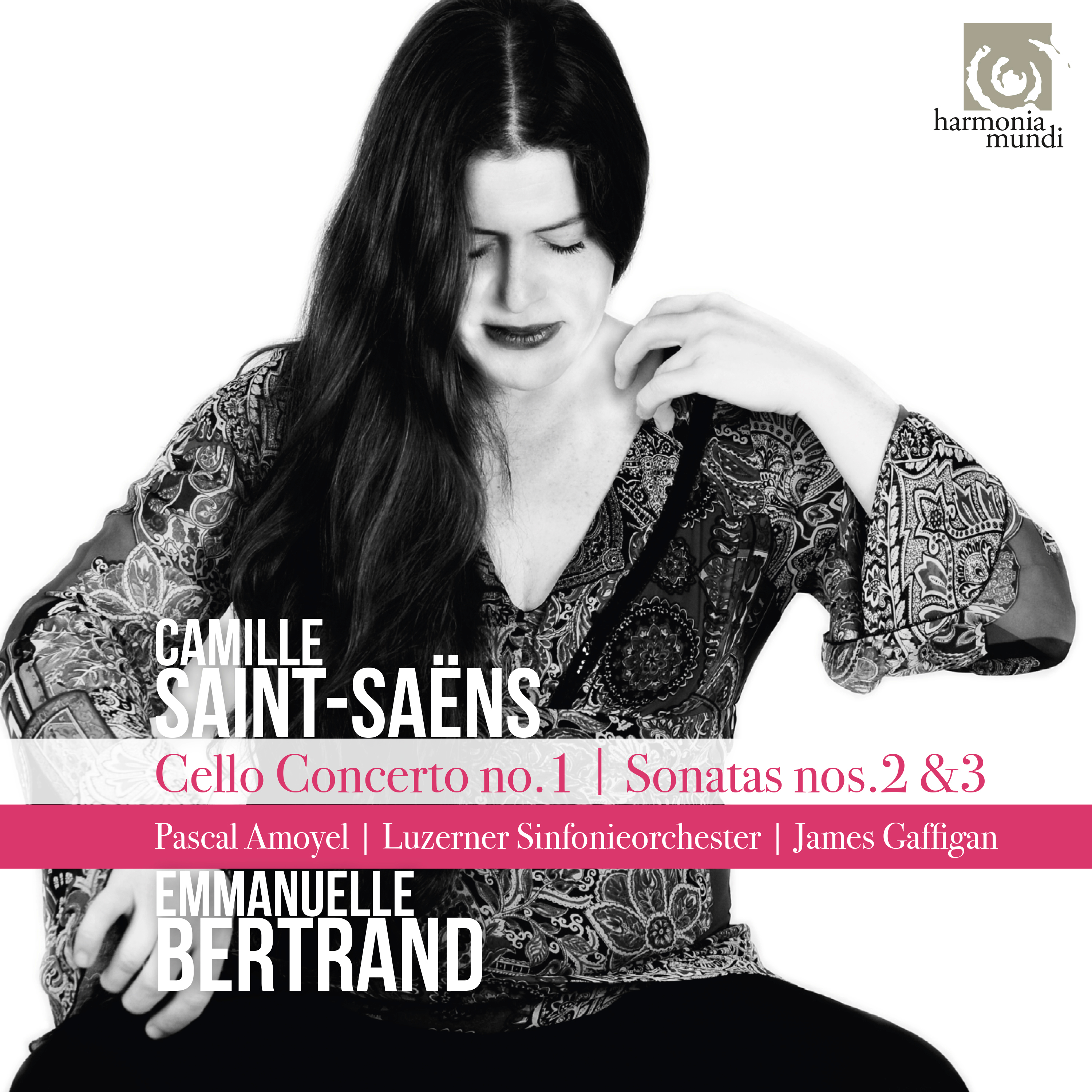
05 Saint Saens Cello coverThe outstanding French cellist Emmanuelle Bertrand is back with another excellent CD, this time featuring the Cello Concerto No.1 in A Minor Op.33 by Camille Saint-Saëns with the Luzerner Sinfonieorchester under James Gaffigan and also the Cello Sonatas Nos.2 & 3 with Bertrand’s partner, pianist Pascal Amoyel (harmonia mundi HMM 902210).

Saint-Saëns clearly had a great love for the cello, and it shows throughout these works. Bertrand gives a passionate and convincing performance of the concerto, with excellent orchestral support. Bertrand and Amoyel are, as usual, as one voice in beautifully judged readings of the two sonatas. All of the usual outstanding Bertrand qualities – tone, phrasing, sensitivity and musical intelligence – are here in abundance.

The Sonata No.3 is a late work that occupied the composer from 1913 to 1919, but unfortunately the final two movements have been lost, and the first two exist only in manuscript. This lovely performance is the first recording of the work and leaves us wondering just what we are missing in the two lost movements.

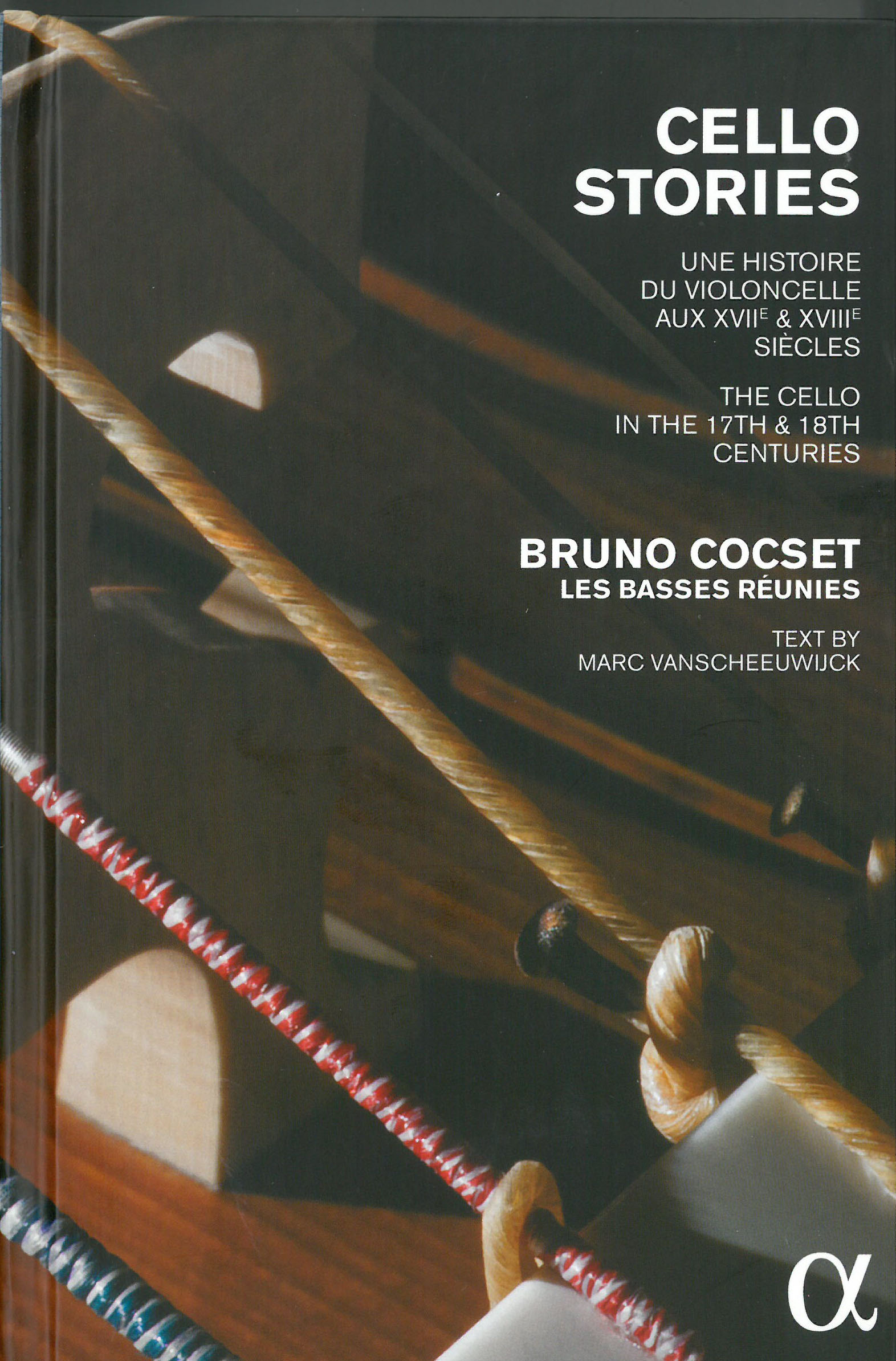
06 Cello StoriesI could easily use an entire column to review Cello Stories – The Cello in the 17th and 18th Centuries, the quite remarkable hardcover book and 5-CD set featuring the French cellist Bruno Cocset and his group Les Basses Réunies, with text by the Baroque cellist and musicologist Marc Vanscheeuwijck (Alpha Classics ALPHA 890).

Cocset says that the intention is to show how an instrument and its repertoire have taken shape, and he has selected the musical program from his recordings for Alpha – some of them previously unreleased – made between 1998 and 2013. The five discs are: The Origins, with music by Ortiz, Bonizzi, Frescobaldi, Vitali, Galli and Degli Antonii; Italy-France, with music by Marcello, Vivaldi and Barrière; Johann Sebastian Bach, two CDs of cello sonatas, choral preludes, movements from the Cello Suites Nos. 1, 2 and 4 and the complete Suites 3, 5 and 6; and From Geminiani to Boccherini, including a short sonata by Giovanni Cirri.

The book is in English and French, with full track listings and recording details, and there are 15 pages of full-colour contemporary illustrations. The astonishingly detailed and researched text portion on the history and development of the instrument and its playing techniques runs to about 50 pages and has 386 footnotes.

The playing throughout is quite superb. It’s a simply astonishing project, completed in quite brilliant fashion.

07 Melia Watras 26Melia Watras: 26 (Sono Luminus SLE-70007) is a fascinating CD inspired by the concept of violists performing and sharing their own compositions. Violists Watras, Atar Arad and Garth Knox (here playing viola d’amore) are joined by violinist Michael Jinsoo Lim in five works by Watras, two by Arad, one by Knox and a duo by American composer Richard Karpen.

All the players have extensive chamber music experience, Arad with the Cleveland Quartet, Knox with the Arditti Quartet and Watras and Lim as co-founders of the Corigliano Quartet. The playing is of the highest standard throughout.

All of the nine works – there are three duos for two violas and two for violin and viola, three solo viola works and a solo violin piece – are world premiere recordings, and each one is a real gem. It’s a terrific CD, and one which should appeal to a much wider audience than just lovers of the viola.

The CD title, incidentally, represents the combined number of strings on the four instruments used.

07 Claremont TrioSPHERES – Music of Robert Paterson is the new CD from the Claremont Trio – violinist Emily Bruskin, cellist Julia Bruskin and pianist Andrea Lam (American Modern Recordings AMR 1046).

The two major works by this American composer are quite different but form a pair, the shorter and sweeter 2015 Moon Trio, commissioned by the Claremont Trio, being a sister piece for the much longer and more strident Sun Trio, a 1995 work revised in 2008; Donna Kwong, who was a founding member and pianist of the Trio for 12 years from its foundation at the Juilliard School in 1999, is the pianist in the latter work.

The Toronto-born cellist Karen Ouzounian joins Andrea Lam and Julia Bruskin in the Elegy for Two Cellos and Piano, a 2006 work originally written for two bassoons in memory of a well-known New York cellist, and transcribed for two cellos in 2007-08. Quoting liberally from the Bach cello works, it’s a simply lovely piece.

08 Mozart Violin ConcertosAnd finally, Henning Kraggerud is the brilliant soloist leading the Norwegian Chamber Orchestra on MOZART Violin Concertos Nos.3, 4 and 5 and the Adagio in E, K.261, a Naxos Music in Motion DVD (2.110368).

Filmed before a small audience in the intimate but resonant Akershus Castle Church in Oslo in January 2015, the camera work is understandably a bit limited, with cameras in front on the left, right and centre providing close-ups and occasional tracking. The picture quality could perhaps be a little sharper, but colour and sound are fine.

It’s the playing we’re here for, though, and it’s simply sublime. Kraggerud’s 1744 Guarneri Del Gesù has surely never sounded warmer or brighter, and the joy, exuberance and perfect communication between soloist and orchestral players is a delight to see. The performances throughout are superb, with brilliant outer movements and beautifully judged slow movements.

Kraggerud, who provides his own cadenzas, gives introductions to each work (in Norwegian with English subtitles) with fascinating insight and stories, including what may well be the historical source of all viola jokes; and there is a brief Behind the Scenes bonus track showing preparations for the concert.

01 SerockiAdam Kośmieja plays a remarkable contemporary program in his recording Serocki – Complete works for solo piano (Dux 1284). The music of Kazimierz Serocki (1922-1981) is regrettably unfamiliar to most North American audiences. Its uniqueness lies in his 12-tone style. Serocki demonstrates a strong affinity for rhythm and texture as the key drivers in his music. Whether he’s drawing out a languorous elegy or spinning a feverish virtuosic passage, he writes for clarity using very little pedal and favouring generous application of staccato. On rare occasions he will seem impressionistic and reveal the French influences he absorbed as a student in Paris. More curious and delightful is the unmistakable, if subtle, flavour of something that is teasingly Broadway and flirts with jazz.

Pianist Adam Kośmieja does an extraordinary job of playing this music. He obviously has a deep understanding of what Serocki is saying and how he means it to be said. Kośmieja’s ability to meet the widely different interpretive demands of the music is impressive. He lists, among his teachers, names like Gary Grafman, Paul Badura-Skoda, Ivan Moravec, Lang Lang and numerous others.

The Sonata for Piano has two wonderfully maniacal movements, veloce and barbaro, that contrast sharply with the other two inquietamente and elegiaco. It’s a substantial work, rich in variety and it’s exceptionally well-played.

The Gnomes: Childrens’ Miniatures is fascinating for its simplicity as repertoire for children yet intriguing for the way it introduces them to the 12-tone system through the strategic placement of gentle dissonances. The disc is a wonderful issue from Polish Radio.

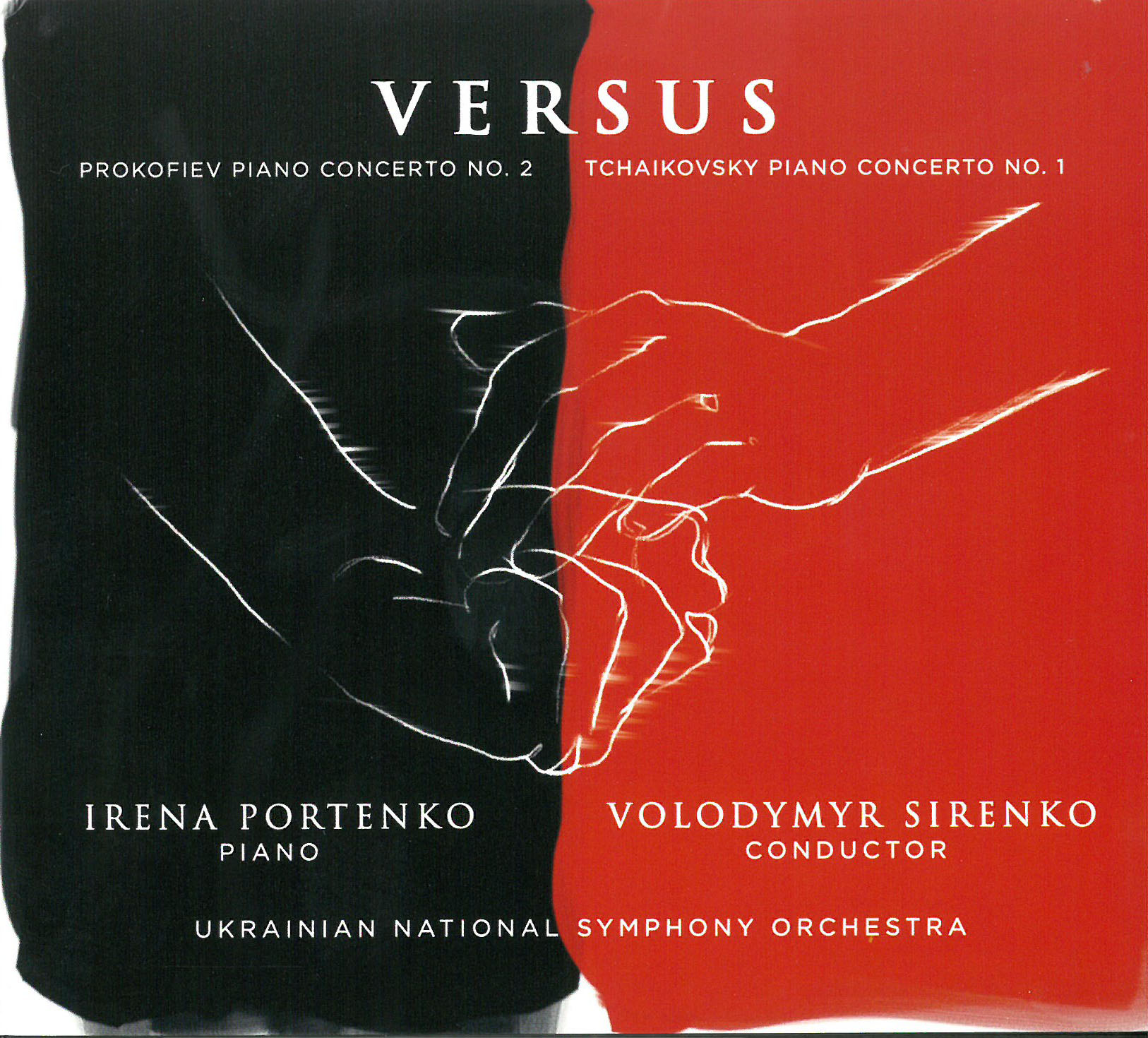
02 VersusUkrainian-born pianist Irena Portenko has conceived a yin-yang study of contrasting concertos that may have more in common with each other than meets the ear. Her new release Versus: Prokofiev Piano Concerto No.2; Tchaikovsky Piano Concerto No.1; Ukrainian National Symphony Orchestra; Volodymyr Sirenko (Blue Griffin Recording BGR417) opens with an intense performance of the Prokofiev Concerto No.2. Actually, there’s no other way to play it. It’s dramatic, dark and relentless.

Prokofiev’s first few performances met with uneven success. He cites generally better public acceptance with each performance, but it was a rocky start. The work was, for 1913, a challenging audience experience. Dense and replete with rhythmic and melodic complexities, it left first-time listeners dealing mainly with the heavy emotional experience. Stravinsky, however, was impressed. Diaghilev, too, was complimentary and reportedly invited Prokofiev to play it as a stage production while dancers moved around him on the stage. Curiously the third movement has the feel of Prokofiev’s Romeo and Juliet with the strong bass pulse that drives the dance, Montagues and Capulets.

The writing is undeniably brilliant and is matched by the performance. Portenko is satisfyingly at home with this music, meeting its technical and interpretive challenges with confidence and style. She brings the same energy to the Tchaikovsky Concerto No.1 in B-flat Minor Op.23. It too, is grand and relentless. Although she is very clear in her notes that she sees this as the counterbalance of light and positive energy to the Prokofiev. Noteworthy in this performance is the way some of the inner wind voices are brought forward in the second movement, creating the impression of familiar music never heard before.

A very impressive recording.

Review

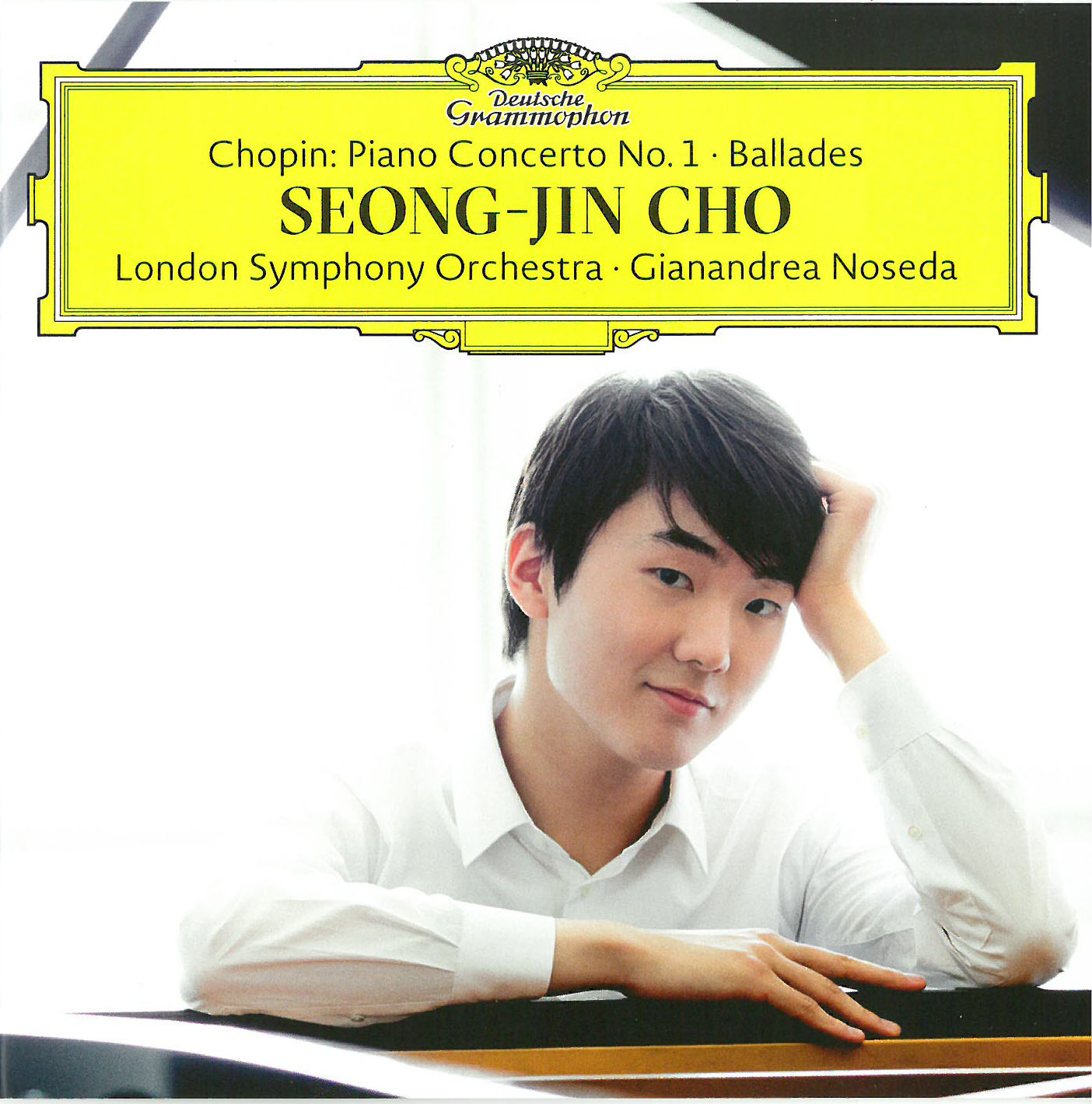
03 Chopin ChoSeong-Jin Cho won the 17th International Chopin Piano Competition in 2015, the first Korean to do so. His latest recording Chopin – Piano Concerto No.1; Ballades; London Symphony Orchestra; Gianandrea Noseda (Deutsche Grammophon 4795941) shows how his focus on the singing qualities of Chopin’s ideas won him that coveted prize. Cho’s treatment of the principal melodic ideas in the opening movement is fluid and lyrical. Even his ornaments come across more as small eddies in a current than clusters of notes on a page. The second movement Romance is exquisite. Cho manages to retain a fragility about his playing, even through the slightly more assertive middle section. His technical display in the final movement is flawlessly clear.

The Ballades too, reveal Cho’s fascination with the singing qualities of Chopin’s ideas. Much of the Ballade No. 1 in G Minor Op.23 is remarkably understated, making for a starker contrast with the outburst of the middle section as well as the closing measures. The Ballade No.2 follows in a similar vein. The effectiveness of Cho’s playing lies as much in his virtuosity as in his ability to fall into Chopin’s moments of repose with a delicacy that transcends the pianissimo markings. He’s a tall young man whose interviews reveal a shyness, a non-star-like simplicity that seems to suit him perfectly for this music.

Review

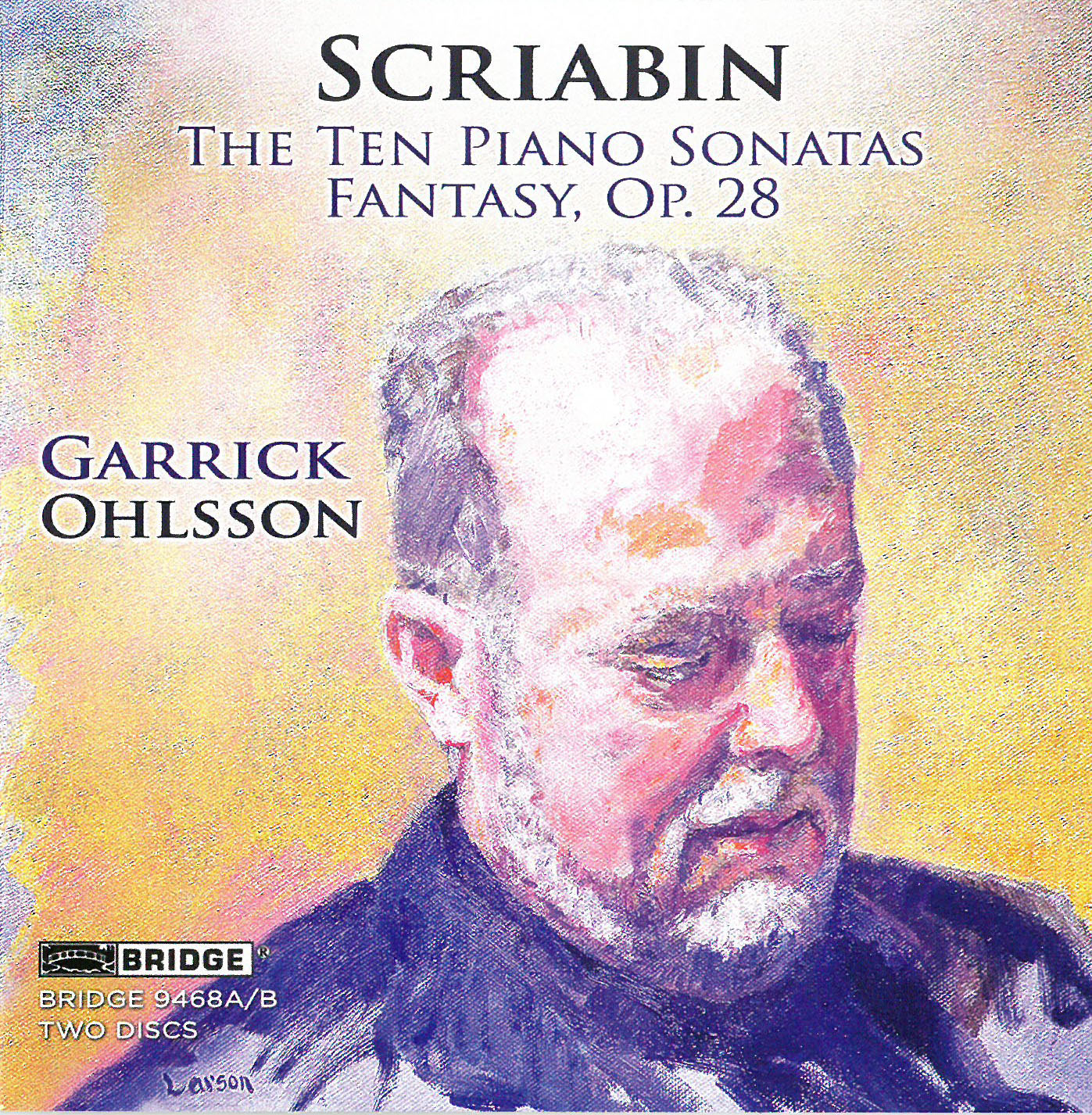
04 Scriabin OhlssonGarrick Ohlsson won the Chopin International Piano Competition more than 45 years ago and has, since then, been a recognized and respected interpreter of Chopin’s music. The way in which Chopin expanded musical boundaries in his own time, is very much echoed in the evolution of Alexander Scriabin’s piano music. So it seems a natural choice for Ohlsson to make a recording of Scriabin – The Ten Piano Sonatas; Fantasy Op.28 (Bridge 9468A/B).

The ten sonatas chart a dramatic course of evolution in both form and tonality with the Sonata No.5 in F-sharp Major Op.53 being the significant turning point. The 1907 work is the first to break free of individual movements, and Scriabin himself referred to it as a “large poem for piano.” Perhaps more importantly, it moves fearlessly and convincingly in the direction of atonality. Ohlsson captures this new freedom from tonal centre and form with breathtaking virtuosic energy. The Sonata No.6 Op.62 is different again. While still a single movement, it’s a work that Scriabin never played in public, despite his habit of premiering his own compositions. He is said to have feared the darkness inherent in the writing. Ohlsson explores this without reservation and reveals something of what may have perturbed the composer so much about his own creation. The 2-disc set is a welcome and revealing document that sheds valuable light on the development of a composer who saw himself as something of a mystic whose music might change the world.

05 Erik SimmonsOrgan recordings appear infrequently in this column. It’s of special interest therefore, that organist Erik Simmons’ latest release, Hymnus – Music for Organ by Carson Cooman, Divine Art (dda 25147) demonstrates how new technology and contemporary music can be a winning formula for an older genre.

Producers of organ recordings have always wrestled with microphone placement in the quest for the right balance of acoustic space and the instrument’s presence. The problem becomes more complex when organ pipes are located in different places throughout a building. Enter digital technology.

Anyone can now purchase a digitally sampled pipe organ, recorded as individual notes from an optimal acoustic location, and play that library of samples through a midi system from a compatible keyboard. That’s exactly how this 1787 organ in Weissenau, Germany, appears in this recording. Every actual sound from the initial speaking attack of a pipe to its final decay and slight pitch drop is captured faithfully with every note. The authenticity of the performance location sounds so complete, it makes the likelihood of the recording being done in the comfort of his living room, even more astounding.

American composer Carson Cooman, in his mid-30s, has a body of works that numbers well over a thousand. Most are short pieces, three to six minutes, and designed as music for church services where preludes, postludes and interludes on that scale are best suited. His style is fairly traditional, and contemporary in the lightest sense, engaging only occasionally with atonality. The variety of his writing is impressive and he’s capable of evoking greatly contrasting moods. This is especially effective as Erik Simmons uses the Weissenau organ to maximum colouristic effect, whether drawing a single flute rank or the full organ registration.

It’s a terrific recording for three reasons: superb playing, fine composition and technological astonishment.

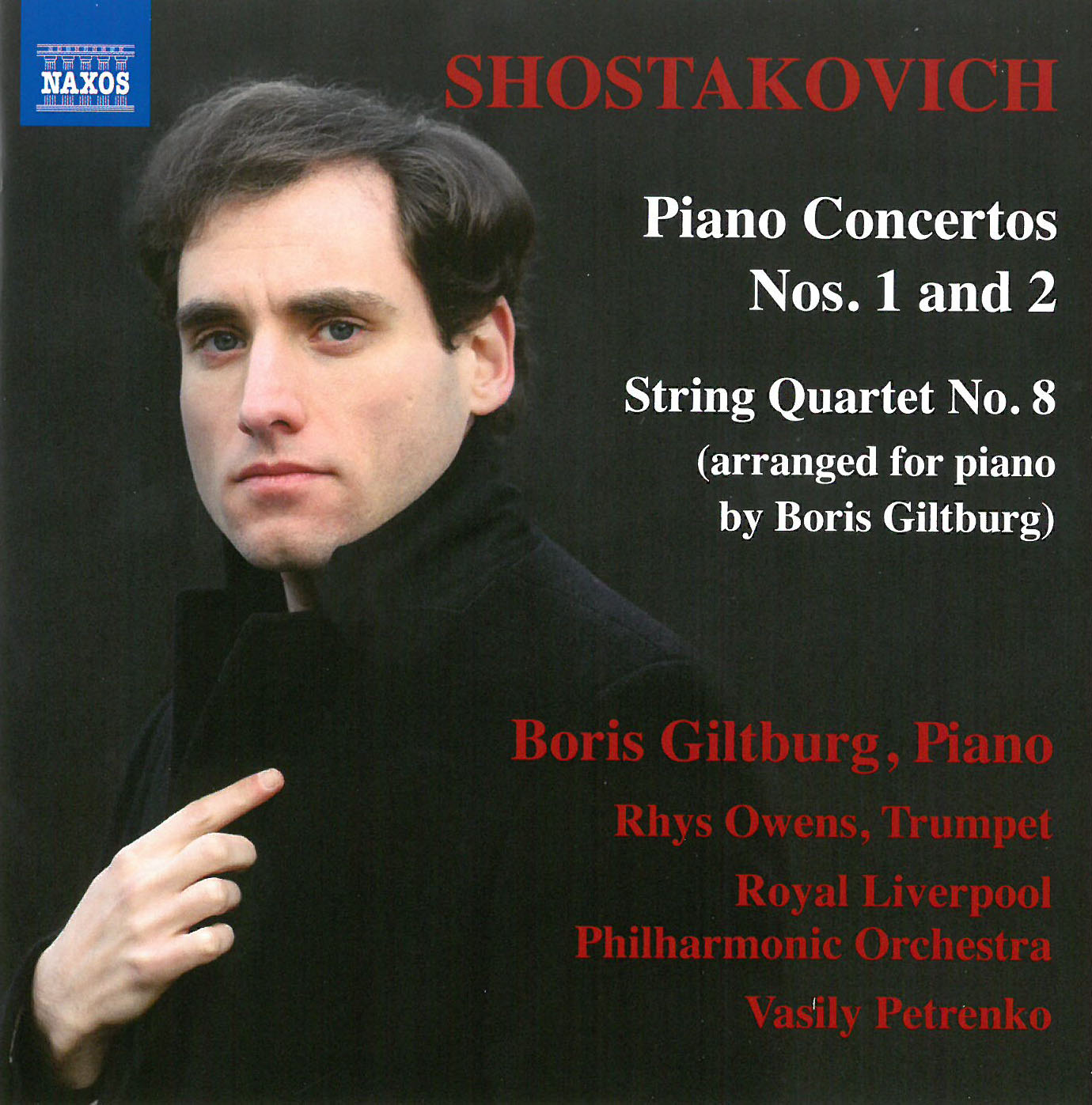
06 Shostakovich GiltbergPianist Boris Giltburg’s discography expands yet again with Shostakovich – Piano Concertos; String Quartet No.8 (transcribed for piano) Royal Liverpool Philharmonic; Vasily Petrenko (Naxos 8.573666). As he often does, Giltburg writes his own notes for the recording, exploring the circumstances around the creation of these works by a composer admittedly close to his own heart. Giltburg relates the historical events with academic precision and links them to the subtlest aspects of Shostakovich’s music with the knowing intimacy of a soulmate. His exceptional performances of the Piano Concertos No.1 in C Minor and No.2 in F Major reflect this deep understanding. In the case of the Concerto No.2, Giltburg brings ebullience to the music that captures the paternal joy of its dedication to his son Maxim on his birthday in 1957. The earlier concerto predates it by more than two decades and is more formal, but Giltburg finds the positive energy that Shostakovich was soon to have repressed under the attack of the Soviet party establishment.

The transcription for piano of the string quartet material is a fascinating and ambitious undertaking. Wanting to have a larger-scale Shostakovich work for solo piano available to him, Giltburg has transcribed the String Quartet in C Minor Op.110. Being as thorough as he is, he sought and received permission of the Shostakovich family for special access to resource materials for this project. The result is a new iteration of a work from a dark and discouraging period in the composer’s life. In a curious way, Shostakovich never surrendered the skill of his craft to the hopelessness of his present condition. Giltburg has inexplicably and beautifully captured this moment of genius slipping into despair.

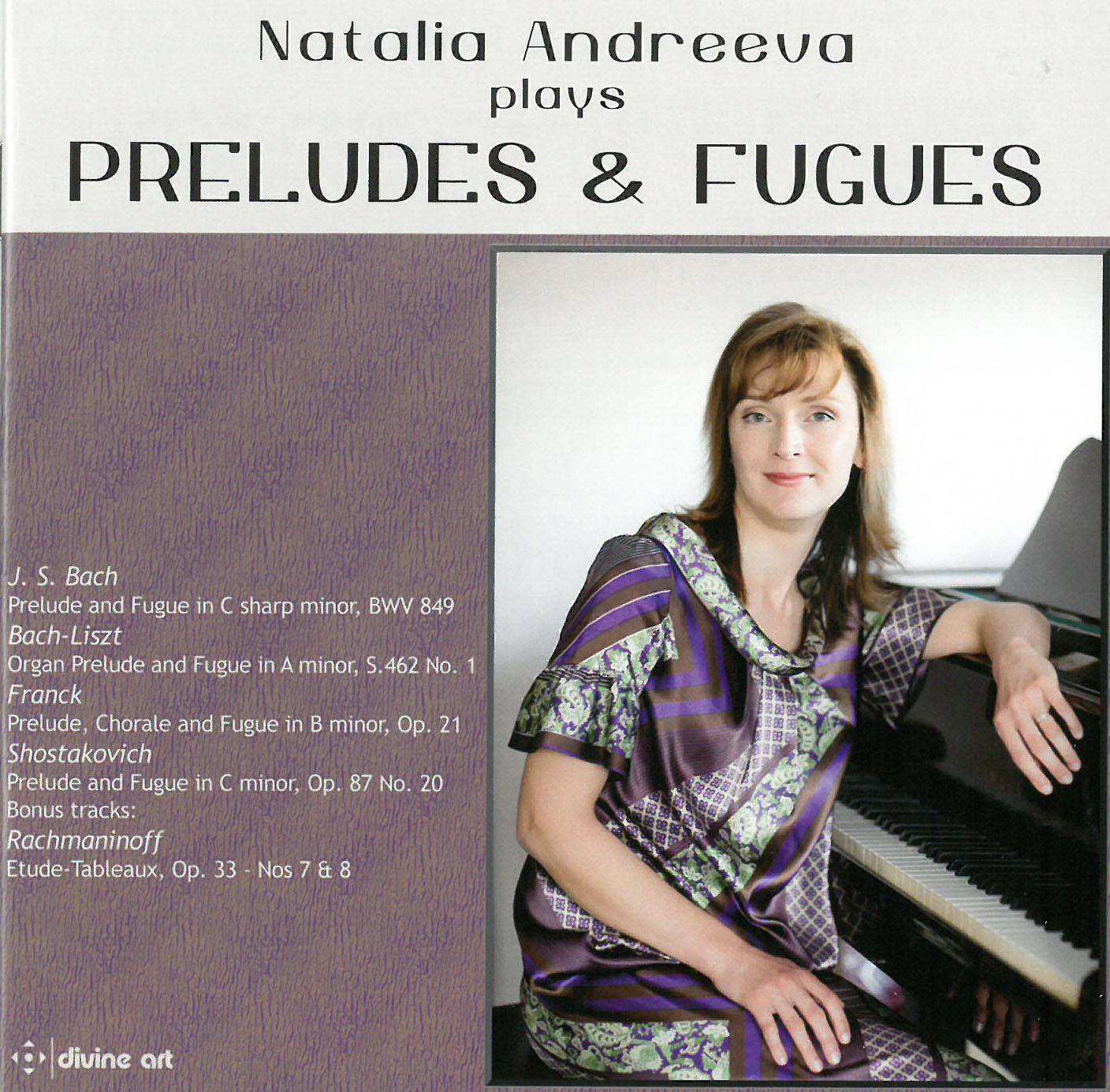
07 Andreeva PreludesAnother recording of comparisons is on the shelves this month in Natalia Andreeva plays Preludes and Fugues; Bach, Liszt, Franck and Shostakovich (Divine Art dda 25139). This Russian pianist has given considerable thought to her program and liner notes, and lays out a wonderful rationale for the enjoyment of a series of preludes and fugues that includes some form of shared material.

She begins, logically, with Bach, giving the Prelude and Fugue in C-sharp Minor BWV 849 a disciplined and sensitive reading. Proceeding through Liszt’s transcription of Bach’s Prelude and Fugue in A Minor S462 No.1 she arrives at Franck’s Prelude, Chorale and Fugue in B Minor Op 21. By now it’s clear that Andreeva is making serious connections. She concludes with Shostakovich’s Prelude and Fugue in C Minor Op.87 No.20 leaving the impression that 350 years have not diminished the appeal of fugal form, especially when paired with the Prelude. Altogether a very worthwhile artistic and intellectual exercise.

01 Ensemble la CigaleUp in the Morning Early – Baroque Music from Celtic Countries
Ensemble La Cigale
Leaf Music LM 211 (leaf-music.ca)

Review

Quebec-based early music ensemble La Cigale has a hit on its hands with this collection of Baroque instrumental music from Celtic countries. The tight ensemble playing, sensitivity to style and musical moods, and clear production values, showcase a range of performances from the witty to the danceable to thoughtful to florid.

The large number of works featured is mind-boggling and educational for any Celtic music fan. The opening track is the ensemble’s arrangement of the Scottish song John Come Kiss Me Now. Complete with the lilt and bounce of the faster sections, and lyrical recorder in the slower sections, it is a successful combination of classical with Celtic folk traditions, and foreshadows the flavourful music to follow. Scottish music is the big feature, with works by James Oswald, William McGibbon and General John Reid. Five short Scottish lute works from the Rowallan and Straloch Lute Books circa early 1600s are given a breathless rendition by artistic director Madeleine Owen, especially in the waltzing songbird tune The Canaries. Irish composer Turlough O’Carolan’s Carolan’s Concerto is a curious mix of Irish folk and serious Italian art music.

The touching closing track is the group’s very loyal, respectful arrangement of the Canadian fiddler Oliver Schroer’s (1956-2008) modern day lyrical Celtic work A Thousand Thank-yous.

And more than a thousand thank yous to director Madeline Owen (lute, theorbo, Baroque guitar), Sara Lackie (harp), Vincent Lauzer (recorders), Marie-Laurence Primeau (viola da gamba) and Sari Tsuji (violin) for this joyous music!


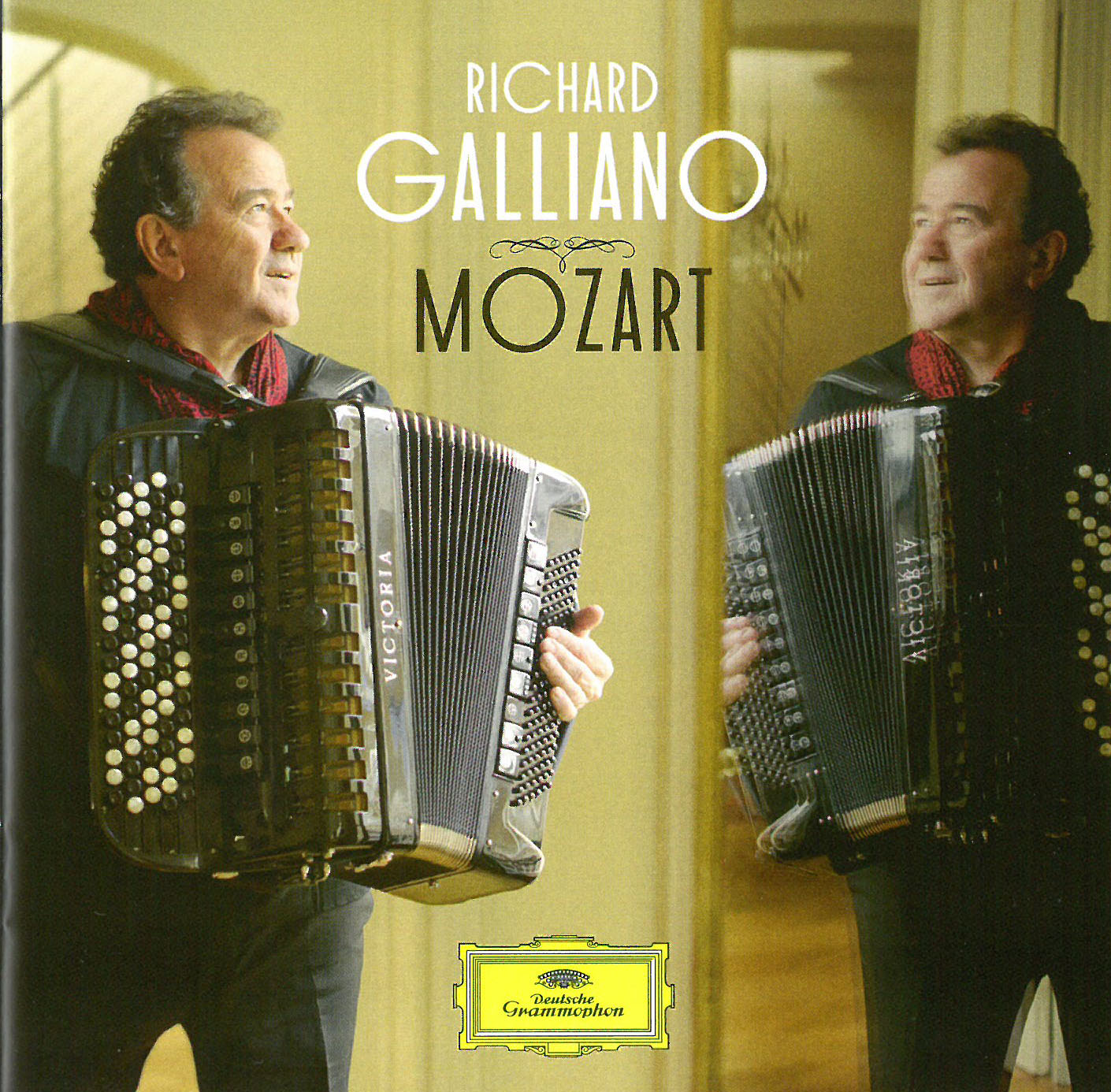
02 Galliano MozartRichard Galliano Mozart
Richard Galliano; Bertrand Cervera; Stephane Henoch; J-P Minale-Bella; Raphael Perraud; Syvain Le Provost
Deutsche Grammophon 4812662

French accordionist Richard Galliano is world renowned for his jazz stylings. He goes back again to his classical music roots with this all-Mozart release, the third in a series of performing select classical masters on accordion. Supported by a superb string quintet, Galliano explores new sounds in some familiar works.

The strongest performance by far is Mozart’s Rondo alla Turka (Piano Sonata No. 11 in A Major K.331). The Turkish Rondo lends itself well to an accordion arrangement – a Palmer Hughes Accordion Course version of it is on the RCM Grade 6 accordion exam repertoire list. Galliano’s version showcases his effortless florid technique and musical nuances. There is nice dialogue between him and the strings, with a solid, never-rushed, low-end support from the double bass. Another appealing dialogue can be heard on the Adagio from Flute Quartet in D Major K.285 where the long tones created by steady bellows pressure are in stark contrast to the strings’ pizzicato parts. More exploration of breaths between phrases would elevate the musicality dramatically. Not too keen on the unison playing of accordion and strings in Eine kleine Nachmusik as the work’s inherent colours are lost by too many instruments playing the same thing. Nice decision to use bandoneon in Laudate Dominum as Mozart is thrust into the 20th century with Galliano’s nod to Astor Piazzolla.

Galliano’s Mozart CD is an interesting and satisfying listen to some of Mozart’s compositions from unique instrumentation and arrangement standpoints.

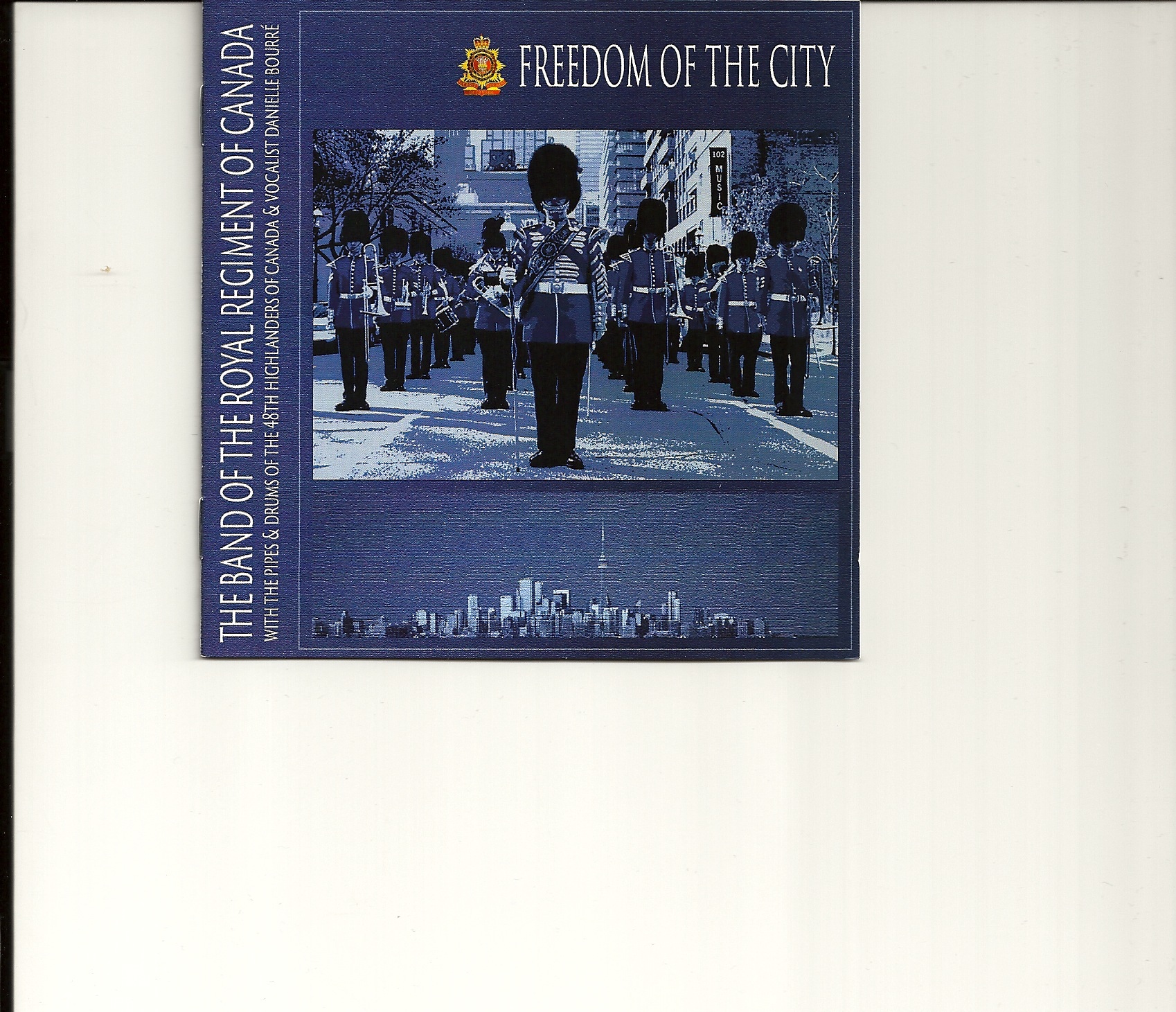
03 Freedom of the City Royal RegimentFreedom of the City
The Band of the Royal Regiment of Canada
RRC009 (band.rregtc.ca)

In 1962 the City of Toronto granted the Freedom of the City to the Royal Regiment of Canada to honour the regiment for their 100 years of service. On May 15, 2016, the city reaffirmed this Freedom. As part of that ceremony the band and regiment marched through the streets of Toronto. Production of this recording, with the Pipes and Drums of the 48th Highlanders and vocalist Danielle Bourré, is part of their thanks to the city for a century and a half of support.

This CD has a wealth of variety from such works as Elgar’s Pomp and Circumstance Military March No.2 and Sibelius’ Finlandia to film classics such as The Magnificent Seven and The Great Escape. The Pipes and Drums of the 48th Highlanders blend in with the band on The Magnificent Seven so well that one could well think that this was the original arrangement. Similarly, Bourré’s rendition of the English folk song O’er the Hills and Far Away is enhanced with blending of the pipes. Among the lesser-known works, I have two personal favourites on this CD. They are The Two Imps, a novelty xylophone duet by Kenneth Alford of Colonel Bogey fame, and Serenade for Wind Band by British composer Derek Bourgeois. This number, written for guests at his own wedding to walk out of the church by, has a very tricky rhythm. In the composer’s words he was “[n]ot wishing to allow them the luxury of proceeding in an orderly 2/4.”

All in all this is a fine combination of familiar classics and entertaining music which we rarely have an opportunity to hear. It is well-performed, well-recorded and comes with clearly written program notes for all numbers.

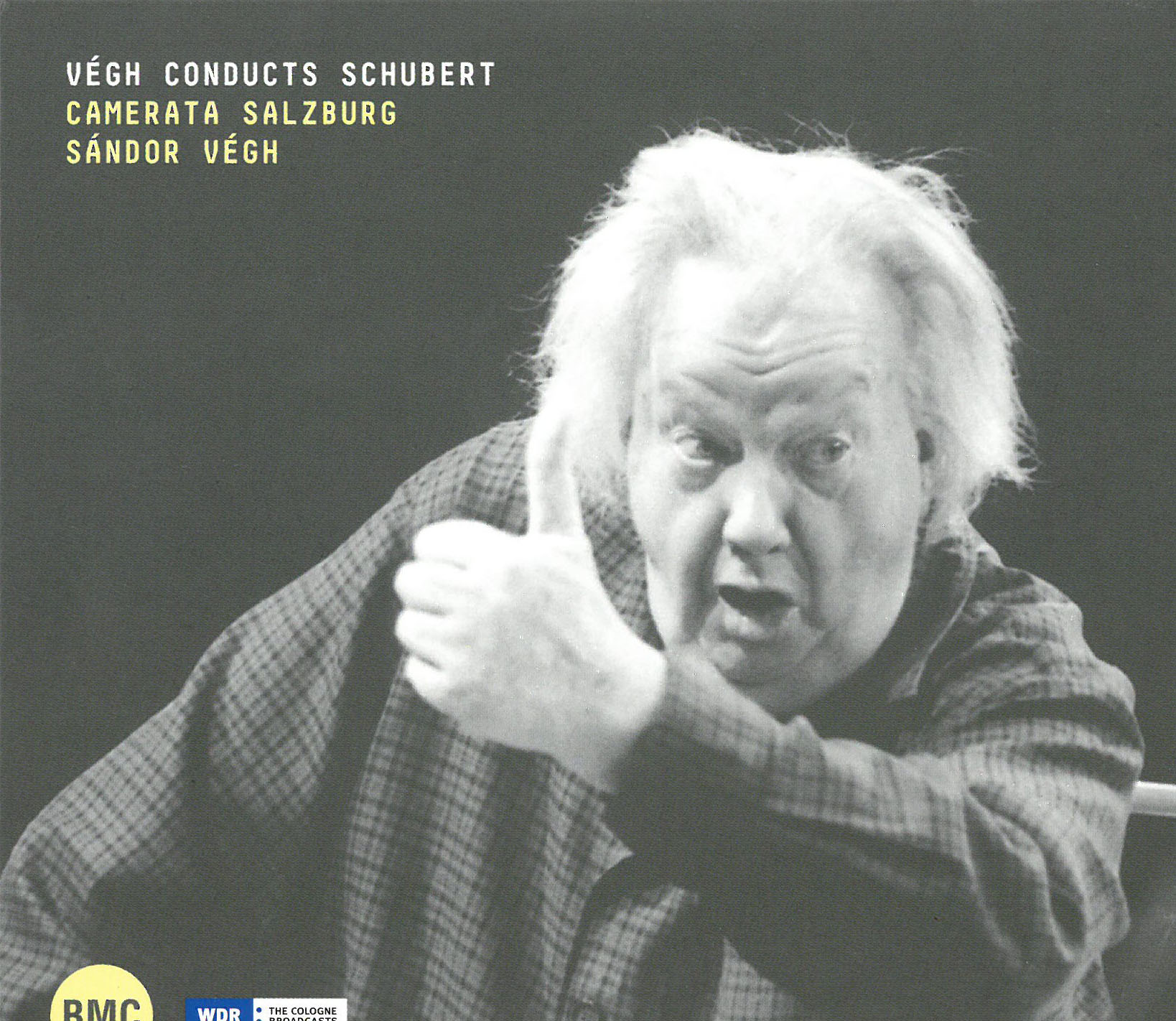
04 Vegh SchubertVégh conducts Schubert
Camerata Salzberg; Sándor Végh
BMC Records CD 201 (bmcrecords.hu)

Best known as violinist leader of string quartets, Sándor Végh (1912-1997) in later life conducted the chamber orchestra now known as Camerata Salzburg; it attained a high standard as is evidenced by these discs. The opening introduction of Symphony No.1 in D Major (1813) leads into the Allegro through an attractive chain of suspended notes, a feature that recurs as the Allegro theme returns. Végh shapes the lyrical second theme beautifully. The lilting Andante and the Trio of the Menuetto movement are also fine examples of the lyrical style, with strings and winds equally integrated. Symphony No. 2 in B-flat Major (1814-15) opens more promisingly with woodwinds in dialogue, followed by an Allegro energetic and melodic in turn. Clarity in the strings is matched even by the cellos and bass; the winds are flawless.

In Symphony No. 3 (1815) Schubert returned to the key of D Major with more formal assurance and ability to develop first-movement themes. The charming Allegretto that follows is the highlight of the work for me. Symphony No. 4 in C MinorTragic” (1816) reinforces our astonishment at Schubert’s rapid progress before he reached the age of 20! The Introduction of this minor-key work is moving indeed and Végh communicates the changed mood convincingly throughout. Good intonation, excellent ensemble and orchestral balance prevail. Idiomatic and elegant performances have raised my estimation of all these works and of Végh as conductor; they will receive many hearings.

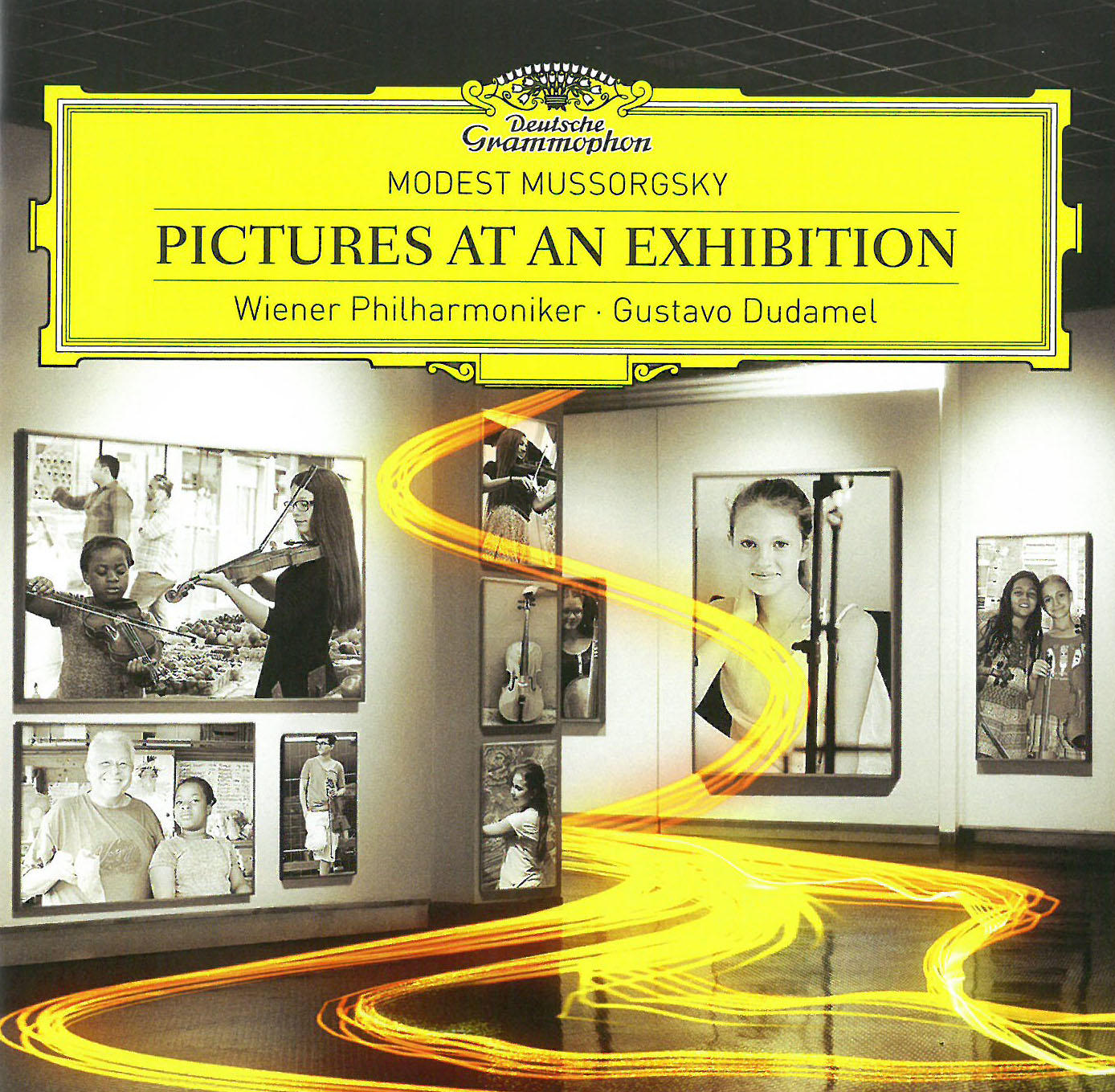
05 Pictures at an ExhibitionMussorgsky – Pictures at an Exhibition
Wiener Philharmonic; Gustavo Dudamel
Deutsche Grammophon 479 6297

Review

Of all the composers in the Russian nationalist school “The Mighty Handful,” Mussorgsky is arguably the greatest. True, Rimsky-Korsakov’s highly colourful style left its mark on Glazunov and Stravinsky, but it was Mussorgsky’s works that were ground-breaking. And though Rimski-Korsakov disparaged Mussorgsky’s work as having “absurd, disconnected harmony, ugly part-writing, sometimes strikingly illogical modulation…” these characteristics were grist to the mill for Mussorgsky’s power, earthiness and sheer musical invention that inform, for instance, the mighty work: Pictures at an Exhibition (1874). This tribute to the architect and painter Victor Hartmann was written as a suite of piano pieces and, like other versions, not performed until after Mussorgsky’s death.

This Wiener Philharmoniker version conducted by Gustavo Dudamel comes from Maurice Ravel’s 1922 orchestration. Unlike every previous recording of Pictures at an Exhibition – including Berliner Philharmoniker and Claudio Abbado’s – in this interpretation (of Ravel’s Mussorgsky) Dudamel restores Mussorgsky’s Pictures to its architectural grandeur. The ten pictures – each one an atmospheric miniature – are connected by a recurring theme (the Promenade) and suggest Liszt’s influence, but with a greater psychological insight. The sinister melancholy of Gnomus, playfulness of Tuileries and grand triumphalism of The Great Gate of Kiev are dazzling. The intense beauty of the performance is completed by Mussorgsky’s Night on Bald Mountain and the Waltz from Tchaikovsky’s Swan Lake. Now all we need is a documentary of the 900 Superar children aged 5 to 16, from Vienna’s tenth district that contributed to this project.

Editor’s Note: Superar is a high quality musical program for young people. The program is free for participants and offers courses in choirs and orchestras. Superar is an offer to young people who for various reasons have little or no access to cultural education. Superar was founded in 2009 by Vienna’s renowned institutions the Wiener Sängerknaben, the Caritas of the Archdiocese of Vienna and the Wiener Konzerthaus.

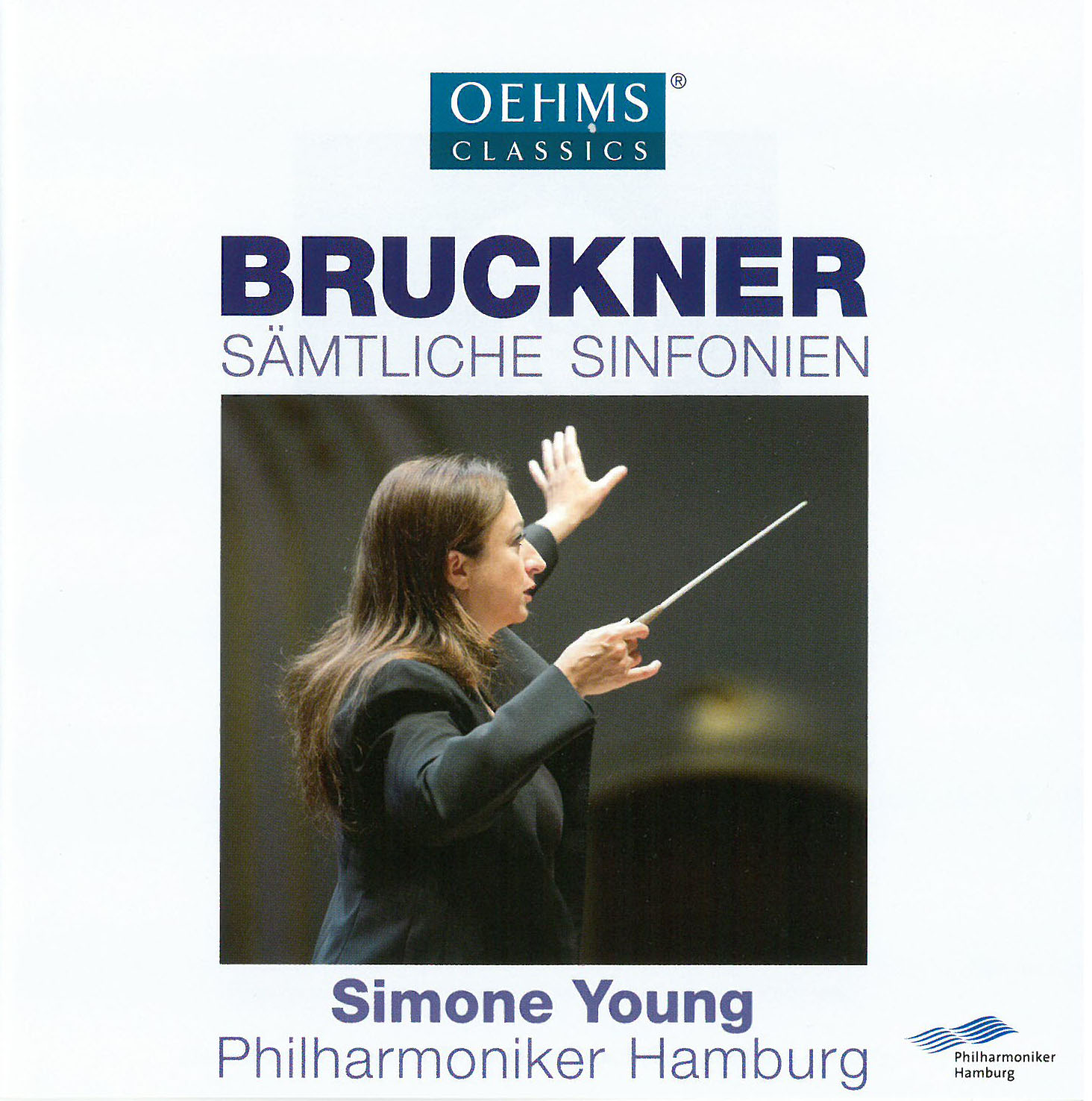
06 Bruckner completeBruckner – Samliche Sinfonien (Symphonies 1–9; Student Symphony; Symphony “0” – Original versions)
Philharmoniker Hamburg; Simone Young
Oehms Classics OC 026

The legendary Sergiu Celibidache, perhaps the greatest Bruckner conductor ever, once said: “Time for the average person begins at the beginning, but for Bruckner time begins after the last note has been heard.” This distinguishes his music from, say, Beethoven or Brahms which moves logically from beginning to end. A Bruckner symphony must be heard in its entirety to begin percolating through one’s senses with the full effect emerging from the subconscious, sometimes as a jolt like the conversion of Saul on the road to Damascus. Bruckner is in no hurry. He ambles along at a leisurely pace, often stopping for breath or a backward glance. His music is “elemental rather than intellectual, it is hypnotic and incantatory” (Richard Capell). A great live performance could be breathtaking and cataclysmic.

This new set of complete Bruckner symphonies has been released one by one over the past few years and reviewed extensively by the most respectable music journals to rave reviews. After listening to every single one of them I most emphatically concur; in fact it’s been hard to contain my enthusiasm. And the conductor? Simone Young, a young lady from Sidney, Australia, who arrived in Germany in her 20s and quickly became assistant to Daniel Barenboim at the Berlin Staatsoper and soon thereafter took over the entire musical life of Hamburg (i.e. the Symphony and the Opera that dates back to the 17th century under such directors as Telemann, Gluck, Handel, Bulow, Mahler and a list of venerable conductors like Klemperer, Wand and Nagano). Now, this already indicates an extraordinary and enormously gifted musician, but a first foray into the recording world with a statement on one of the most complex and difficult composers, Bruckner (who conductors have spent a lifetime studying and struggling to interpret) is a feat no less than miraculous. Notable also that she opts for the original versions (Urfassung) unlike most other conductors who use one of the many revised versions. Minor point, but Symphony No.4 is completely unrecognizable in its original form; the 1880 version is the way it’s always performed and as such is sadly missing from this set.

Bruckner’s oeuvre divides itself into three categories, the early symphonies (1 - 4), the middle period (5 and 6) and the final masterworks (7, 8 and 9). Symphony No.1 is youthful, tempestuous, strongly rhythmic and then there is a curiosity, Symphony 0, a piece Bruckner rejected as “not good enough” so it became known as the Die Nullte (annulled) but luckily survived. Both of these are driven joyfully with exuberance, very un-Bruckner as it were, but in the Third Symphony (1873, D Minor) Young passes the first real hurdle with great aplomb showing youthful lightheartedness in the lovely Scherzo that really dances; it’s an absolute delight. The second movement with its Tristan quotations is majestically developed with beautiful lyricism and an almost Schubertian joy in melodies. The fourth movement is fast and turbulent, exciting and suspenseful with a nice Brucknerian finale.

As we now enter the middle period there is a quantum leap in Bruckner’s output and although he keeps to his original format the music is entirely different like the giant Fifth Symphony of churchlike solemnity and unheard-of complexity. A real stumbling block for conductors, it is rarely performed but – and here comes the miracle – she is simply magnificent. “Probably the finest [new performance] I’ve heard for a long time…Young manages the rare feat of honouring all Bruckner’s changes of gear and tempo while keeping a powerful forward flow…no doubt I shall listen to other accounts which are as fine, but for the moment I find that hard to believe” (BBC Music Magazine, December 2015). I would love to watch her do the giant fugue of the last movement at the helm of the thundering orchestra like a Napoleon commanding his armies. And what made Napoleon able to conquer most of Europe was not the size of his armies, but his uncanny ability to manipulate his troops and outwit the enemy, much the same as what Young does. With a tremendous insight and overview of the score she always has the ending in sight and by shifting the emphasis of the thematic material the progress is kept interesting, never boring.

The last three symphonies are the pinnacle of Bruckner’s art and this is where Young brings out the big guns. The unfinished, enigmatic and otherworldly Ninth with its valedictory Adagio is simply musical heaven and the greatest thing he ever wrote, but the monumental 90-minute long Eighth Symphony, being 100 percent complete, is also an incredibly satisfying, glorious work to which she brings grace and lightness in the Scherzo, and a hushed intensity to the Largo like a long, long prayer with a single earth-shattering fortissimo climax achieved after a long sustained crescendo of some 22 minutes. Big guns, indeed. Unhesitating recommendation.

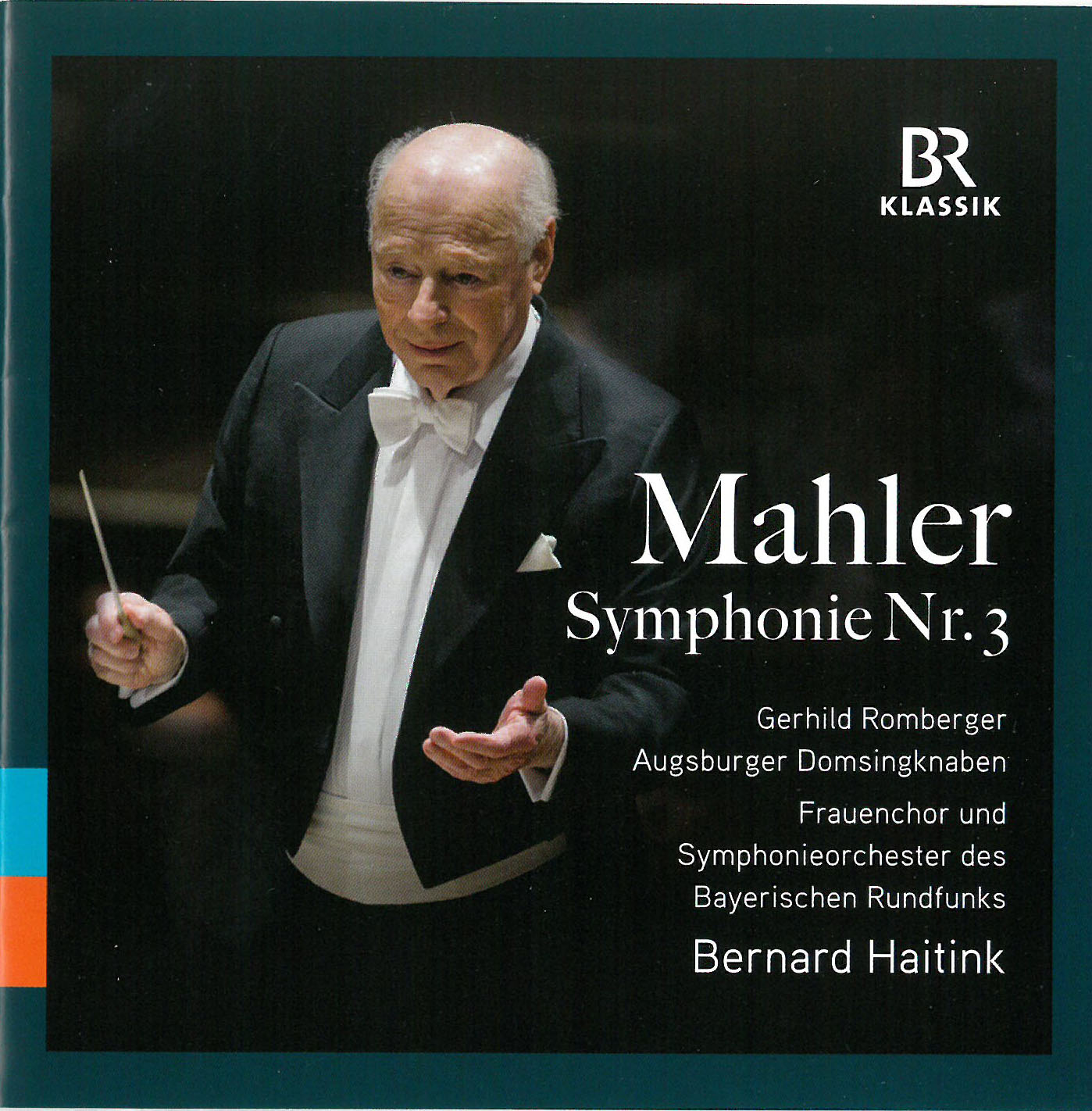
07 Mahler HaitinkMahler – Symphony No.3
Gerhild Romberger; Augsburger Domsingknaben; Frauenchor und Symphonieorchester des Bayerischen Rundfunks; Bernard Haitink
BR Klassik 900149

This is Bernard Haitink’s most recent recording of Mahler’s monumental Third Symphony, preceded by a boatload of discs from his days leading Amsterdam’s Concertgebouw (five versions) and subsequent recordings with the orchestras of Berlin, Chicago and London. Despite his apparent affection for Mahler’s work in general and this symphony in particular, his name does not often rise to the top of the list in this repertoire as often as those of Bernstein, Kubelik or Abbado. This latest incarnation may settle the score in this regard, thanks to the excellence of the Bavarian Radio Symphony Orchestra in this splendidly recorded disc. Haitink is particularly fine in the central sections of this sprawling six-movement work, the lengthiest symphony in the standard symphonic repertoire. The fleetness of the second movement is utterly charming while the third movement’s vivid rusticity includes a very simply played posthorn solo, which is too often over-sentimentalized. The fourth and fifth movements introduce vocal elements to the work and feature mezzo-soprano Gerhild Romberger in a merely adequate reading of Mahler’s setting of Nietzsche’s Midnight Song; the oboe solo here also skirts around the quite striking minor-third glissando called for by Mahler. The pace picks up again with the excellent Augsburger Domsingknaben boys’ choir joining Frau Romberger and the BRSO women’s chorus for the following Es sungen drei Engel movement. I was quite pleased with the well-nigh perfect Finale, which builds inexorably to a masterful climax marked by mellifluous contributions from the admirable brass section. My only major reservation concerns the vast first movement, which Mahler subtitled with the motto, “Pan awakes – Summer marches in;” I did not feel Haitink’s circumspect approach completely exploited the chaotic play of elemental forces at work here. However, the fluidity of the finale more than makes up for this shortcoming and I have no hesitation in recommending this live recording from June of 2016.

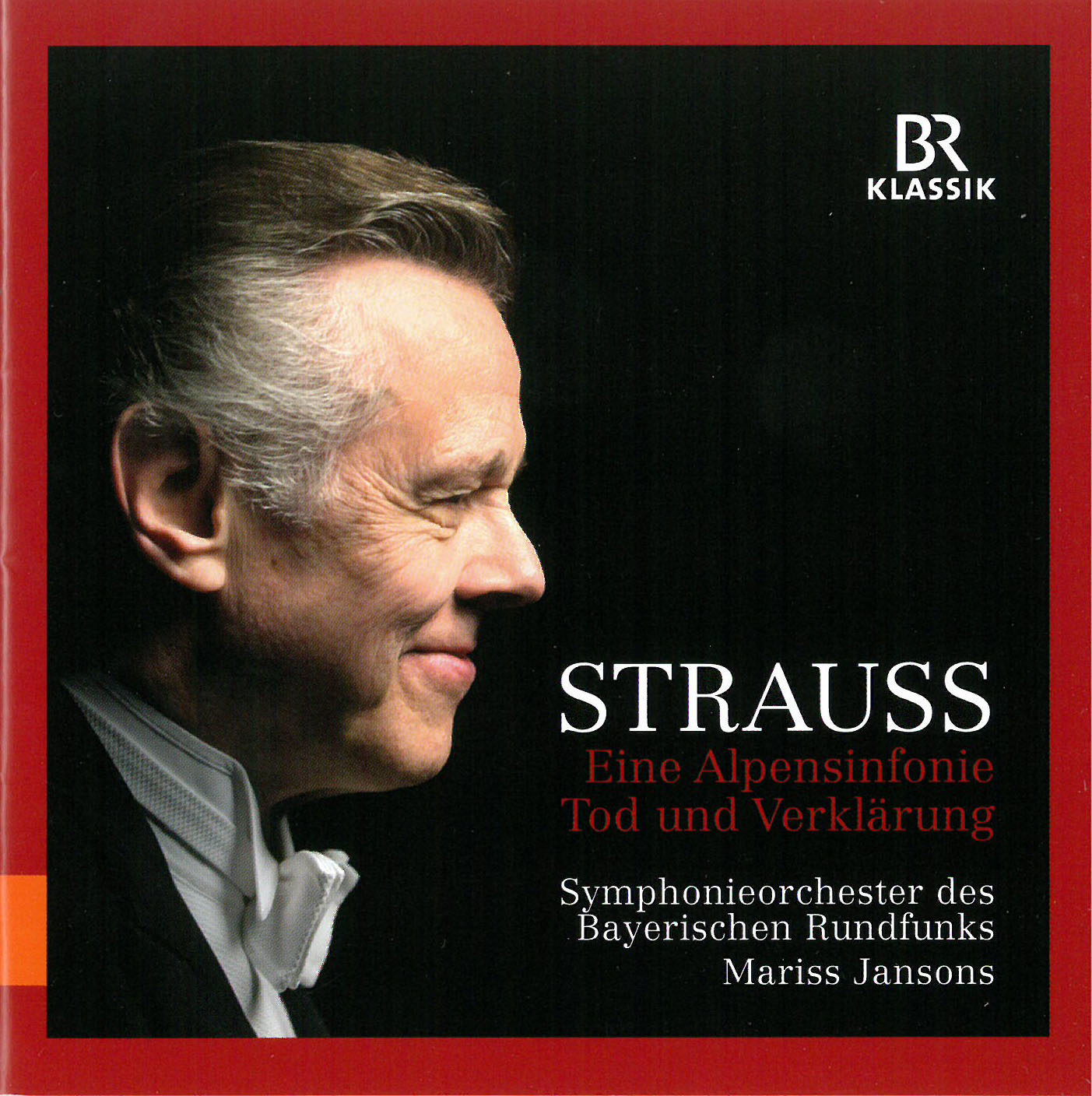
08 Strauss AlpenStrauss – Ein Alpensinfonie; Tod und Verklarung
Symphonieorchester des Bayerischen Rundfunks; Mariss Jansons
BR Klassik 900148

Long in gestation with its roots extending down to the composer’s teenage years, Richard Strauss’ Alpine Symphony is the last and arguably the greatest of his series of orchestral tone poems. After many false starts, he began to work seriously on the score in 1911, prompted in part by circumstances surrounding the death of his esteemed colleague Gustav Mahler. It was completed and premiered in 1915 under the composer’s direction. Strauss proudly proclaimed that with this work, which is scored for a gargantuan ensemble of 130 musicians, he finally understood how to orchestrate. You can take his word for that!

Strauss indicated 22 distinct scenarios, some lasting less than half a minute, in the score of this musical depiction of a hike up and down the Bavarian Alps through forests and meadows in weather both fair and foul. The work is on one level naively descriptive (some might say crassly cinematic) yet there remains a greater dimension to the Alpine Symphony in its vivid celebration of the power of Nature, comparable in an oblique way with Mahler’s Third Symphony. It hardly comes as a surprise that the exemplary Munich orchestra does their level best to honour the reputation of Bavaria’s greatest composer, nor that they are in complete accord with their cherished principal conductor (Jansons’ contract was recently extended to the year 2023, a commitment of 20 years since his arrival). The performance is utterly transcendent and the live recording from October of 2016 is richly detailed. A significant bonus is included in the form of an equally fine 2014 live performance of Strauss’ popular tone poem of 1888, Death and Transfiguration. Of the numerous renderings currently available of this grandiose Alpine work this one rises triumphantly to the summit with the greats. Not to be missed!

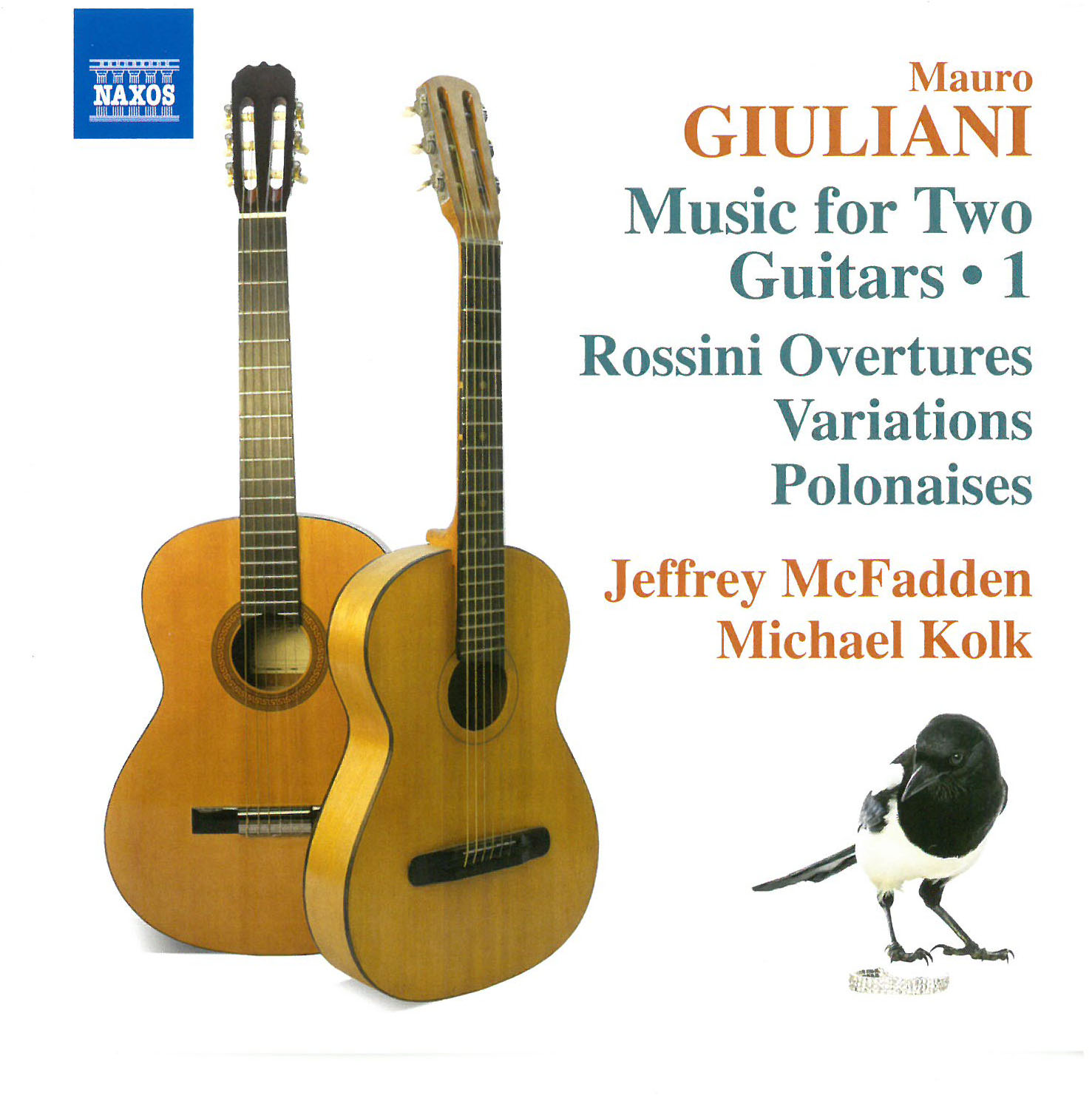
01 Giuliani GuitarCanadian guitarists Jeffrey McFadden and Michael Kolk are the performers on Volume 1 of Music for Two Guitars by Mauro Giuliani, a new CD featuring Rossini Overtures, Variations and Polonaises (Naxos 8.572445).

Michael Kolk has been the subject of several glowing reviews in this column and is usually heard in duo performances with fellow guitarist Drew Henderson, but here he is joined by the outstanding McFadden, with whom Kolk studied at the University of Toronto. It’s a terrific pairing, with both performers displaying clean, technically outstanding playing with equally impressive musicality and sensitivity.

Giuliani (1781-1829) was one of the greatest guitar virtuoso performers and composers. When he returned to Italy from Vienna in 1819 he became an associate of Rossini and transcribed four of the opera composer’s overtures for two guitars in the early 1820s. All four – La gazza ladra, Il barbiere di Siviglia, La Cenerentola and L’assedio di Corinto – are included here. As the jewel case blurb notes, they abound in lyrical melodic lines, fast arpeggios, subtle colours and technical virtuosity. The equally demanding Gran variazioni concertanti, Op.35 and the Variazioni concertanti, Op.130 are handled with deceptive ease, and the Tre Polonesi concertanti, Op.137 round off an immensely satisfying program.

The recorded ambience is quite lovely, hardly a surprise given that the recording was made at St. John Chrysostom Church in Newmarket with the always reliable Naxos production team of Norbert Kraft – himself a top guitarist – and Bonnie Silver. It’s a CD that meets every hope and expectation you might have when you open it – and that’s saying something!
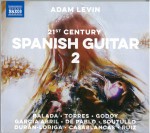
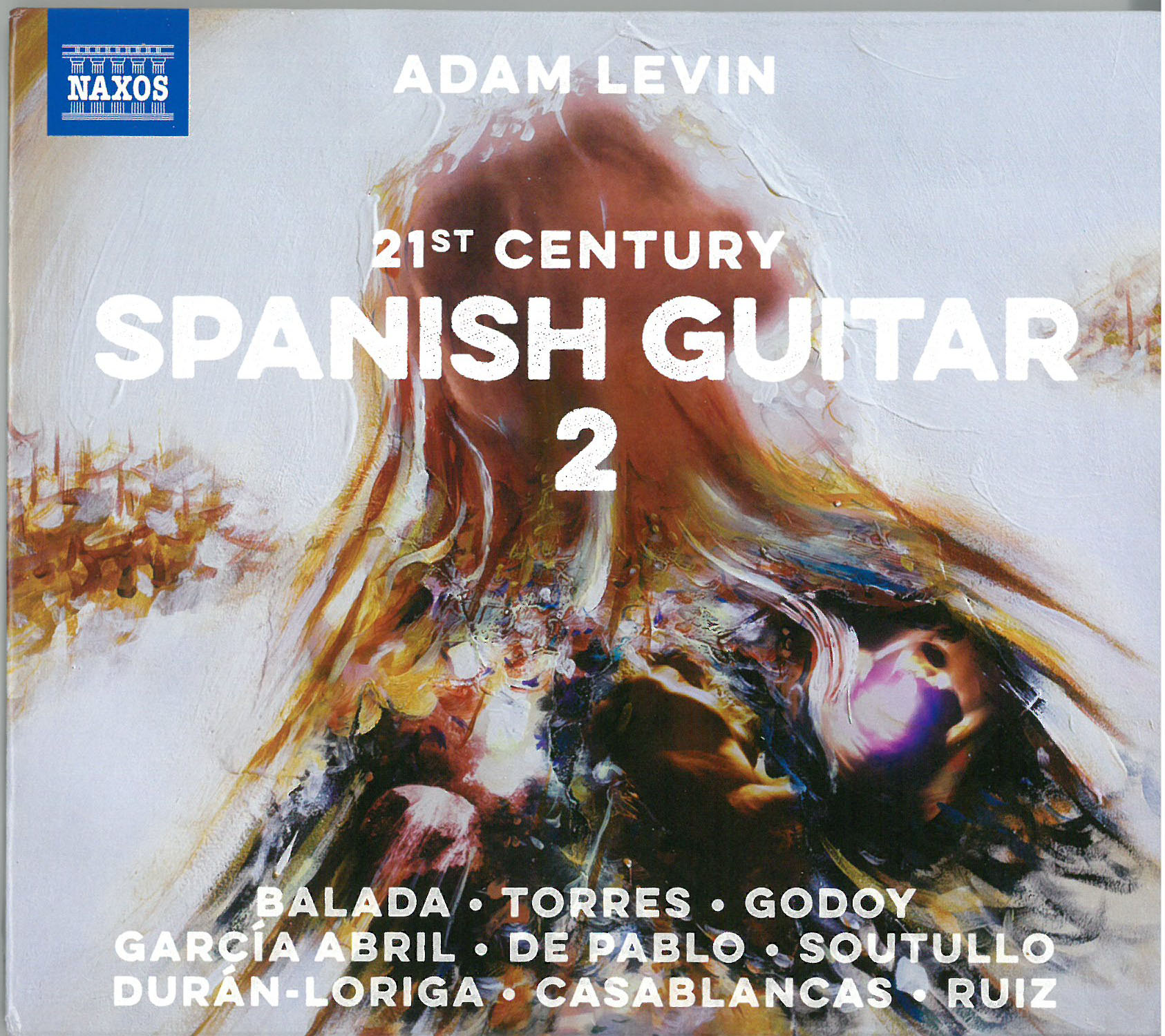
02 Spanish Guitar 2The same Newmarket church is the setting for another outstanding Kraft and Silver guitar recording, Volume 2 of what is turning out to be a ground-breaking four-volume series of 21st Century Spanish Guitar music played by the American guitarist Adam Levin (Naxos 8.573409).

In 2008 Levin was able to use several scholarships, including one from the Program for Cultural Cooperation Fellowship from Spain’s Cultural Ministry, to start a three-year residency in Madrid to research and perform contemporary Spanish guitar repertoire. The project resulted in a major collaboration with four generations of Spanish composers who created 30 new works commissioned by and dedicated to Levin. The recording project to document these pieces began in 2012, with Volume 1 of the series released in May 2013 to rave reviews.

Composers included here are Leonardo Balada (b.1933), Jesús Torres (b.1965), Marc López Godoy (b.1967), Antón García Abril (b.1933), Luis De Pablo (b.1930), Eduardo Soutullo (b.1968), Jacobo Durán-Loriga (b.1958), Benet Casablancas (b.1933) and Juan Manuel Ruiz (b.1968); the works cover the period 2010-2014, so clearly the collaboration continues to bear fruit beyond the term of the residency. All but one of the pieces are world premiere recordings.

Despite Levin’s warning that this is “not your father’s guitar music” and that the musical language of Spain has evolved since the days of the master guitar composers these are all clearly works that are intrinsically Spanish, with a wide range of sonorities, techniques and effects that never forget their roots. It’s a fascinating look at a country’s musical culture that knows its heritage and looks to the future with supreme confidence.

Needless to say, Levin is superb throughout the CD, and is captured with ideal sound quality. We can certainly look forward to Volumes 3 and 4 with great anticipation.
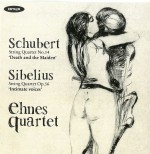
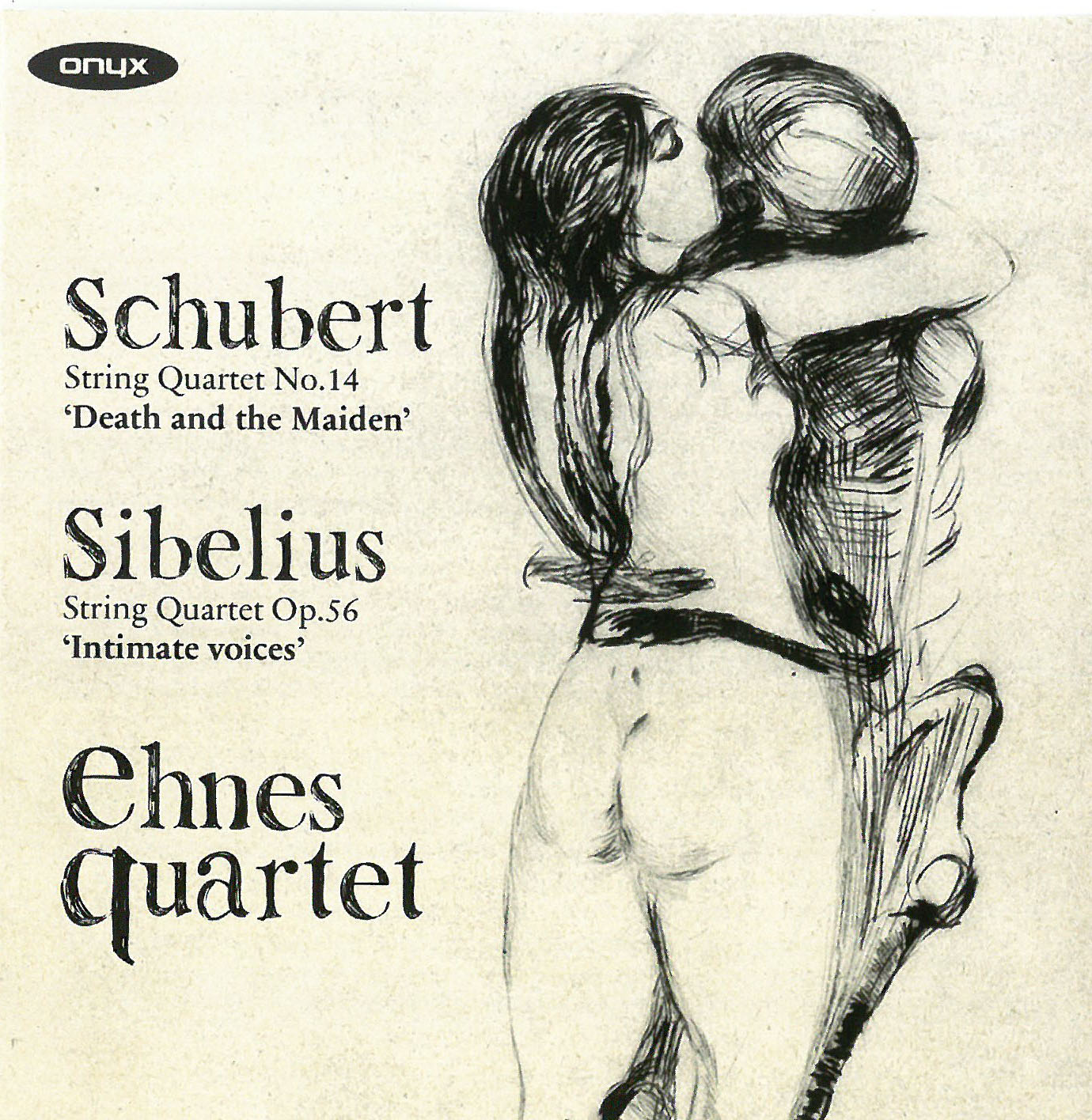
03 Ehnes QuartetJames Ehnes leads his quartet partners Amy Schwartz Moretti, Richard Yongjae O’Neill and Robert deMaine on a beautiful new CD by the Ehnes Quartet of two works that share the theme of death, and the fear of death (Onyx 4163).

Schubert’s String Quartet No.14 in D Minor “Death and the Maiden” D810 was written in 1824, four years before the composer’s death, but at a time when Schubert was already seriously ill and experiencing failure, poverty and great misery in his life. Jean Sibelius’ String Quartet in D Minor “Intimate Voices” Op.56 was completed in 1909 after his life had been threatened by a throat tumour and he had, in the words of his biographer Erik Tawaststjerna, “passed through the shadows of the valley of death.”

Both works receive quite exceptional performances here, with fully committed emotional playing, a fine range of dynamics and a terrific ensemble feel, all enhanced by a warm and richly recorded ambience.

The Schubert is by far the better known of the two works, but the Sibelius may well be the surprise here for many listeners. The composer’s only quartet, it has a nostalgic, deeply personal feel not unlike Smetana’s first quartet From My Life. The booklet essay notes that the work has generally been regarded as uncharacteristic and has never really become a repertoire favourite, and the remark that its neglect “remains unexplained and regrettable” is 100 percent accurate.

Hopefully this beautiful and moving performance will help to rectify that.
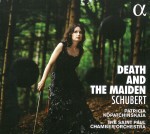
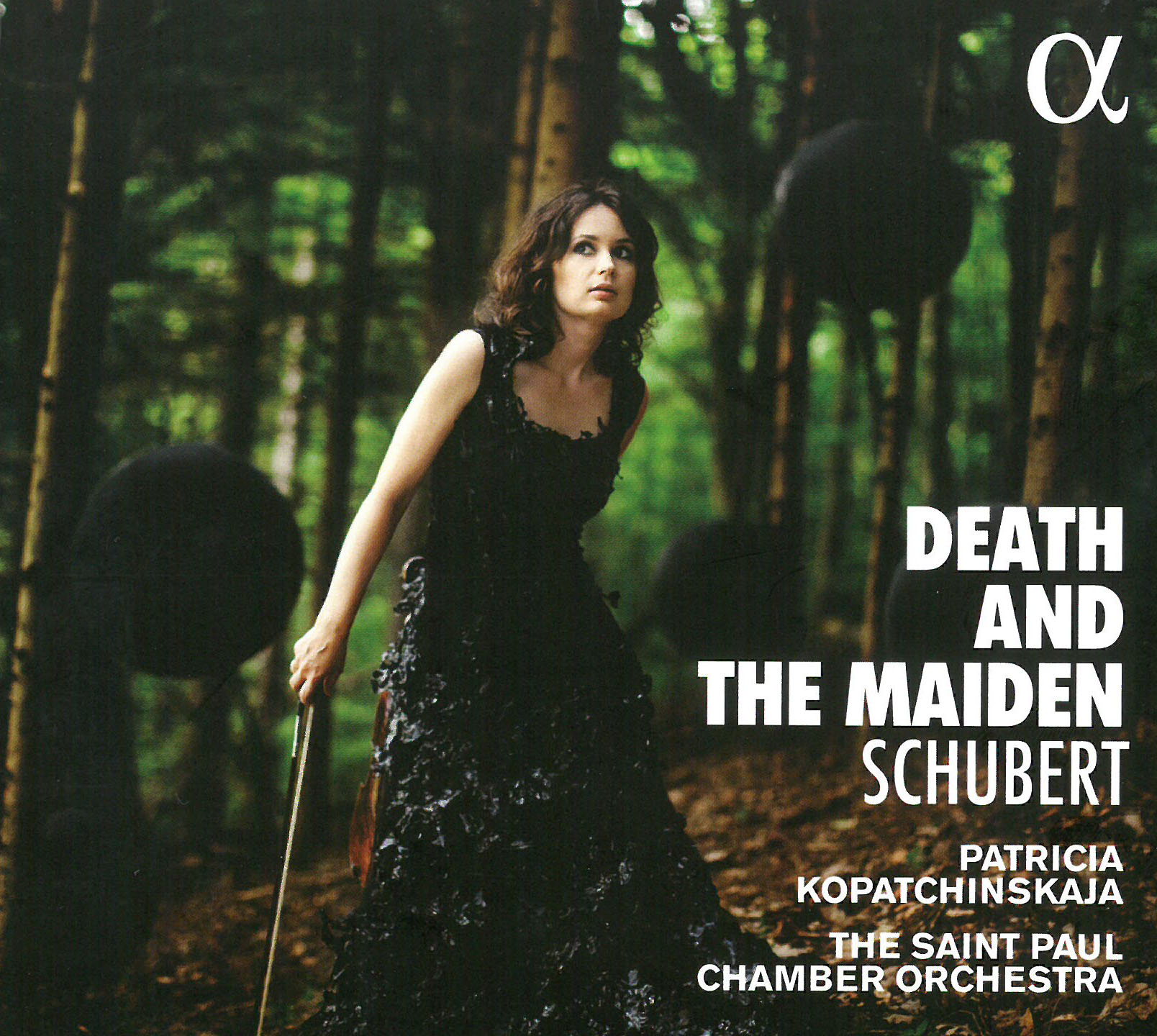
04 Death and the MaidenThe Schubert work turns up again, this time in an arrangement for string orchestra, on Death and the Maiden, a collaborative exploration of the theme of death by violinist Patricia Kopatchinskaja and The Saint Paul Chamber Orchestra (Alpha Classics 265).

Recorded live in concert in Saint Paul over three dates in March 2015, this multifaceted project intersperses short works that date mostly from the 16th century between the four movements of the Schubert quartet, the latter arranged by Kopatchinskaja. We hear Augustus Nörmiger’s Toten Tanz; an anonymous Byzantine Chant on Psalm 140; John Dowland’s Pavan from Seaven Teares for String Quintet; Carlo Gesualdo’s madrigal about death Moro lasso; and two pieces by the 20th-century Hungarian composer György Kurtág.

The meat of the program, however, is clearly the Schubert, and it proves to be very effective in this string orchestra version. The Romantic nature and the scope and drama of the quartet are certainly enhanced by the greater dynamic forces, especially in the theme and variations movement that gives the work (and this CD) its name. Kopatchinskaja leads the ensemble from the first violin stand, and the orchestral playing is superb, especially in the dazzlingly brilliant final Presto.
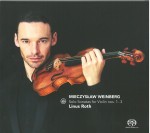
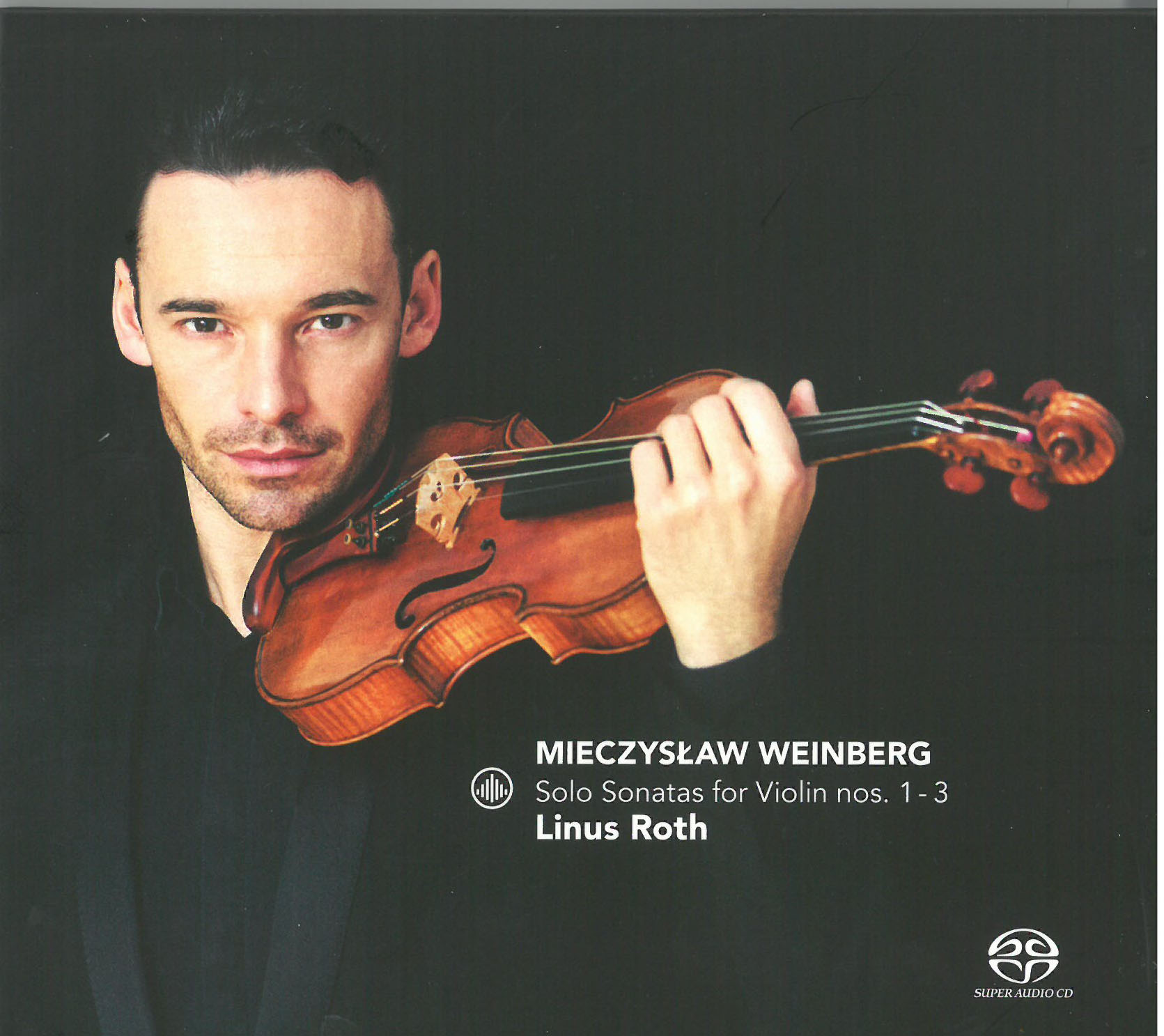
05 WeinbergAnother CD that intersperses short movements between the major works is the new Super Audio disc from the German violinist Linus Roth of the Mieczysław Weinberg Solo Sonatas for Violin Nos.1-3 (Challenge CC72688).

The Polish/Soviet Weinberg settled in Moscow in the early 1940s with Shostakovich’s help, and the two composers shared a close friendship and clearly influenced each other. Weinberg’s music has long been unjustly neglected, but that has gradually been changing since his death in 1996, with an ever-increasing number of CDs exploring his extensive and hugely impressive output.

It’s music by Shostakovich that is interspersed with the three Weinberg sonatas, the Three Fantastic Dances from 1922 in the Harry Glickman arrangement for violin and piano intended to – in Roth’s own words – “lighten the texture of the otherwise awfully dense and dark fare” that the Weinberg sonatas present. José Gallardo is the pianist.

Certainly Sonatas Nos.1 and 3, from 1964 and 1978, are unrelenting, somewhat intimidating works of extreme difficulty – the latter is a single movement work of almost 30 minutes’ length. Sonata No.2 from 1967 is shorter, somewhat easier (in relative terms!) and less aggressive – and certainly more immediately accessible.

Roth plays superbly throughout the CD, but particularly in the three works that are a significant part of the solo violin sonata repertoire.
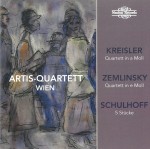
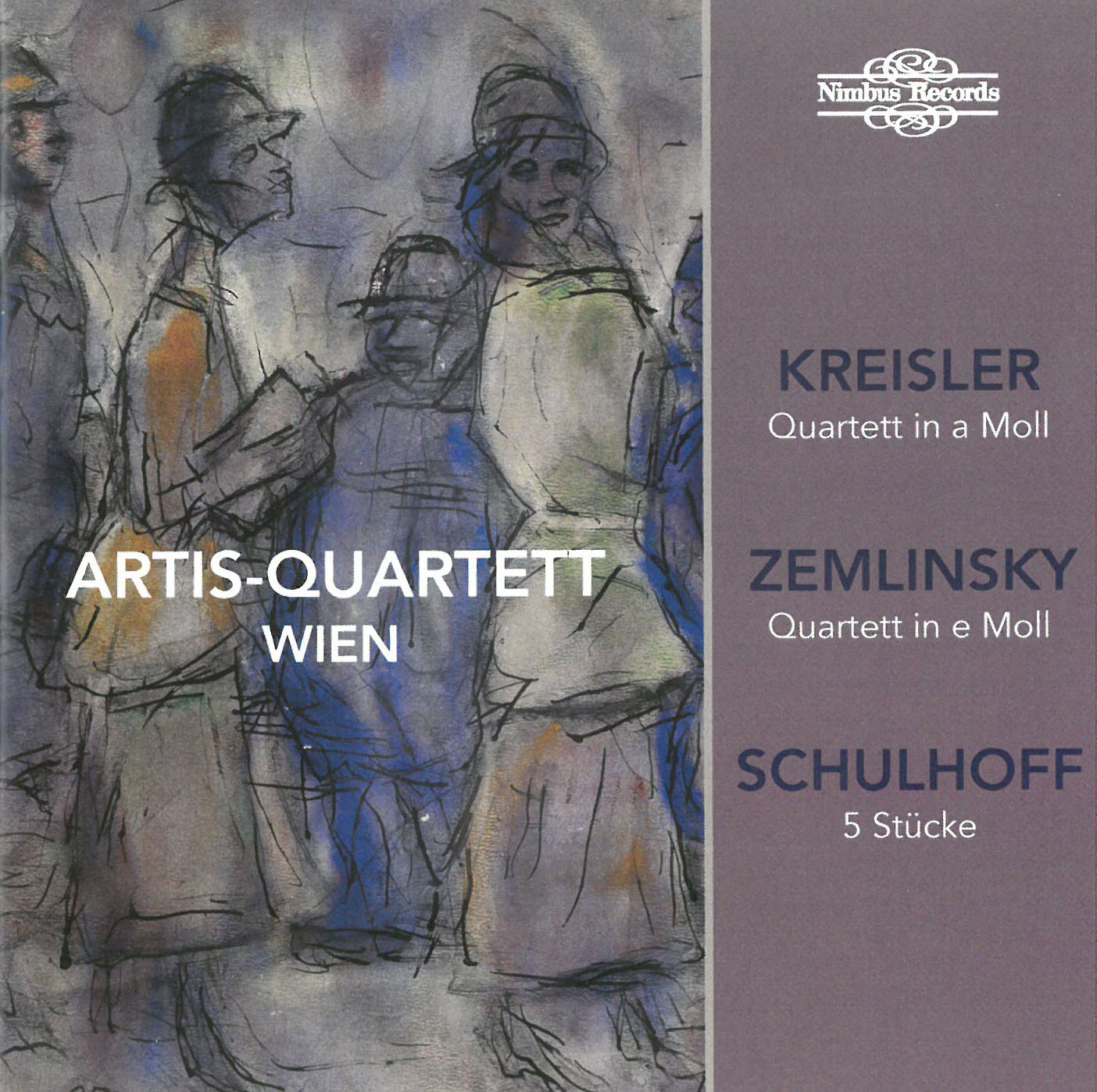
06 Artis QuartettThere’s more excellent string quartet playing on the latest CD from the Artis-Quartett Wien, with seldom-heard works by Kreisler, Zemlinsky and Schulhoff (Nimbus Records NI 5942).

If the Viennese violinist Fritz Kreisler is known as a composer at all it’s usually for his series of “in the style of” pieces that he eventually admitted were original compositions, but his String Quartet in A Minor is a surprisingly strong work. Written in 1919, its tonal language is very much that of the early 20th-century Austro-German composers, and is almost certainly a nostalgic look back at the Vienna of Kreisler’s youth and of the Hapsburg Empire, a Vienna lost forever in the First World War. Kreisler had served in the Austrian army at the outbreak of the war, but was wounded and discharged within three months, spending the rest of the war years in the United States.

Although he lived in Prague during the 1914-1918 war, Alexander Zemlinsky was another Viennese composer who ended up in the United States, in his case as a result of the rise of anti-Jewish sentiment in the Germany of the 1930s. His String Quartet in E Minor is a very early work from 1893 that was suppressed by the composer after its initial rejection and did not appear in print until 1997. Clearly – and not surprisingly – influenced by Brahms, it is a strongly Romantic work with a particularly lovely Andante movement.

The Prague-born Erwin Schulhoff completes the trilogy of composers whose careers were impacted by war, although in his case it would cost him his life. He served in the Austrian army throughout the First World War, but after being arrested by the Nazis in Prague in 1941 was deported to the Wülzburg concentration camp in Bavaria, where he died of tuberculosis a year later.

From the opening bars of his Five Pieces for String Quartet from 1923 we are in a different world, one closer to the world of Schoenberg than the late 19th-century tradition of Kreisler and early Zemlinsky. It’s essentially a suite of short dance movements strongly influenced by Czech speech inflections and rhythms, with terse, animated writing and muted strings creating a sense of social and cultural unease.

The Artis-Quartett was founded in Vienna in 1980, and is in its element with these three intriguing works.
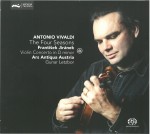
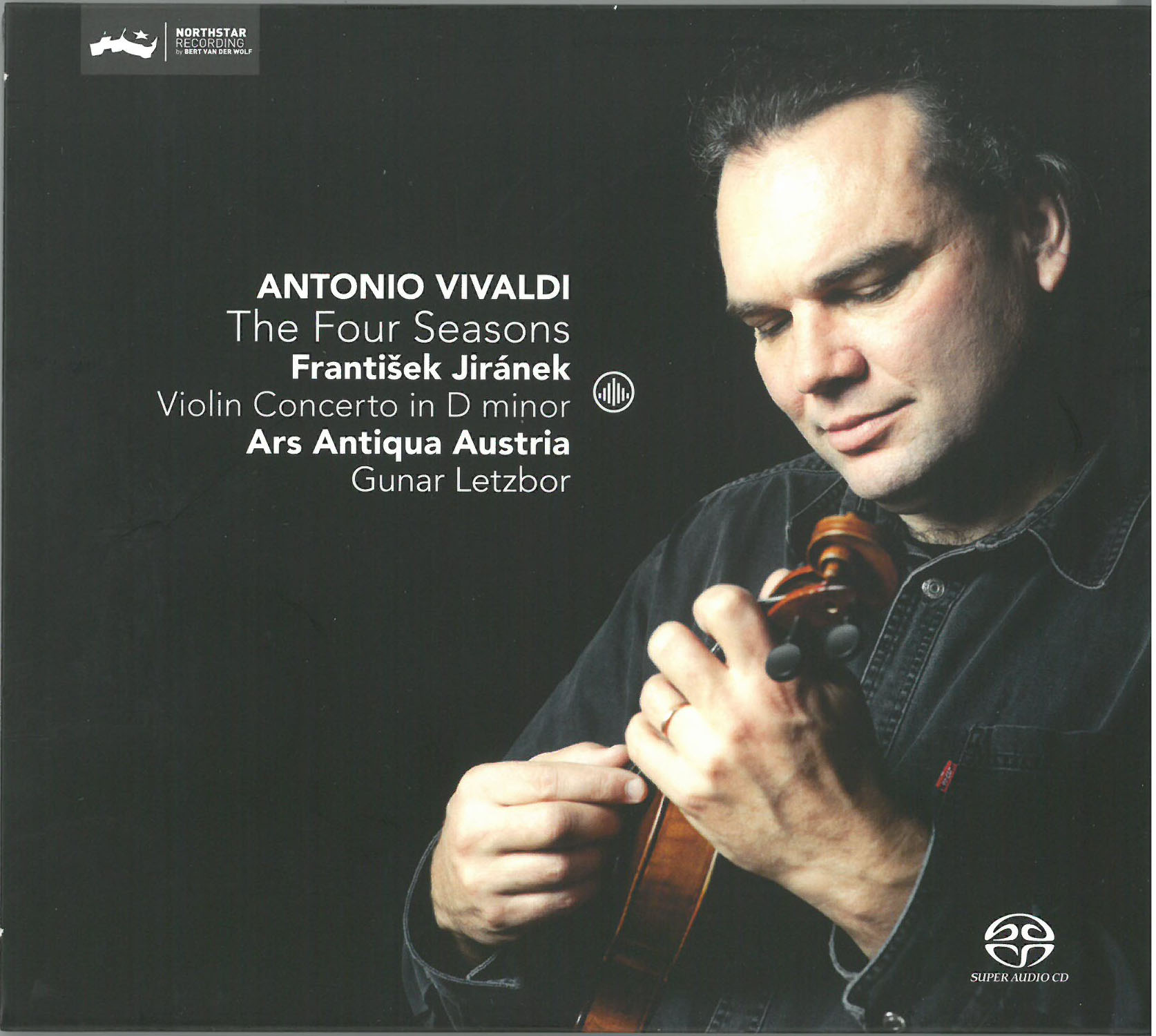
07 Vivaldi SeasonsGiven the constant stream of new recordings of Vivaldi’s The Four Seasons we could be forgiven for wondering if there could possibly be anything different left to say with them, but if the stunning new Super Audio CD from Gunar Letzbor and the Ars Antiqua Austria (Challenge Classics CC72700) is anything to go by then the answer is quite definitely yes.

This is Vivaldi with a quite different sound and clearly an equally different approach, made all the more impressive by the small size of the eight-piece ensemble – Ars Antiqua consists of single players for the solo, violin one and two, viola and cello parts, and a continuo of violone, organ/harpsichord and theorbo. The sheer size of the sound and dynamic range that they produce is astonishing.

So many of the movements here sound refreshingly different, and the attention to the wording of the accompanying sonnets (which are printed in full in the booklet) is clear, whether it’s the steady rhythmic stresses, the bird song effects, the heavy stomping of a rustic country dance or the furious outburst of a storm. Major tempo changes throughout the individual movements add to the effect.

The Violin Concerto in D Minor by the Bohemian composer František Jiránek, who studied in Venice (possibly with Vivaldi) between 1724 and 1726, completes the CD. It is much in the style of his contemporary, and is played here in a manner closer to the Vivaldi we usually hear.

Between the recording sessions in April 2016 Ars Antiqua performed this same program in two concerts; the audiences, Letzbor notes, were enthusiastic about the Vivaldi, “but at the same time also surprised. The unanimous opinion: we have never heard it like this before.”

Well, neither have I – and the chances are, neither have you. If you have any interest whatsoever in The Four Seasons then this is a CD you simply must hear.
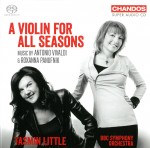
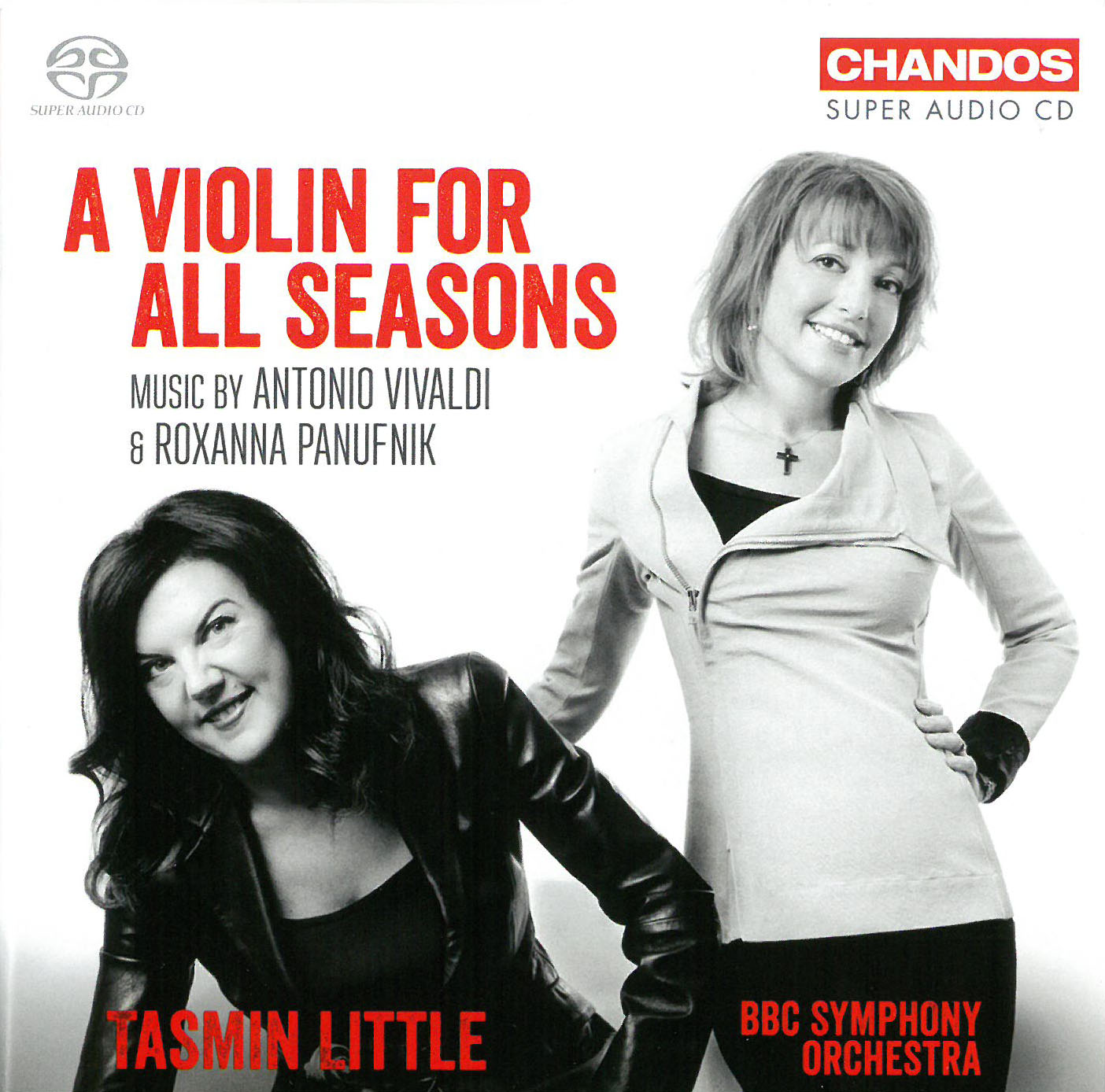
08 Violin for All SeasonsThe Four Seasons are also featured on A Violin for All Seasons – Music by Antonio Vivaldi & Roxanna Panufnik, another Super Audio CD with Tasmin Little as both soloist and conductor of the BBC Symphony Orchestra (Chandos CHSA 5175).

Although on first hearing this seems to be a performance more in the mainstream manner, Little was clearly fully aware of the great variety of performances available and of the need to offer something individual to the listener; she has apparently waited many years before deciding to commit a performance to disc. She admits to having been influenced by Baroque violinists although not being one herself, but as a modern player she feels that a larger orchestral accompaniment can add greater drama and nuance than a smaller group.

Playing this CD right after the Ars Antiqua CD cast more than a little doubt on that belief, but there is much here that lifts this performance out of the ordinary. For starters, Little is superb, with some simply dazzling playing and some fresh ideas, in particular her increased dialogue with continuo harpsichordist David Wright, whom she encouraged to be “as bold and different as he wished.” Both players improvise links between movements on occasion, and there is certainly an air of freshness about the entire proceedings.

The Vivaldi work continues to inspire new compositions as well as new approaches and interpretations, and such is the case with Four World Seasons, the Panufnik work that receives its premiere recording here. The work resulted from Little’s 2008 request for a new set of “Seasons” to be performed alongside the Vivaldi and was completed in 2011; since then Little has programmed both works in numerous concerts.

The composition of each of the movements here is influenced by a country with which the particular season has become culturally associated. Autumn in Albania is in memory of Panufnik’s father, the composer Andrzej Panufnik; Tibetan Winter (complete with Tibetan singing bowl), Spring in Japan and Indian Summer are dedicated to Tasmin Little. It’s a simply outstanding work, much deeper, more emotional, wide-ranging and passionate than the Vivaldi, with which it shares almost the same orchestration. It draws more terrific playing from Little and the BBC Symphony.
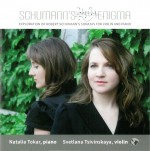
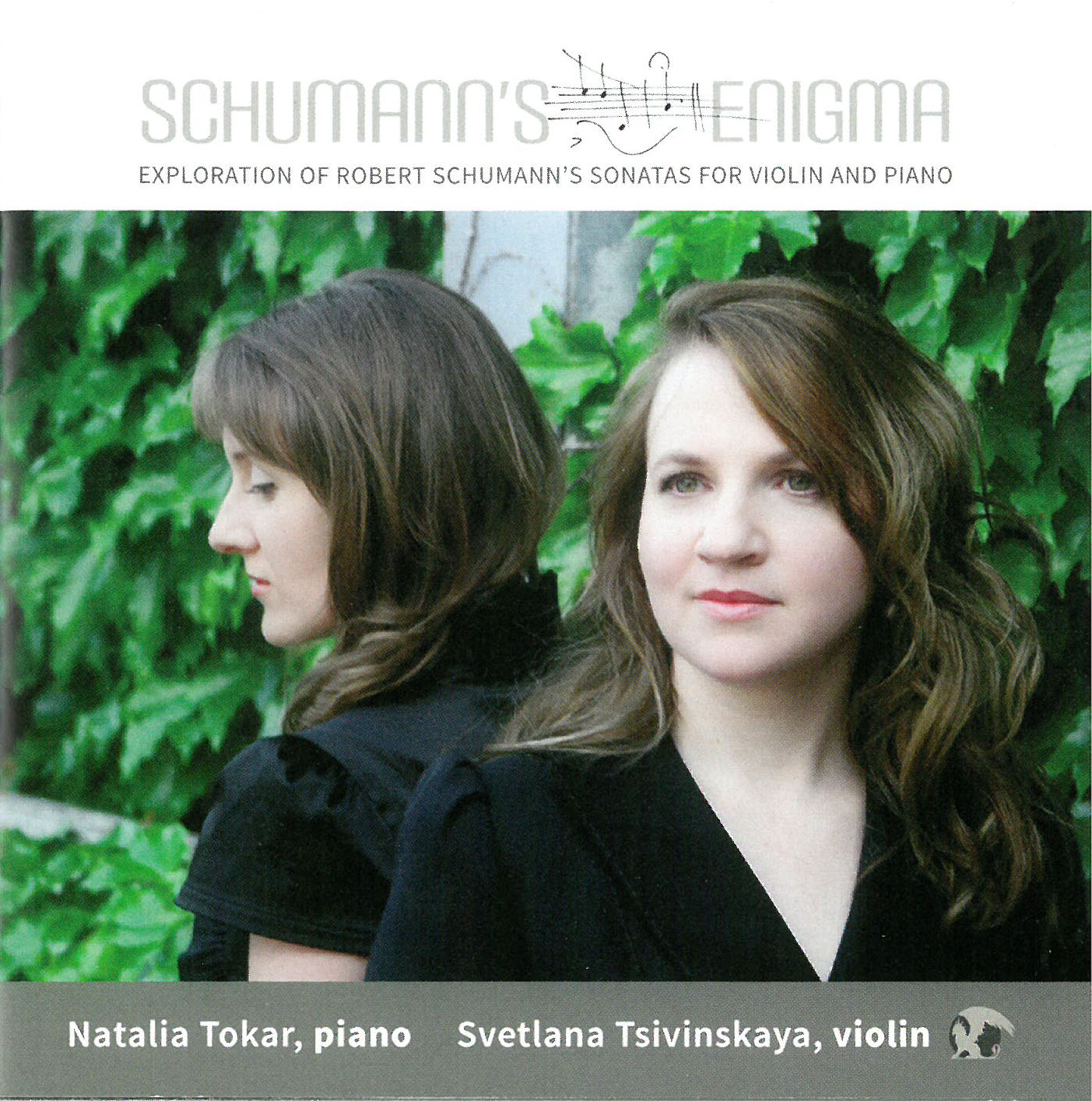
09 Schumanns EnigmanSchumann’s Enigma: An Exploration of Robert Schumann’s Sonatas for Violin and Piano is the excellent debut CD from violinist Svetlana Tsivinskaya and pianist Natalia Tokar (Blue Griffin BGR 391).

The Sonata in A Minor Op.105 and the Grand Sonata in D Minor Op.121 are both given accomplished readings, with some lovely playing from both partners – fairly restrained at times and not too dramatic, but always warm and with no lack of depth or commitment.

What gives these performances added interest, though, is the research and thought that has gone into them. Tsivinskaya provides an excellent essay on Schumann’s contrasting and imaginary alter egos Eusebius and Florestan, and the way he used them to explore his own contrasting ideas and his mental processes – and indeed the way he used cryptography and coded signatures of his wife Clara and his own various names to determine thematic material and choice of key in his works.

There seems to be a growing awareness of the significance of this approach among performers, with the cellist Carmen Miranda’s extremely detailed article along the same lines on Schumann’s Cello Concerto featured in a CD review in this column just last September.

Tsivinskaya’s penetrating essay here is a riveting and convincing analysis, and adds a great deal to our understanding of the two works.


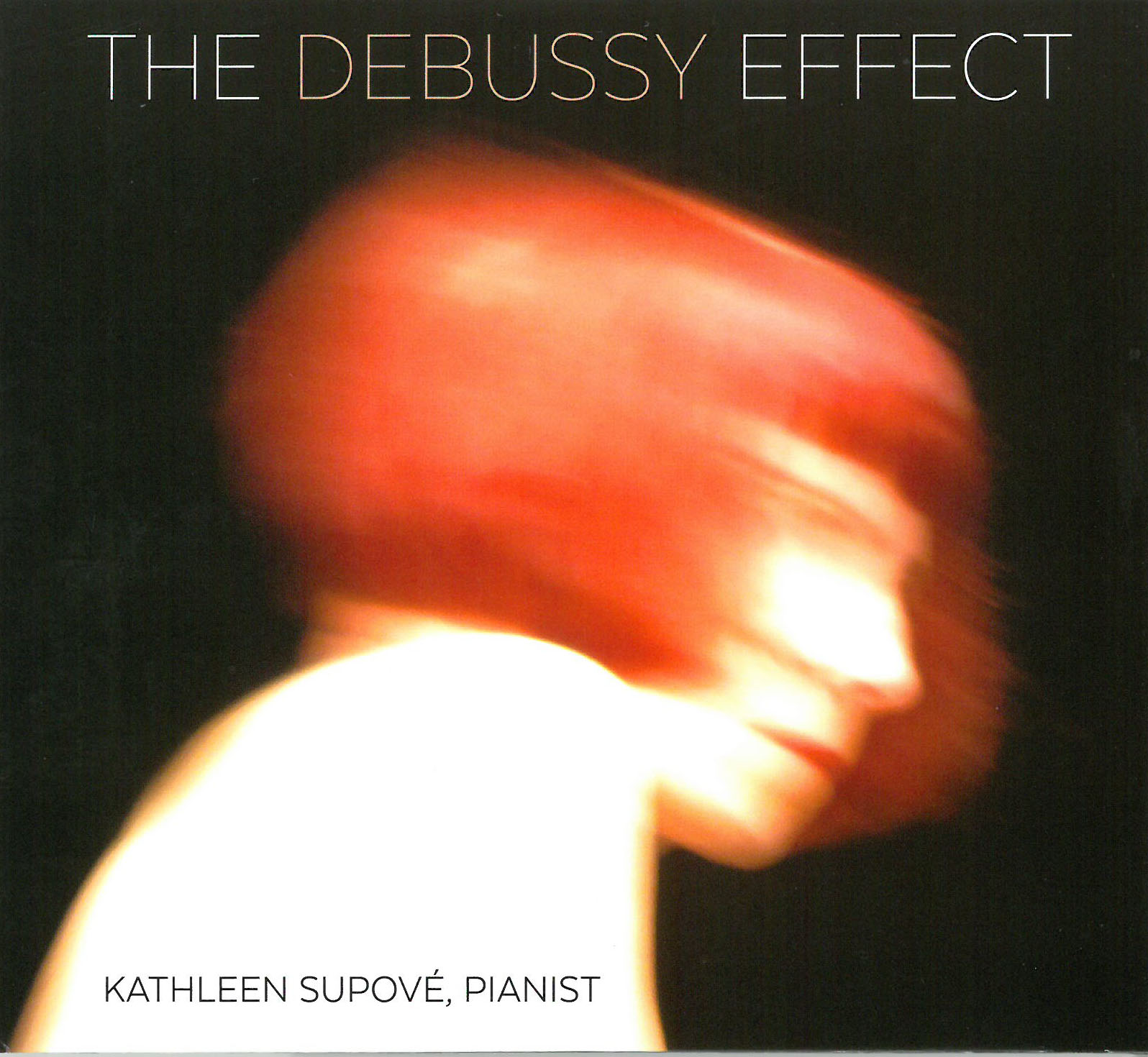
01 Debussy EffectA century ago we removed the boundaries that defined the general order of things in our world. Notions of social class, religious belief and art all flowed into a sea of mixing currents as we challenged ourselves to be comfortable with things much less clear than once had been. Composers, like painters, developed a powerful, post-Romantic language that guided the human experience of art beyond intellect and emotion and into something of an altered state. Less concerned with linear argument than impression, composers like Debussy mastered the vocabulary of other worlds and left us a creative legacy that has scarcely aged a day. So it seems natural that a contemporary musician like Kathleen Supové should commission a project from a group of seven 21st-century composers asking how the music of Claude Debussy has shaped their art, The Debussy Effect (New Focus Recordings FCR170).

Listening to these works in this context, they are all clearly tributes to the French impressionist, although some more tenuously than others. Still, there’s plenty of originality in this repertoire and Supové plays wonderfully, whether with or without electronic effects. Jacob Cooper’s La plus que plus que lent slows down Debussy’s waltz significantly as it plays with fragments of the original. Cakewalking (Sorry Claude) by Daniel Felsenfeld is especially creative in its unmistakable rhythms and occasional quotes from Debussy’s Golliwog’s Cakewalk.
The most effective work may well be Randall Woolf’s What Remains of a Rembrandt. Here the composer argues that the essence of Debussy is the element of mystery. Supové’s playing demonstrates a complete understanding of how Woolf sets out to render this element and achieves exactly what both he and Debussy would have intended.

The Debussy Effect is a bold and creative project that is as admirably clever as it is superbly performed.

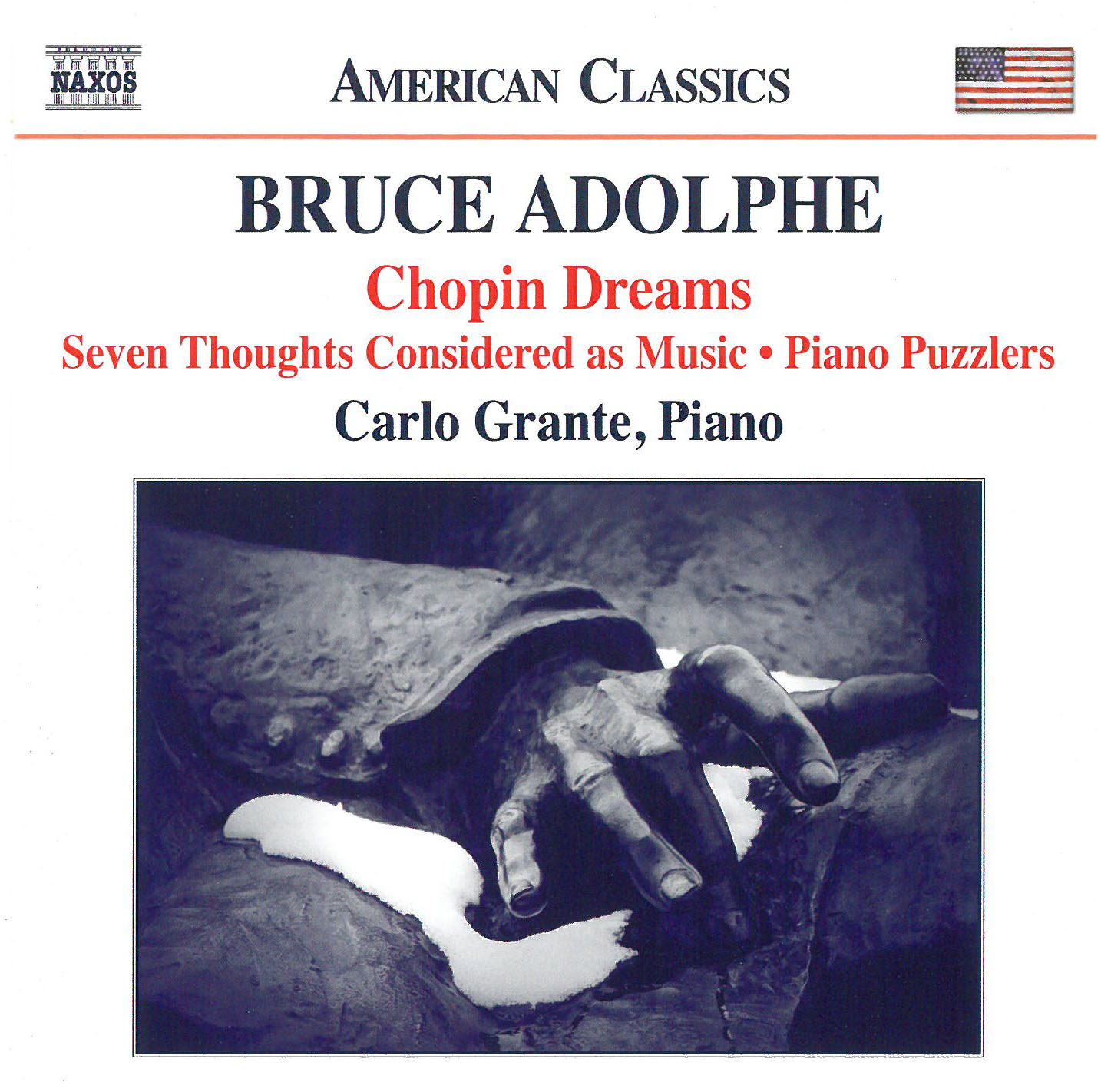
02 Bruce AdolpheAmerican composer Bruce Adolphe is often inspired by very contemporary social and political issues, and so it is that his latest recording, Bruce Adolphe – Chopin Dreams (Naxos 8.559805) is a little unusual.

The recording’s title work is an impression of how Chopin might compose today were he a jazz musician playing in a New York club. Adolphe does an artful job of borrowing Chopin’s distinctive keyboard language. He replicates the melancholy harmonies, the cascading right-hand arpeggios, the ornaments and filigree that we uniquely associate with the composer. He also writes in the forms that make up much of Chopin’s repertoire, the prelude, nocturne, mazurka and other dances.

While the premise of Chopin as a New York Jazz club pianist offers a comic element to be sure, it’s quickly dispelled by the highly informed and engaging nature of Chopin Dreams. Jazzurka, New York Nocturne, Quaalude and the other items in the set unmistakably use Chopin’s vocabulary. Even so, the frequent presence of the blue note seems entirely appropriate for Chopin, given his affection for the richness of minor keys.

Considerably more serious is Adolphe’s recent work Seven Thoughts Considered as Music (2016). Using short quotes from seven thinkers including Emerson, Chief Seattle and Kafka, Adolphe explores the transfer of deeper meaning to the voice of the piano. There’s great substance to these pieces and they merit more than one hearing.

Italian pianist Carlo Grante plays the newly redesigned Bösendorfer 280VC concert grand on this CD and has a great deal of fun with the nine Piano Puzzlers, short pieces that Adolphe regularly composes and performs on the American Public Radio program Performance Today. Familiar tunes like Deck The Hall, The Streets of Laredo and many others are set in the unmistakable style of Chopin’s best-known pieces, leaving listeners grinning at the composer’s imitative wizardry.

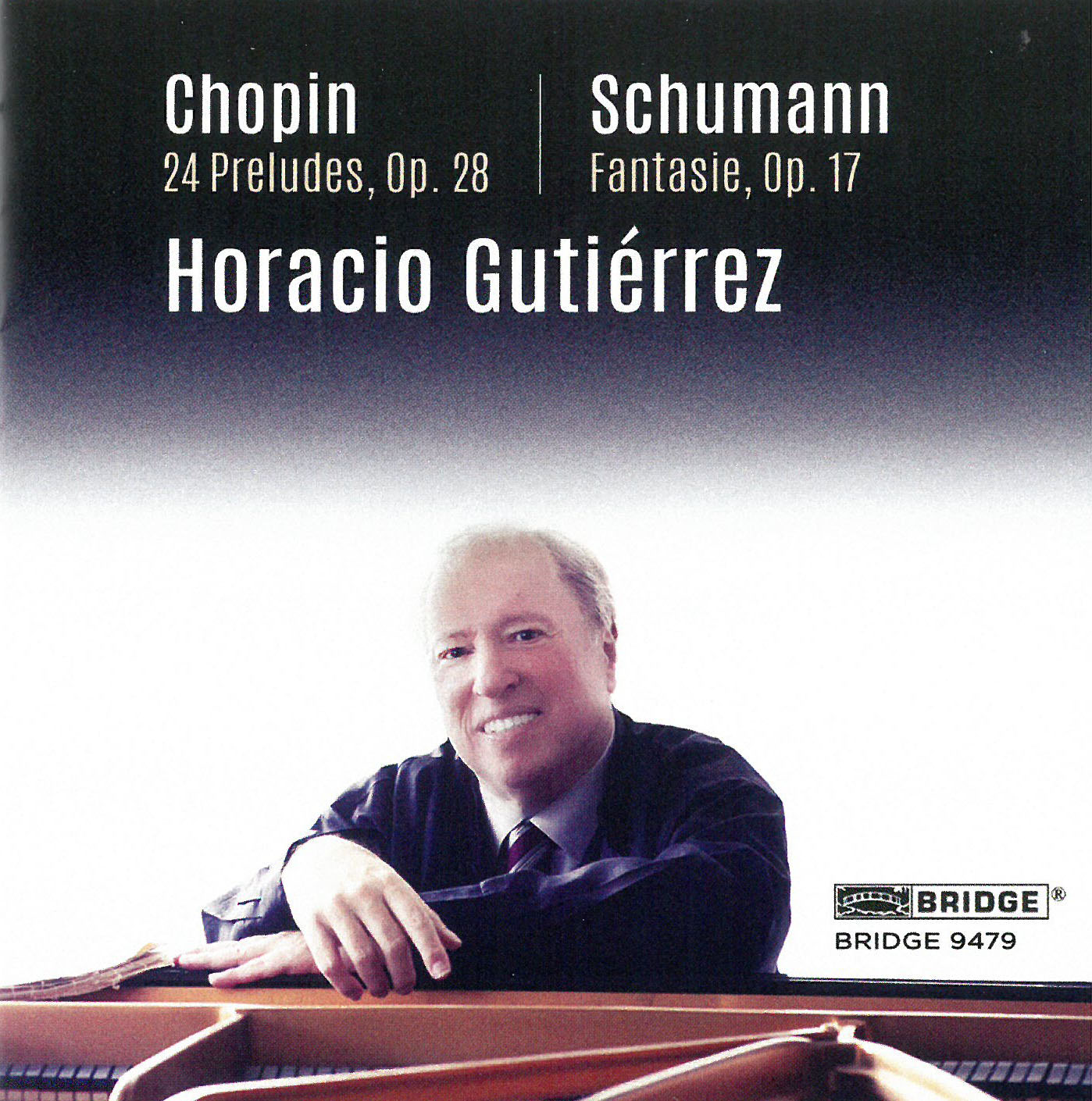
03 Horatio GutierrezHoracio Gutiérrez is a respected pedagogue and performer. His newest recording, Chopin 24 Preludes, Op.28; Schumann Fantasie Op.17 (Bridge 9479), is an impressive example of his playing. Never short of powerful expression and blazing speed at the keyboard, he is also capable of the tenderest phrasings required in Chopin’s 24 Preludes Op. 28. Each of these short pieces (some merely a half minute) is a complete idea that Gutiérrez treats as though it were entirely independent. Still, the progression of keys is logical and patterned, and so he holds the collection together for performance as a larger utterance. Many argue this was, in fact, Chopin’s intent.

Unlike Bach’s 48 Preludes and Fugues, these are not studies or practice pieces. Nor are they preludes to anything as one writer once famously queried. Instead they are best received as a kind of pianistic haiku. Short, self-contained and entirely complete.

Gutiérrez plays with a great deal of disciplined freedom that remains in control of the emotional content through a very precise keyboard technique. This is especially important for the Schumann Fantasie Op.17 where the great contrasts in mood are vital to the work’s impact. The middle sections of the second and third movements demonstrate this wonderfully as does the final, tranquil ending. Every note and phrase is perfectly placed. There is no excess. All is in perfect balance.

Gutiérrez’s students at the Manhattan School, where he currently teaches, are fortunate to have such a mentor.

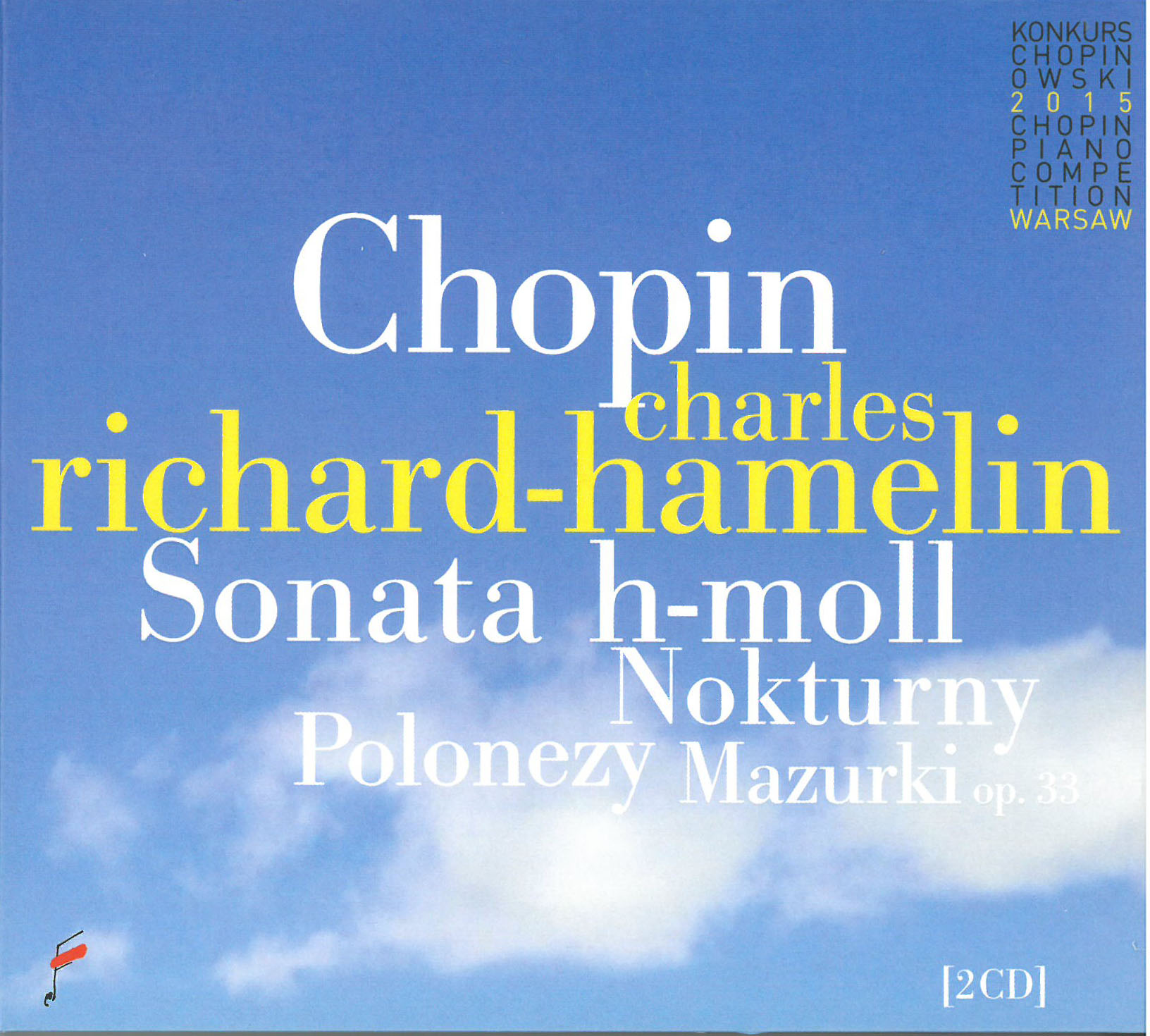
04 Chopin Richard HamelinSecond-place winner of the 17th International Chopin Piano Competition in 2015, Charles Richard-Hamelin’s live performances on Chopin Sonata B Minor Op.58; Nocturnes (The Fryderyk Chopin Institute, Polish Radio NIFCCD 617-618) demonstrate why he impressed the panel of judges so profoundly. Perhaps more than anything, Richard-Hamelin plays as if no one else were present, firmly connected to the core of the music and completely given over to it. His technique is impeccable and his interpretive decisions mature and credible. Moreover, he manages to inject subtleties into his performances that would catch the judges’ attention. Micro hesitations, refinements of standard dynamics, tempo relaxations, all give his playing of well-worn works originality and freshness.

Despite the fact that the pieces were recorded at various sessions, the three auditions and the final concert, it would have been evident early on that Richard-Hamelin was a serious contender for one of the top spots in this race. Disc one of this 2-CD set closes with the Rondo in E Flat Major Op.16. It’s a piece that uses almost every one of Chopin’s devices and Richard-Hamelin sails through them effortlessly, never showing fatigue or anything less than total focus on the artistic demands of the work.

Disc two features a few more smaller pieces but offers the B Minor Sonata Op.58 as its major work. Richard-Hamelin’s capable grasp of its wide-ranging demands earned him his winning spot plus the Krystian Zimerman prize for the best performance of a sonata.

The 2015 17th International Chopin Piano Competition was the first time Canada had appeared in the rankings in the competition’s history.

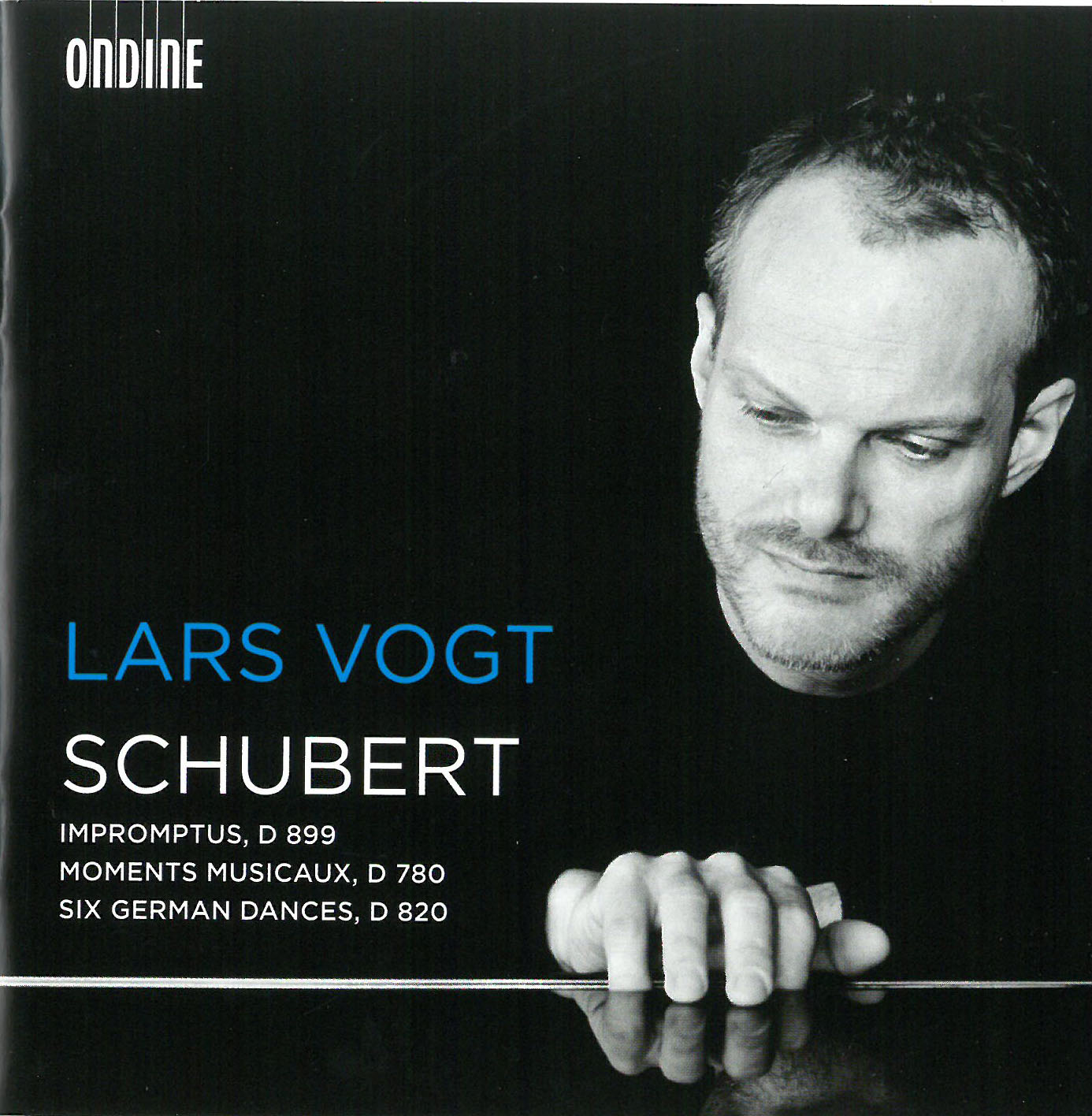
05 Schubert VogtLars Vogt’s new recording, Schubert – Impromptus, D899, Moments Musicaux D780, Six German Dances D820 (Ondine ODE 1285-2) offers familiar repertoire although with a detectable inward focus.

The liner notes include a wonderful interview with Vogt in which he reveals his personal thoughts on Schubert and the repertoire in this recording. It’s worthwhile and instructive to read about the intellectual process behind the creative one.

Vogt has a unique style at the keyboard. It’s one that has all the warmth and romanticism to express Schubert’s most heartfelt passages, yet also includes a sharp, bright exclamatory touch that can be as brief as a single note or sometimes carry an entire phrase. This plays nicely against the otherwise mellow nature of Schubert’s rich harmonies.

The Six German Dances, in particular, are surprisingly tender in Vogt’s hands. Here he argues for an approach that is truer to the original style of the pieces, more down to earth and tender, perhaps even pointing to the convivial bliss of simple country folk.

The familiarity of the Impromptus D899 makes them a special challenge. Vogt does a terrific job with them all, but really makes No.4 stand out with his remarkably light staccato on all the descending runs in the treble.

The Moments Musicaux D780, too, are favourites and require something to make them distinctive. No.6 is often played with far more contrast than Vogt brings to this performance. Instead, he opts for a more wistful approach throughout and it works well. Overall, Vogt seems to raise the bar on everything without ever going too far. It’s an impressive process of balance and taste that has produced a very satisfying recording for Schubert collectors.

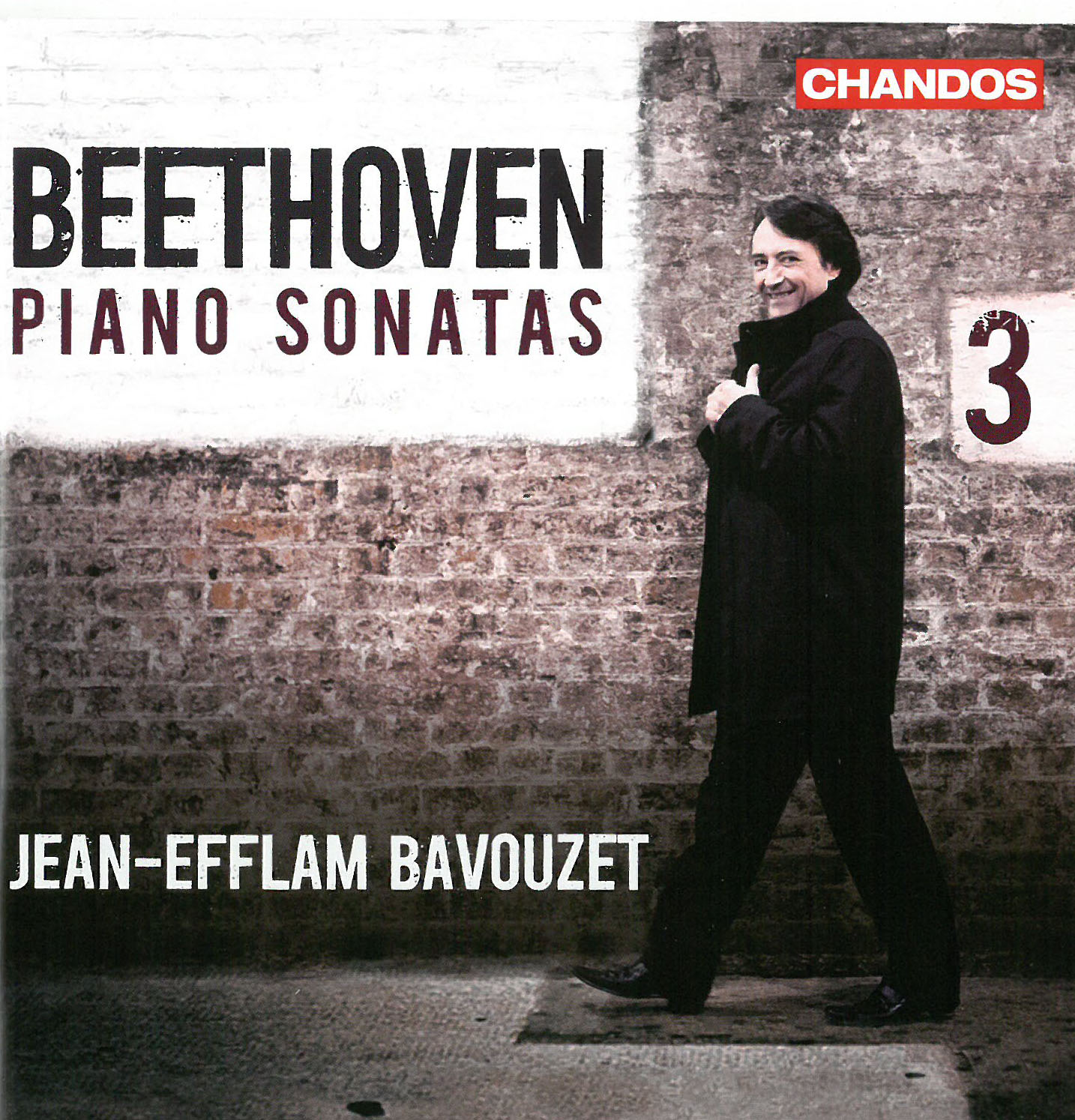
06 Beethoven BavouzetJean-Efflam Bavouzet has completed his recording of the Beethoven piano sonatas with the release of Beethoven Piano Sonatas Vol. 3 (Chandos CHAN 10925(3)). Do we need another Beethoven Sonata cycle? Bavouzet occupied himself with this very question before committing to the project for Chandos. Those who know and cherish these works will each have favourite interpreters who have revealed new meaning in them. Bavouzet argues that projects like this are evolutionary and therefore benefit from all those that preceded them.

As a mature artist in his mid-50s, Bavouzet indeed has something to say and he says it convincingly. His performance of the Sonata Op.57 “Appassionata” is surprisingly understated through most of the second movement. This heightens the impact of the final movement which follows very aggressively without a break. His speed and precision seem effortless. He shapes Beethoven’s phrases intelligently and manages to keep the composer’s impetuous nature teeming without boiling over.

The Sonata Op.106 “Hammerklavier” is the towering, complex work after whose final measures, a sonata cycle like this either succeeds or crumbles. Bavouzet emerges in this performance as an artist fully capable of embracing the essence of what Beethoven had to say, and how to say it. Bavouzet’s revelation in this repertoire is that Beethoven was not a mad composer pouring magnificent anger from his pen. Rather, he was an impassioned genius crafting everything with an exacting science rooted in his soul. Bavouzet obviously “gets” Beethoven – in the profoundest way.

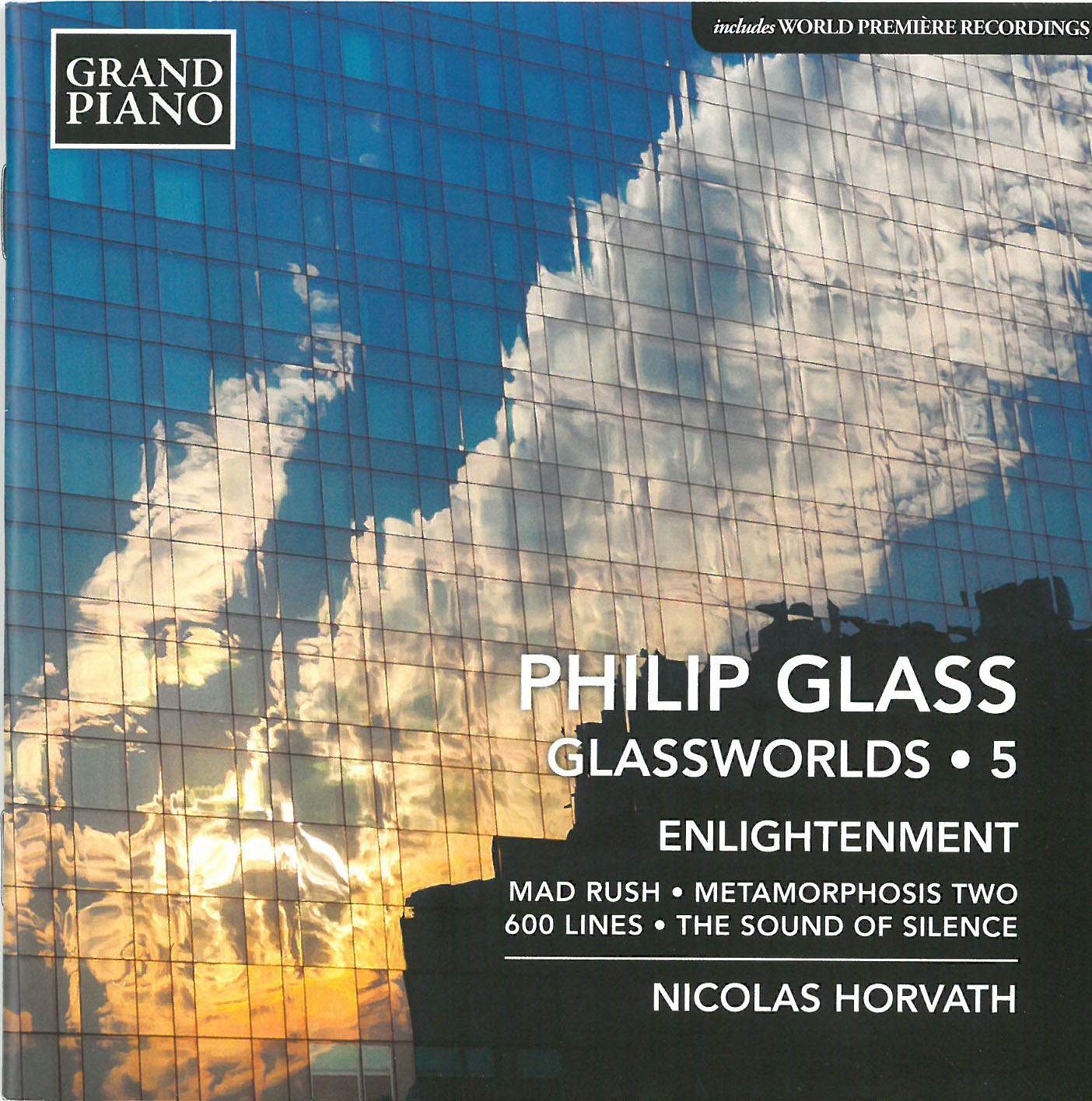
07 Glassworlds 5In addition to his stature as a Liszt interpreter, Nicolas Horvath devotes a considerable amount of his career energy to contemporary music. The new release Glassworlds • 5: Enlightenment (Grand Piano GP745) continues his recordings of the piano music of Philip Glass.

Two large, major works nearly fill this disc. Mad Rush, written in 1979 as a commissioned organ piece under a different title, has since been renamed and performed as dance accompaniment as well as a piano solo. Glass performed it himself several times and perhaps most interestingly as music for the entry of the 14th Dalai Lama into the Cathedral of St. John the Divine.

600 Lines is a 40-minute piece built on just five pitches played in varying rhythmic patterns constantly shifting emphasis on principal notes in those patterns. If you’re acquainted with the English bell ringing tradition of “ringing changes,” this piece will surprisingly make a lot of sense.

Considerably shorter but no less engaging is Metamorphoses (5): No. 2. The work had never been published, so Horvath naturally takes some pride in performing its world premiere as a solo piano work. Horvath clearly has a deep affection for Glass’ music that goes far beyond the intellectual. His grasp of it is both passionate and revealing.

In writing his own, excellent liner notes for this recording, Horvath closes by quoting the composer, “Music is a social activity…Music is a transaction; it passes between us.”

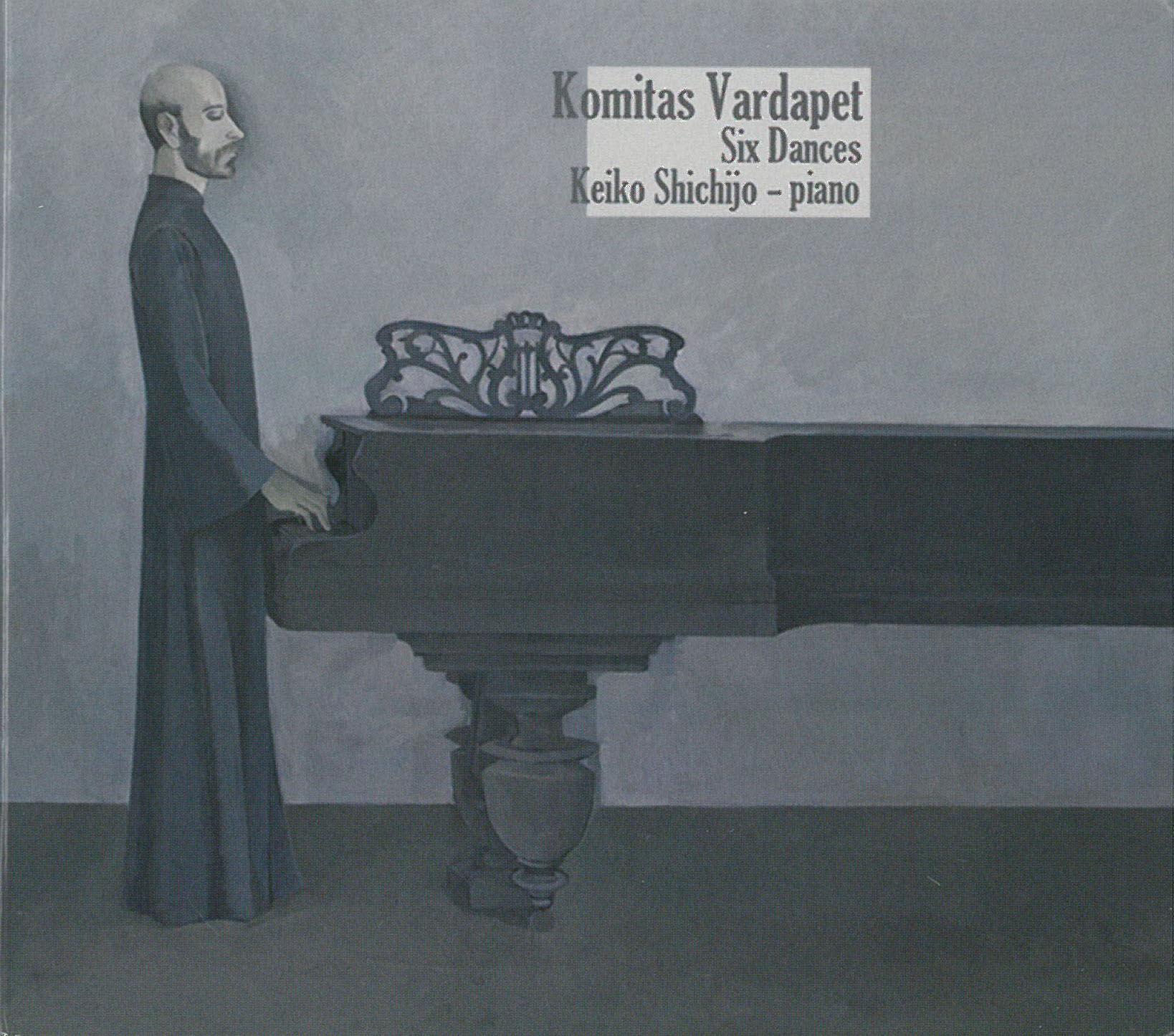
08 Komitas VardapetThe most exotic item in this month’s collection is Keiko Shichijo’s new release Komitas Vardapet – Six Dances (Makkum Records MR.17/Pb006). It’s as unusual for its repertoire, as it is for its brevity, a mere eighteen minutes. The dances are based on Armenian folk melodies which the composer transcribed from original settings for folk instruments. Komitas is said to have notated some 3,000 Armenian folk tunes; only 1,200 survive.

Although an ordained priest, his work as an ethnomusicologist has made him an icon in the history of Armenian culture. His exposure to Western European music came from his studies in Berlin at the end of the 19th century. Shichijo chose to record his solo piano work Six Dances after performing some of his other compositions with a chamber ensemble. She is remarkably persuasive in the way she portrays the percussive, and otherwise non-Western, stylings of this music. It’s nearly all monodic, just a single melody line, sometimes in octaves, against the barest of accompaniments. There’s a definite feel of Debussy’s exoticism about Komitas’ music.

While it’s a modest recording effort, it’s a beautiful fusion of worlds that creates the temptation to hear more of this composer’s repertoire.

Review

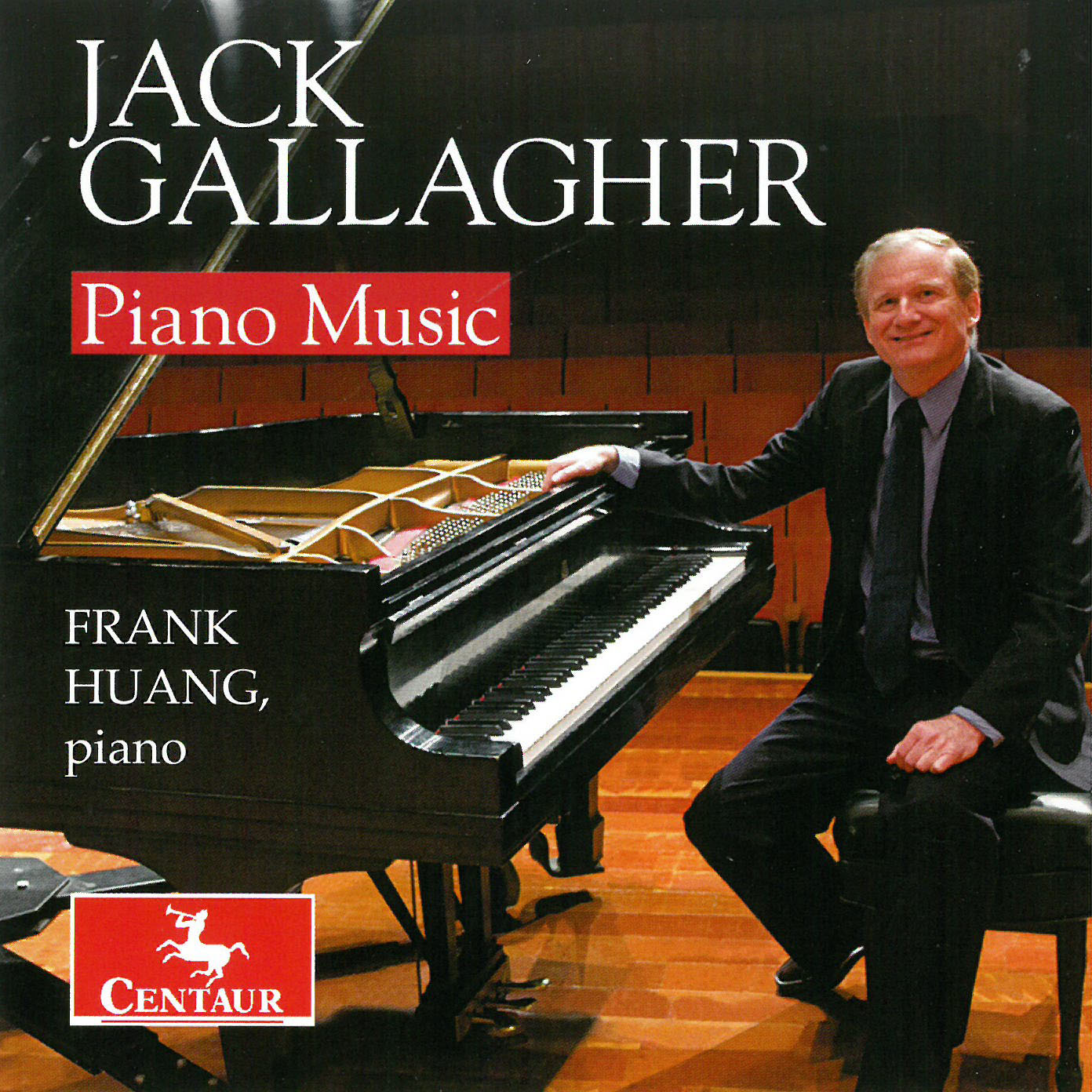
09 Jack GallagherAmerican composer Jack Gallagher claims the piano is not his principal instrument, but his apology evaporates as soon as you hear his music. In Jack Gallagher Piano Music (Centaur CRC 3522) pianist Frank Huang captures the colour and imagination of Gallagher’s writing whether in works lighthearted or those more cerebral.

Gallagher writes with a great care for structure. Form and planning are important to him. This makes his works easy to navigate for both listener and performer while he evolves his more complex musical material.

Huang plays this repertoire with ease and familiarity. Works like the Sonata for Piano are very technically demanding as is Malambo Nouveau. Others like Six Bagatelles and Sonatina for Piano, less so. Still, works like Six Pieces for Kelly, written specifically for young performers, never lack for a mature and profoundly musical touch. Every so often a Gershwin-like harmony slips by, leaving an echo of Broadway and a reminder of how American this music is.

Huang’s performance is confident, bold and celebratory; Gallagher’s writing seems to induce those qualities. This recording is a perfect match between composer and performer.

10 Bach Partitas harpsichordHarpsichordist Jory Vinikour has released Partitas BWV 825-830 J.S. Bach (Sono Luminus DSL-92209), a wonderful example of how varied and engaging Bach can be at the harpsichord. If you need an introduction to Bach, then his 1731 self-published Opus 1 is a good place to start.

Using a two-manual instrument built in 1995 on the scheme of a 1738 German harpsichord, Vinikour takes very deliberate time to play through the six Partitas in this three-disc set. While most items in the Partitas are labelled as dance movements, some offer a very different character and Vinikour is careful to find and exploit the essence of each piece.

The Toccata of Partita No.6 in E Minor BWV830 opens and closes with waves of fantasia-like arpeggios that are a sharp contrast to the highly ordered material between them. The Overture of Partita No.4 in D Major BWV 828 begins with an extended statement that offers all the drama of an opera before moving into the discipline of a fugue. The following Allemande is a beautiful and languorous melodic wander through Bach’s harmonic world. Vinikour knows this territory well, using every technical and interpretive device to maximum effect. He knows how far to push the limits of free Baroque forms as well as complying with the rigours of Bach’s fugal treatments.

On a technical note, the recording uses terrific stereo separation that’s very effective.

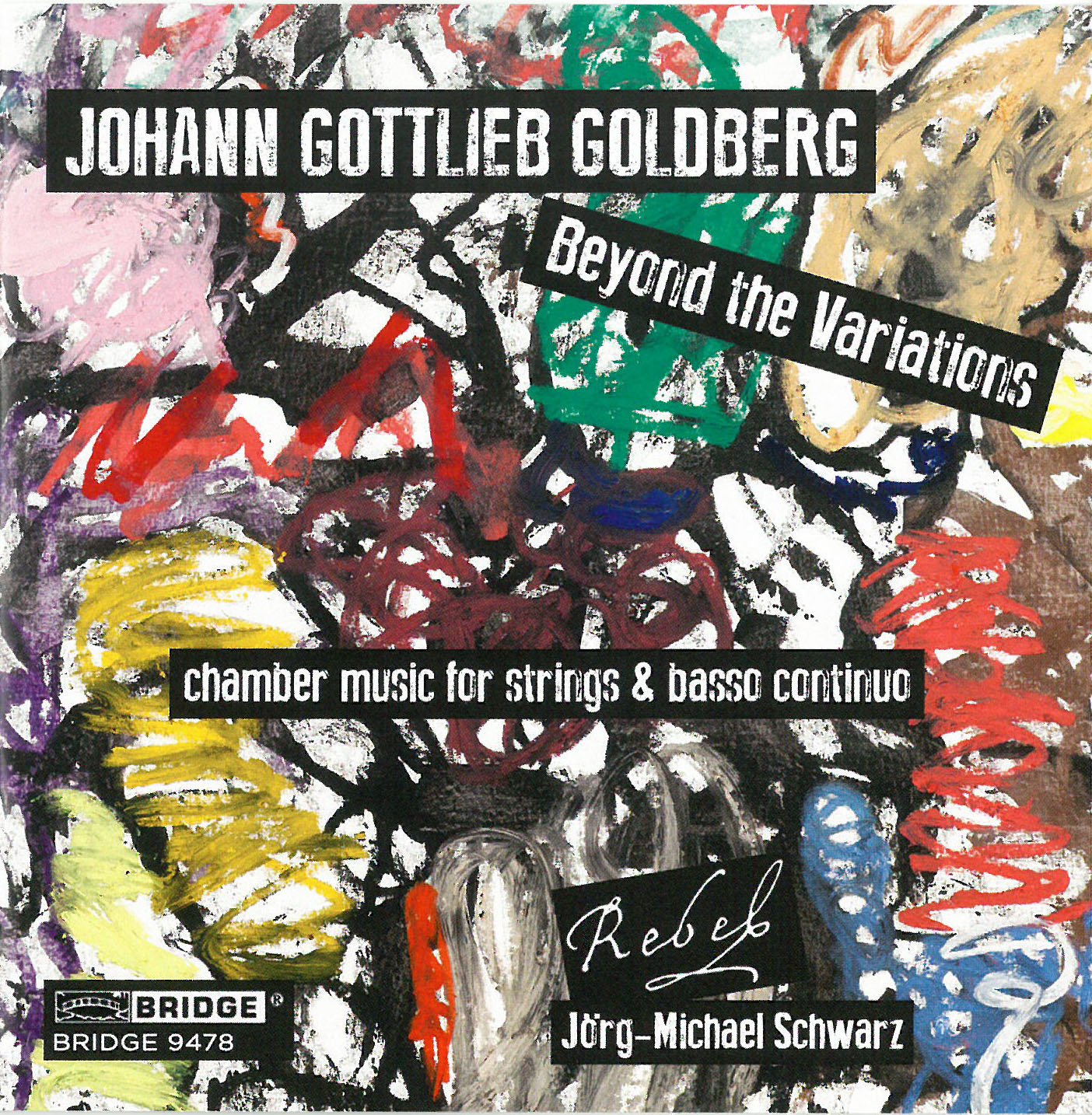
01 Goldberg Beyond Variations

Johann Gottlieb Goldberg – Beyond the Variations
Rebel; Jörg-Michael Schwartz
Bridge Records 9478 (bridgerecords.com)

Review

Johann Gottlieb Goldberg, namesake of Bach’s famous Variations, was a highly talented musician. His life (1727-1756) was tragically short, but this CD, with five of Goldberg’s sonatas, shows us just what we were deprived of. Jörg-Michael Schwarz, playing a 1668 Jacobus Stainer violin, sets the scene with some beautiful playing in the Adagio of the B-flat Major Sonata. In the Allegro he is joined by Karen Marie Marmer playing a 1660 Stainer in a highly spirited Allegro. A Ciacona, at times stately and at others very lively, ends the sonata.

Goldberg’s Sonata in G Minor is thoughtful and involves the basso continuo much more than in the preceding sonata. There is a richness to John Moran’s cello playing in the Adagio before the violinists interpret the Allegro with a real passion and zest. The final movement of this sonata is the somewhat conventional Tempo di Menuetto.

Enter the viola of Risa Browder. The Largo in the Sonata in C Minor is indeed dignified, as the viola adds an element of complexity to the sonata. This is sustained in the cheerful Allegro and Giga.

The Sonata in A Minor features an Alla Siciliana movement, a dreamy composition which brings out both the violin playing and Goldberg’s own skills as a composer. It is movements like this and the following Allegro assai which bring home what was lost to us when Goldberg died so young.

Finally, there is the Sonata in C Major with its majestic Adagio worthy of any great Baroque composer. The Gigue which concludes the sonata also concludes this CD – again, an inspired introduction to the music of someone who could have generated a lifetime of wonderful music.

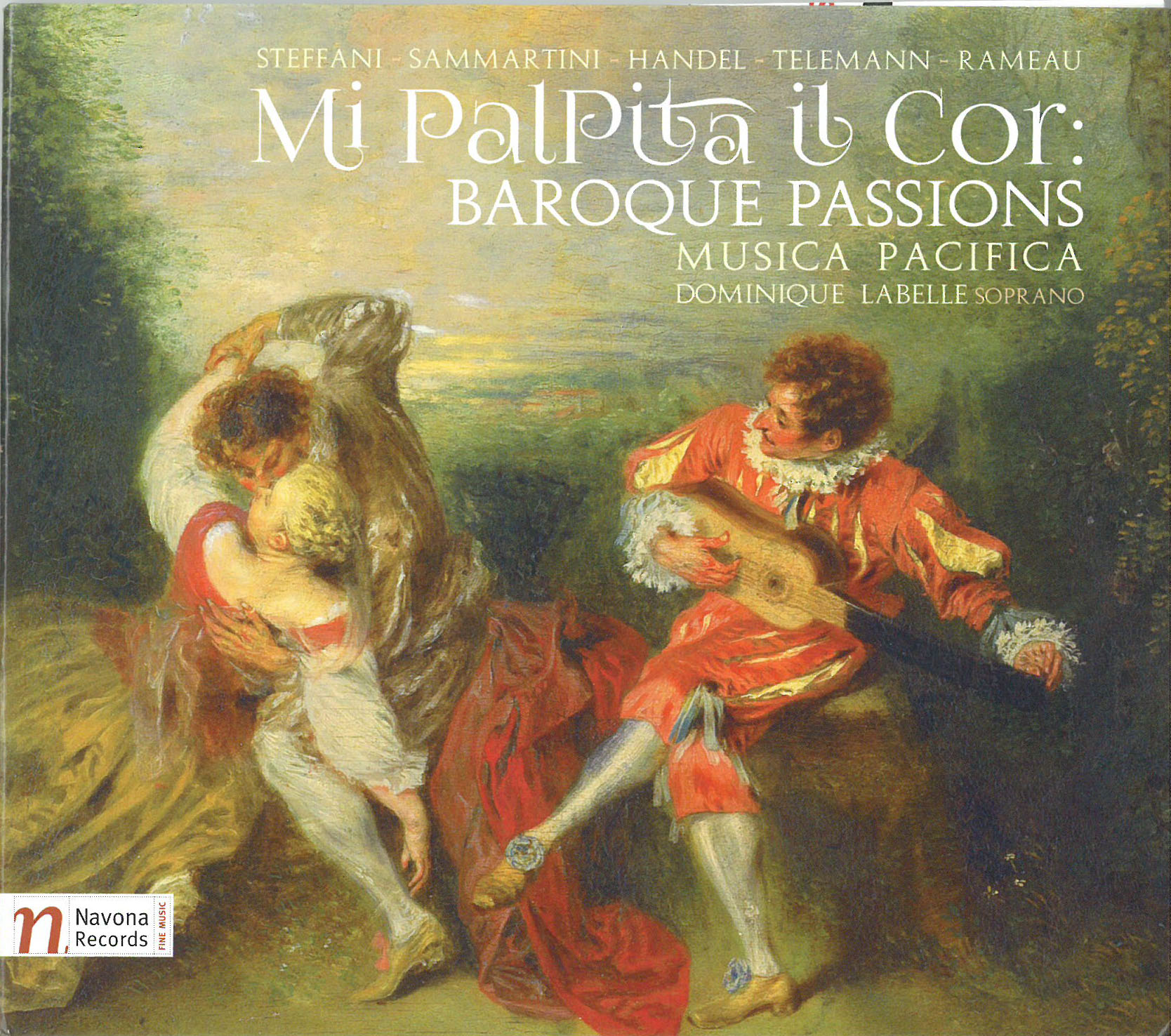
02 Mi PapitaMi PalPita il Cor: Baroque Passions
Dominique Labelle; Musica Pacifica
Navona Records NV6056
(navonarecords.com)

This is a CD devoted to love – and not necessarily happy love. The sleeve notes list the manifestation of love to be discovered on this recording as “sighs, laughter, angry outbursts and lassitude.”

Venetian-born Agostino Steffani’s Guardati o core opens the CD – a frolicking aria with words warning not to be won over by Cupid because you end up with trouble, sorrow and difficulty. Oh, and continue with the recitativo (you’ll get immeasurable bitter pain) and the aria (“flee, then, the realm of the archer-boy”) and not even Dominique Labelle’s rendition can help you.

Giuseppe Sammartini was well respected for his woodwind expertise, well apparent from the dignified flourishes of his opening and more than confirmed by the first Allegro. Sammartini composed with vigour and panache. The slightly strangely specified Andante e staccato reflects a depressed lover, depressed until he or she is revived by the second Allegro.

In Handel’s Arioso e recitativo, Labelle is made to sing that she “feels her heart beating for reasons she does not know.” Worse, she sings in a slightly hushed, conspiratorial tone that although her heart has been pierced by one of Cupid’s arrows, if Cupid could possibly do the same (fatally) to one of her competitors in love then she will complain no more. Again, very depressing, but how lucky that Labelle can fill the whole range of demanding emotions.

Georg Philipp Telemann’s Quatuor No.3 (G Major, 1738) restores our spirits. Judith Linsenberg’s recorder-playing contributes greatly to the rather dreamy quality of the Légèrement second movement, the Gracieusement of the third merely adding to it. For those who love rural tableaux, there is the Vite with the spirited violin playing of Elizabeth Blumenstock, and the following Gai. Finally, there is another unusually specified movement – Lentement-Vite-Lentement-Vite. Once again, violin and recorder are allowed to entertain us.

Dominique Labelle returns for a final flourish with the cantata from Jean-Philippe Rameau’s Orphée. Enjoy the complex voice and violin combination in Que du bruit and several very short but poignant pieces. The last movement, En amour il est un moment, is a worthy representative of Baroque romance from instruments to lyrics to Labelle’s interpretation.

Back to top