04 CavatineCavatine
DUO Stephanie and Saar
New Focus Recordings FCR274 (stephsaarduo.com)

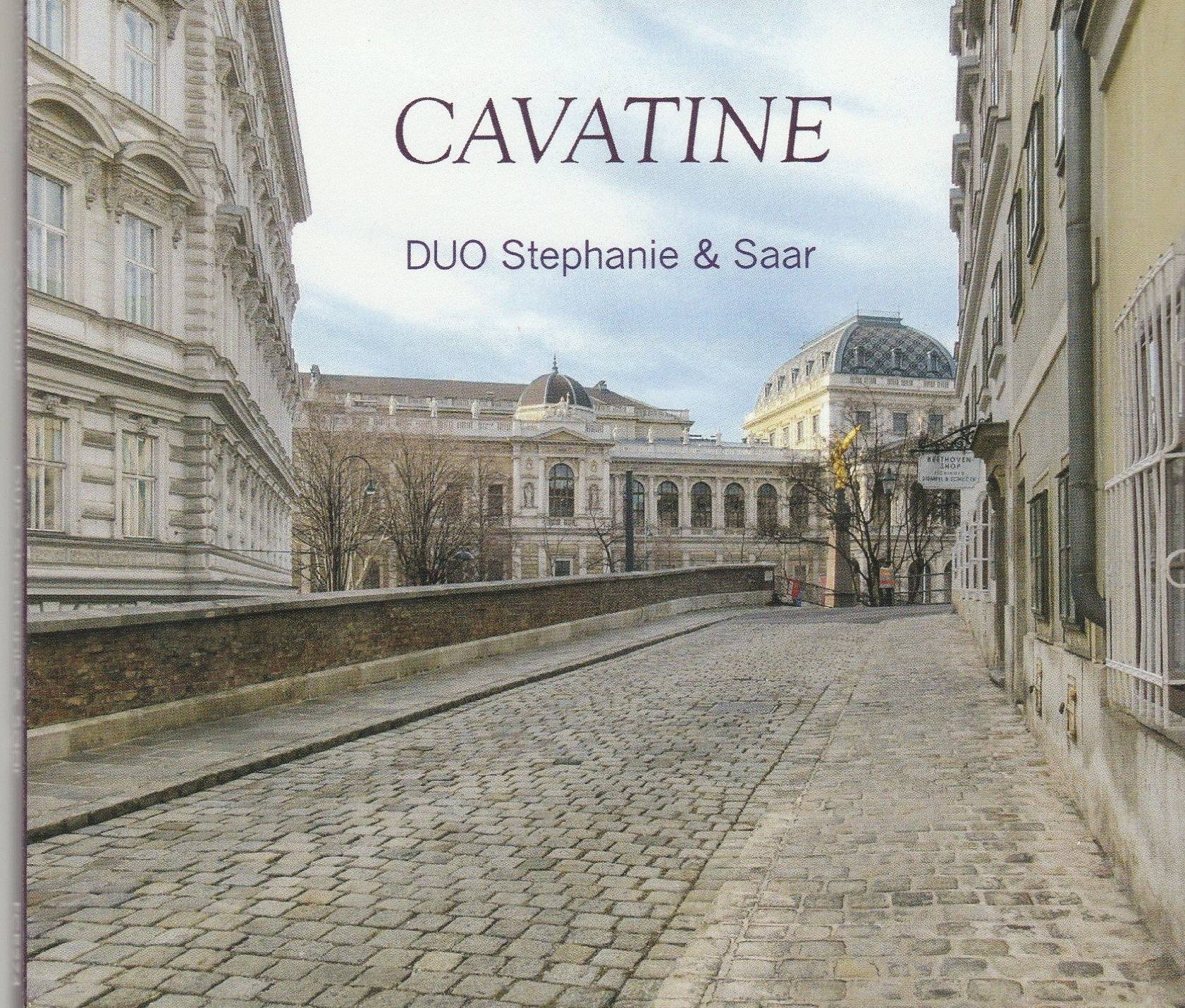
This piano duo disc by Stephanie Ho and Saar Ahuvia (DUO) has expressive virtuosity written all over it. It’s not simply four-hands piano that has been captured on disc, but repertoire as poignant as it is rare. Its late Beethoven is paired with late Schubert. And its music is evocative of the unrequited love both men lived with. In Schubert’s case, it was also a life lived in the permanent and towering shadow of the master, so much so that he – in an almost Shakespearean kind of twist – was even buried next to Beethoven. 

All of this spills over into the highly charged program on Cavatine. DUO Stephanie and Saar has completely subsumed every emotive aspect of this music. There is even an extraordinarily eerie seamlessness of how Beethoven’s String Quartet in B-flat Major Op.130 slides into the Cavatine, then into the Grosse Fuge Op.134, before ending up in Schubert’s Fantasie in F Minor D940

This is a made-for-each partnership. The amazing rapport between Ho and Ahuvia and their impeccable style unite to produce winning results. The warmth and tangible empathy on display here bring out all of the music’s emotive aspects – especially in the intensely lyrical movements of the Quartet in B-flat and the Cavatine, which gives way to the chromatic boldness of the Grosse Fuge and finally in the rhapsodic features of Schubert’s Fantasie. All of this makes a disc to absolutely die for.

Listen to 'Cavatine' Now in the Listening Room

05 Schubert GaudetSchubert: Explorations
Mathieu Gaudet
Analekta AN 2 9184 (analekta.com/en)

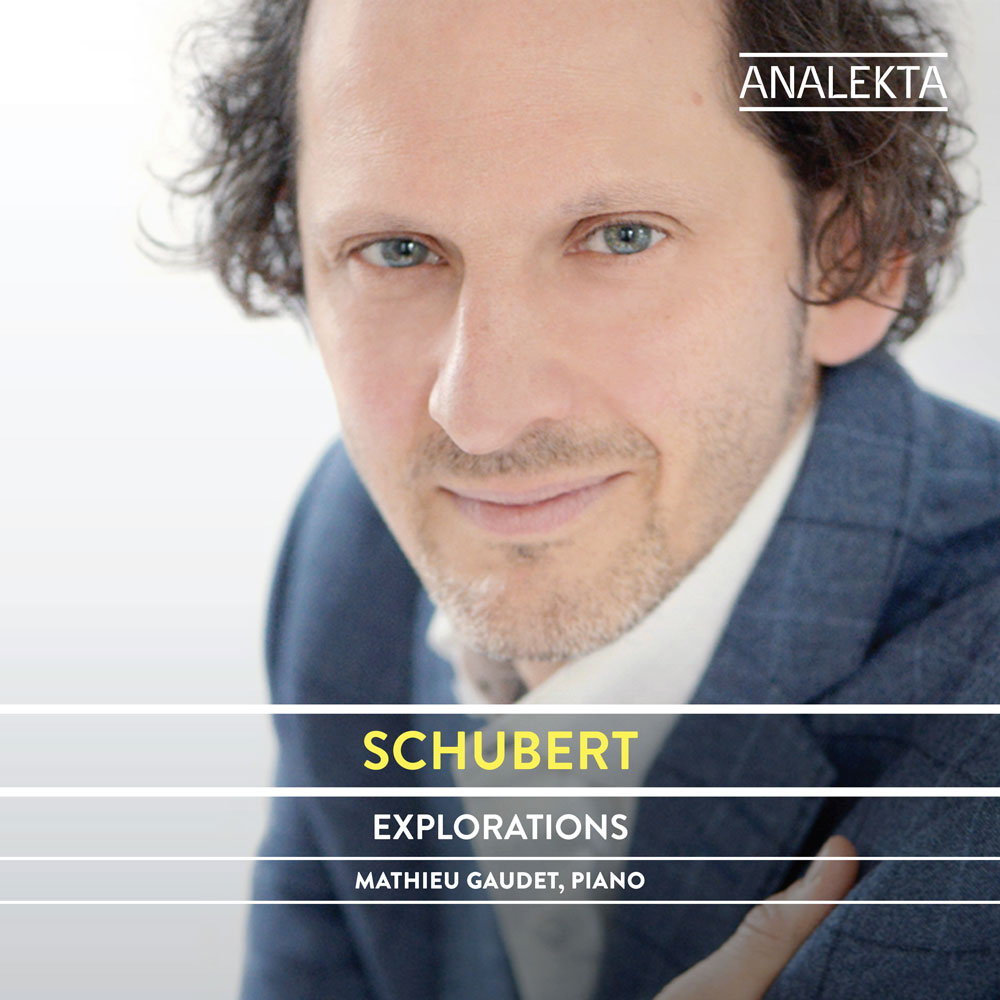
One year ago, in May 2020, this reviewer wrote of a new release from pianist Mathieu Gaudet. Late Inspirations was the second installment of an ambitious project to record the entirety of Franz Schubert’s sonatas and major works for piano. Since then, Gaudet has added another two discs to the anthology: The Power of Fate in October 2020 and Explorations in March 2021. What a thrill it has been to discover each of these records in an alimentative journey comprised of attentive listening. From its wondrous, heights to its simplest of gifts, Schubert’s art is a way of life for Gaudet.

As a fulltime emergency physician, Gaudet has persevered through a harrowing year for human beings on our planet, combatting a health crisis on a magnitude not seen for a century. The compassion, care and healing that Gaudet surely delivers to his patients is transfused – enviably – to his musical artistry. As listeners around Gaudet’s keyboard, we are in safe hands. His deeply empathic connection with Schubert is genially revealed, phrase by phrase, piece by piece, as we are led through a lifelong tended garden, ever-watered with a sublime Schubertian prowess.

A consistent feature of each disc thus far is a blending of the known with the unknown. Explorations opens with the familiar Moments Musicaux, D780. What comes next is unexpected: three fleeting German Dances, D972 that sway and yodel with a folksy kind of charm.

Of Gaudet’s many attributes, his rhythmic sense of rightness remains high atop the list. With a shrewd savvy for pulse on the highest order, Gaudet sculpts phrases and perfectly arrays accompaniments. Such rhythmic irresistibility – such fantastic finesse – proffers trips of light indeed. His pianism is capable of casting spells of merriment, akin to the province of tunesmiths who magically set their songs ablaze, dancing and frolicking in the hot sun. Daylight ordains such tales of love and loss, of anguish and dubiety. And yet, a celestial certitude hovers over such oases of musical expression. Such is the stuff as Schubert’s art is made on.

06 JurinicCorrespondances
Aljoša Jurinić
KNS Classical KNS A/097 (knsclassical.com)

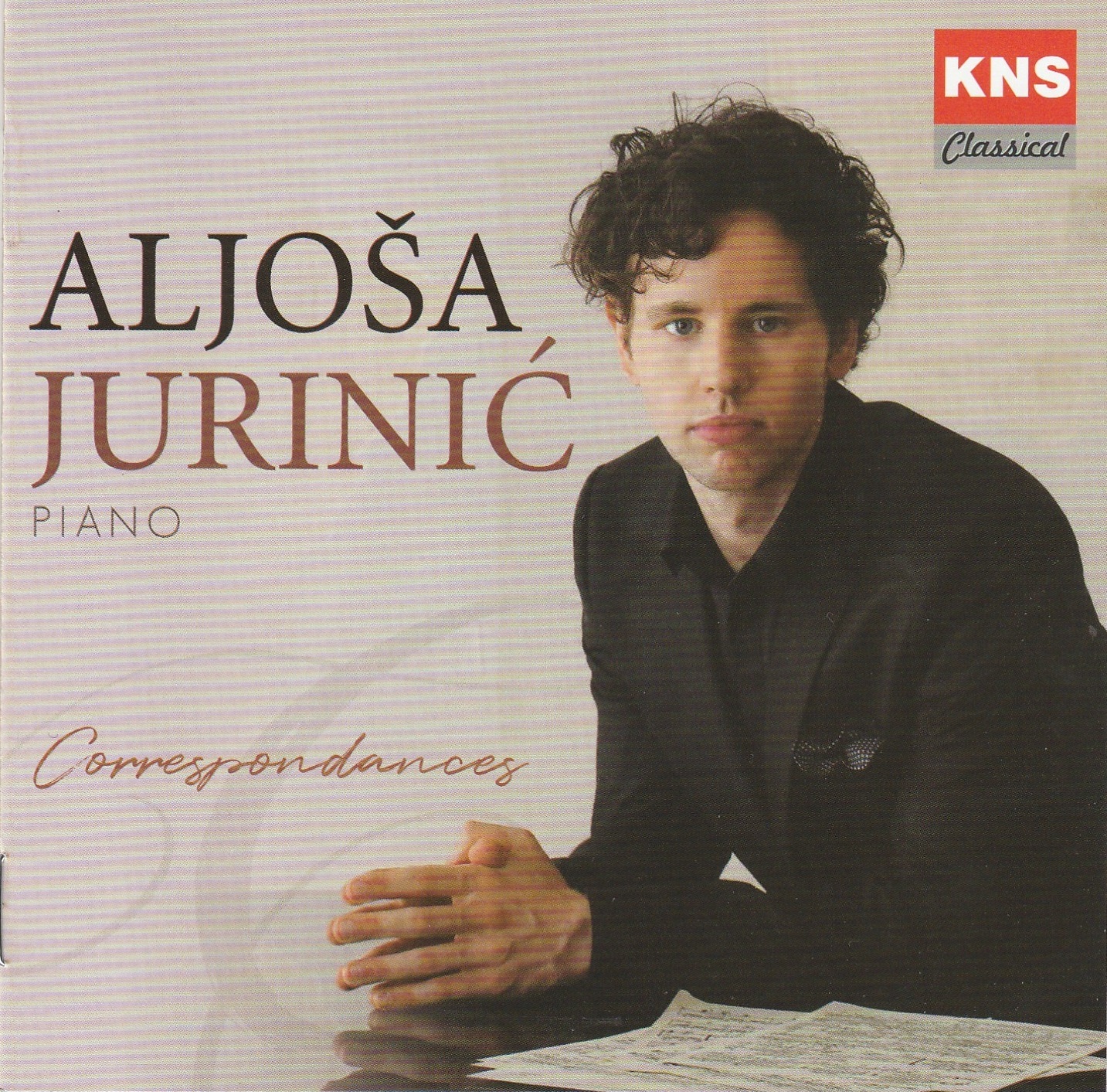
The professional relationship of Chopin and Schumann was a curious one. Both composers were born in the same year, and while Schumann greatly praised the music of his Polish colleague, Chopin rarely, if ever, responded with similar sentiment. Whatever dissimilarities the two may have had, the Schumann Fantasy Op.17 and Chopin’s set of 12 Etudes Op.25 make a formidable pairing on this KNS live recording featuring Croatian-born pianist Aljoša Jurinić who came to Toronto in 2019.

To say the least, Jurinić’s credentials are impressive. Not only was he the winner of the Schumann Piano Competition in 2012, a laureate of the Queen Elisabeth and Leeds competitions in 2016, but also a finalist in the International Chopin competition in 2015. He has since appeared at Carnegie Hall, the Wiener Musikverein and the Tokyo Opera City Concert Hall. 

The Fantasy is regarded as one of Schumann’s finest compositions and among the greatest in the entire Romantic repertoire. With its contrasting rhythms and tempi, the piece is not easy to bring off, but Jurinić’s performance is nothing less than sublime. He approaches the score with a true sense of grandeur, the broad sweeping lines of the opening, the stirring second movement and the introspective finale tempered with a flawless technique.

In the set of Chopin Etudes Jurinić breathes new life into this familiar repertoire, once again demonstrating full command of the technical challenges; from the graceful first etude in A-flat Major right to the thunderous No.12 which brings the set, and the disc, to a most satisfying conclusion.

How fortunate for Toronto that an artist of Jurinić’s stature has chosen to settle here – we can only hope his residency will be a lengthy one and that we may hear him perform in concert when conditions allow.

07 Lineage Deborah GrimmettLineage – Tracing Influence
Deborah Grimmett
New Classic Records NC01 (deborahgrimmett.com)

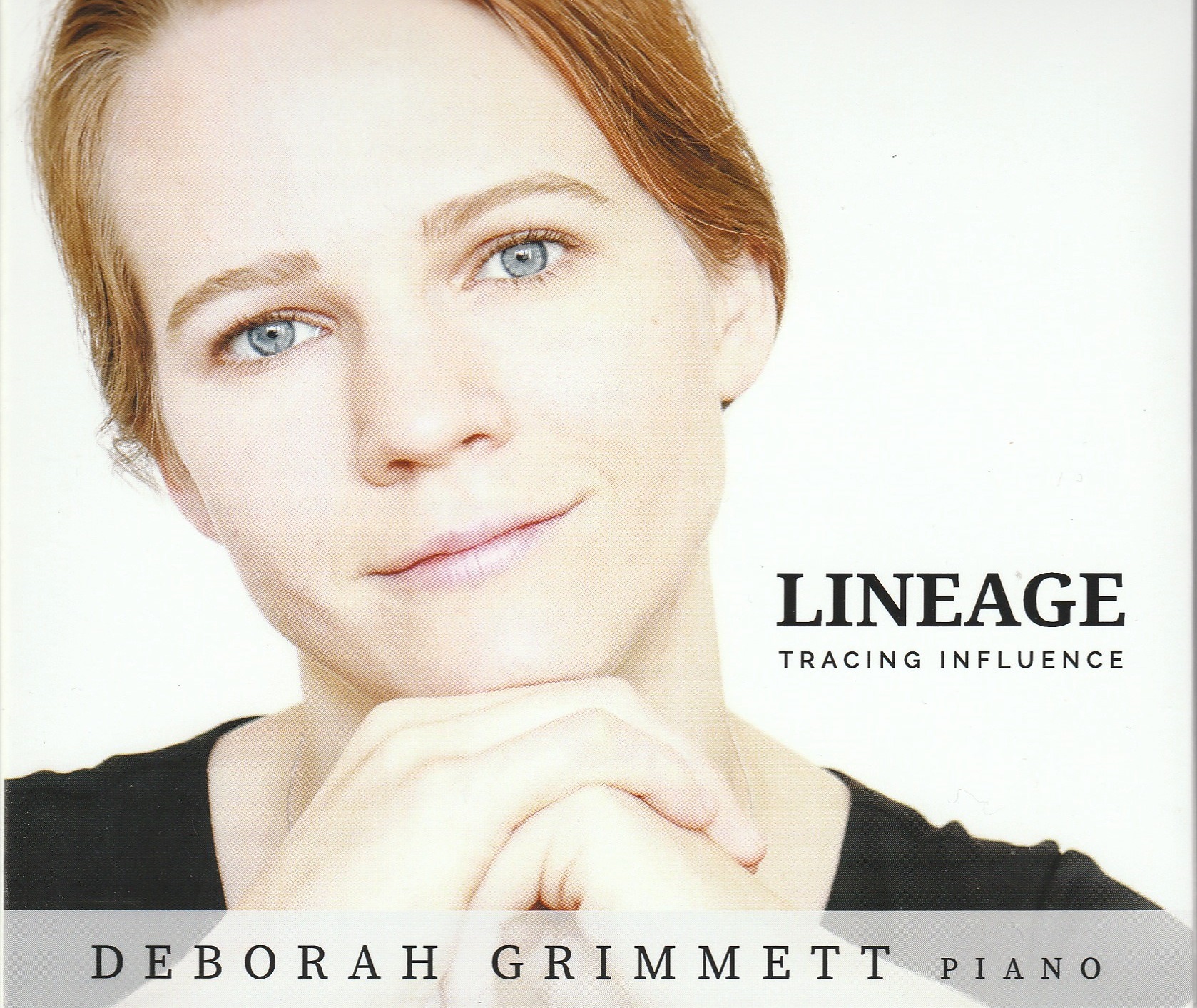
The full range of both the beautiful – and beautifully recorded – Glenn Gould Studio piano, and a solo piano repertoire that spans the historical continuum from Brahms and Debussy to such contemporary composers as Iman Habibi and the little-known Rhoda Coghill (this may be the recording premiere of any of Coghill’s compositions) is on full display here with this wonderfully expressive FACTOR and Canada Council for the Arts-supported 2021 release. Exhibiting a deft touch and clear musicality, Toronto pianist Deborah Grimmett presents an intimate view into not only her own considerable musical talent, but her biographical story of overcoming a repetitive strain injury from over-practising as a music student, to stepping away from the piano in order to heal and then, finally, returning to the instrument to make what is clearly a meaningful and deeply personal recording. 

This is one of those presentation formats (solo piano) and recordings (live off the floor, close-miked instrument) that when you take away any other extraneous factors, all that is left is the musicality and interpretive power of the performer and the music itself. As such, Lineage: Tracing Influence does a fine job, offering one of those listening experiences where fans of classical music, solo piano or just those who need some auditory solace from the everyday banality of life (particularly so during yet another lockdown) can immerse themselves in order to derive pleasure, meaning and inspiration.

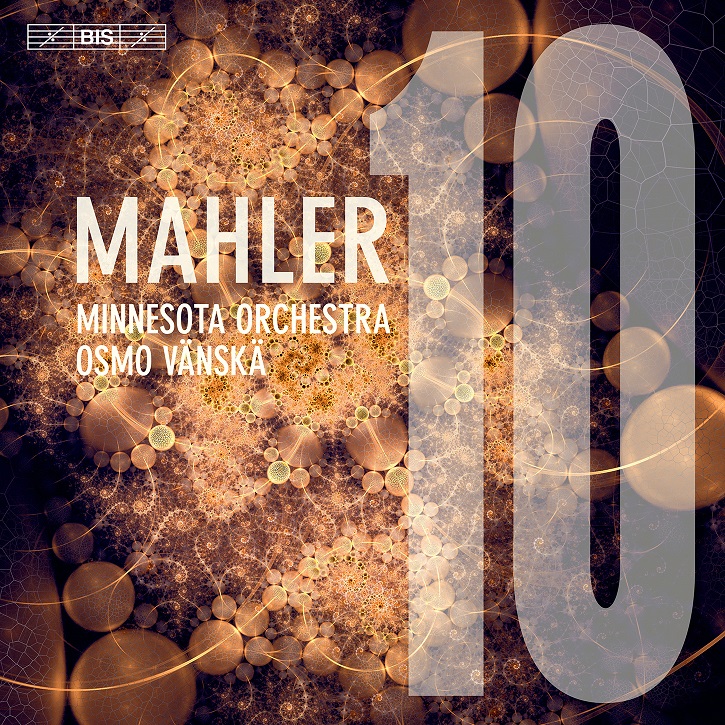
08 Mahler 10 VanskaMahler – Symphony No.10 in F-sharp Major
Minnesota Orchestra; Osmo Vänskä
Bis BIS-2396 (naxosdirect.com/search/bis-2396)

Mahler’s final work lay hidden for decades as shorthand sketches still awaiting a full orchestration. Alas, the completion of the work was tragically cut short by the composer’s premature death from a broken heart at the age of 50. Fragments of this manuscript were subsequently revealed over the decades by his imperious widow Alma Mahler-Gropius-Werfel, who considered the work to be a private love letter to herself and only relented to allow the work to be published after listening to a BBC broadcast tape of the “performing edition” that Deryck Cooke prepared for the Mahler centenary in 1960. Cooke’s realization underwent subsequent refinements and his third and final 1976 edition, incorporating previously suppressed materials, has become the preferred version among several alternatives. 

Recordings of the work are relatively rare, as a fair number of conductors have questioned the legitimacy of the score. These skeptics will, I hope, be won over by this commanding performance from the Minnesota Orchestra, which ranks among the finest available. The work is in five movements, similar in structure to Mahler’s Seventh Symphony. The slower first and fifth movements are tragic cries of despair while the inner, faster movements are comically sarcastic, echoing the scherzo and rondo movements of his Ninth Symphony. There is a wonderful spontaneity to Osmo Vänskä’s choice of tempos in these central movements, strikingly so in the accelerations of the unusually asymmetrical measures of the second movement, which tumble over themselves in a delightful confusion. The longer outer movements feature the highly refined playing of the string section, hovering at times at a nearly inaudible level, with superlative contributions from the solo wind instruments. Add to this excellent program notes and stellar sonics from the BIS recording team and you have yourself an outstanding addition to the discography of this passionate, autobiographical masterpiece. Not to be missed!

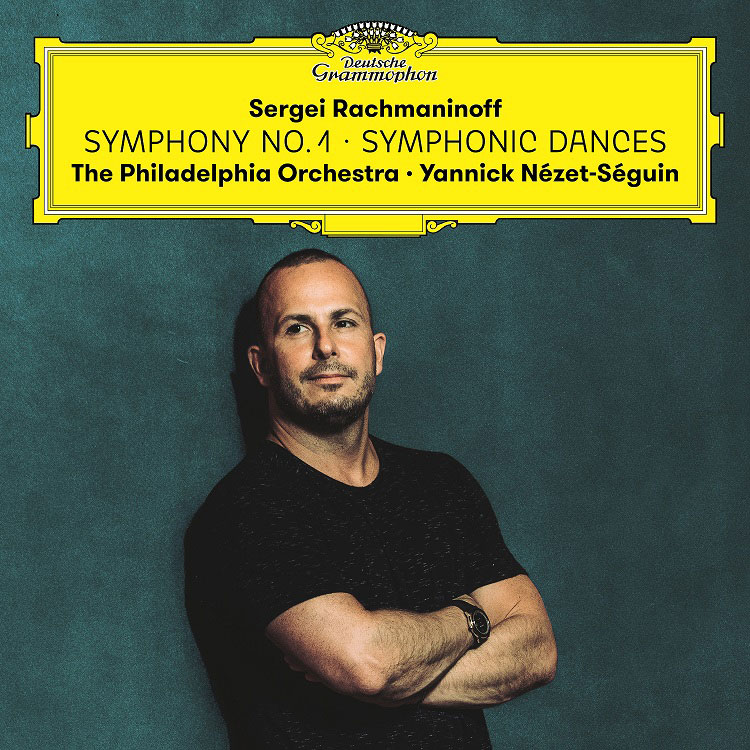
09 Nezet Seguin RachmaninoffRachmaninoff – Symphony No.1; Symphonic Dances
Philadelphia Orchestra; Yannick Nézet-Séguin
Deutsche Grammophon 12192 (deutschegrammophon.com/en/catalogue/products/rachmaninoff-symphony-no-1-symphonic-dances-nezet-seguin-12192)

Imagine you have the entire Deutsche Grammophon catalogue, a whole wall covered in shelving designed for CD’s, each spine of every disc displaying the well-known colours. Lucky you! Just now, taking pride of place is this sparkling new release, the Philadelphia Orchestra led by Yannick Nézet-Séguin performing Rachmaninoff’s First Symphony Op.13 and Symphonic Dances Op.45 (his final published work).

What to praise first? Recording quality, which whisks you around the sections of this fabulous orchestra as, one by one, they show off their mastery of dynamics, technical agility, musical insight; and most of all, the unheard presence channelling the composer through the players before him, the young (still young!) maestro from Quebec. Possibly no composer offers better witness to Nézet-Séguin’s mastery. With seamless logic, he links the furioso character of the Allegro ma non troppo first movement to its episodes of pathos. Every detail is considered and brought forth. This recording is an encounter with deep Russian melancholia, and Philadelphia’s legendary warm sound is the perfect medium for the maestro’s skill.

Interesting to pair this youthful early symphony, from 1895, with the Symphonic Dances, composed in 1940, when Rachmaninoff was living in California. Poorly received as it was at the premiere, the symphony is incredibly ambitious, and if tonally conservative, it offers glimpses of the strange wonderful paths the 22-year-old would soon follow. Make yourself wait before letting this recording of the Dances deliver you into another world of wonder. If the engineers have filed off any “edge” in the sound, there’s punch and beauty in spades, and a luxurious gong fade at the end!

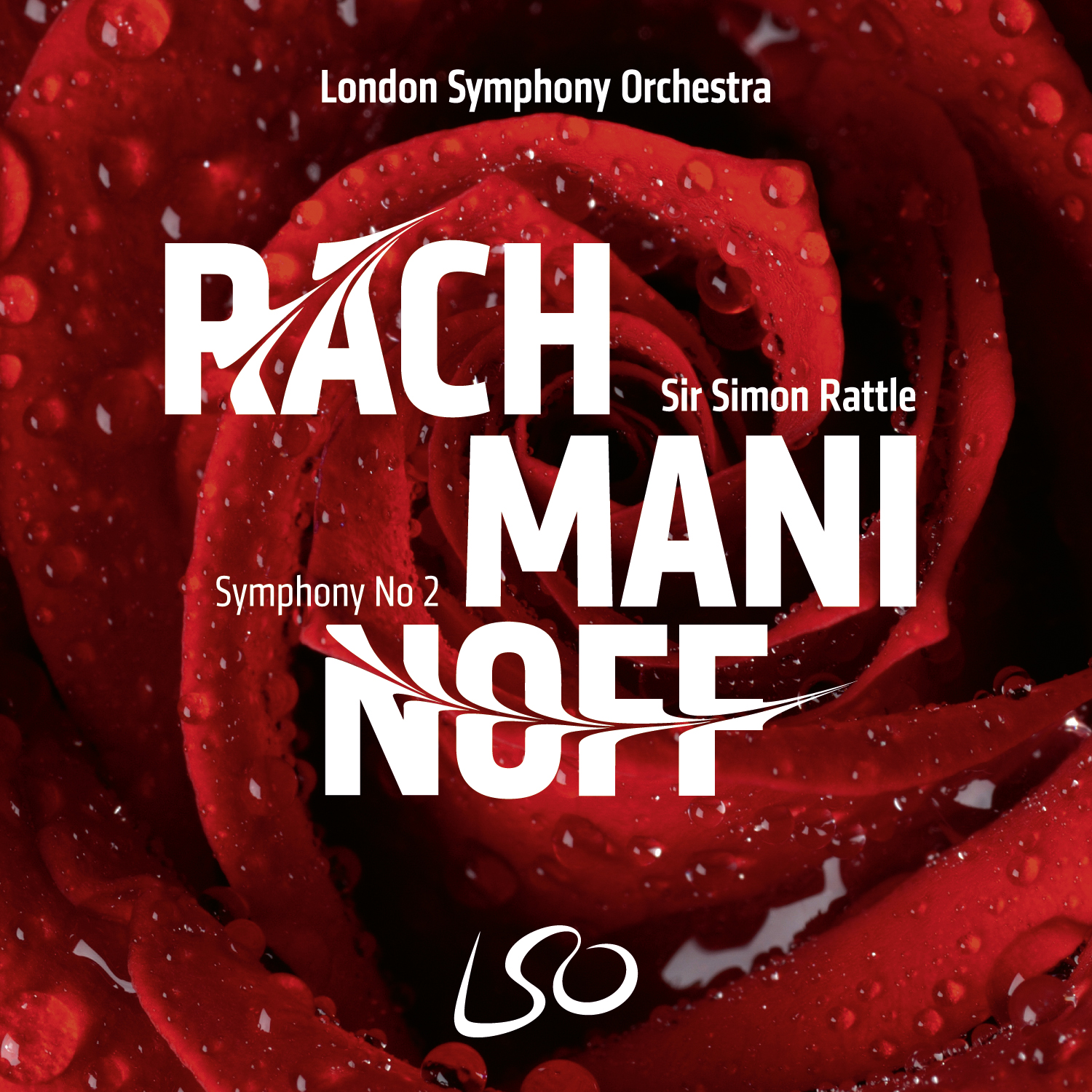
10 Rattle RachmaninoffRachmaninoff – Symphony No.2
London Symphony Orchestra; Sir Simon Rattle
LSO Live LSO0851D (lsolive.lso.co.uk/products/rachmaninoff-symphony-no-2)

It’s just about time that we realize Sir Simon Rattle is one of the greatest conductors of our time. His bio is the ultimate success story. As a kid from Liverpool with minor conducting assignments in England, in 2002 at age 42, he was elected music director of the Berlin Philharmonic, the most prestigious and probably the best orchestra in the world. The youngest ever for this honour. He kept this post amazingly until 2018 when he “retired“ with the highest accolades, beloved by the orchestra and the City of Berlin, but his career was far from over. Soon thereafter, he went to Vienna and conducted a wonderful Ring Cycle at the Staatsoper, televised, so I was lucky to watch it. He had numerous recordings on the EMI label, but in 2017 he took over the London Symphony and began recording on the orchestra’s own label, LSO Live.

Rachmaninoff’s Second Symphony is the best of the three he wrote and has always been a favourite of mine. After the failure of his First it shows full maturity of his creative powers. It has a “sustained vitality, richness of lyrical invention and a glowing eloquence capable of rising to extraordinary power” (Robin Hull). Rattle conducts the entire uncut version from memory and it’s such a relaxed and spontaneous reading aided by the highest quality HD sound that so reverberated throughout the house that I was wholly enchanted.

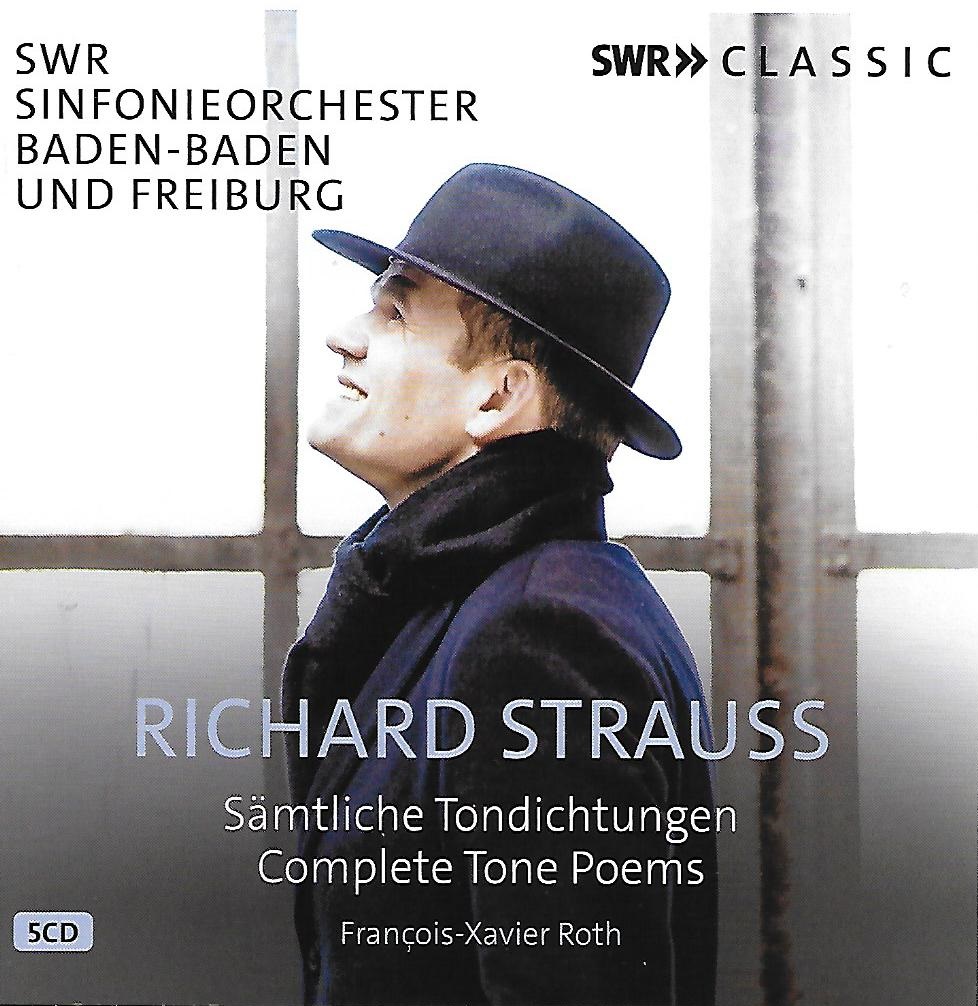
11 Strauss Tone PoemsRichard Strauss – Complete Tone Poems
SWR Sinfonieorchester Baden-Baden and Freiburg; François-Xavier Roth
SWR Music SWR19426CD (naxosdirect.com/search/swr19426cd)

When searching for the performance of Also Sprach Zarathustra that would mightily reinforce the opening of 2001, A Space Odyssey, Stanley Kubrick finally selected, presumably on its impact, the Decca version with the Vienna Philharmonic conducted by Herbert von Karajan. After much negotiating, it was agreed that Kubrick may use that performance under the condition that it is never identified (perhaps I should have prefaced with “spoiler alert”). I am quite sure that if that were today, the power of the vehement timpanist in the opening of the SWR version in this outstanding new set could very well be the choice.

At the helm is François-Xavier Roth, the French conductor who is best known as the director of Les Siècles, an original instrument orchestra that he founded in 2013, and which has recorded many stunning versions of Baroque and early-20th-century favourites, including Stravinsky’s Le Sacre du Printemps. Among his myriad appointments and awards are general music director of the City of Cologne and principal guest conductor of the London Symphony Orchestra. Undoubtedly his activities in the field of historically informed performance have attuned his ear to ensure every instrument in the orchestra is audible as these performances of familiar and perhaps less familiar tone poems demonstrate. They are Ein Heldenleben, Sinfonia Domestica, Also Sprach Zarathustra, Tod und Verklärung, Metamorphosen, Don Juan, Don Quixote, Eine Alpensinfonie, Till Eulenspiegels lustige Streich, Aus Italien and Macbeth. Strauss is well served by performances of commitment and intensity, passages where winds, brass and percussion appear… not spot-lit but there. The perfectly recorded performances dating from 2012 to 2015, as in earlier recordings from this source, are convincingly live.

Roth’s same meticulous attention to detail and perfect balances may be viewed and heard conducting different orchestras in diverse repertoire on the optional music channels available on cable TV and YouTube.

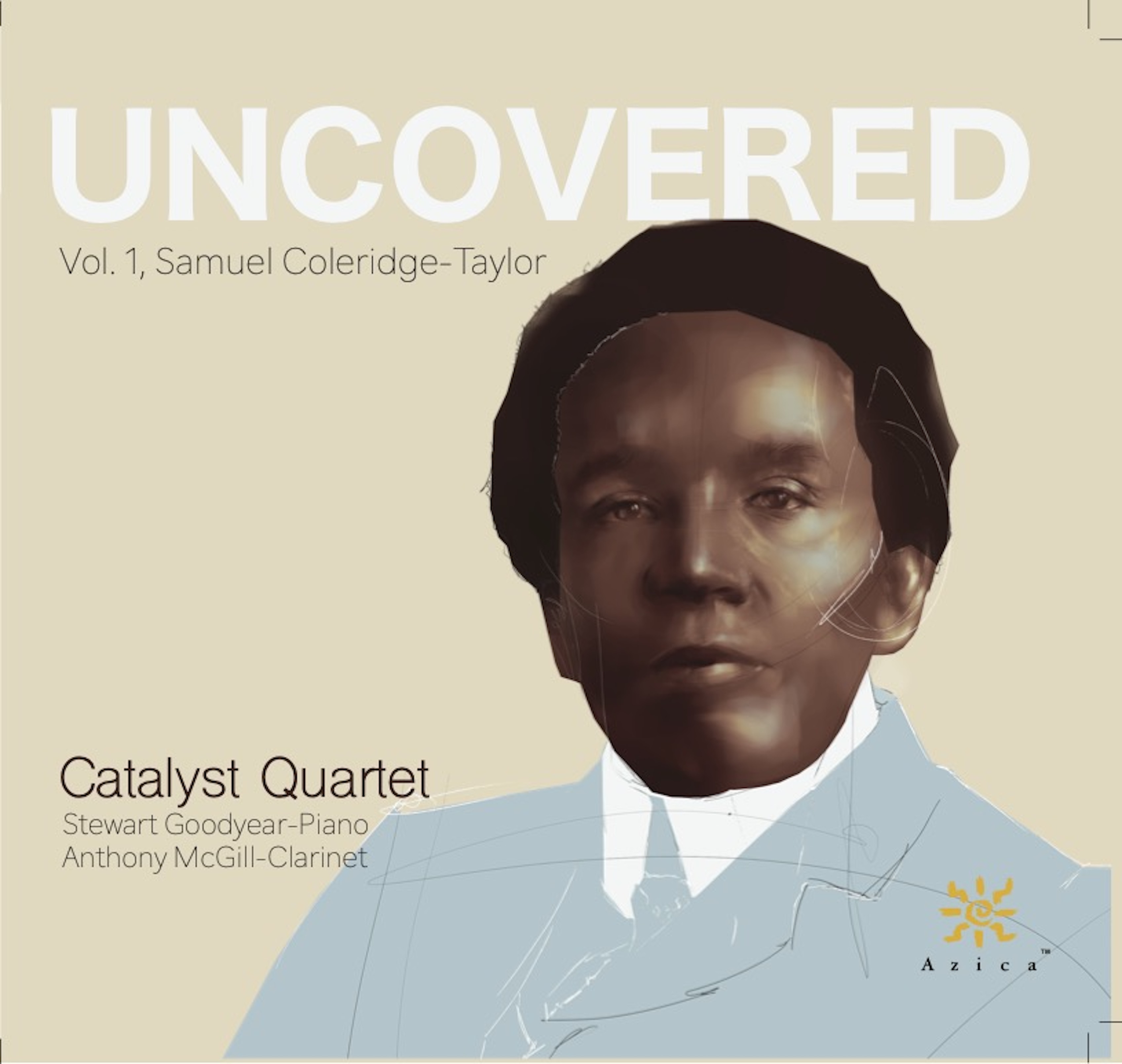
12 Coleridge Taylor 1Uncovered, Vol. 1: Samuel Coleridge-Taylor
Catalyst Quartet; Stewart Goodyear; Anthony McGill
Azica ACD-71336 (catalystquartet.com/uncovered)

The late-19th-century British composer, Samuel Coleridge-Taylor, conquered the United States with his musical ingenuity. But could his being billed – somewhat patronizingly – as the “African Mahler” have blunted his singular musical achievements? We will never really know, and it may even be unimportant now as, with Uncovered, Vol. 1: Samuel Coleridge-Taylor, the Catalyst Quartet turns the marquee lights on to illuminate his elegant music, and not the colour of his skin.

But poetic justice must also come by way of inviting pianist Stewart Goodyear and clarinettist Anthony McGill – two prodigiously gifted Black musicians – to participate in this significant musical project. The association with Mahler does have some significance however, because it took decades of proselytizing by conductors such as Bruno Walter, Wilhelm Mengelberg and Leonard Bernstein before Mahler’s symphonies became audience-pullers. If it’s fallen upon the Catalyst to do likewise for Coleridge-Taylor they’ve certainly delivered. 

These are über-articulate readings of the Quintet in G Minor for Piano and Strings Op.1 featuring Goodyear, Quintet in F-sharp Minor for Clarinet and Strings Op.10 featuring McGill and Fantasiestücke for String Quartet Op.5. The Quartet’s musicians shape phrases with attention paid to every nuance of the scores, while the music’s grand sweep remains paramount throughout; Goodyear’s pianism sings in the piano quintet and McGill’s clarinet does likewise in Op.10. The Catalyst’s performance is marked by a wide range of touch and timbre, with extraordinary emphasis on the inner voices of Coleridge-Taylor’s eloquent music.

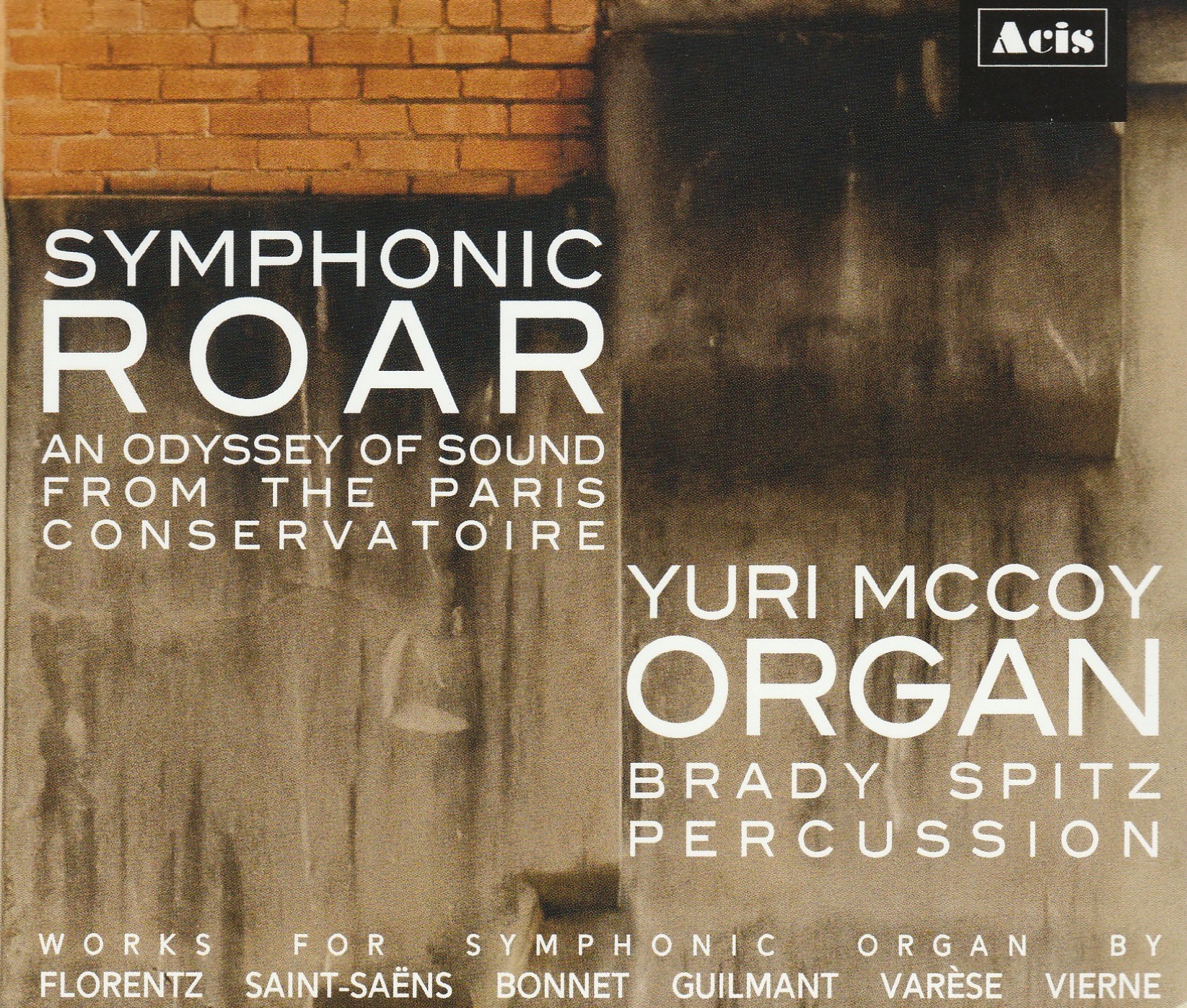
13 Symphonic RoarSymphonic Roar – An  Odyssey of Sound from the Paris Conservatoire
Yuri McCoy; Brady Spitz
Acis APL92957 (acisproductions.com)

Inspired by French composers’ exploitation of the organ’s myriad multicoloured sonorities in these “symphonic” works, Houston-based Yuri McCoy says he feels “free to orchestrate… in many different ways,” often making “many more registration changes than indicated in the score.” (As for the “roar,” wait for it!)

McCoy and console assistant Grant Wareham collaborate in Jean-Louis Florentz’s Poème Symphonique “La Croix du Sud” (2000), named for the constellation. With influences from Florentz’s teacher Messiaen, and Tuareg and Sufi music, it growls, chirps and surges around disquieting interludes that conjure mysterious, desolate landscapes.

A noble central anthem illuminates the celebratory Allegro Vivace from Felix Alexandre Guilmant’s Organ Sonata No.2 (1862). Joseph Bonnet’s brief Elfes from his 12 Pièces (1910) is a gossamer swirl of shimmering light, rendered in sound. Fantaisie, Op.101 (1895) by Camille Saint-Saëns comprises a murmuring, gentle andantino, a tempestuous fuga and a calm, reassuring finale. Clair de Lune from Louis Vierne’s 24 Pièces, Suite No.2 (1926) paints a secluded nocturnal scene in muted pastel watercolour.

At nearly 28 minutes, the CD’s longest and most “symphonic” entry is a remarkably effective arrangement by McCoy and percussionist Brady Spitz of Edgard Varèse’s Amériques (1921), the original version requiring 27 woodwinds, 29 brass and an immense percussion battery. Collin Boothby assists McCoy on organ and Spitz on percussion, employing all of Varèse’s noisemakers – lion’s roar (!), siren, rattles, cyclone and steamboat whistles, etc., etc.

Fascinating listening, from mystery-laden start to roaring finish!

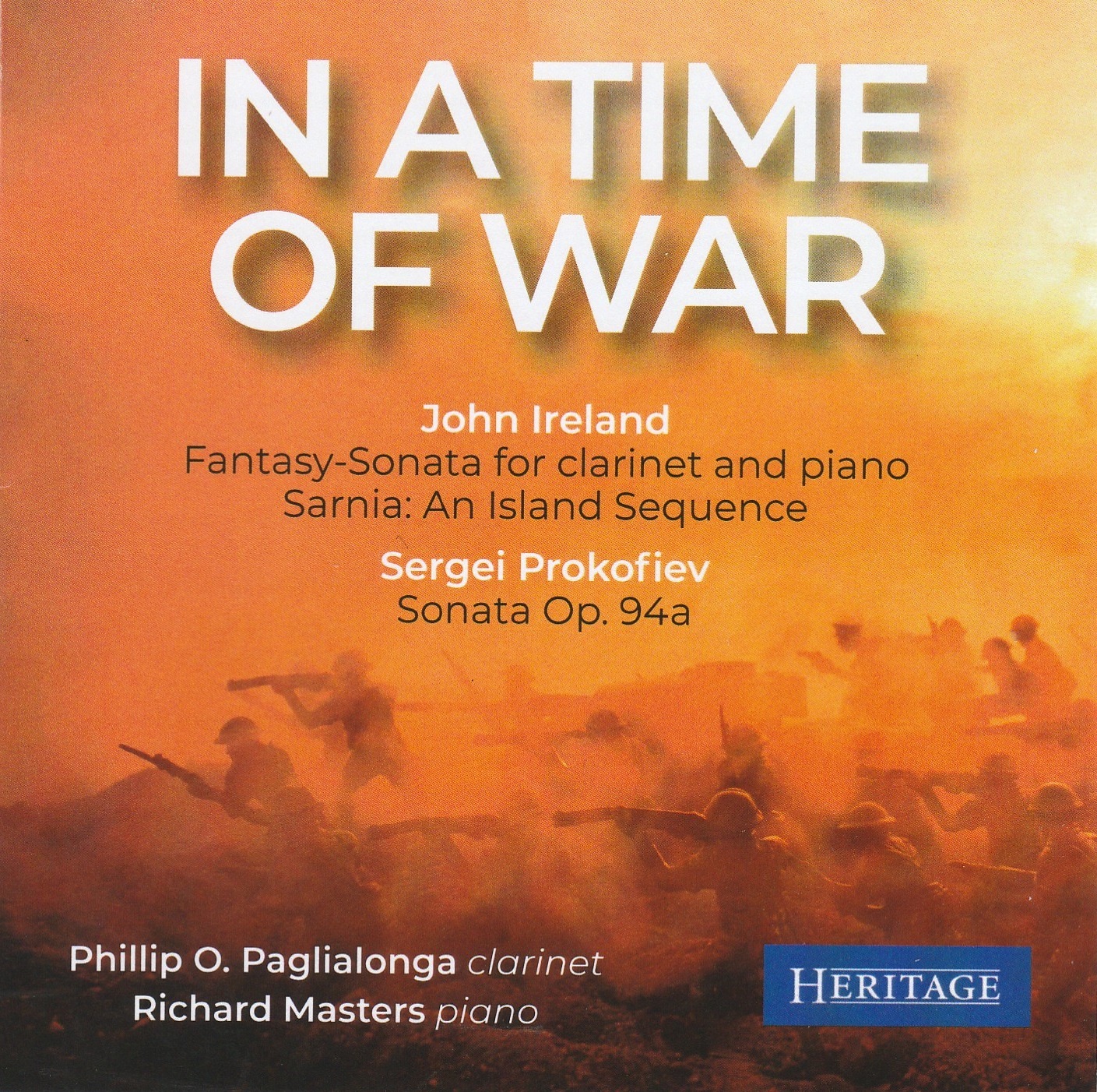
14 In a Time of WarIn a Time of War
Phillip O. Paglialonga; Richard Masters
Heritage HTGCD 173 (heritage-records.com)

In a Time of War, featuring clarinetist Phillip Paglialonga and pianist Richard Masters, proffers works by two composers suffering exile during WW2. An odd pairing to be sure, but it’s possible to hear some common ground between Serge Prokofiev and John Ireland. If you listen to the late moments of Ireland’s Fantasy-Sonata for Clarinet and Piano there’s an argument to be made. Written in 1943, the same year as Prokofiev’s Flute Sonata Op.94, the Ireland work does what a lot of mid-century English music does: explore modernity and expression, but aloof in a way that might evoke Prokofiev the man, although not his music. 

I think clarinetists should leave well enough alone when it comes to poaching repertoire, especially in the case of the Prokofiev, which after all was more or less stolen from flutists for the already-crammed violin library by David Oistrakh (with Prokofiev’s complicity!). Sorry, flutes, it’s a better piece in the second take. Opus 94a is heard as often, if not more than the original. The clarinet version here should maybe be called Opus 94a(b), I don’t know. It’s very dicey, range-wise, and hardly idiomatic for the clarinet. Paglialonga manages the high tessitura quite well, but most tempos are slower than you might be used to, and the balance has his sound too far in front of Masters, which jars a bit at the opening. The duo’s rendition is a work apart from the original, as a quick reference to Oistrakh’s recording will confirm. 

A third work is included, also from 1943, Ireland’s Sarnia: An Island Sequence, a solo Masters performs with more freedom than the other tracks demonstrate. These are good performances, if somewhat staid.

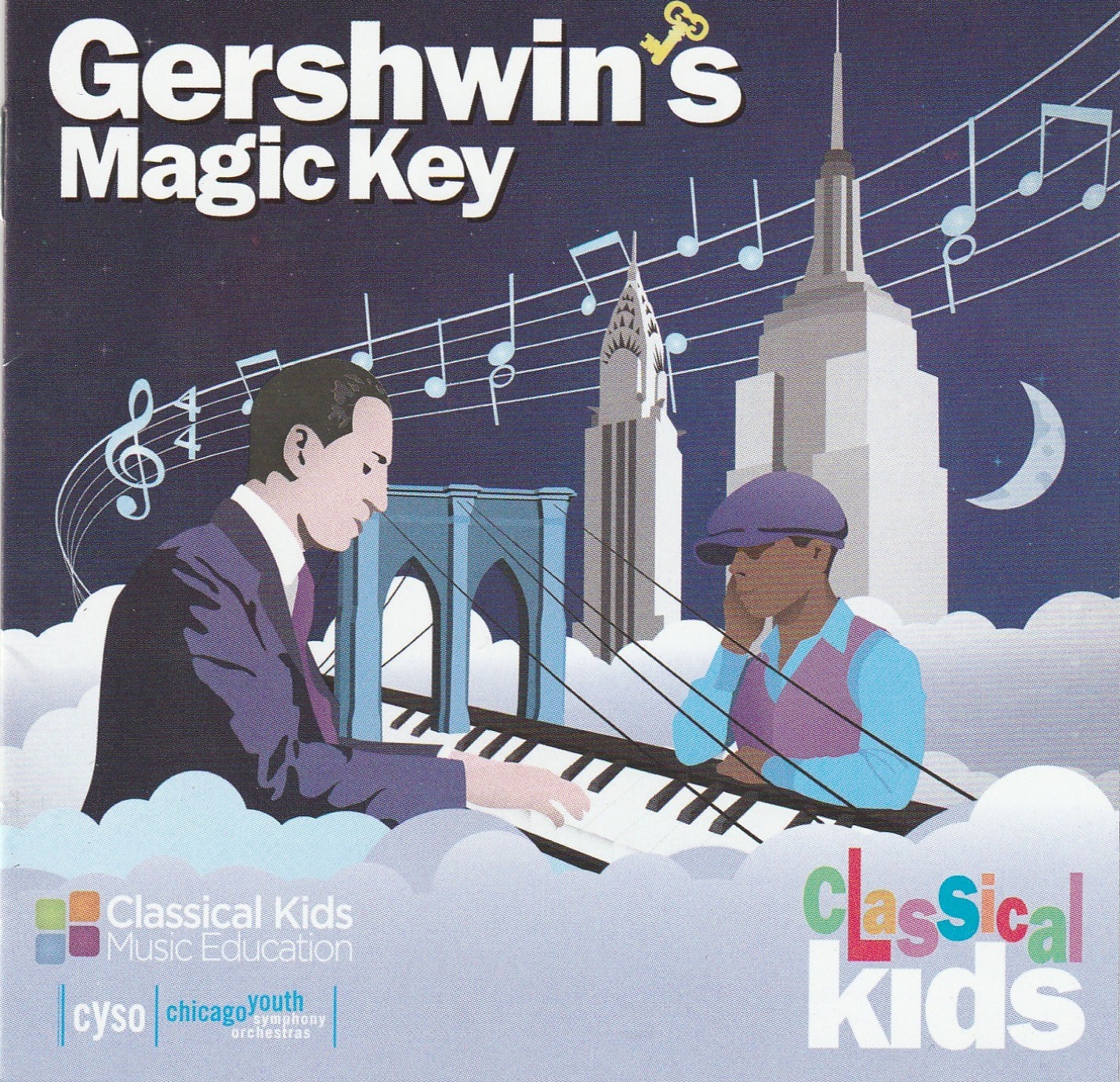
15 Classical KidsClassical Kids: Gershwin’s Magic Key
Chicago Youth Symphony Orchestras
Classical Kids Music Education 270541 (classicalkidsnfp.org)

Gershwin’s Magic Key is the first new album in 20 years from the award-winning platinum-selling Classical Kids, most famous for Beethoven Lives Upstairs. This high quality, dynamic studio recording features the Chicago Youth Symphony Orchestras conducted by Allen Tinkham, voices of professional actors Elic Bramlett and Leslie Ann Sheppard, and head writer/music supervisor/featured pianist Will Martin, who premiered the original live concert.

Set in 1920s New York, the three-act story revolves around a newspaper boy’s chance meeting with composer George Gershwin, leading to the two travelling through New York, verbally telling stories based on Gershwin’s life and the times, intertwined with his music. The opening attention-grabbing string swirls, clear spoken words, piano solo and wailing clarinet set the stage for a fast-paced, exciting fact-based production both children and adults will love. The supportive spoken tips from Gershwin, such as “I was a changed person learning piano; Every sound is music; Do not let anyone tell you what you can or cannot be;” are positive reinforcement for the boy, and all children listening and reading the liner notes. 

Gershwin’s compositions featured include fabulous orchestral renditions of Summertime, An American in Paris and the upbeat singalong/dance-along I Got Rhythm. Educational musical outtakes from other composers include Dvořák’s Humoresque, the Tin Pan Alley hit Take Me out to the Ballgame, and 1920’s Baby Face. Finale recreates the world premiere of Rhapsody in Blue, from the piano/orchestra exuberant performance to the recording’s closing audience cheers. Bravo!

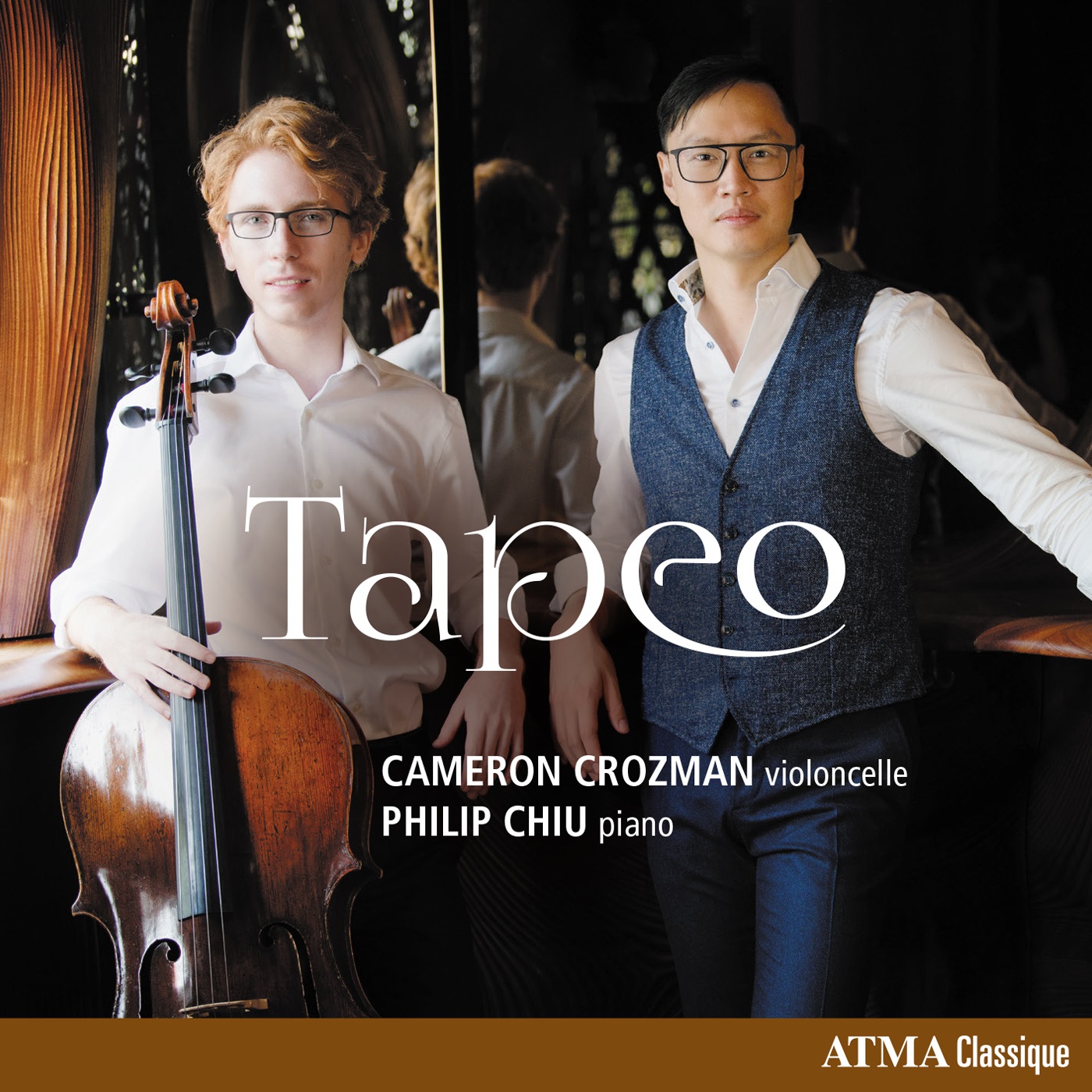
01 TapeoThe Canadian duo of cellist Cameron Crozman and pianist Philip Chiu is in fine form on Tapeo, a delightful recital of popular Spanish pieces (ATMA Classique ACD2 2820 atmaclassique.com/en).

Crozman says that he fell in love with Spain the moment he first stepped into the Tapeo tapas bar on his first day in Barcelona, and when the Canada Council awarded him the loan of the “El Tiburon” cello from around 1769 attributed to the Spanish maker Joannes Guillami he knew he had to make a recording honouring its Spanish origins. Crozman describes the resulting CD as his own “tapas party” of short, diverse Spanish pieces.

Included are Cassadó’s Requiebros, de Falla’s Suite populaire espagnole, Ravel’s Pièce en forme de Habañera and Alborada del Gracioso, Turina’s Polimnia-Nocturno, Granados’ Intermezzo from Goyescas, Albéniz’s Asturias (Leyenda), Ginastera’s Triste, Estrellita by the Mexican Manuel Ponce and Chants oubliés by the Chilean-Canadian Alberto Guerrero.

The gentle warmth of the Guillami cello’s tone is perfect for this material, with both performers providing beautifully nuanced playing in a top-quality CD.
Listen to 'Tapeo' Now in the Listening Room

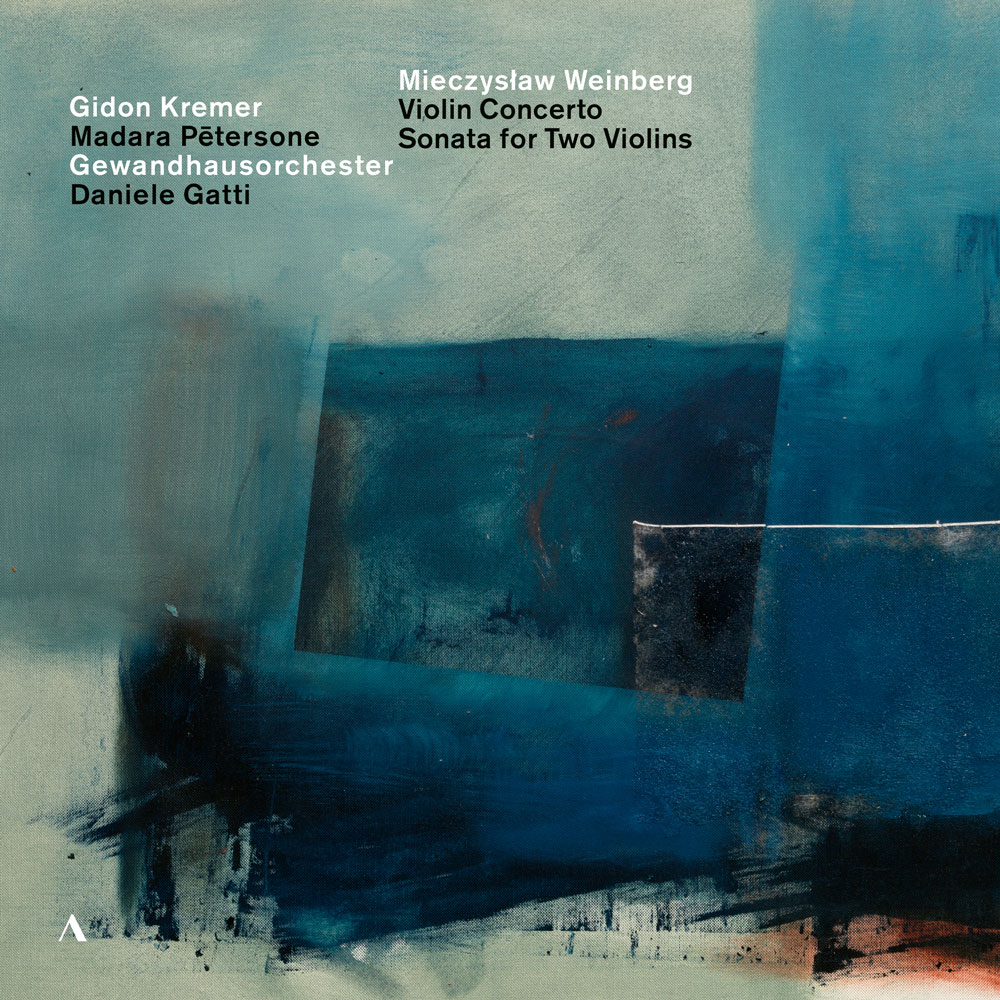
02 Weinberg ConcertoViolinist Gidon Kremer continues his passionate promotion of the previously neglected music of Shostakovich’s close friend and compatriot with Mieczysław Weinberg Violin Concerto, a live performance of the Concerto in G Minor Op.67 recorded in Leipzig in February 2020 as part of a series of concerts marking the composer’s 2019 centenary; Daniele Gatti conducts the Leipzig Gewandhaus Orchestra (Accentus Music ACC30518 accentus.com/discs/518).

Weinberg completed the four-movement concerto in 1959 at the end of a particularly creative phase. Written six years after the death of Stalin, it’s essentially a warmly lyrical work with spikier moments that clearly shows his musical relationship with Shostakovich, albeit without the sense of tension and utter despair that often haunted the latter’s compositions in the Stalin era.

Kremer is joined by Madara Petersone, the leader of his Kremerata Baltica ensemble, in a studio recording of the terrific three-movement Sonata for Two Violins Op.69, also from 1959. 
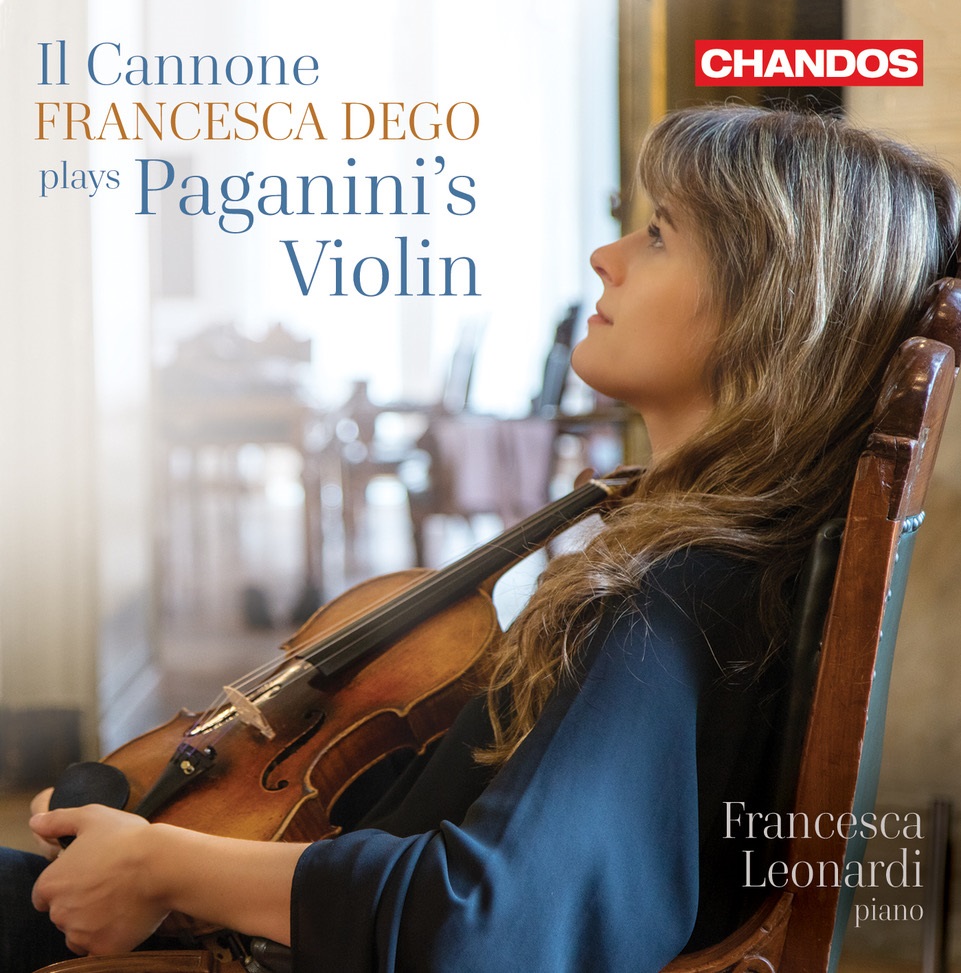
03 Il Cannone CoverIn October 2019 the Italian-American violinist Francesca Dego was given the honour of performing Paganini’s Concerto No.1 in Genoa on Paganini’s 1743 Guarneri del Gesù “il Cannone” violin, after which she was allowed to record with the instrument in Genoa Town Hall, where it is permanently housed and guarded by a six-person security detail. The result is Il Cannone: Francesca Dego plays Paganini’s Violin, where she is accompanied by her regular recital partner Francesca Leonardi in a program of works that pay homage to the famous virtuoso (Chandos CHAN 20223 chandos.net/products/catalogue/CHAN%2020223).

Four of the works here are for solo violin: Kreisler’s Recitativo and Scherzo-Caprice; John Corigliano’s The Red Violin Caprices; Carlo Boccadoro’s Come d’autunno; and Schnittke’s tough and quite abrasive A Paganini.

The works with piano are Clochette (Kreisler’s arrangement of La Campanella), Rossini’s Un mot à Paganini, and two works, in particular, that showcase the instrument’s glorious singing quality: Boccadoro’s arrangement of Paganini’s Cantabile and Szymanowski’s Trois Caprices de Paganini. The sweeping melodic phrases, the sweetness and strength in the highest register and the crystal-clear harmonics in these settings of Caprices Nos. 20, 21 and 24 complete a dazzling CD.
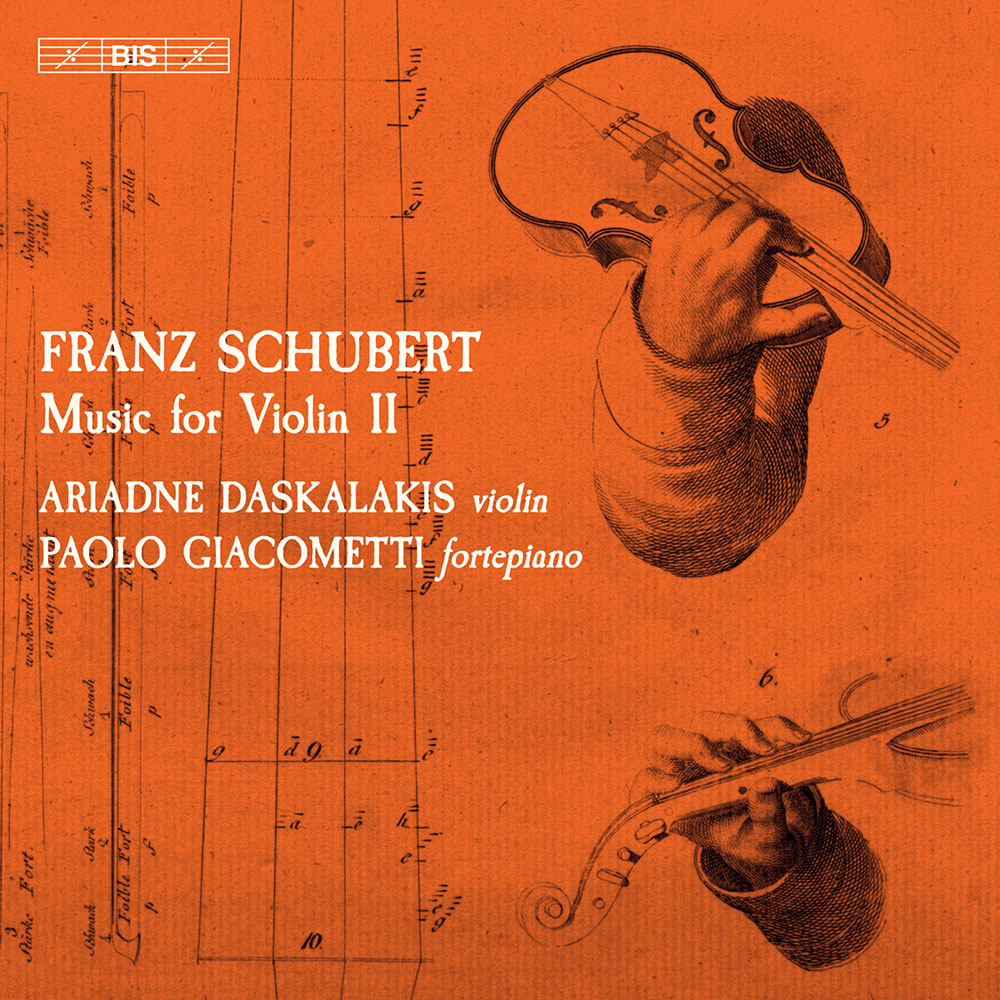
04 Schubert DaskalakisWith Franz Schubert Music for Violin II violinist Ariadne Daskalakis and Paolo Giacometti, on fortepiano, complete their survey of Schubert’s music for violin using a historical approach aimed at understanding the framework of Schubert’s time (BIS-2373 bis.se).

The Rondo in B Minor Op.70 D895 “Rondeau brillant” from 1826 provides a strong opening to the disc, bringing appropriately bright and clear playing from Daskalakis, the full recorded resonance allowing the fortepiano to sound warm and not at all dry.

Two of the three Sonatas Op.137 from 1816 (published by Diabelli in 1836 as Sonatinas) are here, No.1 in D Major D384 and No.2 in A Minor D385 drawing terrific playing from both performers, with lovely definition and dynamics in the former and very effective passages in the latter where Daskalakis uses no vibrato. The Duo Sonata in A Major Op.162 D574 from 1817 completes a fascinating CD, full of expansive, visceral music-making.

The fortepiano is by Salvatore Lagrassa from around 1815, so exactly contemporary with the music here, and the violin is a 1754 Guadagnini with gut strings and a classical bridge. The instruments are tuned to 430 Hz.
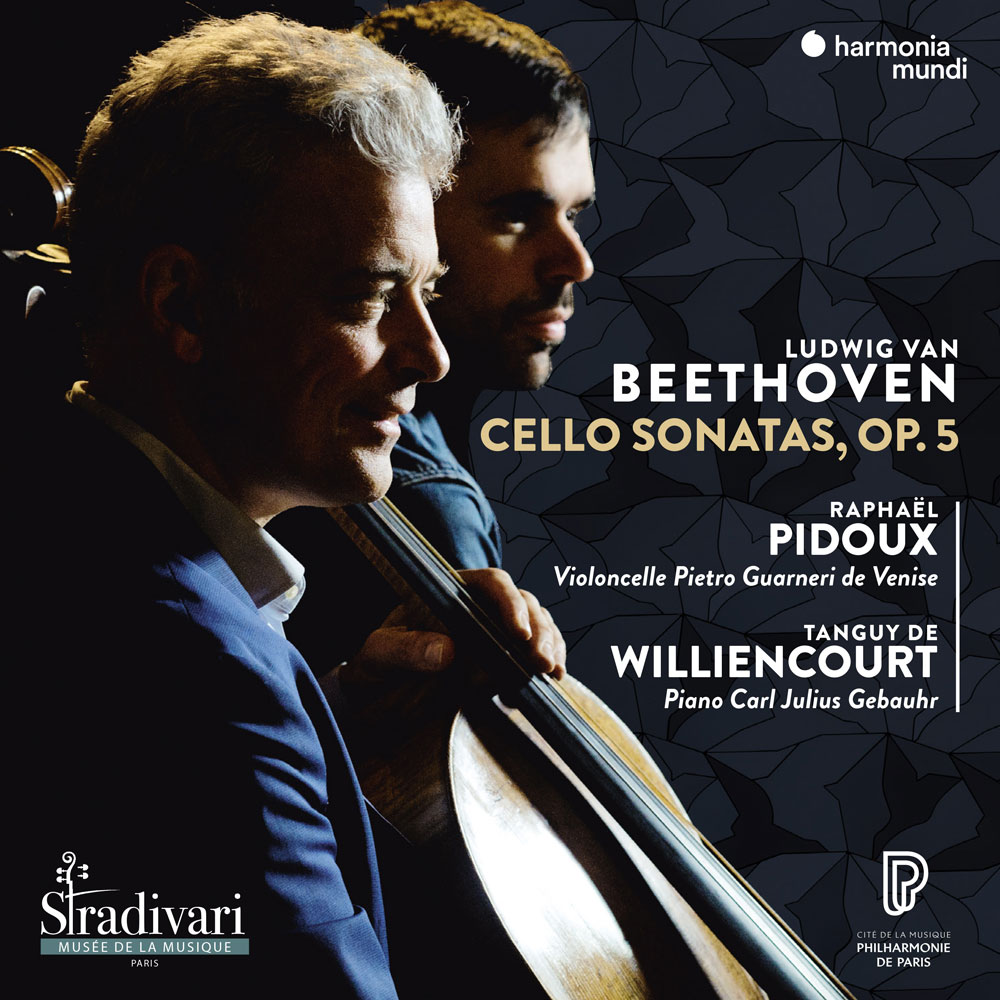
05 Raphael Pidoux Beethoven Op.5Two instruments from the Paris Musée de la musique provide a fascinating sound on Beethoven Cello Sonatas Op.5, with Raphaël Pidoux playing a 1734 cello by Pietro Guarneri of Venice and Tanguy de Williencourt playing an 1855 piano by Carl Gulius Gebauhr (Harmonia Mundi HMM 902410 store.harmoniamundi.com/format/635912-beethoven-cello-sonatas-op-5).

Both sonatas – No.1 in F Major and No.2 in G Minor – have no slow movement, the two-movement form in each being essentially Adagio – Allegro and Rondo – Allegro. Dedicated to Frederick William II, King of Prussia (himself an accomplished cellist), they were written in 1796 when Beethoven was in Berlin. Despite being published by Artaria in 1797 as sonatas for keyboard “with an obligato cello” they are the first duos to treat both instruments equally, the booklet essay noting their “brilliant writing, ambition and ample dimensions.”

Two works inspired by Mozart’s Die Zauberflöte complete the disc: Beethoven’s 1801 Seven Variations on “Bei Männern welche Liebe fühlen” WoO46 and the Nocturne “Souvenirs de la Flûte enchantée” from 1825 by pianist Camille Pleyel and cellist Charles-Nicolas Baudiot.
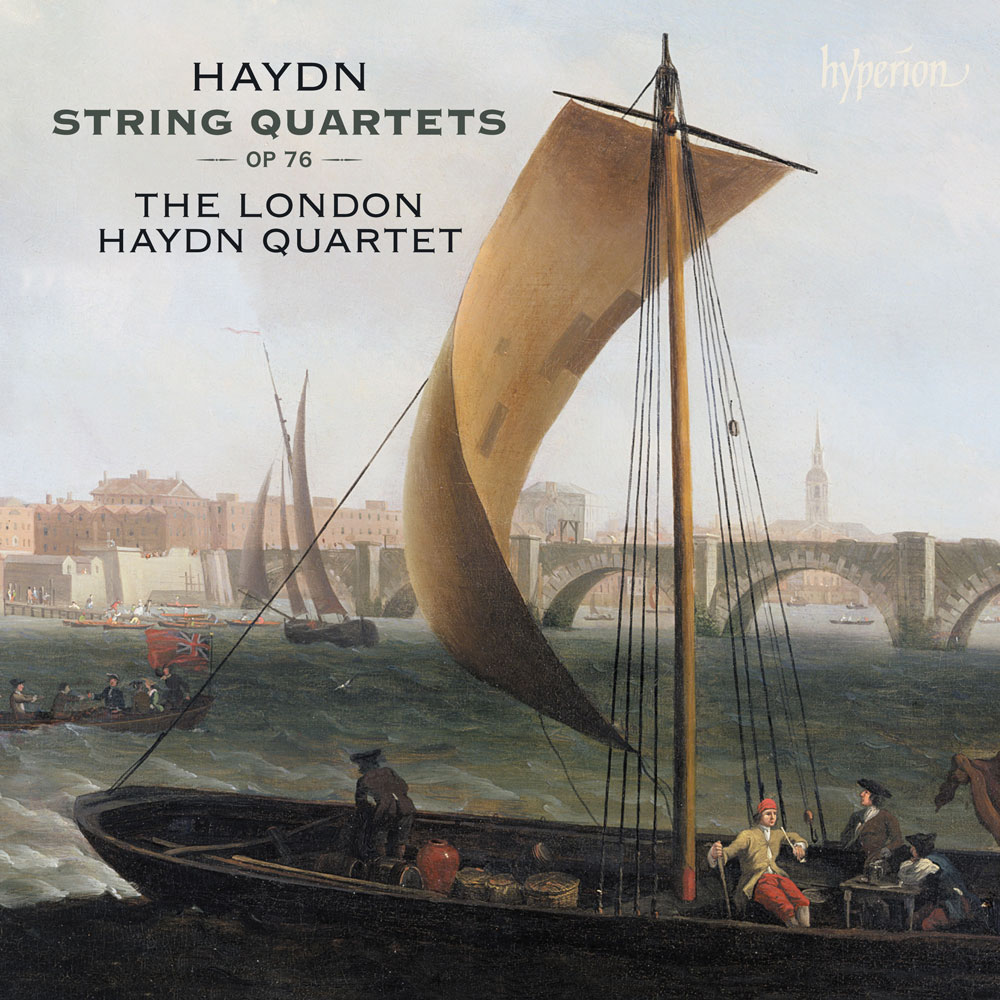
06 Haydn London Haydn QuartetThe London Haydn Quartet reaches volume nine in its ongoing set of the complete string quartets of Joseph Haydn with Haydn String Quartets Op.76, a 2CD set priced as a single disc (Hyperion CDA 68335 hyperion-records.co.uk/a.asp?a=A1711).

The six quartets – No. 1 in G Major, No.2 in D Minor “Fifths,” No.3 in C Major “Emperor,” No.4 in B-flat Major “Sunrise,” No.5 in D Major “Largo” and No.6 in E-flat Major – date from 1797 when Haydn was at the height of his creative powers in his string quartet writing; “no set of 18th century string quartets,” notes the excellent booklet essay, “is so wide-ranging in expression, or so heedless of the structural norms of the time.

Using the 1799 editions published by Longman, Clementi & Co. of London and Artaria of Vienna, the players show the same outstanding qualities – the faultless intonation on gut strings, the range of nuances and dynamics, the perfect ensemble feel – that have resulted in this series of quite superb period performances garnering rave reviews. 
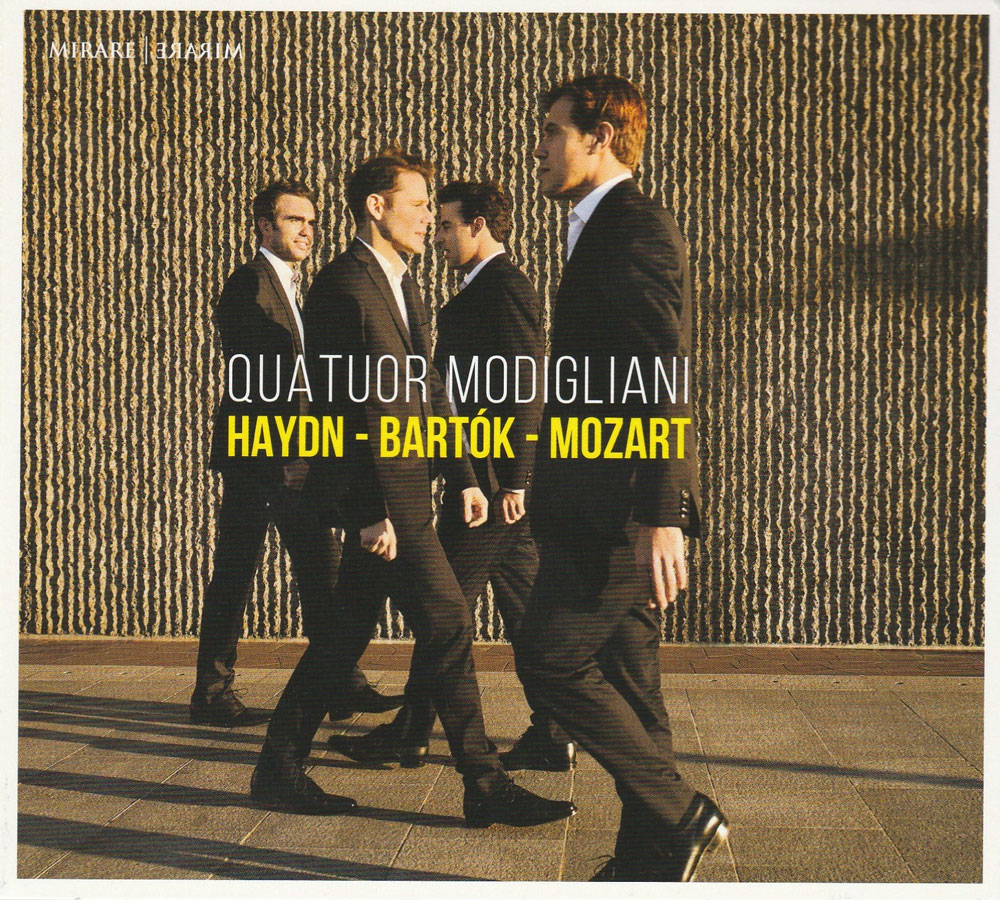
07 ModiglianiThe Haydn “Fifths” quartet also turns up on Haydn – Bartók – Mozart, the new CD from the Quatuor Modigliani that features three works that each bear witness to a turning point in the lives of their composers and the advent of new horizons (Mirare MIR506 en.modiglianiquartet.com).

Haydn’s String Quartet in D Minor Op.76 No.2 was written when he was free from his service at the Esterházy estate and was the toast of Vienna after his two hugely successful trips to England. The opening tempo is markedly faster than on The London Haydn Quartet CD, but even with the accent more on lightness and clarity there’s no lack of emotional depth.

The political situation in Hungary at the end of the Great War badly hindered Bartók’s folk music research and deeply affected him; he wrote very little until an outpouring of piano music in 1926. The following year saw his String Quartet No.3 Sz.85, the shortest of his six quartets but the one that heralded his mature style.

Mozart’s String Quartet No.19 in C Major K465 “Dissonance” dates from 1785, and is the last of the six quartets Mozart dedicated to Haydn, whose Op.33 quartets he had heard after arriving in Vienna in 1781. Study of the music of Bach and Handel at that time resulted in a more marked presence of counterpoint in Mozart’s music.

There’s outstanding playing throughout the CD, but the Mozart, in particular, is absolutely beautiful, with clarity and warmth and a crystal-clear Allegro final movement.
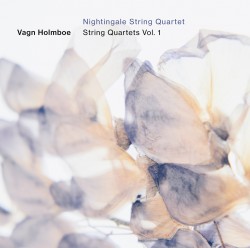
08 Vagh HolmboeWith Vagn Holmboe String Quartets Vol.1 Denmark’s Nightingale String Quartet embarks on what promises to be an outstanding set of quartets by the Danish composer who lived from 1909 to 1996 (Dacapo 8.226212 dacapo-records.dk/en).

Holmboe wrote quartets throughout his life and completed over 30, 22 of which are in his official catalogue. Although his lasting role model was Haydn, Bartók’s quartets also became a big influence.

Holmboe had already written ten unpublished quartets before his three-movement String Quartet No.1 Op.46 from 1949, subtitled In memoriam Béla Bartók. The other two works on this first volume are the five-movement String Quartet No.3 Op.48, also from 1949, and the four-movement String Quartet No.15 Op.135 from 1978, its third movement Funèbre very much of Shostakovich’s sound world.

Interestingly – in 2010 – Dacapo, Denmark’s national record label, issued a 7CD box set of the complete 22 Holmboe quartets, apparently assembled from individual issues from the late 1990s and performed by the Kontra Quartet, who “enjoyed a close collaboration with the composer.” This new project promises “fresh, new performances that support the idea that the deeper you dig into Holmboe’s music, the more you find.”

The terrific performances here certainly make a great start. 
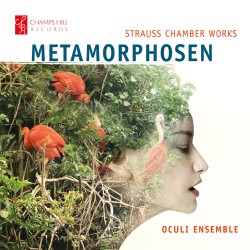
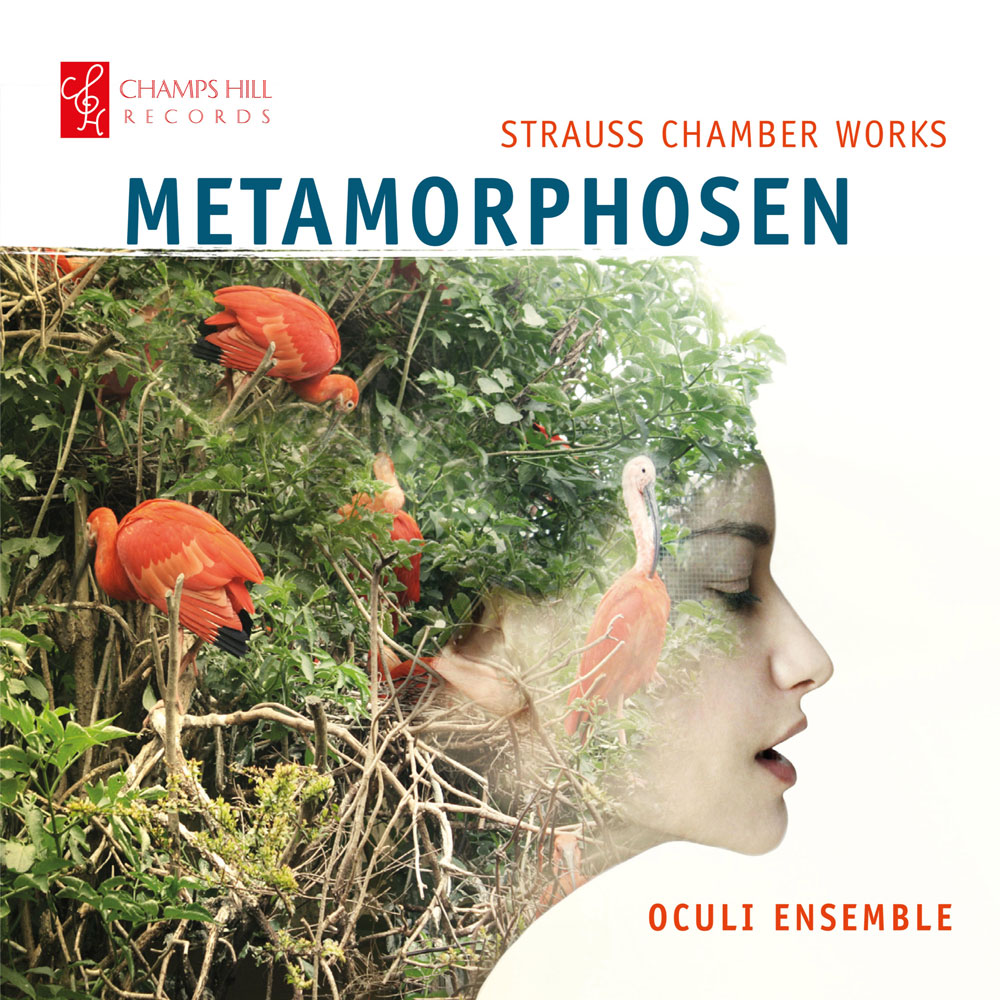
09 Strauss ChamberThe Oculi Ensemble is a flexible string ensemble comprised primarily of members of leading string quartets and dedicated to exploring string repertoire for two to seven players. Metamorphosen – Strauss Chamber Works is their debut CD as a stand-alone ensemble (Champs Hill Records CHRCD155 champshillrecords.co.uk).

The Prelude to the opera Capriccio Op.85 from 1940-41 opens the disc, followed by two works for string quartet: the extremely brief fragment Quartettsatz in E-flat Major TRV85 from 1879 (recorded with the permission of the Strauss family) and the String Quartet in A Major from 1880. Three brief works for piano quartet follow: Ständchen from the early 1880s; Festmarsch AV178 from November 1886; and the Two Pieces AV182 – Arabischer Tanz and Liebesliedchen from 1893.

The title track completes the CD. Commissioned for 23 solo strings, Metamorphosen wasn’t finished until after the February 1945 Allied bombing raid that destroyed Strauss’ beloved Dresden, Strauss completing a draft short-score for seven solo strings that March. That manuscript was rediscovered in Switzerland in 1990 and edited for performance by cellist Rudolf Leopold in 1994. Impassioned playing, recorded in the excellent acoustics of the Music Room at Champs Hill, West Sussex, ends a highly commendable CD.
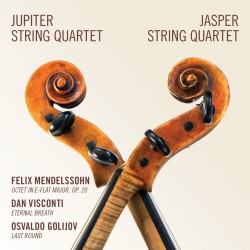
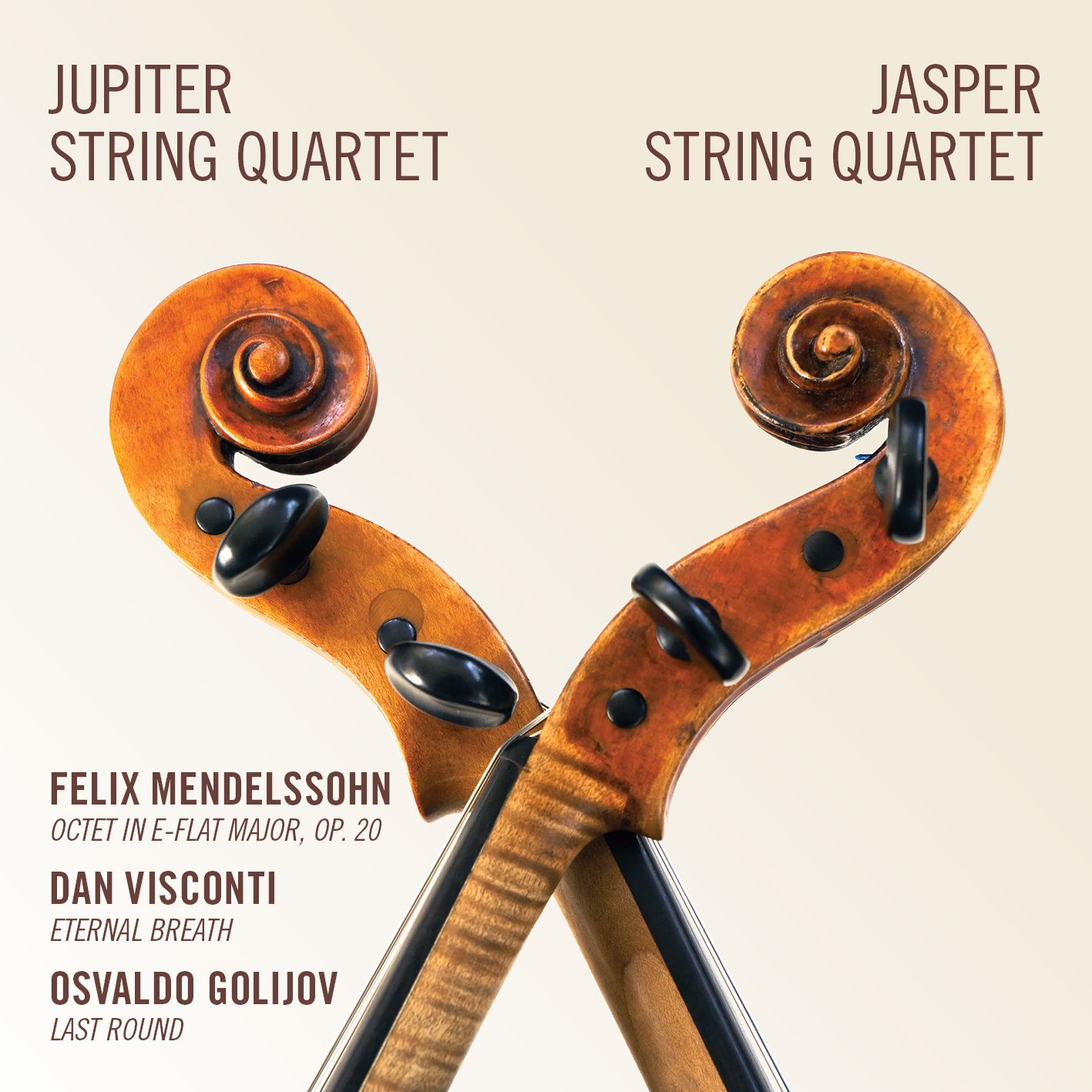
10 Jupiter Jasper QuartetsThe excellent new CD by the Jupiter and Jasper String Quartets, music by Mendelssohn – Visconti – Golijov simply abounds with familial relationships, three Freivogel siblings (a brother and two sisters) and two spouses making for a remarkably close connection between the two ensembles (Marquis 81613 marquisclassics.com/index.html). 

A luminous opening to the Mendelssohn Octet in E-flat Major Op.20 sets the tone for a simply thrilling performance – vibrant, pulsating and dynamic with a dancing Scherzo and a sweeping Presto finale.

Dan Visconti’s quite beautiful Eternal Breath, envisioned as a work that would involve their four children and their musical spouses, was commissioned in 2011 by the Freivogel parents (who also funded the recording) for their 40th wedding anniversary. Originally for three violins, a viola, three cellos and a drone box, it is heard here in the later adaptation with a second viola replacing the third cello.

Osvaldo Golijov’s two-movement Last Round from 1996 is a tribute to Astor Piazzolla, the octet being joined by a string bass in Last Round – Movido, urgente and Muertes del Angel, the whole work described by Golijov as “an idealized bandoneón.”


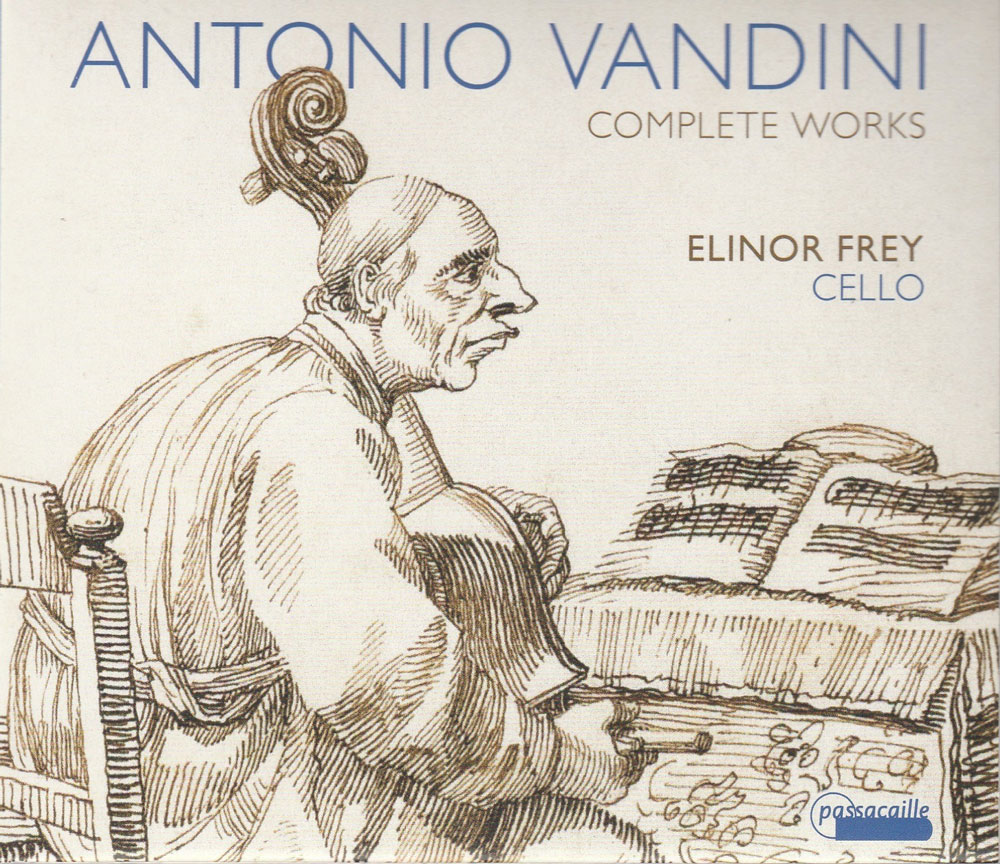
01 Frey VandiniAntonio Vandini – Complete Works
Elinor Frey; Patxi Montero; Marc Vanscheeuwijck; Federica Bianchi
Passacaille 1079 (elinorfrey.com)

The prolific Canadian-American cellist Elinor Frey adds another impressive release to her discography. This new record features the complete works of the regrettably little-known Italian cellist and composer, Antonio Vandini. In mighty musical company with the likes of Tartini and Vivaldi, Vandini proved himself a virtuoso in his own right, touring Europe as a celebrated cellist; he also wrote music that has remained inexplicably neglected, even in the 21st century.

Six sonatas and one concerto adorn this attractive disc, exquisitely conceived, researched and recorded alongside Frey’s collaborators Patxi Montero, Marc Vanscheeuwijck and Frederica Bianchi. The collaborative voices of contrabass, viola da gamba and harpsichord complement these cello-centric works to salient effect. Vandini himself boasted top-drawer musical partners, the most famous of whom was Giuseppe Tartini. Vandini also taught at La Pietà in Venice, alongside Vivaldi. As mirror to the artistic comradery Vandini enjoyed in his own lifetime, Frey has assembled an expert group of musicians here – friends and colleagues – to help realize these colourful, inspired scores. Some highlights include: the duo Sonata in C Major, Van.2 and the sunny Concerto in D major, Van.5 which features the entire ensemble with two added violins and viola. The final work on the record, the Sonata in E Major, Van.7 has a particular depth of expression, exemplifying the verdant key of E Major. Frey’s flawless focus and confident musicality leads us through an 18th-century cave of wonders: a joyous, antique grotto where others fail to tread.

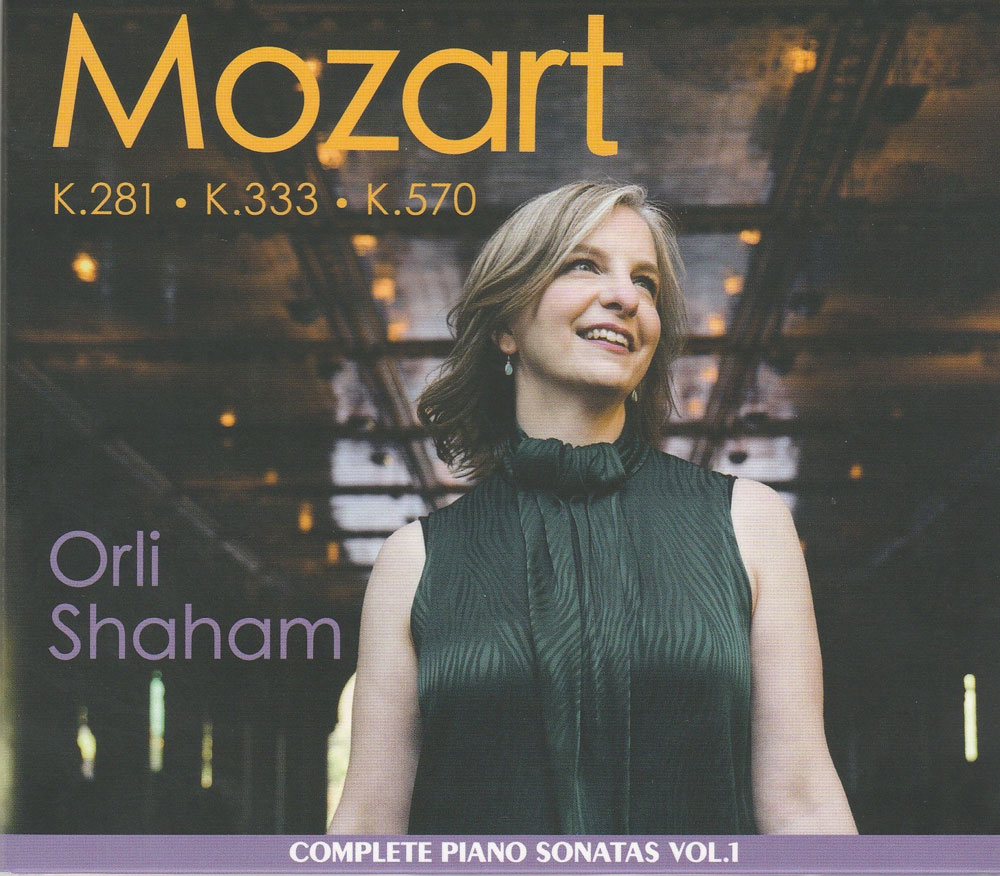
02 Orli Shaham Mozart 1Mozart – Complete Piano Sonatas, Volume 1
Orli Shaham
Canary Classics CC19 (canaryclassics.com)

Young Mozart, the proverbial wunderkind, was known primarily as a performer rather than a composer – one of the greatest exponents of the then, relatively new fortepiano. The antithesis of Franz Liszt, who rose to pianistic eminence almost a century later, Mozart encouraged simplicity and clarity over wizardry. This is perfectly reflected in his sonatas, which he only began writing in 1774. 

Strangely, virtually all 18 of Mozart’s piano sonatas are neglected by pianists and listeners although Mitsuko Uchida, Maria-João Pires and Glenn Gould (who famously disparaged Mozart in one of his CBC broadcasts) have recorded interpretations of the complete sonatas. And now the brilliant young Orli Shaham gives notice that she intends to follow suit with the first of her recordings Mozart – Complete Piano Sonatas (Vol.1).

In the wrong hands Mozart’s outwardly simple sonatas can, indeed, sound simplistic and uninteresting – even formulaic. But Shaham brings out all the delights of the sonatas in this recital that features one early and two late works. Her delicate phrasing creates a feeling of innocent melodiousness, yet each movement is intelligently worked out, and Shaham’s subtle manipulation of timing conveys a strong sense of Mozart’s puckish and quick-witted compositional approach. 

Shaham’s interpretation of the early Sonata in B-flat Major No.3 K281 is gritty. Meanwhile the B-flat Major No.13 K333 and B-flat Major No.17 K570 have been infused with great depth of colour, emotional range and well-tuned melodious elegance.

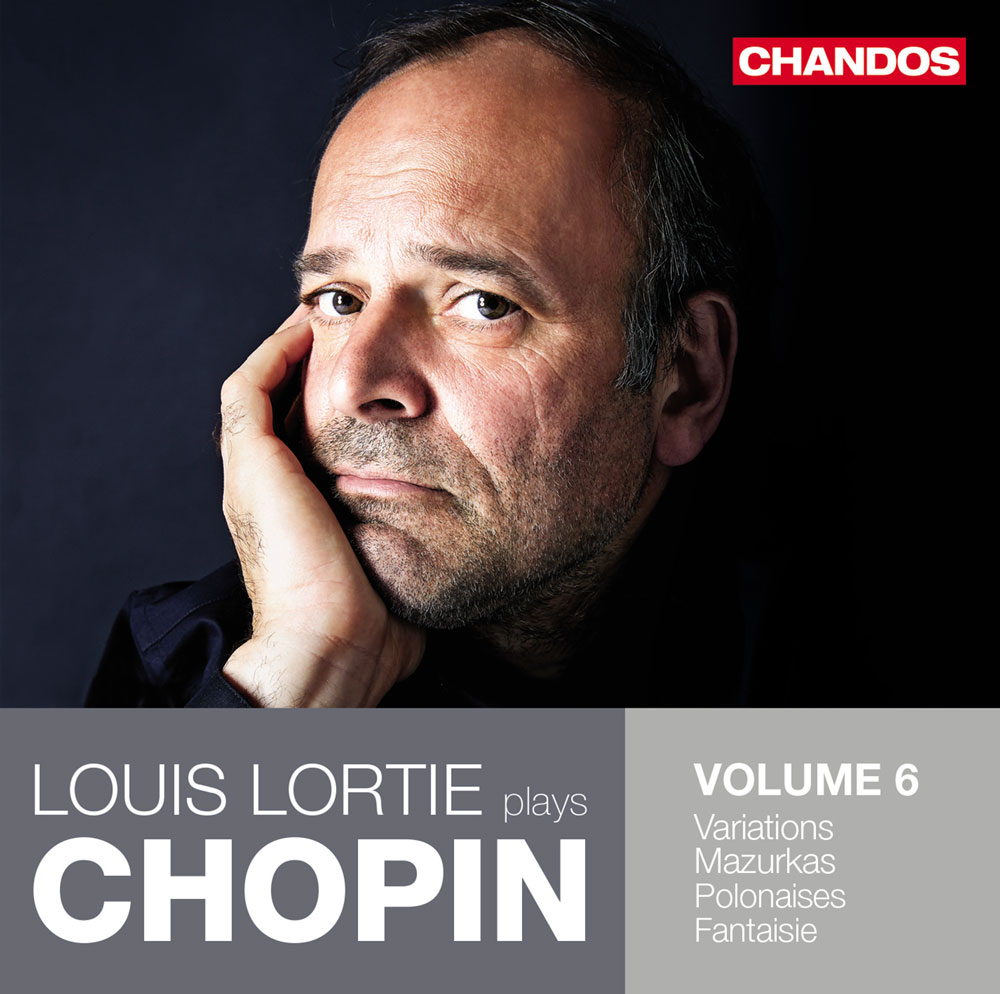
03 Lortie ChopinLouis Lortie Plays Chopin, Volume 6
Louis Lortie
Chandos CHAN 20117 (naxosdirect.com/search/chan+20117)

The music of Chopin is, for Louis Lortie, a vocational hallmark and the making of his career. Now, six records deep into the composer’s catalogue, Lortie includes a fantasy, an early set of variations and assorted Polish national dances on his latest release. For the dances, an objective, no-nonsense approach is favoured. His sense of rhythmic continuity betrays an aspiration to expose the inherent structures just as they are, without affectation or personalized dilution. The results seem born of the first half of the 20th century – Lortie never handles this music too preciously, with the essence of the dance always at the fore. 

When considering Chopin, contrast between dark and light is essential. Lortie excels at the conveyance of Slavic expression through the lens of extreme sentiment, often using fine-tuned pacing, silence and varied dynamics to admirable effect. Of unexpected delight is the “Military” Polonaise, Op.40 No 1. Not such a fashionable thing to record these days, Lortie offers it up with unabashed affection and aristocratic poise. Arguably saving best for last, the Fantasy in F Minor, Op.49 concludes the album, highlighting the attributes for which Lortie is celebrated. Lucid and buoyant, it is music sculpted with chiselled lines and acute structural sense. At moments on this disc, a seasoned sort of beauty takes hold of our ears, wherein a keyboard’s conjuring casts an airy, aural spell. In the battle of dark and light, Lortie’s own brand of luminescence wins out every time.

Back to top