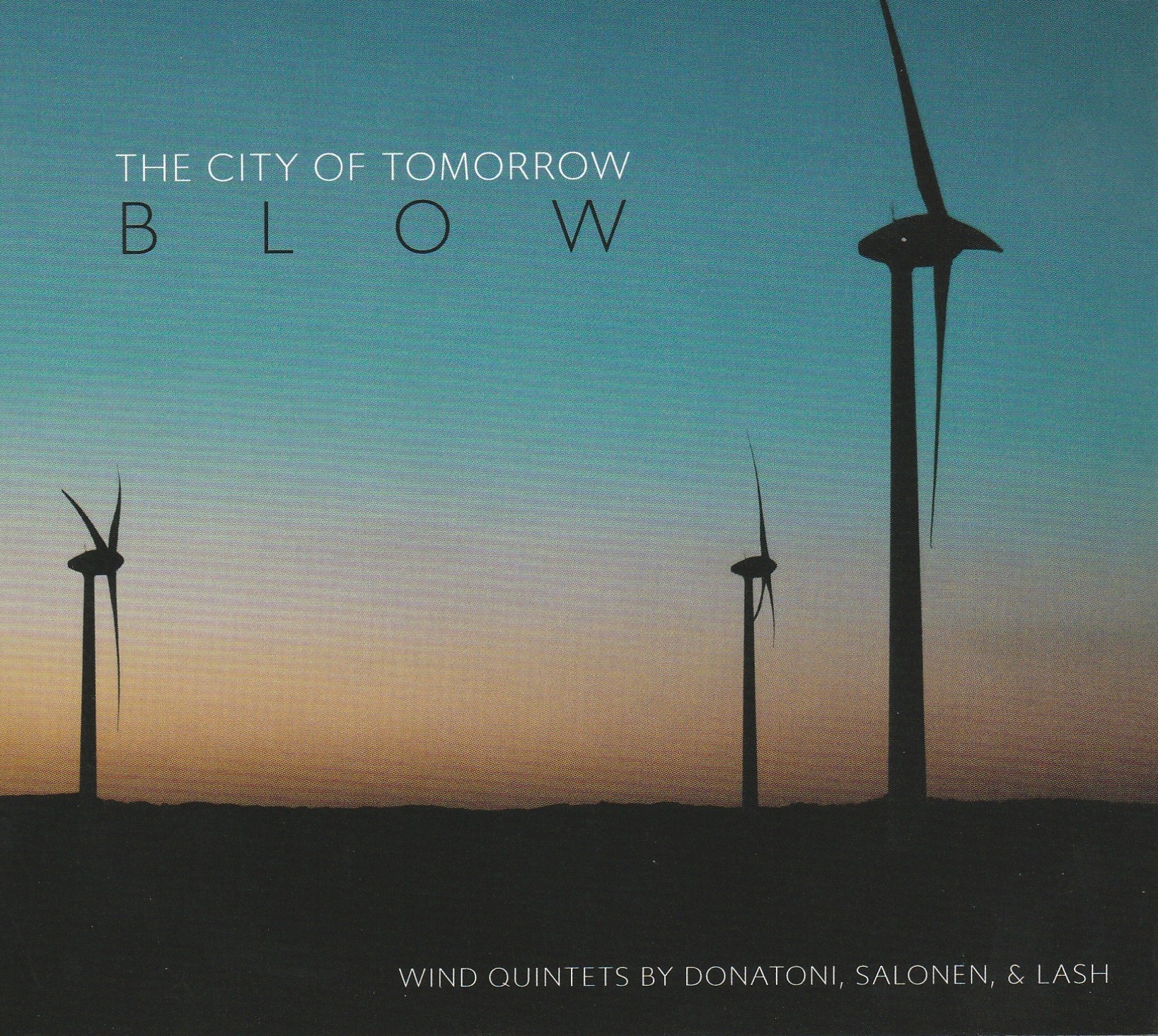
12 BlowBlow – Wind Quintets by Donatoni, Salonen & Lash
The City of Tomorrow
New Focus Recordings FCR294 (newfocusrecordings.com)

Part way through the sixth movement of Leander and Hero (2015) by Hannah Lash, a ghostly flute-like voice enters the texture. As the liner notes reveal, the sound is one player blowing across the open mouth of another. When it comes to unusual directions from composers, I apparently have neither seen nor heard it all. This new release, from the spectacularly capable woodwind quintet The City of Tomorrow, delights and amazes.

Put aside that in the current circumstances this would simply be an unacceptable breach of personal safety for both performers, the intimacy of the act demands trust and care, to say nothing of technical control of “embouchure” and/or “instrument.” It wouldn’t surprise me to learn the effect was overdubbed onto the track, but I’m willing to bet the players didn’t need to. Given how the rest of this disc is presented with complete assurance and musicality, a little thing like playing your colleague’s head like a jug in a jug band would hardly be beyond them. 

The title track, Franco Donatoni’s stutter-stepping Blow (2000), provides the players an opportunity to show off more conventional contemporary skills. I love his music, it’s always full of swing and fire, and this is no exception. The group’s sound is crisp, tart and sweet, like a perfect fall apple.

Esa-Pekka Salonen closes things with Memoria (2003), music reworked partly from unpublished material, composed over a period of 20 years, and compiled to celebrate the 20th anniversary of the Avanti! Chamber Orchestra, a group he co-founded. Angst-y Finnish melancholia suits the group to a tee.
Listen to 'Blow – Wind Quintets by Donatoni, Salonen & Lash' Now in the Listening Room

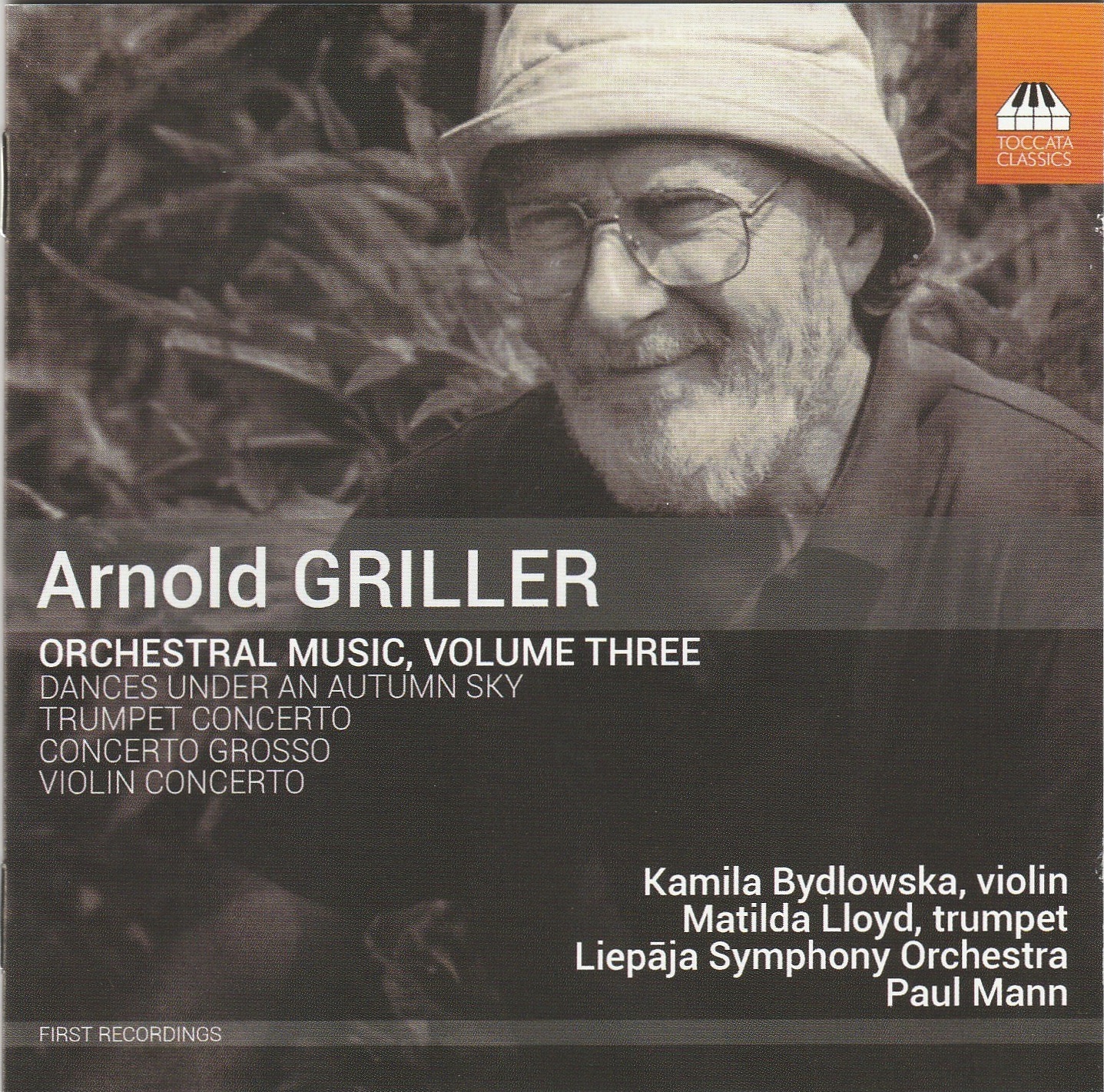
14 Arnold GrillerArnold Griller – Orchestral Music, Volume Three
Kamila Bydlowska; Matilda Lloyd; Liepaja Symphony Orchestra; Paul Mann
Toccata Classics TOCC0590 (naxosdirect.com/search/tocc0590)

In 1955, while studying composition with Darius Milhaud, Arnold Griller (b.1937 in London, England) wrote his 13-minute, Coplandesque Concerto Grosso for strings, filled with long-lined, brooding melodies. Griller’s father Sidney was first violin of the renowned Griller Quartet but, writes Douglas Finch, “Griller chose to withdraw from the musical maelstrom into which he was born and for most of his adult life has remained in relative seclusion.” Now living in a small Cornwall village, Griller even spent 25 years teaching ESL in Winnipeg!

Three recent (2017-2018) works, each over 20 minutes, variously utilize what conductor Paul Mann calls “the Griller gamelan” – harp, xylophone, marimba, celesta, glockenspiel and harpsichord.

Griller’s Violin Concerto memorializes Yodit Tekle, Toccata Classics founder/CEO Martin Anderson’s partner, cancer victim at 37. The dark-hued orchestra, lacking violins, growls atonally while Kamila Budlowska’s agonized violin struggles, rallies briefly with a rising tonal sequence but succumbs to snarling brass. Now alone, it sustains a long-held single note, then vanishes.

Dances under an Autumn Sky has no stated program, but its jagged rhythms, angry brass and percussion outbursts create an increasingly violent scenario, ending in tragedy. The Trumpet Concerto opens with soloist Matilda Lloyd busily meandering over fragmented, percussion-heavy, violin-less sonorities. A march past Dvořák’s house begins in high spirits, then darkens, the muted trumpet playing a dirge marked “with great sadness.” The concerto – and the CD – concludes with a motorized crescendo of celebratory fanfares and percussive fireworks. Finally, a happy ending!

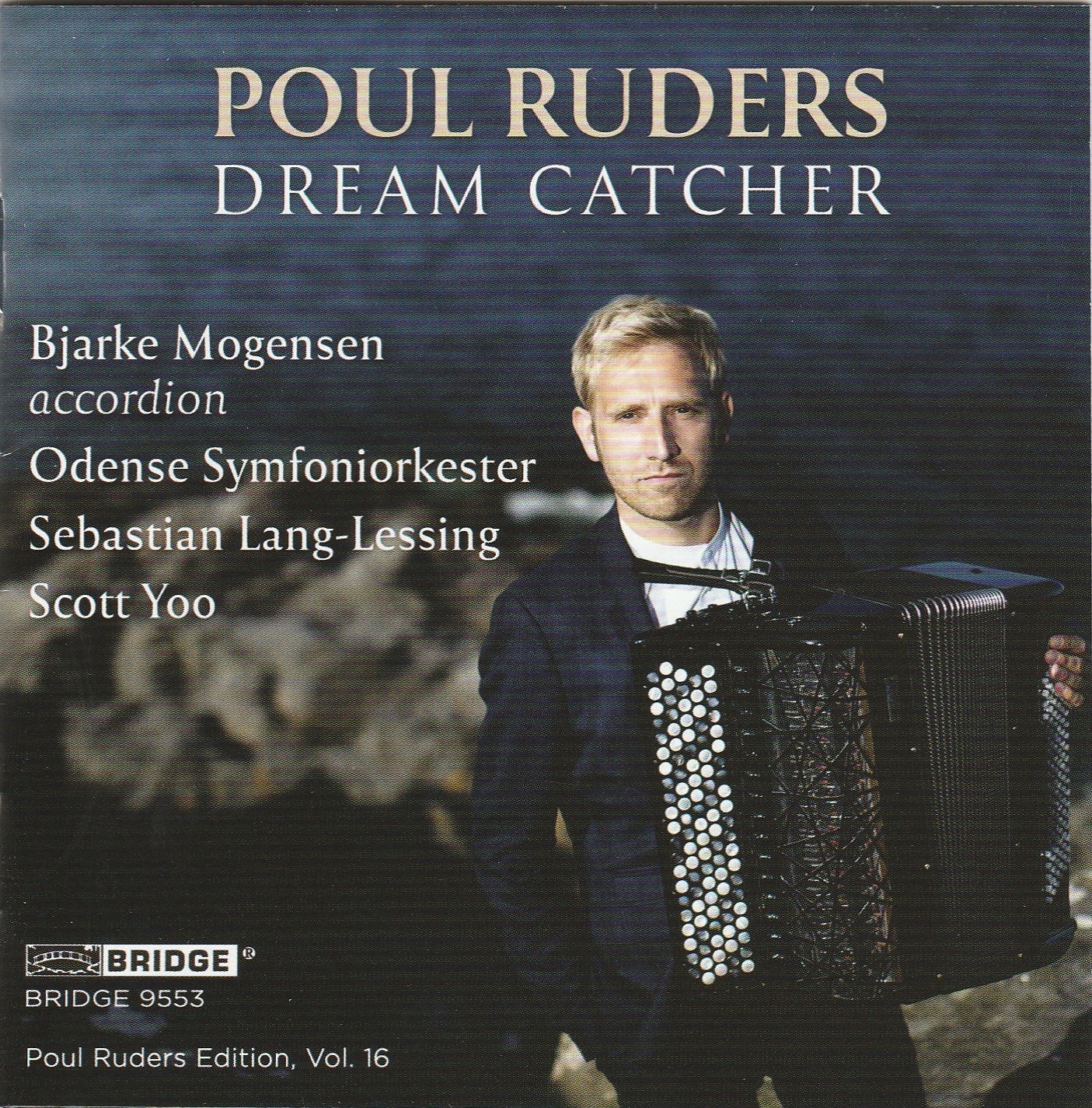
15 Poul RudersPoul Ruders – Dream Catcher
Bjarke Mogensen; Odense Symphoniorkester; Sebastian Lang-Lessing; Scott Yoo
Bridge Records 9553 (bridgerecords.com/collections/catalog-all) 

Danish composer Poul Ruders is renowned for his symphonies, and his operas like The Handmaid’s Tale based on Margaret Atwood’s novel of the same name. Here, three Ruders instrumental works showcase his intriguing compositions.

This world premiere recording of the seven-movement Sound and Simplicity (2018) concerto is performed by Danish accordionist Bjarke Mogensen and the Odense Symfoniorkester conducted by Sebastian Lang-Lessing. I. Rain opens with high staccato accordion replicating the sound of surface-landing droplets, followed by an energetic full orchestra section. Love the percussion thunder-like rumbles. Calming sustained four-note II. Trance, presented over three octaves, makes for relaxing “simple” sounds. Mogensen’s accordion performance of IV. Smoke paints a smoky soundscape with steady held notes, wide pitch range, brief controlled bellow shake and contrapuntal melodies, supported by orchestral diverse floating pitches and dynamics. Rollicking VII. Wolf Moon bounces along with faster interchanges and dynamic swells between orchestra and accordion, to the penultimate ascending line and the final accordion chord.

Dream Catcher is Mogensen’s arrangement for solo accordion of Ruders’ accordion and string quartet Serenade on the Shores of the Cosmic Ocean. This diatonic work features musical, hypnotic held notes, a high-pitched slow tune and closing repeated soft notes, highlighting Mogensen’s virtuosic bellow control. 

Previously released by Bridge, Symphony No.3 “Dream Catcher” is a two-movement orchestral extravaganza conducted by Scott Yoo. The loud percussive start transforms into a tonal, sweet-dream string section. In the second movement, faster birdlike horn trilling leads to full-steam-ahead virtuosic orchestral multi-rhythmic chase music.

Catch this great Ruders sound release!!

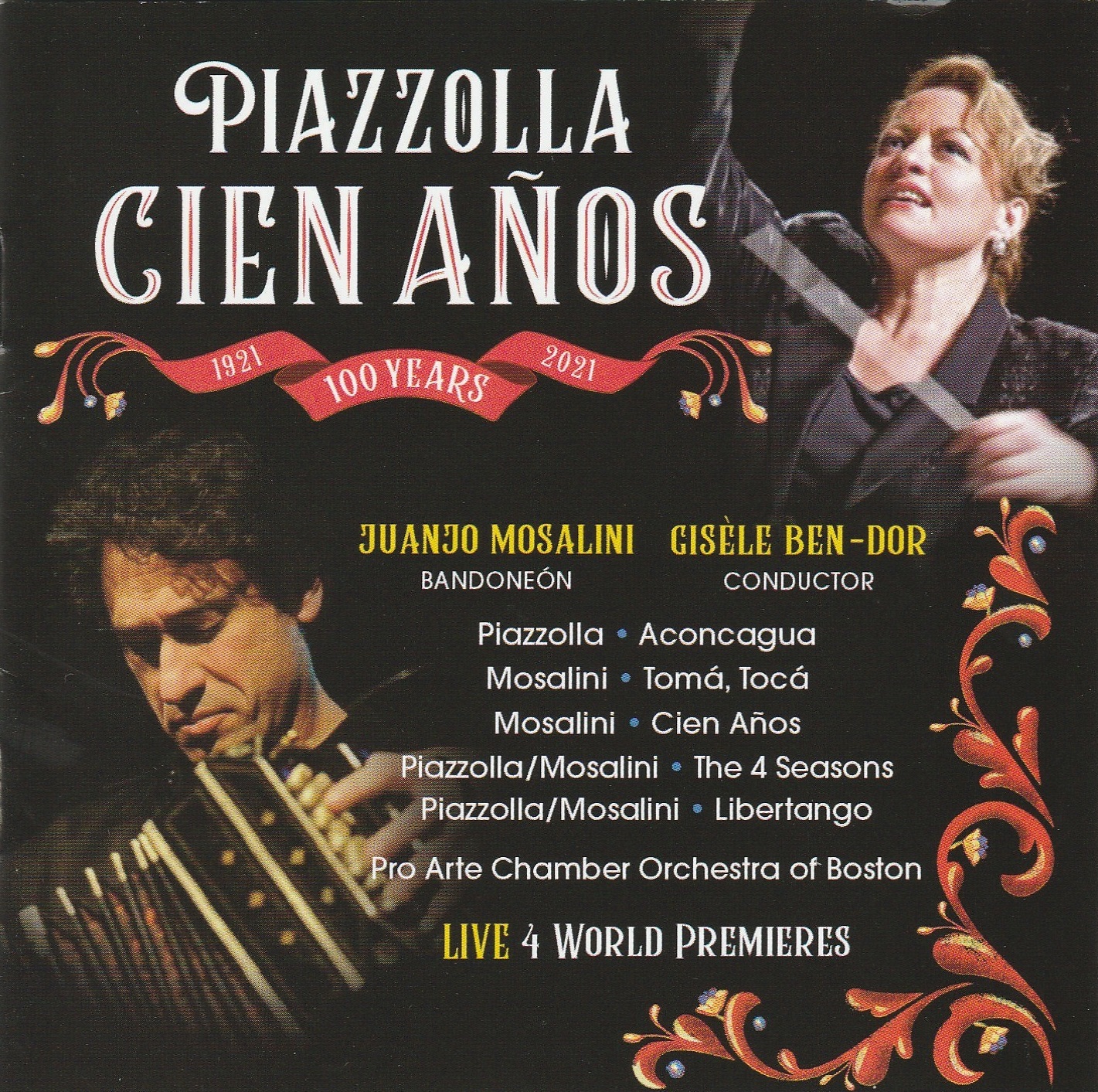
16 PiazzollaPiazzolla Cien Años (100 Years 1921-2021)
Juanjo Mosalini; Pro Arte Chamber Orchestra of Boston; Gisèle Ben-Dor
Centaur Records CRC 3844 (giseleben-dor.com)

This is another memorable release celebrating the centenary of Argentine composer/bandoneonist Astor Piazzolla (1921-1992) as conductor Gisèle Ben-Dor leads the Pro Arte Chamber Orchestra of Boston and bandoneon soloist Juanjo Mosalini.

The recording opens with a Piazzolla original Aconcagua, Concerto for Bandoneon (1979) a three-movement, true-to-his-style work, featuring rhythmic symphonic grooves, lyrical bandoneon solos with fast trills and virtuosic lines, and tight soloist and orchestra interchanges creating a danceable yet concert-hall classical-flavoured rendition performed perfectly by all concerned.

Four world premiere recordings scored for bandoneon and orchestra follow. Two Mosalini single-movement original compositions incorporate Piazzolla influences with popular/classical touches in his own soundscapes. Tomá, Tocá (Take It, Play It) is faster with repeated notes and virtuosic flourishes. Cien Años (One Hundred Years) combines tango elements with nostalgic bandoneon melodies, long phrases and bright high pitches.

Two Piazzolla works arranged by Mosalini follow. Originally in four movements, The Four Seasons of Buenos Aires is presented as one long, connected work. Piazzolla purists will respect this for its true-to-style playing. Shifts in tempos, grooves and moods, the deep cello lines, florid fast bandoneon and orchestra accompaniments are amazing, ranging from danceable and fun to serious and slow. In the closer, Piazzolla’s popular Libertango, technically challenging solos now alternate with colourful orchestra lead lines above bandoneon rhythmic accents.  

Fantastic performances and great music, what more could we want?

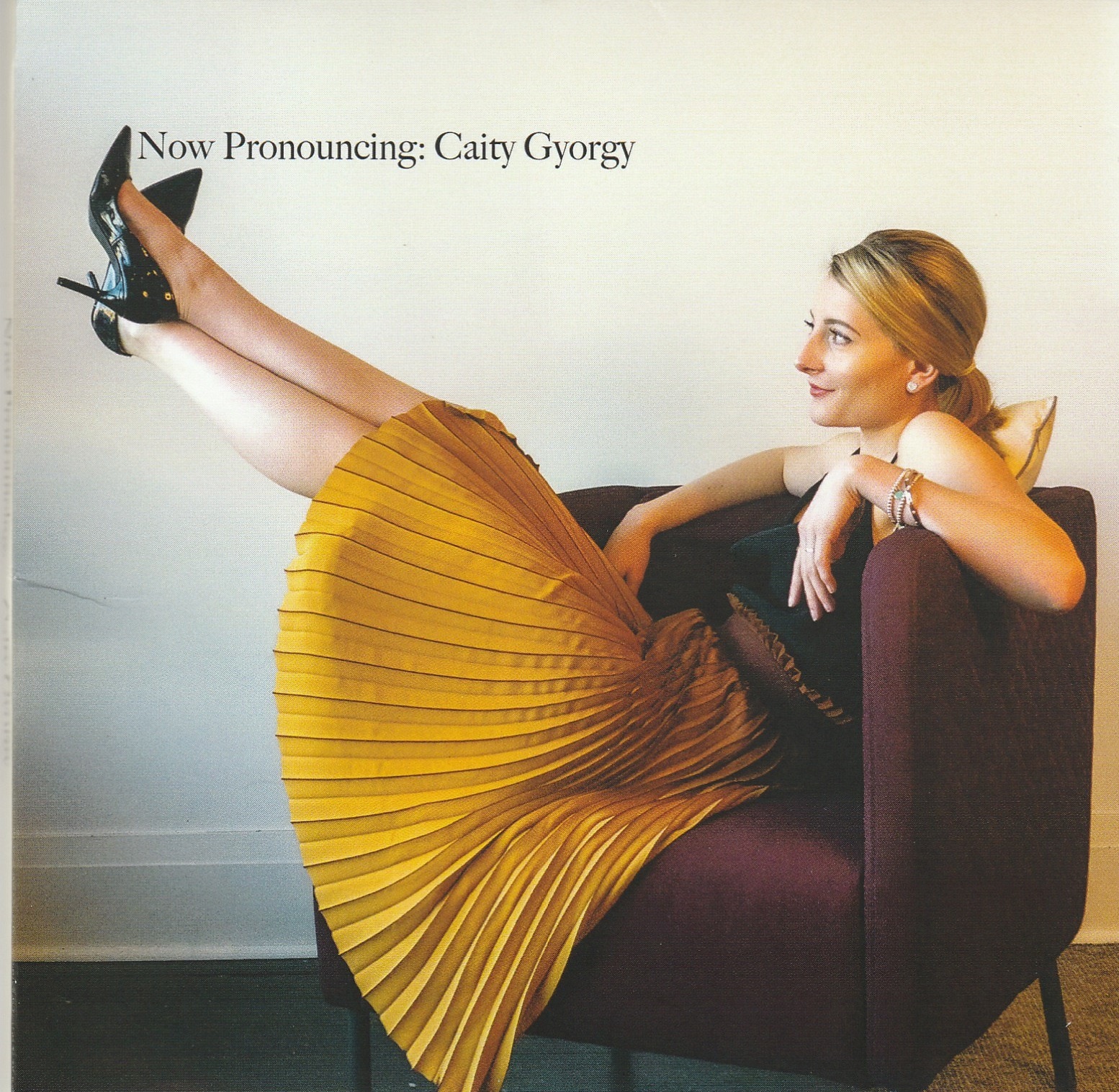
01 Caity GyorgyNow Pronouncing
Caity Gyorgy
Independent (caitygyorgy.bandcamp.com)

Full disclosure: I know Caity Gyorgy from her time in Toronto when she was a college student. That said, whether you are previously familiar with Gyorgy and her marvellous vocal and musical abilities or you are new to her considerable talents, time listening to Now Pronouncing is indeed time well spent for jazz and vocal fans alike. 

This short recording, five songs in length, may be a manifestation of her degree-end capstone school project, but it is anything but an academic student affair. Leading a top-shelf, large-sized professional musical ensemble through a program of original compositions and arrangements, Gyorgy states a melody and lyric with aplomb and, as on Secret Safe, trades improvisatory lines with the assembled and stacked roster of horn players, demonstrating her clear mastery of the bebop and jazz language. And while I have no doubt that she is capable of singing just about anything, regardless of style or genre, how refreshing it is to hear a jazz singer be a jazz singer, foregrounding scat singing, swing, ornamented bebop vocal lines and total band leadership from out front on this fine recording. 

Backed capably by a great Toronto rhythm section of Felix Fox-Pappas (piano), Thomas Hainbuch (bass) and Jacob Wutzke (drums), Gyorgy, who has since relocated and is now showcasing her talents on the Montreal jazz scene, demonstrates why this Calgary-born singer is a talent worth watching regardless of the city in which she takes up residence.

Listen to 'Now Pronouncing' Now in the Listening Room

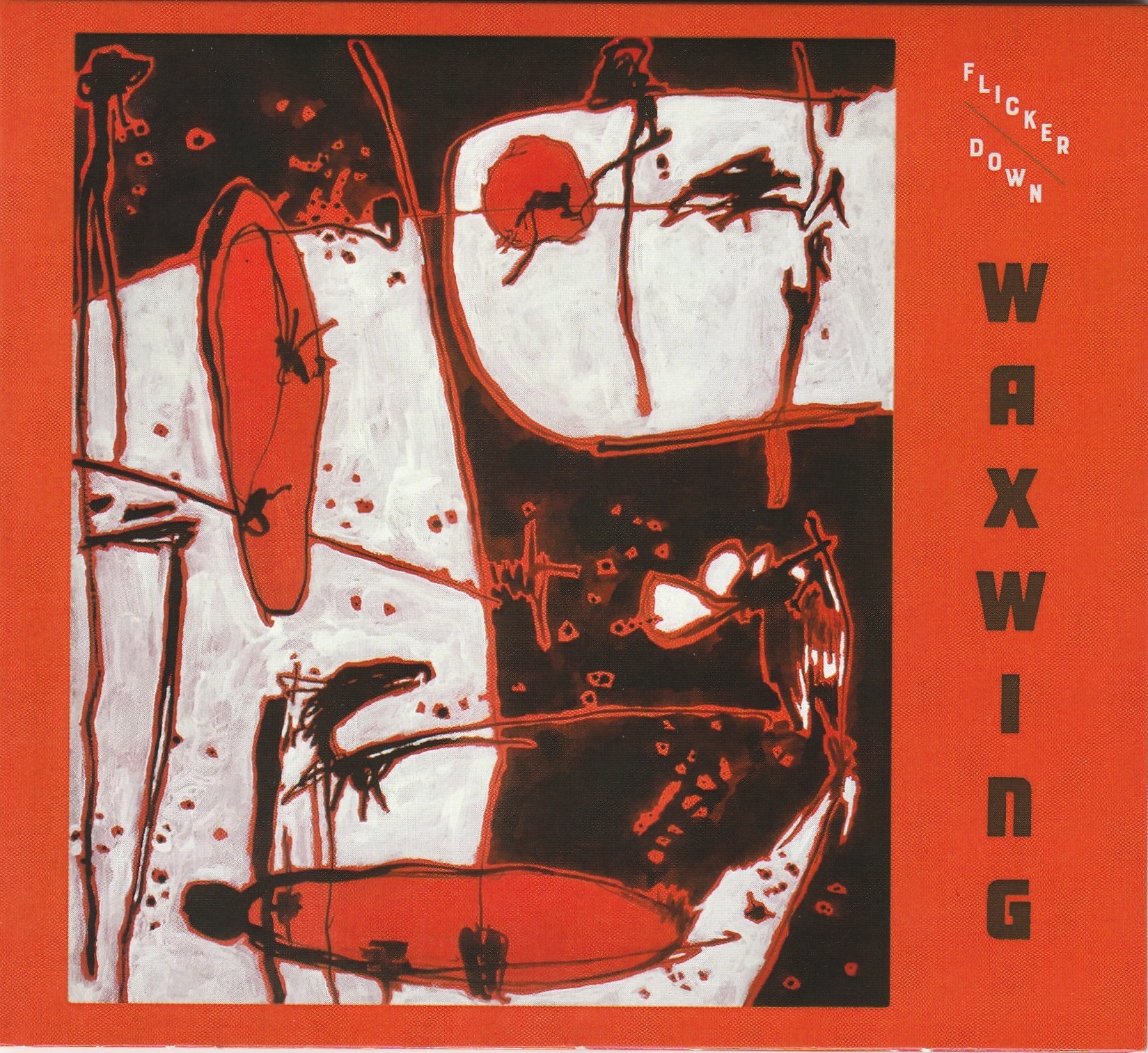
02 WaxwingFlicker Down
Waxwing
Songlines SGL1633-2 (songlines.com)

Formed in 2007, Waxwing is a co-led trio created by three veterans of the Vancouver music scene: Tony Wilson on guitar, Peggy Lee on cello and Jon Bentley on saxophones. Flicker Down is the third album from this energetic group: not just veterans of the busy Vancouver scene where they are based, individually these three players collaborate in dozens of other musical combinations from folk to jazz to classical around North America and beyond. When they reunite, each brings their best in not only their playing experience, but as equal composers and co-leaders. The result of this fine balance is exquisitely produced on this album. Already a huge fan of this trio, and though their first two albums were thoroughly enjoyable, Flicker Down is a whole other listening experience.

As improvisers, the group keeps their freshness alive with a freedom of expression and a nuanced sense of timing that decades of experience has only heightened. With several manipulated improvisations added to some tracks, this album has a more composed feel but manages to retain the creative freedom and melodic flow that the group is revered for. As cultural travellers, there is a flavour of world music mixed with jazz, folk and contemporary composition, sublimely polished with fine chamber playing. With 18 beautiful tracks there is a plethora of favourites. Montbretia Gates (1’49”), featuring guest flutist Miranda Clingwall, is one of many gems. The decisiveness of Highway of Tears – based on lyrics that concern the murder of Indigenous women – avoids sentimentality and keeps clear the social messaging. Each player’s technical execution is sheer perfection; gorgeously subtle mixing and production from Bentley only raises the bar.

03 Jonathan BauerSings & Plays
Jonathan Bauer
Slammin’ Media (jonathanbauermusic.com)

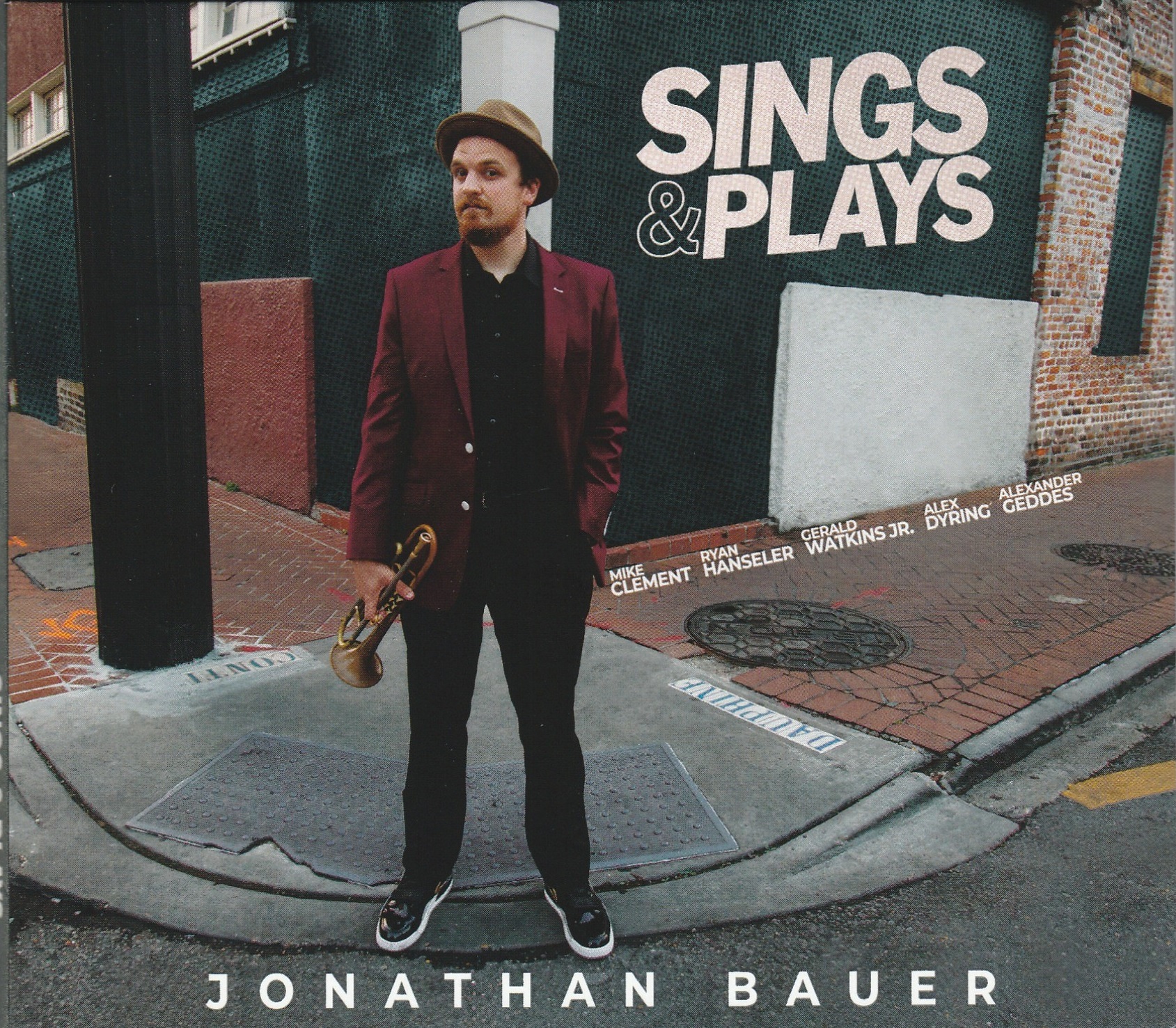
Renowned Canadian-born, New Orleans-based trumpeter Jonathan Bauer is exposing a new artistic side on this newest release – a smooth tenor voice that both rivals and adds to his talents on the horn. Featuring well-known musicians such as Mike Clement, Gerald Watkins Jr. and Ryan Hanseler, this sultry and classy album is one that any jazz lover would want in their collection. The selection of songs by classics, ranging from Henry Mancini to George Gershwin, does a great job of not only showcasing Bauer’s skills as a leader, trumpeter and now as a vocalist, but also the superb talents of the all-star lineup that backs him.

Sonorous, silky horn melodies lead the listener through staples of the genre like Days of Wine and Roses and Love is Here to Stay. For those that are familiar with the musician, the unique dark and buttery tone that he conjures out of the trumpet, almost reminiscent of the flugelhorn, is back in full force throughout the record. What makes Bauer stand out even more is the way that the happiness and bliss he pours into his instrument clearly translates into his vocals, his voice having the same soaring, joyous quality that the trumpet melodies invoke. The album is a fabulous introduction to this side of the famed artist’s talents and leaves the listener excited to hear more, both instrumentally and vocally, in the future.

04 Angela WrigleyYou Don’t Know What Love Is
Angela Wrigley Trio
Cellar Music CM051920 (cellarlive.com)

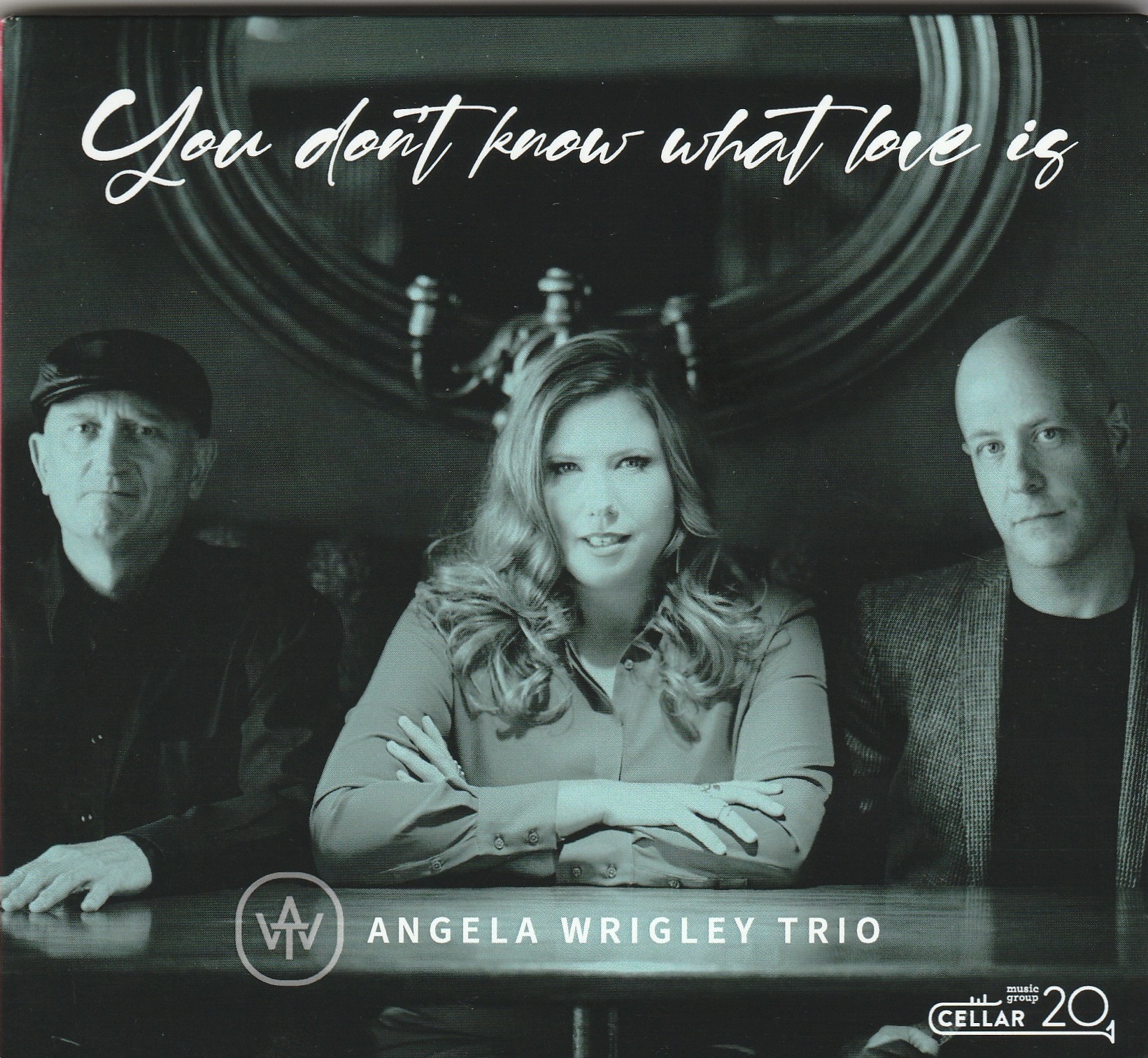
On her impressive debut offering, Alberta chanteuse, pianist and composer Angela Wrigley has come forth with a delightful recording that incorporates funky, horn-infused original compositions with tasty standards, reimagined for a contemporary audience. Joined by her fine trio members, Derek Stoll (bass/piano/organ) and Dave Lake on drums, Wrigley also welcomed percussionist Bob Fenske, saxophonist Cory Weeds, trumpeter Vince Mai and trombonist Rod Murray. This clever and appealing project was also produced by longtime jazz-focused record-label visionary Scott Morin and master saxophonist, producer, recording label owner and jazz impresario, Weeds.

The opening salvo, How Did I Get Here, is a funky original composition, in which Wrigley’s warm and soulful pipes wind themselves around this siren song of compelling lyric and melody. Mai infuses the arrangement with both sexy muted trumpet and a large, mouth-pieced Latin sound.  Another intriguing original track is Crazy Fool – a nostalgia-tinged tip of the hat to Tower of Power and other funky horn/vocal bands of the 70s and 80s. Stoll’s classic Fender Rhodes sound is as refreshing as it was back in the day.

Other standouts include Hoagy Carmichael’s moving I Get Along Without You Very Well, in which Wrigley utilizes her sweet, vulnerable upper register, while Weeds cries through his horn in delicate counterpoint; also a bluesy, B3-infused Lover Man; the superb title track, featuring pristine vocals and Stoll’s eloquent piano work; and finally Drive, where composition, performance and arrangement merge in perfect symmetry. This CD is a beautifully constructed first release that clearly establishes this talented new artist’s identity and sound.

05 John MacMurchyLive
John MacMurchy; Dan Ionescu
Independent (johnmacmurchy.bandcamp.com)

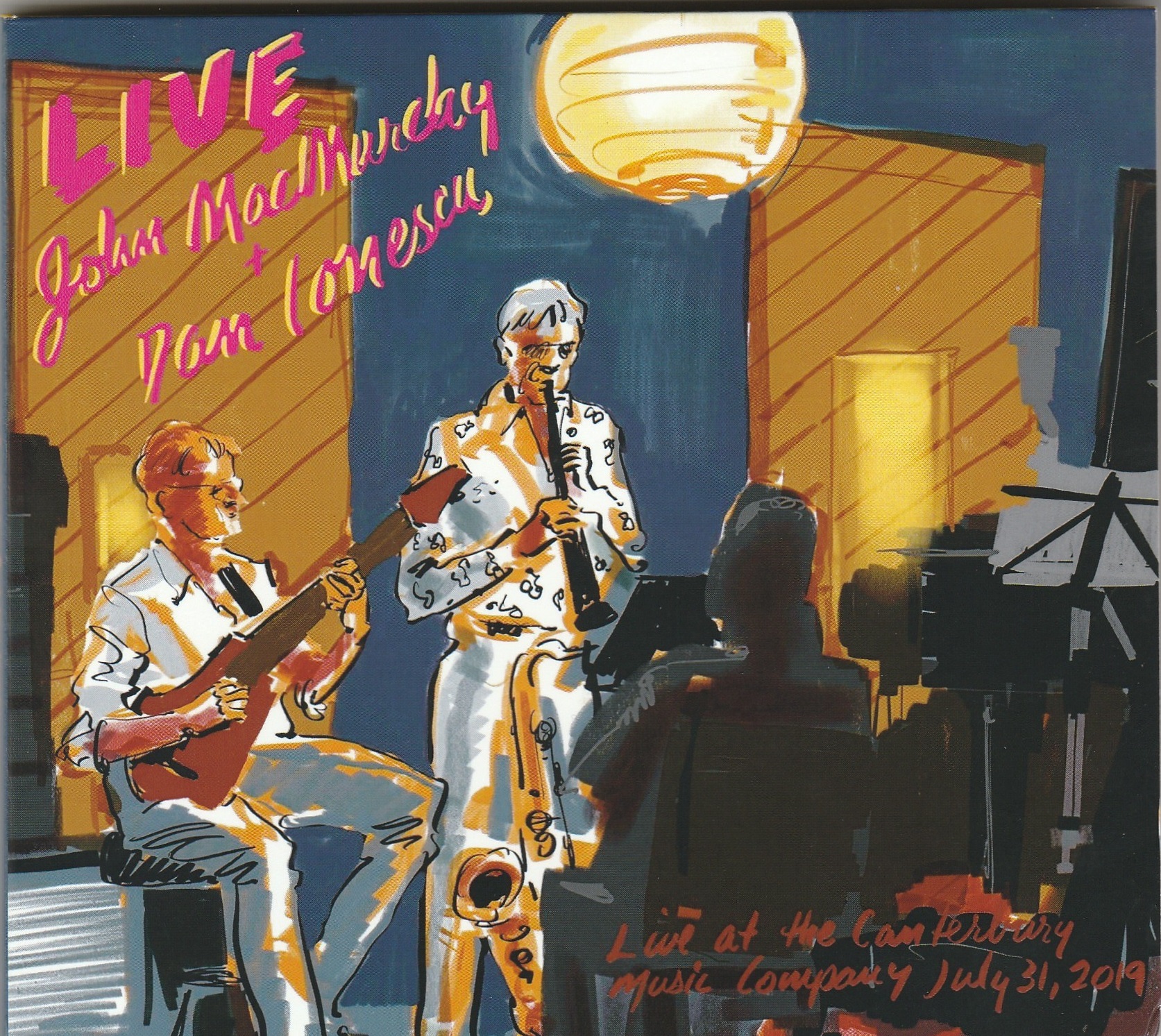
Performing music with friends in the intimacy of a celebrated studio appears to be among the greatest joys of a practicing musician. This is certainly demonstrated by woodwinds specialist John MacMurchy and guitarist Dan Ionescu. Live (at the Canterbury Music Company) allows the two musicians to probe the dark and light recesses of the art of the duo; to enter private worlds in which sadness and joy, and despair and hope, are shared in the most striking terms.  

Both MacMurchy and Ionescu express their virtuosity and evoke dramatic and psychological atmospheres in a manner so alive that the musicians seem to be looking over their shoulders, pursuing – and being pursued by – one another, each with a sense of urgency and anticipation marked by rhythm and colour. The idea of interpreting standards – extended to cover the musical topography of Brazil – is central to this disc. However, it is also clear that this is an ode to songfulness. The apogee of this record may be Ionescu’s and MacMurchy’s exquisite composition For the Love of Song.  

MacMurchy’s smoky articulation is beautifully suited to the woody tones of the clarinet, and to I’m Old Fashioned, with which he opens the disc. The warmth of his playing, breathy phrasing and softly lingering vibrato, extends to the tenor saxophone as well. Meanwhile Ionescu proves to be a perfect musical partner, his tone redolent of a luminosity that marks his single-note lines and chordal playing.

Listen to 'Live' Now in the Listening Room

06 Francois BourassaL’Impact du silence
François Bourassa
Effendi Records FND162 (francoisbourassa.com)

An entire album of solo piano music truly brings listeners into the concept that the pianist is creating. From Art Tatum to Fats Waller, to the bebop stylings of Bud Powell and rhythmically advanced soundscapes fashioned by Lennie Tristano, through Bill Evans, Herbie Hancock, Richie Beirach and countless others, the unifying thread throughout the history of jazz piano is creating one’s own harmonic/rhythmic/melodic world. 

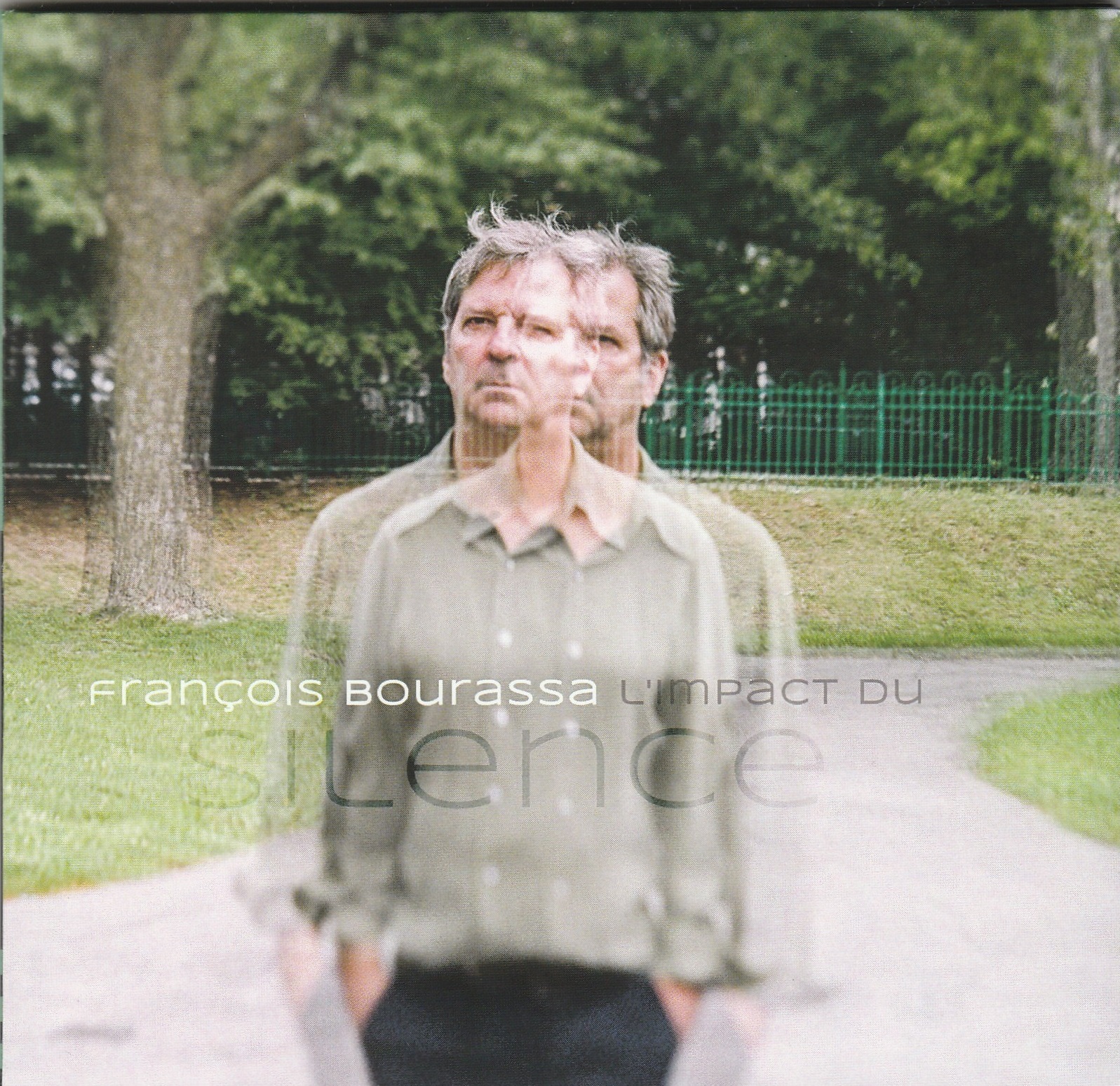
François Bourassa brings us into his world with L’Impact du silence, and it is a compelling one to experience even at its most avant-garde. I had written all of the preceding text while listening to the album but having not yet read it’s liner notes. The English notes are penned by master pianist Ethan Iverson, who mentions Maurice Ravel and Paul Bley in his description of the music. Two more examples of the kinds of material Bourassa’s release bring to mind, and unique ones which I had not thought of.

From Small Head, the opening track, where we’re met with a drone-type harmony in the key of C, Bourassa brings us into a space that is uniquely listenable while also being avant-garde. The phenomenon that makes this such a compelling album is one I see more often in live performance than in recorded music, which is that anything presented expertly will captivate an audience more than any attempt to “sell out.” The level of expertise and heart behind each chord and arpeggio, regardless of how abstract, make this recording downright accessible, without compromising its uniqueness.

Listen to 'L’Impact du silence' Now in the Listening Room

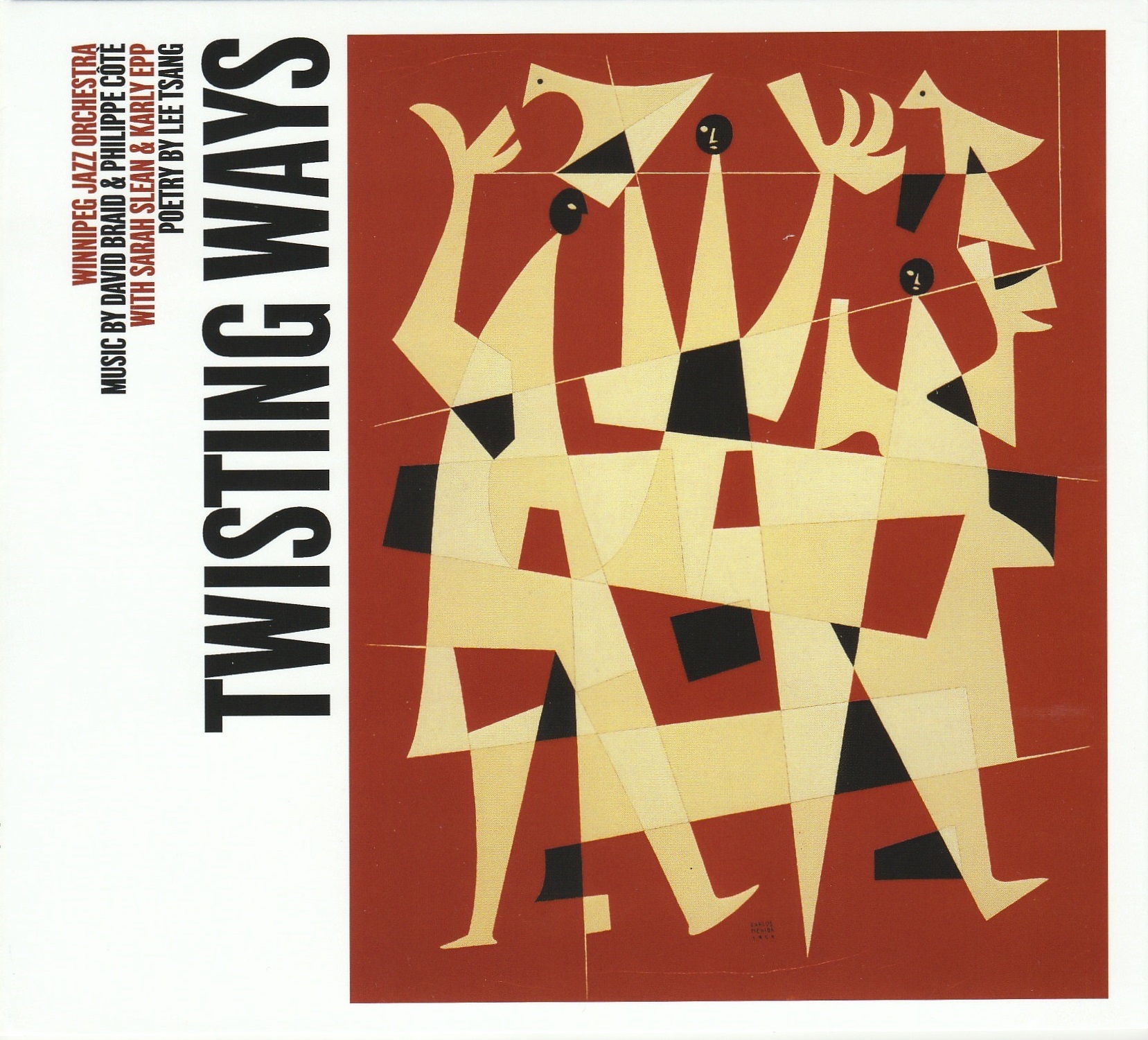
07 Winnipeg Jazz OrchestraTwisting Ways
Sarah Slean; Karly Epp; Winnipeg Jazz Orchestra
Winnipeg Jazz Orchestra WJOCD0005 (winnipegjazzorchestra.com)

This Winnipeg Jazz Orchestra recording has been an exciting assignment to review, as it features a core of local musicians alongside guests from Montreal, Toronto, New York, and the work of Liverpool UK conductor, baritone and poet, Lee Tsang. For years I have known the work of Phillippe Côté, David Braid, Mike Murley and Stephan Bauer, the four guests from this side of the Atlantic. It is also always a pleasure to write about Winnipeg, which I described in a December review for The WholeNote as having “a long thriving music scene, unfairly receiving less attention than other large Canadian cities’ communities”. This still holds true of the aforementioned midwestern metropolis, but ideally large projects like Twisting Ways and its myriad out-of-town guests will help bring this vibrant arts community more of the notoriety it deserves. 

Despite having spent ample time visiting friends, family and fellow jazz musicians in Winnipeg, I was aware of surprisingly few names on this project’s personnel list. This is rather refreshing, given the consummate professionalism heard here. Vocalists Sarah Slean and Karly Epp breathe beautiful life into the often-challenging melodies they are presented with and the WJO’s excellent rhythm section makes even the most intricate of grooves sound accessible. The four tracks that make up the Twisting Ways suite are some of my favourites on the album, but Lydian Sky and Fleur Variation 3, are far from disappointing as well.

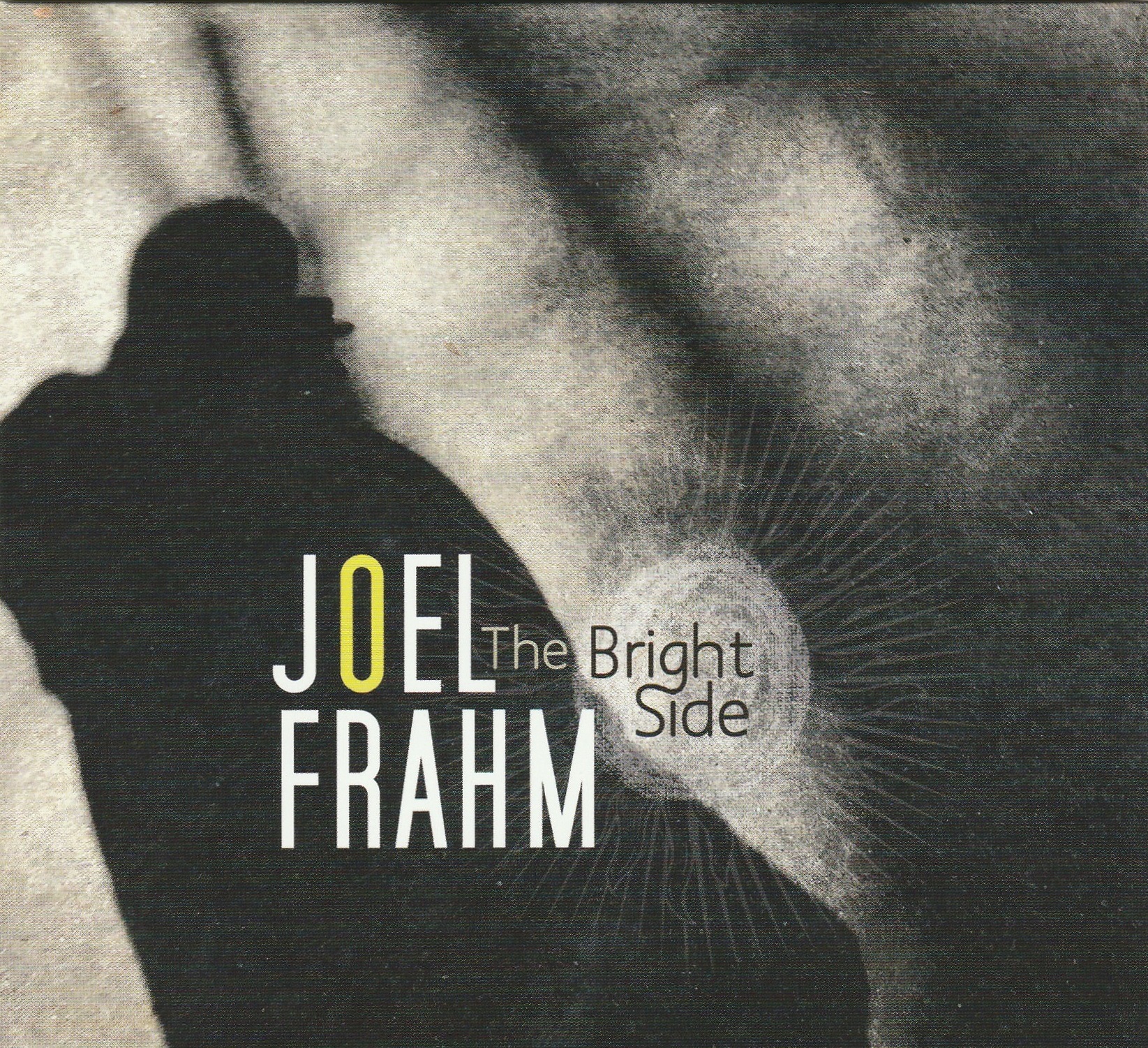
08 Joel FrahmThe Bright Side
Joel Frahm; Dan Loomis; Ernesto Cervini
Anzic Records ANZ-0068 (joelfrahm.com)

I first heard the outstanding, saxophone virtuoso Joel Frahm over ten years ago at New York’s Jazz Standard (sadly, a now-shuttered COVID casualty), and have since made a point of catching him in Toronto over the years, when he’s often been featured in drummer Ernesto Cervini’s band, Turboprop. 

Frahm’s latest project and debut trio album, The Bright Side, brings him and Cervini together again, along with bassist Dan Loomis (also a Turboprop member). Fun fact: the trio arose out of a U of T jazz masterclass. These three masterful musicians are longtime musical friends and colleagues, and their empathetic, polished, “well-oiled machine-ness” is evident on each of the ten original tracks; seven are penned by Frahm, two by Loomis and one by Cervini.

Frahm offers three dedications on the album: the high energy Blow Poppa Joe is for Joe Henderson; Benny Golson is honoured in the cool and upbeat Thinking of Benny (where I’m sure I heard a nod to The Andy Griffith Show theme song); Omer’s World is a funky homage to the great Israeli jazz bassist Omer Avital. As for Frahm’s swinging and inventive title track, its inspiration was Lou Reed’s Walk on the Wild Side.

Loomis’ Silk Road is a moody and sensual track, with Frahm on soprano sax. And The Beautiful Mystery by Cervini is a hauntingly pensive and evocative ballad, showcasing the emotion and heart these stellar musicians bring to the table.

Here’s hoping we’ll hear more from Frahm in the chordless trio format!

09 Anna WebberIdiom
Anna Webber
Pi Recordings PI89 (pirecordings.com/albums/idiom/)

Anna Webber extends her creative trajectory with this two-CD set, exploring a critical issue arising between her roles as improviser and composer: “While as an improviser I was interested in extended techniques and in the saxophone as a creator of ‘sound’ and not just ‘pitch,’ my compositional world was limited to the latter.” For her Idiom series, each composition is based on an “extended technique” from her improvisatory practice, whether circular breathing (for continuous sound), multiphonics (compound sounds) or audibly percussive fingering. 

Disc One presents her longstanding Simple Trio with pianist Matt Mitchell and percussionist John Hollenbeck. That apparent economy of means testifies to Webber’s imaginative powers, demonstrating an expanding palette, from the percussive repetition of a short flute motif in Idiom I to the concluding Idiom III, a demonstration of the daunting intensity and complexity a trio might achieve as her repeating multiphonic phrase is matched to corresponding piano and drum parts, the tension ultimately breaking into free improvisation.

Disc Two presents the 62-minute Idiom VI, its six movements and four interludes performed by a 12-member ensemble of strings, winds, percussion and synthesizer, alive with distinguished improvisers and conducted by Eric Wubbels. Creating moods from subtle lyricism to raw expressionism, and some unnameable compounds, Webber fuses unusual timbres in fresh, sometimes unidentifiable ways, including loose-lipped trombone explosions, tamboura-like drones and similarly unlikely massed police whistle blasts. Along with Webber’s own presence on flute and tenor saxophone, trumpeter Adam O’Farrill, violinist Erica Dicker and contra-alto clarinetist Yuma Uesaka make significant solo contributions to one of 2021’s most notable releases.

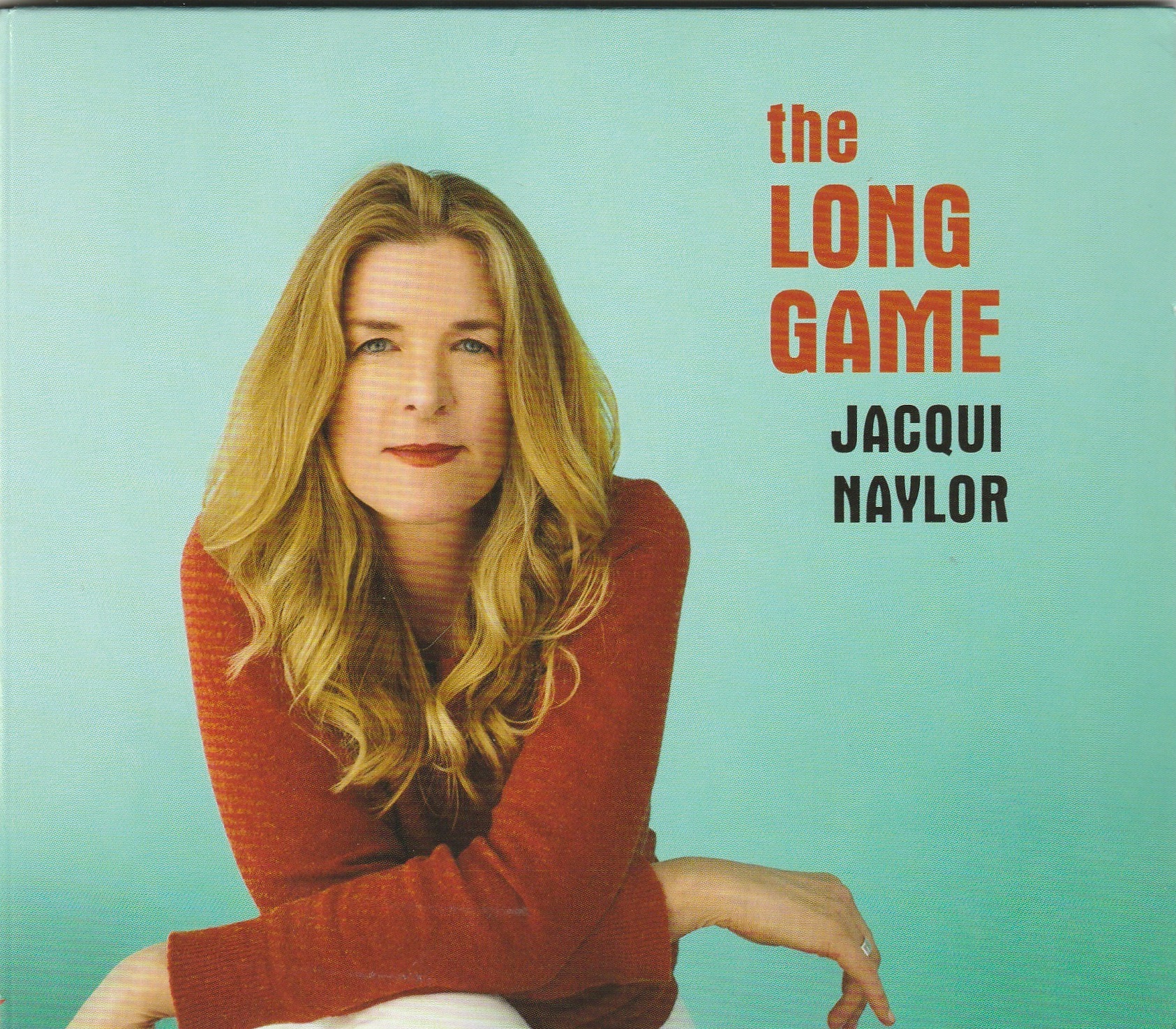
10 Jacqui NaylorThe Long Game
Jacqui Naylor
Ruby Star Records RSR-011 (jacquinaylor.com)

World-renowned native-Californian jazz vocalist Jacqui Naylor has an interesting approach to the aforementioned genre. She loves the classics but definitely brings a modern touch into her music and this interesting combination couldn’t be more apparent on her newest, not to mention 11th, studio album. Featuring music by rock and pop greats such as Coldplay, David Bowie and Peter Gabriel, Naylor has lent her own unique touch to each of these songs; effectively jazzifying them in a very pleasant and listenable way. Sprinkled amongst these covers are originals penned by the diva herself, a couple of which are co-written by talented pianist Art Khu. 

One piece that immediately stands out is Coldplay’s Fix You; Naylor’s smooth alto vocals in combination with a flowing piano melody and a subtle but poignant bass line make the song take on a slightly more melancholy and softer tone than the original version. Naylor’s own I’ll Be Loving You pops out; a Latin-flavoured tune that does a great job of not only showcasing another side of her musical taste but also gets the listener grooving along in their seat. A truly outstanding track is Bowie’s Space Oddity, where a mellow piano line and an almost counter melody played on upright bass overlaid by chords on the Fender Rhodes make for a unique flavour given to the classic song.

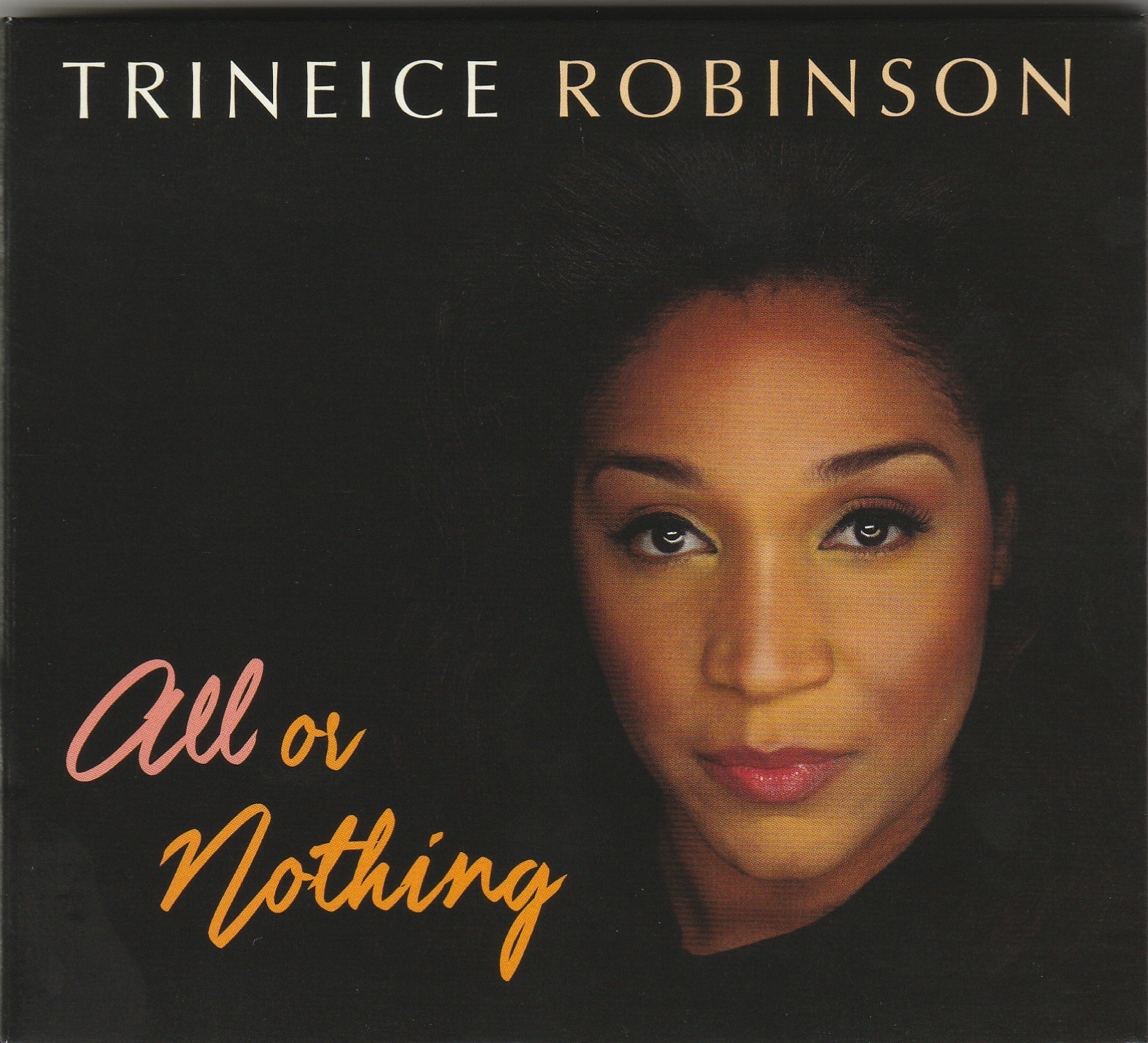
11 Trineice RobinsonAll or Nothing
Trineice Robinson
4RM 4RM-20210806 (trineicerobinson.com)

Trineice Robinson has established herself as an esteemed educator and author. Now with the release of her long-awaited debut she’s finally getting the chance to establish herself as a vocalist, telling her story and journey through music. One of Robinson’s missions as an educator has been to bring back to the forefront Black music traditions that have fallen to the background within the vocal music realm and this album does a fantastic job at not only showcasing Black jazz, soul and R&B artists who have been instrumental in advancing those genres but also shining a spotlight on current famed musicians, with a renowned lineup of all Black artists in her backing band. 

Robinson’s soulful and powerful vocals take us on a journey through multi-genre staples such as Footprints by Wayne Shorter, What’s Going On by Marvin Gaye and You Know Who (I Mean You) by Thelonious Monk, while adding a unique flavour to each piece, making them her own. Interspersed within these tributes are original compositions, of note being the gospel-inspired piece Let It Shine, in which her own daughters lend their voices, creating a humble and heartwarming whole. Robinson skilfully crosses genres throughout the album, creating a delicious jambalaya reflecting what she states about finding her own place within the musical realm, “when you understand how ingredients are used in a dish, you can create whatever dish you want.” All in all, a strong and promising debut album.

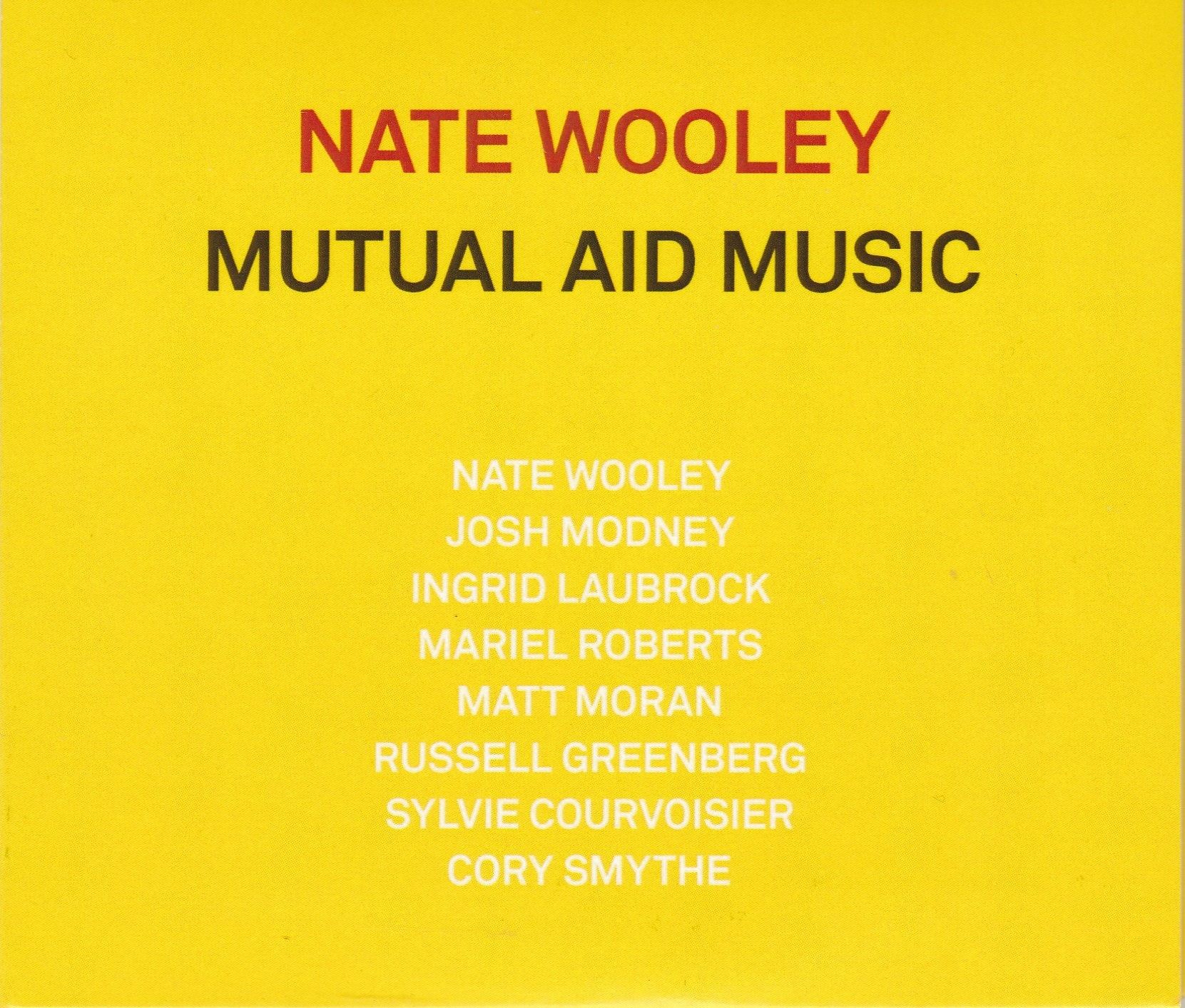
12 Nate WooleyNate Wooley – Mutual Aid Music
Nate Wooley; Joshua Modney; Ingrid Laubrock; Mariel Roberts; Matt Moran; Russell Greenberg; Sylvie Courvoisier; Cory Smythe
Pleasure of the Text Records POTTR1309 (pleasureofthetext.com)

Trumpeter, composer, conceptualist, Nate Wooley is a major figure in current free jazz and improvised music, consistently focused on issues of meaning. This latest work is an outgrowth of Battle Pieces, a quartet project begun in 2014 in which one member acts as improvising soloist while the other members choose from Wooley’s supplied materials to develop the work. Mutual Aid Music extends this method for surmounting the usual alternatives of composition/improvisation, doubling the quartet with four more musicians chosen from the New York contemporary music community. 

The eight musicians play eight “concertos”: in each, one musician has a primary score; one improvises throughout, based on the other seven’s input; others freely adapt secondary materials that have been individually assigned. Surmounting Wooley’s complex methodology is a singular purpose: “It asks the musicians… to ask themselves, in each moment, how that gift will affect the community (ensemble) of which they are currently a member.” Wooley the conceptualist has effectively made each musician responsible for a work’s outcome in how they choose to make each transaction collectively meaningful.   

Clearly the work depends on its community of stellar musicians – saxophonist Ingrid Laubrock, pianists Sylvie Courvoisier and Cory Smythe, percussionists Matt Moran and Russell Greenberg, violinist Joshua Modney and cellist Mariel Roberts – but the results are always remarkable, sometimes astonishing, everyone engaged in making the richest, most expressive, organized and communicative music possible. Beyond category in its structure and immediacy, this feels as much like a success for listeners as the composer and ensemble.

Back to top