It’s been a simply terrific month for cello discs.
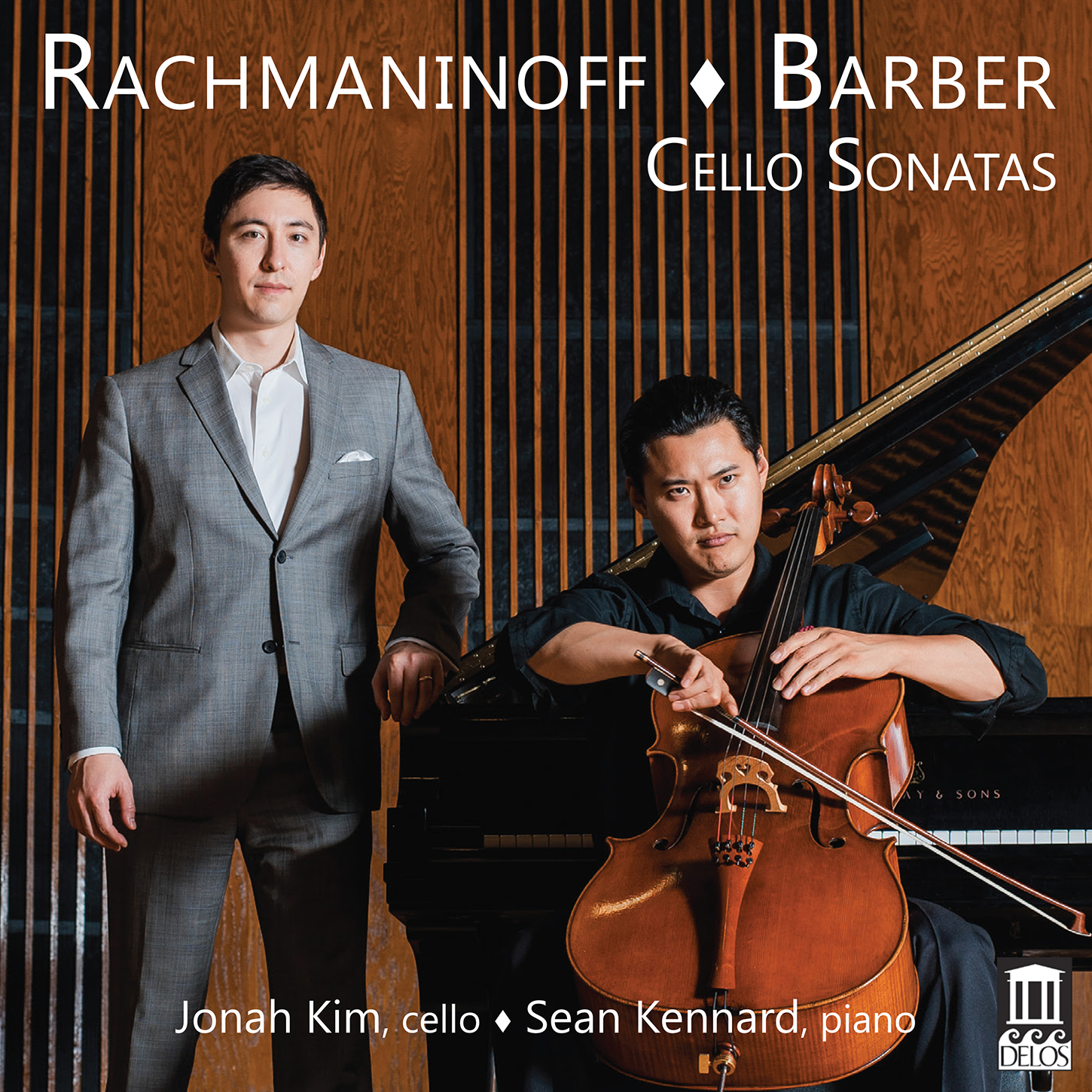
01 Rachmaninoff BarberCellist Jonah Kim and pianist Sean Kennard were together as teenagers at the Curtis Institute and again at Juilliard. For Rachmaninoff and Barber Cello Sonatas, their first album on the Delos label, they have chosen Rachmaninoff’s Cello Sonata Op.19 and Samuel Barber’s Cello Sonata Op.6 (Delos DE 3574 naxosdirect.com/search/de+3574).

The composers were both in their 20s when writing the works, and heart-on-sleeve romanticism and expansive melodies are common to both sonatas. Despite the balanced writing in the Rachmaninoff, there’s a notoriously difficult piano part which Kennard handles superbly.

There’s a deeply personal link to the Barber sonata here. Barber himself studied at the Curtis Institute and wrote his sonata there in 1932 with help from cellist and fellow student Orlando Cole, who premiered the work with Barber in 1933. Cole, who died in 2010 at 101, taught at Curtis for 75 years and counted Johan Kim among his students; Kim and Kennard received priceless coaching from Cole in their performance of the work.

There’s an abundance of lovely playing here, with a beautiful cello tone and a rich and sonorous piano sound perfectly suited to the flowing melodic lines that are central to these strongly Romantic works.
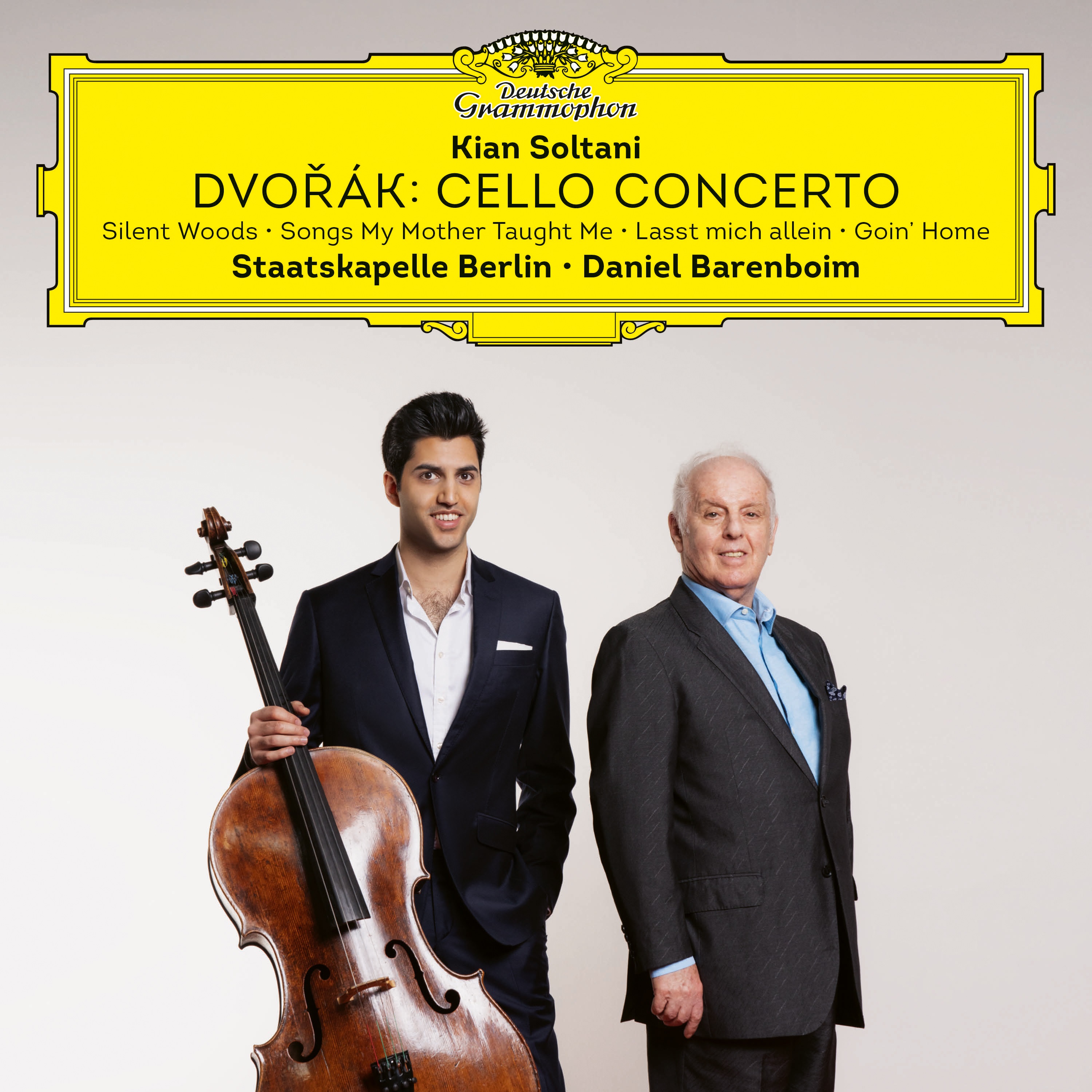
02 Dvorak Cello ConcertoKian Soltani is the soloist in the Dvořák Cello Concerto with Daniel Barenboim conducting the Staatskapelle Berlin in a performance recorded live in concert at the Berlin Philharmonie in October 2018 (Deutsche Grammophon 00028948360901 kiansoltani.com/discography).

Barenboim has been general music director of the orchestra since 1992, and the lengthy but lovely orchestral start to the concerto is a reminder of just how much of a master he is on the podium. He also has a personal connection with Soltani, having worked on the concerto with the cellist in 2014 prior to Soltani’s first concert performance of the work. Soltani plays the London ex-Boccherini Stradivarius cello on loan, and what a tone he produces! It’s a simply superb performance in all respects.

Five short Dvořák pieces arranged for solo cello and cello ensemble of six players – three of the arrangements by Soltani – complete the disc: Lasst mich allein (the song that has such emotional significance in the concerto); Goin’ Home (after the Largo from the New World Symphony); Songs My Mother Taught Me (from Gypsy Melodies Op.55); Allegro moderato (from Four Romantic Pieces Op.75); and Silent Woods (from From the Bohemian Forest Op.68).

The live performance of the concerto has richness, immediacy, depth, emotional commitment and tension and a great sound. Stay for the ensemble arrangements, but buy this CD for the concerto.
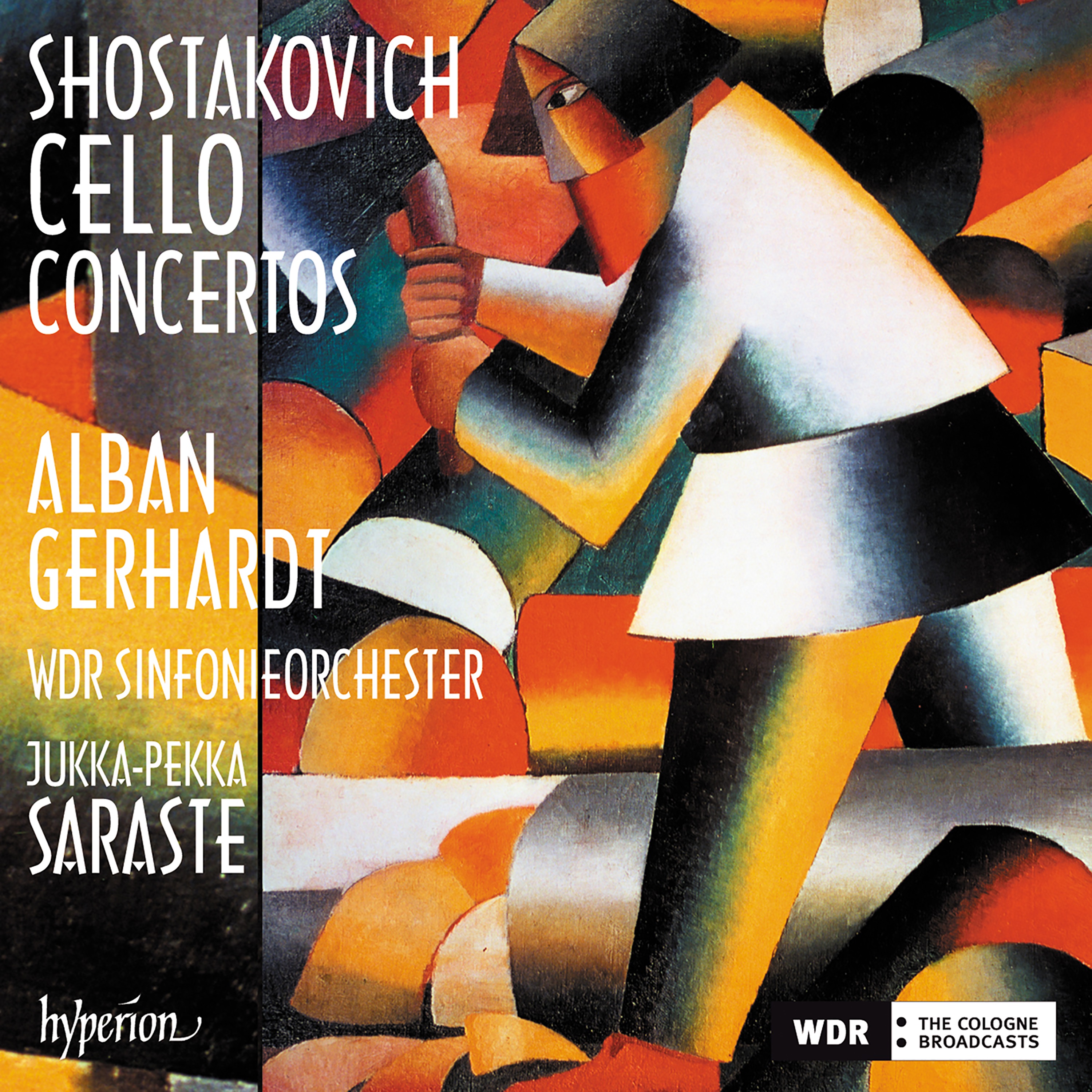
03 Shostakovich Cello ConcertosThe outstanding cellist Alban Gerhardt is back with more stellar performances on Shostakovich Cello Concertos, with the WDR Sinfonieorchester under Jukka-Pekka Saraste (Hyperion CDA68340 hyperion-records.co.uk).

Both works were written for the Russian cellist Mstislav Rostropovich, and despite Gerhardt’s admitted “utter adoration” for Rostropovich and an awareness of his relationship with the composer, he admits that he has ignored his interpretations, essentially because Shostakovich’s markings in both concertos were largely ignored by the Russian cellist.

The Concerto No.1 in E-flat Major Op.107 from 1959 has four movements, the third being a towering solo cello cadenza almost six minutes in length that perfectly frames Gerhardt’s technical and interpretational abilities.

The Concerto No.2 in G Major Op.126 from 1966 began as a memorial piece for the poetess Anna Akhmatova, who had died earlier in the year. An essentially reflective work, Rostropovich considered it the greatest of the numerous concertos written for him.

Terrific performances of two of the great 20th-century cello concertos make for an outstanding CD. 

04 Voice of HopeThere’s a very clear message in the programing of Voice of Hope, the new CD from the Franco-Belgian cellist Camille Thomas with the Brussels Philharmonic (Deutsche Grammophon 00028948385645 camillethomas.com/VoiceOfHope.php). Building a selection of songs, prayers and laments around the world premiere recording of the Cello Concerto “Never Give Up” Op.73 by the Turkish composer Fazil Say, it pays tribute “to people’s ability to triumph over adversity, create harmony in place of chaos, and overcome hatred with love.”

Say’s three-movement concerto, a vivid, emotional and quite unsettling but extremely effective response to terrorist attacks in Istanbul and Paris, was written for and premiered by Thomas. It is performed here on the 1730 Stradivarius cello once owned by Emanuel Feuermann, with the orchestra’s music director Stéphane Denève as conductor. The remaining tracks are conducted by Mathieu Herzog, who also made several of the numerous arrangements, only Bruch’s Kol Nidrei appearing in its original form.

Also included are Ravel’s Kaddisch, Dvořák’s Songs My Mother Taught Me, John Williams’ Theme from Schindler’s List, Wagner’s Träume from the Wesendonck-Lieder, Gluck’s Dance of the Blessed Spirits and well-known arias from the operas Dido and Aeneas, L’elisir d’amore, Norma, Werther, Don Giovanni and Nabucco. 

Thomas says that she “wanted to choose works that represented this idea that beauty will save the world, quite simply.” Quite simply, there’s certainly beauty in her playing.
05 Goldbergs for harpThe American harpist and organist Parker Ramsay has a master’s degree in harp performance from Juilliard, and is equally at home on modern and period instruments. Bach Goldberg Variations is his first solo harp recording, and it’s a remarkable accomplishment (King’s College Recordings parkerramsay.com).

Apparently the Goldberg Variations can only be played on the harp in G major, which luckily happens to be Bach’s key. A keyboard/harp comparison reveals interesting differences: difficult keyboard flourishes are often easier on the harp, while simple keyboard linear melodies are more difficult or even impossible, especially if rapid pedal changes are needed for chromatic passages. The modern pedal harp, though, offered Ramsay what he terms “the best of both worlds: it’s a plucked instrument like the harpsichord, but is sensitive to pressure, like the piano.”

Listening to this CD the first thing that strikes you is the astonishing articulation – the accuracy, fluency and agility, especially in the ornamentation and in the faster, more florid variations. With the harp’s added resonance Ramsay stresses the opportunity to present the harmonic structures as well as the contrapuntal in what is a gentle and atmospheric sound world.

In a recent New York Times article Ramsay says that he realized that “the way to hear this work – and most of Bach, for that matter – as I wanted would be to use my first instrument, the modern pedal harp.” On this remarkable and immensely intriguing and satisfying showing, it’s hard to disagree with him.
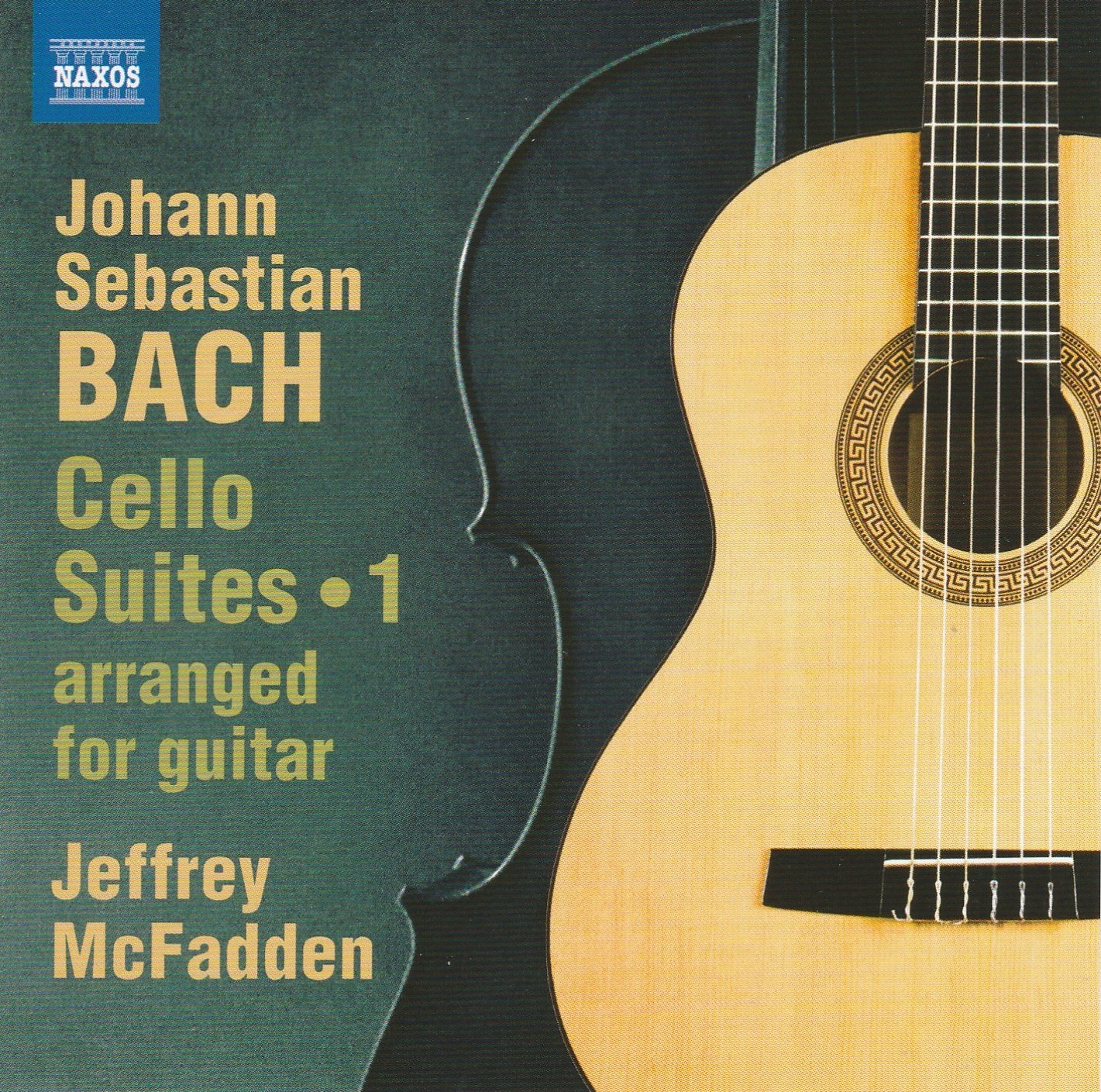
06 Bach McFaddenThere’s more Bach music in transcription on Volume One of Johann Sebastian Bach Cello Suites arranged for guitar (Naxos 8.573625 naxosdirect.com/search/747313362578) by Jeffrey McFadden, the outstanding Canadian guitarist who is Chair of Guitar Studies at the University of Toronto, and whose debut recording in the early 1990s was the first CD in the prestigious Naxos Guitar Laureate Series.

It’s not unusual for recorded works to take a year or two to reach CD release, but both the McFadden arrangements (which remain unpublished) and the recording here were made in 2009. Still, there’s no doubting the quality and effectiveness of both the arrangements and the performance of the three Suites No.1 in G Major BWV1007, No.2 in D Minor BWV1008 and No.3 in C Major BWV1009. Recorded at St. John Chrysostom Church in Newmarket by the always-reliable Norbert Kraft (with whom McFadden studied) the sound quality on a charming disc is, as usual, exemplary.

Volume Two is apparently scheduled for release this month.
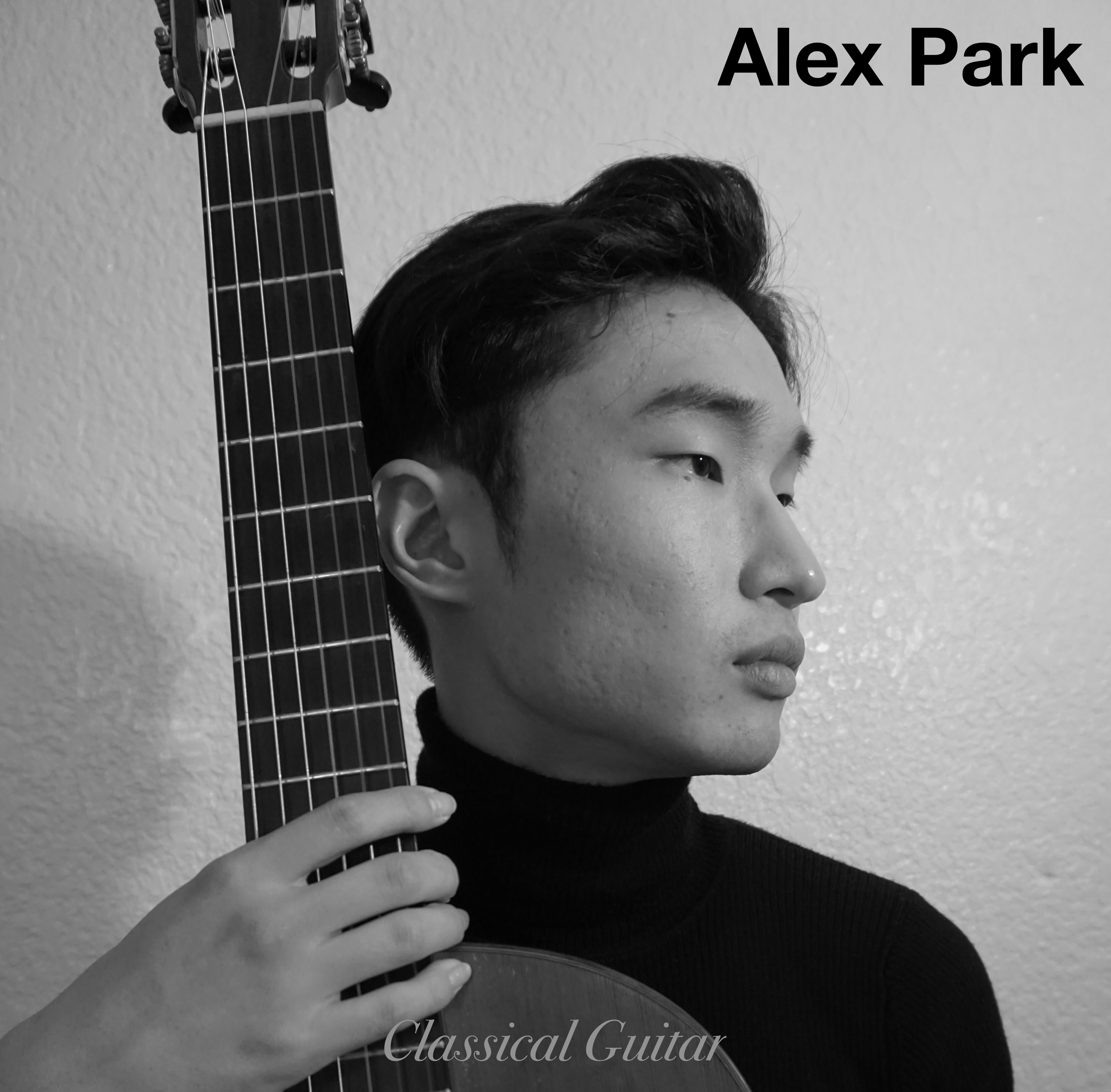
07 Alex ParkThere certainly seems to be no shortage of outstanding young guitarists these days. Classical Guitar is the debut release from guitarist Alex Park, and offers exemplary performances of a range of short pieces both familiar and unfamiliar (alexparkguitar.com).

The Gigue from Ponce’s Suite in A Minor provides a bright and brilliant opening to a recital that ranges from Conde Claros by the 16th-century Spanish composer Luis de Narváez and John Dowland’s Allemande (My Lady Hunsdon’s Puffe) through Handel’s Sarabande & Variations and Debussy’s The Girl with the Flaxen Hair to the traditional Irish tune Spatter the Dew. 

Four standard classical guitar pieces – three of which display Park’s dazzling tremolo technique – complete the disc: Tarrega’s Recuerdos de la Alhambra; Albéniz’s Leyenda; Villa-Lobos’ Prelude No.2 (given a performance more fluid than many); and Agustín Barrios’ Una Limosna por el Amor de Dios.

The publicity blurb for the CD release noted that Park has “a superb sense of dynamics, tempo and phrasing, performing with deep expression.” Add terrific technical assurance and you have a pretty good description of the playing here.
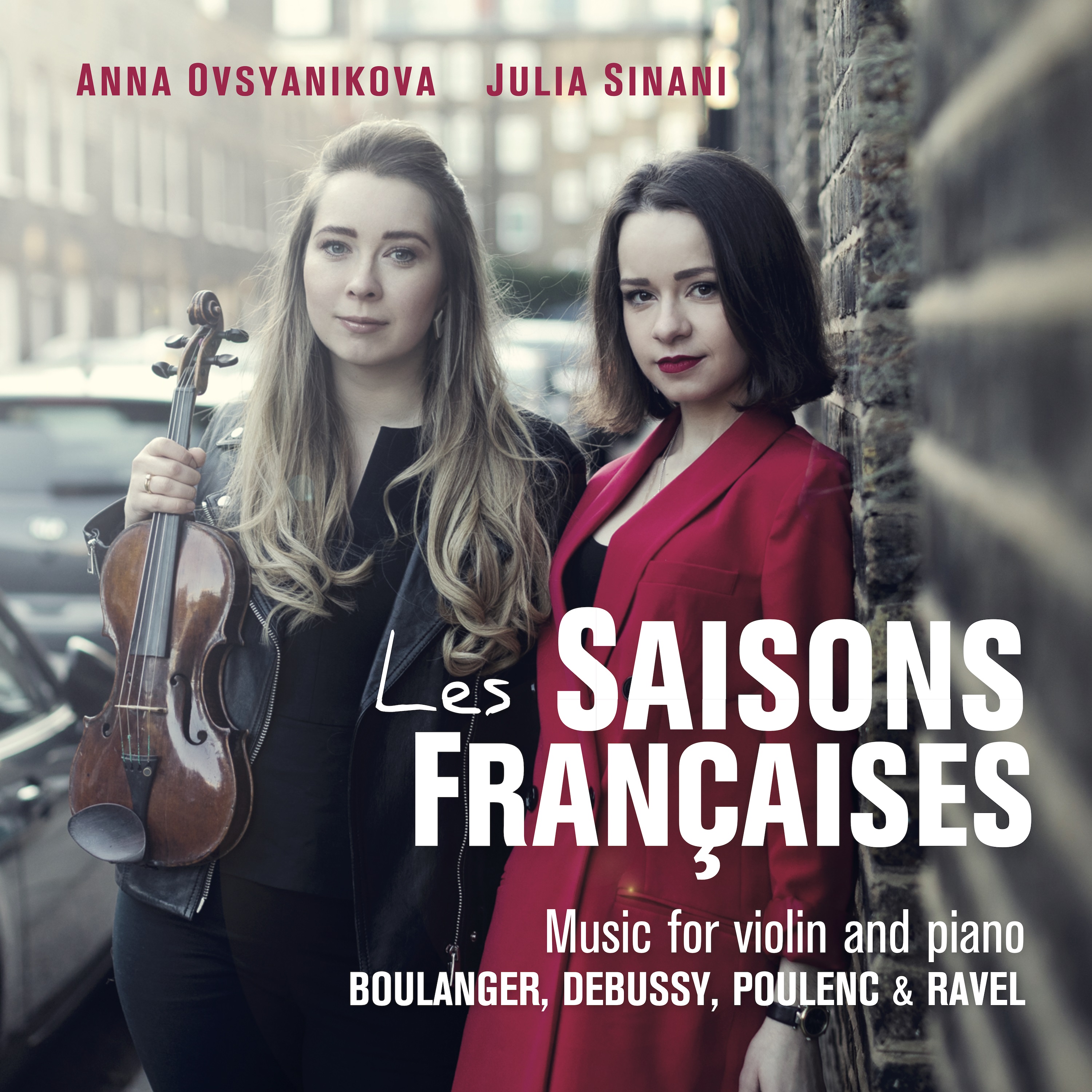
08 Saisons FrancaisesThe Russian duo of violinist Anna Ovsyanikova and pianist Julia Sinani is in top form on Les Saisons Françaises, a quite delightful recital disc of late 18th- and early 19th-century French music by Debussy, Lili Boulanger, Ravel and Poulenc (Stone Records 50601927780963 stonerecords.co.uk).

There’s warmth and a lustrous violin tone in the 1917 Debussy Violin Sonata in G Minor and a beautifully clear and bright performance of Boulanger’s Deux Morceaux – Nocturne and Cortège. Two works that are less often heard are the real gems here though: Ravel’s single-movement Sonata for Violin and Piano No.1 “Posthume” and Poulenc’s three-movement Sonata for Violin and Piano.

The Ravel work was written in 1897 while the composer was still a student but wasn’t published until 1975, almost 40 years after his death. It’s a really lovely piece that combines Romantic and Impressionistic styles and moods. 

Poulenc apparently destroyed several earlier attempts at a violin sonata, his only surviving work in the genre being the sonata composed in 1942-43 at the request of, and with the help of, Ginette Neveu. Following Neveu’s tragic death at the age of 30 in a 1949 plane crash, Poulenc revised the finale, reducing the length and reworking the violin part. Both versions of the movement are included here.

The composer himself was disparaging about the work – it is ”alas not the best Poulenc,” he said, and “Poulenc is no longer quite Poulenc when he writes for the violin” – but at this remove it seems a gorgeous and quite idiomatic work. Given performances like this it makes you wonder why it isn’t firmly established in the standard repertoire.

09 Joshua Bell At Home With Music Live Joshua BellThe CD Joshua Bell: At Home With Music (LIVE) presents eight performances from the PBS-TV special Joshua Bell: Live At Home With Music broadcast on August 16. Described as “A musical soirée of intimate performances from home, while sharing a behind-the-scenes look at family, Bell’s own musical inspirations, and more,” the CD features the soprano Larisa Martínez (Bell’s wife) and pianists Peter Dugan, Kamal Kahn and Jeremy Denk (Sony Classical 886448695332 joshuabell.com/#recordings).

The first movement of Beethoven’s Spring Sonata provides a lovely opening to a program that includes Kreisler’s arrangement of Dvořák’s Slavonic Fantasy in B Minor, Wieniawski’s Polonaise de Concert in D Major Op.4, Chopin’s Nocturne in E-flat Major Op.9 No.2 and Heifetz’s arrangement of Summertime from Gershwin’s Porgy and Bess.

Martínez is the vocalist in Ah, ritorna, età dell’oro from Mendelssohn’s Infelice, Quando m’en vo from Puccini’s La Bohème and a Medley from Bernstein and Sondheim’s West Side Story.

Playing the 1713 Huberman Stradivarius with an 18th-century bow by François Tourte, Bell exhibits a full-blooded, all-in approach that doesn’t for a moment imply any lack of subtlety or nuance. It’s simply captivating playing.
01 MonteverdiMonteverdi – Complete Madrigals
Delitiae Musicae; Marco Longhini
Naxos 8.501505 (naxosdirect.com/search/730099150545) 

Claudio Monteverdi is such an important figure in the history of Western music that it is easy to overlook the majority of his prolific oeuvre in favour of those few works that are frequently heard and even more frequently mentioned in musical history texts as the thin line that separates the Renaissance from the Baroque. Of course, such neat-and-tidy divisions are largely artificial and can only be made with significant hindsight and generalization; amid this oversimplification of the musical-historical spectrum, we sometimes need to be reminded to look beyond the Vespers and Orfeo, and turn our gaze to such smaller-scale material as the religious motets and secular madrigals.

Whether expertly familiar with Monteverdi’s madrigals or a total neophyte, one cannot find a better starting point than Delitiæ Musicæ’s latest release – a 15-disc survey of the complete madrigals – which summarizes and concentrates the composer’s essential characteristics into countless pieces ranging anywhere between two and five minutes in duration, and provides a musical biography tracing the career of this great Italian composer. This immense five-year project (all 15 discs were recorded between 2001 and 2006) was undertaken by conductor Marco Longhini and the Delitiæ Musicæ ensemble, established by Longhini to perform unpublished masterpieces of early Italian music. 

This focus on musicology-based performance serves the listener well, as the chronological order of presented material, combined with thorough and enlightening program notes, allows one to track and contextualize the subtle (and sometimes not-so-subtle) changes that take place over time. For example, the unaccompanied Renaissance-style polyphony on the first disc undergoes dramatic transformations by the seventh, to the extent that Monteverdi himself developed a new term to define the form: “Concerto.” By the ninth disc, we hear viol consorts and instrumental ritornelli that begin pointing forward to the developments of Baroque composers and, by the 15th disc, we have arrived at the starting point for the next generation of musical minds, with arioso passages, early recitative, and a basic cantata structure.

These connections between contextual understanding and listening are enormously important, especially when immersing oneself in as vast a body of work as we find here. But these are audio discs and the most important component in deeming this collection successful is how it sounds and, in short, it sounds very good. One of Delitiæ Musicæ’s great stylistic attributes is their ability to convey affects and expressions without being overly musically dramatic; the great swells and sweeps that are utilized in some Renaissance recordings are avoided here, taking the notes on the page as they come and avoiding the imposition of interpretation over composition. This approach makes even greater sense when we reach the “invention” of the concerto, as instrumental forces are added and augmented, and rhythmic complexity increases exponentially.

Although some may be apprehensive at the prospect of tackling over 15 hours of Monteverdi, this is a collection that is meant to be savoured over time, rather than devoured in a binge-listening marathon. With plenty of textual information and excellent musical performances, these discs will fascinate all who listen, whether already steeped in this master’s music or simply interested in learning more about one of Italy’s great cultural figures.

02 ORA Singers Spem in AliumThomas Tallis – Spem in Alium; James MacMillan – Vidi Aquam
ORA Singers
Harmonia Mundi HMM902669.70 (orasingers.co.uk/tallis2020) 

chief among them Thomas Tallis’ magnificent 40-part Spem in Alium, 450 years old this year. It is complemented by Vidi Aquam (2019) by Sir James MacMillan – also for 40 voices – an impressive 21st-century painterly commentary on the Tallis. 

Spem in Alium (Hope in Any Other) was composed for eight choirs of five voices each. They interweave in many-layered, structurally complex ways on paper, and in performance in physical space. A high-water mark of the musical aspirations of the English Renaissance ruling class, as a composition it has long been acknowledged by its students as an apotheosis of European vocal polyphony. 

Spem in Alium can be an emotional experience. Beginning with a single voice, other voices join in imitation as the music passes around the eight choirs, a study in constant change and metamorphosis, like a great river in motion. After brief tutti sections, the choirs sing in antiphonal pairs, throwing their voices across the space between them, all flowing together in the work’s powerful sonic tsunami finale.

 Stephen FryThere was a plague around in Britain when Tallis wrote his music and there is a plague around now… ‘Spem’ translates as ‘Hope’; and this is about Hope for our future, and the future of the arts.” Amen.

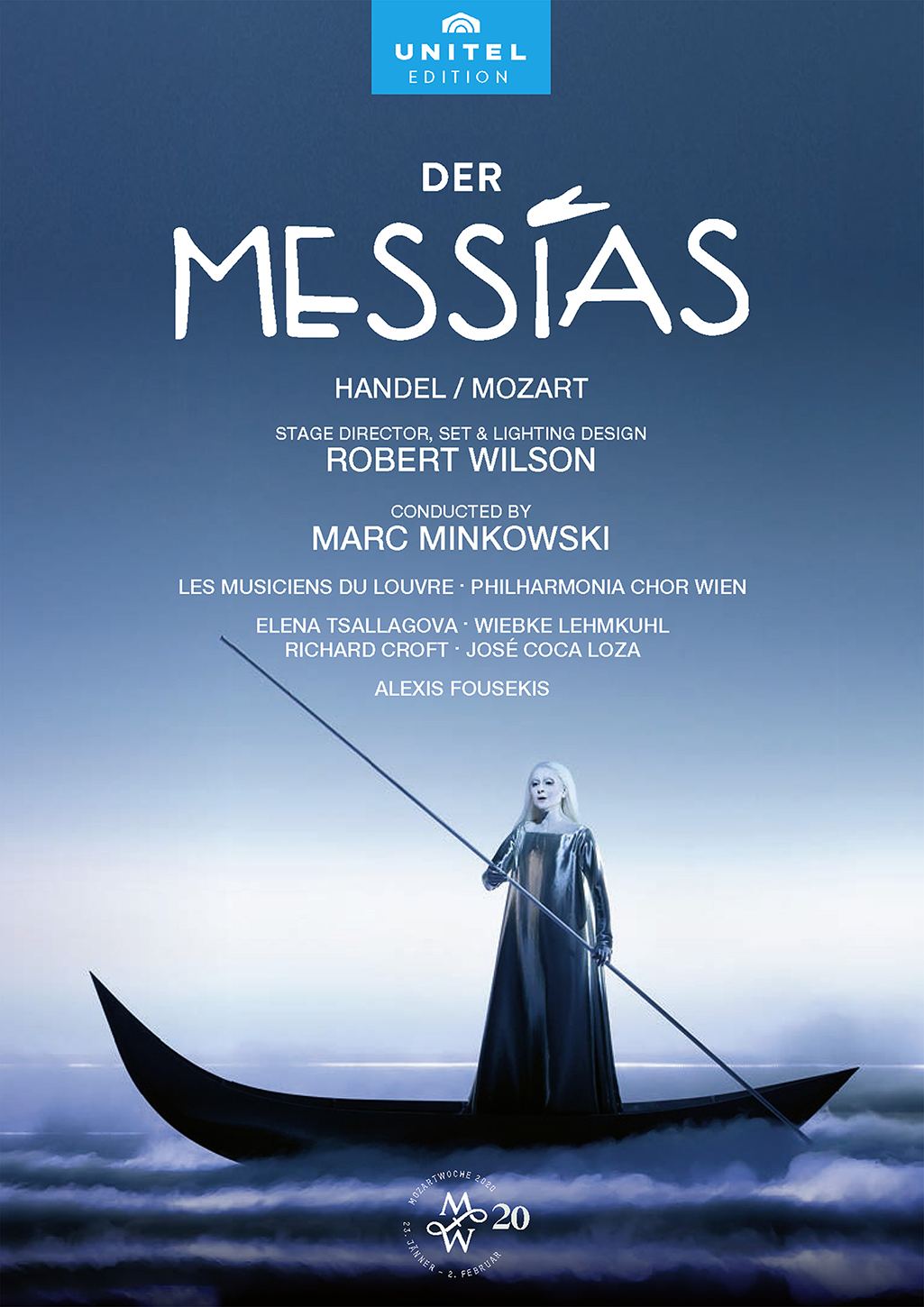
03 Der MessiasHandel/Mozart – Der Messias
Soloists; Philharmonia Chor Wien; Les Musiciens du Louvre; Marc Minkowski
Unitel Edition 803408 (naxosdirect.com/search/814337017583)

In 1789, Mozart’s loyal patron, Gottfried van Swieten, asked the composer to write a German arrangement of Handel’s Messiah. Van Swieten had in his possession the original Messiah score as well as the Ebeling/Klopstock German translation used by CPE Bach for a 1775 performance. With these primary sources, Mozart arranged Der Messias by first augmenting the woodwinds and brass sections with two flutes, two clarinets, one bassoon, two horns and three trombones. Mozart then skillfully wrote contrapuntal conversations between soloists and instruments, seamlessly introduced and featured the clarinet, a new instrument, and filled in passages with harmonies that are unmistakably classical. The resulting sonorities inject Der Messias with vibrant colours and enriched textures that are undeniably Mozartean in style. 

Important revisions include considerable cuts to the libretto (Thou art gone up high and Let all the angels of God are excluded), new music (noticeably for If God be for us which he writes as a recitative), and, most startling, the changes in vocal parts: Mozart not only reduced the alto and tenor solos, he often reassigns them to the soprano (He shall feed his flock, All they that see him, Thy rebuke hath broken His heart); the quartet of soloists, and not the chorus, sings the entrance of For unto us a Child is born; and, most shocking, the alto aria But who may abide is given to the bass and the famous soprano aria Rejoice is sung by the tenor. 

American director Robert Wilson’s staging of Der Messias includes surrealistic imageries that are difficult to decipher (exploding iceberg video, seated headless man with lobster on a leash, dancing haystack) and caricatured characters that contribute to desacralizing the work. Mozart’s version includes compositional techniques that make this work “operatorio-like,” from deliberate libretto cuts and enriched textures to register changes in solos, and, most telling, a delayed chorus entrance to the first “Wonderful” in For unto us. Wilson’s minimalistic and incoherent staging not only shows a lack of understanding of both the stories told in Messiah and Der Messias but denies Mozart his grand vision for Handel’s Messiah. 

Performance practice purists will most certainly bristle at Der Messias – it is eerie to hear Handel sound like Mozart. However, the original discomfort soon transforms into pure enjoyment as Mozart weaves together a different, but convincing and powerful Der Messias that is worth listening to many times over, albeit with your eyes closed. 

Recorded in Salzburg for the 2020 Mozartwoche, Der Messias is directed by Marc Minkowski with an original sound orchestra from Les Musiciens du Louvre and the Philharmonia Choir Vienna.

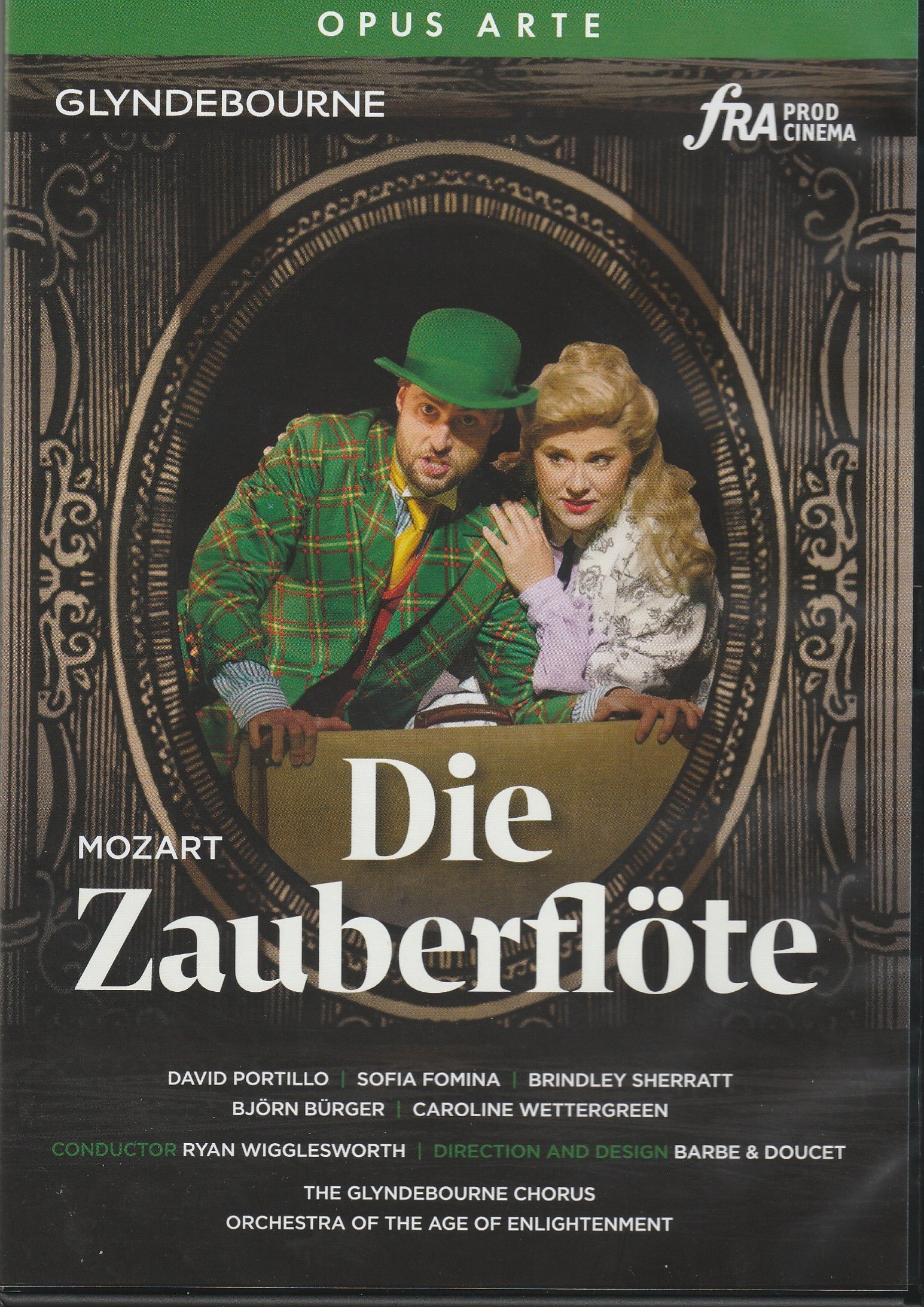
04 ZauberfloteMozart – Die Zauberflöte
Portillo; Fomina; Sherratt; Burger; Wettergreen; Glyndebourne Chorus; Orchestra of the Age of Enlightenment; Ryan Wigglesworth
Opus Arte OA1304D (naxosdirect.com/search/809478013044)

Reviewing a new production of any opera in 250 words is a challenge, but even more so when the material is as genre-defining as Mozart’s The Magic Flute, here recorded at Glyndebourne in 2019. This presentation is fascinating, with Roald Dahl-esque sets and costumes accompanied by the magnificent Orchestra of the Age of Enlightenment.

From the outset, the music is stunning in its energy and crispness, rhythmically vital yet expressive and constantly transparent. The orchestra is in fine form, accompanying with a sensitivity and articulateness which allows the listener to perceive the multiple layers of sound taking place: the soloist or ensemble in the foreground; the woodwinds and upper strings in the middle ground; and the lower strings below, underpinning the higher parts with immovable precision.

One of the more beautiful components of this performance is the way in which the orchestra’s use of period instruments determines the dynamic levels of all involved. To use a well-known example, Der Hölle Rache – the famous Queen of the Night aria – can be so driven by the aggressive rage contained in the text that the interpretation becomes a caricature of its inherently lyrical nature, pitting pyrotechnical technique against musical sensibility. Not so in this instance, though; the control exercised in tandem by soprano Caroline Wettergreen and the OAE ensures that there is beauty amidst the chaos, producing an unusually moving result. 

While the music is treated with historically informed sensitivity, the sets and staging for this production are decidedly and wonderfully nontraditional, a surreal and eccentric exploration of Alice in Wonderland-style visual effects. With each background made to look hand-sketched, colourful costumes and perspective-bending design, the visual impression made by this presentation is as impactful, if not more so, than the musical. Those acquainted with Mozart’s operatic masterwork will surely appreciate such a novel and engaging reimagining of this familiar favourite.

05 Rossini MoiseRossini – Moïse
Soloists; Gorecki Chamber Choir, Krakow; Virtuosi Brunensis; Fabrizio Maria Carminati
Naxos 8.660473-75 (naxosdirect.com/search/730099047371)

Well, the ancient Hebrews certainly didn’t know that they would be marching out of Egypt to a Rossini tune! Rossini composed Moses in Egitto for Naples in 1818 when he was 26 years old. Then, like many other Italian composers he went to Paris for fame and fortune, and as a wealthy and successful composer turned Moses into a French grand opera (Moïse et Pharaon) with new, spectacular stage effects, adding additional music and even a ballet. The opera became tremendously successful.

The biblical story is the struggle of Moses (Russian basso Alexey Birkus) to convince the Pharaoh (Italian basso Luca Dall’Amico) to let his people go by producing miracles punishing the Egyptians with calamities until the hesitant Pharaoh gives in and the rest is history. Interwoven in the plot is a love story between the Egyptian crown prince (virtuoso American tenor Randall Bills) and a Hebrew girl (Italian soprano Elisa Balbo) in conflict between love versus loyalty to family and country. Somewhat like the Aida/Radames love story later in Verdi.

The rather lengthy opera is musically very rich, extremely enjoyable with catchy tunes, beautiful arias, duets, ensembles and exciting stretta finales. The second act is a work of genius with show-stopping hits coming one after the other. The heavenly vocal quintet O toi dont la clémence is followed by an animated duet between Pharaoh and son (Moment fatal! que faire?) and a tremendous scene and aria by Queen Sinaide (Italian soprano Silvia dalla Benetta). The opera ends unforgettably with the Prayer Scene when the Israelites are praying for the Red Sea to part with a marvellous, iconic melody so beautiful that even Liszt wrote a paraphrase on it. Flawless cast, superb soloists and expertly conducted with true Rossinian flair by Fabrizio Maria Carminati.

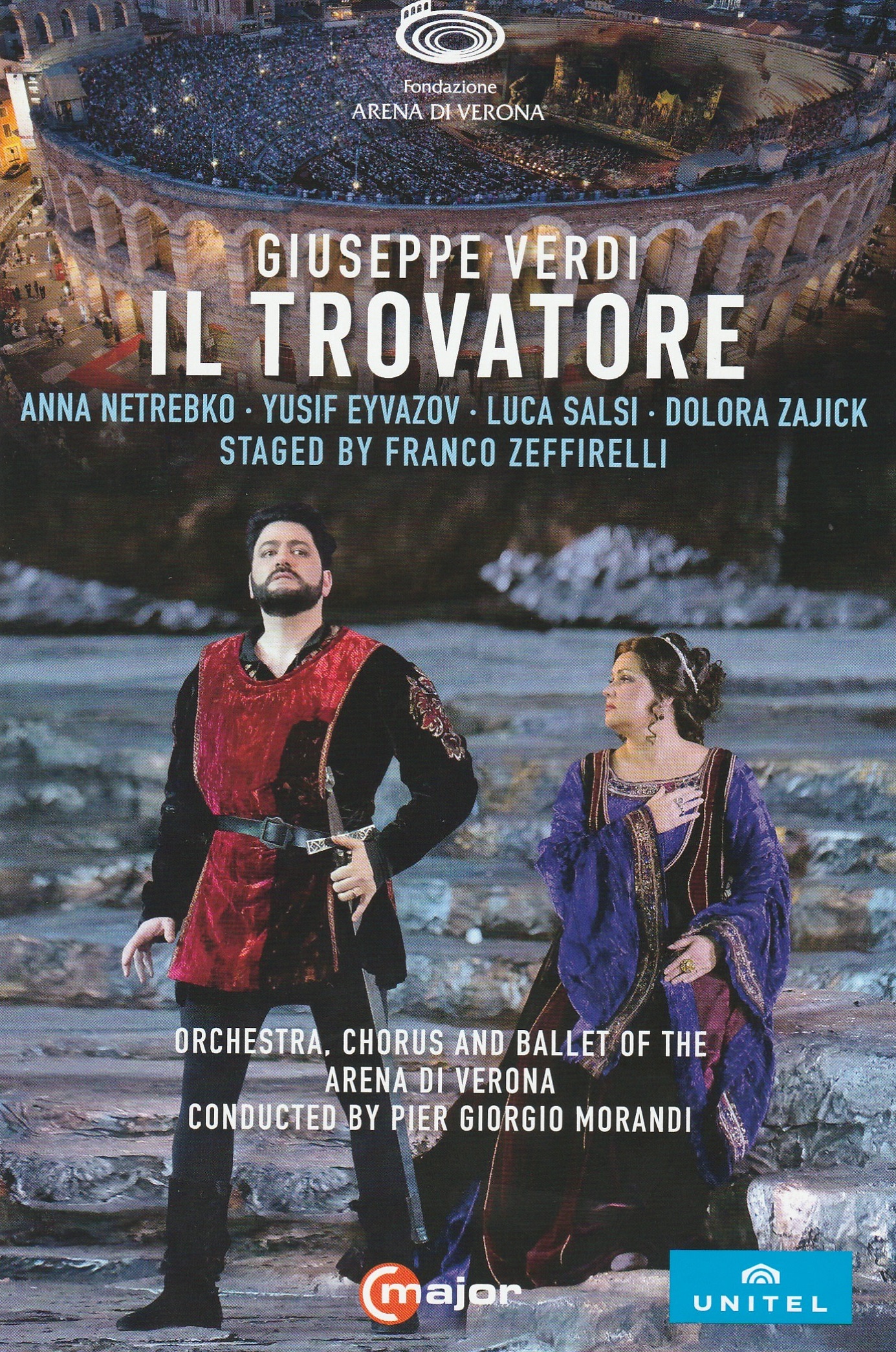
06 Verdi Il TrovatoreVerdi – Il Trovatore
Netrebko; Eyvazov; Salsi; Zajick; Orchestra, Chorus and Ballet of the Arena di Verona; Pier Giorgio Morandi
Cmajor 754608 (naxosdirect.com/search/814337015466)

Il Trovatore is an immensely popular opera in which an implausible plot is transformed by a dizzying succession of glorious melodies. Along with Rigoletto and La Traviata, it forms the great trilogy of Verdi’s middle period, but it is the most traditional of the three. A melodrama about chivalry, honour, valour and tragic love powered by unremittingly high-voltage music. Leonora, Manrico and the count are all given passionate arias, but Verdi appeared most drawn to Azucena, the Gypsy outsider whose burning desire for revenge is finally rewarded in the opera’s final denouement. 

This is an unrelievedly intense performance, staged by the master of epic visual drama, Franco Zeffirelli, and has a stellar cast backed by choral and orchestral playing – helmed by Pier Giorgio Morandi – that is electrifying. Anna Netrebko, always at her magnificent best, gives an extraordinary performance as Leonora, while Dolora Zajick more than lives up to the intensity and challenge of Azucena’s character. Zajick’s arias – Madre non dormi? followed by Si la stanchezza m’opprime o figlio – are sublime.

The most moving passages are created through dialogue, notably the Act 4 Miserere duet between Manrico and Leonora, in which she sings to the imprisoned troubadour above a chorus of praying monks, and the final exchanges between the lovers beginning with Yusif Eyvanzov’s fearsome tenor outburst Parlar non vuoi. Moments such as these raise Il Trovatore way above the level of period costume drama. This is absolutely a performance to die for.

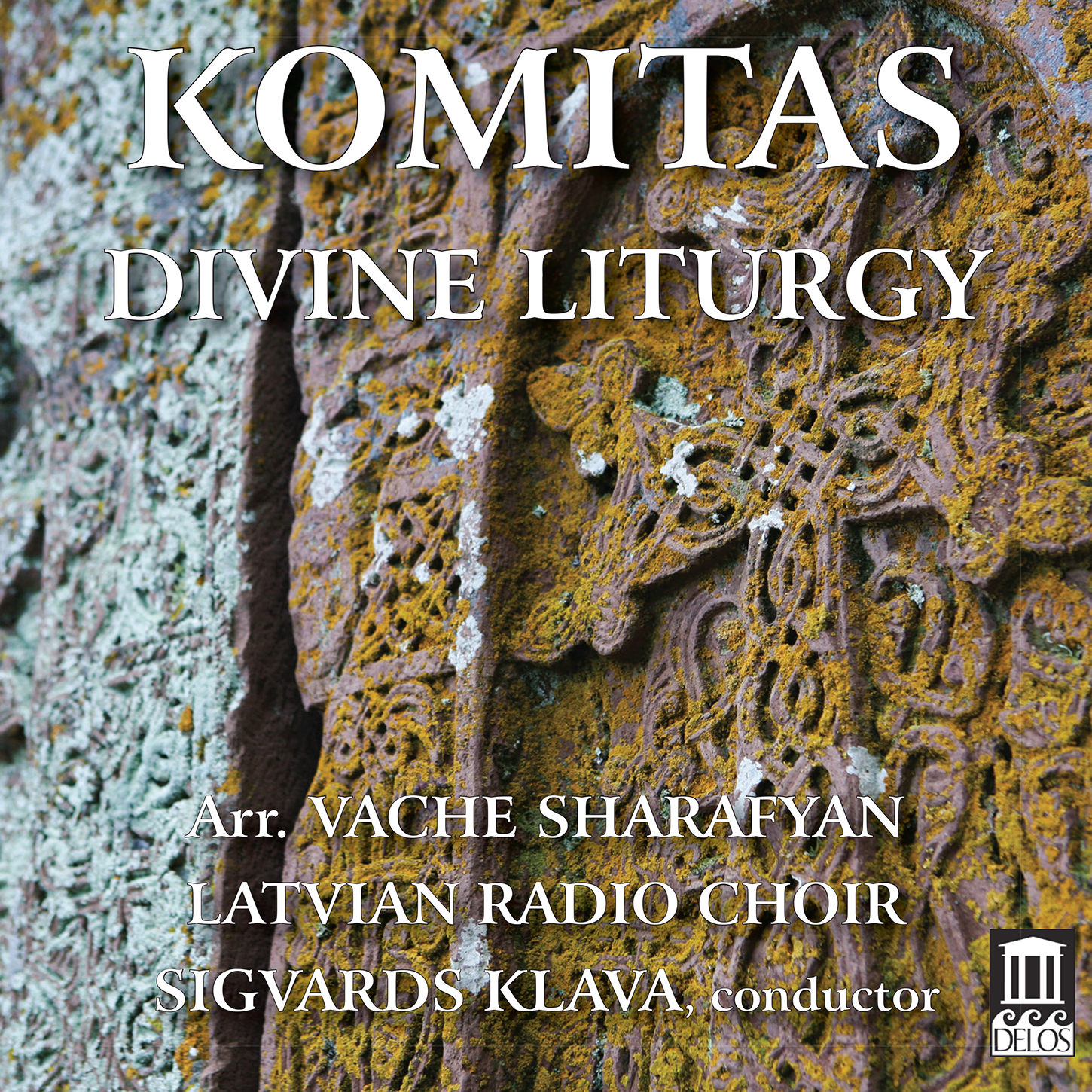
08 Komitas Divine LIturgyKomitas – Divine Liturgy
Latvian Radio Choir; Sigvards Klava
Delos DE 3590 (naxosdirect.com/search/013491359021)

The profound music of Divine Liturgy is a historic recording, performed to commemorate the 150th birthday of its composer, Komitas Vardapet (1869-1935). Komitas is considered the founder of the Armenian national school of music and an important pioneer in the field of ethnomusicology. He completed this monumental work in April 1915 as the Armenian Genocide perpetrated by the Ottoman government intensified. Komitas himself was arrested shortly thereafter. Although his life was spared, he was driven out of Armenia, soul destroyed, and spent the last 20 years of his life in an asylum in Paris.

Divine Liturgy reflects Komitas’ deeply spiritual life but the backdrop evokes the socio-political events of the times. Thus, praise and worship are set in sombre tones and colours reflecting spiritual darkness. To capture this, Komitas “heard” male voices expressing praise for God as well as reflecting the mood of the times. However, arranger Vache Sharafyan has made a boldly presumptuous leap of faith and illuminates Komitas’ deeply meditative sound-mass textures, choosing to mix the shadowy darkness of male voices with the dappled light of soaring female ones.

Thus we have a brilliantly daring new Divine Liturgy expressed as much in the eerie tones of Hovhannes Nersesyan’s dark and sonorous bass voice on Chosen of God and the eloquent outpourings of the tenor Armen Badalyan set amid pliant sopranos and contraltos. The mixed Latvian Radio Choir is superbly directed by Sigvards Klava, whose efforts – together with the bold ones of Sharafyan – give wings to the structural logic and deep spirituality of a work that many see as Komitas’ crowning achievement.

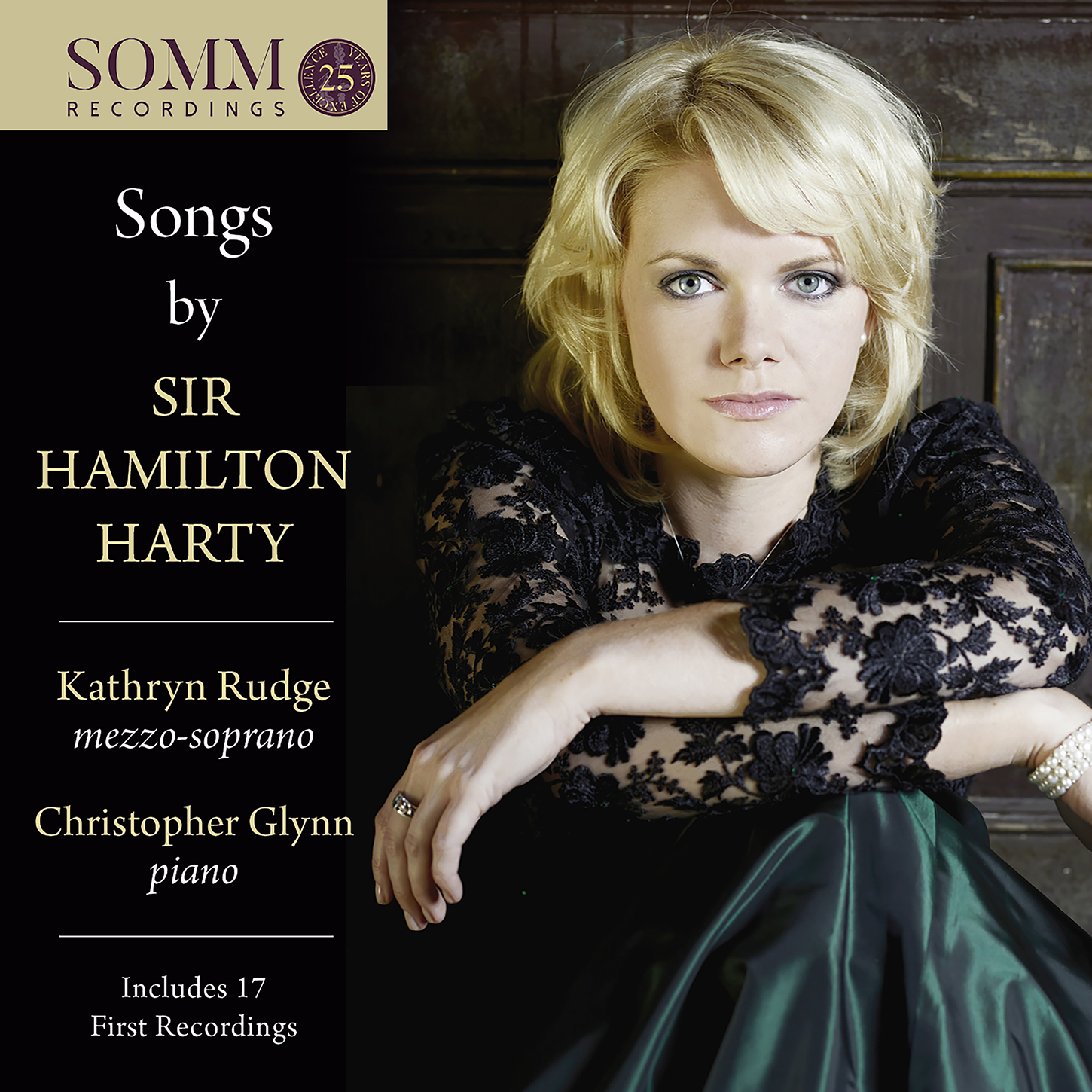
09 Hamilton HartySongs by Sir Hamilton Harty
Kathryn Rudge; Christopher Glynn
Somm Recordings SOMMCD 0616 (naxosdirect.com/search/748871061620)

I’m a longtime admirer of Hamilton Harty’s distinctively Irish-sounding orchestral works, especially his unfairly neglected Piano Concerto, so I welcomed the opportunity to hear and review this CD containing 23 songs, nearly half his total output, 16 recorded for the first time.

Set to words by 17 poets, including W.B. Yeats, Padraic Colum, Walt Whitman and Harty himself, the songs range across Ireland’s natural landscapes, love, lullabies, work, worship, war and death. Many are infused with the traditional melodic turns, lilt and sentiment we immediately identify as so uniquely and ingratiatingly Irish.

English mezzo-soprano Kathryn Rudge’s shiny, firmly focused voice surges thrillingly in the more dramatic songs, while she’s sensitively subdued in the tender or reflective selections, varying her vocal colours, always acting the texts.

The piano accompaniments are elaborate and fully fleshed, not surprising because Harty, in addition to his distinguished career as a conductor, performed as piano accompanist (he preferred the term “collaborator”) for violinist Fritz Kreisler, tenor John McCormack, soprano Agnes Nicholls (his wife) and mezzo Elsie Swinton (his purported mistress), the latter two for whom he composed many of his songs. Pianist Christopher Glynn “collaborates” admirably, adding, on his own, two charming salon-like solo piano pieces by Harty, one in its first recording.

Harty’s lustrous, warm-hearted songs surely deserve to be included in the repertoires of today’s vocal recitalists and the CD collections of lovers of beautiful music, like you! Detailed notes and texts are provided.

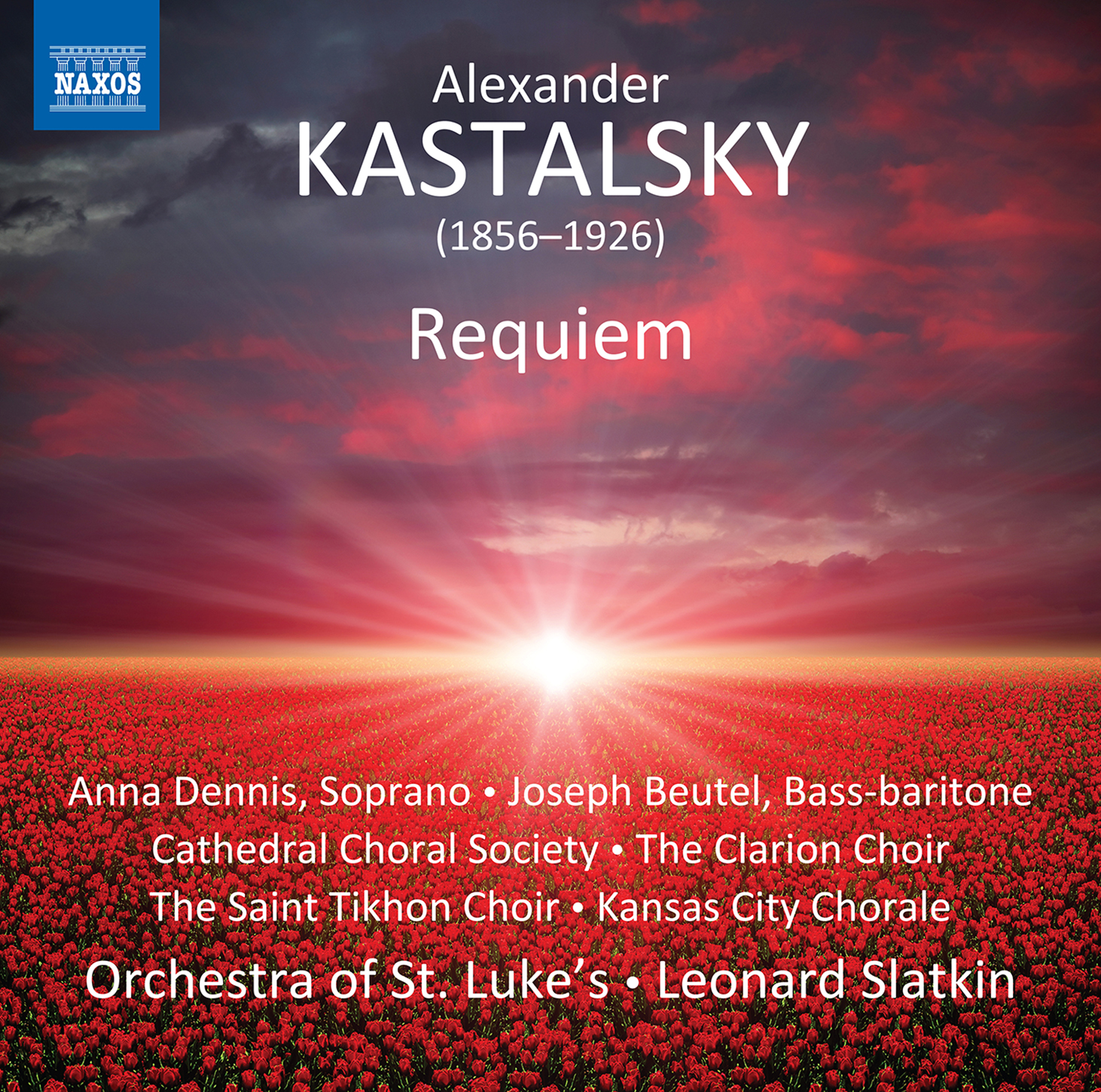
10 Kastalsky RequiemAlexander Kastalsky – Requiem
Soloists; Choirs; Orchestra of St. Luke’s; Leonard Slatkin
Naxos 8.574245 (naxosdirect.com/search/747313424573)

Alexander Kastalsky’s vision for his grand Requiem for Fallen Brothers – which included all those who died in WWI on both sides – was summarily snuffed out because by the time he was ready to unveil it on stage, in 1917, political power in Russia was in the hands of the Bolsheviks. More tragically his cross-cultural, 17-movement requiem – a work of immense proportion in which he weaves not only Latin and Orthodox rites in multiple languages, but even manages to use Eastern music, seamlessly and with dark grandiosity – remains virtually unknown within the canon of Western classical choral-orchestral works.

Appropriately, this definitive recording, featuring the Orchestra of St. Luke’s conducted by Leonard Slatkin, brings together a spectrum of players including the Cathedral Choral Society, the Clarion Choir, the Saint Tikhon Choir and the Kansas City Chorale, who illuminate the work’s breathtaking array of meditative, sparse and nimble sonorities. 

This is a highly reverential recording, distinguished by exquisite solo contributions from soprano Anna Dennis and bass-baritone Joseph Charles Beutel, supported with fine choral work by all of the vocal ensembles. Together they turn this awe-inspiring requiem into something truly memorable from the darkness of the Confutatis and the following Lacrymosa, the undulant Interludium: Hymn to Indra and the magnificent Domine Jesu. Through it all, Slatkin reveals the inner logic and structural grandeur of this complex work with exemplary clarity and inner detail.

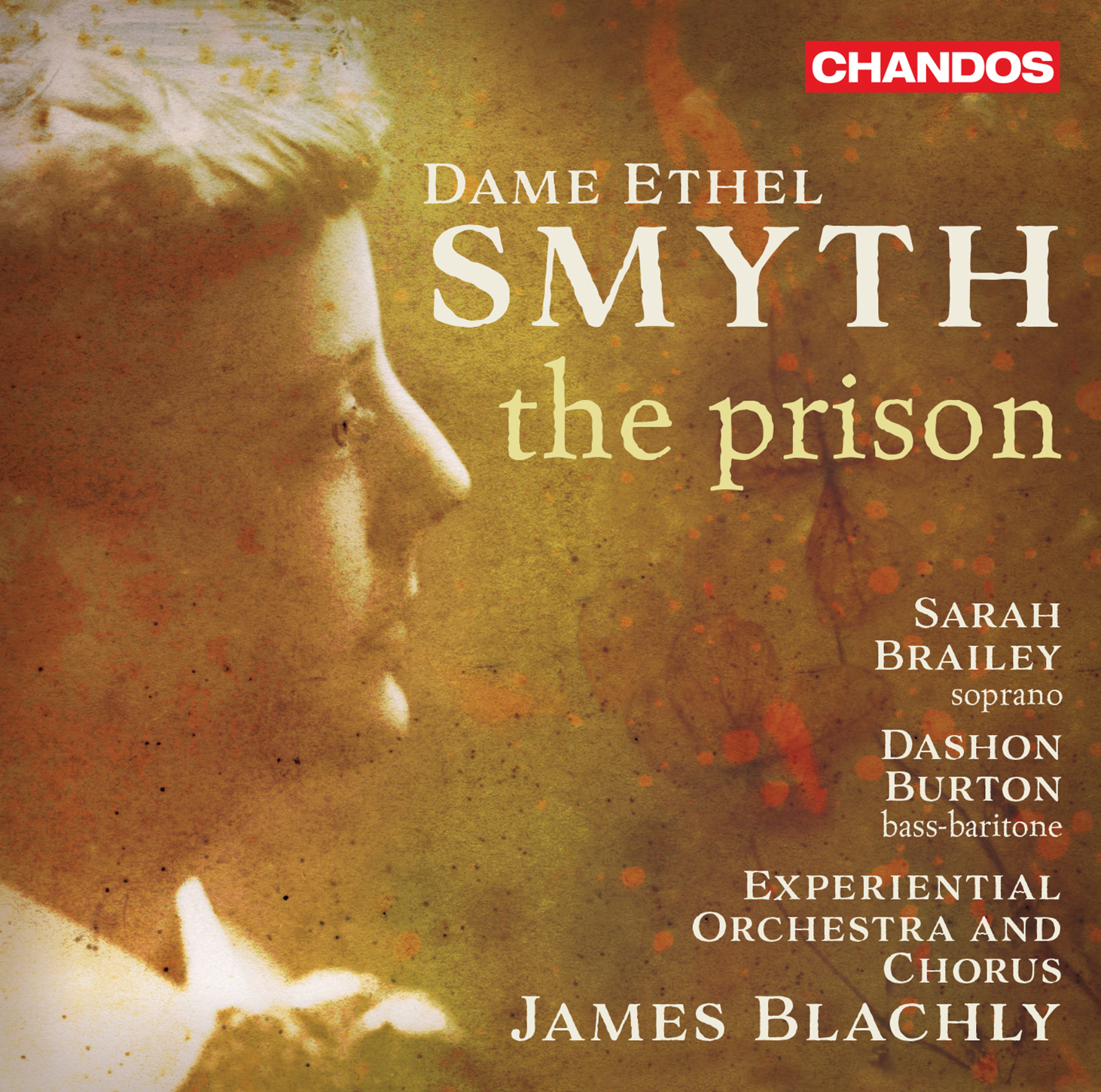
11 Ethel SmythDame Ethel Smyth – The Prison
Dashon Burton; Sarah Brailey; Experiential Chorus; Experiential Orchestra; James Blachly
Chandos CHSA 5279 (naxosdirect.com/search/095115527924) 

Dame Ethel Smyth (1858-1944) was an English composer with a large and varied compositional output that includes several operas, sonatas, works for strings, choral works and a mass. The Prison is a vocal symphony for soprano, bass-baritone, chorus and orchestra that was premiered and conducted by Smyth in 1931. Based on the libretto The Prison: A Dialogue by philosopher Henry Bennet Brewster, Smyth’s lifelong friend and mentor, the symphony tells the story of a prisoner in solitary confinement who dialogues poignantly with his soul about his innocence and imminent death. Dashon Burton (The Prisoner), Sarah Brailey (His Soul) and the Experiential Orchestra and Chorus offer a raw performance that is both stirring and compelling.

Overall, Smyth’s writing is rich and complex and very much reminiscent of an important influence in her life, the Brahms symphonies. In the first part, the prisoner’s feelings of dread are powerfully captured in the brass section with dark-timbred percussive bursts. This is in contrast to the second part, where the prisoner seems to find liberation in the acceptance of his faith in the more ethereal sonorities of his soul. Smyth composed The Prison while grieving the loss of Brewster and progressively becoming deaf, thus prematurely ending her career as a composer. There are several parallels made between this work and her personal life. 

(Re)discovering forgotten composers can be frustrating when primary resources are scarce or when the composer’s output turns out to be less than exciting. In Smyth, we find not only a compelling individual, but a woman who left behind thousands of letters ready to be studied. Hers is a legacy still waiting to be revealed.

12 Eriks EsenbaldsĒriks Ešenvalds – Translations
Portland State Chamber Choir; Ethan Sperry
Naxos 8.574124 (naxosdirect.com/search/747313412471)

Award-winning Latvian composer Ēriks Ešenvalds is a superb younger generation choral composer who writes with feeling, lyricism, layered complexity and the skill to also create sad sounds that are soothing and comforting at the same time. It is thrilling to hear him expand the very strong and thriving choral tradition of the three Baltic nations.

This is the second recording of his music by the Portland State Chamber Choir, under the direction of Ethan Sperry. Sperry and his university ensemble perform with intellect, texture and passion. The seven works here are not easy to interpret due to language, diverse texts, wide-ranging tonality and multiple-part writing. 

Highlights include The Heavens’ Flock (2014) with its almost folk-song singalong quality, full tonal harmonies, occasional high soprano pitches and calming repeated ending. Translation (2016) has a darker, reflective mood. Slow but never boring, the harmonies keep the listener’s attention until the closing singing handbells’ final ring. Vineta (2009) opens with a choral pedal on E, as the volume builds with attention-grabbling contemporary tonalities and the use of mesmerizing ringing vibes and glockenspiel, and solo bass drum for unexpected rewarding effects. For In paradisum (2012), Ešenvalds adds viola and cello. A devastating solo cello line with full choral backdrop adds to the grief sentiment. An unforgettable minimalistic atonal string duet closes the work above a spectacular low, pianissimo choral drone.

The moving compositions, clear production and youthful singing make Translations a memorable choral release.

13 Missy MazzoliMissy Mazzoli; Royce Vavrek – Proving Up
Opera Omaha; International Contemporary Ensemble; Christopher Rountree
PentaTone PTC 5186 754 (naxosdirect.com/search/827949075469)

Right from the opening of this grim, gripping opera, reality mingles with fantasy. In a hearty invocation to the great American Dream, Pa Zegner (the alluring baritone John Moore) sings, “Uncle Sam is rich enough to give us all a farm.” Meanwhile, eerie sounds creep in from the orchestra. It’s clear Pa is deluded. 

It’s the 1860s. Pa and his family have been lured to the Nebraska prairies by the promise of free land offered by the recent Homestead Act. But two young daughters have already died. The land is dry and barren. The weather is nasty. And Uncle Sam’s requirements – including a glass window – are proving mighty difficult to fulfill. 

American composer Missy Mazzoli and Canadian librettist Royce Vavrek have transformed a disturbing But Mazzoli’s writing is fresh, original and enticingly contemporary. With sixthe full libretto.

02 TelemannTelemann – Concertos & Ouverture
Arion Orchestre Baroque; Alexander Weimann
ATMA ACD2 2789 (naxosdirect.com/search/acd2+2789)

Georg Philipp Telemann was a prolific composer. One commentator made the astonishing claim that the sheer quantity of Telemann’s compositions is more than all the works of Bach, Mozart, Haydn, Beethoven and Schubert combined! Yet the self-taught, self-made Telemann was not just an ordinary workaholic. He was also recognized as a master of many of the international and regional musical styles of his era, a kind of Baroque transnational genre fusionist. In his works for the church, opera and the emerging German public concert scene, his skillfully orchestrated scores were seldom pro forma. They typically exhibit clear melodies, buoyant dance rhythms, adventurous harmonies and exploit mood and drama. 

Montreal’s Arion Orchestre Baroque (founded in 1981) makes a strong case for the three Telemann works on this album. Quebec recorder virtuoso Vincent Lauzer tears into the first track of Concerto in C Major with youthful gusto. The spirited fourth movement Tempo di minuet sets the stage for Lauzer’s displays of speed double tonguing, crisp arpeggios and dramatic octave leaps – performed with lyrical grace and aplomb.

Bassoonist and conductor Mathieu Lussier joins Lauzer in the double Concerto in F Major. The playful four-movement work pits the penetrating treble recorder against the characteristically muffled-sounding Baroque bassoon, an example of the composer’s interest in unusual sonic combinations. 

Telemann’s ten-movement Overture in G Major – one of his 200 (sic) Overtures – is influenced by the French Baroque style he admired and includes a pastoral trio of two oboes and a bassoon. It receives its premiere recording here. 

I’m pleased to report that Telemann’s witty and engaging music, composed more than 250 years ago, lifted my clouded pandemic mood. It has the power to uplift other music lovers too.

03 Beethoven LisztBeethoven – Complete Symphonies transcribed for piano by Franz Liszt
Michel Dalberto, Jean-Claude Pennetier, Alain Planès; Paul Badura-Skoda
Harmonia Mundi HMX2931192.98 (harmoniamundi.com/#!/albums/2643)

For over 25 years, Franz Liszt undertook the task of transcribing Beethoven’s symphonies for the piano, not merely transferring the notes from one instrument to another but reworking and recomposing these great works entirely. The material is unchanged – Beethoven’s melodic and harmonic content remain intact – but the approach is different, as necessitated by the reduction of 20-or-so instrumental parts down to two hands.

It is important to consider that when Liszt made these transcriptions the concept of the symphony orchestra was not nearly as ubiquitous as it is today, and there was no recording technology available to capture these incredible works for posterity; a performance was a one-time event, in the truest sense of the idea. If people wanted to listen to Beethoven in their living rooms, they had to do the work themselves, playing the notes live on their own pianos. By making these transcriptions, Liszt was enabling pianists everywhere to hear this great composer’s symphonies as often as they were willing to play them, while hopefully garnering himself a reasonable sum in royalties.

To those of us in the 21st century for whom accessing any one of the 10,000 recordings of Beethoven’s symphonies is as easy as pushing play, can these pianistic oddities have any relevance? Strangely, yes – but not in the straightforward way we might think. Liszt’s transcriptions have the effect of taking the immensity of the orchestra and distilling it into a chamber-sized sound, akin to a piano sonata rather than a symphony. Listening to pianist Paul Badura-Skoda tackle the legendary Fifth Symphony, for example, one is struck by how much his interpretation resembles a long-lost cousin to the Pathétique.

While this recording may be more of a novelty item than a standard must-have collectible, those who are familiar with Beethoven’s symphonic essays will appreciate hearing them in a different way, from the inside out, perhaps, rather than the outside in.

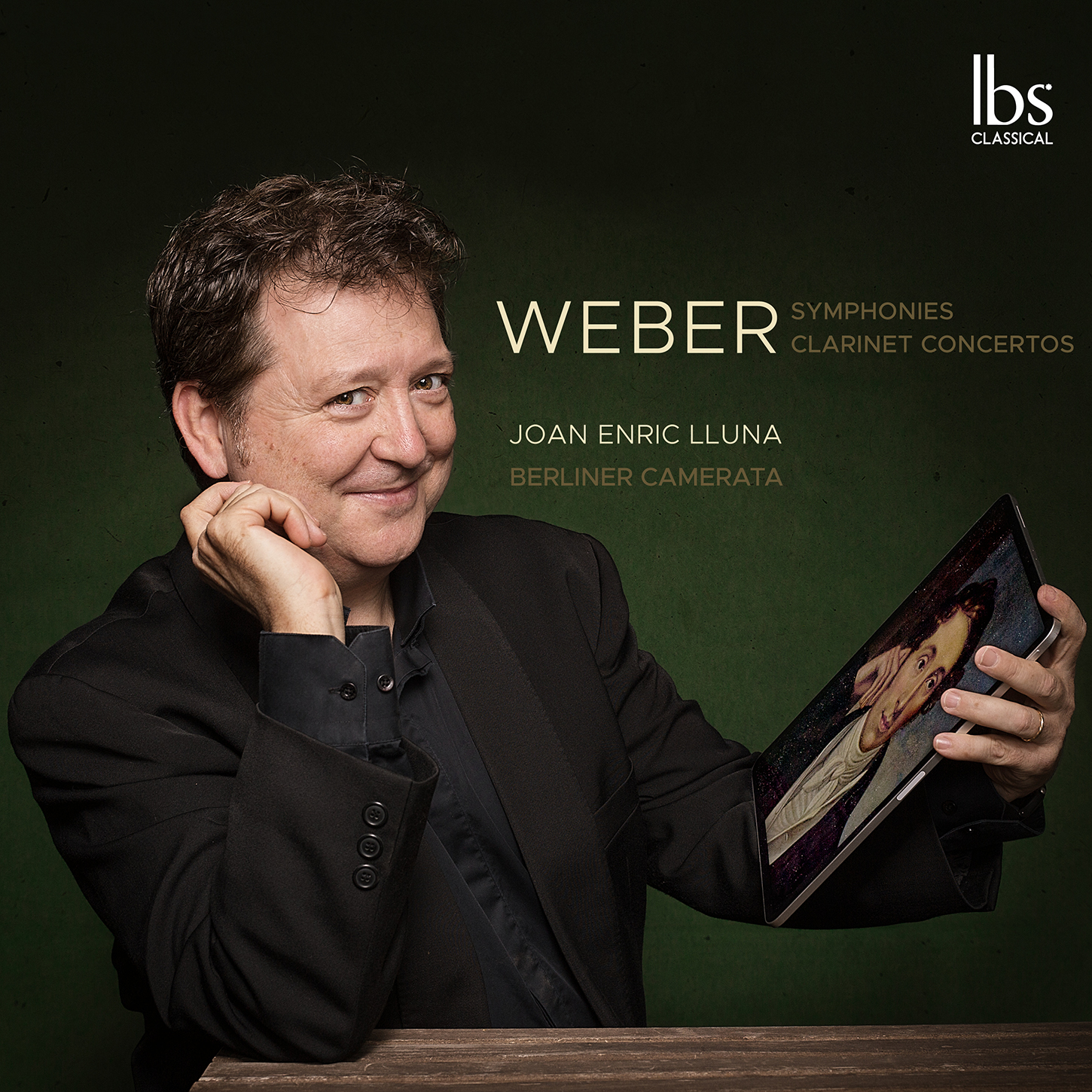
04 Weber ClarinetWeber – Symphonies; Clarinet Concertos
Joan Enric Lluna; Berliner Camerata
IBS Classical IBS222019 (naxosdirect.com/search/8436589069961)

Oh, allow the clarinet player his argument in favour of Carl Maria von Weber. This younger contemporary of Beethoven, precursor to Wagner, has been afforded an unfortunate and unfair place in the pantheon, close to the fire exit, on the way to the restrooms. 

But just listen to the powerful bass-y recording released by the Berlin Camerata, featuring Joan Enric Lluna as soloist and conductor in the Clarinet Concertos, Nos.1 in F Minor and 2 in E-flat Major. It’s as though the vengeful ghost of Weber has come to remind us: he was all that then, and he is still all that. Not for Lluna and the team any polite, apologetic renditions of this stuff: it is, as they say, junk out. It’s great to hear, for once, musicians who agree Weber is kind of wild, and requires that approach in order to be heard as intended. 

The microphone work is an integral part of this approach. You’ll hear everything as if you were sitting not just near, but within the band. The very first sound from the clarinetist is an inhale, and such a hungry, lüstig breath Lluna takes. Weber orchestrated with verve and wit. The Camerata players are given license to kill it, and we hear all the voicings as characters in an opera. Listen to the horns! Listen to the gutty strings! 

The liner notes written by Josep Dolcet are instructive; Lluna’s own brief addition pays respect to Weber the dramatist, and labels the soloist as the diva! There is a companion CD included of the rarely heard symphonies from the younger Weber.

Back to top