03 Mike McCormickProxemic Studies Volume 1
Mike McCormick
Smeik SMKCD204 (smeik.no/en; mikemccormickmusic.com)

It is not an obvious concept to combine technical guitar exercises you wrote for yourself with extracts of letters and emails from your former “romantic partners” as a basis for an album of contemporary music. Yet this is what Oslo-based guitarist, laptop performer and composer Mike McCormick, originally from Yellowknife, has done with his Proxemic Studies. The album is both intensely personal (some of the quotations detail sexual intimacy, heartbreak and betrayal) and surprisingly clinical. Befitting our social distancing times, McCormick tells us “Proxemics [is] the branch of knowledge that deals with the amount of space that people feel it necessary to set between themselves and others.” McCormick performs his compositions with Laura Swankey (voice), Emily Denison (trumpet) and Knut Kvifte Nesheim (percussion). Swankey’s vocals are expressive yet measured and Nesheim provides a delicate palette of background accompaniments. One of the most beautiful pieces is Alvorada, on which Denison plays some floating and tasteful trumpet lines reminiscent of Kenny Wheeler, and the vocal intermittently glides between the musical lines. At the other extreme is Madness with fuzzed-out guitar and a series of accusatory and harsh statements vibrating with anger.

The album is intriguing, but one may wonder how McCormick’s former partners feel about their intimate notes being part of a public performance. The text ranges from poetic to banal (“Just got out of the shower, you were kind of there too”) and this contrast may be one of the points being made about human interaction. Proxemic Studies is an uneasy intertwining of personal history with innovative musical expression.
Listen to 'Proxemic Studies Volume 1' Now in the Listening Room

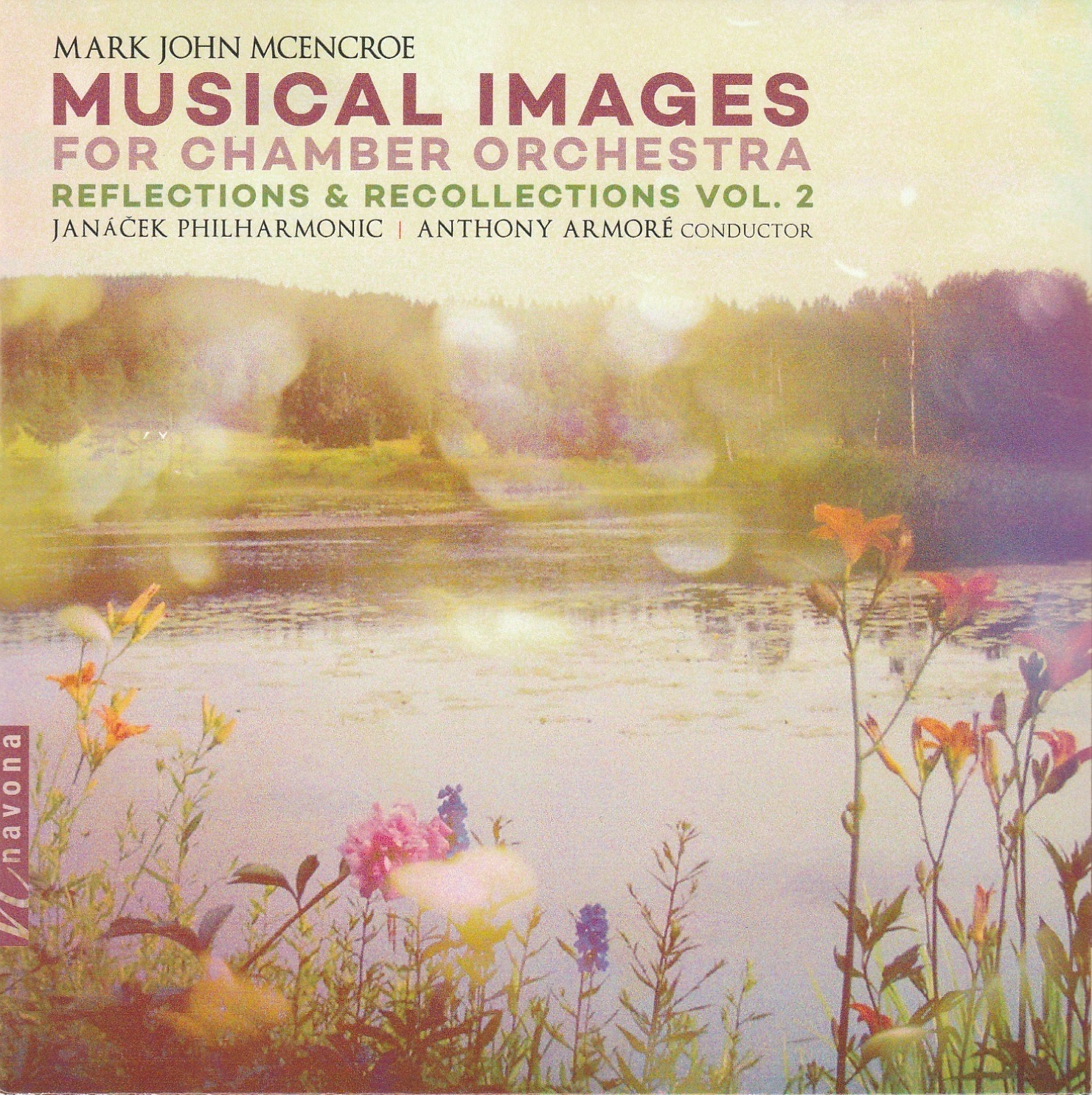
04 Mark John McenroeMark John McEncroe – Musical Images for Chamber Orchestra (Reflections & Recollections Vol.2)
Janáček Philharmonic; Anthony Armore
Navona Records nv6269 (navonarecords.com)

The Australian self-professed “easy listening” composer Mark John McEncroe has made a name for himself in the orchestral world with his audience-friendly and pleasantly digestible output. In this latest release, several piano works by McEncroe have been orchestrated by Mark J Saliba – also an Australian composer – to comprise the selection of Musical Images heard on the recording. 

This music is not trying to be anything other than what it is: gentle and welcoming. While some contemporary composers writing in older Romantic styles still feel pressured to insert some sort of newness into their music, resulting in a confusing clash of aesthetic commitment, McEncroe delivers a straightforward and unburdened nostalgia to the listener. Nevertheless, we still receive contrast throughout the 11 movements. 

At times playful, foreboding, heartwarming, and reassuring, the music does in fact lead the listener on a journey – albeit a highly protected one. There is a filmic quality to McEncroe’s style, an attribute that is furthered by titles such as Natalie’s Theme, Floating Lilies and A Rainy Summer’s Day. This quality perhaps leaves the listener wanting to experience these missing images alongside the music; in contrast to profoundly written program music where the extra-musical elements are so deeply provided in the music, one does not require them in any other form. With that in mind, this disc is perfect for a rainy day with a book, or a relaxing afternoon by the fire.

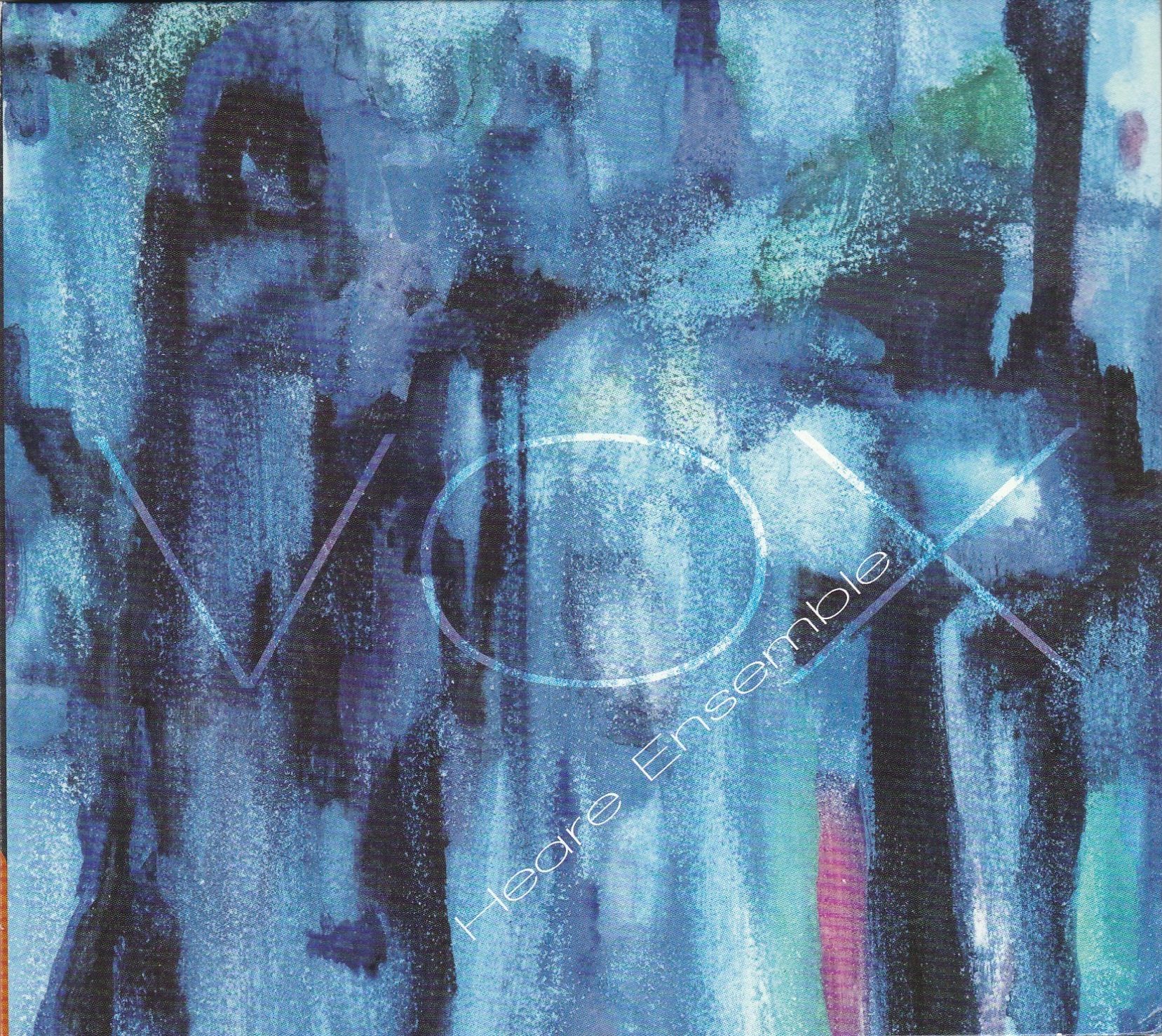
07 VoxVox
Hearne Ensemble
Innova Recordings 040 (innova.mu/albums)

What is a “test of time” measured against the universe’s, or even our planet’s? On the human scale, George Crumb’s Vox Balaenae for three masked players performing on amplified instruments – flute, cello and piano – has stood up well over the half century since its composition. The Hearne Ensemble opens with this work, whose theme reminds humans of how tiny their lifespan is measured against that of the Earth. Even without the blue ambient lighting Crumb indicated for live performance, the music draws us into the depths: meditation and wonder, awe and exhilaration. Like Messaien’s Quartet for the End of Time, Vox Balaenae (voice of the whale) is a work of praise, threaded through with references to time and timelessness; the object of Crumb’s louanges, unlike Messaien, is the world itself, and his angelic voice is that of the whale. The performances are flawless, and the recording quality excellent; Vox Balaenae is a timeless masterpiece.

Next, Bencharong by Narong Prangcharoen depicts the five colours of classic Thai ceramics. The movements are brief, and while the composer makes no overt claim that he experiences synaesthesia, the musical colours are as distinct as the visual ones. 

Silver Dagger, by Stacy Garrop, references an American folk song she researched and found to have three distinct variants and outcomes, almost a post-modern Romeo and Juliet. Like Berio in his folk song settings, Garrop is content to find mystery and beauty in the simplicity and power of the original. It’s beautiful Americana.

Melodies for Robert by Carter Pann is a celebration in memoriam of “an American war hero,” to quote the liner notes. There are two movements: Sing and Listen. I don’t find myself able to listen to them following the rest of the disc. I haven’t much room left for dessert, especially not one so sweet.

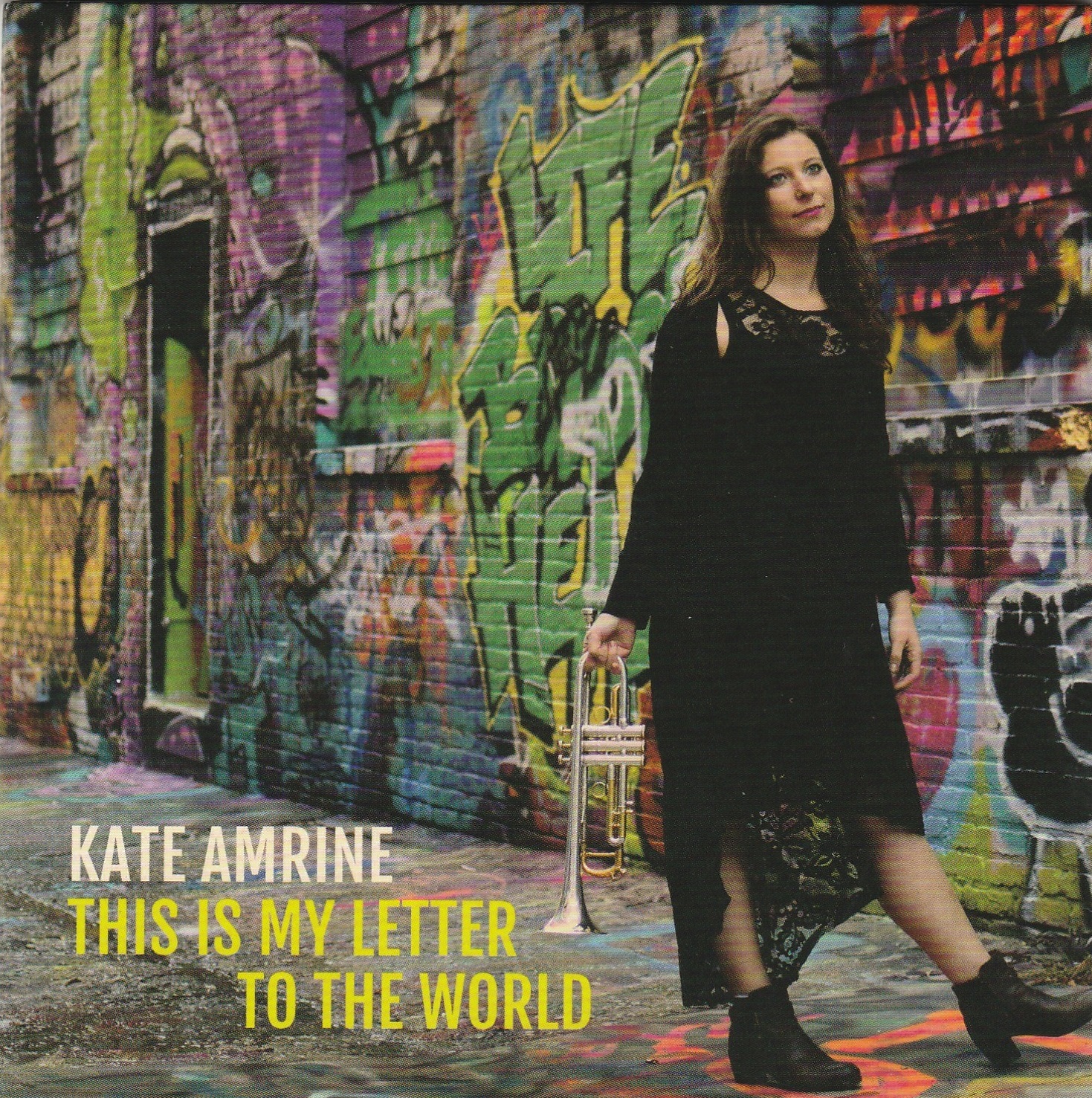
08 Kate AmrineThis is My Letter to the World
Kate Amrine and various artists
Innova Recordings 042 (innova.mu)

It is almost too apt to be reviewing trumpeter/composer Kate Amrine’s new release in the COVID-19 era. Whatever new power music has developed within our collective, it has always drawn us into shared experience. This message from a millennial asks all of us to please reflect on the harm we bring on ourselves. How can the tracks of this disc bend our path away from mutually assured destruction, one is forced to wonder. One supposes: through hope.

Amrine’s own piece, What Are We Doing To Ourselves, addresses climate change and degradation through a combination of electronic underlay made of the recorded sound of a forest fire, simple melodic fragments that join the voices of alto flute, trumpet, viola and cello, and an almost childlike recitation of the text of a suicide note. This latter document was left for media by an activist lawyer who set himself on fire in an act of protest. Heavy stuff. Her very short title track eloquently quotes Emily Dickinson with a bucket-muted trumpet nearly overshadowing the text.

The next track, Thoughts and Prayers, by Kevin Joest, addresses gun violence. A single trumpet line accompanies all-too-familiar news chatter reacting to various mass-murders. My Body My Choice by Niloufar Nourbakhsh, uses the words of the title in a chant rising towards the final bars of a processional featuring trumpet and electronics. 

Sandwiched in among the earnest messages is a clever and entertaining track (omitted in the liner notes): Close Fight sets up a funky dance number using a post-fight interview with a boxer whose cocky answers are chopped into rhythmic bits, and played to by the band. This is such an excellent antidote, it’s why we need to support these young creators like Amrine. I wanted it to go on. We all need it, to go on.

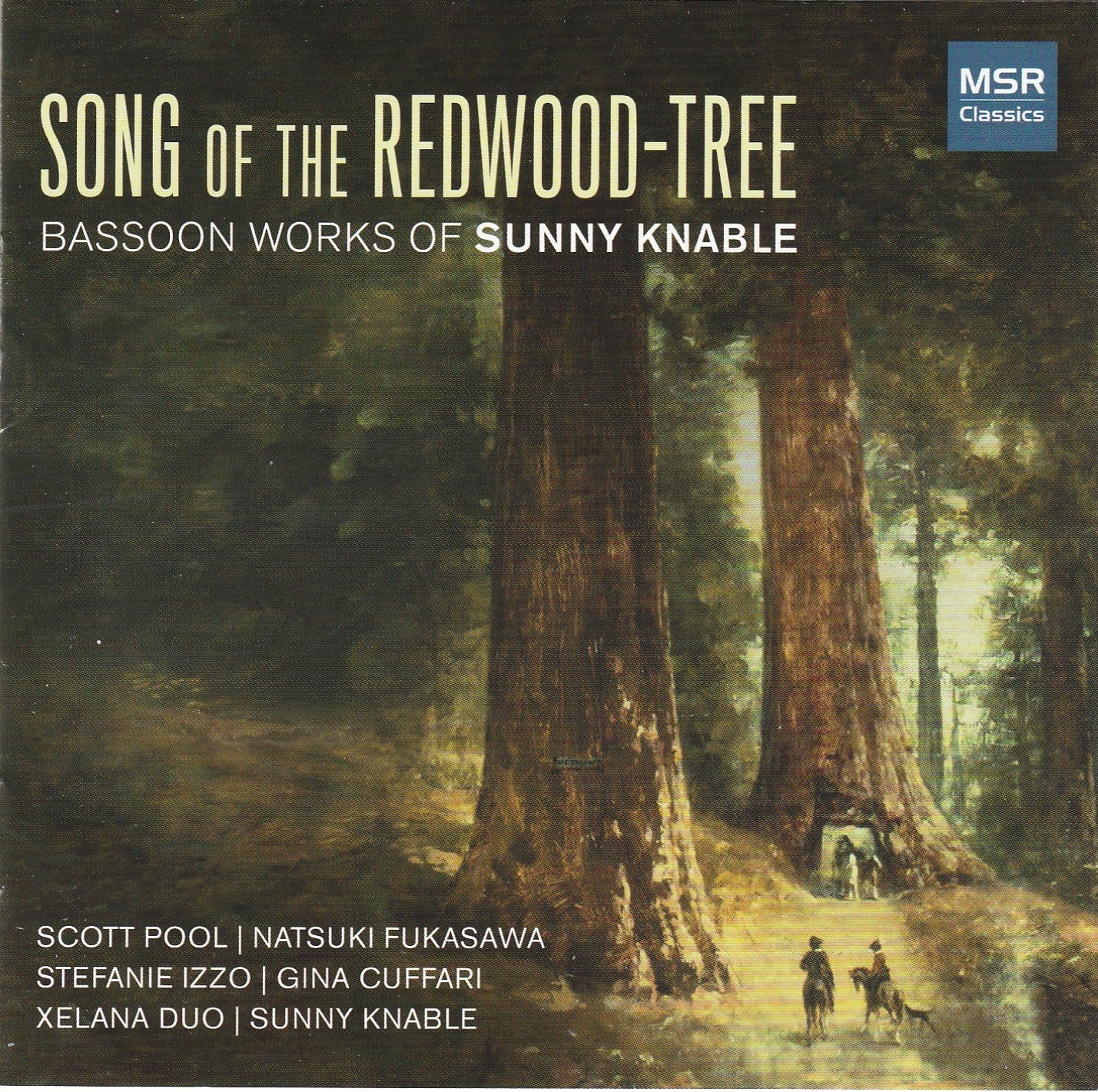
10 Sunny KnableSong of the Redwood-Tree
Scott Pool; Natsuki Fukasawa; Stefanie Izzo; Gina Cuffari; Xelana Duo; Sunny Knable
MSR Classics MS 1749 (sunnyknablecomposer.com)

American composer, pianist and educator Sunny Knable’s four works here illuminate the many sound possibilities that the bassoon produces as a lead instrument and in ensemble. The three-movement title track Song of the Redwood-Tree for soprano, bassoon and piano is based on Walt Whitman’s Leaves of Grass. A California Song opens with bassoonist Scott Pool’s beautiful held notes, pianist Natsuki Fukasawa’s contrapuntal lines and soprano Stefanie Izzo’s high pitches. Death-Chant is understandably more atonal with dramatic high vocal pitches, and Golden Pageant features more tonal cadences, and piano/vocal unisons. 

Tango Boogie combines a bit of tango and swing in a surprising gratifying sonic mix played by the alto saxophone/bassoon Xelana Duo. Double Reed on Charles Wyatt’s poem To the World’s Bassoonists showcases Knable’s understanding of the breath control required to play reed instruments, as he performs on the accordion with soprano/bassoonist Gina Cuffari. Its second movement Tragic Bassoon is especially noteworthy with the solo bassoon melody above the left- and right-hand accordion-held chords and vocal backdrop creating a memorable sound. Lots of familiar true-to-life sounds in The Busking Bassoonist as Pool and Fukasawa perform such Knable-created city-sound effects as trilling birds, rhythmic marching and a distant subway piano pedal echo. 

Knable clearly understands the bassoon’s vast possibilities beyond its traditional instrumental setting. His compositional expertise grounds his explorative instrumental creations and answers his own question “Why does this work have to exist?” Because it is great!

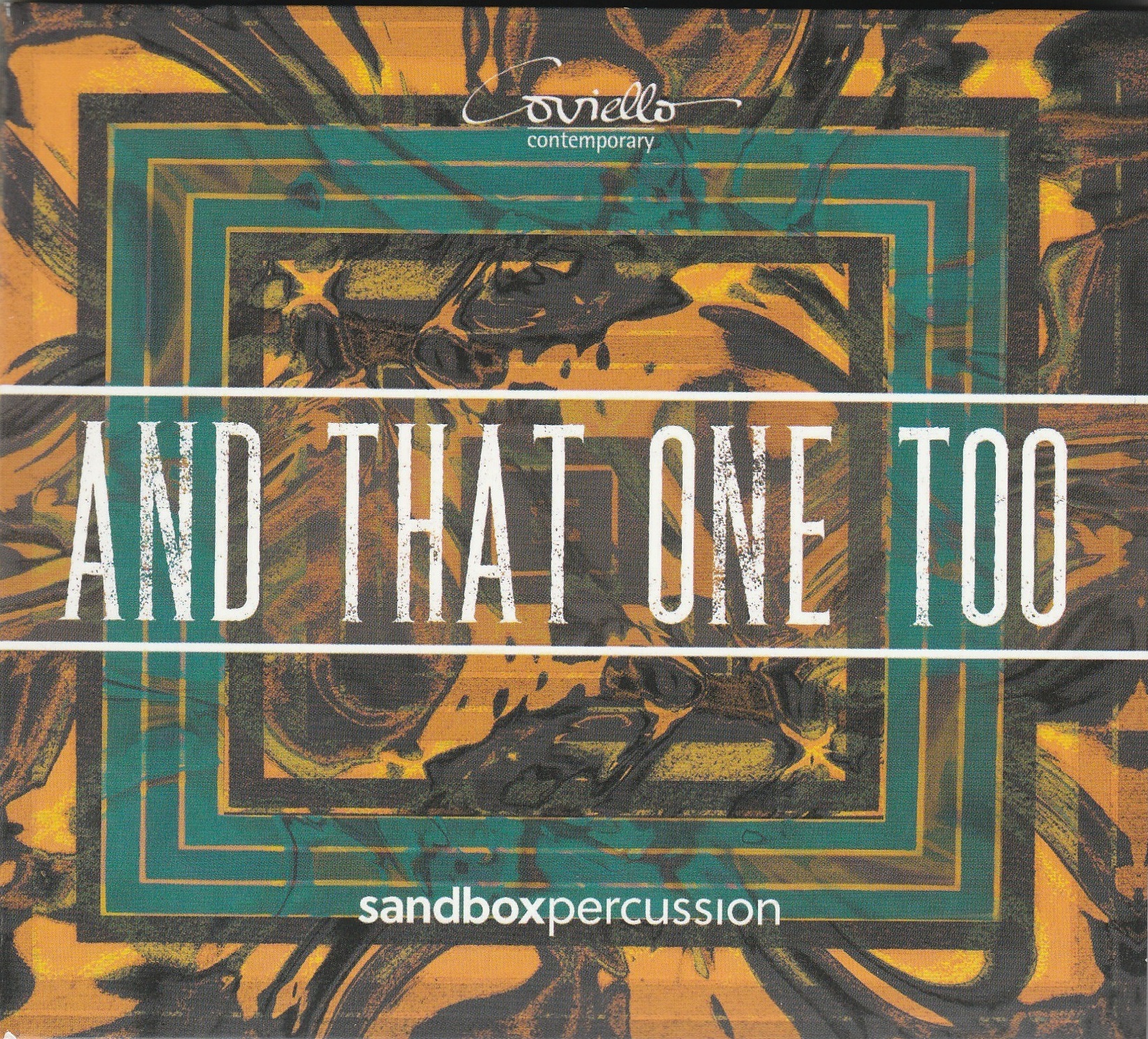
11 Sandbox PercussionAnd That One Too
Sandbox Percussion
Coviello Contemporary COV91918 (sandboxpercussion.com)

Brooklyn NY Sandbox Percussion ensemble members Jonny Allen, Victor Caccese, Ian David Rosenbaum and Terry Sweeney have created long-term close collaborations with the composers who write for them, resulting in smart, diverse, challenging contemporary musical works. Their debut release features four of these.

Andy Akiho’s Haiku 2 observes the 5-7-5 haiku form with minimalistic repetitive hits coupled with tuned percussion sounds. Each movement of David Crowell’s Music for Percussion Quartet was inspired by different environments. Mov. I - Fluctuation and Mov. III - Oscillation feature polyrhythms on drums and vibes, creating a busy city sound. Mov. II - Sky, with its slow meditative ringing vibes and hypnotic repetitive tonal sequences perhaps sound like the sky at dusk. Low resonances abound in Mov. IV – Landscape. Composer/vocalist Amy Beth Kirsten performs her composition she is a myth with great tonal colour on multiple tracks, with Sandbox playing opening percussion like paper, sandpaper and scratches, and subsequent toe-tapping rhythms. Thomas Kotcheff’s not only that one but that one & that too is divided into three parts, each focusing on a different percussion type. Part I features wooden instruments with the opening attention-grabbing “what is this” woodblock taps leading to a wooden percussion sound panorama of pitch and rhythm. Part II is all about drumming rhythms and rolls, while in Part III, pitched metal instruments and finger cymbals create calming effects.  

Sandbox Percussion plays brilliantly with musical accuracy and nuance.

Listen to 'And That One Too' Now in the Listening Room

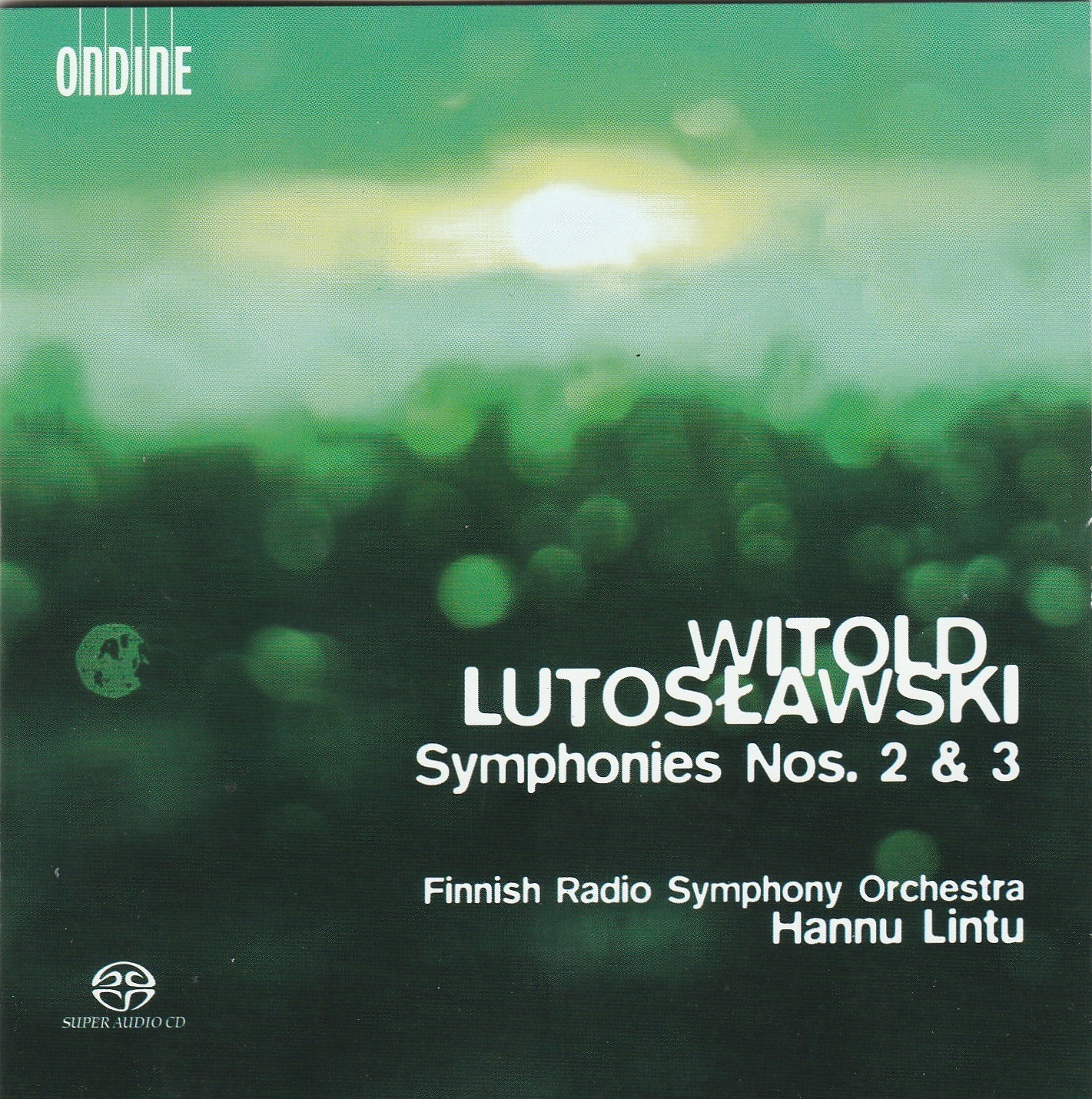
01 LutoslawskiLutosławski – Symphonies Nos. 2 & 3
Finnish Radio Symphony Orchestra; Hannu Lintu
Ondine ODE 1332-5 (naxosdirect.com)

There’s no mystery why Polish composer Witold Lutosławski’s Symphony No.3 from 1983 has been recorded so frequently. It’s an influential work. And, as this new recording with Hannu Lintu conducting the Finnish Radio Orchestra demonstrates, it’s a truly exciting work, full of delights and surprises. 

It starts with a definitive burst of four rapidly repeated E’s, which keep returning right until the end. That motif is the last thing heard. Lintu, who has conducted the Toronto Symphony in a number of memorable concerts during the past decade, brings out the sharp contrasts that make Lutosławski’s music so dramatic. In the semi-improvised sections, where Lutosławski stipulates what notes are played but allows the musicians the freedom to choose the rhythms, the orchestra creates unearthly sounds that shimmer with twists and slides. 

But it’s the contemplative passages that show the real strength of this recording – its open-hearted embrace of the lyricism that make this work so moving. Lintu’s interpretation easily measures up to the fine recordings from Solti, who commissioned the work, Salonen, who made the first recording, Wit, Barenboim and Lutosławski himself.

With a colourful performance of Symphony No. 2 from 1967, Lintu wraps up his set of Lutoslawski’s four symphonies. Like the third, this symphony is in two connected sections, here called Hésitant and Direct. The scale is less grand. But the impact just as powerful, and the performance is every bit as rewarding.

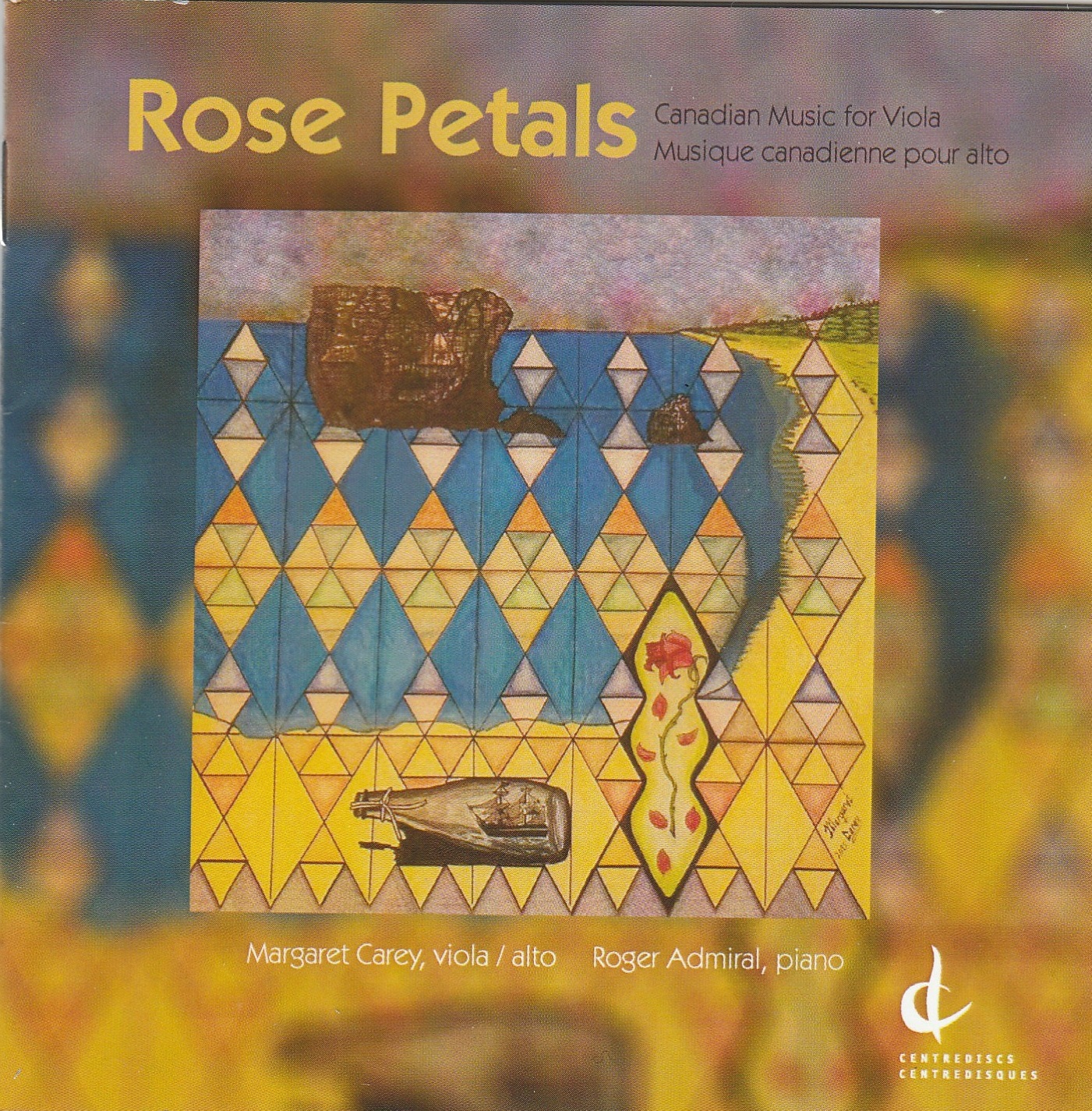
02 Rose PetalsRose Petals – Canadian Music for Viola
Margaret Carey; Roger Admiral
Centrediscs CMCCD26319 (cmccanada.ort)

The oldest and longest work on this CD, Jean Coulthard’s 17-minute Sonata Rhapsody (1962), filled with moody introspection and intense yearning, makes an auspicious beginning to violist Margaret Carey’s “hand-picked” collection of Canadian compositions,

Three pieces are for solo viola: Jacques Hétu’s Variations, Op.11 is predominantly slow and songful, occasionally interrupted by rapid, virtuoso passagework; in 19_06, Evelin Ramón combines intricate, electronics-like viola sonorities with vocalizations by the soloist; Howard Bashaw’s Modular 1, the first movement of a longer work, is a tightly rhythmic study in repetition, sustaining momentum throughout its four-minute duration.

Pianist Roger Admiral, heard in Coulthard’s piece, also collaborates in three other works. Ana Sokolović’s Toccate, another four-minute essay in motoric rhythms, strikingly (pun intended) evokes the sounds of the cimbalom and Serbian Gypsies.

The CD’s title, Rose Petals, is taken from the titles of a poem and a painting by Carey, both reproduced in the booklet. They, in turn, inspired Sean Clarke’s The Rose, commissioned by Carey. Clarke writes that in it, Carey also sings fragments of the poem but I found these inaudible. Nor could I discern much in the way of structural or expressive coherence amid the music’s disconnected, brutal fortissimo chords.

Laurie Duncan describes the first two movements of his Viola Sonata as “melancholic” while “the third movement, Jig, is unexpectedly gay and joyous.” It’s a substantial, satisfying conclusion to this adventurous traversal across highly disparate compositional approaches and aesthetics.

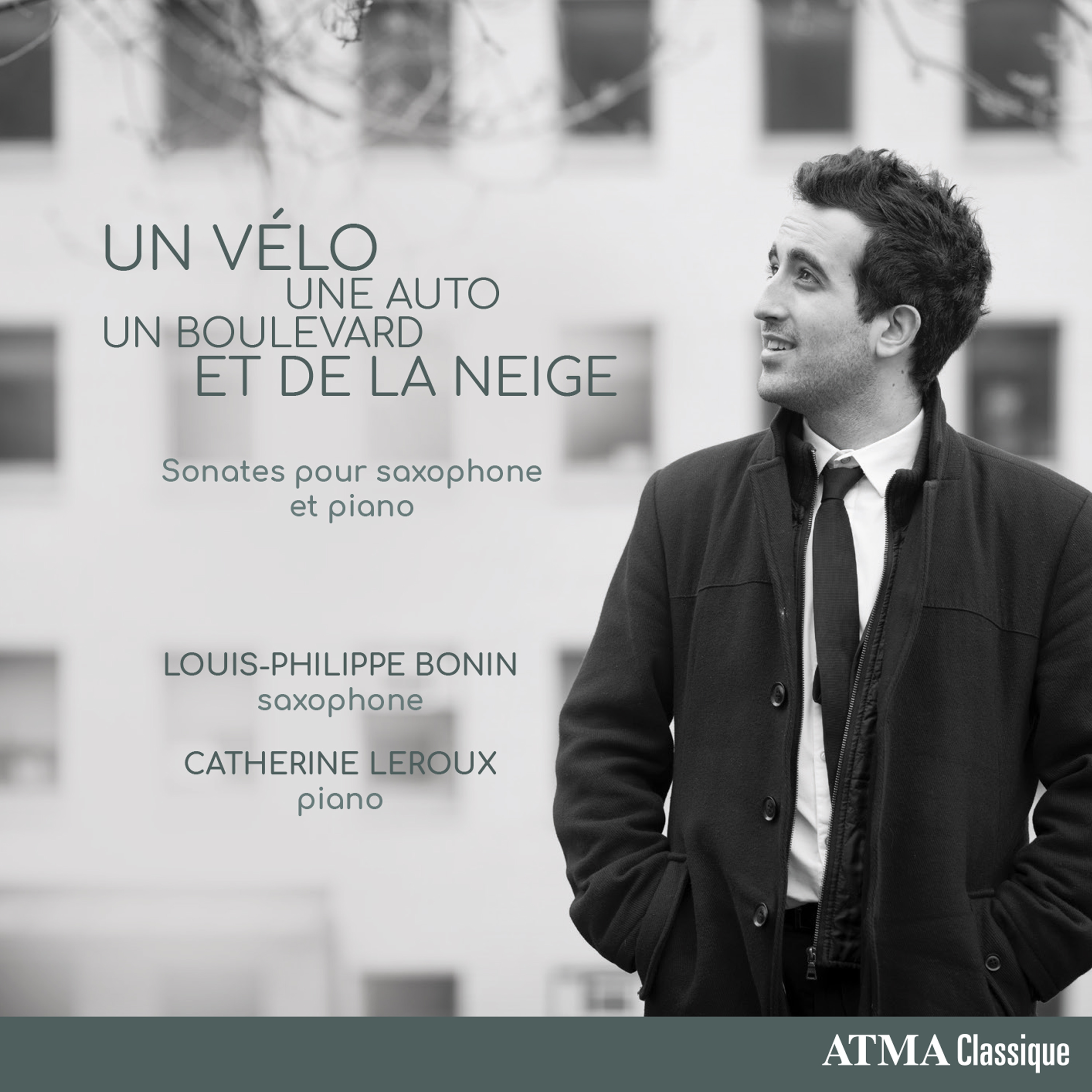
03 Louis Philippe Bonin Un VeloUn Vélo, une Auto, un Boulevard et de la Neige
Louis-Philippe Bonin
ATMA ACD2 4041 (atmaclassique.com)

This digitally released album of saxophone and piano music combines classic saxophone repertoire with a few surprises. The performances by both Louis-Philippe Bonin (alto saxophone) and Catherine Leroux (piano) achieve an excellent balance of clean technique and precise emotion. Bonin’s tone is lean yet full and he makes many technically difficult passages seem effortless. Leroux’s playing is articulated and balanced while lending a spark when required.

The album contains five works, two of them more traditional saxophone sonatas, one by William Albright (1984) and the other by Fernande Decruck (1943). Florent Schmitt was a contemporary of Debussy and Ravel and the beautiful Légende, Op.66 (1918) is reminiscent of those composers’ tonality. One of the surprises, Kristin Kuster’s Jellyfish (2004) is a three-movement piece capturing the movements of different types of jellyfish; the various swirls and bursts of sound paint a perfect sonic portrait of these creatures.

The title composition, Un Vélo, une Auto, un Boulevard et la Neige, by Félix-Antoine Coutu (2018) was commissioned by Bonin and brings classical saxophone music into the social media arena. In a December 2017 Facebook post, a blogger called a cyclist a “jerk” for riding on the street in the newly fallen snow and “zigzagging” in front of the writer’s car. The post caused quite an outcry on social media and Coutu’s piece is based on five of the more than 500 Facebook responses and the “variety of rhetorical devices” people used to express their opinions. The work effectively presents these five rhetorical “movements” and Bonin’s playing artfully mimics and embraces this social media conflict.

Listen to 'Un Vélo, une Auto, un Boulevard et de la Neige' Now in the Listening Room

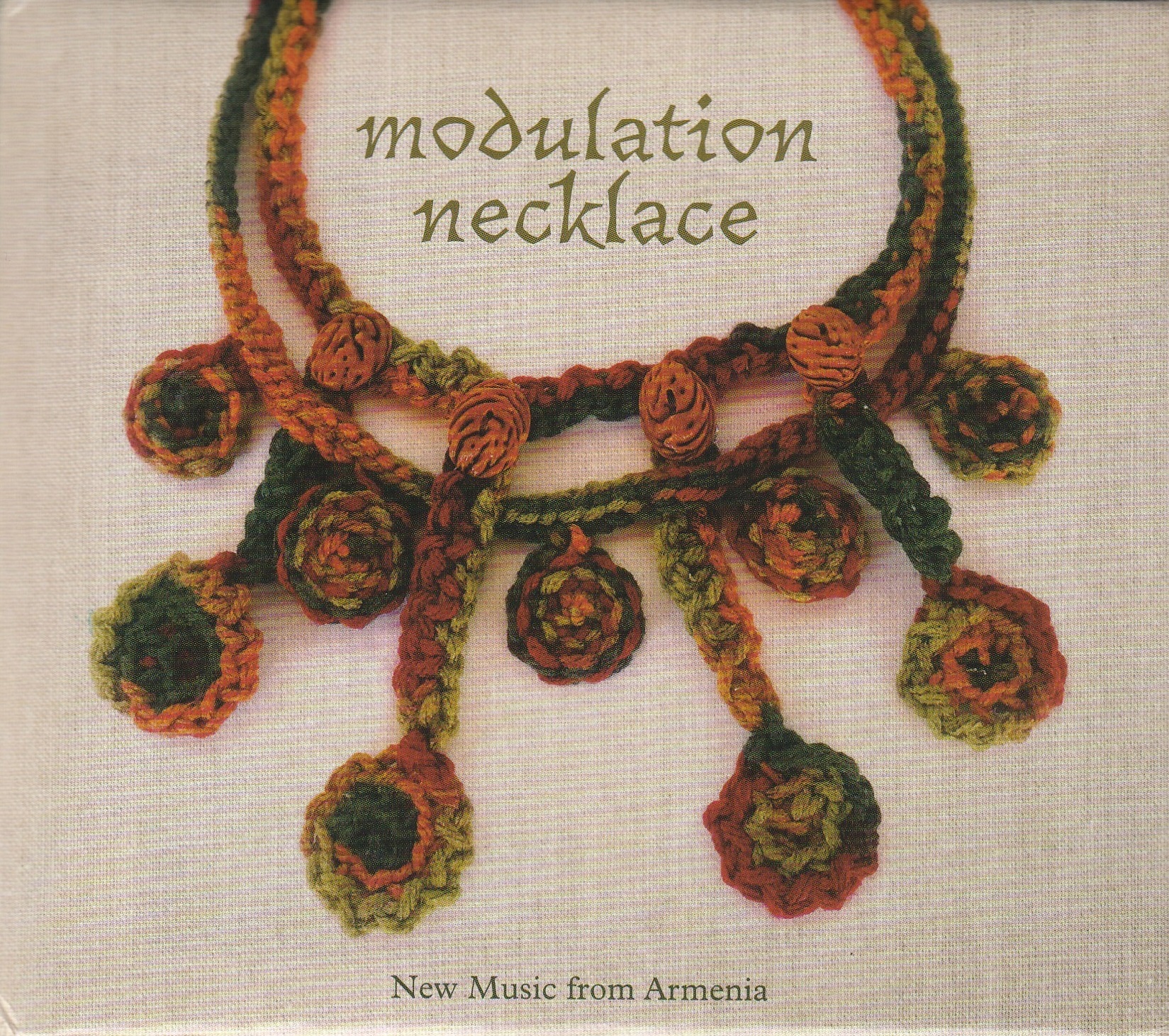
04 Modulation NecklaceModulation Necklace – New Music from Armenia
Various Artists
New Focus Recordings FCR244 (newfocusrecordings.com)

The Armenian diaspora retains strong ties to their ancient homeland. Six pieces from the last 20 years by five Armenian composers invite attention for their lucidity and mastery. Tonalities from Armenian folklore pervade the superbly performed and recorded song settings and tone poems for string and piano ensembles, duo, and piano solo. The album was crafted at the Armenian Music Program of UCLA, with help from the Lark Musical Society and the Dilijan Chamber Music Series, which commissioned four of the works. 

Tekeyan Triptych (2018), by Artashes Kartalyan (b.1961), sets three poems for mezzo-soprano and string quartet by Vahan Tekeyan (1878-1945), the most important poet of the Armenian diaspora. Novelette (2010), by Ashot Zohrabyan (b.1945), for piano quartet, is a searching dialogue for piano and strings. Michel Petrossian’s (b.1973) A Fiery Flame, a Flaming Fire (2017), a masterful movement for piano trio, refers to Moses’ biblical burning bush in honour of violinist and director Movses Pogossian, with references to an Armenian folksong. The lively Suite for Saxophone and Percussion (2015) is by Ashot Kartalyan (b.1985), the youngest of the composers. Artur Avanesov (b.1980) composed Quasi Harena Maris (2016), a compelling fantasy for piano quintet inspired by the Book of Job, and Feux Follets, a collection of short pieces. Avanesov is the admirable pianist for the entire program. 

Listen to 'Modulation Necklace: New Music from Armenia' Now in the Listening Room

05 Jin YinJin Yin
Civitas Ensemble (includes Canadian Winston Choi)
Cedille CDR 90000 193 (cedillerecords.org)

Chicago’s Civitas Ensemble is an unusual quartet: violinist/ leader Yuan-Qing Yu, cellist Kenneth Olsen, clarinet/bass clarinetist J. Lawrie Bloom, all eminent members of the Chicago Symphony Orchestra, are joined by Canadian pianist Winston Choi, Roosevelt University’s piano-program head.

On Jin Yin (Golden Tone) they present five recent instrumental works by composers of Chinese heritage, offering world premiere recordings of works by Vivian Fung, Yao Chen, Lu Pei plus new arrangements of works by Chen Yi and Zhou Long.

Long’s Five Elements (2014) is the album’s longest work, its tonal richness bolstered by the addition of Yihan Chen (pipa), Cynthia Yeh (percussion) and Emma Gerstein (flute, piccolo). The Five Elements – metal, wood, water, fire, earth – were considered by ancient Chinese sources to be the building blocks of the physical universe. In his Five Elements, the composer represents each in turn. His programmatic music employs both modernist sonic gestures and percussive allusions to Chinese antique ritual music in the “metal” movement for example, employing effective tone-painting throughout the rest of the opus.

Canadian composer Vivian Fung’s Bird Song (2012) for showcases the virtuosity of both instruments, characterized by runs, intense rhythmic passages and exploration of improvisational moments. The title refers to the birdcalls of the opening and closing passages, to the sprightly tonal arpeggios in the central section and to the overall rhapsodic spirit of the violin writing. The ending is a haunting contrast to the rest of the work, marked by a sort of soft nostalgia. 

The other three works on Jin Yin have much to recommend them as well, altogether providing a full and fascinating 77 minutes of listening. 

06 APNMMusic from the APNM (Assoc. for the Promotion of New Music) Vol.1 & 2 (electronic)
Various artists
New Focus Recordings n/a (newfocusrecordings.com)

The Association for the Promotion of New Music (APNM) was founded in 1975, and is celebrating its long commitment to composers with this double release of acoustic, electroacoustic and electronic works by member composers

Volume 1: Chamber Music is mostly acoustic music performed by a variety of excellent musicians and ensembles. The opening work Wind Chimes, performed by composer/guitarist Stephen Dydo with Chen Yu on pipa, is a continuous colourful sound mix of the two instruments in 12 continuous sections each based on an early Chinese music mode. Thomas James describes his Odd Numbers as utilizing odd numbers to create “aggregate” rhythms, with piano soloist Sheila Simpson especially spectacular in the delicate sections. Love Joseph Hudson’s piano/electronics work Starry Night. The composer memorably orchestrates my own interpretation of the night sky with florid piano lines against held, calming, electronic sounds, weather changes with louder rhythms and forceful ticking, and clouds drifting by in the closing slow piano/electronics section. Other works are composed by Laurie San Martin, Elaine Barkin and Sheree Clement.

Volume 2: Computer + Electronic Music consists of eight contrasting compositions. Explosions, rapid-fire lines open Arthur V. Kreiger’s For Diane, with a plethora of interesting electronic sounds created on fixed audio media, while Adam Vidiksis’ Ouroboros features more current-day electronic sounds like plops and repeated rhythmic figures. Almost theatre/movie music, Stereo Fantasy by Maurice Wright is fully notated and performed by synthetic orchestra, complete with sparkling staccato lines, electronically generated strings and drones. Lots of contrapuntal conversations with noisy bangs, tunes and almost-live instrument sounds in Jeffrey Hall’s From the Winds of Avalon. More computer-generated instrumental sounds in Joel Gressel’s Deconstructing Maria. Works by Samuel Wells and Carl Christian Bettendorf combine electronics with live instruments, trumpet and viola respectively. 

A fabulous collection of acoustic and electronic compositions showcasing the talents of APNM’s members and the organization’s multi-decade work supporting new music.

Listen to 'Music from the APNM (Assoc. for the Promotion of New Music) Vol.1 & 2 (electronic)' Now in the Listening Room

07 Etereo New Music for FluteEtereo – new music for flute
Lindsey Goodman
Navona Records nv6265 (navonarecords.com)

From the outset, in Josh Oxford’s for solo flute, Lindsey Goodman demonstrates she is a flutist who has it all. With a palette of luscious tone colours and engaging phrasing, she easily negotiates the many different flocalizations, bluesy thirds, glissandi, flutter tonguings and tongued pizzicato, all the while maintaining a compelling, rock-solid beat. This track alone is worth the investment.

Yet what follows is of equal merit. The next four tracks are also for solo flute. Bruce Babcock’s is moody with flashes of technical display. Steven Block’s offers moments of two-part writing with harmonic overtones defining an ostinato and regular tones, a brief melody. While Goodman’s performance engages us in both Taurins’ Gand for alto flute, the obvious quotations from Varèse’s are neither mentioned nor explained in the scanty online program notes.

Using fixed media with effective employment of stereo panning, Mara Helmuth’s programmatic reveals spurts of flitting about and flapping wings. The most hauntingly lyrical work is Alla Elana Cohen’s four-movement , ably accompanied by pianist Robert Frankenberry. The penultimate track, by Peter Castine, opens serenely, becoming increasingly more agitated as first the cello dialogues in counterpoint with the alto flute, and later as the crotales and toy piano enter. Jennifer Jolley’s , a rhythmic tour-de-force spectacularly played by the flute/cello/piano Leviathan Trio, closes one very impressive, boundary-pushing collection of new music for flute.

08 Casals TrioMoto Celeste
Trio Casals
Navona Records nv6266 (navonarecords.com)

Moto Celeste is the fifth installment of Navona Records’ MOTO series featuring the Trio Casals. Conductor/cellist/composer Ovidiu Marinescu, violinist Sylvia Ahramjian and pianist Anna Kislitsyna are outstanding gifted musicians who together create a tight, musical, technically virtuosic chamber trio sound. Here they perform eight new compositions, all listener-friendly, drawn from an eclectic mix of musical ideas.

Each work is a masterpiece in its own right. Highlights include the opening track, Earth Rise, by Diane Jones. Inspired by the sun, moon and earth, the opening piano high-pitched slow sparkling tinkles lead to matching melodic phrases on all instruments, a slower reflective cello solo and a moving, almost romantic, planet dance. Quick change to a rockin’ rhythmic work, Los Ritmos Para Tres (Rhythms for Three) by Edna Alejandra Longoria, a fun mix of jazz, rock and contemporary music rhythms and lines. Cellist Marinescu’s amazing almost athletic performance of his own composition Sunt Numai Urechi (I’m All Ears) for solo cello is flawless. An exciting flamenco-guitar-inspired virtuosic work, he almost sounds like two performers as he tackles his fast, circling, chromatic melodies, lyrical sections, high pitches and changing mixed metres. Canadian composer Joanna Estelle’s brief, yet sweet, tonal Faraway Star, is a programmatic piece of star-crossed lovers – female violin, male cello and piano narrator, played with clarity and storytelling precision. 

Compositions by Christina Rusnak, Chad Robinson, Clive Muncaster and Eliane Aberdam complete this memorable recording.

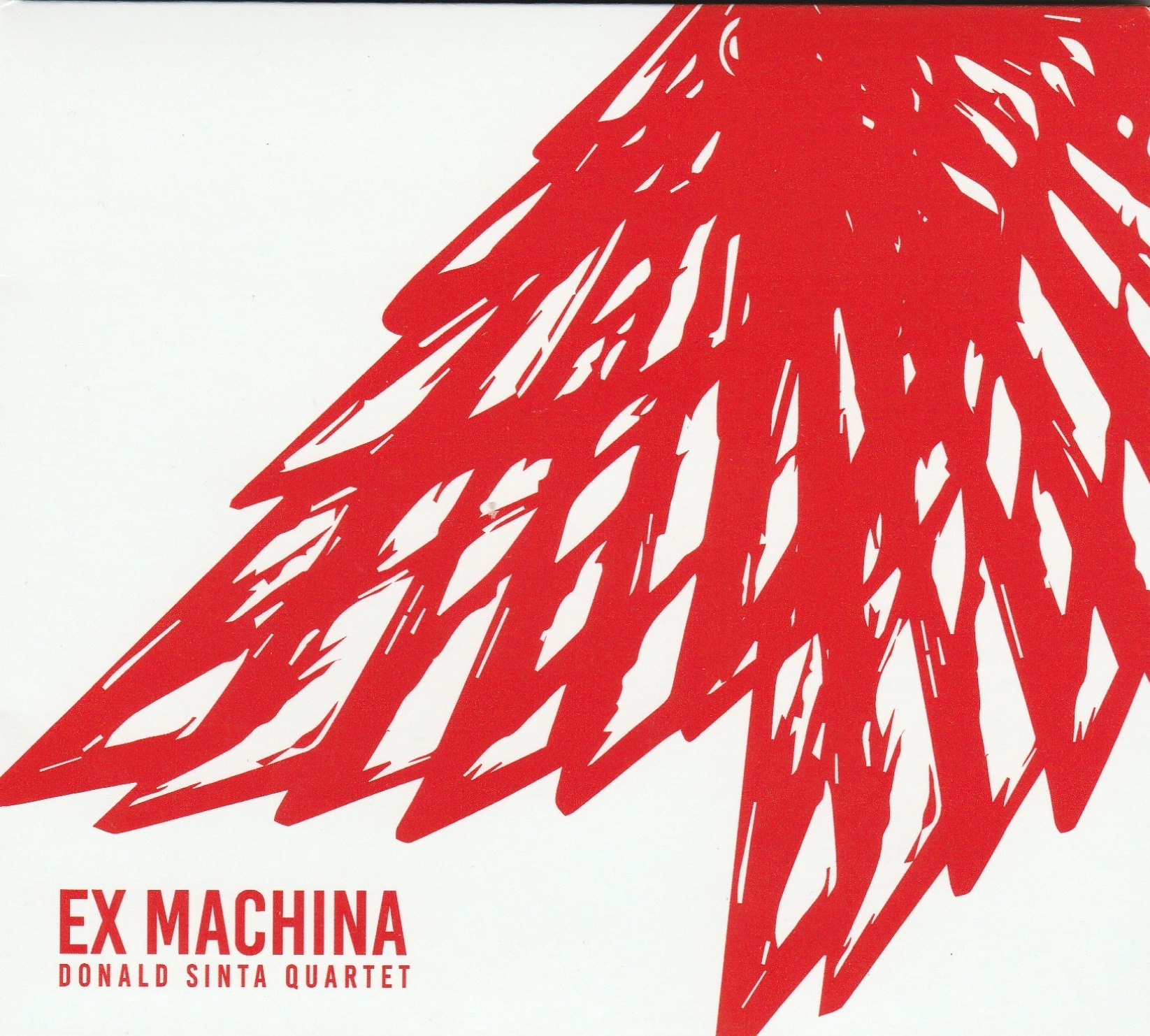
09 Ex MachinaEx Machina
Donald Sinta Quartet
Bright Shiny Things BSTC-0133 (brightshiny.ninja)

Formed in 2010 and named after their mentor, a University of Michigan saxophone professor, the Donald Sinta Quartet is an exciting award-winning modern ensemble featuring saxophonists Dan Graser (soprano), Zach Stern (alto), Joe Girard (tenor) and Danny Hawthorne-Foss (baritone). In their second recording, the tight virtuosic classical/contemporary music group performs seven new works, six of them premiere recordings.  

The seven-movement Ex Machina, by American Marc Mellits, is a funky, minimalistic work exploring his self described idea “to express the beauty locked within machines.” Machine I (Let the Funk Out) sets up this idea with minimalist machine-like grooves. The contrasting slower Machine II (Flowing) features long ascending and descending lines, with a slightly rhythmic backdrop. Love the choppy sudden change to rhythmic machine-like industrial sounds in Machine IV (Dancing a Mean Ghastly Dance) performed with aplomb. No surprise Machine VII (Aggressive & Funky) ends with a final held honkin’ chord. Mellits’ other work here is the swirling, syncopated Black. 

Richard Chowenhill’s slower In Solitude I Sit is a refreshing reflective change with its lengthy held drone notes and higher pitches, all played with great breath control. No background rhythms enhance the calmness. Touches of Middle Eastern and klezmer-flavoured sounds in Chris Evan Hass’ faster Volcanic Ash are performed to style. Works by Suby Raman, David Biedenbender and Mischa Zupko feature memorable challenging rhythms, swirling lines and contrasting dynamics.

These talented, technically astute, rhythmic and musical saxophonists shine throughout.

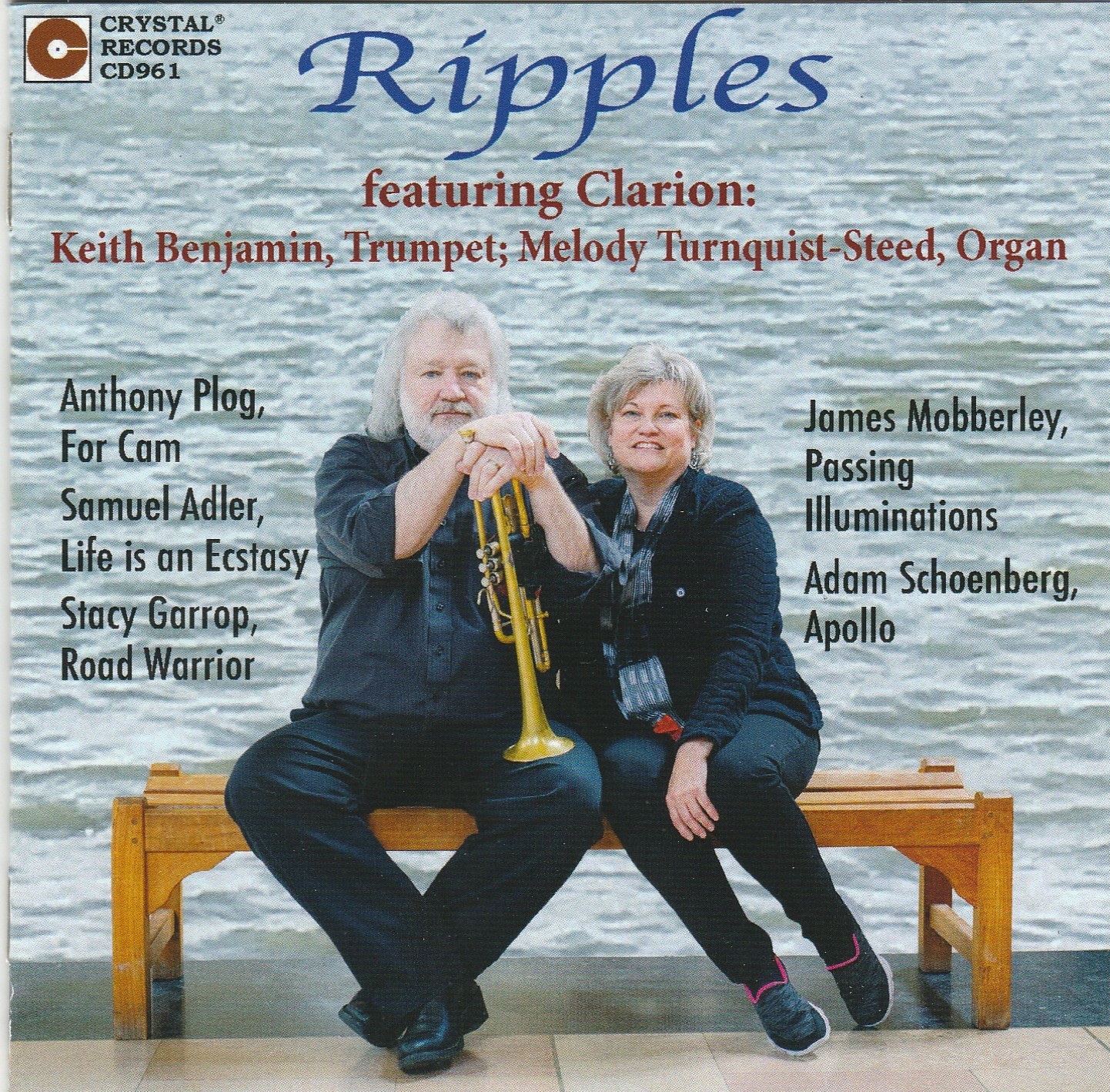
10 RipplesRipples
Clarion: Keith Benjamin; Melody Turnquist-Steed
Crystal Records CD961 (crystalrecords.com)

When I hear trumpet playing with organ, I am immediately in church, willingly or not, and there is no shortage of the expression that brings me there on this disc. Kansas City, MO-based duo Clarion, made up of trumpeter Keith Benjamin and Melody Turnquist-Steed on organ, has released a collection of works written for them by a range of contemporary American composers. 

The most current, or at least the youngest of these, is Adam Schoenberg (b.1980) a graduate of Oberlin College and the Juilliard School of Music. He now teaches composition and film scoring, which certainly shows in the bold and highly visual quality of Apollo, which aims in the first movement, Beyond, to depict the majesty of outer space. To my mind it’s fairly effective character-filled music that could evoke a mountainscape as readily as astral travel, but he does refer somewhat to Holst’s harmonies and even Mercurial playfulness here, so...

The second movement, Light, is prayerful and lovely, as American as Copland, and I’m back in church again. 

Not all the works are as strong, but I did enjoy Passing Illuminations by James Moberly, and Stacey Garrop’s Road Warrior comes across as the most daring and experimental, especially in using the organ to provide interesting and unusual effects. The title refers to a book written by the late Neil Peart, of Rush, who took to the road mourning the loss of a child and spouse. The connection is intentional: this and one other of the works presented refer indirectly to the death of Benjamin’s son to leukemia in 2010. Ripples spreading out from that event might well describe the impetus behind this loving collection of new works.

Back to top