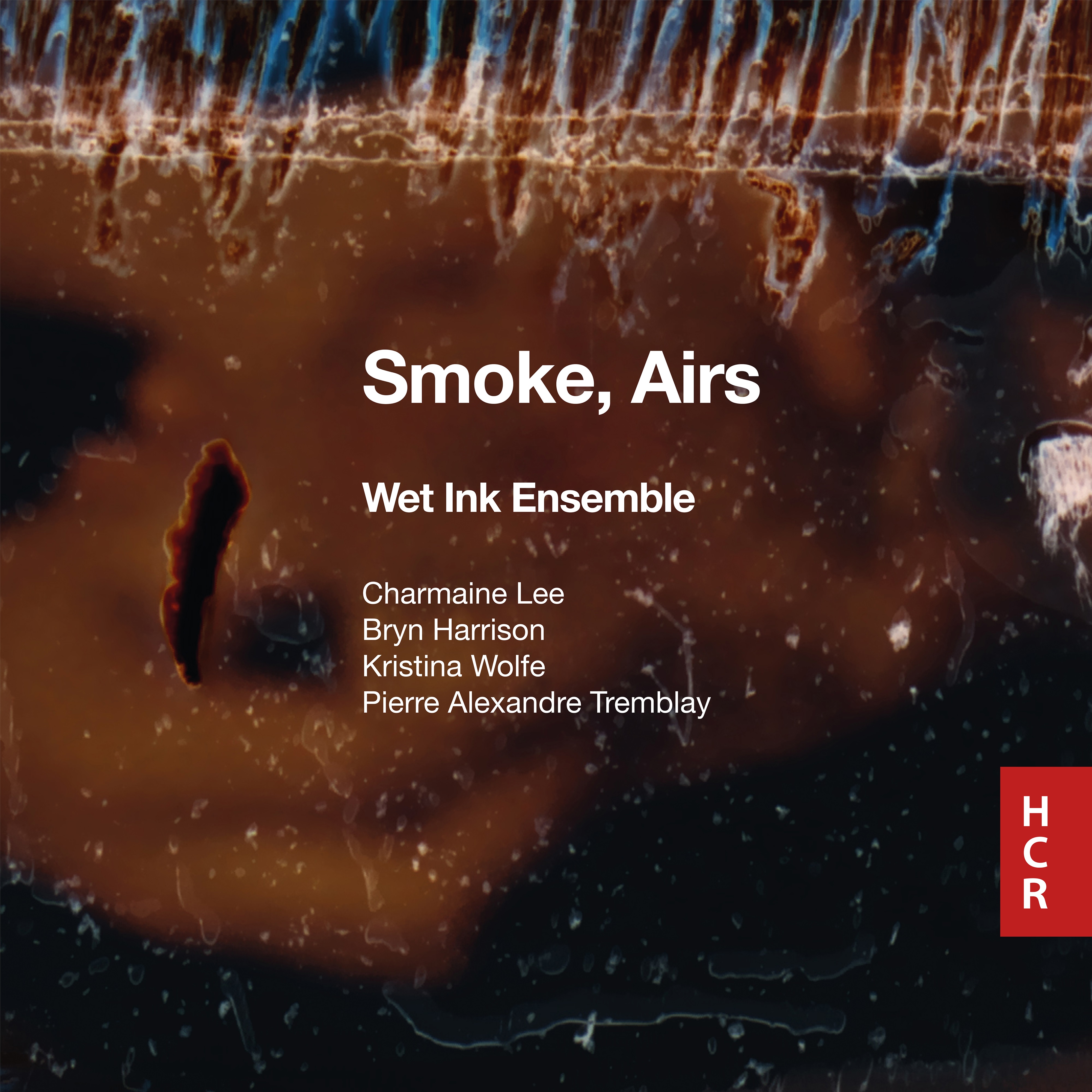
06 Wet InkSmoke, Airs
Wet Ink Ensemble
Huddersfield Contemporary Records HCR24CD (nmcrec.co.uk/hcr) 

In the latest release by the renowned Wet Ink Ensemble – titled Smoke, Airs – the ensemble’s adventurousness and dedication to the music of our time is on brilliant display in four new works by three Americans and Canadian Pierre Alexandre Tremblay. 

In the title track, experimentalist vocalist Charmaine Lee creates a haunting landscape of whips and sonic shadow worlds. Interesting vocal utterances paint both uneasy and beautiful atmospheres. Bryn Harrison’s Dead Time contextualizes change within a static field in a context where the composer is clearly concerned with how our ears perceive the unfolding of variation through sameness. Kristina Wolfe’s A Mere Echo of Aristoxenus is inspired by the ancient concept of aural architecture – a piece in two movements that evokes vast Greek spaces lost in time, creating a truly unique listening environment. Lastly, Tremblay’s (un)weave is a study of our contemporary soundscape: the stop and go of the urban frantic reality and how one may find solace in such an environment. 

The Wet Ink Ensemble has received much critical praise in their successful history as a collective. This release will continue to heighten the group’s deserved reputation.

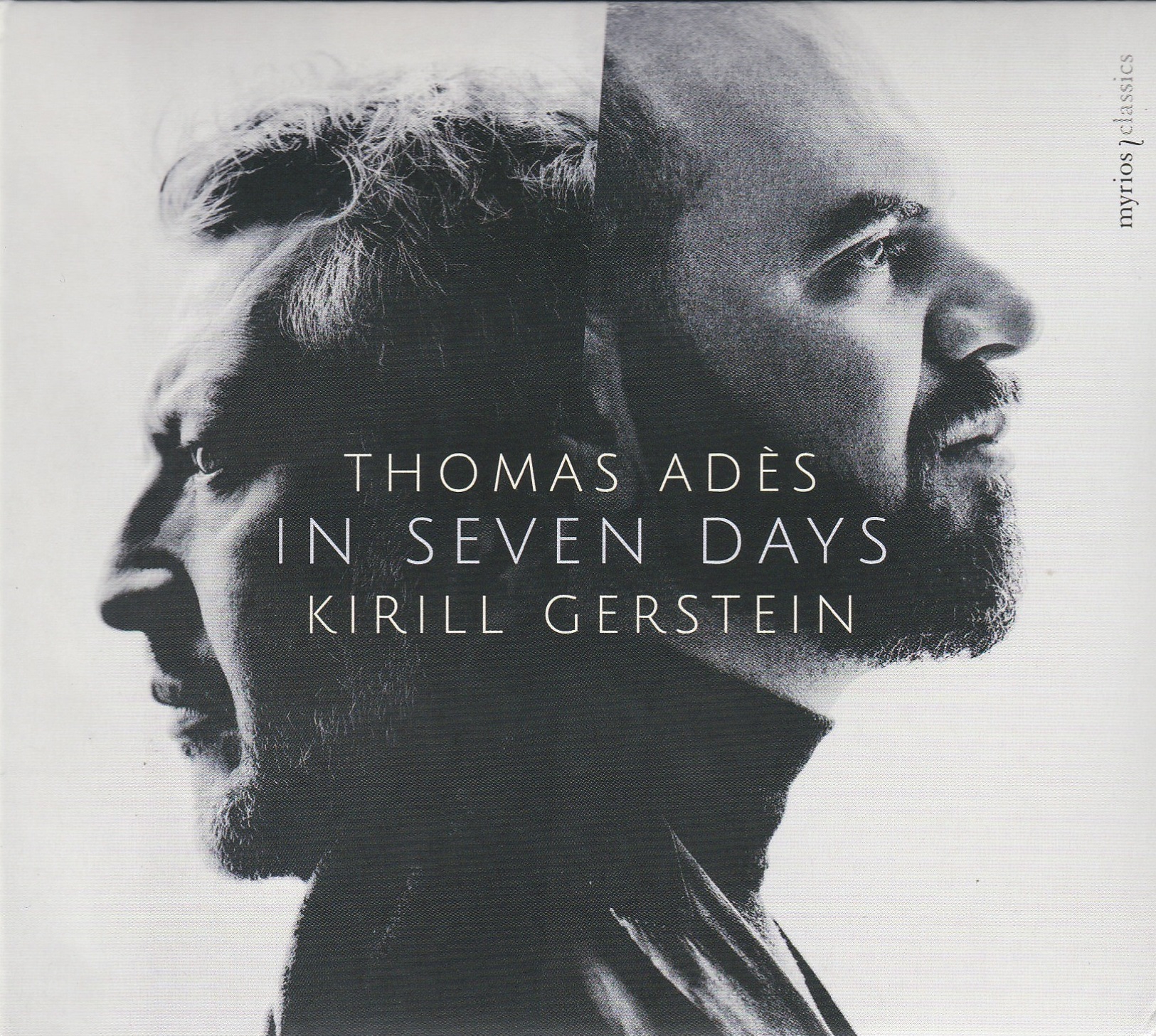
07 Ades GersteinThomas Adès – In Seven Days
Kirill Gerstein; Thomas Adès; Tanglewood Music Center Orchestra
Myrios Classics MYR027 (naxosdirect.com/search/4260183510277)

Composer, pianist and conductor Thomas Adès is, in truth, a child of the late 20th century. The acumen of his creativity and myriad of musical aptitude already scaled impressive heights back in the 1990s. Today, he continues to traverse the confused streams and nebulous annals of our 21st-century musical world. Neither fad nor trend nor fickleness of style can deter him; he is a teller of truths and a composer of our time. 

Now, inimitable pianist Kirill Gerstein has teamed up with Adès on a new record featuring keyboard works by the composer. So rarely will a collaborator embrace a composer’s catalogue with just as much dedication and enthusiasm as the composer himself. A notable consequence from such commitment is the swift advancement of performance practice, often a slow-moving process that takes decades, if not centuries, to appear. With this album, one immediately detects exquisitely formed conceptions of music, determined from various angles and experimentation of interpretation. (Adès is actively involved in two works on the album as pianist and as conductor.)

Why? Why are these complex, avant-garde, texturally challenging sound worlds so irresistible? Perhaps when the genius and fortitude of a composer like Adès meets the integrity and artistic prowess of an interpreter like Gerstein, our ears are lent and lent freely, with bedazzled curiosity. Urgent and honest, we quest after the supernatural.

05 EpicycleIIEpicycle II
Gyda Valtysdottir
Sono Luminus SLE-70012/SLE-70013 (sonoluminus.com/store/epicycleii) 

Referring to the geometric model of the solar system by the ancient Greek mathematician and astronomer Ptolemy, in which a smaller circle travels around the circumference of a larger circle, cellist Gyda Valtysdottir releases a sequel to her highly acclaimed first solo album from 2017,.

Haunting, melodic and yet dissonant at the same time, the album features eight of Valtysdottir’s closest co-conspirators and inspirers from her life; “This group of people is really a musical galaxy, where the connections are endless…”

Orbiting themes of Water, Air (breath) and Love, harmonies are often thick, layered and textured rather than melodic, a trademark of Icelandic composers, and offer travel without destinations, as in the gorgeously heavy Unfold. Each track takes the listener on what feels like motion through stopped time; moving, yet not moving; micro-journeys to sea, to the sky, love and to outer space. I was delighted to find Anna Thorvaldsdóttir’s Mikros on the journey, having had the fortune to attend her composition lecture last December at Banff. Equally enjoyable is the super dark and cool mix of voices and electronics on Evol Lamina, closing our orbital loop and returning our feet back to the dirt by the final, perhaps prophetically unsettling track, Octo.

A deeply cinematic score at times, this album is often transporting with great lift, giving the listener long opportunities to soar, bird-like, over the Icelandic landscape and beyond, for the most part leaving us safely and gently deposited on the earthly shore.

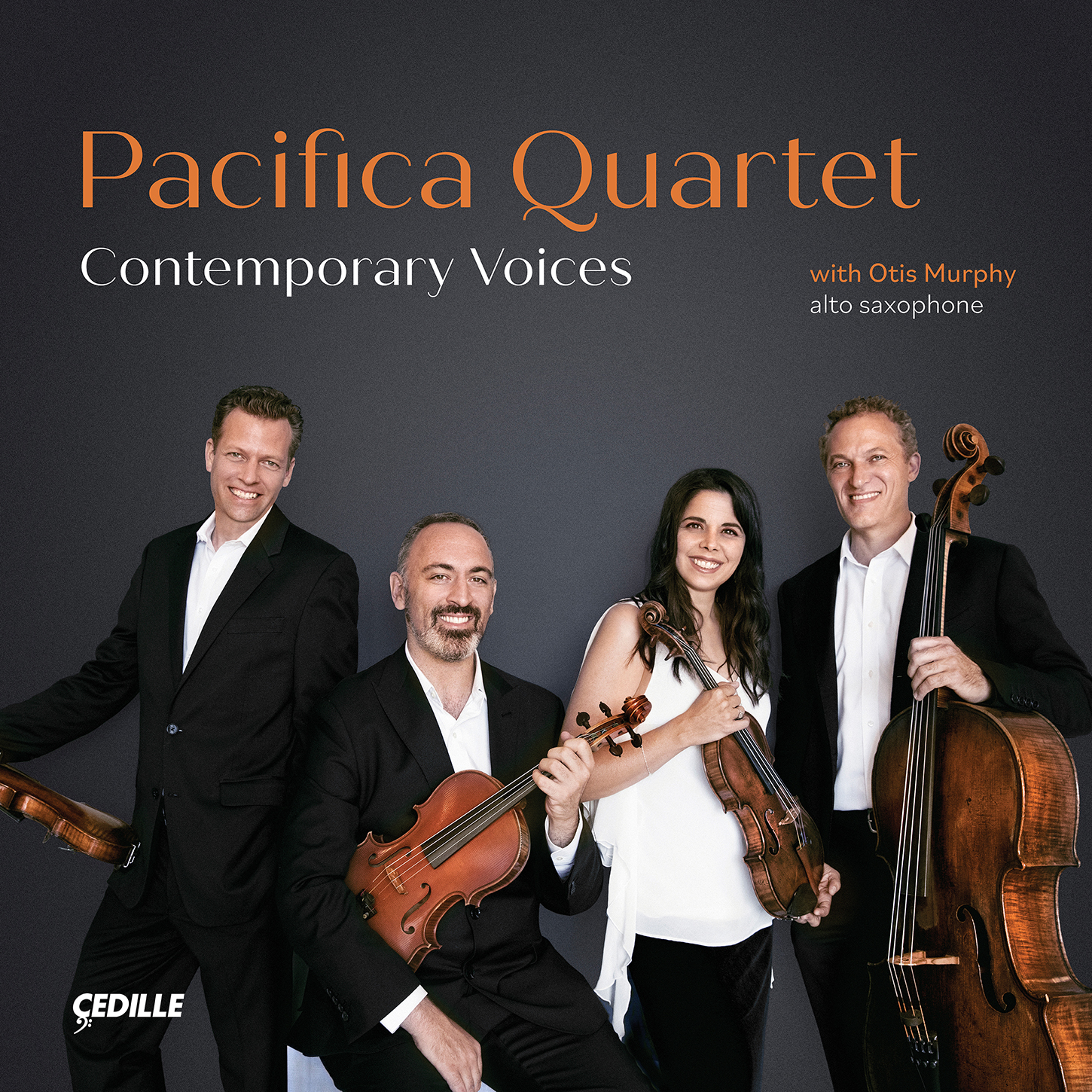
09 Pacifica QuartetContemporary Voices
Pacifica Quartet; Otis Murphy
Cedille CDR 90000 196 (naxosdirect.com/search/735131919623) 

Markedly different works by three laureates of the Pulitzer Prize for Music – Ellen Taaffe Zwilich, the first-ever woman recipient (1983), Shulamit Ran (1991) and Jennifer Higdon (2010) – are performed by the Grammy-winning Pacifica Quartet, Indiana University artists-in-residence.

In Zwilich’s 17-minute, three-movement Quintet for alto saxophone and string quartet (2007), Indiana University professor Otis Murphy adds what Zwilich calls “a certain sassy attitude to the mix.” Murphy’s bluesy saxophone saunters and riffs above pulsating, animated strings, yet moody lyricism prevails over the “sass.”

Ran’s 22-minute Glitter, Doom, Shards, Memory – String Quartet No. 3 (2013) honours artists who, facing death in the Holocaust, continued working. The opening movement shifts from serenity to disquiet, followed by Menace, a Shostakovich-like sardonic scherzo. The third movement is titled “If I perish – do not let my paintings die,” words of Felix Nussbaum, who painted until dying in Auschwitz. The unsettled, fragmented music reflects, says Ran, “the conflicting states of mind that would have made it possible, and essential, to continue to live and practice one’s art.” Of the elegiac epilogue, she says, “As we remember, we restore dignity to those who are gone.”

Higdon describes her 18-minute Voices (1993) as transitioning “from manic and frenzied to calm and quiet.” In movements titled Blitz, Soft Enlacing and Grace, the Pacifica Quartet gorgeously illuminates the densely scored music, a textbook of string sonorities. 

Three very stylistically diverse compositions, but not a single dull moment on this entire CD!

10 Ning YuOf Being
Ning Yu
New Focus Recordings fcr242 (newfocusrecordings.com/catalogue/ning-yu-of-being/) 

For pianist Ning Yu, clearly tradition is a wonderful reality; but not understanding that the inner dynamic of tradition is always to innovate would be a prison. It’s certainly what the lively works by Wang Lu, Misato Mochizuki and Emily Praetorius in Of Being seem to tell us. This is chiselled music; uniquely beautiful, but also defiantly provocative. It is a body of music carved from the bedrock of the Western music tradition and yet it forces the listener to reconsider what that tradition is. 

In doing so, Yu actively throws overboard melodic, structural and harmonic hooks that have become expressively blunted through overuse. Then she rebuilds the architecture of the music from what might – or mightn’t – be left. Sound and silence are treated with equal respect, and innovation is always paramount. This means that Yu might also reach outside the keyboard and inside the instrument to create the purest melodies and harmonies as she manipulates the strings – stretched taut across the cast-iron plate, which she often strums delicately or strikes percussively.   

Her pedalling adds sudden moments of drama to the music as if opening a window and letting filtered light into the room full of sound, by unexpected use of the sostenuto followed by the unacorda; all of which may be abruptly shut down expressly with the damper. In the end the music seems to unfurl as if in streaming ribbons suspended interminably in time.

Listen to 'Of Being' Now in the Listening Room

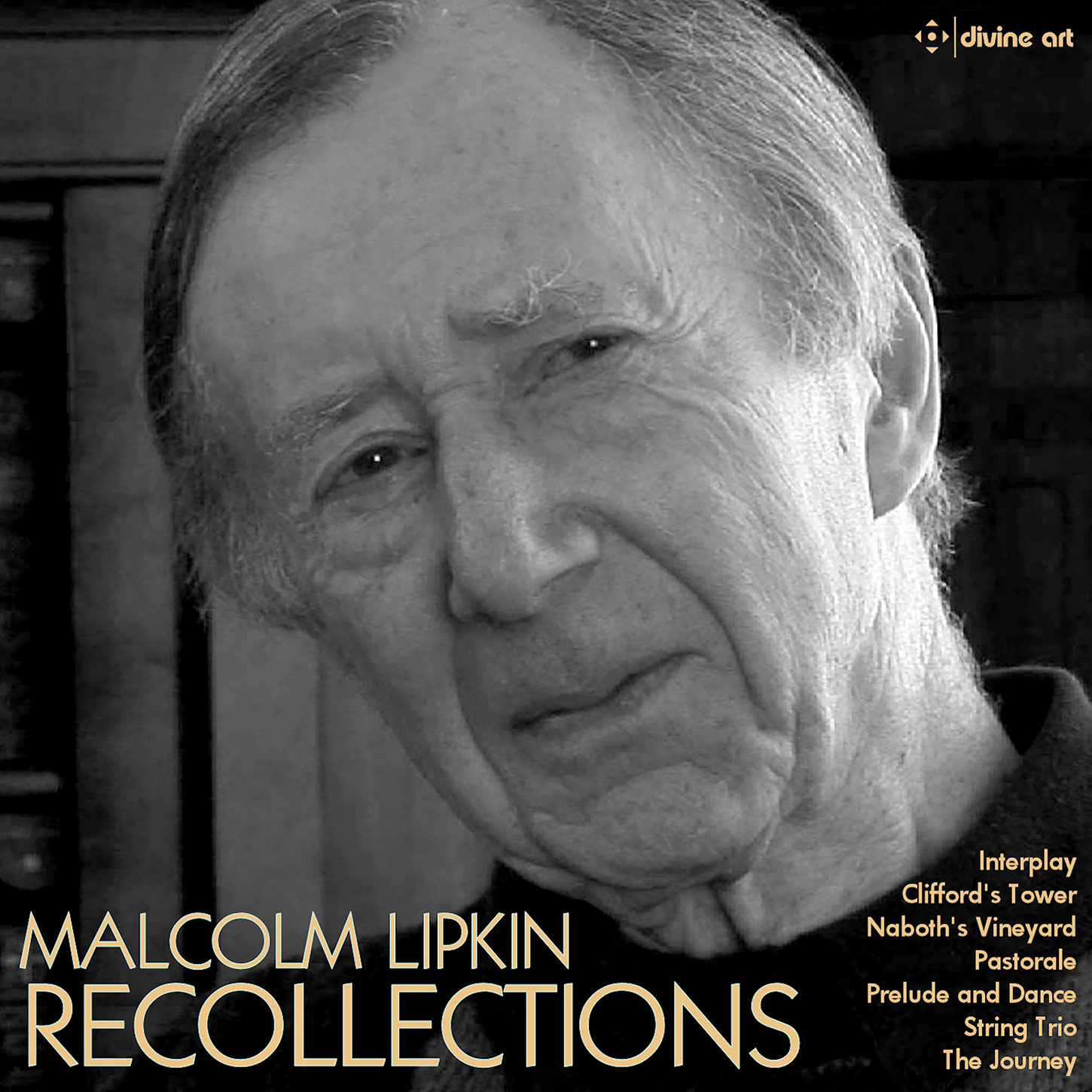
11 Malcolm LipkinMalcolm Lipkin – Recollections
Various Artists
Divine Art dds 25202 (naxosdirect.com/search/809730520228) 

I first listened to chamber works by British composer Malcolm Lipkin (1932-2017) while studying music in Europe in 1982. I was strongly moved by his combination of traditional compositional sounds with touches of the modern. I do not remember what the works were, but this collection of seven compositions spanning 50 years of creation is fabulous and respectful.

Three remastered recordings from a 1986 Hyperion Nash Ensemble vinyl release are included. String Trio (1964) is well written with compelling fourth movement rhythms. Repeated tonal chord rhythms and strings above distant horn lines resound in Pastorale (1964), a work evoking its title’s traditional form. Clifford’s Tower (1977), commemorating a 12th-century York Jewish massacre, features scary jagged notes and rhythm patterns, harsh loud winds and contrasting calming held notes.

The four recent recordings contribute to Lipkin’s legacy. Prelude and Dance (1987) is his tribute to Jacqueline du Pré. Its tonal Prelude has interesting piano chordal pitch jumps and ascending cello runs. Dance is fun with subtle major/minor tonality shifts and high tinkling piano with repeated cello notes. The Journey (2016), a tribute to John McCabe, is delightfully played by John Turner on recorder, with memorable ornamental turns breaking up the colourful held notes. Naboth’s Vineyard (1982) and Interplay (1976) complete this over 80-minute long release.

Repeated listening adds to my appreciation, as the musicians all perform with thoughtful, precise musical detail. Lipkin’s works may be slightly old-fashioned but they are memorable.

Bang on a Can was founded in 1987 by three American composers who remain its artistic directors: Julia Wolfe, David Lang and Michael Gordon. During the current COVID-19 crisis, particularly devastating in New York City, the renowned Bang on a Can Marathon, a celebration of the best and latest contemporary music from the Big Apple, has migrated to the internet, morphing from an annual live event into periodic streaming blasts. There have been three six-hour iterations so far (May 3, June 14 and August 16) and plans are to continue these online activities until performances for live audiences can fully resume. You can stay apprised of future events at bangonacan.org

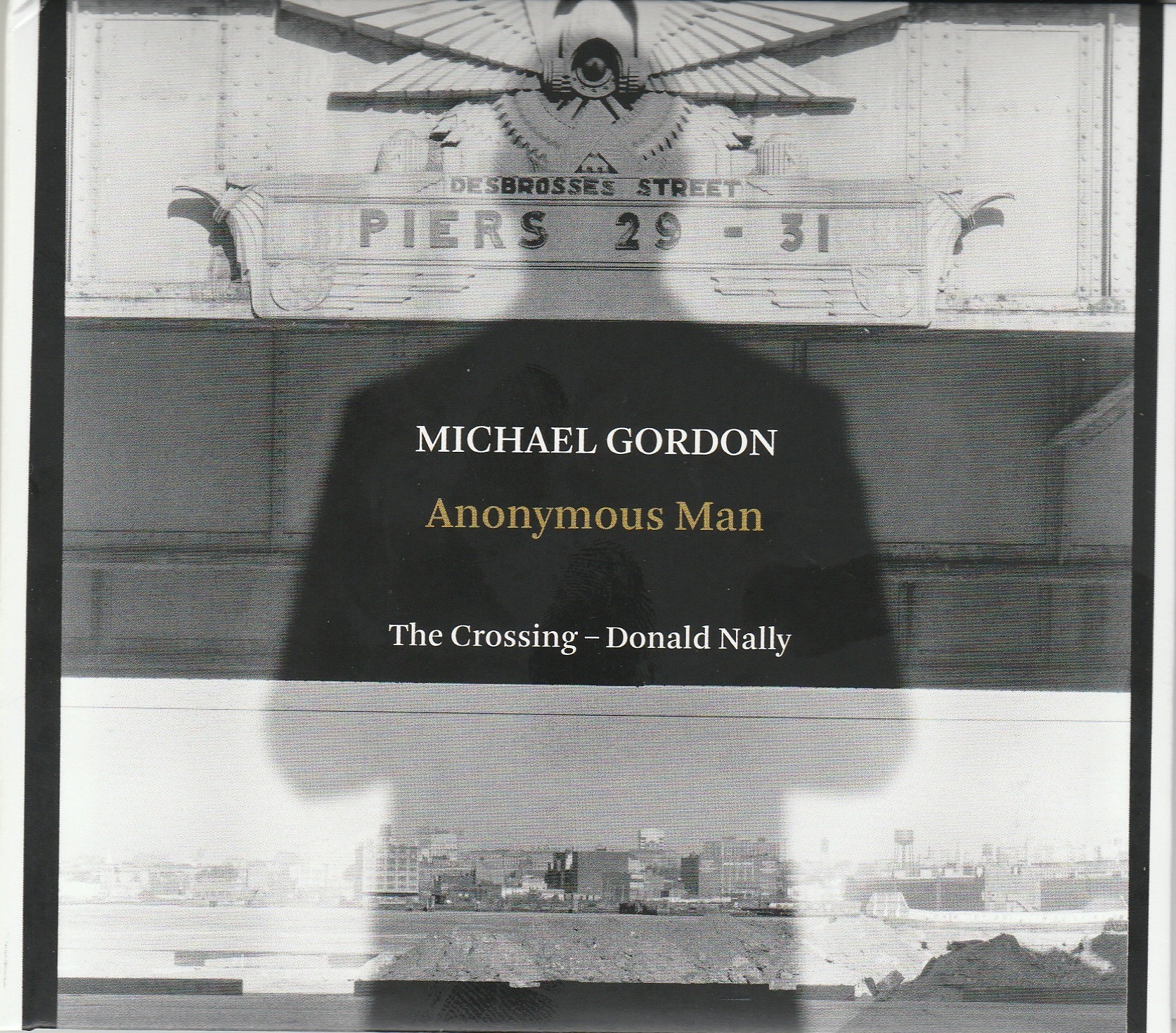
Michael Gordon – Anonymous Man
The Crossing; Donald Nally
Cantaloupe Music CA 21154 (cantaloupemusic.com)

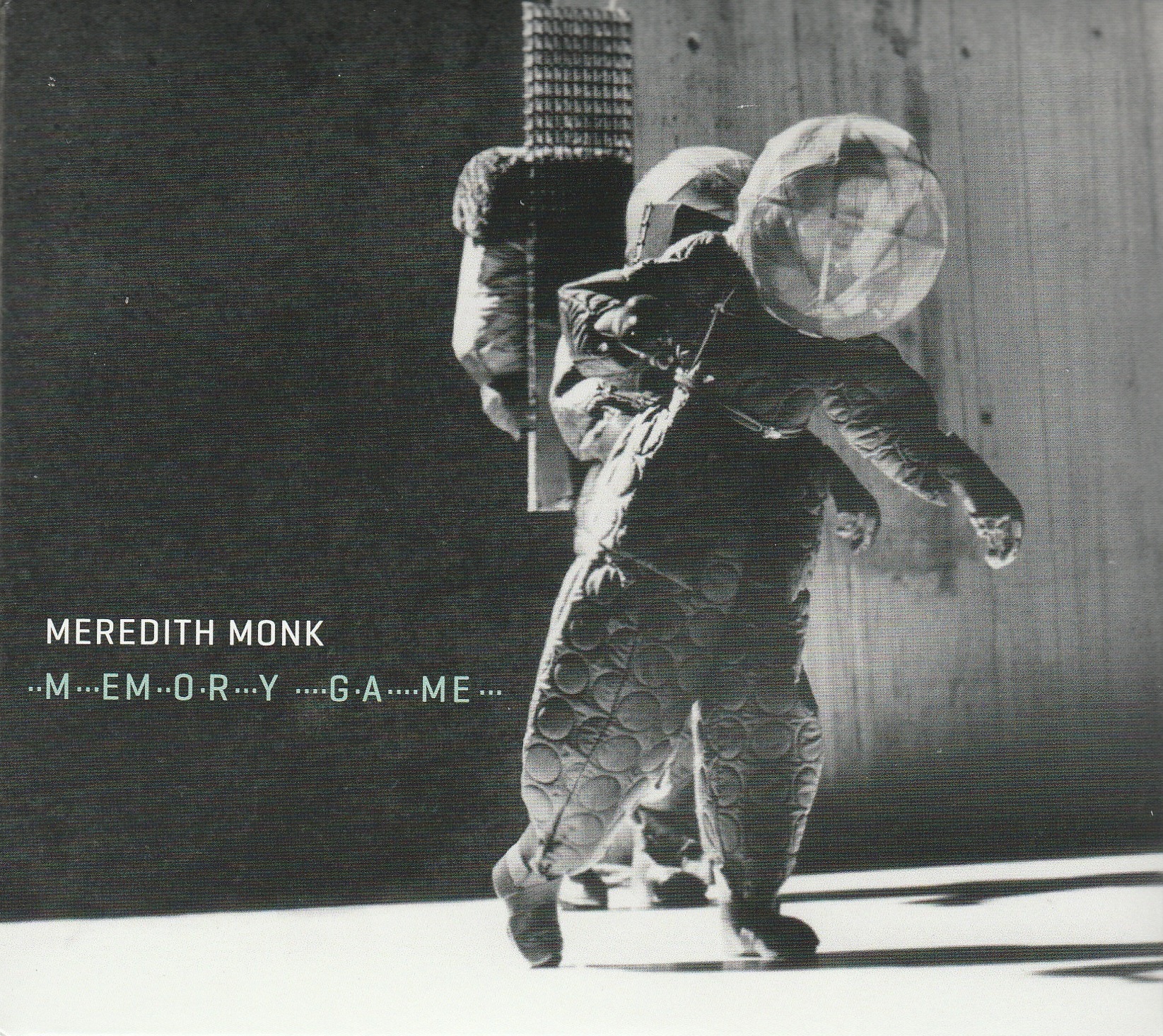
Meredith Monk - ..M…EM..O.R…Y ….G.A….ME….
Meredith Monk & Vocal Ensemble; Bang on a Can All-Stars
Cantaloupe Music 21153 (cantaloupemusic.com)

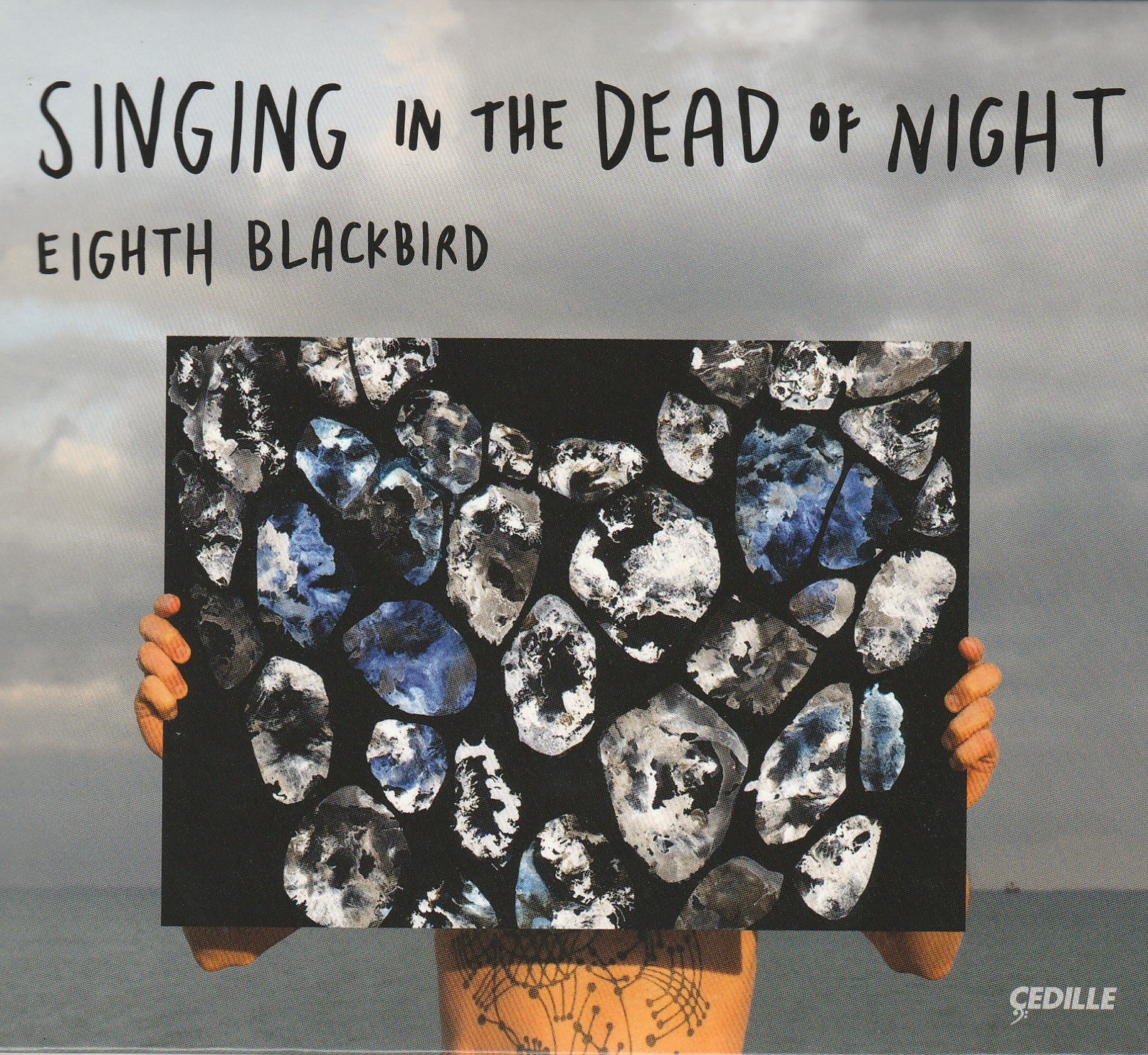
Singing in the Dead of Night
Eighth Blackbird
Cedille Records CDR 90000195 (cedillerecords.org)

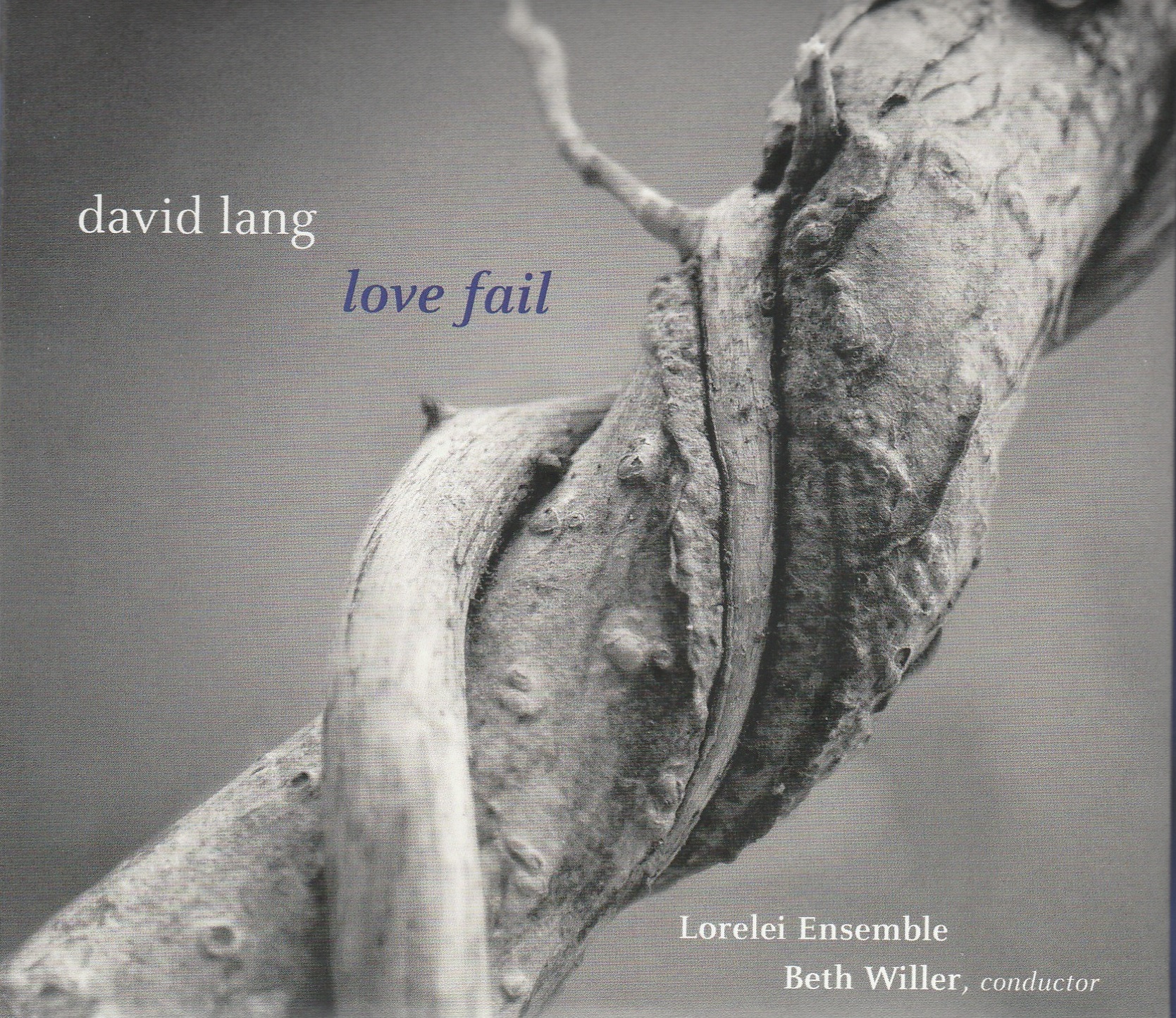
David Lang – Love Fail
Lorelei Ensemble; Beth Will
Cantaloupe Music 21158 (cantaloupemusic.com)

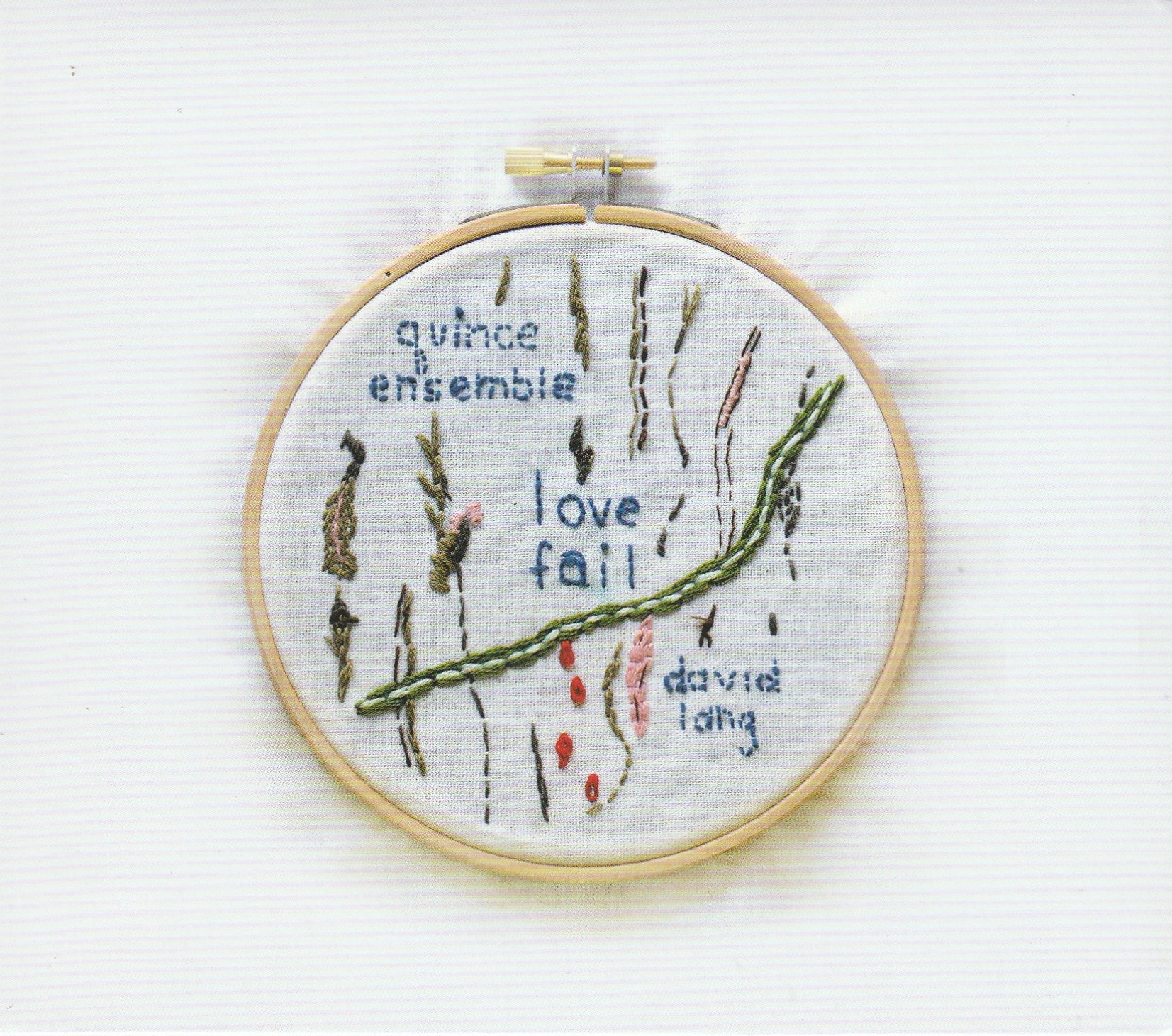
David Lang – Love Fail
Quince Ensemble
Innova 056 (innova.mu)

The human voice, one of the first instruments in our world (there are likely others, such as interstellar “noise”), has rarely been glorified in better circumstances than in the five recordings mentioned above. Perhaps this is because in all of the recordings in question the purest of sound – that of the human voice – has been pushed to both define exactly what it means to give praise to the arts melodically, harmonically and rhythmically. But each of these works also redefines polyphony – within the continuum of music – in the grand manner. Coincidentally (or perhaps not at all) members of the ineffably brilliant musical New York City cooperative, Bang on a Can, have been associated with each of the recordings and this means, of course, that you can expect the unexpected in the most sublime sense of the term.

Musicians such as Meredith Monk, Julia Wolfe, Michael Gordon and David Lang are – together and separately – proverbial forces of nature. They represent everything that is transcendent about human vocalastics. Impossible leaps in register, manipulating breathing whether nasal, throat or diaphragmatic, weaving voices (using harmony and electronic manipulation) into diaphanous musical fabrics of breathtaking beauty or simply singing with lustrous simplicity and honesty are just some of their many phenomenal characteristics. And then there is the interpretation – or sometimes using the non-interpretation of the works to deliver the finest quality of music and musicianship – which catches us off guard. This is something that happens across all of the works and recordings in question. 
01 Michael Gordon

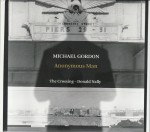
Michael Gordon’s Anonymous Man deals with the existential loneliness of community. The music describes both the discovery and effects that something like that could have on the human sensibilities. Gordon’s work comprises the music and accompanying narratives that, when sung solo or in ensemble, speak to the existential angst of Gordon’s character as the Anonymous Man. The music startles and the words constantly enliven it through their beautifully bizarre and almost neurotic sensitivity to feeling and experience. The musicians of The Crossing, conducted by Donald Nally, capture all of Gordon’s angst by investing the music with just the right amount of drama and emotion – which is also often delightfully deadpan. The textural light and shade of music in On That Terrible Beautiful Morning is perfectly judged in terms of both phrasing and intonation.
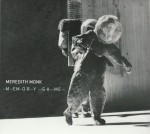
02 Meredith MonkMeredith Monk’s work on Memory Game is a traversal through the topographical landscape of the mind and is somehow viewed through the spatial and the horological. Just as you would need a small leap of imagination to see hour in horology, but could nail the meaning by envisioning the study of time and the art of making timepieces, in Monk’s case you are drawn forwards and backwards in time by playing the proverbial Memory Game. The members of Bang on a Can bring with them instruments to evoke a kind of musical séance in the fullest and most magical sense of things supernatural and brilliantly entertaining. In these nine pieces the listener is led slowly through subtly changing mental-musical scenery. There are often deliberately comical (spoken, sung and instrumental) effects. Slowly, like a brilliant jigsaw puzzle these brightly coloured musical fragments evoke a Memory Game that is dismantled and reassembled in constantly hypnotic patterns. 
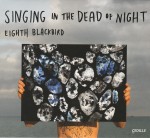
03 Eighth BlackbirdThe eighth stanza of Wallace Stevens’ poem Thirteen Ways of Looking at a Blackbird describes metaphorical antecedents of the dizzying exploits of the ensemble Eighth Blackbird who make music by means of “…noble accents/and inescapable rhythms…” While not strictly speaking a vocal recording, the album, Singing in the Dead of Night, is certainly creatively and evocatively a singing one. Although it is David Lang, Julia Wolfe and Michael Gordon of the formidable group Bang on a Can, who have splintered the iconic Beatles song, Blackbird, by reimagining it in five fractured segments of the original lyric in a somewhat darker realm than its original creation, Eighth Blackbird must also be credited with its most magical reconstruction. Instruments – specifically the exquisite manner in which they have been played – don’t simply recreate the whispers, murmurs, moans and groans of the human voice as well as the proverbial flutterings of the blackbird of the Beatles song, but, in fact, propel the music into a proverbial orbit. 
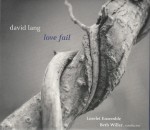
04 David Lang LoreleiFinally, David Lang’s deeply introspective almost operatic meditation Love Fail fuels the endeavours of two accomplished chamber groups – the Lorelei Ensemble and the Quince Ensemble. The release of both concurrently is probably a coincidence but to imagine that this fact may not do either release any favours would be a fallacy. Both releases are superb and recommend themselves for different reasons. The Lorelei’s a cappella version affects with a performance that is forthright and deeply moving; unravelling in the ensemble’s wonderfully flexible approach, creating imagery that befits something of great density and import as well as something delicate and light.
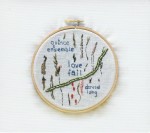
05 David Lang QuinceQuince Ensemble’s performance adds minimalist instrumentation and is equally profound, bringing wonderful shape and motion to the simpler pieces and musical clarity to the most dense. 

Together these five recordings offer a rare and uplifting musical repast in this time of great consternation and stress.


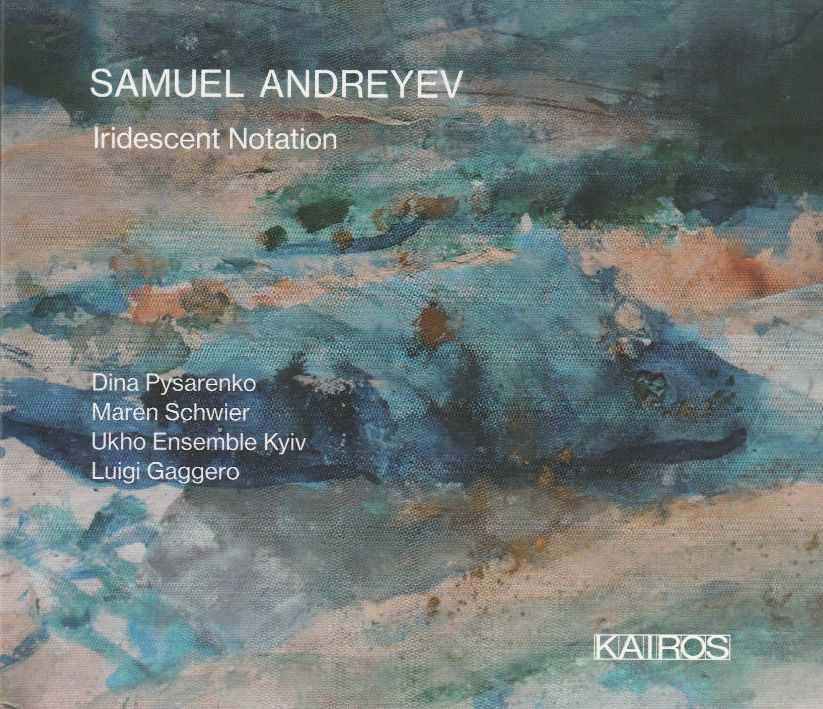
01 Samuel AndreyevSamuel Andreyev – Iridescent Notation
Dina Pysarenko; Maren Schwier; Ukho Ensemble Kyiv; Luigi Gaggero
Kairos 0015002KAI (kairos-music.com)

In this latest release from Canadian composer Samuel Andreyev (b.1981), the virtuosic Ukrainian Ukho Ensemble Kyiv and guest soloists expertly deliver a collection of chamber works that highlight an artistic voice of obvious contemporary importance – a voice well beyond its years in maturity and control of expressive intent. 

This disc begins with the title-track work, a piece in seven movements for soprano and ensemble, with text by well-known English-Irish poet Tom Raworth. Here, the strong ensemble writing expertly punctuates elegant beacons that complement the soaring soprano part remarkably well. The extended techniques (unusual ways of playing the instruments) used throughout are decidedly modernist in their application, but the utility of these procedures is not used merely for surface effect: the resultant atmosphere heightens the quality of the text setting through highly creative musical pronouncements. A big standing ovation must go to soprano Maren Schwier for an incredible display of vocal acrobatics and control of colour, in what is quite a challenging work for the voice. 

With a collection of works that make use of many impressive jagged gestures that never seem to disappoint despite their frequency, there is a brilliant moment of contrast on the disc in a piece titled Nets Move Slowly, Yet. This piece is mysterious and elegant as it unfolds throughout pulsing hypnotic panoramas. Expectations are not redirected through punchy instrumental interjections, but through abrupt yet gentle shifts in mood – a quality that produces beauty through lucidity. 

With a collection of successful and sophisticated works, it is no wonder Andreyev continues to make his mark on the contemporary music world. We all look forward to more exciting music from this young talent.


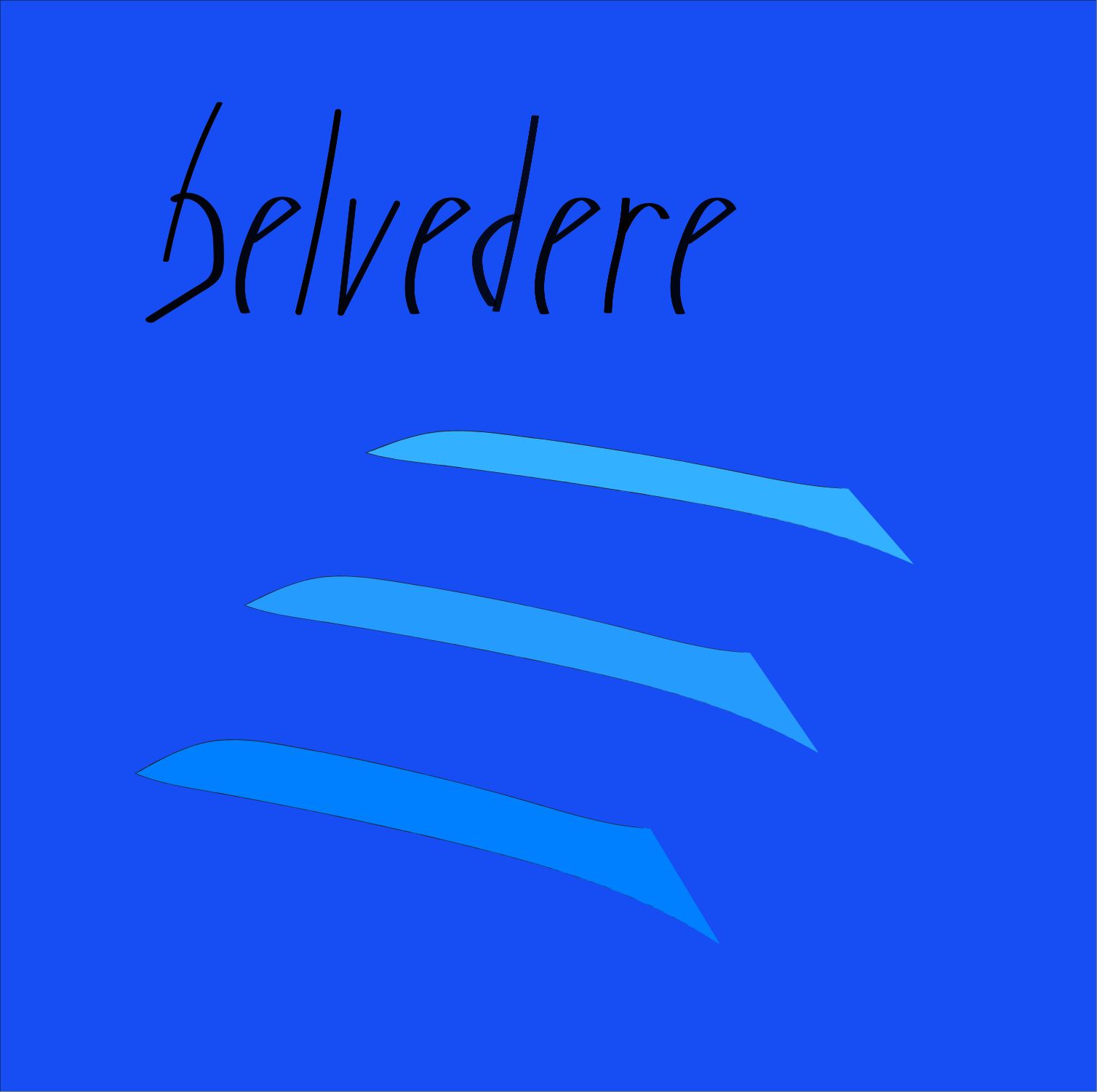
02 Jon Siddall BelvedereBelvedere
Jon Siddall
Independent (jonsiddall.com)

Veteran Vancouver-area composer, guitarist, pianist and music producer Jon Siddall from his website: “I write slow music. With my new album Belvedere I’ve returned to that approach. The music develops, but slowly, or maybe hardly at all.” Siddall’s music could also be tagged minimalist or experimental ambient, genres that Siddall has deep roots in: his teachers have included leading maverick composers James Tenney (York University, Toronto), Terry Riley and Lou Harrison (California).

Siddall plays four of the Belvedere tracks on electric guitar, electric bass, mandolin and electric piano. The fifth track, Hello Snowflake, is played on the gamelan degung of West Java, Indonesia performed by the eight musicians of Gamelan Si Pawit, Siddall’s Vancouver group.

Degung, a kind of tuned percussion ensemble, also features a solo suling (bamboo ring flute). In this score however, Siddall chose not to use the suling and kendang set (barrel hand drums), but rather adds two kacapis (plucked West Javanese zithers). The result: exclusively struck and plucked sounds which naturally decay each at its own rate, evoking a non-pulsed, unhurried, contemplative mood.

Siddall’s rock guitar background shines through in Bliss Curve and in the spacious Belvedere for electric guitar trio. Clementine Mandala, for vintage Fender Rhodes (electric piano), is constructed of a long ascending melody performed at different speeds, superimposed in various ways, a texture common also in gamelan music. The composer writes evocatively, “Belvedere – is a vista, a beautiful view [to leisurely contemplate]. This album … invites immersion into that space. It’s music for dreamers, music to dream with, music with which to awaken calm.”

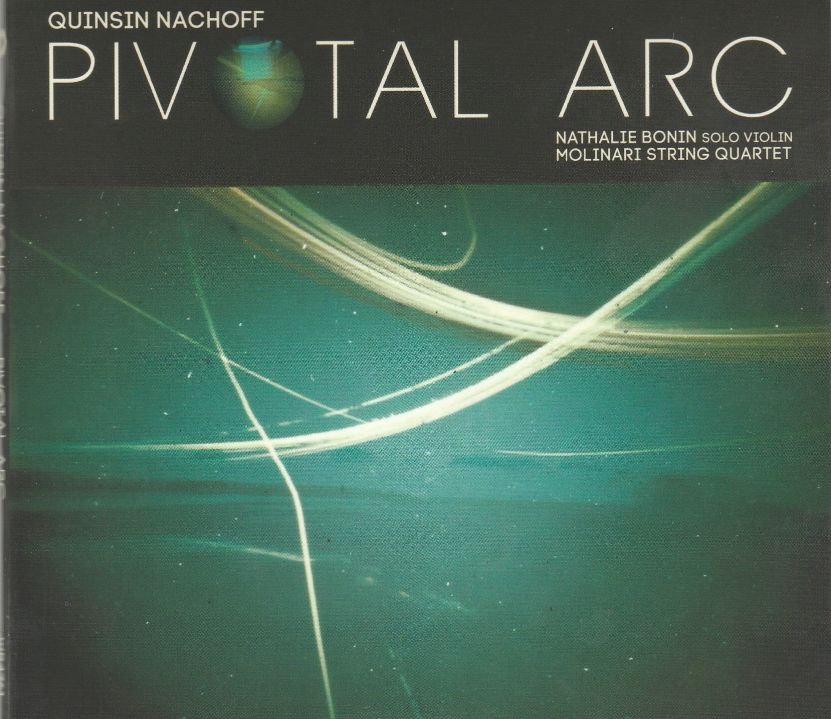
03 Quisin NachoffQuinsin Nachoff – Pivotal Arc
Nathalie Bonin; Molinari String Quartet; Quinsin Nachoff; JC Sanford
Whirlwind Recordings WR4761 (quinsin.com)

Composer and saxophonist Quinsin Nachoff has been merging formal composition and an expansive jazz vocabulary since conjoining a string quartet and a jazz group on his 2006 debut Magic Numbers. However, the blurring of traditionally distinct musical categories has reached its high point in the three compositions heard on Pivotal Arc

The CD’s major work is Nachoff’s Violin Concerto for soloist Nathalie Bonin, a 46-minute work in the traditional three-movement format. Fusing elements of Berg and Stravinsky and occasionally reminiscent of William Russo’s music, the work is written in a heterodox personal idiom for an ensemble that includes the Molinari String Quartet, seven brass and woodwinds, and a jazz-based rhythm section with bassist Mark Helias, drummer Satoshi Takeishi and vibraphonist Michael Davidson providing special propulsion. Conducted by JC Sanford, the performance brims with life, with Bonin bringing a special animation to its tango and Balkan-suffused elements and a cadenza that mingles composed and improvised materials.

Nachoff’s String Quartet is filled with dense harmonies and sudden explosions, eschewing any immediate references to the elements of jazz. Each of the four movements is based on a different lead voice, the device contributing to each segment’s distinctive quality. The concluding Pivotal Arc, more traditional in its harmonic language, is also the piece that brings improvisation to the fore, from Helias’ elegiac arco solo to Nachoff’s own tenor saxophone oration, pensive, expressionist, rhapsodic by turn, whether etched in abrasive split tones or soaring highs.

Listen to 'Quinsin Nachoff: Pivotal Arc' Now in the Listening Room

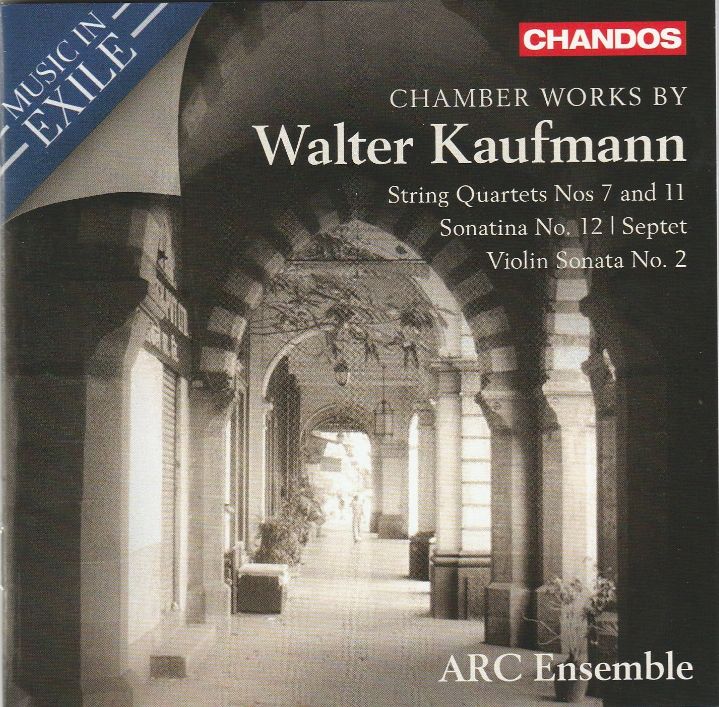
04 Walter KaufmannChamber Works by Walter Kaufmann
ARC Ensemble
Chandos CHAN 20170 (chandos.net)

This, the first-ever CD devoted to the music of Walter Kaufmann (1907-1984), is the latest in the Music in Exile series by Toronto’s ARC Ensemble (Artists of The Royal Conservatory), showcasing unheralded composers who fled Nazi Europe. In 1934, the Czech-born Kaufmann left Germany, becoming director of European music for Bombay’s All India Radio, composing, conducting, playing viola and piano in chamber ensembles and researching Indian, Nepalese, Bhutanese and Tibetan music. Moving to Canada in 1947, he served as the Winnipeg Symphony’s first music director (1948-1958) before teaching ethnomusicology at Indiana University.

Although Kaufmann composed prolifically throughout his career, including six symphonies and over 20 operas, each piece on this disc dates from his years in India. String Quartets Nos.7 and 11 receive visceral performances from the stellar foursome of violinists Erika Raum and Marie Bérard, violist Steven Dann and cellist Thomas Wiebe. Raum and pianist Kevin Ahfat collaborate in Violin Sonata No.2; clarinetist Joaquin Valdepeñas and Ahfat perform Sonatina No.12 (originally for violin and piano); violinist Jamie Kruspe and cellist Kimberly Jeong join the ensemble in Septet for three violins, viola, two cellos and piano.

These are substantial works, in which plaintive solemnity alternates with emphatic, syncopated dances, all heavily imbued with Indian modal, melodic and rhythmic sequences. I found this engrossing mix of European and Asian traditions richly rewarding and hope that this superb CD will inspire more recordings of Kaufmann’s music. I’d love to hear them.

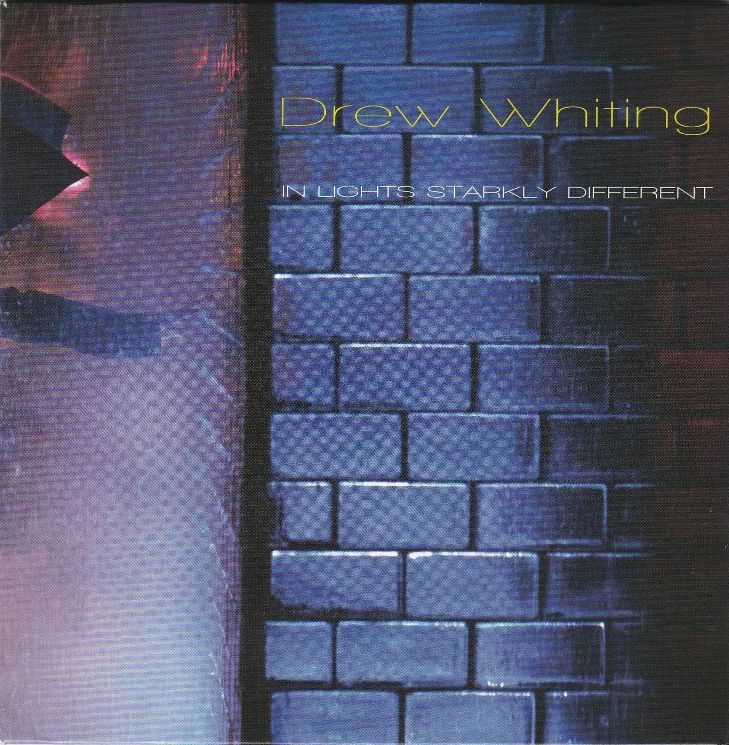
07 Drew WhitingIn Lights Starkly Different
Drew Whiting
Innova Recordings innova 032 (innova.mu)

American saxophonist Drew Whiting’s wide-ranging musical expertise performing on soprano, alto, tenor and baritone saxophones, combined with his interest and dedication to contemporary electronic music, make his release featuring seven recent sax/electronics compositions memorable.

In Lights Starkly Different, composer Robin Julian Heifetz created loud and hyper-digital sounds using REplayPLAYer software and later processed with GRAM Tools. Chance and notation drive the piece as the tenor saxophone’s fast flourishes and tones ground the background electronic crashing, echoes and intense atonal effects. More unsettling sounds in Ed Martin’s Break, as Whiting plays baritone loud/soft contrasts, wailing atonalities and pitch slides against intense electronic washes and crashes. In Ötzi (named after a 5,000-year-old mummy) composer Alexis Bacon’s recorded rocks and metal noises make eclectic clicks, crashes and walking sounds against the tenor sax. 

For the Fallen, by Judith Shatin, has its slower, lyrical, emotional soprano sax lines lock into electronics created from recordings of Italy’s Capana dei Caduti (Bell for the Fallen). Love the multiple contrapuntal saxophone lines in John Mayrose’s Random Access, as Mayrose uses live electronics to layer Whiting’s alto sax (stored in RAM) for effects. In Jeff Herriott’s As brightness is smeared into memory, the reflective romantic soprano sax part is closely connected to electronic washes. Nathan Edwards’ Saudade Study, with tonal ambient tenor sax and delay/reverb effects is sad, thought-provoking emotional moods music.

This is contemporary music at its best as Whiting breathes and plays saxophone in contrasting intensities and styles with diverse electronics effects.

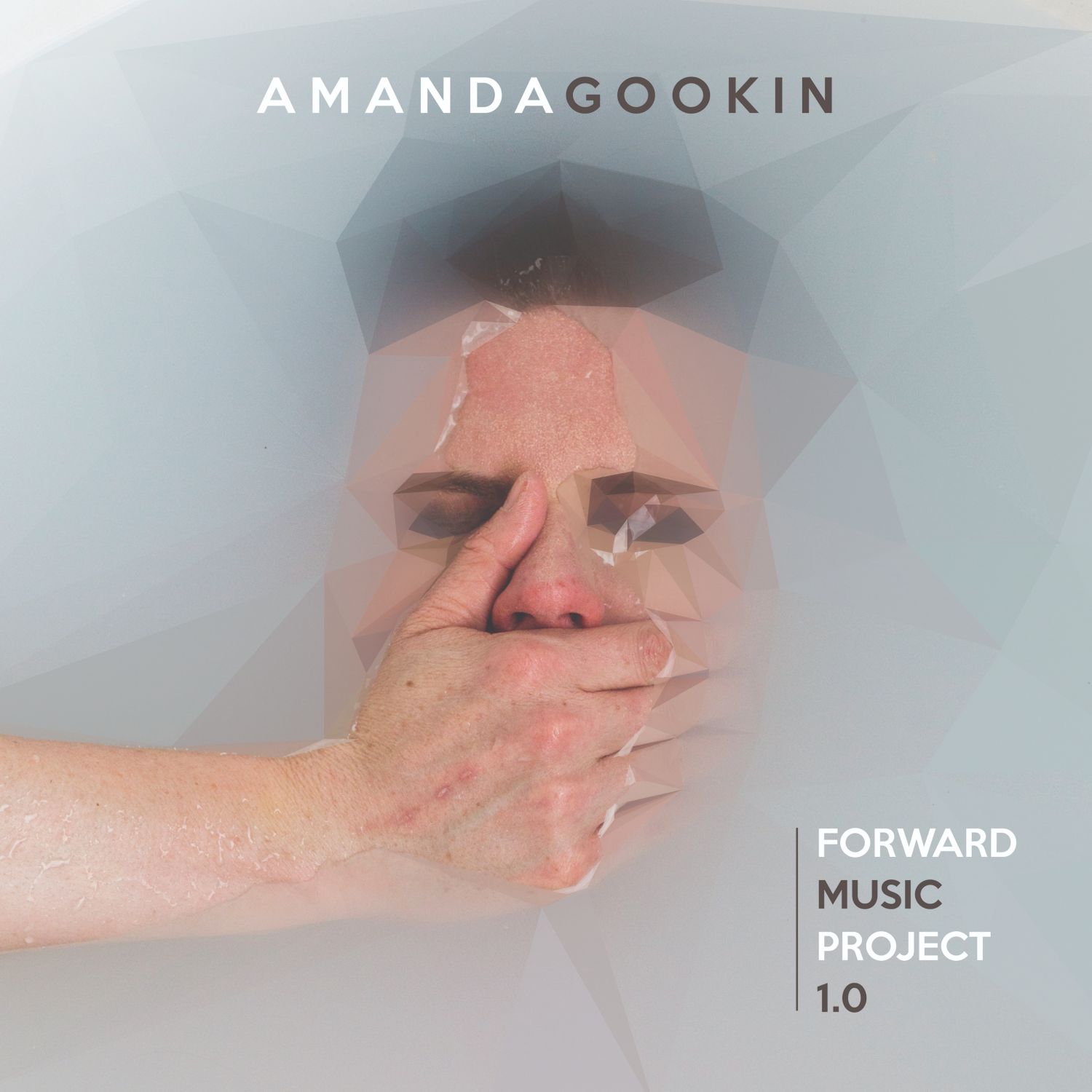
08 Amanda GookinForward Music Project 1.0
Amanda Gookin
Bright Shiny Things BSTC-0135 (brightshiny.ninja)

It is the highest level of artistry that can realize a message, a story or an emotion while seeming to have not performed it at all. This was my takeaway from my introduction to cellist Amanda Gookin. 

Forward Music Project 1.0 is a collection of seven pieces for solo cello and electronics ranging in length from five to 12 minutes by seven culturally diverse women composers. I rarely found myself thinking of the stunning level of execution; I was so immersed in the inspired delivery of these seven miniature works of art. Beginning with Natalie Joachim’s Dam mwen yo, a picturesque blending of the voices of Haitian women lovingly embraced with cello, to the dynamic and powerfully joyous final track of Jessica Meyers’s Swerve, each work outlines themes of the cross-cultural injustice and suffering of women. From one track to the next I was moved by the stunning technique that beautifully unified the collection. Gookin keeps the unique and accessible collaboration on message by including the voices of the composers themselves, available as short descriptive introductions in their own voices on YouTube, thus keeping this album refreshingly free of ego. But the music itself warrants attention regardless of the storytelling. 

“For mothers. For sisterhood. For brave storytellers and quiet listeners. I sing, I gasp, I fight, I breathe life into the work of these fearless artists. I founded Forward Music Project for you. And you are not alone.“

I was woefully ignorant of Amanda Gookin before this inspired listen, but I have surely become among her greatest fans. A significant and most welcome collaboration for the times. 

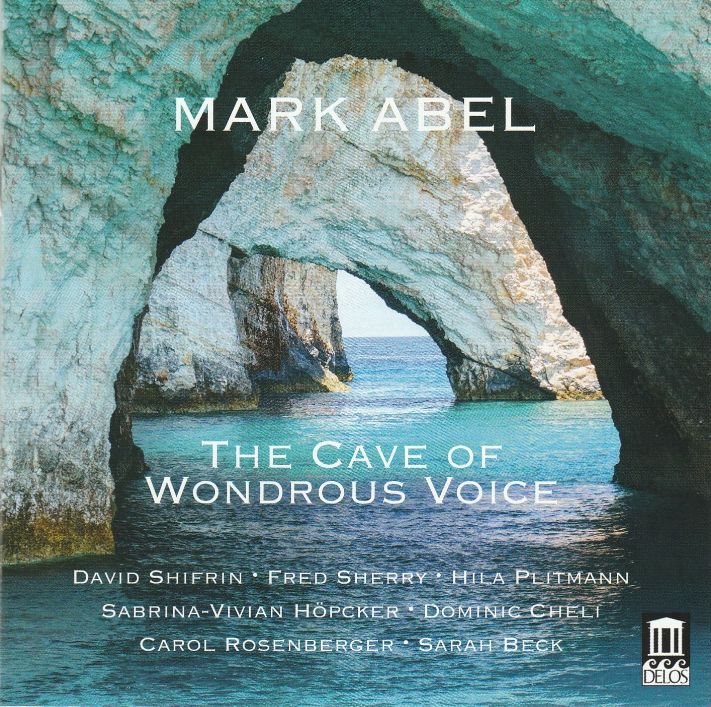
09 Mark AbelMark Abel – The Cave of Wondrous Voice
David Shifrin; Fred Sherry; Hila Plitmann; Sabrina-Vivian Höpcker; Dominic Cheli; Carol Rosenberger; Sarah Beck
Delos DE 3570 (naxosdirect.com)

California-based composer Mark Abel explains in the liner notes that his father was a “devotee” of such classical chamber music composers as Mozart, Brahms, Beethoven and Dvořák, which clearly influenced his emotionally driven compositions grounded in modern and classical styles.

Abel is renowned for his vocal works. His exciting song cycle Four Poems of Marina Tsvetaeva features four Russian poems translated to English for the first time by Alyssa Dinega Gilliespie. Soprano Hila Plitmann sings with dramatic clarity, musicality, tuning and high pitches. Carol Rosenberger (piano) and Sarah Beck (English horn) support with technical/musical control as the words and music are one.

Diverse tonal and stylistic storytelling is featured in Abel’s chamber works. Intuition’s Dance features Rosenberger and clarinetist David Shifrin playing contrasting happy bouncy faster, and slower spooky lyrical sections. Cellist Fred Sherry joins them in the three-movement Clarinet Trio in which they each are almost soloists, especially in Taking Flight, with its energetic pulsing opening, and upbeat jazz-flavoured closing. 

Another wordless musical story suggesting “the subconscious mind’s journey through the course of the day” is The Elastic Hours, performed by violinist Sabrina-Vivian Höpcker and pianist Dominic Cheli. What Friday Brought opens with a positive end-of-the-work-week mood until stuff happens with moody tremolos, and held notes. Saturday’s Circumference is a driving tonal duet featuring intermittent happy toe-tapping and slower reflective sections.

Abel is a compositional master of intriguing contemporary music.

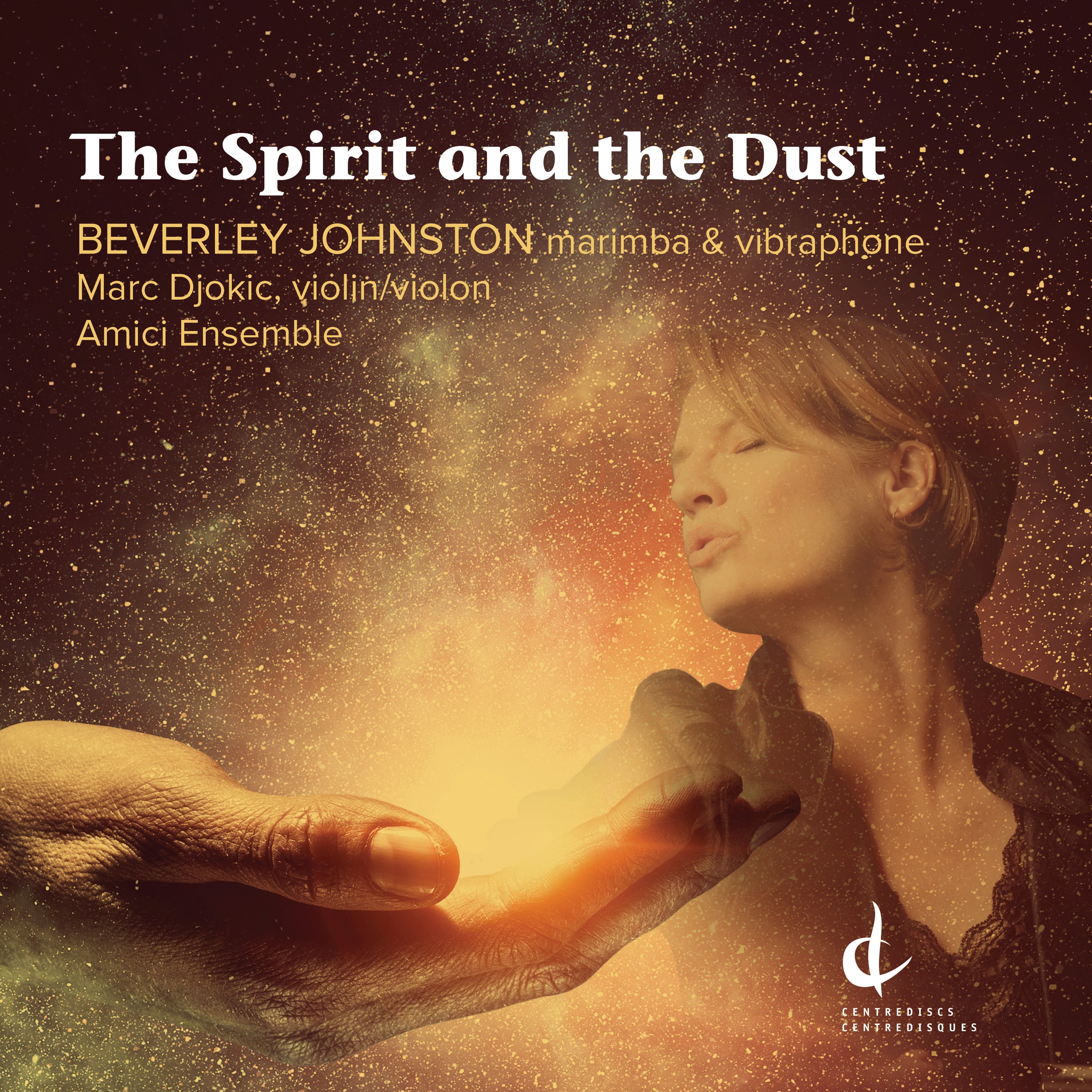
01 Bev JohnstonThe Spirit and the Dust
Beverley Johnston; Mark Djokic; Amici Ensemble
Centrediscs CMCCD 27920 (cmccanada.org/shop/cmccd-27920) 

Dubbed, “a champion of new, genre-busting works” (DRUM! Magazine), Canadian percussionist Beverley Johnston is a rara avis in this country: a percussion soloist with an international career. Over four decades Johnston has built an enviable reputation for her musically intelligent performances, her deft classical transcriptions sharing the stage with contemporary compositions and dramatic presentations. Her career highlights and honours have been too many to list here. 

In 1986 Johnston released her first solo album Impact (Centrediscs, JUNO Award nominee), followed by seven more, as well having appeared on numerous other recordings. Her newest, The Spirit and the Dust, features her signature instruments, marimba and vibraphone. She is joined by violin virtuoso Mark Djokic and the illustrious Amici Chamber Ensemble in six works by four prominent Canadian composers, Christos Hatzis, Richard Mascall, Norbert Palej and Dinuk Wijeratne.

The Spirit and the Dust for solo marimba by Wijeratne is a dual musical meditation, skillfully reflecting on themes of life and death inspired by world literature, as well as on the richly varied tonal palette of the marimba itself. Johnston reveals her vulnerable side in Palej’s dramatic yet intimate ser con Él (be with Him). She whispers and sings words of yearning for someone unnamed while simultaneously playing vibraphone. Two fragmentary Chilean texts are separated by five centuries, one by an anonymous Inca poet, the other by Gabriela Mistral. 

While the absence these poets suggest may only be an illusion, the musical and emotional landscapes Johnston evokes on this album feel only too real.

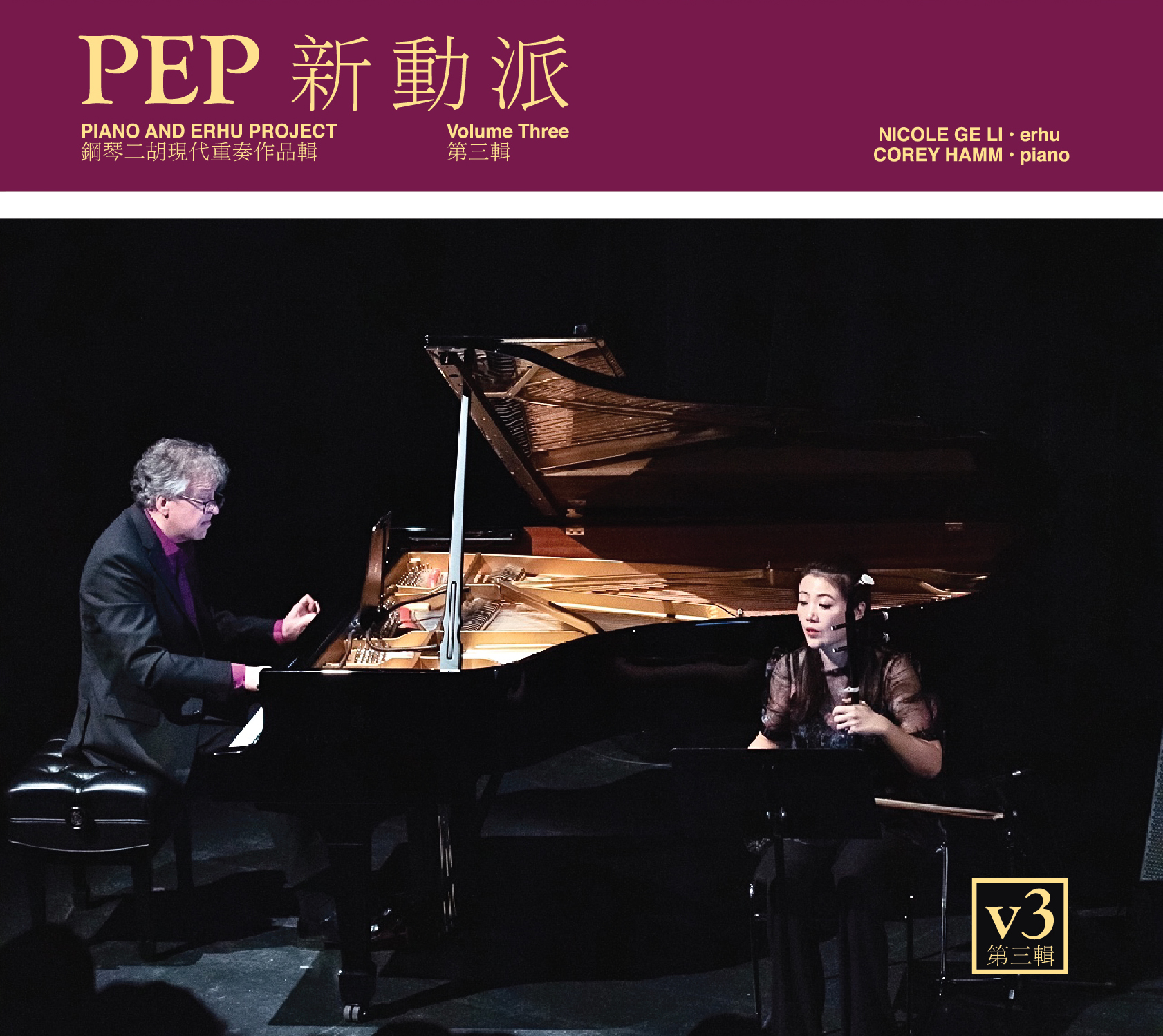
02 PEP CD Vol 3PEP (Piano and Erhu Project)
Volume 3
Redshift Records (redshiftrecords.org/releases/tk474/) 

The duo of erhu virtuosa Nicole Ge Li and contemporary music specialist, pianist Corey Hamm, known as PEP (Piano and Erhu Project), issued its first CD release in 2015, the second following soon on its heels. I reviewed both for The WholeNote, commenting that PEP’s core repertoire exemplifies a “fluid interplay between these two instruments, each an icon of its respective culture. Rather than an intercultural vanity project, their collective music-making focuses on polished, musically engaged readings of recently commissioned scores.”

PEP’s Volume 3 extends that project to nine richly varied compositions. The carefully curated collection includes international composers working in many of today’s classical music streams. In addition to two Canadian works by Lucas Oickle and Stephen Chatman, new compositions by Michael Finnissy (UK), Gao Ping (China), plus existing works by Sergei Prokofiev (Russia/USSR), his grandson Gabriel Prokofiev (UK), Somei Satoh (Japan) and Marc Mellits (USA) are on this rich smorgasbord.

The album gets off to a rollicking start with the percussive first movement of Chinese-born composer Gao Ping’s Hu Yan (2017). The work’s six sections are each characterized by contrasting techniques and moods. Pizzicato passages in both piano and erhu in the third movement are certainly arresting, as are the eerie finale’s final moments: bass piano clusters thud while the erhu holds a still, high vibrato-less tone. 

The album concludes with an arrangement of Sergei Prokofiev’s Scherzo from his Flute Sonata (1943), later arranged for violin and piano by the composer. Hamm energetically nails down the two-fisted piano accompaniment while Li handles her difficult erhu part with panache. She makes it sounds like the 77-year old work was written for her. It’s an espresso nightcap to PEP’s exhilarating program.

Listen to 'PEP (Piano and Erhu Project)' Now in the Listening Room

Back to top