15 Valentin Silvestrov BermanValentin Silvestrov
Boris Berman
Le Palais des Degustateurs PDD030 (lepalaisdesdegustateurs-shop.com/boutique)

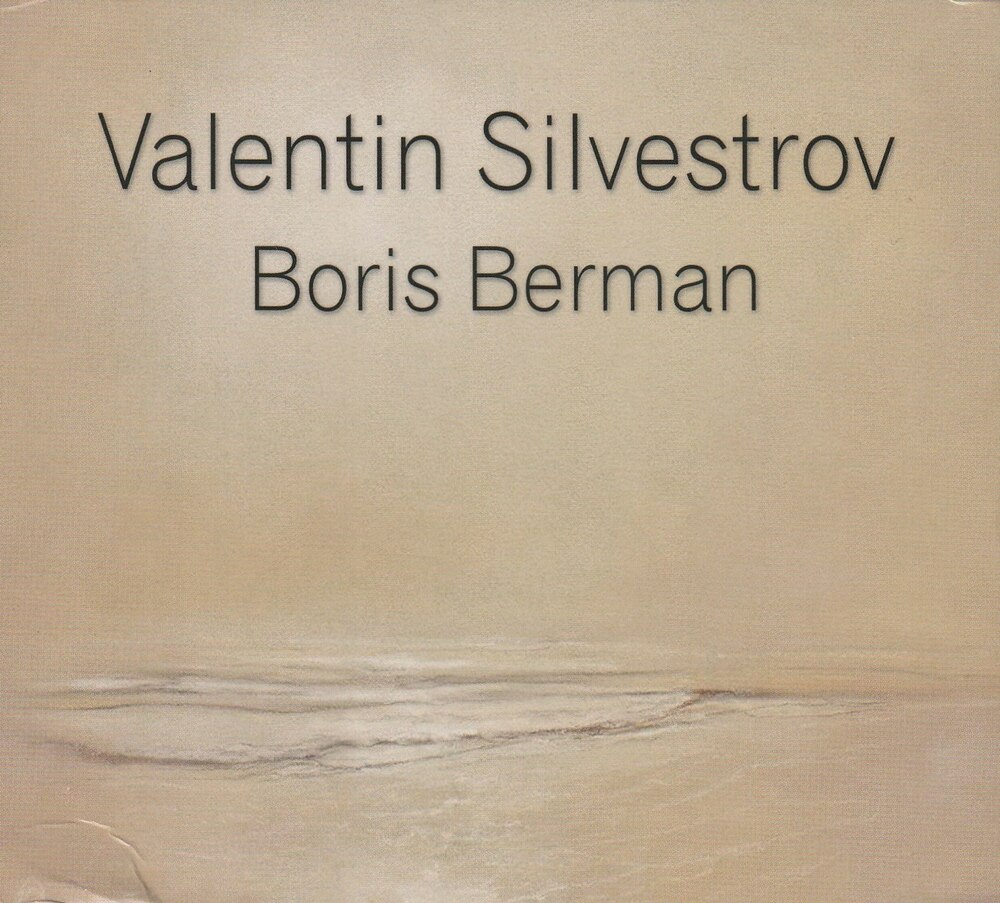
In March 2022, just days after Russia’s invasion, Ukraine’s pre-eminent composer, Valentin Silvestrov (b.1937) left his native Kyiv for Berlin. Three months later, Boris Berman, following in-person consultations with Silvestrov, recorded this two-CD set spanning 60 years of Silvestrov’s piano music.

Triade (1962) and Elegy (1967) reflect what the young Silvestrov called “lyrical dodecaphony,” to my ears Webern crossed with Debussy. Sonata 2 (1975) juxtaposes serialism, aleatorism and late-Romantic chromaticism, including extended passages of pensive lyricism. The five-movement Kitsch-Music (1977) contains allusions to Schumann, Chopin and Brahms, all to be played, wrote Silvestrov, “as if from afar.” It’s indeed slightly “kitschy” – precious with prettiness and sentimentality, lovely nonetheless. The three movements of Sonata 3 (1979) are slow, inward-looking and disturbingly beautiful, their unsettled tonality suggesting to me an aimless, solitary stroll through a dark, deserted cityscape.

Three 21st -century works were recorded with the piano lid closed, Silvestrov desiring a soft, distant sonority. Postludium (2005) is a slow, bittersweet processional. Five Pieces, Op.306 (2021) – three Pastorals, Serenade and Waltz – are all gentle and sweetly dreamy. Heartfelt simplicity imbues the Three Pieces (March 2022, Berlin), Silvestrov’s musical response to the invasion. The sorrowful Elegy is followed by Chaconne, described by Silvestrov as “accepting death with dignity.” The final Pastoral ends in a mood of serenity, perhaps even hope.

Doubtlessly, these performances by Berman (b. Moscow 1948), head of Yale University’s piano department, pleased Silvestrov. They certainly pleased me.
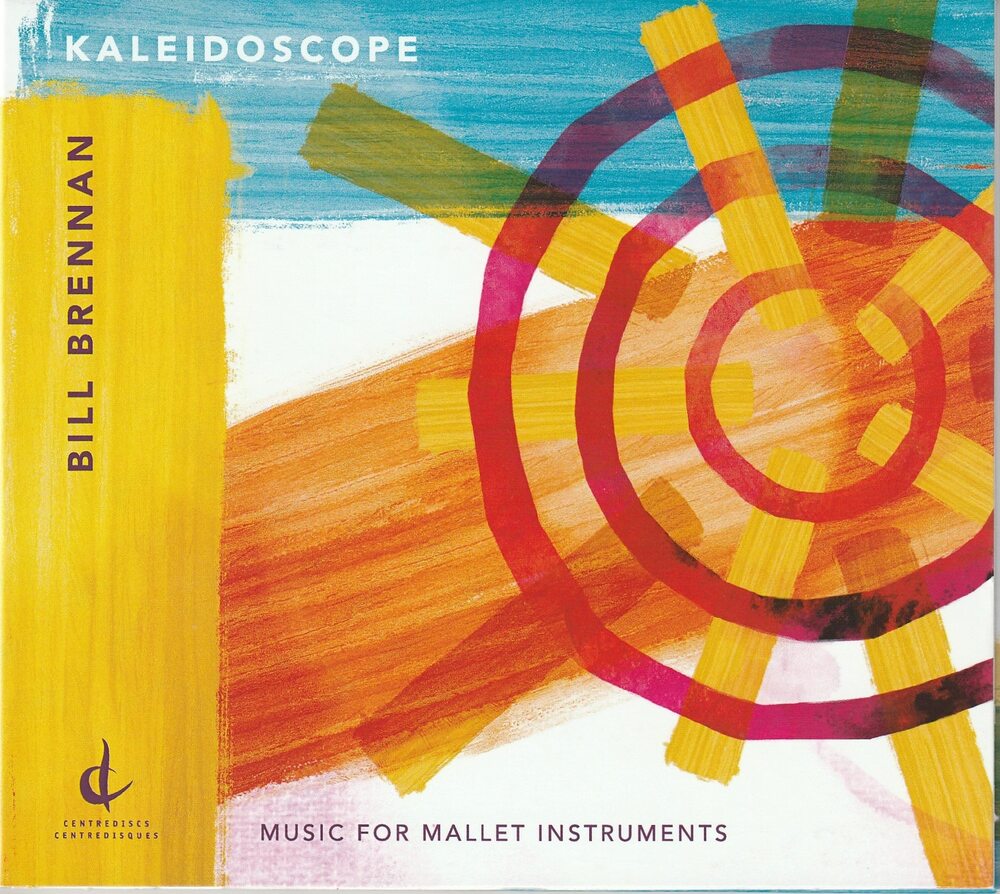
01 Bill BrennanjpgBill Brennan – Kaleidoscope: Music for Mallet Instruments
Bill Brennan; Rob Power; Étienne Gendron
Centrediscs CMCCD 30822 (centrediscs.ca)

Canadian percussionist, pianist and composer Bill Brennan has racked up an impressive 100 album credits to date. Kaleidoscope, however, is the first album featuring his keyboard percussion compositions. While Brennan’s career has focused on contemporary concert music and jazz genres, he has also long immersed himself in the music of other cultures. He gratefully acknowledges the deep influences of the music of Ghana, Brazil, Indonesia and India in his liner notes. Those international music influences are on display throughout the album. 

For 20 years a core musician with Toronto’s Evergreen Club Contemporary Gamelan, Brennan’s Shadows and Istana were originally scored for its eight-piece [gamelan] degung – though they get an instrumental makeover here. Yes, Istana and Shadows are cast in the five-tone gapped scale of the West Javanese degung mode. But the use of vibes, tam-tams, finger cymbals, and especially the glistening tones of the glass marimba in these effective arrangements give the music a gently shimmering effect, as though heard through a permeable cultural gauze. 

Brazilian influences are evident in several works. Brennan describes Belo Horizonte as a musical representation of a morning stroll in a park in the Brazilian city of Belo Horizonte, enlivened with the sounds of breezes, bamboo, chirping birds and chattering monkeys. Scored for two vibes and marimbas, Brennan skillfully evokes that soundscape by layering syncopated Brazilian bell patterns, making judicious key changes, and shifting harmonies, textures and dynamics.

Then there are the appealing Nostalgie and Vinyl Café Waltz, which lean toward the composer’s gentler, tonally unambiguous, melancholy side. I feel others will also pick up on the tinge of East Coast saudade in several sections. And that’s a good thing.

Listen to 'Bill Brennan – Kaleidoscope: Music for Mallet Instruments' Now in the Listening Room

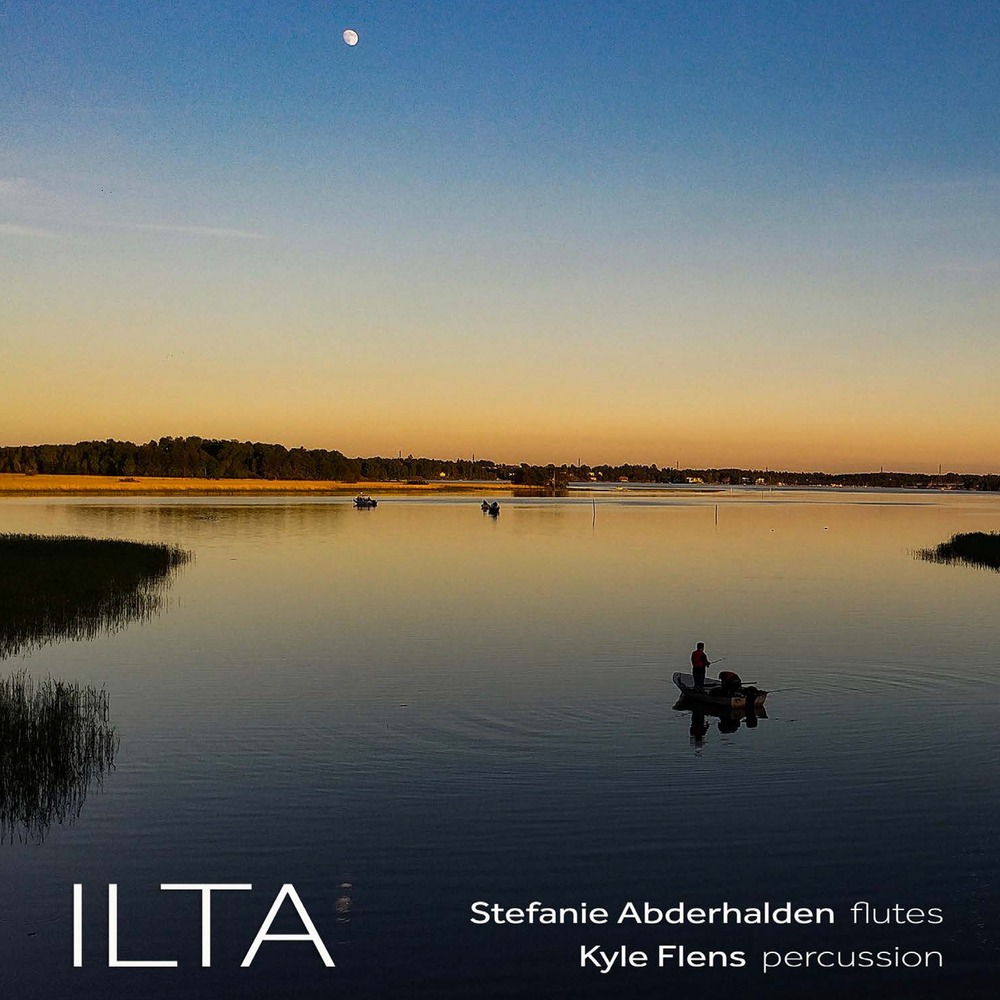
02 ILTAILTA
Stefanie Abderhalden; Kyle Flens
Neuma 162 (neumarecords.org)

Chicago-area musicians – flutist Stefanie Abderhalden and percussionist Kyle Flens – get top billing in this satisfying, yet also occasionally quirky, recital of modernist and postmodernist concert music. Despite the billing on the cover, the album’s repertoire is considerably more focused on percussion than flute: five of the seven titles are scored for percussion alone. In addition, percussionists Malika Green, Katie (Wiegman) Burdett and Thomas Loretto add their skills to works by American composers Robert Fleisher, Robert Honstein, David Maki, plus iconoclastic Greek-French composer Iannis Xenakis. 

Live performances, studio recordings and electroacoustic elements can all be found on this eclectic album. Yet it all hangs together as a satisfying percussion-centric recital. The 2008 title track Ilta (“evening” in Finnish) by Maki opens with Thai gongs, the alto flute and vibraphone sounds emerging from their resonant tones. The middle section’s instrumentation shifts to the higher C flute and crotales, the soundscape returning in last section to gong long tones animated by flute melodies.

The best-known work here is Rebonds A (1988) by Xenakis (1922-2001). This virtuoso work for multiple bongos, tom-toms and bass drums, played convincingly by Flens alone, grows ever more complex over its 6’33’’ duration. Exhibiting a kind of rhythmic accelerando or perhaps metric compression, it reflects the composer’s considerable interest in mathematics, specifically in the Golden Section, a numeric ratio associated with the Fibonacci sequence. I found Flens’ performance an architecturally taut and emotionally intense listen.

Listen to 'ILTA' Now in the Listening Room

03 Inbal Segev20 for 2020
Inbal Segev
Avie AV2561 (avie-records.com)

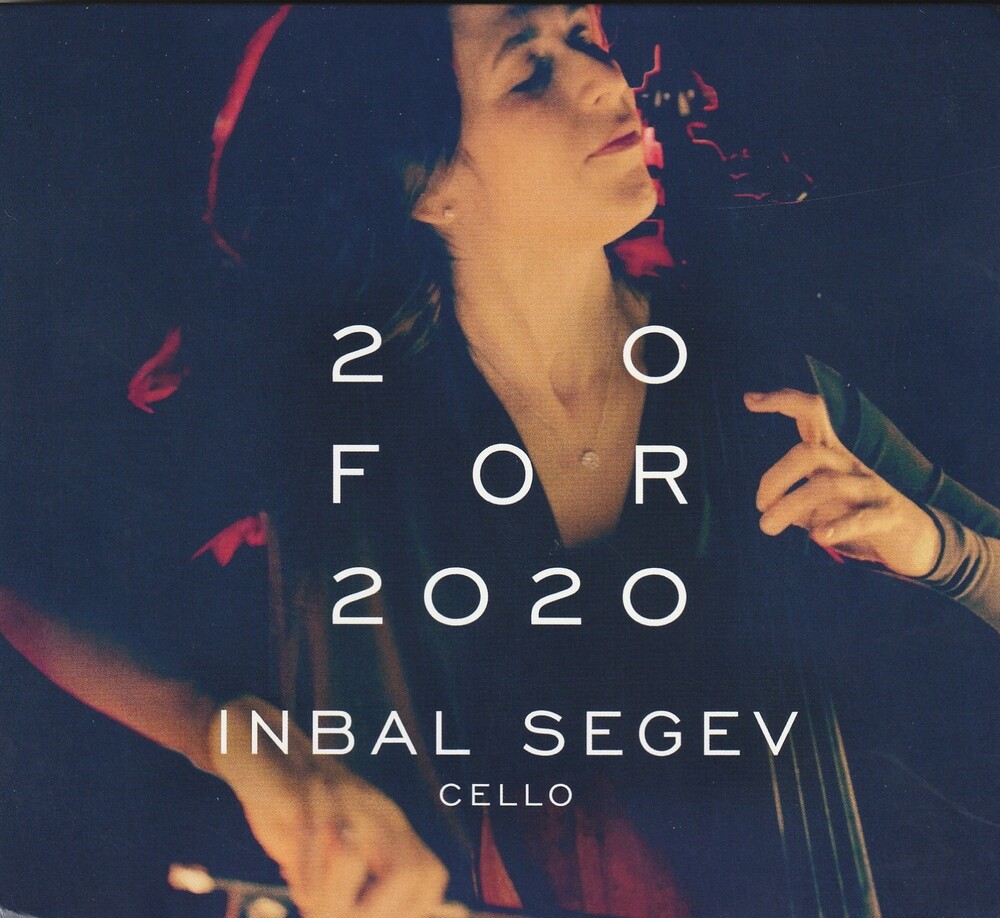
While in the heart of the 2020 pandemic, Israeli-American cellist Inbal Segev commissioned 20 works from some of today’s leading composers – some with whom she has worked before – asking them to document their responses to the challenging times. With this collection of mostly new compositions it is nearly impossible to speak on every piece but suffice to say there was not a single track on this double CD set that I was not moved by. There is a richness to the selections that are innovative and challenging, but still beautifully accessible. 

The complete work is an exploration of dark and light, of despair and joy, not only documenting the many layered issues around the pandemic and isolation, but also world events in general. With two CDs of chamber-style compositions, it is worth noting that Segev’s choice in composers represents a diversity of time and cultures. With the youngest (Sophia Bass, b.1996) to the most established (“the most obscure great composter of our time”) Gloria Coates (b.1938) this album is essential listening for any lover of contemporary classical music, not just the cello. I was hooked from the first track, Room to Move by Viet Cuong, a cathartic, sweeping work written for octet played entirely by Segev, splitting the eight parts between two cellos, her 1673 Ruggieri and her modern 1957 Becker, to add nuance and colour to the different parts. This piece had me dreaming of being a circus hoop performer. From here, Fernando Otero’s first movement of a Cello Concerto revised here for cello, string quartet and bass is a challenging work “infused with tango and jazz.” James Lee III’s Ekah, a heartbreaking lament on how there can be so much hate in the world, ends with a stunning prayer. The whole piece is surely destined to be a recital feature. Complex pizzicato work in Timo Andres’ Agita is followed by Sophia Bass’ mesmerizing piece Taal-Naad Naman for cello, tabla and tanpura. Bruce Wolosoff’s Lacrymae for cello choir was again overdubbed solely by Segev, in true pandemic fashion. Jazz pianist Vijay Iyer’s The Window exposes the powerful complexities of hope while avoiding sentimentality. Christopher Cerrone’s The Pleasure at Being the Cause is a minimalist play on simultaneously holding and moving, as was the constant during the pandemic. The first CD ends with Puerto Rican composer Angélica Negrón’s Ruta Panorámica, a delightful road trip complete with traffic and road sounds for cello, bandoneon and electronics. 

The second CD is just as varied, again each composition is uniquely noteworthy. Though there is simply ot space to recognize the beauty of every track, standouts for me included composer and environmental activist John Luther Adams’ A Weeping of Doves, Molly Joyce’s It Has Not Taken Long, Immanuel Wilkins’ Exhale, a speeding, breathtaking saxophone-style solo that is so relentless one can only wonder how Segev manages to pull it off, and Stewart Goodyear’s wonderous Kapok, which packs a powerful ending to the project. The bonus encore of Segev’s own composition Behold, for cello quartet, adds yet another work to the cello ensemble repertoire.  

Segev’s tone throughout this challenging project manages to be every colour imaginable, while both clear and vibrant, and warm and dark. The entire double album encompasses a stunning display of fireworks and gentleness. That so many of these works will surely be iconic mainstays of the contemporary cello repertoire, for those who dare to take them on, is a testament to the leadership and investment in the cello repertoire from this great artist.

04 Kate ReadKate Read – After
Kate Read
Leaf Music LM258 (leaf-music.ca)

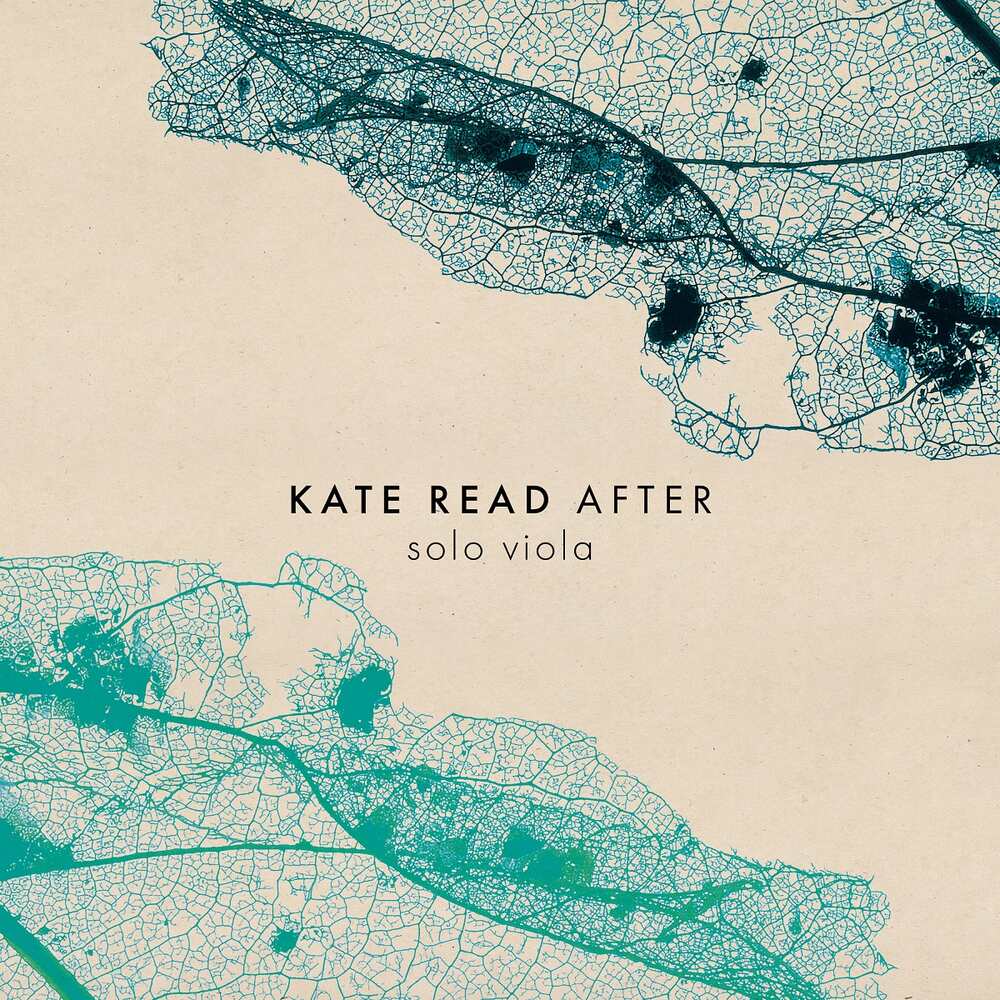
A curious mixture of contemporary solo viola compositions and Baroque pieces, this debut album by Kate Read is engaging and explorative, as well as enterprising. Although not a theme, the music on this album indirectly depicts the natural elements of Newfoundland, where Read currently resides – beauty amidst ruggedness, vastness of (sonic) space, wildness of possibilities. Read is a powerful performer, fully present in every phrase and turn, adventurous, always aware of the structure and direction. Her sound is imposing yet gentle, with an array of colours and expressions.

All contemporary pieces on the album involve electronics but don’t venture into the avant-garde, entailing structural symmetry and classical aesthetics. Two are new commissions by Kate Read: Evennight by Benton Roark, a neverending joyful cascade of 16th notes using amplified viola with analogue electronics, and Blackwood Sketches by Andrew Staniland. The latter is a visceral, expressive take on an acclaimed etching by David Blackwood, Fire Down on the Labrador, and involves synth tones and low notes to depict the whale, ice and wood underneath and in between the viola’s segments. Keep in Touch by Nico Muhly features an unusual, pre-recorded track that blends with the viola exquisitely. The album closes with Aftermath, a collaborative improvisation on two of Bach’s pieces with Michelle LaCour, featuring synthesized and found sounds, pedals and layering. 

Baroque pieces by Biber (Passacaglia from Mystery Sonata No.16) and Bach (movements from Violin Sonata No.3) are arranged for viola by Read and played with passion. The unusual programming gives a spark to this album.

Listen to 'Kate Read – After' Now in the Listening Room

05 Lakota ProjectThe Lakota Music Project
South Dakota Symphony Orchestra; Delta David Gier
Innova 1 081 (innova.mu)

This highly creative project is a stunning combination of material composed by six gifted Indigenous Americans of the Lakota Sioux nation featuring the eminent South Dakota Symphony under the musical direction of Delta David Gier. The Lakota Project is a brilliantly constructed collection of music specifically written and designed to dissolve the walls between the Lakota peoples and their horrific history of abuse and near genocide at the hands of European settlers. The music itself was created in an atmosphere of trust and open communication and is a pure, resplendent boon to the process of reconciliation. 

Black Hills Olowan by Brent Michael Davids features the Creekside Singers dynamic; mystical motifs depict the incredible power of natural forces and the ensemble’s magnificent voices serve to intensify the magic. The composition and arrangement here are nothing short of superb, and awash with emotional and musical gravitas – chaos and destruction, and then rebuilding. Also exceptional is the six-movement, Victory Songs (Wakétgli olówan) by Jerod Impichchachaaha’ Tate, which fluidly moves the listener through time and history – from the beginning of the world to the horrific murder of Sitting Bull. Stephen L. Bryant’s sonorous voice digs deep into the soul, at once elevating us up into etheric dimensions and plunging us back down into the grief and horror of one group of the human race determined to exterminate another. 

Of particular delight is Desert Wind by guitarist Jeffrey Paul. Paul drags us into the present time and place with his cheeky, relentless electric guitar, soothed by Robert Erhard and Sharon Mautner-Rodgers on cellos and the Creekside Singers. The closing track is (ironically) John Newton’s 1772 Christian hymn, Amazing Grace. Arranged by Theodore Wiprud, this song celebrates a transformation that speaks to the oneness of all… a radiant and much needed message in our present world.

06 American StoriesAmerican Stories
Anthony McGill; Pacifica Quartet
Cedille CDR 90000 216 (cedillerecords.org)

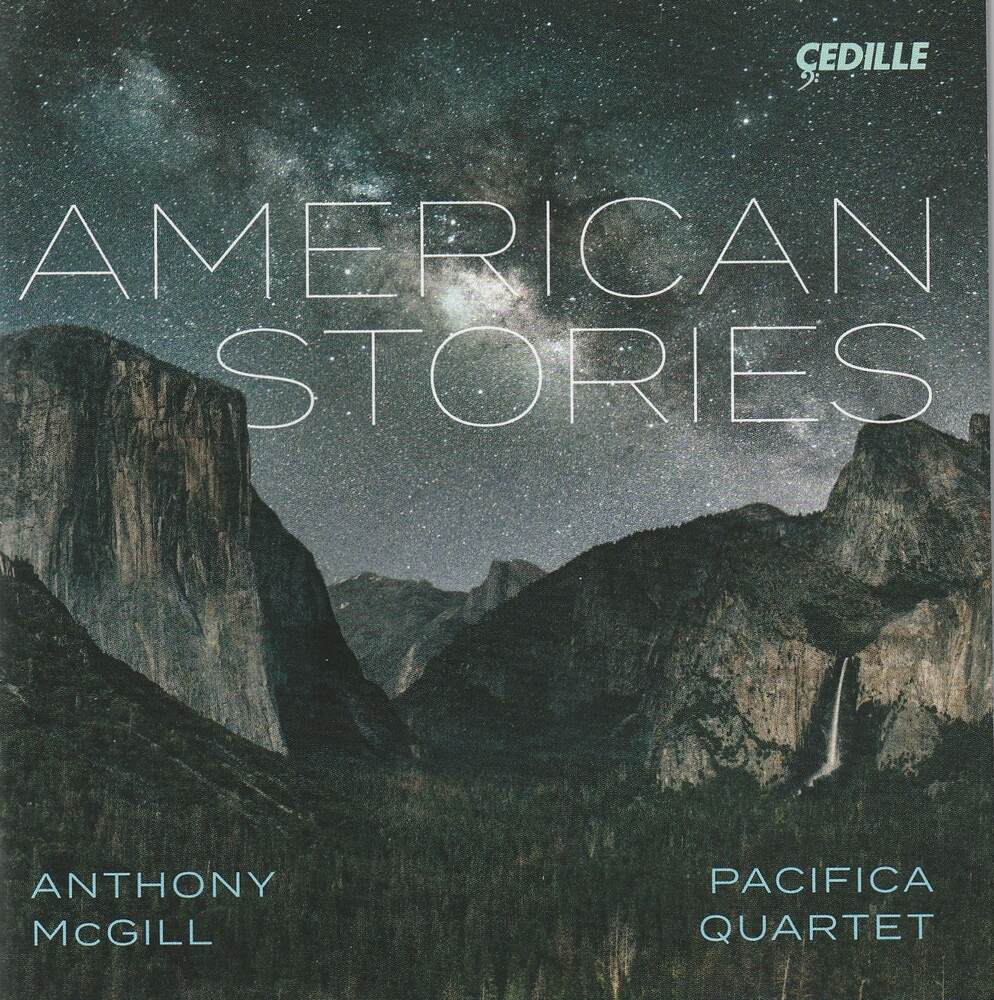
This is a great recording. What is not to like here? The Pacifica quartet are excellent, Anthony McGill turns the clarinet into a beautiful distinct voice, and the stories? Well, let’s talk. 

Leaving aside the question of whether music can function as narrative, let’s at least say that while American Stories doesn’t push the inclusion-and-equity button too hard, it includes equally compelling tales from a variety of voices. Richard Danielpour’s threnody Four Angels reflects on the aching sorrow caused by the Birmingham church bombing now almost 60 years in the past. The angels are the four young girls who lost their lives to the hatred of a racist. The piece derives real beauty from that reflection and opens our hearts to hope. Despicable acts seem to be part of the curse of humanity, and courage and hope two blessings we require in order to persist. Commissioned by McGill in early 2020, it was premiered online in 2021. 

The longest and most entertaining work is the final one, Valerie Coleman’s Shotgun Houses. Coleman grew up in West Louisville, Kentucky as did the subject of the piece. Muhammed Ali’s early life and rise to prominence as an African American hero is depicted in three movements: the first, with the same title as the entire work, describes the neighbourhood itself, the architecture of poverty celebrated for the strength of the inhabitants. Grand Avenue is one of those streets, notably Ali’s home address when he was still Cassius Clay and before his Olympic triumph in Rome 1960. In this last movement Coleman pencil strokes Ali at the speed bag, on a flight (his first ever) to Rome, and in the ring for three rounds on his way to the gold medal, in under seven minutes; the entire work lasts about 18. I hope the composer at least considers whether it might be expanded, perhaps even with an epilogue to honour Ali’s later years as an activist, and his struggle with Parkinson’s disease.

Between these are two other great pieces: High Sierra Sonata by Ben Shirley and James Lee III’s Clarinet Quintet. More tone poem than narrative, Shirley’s piece is an honest response to the dynamic beauty of the American southwest, in American vernacular style, if that means anything. Lee has a heavier task, addressing the treatment of the Indigenous peoples who were cheated out of promised territory in the Dakotas. Made me think of a half-finished monument to Crazy Horse that sits near Mount Rushmore. Both pieces substantially add to a growing genre: the clarinet quintet.

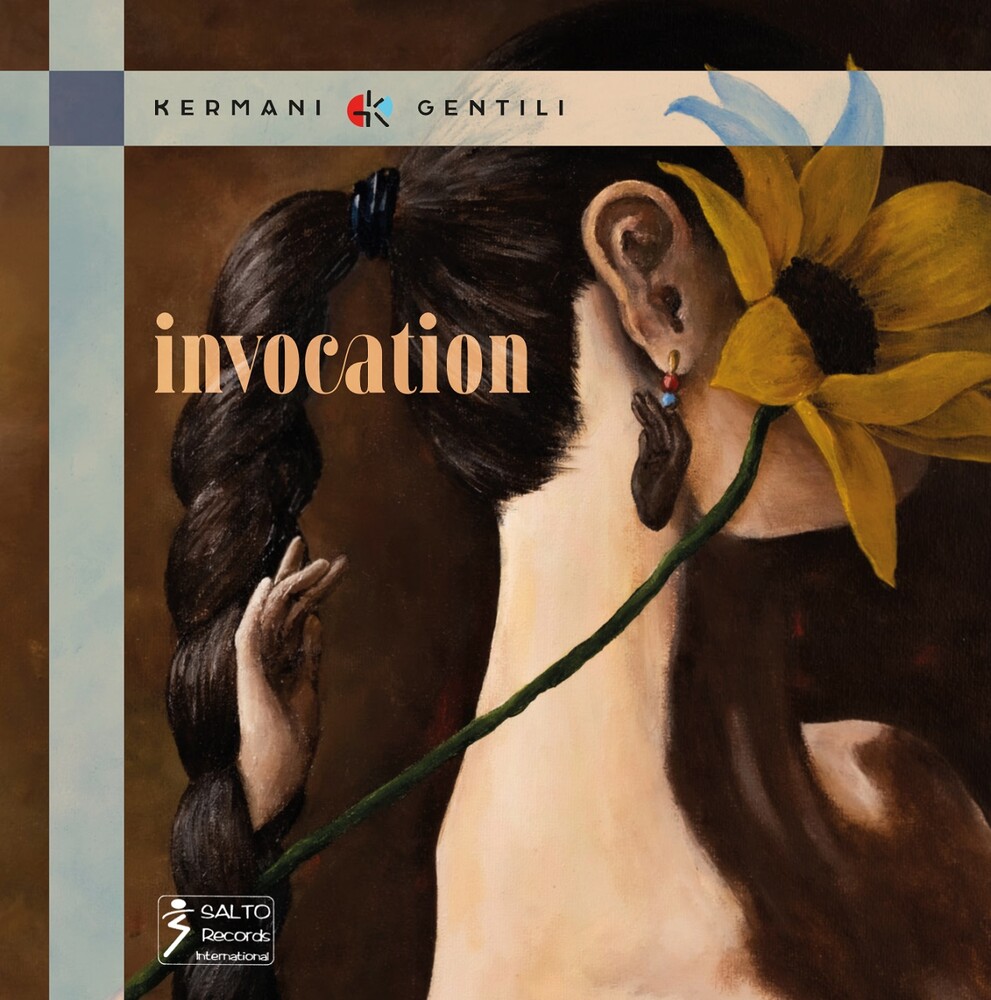
07 InvocationInvocation
Duo Kermani-Gentili
Pro Classics 7025 (duo-kermani-gentili.com/en/cd)

Is music by women composers like the dark matter of the musical universe: influential, yet somehow undetectable by current means? Try again.

Invocation sheds light on this element, featuring works for clarinet and piano. The duo of clarinetist Kymia Kermani and pianist Alba Gentili-Tedeschi have focused on European composers, all women, most presenting (I would argue) mid-20th-century style. An exception is the first composer featured, Marie Clémence de Grandval (1823-1907), whose Deux Pièces include the title track for the disc. Apart from her importance as an established female composer in the 19th century, I don’t think hers was the strongest opening play; tuneful and sweet, a bit like Adolph Adam, but less observed; de Grandval was kind enough NOT to write Minuit Chretien.  

A selection of well-performed miniatures, there are 27 separate tracks through its 58 minutes. It’s as if the composers were afflicted by modesty. I feel most compelled by the music of Holocaust escapee Ursula Mamlock’s Rückblick, in Erinnerungan die Reichspogromnacht 9. November 1938, a brief but harrowing depiction of her family’s flight from Berlin in the wake of Kristallnacht. 

The tracks are linked by short interludes by Barbara Heller (b.1936). Her Luftspuren are lovely enigmatic epigrams that serve as a “promenade” between the other works.  

Composition dates are absent in the jacket material, but with help from their publicist I learned Polish composer Krystyna Moszumańska-Nazar, who studied composition at the same school as Krzysztof Penderecki, quite possibly a bit earlier, was nine years his senior. Isn’t it wonderful to imagine that her clever (and also earlier) Three Miniatures for Clarinet and Piano influenced the much more celebrated man whose work of the same title was published in 1959? Now there’s some dark matter!

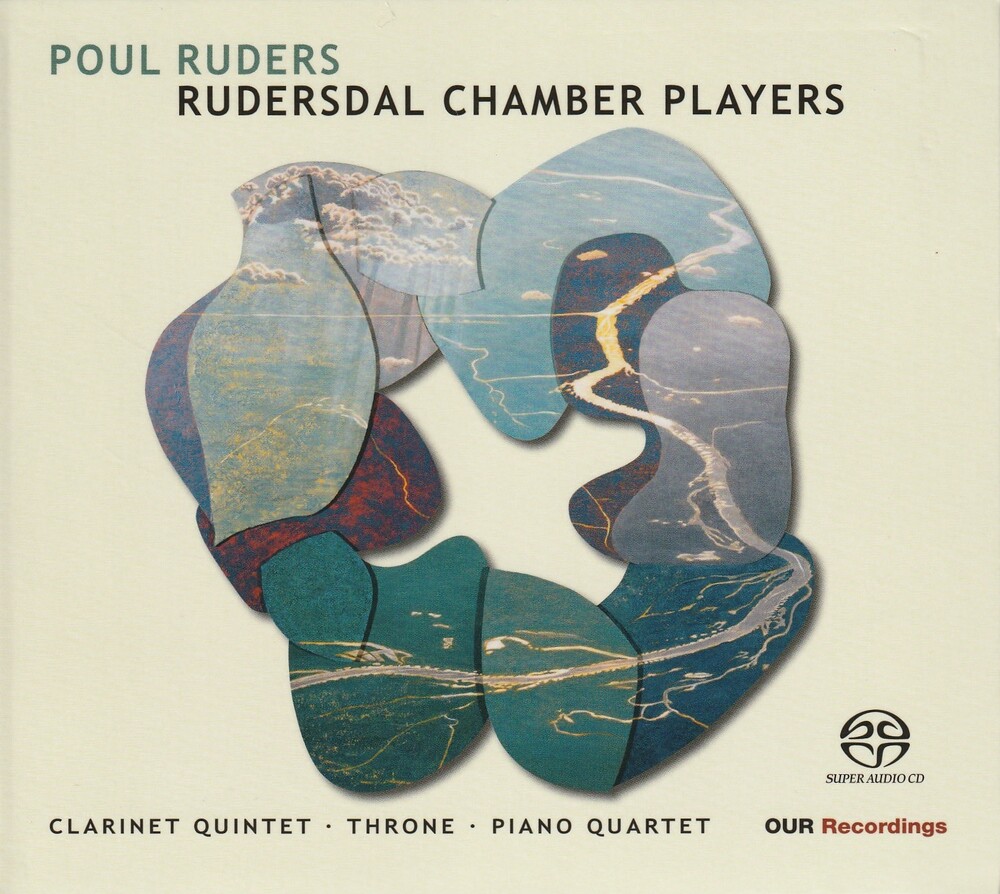
08 Poul RudersPoul Ruders – Clarinet Quintet; Throne; Piano Quartet
Rudersdal Chamber Players
Our Recordings 8.220680 (ourrecordings.com)

The Rudersdal Chamber Players lift the music of Poul Ruders off the page and into the ether with finesse and passion. Liner notes include Ruders’ own quirky accounting for the pieces, and players’ biographies, which one senses were written by themselves. The group has been together since 2017, with members mostly of the current generation, all excellent. No explanation is offered for the similarity of the names, so call it a coincidence. The group is named for a music festival whose home is Rudersdal.  

The music itself is intense and compelling. Three works fill out the roughly 60 minutes of track time: Throne for clarinet and piano (1988); and the more recent Clarinet Quintet (2014) and Piano Quartet (2016). Describing or categorizing Ruders’ music requires more space than allotted, so I decided to list some adjectives and some possible likenesses to other composers: swinging, soaring, wailing; sweet and then astringent; moody and meditative; then boisterous and exuberant.  

Sometimes in the style of a chorale, featuring monody or homophony, with minimal vibrato (the Adagio movement of the Clarinet Quintet). At others (especially in the Piano Quartet) he reverts to more boldly modern style in the sense that his usual tonalism gives way to expressionistic chromaticism. And especially in the playing of the terribly capable clarinetist Jonas Frøland, expect keening notes at the top of the spectrum to tug on your emotions.

If he has forebears, they are Messiaen (although Ruders is doubtless a pantheist) and Ruders’ compatriot Carl Nielsen (minus the melancholy). His contemporary cadre might include Gavin Bryars and Anders Hillborg, and possibly Kaija Saariaho. In his own words, the most important defining feature of his music is its soul and I urge you to discover that for yourself.

Listen to 'Poul Ruders – Clarinet Quintet; Throne; Piano Quartet' Now in the Listening Room

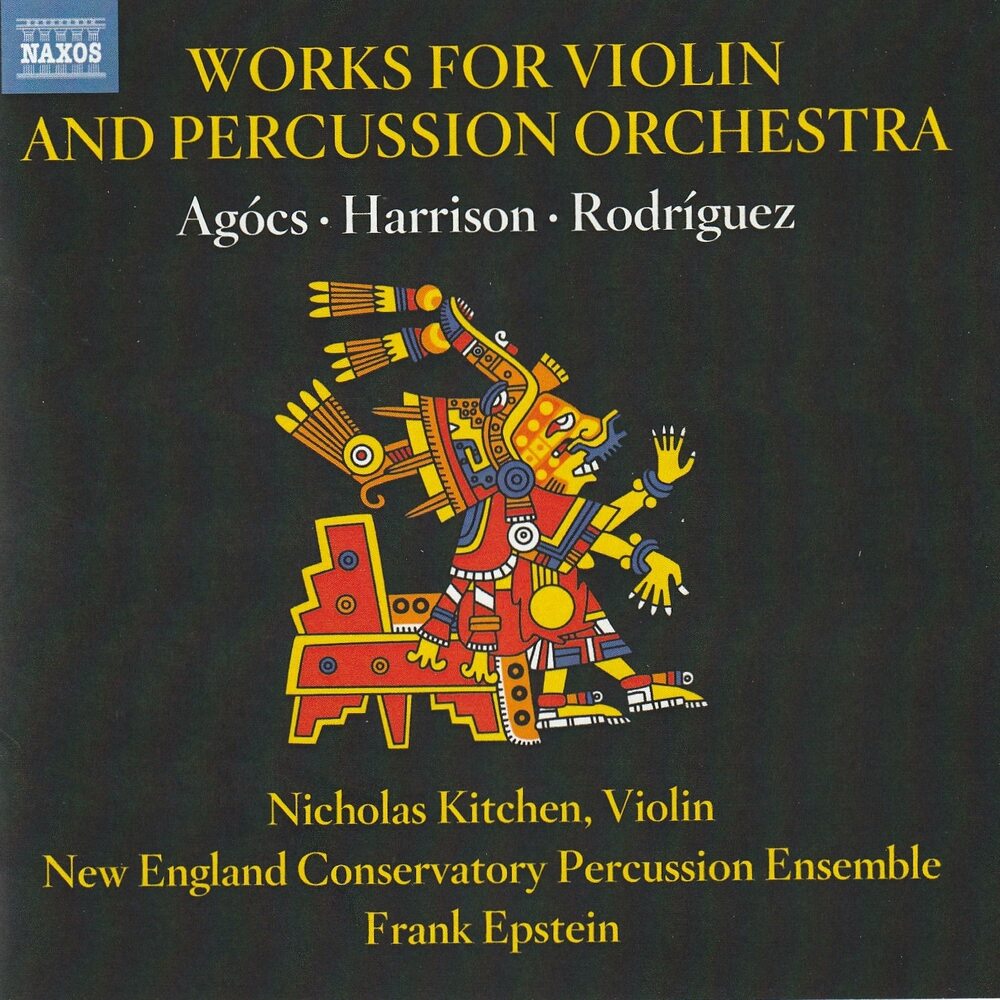
09 Violin and PercussionWorks for Violin and Percussion Orchestra
Nicholas Kitchen; New England Conservatory Percussion Ensemble; Frank Epstein
Naxos 8.574212 (naxos.com/Search/KeywordSearchResults/?q=Agocs)

American composer Lou Harrison (1912-2003) enjoyed mixing non-Western musical exoticism with lots of percussion. In his Arabic-flavoured, 21-minute Concerto for Violin and Percussion Orchestra, he augmented conventional noisemakers with novel “instruments” including flowerpots, metallic coils and washtubs. Sinuous violin melismas and pulsating percussion decorate its first two movements, composed in 1940; Harrison added the roisterous belly-dance finale in 1959. It’s energetically performed by Nicholas Kitchen, first violinist of the Borromeo String Quartet, New England Conservatory quartet-in-residence, and the NEC Percussion Ensemble conducted by Frank Epstein, its founding music director. 

Insistent rhythms and pentatonic melodies, including an ancient Mayan dance-song, evoke tropical steaminess in the five-movement Xochiquetzal (2014) by Robert Xavier Rodríguez (b. San Antonio, Texas 1946). Kitchen’s violin vividly represents Xochiquetzal, Aztec goddess of beauty, love and fertility, among hummingbirds, casting a love spell, alongside her rain-god husband, weeping tears of flowers and bestowing music and dance upon her worshippers.

The four-movement Concerto for Violin and Percussion Orchestra (2018) by NEC faculty member Kati Agócs (b. Windsor, Ontario 1975) begins with Incanta, gentle tinkles accompanying a long-lined, sentimental violin melody. In the animated Inquieto, staccato percussion punctuates rapid, repeated violin figurations. Maestoso presents another extended, soulful violin melody, slowly throbbing percussion, an intense violin cadenza leading to a dramatic tutti climax before returning to the opening lyricism. Brioso.Cantabile’s piquant melodies and propulsive rhythms create a whirlwind, Gypsy-like dance, its exultant final flourish ending both the concerto and this very entertaining CD.

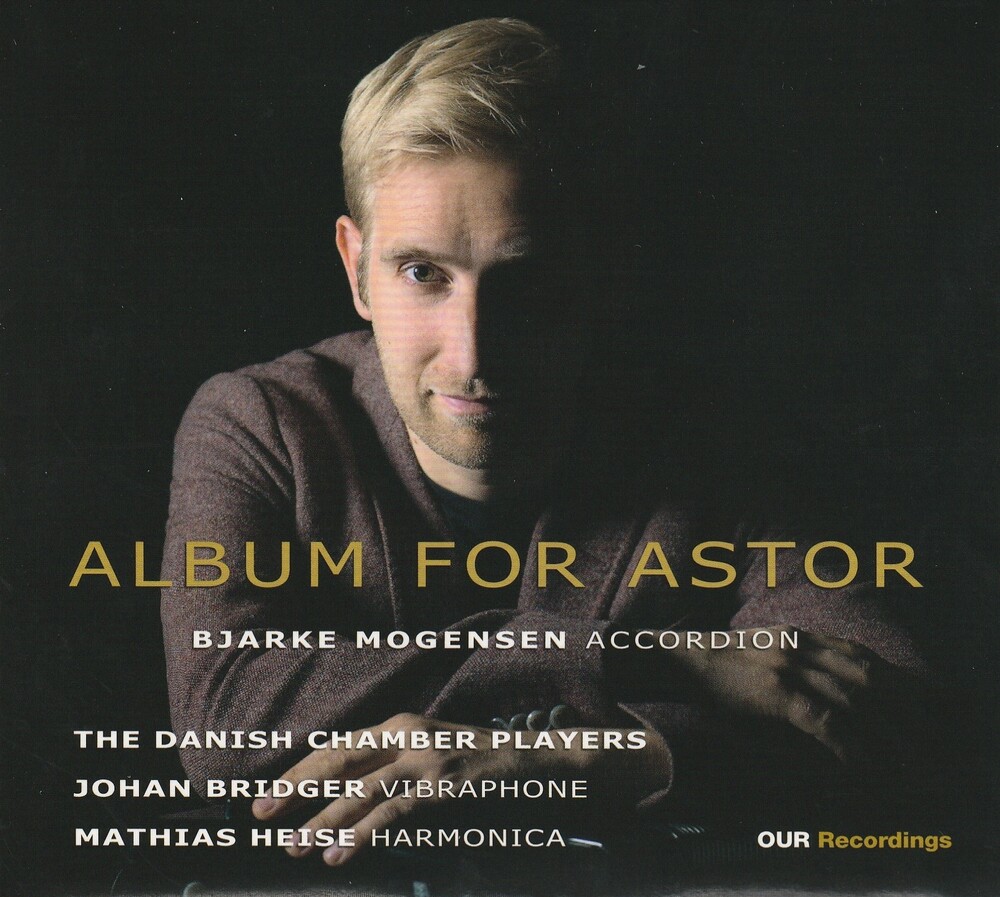
10 Album for AstorAlbum for Astor
Bjarke Mogensen; Danish Chamber Players
Our Recordings 8.226916 (ourrecordings.com)

Danish accordionist Bjarke Mogensen writes in his liner notes that this Astor Piazzolla instrumental release is for “the centenary of his birth.” Mogensen bases his accordion performances and instrumental arrangements here in his admiration, studies and understanding of Piazzolla’s compositions and bandoneon playing. Combined with Mogensen’s personal sound, this is over one hour of perfect Piazzolla.

The attention-grabbing opening track is Mogensen’s accordion solo arrangement of Adiós Nonino, Piazzolla’s work composed in memory of his father. An accented fast beginning leads to the famous slow, sad, emotional melody with rubato, then back to faster lush full glissandos and colours, showing off Mogensen’s skillful musicality, fast technique and respectful interpretations. The closing track solo arrangement Despertar (cadenza) is calming.

The other tracks feature ensembles. Mogensen arranges six works for himself and the Danish Chamber Players. Highlight is Fuga Y Misterio, from Piazzolla’s opera Maria de Buenos Aires. Contrapuntal writing with fast attention-grabbing accordion single lines, fugal instrumental lines, then full instrumentals with accented accordion and orchestra detached notes produce spirited dance sounds. 

Mathias Heise on harmonica joins Mogensen on their co-arrangement/duet of Café 1930 from Histoire du Tango. The harmonica blends surprisingly well with the accordion, especially in high-pitched lines above accordion bellow vibratos. Co-arranger Johan Bridger’s melodious virtuosic ringing vibraphone playing competes with and complements accordion tango runs in Vibraphonissimo. His vibes/percussion tight rendition with accordion moves from moody to tango nuevo in Tristango.

Piazzolla’s music lives on in this clear recording.

Listen to 'Album for Astor' Now in the Listening Room

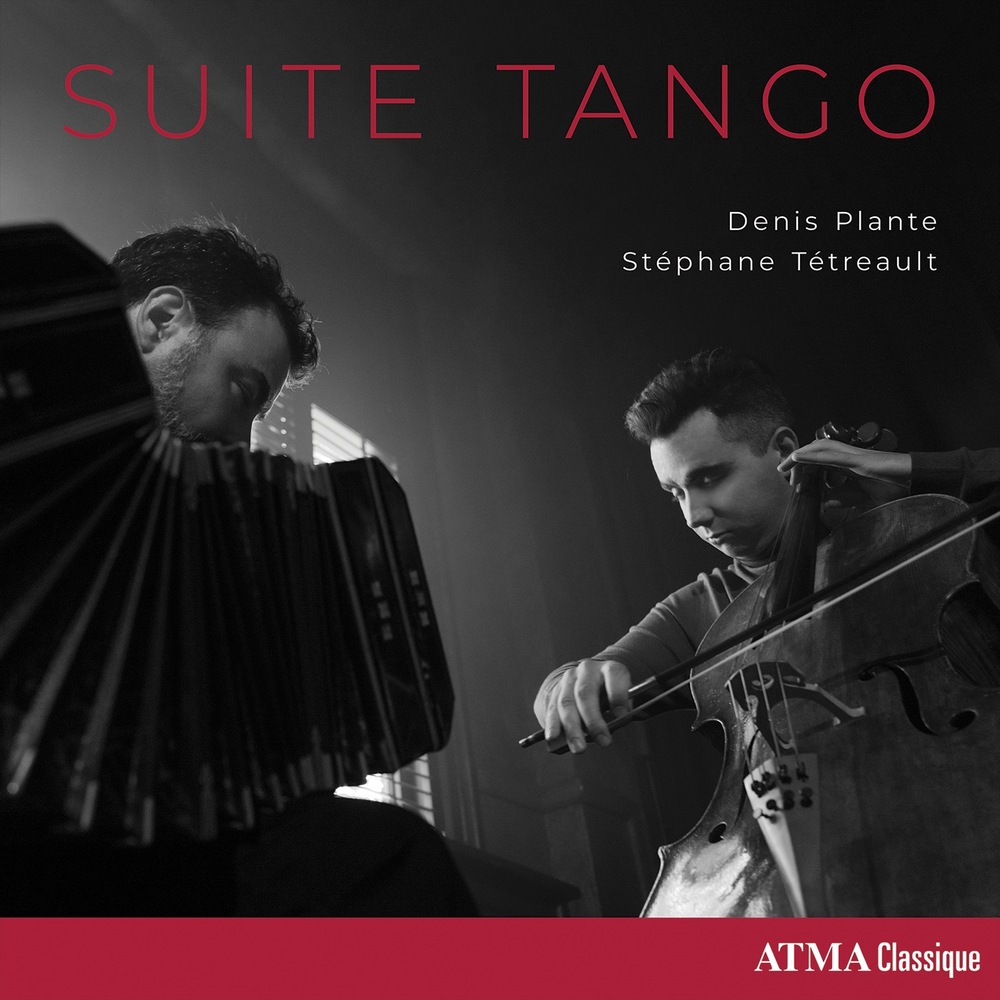
11 Suite TangoDenis Plante – Suite Tango
Stéphane Tétreault; Denis Plante
ATMA ACD2 2881 (atmaclassique.com/en)

Bandoneonist/composer Denis Plante was inspired by J.S. Bach’s Cello Suites which feature such dances as courante, gigue and sarabande to compose Suite Tango, six multi-movement dance suites for bandoneon and cello. Plante is joined by Stéphane Tétreault here. These two multi award-winning musicians play the mesmerizing unique sounds with compassion.

Baroque meets modern day Argentinian dance music head on! Suite No.1, “Argentina” is a perfect introduction to Plante’s compositions here. First movement Preludio, with its slow emotional rubato opening, creates the mood, with a gradual accelerando into instrumental conversational tango styles. Lyrical slower bandoneon opens Silbando, with legato cello contrapuntal countermelodies, plucked cello and lower-pitch bandoneon solo adding different colours. The third movement Tango is so very melodically rooted in this dance-form style, highlighted by cello melodies accompanied by accented bandoneon chords and single notes, then shifting to bandoneon melodies with cello accents. The opening movement Coral of Suite No.2 “Bach to tango” features a Baroque/tango-flavoured bandoneon to a closing Bach-like cadence. The solo cello is memorable in the short 49-second Recitativo second movement. The Baroque-coloured tonal duet features subtle tango feelings in Canto. Back to an exuberant lively short tango in the fourth movement Milonga-cayengue. Four exciting multi-movement suites follow. 

Plante composes with Bach and tango-flavoured styles combined, alone and developed into compelling new sounds. Both performers play with colourful rich tones, and virtuosic stylistic/instrumental expertise. It’s time to listen and/or to dance to Suite Tango!

Listen to 'Denis Plante – Suite Tango' Now in the Listening Room

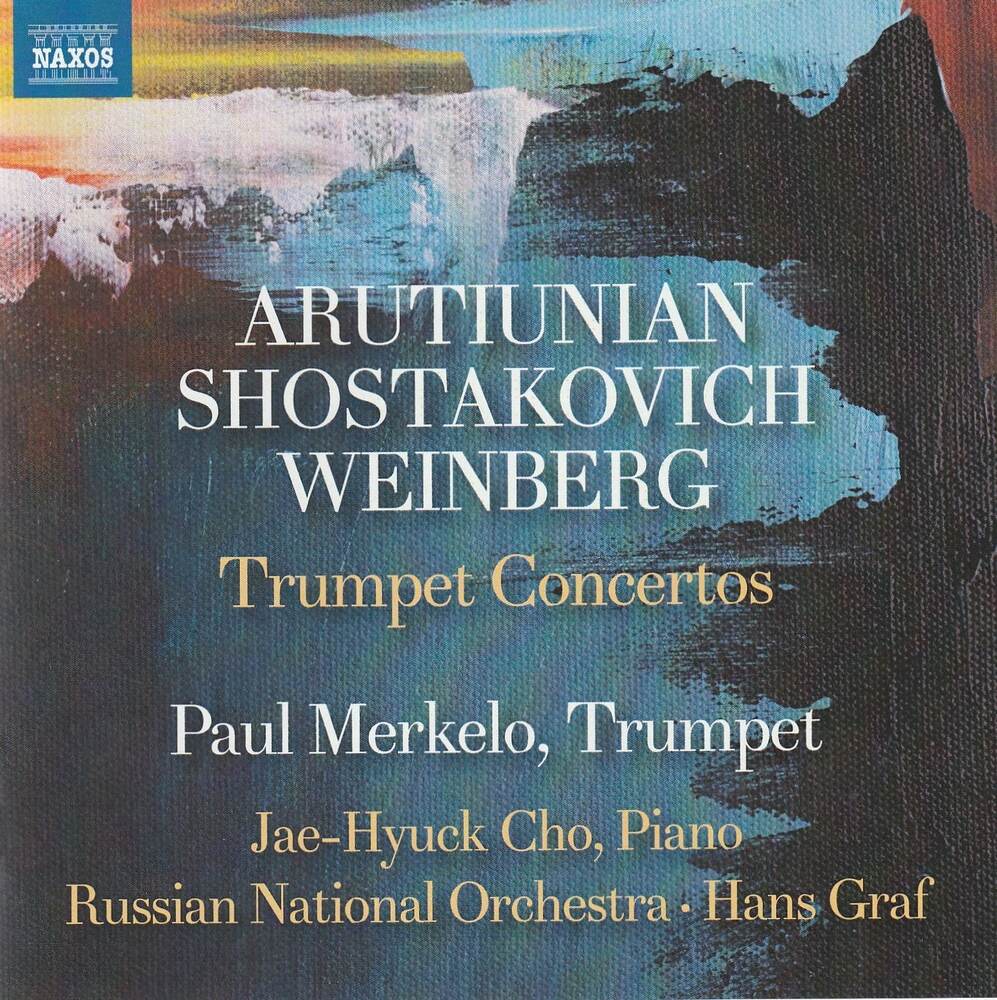
01 Merkelo TrumpetArutiunian; Shostakovich; Weinberg – Trumpet Concertos
Paul Merkelo; Jae-Hyuck Cho; Russian National Orchestra; Hans Graf
Naxos 8.579117 (paulmerkelotrumpet.com)

Since its creation in the Baroque era, the concerto has been dominated by keyboard and string instruments. If asked to provide a list of the greatest concertos of all time, one would likely list numerous piano and violin works, a cello concerto or two, and perhaps a piece for oboe or other woodwind.

Although its repertoire is limited when compared to other brass and woodwind instruments, the trumpet has had numerous concertos written for it from composers of the Soviet era and beyond. Three such works are featured here, including an adaptation of Shostakovich’s Piano Concerto No.1 in C Minor, Op. 35, arranged by trumpeter Paul Merkelo, principal of the Orchestre Symphonique de Montréal, himself.

While the trumpet is often used as a dramatic, high-volume instrument in orchestral settings, this disc demonstrates the remarkable versatility and subtlety that can be obtained from it, providing an illuminative look into the trumpet’s expressiveness and beauty. Armenian composer Alexander Arutiunian’s Trumpet Concerto in A-flat Major begins this recording and immediately strikes the listener with its alternating passages of lyricism and energetic buoyancy. Indeed, Merkelo’s immediately recognizable virtuosity makes even the most demanding moments sound effortless, with almost-unbelievable velocity never coming at the expense of the music itself.

Shostakovich’s Piano Concerto No. 1, originally titled Concerto for Piano, Trumpet, and Strings, follows a double concerto model, in which both piano and trumpet receive soloist responsibilities. Merkelo’s arrangement still features the piano, here performed by pianist Jae-Hyuck Cho, but with an expanded trumpet part that gives more evenly distributed responsibilities to each performer. Uncharacteristically playful yet undeniably Shostakovich, this work is a tour-de-force and a striking way to conclude a worthwhile exploration of one of music’s lesser-heard solo instruments.

Listen to 'Arutiunian; Shostakovich; Weinberg – Trumpet Concertos' Now in the Listening Room

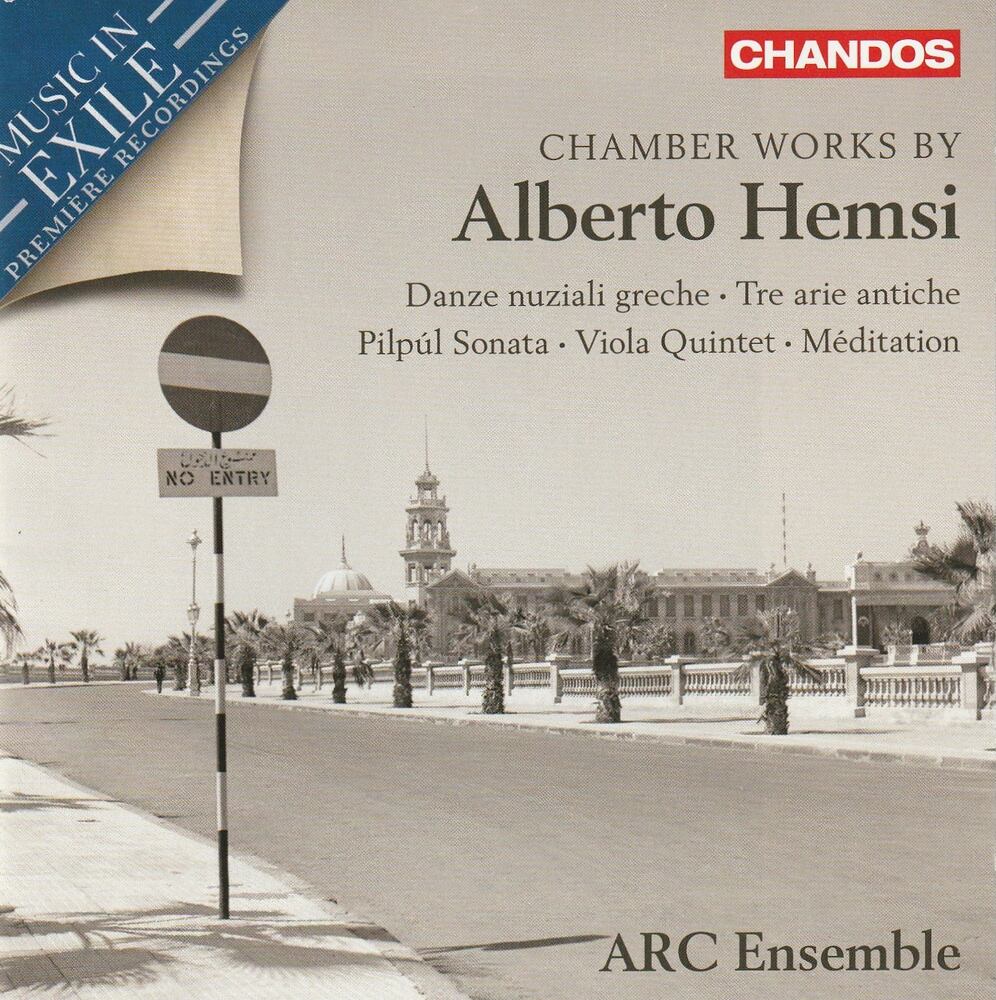
02 Alberto HemsiChamber Works by Alberto Hemsi
ARC Ensemble
Chandos CHAN 20243 (rcmusic.com/performance/arc-ensemble)

This latest Music in Exile CD spotlights Anatolia-born Alberto Hemsi (1898-1975). In 1922, during the Greco-Turkish War, Hemsi fled to Rhodes, then moved to Egypt in 1928, founding and conducting the Alexandria Philharmonic Orchestra. He finally emigrated to Paris in 1957, Egypt’s Jews being non-grata following Israel’s Suez invasion.

Hemsi often drew from his Sephardic-Jewish heritage, plus varied Middle Eastern traditions. Méditation (in Armenian Style), Op.16 for cello and piano was published in 1931. For nearly seven minutes the cello chants dolefully over hammer-dulcimer-like piano tinkles. Also for cello and piano, Hemsi’s three-movement, ten-minute Greek Nuptial Dances, Op.37bis (1956) honours, respectively, the jolly mother-in-law, wistful bride and comical godfather, staggering drunkenly.

The nine-minute Three Ancient Airs, Op.30 (c.1945) are settings for string quartet of three of the 60 songs in Hemsi’s Coplas Sefardies. Ballata evokes a sultry dance, Canzone a plaintive serenade, Rondò a children’s game song. These melodies, accompanied by guitar-like plucks, reflect Sephardic Jews’ enduring ties to Spain, their homeland before being expelled in 1492.

Sephardic and Hebraic melodic tropes imbue the three-movement, 19-minute Pilpúl Sonata, Op.27 (1942) for violin and piano, light-hearted depictions of scholars engaged in pilpúl, nit-picking arguments about Talmudic texts. Hemsi avoided overt ethnic references in his 18-minute Quintet, Op.28 (c.1943) for viola and string quartet. Here, three dance-like movements frame a tender Berceuse.  

Once again, Toronto’s splendid ARC Ensemble (Artists of the Royal Conservatory) has redeemed a deserving composer from unwarranted “exile” in this important ongoing series.

Listen to 'Chamber Works by Alberto Hemsi' Now in the Listening Room

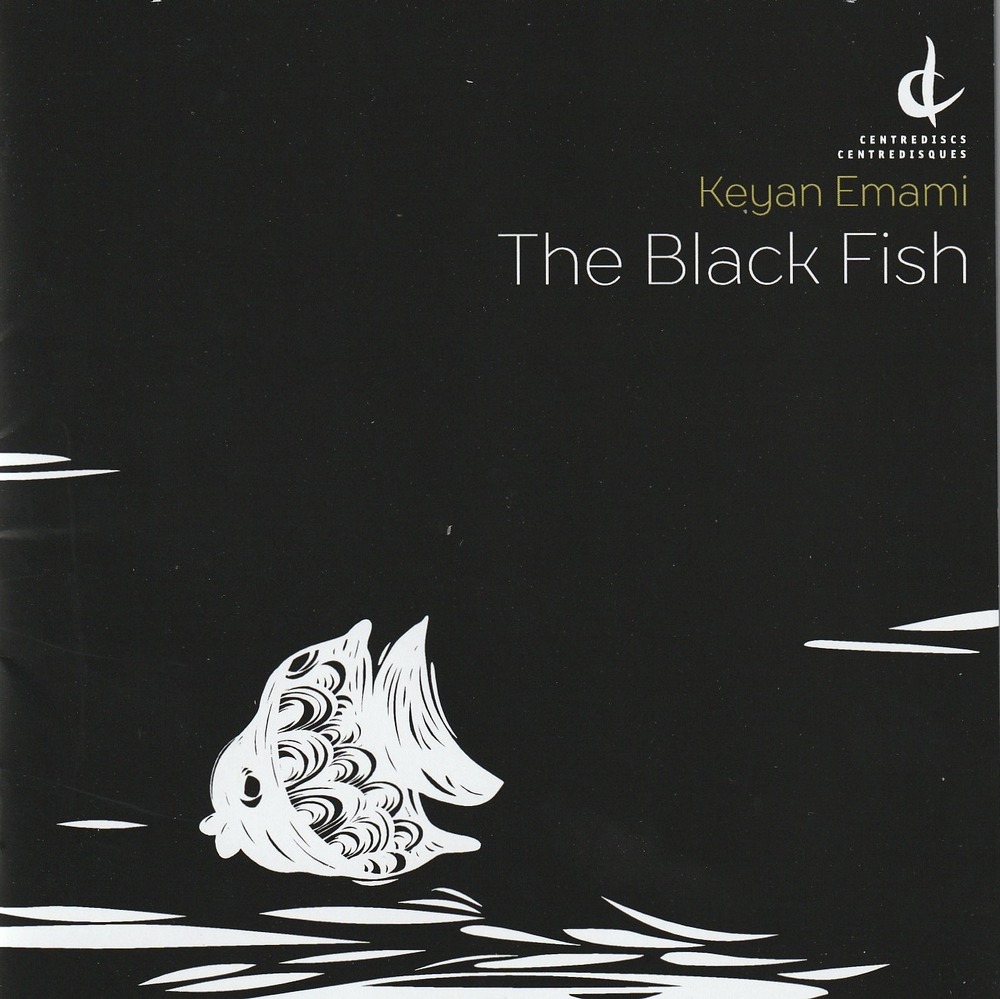
03 Black FishKeyan Emami – The Black Fish
Andrew Downing; Majd Sekkar; Ton Beau String Quartet; Louis Pino; Naoko Tsujita
Centrediscs CMCCD30422 (blackfishproject.com)

Toronto-based Iranian-Canadian composer Keyan Emami has composed a multi stylistic and instrumental masterpiece in his three-movement inspirational work based on the well-known Persian children’s book, The Little Black Fish, which tells the story of a little black fish who leaves his pond to explore the world. Commissioned by Ton Beau String Quartet, it is scored for string quartet, clarinet (Majd Sekkar), double bass (Andrew Downing), percussion (Louis Pino, Naoko Tsujita), with electronics and narration provided by Emami. The composed parts and improvised sections are performed brilliantly. 

The opening movement Dailiness immediately catches the listener’s attention with held notes and spooky string repeated two-note intervals. The more upbeat middle section features clarinet lead melody, bass and percussion transforming to more Middle Eastern idioms and a slower closing. The dramatic, moody 18-bar theme passacaglia Dreaming combines classic strings feel, jazz bass and all styles clarinet music with spoken words inspired by Attar of Nishapur’s bird poem. The final movement Swimming In D is inspired by Terry Riley’s minimalistic In C. Emami’s short stylistic diverse 48 melodic patterns add dramatic quasi minimalist ideas and movement in alternating dynamic, instrumental and stylistic sections from frolicking to calming to loud crashing effects. Sekkar’s colourful tones and wailing clarinet, and Emani’s allowing the performers freedom to repeat patterns as they wish, are highlights.

Emami’s masterful ability to combine children’s story ideas with his well-developed symphonic, jazz/rock, Persian, world, improvisational and contemporary inspired composing makes this music for all ages.

04 Bekah SimmsBekah Simms – Bestiaries
Various Artists
Centrediscs CMCCD 30022 (centrediscs.ca)

Canadian composer Bekah Simms is no stranger to the concert stage having been the recipient of over 30 composition awards, but her latest work Bestiaries takes us into a new realm of height and depth. This album comprises three chamber works, and highlights Simms’ fine orchestral colouring, as well as exacting leadership from Brian Current’s Cryptid Ensemble and Véronique Lacroix’s Ensemble Contemporain de Montréal, the former being created for the express purpose of this album. At times feeling chaotic, the work never loses a finely crafted sensibility of every note being exactly where the composer wants it to be.

The opening of Foreverdark has us awakening in what could be described as a subway tunnel and very quickly drags us through underwater culverts and dark machinery. Led by amplified cello, this is stunning work from Toronto’s Amahl Arulanandam, with whom Simms enjoys a close relationship. This is an incredibly exciting piece I would love to see performed live.  

From Void is a chilling and aggressive piece, after which we welcome Bestiary l+ll, a cinematic journey broadcasting a depth and width of oceanic proportions. We are floating over landscapes of rock, darkly shrouded shipwrecks and elegant sea creatures. Simms pulls us in, taking us along on her deep dives into her personal Neverworld like a school of fish following in her journey to the oceanic underworld, led by the brilliant waves of vocal elasticity from Charlotte Mundy’s beckoning Siren call and pulling us up for air with bird calls and what Simms describes as her “sonic ecosystem.”

Simms crafts a tapestry of strict essentials that are tensile without being harsh, like finely knit silk crochets transforming to steel mesh. Is there such a description as densely translucent? This would be it.

Back to top