08 piccolo sweet dreamSweet Dream
Jean-Louis Beaumadier
Skarbo DSK4165 (piccolo-beaumadier.com)

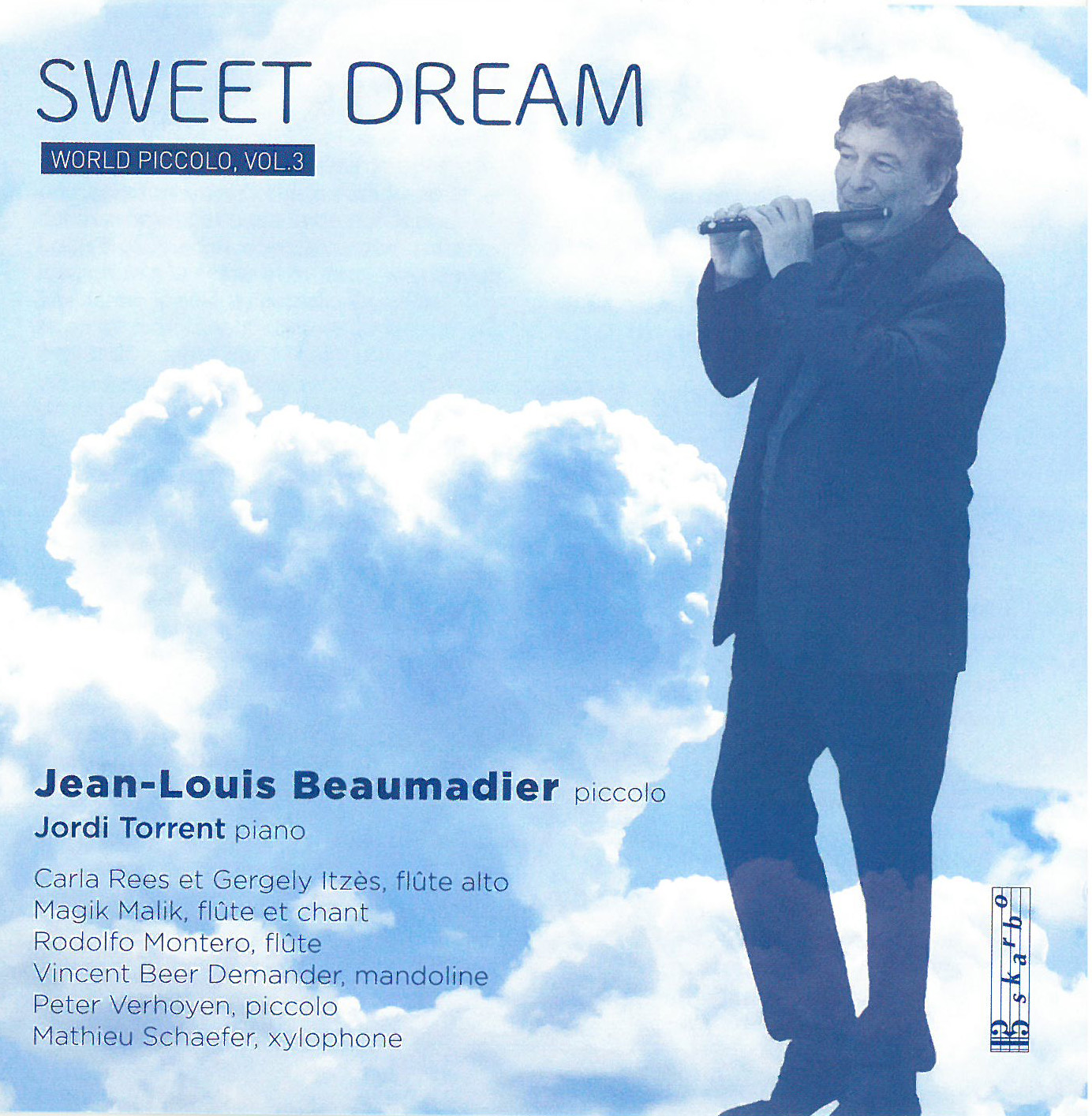
How much repertoire is out there for the piccolo player? Through extensive discoveries, adaptations and commissioning, Jean-Louis Beaumadier continues to amaze us with the breadth of musical possibilities that his oft-maligned little flute possesses. Sweet Dream, the most recent addition to his fine collection of nearly 20 recordings devoted entirely to the piccolo, offers fresh new works rendered with the captivating artistry we have come to expect from this musician whom Jean-Pierre Rampal once dubbed “the Paganini of the Piccolo.”

In Guarnieri’s Estudo, Guiot’s Sweet Project, and Damase’s For Piccolo, Beaumadier’s continuing partnership with pianist Jordi Torrent is the source of outstanding rhythmic precision, impeccable intonation and synchronicity of nuance. In particular, the jazzy, technical wizardry of Mike Mower’s Sonata is executed with effortlessly cool nonchalance. Carla Rees with her Kingma quarter-tone alto flute joins them in Véronique Poltz’s four expressive and inventive miniatures, Midnight with Pan. Although employing flutter-tongue, whole-tone and quarter-tone passages, this music is engagingly accessible; movement three, Sweet Dream, exudes utter serenity.

The controlled beauty of Beaumadier’s pianissimo is featured in Flint Juventino Beppe’s A Piccolo Poem. William Bardwell’s gamelan-inspired gem, Little Serenade, uses the percussive textures of the mandolin and xylophone to contrast and support some very lyrical piccolo playing. Rounding out the disc are Gordon Jacob’s Introduction and Fugue for piccolo, flute and alto flute, Magalif’s infectiously cheerful piccolo duet Tarantella and the improvisatory-like duet, Naomi for piccolo and flute with voice, by Magic Malik (Malik Mezzadri).

This CD is highly recommended for both the piccolo aficionados and its skeptics!

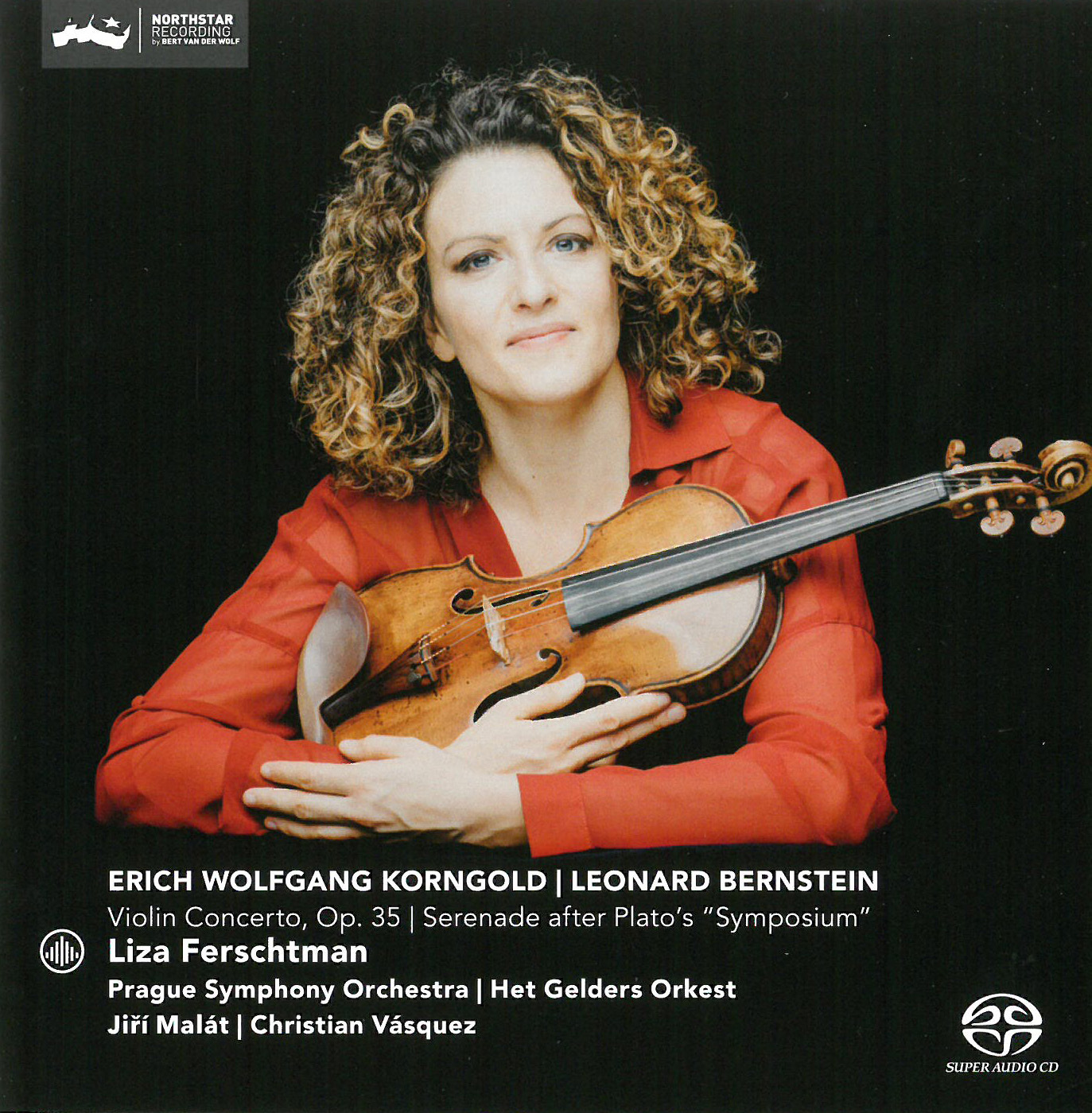
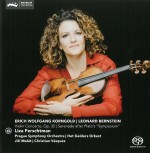
01 Korngold BernsteinThe Dutch violinist Liza Ferschtman is in terrific form on her new Super Audio CD of works by Erich Wolfgang Korngold and Leonard Bernstein (Challenge Classics CC72755 challengerecords.com). The Prague Symphony Orchestra under Jiří Malát features in Korngold’s Violin Concerto Op.35, while Het Gelders Orkest under Christian Vásquez accompanies Bernstein’s Serenade after Plato’s “Symposium.”

Korngold’s cinematic concerto quotes liberally from his Hollywood movie scores, and despite its 1945 date is a late Romantic work redolent of the composer’s early years in pre-war Vienna. Ferschtman’s strong, rich tone is perfect for this lush work, and is particularly effective in the gorgeous slow movement.

Bernstein’s Serenade, written for Isaac Stern in 1954, is a five-movement work very much with a concerto feel – Bernstein apparently referred to it as such – and also contains quotes from the composer’s earlier works, this time five short pieces written as birthday presents for his friends. It’s a really lovely work that really should be heard more often.

Both were recorded live, the Korngold in Ludwigshafen, Germany and the Bernstein in Arnhem in the Netherlands. The orchestral contribution is excellent throughout, as is the recording quality.
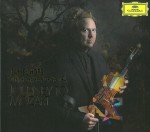
02 Daniel Hope MozartJourney to Mozart is an exploration of the musical world of Mozart and his contemporaries by the English violinist Daniel Hope (danielhope.com) with the Zurich Chamber Orchestra (Deutsche Grammophon 4798376).

Two pieces from Gluck’s Orfeo ed Euridice – an orchestral Dance of the Furies and a violin adaptation of Dance of the Blessed Spirits – open the disc. Haydn’s Violin Concerto in G Major has a lovely feel to it, as does the Larghetto second movement from Mysliveček’s D Major Violin Concerto.

The central Mozart works are the Violin Concerto No.3 in G Major K216 and the E Major Adagio K261, the latter in a particularly lovely performance.

Johann Peter Salomon, the concert impresario who brought Haydn to London, was also a violinist and composer, and his brief Romance for violin and strings in D Major is a real delight. An arrangement of Mozart’s Rondo alla turca from the A Major Piano Sonata K331 completes a terrific CD.

After numerous appearances as a guest soloist Hope became the musical director of the Zurich ensemble in 2016. Their mutual understanding is evident in performances notable for their sensitivity, clarity, energy and dynamic contrasts.
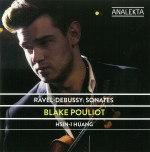
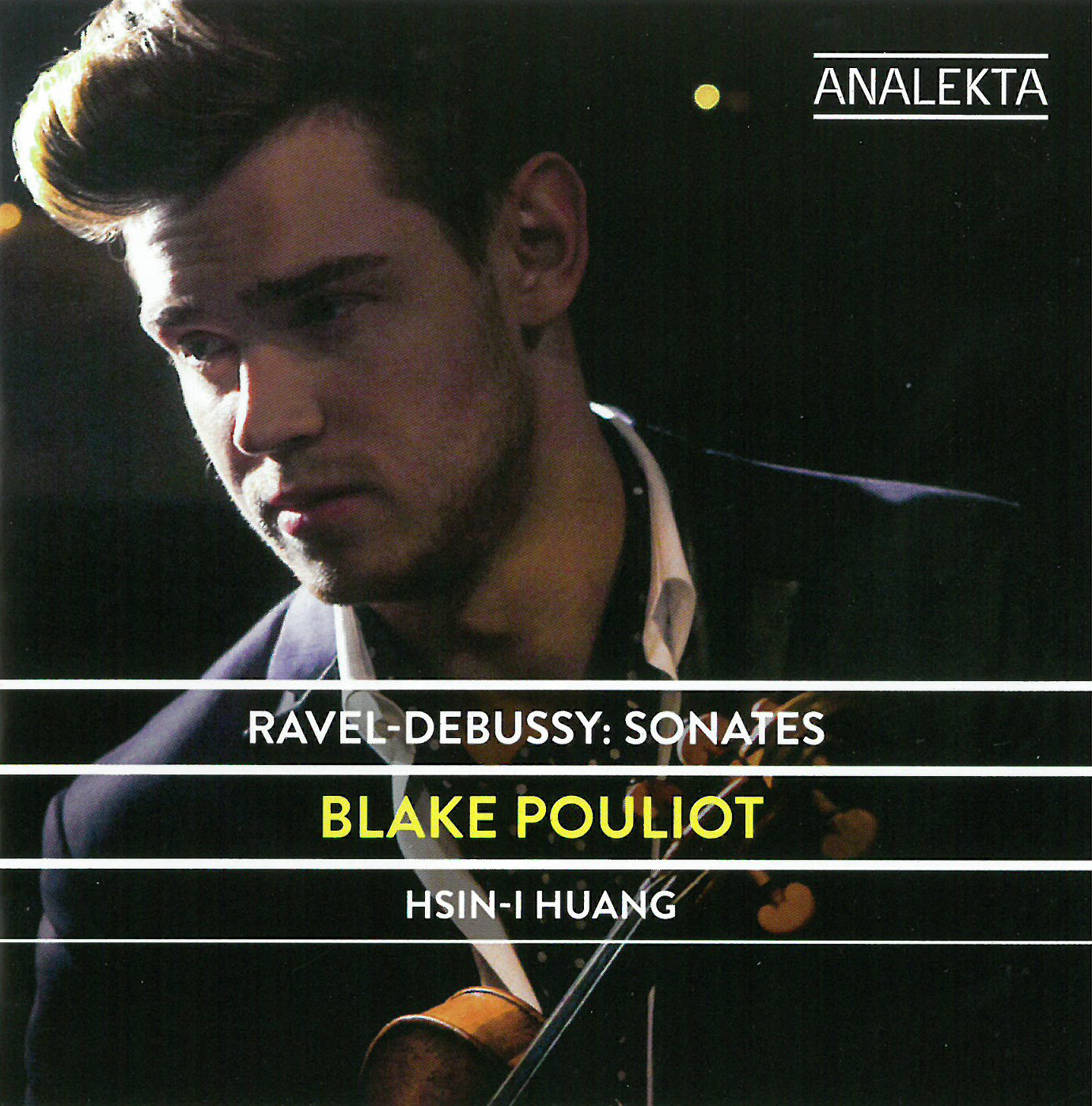
03 Blake PouliotThe young Canadian violinist Blake Pouliot makes an outstanding recording debut with Ravel-Debussy Sonates with pianist Hsin-I Huang (Analekta AN 2 8798 analekta.com). The Ravel works are the Tzigane and the Violin Sonata No.2 in G Major, while Debussy is represented by the Sonata for Violin and Piano and a transcription of the song Beau Soir, the latter providing a truly beautiful ending to a first-class CD.

Pouliot plays with strength, clarity, warmth, faultless intonation and a fine sense of phrase, and draws a gorgeous tone from the 1729 Guarneri del Gesù violin on loan from the Canada Council for the Arts. Huang provides splendid support for a player who is clearly going to be a major force in the violin world.
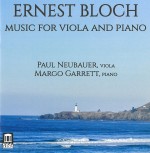
04 Bloch ViolaThere is an interesting story behind the recent release of Ernest Bloch Music for Viola and Piano (Delos DE 3498 delosmusic.com). Violist Paul Neubauer and pianist Margo Garrett spent three days in 2001 recording all of Bloch’s music for viola and piano, only for the digital audio tapes to go missing. When they resurfaced a while ago the performers were thrilled to find them not only salvageable but also featuring playing that represents their best efforts to bring these works to life.

And what playing it is! Both performers are superb in the major work on the CD, the four-movement Suite for Viola and Piano from 1919, described in The Musical Quarterly as “…one of the most significant and powerful works of our time.”

The other works on the disc are the short, unfinished Sonata for Viola Solo from 1958, the year of Bloch’s death, and the Suite hébraïque and the Meditation and Processional, originally written as Five Jewish Pieces in 1951 but reconfigured into two independent works and published separately.

Neubauer has a wonderful fullness to his playing, with Garrett’s accompaniment of an equally high standard. There is no hint of any problem with the source tapes. 
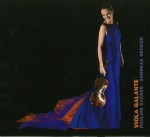
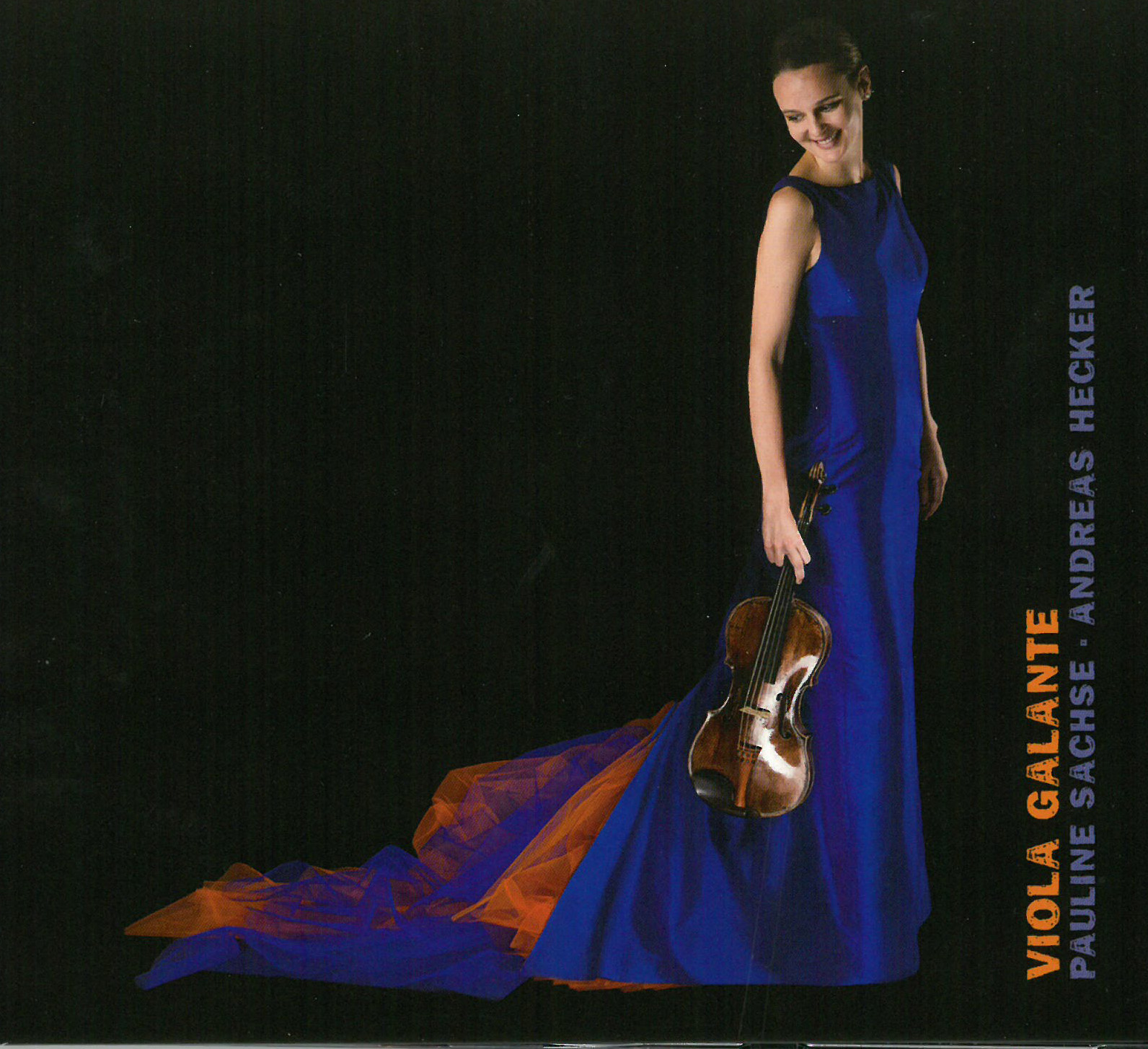
05 Viola GalanteThere’s more lovely viola playing on Viola Galante with violist Pauline Sachse and harpsichordist Andreas Hecker playing 18th-century sonatas by C.P.E. Bach, William Flackton, Giorgio Antoniotto, Franz Benda and Christlieb Siegmund Binder (Avi-music 8553312 avi-music.de). Except for the Bach and Flackton, all are world premiere recordings of mostly forgotten repertoire.

The works are from an era when the viola was first being considered as a solo instrument, and when, in reaction to the ornamental Baroque style, a desire for delicacy and sensitivity sparked the emergence of the galant style. Both players exhibit an appropriate lightness and agility with an excellent balance, the harpsichord never too close or heavy. The opening movement of the Binder work in particular features outstanding playing by Hecker.

Sachse’s 1610 Paolo Maggini Madame Butterfly viola is strung with gut strings, and produces an appropriately beautiful sound. Hecker plays a 2000 Bruce Kennedy replica of a Berlin harpsichord by Michael Mietke, ca.1700.

Excellent and informative booklet notes regarding style and technical issues, especially contemporary pitch and temperament, add to a fascinating release.
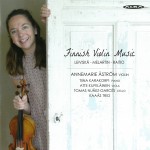
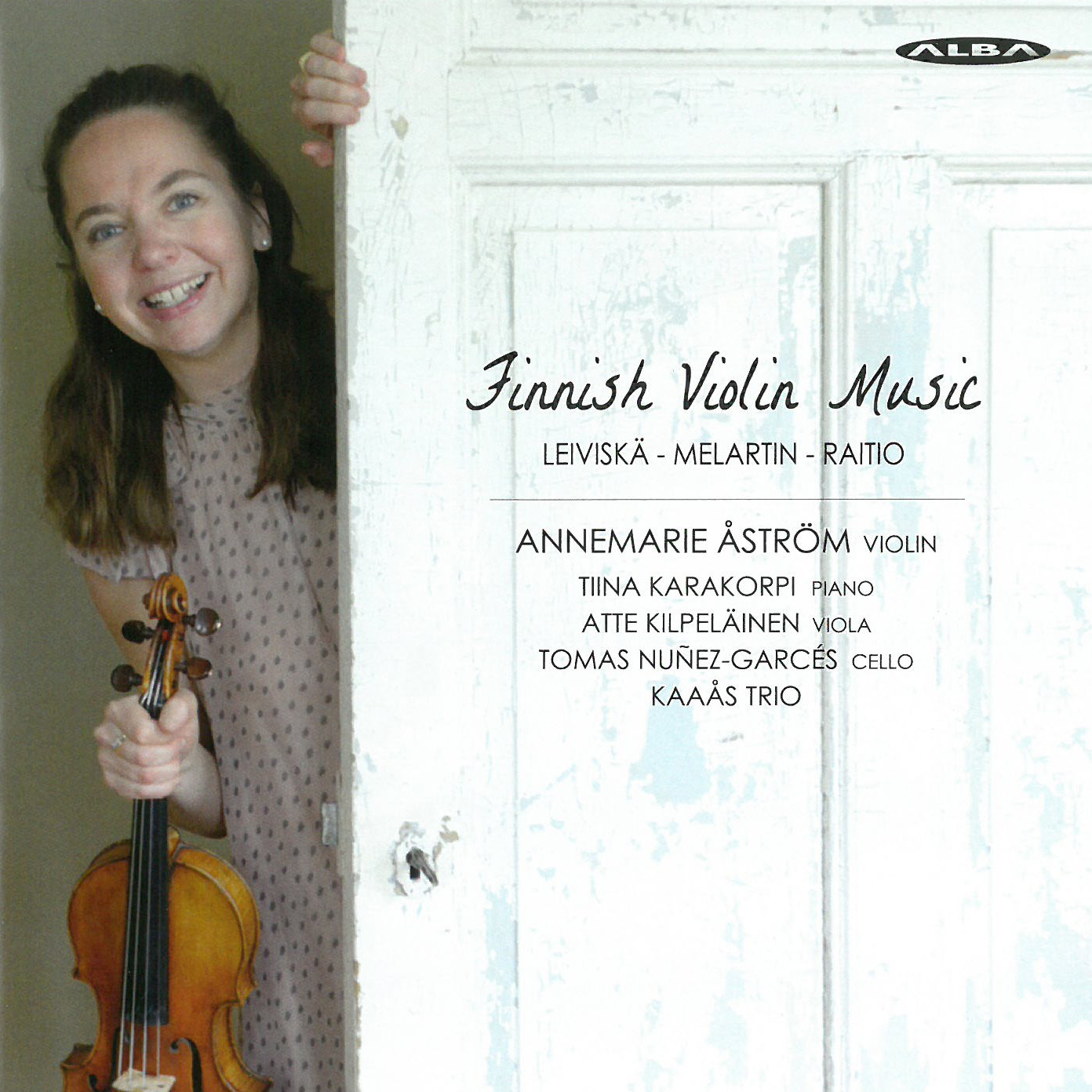
06 Finnish ViolinThere are more world premiere recordings on Finnish Violin Music, with violinist Annemarie Åström leading performances of virtually unknown works written in the 1920s in the shadow of Sibelius (Alba Records ABCD 410 alba.fi). The three composers here share a connection, Helvi Leiviskä and Väinö Raitio having studied with Erkki Melartin at the Sibelius Academy in Helsinki.

Åström is joined by fellow KAAÅS Trio members pianist Tiina Karakorpi and cellist Ulla Lampela in Leiviskä’s Piano Trio, and by violist Atte Kilpeläinen and cellist Tomas Nuñez-Garcés in Melartin’s terrific Trio Op.133. Raitio is represented by the Four Pieces for Violin and Piano Op.18 and Sinivuokko, a late piece from 1943.

These are fine performances of really strong and appealing works that leave you wondering what other real gems are waiting to be rescued from obscurity.
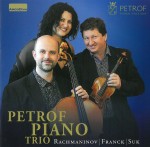
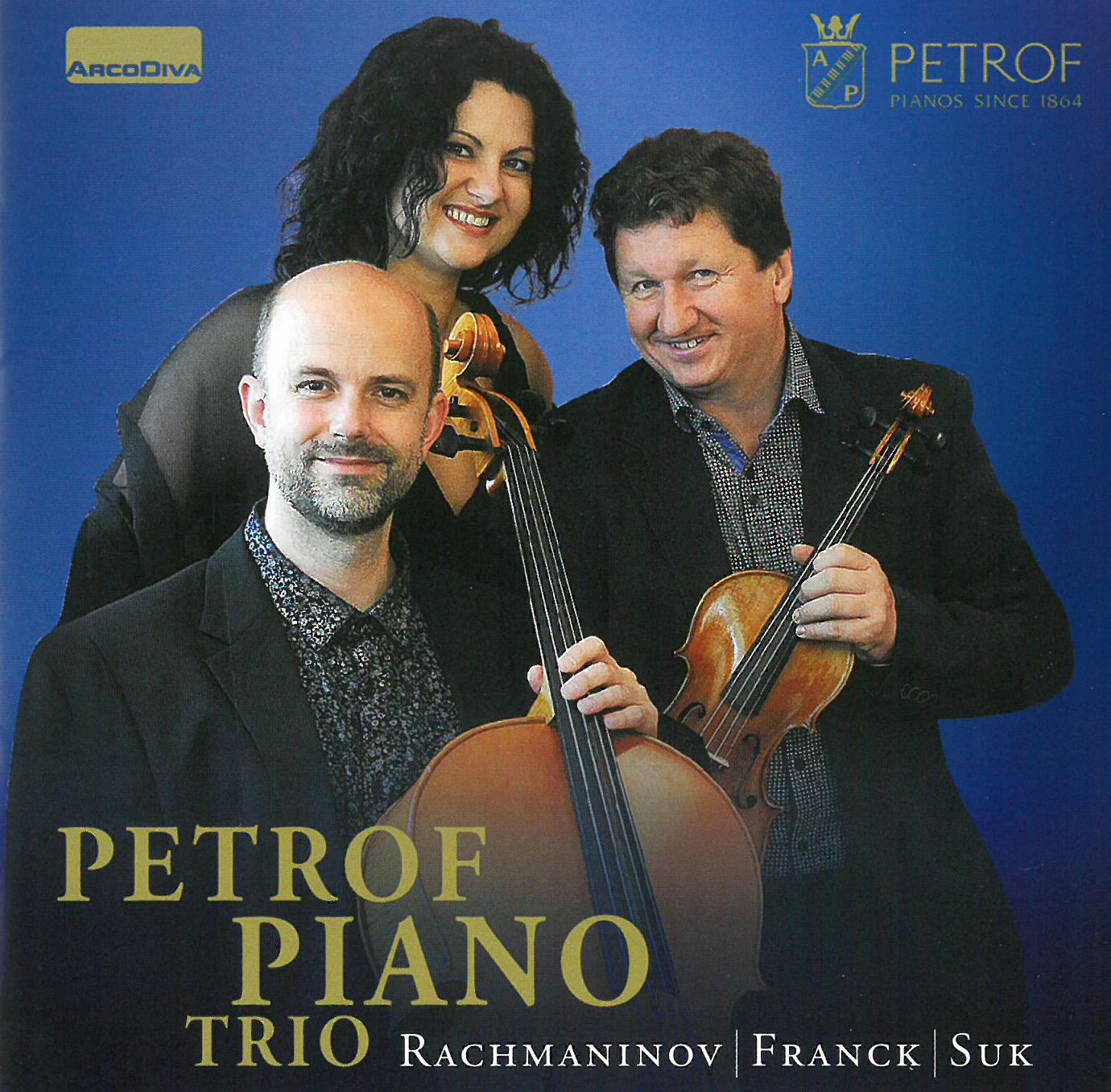
07 Petrof TrioPiano trios by Rachmaninov/Franck/Suk are featured on a new CD from the Petrof Piano Trio of pianist Martina Schulmeisterová, violinist Jan Schulmeister and cellist Kamil Žvak (ArcoDiva UP 0183-2131 petrofpianotrio.com).

The three major works are Rachmaninov’s Piano Trio in G Minor (a student work from 1892), César Franck’s Piano Trio in F-sharp Minor Op.1 No.1 and Josef Suk’s Elegy Op.23. Trio arrangements of Rachmaninov’s Vocalise, Saint-Saëns’ The Swan and Piazzolla’s Invierno Porteño complete the disc.

The Franck is an interesting piece, a juvenile work from a composer known primarily for a few works from his final years. The Petrof Trio is in its element with Suk’s lovely Elegy, but there is outstanding playing throughout the CD, with the warm, passionate and expressive string playing you would expect from Czech players and a superb piano tone and recording quality.
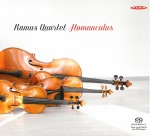
08 Kamus QuartetThere’s another world premiere recording on the new Super Audio CD from the Finnish Kamus Quartet, this time the title track Homunculus, a work by Esa-Pekka Salonen in a program that also includes György Ligeti’s String Quartet No.1 (Metamorphoses Nocturnes) and Benjamin Britten’s String Quartet No.3 (Alba Records ABCD 409 alba.fi).

Homunculus – a reference to a medieval alchemists’ theory that all life existed in minute but perfect seeds, the tiny humans being known as homunculi – is described as “a big work in a miniature mould.” Ligeti’s quartet is a strong early work with a decided Bartók influence. The performance of the Britten is an insightful one, clearly helped by the winter months the Kamus Quartet spent in Aldeburgh, the composer’s home on the North Sea coast.

Excellent playing and intelligent and thoughtful interpretations make this a highly satisfying disc.
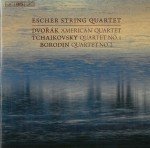
09 Escher QuartetThe New York-based Escher String Quartet provides rich, full-bodied Romantic playing on a new Super Audio CD of three of the most popular works in the string quartet repertoire: Dvořák’s String Quartet in F Major Op.96 (“American”); Tchaikovsky’s String Quartet No.1 in D Major Op.11 (the one with the famous Andante cantabile slow movement); and Borodin’s String Quartet No.2 in D Major, its Scherzo and Notturno middle movements the sources for the hit songs Baubles, Bangles and Beads and And This Is My Beloved from the Broadway musical Kismet (BIS Records BIS-2280 bis.se).

Lovely works, really top-notch performances and over 80 minutes of music make for a thoroughly enjoyable CD.

10 CancionnesIt’s easy to understand why Classical Guitar Magazine described Adam Cicchillitti as a “superb Canadian guitarist” from his new CD Canciones (Analekta AN 2 8781 analekta.com).

As the booklet notes point out, few national music styles are as connected with one instrument as is Spain with the guitar, which seems imbued with the colours and spirit of the country’s various regions. This disc features works by six mostly 20th-century Spanish composers: Albeniz’ Suite española Op.47; Turina’s Sonata Op.61; de Falla’s Canciones populares españolas; Moreno Torroba’s Sonatina in A major; García Lorca’s Canciones españolas antiguas; and Rodrigo’s Tonadilla for two guitars.

Cicchillitti’s regular recital partner baritone Philippe Courchesne-Leboeuf joins him for the brief but lovely de Falla and García Lorca songs, and Steve Cowan is the second guitarist in the Rodrigo. Cicchillitti plays with technical assurance, sensitivity and a full-bodied warm sound across the whole range of the instrument.

Also, a word of appreciation for Drew Henderson, a fine guitarist in his own right, for his excellent work in the recording, editing, mixing and mastering of the CD. 
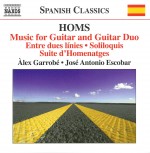
11 Homs GuitarSpanish guitar music from the second half of the 20th century can be found on Music for Guitar and Guitar Duo by Joaquim Homs, a new CD in the Naxos Spanish Classics series (8.573855 naxos.com). Spanish guitarist Àlex Garrobé and Chilean José Antonio Escobar are the performers.

Homs (1906-2003) was a leading proponent of 12-tone composition, but the works here, spanning over 50 years, paint a picture of a much more diverse career that moved from early influences of French impressionism, Bartók, Stravinsky and Webern to the definitive introspective style of the last 30 years of his life following the early death of his wife in 1967. The music is idiomatic and always expressive, with only the occasional nod to extended technique – a slide guitar effect that apparently uses a bottleneck.

Recorded in Barcelona to the usual Naxos high standards, it’s a fascinating CD.
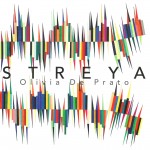
12 Olivia De PratoFor her debut solo CD Streya (New Focus Recordings FCR193 newfocusrecordings.com) Austro-Italian violinist Olivia De Prato chose to record works by six composers with whom she has worked closely since her move to New York in 2005.

Victor Lowrie’s title track is one of three works that were written specifically for this project, Ned Rothenberg’s Percorso insolito and Canadian Taylor Brook’s Wane for five multi-tracked violins being the others. Samson Young’s Ageha.Tokyo, written for De Prato in 2008, opens the disc, with Reiko Füting’s Tanz.Tanz and Missy Mazzoli’s Vespers for Violin (amplified with electronics) the final two tracks. All except the Füting are world-premiere recordings.

Fans of contemporary solo violin music will find plenty here of interest, with De Prato’s excellent playing certainly making the best possible case for the works.


Listen to 'Streya' Now in the Listening Room

01 Houghs Dream AlbumPianist Stephen Hough’s Dream Album (Hyperion CDA68176 hyperion-records.co.uk) is an artful program of works by Liszt, Sibelius, Elgar and other familiar composers. The pieces are chosen for what Hough calls their “lyrical” or “hallucinatory” quality. Hough’s playing is utterly captivating and intensely intimate. He’s a magician, a tease, and a brilliant performer who creates an intoxicating dream world of pianistic expression.
The familiar repertoire items are exquisite and completely engaging – each one a gem. But the real impact of this recording is Hough’s own creative gift. Of the 27 tracks, around half are either his transcriptions or compositions. The scale of his ability to write in the language of the piano is astonishing. His fluency and enormous vocabulary give his compositions a rare potency. There are no extra notes, no empty, wasted phrases. Every element Hough creates is carefully and economically placed by his unerring musical judgment. This is the genius of his gift.

Listen to his arrangement of the traditional melody Blow the wind southerly and Strauss’ Radetzky March, and marvel at his musical commentary on the main thematic material. Moscow Nights gets the same treatment and undergoes a remarkable rebirth.

Niccolo’s Waltz is a witty nod to a Paganini Caprice, and Matilda’s Rhumba is a clever allusion to the famous Australian ode to the waltz, in march time! But my favourite is Hough’s Osmanthus Romp. Syncopated, highly energized and brimming with optimism, the composition captures the essence of Hough’s artistic soul.

This fabulous CD is going to get a lot of play.

02 Lewis Haydn SonatasPaul Lewis has added another recording to his growing discography, Joseph Haydn Piano Sonatas Nos. 32, 40, 49, 50 (Harmonia Mundi HMM 902371 harmoniamundi.com). These four sonatas from Hob. XVI span nearly 20 years of Haydn’s career and provide a good example of how his writing evolved over that time. Lewis spends most of his effort in getting to the exploratory nature of Haydn’s style. He recognizes the relatively brief nature of the musical ideas and is mindful not to belabour them, favouring instead the timely pursuit of the next thought. While Lewis is careful never to miss an opportunity for a pause, tempo change or gentle landing, his intention is always focused on how Haydn is assembling his ideas architecturally, and how a disciplined rhythmic approach makes that happen effectively.

The Sonata in C Major No.50 is a fine example of how an opening movement strongly dependent on very specific rhythmic patterns can yield to a second movement seemingly free from those elements, before launching into a closing movement that restores the pulse of the work, rich with ornaments and arpeggios. Lewis’ complete command of keyboard technique makes the Haydn sonatas a joy to hear. His playing is as beautifully planned and organized as the composer’s ideas. His technique is clean and articulate, and his ability to find delightful moments of emotion would make Haydn blush.

03 Liszt Vol48Franz Liszt Hungarian Rhapsodies Nos. 12-17 (Naxos 8.573784 naxos.com) is the latest addition to an enormous recording project of the complete piano works of Liszt. This disc, Volume 48, features Carlo Grante performing the Rhapsodies that Liszt wrote in the 1840s plus another from around 1871. Grante has nearly 50 recordings to his credit, covering all the major historical composers in addition to a number of contemporary ones.

Grante’s approach to the Hungarian Rhapsodies reflects careful thought of what Liszt was trying to express. These are not pianistic lava flows erupting from volcanic fantasies; rather, they are reflections on the phenomenon of “gypsy” influence in Hungarian music. Opinions of what this influence actually was have changed since Liszt’s time, but the elements Liszt’s music considers are easy to identify. Grante picks these out and interprets them convincingly. Folk dance rhythms, imitations of gypsy instruments like the cimbalom, and characteristic ornaments and phrasings all contribute to the atmosphere of Liszt’s 19th-century Hungarian national ethos.

The final track on the disc is Puszta Wehmut (Longing for the Steppes). While some consider it a miniature Hungarian Rhapsody, its real impact is as a work with a strong contemporary feel of the 20th century, still several decades hence.

Grante’s contribution to this Naxos series is very fine indeed. An additional noteworthy feature is that he performs on Bösendorfer’s newly engineered concert grand, the 280 VC. It has a consistently mellow tone throughout its range and an impressive ability to be mysteriously subtle.

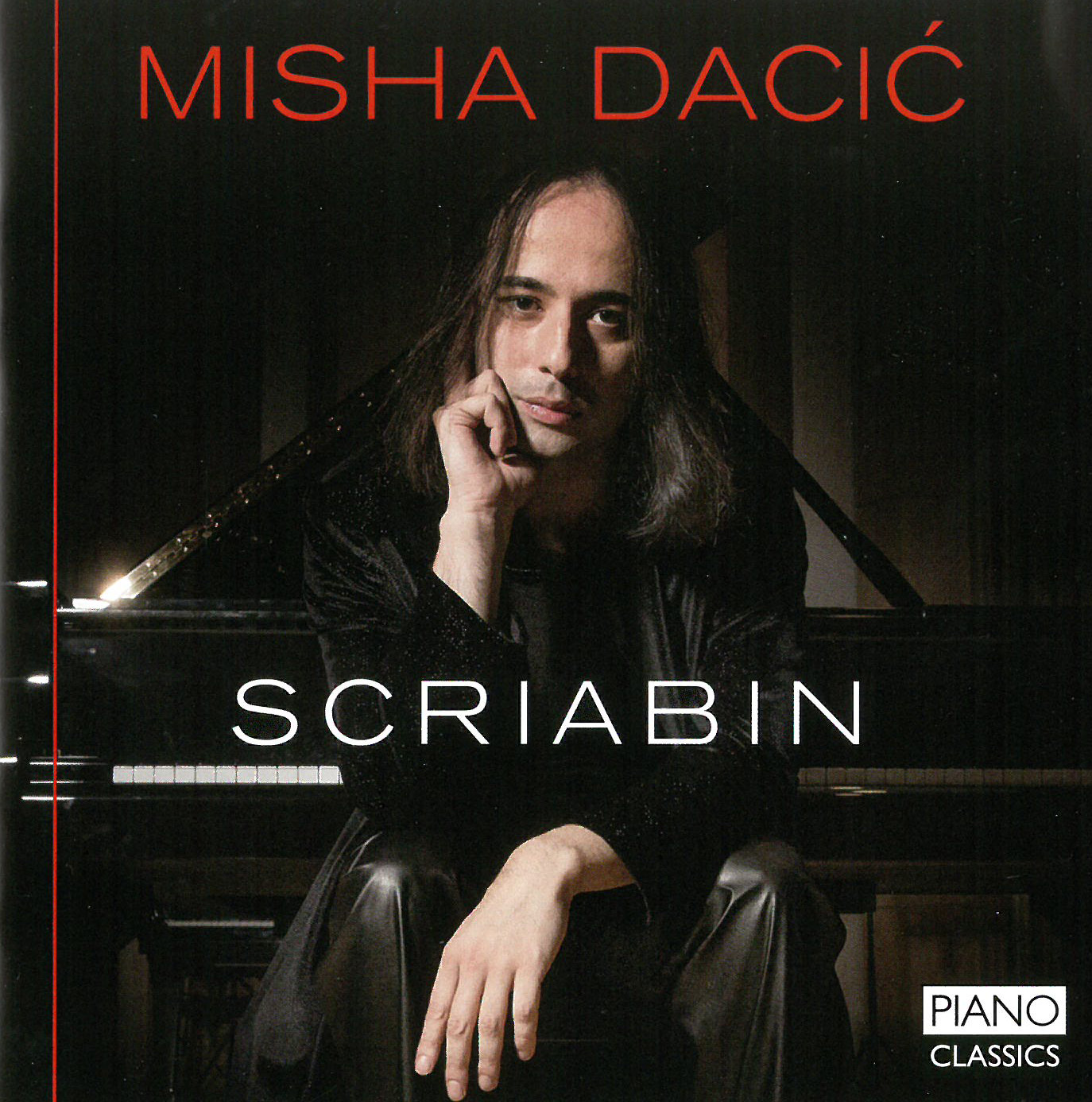
04 Misha Dacic ScriabinAt 18, Misha Dacić was the youngest competitor at the 1996 Liszt Competition in Budapest, where he came to the attention of Lazar Berman who made him his student for the next six years. Dacić’s new recording Scriabin (Piano Classics PCL10136 piano-classics.com) is impressive evidence of this young pianist’s talent and creative intellect.

The decision to choose Scriabin for an early career recording is as courageous as it is risky – even more so when the repertoire spans most of the composer’s lifetime. But therein lies Dacić’s plan. Something about Scriabin’s artistic evolution appeals to him deeply enough that he wants to portray it in his program choices. The first six tracks are early works, etudes and mazurkas mostly, and are consistent with the technical challenges and forward-looking language of composers at the turn of the 19th century. The remaining ones cover the rest of Scriabin’s life up to his death in 1915. This is where the turbulence, only hinted at subtly in the early works, emerges more forcefully.

Scriabin uses every compositional technique to portray his growing personal turmoil. The music becomes denser, planned structure gives way more frequently to freer forms, and key relationships become more distant. Dacić embraces this journey of dramatic change with a startling command of the keyboard and a musical maturity beyond his years.

It’s a thoroughly captivating disc that should add Dacić to the list of Scriabin’s finest interpreters.

05 Eric Simmons Cooman 7Organist Erik Simmons’ new release Owl Night – Music for Organ by Carson Cooman (Divine Art dda 25163 divineartrecords.com) is the seventh volume in this series. All the recordings use the digital modelling technology of the Hauptwerk system, enabling the recording to be made off-site. In this case, the Cavaillé-Coll pipe organ of 1882-85 in the Abbey of Saint-Étienne, Caen, France is the instrument featured on the disc.

Cooman is an American composer and organist whose output volume is astonishing. This recording presents recent compositions from 2016 and 2017. As a performer, Simmons has an affinity for contemporary organ music, and his exposure to Cooman’s work is extensive. The music takes full advantage, especially under Simmons’ hands, of the imaginative and emotionally evocative colouring of which the Abbey organ is capable. The title track Owl Night is an excellent example of this. Simmons uses a mellow flute rank to portray the extended hooting theme that recurs throughout the piece. Preludio Staccato is another example of the remarkable orchestral effects available on this instrument. Here, the mutation ranks create a lovely bell-like shimmer to the upper lines.

The repertoire is well chosen and makes for very satisfying listening as a digital concert. The Toccata, Aria and Finale that concludes the program is suitably grand, and even on a mid-range sound system there’s no doubt about the power and grandeur of this magnificent pipe organ.

06 Sara Feigin Benjamin GoodmanBenjamin Goodman is an Israeli pianist whose latest recording Piano Works by Sara Feigin (Navona NV6147 navonarecords.com) introduces a relatively unknown composer. Sara Feigin (1928-2011) was born in Latvia but fled with her family during WWII. Her musical gift was already obvious as a child. She developed this further while away from Latvia and continued it at the Riga Conservatory upon her return after the war. In the 1970s she settled in Israel, where she continued to compose and teach.

Goodman is technically superb and meets the challenges Feigin poses in her music. Written with the evident influence of French and Russian composers, Feigin’s language is predominantly harmonic but not without occasional challenges to traditional tonality. Goodman captures the poignant emotion in Feigin’s writing whether expressed dynamically or harmonically. It’s all music of great contrast with the points of tension and release set very far apart.

The Sonata is the work with the most formidable content. Four movements build gradually to an extremely intense and powerful conclusion. More than any of her other works, it reflects her experience of the tragedies visited on so many people in the middle of the last century. Goodman understands Feigin at a level deep enough to portray her experience in a convincing and appropriately troubling way.

07 Alexander GadjievWhen Alexander Gadjiev won the Ninth Hamamatsu International Piano Competition in 2015, one of his admirers credited him with the “ability to hypnotize the public.” His new recording Literary Fantasies – Piano Works, Liszt & Schumann (Acousence Classics 13117 acousence.de) is ample proof that this young pianist (b. 1994) is indeed enchanting. Gadjiev has assembled a program of works inspired by literature. Liszt’s Three Petrarch Sonatas begin the disc and immediately convey the impression that Gadjiev plays from some meditative place deep within. The feeling of introspection is unmistakable, particularly in the final sonata. The other Liszt literary-based fantasy is Après une lecture du Dante. Here Gadjiev is at full force, as Liszt needs him to be, for much of the work. But a brief tranquil section near the end offers a contrast that he exploits superbly, giving the finish the final impact it properly requires.

Two items by Robert Schumann also appear on the disc. The Op.16 Kreisleriana, full of opportunities for great expressive contrast, is highly effective, largely due to the extent that Gadjiev is able to withdraw into remarkably controlled pianissimos. Schumann’s Fantasy Pieces, Op.111, No.2 concludes the CD. The closing restatement of the opening musical material is so tenderly played that, if experienced as a live performance, an audience might never applaud for fear of disturbing the beauty of the final, lingering moment.

08 Jablonski ChopinKrzysztof Jabłoński has a long list of achievements that reach back to his laureate designation at the 1985 Chopin Competition in Warsaw. His new recording Chopin Etiudy Op.10, 25 (The Fryderyk Chopin Institute NIFCCD 215 nifc.pl) is a rare example of astonishing keyboard technique, still fully capable of all that Chopin could ever demand.

While blinding speed is an impressive feature of any performance, Jabłoński demonstrates something else that leaves an indelible impression. There’s an unarguable correctness about all his tempos. Whether the dreamy Etude No.3 in E-Flat Op.10 or the meteoric descent of the arpeggios in Etude No.12 in E Minor Op.10, the tempo is always perfect for the piece. The secret, as Jabłoński has discovered, lies in simply knowing – feeling – what is right for the piece. In every instance he chooses a speed that causes no lost notes and no sense of rushing through tender moments, but that always connects to the deeper current of the music, conveying the notion that it’s going somewhere, that there’s a destination.

The Op.25 dozen etudes are as consistently perfect as the Op.10. Two that stand out are No.9 in G-Flat Major for its playfully light staccato touch, and No.24 in C Minor for the way Jabłoński brings out the inner melody while a torrent of arpeggios swirls around it.

02 Tribute to TelemannA Tribute to Telemann
La Spagna; Alejandro Marias
Lukos Records 5451CRE80843 (laspagna.es)

Describing Georg Philipp Telemann’s achievements as prolific is a gross understatement: his compositions numbered over 3,000. La Spagna selects five from this enormous output, aiming to restore Telemann to the highest ranks of composers.

The first Ouverture-Suite for viola da gamba, strings and continuo is quintessentially French, comprising several traditional French Baroque movements. Telemann had access to pieces by the French composer Lully, as well as a great love for the viola da gamba (for which he composed frequently). The enthusiasm of the solo violinists who play on period, if anonymous, violins is key to this opening piece, especially the Gigue.

The Concerto for recorder, viola da gamba, strings and continuo which follows is inspired by Telemann’s scoring for recorder, in this case copying an instrument by the renowned Thomas Stanesby. Listen in particular to the Dolce and Allegro as interpreted by Alvaro Marías. Though the recorder was under pressure as an instrument from the transverse flute at the time, Telemann continued to believe in its rich, sonorous sound.

In the essentially Italian Concerto grosso, La Spagna takes the liberty of writing an additional part for the second tutti (non-solo) violins. Here once again the demands of two literally lively (Vivace) movements are met cheerfully – the two solo violins absolutely sparkle.

And so to the Ouverture-Suite Burlesque de Quixotte. Telemann composes a day of events inspired by Cervantes’ masterpiece, from Quixote’s waking, his assault on the windmills, his advances on Princess Dulcinea and retiring for the night. The assault comprises a vigorous twirling of violins personifying Quixote’s bravado; the advance’s somewhat languid string-playing indicates another failure for Quixote. You begin to feel sorry for him – but invigorated by La Spagna’s tribute to Telemann.

03 Beethoven 5 7 NYPhilBeethoven – Symphonies 5 & 7
New York Philharmonic; Jaap van Zweden
Decca Gold B0027956-02 (deccagold.com)

What better way of celebrating a new partnership between a record label and a renowned American orchestra than music by Beethoven? The label in question – Decca Gold, Universal’s new classical music label – recently joined forces with the esteemed New York Philharmonic to present a series of live recordings under the direction of Jaap van Zweden, who assumes the official role of music director in September 2018. This recording is the first in the projected series and features Beethoven’s Symphonies Five and Seven, recorded in 2014 and 2015.

The two symphonies were indeed excellent choices for this premiere recording. As clichéd as the opening measure of the Fifth Symphony has become (“fate knocking at the door”), the work’s theme of tragedy to triumph still has the power to move the most impartial listener, and the NYP delivers a polished and compelling performance. Tempos – particularly in the first movement and the finale – are brisk (perhaps brisker than we’re accustomed to), but the third movement is all lyricism before the exuberant finale.

Wagner once described the Symphony No.7 as “the apotheosis of the dance” and under van Zweden’s baton, this performance is a joyful dance indeed. The warmth of the NYP strings is particularly evident in the second-movement Allegretto while the finale – a true tour de force – is treated with great bravado.

While both these symphonies have long been considered standard repertoire, van Zweden and the NYP breathe new life into them, approaching each with a particular freshness and vitality. These performances easily hold their place alongside more established recordings and if they are any indication, the soon-to-be pairing of van Zweden and the NYP will be a formidable one indeed. Highly recommended.

04 Schubert FluteFlute Passion: Schubert
Nadia Labrie; Mathieu Gaudet
Analekta AN 2 8787 (analekta.com)

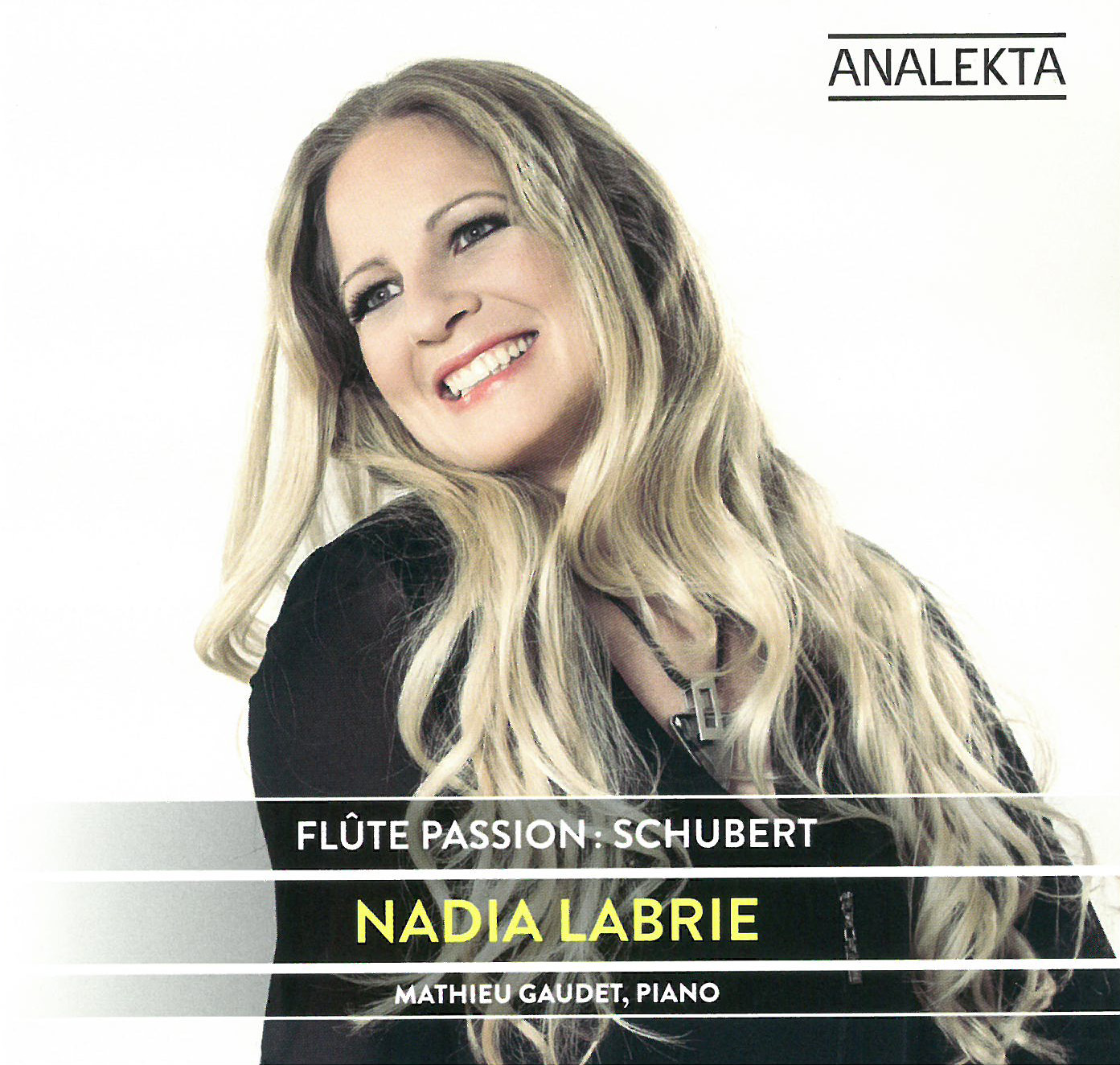
Flutist Nadia Labrie and pianist Mathieu Gaudet’s all-Schubert CD begins with a transcription of the intensely and ominously dramatic Arpeggione Sonata. The quiet simplicity and dignity of Gaudet’s solo opening of the first movement is carried forward by Labrie’s velvet sound, exquisite phrasing and moments of rubato, which convey a brooding feeling of inevitably encroaching doom. She plays the hymn-like second movement with a simplicity and directness which is both heartrending and deeply satisfying.

The second part of the program consists of lieder transcriptions, mostly from Die Schöne Müllerin. There are some wonderful moments in these eight miniature masterpieces, most notably the meshing of the artists’ vision in the counterpoint of Ständchen (from Schwanengesang). However, there is also the unfortunate intrusion at times of that “flutistic” mannerism of changing tone colour in the middle of a note for no good reason and the missed opportunity to use contrasting colours for the two characters in Der Müller und der Bach.

The third and final component is the Introduction and Variations on Trockne Blumen, composed for flute and piano by Schubert himself. While both artists are brilliant here, the poignant darkness of the song (“...the flowers...she gave me...shall be laid with me in the grave.”) could have been more effectively brought to life by greater contrast in tempo and a less dance-like interpretation of the melody. Nevertheless, this CD has a lot going for it. Gaudet and Labrie are both virtuosos who work well together. I’m sure we will hear more from them.

05 Brahms 2Brahms – Symphony No.2
Stavanger Symphony Orchestra; Thomas Zehetmair
SSO Recordings 3816-2 (www.sso.no)

This disc arrived in a simple but elegant package, but without any program notes or promo blurb, save basic info and credits. Listening to it, however, with an open mind and ear, it made me fall in love with the piece all over again and made me wonder how this very familiar work could have been played to death in concerts so much that once a friend said to me at intermission:” Janos, do you really expect me to sit through another Brahms Second?!” and left.

Sometimes dubbed the Pastoral, in sunny D Major, this most congenial of Brahms’ four symphonies is found here in the hands of Thomas Zehetmair. A noted Austrian concert-violinist-turned-conductor, Zehetmair’s background becomes immediately apparent in the delicately handled, caressing string tone right at the beginning of the symphony when the main theme first insinuates itself, and in how lovingly and expressively he handles the strings throughout the symphony. But he is also a gifted conductor with great musical insight, imagination and intuition, plus an ability to get into the composer’s mind, making sure that everything written down is heard. I was discovering passages I haven’t heard before or hearing them differently, like the flute playing merrily over the famous string tune second subject in the first movement. We rediscover Brahms’ masterly skill at counterpoint that came from his years of studying Bach. And experience the thrill of that magisterial fourth movement as it simply explodes from mysterious, whispering strings and is driven joyfully to a triumphant ending.

The Stavenger Symphony of Norway is a dedicated group of superb instrumentalists who have an intuitive chemistry with their conductor. Previously they recorded on the Swedish BIS label famous for its demonstration quality sound, but with this stellar CD they launched their own SSO Recordings and we wish them continued success.

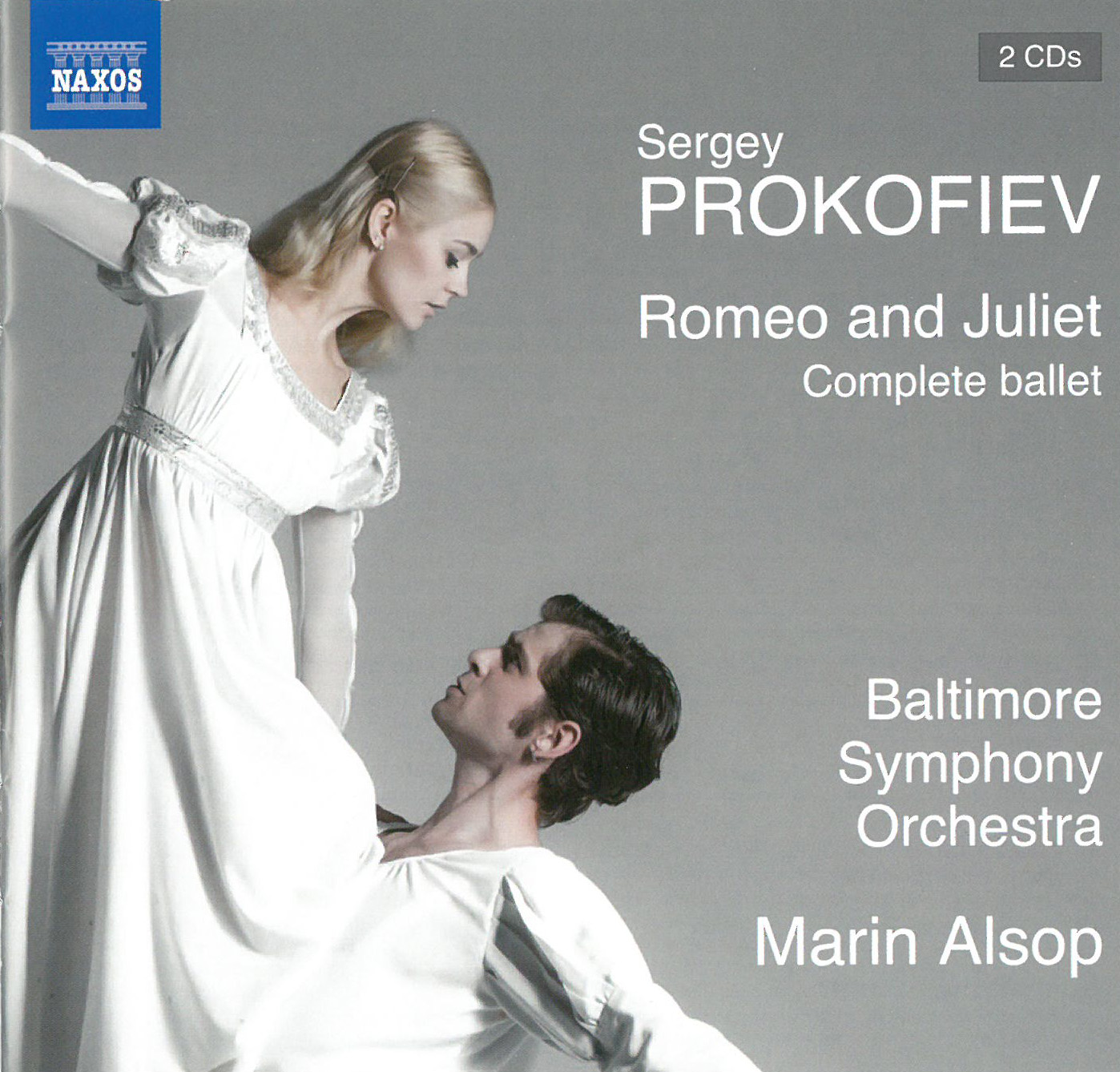
07 Prokofiev Romeo JulietProkofiev – Romeo and Juliet
Baltimore Symphony Orchestra; Marin Alsop
Naxos 8.573534-35 (naxos.com)

The Soviet composer Sergei Prokofiev’s ambitious and beautiful ballet Romeo and Juliet continues to be loved by audiences the world over, not only for its musical beauty and scope of ambition, but for the universality of its original narrative theme, taken from William Shakespeare’s play of the same name. Love – unrequited, tragic, desired, mutual, romantic – is a topic that clearly has not been exhausted by the creative commentators among us, and audiences seem to have an unquenchable thirst for works that tackle this subject.

Naxos Records is a Hong Kong-based company that, while championing digital distribution, continues to release high quality classical music in physical form, somehow managing to stave off the demise of physical product that has so impacted most other record labels. And good for us. This 2018 CD release of an October 2015 performance in the acoustically rich Meyerhoff Hall captures the very fine Baltimore Symphony under the direction and leadership of conductor Marin Alsop. Having led the Symphony since 2007, and recently given a contract extension until 2021, Alsop is a dynamic conductor whose intentional and forceful style once again brings out an exhilarating and striking performance from this ensemble.

The highlights from Prokofiev’s original ballet are many and the world most certainly has enough piecemeal assemblages of these greatest hits. With this recording, however, we have another fine complete capture of this most beautiful work that successfully balances the effervescent and playful bounce of dance with the drama, passion and ultimately Act IV darkness of Shakespeare’s original text. Recommended.

There are two Beethoven string quartet issues this month, featuring works from both ends of the canon.

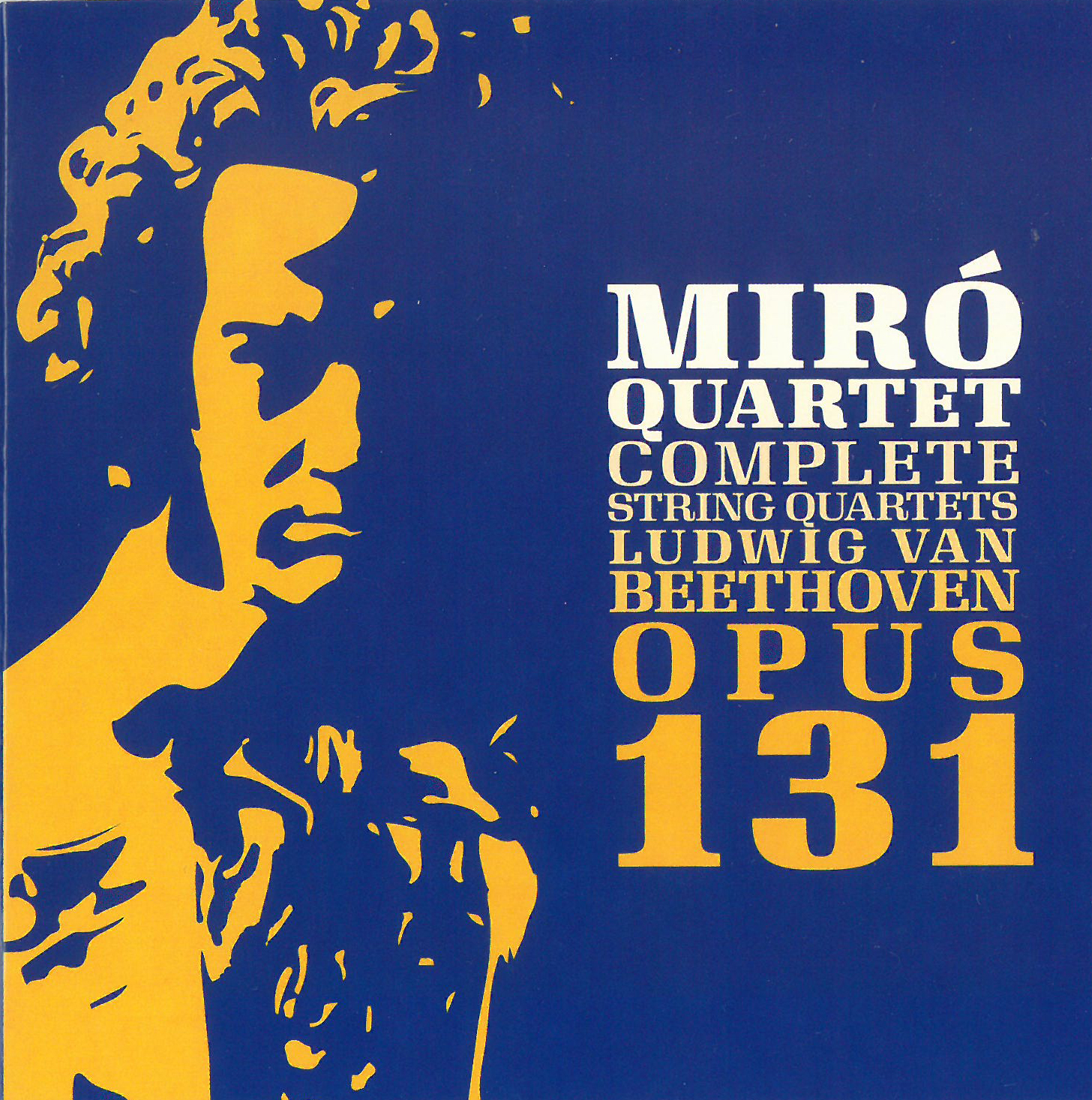
01 Miro BeethovenThe Miró Quartet, now in its 24th year and with two original members still playing, gives an excellent performance of the remarkable String Quartet No.14 in C-sharp Minor, Op.131, part of its ongoing series of the complete cycle (Miró Quartet Media MQM 2909 2 miroquartet.com). It’s a deeply satisfying recording, but in an extremely competitive field not necessarily one which challenges your perceptions of the music or forces you to re-evaluate them.

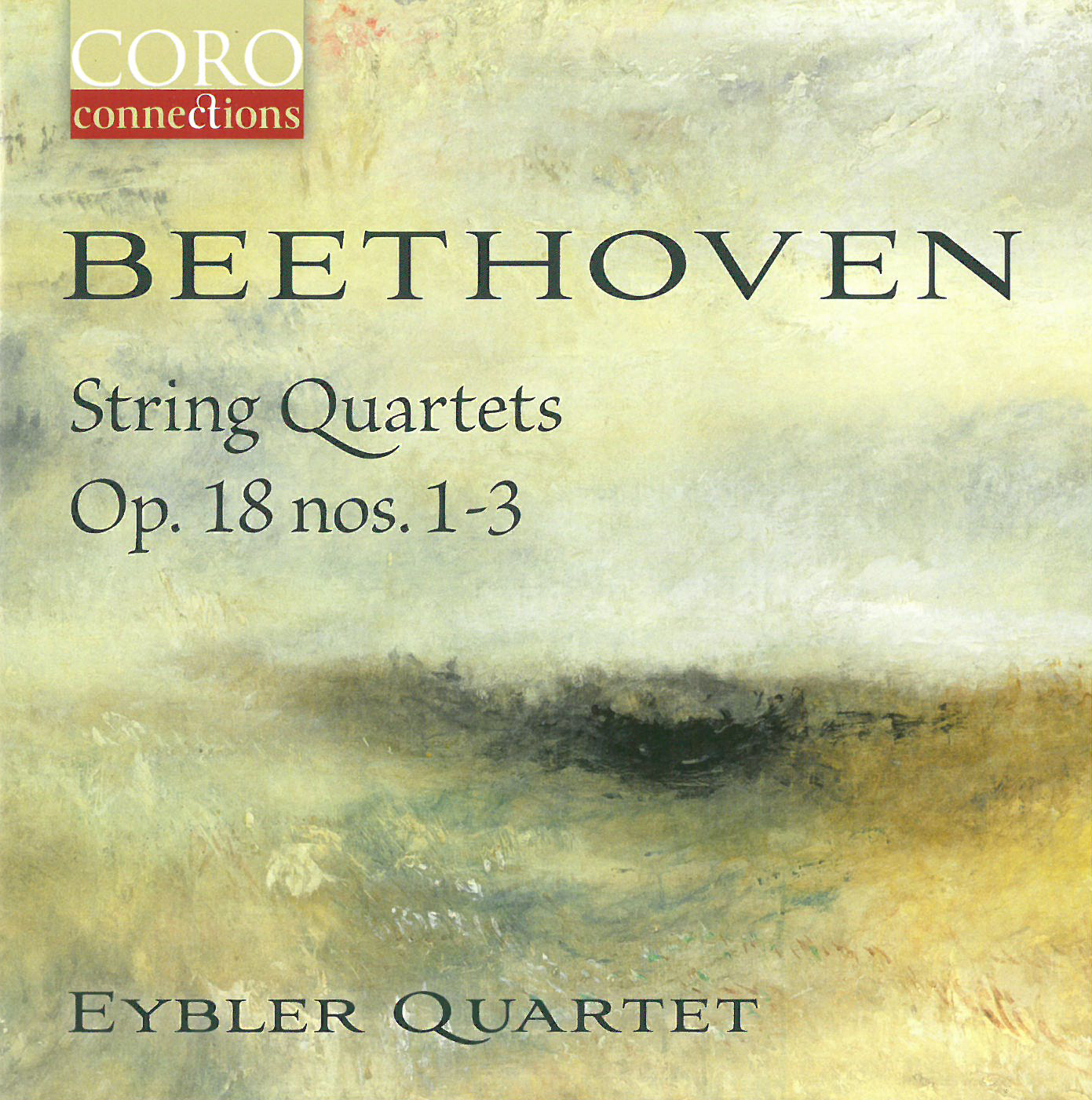
02 Eybler BeethovenThat, however, is exactly what Toronto’s Eybler Quartet does with its simply stunning CD of Beethoven’s first efforts in the genre, the String Quartets Op.18 Nos.1-3, on instruments appropriate to the period (Coro Connections COR16164 eyblerquartet.com).

In his perceptive booklet essay violist Patrick Jordan notes that the Eybler’s emphasis on pre-Beethoven repertoire meant that they approached the early Beethoven quartets as “new music,” with the aim of re-learning how to play them to Beethoven’s exact specifications. This entailed not only sorting out issues with the various sources but also – and most importantly – deciding to adhere to Beethoven’s tempo markings, which at times are excessively fast or slow and have long been the subject of animated discussion, though rarely followed.

The results, particularly with the faster movements, are quite astonishing, from the brisk opening of the F Major Op.18 No.1 through to the dazzling Presto finale of the D Major Op.18 No.3. Technical virtuosity doesn’t begin to do justice to the playing here – there’s jaw-dropping agility, clarity and accuracy in the playing, allied with terrific dynamics and nuance, outstanding ensemble work, a lovely warm tone with a judicial use of vibrato and an unerring sense of period style.

I doubt if you’ve heard these works sound like this before – it’s absolutely essential listening. Volume 2 with Op.18 Nos.4-6 is apparently in preparation. I can hardly wait!

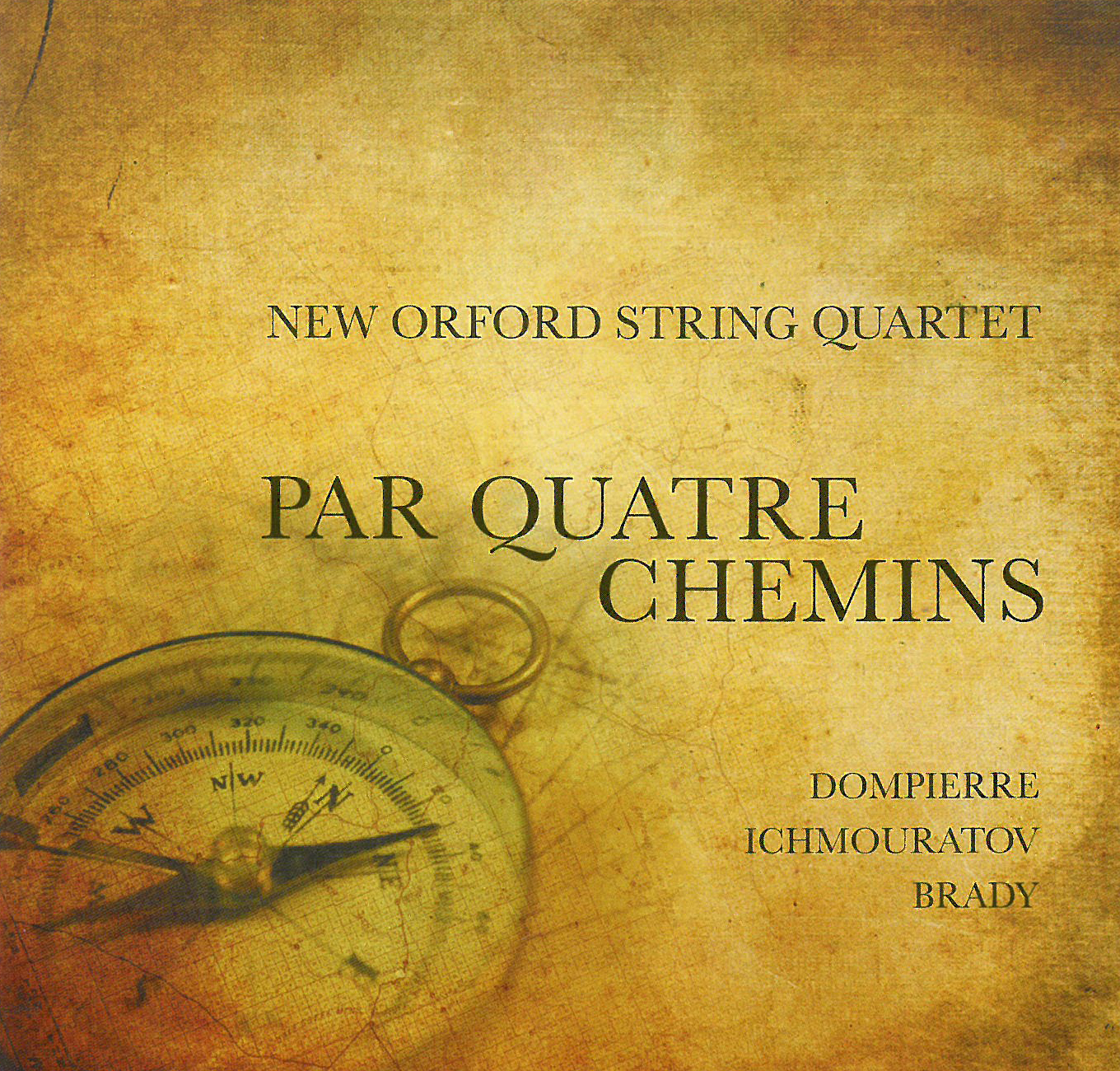
03 New Orford QuartetFast forward 210 years or so and there’s Canadian string quartet music from the 21st century on Par quatre chemins, the latest CD from the New Orford String Quartet (ATMA Classique ACD2 2740 atmaclassique.com).

The CD takes its title from the five-movement work by François Dompierre that opens the disc. It’s a really attractive and strongly tonal work with decided dance influences. Commissioned by the Orford Arts Centre, it was premiered by these performers in 2015.

The other two works on the CD were both commissioned by the New Orford quartet. Airat Ichmouratov wrote his String Quartet No.4 Op.35, “Time and Fate” in 2012, following the sudden death of his close friend Eleanor Turovsky, the first violinist of I Musici de Montréal. Again, it’s an extremely attractive four-movement work with a particularly lovely third movement.

Tim Brady’s Journal (String Quartet No.2) was written in 2013, 33 years after Brady’s previous work in the genre. Inspired simply by “the opportunity to write music for such amazing players,” it has seven sections played without pause, the composer likening this to turning pages in a diary or journal. It’s a tougher work than the other two, with a cinematic feel to the music at times, but is another very strong and extremely well-written composition.

The NOSQ’s playing throughout is exemplary in what can be viewed as definitive performances.

04 Danielpour quartetsThere’s also American string quartet music from the current century on Richard Danielpour String Quartets Nos.5-7, performed by the Delray String Quartet in the Naxos American Classics Series (8.559845 naxos.com). The second violinist in the group is Tomás Costik, whose Piazzolla and Mozart solo CDs were recently reviewed here.

String Quartet No.5, “In Search of La vita nuova” (2004) deals with the composer’s longstanding relationship with Italy. String Quartet No.6, “Addio” (2009) deals with the string quartet as a metaphor for family, and how families are eventually broken apart through distance, time and loss. Both works were written in Northern Italy, and are about what Danielpour calls “letting go.”

String Quartet No.7, “Psalms of Solace” (2014) is about a “search for the Divine.” The last movement features a soprano part written specifically for Hila Plitman, the excellent soloist here.

All three works are very much in a late-20th-century style, strongly tonal and very accessible, and with some truly beautiful writing and lovely textures.

05 Sybarite5The American string quintet Sybarite5 was formed in 2006, since when it has commissioned, premiered and promoted over 60 new works. Its new CD Outliers (Bright Shiny Things BSTC-0121 sybarite5.org) debuted at No.1 in the Billboard Traditional Classical Album charts in February.

There was no booklet with the digi-pak we received and no information on any of the composers or the 13 works, virtually all from the period 2012 to 2015 and all quite short; the brief information on the cover says that “each track has been carefully selected to demonstrate a decade of musical growth and the relationships developed between Sybarite5 and these accomplished American composers.”

Those represented here are: Jessica Meyer; Shawn Conley; Eric Byers; Dan Visconti; Andy Akiho; Mohammed Fairouz; Kenji Bunch; Daniel Bernard Roumain; Michi Wiancko; and Lev “Ljova” Zhurbin. It’s a fascinating selection of solid and appealing compositions with nothing too challenging aurally.

06 Francesca DegoThe Italian violinist Francesca Dego signed with Deutsche Grammophon in 2012, and following her debut albums of the Paganini Caprices and the complete Beethoven Violin Sonatas the label has released her first orchestral CD, Paganini/Wolf-Ferrari Violin Concertos with the City of Birmingham Symphony Orchestra conducted by Dego’s husband Daniele Rustioni (DG 4816381). It’s quite outstanding.

If you’re going to play Paganini’s Concerto No.1 in D Major Op.6 then you need not only impeccable technique so that the sheer difficulty is never the focus of the performance but also musical sensitivity and intelligence to make any criticisms about empty virtuosity redundant. Dego has all these qualities in abundance and is clearly well aware of the operatic vocal nature of the music; Paganini was a close friend of Rossini, and his concertos make much more sense when heard with the contemporary Italian opera style in mind.

The Violin Concerto in D Major Op.26 of Ermanno Wolf-Ferrari is little known and seldom performed. It’s a late work, completed in 1944 a few years before the composer’s death and written for the American violinist Guila Bustabo, who revised a subsequent edition after the original copies were destroyed in an Allied bombing raid. Dego correctly likens it to “an Italian opera for violin” – albeit opera from an earlier period than Wolf-Ferrari’s – in which respect it shares much with the Paganini. A long but very attractive four-movement work, it has much to recommend it.

Dego is absolutely superb in both works, but particularly in the lengthy first movement of the Paganini; Rustioni draws excellent support from the CBSO. The Wolf-Ferrari was recorded live in Birmingham in March 2017 at its UK premiere, the lengthy applause well deserved.

Contemporary American composers are featured on two new CDs.

07 Into the SilenceThe husband-and-wife team of violinist Nicholas DiEugenio and pianist Mimi Solomon are the performers on Into the Silence, a tribute to the late Steven Stucky (who taught at Cornell University in Ithaca, NY from 1980 to 2014) and the three generations of composers associated with Cornell (New Focus Recordings FCR 188 newfocusrecordings.com).
Stucky’s 2013 Sonata for Violin and Piano is surrounded by works by two of his students: 2013’s . . . in dulcet tones, by Jesse Jones; and 2014’s Plush Earth in Four Pieces by Tonia Ko. Stucky himself studied at Cornell with Robert Palmer, who founded the doctoral composition program and taught there from 1943 until 1980. Palmer’s excellent Sonata for Violin and Piano from 1956 closes the CD.
The Ithaca “sound” is described as “a blend of east coast modernism with neo-romantic and neo-classical sensibilities, with a rich sense of colour,” an accurate description of these premiere recordings.

DiEugenio and Solomon were Ithaca neighbours of Stucky, who introduced them to Palmer’s music and supported this project prior to his death in 2016.

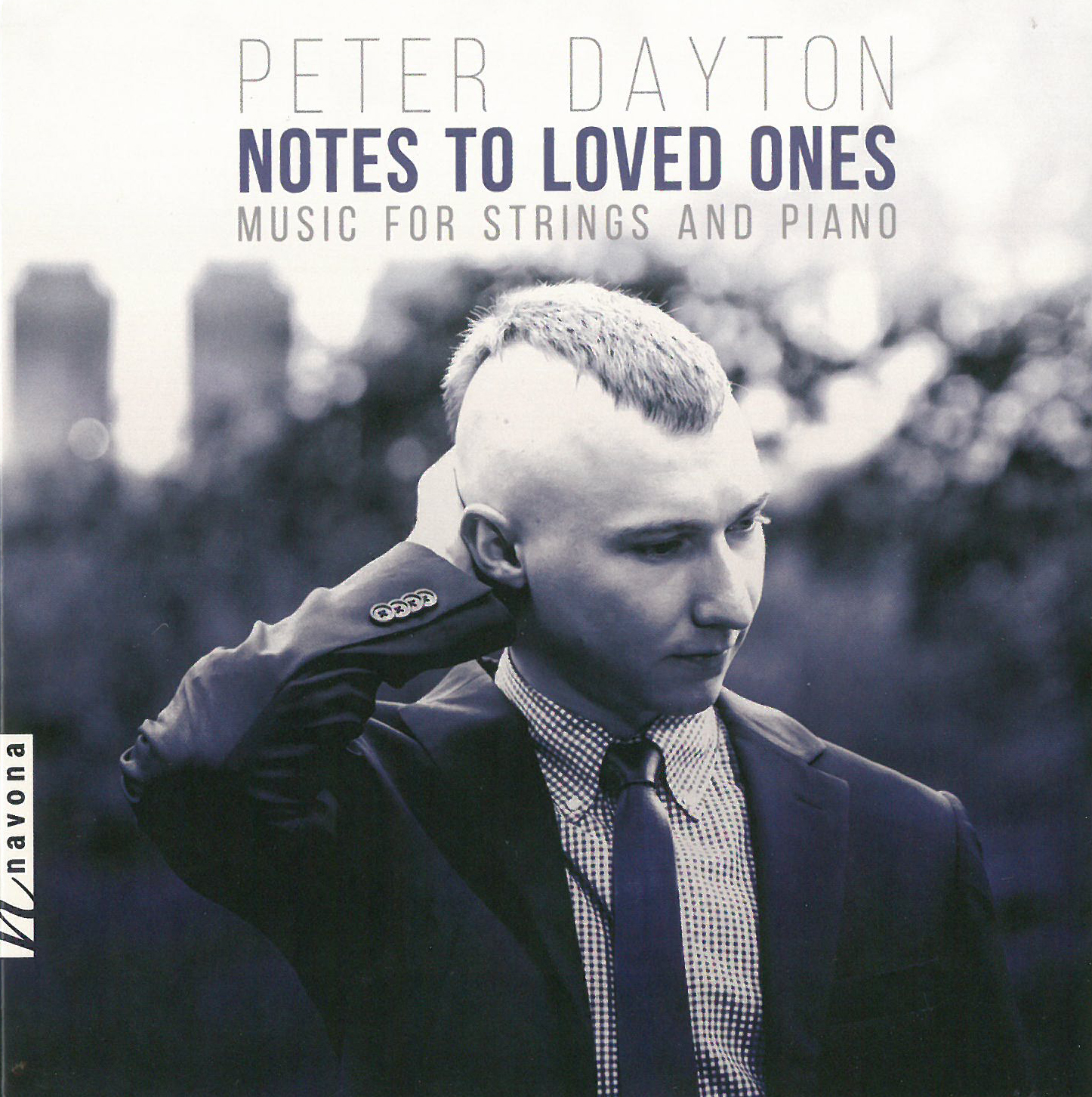
08 Peter DaytonNotes to Loved Ones features music for strings and piano by Peter Dayton (Navona Records NV6143 navonarecords.com).

The brief but lovely Fantasy for Viola and Piano is followed by Morceaux des Noces for String Quartet, another work with a quite beautiful sound.

The Sonata “Los Dedicatorias” for Violin and Piano reflects Dayton’s relationship with the art and family of Peruvian painter Fernando de Szyszlo. Variations for String Quartet, a tougher and darker work, resulted from an exchange program with the Royal Academy of Music in London, the virtuosic violin cadenza inspired by the program leader, violinist Peter Sheppard-Skærved.

An abrasive and edgy two-movement Sonata for Violoncello and Piano (the second movement marked “Stark, Percussive”) ends an interesting and promising Navona debut CD.

Yang Guo (viola), Sarah Jane Thomas (violin), Lavena Johanson (cello) and Michael Sheppard (piano) are the soloists.

Listen to 'Notes to Loved Ones' Now in the Listening Room

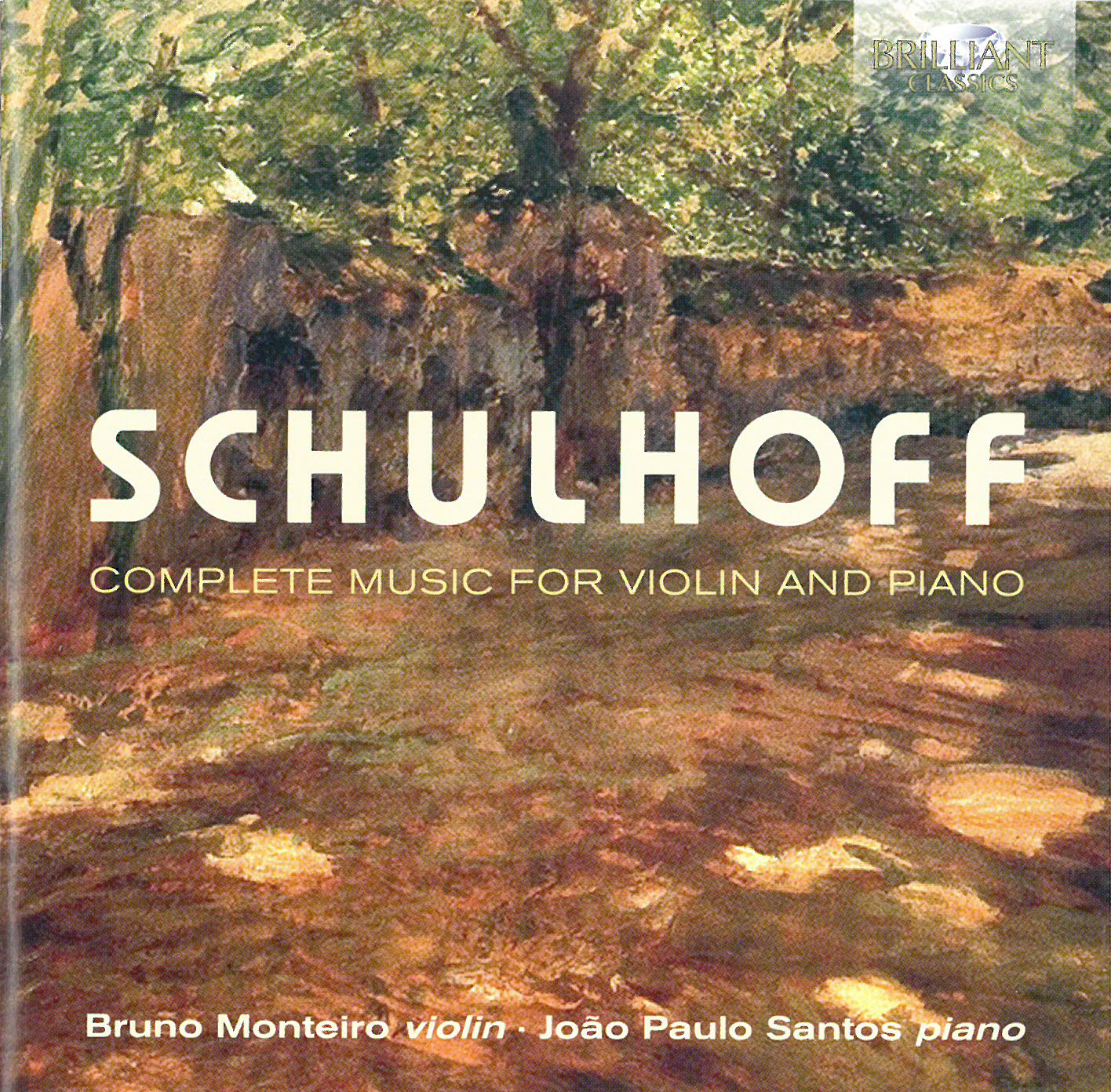
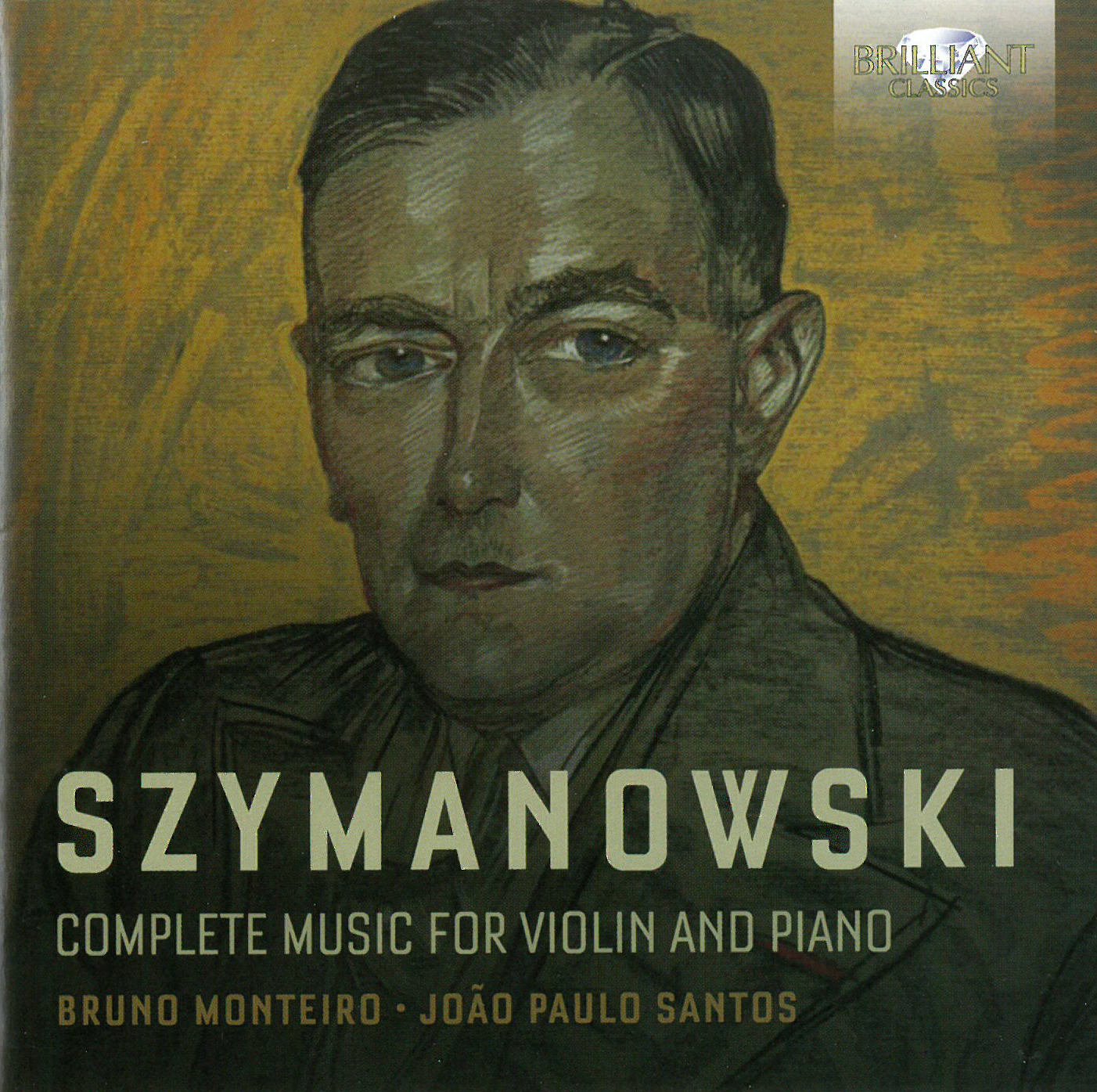
09a Monteiro SchulhoffFor some reason, three CDs received this month are way past their initial release date. Two of them are from the Brilliant Classics label (brilliantclassics.com), both Complete Works for Violin and Piano – one by the Polish composer Karol Szymanowski (2 CDs 94979) and the other by his contemporary, the Czech composer Erwin Schulhoff, who died in a concentration camp in 1942 at the age of 48 (95324). The performers on both are the Portuguese duo of violinist Bruno Monteiro and pianist João Paulo Santos.

Critical opinion of Monteiro’s playing was mixed when the Schulhoff CD was released in 2016, with opinions ranging from praising his golden tone and interpretations to Gramophone magazine’s noting his “effortful and sometimes insecure” playing. Personal taste probably played a large part: Monteiro’s often slow and wide vibrato does tend to make the intonation sound suspect at times, and his tone in the highest register can sometimes sound tight and thin. There are moments in the Sonata for Solo Violin when his playing seems a bit tentative. Still, there is much to enjoy here. In particular, the piano playing in the Suite and the Sonatas Nos. 1 & 2 is outstanding, with a rich, resonant sound and an excellent balance with the violin.

09b Monteiro SzymanowskiThe Szymanowski set fares much better, especially CD2 with Mythes Op.30 opening the disc and the Nocturne and Tarantella Op.28 providing a strong finish. The Sonata in D Minor Op.9, the Romance in D Major, the Three Capriccios of Paganini Op.40 and the lullaby La Berceuse Op.52 are the other original works in the set, with the remaining five tracks either transcriptions by the composer’s compatriot, the violinist Pawel Kochanski, or – in two cases – joint compositions by them.

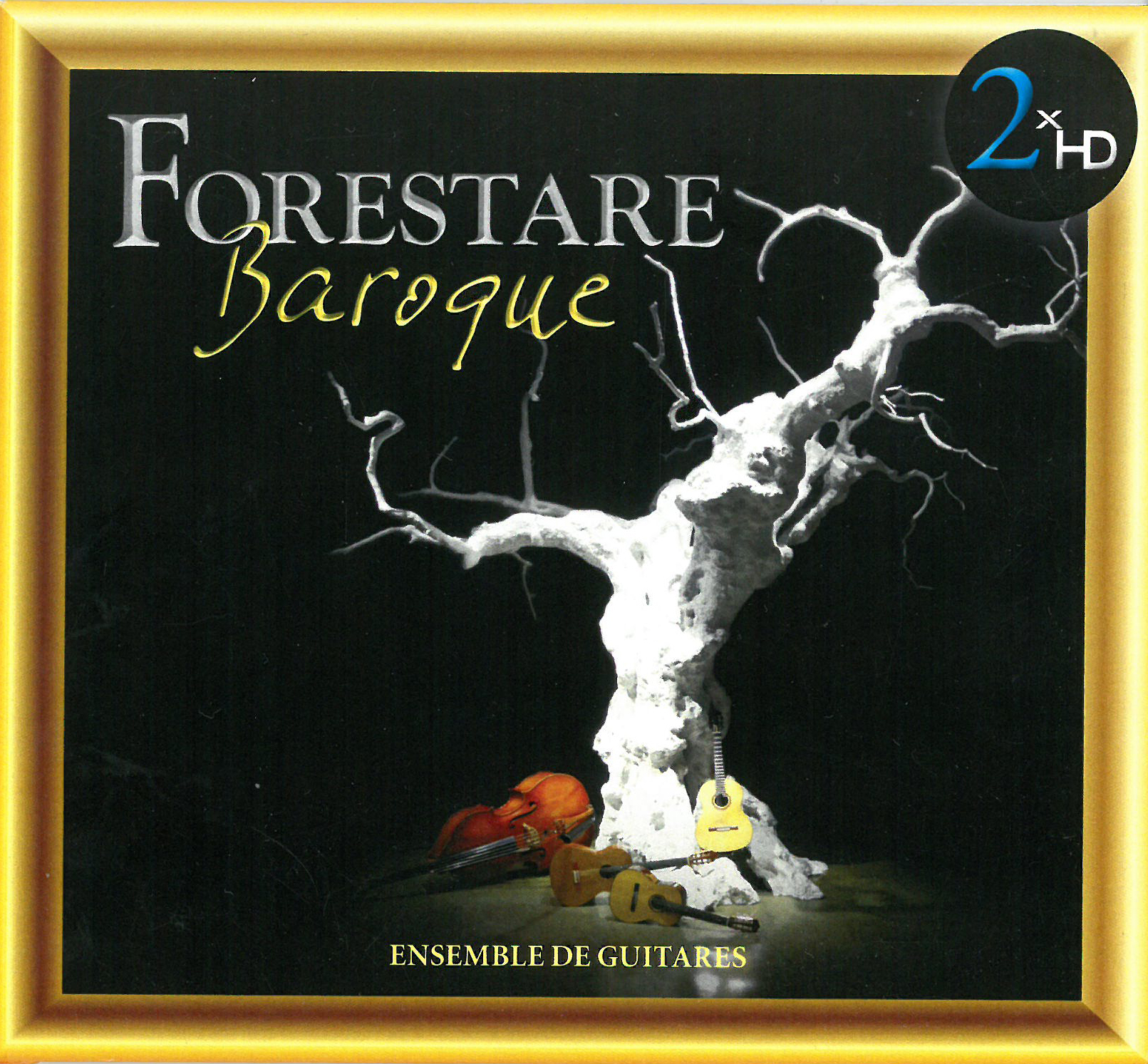
10 ForestareThe third latecomer is Forestare Baroque, a program of works by Bach, Vivaldi and Jean Baptiste Lully arranged for guitar ensemble and performed by the Montreal group Forestare with their 12 guitars, two contrabasses and – in the Lully – percussion (2xHDFO1043 forestare.com).

The works are Bach’s Brandenburg Concerto No.3 and Fantasia on Komm, heiliger Geist, Vivaldi’s Sonata Op.1 No.12, “La Folia” and the Concerto for Two Violins and Cello Op.3 No.2, and Lully’s suite Le Bourgeois gentilhomme. The Vivaldi concerto was arranged by the Swiss guitarist Jürg Kindle, the other works by Forestare’s music director Dave Pilon and guitarist David Ratelle.

Recorded in l’Église St-Augustin in Mirabel, the sound is full and warm throughout a thoroughly enjoyable disc.

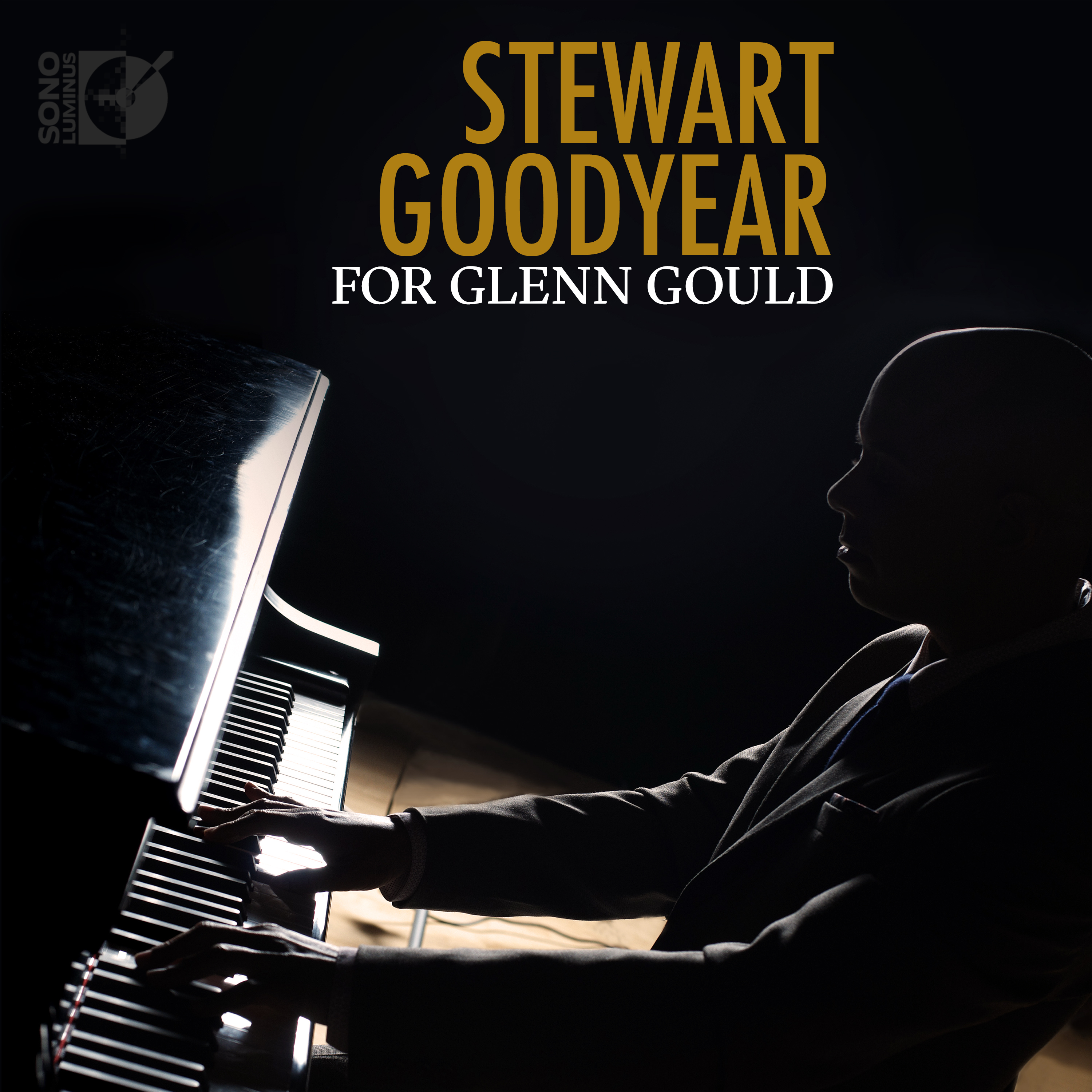
01 Stewart GoodyearStewart Goodyear’s new CD For Glenn Gould (Sono Luminus DSL 92220 sonoluminus.com) is an expression of Goodyear’s deep admiration of Gould’s music and his peculiar take on just about everything. The disc includes a generous amount of Bach, some Sweelinck, Gibbons, Brahms and Alban Berg. The pieces represent a selection of works that Gould chose for his debuts in Montreal and Washington. Far from being an imitation of Gould’s keyboard style, Goodyear’s recording seeks to recognize the genius behind the programming, by which Gould included works that bore some relationship to each other.

The striking feature of Goodyear’s playing is the authenticity and stylistic confidence he brings to each piece. From the early Baroque through Bach, Brahms and Berg, Goodyear plays with a keen ear for clarity, whether structural or melodic. The Bach Sinfonia No.8 in F Major, BWV 794 is an excellent example of this. His technique is crisp, incisive yet fluid.

The two Brahms Intermezzi, Op.118, No.2 and Op.119, No.3 come from what Goodyear believes was Gould’s best recording. In it, Gould reveals himself as the salon artist looking for the most intimate expression of his music. The recording studio became the ultimate refuge for Gould’s flight from the public stage. Accordingly, Goodyear admits that his studio time with this disc was largely intended to recreate that intimacy. Like Gould, Goodyear is careful with his tempi and always lets the forward movement of a phrase govern the amount of hesitation and drama he applies.

For Glenn Gould is a unique, creative project, and played brilliantly.

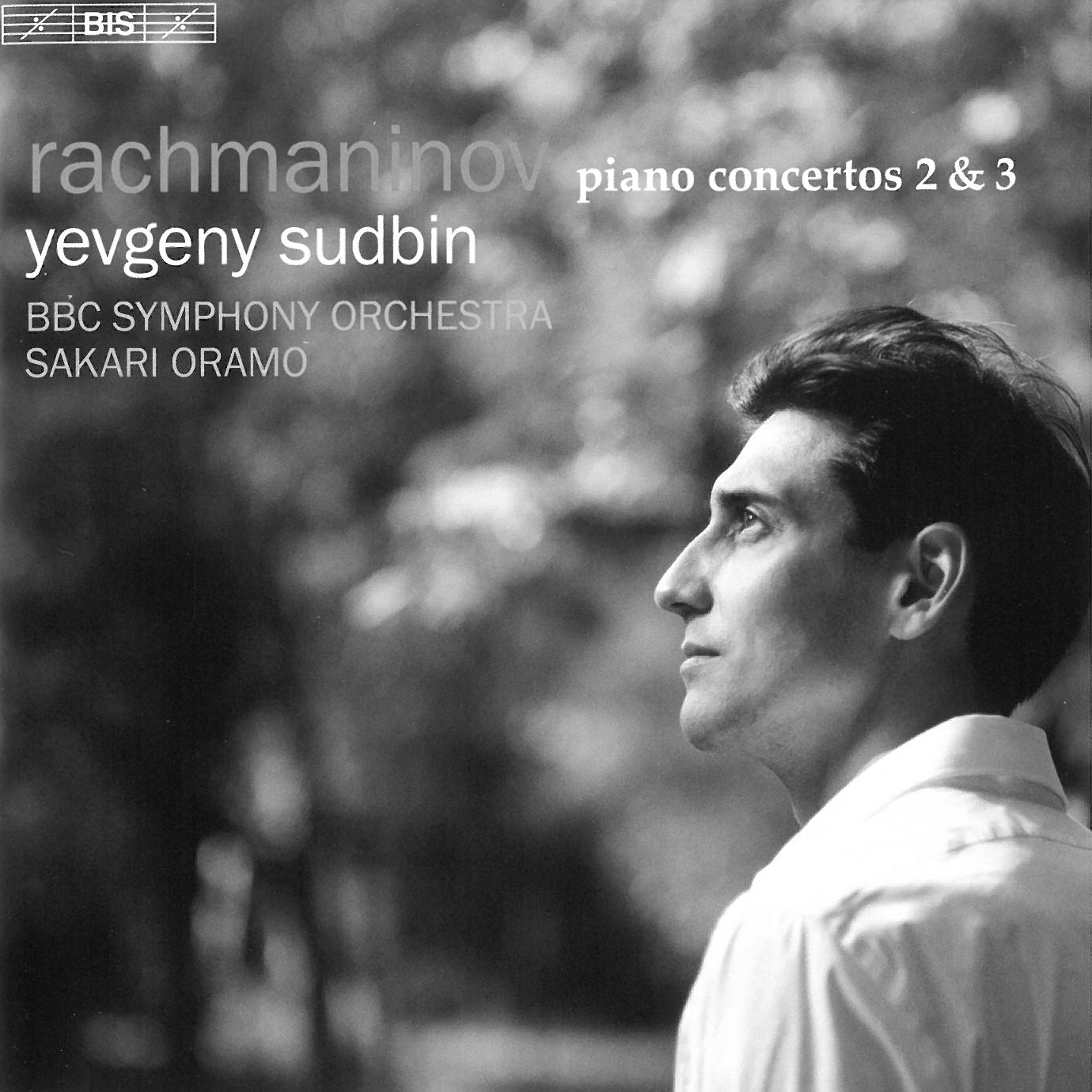
02 Sudbin RachmaninovYevgeny Sudbin has an impressive performance CV that includes nearly every major European orchestra. His newest recording Rachmaninov – Piano Concertos 2&3; BBC Symphony Orchestra; Sakari Oramo (BIS 2338 SACD bis.se) offers a truly exciting performance of these two repertoire stalwarts. The orchestra is, as expected, reliably superb. Sudbin, for his part, brings some new ideas to these two familiar works. With the Concerto No.2 Sudbin introduces several brief tempo pullbacks in unusual places, very subtle but arresting nevertheless to all who know these pieces well. He plays a few passages in the second movement with a speed more daring than is usually heard, but his unerring musicianship makes these small unconventional moments entirely convincing.

Sudbin makes an immediate impression of technical brilliance in the Concerto No.3. He skillfully navigates the opening movement, replete with high emotional contrasts. The second builds on this energy and Sudbin rides it right into the Finale where he and the orchestra build to a spectacular conclusion that is hard to describe. Anyone who loves these Rachmaninov concertos must have this disc.

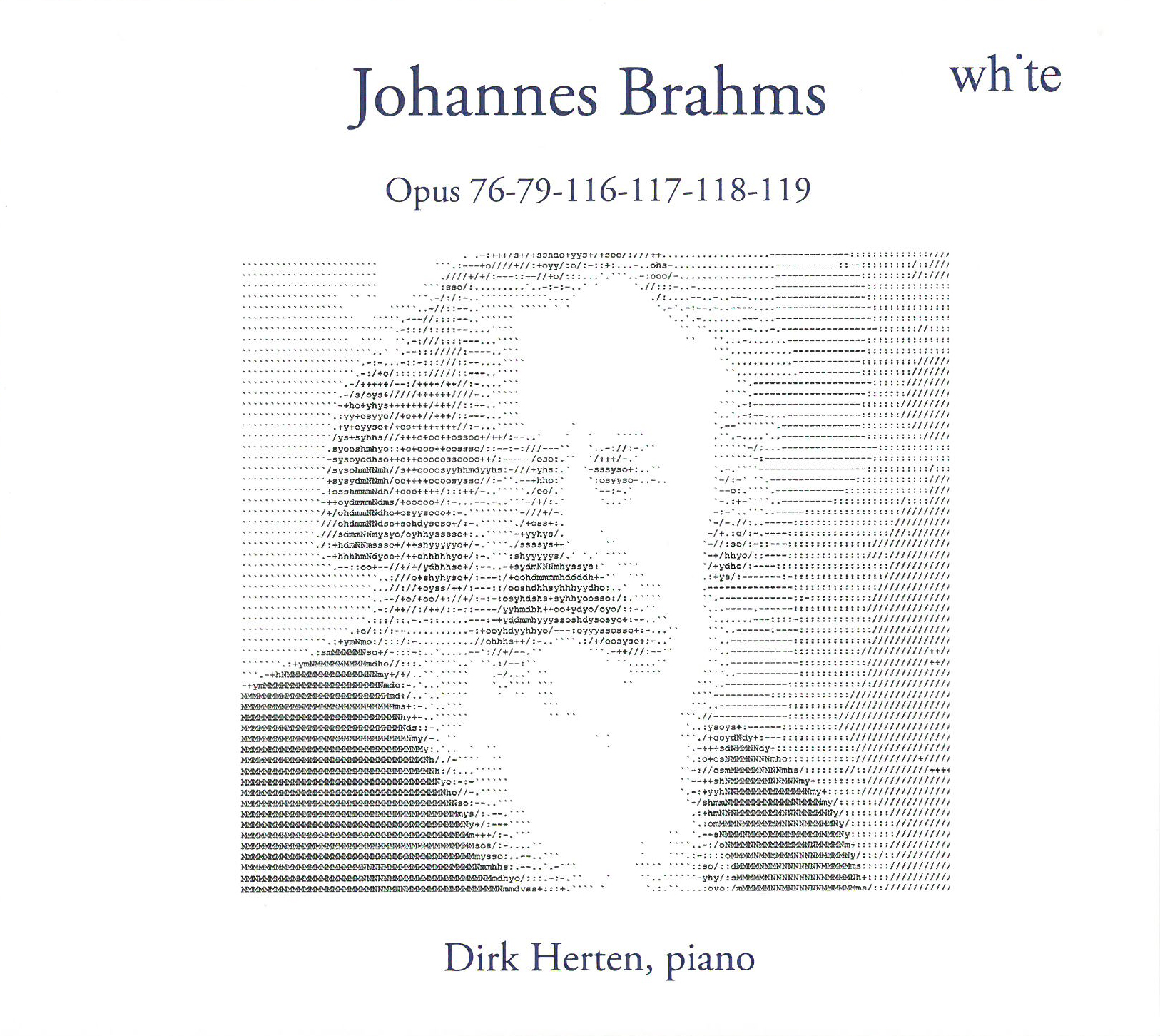
03 Herten BrahmsDirk Herten is a pianist who marches to the beat of a different metronome. His latest recording Johannes Brahms – Opp. 76, 79, 116-119 (White Records white-records.com) introduces an approach to Brahms not often heard. Herten puts his music into a freely modern context. His principal tool is to slow down works that are usually played at considerably faster tempi. And while he does this with several pieces, the most dramatic effect is on the Rhapsodie Op.119. The reduction in speed takes much of the traditional turmoil out of the music. The boiling Romantic cauldron is reduced to a simmer. This suddenly puts the music into a stricter rhythm, forcing the ear to listen for new things, and this is how Herten makes his point with Brahms. The usual dramatic changes in speed are curtailed and Brahms’ bold key changes and harmonic wanderings suddenly become more noticeable.

The Steinway D that Herten plays is very closely miked and possibly specially voiced for this session. In any case, he plays the instrument with a heightened intimacy that will make this Brahms repertoire a new experience for many. His touch can be mechanistically perfect as in the Intermezzo Op.117 No.1 or lusciously fluid as in the Intermezzo Op.118 No.2. Herten pedals very lightly if at all, and uses the instrument’s natural resonance to fill the newly created microseconds of time. It’s a courageous and provocative disc.

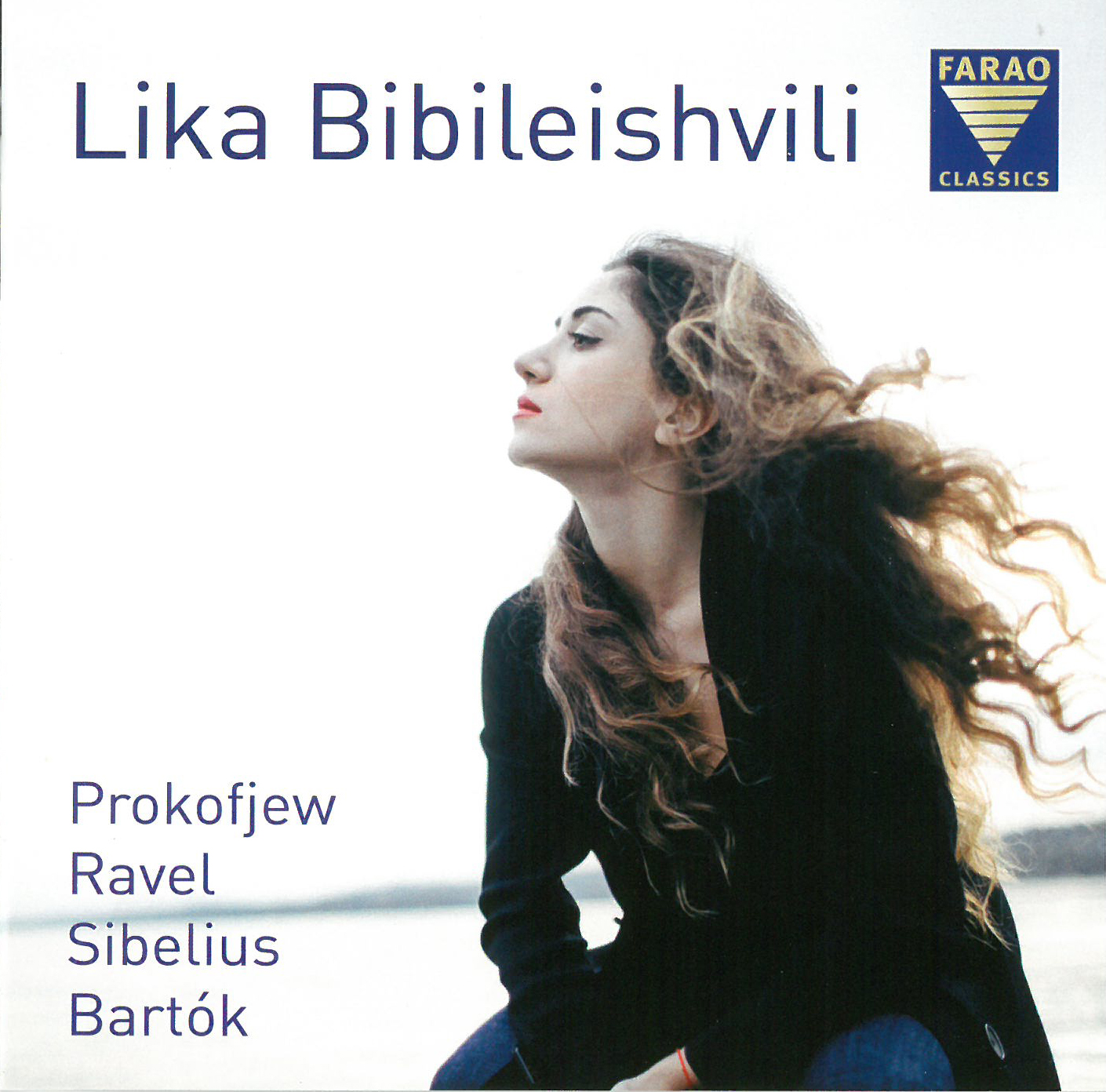
04 Lika BibileishviliLika Bibileishvili has been playing piano since age four. Her debut recording Prokofjew, Ravel, Sibelius, Bartók (Farao Classics B108099 farao-classics.de) introduces a powerful and versatile pianist who takes her vocation very seriously. Now 30, she is a fireball of energy that approaches Prokofiev and Bartók piano sonatas fearlessly. Prokofiev’s Sonata No.6 Op.82 is a work of considerable variety in which the outer movements, especially the finale, are extremely demanding. The two inner movements are much more wistful and humourous. Throughout this piece, Bibileishvili never falters or surrenders control of the material. She combines an inherent sense of the composer’s melodic purpose with the raw power that he demands be used at the keyboard.

This same energy fuels Bibileishvili’s playing of Bartók’s Sonata for Piano Sz80. Somewhat less bombastic than the Prokofiev and more elemental, it demands a different contemporary sensibility that she demonstrates convincingly. Here, Bibileishvili focuses intensely on Bartók’s smaller-scale ideas, as if to turn the work in on itself. Her playing is astonishingly good and conveys impressive concentration.
This pianist-as-spectre appears in Ravel’s Gaspard de la nuit, where Scarbo lives up to its devilish reputation for difficulty. Ondine, by contrast, flows and shimmers beautifully and shows Bibileishvili’s lighter touch to perfection.

The Sibelius 13 Pieces for Piano Op.76 (of which Bibileishvili selected ten) adds another dimension to her debut recording. Sounding deceptively simple, some very challenging keyboard work combines with Sibelius’ gift for melody to give this extraordinary pianist a chance to prove that she’s as adept with beauty and frivolity as she is with fire and brimstone.

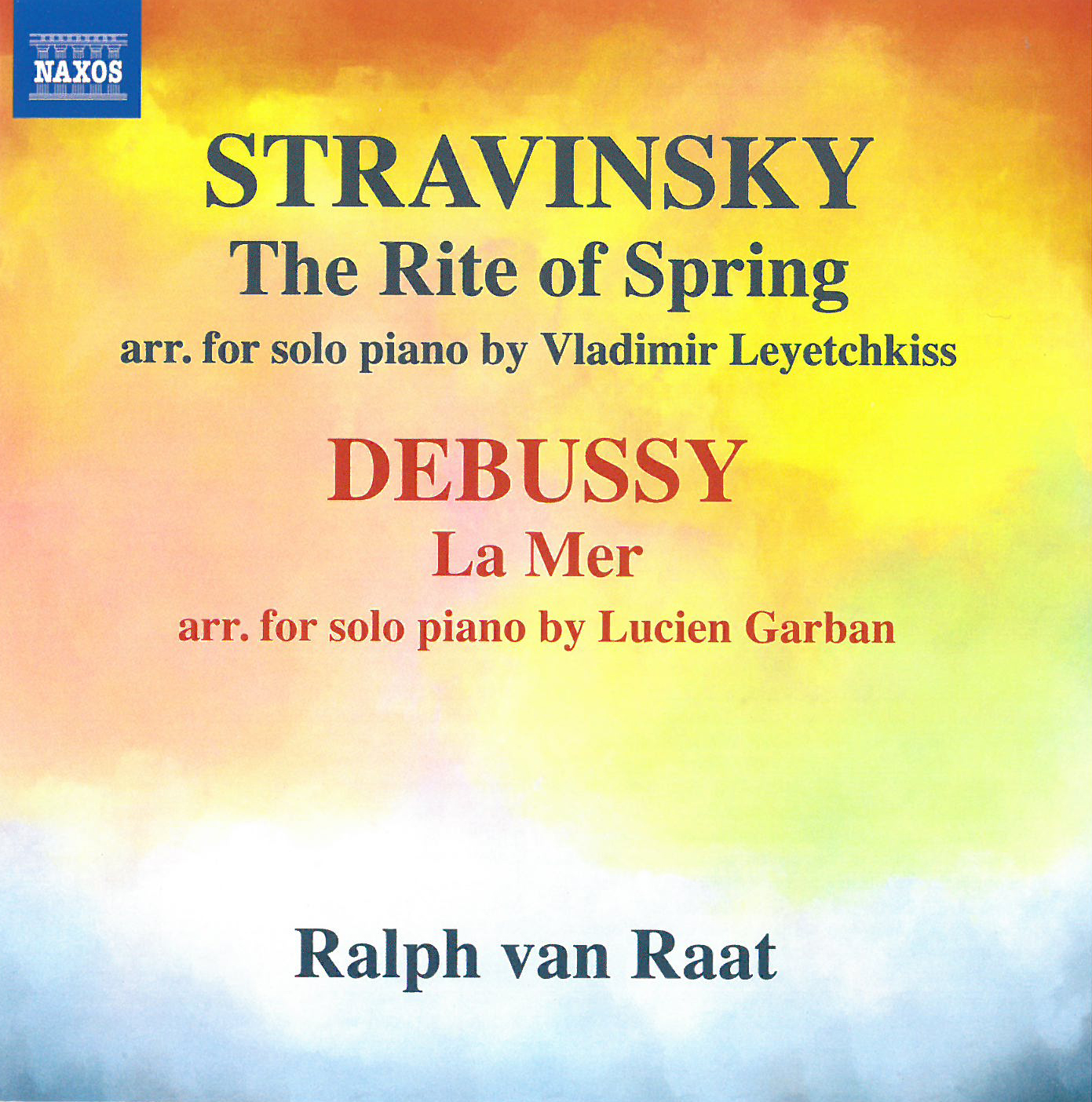
05 Van Raat StravinskyRalph van Raat has an extraordinary keyboard technique. He is powerful, articulate and capable of extended physical demands bordering on the impossible. His latest recording Stravinsky – Rite of Spring; Debussy – La Mer (arr. for solo piano) (Naxos 8.573576 naxos.com) is demonstrable proof of this.

It’s sufficiently awe-inspiring to hear a performance of Stravinsky’s official piano duet version without imagining the work further condensed into a score for solo piano. Still, such a score exists and van Raat has now recorded it. Pianist Vladimir Leyetchkiss transcribed the duet into a solo version in 1985. It’s every bit as dense and rhythmically maniacal as the orchestral score. The familiar passages of the sacrificial dances aptly capture what Stravinsky first conceived at the keyboard before he orchestrated the ballet. In addition to the work’s elements of savagery, van Raat portrays beautifully those fewer moments of calmer, mystical darkness that occur in both Introductions as well as the Mystic Circles of the Young Girls.

The solo transcription of La Mer is a wonderful example of how such a work can be more than a mere reduction of the orchestral parts. Debussy originally set out to avoid imitative seascapes and instead chose to write music capturing the essential emotions of the sea experience. This 1938 solo version is by Lucien Garban, a director with Debussy’s publishing firm Durand. Garban uses the composer’s choices for orchestral colouration as a guide for his rewrite of the score. Van Raat instinctively draws out the heavily arpeggiated effects of massive oceanic movement and masterfully depicts what Debussy achieved so brilliantly in his orchestral score.

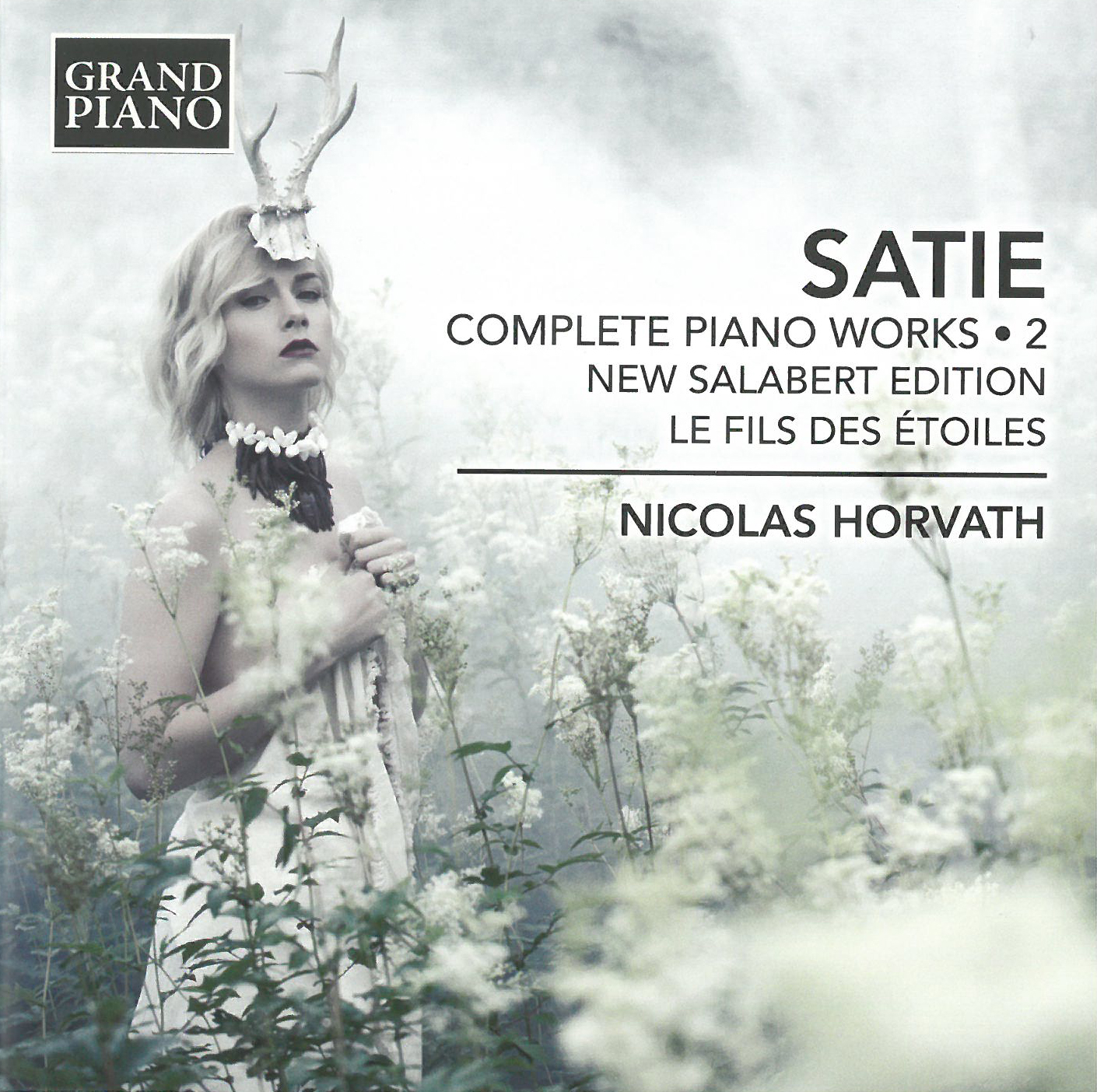
06 Horvath Satie 2Nicolas Horvath plays Cosima Liszt’s 1881 Érard in his latest recording: Erik Satie – Complete Piano Works 2 (Grand Piano GP762 grandpianorecords.com). In doing so, Horvath provides an example of how Satie would have heard his music in the late 19th century. This particular instrument is in surprisingly good playing condition and delivers tremendous power in the lower range.

The main work on the disc is Le Fils des étoiles, incidental music to a drama in three acts. The three preludes are brief and each is followed by a more substantial Autre musique in which Satie explores, invents and generally does the kind of thing that earned him a reputation for being unconventional. Horvath is quite comfortable with this music. He himself is a strong promoter of contemporary music and has commissioned more than a hundred works. His familiarity with modern keyboard language makes him adept at working with Satie’s material, since the composer was among the earliest to toy with minimalism, atonality and other new approaches.

The recording is a serious, weighty examination of Satie’s work by a highly capable and credible pianist. There’s nothing casual about this – it’s an all-or-nothing performance.

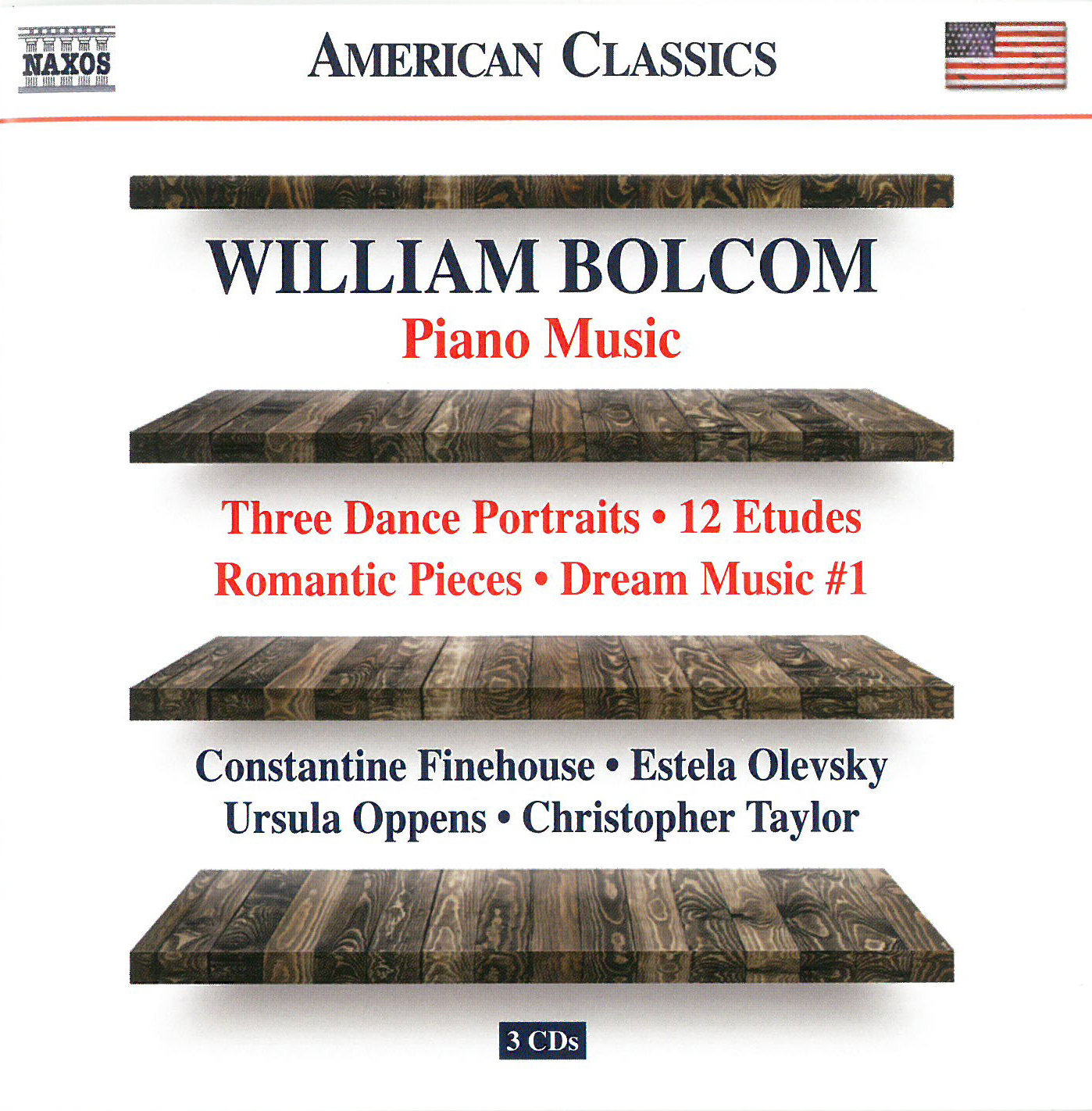
08 William BolcomWhen Naxos proposed to William Bolcom that they record the entire body of his piano works, he countered with the suggestion to record only those pieces not already available on disc. After agreeing on the project, they approached four pianists – Constantine Finehouse, Estela Olevsky, Ursula Oppens and Christopher Taylor – to collaborate in recording this three-disc set: William Bolcom – Piano Music (Naxos 8.559832-34 naxos.com).

The repertoire includes unrecorded material from Bolcom’s teen years right up to 2012. There’s tremendous variety in this program, reflecting the broad creative expression that has marked Bolcom’s career. The works are neither arranged chronologically nor given in any large block to a single pianist. Instead they’re laid out as an intellectual progress that’s as entertaining as it is stimulating.
It’s a credit to the four performers that their interpretive approaches are so similar, allowing Bolcom to appear consistently as a composer whose language is bold and clear. Equally comfortable with swinging rags as with contemporary forms, Bolcom emerges from this recording project as a rich creative spirit capable of both profound iteration and light-hearted humour.

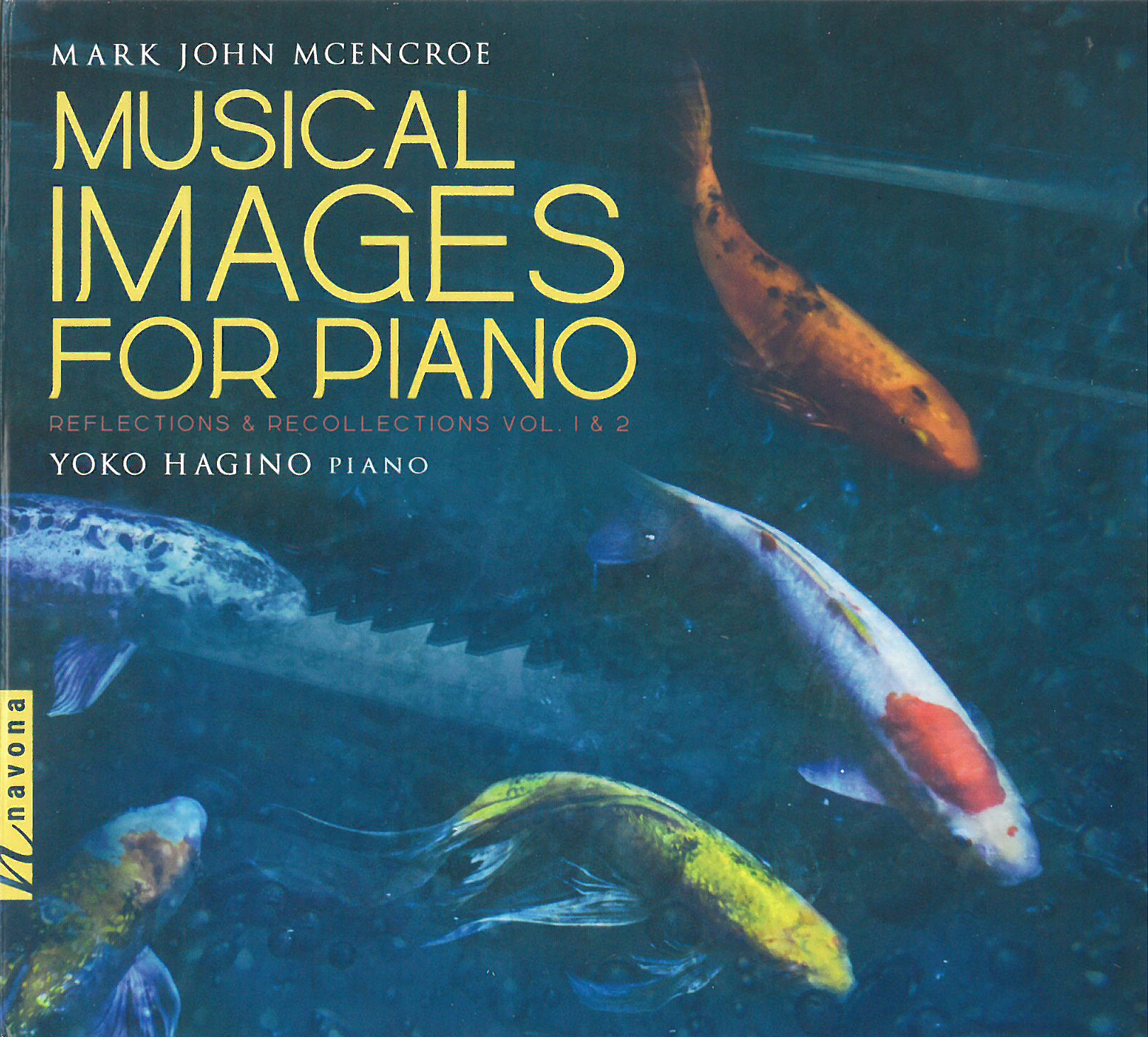
07 McEnroe Musical Images Yoko HaginoMusical Images for Piano (Navona NV6144 navonarecords.com) is a two-disc set of works by Australian composer Mark John McEnroe, performed by pianist Yoko Hagino. The set is subtitled “Reflections & Recollections Vol. 1 & 2” and is written in an introspective mood. McEnroe’s style shows, at least in these works, the strong influence of Debussy and Satie. In his liner notes, McEnroe describes a desire to capture the increasingly reflective moments that occur in later life. He draws further similarities between Monet’s inspiring gardens and his own as a stimulus for this collection.

The French impressionist style is a perfect vehicle for what McEnroe sets out to achieve. Serenity is the immediate feeling conveyed in this music, although the composer also ventures very effectively into dark corners for variety and balance. This well-planned tension and release is occasionally punctuated by touches of humour with pieces like A Fish with the Blues. Jazzy harmonies recur through the set, giving an eclectic sound to McEnroe’s voice.

He writes with a strong affinity for melodic line and this feature has attracted a number of orchestrations of his piano works, resulting in subsequent recordings by several European orchestras.

Listen to 'Musical Images for Piano' Now in the Listening Room

01 Haydn and MozartHaydn – Symphonies 26 & 86; Mozart – Violin Concerto No.3
Aisslinn Nosky; Handel and Haydn Society; Harry Christophers
Coro COR16158 (naxos.com)

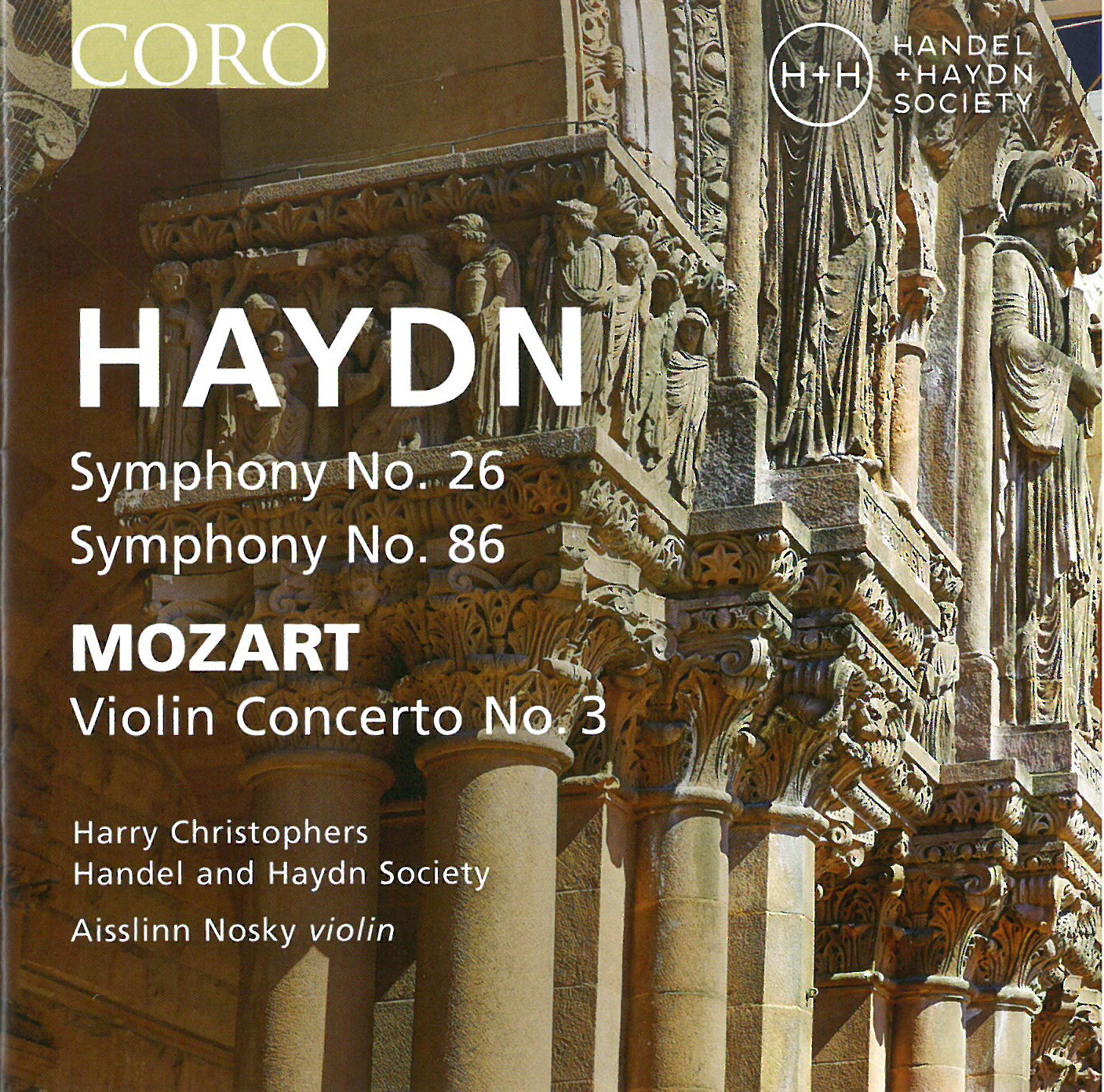
The Handel and Haydn Society, the Boston-based chorus and period orchestra and one of the oldest art organizations in North America, continues to unravel new complexions and nuances of well-loved and well-known works with gusto. This new live recording, under the artistic leadership of Harry Christophers, presents Haydn and Mozart’s works with candour and exuberance.

Pairing the early “Lamentatione” Symphony with a more extensive one from Haydn’s later period works quite well. The juxtaposition of Sturm und Drang style with plainsong chant in Symphony No.26 reveals Haydn’s creative spirit, but it is the more mature No.86 (arguably the best of the six “Paris” symphonies) that shows what an original thinker he was. The orchestra’s playing is dynamic and uniform, underlying every single nuance, blending ardour with measured restraint.

Canadian violinist Aisslinn Nosky, the orchestra’s concertmaster and soloist in Mozart’s Violin Concerto No.3, is a marvel. The chemistry between her and the orchestra is obvious. If you are not already enthralled by Nosky’s spiritedness and playful abandon in the first movement, then she will have you in the palm of her musical hand (so to speak) with the otherworldly opening phrase of the second. Her cadenzas are a bravura of virtuosity and humour and at one point on the recording we can even hear the audience chuckling with delight.

Very enjoyable, suitable for any season or time of the day.

02 Tchaikovsky PathetiqueTchaikovsky – Pathétique
Park Avenue Chamber Symphony; David Bernard
Recursive Classics RC2059912 (chambersymphony.com)

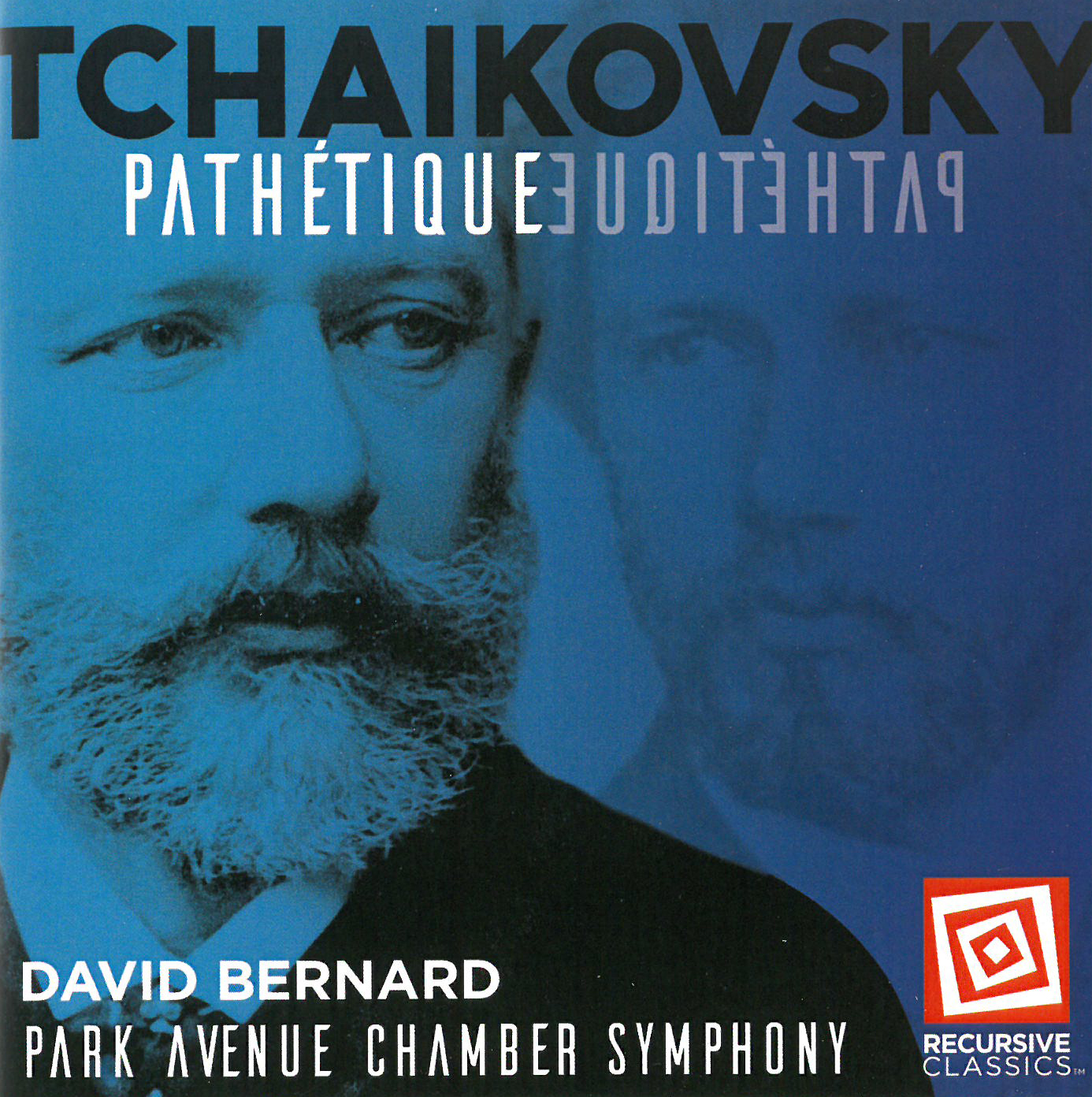
Tchaikovsky’s great Symphony No.6 being performed by a chamber ensemble? I admit I had my doubts as to whether this New York-based group numbering roughly 50 members could do full justice to the composer’s symphonic swan song. Admittedly, the Park Avenue Chamber Symphony under the direction of conductor David Bernard has earned an enviable reputation since its formation in 1999, and its three First Prizes in the American Prize Competition in Orchestra or Performance (2011, 2012, 2013) and an extensive tour to the People’s Republic of China should be ample evidence of its musical heft.

Rest assured – the PACS may not have the numbers usually associated with orchestras who perform this daunting repertoire, but it delivers a thoroughly convincing performance. Following the lugubrious opening measures, the Allegro non troppo of the first movement is spirited and elegant, the well-balanced phrasing clearly articulated, featuring a deft interplay between woodwinds and strings.

The second movement “waltz” (in 5/4 time) is all grace and charm, while the brisk third movement march provides a perfect showcase for the ensemble’s stirring brass section before the anguished and despairing finale.

My only quibble is the occasional lack of the luxuriant sound found in other recordings, due to the PACS’ smaller string section. And at times, the brass section – as ebullient as it is – tends to overshadow the strings. Yet neither of these minor faults detracts from an otherwise fine performance. While this may not be a touchstone recording of the Sixth Symphony, it has a certain energy and style all its own and is a worthy companion to existing performances by much larger orchestras. Recommended.

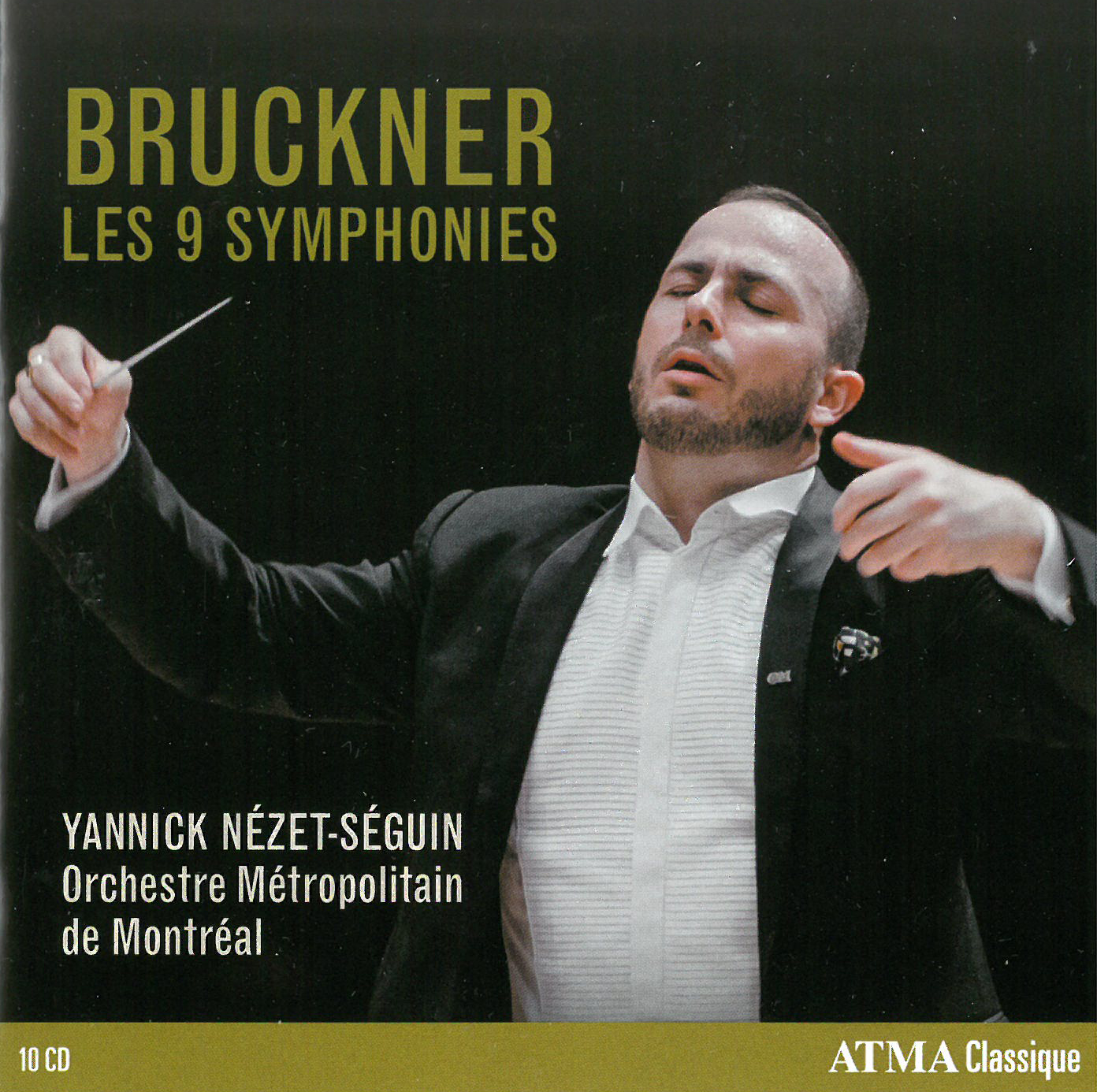
03 Bruckner 1 9Bruckner – Les 9 Symphonies
Orchestre Metropolitain; Yannick Nézet-Séguin
ATMA ACD2 2451 (atmaclassique.com)

This box of ten CDs comprising Les 9 Symphonies sports a gold trim that gives it a rather deluxe look and manages to fit quite a bit of detail in its Spartan-looking 24-page booklet. Significantly, for an Anton Bruckner box, it lists the version and premiere details, which are critical as Bruckner was known to be a sort of serial reviser of his symphonic work. For dyed-in-the-wool fans – and aficionados of classical music – version is, indeed, everything and would explain idiosyncrasies of the opuses performed. Important also is to note that these magnificent versions are an enormous decade-long quest by Yannick Nézet-Séguin and Orchestre Métropolitain de Montréal to put down on record the complete symphonic work of a composer as consumed by spirituality as he was by a seemingly obsessive compulsion to refine, time and again, what he had written.

The booklet notes may not explain why certain Bruckner versions of these symphonies were chosen above others and one might question – as Bruckner is said to have – Franz Schalk’s 1894 version of Symphony No. 5 in B-flat Major WAB 105, which is reported to have 15 to 20 minutes of music cut from it (the composer certainly disagreed with the cuts). Still, what seems to have motivated Nézet-Séguin is certainly the mission to capture the depth of Bruckner’s mysticism and joyful recreation of the composer’s “cathedrals of sound.” This would also explain why Symphony No.7 in E Minor WAB 107 is a version premiered by the legendary Arthur Nikisch and why Symphony No.1 in C Minor WAB 101 is taken from Hans Richter’s version premiered on December 13, 1891 (which is what Bruckner seems to have approved for performance on May 9, 1868).

If the determination to capture Bruckner at his most intense was the driving force behind Nézet-Séguin’s quest to complete his Bruckner cycle then he has certainly succeeded beyond belief and this box is comprehensive proof. It bears mention that at various points in time completed recordings of the symphonies have been released and reviews of Nos. 2 to 4 and 6 to 9 have also been featured within these pages, which leaves us with Nos.1 and 5. Symphony No. 1 in C Minor establishes many of Bruckner’s most distinctive characteristics, from the sense of scale to the organ-like washes of orchestral sound and the construction of long expanses from short repeated phrases. The electrifying performance with the leonine power of the Orchestre Métropolitain de Montréal in full throttle is shaped with fantastic conviction by Nézet-Séguin. His speeds are sometimes quite leisurely, but this only increases the symphony’s sense of scale and magnitude. This “Vienna Version” is a terrific achievement.

The Symphony No.5 in B-flat Major is the first of Bruckner’s mature symphonies to survive in a single version and was his most monumental, being both longer and more finely worked out than its predecessors. It has a sense of solemnity not found in earlier symphonies, with a dramatic sense of conflict generated by the suggestion that passion is always being kept in check. What’s especially impressive about Nézet-Séguin’s performance is the way momentum is always maintained, even in the tricky last movement, where he sails through the unmannered eloquence and power that are the hallmarks of this great performance from the beginning. The devotional, awestruck intensity of the final movement is effectively captured in this recording. Indeed this and the other performances in this box almost certainly comprise the defining recordings of Nézet-Séguin’s career.

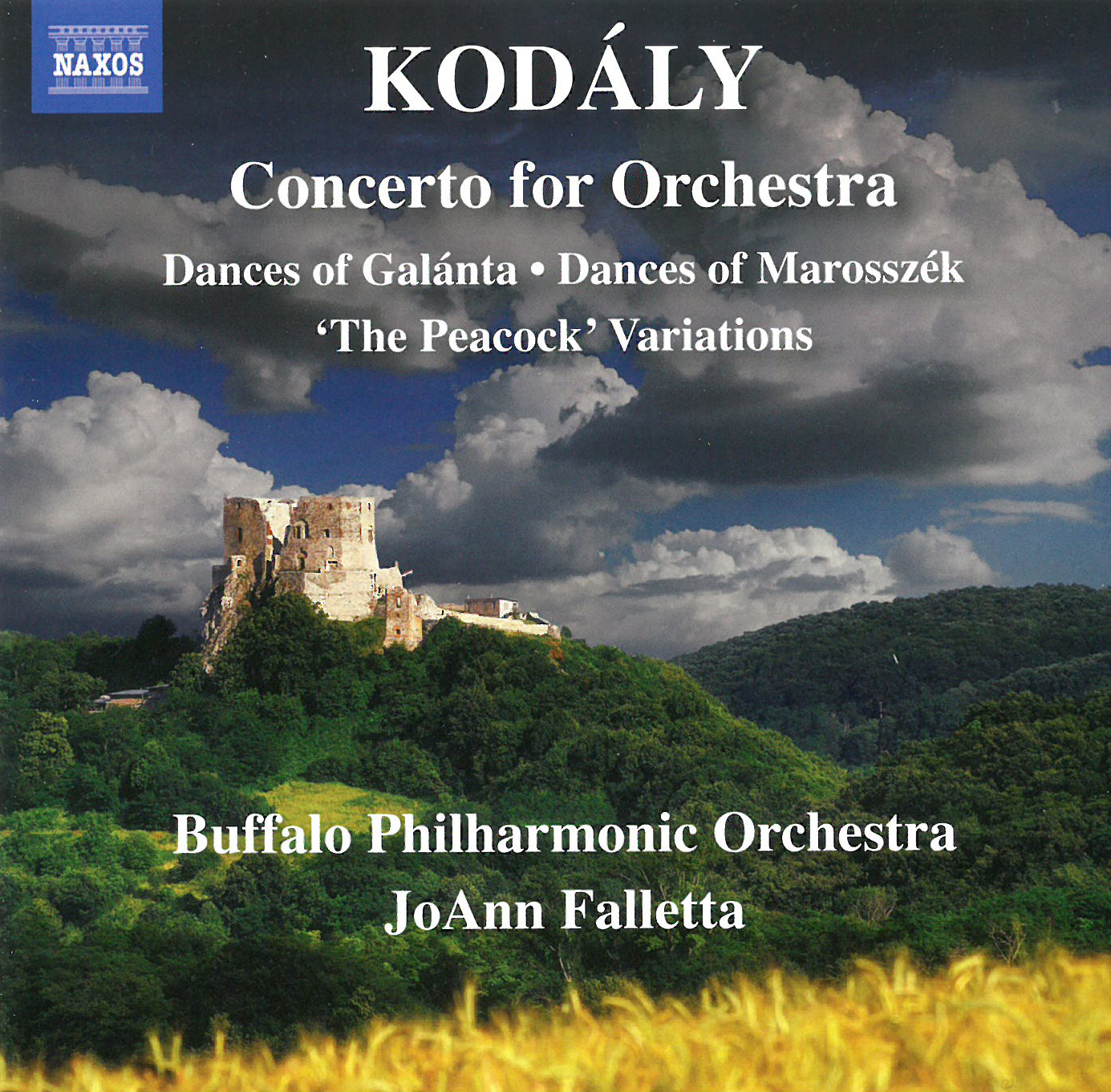
04 Kodaly Concerto for OrchestraKodály – Concerto for Orchestra
Buffalo Philharmonic Orchestra; JoAnn Falletta
Naxos 8.573838 (naxos.com)

These days, when symphony orchestras are going bankrupt all over America, the nearby Buffalo Philharmonic is flourishing. This is the second recording that came to my attention by JoAnn Falletta, their music director, recorded at Kleinhans Music Hall, with fabulous acoustics and designed by one of the forefathers of modern architecture, Eliel Saarinen.

Zoltan Kodály’s best and most popular orchestral works are played with such gusto, enthusiasm and flair that one wonders if Falletta has some Hungarian blood in her veins. Folk music of Hungary is unique in Europe as the Magyar tribes came from the east in the ninth century, their music and rhythms more in common with the Mongols. The two dance pieces Dances of Galánta and Dances of Marosszék are skilfully composed, colourful collections of folk tunes, sometimes melancholic or driven to a frenzy, which often demonstrate a rhythmic pulse found in Mongolian dances (said Lang Lang), not to mention Hungary having been invaded by the Mongols in the 13th century.

Kodály’s Concerto for Orchestra (1940) was commissioned by and written for the 50th anniversary of the Chicago Symphony. Although less well-known than its counterpart by Bartók, it is a fascinating mixture of high-stepping folk dance and Baroque passacaglia, echoing the concerto-grosso style. Sparklingly performed by the Philharmonic’s superb instrumentalists, conducted with surgical precision by Falletta and rendered in spectacular sound, I was thoroughly enchanted.

The enchantment continues with “The Peacock” Variations (1939), a “very virtuoso showcase of scintillating effects” based on a folk song that became a rallying tune of the fight for freedom in the 1848 uprising of Hungary against the Habsburg oppression. Superb recording, highly recommended.

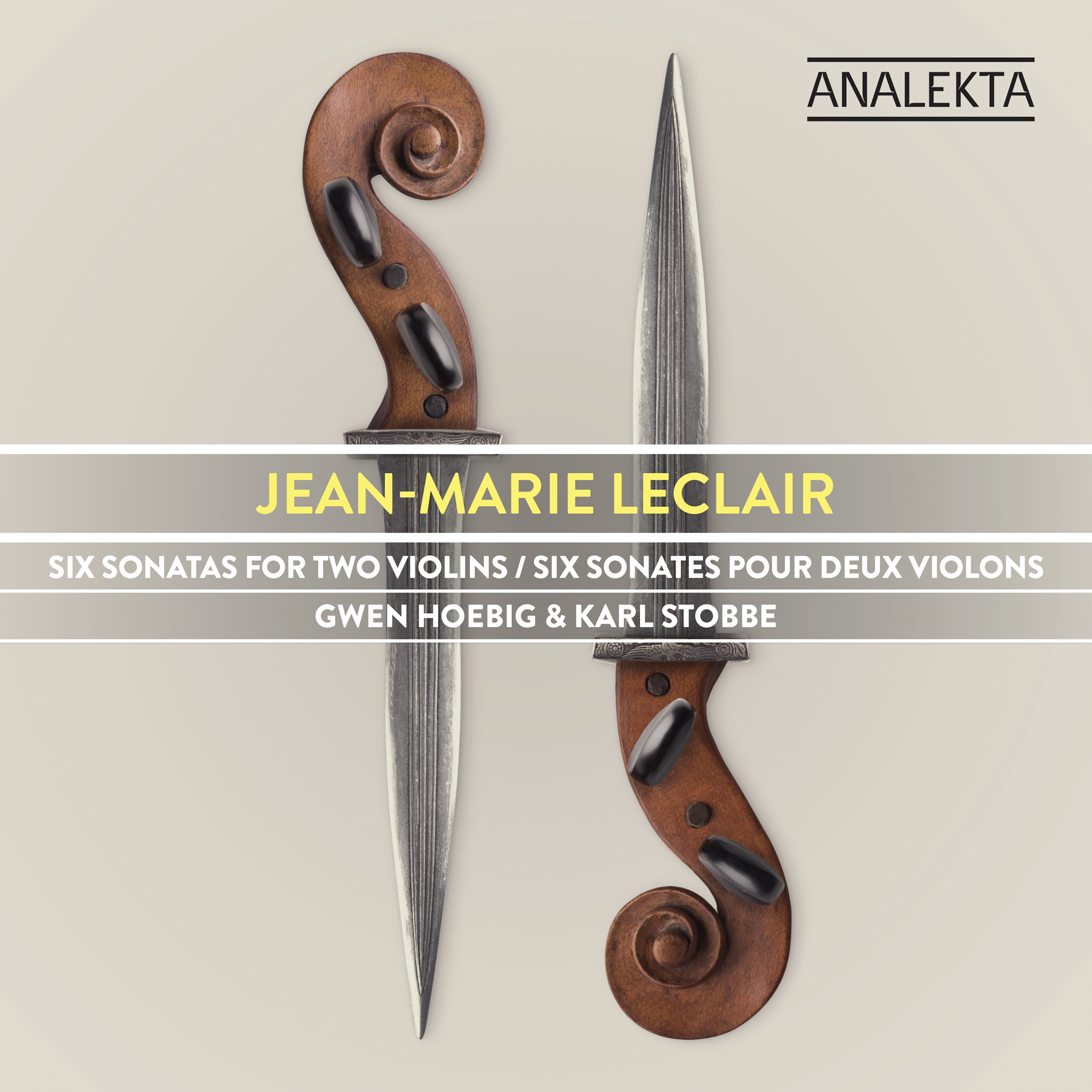
01 Leclair Six SonatasViolinists Gwen Hoebig and Karl Stobbe have been sitting together on the front desk of the Winnipeg Symphony Orchestra for 20 years, and have been playing duets together for almost that long. A staple of their repertoire, the Six Sonatas for Two Violins by Jean-Marie Leclair is featured on a new CD from Analekta (AN 2 8786 analekta.com).

Leclair (1697-1764) was considered the father of French violin playing, merging the Italian influence he picked up while working for the ballet in Turin in his 20s with the French dance forms. These Op.3 Duos are known for their difficulty, but despite the need for technical mastery and virtuosity are never merely brilliant show pieces but works full of elegance and reserve, and of “lilting pastorals, graceful sarabandes and fiery jigs.”

Hoebig and Stobbe have technical mastery to spare, with a bright, clear sound and beautifully clean playing. The first and second violin parts are equally important here, with constant interplay and textural depth, and it’s virtually impossible to tell them apart.

Leclair had what the publicity release calls a tumultuous life, and was stabbed to death in front of the house he owned in a rather seedy area of Paris, possibly at the instigation of his former wife, who had been left penniless upon their divorce and who inherited his house and possessions, or by his nephew, an aspiring violinist angered at Leclair’s refusal to help advance his career. In the booklet notes Stobbe suggests that the nature of the duos – “the intimacy of two violins working together through tribulations and trials, romance, and violence” – may well reflect the circumstances of Leclair’s life, giving the performers a good starting point to explore the music’s character. His hope that these performances go beyond the technical challenges to give a sense of the man who created them is more than fulfilled in an outstanding CD.

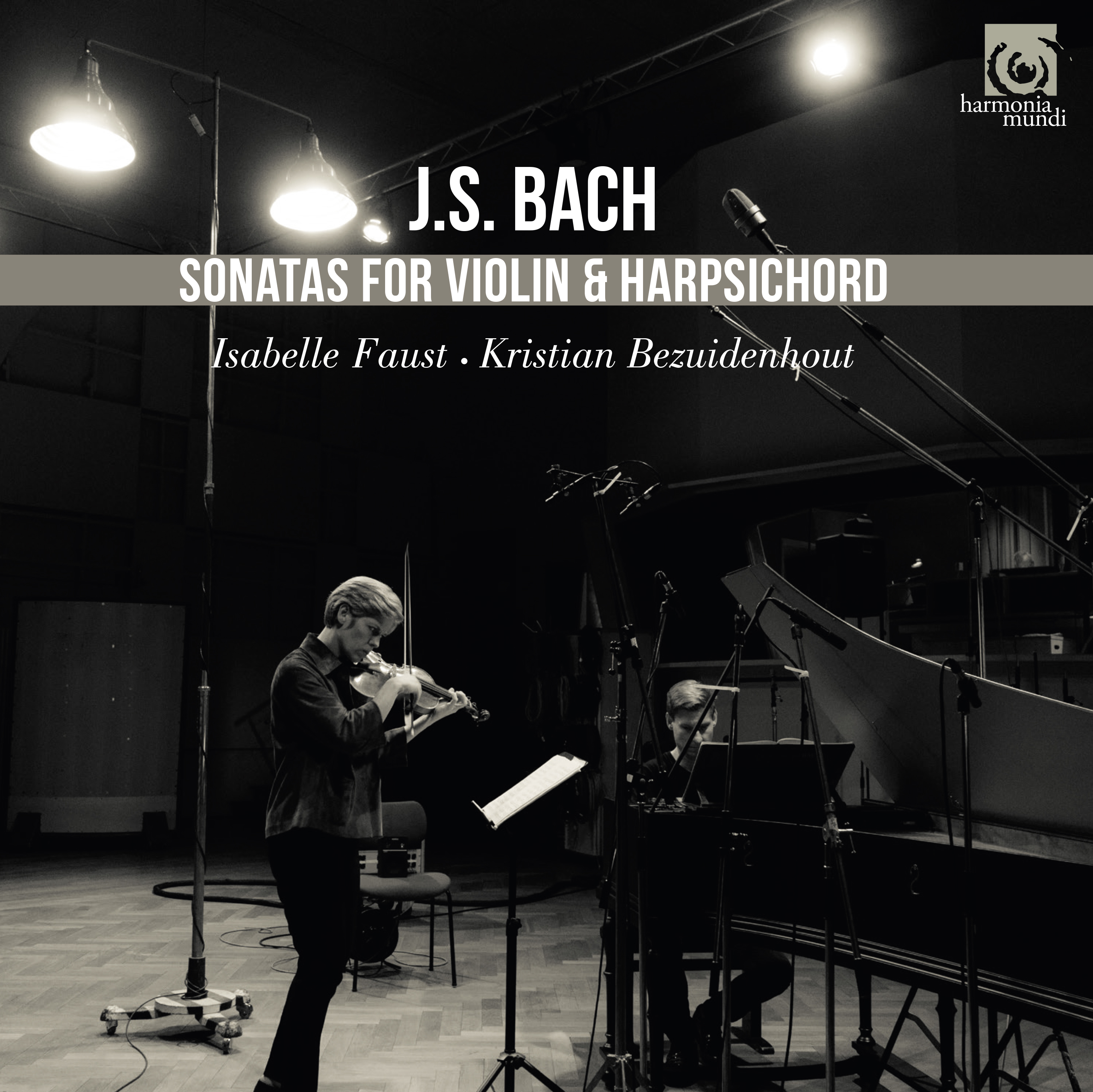
02 Faust Bach coverViolinist Isabelle Faust and harpsichordist Kristian Bezuidenhout are in outstanding form in a 2CD set of J.S. Bach: Sonatas for Violin & Harpsichord (harmonia mundi 90225657).

These six works BWV 1014-1019 probably date from the Cöthen period of 1717-23, but Bach apparently continued to revisit and revise them throughout his life, suggesting that they were works that meant a great deal to him. From a historical perspective they form a crucial link between the Baroque trio sonata and the violin and piano sonatas of the Classical and Romantic periods, Bach treating the left and right hand keyboard parts as bass line and melodic voice respectively, with the violin interacting primarily with the melodic voice.

The performances here are quite superb, with a lovely balance between the instruments and a striking warmth and clarity. In his perceptive booklet notes Bezuidenhout offers the suggestion that the acquisition of a new double-manual harpsichord by Michael Mietke of Berlin at Cöthen in 1719 may well have provided the inspiration for Bach’s sudden keyboard innovations; there seem to be no other sources for this sudden departure from the standard trio sonata form.

The harpsichord used here, courtesy of Trevor Pinnock, is a modern John Phillips instrument modelled after a 1722 harpsichord by Johann Heinrich Grabner. Bezuidenhout notes that the sound “is both full… and wonderfully articulate,” the clarity between the registers ideal for the three-voice counterpoint so much at the heart of these sonatas. Faust plays a 1658 Jacob Stainer violin, which Bezuidenhout notes has the “necessary brilliance... but also a certain warmth and darkness of tone that is ideally suited to the more melancholy moments.”

All in all, it’s a wonderful set.

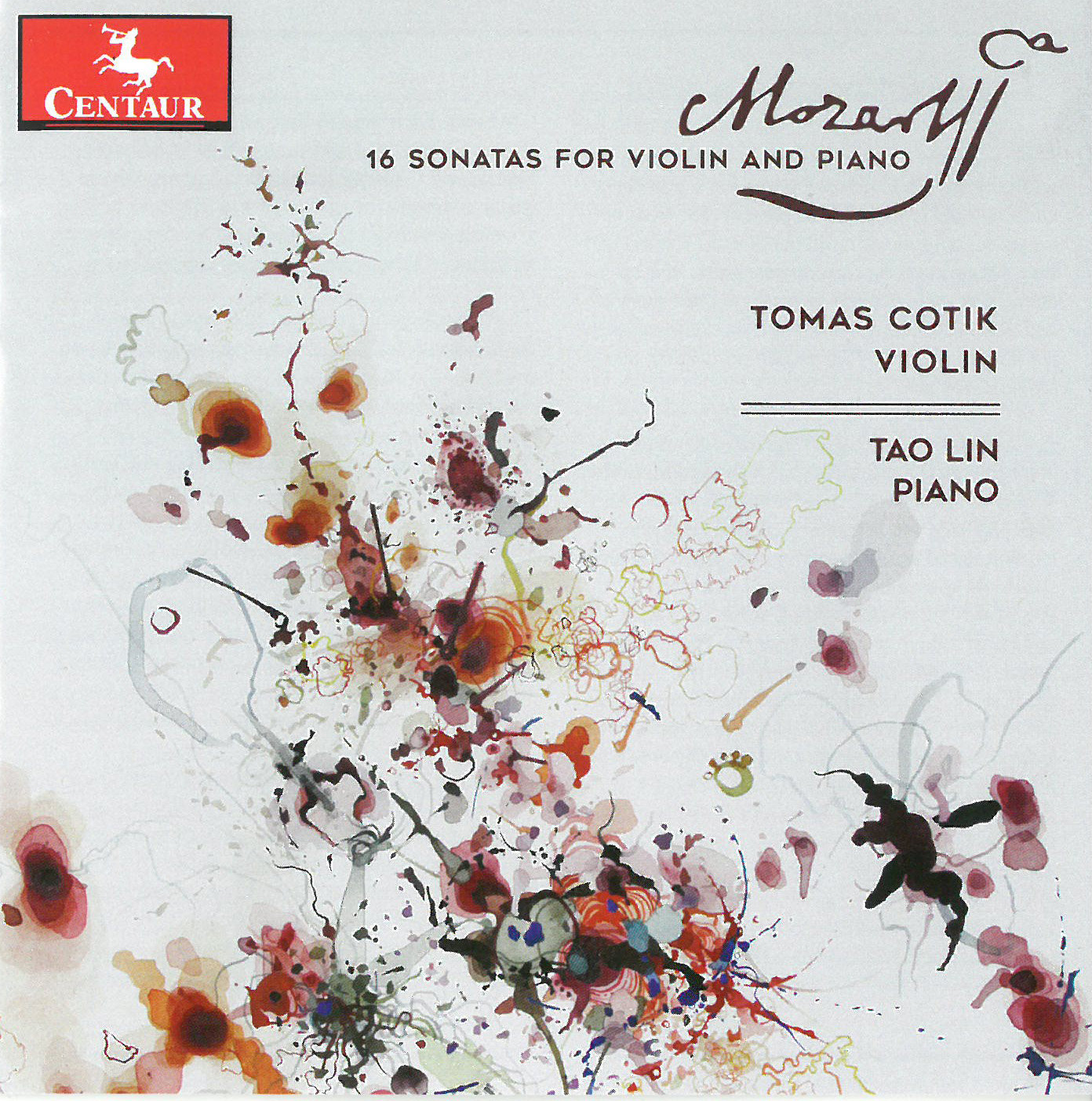
03 Kotik MozartI didn’t know the playing of Tomas Cotik before last month’s outstanding Piazzolla Legacy CD, but his latest release, a simply beautiful 4CD set of the Complete Mozart 16 Sonatas for Violin and Piano with his regular partner Tao Lin (Centaur CRC 3619/20/21/22 centaurrecords.com), leaves me in no doubt as to what I must have been missing.

This set – Cotik’s 14th issue – does not include the “juvenile” sonatas for keyboard and violin from 1763-66, where the violin rarely does little more than conform to the keyboard right hand, but presents the 16 sonatas written in the period 1778-88: the six sonatas K301-306 published in Paris in late 1778 and known as the Kurfürstin or Palatine Sonatas; the six sonatas K296 and K376-380 published by Artaria in Vienna in late 1781 and dedicated to Mozart’s pupil Josepha Aurnhammer; and the later Viennese sonatas K454 (1784), K481 (1785), K526 (1787) and K547 (1788).

In the accompanying publicity material, Cotik describes the lengths to which he and Lin had to go to reduce and eliminate the extraneous noises from the Fort Lauderdale church they had chosen as the recording venue. The resulting full-movement takes more than justify their efforts: the sound quality and balance are excellent, with the violin never too far forward but never overshadowed by the piano either. Both performers play with a resonant, clear and warm tone, and dynamics, phrasing and tempi are all perfectly judged.

Cotik readily admits to having always loved Mozart’s music, and calls his recordings of these sonatas a milestone in his musical life. It’s a sentiment that is clearly evident in every single track of this exemplary set.

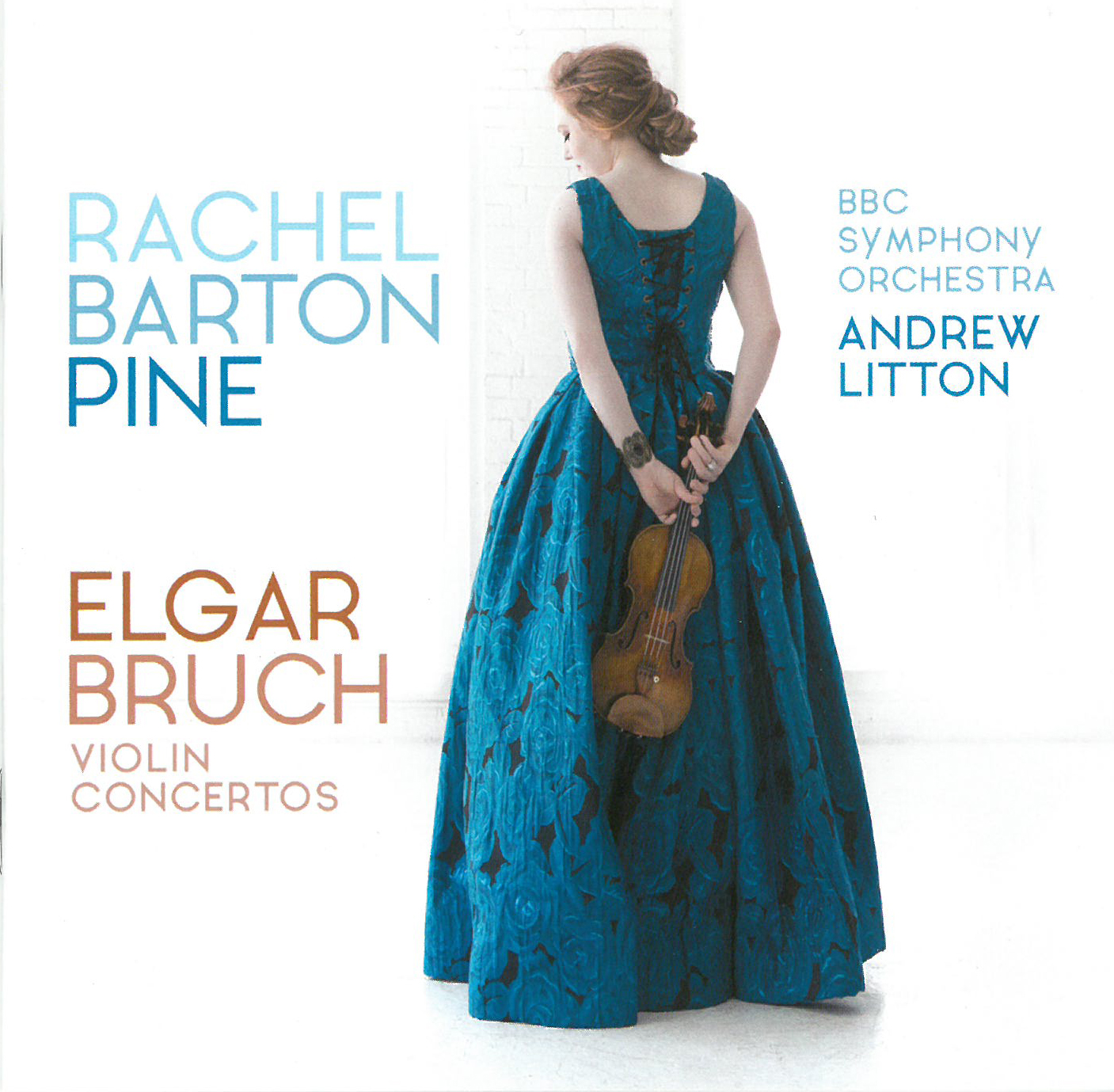
04 Rachel Barton PineThis really has been a tremendous month for violin CDs. The American violinist Rachel Barton Pine marks her 36th recording and her fourth album for the Avie label with the Elgar and Bruch Violin Concertos, with the BBC Symphony Orchestra conducted by Andrew Litton (AV2375 avie-records.com).

Pine calls the project an “indulgence in Romanticism,” being the first time that the shortest of the regular repertoire Romantic concertos – the Bruch Violin Concerto No.1 in G Minor Op.26 – has been recorded together with the longest – Elgar’s Violin Concerto in B Minor Op.61. Although they have little in common from a historical perspective, Pine has long thought of them together because each work reminds her of the warm, rich and soulful sound she looks for in the other.

The Bruch was the first Romantic concerto that Pine learned (at the age of eight!) and the Elgar was one of the last, its highly technical challenges, numerous tempo changes and sheer length making it particularly difficult to learn (James Ehnes expressed the same concerns prior to his recording with Andrew Davis in 2007). The original conductor for this project was Sir Neville Marriner, who conducted the Academy of St Martin in the Fields on Pine’s critically acclaimed Avie album of the complete Mozart violin concertos, but he passed away shortly after Pine visited London to play and discuss the Elgar with him. It was a sad loss, for Marriner’s teacher was Billy Reed who, as the young concertmaster of the London Symphony Orchestra, had helped Elgar with the solo violin part. What would Sir Neville have brought to his first recording of the work, one wonders.

Still, Litton does an excellent job with a concerto that can be difficult to hold together, his accompaniment having a quite different sound at times – not exactly lighter or smaller, but perhaps not as serious as some, with a great deal of sensitivity and attention to detail. There is certainly no tendency toward Elgarian pomp or Edwardian stuffiness that can sometimes make the concerto sound a bit laboured or meandering in less experienced hands.

Pine’s playing in the Elgar is thoughtful and unerringly accurate with no hint of mere virtuosity, although there is perhaps less of a feel of sweeping grandeur than in some other performances. Much the same can be said of the Bruch, where again the foremost impression is one of intelligence and sensitivity in the playing rather than unabashed Romantic passion. It supports Marriner’s observation of Pine’s playing in the Mozart set, when he said “...there is no utter embellishment, everything is there for a purpose, and musically speaking, it makes such good sense.”

Dedicated “to the memory of a musical hero and generous friend, Sir Neville Marriner,” the CD is an excellent addition to Pine’s impressive discography.

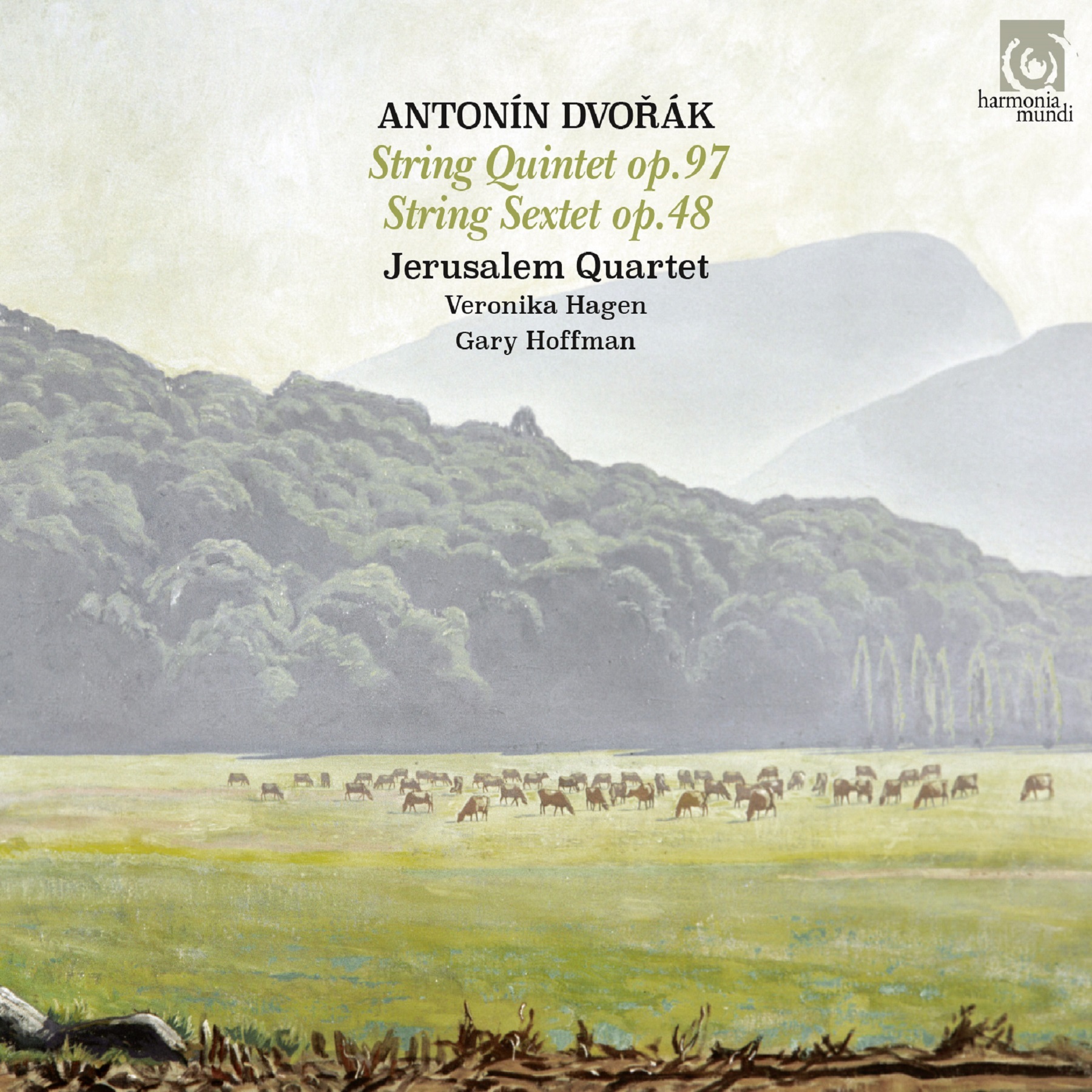
05 Dvorak coverThere’s playing of the utmost warmth and sensitivity on Antonín Dvořák: String Quintet Op.97 & String Sextet Op.48, featuring the Jerusalem Quartet with violist Veronika Hagen and, in the sextet, cellist Gary Hoffman (harmonia mundi 902320).

The Sextet in A Major was written in 1878 and was clearly modelled on the two string sextets of Brahms, who commented many years later on the “wonderful invention, freshness and beauty of sound” in the work. It was Brahms who had recommended Dvořák to his own publisher Simrock in 1877, and there is certainly more than a hint of the German Romantic tradition here as well as the inevitable Slavonic folk influence. The performance has effusiveness and passion, with a lovely Dumka movement and a terrific Finale.

There’s no less passionate and committed playing in the Quintet in E-flat Major, which simply abounds in lyrical warmth and beauty. It was written, along with the “American” string quartet, in the Czech community of Spillville, Iowa in the summer of 1893 during Dvořák’s stay in the United States.

These are simply ravishing performances, with Alexander Pavlovsky’s gorgeous first violin playing leading the way and setting a standard that the other performers have no problem matching.

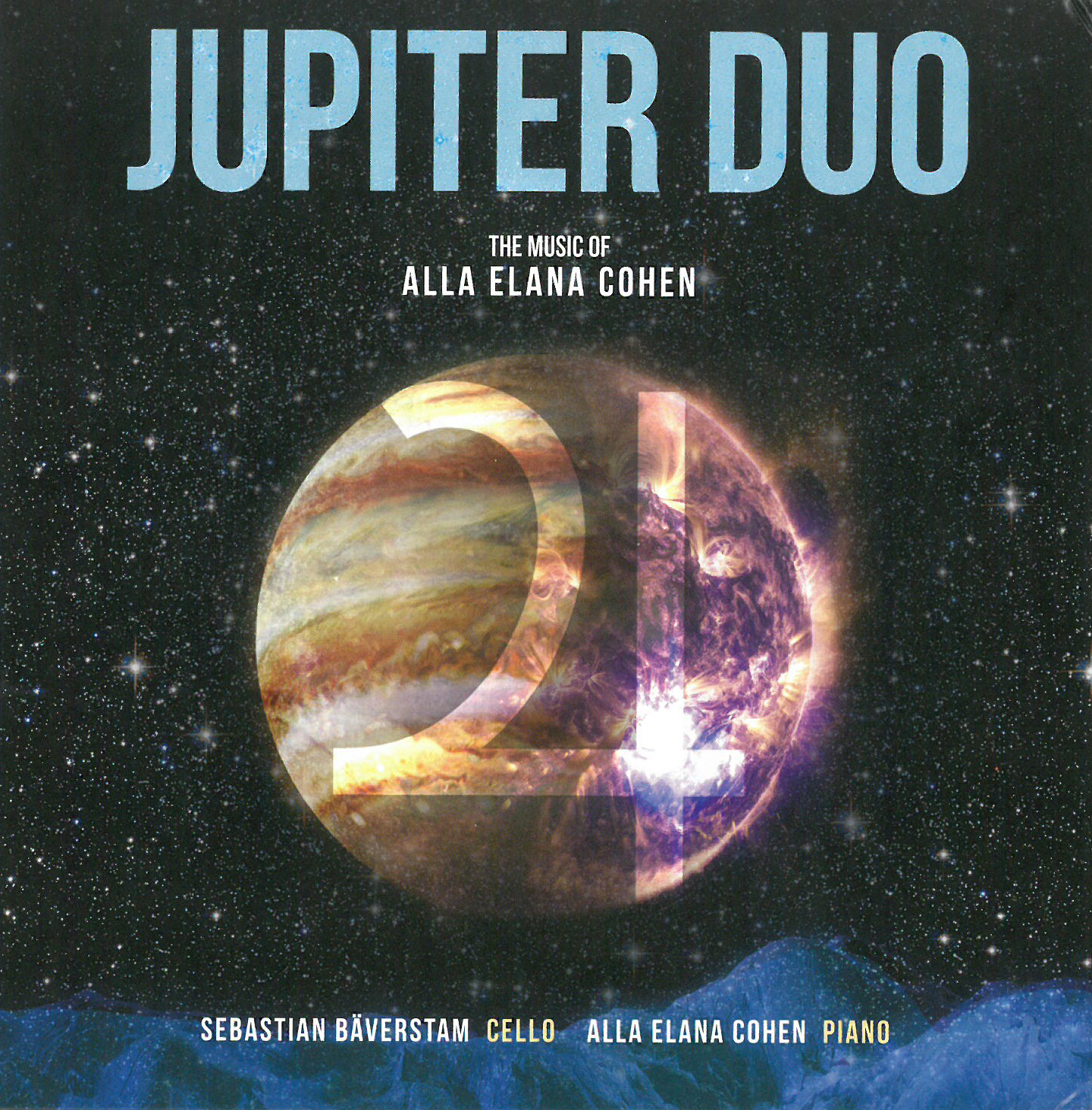
06 Jupiter DuoThe Russian pianist, composer and teacher Alla Elana Cohen came to the United States in 1989 and is currently a professor at Berklee College of Music in Boston. Jupiter Duo is the title of a new CD of her music, as well as the name of the performing duo of cellist Sebastian Bäverstam and Cohen herself on piano (Ravello Records RR7978 ravellorecords.com).

Cohen discovered Bäverstam, now 29, when he was barely 12 years old, and the first work of hers that they performed then, the Book of Prayers Volume 1, Series 7, opens the CD. All subsequent Cohen cello works were written for Bäverstam, and there are three other cello and piano works here: Third Vigil, an arrangement (which Cohen prefers) of her Concerto for Cello and Orchestra; Querying the Silence Volume 1, Series 2; and Book of Prayers Volume 2, Series 4, which closes the CD.

Sephardic Romancero Series 2 is a challenging solo work ably handled by Bäverstam, although Cohen’s statement that “for anybody else it will be almost impossible to play this piece” says little for her awareness of contemporary world-class cellists. Cohen also contributes two works for solo piano: Three Film Noir Pieces and Spiral Staircases.

It’s tough music to get a handle on, with little melodic content, a lot of thick, dense texture in the predominantly discordant piano writing and a good deal of large, heavy chords spread across the entire keyboard range. From the cello perspective Bäverstam handles all the technical challenges with ease; his lower tone in particular is beautifully rich.

Of the final work on the CD, Cohen says that it is one of the rare-for-her compositions “in which lighter colours prevail. It is also the most ‘consonant’ by sonority, at times even quasi-tonal.” That should give you some idea of the music on the rest of the disc, which generally seems to be tough, abrasive and frequently decidedly dark.

01 Radiant ClassicsIn this debut release (recorded at Glenn Gould Studio), Radiant Classics (Really Records RR 2017002, really-records.com), Nina Soyfer demonstrates her innate ability to meet the stylistic demands of a remarkably varied program. This admirable skill rests on the foundation of an impressive keyboard technique and artistic insight. She performs the Bach Toccata in D Major BWV912 with freedom and sensitivity. The Fugue in particular dances beautifully under the lightness of her touch.

The disc opens with Beethoven’s 32 Variations on an Original Theme in C Minor WoO 80 and closes with his Appasionata Sonata. The Variations demand many changes in mood and the sonata depends greatly on the convincing delivery of the first movement’s heroic theme. Soyfer comes to these works with an unerring sense of who Beethoven is in all his emotional complexity, and creates an experience that is both authentic and profound.

The recording’s most interesting pieces are the two Preludes by Ukrainian composer Vasyl Barvinsky. Not many of his works survive. His late-Romantic, impressionistic style is highly crafted and somewhat reminiscent of Chopin. Soyfer brings considerable emotion and power to his music, leaving the clear impression that more of it needs to be heard.

Listen to 'Radiant Classics' Now in the Listening Room

02 Lindsay GarritsonLindsay Garritson is no stranger to competitions, touring and live performance. Her impressive list of achievements makes this first disc, Lindsay Garritson, piano (lindsaygarritson.com), a welcome recording. It shows the intensity of her style and the eloquent expression of which she is so remarkably capable.

She begins the disc with the Liszt Rhapsodie Espagnole S.254. It’s a full-on engagement with all the power and nuance that the composer’s work requires. The major item on the CD is the Schumann Sonata No.3 in F Minor Op.14. Its four movements demand a great deal of scope from the performer, from the often deep introspection of the second and third movements to the blazing technique of the Finale. Garritson’s technical and interpretive abilities are inspiring. She has clearly lived with this piece for a long time and justifiably owns it.

Rachmaninov’s setting of the Kreisler Liebesleid completes her program in a show of capricious keyboard genius. It’s the kind of playing that brings audiences to their feet after encores. You can do it in the privacy of your living room – your secret will be safe with us.

03 Bruce LevingstonThis beautiful CD Windows (Sono Luminus DSL 92218 sonoluminus.com) is the seventh in Bruce Levingston’s discography. The main work is Schumann’s Kinderszenen Op.15. Levingston proves himself an artist whose first impulse is to find and reveal a composer’s most fragile moments. His ability to do this is quite disarming. The best example of this is Träumerei. Not since Horowitz played this as the encore in his 1986 Moscow concert near the end of his life, have I heard such playing. Words completely fail. Levingston brings this approach to the whole piece and thereby creates something quite unlike anything recorded of late.

The other works on the CD are commissions from two contemporary composers. The Shadow of the Blackbird by David Bruce is the program’s opening piece and is very much in the character of the Schumann that follows it. It’s deceptively simple yet searching and contemplative. A perfect beginning to Levingston’s program.

The CD’s title tracks Windows are James Matheson’s five-movement composition inspired by the stained glass windows of Marc Chagall and Henri Matisse. Matheson uses the piano’s colours very effectively in his writing. Levingston plays this in a way that draws an interpretive thread convincingly through the works of all three composers.

04 Liza StepanovaLiza Stepanova takes an unusual and creative approach to her new CD Tones & Colors (Concert Artists Guild CAG 120 concertartists.org). Using paintings as the inspiration for her four-part program, she blends music from Bach to Ligeti into themes depicting A Spanish Room, Nature and Impressionism, Conversations Across Time, and Wagner, Infinity and an Encore.

It’s a skillfully assembled repertoire list and beautifully played throughout. A number of tracks stand out. El pelele by Granados makes a brilliant opening, with its rich harmonies and sparkling writing. Stepanova has equal success with the three impressionist pieces in the second set. Fanny Hensel’s September: At the River is especially effective.

The third set uses four pieces in the key of E-flat minor. A Bach Prelude and Fugue BWV853, George Crumb’s Adoration of the Magi and a second fugue by Lyonel Feininger based on the subject used by Bach in his fugue. It’s quite striking to hear how the shared key draws these disparate works so tightly together.

Stepanova begins her final set with Liszt’s transcription of Wagner’s Overture to Tannhäuser. It’s magnificent playing that captures the grand scale of Wagner’s work, from the solemn chorale-like opening to its towering climax. Ligeti’s Etude No.14 Infinite Column is a devilish piece to perform and reveals Stepanova’s true power at the keyboard. A graduate of Juilliard and a seasoned performer, Stepanova is one to follow in the piano world.

05 Robert PresterRobert Prester may be better known today as an accomplished jazz pianist, but his new CD Robert Prester – Rapsodya (robertprester.com) is a reminder of his many years as a young pianist absorbing the classical repertoire. The learning of this period has shaped his playing with a light and precise touch, a keen interpretive impulse focused clearly on emotion, and a remarkable grasp of musical architecture.

This new recording contains the Beethoven Sonata No.12 in A-flat Major Op.26 performed with a fresh and energized enthusiasm – as if it were a world premiere. Debussy’s Jardins Sous la Pluie is an impressive example of Prester’s keyboard agility. The Bach Prelude and Fugue No.6 in D Minor WTC Book II is an excellent example of the musical discipline and intuition that Prester brings to all his playing.

The real gem on this disc, however, is Prester’s own composition. The Sonata in F Minor is a fusion of classical and jazz harmonies. It adheres closely to the structure of sonata form but is deeply imbued with the harmonic clusters, intervals and rhythms we associate intimately with jazz. This mix is seamless and well balanced. If anything, it’s a reminder of our enduring tendency to keep these two genres isolated in their own worlds without believing their co-mingling can produce something unique and truly beautiful.

It’s a terrific recording. Visionary, successful and altogether brilliant.

06 Nancy Zipay DesalvoNancy Zipay DeSalvo presents the work of two contemporary composers in her new recording Small Stones – Modern Piano Music (Navona Records NV 6139 navonarecords.com).

Jason Tad Howard’s Piano Sonata No.2 is not really a sonata in the formal sense. Rather, it explores eight short musical ideas that the composer calls Short Shorts, before bringing them together in a final expression amusingly described as a Not Quite So Short Short Short. Despite the light humour, the work is quite substantial and at times very technically demanding. The eight pieces are varied in style and mood, and kept to less than two minutes’ playing time. They tend slightly toward a minimalist form and finally emerge in the complexity of the last movement.

Daniel Perttu’s Sonata for Piano is inspired by a visit to Stonehenge. Perttu uses many compositional devices to evoke the ancient mystery associated with this landmark: minor modes, atmospheric writing and plenty of technical exploitation of the piano’s potential in evoking the moods he requires. This sonata is more challenging for the performer than the earlier work. DeSalvo handles it all with a confidence that speaks to her lifetime as a performer and teacher.

The two sonatas are a good selection and represent a fine example of contrasting approaches to contemporary piano writing.

07 Lynell JamesLynelle James has recorded her first solo piano CD, Lynelle James Piano (Blue Griffin Recording BGR435 bluegriffin.com). She includes the Beethoven Piano Sonata No.28 in A Major Op.101, in which the third movement emerges as a masterpiece of deeply touching melancholy. It’s a very satisfying performance that is even more thrilling for the energy that erupts in the final movement. Her command of the keyboard is inspiring, especially in the frequent restatements of the fugal subject in the bass line.

Some of James’ academic work has focused on the life and music of Russian avant-garde composer Nikolay Roslavets. It’s natural that she would use her first recording to bring this lesser-known repertoire to public attention. Roslavets’ Five Preludes reveals an ethereal and somewhat mystical language that James captures with conviction and authenticity. The music is replete with dynamic and emotional changes and moves strongly in the direction of atonality while never quite losing a tonal centre, however distant.

Her performance of the Scriabin Sonata No.4 in F Sharp Major Op.30 is extraordinary. The two movements are of such contrasting character, it’s difficult to believe they’re by the same composer. James understands the core of Scriabin’s expression and holds the work together wonderfully.

The Schumann Symphonic Etudes Op.13 concludes the CD. Structured as a theme and variations, the bulk of the piece is a series of etudes on the opening idea. As such, it quickly becomes a beautiful display of keyboard technique and varied musical devices that Schumann conceived in his own brilliant way. James plays these with flair and an expansive grasp of their symphonic scale.

08 Panayiotis DemopolisPanayiotis Demopoulos’ latest recording Brahms, Demopoulos, Mussorgsky (Diversions ddv 24166 divineartrecords.com) is his third and includes one of his own compositions, Farewells for Piano. The work is a tribute to his two principal teachers in the UK. It’s structured in four parts, each representing a farewell offered in one of the four seasons. Demopoulos writes that the work has no explicit program beyond its title. The four short pieces are very modern in their language and surprisingly abrupt in mood change.

The main work on the CD is the Mussorgsky Pictures at an Exhibition. Demopoulos uses the 1931 edition edited by Pavel Lamm that corrected the numerous and questionable portions of the 1886 version edited by Rimsky-Korsakov. The 16 short pieces that comprise the Pictures encompass the entire expressive spectrum and call upon the pianist to be everything from sprite to superhero. It is Mussorgsky’s demand for contrast on such an enormous scale that presents performers with the daunting task of playing the piece complete in live performance. At least the recording studio offers the respite of breaks between takes.

However Demopoulos did it, it’s breathtaking. By the time he’s portrayed little chicks, the busy market place, the realm of the dead and arrives at the Great Gate of Kiev, awe is all that remains.

Back to top