06 Si SonatasSi! Sonatas
Leticia Gómez-Tagle
ARS Produktion ARS38270 (leticiagomeztagle.no-te.com) 

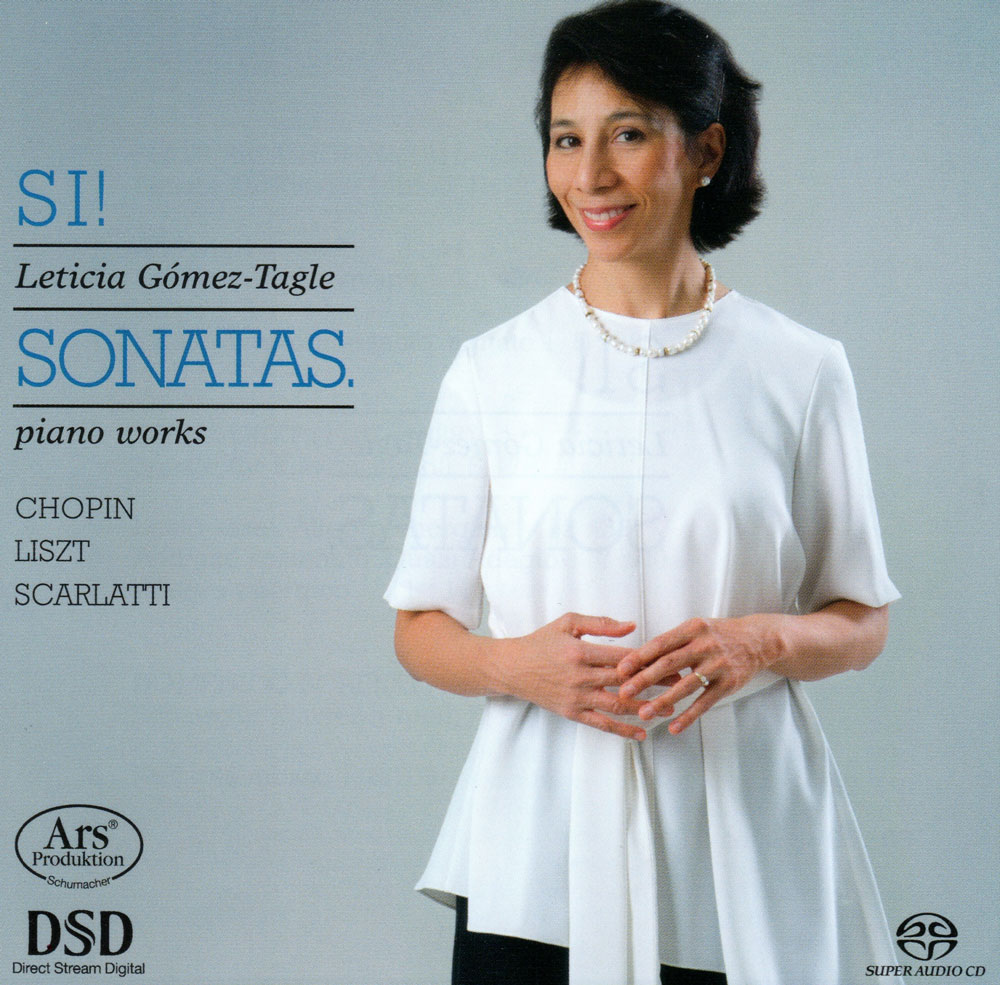
Sonatas by Chopin, Liszt and Domenico Scarlatti are featured on this Ars Produktion recording titled Si! Sonatas with Mexican-born pianist Leticia Gómez-Tagle. While most of us realize the word “Si” is Spanish for “yes” it also refers to B minor, the key in which all three pieces were written. The title was chosen by the artist herself, but even without the play on words and tenuous connection, the program is an attractive one.

Chopin’s Sonata No.3 Op.58 was completed in 1844, a time when the composer was at the height of his creative powers. The piece has long been regarded as one of his most difficult, not only with respect to the technical demands, but also to nuance. To say the least, Gómez-Tagle rises to the challenges in a very big way. She delivers an elegant and polished performance, her formidable technique further enhanced by a beautiful tone and fine use of phrasing.

The Sonata in B Minor by Franz Liszt is acknowledged as one of the powerhouses of 19th-century piano repertoire; fiendishly difficult, the piece presents technical challenges even greater than those of the Chopin sonata. Again – and not surprisingly – Gómez-Tagle meets the demands with apparent ease, creating a mood of thrilling dramatic intensity throughout.

In total contrast to the two Romantic giants is an encore – the Scarlatti Sonata K87, a gentle miniature written a century earlier. Here, Gómez-Tagle’s delicate and precise approach is clear evidence that she is as comfortable with Baroque repertoire as she is with that from later periods. Superb sound quality throughout further enhances an exemplary recording. Highly recommended.

Listen to 'Si! Sonatas' Now in the Listening Room

07 Villa LobosPiano Works by Heitor Villa-Lobos
Flavio Varani
Azur Classical AZC 175 (ciar.e-monsite.com)

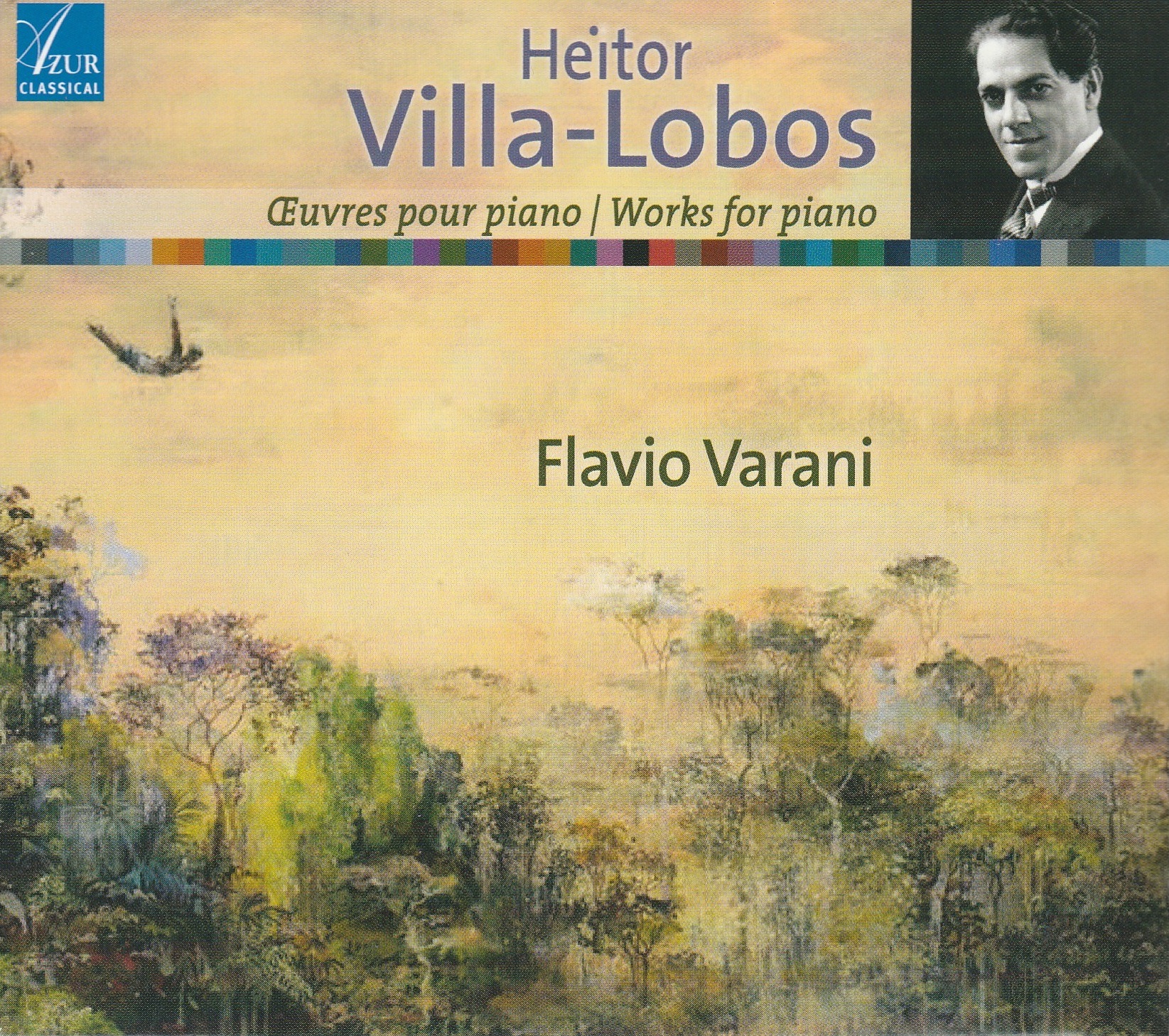
Even today, the piano music of Villa-Lobos remains an untapped trove that suggests something of the exotic. Despite the popularity of a handful of his works such as the Bachianas Brasileiras series, Villa-Lobos’ prodigious output for his own instrument boasts much unfamiliar music, thereby requiring a devotional sort of elucidation.

Apparently up to such a task is veteran pianist (and native Brazilian), Flavio Varani. He brings an unusual commingling of old-school romanticism and ardent, fiery command to his new disc where accompaniments leap and melodies spring about the keyboard. Varani’s training as a student at the Juilliard School with the great Rosina Lhevinne – and subsequently Arthur Balsam – reveals an integral approach to his art and a careful conception of pianistic lineage in general. The listener is aware that Varani has lived long and purposefully with the music of his homeland; the relationship of composer and interpreter here recalls the great association John Browning, (also a Lhevinne student), had with Samuel Barber.

Villa-Lobos’ strange and exotic piano calls to us from unexpected pieces throughout this record: Chôros No.1 W161 “Chôro tipico brasileiro” (a transcription from guitar) and the Danças características africanas W085 are examples. Conversely, Varani chooses the oft-loved eighth piece from Cirandas W220, “Vamos atrás da serra, Calunga,” as epilogue.

Regrettably, the recording quality here is not of the highest calibre. Levels are noticeably out of balance and extraneous studio noises disturb the overall flow of an otherwise convincing disc.

09 Dinnerstein QuietA Character of Quiet – Schubert; Glass
Simone Dinnerstein
Orange Mountain Music (orangemountainmusic.com) 

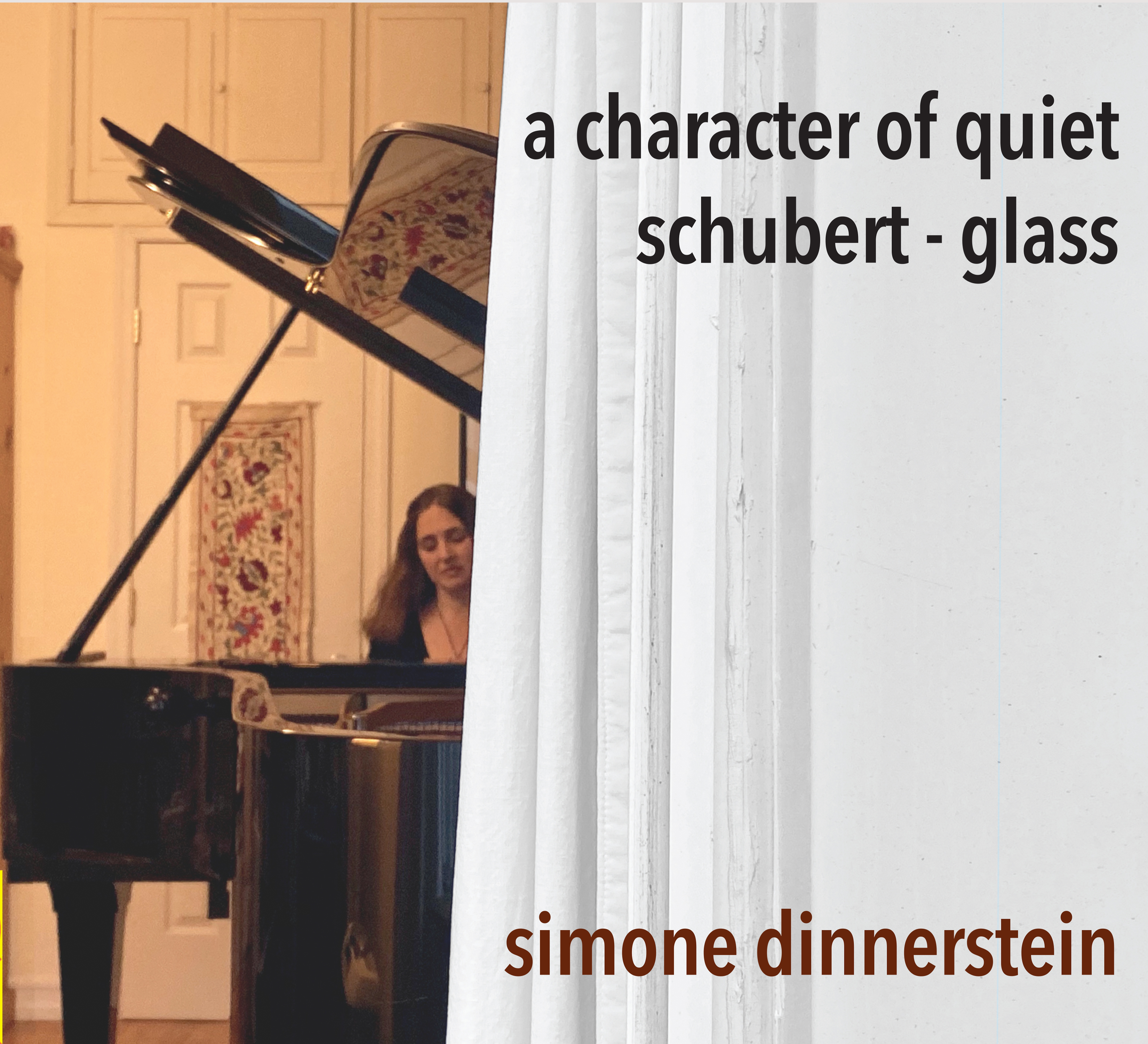
Admittedly feeling “anxious and enervated” during the early days of lockdown in March and April, pianist Simone Dinnerstein has confessed that she felt neither “creative” nor “productive.” In time however, with the help of poets Wordsworth and Melville and walks through her local cemetery – the hallowed Green-Wood of Brooklyn – she found her way back to the piano. In June, she sat down to record the music of two composers she has held a close connection with: Philip Glass and Franz Schubert. (And we are so very glad that she did!)

From the first note of this “quiet” and remarkable album (recorded in her New York home with longtime producer and friend Adam Abeshouse), the listener feels as if ferried to a private audience with Dinnerstein. Therein we are greeted with soloistic utterances on a wholly intimate order, sincere and sublime. With this unassuming recording, Dinnertsein seems to have evolved a new kind of homemade listening: she has managed to capture the immediacy and depth of experience – of character – that a one-on-one house recital can deliver. Here we glimpse the personal, as procured by the pandemic.

Even the three Glass Etudes, (music and a composer that this particular reviewer is often bemused by), speak in an honest and poignant mode, somehow changed by our planet’s new energy, reshaped by a hushed and isolated atmosphere surrounding Glass’ simple patterns and motifs.

Dinnerstein’s Schubert is always formidable and especially unique. Her performance here of the mighty last Sonata in B-flat Major D960 bears no exception, possessing an inescapable message of radiance and poetry, humanity and continuance.

Ultimately, Dinnerstein’s musicianship is one born of integrity. Through forced pause and quietude she has, indubitably, discovered new aspects to her art. Let us hope for more such recordings, as we marvel at her courage and savour the nourishment it brings us in these weary, unwanted times.

Note: The recording’s title was inspired by William Wordsworth’s The Prelude, a poem Dinnerstein became familiar with during lockdown. It refers to “A character of quiet more profound than pathless wastes.” Dinnerstein muses: “Perhaps I had been parted too long from my better self by the hurrying world, as Wordsworth puts it.”

01 Dana Zemtsov Anna Fedorova SilhouettesThe compositions by French and non-French composers on Silhouettes, the new CD from violist Dana Zemstov and pianist Anna Fedorova (Channel Classics CCS 42320 channelclassics.com) purportedly were all inspired by French poetry, a link that seems tenuous at best and in some cases non-existent, but when there’s playing as rapturous and ravishing as this, who cares?

The 1919 Sonata by Rebecca Clarke opens the CD, and what an opening it is – flowing, passionate, intense and finely nuanced playing from both players in a gem of a work that combines Debussy and Ravel influences with an English mood. The “French connection” is a quote from Alfred de Musset that Clarke wrote on the opening page.

The first of three effective transcriptions of short pieces by Debussy – La plus que lente – precedes the 2007 Suite Op.51 by Netherlands composer Arne Werkman, its Allemande, Branle, Pavane and Tarantella movements providing Baroque form for modern musical content. Debussy’s Clair de lune is followed by Darius Milhaud’s four-movement Sonata No.1 Op.240 from 1944, another work that glances back at the Baroque style. Based on unpublished and anonymous themes of the 18th century, it has a really lovely third movement Air, later arranged by the composer for viola and orchestra. The rhapsodic and impassioned 1906 Concert Piece by the Romanian composer George Enescu precedes the final Debussy transcription, Beau Soir, providing a beautiful ending to an outstanding CD. 

Both performers have technique, tone and musicality in abundance, but it’s a long time since I’ve heard such beautiful viola playing in particular, Zemstov displaying a wide range of tonal colour without any hint of the nasal quality that you sometimes encounter in viola recitals.

02 MILLER PORFIRIS DUOThere’s more excellent duo work featuring viola on Threaded Sky, the new CD from the Miller-Porfiris Duo of violinist Anton Miller and violist Rita Porfiris (millerporfirisduo.org/store). Their Divertimenti CD was enthusiastically reviewed here in May 2017, and this latest recital of short works easily lives up to the same standard.

Three works by American composer Augusta Read Thomas – her complete violin-viola duo music – form the first half of the disc. Rumi Settings was written in 2001, its four movements – Dramatic, Resonant arpeggio, Suspended and Graceful and Passionate – inspired by the 13th-century Persian poet. Double Helix from 2011 was originally for two violins; Silent Moon was premiered in 2006.

Krzysztof Penderecki’s Ciaconna in Memoria Giovanni Paolo II from 2005 was the last movement of his Polish Requiem, a work that took 25 years to complete. Originally for string orchestra it was transcribed for violin and viola by the composer in 2009, the Miller-Porfiris Duo returning some of the omitted voices to the transcription here. Angel Fire by the Asian-American composer Bright Sheng has four movements, the third based on a Chinese folk song.

Finally, the very brief The Weight of Shadows from 2019, by the Iranian-American composer Mani Mirzaee, uses santoor mallets and not bows to produce sound, bouncing the light Persian hammers on the strings with a dulcimer-like effect.

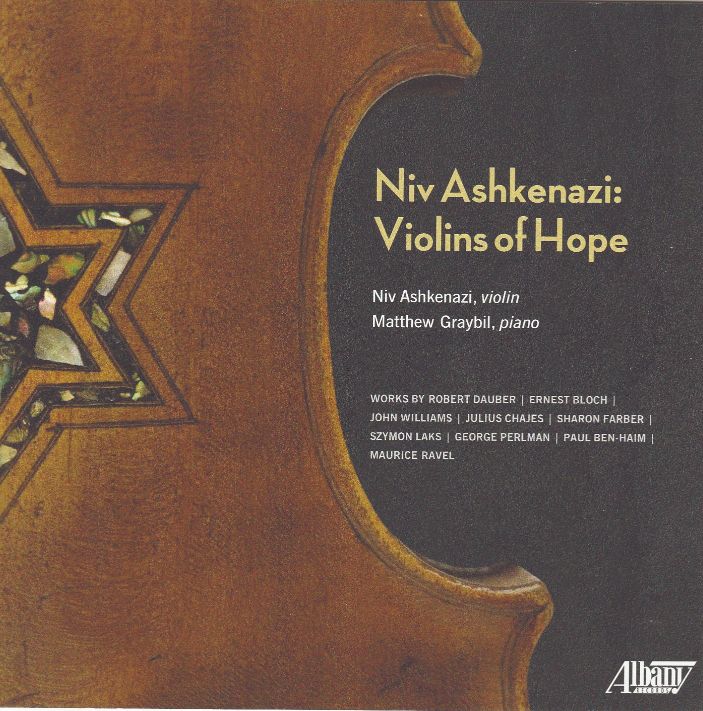
03 Violins of HopeNiv Ashkenazi: Violins of Hope is a celebration of the artistic and educational project founded by Israeli luthier Amnon Weinstein and his son Avshalom in which instruments that were owned by Jewish musicians before and during the Holocaust are restored and played in the best concert halls by the world’s best players, the latter including Shlomo Mintz and Daniel Hope (Albany Records TROY1810 albanyrecords.com).

Violinist Ashkenazi and accompanist and fellow Juilliard graduate Matthew Graybil first became involved with Violins of Hope in 2017, and Ashkenazi is the only violinist to hold an instrument from the collection – in this case an early 20th-century Eastern European or German violin – on long-term loan. For this CD he chose Jewish repertoire that covers the instrument’s lifetime.

Robert Dauber’s Serenade (1942) makes a beautiful opening to an excellent recital that comprises Bloch’s Nigun (1923), John Williams’ Theme from Schindler’s List, Julius Chajes’ The Chassid (1939), Sharon Farber’s recent Bestemming: Triumph, Szymon Laks’ Trois pièces de concert (1935), George Perlman’s Dance of the Rebbitzen (1929), Ravel’s Kaddisch (1914) and Ben-Haim’s Berceuse sfaradite (1945) and Three Songs Without Words (1952).

It’s easy to understand why the Weinstein family has such trust and faith in Ashkenazi’s commitment and performance: he clearly has an emotional bond with this instrument, lending all of these short pieces a beautifully distinctive and idiomatic sound.

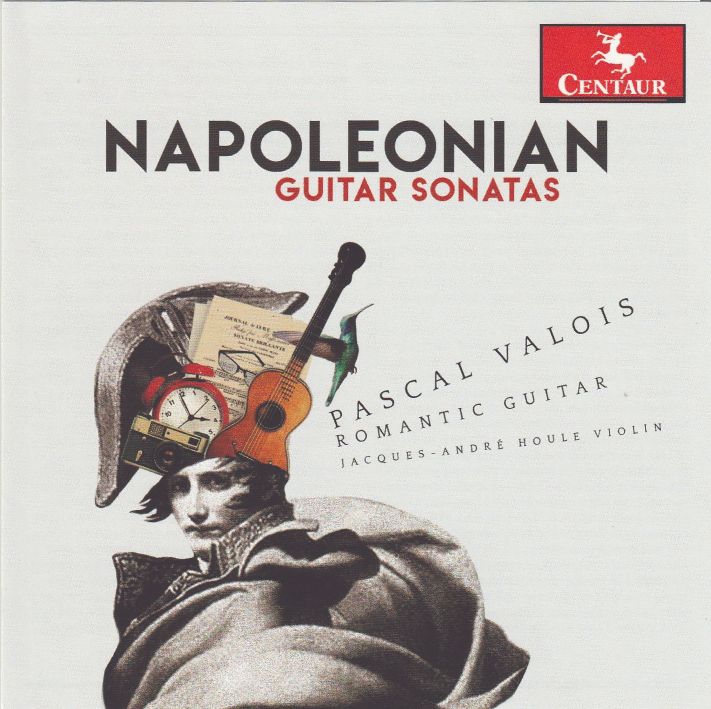
04 Napoleonian GuitarWorld-premiere recordings of French Romantic guitar sonatas by Antoine de Lhoyer, Louis-Ange Carpentras and Alexandre Alfred Rougeon-Beauclair are featured on Napoleonian Guitar Sonatas, with Montreal guitarist Pascal Valois (Centaur CRC 3733 naxosdirect.com).

Valois is dedicated to reviving enthusiasm for the guitar’s role during the Romantic era, performing 19th-century repertoire on period instruments and employing contemporary stylistic practices, including improvised ornaments and cadenzas. One such practice here is that of not using right-hand fingernails, the bare fingertips resulting in a much softer and smoother sound. The guitar used is a French model built in the late 1820s by the Mirecourt luthier Cabasse-Bernard.

While the Carpentras Sonate brillante Op.1 (1816) and the Rougeon-Beauclair Sonate Op.4 No.1 are both for guitar solo, in the two de Lhoyer Sonates pour la guitare avec un violon obligé Op.17 (c.1801) Valois is joined by Montreal violinist Jacques-André Houle. The violin, though, tends to distract from, rather than enhance the guitar writing, especially being set so far back in the balance – presumably not to overwhelm the softer instrument. 

Valois’ playing is accomplished, clean and sensitive throughout music that offers a fascinating insight into the early 19th-century classical guitar world. 

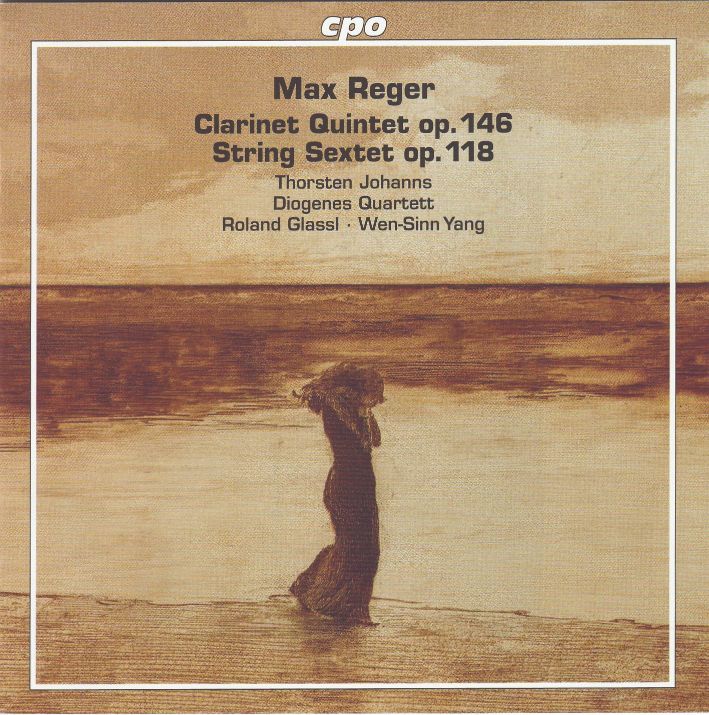
05 Max RegerThe Diogenes Quartett is the central ensemble on the new CD Max Reger Clarinet Quintet & String Sextet, being joined by clarinettist Thorsten Johanns in the Clarinet Quintet in A Major Op.146 and by violist Roland Glassl and cellist Wen-Sinn Yang in the String Sextet in F Major Op.118 (cpo 555 340-2 naxosdirect.com).

Despite the advanced tonal nature of his music, Reger had a strong affinity with earlier musical eras in addition to his deep Romantic roots, and the equivalent works by Mozart and Brahms were clearly the inspiration for his own Clarinet Quintet. Despite being completed in 1915 the work shows no influence of the Great War, a contemporary review of the October 1916 premiere referencing “the deep, holy peace of a mild autumn evening, which the last rays of the setting sun dress in gold.” Shades of Brahms indeed.

The large, complex String Sextet from 1910 is full of the features that have tended to make Reger’s music misunderstood and under-appreciated over the years, but is a deeply satisfying work with a really beautiful slow movement.

Playing throughout is of the highest quality on a terrific CD.

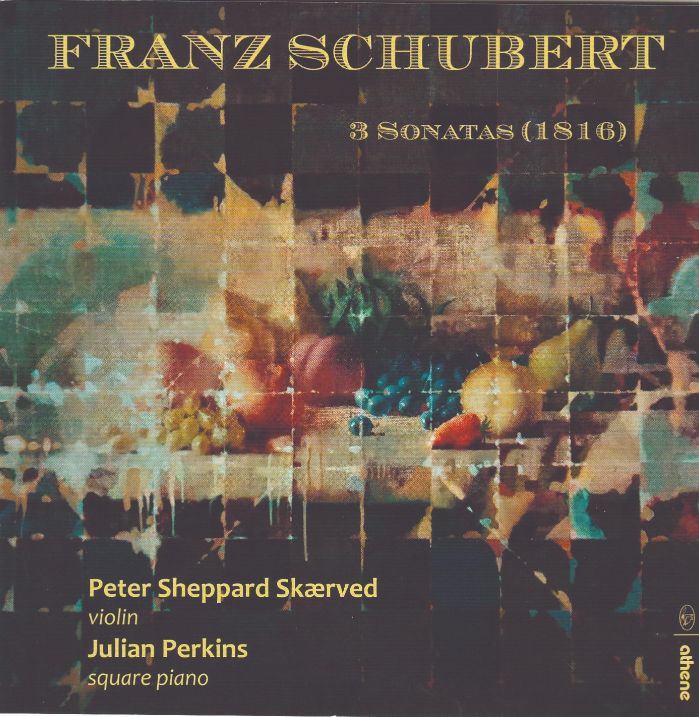
06 Schubert SkaervedThere’s another CD of the Franz Schubert 3 Sonatas (1816), this time with violinist Peter Sheppard Skærved and Julian Perkins on square piano (Athene ath 23208 naxosdirect.com).

Skærved always excels not only in his playing but also in his exploration of and critical approach to the original musical sources, and this CD is no different, with 12 pages of fascinatingly detailed and informative notes illuminating every aspect of the performances. The German violin is by Leopold Widhalm I (1722-1776) with a very early Tourte bow probably from around 1770-80. The square piano is by Clementi & Co., London, 1812.

Skærved’s playing here is warmer than in some of his period performances; he’s not afraid to use vibrato, but a clear sense of period style is always present. The keyboard obviously lacks the fuller sound we might be accustomed to, but the tonal subtlety and nuance more than compensate. The performers admit to viewing the score as “a map that offers options rather than answers,” resulting in some interesting choices on repeats and frequent moments of surprise, particularly at the end of the Sonata No.2 in A Minor where, following the short, sharp final violin chords, the piano resonance is left to die away for fully 13 seconds.

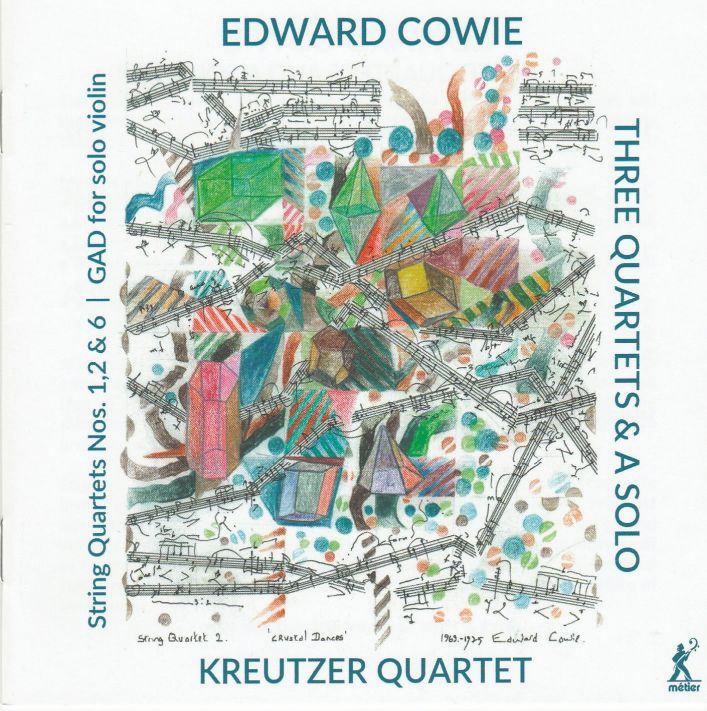
07 Edward CowiePeter Sheppard Skærved is also the first violinist in the Kreutzer Quartet, the performers on Edward Cowie: Three Quartets & A Solo, a new CD of music by the multi-disciplined English composer born in 1943 (Métier Records msv 28603 naxosdirect.com).

An author, lecturer, academic, visual artist, natural scientist, conductor and composer with two doctorates including studies in physics and mathematics, Cowie produces music which is a fusion of science, the natural world and visual arts. “I am more inspired,” he says, “by natural history than by musical history.”

Certainly the natural world is central to the quartets here: the two single-movement works, No.1 “Dungeness Nocturnes” from 1969 and No.2 “Crystal Dances” from 1977, and the four-movement No.6 “The Four Winds” from 2012, with the North, East, South and West winds representing the four seasons. It’s difficult music to describe, with an obviously contemporary sound but not completely dissonant despite a general lack of melodies and overtly tonal writing, and with a scurrying, restless feel that invokes insects and birds and is quite nocturnal at times.

The solo work GAD was written in 2017 for Skærved at his request, and addresses the composer’s almost lifelong suffering from generalized anxiety disorder.

All you need to know about the performances is that Cowie says that “no composer could ever be served, illuminated and translated by better or more brilliantly insightful players than the Kreutzer Quartet.”

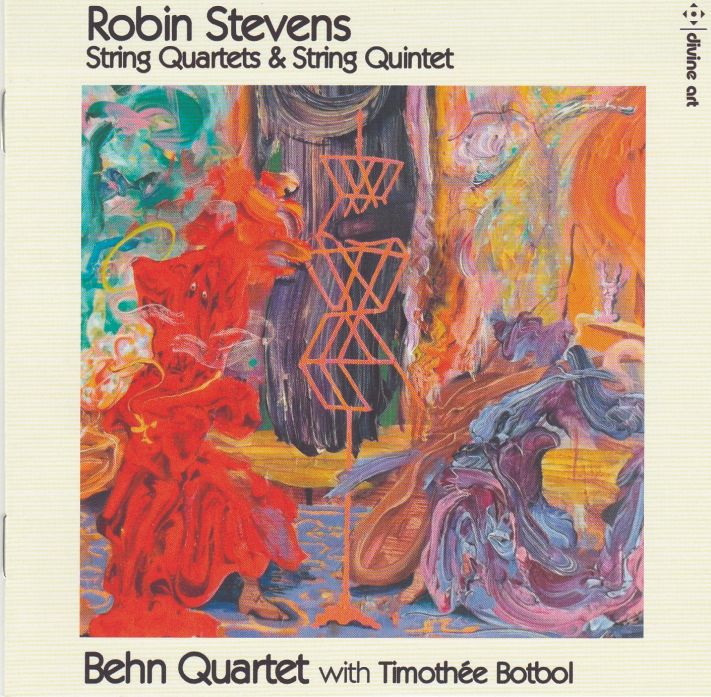
08 Robin StevensAnother British composer whose name and music seem new to me is represented on Robin Stevens String Quartets & String Quintet, with the Behn Quartet and cellist Timothée Botbol (Divine Art dda 25203 naxosdirect.com).

For Stevens (b.1958), the String Quintet in C Minor from 1980-81 was his first major composition, revised in 2018 for this recording. It features lush melodic writing with a truly lovely slow movement. As the composer notes, “unconscious references to, and near-quotes from, 20th-century music abound.”

In his early 30s Stevens was stricken with post-viral fatigue, a debilitating illness that kept him out of work for 17 years and limited his compositional activity to experimental miniatures. On regaining full health in 2007 he began a PhD in Composition, producing a major work in each of his six post-graduate years. The single-movement String Quartet No.1 uses “a handful of ideas, which are subjected to contrapuntal development of considerable complexity” in a work of “unremittingly dissonant harmonic language.” The String Quartet No.2, “Three Portraits” has three continuous sections – Impulsive One, God-Seeker and Arguer – followed by a brief Epilogue.

A bequest has enabled Stevens to begin recording his considerable catalogue of works; if future performances are of the same high quality as these then his music will certainly be well served.

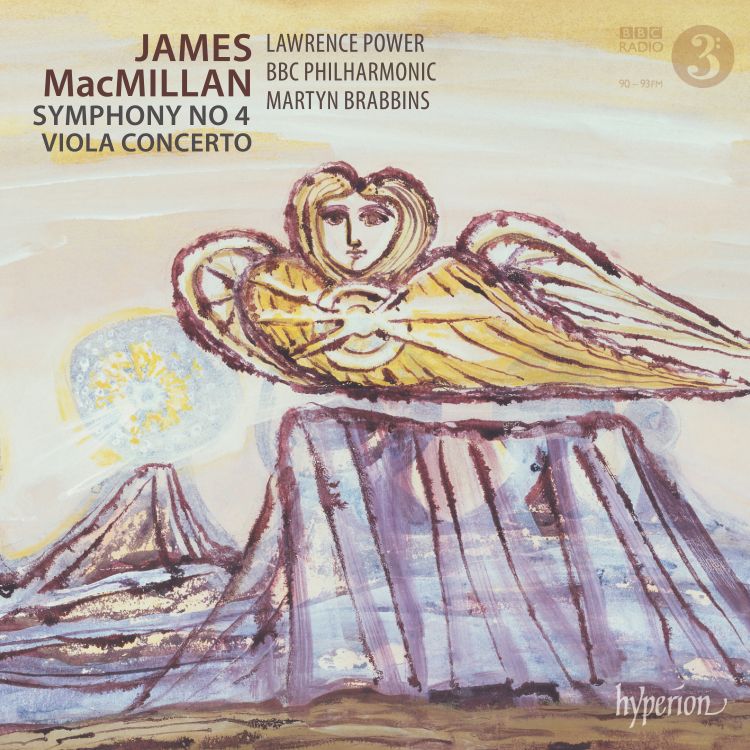
09 Lawrence Power BBC Philharmonic Orchestra Martyn Brabbins MacMillan Symphony No.4 Viola ConcertoFinally, if you’re interested in contemporary concertos for viola then you should know that the latest CD of music by the Scottish composer James MacMillan, Symphony No.4 & Viola Concerto, features soloist Lawrence Power with the BBC Philharmonic under Martyn Brabbins in a terrific performance of the concerto written for Power in 2013 (Hyperion CDA 68317 hyperion-records.co.uk).

It’s a three-movement work with an ominous, uneasy first movement, a central movement of a devotional character with a lovely main theme and occasional “primal sreeam” outbursts and a sparkling finale with decided hints of Barber’s Violin Concerto at the end.

It’s a significant addition to the contemporary repertoire and discography. 

01 LUniqueL’Unique – Harpsichord Music of François Couperin
Jory Vinikour
Cedille CDR 90000 194 (cedillerecords.org)

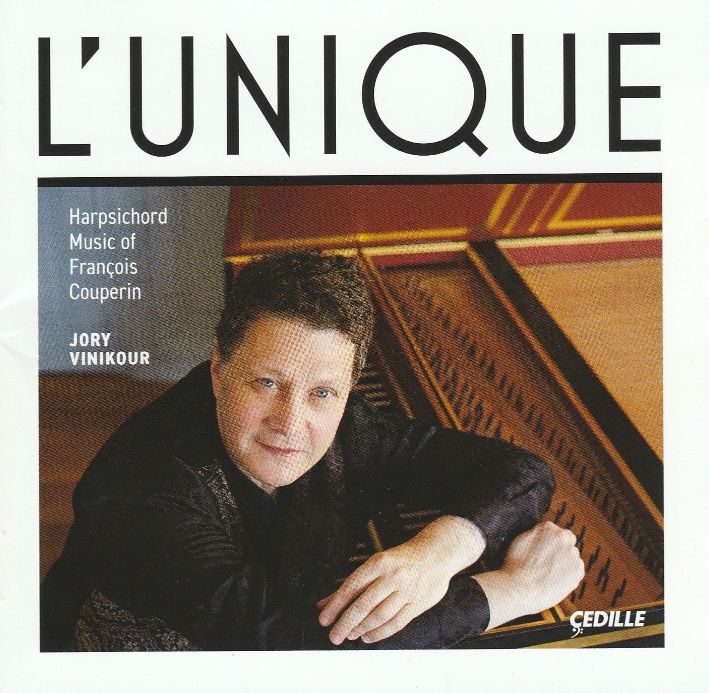
The harpsichord is one of those instruments that simultaneously fascinates and confounds, its plucked-string effect and resulting sound so unlike any other keyboard instrument that it is without parallel in the realm of modern instruments. Its players, too, can be considered atypical, collecting birds’ feathers to harvest and refine the quills, thereby crafting the plectra that pick at each individual string, and exploring repertoire that has often been cast aside by the more conventional pianoforte crowd.

Such is the case with the harpsichord music of François Couperin, a master of Baroque keyboard music whose works have long remained in a niche category – the Ordres performed by harpsichordists and the Masses by organists – frequently recorded but less often celebrated in wider musical circles. Vinikour’s recording demonstrates once again why this is so: Couperin’s harpsichord music is inherently and essentially crafted for that specific instrument, its unique percussiveness and relative lack of resonance.

It is this exclusive reliance on the harpsichord that makes these works so fascinating; in addition to being expressive, articulate and strikingly beautiful, Couperin’s conception of these pieces is so specific, both in the written score and resulting sound, that they simply do not work as well on any other keyboard instrument, a point reinforced by Vinikour’s measured approach to the Sixième, Septiême and Huitiême Ordres.

Couperin, as with much of the French Baroque, can sound frenetic and indecipherable if tempi are taken too briskly and ornamentation loses its melodic intentions. Fortunately for us, Vinikour never loses sight of the melodiousness of Couperin’s music, resulting in nearly 80 minutes of utterly delightful early music.

03b FrobergerFroberger: Complete Fantasias and Canzonas
Terence R. Charlston
Divine Art DDA25204 (naxosdirect.com)

So rarely does it happen that performer, composer, instrument and instrument maker(!) equitably join in artistic synthesis. This new record, featuring period instrument specialist Terence Charlston, is a fine specimen of expertise and craftsmanship, with each of the above components keenly harmonized. 

Today, there remain aspects of Johann Jacob Froberger’s art that are unknown to the public at large. The Middle Baroque composer’s contrapuntal works, in particular, are relegated to small circles of listeners and scholars – neglected, despite their ingenuity. Charlston understands this all too well. He looks not only to the impressive compendium, the Libro Secondo (an autograph manuscript dating from 1649), but to a fitting choice of instrument: a copy of a South German clavichord, the MIM 2160, as reconstructed by contemporary keyboard maker, Andreas Hermert.

Charlston has chosen this instrument for its timbral possibilities and expressive range, even citing a lute-like tonal profile. Infamous for pianissimo playing, the clavichord in general has long been commended for its intimate, (even private) character, lyrical and sensitive in its response to the player’s touch. Bemusingly, it even boasts vibrato, of a kind.

But not a single note of this disc ever sounds too private or too furtive. In the hands of Charlston, his clavichord soars and expands before our very ears. Through this incantation of counterpoint, in turns both exotic and familiar, Charlston reveals a depth of humanity on par with the great polyphonic achievements of J.S. Bach.

04 Beethoven Concertos HoughBeethoven – The Piano Concertos
Stephen Hough; Finnish Radio Symphony Orchestra; Hannu Lintu
Hyperion CDA68291/3 (hyperion-records.co.uk)

Performing – and recording – the complete cycle of Beethoven’s piano concertos is a remarkable achievement for any pianist, at any stage in their creative life. But a recent release from Hyperion Records offers a singular synthesis of extraordinary solo playing, exceptional conducting and exquisite orchestral performance. Breathing vibrant, surprising avidity into all of this is Stephen Hough, with his customary elan. Hough is a tireless artist, devoted to his craft and to the betterment of our 21st-century musical world. At this autumnal stage in his career, he is beloved and with good reason: his inheritance is of that rare and reverent keyboard tradition dating back to Beethoven’s time. 

Presumably, the British pianist has been performing these piano concertos since his youth and yet, much of the disc’s material suggests a re-envisioned approach, a wide-eyed zeal for such canonic works, always tempered, deferential and selfless. Hough brings his experience to bear: such thrilling artistry glistens through every last note – and silence – on the record. We the listeners are gladdened beneficiaries.

Highlights include both final movements of the Second Concerto in B-flat Major, Op.19 and the Fifth (“Emperor”) in E-flat Major, Op.73, where Hough’s superb taste and jovial character are on full display; he relishes such jauntiness with embellishments and good-natured glee. (In fact, he composed his own cadenza for the first movement of the second concerto.) Also of remarkable note is the Allegro moderato (first movement) of the Concerto No.4 in G Major, Op.58. Hough’s carefully synchronized reading of this music is a departure from the norm and a welcome one at that! His lyrical lines skip and soar, caper and cajole with earnest delight. After all, isn’t this music at once both so very humane and cosmic?

Admirably, Stephen Hough is donating 100 percent of sales from this new album to the charity Help Musicians. An active and noted writer, he recently released an anthology of essays, Rough Ideas: Reflections on Music and More (2019). It is published by Faber & Faber in the UK and by Farrar, Straus and Giroux in North America.

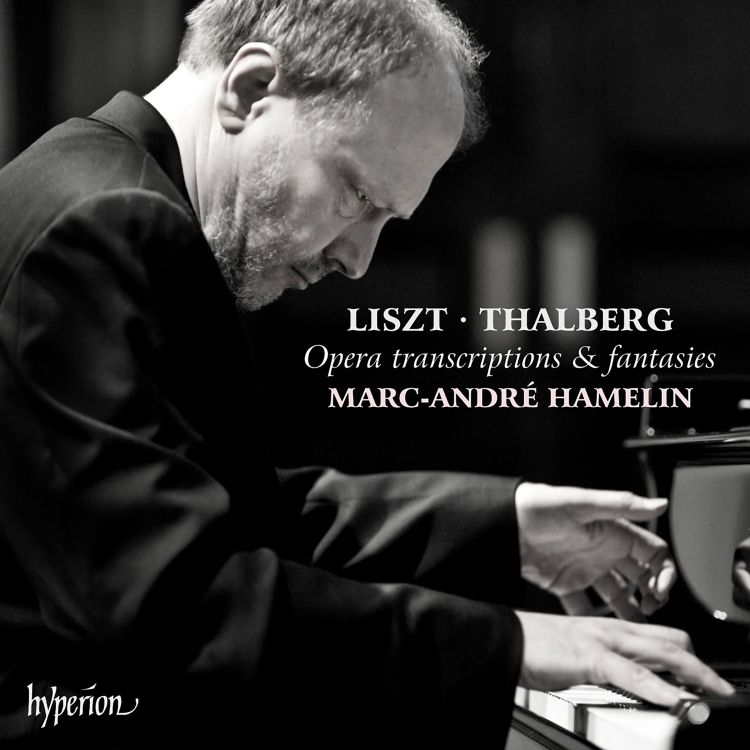
05 Marc Andr Hamelin Liszt Thalberg Opera transcriptions fantasiesLiszt; Thalberg – Opera transcriptions and fantasies
Marc-André Hamelin
Hyperion CDA86320 (hyperion-records.co.uk)

This remarkable new issue from Hyperion records could be subtitled “Tribute to Italian Opera” because all four masters, Bellini, Donizetti, Rossini and Verdi are well represented. In the heyday of the Second Empire, Paris was the centre of the universe for presenting grand opera and these composers had success after success, conquering the public with beautiful melodies. There were also some of the greatest pianists around who wrote paraphrases or fantasies inspired by these melodies and thereby spread the wealth, making these operas ever more popular.

Case in point: the rousing tune Suoni la tromba e intrepido from Bellini’s I Puritani was so popular that a certain countess invited some of the best pianists of Paris to compose and perform variations on it, asking Liszt to organize and contribute to the contest. Some of the other invitees were Chopin, Czerny and Sigismund Thalberg (Liszt’s principal rival in virtuoso pianism). The contest featured rapid alternations of figuration, headlong scales in thirds for one hand or two and hair-raising leaps and many other virtuoso technical feats in each participant’s unique style. Liszt cleverly prepares the ground so the theme emerges gradually from an ominous (minor key) mood into the major key glorious fortissimo theme. He also concludes the set with his own Molto Vivace quasi prestissimo and wins the contest easily.

Four more paraphrases follow: from Donizetti’s Don Pasquale (Thalberg), Verdi’s Ernani (Liszt), Rossini’s Moïse in Egitto (Thalberg) and Bellini’s Norma (Liszt) performed with astounding virtuosity and true Romantic abandon by Marc-André Hamelin. The Canadian pianist of world renown performs on a Steinway grand and let me assure you it will sound as if the piano were in your living room.

06 Yaroslav Senyshyn Senyshyn Plays Chopin & Liszt Concertos
Yaroslav Senyshyn; Czech National Symphony Orchestra; Oliver von Dohnányi
Albany Records TROY1777 (albanyrecords.com)

Frédéric Chopin and Franz Liszt are two of the great pianistic giants of the 19th century. Their contributions to the solo and concerto genres redefined the limits of writing and performing for the piano, resulting in almost 150 years of unbroken popularity and affection from both artists and audiences alike. This disc of Chopin and Liszt concertos features the “Number Twos:” the former’s Concerto No.2 in F Minor, and the latter’s Concerto No.2 in A Major, both interpreted by Canadian pianist and Simon Fraser University professor Yaroslav Senyshyn, with the Czech National Symphony Orchestra.

Chopin and Liszt were masters of harmonic and melodic craftsmanship, embracing and extending the reaches of chromaticism and lyricism to create strikingly beautiful material, such as that contained on this recording. Both concertos are lush and expressive – Romantic in the best possible way – requiring a depth of pathos and flash of dexterity from both Senyshyn and his orchestral colleagues, challenges that are ably and satisfyingly met. 

This expressionistic sentimentality, however triumphant or angst-filled, however loud or soft, is fulfilled within defined limits; these are not the thunderous, string-breaking interpretations that can benefit Prokofiev and Ustvolskaya, but rather finer approaches that suit these more delicate pieces. Even when the Liszt concerto threatens to erupt beyond its natural limits, it is held in place by a desire for beauty that permeates every moment of these marvellous essays in concerto form.

While the material is unlikely to be new to many familiar with the piano repertory, this disc is nonetheless highly recommended for its pure, unfiltered perspective of these much-loved concerti. The pursuit of artistic truth over vapid virtuosity and its soul-stirring sincerity make this recording a fine addition to every piano-lover’s collection.

Listen to 'Senyshyn Plays Chopin & Liszt Concertos' Now in the Listening Room

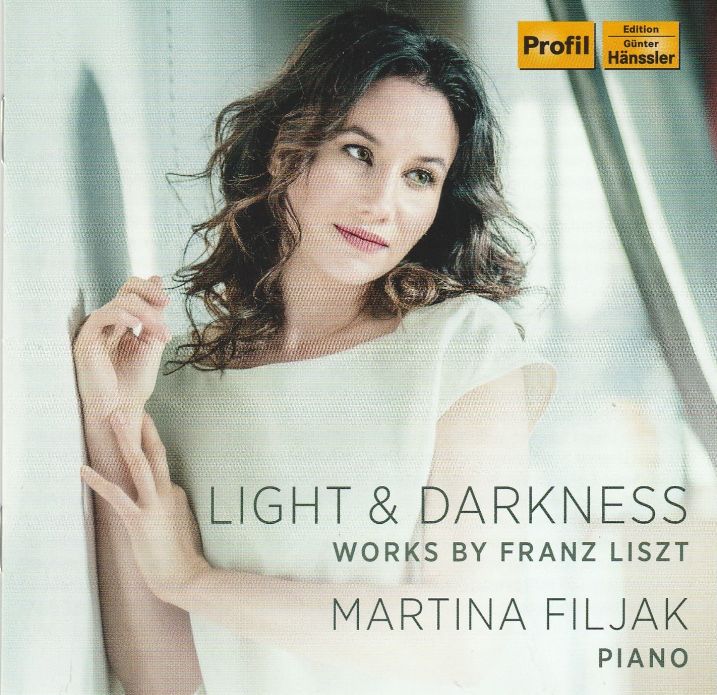
07 Martina Filjak LisztLight & Darkness – Works by Franz Liszt
Martina Filjak
Profil Edition Hanssler PH18074 (smarturl.it/light-darkness)

It isn’t often that you come across a recording so good that you not only want to recommend it to everyone but also gift copies to everyone you meet. The Croatian pianist Martina Filjak’s Light & Darkness – Works by Franz Liszt is one of these discs. Not only does her performance rise to the demanding level of Liszt’s pianism, but in the programming of the repertoire you will find a challenging attempt to paint a vivid picture of Liszt’s multifaceted character and personality at the heart of which was an unbridled virtuoso genius. Liszt’s attraction to Palestrina and early polyphony, and the extraordinary opulence of Ottoman Empire culture is well-documented here as is his attraction to spirituality and asceticism later in life.

To remain true to all of the above and interpret the often diabolical intricacies of Liszt’s music requires uncommon virtuosity and wisdom. Filjak has both qualities in spades. The young pianist has the technical prowess to deal with Liszt’s pyrotechnics and yet knows how to enter the introspective core of Miserere d’après Palestrina – one of a set of ten works based on the poems of Alphonse de Lamartine – and the Ballade No.2 in B Minor. Her revelation of the mesmerizing range of tones of Deux Légendes is brilliant. Filjak emerges as a complete Lisztian, turning what in other hands sounds merely exhibitionistic into a discursive stream of consciousness of the highest order.

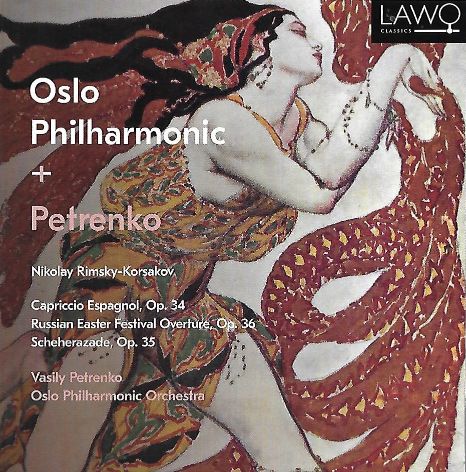
08 Rimsky KorsakovRimsky-Korsakov – Capriccio Espagnol; Russian Easter Festival Overture; Scheherazade
Oslo Philharmonic Orchestra; Vasily Petrenko
LAWO LWC1198 (naxosdirect.com)

Some years ago, the owner of a new record company asked an experienced A&R man, “How do you know what to make?” The answer? “Look for the composition that has the most recordings and make one more.” It seems that advice is still being heeded, not only in repertoire but also with conductors.

Three so often recorded staples are given new life in these performances directed by Vasily Petrenko who is not to be confused with the Petrenko in Berlin, Kirill. Vasily has been conductor of the Oslo Philharmonic Orchestra since 2009 and conducts and records with other orchestras earning enthusiastic reviews. He now has 52 CDs out there, including 16 devoted to Shostakovich.  

The immediate exuberance of the Alborada opening of Capriccio Espagnol is a real attention-getter and sets the level of enthusiasm expected from the orchestra throughout the program. The Russian Easter Festival moves from Saturday’s religious zeal to Easter Sunday’s celebrations. I certainly did not expect to linger on any passages in Scheherazade and yet listening to this familiar favourite afresh was an unexpected pleasure. This finely detailed performance demonstrates why Rimsky-Korsakov was regarded by his peers as Russia’s supreme orchestrator.

As to be expected, the sound is state of the art.

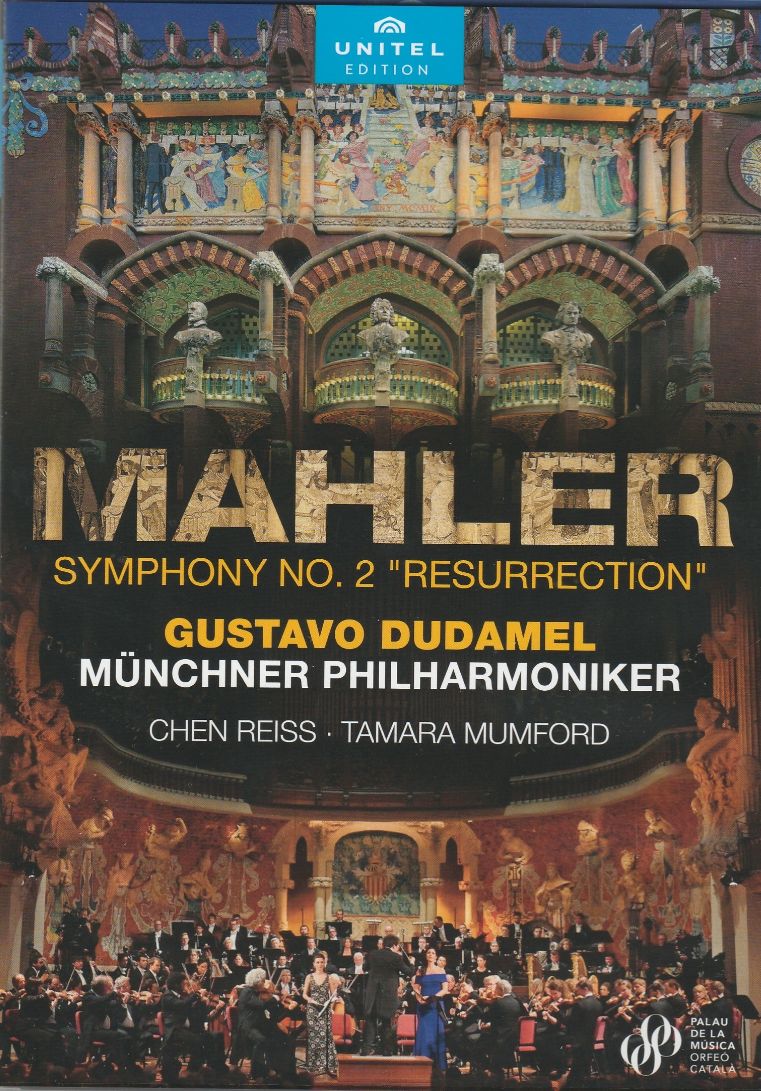
09 Mahler 2 DudamelMahler – Symphony No.2 “Resurrection”
Chen Reiss; Tamara Mumford; Münchner Philharmoniker; Gustavo Dudamel
Unitel Edition 802808 (naxosdirect.com)

Filmed in Barcelona’s incredibly ornate Palau de la Música Catalana, this DVD commemorates a singular performance of Mahler’s “Resurrection” Symphony presented on June 27, 2019. Mahler envisioned this massive work as a sequel to his first symphony, though it took an unusually long time by his standards to complete. It opens with an epic funeral march, originally a freestanding tone poem titled Totenfeier (Funeral Rites) from 1888. Following a pause (Mahler stipulated a seldom observed five full minutes), the lighter second and third movements provide a striking contrast to the extreme tension of what has gone before; the second is a genial, folksy Ländler while the third is a darkly ironic Scherzo. Dudamel’s direction here is stylish, supple and very Viennese. Things take a truly cosmic turn in the finale of the work (conceived in 1894) with the appearance of mezzo-soprano Tamara Mumford introducing her emotive Ulricht vocal solo, setting the stage for a truly cataclysmic conclusion which storms the gates of heaven itself in a riveting performance featuring the multiple choirs (situated some three stories above the orchestra on either side of a sadly non-functioning organ), thunderous brass passages both on stage and off and the soaring exhortations of soprano Chen Reiss, all united in a thrilling promise of a life beyond death. 

The crack video team employs a phalanx of six cameras, with many shots resorting to extreme close-ups, as the stage is crammed with over 100 musicians and an audience of some 2,000 rapt souls in attendance. The sound is quite vibrant owing to the many ceramic and glass surfaces of the venue. The Munich Philharmonic plays tremendously well and, most impressively, Dudamel conducts the entire 90-minute performance from memory! It’s quite the occasion, and a celebration that we shall not likely see again for quite some time.

10 SOLERIANASoleriana – Joaquín Rodrigo Chamber Orchestra Works
Orquesta de la Comunidad Valenciana; Joan Enric Lluna
IBS Classical IBS-82020 (ibsclassical.es)

Joaquín Rodrigo (1901-1999) was without question one of Spain’s most prolific 20th-century composers, and rather ironically, aside from his international hit Concierto de Aranjuez, much of his work, including a dozen other concertos and over 170 additional compositions, remains largely unknown. The title of the CD is Soleriana – not only the title of the first work represented, but also a noun of gravitas profundo, one used frequently by Rodrigo to describe “purity of the Spanish cultural heritage, undiluted by European influence.” Although Rodrigo was closely identified with European neo-classicism of the 1930s, he imbued his works with many indigenous elements of traditional Spanish forms, particularly dances. This recording presents works composed between 1926 and 1953, and is performed by the noted Orquesta de la Comunidad Valenciana, under the skilled baton of Joan Enric Lluna, The exquisite recorded performance took place in front of an enraptured audience at the Palau de les Arts Reina Sofia. 

The title work is comprised of Entrada, where tender bassoons and oboes are joined by complex Baroque patterns utilizing all the colours of the ensemble; the regal, stirring Fandango; Tourbillon with its superb use of vigorous, passion-filled and insistent cellos and basses; and Pastoral, which is almost spiritual in its musical purity. Imagery of stunning, natural sites is embedded in the music, and the final movement, Passepied features delicious entanglements of strings and woodwinds.

Two additional pieces are both breathtakingly beautiful celebrations of musical dance motifs and structure: Tres Viejos Aires de Danza and the closing, Zarabanda Lejana y Villancico. This fresh, invigorating and masterfully performed project is both an acknowledgment of an overlooked artist and a marvelous celebration of Spanish culture.

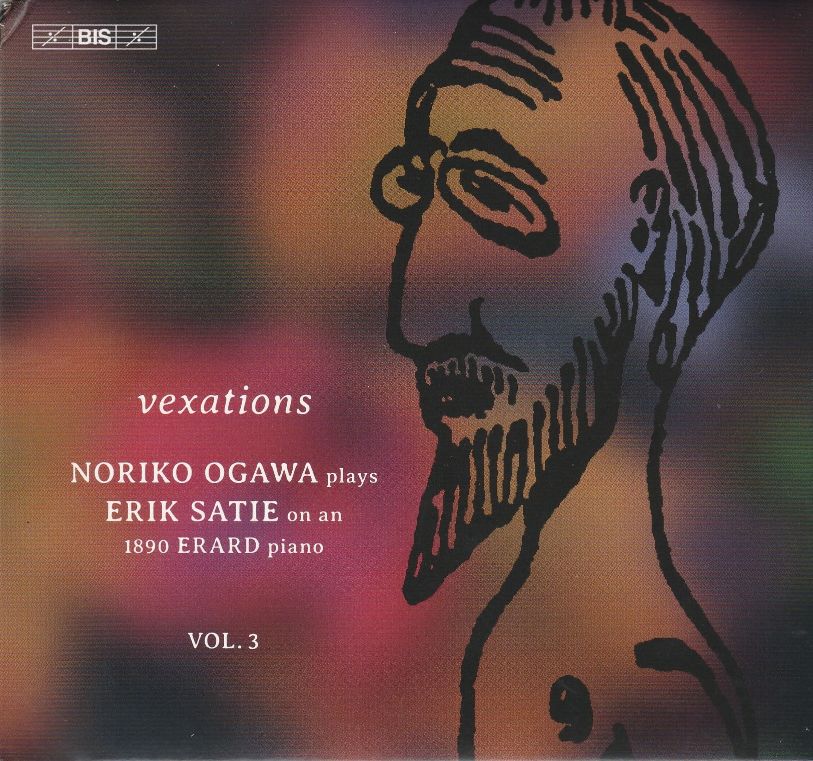
11 Satie VexedErik Satie – Vexations
Noriko Ogawa (1890 Érard Piano)
Bis BIS-2325 (naxosdirect.com)

Erik Satie – a true forerunner of the Impressionist school or an accomplished but eccentric dilettante? Nearly 100 years after his death, the composer from Normandy – bearded and bespectacled – continues to be a source of controversy. His music always demonstrated a particular diversity of styles, all of which reveal a strikingly original musical personality – and this BIS recording of Vexations performed by pianist Noriko Ogawa on an 1890 Érard instrument, is yet another example of his eclecticism.

The set reputedly dates from the early 1890s. Typically, Satie provided no information about it, the only source being a scribbled single-page manuscript discovered after his death. From the outset, it’s clearly evident that this is music like no other. The score begins with a single-line 18-note theme which is then repeated, this time used as a bass line for two voices above it moving in tritone harmony. Following a repeat of the single-line theme, the harmonization is then inverted. According to Satie’s instructions, the sequence is to be repeated 840 times! Nevertheless, Ogawa has opted for a more manageable repetition of a mere 142, bringing the length of the performance to a practical 80 minutes. She successfully varies her interpretation through shifts in dynamics and articulation, and in all, delivers a poised and sensitive performance. The result is music which is haunting, unsettling and after a while, possibly even hypnotic.

So, is the final result mesmerizing or futile? Indeed, that would be up to the listener to decide. If you’re seeking something light and melodic to relax to on a summer’s evening, this isn’t it. On the other hand, the ambience created is perfect for quiet reflection or meditation – all we need are the candles and incense!

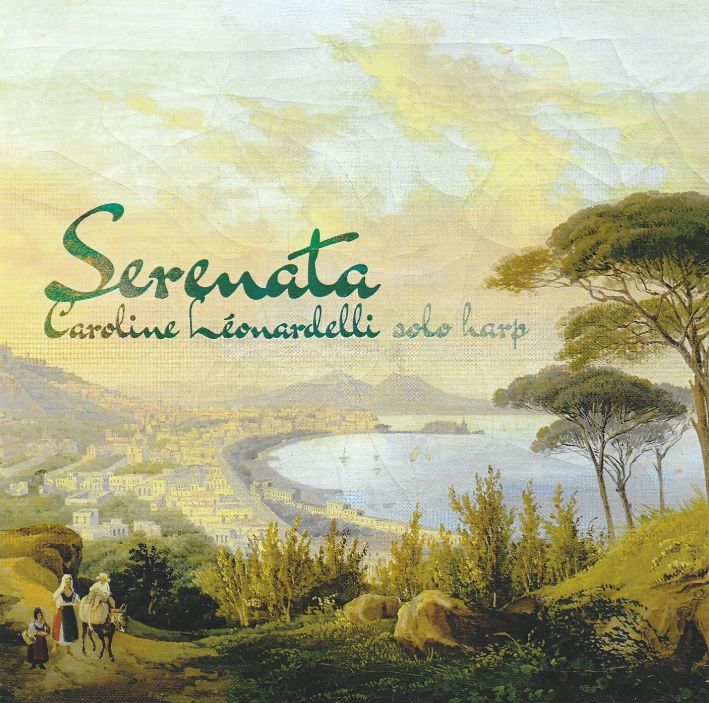
12 Caroline LeonardelliSerenata
Caroline Léonardelli
CEN Classics CEN1022 (carolineleonardelli.com)

Canadian JUNO-nominated classical concert harpist Caroline Léonardelli describes her third recording as a “homage to her Italian heritage.” Her detailed, conscientious research culminates in this all-solo, Italian-based harp-repertoire release featuring composers from the 19th and early 20th centuries, a time when the modern version of the concert harp was being introduced. The compositions touch on such influences as fantasies, studies, suites, classical, opera arias and folk/popular music. Léonardelli performs them all with subtlety, virtuosity and incredible dedication.

Title track Serenata Op.51 No.6 (1910) by Alessandro Longo is an uplifting classical harp work with contrasting high notes and lower pitched lines, glissandos and slight rubatos at the ends of phrases. Luigi Tedeschi’s slower Etude Impromptu Op.37 (1906) is stylistically more Romantic with high clear pitches and sensitive melodic movement. Giovanni Caramiello bases his Rimembranza di Napoli Op.6 (1877) on two Neapolitan folk songs. The detached effect going into the infamous song Santa Lucia, with its high-pitched ringing middle song section, will make one want to listen to the harp instead of trying to sing along! Two Gaetano Donizetti opera arias are featured, one arranged by Albert Zabel and the other by John Thomas. Both become harp arias without words while remaining very true to Donizetti’s original works. Virgilio Mortari’s two pieces feature more contemporary colours and chromatic melodies.

Léonardelli is an expressive, smart, devoted harp soloist. Both harp fans and those new to this instrument will enjoy her performances.

Listen to 'Serenata' Now in the Listening Room

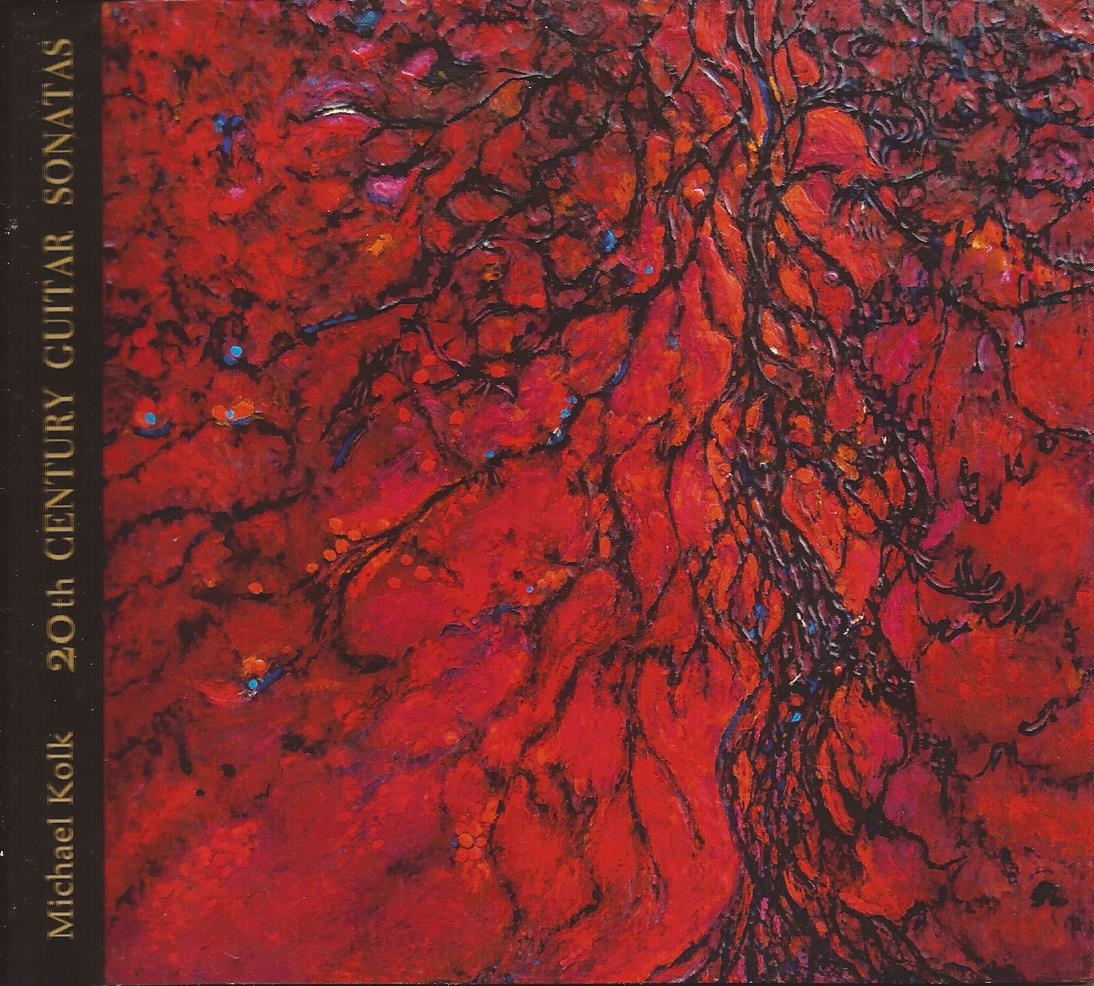
01 Kolk coverThe only problem with my reviewing CDs by guitarist Michael Kolk is that I keep running out of superlatives, and his latest disc – 20th Century Guitar Sonatas – presents the same welcome problem (michaelkolkguitar.com).

There are several connecting themes with the works here. Both the Sonata para guitarra from 1933 by the Spanish composer Antonio José (born in 1902 and a victim of the fascist regime in 1936) and the 1927 Sonatina by Cyril Scott (1879-1970) were the only works those composers wrote for guitar. In addition, both works were unknown or lost until their relatively recent publications, the José in 1990 and the Scott in 2002.

This also applies to the 1994 Sonate in A Minor by the Austrian composer Ferdinand Rebay (1880-1953), most of whose solo and chamber guitar music has only recently been discovered. The 1967 Sonata No.1, the first of three by the Argentinian composer Carlos Guastavino (1912-2000) completes an outstanding recital.

Technically Kolk – as always – seems faultless, but it’s the range of tone, colour and dynamics as well as the constant sense of a highly developed musical intelligence and an innate understanding of and feel for form, line and phrase that continually impresses. Beautifully recorded in the Church of Saint Mary Magdalene in Toronto and engineered by Kolk’s duo partner Drew Henderson, it’s another masterclass in guitar performance.
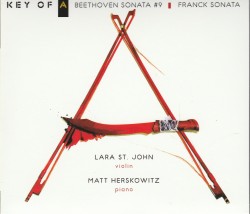
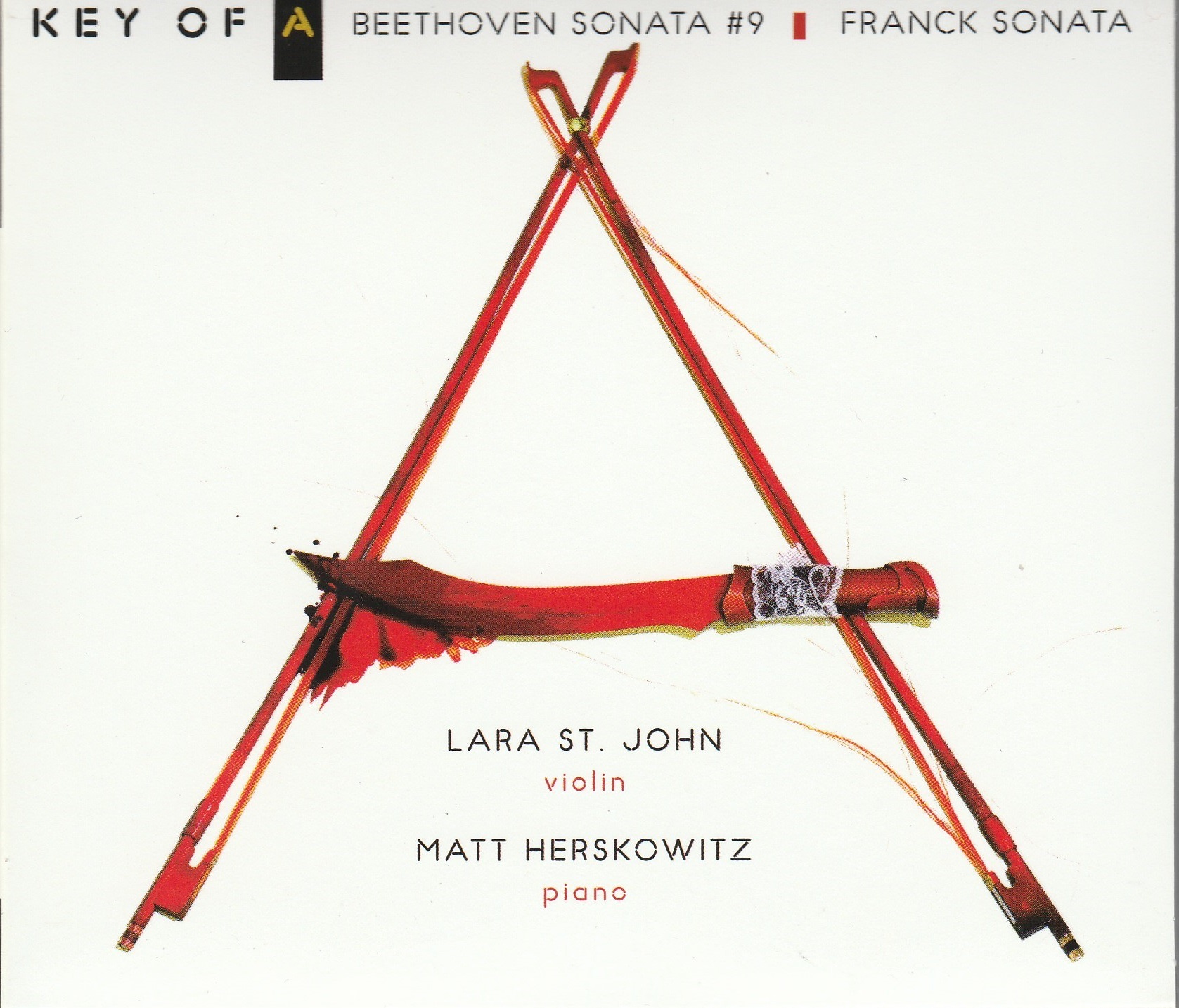
02 Lara St JohnViolinist Lara St. John has always been a bit of a free spirit and not afraid to take risks, so you would be safe in assuming that her latest CD, Key of A, featuring Beethoven’s Violin Sonata No.9 in A Major, “Kreutzer” and the Franck Violin Sonata in A Major with pianist Matt Herskowitz (Ancalagon ANC144 larastjohn.com), would be anything but routine playing. 

St. John says she wanted a pianist “free of traditional ideas” for the Franck, and one who would “be able to keep up with the extremes” she envisioned for the Beethoven, tempo and volume-wise. Well, she certainly got her wish with the brilliant Herskowitz. The Beethoven features breathtaking tempos for the two outer movements with a wide dynamic range, St. John using portamento and an almost violent attack at times, with Herskowitz matching her step for step. It’s hair-raising stuff.

The Franck features almost decadently Romantic playing, with St. John never afraid to pull things around in the tempestuous second movement, sounding almost improvisatory in the third and never resorting to the usual merely smooth and flowing melodic line in the canonic finale. It’s not often that this piece sounds different, but this is risk-taking at its best and most exciting, with tremendous piano work from Herskowitz.

Fritz Kreisler’s Schön Rosmarin completes a quite startling CD.
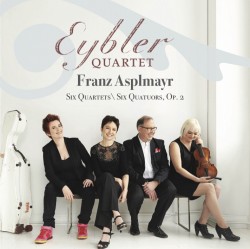
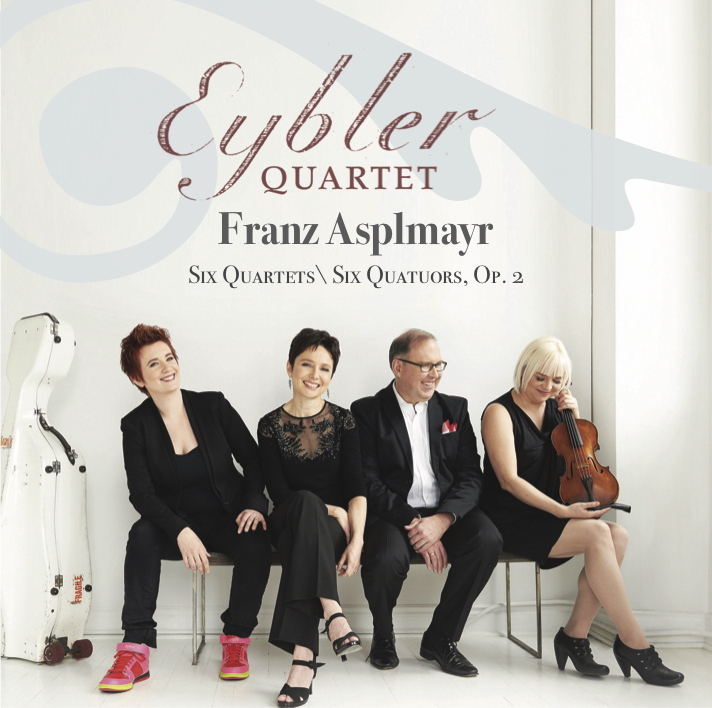
download 13The Eybler Quartet is back with another superb 2CD set of works by a neglected 18th-century composer, this time Franz Asplmayr Six Quartets, Op.2, early works by the Austrian composer who lived from 1728 to 1786 (Gallery Players of Niagara GPN20001 galleryplayers.ca/shop/music).

Although best known for his theatre works, Asplmayr produced 41 symphonies, 70 trios and 43 string quartets, the six four-movement works here – in G, D, F, E, C and E-flat majors – described in Patrick Jordan’s erudite and insightful notes as being “wonderfully unique and highly underappreciated.” They were published by Huberty in Paris in 1769, although probably written much earlier.

The Eybler players are in top form again, displaying their customary perfect ensemble, faultless intonation and vitality and warmth, with technique to burn. Recorded at the Glenn Gould Studio in Toronto, sound and balance are both ideal in simply delightful performances.
Listen to 'Franz Asplmayr Six Quartets, Op.2' Now in the Listening Room

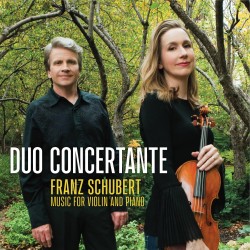
04 Duo Concertante SchubertThe superb Duo Concertante husband-and-wife team of pianist Timothy Steeves and violinist Nancy Dahn add another stellar CD to their discography with Franz Schubert Music for Violin and Piano (Marquis Classics MAR611 marquisclassics.com).

The duo’s trademark musical qualities – perfect ensemble, clarity, tone, a fine grasp of phrase and form, and an exquisite sensitivity – are all fully evident in a recital consisting of the Fantasy in C Major Op.159 D934, the Sonata in A Major Op.162 D574 and the Rondo in B Minor Op.70 D895. These works are available digitally as well as on CD, while the three Sonatinas Op.137: No.1 in D Major D384; No.2 in A Minor D385; and No.3 in G Minor D408 are available only from streaming and download services. 

In another Glenn Gould Studio recording the sound and balance are ideal, capturing every nuance of Steeves’ rich piano and Dahn’s expressive and distinctive violin. In the booklet notes the players comment on the vocal quality of Schubert’s melodic writing. It’s a clear insight into their approach to this recording project, for it’s a CD that sings from beginning to end.
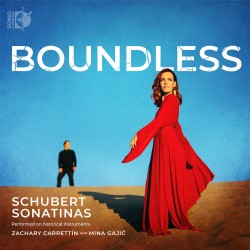
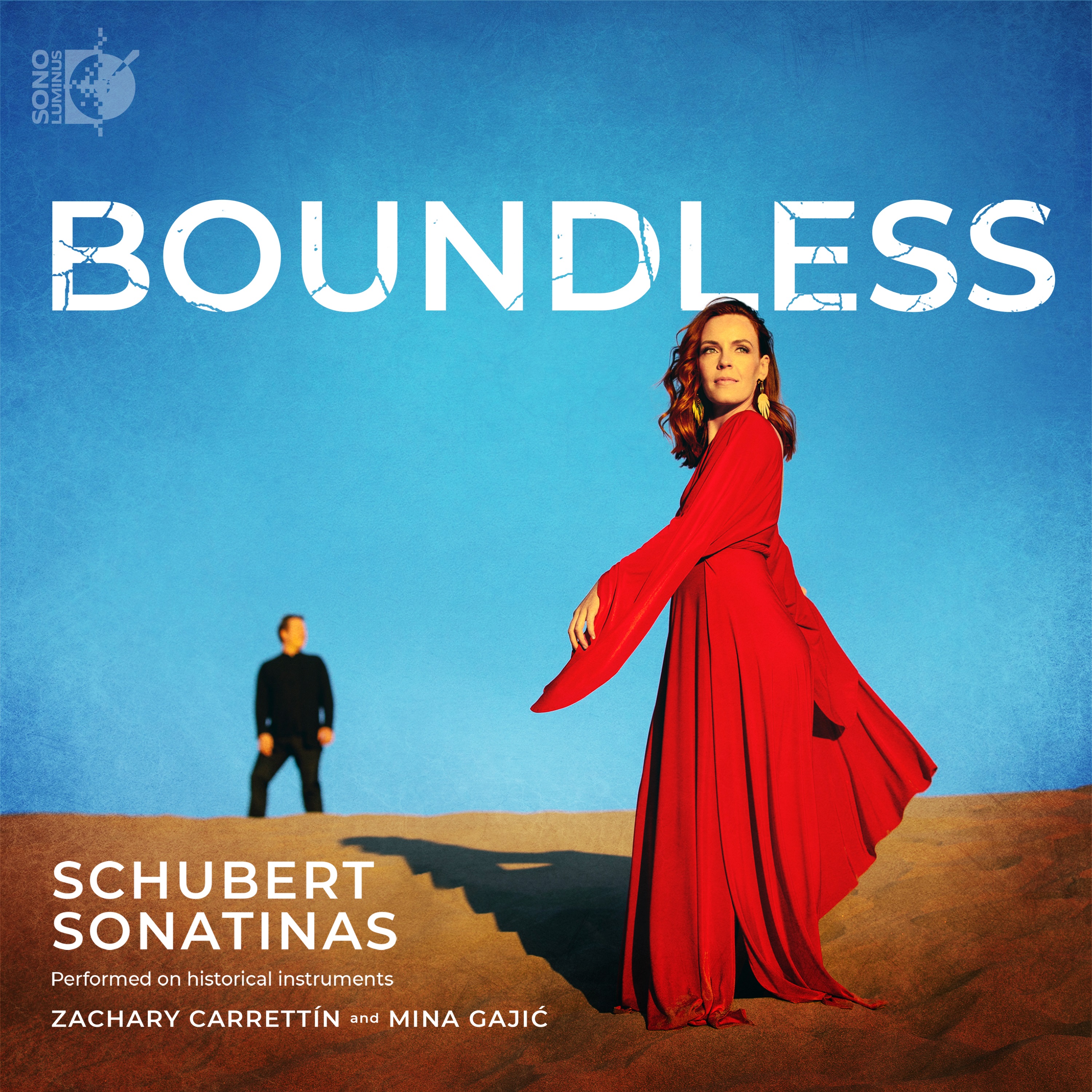
05 Boundless The three Schubert Sonatinas are also featured on Boundless – Schubert Sonatinas Performed on historical instruments, a new Sono Luminus CD with another husband and wife team, violinist Zachary Carrettín and pianist Mina Gajić (DSL-92240 sonoluminus.com/store/boundless). Carrettín plays a rare Franz Kinberg violin with gut strings, set up for late classical and early-Romantic performance, and uses a late classical John Dodd pre-Tourte bow c.1800. Gajić’s piano is an Érard concert grand from 1835. 

We’re obviously in another sound world here, with less power and different sonority in the piano and less vibrato from the violin, which sounds a bit drier but not necessarily softer. The playing is top-notch technically, with accuracy and agility, but despite the different tonal colours it tends to lack the warmth of the Duo Concertante sound.

It’s clearly closer to what Schubert would have heard in his lifetime, though, the performers describing the choices regarding pedalling, chord voicing, balance, articulation and score indications as a fascinating exploration as they sought – successfully, clearly – to pay homage to the original intent as well as to the authentic sounds.
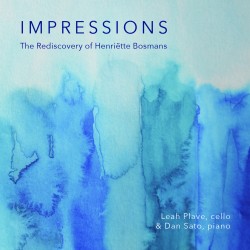
06 Plave BosmansImpressions – The Rediscovery of Henriëtte Bosmans (leahplave.com/media) is the debut album from McGill graduate cellist Leah Plave, accompanied by pianist Dan Sato.

Bosmans (1895-1952) was a distinguished Dutch pianist and composer who was much admired in her time. As a bisexual Jewish woman her music was banned by the Nazis, but she kept performing and composing in secret. For many years following her death her music remained virtually unknown, even in the Netherlands.

Plave’s CD contains Bosmans’ complete works for cello and piano, music that reflects a personal style that mixed German Romanticism with French Impressionism. The 1919 Cello Sonata is a four-movement work with a strong, brooding opening movement. The Trois Impressions from around 1926 – I. Cortège; II. Nuit Calme; and III. En Espagne – feature a quite lovely middle movement and some dazzling piano writing in En Espagne that not only reflects Bosmans’ abilities as a pianist but also draws terrific playing from Sato.

Two short pieces – Chanson and the lovely Arietta – complete the CD. Plave gives effective and committed performances, strongly supported by Sato’s fine accompaniment.

Interestingly, all nine tracks appear to be available on YouTube under Top Tracks – Leah Plave.
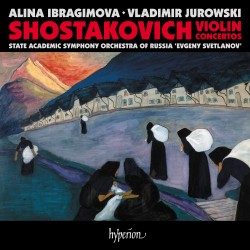
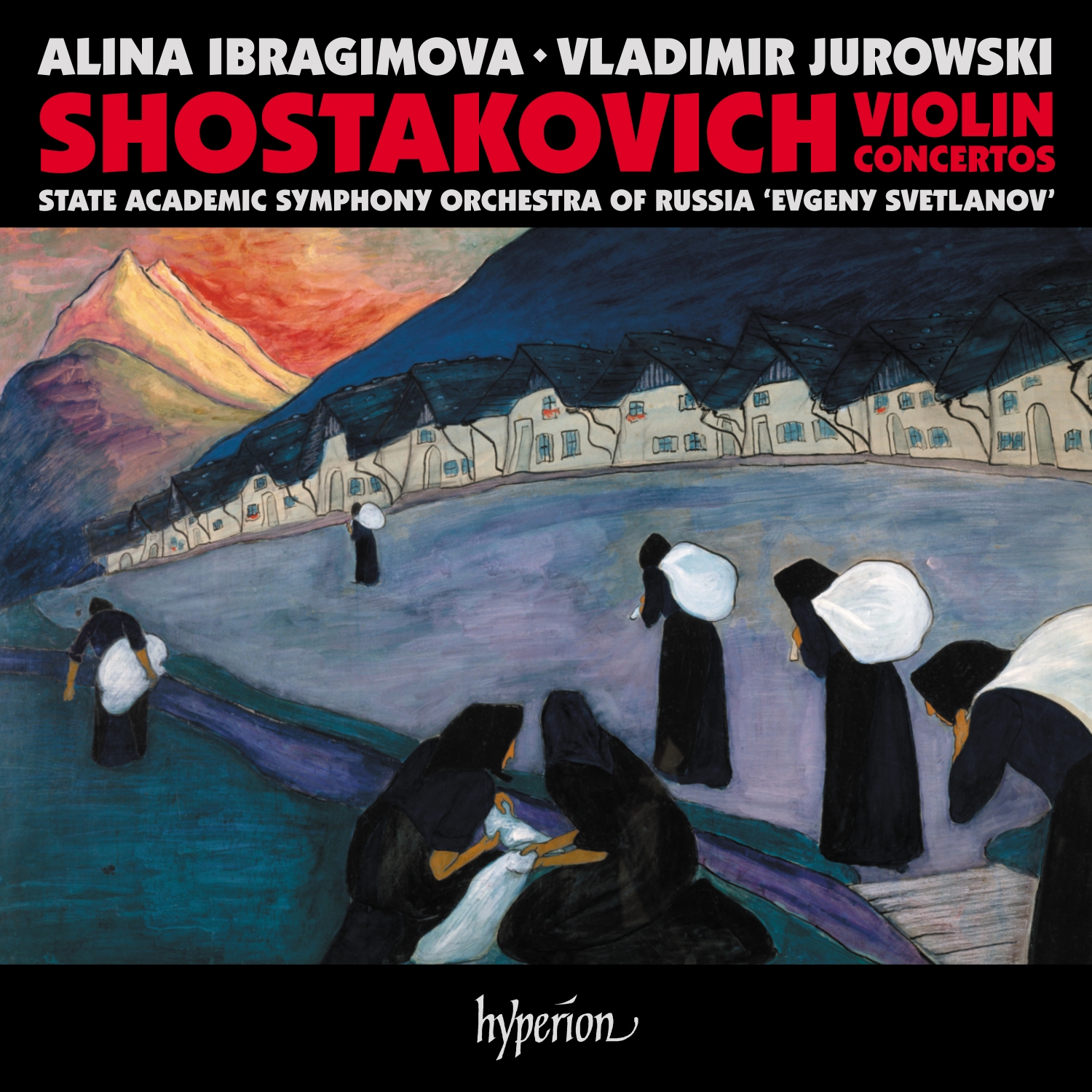
07 Alina IbragimovaThere’s another terrific CD of the two Shostakovich Violin Concertos, this time with the brilliant and always exciting Alina Ibragimova with the State Academic Symphony Orchestra of Russia ‘Evgeny Svetlanov’ under Vladimir Jurowski (Hyperion CDA68313 hyperion-records.co.uk/dc.asp?dc=D_CDA68313).

The Concerto No.1 in A Minor Op.77 was written for David Oistrakh in 1947/48, but withheld due to the infamous Zhdanov decree and not premiered until October 1955. It’s a four-movement work, with an ethereal, uneasy opening Nocturne, a demonic Scherzo and a massive central Passacaglia leading to the famous, towering solo cadenza.  Ibragimova is superb throughout, opting to play the opening theme of the following grim-humoured Burlesque on the violin, as originally scored by Shostakovich before he re-scored it for orchestra alone at Oistrakh’s request to enable the soloist to at least wipe his brow. It’s the first commercial recording thus.

The Concerto No.2 in C-sharp Minor Op.129 was written in 1967 for Oistrakh’s 60th birthday, albeit a year early. There’s simply beautiful playing from Ibragimova in the middle movement, and another tough cadenza handled superbly.

Great sound, great balance, dazzling playing and interpretation all add up to an outstanding disc.
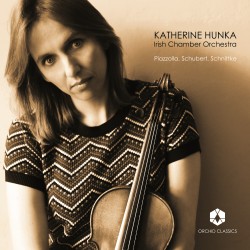
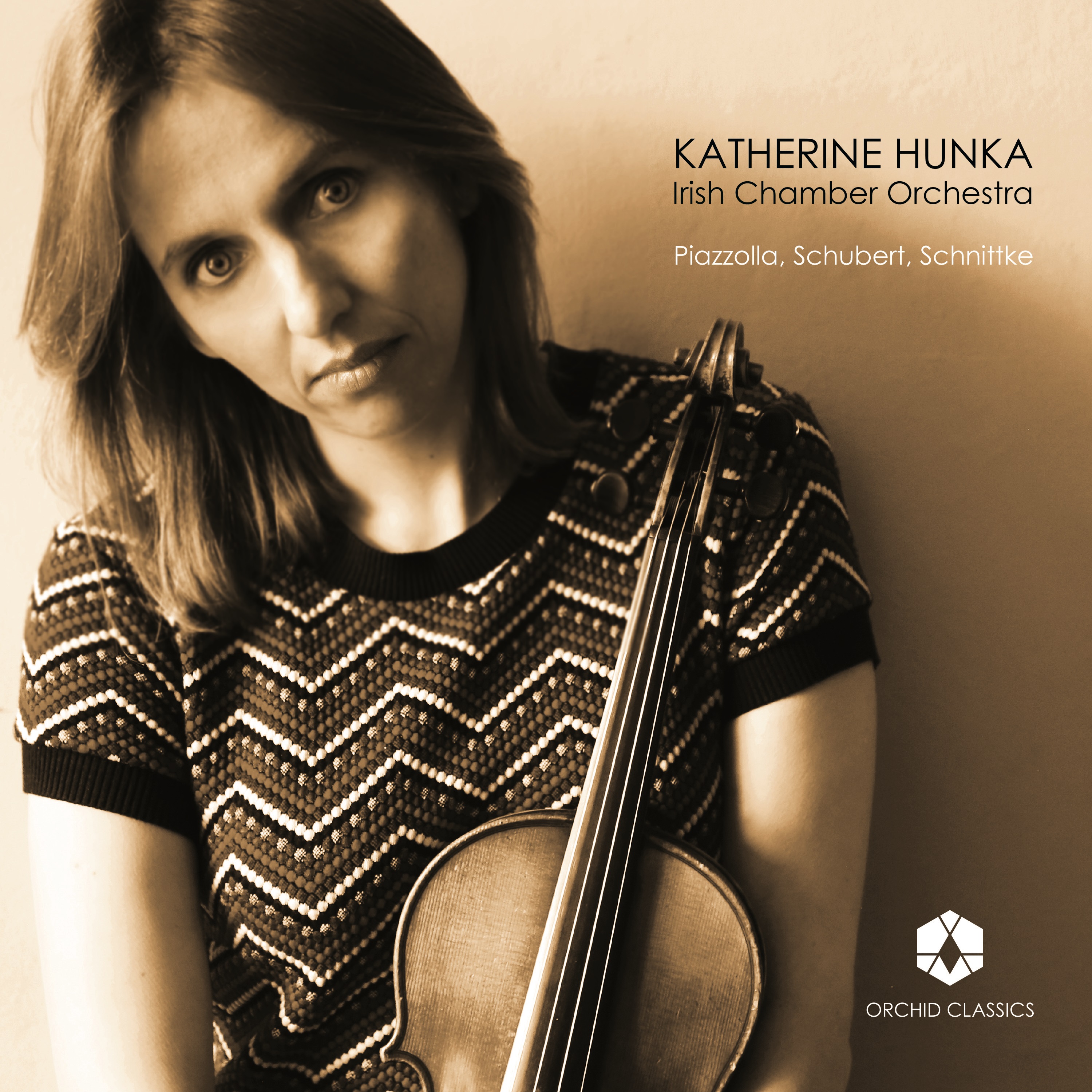
08 Hunka ICO WebCover 1Violinist Katherine Hunka is the soloist as well as the director of the Irish Chamber Orchestra on a new CD of music for strings by Piazzolla, Schubert and Schnittke (Orchid Classics ORC100130 orchidclassics.com/releases/orc100130-irish-chamber-orchestra-katherine-hunka).

Leonard Desyatnikov’s arrangement of Piazzolla’s hauntingly beautiful The Four Seasons of Buenos Aires adds direct quotes from Vivaldi’s Four Seasons in what is almost a recomposition. The resulting work is extremely effective, drawing sumptuous playing from Hunka that is stylistic, warm and impassioned. The ensemble matches her in a vividly successful re-imagining of Piazzolla’s highly personal sound.

Schubert’s lovely Rondo in A Major for Violin and String Orchestra D438 shows clear influence of Mozart’s violin concertos. The Schnittke work is Moz-Art à la Haydn from 1977, described in the notes as combining “an unfinished fragment by Mozart – his Pantomime Music K446 – with the theatricality of Haydn’s Farewell Symphony.” The noise of the players changing positions is deliberately audible, complete with heavy footsteps, wailing and crying!

A beautifully idiomatic performance of Oblivion, one of Piazolla’s most celebrated and traditional tangos, provides a lovely close to an excellent CD.
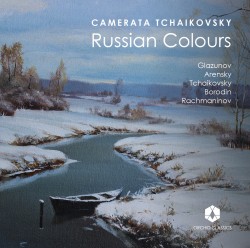
09 Camerata TchaikovskyThe London-based Russian violist Yuri Zhislin is the conductor and arranger as well as the soloist on Russian Colours, a CD of music from the Russian Romantic era arranged for string orchestra and featuring his own ensemble, the Camerata Tchaikovsky (Orchid Classics ORC100136 orchidclassics.com/releases/orc100136-camerata-tchaikovsky-2).

Zhislin is the fine soloist in his own transcription of Alexander Glazunov’s Concerto in E-flat Major for Alto Saxophone and String Orchestra Op.104 from 1934, a fairly brief four-movement work that doesn’t appear to lose anything in the transcription, the warmth of the viola – especially in the middle register – being very close to the saxophone timbre.

Anton Arensky’s three-movement String Quartet No.2 in A Minor Op.35 from 1894 is the other major work, its second movement Variations on a Theme by Tchaikovsky proving so popular that Arensky himself arranged it for string orchestra as Op.35a. It’s the only track on the CD not arranged by Zhislin.

Three perennial favourites complete a beautifully played and highly enjoyable CD: the Andante from Tchaikovsky’s String Quartet No.1 from 1871; Borodin’s Nocturne from his 1881 String Quartet No.2; and Rachmaninoff’s 1912 Vocalise Op.34.
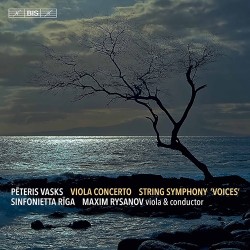
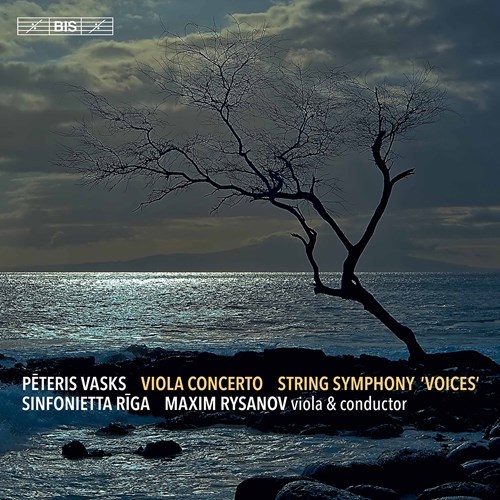
10 VasksMaxim Rysanov is the viola soloist and also conductor of the Sinfonietta Riga on Viola Concerto/String Symphony ‘Voices’ featuring music by the Latvian composer Pēteris Vasks (BIS 2443-SACD naxosdirect.com/items/peteris-vasks-viola-concerto-symphony-no.-1-voices-533230). 

The Concerto for Viola and String Orchestra from 2014/15 was dedicated to Rysanov and premiered by him in 2016; the performance here is a world premiere recording. It’s a quite beautiful, highly tonal and deeply emotional work, in which Vasks “returns to two essential concepts: chant and monologue.” The opening movement rises to the heights of serenity and despair, with the second movement a joyful – but still minor-key – contrast. Despair seems to be the dominant factor in the final two movements.

The Symphony for Strings was written in 1991 as Latvia, Estonia and Lithuania were breaking free from the crumbling Soviet Union. “The new beginning was difficult,” says Vasks. Certainly the work reflects that feeling, with tenuous openings to both the first and the fairly hostile middle movement, followed by a quite brutal third movement which eventually dies away to nothing.


Back to top