04 Sarah WegenerInto the Deepest Sea!
Sarah Wegener; Gotz Payer
SWR2 8553374 (sarah-wegener.de)

For the profound beauty of Brahms’ Meine Liebe ist grün Op.63 No.5 to have its greatest impact on the senses, its majestic beauty must unfold in a mere minute and 44 seconds. It does so here in the voice of lyric soprano Sarah Wegener. At her command even the shortest of phrases are sung with gilt-edged, almost liquid silkiness. This is, however, not only the case with Wegener’s Brahms. It’s true of her Schubert, Strauss and everything else.

Throughout Into the Deepest Sea! not only does Wegener sing with utter beauty, but her interpretations of Brahms, Schubert, and indeed, the other composers, communicate very strongly the meanings of the words, as if each song speaks to her in the secret of her heart before reaching her lips. Her expressive manner of communicating pure poetry of feeling is echoed in the pianism of Götz Payer, who enters into each lied as a protagonist in his own right, playing his part in the music with vim and verve.

Wegener is wonderfully adept at maintaining the emotional centre of gravity of each song, navigating with graceful beauty around the outermost extremities of its narrative, yet always returning to the beating heart of the song. Her passionate performance extends to the mystical songs of Sibelius and the pastoral grandeur of Grieg, too. Everywhere on this disc, every nuance and subtlety has been carefully considered and beautifully sung, performed with both sublime delicacy and intense contrasts.

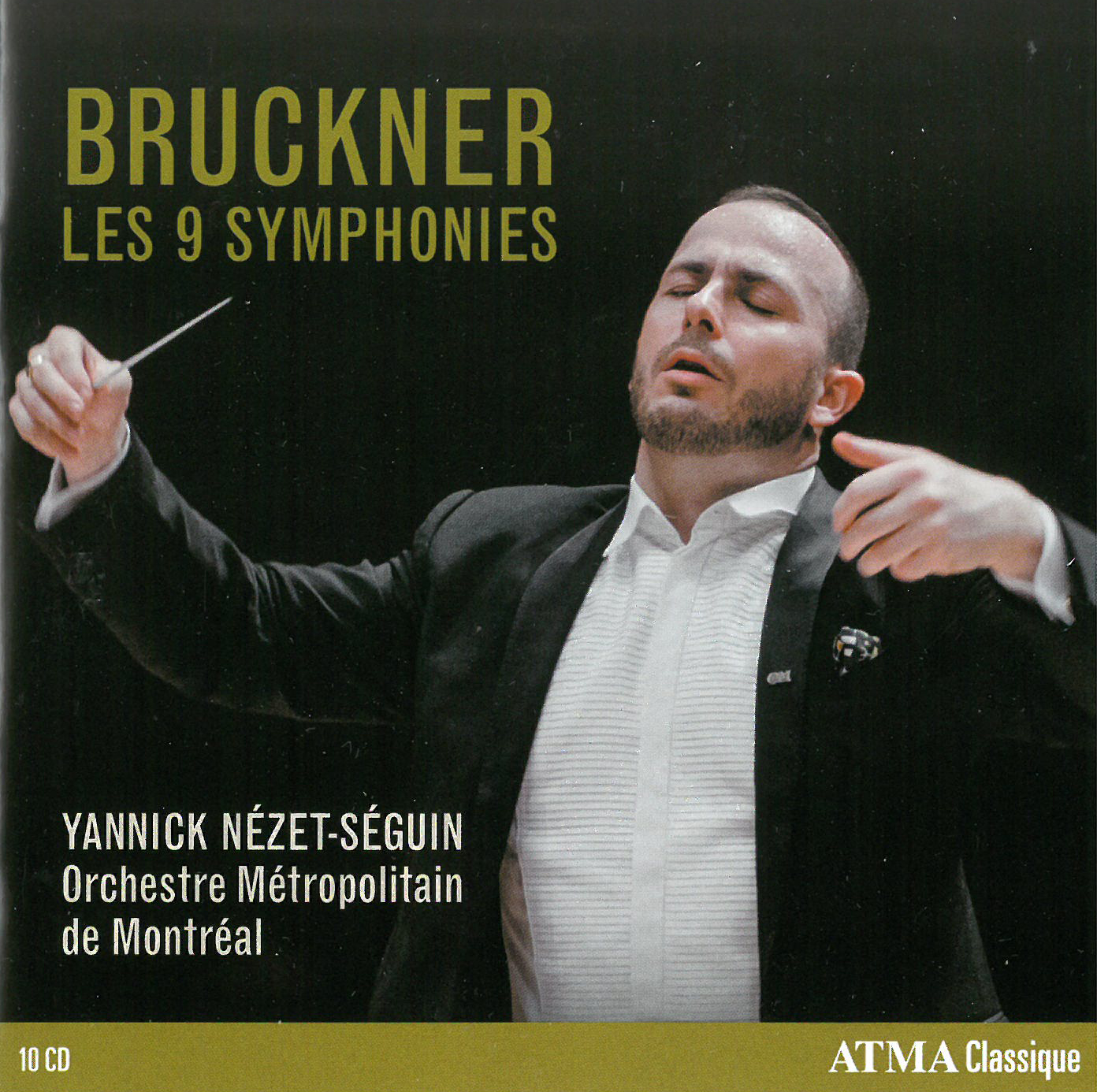
01 Beethoven StraussBeethoven – Septet; Strauss – Till Eulenspiegel einmal anders!
OSM Chamber Players
Analekta AN 2 8788 (analekta.com)

Ludwig van Beethoven’s Septet, Op.20 (1799) was a pivotal work. Such learned musicians as the composer’s former teacher Joseph Haydn applauded its expert deployment of four stringed and three wind instruments: violin, viola, cello, double bass, clarinet, bassoon and horn. Energy, wit and sunny moods gained it public popularity, and listeners will likely find this recording by the Orchestre symphonique de Montréal Chamber Soloists attractive. Variety in sound brings the work its distinctiveness. While artistic director Andrew Wan’s agile violin and Todd Cope’s impeccable clarinet take the lead, other instruments also have solo turns, and wonderful instrumental groupings sustained this listener’s interest. In the Adagio, instrumentalists make the most of expressive opportunities; Neal Gripp’s viola solo is particularly attractive. All players bring fine articulation to the minuet, while in the trio Cope, Stéphane Lévesque, bassoon, and John Zirbel, horn add beautiful decorative arpeggios. Cellist Brian Manker and double bassist Ali Yasdanfar contribute greatly to overall balance and tight ensemble; the finale is a tour de force.

Richard Strauss’s Till Eulenspiegel (einmal anders!), abridged and arranged by Franz Hasenöhrl (1885-1970) for the above forces minus viola and cello, is a tour de force of a different kind. Premiered in 1954, it squeezes the familiar tone poem’s thematic material into less than nine minutes, including exciting virtuosity and humorous touches that in the Chamber Soloists’ capable hands remain within the bounds of taste!

02 French Flute musicNouvelle Vie – A Rediscovery of French Flute Music
Michelle Batty Stanley; Margaret McDonald
Navona Records NV5135 (navonarecords.com)

Nouvelle Vie, by flutist Michelle Batty Stanley and pianist Margaret McDonald introduces us to some lesser-known compositions and composers working during the years of the Belle Époque in Paris. It also includes three better-known works by Philippe Gaubert, who might be considered a child of the Belle Époque, since the year of his birth was 1879.

René de Boisdeffre’s Canzonetta, Op.39 No.8, provides the recording with a strong opening and is played with vivacity, precision and grace. Stanley’s articulation, something much more difficult on the flute than on most other instruments, is terrific, pretty well as good as Aurèle Nicolet – and her use of rubato at the ends of phrases and the subsequent a tempi are an inspiration!

Émile Bernard’s Romance, Op.33, which, with its long, languorously lyrical phrases, could only have been written by a French composer, was also new to me, as were Émile Pessard’s Troisième and Quatrième Pièces, every bit as interesting as his delightful and better known Andalouse.

Alphonse Catherine’s Barcarolle, with its nautical undulating 6/8 piano part (played exquisitely on this recording by McDonald), and his Sérénade Mélancolique, which begins evocatively, a bit like Taffanel’s Andante Pastoral et Scherzettino, are both charming and suggest that the golden age of the flute continued beyond the 1880s and 90s, since Catherine lived until 1927.

Victor-Alphonse Duvernoy’s Deux Morceaux and Joseph-Henri Altès’ Romanza, Op.33 No.1, also new to me, are also wonderful.

03 Saint SaensSaint-Saëns – Symphonic Poems
Lille National Orchestra; Jun Märkl
Naxos 8.573745 

There is a wonderful part in middle of the tone poem Phaéton: as the audacious but foolish young man dares to take Apollo’s chariot for a forbidden ride, with urgent, syncopated rhythms the horses swing into action, the chariot begins to rise upwards and suddenly vistas open up in heavenly radiance – all this depicted in glorious music. Phaéton gleefully revels in it, but his joy is short-lived. There is a brutal ending to his offending the god.

This and many more delights are in store for us, like Hercules’ punishment of having to spin wool dressed as a woman, in probably the finest of Saint-Saëns’ tone poems and a favourite of Sir Thomas Beecham, Le Rouet d’Omphale: here, a delightful rondo imitates the spinning of the spool, but in the midst of all this a powerful roaring melody emerges towards a shattering fortissimo climax. This is no joke anymore. This is Hercules!

Invented by Liszt and a product of Romanticism, the symphonic poem was happily brought to France by Saint-Saëns, who applied to it his considerable gifts of “melody and form” and “impeccable craftsmanship,” not to mention his vivid imagination and love of Greek mythology. All of this is coupled by Naxos’ choice of a lesser-known but excellent, dedicated orchestra and the young, imaginative and talented conductor Jun Märkl, breathing new life into these pieces.

With state-of-the-art spacious sound, the brilliant and colourful orchestral palette shines through and the disc has already become Presto’s Editor’s Choice for December 2017.

04 Suengkee Lee clarinetFull Circle
Seunghee Lee; Katrine Gislinge
Musica Solis (seunghee.com)

Full Circle is a collection of clarinet music performed by Seunghee Lee accompanied on piano by Katrine Gislinge. According to the liner notes, the collection represents the musical journey Lee has followed over the course of her recording career. She has a singing quality that suits the lyricism of all of the works, not one of which will give your ear any difficult sounds to sort through. Her earlier releases are colourful renderings of “classical” reworkings, segments of symphonies, opera arias, art song, etc. She is a player with indisputable technical strength and expressive tone, who on recordings stays away from more “difficult” repertoire. This is fine; she plays this material with grace and lovely conviction.

Included are two of the more substantial works of the Romantic era: the Fantasiestücke of Robert Schumann (Op.73) and Fantasy Pieces Op.48 of Niels Gade. Lee demonstrates the depth of expression needed to bring both to life, and if you’ve never heard the Gade, this is a great introduction. Bent Sørenson provides a somewhat syrupy confection in his Romance, premiered herein; Lucas Foss’ Three American Pieces for violin and piano, transcribed for clarinet by Richard Stoltzman and edited by Lee under the composer’s supervision, lend a somewhat more bracing counterpoint to the easy-listening character of most of the tracks. Music from a British television series, an Italian film-scoring composer, a little-known Vocalise (1935) by Olivier Messiaen and the well-worn Pièce en Forme de Habanera by Maurice Ravel round out this quirky collection. 

01 Beckwith CallingJohn Beckwith – Calling: Instrumental Music 2006-2016
Various Artists
Centrediscs CMCCD 24917 (musiccentre.ca)

Canadian composer, music educator and writer John Beckwith segued into his tenth decade last year with a fertile 70-year back catalogue, which includes well over 130 major compositions covering solo, choral, stage, orchestral and chamber genres. Calling, an album of his newest instrumental works, demonstrates that his inquisitive sonic imagination and desire to express it with both conventional and unconventional instruments and unusual sound textures shows no signs of ebbing. Let’s listen in on just two of the seven works therein.

A choice example of Beckwith’s exploration – framed within a modernist aesthetic – is his Fractions (2006), scored for Carrillo piano and string quartet. With 97 keys packed within its single octave, the Carrillo piano is tuned in 16th tones. While it looks like a conventional upright, it certainly doesn’t sound like one. In Fractions, linear melodies snake expressively, almost appearing to pitch bend over the dramatic gestures and elegiac statements provided by the Accordes String Quartet. Heightening the microtonal tension even more, two members of the quartet tune their instruments a quarter tone higher than the other two. The result is a compelling and sometimes haunting listening experience.

Quintet (2015) also questions conventional instrumental groupings. Beckwith scores it not for a standard woodwind, brass or string quintet, but rather opts for a mixed ensemble: flute, trumpet, bassoon, viola and string bass. Performed by members of Toronto’s venerable New Music Concerts, the oft jaunty work satisfyingly completes this musical survey by a composer in his prime.

02 Gryphon TrioThe End of Flowers
Gryphon Trio
Analekta AN 2 9520 (analekta.com)

There’s no explanation in the booklet about the CD’s title, The End of Flowers. An online search led to Gryphon cellist Roman Borys’ comments: “The First World War brought with it unprecedented loss of life, youth and hope. It was the end of flowers… fields lay barren, blasted and churned beyond recognition.” Borys continues: “In the winds of war Ravel and Clarke composed two remarkable piano trios… not intended as memorials but [which] stand as a testament to the enduring power of life and art.”

Rebecca Clarke left no programmatic description of her 1921 Piano Trio, two years after her other major work, the richly melodic Viola Sonata. Unlike the sonata, her trio evinces the influence of the war. Turmoil erupts immediately with the explosive opening of the Moderato ma appassionato, a movement marked by turbulent melodies, restless rhythms and a distinct bugle-call motif. The mournful Andante molto semplice is followed by the final Allegro vigoroso, alternating between a life-affirming folky tune and quiet reflection. There’s a reprise of the first movement’s agitation and the bugle call, but the trio ends on a positive, buoyant note. This gripping, emotion-filled work deserves to be much better known. Hear it!

Ravel’s familiar Piano Trio lacks obvious war-references, but it garners an especially gravitas-laden interpretation from the Gryphon Trio – University of Toronto artists-in-residence currently celebrating their 25th anniversary. Both of these marvellous works receive exemplary performances in a disc to hear and re-hear.

03 Megumi MasakiMusic4Eyes+Ears
Megumi Masaki
Centrediscs CMCCD 24017 (musiccentre.ca)

The title of this (Blu-ray+CD) package is an obvious giveaway. If you’re about to dive into its contents, then do so Blu-ray first. The reason is simple: the cover not only reads Music4Eyes+Ears, the visceral excitement of the music is also magnified exponentially by viewing Megumi Masaki perform her music on the Blu-ray. Although Keith Hamel’s Touch is the only work performed on both, its enormous impact when viewed on Blu-ray is absolute proof of the visual experience. Remember also that music was a visual experience long before the invention of recording technology. Those eager listeners who decide to jump in CD-first anyway are hardly likely to be disappointed, though.

Music4Eyes+Ears is made up of repertoire that is simply breathtaking. That has principally to do with Masaki’s pianism. Her depth of understanding of narrative is unprecedented and her ability to translate musical composition into something emotionally vivid and alive is quite extraordinary. Orpheus Drones by T. Patrick Carrabré is an evanescent work in which the legendary Greek protagonist, musician, poet and prophet is served by the closest approximation of what might be described as divine music. The follow-up, Orpheus (2), is superbly related to death and descent – the politically motivated murder of Chilean singer Victor Jara becoming its principle contemporary metaphor via Margaret Atwood’s poem.

The performance of Touch is where the worlds of eyes and ears meet. But while the music itself is statuesque and graceful, it is in the balletic performance by Masaki on the Blu-ray that it comes magically alive. The floating melody and harmony, egged on by a plethora of ethereally sounding bells (played electronically) is heightened also by the sweeping hand movements, often in the air above the keyboard, which become visual metaphors as they tell a tactile story of dancers coming together and drawing apart.

In Ferrovia, Masaki aligns her visionary performance with the ethereal conceptions of composer Brent Lee and multimedia artist Sigi Torinus. The near-impossible realities of physical and mathematical sciences collide with a human presence, around which dynamic images provoke grief-suggesting sounds. Meanwhile the powerful music of Hamel’s Corona echoes with its own intercessory, who appears in the form of a spectral Gérard Grisey. And the often-terrifying Stanley Kubrick film The Shining comes alive in Kubrick Études by Nicole Lizée, which incorporates (often glitched) clips from his films. However, throughout the discs, despair and ugliness are compellingly resolved by the beauty and hope of Masaki’s musicianship.

04 KumbosKumbos
Paulo J Ferreira Lopes; Karoline Leblanc
Atrito-Afeito (atrito-afeito.com)

Even if you really, really dislike electroacoustic music, give this release a try because its strength in sound, collaboration and experimentation lead to accessible listening. Montreal-based composer/performer Paulo J Ferreira Lopes utilizes his many, many clever and established electro and percussion skills to create a fascinating musical conversation with his collaborator, acoustic keyboards performer Karoline Leblanc, in this one-track, hand-numbered 200 limited edition sound adventures release.

Kumbos begins with an attention-grabbing recurring percussive opening and dense piano chords. The subsequent soundscape of high pitched squeaks and cymbal washes against piano textures is a pleasing juxtaposition of sound effects. More melodic piano lines provide contrast in the quieter sections. Love the sudden loud electronic crashes. Highly effective are the numerous silences interspersed throughout the work, which are welcome escapes from sound, and music in their own right. These add to the creation of musical intrigue leading to the final climactic conversation of more intense electroacoustic rhythms, large held piano chords and washes of sound colour.

There are touches of field recordings by Leblanc which are a bit of a strain to hear but are colourful musical diversions. Additional melodic piano sections would be welcome, as well as more drum kit against electronic effects. The production is clear and the instrument levels are balanced. Repeated listening adds to a gratifying appreciation of detail in performance and composition.

05 Shadow EtchingsShadow Etchings – New Music for Flute
Orlando Cela
Ravello Records RR7982 (ravellorecords.com)

Orlando Cela’s Shadow Etchings is a nine-track collection of recent compositions for flute using “extended techniques,” whistle tones, harmonics, vocalizing and playing at the same time, blowing air quickly through the flute without making an actual pitch and so on. Having some experience with extended techniques I can say with some conviction that Cela does them very well.

A brief description of each track will provide an idea of what is on this recording: Jean-Patrick Besingrand’s Le soupir du roseau dans le bras du vent, the first track, is derived from Claude Debussy’s Syrinx. Beginning with the first couple of phrases of Syrinx, variations are added using vocalizations, breath tones, throat flutters and other distortions of which the flute is capable. Lou Bunk’s Winter Variations consists of distorted long tones on the flute with percussive discords on the piano. Robert Gross’ Variations on a Schenker Graph of Gesualdo, combines manipulated electronics with harsh multiphonics and vocal punctuations by the flutist. Dana Kaufman’s Hang Down Your Head is a disjointed version of the original Tom Dooley folk melody complete with vocal growls, whistles and shrieks. The three movements of Stratis Minakakis’ Skiagrafies II offer lots of multiphonics, overtones, shimmers, vibes and twitters. A Turning Inwards by Edward Maxwell Dulaney gives us high alternating overtone whistles and Self-Portrait by Ziteng Ye is built on wavering, breathy tones with some voice added.

All in all, this disc offers an intriguing introduction to some of the new sounds available to the contemporary flutist.

Listen to 'Shadow Etchings' Now in the Listening Room

06 Lachenmann clarinetAesthetic Apparatus – Clarinet Chamber Music of Helmut Lachenmann
Gregory Oakes; Matthew Coley; Jonathan Sturm; Mei-suang Huang; George Work
New Focus Recordings FCR196 (gregoryoakes.com)

Utter the name Helmut Lachenmann in a loud stage whisper, being sure to accentuate fully the consonants, exaggerating the different vowel colours, and you’ll have an idea what it is like to perform his music. He asks performers to make varying sounds which require a complete rethinking of one’s technical approach. Lachenmann, Maurizio Kagel and Heinz Holliger have led the way to innovative notations depicting the strange breath effects, kisses, clicks, squeaks and honks they demand from performers.

In Aesthetic Apparatus, clarinetist Gregory Oakes has compiled three substantial chamber works by Lachenmann. The first, Dal Niente, for solo clarinet, is an extension of silence into a variety of soundscapes. Oakes conveys conviction that all the sounds he generates belong in a congruent whole, and with more hearings I’m certain I’d agree. What is unusual in this recording is the extended periods of nearly empty time, where the effects produced might be more easily perceived if one could see them produced. It takes chutzpah to publish this performance on a sound-only recording.

Trio Fluido, for clarinet, viola and percussion, provides a richer soundscape, although the writing is still full of attenuated pauses. Early exchanges between the instruments seem full of repressed violence, which occasionally breaks out into outright hostility. Beyond this, there are delightful moments of simply elegant trialogue, as if three species of creature are employing their various intelligences to match one another’s language.

Allegro Sostenuto, for clarinet, cello and piano, completes this wonderful exploration. I use the term “tonal” modified by “somewhat more” to indicate that in contrast to the first two tracks, this work exploits more interplay between pitches than raw sounds, making it perhaps the most immediately listenable.

07 Daniel CrozierEast of the Sun & West of the Moon – Orchestral Music of Daniel Crozier
Seattle Symphony; Gerard Schwarz; Moravian PO; Stanislav Vavřínek
Navona Records NV6137 (danielcrozier.com)

“These are fairy tale pieces,” writes American composer Daniel Crozier (b.1965), professor of theory and composition at Florida’s Rollins College. Crozier names only one of the stories, saying it’s more entertaining for listeners to use their own imaginations.

The 34-minute Symphony No.1: Triptych for Orchestra begins with Ceremonies, a movement whose sombre sonorities and unstable tonal centres suggest portentous, menacing situations. The second movement, Capriccio, with its sprightly winds, dancing strings and outbursts of brass and percussion, conjures (for me) images of malicious elves cavorting in a dark forest. The final movement, Fairy Tale: East of the Sun and West of the Moon, draws its title from a Norwegian folk tale containing many familiar fairy tale elements. This, the symphony’s slow movement, features a long-lined, otherworldly melody for the violins followed by a solo flute floating over hushed strings. I was quite taken with this music – rather than hearing episodes of a story, I “saw” a beautiful, secluded mountain lake, shimmering under the stars. The symphony ends by recalling its ominous opening before quietly fading away. No happily-ever-after here. The Seattle Symphony Orchestra and conductor Gerard Schwarz provide an energetic, virtuosic performance.

The 11-minute Ballade: A Tale after the Brothers Grimm resembles the symphony’s second movement – animated playfulness bracketing a sinister-sounding, slow middle section. It’s performed by the Moravian Philharmonic Orchestra under Stanislav Vavřínek.

Both of these very colourful works are well worth a listen.

08 Wind BandAlchemize – Music for Wind Band
U of Southern Mississippi Wind Ensemble; Catherine A. Rand
Naxos 8.573587 (naxos.com)

This album from the Naxos Wind Band Series features performances from the University of Southern Mississippi (USM) Wind Ensemble of two substantial works from a pair of eminent American composers, both born in 1943. Joseph Schwantner’s Luminosity is subtitled “Concerto for Wind Orchestra.” The opening movement, marked spiritoso e energico, pretty well sums up the essence of this composer’s upbeat style. The work brings the percussion section up front (literally) from the get-go, though the introspective middle movement is in effect a clarinet concerto featuring USM clarinet professor Jackie McIlwain. The finale turns the spotlight back on the drum line to mercilessly aggressive effect – are you ready for some football? Not I!

By contrast, the seven movements of David Maslanka’s Hosannas strike an elegiac tone. Writing in an unabashedly tonal language, Maslanka composed over 50 works for wind ensembles before his unexpected demise last year; the album is dedicated to his memory. Chorale tunes and similar simple melodies abound in this kaleidoscopic work. The disc concludes with a tantalizing fragment of a work by Steven Bryant (born 1972), the first movement of his Alchemy in Silent Spaces, which unfolds from an extended introduction for piano and pitched percussion instruments to eventually reveal the full ensemble. It’s a pity we don’t get to hear the full potential of it; at a miserly 54 minutes the disc certainly has room to spare. Marching bands and their more refined cousins, wind ensembles, number in the thousands in the USA. Judging from the evidence of this disc the USM ensemble belongs among the elite of the order.

09 Marcus BluntMarcus Blunt – Orchestral Works
Murray McLachlan; Lesley Wilson; Manchester Camerata; Stephen Threlfall
metier msv 28570 (divineartrecords.com)

This CD presents four works by British composer Marcus Blunt (b.1947), the longest of which is the 27-minute Piano Concerto, ably performed by English pianist Murray McLachlan. Blunt describes the second movement Largo as “tense, mysterious, subdued,” words I’d apply as well to the first and third movements, up until the concerto’s surprisingly upbeat, triumphal final two minutes. Another word I’d use for this work is “ambiguous” – both in tonality and emotion – creating not-unpleasant sensations of disquiet and suspended disequilibrium.

At just under seven minutes, Aspects of Saturn for string orchestra continues the ambiguity, as Blunt observes that in astrology, the planet Saturn somehow represents the contradictory qualities of “self-discipline” and “ambition,” “limitation” and “aspiration.” The music is similarly both disciplined and assertive. The 11-minute, five-movement Concertino for Bassoon and String Orchestra, reshaping material from two of Blunt’s earlier works, was written for and performed here by Lesley Wilson. Here again, constant major-minor shifts and indefinite tonality create emotional ambivalence in what would otherwise have been an innocently playful work. Blunt’s Symphony No.2 lasts nearly 17 minutes, comprising an elegiac Andante, the most emotionally overt music on the disc, plus three gently melodious Allegretto movements.

The pervading elusiveness of Blunt’s music makes for an unusually intriguing listening experience. The Manchester Camerata under Stephen Threlfall provides solid support throughout. 

01 Justin GrayNew Horizons
Justin Gray & Synthesis
Independent (justingraysynthesis.com)

New Horizons, the debut album from Justin Gray and Synthesis, features a large ensemble – 19 musicians total, over the album’s nine tracks – playing both Western and Indian classical instruments. While this unique instrumentation helps to realize the stylistic fusion at the heart of New Horizons, the album’s distinct sound also comes from Gray’s performance on the bass veena, a custom string instrument that Gray designed and co-created.
The spirit of fusion – or synthesis, to borrow the album’s own vernacular – extends to the performances on New Horizons’ strong, balanced tracks. Highlights include the brooding, contemplative Eventide, which features beautiful bansuri playing from Steve Gorn, and Unity, with a winning contribution from guitarist Joy Anandasivam. The backbeat-heavy Rise is perhaps the most overtly rock-influenced piece, with confident solos both from Gray and from guitarist Joel Schwartz.

Along with rock-solid percussion playing – most notably from drummer Derek Gray and tabla player Ed Hanley – the sound of the bass veena anchors the album. On songs like New Horizons and Migration, on which Gray plays the melody, the effect is compelling, as the bass veena, while sharing some obvious similarities with the fretless electric bass and Indian classical string instruments like the sarod, has a deep, nasal, melodic sound that is all its own. The same spirit of invention applies to New Horizons as a whole: it is an album that makes no mystery of its influences, choosing instead to celebrate them in a beautiful, fully formed vision that transcends its own composite parts. 

02 Never DieNEVER DIE!
\\livingfossil//
Independent (gordonhyland.com)

NEVER DIE! is the debut album of Living Fossil, a group led by tenor saxophonist Gordon Hyland. Hyland is joined on NEVER DIE! by Mike Murley (tenor sax), Mackenzie Longpré (drums), Andrew Roorda (electric bass), Vivienne Wilder (acoustic bass), Neil Whitford (electric guitar), and Torrie Seager (electric guitar). Having two guitarists is somewhat atypical, even on a modern jazz album with rock and fusion elements, but it is part of the album’s magic that Whitford and Seager’s complementary voices are deployed so well, including on the title track, which features one of the most compelling sax solos of the album. Hyland is an exciting, technically-accomplished player – imagine Donny McCaslin with the gain turned up – but his dedication to musicality is evident throughout the album, whose most bombastic moments tend to be anchored by strong melodic statements. Murley joins the band on three tracks, including baby steps, a 3/4 rewriting of Coltrane’s Giant Steps. Far from the hard-driving, up-tempo treatment that Giant Steps usually receives, baby steps is restrained and sweet, with intelligent, engaging trading between the two tenors.

While this particular project is new, the members of Living Fossil have been playing together for over ten years, and this shared history goes a long way to explain the remarkable confidence and cohesiveness of this album. Credit, of course, must also be attributed to Hyland, whose clear vision – as composer, bandleader and producer – is sharply realized throughout the recording’s fastidiously-constructed program.

Back to top