01 Yellow BirdYellowbird
Aaron Tindall; Shelly Berg; Chuck Bergeron; Svet Stoyanov; Brian Russell
Bridge Records 9536 (bridgerecords.com/products/9536)

I have been fortunate to have been in a position to observe the meteoric rise in the abilities of tuba players in the last 50 years and it has been a bit like watching the Olympics for the same length of time: Just when you think that no one will ever run faster, jump higher or throw further, someone comes along and does just that.

So it is with this new release – called Yellowbird – from American tubist Aaron Tindall. This CD would best be described as “easy listening,” not a term I’m fond of, but considering that there are very few solo tuba CDs with music of this nature, the usage seems apt in this case. 

The inspiration for the recording comes from one of the pieces, The Yellow Bird, for tuba and rhythm section by LA composer and studio guitarist, Fred Tackett. It was suggested to Tindall by tuba legend Roger Bobo, the original performer of the piece, that another take on the work was warranted since the original Bobo recording was from the 1970s. Time indeed – I had Bobo’s LP in my formative years and wore it out!

A beautiful jazz ballad called The Peacocks by Jimmy Rowles starts things off, but the centrepiece of the CD is a tuba version of Claude Bolling’s Suite for Cello and Jazz Piano Trio. At over 45 minutes long, it is the most substantial work on the CD, and it is here that Tindall really demonstrates his considerable artistry and mind-blowing technique. Highly recommended.

02 A HutchiePotion Shop
A. Hutchie
Cosmic Resonance Records CR-006 (ahutchie.bandcamp.com)

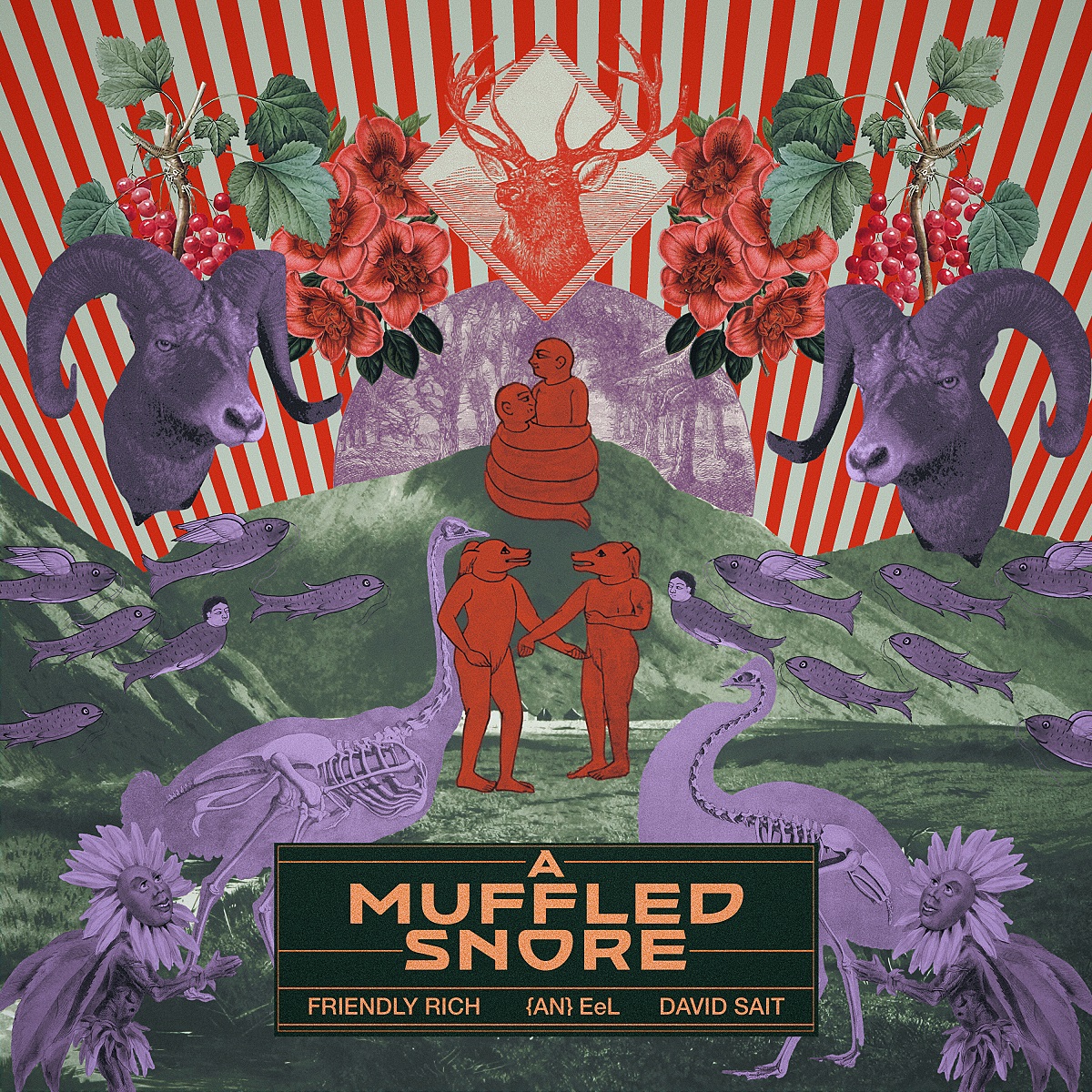
In another time and place A. Hutchie – short for Aaron Hutchinson – might easily have been a medieval apothecary, wandering the forests in search of herbs and roots with which to create all things magical. However, in today’s world, he has been incarnated as a peripatetic musician, author and creator of this suite of atmospheric music, appropriately titled Potion Shop.

This repertoire has been developed into an individualistic, difficult-to-classify personal genre. Here, as is customary for Hutchie, roots in, and branches from, jazz often surface, but there is so much else going on: Hutchie skilfully, imaginatively and (by and large) subtly mixes elements of electronic music, rock and contemporary composition together, all of which also nods to noise music, rap and hip-hop rhythms. Although most pieces develop from beguiling, elegant melodies, what makes them so special is Hutchie’s way with arresting textures and colours. 

These sonic creations simulate mental pictures of mysterious narratives evoking the work of such chroniclers and visionaries as the painter Edward Hopper or film director David Lynch, yet they are always distinctively part of Hutchie’s own soundworld. Everything comes together to add a very special grace to this music. Yet, somehow, none of it would sound quite so special if not for the vocals added on top of everything else. In this regard Unconditional Love with Blankie, I Fell for the Moon with Sarah Good and Villain with Benita Whyte make for absolutely memorable listening.

03 Fermis ParadoxFermi’s Paradox
Carolyn Surrick; Ronn McFarlane
Sono Luminus DSL-92244 (sonoluminus.com/store/fermis-paradox)

When the Beatles’ original bassist, Stu Sutcliffe, decided to leave the group in 1961 to attend the Hamburg College of Art, the band suddenly found themselves without a bassist. Guitarist and vocalist Paul McCartney stepped up, and in short order established himself as one of the most iconic and original bassists in the history of popular music. Necessity truly is the mother of invention! 

I was reminded of this bit of history when listening to, and researching, the beautiful new recording, Fermi’s Paradox by Carolyn Surrick (viola da gamba) and Ronn McFarlane (lute). Gearing up for a scheduled 2020 performance tour the duo’s concertizing plans were furloughed as COVID cancellations came in fast and furious. Undeterred, Surrick and McFarlane continued to rehearse and embraced the process of playing their instruments for the sake of the music. Once again, necessity begets (re)invention. 

This wonderful album is a success on multiple fronts. First and foremost, it offers a gorgeously recorded, sonically supreme capture of two (and sometimes three with Jackie Moran joining in on bodhrán) of the finest traditional instrumentalists playing an exhilaratingly rich and diverse repertoire that binds together traditional Irish, English and Swedish music with pieces by J.S. Bach, Duane Allman and the performers themselves. Secondly, the recording is a wonderful and inspirational testament to the importance of music. 

While we increasingly read about a dependence on the creature comforts of food, alcohol and Netflix to stave off pandemic-induced existential dread, it is aspirational to read Surrick’s inspiring words: She, McFarlane and Moran make music not because there is a current audience or concert tour pending but “because we can. We make music because the world needs music, our hearts need music. This is what we do in the face of isolation and despair. We are not alone.” 

Important words, I think, and a much-needed 2021 optimistic counterpoint to Milton Babbitt’s oft-repeated line, “Who Cares if You Listen?” I’m sure Surrick, McFarlane, Moran and the Sono Luminus label will indeed find a caring and listening audience for Fermi’s Paradox.

04 Duke RobillardBlues Bash!
Duke Robillard & Friends
Stony Plain SPCD 1423 (stonyplainrecords.com)

Timelessness and veritas are the special building blocks of good art – especially the blues – because the blues is a form of music where the very nakedness of the soul is bared. It is also upon this foundation, somewhat contrarily, that a certain joyfulness is often achieved. The music of Duke Robillard has espoused these virtues for half a century and it continues to have these qualities in spades. It’s why when you’re invited to this Blues Bash with Robillard and friends, it’s an invitation you must not refuse, or else you’ll regret it. 

This music is dappled everywhere with Robillard’s poetic mellow, luminous – and sometimes weeping – guitar lines swinging in tandem with a magnificently rehearsed band, complete with mellifluous piano, sanctified organ, howling saxophones and topped off with two rumbling basses and a drummer playing rippling percussive grooves. The blues would be nothing if not for vocals that are cried (not sung) and there is plenty of that to cheer about here.

Vocalists Chris Cote on What Can I Do and Michelle Willson on You Played On My Piano are absolutely superb and that is only a sample of the electric charge in this music. But even without the vocals, this music sings. In this regard, and apart from Robillard’s glorious guitar, it would be a travesty not to call attention (especially, though not exclusively) to Rich Lataille’s smouldering saxophone performance on Just Chillin’.

Although seemingly limited in expressive textures by the trumpet’s size and construction, composers and players have steadily expanded the brass instrument’s range and adaptability during the past half century. As more have investigated the possibilities in improvised and aleatoric music, the definition of brass tone has modified. Concurrently the makeup of an acceptable ensemble connected with trumpet tones has evolved as well and each of these out-of the-ordinary outings demonstrates how musical definition can shift from session to session.

01 MantleCD005Longtime partners, Japanese trumpeter Natsuki Tamura and pianist Satoko Fujii have played in many configurations from duo to big band, but Mantle (NotTwo MW 10003-2 nottwo.com) is unique in that they collaborate with Spanish drummer Ramon Lopez in a trio featuring the trumpeter in the role usually taken by a reed player. Throughout the nine tracks as well, it’s Tamura’s choked or splayed capillary discursions which are most aggressive, with the pianist and drummer equally complementary. Brassy flutter tonguing, open horn accelerations, half-valve effects, kazoo-like blats and inner body tube excavations are Tamura’s common strategies. Meanwhile, as on Metaphors, the pianist’s careful arpeggios and the drummer’s contrapuntal shuffles preserve linear output. An equal line of this triangular creation, Lopez often sets up narratives with pops, ruffs or clanging cymbal work. As for Fujii, as demonstrated on Straw Coat, she skillfully creates a gentle impressionistic exposition with soundboard echoes and then turns to broken-chord power to counter Tamura’s freylekhs-like brassy interjection. Other times, as on Encounter, her dynamic vibrations give impetus to a narrative dominated by Lopez’s resounding rolls and fluid paradiddles plus Tamura’s brassy screeches. Still it’s the penultimate Autumn Sky which puts the trio’s skills in boldest relief. Beginning in a balladic mode with metronomic keyboard patterns and a brass part that is muted and moderated it subsequently creates andante excitement via grainy distended brass work and kinetic piano crunches and clusters from Fujii.

02 DaveGislerCD003Another variation on the theme of timbre reorientation is Zurich Concert (Intakt CD 357 intaktrec.ch), a live program where American trumpeter Jaimie Branch joins the trio of Swiss guitarist Dave Gisler for the first time. Her vigorous drive, propelled with a touch of greasy blues, easily latches onto the sensibility of the guitarist, bassist Raffaele Bossard and drummer Lionel Friedli, whose playing encompasses rock energy. The trumpeter’s foreground/background role is best illustrated on One Minute too Late. Picking up from the short, shaking and rattling track that precedes it, this tune evolves into a solid narrative of horizontal brass tones decorated with Gisler’s flanges and frails. When the guitar solo transforms into a gentling theme elaboration with both folk and jazz inflections, the timbral decorations are from Branch’s plunger tones. Meanwhile, movement is provided by a bowed bass line and cymbal crashes. Throughout the set, cadences are further informed by rock sensibility. If Gisler’s slashing frails and echoing string slides are often staccato and distorted, their origins are British hard rock atop jazz perceptions. When a groove is established coupling fretted string echoes, a double bass pulse and drum backbeats, low-pitched bass colouration joins the guitarist’s slurred fingering and the trumpeter’s brass smears to confirm this is no pop-rock CD. This maxim is further demonstrated on the smeary, scatological Better Don’t Fuck with the Drunken Sailor. A blues, it combines Gisler’s upward string shakes and stutters that could come from Led Zeppelin with Branch’s plunger mute extension which dates to Duke Ellington’s Jungle Band. The group also detours into post-modernism on Cappuccino, where the vocalized title is repeated and distorted by looping electronics and the stop-time narrative enhanced with guitar flanges and trumpet plunger growls.

03 SupersenseCD002If loops are one way to imaginatively add originality to trumpet-oriented jazz, Canadian-in-Brooklyn Steph Richards has come up with an even more outlandish statement. The nine tracks on Supersense (Northern Spy NS 130 northernspyrecs.com) are each named for a specific scent created for the trumpeter by fragrance artist Sean Raspet. A scratch-and-sniff card is included in the package to see if the music reflects the smells and vice versa. Olfactory connections may be up to individual debate. More compelling is the dynamic expressed between Richards’ downplayed brass undulations, the resonating drums and strewn water tones she projects with the sensitive accompaniment provided by Americans, pianist Jason Moran, bassist Stomu Takeishi and drummer Kenny Wollesen. Stroked internal strings and stopped keys from the piano, languid double bass strokes and drum-top buzzes remain atmospherically low key and purposeful, as mewling and trilling trumpet splutters create contrapuntal theme extrapolations. That makes tracks like Canopy and Metal Mouth, where Richards unexpectedly exhales strident bursts of staccato snarls, stand out. Her splayed textures, plunger asides and muted slurs are expressively bright or gritty as the situation demands. Overall, the few instances of reveille-like bugling or lively brassy buzzing are secondary to the comprehensive integration of brass, string and percussion timbres. Like quality perfume, Supersense makes its presence felt through subtlety and understatement.

04 DontWorryCD001In the right hands and mouth, trumpet tones also ally or contrast with experimental vocals and electronics, as well as instrumental techniques. That’s what happens on Don’t Worry Be Happy (Intrication Tri 002  thierrywaziniak.wixsite.com) as veteran Austrian brass experimenter Franz Hautzinger evokes his strained flutters alongside out-of-the-ordinary contributions from a trio of French players: percussionist Thierry Waziniak, guitarist Pascal Bréchet and the clarinet and voice of Isabelle Duthoit. There are times, as on Sables symphoniques, for instance, when Hautzinger’s growls and gurgles are the mirror image of Duthoit’s yelping shrieks and burbling trills, but that’s after his horizontal bites have established brass identity. More commonly, the interaction involves unearthing blurry or bellicose brass timbres from unexpected places to work alongside shrill reed multiphonics, as well as dissected string flanges and ratcheting percussion, all of which owe as much to electronic processing as acoustic qualities. This is particularly noticeable on Dans le ventre de la baleine, where irregular drum chops and jangling guitar runs are further distended with on/off voltage shakes, as high-pitched trumpet peeps and reed trills preserve the narrative movement. Moving from discursive to distinct sequences with knife-sharp guitar whines, percussion buzzing, panting vocalese and blurry trumpet variations, the program is resolved at midpoint with the extended and concept-defining Souffle hybride. With electronic wave forms soaring throughout, the sound field becomes louder as the narrative intensifies with diffuse guitar twangs and drum clip clops. Duthoit and Hautzinger construct a melded duet from clarinet chicken clucking and half-valve barks. Vocal gurgles and retches alongside back-and-forth brass vamps finally relax the track into narrative coherence. 

05 BrittleCD007Using a similar strategy and instrumentation, but with acoustic intonation, is Brittle Feebling (Humbler 006 heule.us) by a quartet of Bay Area players: trumpeter Tom Djll, Kyle Bruckmann on oboe and English horn, koto player Kanoko Nishi-Smith and Jacob Felix Heule using only a floor tom. Acoustic is merely one facet of these reductionist improvisations however, since expected tones are eschewed for the most part. The minimalist interface is adhered to so closely in fact, that it’s often impossible to attribute a single tone to one identifiable instrument. For the most part, koto strokes are intermittent, with short hammer-like clanks as present as strumming. Rarely harmonized, Bruckmann and Djll constantly overblow with squealing whines from the reeds and bell-against-mike metallic squeals from the trumpet. Underscoring this are concentrated abrasions from the floor tom that become shaking drones that sometimes replicate hurdy-gurdy continuum. Although there are brief tuneful hints emanating from the reedist’s and trumpeter’s usually dissonant narratives, the horns and percussion eventually meld into a massive blare that dominates the entire track. This density is only lessened when thin koto string plinks are gradually revealed. Careful listening though, confirms that timbral striations from the instruments during the performances mean the collective result is as fluid as it is brittle.

There are plenty of roles for trumpets in conventional ensembles. Yet each of these tone-explorers – and the groups in which they play – outlines other ways to use the brass instrument’s properties.

01 Ivan MorawecThe new 11-CD set, Ivan Moravec Portrait (Supraphon 4290-2 naxosdirect.com/search/099925429027) will introduce, or reintroduce, a Czech pianist who was one of the very finest artists of the last generation. For a good many of the decades of the end of the 20th century into the 21st, Moravec was a familiar name to music lovers around the world, particularly to those who celebrated their Czech heritage. Born in Prague on November 9, 1930 he was influenced by his father who was an amateur pianist and singer. He introduced Ivan to opera and taught him to read the scores which together they read and sang through. In an interview at the Academy of Performing Arts in Prague, where he had been a professor for more than 30 years, we learn that “I basically studied with Irma Grunfeld, the niece of Alfred Grunfeld, a very famous Viennese pianist through the turn of the 19th and 20th centuries – some of his recordings have been preserved. […] In addition I was somewhat influenced by Professor Kurtz who was also teaching in Prague. Kurtz was an absolutely first-rate teacher.” In a most interesting interview in PIANO News in April 2002, reprinted in the accompanying notes, An Enthusiasm for a Radiance of Tone, Moravec speaks about the many people who influenced his playing, especially Michelangeli.

The works included in the new discs embrace solo and concerted works by Mozart, Beethoven, Chopin, Schumann, Brahms, Debussy, Franck, Ravel, Janáček, Martinů and Smetana. Of course, I did not commence listening with the first track of the first disc as some listeners might have done if faced with such a wide range of compositions from 11 composers. Instead, I went straight to works by which to evaluate the artist. I have a special affection for the four Ballades of Chopin but have not heard a recorded performance to better express what, I thought, Chopin would have heard in his head. From Cortot, Rubinstein, Richter, et.al, none has come close. There is lots more inspired Chopin here: the complete 24 Preludes, Op.28, the four Scherzi, the Piano Sonata No.2 in B-flat Minor, Op.35, the 17 Mazurkas and many individual works. Moravec’s Chopin at last realizes all expectations. His playing is majestic and exultant and wholly satisfying; playing unequalled that I know of. Who would have thought? 

Moravec, as may have been expected, is a master of Schumann and Brahms. Equally authoritative performances of Schumann’s Kinderszenen and that wonderful little Arabeske in C Major, followed by Brahms: Capriccio in B Minor, the Rhapsody in G Minor and also Three Intermezzi Op.117 and the Intermezzo in A Major, Op.118/2. The Brahms Piano Concerto No.1 is preceded by the Schumann Piano Concerto in A Minor, both conducted by Eduardo Mata with the Dallas Symphony in 1993. There are many other performances: Beethoven and Mozart concertos; some exquisite Debussy: Images Books 1 and 2; Estampes; Children’s Corner; and, naturally, Clair de Lune; and Preludes. Also, interesting Ravel, Martinů, Smetana and Janáček.

In the box is a DVD that includes a most enjoyable and informative video biography of Moravec, including musical reminiscences by conductors and fellow musicians. Also, complete performances of works by Beethoven, the Appassionata; Prokofiev, the First Piano Concerto (Ancerl); Mozart Concerto No.25 (Vlach); and the Ravel G Major (Neumann). In Czech, with subtitles in many languages. A first-class package not to be overlooked.

02 Emil GilelsVolume Two of Profil’s Emil Gilels Edition is a 15-CD selection of memorable recordings (weren’t they all!) derived from various sources (PH17066 naxosdirect.com/search/881488170665). All the composers are Russian from Tchaikovsky forward. There are performances of solo works, duos, trios, chamber music and concertos; too many for individual comment. The first disc contains two performances of the Tchaikovsky First: The first entry is a monaural recording of 1951 from Moscow conducted by Konstantin Ivanov with the USSR Radio Symphony Orchestra, then one in stereo from October 10, 1955 with the Chicago Symphony and Fritz Reiner. Happily, the listener can listen to both versions and may have a preference for one or the other. Gilels is the same in both. Ivanov or Reiner? Mono vs. stereo? I enjoyed the weight and majesty of the Russians. Tchaikovsky’s Second also merits two versions, a Russian performance conducted by Kondrashin and a Hungarian conducted by András Kórodi. Rachmaninoff’s Third gets two outings with Kondrashin, from January and March 1949, but the Fourth gets only two movements, the second and third. There are concertos, chamber works, sonatas and duos, and arrangements by these familiar and unfamiliar composers: Prokofiev, Stravinsky, Aleksander Alyabiev, Mily Balakirev, Borodin, Cesar Cui, Scriabin, Medtner, Glazunov, Borodin, Alexander Siloti, Moisey Wainberg, Kabalevsky, Khachaturian, Arno Babajanian and finally, Andrey Babayev. Assisting artists are Elizaveta Gilels, Leonid Kogan, Mstislav Rostropovich, Yakov Zak, Yakov Flier, Dmitry Tsiganov, Vasily Shirinsky, Vadim Borisovsky, Sergei Shirinsky. The conductors are Fritz Reiner, Kirill Kondrashin, Dmitry Kabalevsky, Konstantin Ivanov, Franco Caracciolo and Kórodi. Never a dull moment in this superbly recorded collection.

03 Legendary PianistsTo celebrate their establishment 40 years ago in Munich, Orfeo has issued several attractive compilations, Legendary Conductors, 40 Ultimate Recordings and now the collection Orfeo 40th Anniversary Edition – Legendary Pianists (C200071 naxosdirect.com/search/orfeo+c200071). This edition should be quite intriguing to collectors who surely will find a set of names quite different from what they might have chosen. It does not claim to be definitive; a collection, not the collection. There are ten CDs in the box featuring nine artists recorded live or recorded for broadcast, giving a sense of hearing an actual performance that contributes a heightened sense of you-are-there. It took a day to audition the set, which turned out to be not at all tedious, as the repertoire is pleasing and pianists clearly dedicated. Here are the pianists: Géza Anda, Bruno Leonardo Gelber, Friedrich Gulda, Wilhelm Kempff, Oleg Maisenberg, Konstantin Lifschitz, Carl Seemann, Gerhard Oppitz and Rudolf Serkin. Repertoire consists of mainly concertos from Bach to Brahms, via Mozart, Beethoven, Schubert and Schumann. Also, a handful of variations, etc. This is a most attractive collection of pure pleasure.

01 James CampbellJames Campbell, Clarinet
James Campbell; John York
Crystal Records CD330 (crystalrecords.com)

At what point in The Portrait of Dorian Gray does the protagonist look at his younger self in the mirror and realize something is amiss? Meanwhile the painting, hidden away, displays the truth of the ravages of time. Listening to James Campbell’s delightful playlist, the greatest hits of clarinet recital literature, the novel comes to mind because of how well it applies to recorded performances. 

There are eight selections on James Campbell Clarinet: Weber (Seven Variations on a theme from Silvana, Op.33); French composers who provided us with fluff, in the case of Paul Jeanjean and Gabrielle Pierné, and with one of the finest pieces in the clarinet literature, Debussy’s Première rhapsodie (plus his charming exercise, Petite Pièce). Alban Berg’s beautiful enigmas, Vier Stücke, Op.5, Witold Lutoslawski’s dashing and elegant Five Dance Preludes and good old Malcolm Arnold’s Sonatina Op.29 complete a survey of the 20th century. 

The recordings, all made in the 1970s by a youthful Campbell and the excellent pianist John York, mark the start of Campbell’s tremendous career in Canada and around the world. This was the era when we had few homegrown stars; they inspired a larger crowd of next-generation explorers, myself included, who hoped their success might equal Campbell’s. 

Let us speak in present tenses. Campbell’s strengths are his fluid sound and easy brilliant technique. Always understated, he modestly nails all of the demands of this difficult literature. It does my envious heart good to hear the extremely subtle proofs that he and I share the same difficulties in the Debussy Rhapsodie.

Listen to 'James Campbell, Clarinet' Now in the Listening Room

02 Charlie ParkerThe Savoy 10-inch LP Collection
Charlie Parker
Craft Recordings CRO00010 (LP)/CRO2774 (CD) (charlieparkermusic.com)

Charlie Parker was a singularly creative force in bebop, influencing jazz improvisation on a scale comparable only to Louis Armstrong, Miles Davis and John Coltrane. The alto saxophonist’s greatest studio work was done in the 1940s, recorded by small, devoted companies. This set of four 10-inch LPs (or single CD) commemorates not just Parker’s Savoy recordings but replicates the form of his canonization. Originally released as 78-rpm records, one track per side, Parker’s principal work for Savoy – 28 tracks of it – were reissued as New Sounds in Modern Music Volumes 1-4, on four 10-inch LPs between 1950 and 1952. 

Tracks weren’t in scholarly chronological order: Volume 3 leaps from 1948 to 1944, covering the range of the recordings in reverse and putting a swing rhythm section including pianist Clyde Hart and guitarist Tiny Grimes after cool jazz progenitors Miles Davis and John Lewis on the set’s last session. Why revisit this order? It best captures Parker’s impact as bop spread its influence, the last time jazz genius compressed its full flight into three-minute units. Armstrong’s Hot Fives and Sevens, from two decades earlier, are the only comparables. 

Listening to Parker in this form, you hear the moments of transformation, as he uncovered new dimensions of harmony and rhythm with unparalleled joy, in company whose talents (Bud Powell, Dizzy Gillespie) sometimes approached his own. Parker soared as few other musicians have and soared highest here on recordings like Ko-Ko, Parker’s Mood, Cheryl and Constellation.

03 George Lewis IRCAMAtelier George Lewis – Rainbow Family 1984
George Lewis; Joëlle Léandre; Derek Bailey; Steve Lacy
Carrier 051 (carrierrecords.com/album/rainbow-family)

While forward-looking musicians (Sun Ra, Bob James) began fusing improvisation and electronic elements in the 1950s and 60s, composer/theoretician/trombonist George Lewis was among the very first to extend improvisational methodologies to computer programming. Best known for the work Voyager (beginning in 1986), he had entered the field with The Kim and I, a duet for trombone and programmed Moog synthesizer in 1979.

Rainbow Family is a previously unreleased 1984 concert from IRCAM in Paris. It integrates human and programmed computer improvisation, the program generating both its own material and reacting to the work of live improvisers through three Apple computers controlling three DX-7 Yamaha synthesizers. The work includes segments with individual improvisers – bassist Joëlle Léandre, guitarist Derek Bailey, bass clarinetist/flutist Douglas Ewart and saxophonist Steve Lacy – then Ewart and Lacy combine with the machinery before all four engage simultaneously with the program. 

What’s most fascinating is how the program can match individual musicians’ distinctive approaches, whether adapting to the fluidly expressive lines of Ewart, the playfully analytical approach of Lacy, or the comparatively abstract inventions of Léandre and Bailey. The synthesizers do what the improvisers do, balancing their own impulses with the sonic environment in which they find themselves. As one might expect, the later pieces with more musicians are significantly more complex and generally richer, a genuine meeting of human improvisation and human-constructed, programmed improvisation.

Rainbow Family has taken 36 years to appear, but it’s definitely worthy of contemporary attention.

There are two 2CD sets of the complete Mozart violin concertos this month, one of which is simply unique.

01 Mozarts ViolinOn Mozart’s Violin: The Complete Violin Concertos violinist Christoph Koncz and Les Musiciens du Louvre, one of Europe’s leading period-instrument ensembles perform the concertos with Koncz – astonishingly – playing Mozart’s own violin (Sony Classical G010004353645E sonyclassical.lnk.to/Koncz_MozartsViolinPR).

The violin, made in the early 1700s by Klotz of Mittenwald after a Jacob Steiner model, was played by Mozart while he was concertmaster in the Salzburg Hofkapelle from 1769. It was entrusted to his sister Maria Anna (Nannerl) when he moved to Vienna in 1781. The concertos date from 1773-75, so would have been played on this instrument; indeed, Koncz makes a strong case for the violin’s particular sound clearly influencing the compositions. The instrument passed through various owners – all listed in the booklet notes – before being acquired by the Salzburg Mozarteum Foundation in 1955. Remarkably, it has retained its original Baroque form, and not suffered any alterations.

Koncz clearly understood and appreciated the remarkable privilege accorded him by this recording project, and he responded with absolutely faultless performances. The violin has a sweet, clear sound, and Koncz plays it beautifully, with a tasteful use of vibrato and with warmth and feeling. Mozart left no cadenzas – these would have been improvised at the time – and Koncz supplies his own, after studying the extant cadenzas for the piano concertos and immersing himself in the style of Mozart’s Salzburg years. Les Musiciens du Louvre, the first ensemble to perform Mozart on period instruments at the Salzburg Festival, provides the perfect accompaniment.

It’s not simply the emotional and personal impact of the instrument that makes this set so special; the performances themselves, recorded in the Salzburg Mozarteum, are technically and musically superb in what is a quite stunning release.

If I could own only one set of the Mozart violin concertos, this would be it.

02 Mozart Baiba SkrideNormally, any release by the outstanding Latvian violinist Baiba Skride would likely be topping my list, but this time her Mozart: Violin Concertos Nos.1-5 with the Swedish Chamber Orchestra under Eivind Aadland (also included are the Adagio in E Major K261 and the two Rondos in B-flat K269 and C Major K373) (Orfeo C997201 naxosdirect.com/search/orf-c997201.) is up against the Koncz set.

Skride draws a beautiful sound from the Yfrah Neaman Stradivarius violin that she plays on extended loan, with a clear tone and an effortless grace and warmth. Like Koncz, Skride performs her own cadenzas to great effect. 

There’s never a hint of an issue with Skride’s playing in beautifully judged and finely nuanced modern-instrument performances, but while there’s elegance and depth in the orchestral playing, their recorded sound seems less than ideal; they seem set fairly far back with a particularly over-heavy bass line that often muddies the texture.

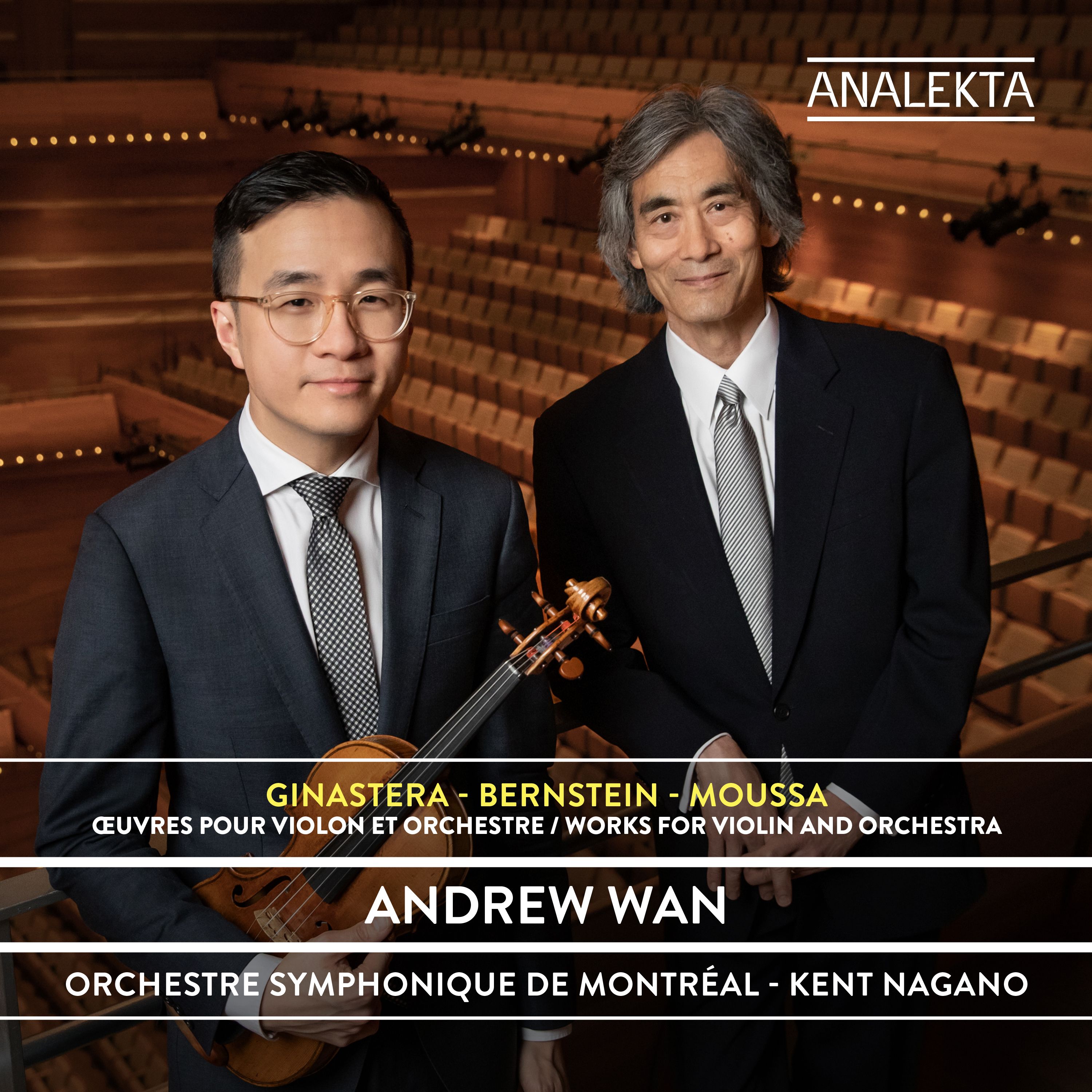
03 Wan Richard Hamelin BeethovenThe ongoing Analekta series of the complete Beethoven Violin Sonatas with violinist Andrew Wan and pianist Charles Richard-Hamelin continues with the second volume, this time featuring the three Op.12 Sonatas – No.1 in D Major, No.2 in A Major and No.3 in E-flat Major – and the “Spring” Sonata, No.5 in F Major Op.24 (AN 2 8795 analekta.com). Volume One was reviewed here in December 2018.

The Op.12 sonatas from 1797/98 were the first to be written and show the two instruments on an equal footing despite the customary “piano and violin” designation. They are joyful works – only one movement is in a minor key – and, while formally conventional, are imaginative and bright in texture. A pure delight from start to finish, the performances here are of the same high standard as on the earlier volume of a series that continues to impress.

04 Beethoven Dover QuartetThe Dover Quartet swept the board at the 2013 Banff International String Quartet Competition, the first prize announcement noting that they “consistently demonstrated an exceptional level of maturity, poise and artistry.” Add five or six years of performance experience to that judgement and you will have a good idea of the exceptionally high standard of their new release (2CDs priced as a single) Beethoven Complete String Quartets Volume 1 The Opus 18 Quartets (Cedille CDR 90000 198 naxosdirect.com/search/cdr+198).

The Dover Quartet has performed the complete Beethoven quartet cycle in recital several times, the Montreal Chamber Music Festival performances being reviewed as a “musically transformative” event. The players have waited until they felt completely comfortable with their interpretations before committing them to disc, the recordings here being made in late 2018 and late 2019.

Although influenced by Haydn and Mozart, the Op.18 quartets show Beethoven clearly moving forward on his own path. The Dover members refer to them as playful and conversational and full of dramatic contrasts of mood and character, qualities which all shine through in performances of conviction and depth. This promises to be an outstanding set.

05 Nathan MeltzerThere’s a fascinating story behind Nathan Meltzer: To Roman Totenberg, the debut CD by the 20-year-old Austrian violinist, who has studied at Juilliard since he was 13, and pianist Rohan De Silva (Champs Hill Records CHRCD161 nathanmeltzer.com/cds). Totenberg’s 1734 Ames Stradivarius violin was stolen after his 1980 recital at the Longy School of Music in Cambridge, Massachusetts and was not recovered until 2015, three years after Totenberg’s death at 101. Professionally restored and consequently sold by Totenberg’s daughters, the violin has been on loan to Meltzer since October 2018.

All the music on this CD was performed by Meltzer at a “Homecoming” concert at that same Longy School in November 2019, with Totenberg’s three daughters present. The pieces were all favourites of Totenberg, who recorded two of them – the Franck and the Bartók – on this very violin. It’s certainly a glorious instrument. Meltzer describes it as dark and resonant with a warm tone in every register, but there’s also a real brilliance in the high register.

Ably supported by De Silva, Meltzer is quite superb in a program that includes Bach’s violin and keyboard Sonata No.3 in E Major BWV1016, Franck’s Sonata in A Major, Szymanowski’s La Fontaine d’Arethuse from his Mythes Op.30, Bartók’s Rhapsody No.1 and Wieniawski’s Polonaise de Concert in D Major Op.4.

It’s an outstanding debut recording from a prodigiously talented player with an admirable sense of history.

06 Schumann SchubertFragment, the new Schumann Quartet CD of music by Franz Schubert, is part of their return to regular activity after the coronavirus hiatus, the ensemble having already played several concerts in July and August (Berlin Classics 030141OBC schumannquartett.de/eng/discography).

The three quartets here were chosen to show how Schubert evolved over the years, with failure a part of that development. The String Quartet No.6 D74 from 1813, when Schubert was just 16, shows a composer trying to find his own style. What was intended to become the String Quartet No.2 in C Minor in 1820 was apparently abandoned and is now known as the Quartettsatz D703, an Allegro assai first movement followed by an Andante fragment in which the first violin simply fades away after 40 bars. It is included here, giving the CD its title, and the final notes and ensuing silence seem to lead perfectly into the start of the String Quartet No.13 D804, the “Rosamunde,” a large-scale work that reflected Schubert’s approach to the symphony by way of chamber music.

Performances throughout are quite superb, with a lovely balance that allows all voices to be clearly heard, outstanding ensemble work, terrific dynamics and an obvious emotional connection with the music.

In 1938 the Austrian composer Eric Zeisl (1905-59) fled Vienna for Paris, where he was befriended by Darius Milhaud. Milhaud helped Zeisl’s family move to Paris and subsequently to Los Angeles in 1939, Milhaud himself following to Oakland, California in 1940. The two remained close friends.

07 Paris Los AngelesThe French violinist Ambroise Aubrun discovered Zeisl’s music during his doctoral research at the University of California in Los Angeles, and his new album Paris <> Los Angeles with pianist Steven Vanhauwaert depicts the composers’ friendship as well as revisiting a Mozart sonata that apparently fascinated Zeisl (Editions Hortus 189 ambroiseaubrun.com).

Two short pieces by Zeisl open and close the disc: Menuchim’s Song (1939) from the incomplete opera Job and the world-premiere recording of the lyrical Zigeunerweise, the first movement from the unpublished 1919 Suite for Violin and Piano Op.2 that Aubrun discovered in the Zeisl Collection at the university. The other Zeisl work is his substantial three-movement Brandeis Sonata from 1949, named for the California Institute where Zeisl was composer-in-residence.

Milhaud is represented by his four-movement Violin Sonata No.2 from 1917, a quite lovely work. The Mozart is the Violin Sonata No.21 in E Minor K304. Written in 1778 during the Paris visit that saw the death of his mother, it is his only minor key violin sonata as well as his only instrumental work in that key.

There’s excellent playing throughout a terrific CD, with the Mozart in particular a beautifully judged reading – clean and nuanced, with a finely balanced emotional sensitivity.

Listen to 'Paris <> Los Angeles' Now in the Listening Room

08 Rivka Romance webViola Romance is the new 2CD set from violist Rivka Golani, accompanied by pianist Zsuzsa Kollár. It’s a collection of 35 transcriptions of works originally for violin and piano, mostly arranged and revised for viola and piano by Golani (Hungaroton 32811-12 hungarotonmusic.com).

Fritz Kreisler and Edward Elgar dominate CD1, with nine Kreisler originals and four Kreisler arrangements of single pieces by Chaminade, Granados, Tchaikovsky and Gluck. Eight Elgar tracks complete the disc.

Kreisler’s presence is also felt on CD2 with six arrangements: five pieces by Dvořák to open and Eduard Gärtner’s Aus Wien as the final track. In between are three pieces by František Drdla, two Brahms/Joachim Hungarian Dances, Jenö Hubay’s Bolero and two Leopold Auer transcriptions of works by Robert Schumann.

The Kreisler influence is no accident, the interpretations here having been inspired by Golani’s collaboration with Kreisler’s longtime accompanist Franz Rupp, who died in 1992; his final performance was with Golani in 1985.

Most of these short pieces (27 are under four minutes) are well-suited to the darker tone of the viola, although Golani’s generally wide and fairly slow vibrato tends to reduce the warmth at times. Still, as you would expect, there’s much fine playing here.

Listen to 'Viola Romance' Now in the Listening Room

09 Glass HouriThe New York-based Irish violinist Gregory Harrington founded the Estile Records label in 2006 (gregoryharrington.com), and has built a reputation for successfully transforming movie scores, jazz, rock and pop music into brand new violin concert pieces. His new CD Glass Hour with the Janáček Philharmonic under Mark Shapiro features music by Philip Glass, including the world-premiere recording of Harrington’s The Hours Suite, his own attractive arrangement of music from the 2002 Oscar-nominated Glass score for the movie The Hours. The three movements – Morning Passages, The Poet Acts and The Hours – were respectively tracks 2, 1 and 14 on the soundtrack album, and as the timings are almost identical they would appear to be straight transcriptions.

Glass’ Violin Concerto No.2 “American Four Seasons, scored for strings and synthesizer, is the other work on the CD. Glass left the four movements untitled, with a solo Prologue and three numbered Songs between the movements acting as violin cadenzas. There’s a lovely feel to the slower sections in particular, although there are one or two moments in the fast perpetual motion passages where the intonation feels a bit insecure.

Listen to 'Glass Hour' Now in the Listening Room

02 Voices in the WildernessVoices in the Wilderness – Music from the Ephrata Cloister
Elizabeth Bates; Clifton Massey; Nils Neubert; Steven Hrycelak; Christopher Dylan Herbert
Bright Shiny Things BSTC-0141 (brightshiny.ninja/voices-in-the-wilderness)

This technically thrilling and historically significant recording is the brainchild of noted musical director/producer, Christopher Dylan Herbert, and boasts the prestigious vocal talents of soprano Elizabeth Bates, alto Clifton Massey, tenor Nils Neubert and bass Steven Hrycelak. The entire project is composed of a cappella hymns, written just under 300 years ago by the residents of the Ephrata Cloister – an 18th-century celibate community in Lancaster, Pennsylvania, established in 1732. Nearly all of the music here was written by the solitary sisters of Ephrata – the earliest known female composers in North America.* These challenging pieces have never before been performed by a professional ensemble, and in keeping with the authenticity of the CD, the recording itself was done in the very room for which the material was originally composed.

With the opening, Rose-Lillie-Blume Sequence, the voices introduce themselves and come together in perfect symmetry, rendering this rich composition in all of its original majesty. The acoustics of the Ephrata Cloister provide the sonic platform for this stirring piece – rendered in perfect classical, High German. On Herzog Unsrer Seligkeiten, dynamics as well as precise rhythmic motifs are utilized, and of special mention is Wann Gott sein Zion Losen Wird, where the satisfying arrangement explores curiously modern chordal motifs, foreshadowing chorale works yet to come, and the eventual emergence of 12-tone composition.  

The final track, Formier, Mein Topffer, is both emotional and direct. Written by Sister Föbin (Christianna Lassle) the chord voicings are placed in the exact sweet spot for each register, creating a shining jewel of vocal music, and a celebration of early female composers/vocalists, as well as their creative vision, which is more than timely.

Editor’s note: Some might dispute this claim, and suggest that an Order of Ursuline nuns in Montreal were more likely the first female composers on the continent. I checked with noted Canadian music specialist John Beckwith who told me that, in an essay on Canada’s earliest music-theory treatise (1718), Erich Schwandt (formerly with the music department, U. of Victoria), claimed that the Ursulines wrote original music. The order was established in 1639 and was noted for its attention to culture and the arts, especially music, suggesting that these sisters were composing nearly a century before those of the Ephrata Cloisture.

03 Beethoven Christ Mount OlivesBeethoven – Christ on the Mount of Olives
Elsa Dreisig; Pavol Breslik; David Soar; London Symphony Chorus; LSO; Sir Simon Rattle
LSO Live LSO0826D (lsolive.lso.co.uk)

In the Synoptic Gospels, Matthew, Mark and Luke capture Jesus’ last moments as a free man. Aware of his impending arrest and execution – having been betrayed by Judas Iscariot – Jesus uses his final night to reflect and pray at a familiar location, the Garden of Gethsemane, located on the Mount of Olives. To this day, the location remains a site of Christian pilgrimage and, in 1803, afforded rich artistic fodder to Beethoven, who used its physical beauty and importance as a site within Christian theology to pen his compelling, rarely performed, and only Passion oratorio, Christ on the Mount of Olives

Although not theologically Christian, but rather an Enlightenment-era deist, Beethoven was most certainly drawing a parallel between this Gospel narrative of Jesus at his most fallible and his own looming existential crisis of encroaching deafness and isolation. Written while living at Vienna’s Theater an der Wien and understood, at the time, within the context of other 18th-century oratorios that focus on religious themes, subjects and iconography, Christ on the Mount of Olives deserves to occupy a more central place within Beethoven’s already bountiful canon. Good thing then, that it is performed and recorded so beautifully here on this 2020 LSO Live release by the London Symphony Orchestra with Sir Simon Rattle at the helm. 

Fleshed out with an enormous chorus of nearly 150 under the direction of Simon Halsey and released in honour of the 250th anniversary of Beethoven’s birth, this must-have recording packages together a compelling religious narrative with the majestic backing of the LSO and inspired soloists Elsa Dreisig, Pavol Breslik and David Soar performing a variety of biblical figures from Franz Xaver Huber’s libretto. With the religious importance for some of the upcoming Christmas season, this recording could not have come at a better time.

05 ElgarElgar – Sea Pictures; Falstaff
Elīna Garanča; Staatskapelle Berlin; Daniel Barenboim
Decca Records 00028948509683 (deccaclassics.com/en/catalogue)

A new and sumptuous live recording from Decca features two important works by Sir Edward Elgar: the five Sea Pictures, Op 37 (1899) and the seldom-heard “symphonic study,” Falstaff, Op.68 (1913).

Elgar was both proud and fond of his Falstaff. While it was well received at its premiere in 1913, it hasn’t quite found its footing in the standard repertoire to date (at least outside of England). Conversely, the Sea Pictures have long captured the imaginations of singers and audiences alike. The sea itself is central to British identity and, while many other cultures could claim the same, an Englishman’s love for his island’s coastal waters is of a particular brand; Elgar epitomizes this relationship in his cycle. They are unique for their dark and rich soundscapes, initially scored for contralto. (Canada’s own Maureen Forrester sang them – almost as trademark – throughout her career.) The five Pictures set words from different poets, including the composer’s wife: In Haven (Capri).

Daniel Barenboim is no stranger to interpreting Elgar. What an experience it is, to hear him steer this record’s course. Barenboim’s seasoned Elgar is luminous and emotive, ever balanced and rational. One might argue that he brings just a hint of German cerebralism to such overtly English Romantic music. Mezzo-soprano Elīna Garanča contributes her own impressive artistry here, embracing this ravishing repertoire with all that she’s got. Her voice soars above the Staatskapelle Berlin, buoyed and serene, “to rolling worlds of wave and shell.”

06 Egon WelleszEgon Wellesz – Die Opferung des Gefangenen
Hwang; Cerha; Dewey; Koch; Vienna Concert Choir; Radio-Symphonieorchester Wien; Robert Brooks
Capriccio C5423 (naxosdirect.com/search/845221054230)

Austrian-British composer Egon Wellesz (1885-1974), of Hungarian Jewish origin, was a prolific composer. Extensively performed and decorated during his lifetime, he achieved success early, being the first of Arnold Schoenberg’s students to receive a publishing contract from Universal Edition, before Berg or Webern. Generally neglected in the decades since his death, this world premiere recording, by the Vienna Concert Choir and the Radio-Symphonieorchester Wien of Wellesz’s 1924-25 opera-ballet Die Opferung des Gefangenen (The Sacrifice of the Prisoner), is part of a wider revival of interest in his music. 

The opera’s story is based on a scenario by Eduard Stucken after the ancient Mayan play Rabinal Achi, performed annually in Rabinal, Guatemala. Subtitled “a cultural drama for dance, solo singers and choir,” Wellesz’s work is about an imprisoned prince who is waiting for his execution after a battle. It’s not a huge stretch however to see the story reflecting many of the post WWI anxieties around the consequences of the dissolution of the Austro-Hungarian Empire. 

Replete with dramatic vocal and choral scenes and massive orchestral passages with Mahlerian and Schoenbergian echoes, Die Opferung is a prime example of Wellesz’s mature Viennese musical style. His signature colourful orchestration is underscored by forte brass choir and bold percussion statements.  This theatrical work, parts of which would not be out of place on a later blockbuster movie soundtrack, reads surprisingly well on audio CD, even without the visual and dance elements of a stage production. 

07 English SongsEnglish Songs à la Française
Tyler Duncan; Erika Switzer
Bridge Records 9537 (bridgerecords.com/products/9537)

British Columbia-born/New York-based baritone, Tyler Duncan, and his wife, pianist Erika Switzer, are internationally renowned performers as a duo, and individually. The clever idea of performing French composers’ settings of original English texts started when French baritone François Le Roux handed them Camille Saint-Saëns’ Cherry-Tree Farm score, set to Horace Lennard’s poetry. More of these Romantic/20th century songs were compiled, which, after their recital in Tours, led to this, their remarkable first duo album.

A literal who’s who of French composers successfully set the original English texts. Reynaldo Hahn’s Five Little Songs (1914), set to Robert Louis Stevenson’s words, are short children’s songs with tonal word painting like the florid piano lines behind lyrical vocals in The Swing, and colourful low vocal pitches with piano tremolo night sky effects in The Stars. Darius Milhaud’s settings of five Rabindranath Tagore Child Poems (1916) are operatic, such as the fully orchestrated piano part supporting lyrical emotional singing in the closing, The Gift. Love Maurice Ravel’s Chanson écossaise (1910) setting of Robert Burns’ text. Ravel emulates a Scottish quasi-bagpipe folk song without ever creating a parody. Jules Massenet’s setting of Alfred Lord Tennyson’s Come into the Garden, Maud (1880) foreshadows future musical theatre sounds. Poulenc, Roussel and Gounod works complete the recording. 

Duncan and Switzer deserve a “bilingual” standing ovation for their tight duo musicianship and colourful interpretations of these one-of-a kind art songs.

Listen to 'English Songs à la Française' Now in the Listening Room

08 Saman ShahiSaman Shahi – Breathing in the Shadows
Maureen Batt; Fabián Arciniegas; Tiffany Hanus; Various Instrumentalists
Leaf Music LM237 (samanshahimusic.com)

The debut album by Iranian-Canadian composer and pianist Saman Shahi, Breathing in the Shadows, feels like a gentle journey through the kaleidoscope of meaningful images, each captured in a subjective and probing way. The three song cycles included on this album are worlds unto their own – powerful and empowering, existential blocks of unique and diverse musical language combining minimalism, dodecaphony, hints of Iranian traditional music and rock. The poetry is beautiful and impactful, but it is the music that propels it beyond its scope. Shahi’s music lets the poetic images breathe and blossom and underlines the themes of inner and outer struggles, yearnings, rebelliousness and death (symbolic and physical). The rhythmic drive and atonal segments create an immediacy that is enlivening. 

The titular song cycle, Breathing in the Shadows, is based on poems by five poetesses from around the world and features a wonderfully talented duo – soprano Maureen Batt and pianist Tara Scott. Each song is a statement of independence and defiance in the face of oppression, longing or, simply, love. 

The second cycle, Orbit, builds on sharp imagery conceived by Serbian-Canadian singer-songwriter Jelena Ćirić. The waves of colours Shahi creates in the piano lines are just gorgeous and tenor Fabián Arciniegas’ phrasing underscores the words with subtle urgency.

The concluding cycle, Song of a Wandering Soul, merges several musical forms that Shahi considers a part of his musical identity. Written for a larger ensemble, using improvisation and electronics to create varied textures and riding on the perfectly suited timbre of Tiffany Hanus’ voice, this cycle is pure rock ’n roll in a classical setting. 

Listen to 'Saman Shahi: Breathing in the Shadows' Now in the Listening Room

Back to top