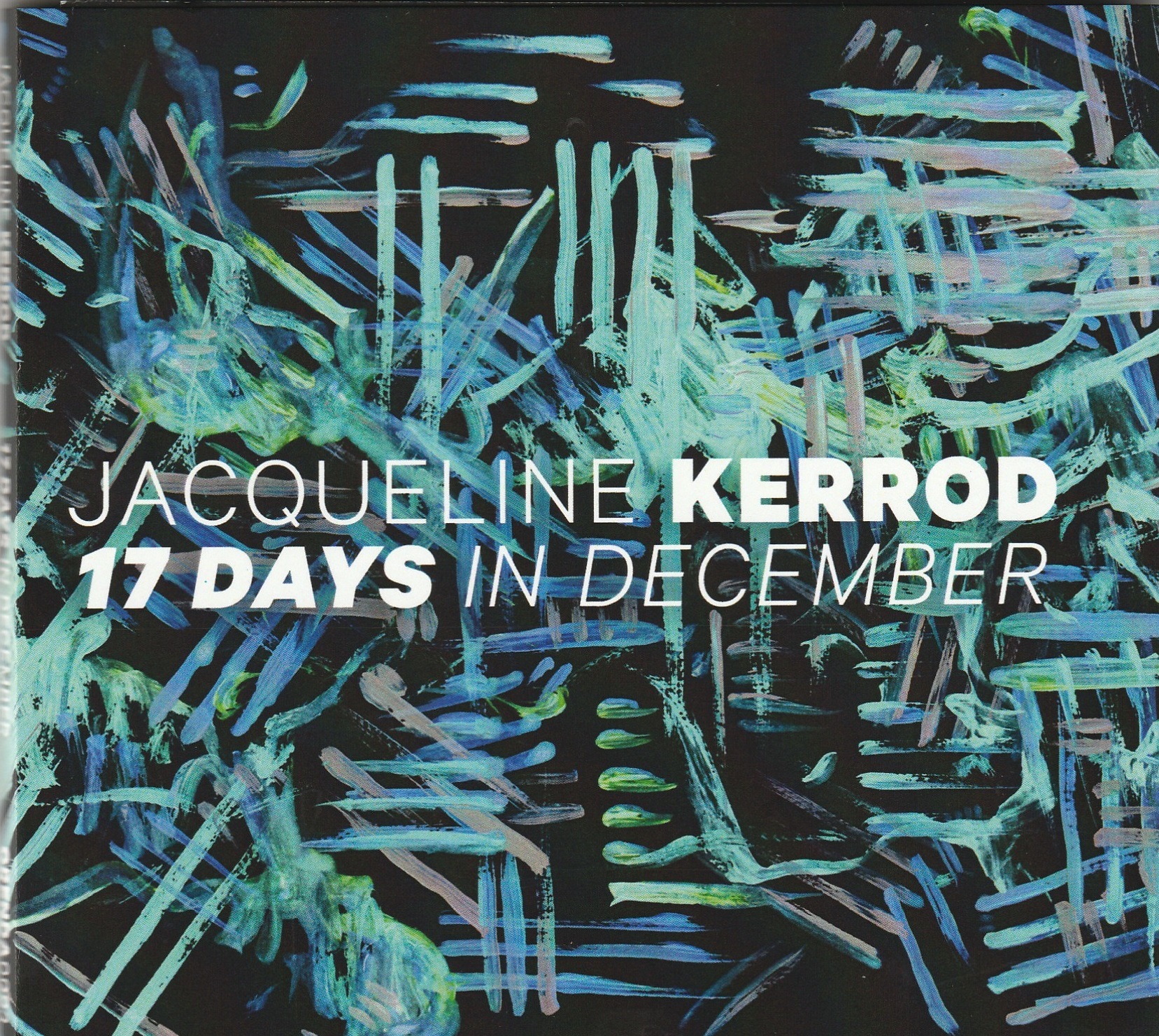
12 17 Days in December17 Days in December – Solo Improvisations for Acoustic & Electric Harp
Jacqueline Kerrod
Orenda Records 0093 (jacquelinekerrod.com)

Many people think of original music in a hierarchical sense, looking down on pure improvisation as something that doesn’t require mastery or discipline. One listen to Jacqueline Kerrod’s solo harp debut will serve as an epiphany for those cynics. In fact, I found myself awestruck by Kerrod’s seemingly limitless expressive range.

17 Days was recorded in the format of a musical diary, comprising one-take improvisations on consecutive days in the month of December. In the liner notes, Kerrod stresses the importance of simplicity in her approach and letting the music “be what it want[s] to be.” As a result of this philosophy, each piece takes on its own distinct shape, and yet the entire tracklist is held together by Kerrod’s improvisational identity. The combination of patience and inventive musical vocabulary results in a sound that is entirely unique to her and there is a consistent logic to the myriad enveloping soundscapes and intricate shapes that she creates. The music is never predictable, but even when switching from glitchy electroacoustic moments to warmer, familiar tones, it never feels disjointed or arbitrary. Kerrod’s tremolos, kinetic phrasing and rhythmic jabs enable her to get incredible mileage out of even the smallest ideas. The tracks fit together beautifully, despite not being sequenced in chronological order, a testament to how fully fleshed-out these spontaneous compositions are.

Listen to '17 Days in December: Solo Improvisations for Acoustic & Electric Harp' Now in the Listening Room

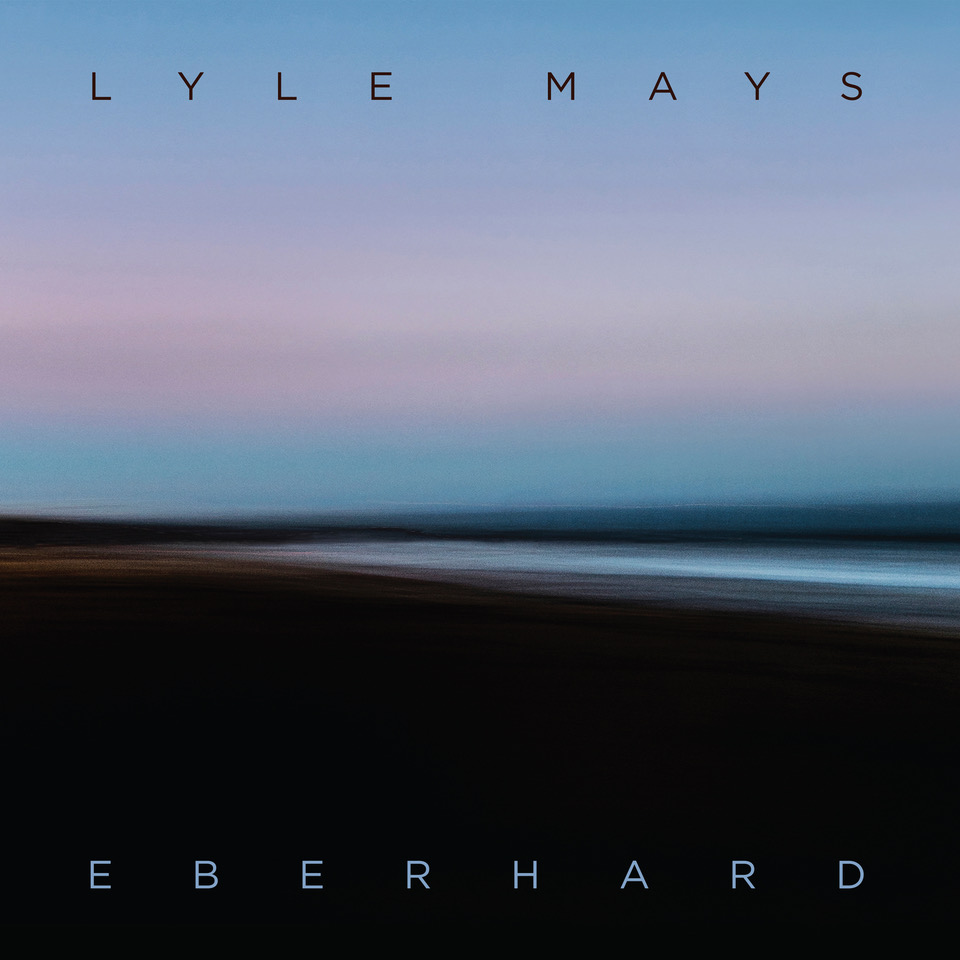
14a LYLE MAYS Eberhard Cover Art 3000x3000pxEberhard
Lyle Mays
Independent (lylemays.com)

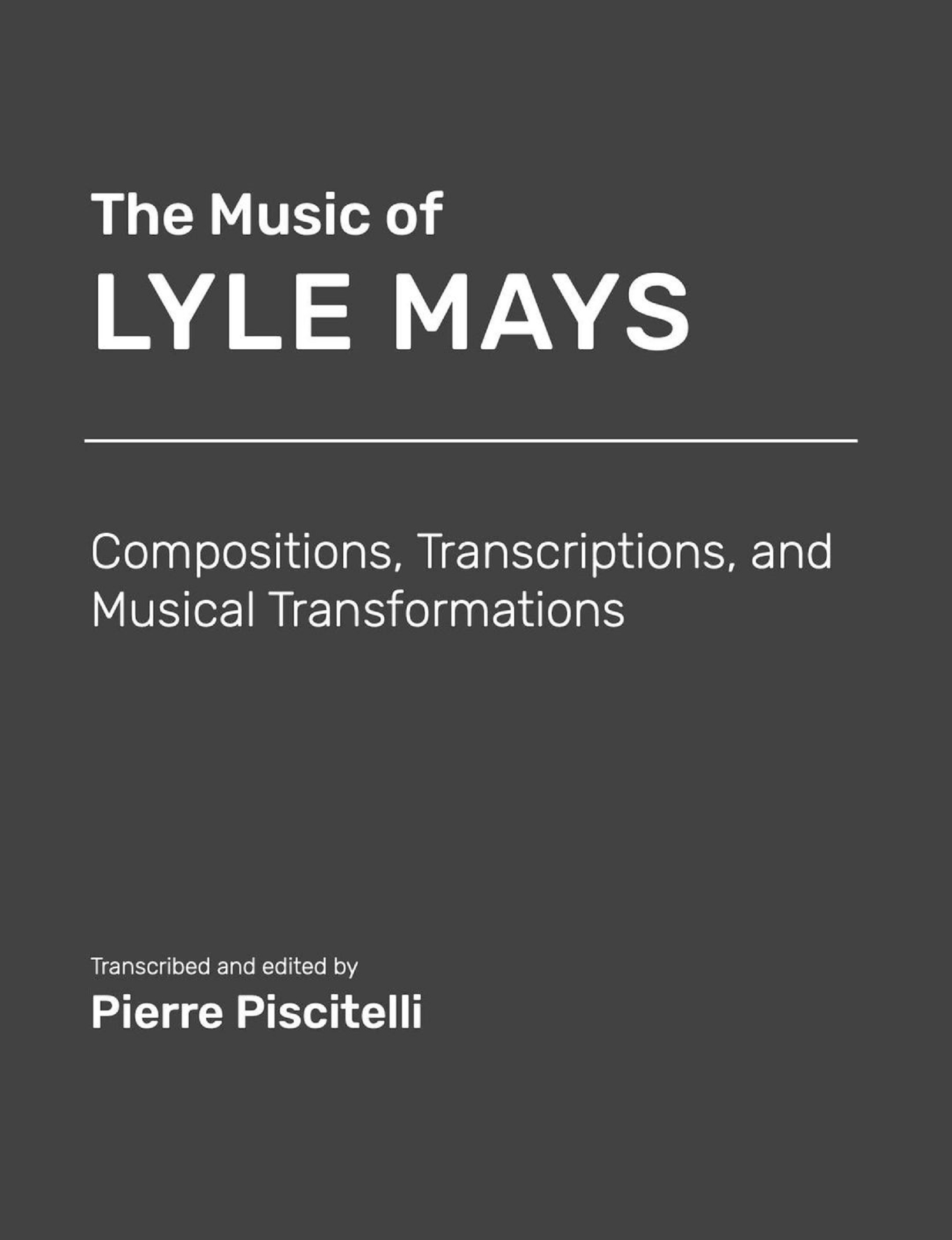
The Music Of Lyle Mays – Compositions, Transcriptions and Musical Transformations
Transcribed and edited by Pierre Piscitelli
(lylemays.com; pierrepiscitelli.com)

Lyle Mays is best known for his groundbreaking work as co-composer, arranger and keyboardist with the Pat Metheny Group. During his 30-plus years at the guitarist’s side, Mays co-created a new sound and language of jazz and improvised music, incorporating contemporary technology and elements drawn from classical, traditional jazz, rock and Brazilian music. Perhaps lesser known, but no less significant, is his work as a solo artist. Through his six previous releases, Mays explored different facets of his music and musicality, ranging from solo improvisation to small group and larger ensemble settings. 

In the wake of his passing in the winter of 2020, we now have the gift of one final posthumous recording, Eberhard, a 13-minute multi-section work dedicated to his close colleague, German bassist/composer Eberhard Weber, released as a single-track album. A ruminative marimba ostinato played by Wade Culbreath opens the piece, setting the stage for Mays’ reflective piano melody; he is joined in turn by Jimmy Johnson on electric bass and Aubrey Johnson with an exquisite wordless vocal. Gradually, Mays then builds a masterful solo over woodwinds and background vocals. (Bassist Steve Rodby, percussionists Alex Acuña and Jimmy Branly, guitarist Bill Frisell, keyboardist Mitchel Forman and a cello section also augment the excellent ensemble.) A riveting vocal section (Johnson plus Rosana and Gary Eckert) builds to a captivating, emotional climax that soars on Bob Sheppard’s dramatic tenor saxophone solo.

A recapitulation of the introduction completes the piece, leaving the listener with the feeling of having experienced an incredible musical journey. Eberhard is a bold, majestic masterpiece, both a summation of a remarkable career and a glimpse into where Mays might have ventured musically in the years ahead.  

Listen to 'Eberhard' Now in the Listening Room

14b Lyle Mays musicConcurrently, the Lyle Mays Estate, in conjunction with editor Pierre Piscitelli, has released The Music Of Lyle Mays, a comprehensive songbook covering his output as a solo artist, as well as previously unpublished material that he recorded with Pat Metheny. Piscitelli, a New York-based arranger/multi-instrumentalist, worked closely with Mays to ensure that the music was represented accurately and authentically in his transcriptions.

The reader is treated to a thorough artist biography, essays by Mays on various topics, and insights about the genesis of the compositions. One particularly fascinating essay recounts how Piscitelli came to know and work with Mays on both the songbook and Eberhard projects. Piscitelli deserves special acknowledgement for his great work on this long-awaited volume. 

Taken together, Eberhard and The Music of Lyle Mays form a vivid musical portrait of a remarkable artist whose legacy should endure for generations to come.

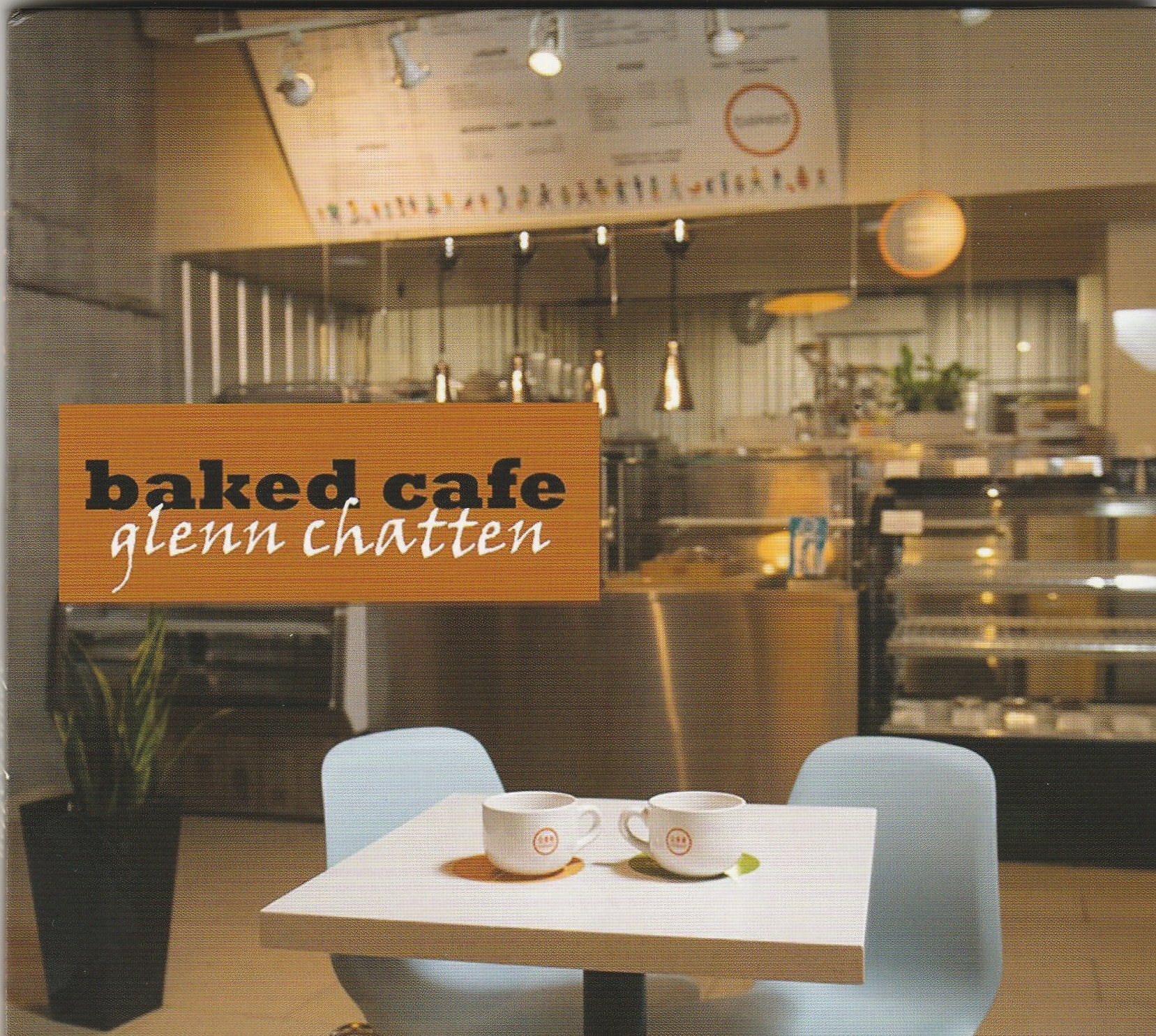
01 Glenn ChattenBaked Cafe
Glenn Chatten
Independent (glennchatten.com)

All of us who grew up in the Yukon knew it was a special place and were never surprised when “cheechakos” would arrive to work for a summer and wind up staying for years and making a life there. Glenn Chatten waited until later in life to move to Whitehorse, and had already recorded several albums as a songwriter and fingerstyle acoustic guitarist. His “Yukon” album, Baked Cafe, is named after one of my favourite places to eat and hang out in Whitehorse (known as the “Wilderness City”). The title song has a grooving beat and makes “flying to Whitehorse on a Saturday” sound exciting and intense, especially if it is to meet a very special person at the Baked Cafe. 

Liam’s Lylt, Tagish Morning and Sima (named after a nearby mountain that has skiing and a zip line) are three marvellous instrumentals that showcase Chatten’s fretboard dexterity. Although Chatten is a relative newcomer to the North, his lyrics show a clear appreciation for the landscape and people. In One Land he sings “beyond the sun dogs, and the ice fog, beyond the deep woven aspen tree, lies a quiet, part of nature, from the mountains to the Arctic Sea.” The words evocatively capture the essence of the Yukon’s territory. 

In addition to Chatten’s fine acoustic guitar and insightful lyrics, the many excellent local musicians add a spirited community vibe to this work. Baked Cafe is expertly engineered and mastered by Bob Hamilton who has been part of the Yukon music scene for decades. Chatten’s album is uplifting and insightful and I hope he remains a permanent part of northern culture.

Listen to 'Baked Cafe' Now in the Listening Room

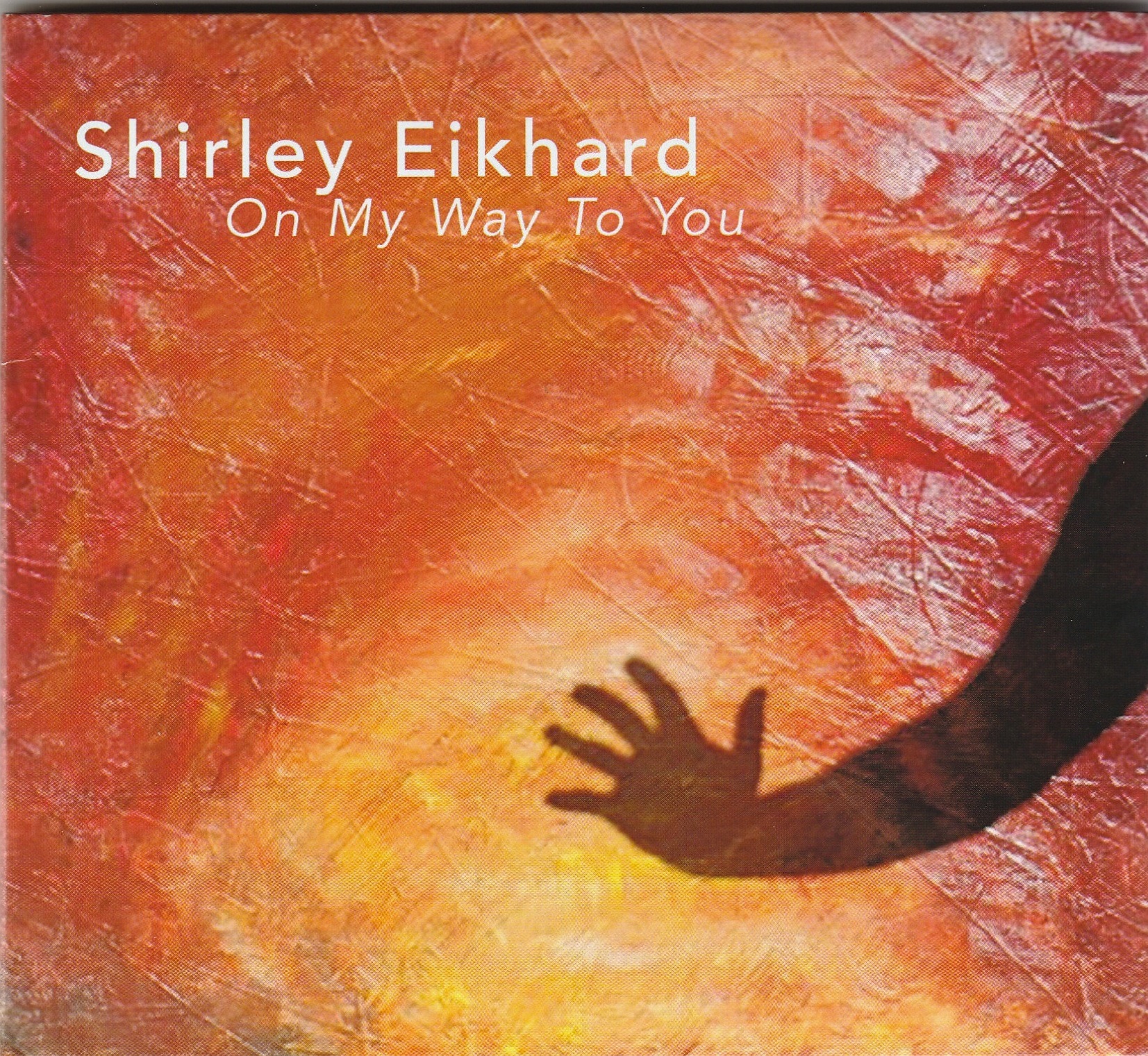
02 Shirley EikhardOn My Way To You
Shirley Eikhard
Independent SEM2021 (shirleyeikhard.ca)

Internationally renowned award-winning Canadian songwriter, lyricist, singer and multi-instrumentalist Shirley Eikhard is back with this collection of 12 songs dating from 1982 to present day. This is a fabulous overview of the creative artistic output of one of Canada’s foremost musicians.  Recorded in her home studio in Mono ON, Eikhard produced, arranged, recorded and performed all instruments and vocals here.

Opening track Anything is Possible (2020) is a positive, engaging song. Eikhard sings lead and backup vocals above repeated cadential pattern instrumental grooves and uplifting minimalistic melodies with such lyrics as “I refuse to be frightened,” and closing line “anything is possible…”, making my COVID fears miraculously vanish! Title track On My Way to You (2019) has a more traditional folk feel with longer phrases, guitar accompaniment and colourful sultry vocal tones.  

Great contrast is Good News (1982) showcasing her superb keyboard skills and lyrical singing. Especially powerful are the detached piano chords and vocals to the words “I wish I could bring you good news” while in the Good News reprise track (also 1982) her lyrical keyboard and vocal duet is passionately tear-jerking. The so-current, pop-music-flavoured What I Wish (For You) (2021) features an amazing wind solo. Bound to be a giant hit, My Final Chapter (2020) is a rhythmic up-beat dance and singalong song with such attention-grabbing lyrics as “I am not angry anymore.”

Another all-encompassing, riveting musical masterpiece from Shirley Eikhard!

Listen to 'On My Way To You' Now in the Listening Room

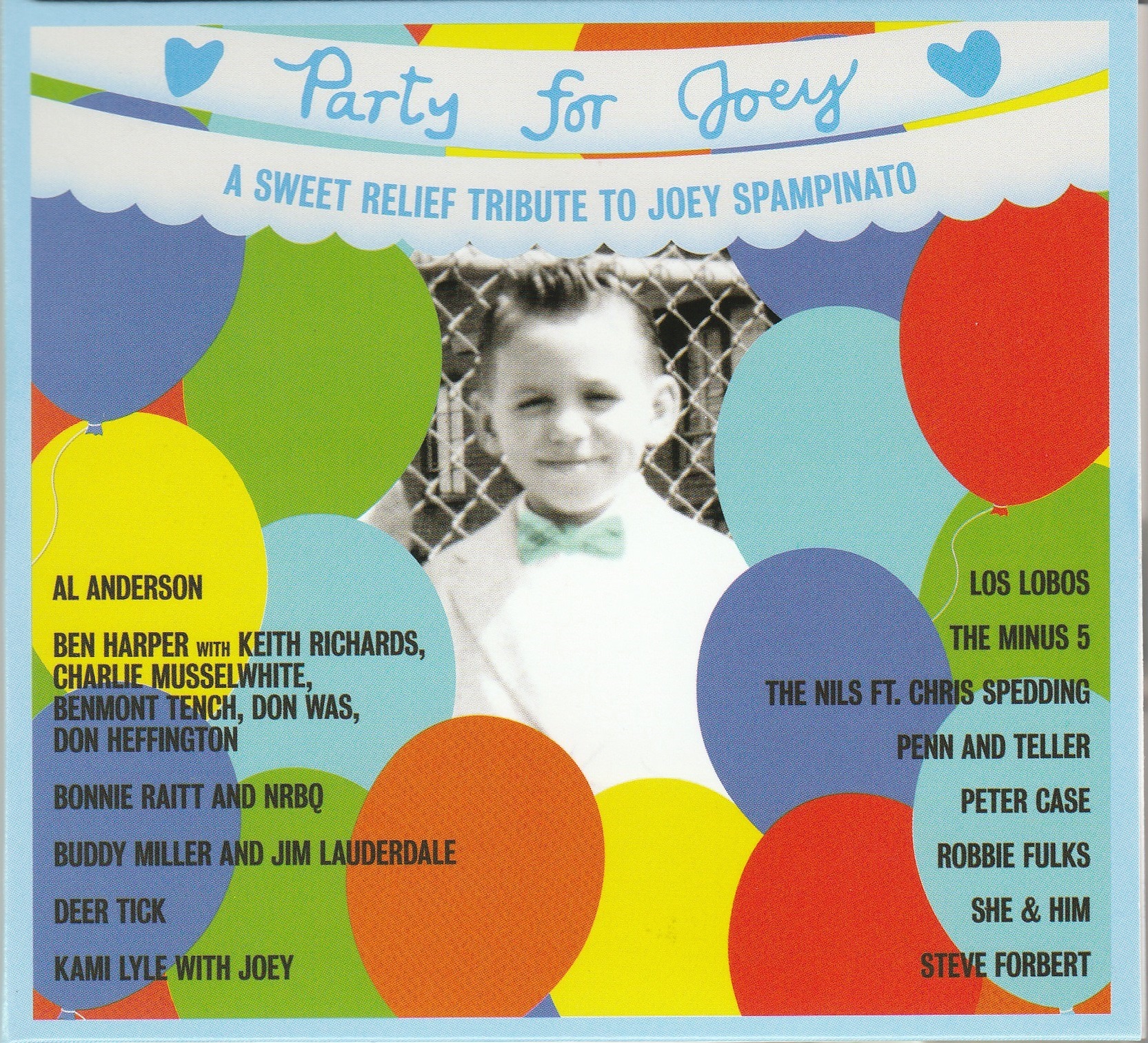
03 Party for JoeyParty for Joey – A Sweet Relief Tribute to Joey Spampinato
Various Artists
True North Records 270573 (truenorthrecords.com)

Singer, songwriter and bassist Joey Spampinato co-founded NRBQ (New Rhythm and Blues Quartet) in 1969. Perhaps not a household name, fans appreciated this multi-genre-influenced rocking band’s and, specifically Spampinato’s, musical greatness, resulting in subsequent gigs for him. Sadly, Spampinato was diagnosed with cancer in 2015, and has been recovering ever since. Many of the musicians here were invited by his wife Kami Lyle and producer Sheldon Gomberg to record a Spampinato-composed song for this benefit tribute album, as well as other generous musicians, who all recorded/donated their proceeds to the Sweet Relief Musicians Fund to financially support him now.

Highlights include the opening track You Can’t Hide featuring former NRBQ member Al Anderson singing and playing his rock-star heart out, until a classic, crashing rock-star drum ending. Los Lobos adds accordion and sax Cajun-tinged solos to their rocky Every Boy Every Girl rendition. Ben Harper’s clear vocal tone and repeated short melody line keep the lyrics up front in full rocking band Like a Locomotive cover, which features a Keith Richards guitar solo. Unexpected free improv atonal opening and closing of Don’t She Look Good contrasts the rest of The Minus 5 rock performance. Touching, hopeful lyrical ballad last track, First Crush, has Kami Lyle and Joey sing in tight, vocal blends.

Other musicians, including Bonnie Raitt, Penn and Teller and Steve Forbert cover Spampinato strong earworm songs. Time to party with these 14 tunes, and to support a worthy cause.

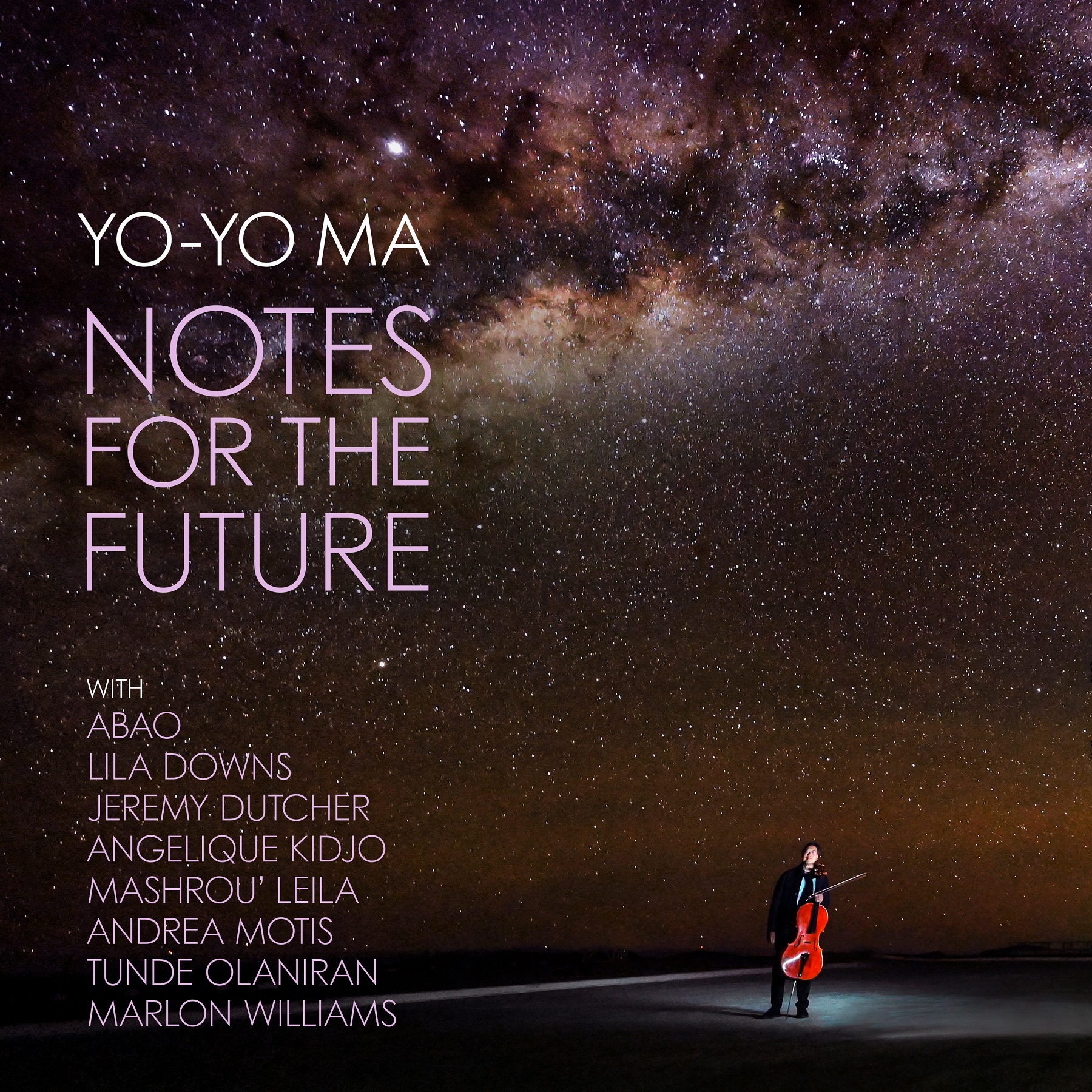
04 YYM Notes For The Future Album coverNotes for the Future
Yo-Yo Ma
Sony (yo-yoma.com)

Renowned cellist Yo-Yo Ma’s new album Notes for the Future is a series of intimate and heartfelt studio collaborations with singers from five continents. The album’s nine tracks feature Ma with well-known divas and a few names new to me: Angélique Kidjo, Mashrou’ Leila, Tunde Olaniran, Jeremy Dutcher, Andrea Motis, ABAO, Lila Downs and Marlon Williams.

Ma, United Nations Messenger of Peace, writes that this album’s global musical journey explores “how culture can help us imagine and build a better world, featuring vocals in Arabic, Zapotec, Catalan, Paiwan, Spanish, Mi’kmaq, Wolastoqey, Ewe, Maori, and English.” Celebrating the “wisdom of the generations that were and the possibility of those to come,” Ma aims to express “our fears and hopes, reminding us that the future is ours to shape, together.”

Given that stirring mission statement, how does Notes for the Future deliver musically? To answer, I’d like to focus on Honor Song, the collaboration between Ma and tenor-composer Jeremy Dutcher. Juno and Polaris Prize winner, Dutcher, a member of the Tobique First Nation in New Brunswick, describes Honor Song as “a Mi’kmaq anthem […] that invokes our collective responsibility to care for the planet we share.” Dutcher’s soaring and emotion-filled Wolastoqey vocal is brilliantly counterpointed by Ma’s lyrical bass-heavy cello and powerful chordal accompaniment.

Dutcher wrote: “This collaboration changed my life, and I’m so grateful to him for sharing his platform and allowing so many more people to hear our songs + languages!” I found the entire album a stirring journey.

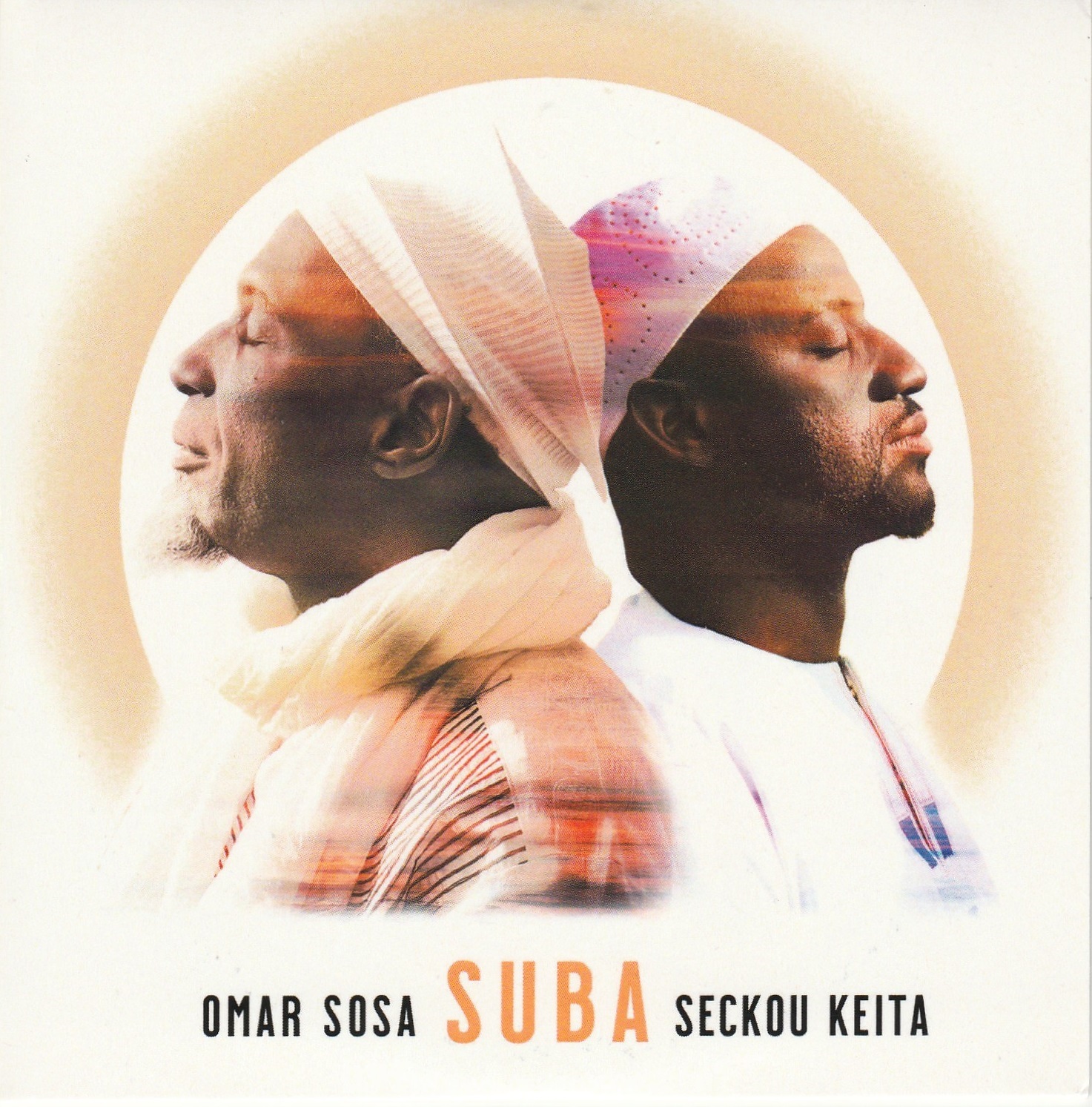
05 SubaSuba
Omar Sosa; Seckou Keita
Bendigedig BEND18 (grigorian.com/webstore/view.php?iid=2188258)

Every now and then the world is graced by an album that has a certain kind of gentleness – the gentleness that contains compassion for humanity and the quest for change. Suba, meaning sunrise in Mandinka, is a melodious microcosm of quietude and hope. There is nothing forced in the music on this album. Each song unfolds in a moment, unhurriedly, as it is just meant to be. 

Omar Sosa (piano) and Seckou Keita (kora, voice) have a knack for creating music that is harmonious with the world and placatory in its core. Both are masters of their instruments, distinguished artistic voices that bring traditions of Cuba and Senegal to the forefront. Sosa plays piano soulfully, as if he is always aware of the preciousness of the moment. On the other end of this collaboration is Keita, whose playing and singing have a beautiful lightness, subtle and captivating. Suba is rooted in Africa and its traditions, with the occasional spice of jazz elements. Equally divided between instrumental and vocal pieces, the album also features a fantastic team of musicians, most notably Jaques Morelenbaum on cello. 

The opening vocal piece Kharit and the percussively driven Allah Léno establish the atmosphere of longing and peace that persists throughout the album. The music always moves forward and the beauty is always present. No One Knows concludes the album with a sonic sparseness that leaves the listener with a profound sense of peace.

Listen to 'Suba' Now in the Listening Room

Although Paul Bley died in 2016 the extent of his legacy and associations are still being felt. That’s because the pianist was one of the few jazz players who moved through several musical areas and made his mark on each. Born in Montreal on November 10, 1932, he would have been 89 this year. A piano protégé, Bley began as a teenage swing pianist in his native city. Yet he became so proficient a bopper after his move to New York in the early 1950s that he was soon playing with Charles Mingus and Charlie Parker. An encounter with Ornette Coleman allowed him to bring freer ideas to his improvising and composing during the 1960s and he worked with members of the burgeoning free jazz movement during that decade and afterwards. Later on, while continuing to play contemporary jazz with various acoustic bands, he expanded his interests into early experiments with the Moog synthesizer and when he started his own record label he made sure that visual as well as audio tracks were created. He also taught part-time at the New England Conservatory (NEC) and over the years collaborated and recorded with a cross section of international musicians. Read a more detailed view of Bley’s life and career in the February 2016 issue of The WholeNote. 

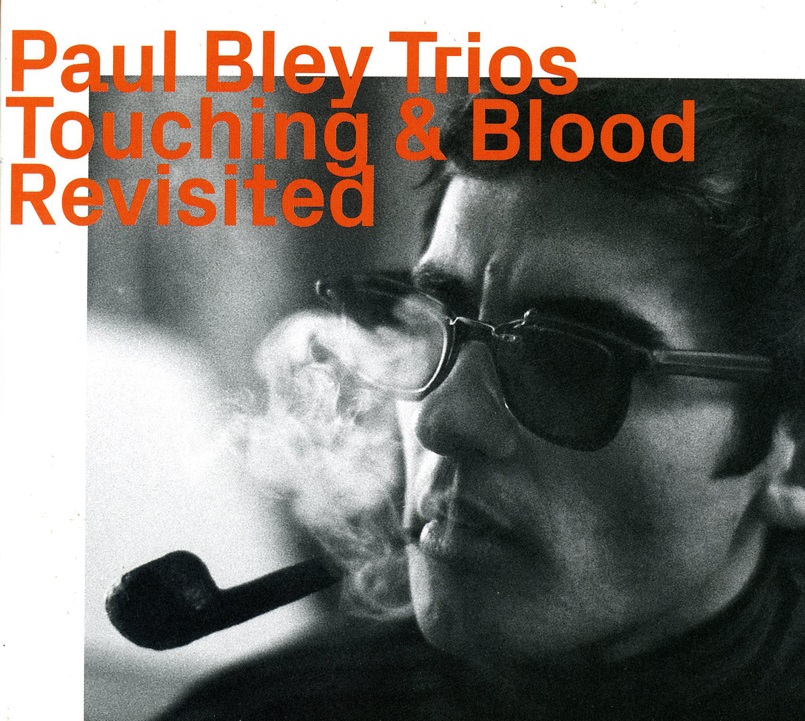
01 PaulBleyCD003By the time Touching & Blood Revisited (ezz-thetics 1108 hathut.com) was recorded in 1965/1966, Bley had already perfected his mature style. The herky-jerky evolution he brought to his own compositions reflects those of his ex-wife Carla Bley plus Thelonious Monk’s quirkiness. Other tracks written by Carla or his then-wife Annette Peacock delineate phraseology that moves from animated runs on bouncy tunes to paused interludes on the slower numbers. These trio sessions also make particular use of Barry Altschul’s drumming. As the pianist varies the exposition with theme repetitions and unexpected asides, powerful press rolls, cymbal pops and reverb help preserve the tracks’ broken-chord evolution. A gentle ballad like Touching gives space to bassist Kent Carter’s widening plucks, with keyboard rumbles added for a dramatic interchange. Peacock’s writing is most spidery on Both, with the narrative created as shaded keyboard tones vibrate at quicker and quicker speeds alongside overt drum ruffs. On the other hand the almost-19-minute Blood from a year later with Mark Levinson on bass is more overtly rhythmic as the bassist and Altschul shake and rustle alongside Bley’s theme depiction. The pianist first outlines the exposition with hand pressure, adds thickening variations mirrored by drum ruffs and concludes with a dramatic keyboard flourish. Fluctuating between methodical and munificent, Closer and Pablo, two Bley originals, display the resolved contradictions in his playing and writing. Driven by single notes, the former is atmospheric and animated, working through muted expression; it swings without increasing the tempo. Just the opposite, Pablo rolls out a piano introduction that is as hard and heavy as Carter’s caustic pizzicato stops and Altschul’s smacks and tone shattering. The finale contrasts Bley’s rolling narrative with Altschul’s clips, rolls and ratamacues. 

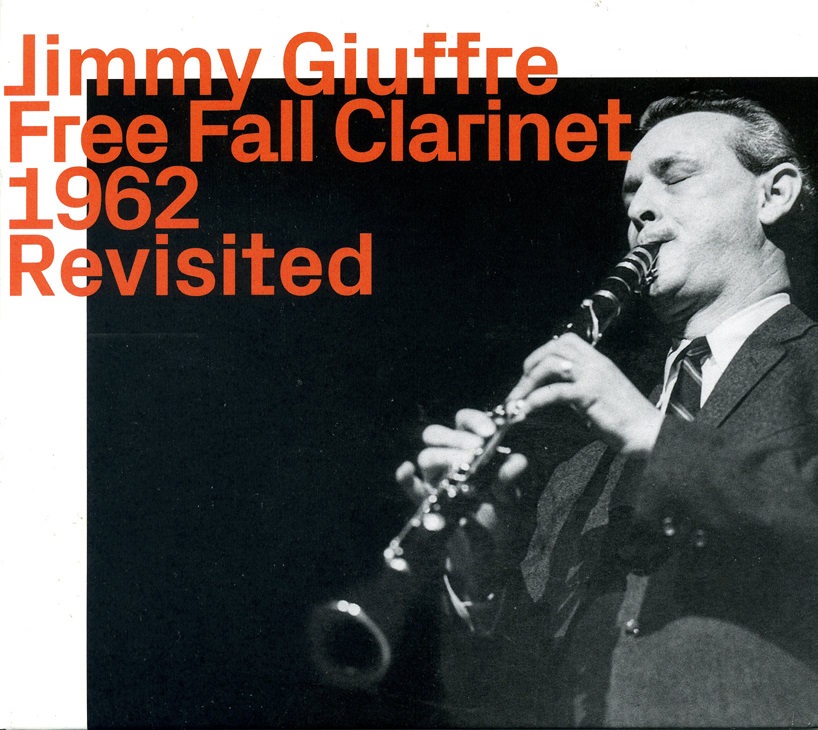
02 FreeFallCD005Although defining experiences in more energetic improvising with Sonny Rollins and others would be in the future, the introspective approach in Bley’s developed style resulted from the two years he was in Jimmy Giuffre’s chamber-jazz trio. With only Bley’s piano and Steve Swallow’s bass backing him, the clarinetist created introspective miniatures that emphasized mood over motion. Free Fall Clarinet 1962 Revisited (ezz-thetics 1119 hathut.com) was the final session before the trio disbanded. Like the subsequent fame of the Velvet Undergound’s LPs, the Giuffe3’s sets were neglected in the early 1960s, but have since been recognized as the template for much subsequent free music. Giuffre projects his astringent a cappella clarinet solos with squeaks and peeps, yet his extended glissandi without pause on a track like Dichotomy presage circular breathing passages that are now almost commonplace. Not only did the group not include a drummer, but also (for the most part) avoided pulse and melody. Instead, eccentric harmony predominated, marked by Bley’s key clips and Swallow’s intermittent string pumps. Sticking to clarion or higher registers, Giuffre’s flutter tonguing and splayed trills connect often enough with keyboard pressure to keep tracks linear as on Spasmodic. At the same time his playing is often wide bore enough to suggest tonal extensions with interludes like that on Threewe completed against a backdrop of double bass plucks. Unlike Bley’s agitated minimalist asides, Swallow’s only solo is on Divided Man, and even there shares space with mid-range clarinet breaths. With those antecedents, the ten-minute The Five Ways seems like a swing session. Double bass bounces and low-pitched piano colouration introduce the piece which goes through numerous transitions. A piano crescendo introduces three-part modulations that lead to sprightly storytelling from Giuffre, with the track finally climaxing with a high-pitched reed slur, almost replicating the one which began the album.  

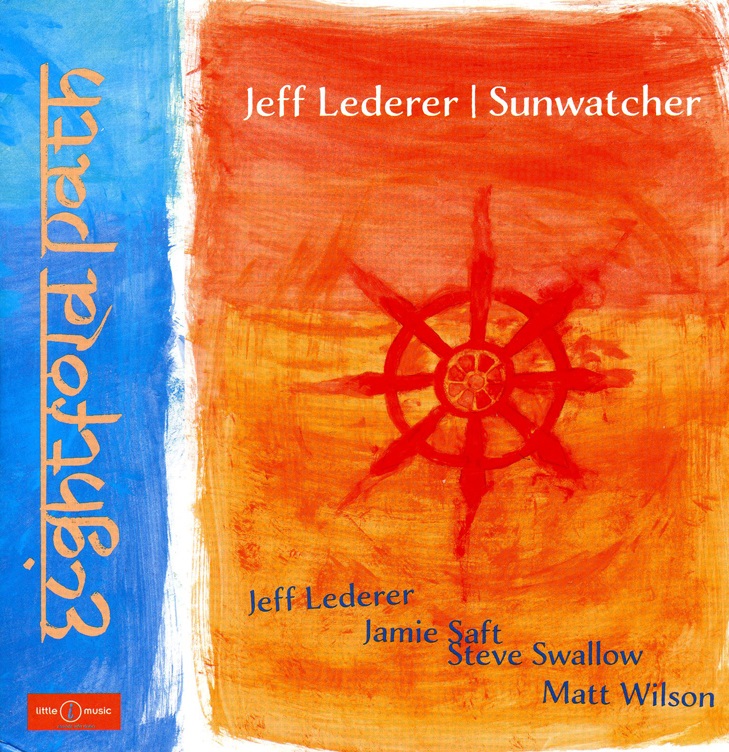
03 LedererCD001Malleability and volume may have predisposed Swallow’s shift to the five-string electric bass guitar in the early 1970s, and at 81 he’s still playing in a more audible, but just as tasteful fashion. On Eightfold Path (Little (i) music littleimusic.com) he’s part of the Sunwatcher Quartet. Leader, tenor saxophonist Jeff Lederer, and the other players, organist/pianist Jamie Saft and drummer Matt Wilson, are two or three decades younger than the bassist. No matter, Swallow’s echoing frails provide these tracks with bedrock, and all put a 21st-century sheen on soul jazz. Boisterous, where Giuffre’s sound was muted, most tracks pulsate with jumping organ runs coupled with the saxophonist’s energetic cries and split tones that mate Albert Ayler and Lockjaw Davis. With the drummer’s rugged shuffles or backbeats, the few piano-accompanied ballads like Right Effort also find Lederer flutter tonguing changes that are both mellow and barbed. More typical are tunes such as Right Resolve where saxophone honks and bass guitar pops glue the bottom alongside Saft’s herky-jerky tremors, creating a bluesy afterimage. Add in Wilson’s stop-time drumming and the image presented is of a good-time after-hours party somehow interrupted by austere free jazz multiphonics. That’s also why Right Action stands out with post-modern insouciance. Using Swallow’s continuous patterns as rhythmic glue, Wilson’s tambourine-on-hi-hat-splashes take on a Latin tinge while the saxophonist’s extended altissimo screams seem to relate as much to pioneering rock’n’roll tenor saxist Big Jay McNeely as to free jazz proponents like Ayler. 

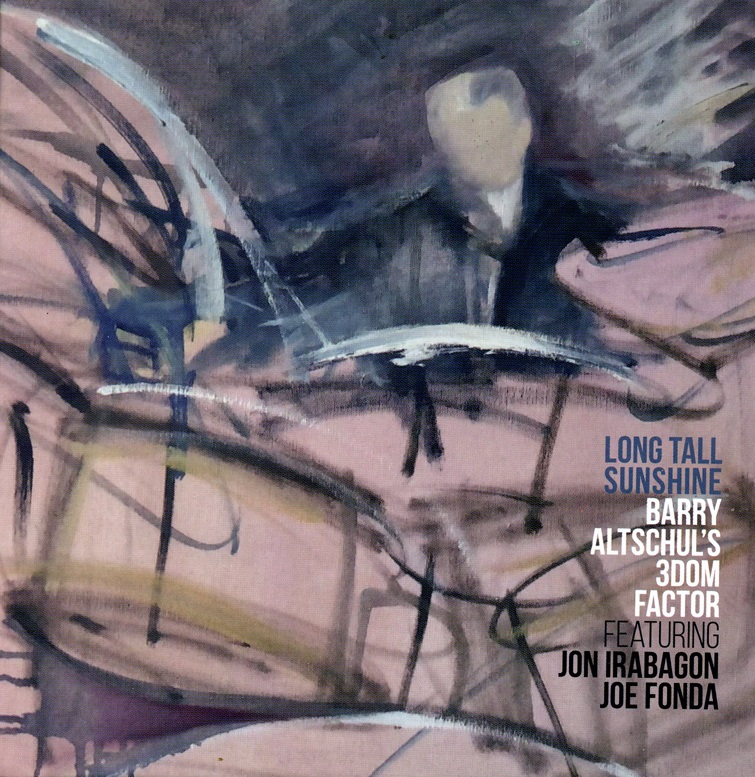
04 LongTallCD004Like Swallow, Barry Altschul had been germane to Bley’s trio music, but over the years he’s worked with numerous other advanced musicians. Now 78, Long Tall Sunshine (NotTwo MW 1012-2 nottwo.com) by his 3DOM Factor features his compositions played by the drummer plus saxophonist/clarinetist Jon Irabagon and bassist Joe Fonda, whose broad woody strokes open this live set. Energy music of the highest order, there’s delicacy here as well as dissonance. These attributes also emanate from the drummer, who on the eponymous first track and especially the final, Martin’s Stew, projects solos that thunder with taste. Pounding rim shots, clanking cymbals and bass drum rumbles cement the beat without unnecessary volume and quickly lock in with Fonda’s logical pumps and arco asides. Outlining and recapping the theme here and elsewhere, Irabagon races through a compendium of staccato squawks, yelping bites and altissimo burbles. His a cappella deconstruction of the title tune with foghorn-like honks, key percussion and strangled yelps is like aural sleight of hand. Extended techniques appear almost before you realize it and they ease into a more standard playing before the finale. Irabagon’s ability to source phrase after phrase and tone after tone in expanding and extended fashion is complemented by Altschul’s composition. As outside as they become with reed split tones, percussion splatters and weighty string slithering, a kernel of melody is referred to on and off. Fragmented quotes from disguised modern jazz classics lurk just below the surface and are heard in the saxophonist’s theme statements and asides.

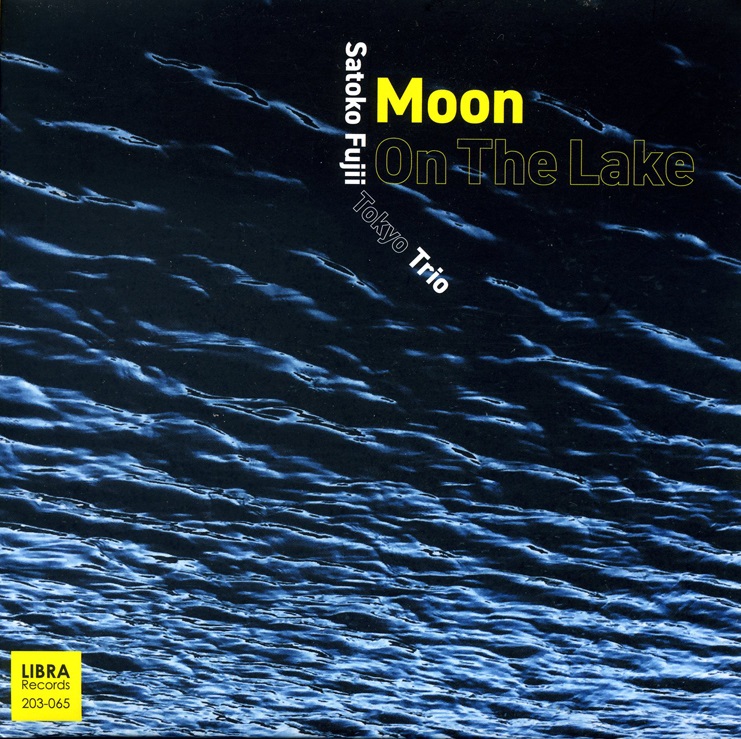
05 MoonCD002During Bley’s 1990s tenure at the NEC, one student who stood out was Japanese pianist Satoko Fujii, whose first American disc in 1996 was a duo with Bley. Now involved with ensembles ranging from duos to big bands, you can sense the Canadian pianist’s influence and how Fujii evolved from it when she heads a trio. Moon on the Lake (Libra Records 203-065 librarecords.com) with her Tokyo Trio is completed by bassist/cellist Takashi Sugawa and drummer Ittetsu Takemura. Taking from both the mainstream and the avant garde, she allows ideas to squirm along the piano keys and sometimes dips inside the frame to pluck the strings for added resonance. Quick to feature her partners, she plays percussively to match Takemura’s clanking rolls and whistling ruffs or slowly, chords to extract the proper colours alongside temple bell-like cymbal vibration, or the trembling pulls of Sugawa’s formalist arco work. While the title – and final – tune is quiet and romantic, individual internal string plucks and a dry processional pace prevents it from sinking into sentimentality. Keep Running, and especially the extended Aspiration on the other hand, are progressively dissonant. Beginning with spinning drum top raps, then press rolls, the former tune gains its broken chord shape as the pianist pounds out kinetic patterns with one hand and relaxed fingering with the other. The narrative climaxes with rifle-shot-like pops from the drummer. Aspiration sums up both sides of her keyboard personality. From slow and stately her chording works up to florid impressionism and then relaxes into low-pitched shakes mated with the cello’s mournful interlocution.  Later, barely there cymbal shuffles and rim shots accelerate to woody thumps and pumps as Fujii’s stopped piano keys unearth a spreading metronomic rhythm. Reaching a crescendo of allegro key pummeling seconded by metallic percussion rattles and rugged bass string plucks, the piece sinks back to its lento beginning framed with single piano notes.

Unlike others, there will never be a Bley school of improvisation. Yet musicians like Fujii continue to build on his ideas and guidance and many of his associates are still producing notable advanced music.

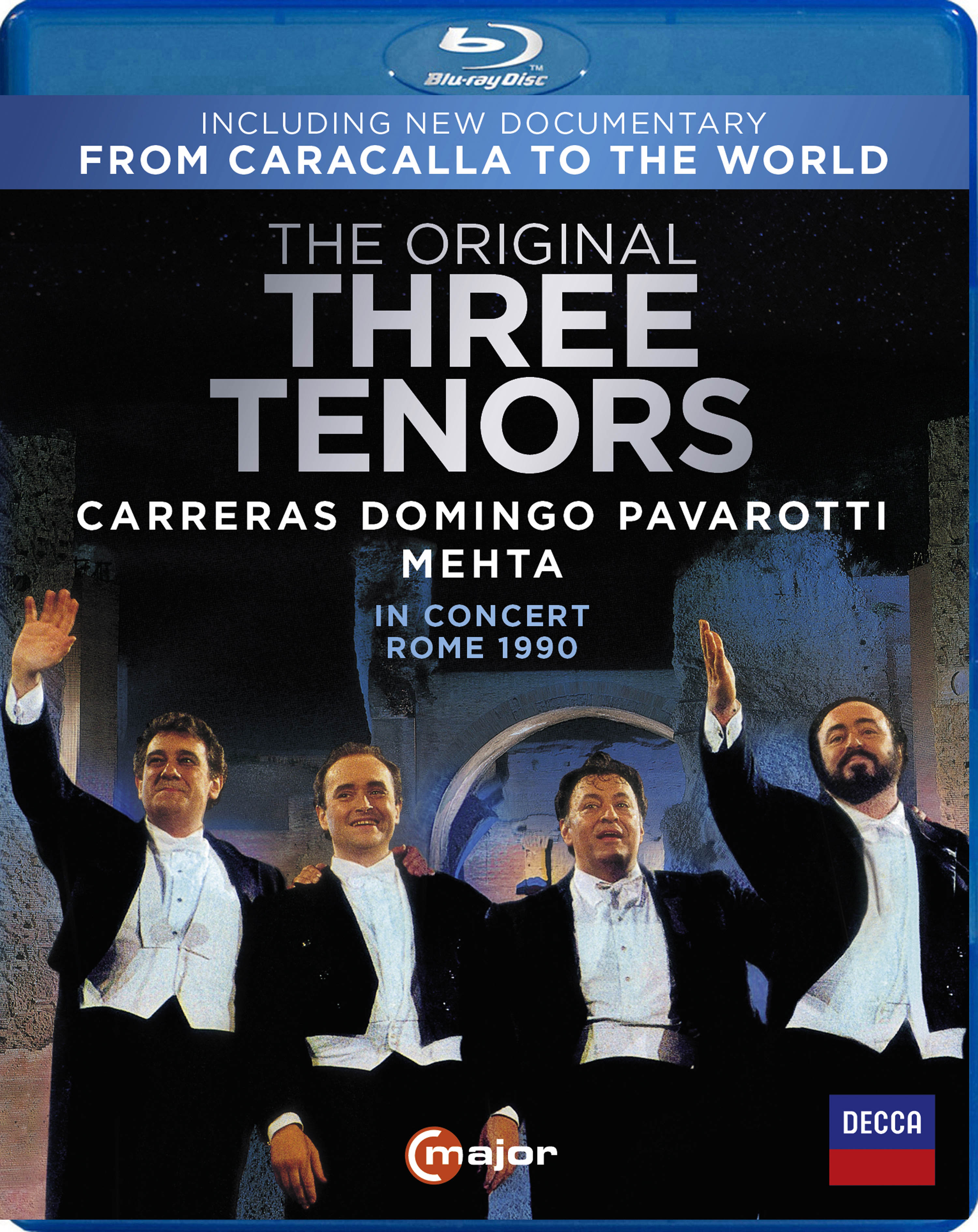
01 Three TenorsIt seems so long ago that the world was introduced to The Three Tenors. It has been 30 years since the concert starring three great tenors of the day made entertainment history. The original concept was to have a concert of popular opera arias sung by a lone artist. How the simple idea developed into The Three Tenors – José Carreras, Plácido Domingo and Luciano Pavarotti – singing before a capacity audience in the site of the old Roman baths of Caracalla is told here in a brilliant, informative bonus feature, supplementing the original concert footage. The documentary, From Caracalla to the World, lets us into the evolution of the three-man show – actually four men including conductor Zubin Mehta. After that first performance, as seen on this disc, their impresario offered the show to record companies who declined, arguing that the “songs” were too old and the public would not be interested. Only Decca saw the future and immediately signed them. The documentary is 88 minutes in duration including contemporary videos of the principals and other familiar faces and names as they were 30 years ago; also, the plans for and scenes from the subsequent 1994 concert in Los Angeles that was the most watched musical event in history. More than one and a half billion viewers watched the concert via 100 national television networks. It’s all there and more in the revealing documentary.  

In the concert itself there are 15 arias plus an extended 20-minute medley. The arias and songs are familiar or soon will be. Rather than pick and choose I listened and watched right through as each singer came and sang his heart out whether it be an aria or a song or a familiar piece and then left the stage to await his next turn. Not once was there the slightest inclination to skip ahead. Track 14 is an entertaining medley of a variety of material, romantic, sentimental, recognizable songs like Amapola, O Sole Mio and from Broadway like Maria, Memory, Tonight, La vie en rose. Each tenor and Mehta is clearly having a contagiously good time shared by those in the audience. The Original Three Tenors in Concert, Rome 1990 plus a new documentary (C major 758804 Blu-ray video naxosdirect.com/search/758804).

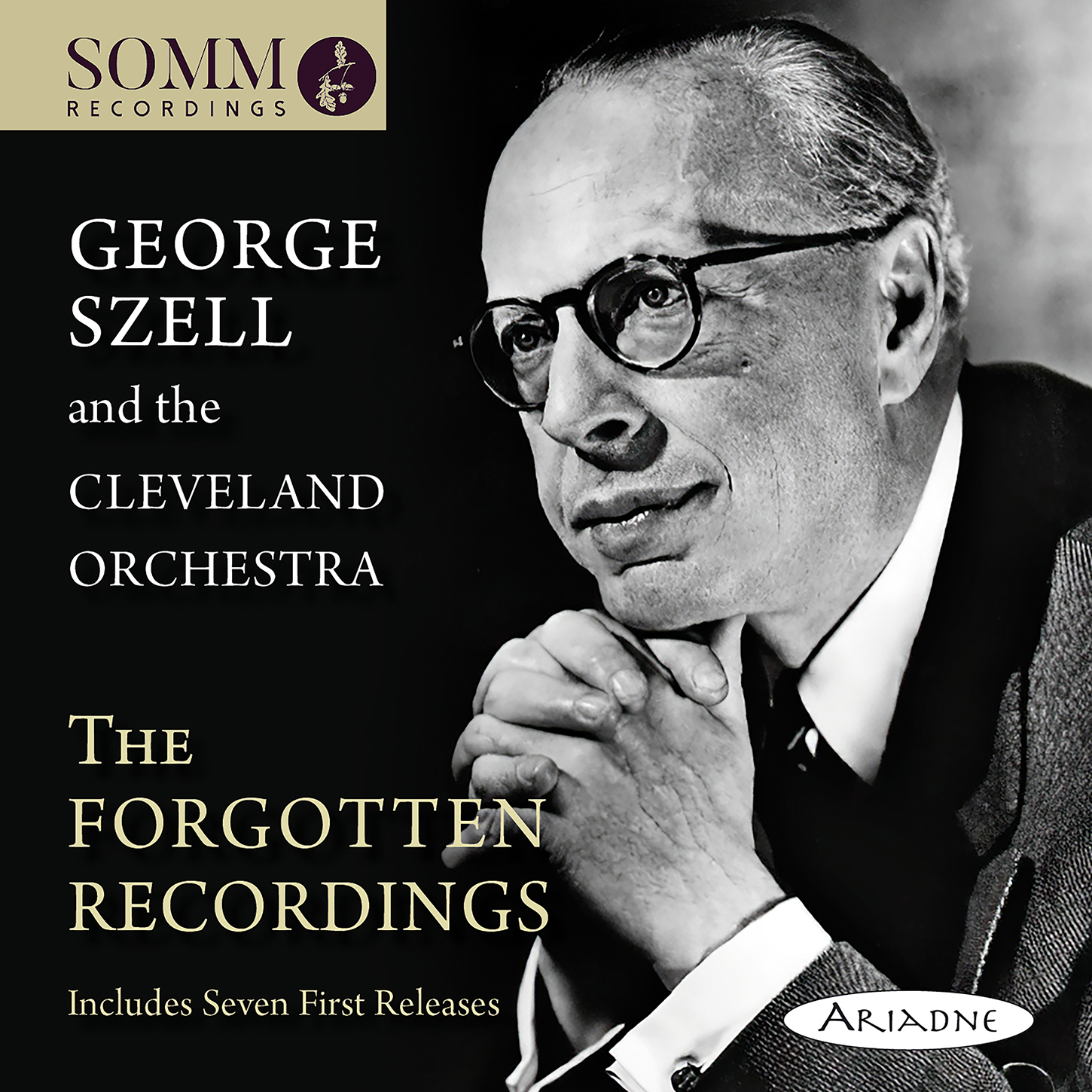
02 George SzellSOMM has issued a collection of eight recordings made by George Szell and the Cleveland Orchestra. Only one of these performances has been issued previously, by Columbia, on CD. In 1946 Szell became only the fourth music director of the orchestra since its founding in 1918. He took the appointment promising to transform the orchestra, as excellent as it was, into one of the finest in the land. He succeeded. On the second disc of the two-CD set there are stirring performances of four favourites from his repertoire: Brahms’ Academic Festival Overture and Variations on a Theme by Haydn (previously released); Schumann’ Symphony No. 4 in D Minor; then Stravinsky’s 1919 suite from The Firebird. These stereo recordings were made in the Masonic Auditorium in Cleveland in October, 1955 and sound as fresh and real as yesterday – flawless and excitingly present. 

The first starts off with Bach’s Orchestral Suite No.3, then Smetana’s The Moldau and from Strauss, Till Eulenspiegel’s Merry Pranks all from Christmas Eve, 1954. These are monaural recordings that are sonically a few notches down from the second disc, but still exemplary music making from the podium. The fourth work is from the same stereo sessions as all the items on the second disc, an exuberant Mozart Symphony No.39 K543.

The stereo recordings in this set are sonically exemplary thanks to the producer and restorer Lani Spahr, himself an oboist whose restorations are to be heard on many labels. George Szell – The Forgotten Recordings (Ariadne 5011-2 2CDs naxosdirect.com/search/ariadne+5011-2)

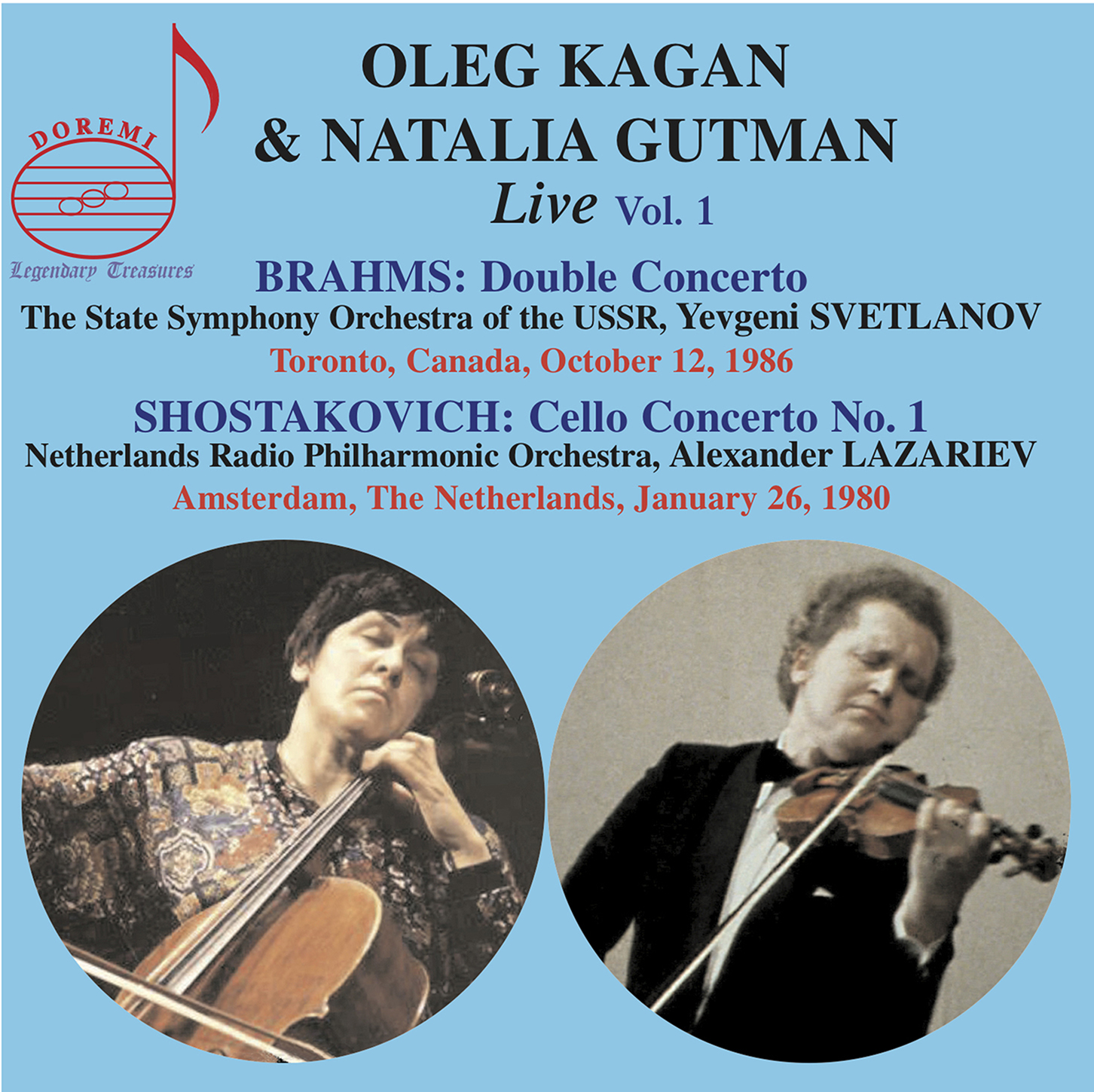
03 Kagan GutmanOn the evening of October 12, 1986 the audience in Toronto’s Roy Thomson Hall heard the State Symphony Orchestra of USSR conducted by Yevgeni Svetlanov. The highlight of that concert was surely the Brahms Double Concerto for Violin, Cello and Orchestra, played by the husband and wife duo of Oleg Kagan, violin and Natalia Gutman, cello. The Double Concerto is a particular favourite, so I am familiar with many of the recordings and after enjoying this new release of that very concert performance it is quite clear, at least to me, that this is one of the most sensitive, where appropriate, and one of the boldest. Kagan and Gutman, two of the finest Russian musicians of all time, were wisely selected for the orchestra’s international world tour. The interplay between them often has an elegance not to be heard elsewhere. Svetlanov’s crack touring orchestra supports them perfectly and ever so gently where called for. 

Kagan was a most highly rated and respected violinist and chamber music musician and was often heard with Sviatoslav Richter and other virtuosi. He died in Munich in 1990. Gutman plays on and is one of the world’s most esteemed musicians, often referred to as “The Queen of the Cello.” She is also to be heard in the other work on this CD. It is the Shostakovich Cello Concerto No.1 in E-flat Major Op.107 played by Gutman with the Netherlands Radio Philharmonic Orchestra conducted by Alexander Lazariev. The performance is from January 26, 1980 in Amsterdam, predating the above by six years. Gutman made an amazing reputation for her performances of this concerto which she also recorded a few times. This live performance demonstrates her authority and electrifying musicality. Legendary Treasures: Oleg Kagan & Natalia Gutman Live, Vol.1 (Doremi DHR-8120 naxosdirect.com/search/dhr-8120).

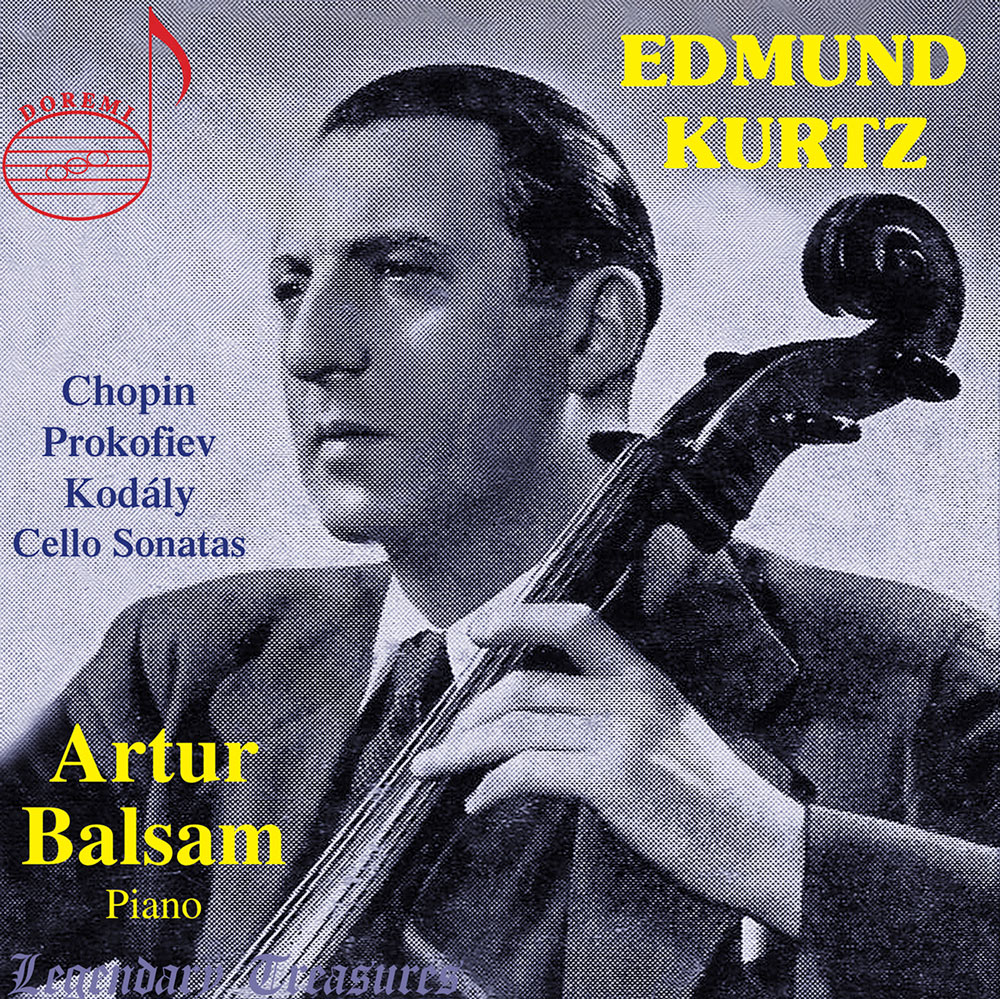
04 Edmund KurtzEdmund Kurtz was one of the most accomplished cellists of the 20th century. He was born in St. Petersburg in 1908. The family moved to Germany in 1917. He debuted in Rome in 1924 and Berlin in 1925. After solo concerts throughout Europe he became principal cellist in the Bremen Opera House then principal cellist in the Prague German Opera Orchestra under George Szell. Kurtz emigrated to the United States and became first cello in the Chicago Symphony. He was also part of the Spivakovsky Trio with brothers Tossy and Jascha. He resigned from the orchestra in 1944 to pursue a solo career. In 1945 Toscanini chose Kurtz for the Dvořák Cello Concerto. He made recordings with William Kapell and Artur Balsam and others and gave many premieres including the first American performance of the Khachaturian concerto under Koussevitzky. Kurtz’s playing was notable for a creamy, lush sound, focused and authoritative. The very first notes out of your speakers will confirm all the above and continue to do so through these three cello sonatas: Prokofiev’s C Major Op.119 and Chopin’s G Minor, Op.65, are both accompanied by Artur Balsam; then the infamously difficult Kodály Sonata for Solo Cello, Op.8 that Kurtz makes sound engaging and effortless. Legendary Treasures: Edmund Kurtz, Volume 1 (Doremi DHR-8109 naxosdirect.com/search/dhr-8109).

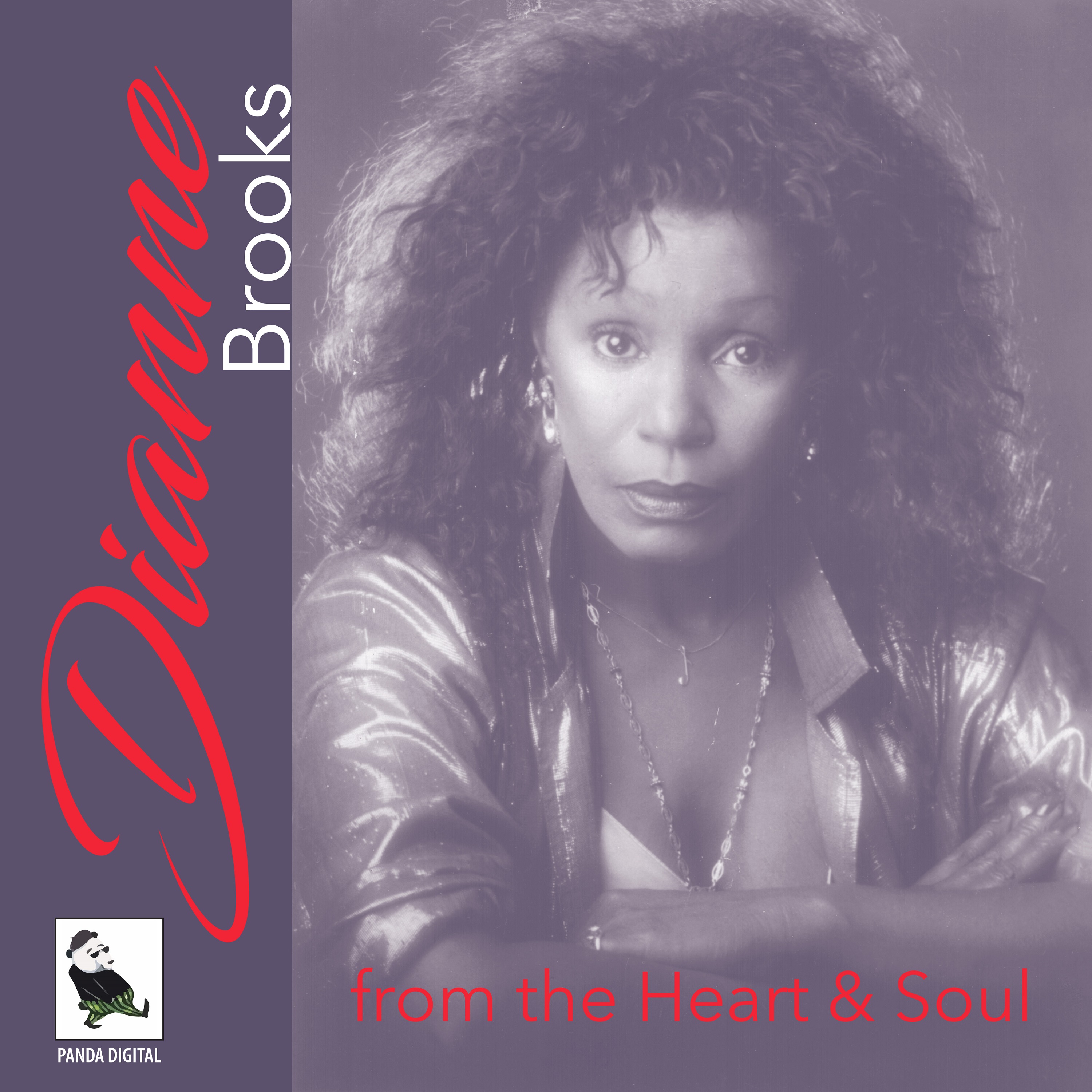
01 Dianne BrooksFrom the Heart & Soul
Dianne Brooks
Panda Digital (pandadigital.com)

Take my hand, won’t you, as we journey back to a golden era in Toronto’s musical history when session work was plentiful, television shows hired actual live bands and club gigs were multiple-night affairs. It’s a time spoken of with misty-eyed fondness by older musicians and singers struggling to make a living in music these days. Dianne Brooks was at the centre of it all as a first-call studio singer and versatile lead and backing vocalist. Brooks recorded and toured with a long list of top performers of the day such as Thad Jones, Count Basie, Dusty Springfield and Anne Murray and was also a member of the legendary 16-piece group, Dr. Music, led by the equally legendary keyboardist, Doug Riley. 

It’s the late singer’s solo musical ventures in R&B and jazz, however, that are represented on this new release by producer Andrew Melzer. Melzer is a songwriter, musician and engineer who unearthed recordings from 1983 of Brooks’ live gig at George’s Spaghetti House, a hub for jazz in Toronto back in the day. Three tracks are included here – two of which are Gershwin standards – that feature Riley on piano, Tom Szczesniak on bass and Bob McLaren on drums. The first five tracks on the album were from two different sessions in L.A. from 1978 and 1980 and are very much of the era. A pop/R&B blend, they showcase the singer’s strong vocals and the keyboards of Grammy Award-winner, Don Grusin. My favourite of the five is Brooks’ funky take on Paul McCartney’s I’m Carrying. If you’re a fan of Brooks, or even looking for a little nostalgia trip, add From the Heart & Soul to your collection.

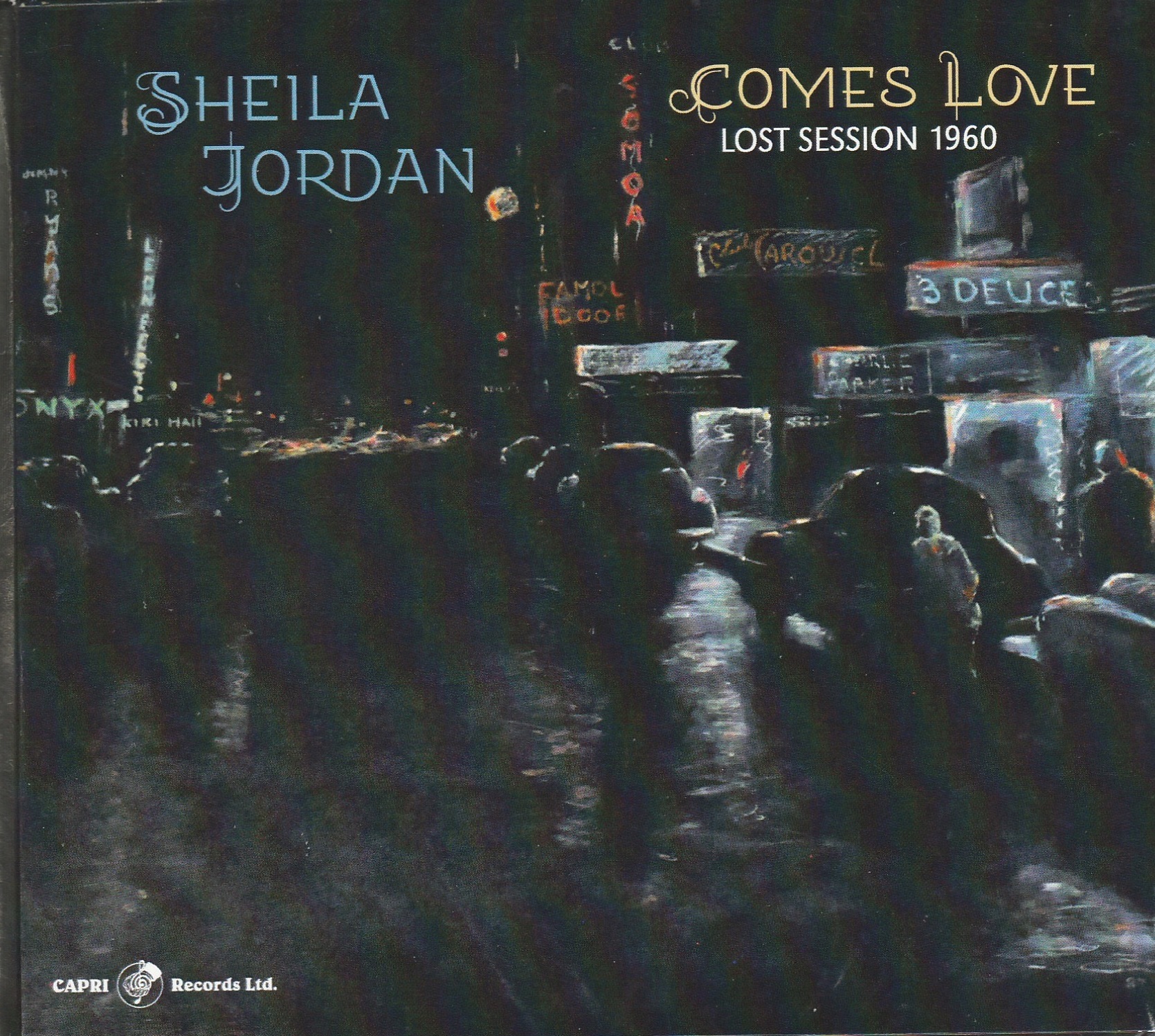
02 Sheila JordanComes Love (Lost Session 1960)
Sheila Jordan
Capri Records 74164-2 (caprirecords.com)

At age 92, iconic jazz vocalist, composer and NEA Jazz Master, Sheila Jordan has just released a lost treasure – capturing the young artist prior to her notable 1963 Blue Note Records debut, Portrait of Sheila. Originally recorded on June 10, 1960 in NYC, this gem has been insightfully produced for a contemporary jazz audience by Thomas Burns. Sadly, Jordan has no clear recollection of the record date itself, or the personnel, but it’s likely that it includes members of her then-trio of John Knapp or Herbie Nichols on piano, Ziggy Willman on drums and bassists Gene Perlman or Steve Swallow (with whom she later developed her trademark vocal bop and bass duo).

Throughout the recording, Jordan’s warm, engaging voice resonates with youth, but is also imbued with a certain melancholy worldliness, as well as the superb vocal technique for which she would become known. On Ellington’s It Don’t Mean a Thing if It Ain’t Got that Swing, Jordan bops and bobs and weaves her way through the gauntlet with tight, supple accompaniment from her trio. The inclusion of Wolf and Landesman’s Ballad of the Sad Young Men is an eccentric choice for this collection, but Jordan more than compensates for her possible naïveté, with her incredible empathy, heart and soul.

Another treat on this fine project includes a laudable vocal jazz version of Harold Arlen and Truman Capote’s Sleeping Bee – performed here with the original verse, segueing into a lilting, swinging arrangement.  Jordan’s interpretation of Rogers and Hart’s Glad to be Unhappy is also a triumph, as well as a masterclass in how to perform a ballad with integrity and creativity, while fully utilizing the colours and timbre of the vocal instrument as well as collaborating (sans ego) with the other musicians. Magnificent!

03 Scott ReevesThe Alchemist
Scott Reeves Quintet
Origin Records ORIGIN 82826 (originarts.com)

During the COVID shutdown, highly regarded NYC-based multi-instrumentalist, composer and jazz educator, Scott Reeves, began to plumb the depths of his own archives and discovered a rare artifact – a previously un-released “live” recording featuring his never-recorded quintet, originally presented in concert at Harlem’s City College of New York in May of 2005. It was with the magic and skill of recording/mixing engineer Brian Montgomery that audio problems were solved, and this new CD (originally meant only as an archival recording) was rescued from oblivion. The album features five original compositions by Reeves, who also performs here on alto flugelhorn, the archaic alto valve trombone and electronics. The skilled quintet includes Russ Spiegel on guitar, Mike Holober on keyboards, bassist Howard Britz and drummer Andy Watson.

The opener is the sinuous, exotic New Bamboo. Written around an ancient Turco-Greek-inspired Phrygian vamp, this timeless composition invokes our primal emotions and also embraces contemporary spontaneity with the brilliant soloing of Holober and cosmic symmetry of all the players. The gorgeous Shapeshifter utilizes Gil Evans-ish, 12-tone modalities to explore the sonic relationships between the musicians, their instruments and the ensemble itself. 

The title track is outstanding – a funky-cool, incendiary device, dedicated to Miles Davis, whom Reeves has dubbed “the master alchemist of space and time.” Holober and Watson shine on this very au courant-sounding track, that could have easily been recorded last night and Reeves’ use of electronics is tasteful and musical. Especially magical is the sumptuous ballad, Remembrances. Reeves’ work on the alto flugelhorn is absolutely stunning and incredibly evocative – as is the inspired soloing of Spiegel on guitar. A masterful jazz recording in every sense!

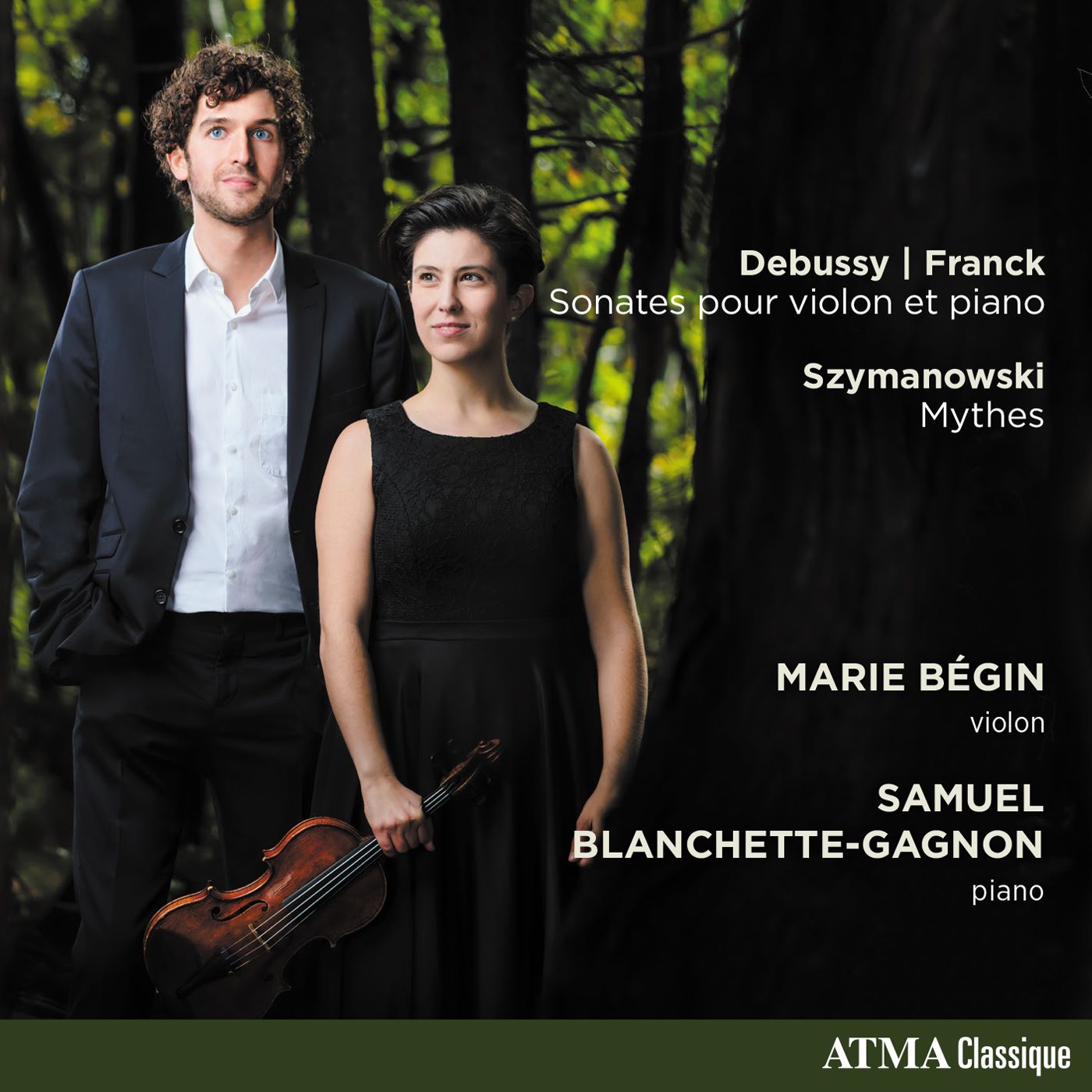
01 Marie BéginThe new CD Debussy-Franck-Szymanowski finds the Canadian duo of violinist Marie Bégin and pianist Samuel Blanchette-Gagnon in quite superb form (ATMA Classique ACD2 2850 atmaclassique.com/en).

Bégin’s Carlo Bergonzi violin from 1710-1715 produces a glorious sound, and there’s a lovely range of tone colour from both players in the Debussy Sonata in G Minor and in the shimmering, atmospheric performance of the three Szymanowski Mythes Op.30. The heart of the disc is a wonderfully expansive and insightful reading of the Franck Sonata in A Major, with a slow build-up through the opening Allegretto, a brooding and passionate Allegro second movement, a heartfelt Recitativo: Fantasia and a final canon of depth and strength.

Two short transcriptions – Fauré’s Après un rêve and Debussy’s Beau soir, the latter in the Heifetz arrangement – complete a superlative CD.
02 Randall Goosby RootsRoots, the debut CD from the young American violinist Randall Goosby has been attracting a lot of interest, and with good reason. Described as “an exploration of the music written by Black composers and inspired by Black American culture” it’s a strong recital that features fine playing from Goosby and pianist Zhu Wang (Decca Classics 4851664 store.deccaclassics.com/*/CD-Classics/Roots/6Z5A16YW000).

Xavier Dubois Foley’s Shelter Island for violin and string bass (with the composer on bass) is a world-premiere recording, as are the three pieces by Florence Price: Adoration and the two Fantasies, No.1 in G Minor and No.2 in F-sharp Minor. Also here are Coleridge-Taylor Perkinson’s Blue/s Forms for Solo Violin, four songs from Gershwin’s Porgy and Bess in the Heifetz transcriptions, William Grant Still’s Suite for Violin and Piano (with its gorgeous second movement), Samuel Coleridge-Taylor’s Deep River (in an arrangement by violinist Maud Powell) and Dvořák’s three-movement Sonatina in G Major.

Goosby draws a full, warm tone from the 1735 “Sennhauser” Guarneri del Gesù violin, and has a lovely feel for line and phrase. Wang provides excellent support on an impressive debut disc.
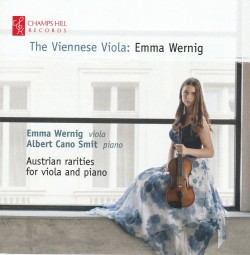
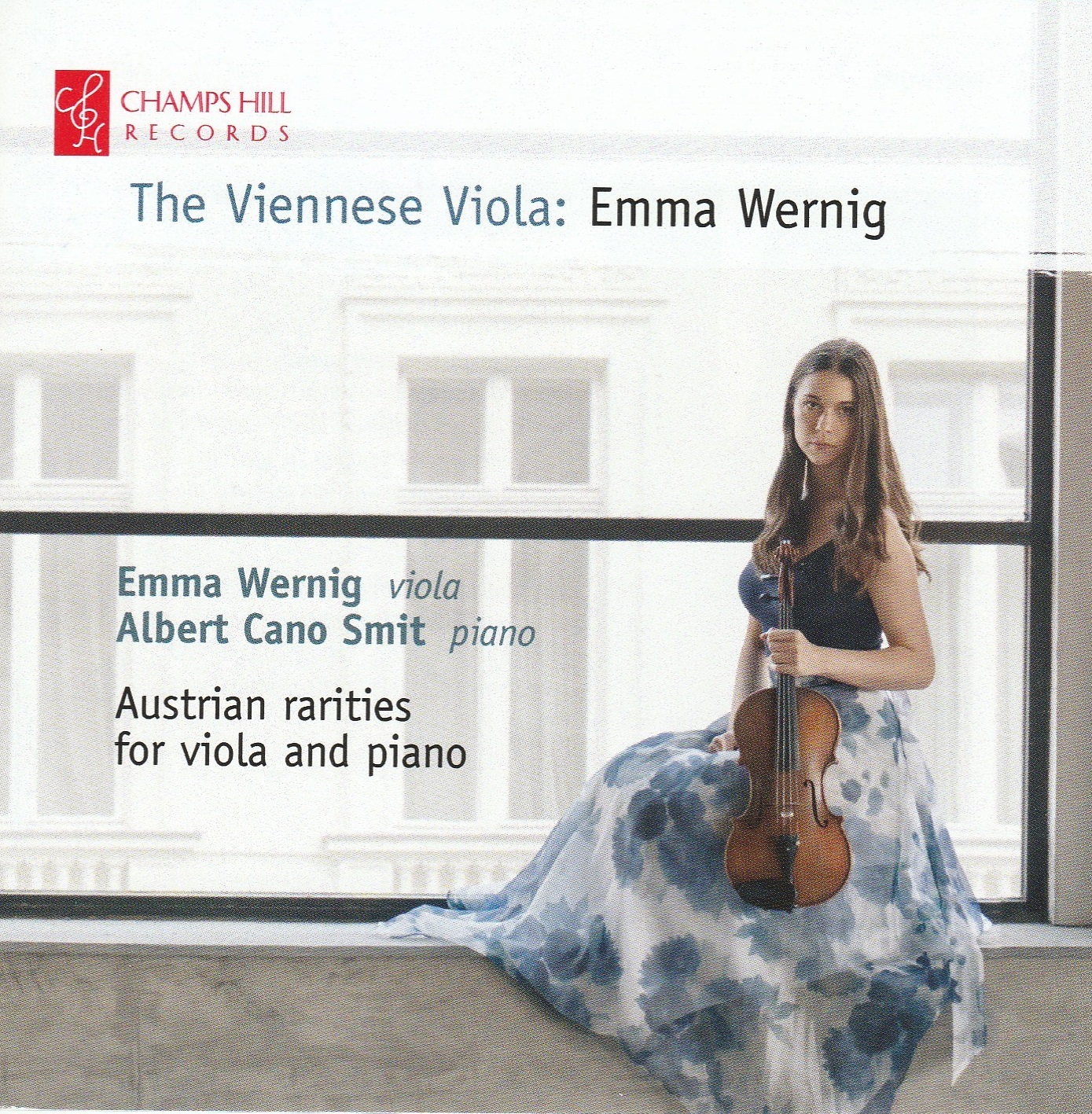
03 Wernig Viennese ViolaFrom the opening bars of The Viennese Viola: Emma Wernig, the debut CD from the winner of the 2017 Cecil Aronowitz competition with Albert Cano Smit at the piano, it’s clear that we’re in very good hands. Wernig’s warm, assured playing is supported by Cano Smit’s perfectly matched accompaniment in a beautifully balanced recording of Austrian rarities for viola and piano (Champs Hill Records CHRCD163 emmawernig.com).

Hans Gál wrote his Viola Sonata in A Major Op.101 in Edinburgh in late 1942, having fled Austria in 1938. It’s a lovely work, lyrical and passionate but with moments of melancholy and gloomy introspection.

Two fine works by Robert Fuchs are at the centre of the recital: his Sechs Phantasiestücke Op.117 from 1927 and his Viola Sonata in D Minor Op.86 from 1899. Brahms greatly admired Fuchs, and his influence – as well as that of Schubert – is keenly felt.

Four Schubert songs – Am See, Frühlingstraum, An die Musik and Litanei auf das Fest Aller Seelen – chosen and arranged by the two performers, complete an outstanding CD.
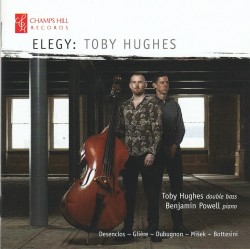
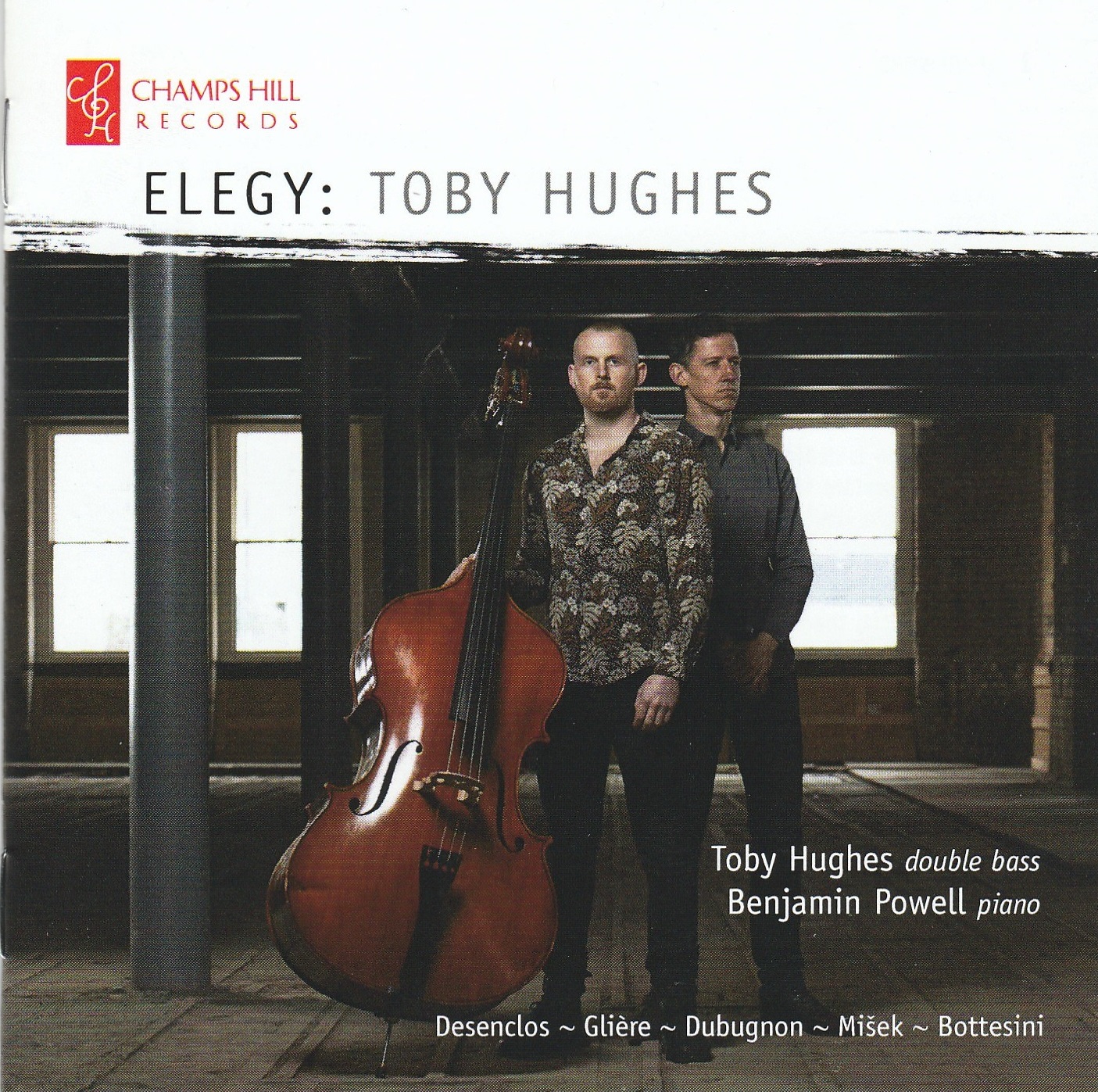
04 Elegy Toby HughesA third – and equally accomplished – debut CD is Elegy: Toby Hughes, featuring the young English bassist accompanied by pianist Benjamin Powell in a recital that Hughes feels offers an insight into the instrument’s versatility (Champs Hill Records CHRCD162 tobyhughesdoublebass.com)

Hughes’ bass is built for solo playing, custom made for him, and what a sound it has – the warmth and agility of a cello, but with heft.

The Aria et Rondo from 1952 by the French composer Alfred Desenclos opens the disc, followed by Reinhold Glière’s Four Pieces – the Prelude and Scherzo Op.32 Nos.1 & 2 and the Intermezzo and Tarantella Op.9 Nos.1 & 2 – the Tarantella drawing dazzling virtuosity from Hughes. The brief Ekskize No.1, in a transcription by its composer Richard Dubugnon, was originally for voice and piano. 

The other major work on the CD is the four-movement Sonata No.2 in E Minor Op.6 from 1911 by Czech composer Adolf Mišek; it’s a passionate work with shades of Brahms and Dvořák. Bottesini’s lovely Elegia No.1, which takes Hughes to the instrument’s highest register, brings an impressive debut CD to a close. 
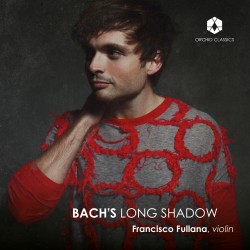
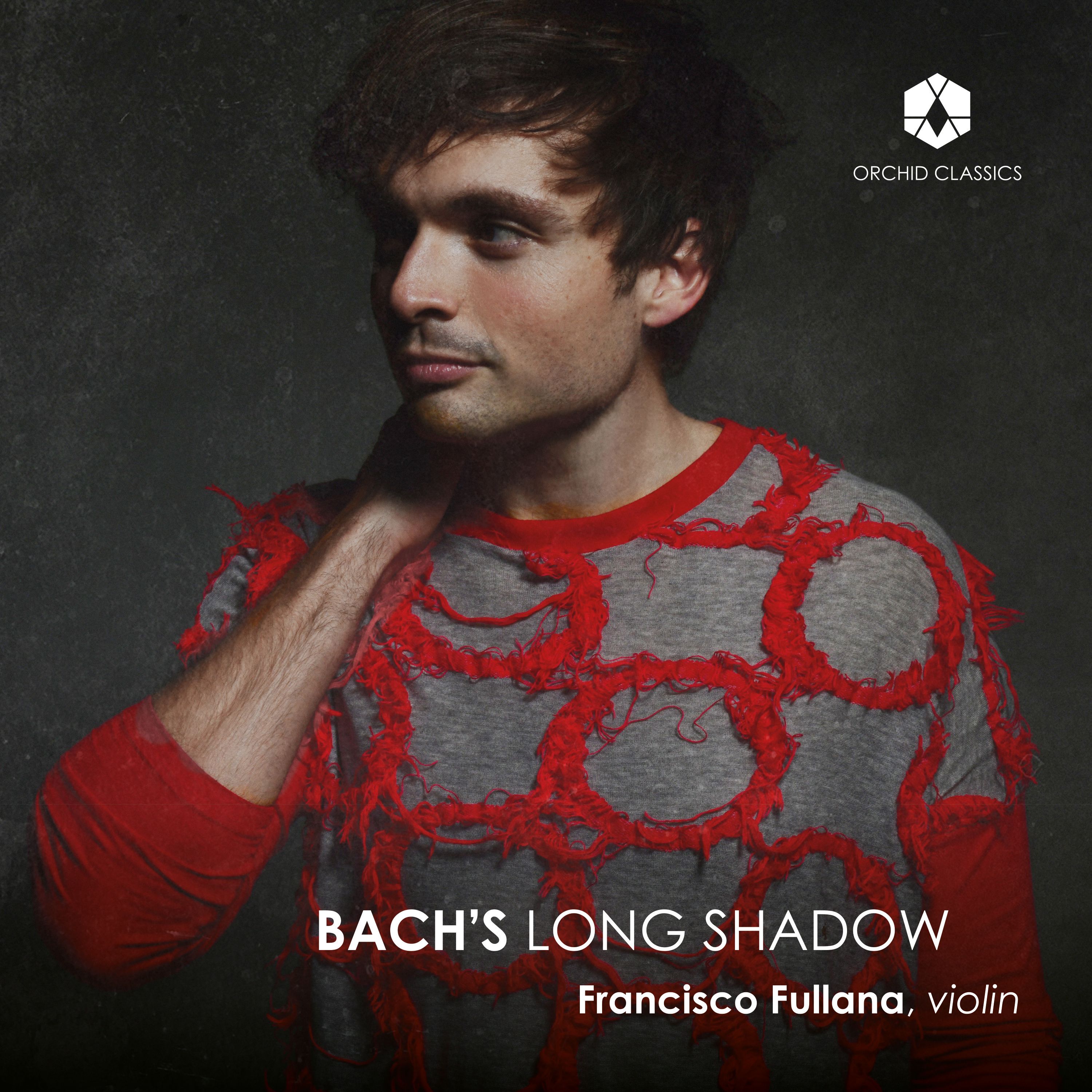
05 Fullana BachOn the outstanding Bach’s Long Shadow, his first solo album, the Spanish-American violinist Francisco Fullana builds a program of interlinked yet contrasting works around the Bach Partita No.3 in E Major BWV1006 (Orchid Classics ORC100165 orchidclassics.com).

Ysaÿe’s Solo Sonata Op.27 No.2 directly quotes the Bach Partita. Kreisler’s Recitativo & Scherzo Op.6 was dedicated to Ysaÿe, and Fullana is playing Kreisler’s first Guarneri violin, the 1735 “Mary Portman” Guarneri del Gesù which, for the Bach, is set up with gut strings, Fullana using a Baroque bow and historically informed ornamentation for that performance.

Striking transcriptions of Albéniz’ Asturias and Tárrega’s Recuerdos de la Alhambra, the latter particularly difficult and effective, end a dazzling solo recital, Fullana being joined in an “encore” by Stella Chen, the most recent winner of the Queen Elisabeth Competition, in the first movement of Ysaÿe’s Sonata for Two Violins.
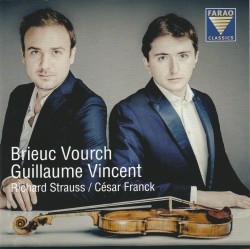
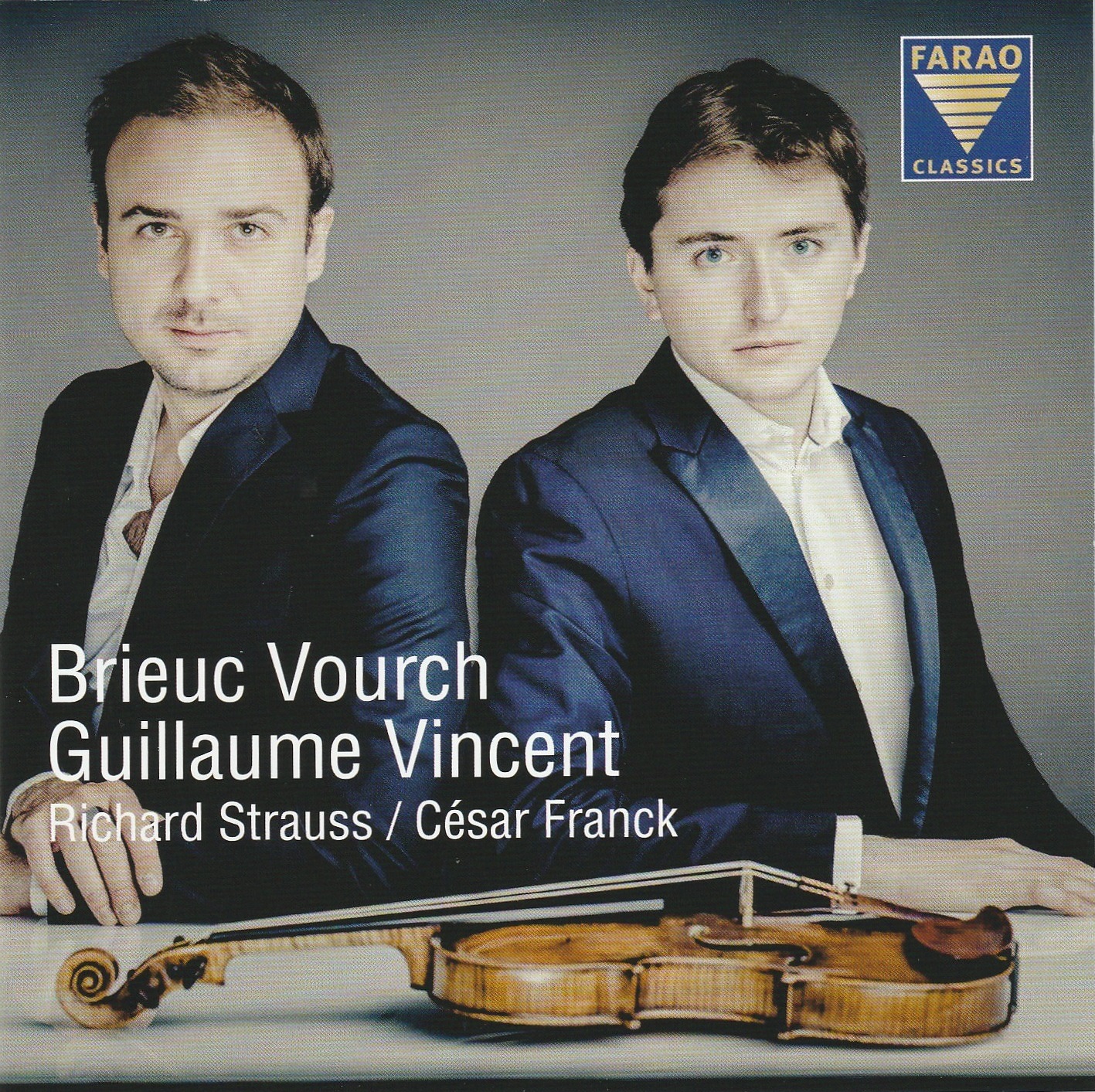
06 Brieuc VourchOn Richard Strauss/César Franck the French duo of violinist Brieuc Vourch and pianist Guillaume Vincent present the Strauss Sonata in E-flat Major Op.18 together with yet another recording of the Franck Sonata in A Major (FARAO Classics B 108112 farao-classics.de).

There’s a strong, bright tone to Vourch’s 1690 Francesco Ruggeri violin in a suitably passionate performance of the Strauss.

Interestingly, the performers’ booklet notes for this and the Bégin/Blanchette-Gagnon disc both mention the tough challenge of trying to find an authentic personal voice in the much-recorded Franck sonata, but the resulting performances could hardly be more different. Vourch and Vincent push the tempo throughout, especially in the Allegro and in a final canon faster than any of the four other Franck CDs I’ve received recently, but at times it simply feels rushed and lacking in subtlety – certainly not as thoughtful or satisfying as the Bégin disc.
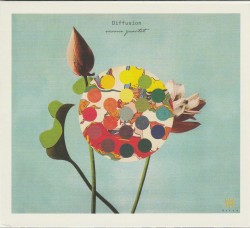
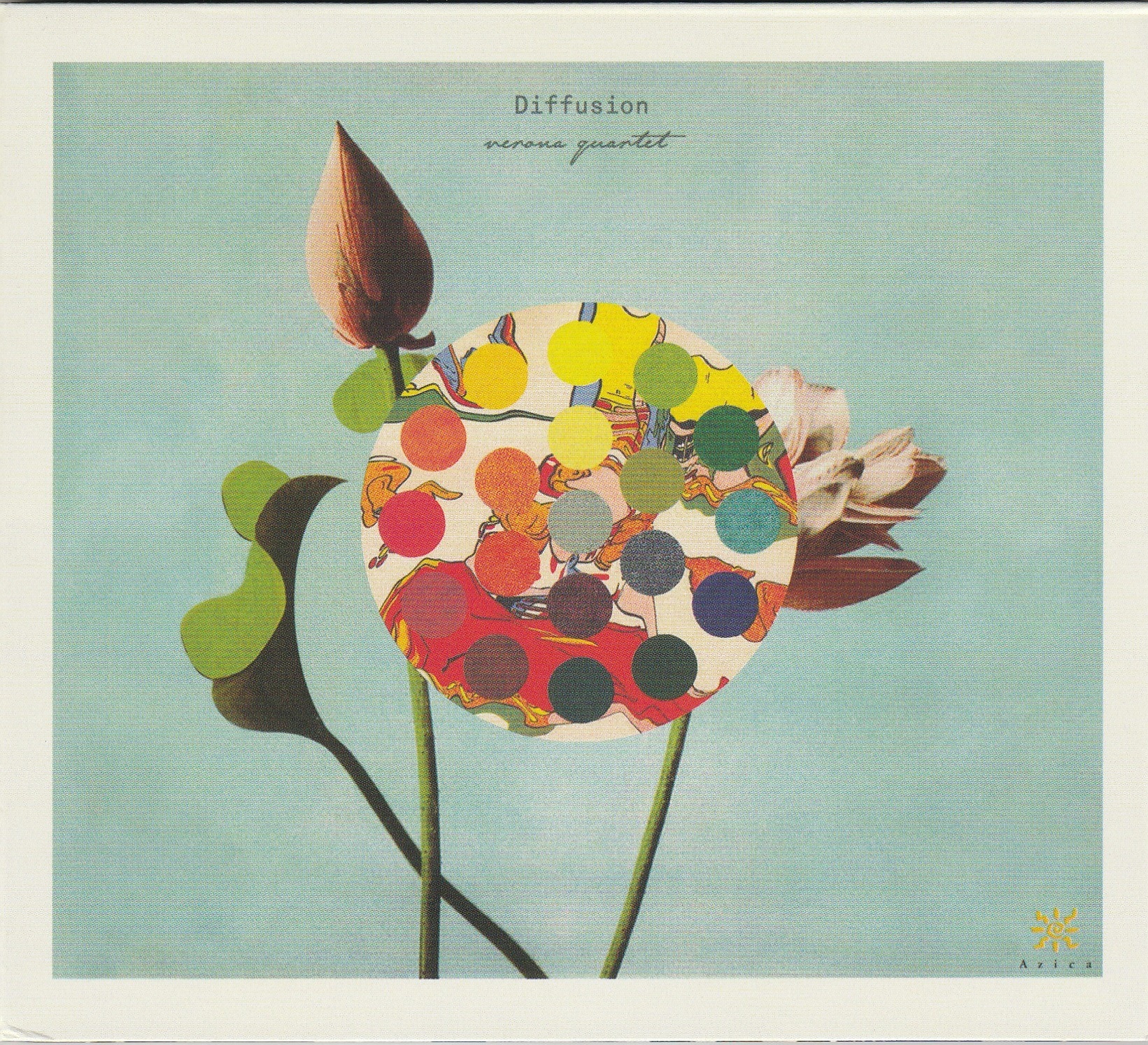
07 Diffusion Verona QuartetDiffusion, the outstanding debut CD from the Verona Quartet is described as exploring a mosaic of folk cultures through the lens of three quartets from the early 20th century (Azica Records ACDF-71339 veronaquartet.com).

As musicians hailing from across the world, the quartet wanted their first album to reflect the essence of the cultural migration that is such a big part of their identity. The performances of the three works – Janáček’s String Quartet No.2 “Intimate Letters”, Szymanowski’s String Quartet No.2 Op.56 and Ravel’s String Quartet in F Major – are quite superb in all respects.

The intensely personal intimacy and passion of the Janáček, written near the end of his life and inspired by his unfulfilled love for a much younger married woman, are beautifully captured in a performance that penetrates to the heart of the work. The Szymanowski, similar in style and tone, is equally striking, and a shimmering performance of the Ravel completes an extremely impressive disc full of breathtaking interpretations and playing.
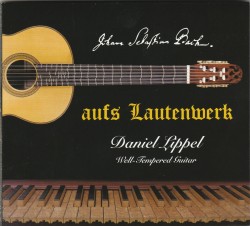
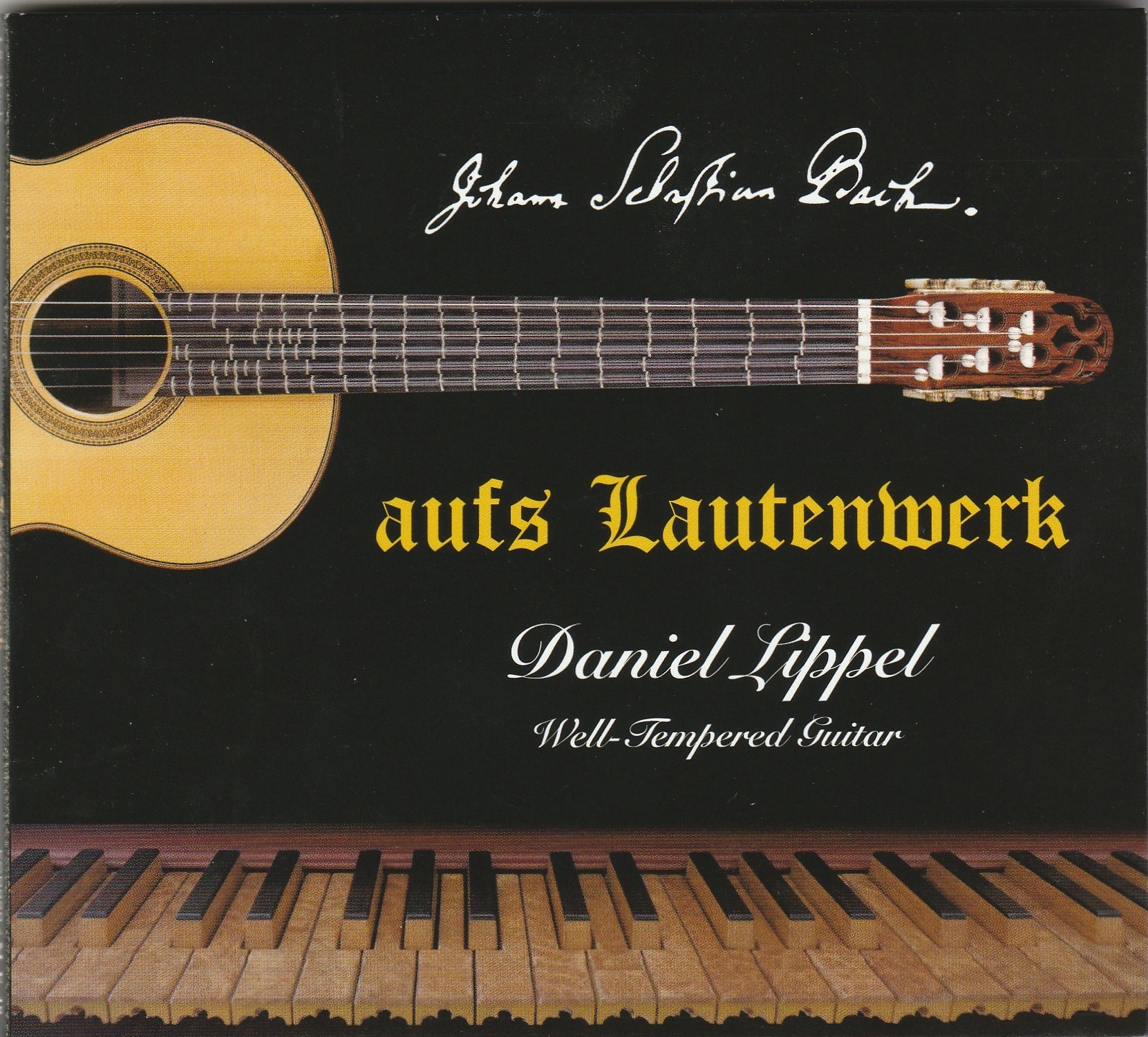
08a Daniel Lippel BachThe two guitarists who form the contemporary FretXDuo, Daniel Lippel and Mak Grgic have both issued solo CDs of music by Johann Sebastian Bach played on the well-tempered guitar. The guitar is by the German luthier Walter Vogt, using his invention The Fine-Tunable Precision Fretboard, in which each fret is split into six individual moveable frets, placed according to the Well-Tempered III tuning designed by Johann Kirnberger, a composer who studied with Bach. This not only enables the music to be heard in its original keys but also retains the specific Baroque character of each key that is lost with today’s equal temperament, where the subtly varying interval sizes are smoothed out.

The Lautenwerk was a Baroque keyboard instrument, essentially a lute-harpsichord with gut strings that could be plucked with different quill materials at different points along their length. On aufs Lautenwerk, Lippel performs two works for the instrument – the Suite in E Minor BWV996 and the Sonata in C Minor BWV997 – along with the Prelude, Fuga & Allegro in E-flat Major BWV998, written for lute or harpsichord (New Focus Recordings FCR920/MicroFest Records MF 18 microfestrecords.com).
Listen to 'aufs Lautenwerk' Now in the Listening Room

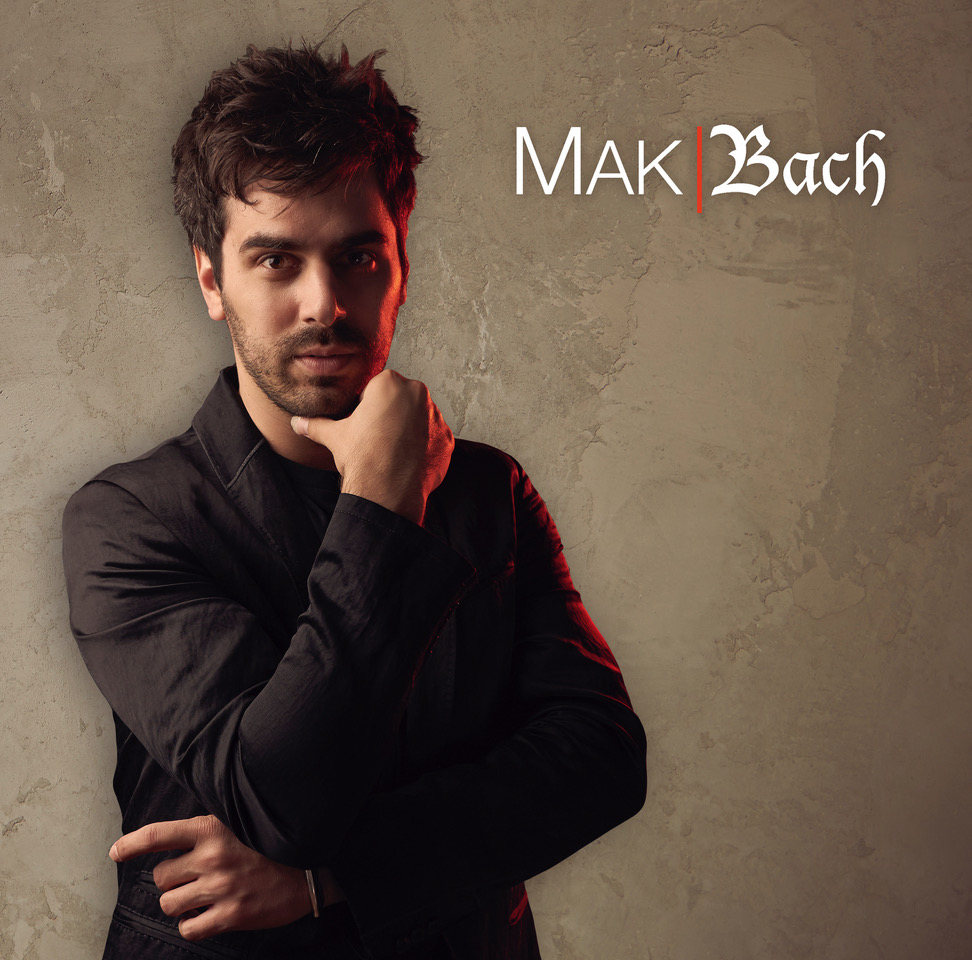
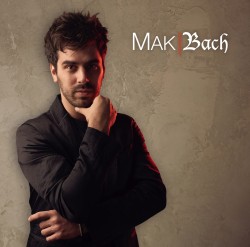
08b MAK BACHOn MAK/Bach Grgic presents a simply beautiful recital of solo masterworks and chorales: the Flute Partita in A Minor BWV1013; the Solo Violin Sonata in G Minor BWV1001; and the Cello Suite in D Major BWV1012. Four brief chorales fill out the disc (MicroFest Records MF19 microfestrecords.com).

To be honest, it will probably take a very good ear to fully distinguish the nuances in the tuning here, but there’s no denying the beauty of the sound or the beauty of the playing, with both performers displaying faultless technique – no easy task given the variations in individual fret placements – and an unerring feel for the period style. The Grgic CD, especially his own transcriptions of the Violin Sonata and the Cello Suite is perhaps the more satisfying program of the two, but with music and playing of this remarkable quality there’s no need to choose between them.
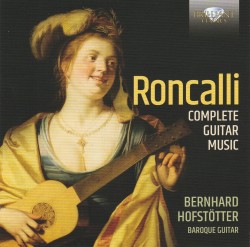
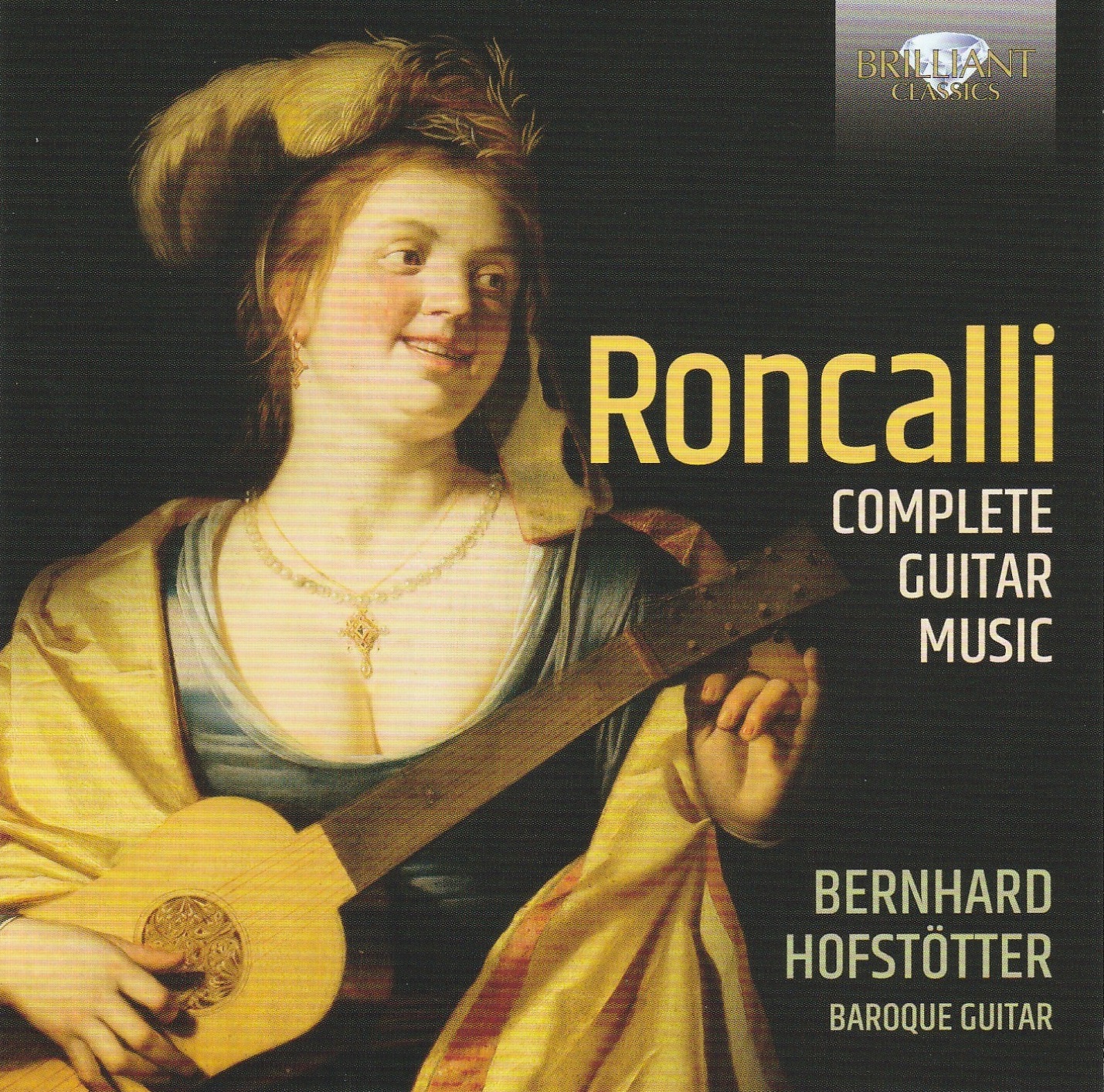
09 Roncalli HofstotterThe guitar works of Ludovico Roncalli have long been popular in modern transcriptions, but on Roncalli Complete Guitar Music they are performed by Bernhard Hofstötter on a Baroque guitar attributed to Matteo Sellas of Venice, c.1640 (Brilliant Classics 2CD 95856 brilliantclassics.com).

The five-course Baroque guitar had five pairs of gut strings (the first course often single-strung, as here) with the fourth and fifth sometimes octave-strung (here with a low octave on the fourth course only).

Roncalli’s 1692 Capricci armonici sopra la chitarra spagnola consists of nine sonate (suites), with eight paired in major and relative minor keys, an opening Preludio and Alemanda being followed by various dance forms. Movements are really short – mostly under two minutes. There’s no indication of pitch or tuning, but the actual pitch heard is down a minor third from the listed keys.

Monica Hall’s excellent booklet essay notes that Roncalli’s “exquisite melodic lines and elegant counterpoint are seamlessly combined with the strummed five-part chords which were still a defining feature of guitar music at the time.”

Hofstötter’s masterful playing is an absolute delight throughout.
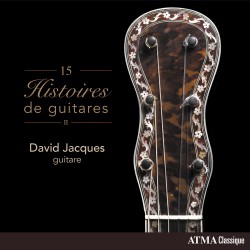
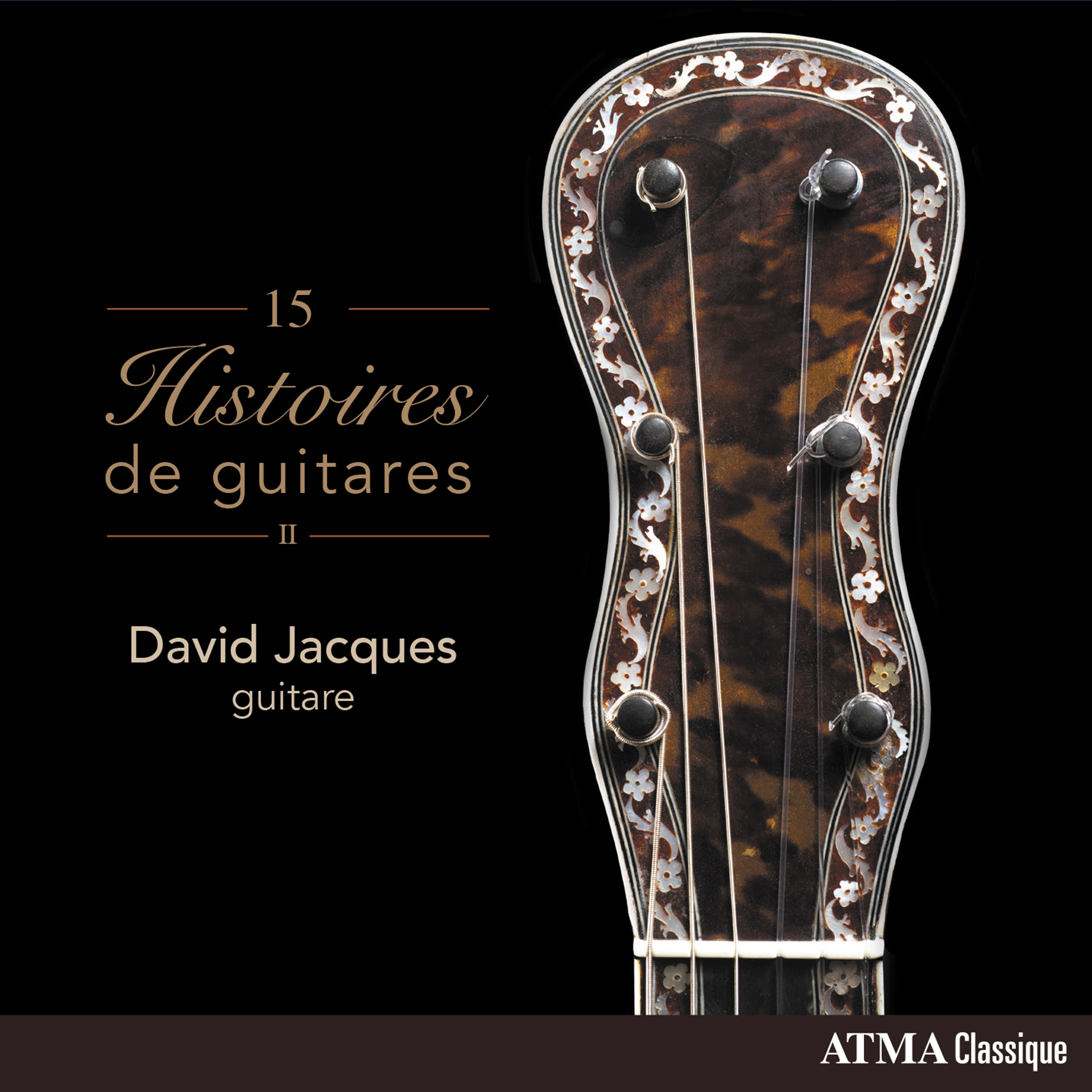
10 David JacquesThe addition of a sixth string (the low E) in the 1790s established the guitar form that would flourish throughout the 19th century. In his second volume of Histoires de guitares Quebec guitarist David Jacques features 15 historical guitars from his astonishing private collection, all but one from the period 1800-1880, and each one illustrated in colour in the excellent booklet (ATMA Classique ACD2 2821 atmaclassique.com/en).

The 28 short, charming pieces by Giuliani, Sor, Carulli, Paganini and 13 lesser-known composers were chosen specifically to showcase each instrument’s individual qualities and character, and they include some real gems – the three pieces by the English composer Ernest Shand, for instance.

They’re all beautifully played too, with clean technique, sensitivity and a nice range of tonal colour.
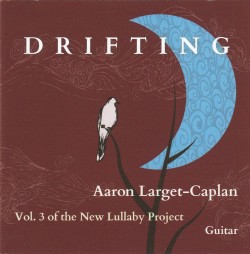
11 Lullaby 3 DriftingDrifting, Volume 3 of the New Lullaby Project is the latest CD from guitarist Aaron Larget-Caplan in his excellent series of specially commissioned guitar solos which began in 2007 (Six String Sound 888-03 stonerecords.co.uk).

The 15 short pieces here were written between 2010 and 2020 by 15 different composers, and while they’re not intended to help children get to sleep there’s nothing strident or challenging to the ears. “The compositional language leans tonal and the tuning remains mostly standard,” says Larget-Caplan, “but don’t worry, harmonics still abound.” Indeed they do, in another captivating addition to a significant series that continues to add miniature gems to the contemporary guitar repertoire.

You can find my review of Nights Transfigured – Volume 2 of the New Lullaby Project in the May/June 2021 edition of Strings Attached.


Listen to 'Drifting, Volume 3 of the New Lullaby Project' Now in the Listening Room

01 On Wings of SongOn the Wings of Song
Kira Braun; Peter Krochak
Independent (kirabraunsoprano.com)

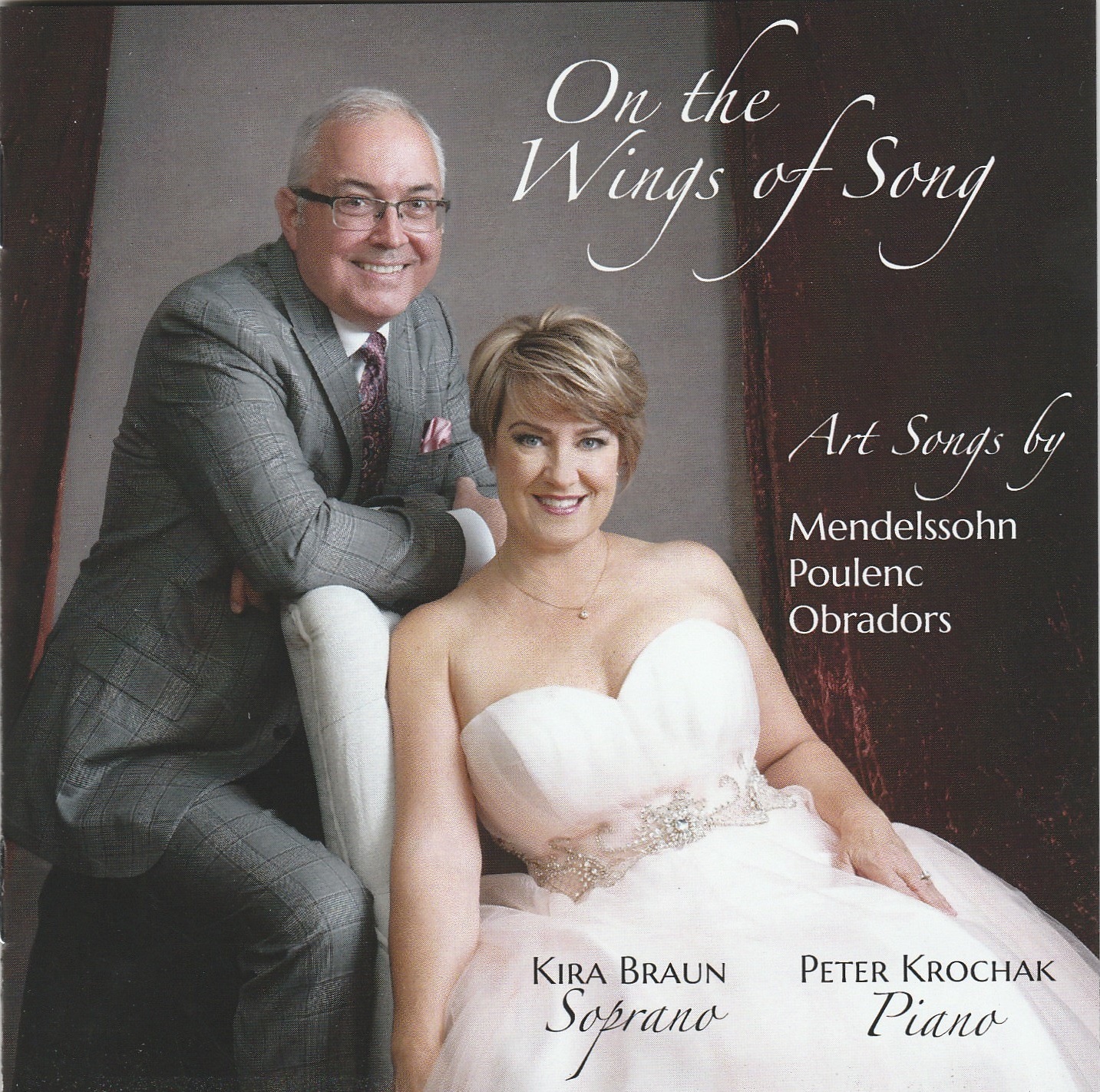
The soprano Kira Braun has been a performing soloist since just 2014. Yet she has already released six recordings – five with pianist Peter Krochak – the latest of which is, very possibly her best. Picking up from where their last album The Echoing Air left off, On the Wings of Song – with more art songs by Poulenc, together with works by Mendelssohn and Obradors – is a ravishing duet between a singer who excels at being both a lyric and dramatic soprano and a pianist who springs and leaps with much agility and nuance.   

All the songs receive terrific performances and although the program is weighted slightly in favour of Poulenc and Obradors, Mendelssohn’s Wanderlied is particularly radiant – perhaps predictably so, given Braun’s German heritage. She strikes an ideal balance between a certain compassion and sophistication, something that makes Mendelssohn seem quite ideally suited for Braun as she delivers his songs with affectionate communication of the poetry. Her command of Poulenc is unrivalled and she proves this with her airy sculpting of Les chemins de l’amour. She also grows into the characters of Obradors’ songs with great feeling and intensity.  

Krochak’s contribution to the unique musicality of this disc cannot be overestimated. Being a singer himself seems to give him an added edge over others who might have accompanied Braun. This is what gives his playing a beguiling refinement, enabling him to traverse this repertoire with judicious melodiousness and delicacy.

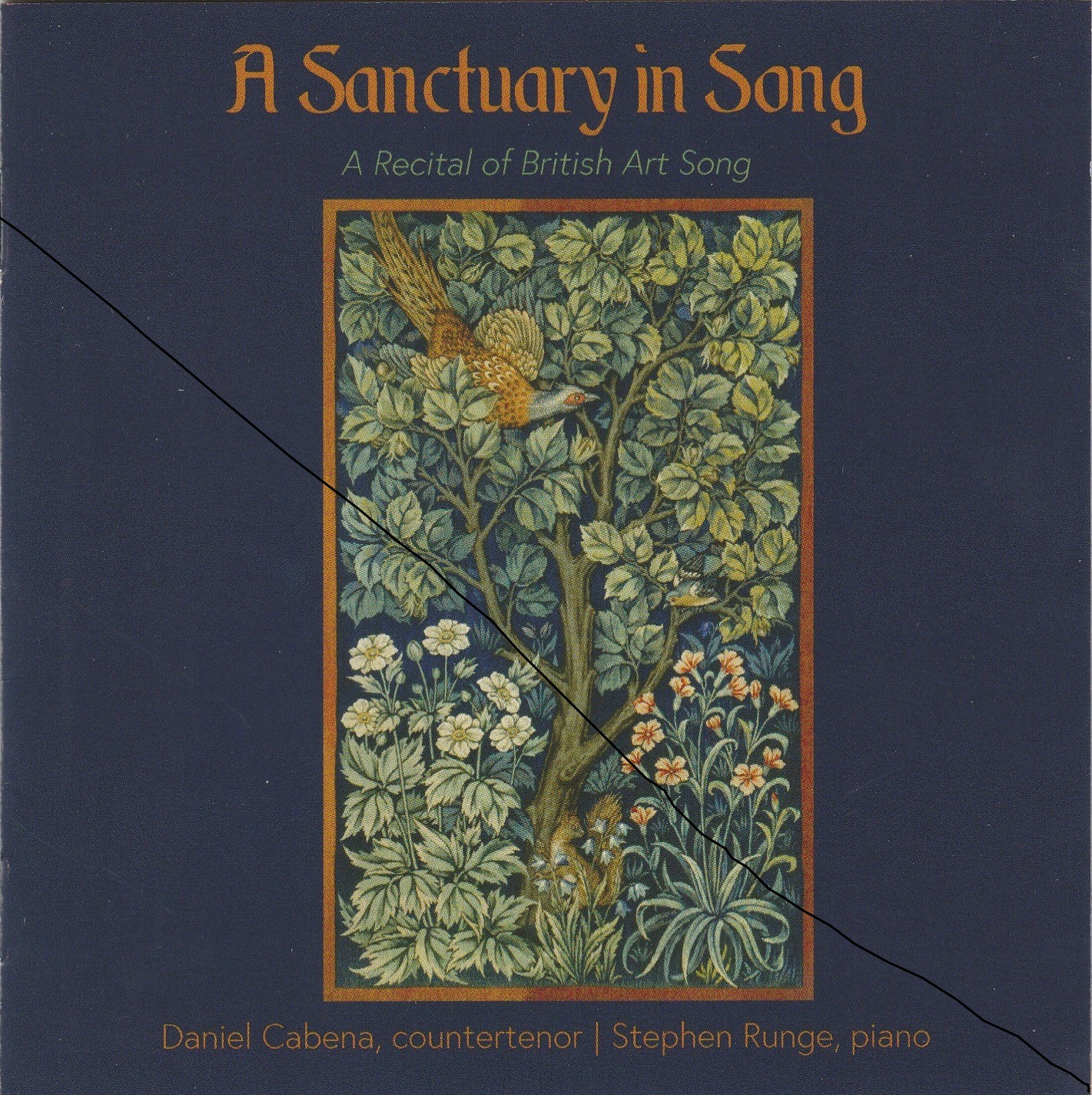
02 A Sanctuary in SongA Sanctuary in Song
Daniel Cabena; Stephen Runge
Chestnut Hall Music (chestnuthallmusic.com)

A Sanctuary in Song is a collaboration between countertenor Daniel Cabena and pianist Stephen Runge. The album follows a man’s journey via the stages of life, love, loss and death. We follow him first in a prelude, and then, in his wanderings and sanctuary explorations interspersed with instrumental commentaries.

Although the repertoire is mostly curated from the English art songs of composers born in the 19th century (York Bowen, John Ireland, Roger Quilter, Charles Villiers Stanford, Peter Warlock and Ralph Vaughan Williams), other more contemporary composers are also featured (Australian-Canadian Barrie Cabena – the singer’s father – as well as British-born Gerald Finzi and Edmund Rubbra). The influence of, training in, or adherence to musical practices associated with Romantic music are felt throughout the album. Runge’s playing is sophisticated and elegant, all the while creating both intimate and grand pianistic expressive soundscapes for Cabena to soar above. Cabena’s commitment to the texts gives life to the various layers of emotional meaning that one can find in nature, love, beauty, solitude or spirituality.

With 26 pieces of music and over 70 minutes of repertoire A Sanctuary in Song is a generous offering and a thoughtfully curated story that showcases a great number of composers and poets to (re)discover. Kudos to the Canadian duo for also featuring two compositions by Canadian composer Cabena.

A Sanctuary in Song was recorded December 12 &13, 2017 at the Maureen Forrester Recital Hall, Wilfrid Laurier University, Waterloo, Ontario.

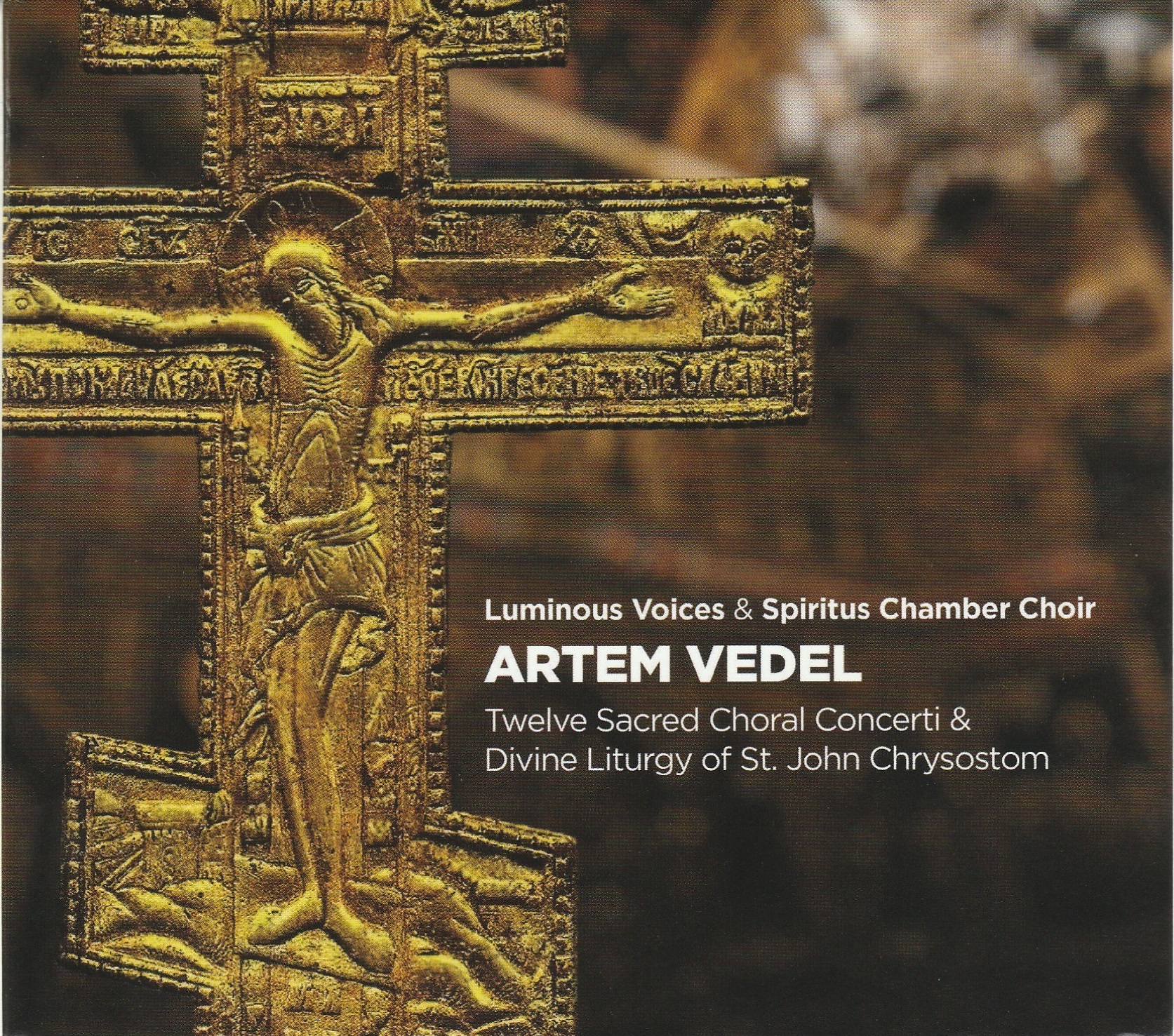
03 Artem VedelArtem Vedel – Twelve Sacred Choral Concerti
Luminous Voices; Spiritus Chamber Choir
Leaf Music LM244 (leaf-music.ca)

The choral concerto is a uniquely Eastern European form, arising in the Russian Empire in the 17th century and continuing to be written well into the 19th. In general terms, the choral concerto was defined by its multi-movement form and psalm-based texts, written for unaccompanied chorus and containing passages for full ensemble as well as soloists. While parallels can certainly be drawn between the choral concerto’s form and that of the Western instrumental concerto, this similarity is more coincidence than correlation, as the developments of these like-minded styles occurred largely contemporaneously.

The most renowned and oft-performed composer of choral concertos is Dimitri Bortniansky, an Italian-trained, Russian-Ukrainian musician whose 45 concertos are considered by many to be the pinnacle of the form. At the same time as Bortniansky was putting pen to paper, another Ukrainian composer was authoring his own essays in the choral concerto style, and it is these works by Artem Vedel that are the focus of Vedel: Choir Concertos Nos.1-12 & Divine Liturgy of St. John Chrysostom.

While a relatively unknown composer in modern times, Vedel was widely respected in his homeland during his lifetime and was one of the “Golden Three” composers, along with Maxim Berezovsky and Bortniansky. Vedel’s concertos are strikingly expressive yet deceptively simple, many of them written for three- or four-part chorus, and often set anguished texts from the psalms: nine of the eleven intact concertos are written in minor keys and are of a pleading, mournful nature. 

Far from being pessimistic and despite Vedel’s angsty outlook, there are moments of great beauty and striking optimism contained within each work, particularly as the texts turn to the goodness and saving power of God; these cadences are arguably some of the most delightful and satisfying in the oeuvre and are magnificently executed by the performers.

This double-disc collection is immense, containing over 150 minutes of material, all of it performed by the Calgary-based ensemble Luminous Voices. A seven-year project, this recording is a testament both to the compositional capabilities of Vedel and the musical skill of Luminous Voices and its director, Timothy Shantz.

Listen to 'Artem Vedel – Twelve Sacred Choral Concerti' Now in the Listening Room

Back to top