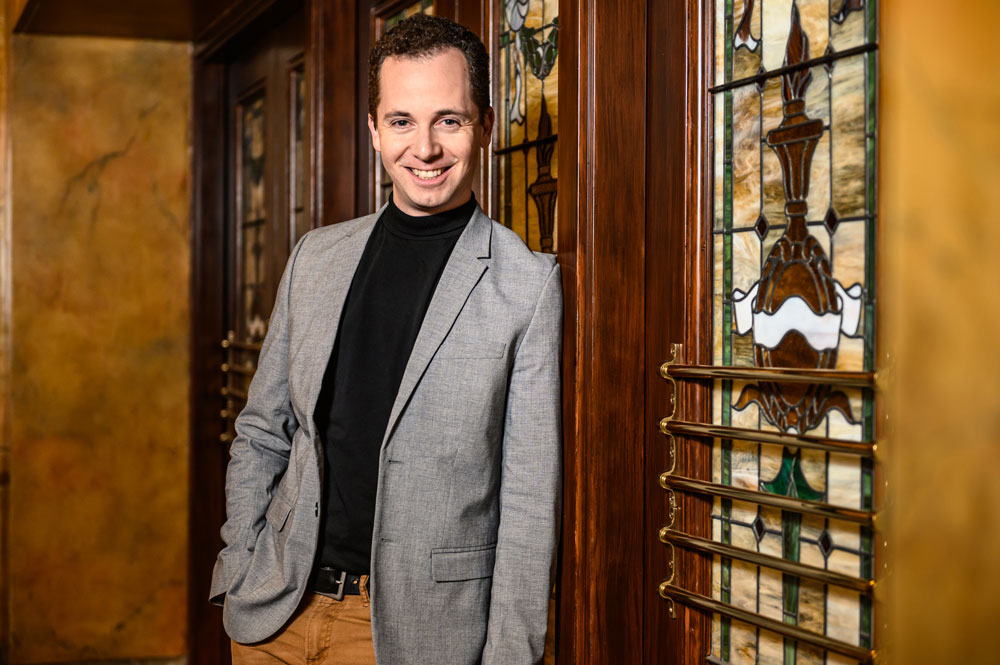
CECILIA LIVINGSTON. Photo by Daniel Alexander DeninoI’m always curious to see what the Royal Conservatory of Music’s 21C Festival will be offering each season; this year being unlike every other performance season, I was even more curious as to what we could expect from this annual offering of new sounds and the latest in contemporary music creation. I was pleased to see that the festival will be moving ahead despite the complexities of producing concerts for limited and virtual audiences. Running from January 15 to 29, this year’s offerings will be a scaled-down version of previous years, but still filled with premieres and outstanding performers, both local and from further afield. 

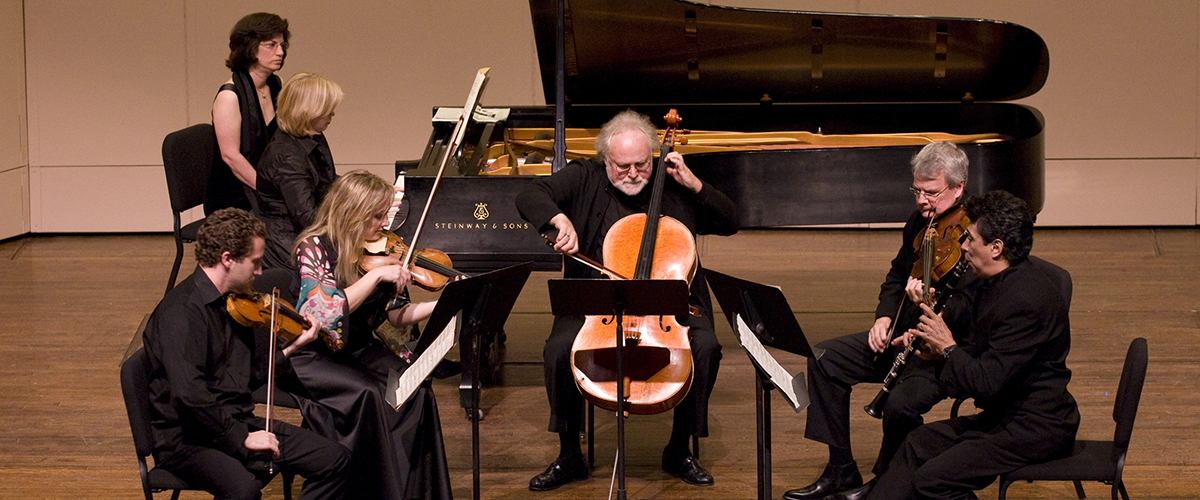
We will hear concerts by two Toronto-based pianists: Eve Egoyan will perform pieces written for her imagined piano that combines original piano sounds with an extended software-based piano; and Royal Conservatory alumna Morgan-Paige Melbourne will perform two of her own compositions along with pieces by several other composers, including one by Brian Current, the director of The Glenn Gould School New Music Ensemble. The GGS New Music Ensemble will also have a concert of their own with several works combined with projected images. The well-loved Kronos Quartet will make a return visit with three different events to choose from. Their multimedia performance piece, A Thousand Thoughts, blends live music by Kronos, narration, as well as archival footage and filmed interviews. Kronos’ Fifty for the Future initiative, designed to create a repertoire of contemporary works for young string quartets they introduced to 21C audiences in 2016, will be the focus of a concert featuring four quartets from the Glenn Gould School after a two-day mentorship with Kronos. 

Read more: Cecilia Livingston’s Vocal Pleasures

As Beethoven’s 250th birthday approaches – thought to have been born on December 15 or 16 he was baptized on December 17, 1770 – there are several notable chamber music concerts being livestreamed from December 5 to December 13, the last remnants of what was to have been a year-long celebration that was curtailed by the pandemic.

Goodyear and Ehnes

Internationally acclaimed superstar and Canada’s preeminent violinist, James Ehnes, will be joined by virtuoso pianist Stewart Goodyear for a complete traversal of the ten sonatas for violin and piano in three recitals – to be livestreamed from Koerner Hall December 11, 12 and 13. Goodyear is celebrated for prodigious pianistic feats like performing all 32 of Beethoven’s piano sonatas on the same day. 

Despite the marathons and the prodigious technique and memory that they require, the basis for Goodyear’s appeal is his empathetic relationship with the music he performs and his ability to communicate that to an audience. 

Read more: Chamber Beethoven As His Birthday Beckons

What is 12-ET A440 anyway?

Over the course of more than a decade, my WholeNote editor and I have developed a certain ritual around each upcoming article. After we agree on the story that month, it’s usually followed by a conversation on the phone, where I present my take, ask practical questions, and fret about approach and tone. My editor offers editorial guidance, and invariably offers an offhand quip or two in regard to whatever I am fretting about. As lay rituals go, I find it reassuring.

This month’s conversation point revolved around “a truly fret-worthy concern,” as my editor described it – for Labyrinth Ontario, the subject of this story, and all practitioners of modal music. One of LO’s signature concerns around its core concept of “modal music” is the ever-growing bias for “flattening out” traditional regional tunings, some very ancient, and modal-melodic performance practices in favour of the ubiquitous so-called “concert pitch.” That’s the Western-origin A440 pitch, the “settler” in the tuning house, which, given its ubiquity, we may assume has been around for centuries. But no: it was reconfirmed under the name ISO 16 recently as 1975 by the International Organization for Standardization.

Concomitant with it is the older model of 12-tone equal temperament (12-ET), where the octave is theoretically divided into 12 equal intervals. Taken together, this conglomerate-tuning model, with minor deviations, defines the sound of the modern symphony orchestra, its many spinoffs, and nearly all of the world’s commercial vernacular music.

Read more: Modal Stories Are Alive and Well in the Labyrinth

"December" composer Monica Pearce. Photo MONICAPEARCE.COMFor those of you who might not have noticed, this holiday season will not be its usual live(ly) self; however, there are still exciting music theatre and dance productions to cheer the spirit coming to our screens and to at least one live stage. So to save you some shopping time, here’s a personal (and partial) list.

DECEMBER 

NOV 11 to DEC 19: The Musical Stage Company’s virtual edition of their signature concert series, UnCovered: Notes from the Heart (see our November issue), has been extended for an extra two weeks, due to overwhelming demand. The 65-minute series of new linked dramatic music videos can be watched by single ticket buyers or become the heart of a curated group experience. ONLINE. Specific day and showtime only. $25 - $40. https://bit.ly/UnCovered2020.

NOV 25 to DEC 4: Musical Concerts from the Shaw (Festival) directed and choreographed by associate artistic director Kimberley Rampersad, with music direction by Paul Sportelli. Alternating evenings feature the music of Duke Ellington, Dorothy Fields or Cole Porter followed by: 

DEC 5 to 19: Also from the Shaw, Songs for a Winter’s Night featuring favourite melodies from the holiday season. LIVE socially distanced audiences of up to 50. (Masks must be worn.) Jackie Maxwell Studio Theatre, Niagara-on-the-Lake. Tickets are FREE but must be reserved by calling the Shaw Festival’s box office at 1- 800-511-SHAW (7429)  For  details see https://www.shawfest.com/event/musical-concerts/.

DEC 4 to JAN 2: The Nutcracker (choreography by James Kudelka.) The National Ballet of Canada, in a new partnership with Cineplex, are making their signature holiday ballet available to watch on both big and small screens. Live captured at the Four Seasons Centre for the Performing Arts in 2008, the cast is led by audience favourites Sonia Rodriguez and Piotr Stanczyk as the Sugar Plum Fairy and Nutcracker Prince. Tickets $12.95-14.95 at Cineplex Theatres not affected by the lockdown, or $29.99 to stream online from the Cineplex Store. For direct links go to  or www.cineplex.com.

DEC 6, 7PM: Together, Safe & Warm. Alexis Gordon, of the Stratford and Shaw Festivals, guest stars with the INNERchamber Ensemble in an intimate program of holiday music new and old, interwoven in the characteristic company style with the stories behind the songs. The performance will be livestreamed from Revival House, the exciting performance and dining venue in Stratford.  ONLINE. One show only.  Tickets $35 (student and arts worker discounts available) www.innerchamber.ca/together-safe-warm.

DEC 12, 7:30PM: WinterSong: A Virtual Watch Party. Canadian Contemporary (formerly Children’s) Dance Theatre. The annual holiday dance special inspired by the world’s rich solstice traditions will be experienced this year through the medium of film combining choreographic world premieres with a retrospective look at iconic solstice work. Nowell Sing We, and highlights from WinterSong’s 33-year history. ONLINE. Tickets $30. www.ccdt.org

DEC 12, 7PM: Opera Atelier presents their first livestreamed production, Something Rich and Strange, a brand-new production featuring theatre music by Handel, Lully, Locke and Purcell that explores the realms of sleep, visions and dreams, plus a new creation by Edwin Huizinga for soprano Measha Brueggergosman. Streamed from Koerner Hall. One Show Only. ONLINE. The Royal Conservatory Box Office at 416-408-0208 or tickets@rcmusic.ca.

DEC 11 & 12, 7:30PM: Going Under, Toronto’s Bravo Academy Senior Troupe presents a newly adapted virtual version of Going Under by cutting-edge Canadian musical theatre creators Matt Murray (book), Colleen Dauncey (music) and Akiva Romer-Segal (lyrics): “When the subway train they are riding comes to a screeching halt, a group of high school students on the way to their graduation are caught underground, forced to face each other and their own demons, and the tragic event that tore them apart four years earlier.”  ONLINE. Tickets: $16.95-28.25 www.bravoacademy.ca/events-north-york/going-under

DEC 14: Tiny Pretty Things debuts on Netflix. Based on the bestselling Young Adult book of the same name, this new series – which explores the lives of elite professional ballet students in Chicago – has been eagerly anticipated since filming began last year. Many Canadians are part of the production team, including executive producer Michael MacLennan, music supervisors Scott Belluz and Natasha Duprey, and lead choreographer and dance consultant, Jennifer Nichols (as previewed in The WholeNote’s summer issue). 

 DEC 19 & 20: This year, Ross Petty’s annual topical fairy tale-inspired Panto has had to travel into the virtual realm. Taking that as a cue, Matt Murray’s new script for There’s No Place Like Home For The Holidays begins as Dorothy from The Wizard of Oz clicks together the heels of her ruby slippers and embarks on a magical roller coaster ride home during which she encounters new friends and panto favourites played by (among others) Dan (Plumbum) Chameroy, AJ Bridel, Eddie Glenn, and Sara--Jeanne Hosie, (last year’s hilarious Sheriff of Nottingham). Tickets: $35 per household. www.rosspetty.com. Watch anytime between 10am and 9pm ONLINE. A portion of each ticket sale goes to Kids Help Phone. 

DEC 21, 8PM: Essential Opera presents the world premiere of Monica Pearce’s new one-act opera, December, for three sopranos and string quartet. The story follows new couple Julia and Natasha as they plan to visit Julia’s family for the first time at Christmas. ONLlNE. Tickets $22.86 www.tickethalifax.com. https://youtube.com/c/EssentialOpera.

JANUARY

Read more: Yes December and January Will Still Have Their Highlights

Here we are at December, with all of the closures and quarantines having pretty well confined most musical groups to such measures as Zoom sessions. We even hear that Christmas will be delayed until some time in January, so Santa can quarantine for two weeks. So, with time on my hands, and since December happens to be my birth month, I decided to do a bit of reminiscing instead. 

Early band days

My plan was to start by referring to a band photograph I’ve been looking at from time to time for the past many months. Of course when I actually went to get it to refer to it, Murphy’s Law prevailed. It has disappeared and is not likely to reappear until this column has arrived at the printer. Ergo, rely on memory.

My band days began in Windsor when two school pals told me about the band that they played in. Jimmy Rees (cornet) and Keith Finney (tuba) took me to a rehearsal and introduced me to Mr. Arthur Laley, bandmaster of the High Twelve Boys Band, an all-brass band in the British tradition. As the name implies, the band was sponsored by the local High Twelve Club – High Twelve being an organization of Master Masons placing a special emphasis on youth support, and so-named because, long ago, noon was known as “high twelve” and the time to call off from labour for lunch. 

The band owned all its the instruments, so there would be no significant financial problems for me. Having been given a small toy drum some years earlier, I mentioned that I would like to play drums. Mr. Laley diplomatically informed me that the band did not have an opening for a drummer at that time. He suggested that he could both provide a baritone horn and that he could teach me how to play it. Thus began a lifelong interest in brass instruments.

Most young bands at that time were “Boys Bands”. However, at High Twelve there was a difference. Two of Mr. Laley’s three children were girls. One was the lead cornet, the other was the lead trombone and the son was the lead euphonium. In addition to the weekly band rehearsals, there were sectional rehearsals in Mr. Laley’s basement on other nights. Our summer months were busy too  –. with parades, small tattoos and competitions in various towns in Southern Ontario, to which we were usually fortunate to have a sufficient number of interested parents to drive us. 

Read more: Time to Reminisce

Last month, the Kensington Market Jazz Festival and the Canadian Online Jazz Festival provided concrete examples of virtual engagement on a large scale, showing programmers, audiences and musicians what digital festivals can look like. Musicians, meanwhile, have spent the year grappling with questions of engagement on a deeply personal level. 

With live audiences largely inaccessible, being a professional musician in 2020 has also meant being a recording engineer, a videographer and a social media planner. It has meant paying more for an upgraded internet connection, purchasing studio monitors and interfaces, and soundproofing apartment bedrooms. It has meant, in a virtual world, that musicians must contend with an idea of themselves as a brand, a glowing, disembodied presence on the screens and speakers of listeners. 

This month, I spoke to six different musicians – saxophonist/vocalist Emily Steinwall, drummer Jon Foster, producer/keyboardist Adrian Hogan, guitarist Rod Rodrigues, drummer Robert Diack and guitarist (and WholeNote contributor) Sam Dickinson – about their experiences with the great virtual shift. What follows are extracts from our discussions that involve home recording, livestreaming, brand maintenance and authenticity. Many thanks to these interviewees for their generosity and honesty; all told, I received close to 7,000 words worth of material, enough for several months’ worth of coverage at my standard word counts here.

Read more: Going Digital: Six Musicians Reflect on the Great Virtual Shift

1 GIMME THAT WINEThere’s no use sugar-coating it: this coming winter promises to be the darkest in living memory. Mix the harsh weather we Canadians can always expect this time of year with the fact that COVID-19 numbers are on the rise everywhere (Toronto is about to re-enter a modified form of the spring lockdown as I write), and you have a recipe for Bleak on Toast with a side of Dismal. 

Normally, we can look forward to Christmas and/or Hanukkah to provide an oasis of celebration in the midst of all the cold and ice and snow, but with the lockdown measures set to extend at least 28 days from November 23 on, these holidays will be a lot less festive this year. The best we can hope for is to celebrate them with a vengeance next year and in the meantime, thank God the LCBO is still deemed an essential service. As Lambert, Hendricks & Ross once famously sang, “Gimme that wine (Unhand that bottle).” Cheers.

I’m tired of writing about the effects of COVID on musicians and live music and I suspect you are tired of reading about it, too. Let’s just say it’s been devastating, that many of us have done our best to do a technological end run around the pandemic, and leave it at that. The real question becomes how do we get through the next couple of months with our sanity and spirit intact? I’ve already recommended alcohol, but that doesn’t work for everyone. We’re all going to be cooped up inside so we have to learn to enjoy that as best we can. Cooking, baking, reading a good book or watching some classic movies all help; watching the news, not so much. And of course staying in touch with friends and family by phone or email or Zoom is really important. But above all else, I find listening to music helps the most. Since CDs have become almost obsolete, I came to regret having amassed such a huge collection of them, but no longer. I’ve spent a lot of the past eight months revisiting my collection and it’s been time well spent.

So, in the spirit of “bring it on” which helps Canadians withstand the winters, I’ve decided to offer a menu of songs which address the “joys” of winter – not Christmas or Holiday songs, which we all know – but rather songs which actually have to do with winter itself. If you’re reading this online, I’ve included YouTube links to each in the hope that housebound jazz fans will get some enjoyment out of these gems. 

Read more: Antidote to the Winter of Our Discontent: A 51:48-Minute Playlist

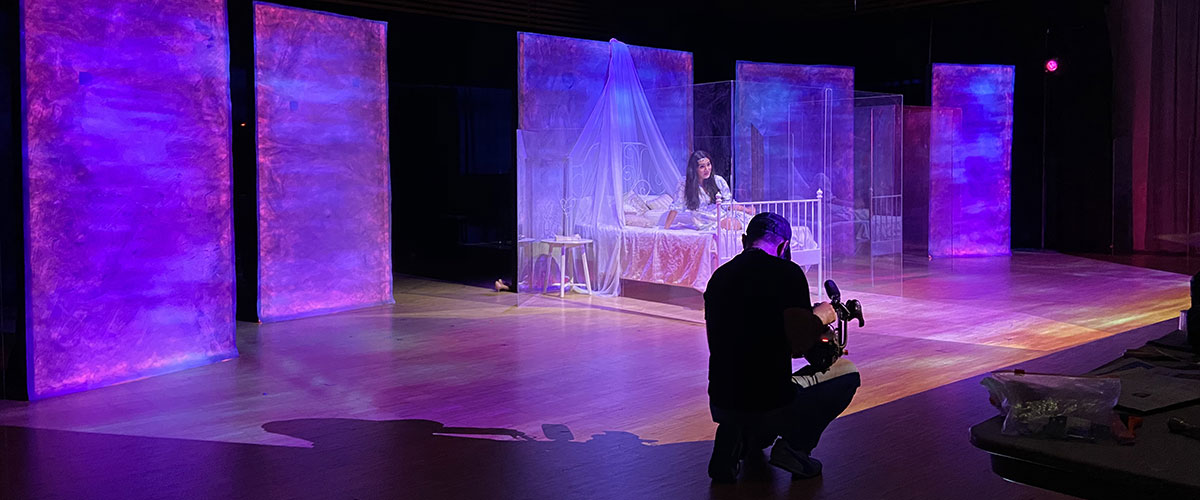
The team at the Glenn Gould School films their fall opera double bill, Kurt Weill’s The Seven Deadly Sins + William Bolcom’s Lucrezia. Photo c/o The Royal Conservatory.How do you teach opera during a global pandemic?

This was the question facing the team at the Glenn Gould School (GGS) in Toronto, tasked with planning its annual fall opera production. It was April 2020, and no one knew how long newly-imposed COVID-19 restrictions would stay in place, or what might be happening six months in the future when rehearsals were officially scheduled to begin. Little did they know at the time that they would be working on a new, operatic hybrid of stage and film – rehearsed, sung, and recorded for online consumption. 

“My meetings in the spring and early summer were all about ‘How can we do this? What kind of project can this be?’” explained director Amanda Smith when I spoke with her in November 2020. “Just trying to pay attention to what was happening in the world and what would be safe meant that it took several months to figure this out, always looking at the potential of what we could create.”

Read more: This fall, the GGS adapts opera for online – plexiglass and all

The UnCovered: Notes from the Heart ensemble, recording the full cast finale in front of Koerner Hall, Royal Conservatory of Music. Photo by Dahlia KatzAs Halloween approaches, I would normally be looking forward to going to Toronto’s beautiful Koerner Hall for one of my favourite events in the fall music theatre calendar – The Musical Stage Company’s annual UnCovered concert. Clearly, this won’t be taking place this year as it usually does, so I got in touch with company founder and artistic director Mitchell Marcus to find out about how the company is reinventing itself in response to the pandemic. What struck me most in our conversation was a sense of renewed emphasis on the importance of creating, maintaining and expanding community through the sharing of music and storytelling. 

Mitchell MarcusCommunity has always been at the heart of Musical Stage’s mandate, he told me, but with the company’s rebranding in 2017, and recent explosive expansion, “perhaps we have lost a little bit of that.” But with the intense process of the last seven months it has come very much back into focus. Like other companies forced to pivot when theatres were shut down in the middle of March, MSC has leapt into the new world of experimentation: with small outdoor physically distanced live shows (Porchside Songs); with rehearsals and workshops conducted online via Zoom; and, most prominently, by reimagining their signature annual theatrical concert, UnCovered

Read more: MSC’s UnCovered Reinvented

trioMethod for the Madness

Toronto weather the third week of October is still comfortably moist and mild. In the park across from my midtown street, mature deciduous trees are still tenuously holding to a blend of burgundy, flaming red, orange, yellow and green – a reminder of the kind of weather that used to signal the fall live music harvest in the times before. Sadly all live concert bets are off during this last quarter of the current year, but The Music Gallery (MG), proudly billing itself as “Toronto’s Centre for Creative Music,” is an example of an organization that continues its programming by all available means. 

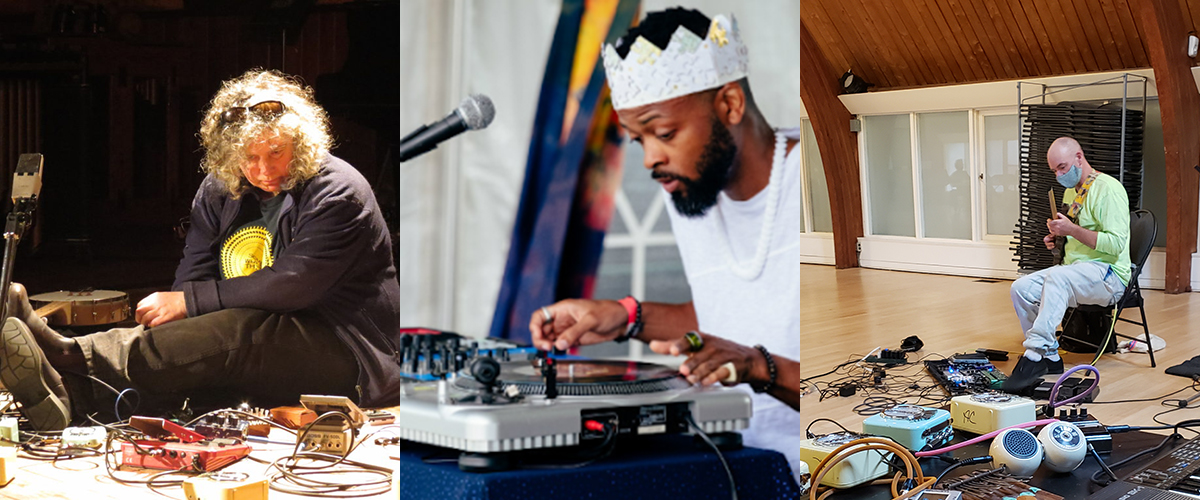
Going on 44 years, presenting and promoting “leading-edge contemporary music in all genres,” the MG has its current sights set on an ambitious project involving 15 musicians, six video artists, plus audio and video mixer technicians. Receiving its webcast premiere on November 20, Exquisite Departures is curated by Tad Michalak; the work is part of the MG’s Departures Series which Michalak has been running since 2014. 

The Exquisite Departures title and structure derive from what began as a 1920s Surrealist game – and which is variously seeing new life these days as a way of bringing creative methods to distance madness. As described in “Exquisite Corpse” and Other Coping Strategies in the July/August 2020 WholeNote, the basis of the original Dadaist game was for players in turn to write something, folding the page to hide part of what they had written before passing it on to another player who would have to continue it without seeing all of it. The (sometimes) enriching fun came when the whole thing was presented, with the missing parts revealed. 

And also recently in The WholeNote, in Lessons Learned from the CEE’s COVID-Era Experiences, David Jaeger reported on a Canadian Electronic Ensemble project titled  “Pass the Track” –devised by the six-member CEE in response to not being able physically to meet to make music. Using a process similar to exquisite corpse, Pass the Track relied on a process of layering audio tracks digitally sent from one CEE member to another, each adding another audio layer. It was all mixed and edited by the CEE’s Paul Stillwell who also enhanced two of the pieces with captivating digital animation. (For more details please visit canadianelectronicensemble.com.) 

Read more: Exquisite Departures in trying times

Baroque for BabyThe cognitive benefits of musical studies are well-documented and often repeated – used to attract and draw in prospective students to music schools and studios across the world. For many parents, music lessons for their children is as much an investment in their future as the pursuit of cultural understanding and artistic accomplishment – a résumé-building, college-application-enhancing tool in some future well beyond the horizon.

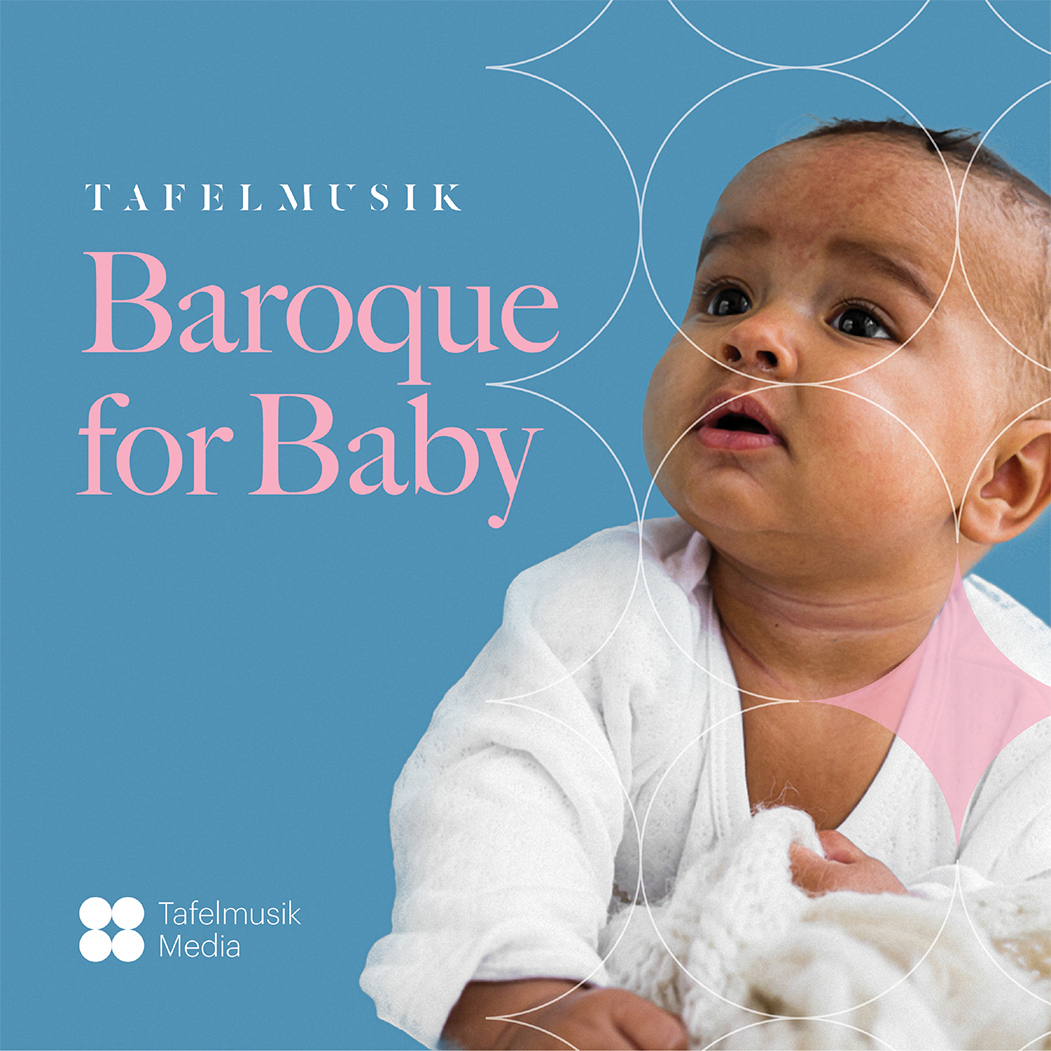
But while the decision to undertake musical studies is often pragmatic, even when it is not it should be initiated as early as possible, exposing even babies’ ears to the widest possible range of symphonies, songs and sounds and encouraging our little geniuses to connect with as much aural diversity as possible. As a parent, it can be challenging to consider such things, especially when entering one’s fourth Baby Shark marathon of the day, but Tafelmusik is helping make the introduction of classical music to our youngest family members slightly easier with their latest album, Baroque for Baby.

Read more: Testing the Waters: Tafelmusik’s Baroque for Baby
Back to top