08 South of the CircleSouth of the Circle
Siggi String Quartet
Sono Luminus DSL-92232 (sonoluminus.com)

While it should come as no surprise that contemporary Icelandic music should have – like music elsewhere across the globe – come of age, the sheer scope and breadth of its soundscape is, nevertheless, quite breathtaking. Riding the crest of a new wave created by Björk, Atli Heimir Sveinsson and Jóhann Jóhannsson is the dazzling Siggi String quartet founded by violinist and composer Una Sveinbjarnardóttir, whose work Opacity forms one of the five pillars of the quartet’s 2019 recording South of the Circle.

This follow-up to Philip Glass: Piano Works, the 2017 recording that the quartet shared with celebrated pianist and countryman Vikingur Ólafsson, is both sparkling and deeply reflective. The quartet’s interpretation of Sveinbjarnardóttir’s composition and those of three other Icelanders is marked by the poignancy of their playing. The music becomes part of a natural landscape that mixes beauty and danger. Whether evocative of freezing nights or long rainy days, each track takes us to a place – often wildly exhilarating – with trusted and inspiring musical friends.

Such warmth comes at no expense to either classical elegance or avant-garde subversion.

Throughout the quartet creates a compelling sound-bed for four voices of contrasting character. Although best expressed in the long inventions of the solos contained in Opacity, the virtuoso playing of the quartet is also expressed in their sculpting of the music of Daníel Bjarnason’s Stillshot, Valgeir Siguròsson’s Nebraska, Mamikó Dis Ragnarsdóttir’s Fair Flowers and Haukur Tómasson’s Serimonia.

10 PartchHarry Partch – Sonata Dementia
PARTCH
Bridge Records BRIDGE 9525 (bridgerecords.com)

Harry Partch (1901-1974) was a paradigmatic California outsider composer, embracing the pitches and rhythms of world music – Ancient Greece, Japan and Africa – and substituting a 43-tone scale in just intonation for the equal temperament of Western tradition. A romantic figure who constructed microtonal guitars as a depression-era hobo, he gained a significant audience when Columbia Records recorded him in the 1960s. His home-made instruments emphasized bending string tones and hyper resonant percussion, some made from the refuse of radiation experiments.

The ensemble PARTCH is as true to the letter and spirit of Partch’s music as his own groups, and John Schneider’s intoned vocals even sound like Partch. The group has been recording landmarks and unheard works alike and supplementing them with Partch’s own archival recordings. The opening Ulysses at the Edge of the World immediately suggests the breadth of Partch’s inspirations: originally composed for jazz trumpeter Chet Baker, it combines bass marimba, tuned bamboo drums, trumpet and baritone saxophone, and ends with a joke about wanderers (i.e., Ulysses, Baker, Partch) being arrested. Twelve Intrusions (1950) is a song cycle, alive with intoned vocals, elastic pitches, and a concluding chant transcribed from a recording of the New Mexico Isleta tribe. Windsong is a collage-like film score, while Sonata Dementia includes a Scherzo Schizophrenia, indicative of Partch’s multi-directional wit.

The CD concludes with Partch’s own 1942 recording of Barstow, the brilliant setting of hobo inscriptions here faster (and funnier) than the later Columbia recording.

02 Allison YoungSo Here We Are
Alison Young
Triplet TR10023 (alisonyoungmusic.com)

Stellar, JUNO-nominated saxophonist Alison Young has released her diverse, long-awaited debut album. Those who have had the pleasure of seeing Young play live know what to expect from this record and it definitely lives up to and exceeds all expectations. There is no shortage of great musicianship on the album, featuring well-known musicians such as Eric St-Laurent on guitar, Jeff McLeod on piano and organ, Ross MacIntyre on bass, Chris Wallace on drums and Guido Basso on flugelhorn. Pieces do a great job of showcasing the talents of all musicians and are mostly written by Young herself, with the exception of three tracks.

Diversity is found throughout every piece in this album. There are contrasts between elegant and energetic, driven melodies, as well as various inspirations ranging from “hard bop to soul to New Orleans-style funk.” Cedar Roots starts the record off with a righteous bang and is a strong example of the drive that drummers Chris Wallace and Sly Juhas bring to each track. Afterparty delves into a New Orleans-esque flavour with Young’s soul and funk inspirations showing through, as well as a delicious hint of traditional rock ‘n’ roll added to the mix. Celia & Harry and title track, So Here We Are, display another side of the saxophonist’s playing, leaning towards elegance, grace and a hark back to a more traditional jazz sound. Young’s album is a thoroughly enjoyable musical journey for all jazz lovers.

03 Curtis NowosadCurtis Nowosad
Curtis Nowosad
Sessionheads United SU007 (curtisnowosad.com)

Curtis Nowosad is a drummer and composer who was born and raised in Winnipeg but has lived in New York City since 2013 after moving there to complete a master’s degree at the Manhattan School of Music. This is Nowosad’s third album, the first recorded in New York, and contains five original compositions and three covers. The musicianship is impeccable with crisp horns, a tight and driving rhythm section, and arrangements reminiscent of Birth of the Cool. Highlights include Braxton Cook’s several wily alto saxophone solos and Andrew Renfroe’s guitar work on Hard Time Killing Floor Blues which is soulful, bluesy and rhythmically varied. Nowosad’s drumming is complex yet understated, always interesting but never in the way of the other player’s groove. Brianna Thomas’ assured vocals on two songs add extra nuance to the project.

This album can stand alone as an excellent example of intelligent, driving jazz but there are compelling social and historical themes woven through the original compositions and cover choices. The opening Home is Where the Hatred Is comes from Gil Scott-Heron’s 1970 album, Pieces of a Man. Nina Simone’s Sea Line Woman is given an elegant and sophisticated treatment. Nowosad’s The Water Protectors is dedicated to the Standing Rock Sioux and other Indigenous people while Never Forget What They Did to Fred Hampton is a sharp reminder of the young Black Panther activist’s murder and cover-up. Curtis Nowosad combines socially conscious history with assured jazz performances.

04 Jacques Kuba SeguinMigrations
Jacques Kuba Séguin
Odd Sound ODS-17 (jacqueskubaseguin.com)

Released in June on his own label, ODD SOUND Records, Migrations is the newest album from the Montreal-based trumpeter Jacques Kuba Séguin. A regular in the Montreal jazz and creative music community, Séguin tours regularly, including a 2016 stint in Poland, Lithuania, and Germany, and has worked as the host of the Symphonie en bleu radio show, for ICI Musique classique. In addition to Séguin, who is solely responsible for the album’s compositions and arrangements, Migrations features pianist Jean-Michel Pilc, tenor saxophonist Yannick Rieu, vibraphonist Olivier Salazar, bassist Adrian Vedady and drummer Kevin Warren.

The medium-tempo Hymne starts things off, and gives Séguin plenty of room to exercise his warm, burnished sound; it also contains beautiful moments from Pilc, Salazar and Rieu. Pilc – who, since becoming a faculty member at McGill, is appearing on more and more Montreal-based projects – tends to always be excellent and his work on Migrations is no exception; his playing on Origine, the album’s second track, is particularly satisfying. Première neige (You’re Not Alone), one of Migrations’ most introspective tunes, is beautiful, and Séguin takes the opportunity to showcase the expressive, lyrical side of his playing. I Remember Marie in April, a clear album highlight, begins with stellar playing from Warren, who negotiates the tune’s syncopated shots with aplomb and keeps things interesting throughout the solos. Overall, Migrations is a thoroughly engaging album, with strong individual playing deployed in the service of a cohesive group spirit.

05 Vlatkovich FiveFive of Us
Michael Vlatkovich; 5 Winds
pfMENTUM PFM CD 130 (pfmentum.com)

Gathering four of Toronto’s most accomplished horn players to collaborate on his 5 Winds Suite and other compositions, American trombonist Michael Vlatkovich recorded this disc at Array Space, producing sounds that recall both a disciplined concert band and a freeform improvising ensemble.

Dividing the presentation so that the higher-pitched trumpets of Lina Allemano and Nicole Rampersaud are contrapuntally stacked against darker timbres from David Mott’s and Peter Lutek’s saxophones, the trombonist challenges or harmonizes with each group in turn, lowing snarls when called for and shrilling flutter tones when necessary. Working through call-and-response sections as well as individual solo spots, the crafty arrangements are particularly notable on the suite. Sophisticatedly layered to highlight individual voices, a climax of sorts arrives with Part 5: Five. Mott’s baritone saxophone sighs move from melodious harmony to screaming intensity as the muted brass tones bolster the background. Although top-of-range cries and slurs dominate, dissonance never upsets forward motion.

Similar strategies underline the other sequences. On the introductory Please Help Me I’m Blowing Bubbles, for instance, Vlatkovich’s airy slides harmonize with descending reed amplifications. Later, after the five experiments with variants of split tones, slurs and shakes, the concluding For The Protection of Yourself and Others You’ll Need to Wear Your Space Suit is bouncy and boisterous but balanced despite shuddering capillary brassiness and reed glossolalia. Four of the five musicians may come from a different country, but exemplary improvising within crafty arrangements knows no boundaries.

06 Peter EldridgeSomewhere
Peter Eldridge; Kenny Werner
Rosebud Music (petereldridge.com)

Consummate vocalist, composer and lyricist, Peter Eldridge has joined forces with arguably one of the finest jazz pianist/composers of his (or any other) generation, Kenny Werner, to co-produce a contemporary album of breathtaking beauty. The project boasts not only some fine original tunes, but also a sprinkling of some much loved popular standards – all rendered with fine rhythm section work by Werner on piano, Matt Aronoff on bass and Yoron Israel on drums. Eldridge’s rich, nuanced vocals and sumptuous orchestral arrangements (skillfully arranged for The Fantastical String Orchestra by Werner and conductor/cellist Eugene Friesen) make this a formidable CD.

Things kick off with the Eddie Arnold hit, You Don’t Know Me. Eldridge’s silky baritone takes command of this gorgeous standard, which is lusciously wrapped in acoustic strings and supported by the supple spine of Werner’s inspired piano work. Another outstanding selection is That Which Can’t Be Explained, with music and lyrics by Eldridge. This sensitive ballad has a lovely, poetic lyric and a pleasingly complex melodic line. Eldridge effortlessly takes the listener along for the ride on a deep emotional journey… this is a hit song in search of a hit Broadway show!

Additionally, the Bernstein/Sondheim title track/medley is a major stunner, and begins with a haunting a cappella voice, followed by solo piano, which gently enfolds Eldridge throughout. A brilliant orchestral segue leads to the second part of the medley, A Time for Love, which features exquisite harp and string section work, and of course Johnny Mandel’s incomparable melody.

Without question, the artistry of Eldridge and Werner make Somewhere one of the most exceptional recordings that I have had the privilege to experience this year.

07 Pete McGuiness OrchAlong for the Ride
The Pete McGuinness Jazz Orchestra
Summit Records DCD 747 (summitrecords.com)

With the release of his third big-band CD, multiple Grammy-nominated composer, arranger, producer, trombonist and vocalist Pete McGuinness has certainly grabbed the golden ring. This is a fine recording featuring tasty standards, beautifully-constructed original compositions, inspired and contemporary arrangements by McGuinness and skilled performances by some of New York City’s most gifted musicians. All arrangements here are by McGuinness, and the recording kicks off with the Charles Strouse depression-era hit Put on a Happy Face. The track is the perfect, snappy, up-tempo opener, with a beautifully recorded big band sound (no easy task) and a buoyant and facile tenor solo from Tom Christensen.

The creative take on the late Michel Legrand’s You Must Believe in Spring is a total delight. McGuiness scats over melodic lines, and also performs the lyric with great emotion and perfect intonation, while pianist Mike Holober propels this gorgeous tune and arrangement through and around all of its beautiful changes. Of special note is Aftermath. With a moving brass choir opening, this original has its origins in an assignment once given to McGuinness by Bob Brookmeyer at the BMI Jazz Composers’ Workshop. Essentially an expanded tone poem about the loss of McGuinness’ close friend, this contemporary piece features Dave Pietro’s incredible (and indelible) soprano solo, which morphs into a wail of pain, grief and frustration (as well as other fine-tuned emotional states).

An additional standout is the McGuinness composition, Point of Departure – a dynamic arrangement that displays a full-throttle, big band sound – just as it should be – with Rob Middleton shining on tenor, as does Bill Mobley on trumpet.

Listen to 'Along for the Ride' Now in the Listening Room

08 Trance MapCrepescule in Nickelsdorf
Evan Parker; Matthew Wright; Trance Map+
Intakt CD329 (intaktrec.ch)

In the 1970s, English saxophonist Evan Parker began developing and combining a series of extended techniques, including circular breathing, false fingerings, harmonics and multiphonics, eventually creating sustained improvisations that could simultaneously suggest flocks of birds and keyboard works by Terry Riley. Eventually he combined these processes with multi-tracking and electronic musicians, further mutating and extending the materials. Between 2008 and 2011, Parker worked with composer/sampling artist/turntablist Matthew Wright to construct a piece using materials from Parker’s collection of recordings, resulting in Trance Map. In 2017, the original materials became the basis for the group heard here, Trance Map+, which adds bassist Adam Linson, turntablist John Coxon and Ashley Wales, all three employing electronics.

This performance from the Austrian festival Konfrontationen 2017 is as complex and engaging a performance as one may hear from the world of improvised music, a maze of sound in which different sounds come to the fore, most frequently Parker’s soprano but the others as well, whether foregrounding the ambient bass rumble of heavy amplification or the subtle harmonics of Linson’s bass.

At the beginning, there’s a passage of bird song in the foreground, a literal trace from Parker’s recordings. That sample of the natural world floats into the soprano’s mechanical world. Then the mirror worlds of Crepuscule unfold, combine and shift: saxophone and bass, bird chirp and insect song, oscillator blip and needle scratch, tease and confound the ear, mutating into and beyond one another’s identities.

09 VoyageVoyage and Homecoming
George Lewis; Roscoe Mitchell
RogueArt ROG 0086 (roguart.com) 

A mostly trio session featuring only two musicians, this CD is defined that way because Voyager, its more-than-25-minute centrepiece, features close interaction among veteran improvisers, trombonist George Lewis and saxophonist Roscoe Mitchell, and an acoustic Disklavier piano programmed by Lewis’ interactive Voyager software.

Reacting to the sounds generated by the horn players, the piano’s recital-ready introduction soon develops splintered and syncopated cadenzas and clusters which, during the sequence development, accompanies first the trombonist’s expansive pumps and then the alto saxophonist’s bluesy extended line. Obviously never outpacing the humans, the piano accompaniment moves from dynamic glissandi to jolts and jumps, making common cause with Mitchell’s thin reed snarls and Lewis’ plunger blats. The polyphonic climax arrives as the three sound layers intersect at top volume, but with individual contributions very audible.

While the concluding Homecoming is a classic duet between trombone and soprano saxophone, Qunata, the debut track, has Mitchell’s sopranino saxophone carving out a place for its shrill peeps and gaunt trills from the concentrated synthesized samples and inflated granular warbles produced by Lewis’ laptop. Working up to a textural program that could be the soundtrack for a film on cosmic exploration, the track ends with a programmed voice repeating “unable to continue.” That sly electroacoustic joke doesn’t characterize a disc that auspiciously offers profound instances of how man and machine can cooperate musically.

10 BleyWhen Will the Blues Leave
Paul Bley; Gary Peacock; Paul Motian
ECM 2642 (ecmrecords.com)

Previously unreleased, this 1999 recital finds pianist Paul Bley (1932-2016), drummer Paul Motian (1931-2011) and bassist Gary Peacock (b. 1935) at the height of their mature mutual powers. This Lugano-recorded set is particularly notable since concentration is on the pianist’s infrequently exposed compositions.

A lively run-through of Mazatlan begins the showcase, as nuanced keyboard strategies pulsate and pause with unexpected sonic detours while a sinewy tandem dialogue is established with Peacock. Meanwhile Motian’s shattered clanks help juice Bley’s unexpected bursts of low-pitched emphasis and swelling timbres which recap the head. Not known for funkiness, Bley still invests Told You So with a tranche of walking blues even as he fragments the narrative with bent notes and expansive tonal quivers. The selections also encompass a relaxed, impressionistic and balanced variant of I Loves You, Porgy, taken at a moderate tempo. As well, the bassist’s subtly low-pitched string swipes and pulls alternate with vigorous, lightning-quick patterning when playing his own Moor.

Trio skills are best expressed on the Ornette Coleman-composed title track, With the pianist’s swift glissandi changing the exposition’s speed and pitch nearly every bar, the performance intensifies once drum rim shots and rattles combine with bass thwacks to emphasize the melody. Yet even as the trio collectively descends the scale to hit a groove, the originality of the tune – and by extension Bley’s conception of it – are confirmed when the ending lacks a conventional pattern completion. Twenty years on, the disc’s vigour and intensity still echo.

01 Canadian HitsCanadian Hits: Unplugged
Saint John String Quartet
Leaf Music LM227 (leaf-music.ca)

Here is another innovative recording by the New Brunswick-based St. John String Quartet, one that recasts well-known Canadian songs in adept string arrangements by Rebecca Pellett. These songs are familiar to us with vocals plus the reverberant long-decaying tones of guitars, bass, pedaled piano and added studio production. So it is an arranger’s challenge to create satisfying textures with only four bowed instruments! Lots of pizzicato is one way to sustain the background, as in the arrangement of Francis by Béatrice Martin (Coeur de pirate). Evoking the simple group vocal sound of Stan Rogers’ Northwest Passage is another way. Percussive effects on the string instruments add equivalent interest and authenticity to Knocking at the Door (Arkells) and the heavy slog of Spring to Come (Digging Roots). The latter’s humour is topped by a tastefully tongue-in cheek Miss Chatelaine (k.d. lang) in tango rhythm with amusing string slides, all dissolving into fairy dust at the end…

But the true elixir of this disc’s arranging by under-billed Pellett is in the eloquence of River (Joni Mitchell) and the Celtic sound of If You Could Read My Mind (Gordon Lightfoot). And leader/violinist David Adams, violinist Danielle Sametz, violist Christopher Buckley and cellist Sonja Adams certainly surpass the mere “unplugged hits” world here! A sound world bathed in long non-vibrato tones, harmonics and emotionally text-conscious melody-playing, here seems to be an ideal realized by players and arranger alike.

Listen to 'Canadian Hits: Unplugged' Now in the Listening Room

02 Koziol BrennanI’ll Be Seeing You
Andrea Koziol; Bill Brennan
Independent AK-BB-01 (andreaandbill.com)

I’ll Be Seeing You, a sharp selection from the jazz songbook, features Toronto vocalist Andrea Koziol and Newfoundland pianist Bill Brennan. They cover 13 of some of the best-known standards – sprinkled with their own songs – with nimble interpretative panache and sure musical taste. Toronto A-lister-musicians Andrew Downing on bass and cello and guitarist Joel Schwartz provide a firm foundation, plus a sympathetic harmonic and melodic framework.  

Koziol’s interpretations are assured and tone perfect. I was stuck by her attentiveness to the lyrical meaning of the intro verse in older songs like Fly Me to the Moon. In Stevie Wonder’s strutting funky Tell Me Something Good she purrs, growls and ghosts her tone in several amazing ways. Is she perhaps channeling her inner Chaka Khan?

Koziol and Brennan generously share the musical spotlight, reminding us that their friendship reaches back several decades. That generosity of spirit extends to Schwartz. He gets a lovely sustained-tone lyrical electric guitar solo in Randy Newman’s moody, thoughtful ballad I Think It’s Going to Rain Today.

Brennan’s piano work avoids cliché while nailing the feel of ballad, gospel, funk or up-tempo swing. He weaves unhurried, protracted extensions to songs like Tea for Two, moving far afield from harmonic home base, and provides exciting melodic and harmonic twists to Annie Ross’ vocalese classic Twisted.

I’ll Be Seeing You launched with concerts in Ontario and Newfoundland this summer. Judging from the glow emanating from this album I look forward to hearing Koziol and Brennan live in the near future.

Listen to 'I’ll Be Seeing You' Now in the Listening Room

03 In a LandscapeIn a Landscape
California Guitar Trio; Montreal Guitar Trio
Independent (mg3.ca)

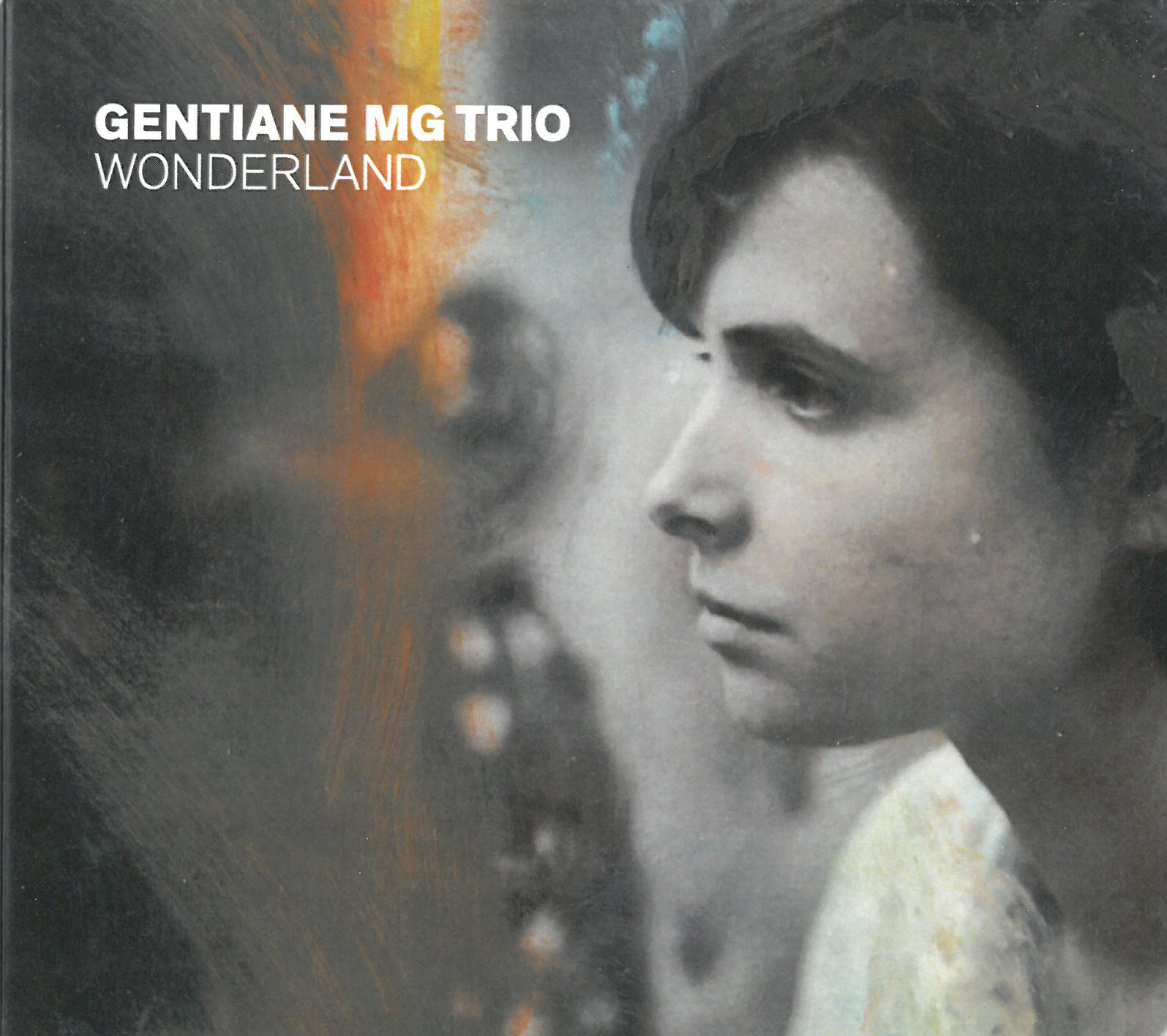
Among small chamber groups, the combination of two, three or even four guitars is not all that uncommon. So what about six guitars? Surely a guitar sextet is a little out of the ordinary, yet that’s what we have here on this disc, titled In a Landscape, featuring the combined forces of the California and Montreal Guitar Trios. While both ensembles have long-established reputations in their own right, the decision to perform together as a single group evolved from a chance meeting at an Oregon music conference ten years ago and since then, they haven’t looked back.

Just as the combination of six guitars may be a little unusual, so is the music they present on this recording. Indeed, the musicians have always shared a determination to “push the boundaries” with respect to repertoire, and this philosophy is evident in the all-too-brief 40-minute program.

Opening with the rhythmic New Horizons by MGT member Glenn Lévesque, it’s clear that these musicians enjoy playing together – what a warm and satisfying sound they produce! Flashy virtuosity for its own sake is decidedly absent – instead what we hear is sensitive and well-crafted interplay among the performers. Furthermore, the eclectic program is a remarkable study in contrasts. Arrangements of Radiohead’s Weird Fishes and David Bowie’s Space Oddity with vocals by ensemble members are juxtaposed with the moody and mysterious title track by John Cage (as arranged by Sébastien Dufour) while the mercurial Magneto – composed by Dufour – is an infectious essay in Latino brilliance.

For such a comparatively short program, In a Landscape covers a lot of ground, and does so with solid musicianship – mixed with some good-natured humour – throughout. This CD is an attractive landscape indeed, one that leaves the listener wanting more.

Listen to 'In a Landscape' Now in the Listening Room

04 Gordon SheardA New Day
Gordon Sheard and Sinal Aberto
Independent GSM003 (gordonsheard.ca)

As a self-described “Brazilian music freak,” it’s no surprise that Toronto jazz musician, educator and ethnomusicologist, Gord Sheard, has a group dedicated to playing Brazilian style music, Sinal Aberto. The name translates as “open signal” or “green light” and is a play on a Chico Buarque album called Sinal Fechado (closed signal/red light) made during an oppressive political time in Brazil (of which they’ve had many). So artistic freedom is the overarching sensibility for Sinal Aberto, and it shows in this beautiful collection of songs. 

With a level of musicianship you’d expect from the top players in the country – Mark Kelso on drums and George Koller on bass, Sheard on piano – the band deftly blends jazz and Brazilian sounds (plus a few R&B and Afro-Caribbean elements) for a sound all their own. A New Day is mostly original songs written by Sheard with lyrics by Rio de Janeiro-native Luanda Jones, who features prominently on the album as the singer, too. 

The album opens on a hopeful note with Samba de Primavera which, fittingly, speaks of being free and open to new experiences. (All of the songs are sung in Portuguese and many of them are helpfully translated to English in the CD booklet.) I love the energy and Jones’ virtuosic vocal gymnastics on Forrocatu, which combines Northern Brazilian forro and maracatu rhythms at top speed and is somewhat reminiscent, to these ears anyway, of the great composer, Hermeto Pascoal. The beautiful and poetic title song, Mais um Dia, is another standout track. Bossa nova fans won’t be disappointed as the band has imaginatively covered a couple of classics, including a soul-tinged version of my favourite, Dindi. The album is available from CD Baby: store.cdbaby.com/cd/gordonsheardsinalaberto.

05 Spinning in the WheelSpinning in the Wheel
Projeto Arcomusical
National Sawdust Tracks NS-028 (nationalsawdust.org)

Projeto Arcomusical is “a world music sextet reimagining the Afro-Brazilian berimbau through unique and powerful chamber music.” Spinning in the Wheel is the second album by this Decalb, Illinois-based sextet co-founded by American composers, percussionists and berimbau-ists Gregory Beyer and Alexis C. Lamb.

A member of the musical bow family found around the world, the Brazilian berimbau is an essential accompaniment of capoeira, the Afro-Brazilian martial art combining elements of dance, acrobatics and instrumental and vocal music. At first glance a simple instrument, the berimbau has at least six distinct parts. It includes a wooden bow and steel string, a beater to strike the string with, a small stone or coin pressed against the string to change the pitch, a gourd-like shell secured to the berimbau amplifying/modulating the string in conjunction with the player’s body, and a small rattle held in the stick hand. Using all these sound modifiers the berimbau is capable of a large range of expression, especially when several musicians are involved. Arcomusical’s six berimbaus allow the production of an extended number of tones making possible extended-range melodies, harmonies and spatial effects. In only a few years it has toured widely and commissioned over 30 new scores.

Chief among them is Roda (2016) by American composer Elliot Cole. An engaging and impressive four-movement, 20-minute work, it’s the most substantial musical statement on Spinning in the Wheel.

I was initially drawn to the novelty of Arcomusical’s instrumentation, but after just a few minutes of listening to Spinning in the Wheel I found its music clearly conceived and passionately performed.

Listen to 'Spinning in the Wheel' Now in the Listening Room

Back to top