04 Britten Death in VeniceBritten – Death in Venice
Soloists; Teatro Real Chorus and Orchestra; Alejo Pérez
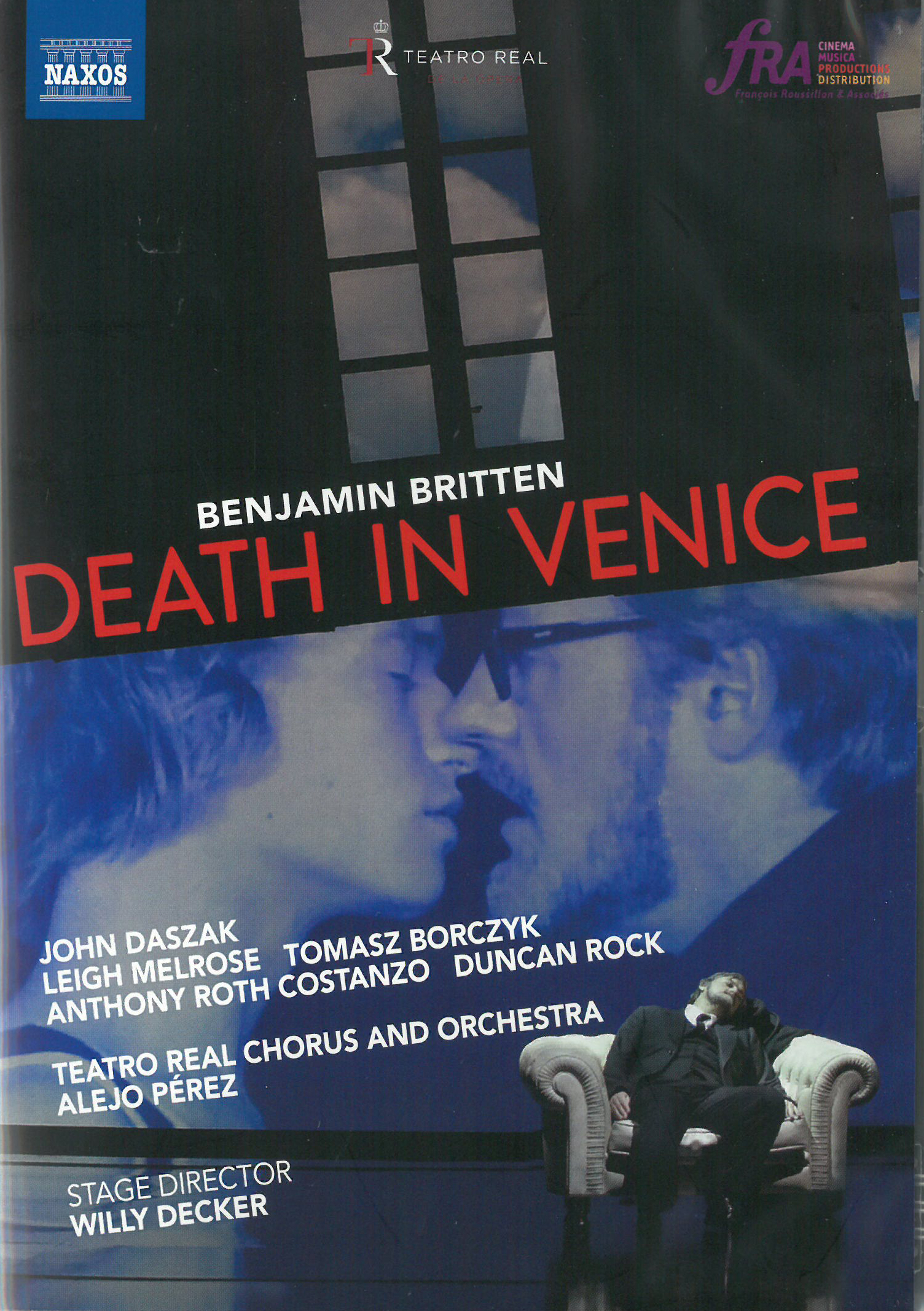
Naxos 2.110577 (naxos.com)

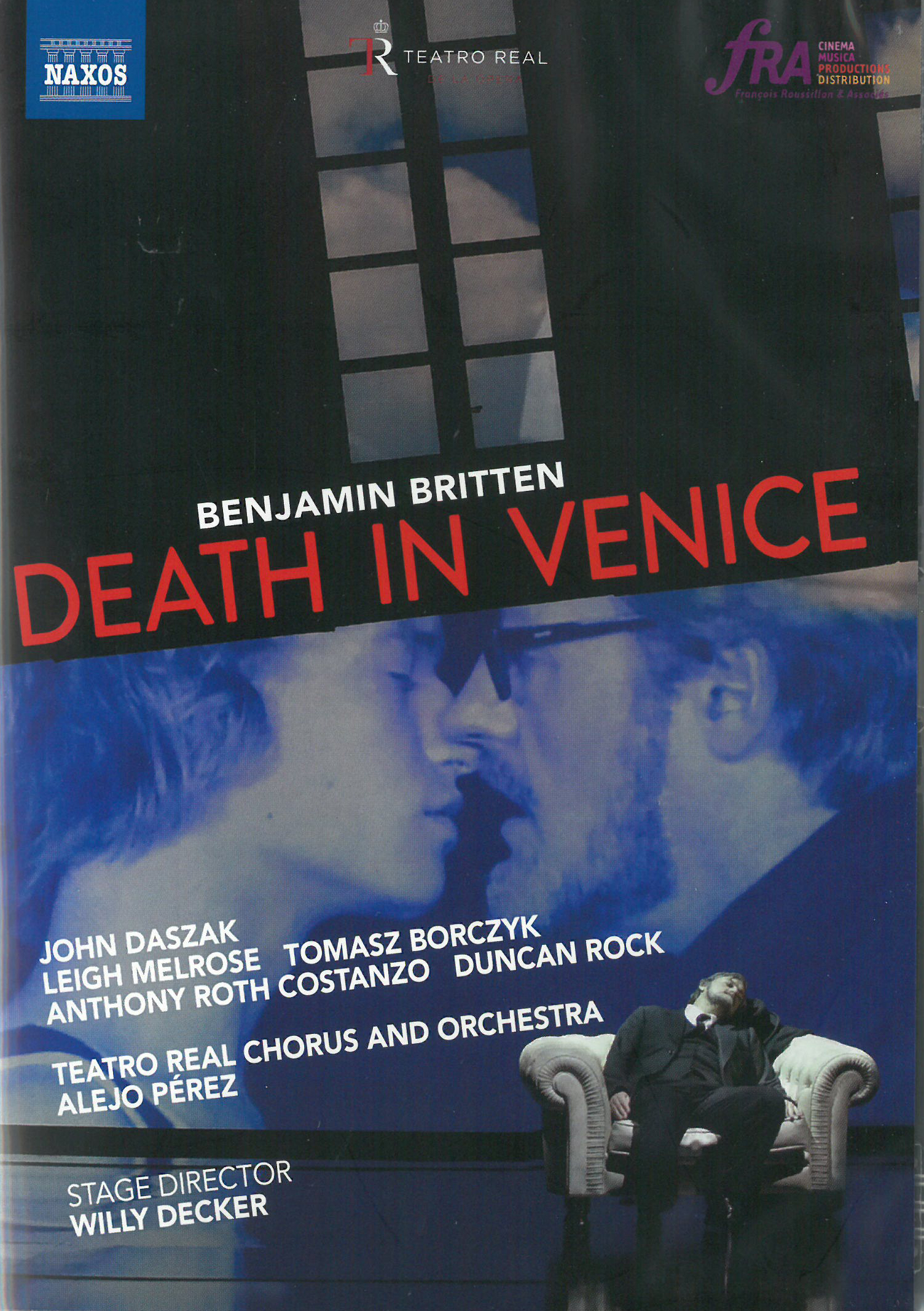
Adapted from Thomas Mann’s 1912 novella, Death in Venice (1973) was 20th-century English composer, conductor and pianist Benjamin Britten’s final opera. Its libretto has a stark, dark plotline: Gustav von Aschenbach, a famous but failing German novelist, travels to Venice for invigorating inspiration only to find disturbing mystery, a troubling infatuation with a boy called Tadzio, internal vacillation and melancholy, cholera – and as the title states, death.

The spare narrative, however, allows librettist Myfanwy Piper and composer Britten room to meditate on a rich tapestry of grand themes, primarily through the voice of Aschenbach. These include reflections on dichotomous Apollonian vs Dionysian philosophies rooted in Nietzsche’s writing, Greek mythology and ideals, and the perilous dignity accorded even an acclaimed artist (as Britten was by this time in his career).

Propelling the drama however is the doomed homoerotic May-December longing at the core of the story. It’s lent poignant authenticity by Mann and Britten’s own biographies, underscored by Britten’s dedication of the score to Peter Pears, his longtime professional and life partner, who premiered the role of Aschenbach.

Musically, Britten’s score is a study in brilliant orchestration of refreshing invention, vigour and chamber music delicacy. Characters are deftly rendered in contrasting musical styles and genres. Italian opera buffa is parodied and Aschenbach’s vocals are supported by orchestral strings and winds. By way of contrast a five-piece percussion section provides a very adroit evocation of the timbre and texture of Balinese gamelan music – representing the “other” – underpinning all of the boy Tadzio’s stage appearances.

John Daszak is exemplary as Aschenbach, and Willy Decker’s 2014 Teatro Real, Madrid production brilliantly supports the cumulative impact of the final tragic scene of Britten’s last, emotionally resonant, opera.
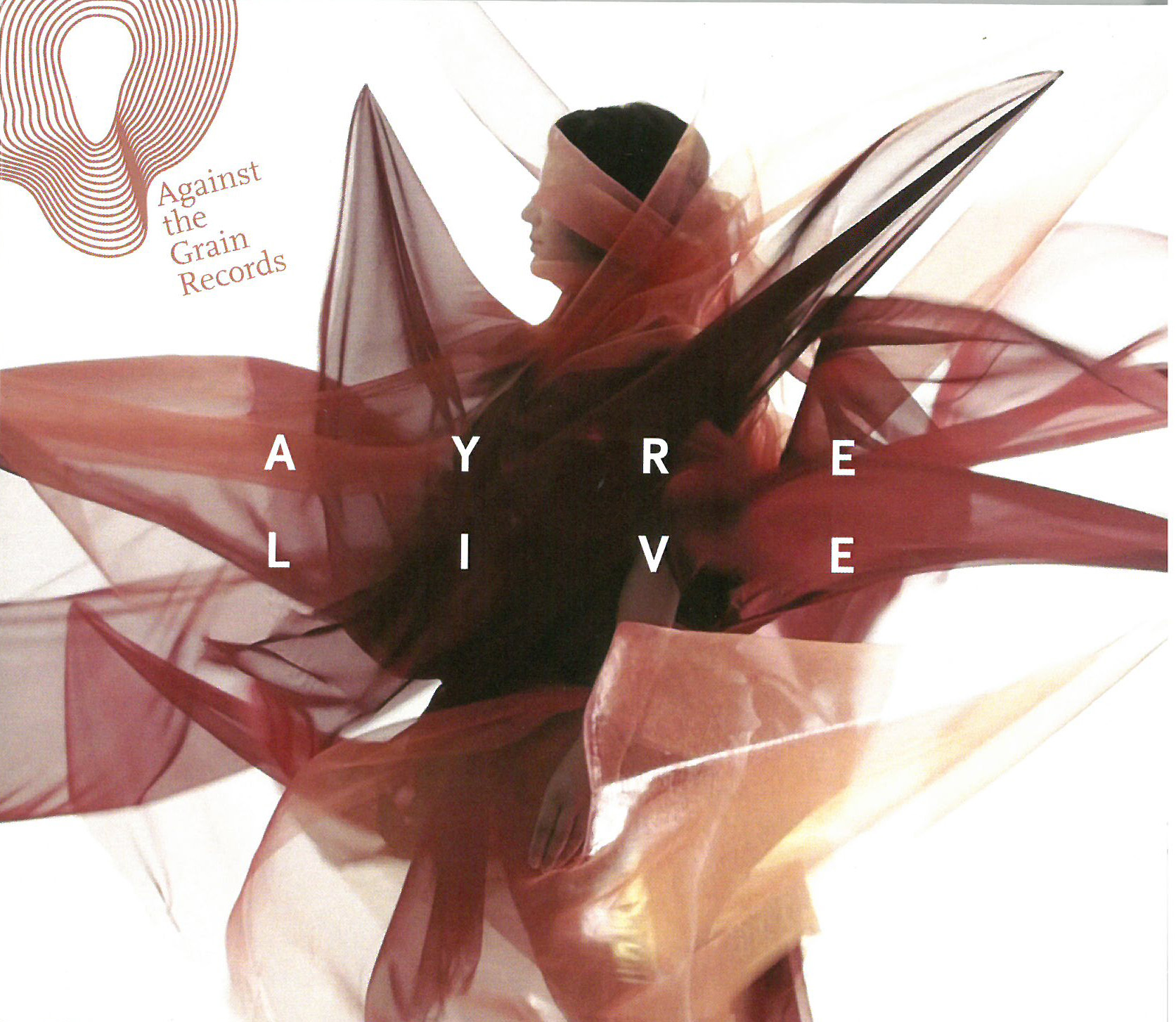
05 Golijov AyreGolijov – Ayre: Live
Against the Grain Theatre; Miriam Khalil
Against the Grain Records ATG001CD (againstthegraintheatre.com)

After I heard Ayre: Live for the first time, I knew this recording was going to be one of my favourite albums of 2018. The immediacy of the live recording is always exciting and Osvaldo Golijov’s song cycle for soprano and a small chamber ensemble is beyond gorgeous – it is intimate yet powerful, piercing with emotion and mesmerizing in its tonal expression. Like the air we breathe (the album’s title means air in medieval Spanish), it transcends the boundaries between music traditions, languages and cultures.

Based on the interweaving melodies, rhythms and poetry of Arab, Christian and Sephardic Jewish culture in Spain, Golijov also weaves in his own compositional language thus making Ayre an elaborate historical and emotional narrative. Eleven songs flow inherently from one to another while the energy rises and falls effortlessly with each one. Una madre comió asado and Nani are heavenly sounding, tranquil lullabies (though the texts are implying more complex emotions). Combinations of electronica and traditional melodies in Wa Habibi makes this song surprisingly fresh and captivating. Tancas serradas a muru, with its bewitching vocals and tribal rhythms, is a whirl of primal energies and, in contrast, Kun li-guitari wataran ayyuha al-maa’, a poem spoken in Arabic, creates a wonderful aural sparseness.

The superb chamber ensemble of Toronto’s Against the Grain Theatre has a wonderful synergy with the company’s co-founder, soprano Miriam Khalil, a true star of this recording. Her immense range of colours and fascinating vocal transformations made her performance on this album both spectacular and touching.

Listen to 'Golijov – Ayre: Live' Now in the Listening Room

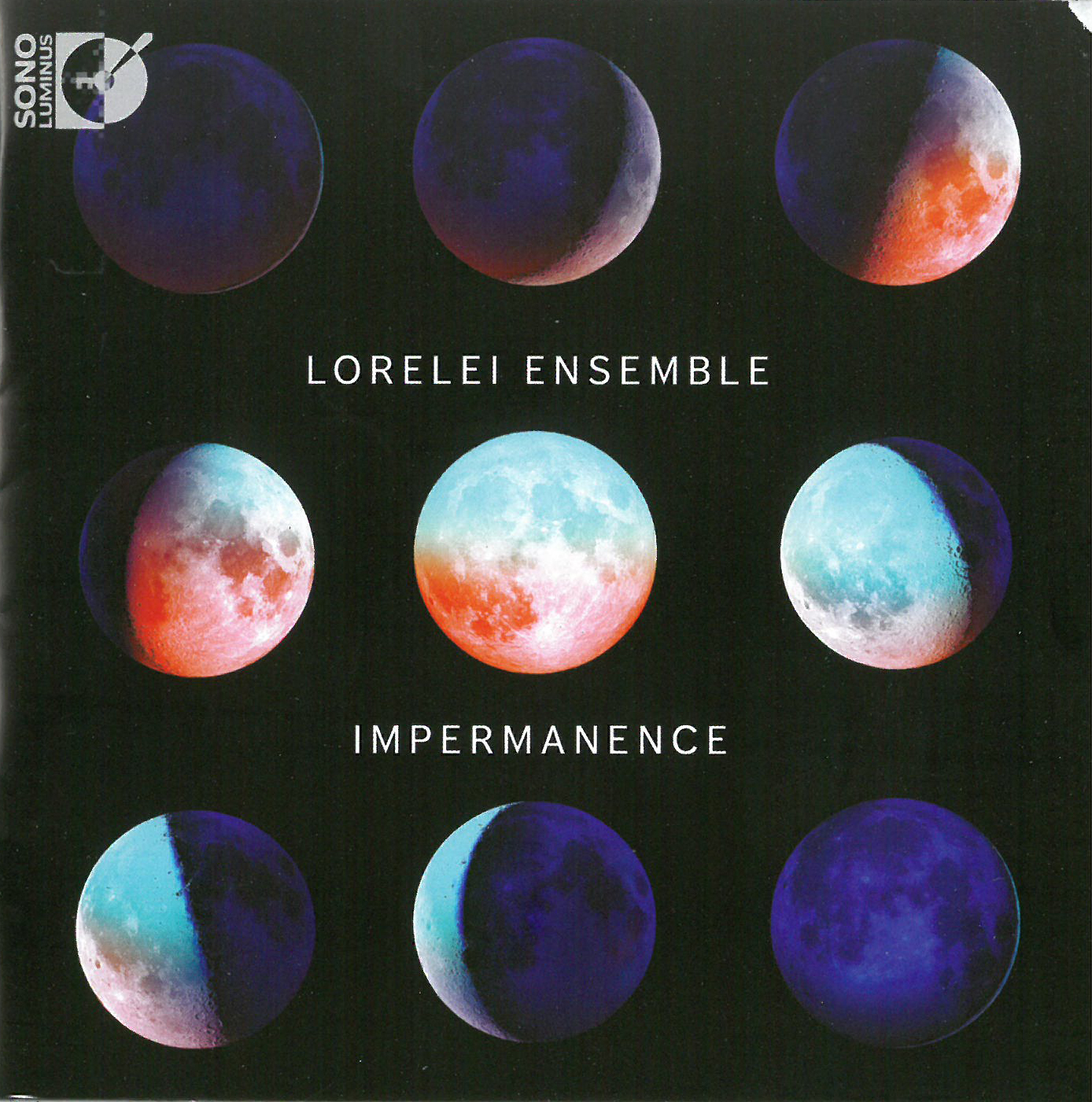
01 Lorelei EnsembleImpermanence
Lorelei Ensemble
Sono Luminus DSL-92226 (sonoluminus.nativedsd.com)

Impermanence is an album on a mission. The liner notes offer a lengthy essay by Beth Willer, artistic director of the nine-voice Boston-based women’s vocal group, Lorelei Ensemble. She mentions the migration of peoples, pilgrimage, the essential impermanence of existence, and the function of music “as a container of meaning,” among other topics.

Examining the old-juxtaposed-with-the-new-repertoire approach of this album, it can be grouped into four categories, beginning with the 12th-century song Portum in ultimo. Among the earliest of works in polyphonic notation, it’s preserved in a book meant for pilgrims travelling along the Camino de Santiago de Compostela.

The much larger second group consists of 15th-century motets by Guillaume Du Fay, the renowned Franco-Flemish composer, plus motets from the contested “anonymous” Turin Codex J.II.9 of Cypriot-French origin. The J.II.9 songs with their polyphonic freedom and piquant resultant harmonies reflect the remarkable fluidity of the people and cultures between the European mainland and the 15th-century French court in Cyprus.

In a third group falls the choral work Tsukimi (Moon Viewing 2013) by American composer Peter Gilbert, eliciting the Japanese celebration of the full moon in ancient Heian era poems. Eight individual songs, evocatively rendered by Gilbert, are interspersed among the motets and two Toru Takemitsu (1930-1996) Vocalises. Constituting the fourth group, these songs are from Takemitsu’s larger composition Windhorse, depicting Tibetan nomads.

The album closes with Takemitsu’s Vocalise II. It offers a satisfying tonal closing, the core of which is a quote from a Bantu lullaby, resolving the bracing modernist harmonies heard just beforehand. To my ear Lorelei Ensemble’s ambitious concept album works superbly.

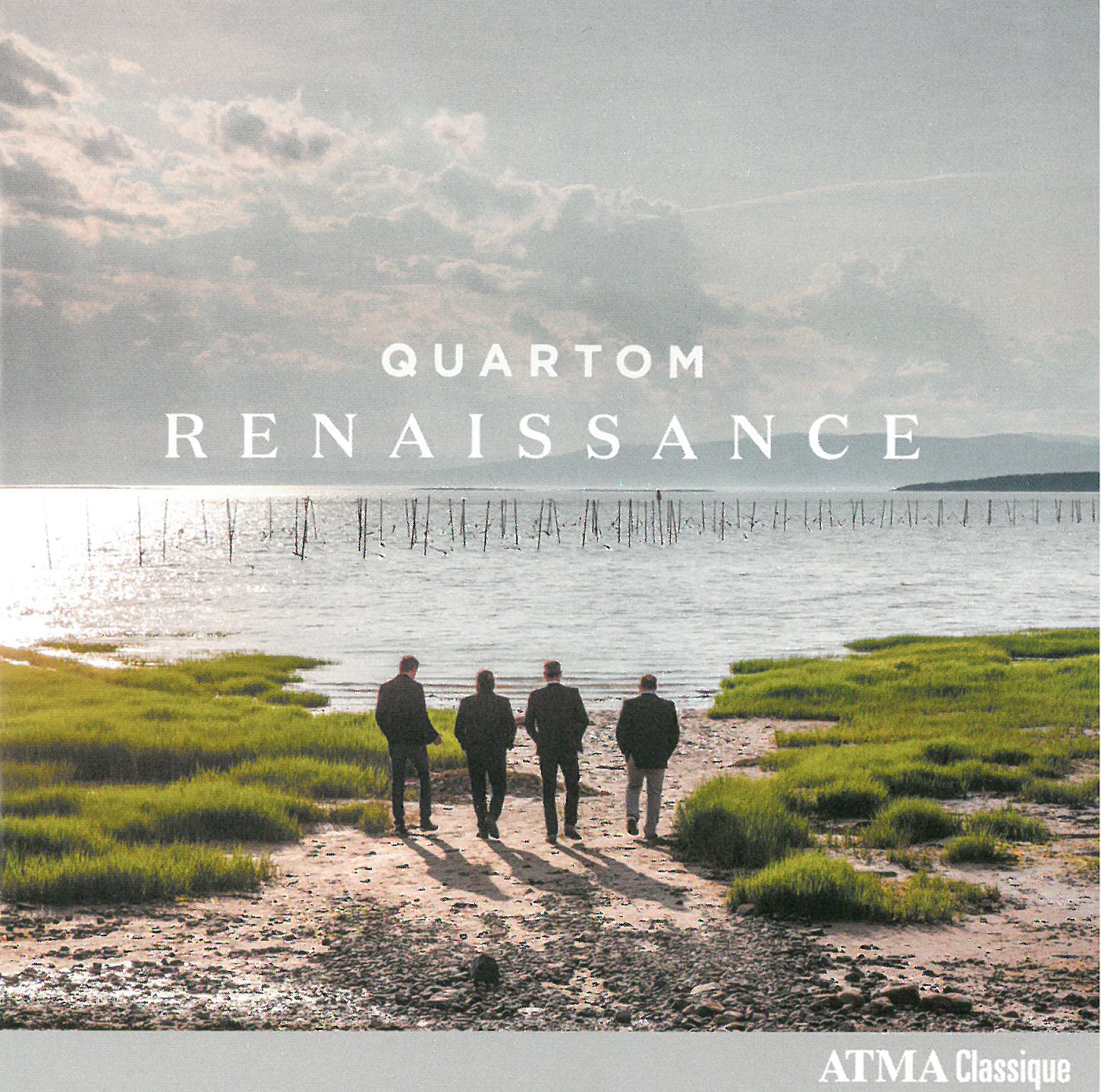
02 QuartomRenaissance
Quartom
ATMA ACD2 2769 (atmaclassique.com/En/Albums/AlbumInfo.aspx?AlbumID=1613)

Recorded at St. Esprit Church in Montreal, this CD celebrates Quartom’s tenth anniversary, bittersweet perhaps, with the replacement of founding tenor Gaétan Sauvageau by the accomplished Antonio Figueroa. I was interested to see that the three other members, baritones Benoit Le Blanc, Julien Patenaude, and bass-baritone Philippe Martel, were all members of children’s choirs in their earlier years, two with Les Petits Chanteurs du Mont-Royal and the other, an alumnus of La Maitrise des petits chanteurs de Québec. It is clear that something in the musical education of these singers taught them exceptional phrasing technique in performance. For this is exactly what makes this recording of pure Gregorian chant alternating with Palestrina’s polyphonic settings remarkable.

Palestrina composed in what Monteverdi referred to as “prima prattica,” a “stile antico” of pure counterpoint in deference to an earlier era. Palestrina’s elegant curves of sound and long-breathed melody never detract from the original character of Gregorian chant on which his compositions are based. He imbued the melodies with vitality by incorporating rhythmic irregularities and clean sonorities with a few well-prepared dissonances to reflect textual nuance. He was the master of creating polyphonic textures that have distinct clarity. Therefore, his a cappella motets have a similar requirement of singers performing Gregorian chant: precision intonation and sensitivity to textual phrasing throughout – both of which are evident in Quartom’s performance, in addition to their exquisitely beautiful tone.

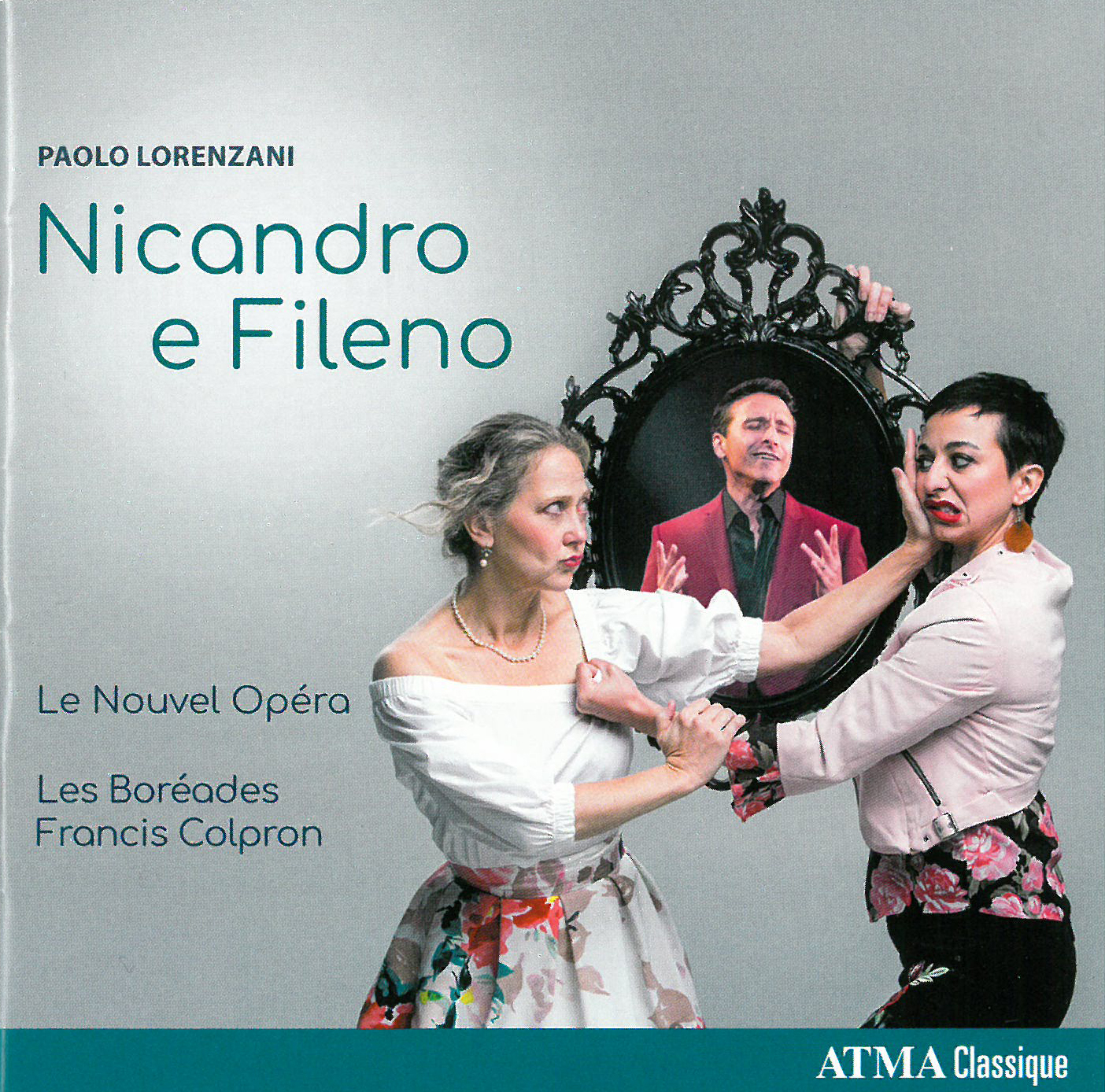
03 Nicandro e FilinoPaolo Lorenzani – Nicandro e Fileno
Le Nouvel Opéra; Les Boreades; Francis Colpron
ATMA ACD2 2770 (atmaclassique.com/En/Albums/AlbumInfo.aspx?AlbumID=1610)

Le Nouvel Opéra and Les Boréades de Montréal are Montreal-based companies dedicated to musicologically and performatively reviving, remounting and reimagining music of the Baroque era (1600 to 1750). Clearly committed to the authenticity, accuracy and specificity of this intricate music (along with its detailed performance practices), historical musicology and creative performance coalesce here on this 2018 recording to shine a light on music that otherwise would run the risk of being relegated to the footnotes of music history.

Here, the first ever recording of Nicandro e Fileno, Paolo Lorenzani’s (1640-1713) pastoral opera for six singers that was initially performed, in Italian, in 1681 before Louis XIV at the palace of Fontainebleau, is brought to life by an aggregation of thoughtful scholars, practitioners and performers. And while there is no doubt that the ensemble, under the skillful direction of conductor and Boréades founder Francis Colpron, is dedicated to the period piece accuracy of this music, these sides are not fusty and this music is not ossified. Rather, new life has been imbued across all three acts, and the once-forgotten Italian-style opera comes alive on this beautifully captured and rendered ATMA Classique recording. The music, along with its unpacking of the still-relevant and universal themes of love, along with its trials and tribulations, brings escapist joy to general music fans and early music enthusiasts alike in these troubled times. A detailed accompanying booklet capturing extensive historical notes and the opera’s libretto is a welcome addition.

Listen to 'Paolo Lorenzani: Nicandro e Fileno' Now in the Listening Room

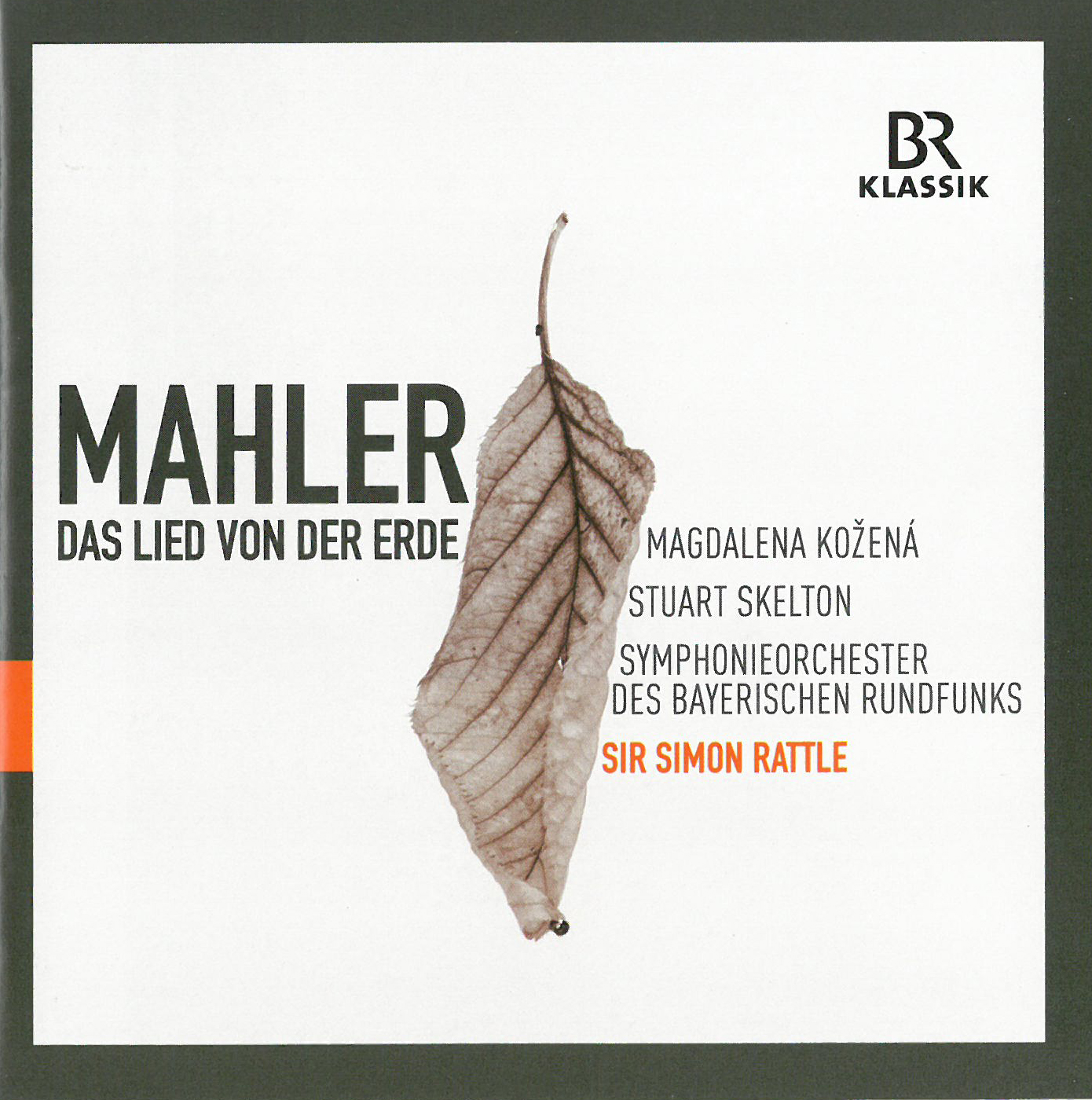
04 Mahler Das LiedMahler – Das Lied von der Erde
Magdalena Kožená; Stuart Skelton; Bayerischen RSO; Sir Simon Rattle
BR Klassik 900172 (br-klassik.de/orchester-und-chor/br-klassik-cds/symphonieorchester/br-klassik-cd-symphonieorchester-mahler-lied-simon-rattle-100.html)

Gustav Mahler began work on his “Symphony for Tenor, Alto (or Baritone) and Orchestra” in 1907, a year marked by a series of personal and professional tragedies. Around that time he was given an anthology of Chinese Tang dynasty poetry transliterated from French to German by Hans Bethge. Captivated by the melancholy tone of these poems that so well captured his sense of resignation, he sought out early recordings on wax cylinders of authentic Chinese music and, philosophical by nature, also immersed himself in Buddhist literature. Choosing several poems from this volume he created what he covertly regarded as his ninth symphony the following summer.

The present recording is assembled from live performances conducted by Sir Simon Rattle in January of 2018, his second and unquestionably his finest recording of this work. I normally prefer a darker-voiced contralto (or baritone) in this song cycle, however Magdalena Kožená’s beautiful mezzo-soprano upper register and sensitive tonal inflections eventually won me over. Even more impressive to my mind is the heroic tenor of the Australian Stuart Skelton, whose powerful voice rides effortlessly over the massive orchestration of the opening movement, yet is capable of an agile suppleness in the lighter movements that follow. The excellent Bavarian Radio orchestra once again demonstrate their stellar reputation as a Mahler orchestra dating back to the days of Rafael Kubelík’s superb box set of the symphonies from the 1960s.

The recording is clear and close-miked with negligible extraneous noises, and text and translations are included. Of the 60 or so recordings of this work that have seen the light of day this one surely belongs among the top ten.

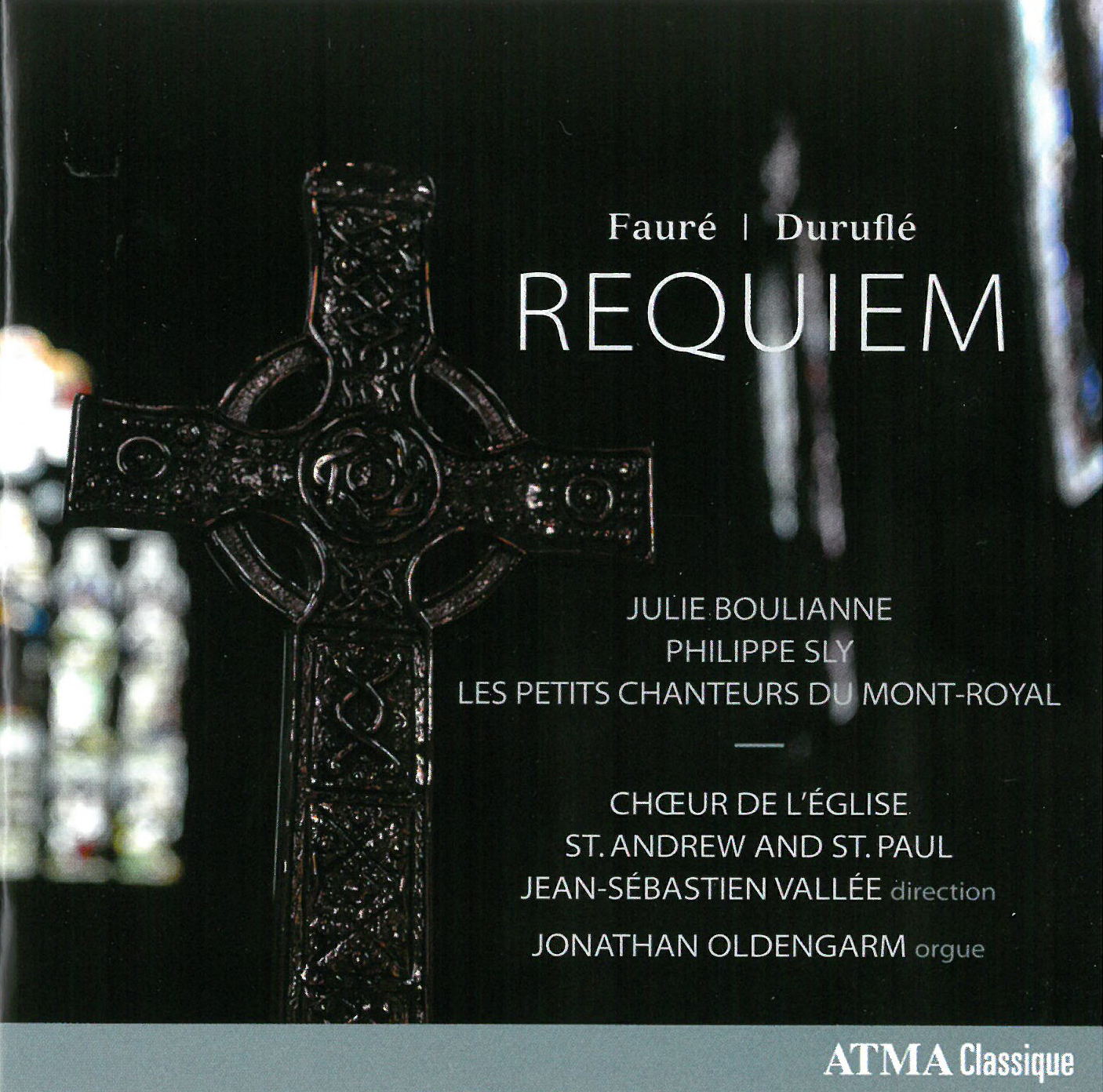
05 Faure Duruffle RequiemFauré; Duruflé – Requiem
Julie Bouliane; Philippe Sly; Choeur de l’Eglise St. Andrew and St. Paul; Jean-Sebastien Vallée
ATMA ACD2 2779 (atmaclassique.com/En/Albums/AlbumInfo.aspx?AlbumID=1615)

The Requiem Masses by Fauré and Duruflé prove a nice pairing on this CD. Each composed three different versions of the choral Requiem, scored for chamber or full orchestra, or with organ accompaniment as chosen and lovingly performed by Jean-Sébastian Vallée on this recording. Both composers, eschewing the operatic 19th-century Requiem settings of Berlioz and Verdi, chose instead to focus on images of rest and peace. In both masses, the highly dramatic sections of Dies irae are omitted while the uplifting Pie Jesu is retained. Both composed Libera me for baritone soloist, and in this performance, Philippe Sly so beautifully intones the humble plea, never once diminishing the powerful timbre of his voice.

Fauré composed his melodies using the Hellenic principles of clarity, balance and serenity and Duruflé, writing 60 years later, based his on the Gregorian melodies for the Mass of the Dead, imbuing them with rhythmic variation and harmonic enhancement. The pace with which the Choir of the Church of St. Andrew and St. Paul is directed on this album allows for a deeply reverent quality throughout. In the Duruflé Pie Jesu, the interweaving of mezzo-soprano Julie Boulianne with Elinor Frey’s ad libitum cello results in a beautifully warm and inviting entreaty, while it is interesting to hear Les Petits Chanteurs du Mont-Royal sing Fauré’s Pie Jesu in perfect unison, rather than performed by the traditional solo treble.

07 Britten Death in VeniceFrank Martin – Mass for Double Choir
Westminster Choir; Joe Miller
Independent wcc1809 (naxosdirect.com/items/miller-mass-for-double-choir-465897)

Why isn’t the music of Frank Martin better known? Born in 1890 into a fervently Christian family – his father was a Calvinist minister – this Swiss-born composer reached maturity at a time when many composers were experimenting with new means of expression such as serialism and atonality. Nevertheless, while Martin did adopt certain contemporary styles, most of his music remained firmly rooted in the past. This was particularly evident in his works for chorus and never more so than in his great Mass for Double Choir performed here by the Westminster Choir under the direction of Joe Miller.

Written in 1922, the Mass was Martin’s only unaccompanied choral work and today it is regarded as among the greatest a cappella works of the 20th century. An intimately personal creation, Martin kept it under cover for nearly 40 years and it wasn’t until 1963 that it was first published and performed.

Not surprisingly, the Westminster Choir does it full justice. The work opens with simple flowing lines not dissimilar to those of Gregorian chant. Yet very soon, the score leaves medieval Europe and joins the 20th century with lush impressionistic harmonies. Indeed, the five-movement mass is a study in contrasts from the introspective Kryie to the solid Gloria and the mysterious Agnus Dei. Throughout, the choir provides a sensitive and profound performance – music written as a true testament to a composer’s deep Christian faith.

An added bonus on this disc is the inclusion of four short choral pieces by Edward Bairstow, Joel Phillips, Anders Öhrwall and Bernat Vivancos, all of which round out a most satisfying recording. For lovers of choral music this CD is a must – beautiful music exquisitely sung – we can’t ask for more.

01 Adieu mes tres bellesAdieu mes tres belles
Poline Renou; Matthieu Donarier; Sylvain Lemêtre
Yolk Records 3 2076 (yolkrecords.com)

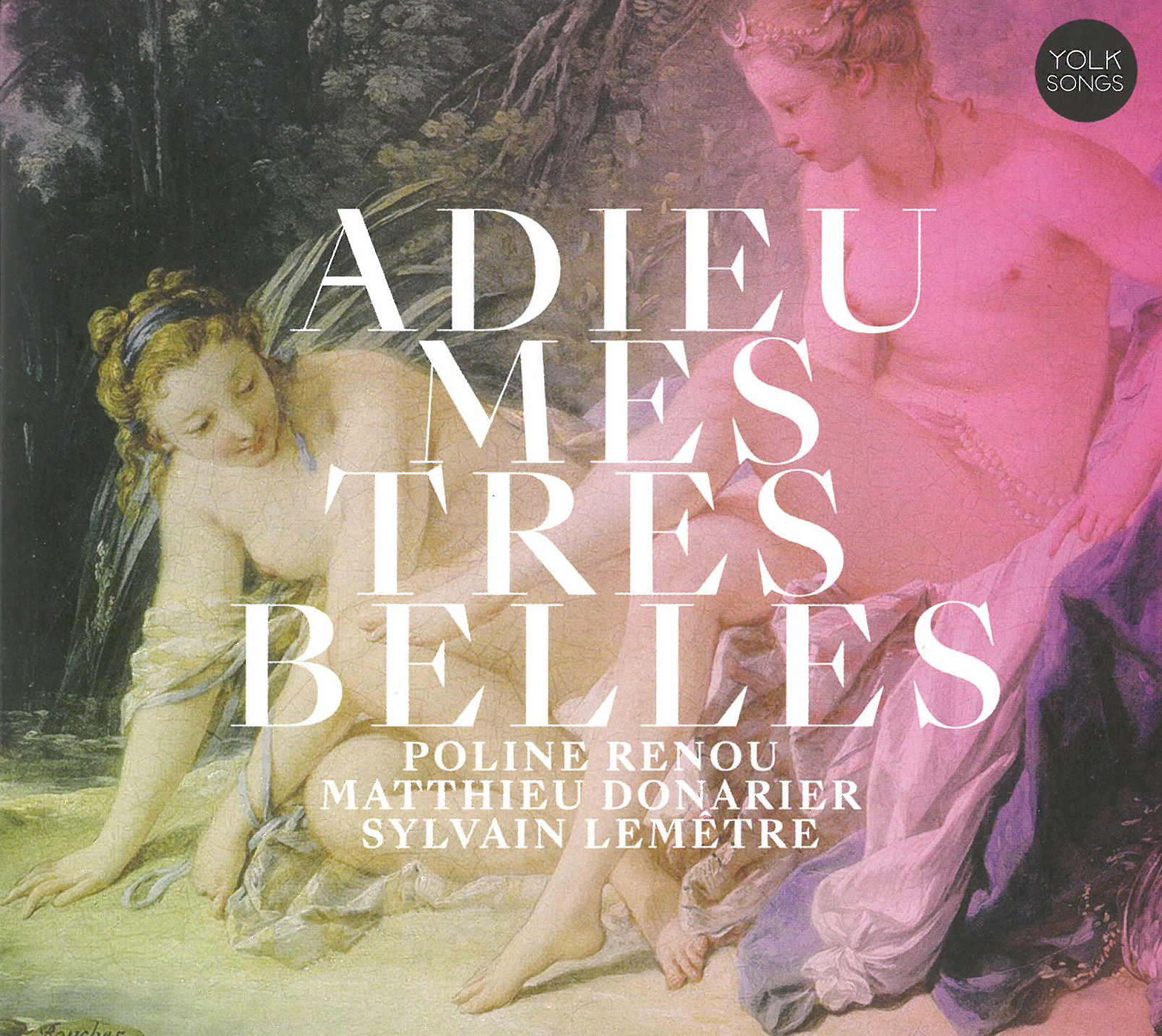
The vocalist Poline Renou and clarinetist Matthieu Donarier have been making ethereally beautiful music for more than a decade. Joined on this excursion Adieu Mes Tres Belles by the percussion colourist Sylvain Lemêtre, their music makes a magical rhythmic turn with Renou’s pristine, high-sprung voice being daubed by rhythmic paint, so to speak, while both musicians are embraced by Donarier’s near-mystical harmonics as he breathes into his various clarinets.

This repertoire cuts a majestic swathe from early European monodies through the polyphonic music of the late Renaissance to the edge of the Baroque era. Despite this extraordinary range of music cutting through a myriad of modal frameworks, a magical gossamer-like thread sews it all together. This is largely due to the wraith-like presence of Renou, whose chaste, slender voice creates a sense of rapt spirituality throughout the proceedings. Her vocals are bathed in the voluptuous, round sound of Donarier’s clarinets, aptly suggesting a warm and resonant music from ninth-century anonymous works to those of Gilles Binchois, Michelangelo Rossi and Vicente Lusitano from the 15th to the 17th centuries.

Lemêtre’s drums create contemporary drama around the moments of Renou’s vivid word paintings and Donarier’s expressive chromaticisms and dissonance, of which Heu Me Domine is a splendid example. Overall the disc is a rapturous unveiling of sacred and secular works – a happy marriage of astute scholarship and daringly rigorous, idiomatic performance.

Listen to 'Adieu mes tres belles' Now in the Listening Room

02 Lucio SillaMozart: Lucio Silla
Kurt Streit; Patricia Petibon; Teatro Real, Madrid; Ivor Bolton; Claus Guth
BelAir Classiques BAC 150 (belairclassIques.com)

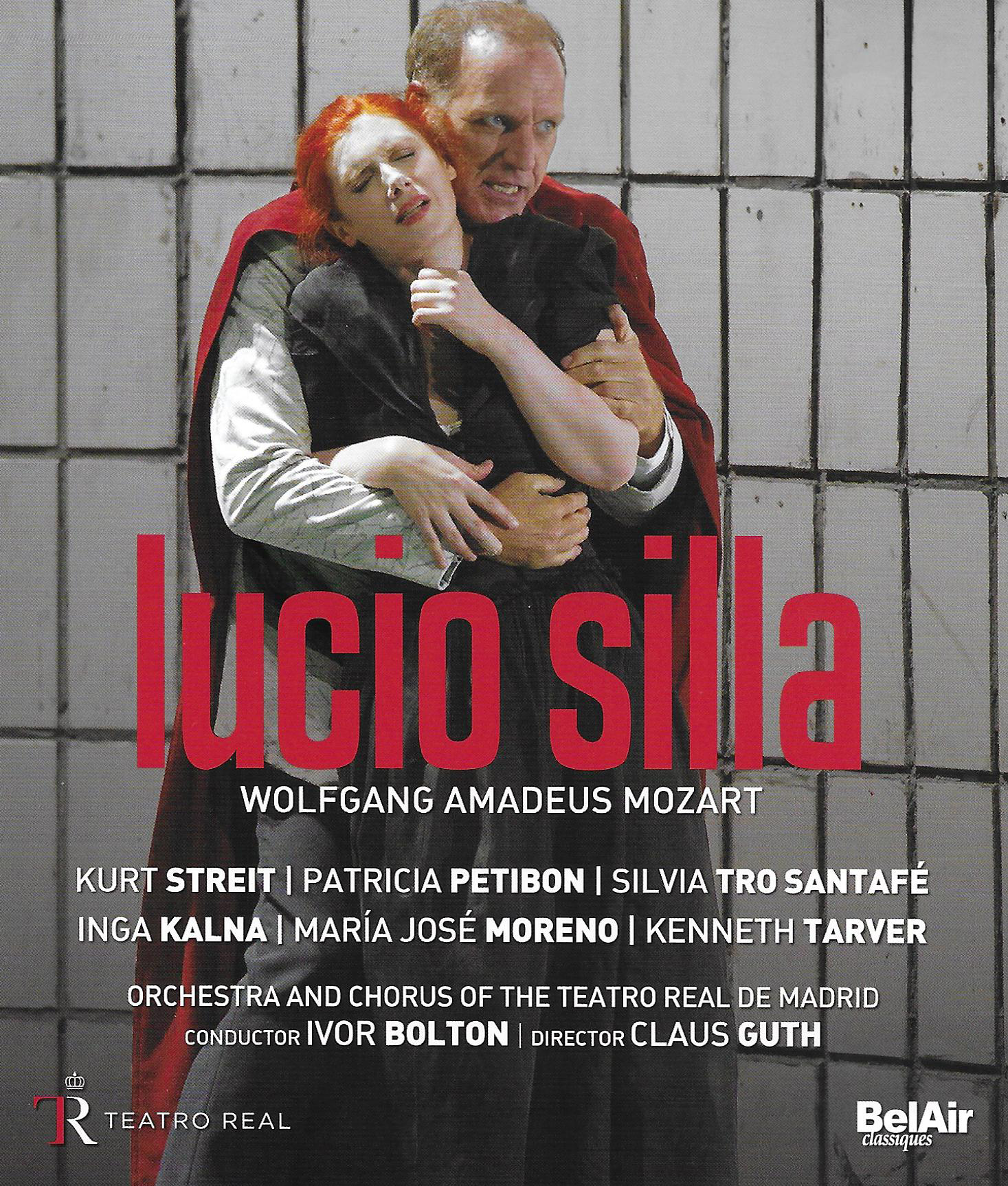
Lucio Silla is Mozart’s fifth opera, written when he was a 16-year-old. Lucio Silla was a Roman dictator and as one might expect, was surrounded by endless found love, lost love, intrigue, threats, dire punishments, etc.

Mozart’s early operas are characterized by concertante arias – that is to say the vocal line is like an instrumental concerto (duet, trio, quartet, etc.). Such vocal writing is extremely demanding of the singers. These early works of Mozart bare no signs of being composed by a teenager. The stories, and Lucia Silla is no exception, have complex plots and lyrical texts that are dealing with human feelings and troubled souls. Another characteristic of these early works was the employment of castrati in the leading roles. In Lucio Silla, as in other works, for the most part Mozart wrote for singers that he knew and the writing was customized to suit their virtuosity.

Whereas today there are no castrati, there are countertenors who specialize in Baroque and early classical composers: Vivaldi, Pergolesi, Handel et al. In all Mozart operas, however, today’s practice is to use female vocalists. The best example is the role of Cherubino, a male character written to be sung by a castrato in Le nozze de Figaro, where today only female vocalists are heard. In Lucio Silla, two of the main male characters are stunningly sung by women, in particular, soprano Silvia Tro Santafé in the role of Cecilio. She is truly outstanding with a magical voice and a true Mozart technique and affinity, in the company of a cast not far behind. This production attempts to recreate the story into a later time. I am not taken by the staging, truly abstract and not of anything to do with the plot. Hence, there is nothing else but the superb singing to occupy our attention. In that way the staging issue is unimportant, thanks to the greatness of Mozart’s incomparable score.

The orchestra and conductor are first-class in every respect. Others in the cast are Kurt Streit (Lucio) Patricia Petibon (Giunia), Inga Kalna (Cinna), Maria José Moreno (Celia) and Kenneth Tarver (Aufidio).

05 StanilandAndrew Staniland – Go By Contraries
Tyler Duncan; Martha Guth; Erika Switzer
Centrediscs CMCCD 25918 (musiccentre.ca)

Three dramatic song cycles by Canadian composer Andrew Staniland comprise this exciting, intense, rewarding release performed with respect, musicality and technical prowess by soprano Martha Guth, baritone Tyler Duncan and pianist Erika Switzer. Each showcases the composer’s innate ability to combine words and sound to create thought-provoking, quasi-programmatic works.

Earthquakes and Islands, a setting of Robin Richardson’s poetry, is a tour de force, an eight-movement work exploring the emotional aftermath of a relationship gone wrong. This is high intensity, contrasting music verging on the disturbing. The first section’s opening dramatic piano trill and soprano held notes, subsequent almost-over-the-top low piano crash and low pitched chords contrasting the soprano line set the stage for the entire work. The almost-spoken baritone part in Future Perfect’s third section has the piano atonal lines double the vocals to the calming ending. In My Voice, In My Mouth, dramatic piano low chords, distressed soprano vocals, huge loud and reflective quieter sections support the cancer patient’s feelings of panic/calm. The closing Go By Contraries is just that, as piano string glissandos set up the vocal duet to the closing ascending buildup and final piano fade.

Peter Quince at the Clavier, using a Wallace Stevens text for baritone, and Execution Songs for soprano, feature more of the same intense soaring vocals, piano textures and wide ranging dynamics.

Maybe a bit too melodramatic, but these great compositions, production and performances must be heard!

Listen to 'Andrew Staniland – Go By Contraries' Now in the Listening Room

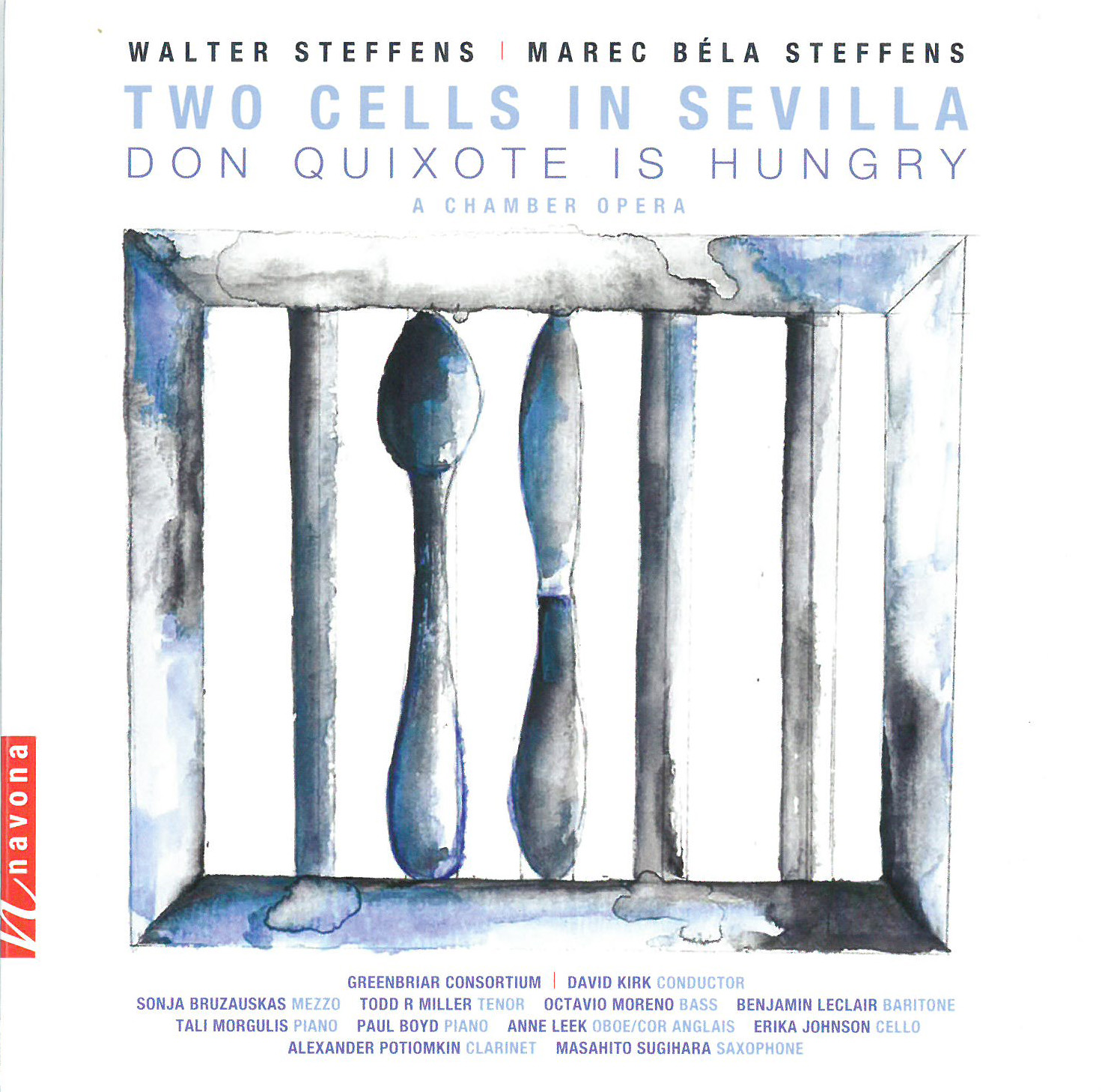
06 Two Cells in SevillaTwo Cells in Sevilla: Don Quixote Is Hungry
Sonja Bruzauskas; Todd R Miller; Octavio Moreno; Benjamin Leclair; Greenbriar Consortium; David Kirk
Navona Records NV6174 (navonarecords.com)

Two cells in adjacent buildings overlook a square in 16th-century Seville. Gabriel Téllez (baritone Octavio Moreno), a monk who wrote under the name Tirso de Molina, is in his cloister; Miguel de Cervantes (tenor Todd R. Miller), along with his Servant (bass Benjamin LeClair), is in prison, accused of embezzlement.

Gabriel and Miguel lament over their “watery broth” and plead with the Cook (mezzo Sonja Bruzauskas) for better food, but she rebuffs them, lost in her dreams of romance. Trying to charm her, Gabriel and Miguel begin creating their now-classic tales of Don Juan and Don Quixote, respectively, until they’re interrupted by a letter signed “John Falstaff.”

Marec Béla Steffens’ clever, fanciful libretto is set to music by his father, German composer Walter Steffens (b.1934). The 38-minute opera, scored for oboe/English horn, clarinet, saxophone, cello and piano, in addition to the four singers, was premiered in Houston in 2016. The text is sung in parlando style, the vocal and instrumental lines lively and engaging. Given its economical forces and inherent entertainment value, with many familiar musical and literary references, this comical chamber opera is a natural audience-pleaser for conservatories and small opera companies everywhere.

The CD also includes Walter Steffens’ pensive, 12-minute song cycle, Five Songs on Hölderlin (2008), performed by Bruzauskas and pianist Tali Morgulis. No texts are provided, but the opera libretto and Hölderlin’s German verses, without translation, are downloadable from Navona’s website.

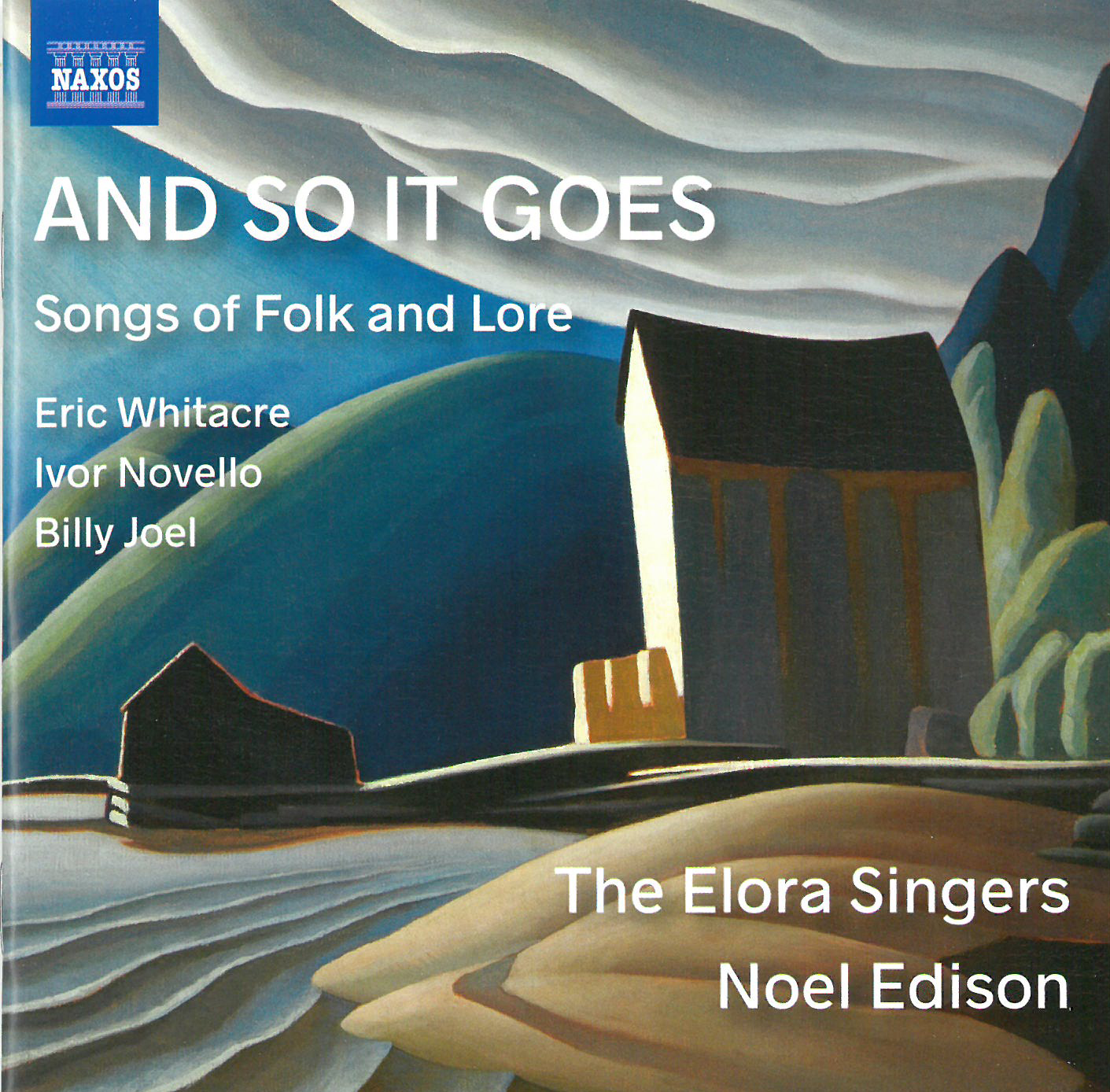
07 Elora SingersAnd So It Goes – Song of Folk and Lore
Elora Singers; Noel Edison
Naxos 8.573661 (naxos.com)

This superb recording literally cuts a choral swath through Canada, the United States and the British Isles, by including musical material that literally helped shape the cultural identity of those nations. Britain is represented here by compositions from Ivor Novello, Gustav Holst and Ralph Vaughan Williams. Several traditional airs are also present, as is the work of two Canadian composers: Jimmy Rankin’s JUNO-winning Fare Thee Well My Love and Eric Whitacre’s Go, Lovely Rose. From the US comes Billy Joel’s melancholy And So It Goes. With Joel’s poetry reframed in a fresh and almost hymn-like arrangement, the song takes on a whole new emotional life. Recorded by Nobert Kraft at St. John the Redeemer in Elora, this ambitious recording was produced by Kraft and Bonnie Silver; the two gifted pianists featured are Leslie De’Ath and James Bourne.

The award-winning Elora Singers is an all-professional vocal ensemble founded in 1980, that has thrilled the world with many memorable performances, as well as bringing Canadian vocal chamber repertoire to the international stage. The choir is, of course, the linchpin of the noted Elora Festival.

There are 21 pieces on this CD, each one a perfectly cut diamond – all refracting light in their own uniquely beautiful way. Of special note are Vaughan Williams’ Three Shakespeare Songs. The choir, expertly conducted by founding director Noel Edison, uses dynamics, sibilant consonants, control of vibrato and impeccable intonation to wend its way through the complex arrangements; it almost seems as if they can morph into a fantastically intricate one-celled being, displaying precision, inspiration and unfailing musicality in equal parts.

08 Halibut CheeksHalibut Cheeks & Other Love Songs
Leslie Fagan; Lorin Shalanko
Independent (canadianartsong.com)

Soprano Leslie Fagan and pianist Lorin Shalanko, both international performers and professors of music at Wilfrid Laurier University, are devoted to showcasing Canadian composers through their Canadian Art Song Series, which premiered with the release of Thread of Winter in 2016. This second recording in the series, which takes on the theme of love and romance, is bursting with heartfelt and melodious pieces performed with great warmth and passion. Since the prelude to romance is often a meal, the recording begins with the witty David L. McIntyre’s Creek Bistro Specials in which a sumptuous (and very Canadian) menu, from appetizers to desserts, is extravagantly presented in song. Nestled within the mains is the title track Halibut Cheeks and one can’t help but note a clever nod to Schubert’s Die Forelle in the piano part at the end of the Grilled Trout course.

In the selections that follow, the performers mine exquisite depths of emotion, first with Lionel Daunais’ Cinq Poèmes d’Éloi de Grandmont, then with Srul Irving Glick’s sensuous Seven Tableaux from the Song of Songs. Gorgeous selections by Matthew Emery and Michael Coghlan by turn frame Gladys Davenport’s Cool and silent is the lake, in which Fagan and Shalanko delicately evoke a sense of wonder at nature’s tranquility.

Listen to 'Halibut Cheeks & Other Love Songs' Now in the Listening Room

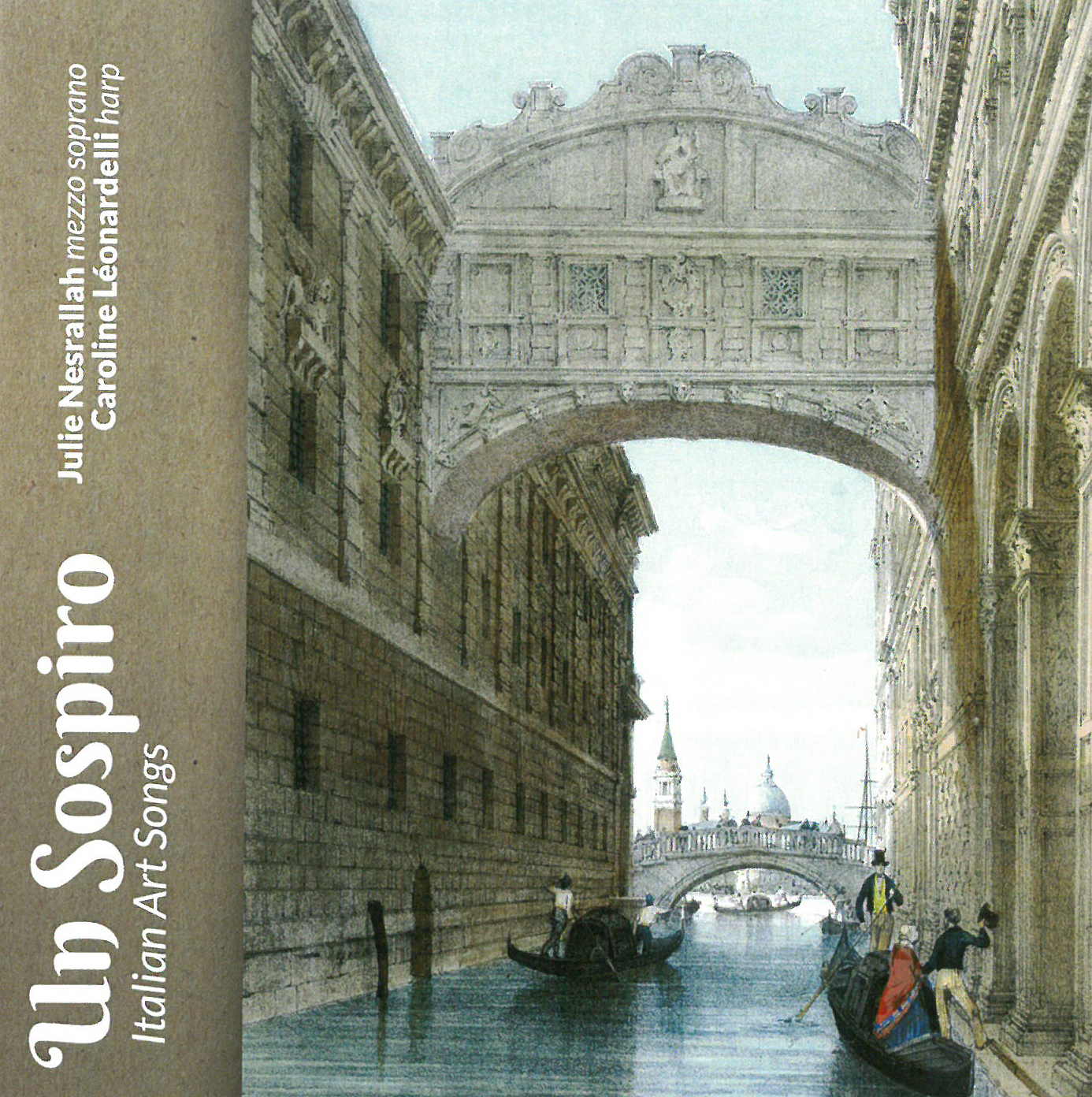
01 Nesrallah LeonardelliUn Sospiro – Italian Art Songs
Julie Nesrallah; Caroline Leonardelli
Cen Classics CEN1469 (carolineleonardelli.com)

It is wonderful to hear distinguished Canadian mezzo-soprano Julie Nesrallah together with celebrated harpist Caroline Leonardelli perform the Italian art song repertoire. In this disc’s opening Bellini group, Nesrallah’s rich, secure voice brings ardent expression to these three love lyrics of which Lovely moon, you who shed silver light shines with melodic appeal. As with the disc’s other songs, the original piano accompaniments are replaced by fine harp arrangements, many by Leonardelli, that lend a dignified antique ambience. In Verdi’s setting of Gretchen’s prayer to the Virgin Mary (Oh, with mercy) from Goethe’s Faust, Nesrallah contributes dramatic power and vocal colour to the heartfelt plea. I particularly appreciate hearing both artists bring to life song groups by Puccini and Leoncavallo, each of which includes a mattinata (morning song). Puccini’s (Sun and love) is through-composed and has a gorgeous melody, while Leoncavallo’s cheerful romance, Mattinata, is in a more popular style with verse-and-refrain structure and conventional harmony.

Song composer Paolo Tosti is also known for his lighter style, and yet the two examples here make me wonder, especially his setting of d‘Annunzio’s Lasciami! It attains the peak of impassioned vocalism in Nesrallah’s interpretation, echoed by Leonardelli’s concluding harp solo. Following this work is Monteverdi’s well-known Lasciatemi morire (Arianna’s Lament), perhaps suggesting the high level of Tosti. Early songs by Respighi, including the uncanny Nebbie (Mist), are yet another revelation on this CD – highly recommended!

Listen to 'Un Sospiro – Italian Art Songs' Now in the Listening Room

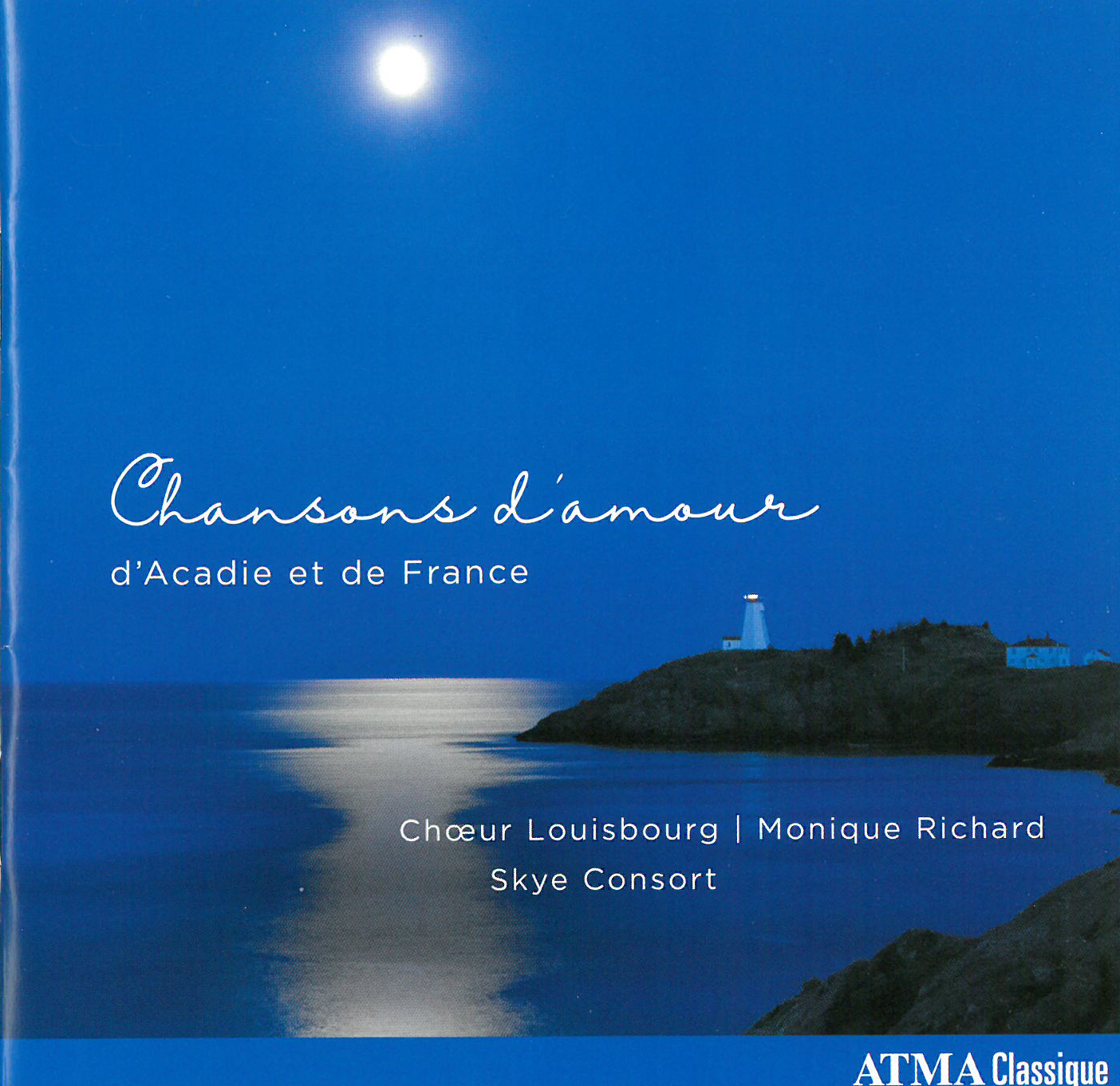
02 Chansons d amourChansons d’amour d’Acadie et de France
Choeur Louisbourg; Skye Consort; Monique Richard
ATMA ACD2 2776 (atmaclassique.com)

New Brunswick’s Louisbourg Choir celebrated its tenth anniversary in this collaboration with the Skye Consort, a gifted early music ensemble whose mandate is to craft their own contemporary arrangements of seldom-heard vocal and instrumental pieces. For the first section of this recording, cittern-player Seán Dagher has arranged a number of charming selections from the Chansons folkloriques d’Acadie-La fleur du rosier and Chansons d’Acadie collections. Songs of love, travel, adventure and everyday life are delightfully and unreservedly performed by this accomplished choir, interspersed with spirited instrumentals by the ensemble.

The second half of the recording features chansons by little-known composer Jacotin Le Bel (1495-1556), who served in the royal court of France during the reigns of François I and Henri II. Here, the choir shines as director Monique Richard deftly leads them through the complexities of vocal polyphony and luxuriant voicings reminiscent of Josquin des Prés. In these renderings, one appreciates the small size of the chorus. With four or five to each vocal part, the singers are better able to navigate the fluidity of long melismas and realize greater clarity of text. Again, the Skye Consort intersperses with enchanting interludes.

Back to top