15 station threecd001 x01cpStation Three
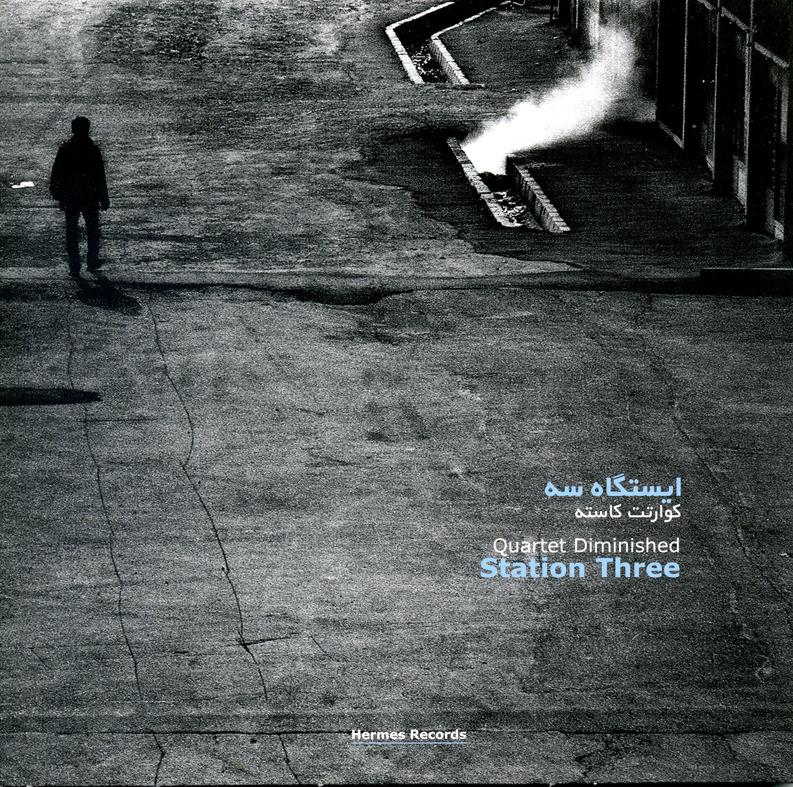
Quartet Diminished
Hermes Records Her 092 (quartetdiminished.com)

Despite the repressive theocratic regime that governs Iran, some form of music is still being performed, even progressive improvised music – as this decisive CD proves. Iranian-Canadian guitarist Ehsan Sadigh and his cohorts, soprano saxophonist/clarinetist Sohil Peyghambari, pianist Mazyar Younessi and percussionist Rouzbeh Fadavi make up Quartet Diminished. The band recorded its four extended group compositions in Tehran in a style that mixes jazz-rock fusion and purer improvisation with Persian musical overtones.

From the first track while guitar flanges, sliced string chording and cascading piano licks relate to Western music, there are also sections where Fadavi’s measured thumps take on doumbek-like resonations and Peyghambari’s pinched glissandi project ney-like characteristics. At the same time, there’s no attempt to shoehorn textures from either tradition onto the other, merely to work out a mutual blend. So, for instance, the title track is as focused on drum press rolls, calliope-like trills from the reeds and buzzing guitar twangs as on any Middle Eastern inflections. Other tracks project R&B-like sax snarls, arena-rock-like guitar shakes, modulated drum ruffs and an exploratory interlude on Rhapsody which vibrates between piano key plinks and Morse code-like reed bites.

Overall, the sophistication of the performances suggests the quartet’s name is a misnomer. Rather than diminishing sounds, the band is augmenting all timbres into a satisfying Persian-Western fusion.

Since at least after World War Two, the skill of Japanese players of every type of music has been unquestioned, and it’s the same for jazz and improvised music. However since non-notated music’s bias has been North American and European-centred, except for the few who moved to the US, numerous Japanese innovators are unknown outside the islands. But these discs provide an overview of important players’ sounds and the evolution of the form.
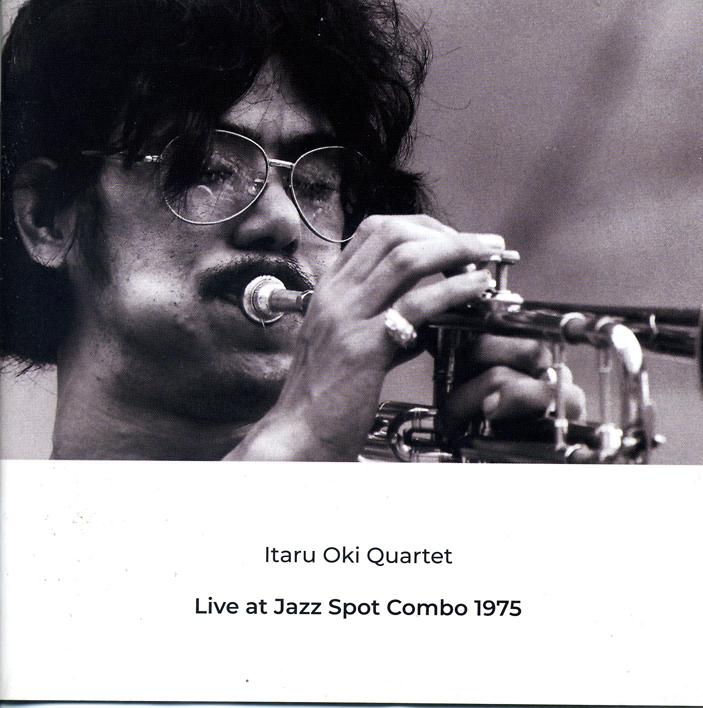
01 itaru oj4kjAlthough arriving from a dissimilar tradition, free-form experiments were common in 1960s Japan with several avant-garde ensembles throughout the country. One player who tried for more international renown was trumpeter Itaru Oki (1941-2020). He relocated to France in 1974 and was soon playing with locals. Occasionally he returned to gig in Japan, and Live at Jazz Spot Combo 1975 (NoBusiness NBCD 143 nobusinessrecords.com) reproduces one of those visits. Playing with drummer Hozumi Tanaka who was part of his Japanese trio, bassist Keiki Midorikawa and, crucially, alto saxophonist/flutist Yoshiaki Fujikawa, Oki’s quartet roams through five themes and improvisations. The trumpeter’s truculent flutters set the pace with speedy arabesques in counterpoint to slithery flute flutters. While keeping the exposition horizontal, the trumpeter prolongs intensity with triplets and half-valve effects. Backed by sul tasto bass string rubs and percussion slaps, Fujikawa is even more assertive beginning with Combo Session 2, where initial saxophone concordance with trumpet puffs soon dissolves into strangled reed cries and irregular vibrations. Dragging an emotional response from Oki, both horns are soon exfoliating the narrative, seconded by cymbal shivers. But the four stay rooted enough in jazz to recap the head after cycling through theme variations. These opposing strategies are refined throughout the rest of this live set. But no matter how often the saxophonist expresses extended techniques such as doits and spetrofluctuation, linear expression prevents aural discomfort. In fact, the concluding Combo Session 5 could be termed a free jazz ballad. While Oki’s tonal delineation includes higher pitches and more note expansion than a standard exposition, at points he appears to be channelling You Don’t Know What Love Is. That is, until Midorikawa’s power pumps, Tanaka’s clapping ruffs and the saxophonist’s stentorian whistles and snarls turn brass output to plunger emphasis leading to a stimulating rhythmic interlude. With trumpet flutters descending and reed trills ascending a unison climax is reached.
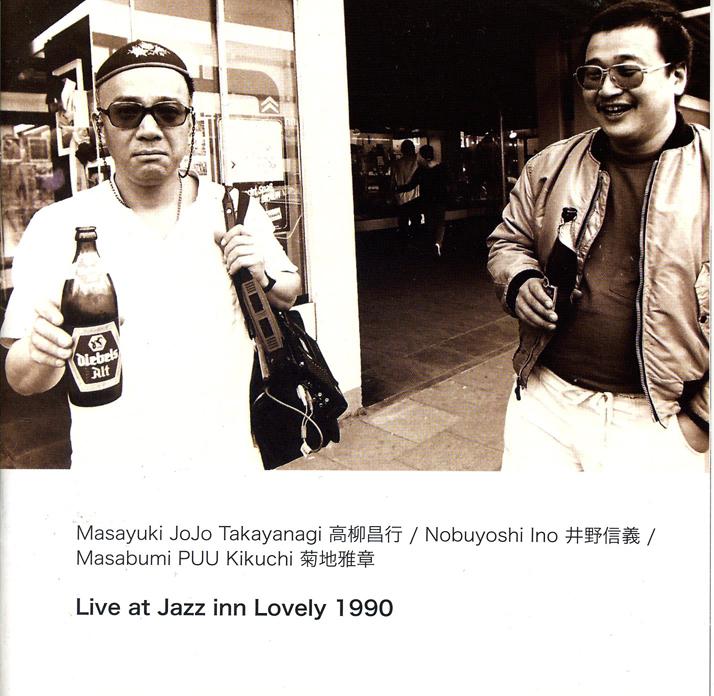
02 lovely ab4d9Flash forward 15 years and more instances of first generation Japanese free music are on Live at Jazz Inn Lovely 1990 (NoBusiness NBCD 135 nobusinessrecords.com). In one way it was a reunion between two pioneering improvisers, guitarist Masayuki Jojo Takayanagi (1932-1991), who began mixing noise emphasis and free improvisation in the mid-1960s with in-your-face groups featuring the likes of saxophonist Kaoru Abe and pianist Masabumi Puu Kikuchi (1939-2015). Kikuchi evolved a quieter style after moving to the US in the late 1980s and this was the first time the guitarist and pianist played together since 1972. Problem was that this was a Takayanagi duo gig with longtime bassist Nobuyoshi Ino until Kikuchi decided to sit in, creating some understandable friction. Agitation simmers beneath the surface adding increased tautness to the already astringent sounds. This is especially obvious on the trio selections when the guitarist’s metallic single lines become even chillier and rawer. Initially more reserved, Kikuchi’s playing soon accelerates to percussive comping, then key clangs and clips, especially on the concluding Trio II. For his part, Ino serves as a bemused second to these sound duelists, joining an authoritative walking bass line and subtly advancing swing to that final selection. On the duo tracks, he and the guitarist display extrasensory connectivity. He preserves chromatic motion with buzzing stops or the occasional cello-register arco sweep. Meanwhile with a minimum of notes, Takayanagi expresses singular broken chord motion or with slurred fingers interjects brief quotes from forgotten pop tunes. On Duo II as well, Ino’s string rubs move the theme in one direction while Takayanagi challenges it with a counterclockwise pattern. Still, fascination rests in the piano-guitar challenges with Kikuchi’s keyboard motion arpeggio-rich or sometime almost funky, while Takayanagi’s converse strategies take in fluid twangs, cadenced strumming and angled flanges. 
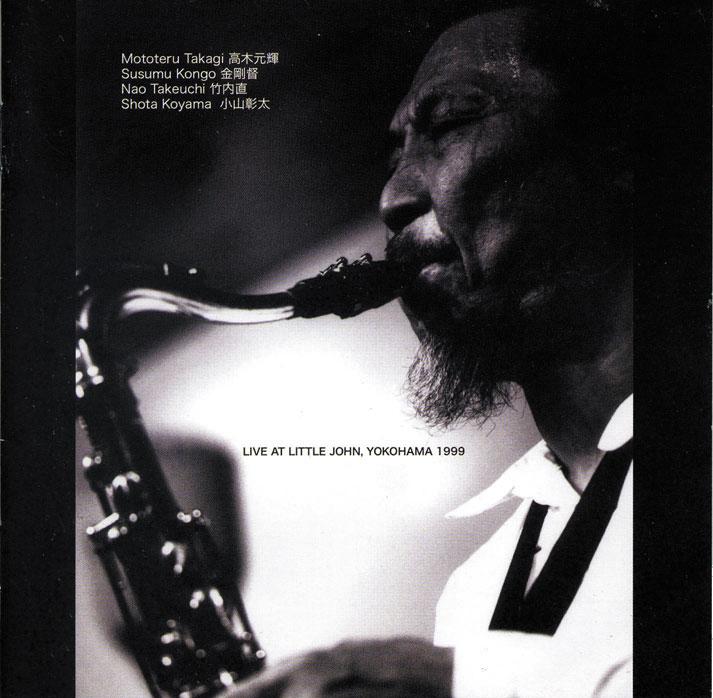
03 littlejohn jo4o1Abandoning chordal instruments and concentrating on horn textures, Live at Little John, Yokohama 1999 (NoBusiness NBCD 144 nobusinessrecords.com) provides an alternative variant of Nipponese free music. Backed only by the resourceful drumming of Shota Koyama, a trio of wind players creates almost limitless tonal variants singly, in tandem or counterpoint. Best known is tenor saxophonist Mototeru Takagi (1941-2002), who was in Takayangi’s New Direction Unit and in a duo with percussionist Sabu Toyozumi. The others who would later adopt more conventional styles are Susumu Kongo who plays alto saxophone, flute and bass clarinet, and Nao Takeuchi on tenor saxophone, flute and bass clarinet. No compromising of pure improvisation is heard on this CD’s three lengthy selections, although there are times when flute textures drift towards delicacy and away from the ratcheting peeps expelled elsewhere. Whether pitched in the lowing chalumeau register or squeaking clarion split tones, clarinet textures add to the dissonant sound mosaic. This isn’t anarchistic blowing however, since the tracks are paced with brief melodic interludes preventing the program from overheating. The more than 40 minute Yokohama Iseazaki Town gives the quartet its greatest scope, as vibrating split tones pass from one horn to another with percussion crunches keeping the exposition chromatic. Takagi’s hardened flutters and yowling vibrations may make the greatest impression, but Kongo’s alto saxophone bites are emphasized as well. Although space exists for clarion clarinet puffs and transverse flute trilling, it’s the largest horn’s foghorn honks and tongue-slaps that prevent any extraneous prettiness seeping into the duets. Still, with canny use of counterpoint and careful layering of horn tones backed by sprawling drum raps, the feeling of control is always maintained along with the confirmation of how the balancing act between expression and connection is maintained.
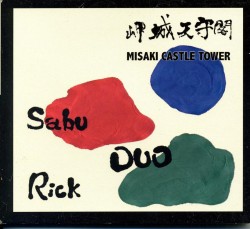
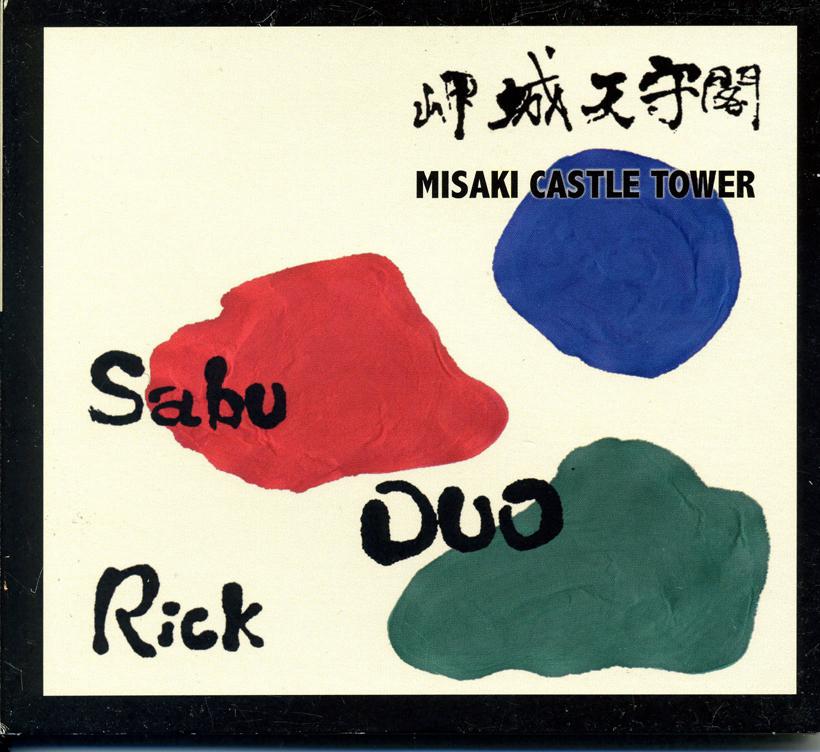
04 misak jj0kaTakagi’s former duo partner, percussionist Sabu Toyozumi (b.1943) continues playing free music as he has since the mid-1960s. Recently he’s formed a partnership with American alto saxophonist Rick Countryman, with Misaki Castle Tower (Chap Chap Records CPCD-0190 chapchap-music.com) the most recent session. It’s fitting that one track is entitled Ode to Kaoru Abe since the saxophonist who overdosed at 29 in 1978 is a Charlie Parker-like free jazz avatar in Japan. While the healthy duo’s homage is strictly musical, Countryman’s spiralling tones, modulated squeaks and brittle reed interjections are aptly seconded by Toyozumi’s hard ruffs and cymbal pops. Segues into shaking flattement, renal snarls and multiphonics characterize the saxophonist’s playing on other tracks and the drummer responds with positioned nerve beats, complementary rim shots and restrained press rolls. Hushed tone elaborations, during which Countryman moves pitch upwards with every subsequent breath, distinguish the concluding Myths of Modernization from the preceding tracks. But the saxophonist’s ability to snake between clarion peeps and muddy smears when not eviscerating horn textures, remains. The summation comes on that track, as articulated reed squeezes and stops meet irregular drum bops and ruffs. 
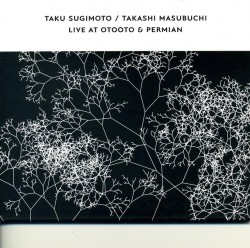
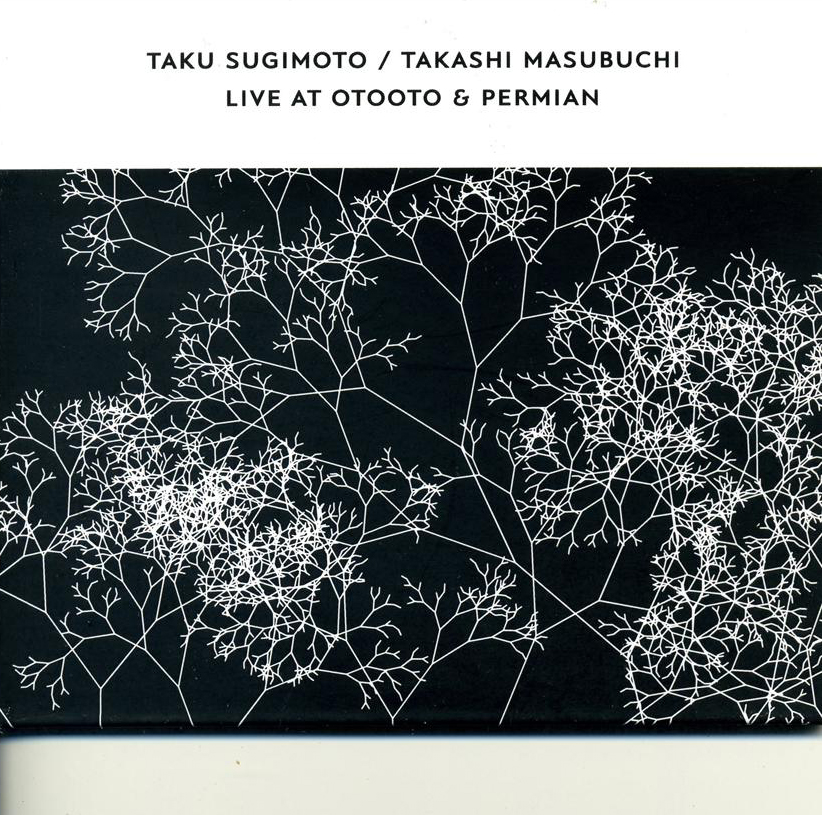
05 taku rxoepAlthough they play the same instrument as Takayanagi, the sounds from Taku Sugimoto (electric guitar) and Takashi Masubuchi (acoustic guitar) on Live at Otooto & Permian (Confront Core Series core 16 confrontrecordings.com/core-series) reflects a new minimalist genre of Japanese improvisation. Called Onkyo, which loosely translates as quiet noise, it’s as introspective as free jazz is brash. Through a sophisticated use of voltage drones, string percussion and harmonic transformation, these two guitarists prevent the five selections recorded at two Tokyo clubs from being bloodless. With the electric guitar projecting a buzzing undercurrent, harsh jabs, bottleneck-like twangs and inverted strums inject rhythmic and harmonic transformation into the tracks even as the narratives unroll horizontally. While the gradual evolution is rigid, there are sequences as on At Permian II, where repetitive undulations from both join singular cells into a distant melody. Plus, by moving patterns between guitarists, the duo ensures that neither droning continuum nor singular string prods predominate, making sound transformation as logical as it is unforced. 

Too often Western listeners think of unconventional Japanese music as foreign, frightening and impenetrable. As these sessions show there’s actually much to explore and appreciate with close listening.


01 Nick AdemademiLAN
Nicholas Adema
Independent (nickadema.com)

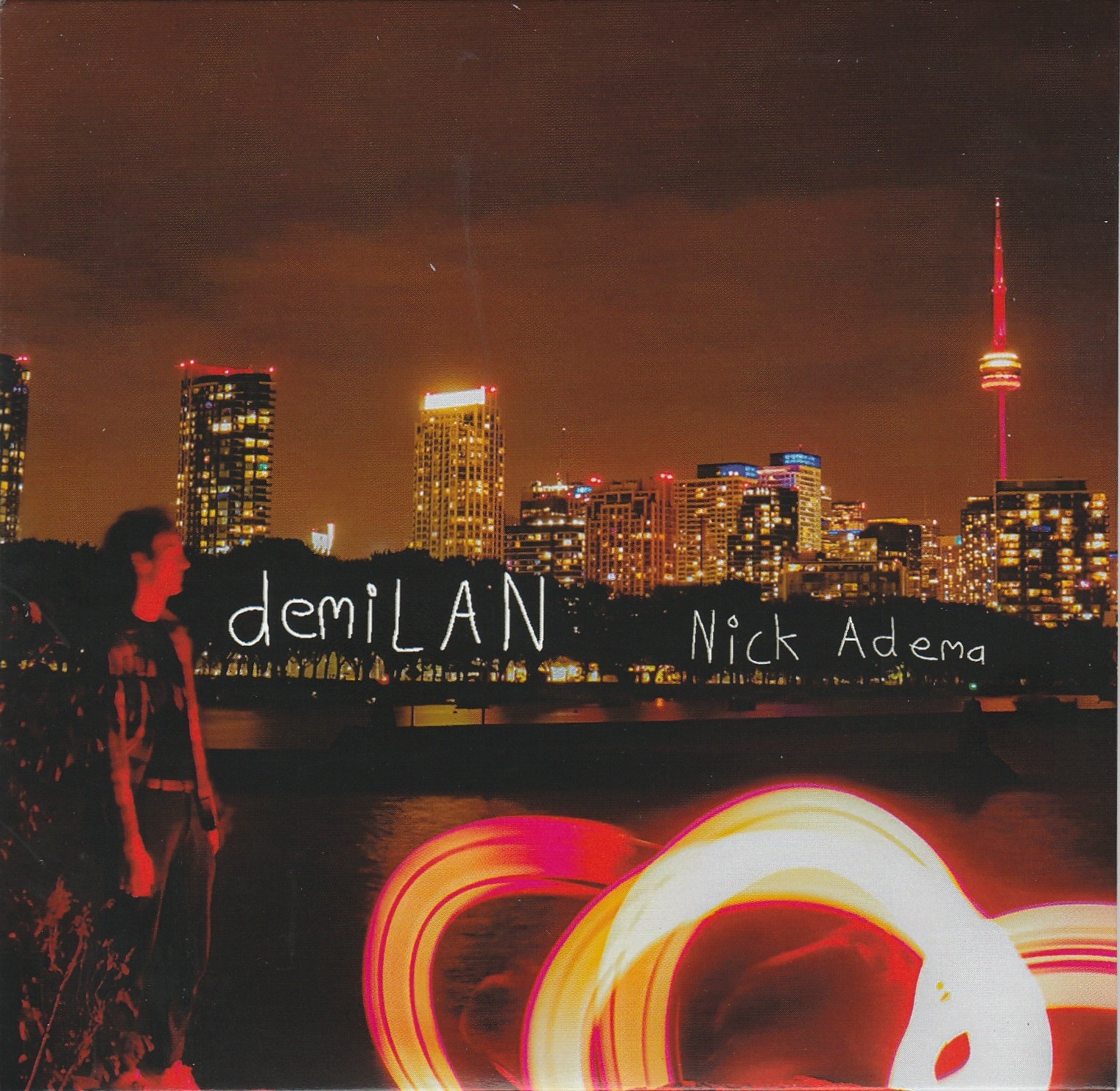
Toronto-based composer/trombonist Nick Adema’s latest offering is teeming with originality and confidence from front to back. Everything from the writing to the execution feels like the product of an artist who is conscious of their identity. 

One aspect that immediately jumps out is Adema’s astounding attention to detail. Each of his compositions contains a myriad of ideas, gradually revealing themselves over time and yet all coming together to form a satisfying whole. His melodies are intuitive enough to feel eerily familiar and yet elaborate enough to make anybody’s head spin. Much like the greats, Adema’s writing possesses immense beauty while also managing to zig where others would normally zag. Another trait of his that resembles top all-time composer/bandleaders is the rare ability to make full usage of his whole group. The effects of this tendency particularly shine through the kinetic rhythm section during the final climactic minutes of Rise, and the three-man-weave in the horn section of demiLAN

Due to the nature of Adema’s bandleading, along with the sheer talent he assembled, the most memorable moments on the album consist of celestial synergy between musicians. One definitive instance was the combination of lyricist/vocalist Alyssa Giammaria’s deeply poignant prose and the reassuring warmth of bassist Evan Gratham’s tone on the intro of the stunning Lament for the Future to Come. Ultimately, it is due to Adema’s knack for working with these parts that the whole far exceeds the sum.

02 GGRILSommes
Le GGRIL
Tour de Bras TDB9051CD (tourdebras.com)

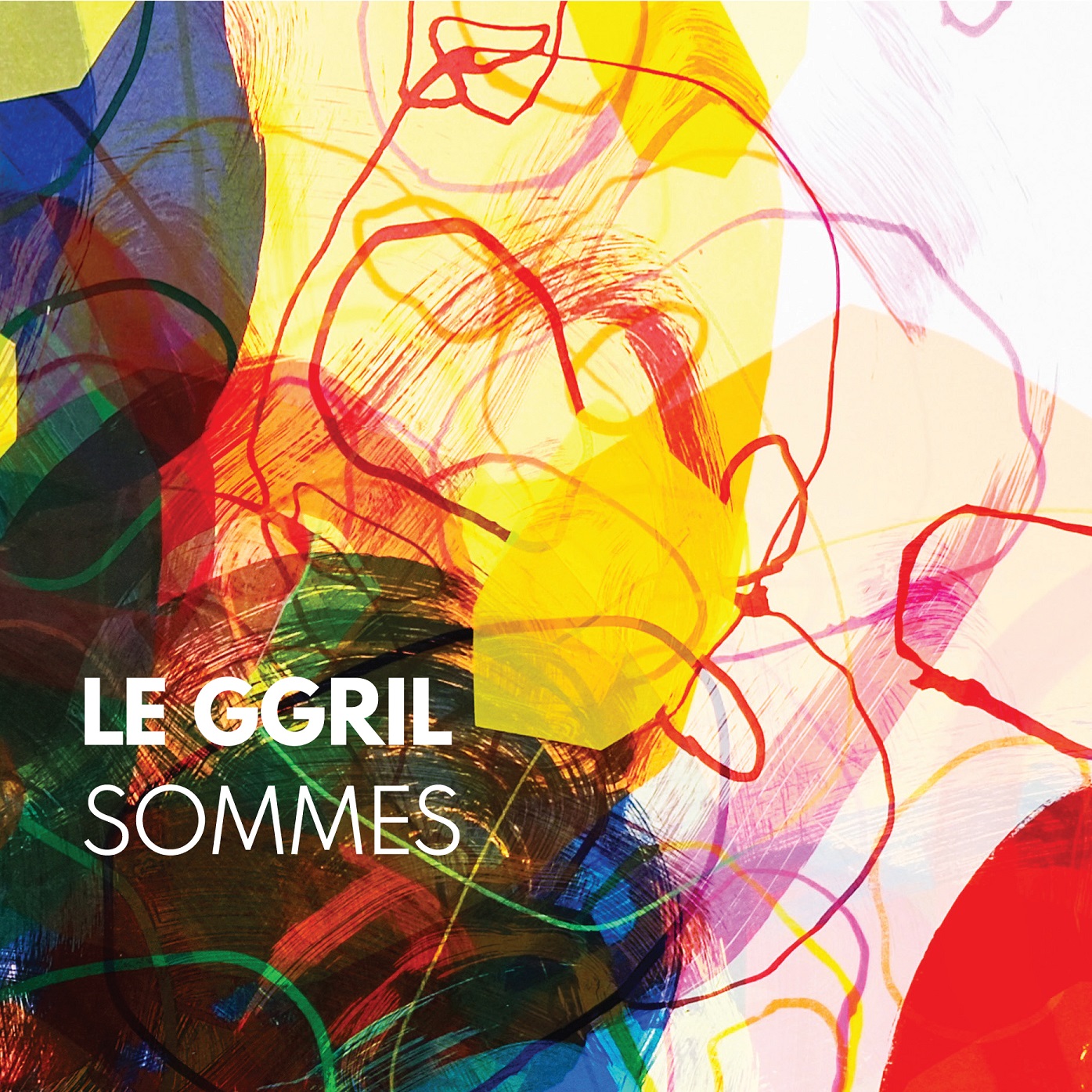
In 2014 I wrote my first sustained account of GGRIL, Grand Groupe Régional d’Improvisation Libérée, the large-scale, Rimouski, Quebec-based orchestra devoted to free improvisation, conduction, graphic, text-based and any other kind of score that falls into its wide purview. The article was based on hearing and talking to GGRIL members at FIMAV (Festival International de Musique Actuelle de Victoriaville), and the final sentence read: “GGRIL is currently recording scores by a wide variety of composers for their next album, Collection, a three-CD set that includes the pieces by Robert Marcel Lepage and Jean Derome performed at FIMAV.” Though it’s taken longer than expected, that ambition is now realized with Sommes, a three-CD commemoration of GGRIL’s 15-year history, 11 works dated from 2013 to 2020 by Québécois, Canadian and international composers, all newly recorded in fall 2020 by an edition of GGRIL that includes 21 musicians and a guest appearance by Quatuor Bozzini.  

That original Lepage work, the 14-minute Alice, appears on disc one, an abstracted comedy reimagining Lewis Carroll’s work as a series of jagged, pecking dialogues between individual instruments, frequently in the bass register, occasionally reshaping the scenes with rapid-fire percussion. A brief solo episode, Chat de Cheshire, becomes a leitmotif through the set, appearing first as a bass prelude by Luke Dawson, then twice on each succeeding CD, by classical guitarist Pascal Landry, trombonist Gabriel Rochette-Bériault, cellist Rémy Bélanger de Beauport and electric bassist Éric Normand, the GGRIL founder and firebrand whose modesty limits his credits here to electric bass and a single conducting appearance.

Fifteen years in, GGRIL’s achievement seems extraordinary, a miraculous collaboration of state arts funding, local isolation and rare vision, involving composers from across Canada and Western Europe as well as Quebec. Alison Cameron’s In Memoriam Robert Ashley, a work of startling evanescence, drips beauty; Martin Arnold’s Éistphéist, featuring Quatuor Bozzini and the composer’s banjo, turns the gestural phrases of folk music into a 25-minute dreamscape. The ensemble’s devotion to chance and the unique realization is apparent in the textural surprises of Lori Freedman’s playful Chances Are and in two distinct realizations of England-based saxophonist Caroline Kraabel’s Une note n’écoutant qu’elle-même. Other composers represented are Lisa Cay Miller, Malcolm Goldstein, Michel F. Côté, Jean Derome (his La courbe du moment from 2014) and Gus Garside.

The most ambitious performance here may be the opening one, French pianist Frédéric Blondy’s Îlots turgescents, a work of segments (“islands”) that demonstrates the orchestra’s range and power, from sudden, airliner-like, ascending glissandi to an extended, shifting drone that might model the ultimate funerary chord, stretching out to perpetuity until it includes within it an extended, gradual upward glissando increasing in amplitude. Weird Polynesian lounge jazz follows.

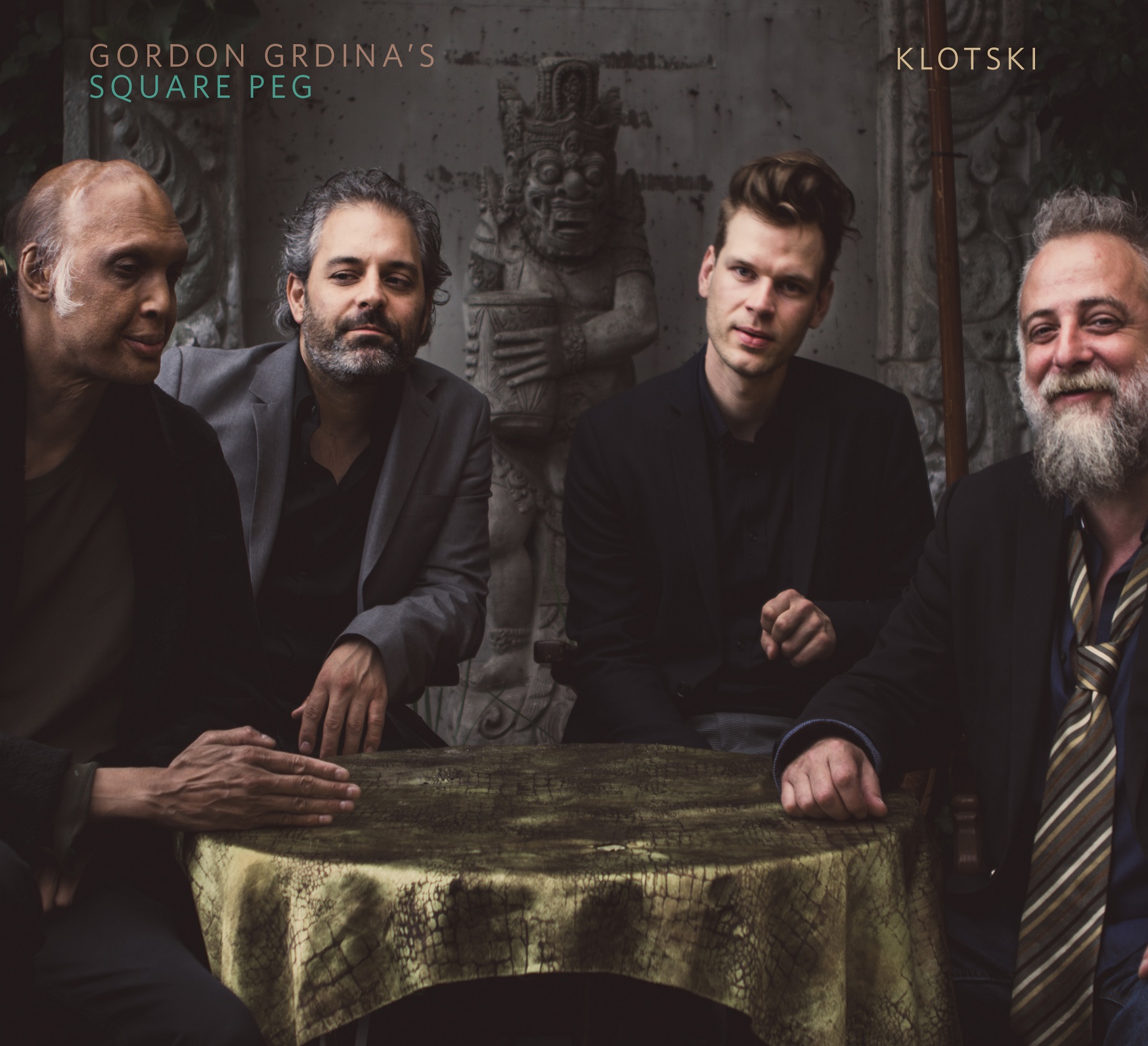
03a Grdina Square Peg KLOTSKI Klotski
Gordon Grdina’s Square Peg
Attaboygirl Records ABG-2 (gordongrdina.bandcamp.com)

Pendulum
Gordon Grdina
Attaboygirl Records ABG-1 (gordongrdina.bandcamp.com)

Over the past decade, Vancouver-based composer/guitarist Gordon Grdina has emerged as one of Canada’s most prolific jazz musicians. He has formed and recorded with a series of distinct bands, including New York-based ensembles – his eponymous Quartet with Oscar Noriega, Satoshi Takeishi and Russ Lossing and the trio Nomad with Matt Mitchell and Jim Black – and such Vancouver groups as his string-dominated Septet and the Arabic music ensemble Haram. All that activity has now led to Grdina’s own label, Attaboygirl Records, which launches with two releases, one introducing a new international quartet, the second a program of solo music for classical guitar and oud. Each testifies to Grdina’s remarkable capacity for growth.

With Square Peg, Grdina blends his electric guitar and oud with two Americans, violist Mat Maneri  (a long-standing explorer of quarter-tone improvisation) and bassist Shahzad Ismaily (also making adept contributions on synthesizer) and German drummer Christian Lillinger, a rising star in Europe who brings a special animation to any ensemble of which he’s a part. Klotski is a 53-minute work in eight parts, modular pieces that can be introduced by any member of the group and which are linked by collective improvisations. At the core of the music is the strong rapport of Grdina and Maneri who share a fondness for nuances of pitch and subtle shifts in repeating motifs. At times the musical thought is so close that one may cease distinguishing between oud or guitar and viola, as if they’re being played by a single mind, particularly evident in the kind of profound reverie that arises in a work like Bacchic Barge, in which the music’s ultimate effect includes both the intertwined strings and the metallic glitter of Lillinger’s snare and cymbals.

03b Grdina PENDULUMOn Pendulum, his third solo CD, Grdina concentrates on classical guitar and oud. On guitar he creates mysterious tonal intersections out of contrasting cultural references, a quality immediately apparent on the opening Koen Dori, initially written for a Japanese ensemble. The solo performance here hangs between East and West, idiomatic pentatonics and a broad vibrato on slow passages emphasizing the former within a context of richly European harmonies. The effect is not dissonant, however literally that might be applied, but concordant, similar to the quality achieved with Square Peg. Western harmonic conceptions strongly colour the glassy reverberating chromatic weave of Contra, while Wayward, the longest track here and one of two oud pieces, is characterized by rapidly shifting dynamics, an expressive intensity and a movement from traditional modality to increasingly complex pitch distortions and relations.

04 Nick FraserIf There Were No Opposites
Nick Fraser
Independent (nickfraserthedrummer.com)

Drummer/composer Nick Fraser’s eponymous quartet is amongst the most distinctive Canadian bands to emerge in the past decade, maintaining consistent personnel that includes New York saxophonist Tony Malaby as well as Fraser’s longtime Toronto associates, bassist Rob Clutton and Andrew Downing, here playing cello rather than his more customary bass. If There Were No Opposites is the group’s fourth CD since 2012, and it marks another step in their evolution, with a kind of telepathy arising in the collective handling of Fraser’s compositions and sketches. 

Fraser’s subtle sense of form adds a special element to the program. The CD begins with Improvisation (Part 1), a flurry of upper-register pizzicato, soon joined by gruff tenor saxophone and a high-pitched keening string melody; within a minute, it shifts to a somber ballad, the tenor tamed and mingled with bowed strings and cymbal washes. The CD’s concluding piece, Improvisation (Part 2), which begins with unaccompanied drums, is literally the continuation of the first, a clever bracketing of the composed pieces within the spontaneous, inverting the traditional jazz pattern of enclosing improvisation within form-defining statements.   

In between there are five Fraser compositions, each a distinct springboard for the band’s often tumultuous creativity, lines and timbres constantly assembling, dissolving and reassembling in ways that are at once loose and precise, whether it’s the rapid-tempo explosion of Sketch #50 or the piquant, transformations of The Bulldog and the Capricorn. This is exceptional music making.

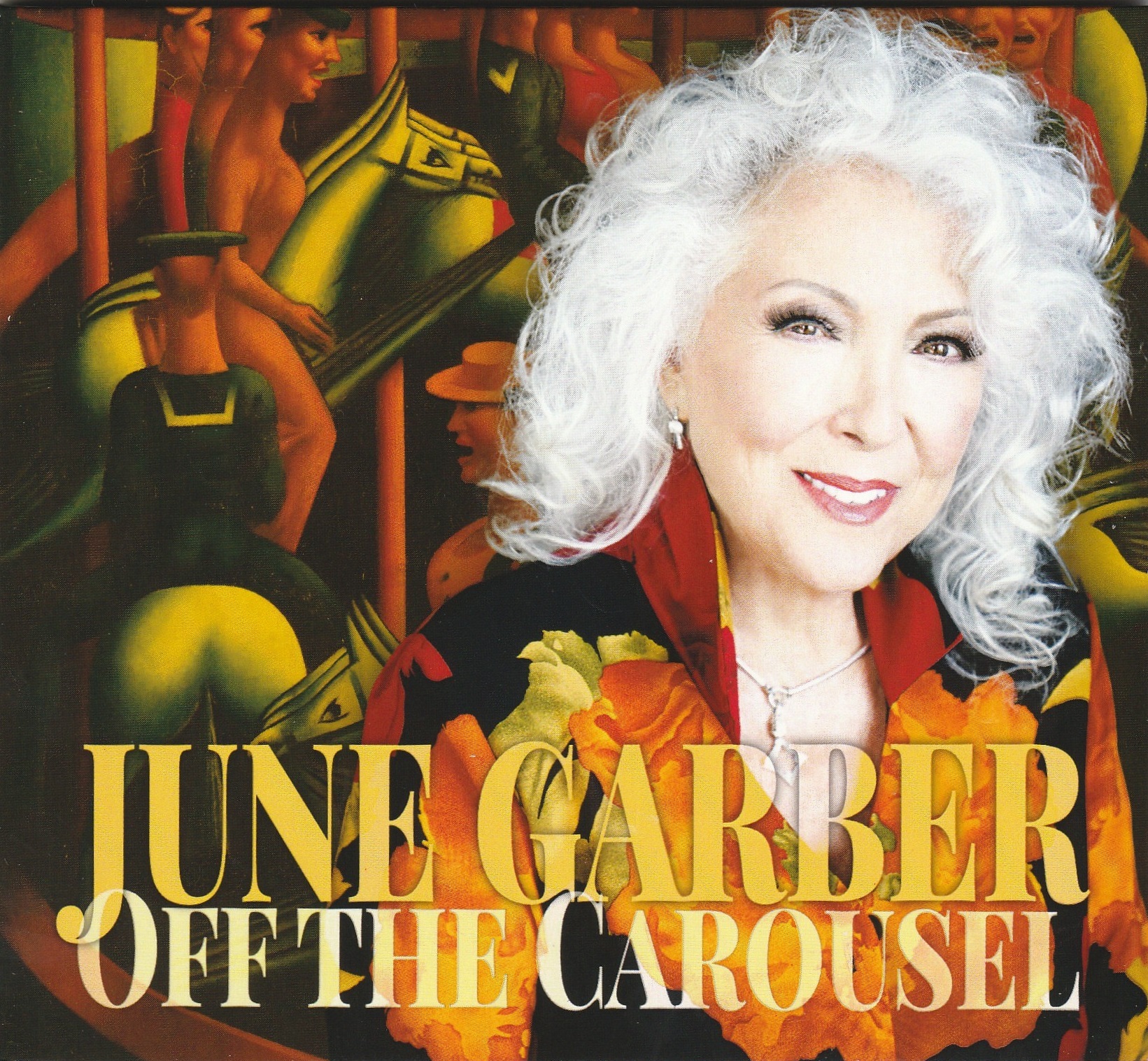
05 June GarberOff the Carousel
June Garber
Vesuvius Music VMI-005 (junegarber.com)

Luminous chanteuse and performer June Garber has just released a compelling, emotionally and musically profound recording. A deeply personal project, every track is like a small, perfect piece of cinéma vérité – a journey through the commonality of the human experience through Garber’s autobiographical musical lens. Musical genius Lou Pomanti produced and arranged the recording, and also performed on a variety of keyboards. As the CD was created when it was impossible (due to COVID) to record together in the studio, under the expert direction of Pomanti the tracks were created individually and remotely, and then assembled. The talented musicians here include Steve Heathcote on drums, Marc Rogers on bass, Jake Langley on guitar, Drew Jurecka on strings, William Sperandei on trumpet and Robyn Black on background vocals. 

The moving opener, He Never Mentioned Love, sets the tone for this romantic, emotional journey of an album, where Garber acts as both muse and tour guide. Langley’s soulful guitar solo moves in and out of the languid string lines of almost unbearable beauty as Garber captivates with every note and nuance. Of special, remarkable beauty and delicacy is the inspired composition of the Bergmans and Michel LeGrand, Windmills of Your Mind. Garber fearlessly sails through this melodically and lyrically challenging tune on the wings of a truly inspired arrangement by Pomanti.

Every track on this recording is a luscious listening experience – from Lil Hardin’s sexy, bluesy Just for a Thrill (with special guest Jackie Richardson) to a unique, rhythmically infused take on Chick Corea’s Spain, where Garber’s rich, warm tones elicit pure joy! Of special mention is the rarely performed Johnny Mercer/Barry Manilow ballad, When October Goes, performed here to perfection with pristine guitar and voice. The deep emotional honesty in Garber’s interpretation is nothing short of breathtaking.

Listen to 'Off the Carousel' Now in the Listening Room

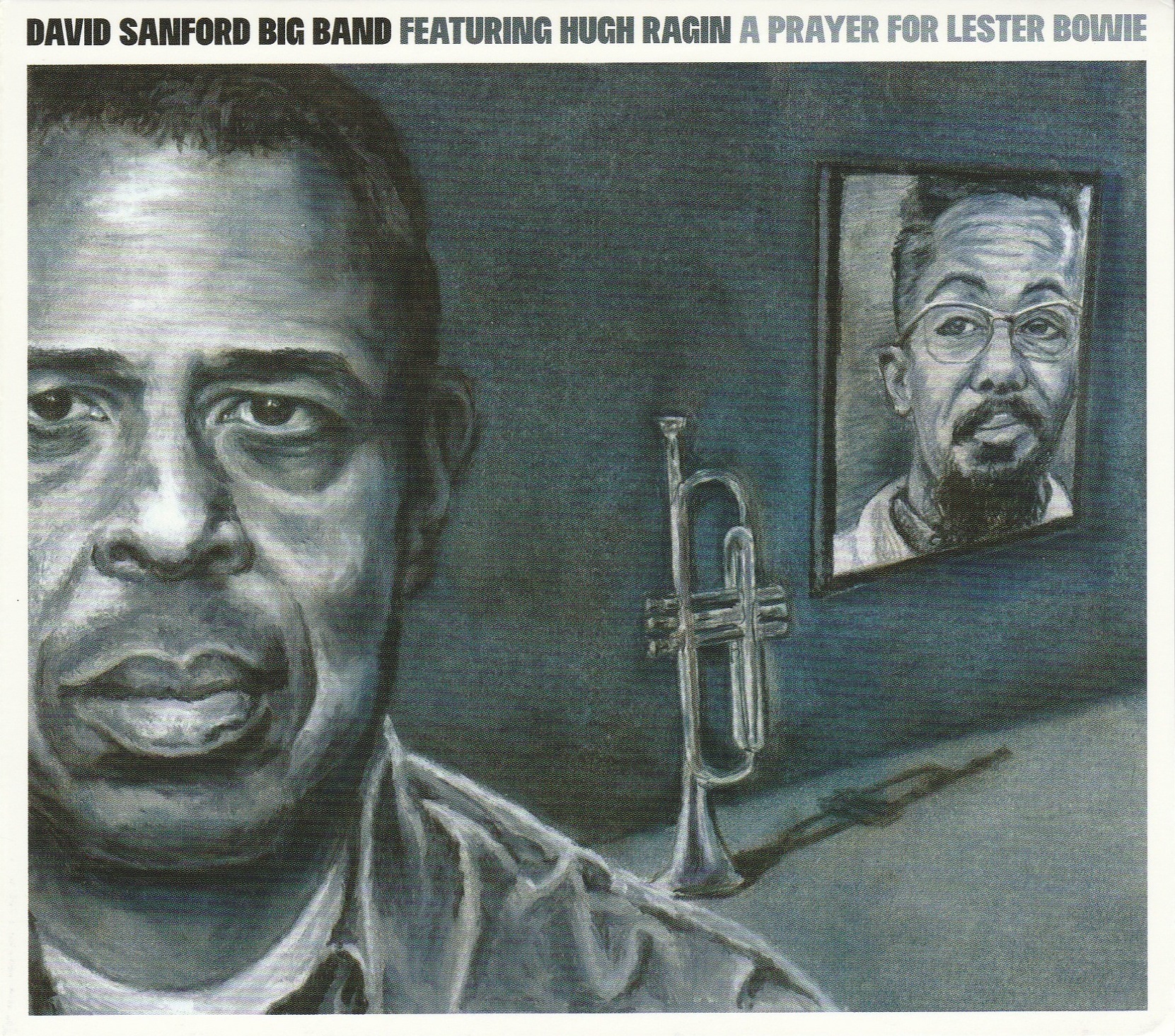
06 David SanfordA Prayer for Lester Bowie
David Sanford Big Band featuring Hugh Ragin
Greenleaf Music GRE-CD-1086 (greenleafmusic.com)

Lester Bowie, co-founder of the Art Ensemble of Chicago and one of the leading lights of the Association for the Advancement of Creative Musicians, was a legendary trumpeter known for his adventurous and often humourous music. Beneath this veneer was his avant-garde, deeply Africanized vision for jazz. 

Referencing everything that the trumpeter stood for, composer and arranger David Sanford empowers his big band to evoke the spirit of Bowie through high-octane performances on A Prayer for Lester Bowie. Each of eight exquisite charts is especially rewarding for the quality of the performance, advanced by stellar soloists featuring trumpeters Hugh Ragin and Brad Goode, saxophonists Anna Webber and Marc Phaneuf, trombonists Jim Messbauer and Ben Herrington among several other virtuoso musicians. 

While the centrepiece of the album is the song that gives it its title, written by – and featuring – Ragin on trumpet, the other charts are equal, in the fabulous richness of orchestral texture, to the album’s principal song. In fact, about three of the most miraculous minutes of the album can be heard on popit (also featuring Ragin) as well as the balletic Woman in Shadows and the dark-toned Soldier and the CEO. Throughout the repertoire on this recording the musical chemistry between the musicians is seamlessly intuitive. Woodwinds, brass and rhythm sections sparkle in ensemble with eloquence and vigour while judiciously placed solo movements are always poetically declaimed.

Listen to 'A Prayer for Lester Bowie' Now in the Listening Room

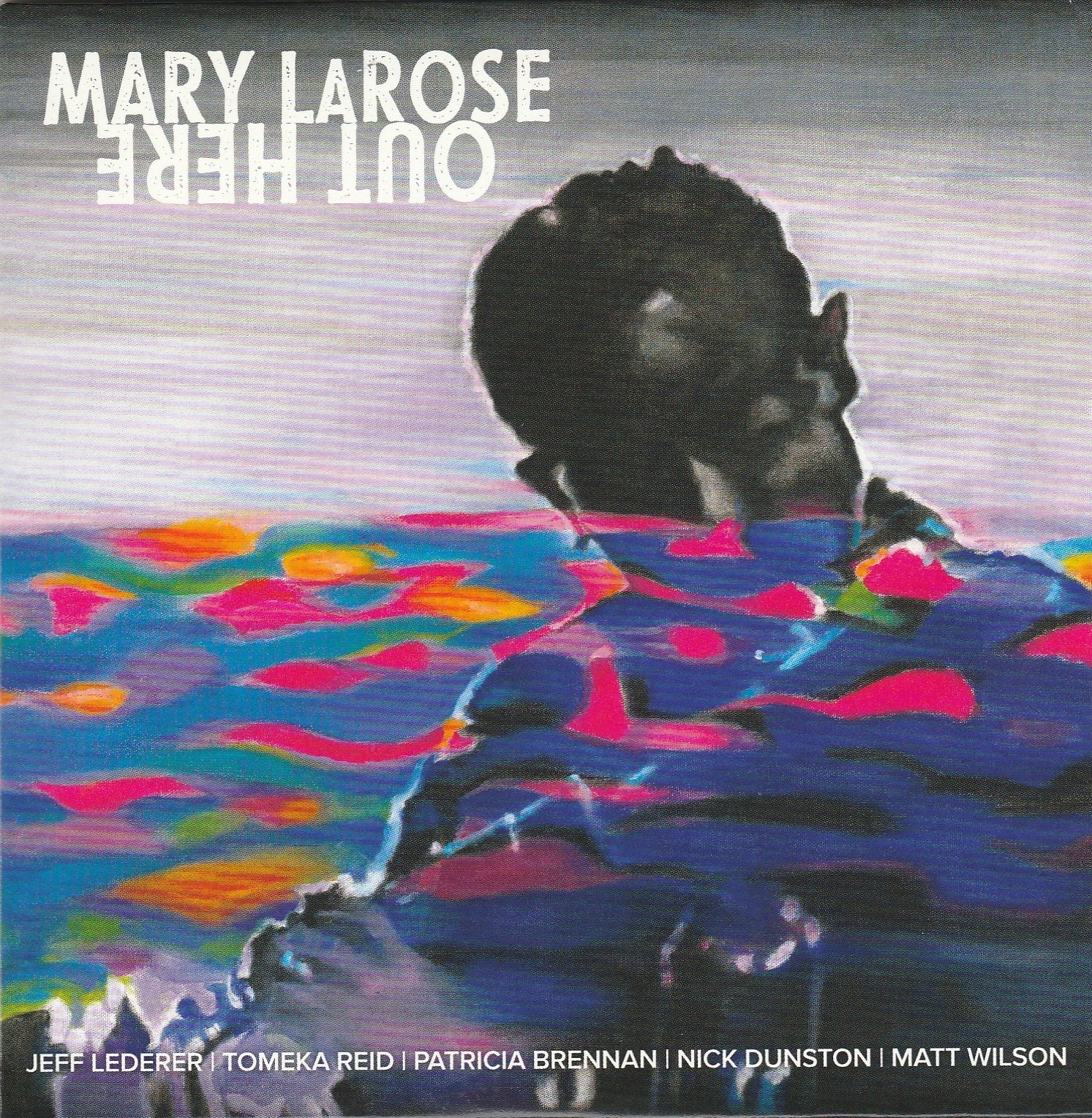
07 Mary LaRoseOut Here
Mary LaRose; Jeff Lederer; Tomeka Reid; Patricia Brennan; Nick Dunston; Matt Wilson)
little(i)music (littleimusic.com)

After his two-year stint with Chico Hamilton’s band, clarinetist, flutist and alto saxophonist Eric Dolphy rose to eminence in the iconic bands of Charles Mingus, John Coltrane and Booker Little, becoming known as much for his forward-thinking harmonic and rhythmic conception, as for his lyrical, human-speech-like solos on bass clarinet and flute. 

Mary LaRose, a remarkable artist in her own right, captures all of Dolphy’s character and artistry into an eerily prescient vocal album featuring prominent – and lesser-known – repertoire from  Dolphy’s unique canon, adding lyrics, brilliantly executed polyphonic vocalese and singing throughout. Another striking aspect of this music is the sensuality of sonority, confirming without question that Dolphy was an absolute master of orchestral language with a subtlety of timbre. 

Jeff Lederer’s arrangements of the charts on Out Here capture the majesty of Dolphy’s music revelling in its extravagance, while the group comprising cellist Tomeka Reid, vibraphonist Patricia Brennan, bassist Nick Dunston and drummer Matt Wilson deliver strongly committed, full-blooded performances. 

But make no mistake, this recording is launched into the stratosphere by the high jinks and vocalastics of LaRose. Her visionary aesthetic and idiomatic performance is behind the kinetic energy of the album’s most memorable songs: Gazzelloni and Music Matador, the latter featuring trombonist Jimmy Bosch and percussionist Bobby Sanabria. Warm Canto – with its clarinet choir, including Isaiah Johnson and Cameron Jones, lifting aloft LaRose’s contrapuntal vocals – is the album’s crowning glory.

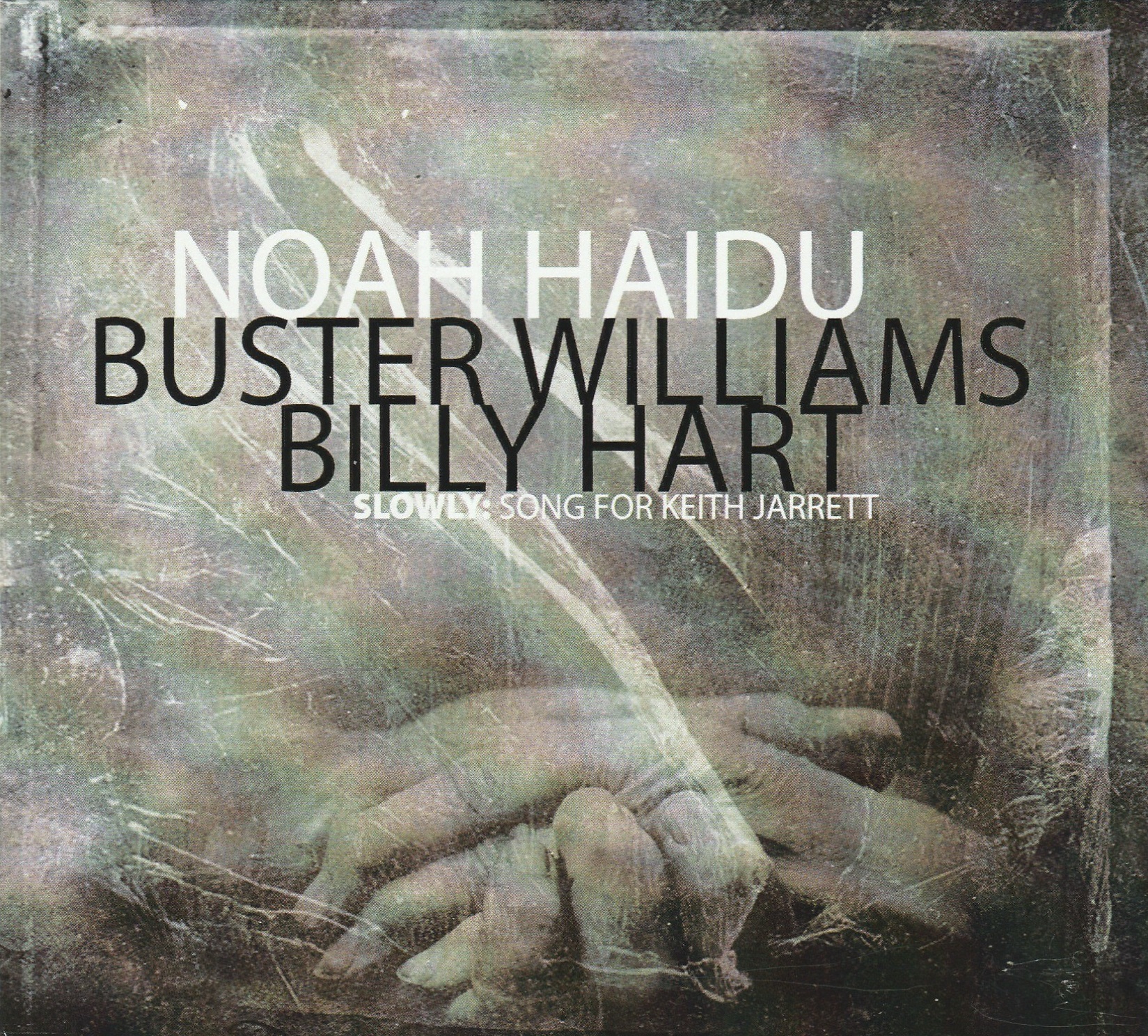
08 Noah HaiduSlowly – Song for Keith Jarrett
Noah Haidu; Buster Williams; Billy Hart
Sunnyside Communications SSC 1596 (noahhaidu.com)

Few pianists in contemporary jazz have dominated the concert grand piano like Keith Jarrett, an artist of the first order, who was riveting in solo performance and similarly thrilling with his longstanding trio, comprising bassist Gary Peacock and drummer Jack DeJohnette. The death of Peacock and the pianist’s rapidly declining health have meant that the world will be deprived of one of the greatest, most versatile performing artists in recent memory. 

To pay homage to someone with such an outsize artistic personality would seem to be an enormous challenge, the task made even more daunting because of the choice to show respect for Jarrett by playing in a trio format. But not so much for the prodigious piano virtuoso Noah Haidu, who could not have picked better musicians for this venture than venerable bassist Buster Williams and drummer Billy Hart.

Haidu attempts to retain the emotional intensity and depth of characterization of Jarrett’s work, without emulating his idol on the album Slowly. To do otherwise would have been ill-advised given the distinctive nature of Jarrett’s improvisatory playing. Rather, Haidu impresses with a more discursive style featuring idiosyncratic pitching and a tone that seems to evaporate in short transcendent phrases. The repertoire is wisely chosen and the album includes the appropriate and thematic Air Dancing, a balletic composition by Williams; Lorca, an elegiac piece by Hart; and Haidu’s eloquent composition Slowly. The album’s apogee is Jarrett’s wistful composition Rainbow.

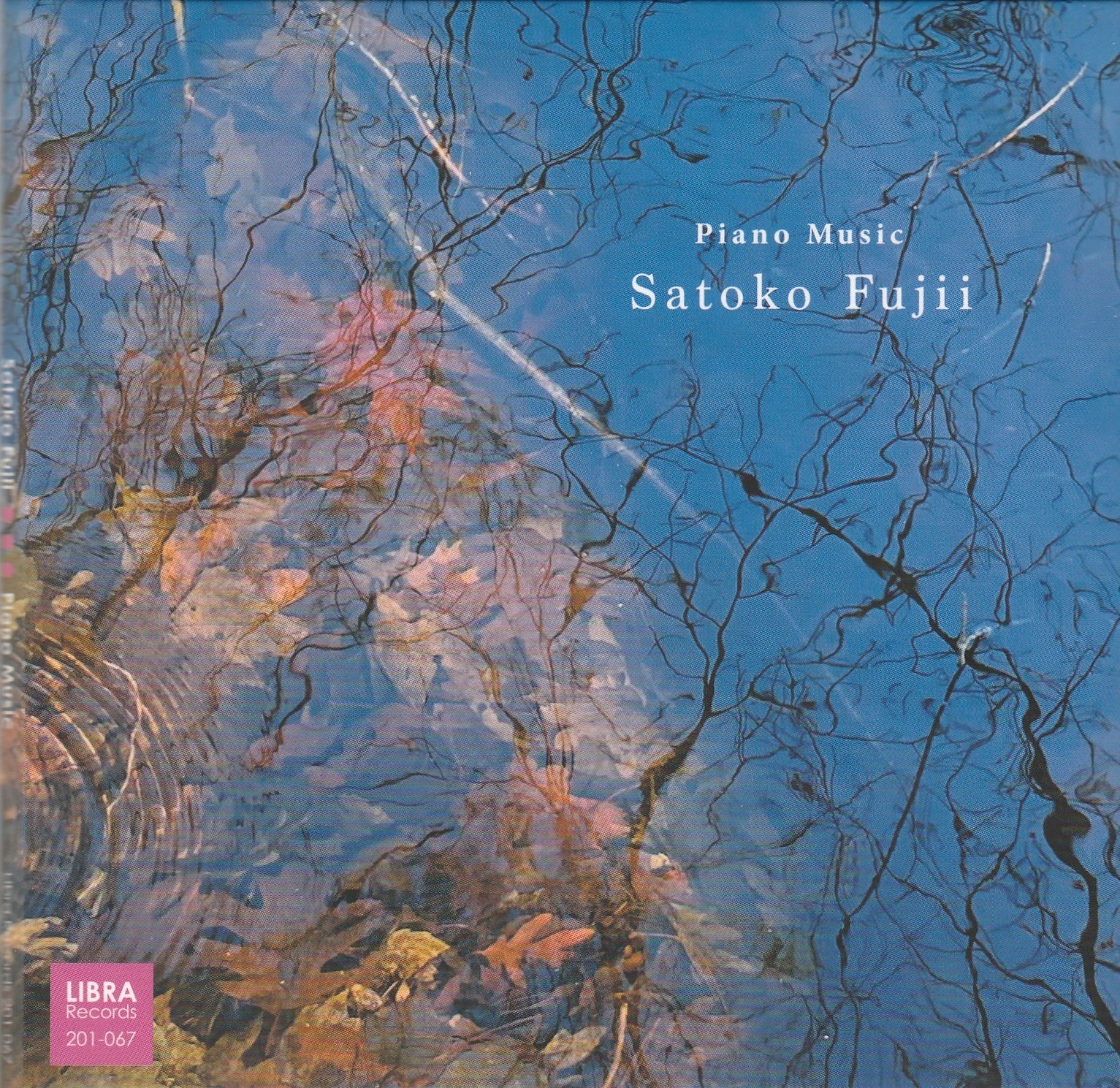
09 Satoko FujiiPiano Music
Satoko Fujii
Libra Records 201-067 (librarecords.com)

Prolific Japanese avant-garde pianist and composer Satoko Fujii has shown yet again on her newest release that she continues to push the boundaries of jazz to new limits. The listener is taken on a peaceful yet eerie journey through an ethereal and transcendent soundscape unlike any other. Both pieces are penned and mixed by Fujii herself, showcasing her behind-the-scenes skills as well as her thorough involvement in both the performative and editorial aspects of the record. For anyone who wants to take in a full musical experience that tells a true and almost lifelike story of its own, this album is a great pick.

The almost-19-minute-long opening track Shiroku is slow to unfold but allows the listener to immerse themself fully and take on an almost meditative state, following the smooth ebbs and flows, crescendos and decrescendos of the music. What makes the compositional aspect of the record unique is the fact that both pieces are made up entirely of one-to-two-minute-long recordings on the prepared piano that have been forged together and overlayed seamlessly, creating a sonorous landscape for the ears. Fujii calls the result of this technique a “sound collage,” something new to her and which she describes as making music “like building with Legos.” The album closes with Fuwarito, a slightly livelier piece that has shorter melodic and rhythmic phrases that lend a slight note of positivity and brightness to the music.

10 SundayCD004Sunday at De Ruimte
Marta Warelis; Frank Rosaly; Aaron Lumley; John Dikeman
Tracatta/Doek RAW 868 (doekraw.bandcamp.com/album)

Maintaining its reputation as a haven for exploratory musicians is Amsterdam, where this intense but informal improvisational session was recorded. None of the now-resident players are Dutch. Demonstrative tenor saxophonist John Dikeman and spartanly rhythmic drummer Frank Rosaly are Americans; inventive pianist Marta Warelis is Polish; and propulsive bassist Aaron Lumley is Canadian.

Alternately pensive and passionate, the quartet cannily constructs the four improvisations with fluid integration and without obdurate showiness. That means that each time the saxophonist launches a paroxysm of fragmented cries, tongue slaps and other extended tendencies, the pianist’s fleet patterning and the bassist’s fluid pumps decompress the exposition into sonic blends.

With Rosaly mostly limiting himself to rim shots, delicate shuffles or cymbal scratches, this contrapuntal procedure plays out throughout, most spectacularly on the lengthy Masquerade Charade. Resonating from atmospheric bass-string drones and single-note keyboard clips, by the track’s midpoint the moderated emphasis is challenged by Dikeman’s tone smears, note spears and hoarse sputters, until Lumley’s stinging stops and Warelis’ dynamic cascades connect each player’s lines into a joyously squirming finale.

Dikeman’s skill at distinctively shattering complacency with reed bites, honks and kinetic yelps is never limited by the pianist’s cerebral interpretations, frequent doubling by the bassist’s metronomic pulls or string sweeps, or the occasional bell clatter from Rosaly. Yet the cohesive program that arises from this constant push-pull defines the quartet’s dramatically realized strategy. It also substantiates the Netherlands’ appeal to foreign players.

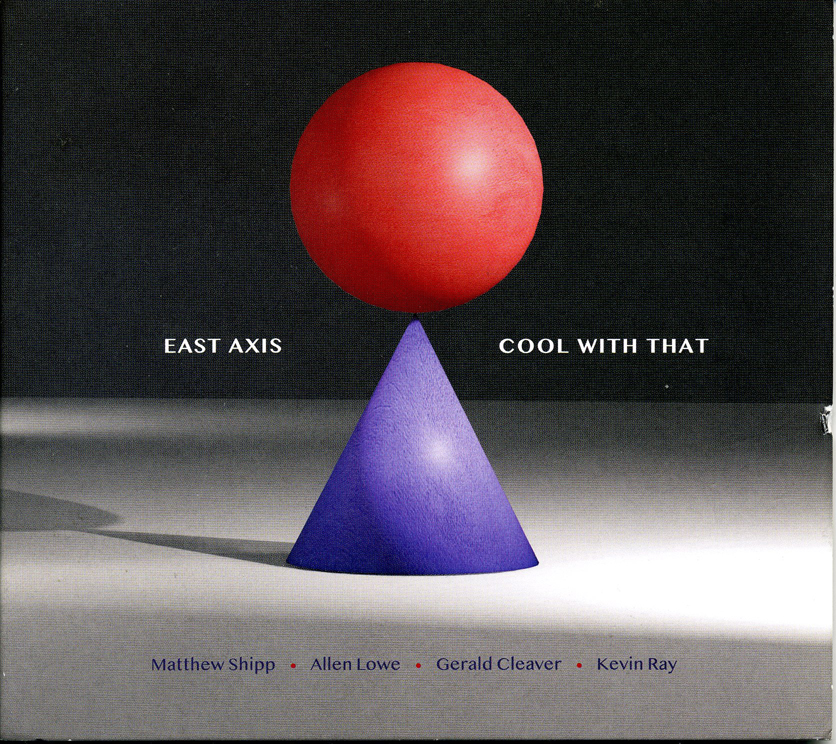
11 EastAxisCD006Cool With That
East Axis
ESP-Disk 5064 (espdisk.com)

Created by committed improvisers, this CD is one that won’t frighten those who shy away from free music. While engagement is present, alienating pressure is omitted. Strength isn’t missing, but is so much part of the New York quartet’s DNA that it doesn’t need to be emphasized. Drummer Gerald Cleaver’s powerful and elastic beat and pianist Matthew Shipp’s spidery pecks or cultivated patterning are guiding factors here. Bassist Kevin Ray’s pinpointed plucks move the program forward without demanding attention, while Allen Lowe operates in chameleonic fashion, alternately mellow or biting on tenor saxophone and smooth or raucous on alto.

Often harmonized by Lowe and Shipp, buoyed with straight-ahead rhythms from the others, themes swirl, splatter and slide as on the title track where Shipp’s single-note comping moves between Basie and Monk. Similarly, Lowe channels Sonny Rollins’ intensity and Lee Konitz’s invention depending on his chosen horn. These bolts between staccato timbre fanning and affable tonal exposition are most obvious on the final track. At 28 minutes, almost double any other, One offers space for the rhythm section’s only solos plus distinct transitions. Spurred by a drum backbeat, the initial metronomic swing encompassing reed bites and glossolalia allows everyone to trade breaks later, and in the final sequence descends to a sophisticated march with slurring saxophone lines and keyboard bounces. 

Play this CD for anyone and that person will probably confirm he or she is Cool With That.

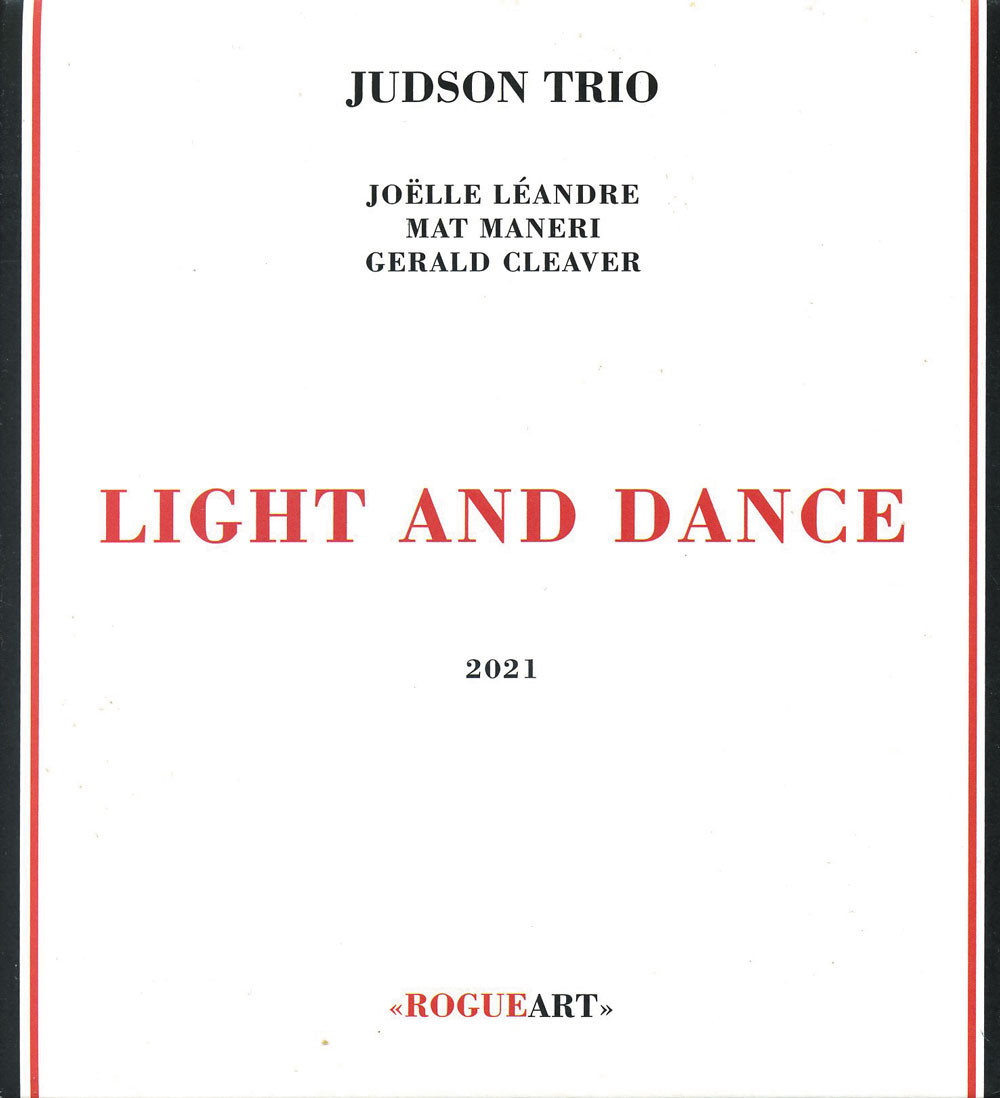
13 LightAndCD007Light and Dance
Judson Trio
RogueArt ROG-0112 (roguart.com)

Taking advantage of the unique textures available with unusual instrumentation, members of the Judson Trio stretch the connective limits during this two-CD set of one live concert and a studio date. Following a five-year partnership, Paris-based bassist Joëlle Léandre, New York violist Matt Maneri and drummer/percussionist Gerald Cleaver can perfect searing or subdued improvisations with sonic understanding.

Except for the drummer’s crunching kit-exercising on the final selection, tracks pulsate fluidly since none of the players stick to standard forms. Besides refracting creaky spiccato scratches, Maneri’s pizzicato strums create mid-range continuum. Léandre’s command of connective pressure is a given, but she also expresses pointillist expositions with the speed and malleability of a small fiddle. Colourist Cleaver’s accompaniment is expressed with cymbal clanks, gong-like resonation, pointed ruffs or drum top spanks.

Frequently moving in three-layered narratives or broken-octave elaboration, the trio’s musical cooperation is expressed most succinctly on the live Wild Lightness #4. After the bassist’s singular string plucks state the theme, Maneri’s string scordatura counters with widened strokes. Directly transformed into squeaky below-the-bridge scratches, his unique tones intersect with Léandre’s sul tasto narrative elaborations and are decorated with Cleaver’s bell-tree-shaking tinctures.

Light and Dance is dedicated to exposing all the obvious, hidden and expanded textures available from the interactions of the three players’ instruments during all 18 tracks. If equivalent pliable concepts were expressed by governments, irritants like trade wars and Brexit could likely be avoided.

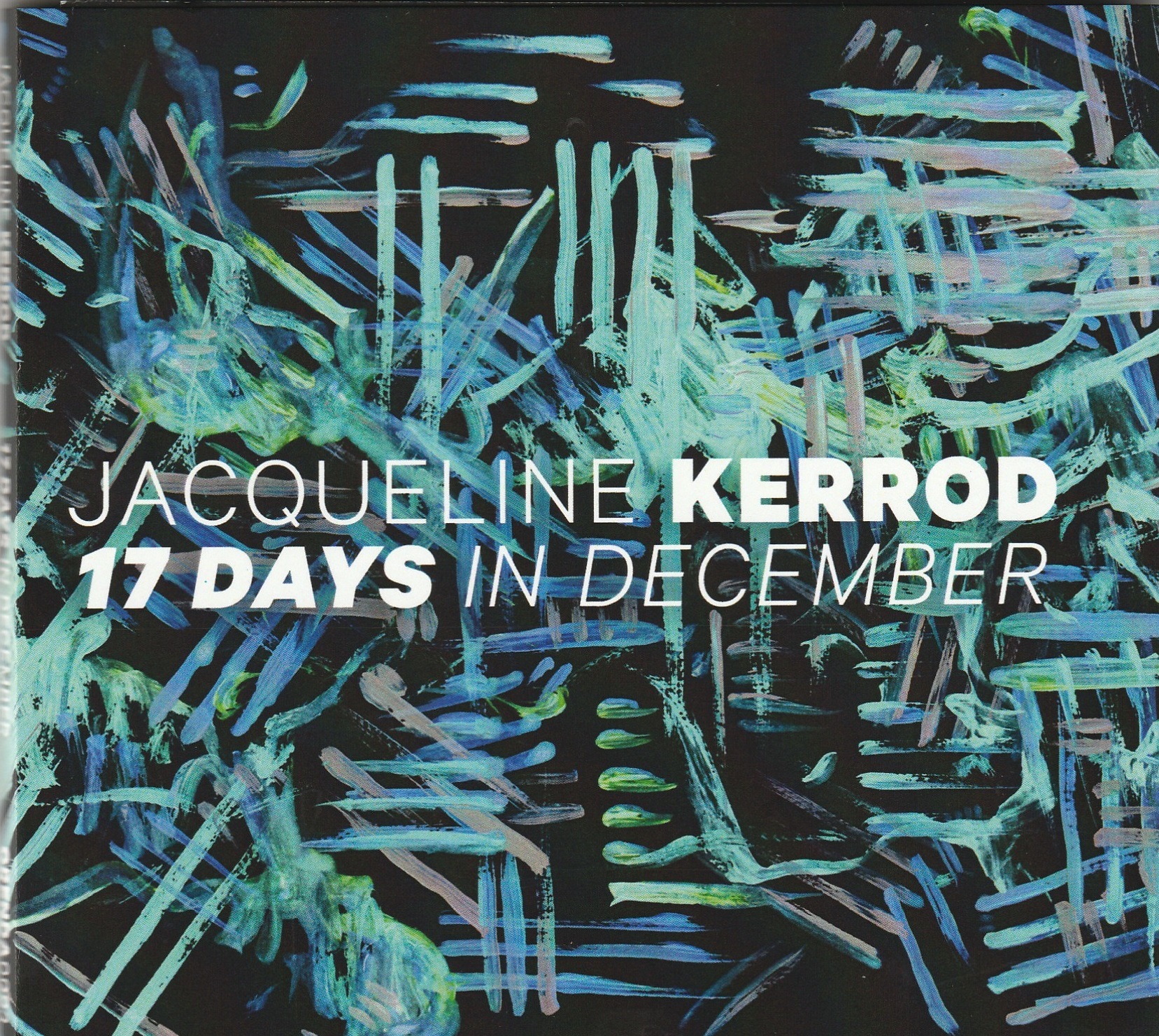
12 17 Days in December17 Days in December – Solo Improvisations for Acoustic & Electric Harp
Jacqueline Kerrod
Orenda Records 0093 (jacquelinekerrod.com)

Many people think of original music in a hierarchical sense, looking down on pure improvisation as something that doesn’t require mastery or discipline. One listen to Jacqueline Kerrod’s solo harp debut will serve as an epiphany for those cynics. In fact, I found myself awestruck by Kerrod’s seemingly limitless expressive range.

17 Days was recorded in the format of a musical diary, comprising one-take improvisations on consecutive days in the month of December. In the liner notes, Kerrod stresses the importance of simplicity in her approach and letting the music “be what it want[s] to be.” As a result of this philosophy, each piece takes on its own distinct shape, and yet the entire tracklist is held together by Kerrod’s improvisational identity. The combination of patience and inventive musical vocabulary results in a sound that is entirely unique to her and there is a consistent logic to the myriad enveloping soundscapes and intricate shapes that she creates. The music is never predictable, but even when switching from glitchy electroacoustic moments to warmer, familiar tones, it never feels disjointed or arbitrary. Kerrod’s tremolos, kinetic phrasing and rhythmic jabs enable her to get incredible mileage out of even the smallest ideas. The tracks fit together beautifully, despite not being sequenced in chronological order, a testament to how fully fleshed-out these spontaneous compositions are.

Listen to '17 Days in December: Solo Improvisations for Acoustic & Electric Harp' Now in the Listening Room

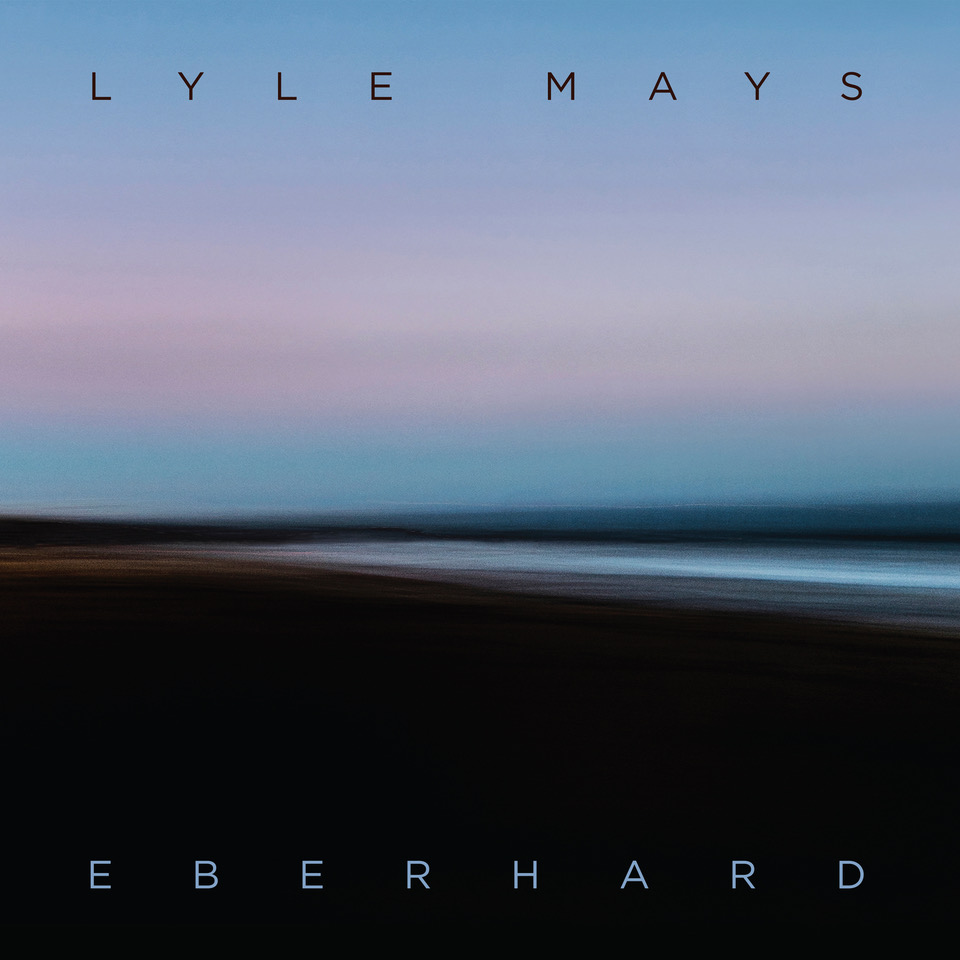
14a LYLE MAYS Eberhard Cover Art 3000x3000pxEberhard
Lyle Mays
Independent (lylemays.com)

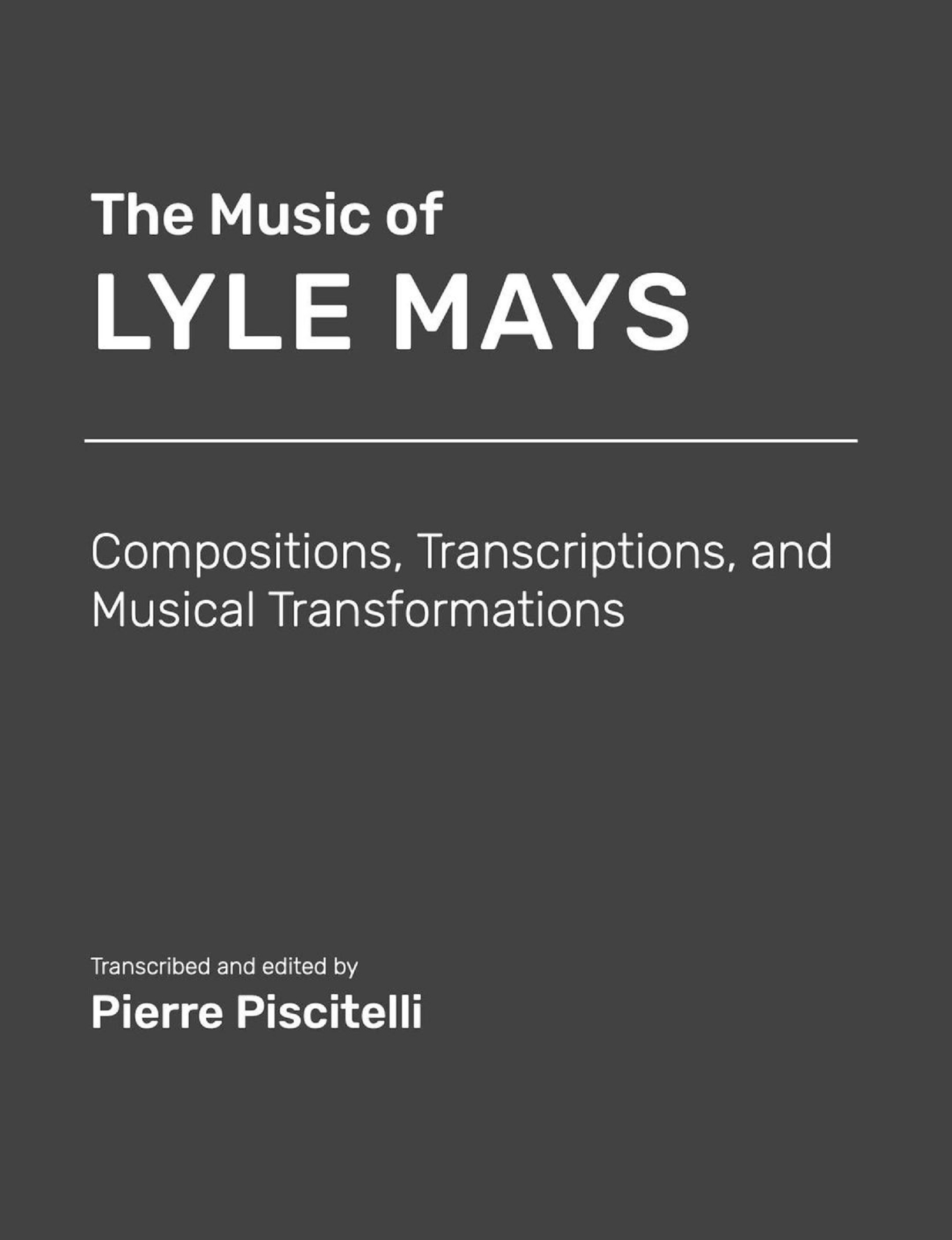
The Music Of Lyle Mays – Compositions, Transcriptions and Musical Transformations
Transcribed and edited by Pierre Piscitelli
(lylemays.com; pierrepiscitelli.com)

Lyle Mays is best known for his groundbreaking work as co-composer, arranger and keyboardist with the Pat Metheny Group. During his 30-plus years at the guitarist’s side, Mays co-created a new sound and language of jazz and improvised music, incorporating contemporary technology and elements drawn from classical, traditional jazz, rock and Brazilian music. Perhaps lesser known, but no less significant, is his work as a solo artist. Through his six previous releases, Mays explored different facets of his music and musicality, ranging from solo improvisation to small group and larger ensemble settings. 

In the wake of his passing in the winter of 2020, we now have the gift of one final posthumous recording, Eberhard, a 13-minute multi-section work dedicated to his close colleague, German bassist/composer Eberhard Weber, released as a single-track album. A ruminative marimba ostinato played by Wade Culbreath opens the piece, setting the stage for Mays’ reflective piano melody; he is joined in turn by Jimmy Johnson on electric bass and Aubrey Johnson with an exquisite wordless vocal. Gradually, Mays then builds a masterful solo over woodwinds and background vocals. (Bassist Steve Rodby, percussionists Alex Acuña and Jimmy Branly, guitarist Bill Frisell, keyboardist Mitchel Forman and a cello section also augment the excellent ensemble.) A riveting vocal section (Johnson plus Rosana and Gary Eckert) builds to a captivating, emotional climax that soars on Bob Sheppard’s dramatic tenor saxophone solo.

A recapitulation of the introduction completes the piece, leaving the listener with the feeling of having experienced an incredible musical journey. Eberhard is a bold, majestic masterpiece, both a summation of a remarkable career and a glimpse into where Mays might have ventured musically in the years ahead.  

Listen to 'Eberhard' Now in the Listening Room

14b Lyle Mays musicConcurrently, the Lyle Mays Estate, in conjunction with editor Pierre Piscitelli, has released The Music Of Lyle Mays, a comprehensive songbook covering his output as a solo artist, as well as previously unpublished material that he recorded with Pat Metheny. Piscitelli, a New York-based arranger/multi-instrumentalist, worked closely with Mays to ensure that the music was represented accurately and authentically in his transcriptions.

The reader is treated to a thorough artist biography, essays by Mays on various topics, and insights about the genesis of the compositions. One particularly fascinating essay recounts how Piscitelli came to know and work with Mays on both the songbook and Eberhard projects. Piscitelli deserves special acknowledgement for his great work on this long-awaited volume. 

Taken together, Eberhard and The Music of Lyle Mays form a vivid musical portrait of a remarkable artist whose legacy should endure for generations to come.

Back to top