05 Silent AitakesFrédéric D’Haene – Music with Silent Aitake’s
Reigakusha Gagaku Ensemble; Ensemble Modern; Kasper De Roo
Ravello Records rr8008 (ravellorecords.com) 

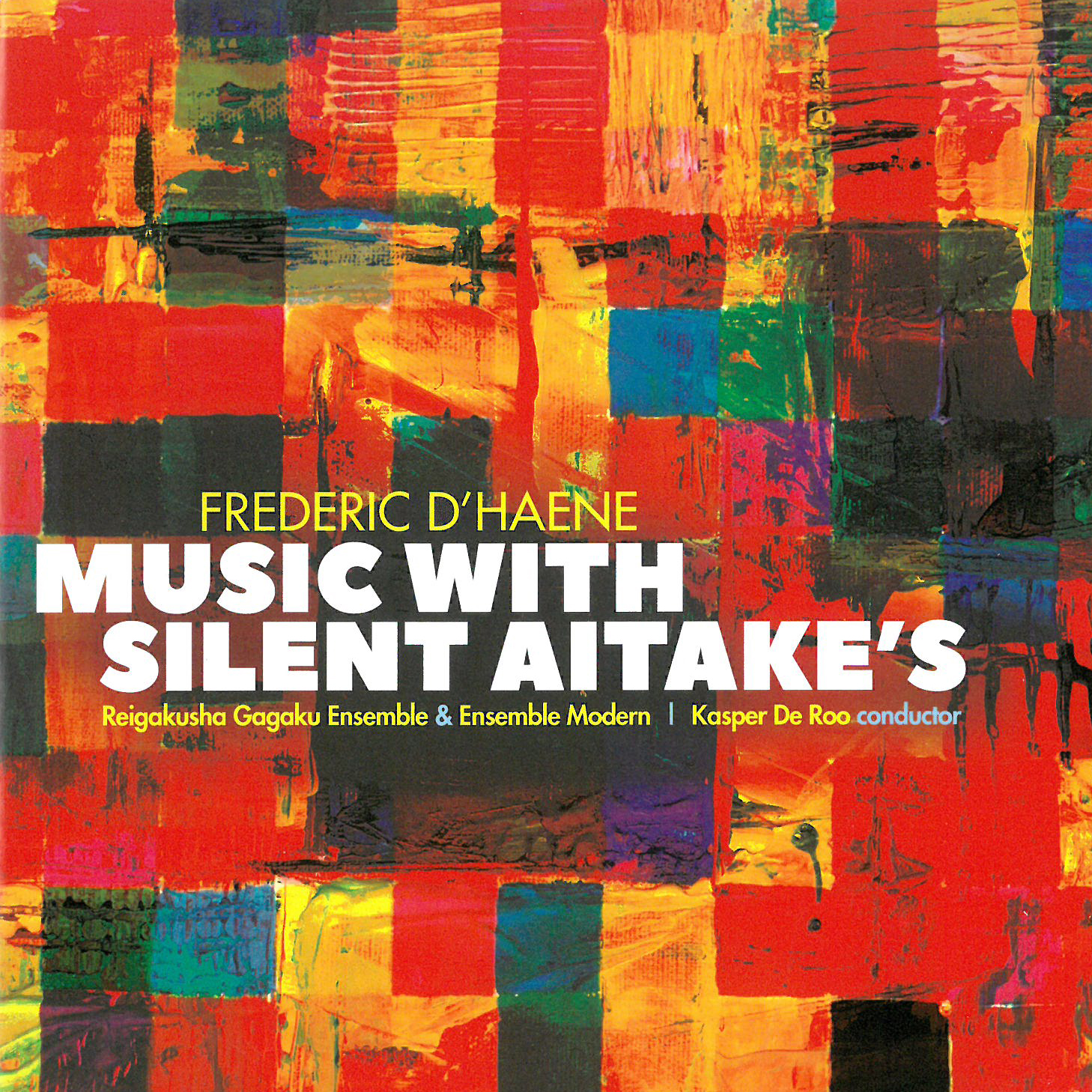
Frédéric D’Haene is a Belgian avant-garde composer who studied with several renowned European and American composers. But it was his 1986 discovery of gagaku (court music of Japan) which dramatically changed the direction of his musical worldview. D’Haene’s study of gagaku – a musical genre a world apart from his own – and its incorporation in his scores, ultimately resulted in what the composer calls “paradoxophony” or “paradoxical coexistence.” This transcultural approach has informed his compositions ever since.

Music with Silent Aitake’s – performed by the esteemed Reigakusha ensemble joined by the premier group Ensemble Modern, both conducted by Kasper De Roo – is a banner example of that approach. Scored for gagaku and chamber orchestra, the five-part work exemplifies D’Haene’s ideal of the coexistence of Western and Japanese instrumental worlds. The liner notes underscore the composer’s key aim: pluralism. It’s an aesthetic and social vision of coexistence which does not favour one musical world over another.

D’Haene’s principle of paradoxophony penetrates his combinations of perceived dual opposites in Music with Silent Aitake’s. We hear modality, atonality and spectral music techniques, stasis and dynamism, sound mass and silence, as well as simplicity and complexity coexisting within both random and organized forms.

Deliberately avoiding Eurocentricity, exoticism or easy melody-with-accompaniment tropes D’Haene has indeed fostered a kind of musical common ground between his chosen two groups in this work. That he’s done so maintaining the integrity of their identities and performing traditions, while expressing his own forceful vision, is indeed an impressive achievement.
06 Greek WindsGreek Wind Quintets
Aeolos Woodwind Quintet
Naxos 8.579037 (naxos.com) 

Pop quiz: name three contemporary Greek composers whose names don’t begin with an “X.” I am not the only one who would fail this test. The aptly named Aeolos Woodwind Quintet has undertaken a project to improve their compatriots’ international profile, and so released a CD of nothing but works for that ensemble: small forces to accomplish a large mission; but the effort is to be applauded.

Aeolos has included just over one hour of material by seven composers, some deceased, some fairly advanced in years. No one born after the 1960s is included, leaving one to wonder if younger composers are ignoring the form or if the group chose to focus only on more established names.

The players acquit themselves well, but much of the earlier material sounds a good deal as though the composers all admired Carl Nielsen; the music is folkloric, charming, tuneful and tonally fresh, but not very exploratory. The more recent works, towards the end of the disc, are the most interesting. Giorgos Koumendakis’ A Blackbird in the Cricket’s Gorge (2013) is a lot of title for a brief, tonally fluid bit of sound painting (including bird calls) originally written for three pianos. Theodore Antoniou’s Woodwind Quintet No.2 (2014), dedicated to Aeolos, is in turns mysteriously searching about and madly dancing in place, a challenging piece rhythmically and tonally, played with confident flair. Woodwind Quintet (1995) by Andreas Makris, closes out the disc with the players passing a rhythmic motif back and forth against a lyric counter argument, ideas which play around for an interesting ten minutes (the longest cut on the disc).

06 Beneath the TidesBeneath the Tide – A Collection of Concertos
Soloists; Croatian Chamber Orchestra; Miran Vaupotic
Navona Records nv6216 (navonarecords.com) 

Don’t be misled by the CD’s title or the accompanying notes that liken its contents to “ocean currents… uncovering what was previously hidden.” Rather than exposing murky, below-the-surface secrets, all five pieces, by four Americans and one Taiwanese composer, display immediately accessible clarity of expression. Nor is this disc “a collection of concertos,” as stated on its cover. Although all the works are scored for instrumental soloists and chamber orchestra, only three are genuine concertos and are so titled.

Restless dissonances in the outer movements of Michael G. Cunningham’s 15-minute Clarinet Concerto Op.186 bracket the middle movement’s brooding lyricism. Virtuoso runs from bottom to top of the clarinet’s range help make this a brilliant showpiece for the instrument.

Rain Worthington’s ten-minute In Passages for violin and string orchestra is a sustained, moody beauty, imbued with Middle Eastern melodic melismas and glissandi. It would make a superb slow movement for a full-length violin concerto.

In her 15-minute Guitar Concerto No.1, subtitled Remembrance of Hometown, Ssu-Yu Huang draws upon musical traditions of her Chinese forebears to create an impressionistic series of atmospheric brush paintings in sound.

At just under six minutes, Bruce Reiprich’s Lullaby features a long-lined violin solo, more intense than gently calming. Perhaps it just needs another title.

The CD concludes with Beth Mehocic’s cheerful 18-minute Piano Concerto, music that suggested, to me at least, playful leprechauns, the final Allegretto a rousing Irish jig. An entertaining end to an entertaining disc.

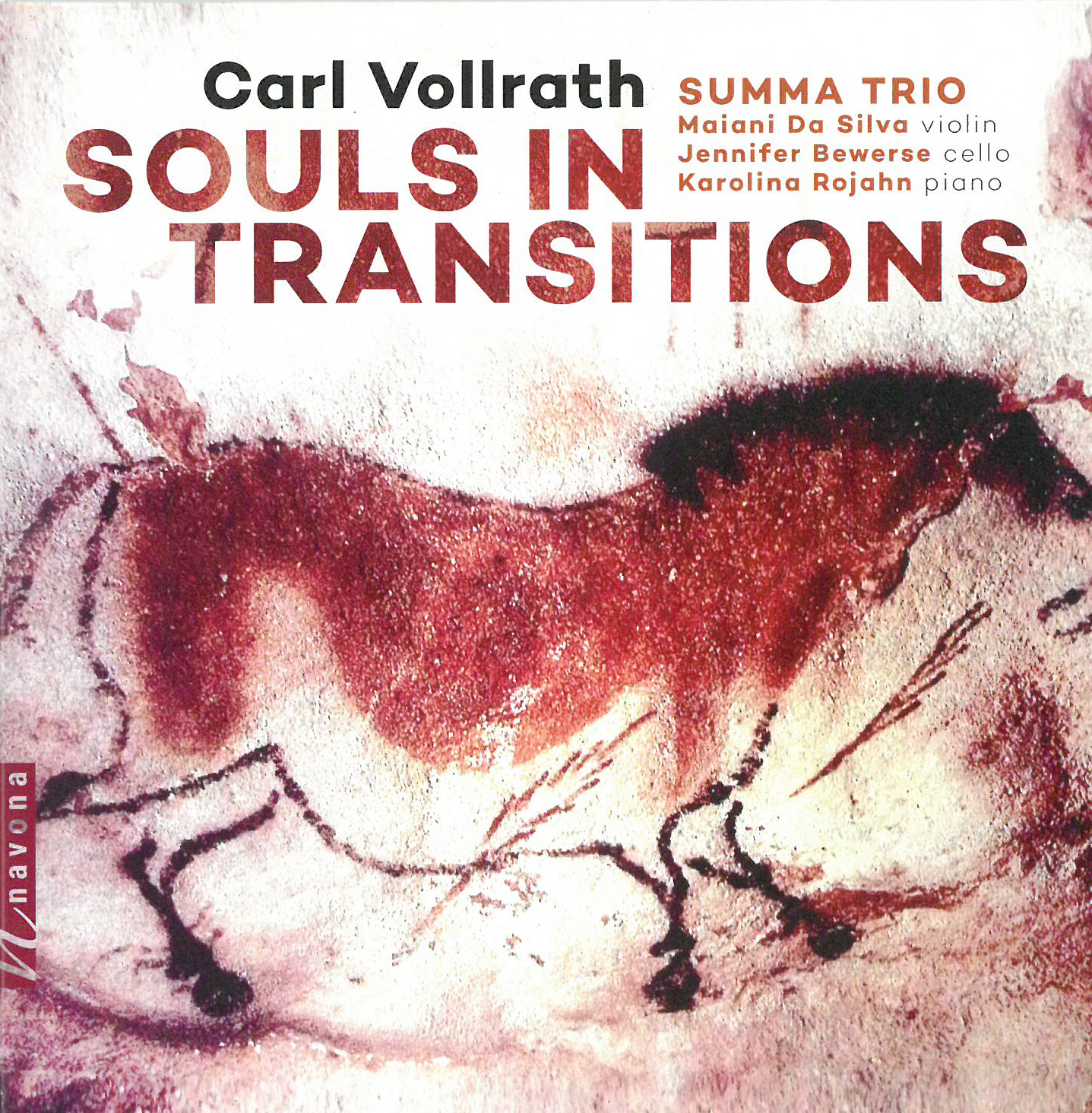
07 Carl VollrathCarl Vollrath – Souls in Transitions
Summa Trio
Navona Records nv6212 (navonarecords.com) 

“When I first wrote these pieces,” says Carl Vollrath (b. New York City, 1931), “I had no set concept of what they ‘meant.’” Vollrath’s titles for the three trios and their umbrella title Souls in Transitions were added only after a colleague at Alabama’s Troy University, where Vollrath taught for 40 years, said that the first trio reminded him of prehistoric cave paintings. Vollrath’s colleague was undoubtedly responding to the sense of primitive mystery created by Vollrath’s use pf pentatonic and modal scales, ostinato piano bass-note “drum-beats” and repeated melodic and rhythmic motifs typical of religious rituals.

Vollrath’s title for the first trio, The Secrets of the Magdalenian Caves, references those prehistoric paintings. Tombs of Ancient Times, writes Vollrath, evokes “traditions surrounding passing in ancient Egypt,” in which “community members would bring food to the tomb” for use by the departed in the afterlife. Finally, Buddha of the Future reflects “how the image of Buddha has changed over time.” While all three trios share many stylistic characteristics, there is a subtle increase in lyrical warmth over the cycle, their titles perhaps suggesting the growing sophistication of their metaphysical world views.

Vollrath’s sure-handed scoring for violin, cello and piano creates effects almost orchestral in nature, ably performed by the Summa Trio, Los Angeles-based contemporary music specialists. The entire disc could easily serve as the soundtrack for a TV documentary about archaeological sacred sites; CD listeners will have to rely on their own imaginations.

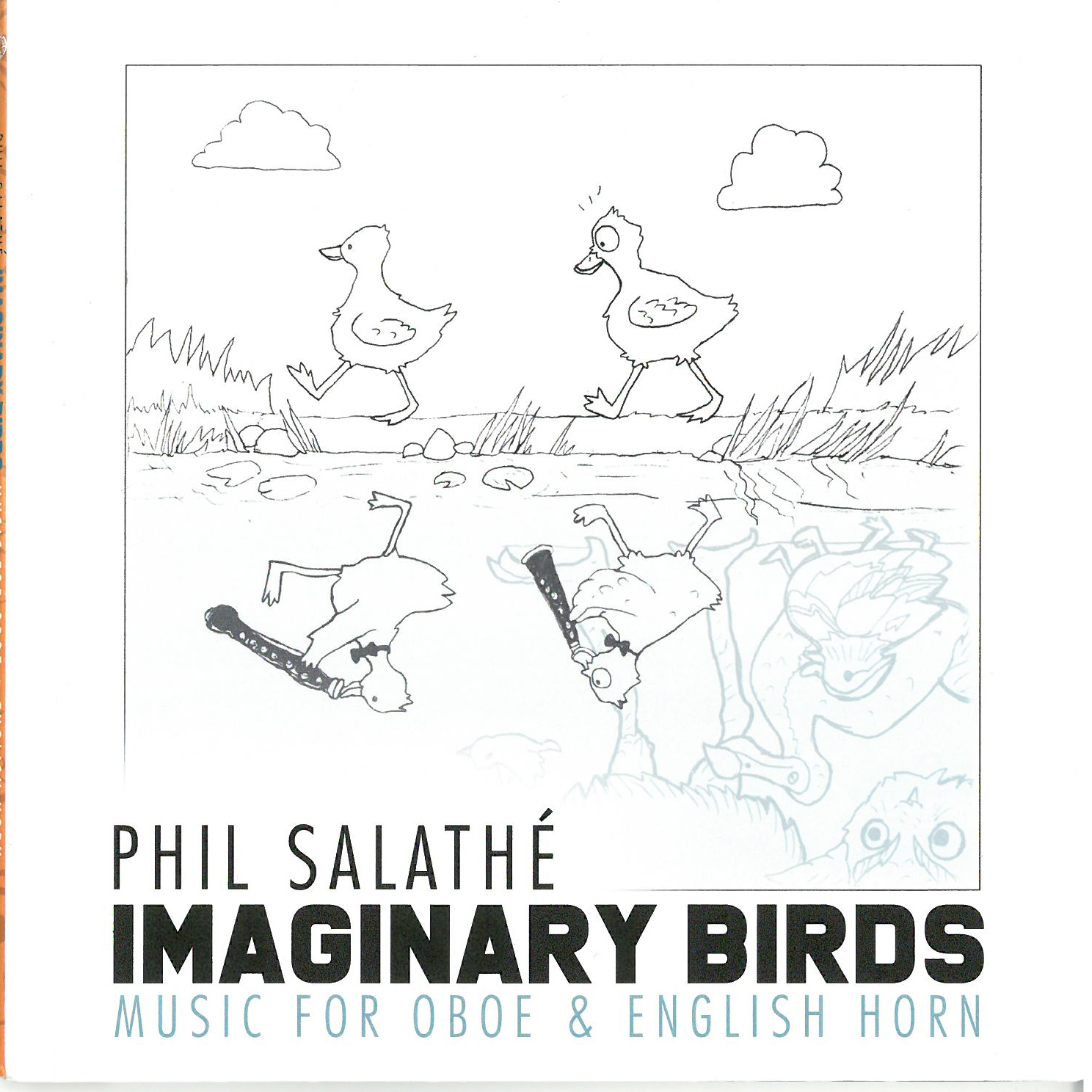
08 Phil SalathePhil Salathé – Imaginary Birds
Ling-Fei Kang; Charles Huang
Ravello Records rr8006 (ravellorecords.com) 

To join Phil Salathé on Imaginary Birds, his magical adventure, the listener must allow oneself to be led by the clear and penetrating soprano voice of the oboe and the more covered, tenor timbre of the pear-shaped bell of the cor anglais, into the wonderful imaginary sound world of the composer. Here we are quite easily seduced by the oboe of Ling-Fei Kang and the cor anglais of Charles Huang as we traverse the interior landscape of Salathé’s vivid imagination. Along the way we are also joined by cello, piano, celesta, harp and guitar to explore the mysterious depths and wondrous heights of birds in their wondrous habitat.

We find ourselves coming under the spell of a composer who is a master of mood and atmosphere and who has the ability to coordinate colour and structure to a rare degree. The bird repertoire – Mandarin Ducks and Imaginary Birds of the Frozen North – swirls amid equally atmospheric pieces such as The Heart that Loves But Once and The Wood Between the Worlds as well as Expecting the Spring Breeze (composed by Teng Yu-Hsien and arranged by Salathé).

The sometimes diabolical difficulty of this music is expertly navigated by Kang and Huang as well as by the other musicians. Each piece is given a lively reading and is played with buoyant, aristocratic grace and almost insolent virtuosity. Equally important is the fact that a delightfully spare atmosphere is maintained throughout.

09 Julius EastmanJulius Eastman – Femenine
Apartment House
Another Timbre at137 (anothertimbre.com)

Julius Eastman (1940-1990) is as fascinating to read about as he is to listen to. This performance of his breathtaking, hour-long work, Femenine takes us to one of the most eloquent members of the 20th-century avant-garde. The performance of this austere work by the ensemble Apartment House is replete with all the virtues that Eastman embodied: unfailing clarity, innate elegance, an unerring sense of proportion, a finely honed mastery of style, melodic finesse and unobtrusive grasp of harmonic rhythm, not to mention a matchless sense of aural geometry.

The work is layered with subtle colours. Each layer – with each hypnotic and intensifying repeat – is daubed with minutely thickening textured music that seems to ebb and flow like a gentle tide that swells steadily from silence before gently building into a soft whoosh of the keyboard, vibraphone, violin, cello and two flutes. Throughout, the uniquely Eastman-like tension between harmonically loaded melody and the essentially neutral, often near-static nature of the metre, has its sense of symmetry quietly disturbed by minute figures played by each instrument as the players recreate the composer’s prevailing tonal palette through appropriately lean, but always beautifully focused, orchestration.

The result proves well worth seeking out. Eastman’s was a diverse style with firm roots in John Cage-like stasis; but there is more heart-on-sleeve Romantic post-avant-gardism than one would expect. Either way the music has an emotional power that Apartment House articulates ever so eloquently.

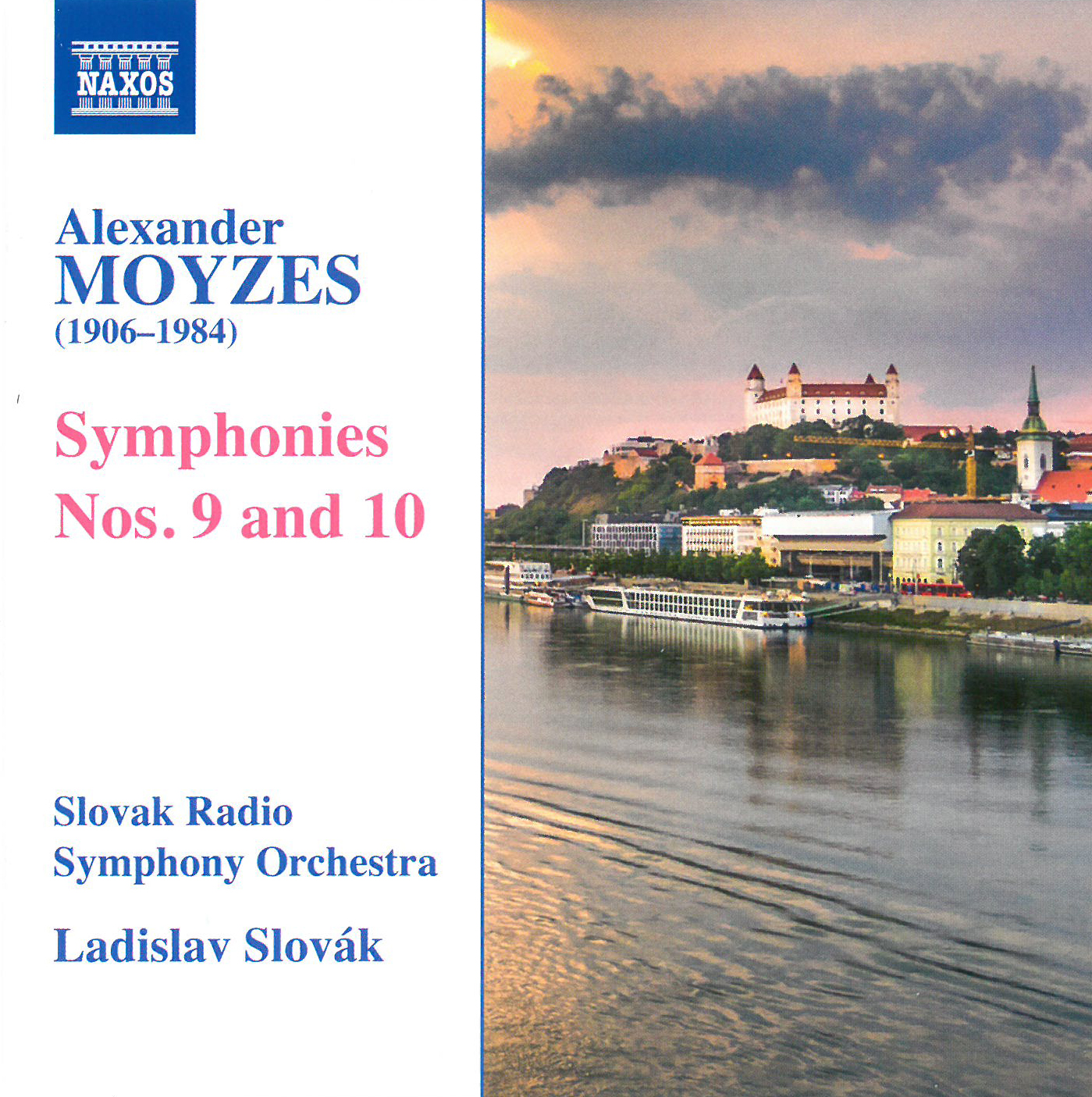
10 MoyzesAlexander Moyzes – Symphonies Nos.9 and 10
Slovak RSO; Ladislav Slovák
Naxos 8.573654 (naxos.com) 

One in a Naxos re-release series of Slovak composer Alexander Moyzes’ (1906-1984) complete symphonies, this Marco Polo recording was previously issued in the early 2000s. A master of 20th-century techniques and expression, Moyzes developed a style clear in texture, dramatic, and influenced by both his own nation’s and Shostakovich’s music. The three-movement Ninth Symphony (1971) is spare and dissonant; grotesque marches intrude and build to climaxes. In the third movement, solo violin cadenza-like passages cry out. Density, tempo and volume increase till the work ends with a now-subdued violin. Program notes mention the composer’s despair following the 1968 invasion of Czechoslovakia by the Soviet Union, yet I found the work a continuously involving artistic triumph. The Slovak RSO under conductor Ladislav Slovák plays with commitment; woodwinds, including a spectacular piccolo, excel in both lyrical and virtuosic passages.

The Tenth Symphony (1977-78) is more upbeat, though with pensive moments. The opening movement begins slowly and is like the Ninth Symphony in its powerful overture-like dotted rhythms. There are triads and added-note chords now, and fewer bare dyads. A scherzo-type movement is contrapuntal and lively, its trio section featuring realistic woodwind bird calls over hushed strings. Then the long Larghetto caps the work with idyllic, lyrical beauty, but an early slight smear in the strings foreshadows surprising rich and complex polychords. The radiant folk-like finale features colourful orchestration including tinkling percussion; it’s a lot of fun leading to a boisterous close.

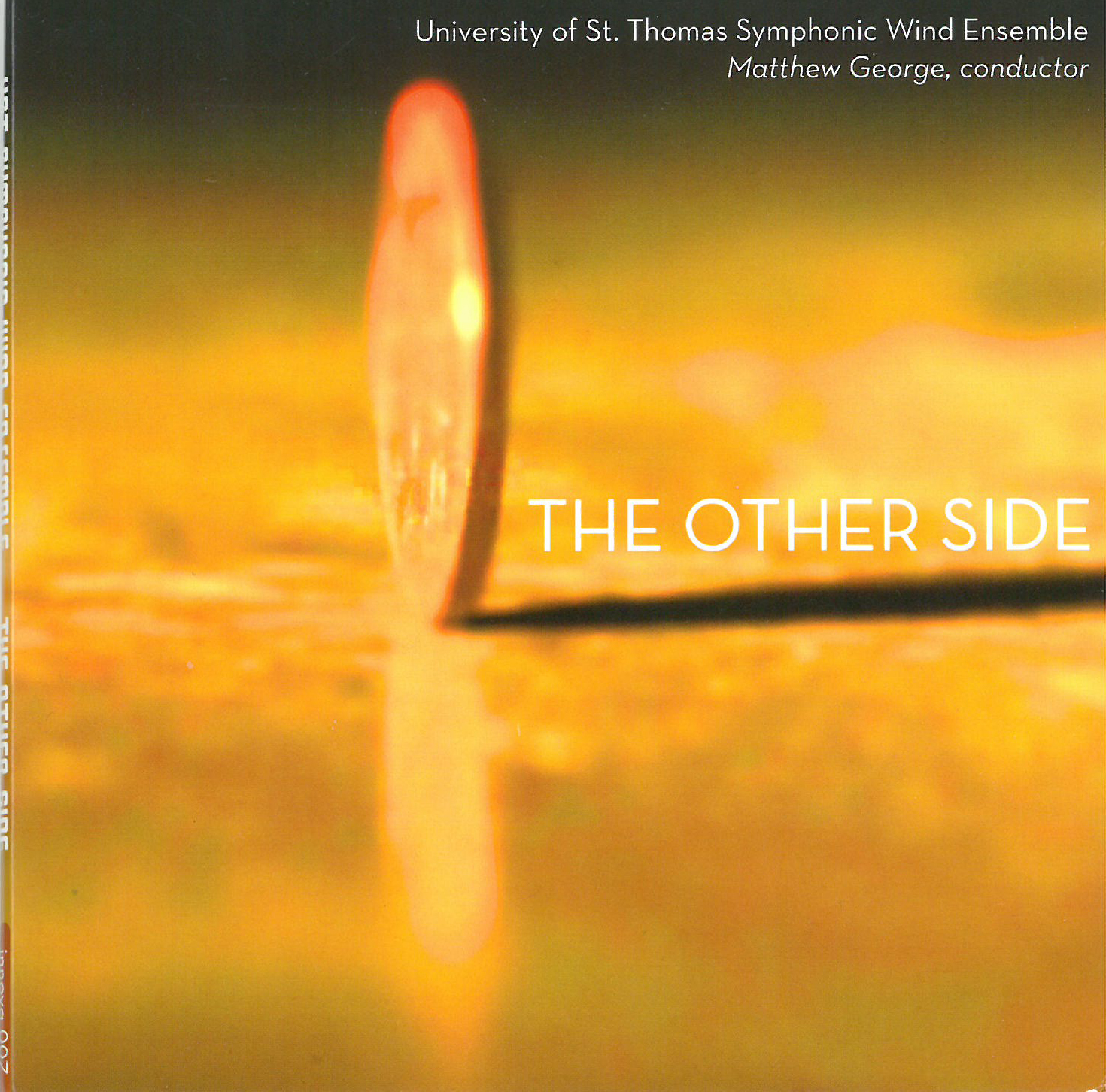
11 University WindsThe Other Side
University of St. Thomas Symphonic Wind Ensemble; Matthew George
Innova innova 007 (innova.mu)

We hear string orchestras in concert halls, backing pop artists and even in the supermarket. Alternatively, we may only have heard concert bands at high school performances or marching in parades. The Minnesota-based University of St. Thomas Symphonic Wind Ensemble (Matthew George, conductor) is a highly skilled ensemble of brass, woodwind and percussion that presents a welcome change in timbre and material. They have a long history of commissioning works and this is their seventh album in that series.

One of the album’s highlights is the opening B-Side Concerto – For Rock Band and Wind Ensemble by Spanish composer Luis Serrano Alarcón. This 16-minute work showcases both the wind orchestra and the rock band and contains great rhythmic riffing sections, some odd metre segments and excellent wailing guitar solos. It is a tour de force which manages to incorporate the rock band within the wind ensemble so their distinctive sounds blend to achieve an edgy and exciting effect.

Another highlight, Mysteries of the Horizon (After Four René Magritte Surrealist Paintings) by Nigel Clarke features the virtuoso Belgium cornet player Harmen Vanhoorne. Part 1, The Menaced Assassin, begins with a solo cornet playing a short fanfare and then works into a back-and-forth duel with the wind ensemble containing several angular and sophisticated harmonies and rhythms.

Kit Turnbull’s three-movement Everything starts from a dot (based on a quote from Kandinsky) and a second piece by Alarcón, Symphony No. 2 for Wind Orchestra, are the additional works on this engaging CD.

Listen to 'The Other Side' Now in the Listening Room

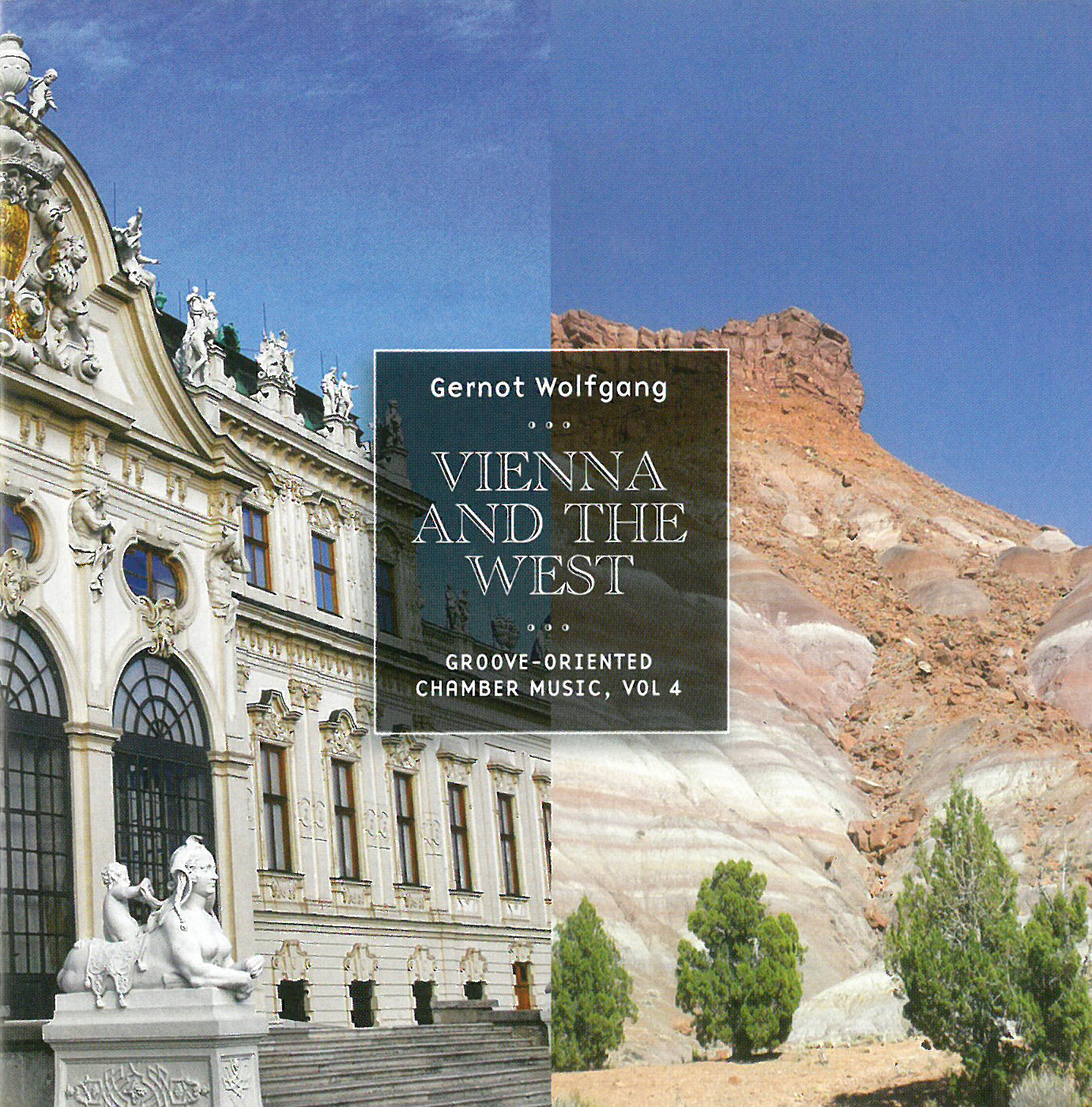
12 Germot WolfgangGernot Wolfgang – Vienna and the West, Groove-Oriented Chamber Music, Vol. 4
Various Artists
Albany Records TROY1760 (gernotwolfgang.com)

If you are searching for a fresh and distinct fusion of styles, something classically based yet different, this is the album you might want to consider. Gernot Wolfgang, an Austrian-born composer now based in Los Angeles, masters an idiosyncratic fusion of the elements of the Second Viennese School with contemporary jazz in this selection of chamber music pieces featuring various combinations of instruments. In a way, these pieces take inventory of the stylistic as well as geographical influences on Wolfgang’s compositional style. Music on this album has a firm and clear classical music foundation but what makes it interesting is the interweaving of the rhythmical jazz grooves, occasional country western music motives (especially in strings) and the cinematic quality of some sections.

Passage to Vienna for piano trio, the second piece on the album, is a story told in fragments, and exemplifies why this unique fusion works so well. It opens with a beautifully flowing, seductive melody in the piano and repeated unison in the strings. Groovy rhythms precede a jazzy violin solo, done with flair and style. We are then transported to Vienna at the turn of the century, and non-linearity takes over along with strong cinematic colours. The mood shifts back to America toward the end and the opening theme comes back but this time it is coloured with dissonance. Another jazzy violin solo, with added country-style motives and propelling rhythms in the piano bring this piece to a conclusion. The textures are simply divine.

All the compositions on this album are engaging and atmospheric and a strong cast of musicians adds individual flavours to Wolfgang’s music.

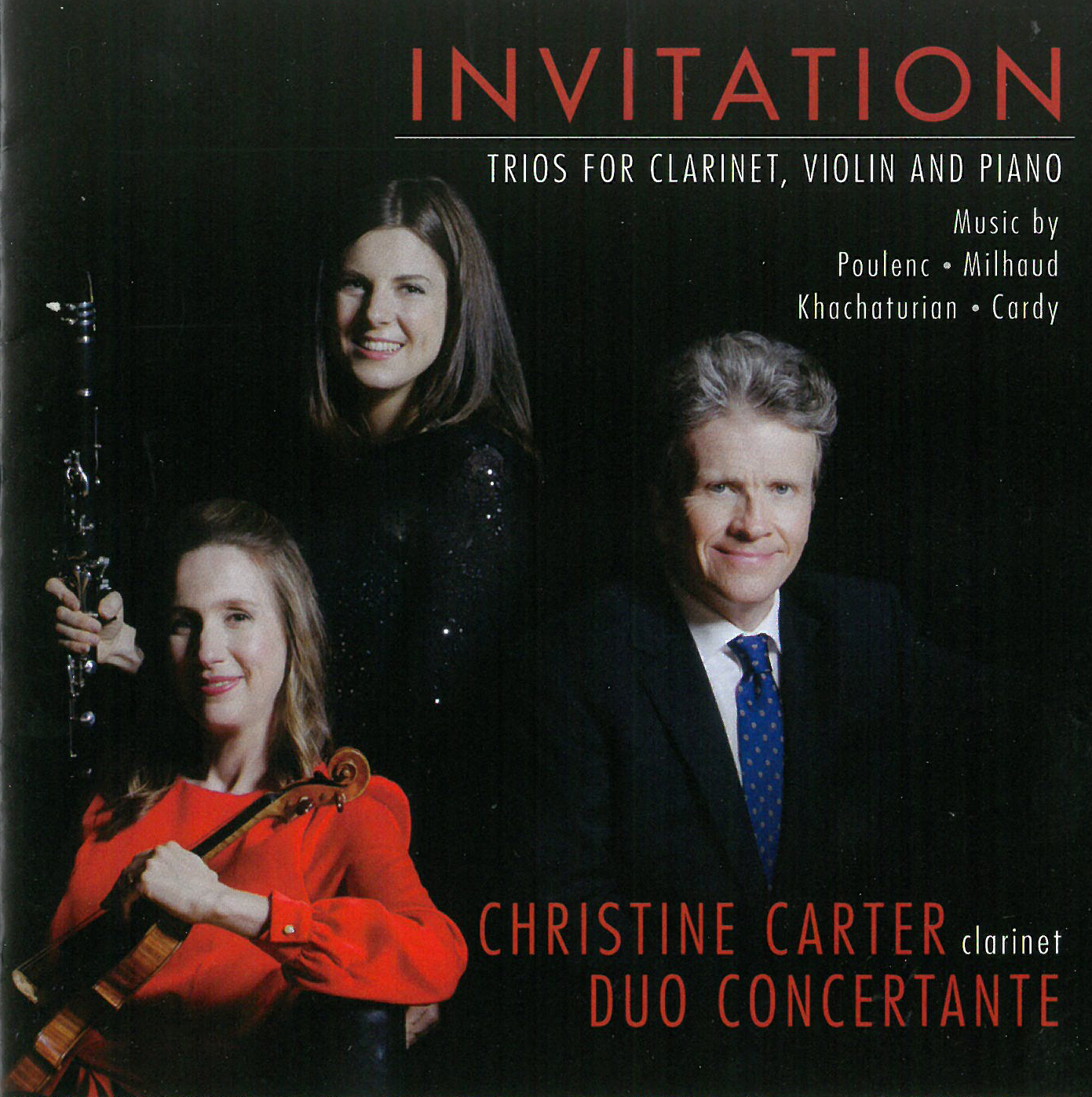
01 InvitationInvitation – Trios for Clarinet, Violin and Piano
Christine Carter; Duo Concertante
Marquis Classics MAR 81489 (marquisclassics.com)

Having to declare an interest in the subject of a disc review is an unalloyed pleasure when said conflict involves praising the work of a former student. Together with Tim Steeves and Nancy Dahn (Duo Concertante), clarinetist Christine Carter has released Invitation, an album of trios for clarinet, violin and piano. Alongside the witty and spirited Suite by Darius Milhaud is Aram Khachaturian’s almost emo Trio; Tango, a chestnut by Canadian Patrick Cardy (1953-2005); and last of all, Francis Poulenc’s L’invitation au château.

The latter is new material to me, as I’m sure it will be to many listeners. It’s a curiosity, beautiful raw material that Poulenc never got around to turning into a suite, unlike his colleague Milhaud. Both composers wrote the music on this disc as integral backdrops for plays by Jean Anouilh, but where Milhaud sifted his score down to four movements, the Poulenc remains in its original form of 16 musical installments, some extremely short, others stretching to between one and two minutes in length.

Nothing detracts from the pleasure of listening to the performances on this disc. The Khachaturian stands out as particularly compelling, but no doubt others will find their own favourites. Tasteful style, courteous and elegant musicianship, and technical ease are featured throughout by all three performers. One supposes, or hopes, this won’t be their last such collaboration.

The liner notes are helpful, packing a good deal of information into an interview format.

Listen to 'Invitation: Trios for Clarinet, Violin and Piano' Now in the Listening Room

02 lori freedmanExcess
Lori Freedman
Collection QB CQB 1923 (actuellecd.com)

On Excess, distinguished Montreal-based clarinetist Lori Freedman presses the boundaries of contemporary musical discourse, challenging the clarinet’s, the individual composer’s and her own expressive depths. Pressing a point, she focuses on bass and contrabass clarinet, perhaps the most vocal of orchestral instruments, with every pitch ready to bend and break, a spray of overtones seemingly ever at the ready. Oh, yes, she challenges the listener as well.

The program is bracketed by its most radical and expansive adventures. British composer Richard Barrett’s Interference requires the performer to sing over a four-octave range and play a kick-drum as well as turn in a virtuosic explosion of wild burbling lines from the contrabass clarinet. It’s shamanic work, an invocation of spirits, a depth of expression that tests the limits of performance. At the opposite end of the CD, there’s French composer Raphaël Cendo’s Décombres, a work of “saturation” that fills the sound space with roaring contrabass clarinet and abrasive electronics.

In between, Freedman reaches back to Brian Ferneyhough’s daunting Time and Motion Study I (1977) and explores three recent pieces. Freedman worked closely with Vancouverite Paul Steenhuisen on Library on Fire and Paolo Perezzani on Thymos, the former mixing vocal sounds with bass clarinet, the latter the sonic potential of the contrabass, elephants and all. It’s her own Withwhatbecomes that’s most remarkable: almost unvoiced, it’s filled with the quietest, most fleeting, evanescent sounds, more challenging in its own way than anything else here.

03 Stump LinshalmPetra Stump-Linshalm – Fantasy Studies
Various Artists
Orlando Records or 0033 (orlando-records.com)

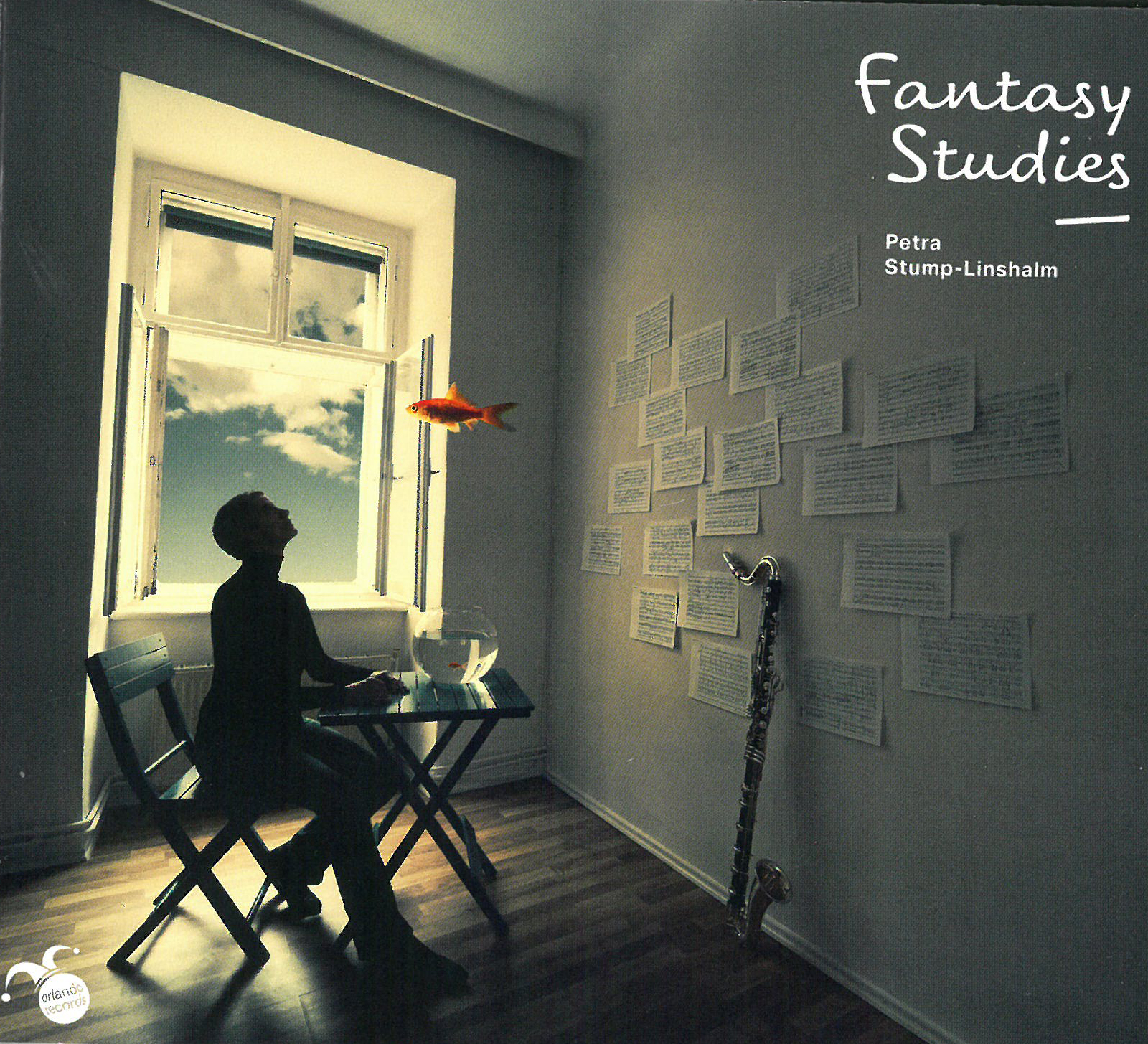
The technical ability of the players on this new disc is enough to bind the listener to the chase of sounds they produce. A collection of different works for (mostly) winds, and most among them the various sizes of clarinet, the CD is named for its final multi-movement work, written by composer Petra Stump-Linshalm. This piece calls for four players dealing with 11 instruments between them (flutes, clarinets, recorders, cello, some also playing percussion). The performers produce eerily beguiling songs and dances. Tonality is a ghost of its former self, pale-to-vanishing. Stump-Linshalm is more concerned with finding voices to utter her thoughts that no one has heard yet, colours and consonants fresh from a fine-tuned imagination. Movement is mostly ordered but gradual, although some movements pop and spark with sudden furtive gestures. Nowhere is the dance faster than a lively funeral march. Fantastic indeed, and beautiful; and terrifying.

Opening the disc are eight short movements for solo contrabass clarinet, which seems to be having its moment in new music. Uisge Beatha is an exploration in sound of the variety of flavours found in good peated scotch. My unmixed love of single-malt scotch whiskey is not matched by my feelings for the contrabass clarinet. I certainly admire the playing ability of Heinz-Peter Linshalm, who is featured on most of the disc, and his mastery of the double-length bass. There’s a mad take on The Teddy Bears’ Picnic as well; I leave the listener to find it.

04 cqb simon martinSimon Martin – Musique d’art
Quatuor Bozzini; Pierre-Alexandre Maranda
QB CQB 1922 (actuellecd.com)

Simon Martin is a younger Quebecois composer whose work is intimately connected with music’s relationship to materiality. His earlier work Hommage à Leduc, Borduas et Riopelle focused on specific works of three great painters, setting each segment with a small group of like instruments: a saxophone quartet, a trio of classical guitars and the string quartet, Quatuor Bozzini. Here the quartet turns to a more ambitious Martin work. Musique d’art is similarly concerned with meaning, with relationships among music, sound and noise and the philosophical and material status of the musical work, its title a play on the expression “objet d’art.”

It’s a work of substantial scale, over an hour in length, and also great sonic mass. Quatuor Bozzini is extended to a string quintet here with the presence of double bassist Pierre-Alexandre Maranda. In some of the work’s five movements, his is the central voice. The first part moves from silence to a consonant drone that’s gradually engulfed in a gathering dissonance only to return to silence. Maranda’s role comes to the fore in the second part, his harsh, low-register bowing suggesting grinding tools. At another point, his savage, whipping glissandi feel as much like a side effect of industry as a musical technique.

The final movement alternates groups of sustained harmonics to develop a state that’s simultaneously tense and suspended, gradually creating a sense of timelessness. A kind of stable mystery, Musique d’art can only grow in significance.

05 Samuel AndreyevSamuel Andreyev – Music with no Edges
HANATSUmiroir
Kairos 0015025KAI (kairos-music.com)

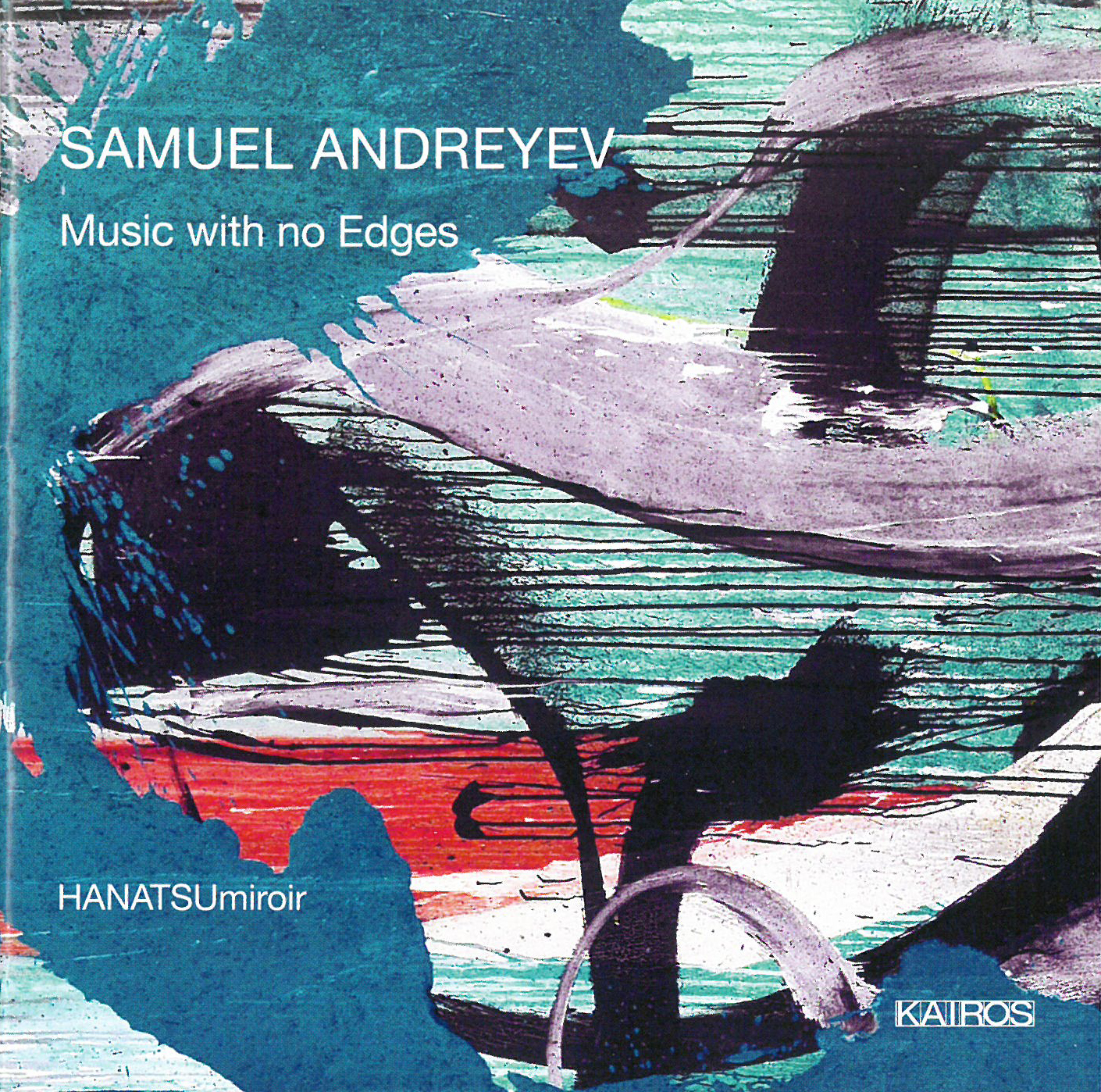
Before you even read the booklet notes that speak of a late work of Marcel Duchamp in relation to Samuel Andreyev’s sublime modernist composition, you realize – in the rhythm and stroke of reeds, strings and percussion – that the Canadian composer now living in France is a visualist musician. It is clear from the very first few bars of Vérifications (2012). Then rifling through the booklet as you might be tempted to do, the discovery of his scores reveals more of his method. Of the three scores depicted, only one is on staved paper; another is on a black sheet and the third is on graph paper. The notes are meticulously written, ramrod straight. But clearly Andreyev does not mean for them to sound that way.

This is, after all, Music with no Edges. Fingertips holding bows and mallets are meant to be extensions of paint brushes, perhaps just as pursed lips on piccolos and other reeds become extensions of musicians painting with sound, rather than engaging in some aural activity. So, for instance, on Cinq pièces, Stopping, Passages and, indeed Music with no Edges, and the final Strasbourg Quartet, the steady drip, drip, drip of sound as if wet from a paint brush seems to fall from the ensemble HANATSUmiroir onto blank canvases creating vivid pictures of sound emboldened with emotion. Andreyev seems to write not only with a pencil but with his nerve endings as well.

06 Giya KancheliGiya Kancheli – Sunny Night
Frédéric Bednarz; Jonathan Goldman; Natsuki Hiratsuka
Metis Islands 2019 MI-0009 (metis-islands.com)

I get particular satisfaction from listening to an album rendered stylishly by gifted Canadian musicians. A good example is Sunny Night, a collection of 17 miniatures originally scored for the cinema and theatre by Giya Kancheli (b.1935) recorded at McGill University in Montreal by the duo of Frédéric Bednarz (violin) and Natsuki Hiratsuka (piano).

The well-known Georgian composer Kancheli, currently living in Belgium, is an unabashed romantic when it comes to composing music. “Music, like life itself, is inconceivable without romanticism. Romanticism is a high dream of the past, present, and future – a force of invincible beauty which towers above, and conquers the forces of ignorance, bigotry, violence and evil,” states Kancheli in the liner notes.

The highlights on Sunny Night are the two works for violin, piano and bandoneon (Jonathan Goldman), an instrument closely associated with the tango. Earth, This Is Your Son for the trio is episodic and dramatic, dominated by minor key tonalities. At just over five minutes it is also the most substantial work on the album. It’s more a concert piece than incidental music.

Not only unapologetically melody-driven, romantic and tonal – often gently drawing on early 20th-century vernacular genres such as the tango – the musical language on Sunny Night also seeks to capture a single mood befitting the music’s original theatrical function. In that it succeeds admirably, though sometimes the effect verges on overt sentiment. There are times however when that is just what’s needed.

07 Reiko FutingReiko Füting – Distant Song
Ensemble Vocal & Instrumental
New Focus Recordings FCR216 (newfocusrecordings.com)

Composer Reiko Füting (Germany b.1970), a faculty member of the Manhattan School of Music, offers an intriguing study of a juxtaposition of ancient and modern practice. The first two pieces on Distant Song, performed by AuditiVokal Dresden and Art D’Echo are als ein licht/extensio and in allem Fremden/wie der Tag/wie das Licht, based on works by Heinrich Schütz. The motet Verleih Uns Frieden Gnädiglich is framed by dynamic percussion, spoken word and lush, dissonant vocalizations meant to illustrate, in the composer’s own words, a “continuing compositional interest in time and space.” Meant as an epilogue to the first two pieces, eternal return (Passacaglia) features the Byrne:Kozar:Duo, in an alarmingly engaging duet for soprano and trumpet using text from Nietzsche’s Thus Spoke Zarathustra. Next is mo(nu)ment for C, on the 2015 attack on Charlie Hebdo in which the ensemble loadbang reiterates “Je suis,” “Ich bin” and “I Am.” Dutch ensemble Oerknal performs Weg, Lied der Schwäne, a “swan song” on the subject of euthanasia based on Arcadelt’s renaissance madrigal, Il bianco e dolce cigno. The same ensemble backs vocal quartet Damask in versinkend, versingend, verklingend which recalls Debussy’s La cathédrale engloutie and quotes the 15th-century German folk song Gesegn dich Laub.

In listening to Füting’s compositions, it becomes clear that while focusing on contemporary issues, he brilliantly incorporates musical fragments of memory which bridge present and past.

Back to top