01 MosaiquejpgMosaïque
Ensemble Made In Canada
Independent 0 51497 14047 2 (mosaiqueproject.com)

Canada’s remarkable ethnic and scenic diversity is glowingly reflected in the stylistic diversity of the 14 pieces that constitute Mosaïque, each about four minutes long, drawing from classical, jazz, folk, pop and Indigenous idioms. The Mosaïque project was created by Ensemble Made In Canada, Western University’s superb ensemble-in-residence, comprising pianist Angela Park, violinist Elissa Lee, violist Sharon Wei and cellist Rachel Mercer. Since premiering Mosaïque in 2018, EMIC has performed the suite in every province and territory, as each province and territory is represented musically in one of the pieces.

Fourteen composers contributed to the project: David Braid, Barbara Croall, Julie Doiron, Andrew Downing, Vivian Fung, Nicolas Gilbert, Kevin Lau, Nicole Lizée, Richard Mascall, Samy Moussa, William Rowson, Darren Sigesmund, Sarah Slean and Ana Sokolović. Many of their pieces depict familiar features of Canada’s physiognomy: prairies, mountains, the icy North and lots of flowing water – rivers in Quebec, Manitoba, B.C., Yukon and Northwest Territories are referenced in six pieces. There are also echoes of Gaelic, Acadian and Métis folk music, aboriginal petroglyphs, canoe trips, a legendary Newfoundlander and Saskatoon ghosts.

Happily, all these disparate pieces fit together like tesserae, those tiny, coloured bits of stone, glass or ceramic that compose a mosaic floor, wall or ceiling. Here all the differently coloured musical bits have combined to create a vivid sonic “mosaïque” of our remarkable country, vividly performed by Ensemble Made In Canada. A truly wondrous achievement!
Listen to 'Mosaïque' Now in the Listening Room

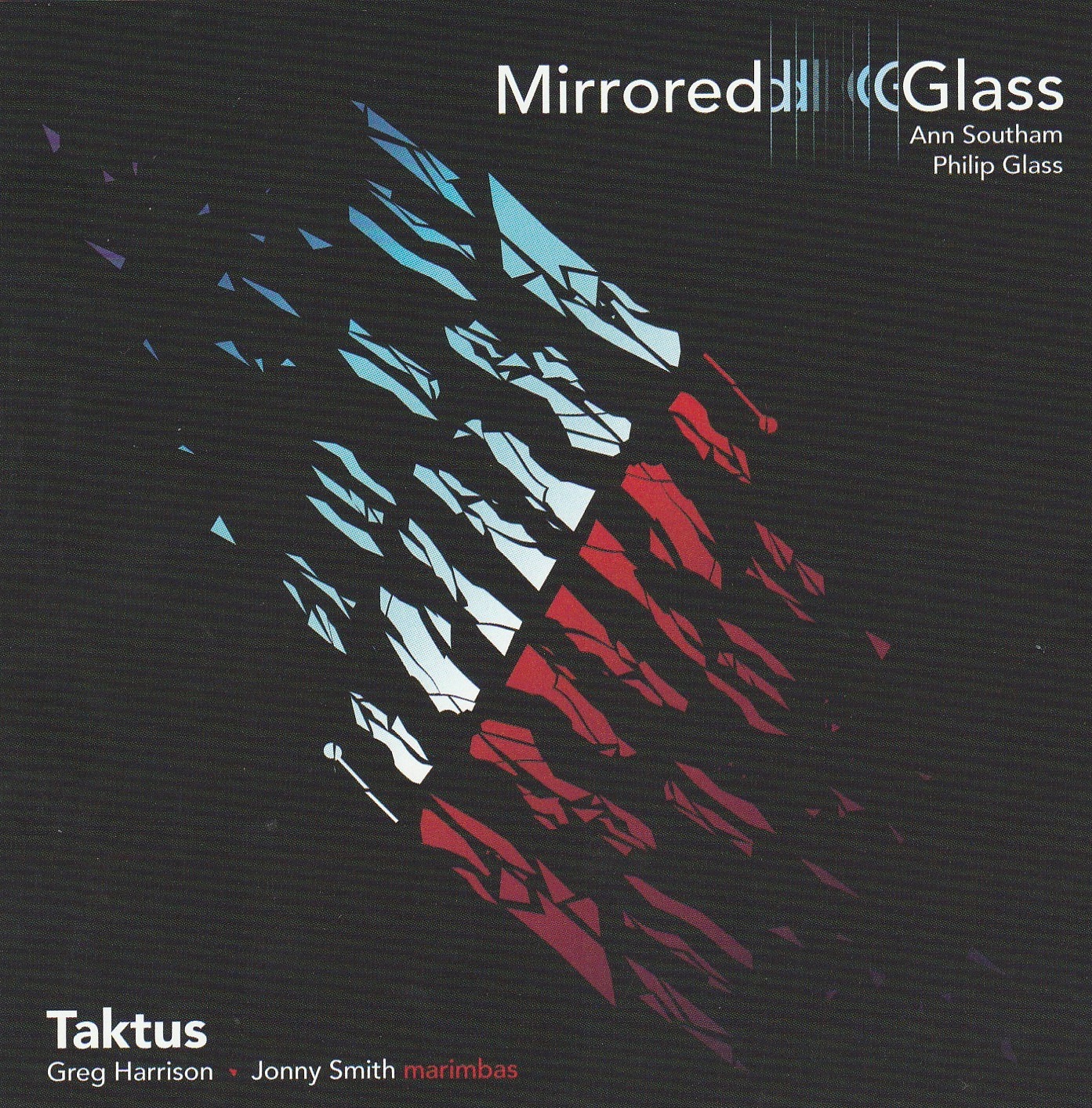
02 TaktusMirrored Glass
Taktus Duo
Ravello Records RR8027 LP, CD and Digital (taktusduo.com)

The Taktus duo was formed in 2010 by Canadian percussionists Greg Harrison and Jonny Smith while pursuing master’s degrees at the University of Toronto. With musical influences ranging from classical to electronica, their stated mission includes making music “that crosses borders between genres…”. Their second album consists of very effective marimba duet arrangements made by the duo of key minimalist keyboard works by Canadian Ann Southam (1937-2010) and American Philip Glass (b. 1937).

Southam is represented by five pieces on Side A. The four from the piano work Glass Houses (1981, revised 2009) are constructed from short, primarily major-key tonal units. Possessing an overall lyrical quality, the composer slowly transforms melodies derived from only a few tonal chords. Inside those chords, in the evocative words of Musical Toronto, “a tone row gradually unfolds at the speed of a tulip blossom opening on a warm, sunny spring morning.” The fifth work is from Southam’s earlier and harmonically more adventurous Rivers I (revised 2004).

Side B features spirited, idiomatic Taktus arrangements of Glass’ well-known Music in Contrary Motion (1969) and pieces from Etudes (1994-2012). Throughout, the duo’s playing is both precise and nuanced, as is the quality of the accurate and warm-sounding recording. The use of processing to lengthen the decay on the percussive marimba sound is organic, never obtrusive. Harrison and Smith sensitively render the complex interplay of solo and accompanying voices with virtuoso panache in both sets.

This satisfying album promises a bright Taktus future.

Listen to 'Mirrored Glass' Now in the Listening Room

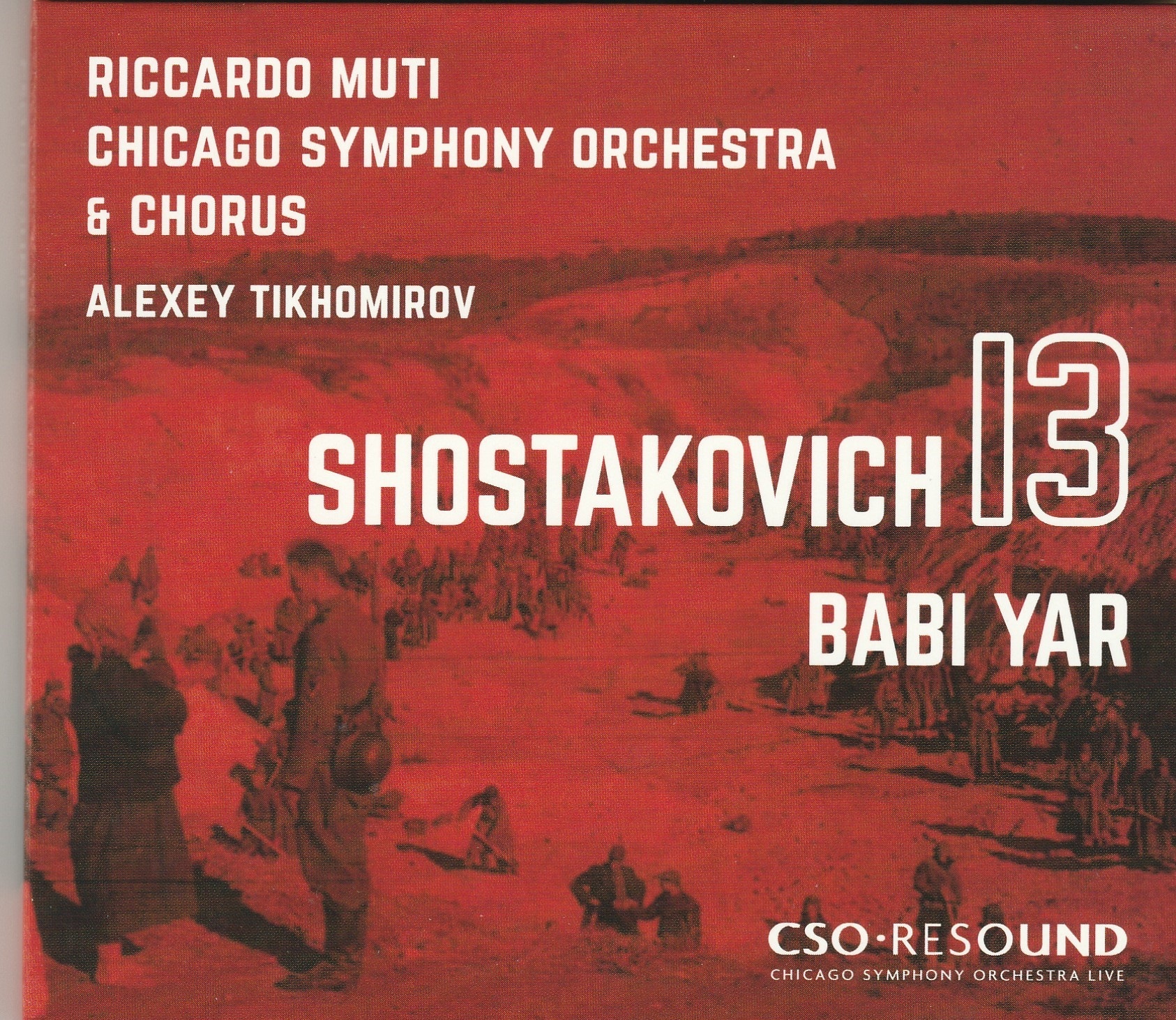
03 Shostakovich 13Shostakovich 13 “Babi Yar”
Alexey Tikhomirov; Chicago Symphony Orchestra and Male Chorus; Riccardo Muti
CSO Resound CSOR 901-1901 (naxosdirect.com)

In January of 1970 Ricardo Muti conducted the first performance in Western Europe of Shostakovich’s controversial 13th Symphony written in 1962. The orchestra in Rome was the RAI Symphony Orchestra and the soloist was bass Ruggero Raimondi. One of Italy’s most highly regarded and enlightened artistic directors succeeded in securing a microfilm of the forbidden symphony and translated the poetry into Italian. A tape of the performance was sent to the composer who liked the translation. That very tape had been presented to Muti by Shostakovich’s widow as a gift a few months before this powerful performance in Chicago, making for a real sense of occasion. Muti certainly knows the music, as many of us who have seen the video of this same live performance of this thrilling, cantata-like symphony posted on YouTube will attest. The YouTube sound, of course, pales again this CD release. The CD booklet gives an account of how and why the symphony was banned. Here is an outline.

The symphony is set to texts by Yevgeny Yevtushenko. The composer was drawn to his poem Babi Yar, written in 1961, that tells of the 1941 massacre of 34,000 Jews in 36 hours on a hillside in Kiev. Shostakovich selected four other poems for a five-movement symphony. The selection was made by Shostakovich and was in no way intended by the composer to be a song cycle. Upon its first performance on December 18, 1962 the work was immediately banned with no review. For Khrushchev and the Presidium and others whose antisemitism was ubiquitous, this was an open condemnation. Yevtushenko eventually undertook to emend Babi Yar so that not only Jews were slaughtered in Kiev, and that the Russian people fought the Nazis. There was however one more performance using the unchanged text two days after the first; Kirill Kondrashin conducted it in the Conservatory and that powerful performance was recorded and is available on all formats from Praga Digitals.

Audiences today are once again hearing Yevtushenko’s original poem.

04 Weinberg FluteWeinberg – Flute Concertos Nos. 1 and 2; 12 Pieces for Flute and Orchestra; 5 Pieces for Flute and Piano
Claudia Stein; Szczecin Philharmonic Orchestra; David Robert Coleman
Naxos 8.573931 (naxosdirect.com) 

Mieczyslaw Weinberg (1919-1996) was a Polish-Jewish pianist and composer who came of age just as Europe was plunged into the inferno of the Second World War. Moving first to Minsk to escape the Nazi occupation of Poland, he subsequently moved to Tashkent and then, with some help from Shostakovich, to Moscow where he lived for the rest of his life. The music on this recording, composed between 1947 and 1987 is a window into the musical culture, nipped in the bud by World War II, emerging in the 1930s in Eastern Europe.

The first thing that struck me about Weinberg’s music was his prodigious mastery of technique. For example, the first movement of Flute Concerto No.1 is an exciting, dramatic and technically challenging dialogue between the soloist and the orchestra. The second movement, an elegiac soliloquy for the flute, is supported by a simple but profoundly expressive chord progression played by the orchestra: the two movements couldn’t be more different, but both display equal mastery.

The first of the Five Pieces for Flute and Piano, begins by quoting the opening of Debussy’s La fille aux cheveux de lin, but moves on seamlessly into Weinberg’s own wonderfully original and expressive flight of melodic invention.

Flutist Claudia Stein, pianist Elisaveta Blumina and the Szczecin Philharmonic Orchestra, conducted by David Robert Coleman, are equally up to the challenges of Weinberg’s music. Kudos also to Naxos for introducing us to Weinberg’s music for flute.

05 Michael ByronMichael Byron – Bridges of Pearl and Dust
Ben Phelps
Cold Bllue Music CB0057 (coldbluemusic.com) 

This CD single features Bridges of Pearl and Dust, a 16-minute four-vibraphone work by “second-generation West Coast minimalist” American composer Michael Byron. It’s dense, contrapuntal and polyrhythmic music which generously rewards repeated listening.

I first met the Los Angeles-raised Byron at Toronto’s York University around 1973. He came to study composition with American Richard Teitelbaum, as well as to teach music. Byron had already studied with maverick composer James Tenney in LA, and had formed close musical friendships with influential post-modernist, minimalist composers Harold Budd and Peter Garland. At York Byron worked closely with music professor, composer, musician and biofeedback-music pioneer David Rosenboom. Very quickly Byron became an integral member of the vibrant mid-1970s Toronto avant-garde performing arts community. Byron moved to New York City a few years later, and there too found an influential place in the downtown experimental music scene.

Byron’s compositions are marked by those varied influences, yet even his earliest works project a unique musical voice. One reviewer called itshimmering minimalism.” The four vibraphones in Bridges of Pearl and Dust (2011), all played with élan by LA percussionist Ben Phelps, combine to express a complex, harmonically shifting sound field. Challenged on the first listening, I replayed the album four times. Over time, the logic and aesthetics of Byron’s musical imagination were revealed.

Filled with rhythmically percolating, interpenetrating melodic lines, the resulting tightly interwoven texture elicits, as the composer aptly put it, “a musical experience in the present tense.” And as I found out, one which richly rewards deep listening.

06 Patrick YimMemory – Patrick Yim plays works for solo violin
Patrick Yim
Navona Records nv6268 (navonarecords.com)

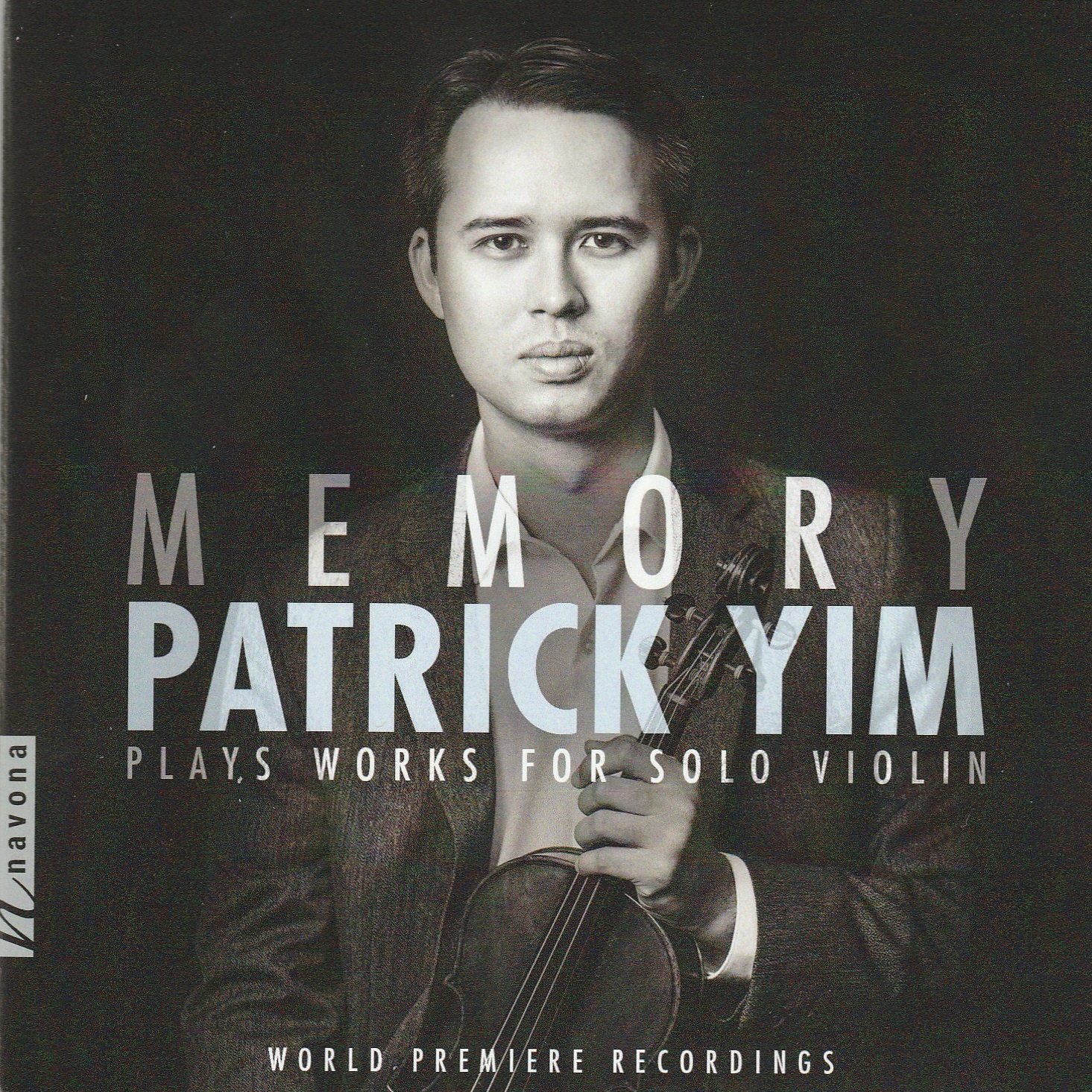
Championing contemporary works for violin by living composers has become an integral part of Patrick Yim’s performing career in recent years. This Honolulu-born violinist displays both dazzling technique and passionate interpretations of solo violin works on his new release, Memory. Among five pieces, four are commissioned for this occasion and premiered on the album, and three are inspired by Miles Upon Miles: World Heritage Along the Silk Road, an exhibition at the Hong Kong Museum of History.

Memory features works by a talented array of composers – Chen Yi, Kai-Young Chan, Yao Chen, Austin Yip and Michael-Thomas Foumai. Their music is both an engaging showcase of inventive musical ideas and treatises on contemporary violin techniques. Through the exploration of cultural identity and the role of memory in preserving it, they bring out a delicate tapestry of ideas on the significance of sound in both past and present-day settings. Field recordings processed through granular synthesis in combination with amplified violin in Miles Upon Miles by Yip is a perfect example of accord between relics of the past and rich expressions of the modern language.

Yim is very attuned to each of these pieces. His skill in highlighting the minute nuances and details is fiercely supported by an understanding of the musical language and ideas of each composer. His sound is encompassing and penetrating at times, lyrical and poetic when needed, adding a special dimension to this album.

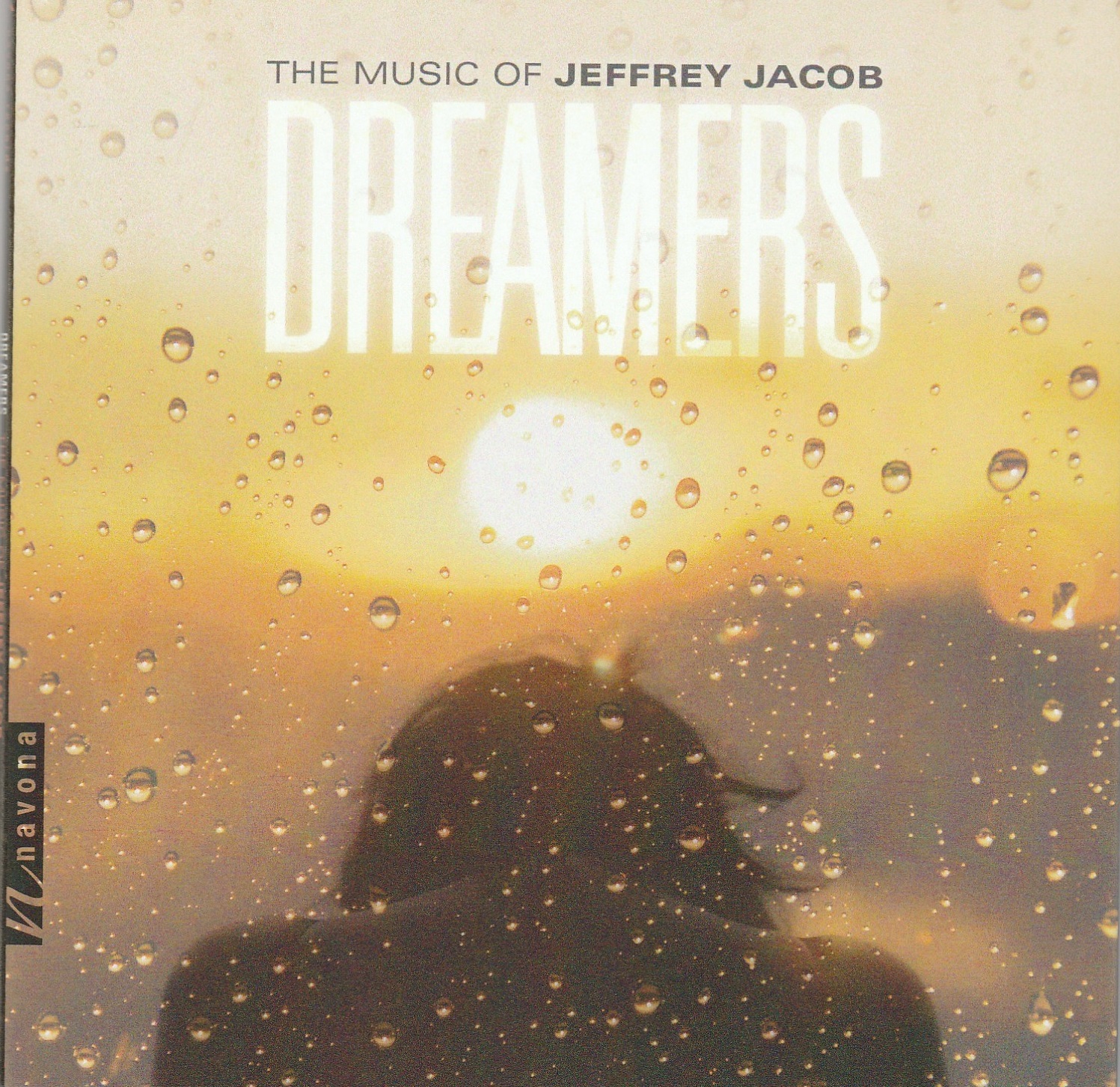
07 DreamersDreamers – The Music of Jeffrey Jacob
Various Artists
Navona Records nv6248 (navonarecords.com)

The disc, Dreamers, is a collection of pieces written by composer/pianist Jeffrey Jacob. The pieces are all earnest expressions of melancholic feeling, moving through discord towards reconciliation. He often pits the brightest register of the piano against sombre lower strings, and he uses short melodic motifs that sometimes recall a familiar strain of someone else’s: the lilting adagio in 6/8 time of his Sanctuary One, almost quotes Mozart’s Piano Concerto No.23 in the solo piccolo; there’s a gesture somewhat like Debussy’s Syrinx in some of the woodwind lines in The Persistence of Memory; in the same work the piano and the cello give voice to Schumann-esque nostalgia (although in his notes the composer freely admits this last reference).

The writing is assured, and Jacob’s performance skills are fine (he appears as piano soloist or ensemble member on most of the tracks). He also receives (takes?) oboe credit for the final track, somewhat puzzlingly, as it’s a synthesizer, not the real thing.

The disc opens with the title work, a three-movement concerto dedicated to the cohort of American immigrants known as Dreamers. The first movement is subtitled Rain, Lagrimas (Tears). The piano solo provides the persistent drops of sound to generate this image, an evocative technique if somewhat heavily present in the mix, a comment that applies for much of the disc. The string orchestra provides the melancholy.

Jacob confines much of his syntax to the four-bar phrase. This is just a quibble, one from someone who gets easily bored of the repeated trope.

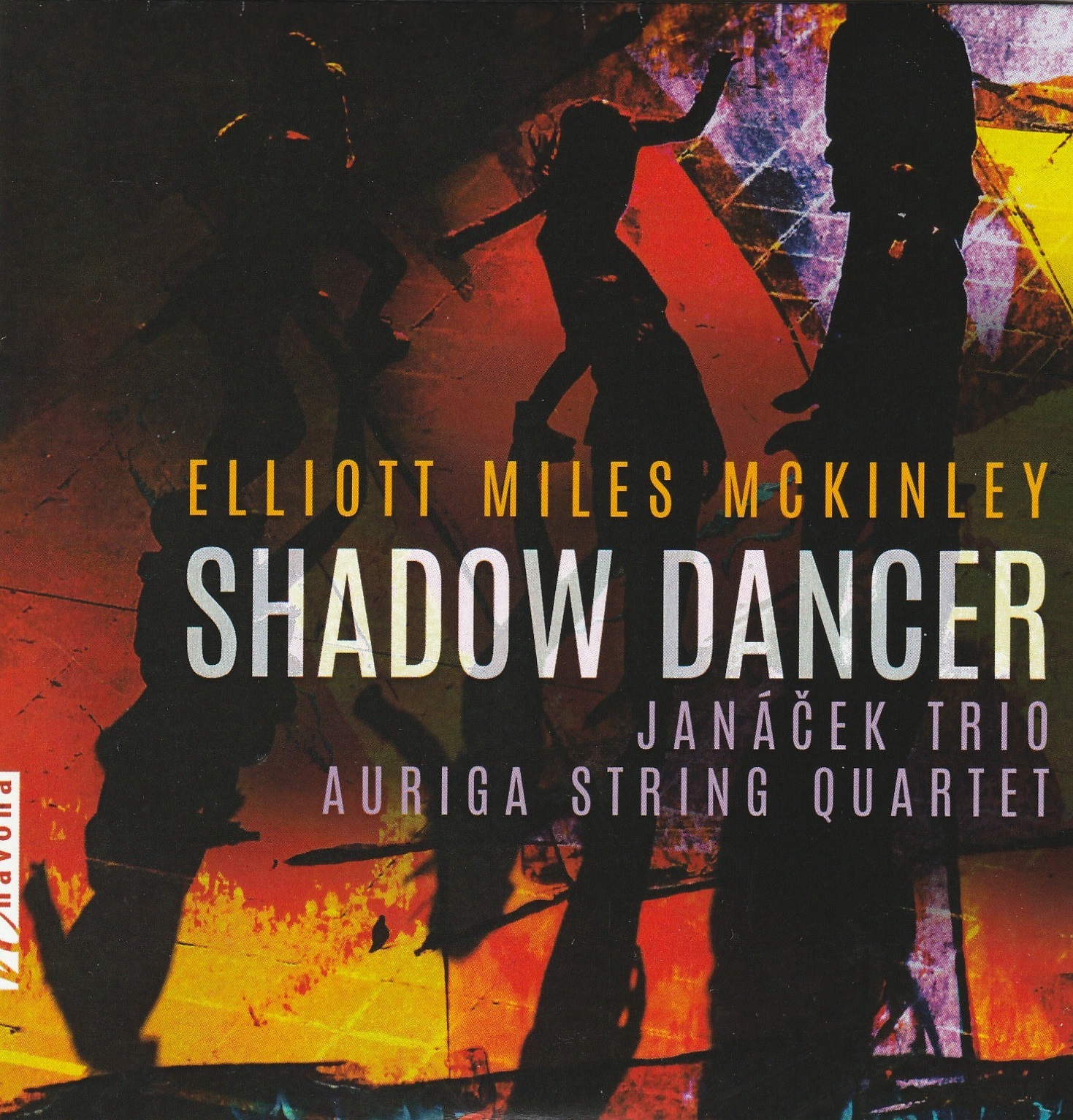
08 Shadow DancerElliott Miles McKinley – Shadow Dancer
Janáček Trio; Auriga String Quartet
Navona Records nv6264 (navonarecords.com)

As I write this review on Valentine’s Day (despite any personal reservations about this day) it seems fitting – and strangely serendipitous – that I am writing about a collection of pieces centred around the common theme of remembered love. Elliot Miles McKinley’s Shadow Dancer contains three chamber works from the well-known American composer: a quartet performed by the Auriga String Quartet, a duo for cello and piano, and the title work, a piano trio in six movements performed by the eminent Janáček Trio.

Sentimentality is a term thrown around in many negative contexts – and rightly so when a surplus of emotion is offered in excess of the object itself. That said, McKinley provides easily recognizable moods through varying angles that in turns assume flourishes of jarring dissonances, agonizing punctuation and repetitive thoughts that somehow create a welcomed atmosphere of sentimentality. These shifts in emotional temperament are most expertly woven in the String Quartet No.8 – a work that ignites a journey of doubt and eventual spontaneous resolution. The aforementioned duet, A Letter to Say I Love You, and Goodbye, is most fittingly titled in its obvious dramatic purpose and longing. Shadow Dancer attempts to create a sense of purpose through love and understanding – wordless poems that are expertly performed by the highly accomplished musicians.

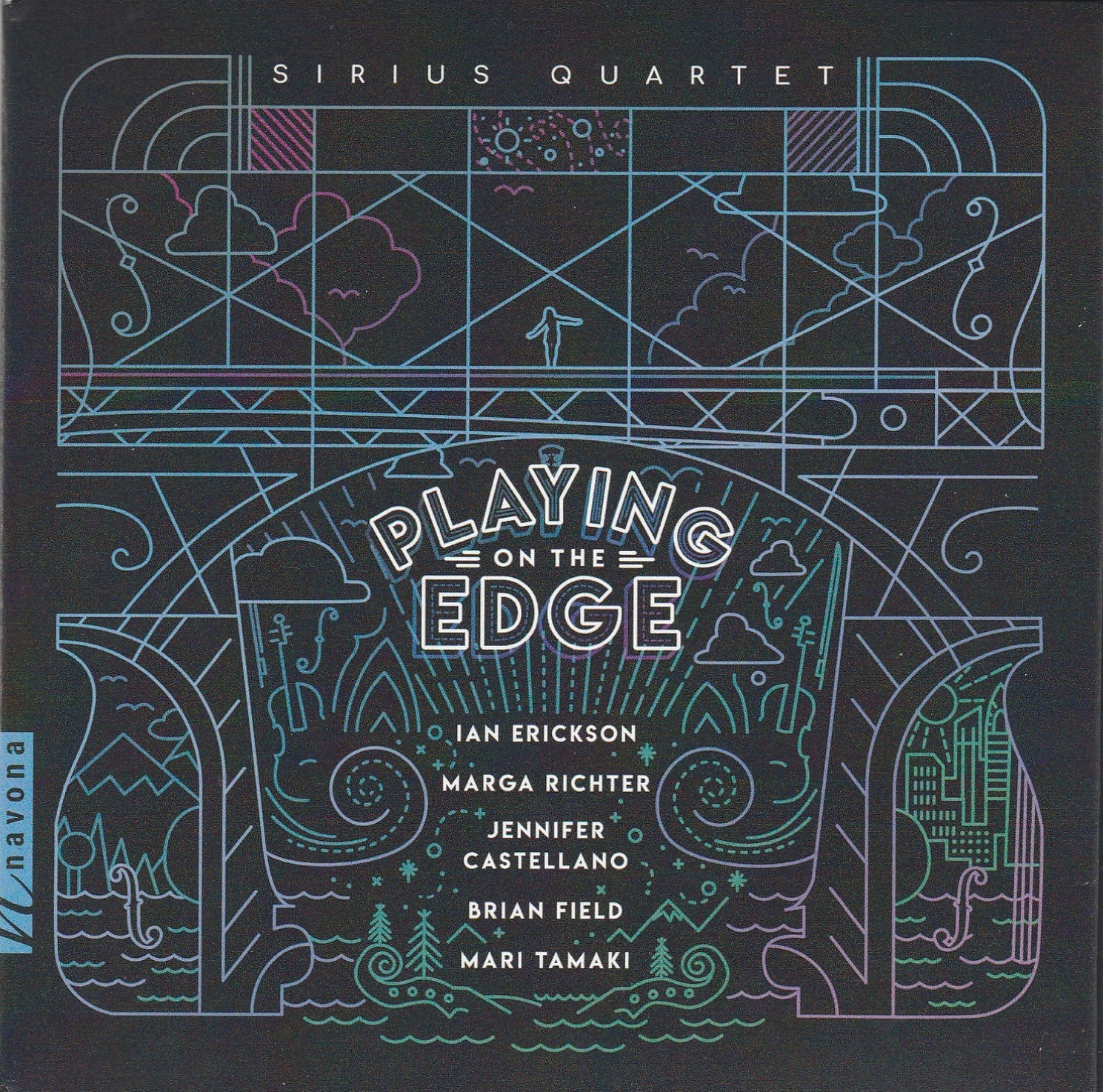
09 Playing on the EdgePlaying on the Edge
Sirius Quartet
Navona Records nv6249 (navonarecords.com) 

The brightest star in the visible night sky has been given the name Sirius – a word of Greek etymology meaning “glowing” or “scorching.” The Sirius Quartet certainly lives up to such a depiction in their masterful performances on this release, comprised of five genre-bending composers, each providing a confident array of compelling sonic landscapes. Jennifer Castellano, Ian Erickson, Brian Field, Marga Richter and Mari Tamaki all bring a level of creative excellence that elevates this disc to a compulsory level along with the brilliant performances by the musicians.

The need to push boundaries and push limits is an ever-present theme in contemporary genres; however, as one listens throughout, such pushing is seemingly met with no force as it feels natural and pure as the music is refreshingly contemporary while avoiding any tired clichés. We do get the standard contemporary tricks as are heard in many pieces of recent times, but unexpected innovation takes over if any doubt arises concerning overused performance techniques. For those who ask if there are still new sounds and new contexts to be accomplished in contemporary classical music – this release is a must-listen.

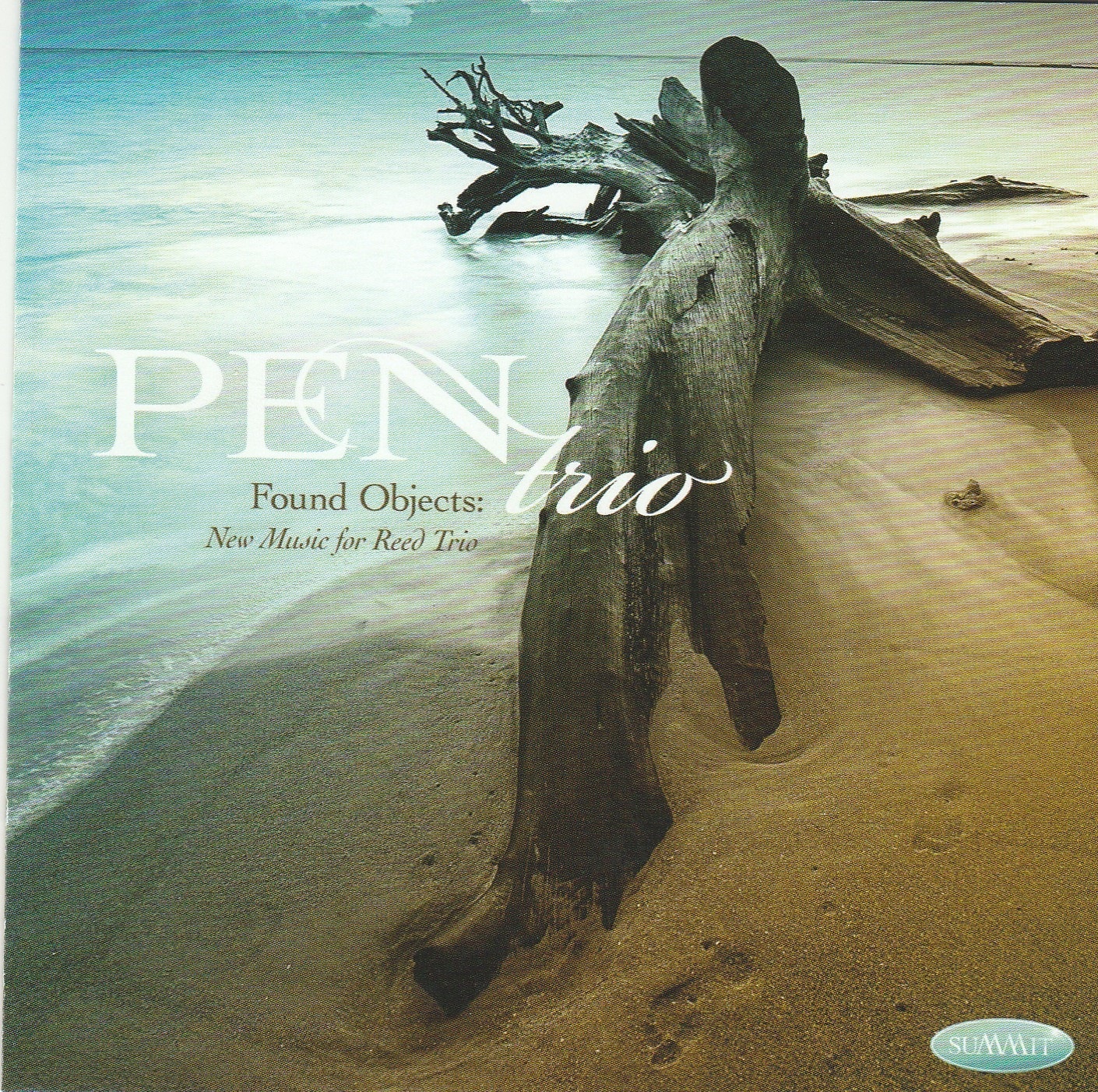
10 PEN TrioFound Objects – New Music for Reed Trio
PEN Trio
Summit Records DCD 754 (summitrecords.com)

I’m seeking synonyms for “wholesome.” I do so because I so enjoy what seems to me the very salubrious effect of listening to the timbre of three distinct reed voices. I am ready to accept that this is not everybody’s cup of tonic, but it seems to cure what ails me to listen to the very excellent PEN Trio. The tuning between the instruments is uniformly excellent, whether in consonant or dissonant voicings. Whether they’re swatting staccato flies or swinging languorous legato lines, they match character to one another. They play their respective windpipes with vigour, elan and grace. All three are fine practitioners, although I am personally less partial to Nora Lewis’ oboe sound. Phillip Paglialonga, clarinet, and Eric Van der Veer Varner, bassoon, form a more sympathetic blend. It might be a question of the close mic being less kind to the oboe, although it allows one to hear the players inhale, very inspiring and invigorating.

The disc is named for one of the pieces presented: Found Objects, by Jenni Brandon, turns out to be pleasant tuneful tonal evocations of flotsam on Long Beach CA. No plastic included in the collection – artistic licence I guess. Two colours of sea glass are the only semi-synthetic items, which I think is in keeping with my overall impression of the disc being salutary. The opening work 5-4-3 (except after C) by relative old-timer William Bradbury (he’s now 64 – the other composers are all 40-something), is similarly pleasant, if a bit more lively.

As much as the happily tonal first two works are like gentle massages for the ears, the final two are good stiff workouts designed to keep one’s ears in proper shape for hearing new sounds. Oblique Strategies by Aleksander Sternfeld-Dunn and In Threes by M. Shawn Hundley round out this terrific collection.

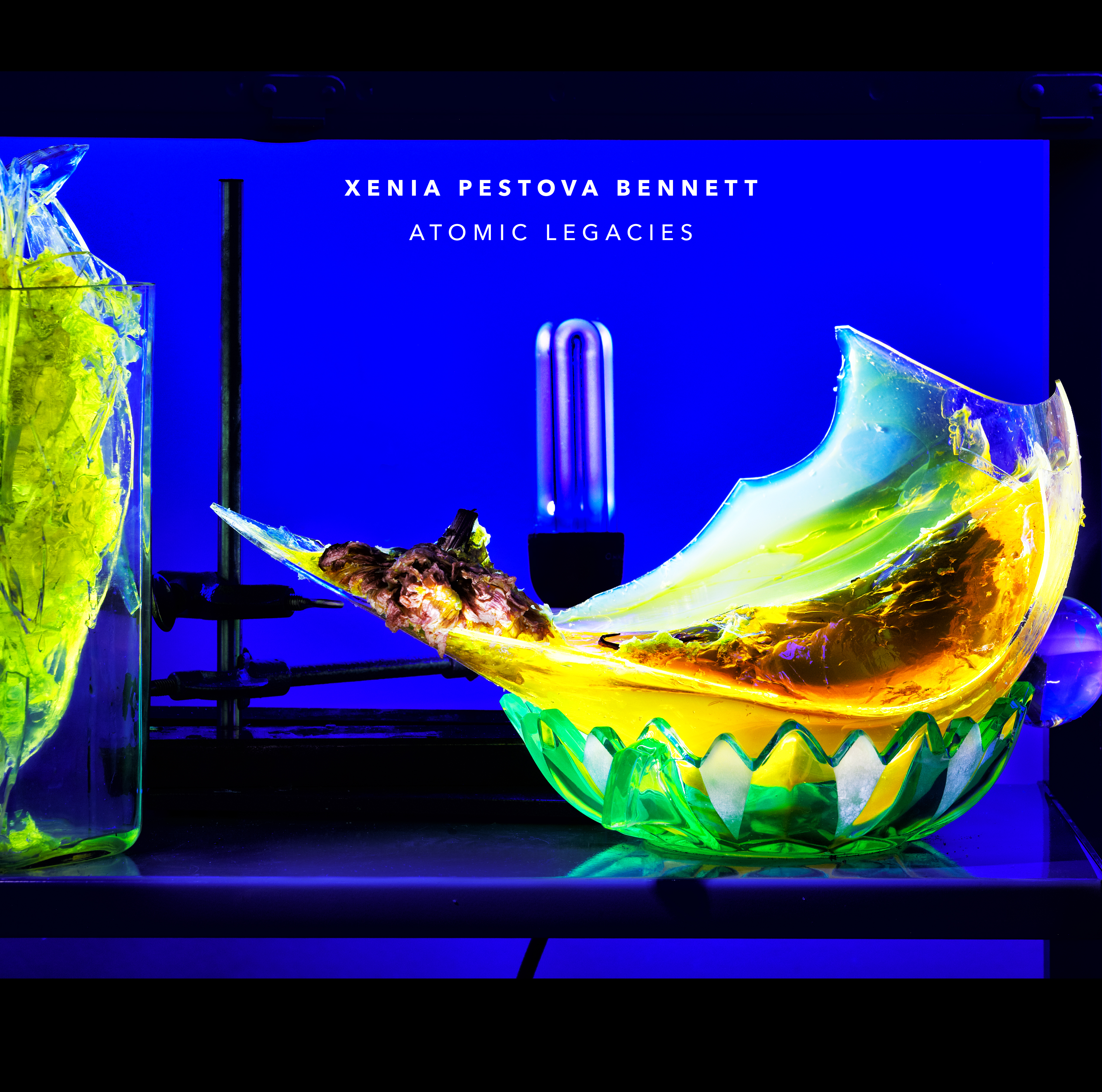
15 Xenia Pestova Atomic LegaciesAtomic Legacies
Xenia Pestova Bennett
Diatribe Records (shop.diatribe.ie) 

Before sitting down and listening to this new release by UK-based, Canadian artist Xenia Pestova Bennett, one is immediately struck by the vibrant, compelling images on the cover design. This is one of those exceptional instances where the sonic expression found therein sounds just as its extramusical inspirational sources look: stunning chemical elements that glow and pulsate. From Pestova Bennett’s liner notes: “Radium is an element which glows pale blue, Plutonium glows deep red, Tritium is green and the gas Radon is yellow at its freezing point, and orange-red below. I added the fifth, obsessively-repetitive loop… this element is silvery-white, glowing blue.”

Glowing Radioactive Elements, the five tracks that correspond to the colours depicted, unfold in a well-curated and scintillating arc. The beauty of sound that emerges from Pestova Bennett recording this music on a piano with magnetic resonator – designed and trademarked by Andrew McPherson – enhances the sound world and draws the listener in, through dips and heights of pianistic gesture. The effect is akin to watching slow-moving landscapes in isolated, unfamiliar parts of our globe. The range of expression and musical material here is impressive: spontaneous at times and focused, personal and singularly driven at others.

This disc rolls on to its significant final track, featuring the Ligeti Quartet in a companion work to the first, Atomic Legacies. Pestova Bennett directs the action in a florid series of closely connected gestures, deconstructing Haydn’s music and her own.

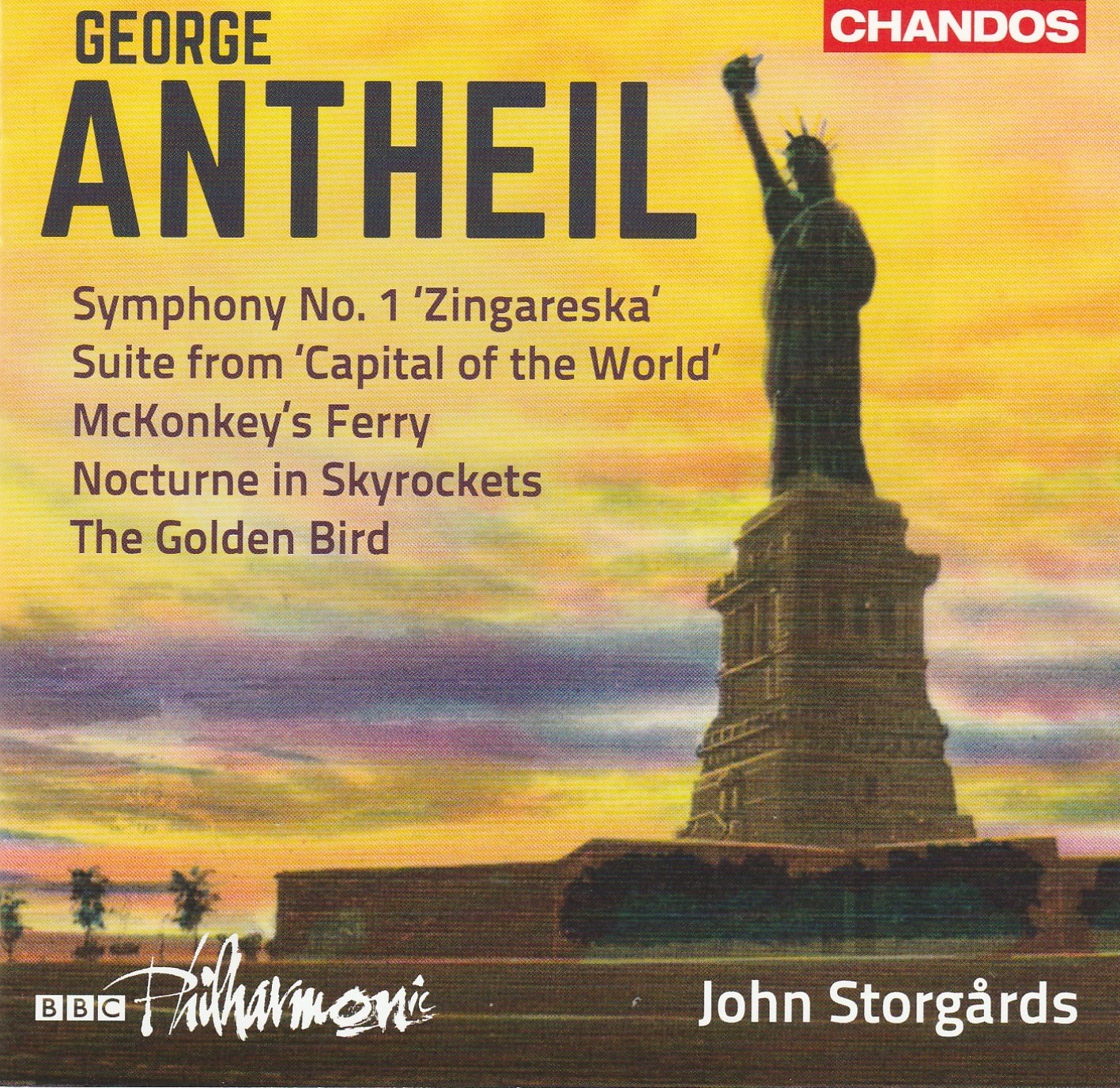
01 AntheilGeorge Antheil – Symphony No.1; Suite from Capital of the World etc.
BBC Philharmonic; John Storgårds
Chandos CHAN 20080 (chandos.net)

This is the third in a series of invaluable volumes devoted to the orchestral works of the notorious “Bad Boy of Music,” the pistol-packing composer, pianist, inventor, author and occasional glandular advice columnist, George Antheil (1900-1959). A protégé of Ernest Bloch, he left America in 1920 in hot pursuit of his then girlfriend whose mother had banished to Paris, in an attempt to discourage their relationship. It proved a lucky break for him, for upon his arrival his piano recitals were soon lionized by the intellectual elite of the capital. He cemented his European reputation in 1926 with the literally riotous premiere of what will always remain his best known work, the sensational Ballet Mécanique for multiple pianos and percussion. Alas, the clouds of war gradually intervened and he returned to a less-than-impressed America, ending up in Hollywood scoring obscure movies. 

Of the shorter pieces on this disc the opening McKonkey’s Ferry Overture of 1948 is a boisterous depiction of George Washington’s celebrated crossing of the Delaware River at a site not far from Antheil’s birthplace of Trenton, New Jersey. The Golden Bird is a delicately scored fragment of chinoiserie, derived from a 1922 piano piece. The waltzing Nocturne in Skyrockets dates from 1951, while the Capital of the World suite is a vividly coloured, Latin-tinged anthology from Antheil’s 1952 ballet score. 

The most ambitious work on offer is Antheil’s First Symphony from 1922, an impressive declaration of patriotic American nostalgia which received only a partial premiere by the Berlin Philharmonic but was not heard again until the beginning of this century. It’s quite a winning work, polystylistic in the extreme with a little something for everyone to enjoy. Antheil was an expert and innovative orchestrator whose timbral flair is vividly brought to life by the enthusiastic ministrations of John Storgårds and his expert BBC ensemble.

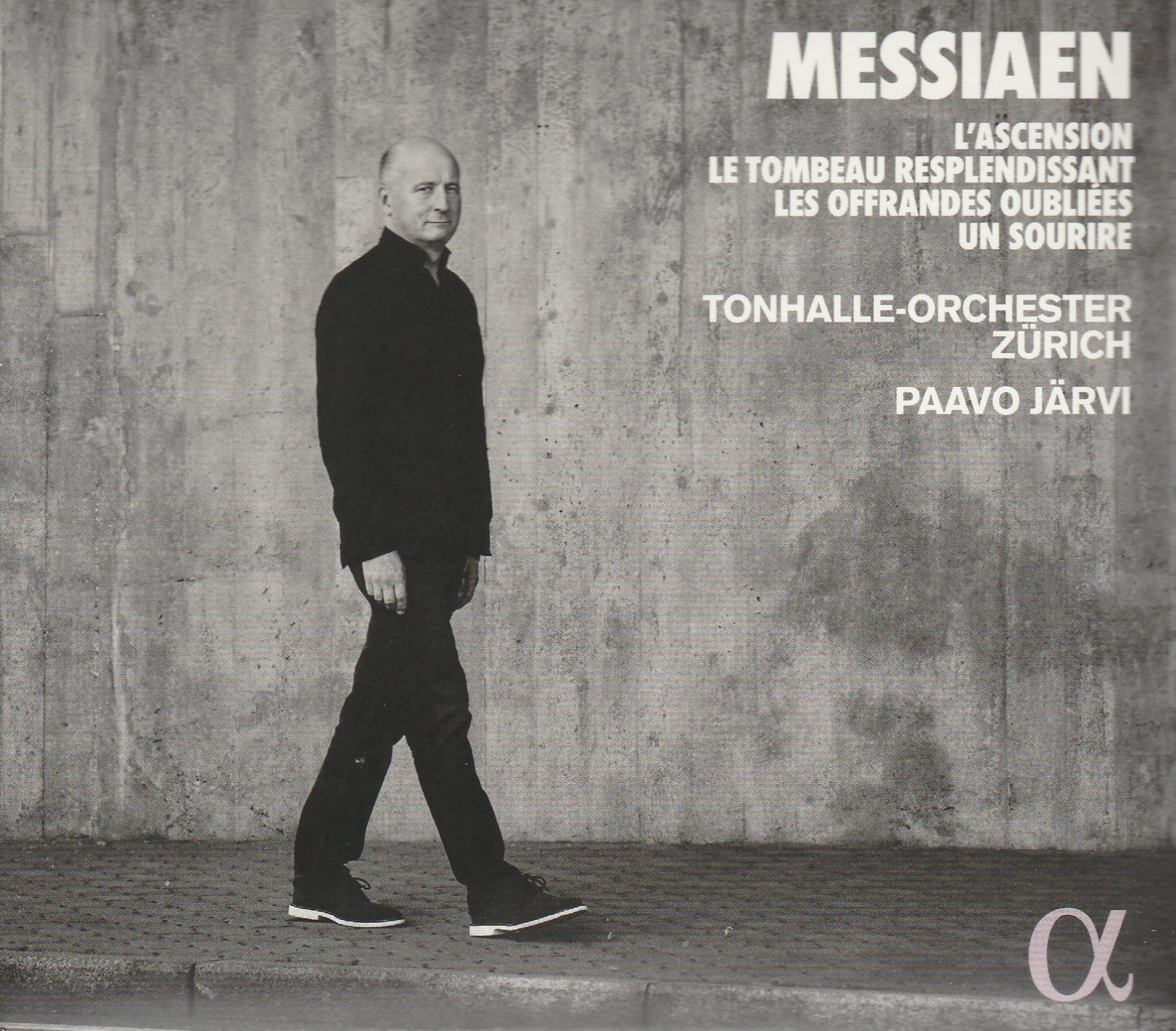
02 MessiaenMessiaen – L’Ascension; Le Tombeau Resplendissant; Les Offrandes Oubliees; Un Sourire
Tonhalle-Orchester Zürich; Paavo Järvi
Alpha-Classics.com ALPHA 548 (naxosdirect.com)

To celebrate Paavo Järvi’s appointment as their new music director, the Tonhalle-Orchester Zürich has released this admirable collection of early orchestral works by Olivier Messiaen (1908-1992), a composer demonstrably dear to Järvi’s heart. The disc begins with Le Tombeau resplendissant (1931), a lesser-known work that reflects a crucial time in Messiaen’s life; it bears an unsettling autobiographical program note that begins, “My youth is dead: it was I who killed it.” Perhaps feeling it was too personally revealing, he withdrew the work from his catalogue for decades. It was eventually published in 1997. This is followed by the transcendent “symphonic meditation” Les Offrandes oubliées (1930), one of his most successful works in this genre. 

Notably absent in the works of the 1930s, Messiaen’s preoccupation with birdsong is front and centre, alternating with retrospective hymnal passages reminiscent of his earlier style, in the late Un sourire (1989), which premiered  December 5, 1991, as Messiaen’s exquisite contribution to the bicentenary of Mozart’s death. The recording concludes with the original orchestral version of the lengthy, supremely Catholic devotional tone poem L’Ascension – Quatre méditations symphoniques (1932/33); the later 1934 version, with a different third movement, is a well-known crown jewel of the organ repertoire. 

Järvi maintains an excellent command of the orchestra throughout. The dense harmonies projected by the Zürich strings are sublime and expertly balanced, the percussion section is impressively resonant and solo passages are outstanding. A very fine job indeed by the recording team, sourced from live performances from January and April 2019.

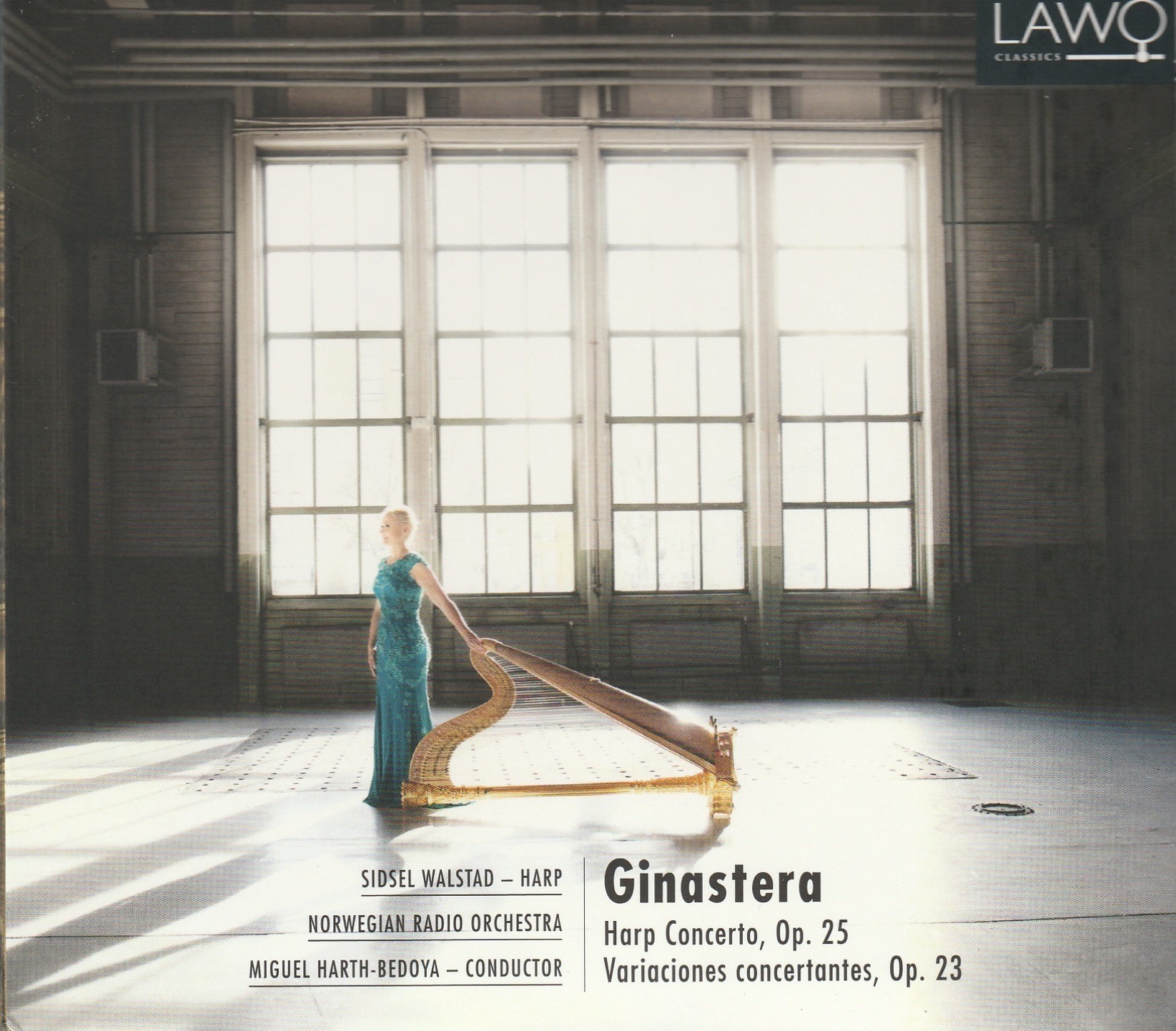
03 Ginastera HarpGinastera – Harp Concerto Op.25
Sidsel Walstad; Norwegian Radio Orchestra; Miguel Harth-Bedoya
LAWO LWC1182 (naxosdirect.com/)

Astor Piazzolla may be more celebrated a musical figure in contemporary Argentina, but Alberto Ginastera is perhaps its most exalted composer. His career spanned almost 50 years (1934-1983). Through all three phases – objective nationalism, subjective nationalism and neo-expressionism – Ginastera remained the greatest exponent of the Argentinean gauchesco tradition which holds that the gaucho – a native, landless horseman – is the icon of Argentina. In the last decade or so of his life, the composer’s appeal was so great, his influence stretched into many musical styles including jazz and so-called progressive rock.

The selections on this disc, featuring harpist Sidsel Walstad and the Norwegian Radio Orchestra conducted by Miguel Harth-Bedoya, are emblematic of Ginastera’s great gift for creating epic compositions that evoke Argentinean music and dance traditions. These he skillfully integrated into classical forms contemporaneous with the 20th century. Romanticism is never very far away, of course, and this is clear from both Harp Concerto, Opus 25 and the 12 Variaciones concertantes, Op.23. 

Both Walstad and the orchestra deliver fine performances of two of Ginastera’s eminently paradigmatic works. Walstad’s playing is eloquently dreamy and distinctively ripe in tone. Her performance, based on the 1968 revision (also performed by Nicanor Zabaleta), is scintillating. The orchestra, under Harth-Bedoya’s baton is stunning. What musicians across the board deliver is startlingly fresh and alive.

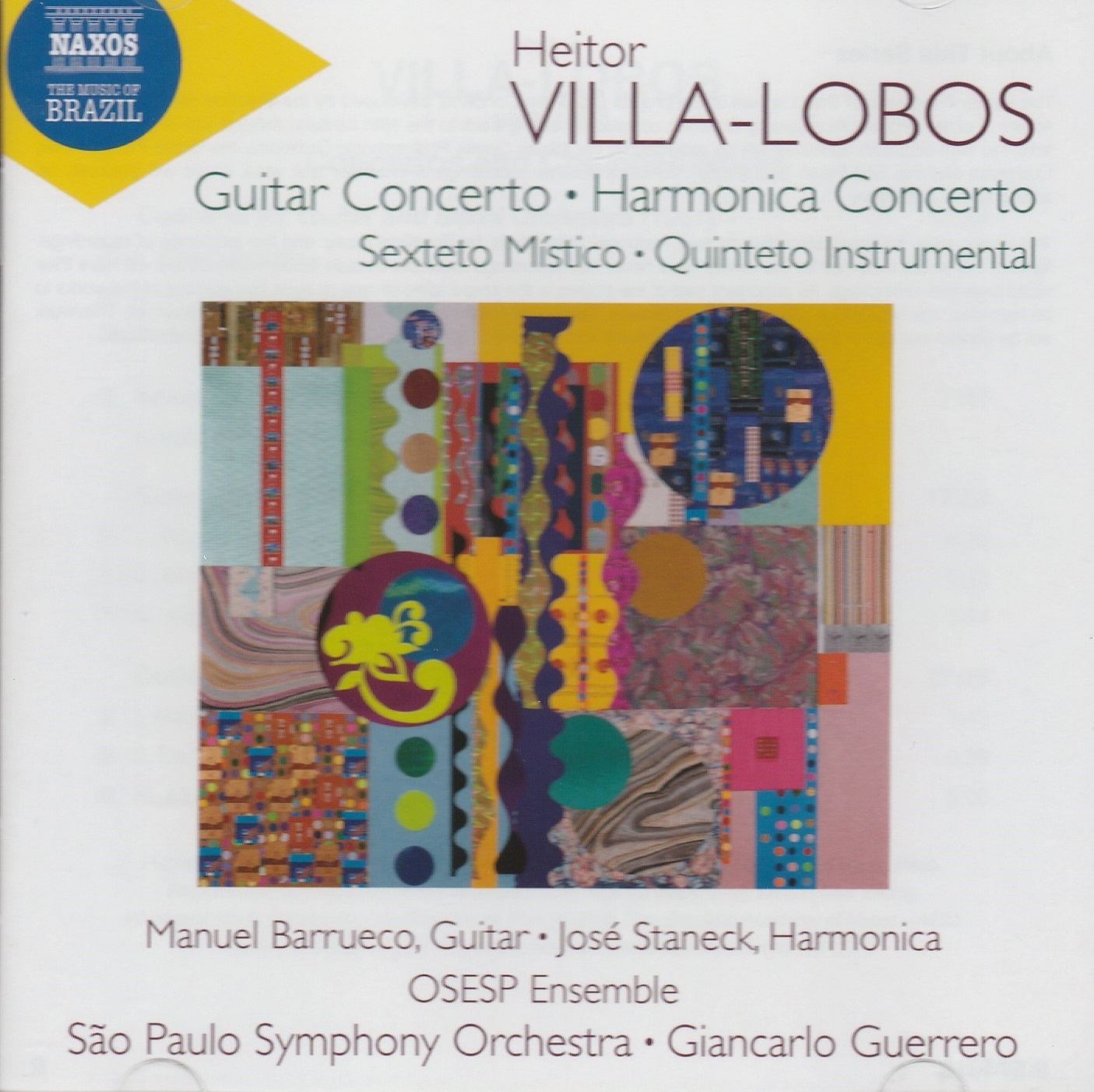
04 Villa Lobos concertosHeitor Villa-Lobos – Guitar Concerto; Harmonica Concerto
Manuel Barrueco; José Staneck; OSESP Ensemble; São Paulo Symphony Orchestra; Giancarlo Guerrero
Naxos 8.574018 (naxos.com)

The composer Heitor Villa-Lobos is to Brazil what Bach and Beethoven are to Germany, Liszt is to Hungary and Chopin to Poland. Uniquely, Villa-Lobos also became the cellist who played many other instruments, including guitar, on which he achieved a remarkable facility. Virtuosity across many instruments also became one of Villa-Lobos’ strong suits. Burle Marx, the conductor and close friend once asked Villa-Lobos if there was anything he did not play. “Only oboe,” was the reply; but when the two met shortly afterwards, Villa-Lobos was well on his way to mastering that instrument too.

Villa-Lobos’ Guitar Concerto was commissioned by Andrés Segovia in 1951; (performed in February 1956). It is different from the bright colours and seductive melodies of Rodrigo’s Concierto de Aranjuez. But it is highly virtuosic, emotional, and explores a range of techniques including glissandi, arpeggiation and harmonics. The Harmonica Concerto is emblematic of Villa-Lobos’ cross-instrument virtuosity. The appropriately numinous Sexteto místico is imaginatively poetic and the rhapsodic and sensual Quinteto instrumental is typical of the composer’s ability to communicate with feverish Brazilian passion.

The São Paulo Symphony Orchestra, under the baton of Giancarlo Guerrero, is in exquisite form throughout, as is the OSESP Ensemble. The warmth of guitarist Manuel Barrueco’s playing – like his tone and touch – is eminently suited to Villa-Lobos’ work. Harmonica wizard José Staneck’s performance is utterly unforgettable for his ability to communicate Brazilian saudade on so tiny, albeit exquisitely chromatic, an instrument.

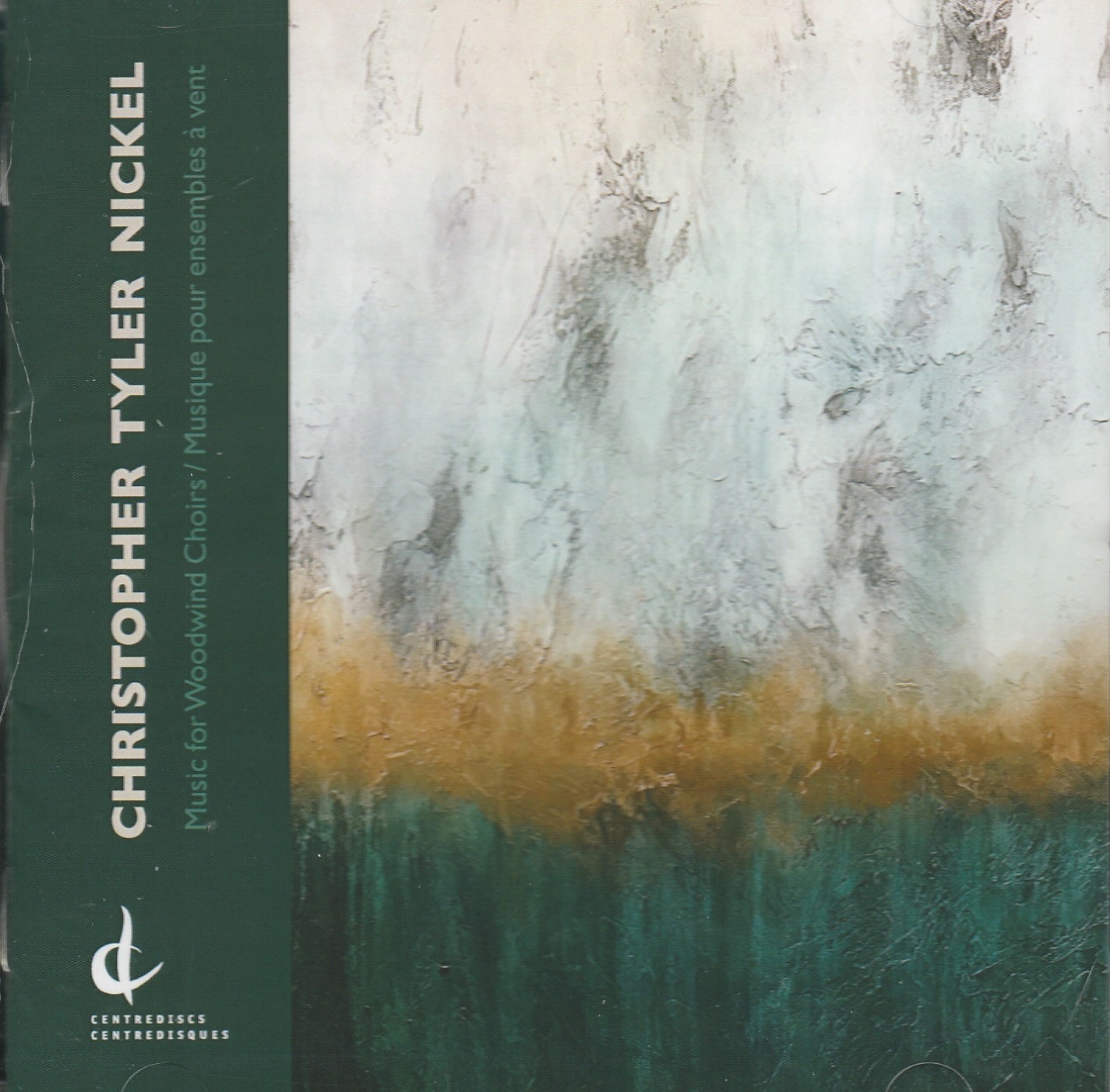
05 Tyler NickelChristopher Tyler Nickel – Music for Woodwind Choirs
Various Artists
Centrediscs CMCCD 27019
(cmccanada.org)

The two large works on this CD, both composed in 2017, are Suite for Two Oboes and Two English Horns and Symphony for Flute Choir. Each is performed by a group of superb Canadian musicians, conducted by Clyde Mitchell, music director of the Lions Gate Sinfonia and former associate principal horn in the Montreal Symphony Orchestra. The performances are, to my ears, flawless and vital.

Nickel’s music is full of life: imagination, invention, variation – a deep understanding of the craft of composition. The artistry, for example, of the opening movement of the Suite, is evident from the first notes: the same note played three times on the English horns, to which the oboes reply with a five-note motif on three pitches. This is just the beginning of a journey, which leads us through an episode of melodic development and several contrapuntal episodes – in the complexities of which we never feel lost – and then back to a satisfying recapitulation. This is composition at its best – arresting and masterful.

The Symphony for Flute Choir brings comparable invention: in the first movement Nickel develops what sounds like an atonal theme – an engaging one – into 12 minutes of music, always interesting and all derived from this one short theme. In the second movement I was struck by Nickel’s extraordinary melodic flair, a satisfying blend of repetition and variation.

I hope there will be live performances of these wonderful works in the not-too-distant future!

Back to top