05 Mahler 5Mahler 5
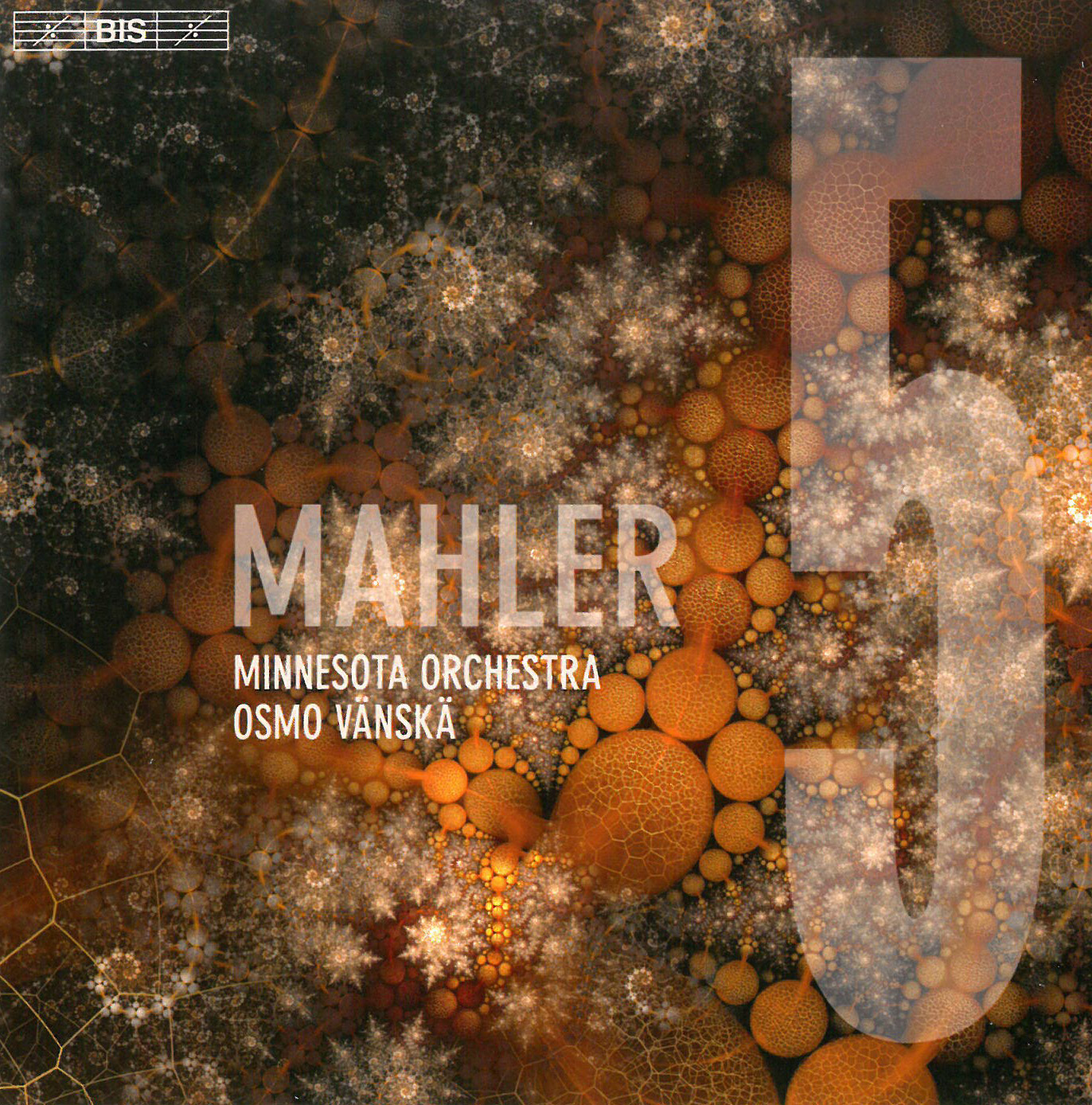
Minnesota Orchestra; Osmo Vänskä
BIS BIS-2226 SACD (mnorch.org)

The conductor Osmo Vänskä has an enviable reputation as an orchestra builder, having previously transformed the provincial Finnish orchestra of Lahti into a major player with his survey of the complete works of Sibelius in an acclaimed series of recordings on the BIS label. In 2003, Vänskä became the music director of the Minnesota Orchestra and turned his attention to well-regarded box sets of the complete Beethoven and Sibelius symphonies, also on BIS. The present recording is the first in a projected series of the complete Mahler symphonies, with Symphonies Six and Two due to arrive shortly.

I must admit I was initially a bit dubious about the project; a Mahler cycle is a pro forma bid for the big leagues and a potentially ruinous gamble from entities whose Mahler tradition is often negligible. I need not have worried. As Mahler was fond of saying, “Tradition is laziness.” This is a fresh-faced, supremely confident performance that cleans away many a cobweb from the customary overheated interpretations of this popular work. Vänskä lets the music flow naturally without resorting to dramatic excess at structural transitions, and his orchestra responds with admirable assurance and precision to his subtle tempo modifications. The refinement of the string section in particular is exemplary, allowing the delicate arc of the Adagietto movement to be stretched to a near-record duration of 13 minutes. Special praise is due to the experienced team from BIS for producing an exemplary, richly detailed studio recording in an age in which cheaply sutured “live” performances predominate.

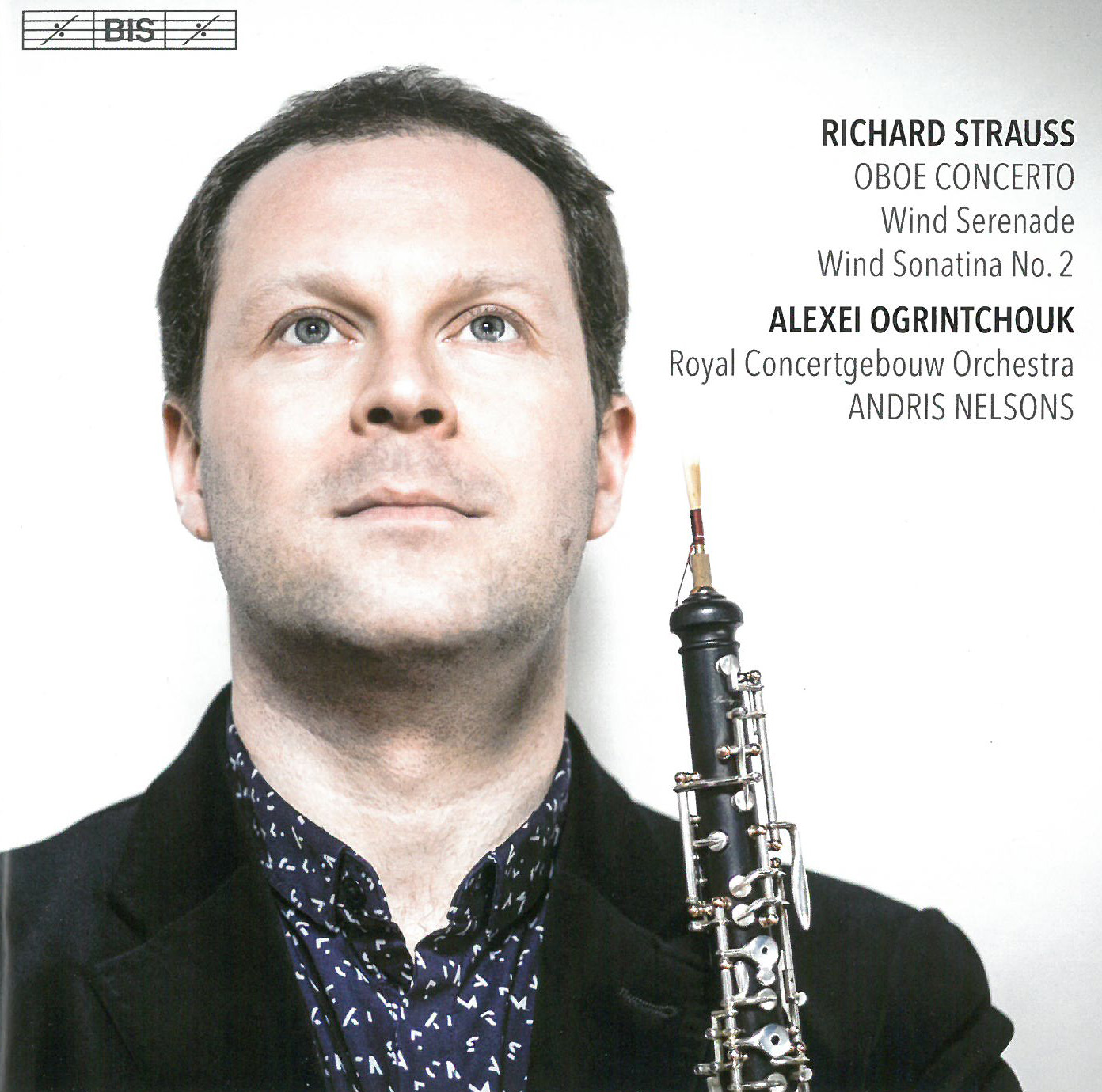
06 Strasuss OboeRichard Strauss – Oboe Concerto; Wind Serenade; Wind Sonatina No.2
Alexei Ogrintchouk; Royal Concertgebouw Orchestra; Andris Nelsons
BIS BIX-2163 SACD bis.se

Alexi Ogrintchouk, principal oboist of the venerable Concertgebouw Orchestra since 2005, headlines this new recording of two late works by Richard Strauss. Chief among them is the Oboe Concerto of 1945, which the composer was encouraged to write by the occupying American soldier and, by chance, professional oboist John de Lancie. Strauss, then in his 80s, was cool to the idea at first, but he liked to keep busy even as his cozy world collapsed about him. The resulting 25-minute, single-movement Concerto, while not technically difficult, is exceedingly prolix and taxes the endurance of the soloist to the utmost. Ogrintchouk, blessed with a tone both sweet and secure, is more than up to the task and receives outstandingly sensitive support from the orchestra and conductor Andris Nelsons in this recording nicely cobbled together from three live performances.

The disc also includes a performance of the composer’s skilful Serenade in E-flat Major, composed at the age of 18. While it is a minor work, its inclusion here does presage in a curious way the retrogressive, four-square melodic profile of his late style. Personally I was drawn to this recording by the presence of the Wind Sonatina of 1944-45. Subtitled “The Happy Workshop,” it is a companion work to the even stranger Sonatina of 1943, “From an Invalid’s Workshop.” Both are scored for an ensemble of 16 wind instruments, including rare assignments for the clarinet in C and basset horn. The moniker of “Sonatina” is truly droll, as the Second Sonatina is a symphonically conceived, multi-movement 40-minute work. Here the senescent Strauss revels in his expertise in the slippery art of sidestepping chromaticism. The performance, presumably captured under studio conditions, is simply glorious and is captured in pristine sound across a wide and detailed sonic spectrum. Ho boy is it good!

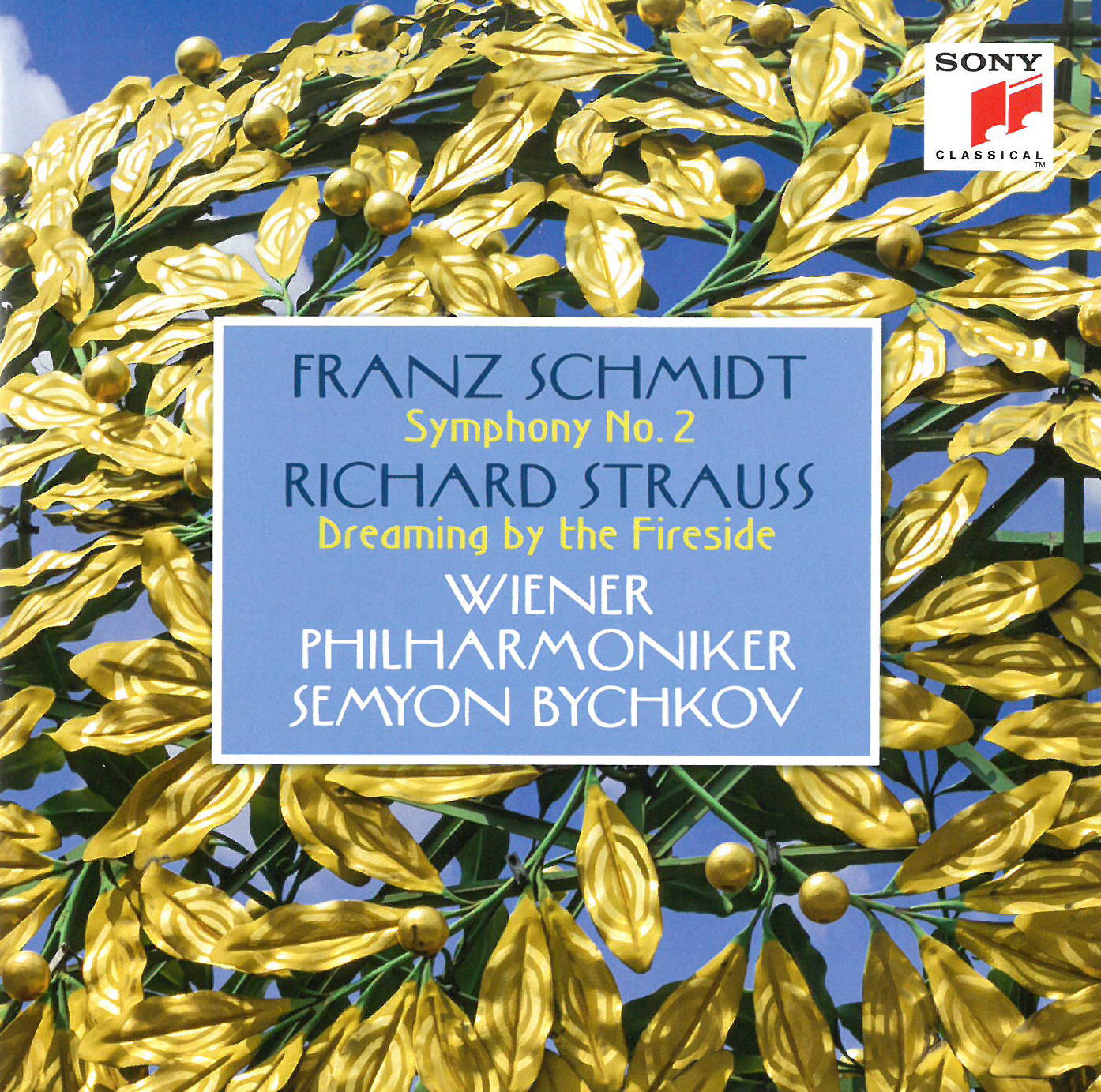
07 Schmidt StraussSchmidt – Symphony No.2; Strauss – Breathing by the Fireside
Wiener Philharmoniker; Semyon Bychkov
Sony Classical 88985355522

After Mahler and Strauss, my favourite late Romantic among German and Austrian composers is Franz Schmidt (1874-1939). Virtuoso pianist, Vienna Court Opera Orchestra cellist, and distinguished teacher of several subjects at the Vienna Conservatory, Schmidt composed in every major genre. Of his four symphonies the Second (1913) is charming, grand and dark in turn. The Vienna Philharmonic under the masterful Semyon Bychkov shines in this Sony release, especially the strings from the first movement’s opening “bubbly stream” onwards. The brass section predominates later with horns that amaze; contrapuntal ingenuities and vivid contrasts of tone colour abound in woodwinds from the piccolo on down. Bychkov, the orchestra and the recording team achieve admirable pacing and balance, for example where everything gears down darkly till only soft tam-tam strokes are heard before the opening passage’s return.

I believe there are subtle allusions to composers with Vienna associations. In the second movement, an ingenious theme and variations, the first chord references that of Brahms’ Haydn Variations in key, chord, and melody; the finale fugato begins with the E-flat major two-note horn call of Bruckner’s Fourth Symphony (Bruckner was Schmidt’s counterpoint teacher). Though ingrained in Viennese musical life, Schmidt became his own joyous and tragic compositional personality, and comments like “sounds like Richard Strauss” are tiresomely shallow. In any case the disc includes the interlude known as Dreaming by the Fireside from Strauss’s opera Intermezzo (1924), allowing comparison.

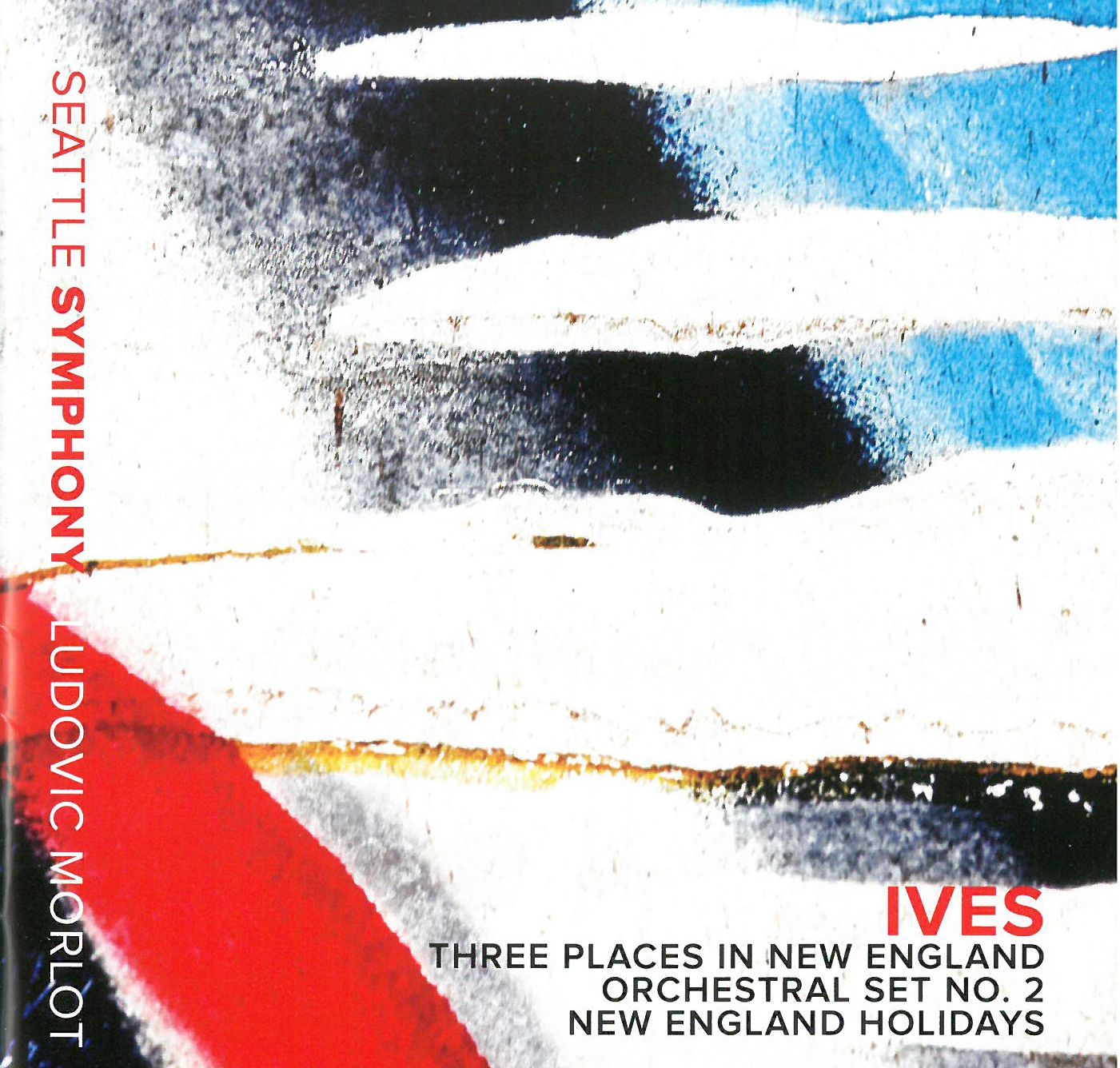
08 Ives Three PlacesIves – Three Places in New England; Orchestral Set No.2; New England Holidays
Seattle Symphony; Ludovic Morlot
Seattle Symphony SSM1015 (seattlesymphony.org)

This Naxos recording is the third in a series paying homage to the music of Charles Ives, recorded live by the Seattle Symphony conducted by Ludovic Morlot. The disc opens with the St. Gaudens in Boston Common from Three Places in New England. Here, the ensemble invokes a moving and wistful mood as befits music honouring fallen Black soldiers in the Civil War. The raucous Putnam’s Camp is a true Fourth of July celebration while the mysterious Housatonic at Stockbridge is a personal and sensitive musical depiction of the mystical river flowing through New England.

More patriotism follows in the Orchestral Set No.2 and New England Holidays, where the orchestra’s exemplary winds and brass are heard to great advantage, particularly in the middle movement of the set, The Rockstrewn Hills Join in the People’s Outdoor Meeting. New England Holidays is a study in contrasts, from the icy New England landscape of Washington’s Birthday in February, to the reverential Thanksgiving where the orchestra is joined by the Seattle Symphony Chorale.

In all, this CD is a wonderful representation of Ives’ music, the well-selected program further enhanced by the SSO’s polished performance. As to whether or not a French-born conductor has an affinity towards American music, the answer is most decidedly “Oui!” Morlot may hail from Lyon, but this performance has “America” written all over it – highly recommended.

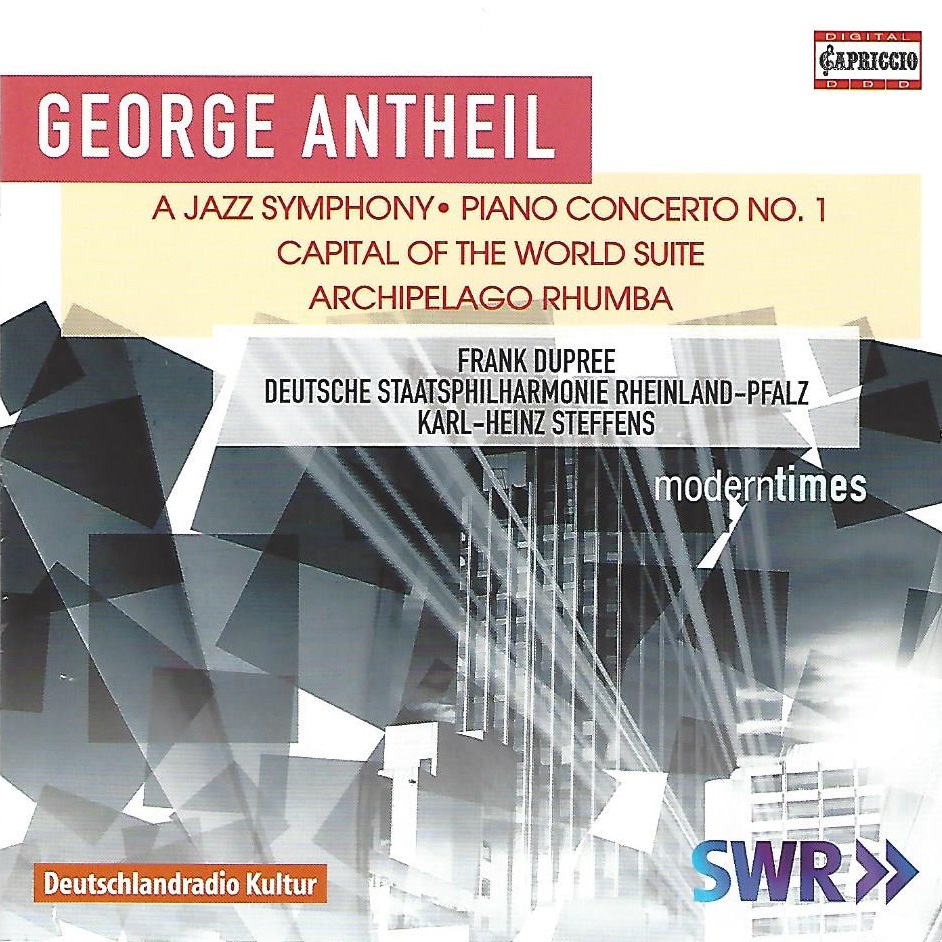
09 AntheilGeorge Antheil – A Jazz Symphony; Piano Concerto No.1
Frank Dupree; Adrian Brendle; Uram Kim; Deutsche Staatsphilharmonie Rheinland-Pfalz; Karl-Heinz Steffens
Capriccio C5309 CD

In 1945, the American composer George Antheil (1900-1959) published his memoirs titled Bad Boy of Music. Antheil had attended the Sternberg Conservatory in Philadelphia and later studied with Ernest Bloch. He composed six symphonies and two piano concertos, in addition to operas, ballets, chamber music and a song cycle plus some 30 film scores including In a Lonely Place, Bogart’s 1950 film noir. All this in addition to writing a regular newspaper column for the lovelorn and authoring a layman’s guide on forensic endocrinology. He collaborated with actress Hedy Lamarr to invent a guidance system for torpedoes that was adopted by the Navy in WWII. His compositions always attracted attention, most particularly the shocking Ballet Mécanique (1925) a work for orchestra, mechanical pianos and an airplane engine.

Here is the original 1925 version written for Paul Whiteman of A Jazz Symphony for three pianos and orchestra, a year after Gershwin’s original Rhapsody in Blue and before Ferde Grofé’s orchestration of that piece. It is a crazy, 12-and-a-half-minute potpourri of many ideas and tunes that enter and leave usually without further development. Antheil briefly quotes from Petrouchka and Varèse comes to mind. Of course, this is not jazz but it utilizes many jazz instruments and figures. A hoot.

The Piano Concerto No.1 (1922) is equally entertaining and is clearly from the same hand. Bright, original and entertaining, including brief quotes from Le Sacre.

To the naive boy from a village in Spain, Madrid was Capital of the World where, eventually, he meets an admired bull fighter and is ultimately fatally knifed. The suite is in three scenes, The Tailor’s Shop, Meditation and Knife Dance and Farruca. Antheil’s Rhumba is orchestrated in the by-now-familiar mode, providing a suitably festive closing-out for this very unusual, interesting and entertaining program. 

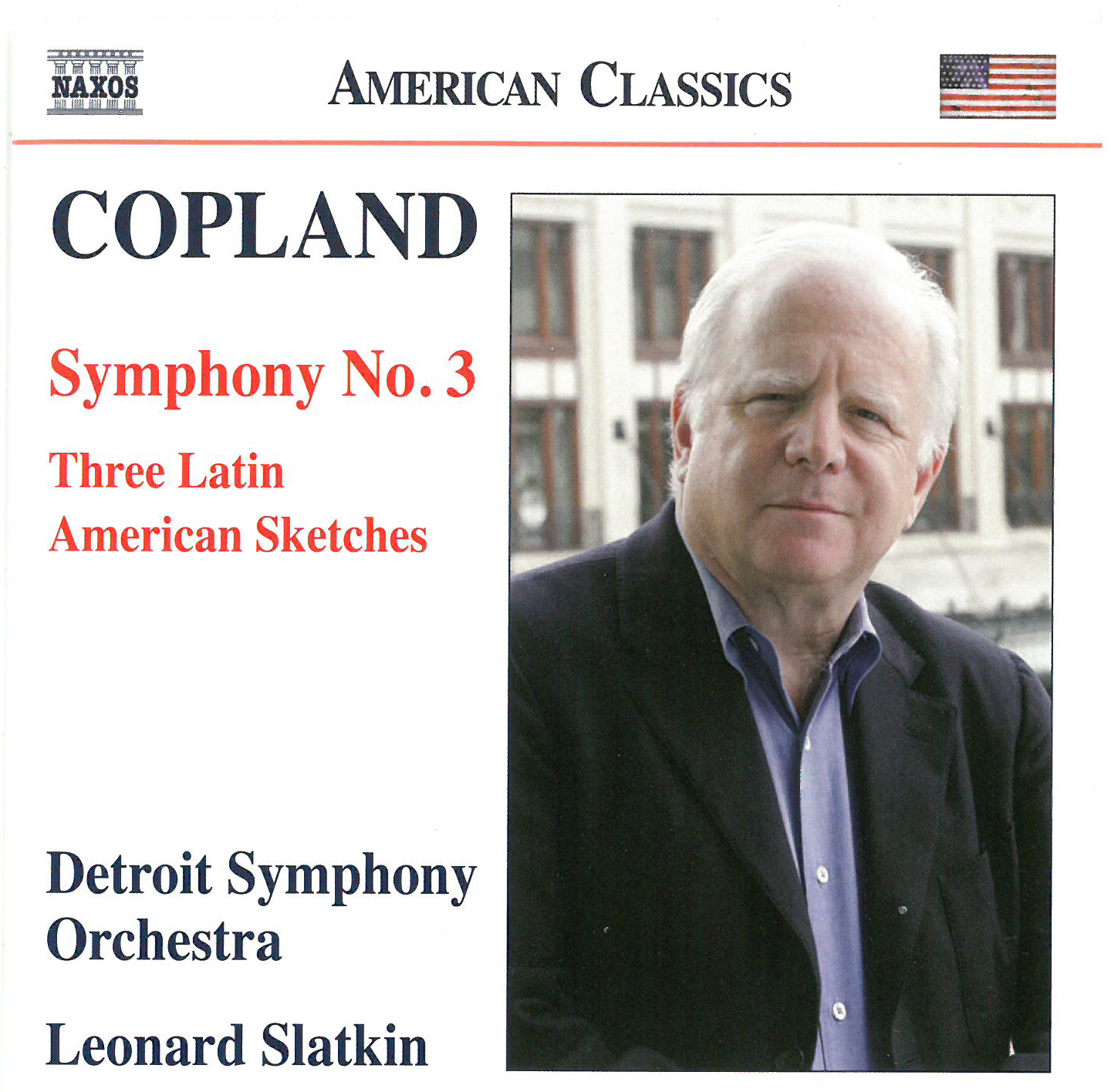
10 Copland 3Copland – Symphony No.3; Three Latin American Sketches
Detroit Symphony Orchestra; Leonard Slatkin
Naxos 8.559844

Aaron Copland’s life encompassed nearly the entire 20th century. During it he was exposed to a crossfire of many European modern influences, but miraculously he could still achieve his own voice, a distinctive style that’s unmistakably American. Interestingly he began like Stravinsky, by writing for the ballet, a good way to make his music accessible to the public and become popular, so by the time he wrote a purely orchestral piece like Symphony No.3 right after the war in 1946, a joyful, optimistic work, it was instantly well received.

The entire symphony is full of inspiration: the hymn-like quiet beginning, the rip-roaring Scherzo punctuated by whistles on the piccolo which is like a group of wild horses storming out of the paddock, and the peaceful third movement where we can feel the vast prairies and the overarching sky. This insinuates itself into the tremendous Fanfare for the Common Man that introduces the fourth movement, with those shattering chords by the brass interrupted by thundering cannons. I am suddenly aware how this music has already become embedded into the soul and as conductor Jaap van Zweden aptly put it, “into the DNA of every American.”

Now this new recording with the gorgeous, spacious sound of the Detroit Symphony Orchestra, a band very much underestimated and under one of the best American conductors, Leonard Slatkin, I like it even better than the previous benchmark issue with Bernstein. As an added bonus the Three Latin American Sketches with Mexican influences shows Copland’s lighter side and versatility.

11 Randall ThompsonRandall Thompson – Symphony No.2; Samuel Adams – Drift and Providence; Samuel Barber – Symphony No.1
National Orchestra Institute Philharmonic; James Ross
Naxos 8.559822

A trio of American composers – Randall Thompson, Samuel Adams and Samuel Barber – are featured on this Naxos American Classics CD, the second in a series of recordings performed by top conservatory students of Maryland’s National Orchestral Institute Philharmonic conducted by James Ross.

Despite being written during the Great Depression, Thompson’s Symphony No.2 from 1931 is anything but angst-ridden. The opening movement is lively and spirited, owing much to the jazz rhythms of the 1920s. The lush second movement Largo is warmly Romantic, while the third and fourth movements are marked by a mood of buoyant optimism, the strings melding perfectly with the stirring brass, particularly in the gregarious finale.

Drift and Providence by Adams is a musical voyage inspired by the Pacific Ocean. The 32-year-old composer explained that in creating the piece, he recorded sounds of the ocean, transformed them digitally, then transcribed them for instruments. With a sparing use of electronic media, the result is highly atmospheric music.

Despite an initial mixed reception at its 1936 premiere, Barber’s Symphony No.1 ultimately gained greater favour and was the first American symphonic piece to be presented at the Salzburg Festival. More strident than Thompson’s symphony, the piece is well constructed, with the orchestra deftly handing the four contrasting sections.

This is a fine recording – how appropriate that an orchestra of gifted young American musicians would perform music by American composers who had not yet reached the age of 35 – and do it well. Recommended. 

09 transhumanThe piano four-hands duo of Paola Savvidou and Jonathan Kuuskoski have led a recording project Transhuman – New Muse Piano Duo (Blue Griffin Recording BGR407) that celebrates the work of contemporary composers who treat the piano in its fullest capacity as a percussion and stringed instrument in addition to being just a keyboard. Repertoire for the project was selected from more than 100 submissions and includes a few works commissioned especially for the recording.

The works are wonderfully varied and present an entertaining array of subjects. Transhuman Etudes by Gabriel Prokofiev looks to the computer age and expresses its mechanistic logic through layered voices and complex polyrhythms. Rambunction by Stacey Barelos reflects the American entrepreneurial spirit using recognizable melodic shapes and rhythms. The inside of the piano, its harp of strings, becomes an important textural resource for Amy Williams’ Switch. Haley Myers calls for the performers to bow the strings with rosin-coated fishing line in her atmospheric work Festina Lente. Composer Oleg Bezborodko is perhaps the most adventurous in his use of the piano strings as a cembalom or even a balalaika. His Mignonettes et poèmettes de notre temps recalls the flavours of Eastern European life from a century ago. Henrik Ajax adds knocking on the piano case to the list of effects he uses in Valse déconstruite.

Transhuman is a creative and highly entertaining recording that will stimulate your imagination about what a piano can really do.

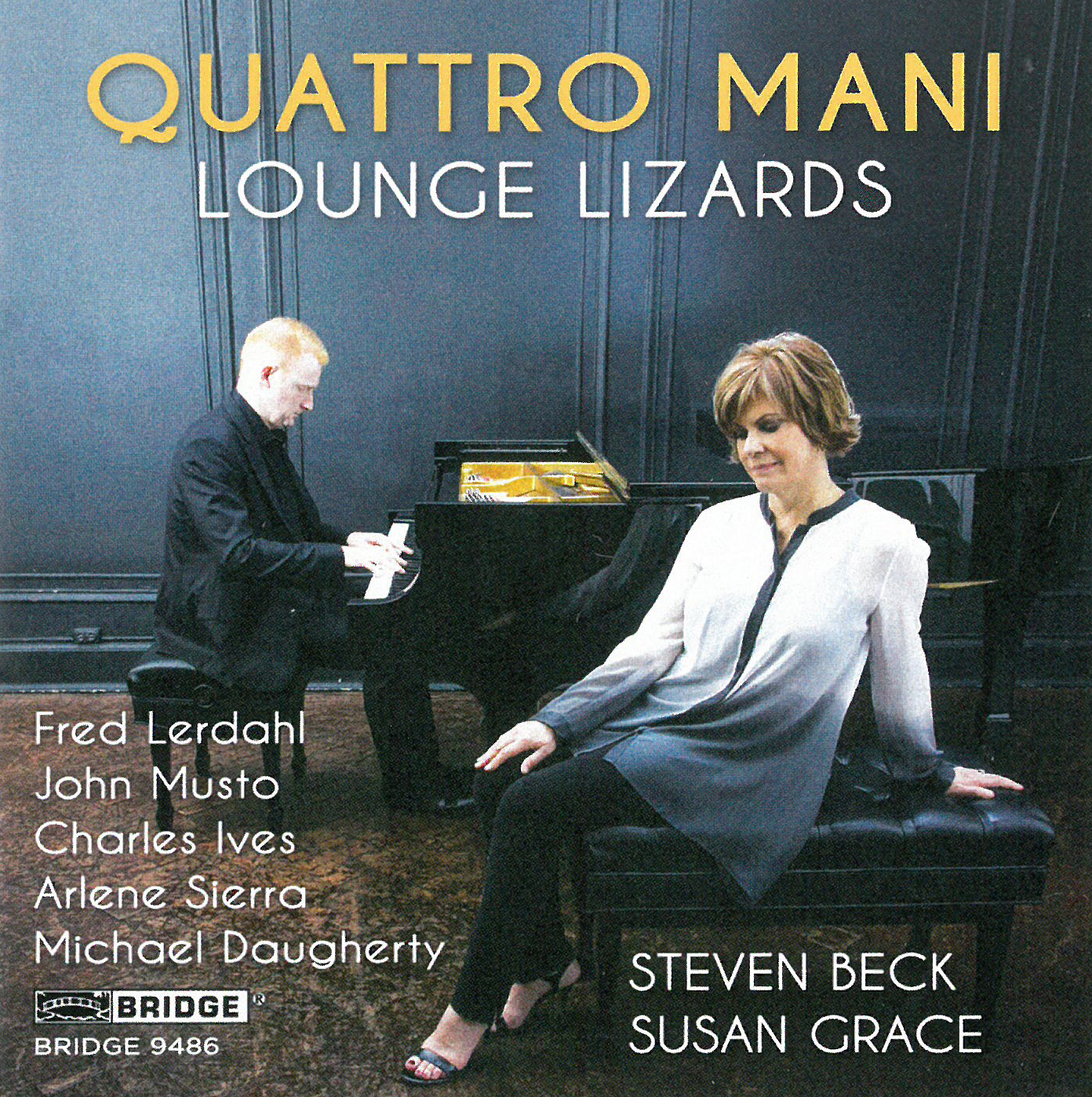
05 Quatro ManiDuo pianists Steven Beck and Susan Grace have been performing together since 2013 and have developed a sterling reputation for performance of contemporary works. Their latest collaboration, Quattro Mani – Lounge Lizards (Bridge 9486) opens with Fred Lerdahl’s Quiet Music. Originally scored for orchestra, the composer’s two-piano version is an immediately engaging piece played almost entirely pianissimo and using texture as the main building block to advance the work. A constant stream of sixteenth notes pulses throughout the music while the pianists build density toward a climax from which they then gently retreat.

Two works really stand out on this disc: Charles Ives’ Three Quarter-tone Pieces and Lounge Lizards by Michael Daugherty. The Ives work is a study in the possibilities of quarter-tone tuning as first proposed by a German builder in 1925 who created a quarter-tone piano with two keyboards. For this performance, one of the instruments is tuned to the quarter-tone difference while the other is left at concert pitch.

Lounge Lizards is composer Michael Daugherty’s recollection of his student years when he supported his studies by playing in bars and night clubs in Europe and the U.S. It too was originally scored for orchestra and percussion but has been subsequently arranged by the composer for two pianos and two percussion.

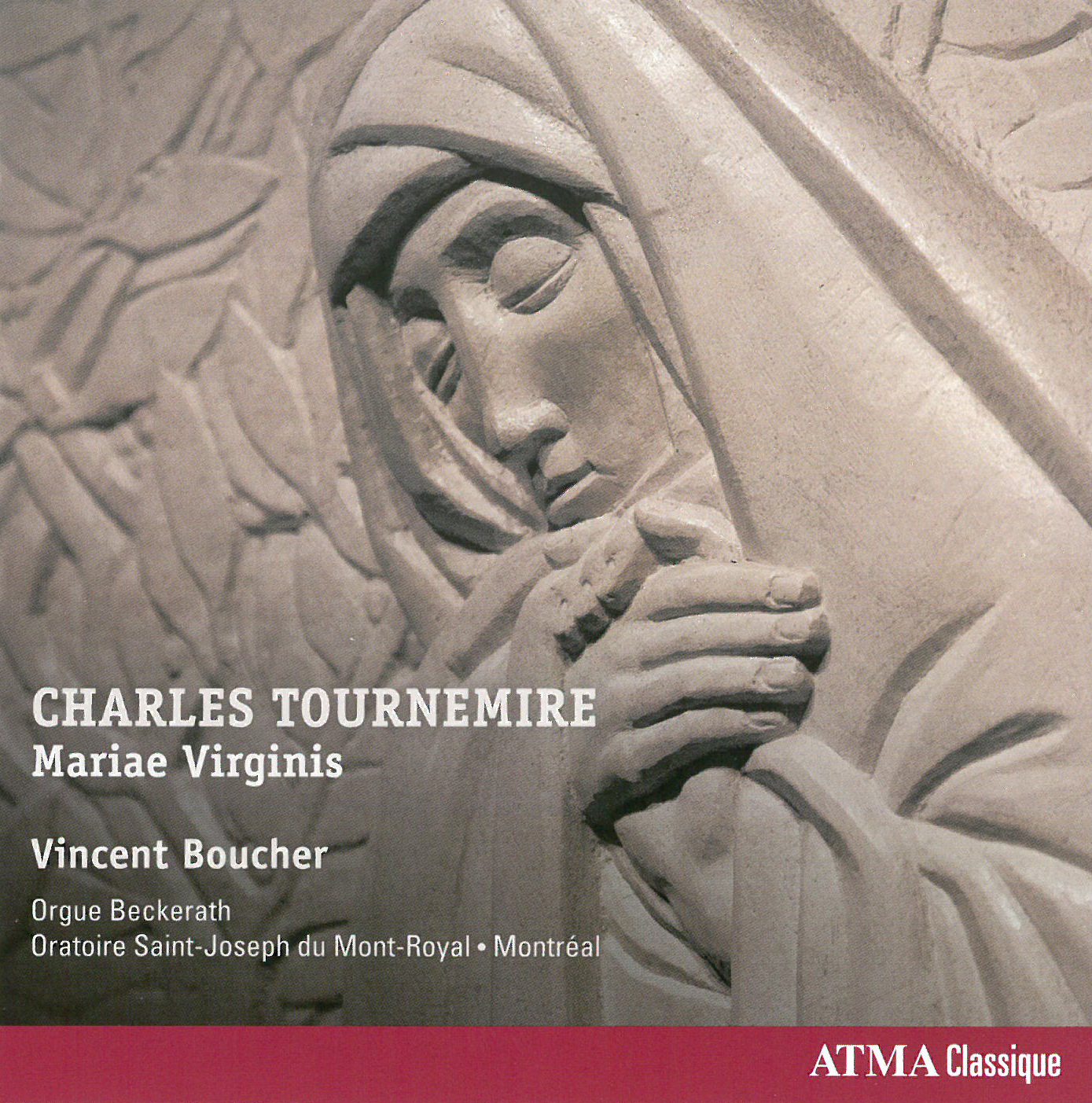
02 Tournemire BoucherWalking into Montreal’s St. Joseph’s oratory for the first time is a memorable experience. The sheer size of the space under the massive dome and the starkly modern concrete columns are enough to shrink any ego. Perched in the rear gallery like some colossal beast sits the 1960 instrument by Rudolf von Beckerath. Organist Vincent Boucher has the regular task of sitting like an ant at the console in these gargantuan surroundings and filling the oratory with glorious music. His recent disc Charles Tournemire – Mariae Virginis (ATMA Classique ACD2 2473) is a splendid example of musicianship and sound engineering at their best. Capturing the right amount of direct sound from the instrument and balancing it with the building’s natural reverberation are always the key to successful organ recordings. This one gets it right.

The language of late-19th-century repertoire can be dense and Charles Tournemire wrote carefully to achieve those heavy textures while cognizant of the challenges organs would have in large spaces like St. Joseph’s in Montreal. Clarity of colour and harmony are vital to the writing of that period. Tournemire achieved this by writing sparsely wherever this was needed.

The works on this disc are sets of service music from a year-long collection of such compositions. They include Introits, Offertories, music for the Communion and also Postludes. The repertoire on the recording is specially focused on feasts of the Virgin from the liturgical calendar.

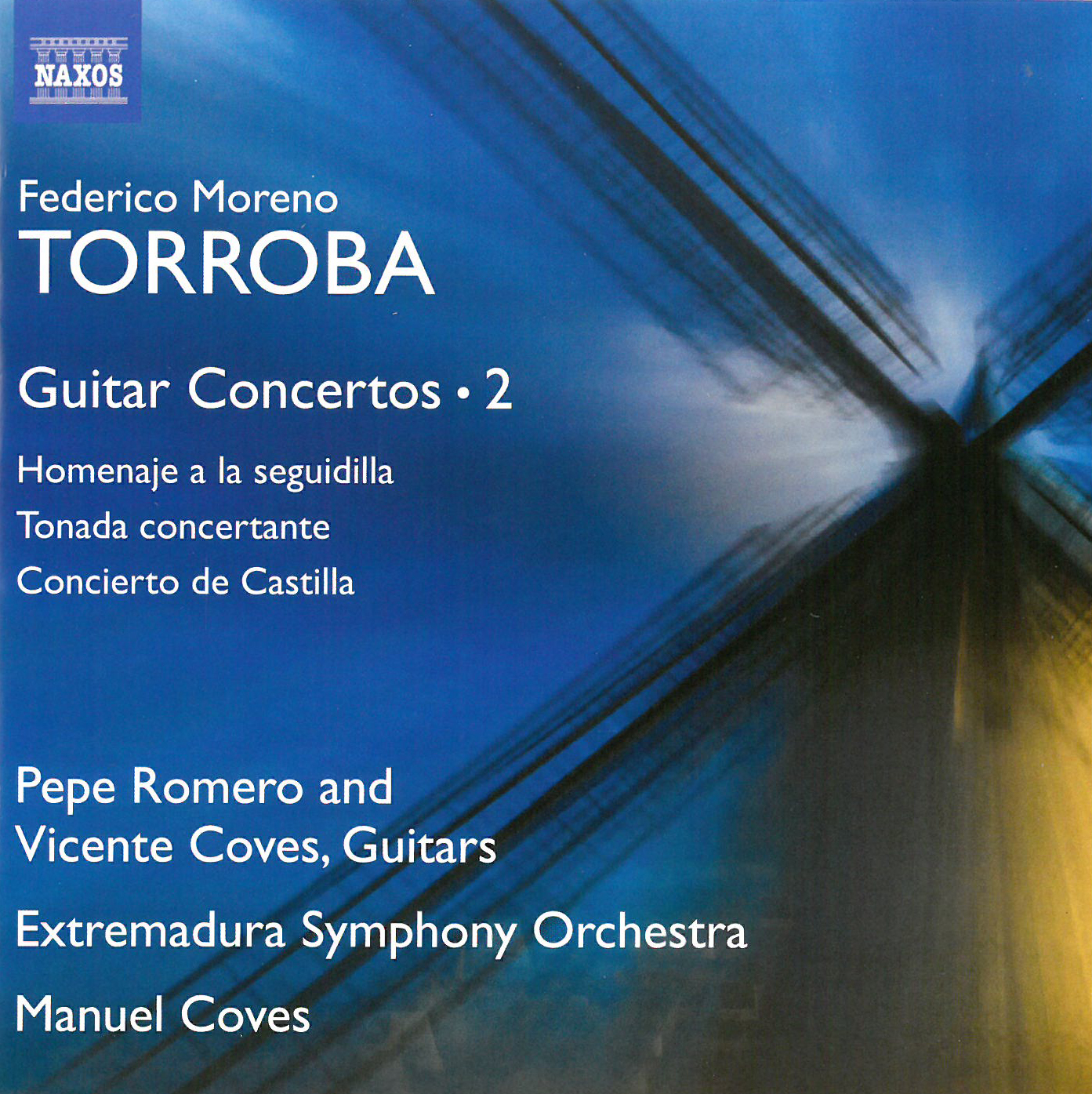
11 TorobaPepe Romero and his student Vicente Coves are the soloists on Torroba Guitar Concertos Vol.2 with Spain’s Extremadura Symphony Orchestra conducted by Manuel Coves, the brother of Vicente (Naxos 8.573503).

Although not a guitarist himself Torroba wrote close to 100 works for the classical guitar, thanks initially to a close working relationship with Andrés Segovia that started in the early 1920s. Despite some early attempts at a concerto there were no significant results until the 1960s, when Torroba concentrated less on his zarzuelas, the Spanish light-opera form at which he was so successful, and more on his writing for guitar. He ended up writing ten guitar concertos, all of which – like his zarzuelas – are richly lyrical and deeply melodic as well as being grounded in the Spanish folk idiom so prevalent in Spanish guitar music.

The three concertos here are Homenaje a la seguidilla from 1962 (but revised in 1975 and 1981), Tonada concertante from 1975-80 and Concierto de Castilla from 1960, with Vicente Coves the soloist in the latter. Superb playing and idiomatic orchestral support mark all three performances, my only complaint being the ludicrously short CD break – four seconds! – between the concertos.

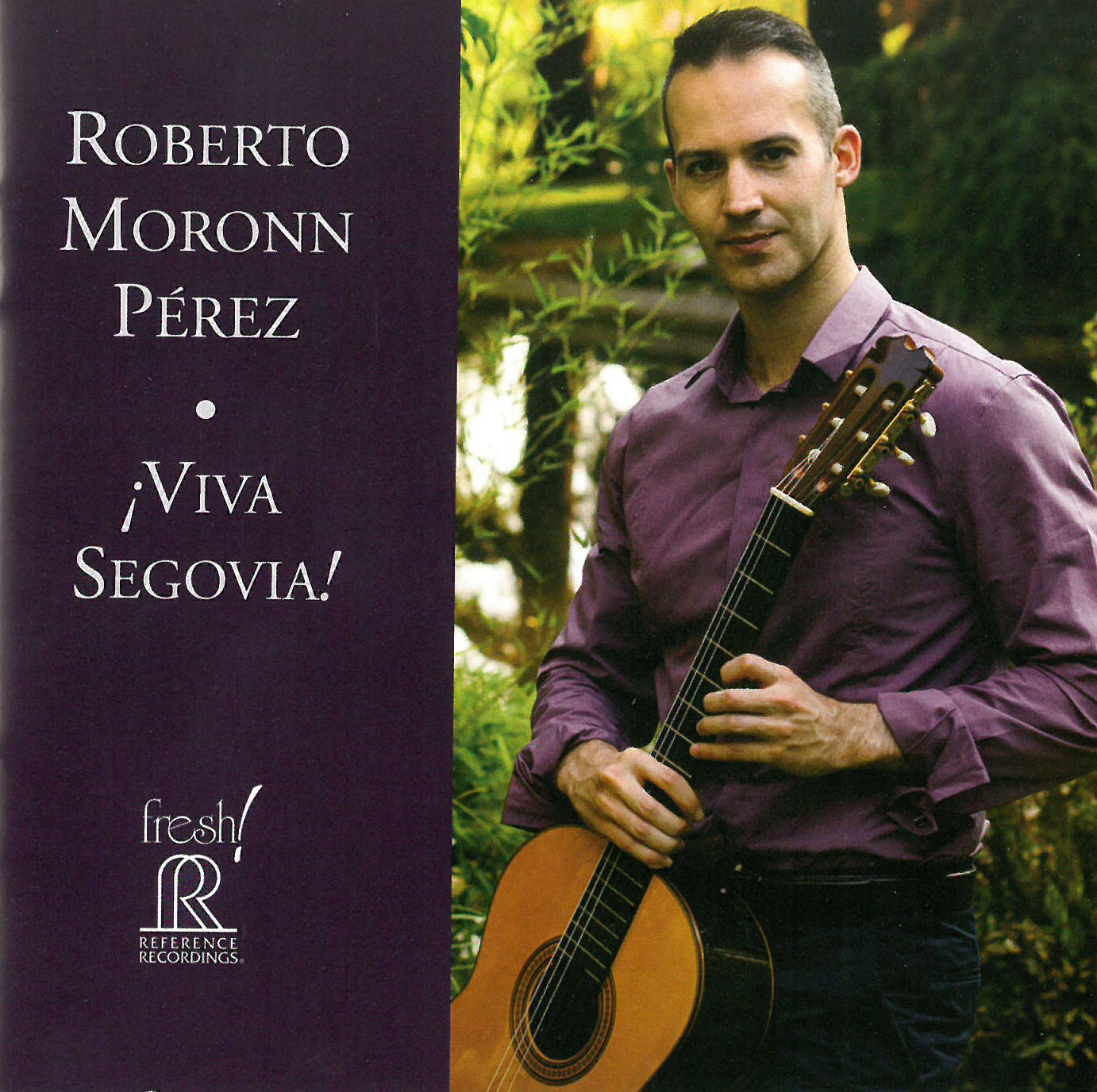
12 Viva SegoviaNot only did Andrés Segovia almost single-handedly establish the guitar as a concert instrument, he was also responsible for a significant increase in its repertoire. A great number of works commissioned by him or dedicated to him – many never actually performed – were discovered among his private papers in May 2001; the works were later published as The Segovia Archive Series by Edizione Musicale Bèrben. ¡Viva Segovia! (Reference Recordings FR-723) is the third CD from Spanish guitarist Roberto Moronn Pérez in his Andrés Segovia Archive series, following volumes of works by Spanish and French composers.

There are two “new” English works here: Cyril Scott’s Sonatina and Lennox Berkeley’s Quatre Pièces pour la guitare, both described by Pérez as gems. Three Swiss composers – Aloÿs Fornerod, Fernande Peyrot and Hans Haug – are represented, Fornerod and Peyrot by Prélude and Thème et variations respectively, while Haug’s Étude opens the CD and his Passacaglia closes it. The Sonata in mi by the Italian composer Ettore Desderi completes the program.

Pérez displays an outstanding technique in this fascinating collection of works that were lost for so long, all of which deserve to become a part of the regular repertoire.

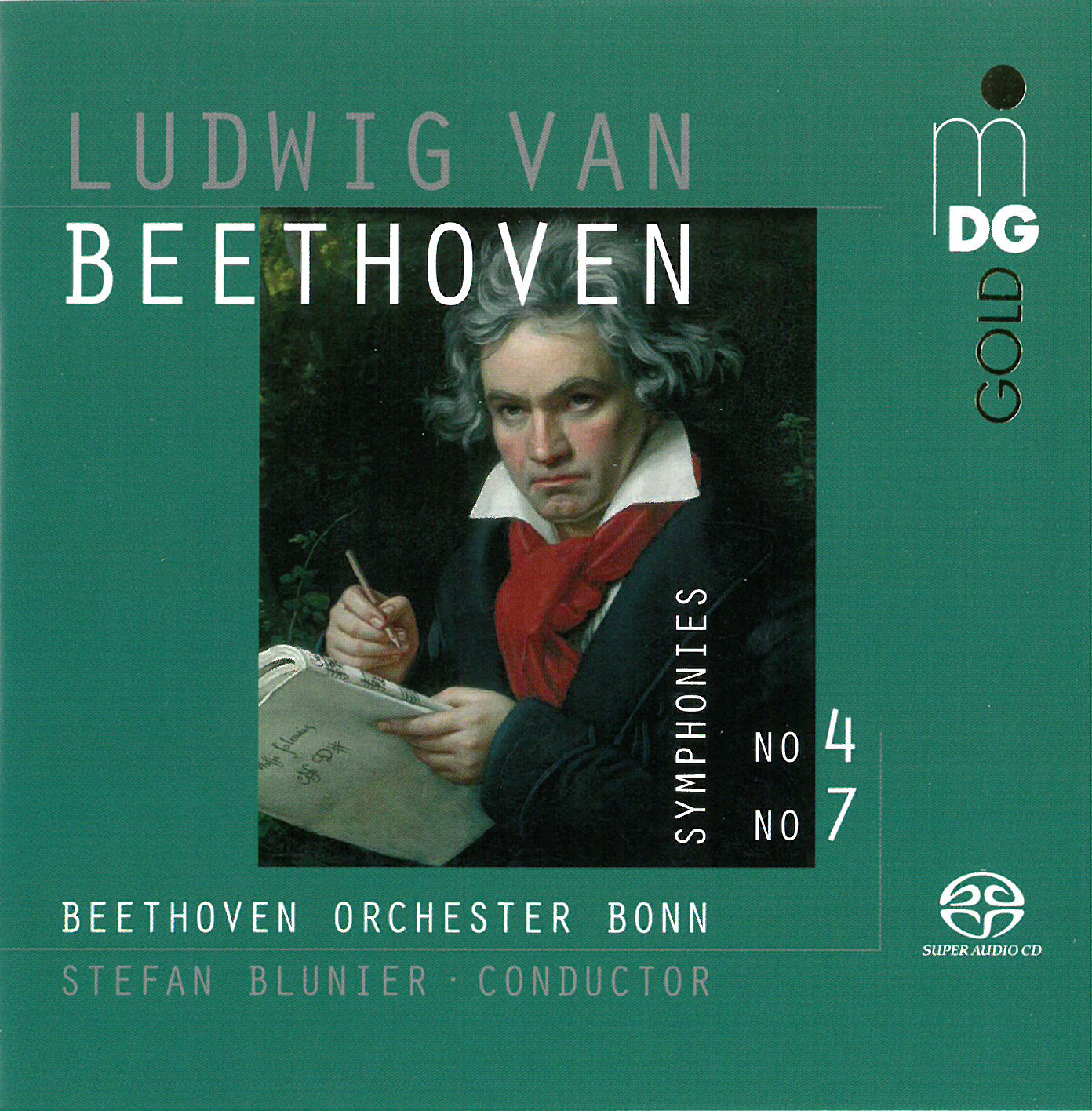
05 Beethoven 4 7Beethoven – Symphonies 4 & 7
Beethoven Orchester Bonn; Stefan Blunier
Dabringhaus und Grimm MDG 937 1995-6

This just-released combination of Beethoven’s Fourth and Seventh Symphonies, presented by the Beethoven Orchester Bonn under Stefan Blunier, arrives with muscular assuredness. They seem to celebrate all that is earnest and serious in their patron composer. Utter precision is called for in these works, from the pizzicatti that punctuate the chords at the bleak opening of the Fourth, to the hell-bent careering Scherzo of the Seventh. There is a pure and raw quality to these renderings, allowing for delicacy but more concerned with something like honesty. Just hearing the hair of the bow grab the string at the opening of the Adagio of the Fourth scratches the itch just so. The reproduction is limpid, the playing excellent. I have to believe Beethoven would nod approval.

These pieces frame or bookmark what’s known as Beethoven’s “middle period.” The Seventh is a monumental symphony, one he followed with a quasi-chamber work in the Eighth. The Fourth, like the Eighth, seems a lighter response to the massive Eroica. The Seventh Symphony is so well-known and well-loved, it’d be churlish to critique in this performance the exact problem so many other ensembles fail to resolve: the hop-skip rhythm that emerges as the overriding motif in the first movement. As time and the increase in volume generate fatigue, the dance grows heavy. I’m not the only one who calls that rhythm the hardest to play correctly; a catalogue of performances that get it right consistently is needed.

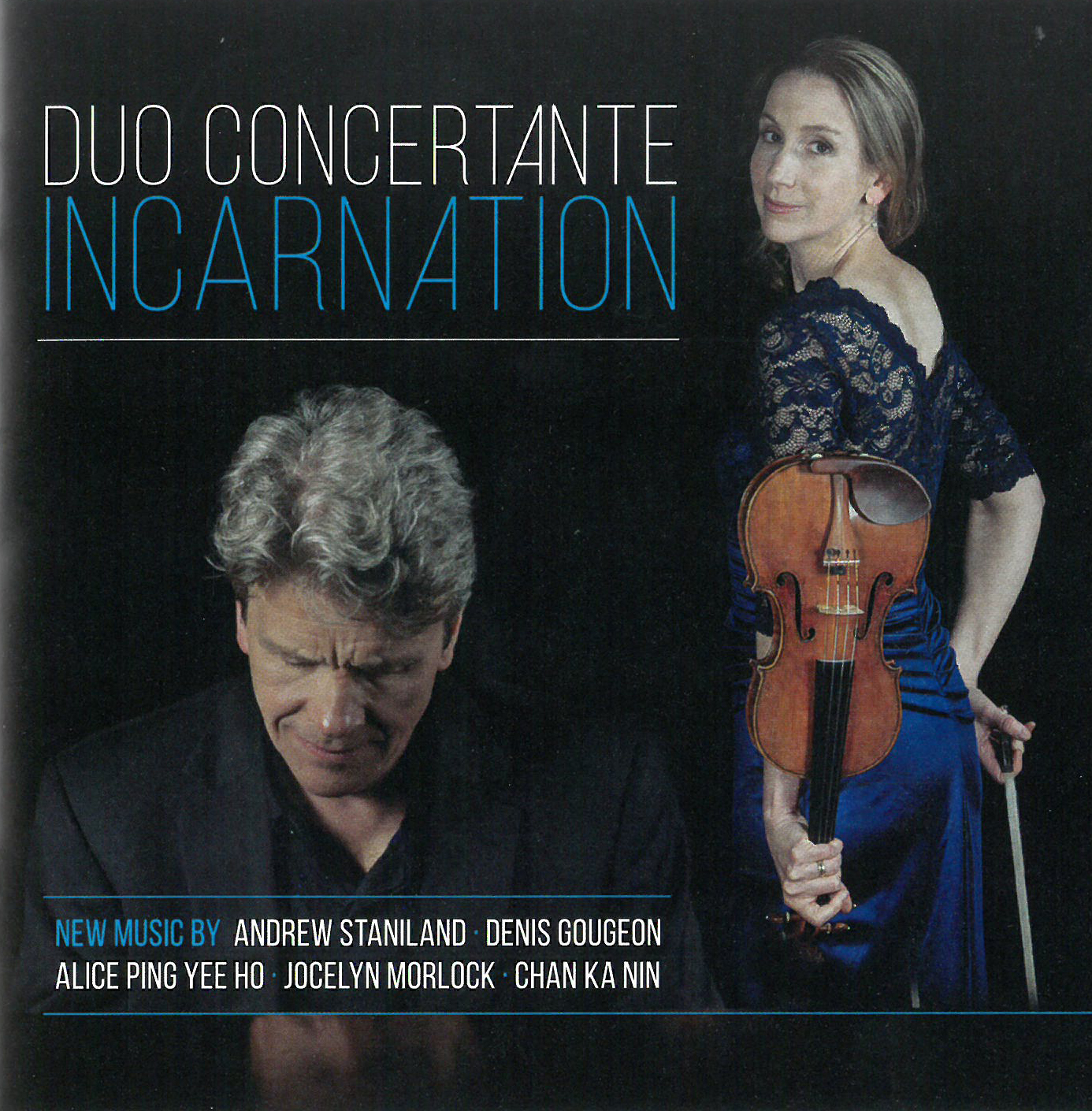
01 Duo ConcertanteIncarnation (Marquis MAR 81479) is the new CD from Duo Concertante, the husband-and-wife team of violinist Nancy Dahn and pianist Timothy Steeves. It features new music by Canadian composers Andrew Staniland, Denis Gougeon, Alice Ping Yee Ho, Jocelyn Morlock and Chan Ka Nin.

On their website (duoconcertante.com) Dahn says that as a student she was fascinated by the connections between some of her favourite composers and the players who inspired and first performed their works. By commissioning new works from Canadian composers it was the duo’s hope that they could share a similar devotion to the music of our time.

Staniland’s The River Is Within Us is a highly lyrical piece with decided undercurrents. Gougeon’s Chants du cœur is a two-movement work with a predominantly slow and melodic first part and a livelier, more dynamic second. Ho’s Cœur à cœur is described by the composer as an imaginary conversation between two voices: it’s a lyrical, animated emotional piece with a rhapsodic middle section and an ethereal ending.

Morlock’s Petrichor (the scent of rain on dry earth) is described as exploring an emotional landscape of anticipation, joy and release; its contrasting moods form an arc from a restrained opening through an ecstatic middle to a serene ending.

Chan’s Incarnation was commissioned as a companion piece to the Schubert works for violin and piano, attempting to revive the composer “…as if Schubert’s spirit were travelling through modern times.” Dahn plays electric violin to underline the contemporary aspect, although there is only the occasional distortion before a real “shredding” section over the opening piano figure from Schubert’s Erlkönig song. It provides a fascinating conclusion to another rich and deeply satisfying CD from this duo.
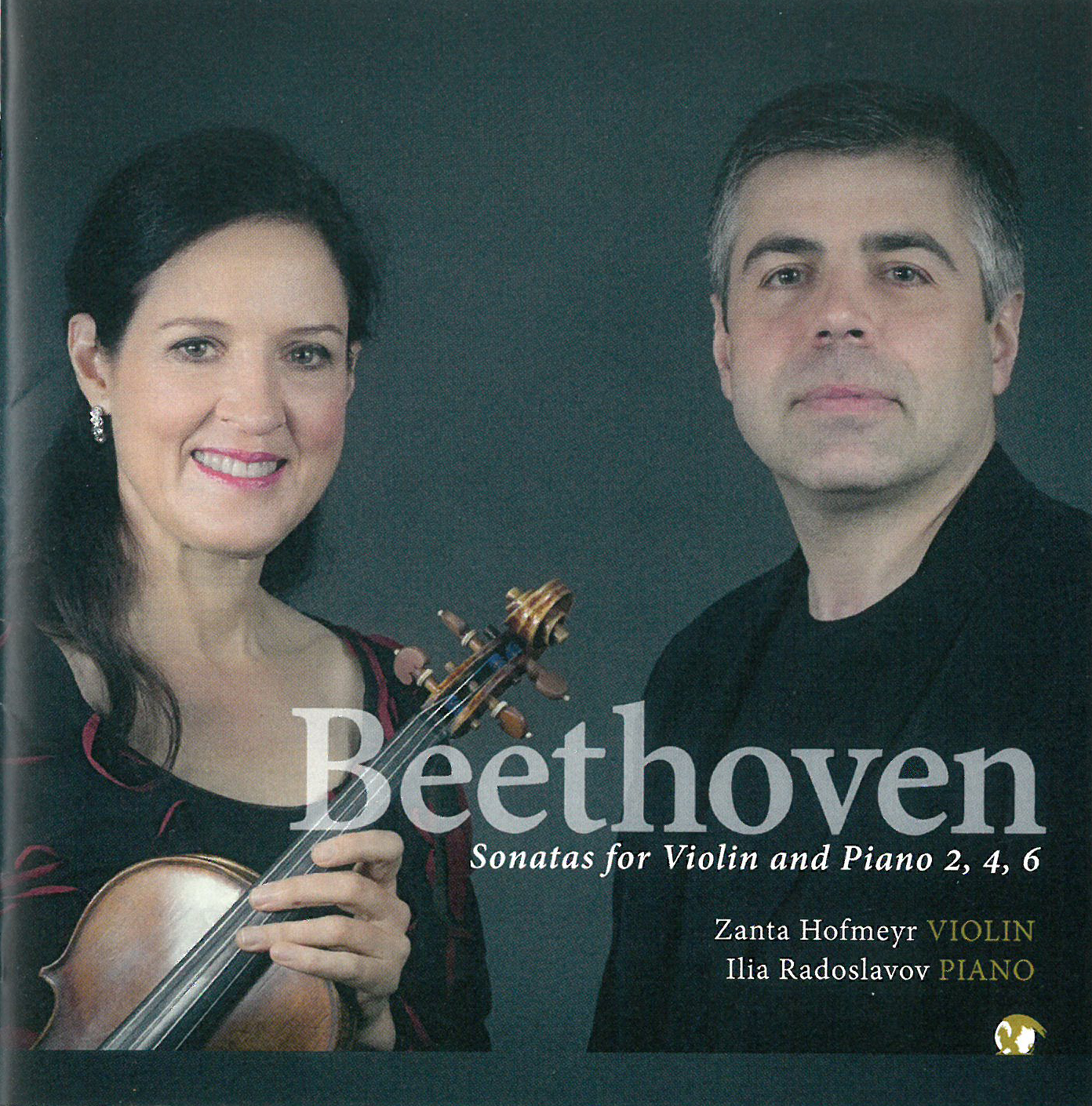
02 Beethoven 2 4 6A few years ago Duo Concertante issued a quite outstanding and very sensitive recording of the complete Beethoven Violin Sonatas. The performances on Beethoven Sonatas for Violin and Piano 2, 4, 6 by South African violinist Zanta Hofmeyr and Bulgarian pianist Ilia Radoslavov (Blue Griffin BGR415) are very similar in style, tempo and tone – which is saying a lot. The sonatas here are those in A Major Op.12 No.2, A Minor Op.23 and A Major Op.30 No.1.

Hofmeyr is another former Juilliard student who studied with the legendary Dorothy DeLay; she has a soft, warm tone and a fairly wide vibrato which is always used judiciously. Radoslavov is terrific in the always busy piano part – remember that these sonatas, like Mozart’s, were published as being for piano and violin and not the other way around – and while the violin clearly is no longer optional, the piano still carries a bigger workload in the early sonatas.

Hofmeyr apparently features the complete Beethoven cycle in her concert recitals, but there is no indication that this CD is the start of a complete recording. Given the lovely playing here, such a project would be a welcome addition to the catalogue.
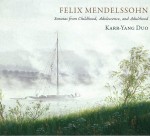
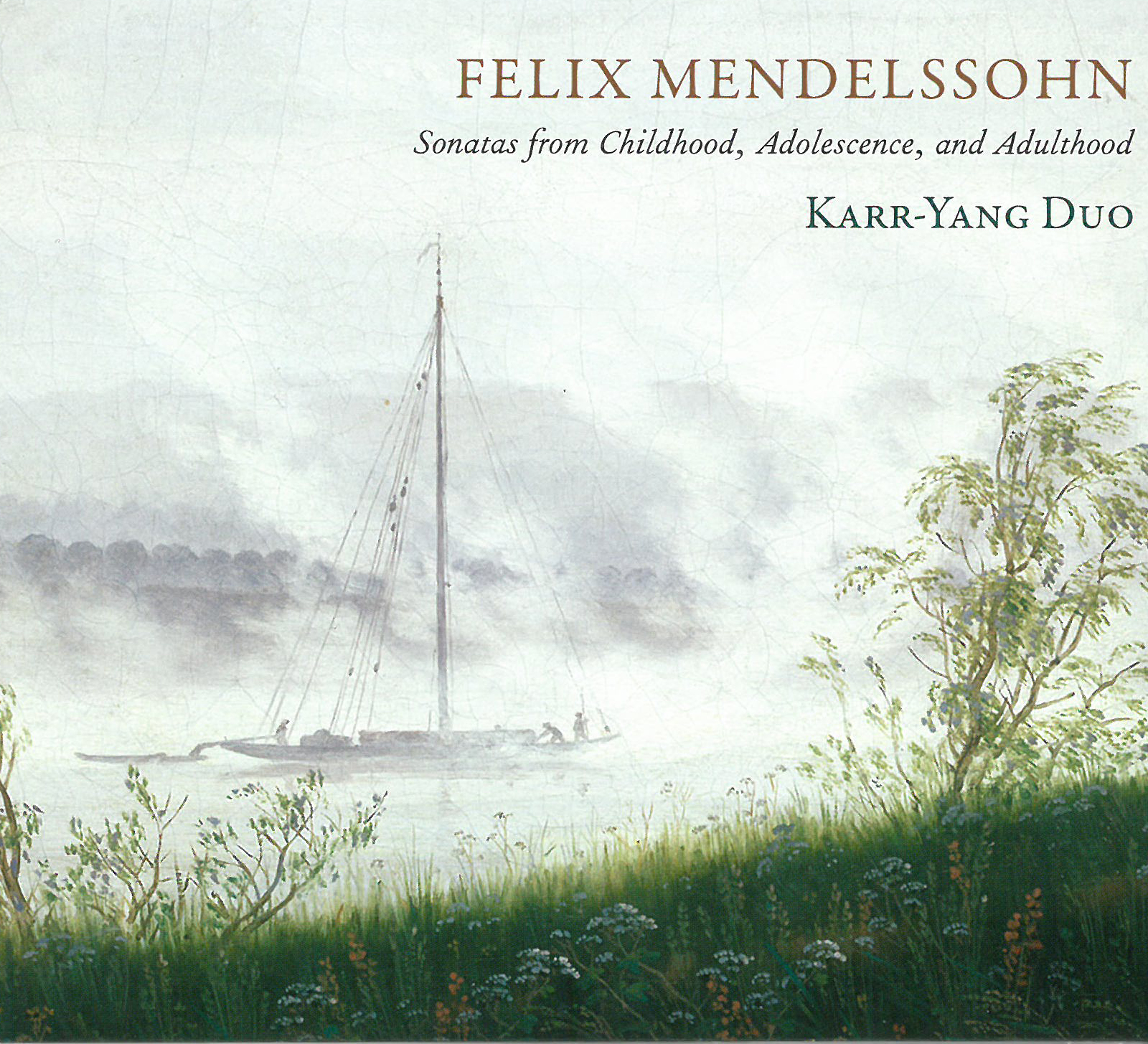
03 Mendelssohn SonatasFelix Mendelssohn – Sonatas from Childhood, Adolescence, and Adulthood is an outstanding CD from the Karr-Yang Duo of violinist Abigail Karr and pianist Yi-heng Yang (Olde Focus FCR910).

Great care has been taken to make these historically idiomatic performances. The piano is a contemporary Conrad Graf from about 1827 (a maker held in the highest regard by Mendelssohn), and the violin is appropriately fitted for the period. The piano is actually very strong, lacking the resonance of a modern grand but not at all dry or unsatisfying; the tonal colour and dynamic range are quite lovely. Karr’s playing is sensitive, never overtly Romantic but always exhibiting controlled emotion, with the gut strings and a spare and sensitive use of vibrato adding to the effect.

The works themselves are glorious examples of Mendelssohn’s astonishing talents. The Sonata No.1 in F Major, written in 1820 when he was just 11 years old, is a lovely work with a simply dazzling Presto finale. Sonata No.2 in F Minor Op.4 came three years later, and the short, unfinished Sonata Fragment in D two years after that. Only the Sonata No.3 in F Major is an adult work, written when the composer was 29; left unfinished with three mostly complete but heavily revised movements, it is presented here in a performing version prepared by the Karr-Yang Duo.

There is a wonderful feel to these performances, which are virtuosic but always sensitive to Mendelssohn’s style. Excellent booklet notes by the performers on the works and performance practice enhance a terrific CD.
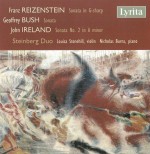
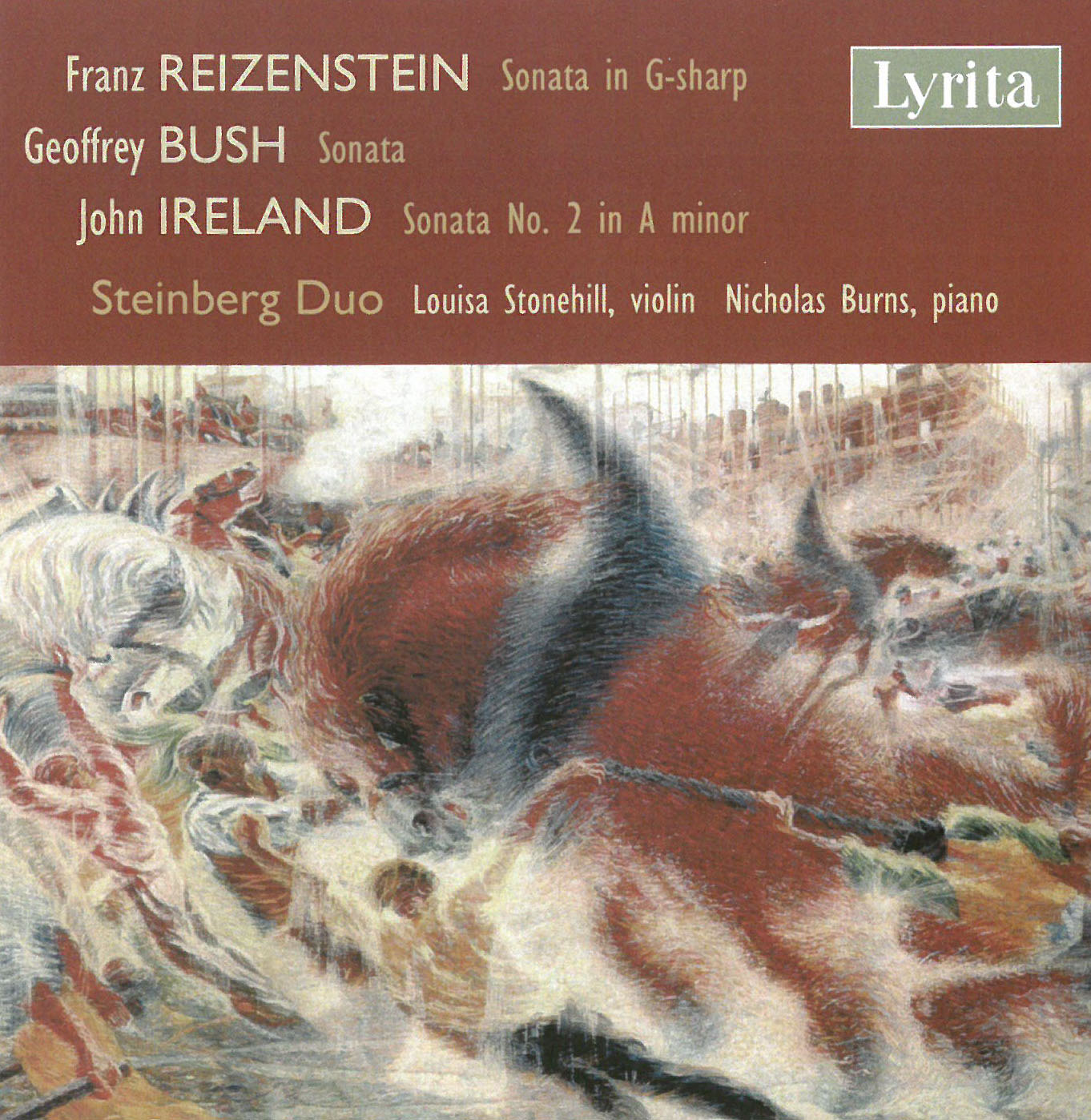
04 Steinberg DuoThree fascinating but rarely heard Violin Sonatas by Franz Reizenstein, Geoffrey Bush and John Ireland form the program on the new CD from the Steinberg Duo, the English husband and wife team of violinist Louisa Stonehill and pianist Nicholas Burns (Lyrita SRCD 360).

Reizenstein was a German composer forced to flee the country by the growing Nazi threat, moving to England in 1934. His 1945 Violin Sonata is in the key of G-sharp – not major or minor, but exploring the tension between both modalities. It’s a strong, challenging work that amply demonstrates Reizenstein’s ability to build chromatic and dissonant music around a strong tonal centre.

The Bush Violin Sonata also dates from 1945 and is a lyrical single-movement work with a constantly shifting tonal centre; it is rarely performed and has never been recorded before. Ireland’s Violin Sonata No.2 in A Minor was written between late 1915 and early 1917 and caused a sensation on its London premiere, when it was felt to have perfectly captured the mood of the period. The elegiac slow movement may well represent an elegy for the war dead as well as a requiem for the pre-war society that had vanished forever.

Stonehill and Burns are in fine form throughout the CD. The duo migrated to Keene, New Hampshire, last year, and the CD was recorded in the beautiful acoustics of the Françoys-Bernier Concert Hall at Domaine Forget in Quebec.
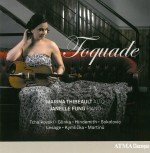
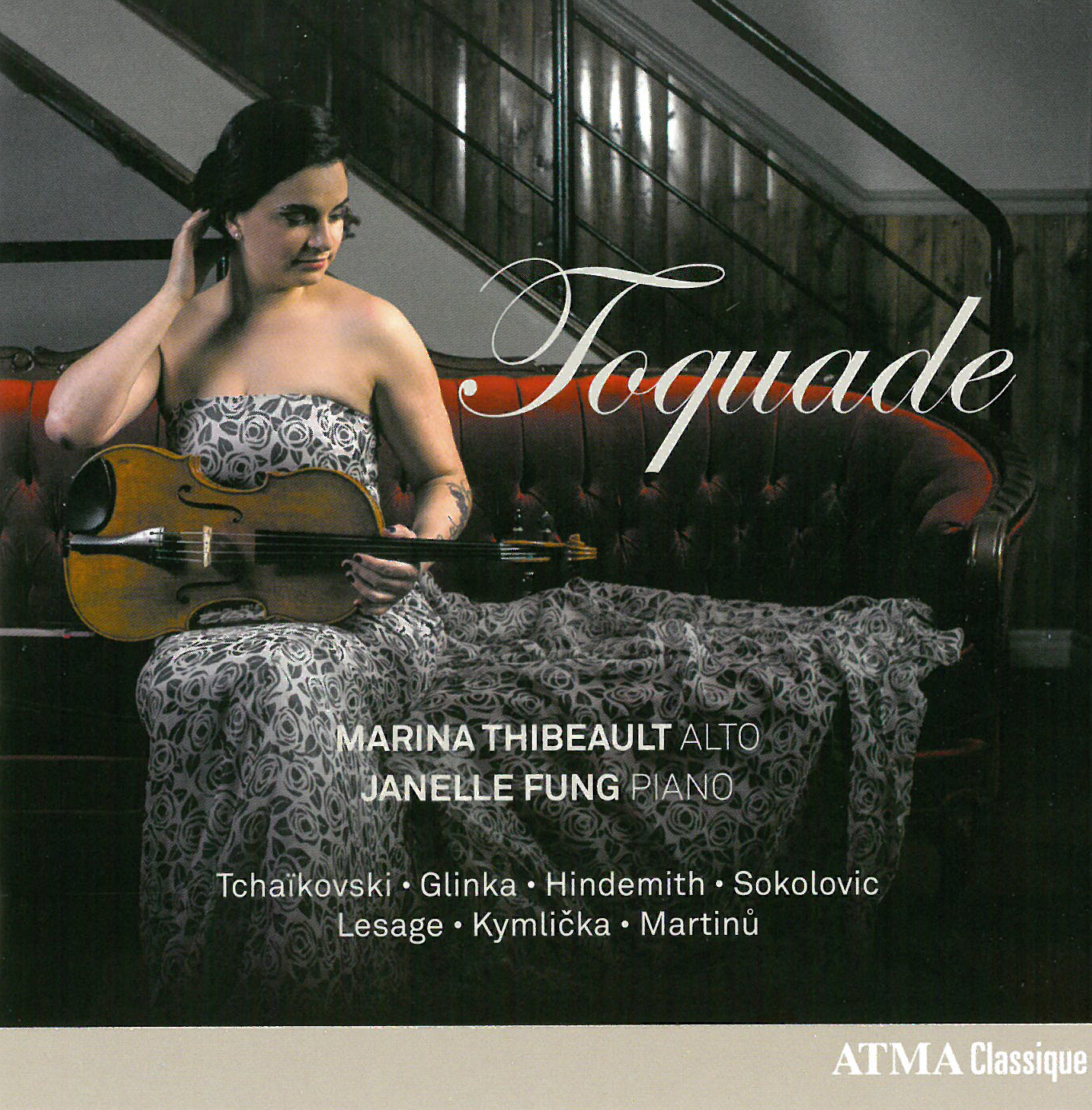
05 ToquadeThe Quebec violist Marina Thibeault is joined by Vancouver-born pianist Janelle Fung on Toquade, a recital of works for solo viola, and viola and piano (ATMA Classique ACD2 2759).

Tchaikovsky’s Valse sentimentale, a transcription of the last of his Six Morceaux for Piano Op.51, is a fine opening track, followed by the first movement of Glinka’s Sonata in D Minor. The heart of the CD, though, is the excellent performances of four works for solo viola, including three by contemporary Canadian composers: Hindemith’s Sonata Op.31 No.4; Ana Sokolovic’s Prélude (2006); Jean Lesage’s Toquade (2016); and Milan Kymlička’s Rubato & Agitato (2008). The latter work, written shortly before the composer’s death, was dedicated to Thibeault and premiered by her in Prague the same year.

A lovely performance of the Sonata for Viola and Piano Op.31 H335 by Bohuslav Martinů rounds out the CD. Written in 1955 when Martinů was nearing the end of his life and becoming increasingly unhappy in the United States, its lyrical, rhapsodic nature allows both performers to shine.
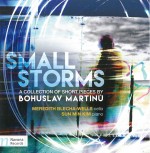
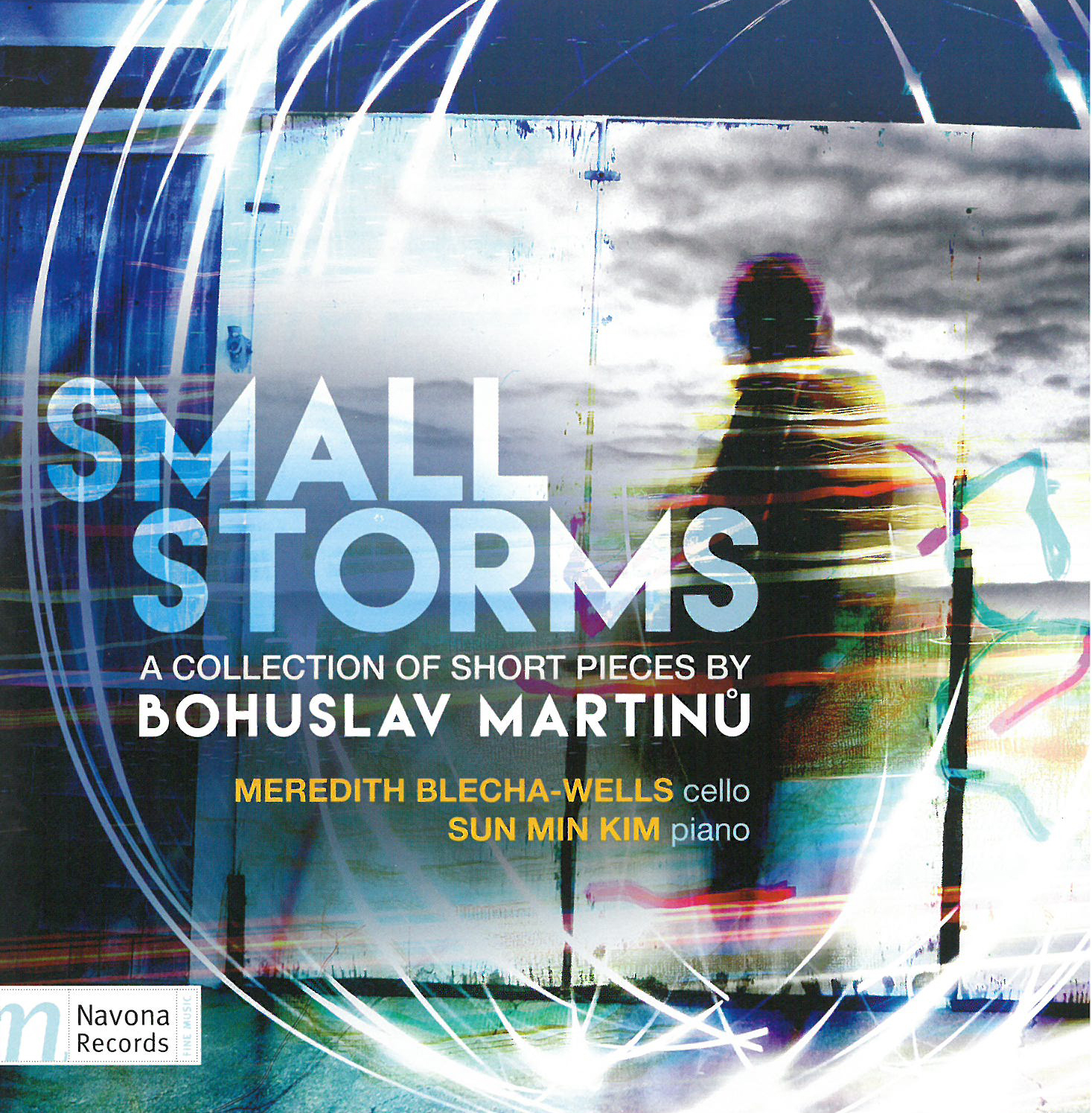
06 Martinu Small StormsThe Czech composer has a whole CD to himself in Small Storms – A Collection of Short Pieces by Bohuslav Martinů featuring American cellist Meredith Blecha-Wells and South Korean pianist Sun Min Kim (Navona Records NV6092). The CD’s title is well-chosen: 20 of the 31 combined tracks from the six works are under two minutes in length and only two are longer than three minutes.

Martinů wrote three sonatas and seven shorter works for cello and piano, with only the Pastorals from 1931 missing from the latter on this disc. The works are Variations on a Theme of Rossini H290 from 1942 (the theme being the same Prayer from Moses used in Paganini’s violin Variations on the G-String); Ariette H188B from 1930; Seven Arabesques H201, the seven-movement Suite Miniature H192 and the four Nocturnes H189, all from 1931; and Variations on a Slovakian Theme H378 from 1959, the year of his death.

Blecha-Wells is technically dazzling in the Rossini variations, and the sweeping phrasing, passion and fine dynamic range together with a great balance with the piano continue throughout the disc. The final Variations on a Slovakian Theme provide an equally dazzling conclusion to an excellent CD.
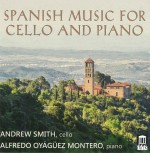
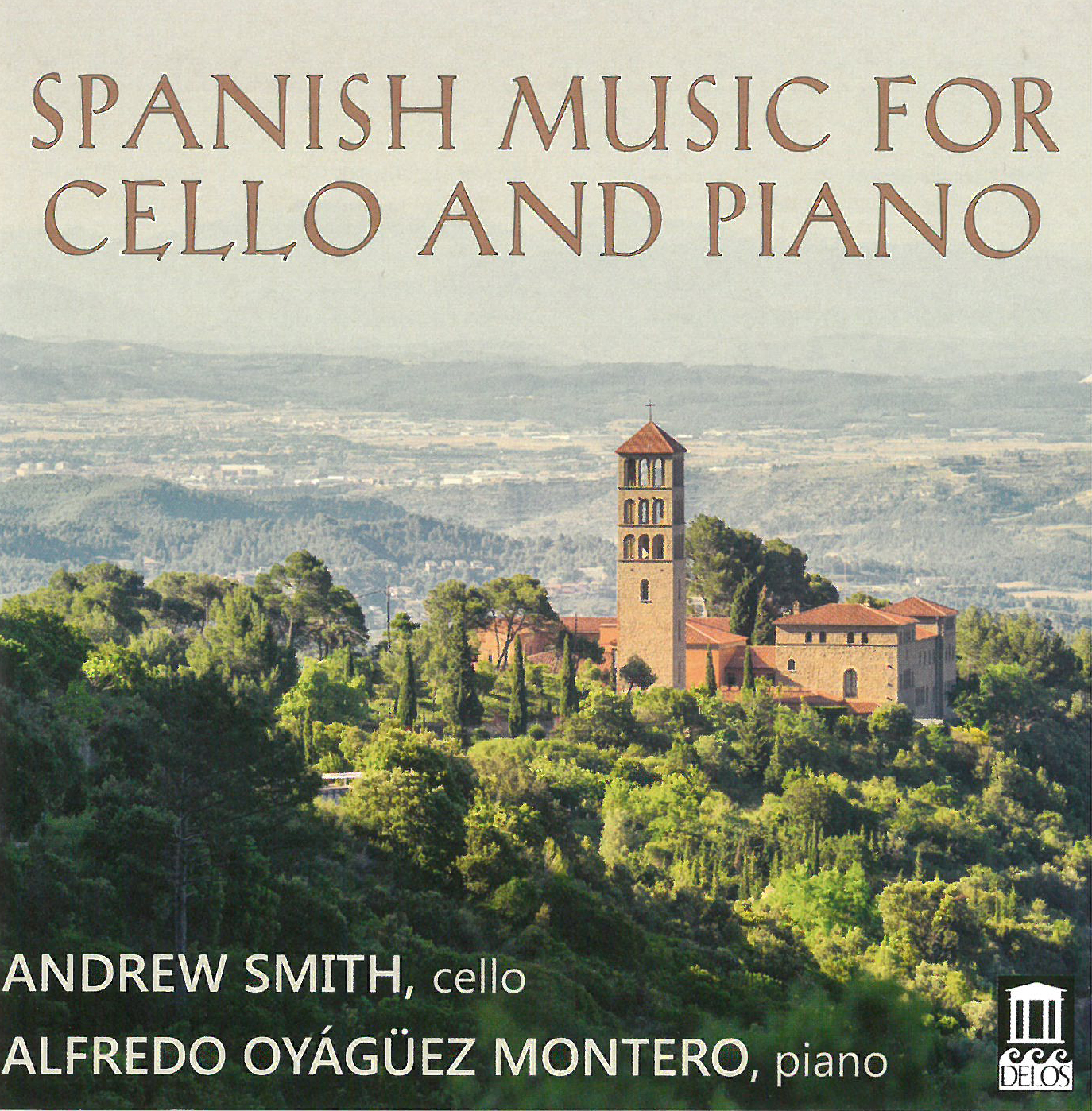
07 Spanish CelloAmerican cellist Andrew Smith met the Spanish pianist Alfredo Oyágüez Montero in 1999, performing Manuel de Falla’s Suite Populaire Espagñole in recital with him the following year. That eventually led to an all-Spanish recital program that the duo has performed around the world, and Spanish Music for Cello and Piano is the resulting CD (Delos DE 3492).

The Falla suite (an adaptation of the Siete Canciones Populares Españolas for voice and piano) is here, along with works by Enrique Granados, Gaspar Cassadó, Xavier Montsalvatge and Joaquin Turina. Cassadó is represented not only by his Sonata Nello Stile Antico Spagnuolo, the Danse du Diable Vert and Requiebros but also by his arrangement of the Granados Intermezzo from Goyescas; in addition, Turina’s own transcription of his piano piece El Jueves Santo a Medianoche was made at Cassadó’s request and dedicated to him. Montsalvatge’s Cinco Canciones Negras is Smith’s own transcription of the composer’s song cycle for mezzo-soprano. The Pablo Casals arrangement of the traditional Catalan song El Cant dels Ocells completes the disc.

There is beautiful playing and a lovely balance throughout the CD, with Montero not surprisingly providing a perfectly judged accompaniment for Smith’s warm and sensitive interpretations.
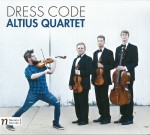
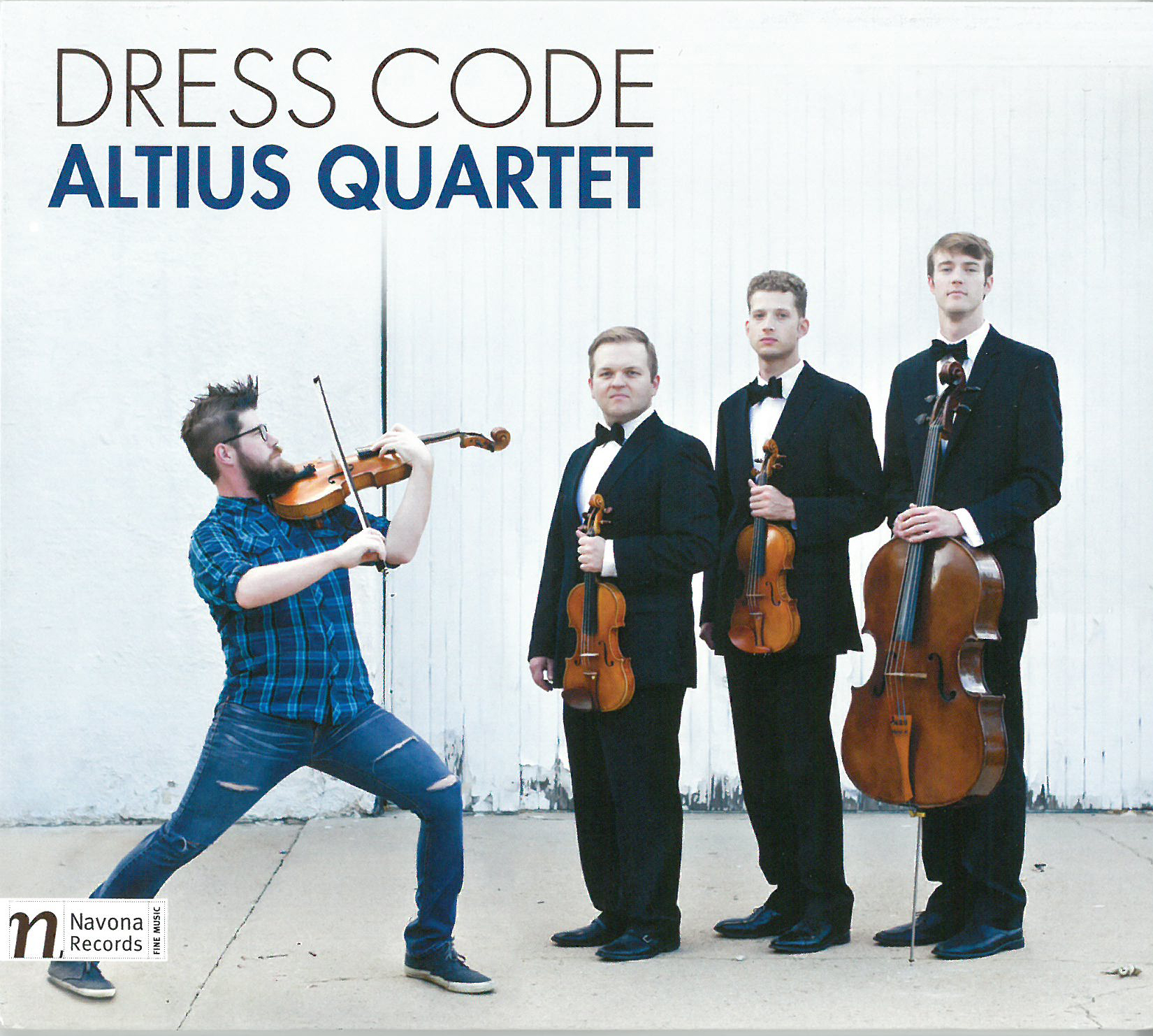
08 Dress CodeDress Code (Navona Records NV6078) is the fascinating new CD by the American Altius Quartet, and features the four movements of Haydn’s String Quartet in C Major Op.74 No.1 interspersed with Three Rags by William Bolcom and arrangements by the group’s cellist Zachary Reaves of pieces by Dave Brubeck, Michael Jackson and Led Zeppelin, Ben E. King’s Stand by Me and the Norwegian band a-ha’s Take on Me.

The claim that the CD is a survey of popular music “throughout the ages” is a bit of a stretch, given the gap of almost 200 years between the Haydn and the other selections, but the startling thing is how well Haydn fits in. The Andantino grazioso sounds decidedly modern following Led Zeppelin’s Stairway to Heaven arrangement, and the Menuetto fits quite naturally between Bolcom’s own brilliant arrangements of his Poltergeist and Incineratorag, almost making it sound like an integrated work.

The Haydn is played in a warm, rich style, which perhaps helps to bridge the stylistic gap between the centuries. Oddly, the disc continues to run for a full three minutes after the final track, at which point a blues-tinged bonus suggestive of Ride Sally Ride appears. There’s no mention of it anywhere in the CD package.
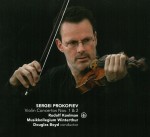
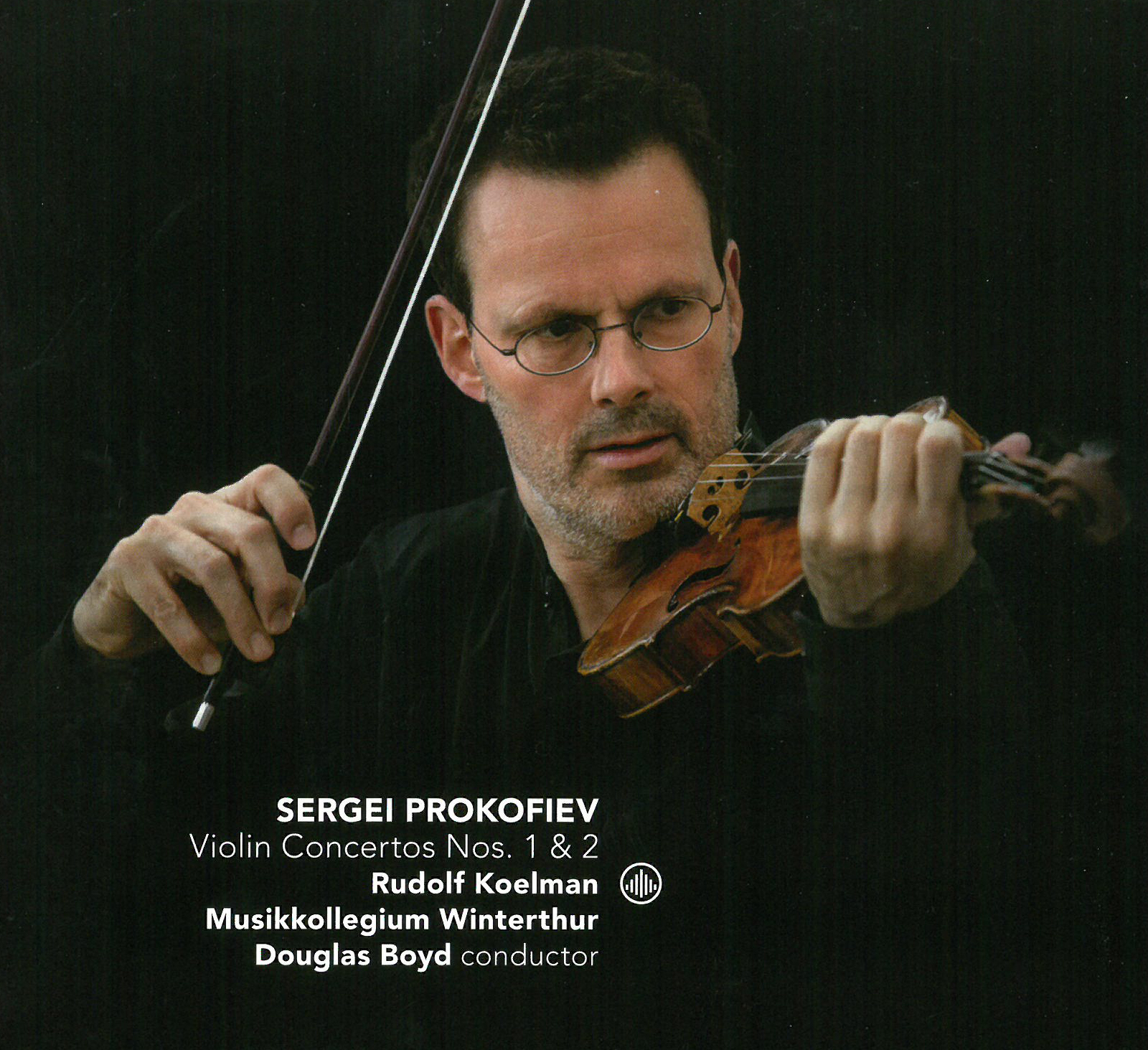
09 Prokofiev KoelmanThe Dutch violinist Rudolf Koelman is the outstanding soloist in Sergei Prokofiev – Violin Concertos Nos.1 & 2, recorded live with the Swiss orchestra Musikkollegium Winterthur conducted by Douglas Boyd (Challenge Classics CC72736).

The Concerto No.1 in D Major Op.19 was completed in 1917, although not premiered until 1923. Despite being written in the year of the Russian Revolution during the Great War it is a predominantly lyrical work, with Prokofiev apparently finding his inspiration during walks in the countryside. The Concerto No.2 in G Minor Op.63 from 1935, on the other hand, reflects the composer’s intention to write a concerto that differed markedly from the first one in form and content. The predominantly slow-fast-slow movement structure of the first concerto is reversed, the second concerto having a decided folk influence and a lengthy, lyrical middle movement.

Koelman, who was a pupil of Jascha Heifetz in the late 1970s and concertmaster of the Royal Concertgebouw Orchestra in Amsterdam in the 1990s, has a bright, strong tone and lovely phrasing, and receives excellent support from the orchestra. These are beautifully recorded performances of two really lovely concertos.

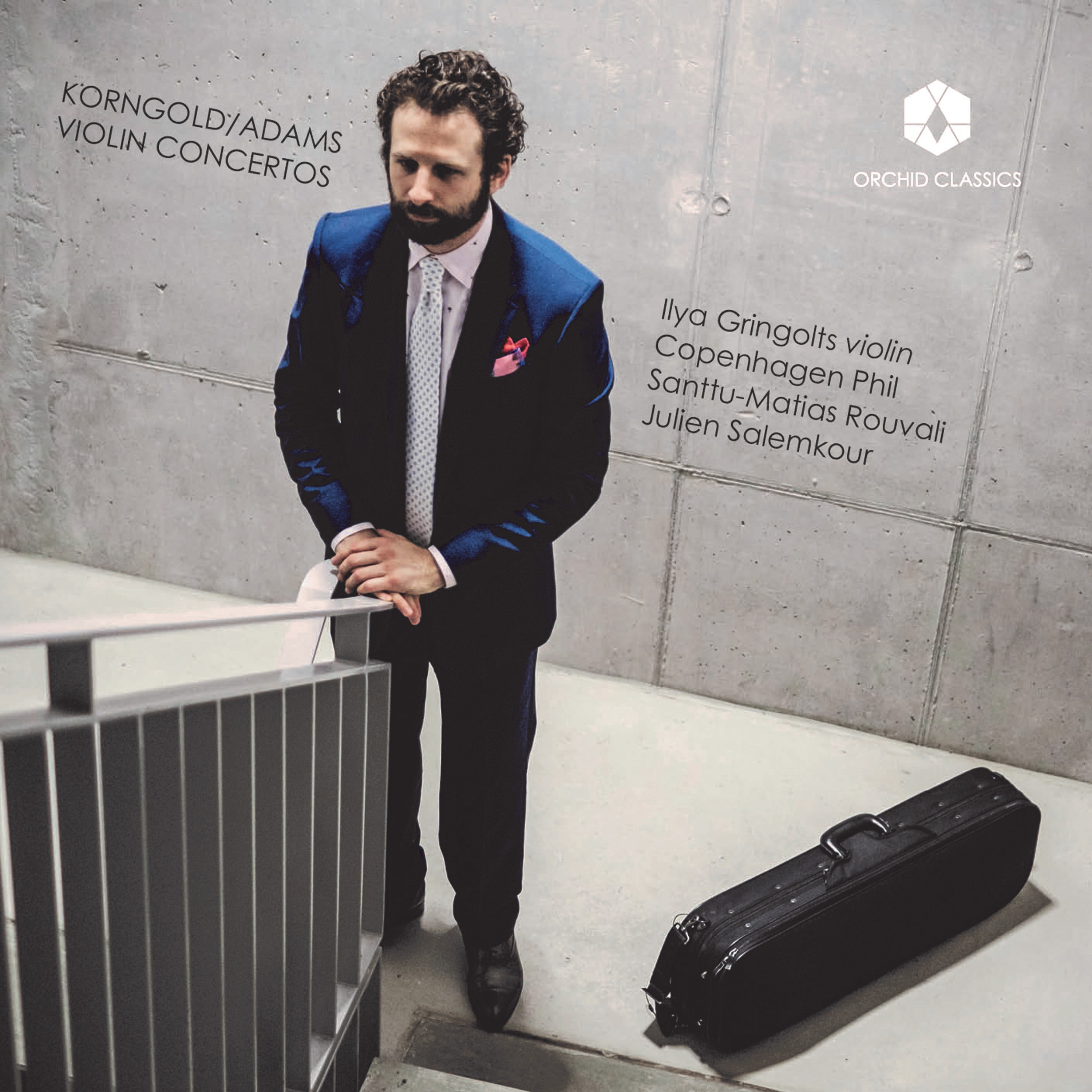
10 Adams Korngold coverIlya Gringolts is the soloist in the Korngold and Adams Violin Concertos with the Copenhagen Philharmonic Orchestra under Julien Salenkour (in the Korngold concerto) and Santtu-Matias Rouvali (in the Adams) (Orchid Classics ORC100066).

When Adams wrote his concerto in 1993 he realised that he would have to “solve the issue of melody.” While he describes the work as “almost implacably melodic” it’s not always melodic in the traditional sense; rather than engaging in dialogue the violin plays almost continually against the orchestral background, and there are lengthy passages of strong rhythmic patterns, especially in the nonstop Toccare third movement. Regardless, Gringolts gives a commanding performance.

The Korngold Concerto in D Major Op.35 is a glorious work from 1945, built for the most part on themes from the composer’s Hollywood film scores and displaying the same lyrical, lush Romanticism. Again, Gringolts is superb, his passionate performance capturing the essence of the work without ever risking letting it sound excessively sentimental.

Glorious recorded sound and tremendous orchestral playing add to a superb CD.

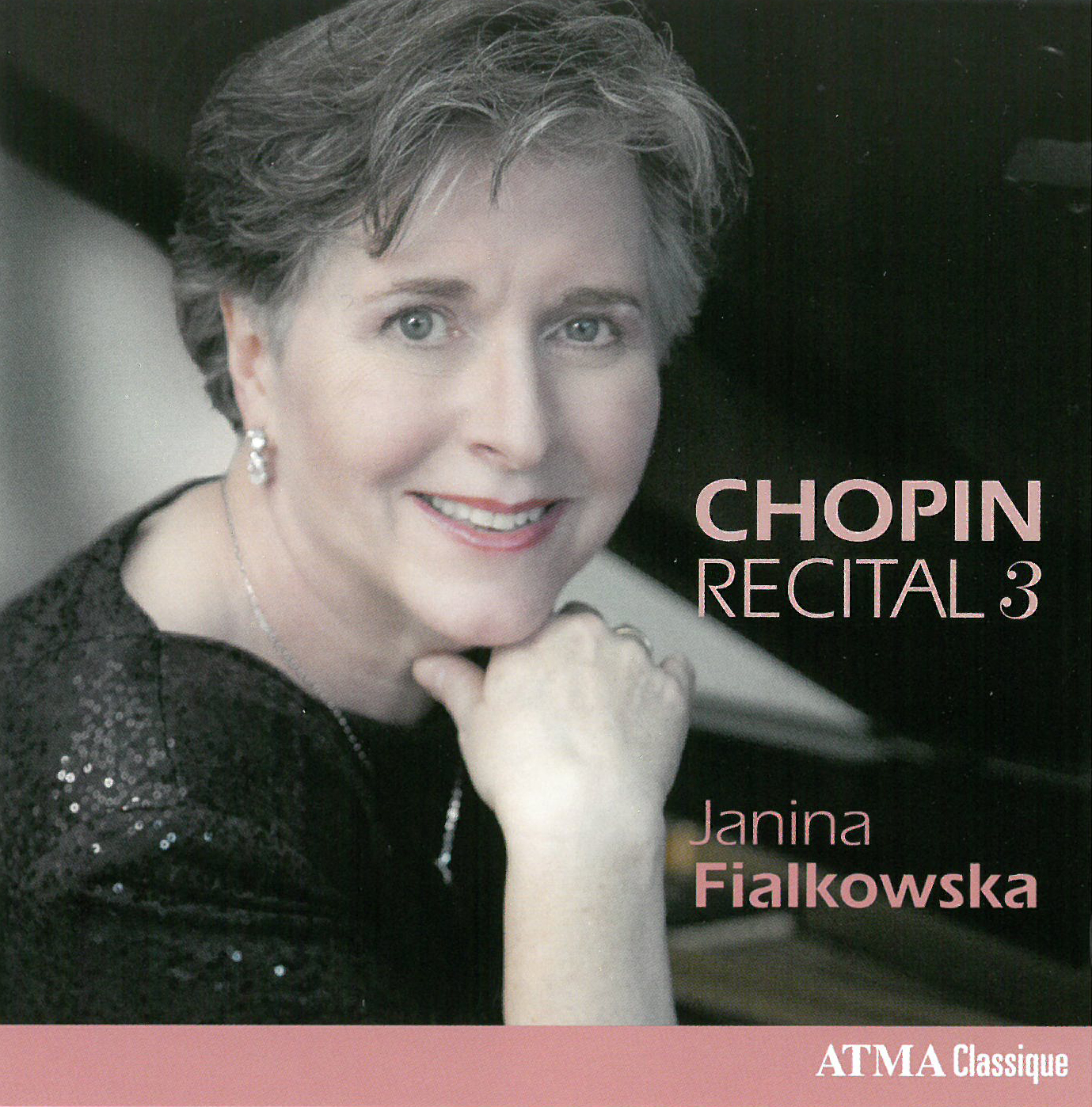
01 Fialkowska Chopin 3Janina Fialkowska continues her Chopin recording project with Chopin Recital 3 (ATMA Classique ACD2 2728). Fialkowska’s discs have proven consistently excellent. Her performances are marked by the welcome maturity that artists of her stature need as a hallmark of their career. Finding the “sweet spot” in a performance is what the creative quest is about. What seasoned performers know is that the “spot” is not where you last found it. It lies at the intersection of the performer’s awareness of self and their deepest awareness of the composer’s voice. This is the place we reliably find Fialkowska in her performances. What alters and enriches her playing is the desire to speak more clearly, more profoundly and more simply. Take, for example, the persistent pulse of the “raindrops” in Prelude in D-flat Major Op.28 No.15. Fialkowska treats this device as if it had true thematic significance. While only a simple rhythmic figure, she turns it into Chopin’s hypnotic, swinging watch while she moves through both turbulence and repose, all the while holding the experience together with a simple pulse.

It may, in fact, be Fialkowska’s command of the distance between the great heights to which Chopin so often rises and the nearly out of reach places to which he retreats that imbues her playing with such power. The disc’s opening track, Polonaise-Fantaisie in A-flat Major Op.61 is an eloquent example of this ability. It’s present in everything she plays and makes this a very collectible series.

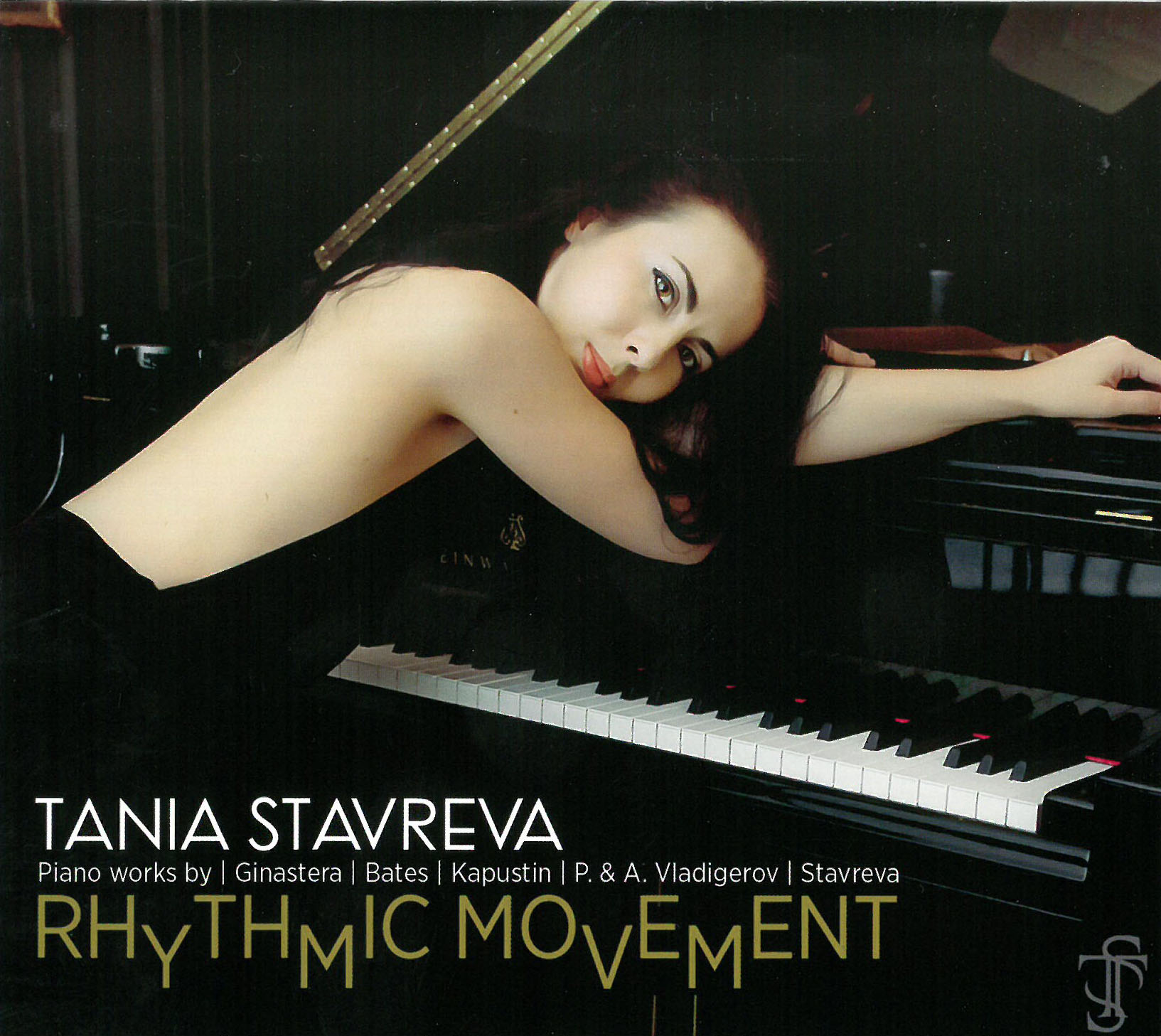
03 Tania StavrevaThe title of Tania Stavreva's first CD makes it clear what the recording is all about. Rhythmic Movement – Piano Works by Ginastera, Bates, Kapustin, P & A. Vladigerov, Stavreva is a high-energy performance of works driven predominantly by rhythmic impulse.

The Danzas Argentinas Op.2 by Ginastera are a challenging set with the middle of the three dances far more introspective than its rousing companions. But the off-beat and frequently odd-numbered rhythms are characteristic of much of the recording. Another Ginastera work, Ritmico y Distorsionado uses percussion to create a big and very effective finish to the disc. A few of the works on the CD are the performer’s own compositions. One in particular stands out for its exclusive use of the piano’s strings without any resort to the keyboard. The Dark Side of the Sun is a rich and atmospheric piece unlike anything else on the disc, using plucked strings and harp-like glissandos to colourful effect. Jazz Concert Etudes by Russian composer Nikolai Kapustin are intriguing for their American feel. It’s why Stavreva calls Kapustin the Russian Gershwin.

Stavreva makes her CD available only online – autographed if you request it (taniastavreva.com).

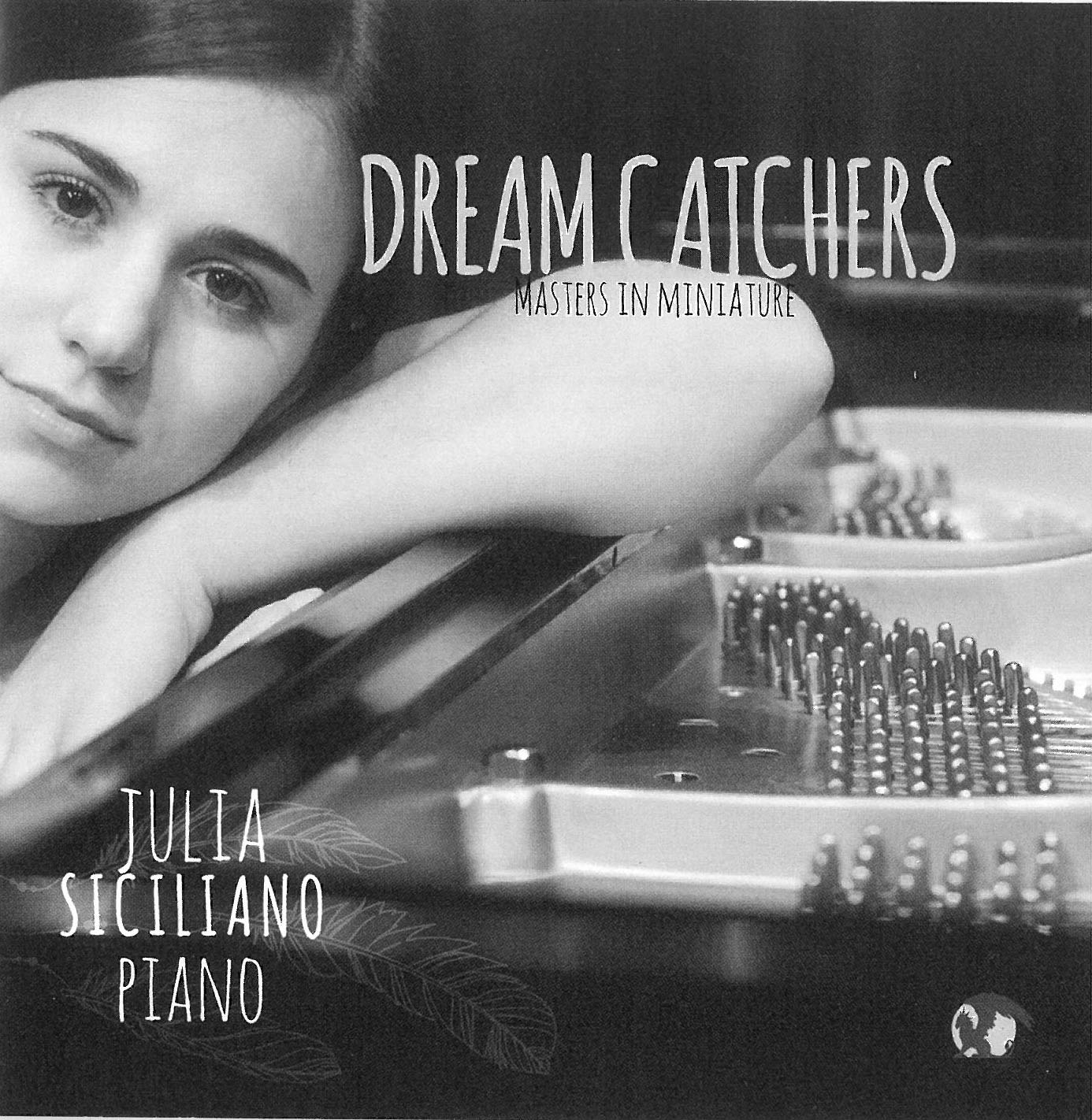
04 Julia SicilianoJulia Siciliano makes her recording debut with a 2-disc set Dream Catchers: Masters in Miniature (Blue Griffin Recordings BGR 381). This program is meant to demonstrate how a wide range of emotional content can be conveyed through the use of piano miniatures alone.

Siciliano chooses well-known miniatures, opening with Beethoven’s Bagatelles Op.126, and within the confines of these small works shows us the surprising power of his language where we least expect it. Schumann’s Carnaval Op.9, too, is a collection of brief thoughts, some less than a minute. But here the end points of the spectrum move even further apart. The delicate and understated character of Aveu contrasts dramatically with the virtuosity of Papillons and the grandness of the closing Marche des “Davidsbündler.”

Siciliano moves into Schubert’s Impromptus Op.142 with a very different mindset. Here she is intimately engaged with the composer’s personal and wistful sense of longing, nowhere more beautifully expressed than in the Impromptu No.2 in A-flat Major.

The stylistic change to Ravel and Debussy is a demanding one, but Siciliano comes to this with natural ease. The Debussy in particular is remarkable for her playing of the impressionistic swirls of motion in Poissons d’or.

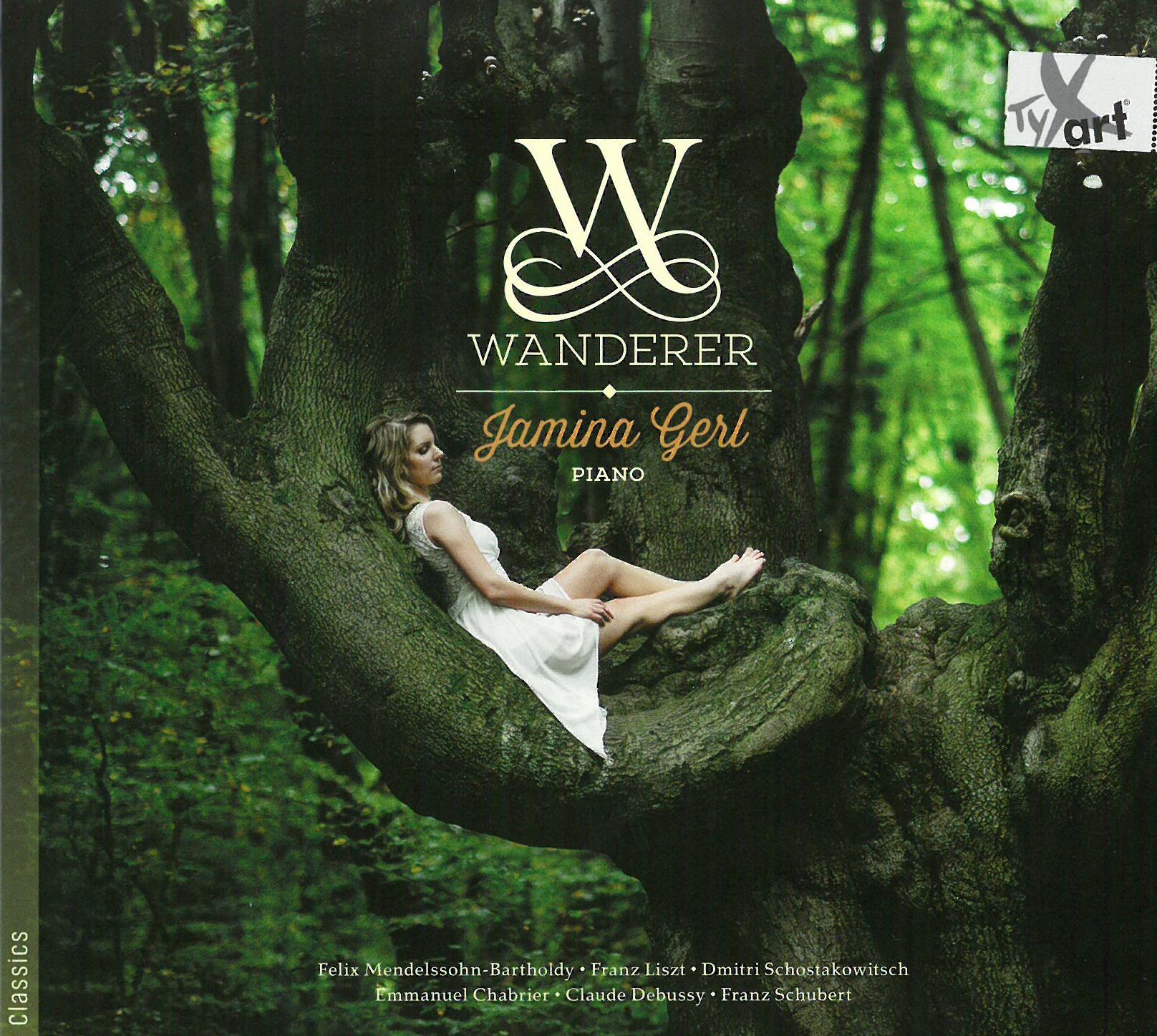
06 Wanderer Jamina GertJamina Gerl builds the program of her first solo CD on the profound and enduring loneliness of Der Wanderer, Georg Lübeck’s early-19th-century poem. Gerl’s debut recording Wanderer (Tyxart TXA16082) includes Liszt’s setting of Schubert’s Lied Der Wanderer for solo piano as well as Schubert’s Wanderer Fantasie in C Major Op.15 D760. To this she adds a careful selection of works by Mendelssohn, Shostakovich, Chabrier and Debussy that captures varying shades of the loneliness in Lübeck’s archetypal poem.

Gerl may be new to the world of recordings but her talent is impressive, her repertoire substantial and diverse. Her presence at the keyboard is powerful and her technique is flawless. Her interpretive decisions are thoughtful and consistent. She plays Mendelssohn’s Venetian Gondola Songs with a light, airy wistfulness. Her brilliant performance of Debussy’s L’Isle joyeuse moves instantly into its ethereal world with ease. Her command of the nuances required in the Shostakovich Drei phantastische Tänze Op.5 is unsurpassed.

Gerl’s recording debut makes a memorable impact with an outstanding program designed around a challenging theme. Seeing her name on a major label soon will come as no surprise.

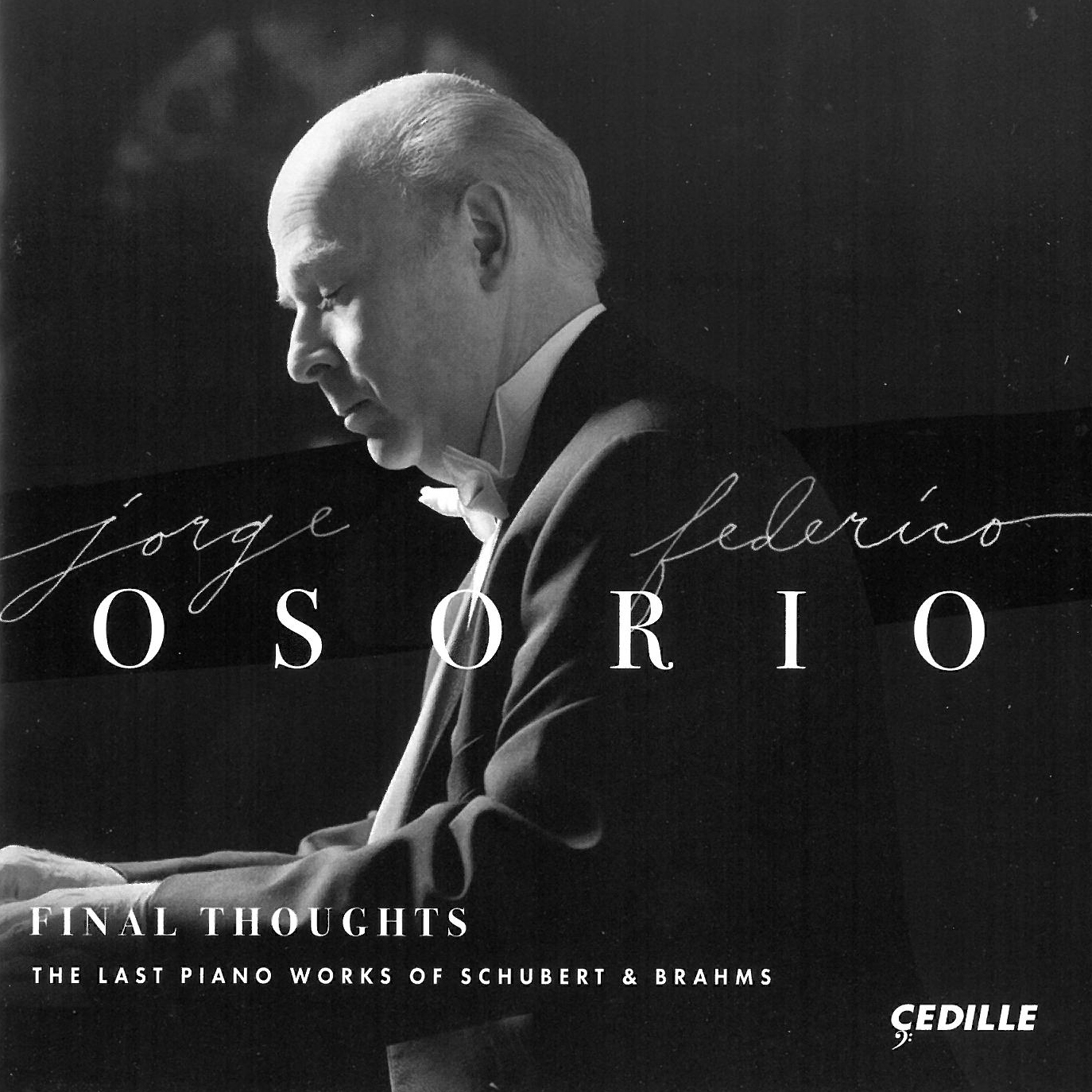
07 OsorioMexican pianist Jorge Federico Osorio, now in his mid-60s, has an impressive discography of nearly three dozen recordings. Curiously, he has recorded nothing by Schubert, until now. This gap in his repertoire will have to remain a mystery. But we can be grateful he has begun to fill it.

In a new 2-disc set, Final Thoughts – The Last Piano Works of Schubert & Brahms (Cedille CDR 90000 171), Osorio performs the Schubert Sonatas in A Major D959 and B-flat Major D960. These works are substantial in both content and length, demanding a wide range of expression and technique. Osorio performs them undaunted by any of their challenges. His approach to the thematic material of their opening movements reveals the depth of his connection to Schubert’s intent. His playing is deeply moving and memorable.

While Brahms’ life was markedly unlike Schubert’s in every way, the kinship shared by their final works is perhaps only a posture, an attitude. This is what Osorio sets out to capture in these discs. The fire and passion of a work like Brahms’ Romanze in F Major Op.118 is a companion to any of Schubert’s most turbulent passages. Likewise, the most tender of the Brahms Intermezzos, especially from Op.118, capture the same posture of the heart that Schubert adopts in the opening ideas of both his sonatas.

Final Thoughts is an ambitious project for its focus on the last musical utterances of two revered composers. Osorio speaks with honesty and conviction about what he finds in them.

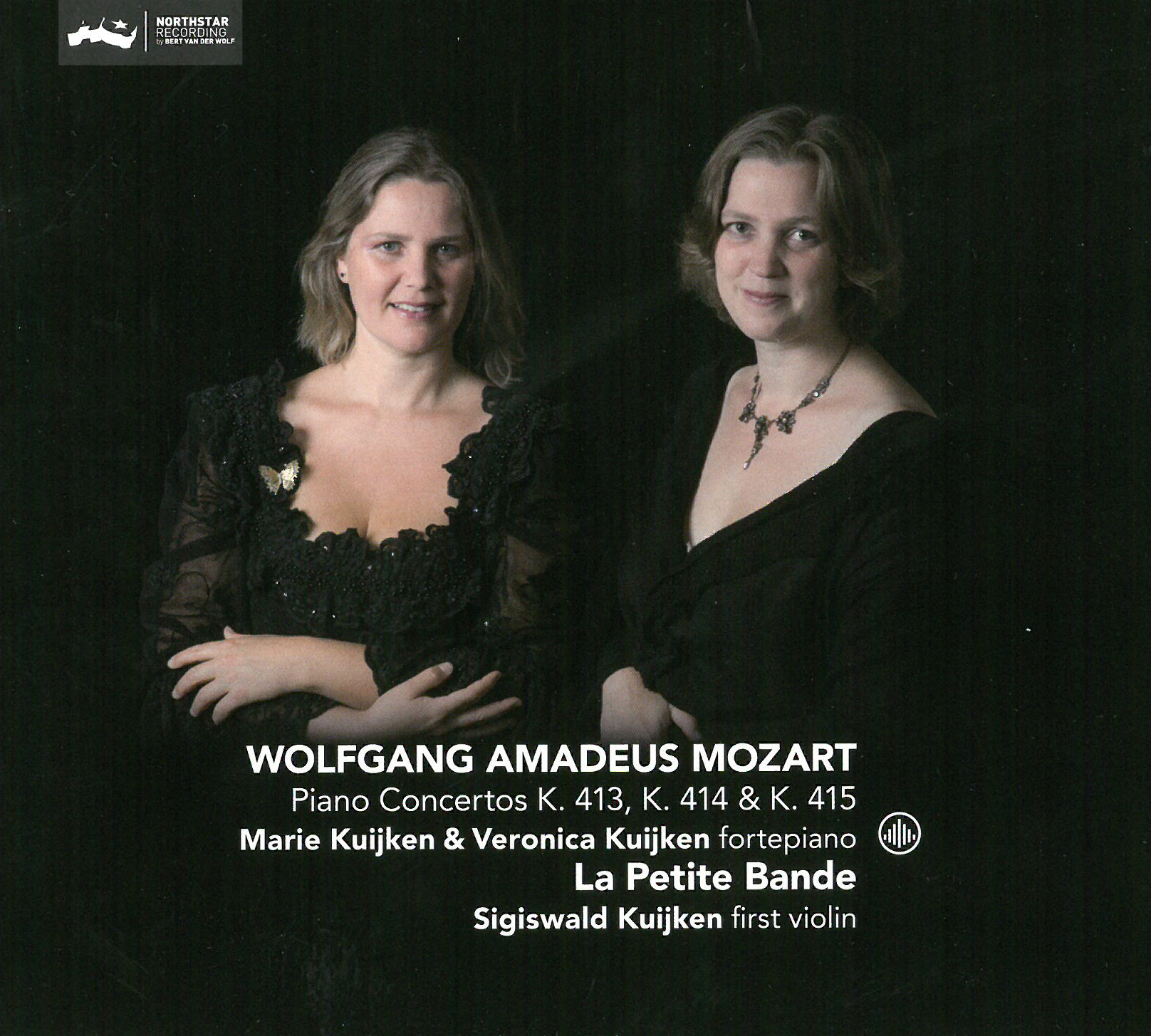
08 Mozart KuijkensSisters Marie and Veronica Kuijken have joined their father Sigiswald Kuijken in a new recording Wolfgang Amadeus Mozart – Piano Concertos K413, K414 & K415 (Challenge Classics CC72752) that offers a new twist on period performance.

Mozart wrote these three concertos for harpsichord or fortepiano, with full orchestra. He also wrote them in such a way that the wind parts might be omitted, and the traditional four string quartet instruments used to create a chamber version of the work. Clearly, this called for very careful string writing and attention to balance. Colour, too, will have been a consideration for Mozart as he wrote for winds to enrich the orchestral texture.

This recording uses fortepiano with the quartet version but makes one important change. Conductor and, in this instance, first violinist Sigiswald Kuijken has replaced the cello with a double bass. His argument for this is that Mozart would likely have assumed that most private buyers of his published score owned harpsichords and would have chosen the chamber version, where the harpsichord was better balanced with the four string instruments. In choosing to record with the more robust fortepiano, the louder, richer bass was an equally robust alternative to the cello. Additionally, switching to double bass moves that pitch an octave lower, creating a fuller, more orchestral effect for the small ensemble.

The choice is a calculated but clever and effective one. It places a larger scale work in an intimate setting for a very satisfying and engaging performance.

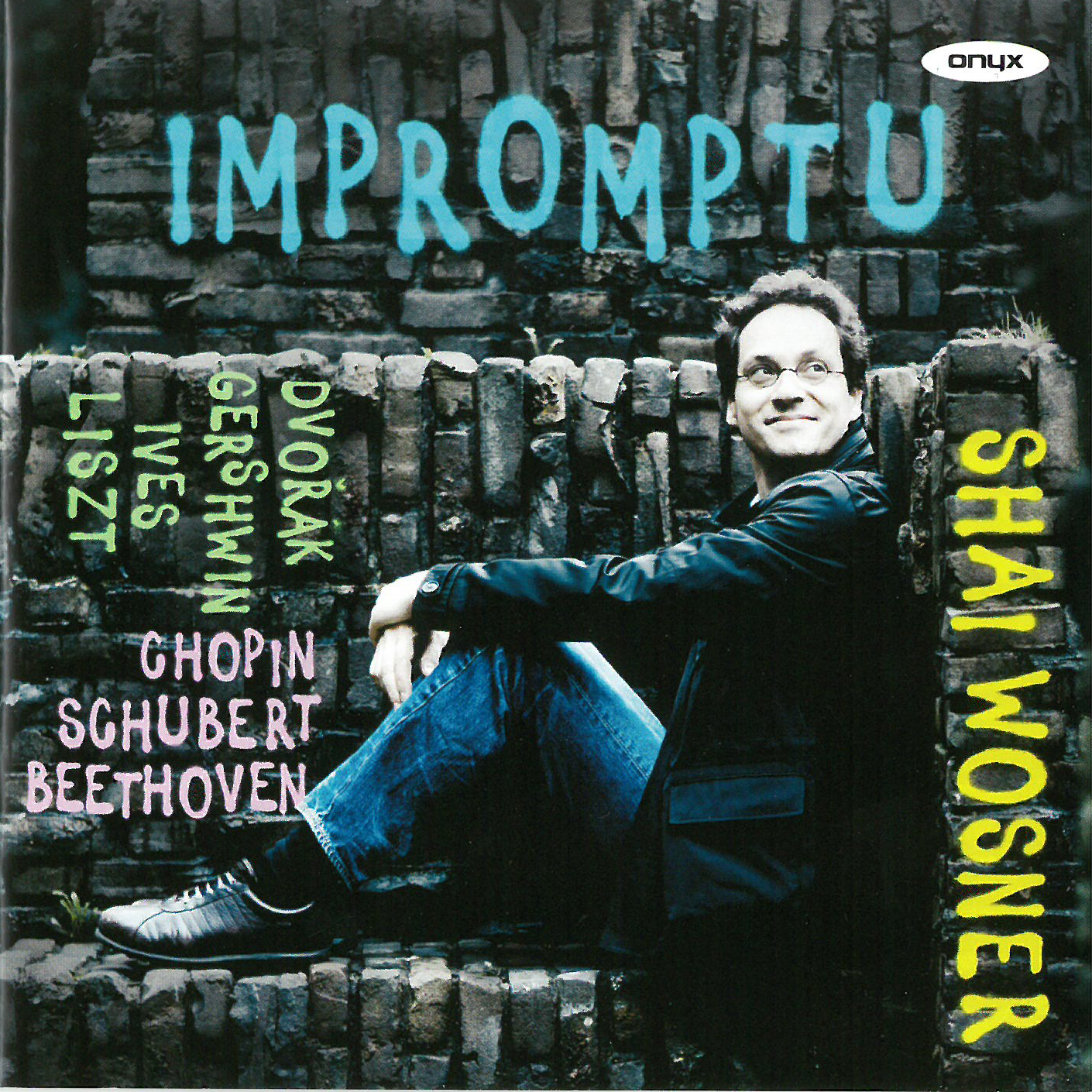
10 ImpromtuIn his liner notes, Shai Wosner writes about the unique experience of improvisation. He describes the thrill of finding yourself suddenly in possession of something that’s actually working and sometimes watching the whole effort amount to very little. In Impromptu – Dvořák, Schubert, Ives, Liszt, Chopin, Gershwin, Beethoven (Onyx 4172), Wosner gathers 13 impromptus from some very dissimilar composers. He imbues each piece with immediacy and freedom, creating the original sense of how these impromptus might have been born as true improvisations.

While Wosner has every muscle necessary to rattle a concert grand, his real power lies in being small. He’s able to execute the softest hammer strike to the strings for a sound that is only describable as velvet. Once you’re drawn into this world of intimate playing, even a moderate crescendo can seem like a roll of thunder. Overall it’s this intimacy which makes for such a convincing argument that these impromptus could originally have been improvisations. Wosner makes them powerfully introspective and somewhat mystical. His playing is subtly hesitant and exploratory, creating the feeling that he’s never been here before, that this is in fact the moment of birth.

The Schubert Impromptus, in particular, are astonishing; the pair by Charles Ives, equally so for their daring modernity. But the truly free soul dancing on this keyboard is George Gershwin with his Impromptu in Two Keys. This is a slow Broadway Blues at its very best.

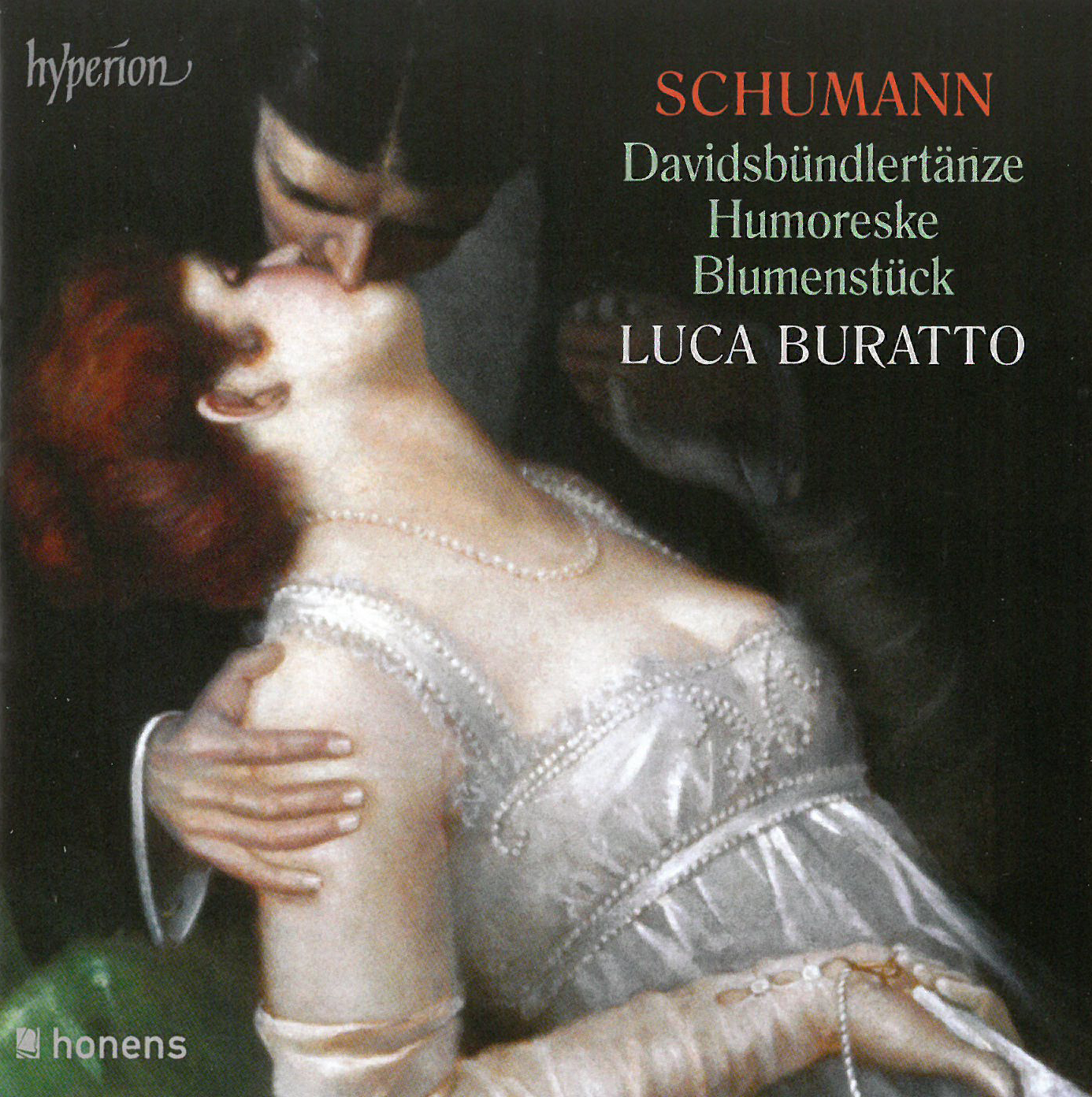
11 Honens BurattoLuca Buratto is the 2015 Honens Prize Laureate. An assured performer, he plays with impeccable technique. His approach to the music of Schumann on this Honens-sponsored disc Schumann – Davidsbündlertänze, Humoreske, Blumenstück (Hyperion / Honens CDA 68186) reveals an uncommon gift for fresh thinking. Buratto has captured Schumann’s Romantic urgings and compellingly channeled them through the keyboard. He has cut loose the classical moorings that many pianists respect and instead allows his interpretations to drift freely into currents where forms become more fluid. It’s here that we feel the deep pull of Brahms, Chopin and Liszt.

Humoreske in B-flat Major Op.20 demonstrates Buratto’s ability to transcend the composer’s signature melancholy that is too often the extent of a performer’s achievement. Buratto moves beyond this by creating an ethos of mysticism rarely experienced in this music. The Davidsbündlertänze Op.6, too, reveal new possibilities for understanding how far Schumann wanted to propel the music of his time from its conservative shelter. Buratto exploits every opportunity to do this by stretching inner tempos and even pulling them apart a little, as if to experiment with left and right hand being out of sync.

None of this happens at the expense of the music because Buratto plays with such conviction that you immediately know he is certain he has revealed Robert Schumann’s true voice. It’s a deep connection that he sustains effortlessly through the entire recording. Hear him live if you can.

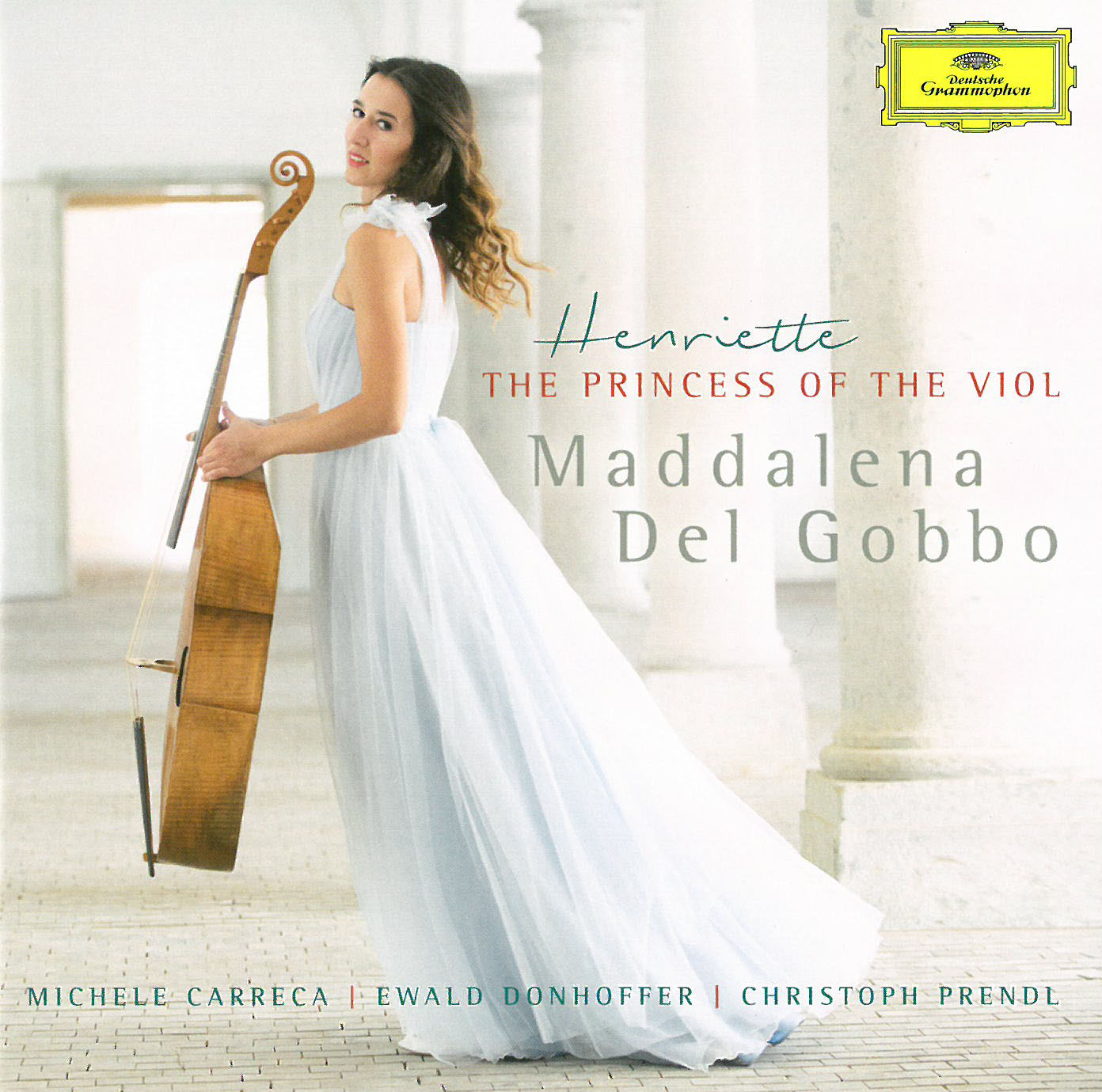
01 Maddelana del GobboHenriette, The Princess of the Viol
Maddalena Del Gobbo; Michele Carreca; Ewald Donhoffer; Christoph Prendl
Deutsche Grammophon 481 4523

All too often reviews published in The WholeNote evaluate works by artists who die tragically young. Princess Anne Henriette de Bourbon was one such. Princess? If she had lived beyond 24, she might have become a queen: she was Louis XV of France’s second daughter.

In this CD, Maddalena Del Gobbo evokes the legendary genius of Henriette’s viola da gamba playing. Del Gobbo – who is quite taken with her subject – includes music by Marin Marais, as might be expected, but also arrangements of country dance music which disprove the idea that the viola da gamba was some highly formal, sombre instrument, along with other music of the time for viola da gamba.

Jean-Baptiste Forqueray became Henriette’s tutor. How fitting that two pieces by him feature on the CD. One is a slightly subdued composition, played compassionately by Del Gobbo. In contrast, the other is more lively and demanding, particularly with the divisions that conclude this piece with such a flourish.

The dance pieces by Marin Marais from Suite in A Minor are indeed rustic and vigorous, even the Allemande, but special mention must be made of Del Gobbo’s performances of Muzettes throughout the CD. She brings out the original meaning of Muzette, namely bagpipes, and it is her expertise that brings home the drone effect of the bagpipe.

Add to this Del Gobbo’s vigorous interpretations of movements by a contemporary of Henriette, Louis de Caix d’Hervelois, and you understand the versatility of both princess and modern performer.

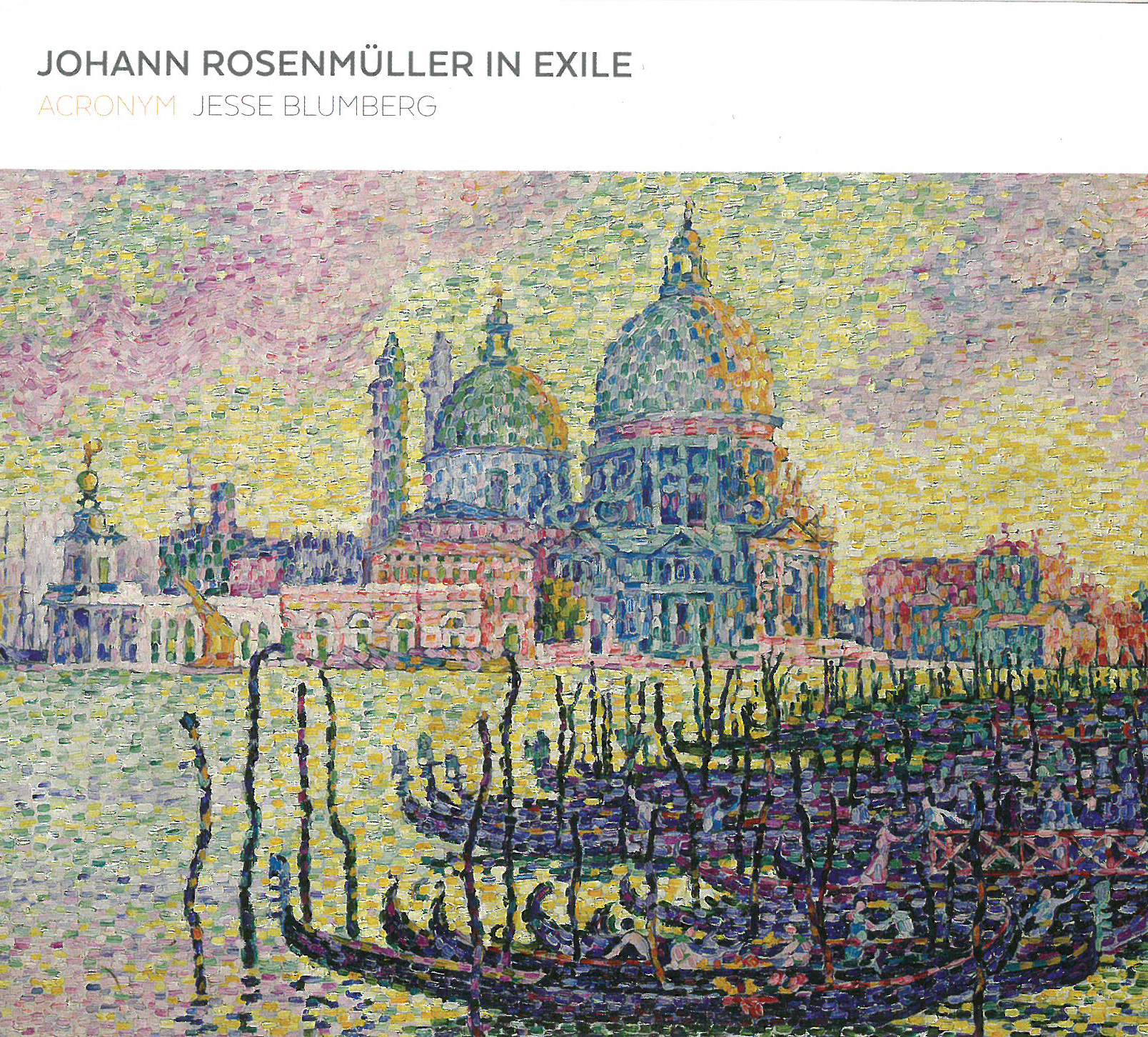
02 RosenmuellerJohann Rosenmüller in Exile
Jesse Blumberg; ACRONYM
Olde Focus Recordings FCR909 (newfocusrecordings.com)

I first heard the music of Johann Rosenmüller in a Tafelmusik concert some years ago. I knew the music of Schütz and Biber, and I was delighted to find that here was a third major 17th-century composer. In the early part of his career he worked in Leipzig and he was apparently assured that he would be the next Thomaskantor, a prestigious post that would later be held by J.S. Bach. Nothing came of this. Instead he became involved in a homosexual scandal and spent time in prison. He escaped and made his way to Venice. That would have been important for his musical evolution as he got to know Italian music, in particular the work of Carissimi. Eventually he was able to return to Germany by becoming the Kapellmeister at the Ducal court at Wolfenbüttel.

This CD contains seven items: four Latin cantatas for solo voice and strings, and three five-part sonatas for strings. The singer is the baritone Jesse Blumberg. The works receive fine performances from singer and instrumentalists alike. An attractive recording of relatively unfamiliar material.

06 NYOCLisboa 2016 – Excerpts from the 2016 TD Tour to Portugal
National Youth Orchestra of Canada; Perry So
Independent NYOC2016CD (nyoc.org)

The National Youth Orchestra of Canada is an idea as much as it is an ensemble, a very grand idea whose premise is to bring together the finest students of orchestral performance from across the country and give them the invaluable experience of hearing themselves and one another perform the magic that is symphonic music. Hogwarts indeed. Full disclosure: I am a former member of the NYOC.

Lisboa celebrates a tour the band made in summer 2016 to Portugal, and it serves as an example embedded in time of what the idea generates on a yearly basis. The players on this disc likely will be or currently are members of the professional musical community and, while concert reviewers consistently sum up their achievements with qualifications like “they make up in enthusiasm what they lack in polish,” reviewing an artifact like this prevents one from falling back on hackneyed faint praise. What the band lacks in terms of professional polish is entirely consistent with more mundane realities like string instruments that might not be acceptable in a truly professional ensemble, and newness to one another, much like any other all-star national team.

The Overture to Tannhauser opens the collection. It is beautifully played, sculpted, committed to. Even if you avoid Wagner, as I do, stay and hear him out in this instance. Imagine how this piece drew these players together. Then prepare to get up and dance as they move on to Prokofiev’s Fifth Symphony Op.100.  If the Scherzo doesn’t knock you on your ass it’s because you weren’t standing. The Adagio movement is the only weak link: there are ensemble lapses towards the end. In the manner of any seasoned orchestral player, I blame the (clearly able) conductor, Perry So. The task of uniting the voices of this group when uniform phrasing is called for is on the conductor’s to-do list, daunting though it may be.

The rest of the double disc presents two brief new pieces: Spacious Euphony, by Christopher Goddard (the NYO/RBC Composer in Residence), and Hope – The Gift of Youth by Chris Meyer (an NYO commission through the Canada Council). The former zigzags in and out of tonality. The latter develops from amorphous clouds of sound to anthem, with a lovely woodwind choir and a stormy tutti ruckus encountered on the journey. Fittingly, both composers are relative tyros with great chops.

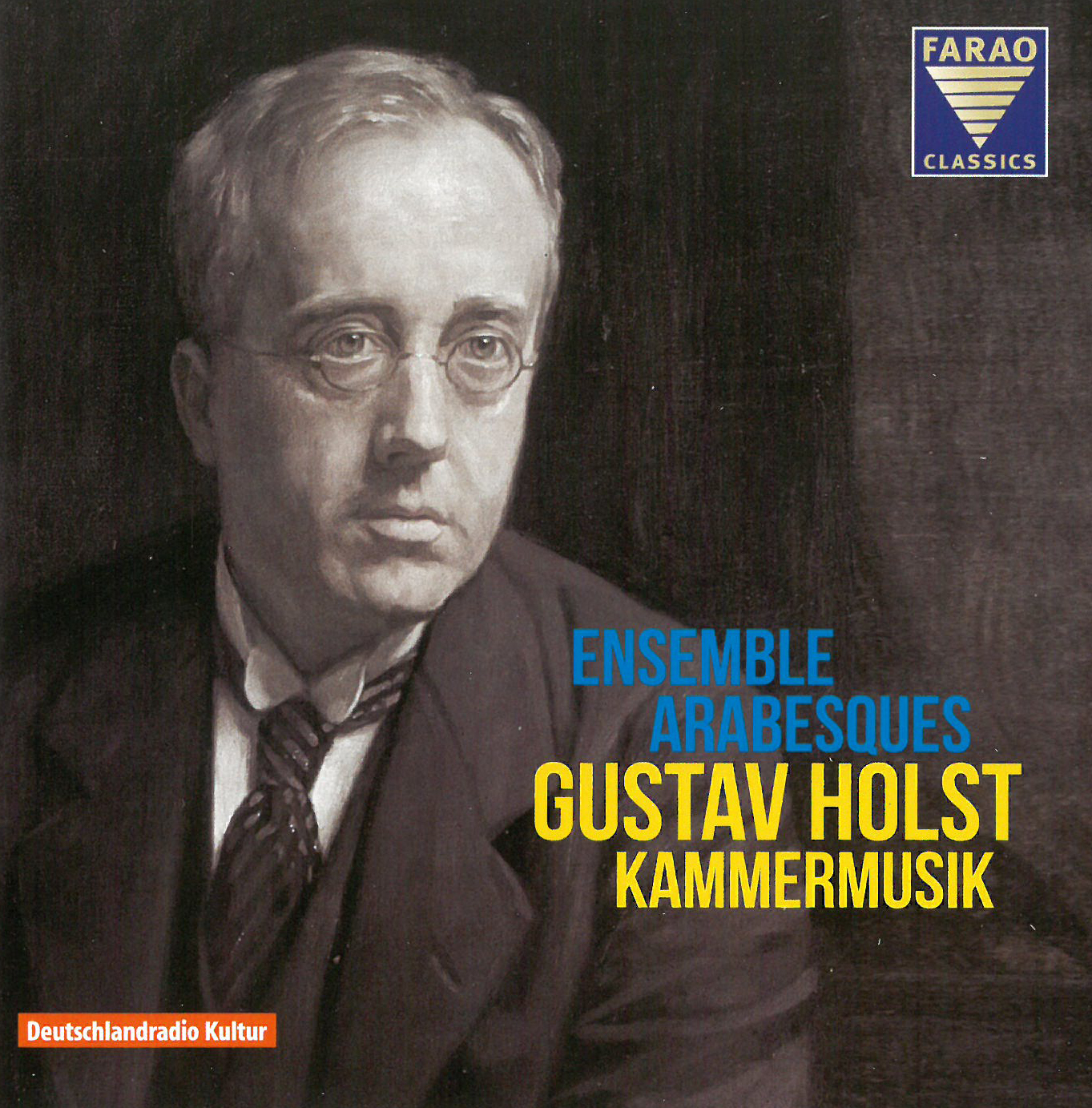
07 Holst ChamberGustav Holst – Kammermusik
Ensemble Arabesques
Farao Records B 108098 (farao-classics.de)

Gustav Holst composed lots of orchestral and vocal music besides The Planets, but hardly any chamber music or solo piano pieces. This CD presents the bulk of Holst’s chamber music, ably performed by Hamburg’s Ensemble Arabesques.

In the Quintet in A Minor, Op.3 for piano, oboe, clarinet, horn and bassoon (1896), the wind players are joined by pianist SooJin Anjou. This student composition boasts a lovely chorale melody for the horn in its first movement, and a striking, solemn, processional Adagio. The Sextet in E Minor for oboe, clarinet, bassoon, violin, viola and cello (1900), only recently discovered in the British Library Archives, here receives its first recording. It comprises a sweetly sentimental Moderato, a graceful Scherzo, a mournful Adagio and a final set of variations in which Holst cleverly mixed and matched the six instruments, while giving each its turn in the spotlight.

Both the Woodwind Quintet Op.14 (1903 but unpublished until 1983) and Three Pieces for oboe and string quartet (1910) reflect Holst’s fondness for Renaissance and Baroque dance forms, coloured by touches of English folksong. The two-movement Terzetto for flute, oboe and viola (1925), here played by flute, oboe and clarinet, is the most modern-sounding of these works, with a melancholy Allegretto and sprightly Un poco vivace finale.

These “vivace” performances of very ingratiating music showcase a seldom-heard but rewarding side of a composer still known mainly for his single “greatest hit.”

Back to top