05 Bruckner BarenboimAnton Bruckner – The Complete Symphonies
Staatskapelle Berlin; Daniel Barenboim
Deutsche Grammophon 479 6985

Review

There is a story about Karajan that once when he got sick and had to cancel a few concerts, the Philharmoniker decided on Daniel Barenboim to substitute. As soon as he heard this, Karajan exclaimed “OMG not HIM!!” and sick no longer, he jumped out of bed and ran back to conduct.

Barenboim’s approach to Bruckner is different from the holier-than-thou century-old Germanic tradition, trademark of many venerable conductors, mostly dead by now. I remember the great Celibidache stopping the orchestra (the BPO) 15 times before reaching the end of the first bar of the Seventh Symphony to get the opening tremolando just right, his tempo so slow, the symphony ended up a half-hour longer than anybody else’s. Now Barenboim, a consummate musician, does not revere anything but the music, making it as enjoyable, interesting, even exciting as possible and his tempi in Bruckner have always been faster, but never rushed. This is true for this new, beautifully recorded set of the nine numbered symphonies, already the third such cycle in his career, but now on his own label Peral Music, under the aegis of Deutsche Grammophon. The orchestra this time is the Berlin Staatskapelle, one of the oldest in the world, once upon a time the Prussian Court orchestra which the maestro, being its director for the last 20 years, had moulded it into perfection. It even gives the famous Berlin Philharmoniker a run for its money.

There is a unified approach, a remarkable consistency, and the orchestral playing is incredibly precise. Most of the players are young, highly skilled, enthusiastic, very devoted to each other and simply revere their conductor. I have watched some of the performances (televised by medici.tv and Mezzo) and his conducting style avoids all histrionics and, being past 70, he budgets his strength and gets maximum effect with very little effort. All performances are solid, high-quality and the symphonies throb with life, infused with rhythmic vitality. One will discover previously unheard details in the tremendously rich orchestral palette and the conductor’s stamp is always felt. The fff outburst in the Largo of the Seventh Symphony has never been more impressive on record and made even me jump out of my seat practically hyperventilating. Incidentally this had been the moment of my own conversion to Bruckner some 40 years ago.

If you want to enjoy Bruckner rather than worship it, this is the set for you.

02 Adam SchoenbergAdam Schoenberg – American Symphony; Finding Rothko; Picture Studies
Kansas City Symphony; Michael Stern
Reference Recordings RR-139 SACD (referencerecordings.com)

Another Schoenberg? Anyone who thinks even one is too many can relax, as Adam Schoenberg (b.1980) bears no relation to Arnold, genealogically or musically. Currently teaching at Occidental College in Los Angeles, he’s a rising star, his tonal, tuneful, colourfully scored music performed by orchestras across the US.

Schoenberg composed Finding Rothko (2006), depictions of four Rothko paintings, while a doctoral student at Juilliard, mentored by John Corigliano. The music successfully mirrors Rothko’s art – atmospheric, meditative and imposing, with shimmering colours that effectively play against each other in unexpected ways.

Schoenberg’s five-movement American Symphony (2011) begins and ends with buoyant optimism, powered by quasi-minimalist ostinatos. Two solemn, slow movements, built on sustained Coplandesque pastoral harmonies, frame the jazzy, syncopated middle movement. Schoenberg says, “I set out to write a modern American symphony that paid homage to our past and looked forward to a brighter future.” Indeed, it all sounds very “American.”

In 2011, the Kansas City Symphony and the city’s Nelson-Atkins Museum commissioned Schoenberg to compose “a 21st-century Pictures at an Exhibition,” based on pieces in the museum’s collection. Picture Studies (2012) depicts paintings by van Gogh, Kandinsky, Miró and Albert Bloch, a Calder sculpture and three photographs. The brilliantly orchestrated music is variously perky, sentimental, vehement and exultant.

Conductor Michael Stern elicits playing with rhythmic brio, precision and wide dynamics in these audience-pleasing works. Whether Schoenberg can create music that digs deeper than “audience-pleasing” still remains to be heard.

03 Amy BrandonScavenger
Amy Brandon
Independent (amybrandon.ca)

The first sounds to greet the listener on Amy Brandon’s debut CD are electronic swirls and squiggles, likely guitar-based and clearly running backwards. Within seconds, however, one is in for a surprise, as the very pure sound of her acoustic, nylon-string guitar emerges. Brandon is a Nova Scotia-based musician whose work here regularly combines contrasting elements: her musical identity is a composite, arising in the gap between the electroacoustic elements and acoustic melodies and improvisations.

On Scavenger, most tracks include these pre-recorded sounds, some of them clearly reworked from her own guitar tapes, others likely using other elements, whether the sound source of the War Games backing tape is thunder, actual combat, a reverb unit or the resonant bass strings of a piano. The results are fascinating, in part because of Brandon’s instrumental approach: it’s a model of classical guitar clarity in the tradition of Segovia, Yepes and Bream, with lyricism and triadic harmony that can suggest idiomatic composers like Villa-Lobos and Rodrigo.

Along the way, Brandon invites others into her musical world. VL is a duet with the distinguished Montreal jazz guitarist Mike Rud, his glassy sound contrasting with Brandon’s warmth between otherwise similar approaches; in contrast, her duet with Ottawa-based acoustic guitarist Roddy Ellias on Ecoando is a clear mirroring of sound. This is a fascinating debut, and one looks forward to Brandon’s further explorations.

01 Andre lachanceThe Orange Challenge
Quatuor André Lachance
Independent AL201601
(andrelachance.com)

The Quebec City-born, Vancouver-based musical journeyman André Lachance may be better known as one of Canada’s highly prized younger bassists, but he is reincarnated as a guitarist on The Orange Challenge, which also features his dreamy and distinctive writing. The music here is fascinatingly complex. At its dizzying best, it conjures imagery of the guitar equivalent of dancing figures in ice skating, dispatched consummately by the abstract, dramatic and virtuosic ramblings of Lachance. Rush-hour momentum, caffeine highs, ennui, angst and closing-time loneliness are driven powerfully by the guitarist together with swinging, rock-solid contributions from keyboardist Brad Turner, drumming colourist Joe Poole and the sonic lightning of Chris Gestrin’s Moog bass.

It is difficult to single out any chart for special mention, but for sentimental reasons Claude shall receive exactly that. For one, its high and lonesome beauty perfectly describes its inner melancholia. Secondly, it is the perfect dedication to the legendary Canadian drummer Claude Ranger. Understandably, the spotlight is on Poole, who crowns the song with sonic wonders while Lachance caps things with the heart-stopping sadness of his playing. The rest of the music, though, is not as heavy-laden as Claude. Noteworthy are the lovely, swinging miniatures: Life Cycle and The Orange Challenge – the latter informed by an invigorating workout from Turner as well as another fine solo by Poole. The rich and sweet sound and impeccable virtuosity in a spacy and warm acoustic all combine to make this a rather memorable disc.

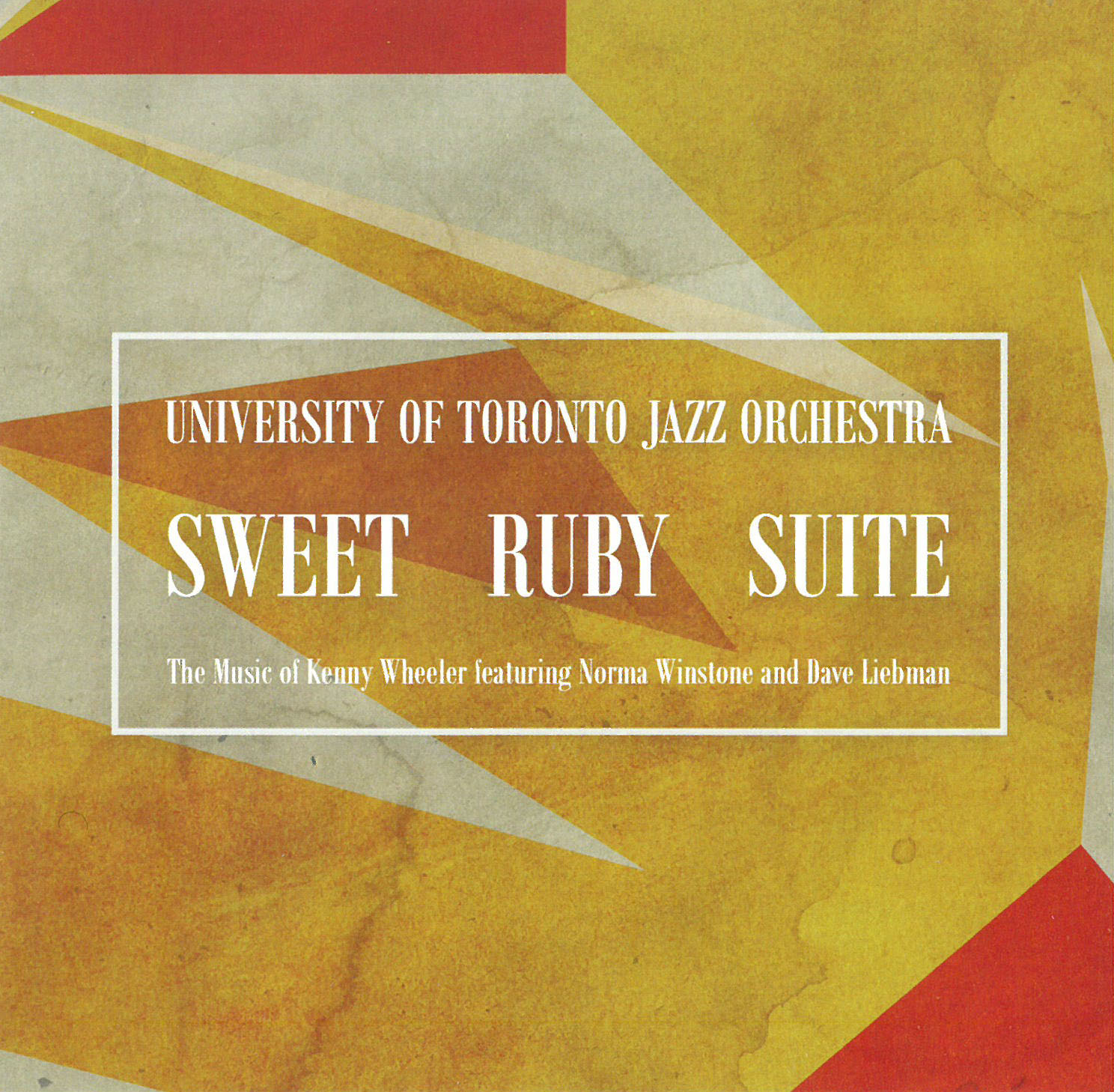
03 UofT Sweet Ruby SuiteSweet Ruby Suite – The Music of Kenny Wheeler
University of Toronto Jazz Orchestra
U of T Jazz (uoftjazz.ca)

The University of Toronto Jazz Orchestra is an 18-member student unit directed by Gordon Foote. On Sweet Ruby Suite, they pay tribute to the late Kenny Wheeler, Canada’s most esteemed jazz composer. The orchestra is joined by singer Norma Winstone, one of Wheeler’s closest collaborators and the distinguished American saxophonist Dave Liebman. The program also pays tribute to one of Wheeler’s finest Canadian chapters, his work as soloist, composer and orchestrator with the Maritime Jazz Orchestra: the group, which featured U of T faculty member Mike Murley, recorded two of the pieces here, the half-hour title suite and the brief W.W. in 2002, and another, Winter Sweet, in 1996.

The U of T orchestra brings admirable precision and taste to the performance, with Foote drawing lustrous brass textures from the ensemble in keeping with Wheeler’s Hindemith-inspired harmonies. Two of the trumpeters are featured as soloists on flugelhorn, Wheeler’s own frequent instrument of choice: Brad Eaton has a lively give-and-take improvisation with Liebman on the sprightly W.W., while Marie Goudy touches on Wheeler’s special lyricism, at once slightly muffled and soaring, on Winter Sweet.

Canter No.1, which Wheeler performed with both small groups and large, is effectively arranged here by Terry Promane, creating a delicate backdrop for Winstone’s brilliant wordless improvising and Liebman’s rapid, peppering soprano saxophone. The entire program is a worthy homage to Wheeler’s contributions to jazz composition and education.

04 trioTrio
Arthur Bull; John Heward; Adam Linson
Ambiance magnetiques AM 229 CD (actuellecd.com)

The title Trio celebrates the special unity of these three improvisers. Nova Scotia-based guitarist Arthur Bull has worked in contexts from folk to free jazz, including the avant-folk Surruralists with Éric Normand. Montrealer John Heward, now 82, is best known as a painter of minimalist abstractions: his drumming, which has led to partnerships with saxophonists Glenn Spearman and Joe McPhee, possesses the same qualities as his paintings – a series of subtle and definitive gestures. Los Angeles-born bassist Adam Linson, about half Heward’s age (Bull is in the middle), has wide experience in European free improvisation alongside esteemed musicians like Evan Parker and Axel Dörner.

Recorded in a stone studio in Mahone Bay, Nova Scotia, this music has a quality of elemental life. Bull brings something of country blues to it, a vocabulary of bending tones and percussive attacks rather than specific harmonies or rhythms. That helps root the music, contributing to a central stream, an emotional and dynamic continuum, to which Heward and Linson also subscribe. It’s improvised music in which the three are so in tune that it never seems responsive, resembling instead the inevitability, consistency and variegation of water, stone, earth or air.

Given that, there’s still development from piece to piece. There’s a general build in intensity and density as the program progresses: lines become thicker, pitches higher, attacks more percussive; the degree of abstraction grows as it becomes more animated, the notion of a lead voice becomes less appropriate. The absence of ego along with the heightened sense of communion and consistency make this an ideal introduction to improvised music, a kind of folk music of the future.

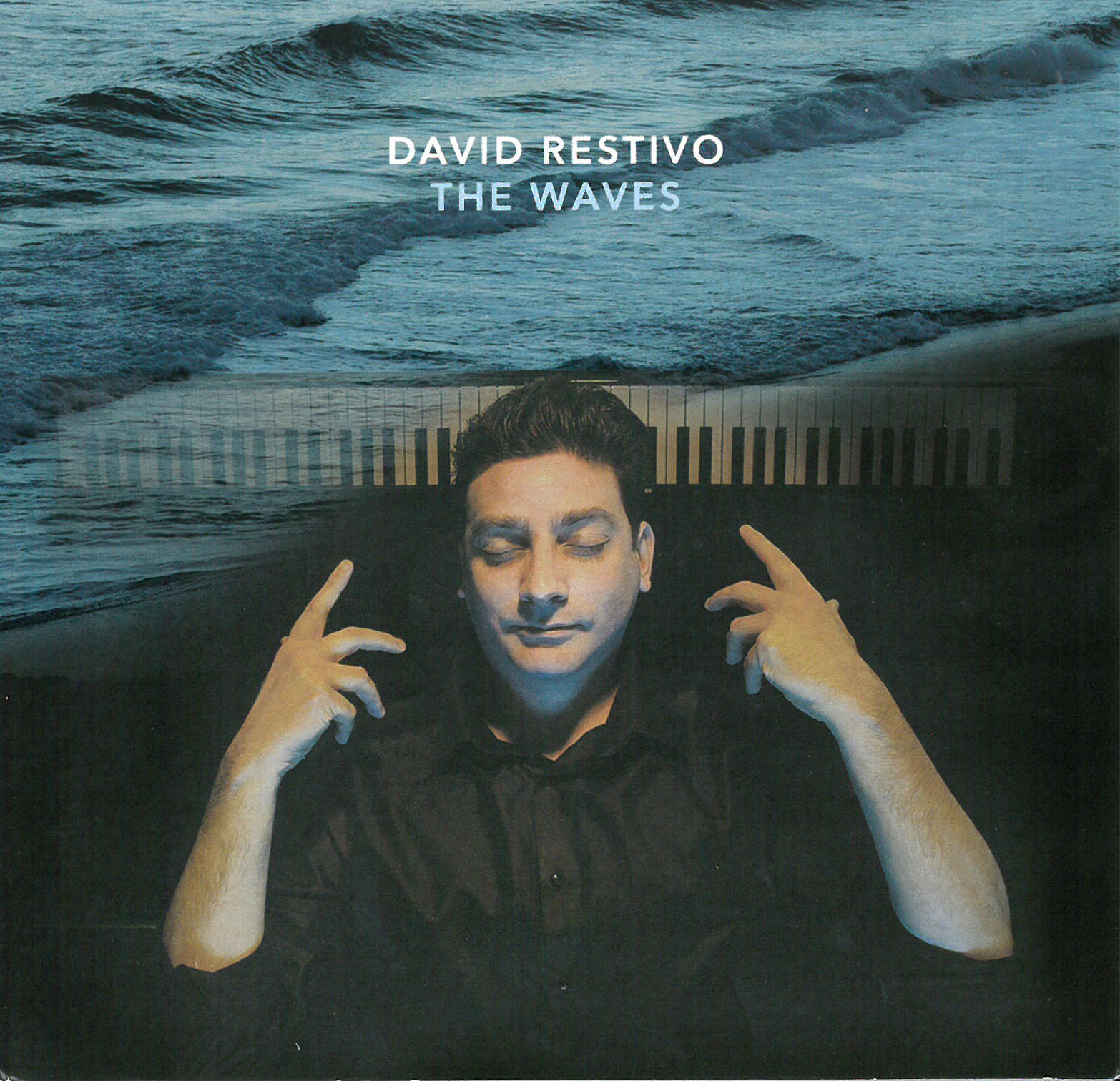
06 David RestivoThe Waves
David Restivo
Modica Music MM0015
(modicamusic.com)

David Restivo, one of the country’s most forward-thinking pianists, has employed a time-honoured format for his latest CD, The Waves. The music he has composed for the classic lineup of trumpet, tenor saxophone, piano, bass and drums is modern, challenging and beautiful. The album’s eight tracks are arranged like a suite and reward being listened to in one uninterrupted session.

The opening compositions provide a series of quick segues into the main body of music. The aptly titled Piano Intro showcases Restivo’s harmonically lush and adventurous playing in a solo context and perfectly sets up the band’s entrance on the short piece The Bull and the Roses. Honeydew Harbour settles into a straight eighth, odd-time groove and features Restivo on the Fender Rhodes piano. Trumpet player Alexander Brown builds from a relaxed approach into beautifully sculpted lines and Restivo solos with great energy and fluidity. The graceful ease of the ensemble’s performance belies the complexity of the music.

 The title track features Brown and tenor saxophonist Kelly Jefferson in a counterpoint line with Restivo and bassist Luke Sellick that gives way to a deep four-four swing courtesy of drummer Maxwell Roach. Restivo tastefully crafts lines that move in and out of double time. Jefferson starts sparsely, exploring the lower register of his horn and incorporating a restrained yet intense bluesiness. Kurt and Mark, a tribute to guitarist Kurt Rosenwinkel and saxophonist Mark Turner, captures the spirit of the two musical comrades from the point of view of a very like-minded peer.

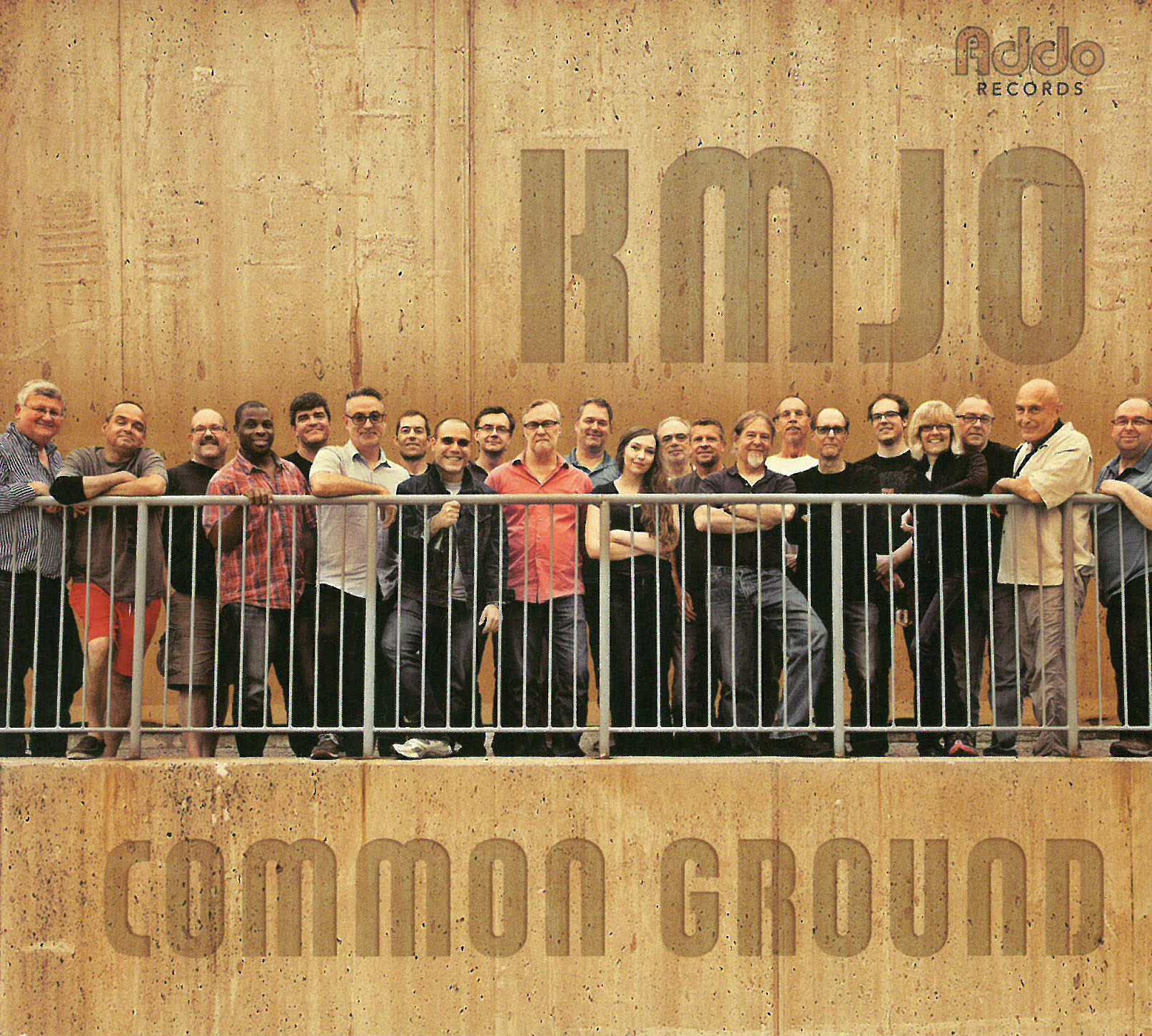
07 KMJO Common GroundCommon Ground
KMJO (Kirk MacDonald Jazz Orchestra)
Addo Records AJR032 (addorecords.com)

Common Ground, the latest offering from saxophonist/composer Kirk MacDonald, is a major work of uncommon scope and depth. The double-CD set is also somewhat of a retrospective of material drawn from his impressive body of work, set this time in a big-band format by longtime collaborator, arranger and trumpeter Joe Sullivan. Sullivan, who has often worked with MacDonald in both large and small groups, displays an uncanny ability to interpret the composer’s tunes on a grand scale and the results here are outstanding. MacDonald has been generous in his allotment of solo space and the casting on this album is extraordinary, featuring a stellar lineup of Canada’s top jazz musicians.

PJ Perry and Pat LaBarbera are an inspired pairing on the title track. Perry’s beautiful alto tone and bop-ish sensibility sound perfectly at home in the contemporary harmonic context of MacDonald’s music. LaBarbera brings his huge tenor sound to a duet with bassist Neil Swainson for the opening of his solo. It’s a nice dynamic shift and the two master musicians take full advantage of the space it affords before the rest of the rhythm section kicks in and LaBarbera lets loose with impassioned, angular lines.

There are too many similarly brilliant moments to mention here. MacDonald’s rich tenor tone and deep linear concept can be heard several times throughout the album perhaps most notably on the final track Vanda Justina where he shares solo responsibilities with his daughter, the excellent clarinetist, Virginia Frigault-MacDonald.

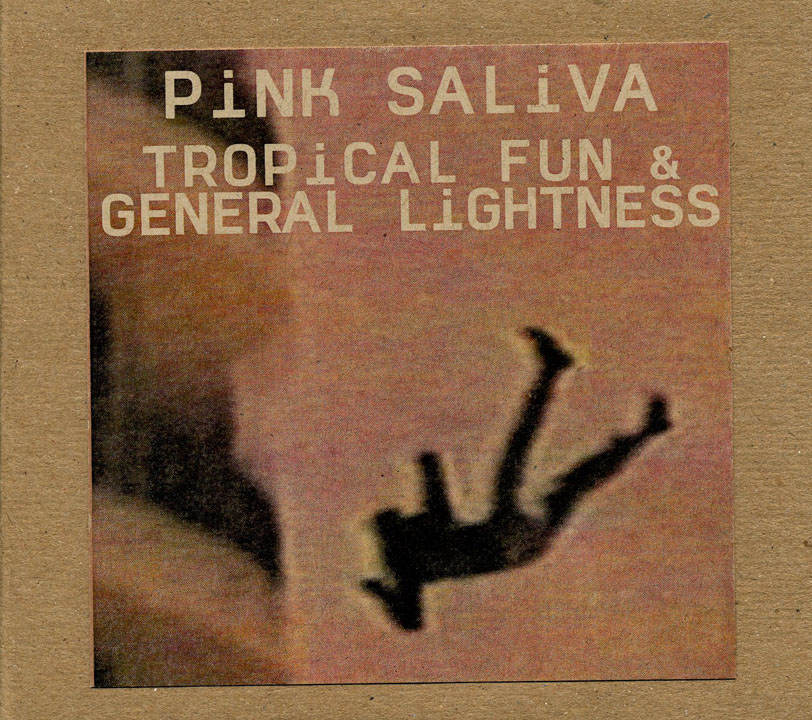
08 Pink SalivaTropical Fun & General Lightness
Pink Saliva
Sono Sordo S02 (actuellecd.com)

Don’t be fooled by the tile of this album by Montreal band Pink Saliva. The two-CD set is anything but light and fun. That’s because the 24 tracks consist of moderato-paced oscillating drones, percussion pivots and brass squeals that in a (Morton) Feldman-like fashion unfold slowly while squirming forward. On the other hand, band members Alexandre St.-Onge who plays electric bass and electronics, Michel F. Côté, whose skill encompasses percussion, steel guitar and all manner of electronics, and Ellwood Epps, who varies his trumpet sound with a series of mutes, are canny enough to limit their compositions to between two and four minutes.

Overall, the tunes’ appeal is in how precisely like light bulbs in a socket, the musicians’ ideas adhere and subsequently illuminate. For instance a track such as Mario & Salvio is measured out in double bass thumps, making rhythmic sense of brass squeaks and hamster-wheel-like cranks, while (J. von P.) transforms from doom-laden drumming, as it’s opened up with molecule-sized brass bites to reach a theme of satisfying nonchalance. Like its subject matter, Nixon à la télévision shows that the band can be down and dirty in its exposition but by its conclusion use focused string pulses and relaxed drum pops to direct the narrative to soar sympathetically upwards.

Tropical Fun & General Lightness easily proves that the trio members are experts in creating the musical equivalent of Instagram photos or pointed tweets. But without appearing to be too old-fashioned, longer tracks with more extensive solos would demonstrate how well Pink Saliva stacks up against the work of earlier, innovative improvisers.

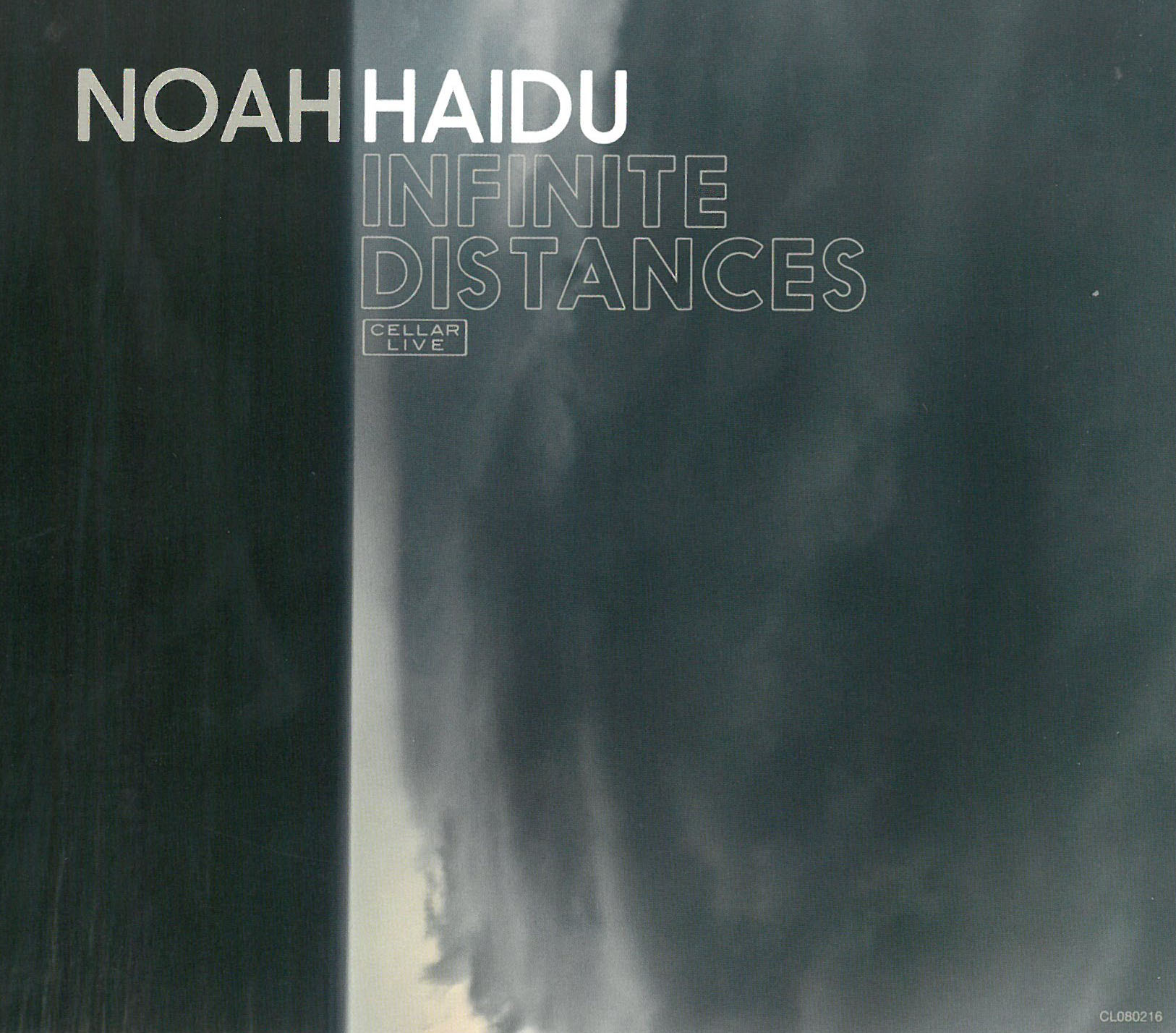
Infinite Distances
Noah Haidu
Cellar Live CL080216 (cellarlive.com)

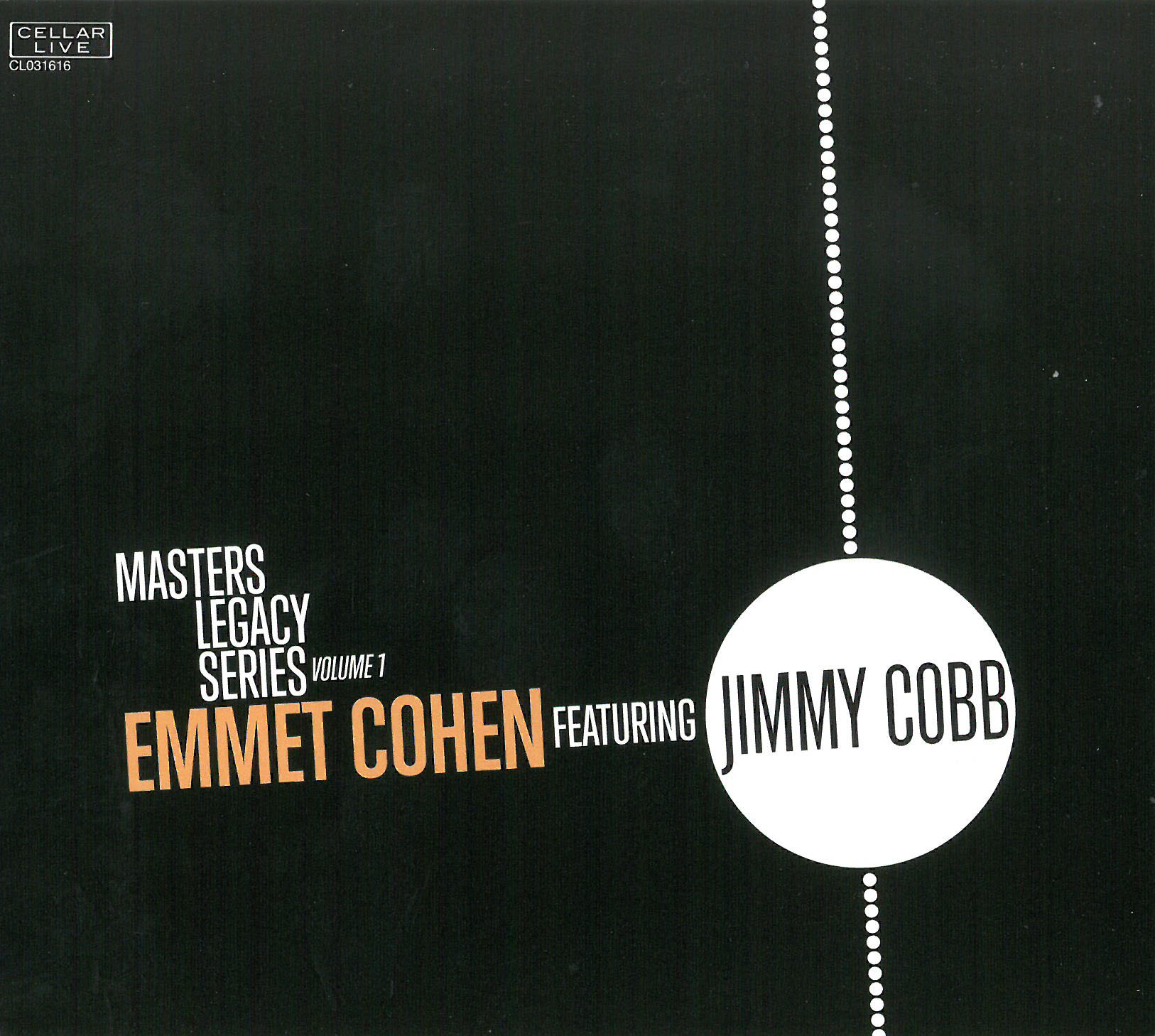
Masters Legacy Series Vol.1 – Emmet Cohen
Emmet Cohen featuring Jimmy Cobb
Cellar Live CL03161

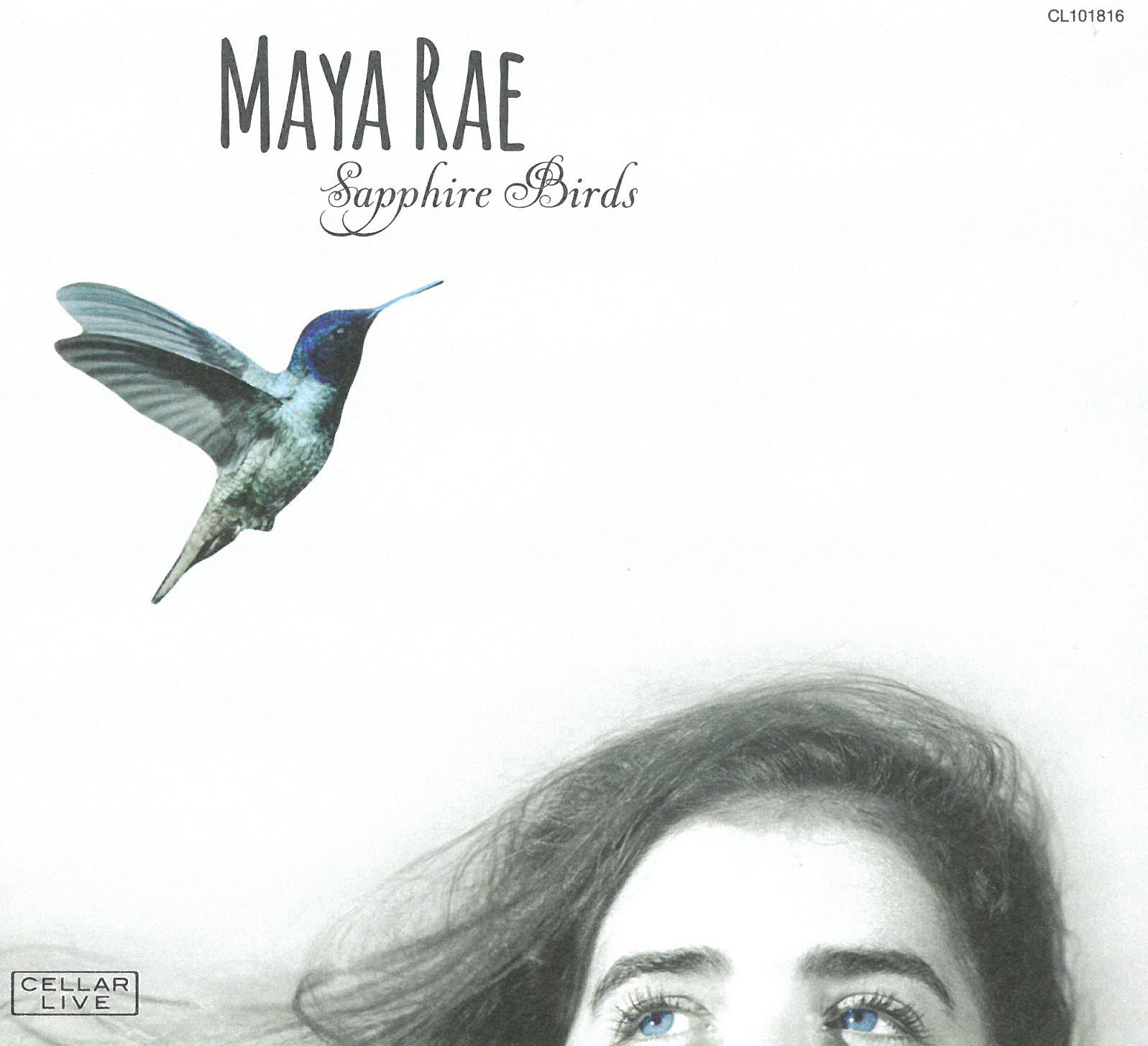
Sapphire Birds
Maya Rae
Cellar Live CL10181

The Cellar, Vancouver’s iconic jazz club, may have long-since closed and the hive of activity relocated to Coastal Jazz, but impresario Cory Weeds – the common denominator in it all – has retained executive producer privileges at Cellar Live. Virtually every month something resembling a gleaming gem (or three) pops up on the horizon. Here, for instance, are three such nuggets of plenty – two from American artists and one by a Canadian; or put another way, two featuring gifted pianists – Noah Haidu and Emmet Cohen – and one startling young songbird: Maya Rae. As is expected not a ray of daylight separates talent here. In the case of the pianists, styles may be disparate, but intellect and authentic pianism is of one piece. In Rae one is presented with the beckoning voice of a young woman that stands out in solitary splendour from among a crowded field.

10a Cellar Noah HaiduNoah Haidu’s jazz abstraction is, not for nothing, called Infinite Distances and is presented in the form of a ten-piece suite of the same name. The title is borrowed from the German poet, Rainer Maria Rilke, who suggested: “Among the closest people there remain infinite distances.” In keeping with this inspired Rilke quotation all of the songs included here reflect this profoundly meditative state of being for Haidu, who has also been touched, it would seem, by the mortal nature of humanity. Each of the miniatures in the suite is a beautiful heart-offering, poetically crafted and ornamented by the gifted pianist with an all-star ensemble featuring saxophonist Jon Irabagon, trumpeter Jeremy Pelt and bassist Peter Brendler.

10b Cellar Emmett CohenPianist Emmet Cohen draws on the gifts of the virtuoso drumming and all-round erudite musicianship of Jimmy Cobb to bring his trio recording to fruition with the ubiquitous and supremely talented bassist Yasushi Nakamura. The album includes two quartet features with the vibrato-rich voice of alto saxophonist, Haitian-born Godwin Louis as musical doppelgänger. Cohen’s playing is spry and his right-hand agility is wonderfully complemented by a genuinely expressive left hand punching out chords that recall the many-splendoured stride masters of a bygone era that still beg emulation. His breathtaking introduction to When I Fall in Love – easily the high point of the performance – beckons an ineffably delicate response from the legendary Jimmy Cobb on cymbals. A memorable performance from end to end.

10c Cellar Maya RaeMaya Rae’s disc must surely be a front-runner for many accolades to come. The Vancouver singer is an extraordinarily prodigious talent who is still barely 14 years old and who, even more incredibly, wrote the title track of Sapphire Birds when she was in fourth grade. It is impossible to overstate the genius of Rae who also displays maturity wildly beyond her years in So Caught Up. Showcasing those wondrous “vocalastic” skills, Rae turns up the heat in a fiery version of I Got Rhythm and then knocks it right out of the park with Summertime. There is ample evidence here that the world is Rae’s to conquer. What a coup for Cellar Live to have her on board.

01 Mativetsky RiversRivers
Shawn Mativetsky
Samskara SAM-3 (shawnmativetsky.com)

In his Indiegogo fundraising campaign video, Montreal tabla player Shawn Mativetsky quips that his album Rivers would be the “first album of solo tabla music to be recorded by a Quebecer!”

Bracketted by footage of what appears to be the St. Lawrence River, Mativetsky continued: “This album would be the way to pay tribute to my guru Pandit Sharda Sahai-ji [of the Benares/Varanasi tabla lineage] who truly desired for his family’s tabla tradition to spread around the world, to be enjoyed by all.”

For well over a decade Mativetsky has been “living fully immersed in the world of tabla and Indian classical music,” but it was only last year he finally felt the time had come to release his first traditional solo tabla album.

Rivers is an apt poetic-geographic metaphor for the project. It refers to both Mativetsky’s home St. Lawrence as well as to the mighty Ganges in his adopted Varanasi, India. The cover photographically mashes up a bare snowbound shore with the other shore featuring the ghats of Varanasi, but the two long tracks are truly a one-way “rhythmic journey to Varanasi.”

Mativetsky’s tabla solos are idiomatically accompanied on the bowed dilruba by the veteran Toronto bassist and long-time Hindustani music performer George Koller. They are set in the 16-beat teental, the principal tala (rhythmic cycle) of North Indian classical music.

Koller accompanies the tabla solos with a series of lehras, which are repeated short melodies, providing an aural outline of the tala. Enriching the listening experience, they have wisely chosen lehras in five different ragas, each evoking a distinctive modal and emotional flavour for each tabla section instead of choosing standard practice: a single melody throughout.

The Madhya Laya (medium tempo) track presents fixed tabla compositions, while the Vilambit Laya (slow tempo) track explores the theme-and-variation format with emphasis on improvisation. Mativetsky’s tabla solos in Rivers eloquently reflect his evident dedication to the dynamic, received tradition of Benares style of tabla playing, his own individual spontaneous creativity, as well as his passion for this rich form of music-making.

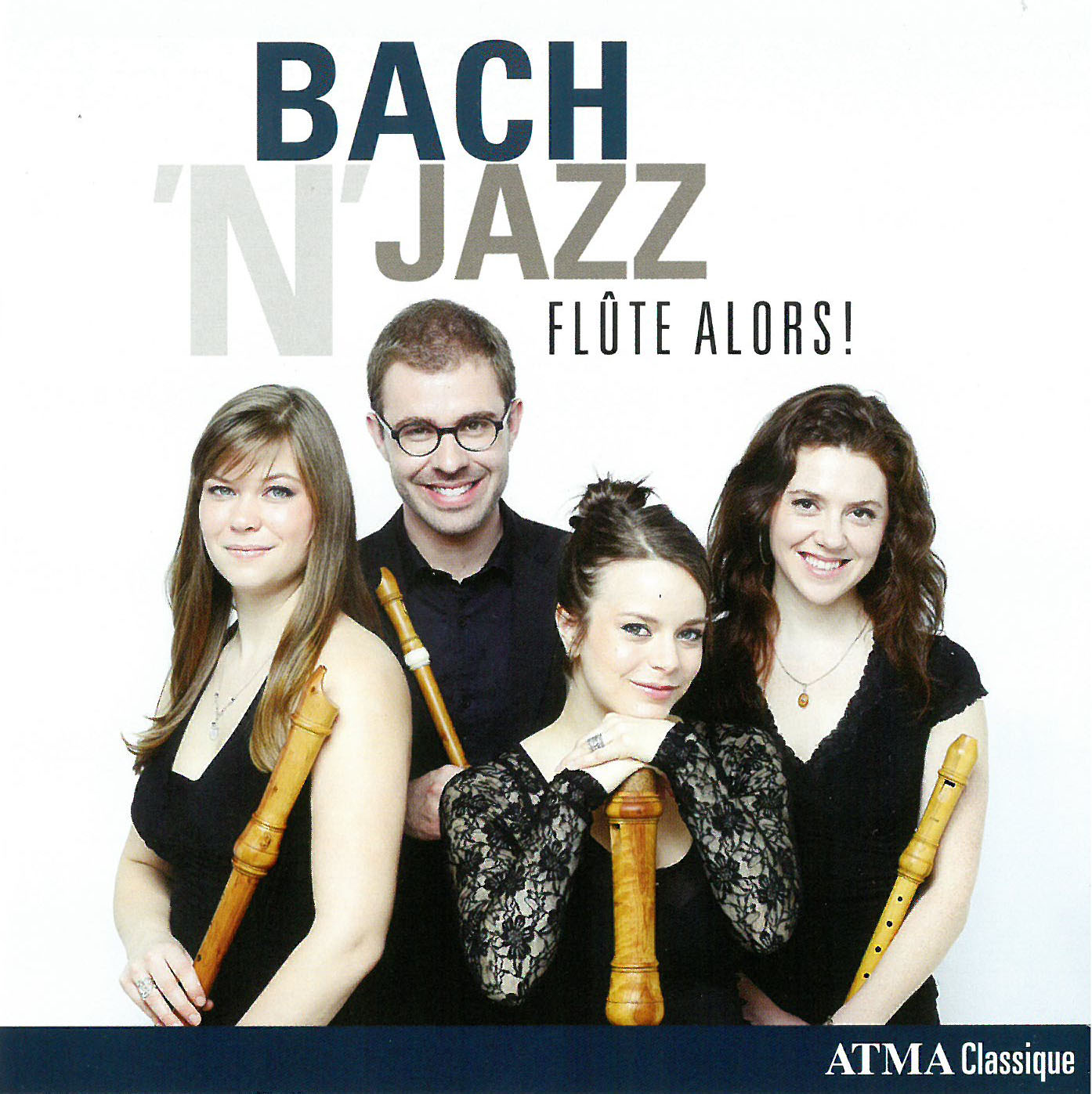
03 Bach n JazzBach ’n’ Jazz
Flûte Alors!
ATMA ACD2 2745 (atmaclassique.com)

Review

Montreal-based recorder quartet Flûte Alors! mixes Baroque with a splash of jazz in this satisfying release. The four quartet members – Vincent Lauzer, Marie-Laurence Primeau, Alexa Raine-Wright and Caroline Tremblay – are each accomplished musicians. Together, these self-described new-generation recorder players perform with glorious tone, technique and tight ensemble etiquette.

It is not surprising that J.S. Bach’s organ music translates well when arranged for recorder. Both instruments create sound by air/wind movement, and Bach’s strong contrapuntal lines flow on the recorder. Of the six arrangements, most satisfying is group member/arranger Raine-Wright’s take on Concerto in D Minor BWV 596. Her focus on Bach’s flowing lines and contrasting articulations add colour and clearly emulate the organ sound. Of note is the attention-grabbing high-pitch opening note of her arrangement of the Toccata and Fugue in D Minor BMV 565.

Why jazz? Because Flûte Alors! had a café gig and decided to mix Bach with jazz. Their jazz tracks may not be as astounding as their Bach, but this musical experiment is an evolving work in progress. Fly Me to the Moon opens with contrapuntal Baroque flavours leading to a jazzy pleasant swing-feel rendition of this popular standard. Dick Kooman’s The Jogger is a clever mix of classical and jazz with pavement-pounding detached rhythmic patterns driving the piece home.

Congratulations to Flûte Alors! for taking programming risks. Their Bach is more memorable, yet their detours to jazz land are pleasant listening, and crucial to the group’s artistic development.

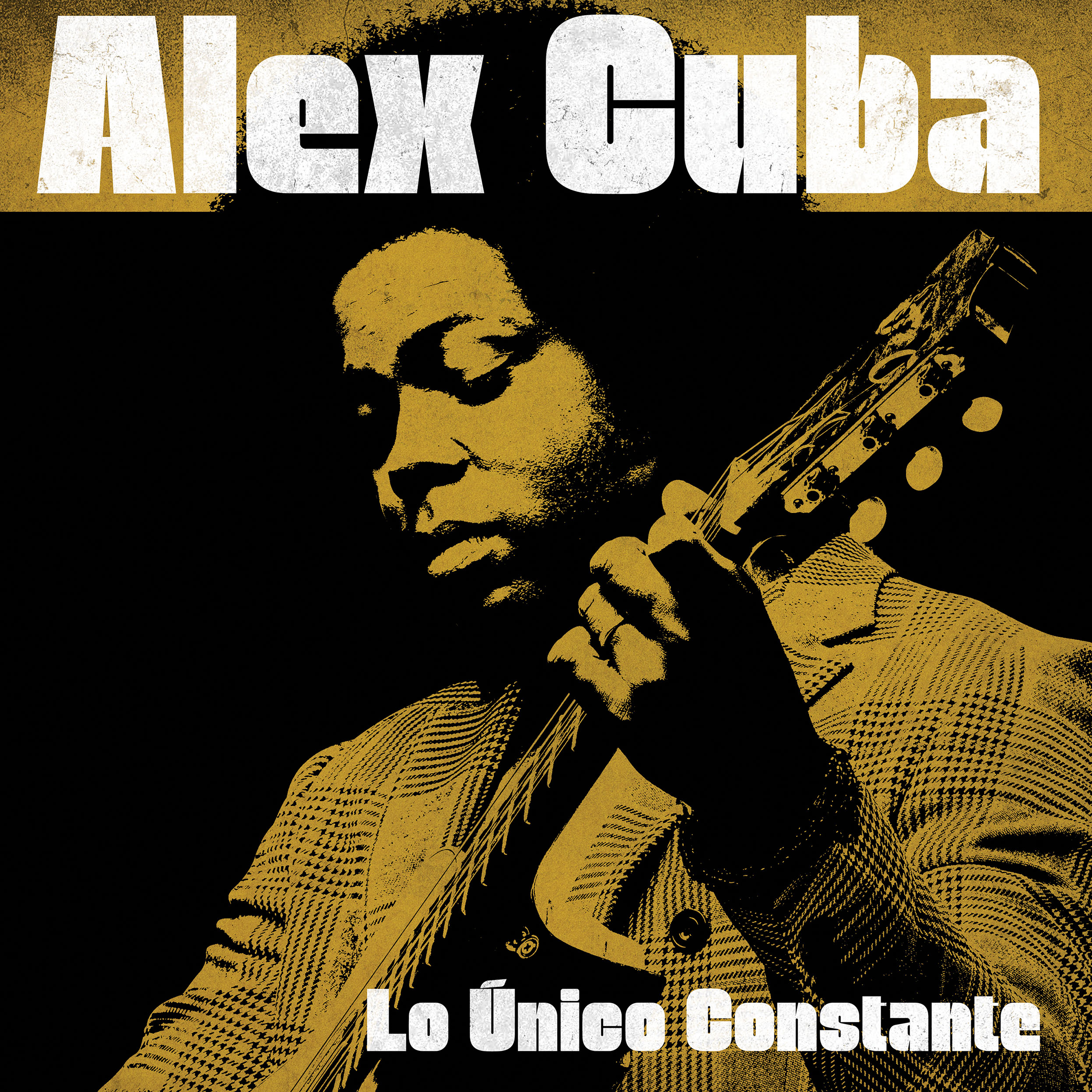
04 Alex CubaLo Único Constante
Alex Cuba
(healer.alexcuba.com)

Canadian-Cuban multi-instrumentalist, vocalist, composer and producer Alex Cuba (né Alexis Puente) is wearing all of his many hats on his latest superb release, Lo Único Constante (Constantly Unique). The recording is dedicated to the seminal musical artists of Cuba’s “Filin Movement” (including José Antonio Méndez, César Portillo de la Luz and Marta Valdés) who have been a profound influence on Cuba and the development of his own unique style, which embraces not only Afro-Cuban motifs, but also funk, jazz and pop. Cuba, who performs here on acoustic and electric guitars, requinto, Hammond B3, acoustic bass, drums, cajon and vocals, has collaborated with more than a dozen fine musicians to bring this dynamic project to fruition – a project that is focused on the blessed concepts of hope, peace, unity, love and the power of positive change.

The CD opens with the lovely En Mi Guitarra – in the words of Cuba, “a voice found its way into my guitar…giving me power to create beautiful melodies, while controlling my choice of notes and silences.” Sumptuous string lines move effortlessly through the composition – as does Cuba’s equally sumptuous voice. Other highlights include the stirring, syncopated Yo Sé Quién Soy (I Know Who I Am) and the moving Ahora (Now), rendered in pure guitar, voice, strings and minimal percussion. This exceptional recording closes with the compassionate Lagrimas Del Que Llora, which features Josemi Carmona’s stirring flamenco guitar.

It’s not necessary to understand Spanish to resonate with the deep emotional content here, as all meaning is conveyed in the universal language of music, and in the tradition of some of the finest musician-composers that Cuba has every produced – of which Alex Cuba is most definitely one.

Classic jazz, sometimes called Dixieland or trad jazz, can be a path into the music. However since the 100th birthday of recorded jazz passed last month, those who stick to recreating jazz standards of earlier eras are in the position of early music devotées who refuse to consider anything not played on period instruments. Ironically enough, some well-known Free players started out as Dixielanders, including saxophonist Steve Lacy and Toronto artist-pianist Michael Snow, but they soon switched to more challenging fare. Recently a new curiosity has emerged though. As a postmodern paradox some advanced improvisers are mixing old-timey classics with free-form sounds with unique results.

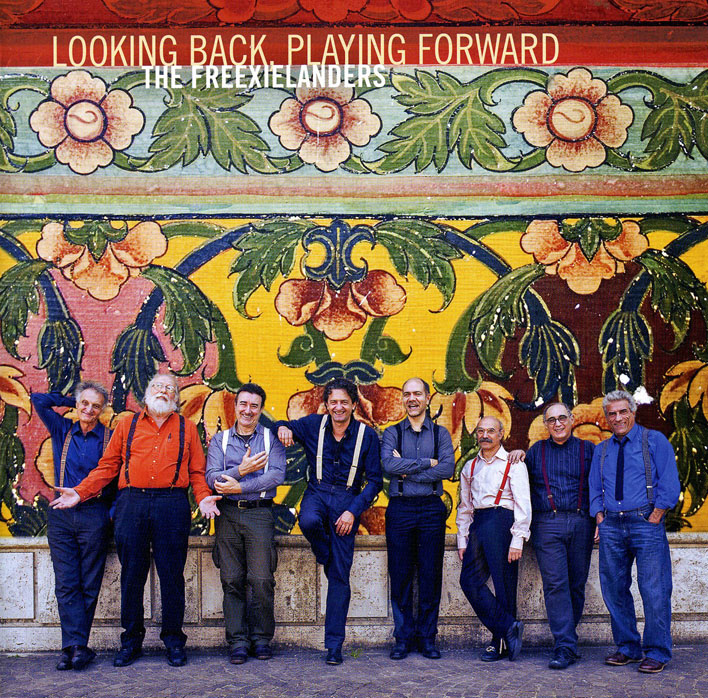
01 Looking BackTake for instance the Italian octet The Freexielanders. On Looking Back, Playing Forward (Rudi Records RRJ1032 rudirecords.com) the band brings the same rollicking, texture-stretching freedom to contemporary originals as they do to two-beat tunes that were even considered warhorses in the early 1950s. Yet starting with the first track which blends the hoary St. James Infirmary with Gotta Get to St. Joe, the foot-tapping performance is done with such finesse that it’s obvious that Alberto Popolla’s sparkling clarinet blowing and Giancarlo Schiaffini’s gutbucket trombone slurs would impress during this pseudo-march exposition whether played in 1917 or 2017. This same sort of transubstantiation is applied to standards like Yardbird Shuffle, borne on trumpeter Aurelio Tontini’s Gabriel-like high chortles and slap bass from Gianfranco Tedeschi; or Black Maria that evolves into a hearty swing-shuffle dance, following a jagged split tone intro from the five horns plus vibraphone-clanking extensions from Francesco Lo Cascio that could have been part of a 1965 free-jazz date. Like actors who are as convincing in a Shakespearean production as in an action flick, the eight perform reverse alchemy on modern tunes. Sabor de habanera, a Schiaffini composition, moves from tango to tea dance to something more within the contrapuntal challenge between the trombonist and clarinetist and ends with a Count Basie-like repeated riff. Meanwhile Voci del Deserto, treated as a cousin to Hoagy Carmichael’s Hong Kong Blues, features both free-form reed wiggles from Popolla and sizzling Gene Krupa-styled pumps from drummer Nicola Raffone. Relentless polyphony that characterizes the recasting of Jelly Roll Morton’s Cannonball Blues relates both to notated orchestrations with a Native Indian-like lilt that pulls it one way plus slap bass and so-called Jungle effects trumpeting pulling it in another. More distinctively Tontini’s sputtering tongue stops and Schiaffini’s well-modulated slides not only made a perfect topping for the stacked reed trio vamps on Come Sunday but by leaves space for altissimo clarinet puffs. The piece is deconstructed to the extent that the performances – like most of the CD – become timeless.

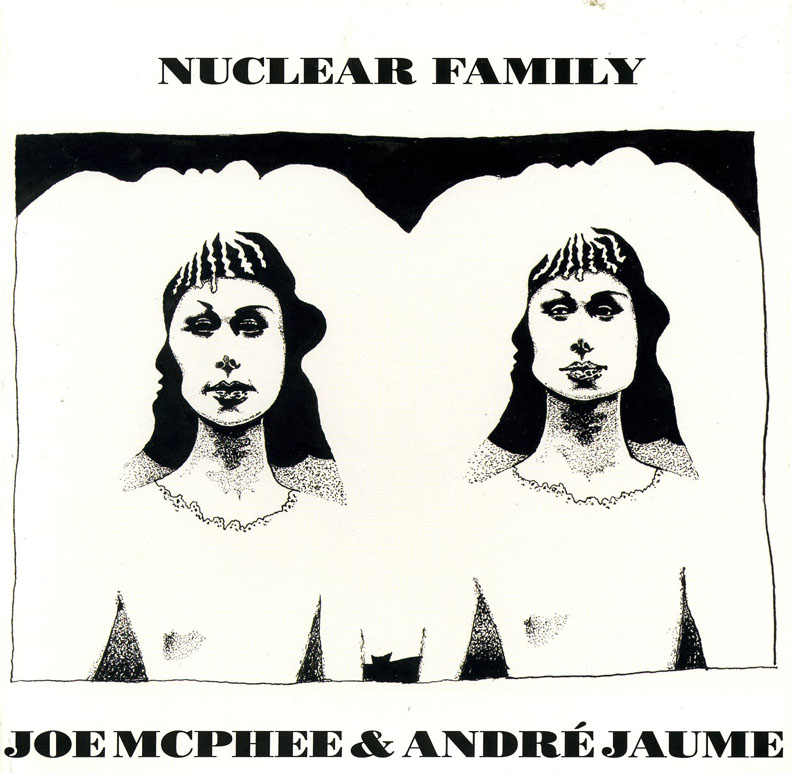
02 Nuclear FamilyTimeless too is a 1979 Paris duo between American cornetist/saxophonist Joe McPhee and French saxophonist/clarinetist André Jaume on Nuclear Family (Corbett vs Dempsey CD031 corbettvsdempsey.com). At a time when so-called young lions claimed ownership of all of jazz’s pre-1960s vocabulary and ignoring modern currents, these players presented their own originals alongside classics from the Duke Ellington band, Monk, Coleman and Charles Mingus. With a layer-cake-like recipe of dense and voltaic alto saxophone licks atop guttural bass clarinet slurps, the narrative of Ellington’s Come Sunday is more emotional yet grounded than the Freexielanders’ version. This combination of jump-through-hoops modernism coupled with heart-on-sleeve sentiments conveyed by Jaume’s tenor saxophone is augured on the preceding Chelsea Bridge and echoed on Nuclear, the free improvisation that follows. With variable snorts and spits nearly electric in output, the half-atonal, half-accessible theme is transformed when the pocket cornet’s sprightly grace notes add a whiff of Come Sunday to the exposition, completed by staccato growls and slurred snarls from reeds and brass. This tightrope-balancing act between affiliation and avant-garde is expressed throughout, whether the two play off one another’s advances with punchy note nips during Pithecanthropus Erectus or make jittery Blue Monk even more antsy in execution, as Jaume’s outer-space-like bass clarinet rumbling and McPhee’s tongue slaps and bites beak down the theme into atoms before reconstructing it. Echoes of early jazz even work their way into Rue St. Jaume. Here New Orleans-style tongued exaggerations from both saxophonists swirl around the theme like a handkerchief waving at a parade, with high-pitched split tones overlapping with the equivalent of a reverent coda at a jazz funeral.

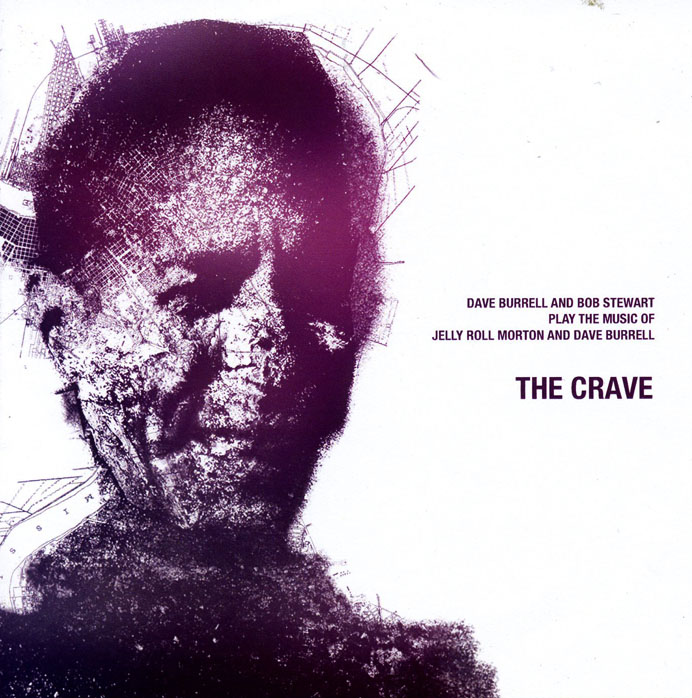
03 CravePianist Jelly Roll Morton’s jazz funeral took place in 1941, but pianist Dave Burrell and tuba player Bob Stewart pinpoint the adaptability of Morton’s arrangements to contemporary setting on The Crave (No Business Records NBLP 100 nobusinessrecords.com) by splitting the program between three Morton compositions and three by Burrell. A commanding stylist, Burrell’s performances bring an Ellington-like refinement to this bare-bones format, opened up on tracks such as his own Pua Mae ‘Ole. But at the same time, like a couturier who insists on classic detailing on a leading-edge garment he’s crafting, the pianist doesn’t mute echoes of the past, such as primitive blues on Morton’s New Orleans Blues and ragtime reflections on Morton’s The Crave. On the latter Stewart defines the function of a so-called brass bass, huffing a grounding ostinato alongside the pianist’s jaunty interpretation that also twists tango intimations into Jazz, with intelligent pauses and contemporary chord augmentations not upsetting the piece’s terpsichorean orientation. In contrast, the tubist’s dramatic growling, coupled with the pianist’s meditative pace, ups the intense storytelling that is Burrell’s I Am His Brother. Instructively enough Burrell’s savvy conversion of two other Morton tunes points out the lineage between 1920s ivory ticklers and Monk. These Monkish allusions are especially noticeable on the harder-edged Spanish Swat, where Burrell’s keyboard creeping leads to opaque, moderato and angled patterning. His narrative, which slides from high-pitched glissandi to segmented bass chords, is held up like the top man on a human pyramid by Stewart’s puffing continuum. New Orleans Blues is taken at a more leisurely pace than the original, with contemporary note variations pockmarking the stone face of Morton’s original. These improvisations not only stretch the theme with the looseness of a cat chasing a string, but allow the tuba player’s contemporary oom-pah-pahs to march in rhythmic lockstep with Burrell’s deeply felt and relaxed tune elaborations.

04 Monk n MoreWith many Monk compositions now nearly 70 years old, they’re as much classic jazz as Morton tunes. On Monk ’n’ More (Leo Records CD LR 780 leorecords.com), Russian-American pianist Simon Nabatov tries for a similar alchemical updating of five Monk lines by interspacing them among five originals that probe keyboard extensions using live electronics. Nabatov no more takes the Monk canon as immutable than a Talmudist would take the Torah’s words as unavailable for interpretation. Like that scholar’s theories, Nabatov’s explorations provide alternative readings of the pieces. Nabatov’s take on Skippy, for instance, is more herky-jerky than the original, while Oska T. is taken thicker and faster. Using pedal shading Nabatov adds echoes of the Russian Romantic tradition, while paradoxically emphasizing the tune’s swinging pulse that in turn links it to the blues and stride Morton and Ellington were perfecting in the 1920s and 1930s. Re-harmonized, Pannonica becomes more expansive, with the triplet-timed note colouration adding unexpected tenderness to its habitual angularity. Although most of the electronic experiments are concerned with laboratory-condition-like probes into pitch and timbral extensions, the additional clanging results confirm Monk’s unique orientation. The discontinuous interface on Electroacoustic Extension 4, for example, with its blurry pulses reflecting back onto the initial stop-and-start theme posits how Monk could have utilized computer programming. This is confirmed on Sunrise Twice Redux, the CD’s 14-minute centrepiece. Unfolding like a flower probed by a buzzing bee, unique pitch-bending techniques allow for tone examination, rhythmic asides and protracted pauses that add honeyed chamber music allusions to the jazz and electronics already present.

Gathering these strands together to revamp existing parts of the jazz canon is Nabatov’s contribution to examining classic music from new angles. All of these CDs are instances of how intermingling new ideas and older themes rejuvenates venerable material.

01 Gielen 4The awaited Volume Four of the projected ten-volume Michael Gielen Edition contains 24 distinctive performances of works by a dozen composers with, as in the earlier volumes, the SWR Radio Symphony Orchestra of Baden-Baden and Freiburg plus orchestras of Saarbrucken and Stuttgart (SWRMUSIC 19028CD, 9 CDs).

Born in Dresden in 1927, Gielen was répétiteur at the Vienna State Opera in 1950/51 where he encountered Karajan, Böhm and others, then making his first conducting appearance before the orchestra in 1954. A few of his many subsequent appointments included: from 1969 to 1973, conductor of the Belgian National Orchestra; first guest conductor of the BBC Symphony from 1978 to 1981; music director of the Cincinnati Symphony from 1980 to 1986; and music director of the Berlin State Opera from 1991 to 2012.

All of the performances here are of interest and most works hold your attention through to the last bar, particularly to those familiar with the music from other recordings. None are outrageously different. The subtle variations from the usual, both in phrasing and tempi, are most convincing and do not sound affected. Major works are Schumann’s Scenes from Goethe’s Faust with soloists and choruses, and the Berlioz Requiem; Dvořák’s Violin Concerto (Josef Suk), Cello Concerto (Heinrich Schiff) and the Seventh Symphony; Tchaikovsky’s Fourth and Sixth Symphonies; Josef Suk’s A Summer’s Tale (symphonic poem for large orchestra, Op.29); Schumann’s First Symphony orchestrated by Mahler and Weber’s Der Freischütz Overture and Second Piano Concerto (Ludwig Hoffmann). Adding works by Mendelssohn, Smetana, Liszt, Wagner, Rachmaninoff and others makes this an interesting and noteworthy collection, especially for the recorded sound which is clear and convincingly three dimensional, particularly the winds and brass which, while not spotlighted, are right there.

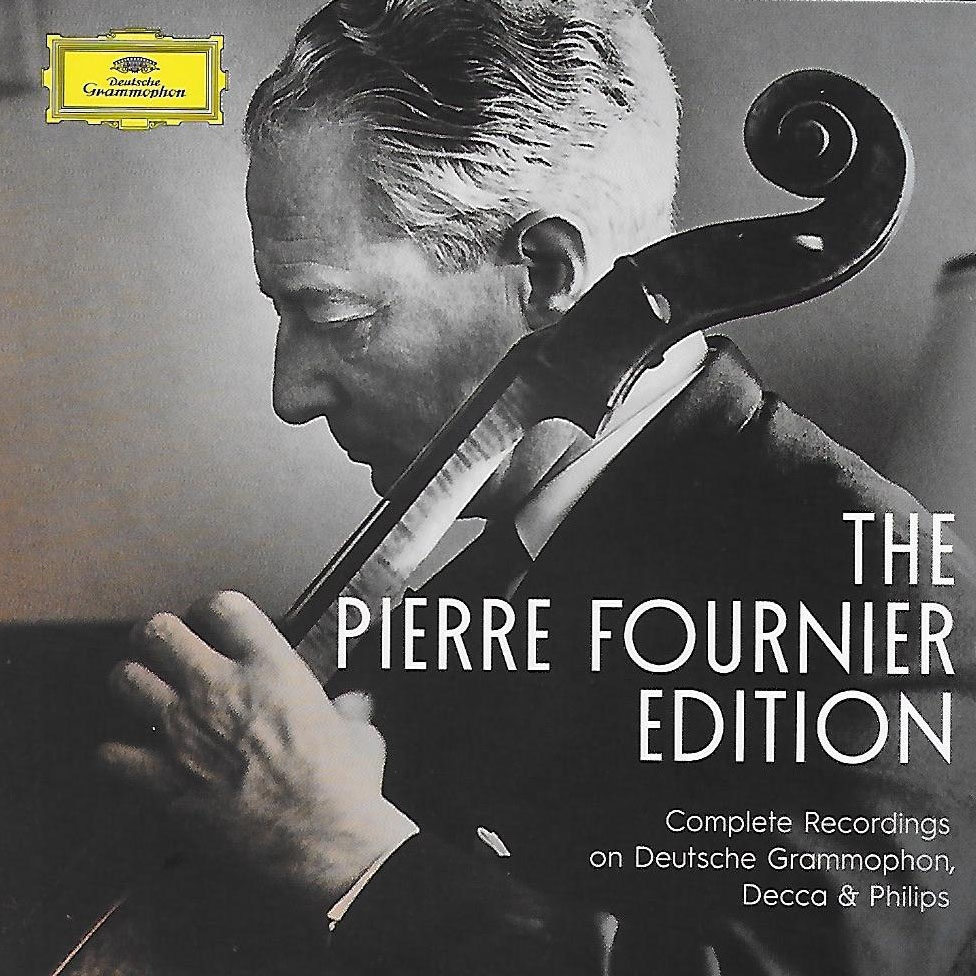
Back in the Massey Hall days I vividly recall seeing two visiting cellists with the TSO in close enough succession to be struck by their very different stage presence and playing. Jacqueline du Pré swept onto the stage and played with a contagious exuberance while Pierre Fournier walked on wearing a pale grey double-breasted suit, acknowledged the applause, took his chair and played with elegant authority.

02 FournierIt can be well understood why Fournier was dubbed “the aristocrat of cellists,” for as well as looking the part, he was a thorough musician who had divine taste and sensibilities for a broad repertoire. He conducted masterclasses at the Britten-Pears School for Advanced Musical Studies in Aldeburgh, where he was known as a very patient teacher, fussy in a good way and uncompromising. He made recordings for EMI and Columbia, Decca, Philips and DG; it seems that every company needed to have a Don Quixote played by Fournier in their catalogue, Decca with Clemens Krauss, EMI with Karajan, DG with Karajan, Columbia with Szell, DG with Szell and a few more. Deutsche Grammophon has gathered every Fournier recording made by DG, Decca and Philips and issued The Pierre Fournier Edition, in the now familiar cube format (4796909, 25 CDs).

Many collectors will own some of these performances but certainly not all. Here are a few of the meatier works: Don Quixote, two versions: Clemens Krauss and the Vienna Philharmonic (Decca 1953) and Karajan and the Berlin Philharmonic (DG 1965); also two of the Dvořák Cello Concerto – Kubelik and the VPO (Decca 1954) and Szell and the BPO (DG 1961). The disc mate of the Szell Dvořák is a mighty version of the Elgar Cello Concerto with Alfred Wallenstein conducting the BPO (DG 1966). The same sessions with Wallenstein produced a favourite version of Bloch’s Hebrew Rhapsody, Schelomo. The Beethoven trios are heard with Wilhelm Kempff and Henryk Szeryng recorded by DG in Vevey, Switzerland, in 1969 and 1970. Beethoven’s complete works for cello and piano were recorded by Fournier and Friedrich Gulda in Vienna’s Musikverein in June 1959 and again with Wilhelm Kempff in the Salle Pleyel in Paris during February 1965…there can be few pianists less alike than Gulda and Kempff. Two of my favourite works are the Brahms Cello Sonatas. The version by Fournier and Wilhelm Backhaus (Decca 1955) was almost a permanent resident on my turntable and remains the favourite. There are two other versions, with his son Jean Fonda (Switzerland 1984) and with Rudolf Firkušný (Berlin 1965).

There is such a wealth of music here that just about any appropriate composer that comes to mind is heard, from Bach (the cello suites and sonatas) to Gershwin and Vivaldi, from Boccherini to Stravinsky. Anyone interested in the cello will think they’ve died and gone to heaven (as they say).

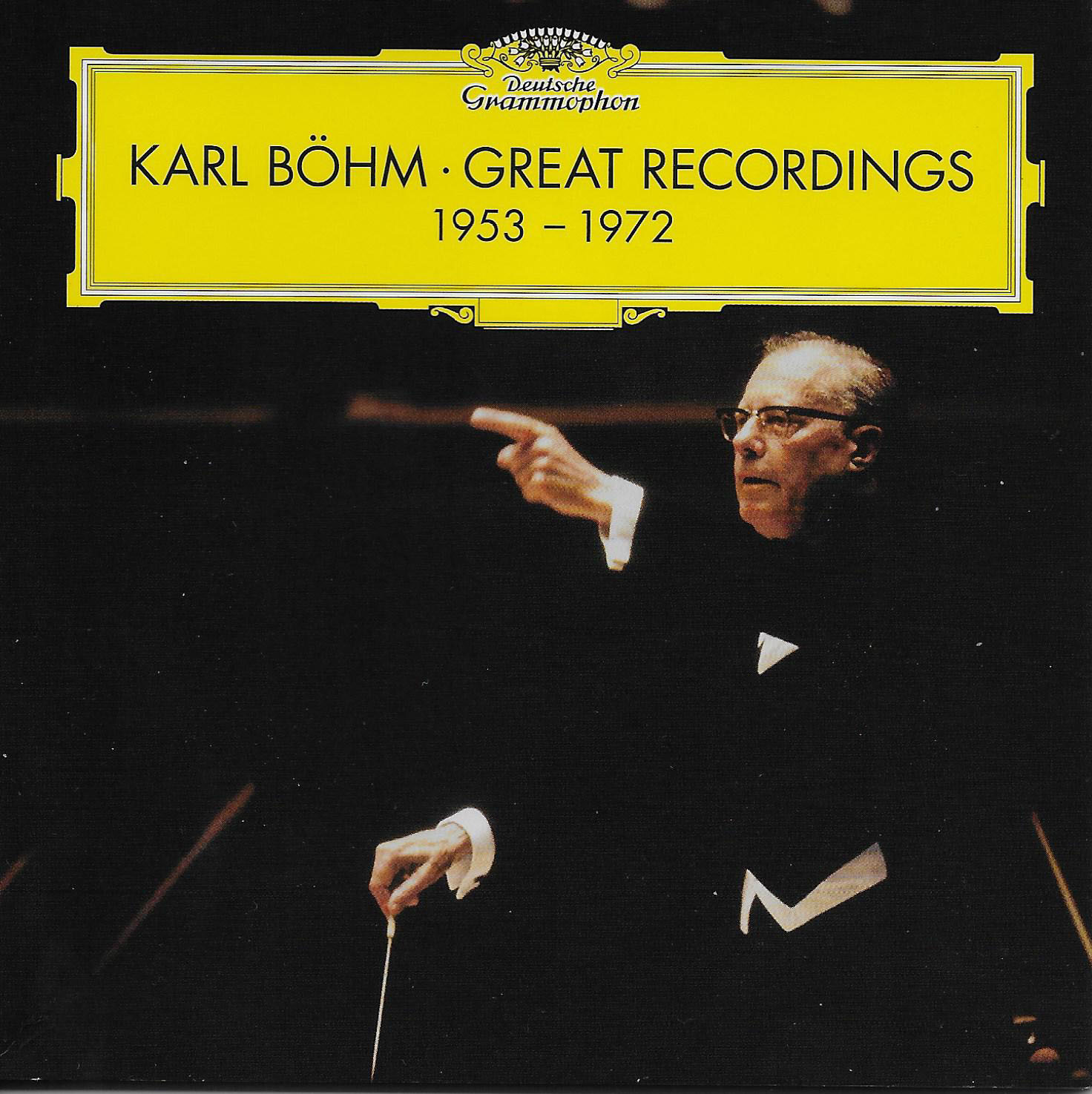
03 BohmKarl Böhm – Great Recordings 1953-1972 is the second collection of the late conductor’s memorable recordings for Deutsche Grammophon (4797021, 17 CDs). The first set of 23 discs, Late Recordings, a limited edition, appears to be almost depleted. Well, are these “Great Recordings” great recordings? For this collection there was a project manager and a man responsible for the compilation who had Böhm’s entire oeuvre at his disposal. Where would they start? Not an enviable task but not as impossible as selecting “Böhm’s Greatest Hit” would be. Of course, if he were totally obsessed with original instrument practice he would be the wrong man for the job. Clearly, he wasn’t and listening through these 17 discs there is no question that almost all of these fit the bill. Touching on a few highlights beginning with CD 1, the Eroica is fresh and dynamic, impeccably played by the BPO in December 1961…before any of the Karajans. The 1955 Missa Solemnis on CD 3 with the BPO and Maria Stader, Marianna Radev, Anton Dermota and Josef Greindl is outstanding; however, the BPO Brahms First Symphony from 1959 on CD 4 simply floored me. It is perfectly balanced, driven and totally irresistible. A juggernaut. CDs 6 and 7 contain Böhm’s captivating spontaneous 1967 vision of Haydn’s Seasons with Gundula Janowitz, Peter Schreier, Marti Talvela, the Vienna Singverein and the Vienna Symphony Orchestra. CD 8 has Dietrich Fischer-Dieskau in Berlin in 1964 singing Mahler’s Kindertotenlieder and four Rückert-Lieder. No commentary needed here. CDs 9 to 12 contain Mozart Serenades played by members of the BPO, plus the Haffner, the Posthorn, the Serenata notturna, the Grand Partita as well as some Schubert and music by Böhm’s friend Richard Strauss. There are three CDs of Strauss’ most famous tone poems played by the Dresden Staatskapelle orchestra. Including them was a mistake. The performances and recordings are of a lower order and not worthy of inclusion in this collection. There are two excellent CDs devoted to Böhm rehearsing and performing the Schubert’s “Great” C Major Symphony together with “A Life Retold” all about Böhm in German. Still, 14 out of 17 isn’t bad and, who knows, a lot of people might like the Strauss. The project manager did. Full track details at arkivmusic.com.

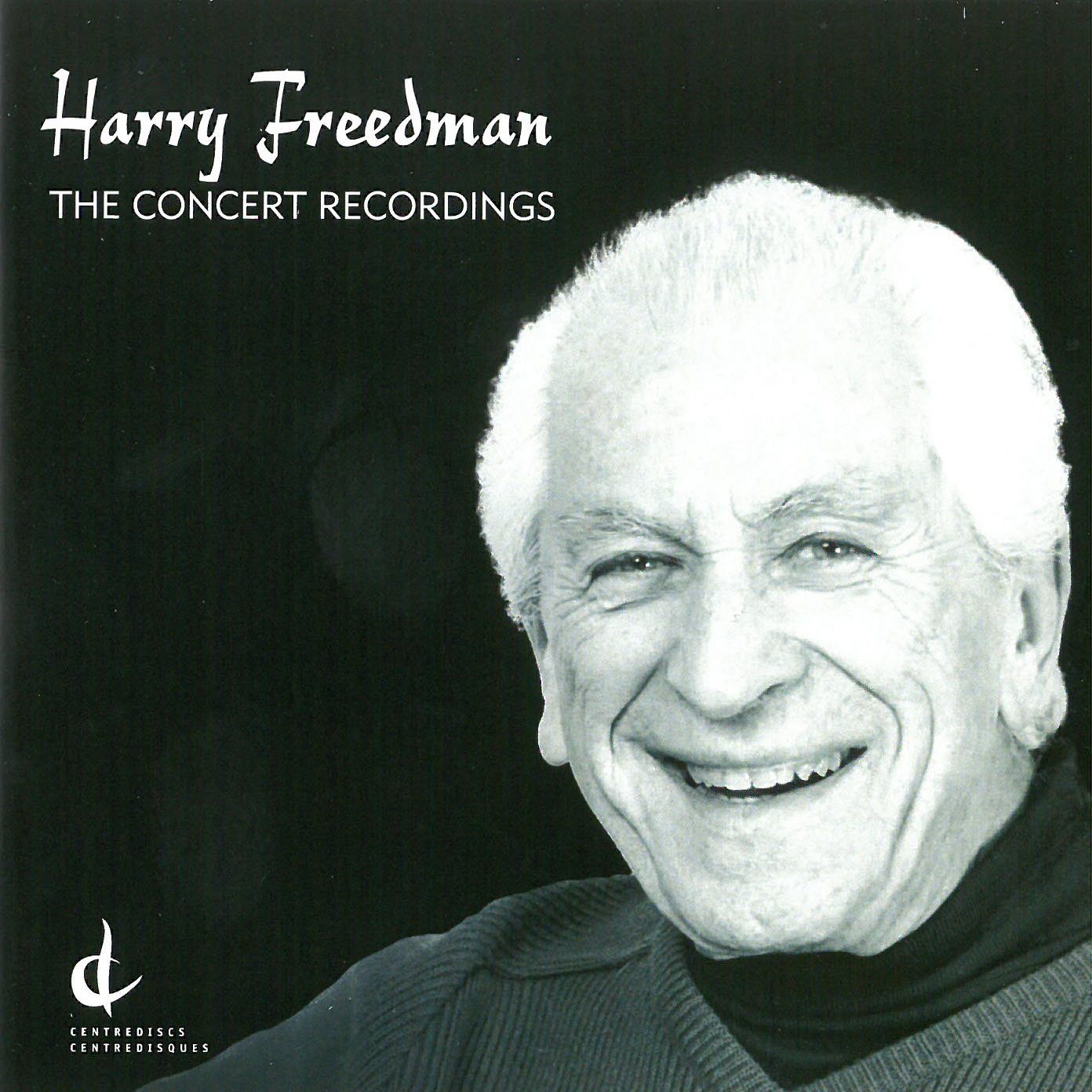
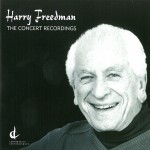
01 Harry FreedmanI was thrilled to receive the latest shipment of Centrediscs from the Canadian Music Centre (CMC) shortly after filing my February column and several days before that month’s issue hit the streets. I knew exactly what would take pride of place in my March column: Harry Freedman – The Concert Recordings (CMCCD 23517). I was therefore a little dismayed when I did see the February WholeNote and found that David Jaeger had stolen my thunder. His excellent and extended article about Freedman’s orchestral music and the particular pieces included on the disc, from his perspective as producer of a number of those recordings, would seemingly make anything I had to say redundant. But perhaps not irrelevant. In my own years as a broadcaster (at CKLN and CJRT) I met Freedman on a number of occasions and got to know him fairly well, but it is his music that made a real impression on me. In my formative years this was the music, particularly Freedman’s orchestral works, that I grew up understanding to define what made Canadian music Canadian: aural landscapes reminiscent of the North, stark and angular, crisp and rugged, but at the same time lush and evocative.

All of the tracks are exceptional, but there are two real standouts for me. Borealis for orchestra (TSO) and a (heavenly) host of choirs (Danish National Radio Choir, Elmer Iseler Singers, Swedish Radio Choir and Toronto Children’s Chorus) was written for and performed in the towering Barbara Frum Atrium in the CBC Broadcast Centre as part of Soundstreams’ Northern Encounters Festival of the Arts in 1997 with the orchestra and choirs surrounding the ground floor audience from the balconies above. Images predates Borealis by almost four decades (1960) and is heard here in a 1979 performance with Sir Andrew Davis at the helm of the TSO. It is a three-movement work inspired by Canadian artists Lawren Harris, Kazuo Nakamura and Jean-Pierre Riopelle which in the words of the composer is “not so much concerned with the content of the paintings as with their design…in effect, a translation into musical terms of the artists’ styles.”

As a reflection of that aspect of the CMC’s mandate to preserve and promote the history of our musical heritage, I feel this is one of the most significant releases from Centrediscs’ in recent years and as we enter Canada’s sesquicentennial an important reminder of our artistic heritage.
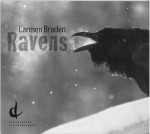
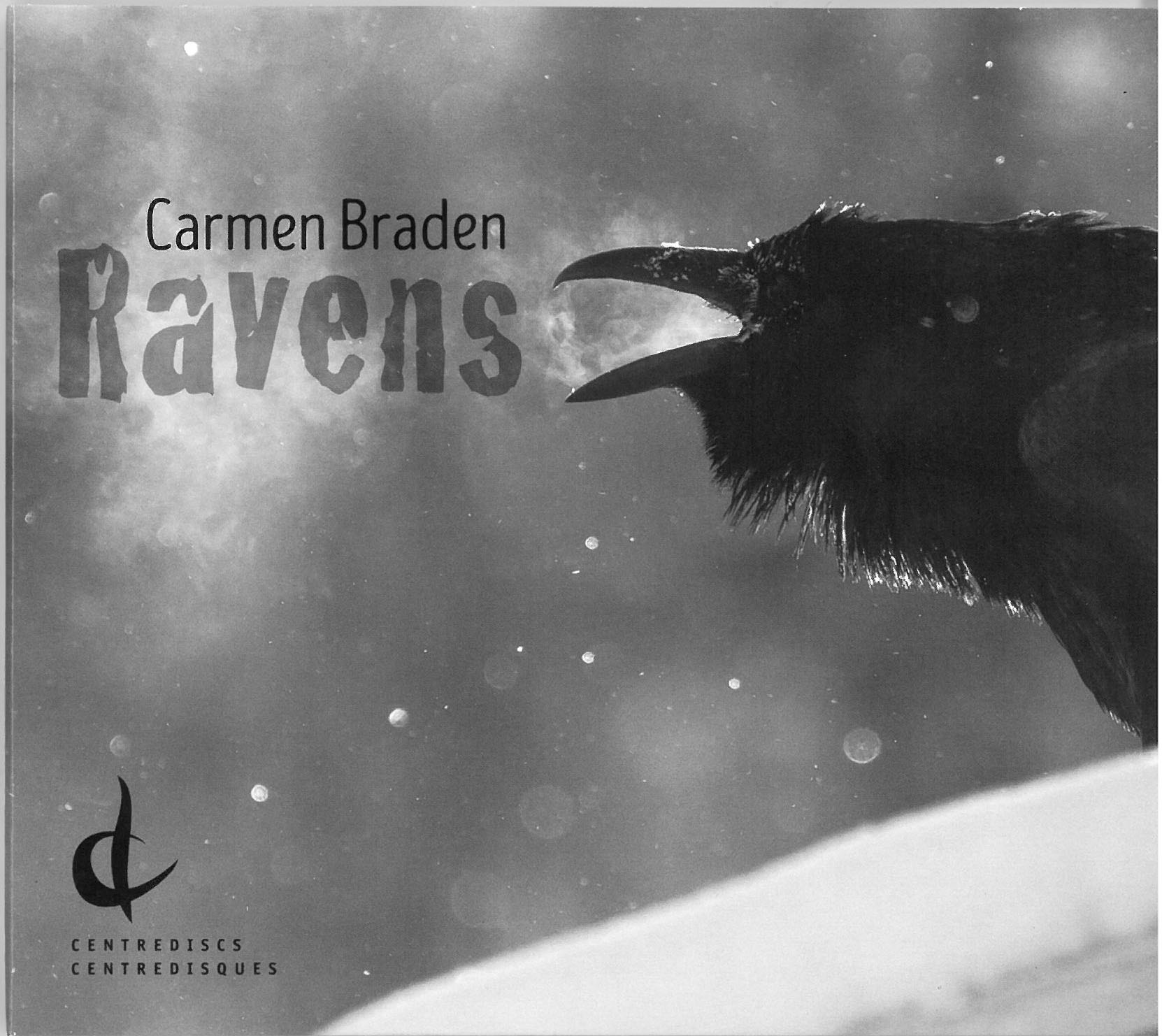
02 RavensThe other disc in the shipment from the CMC has left me scratching my head. I understand that an important part of the CMC’s mandate is to promote the music of our emerging composers and to reflect changing concerns and aesthetics, but I would still expect that to be done within the context of art music. Ravens (CMCCD 23217) features the music of Yellowknife-based composer Carmen Braden and it is a truly eclectic recording that would, I feel, be most at home in The WholeNote’s Pot Pourri section. Please don’t get me wrong, I like the disc very much and there are indeed some “classical” compositions included – a brief excerpt from Candle Ice for piano trio and field recordings of melting ice; Magnetic North for violin and piano; and Waltz of Wing and Claw “a string quartet of ravens playing in the wind” which turns out to be another excerpt from a larger work The Raven Conspiracy – but the bulk of the album consists of quirky and clever pop songs with occasional nods to jazz (à la Joni Mitchell) and even a twangy ode – Small Town Song – explained in the composer’s notes with the statement “The banjo is wonderful, but it scares me a little.” Braden seems to have overcome her fear of this predominantly southern instrument and this rousing sing-along brings an intriguing northern journey to a satisfying end. I just wish we could have heard the instrumental compositions in their entirety.
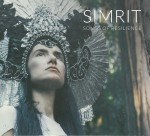
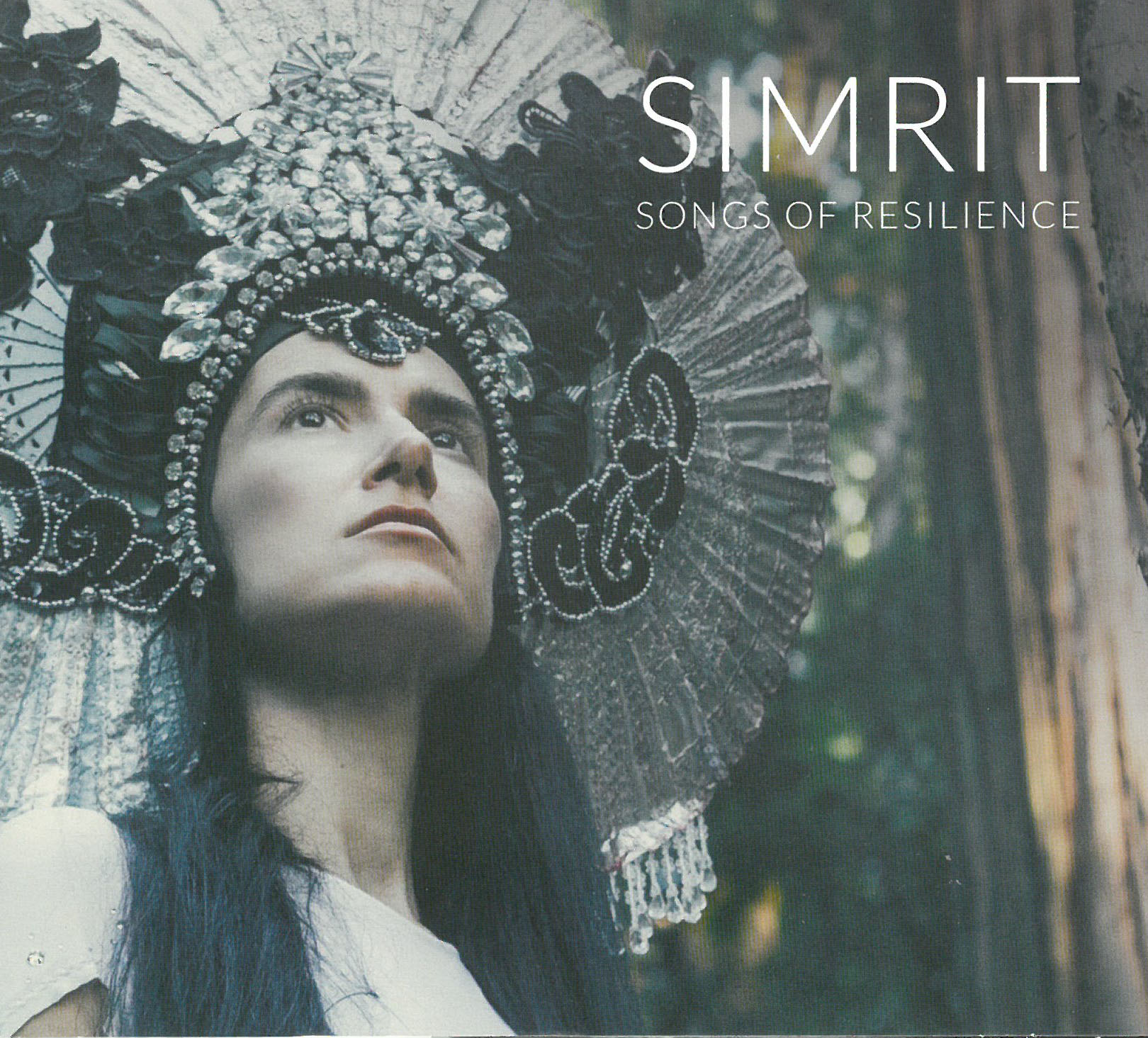
03 Another truly eclectic disc has come to my attention in the context of an upcoming Toronto performance. Vocalist and songwriter Simrit was born in Athens, Greece, but adopted and brought up in South Carolina by Greek immigrants. Her music draws on the Greek Orthodox chants of her heritage and on the pulse and melodic sensibilities of West African traditions which she has studied intensely. Add to this such influences as Mazzy Star, Jeff Buckley, Loreena McKennitt, roots reggae and world music from the Mediterranean to the Subcontinent and I’m not sure quite what you get, but I’ve been captivated by its compelling ambience for several weeks now.

As well as her haunting vocals, on Songs of Resilience (simritkaurmusic.com) Simrit plays harmonium and mellotron and is accompanied by a septet who between them play kora, pueblo log drums, congas, cello, electronics, electric and acoustic guitars, drum kit and miscellaneous percussion. Simrit says “This music changes consciousness, and that is where we can start. For the world to shift into a potentially peaceful place, we must start with ourselves first.” But as the press release assures us “the central message is not sappy or facile. It’s about finding the sounds to aid change, to expand what you can see and embrace.”

Concert note: You can find out what Simrit’s music and message is all about at St. George’s Lutheran Church at 410 College St. in Toronto on March 29 at 7:30.

Sticking with my Pot Pourri theme, I had the pleasure of meeting up with a friend from my early childhood at Winterfolk on the Family Day Weekend. David Storey and I knew each other back in our pre-school days, attending the same Anglican church and each other’s birthday parties. Somewhere around our teenage years we lost track of each other as he went off to choir school and I attended York County’s experiment with open plan education in the early years of Thornlea Secondary School. Evidently Storey spent some years as a singer-songwriter before taking a 25-year hiatus to direct television and film productions, including the iconic Corner Gas. When this last had run its course, Storey returned to his first love, playing the guitar and turning some wonderful stories into song.
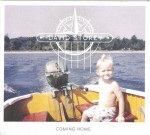
04 David StoreyHe recently released his first full-length CD Coming Home (davidstoreymusic.com) and the name is particularly apt. The songs tell tales (tall and otherwise) of his life and adventures and although they are complete in themselves it was a treat to hear some of their background in intros and asides during his performance at the Black Swan on the Danforth, the central venue of Winterfolk. Performing with Lawrie Ingles (keyboard), Henry Lees (harmony vocals) and Bob Cohen (bass and something that seemed to be an eight-string ukulele, a new one on me) Storey was able to recreate a bare-bones version of the arrangements from the album, with Ingles providing some convincing fiddle lines on his electronic keyboard and adding a third voice to some tight harmonies. Cohen shone with fluid solos on two cover tunes, Little Feat’s Willin’ and Van Morrison’s Crazy Love but the rest of the hour-long set was devoted to original material from the CD.

All in all it was a lovely outing with my mother, who was once Storey’s Sunday-school teacher, and if you missed it – there was a good crowd, but I didn’t see you there – you should check out the album. Highlights for me include Saint Adelaide (Who knew there was a Catholic saint of abuse victims; brides; empresses; exiles; in-law problems; parenthood; parents of large families; princesses; prisoners; second marriages; step-parents; and widows? She must be very busy!); the cancer survivor’s anthem Crusty – “I’m crusty and I’m chuff [look it up if you need to, this is a great word!], and I refuse to die, I’m gonna stare this crazy world straight in the eye…” and Last Loon on the Lake where Storey is joined by the bluegrass band Traditionally Wound. You really owe it to yourself to visit the website to hear this track (and then buy the CD or download).

Lest it seem that I have spent most of my time this month awash in Pot Pourri, I’ll mention that I have been practising my cello diligently for the upcoming term-end recital at University Settlement Music and Arts School (March 3 at 7pm at the Church of St. George the Martyr). This time around I am playing in two string trios and immersing myself in the music of Johann Sebastian Bach. My regular group will play selected movements of Dmitry Sitkovetsky’s arrangement of the Goldberg Variations and I managed to talk my way into another which will be doing a trio arrangement of the Concerto for Two Violins in D Minor BWV1043. So it’s been quite a challenging couple of months preparing and “I’m playing as fast as I can!” An initial frustration as I sought out recordings to study was that current day period orchestras tune substantially lower than the modern concert pitch of A440 making playing along impractical unless I want to retune my cello each time. Fortunately I found that my old trusty Columbia LP recording with Isaac Stern and Itzhak Perlman and the New York Philharmonic under Zubin Mehta was indeed at modern pitch and so all I had to do was aspire to their tempos…
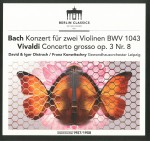
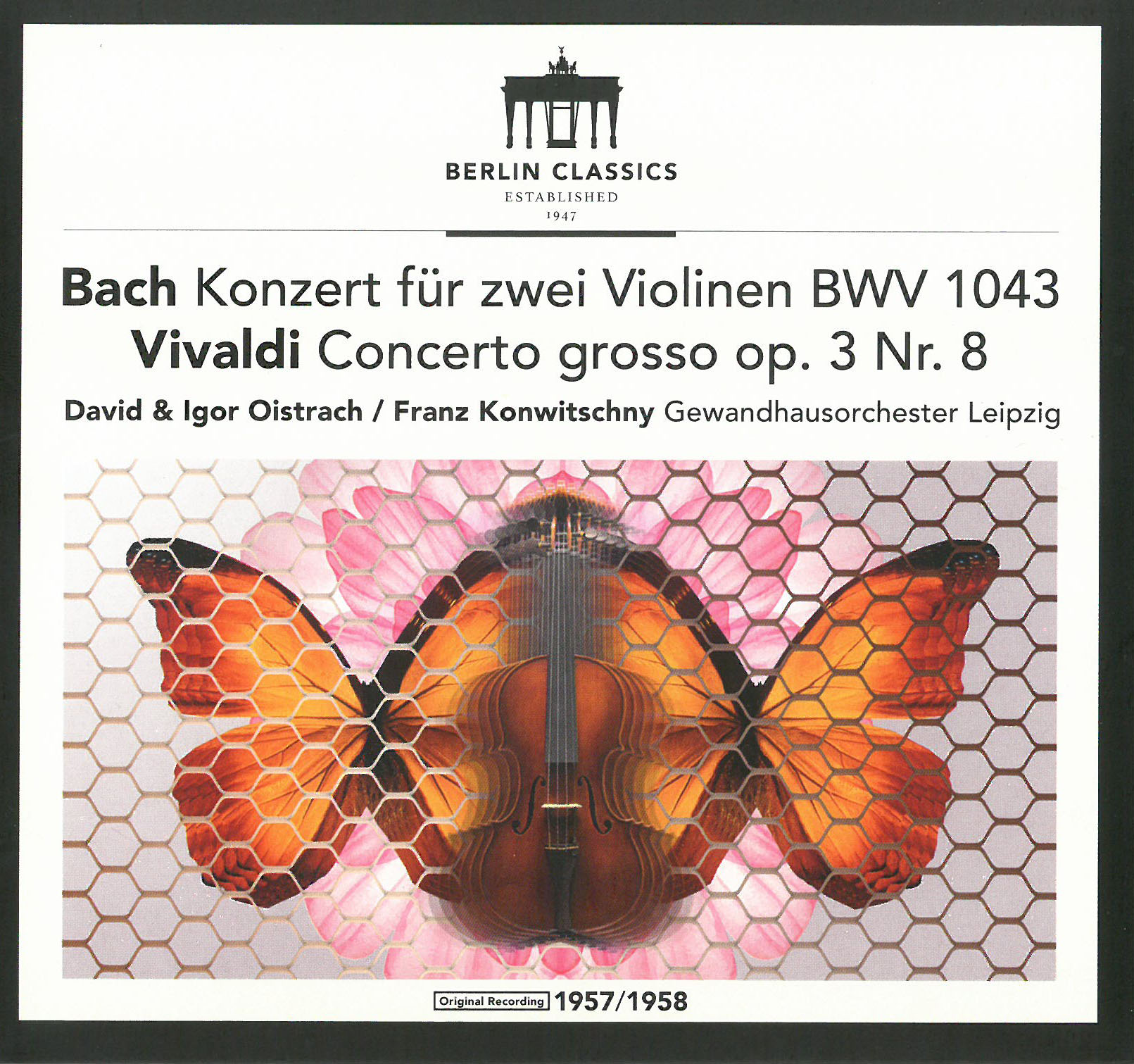
05 OistrakhsElsewhere in these pages you can read Bruce Surtees’ impressions of The David Oistrakh Edition which includes among a host of other recordings David and son Igor playing works for two violins by Bach and Vivaldi. It was a great pleasure to find in my inbox just two days before I sat down to write this, a new Berlin Classics reissue of the Bach Concerto for Two Violins BWV 1043 and the Vivaldi Concerto Grosso Op.3 No.8 with David and Igor Oistrach [sic] (010084BC) remastered from 1957 Eterna mono recordings. So now I have two fabulous models to work from (both at A440) and the Berlin Classics recording comes with the added bonus of one of my very favourite violin pieces, the Franck Violin Sonata in A Major featuring David Oistrakh and Anton Ginsburg (piano) from 1958. I must admit that it was a relief to find that without losing any of the bright and lively feel of the outer movements, the Oistrakhs take slightly more relaxed tempos than Stern and Perlman, leaving me with the hope that in the next two weeks I can actually get up to speed after all. On both recordings the gorgeous Largo middle movement is to die for.

We welcome your feedback and invite submissions. CDs and comments should be sent to: DISCoveries, WholeNote Media Inc., The Centre for Social Innovation, 503 – 720 Bathurst St. Toronto ON M5S 2R4. We also encourage you to visit our website
thewholenote.com where you can find enhanced reviews in the Listening Room with audio samples, upcoming performance details and direct links to performers, composers and record labels.

David Olds, DISCoveries Editor
discoveries@thewholenote.com

Back to top