04 SiegfriedWagner – Siegfried
O’Neill; Goerne; Cangelosi; van Mechelen; Melton; Hong Kong Philharmonic Orchestra; Jaap van Zweden
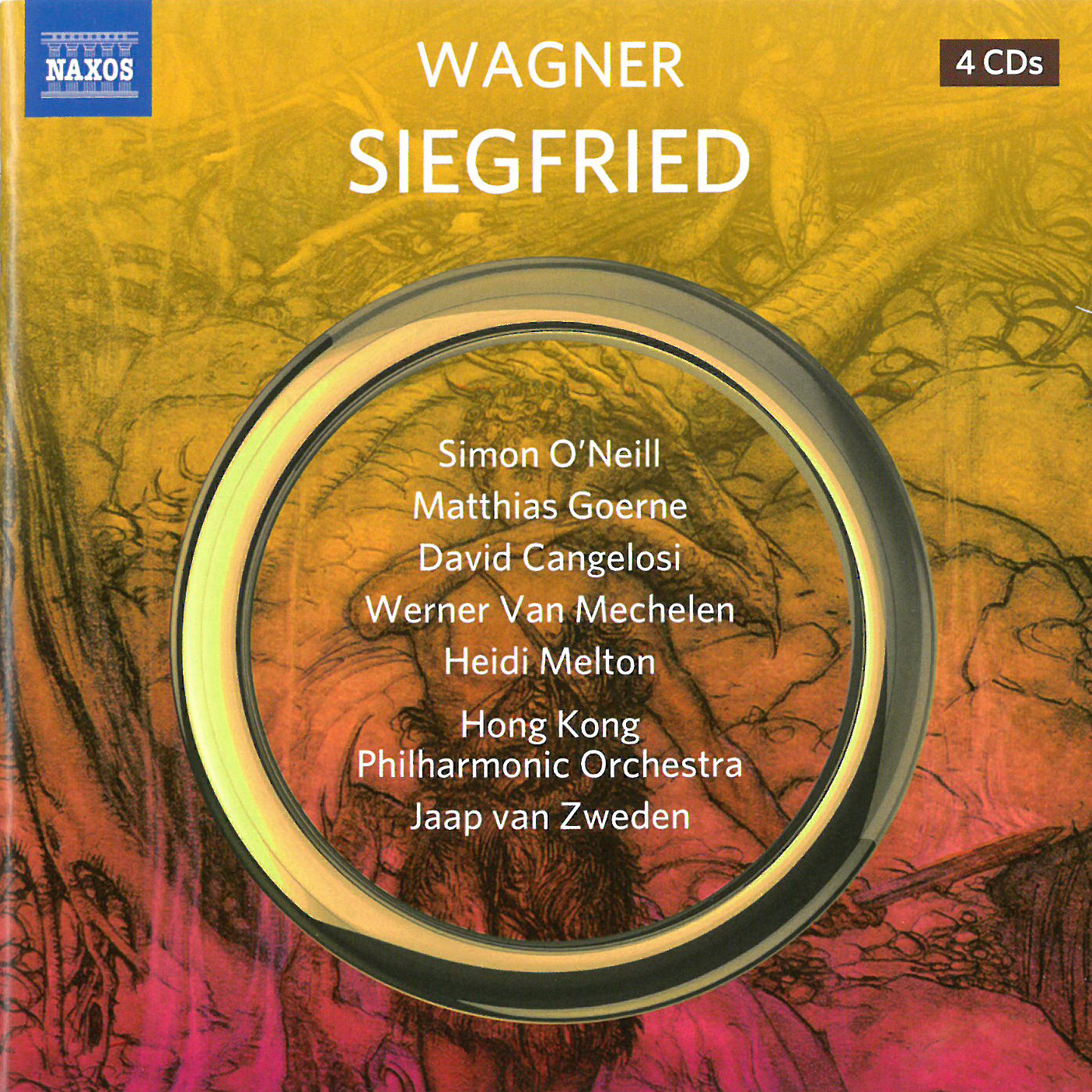
Naxos 8.660413-16

Siegfried is the real McCoy of the Ring Cycle, the epicentre packed with scenes of high drama, superhuman achievement and much of the Ring’s most beautiful music. And it’s also the most optimistic part of the Cycle; each act ends on a high note, reserving the best to the end with the most unusual love duet ever written. There is a fairy-tale atmosphere, a happy ending as well as unforgettable musical and dramatic highlights that usually translate into a glorious night at the opera.

This dramatic new Ring is the brainchild of Dutch conductor Jaap van Zweden, former concertmaster of the Royal Concertgebouw Orchestra. Discovered by Leonard Bernstein, he is now music director of four major orchestras, fulfilling a dream to record his own Ring Cycle with an orchestra he would whip into a Wagnerian superpower and pick the best possible singers available today. Each opera was recorded as a live concert performance, one per year beginning in 2015, so this is the third installment.

The title role, Siegfried, is the biggest casting problem of any Ring attempt, but fortunately New Zealand heldentenor Simon O’Neill, a young, athletic fellow who could look good even on a rugby field, solves this problem wonderfully. He is a natural, not only powerful, enthusiastic and tireless, but also sensitive and tender. Wotan, here called the Wanderer (as he is no longer in charge of things), is Matthias Goerne, another excellent choice, one of the greatest baritones in the world today. David Cangelosi became the audience favourite with his characterful, incisive singing as Mime, the evil dwarf. In closing, it’s worth buying this set for the famous Forging Song alone. There were sounds coming out of the Hong Kong Cultural Centre never heard before!

05 MacMillan Stabat MaterJames MacMillan - Stabat Mater
The Sixteen; Britten Sinfonia; Harry Christophers
CORO COR16150

James MacMillan gained his early prominence with the orchestral piece The Confession of Isobel Gowdy. Since then he has generally been recognized as the leading Scottish composer of his generation. He is a Roman Catholic in a largely Protestant country. Sacred music has always been central to his creative work. In the last half decade he has developed a close relationship with the outstanding chamber choir The Sixteen (conducted by Harry Christophers). This CD gives us a sense of that collaboration. The Stabat Mater is an anonymous 13th-century Latin poem that depicts the Virgin Mary at the foot of the Cross and proceeds to meditate on her sorrow and appeals to her as an intercessor with her son.

There have been a number of previous attempts to give musical shape to the text. The versions by Josquin and Pergolesi are especially notable. On this CD the hymn is given in the form of the Medieval plainsong. The following four tracks give us MacMillan’s elaboration. It is a brilliant work, dazzlingly performed by the full choir, the soloists (all of them members of the choir) and the accompanying chamber orchestra, the Britten Sinfonia. In a prefatory note in the CD booklet, Christophers ranks MacMillan as one of the three great composers of religious music, along with Victoria and Poulenc. If one is only looking at the Catholic world, it is hard to disagree with that.

06 James RolfeJames Rolfe – Breathe
Suzie LeBlanc; Alexander Dobson; Monica Whicher; Toronto Consort; David Fallis; Toronto Masque Theatre; Larry Beckwith
Centrediscs CMCCD 24517 (musiccentre.ca)

The title track, Breathe, in its performance here, is by far one of the most extraordinarily beautiful recordings experienced in recent memory. The blending of texts, ancient (Hildegard von Bingen, Antonio Scandello) and modern (Anna Chatterton), is mirrored by the use of period instruments for new music. Composer James Rolfe infuses the work with connections between human emotion and the natural world represented by the four elements – water, earth, air and fire – so exquisitely. For example, we enjoy the sensation of love overflowing (as water does) with undulating chordal textures and an abundance of cascading note sequences as Suzie LeBlanc, Katherine Hill and Laura Pudwell magically intertwine their voices.

The two masques on the recording further demonstrate this Toronto composer’s exceptional gift for intermingling qualities of early music with contemporary techniques whilst coaxing subconscious elements to seep through in performance. In Europa, the roles of the title character (Suzie LeBlanc) and her long-searching fiancé Hiram (Alexander Dobson) are both composed and sung with an extraordinary measure of pathos as they submit themselves to the will of the gods. And a refreshing new interpretation of the mythical Aeneas and Dido provides a much more intimate view of the doomed romance. As Dido, Monica Whicher is both stately and vulnerable, Alexander Dobson both bold and conflicted as Aeneas, while characters such as the spritely Mercury (Teri Dunn) and the Goat (Vicki St. Pierre) provide comic relief, if somewhat malevolent. Kudos to Larry Beckwith and David Fallis for their direction of these performances.

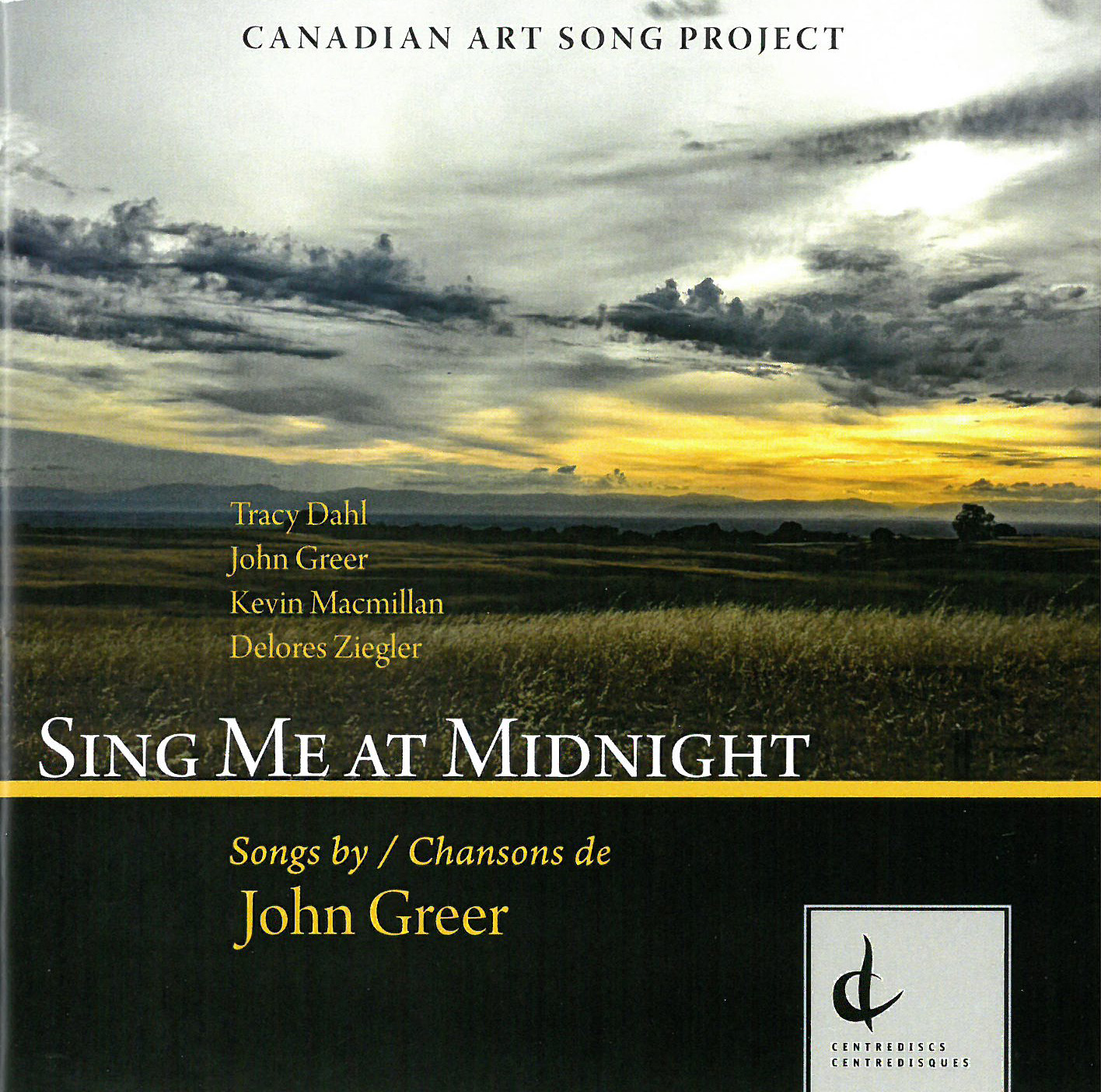
07 John GreerSing Me at Midnight - Songs by John Greer
Tracy Dahl; Kevin McMillan; Delores Ziegler; John Greer
Centrediscs CMCCD 24717 (musiccentre.ca)

This Canadian Art Song Project CD features works for voice and piano by noted Canadian accompanist, conductor and pedagogue John Greer. Spanning the past 30 years, the four song cycles comprise 20 songs with a variety of genres, voice types and moods. I am particularly partial to the cycle Sing Me at Midnight (1993) sung by lyric baritone Kevin McMillan, whose rich sound and ringing top suits these dramatic settings of sonnets by Wilfred Owen. Adept chromatic harmony conveys the pain of How Do I Love Thee, while percussive clusters accentuate the Anthem for Doomed Youth’s white-hot anger. Greer offers effective settings of evocative, religiously based poetry by Marianne Bindig in the cycle The Red Red Heart (1995). Tracy Dahl’s agile soprano handles the high tessitura well and is also attractive at the lower end in the opening, dancing song The Beginning.

The late Romantic style of The House of Tomorrow (1986) raised my eyebrows, till I tuned in to the evocation of childhood in these songs. The centrepiece, Midnight Prayer, a setting of the pensive poem by Aleksey Khomyakov in translation, is given a rich, expressive performance by American mezzo-soprano Dolores Zeigler. Finally, A Sarah Binks Songbook (1988) brings us mock-serious ditties wittily set by Greer, with allusions to various vocal genres. Tracy Dahl becomes the Canadian “prairie songstress,” her operatic persona elevating the work with perfect diction and much humour. John Greer’s collaborative pianism is exemplary throughout.

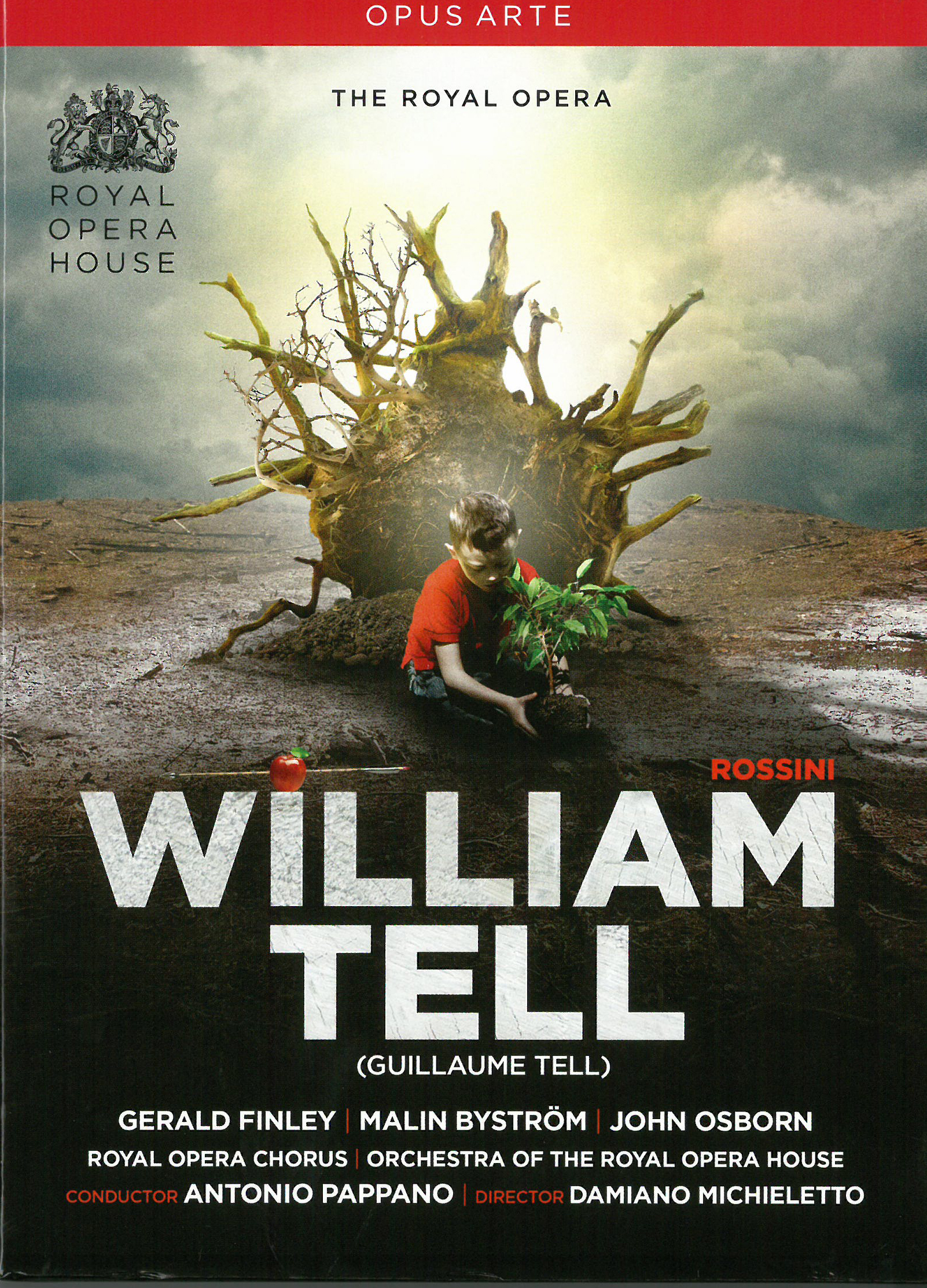
01 Rossini William TellRossini – William Tell
Gerald Finley; Malin Byström; John Osborn; Royal Opera Hous; Antonio Pappano
Opus Arte OA 1205 D

I first heard William Tell in the spring of 1972, in Florence. That production was billed as the first complete performance since the 1830s. It was clear where a major problem lay. The principal tenor role is long, loud and high. Nicolai Gedda, who was Arnoldo in 1972, had totally lost his voice by the last act.

Since then performances have become more frequent (in Toronto we recently heard a concert performance by the Turin opera) and singers are more able to cope with the demands that their roles impose. It is also notable that, whereas the 1972 performance had been in Italian, companies are now giving it in French, the language in which William Tell was composed.

John Osborn has no trouble with the notorious tenor part, while Gerald Finley is magnificent in the title role. A blot on the 1972 performance was the soprano who sang Mathilde, the Habsburg princess. Malin Byström is much better but her high notes are shrill and unpleasant. There are good performances from Eric Halfvarson as the patriarch Melcthal, from Sofia Fomina in the travesti role of Tell’s son and from “our own” Michael Colvin as a very unpleasant army commander.

The DVDs come with a booklet and an interesting essay by Jonathan White, who argues convincingly that the opera is primarily about the occupation of the land and the enslavement of its citizens. That emphasis finds physical expression in a prominently displayed uprooted tree, an emphasis that is reinforced by the excellent chorus.

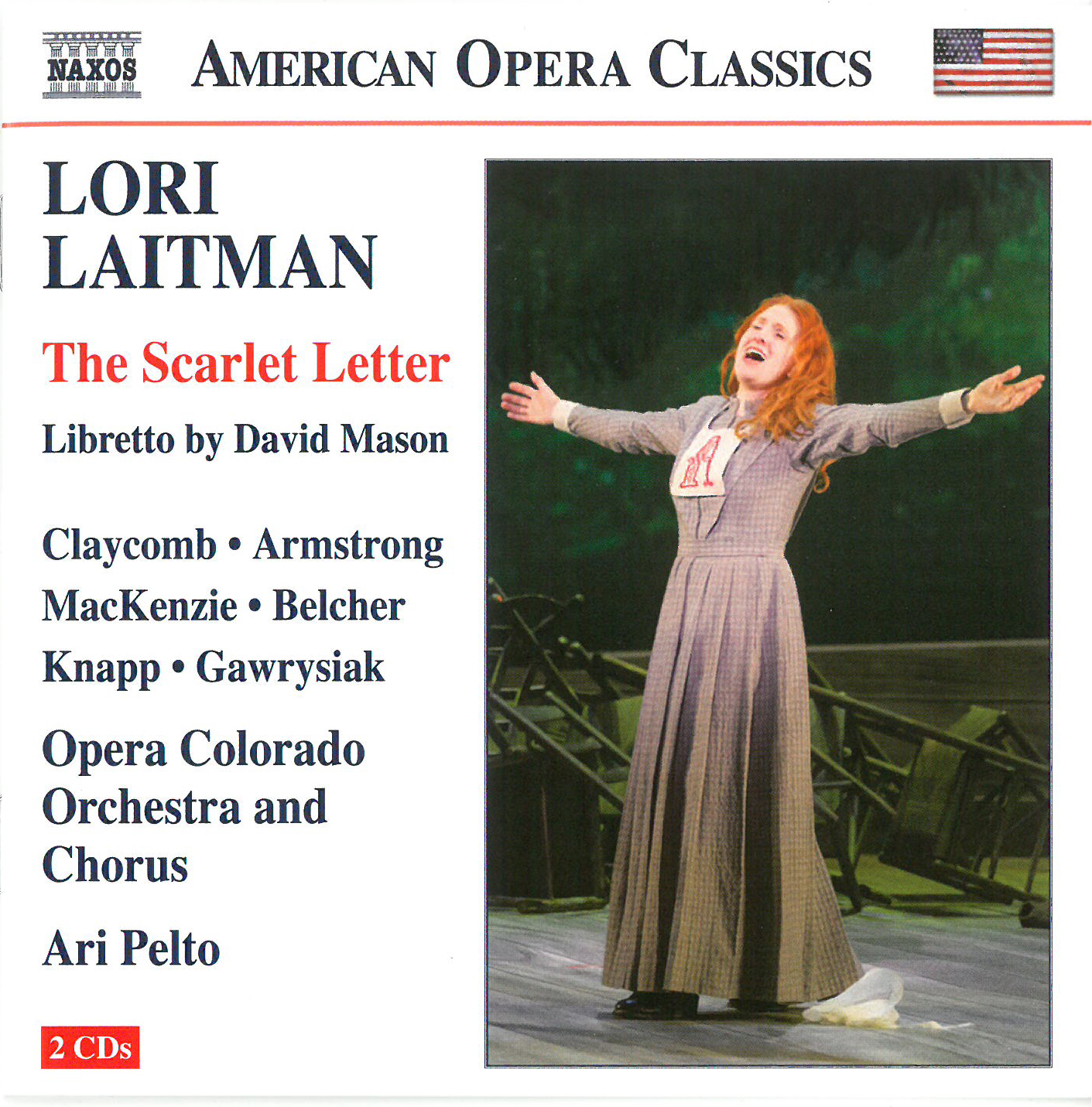
02 Laitman Scarlett LetterLori Laitman – The Scarlet Letter
Claycomb; Armstrong; MacKenzie; Belcher; Knapp; Gawrysiak; Opera Colorado; Ari Pelto
Naxos 8.669034-35

Nathaniel Hawthorne’s classic American novel, abridged into libretto form by David Mason, premiered in 2016 as a two-act opera composed by Lori Laitman. Strict and stifling moral codes in a c.1600 Puritan community result in the punishment of young Hester Prynne and torment the secret father of her child, Reverend Arthur Dimmesdale, as well as her long-lost husband (now returned under an assumed name). Operatic fodder indeed, but strangely juxtaposed with a rather dismal and restrictive setting.

Laitman’s challenge as a composer to reconcile the two is an interesting conundrum. She does indeed provide highly dramatic moments, such as the crowd’s raging at Prynne and the taunting of Dimmesdale by Mistress Hibbons, the town witch (sung by the formidable mezzo Margaret Gawrysiak). As Dimmesdale, tenor Dominic Armstrong’s talents are showcased with long, dramatic episodes of hysteria and guilt. Also remarkable is baritone Malcolm MacKenzie, as the husband bent on revenge. Prynne, on the other hand, proving to be much more stalwart of character, is given a much calmer, gentler musical portrayal. Soprano Laura Claycomb shines in the lullaby sung to daughter Pearl; as a singer, she manages some amazingly high notes without ever sacrificing Prynne’s aura of tenderness. The Opera Colorado Chorus does an excellent job standing in judgement of all. An interesting project indeed and well executed.

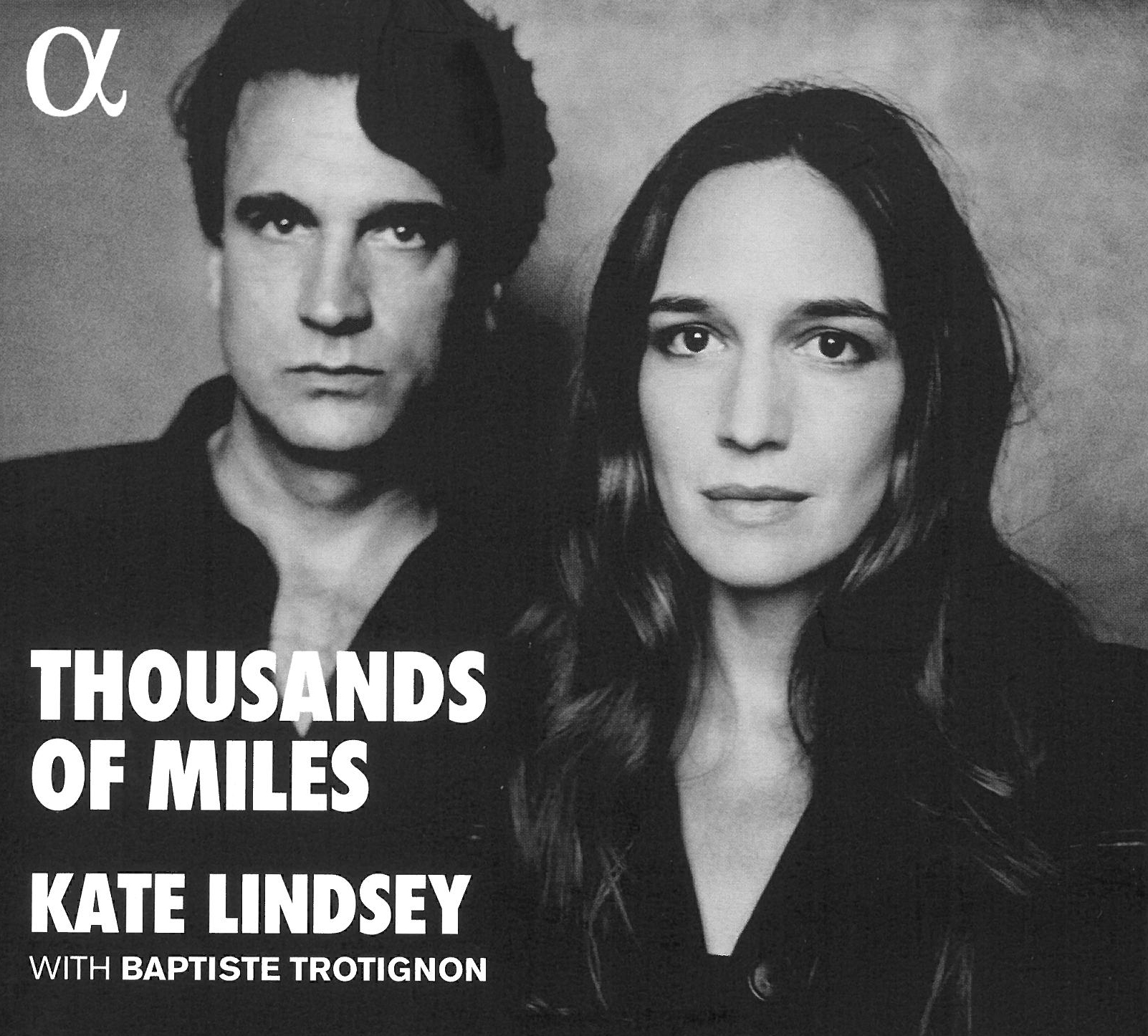
03 Thousands of MilesThousands of Miles
Kate Lindsey; Baptiste Trotignon
Alpha Classics ALPHA 272 (alpha-classics.com)

Kurt Weill may be correctly described as a misunderstood genius. He was very serious about his music, yet was (and still is by many) dismissed as a “cabaret composer.” Despite the success of his collaborations with Bertolt Brecht, these works were banned in Nazi Germany and took the better part of the 1970s to reclaim their place in the repertoire. Similarly, his American works (One Touch of Venus, Street Scene, Lost in the Stars) were judged to be “not American enough” and not sufficiently “jazzy.” Here is a pairing of two artists to put both of these myths to well-deserved rest.

Kate Lindsey, a classically trained mezzo, takes on Weill as if his works were more traditional German and Austrian lieder. In fact, when intermingled with songs by Alma Mahler, Erich Korngold and Alexander von Zemlinsky, the interpretative point is beautifully made. On the other hand, jazz pianist Baptiste Trotignon eschews often sketchy and reliably non-Weill arrangements and reductions and instead interprets the melodies in the best jazz tradition. The result is as fresh and surprising as you would expect: Weill the classical composer, and Weill the Gershwin rival! Although for many of us it may be hard to get the voice of Lotte Lenya out of our heads, the genius of Weill demands no less than that.

05 O Gladsome LightO Gladsome Light
Lawrence Wiliford; Marie Bérard; Keith Hamm; Steven Philcox
Stone Records 506019278065 (stonerecords.co.uk)

That tenor Lawrence Wiliford’s voice is perfectly suited to English repertoire is clearly illustrated on this recording. In songs and hymns by Gustav Holst, his lesser-known student Edmund Rubbra and contemporary Ralph Vaughan Williams, Wiliford displays his gift for expressiveness, sensitivity to text and challengingly high tessitura. These qualities were assimilated through his experiences singing in the church since boyhood, roles in Canadian Opera Company productions and as co-founder of the Canadian Art Song Project along with pianist Steven Philcox (who also accompanies beautifully on this recording).

Because Rubbra is relatively unknown, we are grateful for the singer’s inclusion of transcendent modal songs such as The Mystery and Rosa Mundi as well as Meditations on a Byzantine Hymn for solo viola played sublimely by Keith Hamm and Variations on a Phrygian Theme for solo violin on which Marie Bérard displays her signature sweetness of tone. (Both Hamm and Bérard are members of the COC orchestra.) Also of note from Rubbra is Hymn to the Virgin and Jesukin. Upon first hearing, I spent several minutes searching through liner notes for the name of the harpist. In fact, Rubbra had cleverly composed his accompaniment by the use of spread piano chords, resulting in a “harp-like rendition” played so rockingly gentle by Philcox that one is easily lulled and thus bewildered, but happily so.

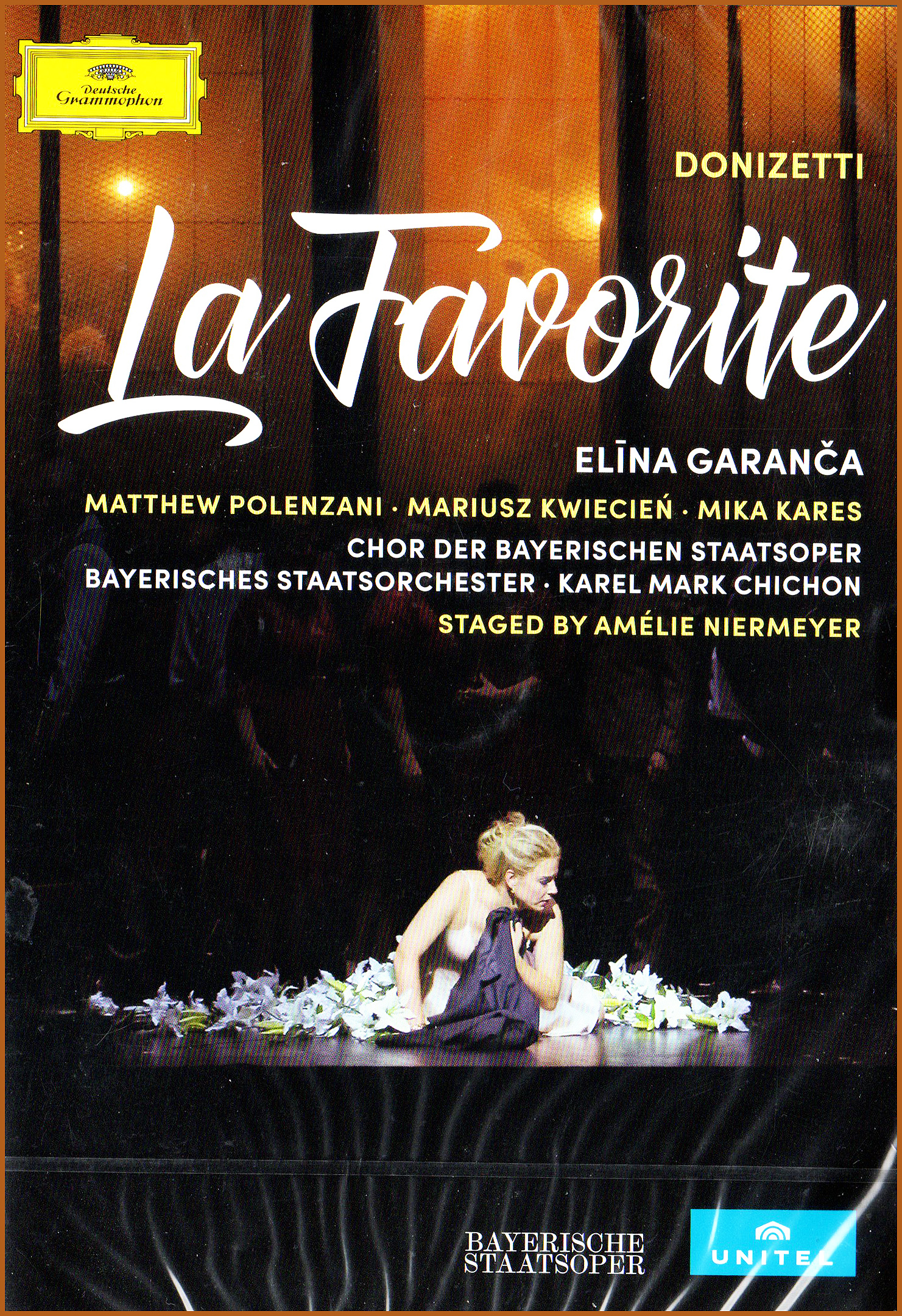
06 Donizetti FavoritaDonizetti – La Favorite
Elīna Garanča; Bayerische Staatsoper; Karel Mark Chichon
Deutsche Grammophon 073 5358 

This is indeed a superlative performance from Munich, to be remembered for a long time to come. It brings out all the glory that lay partly dormant in past performances, although the opera did well for the last 177 years since first performed in Paris with great success. This new production perhaps wouldn’t have happened without Elīna Garanča’s keen interest in the project; the role seems written for her and she even brought along her husband Karel Mark Chichon to conduct as if the score was written for him. A happy situation, as there is a symbiotic relationship here; the two inspire each other and it sparkles like electricity in the air.

The great mezzo towers over everything, vocally, artistically and even physically with tremendous vocal and emotional range and an incredible commitment to the character she plays. Léonor de Guzman is a beautiful woman literally enslaved by the King of Castile in 14th-century Spain, trying to break out by finding true love with a young man, only to be outwitted by the King, losing everything including her life. No less memorable are the men: American lyric tenor Matthew Polenzani, as Fernand the hapless lover, is glorious in his passionate love for Léonor and displays magnificent emotional and vocal fireworks in his grand scene at the third act finale when he finds out he’s been cheated by marrying the King’s mistress. Internationally famous Polish baritone Mariusz Kwiecien is perfectly cast as the charming, but utterly ruthless, powerful monarch who, also infatuated with Léonor but having to give her up, is thirsty for revenge.

Talented director Amélie Niermeyer has a well-thought-out konzept definitely centring on the woman. Sets are minimal but powerful and create intimacy as well as religious fervour, not to mention space and grandeur that works so well that it even invokes the Grand Opera in Paris.

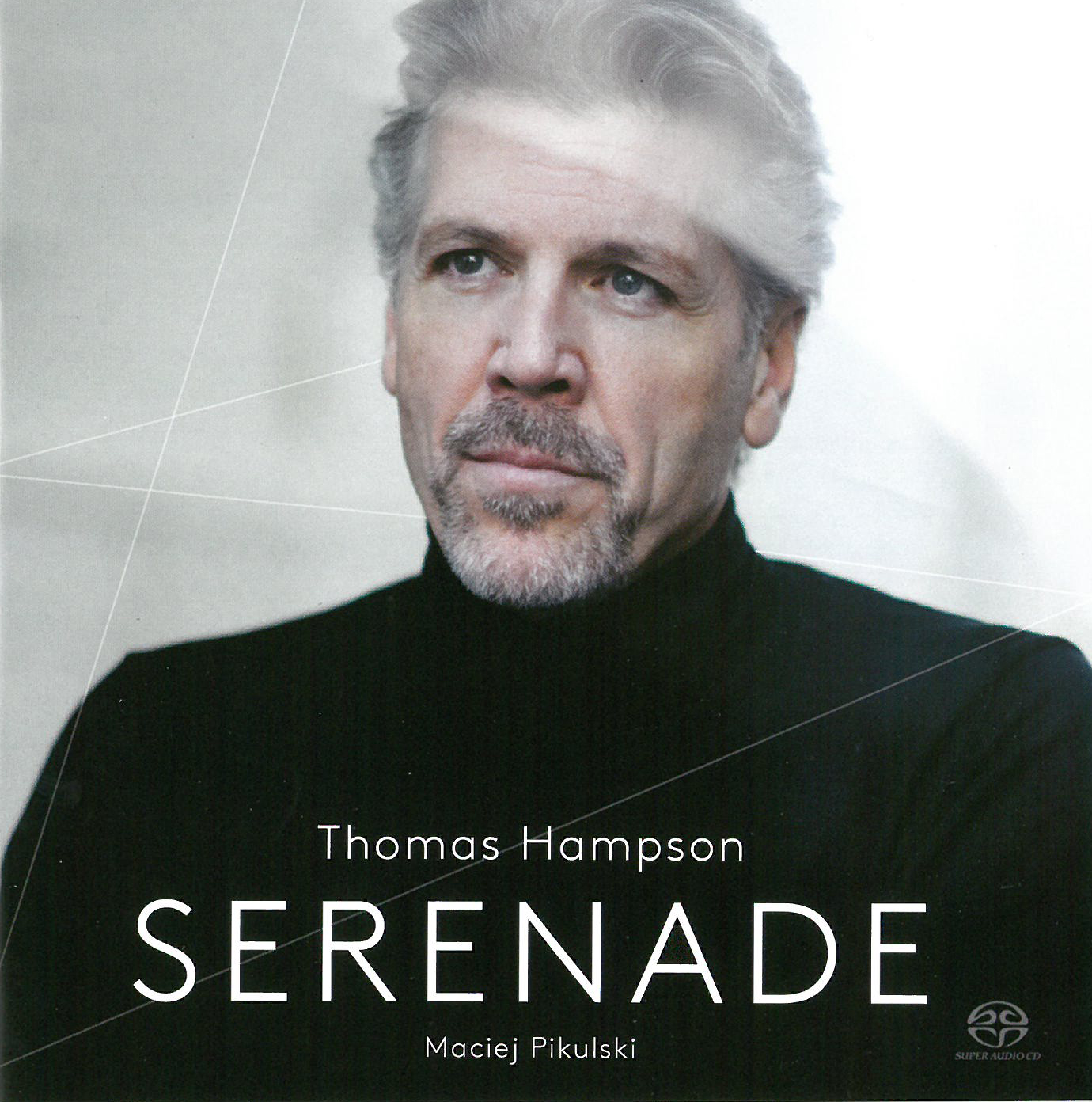
Serenade
Thomas Hampson; Maciej Pikulski
Pentatone PTC 5186 681 (pentatonemusic.com)

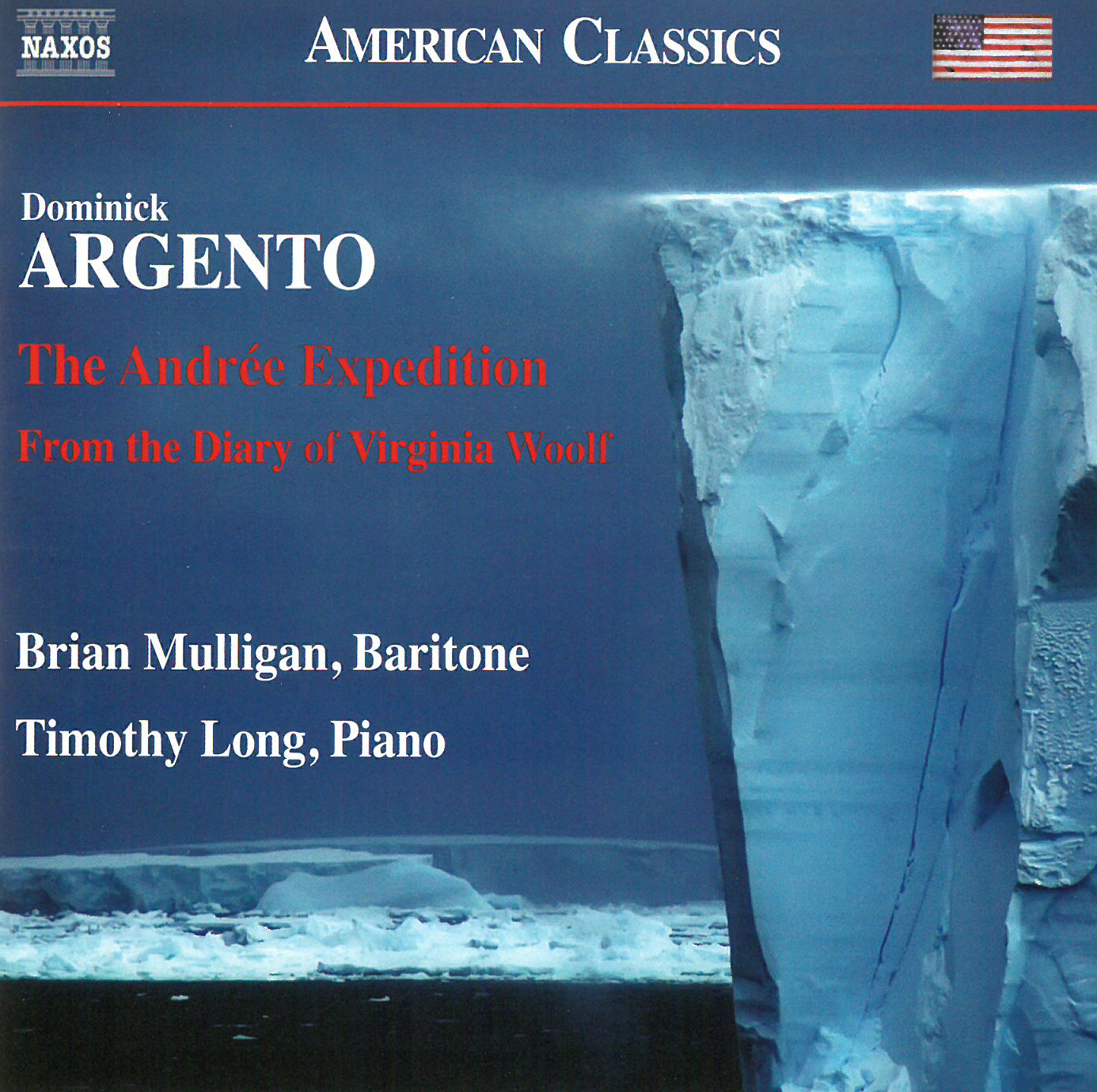
Dominick Argento – The Adree Expidition
Brian Mulligan; Timothy Long
Naxos 8.559828 (brian-mulligan.com)

07a Thomas HampsonPoor baritone – the undisputed “viola of voices.” You see, among orchestral instruments, the violas get no respect. All the best jokes about musical instruments start with something like this: “What do you call 100 violas at the bottom of the ocean….” Seemingly, baritones get the same dismissive treatment. You’ve heard the Three Tenors, you know of the Celtic Tenors. There are superstar sopranos, diva sopranos – even an occasional mezzo star (Magdalena Kožená, Frederica von Stade and many others). But when, oh when, have you heard about a baritone superstar? A part of this neglect is rooted in the repertoire – baritones are usually the villains, scoundrels, humourless fathers or sour priests. But the true mystery to me is why a baritone (one of the loveliest voices you are likely to hear, and for me THE best voice for chanson, lieder and any other voice-and-piano music) has never reached the levels of adoration that other voices have.

07b Dominick ArgentoHere to prove my point, two gentlemen poles apart in their careers. Thomas Hampson, arguably the “old guard” baritone, with several decades, and some 170 CDs to his name, is pitted against Brian Mulligan, a young and already accomplished graduate of the Juilliard School, here making his recording debut. Even their choice of music underlines the elegant divergence in their approaches: Hampson recorded his first record exclusively dedicated to French songs by opera composers, while Mulligan chose new vocal works by the American, Dominick Argento. Both are passionate, lyrical, thoughtful singers. Both fully understand the works they sing – no empty sound-making typical of some sopranos here. Both have the benefit of intelligent accompaniment by great piano players: Hampson with the phenomenal Maciej Pikulski, and Mulligan with the equally redoubtable Timothy Long. So maybe the recording quality will give one of them an edge? Alas, the PentaTone transparent recording is matched here by the more present Naxos studio job – both excellent. So the contest is a complete draw, as both singers are wonderful, unabashed, triumphant and resounding baritones!

The king of voices (in my small universe) proves again its power and beauty, showcased by both a seasoned and a novice singer, delivering the most satisfying vocal music of the past and the present and leaving the listener with an urgent need to hear more. Now, about those violas…

08 Aldridge Sister CarrieRobert Aldridge – Sister Carrie
Zabala; Phares; Morgan; Jordheim; Cunningham; Florentine Opera Chorus; Florentine Opera Company; Milwaukee Symphony Orchestra; William Boggs
Naxos 8.669039-40

Moby-Dick, The Grapes of Wrath, Little Women, The Scarlet Letter… The list of new operas based on classic American novels keeps growing. In 2012, the Naxos recording of Robert Aldridge’s Elmer Gantry, with a libretto by Herschel Garfein, won the Grammy for Best Contemporary Classical Composition. That same year, Aldridge and Garfein completed Sister Carrie, based on Theodore Dreiser’s novel. It was premiered and recorded in 2016 by Milwaukee’s Florentine Opera Company.

It’s 1900. Carrie (mezzo-soprano Adriana Zabala) leaves her job in a Chicago shoe factory, becoming the mistress of salesman Charlie Drouet (tenor Matt Morgan). Besotted with her, restaurant manager George Hurstwood (baritone Keith Phares) steals $10,000 from the restaurant safe, abandons his wife and children, and tricks Carrie into joining him on a train to New York.

Tracked down, Hurstwood avoids prosecution by returning $7,000, promising to repay the balance. Suddenly impoverished, he becomes depressed and reclusive. Carrie leaves him, finding work as an operetta chorister (the dress-rehearsal scene is hilarious). Hurstwood, unemployed and homeless, is severely beaten leading homeless replacement-workers during a labour strike. The opera ends with a chorus of homeless men, Hurstwood’s suicide and Carrie, now a star, singing in the operetta production-number, Why I’m Single.

Naxos describes Aldridge’s two-and-a-half-hour score as “richly melodic and unapologetically tonal.” Drawing upon the energy and bright colours of Broadway musicals (although a darker palette would have been more appropriate), Sister Carrie succeeds as very accessible, highly theatrical entertainment.

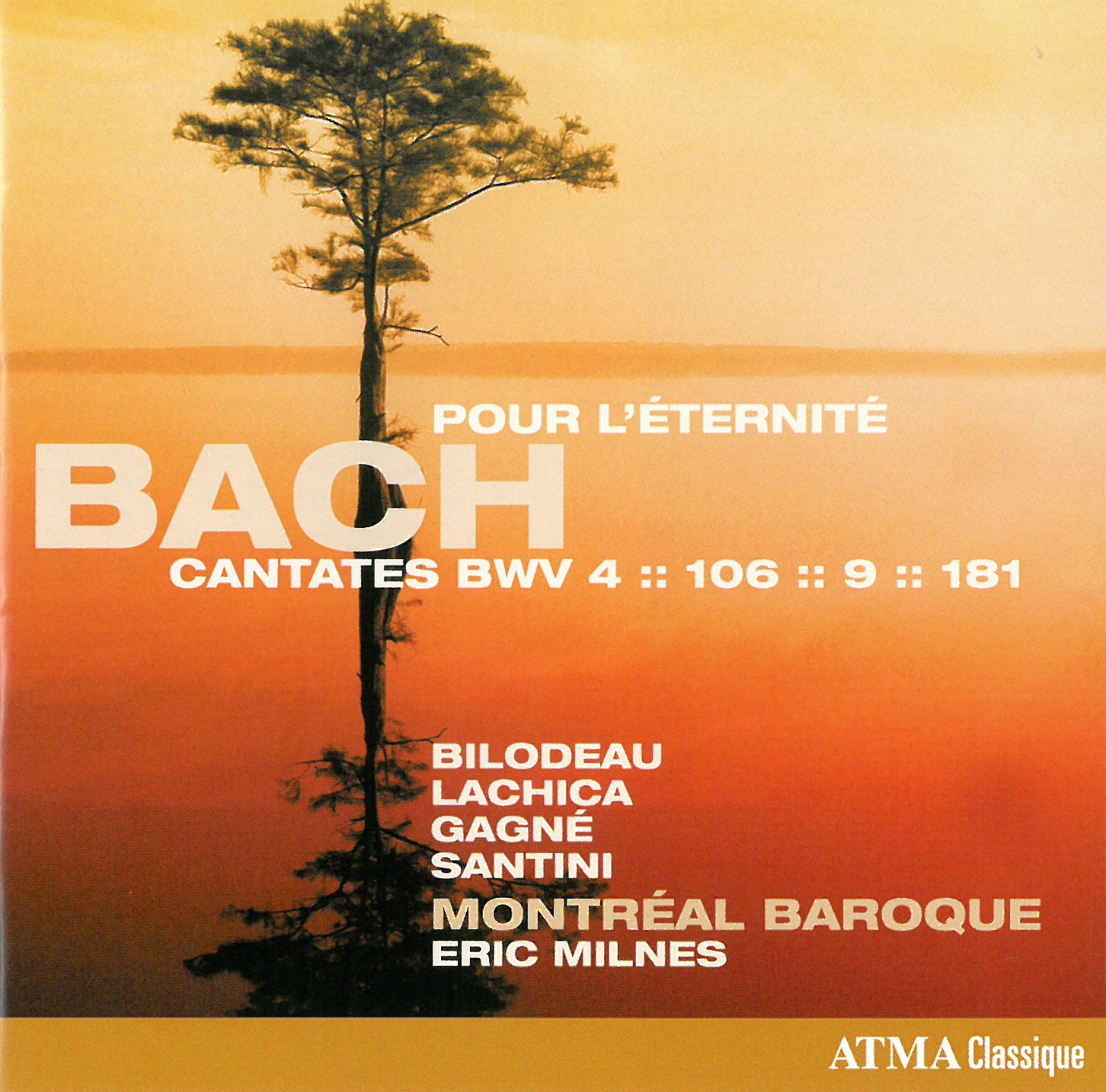
01 Bach CantatasPour L’éternité: Bach – Cantatas 4; 106; 9; 181
Bilodeau; Lachica; Gagné; Santini; Montréal Baroque; Eric Milnes
ATMA ACD2 2406 (atmaclassique.com)

This CD contains recordings of four cantatas: two very early ones, composed when Bach was working in Mühlhausen (including the earliest one, the beautiful funeral cantata Gottes Zeit ist die allerbeste Zeit, and two later ones which date from Bach’s Leipzig period. Two things stand out: firstly, that following the theories and the practice of Joshua Rifkin and Andrew Parrott, the choral sections are sung by the soloists one to a part (which is probably historically correct and produces a real gain in clarity) and secondly, that the soloists are all young singers at the beginning of their careers; they were the winners of a competition held in 2014.

Tenor Philippe Gagné is the only one whom I have heard in concert. He is very good and so are the other three: Odéi Bilodeau, soprano, Elaine Lachica, alto, and Drew Santini, baritone. I found the baritone especially impressive.

In the 18th century it was expected that instrumentalists could play more than one instrument. Here we find that that practice is not entirely obsolete: Margaret Little plays viola and viola da gamba, Susie Napper plays cello as well as viola da gamba, Mélisande Corriveau plays cello and recorder and Matthew Jennejohn plays both oboe and cornetto.

There are now a number of complete recordings of Bach’s cantatas. Montréal Baroque has never presented their cantata recordings as a complete cycle but I hope that is what they will become.

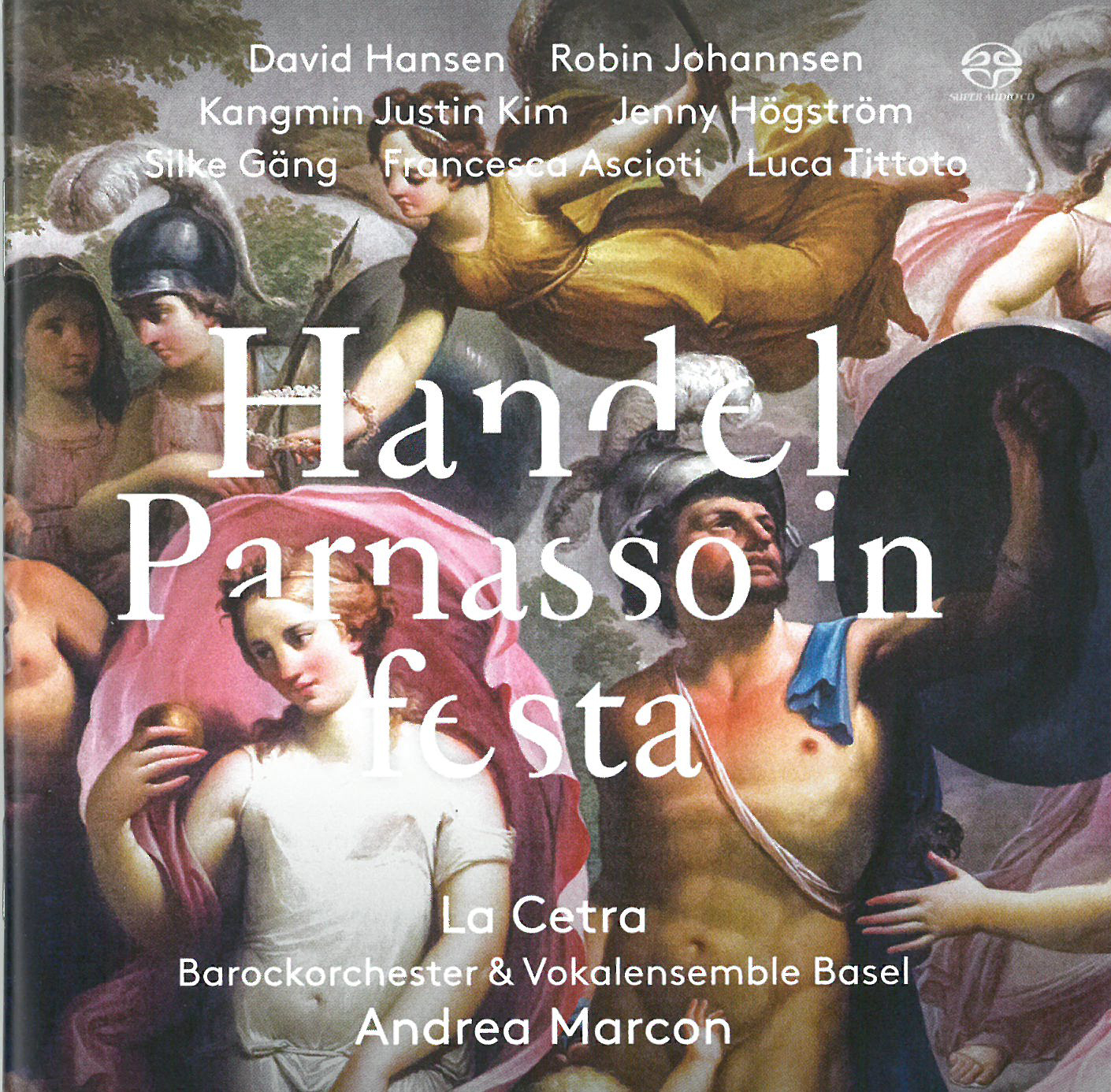
02 Handel ParnassoHandel – Parnasso in festa
Various soloists; La Cetra Barockorchester & Vokalensemble Basel; Andrea Marcon
PentaTone PTC 5186 643
(pentatonemusic.com)

For those of us convinced by the comic Adam Sandler movie that wedding music usually consists just of bad karaoke, here is an antidote: music written for the royal marriage of Princess Anne, the second daughter of King George II of England, and Prince William IV of Orange. Well, let’s say adapted, as Handel used mostly existing music from his oratorio Athalia, not yet heard in London at that time. Only nine passages were new ones, but the text was suitably changed.

Depicting the dogged pursuit of the nymph Thetis by King Peleus (that resulted in nuptials and the birth of Achilles), the libretto is probably by Giacomo Rossi, but its full provenance was never confirmed. The central event, the Celebration at Parnassus, home of Apollo and the muses, is the wedding. Though not a musical drama, the piece is filled with philosophical observations and dialogues on the nature of virtue and love – a perfect wedding present! This recording qualifies as such a gift, as La Cetra under Andrea Marcon is one of the best Baroque ensembles around. The celebrated countertenor David Hansen is nothing short of sensational as Apollo, and PentaTone sets a new standard for clarity in the recording of a period performance.

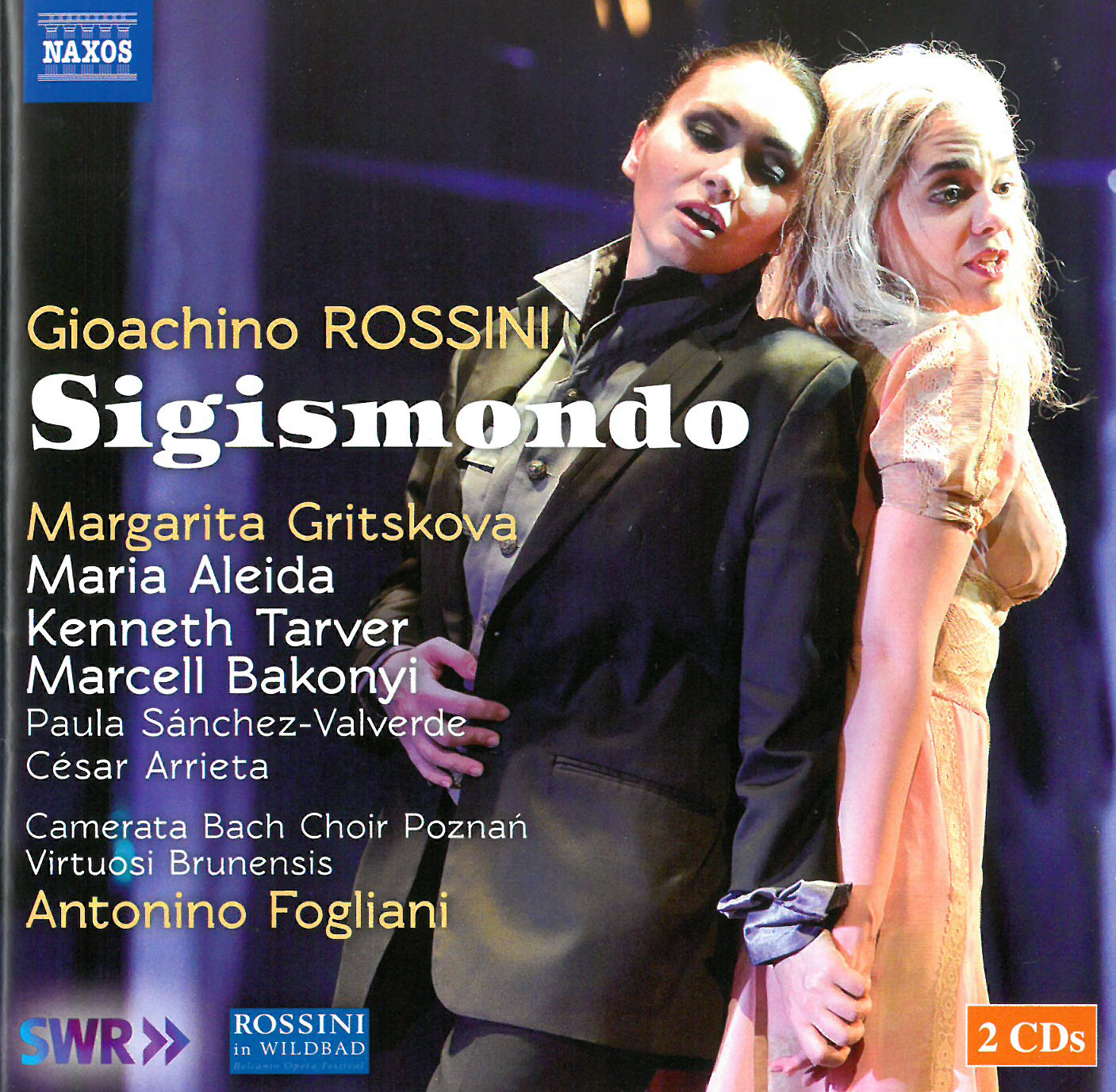
04 Rossini SigismondoRossini – Sigismondo
Gritskova; Aleida; Tarver; Bakonyi; Sánchez-Valverde; Arrieta; Camerata Bach Choir Poznan; Virtuosi Brunensis; Antonino Fogliani
Naxos 8.660403-04

By the age of 23 Rossini had written 13 operas, including two masterpieces inspired by and under the spell of his muse/innamorata Maria Marcolini, the greatest mezzo at the time. Not all were successful, but resourceful fellow that he was, he recycled some of the music later and no one knew the difference. As I was listening to Sigismondo I couldn’t help but recognize several melodies of the Barber of Seville, one in particular, the famous crescendo of the La calunnia aria first appearing here. Sigismondo was Rossini’s last opera for Venice, an opera seria written for Marcolini, who was supposed to be King of Poland. A travesti role, it is here sung by Margarita Gritskova, singing up such a storm with a voice of phenomenal range, power and emotion that one can certainly get an idea what La Marcolini must have been about.

Naxos’ latest release in this series of Rossini's complete 39 operas is a winner on many counts: soprano Maria Aleida (as Aldemira, the King’s wife whom he expelled from the court but on second thought wants her back badly) gives an extraordinary vocal display that’s quite a match for Gritskova. Rossini excelled in writing for female voices; their duets are simply heavenly and rival Bellini. Tenor Kenneth Tarver, familiar to us in this series, is the villain who planned the murder of the Queen and is so severely tested in the high-flying tessitura that I felt Rossini planned to murder him instead. Antonino Fogliani can hardly be bettered in his magisterial handling of the score. Most enjoyable, highly recommended.

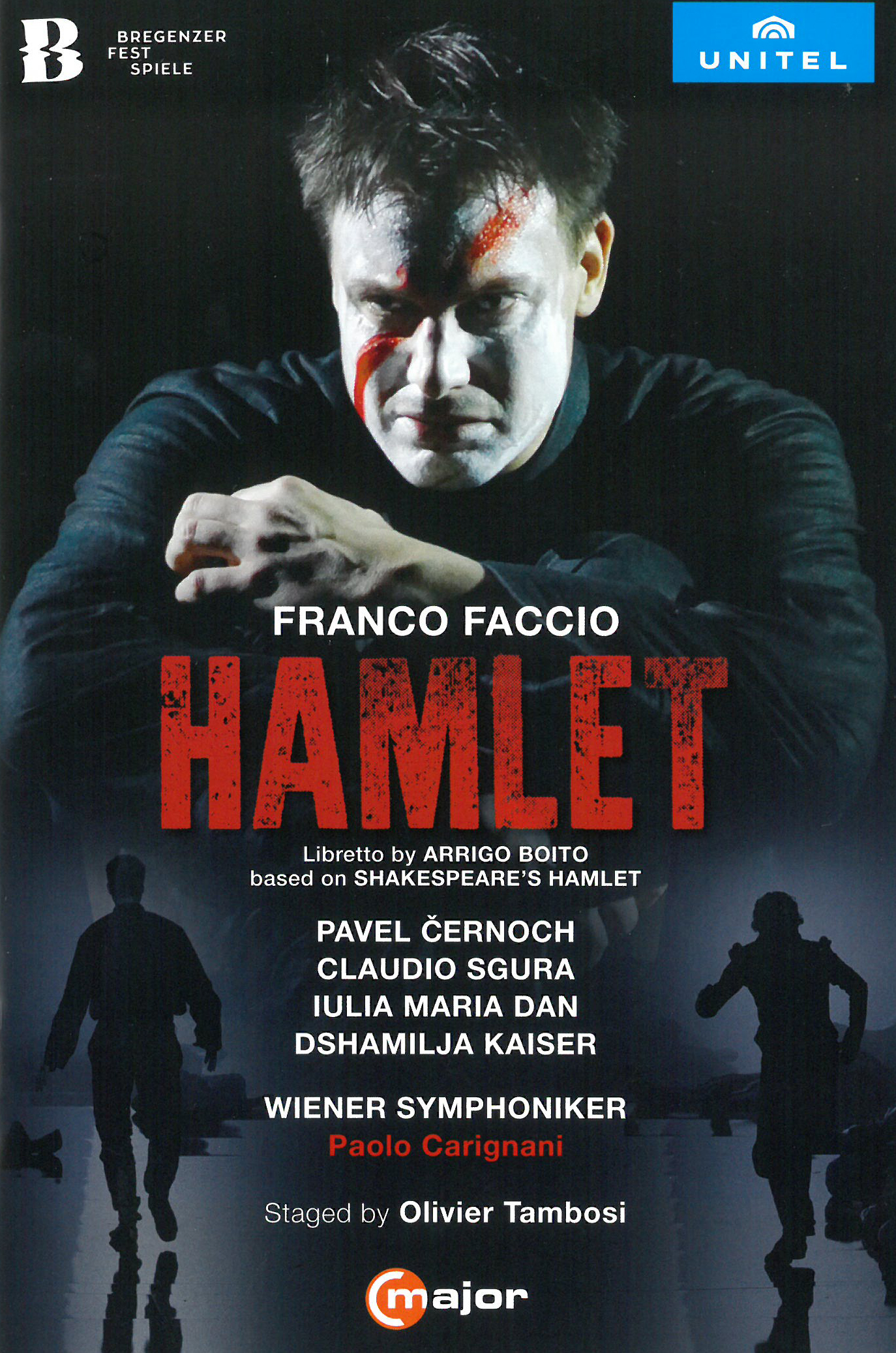
05 Faccio HamletFranco Faccio – Hamlet
Paul Cernoch; Claudio Sgura; Julia Maria Dan; Dshamilja Kaiser; Wiener Symphoniker; Paolo Carignani
Cmajor 740608

In 1887, Franco Faccio conducted the world premiere of Verdi’s Otello, set to a libretto by Arrigo Boito. More than 20 years earlier, Faccio and Boito had collaborated on a different Shakespearian opera, Amleto (Hamlet). Well-received at its 1865 premiere, a poorly performed revised version flopped in 1871 and Faccio, disheartened, withdrew the work. It remained unperformed until 2014 in concert in Albuquerque, and the fully staged 2016 Bregenz (Austria) Festival production recorded here.

What a wonderful discovery! Faccio’s Hamlet, with its intense, powerful score that anticipates verismo, deserves to be welcomed to all the world’s major opera houses. The fiery “Get thee to a nunnery” duet between Hamlet and Ophelia foreshadows the Santuzza-Turiddu duet in Cavalleria Rusticana; the dreamy music of Ophelia’s mad scene is hauntingly beautiful; and the poignant, stirring strains of her funeral procession could easily be mistaken for a Mascagni intermezzo.

Boito’s skillful libretto tightens Shakespeare’s play but retains all the famous episodes, adding a remorse aria for Gertrude to match the aria on Shakespeare’s prayerful text for Claudius. Heading the excellent cast is Pavel Černoch, superb as Hamlet with his dark, focused tenor and rock-solid high notes. Thankfully, stage director Olivier Tambosi eschews the grotesqueries common at Bregenz, although he introduces some inexplicable movements by silent courtiers into the otherwise traditional, un-updated mise-en-scène. Another puzzling touch – large images of eyes on most of Gesine Völlm’s period costumes.

That aside, this DVD is an absolute must-see-and-hear for every opera lover.

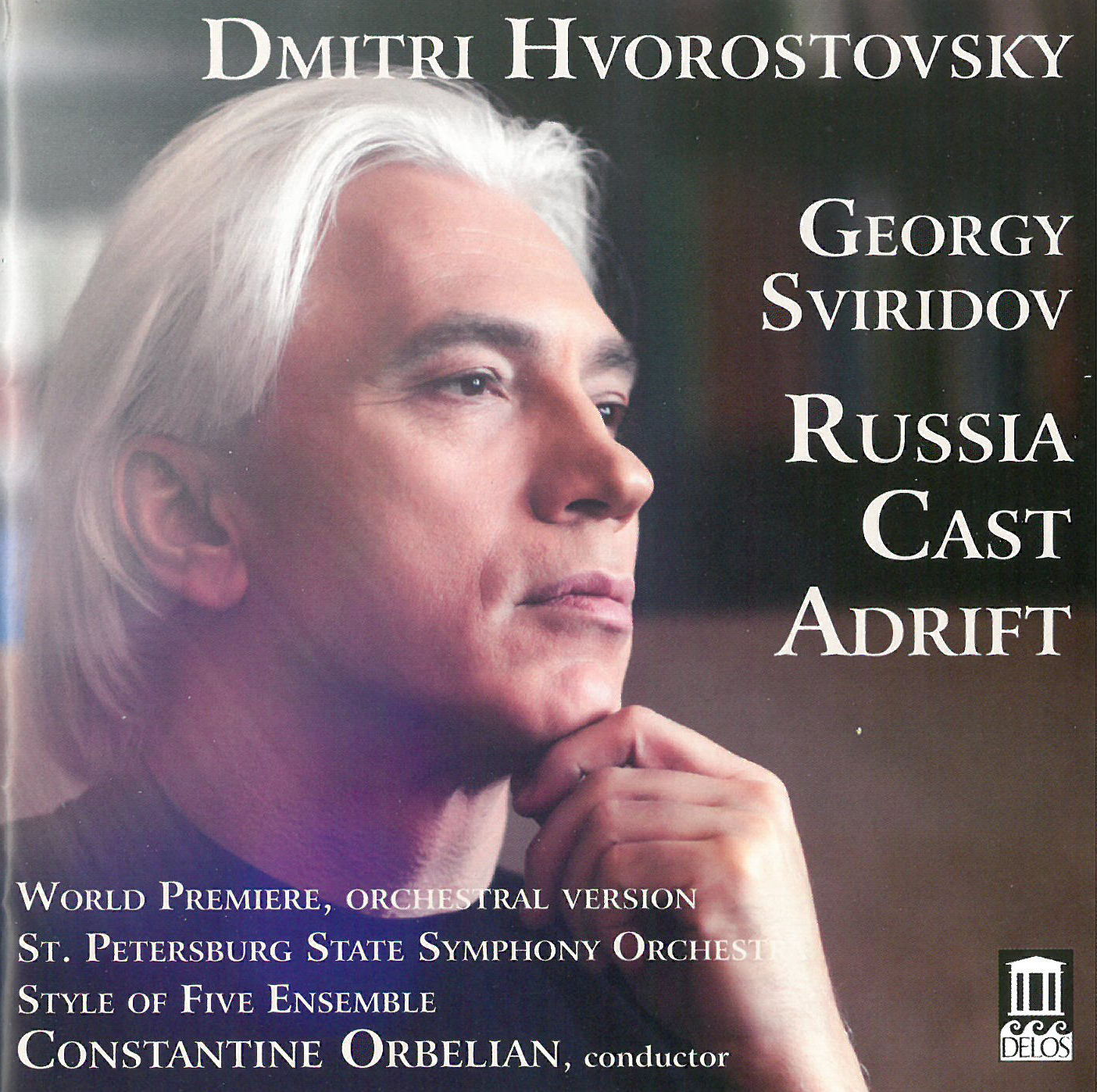
08 HvorostovskyRussia Cast Adrift
Dmitri Hvorostovsky
Delos DE 1631 (delosmusic.com)

The relationships between composers and their favourite interpreters are responsible for some of the best vocal music ever written. Sometimes they are romantic in nature, as in the case of Benjamin Britten and Peter Pears. On many occasions, they are simply a meeting of two musical geniuses – both attuned to a secret chord within, as with Gerald Finley and the late Finnish composer Einojuhani Rautavaara. Georgy Sviridov found his muse in Dmitri Hvorostovsky. They met for the first time just four years before the composer’s death in 1994. The occasion was an auspicious one: Hvorostovsky was performing Russia Adrift, a “poem” for voice and piano, immortalized in performances by the redoubtable Elena Obraztsova. Upon hearing Hvorostovsky’s version, the composer was enchanted and a beautiful friendship followed. In the remaining years, Hvorostovsky became “the” voice for Sviridov’s music.

The one project the composer did not finish before his death was an orchestral version of Russia Adrift. Here it is recorded by an orchestra and folk-instrument ensemble, in a version completed by Evgeny Stetsyuk. The words of Sergei Yesenin, the once-blacklisted Soviet poet from the 1920s, are filled with nostalgia for the Russia of yesteryear. Given the present situation in that great nation, those words acquire additional poignancy. Hvorostovsky’s voice does not betray any traces of the serious health crisis he has been undergoing of late. The album closes with a spine-tingling song, The Virgin in the City, from the vocal poem Petersburg, written especially for him.

Back to top