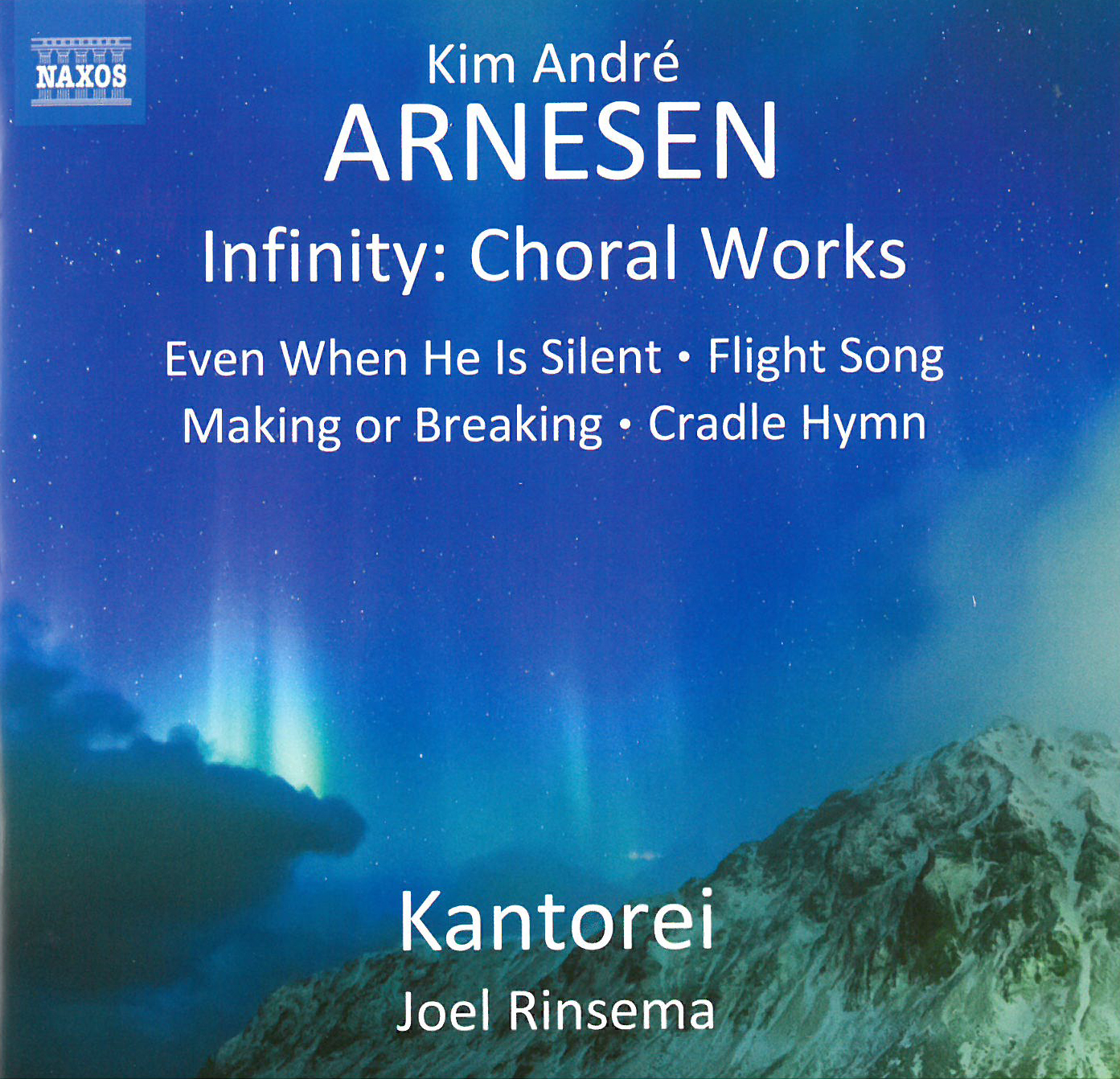
03 ArnesenKim André Arnesen – Infinity: Choral Works
Kantorei; Joel Rinsema
Naxos 8.573788 (naxos.com)

Kantorei, a greatly admired ensemble with international tours, workshops and major commissions to its credit, is an elite choir based in Denver, Colorado and led by artistic director Joel Rinsema. This recording of compositions from the past eight years by Norwegian composer Kim André Arnesen (b.1980) places it in the front ranks. Rich, clear tone, balance and expressiveness characterize recordings of these religious and meditative pieces, four of which are commissions by Kantorei and Rinsema. Some Arnesen works show the influence of composers like Morten Lauridsen and Eric Whitacre, with long-sustained tones, division of the chorus’ sections and high clusters of soprano voices that produce radiant effects. Of these, I found the adventurous title work Infinity and the Holocaust-inspired Even When He is Silent especially moving. The lullabies Dormi Jesu and Cradle Hymn (the latter of which was sung for President Obama in the White House) are among the more appealing simpler works. Here babies and parents could perhaps provide the most authoritative reviews! When simplicity ventures into harmonic cliché, though, my inner music theory cop is triggered, as in The Gift I’ll Leave You.

In its mastery of textures and vocal registers, Arnesen’s compositional craft is remarkable. The choice of works and the disc’s overall smooth sound also suggest its potential for meditation; in any case I found myself taking long, even breaths. This serene and attractive disc is recommended for both secular and religious listeners.
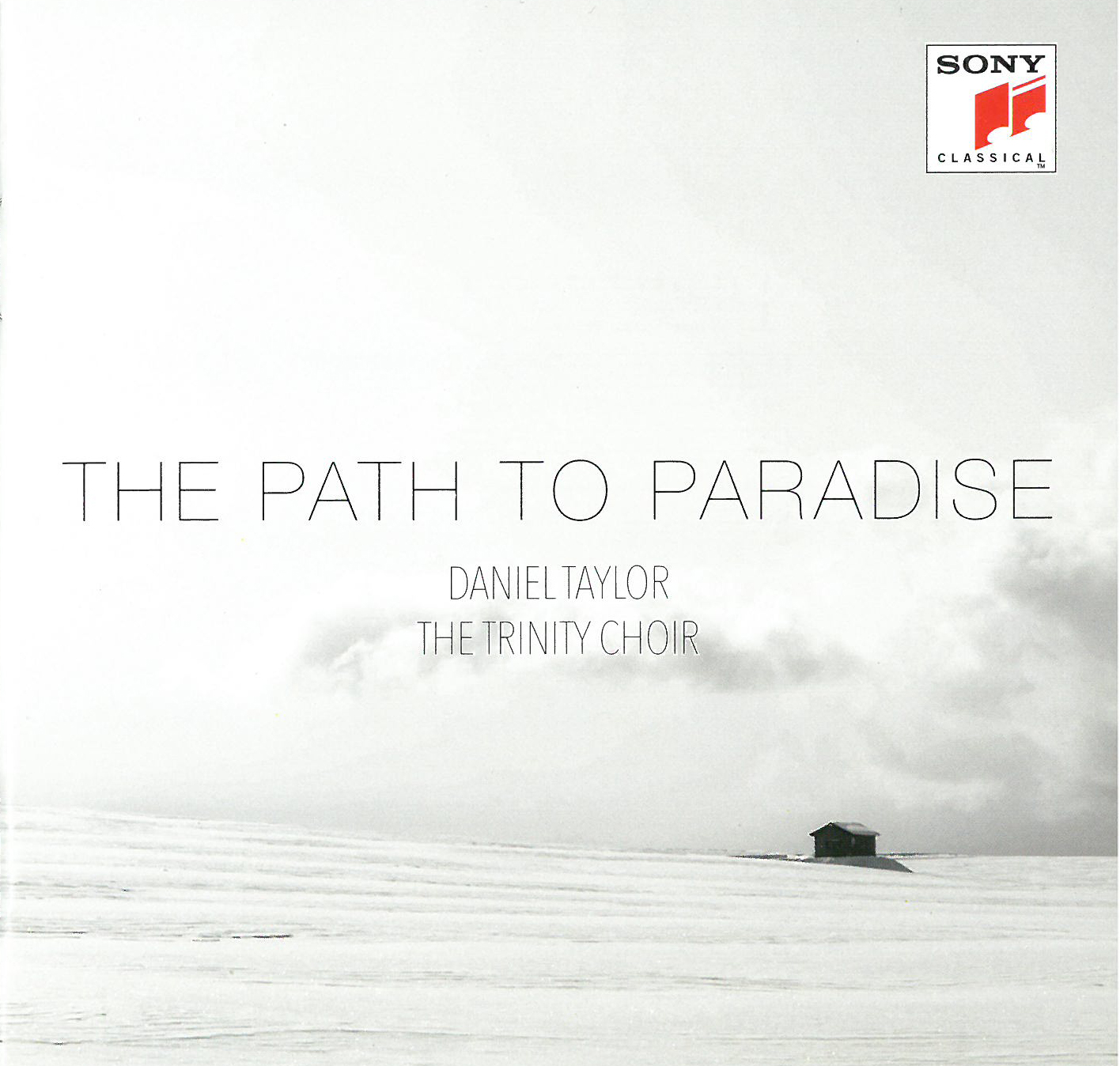
04 Daniel TaylorThe Path to Paradise
The Trinity Choir; Daniel Taylor
Sony Classical 19075801822 (theatreofearlymusic.com)

The Trinity Choir was founded in 2015 by countertenor and conductor Daniel Taylor. It is a chamber choir (with, on this recording, 32 singers); they sing a cappella. The centre of their repertoire is the 16th century (Thomas Tallis, John Sheppard, Orlando di Lasso, William Byrd, Nicolas Gombert) but they make a point of also including more modern works. This recording includes the Miserere of the 17th-century composer Gregorio Allegri (much the most familiar work on this disc) and Arvo Pärt’s Magnificat and Nunc Dimittis (which coincidentally appear on the Estonian Philharmonic Chamber Choir’s 2017 Schnittke/Pärt release, also recently reviewed by me for The WholeNote).

Most of the singers are young and at the beginning of their career, although several, like the soprano Ellen McAteer and bass-baritone Joel Allison, are beginning to make a name for themselves through their participation in other choirs. The singing is very fine throughout. I was particularly taken with Gombert’s Media Vita with its long melodic lines.

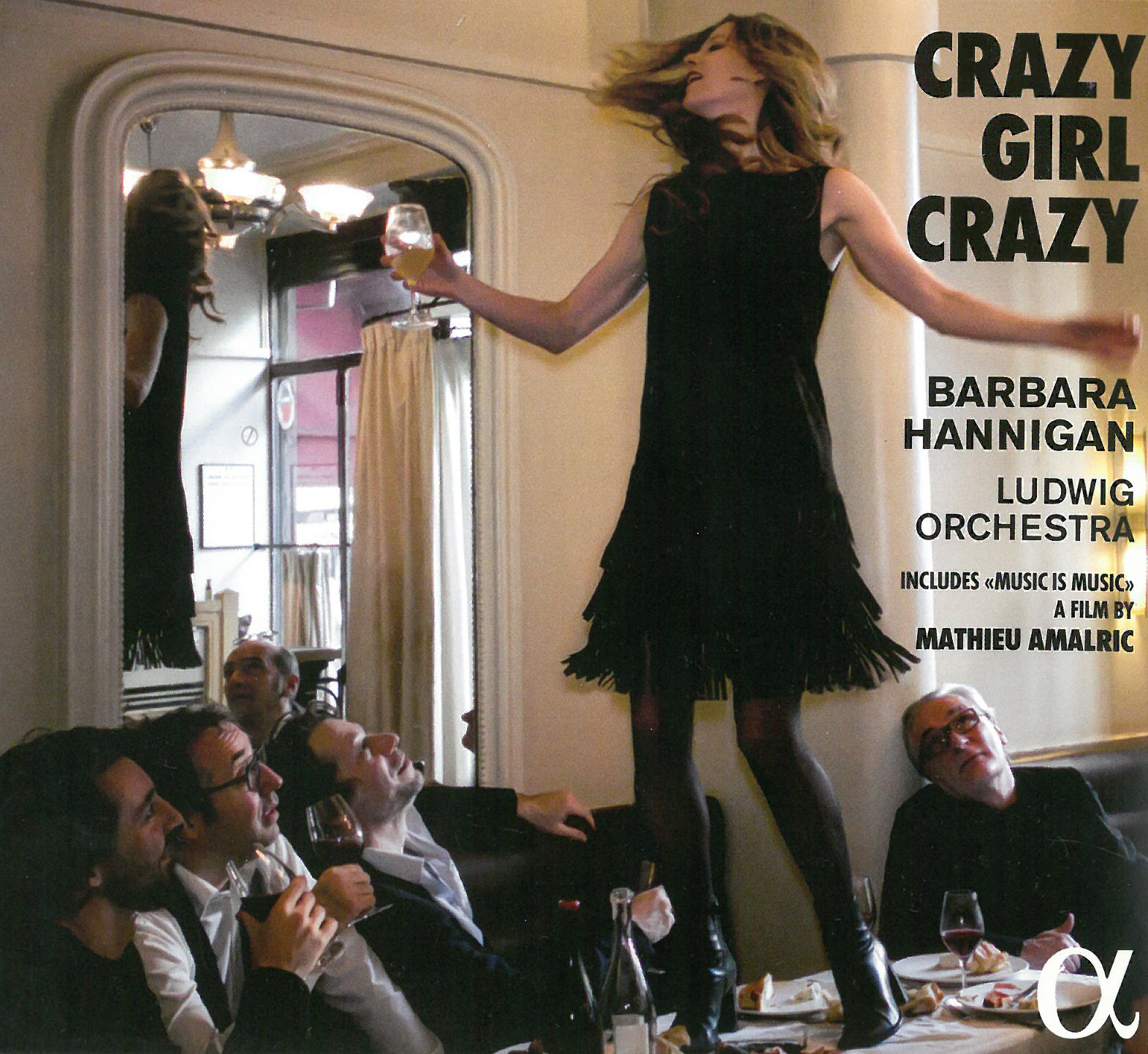
05 Barbara HanniganCrazy Girl Crazy
Barbara Hannigan; LUDWIG Orchestra
Alpha Classics ALPHA 293 (alpha-classics.com)

As internationally celebrated Canadian soprano and conductor Barbara Hannigan said in a 2015 CBC radio interview: “I love taking risks as a performer …” Her risk-taking paid unexpected dividends when her Crazy Girl Crazy CD was awarded the 2018 GRAMMY for Best Classical Solo Vocal Album.

In fact, Hannigan went well beyond the solo vocalist category. She not only sang but also conducted the Amsterdam-based LUDWIG Orchestra. She even had a hand in the newly minted orchestral arrangement of songs from Gershwin’s 1930 musical Girl Crazy in collaboration with Bill Elliott.

Sequenza III (1965) for female voice serves as the album’s spectacular curtain-raiser. Originally composed for the legendary American diva Cathy Berberian by Luciano Berio, Hannigan puts her own vocal and intellectual stamp on this vocal tour de force. Berio opened the door to multiple renderings of his score, noting, “In Sequenza III I tried to assimilate many aspects of everyday vocal life, including trivial ones, without losing intermediate levels or indeed normal singing … Sequenza III can also be considered as a dramatic essay whose story [… explores] the relationship between the soloist and her own voice.” I think the composer would be chuffed with Hannigan’s powerfully idiosyncratic interpretation and advocacy of this seminal work.

The core of Crazy Girl Crazy is however centred on Hannigan’s long-term love affair with Alban Berg’s opera Lulu, the lead character of which she has portrayed onstage to great acclaim. It is represented here by Berg’s masterful symphonic-scale Lulu Suite, given an emotionally powerful performance by LUDWIG Orchestra under Hannigan’s direction.

The album closes with Girl Crazy Suite, the Elliott/Hannigan re-orchestration of Gershwin’s original songs, but re-contextualized in light of Berg’s orchestral sound world.

As a long-term fan of the music on this disc, I found it a very satisfying listen. It’s also satisfying to know that in Hannigan this repertoire has a convincing advocate able to convey it with passion and intellectual rigour to future generations.

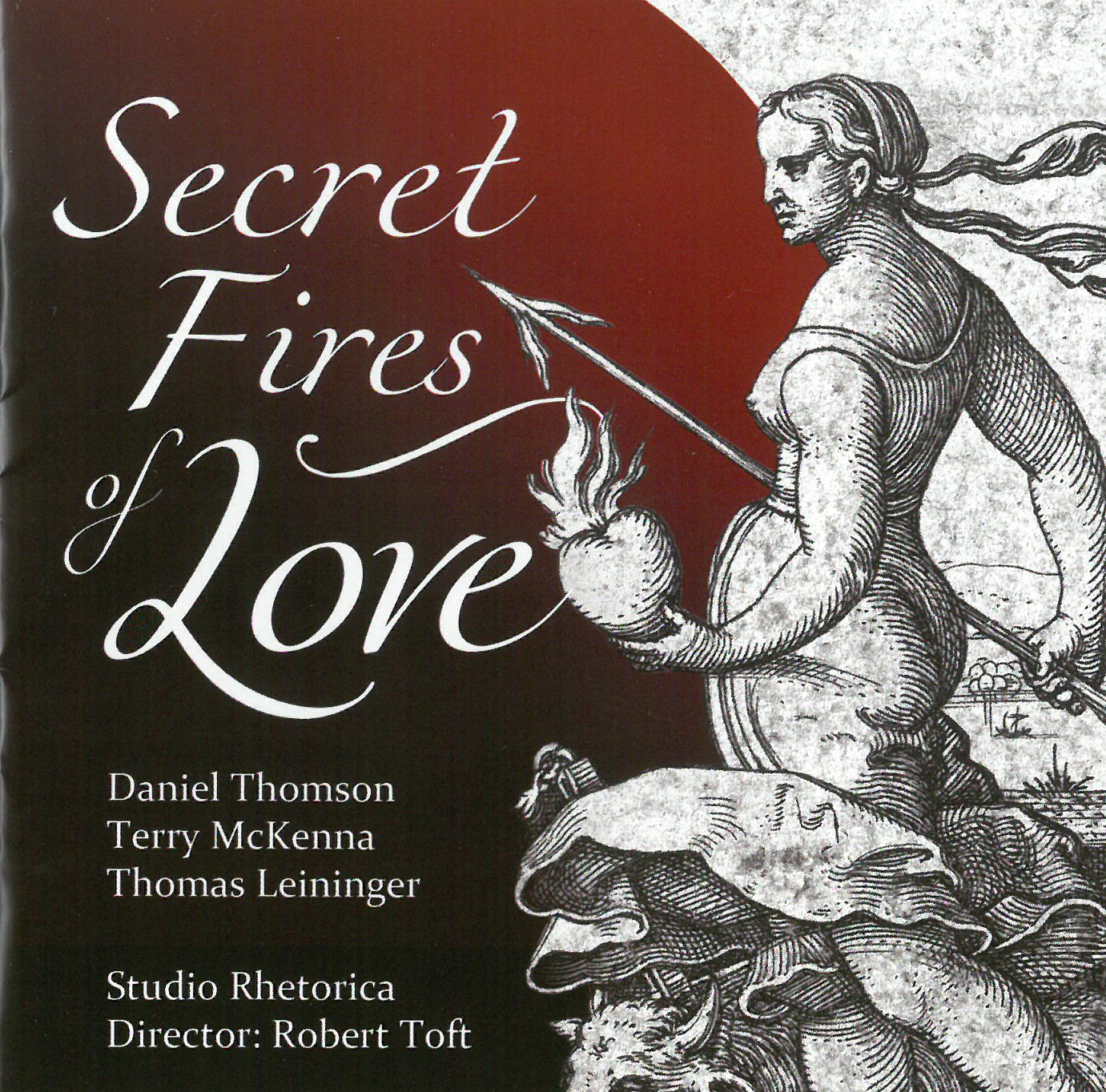
01 Secret Fires of LoveSecret Fires of Love
Daniel Thomson; Terry McKenna; Thomas Leininger; Studio Rhetorica; Robert Toft
Talbot Productions TP1701 (belcantohip.com)

The love song has been a mainstay of vocal music, through its incarnations as performed by minnesingers or troubadours, followed by lieder or chanson artists, to John Cusack with a boom box above his head in Say Anything, to the seemingly ubiquitous Ed Sheeran. Throughout this time, it grew steadily louder: the meekest of instruments, the lute, has been supplanted by the guitar (sometimes electric) while the harpsichord yielded to the pianoforte and synthesizers. One thing, seemingly, has been lost: the contemplative, almost meditative quality that permeated the Renaissance and Baroque songs of courtly love. The intimate connection is still there in modern music, the sweet pain of love still exerts its pangs, but the whisper has turned to a shout. No wonder – in our crazy 24/7 world, who really does take time to smell the roses? Robert Toft, that’s who! The music scholar from Western University in London brings together a stellar cast to survey the love songs of the Italian and English Renaissance and Baroque. The unique talents of Daniel Thomson, Terry McKenna and Thomas Leininger recreate the very intimacy, closeness and wonder of music played and sung pianissimo, requiring us to tune out the world and meditate alongside.

Thomson, an Australian countertenor, is having “his” moment: his muscular, precise voice is pure joy. McKenna, a Canadian lutenist, coaxes his “meek instrument” into a commanding performance. Leininger, a German master of the harpsichord, makes one long for the days before the invention of the pianoforte. Arriving a few weeks late for Valentine’s Day, nevertheless this will be the best gift for the one you love.

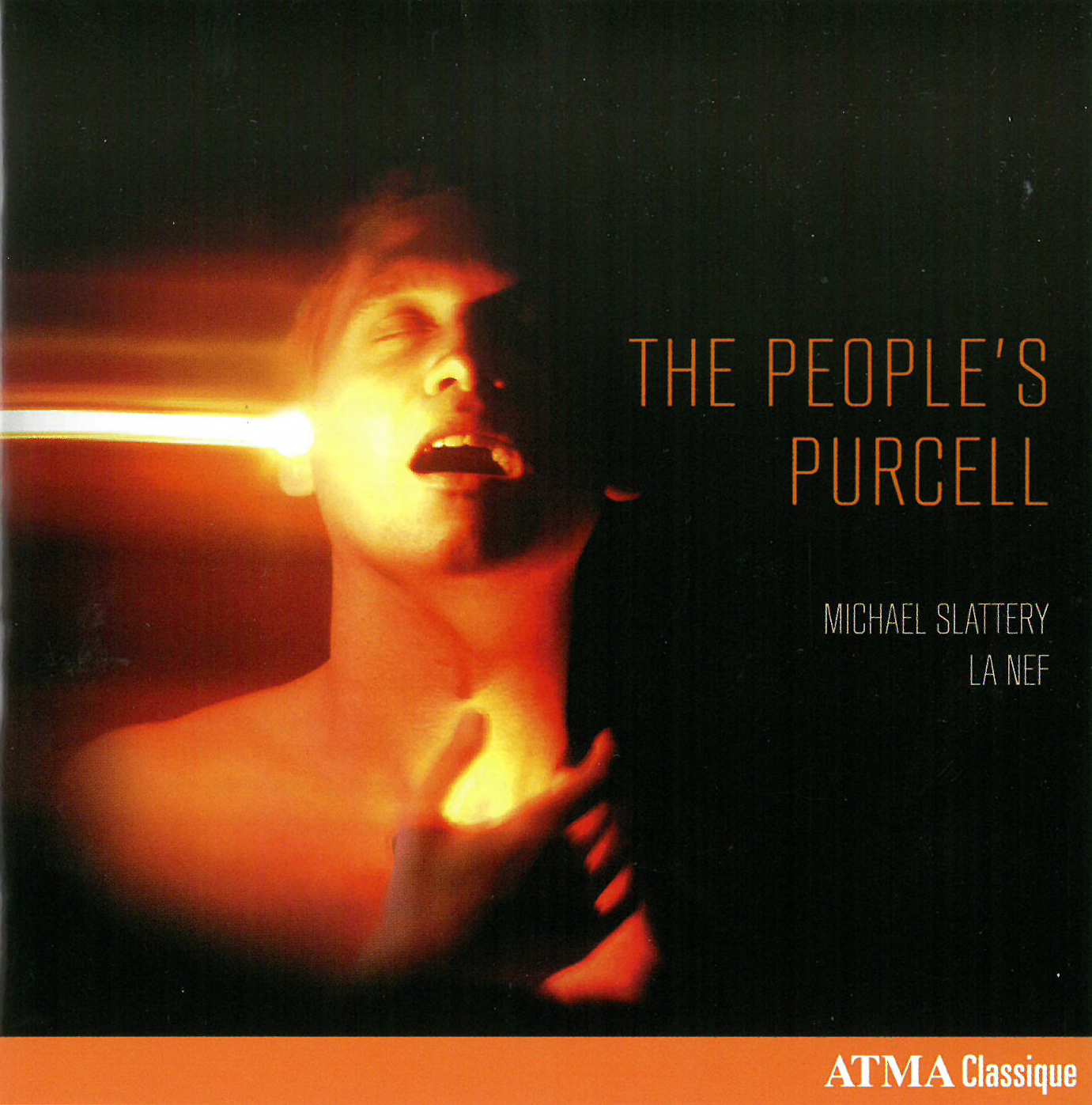
02 Peoples PurcellThe People’s Purcell
Michael Slattery; La Nef
ATMA ACD2 2726 (atmaclassique.com)

As with his 2012 recording, Dowland in Dublin, tenor Michael Slattery has collaborated again with La Nef to present the music of a beloved composer, reworked and transformed in fresh and novel ways that prove most pleasing (and accessible) to a modern listener. Though Henry Purcell enjoyed an elevated position as composer at the court of Charles II, his theatrical music, based on popular song and dance forms of the time, was clearly loved by the more common folk. As well, there has been a long tradition of re-arranging Purcell’s sublime melodies for public use, beginning with Playford’s collection The Dancing Master in 1651.

Each piece selected for this recording has been individually stamped by either Slattery or a member of La Nef, without compromising the original intent of the music. Baroque cellist Amanda Keesmaat and cittern player Seán Dagher infuse their arrangements of instrumental suites from The Fairy Queen and King Arthur with playful interplays and folksy articulations. Flutist Grégoire Jeay and tenor Slattery take turns providing arrangements of the songs, with stunning results. The recording ends with Slattery’s reworking of Dido’s Lament in which a vacillation between the minor and major key provides a surprisingly dramatic and rather surreal effect, poignantly enhanced by the tenor’s artful and subtle delivery.

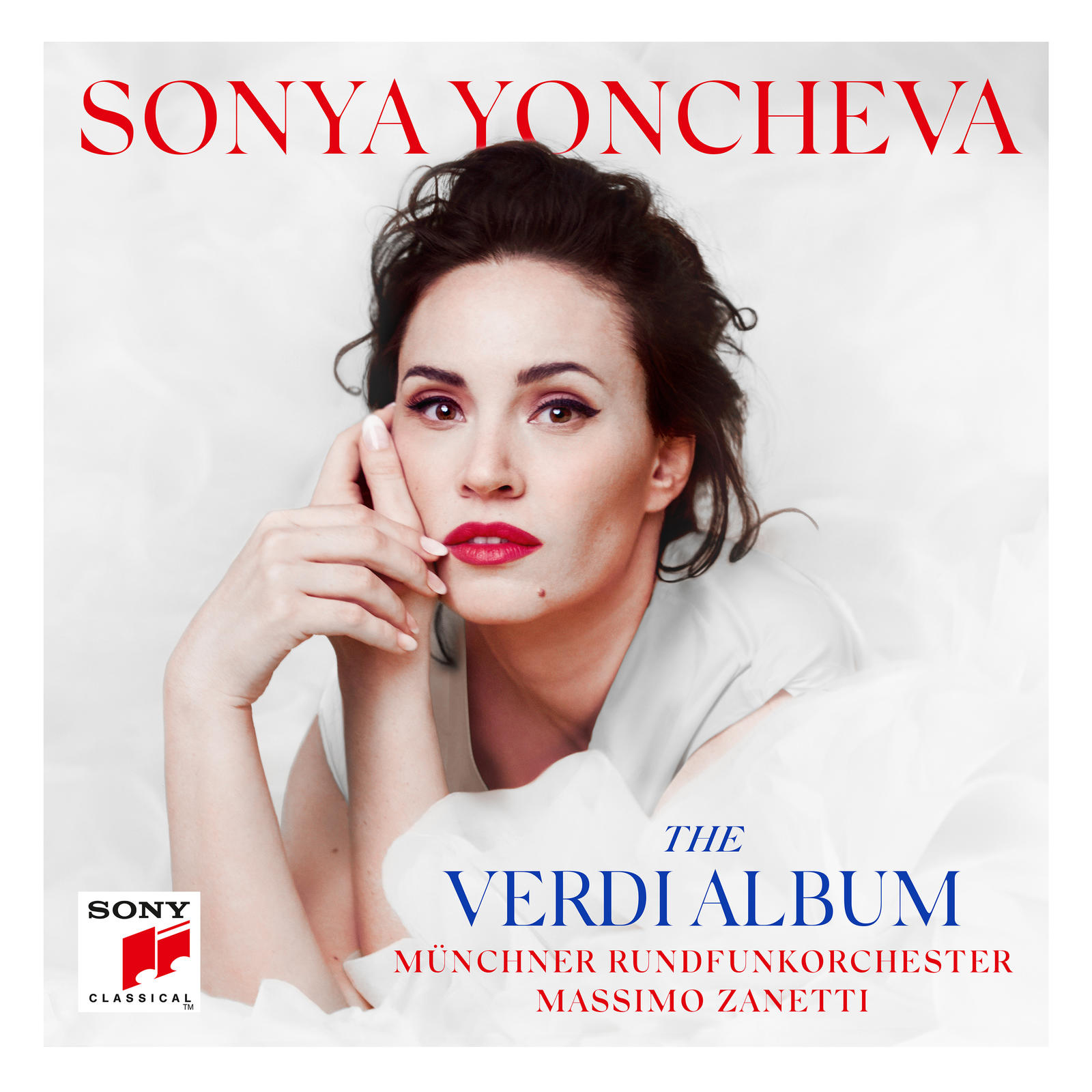
03 sony yonchevaThe Verdi Album
Sonya Yoncheva; Münchner Rundfunkorchester; Massimo Zanetti
Sony Classical 88985417982

“A high C that takes no prisoners,” muses Presto Classical editor Katherine Cooper wittily about the final note on this disc. And neither does Verdi. In fact, he “murders” sopranos so the legend goes (even though he married one). Bulgarian dramatic soprano Sonya Yoncheva is his latest intended victim. I’m happy to report that she is alive and well after her sensational debut at the Met’s Tosca and this, her latest CD issued on February 2, has already won an award. The final high C comes from Abigaille’s hair-raising cabaletta in the second act of Nabucco, young Verdi’s first breakthrough success.

Verdi is the ultimate challenge for the soprano. Not just for the voice, but a certain quality the great master insisted on: beauty of tone, intelligence and feeling. Right at the outset in Leonora’s opening cavatina (Il Trovatore, Act I), Yoncheva’s handling of the wonderful soaring tune that culminates in a heartrending fortissimo makes her rich vocal colour and emotional intensity immediately manifest. In the ensuing cabaletta, her voice becomes light as a feather by contrast. Her stunning high register further impresses in Come in quest’ora bruna from Simon Boccanegra: the heroine sings her heart out to a shimmering spring morning in Genoa on the Ligurian Sea, and I shiver in delight whenever I hear it.

But the real test is far more difficult: the tragic, the defiant, the anguished, the women in despair (Odabella in Attila, Luisa Miller, Lina of Stiffelio, Desdemona or Elisabetta in Don Carlo), where Yoncheva’s congenital empathy and effortless mid- and low register dominate. And then there are those iconic prayers sung in hushed near silence like Ave Maria from Otello... and more. Massimo Zanetti of Tutto Verdi fame conducts with zest and vigour.

A daring new issue by a singer with a great future.

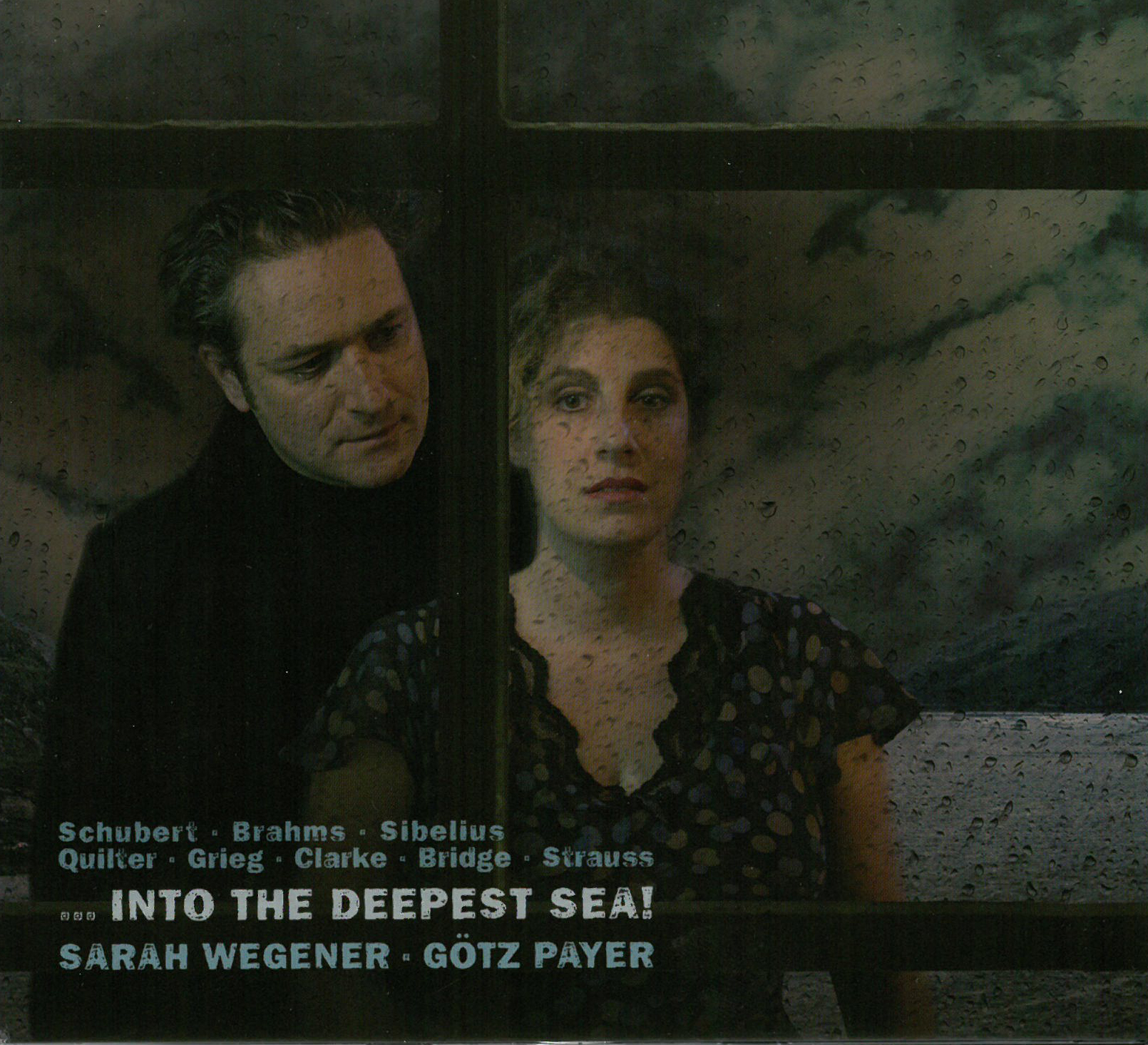
04 Sarah WegenerInto the Deepest Sea!
Sarah Wegener; Gotz Payer
SWR2 8553374 (sarah-wegener.de)

For the profound beauty of Brahms’ Meine Liebe ist grün Op.63 No.5 to have its greatest impact on the senses, its majestic beauty must unfold in a mere minute and 44 seconds. It does so here in the voice of lyric soprano Sarah Wegener. At her command even the shortest of phrases are sung with gilt-edged, almost liquid silkiness. This is, however, not only the case with Wegener’s Brahms. It’s true of her Schubert, Strauss and everything else.

Throughout Into the Deepest Sea! not only does Wegener sing with utter beauty, but her interpretations of Brahms, Schubert, and indeed, the other composers, communicate very strongly the meanings of the words, as if each song speaks to her in the secret of her heart before reaching her lips. Her expressive manner of communicating pure poetry of feeling is echoed in the pianism of Götz Payer, who enters into each lied as a protagonist in his own right, playing his part in the music with vim and verve.

Wegener is wonderfully adept at maintaining the emotional centre of gravity of each song, navigating with graceful beauty around the outermost extremities of its narrative, yet always returning to the beating heart of the song. Her passionate performance extends to the mystical songs of Sibelius and the pastoral grandeur of Grieg, too. Everywhere on this disc, every nuance and subtlety has been carefully considered and beautifully sung, performed with both sublime delicacy and intense contrasts.

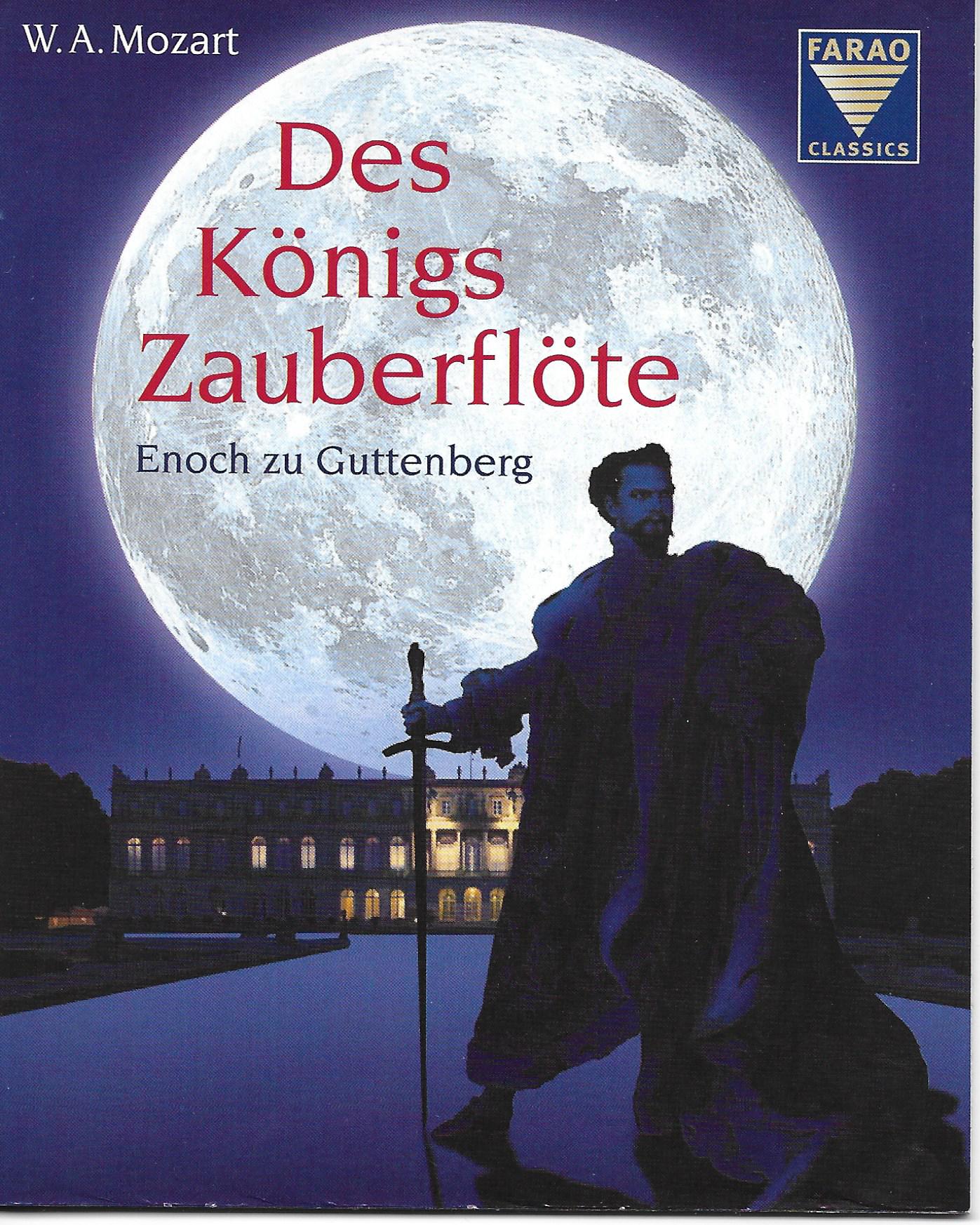
01 Zauberflote

Mozart – Des Königs Zauberflöte
Enoch Zu Guttenberg
Farao Classics A108095 (farao-classics.de)

It was not an uncommon practice in the 19th century for aristocratic families to mount extravagant amateur performances of classic theatre, including opera. Such productions demonstrated their education and sophistication and Ludwig II of Bavaria was no exception. In the late summer of 1884 at Herrenchiemsee in his “New Versailles” at the foot of the Bavarian Alps, Ludwig staged evenings of music and lights, outdoing the opulence of Louis XIV’s Versailles by employing new technology and an elaborate system of electric lights.

For his gala Zauberflöte, Ludwig enlisted members of the political elite to perform name roles: he himself played Sarastro; Emperor Franz Joseph was Tamino; his mother Sophie was Queen of the Night and Empress Elizabeth was Pamina. This re-enactment of that event was first performed at the Herrenchiemsee Festival in 2010 under the direction of Enoch zu Guttenberg, a recognized and respected Mozartean. It is he who directs this exuberant performance recorded live in the Prinzregenten Theatre, Munich in November, 2013.

Each member of the outstanding professional cast plays a named aristocrat singing their role in the original 1884 cast. The scenario though is fictitious. The whole production is, in effect, a show within a show. Before the actual performance starts we are treated to some amusing exchanges involving the King and various obsequious persons explaining the lighting, etc. One figure stands out and appears throughout the production… an elderly gentleman who just happens to be the original Papageno from long ago. His is a spoken role and he wanders in and out of the action as he tells the singers and others how it was done back then and hence how it should be now. Lots of clever banter and exchanges throughout, performed in German with optional subtitles, but Mozart’s music remains brilliantly intact and the audience gets the opera and a show. As do we.

In state-of-the-art video and audio, Mozart lovers and others will get a real kick out of this unique event.

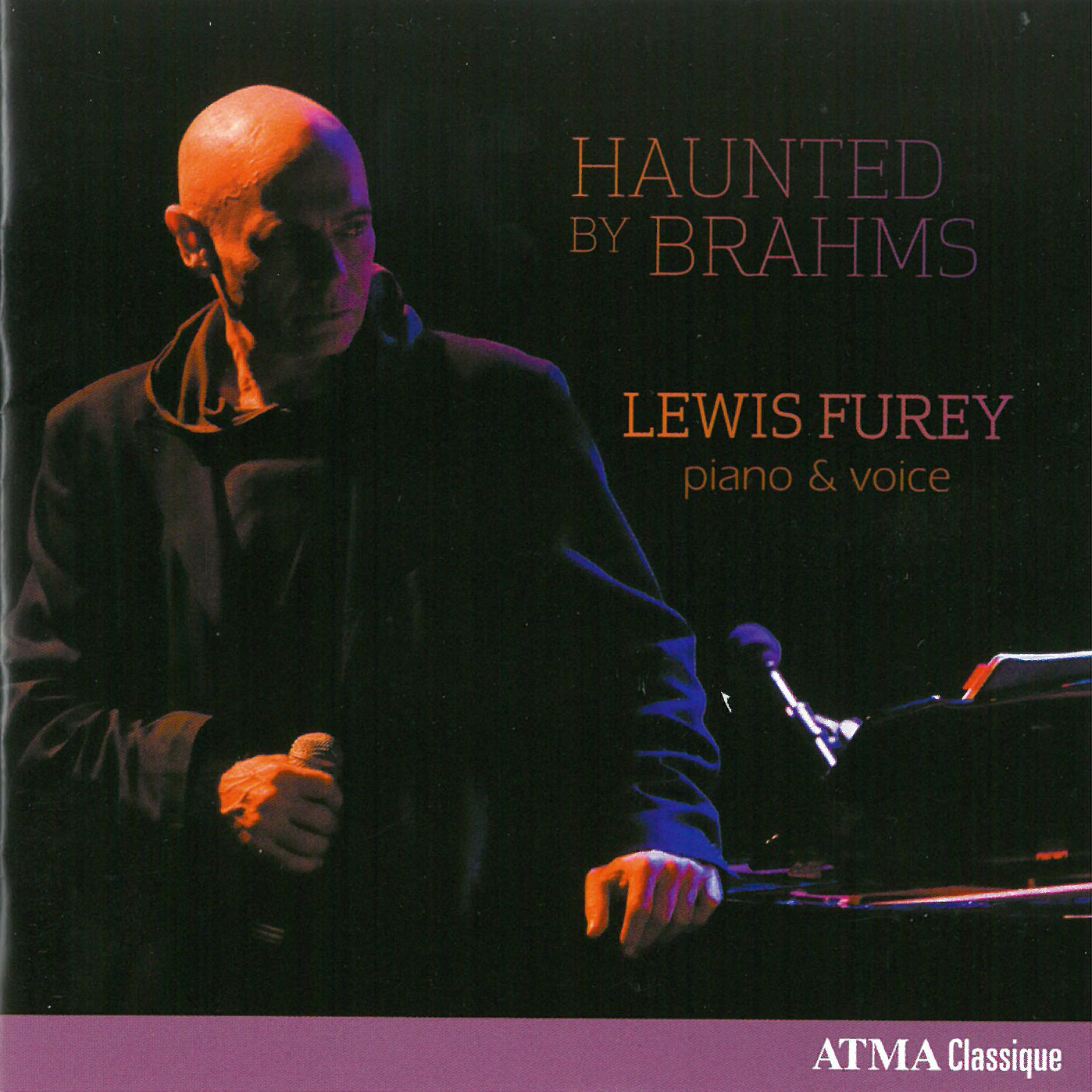
02 Haunted by BrahmsHaunted by Brahms
Lewis Furey
ATMA ACD2 2765 (atmaclassique.com)

Haunted by Brahms may be less lied in the classic sense and more song in the modern sense, but nay-sayers of either style ought not to have a complaint. The clarity with which Brahms’ overlapping melodic strands and patterns of narrative tension are weighted, articulated and cleverly woven together in the angular charm of Lewis Furey’s whimsical lyricism, is beautiful. Moreover, turning Brahms’ lieder on its head gets the listener’s attention as Furey’s gently slurred nasal intonation recreates a hypnotic aura around the prevailing Brahms gravitas.

Purists may recall Glenn Gould’s April 6, 1962 performance of Brahms’ First Piano Concerto, where Leonard Bernstein voiced his dissent but proceeded to conduct the New York Philharmonic while Gould performed his radical interpretation of the work. To those who would bristle at Haunted by Brahms it bears remembering that there were still aficionados of Brahms who stayed behind and appreciated that performance. Likewise listeners of this recording will be better served by wide open ears rather than a proverbial Germanic rigidity.

Furey’s interpretations of Brahms’ rather unique German lieder reminds us that the composer took great risks when he also patronized lyricists who weren’t – like Goethe and Heine – counted among the major poets of the day. Furey’s lyrical, philosophical leap is just as remarkable. Also, in mirroring Brahms Deutsche Volkslieder in his own rather folksy, contemporary English renditions, Furey may actually have opened a new window into the Brahmsian lied.

Listen to 'Haunted by Brahms' Now in the Listening Room

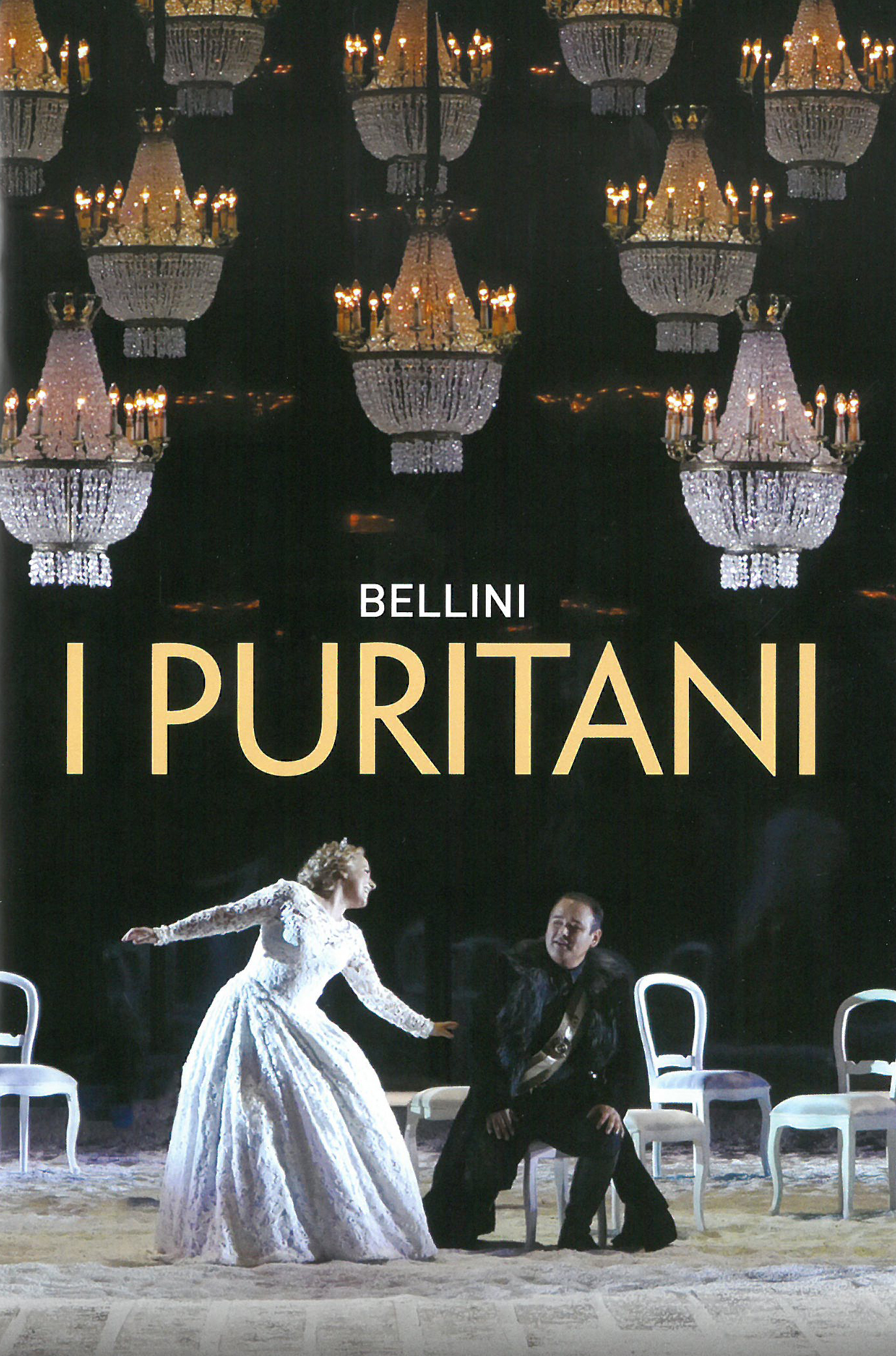
03 I PuritaniBellini – I Puritani
Diana Damrau; Javier Camarena; Teatro Real de Madrid; Evelino Pidó
BelAir BAC142 (belairclassiques.com)

This was one of those rare events in the annals of opera when everything is just right, a spectacular success, with show-stopping moments like the final duet between the tenor and soprano. Even the conductor is applauding the singers from the pit while on the square outside a spontaneous crowd gathers watching it on a big screen, cheering wildly. Bellini’s bel canto masterpiece, I Puritani, his take on the 17th-century civil war in England, hugely successful at its premiere in Paris in 1835, has remained one of the most demanding and difficult to perform. It demands four superstar quality singers (the so-called Puritani Quartet), very rarely available. Recently it was revived at the Met with Anna Netrebko, which I thought quite wonderful, but this one surpasses it. Two main reasons are the tenor and the soprano.

Phenomenal Mexican tenor Javier Camarena (Arturo) is unlike anything I’ve heard before, capable of producing shattering high Cs and even higher (Ds, F-sharps) with ease. At the same time his gorgeous tone, beautiful lyricism and total abandonment communicates the love he feels for Elvira. His A te, o cara made the audience go wild. More surprisingly, Diana Damrau, whom I always regarded as a soprano of great potential, now suddenly becomes a true diva, another Sutherland, in the role of Elvira with a breathtaking mad scene, a total immersion in the role and almost divine inspiration.

Primo baritone Ludovic Tézier (Sir Richard), one of today’s most sought-after, is a very complex villain, an enemy who forgives his rival. His voice is rich and powerful yet he can be tender; a warrior very much in love. The famous duet in Act II with basso Nicolas Testé (Sir George), a longtime favourite of mine, is suitably rousing. Highly acclaimed Italian conductor Evelino Pidó, with tremendous sense of style and perfectly chosen but flexible tempi, alternately intensely dramatic or tenderly lyrical, has Bellini in his veins. Stage design by Emilio Sagi is deceptively simple, unobtrusive yet elegant, but can be awe-inspiring at crucial points of the opera.

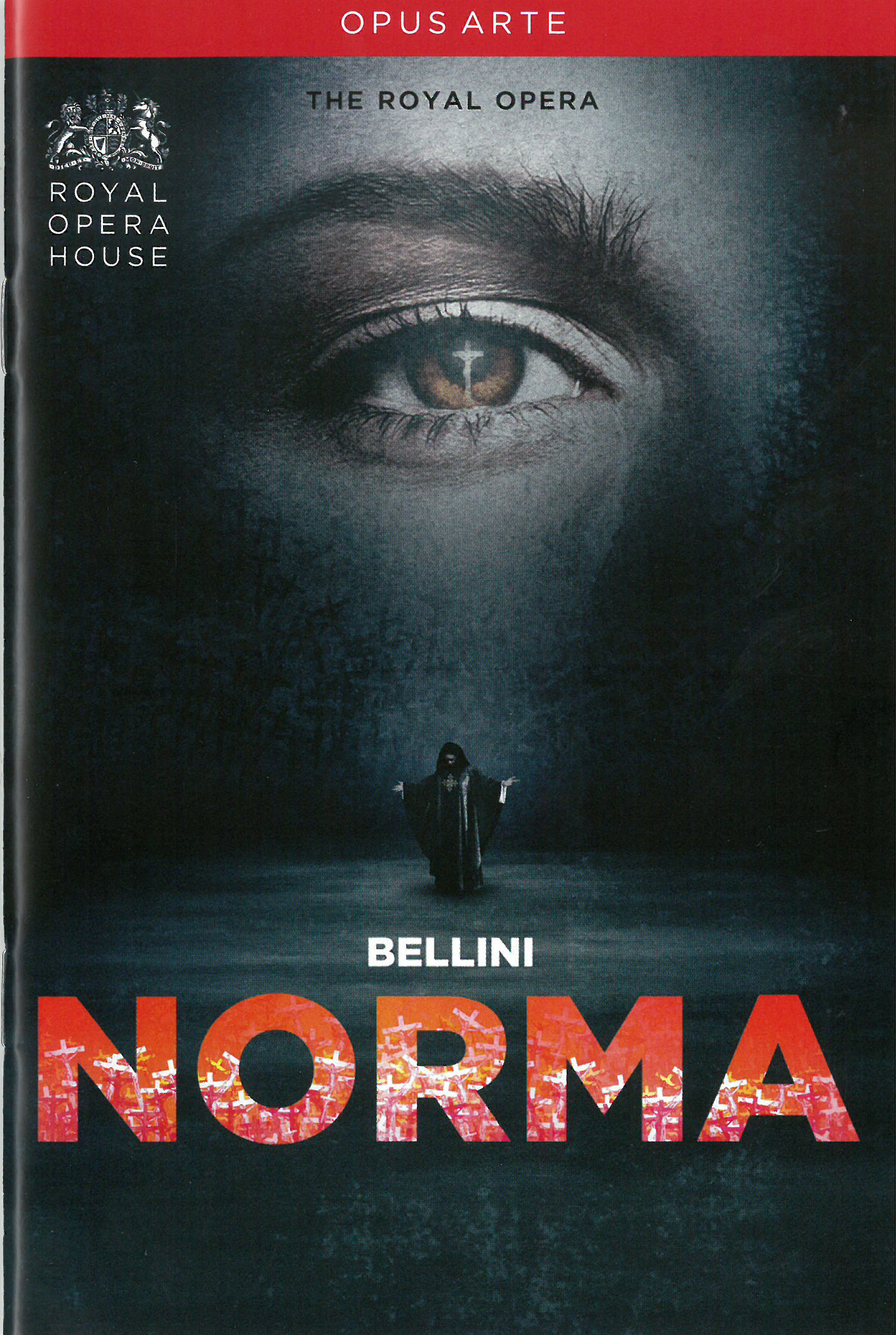
04 NormaBellini – Norma
Sonya Yoncheva; Joseph Calleja; Sonia Ganassi; Royal Opera House; Antonio Pappano
Opus Arte OA 1247 D

Ah, Norma, the opera with which young Bellini (merely 30 at the time) cemented his hold on Italian stages! He did create it as another vehicle for Giuditta Pasta, the foremost soprano of the time, yet she was followed by countless others including Rosa Ponselle, Maria Callas, Canada’s Sondra Radvanovsky, and now, Sonya Yoncheva. Breaking with Romantic and Classical tradition, however, is the fact that Norma is no damsel in distress. She is a force of nature, potent, fearless and terrifying. She is also in charge of her own, however tragic destiny. That alone is enough to experience the opera with goosebumps on one’s arm. Here, the director, Àlex Ollé of the famous collective La Fura dels Baus, chooses to present Norma as enmeshed in a religious and military apparatus, an intellectual choice. However, rather than presenting modern-day, right-wing evangelical orthodoxy, he gives us Spanish Inquisition-era ultra-Catholicism. This results in unintended humour and the need for even more of a suspension of disbelief: a woman, ordained as a top priest? So yet again, we are best left just listening to the music…

And what music! Pappano is the undisputed conductor-king of the operatic stage. The three principals are in fine form, especially Calleja, as a strong, commanding Pollione, rather than the frequently portrayed wimpy ladykiller. In the end, it seems that Yoncheva, though gifted with a silky and precise voice, does not have the dark notes with which Callas’ and Radvanovsky’s Normas strike fear in our hearts.

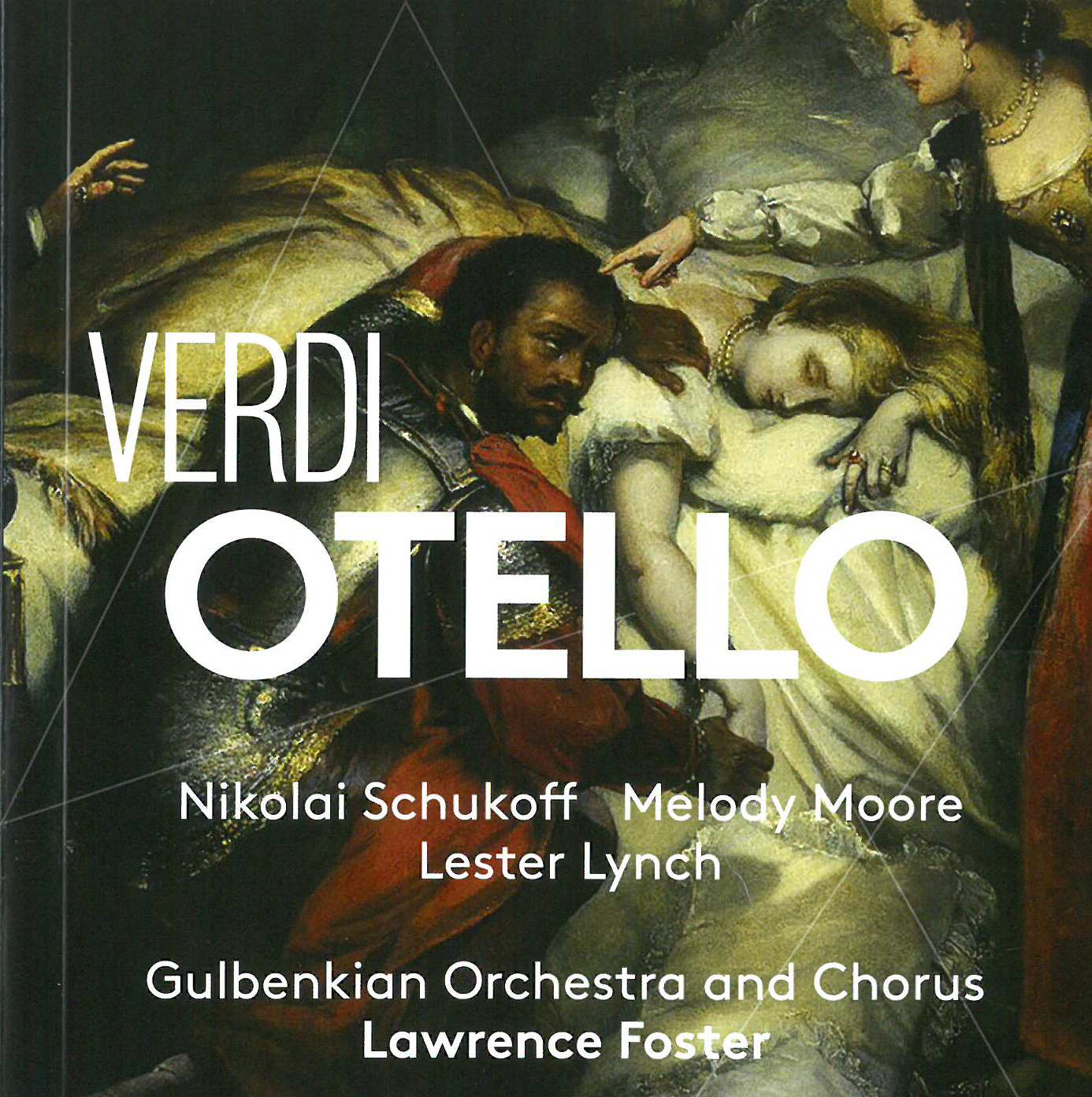
05 OtelloVerdi – Otello
Nikolai Schukoff; Melody Moore; Lester Lynch; Gulbenkian Orchestra and Chorus; Lawrence Foster
Pentatone PTC 5186 562 (pentatonemusic.com)

Apart from Nabucco, all Verdi operas contain important tenor roles, but the demands in his penultimate opera Otello are much greater than those in his earlier work. Many readers will recall the sad time when Carlo Bergonzi attempted the role (Carnegie Hall, 2000) and was unable to finish. Bergonzi was already 75 then. Perhaps he simply left it too late. I think it is misleading to call the part that of a heldentenor, yet it is worth adding that several of the finest interpreters of the role, notably Ramón Vinay and Jon Vickers, have also been known for their singing of Wagner.
The Austrian tenor Nikolai Schukoff has sung a large assortment of roles (they include a great deal of operetta) and he has also performed some important Wagnerian parts: Lohengrin, Siegmund, the Götterdämmerung Siegfried and Parsifal. These CDs show that he is certainly up to the part of Otello, both in its heroic qualities and in its more tender moments. I like the tone of the soprano (Melody Moore), although her diction is not always clear. She is very affecting in the opera’s final act. The Iago (Lester Lynch) is first-rate.

A peculiarity of the recording is that the voices seem recessed in contrast with the clarity of the orchestra. This brings out orchestral detail in ways that recordings generally don’t, but it is only by using a very high volume that one can hear the singers properly.

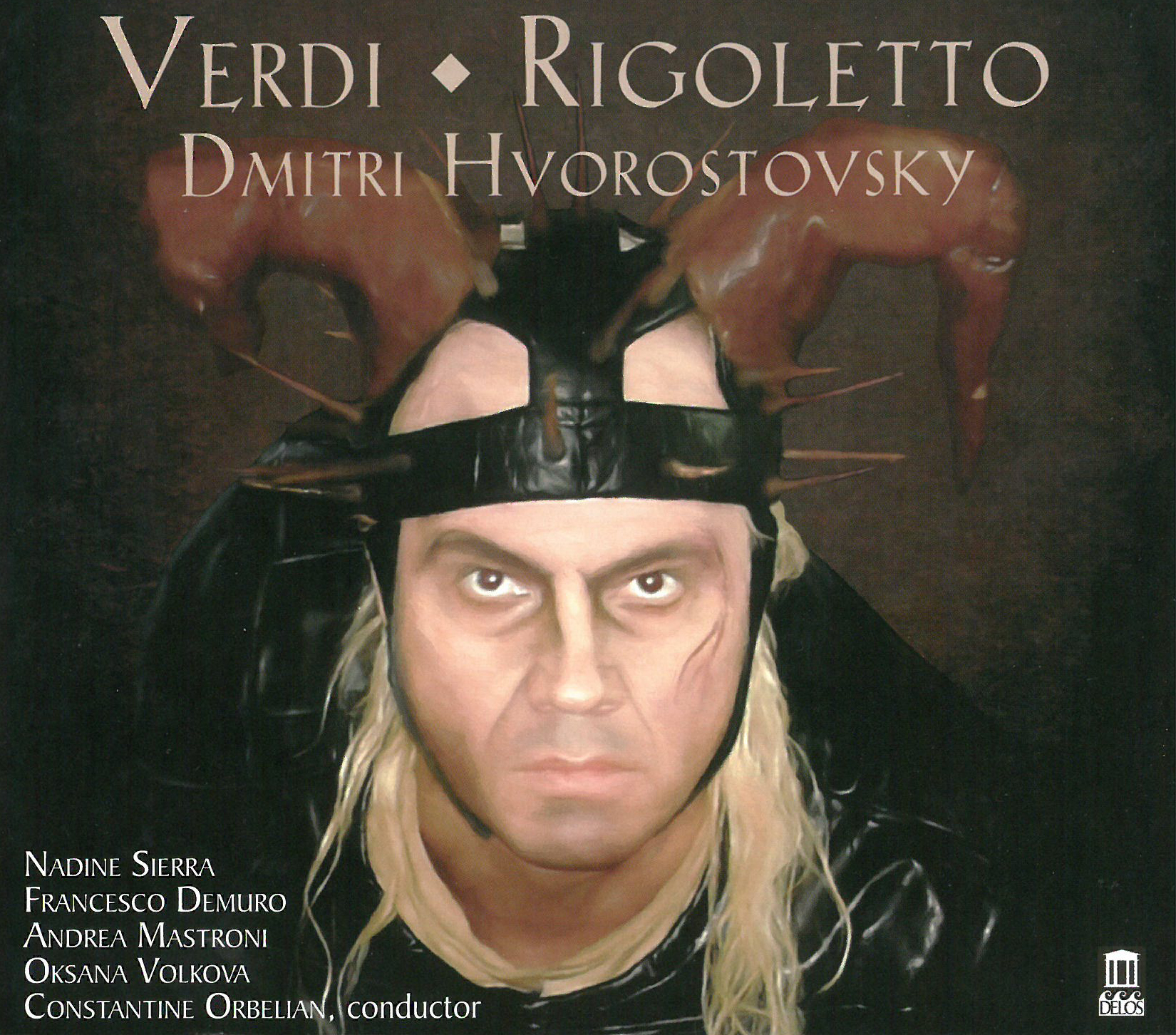
06 RigolettoVerdi – Rigoletto
Dmitri Hvorostovsky; Nadine Sierra; Francesco Demuro; Andrea Mastroni; Oksana Volkova; Kaunas City Symphony Orchestra and State Choir; Constantine Orbelian
Delos DE 3522 (delosmusic.com)

This is the final opera recording that the great Russian baritone Dmitri Hvorostovsky made before his too-early death last November. Surprisingly, it marks the first time he recorded Rigoletto, even though the cursed, tragic court jester was one of his favourite – and finest – roles.

Verdi wrote some of his most memorable arias for Rigoletto. They’re given bravura performances here, with Hvorostovsky’s harrowing Pari siamo! confirming him as a Rigoletto for the ages. Tenor Francesco Demuro’s Duke of Mantua dazzles, at times too brightly, in La donna è mobile, while soprano Nadine Sierra portrays Rigoletto’s daughter Gilda with a rich, moving Caro nome.

Rigoletto’s extended duets with his daughter provide the most dramatic moments in this opera. Sierra is persuasive as a naïve yet determined young girl, while Hvorostovsky manages to reveal the depths of Rigoletto’s anguish. During the first act duet, Figlia! Mio padre!, Rigoletto suddenly shatters the tender mood by turning on Gilda accusingly. The way Hvorostovsky darkens and roughens up his voice makes for riveting drama.

The men of the Kaunas State Choir deliver with such style that they almost steal the show. Hvorostovsky’s longtime collaborator, Constantine Orbelian, leads the Kaunas City Symphony Orchestra with delightful clarity.

Hvorostovsky performed regularly in Toronto throughout his career, though unfortunately never in a staged opera. This recording of one of the most demanding roles in all opera makes a fitting tribute to a matchless singer. He will be missed.

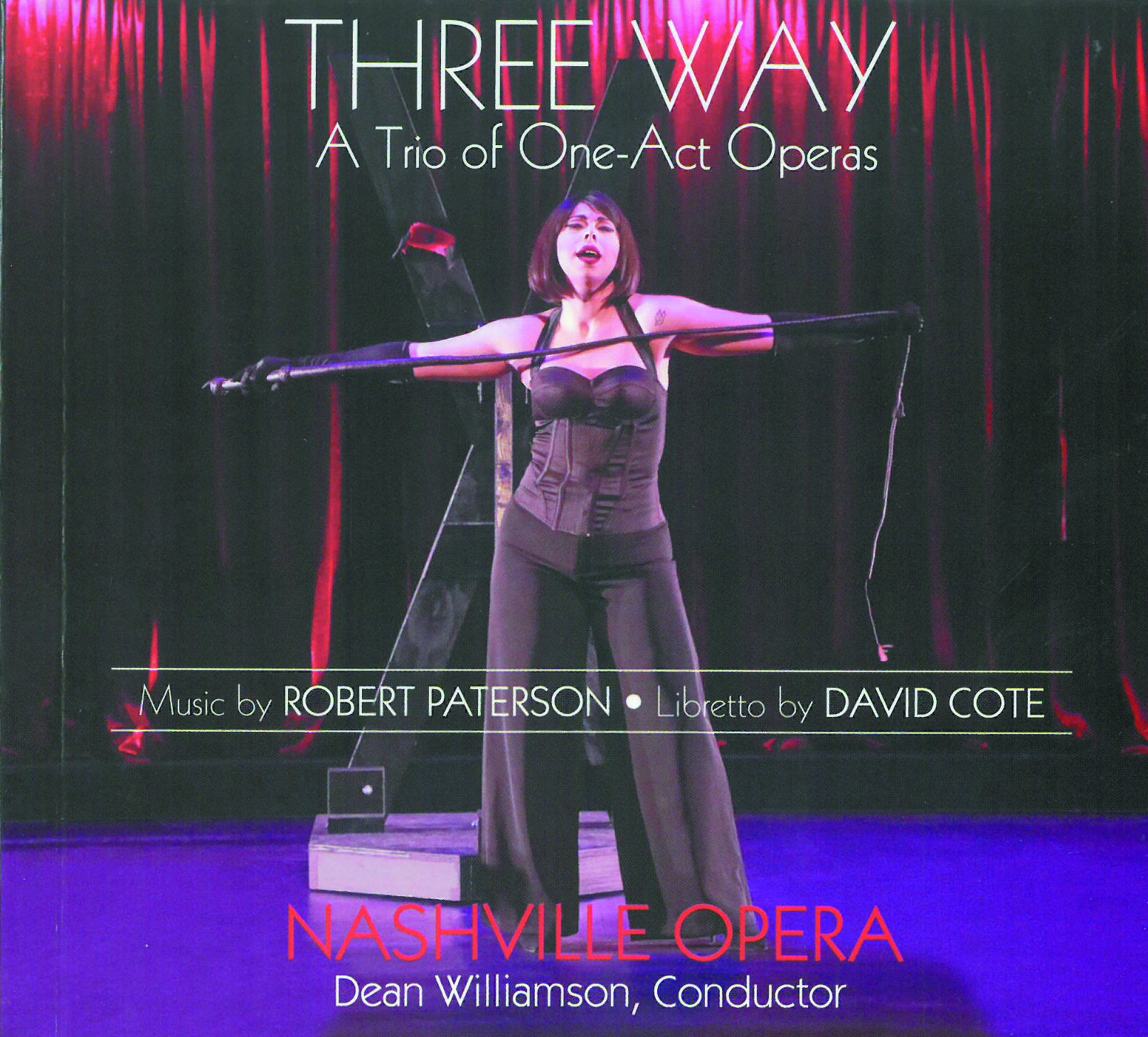
07 Three WayRobert Paterson – Three Way: A Trio of One-Act Operas
Nashville Opera; Dean Williamson
American Modern Recordings AMR1048 (americanmodernrecordings.com)

In this 2CD set’s booklet, librettist David Cote writes that “Three Way is a sex-positive comic opera” that “holds the mirror up to all sexualities – gay, straight, BDSM, bi, trans… without moralizing or treacly reverence.”

Premiered by Nashville Opera in January 2017, Three Way comprises three one-act episodes, each featuring very sexually explicit language and situations. In The Companion, tech repairman Dax opts out of a proffered three-way fling with Maya and her android sex-partner Joe, but gets Maya for himself when Joe jilts her for a female android. Safe Word finds dominatrix Mistress Salome in a surprise role reversal with the Client, a nameless married “alpha-boss.” In Masquerade, four couples, including a pair of “pansexual postgender partners,” attend a swingers party, complete with a visual and aural “shadow orgy” in which “bodies rise and fall” in “a group experience that achieves several climaxes.”

All this highly sexed material leaves much of Robert Paterson’s tonal, sauntering score serving mainly as easy-listening “incidental music.” The eight soloists are uniformly fine as they sing Paterson’s vocal lines, often redolent of Broadway musicals.

However, I, for one, found nothing to laugh about in this supposed “comic opera,” fraught as it is with the pathos of its characters’ erotic yearnings, fantasies and anxieties. But whether comic or poignant, all that sex sure holds one’s attention!

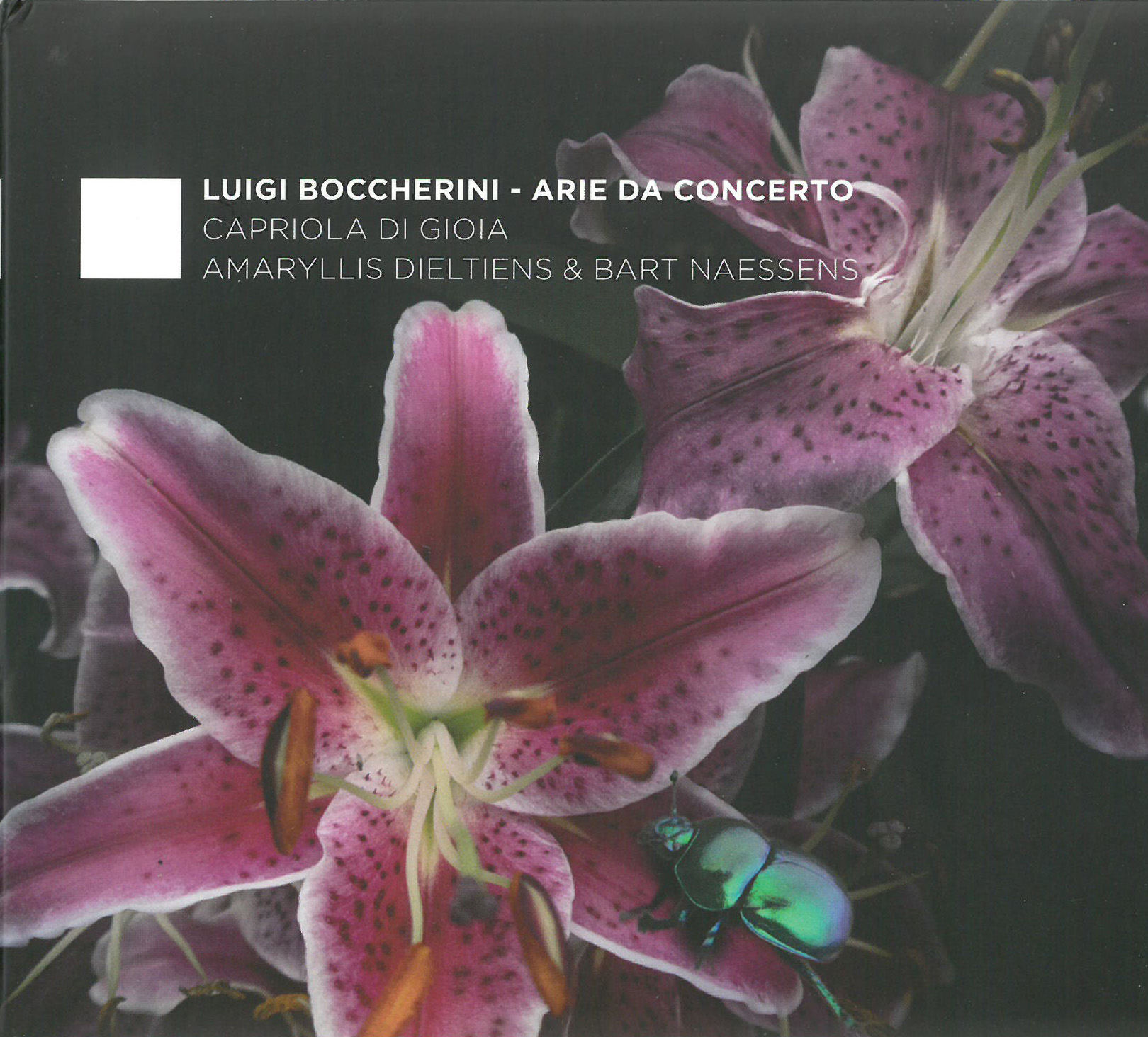
01 Boccherini ConcertoLuigi Boccherini - Arie da Concerto
Amaryllis Dieltiens; Capriola di Gioia; Bart Naessens
Evil Penguin Records Classic EPRC 0023 (eprclassic.eu)

This is an ensemble on a mission – what it calls rehabilitating Boccherini. Overshadowed by Mozart and Haydn and receiving mixed comments in Grove’s Dictionary, Boccherini’s few vocal compositions – few because Boccherini’s patrons overwhelmingly demanded instrumental music – convey, according to Capriola di Gioia, a rare insight into the potential of the human voice. And so to the seven pieces selected by the Capriola di Gioia. Caro padre, a me non dei is a worthy introductory piece with an almost jaunty interpretation by Dieltiens – an approach repeated in Se non ti moro allato.

And yet, the heart of this CD is its intense concentration on classical themes. As perhaps might be expected from a piece with an inspiration of this nature, Caro luci, che regnate begins with a more stately character, a tone taken up by Dieltiens as she sings of Jason’s predicament in Issipile. Misera, dove soni is a worthy combination of a classical theme with a text and instrumental scoring for strings which could have been written by any of the great Baroque composers who preceded Boccherini.

Capriola di Gioia’s varied choice of Boccherini’s Arie da concerto allows the listener to make up his or her mind as to whether the composer has actually been rehabilitated. This CD from Dieltiens and Naessens means Boccherini does deserve to be listened to. Indeed, the final track Se d’un amor tiranno with its sprightly string playing, deep continuo and pleading voice encapsulates all the reasons for doing just that.

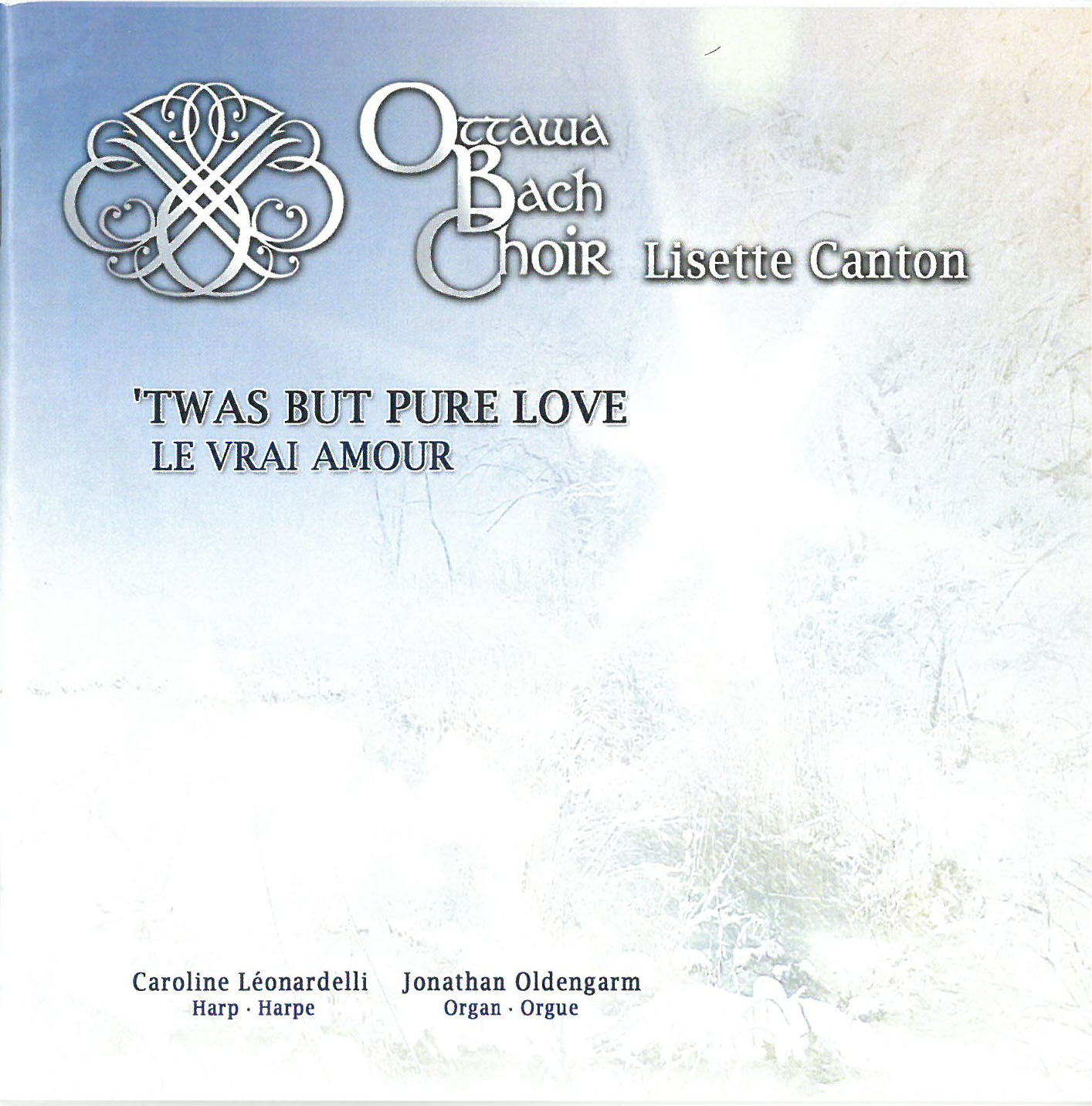
03 Ottawa Bach Choir’Twas But Pure Love
Ottawa Bach Choir; Lisette Canton
Canto 2016 (ottawabachchoir.ca)

The splendid choral offerings on this recording range from Renaissance to contemporary works and it was recorded just in time for the holiday season last year in celebration of the Ottawa Bach Choir’s 15th anniversary. It includes recording premieres for two Canadian works. The first, Sailor’s Carol by Matthew Larkin (director of music, Christ Church Cathedral, Ottawa), is based on a text by Cornish poet Charles Causley. With a lovely harp intro and simple chordal accompaniment, three descriptive verses lead to the chant Ave maris stella, creating a sense of great awe at the everlasting guidance of a star. The Darkest Midnight in December by Kelly-Marie Murphy again features lovely passages by harpist Caroline Léonardelli, while the women of the choir present a gentle, yet sublimely shimmering interpretation of a 1728 text by Irish priest, Fr. William Devereux. Early works performed beautifully by the full choir include Tomás Luis de Victoria’s O magnum mysterium, an unaccompanied motet realized in all its haunting splendour. Bach’s Lobet den Herrn, alle Heiden, BWV 230 provides a lively contrast with its double-fugue passages, showcasing each of the choirs’ sections and their superb tonal and rhythmic agility, as well as deftness of hand (and foot) by organist Jonathan Oldengarm.

Back to top