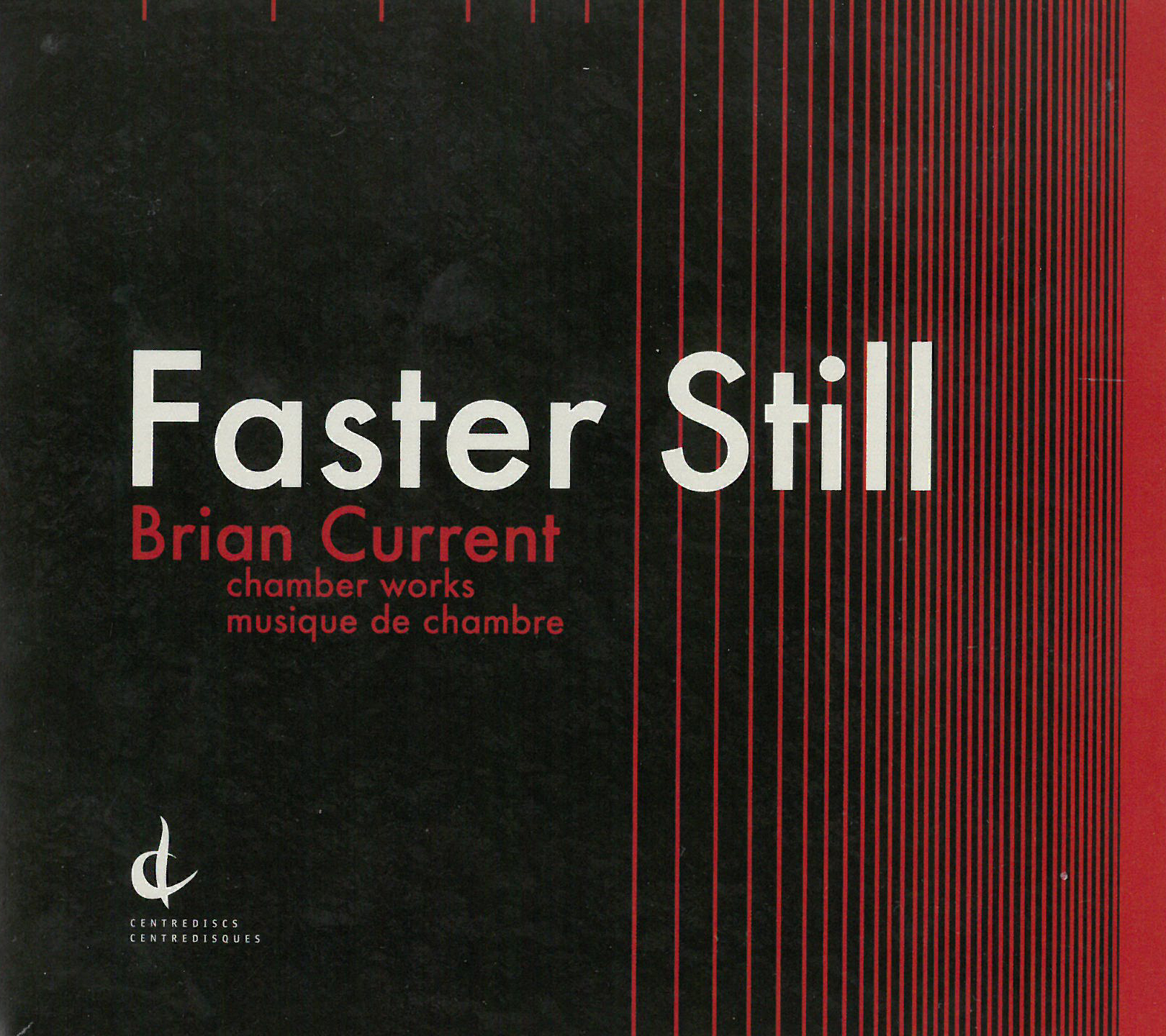
03 Brian CurrentBrian Current – Faster Still
Various Artists
Centrediscs CMCCD 24217 (musiccentre.ca)

This recording is a timely reminder of the significant work that Brian Current is doing as a composer and conductor, and the excellent performance standard of three of Toronto’s leading new music ensembles.

The CD opens with an attractive short scena from 2006 – Inventory – with soprano Patricia O’Callaghan as a shoe salesperson, letting her imagination wander. The clever text is by Anton Piatigorsky and the Soundstreams ensemble (conducted by Current) features fine playing by some of Toronto’s top players. O’Callaghan’s poignant and whimsical performance is a highlight of the disc.

Faster Still, Strata and Shout, Sisyphus, Flock are three substantial instrumental works given superb performances here by the ensembles of Duo Concertante/Blue Engine String Quartet, Continuum Contemporary Music and New Music Concerts respectively. All three works are vital and intense and illustrate Current’s mastery of ensemble colour and aural imagery.

The Duet for Cellos, originally written in 2007 and revised in 2016, is an effective contrast in the middle of the program. Cellists Amahl Arulanandam and Bryan Holt give a sensational performance of this short, compelling work. The final track Circus Songs is a thrilling early piece for a mixed quintet that takes the listener on a wild ride and features great playing from all the performers. I especially loved pianist Stephen Clarke’s muscular “freak out” near the end.

It was a pleasure to get to know Current’s music better through this fine CD. He is a bold, uncompromising, highly skilled composer with much to say. 
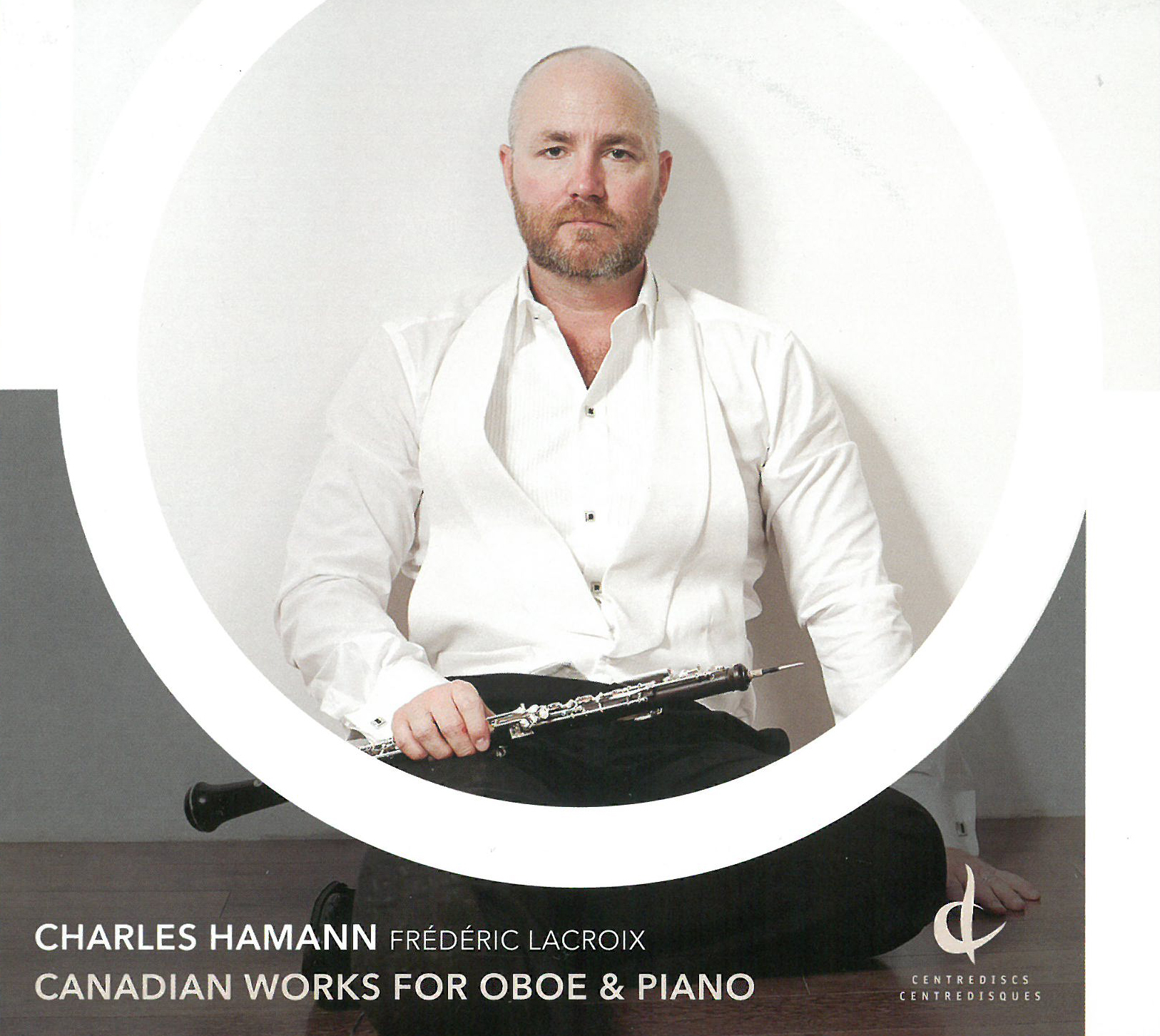
04 Canadian OboeCanadian Works for Oboe and Piano
Charles Hamann; Frédéric Lacroix
Centrediscs CMCCD 24117 (musiccentre.ca)

In 1993, 22-year-old prodigy Charles Hamann became principal oboe of the National Arts Centre Orchestra. Continuing in this role he is now internationally renowned; this two-disc Canadian sesquicentennial CD with University of Ottawa colleague Frédéric Lacroix shows why. Well-rounded tone and sensitive phrasing invite us into the uneasy lyricism of Jean Coulthard’s Sonata for Oboe and Piano (1947) and her concise Shizen – Three Nature Sketches from Japan (1979). Pianist Lacroix shines in the inventive sonorities and harmonic colour of Alexina Louie’s Filigree (2012). Neglected composer Leslie Mann’s haunting Vocalise (1974) is riveting, as is Incantation (1977) by Jacques Hétu featuring Hamann’s breathtaking sustained tones. Amazingly, Oskar Morawetz’s bracing, dialogue-rich Three Fantasies for oboe and piano (1976) is played here for the first time!

JUNO Award-winning composer John Burge’s lively, beautifully-crafted Sonata Breve No.4 (2006) first attracted Hamann and Lacroix into this recording project, which also includes his whimsical solo oboe Twitter Études No.2 (2016). Gary Kulesha’s imaginative, commissioned Lyric Sonata for Oboe and Piano (2015) is lyrically unconventional, with quarter tones and multiphonics effectively melded into the slow movement which evokes a lonely landscape. The disc includes a Sonatine (2015) by Frédéric Lacroix, arrangements of Marjan Mozetich’s Calla Lilies and John Estacio’s Canzona, plus works by Charles Wilson, Monte Keene Pishny-Floyd and Victor Herbiet. For great stories about the recording’s creation see the Canadian Music Centre website and the program notes. Highly recommended for anyone who likes the oboe and 20th- and 21st-century music!

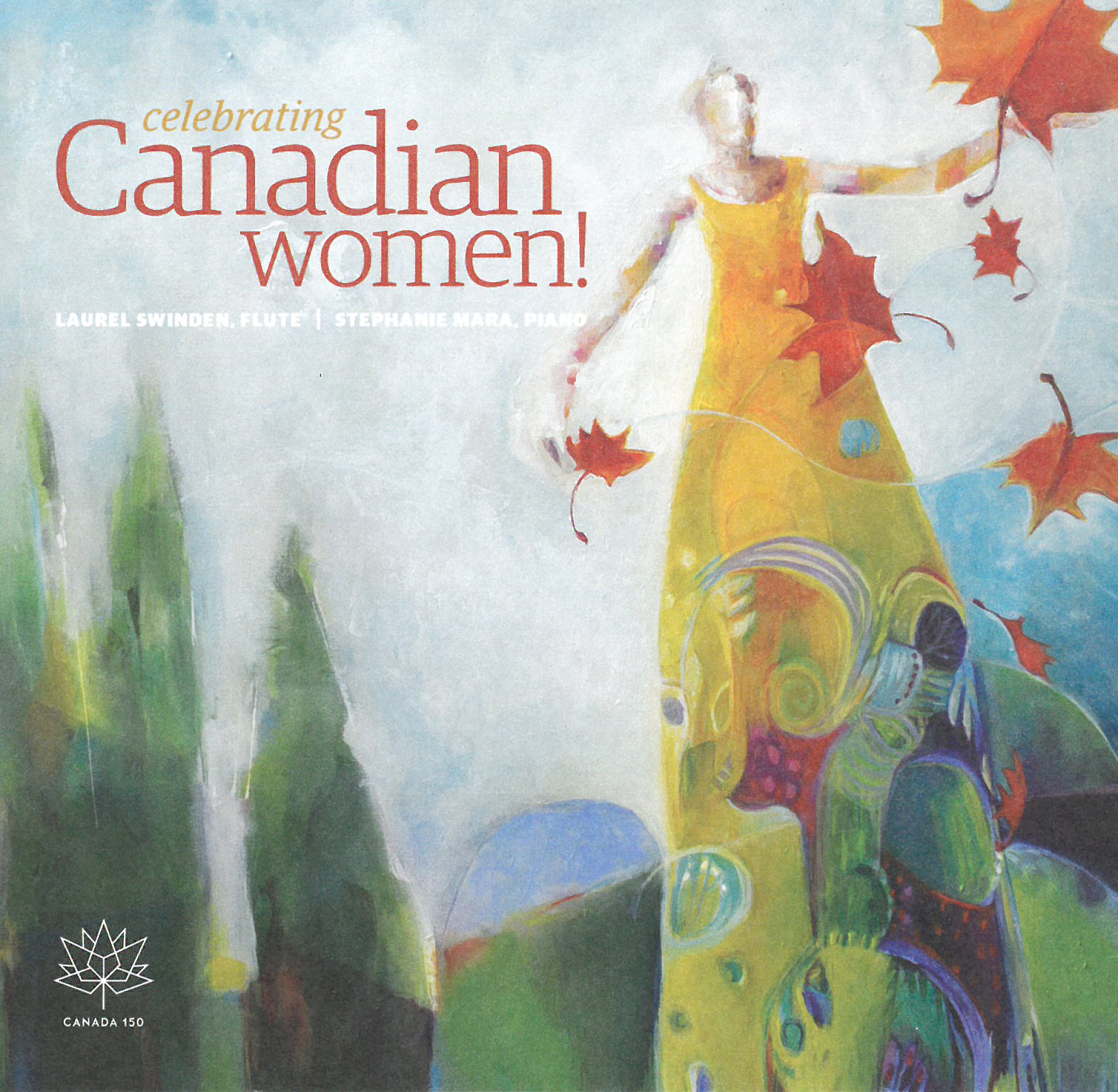
05 Canadian WomenCelebrating Canadian Women!
Laurel Swinden; Stephanie Mara
Independent LBSCD2017 (musiccentre.ca)

Flutist and University of Guelph flute professor Laurel Swinden and pianist Stephanie Mara have teamed up to record this new CD of music by Canadian women, introducing composers and music new to many of us. Swinden’s playing is consistently first-class – great sound with flawless intonation and articulation. Mara is her equal all the way, playing like a soloist when that is required – and there are at times some devilishly difficult solos for the pianist – and stepping back when needed.

The program includes two sonatas, one by Quebec composer and organist extraordinaire Rachel Laurin, the other by composer and pianist Heather Schmidt. Both sonatas, oddly enough, have cadenzas which are, in my opinion, some of the best writing in these pieces, and which Swinden plays with great confidence and verve.

I had the same response when hearing the opening of the Schmidt Sonata and the opening phrases of Alice Ho’s Suite for Flute and Piano: “What a composer!” Both bristle with excitement and virtuosity, demanding that the performer go to a stratospheric energy level. I was struck by how idiomatic Schmidt’s writing was for the flute. The second movement’s kaleidoscopic changes of mood are virtuosic feats of composition. While Swinden excels in this exciting and treacherously difficult music, she also shines in the more lyrical, like Jean Coulthard’s Music on a Quiet Song, which she plays with great artistry.

This CD brings together artistry and artistic leadership. Well done!

06 Butterfield BozziniChristopher Butterfield – Trip
Quatuor Bozzini
Editions QB CQB 1719 (actuellecd.com)

For its 23rd CD, Quatour Bozzini has produced a monograph recording with an almost-chronological retrospective of music by Christopher Butterfield. Spanning more than 20 years, it contains three pieces for solo strings and two string quartets. Clinamen (the Latin name Lucretius gave to the unpredictable swerve of atoms), for solo violin (1999), is made up of 80 cards, each containing a short musical phrase, combined according to the free will of the performer. Intentionally inchoate, the piece is bound together most prominently by the honey tone of Clemens Merkel’s playing, and yet, there are whispers of its compositional technique, as though related materials were sketched, bent through historical filters from classical music to modern, and then splayed by means of William S. Burroughs’ cut-up technique.

Fall (2013), written for the full quartet, is the perfect vehicle for the Bozzinis’ signature non-vibrato playing. At times haunting and tense, their sound is also unadorned, unaffected and exquisite. Engaged in material processes of rotation and accumulation, the ensuing tone of the piece is plaintive and distantly evocative of Cage’s String Quartet in Four Parts. The eponymous Trip (meaning possibly all of: excursion, to dance or run lightly, to stumble or fall, to release and raise an anchor, and to hallucinate) is an outlandish journey from a short Scorrevole movement augmented by a random talk radio broadcast, through a moto perpetuo, to a swaying, recapitulatory Scherzo. The last movement, marked Adagio molto, is longer than the preceding movements combined, and sounds not simply slow but like a time-stretched recording, where the smallest, usually ordinary timbral deviation is magnified and burnished, while notes, lines and harmonies are expanded into tranquillizing beauty. 

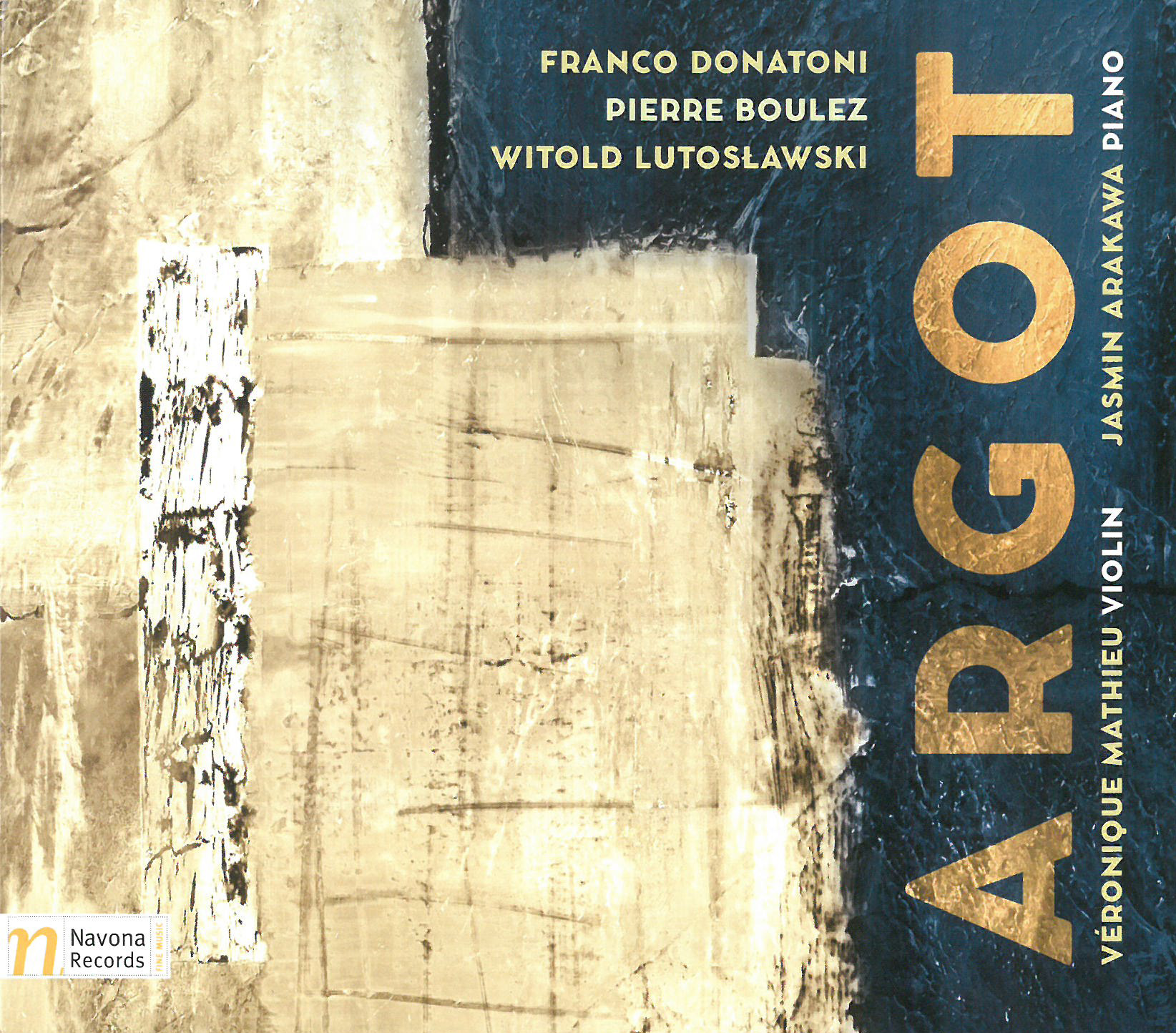
07 Veronique MathieuArgot
Véronique Mathieu; Jasmin Arakawa
Navona Records NV6105 (navonarecords.com)

Canadian violinist Véronique Mathieu has positive mojo in spades: chops to burn, rock solid musicianship, solo and concerto gigs around the world and a doctorate in music. Not taking the typical path, Mathieu has chosen to play, commission and record primarily contemporary music, mostly by American and Canadian composers.

In Argot Mathieu – and Jasmin Arakawa, her pianist in the Lutosławski repertoire – has chosen a demanding program of late-20th-century classical music. She tackles substantial scores of three European heavyweights, Franco Donatoni (1927-2000), Pierre Boulez (1925-2016) and Witold Lutosławski (1913-1994).

The two-movement Argot by Donatoni definitely makes a virtuoso, dramatic statement. Brimming with a huge variety of keening timbral shifts, swift overtone-rich melodic fragments and expressive bowing and fingering, it’s an impressive work and performance. Composed for Yehudi Menuhin in 1992, Boulez’s Anthèmes employs extended techniques and virtuoso passagework galore. To these ears, Mathieu nails this 8’56” solo.

The album is capped by the three works by Lutosławski for violin and piano. Recitativo e Arioso (1951) is early Lutosławski, imbued sometimes with an almost folk-like lyricism. Subito (1992), on the other hand, is among the composer’s last works, though in no way is it resigned. Rather, it is full of melodic playfulness with perhaps a musical tip of the hat to the Hungarian composer Béla Bartók.

Mathieu’s recital closes satisfyingly with the largest work here, Lutosławski’s five-movement Partita (1984). I understand it’s the work on the album most often included in contemporary violin recitals. In the virtuoso hands of Mathieu and Arakawa you can clearly hear why.

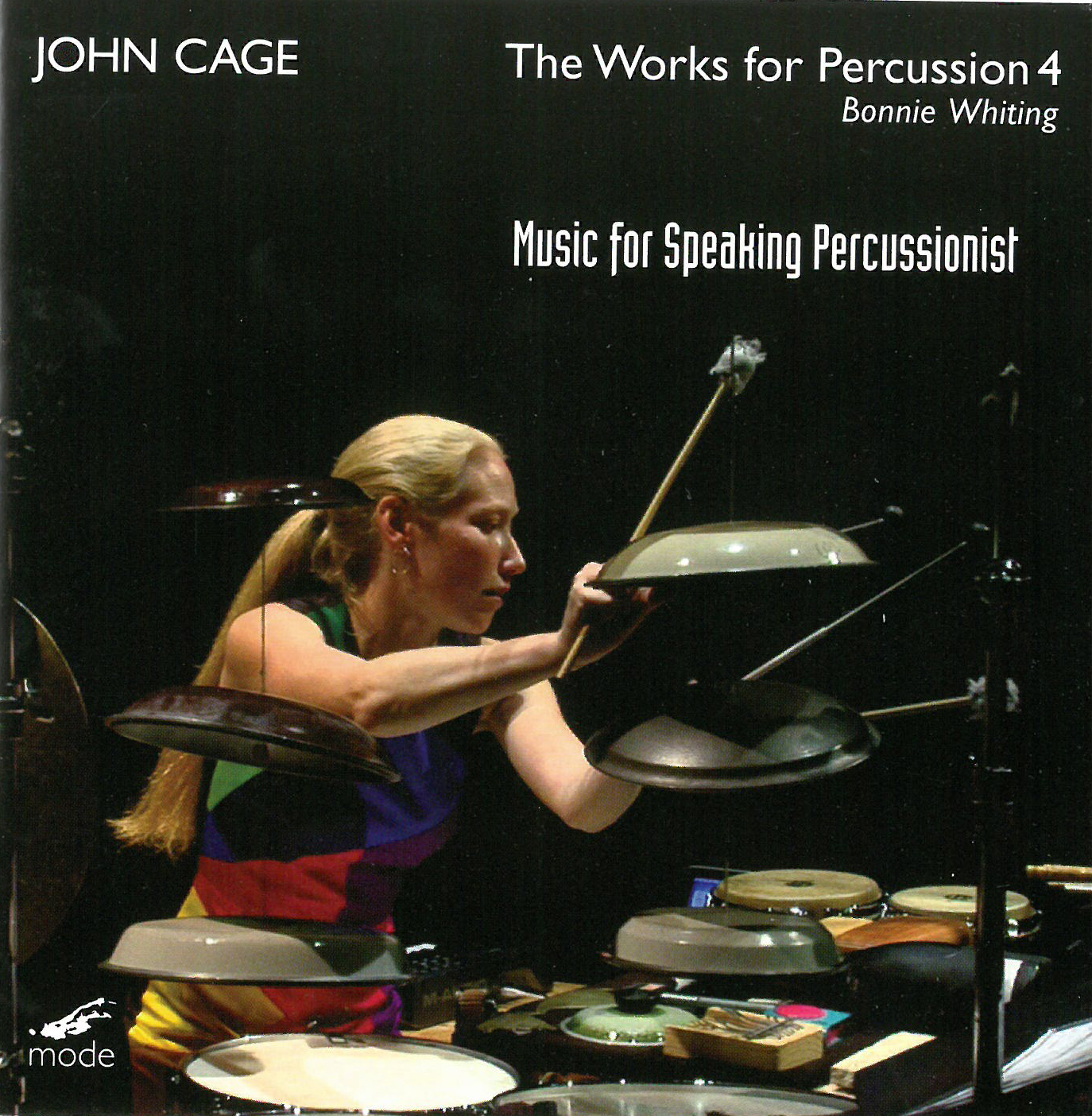
08 Cage Speaking PercussionJohn Cage – The Works for Percussion 4: Works for Speaking Percussion
Bonnie Whiting
mode records mode 296 (CD and Blu-ray disc; moderecords.com)

American new music and improvising percussionist Bonnie Whiting is carving out a career as a “speaking percussionist.” And what better repertoire to collect on her new album than the iconoclastic, prolific and influential American composer John Cage’s groundbreaking scores that require speaking or singing and percussion?

The main program falls into three Cagean periods. Two early career songs bookend a combination of two mid-1950s works for speaker and percussionist. Music for Two (By One), and a realization of Cage’s late period Music for ________ (1984-1987) for solo voice and percussion, follows. The album closes with a 2011 Allen Otte composition which incorporates several Cage works.

On the face of it, the two songs – The Wonderful Widow of Eighteen Springs (1942) and A Flower (1950) – seem the most conventional fare here: melody with piano accompaniment. While they are usually performed by a separate singer and pianist, Whiting performs the two parts together with ease and grace. It’s a performance ethos she traces to Cage’s openness to having some of his works combined and performed simultaneously. The songs, however, are more non-conformist than they first appear. The instrumental parts are tapped and struck with fingers and hands on a closed piano. The voice is also severely restricted. While Cage’s 1930s composition teacher Arnold Schoenberg famously employed all 12 conventional semitones as a structural feature of his later compositions, Cage, on the other hand in The Wonderful Widow, uses three tones. A Flower’s vocal melody is constructed of four pitches with a fifth added only near the end. Were these songs at least partly a result of Cage rejecting a dominant, demanding father figure?

In Whiting’s relaxed, naturalistic yet precise performances the songs feel almost lullaby-like, equally timeless and emblematic of the 20th-century avant-garde.

By the way, I recommend the Blu-ray version that comes with this release. The visual cues and energy in Whiting’s assured performances bring the Cage works, particularly the two long percussion text scores, alive in full colour.

09 Elision EnsembleThe Wreck of Former Boundaries
Elision Ensemble at 30
HCR/NMC HRC13CD (elision.org.au)

Celebrating 30 years of engagement with complex and challenging aesthetics, Australia’s Elision ensemble has released The Wreck of Former Boundaries, a live recording featuring their 2016 Huddersfield Contemporary Music Festival performances of the eponymous work by Aaron Cassidy, and How Forests Think, by Liza Lim.

In his bountiful 33-minute work, Cassidy writes remarkable musical situations for Elision’s consummately nimble cast. His diagonal consideration of instrumental colour facilitates their concentration on not just the notes, but continuous timbral flux expressed through idiomatically applied glissandi, pressure variance, embouchure tension and dynamic changes. In the liner notes, perhaps with benefit of hindsight, Cassidy describes the work as a double trumpet concerto, although elsewhere he calls it six stand-alone pieces that can be performed independently. It projects, however, as a fluid stream of restless, stratified solos and duos with infrequent, disjunct episodic interjections from the ensemble. Crispy, familiar electronics pursue contours of similar profile to the instrumental writing, prodigiously applied in the potent latter third of the work.

Lim’s How Forests Think reflects on anthropologist Eduardo Kohn’s nuanced idea of forest ecologies as intersecting communities and social networks (human and non-human). Musical identities share succulent attributes, supporting, absorbing and transferring them across the Chinese sheng and ensemble parts. Whereas Cassidy revels in anxiously winding materials through self-referential guides, Lim’s understory focuses on a different manner of complexity, nourished by outward-pointing substrata that creep and trail across the work. The result is polyreferential and broad, in vocabulary and scope, with deftly probed textures propagating a vital, bifurcating soundscape.

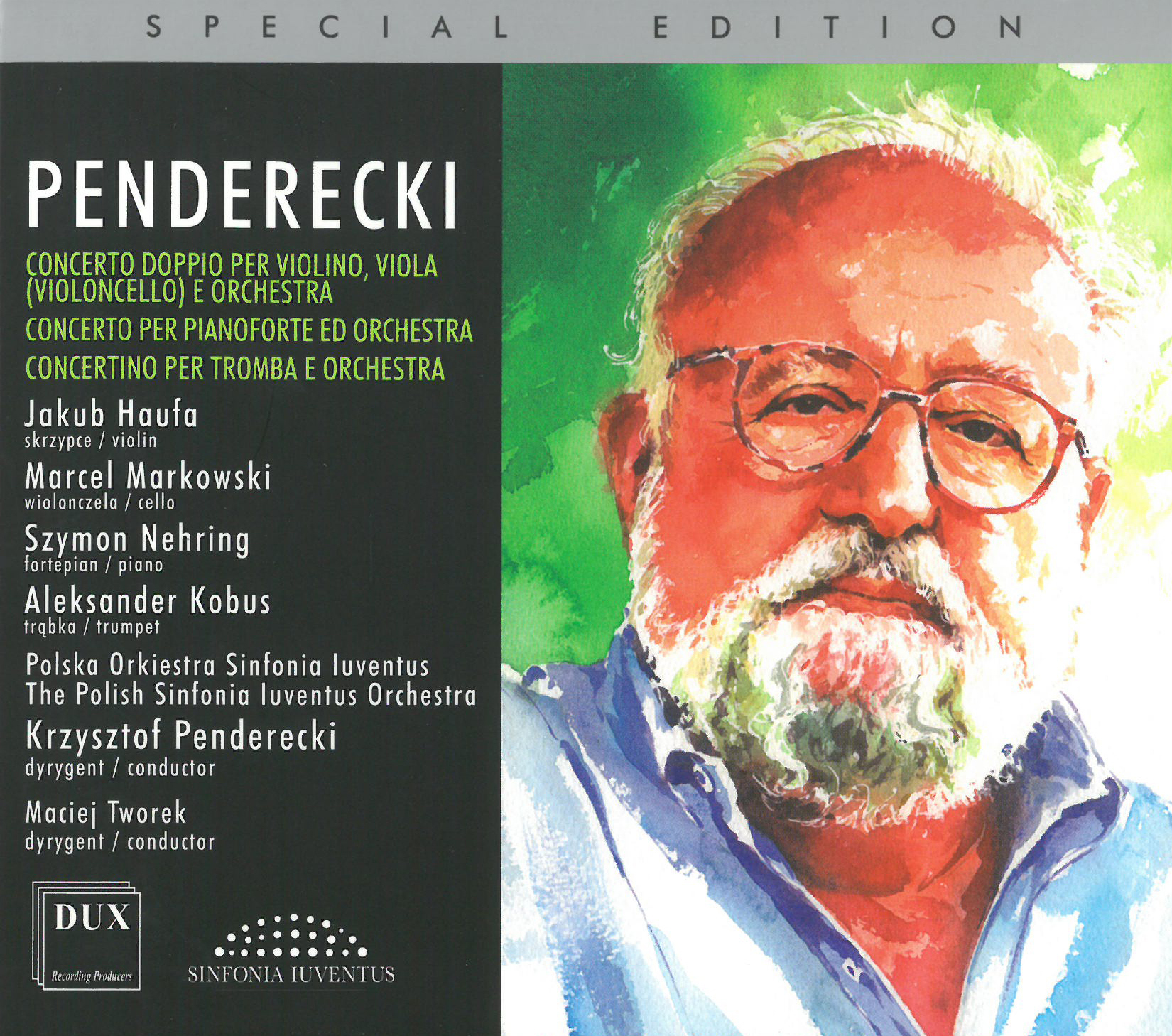
10 PendereckiPenderecki – Double Concerto; Piano Concerto; Trumpet Concerto
Jakub Haufa; Marcel Markowski; Szymon Nehring; Aleksander Kobus; Polish Sinfonia Iuventus Orchestra; Krzysztof Penderecki
Dux Recording Producers DUX 1345

What becomes of revolutionaries when, inevitably, with the passage of time, they become members of the establishment? Well, if you were Krzysztof Penderecki, you would be paying a tribute to the past. Now 84, the once-iconoclastic Polish composer, who stunned the musical world with his 1969 opera The Devils of Loudun and charmed it with the 1961, UNESCO-prize winning Threnody for the victims of Hiroshima, Penderecki today is more reflective and less innovative, but certainly not any less masterful.

Though the Double Concerto references Brahms in its form, the music is firmly in the Bartók corner. Powerful and sinewy melodic lines, especially those of the cello (originally scored for a viola) emanate freshness and the unmistakable delight of a newness of style. This is full-on, shivers-down-the-spine stuff, exciting, dangerous and hypnotic. The Piano Concerto and the Concertino for Trumpet are more standard expressions of this musical lion-in-winter, yet still bears his clear signature. All of the performers are very young, including this recently formed orchestra of Polish musicians under the age of 30. Their enthusiasm in performance is contagious, adding yet another dimension to this fine CD. A must for Penderecki fans and a not-at-all-bad introduction to his works for those ten people in the world who do not know him yet.

01 Hommaga a BoulezHommage à Boulez
West-Eastern Divan Orchestra; Daniel Barenboim
Deutsche Grammophon 479 7160

The West-Eastern Divan Orchestra is named after an anthology of poems by Goethe, inspired by a translation of the Persian poet Hafez. Goethe’s late work was a symbol of reciprocity between Occident and Orient, between Latin and Persian, Christian and Muslim, and German and Middle Eastern cultures. Co-founder Daniel Barenboim approached the 1999 formation of the Seville-based youth orchestra with similar intentions, bringing together musicians from Egypt, Iran, Israel, Jordan, Lebanon, Palestine, Syria and Spain, to promote principles of coexistence and dialogue between Israelis and Palestinians. In 2006, filmmaker Paul Smaczny made a documentary about the group entitled Knowledge Is the Beginning.

Having performed with Boulez since their 1964 concert of Bartók’s Piano Concerto No.1, (when Barenboim was 21) he chose to honour their working relationship with the 2-CD Hommage à Boulez, released in March 2017, a year after the composer’s death. The release of the recording coincided with the opening of the Pierre Boulez Saal, a Frank Gehry-designed chamber music hall in the Barenboim-Said Akademie in Berlin, which included the first concert of the newly formed Boulez Ensemble. The first CD contains live performances of the West-Eastern Divan Orchestra playing at the 2012 Proms in London, and the second includes their performances of pieces from Boulez’ 85th birthday celebration at the Berlin Staatsoper Unter den Linden in 2010.

Although Boulez conducts the live recording of Le marteau sans maître (at least his fifth recording of the piece, and second with contralto Hilary Summers (check out her website!)), I was most interested to hear a recent recording of Boulez’ music that wasn’t conducted by him, since the composer controlled the majority of recordings of his music. Considering the performances alone, this is a fantastic recording. Add to it that this is an orchestra made up of young musicians in an ensemble with admirable intent, and the recording is that much more impressive.

Barenboim conducts an energetically perambulant performance of the 49-minute Dérive 2, for 11 instruments. Jussef Eisa’s virtuosity is immediately evident in his live recording of Dialogue de l’ombre double, for clarinet, live electronics and pre-recorded tape, with off-stage piano providing resonance of the live clarinet sound projected from a speaker into the soundboard of the piano and redirected to the loudspeakers in the hall. The IRCAM live electronics team handles the computational side of this performance, as well as Anthèmes 2, demonstrating the most sophisticated instrument/computer interactions produced at IRCAM’s Paris research and creation facility. Hassan Moataz El Molla contributes a clear and elegant reading of Messagesquisse, for cello solo and six cellos. In their entirety, the flexible and colourful interpretations presented on this hommage support Stravinsky’s anecdote that Boulez is “Webern’s music sounding like Debussy.”

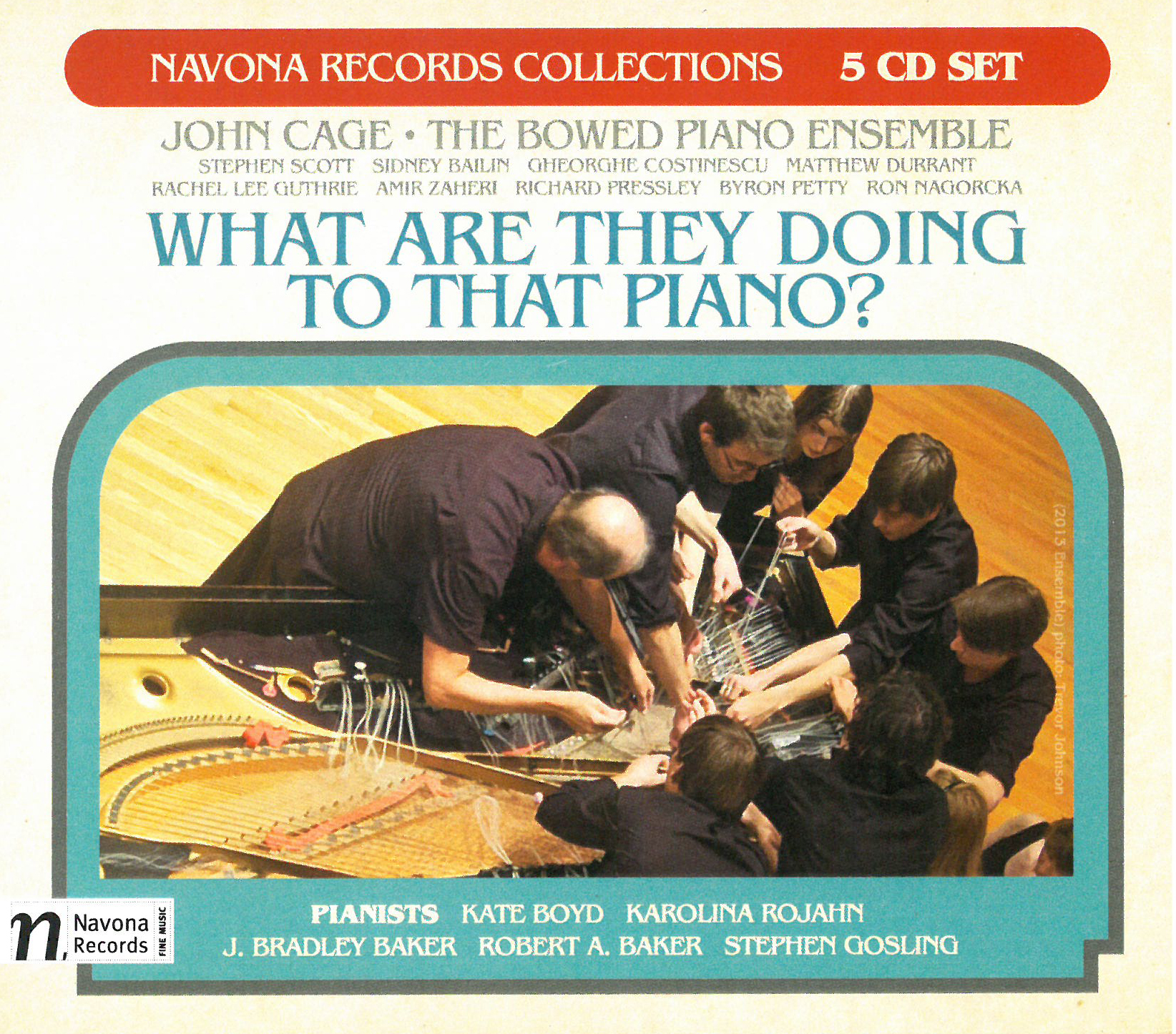
05 Prepared PianoWhat Are They Doing To That Piano?
Kate Boyd; Karolina Rojahn; J. Bradley Baker; Robert A. Baker; Stephen Gosling
Navona Records NV6100 navonarecords.com

Compiling this boxed set to document the history of post-20th-century piano must have been somewhat of a challenge for producer Bob Lord and Navona Records. But vexed they were not, judging by the results of What Are They Doing to That Piano? This boxed set of works for prepared piano shows how far ahead of the contemporary classical music game Lord and his label really are. It is only fitting then that this compilation begins at the beginning, with a stellar recording of the music that began it all: John Cage’s Sonatas and Interludes. This cycle of pieces was written between 1946 and 1948, and together represents one of Cage’s major contributions to the music of the 20th century. This “prepared piano” cycle was created for an instrument invented out of necessity: unable to fit a percussion ensemble onstage to accompany a dance performance, Cage modified a piano to produce “a percussion ensemble controllable by one player.” Among modern pianists, Kate Boyd’s performance of Sonatas and Interludes remains a benchmark one, just as Greta Sultan’s recording of John Cage’s Études was before that.

In Sonatas and Interludes, Cage exploits a wide array of sonorities, some bright and bell-like, others more delicate and subdued. Rhythmic motifs and patterns recur, producing an incantatory and hypnotic quality close to that produced by the gamelan, the percussion orchestras of Java and Bali. As Cage himself suggested, “control” was key. And Kate Boyd appears to have mastered the markings on Cage’s vertical score with cultured musicality and fastidious pianism. This performance replaces brute power with pellucid textures and a kaleidoscope of brilliant colours. Grinding motoric rhythms are superseded by an infinitely calibrated kinaesthetic sense of terrifying intensity. Transitions of tempo occur with the natural inevitability of a living, breathing organism. The precise dimensions and shapes of Cage’s structures appear in sharp focus. Such wizardry continues unabated into In a Landscape as Cage’s musical narratives, for all their wealth of detail, unfold with undistracted purpose. In all of this, Boyd’s dazzling virtuosity is never an end in itself but the servant of her vivid imagination.

If Cage’s Sonatas and Interludes is the anthemic torchlight of the prepared piano, then Stephen Scott’s Ice & Fire is one of the most significant pieces in this ongoing relay of Olympian proportions. It is almost impossible to imagine the true extent of how tight a fit it must have been to accommodate ten players around the well of even a 9-foot grand piano. However, fit they not only did but also have brilliantly executed Scott’s music to a nicety. Afternoon of a Fire and Vocalise on “In a Silent Way” sit at opposite ends of the Scott-spectrum. The former work is framed around American Indigenous, music and the latter conjures the ghost of Miles Davis’ repertoire from the 1970s; a veritable Mecca for moderns. In these and the eight other pieces, the Bowed Piano Ensemble takes a leap, intellectually, musically and instinctually, as they match Stephen Scott’s invention and originality throughout.

Sidney Bailin’s pieces 16-2-60-N-5 develop from beguiling, elegant threads, which are sewn together by his electronic manipulations with Karolina Rojahn’s arresting pianism, evoking stimulating mental pictures of mysterious narratives. And while Rojahn reappears with J. Bradley and Robert A. Baker to deploy an astonishing array of colours on Felt, Stephen Gosling breathes luminosity into Gheorghe Costinescu’s music on An Evolving Cycle to complete this glorious 5-disc set. More than that, though, these “new” works themselves deserve wider performance lives beyond this beautiful beginning provided them by Lord and Navona Records.

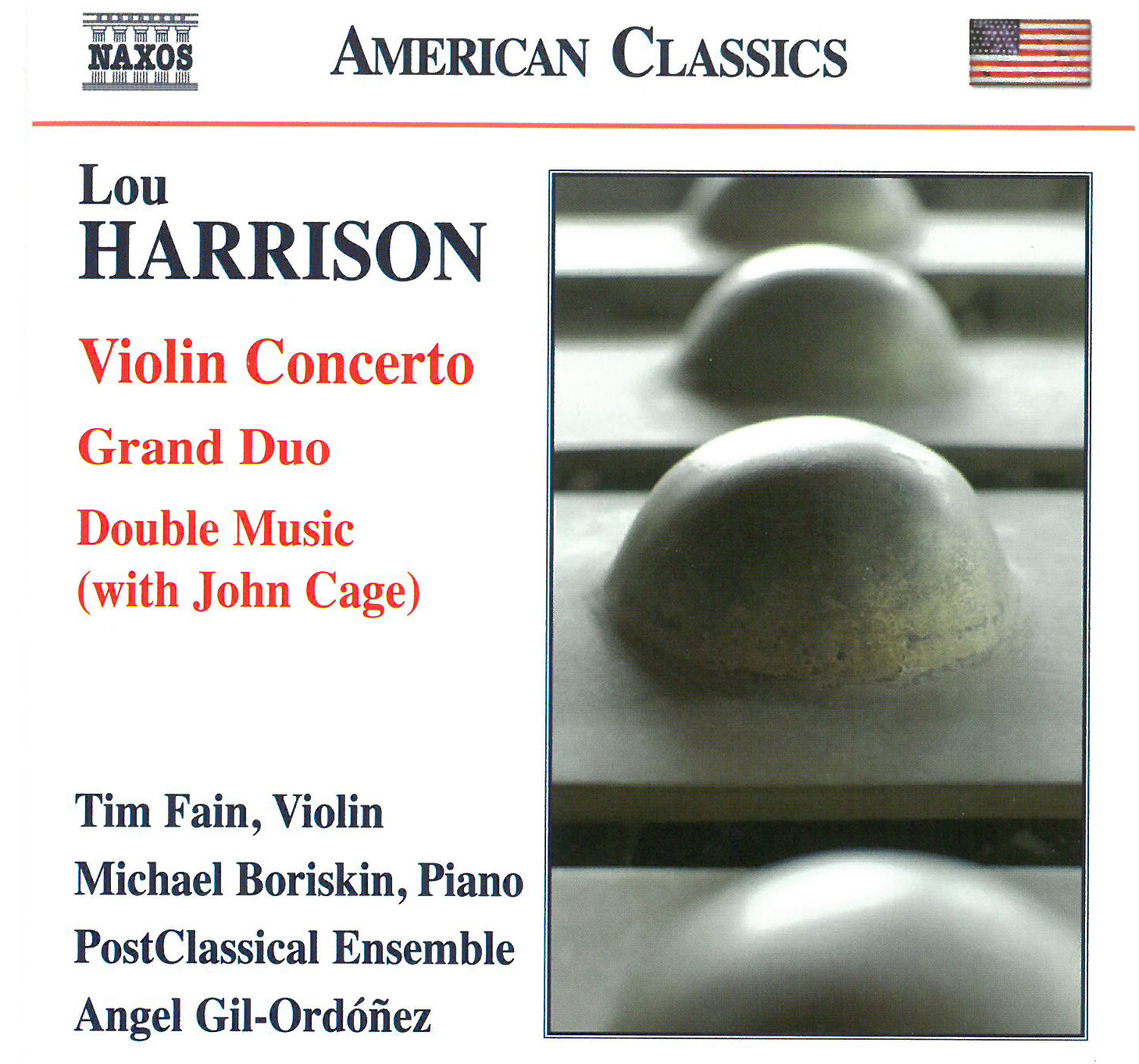
02 Harrison concertosLou Harrison – Violin Concerto; Grand Duo; Double Music
Tim Fain; Michael Boriskin; PostClassical Ensemble; Angel Gil-Ordóñez
Naxos 8.559825

This splendid CD contains two masterworks by Lou Harrison. I’m a long-time fan of Harrison and his mentor Henry Cowell, who introduced Harrison to both world music and John Cage, with whom Harrison would co-compose Double Music. (I was privileged to meet all three.)

In the first two movements of his Arabic-tinged Concerto for Violin and Percussion, the violin weaves sinuous melismas over punctuating percussion. They were composed in 1940 and revised in 1959, when Harrison added the finale, which offsets their fervent lyricism with a spirited belly-dance. Throughout much of the 20-minute concerto, Tim Fain has to play in the violin’s upper register; he does so, brilliantly.

The five-movement, Indonesian-influenced Grand Duo for violin and piano (1988) lasts 35 minutes. New to me, I found every minute enthralling. The violin’s long lines suggest a suling flute floating over the gamelan-like piano accompaniment provided by Michael Boriskin. A long, misterioso Prelude is followed by the up-tempo Stampede and gentle A Round. Air, the longest movement at nearly 11 minutes, is deeply downcast, similar in mood and impact to a Shostakovich Adagio. The Duo ends with the brief Polka, a lighthearted Europe-Indonesia hybrid. A great piece!

Double Music (1941), for which Harrison and Cage each independently wrote the music for two of the four players, is a long-standing percussion staple. Gil-Ordóñez’s meditative seven-minute interpretation takes over a minute longer than my swinging, Cage-conducted LP version. Different, but effective.

Heartily recommended!

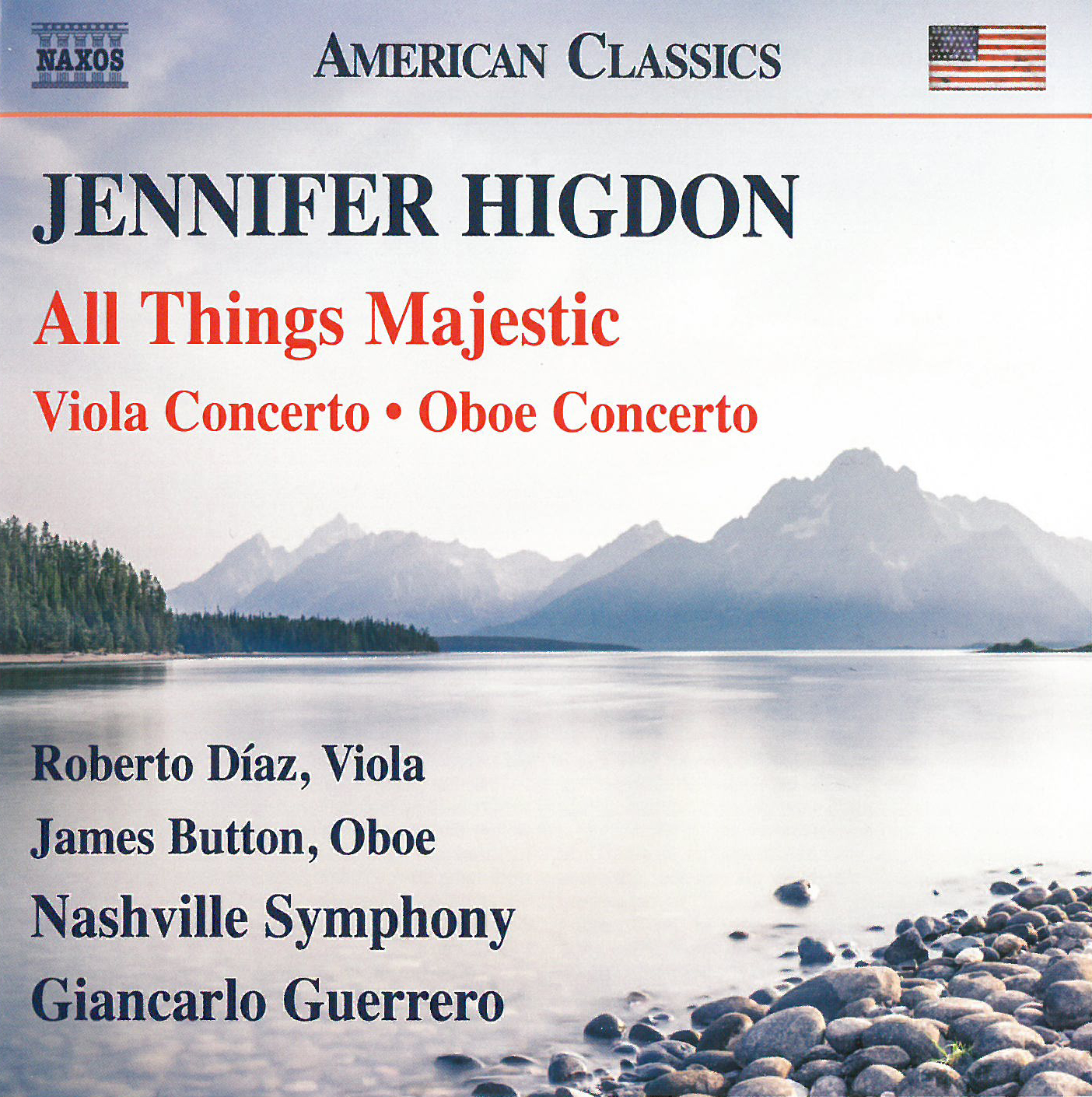
03 Jennifer HigdonJennifer Higdon – All Things Majestic; Viola Concerto; Oboe Concerto
Roberto Díaz; James Button; Nashville Symphony; Giancarlo Guerrero
Naxos 8.559823 

Celebrated American composer Jennifer Higdon’s music has a personal voice linking to major 20th-century American composers. Her complex but meticulously scored suite All Things Majestic (2011) is more than ably represented on this disc by the Nashville Symphony under renowned conductor Giancarlo Guerrero. Hiking in the Grand Teton Range gave rise to titles and musical realizations, according to the composer. The orchestra of Music City goes from strength to strength in this work: inducing a majestic effect in the polytonal parallel chord streams of the first movement; shimmering exquisitely in different registers from which solo string figurations emerge in the following String Lake. Snake River, the third movement, is short and effective with fast runs leading into the rapids, while the closing Cathedrals features pitched percussion and harp in ethereal splendour.

Guest Chilean-American soloist Roberto Díaz’s full, well-rounded tone pervades the Viola Concerto (2014). The opening movement was to me unconvincing compositionally; its major-scale (pandiatonic) harmony seems too prevalent, as is the falling seventh interval in the viola. The second and third movements, though, are successful with witty and complex rhythms, including irregular subdivisions of the beat reminding me of today’s electronic dance music. In the pastoral opening of the one-movement Oboe Concerto (2005), Nashville principal oboist James Button’s rich timbre suffuses an extended melodic line. A contrasting motivic and rhythmic section gradually emerges with quirky orchestration, creating sparks that energize the rest of this convincing work.

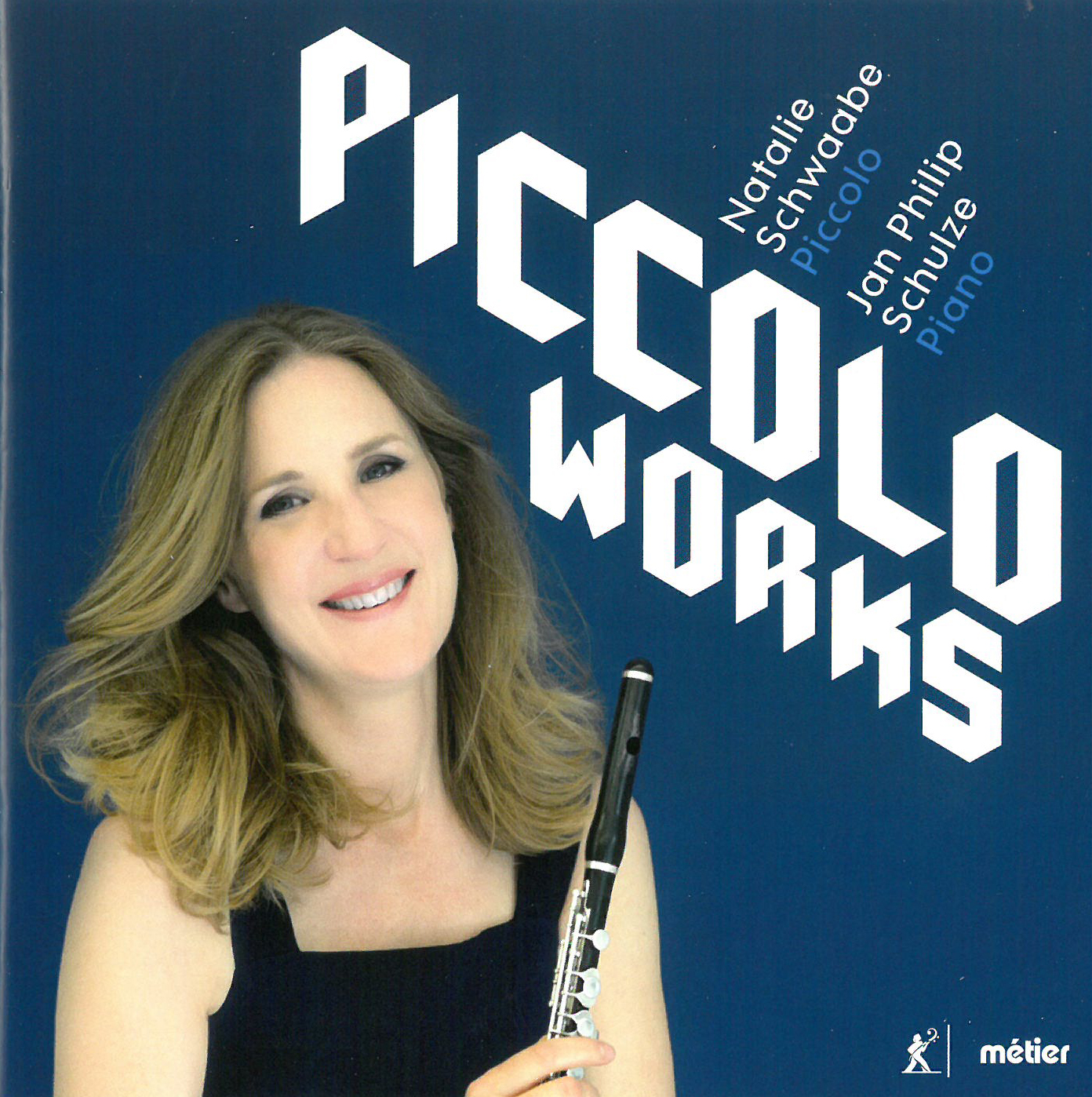
04 PiccoloworksPiccolo Works
Natalie Schwaabe; Jan Philip Schulze
metier msv 28562 (divineartrecords.com)

Shrill, raucous, vulgar, strident! All too easily these adjectives seem to attach themselves to, and prejudice us against, the hapless piccolo. Yet for Piccolo Works, Natalie Schwaabe’s excellent debut CD, these notions are utterly debunked. From the outset this outstanding piccoloist of the Bavarian Radio Symphony (a world’s top-ten orchestra) presents a challenging and varied program of 21st-century delights, delivered with impeccable intonation, rhythmic precision, sensitive musicianship and finesse.

The opener, Levante Gyöngyösi’s Sonata for piccolo and piano (2007) (rapidly becoming a staple of the canon), shows ample clarity and energy of ensemble playing with collaborator Jan Philip Schulze. This sparkling, polished team has much to offer in interpretation and excitement. Amidst the other composers’ works are two originals composed for Schwaabe: Gert Wilden’s sometimes sorrowful, sometimes jazzy, always melodic two and a half piece and Kanefzky’s charming Pied Piper of Hamelin for flute/piccolo and narrator. Here the piccolo appears only as the magical voice of the piper’s instrument while Schwaabe’s nuanced command of the flute belies any myth that piccoloists are somehow less accomplished flutists. Unfortunately for unilingual audiences, Schwaabe’s narration is in German.

Mower’s Sonata, the perilous multiphonics of Donatoni’s NIDI Mikalsen’s starkly brutal Huit ilium where Schwaabe’s fluid control of even the highest notes is dazzling, and the Canadian Derek Charke’s wrenchingly sad Lacrymose round out this utterly brilliant CD. If this recording were to become essential listening, it would surely unfetter the piccolo from its enduring prison of prejudice.

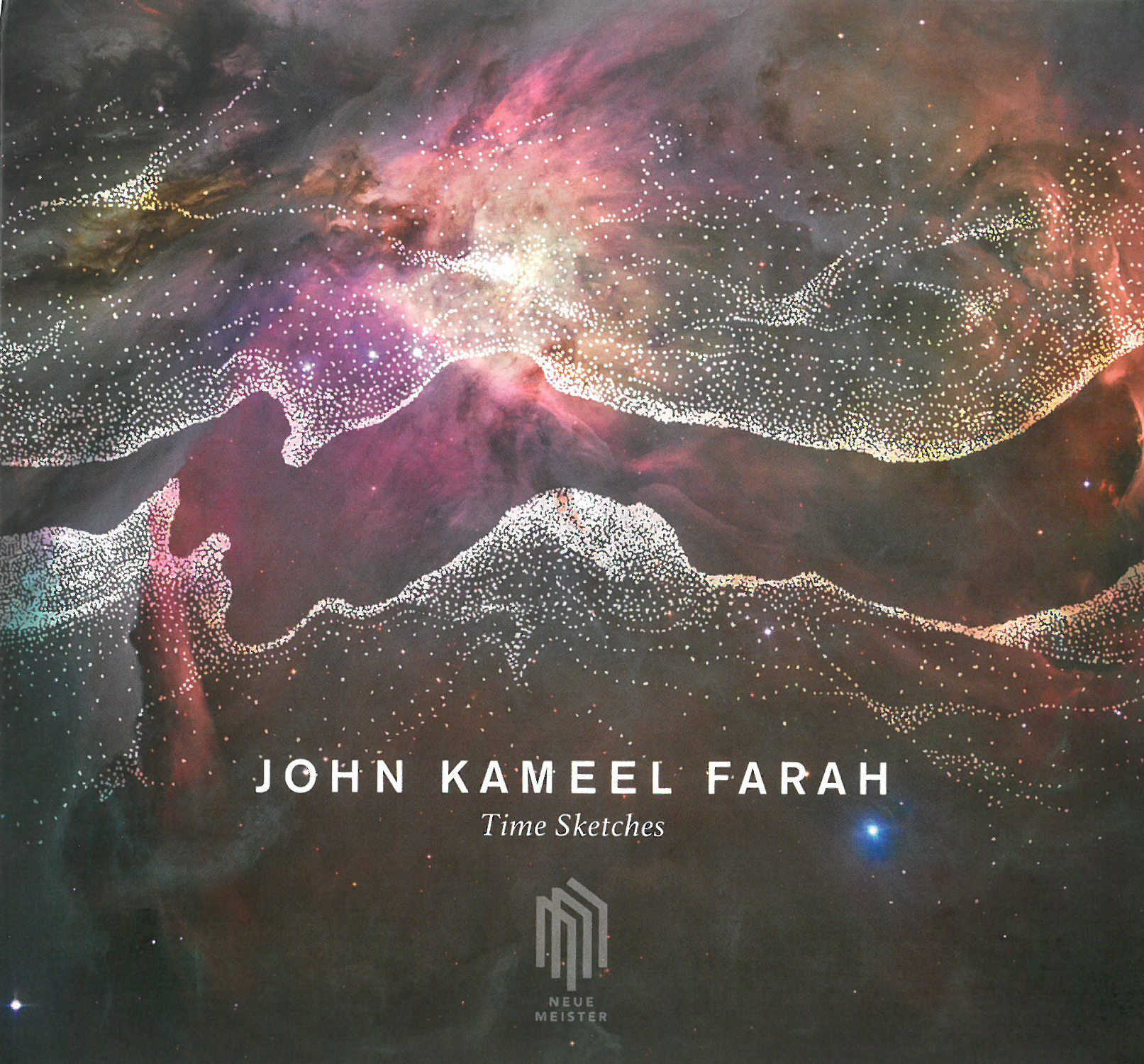
06 FarahTime Sketches
John Kameel Farah
Neue Meister 03009045NM (johnfarah.com)

John Kameel Farah is a composer, pianist and visual artist who these days makes his home in both Toronto and Berlin. His piano-centric compositions have long attracted attention. During his University of Toronto music student years he twice received the Glenn Gould Composition Award.

Farah’s musical influences are extremely broad and cosmopolitan. They embrace the musics of Renaissance keyboard composers, J.S. Bach, Arabic maqam, Schoenberg and Ravel, as well as that of the minimalists, free improvisation and vernacular genres such as drum and bass. He performs all of them with precision and panache. Even more surprising, perhaps: in Farah’s live solo concerts he often deftly mixes many of these seemingly disparate elements, performing on piano, harpsichord, organ, synthesizer and computer. While his concerts primarily focus on his signature hybrid of composition, improvisation and electronic music, he often adds classical works, lending his programs a Euro-American historical perspective.

There is much to listen to and savour in Time Sketches. The relatively contained Behold! for piano and pipe organ is the example I’ll choose to talk about today. Set in a 20-beat metric cycle, it echoes the musical vocabulary developed mid-century by the American minimalists. The effect of the music is somewhat counterintuitive; it’s lilting and soft-spoken. Ending on a single, surprisingly gentle, middle-octave B-flat on the piano, it reminds this listener of mid-career Terry Riley’s keyboard music. Farah had private lessons in 1999 with that pioneer minimalist master, and Behold! is a worthy miniature addition to the minimalist music canon.

I recommend Time Sketches as a worthy addition to your quality listening time.

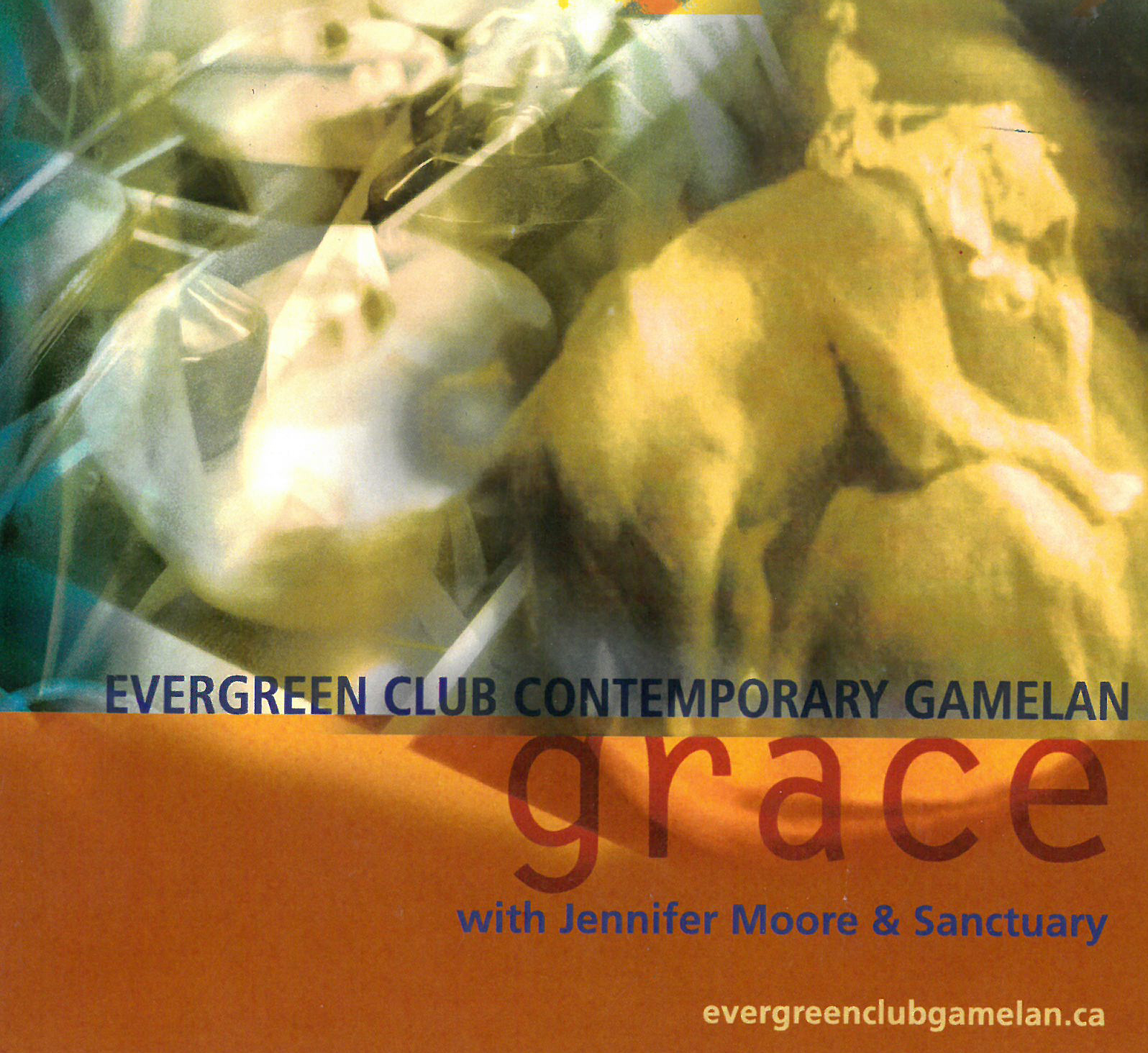
Grace
Evergreen Club Contemporary Gamelan with Jennifer Moore & Sanctuary
Artifact Music ART 041 (artifactmusic.com)

Bridge
Evergreen Club Contemporary Gamelan
Independent (evergreenclubgamelan.ca)

07a Evergreen Grace30 plus years of performing, composing and commissioning works together has completely immersed the Evergreen Club Contemporary Gamelan in the sonic possibilities of their unique orchestra. Two recent CD releases provide ample evidence of the maturity of their sonic palette.

Grace is a live collaboration with the Sanctuary Trio (bass clarinet, cello and pipe organ). These very unique timbres create an inspiring range of compositional possibilities that are fully explored in the three pieces that make up this recording. Bill Parsons’ Translating Grace immediately pulls us in with a softly insistent, offbeat time-keeping underpinning a series of two-note motifs on the gamelan’s various tuned percussion instruments. The texture becomes quietly denser as drums, higher melodies and suling (bamboo flute) all join in. It all slowly unravels and ends with a percussive burst that repeats and fades, echoing into the distance. We have now entered another realm… Low and ominous tones from the cello and bass clarinet underpin the sober truth-telling of the vocalist. This static, sombre mood alternates with blithe suling interjections over gamelan textures, and a loping, Dolphyesque bass clarinet solo.  Dreamlike textures and odd time signatures keep us adrift. The vocalist reminds us: “Before Grace, everything slips away.”

The pairing of the ECCG with the Sanctuary Trio in this setting creates a wonderfully lush and warm environment. Jeff Reilly’s Meditations on Innocence delves deep into the textural possibilities of this pairing, while using ample space in the music to fully exploit the acoustics of the cathedral used for this live recording. Space is a palpable part of the texture of a slow gong ostinato, over which bass clarinet and cello take turns giving voice to the silence.

Mark Duggan’s Language of Landscape begins deliberately off kilter, sounding like the wind pushing through chimes. Though the work stays very abstract, it is no intellectual exercise. It is full of feelings of questioning and yearning, expressed mainly by the cello and bass clarinet. Repetitive textures imply urban or mechanized environments. A slow one-note chiming mantra is the underpinning of dense organ clusters reminiscent of the Japanese shō. This all gives way again to fragments and gestures and is brought to a close by the organ.

07b Evergreen BridgeThis recording is a great document of the musical sensitivities the two ensembles bring, not only to each other but to the environment in which they performed.

The ECCG’s recording Bridge is an ambitious project, years in the making. Citing various Indonesian sources as inspirational starting points, original lyrics were composed, and arrangements using the gamelan as well as western strings, guitars and turntables were written. The music is definitely accessible to those not familiar with the sounds and structures of Indonesian music; striking the right mood between instruments and sensibilities is the real accomplishment here. However, the inclusion of an arrangement of Joni Mitchell’s Both Sides Now seems transparently aimed at getting airplay (Canadian content x2!). Though cleverly arranged, it is rather saccharine, and I find it disruptive to this collection of otherwise interesting experiments.

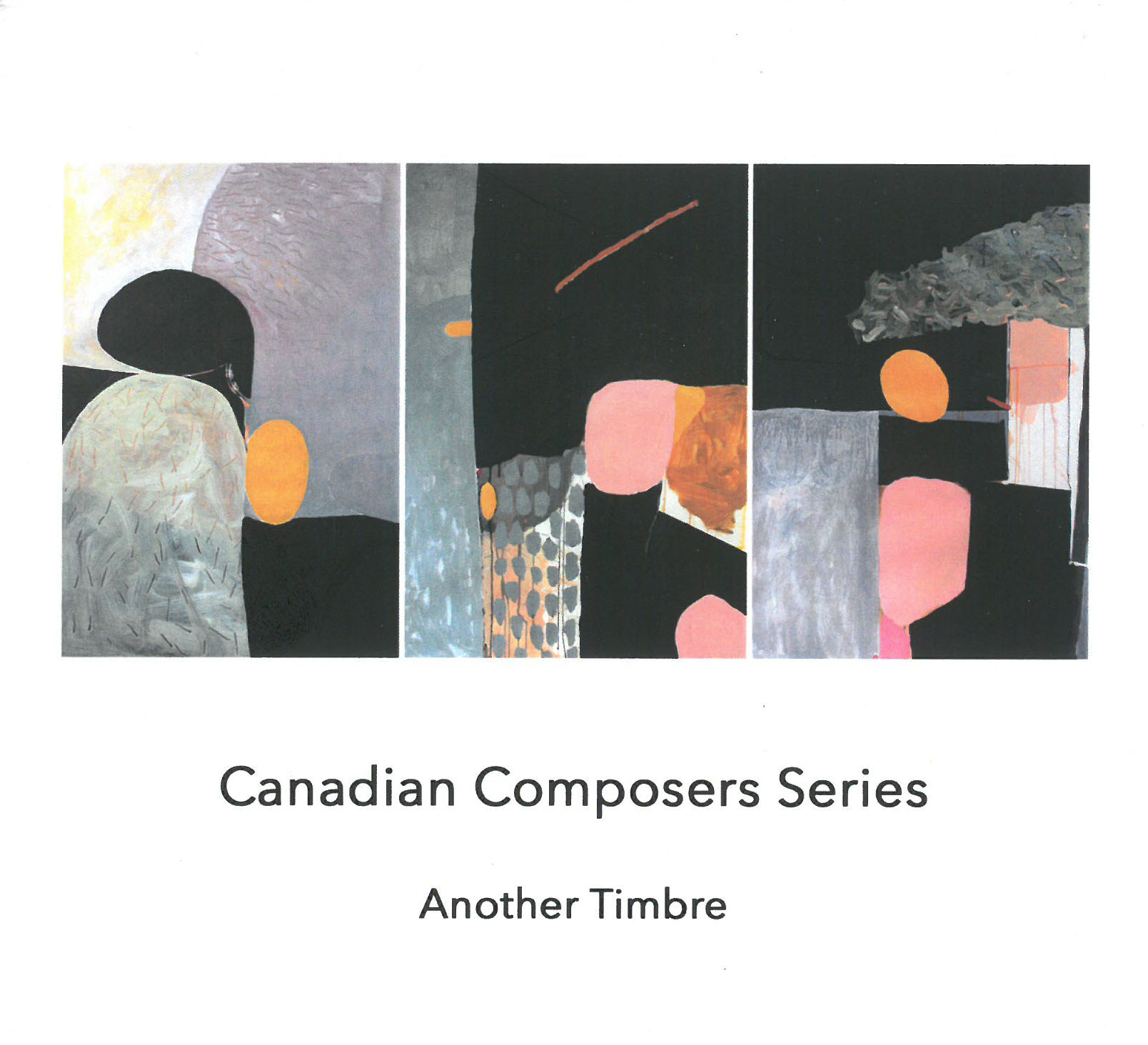
Canadian Composers Series
(anothertimbre.com) at105 - at109

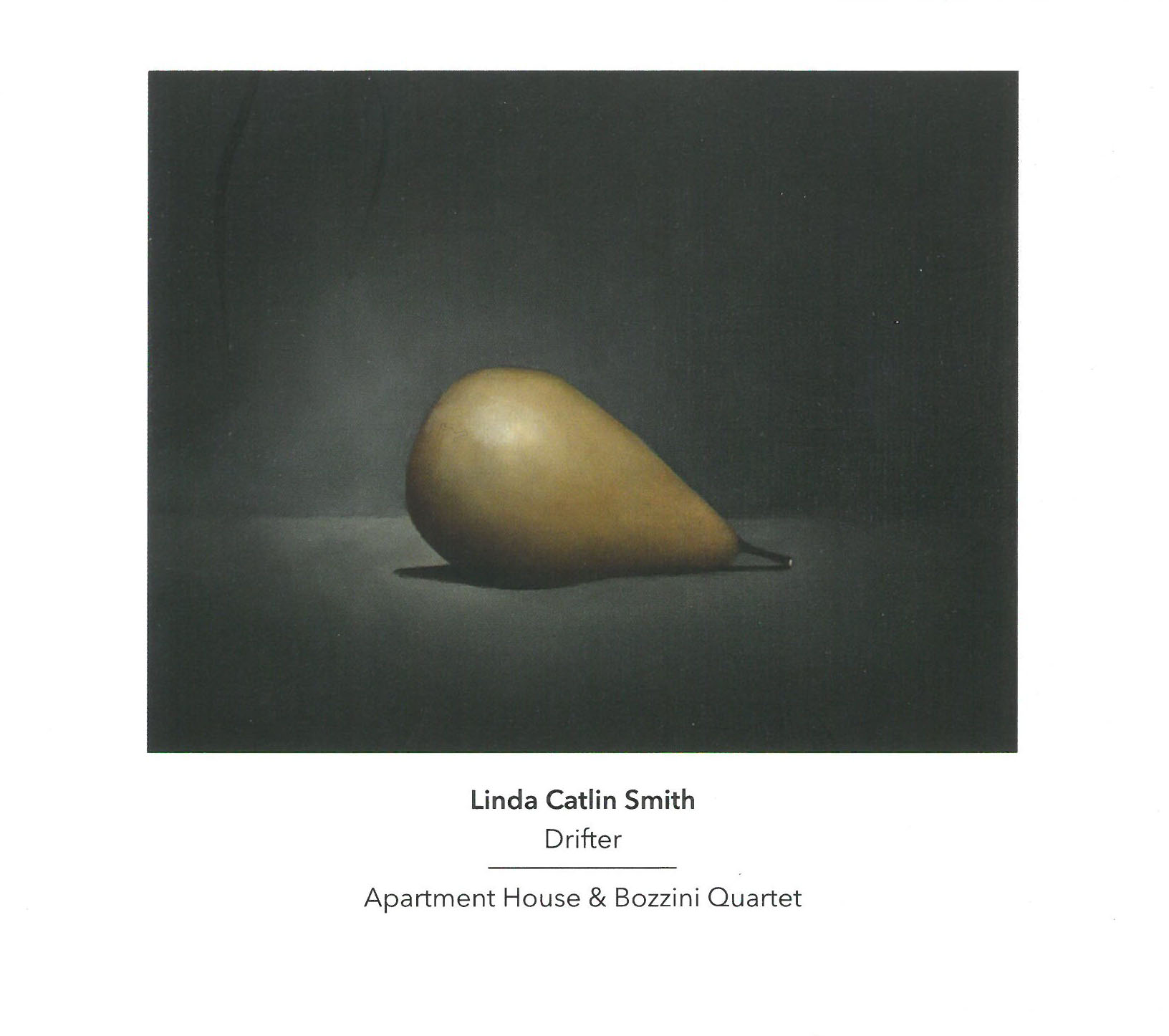
Linda Catlin Smith – Drifter
Apartment House; Bozzini Quartet

Martin Arnold – The Spit Veleta
Philip Thomas; Mira Benjamin

Isaiah Ceccarelli – Bow
Various Artists

Chiyoko Szlavnics – During a Lifetime
Konus Quartet; Apartment House

Marc Sabat – Harmony
Jack Quartet

01a Another Timbre bookletTradition is a wonderful reality, but not understanding that the inner dynamic of tradition is to always innovate is a prison. This is eminently true in the case of music produced by the Canadian artists on the imprint Another Timbre. Beginning with Linda Catlin Smith, every one of the group under review has chiselled uniquely beautiful, but defiantly provocative works from out of the bedrock of contemporaneity. And although familiar forms such as the Piano Quintet (from Linda Catlin Smith) pop up in these performances, the music flies in the face of all conventions.

Indeed, these artists force listeners to reconsider what tradition is. For example, Marc Sabat, on Euler Lattice Spirals Scenery, positions himself in creative conflict with age-old protocols about how a string quartet ought to work. Likewise with Chiyoko Szlavnics, whose Reservoir sends strings rippling against flute, accordion and percussion. It becomes clear, then, that having actively thrown overboard melodic, structural and harmonic hooks that have been expressively blunted through misuse, these artists seem to build from what might– or mightn’t-be left.

01b optional Linda SmithJust as Frank Zappa once famously asked, “Does humour belong in music?” one feels compelled to also pose the question: “Does mathematics belong with art?” The answer in the architectural geometry of Smith’s Drifter is a most emphatic “Yes.” Its resident geometry, however, seems to have been informed by French curves rather than by set squares. As a result her spacy Piano Quintet seems to defy definitions of beauty, which although essential to Smith’s credo, is bereft of perfumed listener-ingratiating beauty and resplendent in the natural sounds of tuned percussion, bowed strings and plucked guitars.

The emerging members of Apartment House and the Bozzini Quartet float effortlessly over Gondola and Far from Shore seemingly tracing their fingers delicately over the contours and hachures of the map of a priceless treasure without compromising the location of its secret world. In all of this and other music on the double disc Smith makes use of time and space as well as championing the cause of her singularly poetic approach to the all-important beauty of the melodic line.

Meanwhile Martin Arnold’s music for Points and Waltzes, Slip Minuet and the title work of his album The Spit Veleta comes alive in the silvery tonal purity and exquisite subtlety of phrasing by its interpreters who bring fresh ears to these radiant gems. Similarly, Isaiah Ceccarelli’s seven pieces on Bow are designed to extract the maximum tonal depth from strings, reed organ, organetto and percussion; as does Chiyoko Szlavnics from strings and reeds and woodwinds, and the Jack Quartet with violin, viola and cello on the exquisite narratives on Marc Sabat’s Harmony.

It all bodes rather well for the future of this Canadian Composers Series and for Sheffield, UK-based Another Timbre, a label whose presence in contemporary music is doing yeoman work to shine a brighter spotlight on new music that is being beamed by across the world.

Back to top