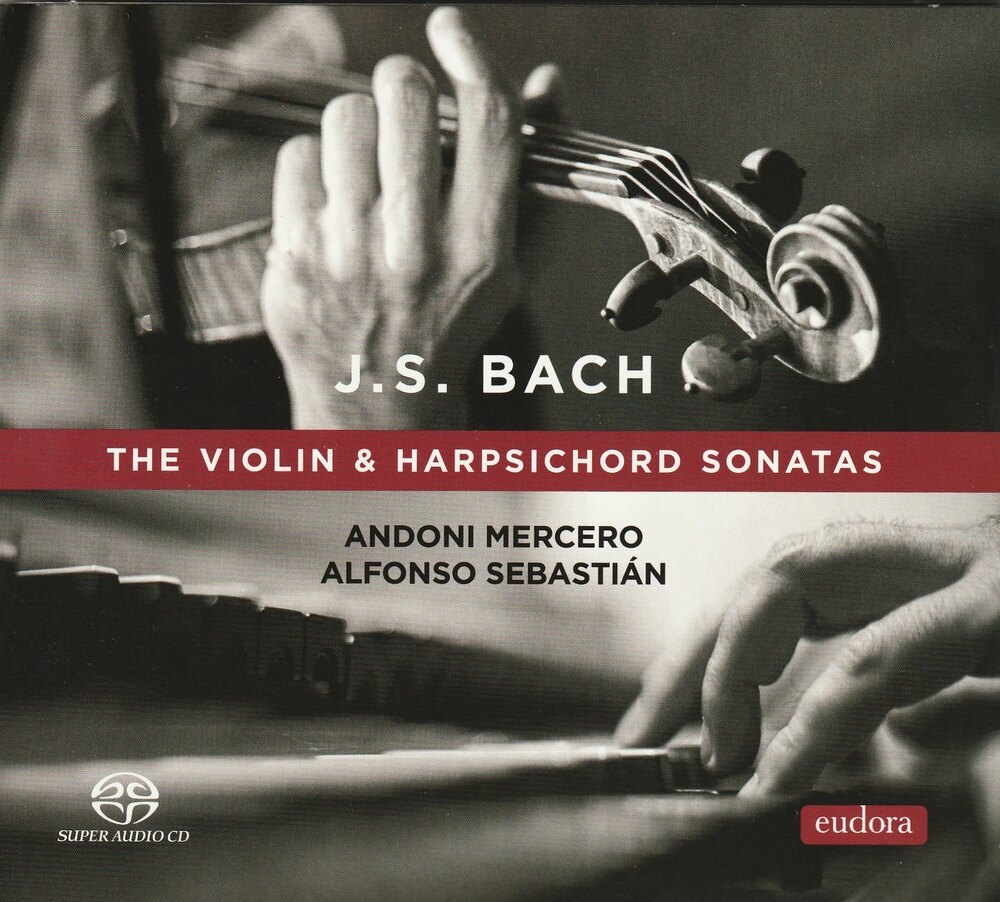
01 Bach ViolinBach – Violin & Harpsichord Sonatas
Andoni Mercero; Alfonso Sebastian
Eudora Records EUD-SACD-2025 (eudorarecords.com)

Recorded in the later part of 2020 at St. Miguel Church in Zaragoza, Spain, this splendid and affecting recording captures the remarkable variety, innovation and intimacy of these great sonatas. Written in the early 1720s, they feature both instruments as equals and, as with many of Bach’s “sets of six” (Brandenburg concerti, cello suites, English and French suites for keyboard, violin sonatas and partitas), each stands alone in mood, spirit and thematic development. From the wistful and distant B Minor, the tragic C Minor (with its echoes of Erbarme dich in its first movement), the nostalgic and poignant F Minor to the majestic A Major, the towering E Major and the final exuberant G Major, this recording offers generous and beautiful performances, full of intelligence and heart.

Both players are leading performers and educators in Spain, with Mercero equally at home as a soloist, leading orchestras from the violin (both Baroque and modern) and playing more intimate chamber music (he coaches string quartets at Musikene in San Sebastián in Spain) and Sebastián collaborating with many Spanish early music ensembles, as well as teaching harpsichord at the Salamanca Conservatory.
The handsome 2CD set is accompanied by an informative booklet, featuring a lengthy and well-written essay on the provenance of these fascinating pieces and personal reflections on the 30-year musical partnership of these two brilliant musicians.

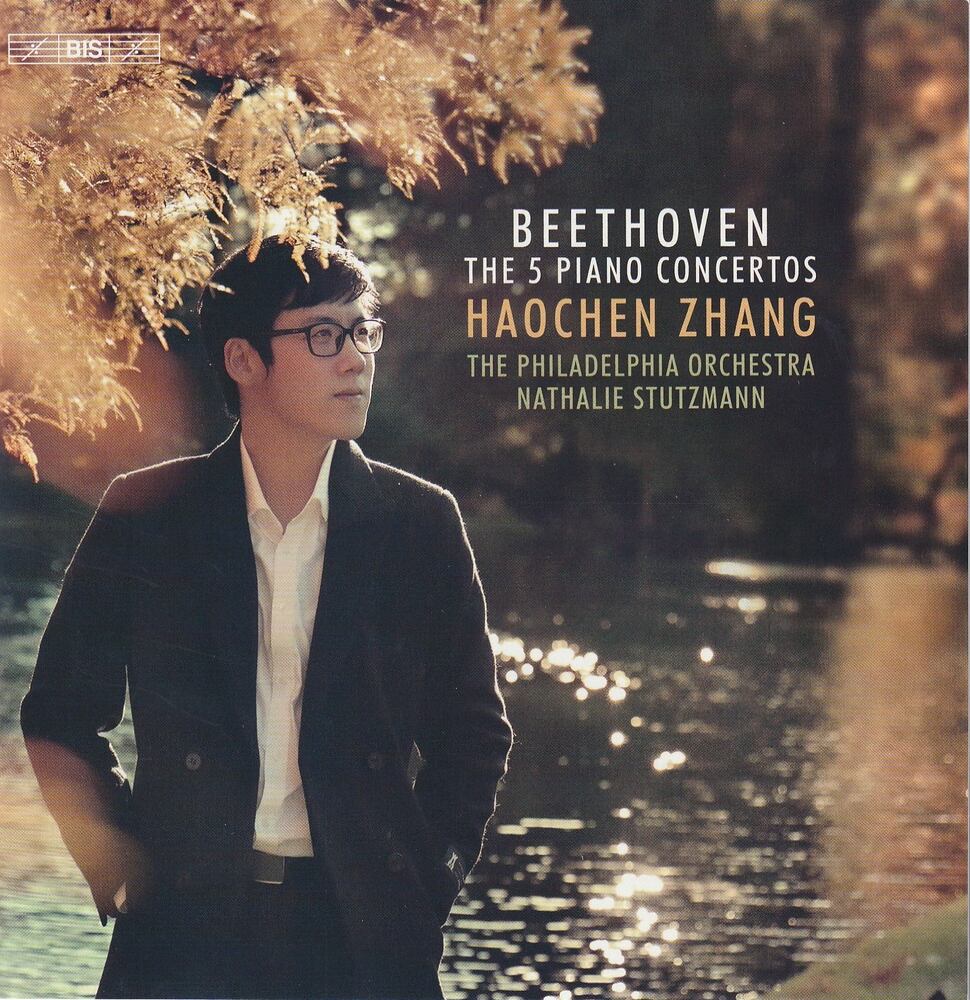
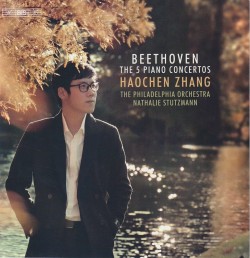
02 Beethoven Pianos CtiBeethoven – The Five Piano Concertos
Haochen Zhang; Philadelphia Orchestra; Nathalie Stutzmann
BIS BIS-2581 SACD (bis.se/performers/zhang-haochen)

Having taken the classical piano world by storm when he first burst upon the scene in 2009 as the youngest pianist to ever receive a gold medal at the Van Cliburn International Piano Competition, Haochen Zhang, now 32 with three releases under his belt, offers a fine follow-up recording here to his earlier Tchaikovsky and Prokofiev piano concertos. Once again recording for Naxos, Zhang performs Beethoven alongside the well-regarded Philadelphia Orchestra, the city in which the Chinese-born Zhang is currently based, under the direction of guest conductor Nathalie Stutzmann.

For any pianist, even one as accomplished as Zhang, to take on a complete program (spanning three discs) of Beethoven’s five piano concertos is yeoman’s work indeed. First there is the work of performing the pieces themselves (the study, nuance, technical challenge, among literally thousands of additional artistic decisions), plus the “work” of situating oneself into the canon of Beethoven interpreters (of which there are many and they are great), adding one’s name and vision onto the ever-growing corpus of versions and canonic contributions.

Nicholas Cook, writing in Music: A Very Short Introduction coins the phrase: “The Beethoven Effect” referring principally to the fact that Beethoven, freed from the obligation of compositional servitude to a church, a noble patron, or a feudal landlord was perhaps the first true musical “artist,” (differing here from trades or crafts person) who enjoyed a kind of self-awareness of his own greatness that not only traversed geography but the “boundaries of time and space.” Beethoven’s music was, as Cook suggests, “for the ages,” and, although difficult to know for certain, Beethoven knew it. Unlike Bach, who would use his own handwritten etudes as parchment paper to wrap lunches while taking a break from his teaching obligations at St. Thomas Church in Leipzig, Beethoven did not view his music so ephemerally. As a result, offers Cook, composing after Beethoven was an exercise in hearing his historical and giant footsteps from behind.

With such grandiosity of intent and purpose came the grand compositional gestures that we now associate as hallmarks of Beethoven specifically, and the Romantic era more generally. And it is in these expansive signifiers, hugely encompassing of human emotion and offering a kind of bordered frame that tests the limits of any performer brave enough to tackle his repertoire, that Zhang excels. Where, for example, a less competent interpreter would use virtuosity as a proxy for expressiveness, Zhang’s performance here sounds as if there is another dimension in play where we do not just hear, as Hans Von Bulow established, the pianist abdicating one’s agency so audiences hear only the composer and not the performer, but rather a satisfying fusion that is equal parts Beethoven and Zhang.

Lastly, when we look at classical music history through the eyes of today, we often see an artificial bifurcation between composers and performers/improvisers. But Beethoven, in addition to being a composer, was apparently an extremely fine pianist, and, like the aforementioned Bach, improviser. And it is here as well where we hear Zhang contributing to the continuum of the pianist Beethoven, wrestling with, accepting and ultimately transcending this music with this fine recording that is sure to add much lustre to his impressive but still developing legacy. 

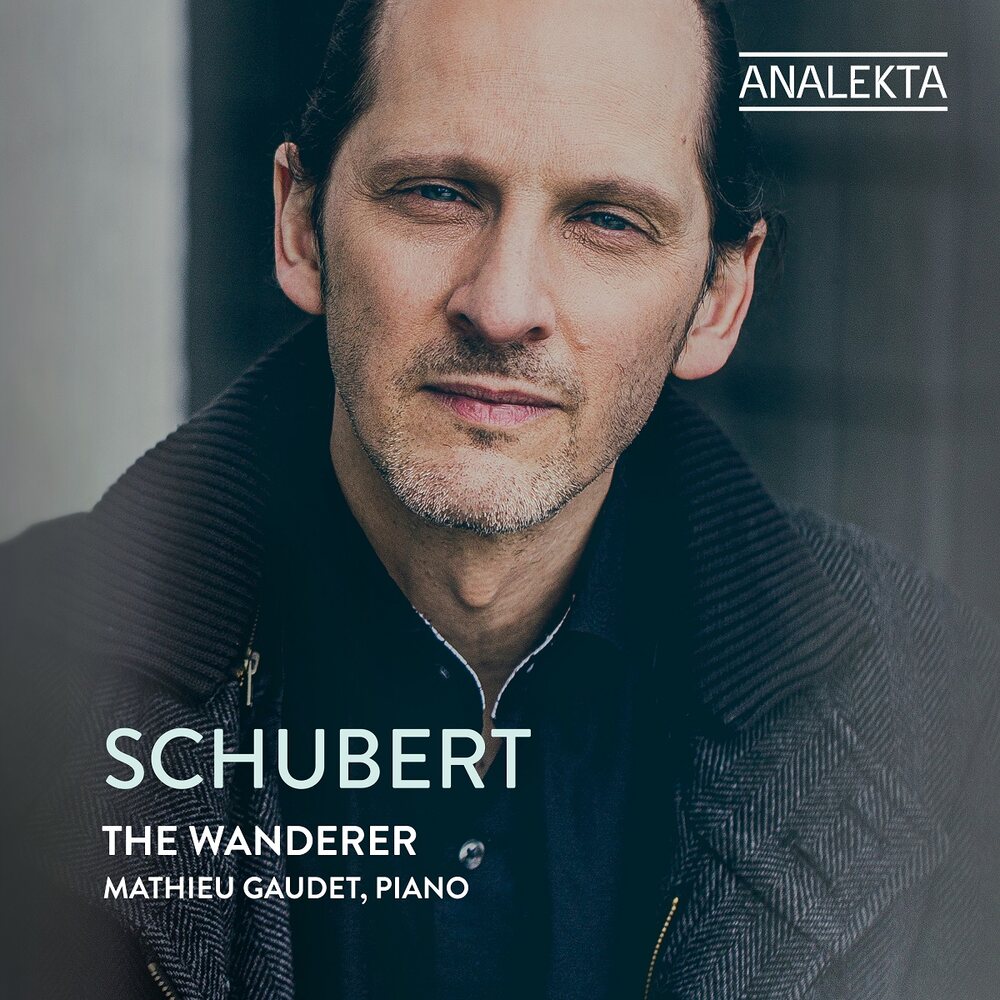
03 Schubert GaudetSchubert – Vol.7 The Wanderer
Mathieu Gaudet
Analekta AN28929 (analekta.com/en)

Has it really been more than three years since Quebec-born pianist and emergency room physician Mathieu Gaudet completed his ambitious series of 12 recitals presenting the complete piano sonatas of Franz Schubert which launched the equally ambitious project by Analekta to tailor them into a 12CD collection? Since then, Gaudet has proven without a doubt that he is among the foremost interpreters of Schubert’s piano repertoire, and this seventh addition to the collection is indeed further evidence. Titled The Wanderer, it features the sonatas D157 and D784, and, appropriately, the renowned Wanderer Fantasy D760.

Dating from 1815, the Sonata in E Major D157 was Schubert’s first essay in the form, while the Sonata D784 was completed five years later. As expected, Gaudet’s performance in both is a delight, demonstrating a particularly beautiful tone combined with an impeccable technique.

The famed Wanderer Fantasy from 1823 is reputed to be one of Schubert’s most difficult compositions, not only technically but also in nuance. While it comprises four movements, each one transitions into the next instead of ending with a definitive cadence, and each starts with a variation of the opening phrase of his lied Der Wanderer D489. The piece conveys a vast array of moods, but Gaudet draws them all together into a cohesive whole and the piece – like the disc itself – flows with incredible spontaneity.

Altogether this is an exemplary addition to this ongoing project and we can look forward to the remaining five in the series.

Listen to 'Schubert – Vol.7 The Wanderer' Now in the Listening Room

04 Brahms BermanBrahms – Variations and other works
Boris Berman
Le Palais des Degustateurs PDD027 (lepalaisdesdegustateurs.com)

Within jazz music’s history, perhaps particularly so during the bebop era of the mid-1940s, fly-by-night record companies would pop up to record the progenitors of this musical form (Charlie Parker, Thelonious Monk, Kenny Clarke, Dodo Marmarosa) as their sounds, largely heard in after-hours New York-based jam sessions, escaped notice or attention by the so-called “majors” of the time. Tall on ambition and moxie, but short on finances, these companies (Dial, Savoy, Riverside) wanted to record original music that had a patina of familiarity (harmony, chord changes) without paying the royalties necessitated by copyright laws in order to release music not in the public domain. Enter the contrafact; new melodies written over the chord changes and form of pre-existing compositions.

Well, like almost everything else in life, there is a historically earlier iteration of this idea, this time coming from Western Art Music, the variation. As the informative liner notes to this fine recording by the talented and articulate pianist Boris Berman expound, variation “provided a predictable template, an unobtrusive campus, upon which musicians could demonstrate their craft.”

Contained on this interesting and imminently listenable recording by Berman are variations or arrangements by Johannes Brahms that delight and bring new perspective to the works of this master. Recorded on a gorgeous Steinway piano with fine sonic capture from the Couvent des Jacobin in Beaune, France this compelling 2022 recording by a leading Brahms interpreter, pedagogue and prolific pianist is a welcome addition to the discographies of both Berman and Brahms.

05 Bruckner 9Bruckner – Symphony No.9
Budapest Festival Orchestra; Ivan Fischer
Channel Classics CCSSA42822 (outhere-music.com/en/labels/channel-classics)

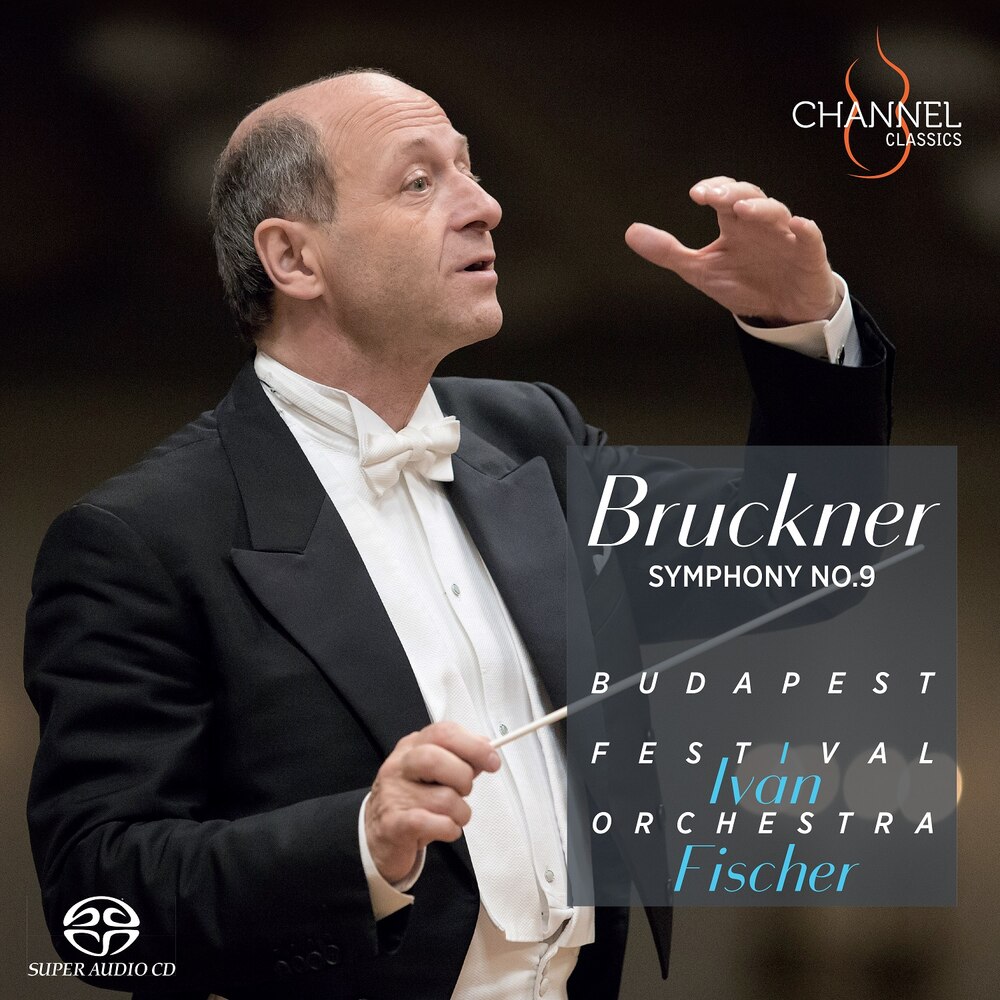
There is a wonderful, dramatic moment in Verdi’s opera Attila. In the sixth century Attila’s hordes were devastating Italy but just before reaching Rome Attila has a dream warning him to “Stop! Go no further, you are entering God’s territory.” Indeed, Attila was never able to conquer Rome. This is how I felt listening to the heavenly last movement of Bruckner’s Symphony No.9 in D Minor. The music is so beautiful, so otherworldly, that it is approaching heaven and Bruckner had to stop, no further to go. As we know Bruckner was never able to complete this work.

Ivan Fischer, by now a world-famous Hungarian conductor, has a tremendous respect for this work but wanted to reach age 70 before attempting to conduct it. And it was worth the wait. The Budapest Festival Orchestra, that he created with the late great pianist Zoltán Kocsis and is now rated one of the top ten of the world, is in top form and so is the recording.

At the beginning there is a mysterious, even frightening, hushed intensity, daring harmonies and gorgeous sonorities as we reach the climaxes in the first movement. This is followed by Bruckner’s trademark Scherzo of relentless foot stomping as if giants were dancing (reminding us of Wagner’s Das Rheingold) but the joviality ends with a deadly grimace in D minor. The final Adagio begins with a surprisingly poignant leap of a minor ninth and the Wagner tubas play a prominent role, but the ending is a farewell, a quiet renunciation, and tranquillity now pervades in a major key that ends the symphony.

06 Walton FacadesWilliam Walton – The Complete Facades
Narrators Hila Plitmann and Kevin Deas; Virginia Arts Festival Chamber Orchestra; JoAnn Falletta
Naxos 8.574278 (naxos.com/Search/KeywordSearchResults/?q=8.574378)

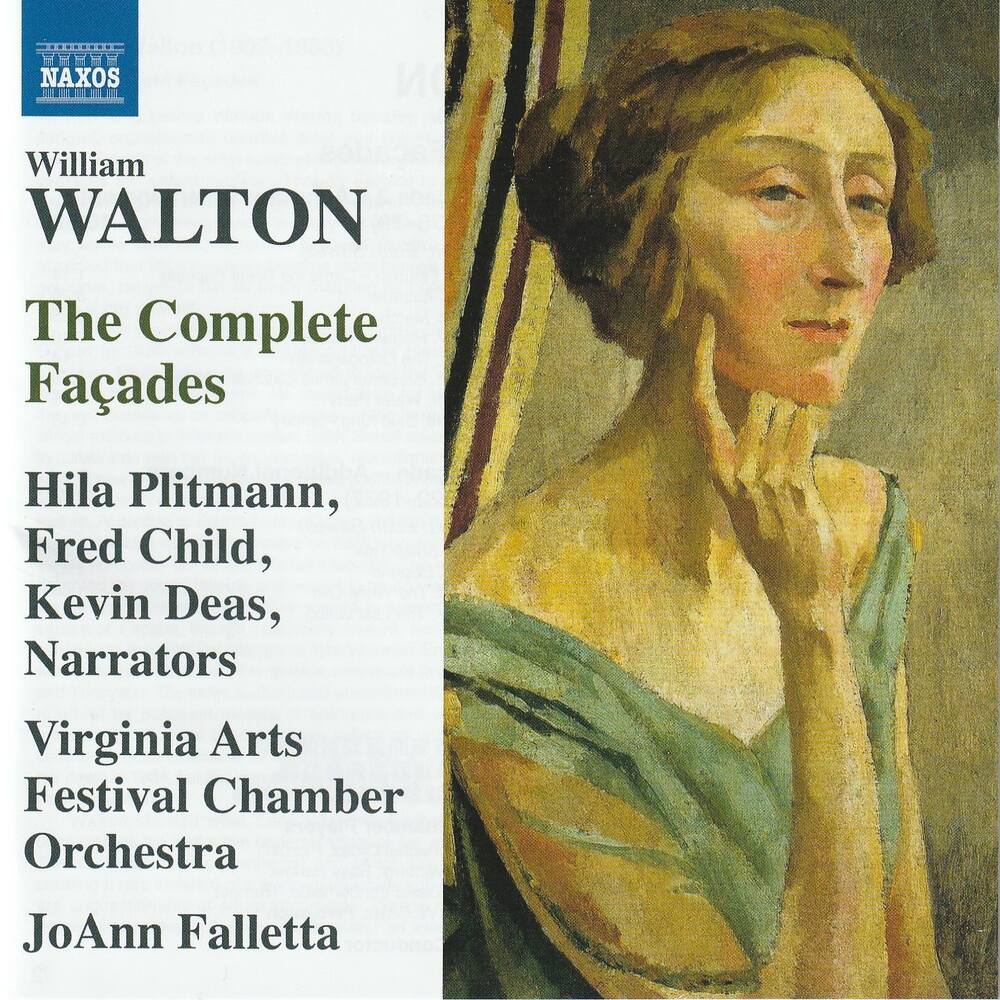
It’s difficult to forget a first love, whether another person, or in this case a recording of a modern curiosity. Façade, an Entertainment, is composed of poems by Edith Sitwell recited to (over? against?) popular song and dance stylings by an extremely young (18!) William Walton. Those originally entertained were doubtless the bloom of British intelligentsia, as white and privileged a crowd as ever was. Façade’s texts are sometimes problematic; they could never be written today, or hopefully, never published. There’s bushels of racism and sexism, which might have been palatable to an Edwardian audience. There’s also stark satire of the British upper crust, and some good old sexiness as well. 

These are virtuosic mouthfuls of dance rhythms along with rapid patter through surprising and sometimes awkward syllables. On my old (sadly stolen) recording, Peter Pears shared recitation duties alongside Dame Edith herself; here Hila Plitmann outdoes Sitwell. I appreciate her various affected accents. She carries off the humour and snark of the poems while maintaining verbal balance. Kevin Deas brings a rich, deep baritone to his assignments, and a certain dignity to The Man from a Far Country (“Though I am black and not comely…”). 

The most poignant and personal poem of the first suite is By the Lake. Sitwell’s own melancholic version sets a standard for heartfelt sorrow describing a past love affair; it sits apart from the more satiric aspects of the work. Although only responsible for the introductory and final stanzas, Fred Child’s sing-song mannerisms jar, as does his half-hearted wave at a brogue in the Scotch Rhapsody. A bland American accent and aimless melodification just don’t (pun alert) sit well with me. Score two for trained vocalists, zero for radio hosts. 

Led by JoAnn Falletta. the performances among the band are admirable. Walton had a great sense of the dance hall, and the small ensemble evokes many other such groupings of the era. Balances are handled well, and the pacing is pretty good too. Included are two addenda to the original suite, which was written in 1922, but not published until 1951.

01 Merkelo TrumpetArutiunian; Shostakovich; Weinberg – Trumpet Concertos
Paul Merkelo; Jae-Hyuck Cho; Russian National Orchestra; Hans Graf
Naxos 8.579117 (paulmerkelotrumpet.com)

Since its creation in the Baroque era, the concerto has been dominated by keyboard and string instruments. If asked to provide a list of the greatest concertos of all time, one would likely list numerous piano and violin works, a cello concerto or two, and perhaps a piece for oboe or other woodwind.

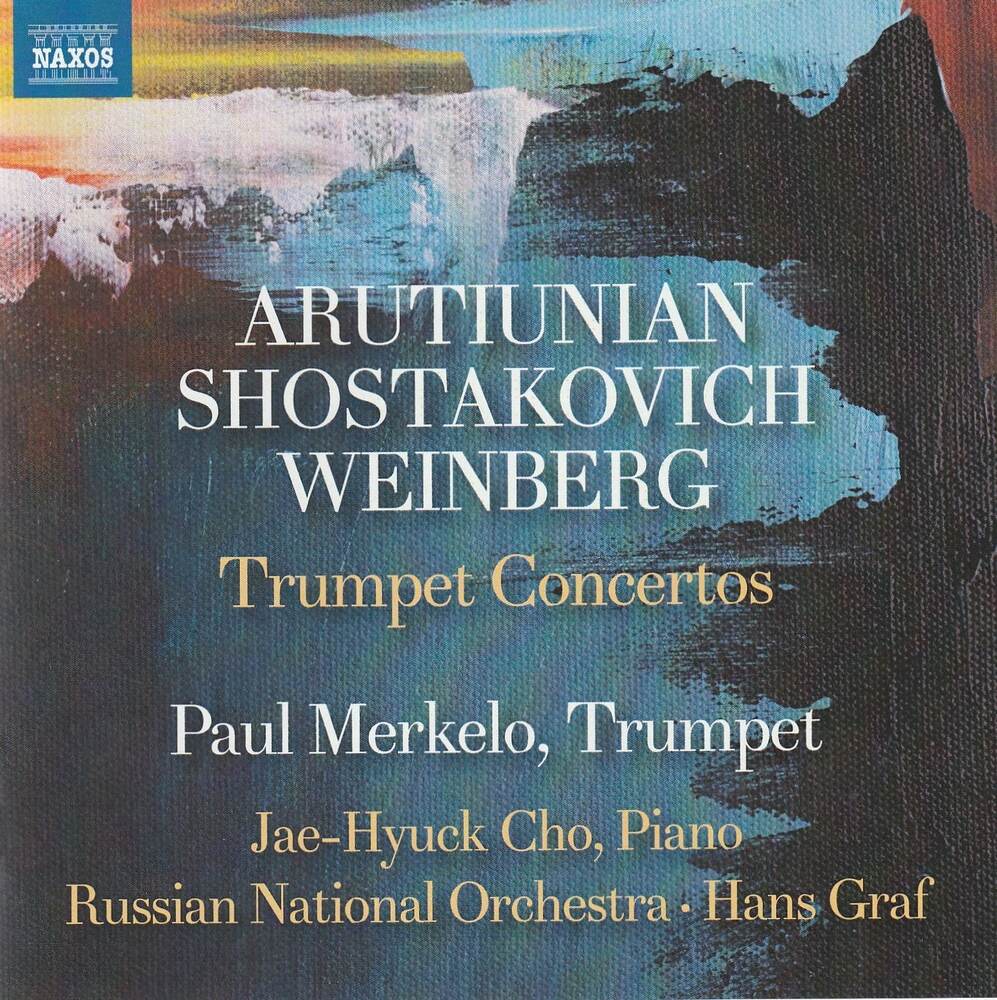
Although its repertoire is limited when compared to other brass and woodwind instruments, the trumpet has had numerous concertos written for it from composers of the Soviet era and beyond. Three such works are featured here, including an adaptation of Shostakovich’s Piano Concerto No.1 in C Minor, Op. 35, arranged by trumpeter Paul Merkelo, principal of the Orchestre Symphonique de Montréal, himself.

While the trumpet is often used as a dramatic, high-volume instrument in orchestral settings, this disc demonstrates the remarkable versatility and subtlety that can be obtained from it, providing an illuminative look into the trumpet’s expressiveness and beauty. Armenian composer Alexander Arutiunian’s Trumpet Concerto in A-flat Major begins this recording and immediately strikes the listener with its alternating passages of lyricism and energetic buoyancy. Indeed, Merkelo’s immediately recognizable virtuosity makes even the most demanding moments sound effortless, with almost-unbelievable velocity never coming at the expense of the music itself.

Shostakovich’s Piano Concerto No. 1, originally titled Concerto for Piano, Trumpet, and Strings, follows a double concerto model, in which both piano and trumpet receive soloist responsibilities. Merkelo’s arrangement still features the piano, here performed by pianist Jae-Hyuck Cho, but with an expanded trumpet part that gives more evenly distributed responsibilities to each performer. Uncharacteristically playful yet undeniably Shostakovich, this work is a tour-de-force and a striking way to conclude a worthwhile exploration of one of music’s lesser-heard solo instruments.

Listen to 'Arutiunian; Shostakovich; Weinberg – Trumpet Concertos' Now in the Listening Room

02 Alberto HemsiChamber Works by Alberto Hemsi
ARC Ensemble
Chandos CHAN 20243 (rcmusic.com/performance/arc-ensemble)

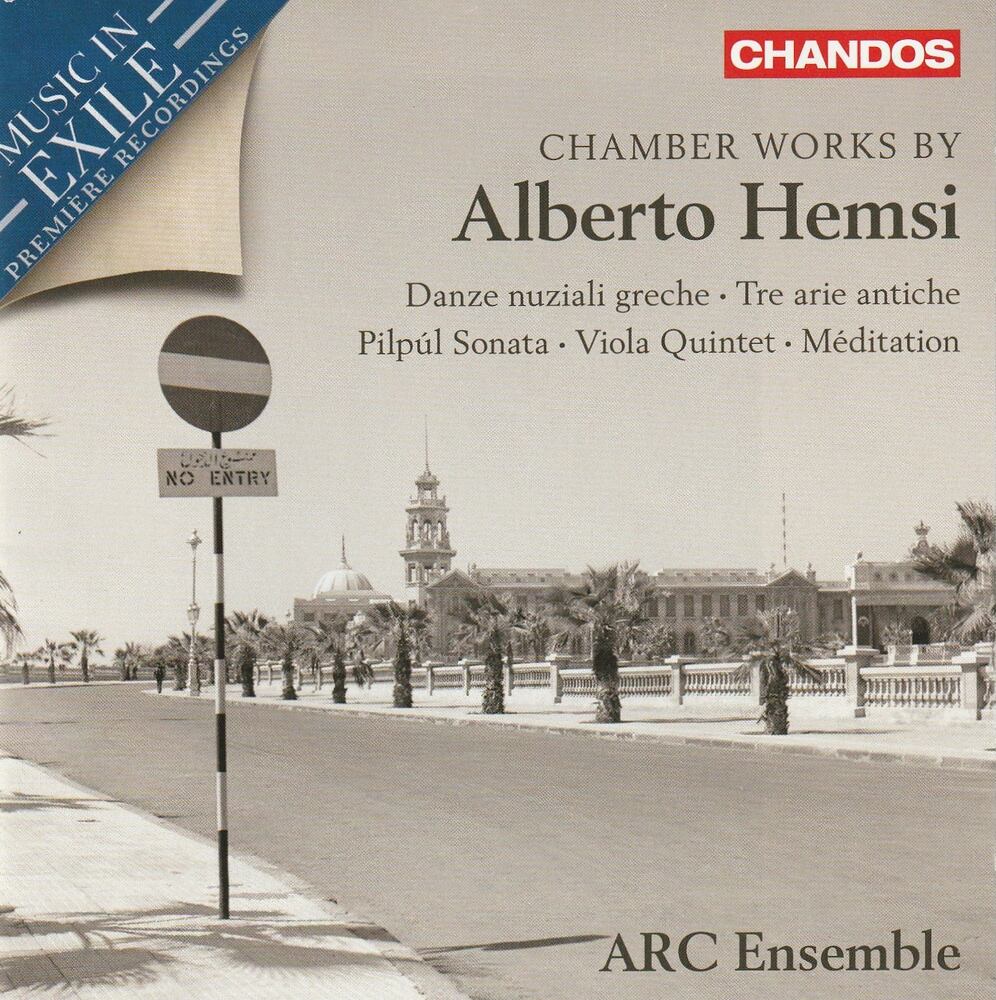
This latest Music in Exile CD spotlights Anatolia-born Alberto Hemsi (1898-1975). In 1922, during the Greco-Turkish War, Hemsi fled to Rhodes, then moved to Egypt in 1928, founding and conducting the Alexandria Philharmonic Orchestra. He finally emigrated to Paris in 1957, Egypt’s Jews being non-grata following Israel’s Suez invasion.

Hemsi often drew from his Sephardic-Jewish heritage, plus varied Middle Eastern traditions. Méditation (in Armenian Style), Op.16 for cello and piano was published in 1931. For nearly seven minutes the cello chants dolefully over hammer-dulcimer-like piano tinkles. Also for cello and piano, Hemsi’s three-movement, ten-minute Greek Nuptial Dances, Op.37bis (1956) honours, respectively, the jolly mother-in-law, wistful bride and comical godfather, staggering drunkenly.

The nine-minute Three Ancient Airs, Op.30 (c.1945) are settings for string quartet of three of the 60 songs in Hemsi’s Coplas Sefardies. Ballata evokes a sultry dance, Canzone a plaintive serenade, Rondò a children’s game song. These melodies, accompanied by guitar-like plucks, reflect Sephardic Jews’ enduring ties to Spain, their homeland before being expelled in 1492.

Sephardic and Hebraic melodic tropes imbue the three-movement, 19-minute Pilpúl Sonata, Op.27 (1942) for violin and piano, light-hearted depictions of scholars engaged in pilpúl, nit-picking arguments about Talmudic texts. Hemsi avoided overt ethnic references in his 18-minute Quintet, Op.28 (c.1943) for viola and string quartet. Here, three dance-like movements frame a tender Berceuse.  

Once again, Toronto’s splendid ARC Ensemble (Artists of the Royal Conservatory) has redeemed a deserving composer from unwarranted “exile” in this important ongoing series.

Listen to 'Chamber Works by Alberto Hemsi' Now in the Listening Room

03 Black FishKeyan Emami – The Black Fish
Andrew Downing; Majd Sekkar; Ton Beau String Quartet; Louis Pino; Naoko Tsujita
Centrediscs CMCCD30422 (blackfishproject.com)

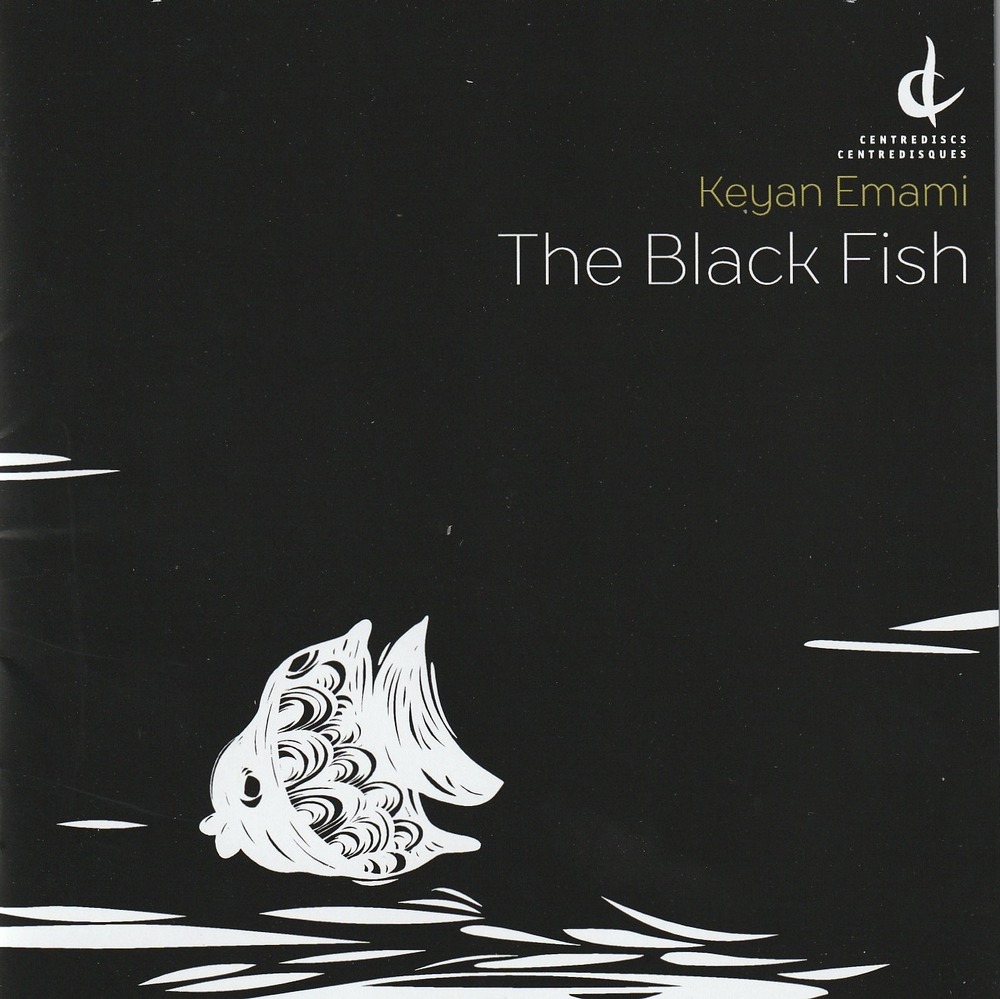
Toronto-based Iranian-Canadian composer Keyan Emami has composed a multi stylistic and instrumental masterpiece in his three-movement inspirational work based on the well-known Persian children’s book, The Little Black Fish, which tells the story of a little black fish who leaves his pond to explore the world. Commissioned by Ton Beau String Quartet, it is scored for string quartet, clarinet (Majd Sekkar), double bass (Andrew Downing), percussion (Louis Pino, Naoko Tsujita), with electronics and narration provided by Emami. The composed parts and improvised sections are performed brilliantly. 

The opening movement Dailiness immediately catches the listener’s attention with held notes and spooky string repeated two-note intervals. The more upbeat middle section features clarinet lead melody, bass and percussion transforming to more Middle Eastern idioms and a slower closing. The dramatic, moody 18-bar theme passacaglia Dreaming combines classic strings feel, jazz bass and all styles clarinet music with spoken words inspired by Attar of Nishapur’s bird poem. The final movement Swimming In D is inspired by Terry Riley’s minimalistic In C. Emami’s short stylistic diverse 48 melodic patterns add dramatic quasi minimalist ideas and movement in alternating dynamic, instrumental and stylistic sections from frolicking to calming to loud crashing effects. Sekkar’s colourful tones and wailing clarinet, and Emani’s allowing the performers freedom to repeat patterns as they wish, are highlights.

Emami’s masterful ability to combine children’s story ideas with his well-developed symphonic, jazz/rock, Persian, world, improvisational and contemporary inspired composing makes this music for all ages.

04 Bekah SimmsBekah Simms – Bestiaries
Various Artists
Centrediscs CMCCD 30022 (centrediscs.ca)

Canadian composer Bekah Simms is no stranger to the concert stage having been the recipient of over 30 composition awards, but her latest work Bestiaries takes us into a new realm of height and depth. This album comprises three chamber works, and highlights Simms’ fine orchestral colouring, as well as exacting leadership from Brian Current’s Cryptid Ensemble and Véronique Lacroix’s Ensemble Contemporain de Montréal, the former being created for the express purpose of this album. At times feeling chaotic, the work never loses a finely crafted sensibility of every note being exactly where the composer wants it to be.

The opening of Foreverdark has us awakening in what could be described as a subway tunnel and very quickly drags us through underwater culverts and dark machinery. Led by amplified cello, this is stunning work from Toronto’s Amahl Arulanandam, with whom Simms enjoys a close relationship. This is an incredibly exciting piece I would love to see performed live.  

From Void is a chilling and aggressive piece, after which we welcome Bestiary l+ll, a cinematic journey broadcasting a depth and width of oceanic proportions. We are floating over landscapes of rock, darkly shrouded shipwrecks and elegant sea creatures. Simms pulls us in, taking us along on her deep dives into her personal Neverworld like a school of fish following in her journey to the oceanic underworld, led by the brilliant waves of vocal elasticity from Charlotte Mundy’s beckoning Siren call and pulling us up for air with bird calls and what Simms describes as her “sonic ecosystem.”

Simms crafts a tapestry of strict essentials that are tensile without being harsh, like finely knit silk crochets transforming to steel mesh. Is there such a description as densely translucent? This would be it.

05 Yang ChenYang Chen – longing for _
Various Artists
Independent (peopleplacesrecords.bandcamp.com)

Longing for _ is, at its core, a beautiful story about possibilities of friendships, creative collaborations and music in between, in a world affected by pandemic restrictions. This album by Toronto-based percussionist Yang Chen threads a delicate line between pushing boundaries and maintaining a state of serenity throughout. Each of the eight compositions is done in collaboration with a different artist and is a testament to a creativity generated through friendship. As a result, the album is a curious mixture of musical styles and individual personalities – here we have elements of electronic, experimental, modern composition, pop, R&B and free improvisation. Worth noting is that all compositions are accompanied by a video, a visual representation of textures and narratives we hear.

Chen is innovative and experimental in their approach and gently unapologetic about their ideas. They masterfully employ an array of percussion instruments on this album, the most innovative being using a bicycle to create sounds, textures and movement (Stephanie Orlando’s crank/set ). The energy ranges from grungy and provocative (Andrew Noseworthy’s All Good Pieces Have Two Things) to a contemplative solo vibraphone triptych (Charles Lutvak’s rest/stop). With violinists/composers Yaz Lancaster and Connie Li, Chen explores dreamy and psychedelic worlds, respectively, in EUPHORIC and Nighttime renewals toward more friendship, more love, like snowfall, I want to sing with you. Sara Constant’s silt and Jason Doell’s through intimate, swims, are big textural adventures. The surprising switch comes in the form of Sarian Sankoh’s till the dam breaks, an R&B track with warm vocals and gentle steel pan. 

This is an adventurous, probing, charming debut album.

06 John Luther Adams silaJohn Luther Adams – Sila: the breath of the world
JACK Quartet; The Crossing
Cantaloupe Music (cantaloupemusic.com/albums/sila-breath-of-world)

When Schoenberg abandoned the chromatic Wagnerian tonality of Verklärte Nacht one critic described his work as sounding as though “someone had smeared the score of Tristan whilst the ink was still wet.” Debussy took an evolutionary approach to this 12-tone system, gradually dissolving traditional scales and harmony in a beguiling, evocative sound world.   

The Inuit of Canada’s Arctic have known about this seamless harmonic experience long before Schoenberg and Debussy; and honestly, long before John Luther Adams. But Adams appears to have found a way to re-invent the concept like no one else, except, perhaps the Inuit. 

Sila: The Breath of the World is Adams’ monumental re-creation of that breath of the world in the concert hall. It is recreated in a continuous score “written” as it were, when the breath that comes from the very air around us is profoundly transformed by dozens of percussionists, woodwinds, brass, strings and the inimitable voices of The Crossing complemented by the JACK Quartet

Adams’ Sila begins with the rolling thunder of percussion imitating the rumbling of the earth awakening, its breath a singular inhalation of the teeming humanity who inhabit it. 

Voices and instruments join the majestic harmonics of the low B flat and wend their way into what seems like a single note encompassing all 12-tones seamlessly; music morphing into a prolonged inhalation and exhalation of Sila: The Breath of the World, before falling into silence. Art imitating the single note of life’s breath.

07 Julian VelascoAs We Are
Julian Velasco; Winston Choi
Cedille CDR 90000 213 (cedillerecords.org)

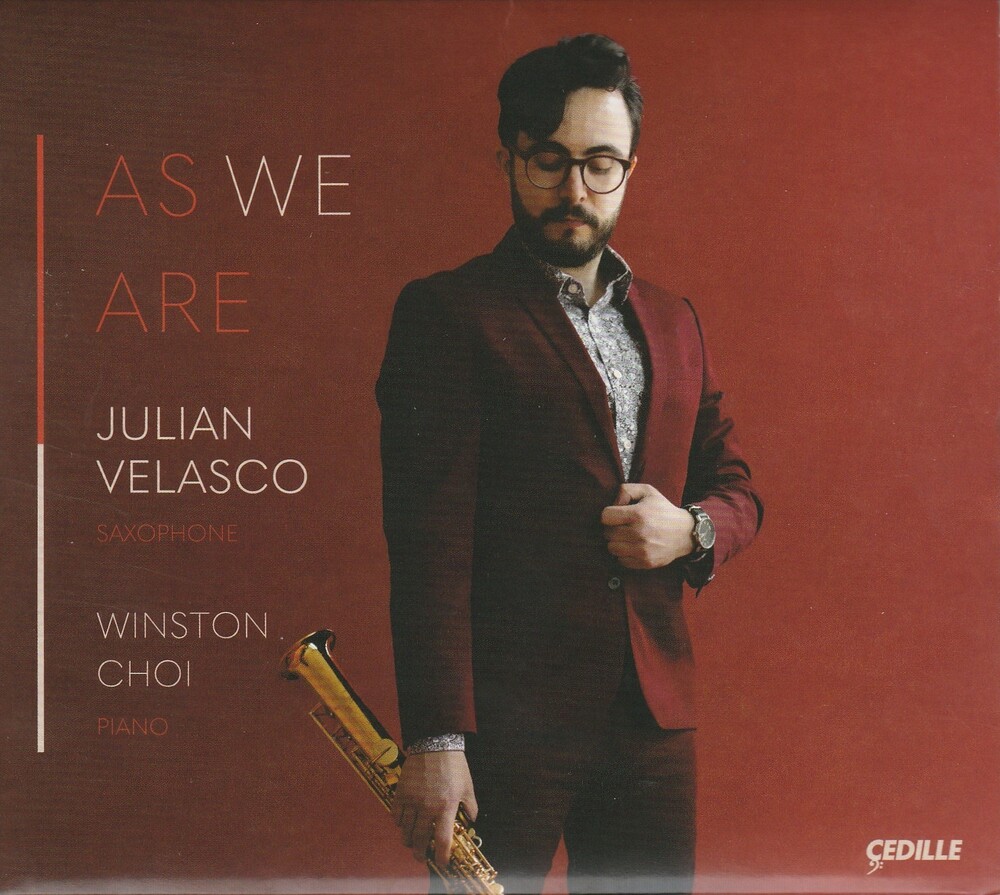
Julian Velasco is a saxophonist, collaborative artist and educator raised in Los Angeles and now based in Chicago; Winston Choi is a pianist with a huge list of performances around the world who grew up in Toronto. As We Are features Velasco on alto, tenor and soprano saxophones in a series of dramatic and engaging works. 

Come As You Are was written by Stephen Banks as a four-movement suite dedicated to members of his family; it contains references to “African-American sacred music” which adds a poignancy to each piece. Amanda Harberg’s Court Dances which reference “16th and 17th-century court dances, were initially influenced by the “syncopated bounce of a squash ball.” The intricate interplay between Choi’s piano and Velasco’s light and precise soprano saxophone in the first movement, Courante, is exciting in a delightfully frenzied manner. 

Animus (Elijah Daniel Smith) combines some multi-phonics with tape accompaniment; Velasco’s performance is sensitive and controlled. Liminal Highway was premiered in 2016 for flute and electronics but composer Christopher Cerrone revised it for saxophone and, after hearing Velasco perform, decided he was the artist to play it. The sections with percussive pad work are particularly intense and magnificent. As We Are is an exciting album of contemporary music for the saxophone performed with passion and precision.

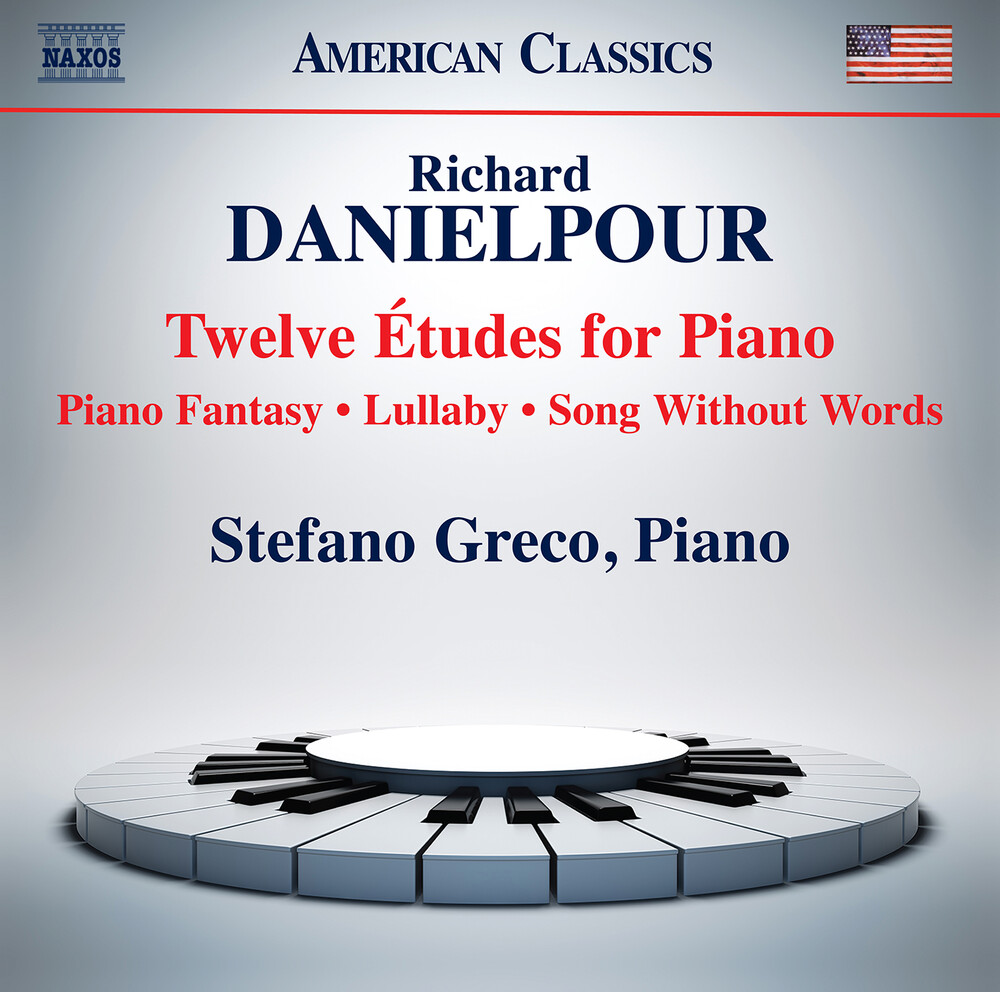
08 Richard DanielpourRichard Danielpour – 12 Etudes for Piano
Stefano Greco
Naxos 8.559922 (naxos.com/Search/KeywordSearchResults/?q=8.559922)

Outside of certain musical circles, Richard Danielpour may not exactly be a household name, but the credentials of this 66-year-old American composer are impressive indeed. Born in New York of Iranian-Jewish descent, he studied at Oberlin, the New England Conservatory and ultimately, the Juilliard School. Since 1997, he has been on the faculty of the University of California at Los Angeles. Like many composers of his generation, Danielpour began writing in a serial style, but later adapted a more accessible “quasi-tonal” idiom. Among his enormous output are a number of pieces for solo piano including a set of 12 Etudes, the Piano Fantasy and two transcriptions from an opera currently in progress, all of which are premiered on this Naxos CD by the Italian-born pianist Stefano Greco.

The Etudes are miniature gems (each never more than six minutes in length) and what strikes the listener most immediately is the appealing range of contrasting moods – from the  perpetuum mobile of the first, the stridency of the fifth (do I hear echoes of Prokofiev?) and the languor of the sixth and ninth. Throughout, Greco demonstrates full command of this unfamiliar repertoire.

The Piano Fantasy is based on the final chorus of Bach’s St. Matthew Passion and is a true fantasy with its abruptly contrasting tempos and dynamics. The piece demands considerable virtuosity at times, but again, Greco meets the challenges with formidable technique. 

Rounding out the program are the Lullaby and Song Without Words which show yet another side of Danielpour’s compositional style. Gentle and unassuming, these short pieces provide a fitting conclusion. Kudos to both Naxos and Greco for bringing to light some music that definitely warrants greater investigation.

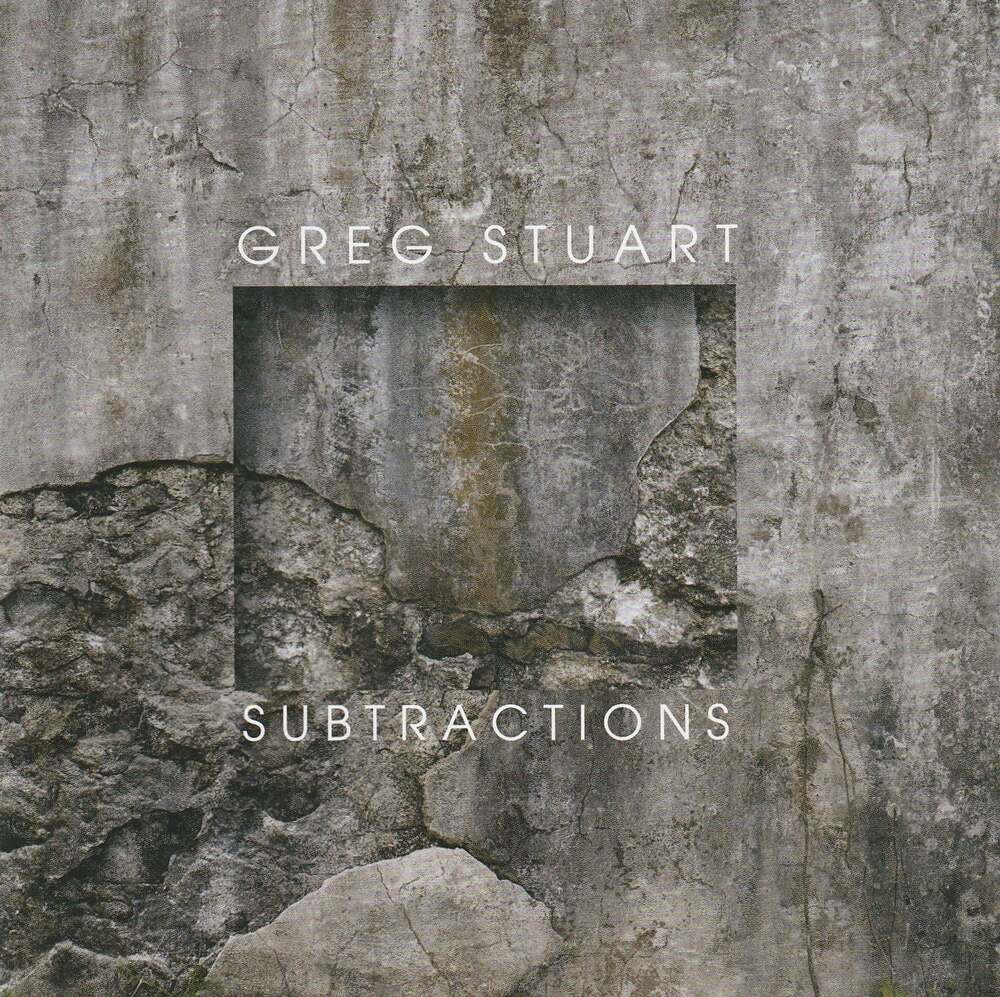
09 Greg StuartSubtractions
Greg Stuart
New Focus Recordings FCR348 (newfocusrecordings.com)

American percussionist Greg Stuart’s practice embraces improvisation, electronics and the classical experimental music tradition. At the same time he actively bucks conventional solo percussionism by cultivating an anti-virtuoso performance mission, a stance related to his focal dystonia which limits his motor function in one hand.

This seeming limitation has, however, served as a springboard, inspiring Stuart to explore alternative soloist paths, specifically in developing meaningful collaborations with several composers.

Subtractions reflects Stuart’s personalized mastery of the contemporary percussion idiom in works by composers Pisaro-Liu (side by side) and Sarah Hennies (Border Loss). The album highlights a particular sonic focus: the magnification of intimate sounds through layered recording. Electronic sounds and field recordings also make appearances.

Hennies’ 22-minute Border Loss explores irregular percussive textures, granular, swarm-like sounds and slowly shifting arrays of timbral categories. Sometimes the music evokes the crackling of a fire. Other times high-pitched bells and wind chimes add pitch elements, though waves of sonic continuity are always the focus here.
Pisaro-Liu’s side by side is in two parts, the first scored for bass drum and cymbals, the second for vibraphone and glockenspiel. There is a kind of aural alchemy at work here. Part I is characterized by the sounds coaxed from the skin of the bass drum and a deliciously slow crescendo on a rolled cymbal, morphing into rich near-orchestral static textures. To this listener, Part II’s aphoristic melodic phrases on the two sustaining metallophones conjure a peacefully contemplative atmosphere. It’s a welcome respite during these challenging early days of winter.

Listen to 'Subtractions' Now in the Listening Room

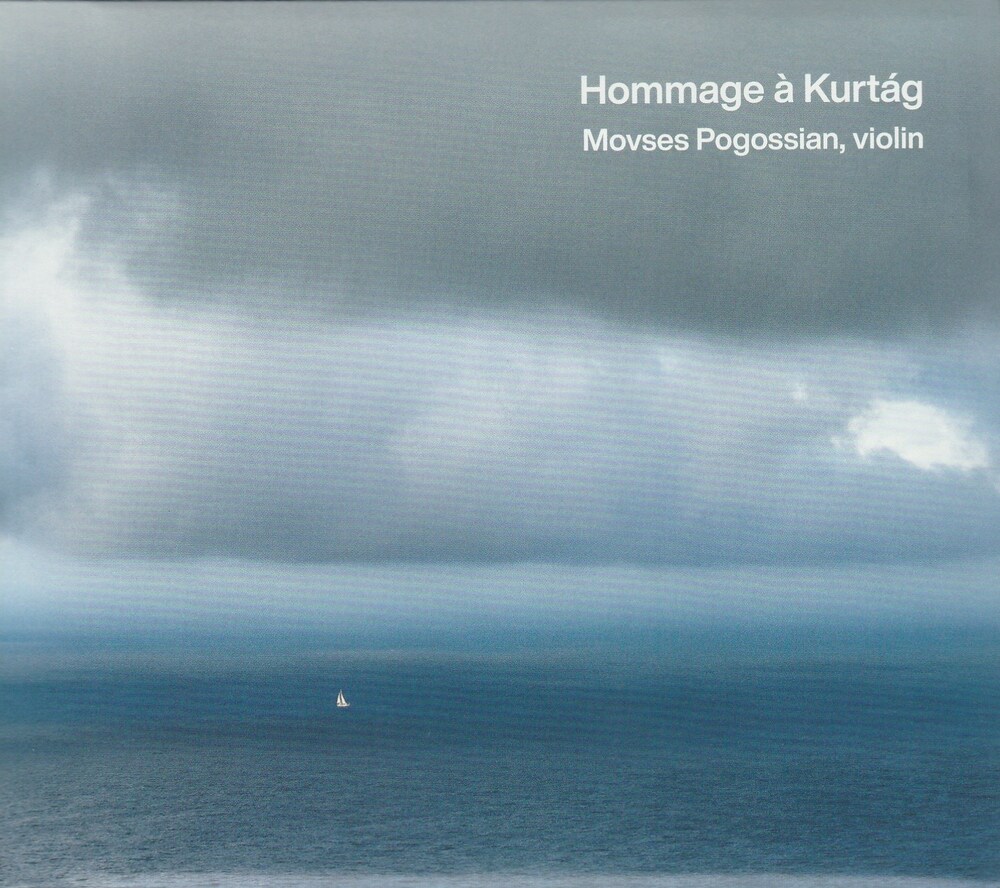
12 Hommage a KurtagHommage à Kurtág
Movses Pogossian
New Focus Recordings FCR347B (newfocusrecordings.com)

Nonagenarian György Kurtág is ranked among today’s foremost composers by many. Despite its often enigmatic qualities, his music falls squarely in the European classical music lineage, particularly the branch represented by his illustrious 20th-century Hungarian composer-predecessors Béla Bartók and Zoltán Kodály.

Kurtág’s individual movements are typically quite brief, yet despite compression, expressively complex. His style is gestural and at the same time lyrical. Though his music is never overtly sentimental, he systematically indulges in homages in his titles.

On Hommage à Kurtág, American violin virtuoso Movses Pogossian, a Kurtág specialist, presents a brilliantly played recital featuring the composer’s Signs, Games and Messages for solo violin. The substantial 16-movement work is a masterwork of exuberance and subtlety, displaying the enigmatic qualities that distinguish the composer’s unique voice. As music critic Alex Ross once insightfully observed, it is “dark but not dismal, quiet but not calm.”

Honouring the concept of homage in Kurtág’s music, Pogossian commissioned Californian women composers Aida Shirazi, Gabriela Lena Frank, Kay Rhie and Jungyoon Wie. They contributed terse works of considerable poise to the album, proving that Kurtág’s aesthetic spirit is alive and well among younger composers.

Bringing his program back to Kurtág’s deep Hungarian roots, Pogossian gives a committed reading of the Melodia movement of Bartók’s autumnal Sonata for Solo Violin. He concludes with a very satisfying, passionate, live rendering of Kodály’s expansive Duo for Violin and Cello with cellist Rohan de Saram.

Listen to 'Hommage à Kurtág' Now in the Listening Room

Back to top