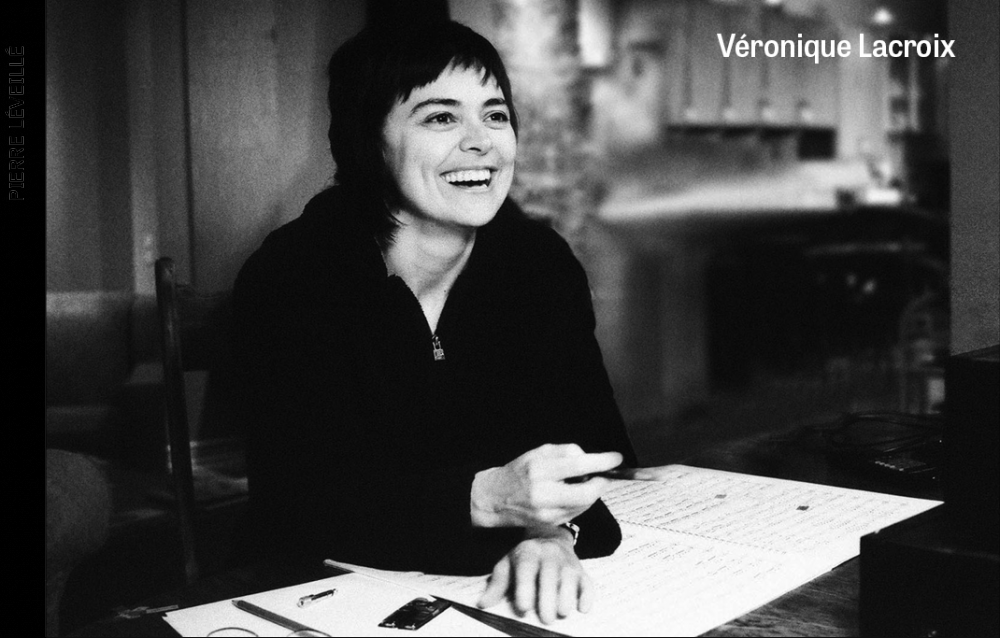
beat - new 1The famous quote “It takes a village to raise a child” speaks to the role of shared responsibility in nurturing the next generation. We can equally apply that same axiom to the task of creating opportunities for musical imaginations to flourish and evolve. Beyond the usual educational institutions that provide the initial stages of the fertile ground, different presenters of new concert music have been stepping up to the plate for years now to take on this responsibility. So dedicated are they, that this mandate has become one of their defining attributes. Such is the case with ECM+ (Ensemble Contemporain de Montréal), and the dedicated and passionate commitment of its director Véronique Lacroix.

The ensemble was founded in 1987 by Lacroix specifically to offer young composers a playing field in which to develop their musical imaginations. Her vision was to create the kind of environment composers need so they can pursue their musical research and exploration with live musicians. “Nothing can compare to live experimentation,” she said in our conversation. “It is the only way to actually test what the composers hear in their heads and adjust their final scores according to the results of this experimentation with the musicians.” Lacroix is passionate in her commitment to composers, who are always ahead of their time and often revolutionary, she says. “Observing the complex ways they integrate the global context into their scores is a constant source of inspiration.” Lacroix’s vision led to the development of the ensemble’s distinct and unique Génération program, which is currently celebrating its 20th anniversary.

So what is so special about the Génération program that takes younger composers through a training process spanning an 18-month period of time? It begins every two years, with a rigorous selection process to choose four Canadian composers that meet artistic, demographic and gender criteria. I was impressed to see that one of these criteria was that one of the four composers was to be a woman. I had to wonder how many other presenting organizations of new music take a similar approach to their programming, given the numerous occasions we’ve all experienced where the program is all male?

Lacroix has “always been fascinated by the rich secrets of the scores I receive regularly and always wondered what is happening in a composer’s head. How can anyone imagine musical avenues as unexpected and complex as what they have written?” It is for this reason that the Génération experience began and offers so much more than a few rehearsals with the composer present. Rather, it’s an entire mentoring structure.

The composer begins their work by compiling a notebook of ideas and sketches that they bring to a series of four workshops with the ensemble. The workshops are open for anyone to attend and each audience member is given a copy of the composer’s notebook so they too can enter into a deeper engagement with the emerging creative process. At the beginning of each workshop, the audience experiences each composer giving a brief talk about their work, and a mini concert of works from each composer’s previous repertoire. Lacroix learns “as much from the composer experimentation as the composers learn from the musicians playing their score. After each workshop or Génération concert, many people tell me how instructive and even surprising the experience was for them.”

In the second year of the program, the composer and ensemble gather for a five-day residency at the Banff Centre where the pieces are rehearsed and given the final touches. The pieces are now ready for concert presentation – but not just in one location. An extended tour exposes these germinating ideas to a larger audience in a country-wide tour. This year, there will be concerts in nine Canadian cities, with the Ontario-based concerts happening in Toronto, London and Ottawa. The mentoring and audience-education activities don’t stop at the workshop stage either. At the concert, each of the composers is interviewed onstage about their piece, which is supported with musical examples from the new work. As well, in each of the tour cities, ECM+ offers reading sessions of composition student pieces, and since 2010, audiences have had a voice in selecting their favourite work through the Generation Audience Choice Award.

Throughout its 20-year history, the program has supported over 50 composers, providing many with the foundations for a successful and prize-winning career. This year’s composers include Marie-Pierre Brasset (Quebec), Alec Hall (Ontario/New York), Evelin Ramon (Cuba/ (Quebec), and Anthony Tan (Alberta/Berlin). To hear the results of these fortunate composers and their 18-month process, make sure you attend the Génération concert in Toronto on November 16 presented by New Music Concerts in their season opener. Not surprisingly, NMC, who also have a strong mandate to support Canadian composers, have been the Toronto host for every Génération tour since 2000. There is also a YouTube video that has been created which offers interviews and musical examples of each of this year’s participating composers. (Search Génération2014 on YouTube) 
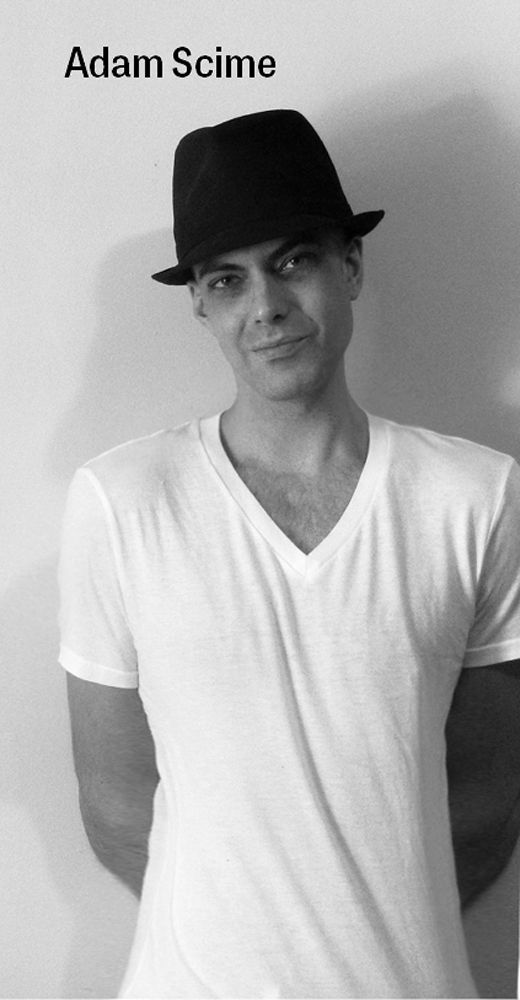
beat - new 2Esprit Orchestra is another organization that nurtures the creative minds of composers. A great example of this is evident in their November 23 concert and the programming of a new commissioned work from Adam Scime. When I asked Adam how Esprit has supported him and his career, he emphasized “the importance of working within a collaborative environment with musicians who are not only exceptional in their general performance capability, but also experienced with contemporary idioms.” Thus, the composer “need not relinquish any virtuosic expressive impulses, and can create exactly what leaps from mind to page.” Esprit offers a young composer competition, and it was Scime winning this award a few years ago that led to the commissioned piece that will be performed in the upcoming November concert. This new piece is titled Rise and is inspired by how waves propagate across the ocean. Scime has split the orchestra into a stereophonic seating arrangement in order to facilitate his wave-like orchestration and colouristic effects. The other works on the program include pieces by Joji Yuasa (Japan), Douglas Schmidt (Canada) and Henri Dutilleux (France).

[Also on the topic of supporting developing work, Tapestry Opera is renowned as well for its mentoring of composers and librettists. More details of their upcoming series entitled “Booster Shots” can be read in Christopher Hoile’s column in this issue. Ed.].

Whirlwind tour: November is a busy month for new music listeners, so to begin the whirlwind tour of all that’s available, we hop over to the Kitchener-Waterloo area where the K-W Chamber Music Society is collaborating with NUMUS and the Perimeter Institute to celebrate their 40th anniversary. Their concert on November 28 titled “Igorhythms” features both the Penderecki and Lafayette string quartets along with the Perimeter Chamber Players performing works of captivating rhythms by Stravinsky, Canadian composer John Estacio and Waterloo’s master of groove Jascha Narveson. Earlier in the month on November 9, K-WCMS offers a concert of music by Canadian women composers including pieces by Alice Ho, Carol Weaver, and Larysa Kuzmenko. NUMUS is also presenting their Emerging Artist series on November 8 featuring composer/performer Nick Storring on electronics.

Thin Edge: Back in Toronto, The Thin Edge New Music Collective’s  program titled “Cuatro Esquinas” (Four Corners) combines compositions from both Argentina and Canada with guest Argentinian pianist Laura Ventemiglia and will be presented on November 6 at Gallery 345.

TCIF: On November 7, we have a co-production between the Music Gallery and the Toronto Creative Improvisers Festival in a large multi-media work pulled together by Burroughs scholar, composer and saxophonist Glen Hall entitled “Rub Out The Word: A William S. Burroughs Centennial Event.” The work combines an 11-piece orchestra, an actor, electroacoustic music and projected images along with special guests, the venerable CCMC improvising ensemble.

Four more: On November 14, Arraymusic will present several works by Irish composer Gerald Barry, including a new piece being premiered by Arraymusic pianist Stephen Clarke. Then on November 21, the fast-rising southwestern Ontario ensemble Reverb Brass presents their program of cutting-edge works entitled “Passages” at Gallery 345. On November 25 Soundstreams celebrates universal spirituality with two large choral works – both ancient and modern renditions of the traditional sunset prayer service Vespers – by Monteverdi and Canadian Gilles Tremblay. And on November 29, the Toy Piano Composers presents pieces by composers who responded to their 2014 call for works.

Individual composers often end up presenting their own works. November 18 you can hear the music of Odawa composer Barbara Croall, whose music combines influences from her indigenous heritage and her classically oriented training. “Bob@60” on November 23 celebrates over 40 years of contemporary music creation by Toronto-based composer and clarinetist Bob Stevenson. This concert will feature two ensembles which Stevenson has put together to perform some of his latest pieces, which combine his classical, improvisational and jazz influences. And finally, the Toronto premiere of composer-performer Tim Brady’s piece titled Journal: String Quartet No.2 will be presented as part of the Mooredale Concerts on November 2 featuring the New Orford String Quartet.

Wendalyn Bartley is a Toronto-based composer and electro-vocal sound artist. She can be contacted at sounddreaming@gmail.com.
BBB-New`1As the writer of this column over the last year and a half, I’ve often brought to your attention how “music of the new” straddles all sorts of boundaries and traditional genres, moving beyond a Eurocentric concert music focus. The word “genreless” has popped up more than once. And now this month, the Music Gallery’s X Avant series is challenging us to consider the term “transculturalism” as a way to understand what’s happening with musicians from diverse backgrounds and influences who share a love and passion for playing on the edges of sound experimentation. In the previous story Andrew Timar explores how artistic director David Dacks defines transculturalism and how that sits within the evolution of the Music Gallery’s mandate. Here in this column, we’ll dig a little deeper into how this vision translates into the actual programming choices for this years’ X Avant festival, now in its ninth season.

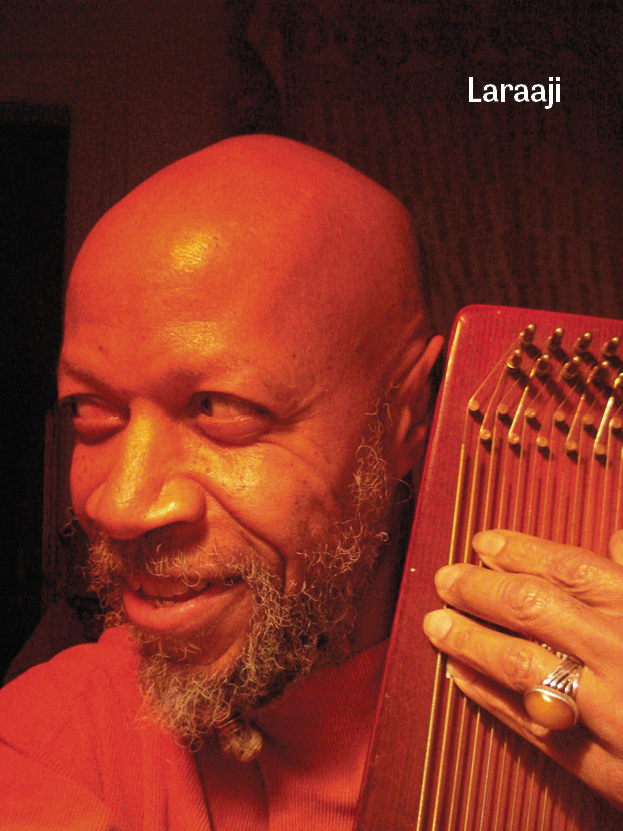
X Avant IX:  The festival’s challenge to all of us as listeners and audience members is to look again at how and why we put music into various boxes – to question how we listen and make sense of the music before us. Beginning with the first concert on October 16, we are introduced to the music of zither and autoharp virtuoso Laraaji and his fusion of thenew age and world music categories. The description on the Music Gallery’s website for this concert speaks about the similarities between these two musical categories and also notes that new age music is on the rise while world music is on the decline. Two provocative statements, I thought. So what are the similarities between world and new age music? Laraaji’s music provides one perspective.

Laraaji first rose to international attention through his collaboration with Brian Eno, who released the strumming rhythms of Laraaji’s music on the 1980 album Day of Radiance, part three of Eno’s groundbreaking Ambient series. By introducing the sounds of hammered dulcimer and open-tuned zither we’re already moving into an acoustic soundworld distinct from the typical European concert experience and one often associated with folk or world music traditions. From this initial collaboration with Eno, Laraaji has gone on to become one of the major voices of the ambient/new age genre, but he’d rather use the term “architectonal music.” For him, it’s all about how music affects our consciousness, or the “architecture of the imagination” and how the power of sound and music acts as a “carrier wave of our intention.” These themes of a more spiritual focus are also present in the underpinnings of world music. (As for the decline of world music, I’ll get to that later.)

Laraaji will be performing solo and in collaboration with local musicians Brandon Valdivia and Colin Fisher (aka Not The Wind Not The Flag) and Scott Peterson. The entire evening, which also features Montreal kora player Diely Mori Tounkara, is co-produced with the Toronto-based Batuki Music Society, whose mandate is to promote African music and art and provide career assistance to local African-heritage artists.

BBB-New2The ambient/new age theme continues on October 17 with “Drums and Drones,” the name of a project between Brian Chase and Ursula Scherrer that was originally inspired by the light and sound installation Dream House created by minimalist icon La Monte Young and his colleague Marian Zazeela. Chase’s music explores the power of drones to affect and change brain wave states using the sound sources from drums and percussion and altering them through electronic processing and the use of the just intonation system. Scherrer’s images contribute to creating altered states of perception with abstract architectural forms created from light and shot footage. The drone state of mind is the ultimate goal of this union of sound and image. Also performing on the same evening will be Phrase Velocity, whose music combines tabla rhythms, synthesizers and pure waveforms.

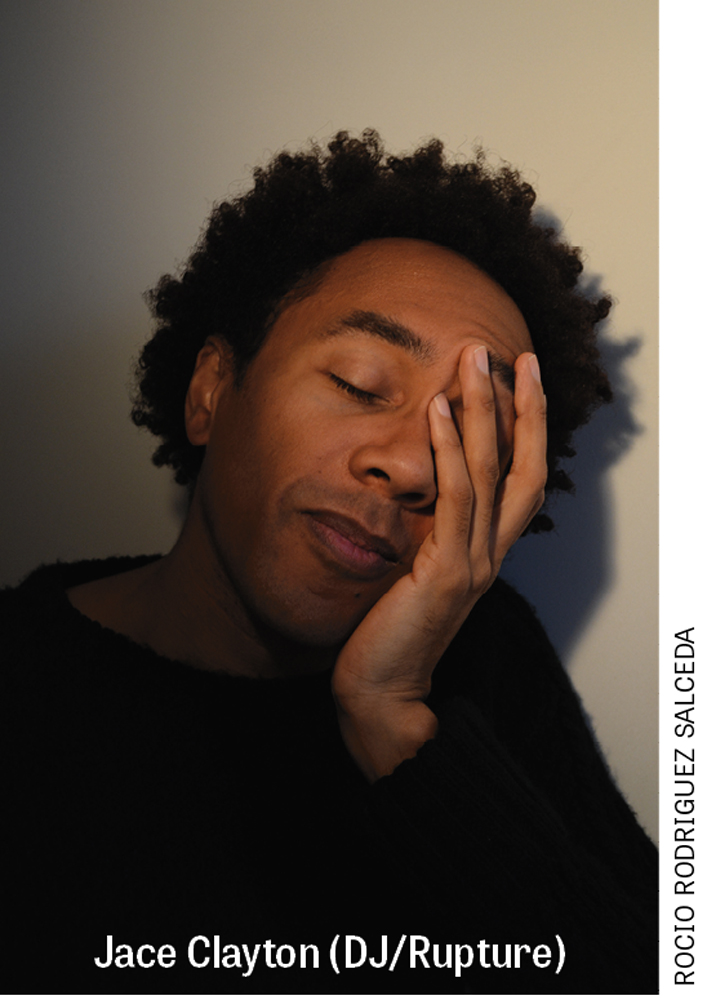
It’s the events of October 18 that really bring home the theme of transculturism and the mixing up of musical styles. Beginning at 3pm, a roundtable discussion will address the question of how Canadian ethnocultural diversity affects contemporary musical composition. Then at 5pm, an interview with a key figure in the musical transculturism movement, DJ/Rupture, will uncover more about the global musical exchange between pop and classical music. These two dialogues will set the stage for the main evening concert event – the Julius Eastman Memorial Dinner, a 70-minute performance piece for two pianos, live electronics and voice focused on the music and life of Julius Eastman, a NYC-based gay African-American composer, pianist and vocalist.  Eastman’s minimalist-inspired music spanned the late 1960s into the 1980s and he was one of the first to integrate improvisation, classical quotations and pop music into his work. The performance is the brainchild of Jace Clayon (aka DJ/Rupture) who has taken on the telling of Eastman’s painful life story by reinvigorating two of Eastman’s largely forgotten compositions, and adding to the mix theatrical vignettes and material of his own. The evening concludes with a chance to dance out the cross-cultural vibrations with DJ Ushka at the Mojo Lounge.

BBB-New3Getting back to the assertion that world music is on the decline: it’s really more that the term itself is being rejected as culturally biased, highlighting as it does a distinction between the European tradition and the rest of the world. As Talking Heads founding member David Byrne argues in a New York Times article “I Hate World Music” back in 1999, all music is from planet Earth. This cause of distancing oneself from colonial notions of world music is one passionately embraced by Colombian-Canadian trickster and priestess Lido Pimienta, whose concert on October 19 will close out the X Avant festival. Pimienta promises to push the edges with her fiery orations on the issues of equality, gender roles, motherhood and cultural stereotypes: “Toronto is an international place, we are still segregated and not integrated. Patriarchy in Canada has it so we’re next to one another but not with one another,” she states. She will be joined by her musical- and visual-artist collaborators to create a hot-house evening of ritual-like performance art.


Sound and Image:
Many of the performances in the X Avant festival go beyond the blending of musical genres to also include projected images as an essential ingredient of the artistic message. Sometimes this way of working has a staggeringly long gestation period. Such is the case with Toronto experimental filmmaker Gary Popovich and his work Souvenir, which will be premiered on October 19 and 20 as the opener for Continuum Contemporary Music’s new season. Twenty years in the making, the film began with the commissioning of six Canadian composers to write music based on Gary’s ideas of the seasons of natural and human evolutionary history. Images were then selected, researched, shot, processed and finally edited all in response to a diligent and committed listening to the music by the filmmaker. This way of working with music is an acknowledgement of the power of sound when put alongside image – and a turning of the tables in the way films are usually created, with the music serving as accompaniment or support to the supremacy of the image.

Eager to hear more about this huge undertaking, I asked Popovich to walk me through the six seasons. Beginning with Winter to mark the coming into being of our universe, the film then takes the listener/viewer on a journey through the explosion of life in the Cambrian age (Spring) to the flourishing of agriculture and writing (Summer), the evolution of imperialism and conflict (Fall), a tribute to the cultural markers of the 20th century - both creative and destructive (Winter 2) – and concludes with allusions to present and future possibilities, including the birth of other universes (Spring 2). The music includes live performance by the Continuum ensemble, as well as electroacoustic composition. In all, the film is a souvenir of life on planet Earth, and what has been left behind.

NAISA: This month also welcomes the 13th annual SOUNDplay series produced by NAISA(New Adventures in Sound Art), a festival that highlights the interplay between sound, image and other new media artforms. On October 18, the theme of life cycles will be the focus of the night, offering video music screenings, interactive mobile performances and live electronic improvisation. On October 25, there will be a chance to experience how different artists respond visually to abstract sounds. Other events of the series occur on October 10 with special guest Dutch sound artist Jaap Blonk and on November 1 with a noise art performance by the live electronics duo Mugbait. On November 3, NAISA will participate in the New Music 101 series at the Toronto Reference Library, with a mobile performance walk exploring the acoustics of the library’s five-story open-concept design.

Additional Concerts and a Final Footnote:

For the early birds who see this on or before October 4, the following new music events will be part of Toronto’s annual Nuit Blanche festivities: Canadian Music Centre– a showcase of artists who integrate global traditions with new music with Suba Sankaran, Parmela Attariwala, TorQ, Deb Sinha, Ernie Tollar. NAISA Space – Hive 2.0 – a sound sculpture by Hopkins Duffield.

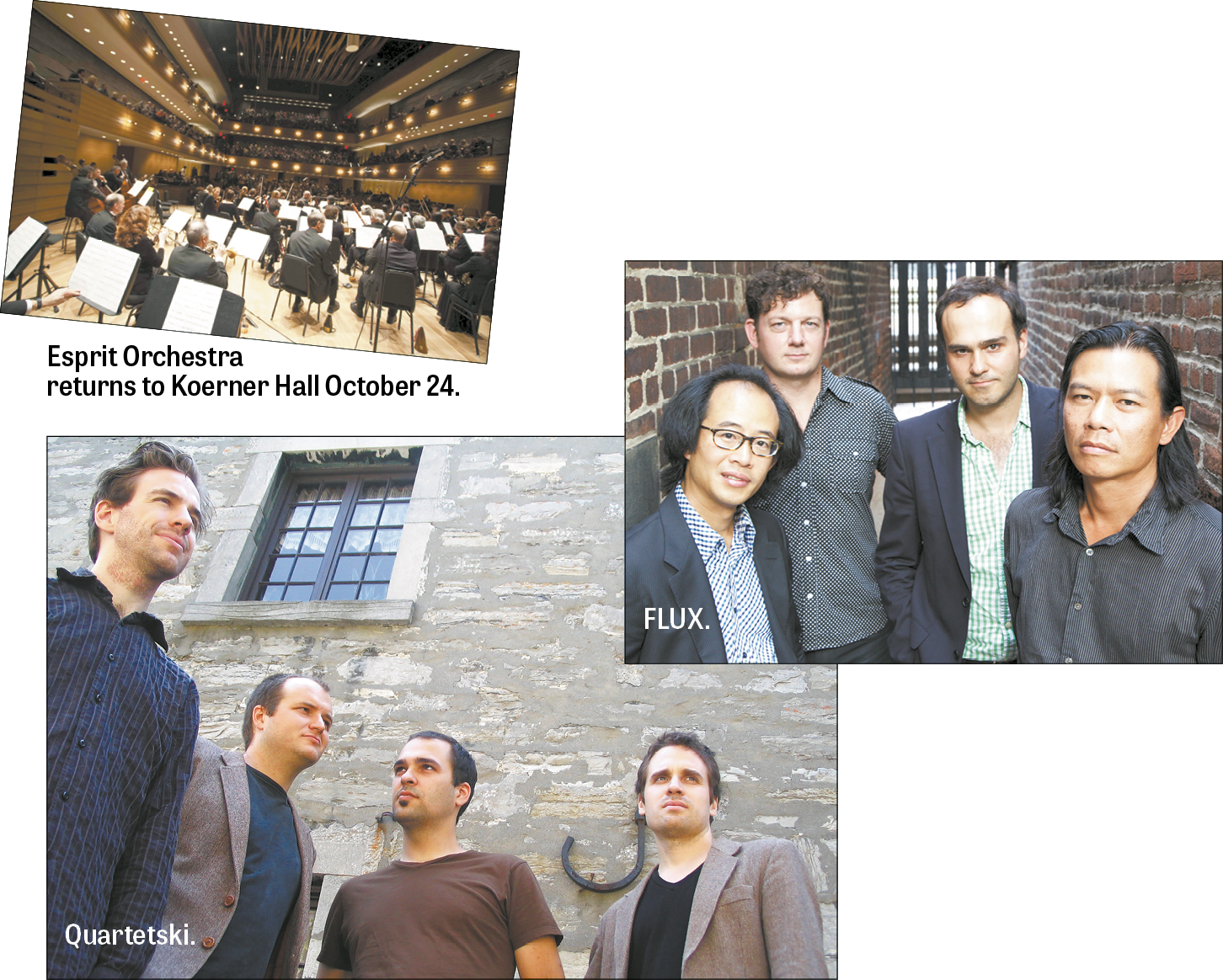
Esprit Orchestra opens their new season withworks by composers Thomas Adès and Charles Ives with the performers positioned in different areas of Koerner Hall, alongside works by Canadians Paul Frehner and Chris Paul Harman. October 16.

Musideum concerts: experimental turntablism (Cheldon Paterson) on October 12; two improvisation events – October 16 (Two Ninety Two) and 21 (curated by James Bailey); works by Bill Gilliam November 6.

Toronto Masque Theatre presents Stravinsky’s classic work The Soldier’s Tale October 25 and 26.

TorQ Percussion Quartet celebrates their tenth anniversary with a concert featuring repertoire favourites on November 1.

Art of Time Ensemble includes music by George Crumb in their “The Poem/The Song” performances on November 7 and 8.

Final Footnote: As I complete the finishing touches to this column, it has just been announced that Tanya Tagaq has won the Polaris Music Prize. Transculturalism and sound experimentation is alive and raising mainstream eyebrows. So much more to say on this timely topic.

Wendalyn Bartley is a Toronto-based composer and electro-vocal sound artist. She can be contacted at sounddreaming@gmail.com.



bbb - new musicMusic is like a creature that needs certain conditions and ingredients in order to thrive. Two essential components to create a sustainable environment for musicmaking are a space for the sound to exist within and a community of receivers open to listening in that space.

In the summer issue, I spoke about the upcoming visit to Toronto of composer Pauline Oliveros and her longstanding practice of “Deep Listening.” Having recently witnessed her keynote address, performance and deep listening workshop at the various events organized by New Adventures in Sound Art (NAISA) in mid-August, I was struck by how much her work as a composer, both in the pioneering days of electronic music and in promoting an awareness and practice of listening, has had a wide impact on the musical community.

One event I was able to experience was an outdoor participatory performance of her piece Extreme Slow Walk, a piece I had experienced back in the late 1970s at the original Music Gallery space on St. Patrick Street. The piece requires an opening up of one’s awareness to the vibratory resonance of the earth, the electrical sensations in the body and the pull of the gravitational field – all while listening to the surrounding soundscape and slowly placing one foot in front of the other. Not only did each participant experience something personally meaningful but as Oliveros commented after we completed the walk, the whole environment was responding and sounding back in its own way because of our listening. This is an example of what she calls “quantum listening.”

Arraymusic: A few years back, Toronto’s Arraymusic produced a concert of some of Oliveros’ music. In a recent interview I had with Array’s artistic director and percussionist Rick Sacks, I asked what it had required of him as a performer to realize the intentions of one of Oliveros’ pieces. His answer (that it was a process of “revelation”) underscores the difference of perspective that deep listening is built upon. Revelation, he explained, was the experience of allowing things to unfold while playing, instead of relying on the traditional performance practice of having things under control (as much as one ever can). It was an opportunity for personal growth beyond ego by following an intuitive process. Oliveros’ entire aesthetic points towards a holistic approach to life, Sacks said: when sound is given a chance to live and breathe, it follows its own course and we are taken along for the ride. But it requires the professional musician to trust that all the learned musical impulses and skills will be there when called upon by the unfolding music.

As I mentioned above, though, music also needs a supportive and thriving environment within which to do its living and breathing. Since the 1970s, Arraymusic has been an important contributor to the creation and performance of new music in Toronto and the rest of the world. With its recent change of location, Array is now uniquely positioned to offer its new venue at 155 Walnut Street as one such living space. During my conversation with both Sacks and Array’s administrative director Sandra Bell, they talked about the vision that the new space has enabled. One of the major results of the re-visioning process has been an expansion of their participation with other organizations in a series of co-productions. As well, they are equipping their space as a DIY (do it yourself) studio environment, where community members can rent the space and record audio or video on their own without having to hire a technical assistant. This keeps the costs low and accessible, helping to support young and underemployed artists. And building on their current online YouTube channel, the space will be equipped with a high definition video system to offer live streaming of concerts and events to a worldwide audience as well as creating a musical archive.

This conveniently located and great-sounding space has also expanded to incorporate other arts organizations, including plans for a future rooftop deck. It’s becoming a hub that can foster a growing community, which will in turn generate artistic synergies that arise from a common meeting space.

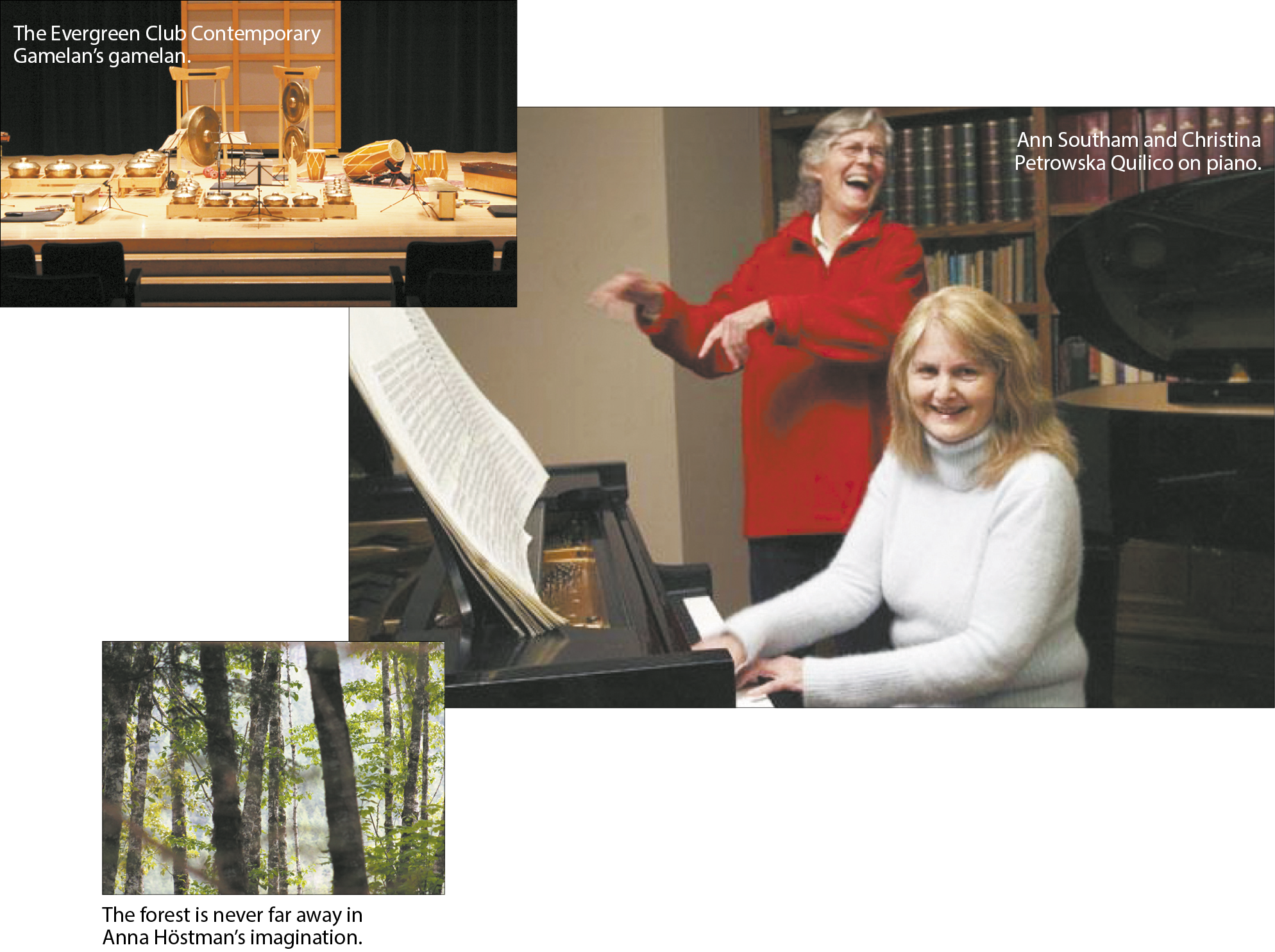
Although Array has always been a grassroots community organization, that trend has now snowballed, and the space come alive, with many community events. These include regular improvisation jams with local and visiting guests, lectures and composer talks (Allison Cameron, October 18 and Tamara Bernstein, November 20), a collaboration with the Evergreen Club Gamelan that includes evenings for people to gather and play the EGC instruments now housed in the Array Space, co-presentations with other music organizations, free outreach community workshops and participation in the New Music 101 library series. On Toronto’s improvising scene, Array is teaming up with both Somewhere There (September 20) and Audio Pollination (September 9 and 13). The first of Array’s own improvisation jams happens on September 10. The days of September also offer two opportunities to participate in community events: September 21 launches the first Gamelan Meetup event and September 27 provides an opportunity for a free percussion workshop.

Array is of course more than a space, for at its roots, it is a performing ensemble. Now able to enjoy their own performing space, this season’s concert series includes works by Gerald Barry, Udo Kasemets, John Sherlock, Michael Oesterle and Linda Catlin Smith. Beyond the Walnut Street address, the Array ensemble will be performing a series of miniatures composed by Nic Gotham at the book launch of Martha Baillie’s novel The Search for Heinrich Schlögel on September 16 at the Gladstone. Gotham’s miniatures were originally written for an online installation of postcards written by Baillie and read by members of the literary community.

INTERsections: Earlier in the month, Array along with other new music ensembles will participate in Contact Contemporary Music’s annual new music event “INTERsection: Music From Every Direction” from September 5 to 7, which will include a day of free performances and interactive installations at Yonge-Dundas Square on September 6. Also included in INTERsection are concert performances at both the Tranzac Club (September 5) and the Music Gallery (September 7).

Other “intersections” also occurring in September feature two of the new music groups who are also participating in Contact’s weekend event. On September 28 the Thin Edge Music Collective performs at the Array Space with guest artist Nilan Perera, and the Toy Piano Composers present a night of “inventions, oddities and hidden treasures” on September 20 at the Music Gallery. In a bit of a space switch-up, the Music Gallery is presenting an event at the Array Space on September 5 curated by Tad Michalak as part of their Departures series featuring Battle Trance + King Weather + Not the Wind Not the Flag.

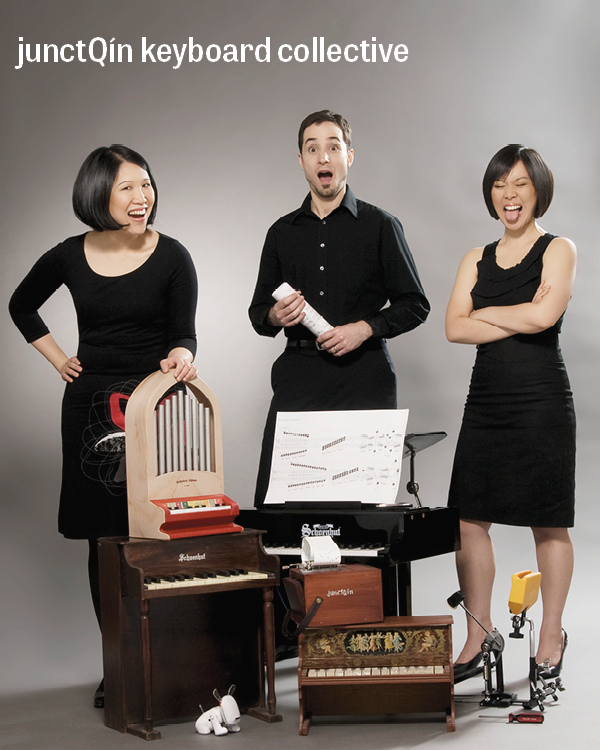
bbb - new music 2Canadian Music Centre: Alongside Array and the Music Gallery, Toronto is fortunate to have the Canadian Music Centre as a space that supports new musical sounds. September events include a concert of North American music for flute and piano on September 13; an evening of words and music (texts by Gwendolyn MacEwen and Linda Hogan) on September 27; and a special event for Culture Days entitled “Create Your Own Graphic Score” with junctQín keyboard collective on September 28. The CMC has also announced their Nuit Blanche event on October 4, which will showcase the integration of global traditions into Canadian new music.

Guelph Jazz Festival: Jumping over now to the annual Guelph Jazz festival that runs September 3 to 7, there are a few performances that will no doubt be strong draws for musical experimenters. To celebrate the 100th anniversary of pioneering jazz artist Sun Ra’s arrival on planet Earth, the Sun Ra Arkestra offers a free performance at 2pm on September 6, followed by an evening performance of “Hymn to the Universe” along with the Coleman Lemieux & Company dance ensemble. The Ugly Beauties, featuring Marilyn Lerner, Matt Brubeck and Nick Fraser perform on the same day at 4pm, followed by a show on September 7 at 10:30am by renowned composer and keyboard genius Lui Pui Ming performing with Korean composer and vocalist Don-Won Kim. See also Ken Waxman’s Something in the Air column on page 73 in this issue.

On a final note for this month, the good news is that the possibilities and opportunities for the nurturing and growth of new and experimental music through thriving musical spaces is well underway. Now it’s up to the listeners to go out and experience the feast.

Additional Concerts:

Scott Thomson and Susanna Hood: “The Muted Note.” Premieres of new music, dance and poetry based on P.K. Page poems. September 5 to 7 and 27. (See next page.)

Composer Barbara Croall performs original works for traditional First Nations flutes, piano and other instruments. September 12 at Musideum.

Soundstreams: Violinist Daniel Hope is the soloist in Max Richter’s reinvention of Vivaldi’s Four Seasons, September 30. See this month’s Classical and Beyond column, beginning on page 20.

Groundswell Festival with Nightwood Theatre: workshop production of Obeah Opera by composer Nicole Brooks. September 10 to 14.  See GTA Listings for details.

Wendalyn Bartley is a Toronto-based composer and electro-vocal sound artist. sounddreaming@gmail.com


1909 NewMusicAs we head into the summer season, spending time outside in the natural world is the one thing most of us eagerly look forward to after enduring the long winter months. And even though we are now witnessing the incredible enduring force of nature bursting with new growth all around us, we also know deep in our guts that life as we know it on the planet is in trouble. Already many places are experiencing the effects of climate change, super storms, rising sea levels, drought, and on and on. It has been argued by many that one of the reasons that we are in this situation is that collectively as an industrialized culture, we have lost our sense of deep respect for being in relationship and communion with nature. Our technological and unlimited growth ideologies have led to widespread misuse of the earth and its resources. So, one of the questions that I ask in response to these difficult issues is how can musical practice and sound itself cultivate a restored relationship and connection with the earth, with the land, with the natural world.

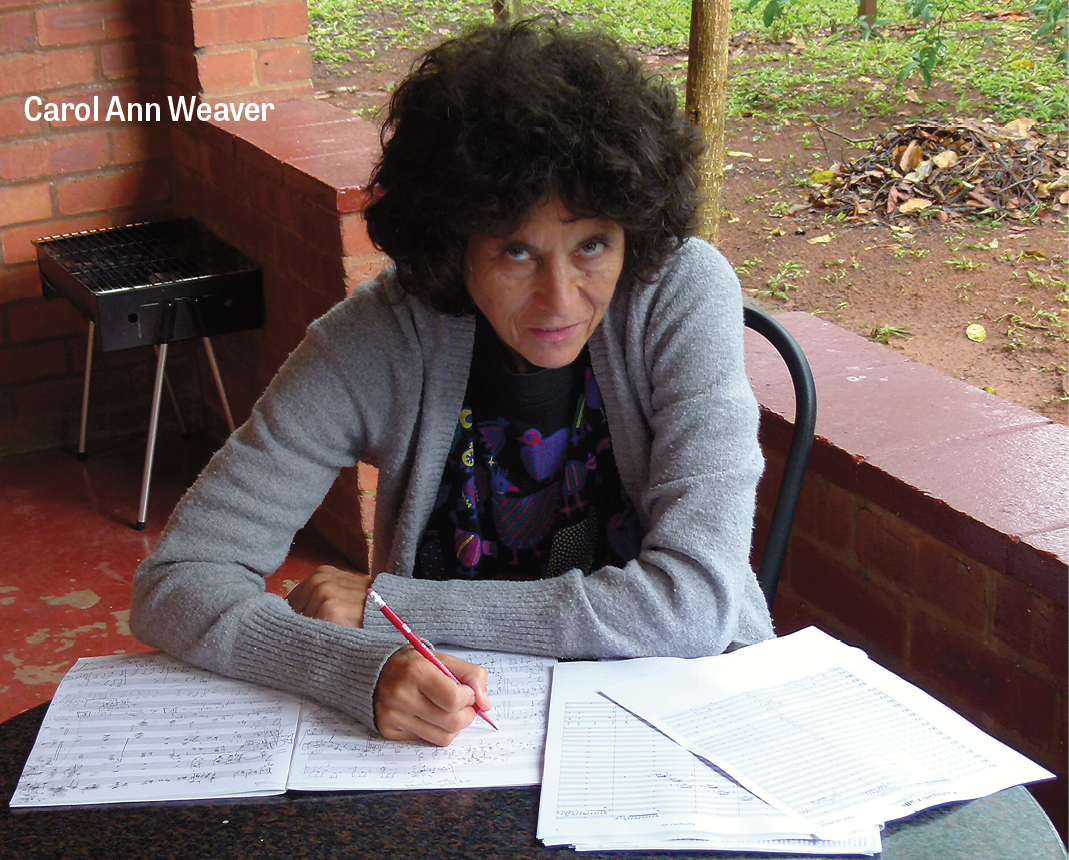
June: Since the early 1970s, Canadians have been pioneers in the field of acoustic ecology and soundscape studies, beginning with the groundbreaking work of composer R. Murray Schafer and his colleagues at the World Soundscape Project. So it is no surprise that Schafer is one of the keynote speakers in the upcoming “Sound in the Land – Music and the Environment” festival at the University of Waterloo’s Conrad Grebel College. Running from June 5 to 8, the festival/conference is the brainchild of composer Carol Ann Weaver, who is part of the music faculty at Conrad Grebel.

During a conversation I had with Weaver about her vision and motivation for creating a series of Sound in the Land festivals (2004, 2009, 2014), she spoke passionately of her love for the stillness and beauty of the wilderness. From these experiences she has cultivated a creative practice focused on listening to the soundscapes of nature and composing music in response to what she hears. It is this quest to recreate the magical moments in nature that inspired her to pull together this uniquely focused multi-disciplinary event in order to delve more deeply into the relationship between music and the natural world. The festival will combine concerts, workshops, keynote speakers and academic paper presentations to create a cross-pollination of ideas, sounds and people and the music of many musical cultures so that the “bruised and broken planet can yet be sung back into new birth.” Appropriately, Schafer’s keynote address is titled “Hearing the Earth as Song.”

Although the conference occurs early in the month after many WholeNote readers may have received their summer issue, the festival provides an important context for these larger questions of how musical practice can participate in the restoration of the planet.

The festival concerts range from soundscape music to European-based chamber, orchestral and choral, alongside African-themed, Korean, Balinese, Argentinian and First Nations music. For early risers, there will be a dawn soundwalk on June 7 and on June 8, a dawn concert at Columbia Lake that will include some of Schafer’s music specifically written to interact with the natural environment. It will also include works by composers Emily Doolittle and Jennifer Butler, both of whom have been profoundly influenced by their longtime involvement in Schafer’s wilderness collaborations. These words by Schafer sum it up: “Sing to the lake, and the lake will sing back!”

The African Kalahari Desert is also featured prominently in the festival and is the focus of the main evening event on June 7, which combines African traditional songs, African-influenced composed music and the second keynote address, “Hearing Songs from the Earth – Kalahari Soundscapes and Visuals,” by Gus Mills. Mills has spent many years researching African large carnivores and will use recordings and visuals to demonstrate the interaction between the behaviour of these species within an acoustic ecological framework. Earlier in the day, the concerts include a series of compositions created from soundscape recordings as well as the Grebel Gamelan performing traditional music from Bali.

The “Sonic Convergences Concert”on June 6 will feature four orchestral pieces, each highlighting natural themes. Included is Weaver’s piece Kalahari Calls, influenced by her experiences in Africa.  The evening will conclude with Earth Songs by Korean artist Cecilia Kim, a five-part multimedia piece combining music theatre, visuals and Korean traditional music. Texts for two of the songs are from the poetry book Where Calling Birds Gather by Canadian poet John Weier.

One final observation I’d like to make about this festival is to draw attention to the Mennonite legacy of the host college Conrad Grebel and its commitment to promoting nonviolence and justice. It is Weaver’s vision to expand that perspective to include peace and balance for the earth that makes this festival such a landmark event.

Open Ears: It seems that Waterloo is the place to be this June with the return of the Open Ears festival. Now in its 16th year, it runs from June 5 to 15 offering ten days of performances, discussions and installations presented in a range of different venuesand programmed around the overall theme of “Open Stories.” This year, the festival will be running concurrently with an exhibition of contemporary visual art organized by the Contemporary Art Forum Kitchener and Area (CAFKA) which runs through to June 29. Some of the Open Ears highlights include Griffin Poetry prize-winner and sound-artist Christian Bök (June 7); a concert combining viola da gamba and the hurdy gurdy (June 9); the Penderecki String Quartet with music inspired by T.S. Eliot’s Four Quartets (June 10); the Nexus percussion ensemble appearing with Sepideh Raissadat, the first female vocalist to publicly perform in Iran after the 1979 revolution (June 13); a performance of Steve Reich’s epic work Drumming (June 14); and an opera marathon, featuring five new Canadian operas (June 15). There’s so much more in this festival; I urge you to check out the Open Ears website.

July: Moving into July and continuing with our theme of music in the environment, we arrive at Stratford Summer Music and onto Tom Percussion Island. From July 15 to July 20, the island will be filled with nine percussion-based instrumental exhibits on display for audiences to engage with, including a tongue drum made from a hollowed-out apple tree trunk, fire drums made from cut and tuned fire extinguishers, a piano dulcimer made from a 110-year old piano flipped on its side and a Dream Gong Maze for you to get lost in. At various times during the week, members of the percussion quartet TorQ will be on the island to perform their own “pop-up concerts” or join with the public in exploring the sounds of these instruments in the outside environment.

The TorQ quartet is in residence this year at SSM; in addition to their presence on Percussion Island they will be offering three concerts as well as running their annual Percussion Seminar designed for university percussion students. Seminar participants will offer outdoor “BargeMusic” performances and will join TorQ and guest faculty member Nebojsa Jovan Zivkovic on stage for the three concerts. Zivkovic, who now resides in Germany, is world-renowned as an expressive marimba and percussion artist and as a masterful composer. His works will be showcased on the July 25 concert, including his piece Tak-nara that features more than 75 instruments on stage. On July 20, TorQ will join with the Larkin Singers to perform works written for choir and percussion by Eric Whitacre, Riho Maimets and Colin Eatock. Their final concert on July 27 will include the Canadian premiere of the 99-percussionist version of environmental composer John Luther AdamsInuksuit.

Other new music events at Stratford Summer Music include a panel discussion on percussion music at the annualHarry Somers Forum and a return visit bythe Bicycle Opera Project, who will have pedalled from Waterloo after their performance in the Open Ears opera marathon earlier in June. The bicycle performers provide a car-free alternative to touring along with two collections of short operas and excerpts, including pieces recently talked about in this column: L’Homme et le ciel by Adam Scime and Airline Icarus by Brian Current and Anton Piatigorsky.

August: As mentioned earlier, the process of listening is of utmost importance in fostering this deeper relationship with nature. And one of most accomplished proponents of the importance of listening is American composer Pauline Oliveros, who has evolved a unique approach to not only music and performance, but also one that has influenced literature, art, meditation, technology and healing. She calls this process “Deep Listening,” and describes it as “listening in every possible way to everything possible to hear, no matter what one is doing.” This requires a heightened consciousness of the world of sound and the sound of the world, encompassing the sounds of daily life, nature, one’s own thoughts, imagination and dreams.

In one of my first personal encounters with her many years ago, she took a small group of us out into a forest to engage in this more expanded experience of listening. Not only did we listen to the soundscape, but she introduced a simple vocal composition (Sonic Meditations) during which we sang and intentionally directed our sounds to the trees around us. “They need to hear our sounds,” she said simply. This experience not only opened up a world of possibilities for my own work with sound, but this paradigm establishes a template for how we can communicate nonverbally with all living beings. It creates a model for a co-existent and reciprocal relationship, using sound and its vibrations as a vehicle for connection. In a recent correspondence I had with her, I asked specifically about her process of attunement with the environment. She stated that “the connection with all things happens through listening. When I perform it is my intent to listen inclusively to all that I can possibly hear. Inclusive listening seems to be magnetic. I have had many experiences with birds and insects gathering around me in outdoor concerts.”

Her work also challenges traditional artistic values by subtly moving the focus away from the artistic work as a separate entity and inviting each of us to open up how we are perceiving all layers of any given soundmaking or artistic experience. Her goal is to “balance out, and come to a different understanding of what can be done.” These ideas are central to cultivating our relationship with nature and expanding how we imagine sound as a significant ingredient of this connection.

In August, Toronto audiences will have an opportunity to experience her Deep Listening work. She will be delivering a keynote lecture at the Toronto International Electroacoustic Symposium on August 15 and will be giving a solo performance on August 16. She will also be doing an artist talk as part of the Sound Travels Intensive that begins on August 19. All these events are organized by New Adventures in Sound Art (NAISA) and more details can be found on their website.

QUICK PICKS

Toronto Music Garden concerts: Kahnekaronnion (The Waters): Original songs by the Akwesasne Women Singers and compositions by Barbara Croall, July 3.

Bach to the Future: Cello music by Bach, Piatti, Britten, and the world premiere of a work by Michael Oesterle, August 28.

Soundscapades: An exploration of the diverse sounds, landscapes and people of the city of Toronto with TorQ Percussion, September 7.

Wendalyn Bartley is a Toronto based composer and electro-vocal sound artist. sounddreaming@gmail.com

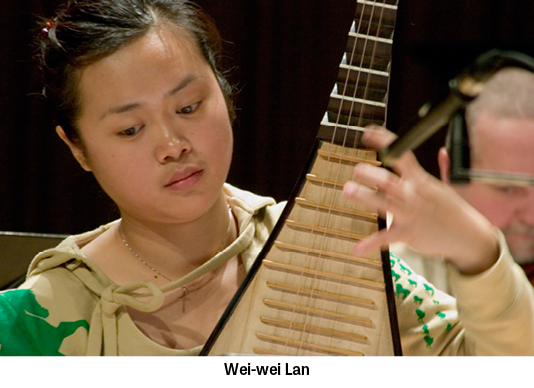
1908-InWithTheNew-WeiweiLanSomething new is coming to town in May – a festival of music unlike any other. Aptly named 21C, this 21st century music festival produced by the Royal Conservatory spotlights new creation across the musical spectrum. The brainchild of Mervon Mehta, executive director of performing arts at the RC, the festival offers eight concerts over five nights, with 20 premieres, and runs from May 21 to 25. I sat down with festival composer-consultant Brian Current to get a first-hand overview of what awaits the listener and why this festival is so unique. Put simply, he describes it as a festival of “beauty and courage.” The combination of concerts offers an opportunity for the people of Toronto to come and listen to who we are musically, and to hear our city proudly reflected back. It’s a celebration of what’s alive and vibrant in our collective lives at this time.

Many of the performers and composers involved in the festival are people whom Mehta has brought in to perform inside the acoustical wonders of Koerner Hall, which opened its doors in 2009. Mehta approached many of these artists to either write something new for the festival or to come as guest performers. His vision is to reach out to many different musical communities and in so doing, offer each audience the opportunity to hear something familiar and something unexpected. Thanks to its main benefactor, Michael Koerner, the festival is scheduled for a five-year run and over that time will be an extraordinary opportunity to build trust with the listeners of Toronto. The concerts will also be live-streamed online so it also offers an opportunity to generate an international audience.

Read more: 21C – Beauty and Courage

inwiththenew gavin-bryars-credit nick-whiteAs I sit down to write this month’s WholeNote column, the date (March 20) tells me that it’s the first day of spring. Even though I see snow falling outside my window, I know that a completely different sensation is waiting in the wings: a mingling of the smells, sounds and colours of emerging spring. And with the arrival of April comes a plethora of in-with-the-new performances that promise to take the listener into a multiple-sensory experience.  

Back in 1827, the German philospher K.F.E.Trahndorff coined the term “Gesamtkunstwerk” to express the idea of a synthesis of the arts. About 20 years later, the (in)famous composer Richard Wagner used this term to describe his vision of the unification of all forms of art into one expression. This ideal became the foundational principle of his operatic style.  A companion to this idea is the phenomenon of synesthesia, a word created from the combination of two ancient Greek words meaning “together” and “sensation.” The word describes the experience that some people have when the stimulation of one sense creates an involuntarily response in one of the other senses.  An example would be someone who automatically sees colours while listening to music, or vice versa. So while the sensory world of spring begins to awaken around us, inside the concert hall the listener will have several opportunities to experience a variety of approaches to the combining of art forms, with or without an accompanying dramatic component. 

Art of Time Ensemble: The WholeNote’s cover story last month talked about the symbiotic relationship between dance and music in the work of Peggy Baker and how crucial her collaboration with pianist Andrew Burashko was for how she works with live music. This collaboration was equally formative for Burashko, who states that Peggy gave him “a whole new universe” in exposing him to a range of theatrical elements. And that without this infusion of new approaches, his ensemble, Art of Time, could not have happened. In fact his ensemble’s reputation has been built on the daring and innovative interaction with outstanding artists in many different artistic disciplines, including dancers, writers, actors and non-classical musicians. Their production running from April 9 to 12 is titled “I Send You This Cadmium Red: Meditations On Colour And Sound.” This exploration of the senses will combine music, theatre and visual projections to create a kaleidoscopic effect, which can best be described as a film, a painting, an essay, a play and a concert —all at once. In fact the whole becomes larger than the sum of its parts, and promises to be mesmerizing. 

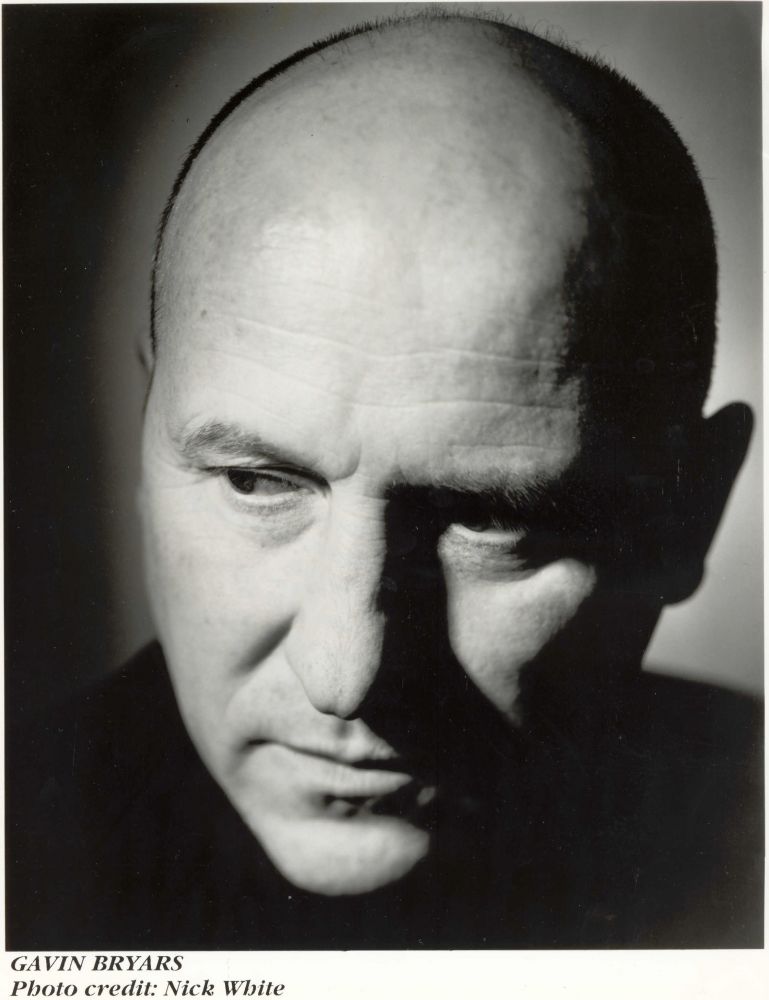
The music of composer Gavin Bryars will provide the score for the evening. Two of his works will be performed by the ensemble: After the Requiem and the title piece I Send You this Cadmium Red.  The latter work by Bryars is based on a correspondence between the visual artist John Christie and Booker award-winning writer John Berger, who wrote The Ways of Seeing. To begin their collaboration Christie sent Berger a square of colour along with a letter that ended with the sentence “I send you this cadmium red.” John Berger’s reply was a musing on the cadmium red as well as many other colours, and the ensuing correspondence began a series of meditations on the essence of individual colours, while also delving into poetry, art history and memory. The correspondence eventually became both a book and a radio broadcast for which Bryars wrote music to underscore the colour themes in the texts.  Performing the text taken from these letters in the Toronto production will be actors John Fitzgerald Jay and Julian Richings.  To get a sense of the stunning explosion of colour and sound of this piece, I highly recommend viewing a short video from a 2011 performance of the work co-produced by Art of Time and Canadian Stage.

Toronto Masque Theatre: Even before the term Gesamtkunstwerk was coined, the art of masque existed. Tracing its origins back to the 16th and 17th centuries, this European form of interdisciplinary entertainment involved music, dance, song, acting, stage design and costumes. The Toronto Masque Theatre is dedicated to reviving this art form both through the performance of early works and the commissioning of new works.  On April 25 and 26 they will present two pieces exploring the Greek myth of Europa, after whom the continent of Europe was named.  Alongside a baroque-era work by Pignolet de Montéclair will be the premiere of Toronto composer James Rolfe’s  Europa and the White Bull.  With a libretto written by poet/novelist Steven Heighton, this 21st century masque will expose the darker sides of the myth: power, sexuality and ethics.  There are many versions of the original, but at the heart of the story is an encounter between Europa (sometimes equated with the goddesses Astarte and Demeter) and a bull, an animal sacred to the Cretan Minoans.  (As a side note, I recommend a unique take on this story set in Ontario:  the novel entitled Europa in the Wilderness written by Christopher Malcolm and published by Augusta House Press. )

Contemporary Opera: Then there is contemporary opera, a world that continues to imbue the traditional form with new elements. Last month, I introduced the FAWN opera company and their new workshop opera productions.  On April 11, they are premiering a new chamber opera by award-winning composer Adam Scime, L’Homme et le Ciel.  Based on sources from the second century, the libretto by Ian Koiter recounts one man’s struggle to live righteously. Scime introduces electronics into the score as both an enhancement of the orchestral colours and to further the narrative. On May 3, FAWN presents an event in their Synesthesia series: a showcase of eight short films by emerging Canadian filmmakers with live soundtracks by Toronto composers. 

Back to opera: the Essential Opera company will be premiering three new one-act operas by three composers from the Toy Piano Composers collective on April 5. Monica Pearce’s Etiquette combines music and speech to present various opinions about the role of etiquette in society.  Elisha Denburg’s Regina is based on the story of the world’s first female rabbi – Regina Jonas. Chris Thornborrow’s Heather explores the issues of cyberbullying.  Just a week later, on April 12, these co-directors/composers of the Toy Piano Composers group will be presenting a concert entitled “Tension/Resolution: New Music for Harp and Ensemble” featuring soloist Angela Schwarzkopf and the TPC Ensemble. All works on the program are composed by TPC composers, who represent an eclectic range of interests and aesthetics – from chamber music to improvisation to sound installations and noise art.

Soundstreams: The groundbreaking Australian Art Orchestra has evolved their own way of blending and reinventing by breaking down barriers between disciplines, forms and cultures.   On April 15, Soundstreams will present the Canadian premiere of their jazz-infused piece Passion After St. Matthew, a reinvention of J.S. Bach’s St. Matthew Passion. Five of the ensemble’s composers were asked to write new pieces inspired by five movements from Bach’s masterpiece and these are linked together by chorale passages.  However, the piece is a constantly evolving structure, and the Toronto performance will put together six members of the AAO with a 12-person ensemble of acclaimed Canadian musicians to create a unique new hybrid of the piece. The program will also feature a new work by Montreal-based composer Nicole Lizée, Hymns to Pareidolia, which will combine instrumental textures and turntable-based sounds in Lizée’s exploration of Bach’s themes.

inwiththenew rick-sacksMusic Gallery: Lizée pops up again this month in the Continuum/Music Gallery co-production “By Other Means” on May 4.  In a concert that explores non-traditional techniques and new musical devices, Lizée will combine her turntable techniques with the sounds of Atari video games. She will be joined in this evening of sonic experimentation by international composers Salvatore Sciarrino, Hugo Morales Murguía, Erik Griswold, and Canadian Thierry TidrowExtended techniques are highlighted also at the Music Gallery’s April 12 concert featuring Toronto-born musicians Noam Bierstone and Bryan Holt performing an evening of avant-garde Scandinavian works for cello and percussion, including two by Finland’s Kaija Saariaho.   This season the Music Gallery has been spreading beyond the walls of their home at St. George the Martyr church and producing events in other Toronto venues.  On April 16, they venture into the heart of Kensington Market and its fringe-arts haven Double Double Land to bring Brooklyn-based vocalist Julianna Barwick to Toronto for an experience of spiritual ambience from a one-woman choir. She will be joined on the bill by another Brooklynite, Vasillus, as well as Castle If and Toronto’s Christian Duncan with her astonishing five-octave voice.

Additional concerts to bring in the spring:  April 22 pianist Christina Petrowska Quilico celebrates the CD release of Glass Houses Volume 2 featuring compositions by Ann Southam. Diana McIntosh presents works arranged for piano, toy piano, mouth percussion, voice, live electronics and tape on April 16.  The Toronto Symphony Orchestra presents the Canadian premiere of Vivian Fung’s work Aqua on April 11.

Works by contemporary composers are increasingly being programmed by more traditional concert presenters and ensembles.  Here’s a quick look at what’s available this month. Works by Arvo Pärt can be heard in concerts by INNERchamber Concerts in Stratford, April 6 and by Masterworks of Oakville Chorus & Orchestra on April 12 and 13.  The Kitchener-Waterloo Chamber Music Society presents works by Michael Coghlan on April 6 and Claude Vivier on April 23. The New York Chamber Music Festival presents a world premiere by Michael Oesterle along with other Canadian premieres by various composers at the Heliconian Hall April 18.

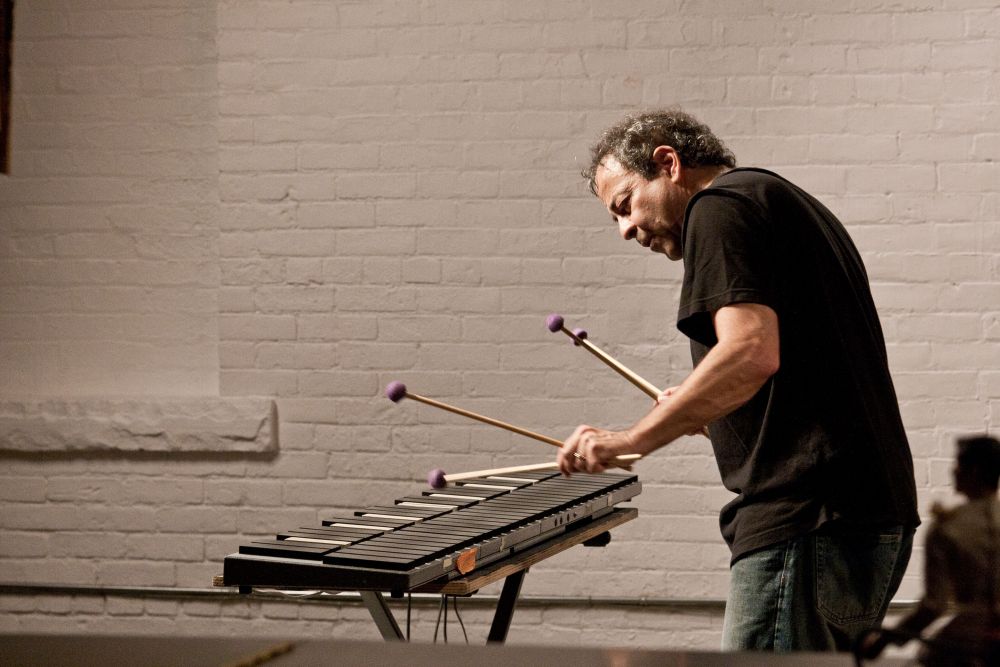
And speaking of world premieres, at noon on April 24 in the Richard Bradshaw Amphitheatre at the Four Seasons Centre for the Performing Arts, percussionist Rick Sacks presents a recital on MalletKat/keyboard, titled Polar Bears and Lullabies, that includes the premiere of a new work by Sacks titled “Necessary Outcome: A Meditation on Richard Dawkins” along with other works.

The end of the academic year in April provides an opportunity to hear what’s cooking among the students of the various music programs.  On April 10, Brian Current conducts the Glenn Gould School New Music Ensemble in Behind the Sound of Music, another world premiere by the prolific Nicole Lizée.  April 25, the Royal Conservatory Orchestra performs Murray Schafer’s Adieu Robert Schumann.  Up at York University, a concert of new compositions from the students of Matt Brubeck (April 1) is followed by a concert on April 2 by York’s New Music ensemble.

Quick Picks:

Canadian Music Centre:  April 13 “Microexpressions: The 21st Century Virtuoso”; April 24 “Lunch Time Concert.” Beckwith, Beauvais and Uyeda; April 25 “Mid-Atlantic: A Voyage in Song.” Works by Branscombe, Coulthard, Morawetz and others.

Musideum:  Association of Improvising Musicians (AIM): April 3, 10, 17

Larkin Singers: “Modern Mystics.” Works by Tavener and others, April 5 

Syrinx Concerts Toronto:Walter Buczynski Birthday Celebration,” April 13

Symphony on the Bay. “Celebration of film composer Mychael Danna,” May 4 

Wendalyn Bartley is a Toronto based composer and electro-vocal sound artist. sounddreaming@gmail.com

1906 newmusicBack in the December 2013 issue of The WholeNote, I wrote about the developing collaboration amongst new music presenters in Toronto.  This desire to build community and mutual support gets a big boost in early April when the Music Gallery, Continuum Contemporary Music and Arraymusic team up to present “Gaudeamus: Deconstructed and Reconstructed.”  To understand more about the significance of this Dutch-Canadian contemporary music summit, it’s important to look at the legacy of the Gaudeamus Music Week in Holland.  

Right after World War II in 1945, a yearly festival and competition for new music was held in a village called Bilthoven, located near Utrecht. Imagining what Holland must have been like emerging out of the war, I find it remarkable that not only was a festival created to promote Dutch composers in such a climate, but that also it was named “gaudeamus” – from the Latin phrase gaudeamus igitur, meaning “Therefore let us rejoice.” The title of a popular academic song performed at university graduation ceremonies in many European countries since the early 18th century, the phrase is in the same spirit as carpe diem (seize the day) with its exhortation to enjoy life.  So the Gaudeamus festival is a celebration, an invitation for hope, renewal and rejuvenation, an antidote to the fear and terror of the war years. The Gaudeamus Music Week eventually opened up to include international composers and has now become one of the premiere forums for presenting the latest developments in the global contemporary music scene. The prestigious Gaudeamus competition is open to composers under 30 with the prize money going towards a commission for a new work. 

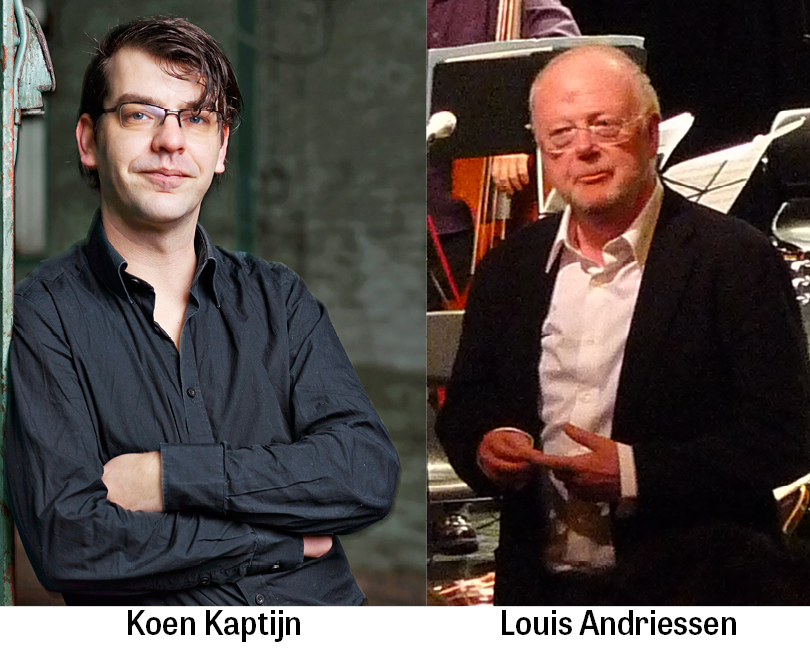
And now this spirit makes its way to Toronto bringing together members from the Continuum and Arraymusic ensembles with several Dutch musicians to present two nights of concerts at the Music Gallery.  On April 3, Gaudeamus will be “Deconstructed” during two sets of improvised music featuring both Canadian and Dutch improvisers.  Part of the evening will feature three comprovised works by Holland’s Michiel van Dijk and Koen Kaptijn, along with Canada’s Allison Cameron.   And in case you aren’t familiar with the term “comprovise,” it refers to a mixture of composed and improvised material and is the name of an American music series in the Boston and New York areas that aims to avoid or shatter genre barriers and explore the boundaries between composition and improvisation. Sounds like a perfect goal for a night of deconstruction.

Then on April 4, Gaudeamus is “Reconstructed” again with composed works by composers who have either won the Gaudemus award or had pieces selected to be performed at the festival.  The lineup includes Louis Andriessen and Yannis Kyriakides from Holland and eldritch priest and Michael Oesterle from Canada. Louis Andriessen who turns 75 this coming April, is one of Holland’s most celebrated composers.   Back in the 1970s, he turned minimalism upside down with his radical musical responses to American experimentalists Reich, Riley and Glass. He challenged these composers’ trance-like states with a European sense of edginess and angularity, creating powerful and aggressive results. Toronto audiences will be able to hear his high-voltage piece Hout, a work that embodies his trademark style of combining the rigours of complex chromaticism with rhythms derived from jazz and pop.  The “reconstruction” continues with Cyprus-born composer and sound artist Yannis Kyriakides’ piece Tinkling, which is based on Thelonius Monk’s Trinkle Tinkle.  Kyriakides left his native Cyprus to live in Holland and study with Andriessen and no doubt was influenced by Andriessen’s embracing of jazz influences. Kyriakides is also drawn to interdisciplinary combinations of musical forms and digital media, as is Canadian Michael Oesterle who will present a newly commissioned work.  Rounding out the evening will be a piece by Canadian composer, sound artist and author eldritch priest whose interests lie in sonic culture and experimental aesthetics.

Another feature of the Gaudeamus summit will be a roundtable conversation during the late afternoon of each evening’s performance to discuss whether there is still such a thing as a local sound identity, given that we can all be so instantly connected in the wired world.  These conversations will include a collection of musicians, composers, programmers and a sociologist to weigh in on the topic. And finally, if you’d like an opportunity to play with some of the visiting Dutch improvisers, a free workshop with members of Trio 7090 will be happening at the Music Gallery on April 5, from 10am to 1pm.

New Opera:  There is a new voice for contemporary opera arising on the scene, and its name is FAWN. Collaborating with emerging composers to create contemporary chamber operas, the opera and new music collective will be presenting excerpts of two of their produced operas by David Foley and Adam Scime, along with a new work by composer Cecilia Livingston on March 14.  This concert is part of the Emergents Series at the Music Galley curated by saxophonist Chelsea Shanoff. Adding to the experience of FAWN’s repetoire will be a selection of compositions by Michael Vincent, who is also writing an opera for FAWN’s upcoming season. One characteristic of this new company’s vision is to foster and support emerging musical and visual Canadian artists. Their “Synesthesia” concerts offer previews of new works in local art galleries. 

And then there is Tapestry which has been championing new Canadian opera for over 30 years. On April 4 and 5, they will be collaborating with Volcano Theatre in a showcase of work titled “Explorations” combining theatre, opera and dance.  Volcano is known for their physical energy and vision of creating work that explores identity, politics, history, and the contemporary human condition.  With both FAWN and Tapestry, we are witnessing another example of genre expansion through the fusion of opera with other artistic sensibilities and forms. 

Arditti String Quartet:  New Music Concerts and Music Toronto present the Arditti String Quartet on March 20.  Well-known for their spirited and technically refined interpretations of contemporary and earlier 20th century music, the contemporary string quartet repertoire would be unimaginable without them. The program includes works by some of the most venerable composers of our times, Elliott Carter, Hilda Paredes, Brian Ferneyhough and Helmut Lachenmann, each of which is part of their standard repertoire.  Carter’s String Quartet No. 5 is a perfect example of his signature technique of metric modulation, which can be described simply as a change in pulse rate or tempo where each of the two tempos have a shared relationship, rather than a sudden shift.   Hilda Paredes, originally from Mexico, wrote her second quartet “Cuerdas del Destino” in 2007-08, dedicating it to the Arditti Quartet.  Brian Ferneyhough, the master of the “new complexity,” wrote his Dum Transisset Quartet in 2006-07; it has been widely performed and recorded by the quartet. 

Additional Noteworthy Concerts (see Listings for Details) :

March 3: Wendalyn Bartley and Tina Pearson:  Tales from the Sonic Labiatory, Musideum.

March 6: AIM Toronto, Musideum.

March 7: Canadian Art Song Project CD launch, with works by Derek Holman. Canadian Music Centre.

March 16 and 18: Talisker Players: “Creature to Creature: A 21st-Century Bestiary.”

March 19: Les Amis: Duo X[iksa] from Japan.

March 19: University of Waterloo: Music by Carol Ann Weaver with Rebecca Campbell.

March 20: University of Guelph:  Time and Space in Time. Slowpitch (turntablism and visual aesthetics). 

April 5: Essential Opera:  Trio of new Canadian works. 

Wendalyn Bartley is a Toronto based composer and electro-vocal sound artist. sounddreaming@gmail.com

It has now been one year since I wrote my first In With The New column for WholeNote, and in looking back over the past 12 months, I’ve made a short list of what I’ve observed as the leading edge of the new in our local music scene: the continual blurring of lines between musical genres (or the rise of “genreless music”); improvisation anchoring itself as a respected artistic voice and creative process; the role of community building and the creation of composer collectives; the movement out of the concert hall into new listening spaces and environments.

During this reflection process, a memory image came to mind from one of the first new music concerts I ever attended. It was back in the early 70s in Walter Hall at U of T’s Faculty of Music. The concert stage was full of percussion instruments, the lights were dim and candles lined the stage front. A bearded man dressed in white (John Wyre) along with some of his students moved as if in a dance amongst the assembled gongs, bowls, drums and no doubt all sorts of instruments from around the world. The mesmerizing cornucopia of sounds they invoked opened up a new world of possibilities in my imagination. I heard sounds that previously had existed only at the edges of my awareness. I was hooked. Determined to experience more, I immediately signed myself up to attend New Music Concerts, thereby exposing myself to the wild and adventurous sound experiments taking place both here in Canada and internationally.

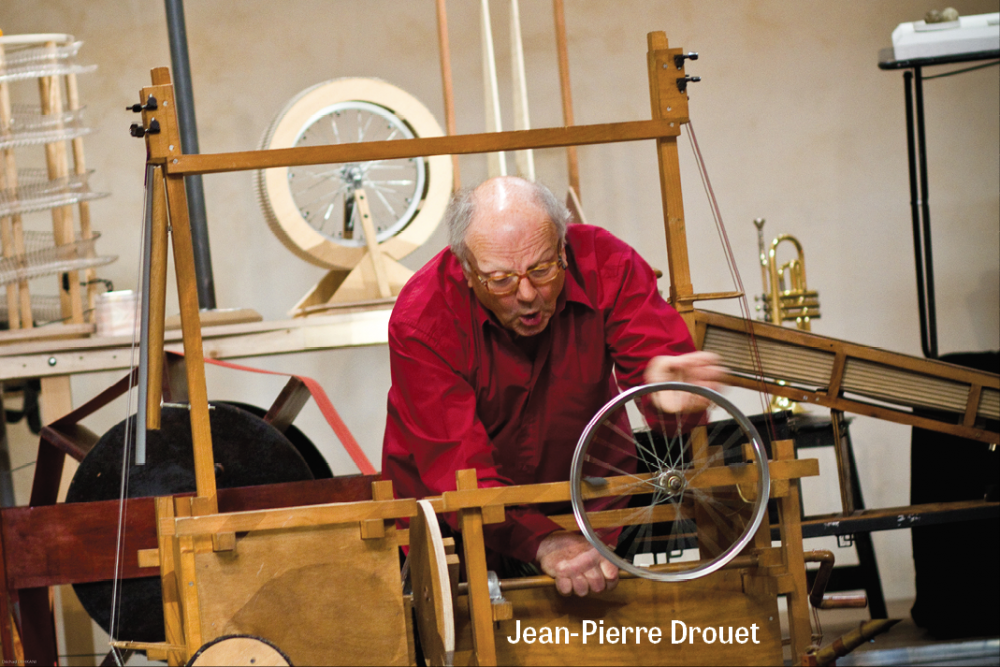
bbb - in with the new 1New Music Concerts: And now 40 years later, New Music Concerts continues to bring these cutting-edge sonic visions honed by composers and performers to its audience members. The program they are presenting on March 2 represents the creative interests of many composers active in the 1970s. It will feature the multi-talented percussionist, improviser and composer Jean-Pierre Drouet playing works by some of these international composers that NMC introduced to Toronto audiences in its early days: the likes of Kagel, Rzewski, Aperghis and Globokar.

Threads common among these composers include the intersection between music and theatre, the use of improvisation and extended techniques, and (the thread I’ll focus on in this month’s column) the practice of creating music that reflects upon socio-political issues.

On the program, two solos from Kagel’s Exotica will be performed. It’s one of his first pieces to focus on musical and political history, and tiptoes that elusive edge that exists between the West and the world beyond. Scored for an array of non-European instruments, Exotica reflects on the issue of what makes the music exotic. Is it because the sounds have been shaped by the pen of a Western composer, or rather is it because with the sounds of these instruments, it’s not possible to produce music with typical Western features? It’s a provocative topic to reflect upon all these years later, especially given the high interest amongst composers steeped in western musical traditions in using  an ever-expanding range of instruments and sound sources. Even my own initiatory experience of new music is implicated in this matter.

Continuing, Globokar’s work Toucher, based on scenes from Bertolt Brecht’s play Life of Galileo raises issues of being silenced by structures of power (the church, government, and tyrannical ideologies). Rzewski, renowned for works that exhibit a deep political conscience, is represented with To The Earth, which stands in solidarity with the growing consciousness of the environmental movement. Drawn to the combination of music and text, Aperghis’ Le corps à corps narrates the thrills of a car racing event from multiple perspectives using both sound and spoken word. It portrays the composer’s practice of transporting everyday events to a poetic, often absurd and satirical world. Rounding out the program is Il libro celibe by Giorgio Battistelli, a composer fascinated by alchemy, psychology and the ideas of Marcel Duchamp.

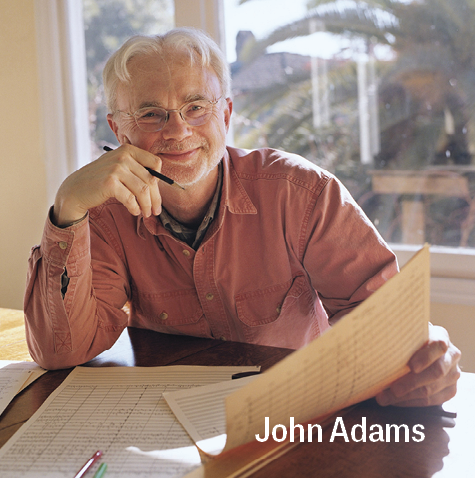
bbb - in with the new 2New Creations Festival: What is compelling about the approach of the composers presented by New Music Concerts is their dialogue with cultural and historical references. It’s fascinating to note that this practice is also evident in many of the works being programmed at this year’s New Creations Festival, the Toronto Symphony’s annual celebration of contemporary orchestral works running March 1 to 7.  Each of the three pieces by featured composer John Adams engages in a conversation with either political/social history or the history of music. Renowned for his post-minimalist style, Adams’ music is full of contrasts and tends to be more directional and climactic than what we usually associate with minimalist music.  His Doctor Atomic Symphony (March 1) is based on orchestral music from his opera Doctor Atomic. With a libretto created by Peter Sellars from a variety of sources (interviews, scientific manuals and poetry), the story centres around the final hours leading up to the first atomic bomb explosion at the Alamagordo test site in New Mexico in June, 1945. The music conveys the epic struggle and moral dilemma surrounding the impact of the force about to be unleashed into the world, which in hindsight, ushered in the atomic age.

Adams’ two other works—Slonimsky’s Earbox (March 5) and Absolute Jest (March 7)—are dialogues with some of the great names of musical history. Nicolas Slonimsky was a witty Russian author whose output included several books on music, including the Thesaurus of Scales and Melodic Patterns. Adams makes use of this compendium of modes in his Earbox piece, which arose out of his admiration for another Russian creator—Igor Stravinsky—and the use of modal scales in Stravinsky’s The Song of the Nightingale. And finally, Absolute Jest is an adaptation of the light and energetic style found in Beethoven’s late quartet scherzos composed as a concerto for string quartet and orchestra. Expect to hear a warped sense of time and harmony in this fast-paced dance.

Three other works in the festival also engage in a conversation with musical history. Canadian Vincent Ho’s City Suite (March 7) is inspired by author Eric Siblin’s book The Cello Suites which outlines the history of J.S. Bach’s works for solo cello. In Finnish composer and pianist Magnus Lindberg’s Piano Concerto No.2 (March 1), originally written for the virtuosic capabilities of festival guest performer Yefim Bronfman, we witness his tussle with the complexity of pianistic history. Former Los Angeles Philharmonic conductor Esa-Pekka Salonen took on a similar challenge during the composing of his Violin Concerto (March  5). His solution was to create a deeply personal narrative summing up everything he had learned and experienced in his life as a musician.

More-than-Human Communication: And when it comes to the exchange of ideas, what could be more cutting edge (or to be more historically accurate, steeped in ancient traditions), than inter-species communication? Back in the spring of 2013, the Music Gallery offered audiences an opportunity to listen to two recordings of humpback whale song in combination with electronics that had been released on their Music Gallery Editions label back in the 1970s. As a continuation of that initiative, the Gallery will be presenting an event on February 22 that combines both lecture and music. Bioacoustics researcher Katherine Payne will team up with recording artist Daniela Gesundheit and a group of Toronto-based singers and instrumentalists to create a unique sonic exchange with Payne’s recordings of humpback whales and African elephants.

Improvisation: As mentioned in the opening paragraph, one of the major trends I’ve noticed over the past year is the presence of improvisation as a force to contend with. Improvisation relies on cultivating a listening presence, which is at the heart of all true communication and dialogue. From February 21 to 23 at the Tranzac, the Somewhere There Creative Music Festival offers a full schedule of concerts and lectures by performers and thinkers that reflect the vitality and diversity of what’s happening on the improv scene in the Toronto area. The two festival lectures reflect on the history of experimental music in Canada and the roots of Toronto musical improvisation. Two other improvisation-focused events this month include “The Array Sessions,” a concert of Toronto-based improvisers on February 6 at the Arraymusic studio and the Music Gallery’s Jazz Avant event February 8 featuring the saxophone and electronic improvisations of L.A. based musician Anenon.

Additional Concerts:

Feb. 6: A Soldier’s Tale - a dance theatre work with music by John Gzowski, COC.

Feb. 8: New works created for the Toy Piano Composers ensemble by Doelle, Dupuis, Murphy-King, Versluis, Taylor, Heliconian Hall.

Feb. 13: ∆TENT New Music Ensemble presents works inspired by remembrances of childhood by composers Tsurumoto and Southam, CMC.

Feb. 18: “Women in the Power House” – works by leading female composers, COC.

Feb. 19: Reverb Brass presents works by Ruo, Ridenour, Golijov, Carter, Maimets, Hillborg, Agnas, Lutoslawski, Gallery 345.

Feb. 21: Thin Edge New Music Collective presents new works by Anna Pidgorna (for two violins and antique wooden door) and Anna Höstman, along with performances of compositions by Ana Sokolović and Brian Harman, Gallery 345.

Mar. 2: Orpheus Choir presents the premiere of a new composition by Charles Cozens entitled Tres Bailes Latinos, influenced by the composer’s relationship with Cuban musicians, Grace Church-on-the-Hill.

Wendalyn Bartley is a Toronto-based composer and electro-vocal sound artist. sounddreaming@gmail.com

1904 in with the newAs the waves of the new and the experimental in sound continue to unfold in the life of Toronto’s music scene, it’s worth taking a look back at the institutions that brought us to this point. Certainly one of the most influential in the creation of this legacy has been the Music Gallery, which first opened its doors on St. Patrick Street in 1976. I know I’m not alone in having fond memories of all that went on within those walls. It was an experimental hub, an incubator and laboratory for the most cutting-edge musical developments. It also had an educational focus, serving the community by providing an accessible recording studio, launching Musicworks magazine, and starting its own recording label: Music Gallery Editions. And all that history over the years has been recorded. Just thinking of all the gems housed in their archives would be enough to make any aficionado salivate.

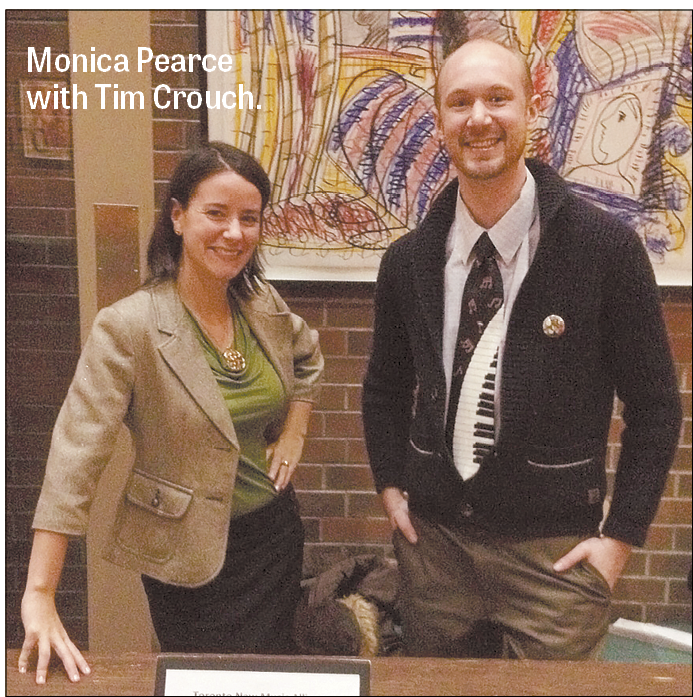
Monica Pearce: The latest news at the gallery is that they have just hired a new executive director — Monica Pearce. Monica comes with a background as a composer in the contemporary classical tradition, a concert presenter (Toy Piano Composers Collective) and an administrator (The Canadian League of Composers). She joins the Gallery’s current artistic director David Dacks; their combined distinctive musical backgrounds promise to provide inspiring leadership for the next generation of innovation. When I spoke to Monica about the Music Gallery’s current vision, she affirmed their ongoing commitment to building community and collaboration among artists of diverse genres and artforms. She sees the Music Gallery playing an important role in fostering this dialogue and sees that the time is ripe for camaraderie and mutual support amongst the eclectic range of new music presenters and artists in the city. She pointed to the creation of the New Music Passport as one sign of this collaboration. For a small fee, passport-holders are offered one discounted ticket to one concert by each of the 11 participating organizations. (This would make a great holiday gift by the way. See newmusicpassport.wordpress.com for details.) The New Music 101 series of talks at the Toronto Reference Library is another example of this growing solidarity.

The gallery also involves the artistic community by engaging different curators for the various concert series. This is evident in their current Emergent series, which is curated by all the featured artists of last season’s Emergent concerts. The December 12 Emergent concert “Strange Strings” explores diverse string theories for new music mixed with DIY electronics and progressive rock while the January 17 event brings together Toronto-based sound artist Christopher Willes and the Ensemble Paramirabo from Montreal.

And just as Monica begins her new position, the current curator of the Post-Classical series, pianist Gregory Oh, presents his last concert on December 20, a production of the Pulitzer Prize-winning Little Match Girl Passion by American composer David Lang. Performed by a vocal quartet accompanying themselves on percussion, the piece is based on Hans Christian Andersen’s classic Christmas story that illuminates the dichotomy between a young girl’s suffering and hope. It draws much of its musical inspiration from Bach’s St. Matthew Passion. The Washington Post’s Tim Page said of the piece that it is “unlike any music I know.”

As I mentioned above, part of the Music Gallery’s vision is to collaborate with other new music presenters. On December 8 they will co-present a concert with Contact Contemporary Music titled “The Most Relaxing of All Instruments” in which listeners will experience an otherworldly program of solo and chamber works featuring guitarist Rob MacDonald and guests Stephen Tam (flute) and David Schotzko (percussion). And of course, the Music Gallery is often the preferred concert venue for many of the city’s new music groups. On January 19, New Music Concerts will present “From Atlantic Shores” featuring the New Brunswick-based Motion Ensemble performing an eclectic mix of works by Maritime composers. The program includes a newly commissioned piece by Lucas Oickle, a recent graduate of Acadia University, along with two works connected to the historical Acadian area of Grand-Pre.

James Tenney: Another aspect of the Music Gallery’s legacy from its early days in the 70s was the close relationship that was fostered with the music department at York University. Visiting artists at the gallery would often visit York and student ensembles would often perform at the gallery. James Tenney was one such York professor, composer and music theorist who fostered this relationship. On December 6, Arraymusic will celebrate Tenney’s music with a concert of several of his works, including two pieces he write for the ensemble. In the words of former Arraymusic artistic director Robert Stevenson “Tenney shook up this city’s music community, making us more aware of such experimental American composers as Conlon Nancarrow and Alvin Lucier. Through his devoted commitment to the music of our time, Jim provided us with the courage and determination to give our lives over to the music we believe in.” This concert will be a chance to listen to Jim’s brilliant visionary music, including works for different tuning systems and intriguing composition processes.

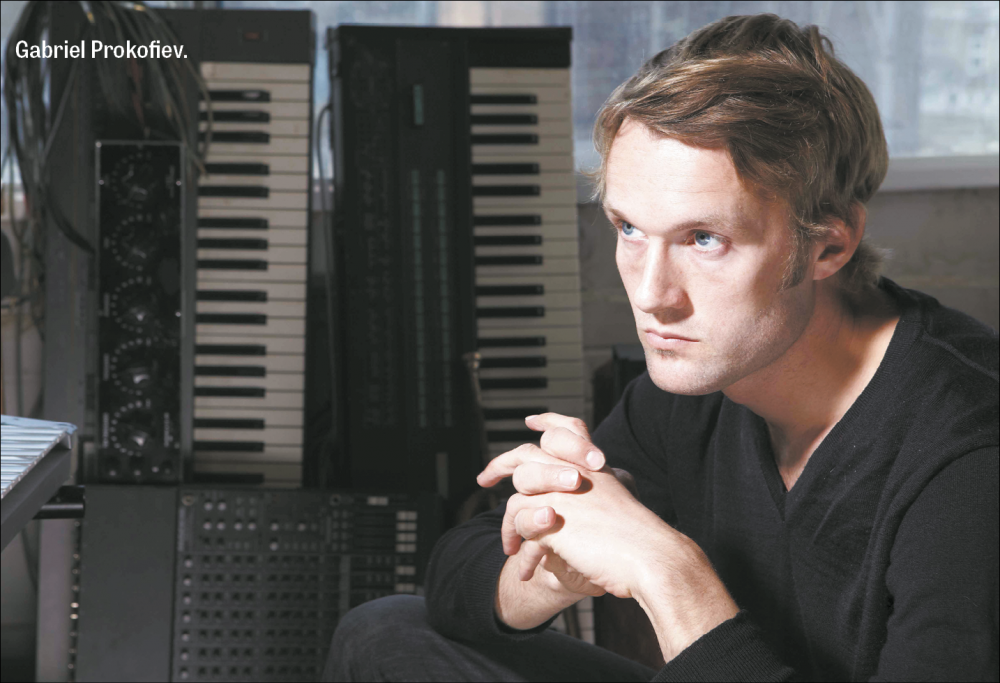
1904 in with the new 2Gabriel Prokofiev: Over at the University of Toronto’s Faculty of Music, this year’s edition of their New Music Festival gets underway on January 25 with a concert of symphonic works by two generations of Prokofievs: the famous one — Sergei — and his grandson Gabriel, who is this year’s invited visitor in composition. Gabriel Prokofiev’s distinctive sound is informed by his background as a producer of hip-hop, grime, and electro records as well as his training as a composer in the classical and electroacoustic traditions. His critically acclaimed Concerto for Turntables and Orchestra, to be performed in the opening concert, is one example of how he mixes these two worlds.

The fact of his being the featured composer of the festival means that there will be multiple opportunities to hear the full range of the dynamic composer’s music. Two concerts of his chamber works will be performed on January 29 and 30, along with a concert of his choral music on February 2. Included in the programming will be a recently released work Cello Multitracks, originally conceived as a multitrack work to be recorded by one performer, but also playable live for cello nonet. This is yet another example of how he combines influences from both dance music and more traditional classical forms.

On January 31 during a noon-hour concert of electroacoustic music, listeners will be treated to more of his works in this genre alongside recent pieces by graduate students. Later that evening, the Karen Kieser Prize Concert will present the 2013-winning piece Walking by Chris Thornborrow, as well as works by G. Prokofiev and others. Esprit Orchestra is also getting into the spirit of the festival action, and their January 26 concert will feature a movement from G. Prokofiev’s Cello Concerto. This concert will also feature guest conductor Samy Moussa conducting the premiere of his own new work as well as a piece by German conductor Peter Ruzicka. Compositions by Canadian Zosha Di Castri and Berlin-based Unsuk Chin round out this concert titled “Strange Matter.”

Walter Buczynski: Returning to the U of Toronto’s New Music Festival, there will be an 80th birthday celebration afternoon concert in honour of professor Walter Buczynski on January 26 followed the next day by a guest piano recital by Roberto Turrin. A work by David Lang (composer of Little Match Girl Passion) will also be presented in an unusual concert pairing of bassoon and percussion music on January 29. Student composers will be presenting works on January 30 (miniature operas), February 2 (jazz) and February 4.

In brief: The theme “(Re)Generations of the New” shows up in yet another configuration over these next two months with nine different concerts that mix classical and contemporary music together:

December 3, works by Colin Eatock and Jean Papineau-Couture appear in a unique Canadian Day Revisited event at the Lula Lounge. Syrinx Concerts Toronto celebrates Canadian composers Harry Somers at their December 8 concert and Kelly Marie Murphy at their January 12 event, both at the Heliconian Hall. The Amici Chamber Ensemble includes a work by Tōru Takemitsu in their December 1 concert while the Annex Singers perform a piece by Arvo Pärt on December 14. And the Kitchener-Waterloo Chamber Music Society mixes in pieces by John Zorn (January 10) and Marjan Mozetich (January 12) while the Kitchener-Waterloo Symphony plays Stravinsky’s Jeu de cartes on January 18.

To close out, we cannot forget the invaluable contribution the Canadian Music Centre has made in facilitating the growth of new music. Events such as their piano series keep Canadian music alive. Check out the January 13 event when Chris Donnelly will perform his Metamorphosis: Ten Improvisations for Solo Piano and their “Nonclassical Night” with Gabriel Prokofiev January 28.

Quick picks

Canadian Opera Company, lobby concerts: “Power Chords” features a new work by Scott Good on December 3; A Soldier’s Tale by John Gzowski is February 6.

Soundstreams: Canadian Choral Celebration on February 2 pairs Gorecki’s Miserere with the world premiere of R. Murray Schafer’s Hear the Sounds go Round. 

Wendalyn Bartley is a Toronto based composer and electro-vocal sound artist. Her own concert, “A Winter Solstice Celebration CD launch,” December 21, features selections from her recently released Sound Dreaming: Oracle Songs from Ancient Ritual Spaces. She can be reached at sounddreaming@gmail.com.

Going through the listings, I noticed that this month Continuum Contemporary Music offers an interdisciplinary work, Nuyamł-ił Kulhulmx/Singing the Earth, and Esprit Orchestra features an entire concert of hybrid music. Noticing how these two events reflected the theme of blurred boundaries between musical genres and artforms I’ve been exploring in this column, I then noted no fewer than eight similar instances of fusion in the new music on offer this month.

in with the new - fusion times ten1. Esprit: Their “O Gamelan” concert on November 17 marks another collaboration between this country’s only orchestra dedicated to new music and the Evergreen Club Contemporary Gamelan, a Toronto-based ensemble who perform on a series of bronze and wooden instruments from Indonesia, otherwise known as a gamelan. And they too are dedicated to the commissioning of new works from composers alongside performing both traditional and contemporary Indonesian repertoire.

Looking back historically at the rise of the gamelan’s influence within western-based concert music, one can easily see what an enormous effect this music has had. It was Montreal-born composer Colin McPhee’s orchestral work Tabuh-Tabuhan from 1936 that really got the ball rolling. It combined both Balinese and traditional Western elements, but at its core is a small gamelan-like ensemble comprised of western-based percussion instruments. The shimmering timbres and interlocking rhythmic patterns of the gamelan sound also captured the imaginations of pioneers John Cage (prepared piano) and Steve Reich (minimalism). The first western composer to build his own gamelan-inspired instruments and compose for them was Lou Harrison. And that brings us full circle to the Evergreen Club. It was when ECCG founder Jon Siddall met Harrison while a student at Mills College that a vision was spawned to form a gamelan in Canada. Through Harrison’s Indonesian connections, the Evergreen Club eventually was able to acquire their instruments in the early 80s.

By bringing both an orchestra and a gamelan together, the Esprit concert is a perfect reflection of this history and appropriately, is presenting a work that Harrison wrote in tribute to Carlos Chávez, the man who conducted the premiere of McPhee’s groundbreaking work. Alongside this historical piece will be a premiere of O Gamelan, a newly commissioned work by José Evangelista, who followed in McPhee’s footsteps by studying in Bali, and is also responsible for bringing a gamelan to U de Montréal’s Faculty of Music. We will also hear two works originally written by composers Chan Ka Nin and André Ristic for a 2005 concert inspired by the birdsong themes of Olivier Messiaen, as well as a 1983 work by Esprit conductor Alex Pauk.

It should come as no surprise to learn that Pauk himself also studied gamelan music and his work Echo Spirit Isle is a reworking for orchestra of a piece he originally wrote for Gamelan Pacificia based in Seattle. The program rounds out with an orchestral arrangement of Claude Vivier’s Pulau Dewata, composed in 1977 as a tribute to the Balinese people.

2. Continuum Contemporary Music: On December 4 and 5, CCM will present a new work by composer Anna Höstman, Nuyamł-ił Kulhulmx/Singing the Earth, an interdisciplinary piece that arose from the composer’s love of history and storytelling. Rooted in her deep personal connection with the land and communities of Bella Coola, a gem of natural beauty along the central coast of British Columbia, her creative process began with extensive research to discover the deeper layers of the area. And perhaps even more importantly, what guided her in this labyrinthian journey to uncover the stories of people from different cultural origins living side by side was her connection to the land itself. The forest is “never far away in my imagination,” she told me. In fact it is this relationship with the forest’s expansiveness and quiet that helps her find her way with music making. It is like the slipping on of a different jacket, a sensation she keeps close to herself while composing. And just as the nonhuman world of nature permeates Höstman’s creative process, it is also a “North Star,” a navigational guide, for all the peoples of the area — a mixture of the indigenous Nuxalk Nation and the descendents of Norwegian settlers.

Höstman’s piece is structured as a series of 11 modules, each one an artistic response to the beauty and isolation of the area, the changes and losses of its people. During the performance, the audience will be immersed within an installation environment, thus creating a spatial counterpoint between people, objects, video projections and displayed texts. These texts originate from a variety of sources and are in four different languages — Nuxalk, English, Norwegian and Japanese. One source is fragments from anthropological field notes published in the 1940s, while another is a list of words in both English and Nuxalk denoting the area’s flora and fauna. The work is scored for Continuum’s ensemble along with mezzo-soprano, bass, saxophone and accordian. Prior to the 8pm performance will be a 7pm screening of a film.

3. NAISA: Another take on similar themes will occur during New Adventures in Sound Art’s annual SOUNDplay series which presents new fusions between the boundaries of sound art and new media. Fitting into their 2013 programming theme of Sonic Geography, this year’s installations and performances will address concepts of home, space, land, migration, love and the human condition. The main performances are on November 7, 9, 16 and 23 in Toronto and on November 8 in Hamilton. An audio installation, “Whispering Rain,” runs from November 9 to 30 in the NAISA space.

4. 416 TCIF: As always, the improvisation scene is hopping with crossover possibilities. This month is the 12th edition of the 416 Toronto Creative Improvisers Festival with “the best music you’ve never heard.” For four nights from November 6 to 9, at the TRANZAC, the programming includes hand-signal-directed orchestra, laptop mash-ups by the McMaster University-based Cybernetic Orchestra, ambient dreamscapes and free jazz virtuosity with both local and visiting guest artists.

5. and 6. Soundstreams and KWS: Extemporizing even further on the subject of fusion, the Kitchener-Waterloo Symphony is programming an evening of rock-inspired music for orchestra on November 7 and 8 in Kitchener and November 9 at Koerner Hall, including Nicole Lizée’s Triple Concerto for Power Trio: Fantasia on Themes by Rush, a virtuosic blast for guitar, bass and drum. And on November 13, you’ll have an opportunity to experience “Reimagining Flamenco” with Soundstreams’ presentation of contemporary perspectives on flamenco works. Blending fire and passion, this concert will offer reinventions for guitar, piano and flamenco singer of the old master Manuel de Falla and Paco de Lucia, among others. Alongside these pieces will be the premiere of a new work by Canadian composer André Ristic, whose music also appears in Esprit Orchestra’s gamelan concert.

7. and 8. Piano virtuosi: On November 24, “Music She Wrote: A Tribute to Canadian Woman Composers” will be another opportunity to hear new orchestral music. This time it’s the Koffler Chamber Orchestra with conductor Jacques Israelievitch featuring pianist Christina Petrowska Quilico, one of Canada’s leading interpreters of contemporary music. She will perform two piano concertos written by two Canadian women composers — Heather Schmidt and Violet Archer. The orchestra, comprised of professional, community and music students, will also perform orchestral works by Ann Southam and Larysa Kuzmenko. Ms. Petrowska Quilico has had a connection with all four composers, having previously given the premiere performances and released CD recordings of the Schmidt and Archer works, as well as a CD release of Southam’s music. Both recordings resulted in JUNO nominations for the three composers. On the same evening (November 24) Eve Egoyan, another virtuosic pianist and interpreter of contemporary music who also enjoyed a close artistic relationship with Ann Southam, will perform works by James Tenney, Piers Hellawell, Linda C. Smith and Michael Finnissy as part of the Kitchener-Waterloo Chamber Music Society series. This program will repeat in Toronto on November 26 presented by Music Toronto.

9. Arraymusic has a busy month with two concerts on November 9 and 10 of “Small Wonders,” their popular minatures series. Numerous composers have written these short moments in time for the ensemble over the years, and this concert will feature several ensemble pieces from the past along with eight new premieres. The Array ensemble will also perform short works by Webern, Feldman and Carter alongside two longer compositions by Jo Kondo and Canadian Ruth Guechtal. I also want to mention an important Array concert on December 6, “The Signal Itself,” a celebration of the music of James Tenney. Tenney was a visionary and a beloved composer of this city who taught at York University for over two decades. More to come on this in the December issue, but I just wanted people to know well in advance.

10. Additional new music events:

Thin Edge New Music Collective: November 21.

Canadian Music Centre: November 9 – Rosedale Winds; November 13 – junctQin Keyboard Collective.

Canadian Opera Company: November 13 – Piano Virtuoso Series.

Royal Conservatory/Toronto Harp Society: November 10 – Works by Buhr, Schafer and others.

Toronto Mendelssohn Choir: November 20 – Britten at 100. 

Wendalyn Bartley is a Toronto based composer and electro-vocal sound artist. She can be contacted at sounddreaming@gmail.com.
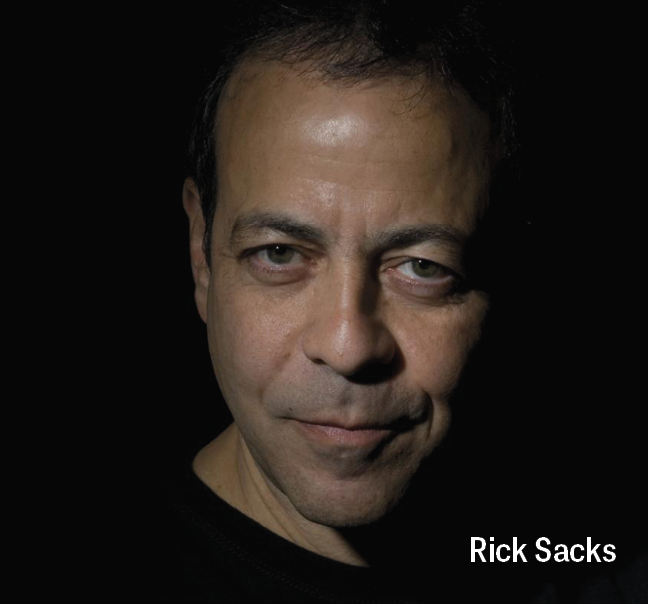
Back in my June column, I was suggesting that with the upcoming warm weather of summer and the ending of the concert season, this more casual atmosphere was the perfect scenario for concerts that offered a blurring of boundary lines between musical genres and art forms. Now just two months into the fall season, I’m already seeing that something else of an overall direction is unfolding in the world of “the new,” and it’s not because of warm weather. In September, the Guelph Jazz Festival went beyond the jazz borders to include improvisation from a variety of musical traditions, including composed/notated music. Now, in October, there is an entire festival produced by Toronto’s Music Gallery that is all about this blurring of genres. The theme of this year’s X Avant New Music Festival — This Is Our Music — is a reference to Ornette Coleman’s 1960 album of the same name. Running from October 11 to 20, the festival celebrates all streams of experimentation, and the innovations that Coleman introduced certainly would fit right in. Organizers have identified their mix of experimental genres and traditions as “urban abstract music.” And adding to this boiling hothouse of innovation, they are presenting two works that in the past had been the cause of both a riot and a mini-scandal.

in with the newLet’s begin with Igor Stravinsky’s The Rite of Spring, a ballet score that premiered on May 29, 1913, in Paris. These days it’s become a well-loved work, but 100 years ago, its asymmetric rhythms and clashing dissonances caused such an uproar that the police were called in to calm the audience. But the rioting continued and got so intense that Stravinsky himself left before the performance was over. Wow ... passionate audiences who know what they do and don’t like! A century later in the city of Toronto, this work has already received one performance I can remember (by Esprit Orchestra in January) and will be featured in the Mariinsky Orchestra’s Roy Thomson Hall all-Stravinsky program on October 6.

But things will definitely take a different turn on October 11 at the X Avant Festival when the Montreal-based group Quartetski reinterprets this classic using unusual orchestration and free improvisation to bring out what they feel is implicit in the original. And that’s just what this exceptional group is dedicated to: a revisionist approach to classic works of the “great” composers achieved by mixing various traditions and techniques to discover new possibilities, ultimately creating a new type of chamber music. I suspect there won’t be a riot this time around, but rather enthusiastic ears welcoming the daring move into the somewhat sacrosanct territory of the musical masters.

Quartetski is a perfect example of what I’m sensing is becoming more and more standard — music that defies being pigeonholed into neat and tidy categories. And interestingly, the Canada Council for the Arts is getting in on the discussion. On October 13 there will be an interview and Q&A with one of their music officers (Jeff Morton) to discuss the new priorities and criteria for funding this music that is increasingly happening along the edges of traditional boundaries, a direction they describe as “genrelessness.”

But back to the second scandal-associated work that has been programmed. On October 12, Morton Feldman’s six-hour long String Quartet No.2 will be performed by New York’s incredible FLUX Quartet. So what’s the scandal? The piece was originally commissioned by New Music Concerts in 1983 and was broadcast live on CBC, performed by the then-unknown Kronos Quartet. But as the hours went by, CBC had to make a decision whether to cut it off to make way for the news broadcast. They decided to stick it out and no riots ensued. The piece ended just before the 1am blackout. The physical and mental rigours of performing such a long work demand extreme dedication by the performers.

FLUX, who take their name from the 1960s’ Fluxus movement, perform the work about once a year, making it into a bit of a speciality. No doubt they are so dedicated because of what they receive from performing it. Feldman’s music offers a truly intimate encounter with the substance of sound, unfolding subtly, calling out for your attention. It’s been said that you don’t really listen to the music, but rather you live through it, breathe with it. In other words, it is truly an immersive bodily experience. To create a sensitive listening environment, the Music Gallery will be transformed into two chill out rooms, with accompanying food vendors and installations in the nearby OCADU student gallery. Added to that, CIUT-FM will be broadcasting the entire performance as a nod to the original premiere. You can create your own unique listening environment if you live within radio signal range. It will be a “slow-motion rave.” Feldman himself called it “a fucking masterpiece.”

Other festival highlights include a rare appearance by the legendary minimalist Charlemagne Palestine on October 13, renowned for his high voltage piano-cluster music, and music by composers Rose Bolton (October 13) and Scott Good (October 20). Improv duo Not the Wind Not the Flag will partner with bassist William Parker on October 17; and the festival’s ensemble-in-residence — Ensemble SuperMusique from Montréal — will perform their revolutionary Musique Actuelle on October 18. The following night, A Tribe Called Red lets loose their version of urban abstract. Mixing Pow Wow sounds with pan-global influences, their beats have roared onto the scene and opened up new territories in the conversation around cultural exchange. Partnering with this concert is the ImagineNative Film Festival, which will be screening images from all aspects of First Nations life. Closing the festival on October 20 will be Hamilton-born tabla player Gurpreet Chana, whose influences stretch from DJ culture to classical South Asian. He will be transforming his tablas into a digital interface controlling an array of hardware and software to extend the sound of this much-loved instrument into unknown waters.

SEASON OPENERS

October is full of season openers for many of our local new music presenters. In Waterloo, NUMUS is offering two events in October quite different from each other. On October 4, the exceptional Gryphon Trio and guest clarinetist James Campbell will perform the epic Quartet for the End of Time, a 50-minute work by Olivier Messiaen, written while the composer was imprisoned during WWII. This will be partnered with Alexina Louie’s Echoes of Time which was inspired by Messiaen’s piece, along with music by the Ukrainian composer Valentin Silvestrov. All three pieces are on the Trio’s latest CD release For the End of Time. And on October 25, NUMUS contributes to the genrelessness orientation with a cabaret featuring the 13-piece Slaughterhouse Orchestra performing ten songs in a wide range of styles. Each song explores various novels written by the American writer Kurt Vonnegut.

Esprit Orchestra launches their “new era” on October 24 with Claude Vivier’s shimmering Zipangu, R. Murray Schafer’s tongue-in-cheek No Longer than Ten (10) Minutes, and two orchestral works by Montreal-born Samy Moussa, who now enjoys a career as both composer and conductor in Europe. The program rounds out with Russian composer Alfred Schnittke’s Viola Concerto.

New Music Concerts’ season begins on October 6 with a concert that received extensive coverage in September’s WholeNote. On November 1, they will present an electric evening of interactive works, highlighting two by David Eagle and others by Canadians Jimmie Leblanc, Anthony Tan and Anna Pidgorna, and German composer Hans Tutschku. Interactive compositions are like a great sonic playground where the acoustic sounds of the live instruments are transformed in real time with the aid of the technology.

October also heralds the beginning of a new chamber ensemble with the delectable name of Dim Sum, a group dedicated to presenting new compositions for Chinese instruments. Their debut concert, “Xpressions,” on October 27 features several world premieres by local composers. Another recently founded ensemble, the Thin Edge New Music Collective, will be performing works by John Zorn, Allison Cameron and others on October 25, while the Toy Piano Composers celebrate the beginning of their fifth season on October 12 at Gallery 345.

The Canadian Music Centre continues its concerts of contemporary piano works on October 3 and 13, as well as hosting “A Touch of Light” with piano music and visuals during Toronto’s Nuit Blanche on October 5. And to finish off, this month sees a number of concerts celebrating Benjamin Britten’s 100thanniversary. The Canadian Opera Company will be presenting two noon-hour concerts of his vocal music on October 9 and 23. His Violin Concerto will receive a performance by the Toronto Symphony Orchestra on October 10, while his War Requiem will be performed by several Kitchener-Waterloo area choirs in a concert presented by the Grand Philharmonic Choir on October 19.

The experimental pot is stirring and I encourage you to get out and support the blossoming of the new sounds of urban abstraction, wherever they may show up. Also, check out the WholeNote’s online blog for up-to-the-minute reports for some of these events. 

Wendalyn Bartley is a Toronto-based composer and electro-vocal sound artist. She can be contacted at sounddreaming@gmail.com

Back to top