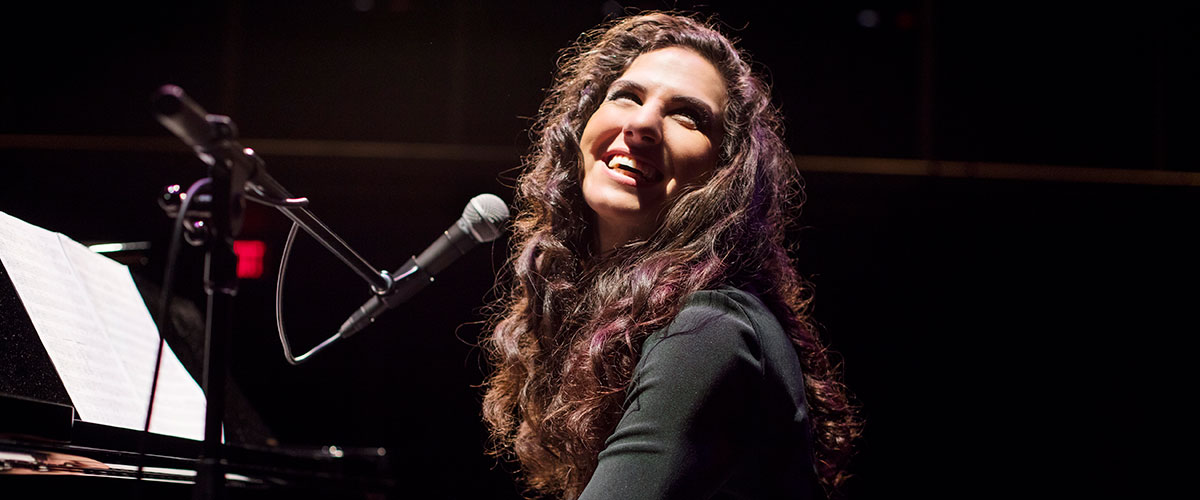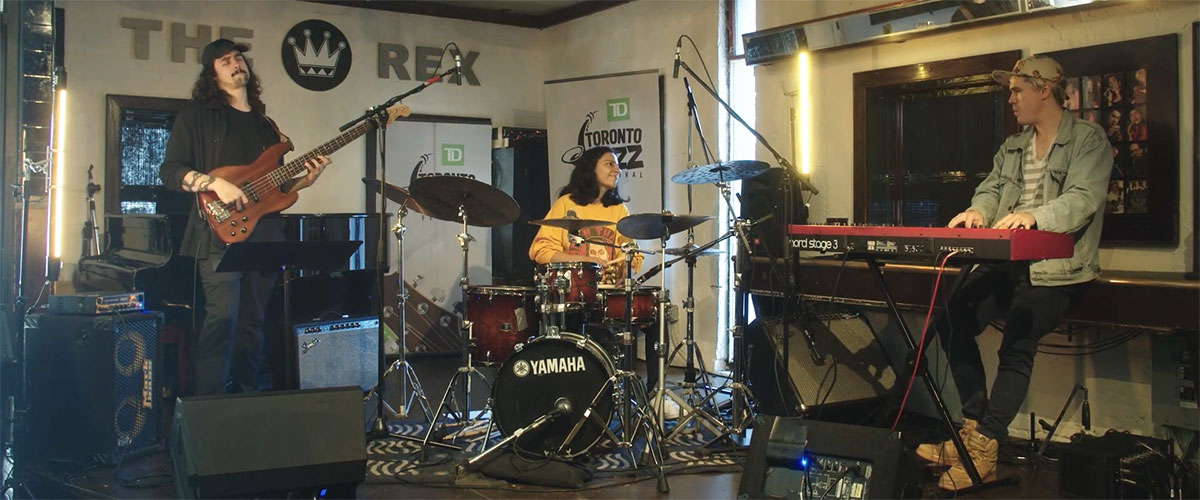
Laila Biali. Photo by Edith Maybin.The Rex: On April 12, guitarist/vocalist Jocelyn Gould plays The Rex in a four-night run with her quintet. Originally from Winnipeg, Gould came to Toronto by way of the University of Manitoba, where she did her undergraduate studies in jazz, and Michigan State University, where she earned a Master’s of Music. A Benedetto endorsee, Gould plays in a traditionalist style, with the athletic bebop lines, octaves and bluesy flourishes of her cited influences (Wes Montgomery, Joe Pass, Kenny Burrell, Grant Green) on full display.

Read more: Familiar Venues and a Brand New Festival

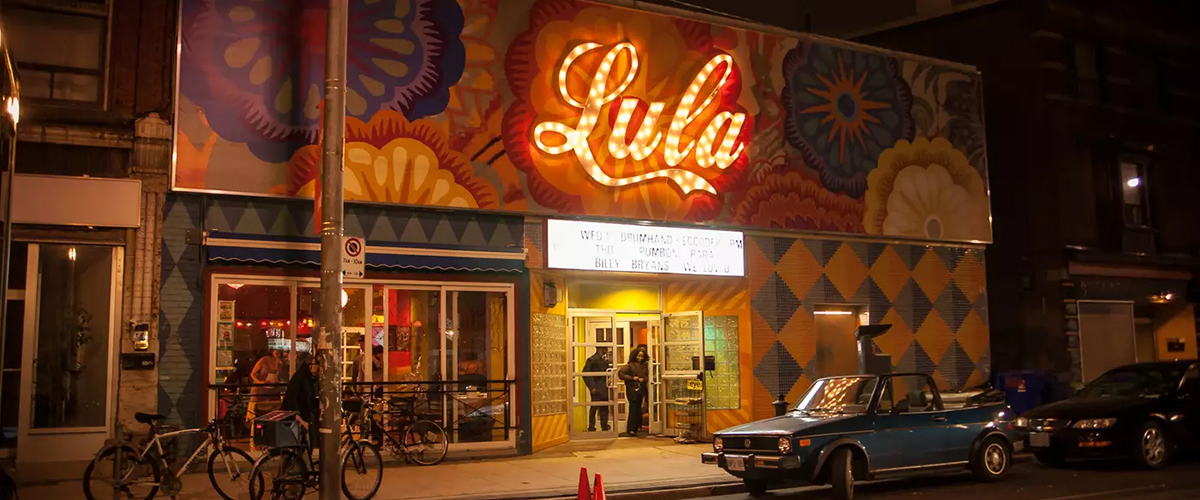
Lula Lounge, photo by Jesse Milns.

This month, a rosy cherub will emerge from the snow, cock its heart-shaped bow and let loose its velvet arrows somewhere in our general direction. Not everyone enjoys Valentine’s Day, of course. For those not in relationships, it can be a grim reminder – at such a cold time of the year – of the bleak overwhelm of enduring solitude (this writer’s advice: the Internet is vast). For those whose love boat is floundering on stormy seas, February 14 can be a tricky obstacle to navigate. (Helpful hint: it is probably not, as one might assume, a propitious time to send one’s partner that article about trying an open relationship.) For the lucky number of you, however, who are looking to hit the town and celebrate your love by listening to some live music, possibilities abound.

Read more: February 14 - it’s Clubs and Hearts

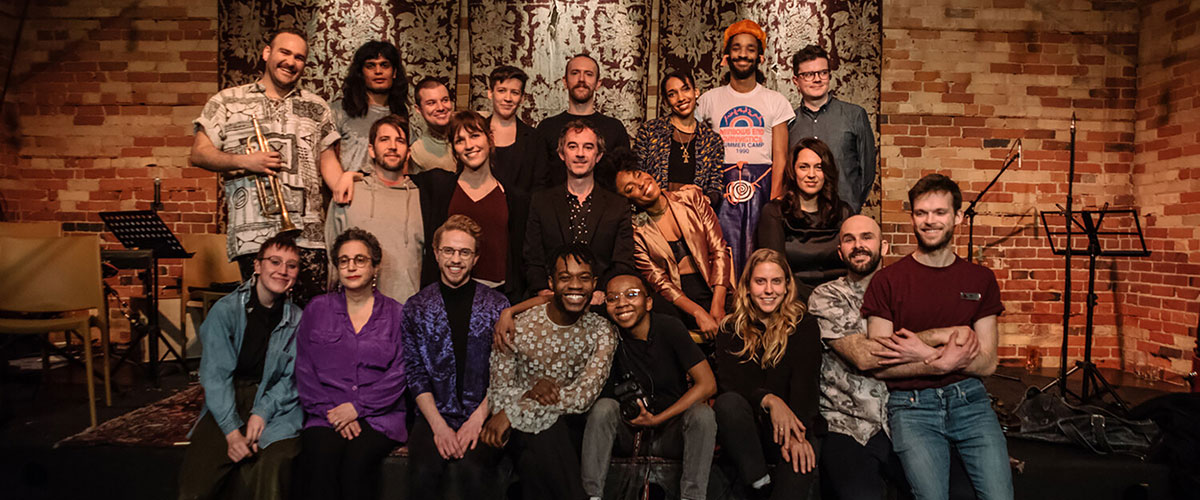
Queer Songbook Orchestra. Photo by Roya Delsol.In case you’ve forgotten, at the beginning of December of last year, as a tumultuous 2021 came to a close, the season was looking tentatively merry and bright: indoor gatherings were once again possible, venues seemed to have definitively reopened, and life was returning to, dare we say it, some semblance of normalcy. And then, of course, we were back in lockdown, first in the ten-people-or-fewer, please-don’t-sneeze-on-Santa version of mid-to-late December, and then, come January, in the full dress-shirt-and-sweatpants version.

Read more: A Toast to Amnesia as the Music Goes Live (Again)!

Koerner Hall is, most assuredly, not a club. Completed in 2009 as the centrepiece of the Royal Conservatory’s massive mid-2000s renovation, the venue’s plush seating, acoustic clarity and ligneous splendour have made it a major destination for all manner of art music. Unlike the venues normally covered in this column, typical club activities – hooting at the stage, drinking in one’s seat, posting shaky Instagram clips of instrumental solos with fire emojis in the middle of a song – are frowned upon, though still possible (other than drinking in one’s seat), with a little determination and disregard for concert-hall decorum.

Read more: Decorum Be Damned! Jazz in the Concert Hall

Adisa Glasgow. Photo HECTOR VASQUEZ/BLOGTOOf the many experiences that point to our collective hunger for dependable post-lockdown life, none has hit quite so close to home for me as seeing post-secondary students get back to classes. Sure, it still feels like a novelty to watch maskless people thunking melons in the grocery store, restaurant patrons trying each other’s drinks, or a trumpet player mercilessly spraying the floor of a venue with spit-valve effluvia. But – as I experienced on an unexpectedly brisk morning in early September, walking across the University of Toronto campus for coffee with a friend – nothing quite says “we’re back” like overhearing two new roommates arguing about whether hanging a Quentin Tarantino poster would be “edgy and transgressive” or “you know, uh, maybe a bit much, like… politically?”

During COVID, we witnessed seismic changes on the club scene: closures, pivots, renovations, and rebrandings. For some organizations, the enforced and recurring lockdowns meant the end: time ran out. For others the lockdowns bought time for necessary rethinking and new developments. 

Read more: Hugh’s and Poetry on the Move

One of Stratford Summer Music's venues, Revival House, features concerts July 22, 29, August 5 and 12.Live music, it seems, is finally, reliably, and consistently back. Barring some unexpected, novel calamity (imminent asteroid impact? Lake Ontario bursting into flames?), this will likely be the last time that I begin my column with the obligatory nod to the pandemic that seemed so necessary throughout the last 28 months. To those who continue to read my pieces: thank you. There was a point, early in the pandemic, when I thought I was going to have to do something truly depraved, like going to law school and getting a real job; thankfully, that grim reality has not come to pass. 

So, to the music.

Revival House

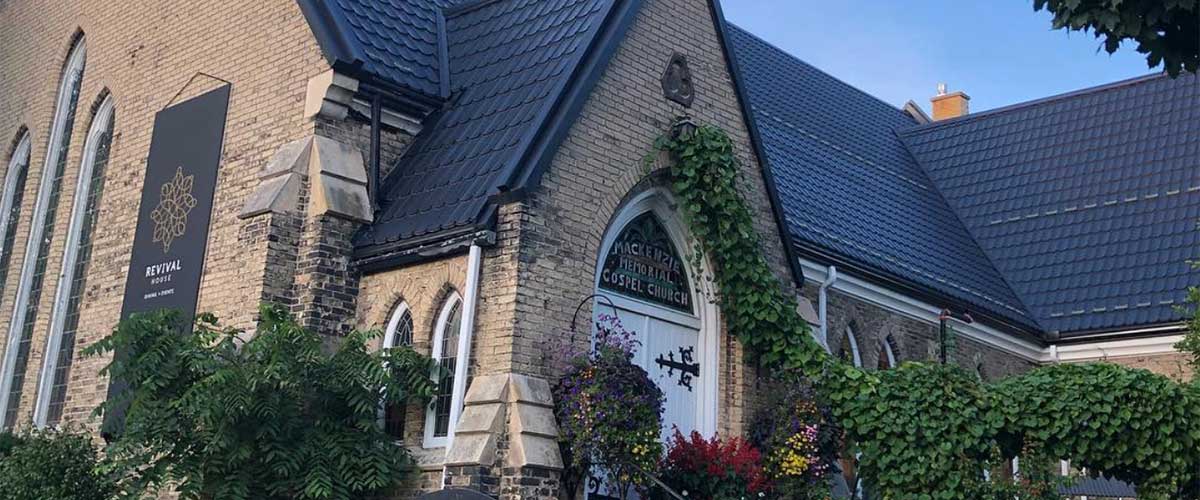
On July 22, keyboardist Aaron Davis plays at Revival House in Stratford, as part of the Stratford Summer Music Festival. For those who may be unfamiliar, Davis has been a longtime fixture on the Canadian music scene, as a performer (with the likes of the Holly Cole Trio, Measha Brueggergosman and the band Manteca), an arranger (for the likes of Alison Krauss, Natalie McMaster and Eliana Cuevas), and a film composer with over 100 titles to his name. A newish resident of Stratford, Davis has assembled a compelling roster of musicians, including Ben Wittman on drums, Dylan Bell on bass, John Johnson on woodwinds, Lori Cullen on voice, Suba Sankaran on voice and keyboards, and Maryem Hassan Tollar on voice and shakers. With Davis’ deft touch on the piano and his penchant for nuanced, interesting orchestration, expect a compelling evening of music that evokes the best from his highly capable collaborators.

Read more: Musical Revival

Naomi McCarroll-Butler. Photo by Bea LabikovaAfter two years of postponements, cancellations, and all of the attendant uncertainty of the pandemic, the TD Toronto Jazz Festival is back for 2022, from June 24 to July 3. 

In some ways, it never left; though live shows have been few, Jazz Fest – like many of its festival counterparts – presented a variety of livestreamed events, and kept busy with community-oriented projects to support musicians and to deliver live performances to its audience. This year, however, Jazz Fest is back in full, with new artists, new stages and ten days of free outdoor shows throughout Yorkville, Victoria College at the University of Toronto, and Queen’s Park (in addition to a number of ticketed shows at venues such as Meridian Hall, Koerner Hall and Longboat Hall).

Read more: TD Toronto Jazz: New artists, new stages

Sarah Thawer Trio - with Caleb Klager bass & Ewen Farncombe on keyboardsThere are many pleasant aspects to writing this column: going to cool shows, getting to think about jazz professionally, having an editor who excises my most egregiously constructed jokes. One of the most pleasant, however, is developing an ongoing knowledge of the ever-changing activities of musicians who comprise Toronto’s vibrant jazz scene. New names start to become familiar as you see them pop up as side people with a few different bandleaders; established musicians start to play in different styles and their distinctive sound starts to grow in exciting new ways; veteran players undertake new projects and begin to collaborate earnestly with younger generations. A scene, as much as any individual performance, band, or song, is a multifaceted cultural text that invites spirited engagement, appreciation and criticism; one of the joys of Ontario’s reopening has been watching the local scene reconstitute itself.

Ewen Farncombe: to those readers who regularly attend live jazz shows in Toronto, is a name that will likely be familiar. A pianist and keyboardist, Farncombe won a prestigious DownBeat Jazz Instrumental Soloist award in the Undergraduate category when he was still a second-year student in the music program at Humber College. At Humber, Farncombe studied with the celebrated pianist Brian Dickinson, who characterized him as “definitely among the finest” pianists to have passed through the program during Dickinson’s tenure as head of the school’s piano department.

Read more: Serious Bandleading and DROM's “Safe Journey”

RUDDER by Nicole Marie PolecOn the evening of Sunday, February 13, a friend and I met for dinner at a popular Italian restaurant at Bloor and Lansdowne. As we were seated, a glance at a muted, wall-mounted television informed us that our incipient pasta consumption coincided with something called the Super Bowl. As members of overlapping artistic communities in Toronto, we were, perhaps predictably, caught unawares. Like us, most of the restaurant’s clientele was more interested in tagliatelle than touchdowns, and the volume stayed off – at least until the halftime show. Suddenly, 50 Cent, Snoop Dogg, Mary J. Blige and a host of other performers took the field. A glance at the menu revealed a surprising throwback drink: an espresso martini. From a neighbouring table, a conversation drifted over, bemoaning the quality of the new Sex and the City show. It was official: we were back in the 2000s. 

Nostalgia is just like it used to be!

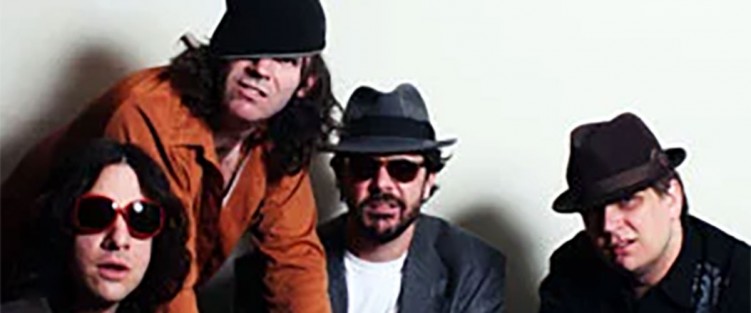
As we haltingly lurch towards postcovidity, it is understandable that, in our shared social spaces, we’re looking back to even the recent past with fond nostalgia. In Toronto’s clubs in March, this phenomenon is also taking place. On March 27, 28 and 29, for example, the American band Rudder takes the stage at The Rex. For those of us who were in music school in the late 2000s, Rudder – whose eponymous debut album was released in 2007 – will likely be a familiar name. For those of you who didn’t waste your youth learning how to play lacklustre eighth-note lines over I’ve Got Rhythm  – at least not in that decade – Rudder is an instrumental four-piece, comprising saxophonist Chris Cheek, keyboardist Henry Hey, bassist Tim Lefebvre, and drummer Keith Carlock. Musically, Rudder is something of a jazz musician’s take on a jam band, with priority given to original compositions over standards, backbeat over swing, and group dynamics over individual instrumental athleticism. 

To fully understand the place of groups like Rudder in the psyche of music students of a particular age, a bit of musicological context seems necessary. Since funk’s emergence in the 1960s and 70s, there has always been crossover between funk and jazz. (Even the basic premise of these two musical styles as discrete genres is somewhat reductive, but for our purposes, we’ll maintain the distinction.) The fusion of jazz and funk begins in the late 1960s and early 1970s: albums such as Miles Davis’ In a Silent Way (1969), Bitches Brew (1970), On the Corner (1972), and Herbie Hancock’s Head Hunters (1973), stand out as foundational recordings of the genre.


Read more: Rudder or not, here we come!

3 Kirk MacDonald Virginia MacDonald at the Rex bannerAnd so, here we are again, again. 

If you’re interested in the usual subject matter of this column, you already know that as of January 31, musical venues in Ontario will be permitted to operate at 50 percent seated capacity or 500 people, whichever is less, then move to 50 percent on February 21, and full capacity March 15 – just in advance of the two-year anniversary of Canada’s lockdown restrictions.

It is impossible to say whether or not the province will end up sticking to this schedule. It’s also impossible to know for sure, at this point, how quickly individual clubs will respond to what’s allowed, stage by stage. By the way, for most of the venues that I write about here, “clubs” is a useful misnomer: the majority are restaurants/bars, with diverse staffing needs that include kitchen staff, bartenders, hosts, managers, music bookers, and more. As has been the case throughout the pandemic, the hiring/rehiring process in this industry is not simple, and takes time, training and money. The booking process is also complicated: there are a number of decisions that have to be made about artists whose shows have been postponed, artists who are currently scheduled but who may not be ready to return to the stage, and a number of other COVID-era scenarios. 

All this being said, it is a good time to be cautiously optimistic, to get out of the cold, and to enjoy some live music once again. Here’s a taste. 

Read more: Fingers crossed towards full capacity

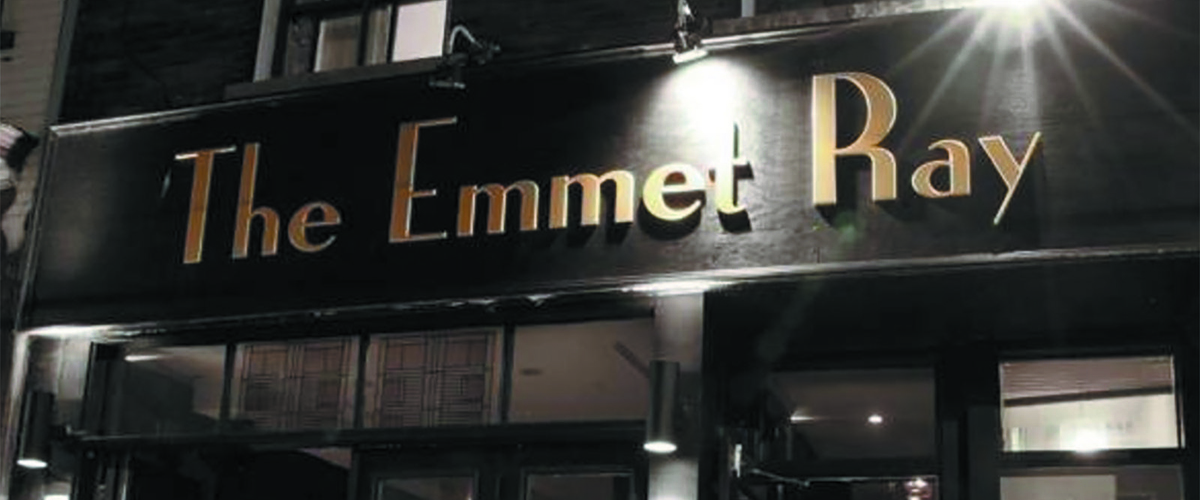
emmet ray 260 nt6i8Just 8760 little hours ago, in December of last year, most of us were hunkering down, keeping safe, and preparing for a very different winter than we’d enjoyed in years past. Visits home were cancelled; stockings were half-heartedly stuffed; home-office chairs swivelled disconsolately from Zoom meetings to Zoom cocktail hours. This year, however, things are looking just a little bit brighter: vaccination rates are up, case rates are down, and – though the threat of the pandemic looms, ever present on the periphery – it is looking as though we may indeed have a more conventional (and decidedly more sociable) holiday season. 

As of December 16, we will officially be at the five-month mark of music being back in Toronto and environs in the kinds of venues I usually cover in this column. For some audience members, this has meant five months of being back in venues, watching musicians return to the stage after a lengthy intermission, and witnessing restaurants, bars and concert halls sort through the thorny logistics of making COVID-safe adjustments, training new staff and, often, enacting new payment policies to ensure a more equitable and fair disbursement of funds to musicians. For other audience members, the return to live music has been slower, whether because of worries related to COVID transmission, a change in lifestyle, or – as has happened for so many people – a move, enabled by a shift to remote work, from a dense urban area to somewhere with more affordable housing options and more accessible outdoor spaces. 

Whatever the case may be, there are quite a few exciting shows happening in December. If holiday shows are your thing, there are a number of options, including the Kensington Holiday Bash (December 10, Grossman’s Tavern), A Charlie Brown Christmas and Castro’s Christmas Party (both December 12, Castro’s Lounge), Tom Nagy’s Christmas Experience (December 17, The Jazz Room), and the Jason White Christmas Special (December 18, also at The Jazz Room).

Read more: What a difference a year makes!
Back to top