03 Rossini OryRossini – Le Comte Ory
Talbot; Fuchs; Arquez; Hubeaux; Les éléments; Orchestre des Champs-Élysées; Louis Langrée
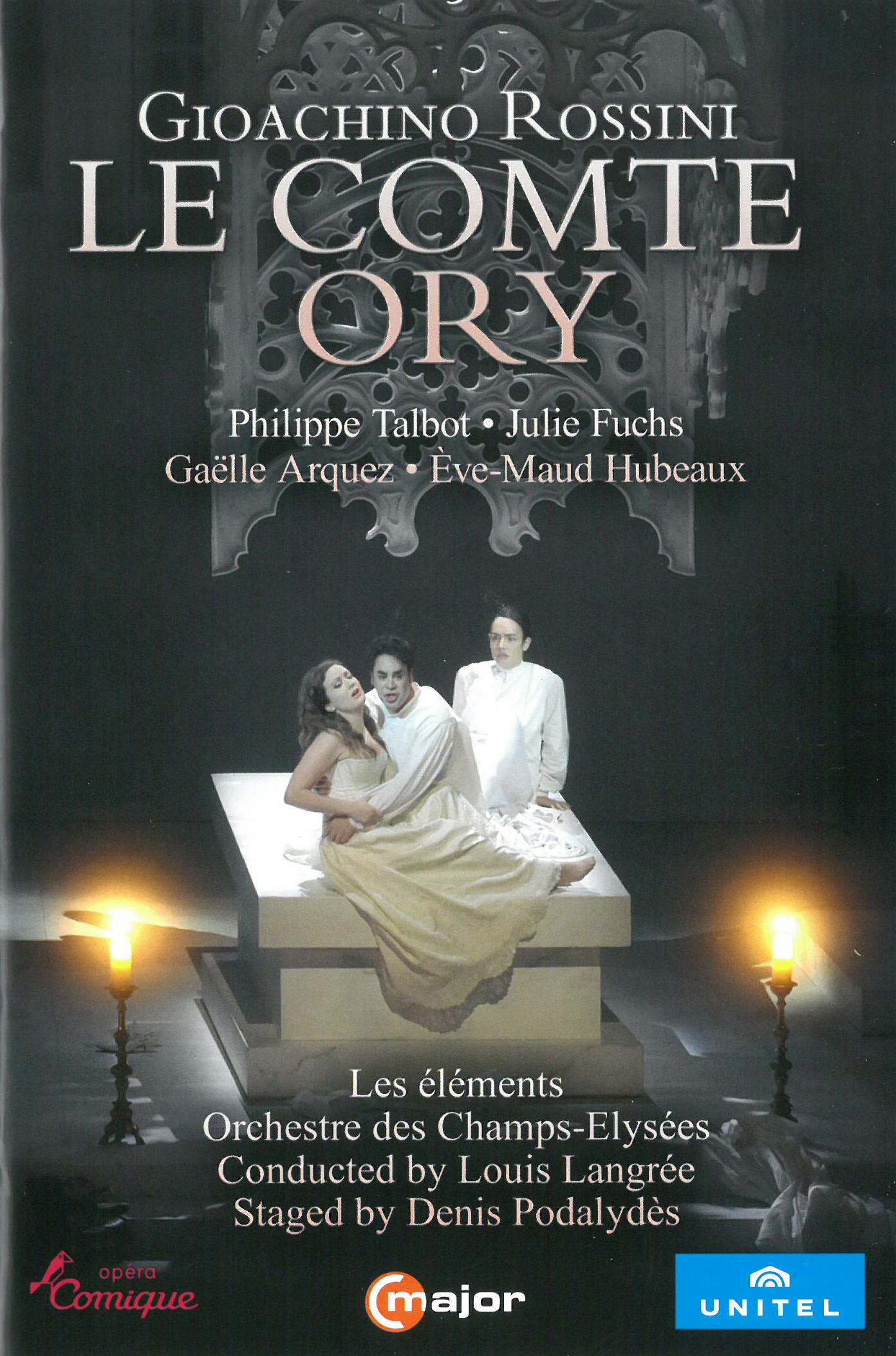
Cmajor 747408 (naxosdirect.com)

Rossini’s two-act Le Comte Ory was inspired by a medieval ballad in which knights end up seducing nuns. In the one-act version offered to Rossini by librettist Eugène Scribe, the knight dresses as a nun to seduce a countess. Rossini is known to have requested that another (first) act be added for which he composed delightful arias, ensembles and choruses, making his last comic opera an immense success.

In this version of the opera, Denis Podalydès’ staging combines period settings with contemporary mise-en-scène. The DVD of the staging, directed by Vincent Massip, captures the ambitious production with great clarity and dramatic effect. The cinematography is highly evocative; in keeping with Rossini’s vaunted arias which are voiced with uncommon mastery by – among others – the tenor Philippe Talbot, playing the rakish Le Comte Ory, soprano Julie Fuchs (as La Comtesse), mezzo-soprano Gaëlle Arquez (as the count’s page Isolier), Jean-Sébastian Bou (as Raimbaud, the count’s friend).

The lead singers generate a strong sense of ensemble with Talbot’s Le Comte and Fuchs’ La Comtesse making the most of their comic opportunities. It is Fuchs who charms with a heady coloratura, more honeyed tones and a dramatic weight, tempered by comic timing. The quality of the singing is matched in every way with the acting. The staging is enormously accomplished and the excellent production values show that nothing was spared in an effort to bring this elaborate production to fruition.
01 Renmen LamentsRenmen Laments
Renaissance Men; Eric Christopher Perry
Navona Records nv6210 (navonarecords.com) 

RenMen, short for the Renaissance Men, have teamed with Navona Records to release Renmen Laments, a beautiful reimagining of the music of such composers as Pablo Casals and Darius Milhaud, along with the ensemble’s continued relationship with the great contemporary American choral composer Daniel E. Gawthrop, that easily evokes an otherworldly ethereal beauty in celebration of the adult male voice. Beautifully recorded at the Westminster Presbyterian church in Buffalo, New York the ten-piece vocal group, formed in 2014, offers up another fine collection of music that demonstrates why they are a welcome addition to the already busy choral music scene in Boston, and a satisfying collection of new work for choral music fans worldwide.

On Laments, the group is authentically and expertly able to bring a Renaissance vocal approach and sensibility to the wide swath of music presented here, leaping countries of origin, historical timelines and style. Finding artistic simpatico with American composers Gawthrop and the fellow Massachusetts-based musician Patricia Van Ness, the Renmen have worked, and succeeded, at bringing what some may view as a historically antiquated music into cultural relevance for 21st-century audiences. With this victory, coupled with what I hope is the widespread dissemination power of a new record company and a busy calendar of public concert engagements in 2019, the group holds the promise to help Renaissance music have its own renaissance in the foreseeable future. Laments is a highly recommended recording for enthusiasts of vocal music, choral work and the Renaissance more generally.

02 Dernier SorcierPauline García Viardot – Le Dernier Sorcier
Soloists; Manhattan Girls Chorus; Trudie Styler
Bridge Records 9515 (bridgerecords.com)

The French/Spanish mezzo-soprano, composer, and pedagogue Pauline García Viardot composed Le Dernier Sorcier (The Last Sorcerer) in collaboration with her partner, Russian novelist/librettist Ivan Turgenev. After its 1867 premiere, the original manuscript of this two-act chamber opera, scored for solo voices, treble chorus and piano, was held in a private collection until the Harvard University Houghton Library recently acquired it and allowed this world premiere recording.

The libretto tells the story of Krakamiche, (bass-baritone Eric Owens), a once powerful sorcerer who has fallen on hard times after upsetting the lives of the fairies, (sung brightly by the Manhattan Girls Chorus), who live in the forest. The love story is between his daughter Stella (soprano Camille Zamora) and the lovelorn Prince Lelio (mezzo-soprano Adriana Zabala). Other characters round out the story. The great thing is that though sung in French (with liner notes both in French and English translation), actress Trudie Styler as the narrator recites in English between sung moments.

This entertaining, funny, toe-tapping, quasi-cliché opera merits dancing and singing along. The music is so very in the style of the operas of the day, with such classic sounds as alternating loud and soft volumes, piano accompaniment marching, waltz and lyrical lines, vocals soaring high and low. Pianist Myra Huang supports all the superb singers with clear playing.

Totally unexpected fun makes this a recording to lift one’s spirits!

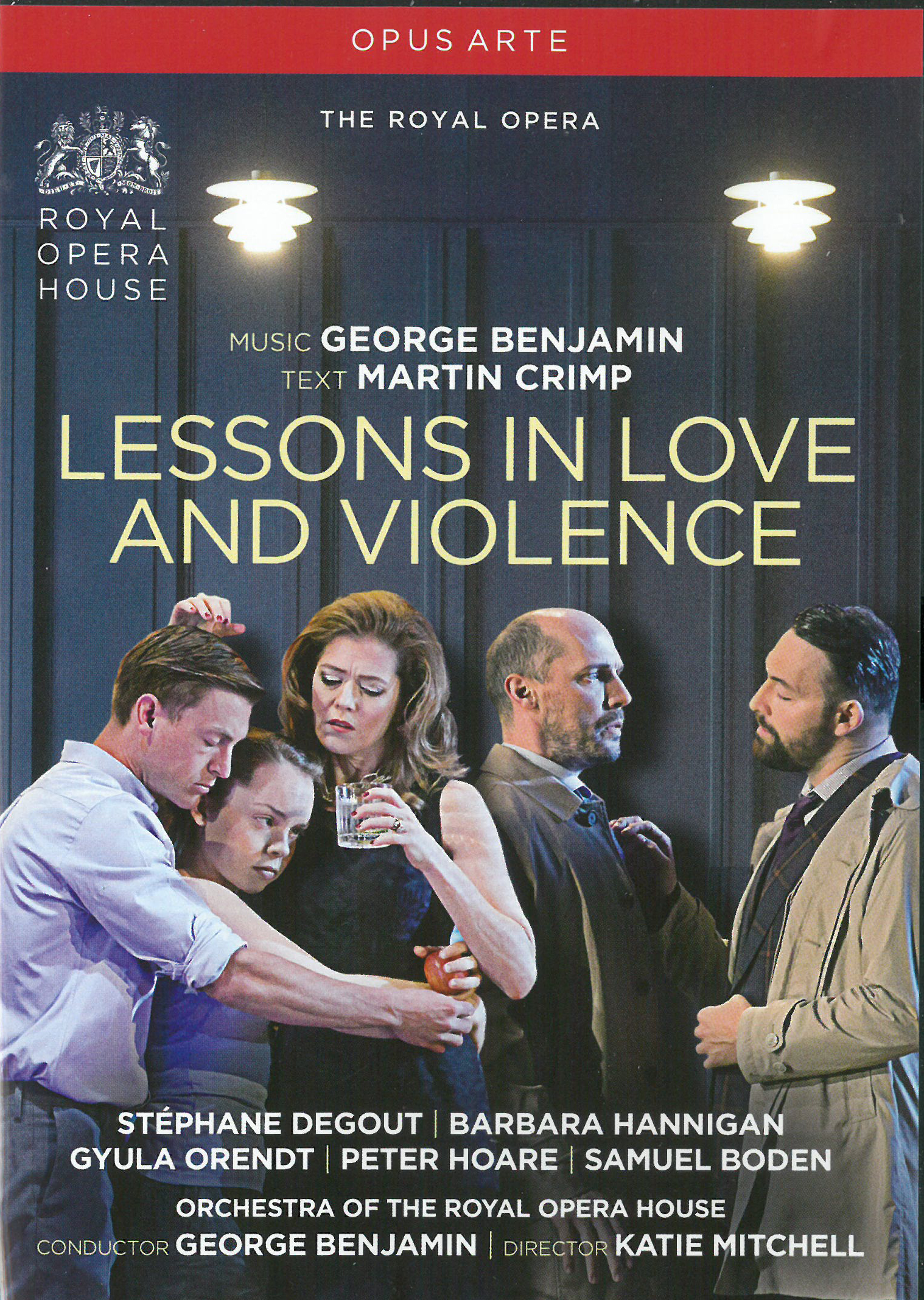
03 Benjamin LessonsGeorge Benjamin – Lessons in Love and Violence
Stéphane Degout; Barbara Hannigan; Gyula Orendt; Peter Hoare; Samuel Boden; Orchestra of the Royal Opera House; George Benjamin
Opus Arte OA 1221 D (naxosdirect.com)

It’s been four years since the Toronto Symphony gave an unforgettable concert performance of British composer George Benjamin’s opera Written on Skin. It featured the dynamic Canadian soprano Barbara Hannigan, who subsequently premiered Benjamin’s gripping new opera, Lessons in Love and Violence in this production from the Royal Opera House two years ago.

Playwright Martin Crimp uses Christopher Marlowe’s Elizabethan play Edward II, along with historic records, to recount the messy downfall of the 14th-century British King, who ruled neither wisely nor well. Director Katie Mitchell pulls off some innovative moves to shape an exciting drama from Benjamin’s gorgeous, evocative music, Crimp’s poetic text and Vicki Mortimer’s stylish modern sets and costumes. The resourceful but unobtrusive camerawork from video director Margaret Williams ensures a sense of immediacy, especially in the use of imaginative overhead shots, soft focus, and close-ups.

As riveting an actor as singer, Hannigan provides the opera’s most chilling moments as Isabel, the alluring, raging Queen. There are vivid performances from Peter Hoare as Mortimer, Isabel’s lover and the King’s nemesis, Samuel Boden as the son, Ocean Barrington-Cook as the daughter (extraordinary in a non-singing role), and Canadian mezzo Krisztina Szabó, who also sang in that TSO performance, as a courtier. But the most moving passages belong to the two splendid baritones, Stéphane Degout as the King and Gyula Orendt as his lover Gaveston, especially in their impassioned duets.

This is a timely work – and all the more eloquently rich for that. While it’s the King’s blind infatuation that brings him down, the problem isn’t that he is gay. It isn’t even that he is having an affair. The problem is that he has abused his power by neglecting his family and his people, lavishing all his attention and resources on Gaveston. Yet it’s only after the King rejects Isabel that she turns on him. By the time their children, who have been forced to witness the violent power plays that ensue, manage to seize the power for themselves, they are able to show that they have learned their lessons only too well.

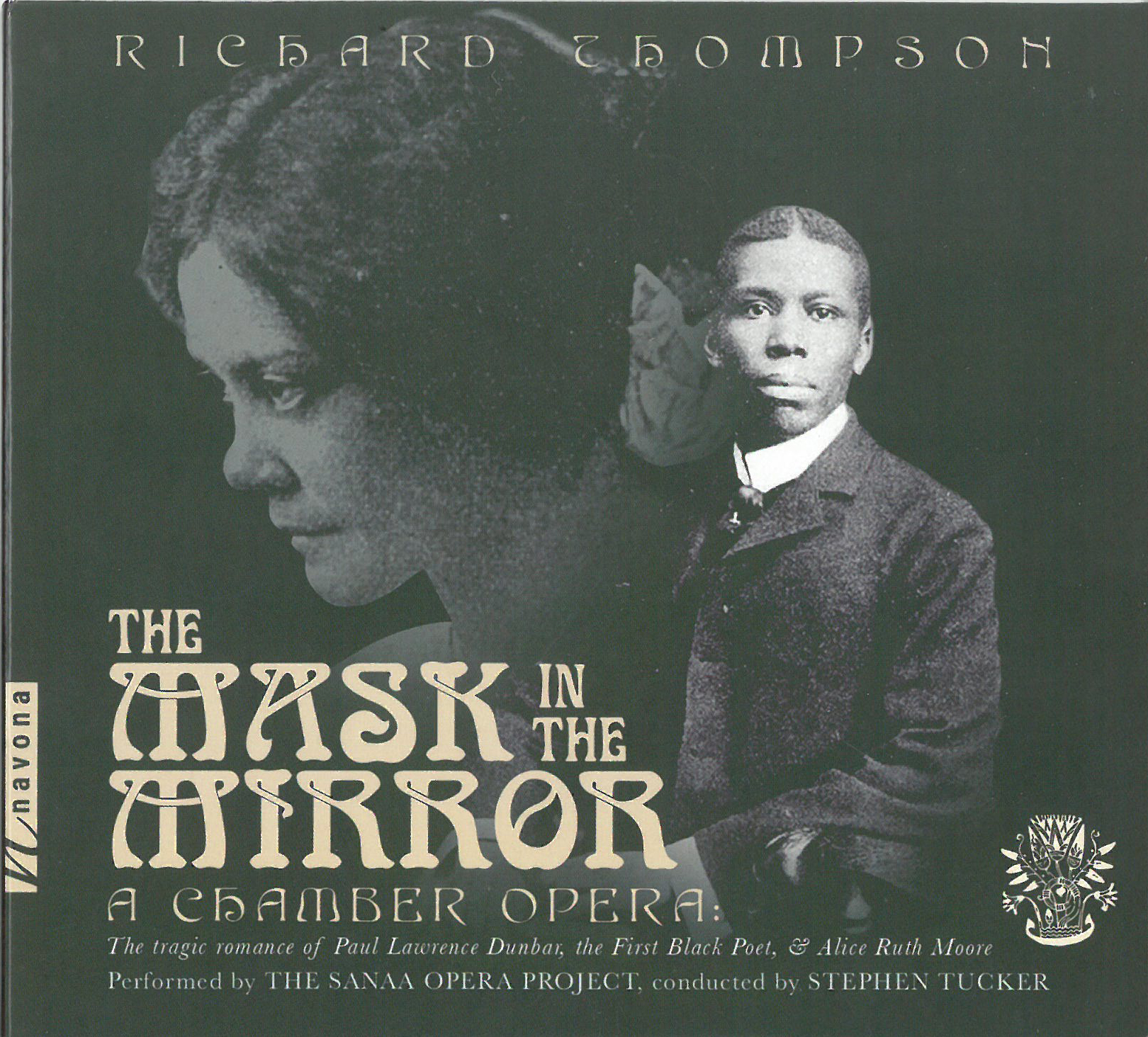
04 Richard ThompsonRichard Thompson – The Mask in the Mirror, A Chamber Opera
SANAA Opera Project; Stephen Tucker
Navona Records nv6209 (navonarecords.com) 

Richard Thompson’s haunting opera in three acts The Mask in the Mirror tells the story of the ill-fated marriage between the African-American writer Paul Laurence Dunbar and the lighter-skinned Alice Ruth Moore. Thompson tells the story of the lovers with minute and tragic detail, allowing his singers plenty of space to explore the tension of this extraordinary relationship, which unfolds in the context of racism in 19th-century America as well as in terms of the psychological drama surrounding two lovers ill-equipped to distinguish between sexual desire and the loftier ideals of their fraught relationship.

Cameo Humes’ Dunbar is truly inspired and the character unfolds through his sonorous tenor which is wielded with enormous power to unlock the vivid metaphor of the mask in the mirror. Angela Owens’ Moore is equally spectacular. She describes Moore’s less successful but nevertheless equally strong character with dramatic thrust. Together with other incidental characters – all exceptionally developed by Thompson – and the superbly moody orchestral performance, The Mask in the Mirror is powerful and heady, as well as appropriately literary.

The score remains relatively spare throughout yet provides enough detail to tell the complex story. Thompson demonstrates a masterly control of dramatic pace, ratcheting up tension slowly but surely so that the final dénouement reaches a devastating climax, aided by performances – led by the dark-hued timbre of Humes’ Dunbar – which vividly project the complicated nature of the drama.

05 Perpetual TwilightPerpetual Twilight
Choral Scholars of University College Dublin; Desmond Earley
Signum Classics SIGCD558 (signumrecords.com) 

While Ireland has long been renowned for its outstanding literary tradition, it is perhaps less well known for its contributions to choral music. Nevertheless, if this CD Perpetual Twilight, featuring the Choral Scholars of University College Dublin under the direction of Desmond Earley, is any indication, it would appear that the current Irish choral scene is a very vibrant one indeed.

The 28-member chamber choir was founded by Earley in 1999, and since then, numerous tours to various parts of Europe and the United States have earned the ensemble international acclaim. From the opening track Dúlamán, a lively traditional working song from Northern Ireland, it’s evident that the disc is infused with a strong Irish flavour – and what a warm and mellow sound the ensemble produces! Tenors – rares aves in many vocal ensembles – appear to be a major component of the Choral Scholars, resulting in a well-balanced blend of vocal ranges.

The thoughtfully chosen program – an attractive mix of traditional folk songs with newly commissioned pieces – includes the well-known My Love is like a Red Red Rose and Danny Boy in addition to the less familiar Maid of Culmore and Bó na Leathadhairce, the latter arranged by the conductor. Earley is also a composer, and works such as the uplifting Body of the Moon and Strings in the Earth and Air, are testament to his creative talents.

Throughout, the 13-member instrumental ensemble – including a bodhrán, a tin whistle and a harp – provide a solid and sensitive accompaniment. For lovers of the Irish folk tradition, Perpetual Twilight is a delight – joyful singing from the land of Joyce and Beckett – comhghairdeas!

01 Ottawa Bach ChoirHandel – Dixit Dominus; Bach & Schütz – Motets
Ottawa Bach Choir; Lisette Canton
ATMA ACD2 2790 (atmaclassique.com/En)

The Ottawa Bach Choir and Ensemble Caprice join forces in this recording for thrilling performances of Baroque masters Handel, Bach and Schütz. From the outset of Dixit Dominus, the quick pace and precision with which the chorus deftly moves through Handel’s ever-running and cascading phrases is awe-inspiring. Daniel Taylor guests for the alto aria Virgam virtutis in which the interplay between his golden voice and the continuo instruments is sublime. Soprano Kathleen Radke maintains a wonderfully relaxed vocal line through the execution of elaborate lines in Tecum principium in die virtutis and later she and Kayla Ruiz create enchanting chemistry in the soaring duet De torrente in via bibet.

Looking back almost a century, next on the recording are rarely heard Passion Motets from Heinrich Schütz’s Cantiones Sacrae. Heavily influenced by Italian madrigals of the time, Lisette Canton coaxes the full anguish of the thematic material from the choir in emphasizing dissonances and highly expressive rhetoric. The recording ends with homage to the choir’s eponym. In Bach’s Komm, Jesu, komm, excellent recording technique and choice of venue shine through, with a lovely resonance from the start and an erudite interchange captured in the dialogue of a choir divided into two sections by the composer.

02 Da Capo New WorksNew Works
Da Capo Chamber Choir
Independent DC 003-18 (dacapochamberchoir.ca)

Waterloo-based DaCapo Chamber Choir is celebrating its 20th anniversary with this release featuring Canadian choral works by six established and four emerging composers, set to words ranging from Shakespeare to D.H. Lawrence. Recorded in four sessions over a two-year period, each work was a choir premiere, with all but James Rolfe’s composition featured in DaCapo’s annual, national composition competition.

Choral lovers will rejoice (and perhaps sing along) to these diverse works. Of the established composers, Benjamin Bolden’s Harvest features classic choral counterpoint with slightly atonal sounds interspersed with tonal sections. Jeff Enns’ Le Pont Mirabeau has higher-pitched Romantic harmonies to stress the words. Rolfe’s Shadows is a to-be-expected well-written piece with dramatic word-painting rhythms at “autumn deepens” and atonality on “distress,” and a vibrant unexpected high-pitched tenor solo (sung by Brian Black) at the dramatic highpoint. Emerging composer David Archer’s In Sweet Music is a slow work with classic choral qualities (swells and lyricism) with a touch of minimalism at the repeated “fall asleep” end part. Works by Christine Donkin, Don Macdonald, Sheldon Rose, Matthew Emery, Nicholas Ryan Kelly and Patrick Murray complete the recording.

Conducted by founding artistic director Leonard Enns, the choir sings with both technical and musical acumen. Each vocal section is strong, knowledgeable and unafraid to sing both new and established choral sounds with perfect balance and articulation. Canadian choral music shines thanks to DaCapo!

01 Bach BWV21JS Bach – Cantata BWV 21
Bach Choir of Bethlehem; Greg Funfgeld
Analekta AN 2 9540 (analekta.com/en)

Of all the musical commentaries on the biblical texts used in service – most importantly on the Gospel reading – the cantatas of Johann Sebastian Bach are not only the most famous, but are also as pious as they are magnificent. These are the works that foretold the choral masterpieces such as the mighty St John and St Matthew Passions that came in 1724 and 1727 respectively.

The repertoire on this disc, Ich hatte viel Bekümmernis, Cantata BWV21 (1714) precedes those two great Passions as well as Bach’s B-Minor Mass (1749). The cantata marks a transition from motet style on biblical and hymn text to operatic recitatives and arias on contemporary poetry; and Bach characterized the work as “e per ogni tempo (and for all times),” indicating that due to its general theme, the cantata is suited for any occasion. On this disc it is bookended by two arias: Heil und Segen from Gott, man lobet dich in der stille (God, You are praised in the stillness) BWV120 and Liebt, ihr Christen, in der Tat from Die Himmel eräzhlen die Erhe Gotte (The heavens tell the glory of God) Cantata BWV76.

These gentle works get suitably sensitive performances from the Bach Choir of Bethlehem with sopranos Cassandra Lemoine and Rosa Lamoreaux, countertenor Daniel Taylor, tenor Benjamin Butterfield and baritone William Sharp investing everything as they solo with heartfelt intensity. Conductor Greg Funfgeld points up the drama of Bach’s choral works with eloquent restraint, seriousness and joy.

Handel – Agrippina
Theater an der Wien; Patricia Bardon; Jake Arditti; Danielle de Niese; Filippo Mineccia; Balthasar Neumann Ensemble; Thomas Hengel Brock
Naxos 2.110579-80 (naxosdirect.com)

Handel – Ode to St. Cecilia’s Day
Bach Choir of Bethlehem; Greg Funfgeld
Analekta AN 2 9541 (analekta.com/en) 

These two recordings take very different approaches to two key works in Handel’s life, including choices between period and modern instrumentation.

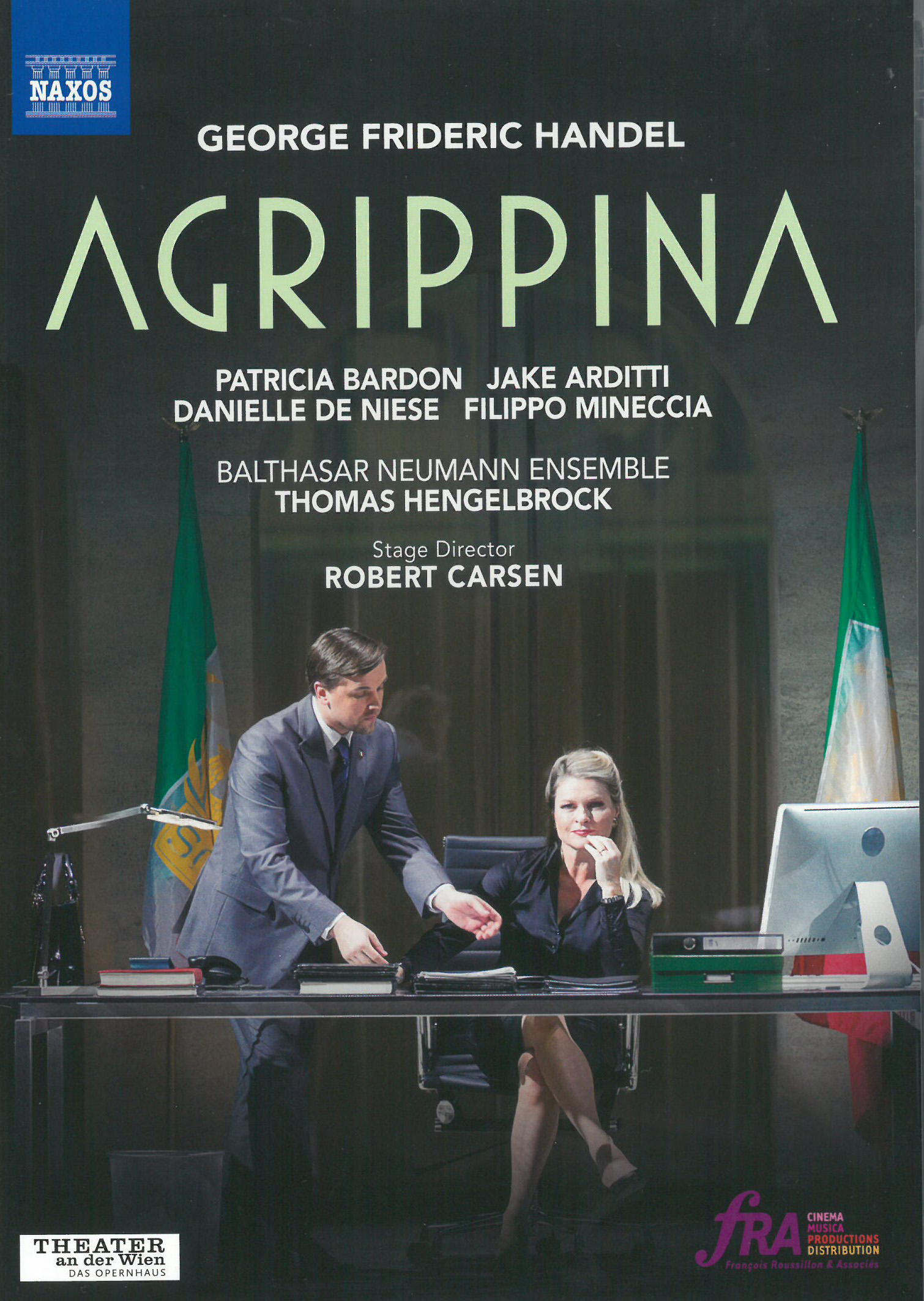
02a Handel AgrippinaIn 1709, in the early phase of Handel’s operatic career, he was approached in Venice by Cardinal Vincenzo Grimani to set Grimani’s satirical libretto based on Agrippina’s machinations to have her son Nero named emperor of Rome. Generally regarded as Handel’s first great opera – there’s a treasure trove of arias – its ribald text has been inspiring radically contemporary stagings for the past 20 years, most notably by David McVicar. Theater an der Wien’s production is a highly entertaining combination of musical purity and Robert Carsen’s provocative staging. The Balthasar Neumann Ensemble plays period instruments and three of the eight roles are sung by countertenors. Meanwhile, there’s a steely sheen to the furnishings, an iMac adorns a desk, and the fine mezzo-soprano Patricia Bardon, who has sung many of Handel’s principal females, plays the title role, stalking the halls of power in a leather skirt; at other times, the scatterbrained Nero, sung by countertenor Jake Arditti, frolics poolside with bikini-clad maidens. There’s some quickie desktop sex, a conspicuous issue of Vogue, onstage cameras and projections, staged news stories, a Mussolini-esque Claudio and, following the traditional happy ending, a gratuitous grand guignol bloodbath led by a mad Nero. Filmed in March 2016, staging that might have seemed over the top just three years ago approaches verisimilitude as our political culture increasingly resembles ancient Rome in decline.

02b Handel St CeciliaWith a 30-year leap in Handel’s career, we come to his 1739 setting of John Dryden’s Ode for Saint Cecilia’s Day, here performed by the Bach Choir of Bethlehem and issued in commemoration of the choir’s 120th anniversary and Greg Funfgeld’s 35th as its conductor. The 88-voice choir is a Pennsylvania institution along with its annual Bach Festival and Bach Festival Orchestra. It’s Handel on a relatively moderated but still grand scale, harkening back to 19th- and early 20th-century traditions. The orchestra is playing modern instruments, but there are only 27 of them, and that large choir provides depth and an impressive richness. Two fine Canadian singers appear as soloists, lending distinguished skills to the arias. Halifax-native, tenor Benjamin Butterfield, brings a brassy bravado to the drum and horn effusion of The trumpet’s loud clangor, while Edmonton-born Cassandra Lemoine’s refined soprano dovetails beautifully with Robin Kani’s flute on The soft complaining flute. Lemoine’s grace and clarity also highlight the full force of choir and orchestra in the sustained conclusion of As from the pow’r of sacred lays.

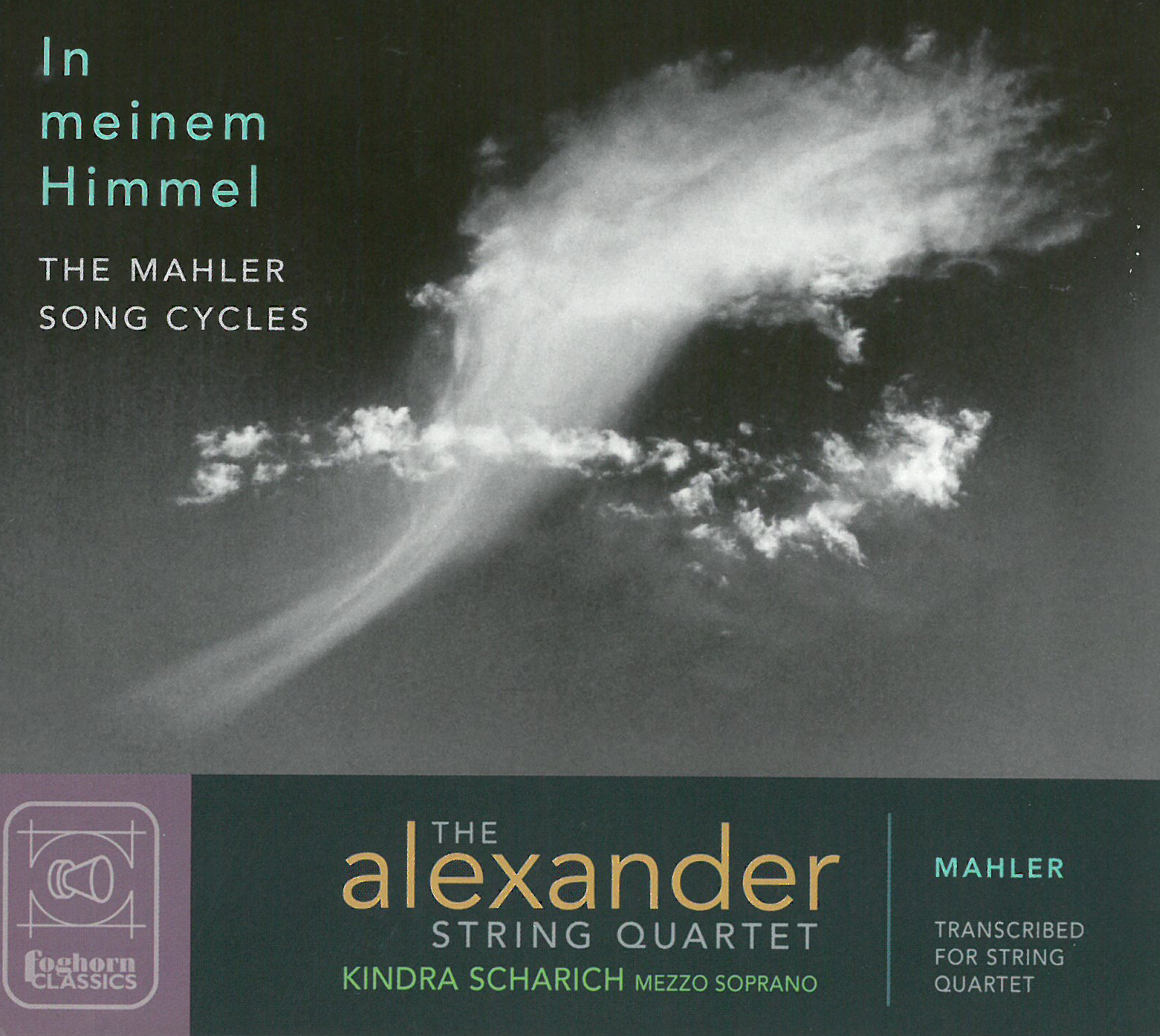
03 Mahler Alexander QuartetIn Meinem Himmel – The Mahler Song Cycles
Kindra Scharich; Alexander String Quartet
Foghorn Classics FCL 2019 (foghornclassics.com) 

This project comes from San Francisco and it is an experiment by the renowned Alexander String Quartet to transcribe three of Mahler’s orchestral song cycles, Songs of a Wayfarer, Rückert-Lieder and Kindertotenlieder for string quartet in order to experience this repertoire in an intimate chamber music setting and perhaps enrich and enhance its emotional world. I had some misgivings, because nowadays there is a definite trend to different versions of the great works, by ambitious musicians, that could harm and distort the composer’s original intent.

To my mind, these are definitely orchestral songs and require the power and the colours of the full contingent of a symphony orchestra with Mahler’s unique orchestration for their musical and emotional impact. The sound of a string quartet is entirely different and hasn’t the pungent quality the wind instruments provide and it cannot possibly duplicate what Mahler had in mind, although the transcriber violinist Zakarias Grafilo, gave much thought and effort to preserve some of the aural colours and even the emotional innigkeit of the original, yet es ist kein Mahler as I imagine Leonard Bernstein would say.

Nevertheless it’s a labour of love. Idiomatic and virtuoso string playing and the singing is simply gorgeous. Young American mezzo Kindra Scharich has a beautiful voice, total emotional commitment and musical imagination that certainly makes worthwhile listening. Her soulful, anguished tone when the rejected lover sings about the two beautiful blue eyes of his lost sweetheart (Die zwei blauen Augen) is simply heartbreaking and I just loved her voice so full of joy in exclaiming Heia! in Ging heut morgen. An interesting experiment, but not quite Mahler.

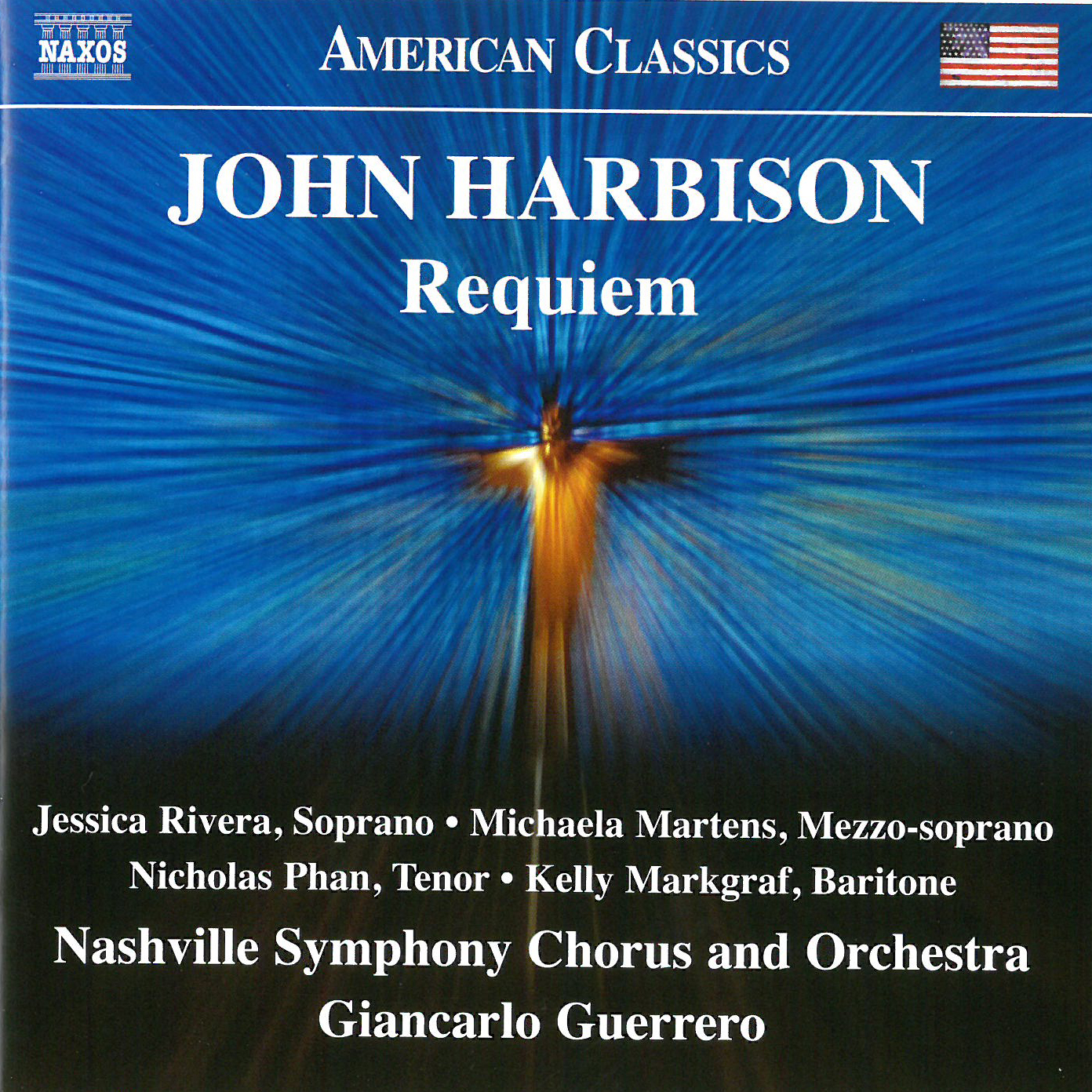
04 Harbison RequiemJohn Harbison – Requiem
Soloists; Nashville Symphony Chorus and Orchestra; Giancarlo Guerrer
Naxos 8.559841 (naxosdirect.com) 

John Harbison’s Requiem captures the nature of death with both metaphysical and aesthetic sophistication, firstly because of the authentic use of the Latin text in its scriptural context and secondly because of the utterly existential prescience of this choral performance. Despite the fact that the music eventually soars with the apposite release of Libera me, the shadowy solemnity of the preceding sequences makes the work both profoundly melancholic and breathtakingly beautiful. It is a monumental work – Harbison’s pièce de résistance – appropriate to the events of 9/11 which inspired it. Consequently the use of the Latin in the setting of a traditional requiem might commemorate a divine passion – such as in the Introit – yet the work commemorates abject human suffering.

The musicians of the Nashville Symphony and Chorus convey the gravitas of Harbison’s epic work with a powerful sense of both sorrow and spontaneity. Chorus director Tucker Biddlecombe’s inspired choices of male and female voices – the powerful and incisive (solo) singing of Jessica Rivera (soprano), Michaela Martens (mezzo-soprano), Nicholas Phan (tenor) and Kelly Markgraf (baritone) – and the ensemble performances, bring a passionate, soaring intensity to the antiphons, responsories and sequences, to produce an absorbing and inexorable service. Giancarlo Guerrero fixes his sights on the sheer drama of the proverbial solemn high mass and shepherds a program that swirls with sinewy energy heavy with the atmosphere of foreboding before its ultimate – even joyful – release of the final In paradisum.

05 Kira BraunDamask Roses – Art Songs by Mozart; Dvorak and Quilter
Kira Braun; Peter Krochak
Independent (kirabraunsoprano.com)

With Valentine’s Day approaching I enjoyed this love-themed CD, the latest in a series of varied art-song programs by Canadian duo Kira Braun and Peter Krochak. A relative (niece/first cousin) of famed Canadian father-and-son baritones Victor and Russell Braun, soprano Kira demonstrates her own high standard. Here there are three song groups by different composers: Mozart (18th century, in German), Dvořák (19th century, in Czech), and Roger Quilter (early 20th century, in English). The opening three Mozart songs demonstrate the duo’s fine ensemble and Braun’s excellent diction and tone, though I would have liked to have heard even more charm and colour in both voice and piano. By contrast, the interpretations of four selections from Quilter’s Seven Elizabethan Lyrics, Op.12 are especially appealing, including the title song, Damask Roses. Braun’s pure soprano is attractive and she brings both restraint and conviction to Weep You No More and also to Quilter’s earlier Love’s Philosophy from Three Songs, Op.3.

In both the Quilter lyrics and Dvořák’s Gypsy Songs, Op.55 there are songs in a higher range, that she is quite equal to, adopting a fiery demeanor in Set the Fiddle Scraping that Krochak matches with lively piano accompaniment. Their version of the well-known Songs My Mother Taught Me is appropriately affectionate; they bring out Dvořák’s contrasts and distinctive touches in this set, making it one I’m pleased to be able to return to.

Listen to 'Damask Roses: Art Songs by Mozart; Dvorak and Quilter' Now in the Listening Room

Roger Knox

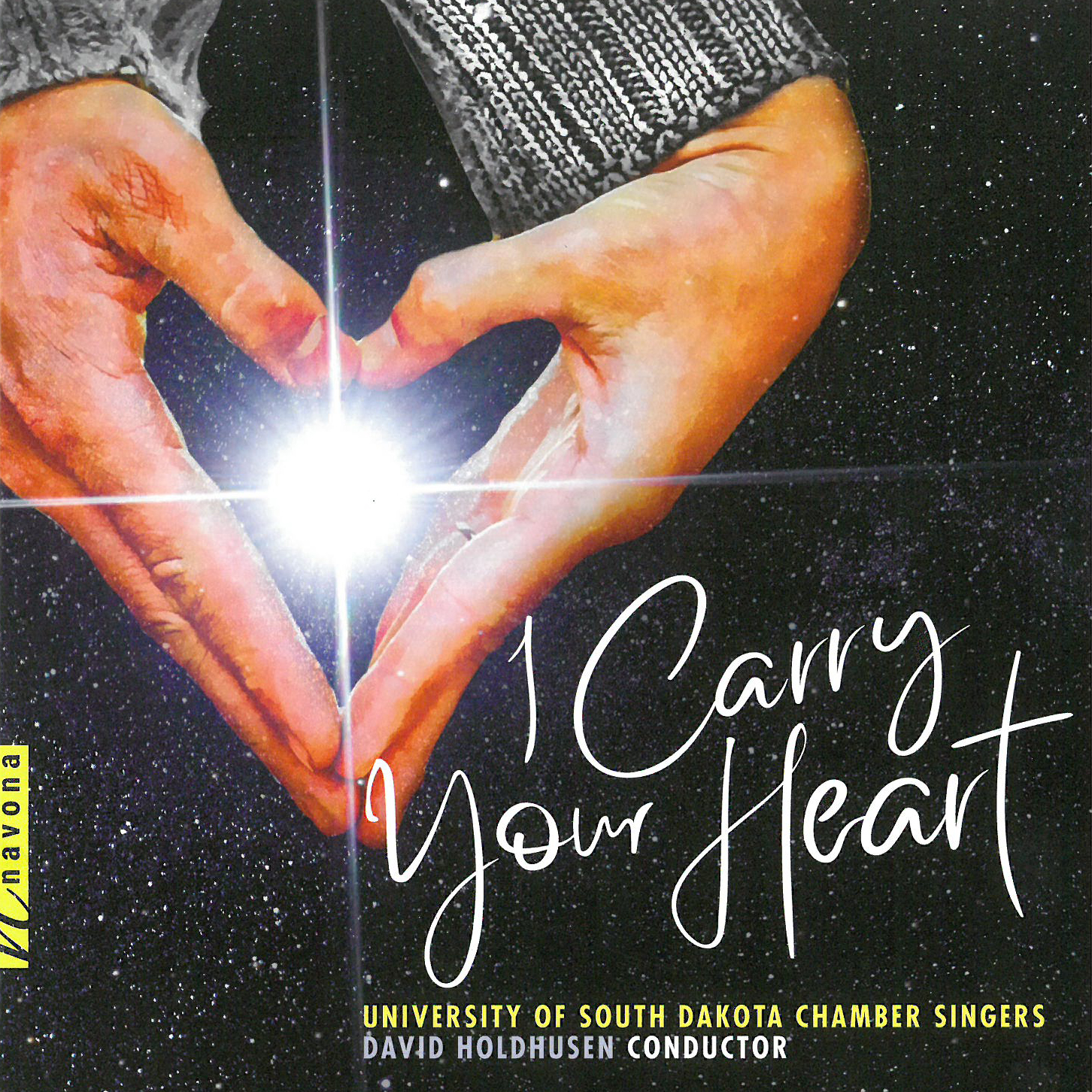
06 I Carry Your HeartI Carry Your Heart
University of South Dakota Chamber Singers; David Holdhusen
Navona Records nv6203 (navonarecords.com) 

South Dakota? Isn’t this midwestern state most famous for its beautifully rugged landscape, including Mount Rushmore? Nevertheless, in light of this fine recording titled I Carry Your Heart, featuring the University of South Dakota Chamber Singers under the direction of David Holdhusen, it seems that South Dakota also has a vibrant choral scene.

The USD Chamber Singers is the institution’s premier vocal ensemble, having earned a reputation for high performance standards with a focus on a cappella repertoire. The ensemble presents formal concerts on campus each semester and its annual tours have taken the group to various parts of the United States and to Europe.

From the opening track of the CD – the rousing South African folk-tune, Tshotsholoza – it’s clearly evident that the ensemble loves what it’s doing – what a jubilant and joyful sound! Yet it is not only the exemplary performing throughout the disc that makes I Carry Your Heart so attractive, but the carefully-chosen program – indeed, there’ s something for everyone. In addition to the uplifting spirituals such as Sit Down Servant and Ain’t That A-Rockin’ are compositions of a more serene nature such as Jonny Priano’s motet Sicut Cervus and Kenneth Lampl’s Dirshu Adonai, the latter a sensitive meditation with layered harmonies and rich tonal clusters. It is in pieces such as these that the choir’s fine melding of vocal ranges comes across so clearly. Several numbers also make use of vocal and instrumental soloists, thereby showcasing the high musical standards even further.

My only disappointment is the absence of program notes – it would have been nice to have the texts, or at least some background material on the pieces. Yet this is a minor quibble and in no way mars a splendid performance. For lovers of a cappella choral music, I Carry your Heart is a delight.

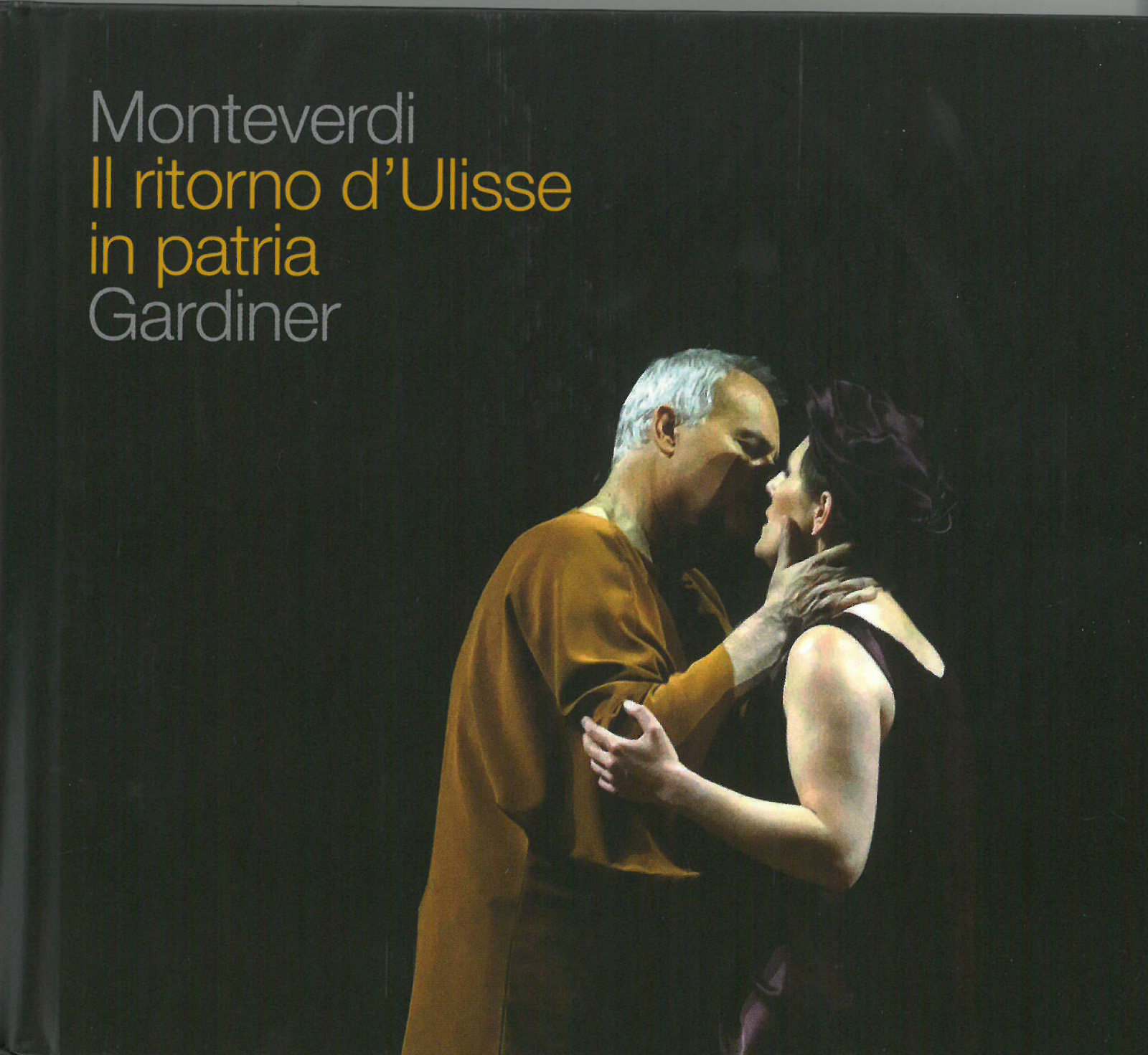
01 Monteverdi UlisseMonteverdi – Il ritorno d’Ulisse in patria
Monteverdi Choir; English Baroque Soloists; John Eliot Gardiner
Soli Deo Gloria SDG730 (solideogloria.co.uk)

Few musicians have devoted themselves to the Baroque repertoire with the sustained passion of John Eliot Gardiner; and his relationship with Claudio Monteverdi’s music is unique. Gardiner launched the Monteverdi Choir in 1966 and the Monteverdi Orchestra in 1968, renaming it the English Baroque Soloists in 1976 with the switch to period instruments. This recording of one of Monteverdi’s three surviving operas was recorded in Wrocław during a 2017 tour celebrating the 450th anniversary of Monteverdi’s birth.

Il ritorno d’Ulisse in patria (1640), is based on the conclusion of Homer’s Odyssey, as Ulysses reaches home to find his wife Penelope and his lands besieged by suitors. It was composed more than 30 years after Orfeo, when the 73-year-old composer was convinced to write again for the stage at the end of a career devoted largely to composing for the church.

This is a masterful realization of the work, with Gardiner, his choir and orchestra attuned to its pageantry, drama and sheer beauty, as well as Monteverdi’s sudden shifts through a broad emotional range. In the first act, the orchestra caresses and supports the sorrowful Penelope; the second concludes with rising battle music; and in the third the choirs of Heaven and Sea are graced with the elemental clarity and grace of Monteverdi’s madrigals. Il ritorno is a key document in opera’s early history, with an increasing shift from intoned text to dramatic song: Gardiner and company’s performance is both vigorous and authentic.

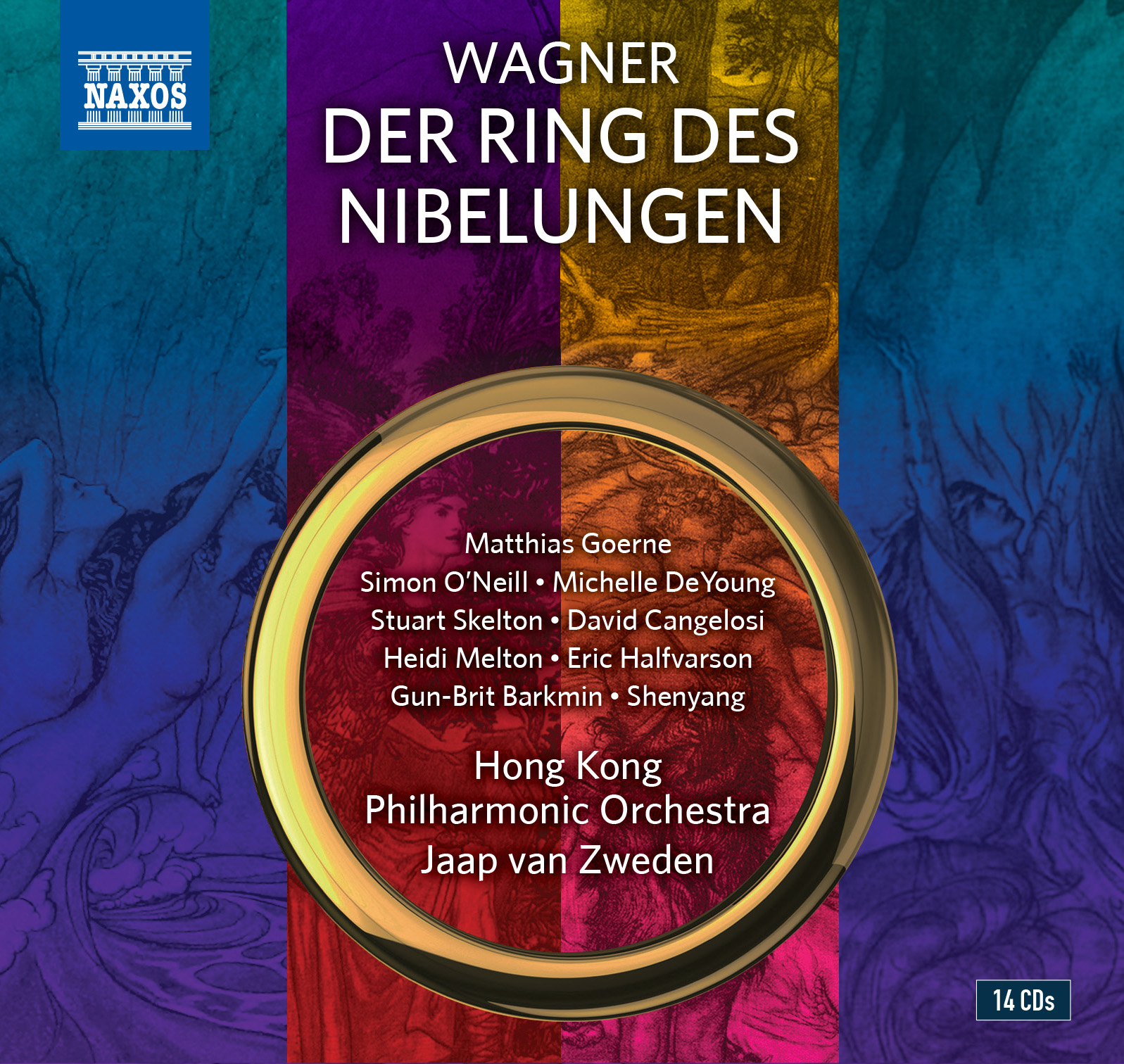
03 Wagner Ring CycleWagner – Der Ring des Nibelungen
Soloists; Hong Kong Philharmonic Orchestra; Jaap van Zweden
Naxos 8.501403 (14 CDs + USB card; naxos.com/catalogue/item.asp?item_code=8.501403)

The conductor of this new audio recording, Jaap van Zweden, has now taken over the New York Philharmonic after being the music director of the Dallas Symphony since 2009. TV audiences recently saw him conducting the New Year’s Eve concert with the Philharmonic featuring Renée Fleming. He is also active in Europe and Asia, including Hong Kong where he has been their Philharmonic’s conductor since 2012.

This new Ring Cycle was recorded in concert performances in the Hong Kong Cultural Centre each January from 2015 to 2018. In Das Rheingold from 2015 we hear Matthias Goerne’s Wotan, Michelle DeYoung’s Fricka and Kim Begley as Loge. The 2016 Die Walküre adds Stuart Skelton as Siegmund, Heidi Melton is Sieglinde and Falk Struckmann is Hunding. The Brünnhilde is Petra Lang. Siegfried in 2017 has Simon O’Neill as Siegfried and David Cangelosi as Mime. Heidi Melton is now Brünnhilde and Falk Struckmann is Fafner and the Forest Bird is sung by Valentina Farcas. Götterdämmerung, from 2018, adds choruses of the Bamberg Symphony, the Latvian State and the HK Philharmonic with Brünnhilde now sung by Gun-Brit Barkmin, Siegfried is Daniel Brenna, Michelle DeYoung is Waltraute, Gunther is Shenyang and Hagen, who gets the very last words, is Eric Halfvarson.

For these performances, Van Zweden maintains very steady tempi and does not bury the usually unheard pulse in the music. This strengthens the continuity of events and goes far in holding our attention to the unfolding epic involving the foibles of the driven principals. The recording engineers have achieved a superb job with a wide dynamic range, no spotlighting of any instruments and maintaining a firm bass line, seating us in the concert hall for these live concert performances. The casting couldn’t be better, with impeccable, secure soloists before the Hong Kong Philharmonic that, by Götterdämmerung, has become a first class Wagner orchestra. Not quite the Vienna Philharmonic but they have only been professional since 1974.

There are many spellbinding occasions on these performances that come readily to mind. Here are just a few: The last scene of Die Walküre from Wotan’s heartbreaking farewell to Brünnhilde and then his calling upon Loge to surround his sleeping daughter in an impassable ring of fire, the ethereal Magic Fire Music; in Siegfried, the Forest Bird telling Siegfried about a beautiful sleeping woman surrounded by a circle of flames and then leading him to her; the conversation between the sleeping Hagen and his dead father, Alberich in the second act of Götterdämmerung; the Immolation scene and the redeeming, all-is-well, short epilogue that follows a momentary pause. Altogether a brilliant achievement.

The four operas are available separately but the boxed set contains the four plus a USB stick with the complete librettos in German alongside English translations, together with talks about the project with photos and interviews.

This is the second Ring Cycle from Naxos, the first consisting of live performances of New York’s Metropolitan Opera productions from 1936 to 1941 (8.501106, 11 CDs). Luminaries of the era include Schorr, Varnay, Traubel, Melchior, Flagstad and Marjorie Lawrence who rides off on Grane on January 11, 1936. A collector’s collection. Noisy.

Back to top