Legendary as the country where every type of Western music has some followers and where every disc extant is rumoured to exist in some form or another, Japan likewise has a healthy jazz and free music scene. This appreciation extends to homegrown improvisers, but few are known throughout the larger musical world. Not only do these discs demonstrate how this situation is changing as Asian players interact with more Westerners, but some outsider players have also moved there since they found the country’s audiences to be sympathetic to their music. 
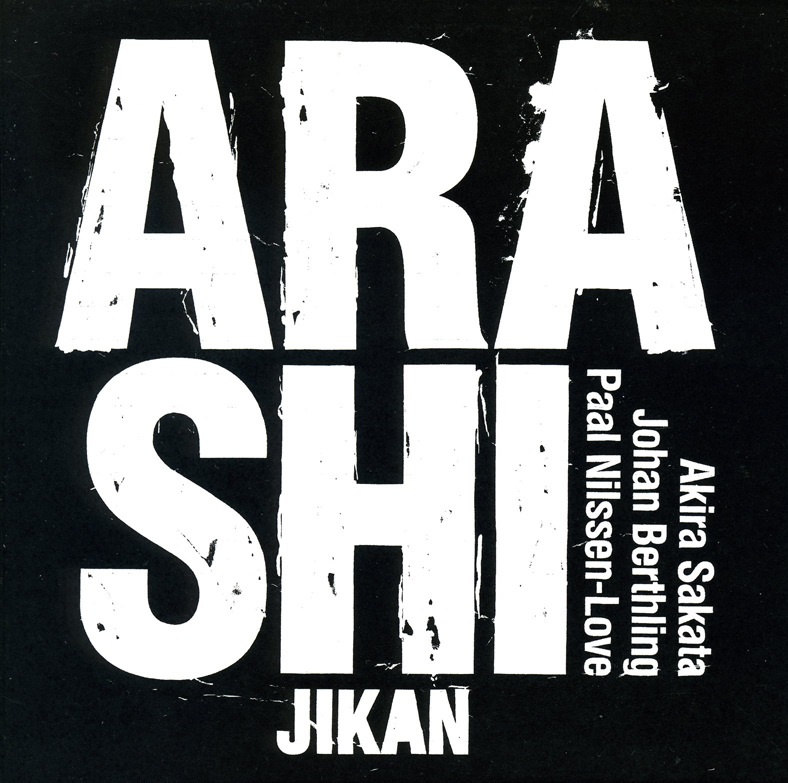
01 ArashiIn the former group, one of the most prominent is Hiroshima-born alto saxophonist/clarinetist Akira Sakata, 74, who’s been improvising in an individual free jazz style since the early 1970s which also involves his off-the-wall vocalizing. A marine biologist as well as a musician, Sakata organized the co-operative trio Arashi a few years ago with Norwegian percussionist Paal Nilssen-Love and Swedish bassist Johan Berthling. The exciting Jikan Arashi (PNL Records PNL 045 paalnilssen-love.com) is its newest disc. Reminiscent of the heyday of “The New Thing” sound explorers, on saxophone, Sakata has seemingly never found a tone he couldn’t split or a timbre he couldn’t overblow. This is demonstrated most convincingly on the extended Yamanoue-no-Okura with a solo that’s all snarls and growls, and that inflates with pressurized vibratos and propelled reed bites each time he outputs a phrase. In sympathy, Betherling’s accelerated strumming and Nilssen-Love’s constant thumping, fluidly pulse and push with the same intensity. Besides the trio’s sliding and shredding instrumentally up and down the scale, here and elsewhere Sakata vocalizes guttural syllables that wouldn’t be out of place on a Japanese horror film soundtrack. Eventually, gurgles and mumbles that involve the guts and throat more than the mouth and lips give way to small instrument whumps and cymbal lacerations from the drummer culminating in triple intensity. While the saxophonist’s frenetic Aylerian screams and pressurized stutters mix with Nilssen-Love’s constant pounding on the title track, he also shows off restrained chalumeau-register clarinet storytelling on Tsuioku, partnered by cymbal slides. Despite his concluding shrilling output and a return to guttural mumbling, Jikan is another indication of why the reedist has maintained his creativity over the decades.
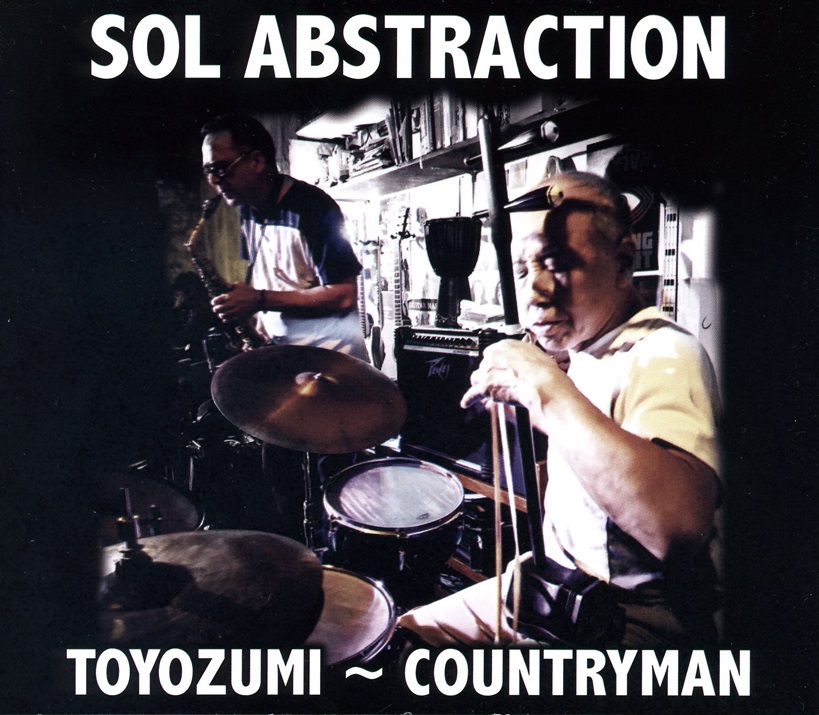
02 Sol AbstractionAnother first-generation Japanese improviser who has maintained a similar musical ingenuity is Yokohama-born percussionist Sabu Toyozumi, two years Sakata’s senior. Having worked over the years in different-sized assemblages with local and foreign Free Music players, Sol Abstraction (Sol Disk SD 1901 soldisk.com) is a stripped-down live date from the Philippines where he goes head-to-head with American alto saxophonist Rick Countryman on nine tracks. A committed free jazzer, the saxophonist’s collection of multiphonics, irregularly pitched vibrations, tension- building and sopranissimo screams are met with expressive touches, resonating conga-like hand slaps brought into play alongside claps and swing affiliations. Although only the extended Integrity of Creation includes what could be termed an albeit brief drum solo of claps, clatter, press rolls and rattles, Toyozumi’s constant rumbles and patterns keep up with Countryman who crams as many notes as he can into every bar, pulls his split tones as far as possible without breakage and triple tongues into the stratosphere before ending with crying flutter tonguing. The drummer’s skill using the erhu or spike fiddle is also displayed on a couple of related tracks as he cannily manages to mirror the saxophonist’s circular textural screams and squeaky overblowing with two-stringed slices, even as place-marking drum beats remain. The two also manage to append a relaxed shuffle groove to the feverish sallies that make up Broken Art Part I and Part II, but the best expression of Toyozumi’s – and by extension Countryman’s – versatility occurs on the three parts of Ballad of Mototeru Takagi. A threnody for a deceased saxophonist colleague, the suite moves from tongue-slapping, reed-shaking theme development to repeated diaphragm-intense cries from the saxophonist, as the drummer’s narrative contribution is cymbals tolling with narrow clangs. Finally Toyozumi’s slaps rebound at a choppier pace as Countryman elaborates the now passive theme with melancholy sound spurts.

03 CottonMoving on a generation and compounding Japanese improvisers, almost-clichéd fascination with electronics is In Cotton and Wool (Ftarri ftarari-980 ftarari.com), a duet between the audio feedback generated by Toshimaru Nakamura’s no-input mixing board and the trumpet and electronics of Berlin’s Axel Dörner. Moving past expected musical tropes, or for some music, the program mixes manipulated loops of industrial-strength voltage feedback from Nakamura’s machine to such an extent that the outcome appears to possess the strength and velocity of both a high-speed locomotive and a tropical thunder storm. This is particularly true of the extended Hemp, especially when extended electronic rumbles nearly attain drum-beat qualities, with Dorner`s response a combination of dissociated peeps and an intermittent moose-call-like ending. Variations of this strategy play out during the subsequent selections, with, for instance, grace notes from the trumpet audible through a cloud of heavily amplified drones on Silk, before the track speeds up to the extent that it could be the sound of a car crash captured in real time, until the noise is abruptly cut off. The loops of blurred whistling and puffs are resolved on the final track, Cashmere, as narrow tongue splatters from the horn are overshadowed by blurred input-output pulses from the mixing board to create an ambulatory synthesized exposition which Dörner amplifies with capillary bites and echoes until brass qualities are buried under synthesized pulsation created by both his and Nakamura’s electronics.
04 BrotherMore general acceptance of projects like Nakamura-Dörner’s is what persuades even more experimental players to settle in Japan. Case in point is Saskatchewan-native Tim Olive, who lives in Kobe. Using his preferred tools of magnetic pickup and electronics, Olive joins with Beijing-based Yan Jun, who manipulates electronics and field recordings, on Brother of Divinity (845 Audio 845-10 845 audio.bandcamp.com), for a fascinating 28-minute sound collage that admittedly makes even the previous discs appear conventional. A rare electronic session that culminates with foreground resonance after synthesizing the impulses created by the duo, Brother of Divinity works its way from loops of crackles and pops, as distant voice singing or beating out rock-styled music comes in and out of aural focus. As ring modulator-like gonging-feedback loops become more prominent, the blurry interface also takes on percussive side scratches and bounces until what initially seemed to be neverending pulses splinter into chirps and thumps in double counterpoint. With its keyboard-suggested bent-note narrative, the final section becomes more reductionist with metronomic timepiece-like clicks, suggesting a stain spreading slowly on a yielding surface, crunching beats and church-bell-like pealing, project with synthesized pulsations into conclusive buzzes and shuffles.
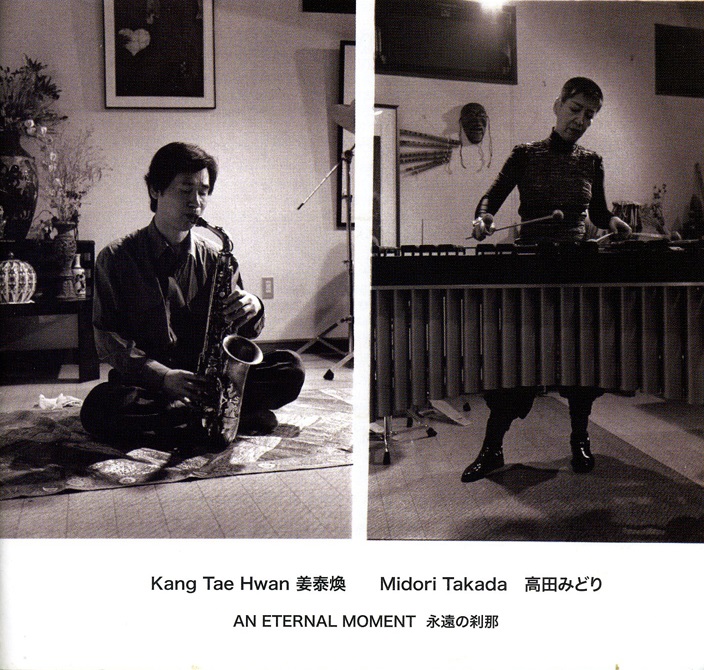
05 EternalIf Japanese free improvisers are little known outside of a small coterie, imagine the situation for a Korean saxophonist committed to experimental music. Yet An Eternal Moment (NoBusiness Records NBCD 115 nobusinessrecords.com) is a 76-minute live 1995 Yamaguchi concert by Japanese percussionist Midori Takada and alto saxophonist Kang Tae Hwan, visiting from Seoul. One track is an extended solo saxophone meditation and the last, Dan-Shi, posits what sonic challenge would result if sax/drum duos like it mixed narrow, high-pitched, sometimes barely audible reed explorations, with gamelan-like marimba pops and sizzling cymbal hisses, besides regular drum beats. However, the key paring is the nearly 42-minute Syun-Soku, During the exposition, Hwan’s strained reed vibrations work up to lacerating split tones and down to narrowed ghost notes, then up to bagpipe-like overblowing timbre-smears as Takada hits tuned aluminum bars and shakes reverberating cymbals. Rhythmic drum taps spark thin chirps from the saxophonist, who soon seems able to simultaneously output a slim, whistling tone and more rounded coloratura variations. Reaching the first climax at mid-point, the narrative slows down to the extent that Hwan’s dissonant slurps seem to be being pushed back into his horn’s body tube. Crashing ruffs from the percussionist become non-metered whacks in opposition, helping to transform reed multiphonics into low-pitched trills that neatly affiliate with unforced cymbal patterns, leading to a finale that links splash cymbal power with retrained reed snarls.

Politically and sociologically Asia is no longer the Mysterious East for most Westerners. These CDs could provide a similar demystification of sound when it comes to improvised music. 
Joan of Art
Dave Robbins Sextet
Cellar Music CM110518 (cellarlive.com)

Jump Up
Brad Turner Quartet (with guest Seamus Blake)
Celler Music CM123018 (cellarlive.com)

Just Like Magic
Mike Allen; Peter Washington; Lewis Nash
Celler Music CM010519 (cellarlive.com)

This Quiet Room
PJ Perry featuring Bill Mays
Cellar Music CM121018 (cellarlive.com)

The Real Blue
Pureum Jin (Jeremy Manasia; Luke Sellick; Willie Jones III; Sabeth Perez)
Celler Music CM020219 (cellarlive.com)

The Cellar Music Group: As a high school jazz musician in Metro Vancouver in the early 2000s, The Cellar Jazz Club, owned and operated by Cory Weeds, was the centre of my musical universe. Despite the fact that it was located below street level, it stood head and shoulders above comparable Vancouver venues, bringing in a healthy mixture of performers, from local standouts such as Jodi Proznick, Bill Coon and Brad Turner, to major international acts, including organist Joey DeFrancesco, pianist Monty Alexander and Chris Potter’s Underground project, with Adam Rogers, Craig Taborn and Nate Smith. (I have a vivid memory, at the Potter show, of strategically hiding a recording device under a napkin at my table, on behalf (I swear) of a friend.) Out of the club grew the label: Cellar Live, as it was initially known, was a vehicle by which the club’s live performances could be documented and distributed, helping to further develop the identity of the Cellar, the musicians who played on its stage, and the Vancouver jazz scene as a whole.

Though the Cellar Jazz Club is no more, the label has continued to thrive, and now operates as The Cellar Music Group, with three distinct imprint categories: Cellar Live, which primarily releases live recordings, Cellar Jazz, which primarily releases studio dates, and Reel to Real Recordings, a relatively recent venture, which releases rare archival recordings. With close to 150 albums over the course of its 18-year history, Cellar Music has a broad range of releases in its roster. Some highlights: the late Ross Taggart’s Thankfully, with Bob Murphy, Mike Rud and Bernie Arai, Curtis Nowosad’s Dialectics, with Jimmy Greene, Derrick Gardner, Steve Kirby and Will Bonness, and, on Reel to Real, Etta Jones’ A Soulful Sunday: Live at The Left Bank, a recording made in Baltimore in February 1972.

Cellar Music has five new recordings worth checking out, which, taken together – but listed in no particular order – showcase the label’s aforementioned breadth.

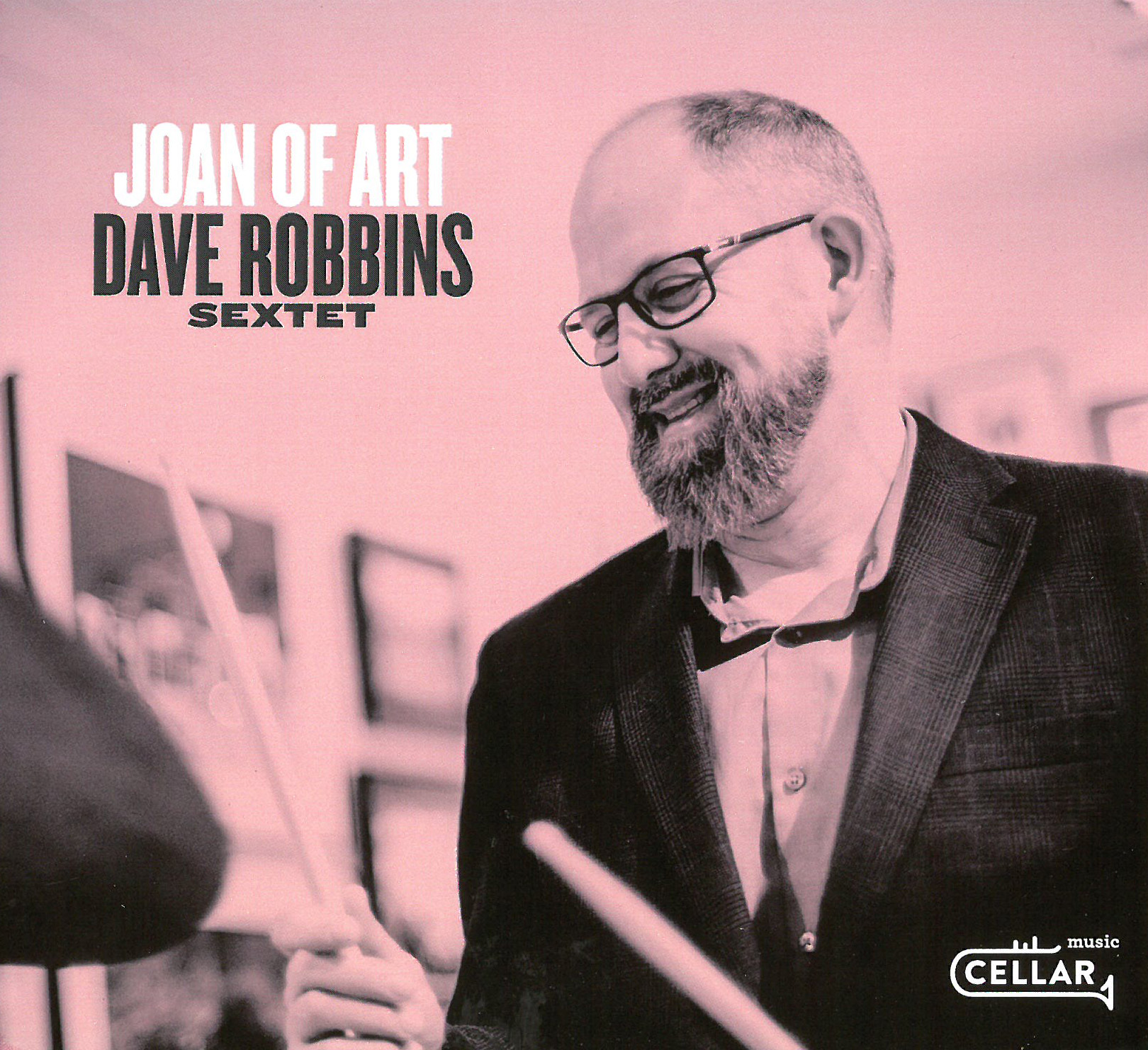
01a Dave RobbinsJoan of Art, from drummer Dave Robbins’ eponymous sextet, takes its name from the title track, written in honour of Vancouver jazz patron Joan Mariacher. Robbins is a strong, dynamic drummer, with a propulsive swing feel that lends itself well to a sextet format (he is joined by Steve Holy, bass; Chris Gestrin, piano; Mike Allen, tenor saxophone; Brad Turner, trumpet; Rod Murray, trombone). Robbins is also a thoughtful, conscientious arranger, both of his own compositions and of the album’s two covers (Lennon/McCartney’s Can’t Buy Me Love and Paul Desmond’s Take Five). 

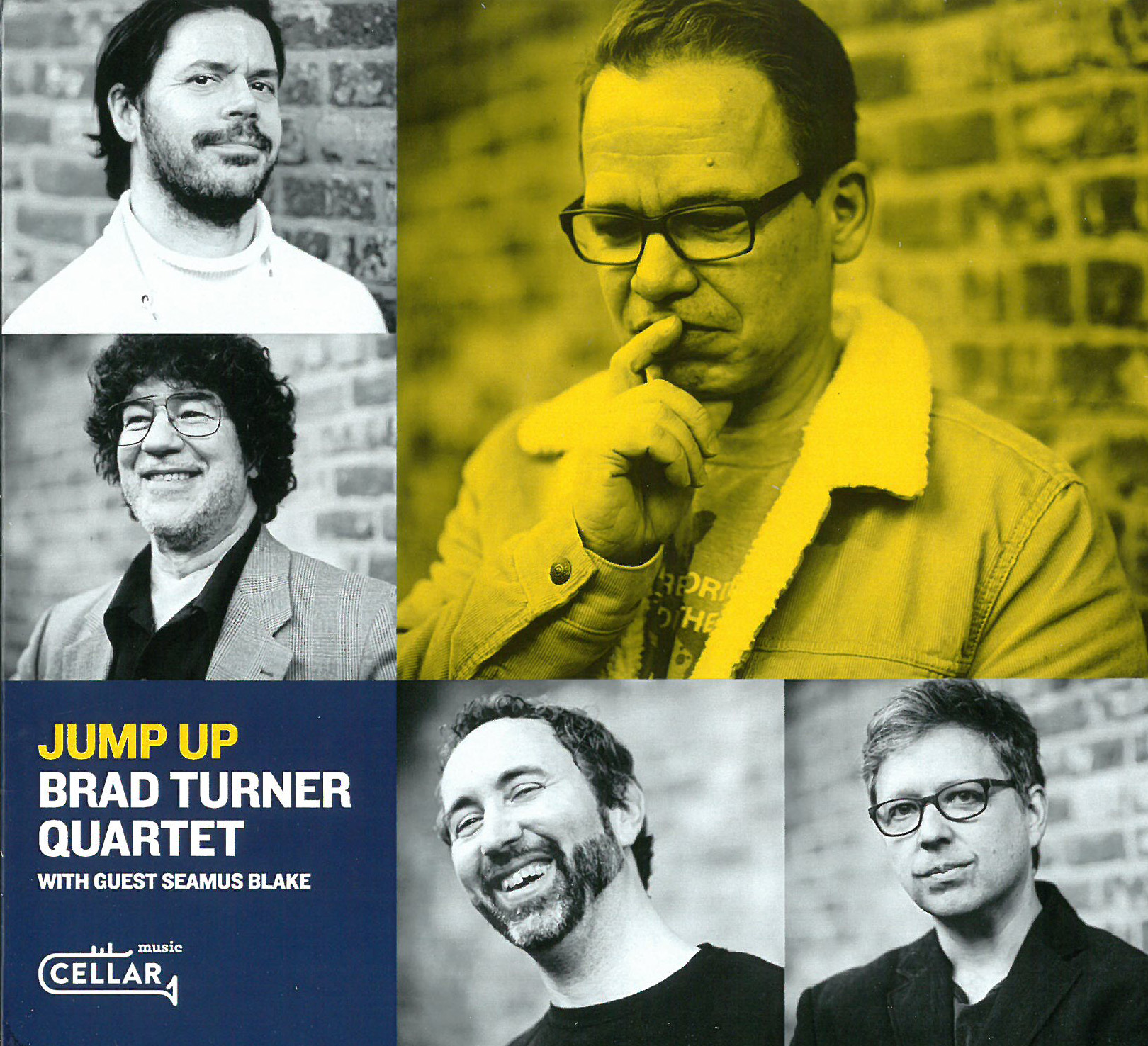
01b Jump UpJump Up, a new album from the Brad Turner Quartet with special guest Seamus Blake, is a follow-up almost 20 years in the making: around 2000, the same group (Turner, trumpet; Blake, tenor saxophone; Bruno Hubert, piano; André Lachance, bass; Dylan van der Schyff, drums) released Live At The Cellar. Packed with exciting playing and Turner’s mature, well-developed compositions, Jump Up covers a wide range of material, from the funk-tinged The Enthusiast to the swinging up-tempo title track to Catastrophizer, a welcome bonus, recorded live at Frankie’s Jazz Club during a three-day stint leading up to this album’s recording at The Warehouse Studio in Vancouver.

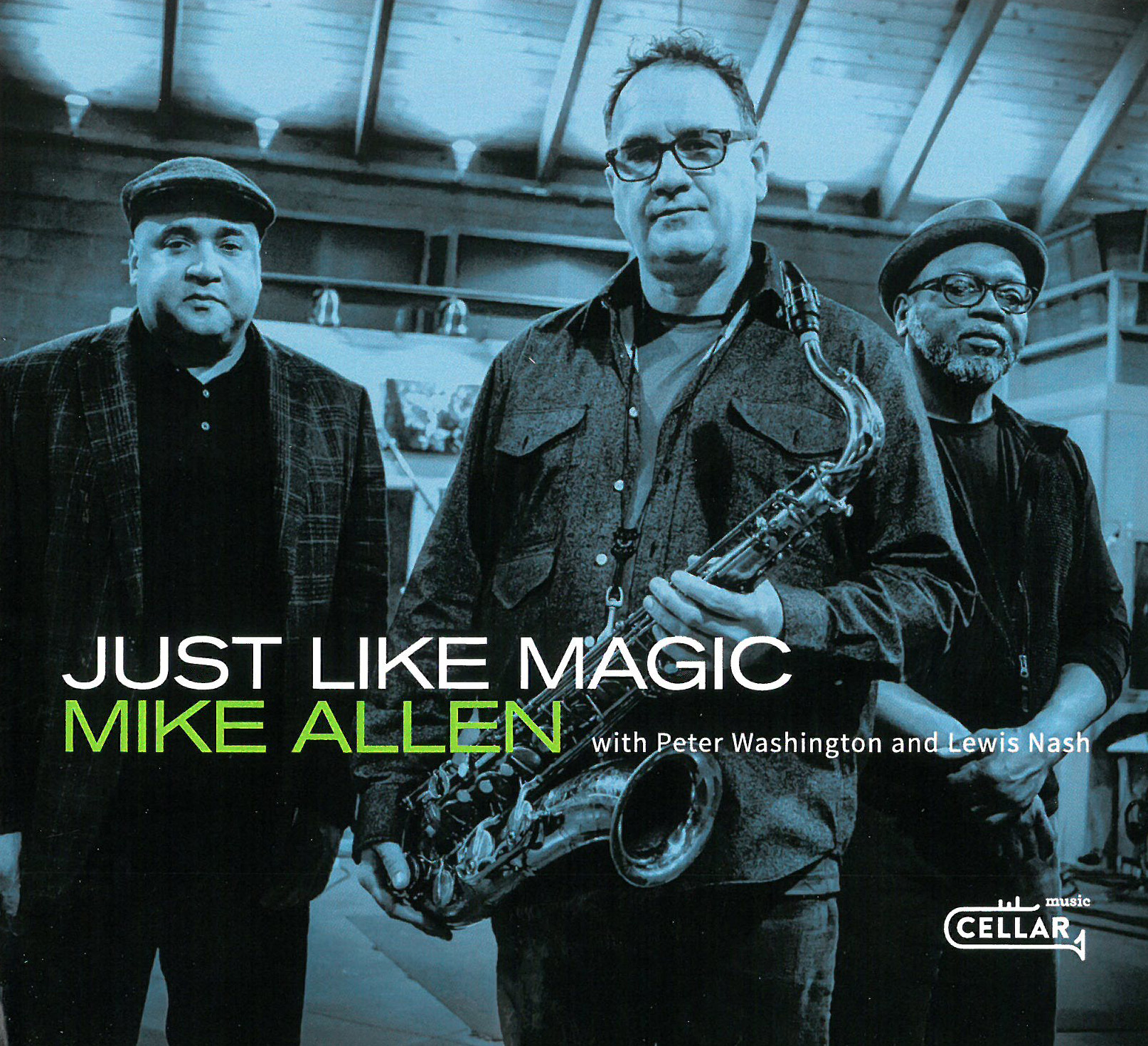
01c Just Like MagicTenor saxophonist Mike Allen’s new album, Just Like Magic, is a trio outing with the famed rhythm section of Peter Washington and Lewis Nash, recorded in Rudy Van Gelder’s Englewood Cliffs studio in New Jersey in January of this year. From the downbeat of Big Bertha, the focus is on melody, time and tone, the intimacy of the sax trio configuration only enhanced by the headphone-free, live-off-the-floor approach and the legendary acoustic characteristics of the studio.

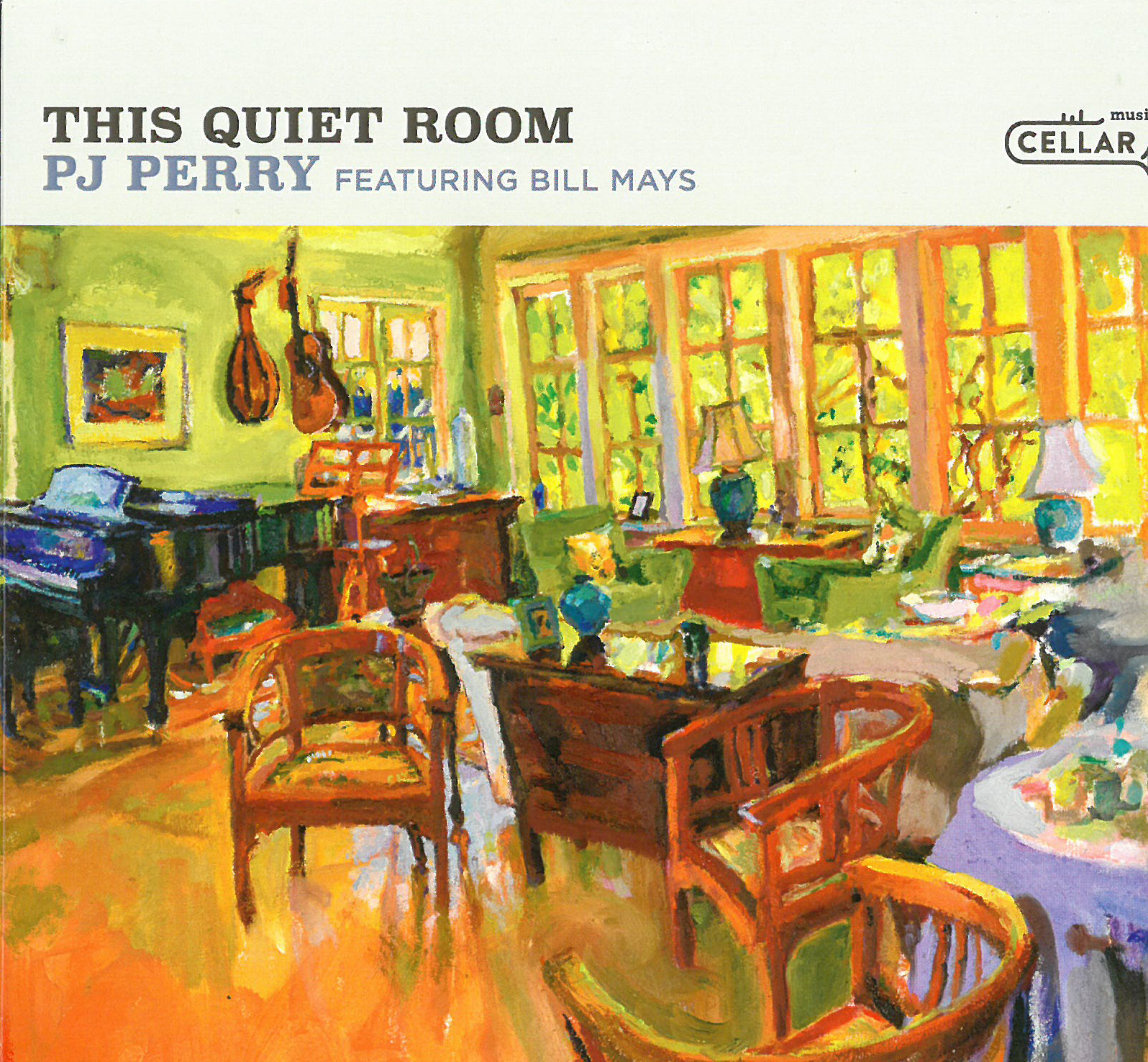
01d PJ PerryThis Quiet Room, a duo album from Canadian alto saxophonist PJ Perry and American pianist Bill Mays, is another essay in intimacy. Recorded live-off-the-floor at a private home in Vancouver, the session feels warm and immediate, and successfully produces the sensation of being in the room as the songs are being performed. Both Perry and Mays are veteran jazz players, with a firm grip on the idiomatic conventions of the music they’ve recorded. Bud Powell’s Parisian Thoroughfare and Charlie Parker’s Laird Baird are highlights, and both give Perry ample room to demonstrate his bebop prowess. The album’s quieter moments are also memorable: the medley of The Folks Who Live On The Hill (played solo by Mays) and Two For The Road is a lovely treat. 

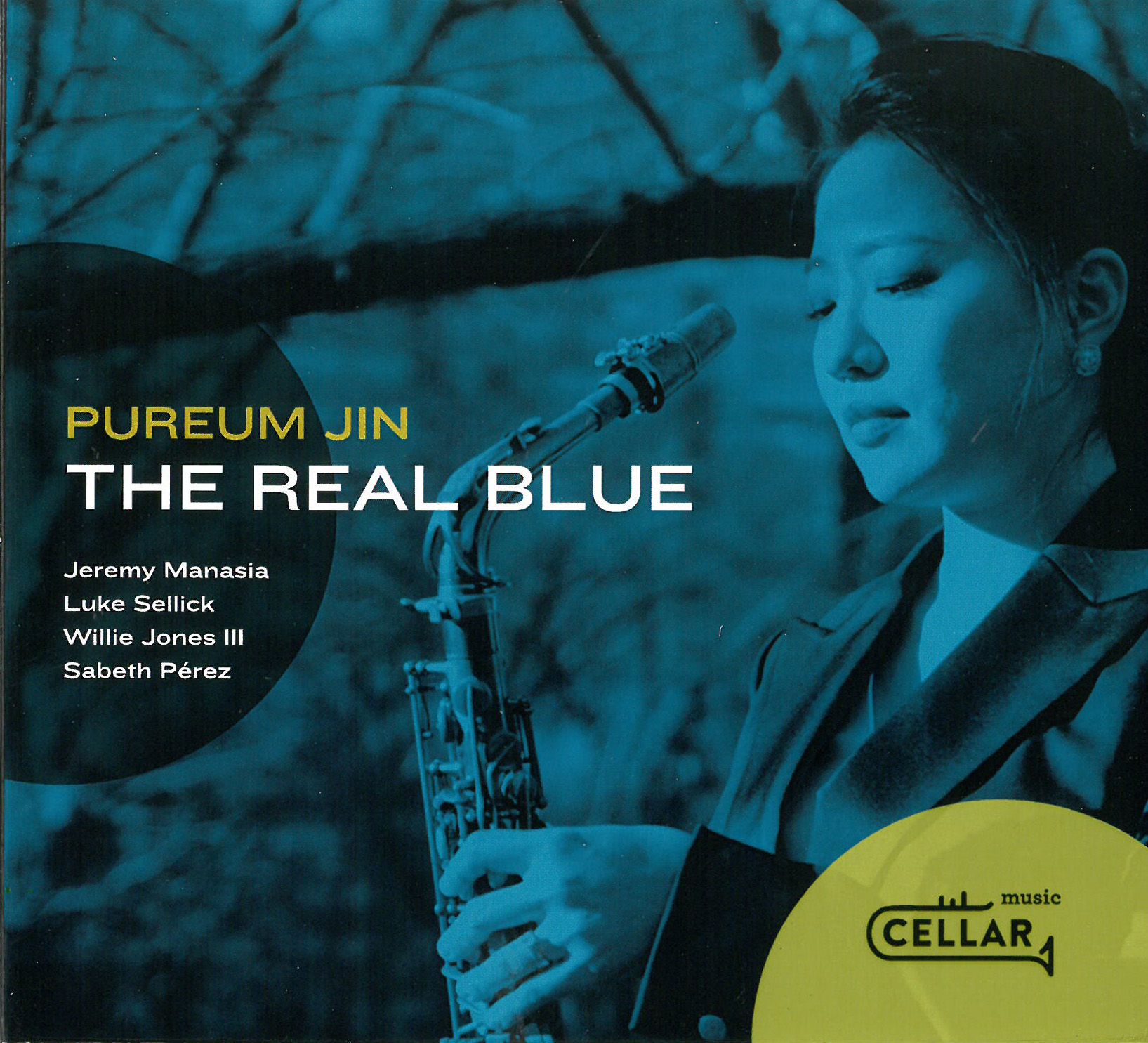
01e Real BlueThe Real Blue, the debut studio album from New York-based alto saxophonist Pureum Jin, was recorded at GB’s Juke Joint, in Long Island City, New York; relatively close to Van Gelder’s New Jersey Englewood Cliffs studio, at least compared to Vancouver. Joined by pianist Jeremy Manasia, bassist Luke Sellick, drummer Willie Jones III and special guest vocalist Sabeth Pérez, Jin has a bright, strong sound, rooted in the hard-bop style of Phil Woods, to whom she pays tribute on the song Remembering Mr. Woods, one of eight originals on this ten-track disc.

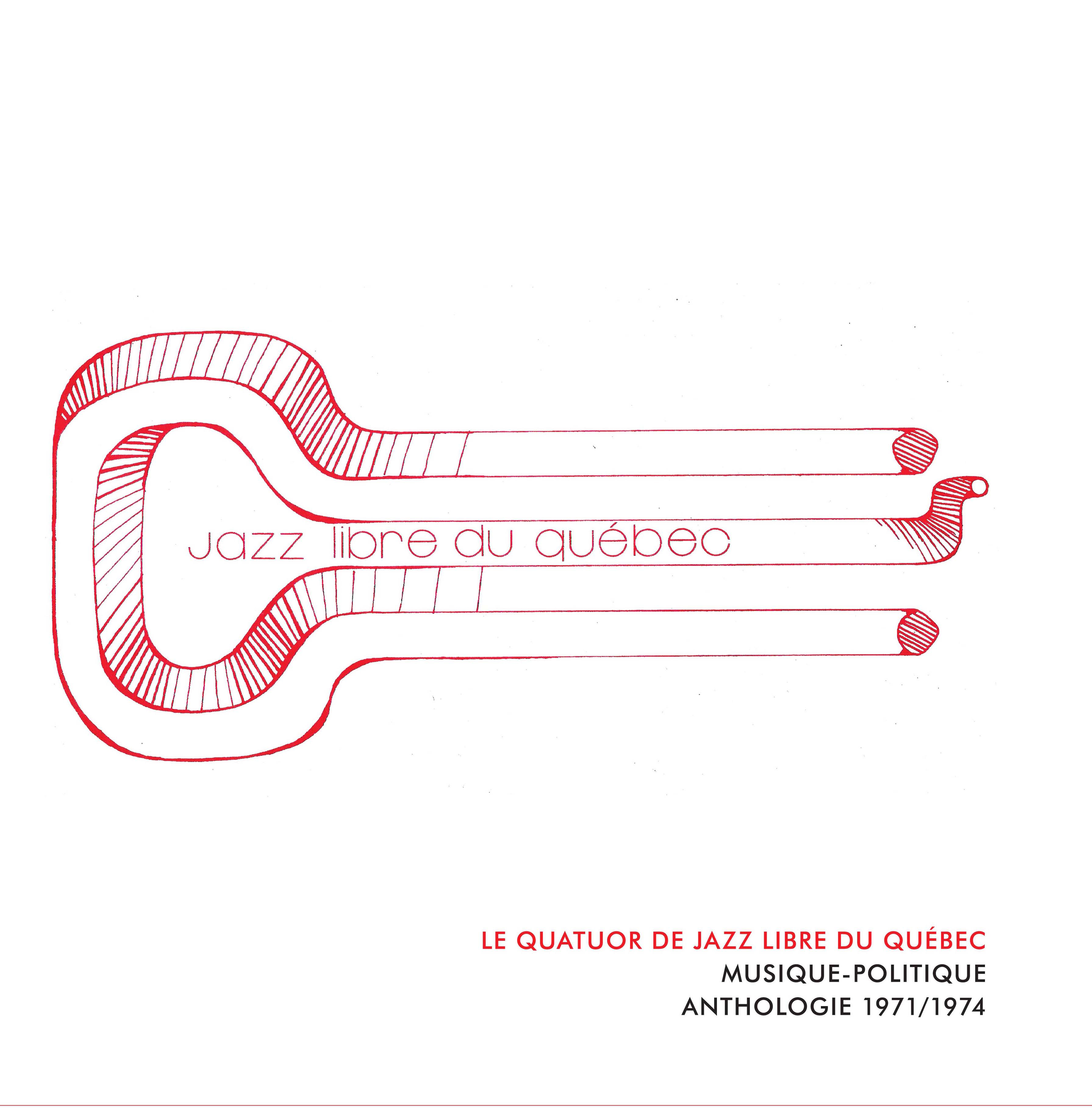
02 jazz libre cover cropMusique-Politique: Anthologie 1971-1974
Le Quatuor de Jazz Libre du Québec
Tour de Bras TDBHIST0001 (tourdebras.com)

This has been a momentous year for the documentation of Quebec’s entry into the world of free jazz. First came Eric Fillion’s book Jazz Libre et la révolution québécoise : Musique-action, 1967-1975 (M Éditeur: 2019) and now this ambitious four-CD set to provide sonic evidence of the achievement of the founders of free jazz in the province, Le Quatuor de Jazz Libre du Québec. The CDs, drawn from the group’s archives of performance tapes, are supplemented by a 24-page, LP-size volume that includes essays in French (including ones by Fillion and producer Éric Normand) and reproductions of manifestos, news stories and even a cover questionnaire from the group’s social outreach program, all of it providing context for the most radical Canadian-born jazz movement in history.

The group existed from 1967 to 1975 with two constant members, tenor saxophonist Jean Préfontaine and trumpeter Yves Charbonneau. If jazz has rarely been political in Canada, Le Quatuor was insistently so, creating a distinct connection between the ferment in Quebec society and the ferment in their own music, initially inspired by American free jazz as played by Ornette Coleman and Albert Ayler. The music here is very much a soundtrack to the times, an intense element in the rise of Quebec nationalism that followed on the FLQ crisis and the War Measures Act, enacted in October 1970. The quartet’s reach into the heart of Quebecois culture included the founding of an artist commune (Le Petite Québec Libre), a later performance space (L’Amorce) and public self-analysis of their work (interspersed here between the performances).

The music here runs from 1971 to 1974, arguably the group’s strongest period despite shifting support. Jean Préfontaine, born in 1926, is the strongest presence here, a musician who found free jazz after a career in a military band. His extended opening solo on a September 1973 performance is a riveting example of all that free jazz saxophone could be: a radical soliloquy that’s part jeremiad, part exhortation, part abstract interior monologue cut through with doubt and excitement at the coming day. Yves Charbonneau is a fine foil, a subtler provocateur, adding thoughtful solos and detailed support as the set documents the band’s developing sense of a commanding freedom. The presence of American cellist Tristan Honsinger on the 1973 material, passing through en route to a brilliant career in European free improvisation, signals a broadening musical language and the achievement of the group’s final period.

The set adds substantially to the history of jazz in Canada, casting new light on its most intense moment, as well as a significant contributory stream to Quebec’s diverse concept of musique actuelle, perhaps the most vigorous scene in contemporary Canadian music.

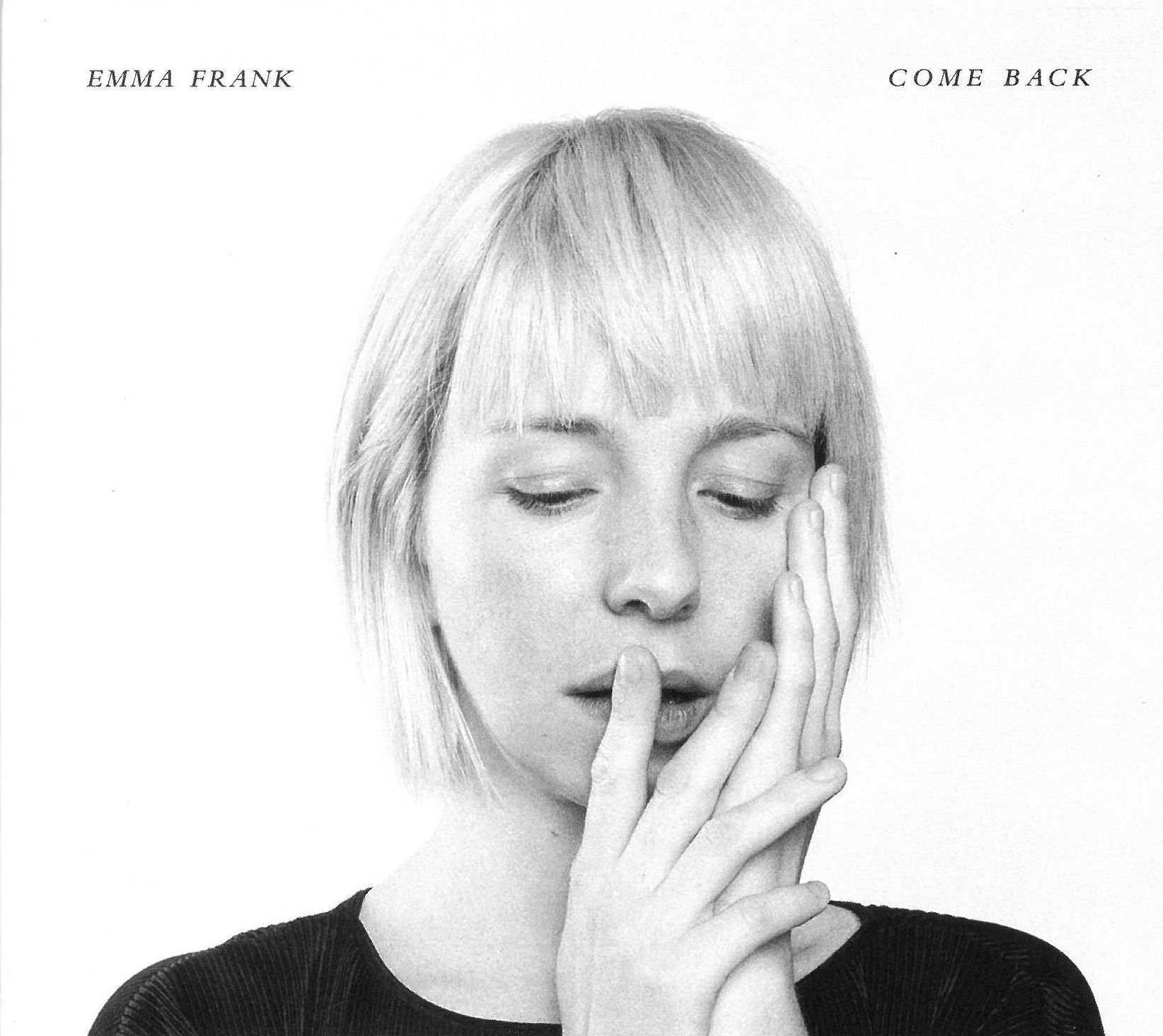
01 Emma FrankCome Back
Emma Frank
Justin Time JUST 262-2 (justin-time.com)

It’s not often that you come across a multi-faceted voice that could fit into any genre of music imaginable. Boston native Emma Frank demonstrates her ability to seamlessly blend genres within songs and navigate between them with her stellar voice on her latest release. Frank’s pieces are introspective, telling stories in such a way that any listener could directly relate to. Her vocal style is reminiscent of highly acclaimed Canadian indie pop singer Feist with a delicious hint of Diana Krall that aids in creating the perfect blend of jazz and art pop throughout the album. This album provides a welcome updated jazz sound that is suitable to listeners new to the genre and aficionados alike.

Frank’s songs are of a milder tempo but have plenty of movement, allowing the listener to fully process every musical element and nuance within the pieces without growing weary. The soundscape is strewn with plenty to listen and pay attention to thanks to musicians such as Aaron Parks on piano and synthesizers, Tommy Crane on drums, Zack Lober on bass and co-producer/guitarist Franky Rousseau with whom Frank has previously collaborated. While her record has a modern touch, it is pleasing to hear hints of traditional jazz throughout, especially within pieces such as Sometimes, Promises and See You. This fourth release by the stunning and golden-voiced vocalist is an incredibly pleasing journey through genres that leaves something new to discover around every corner.

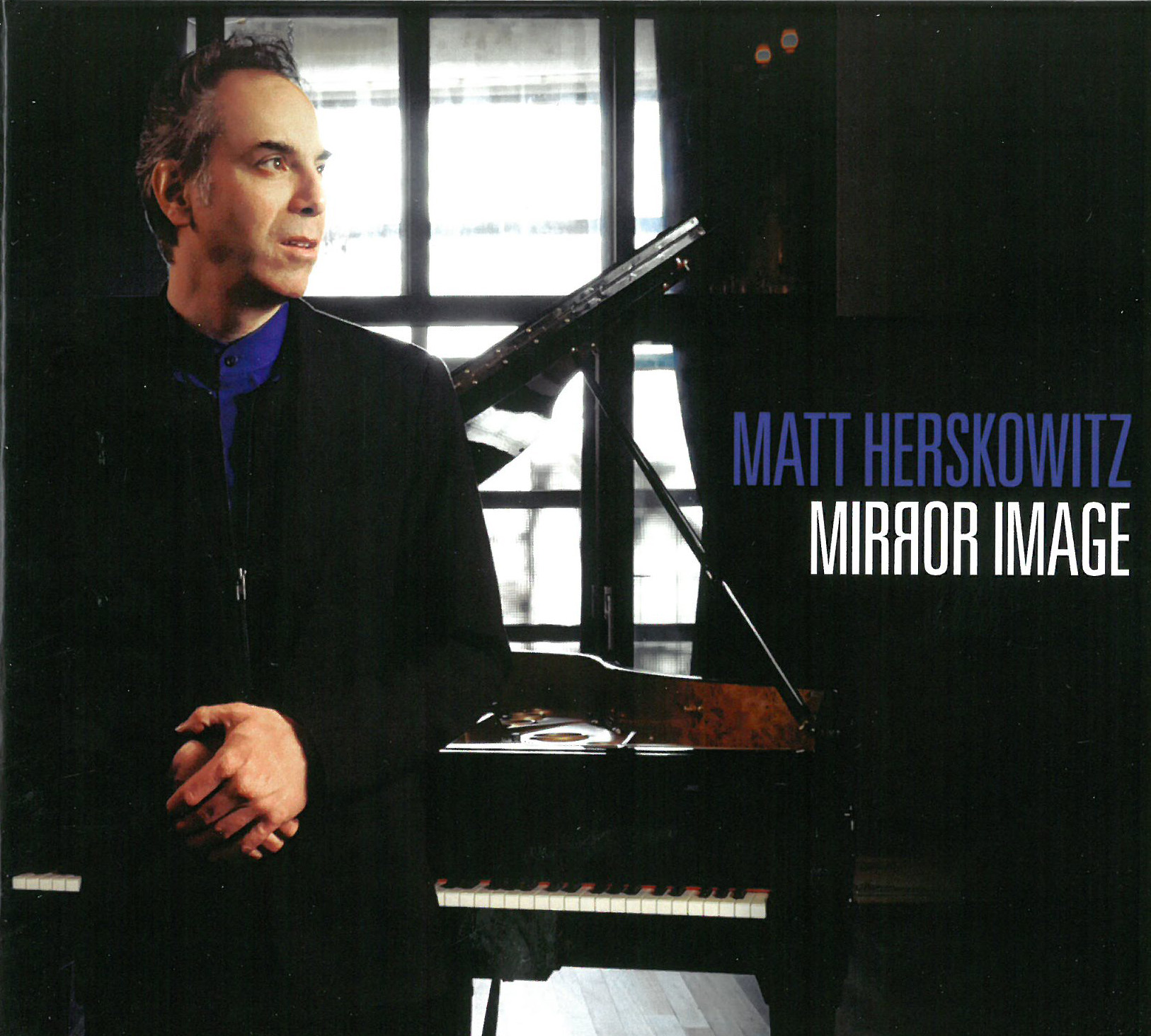
04 Matt HerskowitzMirror Image
Matt Herskowitz
Justin Time JUST 263-2 (justin-time.com)

To play jazz on the piano, a musician must – at some point – come to terms with the weight of the instrument’s history. The modern drum kit started to come together in the 1920s; the electric guitar, which, unlike its classical forebears, would be played through an amplifier, primarily with a plectrum, would not be manufactured until the 1930s. But the piano – so central to the sound of mainstream jazz – predates the genre by over 200 years.

On the solo album Mirror Image, released on Montreal’s Justin Time Records, the accomplished pianist Matt Herskowitz demonstrates his command of both the jazz and classical traditions through a mixture of original pieces, compositions by the likes of Ravel, Satie and Schubert, and a jazz standard. The fusion of jazz and classical has its own rich history; third stream music has enjoyed a degree of popularity since the 1960s. This synthesis is used to great effect by Herskowitz, not as a way to showcase two separate skill sets, but as a framework with which to display an intelligent, well-developed, honest approach to music making that honours the pianist’s personal experiences on the instrument. Highlights include bluesy, gospel-tinged flourishes on Gottschalk’s The Last Hope, the percussive title track Mirror Image, and My One And Only Love, which closes the album. Herskowitz’s truest success, however, is the thread with which he so effectively and confidently connects the album’s many elements into a sensible whole.

Listen to 'Mirror Image' Now in the Listening Room

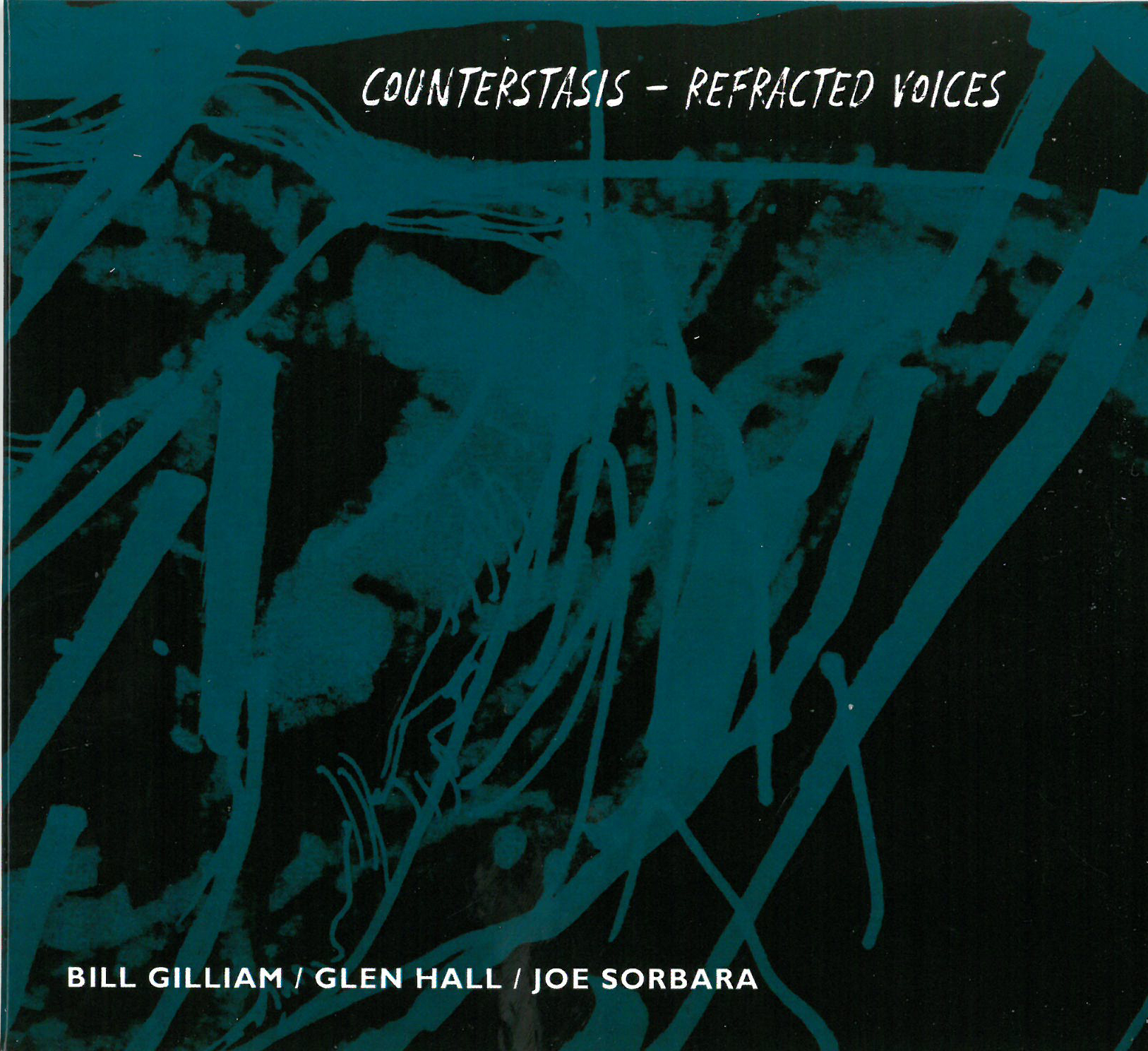
05 Bill GilliamCounterstasis – Refracted Voices
Bill Gilliam; Glen Hall; Joe Sorbara
Independent MPBG-006 (gilliamhallsorbara.bandcamp.com)

Counterstasis – Refracted Voices is a new album of improvised music from the trio of Bill Gilliam (acoustic piano, preparations), Glen Hall (woodwinds, electroacoustics) and Joe Sorbara (drums, percussion), recorded at Number 9 Audio Group in Toronto. Gilliam, Hall and Sorbara are veteran improvisers, and bring a wealth of creative experience to their shared practice, which takes its influence from a variety of musical traditions. The heart of this project, as described in the liner notes, is to “counter stasis, to foster change, to create a music in which [the musicians’] individual voices can be bent by, refracted through the voices of their co-conspirators.” To these exploratory and interactive ends, Hall uses an assortment of live effects, including the OMax AI improvising software and the CataRT synthesis program, both by the Paris-based Institute for Research and Coordination in Acoustics/Music (IRCAM).

Hall’s electronic contributions range from subtle additions to the trio’s acoustic instruments (as on the opening track, Sinuous Movements), to major structural components (as on Radio Chatter, which does indeed feature radio chatter, and Cave Ritual, the album’s longest offering, in which eerie atmospheric sounds form the basis for the overall shape of the tune). Throughout the proceedings, Gilliam, Hall and Sorbara play with maturity, confidently committing themselves to the realization of a shared musical vision that privileges communication over individual athletics. The album offers many highlights, but is best heard in one listen, as the spontaneously composed event that it is.

06 TriioTriio
Alex Fournier
Furniture Music Records (alexfournierplaysbass.com)

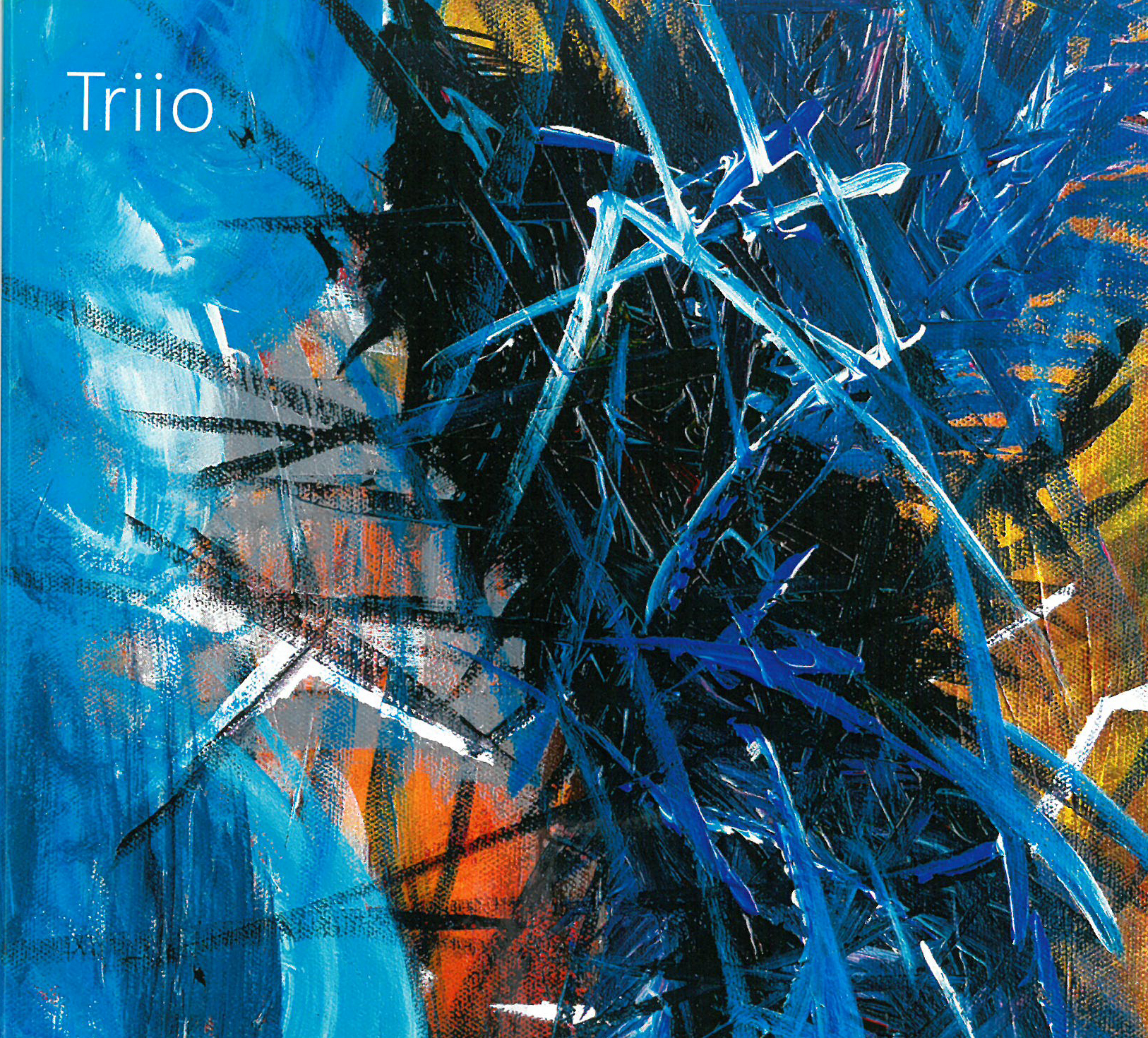
Toronto-born bassist Alex Fournier has gotten together some exceptionally talented musicians for this newest album simply titled Triio. Fournier himself has penned every song on the record and it is a true and great testament to his compositional talent. For those wondering about the interesting spelling of the album title, the band leader himself mentioned that he merely added in another ‘i’ to indicate that the group is not a true trio; it was meant to originally have four members but eventually grew into the sextet that is heard on the record.

The album as a whole is an interesting musical journey. It offers plenty of opportunity for experimentation and improvisation but also manages to have a certain character and, to an extent, structure, throughout. It is very easy to lose yourself completely in the unique sound of the record. The music has a variety of textures, almost as if you can physically feel the different character and flavour of each piece. The track ESD is almost what you could call “trippy,” a complete improvisational journey that fittingly starts off the record. Giant-Dad and Noisemaker have some underlying elements of traditional jazz slyly inserted into the bigger musical picture. Dusk has beautifully captivating and haunting melodies by great talents Bea Labikova on alto sax as well as flute and Aidan Sibley on trombone. This record offers something for both seasoned listeners of jazz and for people new to the scene.

07 Tune TownThere From Here
Tune Town
Independent TSLCD-310 (tunetownjazz.com)

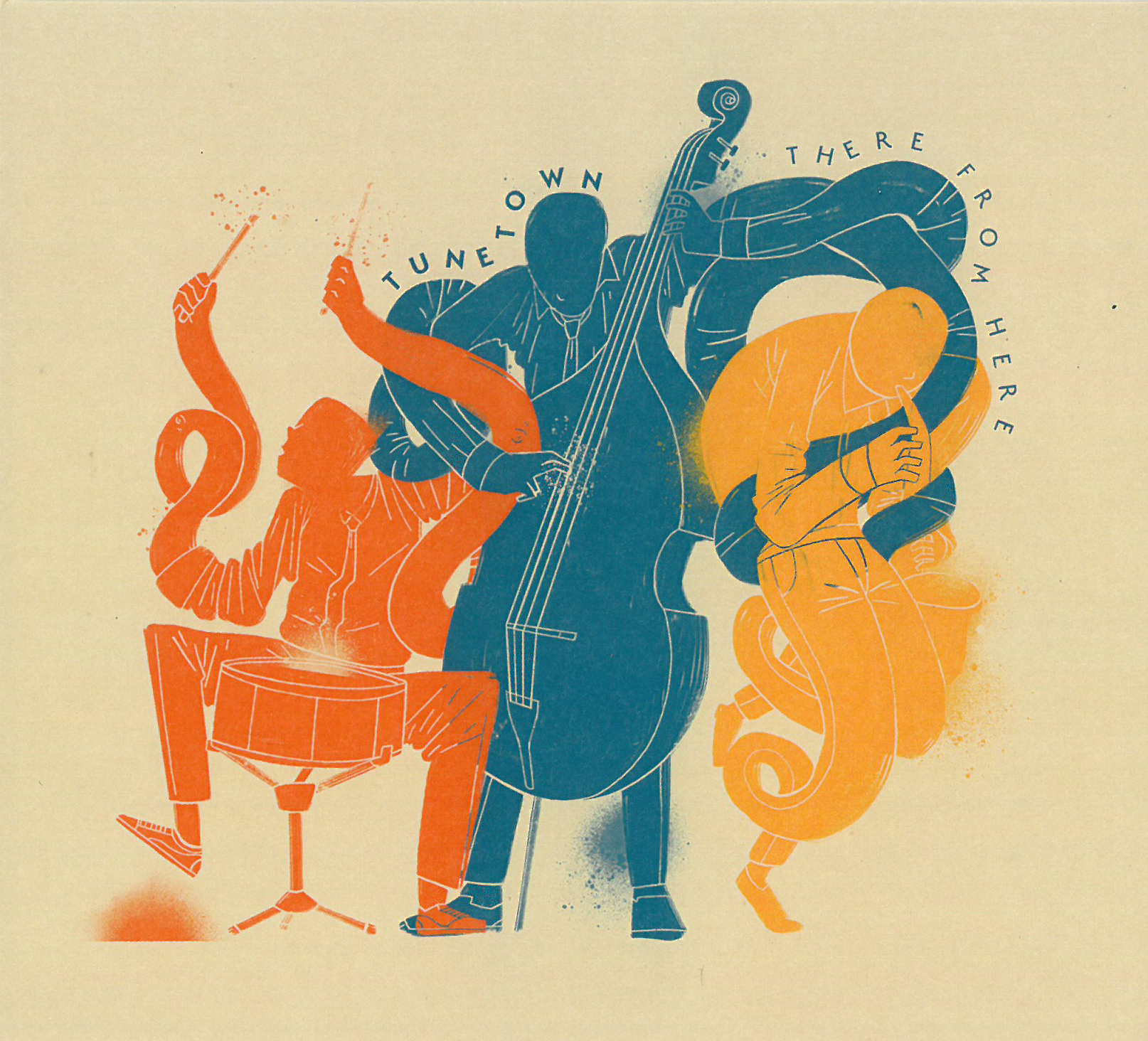
There From Here is the debut album from a fresh collective on the Canadian jazz scene, a scintillating trio of Canadian talent: Kelly Jefferson on saxophones, Artie Roth on acoustic bass and Ernesto Cervini on drums. With grooves that get your foot tapping to captivating melodies and rhythms, this collection of original pieces will breathe life into an otherwise dull and meticulous day. The album is a breath of fresh air in today’s world of constant musical shuffling; it is meant to be listened to as a story from top to bottom, acting much like a concept album. Listeners are in for a pleasing journey through various genres.

The Monks of Oka harks back to the era of jazz greats, specifically Thelonious Monk. It is easy to spot the influence of his music in the piece. Sophisticated Lady takes the tempo down a notch in order to showcase the great talents of Jefferson and Roth as they take you along on a smooth and pleasing melodic voyage. The album does an astounding job of “seamlessly assimilating elements from the avant garde, funk and jazz worlds.” Especially in the track Split Infinity we hear a great funk groove supported by Roth and Cervini throughout the piece. For those tired of the rush-rush world that we live in, this is a fantastic album that allows you to sit down and take in a complete musical story.

08 Heather BambrickFine State
Heather Bambrick
Heather Bambrick Music HBCD-004 (heatherbambrick.ca)

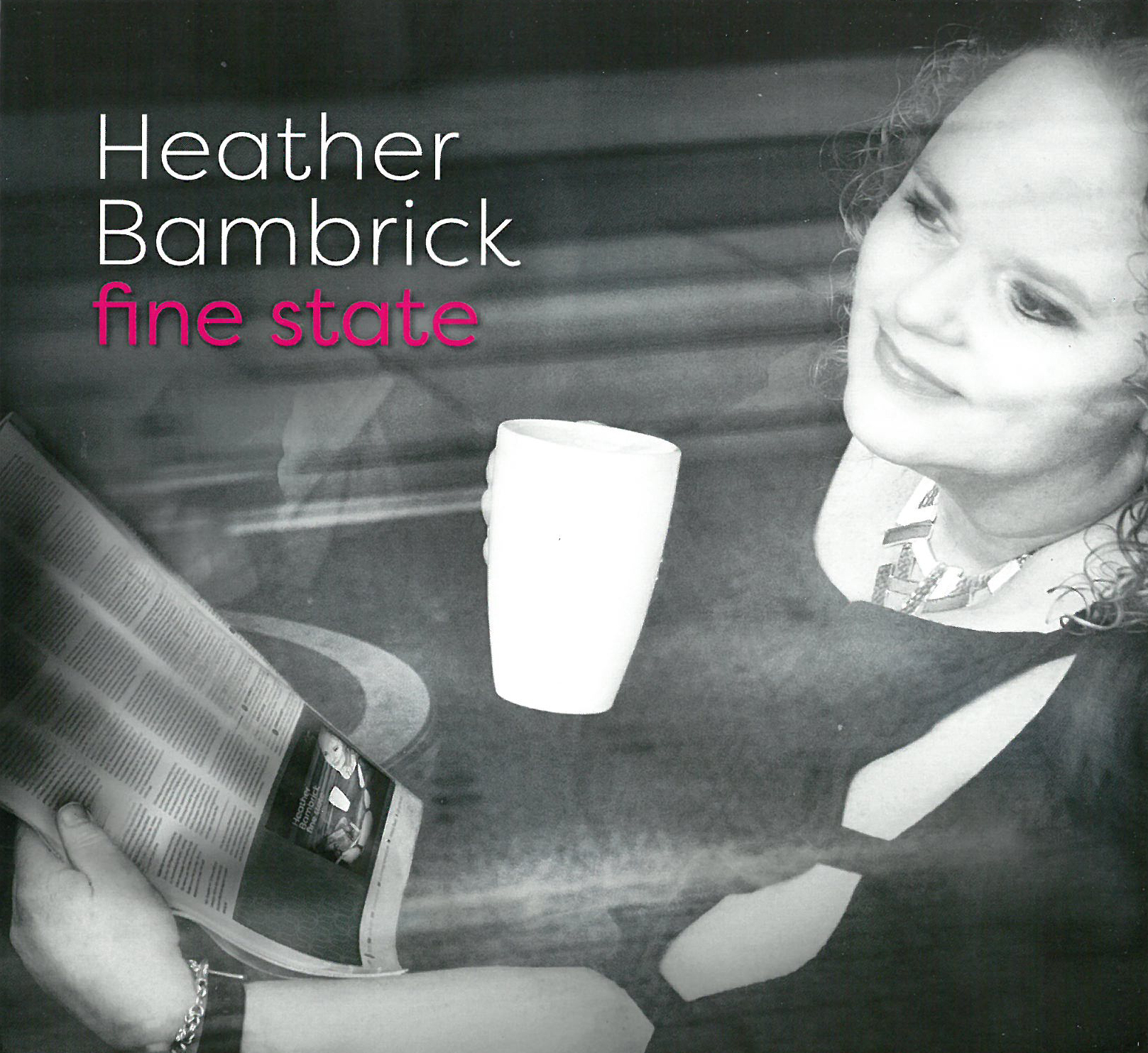
Heather Bambrick, that beloved – and often goofy – voice familiar to anyone who tunes in to JAZZ.FM91, weekdays between 9am and 1pm (and nightly on Wednesdays), shows off her attractive pedigree with another solo recording. This album, Fine State, also confirms her growing reputation as an artist of the first order. Her voice throughout is fairly light and limpid, though not without sinew.

Bambrick’s diction is exceptional, reflecting real imagination behind repertoire that spans standards as well as thoroughly interesting new work composed by her as well as other writers of repute. This is ingeniously selected music, reflective of the high quality of the production by the drummer on this date, Ben Wittman, and Jono Grant, a longtime Bambrick associate, together with the vocalist herself.

If it’s hard to single out one track as being the most perfect example of Bambrick’s musicianship, it is equally hard to pick a favourite (because that would change with each playing of the recording). However, I would posit that Bambrick’s version of Milton Nascimento and Fernando Brant’s utterly beautiful song, Bridges (sung here with Gene Lees’ English lyrics) might be described as this disc’s crowning glory. Here we have a song, the poetry of which is infused with a sense of nostalgia and melancholy, its fluid melody delicately painted by a candid voice urged on by wistful instruments. Clearly an album to die for…

Listen to 'Fine State' Now in the Listening Room

09 Itamar ErezMi Alegria
Itamar Erez
Independent (itamarerez.com)

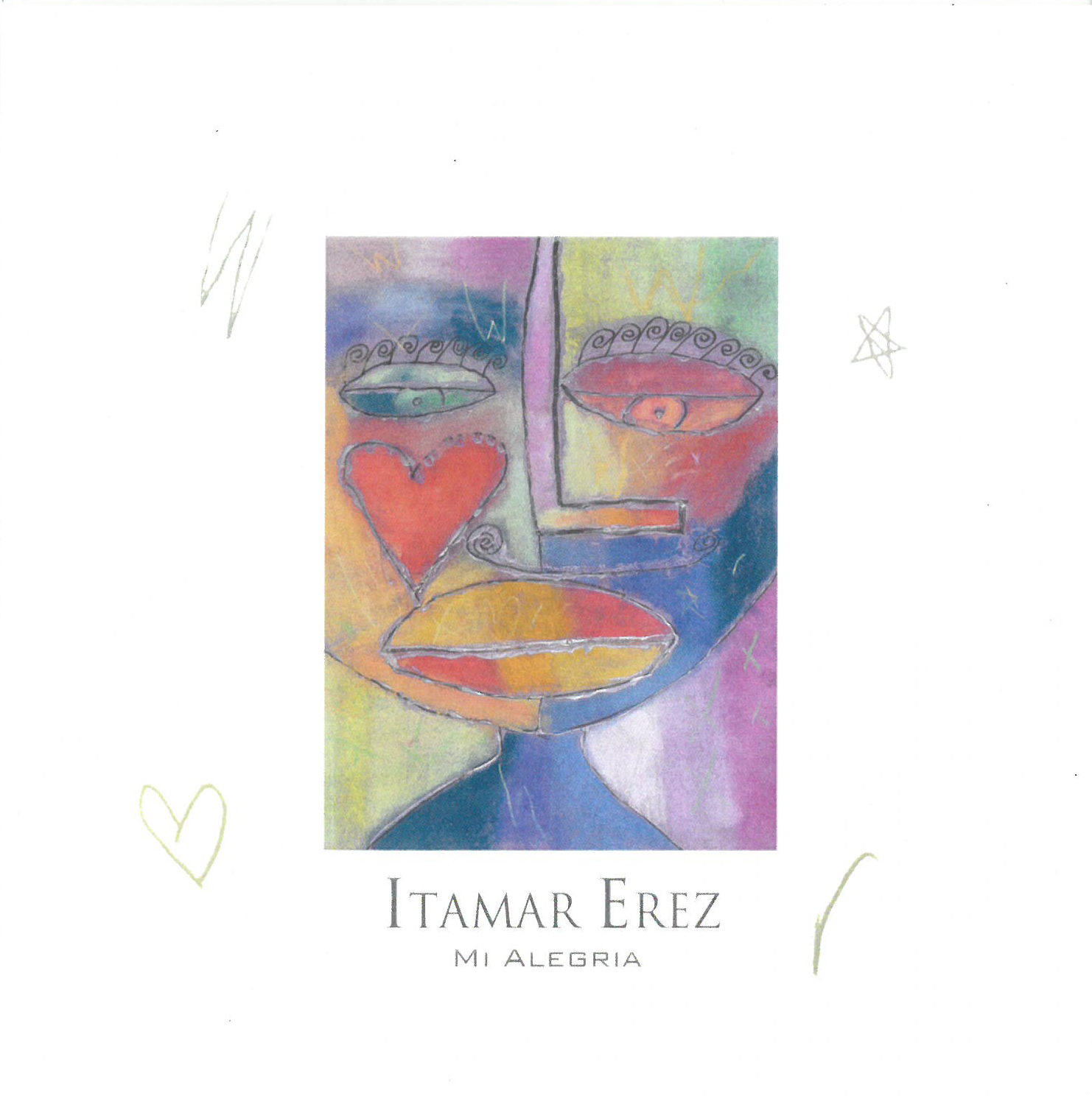
Itamar Erez’s music refreshingly defies categorization, though “world jazz” seems a reasonable option for DISCoveries review purposes. His is a rich, borderless musical world, with influences ranging from Bach to Brazilian choro. For Israeli-born, Vancouver-based Erez, a world-class guitarist, pianist, composer and educator, his myriad sources of inspiration reflect a wealth of musical traditions including Middle Eastern, flamenco, Latin, classical and the aforementioned jazz.

This array of influences is readily apparent on the breathtaking new release, Mi Alegria (Spanish for my joy). With each track a compelling example of Erez’s elegant and masterful musicianship, it’s hard to know where to draw one’s attention, but the title track is as good a place as any. Dedicated to his daughter Mia, Mi Alegria (get it) is as close to a classic jazz arrangement as you’ll find on the CD. With Erez on piano, bassist James Meger, drummer Kevin Romain and Ilan Salem on flute, it swings with a jaunty energy. On the other hand, Yahli’s Lullaby, named for Erez’s 12-year-old son (whose artwork graces the front cover), is an evocative and touching piece with a Middle-Eastern flavour.

For Erez’s pyrotechnical guitar work, listen to Choro Sentimental. It is truly jaw-dropping. Endless Cycle has a driving momentum, with Erez playing piano and guitar, sometimes both at the same time! Peppered throughout the album, François Houle (clarinet), Celso Machado (percussion) and Hamin Honari (tombak) contribute sumptuous layers of sound.

Mi Alegria is just that: a joyful, musical celebration by a truly engaging artist.

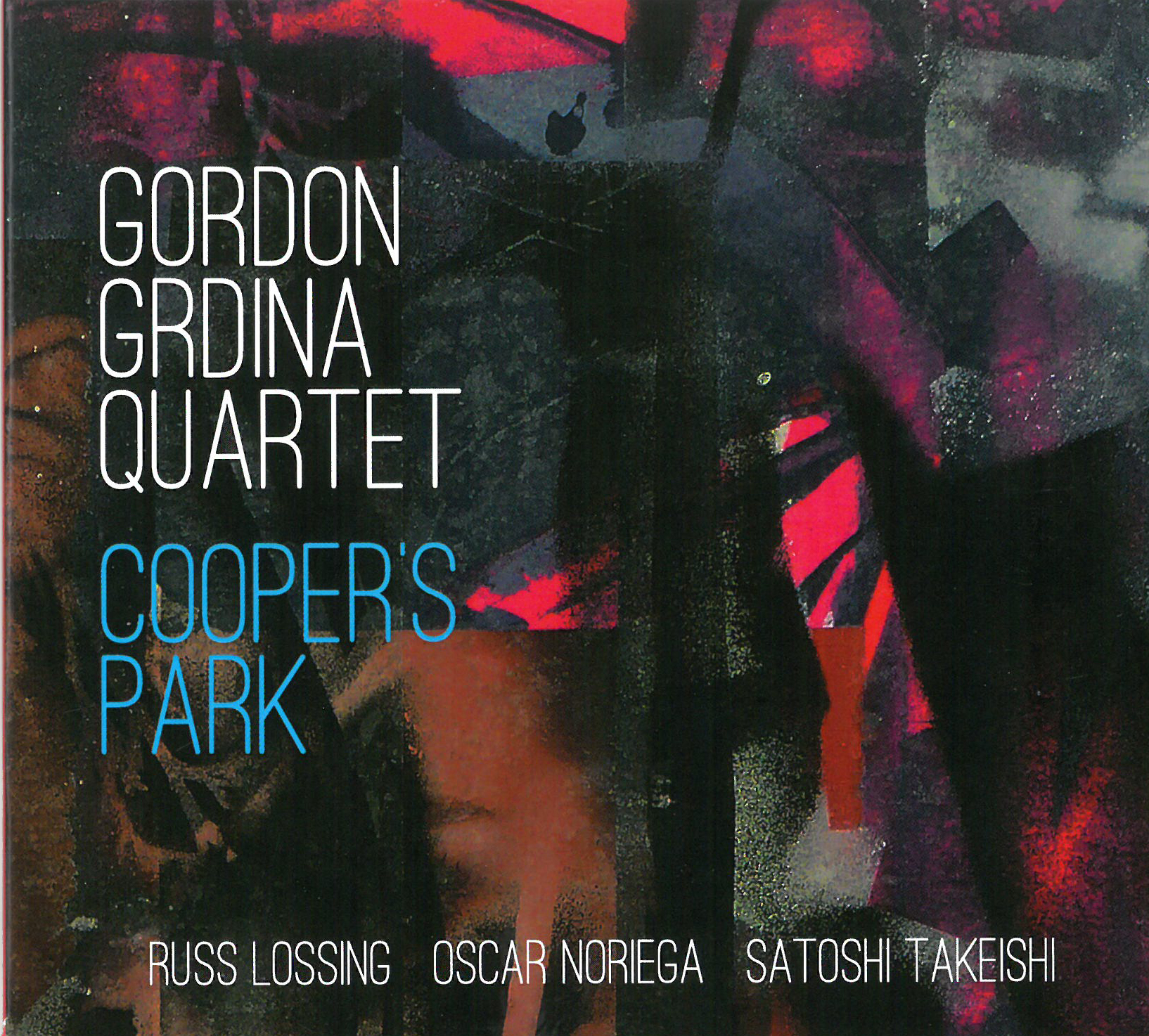
10 Gordon GrdinaCooper’s Park
Gordon Grdina Quartet
Songlines SGL 1630-2 (songlines.com)

Vancouver guitarist Gordon Grdina has gradually emerged on a larger stage, convening bands with distinguished international figures in addition to his regional ensembles. For this Vancouver session, Grdina is joined by New Yorkers Oscar Noriega, on alto saxophone and clarinets, Russ Lossing on piano and keyboards, and Satoshi Takeishi on drums. Grdina first unveiled this quartet on the 2017 CD Inroads, presenting crisp versions of nine of his compositions. Here the emphasis has decidedly changed. There are just five tracks here, four of them together stretching to an hour and filled with both controlled evolutions and vigorous improvisation.

That focus on group interaction results in Grdina’s strongest recording to date, whether he’s emphasizing formal coherence, insistent intensity or both. The 18-minute title track sets a fluid standard for the program, generating episodes from lambent reverie to pensive conversation to pitch-bending wails. There’s a special link between Grdina and Lossing everywhere here, blurring their identities on lyrical near-acoustic flights or matching distorted guitar with the harsh electric edges of Lossing’s clavinet (a keyboard that served to launch some of Sun Ra’s stellar travels). Noriega is an inspiring presence, generating rapid coiling lines at once raw and adroit on both alto saxophone and bass clarinet, while Takeishi’s complex drumming can unite impetus and commentary.  

Grdina has challenged himself consistently since his 2006 debut Think Like the Waves with Gary Peacock and Paul Motian. Here he takes another significant step forward.

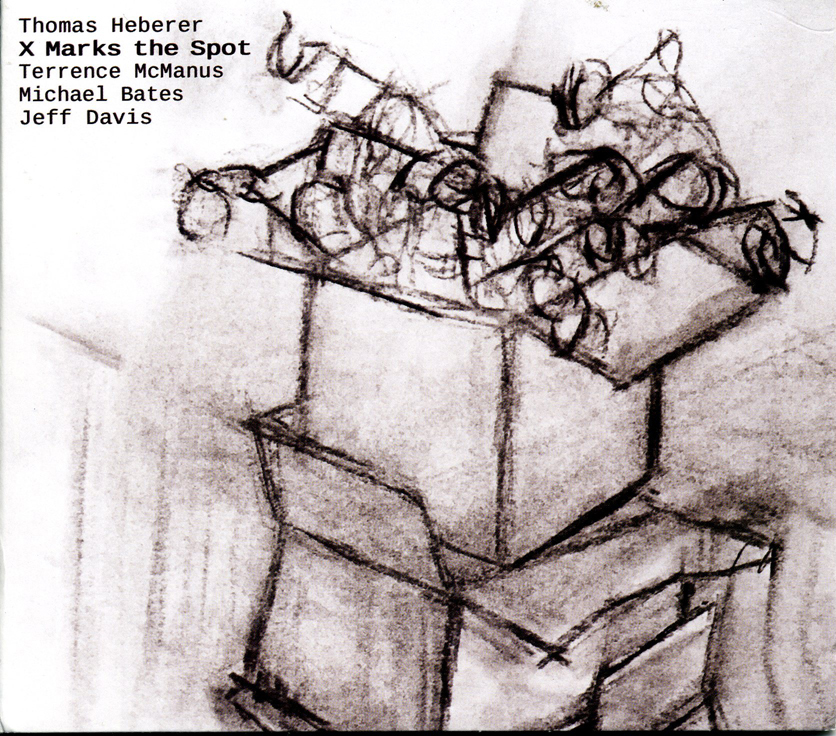
12 XMarksX Marks the Spot
Thomas Heberer
OutNow Recordings ONR 037 (outnowrecordings.com)

Concise and cosmopolitan, the eight selections here offer a slice of contemporary New York improvisation, composed by expatriate German trumpeter Thomas Heberer, decorated by the supple fills of guitarist Terrence McManus and the rhythmic dexterity of drummer Jeff Davis, both locals, and driven by the mostly sensed but rarely upfront power pulse of Canadian bassist Michael Bates. Heberer’s arrangements follow this strategy, whether channelling acoustic romps (Remscheid Reggae) or sidling up to reductionism with chiming guitar flanges and shaded, valveless air from the trumpeter (The Ball is in Your Court).

Despite sequences that flirt with atonality, dissonant tendencies are kept in check, especially on pieces such as The Great Hill and Bon Ton that are introduced and subsequently driven by the echoing slaps and pops of Bates’ nearly unwound strings. On The Great Hill, the bassist creates an ostinato that buoys Herberer’s plunger growls and McManus’ chromatic flanges. At the same time, Bates’ pulse is powerful enough so that the trumpeter can switch to outputting fragile grace notes, then back to growls without upsetting the program. As for the loping Bon Ton, drum rumbles and string thumps keep it horizontal as Heberer’s near-static air propelling and the guitarist’s strums and frails evolve in double counterpoint.

Overall the spot which this group of e(X)cellent players marks is a sophisticated zone where unself-conscious modern improvising is welcome and thrives.

Reissues of recorded music serve a variety of functions. Allowing us to experience sounds from the past is just one of them. More crucially, and this is especially important in terms of Free Jazz and Free Music, it restores to circulation sounds that were overlooked and/or spottily distributed on first appearance. Listening to those projects now not only provides an alternate view of musical history, but in many cases also provides a fuller understanding of music’s past.

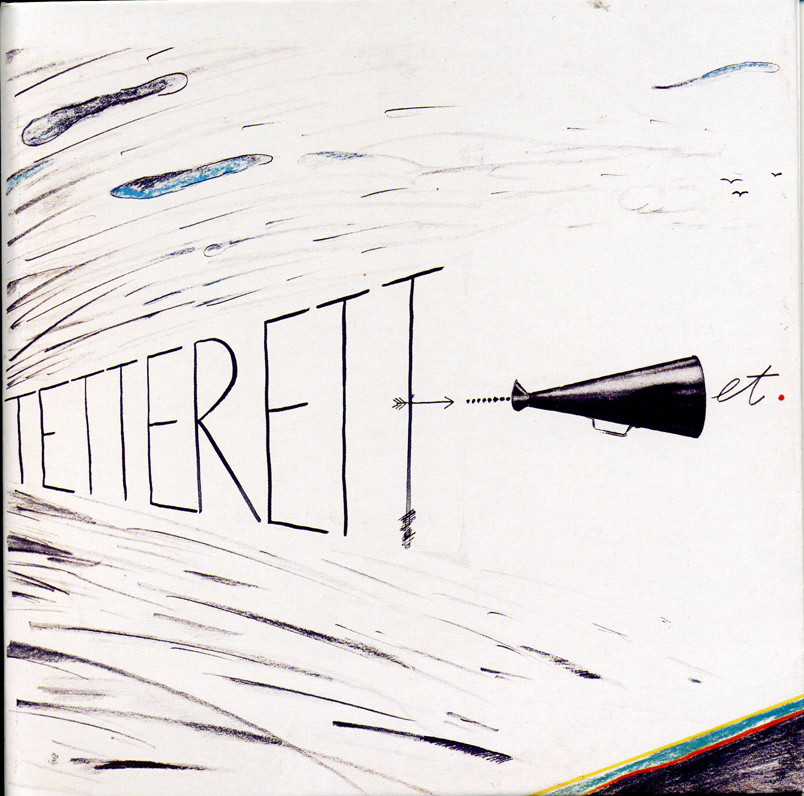
01 TetterettLittle noticed in North America at the time of its 1977 release, Tetterettet (Corbett vs. Dempsey CvsD CD 060 corbettvsdempsey.com) by the Amsterdam-based ICP Tentet was a confirmation of the high quality improvised music gaining prominence in Europe. Listening to the 11 selections played by such subsequently renowned players as pianist Misha Mengelberg and drummer Han Bennink from the Netherlands plus saxophonist John Tchicai of Denmark and Germany’s Peter Brötzmann, the high level of musicianship stands out as well as the freedom composers had to inject broad or subtle humour into the tracks – a concept shied away from by deadly serious experimenters on this side of the Atlantic. Two of the emblematic tracks are Alexander’s Marschbefehl and Ludwig’s Blue Note. On the latter, Mengelberg cycles through an assemblage of properly inflected keyboard motifs from so-called classical music while around him the band, following the energetic lead of one of the saxophonists double-times a pseudo-tango. On the foot-tapping Alexander’s Marschbefehl a march-time variant is subverted with peeping and blaring horn parts as well as a clattering percussion display from Bennink, while the pianist provides pseudo-impressionism with one hand and honky-tonk inflections from the other. As much fun as these and other tracks are, the disc’s showpiece is Mengelberg’s five-part title suite. Managing to encompass echoes of Middle-European salon sounds, Latin dance rhythms and pure improvisation, the sequences encompass outer-space-like tweaks from Michael Waisvisz’s electronics, plunger spills from Bert Koppelaar’s trombone, fierce or furtive split tones from the four saxophonists and Bennink’s ruffs, rebounds and rattles while hitting every part of his kit to ratchet up excitement But the theme, which speeds up and descends in sections, maintains a steady pace due to Alan Silva’s bass holding the beat. As the reed players’ striated vibrations mock their earlier excesses and the drummer turns the beat around, surgically inserted keyboard clicks create a finale that references the introduction.

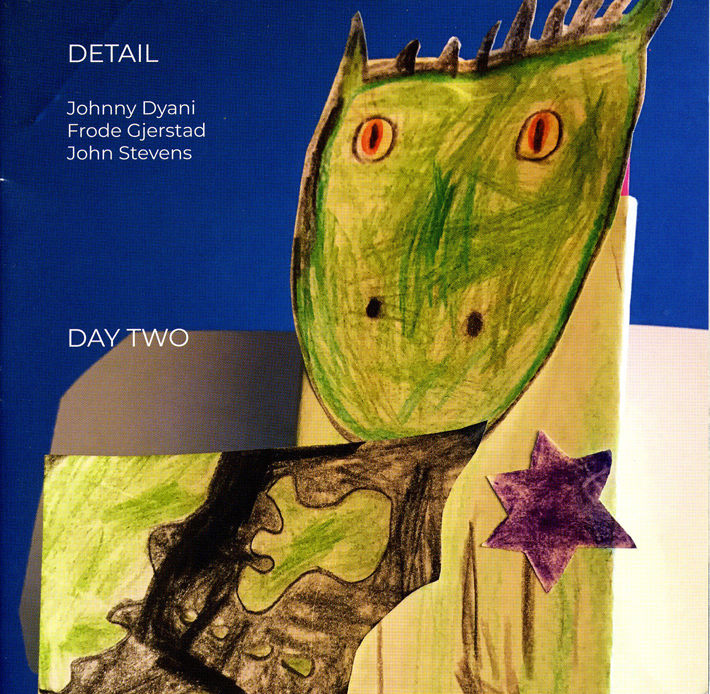
02 DetailLess brash and all-encompassing, but as remarkable a session, recorded in Norway in 1982, is Detail Day Two (NoBusiness Records CD 114 nobusinessrecords.com). The first trio iteration of that long-running group, it also demonstrates the pan-nationalist ethos of free music. That’s because this multi-layered, intricately balanced 42-minute improvisation was created by Norwegian saxophonist Frode Gjerstad, British drummer John Stevens and South African bassist Johnny Dyani. Practiced and matured in his percussion skills, the drummer never takes a solo, but allows his rattling drum tops and singing cymbal lines to intuit the rhythm so that the beat appears inevitable. Dyani, who had long established himself in Europe, boomerangs from volleying consistent plucks, which help push forward the narrative, to intricate stretches, picks and pulls to pinpoint individual string pressure or suction as he solos within his rhythmic functions. Adapting to this barrage from the bottom, Gjerstad starts off with tongue wiggles and intensity vibrations radiating from his soprano saxophone, and as the exposition becomes more pressurized switches to the deeper-toned tenor saxophone. Moving up from breathy snorts, his growling ghost notes and palindrome vibrations sound at various speeds and pitches to parallel Dyani’s strums and later bowed buzzes. Slowly, during the sequence’s second section, the saxophonist digs deeper into the theme and exposes all of its possible variables as he’s doubled by ricochets from the string set, with Stevens’ press rolls and bounces providing controlling and comforting accompaniment. Variations explored from all sides of the sound triangle, spidery fingering, positioned reed smears and drum clatter cease at the appropriate moment, never climaxing, but suggesting further trio explorations lie ahead.

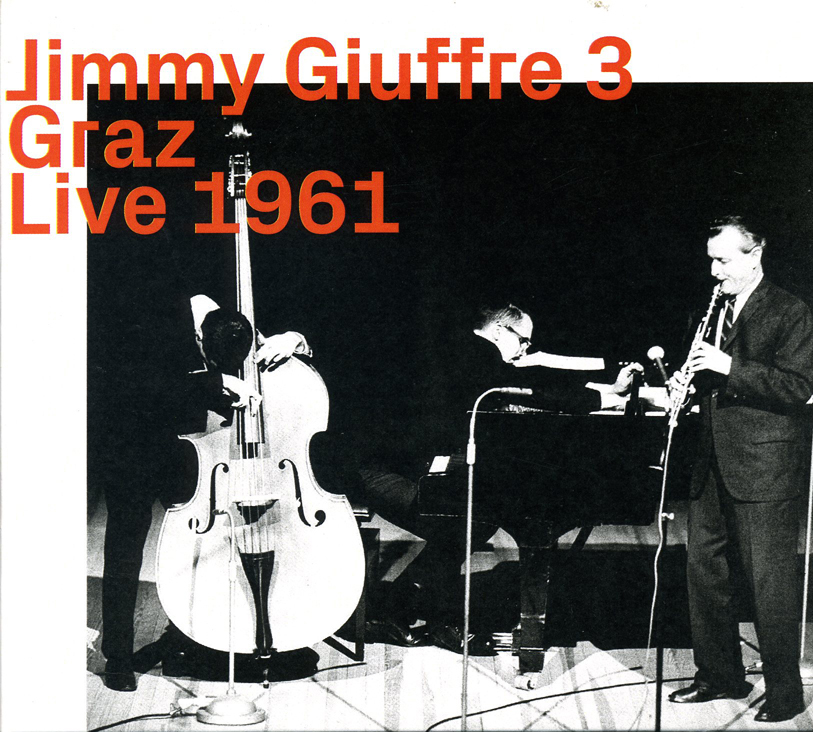
03 GiuffreOne of the progenitors of free-form improvising that was little noticed at the time but proved highly influential for exploratory music’s future, was the European tour of American clarinetist Jimmy Giuffre3, his trio with Canadian pianist Paul Bley and American bassist Steve Swallow. A previously unreleased 75-minute Austrian radio broadcast, Graz Live 1961 (ezz-thetics 1001, hathut.com) shows what baffled, energized and/or influenced contemporary musicians. Running through 11, mostly Giuffre-composed tracks, encompassing multiple moods, speeds and pitches, the trio uses the concert setting to extend performances. A later classic like Cry Want, for instance, benefits as the heartfelt compassion in the title is made more palpable in the clarinetist’s a cappella introduction, framed by Bley’s dispassionate comping and Swallow’s swaying pumps, so that Giuffre’s ultimate shrills become that much more rending. It’s the same with the sequences that make up Suite for Germany. With a piano countermelody challenging the reedist’s initial high pitches, it’s Swallow’s unselfconscious walking which keeps the pieces together. Keyboard colouring helps slide the next section into an expression of carefully weighed tones from Giuffre with circular breathed continuum. Yet the subsequent fills Bley feeds into the narrative confirm an elaboration of mid-range swing. Reed peeps and piano slashes harden the following line but without compromising the rhythmic impetus, concluding with widening clarinet lows and double bass strums. Subverting the accusation of effete chamber-jazz, the set includes a collection of clattering from the plucked and stopped strings of a prepared piano; climbing shrills and soaring peeps from the clarinet; and guitar-like facility in expression and rhythm from the bassist. Pauses and hesitancy allow the trio to savour and stretch more beautiful motifs, yet at the same time, as on Trance, Bley backs Swallow’s string finesse with piano-lid slams that create extra percussiveness.

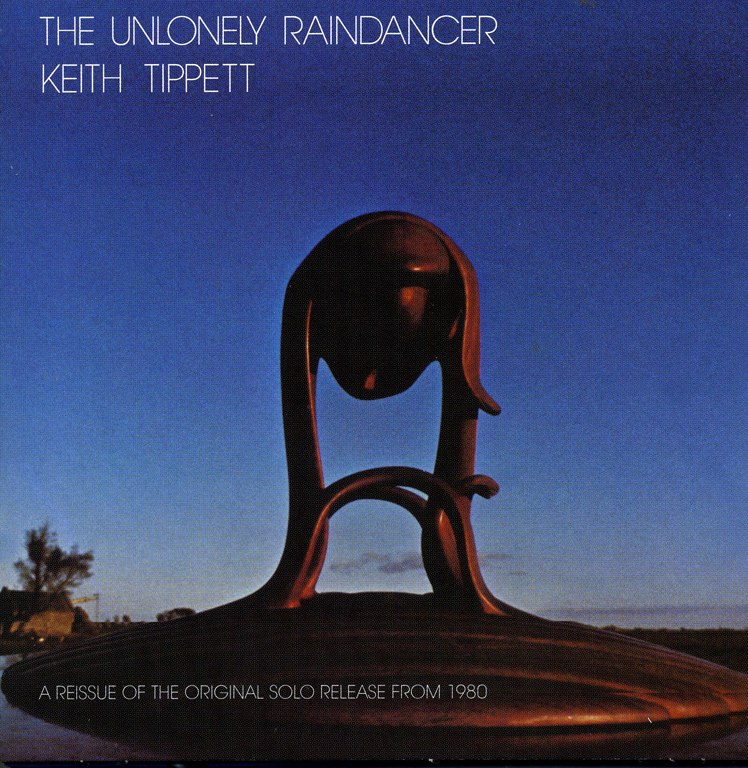
04 RaindancerAnother pianist, who like Bley has been thoroughly involved with a variety of styles and ensembles, is UK-native Keith Tippett, although there’s no record of him utilizing the back-fall for its rhythmic qualities. However on the title track of The Unlonely Raindancer (Discus 81 CD discus-music.co.uk), the sheer audacity of his improvisation reaches such a height that his vibrations on the keyboard and inner strings become so inadequate that he repeatedly smacks the instrument’s wood and lets loose with a couple of rebel yells. A reissue of his first solo set from 1979, the 78 minutes of what was a two-LP set, give him ample scope for full expression. Dynamically ranging through all layers of the piano with tropes that refer to bop, modal, swing and free playing, his interpretations range from sympathetic voicing, which presages intertwined stops and transitions (The Pool), to spun-out storytelling, expressed in widening spurts of emphasized textures and concentrated tonal colour-melding climaxing with echoing forward motion (Tortworth Oak). The key(s) to his creativity though are subsequent tracks that in execution and exploration are mirror images of one another – one centred around treble pitches, the second the ground bass. The latter, The Muted Melody, swiftly sweeps from kinetic to moderato as bouncing notes follow one after another in random rushes, often dipping into the deeper part of the soundboard. Further vibrating harmonics bolster and expose the playing which gallops to the end in speed mode. Concentrating on the harshest pitches that can be reverberated from highest keys in the first section of the more-than-19-minute Steel Yourself / the Bell, the Gong, the Voice, Tippett later creates Big Ben-like bongs from the wound string set. Ultimately reaching the midway mark, he switches strategies from chord plucking to sweeping to a groove that highlights strength as well as swing. As his power voicing reaches a point where the sequence can’t become any thicker or cramped, he sophisticatedly diminishes the pressure with responsive strumming that echoes even after the final pluck.

05 LiberationWhile this search for the new was proceeding in Europe, North American free jazz musicians faced a commercial atmosphere that promoted soul-jazz and jazz-rock above all else. As fascinating sociologically as musically, 1973’s Sounds of Liberation (Corbett vs. Dempsey CvsD CD 057 corbettvsdempsey.com) details how one Philadelphia-based sextet attempted to affect a musical détente between progressive and pop. A song collection driven by fluid foot-tapping rhythms from drums, congas and percussion, the tracks often contrast power slaps from Khan Jamal’s vibes with glossy picking from guitarist Monnnette Sudler. Seconding both, Byard Lancaster’s silky flute puffs fasten onto poppy Herbie Mann-like tropes, while his alto saxophone split tones on tracks like Sweet Evil Mist are raunchy enough to fit any James Brown disc of the era. If this faceoff between funky and freedom wasn’t enough, Backstreets of Heaven, the longest track, goes a step further than the then-popular so-called spiritual jazz and the likes of saxophonist Pharoah Sanders and vocalist Leon Thomas, by adding unnamed male and female vocalists on top of the chugging guitar riffs, clanking vibes and overblowing reed snarls. With a call-and-response Motown-smooth delivery, the track seems aimed at the R&B singles market – that is if it wasn’t nearly 11 minutes long.

Listening anew to these discs provides a rethinking and better understanding of the musical currents of those times.

02 Allison YoungSo Here We Are
Alison Young
Triplet TR10023 (alisonyoungmusic.com)

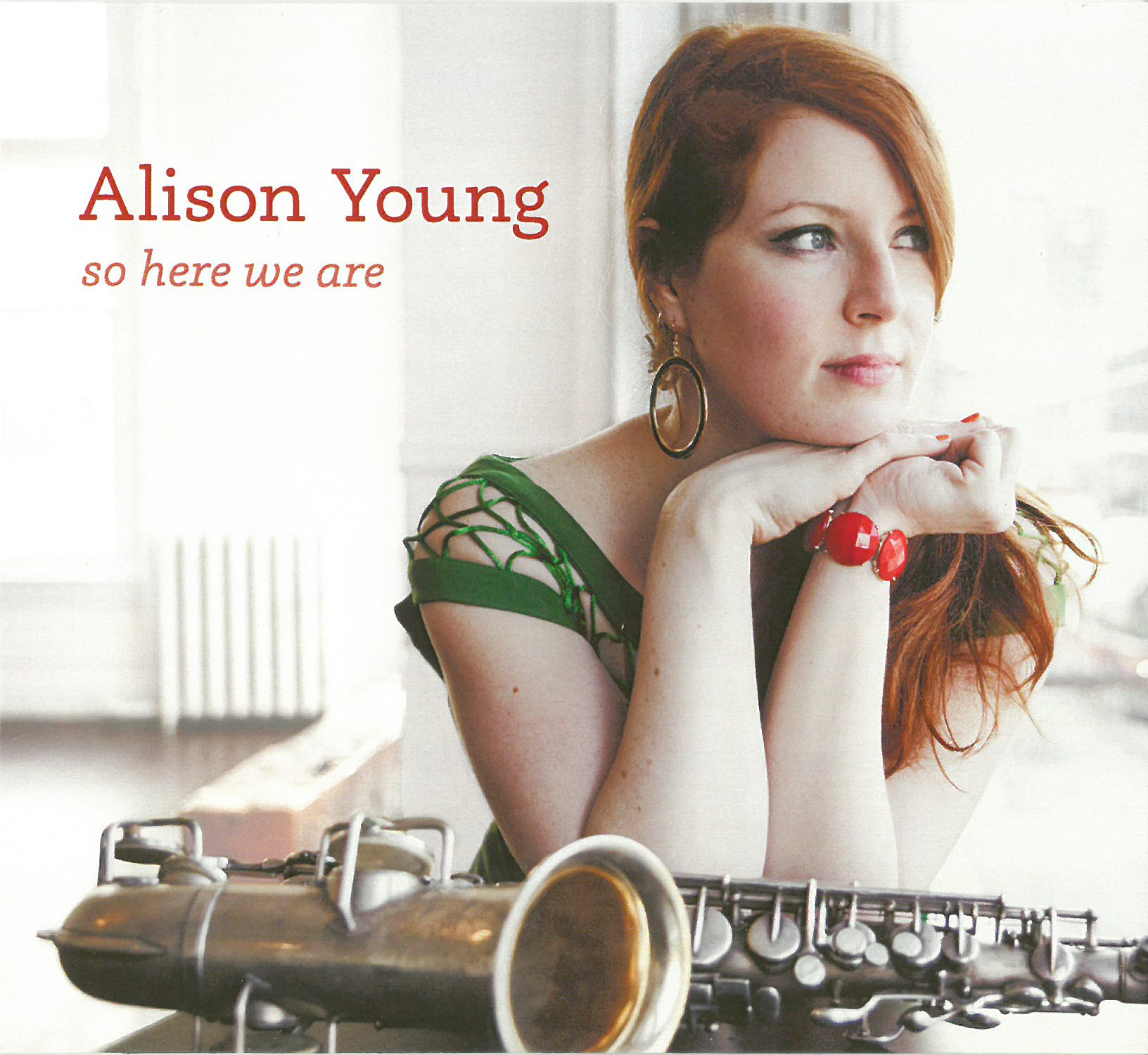
Stellar, JUNO-nominated saxophonist Alison Young has released her diverse, long-awaited debut album. Those who have had the pleasure of seeing Young play live know what to expect from this record and it definitely lives up to and exceeds all expectations. There is no shortage of great musicianship on the album, featuring well-known musicians such as Eric St-Laurent on guitar, Jeff McLeod on piano and organ, Ross MacIntyre on bass, Chris Wallace on drums and Guido Basso on flugelhorn. Pieces do a great job of showcasing the talents of all musicians and are mostly written by Young herself, with the exception of three tracks.

Diversity is found throughout every piece in this album. There are contrasts between elegant and energetic, driven melodies, as well as various inspirations ranging from “hard bop to soul to New Orleans-style funk.” Cedar Roots starts the record off with a righteous bang and is a strong example of the drive that drummers Chris Wallace and Sly Juhas bring to each track. Afterparty delves into a New Orleans-esque flavour with Young’s soul and funk inspirations showing through, as well as a delicious hint of traditional rock ‘n’ roll added to the mix. Celia & Harry and title track, So Here We Are, display another side of the saxophonist’s playing, leaning towards elegance, grace and a hark back to a more traditional jazz sound. Young’s album is a thoroughly enjoyable musical journey for all jazz lovers.

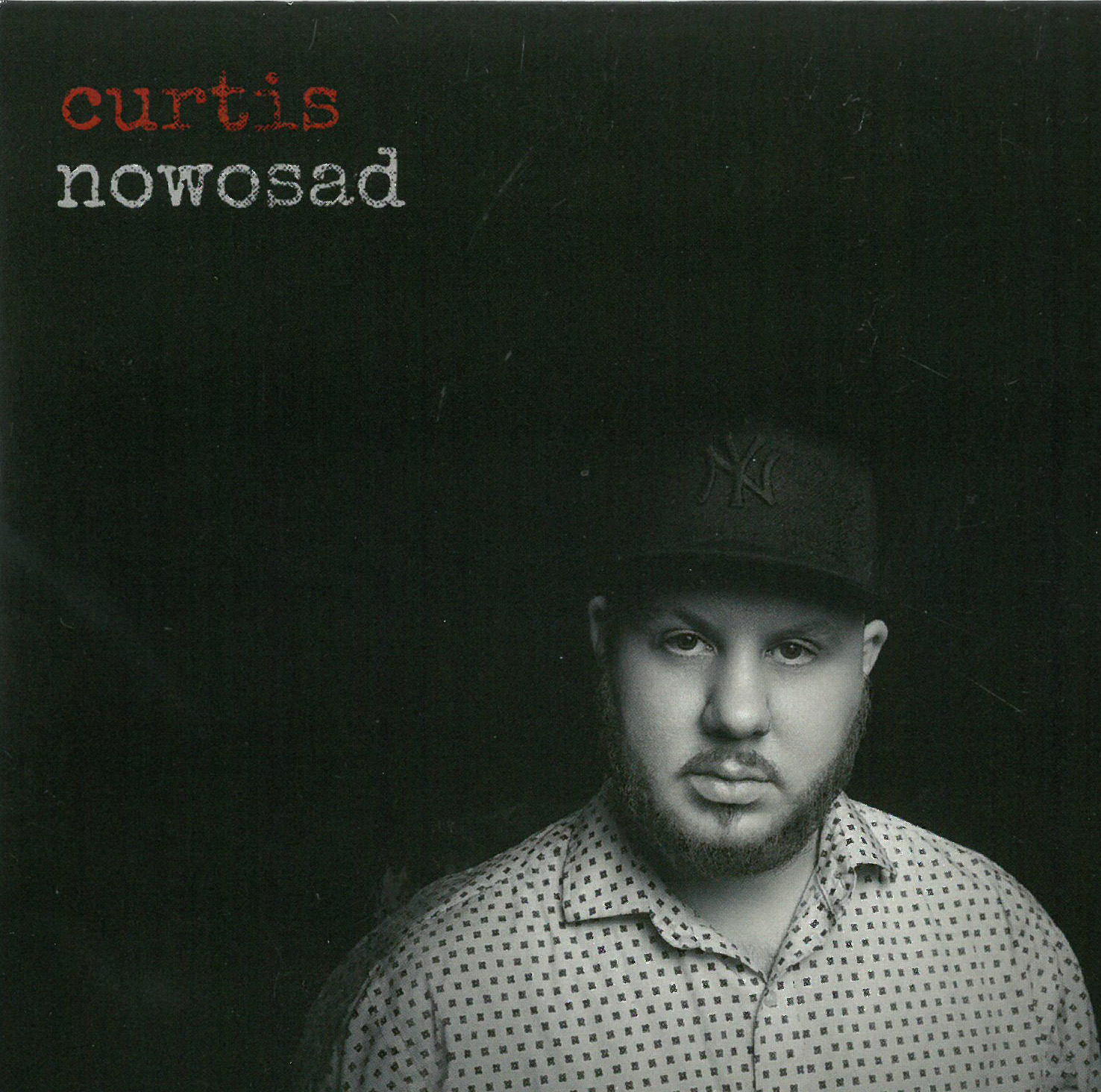
03 Curtis NowosadCurtis Nowosad
Curtis Nowosad
Sessionheads United SU007 (curtisnowosad.com)

Curtis Nowosad is a drummer and composer who was born and raised in Winnipeg but has lived in New York City since 2013 after moving there to complete a master’s degree at the Manhattan School of Music. This is Nowosad’s third album, the first recorded in New York, and contains five original compositions and three covers. The musicianship is impeccable with crisp horns, a tight and driving rhythm section, and arrangements reminiscent of Birth of the Cool. Highlights include Braxton Cook’s several wily alto saxophone solos and Andrew Renfroe’s guitar work on Hard Time Killing Floor Blues which is soulful, bluesy and rhythmically varied. Nowosad’s drumming is complex yet understated, always interesting but never in the way of the other player’s groove. Brianna Thomas’ assured vocals on two songs add extra nuance to the project.

This album can stand alone as an excellent example of intelligent, driving jazz but there are compelling social and historical themes woven through the original compositions and cover choices. The opening Home is Where the Hatred Is comes from Gil Scott-Heron’s 1970 album, Pieces of a Man. Nina Simone’s Sea Line Woman is given an elegant and sophisticated treatment. Nowosad’s The Water Protectors is dedicated to the Standing Rock Sioux and other Indigenous people while Never Forget What They Did to Fred Hampton is a sharp reminder of the young Black Panther activist’s murder and cover-up. Curtis Nowosad combines socially conscious history with assured jazz performances.

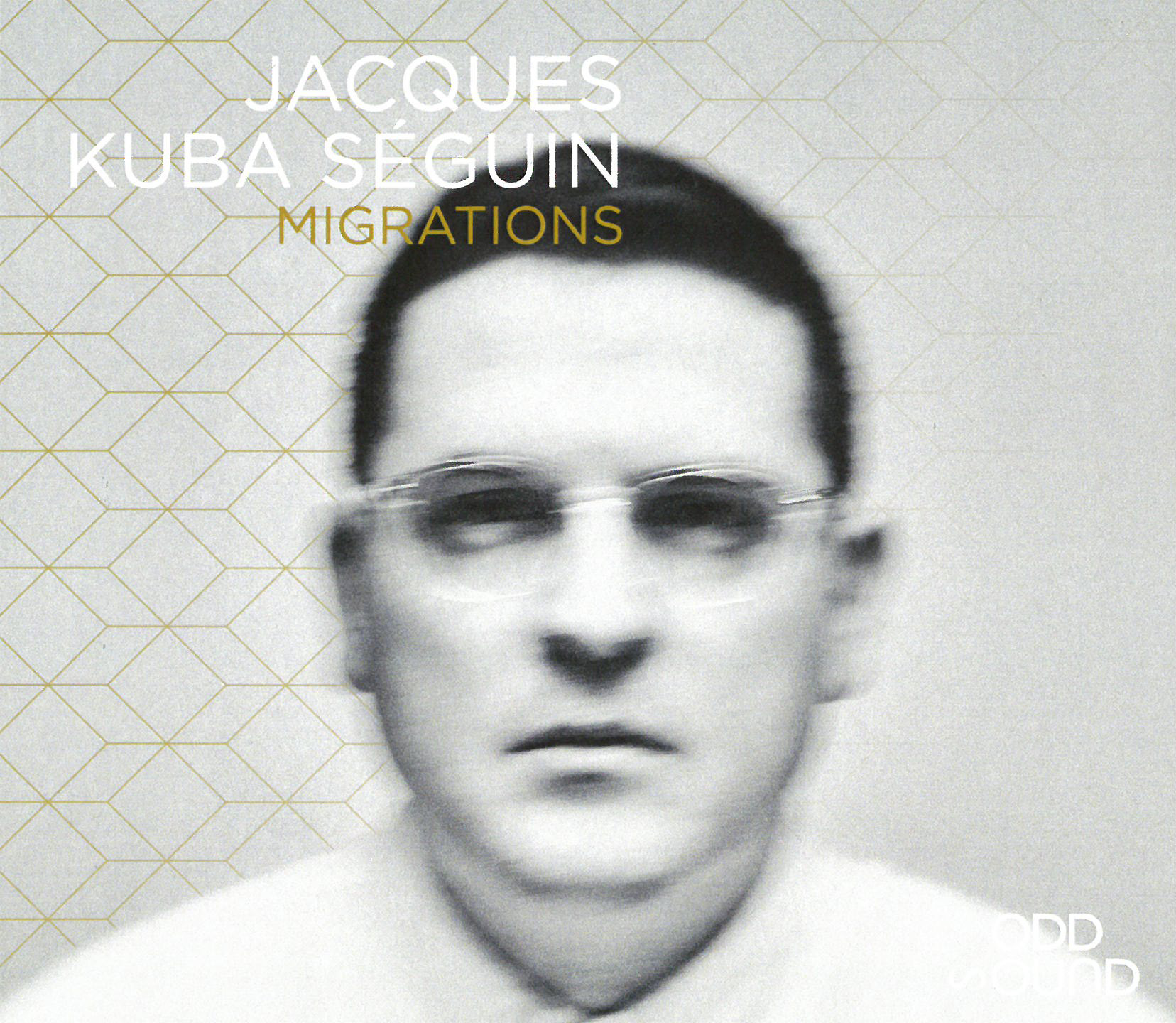
04 Jacques Kuba SeguinMigrations
Jacques Kuba Séguin
Odd Sound ODS-17 (jacqueskubaseguin.com)

Released in June on his own label, ODD SOUND Records, Migrations is the newest album from the Montreal-based trumpeter Jacques Kuba Séguin. A regular in the Montreal jazz and creative music community, Séguin tours regularly, including a 2016 stint in Poland, Lithuania, and Germany, and has worked as the host of the Symphonie en bleu radio show, for ICI Musique classique. In addition to Séguin, who is solely responsible for the album’s compositions and arrangements, Migrations features pianist Jean-Michel Pilc, tenor saxophonist Yannick Rieu, vibraphonist Olivier Salazar, bassist Adrian Vedady and drummer Kevin Warren.

The medium-tempo Hymne starts things off, and gives Séguin plenty of room to exercise his warm, burnished sound; it also contains beautiful moments from Pilc, Salazar and Rieu. Pilc – who, since becoming a faculty member at McGill, is appearing on more and more Montreal-based projects – tends to always be excellent and his work on Migrations is no exception; his playing on Origine, the album’s second track, is particularly satisfying. Première neige (You’re Not Alone), one of Migrations’ most introspective tunes, is beautiful, and Séguin takes the opportunity to showcase the expressive, lyrical side of his playing. I Remember Marie in April, a clear album highlight, begins with stellar playing from Warren, who negotiates the tune’s syncopated shots with aplomb and keeps things interesting throughout the solos. Overall, Migrations is a thoroughly engaging album, with strong individual playing deployed in the service of a cohesive group spirit.

Back to top