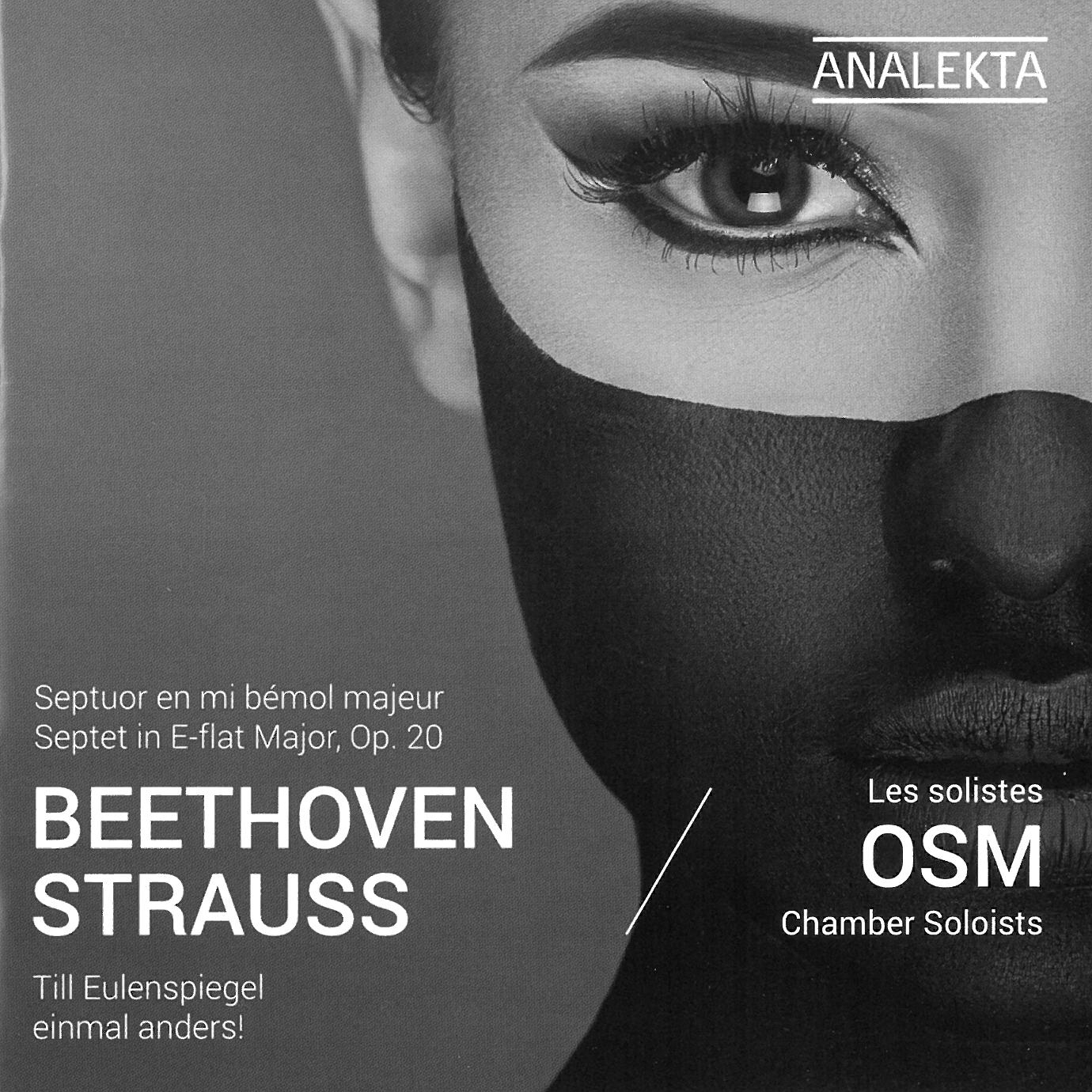
01 Beethoven StraussBeethoven – Septet; Strauss – Till Eulenspiegel einmal anders!
OSM Chamber Players
Analekta AN 2 8788 (analekta.com)

Ludwig van Beethoven’s Septet, Op.20 (1799) was a pivotal work. Such learned musicians as the composer’s former teacher Joseph Haydn applauded its expert deployment of four stringed and three wind instruments: violin, viola, cello, double bass, clarinet, bassoon and horn. Energy, wit and sunny moods gained it public popularity, and listeners will likely find this recording by the Orchestre symphonique de Montréal Chamber Soloists attractive. Variety in sound brings the work its distinctiveness. While artistic director Andrew Wan’s agile violin and Todd Cope’s impeccable clarinet take the lead, other instruments also have solo turns, and wonderful instrumental groupings sustained this listener’s interest. In the Adagio, instrumentalists make the most of expressive opportunities; Neal Gripp’s viola solo is particularly attractive. All players bring fine articulation to the minuet, while in the trio Cope, Stéphane Lévesque, bassoon, and John Zirbel, horn add beautiful decorative arpeggios. Cellist Brian Manker and double bassist Ali Yasdanfar contribute greatly to overall balance and tight ensemble; the finale is a tour de force.

Richard Strauss’s Till Eulenspiegel (einmal anders!), abridged and arranged by Franz Hasenöhrl (1885-1970) for the above forces minus viola and cello, is a tour de force of a different kind. Premiered in 1954, it squeezes the familiar tone poem’s thematic material into less than nine minutes, including exciting virtuosity and humorous touches that in the Chamber Soloists’ capable hands remain within the bounds of taste!

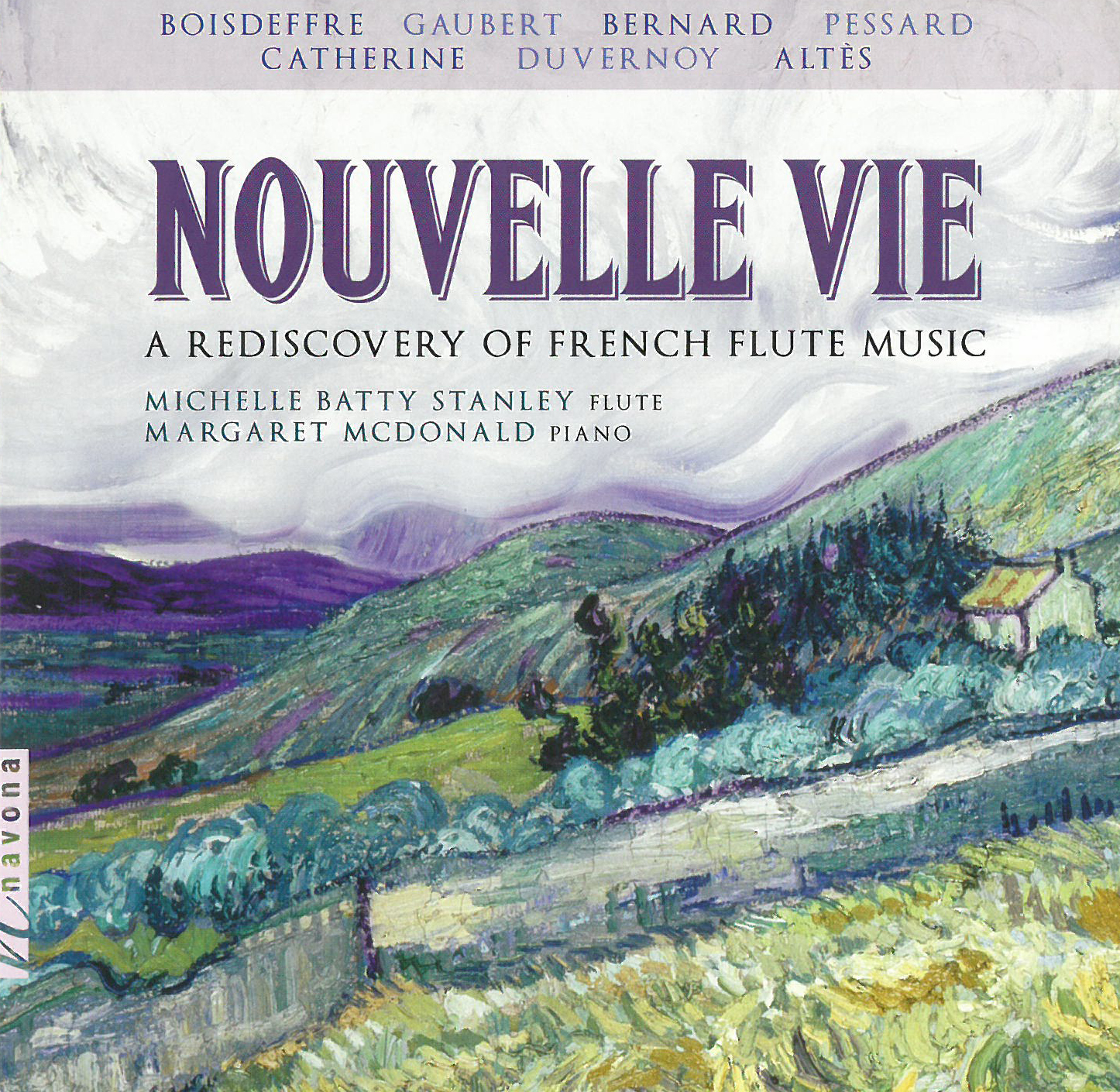
02 French Flute musicNouvelle Vie – A Rediscovery of French Flute Music
Michelle Batty Stanley; Margaret McDonald
Navona Records NV5135 (navonarecords.com)

Nouvelle Vie, by flutist Michelle Batty Stanley and pianist Margaret McDonald introduces us to some lesser-known compositions and composers working during the years of the Belle Époque in Paris. It also includes three better-known works by Philippe Gaubert, who might be considered a child of the Belle Époque, since the year of his birth was 1879.

René de Boisdeffre’s Canzonetta, Op.39 No.8, provides the recording with a strong opening and is played with vivacity, precision and grace. Stanley’s articulation, something much more difficult on the flute than on most other instruments, is terrific, pretty well as good as Aurèle Nicolet – and her use of rubato at the ends of phrases and the subsequent a tempi are an inspiration!

Émile Bernard’s Romance, Op.33, which, with its long, languorously lyrical phrases, could only have been written by a French composer, was also new to me, as were Émile Pessard’s Troisième and Quatrième Pièces, every bit as interesting as his delightful and better known Andalouse.

Alphonse Catherine’s Barcarolle, with its nautical undulating 6/8 piano part (played exquisitely on this recording by McDonald), and his Sérénade Mélancolique, which begins evocatively, a bit like Taffanel’s Andante Pastoral et Scherzettino, are both charming and suggest that the golden age of the flute continued beyond the 1880s and 90s, since Catherine lived until 1927.

Victor-Alphonse Duvernoy’s Deux Morceaux and Joseph-Henri Altès’ Romanza, Op.33 No.1, also new to me, are also wonderful.

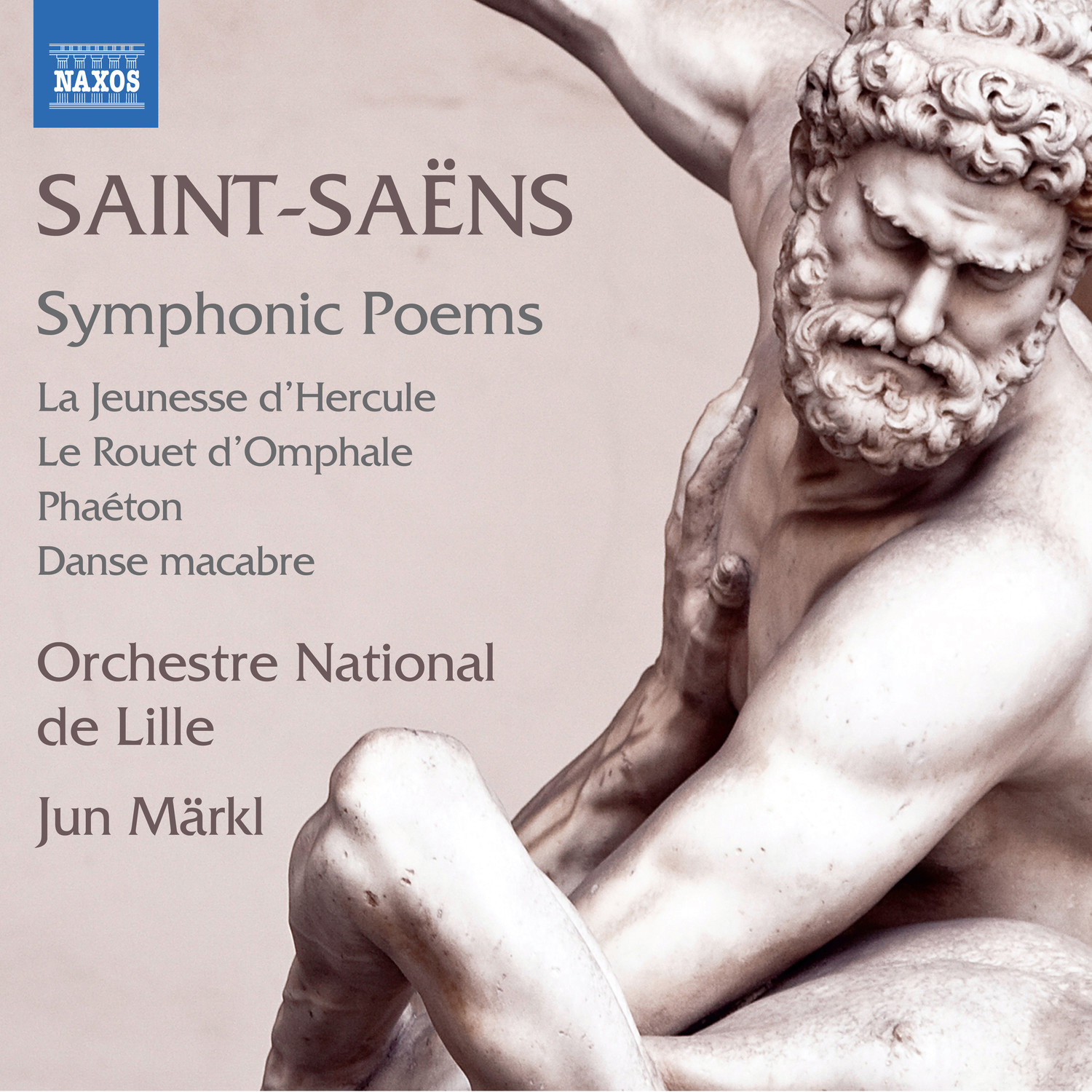
03 Saint SaensSaint-Saëns – Symphonic Poems
Lille National Orchestra; Jun Märkl
Naxos 8.573745 

There is a wonderful part in middle of the tone poem Phaéton: as the audacious but foolish young man dares to take Apollo’s chariot for a forbidden ride, with urgent, syncopated rhythms the horses swing into action, the chariot begins to rise upwards and suddenly vistas open up in heavenly radiance – all this depicted in glorious music. Phaéton gleefully revels in it, but his joy is short-lived. There is a brutal ending to his offending the god.

This and many more delights are in store for us, like Hercules’ punishment of having to spin wool dressed as a woman, in probably the finest of Saint-Saëns’ tone poems and a favourite of Sir Thomas Beecham, Le Rouet d’Omphale: here, a delightful rondo imitates the spinning of the spool, but in the midst of all this a powerful roaring melody emerges towards a shattering fortissimo climax. This is no joke anymore. This is Hercules!

Invented by Liszt and a product of Romanticism, the symphonic poem was happily brought to France by Saint-Saëns, who applied to it his considerable gifts of “melody and form” and “impeccable craftsmanship,” not to mention his vivid imagination and love of Greek mythology. All of this is coupled by Naxos’ choice of a lesser-known but excellent, dedicated orchestra and the young, imaginative and talented conductor Jun Märkl, breathing new life into these pieces.

With state-of-the-art spacious sound, the brilliant and colourful orchestral palette shines through and the disc has already become Presto’s Editor’s Choice for December 2017.

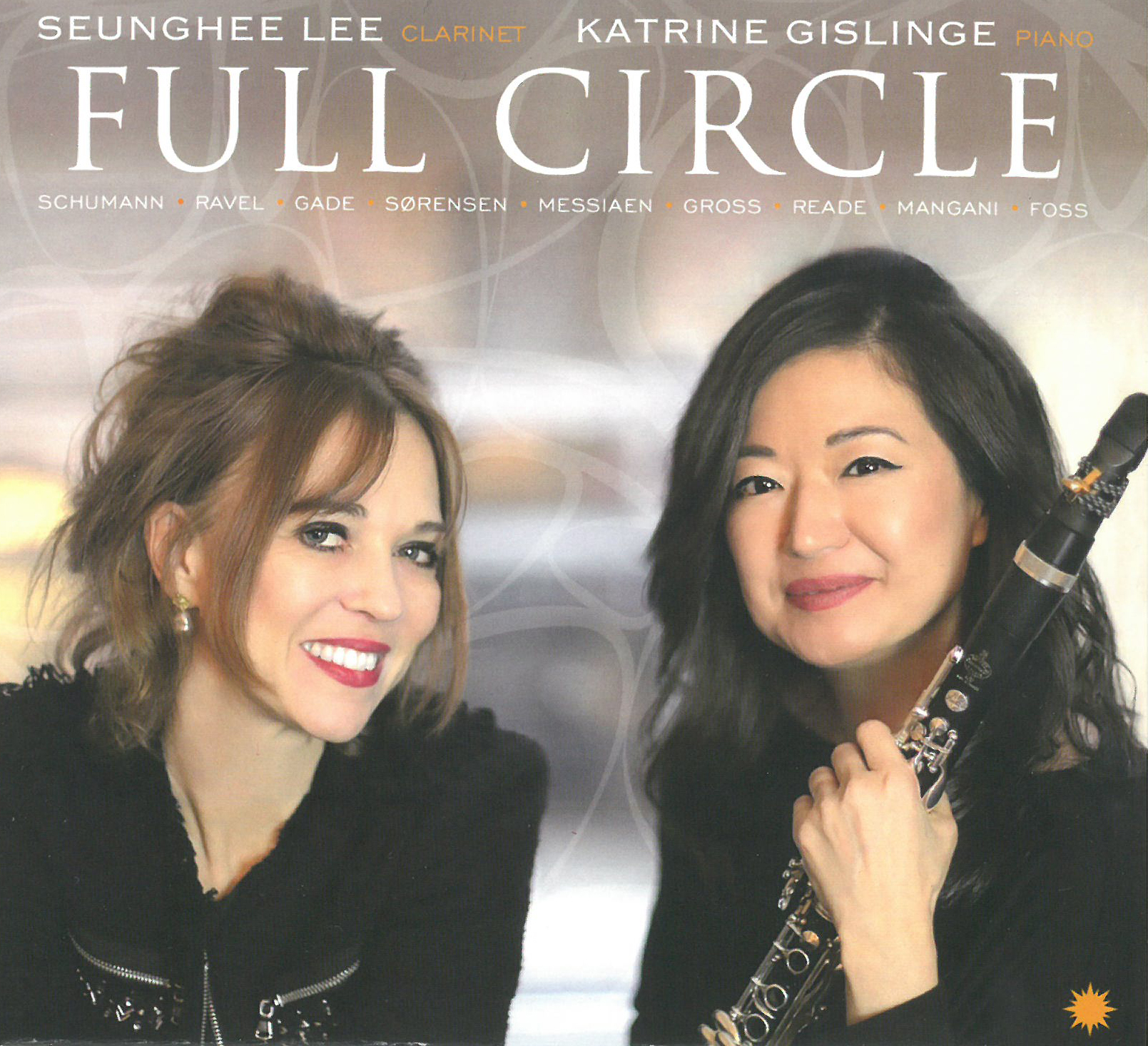
04 Suengkee Lee clarinetFull Circle
Seunghee Lee; Katrine Gislinge
Musica Solis (seunghee.com)

Full Circle is a collection of clarinet music performed by Seunghee Lee accompanied on piano by Katrine Gislinge. According to the liner notes, the collection represents the musical journey Lee has followed over the course of her recording career. She has a singing quality that suits the lyricism of all of the works, not one of which will give your ear any difficult sounds to sort through. Her earlier releases are colourful renderings of “classical” reworkings, segments of symphonies, opera arias, art song, etc. She is a player with indisputable technical strength and expressive tone, who on recordings stays away from more “difficult” repertoire. This is fine; she plays this material with grace and lovely conviction.

Included are two of the more substantial works of the Romantic era: the Fantasiestücke of Robert Schumann (Op.73) and Fantasy Pieces Op.48 of Niels Gade. Lee demonstrates the depth of expression needed to bring both to life, and if you’ve never heard the Gade, this is a great introduction. Bent Sørenson provides a somewhat syrupy confection in his Romance, premiered herein; Lucas Foss’ Three American Pieces for violin and piano, transcribed for clarinet by Richard Stoltzman and edited by Lee under the composer’s supervision, lend a somewhat more bracing counterpoint to the easy-listening character of most of the tracks. Music from a British television series, an Italian film-scoring composer, a little-known Vocalise (1935) by Olivier Messiaen and the well-worn Pièce en Forme de Habanera by Maurice Ravel round out this quirky collection. 

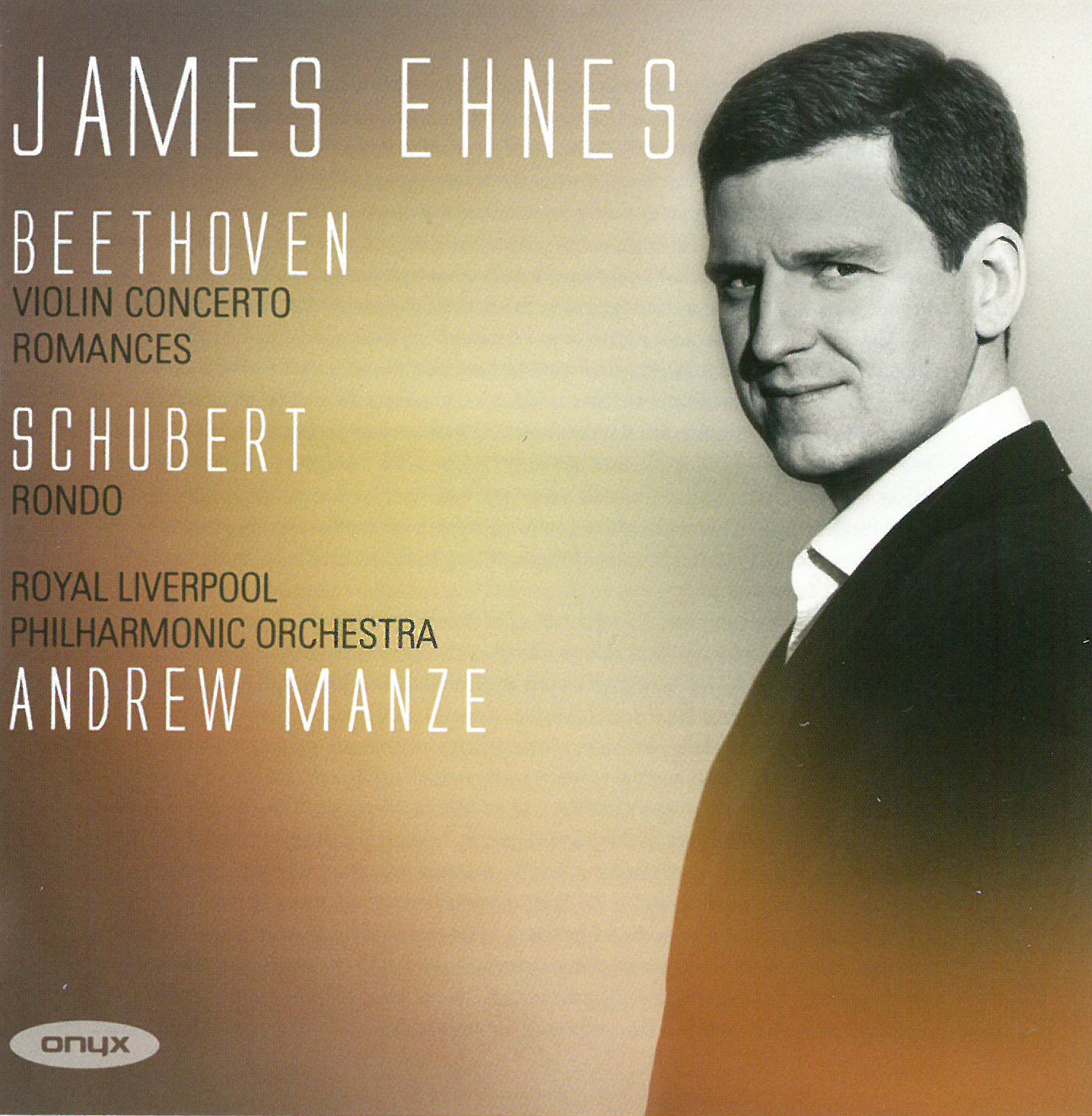
01 James EhnesWhat more is there to say about James Ehnes? He’s simply one of the best violinists in the world, and an artist whose performances tend to leave you scrambling for superlatives. Not surprisingly, that’s the case with his latest CD release, perhaps rather surprisingly his first recording of the Beethoven Violin Concerto in D Major Op.61, on Beethoven Violin Concerto, Romances; Schubert Rondo, with the Royal Liverpool Philharmonic Orchestra under Andrew Manze (ONYX 4167).

It’s a quite sumptuous performance, with Ehnes’ complete technical and musical command and glorious tone fully evident throughout. In a work which mostly eschews technical fireworks and concentrates on linear writing, Ehnes makes every melodic line sing. It may be a performance somewhat less animated than some current approaches to the work, but it’s one of great beauty, silky smoothness and assurance. Manze, an early music violinist turned conductor, draws a stylistically appropriate accompaniment from the orchestra. The cadenzas for the outer movements are by Kreisler (not always used these days) and give Ehnes all the opportunity he could possibly want to display his dazzling technique.

The two Romances, No.1 in G Major Op.40 and No.2 in F Major Op.50, from around 1800, do not have the heft of the concerto, but are much more than mere lightweights. Either one may have been intended as a possible slow movement for a projected C-major violin concerto begun in the late 1790s, and they sound lovely here.

Franz Schubert’s Rondo in A Major for Violin and Orchestra D438 is one of only three works – all for violin – that he wrote for solo instrument and orchestra. Composed when he was 19, it is full of typical Schubertian melody.

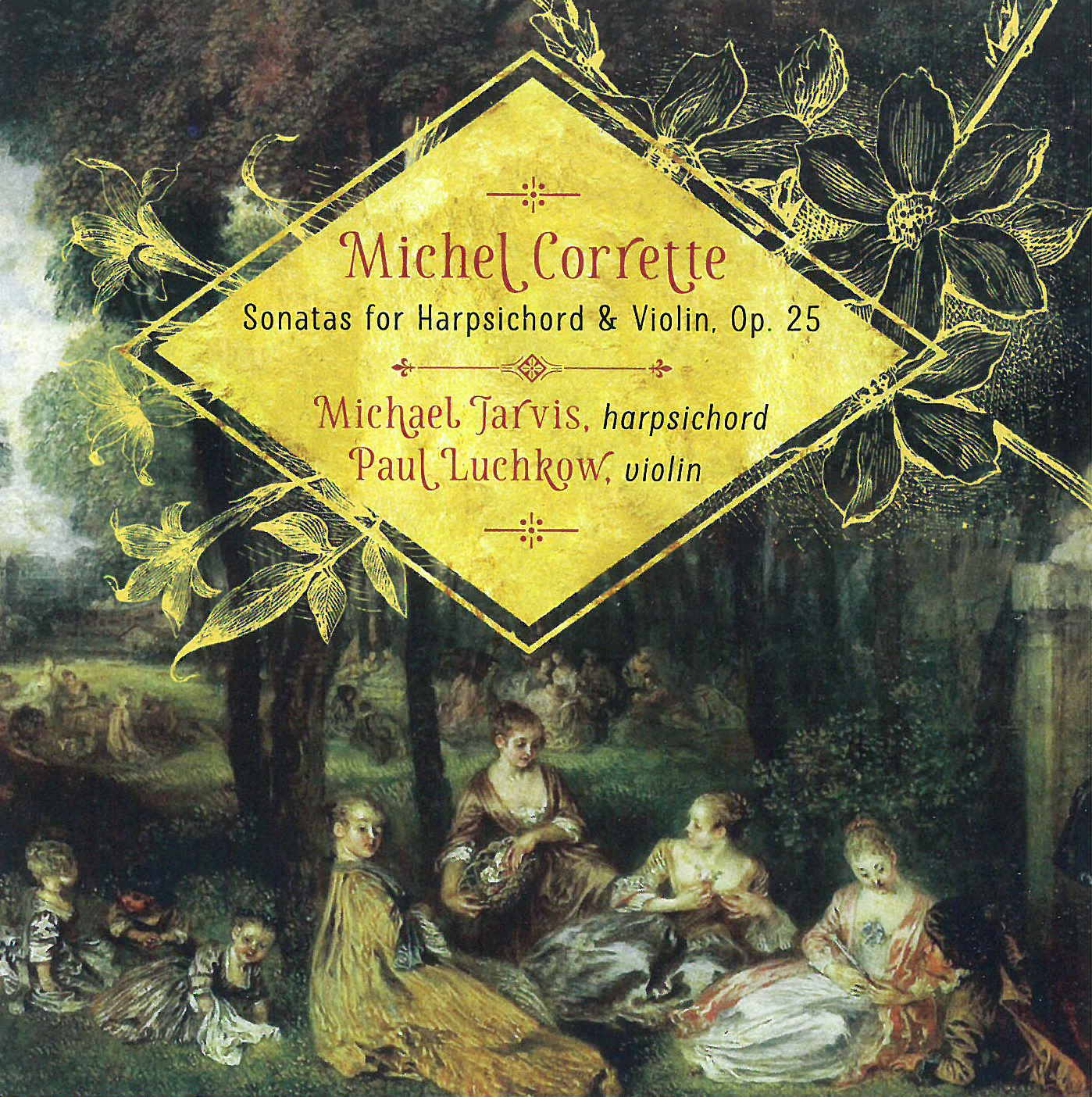
02 Michel CorretteThere’s a simply outstanding new CD from the Canadian west coast duo of violinist Paul Luchkow and harpsichordist Michael Jarvis of the six Sonatas for Harpsichord & Violin Op.25 by the 18th-century French composer Michel Corrette (Marquis MAR 81475).

The works date from around 1742 and were published with the usual description for the period as Sonates pour le Clavecin avec un Accompagnement de Violon, although the violin’s role here is clearly not merely subservient. As the excellent booklet notes point out, the keyboard writing is more symphonic in scale than simply melody with accompaniment, with the violin sharing the melodic role and enhancing the harpsichord’s orchestral texture.

The violin playing is sensitive and warm, and the harpsichord playing bright, clear and beautifully articulated. There’s sensitivity in the slow movements, dazzling virtuosity in the fast outer movements and superb ensemble playing throughout. It’s thoroughly engrossing music, fascinating and inventive with never a dull moment, and recorded with lovely ambience. All in all, an absolute delight.

Listen to 'Michael Corrette: Sonatas for Harpsichord & Violin Op.25' Now in the Listening Room

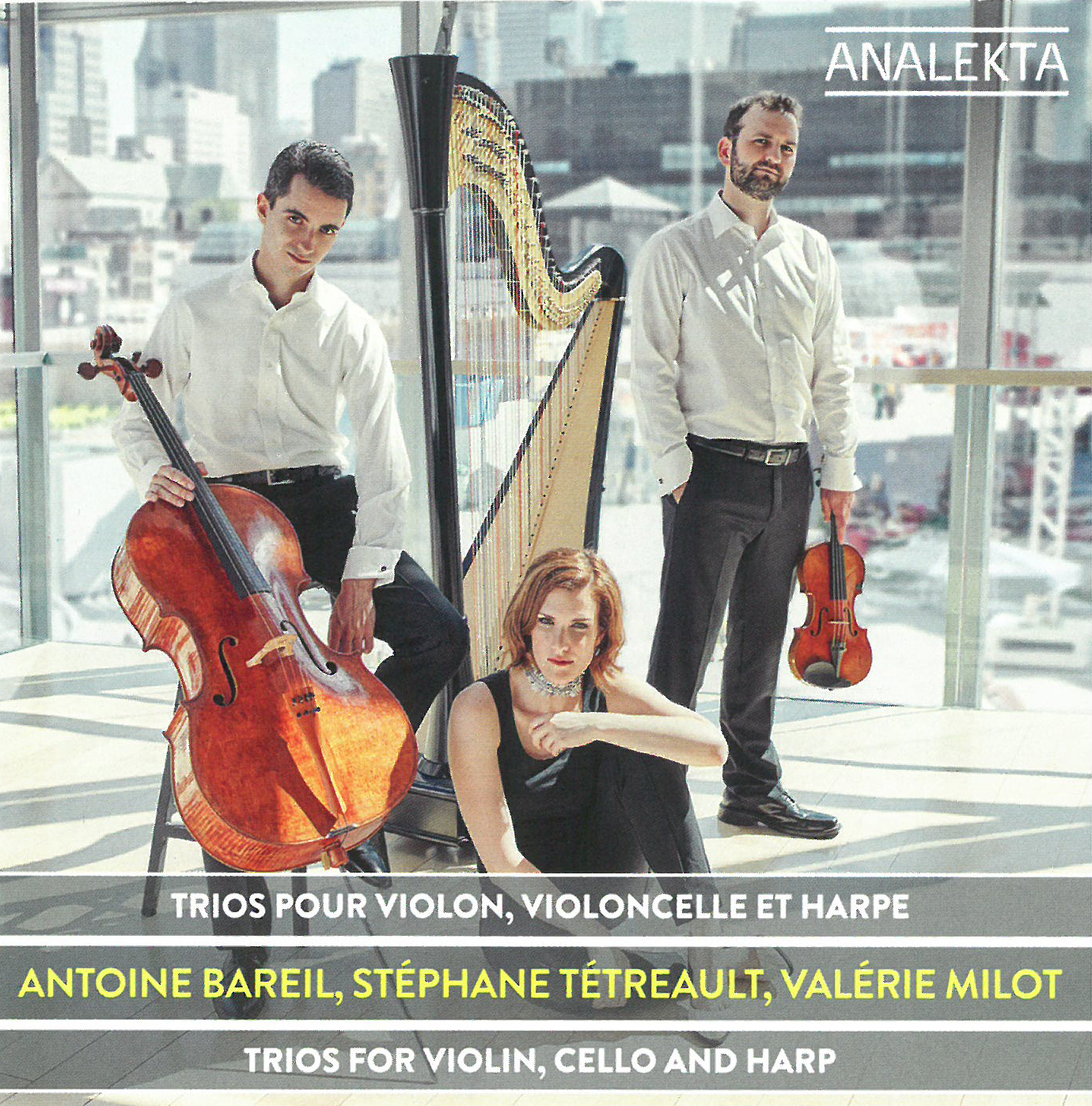
03 Violin Cello HarpThere’s more fine Canadian ensemble playing on Trios for Violin, Cello and Harp, featuring violinist Antoine Bareil, cellist Stéphane Tétreault and harpist Valérie Milot in works by Jacques Ibert and Henriette Renié (Analekta AN 2 9888).

The Ibert Trio is a really lovely work dating from 1944, although it seems to inhabit an earlier French world than that of the Second World War. The equally delightful Trio by the harpist and composer Renié, an exact contemporary of Ibert, is firmly in the style of that earlier age, having been written in 1901.

A selection of shorter works fills out the CD. Renié’s Danse des lutins is a virtuosic piece for solo harp that showcases Milot’s technique. Bareil and Tétreault combine for their own fireworks in the familiar Passacaglia by Johan Halvorsen before all three players reunite for their own adaptation of Schubert’s poignant song Lob der Tränen.

Bareil and Tétreault in particular are in wonderful form here, but there’s a lovely sound quality throughout the disc, with fine ensemble playing and great balance. It’s another delightful CD.

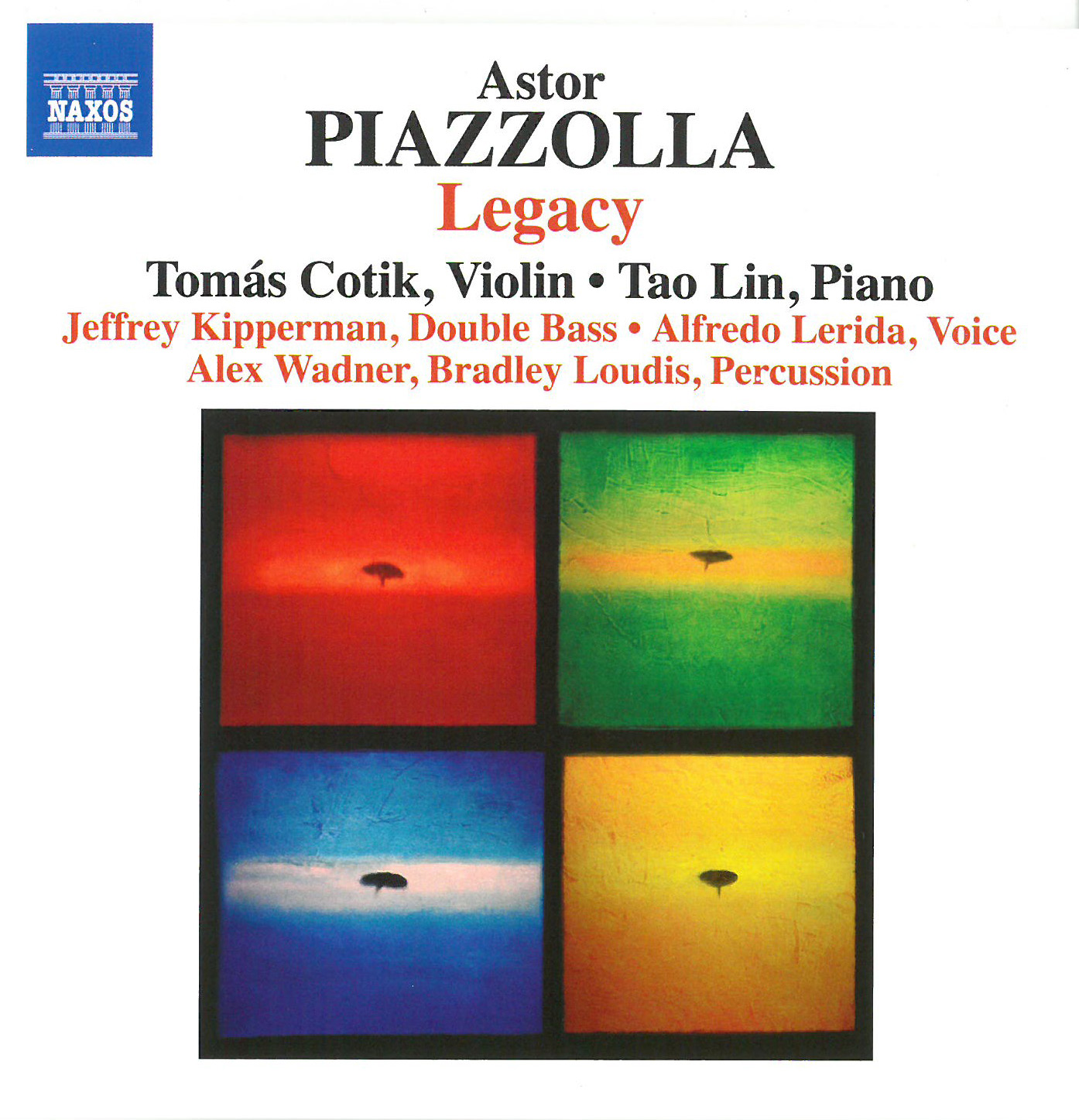
04 PiazaollaThe Argentinian-born violinist Tomás Cotik received rave reviews for his 2013 Tango Nuevo CD of music of Astor Piazzolla with Chinese-American pianist Tao Lin (available on Naxos 8.573166), and the duo mark the 25th anniversary of the legendary Argentinian composer’s death with the release of a second outstanding tango CD, Astor Piazzolla Legacy (Naxos 8.573789).

This new disc is essentially the concert program the duo put together following the success of the first CD, and features new adaptations of some of Cotik’s favourite Piazzolla works. They are joined at times by Jeffrey Kipperman on bass and Alex Wadner and Bradley Loudis on percussion. Four of the ten titles are arrangements by Osvaldo Calo, but the other six are adaptations by Cotik himself, including the central work on the CD, the superb four-movement Las cuatro estaciones porteňas (Four Seasons of Buenos Aires).

Cotik has a beautiful clarity and depth to his playing; Lin draws a simply gorgeous tone from the piano, and the bass and percussion contributions are used to great effect. Listening to Cotik brings to mind the saying about blues music: that you don’t play the blues, you live them. Cotik doesn’t just play tango music – he lives it. It’s absolutely captivating and intoxicating stuff.

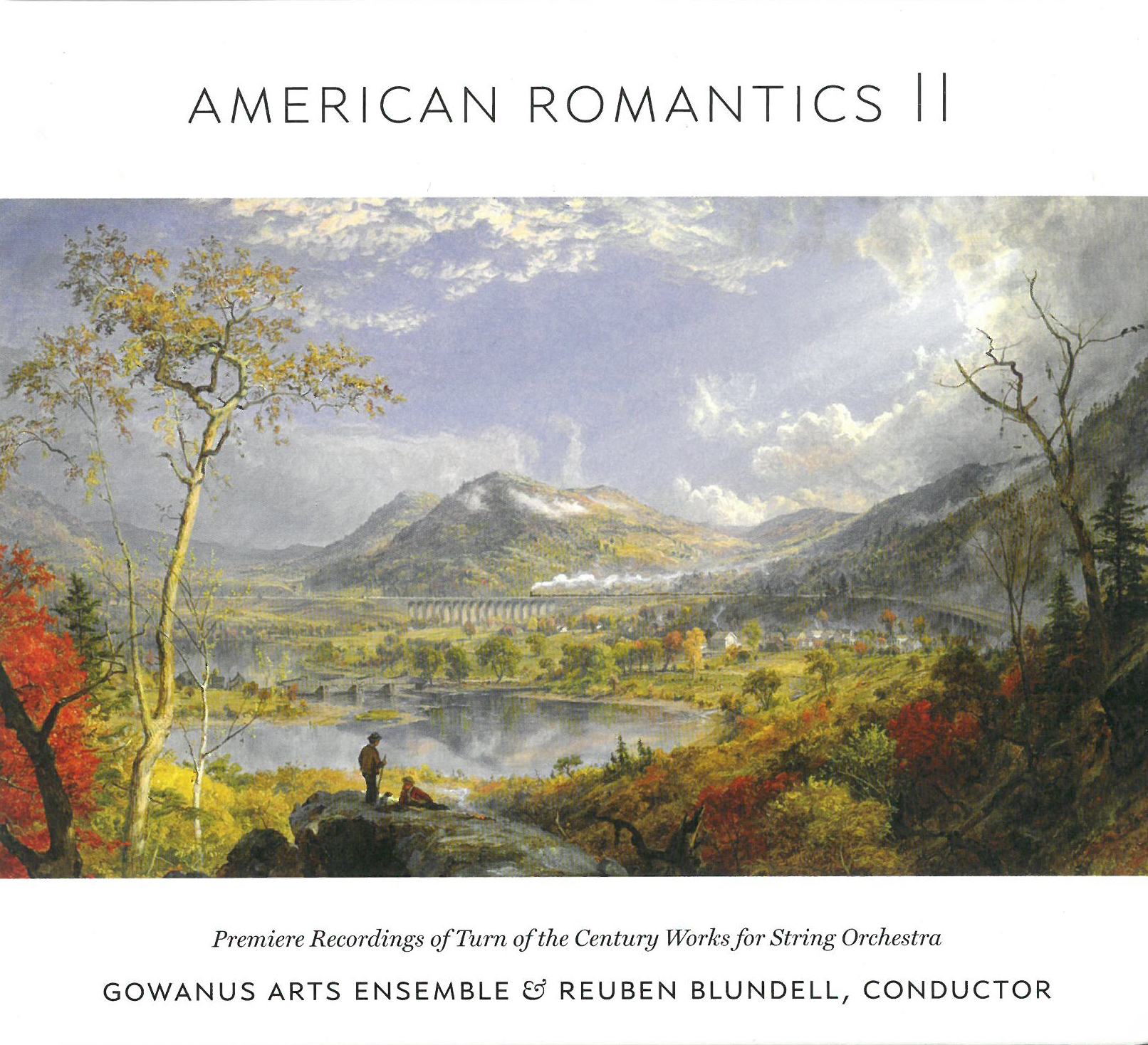
05 American RomanticsAmerican Romantics II – Premiere Recordings of Turn of the Century Works for String Orchestra is a fascinating second CD in a series created by New York conductor Reuben Blundell promoting under-represented American music from the second half of the 19th century and the first half of the 20th (New Focus Recordings FCR 166B). Blundell conducts the Gowanus Arts Ensemble, a group of NYC freelancers assembled specifically for the project.

The short works are all world premiere recordings, and for some of the composers it’s the first time any of their music has appeared on disc. There are 15 works here by 12 different composers: those represented are the English-born Félix Borowski; George Whitefield Chadwick; Arthur Foote; the German-born Paul Theodore Miersch; Ethelbert Nevin; Edgar Stillman Kelley; the Dutch-born Martinus van Gelder and Bernardus Boekelman; the French-born Louis Lombard; Arthur Bird; and Charles Wakefield Cadman. The Danish-born Carl Busch’s arrangements of two Stephen Foster songs open and close the CD.

The music is much of its time, as you would expect, but is no less accomplished and attractive for that; Lombard’s Puccini-esque Élégie is particularly lovely. The string ensemble is only ten players, but sounds much fuller and richer in simply lovely performances.

An extremely attractive digi-pak complements an original and highly satisfying release.

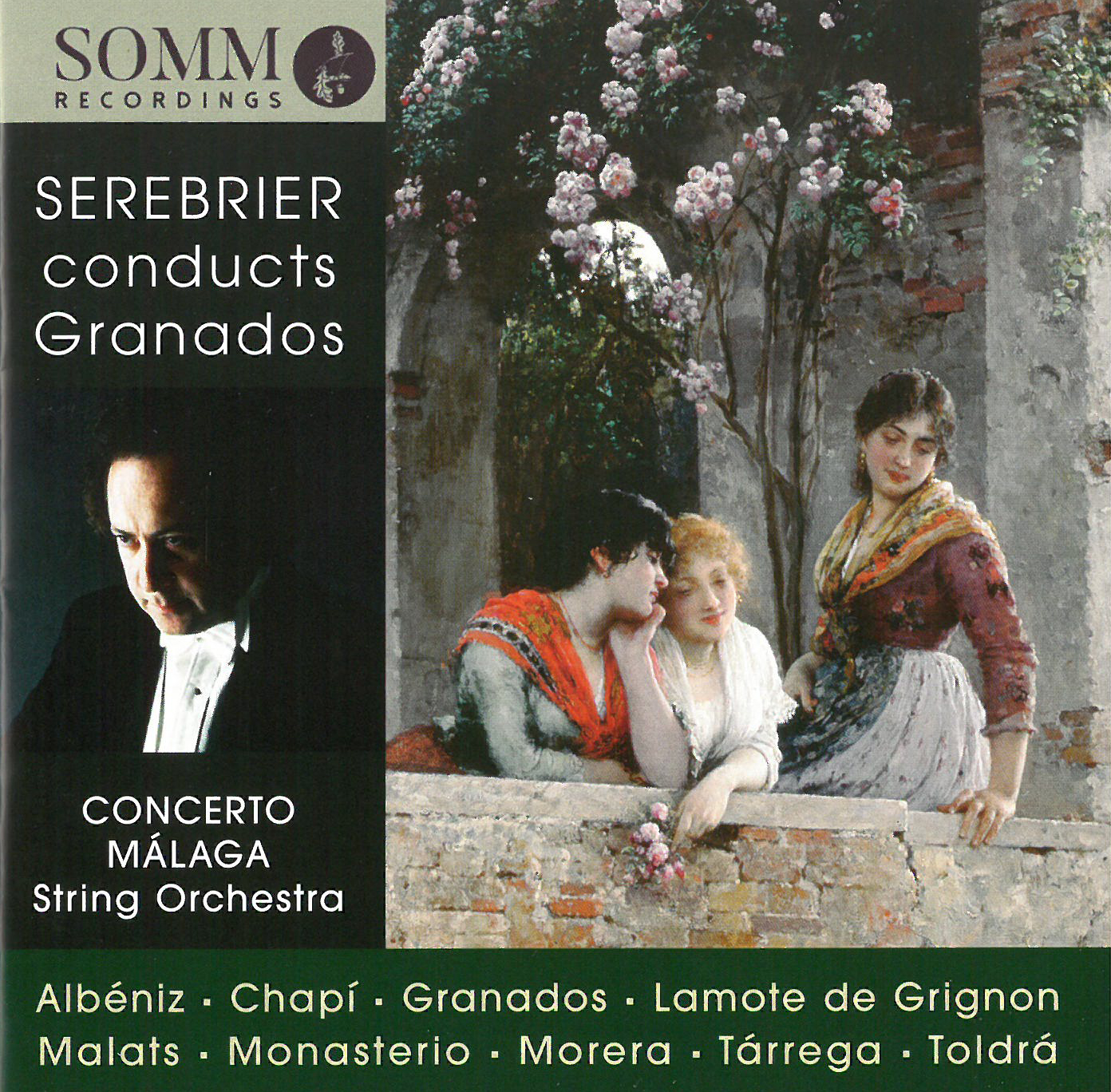
06 Serebrier GranadosJosé Serebrier leads the Concerto Málaga String Orchestra on Serebrier conducts Granados, the somewhat misleading title of a new CD from the SOMM Recordings Céleste Series (SOMMCD 0171).

Only five of the 16 short tracks are by Granados; the remaining 11 are by eight different composers, mostly emphasizing a connection with Barcelona, where Granados spent his entire working life. All five Granados tracks – Andaluza, Oriental, Pequeňa Romanza, El Himno de los Muertos and Intermezzo from Goyescas – are arrangements, as are Recuerdos de la Alhambra and Gran Vals by Francisco Tárrega and the famous Tango and Mallorca by Isaac Albéniz.

Nocturno is a lovely piece by Eduard Toldrà. Joaquim Malats’ Serenata Espaňola, Ruperto Chapi’s Nocturno and Enric Morera’s brooding Desolació are followed by the two earliest compositions on the disc, Jesús de Monasterio’s beautiful Andante Religioso from 1872 and Andantino Expresivo from 1881. Ricard Lamote de Grignon’s Lento Expresivo is a nice final track.

The playing is warm and idiomatic, although there’s not really a great deal for the orchestra to get their teeth into.

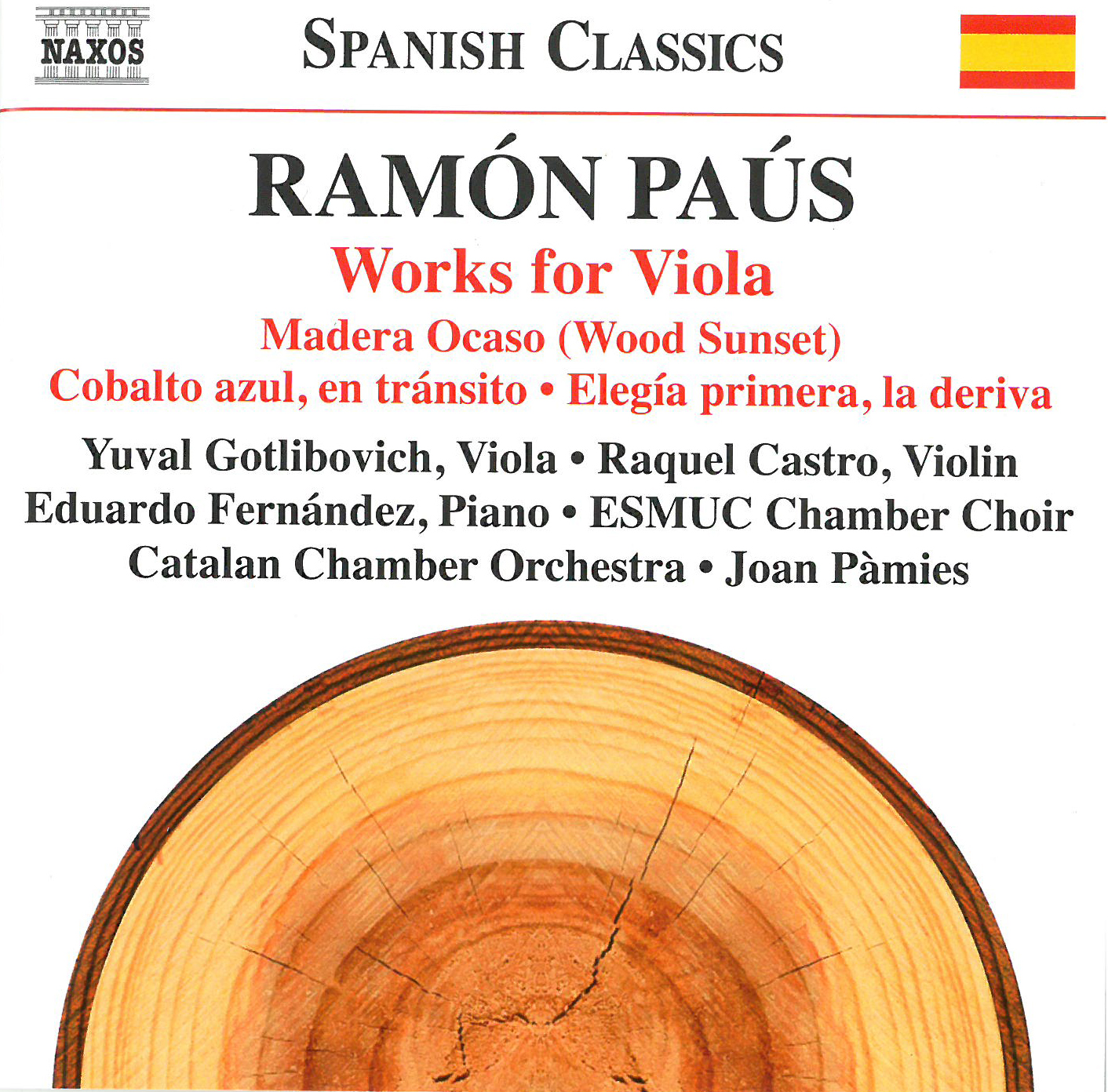
07 Ramon PausThere’s music by the contemporary Spanish composer Ramón Paús on Works for Viola, featuring the Israeli violist Yuval Gotlibovich, in the Naxos Spanish Classics series (8.573602). Paús, born in 1959, has worked extensively in the film, theatre and television worlds as well as the classical field.

Gotlibovich is joined by pianist Eduardo Fernández in Madera Ocaso (Wood Sunset) (2013), an extensive single-movement rhapsodic piece with modern touches and a very strong piano part. The Catalan Chamber Orchestra under Joan Pàmies form the accompaniment for the even more rhapsodic Cobalto azul, en tránsito (Cobalt blue, in transit) (2013), and the same performers are joined by violinist Raquel Castro and the ESMUC Chamber Choir male voices in the quite beautiful Elegía primera, la deriva (First elegy, the drift) (2014), an effective and moving work focusing on extreme loss. Gotlibovich displays a warm and beautiful tone throughout the instrument’s range.

Madera Ocaso was written for these two performers and Gotlibovich also gave the first performance of the other two works, the recording sessions for the Elegia primera beginning the day after its November 2015 premiere in Barcelona.

Listen to 'Ramón Paús: Works for Viola' Now in the Listening Room

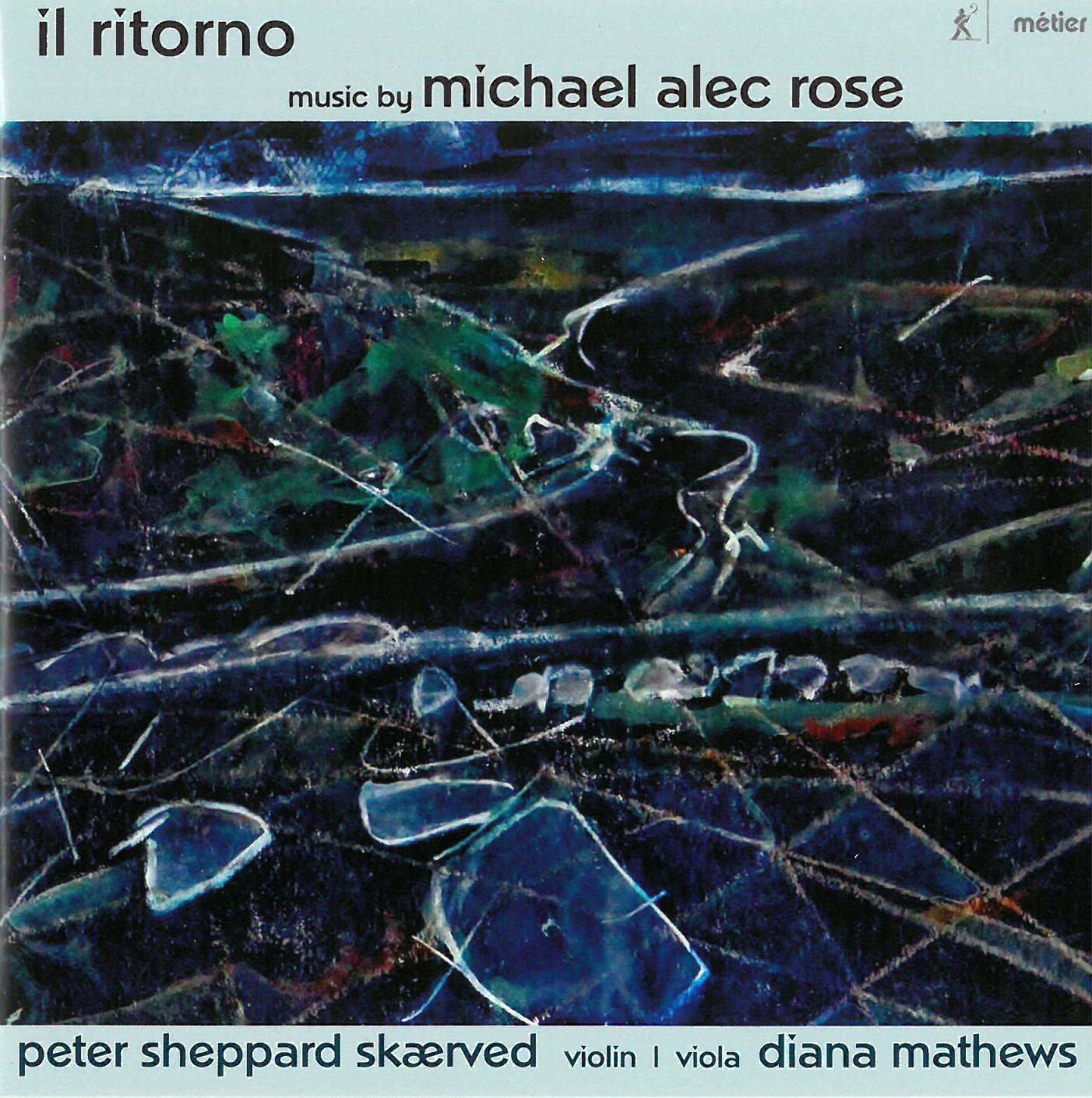
08 Il RitornoMusic for violin and viola by American composer Michael Alec Rose is featured on Il Ritorno, with the English duo of violinist Peter Sheppard Skærved and violist Diana Mathews (Métier MSV 28574). There are two works for violin and viola and two for solo violin here, all of which were a result of the composer’s long friendship with the two performers. Mathews commissioned the opening work, Unturned Stones: Duo for Violin and Viola (2012), a three-movement piece that takes the study of landscape as a starting point but ventures much further afield, Rose’s extensive booklet notes quoting Talmudic study and Zen philosophy.

Mornington Caprice: Duo for Violin and Viola (2015) is the second caprice Rose has written for Mathews and was inspired by Frank Auerbach’s painting Mornington Crescent – Early Morning (1991). At under four minutes it takes longer to read and understand the booklet notes than it does to listen to the music.

By far the biggest work on the CD is the title track, subtitled Perambulation for Solo Violin (2013-2015). It was inspired and shaped by the composer’s obsession with Dartmoor in Devon, England, which he first visited in 1991 and which he describes as “the reigning metaphor” of his life; he has returned 18 times since then, hence the work’s title. The four pages of intense booklet notes make it clear that this work goes well beyond the purely physical appeal of the landscape suggested by the six movement titles: Preamble; Bearings; Silence; Water; Stone; and Song. Skærved is in quite superb form in a work which is certainly not lacking a tonal feel and that uses very little in the way of extreme technique; there is some remarkable playing here, especially in Stone.

The brief Diaphany (2016) for solo violin is a strong finish to the disc. It may be something of a challenge to fully understand the philosophical approach here, but there’s no doubting the strength and quality of the music.

09 Dorothy HindmanTightly Wound: Music for Strings is a 2CD set of works by the American composer Dorothy Hindman featuring 13 varied works played by a wide range of performers (Innova 965).

Hindman’s music is described as “a blend of punk/grunge with a spectralist sensibility,” although the differing styles of the works here would seem to suggest more; this is clearly music by a highly accomplished composer.

CD2 is by far the stronger of the two, with various pieces for guitar quartet (the terrific Taut), solo guitar, string quartet, amplified cello, and both solo violin and solo cello with fixed media. The exemplary performers include guitarist Paul Bowman, cellist Craig Hultgren, violinist Karen Bentley Pollick, the Corona Guitar Kvartet and the Amernet String Quartet.

01 Claude BakerMarc-André Hamelin’s new CD partners him with the Indianapolis Symphony Orchestra for a world premiere recording of the Claude Baker Piano Concerto “From Noon to Starry Night” (Naxos 8.559804).

Based on a poem by Walt Whitman, Baker’s work is highly detailed with many linkages to the structure of Whitman’s poem. Baker several times quotes well-known musical material to emphasize the programmatic content of both his music and Whitman’s poem.

The five-movement concerto is complex and presents considerable technical and interpretive challenges for the pianist. Hamelin’s performance integrates beautifully into this demanding ensemble requirement. He is particularly potent where he dominates the orchestra in pianissimo passages. For all its beauty, the work is one of very high tension. Baker is a brilliant composer and has the perfect pianist to premiere this remarkable work.

Listen to 'Claude Baker Piano Concerto “From Noon to Starry Night"' Now in the Listening Room

02 PersichettiThe harpsichord has, of all period instruments, made the most successful transition to contemporary music. This is largely due to the extraordinary writing of American composer Vincent Persichetti. Christopher D. Lewis demonstrates why Persichetti’s music is so powerful, in his new release Persichetti Harpsichord Sonatas (Naxos 8.559843).

Five sonatas and the Serenade No.15 Op.161 sample the early period, mid-career and final year of the composer’s life (1915-1987). The growth and development of his language for this instrument is subtle. Always leaning toward melody and strong rhythmic elements, Persichetti became, if anything, more focused and incisive in his expression. The Serenade in particular, offers a splendid example of how Lewis grasps the composer’s idiom and conveys it convincingly. He’s clearly having a great deal of fun playing this music and relishes the extent of the technical challenge as well as the lovely melodic moments that mark all of Persichetti’s harpsichord works.

Well-programmed and wonderfully played, the disc delivers far more than a first glance might suggest. It reincarnates the harpsichord as a credible modern keyboard instrument.

Listen to 'Persichetti Harpsichord Sonatas' Now in the Listening Room

03 Ralph van RaatRalph van Raat is a pianist with a very catholic taste in music. His affection for rock, jazz, atonal serial music, and everything between them is accurately reflected in his decision to record Erik Lotichius: Anaitalrax – 25 virtuosic studies (Solaire SOL 1005 2-CD). Lotichius (1929-2015) was born in the Netherlands and composed in a style that was a deep fusion of seemingly countless influences. Traditional European classical voices and numerous American ones appear consistently throughout his very tonal and rhythmically driven music. Jazz, ragtime, blues, Broadway, Bach, Bartók, Debussy and Ravel are easy to identify, but it’s the amalgams that emerge as the unique voice of this little-known composer.

Van Raat performs these 25 studies as if they were meditations, sustaining the composer’s mantra-like phrases and hypnotic rhythms to great effect. Lotichius is a master at capturing more than just your ear, he wants your emotional attention and knows how to get it. This 2CD set includes an extensive and enlightening biography of the composer as well as some engaging thoughts from both the performer and the recording’s producer.

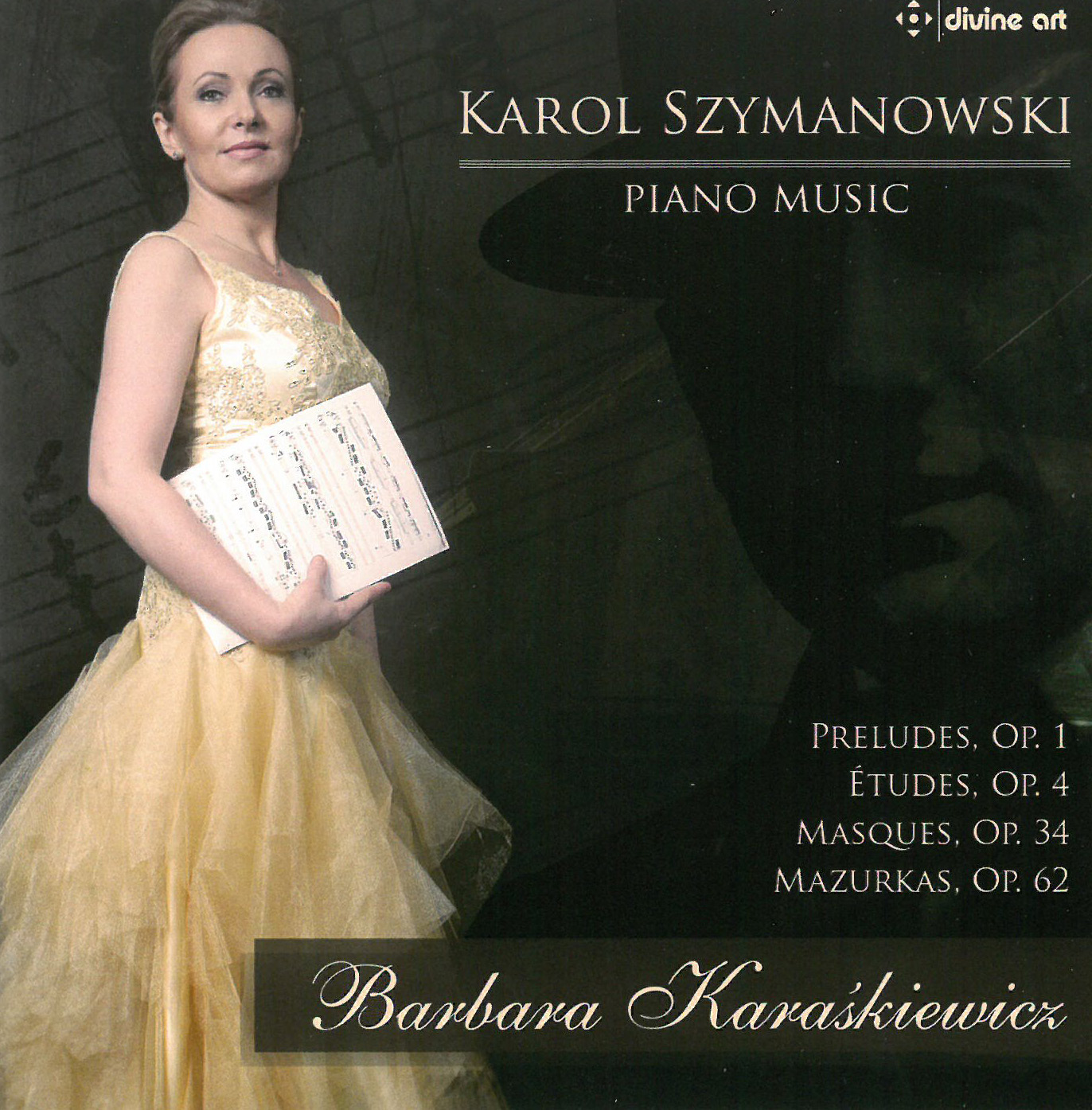
04 SzymanowskyBarbara Karaskiewicz has compiled a fascinating program in her recording Karol Szymanowski Piano Music (Divine Art DDA 25151). It forms a survey of the composer’s work covering nearly 40 years, beginning with Nine Preludes Op.1, written in 1900. The presence of Chopin is immediately detectable along with vocabulary reminiscent of some Brahms Intermezzi. There is a familiar fluidity and nostalgic ethos that pervades the music. Karaskiewicz plays these beautifully, bringing forward the composer’s unique voice. The Four Etudes Op.4 reveal the influence of early modernism, with some careful tonal experimentation that Karaskiewicz integrates quite naturally into the character of the pieces.

Szymanowski’s output is generally considered to fall into two periods, of which the second is strongly influenced by Eastern motifs and subject matter. The exotic elements of Scheherazade from Masques Op.34 take advantage of the angular melodies and dissonant harmonies of the period’s emerging contemporary music.

Karaskiewicz’s programming arch covers a considerable distance and concludes with Two Mazurkas Op.62 that reveal the fading but ever-present influence of Chopin in Szymanowski’s music.

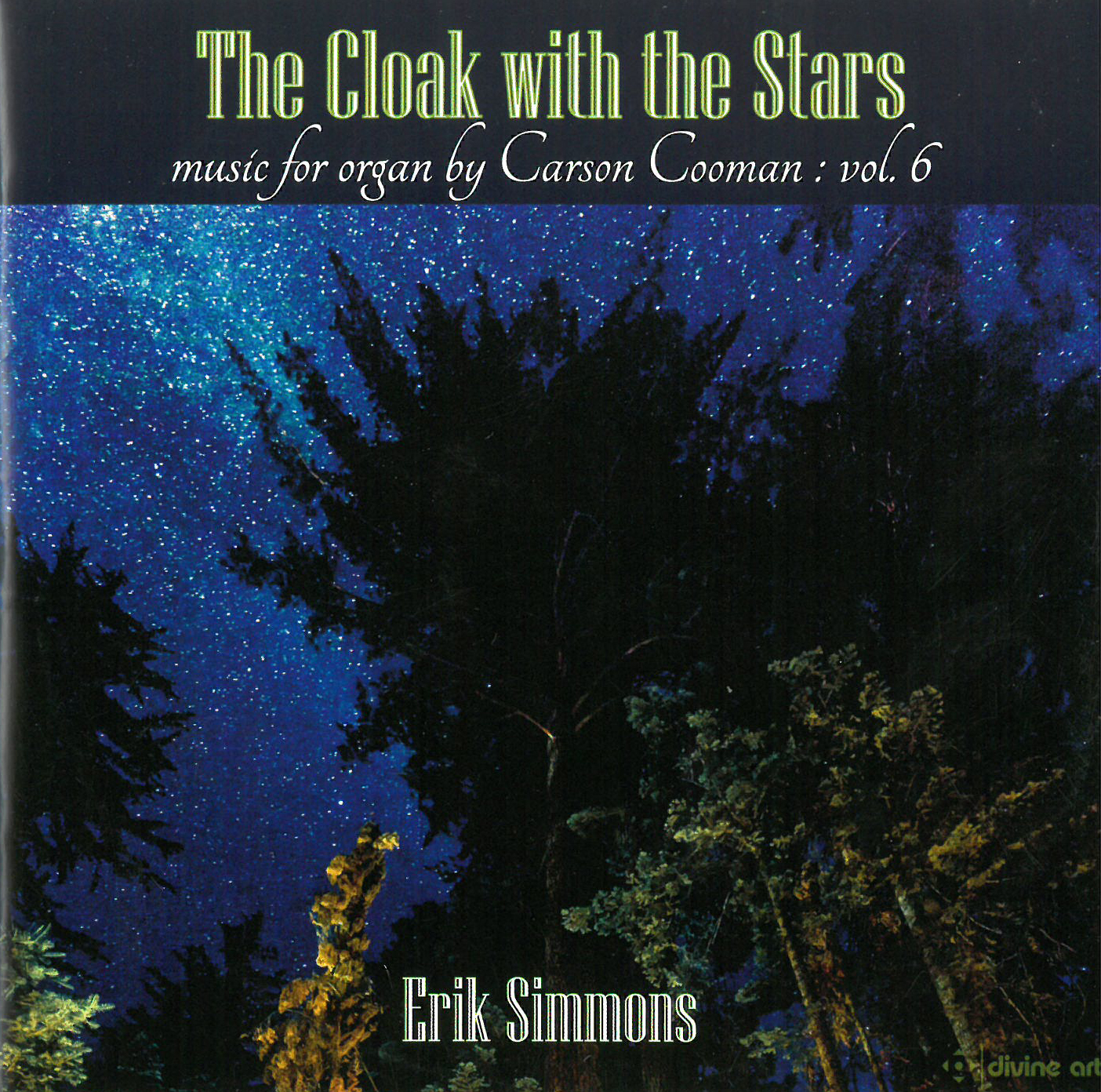
05 Cloak with StarsThe Cloak with the Stars – Music for organ by Carson Cooman Vol.6 (Divine Art dda 25159) is a selection of works by this American composer and organist. Erik Simmons recorded several of the earlier volumes in this series and now enjoys an established reputation for a level of expertise with Cooman’s repertoire. Simmons performs using the Hauptwerk system digital sampling technology, and data from the organ of the Abbey of Saint-Etienne, Caen, France. The instrument was built by Cavaille-Coll in 1882-85 and despite its age, is the newest of numerous organs that have been in the Abbey since its founding by William the Conqueror in 1066.

One of Cooman’s strengths as a composer is his ability to use programmatic material. He remains free enough to create highly atmospheric works that deliver more of a feel about the subject matter than a linear storyline. Three St. Francis Legends is an excellent example. The disc’s finest track, however, is Diptych for a New Life, a tribute to the life-giving imagery of the sun. Cooman’s writing is colourful and highly effective.

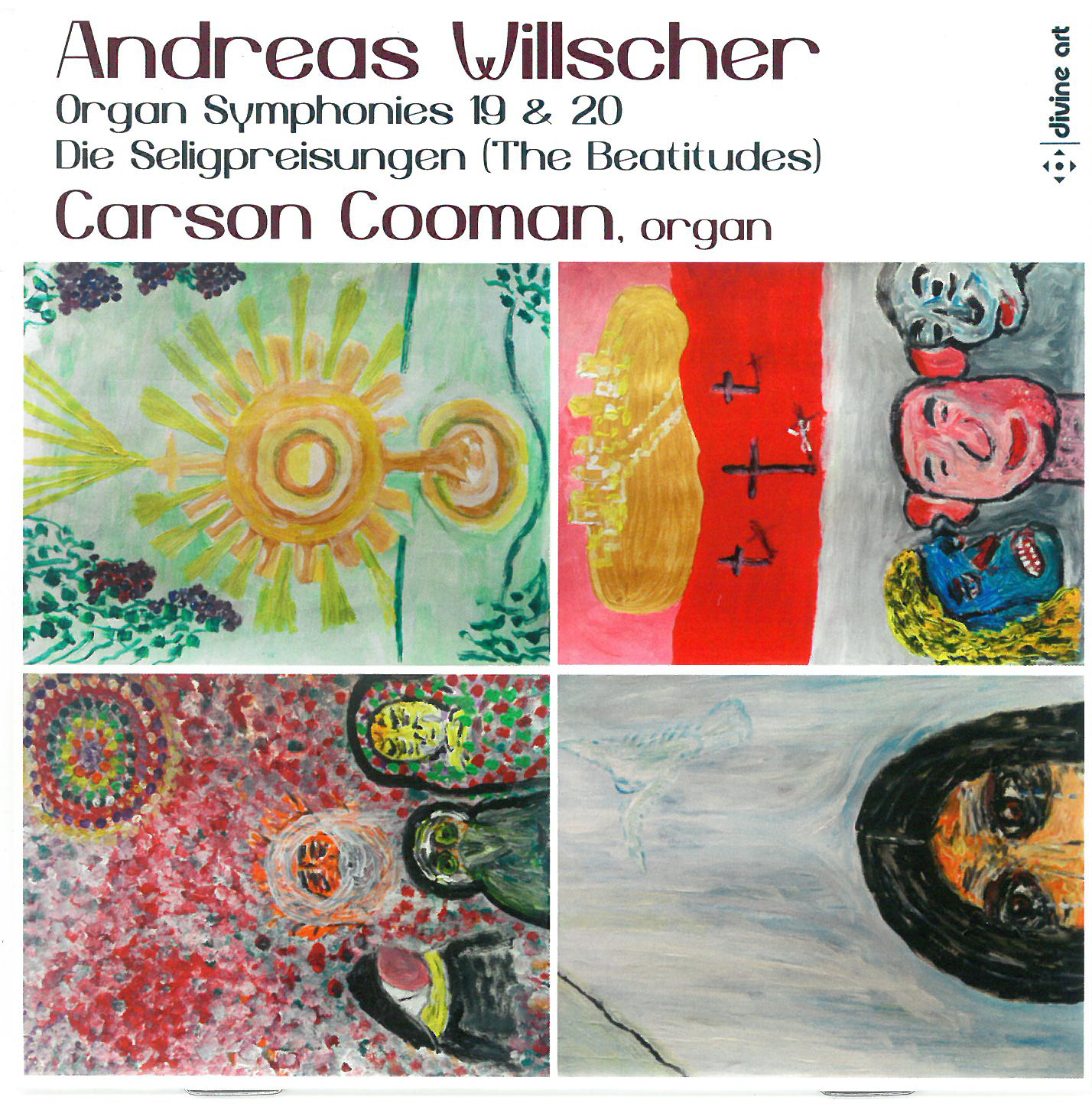
06 Andreas WillscherAs an organist, Carson Cooman continues to add new recordings to his growing catalogue of “virtual” pipe organ performances. Andreas Willscher Organ Symphonies 19 & 20 (Divine Art dda 25162) is the latest and once again uses the increasingly ubiquitous Hauptwerk digital sampling system. The instrument captured on this recording is the 1868 Edmund Schulze in the Church of St. Bartholomew, Armley, Leeds, England. It’s a substantial instrument of 55 stops over five divisions. Judging from the acoustic space heard in the recording, the church is large and suits the instrument perfectly. A curious piece of history recounts how the organ was originally placed in a building too small for its size and volume, lasting only a decade there before being sold and installed in its present location.

Cooman’s program for this disc focuses on the work of German composer and organist Andreas Willscher (b.1955). His compositional language for the instrument is deeply traditional yet freely incorporates catchy contemporary rhythms along with carefully applied contemporary tonalities. The 1974 work Beatitudes is a remarkable piece for a then 19-year-old composer. The major works on the recording, the Symphonies 19 and 20, are both far bolder expressions. They also reflect Willscher’s lifetime experience writing for the organ, learning to exploit its vast range of colours and dynamics.

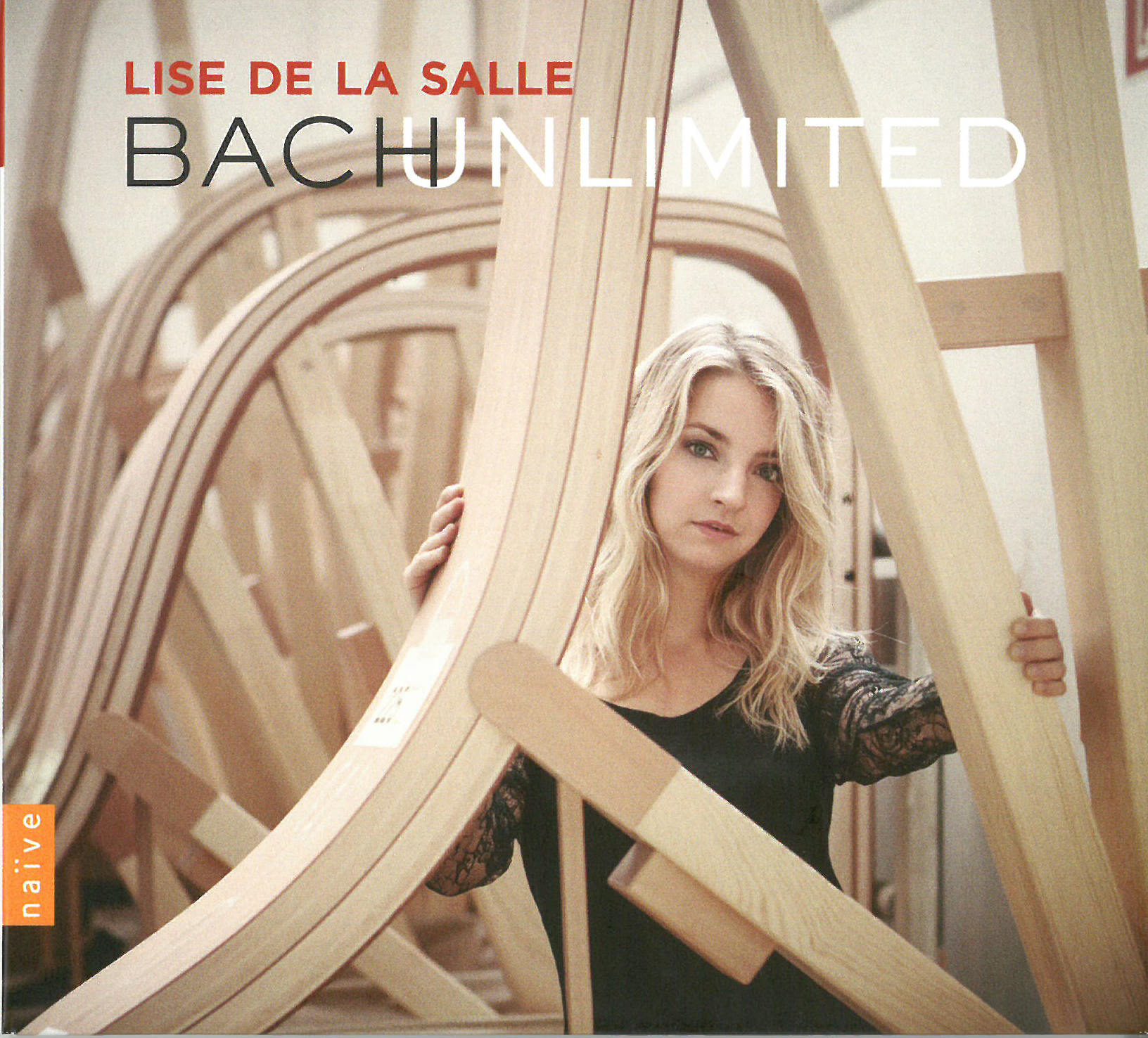
07 Lise de la SalleLise De La Salle has recorded her ninth disc, Bach Unlimited (Naïve V5444). Two of her previous CDs have included some Bach, as does this new one. Despite its title, the only Bach work is the Italian Concerto in F Major BWV971 that opens the disc. It’s a stunning performance; driven, flawlessly controlled, and fast. Really fast. The last movement just leaves you shaking your head.

To underscore the impact Bach’s music has had on her piano career, De La Salle performs several well-known works that use a B-A-C-H motif (B-flat, A, C, B) by Liszt, Poulenc and contemporary composer Thomas Enhco. She also includes Busoni’s transcription of the Chaconne in D Minor BWV1004 and Albert Roussel’s Prélude and Fugue Op.46. Enhco has, however, written several works based on Bach’s Chaconne, the Italian Concerto and Goldberg Variations, and De La Salle includes all of these in her performance program.

It’s an eclectic approach that works well under De La Salle’s hands. She’s a powerful player, versatile and completely in command of whatever repertoire she performs.

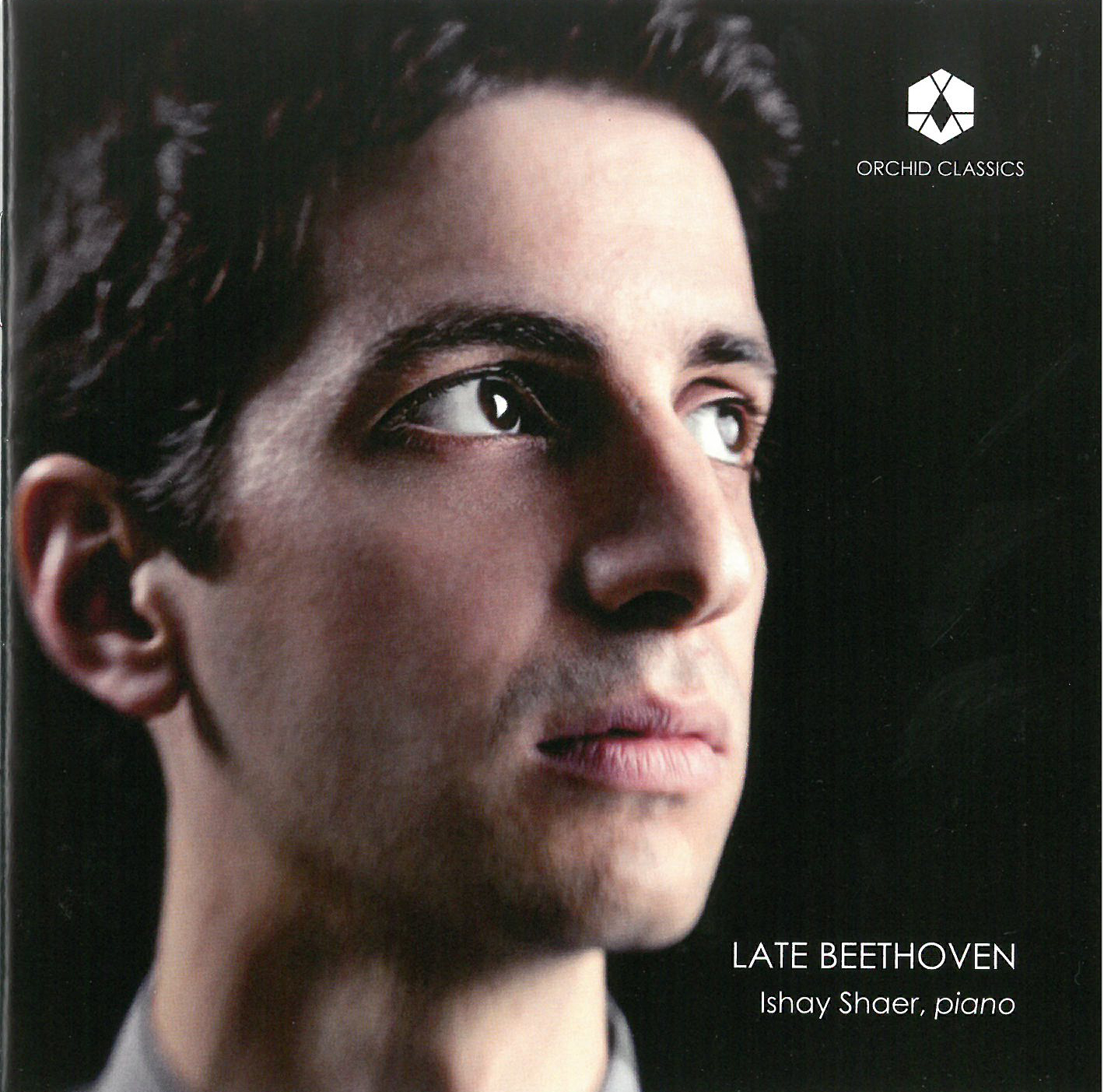
08 Late BeethovenIshay Shaer has recorded his second CD in what should be the beginning of a very promising career. Late Beethoven (Orchid Classics ORC 10076) includes the Sonatas No.28 in A Major Op.101 and No.30 in E Major Op.109 along with the Bagatelles of Opp.126 and 119. Beethoven was never overly impressed with what he felt the Bagatelles had to offer, but we see them more charitably today and Shaer has a way of rendering them that advances our own desire to know Beethoven better.

The real impact of this disc is in the exceptional and sensitive performance that Shaer brings to the two sonatas. He plays from inside the works with profound affection. Both sonatas have a great deal of introspective opportunity and Shaer never misses the chance to explore a little deeper. He seems to have a vision of a vulnerable Beethoven we seldom see.

Shaer’s command of the powerful, explosive passages is entirely convincing. But perhaps his choice of these two sonatas, very much alike in their emotional content, says more about where this young pianist has the capability to go.

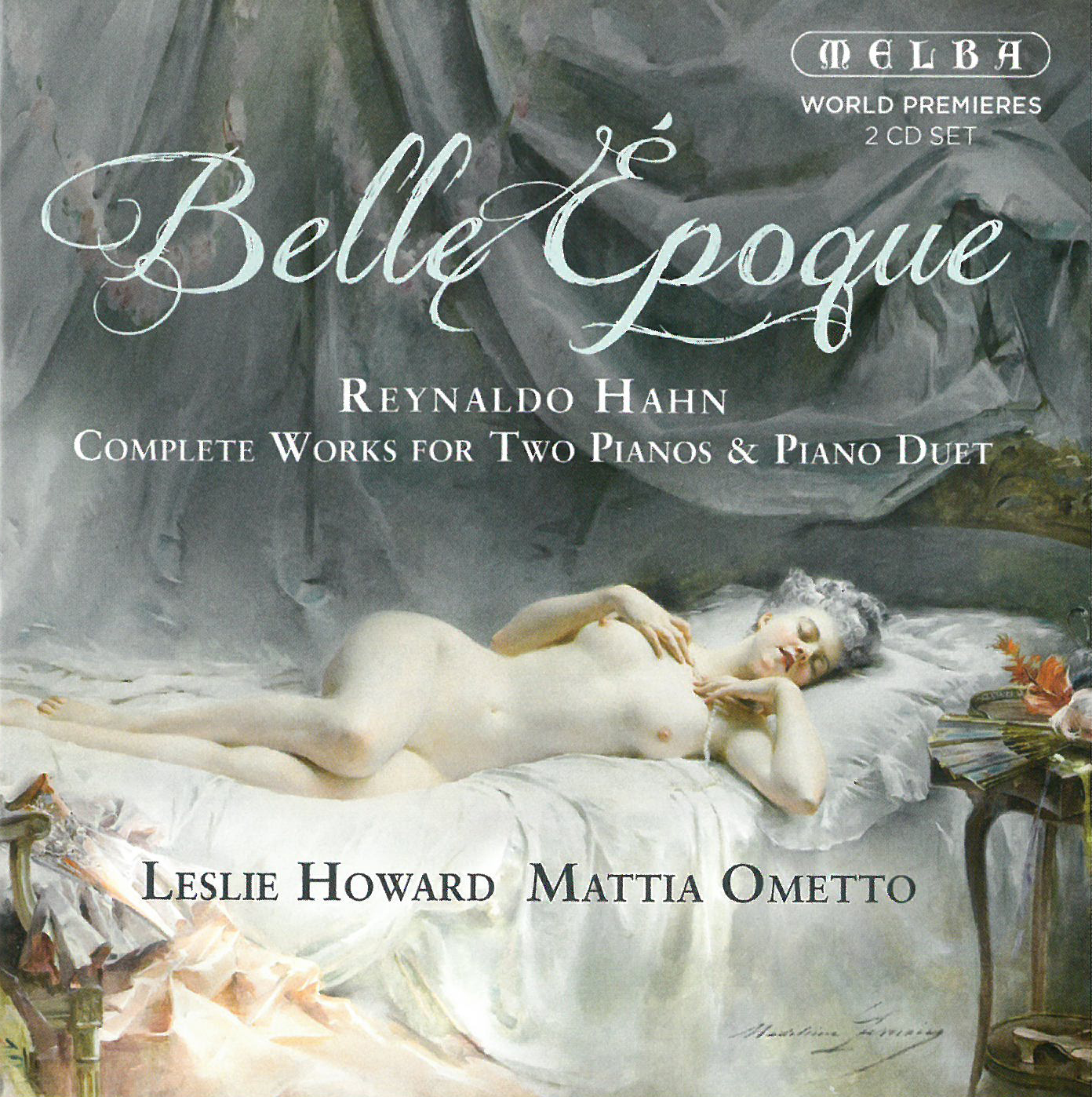
09 Belle EpochLeslie Howard and Mattia Ometto collaborate as duo pianists in Belle Epoque Reynaldo Hahn – Complete Works for two pianos and piano duet (Melba MR 301148-49). Howard steps away from his lifetime role a solo pianist to play Hahn’s repertoire for two pianos and piano four hands. His performance partner Mattia Ometto carries impeccable credentials and the pair have created a splendid two-disc set that opens with Douze Valses à deux pianos. These are pure period works just fizzing with ballroom champagne. The duo next move into more serious repertoire, some of which Hahn wrote before the turn of the century. The loveliness of Hahn’s writing makes an immediate impact, especially in Scherzo lent pour deux pianos. Disc 2 continues with ever more thoughtful writing and performance. The set includes three world premiere recordings of Hahn’s work.

As piano duos go, great value is placed on the merger of two artists into a larger entity that becomes the duo. While this is obviously true in the case of Howard and Ometto, there is, nevertheless, a wonderful element of individualism at work in this pair. It’s most evident when they’re each at their own keyboard and it breathes a fresh creative spark into their playing.

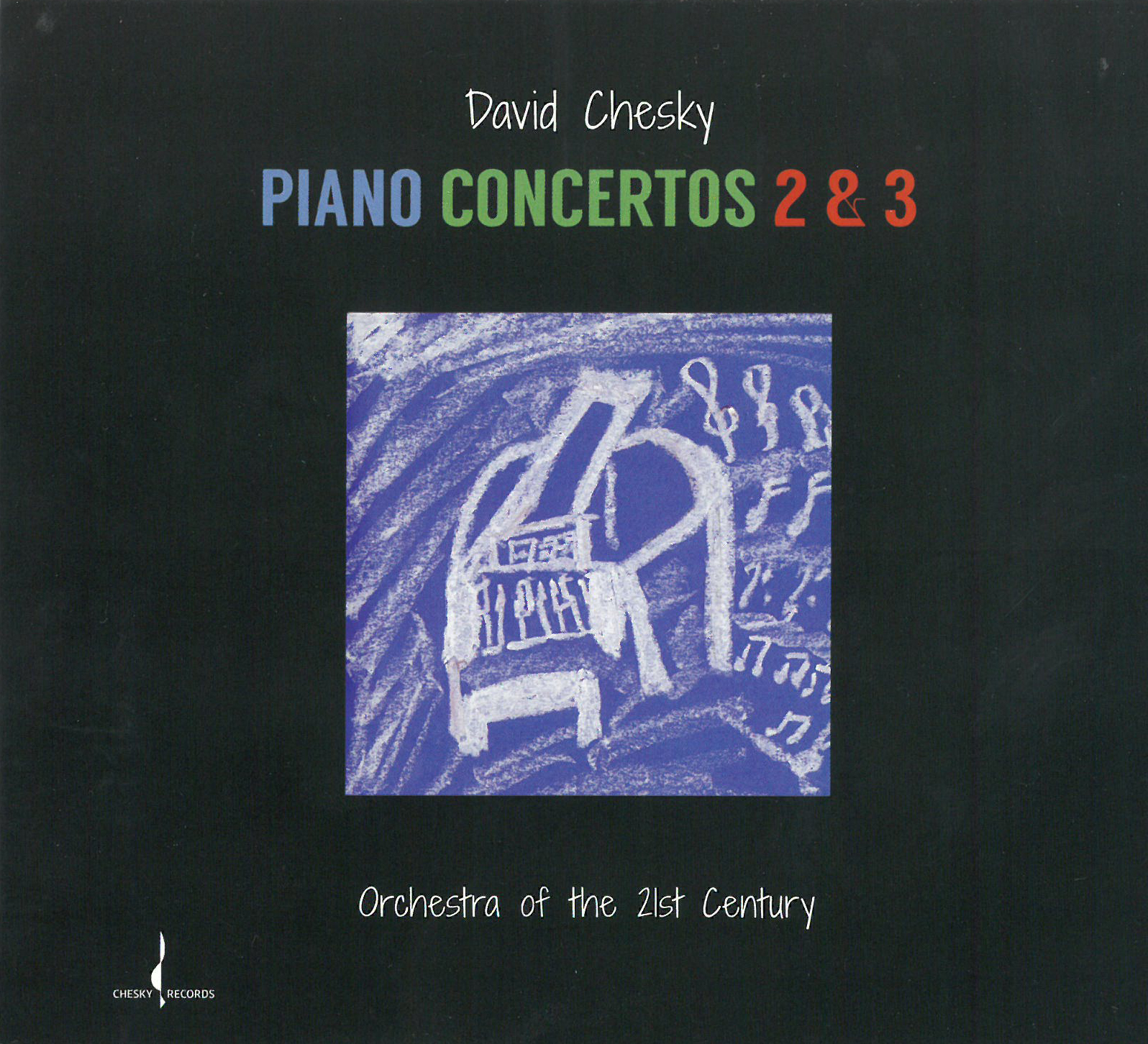
10 David CheskyDavid Chesky is a prolific composer with nearly a hundred works to his credit. He has written for every conceivable classical form and has made his reputation by doing it in studio with the aid of the latest technology, especially in his large-scale compositions. This recording, David Chesky Piano Concertos 2 & 3 - Orchestra of the 21st Century (Chesky Records JD404), is his remarkable foray into the piano concerto form. Inspired by the chaos of New York City, the concertos are extremely high-energy works written and played at an impressive level of excellence.

Composer/pianist Chesky’s style is a fusion of the many influences in his creative life. It’s all there: classical music, rock, jazz, Latin strains, traffic chaos, etc. The elements are beautifully conceived and drawn into a contemporary tapestry that incorporates many familiar threads. The result is a music that is at once recognizable yet exhilaratingly modern.

Chesky’s ability as composer, orchestrator, performer and producer are remarkable. It’s an incredible disc that makes a lasting impression.

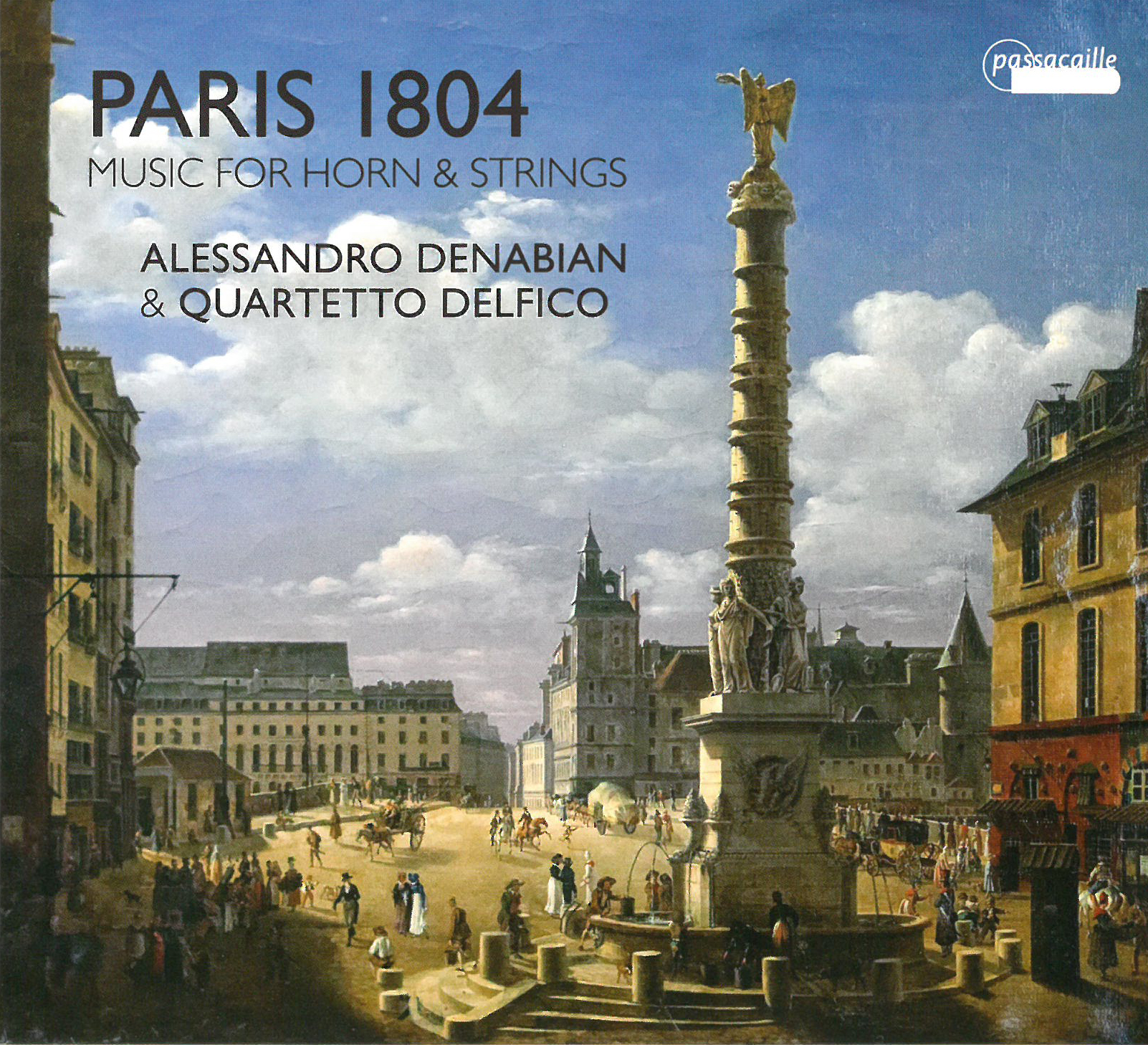
01 Paris 1804Paris 1804 – Music for Horn & Strings
Alessandro Denabian; Quartetto Delfico
Passacaille 1032 (denabian.com)

Despite the political, economic and social turmoil that plagued France during the years following the revolution, musical activities carried on as best they could. Paris remained the centre of European culture and while concert societies were now a thing of the past, the period saw the establishment of the Conservatoire in 1795. Such is the background for this attractively packaged disc of music for natural horn and string quartet by Cherubini, Dauprat and Reicha titled Paris 1804 and featuring Alessandro Denabian with the Quartetto Delfico.

Cherubini arrived in the French capital in 1786 and ultimately enjoyed a long association with the Conservatoire. His two short sonatas for horn are lyrical pieces closer in style to études. The first has a slow introduction followed by a jovial second movement while the second sonata is a single-movement Larghetto.

More ambitious are the Quintet Op.6 No.3 by Louis François Dauprat and the Grand Quintet Op.106 by Anton Reicha. Although hardly a household name today, Dauprat was renowned as a horn player, composer and music professor at the Conservatoire. The quintet is one of innumerable works he wrote for horn, the three contrasting movements providing the soloist ample opportunity to demonstrate the instrument’s capabilities. What strikes the listener here and throughout the disc is the wonderful sense of intimacy achieved, the transparency of the strings blending perfectly with the solo horn. Denabian proves himself to be a true virtuoso, handling the technical demands of a natural horn with apparent ease.

Reicha’s more familiar Grand Quintet is a true tour de force, a model of classical symphonic writing with a rollicking finale that brings the piece – and the CD – to a fitting conclusion.

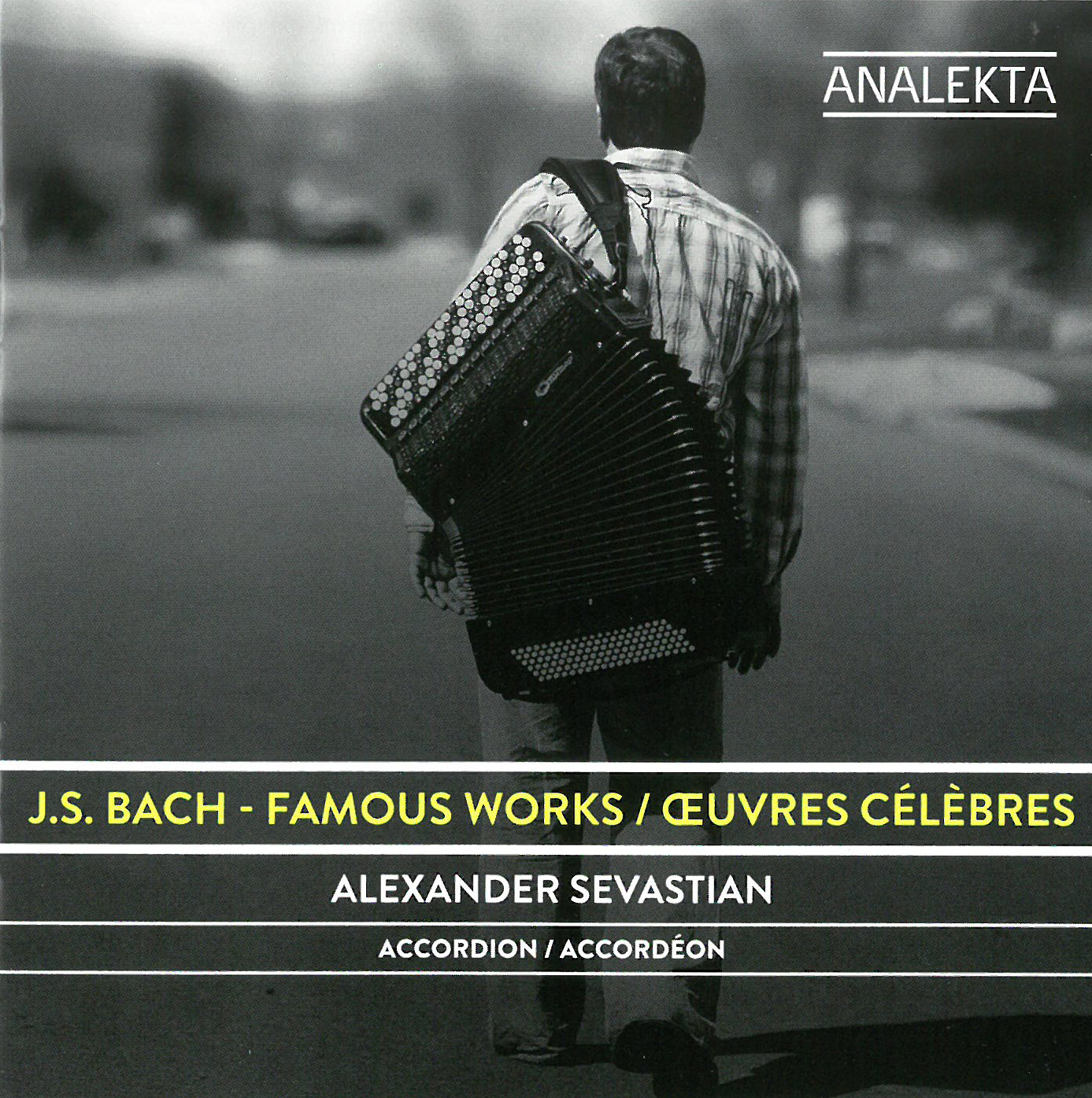
02 Bach SevastianJ.S.Bach – Famous Works
Alexander Sevastian
Analekta AN 2 9136 (analekta.com)

Well known and loved by his Quartetto Gelato audiences and fans, accordionist Alexander Sevastian performs a number of solo transcriptions of J.S. Bach’s most loved repertoire with clarity, virtuosity, spirit and respect for Baroque style. Today most serious accordionists will have played Bach since his music, regardless of original instrumentation, translates extremely well to the instrument. Unlike the Stradella left-hand chord system, Sevastian plays a free bass bayan accordion where the left-hand buttons are arranged in single-tone patterns thus allowing a wide range of melodic and chordal possibilities in both hands. Registers (much like organ stops) increase the pitch range and colour possibilities.

Bach lovers are guaranteed to respect and admire Sevastian’s performances. The Prelude and Fugue in A Minor features solid but not overpowering left-hand held notes against rapid right-hand lines in the Prelude. There is a clear differentiation of voices in the Fugue, especially in the low-voice entry thanks to Sevastian’s understanding of reed response. In contrast, the emotionally sensitive melodic performance of Ich ruf zu dir, Herr Jesu Christ showcases touching musicality grounded by solid rhythmic direction and cadence resolutions, attributes of a great accordion master. Sevastian’s detailed understanding of bellow-sound production drives with precision the fast lines and full harmonies in the Toccata from Toccata and Fugue in D Minor.

There are two musical wonders sounding simultaneously here – Bach’s compositions and Sevastian’s accordion musicianship. Both are remarkable.

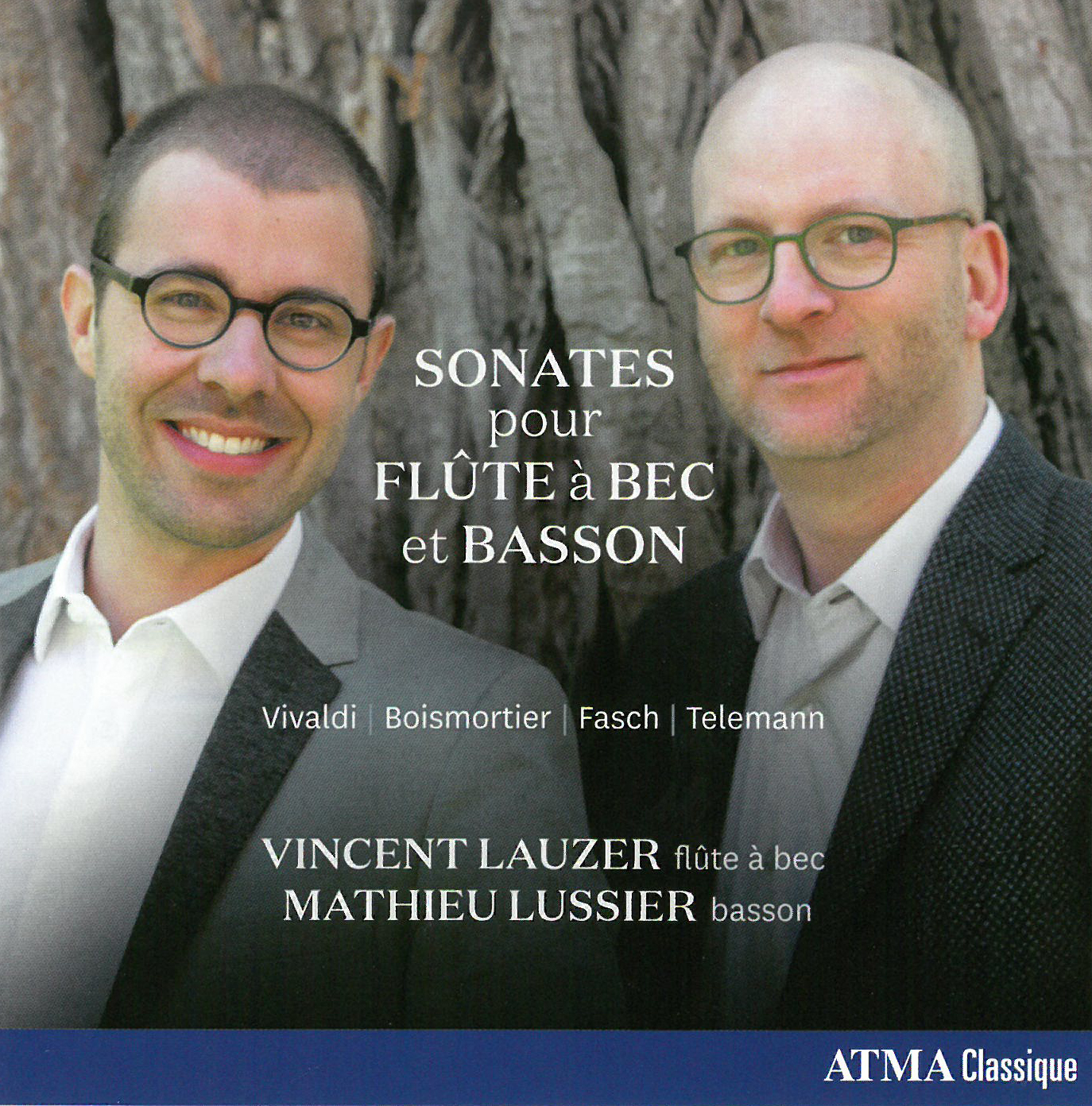
03 Vincent LauzerSonates pour Flûte à Bec et Basson
Vincent Lauzer; Mathieu Lussier
ATMA ACD2 2753 (atmaclassique.com)

The alto recorder gained its greatest popularity with professional players, as well as with amateurs, round about 1730. The most popular form was the sonata for solo recorder and basso continuo, but sonatas for two recorders and continuo also became popular. This CD examines another variant: the trio sonata for treble recorder and bassoon with basso continuo. A CD devoted to these instruments could easily become repetitive but some variations are built in; while many of the works recorded show the interplay between the treble and the bass instruments, the first work on the CD (Vivaldi’s Sonata in A Minor) contains a slow movement which is really a recorder solo with the bassoon being part of the accompaniment. Moreover, further variety is provided by two works (by Chédeville and Telemann) being for recorder alone and two others (by Telemann and Fasch) for solo bassoon.

There are a number of first-rate recorder players in Montreal and Vincent Lauzer is among the very best. He excels both in sweetness of tone as well as the virtuosity which these sonatas require. He is ably partnered by the bassoon player, Mathieu Lussier. Anyone who thinks of the bassoon as just a useful bass accompaniment will be struck by the singing tone Lussier achieves.

Listen to 'Sonates pour Flûte à Bec et Basson' Now in the Listening Room

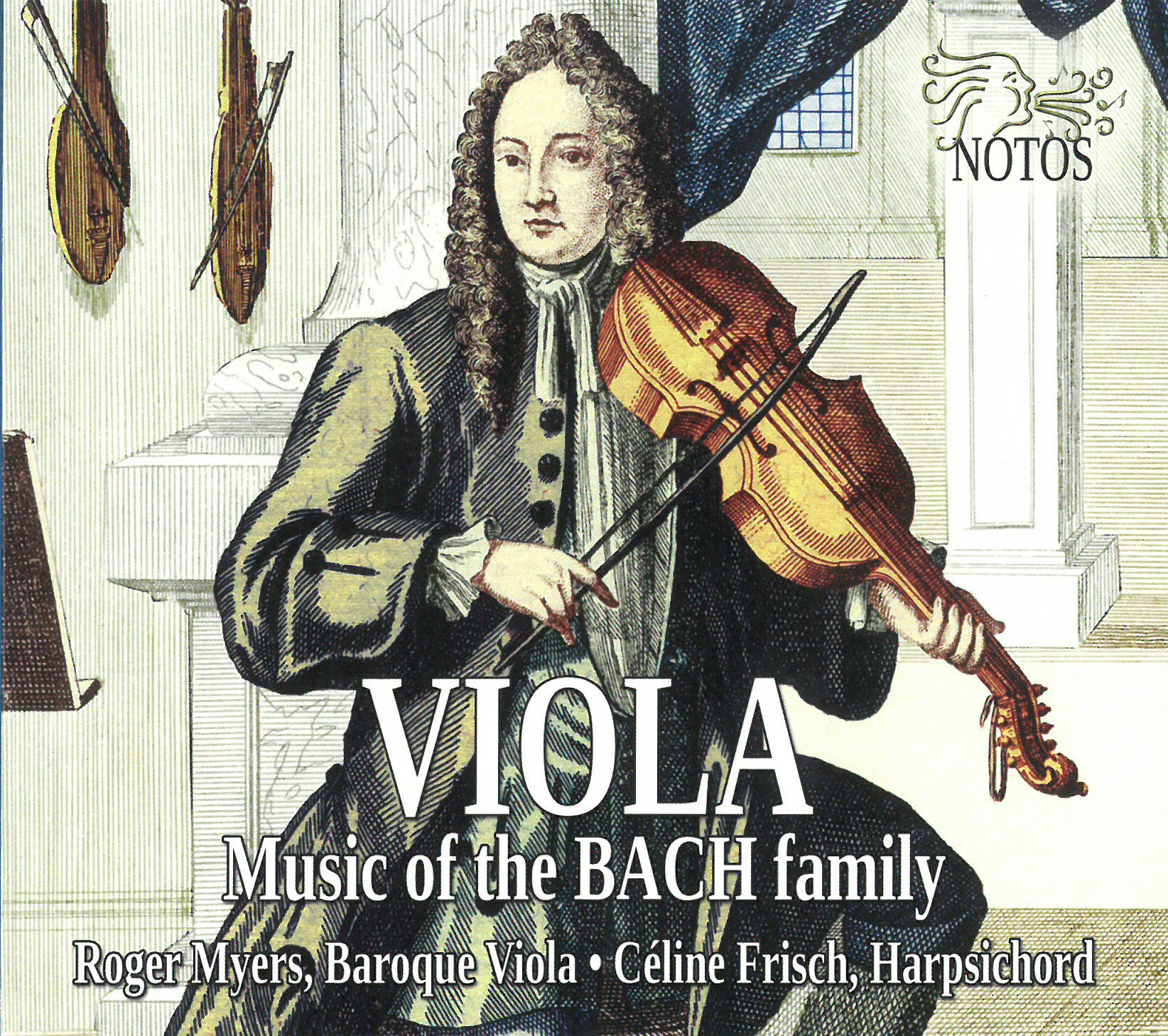
04 Bach Family ViolaViola Music of the Bach Family
Roger Myers; Céline Frisch
Notos NOTOS001 (rogmyers@austin.utexas.edu)

Music on this album brings up fragments of Baroque and Rococo worlds in the form of elegant phrases and courtly dances, lovely nuances and surprising virtuosity. As I was listening to this recording on a quiet, snowy day, I realized there was quite a resemblance between colours and textures of the Baroque viola sound and the feel of the winter day – both dark, somewhat restrained, but so rich in understated expression and depth.

In this fine selection of 18th-century viola repertoire there are sonatas by Carl Philipp Emanuel Bach, Wilhelm Friedmann Bach and Johann Joachim Quantz, a movement from a concerto by Johann Cristoph Friedrich Bach and an aria from a cantata by Johann Sebastian Bach. Other than the obvious family connection between J.S.Bach and his sons, there is another one – the Court of Frederick the Great in Prussia. A big supporter of art and music, Frederick had assembled one of the finest orchestras of that time and employed many exceptional musicians, C.P.E. Bach and J.J. Quantz among them.

Roger Myers executes delightful and sensitive performances of these pieces and offers greatly detailed liner notes. His masterful tonal aesthetics and his virtuosity are most evident in the sonata by W.F.Bach; this composition showcases the viola’s darker sonorities while bringing forward the speed and brilliance of the virtuosic capabilities of the instrument, something that had not been heard before in the viola repertoire of the time. The chemistry between the performers is refreshing – Céline Frisch is every bit as poetic in her interpretation as she is virtuosic in her technique.

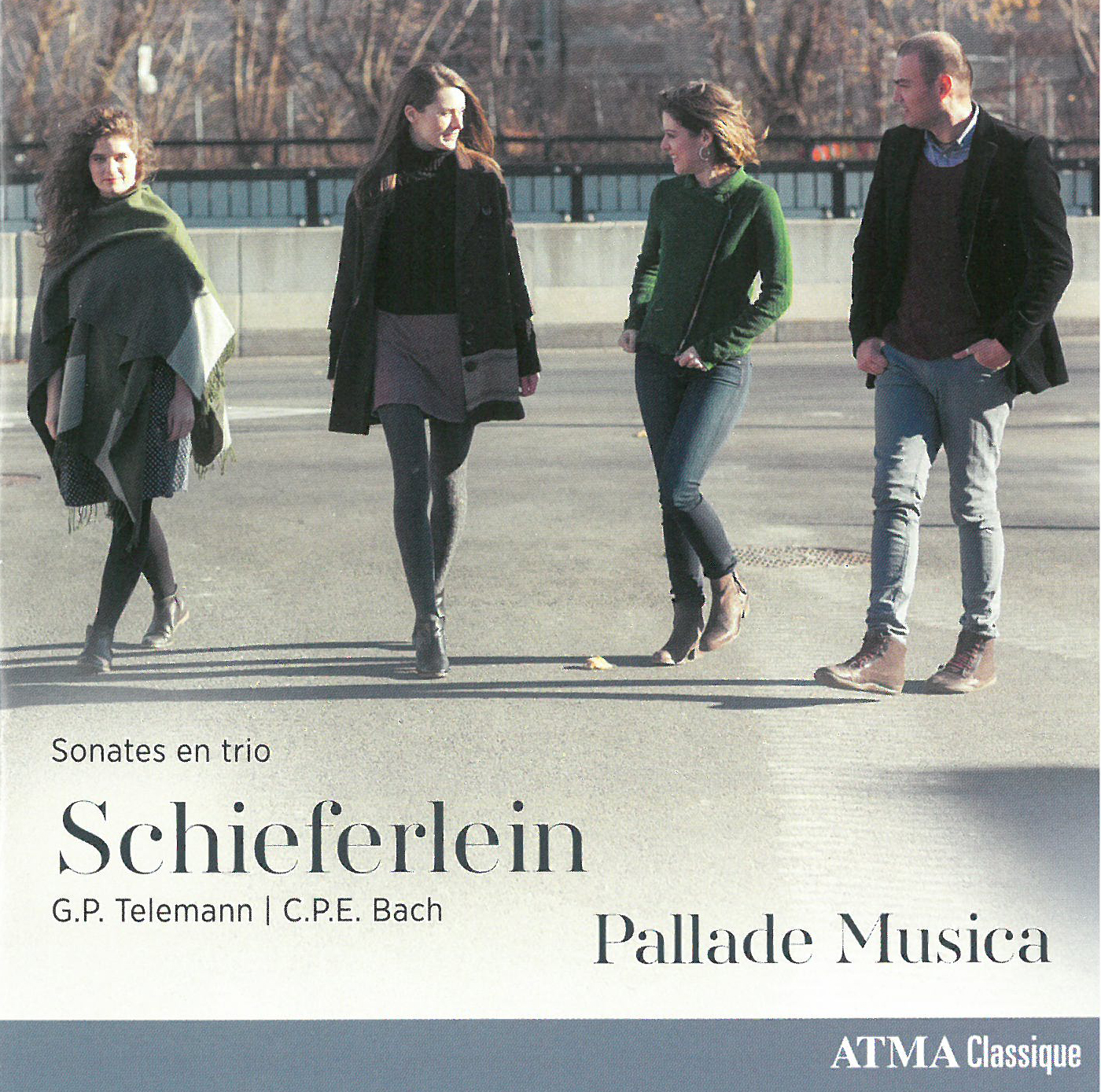
05 Pallade MusicaSchieferlein; Telemann and C.P.E. Bach – Sonates en trio
Pallade Musica
ATMA ACD2 2744 (atmaclassique.com)

The importance of this disc by Pallade Musica cannot be overstated, for without the compelling performance of three sonatas Otto Schieferlein might have remained the historically curious academic that he has been for almost 300 years. Although each of his three sonatas does not deviate far from the dictates of the Baroque era, with its contrapuntally driven form fashionable after J. S. Bach, there is a unique, languid elegance in the manner in which each of the sonatas flows.

Moreover, Sonata No. 2 in F Major is extended by a slender, statuesque French Menuet, a gorgeous five-minute depiction of the vivid spectacle that often filled 17th-century ballrooms. The sonatas demonstrate Schieferlein’s skill at plumbing the depths of feeling. In sweeping movements Sonata No.1 in E Minor evokes dark and light, the solemn and the sparkling through interweaving lines of unflinching passion. The writing here as well as in Sonata No.3 in A Major is at once fierce, haunting and mystical.

Georg Telemann’s Trio Sonata, and Carl Philipp Emanuel Bach’s Fantasia in D Major and Sonata in G Major for flute, violin and continuo, are not mere musical appendages. Each has individual character. The willowy sinews of Telemann’s sonata break through the balletic Siciliana movement to the spikey energy of the final Allegro assai. And the Fantasia and Sonata by C.P.E. Bach are quiet personal evidence of an inspired artistic genius.

Listen to 'Schieferlein; Telemann and C.P.E. Bach – Sonates en trio' Now in the Listening Room

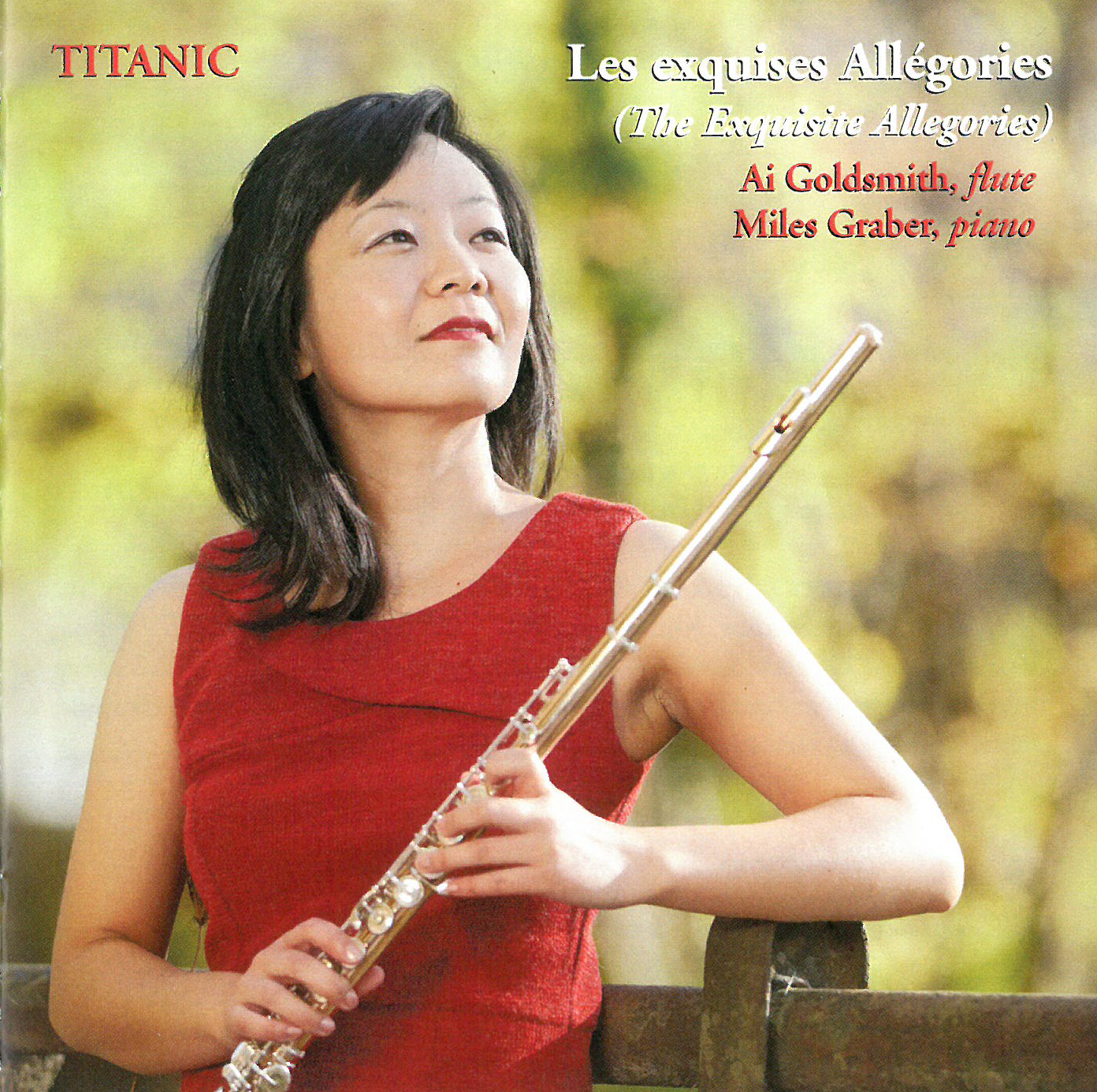
06 Ai GoldsmithLes exquises Allégories
Ai Goldsmith; Miles Graber
Titanic Ti-281 (flutistai.com)

California-based flutist Ai Goldsmith and pianist Miles Graber’s CD, Les exquises Allégories, gives us the opportunity to get to know four major works, each 15 to 20 minutes long, by little-known 20th-century composers, plus a lovely transcription of an early Schubert lied.

First on the program is Carl Frühling’s Fantasie, Op.55, a bravura, late-Romantic one-movement emotional rollercoaster ride. Goldsmith’s direct approach to playing the flute is perfect for the big, expansive opening, reminiscent of the opening moments of Chaminade’s Concertino and Eldin Burton’s Sonatina. This directness, which I might characterize as letting the music speak for itself, also works particularly well in the opening movement of the Sonatine by Walter Gieseking, whose work as a composer is as worthy of recognition as his career as a concert pianist. (He also composed Variations on a Theme by Grieg, also on this CD.)

Where it is perhaps most effective is in Schubert’s Litany for All Souls’ Day, which Goldsmith dedicated to her mother, who died in 2012, and which she plays with respectful simplicity, allowing the beauty and the sadness of the music to resonate and touch us.

There are also many moments of stunning virtuosity, which Goldsmith and Graber play with control and authority. Graber’s reading of the dauntingly difficult piano part in Grigory Smirnov’s Fantasia is quite breathtaking; but he is equally convincing in the tender solo piano interlude toward the end of the same piece.

07 Mormon MahlerMahler – Symphony No.8
Utah Symphony; Mormon Tabernacle Choir; Thierry Fischer
Reference Recordings FR-725 SACD (referencerecordings.com)

In 1963 the Utah Symphony was the first American orchestra to release a pioneering stereo studio recording of Mahler’s monumental Eighth Symphony, followed by performances of all of Mahler’s formerly under-appreciated symphonies. Under the 32-year nurturing leadership of the venerable Maurice Abravanel, the ambitious Utah ensemble rose to national prominence, with over 100 recordings on various labels released during his tenure.

Happily for this orchestra it seems that history is destined to repeat itself. The Swiss conductor Thierry Fischer arrived in Utah in 2009 and holds a contract there until 2022. After a long silence the orchestra is again releasing recordings under Fischer’s direction on the audiophile Reference Recordings label. The present recording of the Eighth was preceded by a well-received disc of Mahler’s First Symphony; both of these constitute the beginnings of this orchestra’s 75th Anniversary Mahler Cycle project. The results are impressive to say the least.

The Eighth Symphony is Mahler’s most gargantuan and atypically affirmative symphony, ofttimes hyped as the “Symphony of a Thousand,” though in the present case the forces involved number closer to 500 performers. The legendary Mormon Tabernacle Choir, along with the Madeleine Choir School Choristers, form the nucleus of the mighty choral forces; both are exceptionally well prepared and project an admirable diction. The cast of eight superbly matched vocal soloists includes sopranos Orla Boylan, Celena Shafer, Amy Owens and Charlotte Helekant, mezzo-soprano Tamara Mumford, tenor Barry Banks, baritone Markus Werba and bass Jordan Bisch. The tenor soloist Banks in particular is outstanding, able to project without straining in the extremely demanding heldentenor part which has proved a stumbling block in many a performance of this work.

The production team from sound/mirror has worked miracles in this live performance from the acoustically quirky Salt Lake Tabernacle, utilizing a minimalist core of five microphones. I can only imagine the impact the SACD layer of this double CD recording might have. Fischer’s interpretation is flexible and affectionate, a winning formula in a work that can easily feel bombastic in the wrong hands. This is an outstanding performance that deserves pride of place in the discography of this work.

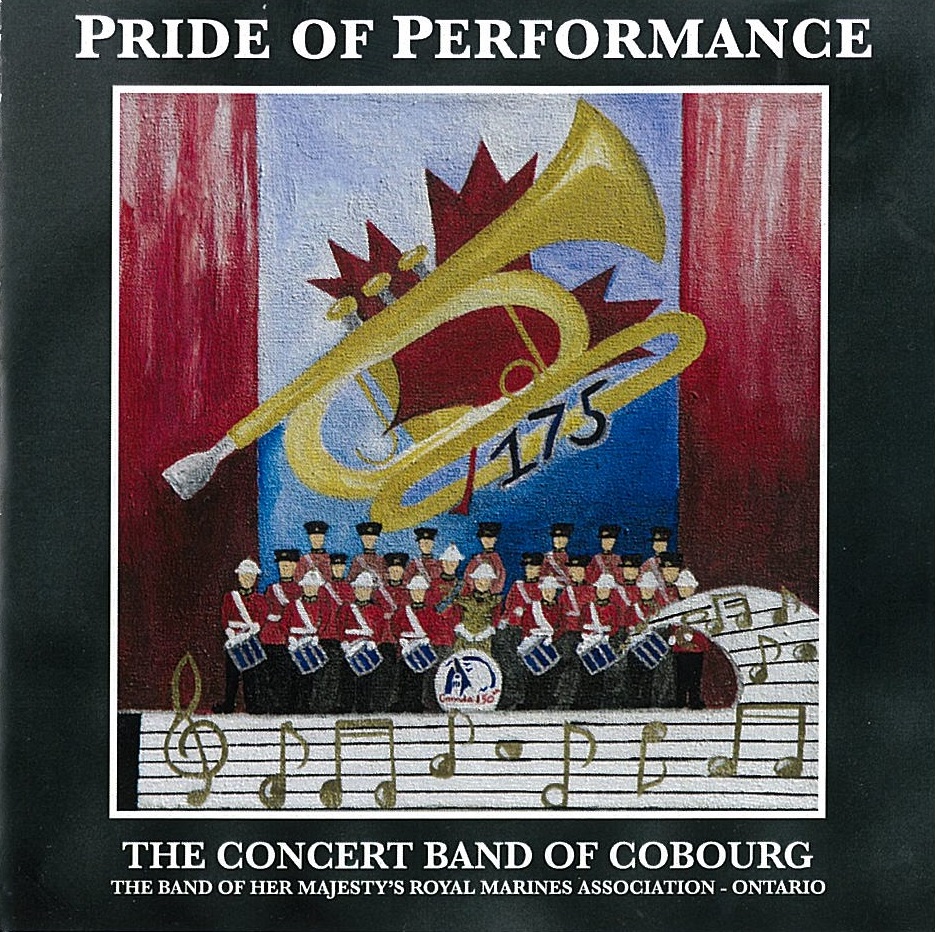
08 Coburg Concert BandPride of Performance
The Concert Band of Cobourg
Independent (theconcertbandofcobourg.com)

The Concert Band of Cobourg is one of the most prominent community bands in Ontario. As was the case with many bands in the country, the band planned on sesquicentennial-year celebrations. However, the year 2017 was a special year in a very different way for them. It was the 175th year for the band to play for their town. While the town band had been playing continuously over that time period, it had fallen into difficult times by 1970 when Roly White, formerly of the Royal Marines bands, became director of music. Since then, and now under the baton of White’s successor, Paul Storms, the band displays its depth of performing, composing and arranging talent.

This record is unique in that every selection was either composed or arranged by members of the community. Of these, at least six are original compositions. There are very special arrangements by band members of a wide range of genres from Sugar Blues to Stravinsky’s The Firebird. The name David Tanner, in particular, appears regularly with four original compositions, eight arrangements and one solo to his credit. All solos, by Tanner and the seven other soloists, show great sensitivity and musicality.

This CD, Pride of Performance, has a most appropriate title. All members of the band should rightfully be proud of this performance. Throughout, all numbers display a high level of musicianship, and recording quality which matches that standard.

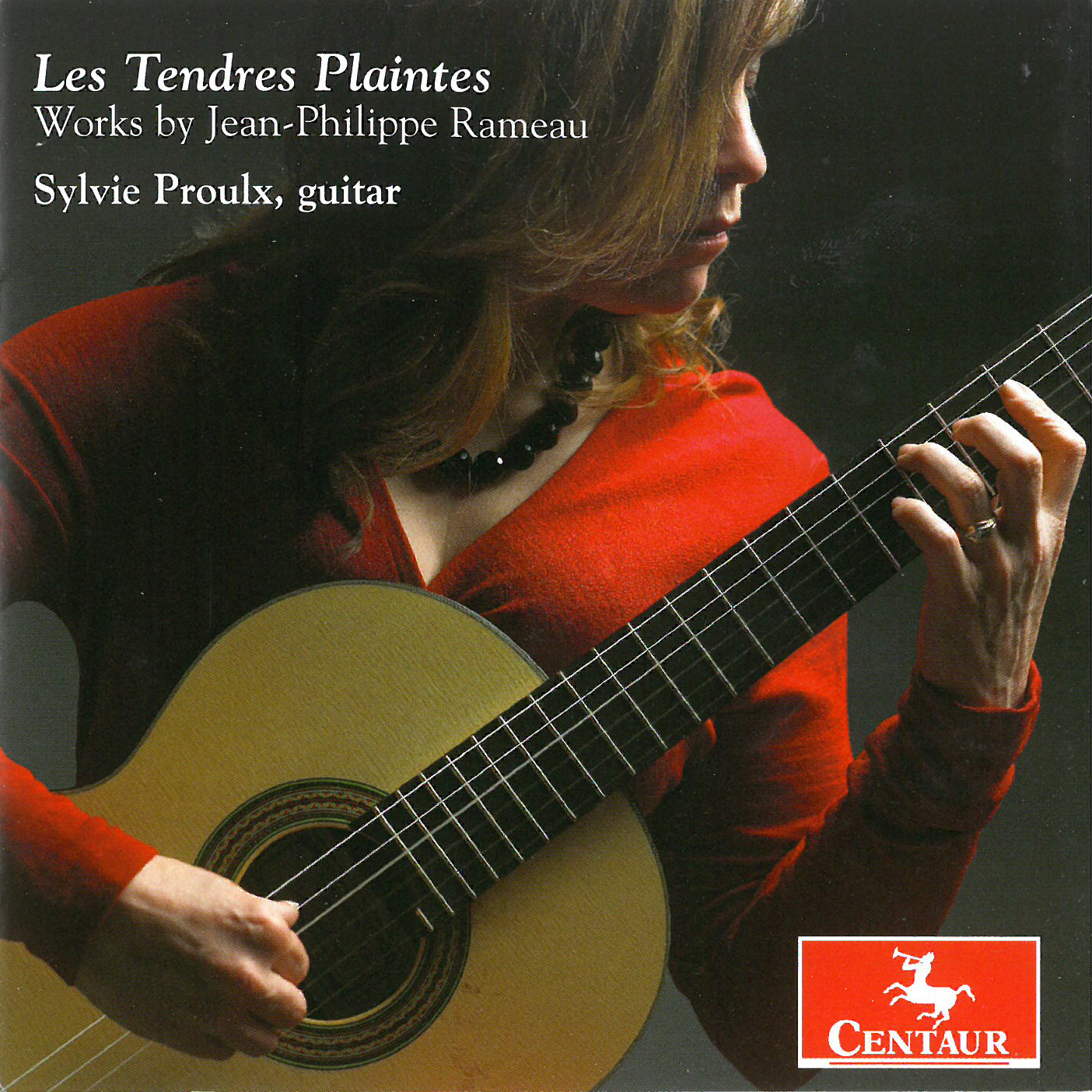
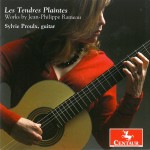
01 Sylvie ProulxLes Tendres Plaintes: Works by Jean-Philippe Rameau (Centaur CRC 3603) is the second solo CD from Canadian guitarist Sylvie Proulx; it’s a collection of transcriptions, mostly of dance movements, from harpsichord suites by the leading French Baroque composer.

Three of the transcriptions, including the title track, are by Proulx, with the remaining 12 being by other guitarists including John Duarte and Andrés Segovia. Given the inherent difficulties in transcribing harpsichord music for guitar – the reduced range, the unavoidability of playing fewer notes, and in particular the handling of ornamentation – everything here works extremely well, helped no doubt by the guitar’s greater capabilities for expressive playing.

Proulx’s performances are clean and clearly defined, with a complete absence of extraneous noise and a lovely range of colour, tone and contrast. It’s terrific playing.
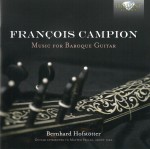
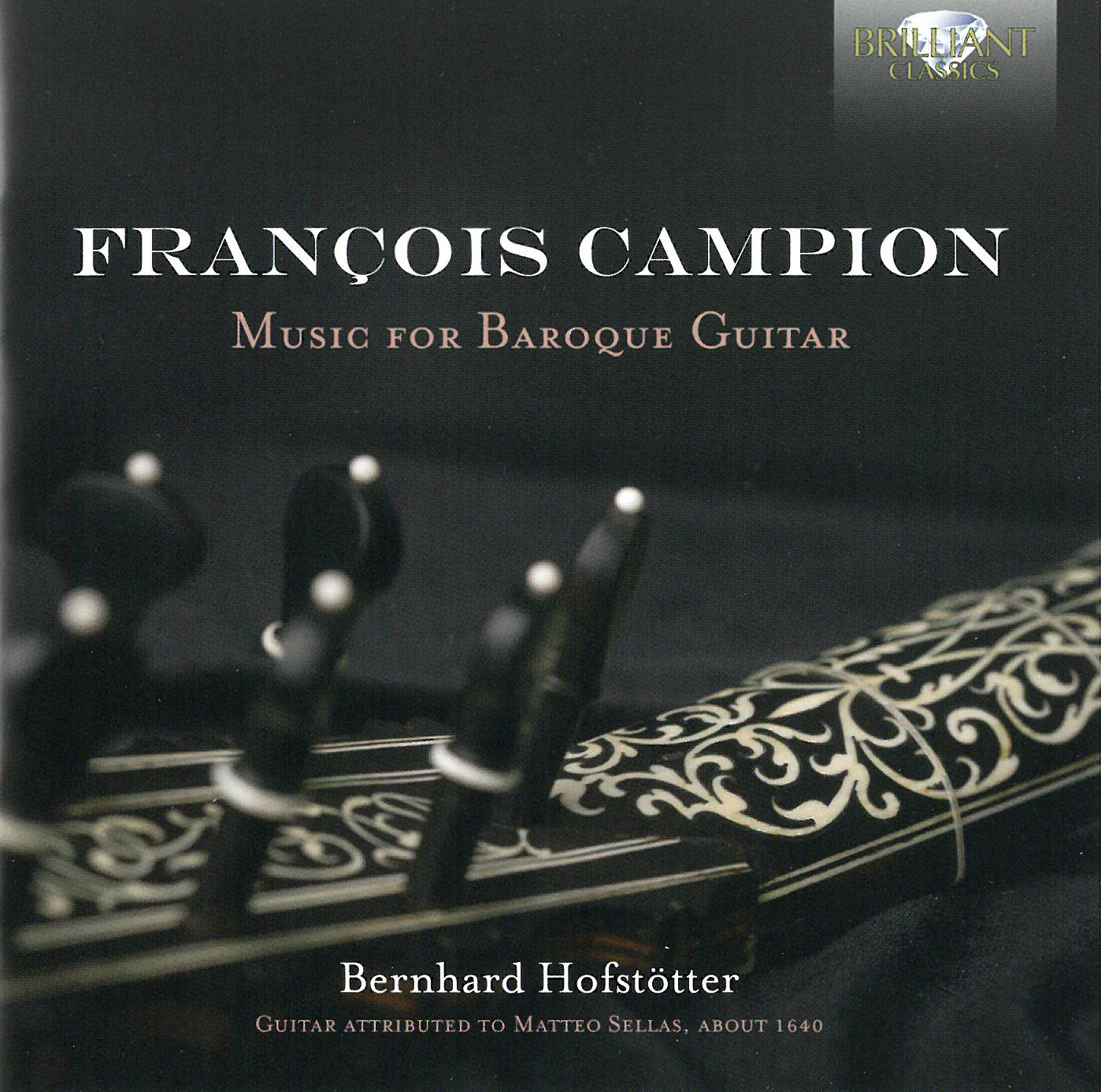
02 Campion GuitarThere’s more excellent – and fascinating – guitar playing on François Campion Music for Baroque Guitar (Brilliant Classics 95276), with Bernhard Hofstötter playing a Baroque guitar attributed to Matteo Sellas of Venice, from about 1640.

The colour booklet photos show an astonishingly beautiful instrument. It’s a five-course guitar, tuned the same as the top five strings of the modern guitar, with the top E a single string and the other four doubled, either in unison (A, G and B strings) or at the lower octave (D string).

In 1705 Campion published one of the last five-course guitar books, and continued to add handwritten pieces to his own personal copy throughout his life. These manuscript pieces often exceeded the published works in size and difficulty, and form the basis of this recital.

In the excellent booklet Hofstötter remarks on the instrument’s “…full-bodied and velvety dark sound which radically differs from comparable modern instruments” and is “round, fully resonating and at the same time subtle and fragile.” It’s exactly that. Hofstötter is a lutenist, and it shows; the sound here seems like a bridge between the lute and the classical guitar. It’s meticulously clean playing of some very intricate and technically demanding music – the Bach-like fugues and dance forms in particular – and a simply fascinating CD.
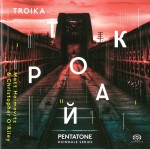
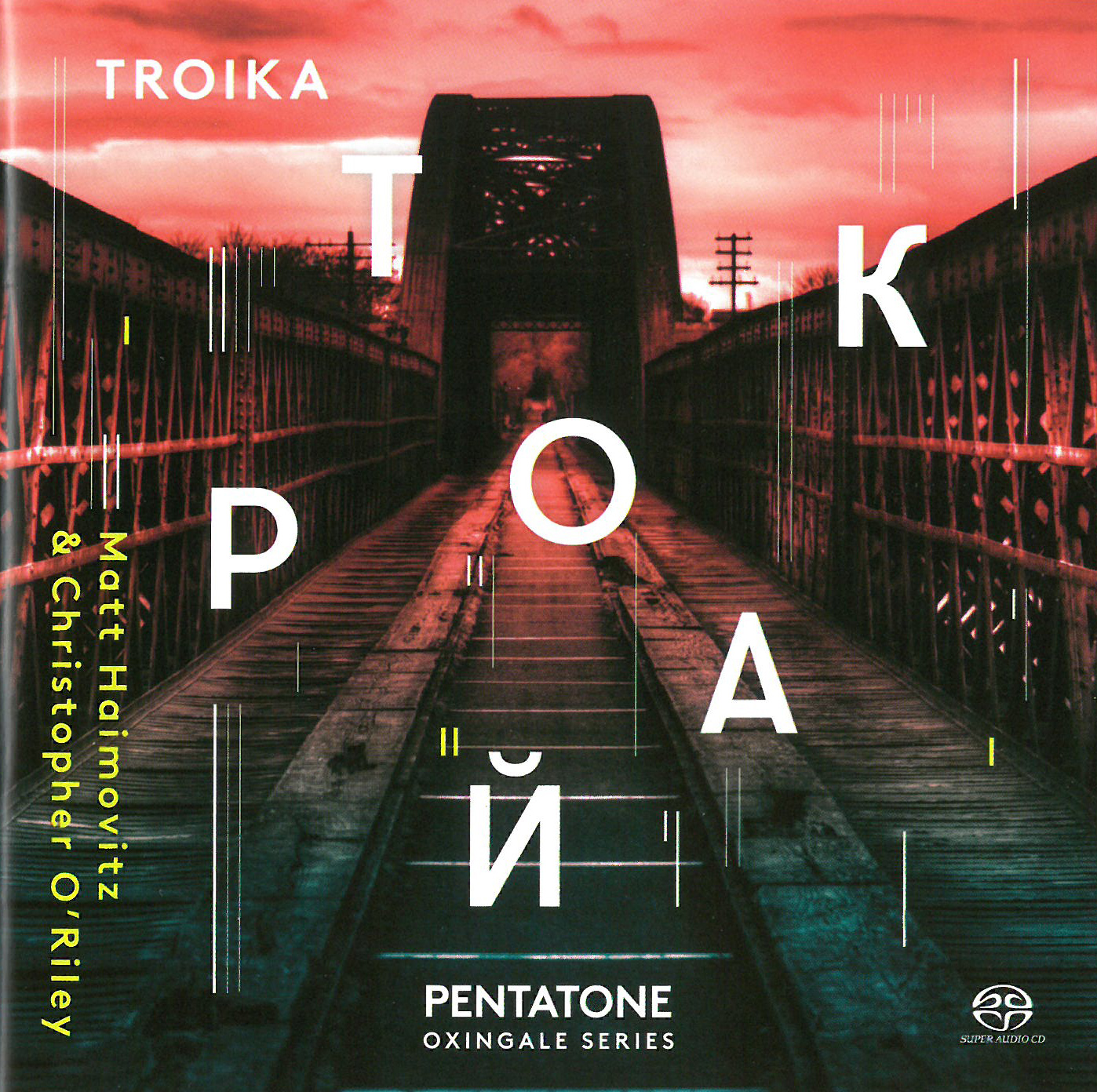
03 Haimovitz TroikaWhenever you see a 2CD box set from the wonderful cello and piano duo of Matt Haimovitz and Christopher O’Riley you know you’re in for something special, and so it proves with Troika, their latest release of Russian music by Shostakovich, Prokofiev and Rachmaninoff on the Pentatone Oxingale Series label (PTC 5186 608).

CD1 is devoted to Shostakovich and Prokofiev, with the former’s Waltz No.2 and Cello Sonata in D Minor Op.40 and the latter’s Troika from Lieutenant Kijé and Cello Sonata in C Major Op.119.

CD2 has Rachmaninoff’s Cello Sonata in G Minor Op.19 and his famous Vocalise before the duo takes a customary left turn into contemporary Russian music with two of their own arrangements: Kukushka, by the singer-songwriter Victor Tsoi; and Pussy Riot’s Punk Prayer – Virgin Mary, Put Putin Away, complete with Haimovitz’s use of a glass slide on the strings and a crushed Styrofoam cup behind the bridge to achieve some grunge punk bass distortion!

The duo’s arrangement of Lennon & McCartney’s Back in the U.S.S.R. completes a terrific set.
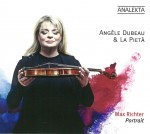
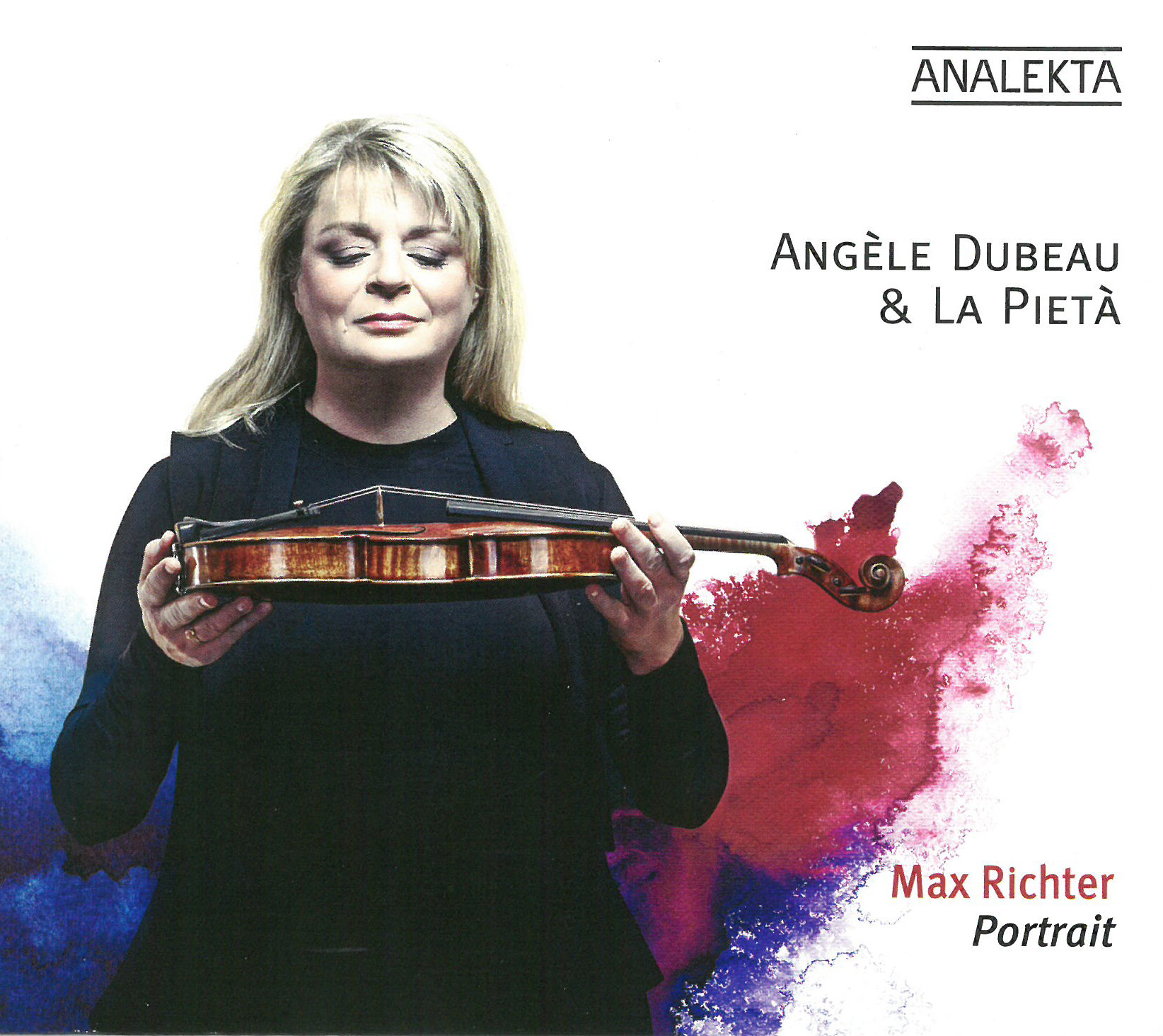
04 Dubeau RichterAngèle Dubeau and La Pietà are back with another CD in their Portrait series, this time featuring music by Max Richter, who has been particularly active in film, theatre and television (Analekta AN 2 8745).

Previous Portrait CDs featured Philip Glass, Arvo Pärt, John Adams and Ludovico Einaudi, and Dubeau says that the more she listens to composers gravitating around the minimalist movement the more she wants to interpret their music: “I enjoy the moments of introspection that these works bring.”

Those moments are possibly the result of the lack of any real development: each of the 16 short pieces here (15 are less than five minutes) essentially sets a mood and keeps it, with little opportunity for anything other than “Here’s an idea…”

Apart from the really lovely Mercy for solo violin and piano, and Winter II, recomposed by Richter from Vivaldi’s The Four Seasons, all tracks are arrangements by François Vallières and Dubeau of pieces from Richter’s solo albums Memoryhouse, The Blue Notebooks – Disconnect, Songs From Before and From Sleep, the films Waltz with Bashir and Perfect Sense, and the television scores for The Leftovers and Black Mirror-Nosedive.

As always, playing and recording standards are absolutely top-notch. It’s essentially easy, pleasant – and, yes, introspective – listening that will be warmly welcomed by Dubeau’s many regular admirers.
Listen to 'Portrait: Max Richter' Now in the Listening Room

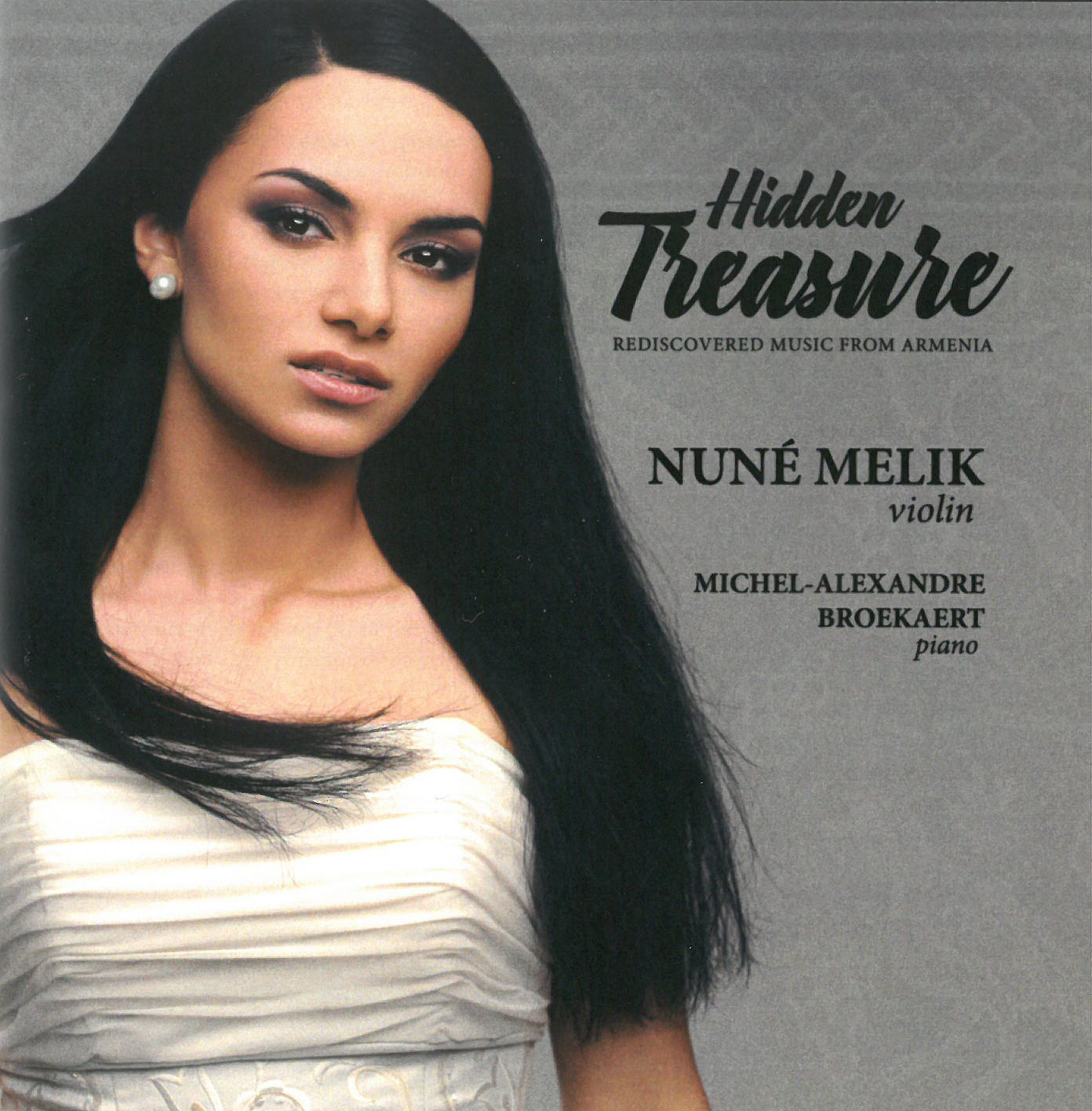
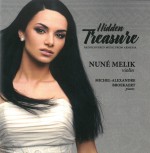
05 Nune MelikViolinist Nuné Melik makes an impressive recording debut with the CD Hidden Treasure: Rediscovered Music from Armenia with pianist Michel-Alexandres Broekaert (DOM Forlane FOR 16886 domdisques.com).

Born in Siberia of Armenian/Georgian/Jewish heritage, Melik moved to Montreal in 2009 and began to explore the music of composers from her upbringing; this recital program grew out of the resulting Hidden Treasure project. Judging by her playing here, it’s clearly been an emotional and rewarding journey.

The central work on the disc is the Violin Sonata in B-flat Minor by Arno Babadjanian, written in Russia in 1959 and criticized as “formalist” by the Soviet authorities. Babadjanian’s close friend Dmitri Shostakovich thought highly of it, and his influence is clearly felt; there are hints of Prokofiev in the slow movement, too.

Lovely short pieces by Komitas Vardapet, Aram Khachaturian and Alexander Spendiarian complete the disc. There’s passionate, rhapsodic playing from Melik and sympathetic support from Broekaert, who also has a short solo.
Listen to 'Hidden Treasure: Rediscovered Music from Armenia' Now in the Listening Room

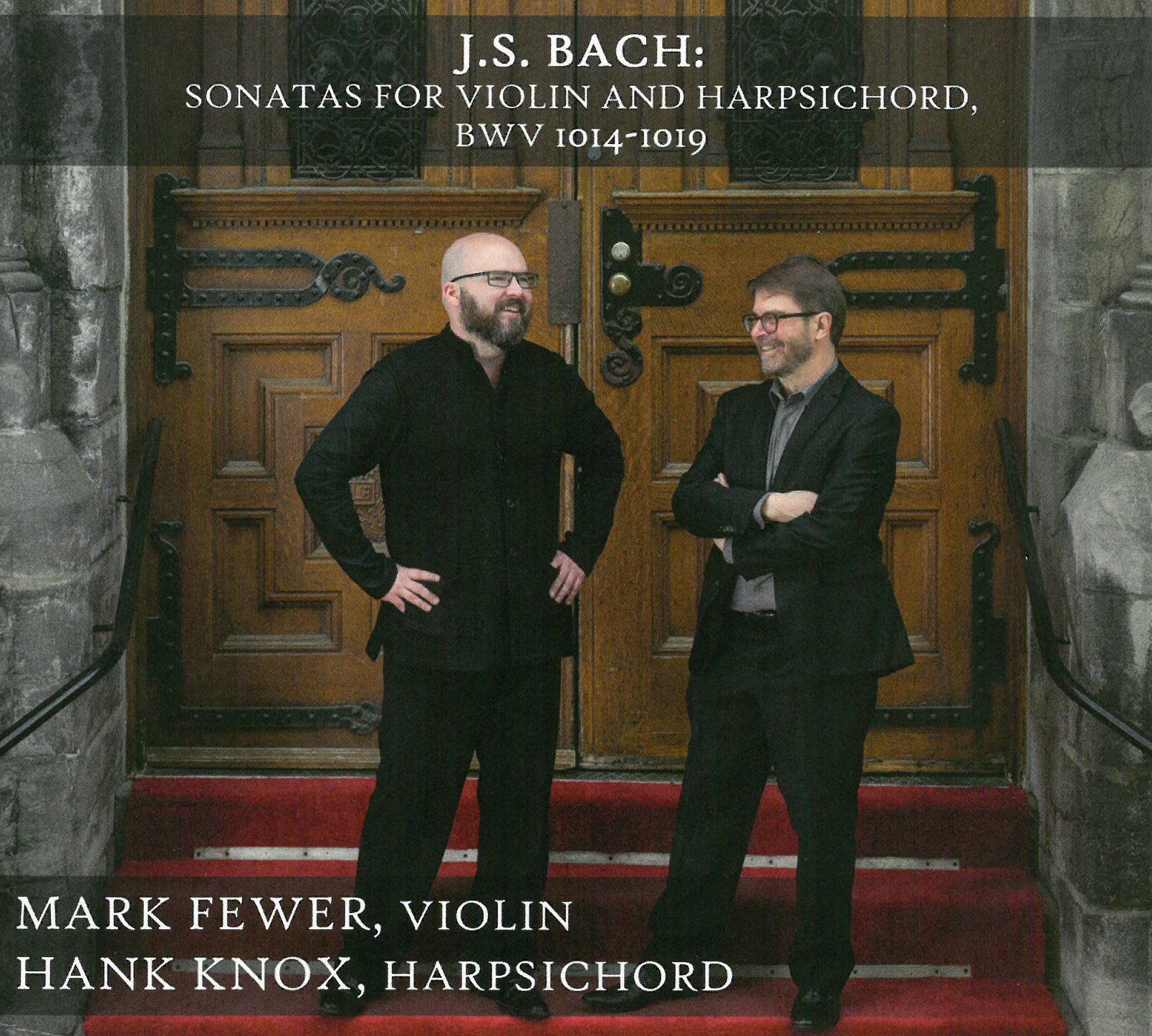
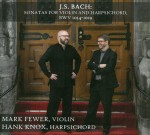
06 Fewer KnoxJ.S. Bach: Sonatas for Violin and Harpsichord BWV 1014-1019 with violinist Mark Fewer and Hank Knox (Leaf Music LM 216) is the third set of these works I’ve received in recent years, following the outstanding releases from Catherine Manson and Ton Koopman (harpsichord) and the Duo Concertante pairing of Nancy Dahn and Timothy Steeves (piano).

Although there is accomplished playing here the harpsichord is prominent and rather heavy, and its lack of dynamic range tends to give the performances a somewhat mechanical feel, with the violin sounding more like a separate voice than an integrated partner. Koopman’s sound is much softer and much more attuned to Manson’s playing.

There are occasional significant differences in interpretation too, notably in the Adagio of the F minor sonata, where Fewer – unlike Manson and Dahn – opts to separate and shorten the eighth note double-stops.

As always, it comes down to personal taste. If you prefer these works strong and bright and with harpsichord there is much here you will enjoy, although Manson and Koopman and Duo Concertante both offer more sensitive readings.
Listen to 'J.S. Bach: Sonatas for Violin and Harpsichord BWV 1014-1019' Now in the Listening Room

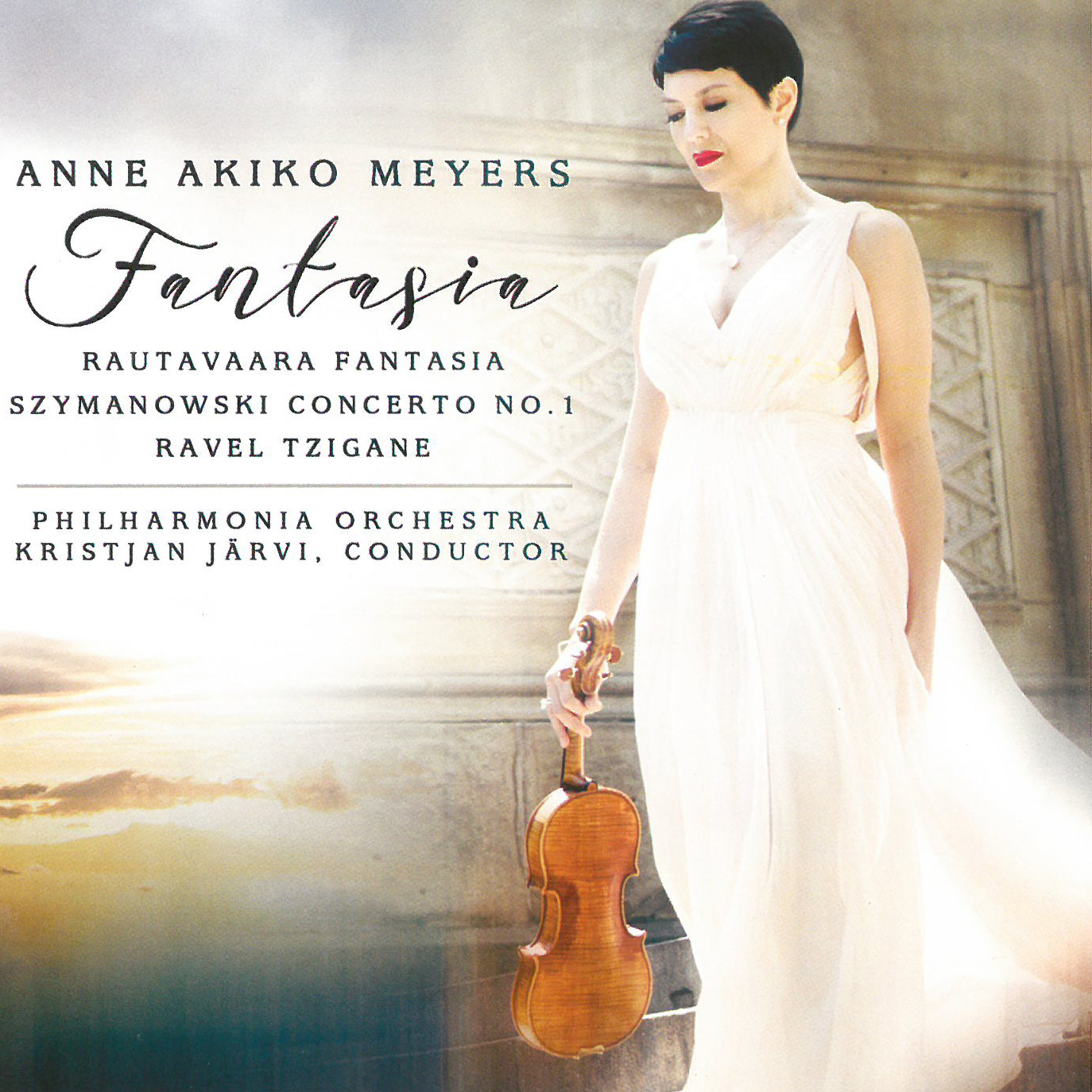
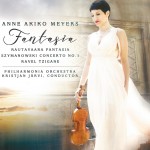
07 Akiko MeyersFantasia is the 35th studio album from violin superstar Anne Akiko Meyers, this time with the Philharmonia Orchestra conducted by Kristjan Järvi (Avie Records AV2385). The title track is by the Finnish composer Einojuhani Rautavaara, written in 2015 at the request of Meyers, who worked on it with the composer in Helsinki only months before his death in July 2016. Meyers describes it as “transcendent” and having “the feeling of an elegy with a very personal reflective mood.” It’s a lovely work that clearly has great emotional significance for her.

The Violin Concerto No.1 Op.35 by Karol Szymanowski dates from 1916, and was one of the first works to reflect the life-changing influence of his 1914 trips to North Africa and to Paris, where he met Debussy and Ravel. It’s a simply glorious single-movement work full of sensuous and exotic melody and lush orchestration, and with an extremely demanding solo part that rarely leaves the stratosphere.

Ravel’s dazzling Tzigane, in the orchestral version, completes a simply outstanding CD.
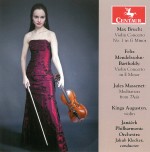
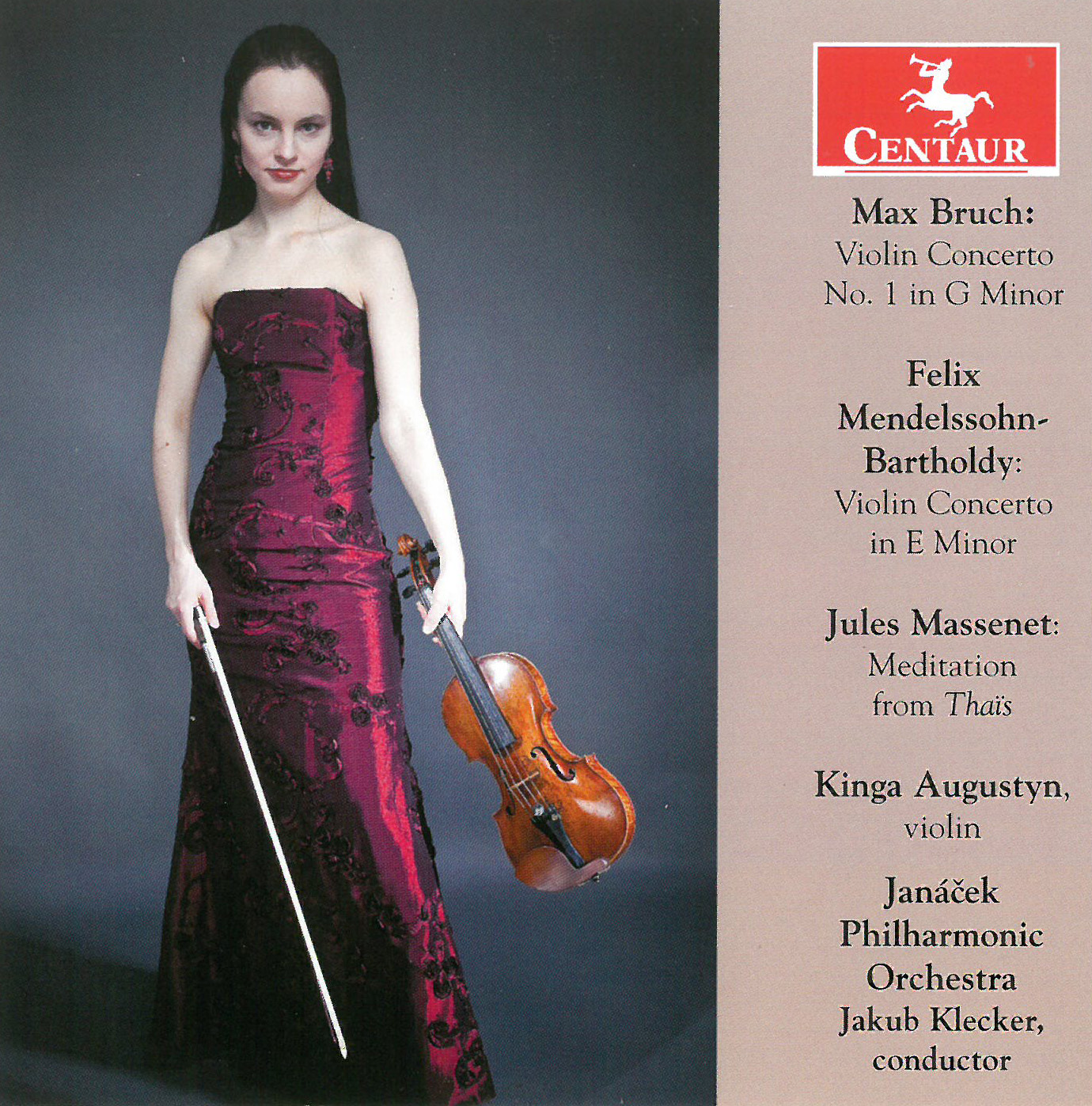
08 Kinga AugustynIn the old LP days the Bruch and Mendelssohn Violin Concertos were frequent companions, and the tradition continues on a new CD from the Polish-born violinist Kinga Augustyn, with the Janáček Philharmonia Orchestra under Jakub Klecker (Centaur CRC 3585).

The Bruch Concerto No.1 in G Minor has a lovely opening, with Augustyn displaying a big, bright tone. Tempos are never rushed, and there is beautiful orchestral support.

The performance of the Mendelssohn Concerto in E Minor follows the same pattern, with unhurried tempos, accuracy in the details and some lovely orchestral moments. There’s sweetness and warmth in the playing, but never a hint of superficiality: these are thoughtful performances that bring delightful playing from all concerned.

Massenet’s Meditation from Thaïs is the final track, and again it’s a performance that leans toward the understated – a sensitive, simple reading with great depth that makes for a very effective ending to an impressive CD.
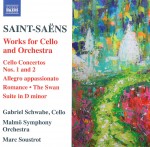
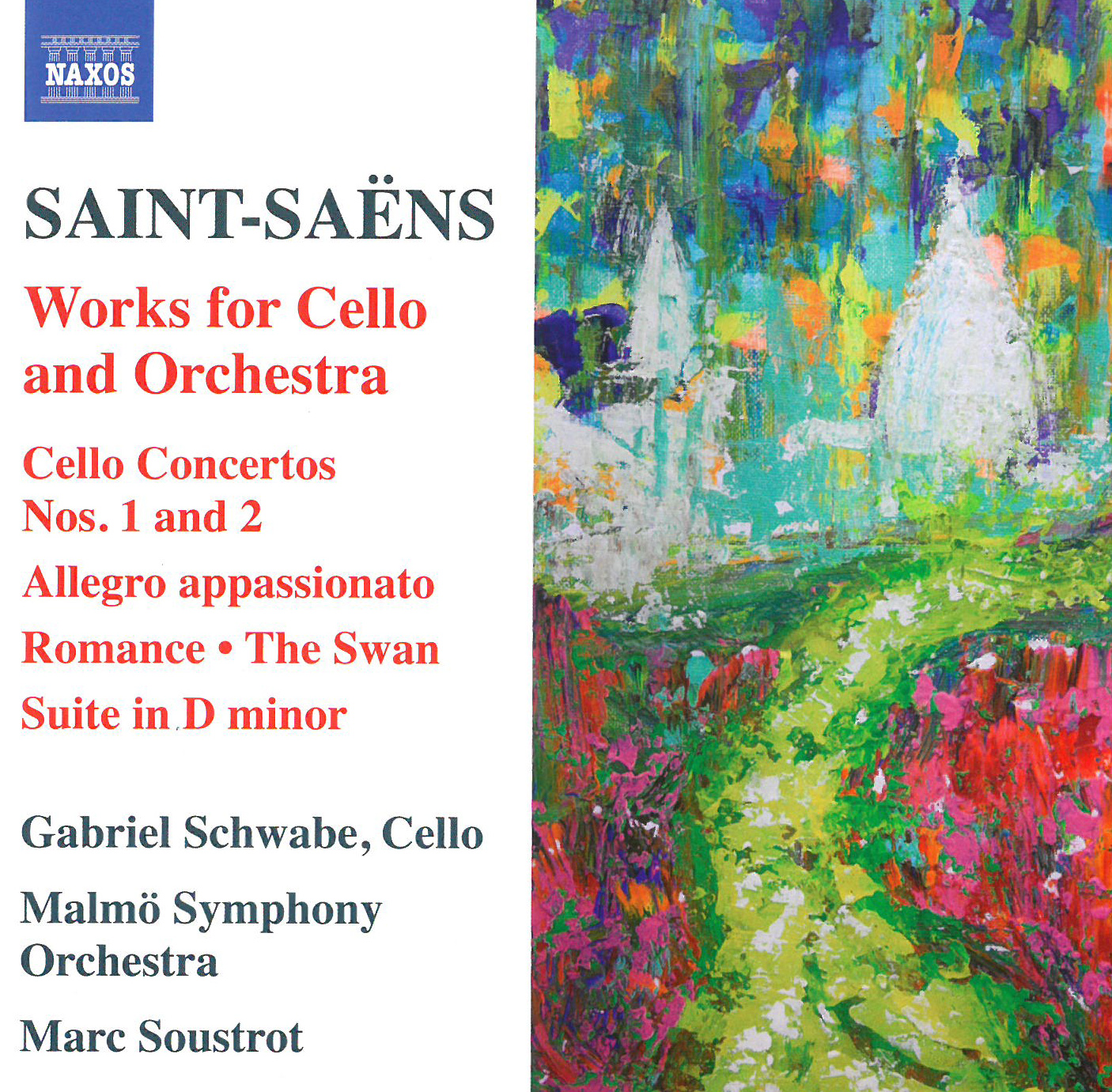
09 Saint Saens CelloThe outstanding German cellist Gabriel Schwabe is the soloist in the complete Saint-Saëns Works for Cello and Orchestra with the Malmö Symphony Orchestra under Marc Soustrot (Naxos 8.573737).

The two Cello Concertos – No.1 in A Minor, Op.33 and No.2 in D Minor, Op.119 – are the major works here, although the lesser-known five-movement Suite in D Minor, Op.16bis from 1919 has much to recommend it. It was written for cello and piano and later orchestrated by the composer, as were the two other short works here: the Romance in F Major, Op.36 and the Allegro appassionato in B Minor, Op.43. Paul Vidal’s orchestration of The Swan from Carnival of the Animals completes the CD.

With his great tone and terrific technique Schwabe easily negotiates the difficult challenges of the second concerto, with some particularly lovely playing in the simply beautiful central Andante sostenuto. There is fine orchestral support from Soustrot and the Malmö orchestra. All in all, an outstanding disc.
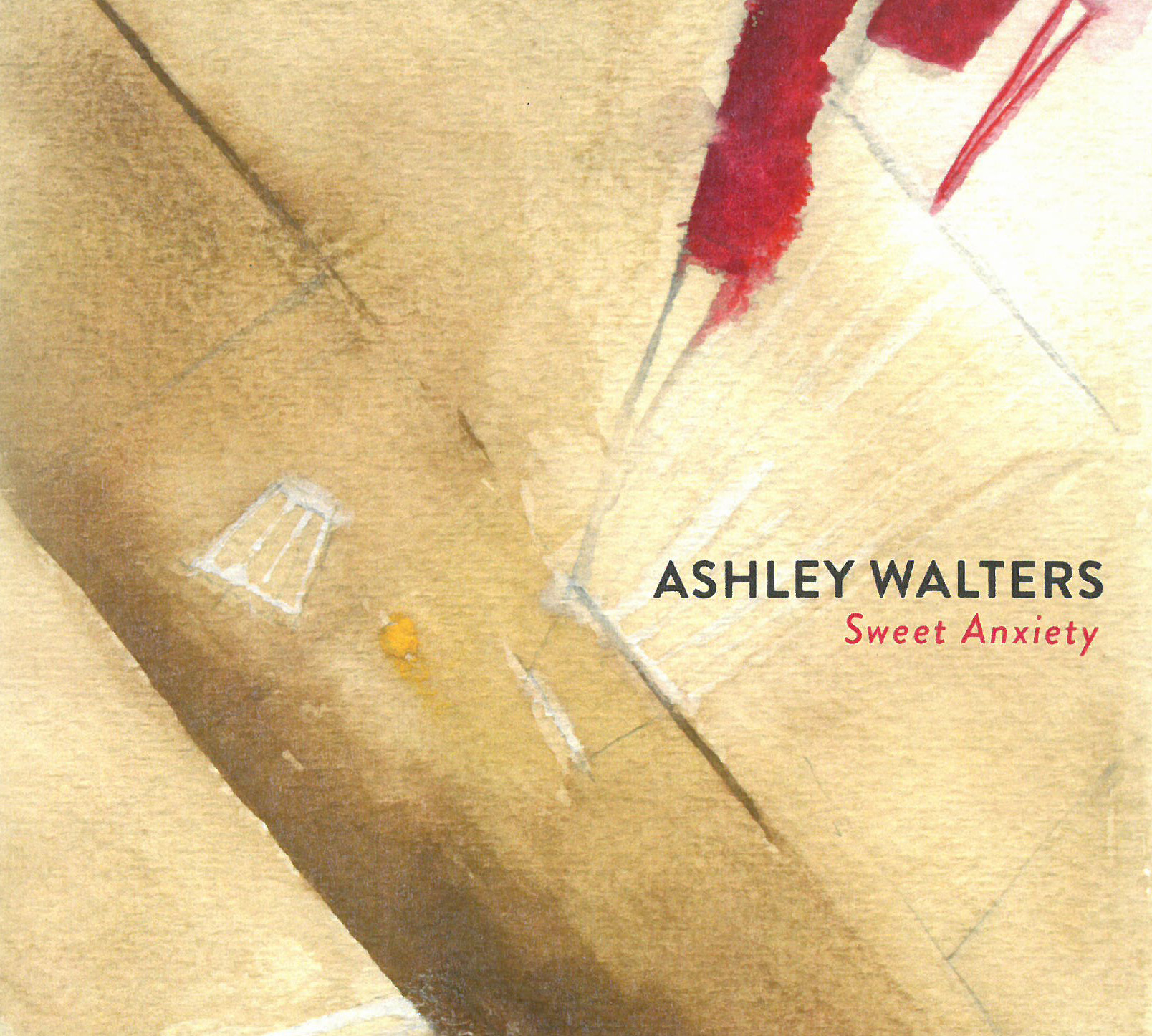
10 Ashley WaltersThere’s cello playing at the complete opposite end of the spectrum on Sweet Anxiety, the first solo CD from the American cellist Ashley Walters featuring new works for cello from 2002-2013 (populist records PR014 populistrecords.com). Walters says that she seeks “to challenge your perception of what the cello… is capable of,” and she certainly succeeds.

Nicholas Deyoe provides two tracks: For Stephanie (on our wedding day) and the title track another anxiety, the latter drawing some astonishing playing from Walters. Luciano Berio’s Sequenza XIV is predominantly percussive; it’s heard here in a performing edition created by Walters.

Wolfgang von Schweinitz’s Plainsound-Litany is a hypnotic sequence of precisely tuned double stops; Wadada Leo Smith’s Sweet Bay Magnolia with Berry Clusters includes improvisational sequences. Andrew McIntosh’s Another Secular Calvinist Creed provides a serene, contemplative end to the recital.

Walters is simply brilliant throughout the disc, and the short printed examples of the scores (other than the Berio) give some idea of the challenges she faced.
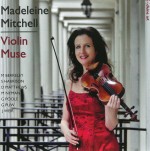
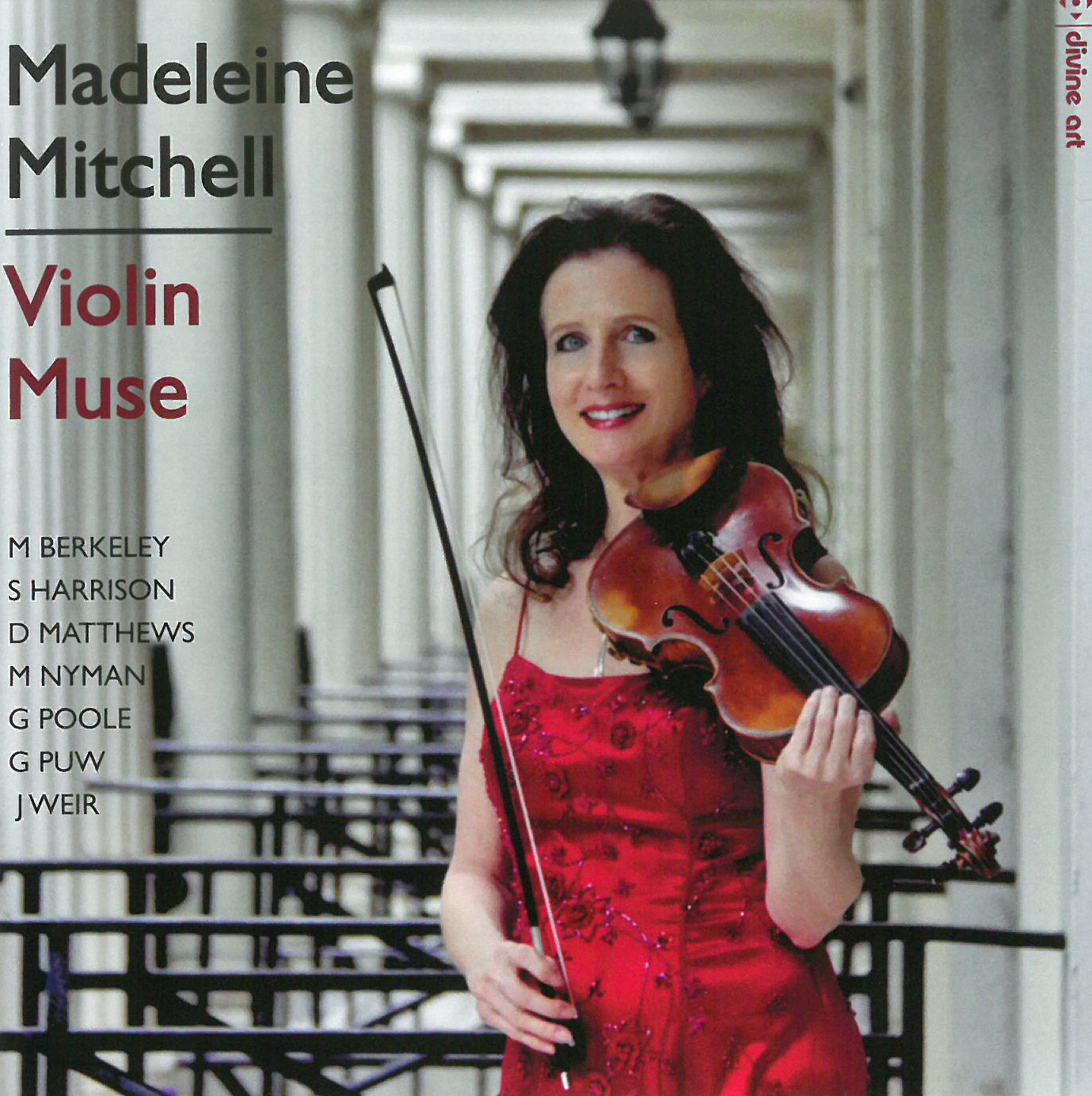
11 Madeleine MitchellOn Violin Muse the British violinist Madeleine Mitchell presents a program of world premiere recordings of works by British composers (Divine Art dda 25160).

The major work here is the two-movement Violin Concerto “Soft Stillness” by Welsh composer Guto Pryderi Puw, commissioned by Mitchell and heard in a live BBC Radio recording from 2016. It’s an effective piece, with Mitchell accompanied by the BBC National Orchestra of Wales under Edwin Outwater.

Mitchell is joined by Cerys Jones in Judith Weir’s delightful Atlantic Drift – Three pieces for two violins, based on Gaelic folk tunes.

Pianist Nigel Clayton is the accompanist in the remaining works: Geoffrey Poole’s Rhapsody; David Matthews’ Romanza Op.119a; Sadie Harrison’s lovely Aurea Luce; Michael Berkeley’s Veilleuse; and Michael Nyman’s Taking it as Read.

There’s excellent playing throughout by all concerned.

Listen to 'Violin Muse' Now in the Listening Room

Review

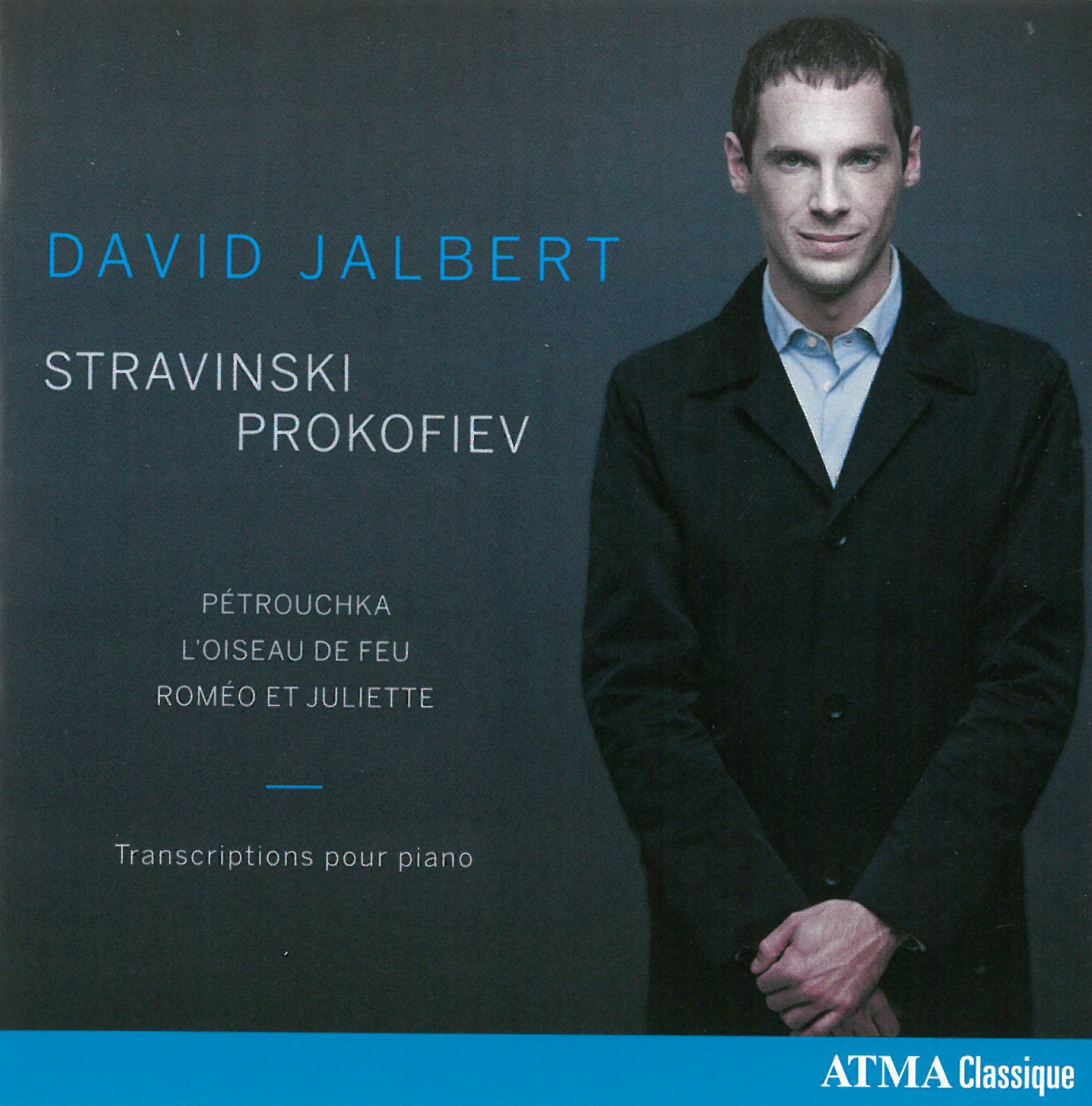
01 David JalbertDavid Jalbert already has five recordings in the ATMA catalogue. His newest is Stravinski – Prokofiev Pétrouchka, L’oiseau de feu, Roméo et Juliette – Transcriptions pour piano (ATMA Classique ACD2 2684). It shows why he’s considered one of the younger generation’s finest pianists. His performance of Danse russe from Pétrouchka explodes into being with astonishing speed and alacrity. Jalbert possesses a sweeping technique that exudes ease and persuasive conviction.

The three extracts from L’Oiseau de feu require, and Jalbert obviously has it, complete command of the keyboard for the Danse that begins the set. Equally demanding is the introspection necessary for the following Berceuse. The Finale builds to a colossal orchestral finish that loses nothing in this transcription for piano.

According to the disc’s informative liner notes, the ten pieces from Prokofiev’s ballet Romeo and Juliet Op.75 are from Prokofiev’s original piano score, and owing to the composer’s facility with the instrument, are highly idiomatic. One of the set’s most engaging pieces is The Montagues and the Capulets, driven rhythmically by its relentless bassline. Jalbert has a complete understanding of these three stage works and the contemporary language their composers used to tell their stories.

Review

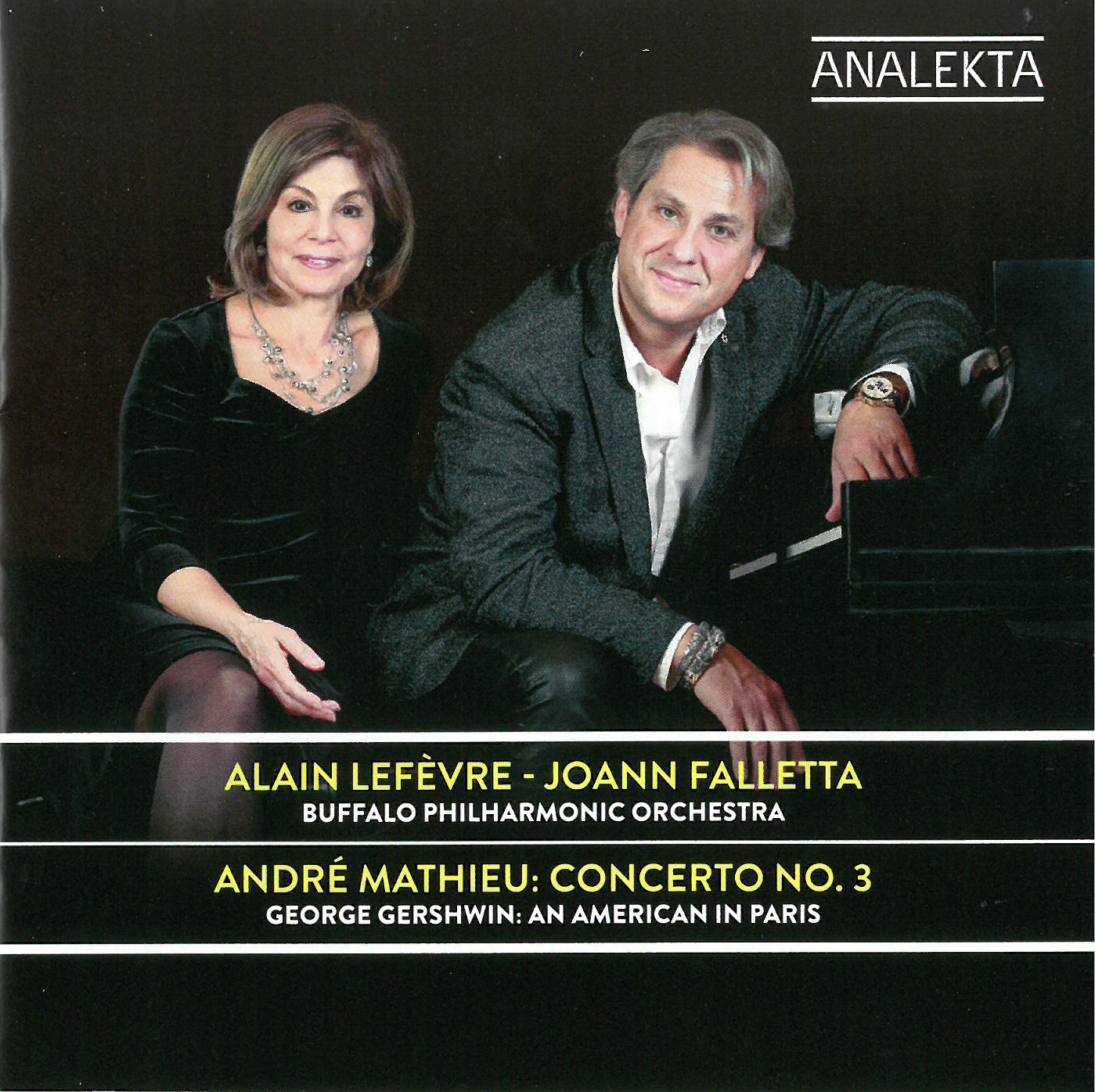
02 MathieuAlain Lefèvre has recorded an intriguing work with the Buffalo Philharmonic Orchestra under Joann Falletta: André Mathieu – Concerto No.3 (Analekta AN 2 9299). Written at age 13 while marooned with his family in North America by the outbreak of WWII, unable to return to France where he had been studying on a scholarship from the Quebec government, the work was intended to launch Mathieu’s career with the influential decision makers of the New York music scene. Unfortunately, not much came of it until 1946, when a newly created Quebec production company approached Mathieu for the rights to use his Concerto No.3 in a film (La Forteresse/Whispering City) to be shot entirely in Quebec. As things turned out, only major portions of the second movement were used in the film score. Until recently, this had been the only record of the work. Mathieu himself recorded it in 1947, and this same version, revised by Marc Bélanger, was recorded by Philippe Entremont in 1977 and made famous by Alain Lefèvre in 2003. Eventually renamed the Concerto de Québec, the recording by Jean-Philippe Sylvestre with the Orchestre Métropolitain and conductor Alain Trudel was reviewed here in October.

In 2008 the original autograph score for two pianos was discovered in Ottawa. Since then, composer and conductor Jacques Marchand has prepared a critical edition that is faithful to the original manuscript. This is its first full recording. It has all the sweeping gestures of its period and a devilishly difficult piano part. Lefèvre’s performance at the keyboard is masterful. He and the BPO perform the work with astonishing authenticity, restoring a fascinating chapter to Canadian music history of that period.


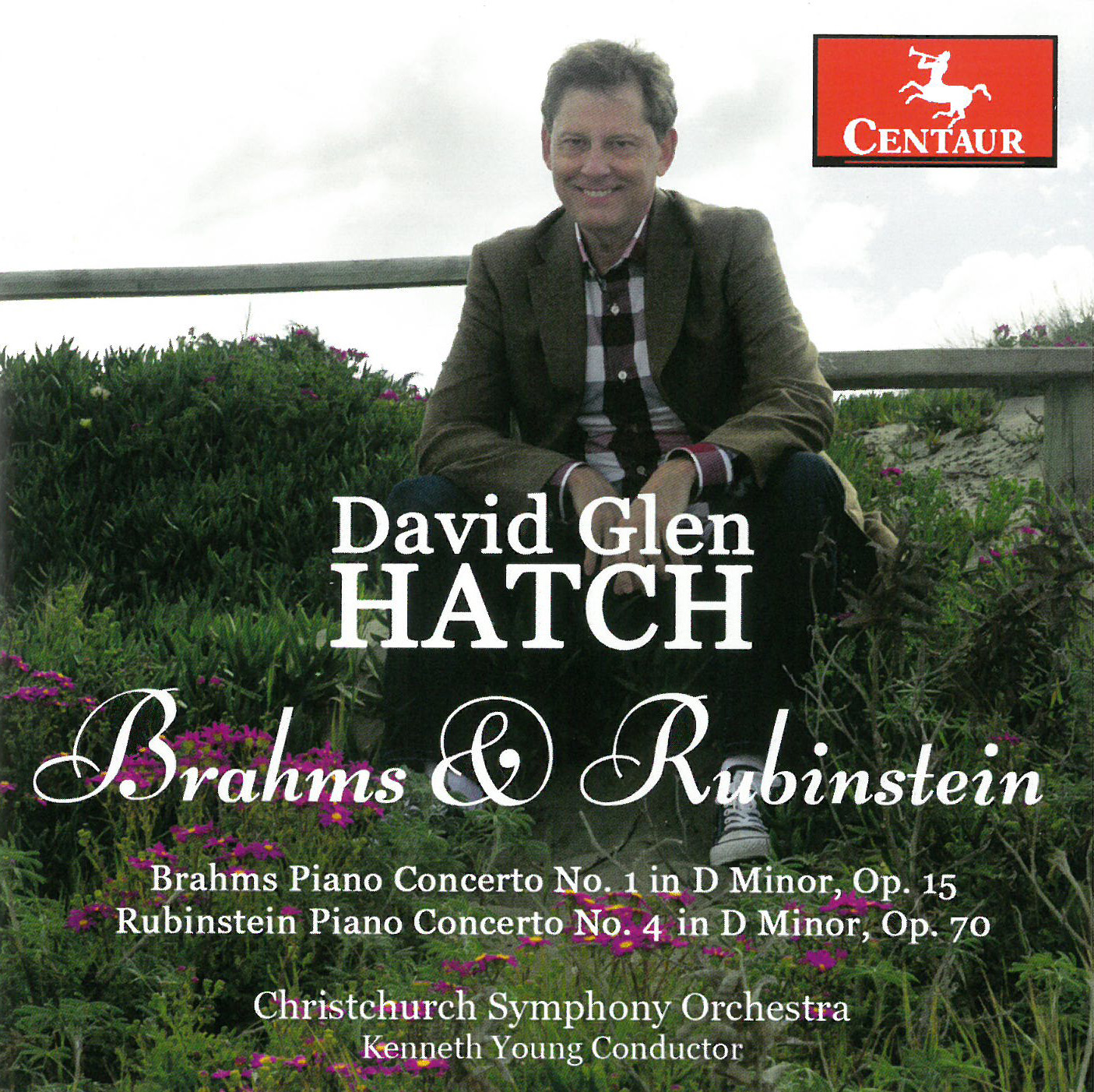
03 David Glen HatchAmerican pianist David Glen Hatch exploits his pianistic link to Brahms in Brahms & Rubinstein (Centaur CRC 3565/3566). Brahms’ student Carl Friedberg taught at Juilliard in the late 1940s; Hatch’s own teacher Joanne Baker won an audition to study there with Friedberg. Hatch recalls numerous instructions from Baker, handed down by Friedberg from Brahms, about his intentions for various passages in the Piano Concerto No.1 in D Minor Op.15. It’s fascinating to consider the extent to which Hatch’s performance is connected to the composer in this way. Hatch’s approach overall is quite deliberate in his slightly slower tempi. The second movement in particular reveals numerous opportunities to dwell on phrases and Brahms’ characteristic harmonic shifts.

As substantial as the Brahms concerto is, the Rubinstein Concerto for Piano and Orchestra No.4 in D Minor Op.70 seems an even grander conception. It may have to do with Rubenstein’s orchestrations, but somehow Hatch seems truly in his element with the composer’s great pianistic gestures. The concertos are an excellent pairing for this two-disc recording.

Review

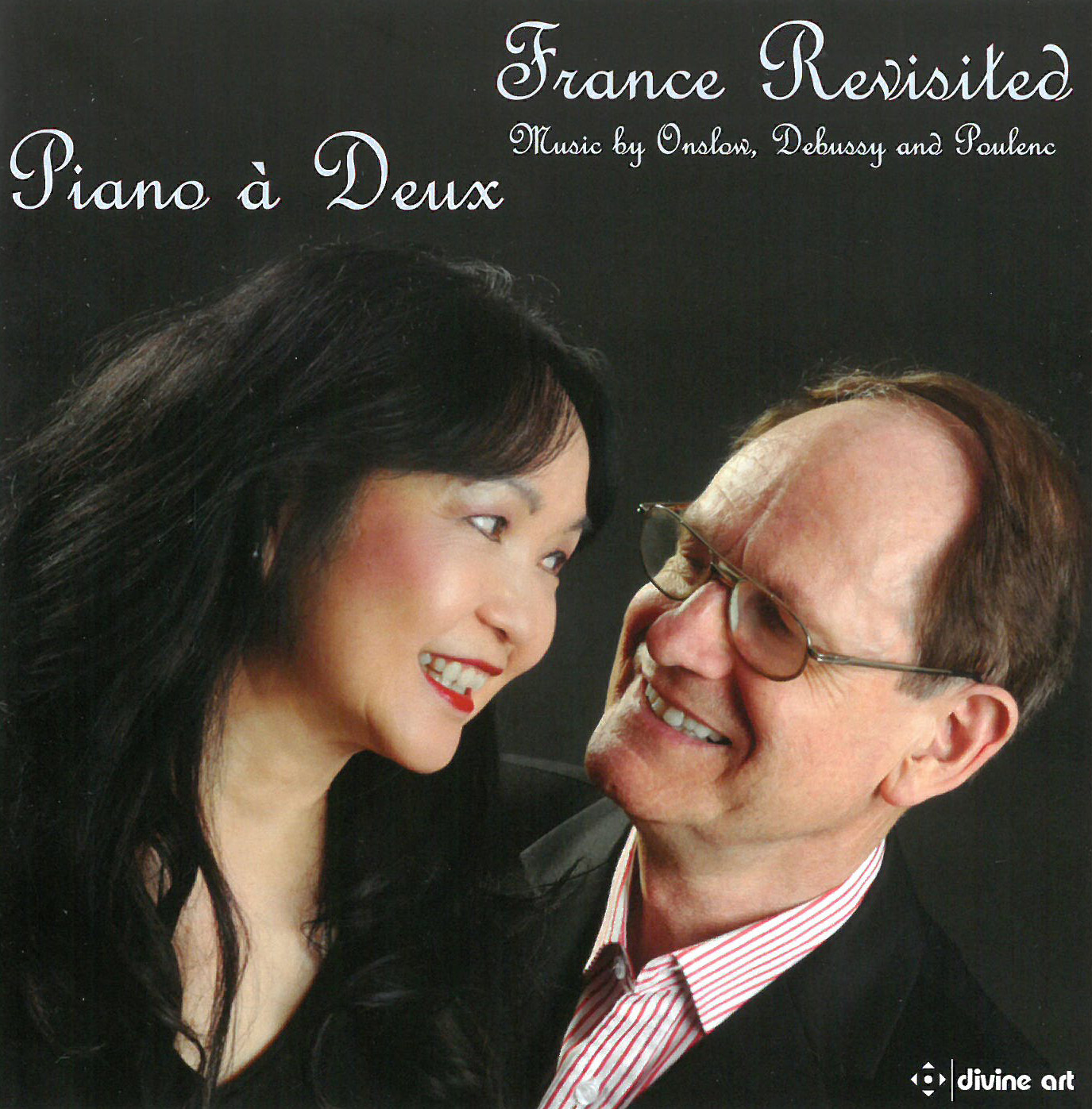
04 Piano a deuxRobert and Linda Ang Stoodley style themselves as Piano à Deux. Their new disc, France Revisited – Music by Onslow, Debussy and Poulenc (Divine Art dda 25132) is an example of piano four hands performance at its very best. One of the disc’s many treats is the appearance of music by George Onslow. Because his oeuvre is largely for chamber strings, his very few piano works tend to be overlooked. The unique voice of this 19th-century composer is deeply intriguing as heard in the Sonata for Piano Four Hands No.1 in E Minor Op.7. It’s surprisingly forward looking despite its early catalogue entry.

Petite Suite delivers all the rich impressionistic orchestrations with which we associate Claude Debussy, and Piano à Deux are consistently excellent in how they portray the composer’s lightly programmatic intent.

The duo has also transcribed the Poulenc Chansons de l’amour et de la guerre, and done so with a gifted ear that preserves the wistful nostalgia that Poulenc infused into each song.

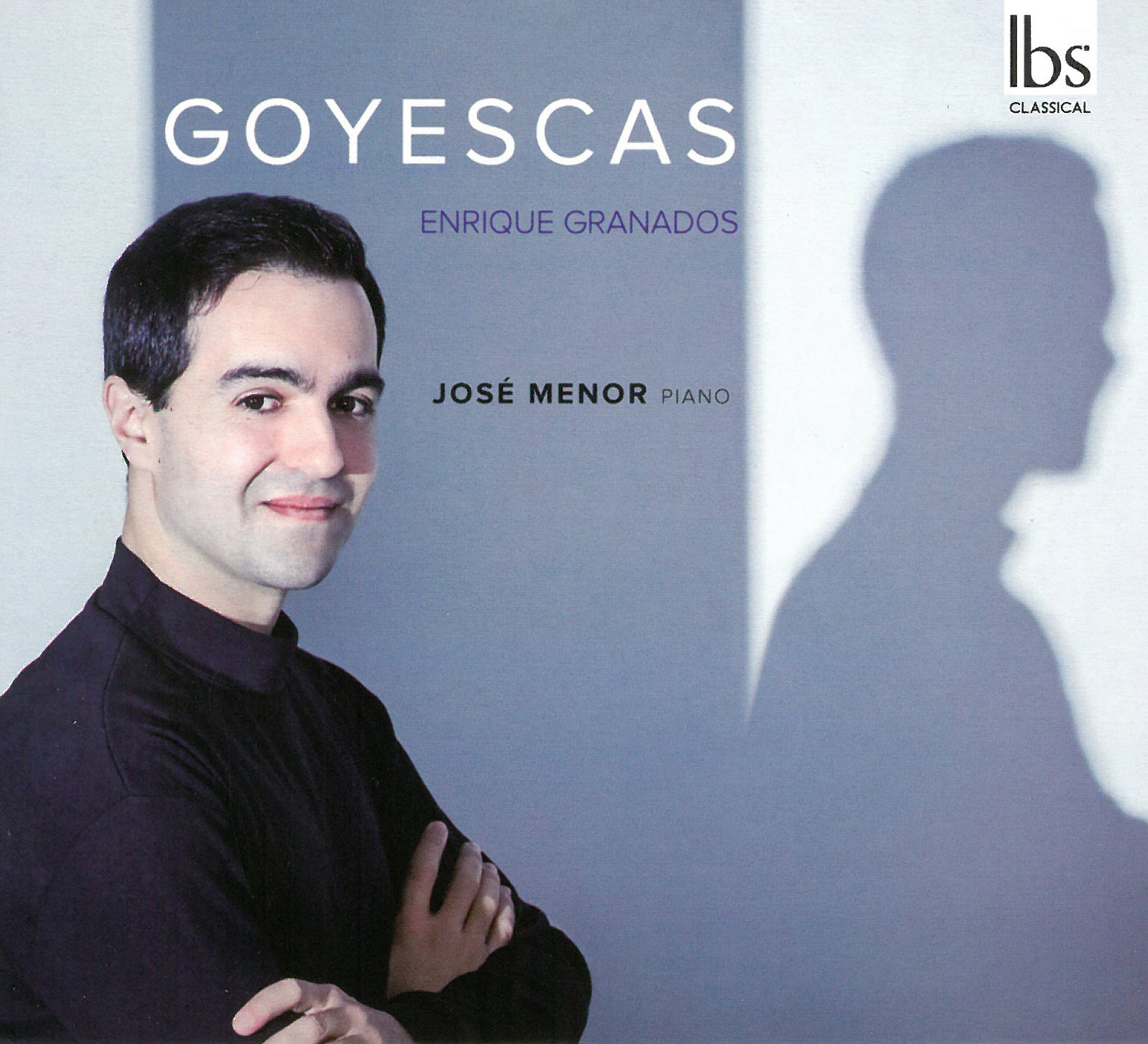
05 Jose MenorJosé Menor is an extraordinary pianist with a fearsome technique and unrivalled fluidity of touch. His new recording Goyescas – Enrique Granados (IBS Classical IBS-82017) demonstrates how he brings these gifts to his exploration of this major composition of Spanish piano music. Menor goes to considerable effort in his liner notes to explain how this music captured his imagination and compelled him to study it from a composer’s perspective rather than just a pianist’s. His study of the original manuscripts recommended by the Granados family helped him profoundly in discerning the composer’s intent in writing the suite, which deals with the course of love and death.

Menor admits being attracted by the work’s many, deep contrasts and its expressive intensity. This is most powerfully evident in El amor y la muerte. It’s astonishing to imagine that this century-old work contains such modern tone clusters and rhythmic freedom. Under the hands of Menor it becomes a revealing expression, ahead of its time, and potently magical. The suite is slightly abridged for lack of recording space but the disc does include a rare performance of a single short manuscript, Crepúsculo, that may have been Granados’ first draft of some of the suite.

Review

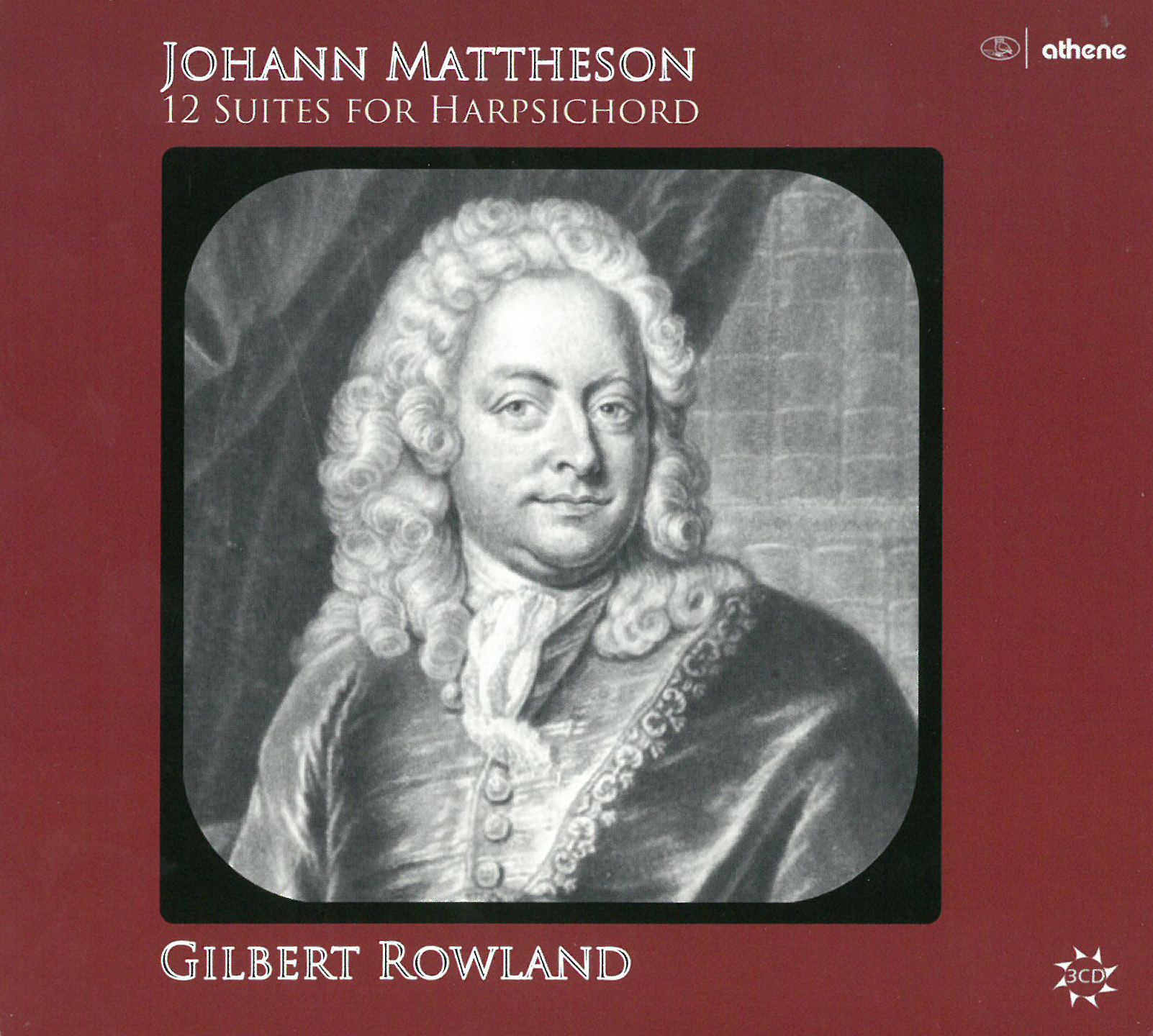
06 MathiesonHarpsichordist Gilbert Rowland has completed a substantial project with his recording Johann Mattheson 12 Suites for Harpsichord (Athene ath 23301.1 divineartrecords.com). The three-disc set is a valuable document shedding some light on the music of a hitherto obscure composer. Mattheson was a contemporary of Handel and came to know him well as a friend and colleague. He is said to have written numerous operas, oratorios, sacred works and music for organ. Most of these manuscripts were kept in Hamburg, where Mattheson lived and worked for much of his life. Allied bombing of the city during WWII destroyed most of the Mattheson documents, leaving little for modern scholars to study. Fortunately, the 12 Suites for Harpsichord, dating from 1714, have survived. They are well-conceived mature works written in the French dance suite style. Rowland plays a 2005 copy of a French instrument from 1750 by Goermans.


Review

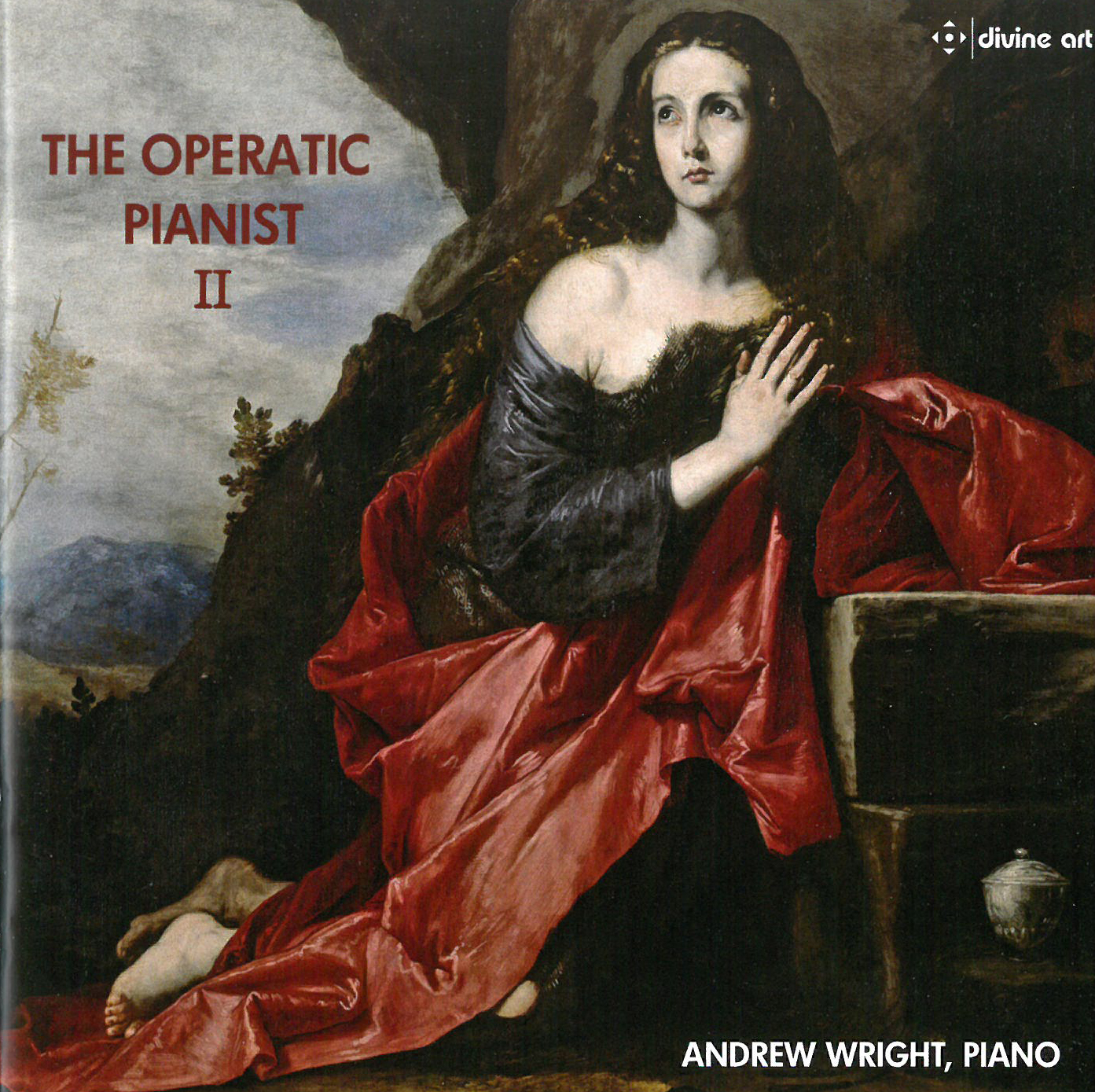
07 Operatic PianistAndrew Wright has recorded a second disc in his series of operatic transcriptions, The Operatic Pianist II (Divine Art dda 25153 divineartrecords.com). Opera transcriptions were, in their day, the equivalent of pop song covers. They also provided travelling pianists with ample popular repertoire for performance. Liszt may be the best-known contributor to the form, although a great many composers dabbled in the genre. Wright clearly has a wonderful working grasp of this repertoire and knows how to bring forward the vocal line as well as how to portray the orchestral colour that any given emotional moment requires. His playing is consistently fabulous, whether he’s pounding out Liszt’s Rienzi Fantasy or Saint-Saëns’ Concert Paraphrase on Thaïs. It’s easy to understand how these transcriptions achieved “hit” status in the time before the gramophone and digital access to opera performances.

Review

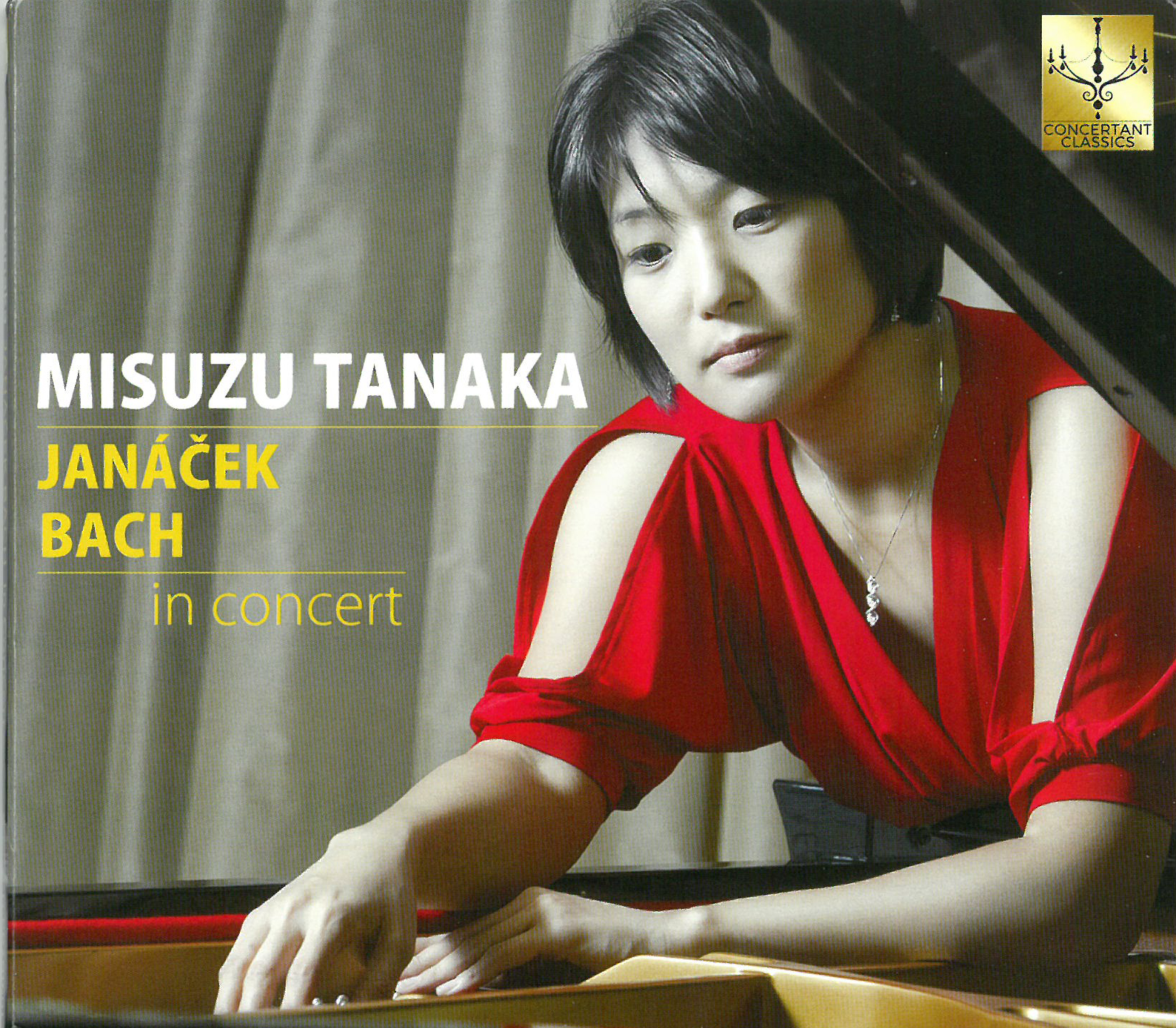
08 Janacek BachMisuzu Tanaka has, at first blush, twinned a pair of unlikely composers in her new release, Janáček, Bach - In concert (Concertant Classics CD PR201601 concertantclassics.com). She admits, however, that in the process of the recording she discovered that both were having the same effect on her. Tanaka’s performance of the Bach Partita No.6 in E Minor BWV 830 reveals her strict adherence to the perfection of Bach’s structure. It also uncovers the emotional richness of the minor key. This last consideration is where she makes the link to Janáček. His Moravian heritage and his links to Czech folk music are reflected in the emotional content of On an Overgrown Path, Books 1 and 2. Minor keys are prevalent. Melancholy is pervasive. In its own way, this shared feature is, for Tanaka, the point of connection.

Tanaka approaches Janáček with an intent to uncover the inspired simplicity of his music. She moves through the numerous parts of Books 1 and 2 with thoughtful deliberation, capturing the essence of the composer’s evocative titles: Words Fail, Unutterable Anguish, In Tears, for example. Her playing is as perfect for Janáček as it is for Bach. What a wonderfully unlikely pair.


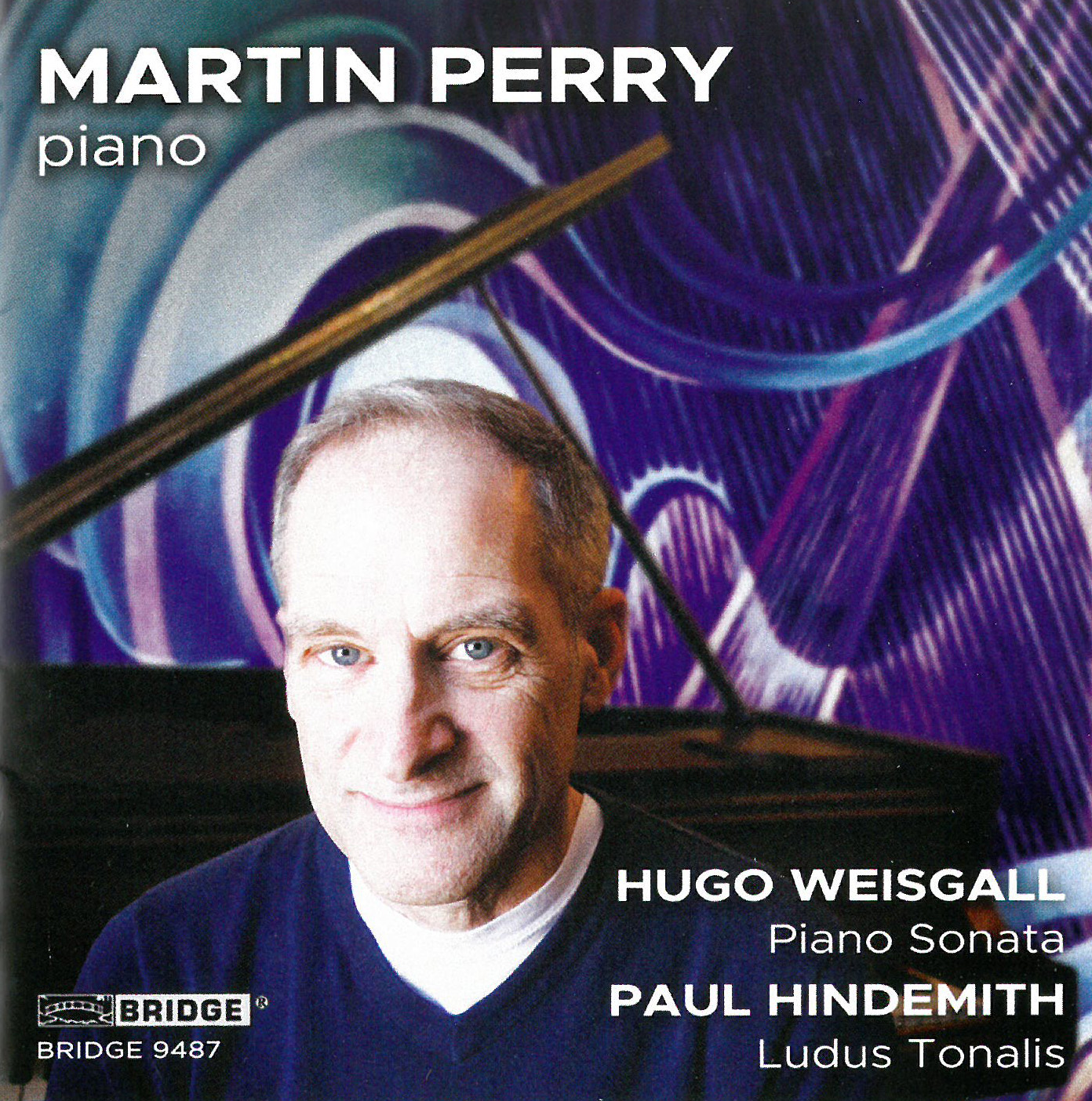
09 WeisgallMartin Perry’s third recording Martin Perry Piano – Hugo Weisgall, Piano Sonata & Paul Hindemith, Ludus Tonalis (Bridge 9467) continues his artistic focus on contemporary piano music, and specifically on substantial forms. The disc opens with a three-movement Sonata for Piano by Hugo Weisgall, a Moravian immigrant to the US in 1920 whose serious pursuit of music study at Peabody and Curtis, and privately with composers like Roger Sessions, helped form the rigorous approach he developed in his own writing. His language tends towards a 12-tone, relaxed serialism where the musical ideas are rather long. There’s a good deal of highly contrasted emotional content that Perry handles beautifully, giving the sonata what the liner notes call an “operatic” quality.

In the same vein, the Hindemith Ludus Tonalis has an illuminating subtitle: Studies in Counterpoint, Tonal Organization and Piano Playing. Hindemith writes a fugue in each of the 12 major keys, joined by interludes that help establish the new key. The opening Praeludium is played inverted and in reverse as the Postludium. It’s all rather cerebral, but Perry uses the distinct character of each fugue and interlude to colour the work in the most creative way. It’s a very engaging performance.

10 Villa LobosAndree-Ann Deschenes describes herself as a “French-Canadian pianist specializing in the passionate music of Latin and South America.” Currently doing doctoral work at California State University in LA, her latest recording Villa-Lobos / Castro (191061746096 aadpiano.com) is a rich program revealing the skill and artistic mastery of this very gifted pianist. Opening with the Villa-Lobos four-part Ciclo Brasileiro W374, Deschenes establishes her credentials as a serious student of these Latin composers. With an unerring sense of rhythm for every turn of phrase and ornament, she navigates through the Villa-Lobos and the five Tangos para Piano by Juan José Castro, finishing with a brilliant performance of Festiva by José Maria Vitler. It’s a terrific recording with a tremendous amount of energy, humour and astonishing talent.

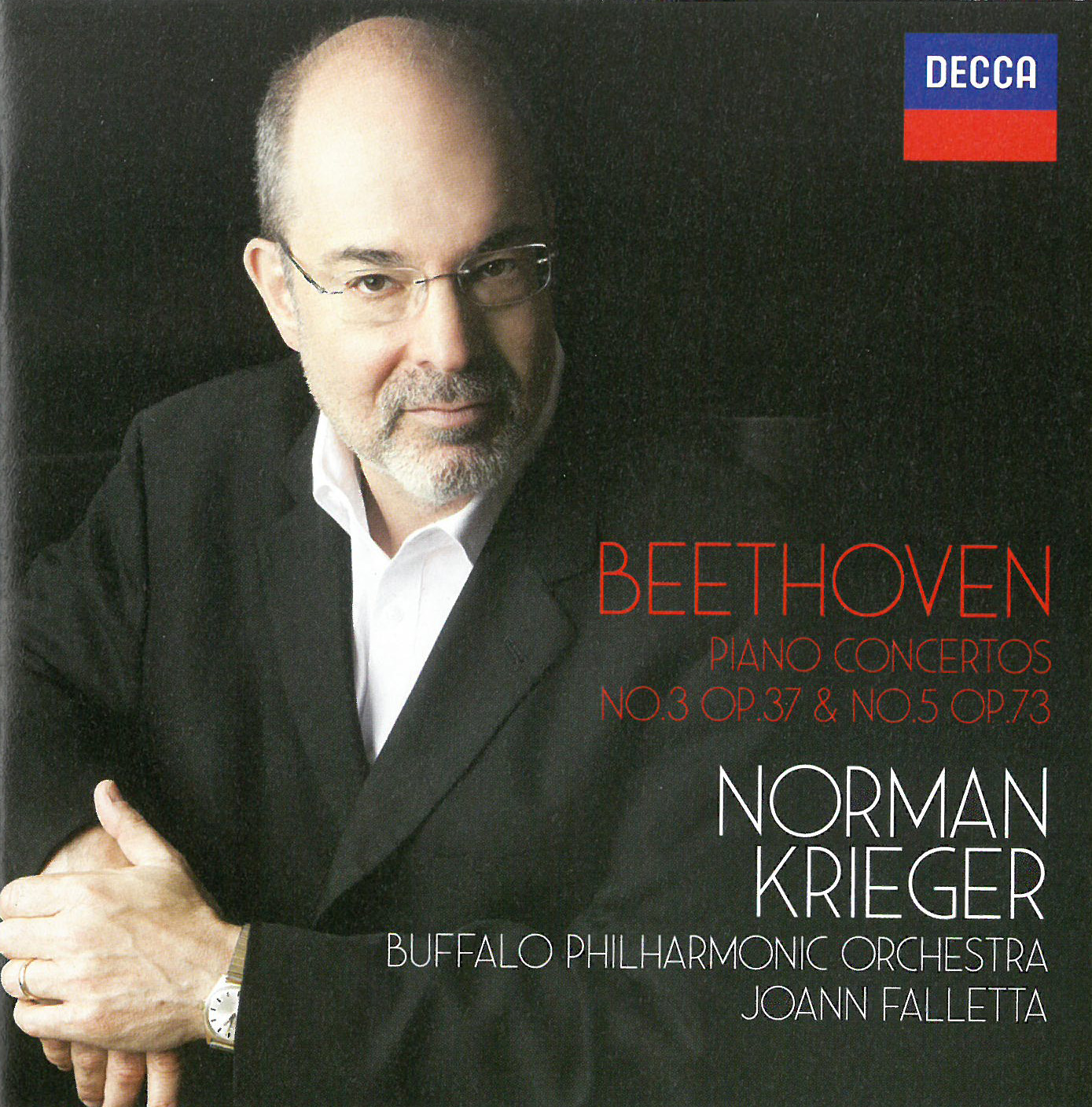
11 Norman KriegerNorman Krieger puts two wonderful standard repertoire items on his newest CD: Beethoven Piano Concertos No.3 Op.37 & No.5 Op.73 (Decca DD41154 / 4815583). The Buffalo Philharmonic Orchestra under Joann Falletta performs beautifully with Krieger. They appear to have an agreement that the Concerto No.3 will not be overly furious and that the “Emperor” will similarly not be too imperiously grand. The outer movements of the concertos are sufficiently strong and emphatic where they need be, and the middle, slow movements are given ample space to breathe. The Concerto No.5 is especially effective in this way. The playing throughout is excellent. To top things off, the recordings are live concert performances that bring their own unique energy to the music. It’s a successful collaboration that shows promise.

Back to top