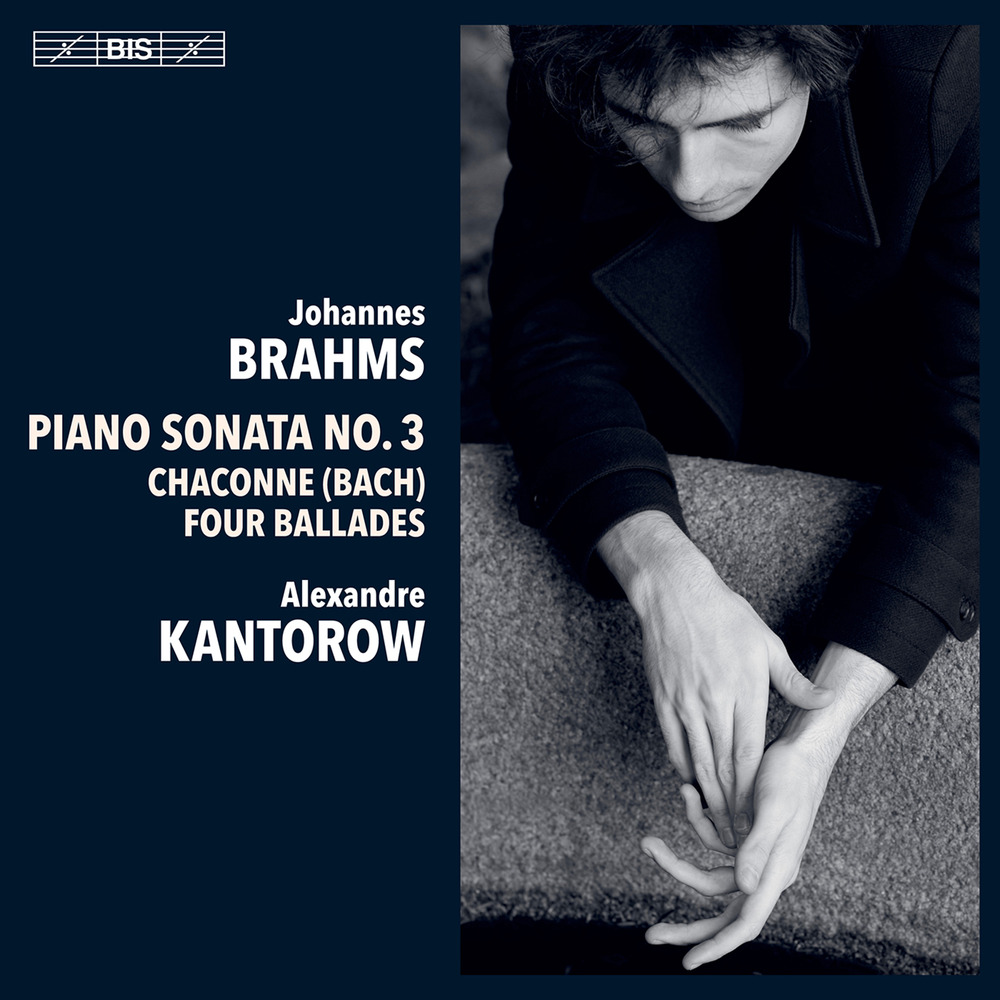
10 Brahms Piano Sonata 3Brahms – Piano Sonata No.3
Alexandre Kantorow
BIS BIS-2600 (bis.se)

Despite his youth, French pianist Alexandre Kantorow is already heralded as a considerable talent with an ongoing and upcoming concertizing career to be examined with interest. And, with this marvellous 2021 recording of Johannes Brahms’ Piano Sonata No. 3, Kantorow contributes mightily to this well-established blue-chip reputation, initiated by winning the prestigious Tchaikovsky Competition at age 22. 

While Brahms is famously listed as a progenitor of so-called Absolute Music, do not think for a moment that there is no program to be unpacked here or extra musical meaning to be ferreted out from these wonderfully Germanic compositions as interpretation, richness and new possibilities are brought to the fore for over 85 minutes during this thoughtful and evocative performance. 

Finally, Kantorow brings the recording to a close with Bach’s playful Chaconne, arranged from the original violin to the left-hand piano. With a forceful pianistic dynamism that enables Kantorow to both thunder loudly and sparkle with fragile insight, this is a recording that will go a good distance to solidifying Kantorow as a Brahms and Bach interpreter of the highest order, while encouraging us all to stop, even momentarily, genuflecting towards the catastrophizing media and lean in to the beauty of these melodies as performed with deft touch and aplomb.

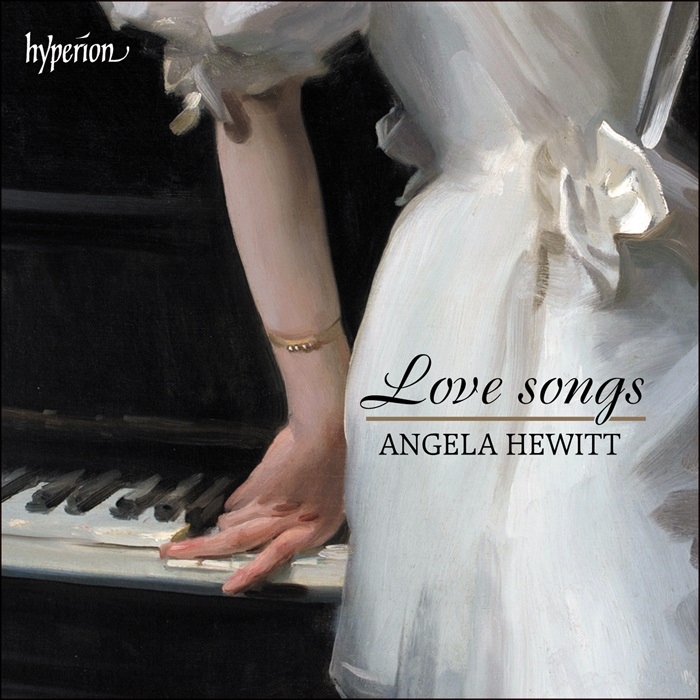
11 Angeta HewittLove Songs
Angela Hewitt
Hyperion Records CDA68431 (hyperion-records.co.uk/dc.asp?dc=D_CDA68341)

We can certainly declare Angela Hewitt by now a national treasure. Graduating from the Royal Conservatory of Music, Toronto and winning the 1985 Toronto International Bach Competition, she has had a stellar career with concerts all over the world and a wide-ranging discography. She has even been inducted into the Gramophone magazine Hall of Fame (!) and has received many other honours and accolades.

Unfortunately this beautiful career came to an abrupt and brutal halt with COVID-19 and all her concert engagements disappeared overnight. For a two-year period she was forced into idleness, retiring to her home in Italy with her Fazioli piano. To fill her time she had the idea of making this recording, a collection of love songs spanning the entire piano literature.

Since these are love songs written for the human voice they had to be transposed to piano solo, mostly done by other composers or pianists, like Liszt, a master of love songs himself. The vocal line of the original song must be emphasized and the pianist has to express the ebb and flow of emotion of the beautiful poetry with bravura embellishments, modulations and variations.

Hewitt gives us a nice collection and a musical journey from the Baroque (Gluck and Gottfried Heinrich Stölzel) to the Romantics (Schumann, Schubert, Grieg) then the post-Romantics (Fauré, Richard Strauss, Mahler) through the Spanish flamenco of de Falla and even popular music of Gershwin and Percy Grainger.

There are many beauties close to my heart such as the wonderful Schubert Ständchen and An die Musik, Strauss’ opulent Cäcilie, the lovely Adagietto from Mahler’s Fifth Symphony, arranged by Hewitt herself, and Gershwin’s Love walked in so lovingly played. A recording to treasure.

12 Fraser JacksonHome Suite Home
Fraser Jackson; Monique de Margerie
Galley Records GRCD02 (galleyrecords.com)

Co-created in the spring of 2020 by bassoonist Fraser Jackson and pianist Monique de Margerie, Home Suite Home was directly inspired by the weekly concerts held on the front porch of their Toronto home during the COVID-19 pandemic lockdown.

These concerts, intended to brighten the mood of their neighbours and community, resulted in an album of short and varied pieces for bassoon and piano as well as a few special musical guests, Winona Zelenka on cello, Marie Bérard on violin and Dominic Desautels on clarinet. Not all originally written for bassoon, this collection highlights Jackson’s gift of masterful arrangement and features several rare and delightful pieces for contrabassoon, his specialty.

Moving and uplifting, the smooth expressive playing of Jackson’s performance coupled with de Margerie’s elegant interpretation must have been a delightful and unique experience for their neighbours; and now for the rest of us too.

Listen to 'Home Suite Home' Now in the Listening Room

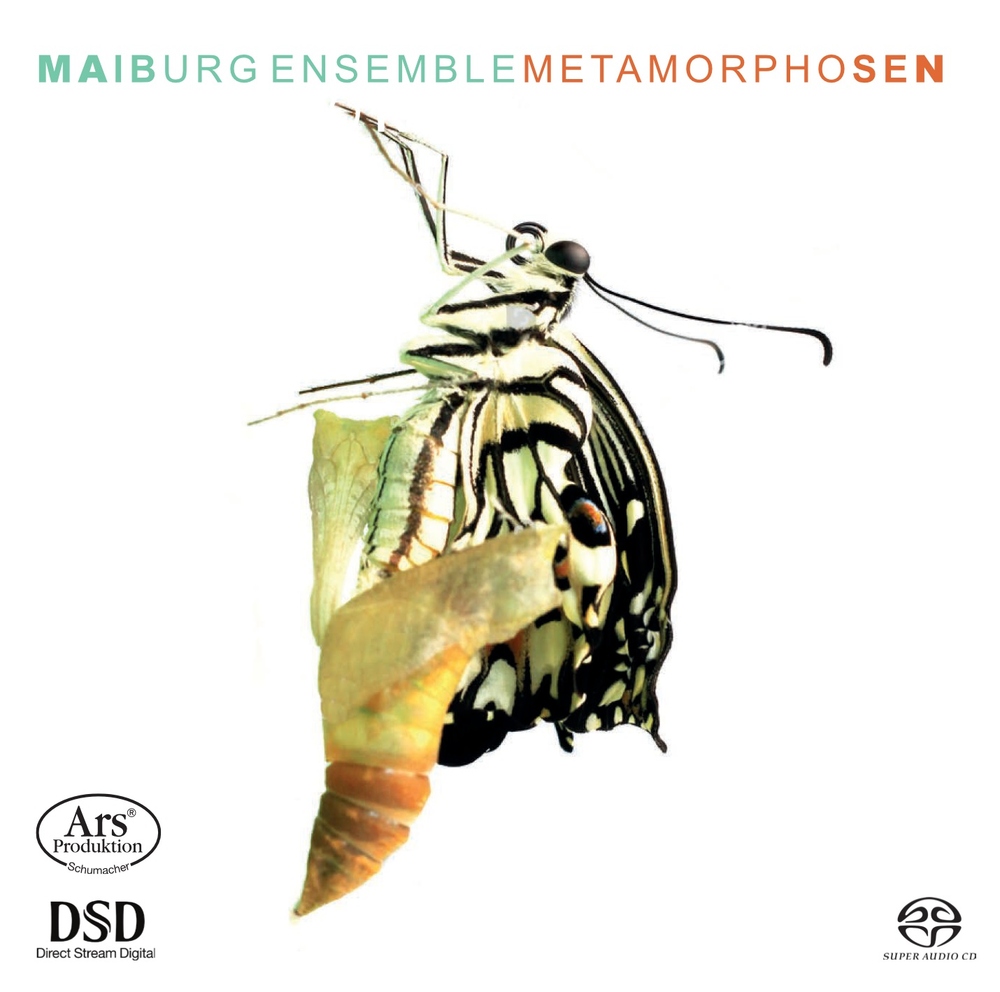
13 Maiburg Metamorphosen CoverMetamorphosen
Maiburg Ensemble
Ars Produktion Ars 38 328 (proclassics.de/aktuelle-cd-news)

Annette Maiburg, artistic director of the Maiburg Ensemble, aspired in this CD to engage in a “dialogue” in which the music of disparate cultural traditions fuse, so to speak, to produce a music which is new and which did not exist before. Maiburg, a highly accomplished classically trained flutist, is joined in the project by pianist Pascal Schweren and double bass player Matthias Hacker, both also classically trained but with strong educational backgrounds in jazz, and percussionist, Fethi Ak, a renowned German-Turkish darbuka player.

Each musician makes great and unique contributions to the project. For example, Schweren’s solo, which brings Bartók’s Pê Loc to a surprise ending, is a delight; Ak has several wonderful solos in compositions as diverse as Bartók’s Mâruntel and Buciumeana and Mendelssohn’s Scherzo from A Midsummer Night’s Dream; Hacker, to my ears anyway, brings the most convincingly idiomatic jazz contribution throughout, connects beautifully with Ak’s solo in Mâruntel and plays a very effective bowed passage in Mahler’s Adagietto. Maiburg not only plays the challenging flute part from Mendelssohn’s Scherzo flawlessly but also brings wonderful lyricism to her solos in Ravel’s Kaddisch and Bartók’s Buciumeana

The cultural fusion, however, just doesn’t seem to happen, despite the good intentions, until the last track on the CD, Hov Arek, an Armenian folk melody notated by the great Armenian composer and ethnomusicologist, Komitas. Here magic happens, musicians and music become one, and the dream becomes reality.

Listen to 'Metamorphosen' Now in the Listening Room

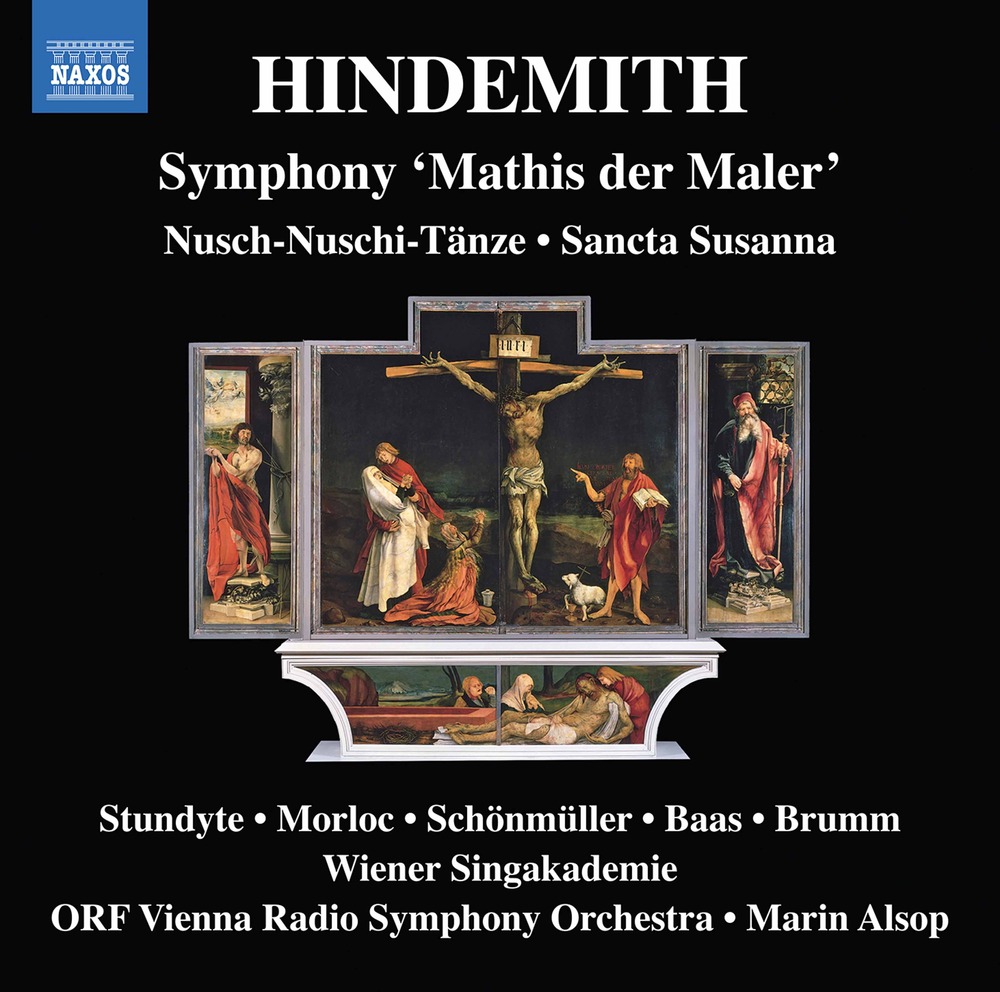
14 Hindemith Marin AlsopHindemith – Mathis der Maler; Nusch-Nuschi-Tänze; Sancta Susanna
Radio-Symphonieorchester Wien; Wiener Singakademie; Marin Alsop
Naxos 8574283 (naxosdirect.com/search/8574283)

The title work on this terrific all-Hindemith release, Symphony ‘Mathis der Maler’, gets a probing, gutsy performance from Marin Alsop and the superb ORF Vienna Radio Symphony. For 27 dramatic minutes, we’re swept into the harsh, visionary world depicted by the German Renaissance painter Matthias Grünewald in his magnificent Isenheim altarpiece. This symphony is rightly one of Hindemith’s best-known works. Yet the related opera, Mathis der Maler – for me, his greatest work – is rarely done. 

Hindemith arranged Nusch-Nuschi-Tänze from an earlier opera, Das Nusch-Nuschi. But unlike Mathis der Maler, it’s no masterpiece. And the dance suite remains forgettable, despite Hindemith’s imaginative orchestrations and Alsop’s lively performance. 

Hindemith’s daring Sancta Susanna is the standout here. Alsop’s recording of this youthful one-act opera is so gripping, it belongs among the outstanding recordings of his works, along with Roxolana Roslak and Glenn Gould’s sublime Das Marienleben and Sviatoslav Richter’s wonder-filled Ludus Tonalis.    

The tension builds relentlessly – an organ pipe whistles, heavily scented lilac blossoms rustle, nightingales sing joyfully, a couple makes love right outside the church window, a giant spider leaps into Susanna’s hair. August Stramm’s expressionist libretto is truly shocking, especially when Susanna, finally unhinged, strips off her nun’s habit and embraces a sculpted image of Christ naked on the cross.

Ausrine Stundyte conveys the devastating impact of Susanna’s defiance with ravishing expressiveness, while Renée Morloc’s Klementia sets the stage for the horrific ending with harrowing dramatic power. This is opera at its most explosive – and delectable.

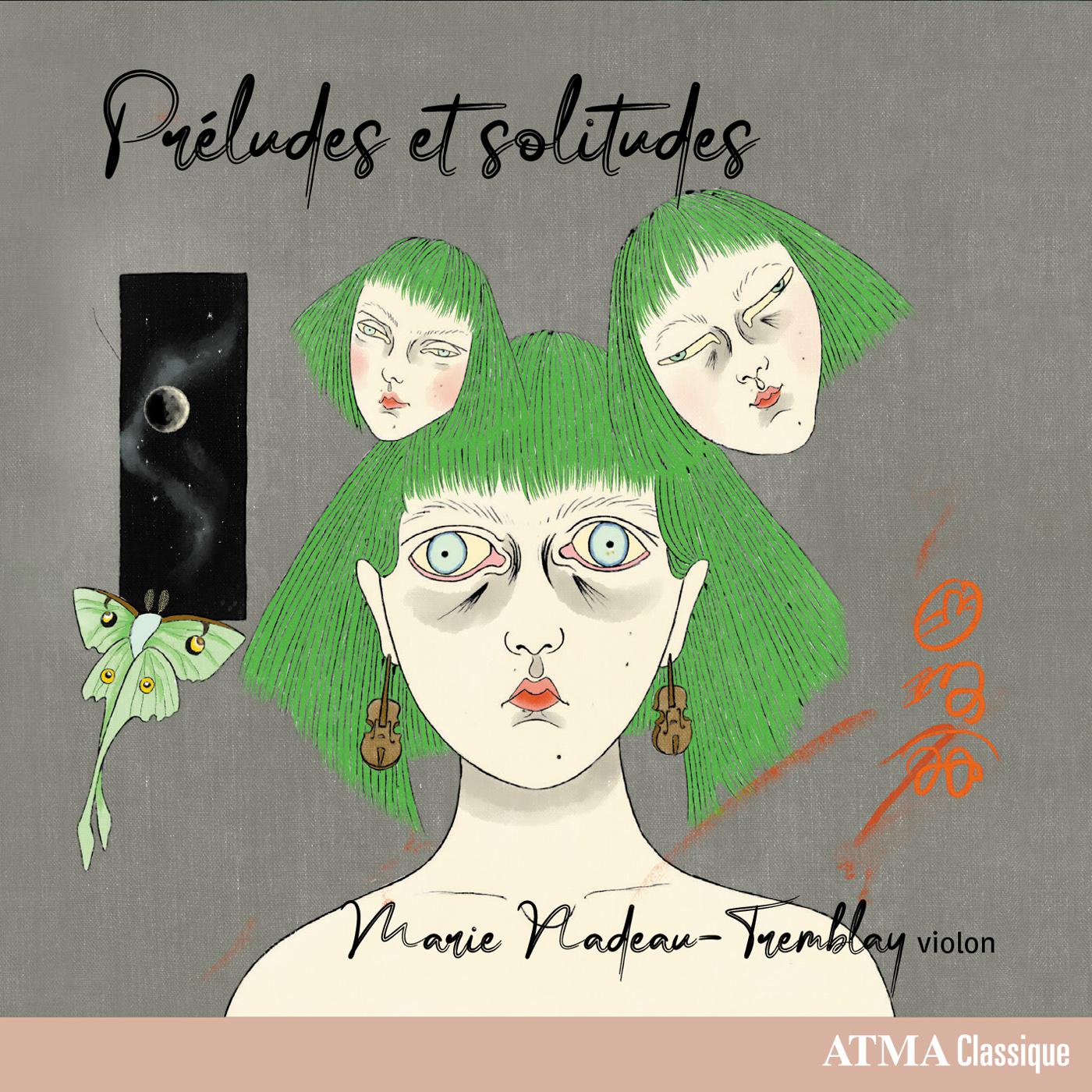
01 marie nadeau tremblayh ef7k3On Préludes et solitudes the Quebec violinist Marie Nadeau-Tremblay provides one of the best CDs of Baroque solo violin works that I’ve encountered (ATMA Classique ACD2 2823 atmaclassique.com/en).

There’s a lightness of touch in the idiomatic playing, with a rhythmic freedom which adds character to the music and which, far from weakening the sense of line or structure actually enhances it. It’s perfectly illustrated in the Telemann Fantasies Nos.7 in E-flat Major and 9 in B Minor but is never absent in short works by Pedro Lopes Nogueira, J.H. Roman, Nicola Matteis Jr., Torelli, Thomas Baltzar and Purcell, and a terrific performance of the Passacaglia in G Minor from Biber’s Mystery Rosary Sonatas. 

Nadeau-Tremblay adds her own brief Prélude improvisé to complete an outstanding disc.

Listen to 'Préludes et solitudes' Now in the Listening Room

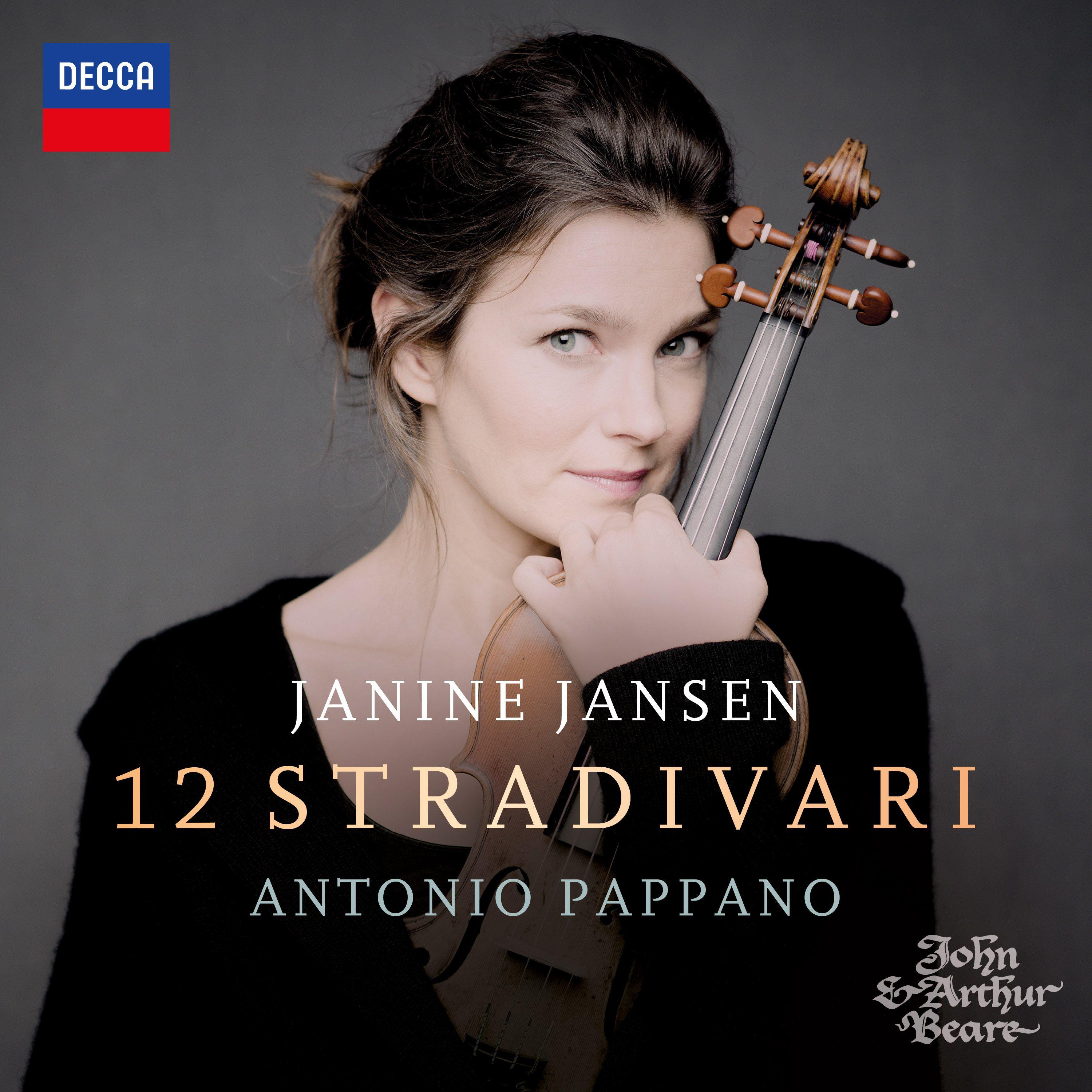
02 jansen cover 89tu1On 12 Stradivari, violinist Janine Jansen – who herself plays the 1715 Shumsky-Rode Stradivari – experiences a once-in-a-lifetime opportunity, a ground-breaking project devised by Steven Smith of J & A Beare that brought together in London 12 of the best violins of Antonio Stradivari, some not played for many years, others having belonged to the likes of Fritz Kreisler, Nathan Milstein and Ida Haendel. This resulting album, with pianist Antonio Pappano, music director of the Royal Opera House, captures the individual characters of each instrument (Decca 4851605 deccaclassics.com/en).

Unfortunately, there’s no information identifying the individual violins. Still, no matter; Jansen’s inspired and ravishing playing of well-known short pieces by Falla, Suk, Clara and Robert Schumann, Vieuxtemps, Tchaikovsky, Szymanowski, Ravel, Elgar, Rachmaninoff, Kreisler, Heuberger and Jerome Kern takes your breath away.

The entire project has been captured in the documentary film Janine Jansen: Falling for Stradivari

There have been three recent CDs of the Beethoven Violin Sonatas, two of which complete a three-CD set of the entire canon:

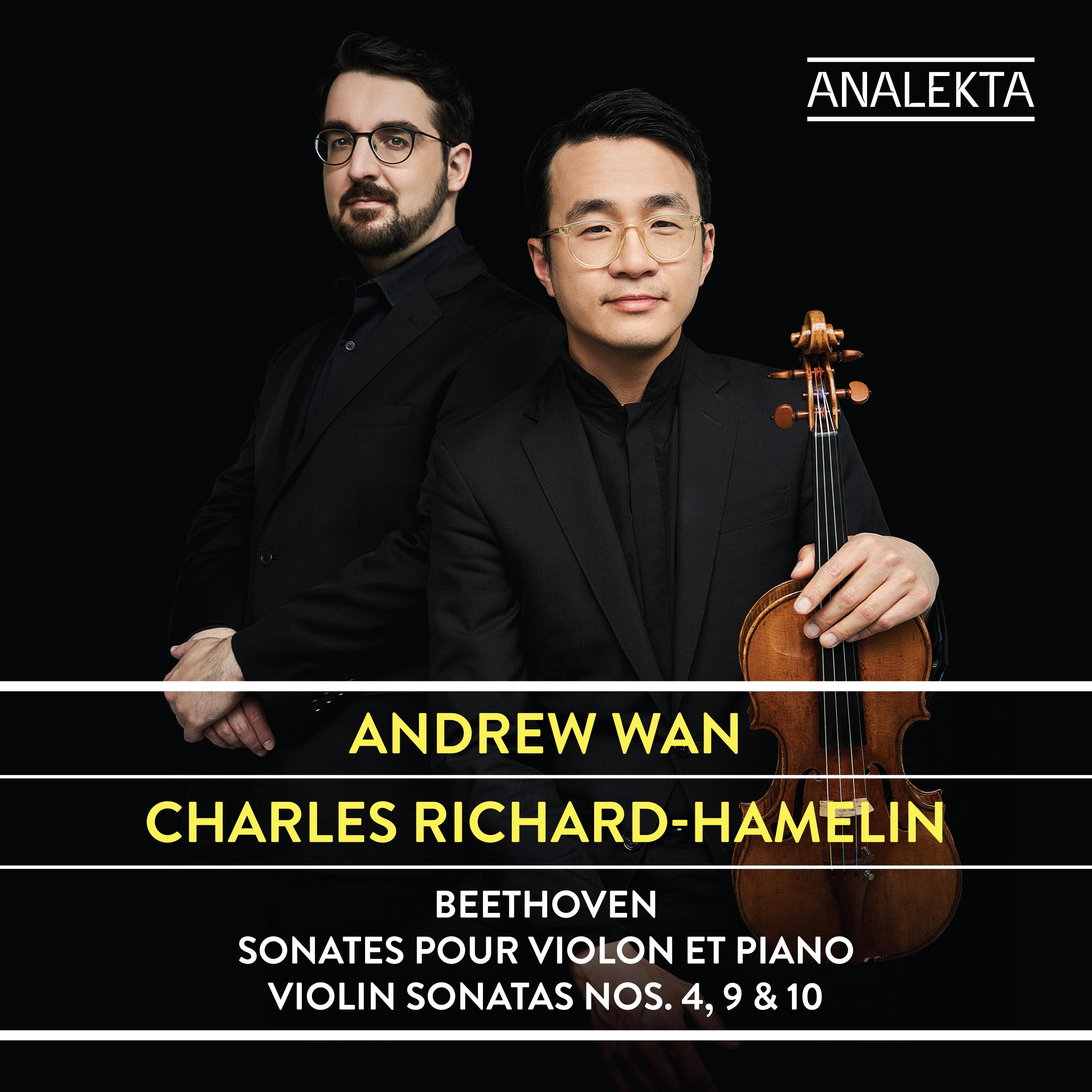
03 wan beethoven muk7lBeethoven Violin Sonatas Nos. 4, 9 & 10 with Andrew Wan and Charles Richard-Hamelin is the third issue in their Analekta series (AN 2 8796 analekta.com/en).

Wan’s warm, smooth and expressive playing is well-matched by Richard-Hamelin in lovely performances of the Sonatas No.4 in A Minor Op.23, No.9 in A Major Op.47 “Kreutzer” and No.10 in G Major Op.96. There’s excellent balance in a crystal-clear recording that completes a highly satisfying set.

Listen to 'Beethoven Violin Sonatas Nos. 4, 9 & 10' Now in the Listening Room

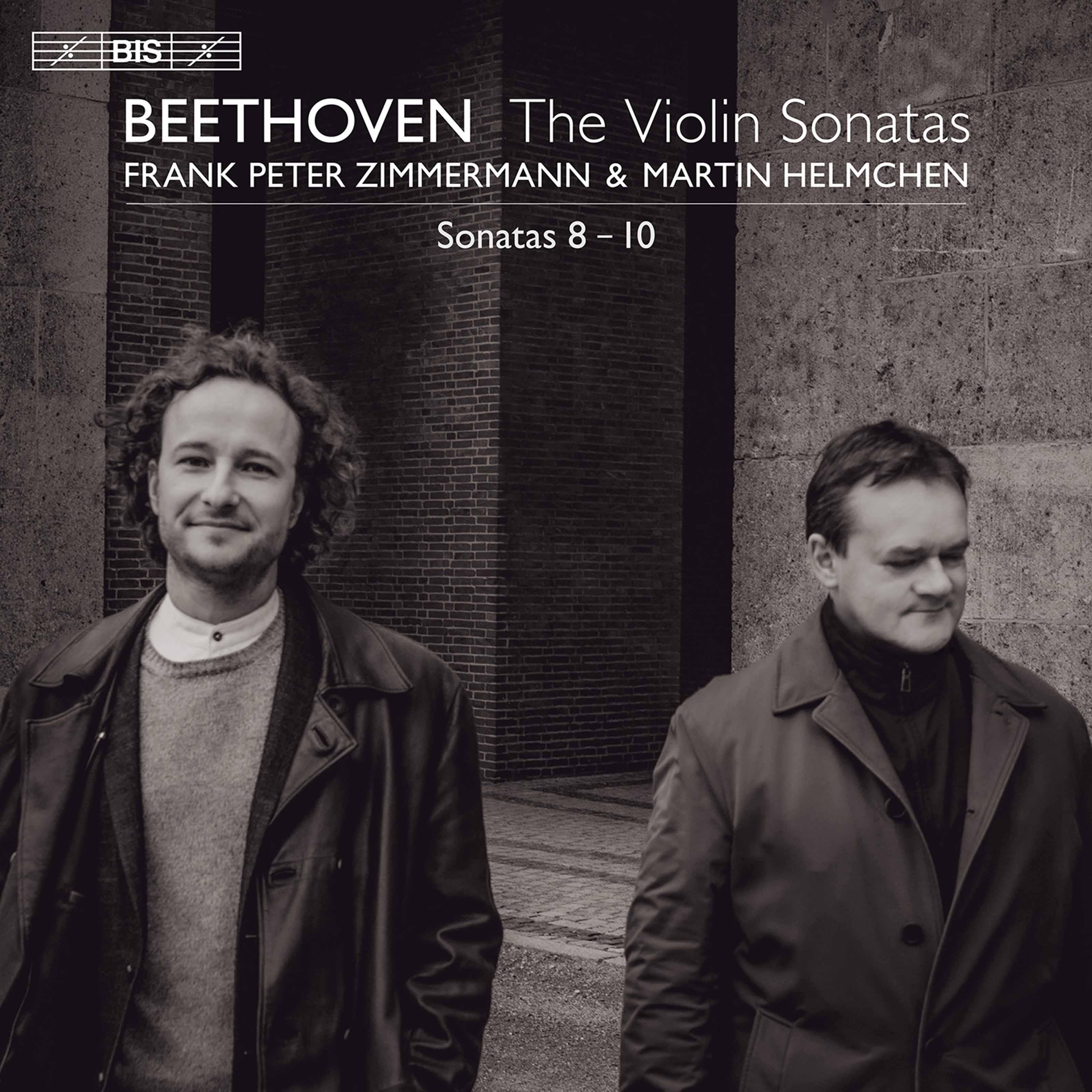
04 zimmermann cover cfhtkThe last two sonatas are also featured on Beethoven: The Violin Sonatas Nos. 8-10, with which Frank Peter Zimmermann and Martin Helmchen complete their series for BIS (BIS-2537 bis.se).

 A lively and dazzling reading of the Sonata No.8 in G Major Op.30 No.3 opens the disc, with the Op.47 “Kreutzer” and the G Major Op.96 receiving equally animated and high-octane performances, although sensitivity and nuance are never lacking when needed. 

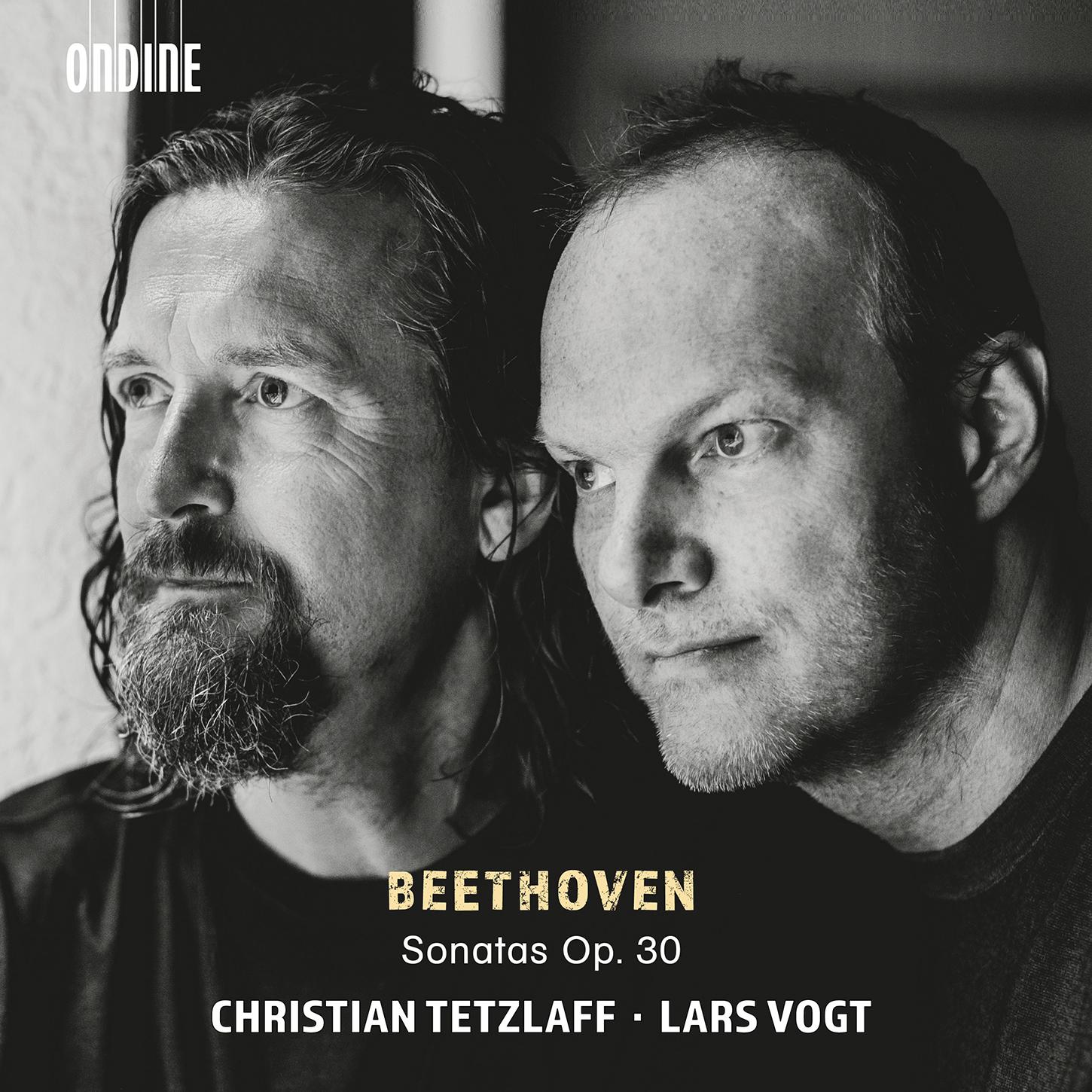
05 tetzlaff cover je58vThe Sonata No.8 in G Major, along with Sonatas No.6 in A Major and No.7 in C Minor, is also featured on a CD of the three Beethoven Sonatas Op.30, the latest release by Christian Tetzlaff and Lars Vogt on the Ondine label (ODE-1392-2 ondine.net).

The publicity blurb says that these relatively early but completely original sonatas belong to the artists’ favourite works by Beethoven, and it shows in every bar of beautifully judged and nuanced performances, with the Adagio middle movement of the A Major Sonata in particular drawing breathtakingly beautiful playing from Tetzlaff.

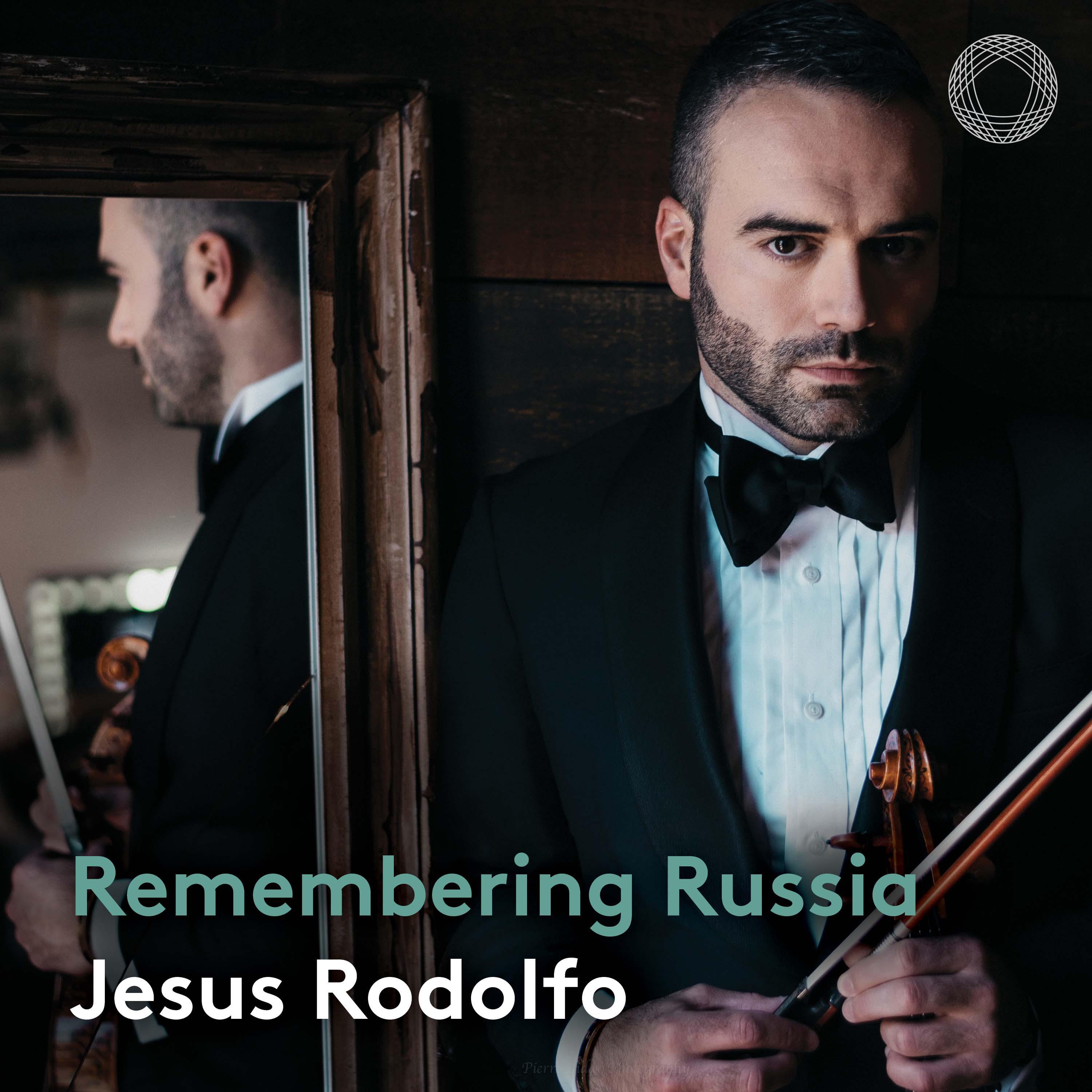
06 remembering russia 2xqzzOn Remembering Russia the Spanish violist Jesús Rodolfo, accompanied by pianist Min Young Kang makes his Pentatone label debut in a recital showcasing three 20th-century Russian composers all of whom left their homeland (PTC 5186 287 naxosdirect.com/search/ptc5186287).

Six selections from Prokofiev’s Romeo and Juliet, arranged by the Russian violist Vadim Borisovsky make a strong opening to the disc. Borisovsky also made the wonderfully effective 1950 transcription of Rachmaninoff’s Cello Sonata in G Minor Op.19, a work perfectly suited to the viola’s tonal quality and range. Rodolfo’s own transcription of Stravinsky’s Suite Italienne “Pulcinella” completes the CD.

Rodolfo is a terrific player with a gorgeous tone. He is fully matched here by Kang, with the Rachmaninoff in particular drawing quite superb playing from both performers.

Listen to 'Remembering Russia' Now in the Listening Room

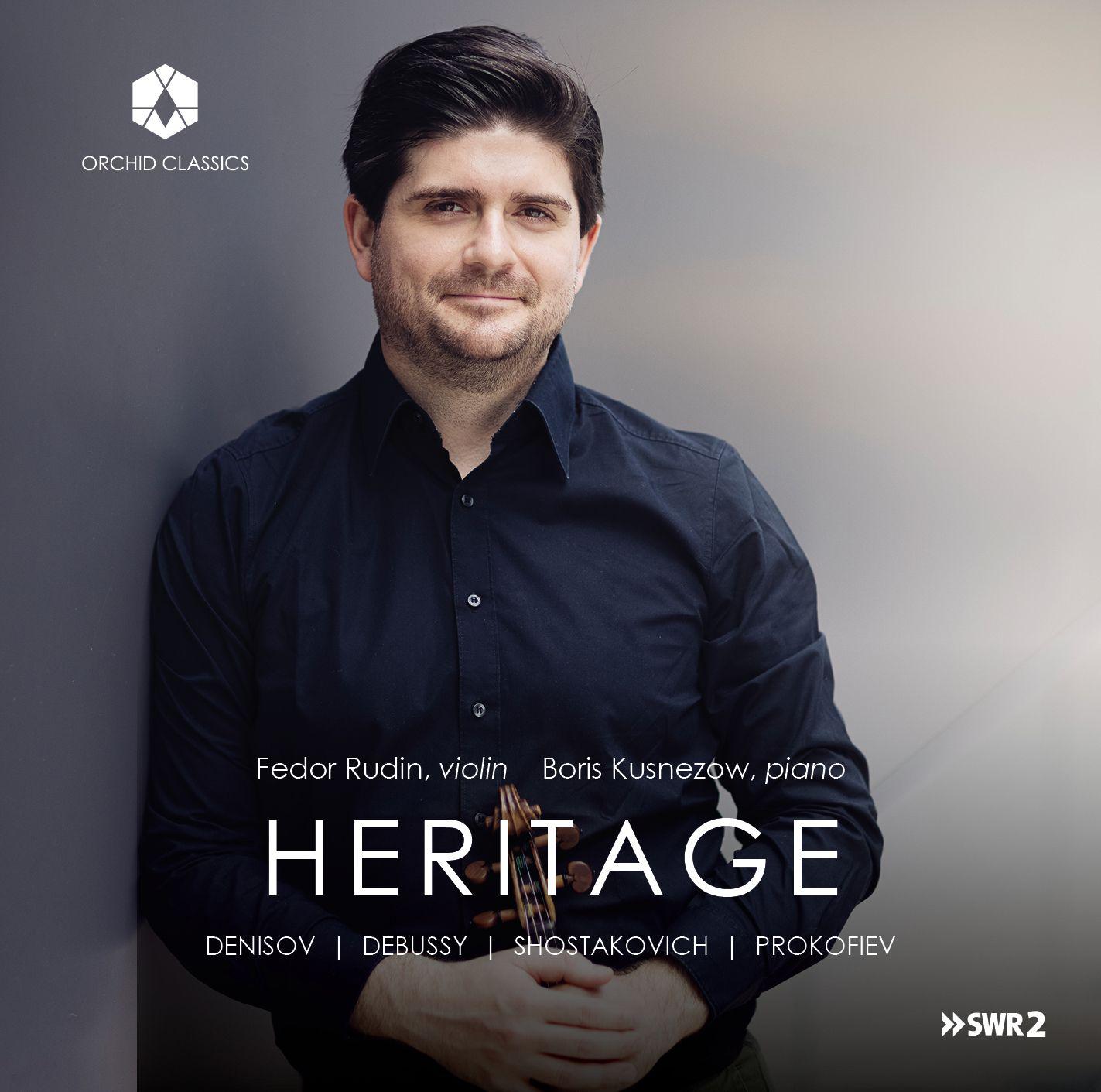
07 heritage cover 3kmqvHeritage, another CD celebrating mid-20th-century Russian composers, sees the French-Russian violinist Fedor Rudin accompanied by pianist Boris Kusnezow in a recital of works by Prokofiev, Shostakovich and, in particular, his own grandfather Edison Denisov (Orchid Classics ORC100183 orchidclassics.com).

Denisov’s rarely heard Three Concert Pieces Op.15 from 1958 opens a CD which also includes his short 12-tone Sonata from 1963 and the unpublished 1972 Sonatina that marked a return to more melodic tonality. In between are Prokofiev’s Sonata No.1 in F Minor Op.80, the incomplete Moderato con moto movement rom Shostakovich’s unfinished 1945 Sonata in G Minor and Rudin’s own transcription of Denisov’s orchestration of the Prelude and Duo from Debussy’s unfinished opera Rodrigue et Chimène.

Rachmaninoff’s arrangement of Mussorgsky’s Hopak completes a terrific CD.

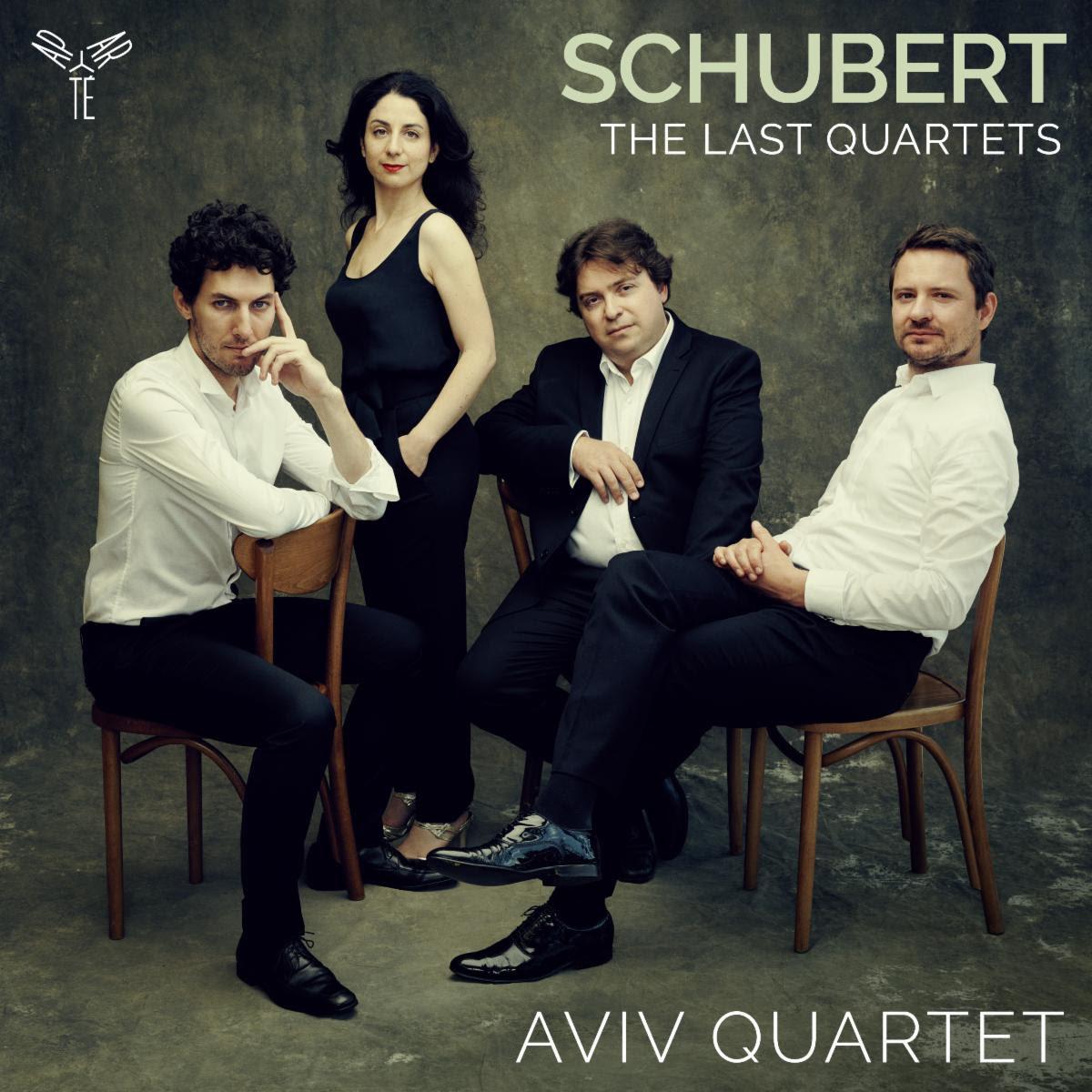
08 schubert late quartets vhpnuIt’s difficult to imagine better interpretations of Schubert’s last two string quartets – No.14 in D Minor “Death and the Maiden” D810 and the quasi-symphonic No.15 in G Major D887 – than those by the Aviv Quartet on Schubert: The Last Quartets (Aparté AP266 apartemusic.com/?lang=en).

The two works were composed during the final years of the composer’s life as he struggled to come to terms with his own mortality. I can’t do any better than quote the publicity release, which says that the Aviv Quartet “brilliantly illuminates the elegiac and tragic melodies in which Schubert wrapped his torments.” That they certainly do, in stunning performances that grab you from the opening bars of No.15 and hold you enthralled until the last note of the great D minor. 

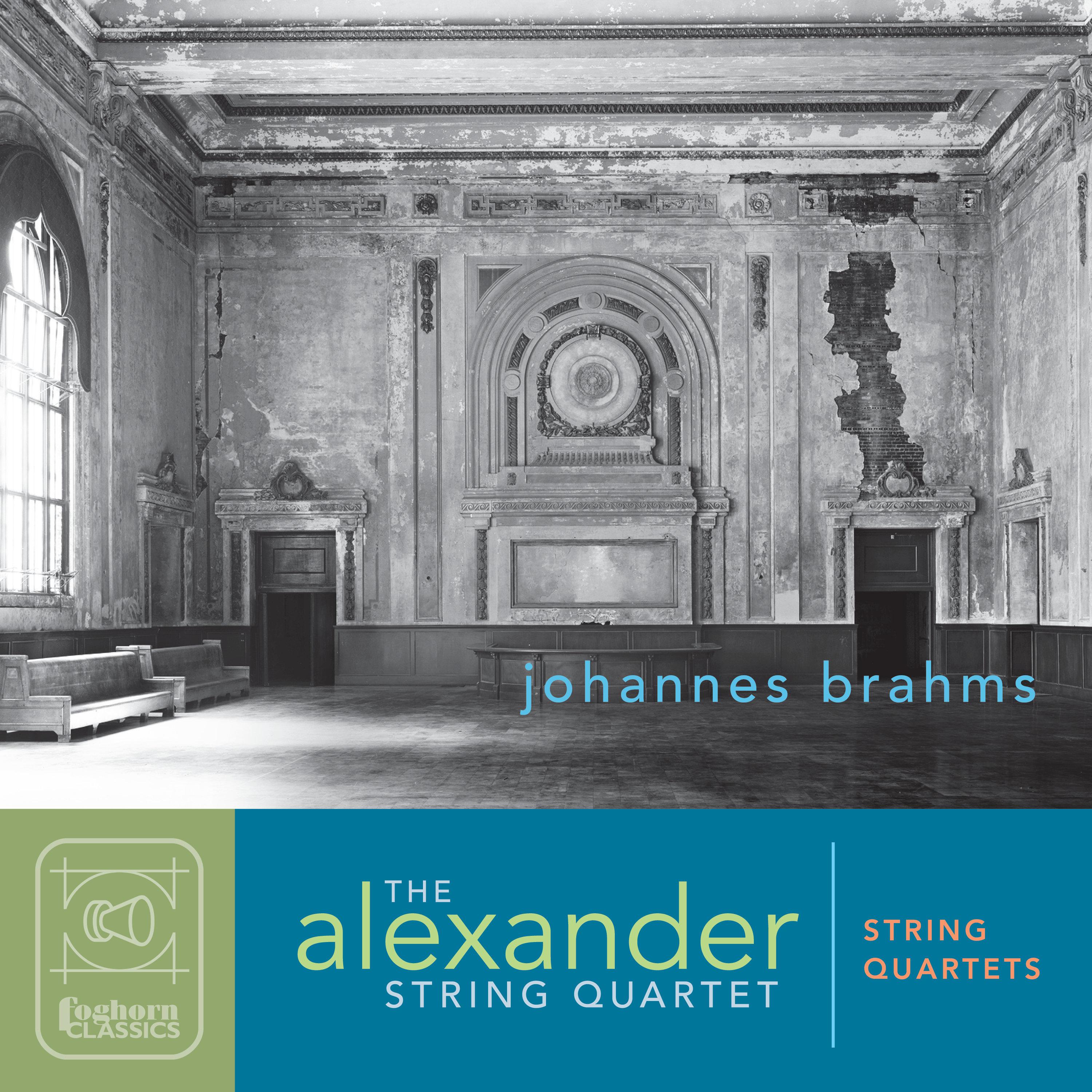
09 brahms asq 8i1ukThe Alexander String Quartet marks its 40th anniversary as well as the departure of founding violist Paul Yarbrough with Brahms: String Quartets, the final volume in the ensemble’s series of the complete string chamber works of Brahms (Foghorn Classics FCL2022 foghornclassics.com).

Yarbrough notes that the ASQ took decades to feel ready to record these quartets, and they certainly get to the heart of the music in powerful performances of strength and depth in the String Quartets in C Minor Op.51 No.1 and in A Minor Op.51 No.2. The String Quartet No.3 in B-flat Major Op.67 – Brahms’ favourite of the three – is bright and playful.

A transcription of Brahms’ Intermezzo in A Major Op.118 No.2 by the ASQ’s first violinist Zakarias Grafilo completes a fine disc.

Listen to 'Brahms: String Quartets' Now in the Listening Room

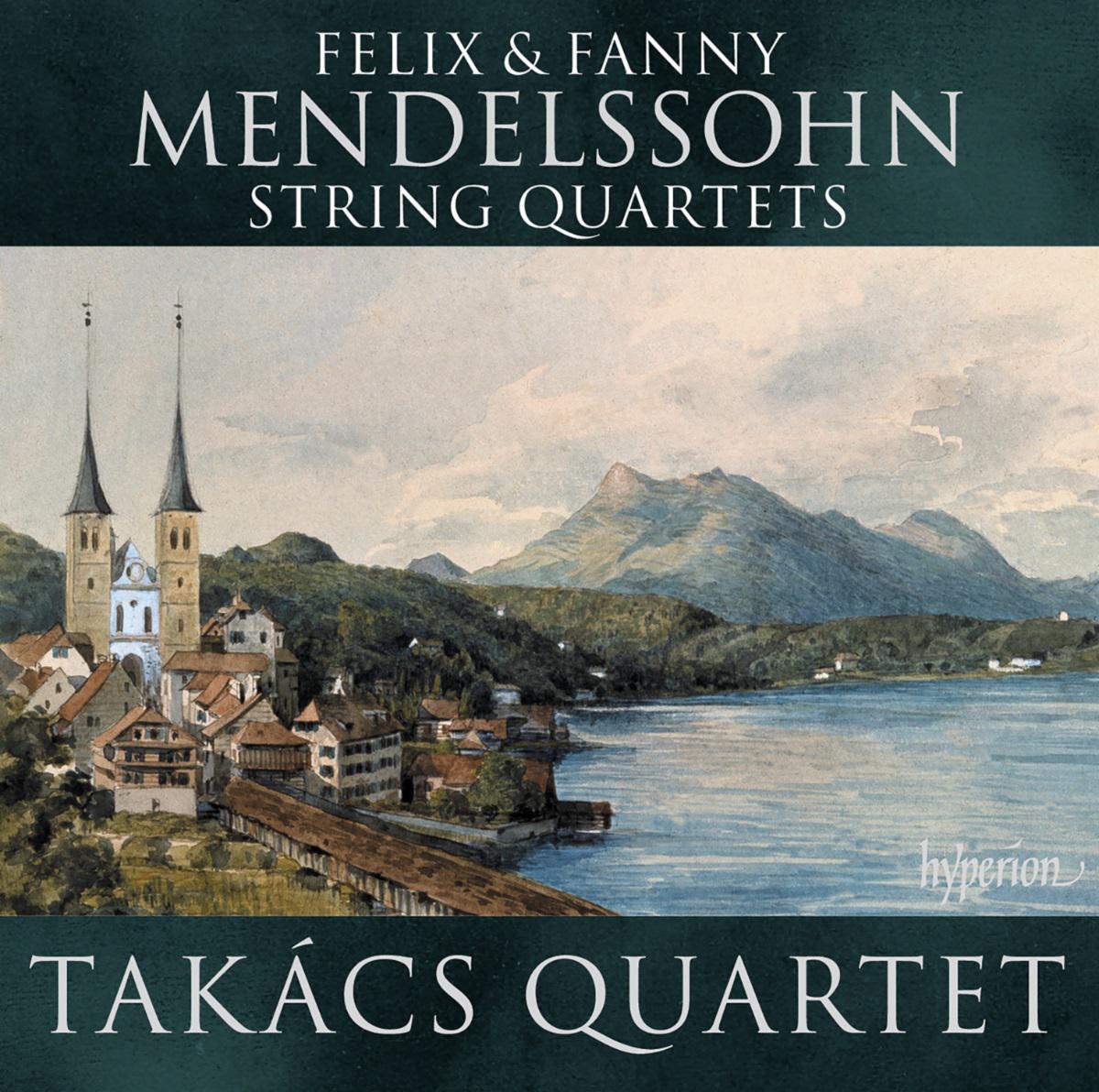
10 mendelssohn takacs ltuy0Works by the brother and sister Mendelssohns are given committed performances by the Takács Quartet on Felix and Fanny Mendelssohn String Quartets (HyperionCDA68330 hyperion-records.co.uk/a.asp?a=A1355).

Fanny Mendelssohn Hensel`s String Quartet in E-flat Major from 1834 was her only work in the genre and may never have been performed in her lifetime, the score and parts not being published by Breitkopf & Härtel until 1988. It`s now favourably compared with quartets by her younger brother, Schubert and Schumann.

The central work on the disc is the String Quartet in F Minor Op.80 from 1847, written by Felix in the closing months of his life and into which he pours his grief over the death of his sister in May of that year. His String Quartet in A Minor Op.13 from 1827 completes a lovely disc.

11 dover beethoven 2 x9y7eThe high standard set by the Dover Quartet with its first volume of Beethoven Complete String Quartets continues with the 3CD set Volume 2 The Middle Quartets (Cedille CDR 90000 206 cedillerecords.org).

This release covers String Quartets No.7 in F Major Op.59 No.1, No.8 in E Minor Op.59 No.2, No.9 in C Major Op.59 No.3 (all commonly referred to as the Razumovsky quartets), No.10 in E-flat Major Op.74 “Harp” and No.11 in F Major Op.95 “Serioso.”

My December 2020 review of the previous volume described the performances as being full of conviction and depth, and noted that this promised to be an outstanding set. There’s certainly no reason to change those opinions.

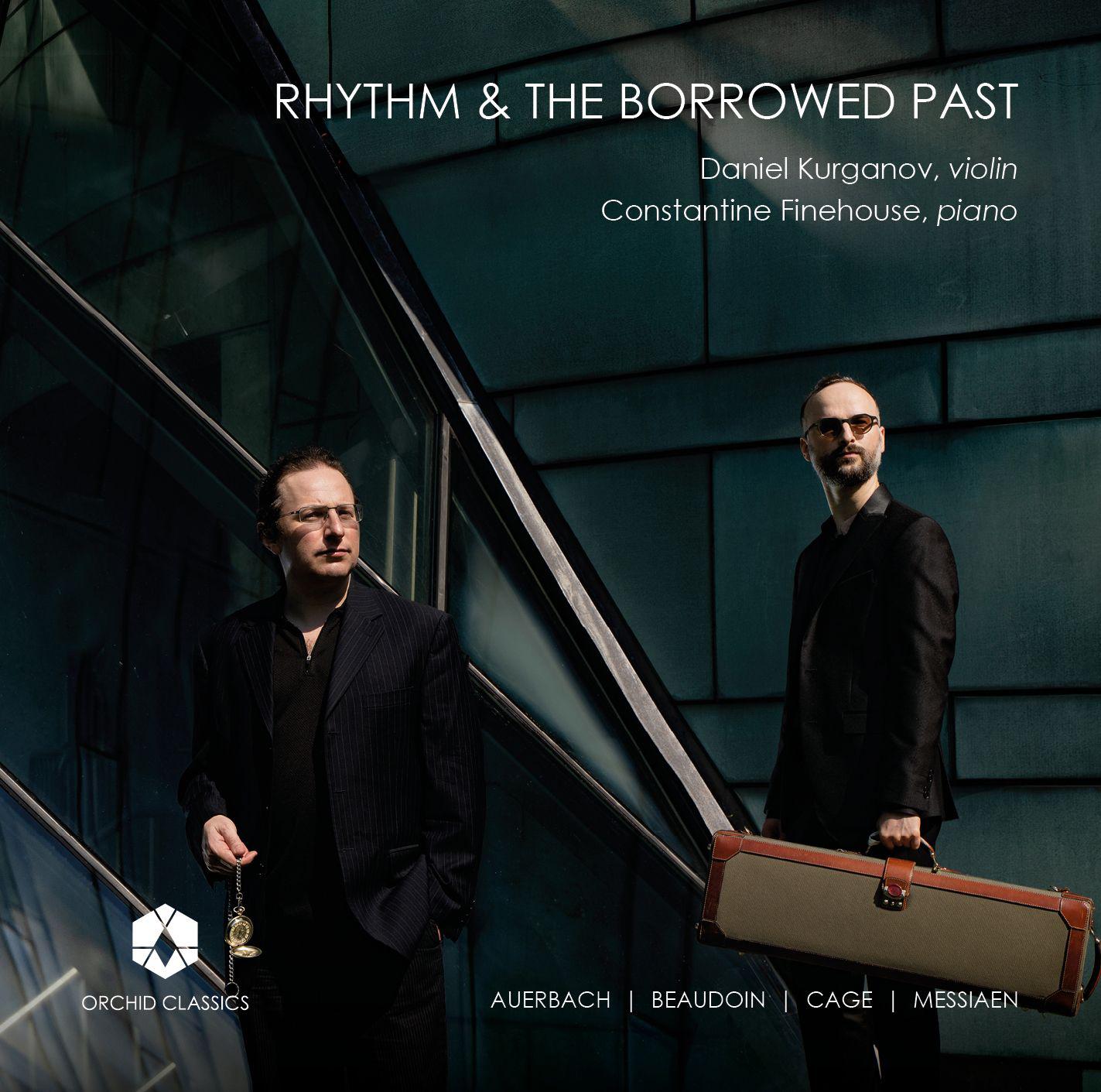
12 rhythm cover 8cmxtRhythm & the Borrowed Past features violinist Daniel Kurganov and pianist Constantine Finehouse performing world premiere recordings of works by Lera Auerbach and Richard Beaudoin, along with works by John Cage and Olivier Messiaen (Orchid Classics ORC100182 orchidclassics.com).

Auerbach`s Sonata No.3 for violin and piano and Beaudoin`s In höchster Not (in deepest need) were both written in 2005, the former a powerful and striking work that makes an immediate impact and the latter described by the composer as being marked by a constant evasion of stabilities, the contrapuntal lines in all three movements not necessarily coinciding.

Cage`s very effective Nocturne from 1947 is written in fluid notation, resulting in some performances being twice as long as others. An outstanding performance of Messiaen`s Thème et variations from 1932 completes a top-notch CD.

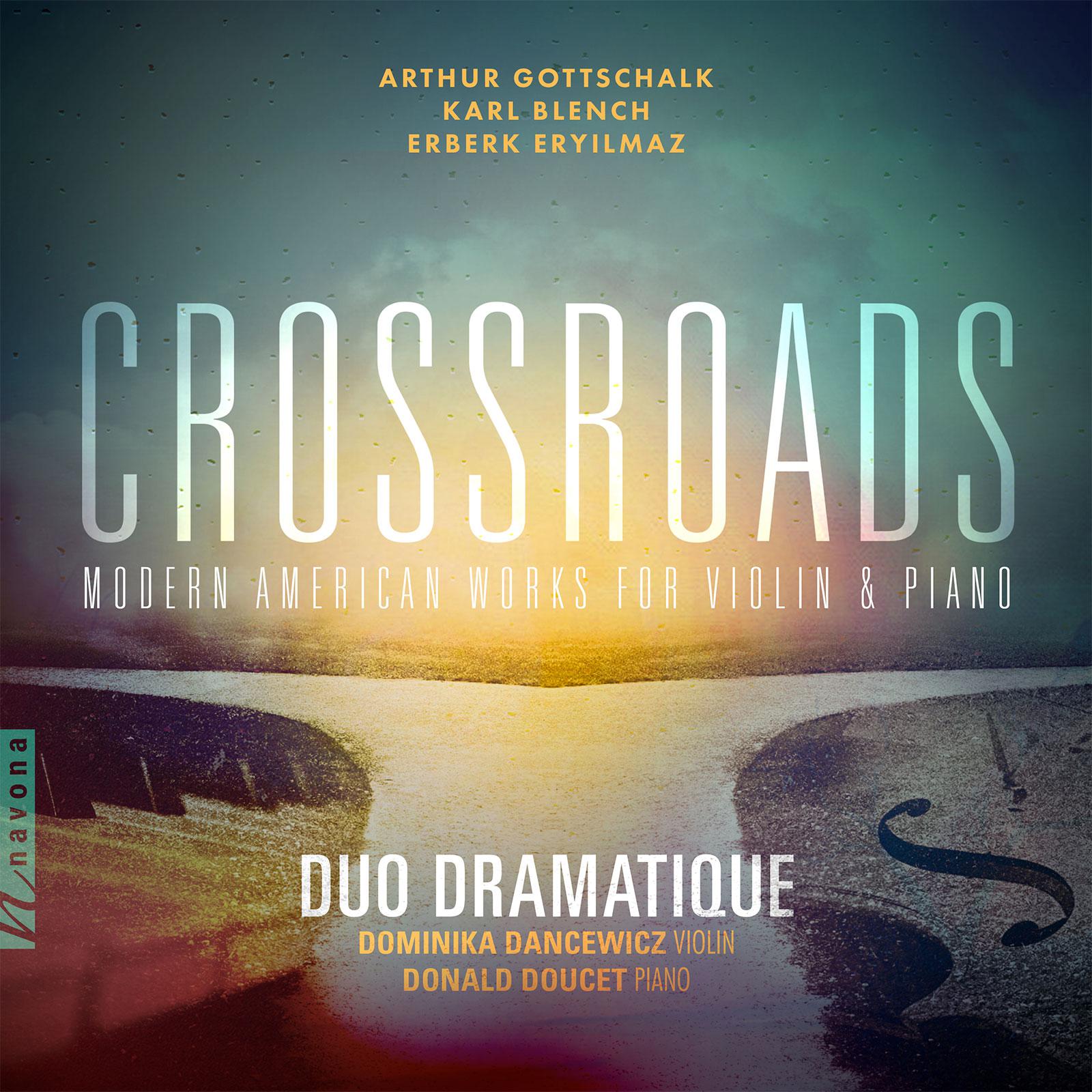
13 crossroads cover ruyvvOn Crossroads, the Duo Dramatique – violinist Dominika Dancewicz and pianist Donald Doucet – presents a recital of modern American works for violin and piano (Navona Records NV6380 navonarecords.com/catalog/nv6380).

Arthur Gottschalk’s Sonata pays homage to the jazz violinists Stephane Grappelli, Johnny Frigo and Joe Venuti in a delightful work with echoes of “Bluesette” and “When Sunny Gets Blue,” and a Bebop last movement.

Karl Blench’s Sonata “In D” (a reference to the performers’ names) uses extreme contrasts in music meant to depict sarcasm, humour and quiet serenity, with a virtuosic moto perpetuo Finality last movement. Erberk Eryilmaz’s terrific Insistent Music draws on Eastern European folk music, with percussive patterns and explosive melodic lines.

Both players are quite outstanding in a CD simply bursting with life and energy.

14 reger s1u2uThe recent pandemic has provided the impetus for numerous solo recording projects, the latest of which to reach me is Reger Three Suites for Solo Viola Op.131d played by violist Tonya Burton (Tōnsehen TSN-009 tonsehen.com).

Reger wrote the suites in 1915. They are short four-movement works (total CD time is only 30 minutes) which look back to Bach, whom Reger idolized, but also forward with early-20th-century traits. Each movement is written in Baroque or Classical form, with Reger’s usual chromaticism balanced by lyrical melodies.

Burton calls the suites “enticing, expressive and dramatic, all the while full of humour and charm,” qualities amply displayed in her excellent performance.

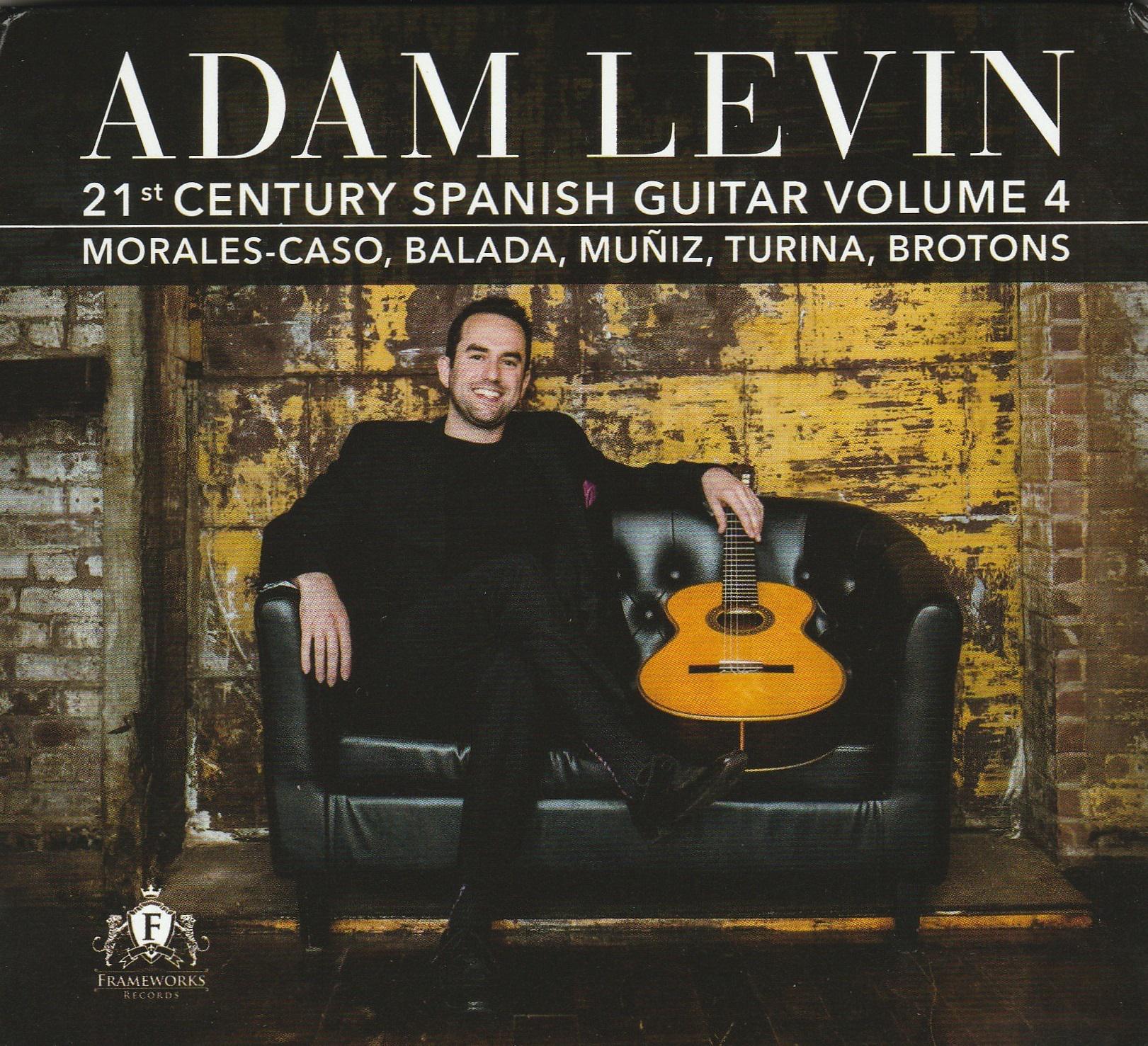
15 adam levin 98gc5With the 2CD set 21st Century Spanish Guitar Vol.4 the outstanding guitarist Adam Levin completes his 13-year commissioning project that produced more than 30 new works (Frameworks 793888175143
adamlevinguitar.com).

CD1 is the brilliant and striking Concierto de La Herradura by the Cuban composer Eduardo Morales-Caso, with the Orquesta de Extremadura conducted by Álvaro Albiach.

CD2 features world-premiere recordings of four solo works: Leonardo Balada’s Caprichos No.14; the bluegrass-influenced Portraits from the Heartland by Jorge Muñiz, written in 2015 for the bicentennial of Indiana and built on the state anthem On the Banks of the Wabash, Far Away; José Luis Turina’s Arboretum; and Salvador Brotons’ Sonata Sefardita Op.143, a gathering of songs in the Sephardic tradition.

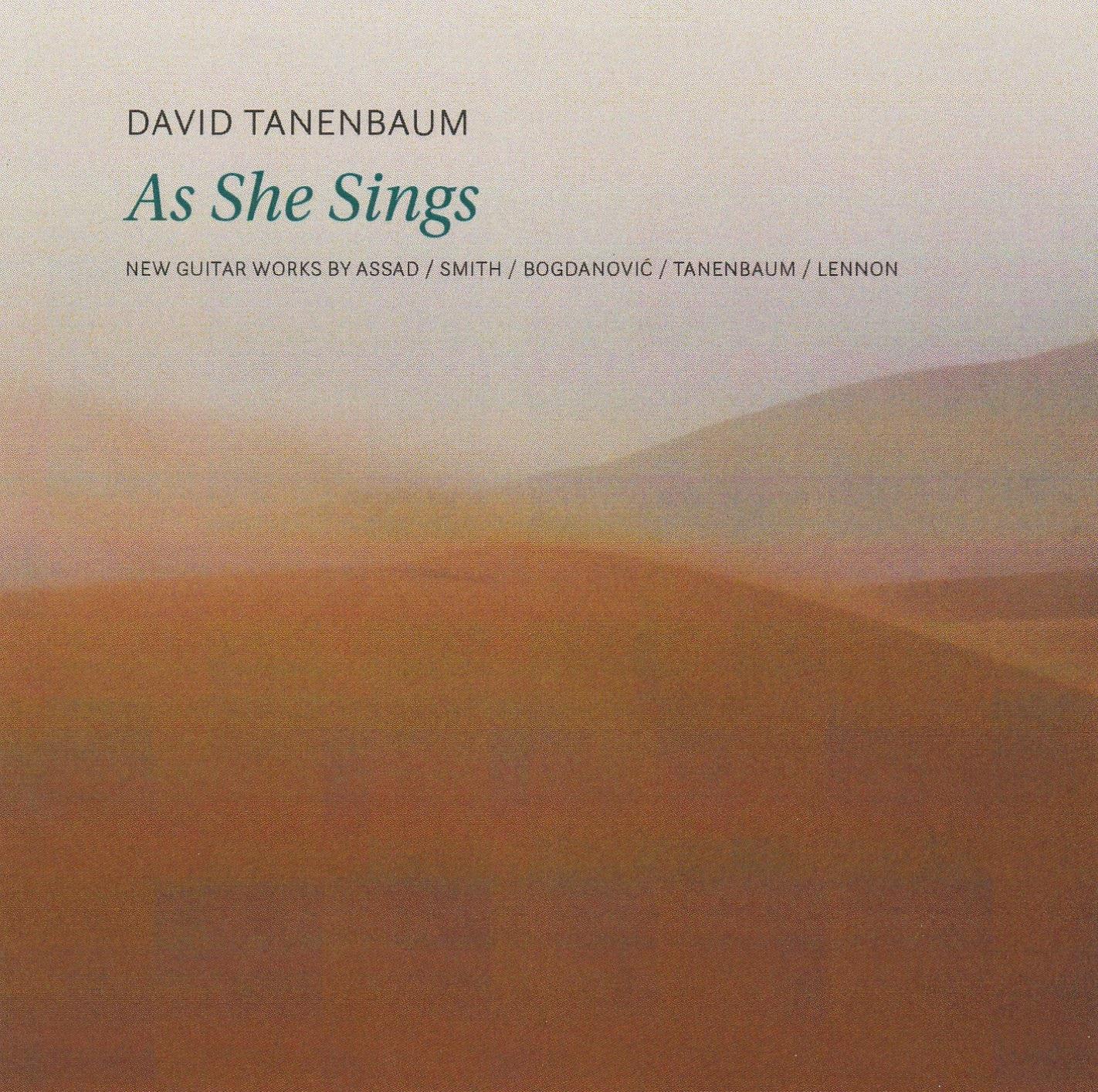
16 david tanenbaum ho7gdMusic written specifically for the guitarist, in this case David Tanenbaum, also features on As She Sings, a CD showcasing works created for him during the past five decades (ReEntrant REN01 newfocusrecordings.com).

Sérgio Assad’s Shadows and Light is followed by Ronald Bruce Smith’s fascinating Five Pieces for guitar with live electronics, in which different playing styles combine with a range of electronic processing.

Music for Guitar is an early piece by Tanenbaum’s father Elias Tanenbaum. Tanenbaum is joined by mezzo-soprano Wendy Hillhouse, flute, bass and ceramic gongs for Dušan Bogdanović’s Games, seven short settings of poetry by the Yugoslavian poet Vasko Popa.

John Anthony Lennon’s elegiac title track completes an intriguing and sometimes challenging disc.

Listen to 'As She Sings' Now in the Listening Room

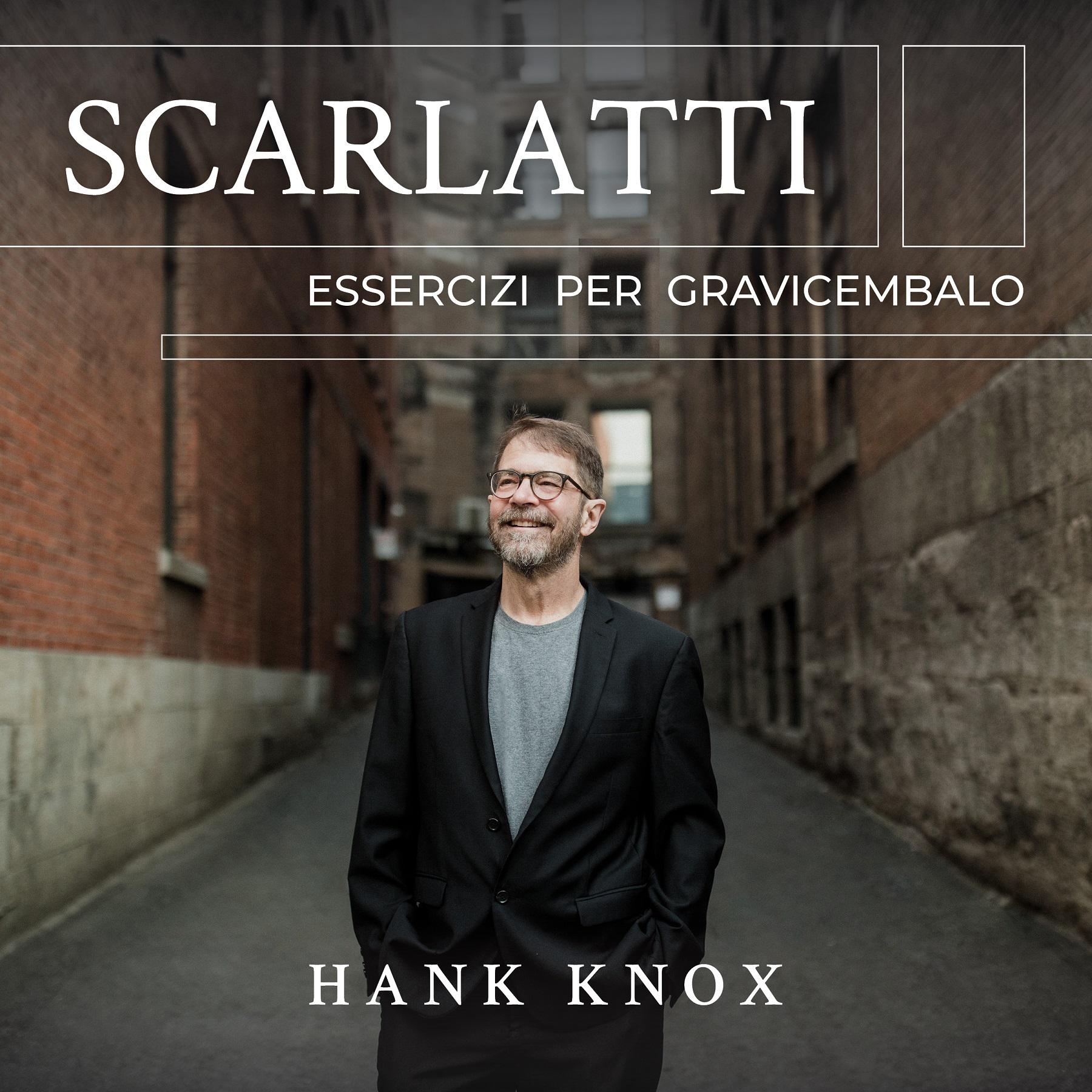
01 scarlatii knox xjk78Scarlatti – Essercizi Per Gravicembalo
Hank Knox
Leaf Music LM248 (leaf-music.ca)

Hank Knox has used the lockdown period very fruitfully. He spent ten months immersed in this, the only authorized publication by Domenico Scarlatti and, to its credit, one that has remained in print since it was published in 1739. Essercizi per gravicembalo is accurately translated as Exercises for harpsichord, underpinned by Hank Knox’s choice of a harpsichord after the Dulcken family of Flemish harpsichord makers. 

From the start, the combination of Scarlatti’s very lively composing, its consequently demanding playing techniques and the brilliance of Knox, create a solo harpsichord masterpiece. For example, in its complexity the Sonata in A Minor (track 3) is reminiscent of everything J S Bach could create. Perhaps Scarlatti and Bach learned by listening to each other’s works.

Even the longest sonatas, such as that in G Major (track 13) do not let up in their demands on the harpsichordist. This is especially true of the significantly longer second CD. Here, the Sonata in D Major (track 29) continues to bring out the best in Knox.   

It is rare to find a collection of pieces so consistent throughout. Consequently, the sheer consistent joyfulness and exhilaration of these 30 Sonatas mean it is difficult to isolate any particular one as being superior to the others; we are spoiled for choice.

Born in 1685, along with Handel and Bach, Scarlatti is by far the least recognized composer of these three greats. The virtuosic exuberance of his Essercizi in this rendering makes a strong case for diminishing the recognition gap.

Listen to 'Scarlatti: Essercizi Per Gravicembalo' Now in the Listening Room

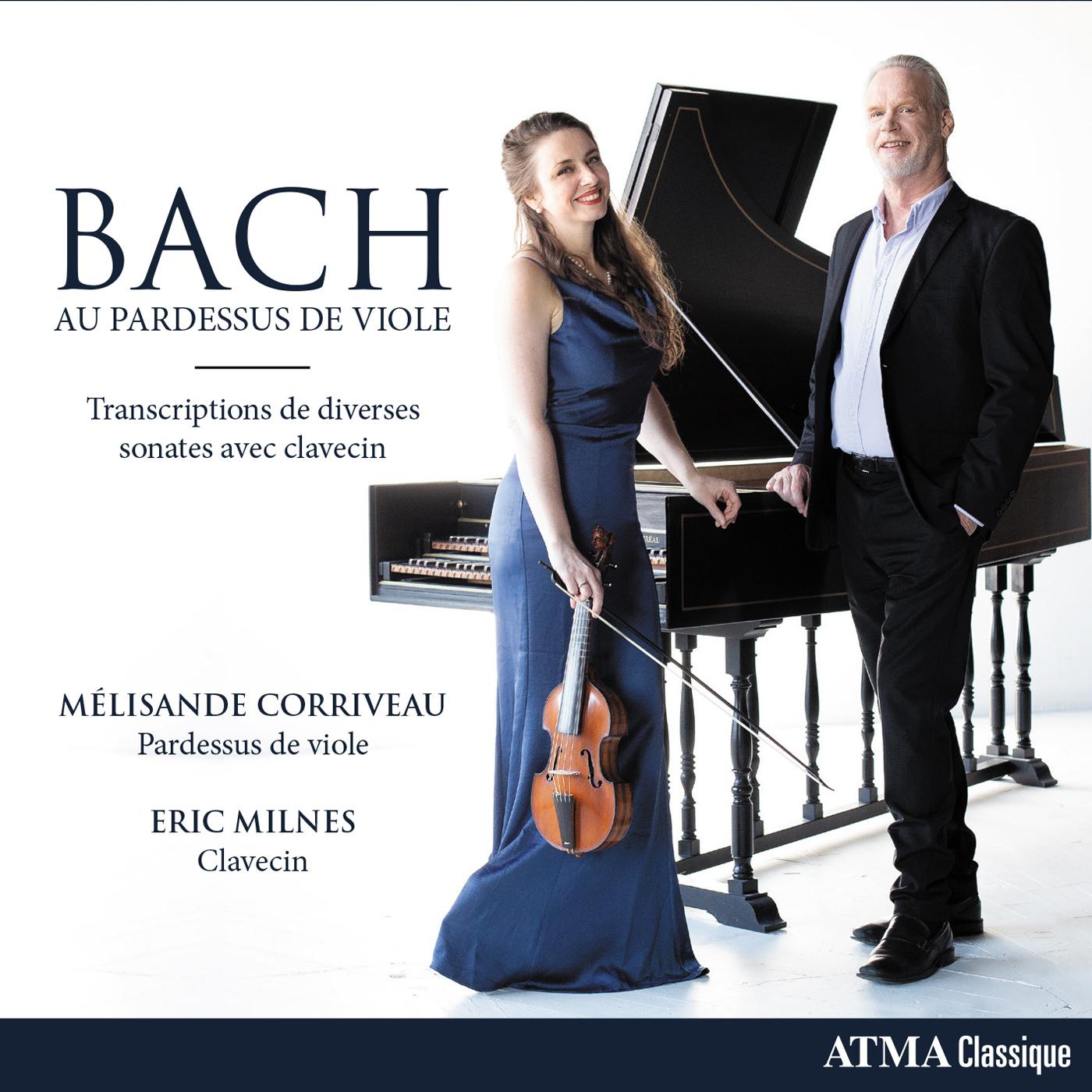
02 melisande corriveau dg7w5Bach – Au Pardessus de Viole (transcriptions of diverse sonatas with clavecin)
Mélisande Corriveau; Eric Milnes
ATMA ACD2 2826 (atmaclassique.com/en)

Although relatively obscure today, it is not hard to imagine pardessus de viole being the queen of the instruments in mid-18th century France, albeit for a short period of time. The smallest member of the viola da gamba family was invented in France to counter the newcomer of that time – the violin. Its uniquely delicate sound and slender shape were particularly popular with women, inspiring a slew of new compositions and arrangements before falling off the musical radar. 

Multi-instrumentalist Mélisande Corriveau shines spectacularly on this recent release of selected Bach compositions adapted for pardessus de viole. An imaginative and elegant player, Corriveau ventures on a fine exploration of the contemplative aspects of Bach’s music, further enhanced by the sonic qualities of her instrument, which, interestingly, was made during the reign of King Louis XV. On the other end of this musical equation is harpsichordist Eric Milnes, an intrinsic performer with a splendid feel for balance and flourish. Here the voices are so finely attuned to the nuances of Bach’s music that we never question the fact that Bach did not write a single piece for this instrument and, in fact, may not have been aware of its existence. 

The album is comprised of sonatas and trios originally for violin, viola da gamba and organ, rich with counterpoint and dialogue between instruments. There is a stillness and beauty to the ensemble playing that engages the listener on a deep level.

Listen to 'Bach: Au Pardessus de Viole' Now in the Listening Room

03 fabio biondi bach lqr83Bach – Sonatas & Partitas
Fabio Biondi
naïve (highresaudio.com/en/album/view/xhdnab/fabio-biondi-bach-sonatas-partitas)

These timeless works receive a superb and fanciful recorded performance from one of the most interesting and adventurous violinists alive today. 

The Six Sonatas and Partitas were written sometime between 1717 and 1723, while Bach was employed by Prince Leopold of Anhalt-Cöthen. The sonatas are each made up of four substantial movements, including brilliant and virtuosic fugues. The partitas are jammed with a variety of dance movements and “doubles,” the D Minor Partita concluding with the justly renowned extended Chaconne.

The brilliant Fabio Biondi is a celebrated violinist, conductor and the founder of Europa Galante who has made a specialty of Baroque works large and small, including recital tours with pianists, harpsichordists and fortepianists. That said, he plays on a fortified modern violin with technical prowess, confidence and a big personality that would not be mistaken for being historically informed. He made this recording a special project as he turned 60, saying in the notes that he has long felt intimidated by these towering works “so intimate, yet so universal, so close to the essence of things and so technically demanding as well.”  

These performances are fresh, assured, lyrical, exciting and full of vitality. Highlights include the Presto of Sonata I, the Giga and Chaconne of Partita II, the three enormous fugues, the heartbreakingly nostalgic F Major Largo of Sonata III and the Gavotte en Rondeau of Partita III. Some of the tempi are a little too breakneck, some of the ornamentation is outrageous and at times the overall sound gets a little too heavy and intense. But this is playing with a self-assured point of view, a big heart, a rock-solid technique and a humble wisdom, full of respect for how these pieces connect to the human soul. Highly recommended.

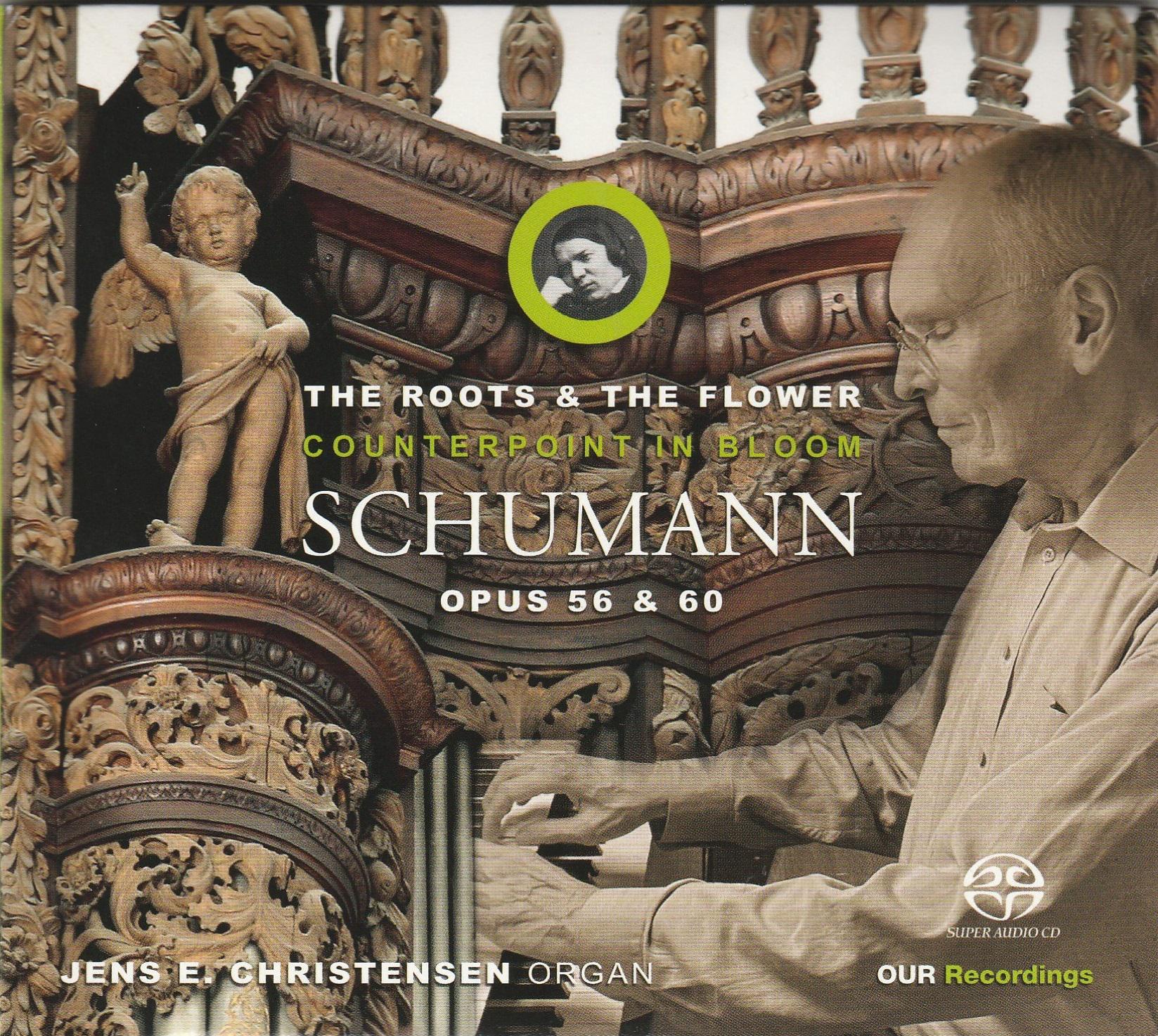
04 schumann organ tjmhsSchumann – The Roots & The Flower: Counterpoint in Bloom
Jens E. Christensen
Our Recordings 6.220675 (naxosdirect.com/search/6220675)

A prolific and highly respected composer of the Romantic era, Robert Schumann wrote in a variety of styles for a range of instruments, from solo piano to large orchestra. Tucked within Schumann’s 148 opus numbers are a few works written for the pedal piano which, rather than having the standard three foot pedals, contained an entirely separate keyboard, similar to that found on pipe organs, which was manipulated by the feet. Once a relatively common household instrument, the pedal piano has since become extinct, though separate foot pedal attachments and even complete replicas can still be found.

The presence of a pedalboard is a unique similarity between the pedal piano and the modern organ which has led to a number of works for the former instrument being adapted to the latter. Schumann’s pedal piano works are of particular note in this regard – their contrapuntal dexterity and complexity are conveyed particularly well on the organ, as demonstrated by renowned Danish organist Jens E. Christensen. 

Performing Schumann’s Six Fugues on B-A-C-H, Op.60 and the Six Canonic Studies, Op.56, Christensen shows Schumann at his most cerebral, writing that is rigid in its structure yet fluid in its harmonic style. Indeed, the choice of the famous B-flat - A - C - B natural motif (B-A-C-H in German note names) is a not-too-subtle homage to Schumann’s idol. His choice to use this theme as the source of six independent fugues is a demonstration of Schumann’s devotion to his craft, a flexing of musical muscles that demonstrate his ability to exist within a defined structure while simultaneously expanding and manipulating these structures to their limits.

One of the great challenges with performing this music on the organ is the registration, or stops and pipes, that the organist must choose to best convey the composer’s intentions. Christensen is heard here on the organ in Copenhagen’s Von Frelser Church, an instrument that is historical both in age and temperament, best suited to the works of Bach and earlier composers. Despite the apparent temporal discrepancy, this sound is exceedingly effective: while Christensen may occasionally incorporate one too many Baroque phrasings into his interpretations, the combination gives Schumann’s chromatic material the backwards-looking realization it requires, reinforcing the direct references to Bach and his own contrapuntal genius.

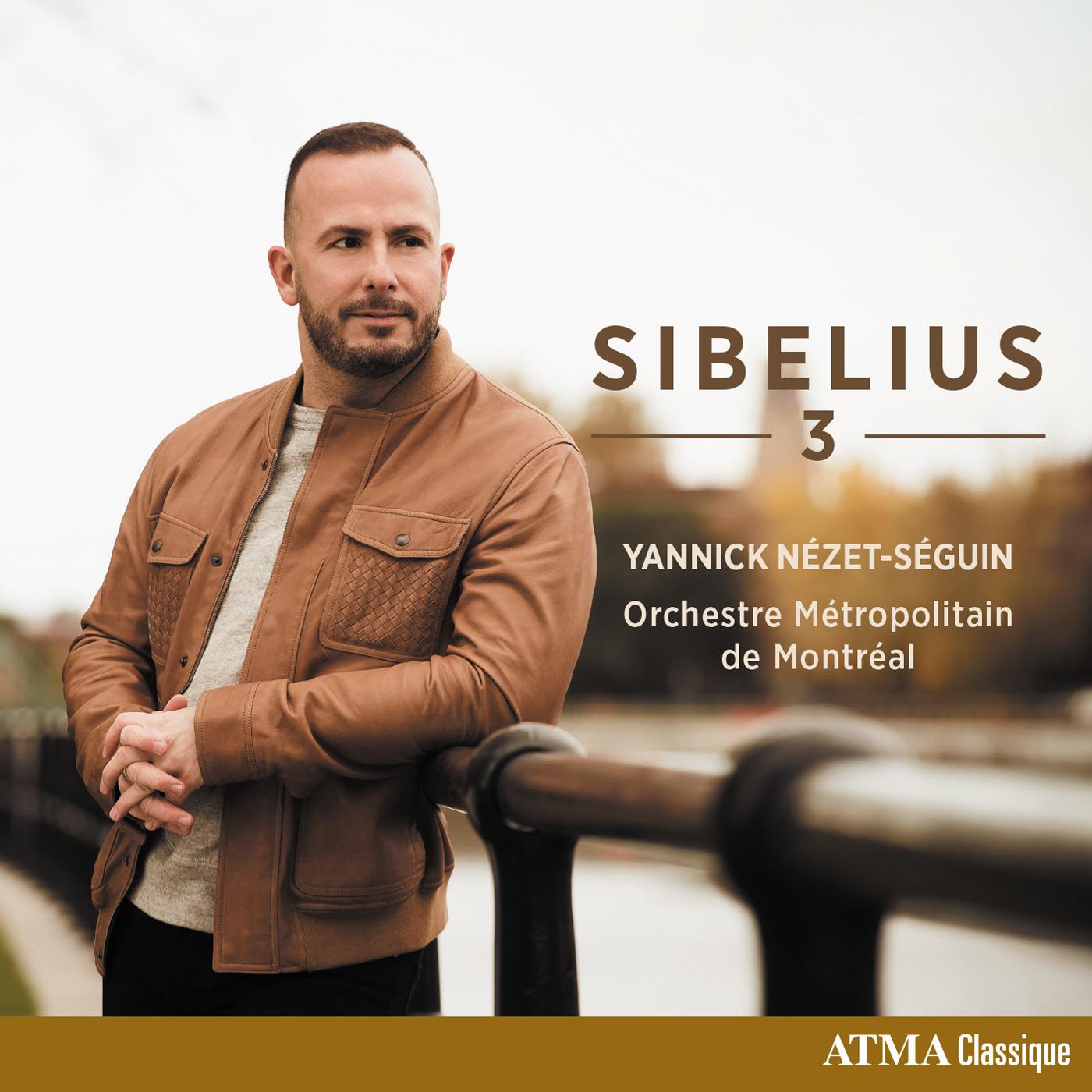
05 yn s sibelius 3 9cuyfSibelius – Symphony No.3
Orchestre Métropolitain de Montréal; Yannick Nézet-Séguin
ATMA ACD2 4033 (atmaclassique.com/en)

After gaining world fame and plaudits too numerous to mention, Yannick Nézet Séguin is back in Canada with his first orchestra, the Orchestre Métropolitain de Montréal and, with ATMA Classique, is in the process of recording the seven symphonies of Jean Sibelius. This new release is part of this ambitious series.

The seven symphonies of Sibelius are certainly music the world had never heard before; music of the North, inspired by Finnish myths and sagas and a landscape with elemental forces of nature. Interestingly, there is a stylistic evolution from the first to the seventh symphony. Despite their wildly different characteristics, all progress towards the same purpose, a condensation, a telescoping of elements that comes into full fruition in the Seventh Symphony where all four movements fuse into a single one.

Nearly the shortest of the seven and in the key of C Major, the Third has almost a Mozartian clarity with transparent textures and straightforward momentum. Mysteriously however, somewhere in the first movement suddenly everything quiets down with a perpetual, nearly inaudible rustle of strings as if we would disappear into a misty thicket with only an occasional shriek of a bird (on the clarinet) breaking the silence.

A combination of the third and fourth movements, the Finale is magnificent: as the rhythmically pulsating, suspenseful Scherzo gradually dies down, a new march-like theme emerges almost imperceptibly; pianissimo on the cellos and gaining momentum, and before we know it we are in the midst of the Finale. Soon, all the strings and the woodwinds join in louder and louder. Finally the clarinets, flutes and horns raise their instruments high and the trumpets and trombones bring everything to a final glory. Nézet-Séguin manages this giant crescendo masterfully.

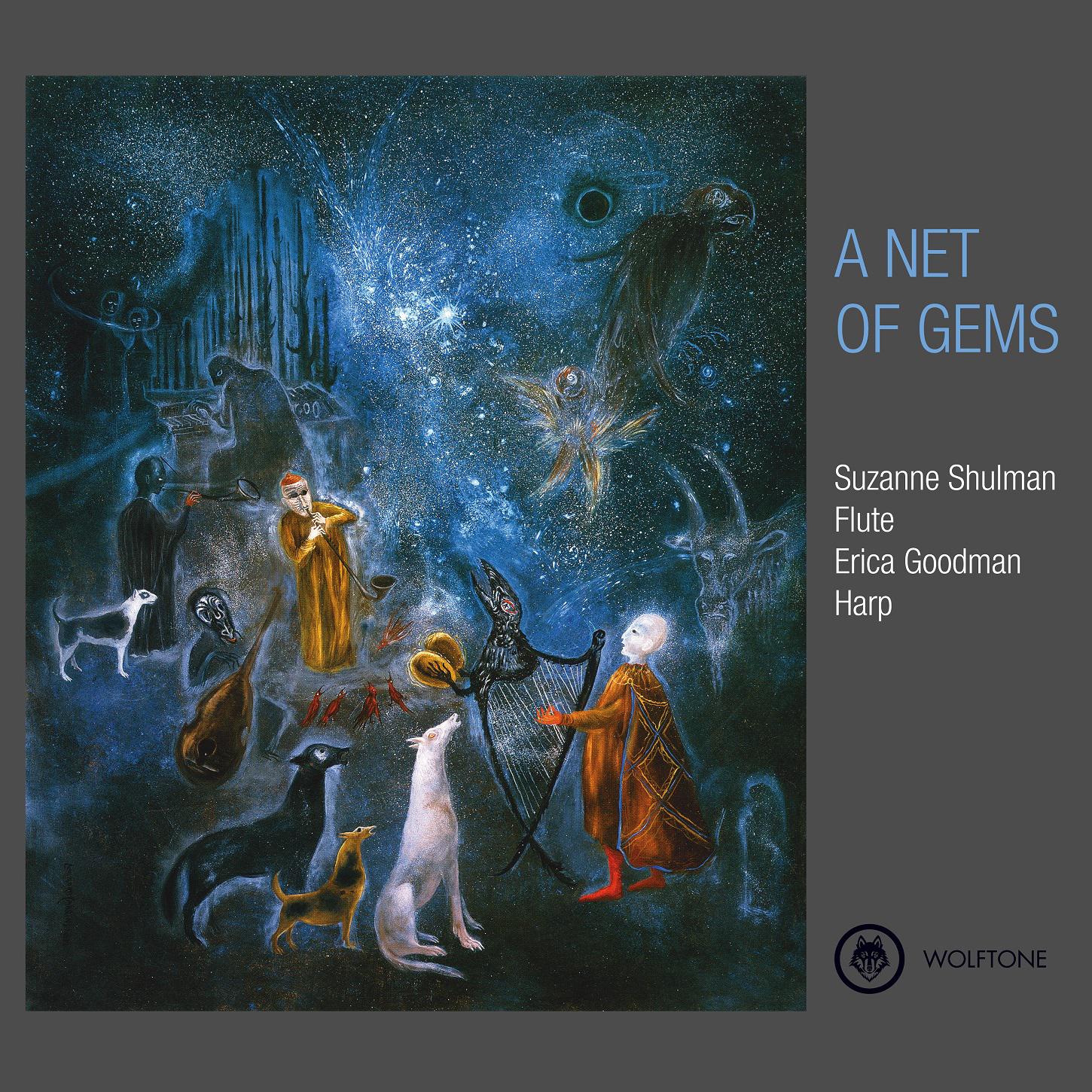
06 schulman goodman a net of gems cover wijqoA Net of Gems
Suzanne Shulman; Erica Goodman
Wolftone WM21061 (shulmangoodman.bandcamp.com)

The CD opens with flutist Franz Doppler’s and harpist Antonio Zamara’s co-composed Casilda Fantaisie, based on the opera, Casilda, by Ernst II, Duke of Saxe-Coburg and Gotha (and Queen Victoria’s brother-in-law). Erica Goodman and Suzanne Shulman navigate this mix of lyricism and virtuosity admirably, offering virtuosic lyricism and lyric virtuosity!

Next comes Bernard Andrès’ Narthex followed by David Occhipinti’s Net of Gems, which gives the disc its name. Though composed 49 years apart, they have much in common, both inspired by religious themes, the first by Romanesque church architecture, the second by Hinduism’s net of Indra. Melodic, through composed and episodic, both have the surreal quality of a metaphorical journey through a variety of distinctive and contrasting neighbourhoods. The performers’ sensitivity to the contrast between episodes is what really helped me to navigate this difficult musical structure.

Next on the program was Camille Saint-Saëns’ Fantaisie, Op. 124, originally composed for violin and harp but so well adapted for the flute by Hidio Kamioka and Shulman that you would never guess that Saint-Saëns ever had any other instrument in mind. To me this was the highlight of the CD: both players seemed so comfortably at home both with the music and with each other. In Erik Satie’s Gnossienne No.5, which might be translated as “the unknowable part of the known,” Shulman and Goodman play without expression, perfectly conveying this miniature’s implicit irony. John Keats’ words come to mind: “Heard melodies are sweet … therefore, ye soft pipes, play on….”

An afterthought:  A case could be made that wars, floods, fires, famines and pandemics, laying waste to the complacency that seems to come with peace, and destroying trust in formerly trusted institutions – governments, medicine, the judiciary, the media, universities and more – give rise to creation and the search for beauty. A friend quoted this recently: “When fishermen cannot go to sea, they stay home and mend their nets”; one might add, “When coming together to listen to music is prohibited, musicians compose, learn new repertoire and record!”

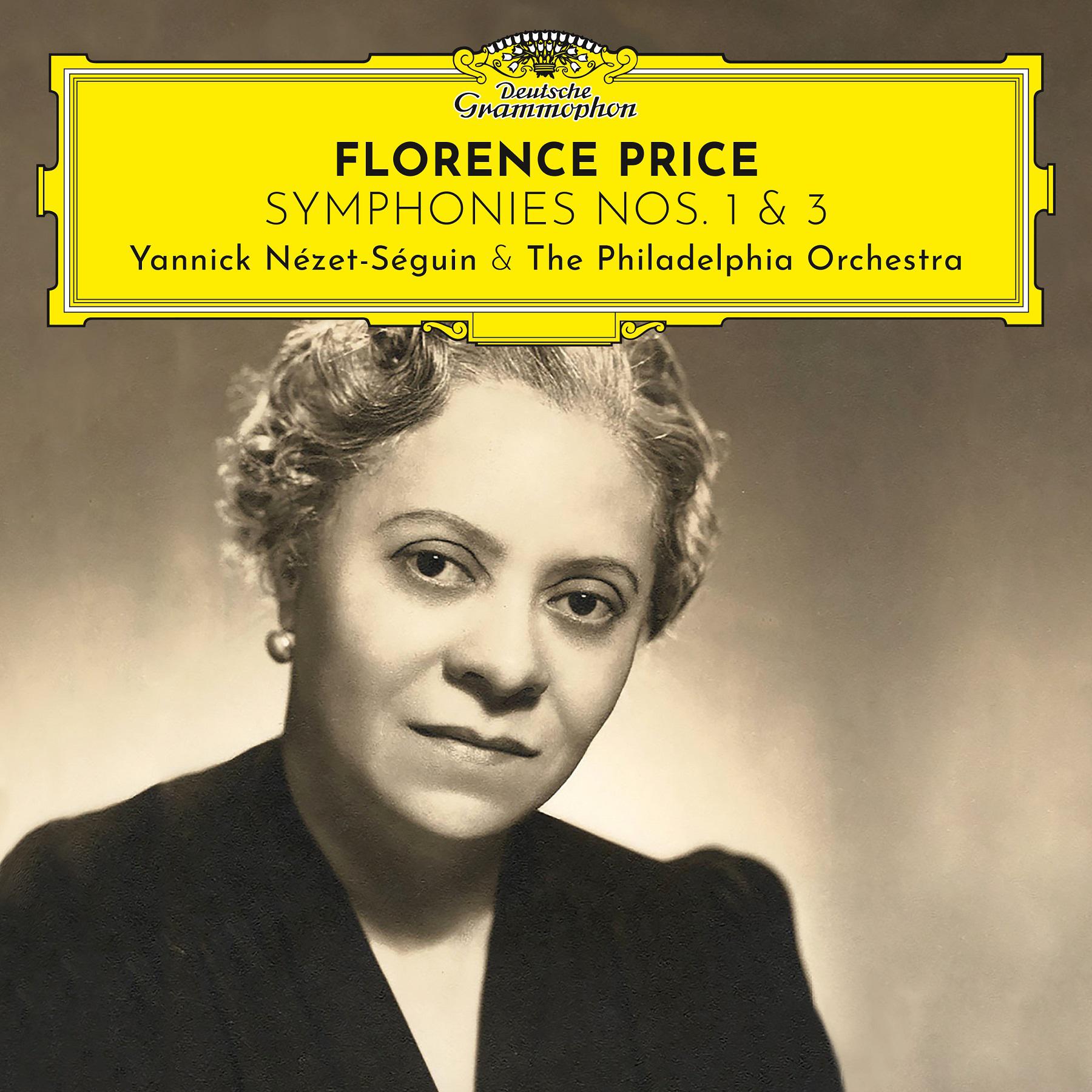
07a florence price nezet seguin uys5oFlorence Price – Symphonies 1 & 3
The Philadelphia Orchestra; Yannick Nézet-Séguin
Deutsche Grammophon (deutschegrammophon.com/en/catalogue/products/price-symphonies-nos-1-3-nezet-seguin-12476)

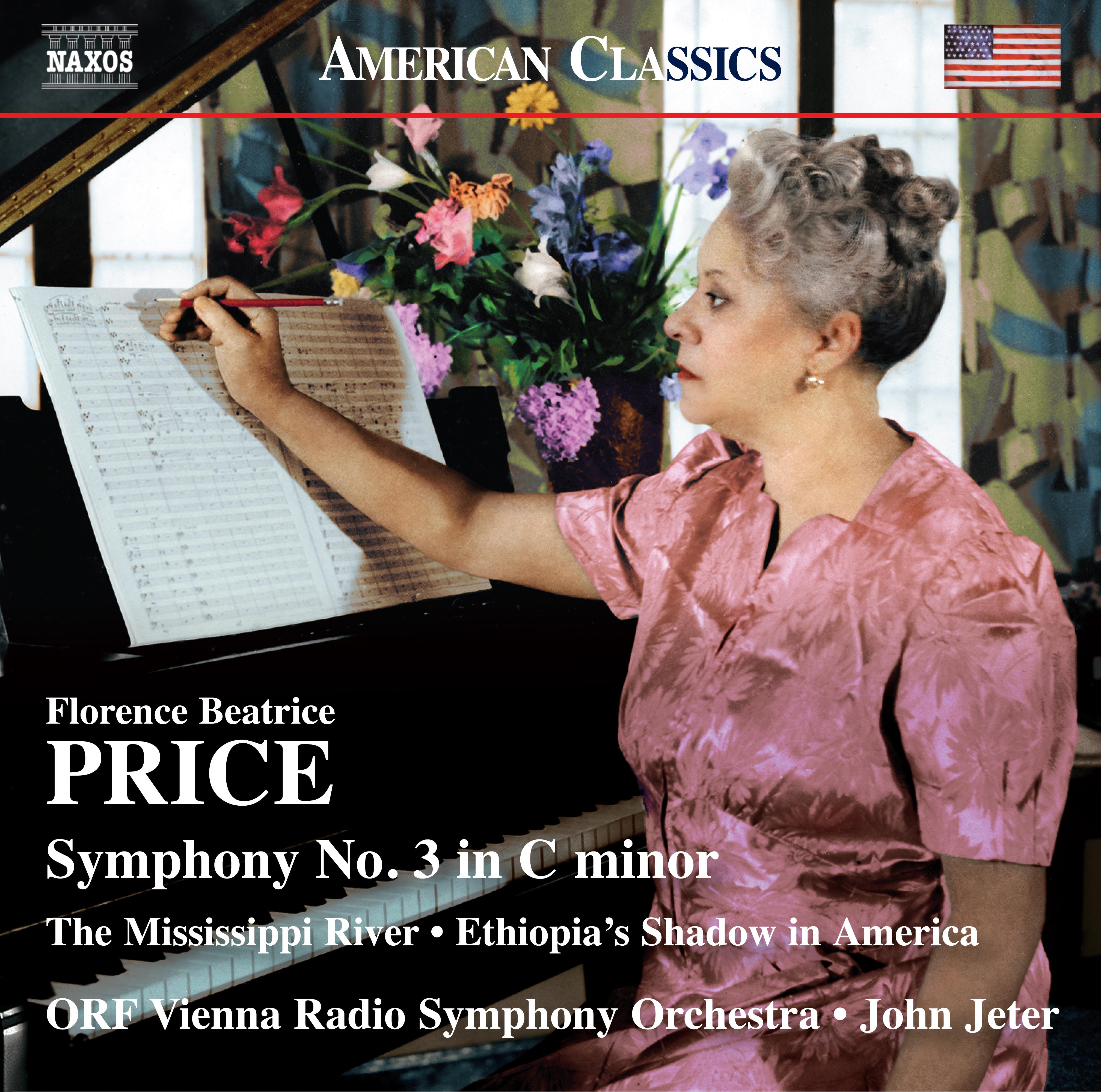
Florence Price – Symphony No.3; Mississippi River; Ethiopia’s Shadow in America
Radio-Symphonieorchester Wien; John Jeter
Naxos 8.559897 (naxosdirect.com/search/8559897)

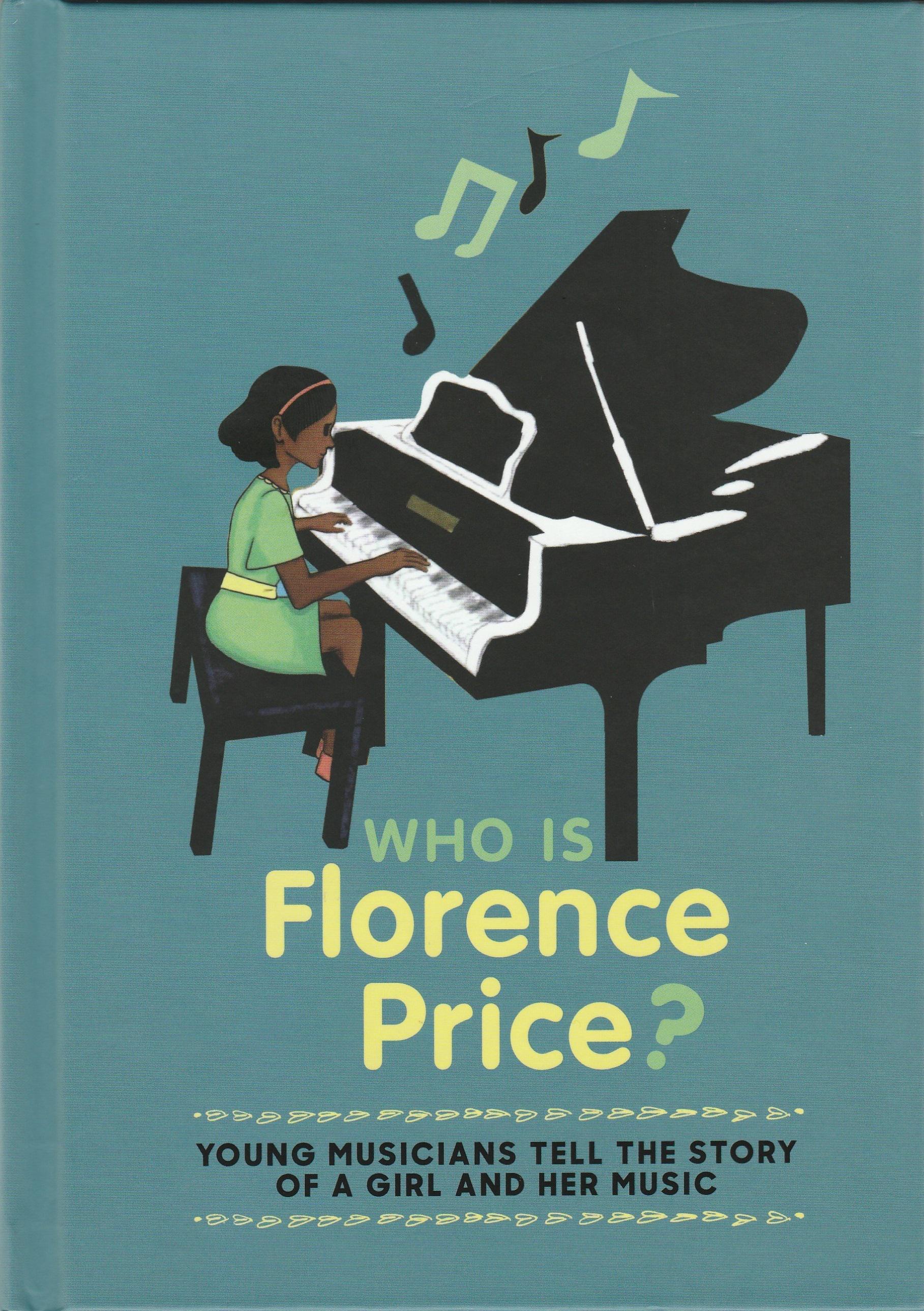
Who Is Florence Price?
Students of the Special Music School at Kaufman Music Center, NYC
Schirmer Trade Books ISBN-13: 978-1-7365334-0-6 (chapters. indigo.ca)

07b florence price sym3 tm2ewThe so-called classical canon, capturing a list of composers and compositions deemed worthy of study, multiple performances and recordings, has been expanding. It now represents a more fulsome group of individuals from a wider swath of identities – mainly seeing growth in the areas of nationality, gender, race and sexual orientation – than has traditionally been characterized. Said broadening is but one important step taken to cultivate a culture of inclusion within classical music and present a more representative snapshot of what constitutes historical significance. Further, it has been shown to be important that burgeoning performers and composers both hear and see themselves represented in the canon so that, for example, female African-American composers can locate others who perhaps have an intersectional identity not totally unlike their own.

Florence Price (1887-1953), a native of Little Rock, Arkansas and a graduate of Boston’s New England Conservatory of Music, was a pianist and composer who, despite enjoying a modicum of recognition during her lifetime (including having her Symphony No. 1 in E Minor premiered in 1933 by Frederick Stock and the Chicago Symphony Orchestra, a first for an African-American woman) was a composer whose work was almost lost to history. As the charming illustrated children’s book Who is Florence Price?, written by students of the Special Music School at New York’s Kaufman Music Center recounts, a box of Price’s dogeared and yellowed manuscripts of original compositions and symphonic works was found (and thankfully not discarded) in 2009 in a dilapidated attic of the Chicago-area summer home in St. Anne, Illinois in which Price wrote. This discovery has led to what could be described as a Price renaissance, with multiple recordings, premieres, the dissemination power of the Schirmer publishing house (that acquired worldwide rights to Price’s catalogue in 2018), and, most recently, two excellent discs that capture the American composer’s elegant music in its full glory. 

07c florence price book m938kRooted in the European Romantic compositional tradition that was her training, but blended with the sounds of American urbanization, the African-American church, as well as being imbued with elements of a folkloric vernacular blues style, Price’s Symphonies 1 & 3 (on Deutsche Grammophon) and the never before recorded Ethiopia’s Shadow in America (Naxos American Classics) come to life with tremendous splendor and historical gravitas in the capable hands of Yannick Nézet-Séguin and The Philadelphia Orchestra and the ORF Vienna Radio Symphony Orchestra respectively. 

Of note is Price’s under-recorded The Mississippi River, that ORF conductor John Jeter suggests captures “the depth of the American experience… like no other composer.” Articulating in sound the experience of the Great Migration, the large-scale movement and relocation of African-Americans from the Southern United States to such Northern locales of employment, urbanization and distance from “Jim Crow” laws as Chicago, Detroit and New York, that was both compositional fodder for Price and her own lived experience. 

The book and two discs represent tremendous strides towards greater inclusion and representation within the canon and, at least for this reviewer, facilitated the discovery of a creative and exceptional new musical voice.

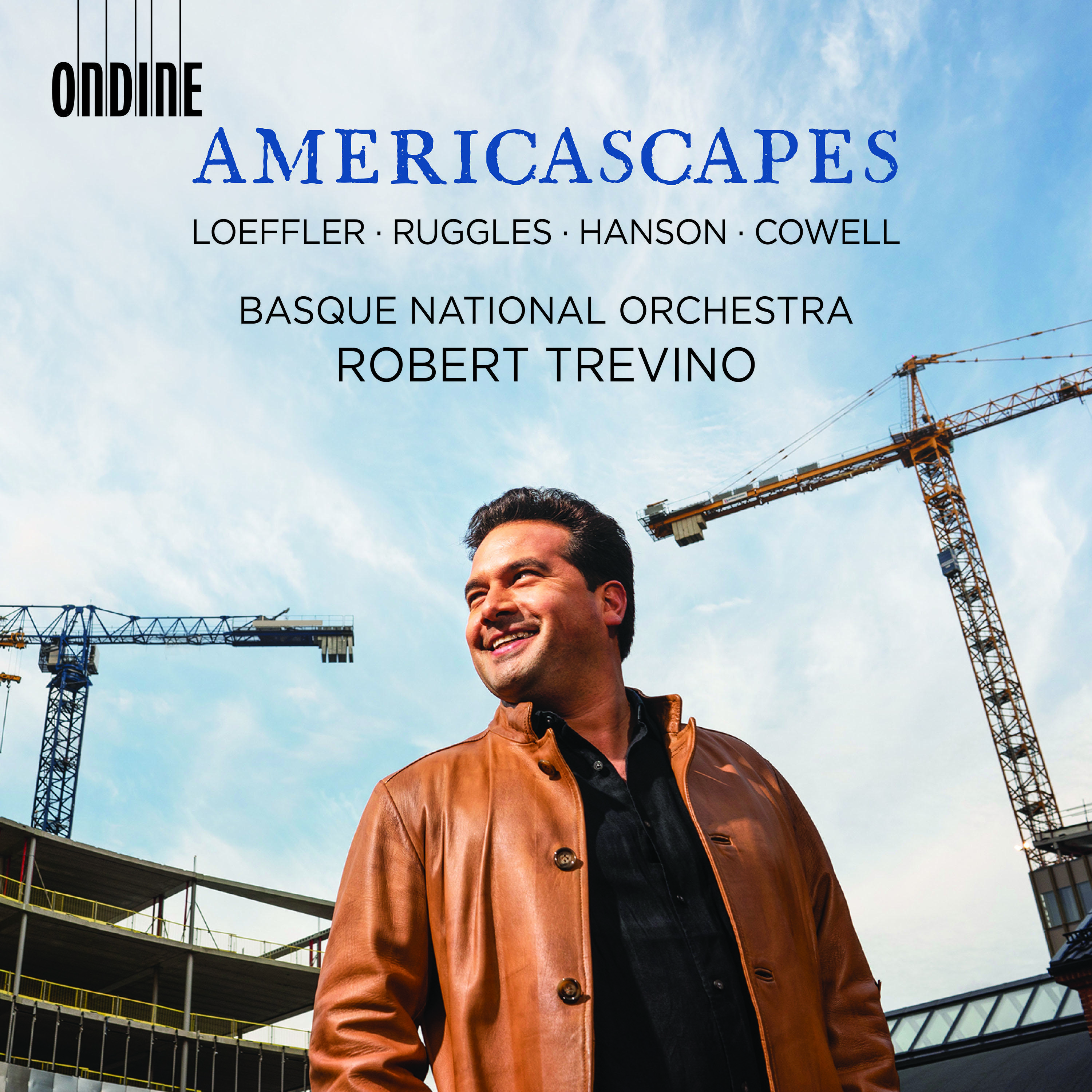
08 americascapes cpzvaAmericascapes
Basque National Orchestra; Robert Trevino
Ondine ODE 1396-2 (naxosdirect.com/search/ode+1396-2+)

Alsace-born Charles Martin Loeffler (1861-1935) moved to the U.S. in 1881. His 25-minute “Poème dramatique,” La Mort de Tintagiles, Op.6 (1897), based on a play for marionettes by Maurice Maeterlinck about a murderous queen, is definitely “dramatique.” Between its stormy opening and mournful close, Loeffler’s lushly scored, ravishing music conjures a scenario of sensuous longing and dangerous conflict, with long-lined, arching melodies and vibrant orchestral colours redolent of French late-Romanticism-Impressionism. I loved it; why isn’t it better known?

Carl Ruggles (1876-1971) depicted his wife and three friends, including Charles Ives, in his four-movement, ten-minute Evocations (1943), orchestrated from earlier piano pieces. Hardly affectionate music, it’s austere and perturbed. To me, Ruggles’ very name embodies what I hear in all his music, including Evocations – rugged struggles.

The cinematically rhapsodic Before the Dawn, Op.17 (1920), anticipates the many beauties that would be heard in the symphonies of Howard Hanson (1896-1981), his first appearing just two years later. The brief (under seven minutes) tone poem here receives its long overdue, first-ever recording.

Henry Cowell (1897-1965) spent the winter of 1956-1957 in Iran, part of a tour jointly subsidized by agencies of the U.S. and Iranian governments. Three works resulted: Persian Set, Homage to Iran and the 19-minute Variations for Orchestra (1956) recorded here. It’s filled with exotic sonorities hinting at arcane magic and nocturnal mysteries.

Thanks to conductor Robert Trevino and the Basque National Orchestra for these revelatory performances of four almost-forgotten American works.

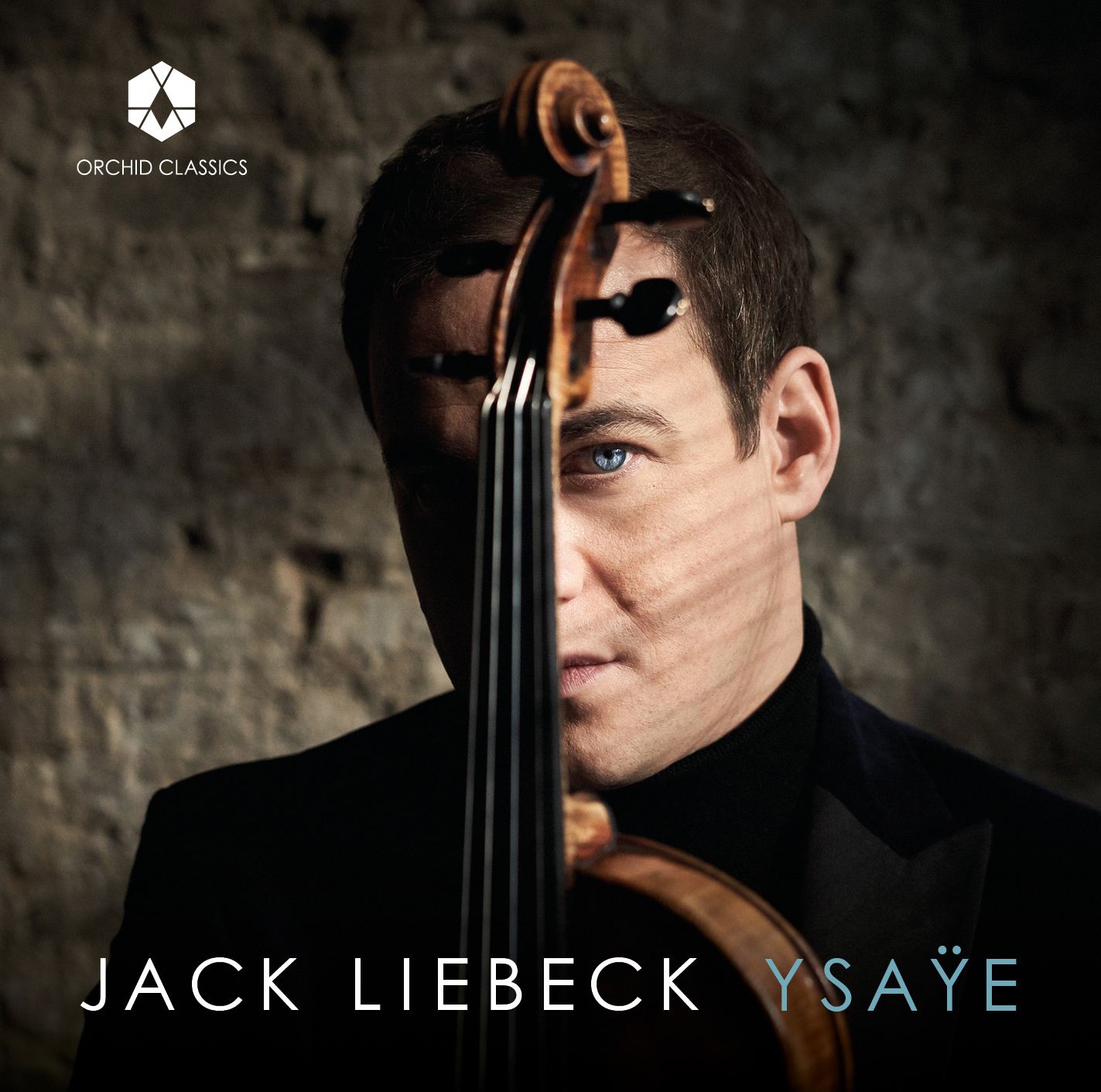
01 Jack Liebeck WebCoverJack Liebeck Ysaÿe sees the outstanding English violinist finally recording Ysaÿe’s Six Sonatas for Solo Violin Op.27, works which have long fascinated him (Orchid Classics ORC100179 jackliebeck.com).

“I always knew I would have to climb this mountain,” says Liebeck, and the recent COVID lockdowns provided the right moment. He describes Ysaÿe’s style as monumental, with gothic themes, drama and poignancy, and the music as the pinnacle of harmonic and technical challenge, which nevertheless fits a violinist’s hand like a glove.

Liebeck is joined by pianist Daniel Grimwood in the rhapsodic Poème élégiaque in D Minor Op.12, and as always draws a sumptuous tone from his 1785 J. B. Guadagnini violin in superlative performances.

02 Jukebox Cover 1In March 2020 violinist Elena Urioste and pianist Tom Poster decided to record and share one music video for every day spent in isolation. The expected two to three weeks of their #UriPosteJukeBox project turned into 88 days – one for each piano key. The resulting studio CD The Jukebox Album is simply one of the most heart-melting and breathtakingly beautiful discs you could imagine (Orchid Classics ORC100173 orchidclassics.com/releases/jukebox).

From the opening Look for the Silver Lining through a program including standards like La vie en rose, Begin the Beguine, A Nightingale Sang in Berkeley Square and Send in the Clowns, all in superb arrangements by Poster and with occasional sumptuous multi-tracking by Urioste, to Kreisler arrangements, pieces by Carlos Gardel, Lili Boulanger, Fauré and six new pieces commissioned for the project, the standard never drops for a moment. 

“This is the music we’ve loved our whole lives,” says Poster, and it shows in every note of an absolutely gorgeous CD.
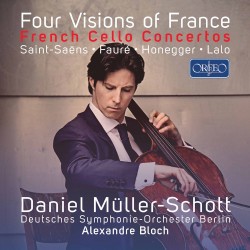
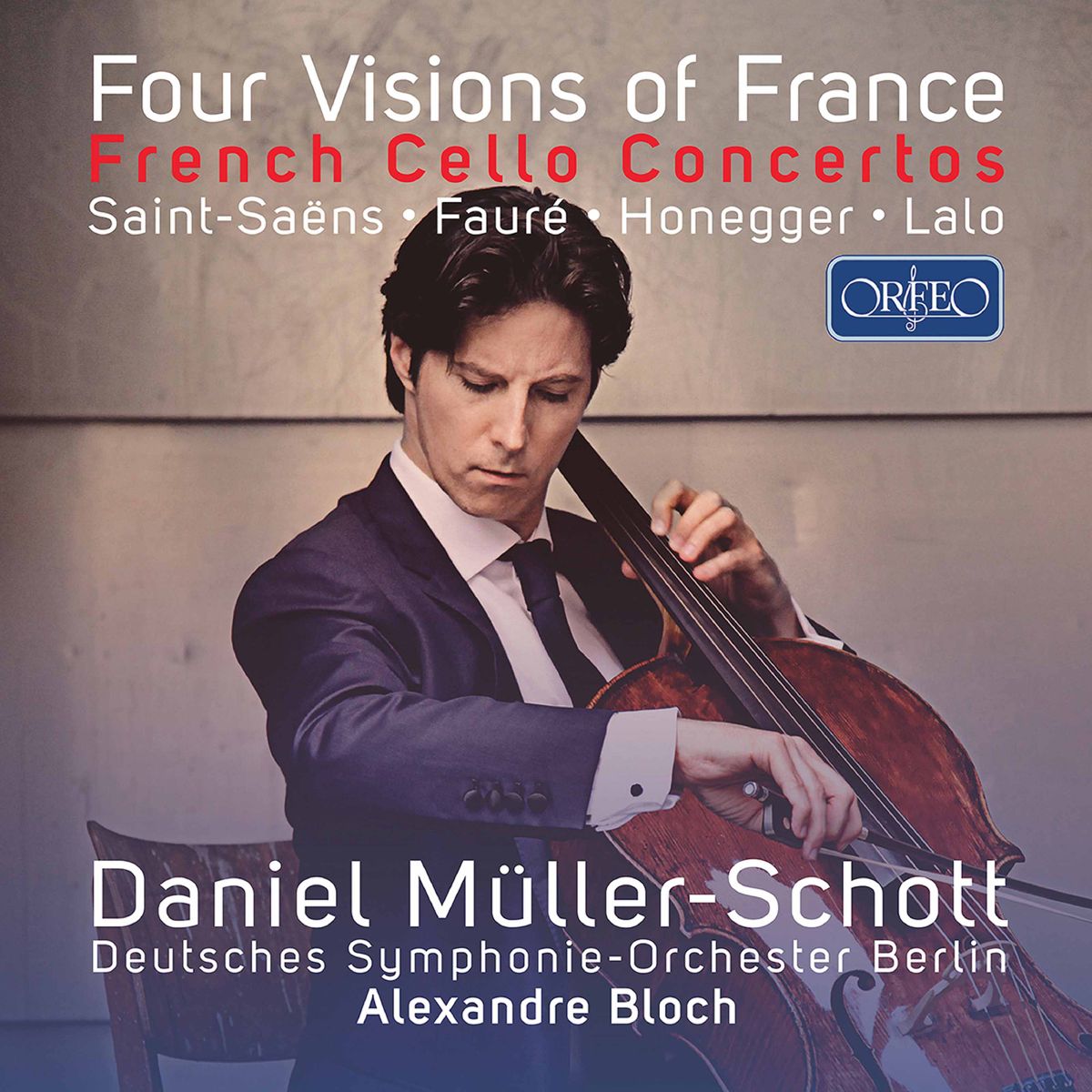
03 Four VisionsCellist Daniel Müller-Schott is in superb form on Four Visions of France – French Cello Concertos with the Deutsches Symphonie-Orchester Berlin under Alexandre Bloch (Orfeo C988211 naxosdirect.com/search/c988211).

Saint-Saëns is represented by his 1872 Cello Concerto No.1 in A Minor Op.33 and the Romance in F Major Op.36. Honegger’s fascinating 1929 Cello Concerto and Lalo’s 1877 Cello Concerto in D Minor are the other two major works, with Fauré’s Élégie in C Minor Op.24 in the 1901 orchestral version completing the disc.

A lovely recorded ambience captures the luminous textures and sensual orchestral colours typical of French music, on an outstanding CD.
04 IsserlisBritish Solo Cello Music features the always-wonderful Steven Isserlis (Hyperion CDA68373 hyperion-records.co.uk/dc.asp?dc=D_CDA68373).

Britten’s Tema ‘Sacher’ and Cello Suite No.3 Op.87 open the disc, with Isserlis being joined by pianist Mishka Rushdie Momen for the three Tchaikovsky settings of the folk-song themes used in the Suite. Other works are Walton’s Theme for a Prince and Passacaglia, John Gardner’s Coranto pizzicato, Frank Merrick’s Suite in the eighteenth-century style and the brief Sola by Thomas Adès.

As always, Isserlis’ booklet essay is erudite and fascinating, with its personal reminiscences of John Gardner (1917-2011) and – in particular – the astonishing Frank Merrick (1886-1981) an absolute delight.
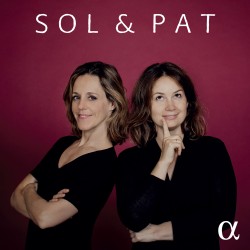
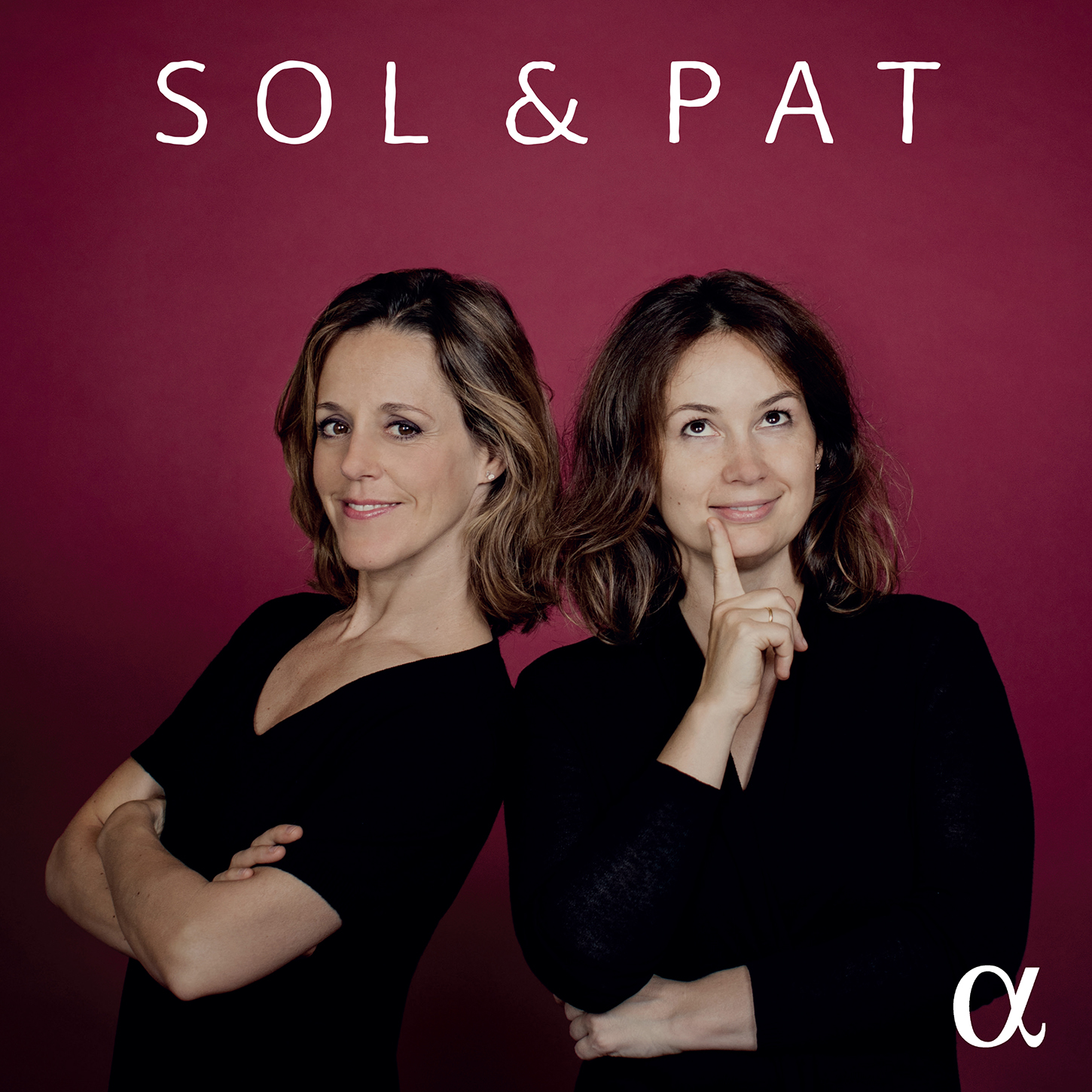
05 Sol PatViolinist Patricia Kopatchinskaja and cellist Sol Gabetta celebrate 20 years of friendship on Sol & Pat, a recital of duos for violin and cello built around two 20th-century masterpieces (ALPHA757 naxosdirect.com/search/alpha757).

Ravel’s Sonata and, in particular, Kodaly’s Duo Op.7 draw terrific playing from the duo, with shorter pieces ranging from the dazzling opening gypsy dance of Leclair’s Tambourin: Presto through a pizzicato C.P.E. Bach Presto to the J. S. Bach keyboard Prelude No.15 in G Major, with brief contemporary works by Jörg Widmann, Francisco Coll, Marcin Markowicz, Xenakis and Ligeti.

An unexpected gem, though, is La Fête au village Op.9, a 1947 affectionate depiction of Swiss National Day by Swiss composer Julien-François Zbinden, who was still alive and emailing the performers in 2018 aged 101.
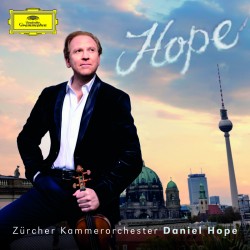
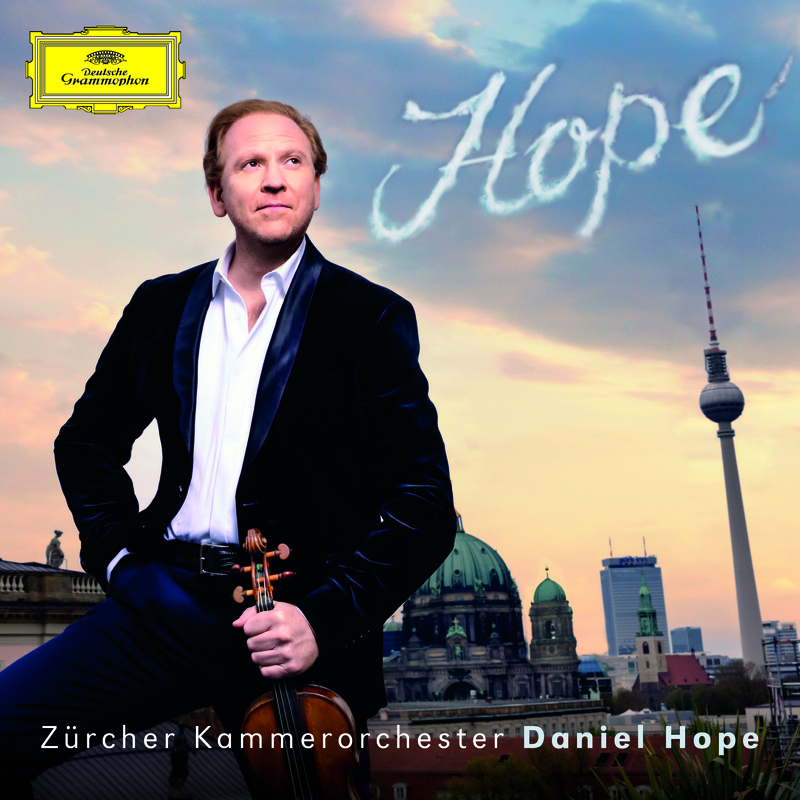
06 HopeOn his new CD Hope violinist Daniel Hope presents a personal collection of classics featuring music largely based on songs or sung melodies that he describes as “an attempt to send out a ray of hope and to provide people with a sense of support and perhaps even consolation” (DGG 28948605415 deutschegrammophon.com/en/artists/danielhope).

He is joined by an array of artists including the Zürcher Kammerorchester, the vocal ensemble Amarcord and baritone Thomas Hampson in a program that opens with Ariel Ramírez’s beautiful Misa Criolla and travels through pieces by Dowland, Schubert, Giazotto, El-Khoury, Pärt, Elgar and Stephen Foster to Danny Boy, Dream a Little Dream and Amazing Grace.

As always with Hope and friends, the standard of arrangements and performances is of the highest level.
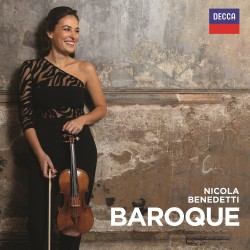
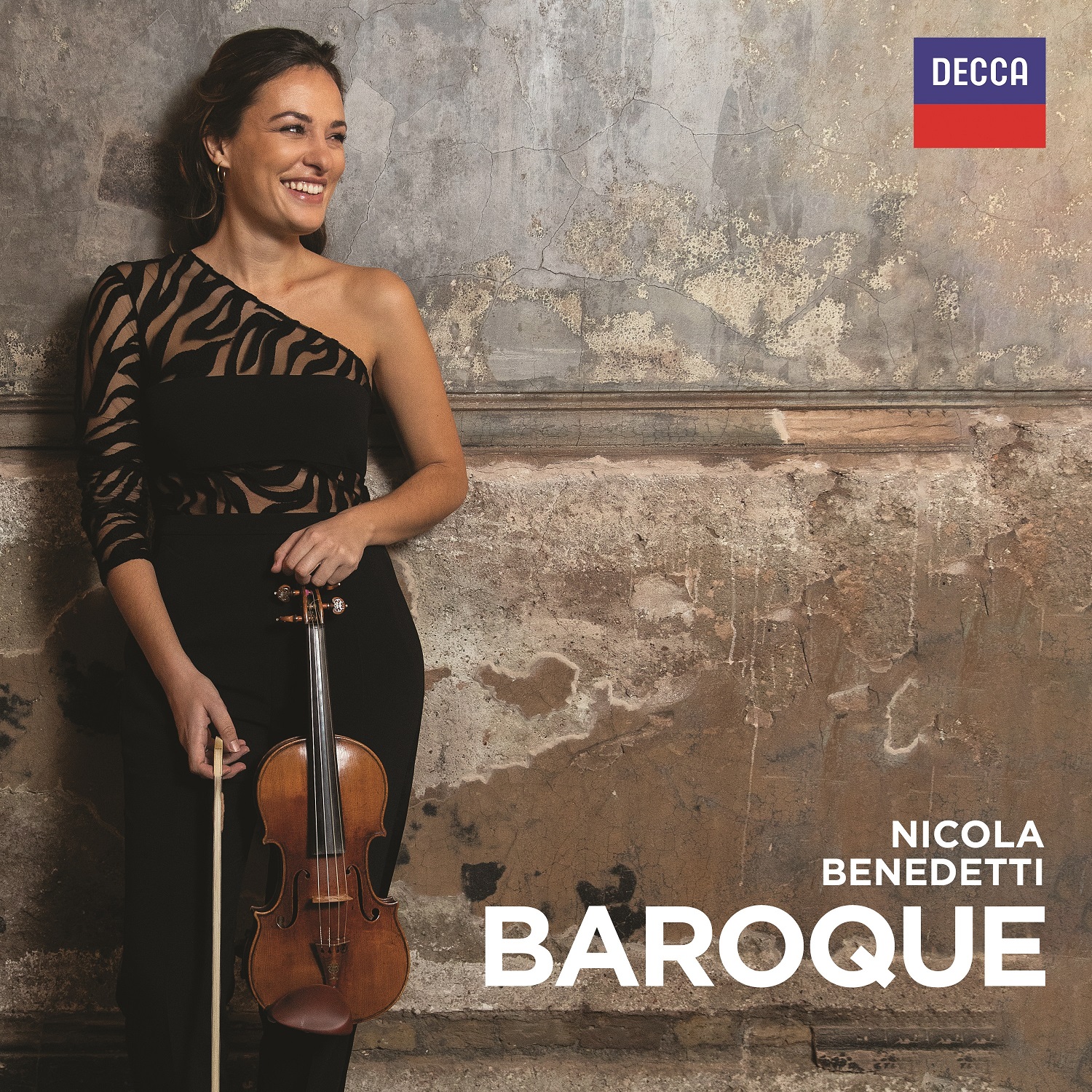
07 Nicola Benedetti BaroqueBaroque, the new CD from violinist Nicola Benedetti marks her first Baroque recording with period set-up and gut strings. She is joined by the Benedetti Baroque Orchestra, a new ensemble of freelance Baroque musicians that she assembled and directs (Decca Classics B0034187-2 nicolabenedetti.co.uk).

Geminiani’s Concerto grosso in D Minor H143 “La Folia”, a transcription of Corelli’s Violin Sonata Op.5 No.12, opens an otherwise all-Vivaldi program of the Violin Concertos in D Major RV211, E-flat Major RV257, B Minor RV386 and the Andante middle movement from the Concerto in B-flat Major RV583.

The 1717 Gariel Stradivarius that Benedetti has played since 2012 sounds warm and bright, with top-notch performances from all concerned, contributing to a lovely CD.
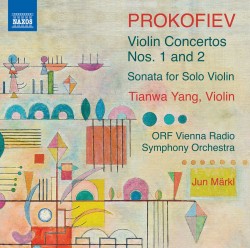
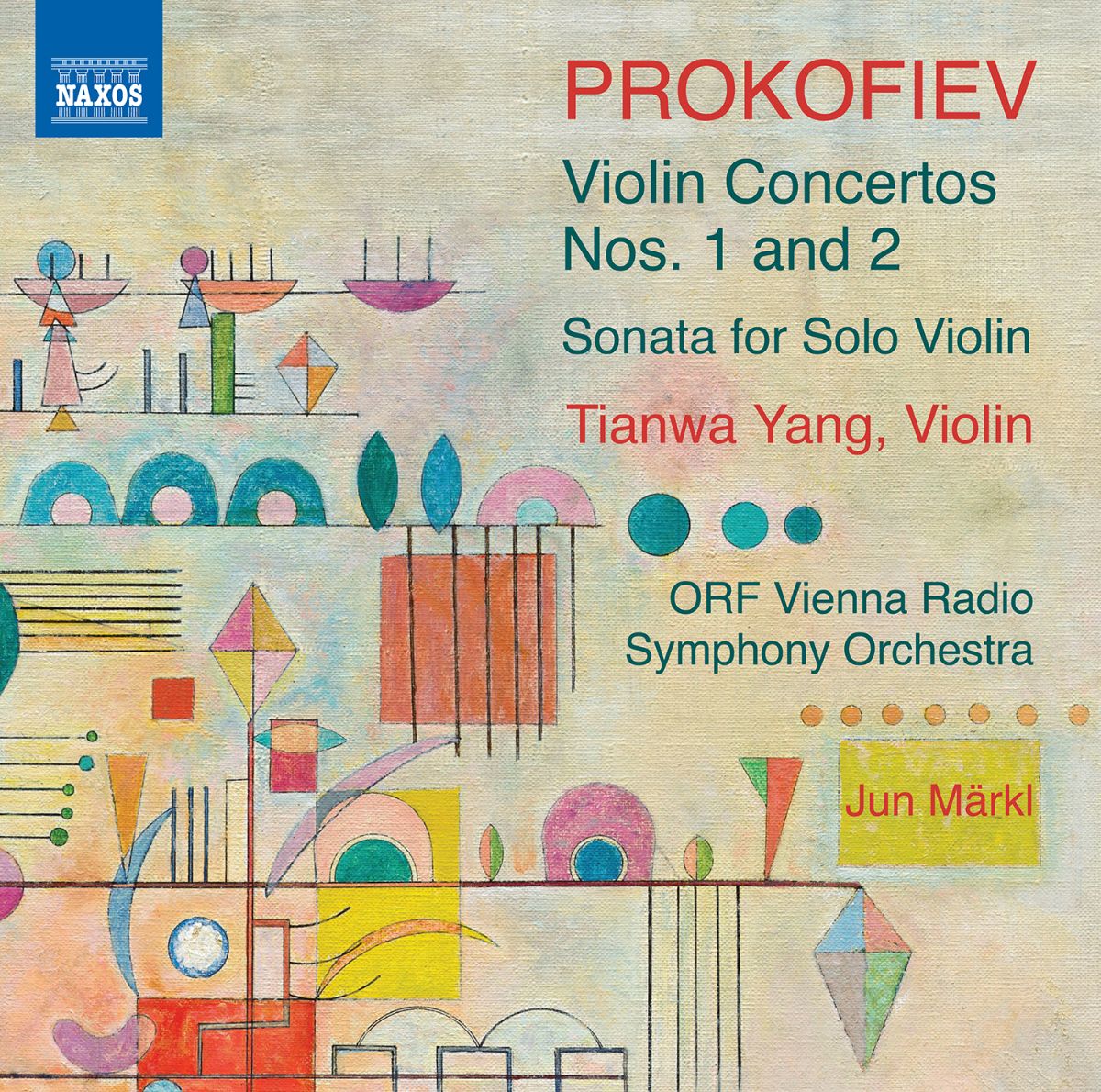
08 ProkofievWith violinist Tianwa Yang you can always count on a mixture of dazzling technique, colour, tone and musical intelligence, and so it proves again on Prokofiev Violin Concertos Nos.1 and 2, her latest release on the Naxos Classics label with the ORF Vienna Radio Symphony Orchestra under Jun Märkl (8.574107 naxosdirect.com/search/8574107).

Performances of the Concertos No.1 in D Major Op.19 and No.2 in G Minor Op.63 are both particularly strong on the lyrical aspects of the works, with some beautifully expansive playing. The Sonata for Solo Violin in D Major Op.115 completes an excellent disc.
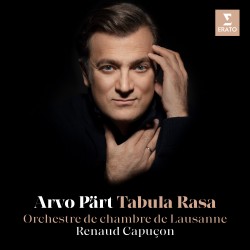
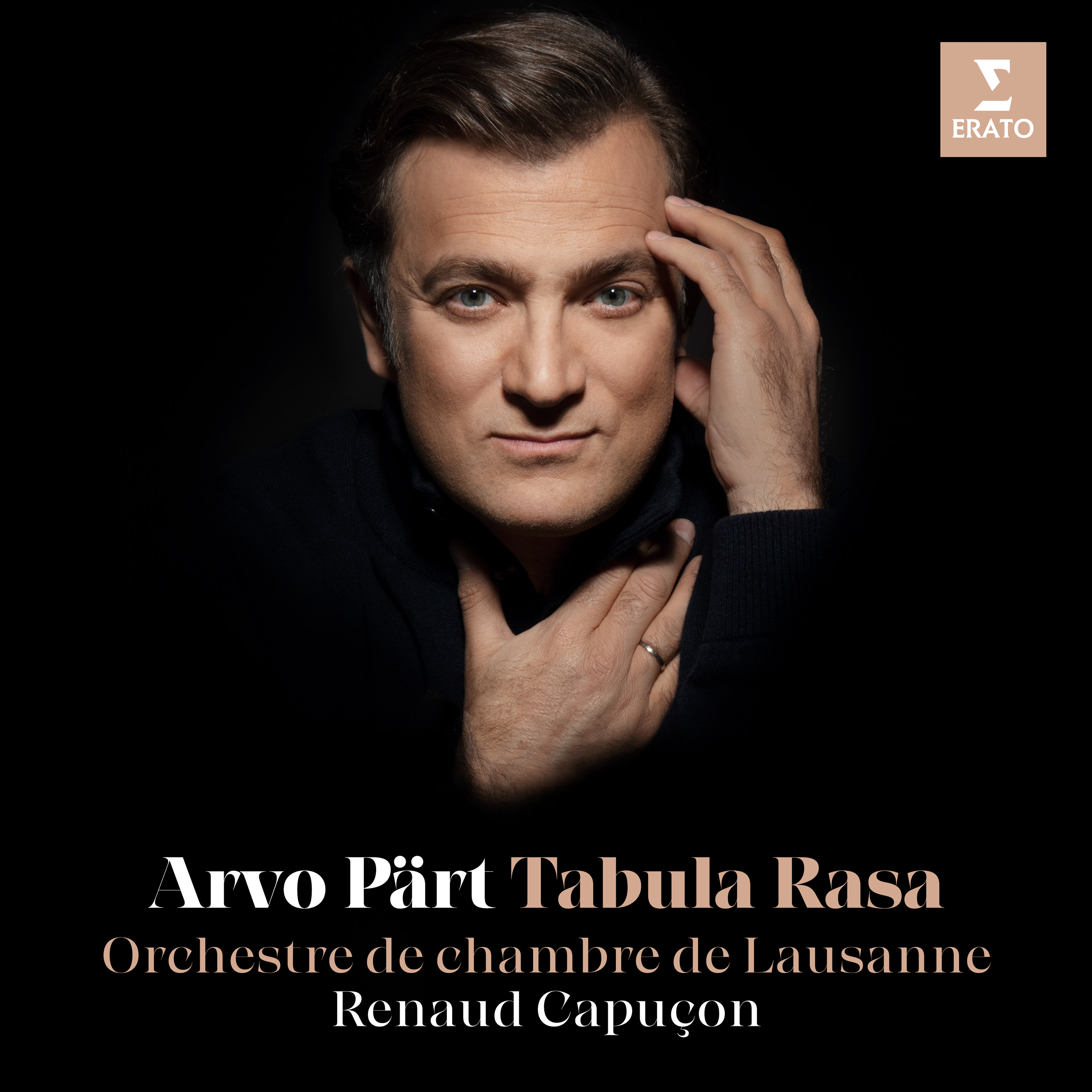
09 Tabula RasaViolinist Renaud Capuçon recently became artistic director of the Orchestre de chambre de Lausanne, and Arvo Pärt Tabula Rasa is his first recording as soloist and conductor of the ensemble (Erato 9029502957 warnerclassics.com/release/tabula-rasa).

The seven works here are: the double concerto Tabula Rasa; the 1992 version of Fratres for violin, string orchestra and percussion; Summa and Silouan’s Song, both for string orchestra; Darf ich… (May I); Spiegel im Spiegel (with piano); and For Lennart in memoriam.

Capuçon says that the music takes us from darkness to light, but there’s very little change of mood across the CD. Still, the playing is first class, and if you love Pärt’s music you’ll love this disc.
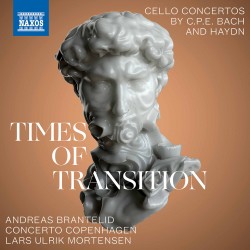
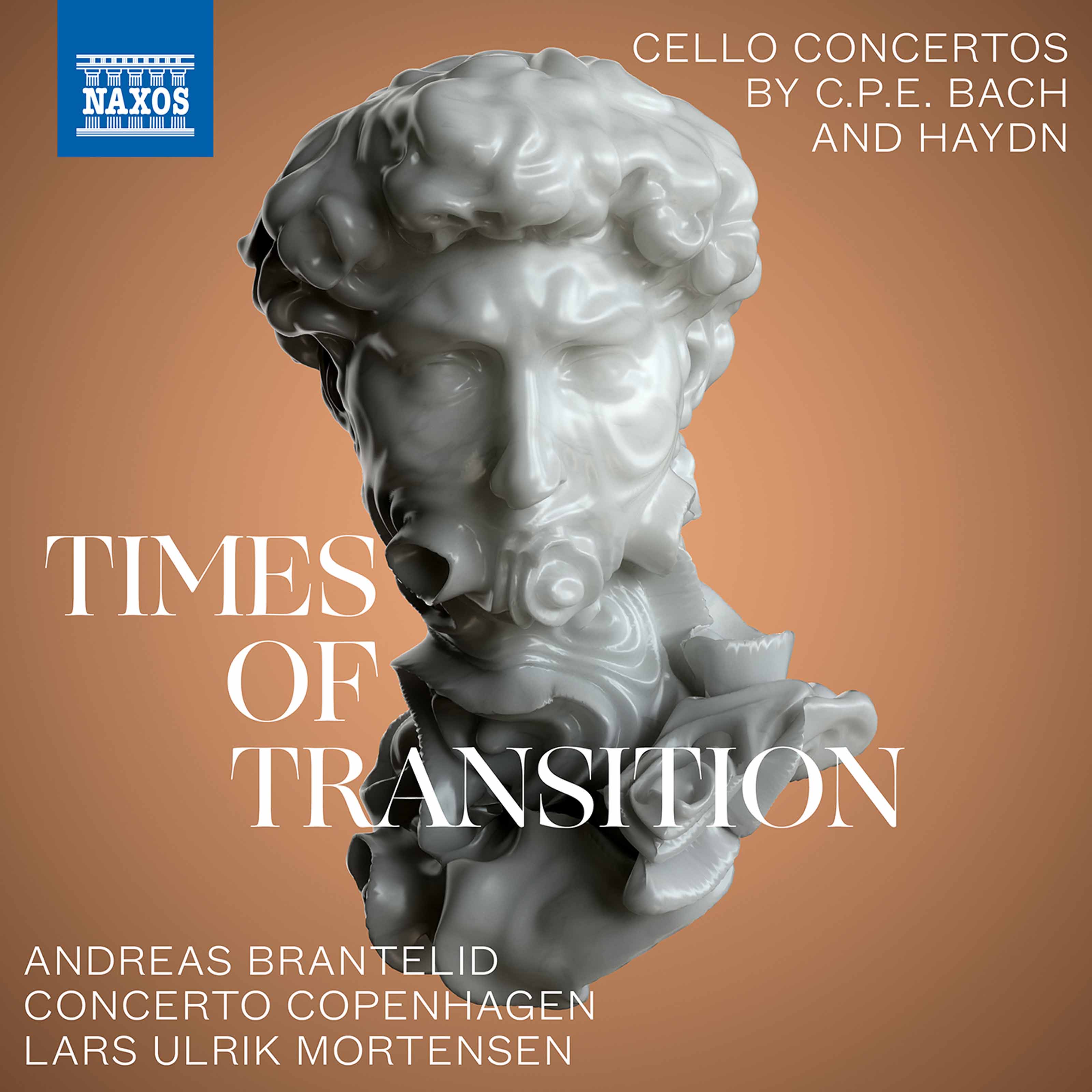
10 Times of TransitionAndreas Brantelid is the cellist on Times of Transition, a CD of three cello concertos from the second half of the 18th century, when Baroque polyphony and fugue were giving way to the early classical galant style of melody with accompaniment. Lars Ulrik Mortensen conducts the Concerto Copenhagen (Naxos Denmark 8.574365 naxosdirect.com/search/8574365).

C.P.E. Bach’s Concerto in A Major Wq.172 with its familiar finale dates from 1753. Haydn’s Concertos in C Major Hob.VIIb:1 from 1761-65 and the purely classical D Major Hob.VIIb:2 from 1783 are the only two indisputably by him, the finale of the C major work drawing particularly fine playing from Brantelid, who for this disc plays an Emil Hjort, Copenhagen cello from 1887 with gut strings.
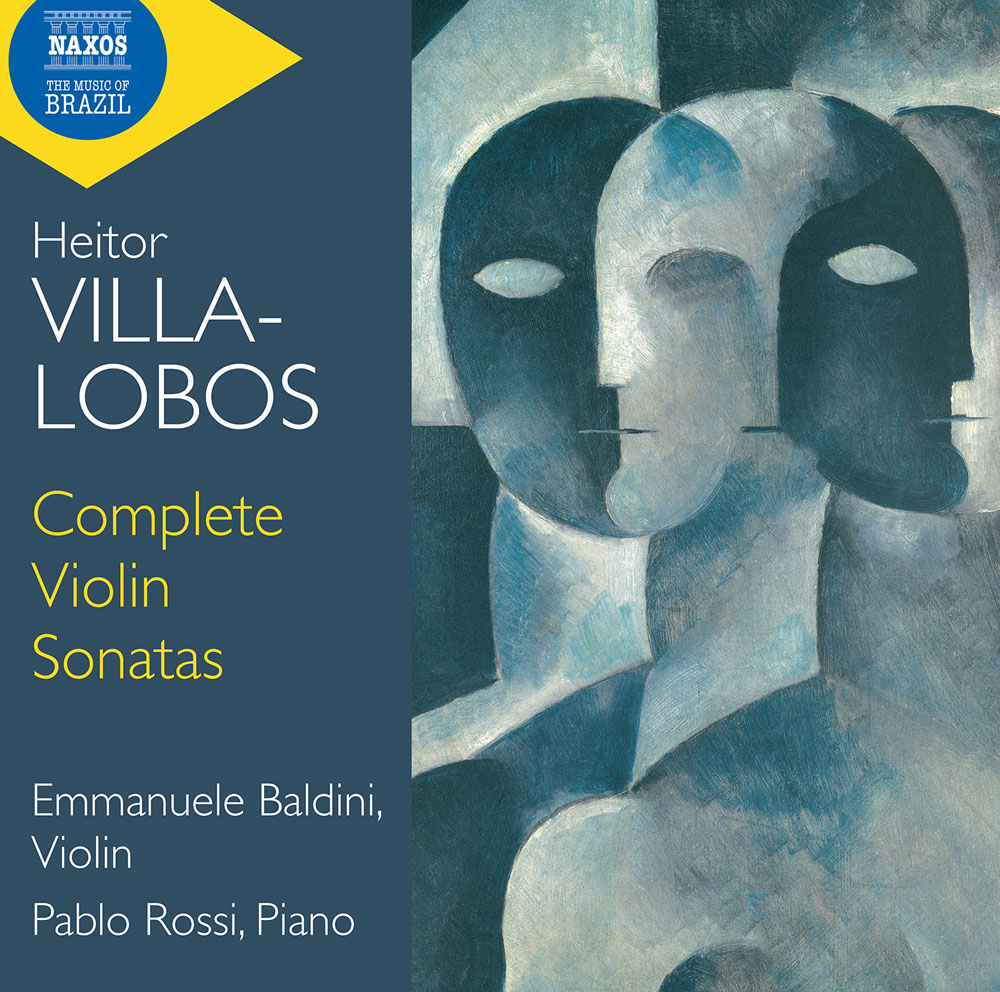
11 Villa Lobos coverHe’s not a composer you readily associate with violin sonatas, but on Heitor Villa-Lobos Complete Violin Sonatas, the new CD from Naxos Classics in their Music of Brazil series violinist Emmanuele Baldini and pianist Pablo Rossi present three delightful pieces which should be much better known (8.574310 naxosdirect.com/search/8574310).

The works – the single-movement Sonata No.1 Fantasia “Désespérance” and the three-movement Sonatas No.2 Fantasia and No.3 – were written between 1912 and 1920, a key period in Villa-Lobos’ career in which he was maturing as a composer, establishing a personal style and achieving his first professional successes.

There’s influence of French late-Romanticism here (especially Debussy in No.3) and a wealth of melodic invention, with excellent performances making for a delightful disc.
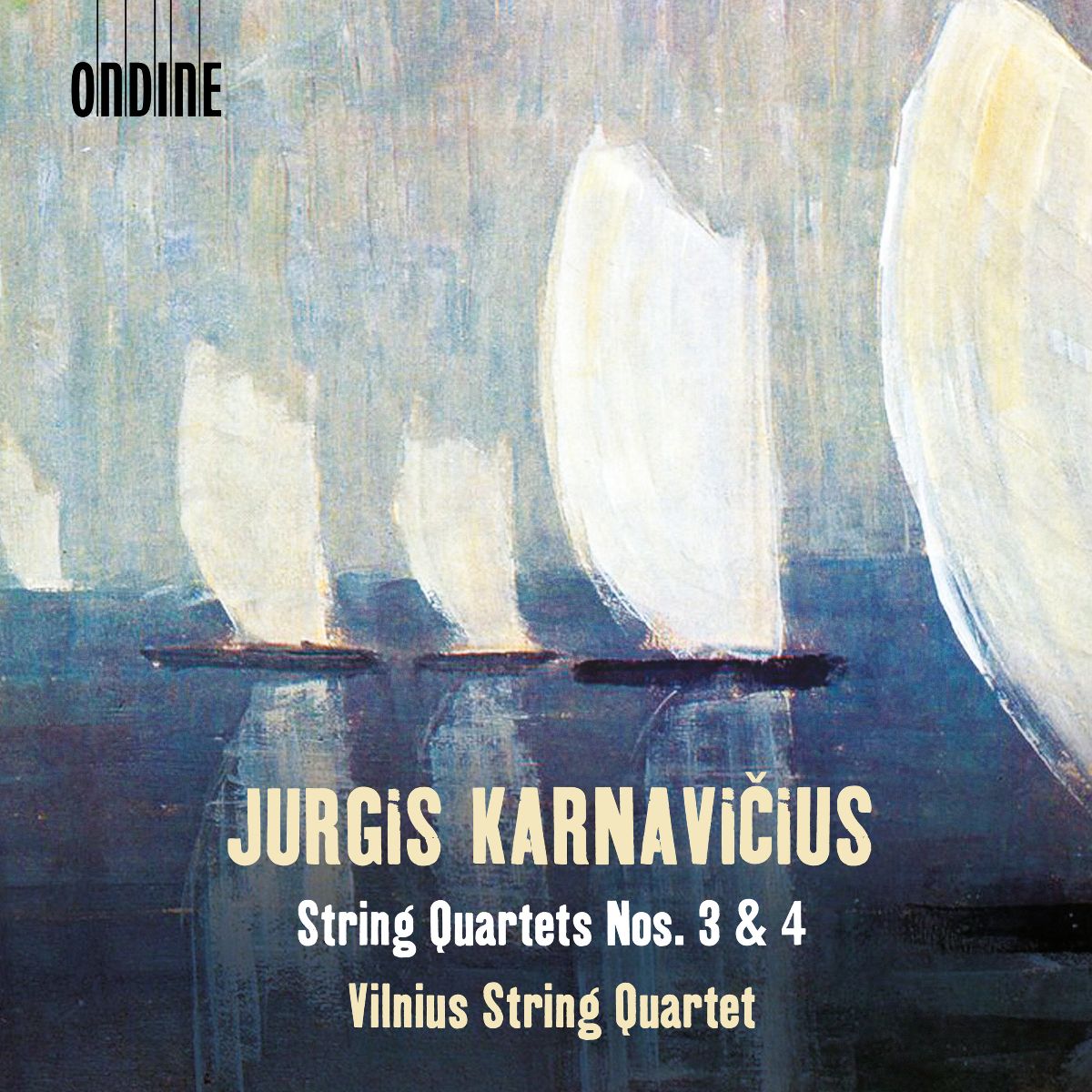
12 KarnaviciusJurgis Karnavičius String Quartets Nos.3 & 4 is the final volume in the complete string quartets by the Lithuanian composer, in world-premiere recordings by the Vilnius String Quartet (Ondine ODE1387-2 naxosdirect.com/search/761195138724). 

These quartets are more expressive and modern in nature than Nos.1 & 2, warmly reviewed here in May/June of this year, and were composed in St. Petersburg in 1922 and 1925 before Karnavičius returned to Lithuania in 1927. After their premieres they were not heard again until 1969 and the 1980s respectively, with No.4 still unpublished. It’s hard to understand why – described as a stylistic link between the quartets of Tchaikovsky and Shostakovich and as a “chromatically saturated musical fabric” they’re outstanding works given wonderfully rich and empathetic performances by the Lithuanian ensemble.
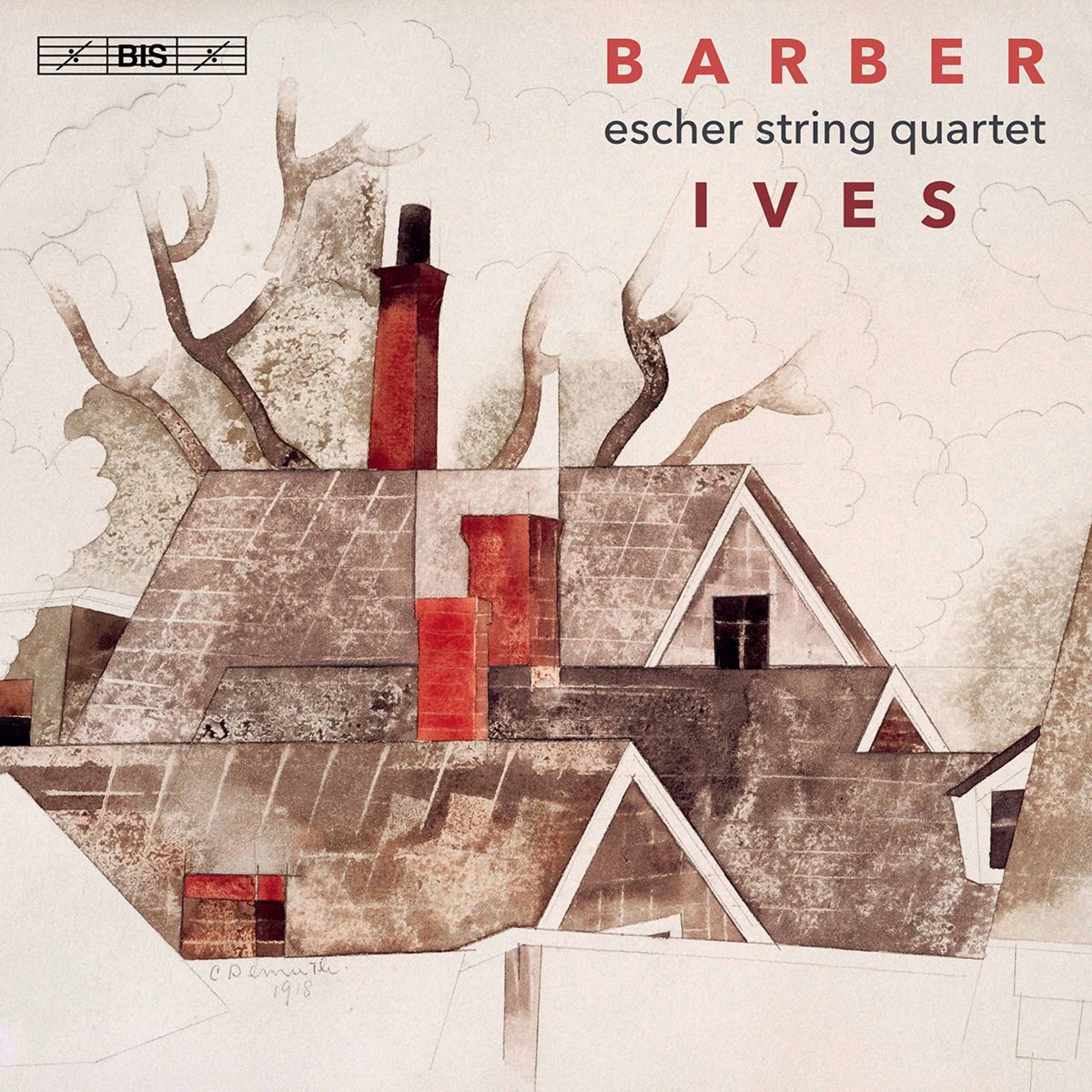
13 Barber IvesThe string quartets of Samuel Barber and Charles Ives are featured on Barber – Ives in excellent performances by the Escher String Quartet (BIS-2360 bis.se).

Barber’s String Quartet Op.11 features the original inception of his Adagio for Strings as its central movement, beautifully played here. The original third movement, discarded by Barber in favour of a shorter ending, is also included for reference.

Ives’ two quartets have various composition and revision dates from 1897 to 1915. His String Quartet No.1 “From the Salvation Army” (A Revival Service) is played with the reinstated first movement, discarded by Ives but re-attached – and not to everyone’s approval – by Ives scholar John Kirkpatrick after the composer’s death. His String Quartet No.2 is more dissonant and atonal, but makes similar use of American hymns and folk tunes. The spiky Scherzo: Holding Your Own from 1903-04 completes a terrific disc.
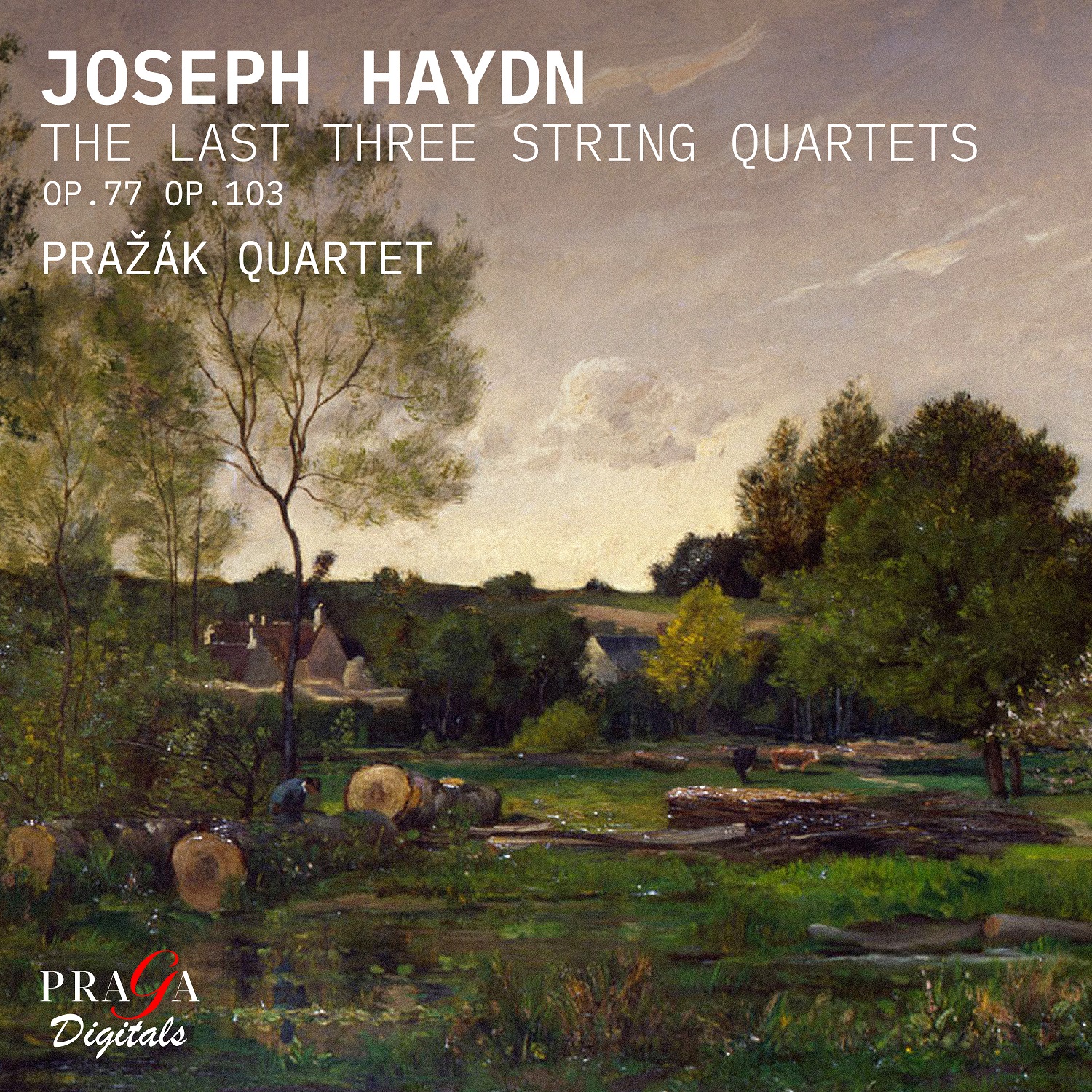
14 Haydn Last ThreeJoseph Haydn The Last Three String Quartets Op.77 & Op.103 is the new CD from the Czech Pražák Quartet (Praga PRD250420 pragadigitals.com).

In 1799 Haydn started a projected set of six quartets dedicated to Prince Lobkowitz but completed only two – Op.77 Nos.1 and 2. In 1802/03 he wrote two middle movements for an unfinished third quartet; these are now known as Op.103. The Op.77 quartets in particular, described here as “bold and full of wit” make a fitting farewell to a musical form that Haydn had almost single-handedly established and developed.

The performances are full-blooded but insightful and sensitive, putting one – if you are old enough – in mind of the great Czech quartet ensembles of the 1960s Supraphon LP recordings. 
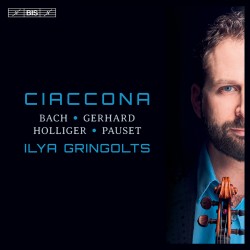
15 Ciaconna coverCiaconna is Russian violinist Ilya Gringolts’ first solo recording of music of his own time with a tribute to its inspiration – Johann Sebastian Bach (BIS-2525 bis.se). 

Heinz Holliger’s brief Drei kleine Szenen intertwines Gringolts’ voice in the Ciacconina first movement. Roberto Gerhard’s Chaconne, inspired by Bach’s D-Minor Chaconne is a 12-tone work of 12 short movements, but with highly individual use and adaptation of the basic tone row.

The major work here is Kontrapartita by the French composer Brice Pauset, its seven movements – Preludio, Allemande, Corrente, Sarabande, Loure, Giga and Ciaccona – interspersed with the seven Bach movements from the three Partitas that inspired them. 
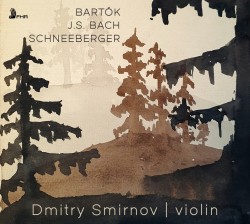
16 BartokBachThe D-Minor Chaconne also turns up on Bartók, J. S. Bach, Schneeberger, a recital CD from the Russian violinist Dmitry Smirnov featuring Bartók’s Sonata for Solo Violin, Bach’s Partita No.2 in D Minor and the 1942 Sonata for Solo Violin by the Swiss violinist Hansheinz Schneeberger, who died two years ago at the age of 93 (First Hand Recordings FHR117 firsthandrecords.com). 

There are some interesting ornamentation choices in the Bach (especially in the Sarabande), but the Bartók and – in particular – the Schneeberger are given convincing performances.


01 Joseph BoulogneJoseph Bologne, Chevalier de Saint-Georges – Symphonies Concertantes, Opp.9, 10 & Op.11, No.1
Pavla Honsová; Michael Halász; Yury Revich; Czech Chamber Philharmonic Orchestra Pardubice; Libor Ježek
Naxos 8574306 (naxosdirect.com/search/+8574306)

An émigré to France, he was a brilliant swordsman, an accomplished musician and reputedly handsome – how could the French music-loving public not embrace such a well-rounded individual? Joseph Boulogne Chevalier de Saint-Georges was born in Guadeloupe in 1739, the son of a wealthy French landowner and a Black servant. He was taken to Paris at the age of ten where he studied with Gossec and by age 30, he was leader of the musical organization Le Concert des Amateurs. Saint-Georges was also a fine composer, and among his prolific output are several symphonies concertantes – concertos for more than one instrument. Four of them, Opp.9 and 10 scored for two violins (plus a viola in the Op.10) and orchestra are presented on this splendid Naxos recording featuring the Czech Philharmonic Chamber Orchestra Pardubice conducted by Michael Halász.

In style, this music owes much to Haydn and typically, these works have only two movements – a spirited allegro followed by a gracious rondeau. All of them contain attractive thematic material and ample opportunity for the soloists to display their technical ability. The two violinists – Russian-born Yury Revich, playing on a 1709 Stradivarius, and Libor Ježek, deputy leader of the Czech Chamber Orchestra – are joined by violist Pavla Honsová and together they comprise a formidable trio, delivering polished and assured performances in solid partnership with the CPCO.

The Symphony Op.11/1 is the first in a pair of symphonies first published in Paris in 1779. Again, the spirit of Haydn is ever-present – this could almost be a precursor to the “Paris” symphonies, and the performance – like the music itself – is refined and elegant. 

A delightful recording of music deserving greater attention – Marie Antoinette would surely have approved!

Back to top