09 Noam LemishTwelve
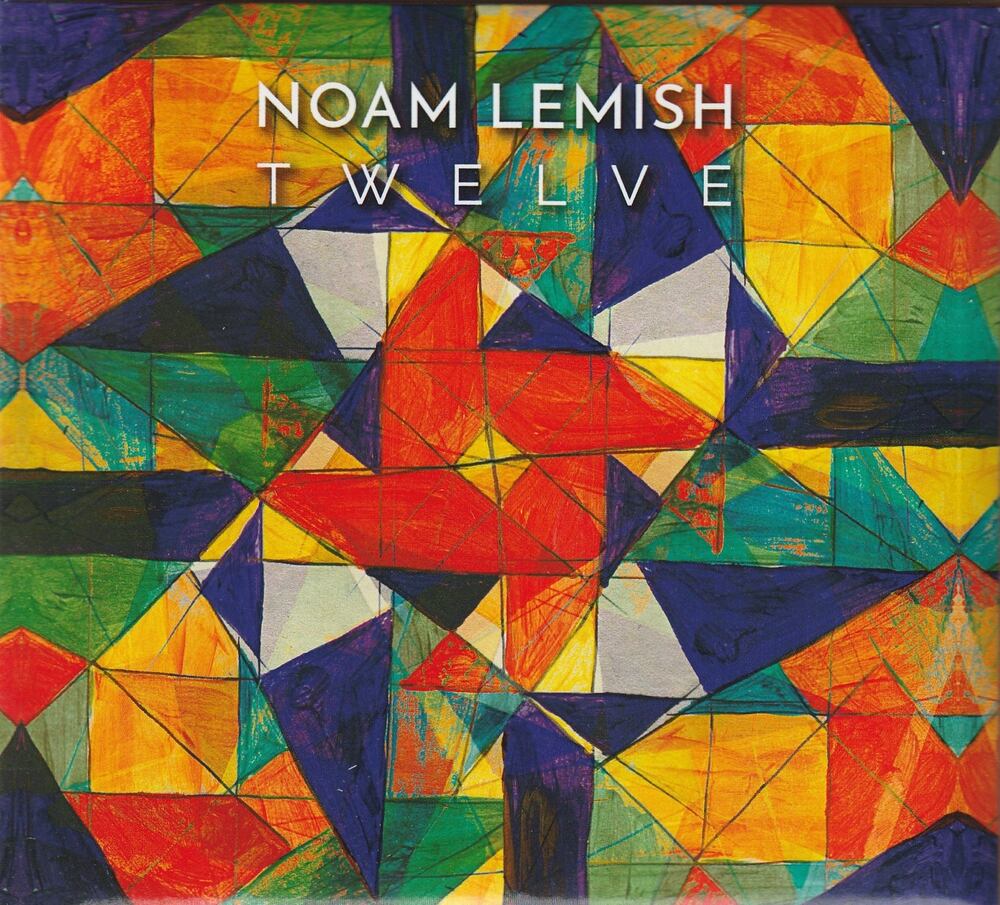
Noam Lemish Twelve
Three Pines Records TPR-0012 (noamlemish.com)

When a ten-year labour of love comes to fruition in a beautifully designed CD, all that’s left to do is hold your breath and send it out into the world. Well, pianist/composer Noam Lemish can certainly heave a huge sigh of relief because his latest project, Twelve (the aforementioned labour of love), is exquisite.

During his doctoral studies, Lemish composed some of the music on Twelve while composer-in-residence with U of T’s then newly formed jazz 12tet. And now, leading his own 12tet – an all-star chamber orchestra of Canadian jazz artists – in a recording of six original, innovative, cross-cultural, captivating, expansive and evocative compositions, professor Lemish is in his element. 

While solidly grounded in the jazz idiom and Western classical music, influences from Lemish’s Israeli roots and Eastern European Jewish heritage – it turns out he has serious Romanian klezmer cred – appear throughout the CD. How else to explain the magnificent Beethoven’s 7th Visit to Romania, complete with 13-voice choir and outstanding solos by half the band? Or Between Utopia and Destruction, which invokes, poignantly, two “lost world” melodies by Soviet Jewish composers? 

Perhaps The Nagila Mayster says it best. A title drawn from English, Hebrew and Yiddish and roughly translating into “The Master of Joyfulness,” it showcases Lemish’s richly creative and diverse musical journey.  

Twelve is indeed a masterful expression of joy. Space limitations prevent my naming all 12 stellar musicians involved, so you’re just going to have to explore this superb album for yourself.

10 Grdina PathwaysPathways
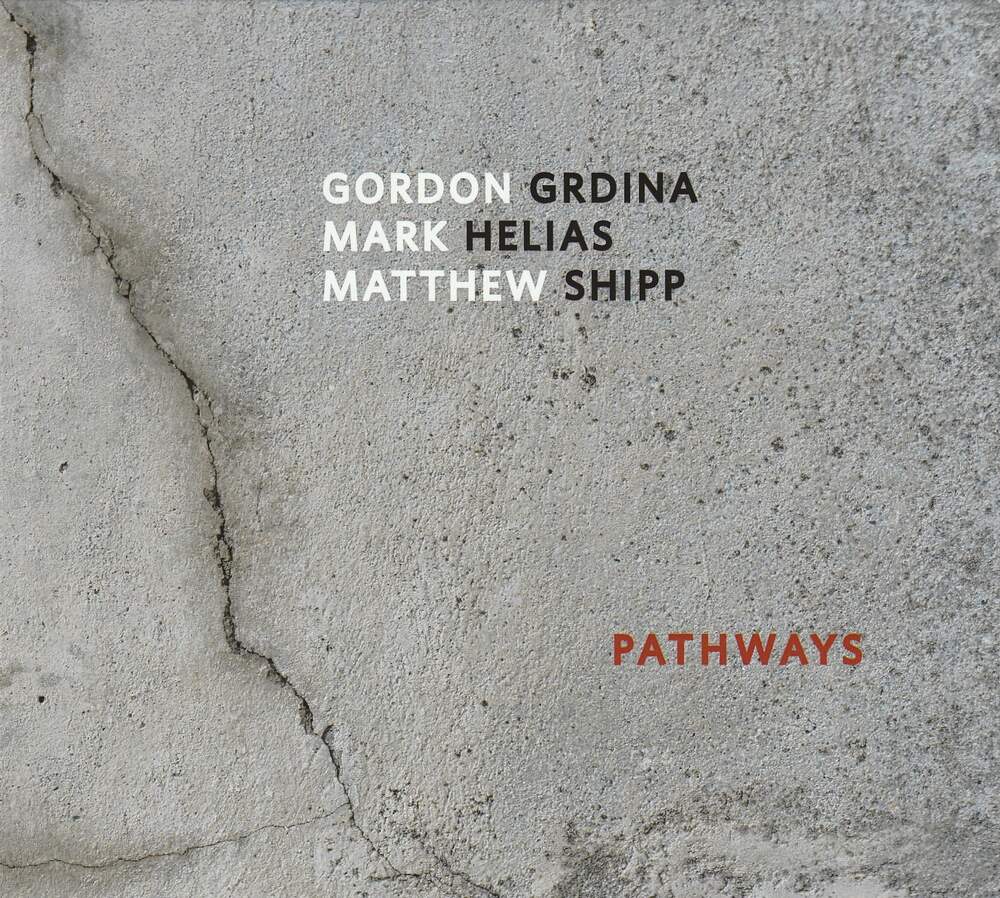
Gordon Grdina; Mark Helias; Matthew Ship
Attaboygirl Records ABG-5 (gordongrdinamusic.com)

Gordon Grdina, Mark Helias and Matthew Shipp have sculpted what can be described as a sound network. All their lines intersect, interlace and interpolate into each other, as if making a coordinated attempt to weave an airtight sonic fabric in real time. The improvisational passages constantly ramp up the character of tension, but this effect is achieved with density before volume. None of the songs start with an easily identifiable rhythmic cell per se, but the pieces still manage to gradually crank up the intricacy dial, until the listener can’t help but marvel at all the dizzying syncopated architecture.

Along with the album’s unceasing subversion of pace, an astonishing equilibrium of creative input is maintained. If one were to isolate any 30-second segment at random, it would take much deliberation before they identified a bandleader. Therein lies the beauty: there isn’t one. Doing research beyond the surface, this was released through Grdina’s label, and Grdina is on production duty. However, remove Matthew Shipp’s piano wizardry from the equation and the music loses most of its dynamic range. If Mark Helias wasn’t present, the music would lose its underlying pulse and percussive edge. All the compositions are co-written by the trio, and the sum is informed by its parts. Helias moves when Grdina does, who waits for Shipp’s cue, who anticipates Helias’ whims long before they exist. Pathways is the epitome of impromptu alchemy.

11 Saku MantereUpon First Impression
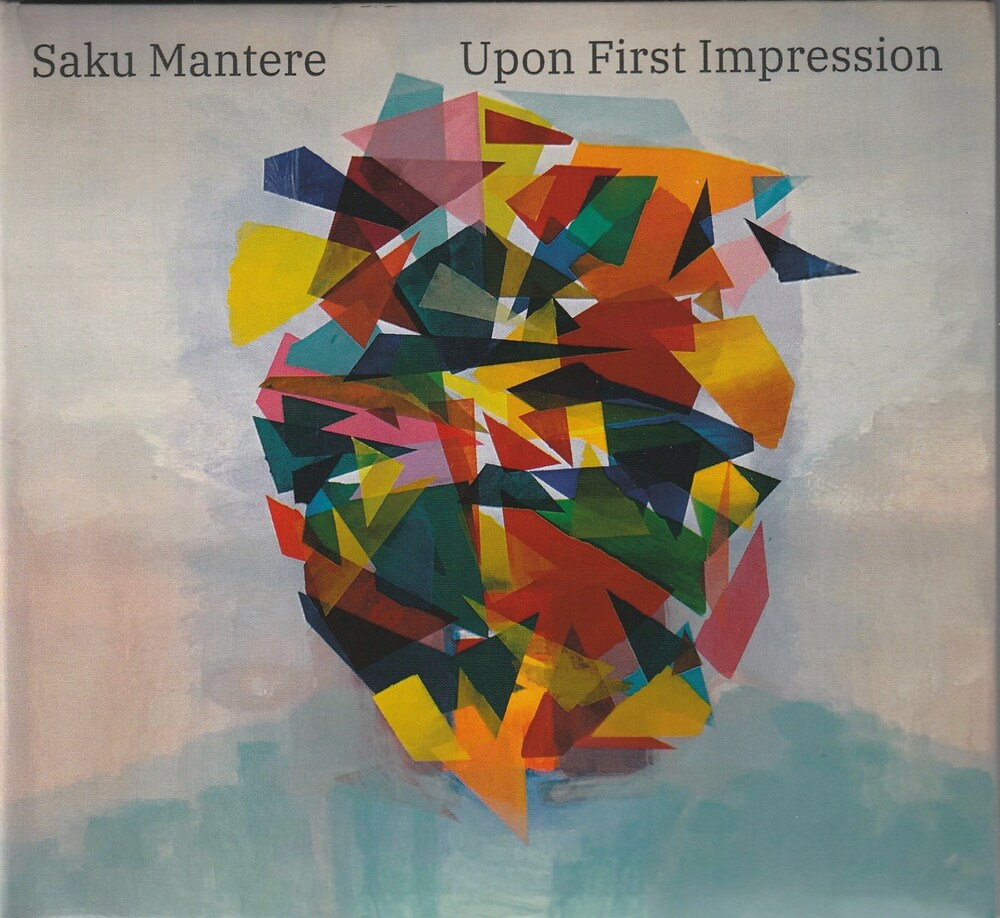
Saku Mantere; Various Finnish and Canadian Artists
Orchard of Pomegranites (sakumantere.ca)

Finnish-born Montreal-based jazz vocalist/composer Saku Mantere’s ten-song debut release is a very personal musical project, touching on his diverse, emotionally moving life experiences. Mantere divides his time between Canada, where he works as a McGill University organizational theorist professor, and Finland. His English original compositions and cover song arrangements were recorded in Montreal and Helsinki with his musical collaborators from both countries.

Mantere’s setting of Welsh poet Dylan Thomas’ And Death Shall Have No Dominion, is a storytelling jazz and pop mix. Canadian musicians support Mantere’s clearly articulated wide-pitch-range vocals like Lex French’s opening trumpet to mid-tune improvised Kate Wyatt piano and Adrian Vedady bass duet, to Jim Doxas’ upbeat drums throughout. Mantere reharmonized Tom Waits’ Time, upon which his childhood friend renowned Finnish arranger/conductor Jussi Lampela based his nonet score featuring Finnish instrumentals-like counterpoint and trills contrasting Mantere’s especially touching high-pitched singing and vocal whispers. 

Mantere’s originals are amazing. Highlights include his classic slightly edgy jazzy ballad Radio Silence, with broken-hearted emotionally sad lyrics and softer vocal and instrumental held notes. Nice change of pace with his closing upbeat tango-nuevo song Leap of Faith. His colourful vocal duet with Jennifer Gasol about a couple drifting apart, perhaps referencing Mantere’s own marriage breakup, and virtuosic Finnish musicians’ instrumental solos held together by drums is super fun.

Mantere’s music is superb. A song sung in Finnish next time would be illuminating too!

12 Avi GraniteAvi Granite’s In Good Hands
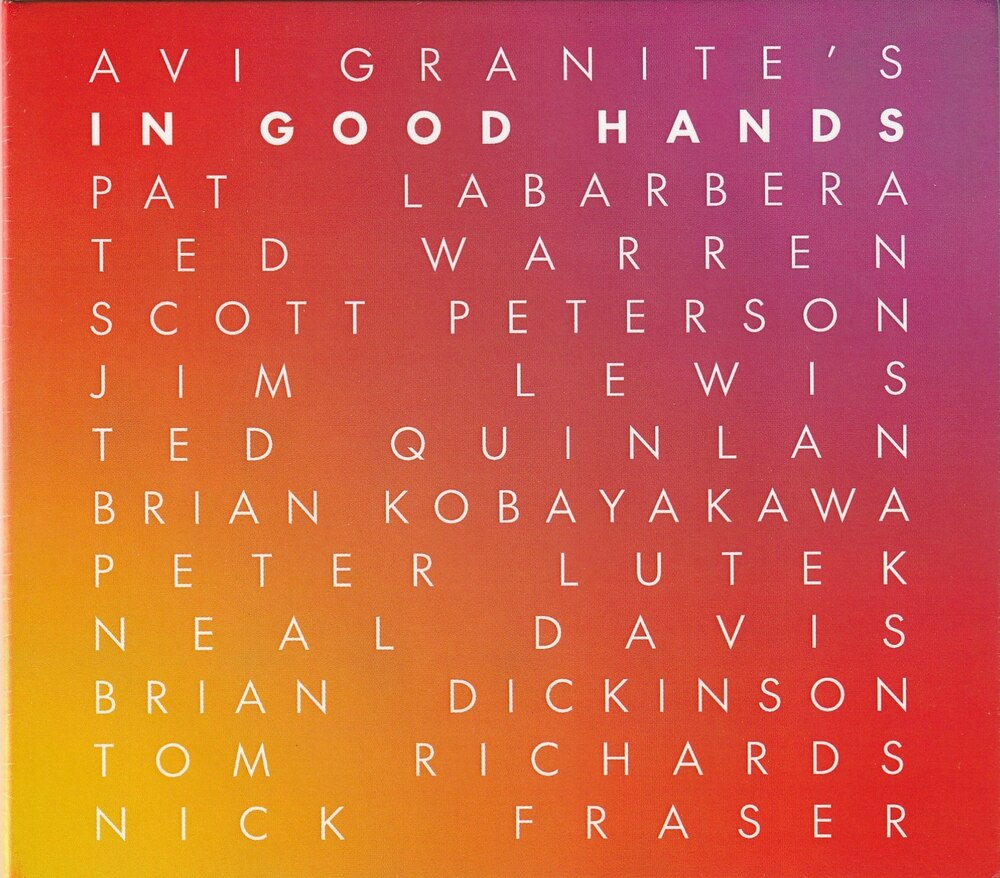
Avi Granite; Various Artists
Pet Mantis Records PMR015 (avigranite.com)

Suffice to say, Avi Granite is in good hands with this one. The concept of this record is one of humility and gratitude, with Granite enlisting his distinguished friends in the Canadian jazz scene to interpret 11 of his compositions. Granite strictly plays the role of sonic curator on this album, and while one could argue, it’s difficult to fall short when working with such talent, In Good Hands proves that a steady hand can go a long way. 

In this reviewer’s mind, the biggest concern before listening was whether a scattered project of this nature could earn the “album” qualifier. An album is a collection of songs, sure, but there also normally exists a unifying logic that connects the various parts comprising an overall sum. If there are dissonances in this regard, they are intentional, or they unintentionally add intrigue to the overall atmosphere. 

In Good Hands is an example of everything falling into place. For starters, the way Granite sequences the tracks is nothing short of brilliant. Going beyond mere aesthetics, there is not only an even distribution of the specific instruments, but if one were to display images of all 11 sine waves alongside each other, they alone would tell a story. It is truly a revelation how many different ways there are to interpret a composition. Ted Quinlan makes Like John sing triumphant, while Nick Fraser’s Critical Eddie is a modest detonation in a wormhole.

13 Chet DoxasRich in Symbols II – The Group of Seven, Tom Thomson & Emily Carr
Chet Doxas
Justin Time JTR8636-2 (justin-time.com)

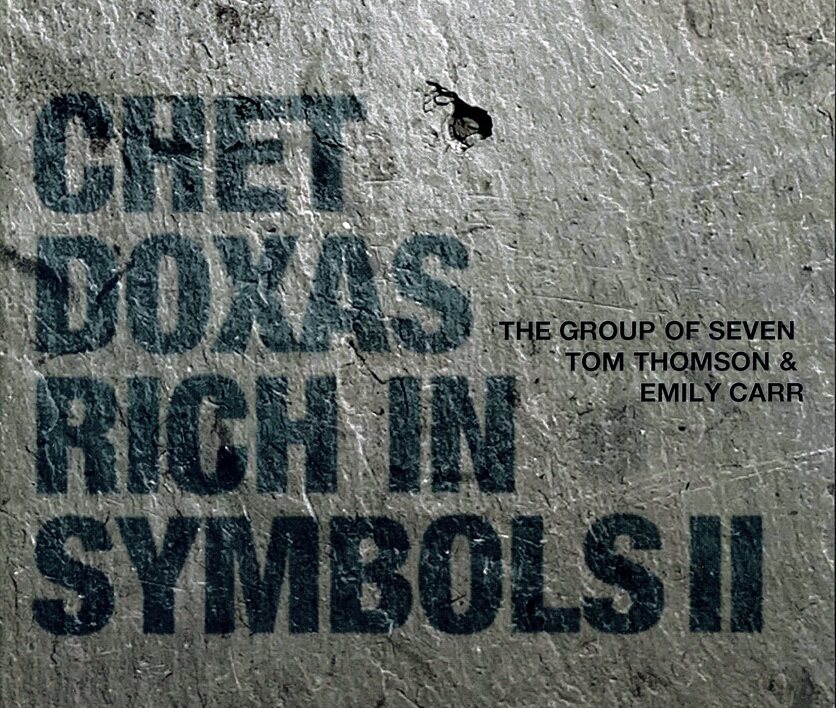
You couldn’t create a more Canadian session than this one involving Montrealer-in-Brooklyn saxophonist/clarinetist Chet Doxas’ modernist musical interpretation of paintings by the Group of Seven, Tom Thomson and Emily Carr. Doxas, who says he hears music whenever he looks at a picture, curates an art gallery’s worth of his own compositions which sonically reflect the mostly rural, remote and rawboned canvases. 

Intriguingly the tracks, which resonate with energetic but understated syncopation due to drummer Eric Doob’s nerve beats and hard ruffs, bassist Zack Lober’s controlled pulse and pianist Jacob Sacks’ calm comping and bent-note accents, reflect both Arcadian and urban impulses. Mellotron fluctuations and electronic whizzes provide an oscillating background for some tunes, while muted old-timey field recordings and echoes and clangs from Joe Grass’ pedal steel or banjo evoke rustic timelessness on others. 

That means a performance like Thomson’s The Jack Pine rotates among preserved radio sax licks and live assertive reed slurs as current drum rumbles overlap shaking steel-guitar licks. Still it ends with irregular tongue stops from Doxas. Or note lap steel echoes which join loon-like cries to describe Lawren Harris’ North Shore, Lake Superior and climax with string-shaking bass and piano harmonies topped by undulating saxophone runs.

CanCon that doesn’t have to apologize for expressing Canuck pride, the rich symbols defined here can be easily appreciated both musically and visually. Plus, the tracks also posit new concepts to consider when you next observe that iconic visual art.

Listen to 'Rich in Symbols II' Now in the Listening Room

14 Jairus SharifWater & Tools
Jairus Sharif
Telephone Explosion Records (jairussharif.bandcamp.com)

The fattest and grimiest of synth tones kicks this one off. It gives way to a shimmery soundscape that cascades down both channels, akin to a chorus of wind chimes, while the harsh drone reintroduces itself with the panicked urgency of a boat horn. Then, the tides part briefly for a rubato saxophone statement, with just the right amount of reverb and panning sprinkled on it to slice through the noise. All this simmering tension is released in sublime fashion when the drums arrive in an explosion of ecstasy, adrenaline and violence, setting the spectator free. 

The aforementioned sonic elements in dialogue have one thing in common: they were curated by one-man ensemble Jairus Sharif. Sharif’s canvas is the bedrock of uneasy tranquility his music unfailingly returns to and, sprawling across this induced tabula rasa, the continuum of visceral sonic paint he draws from is emphasized ingeniously throughout this album. 

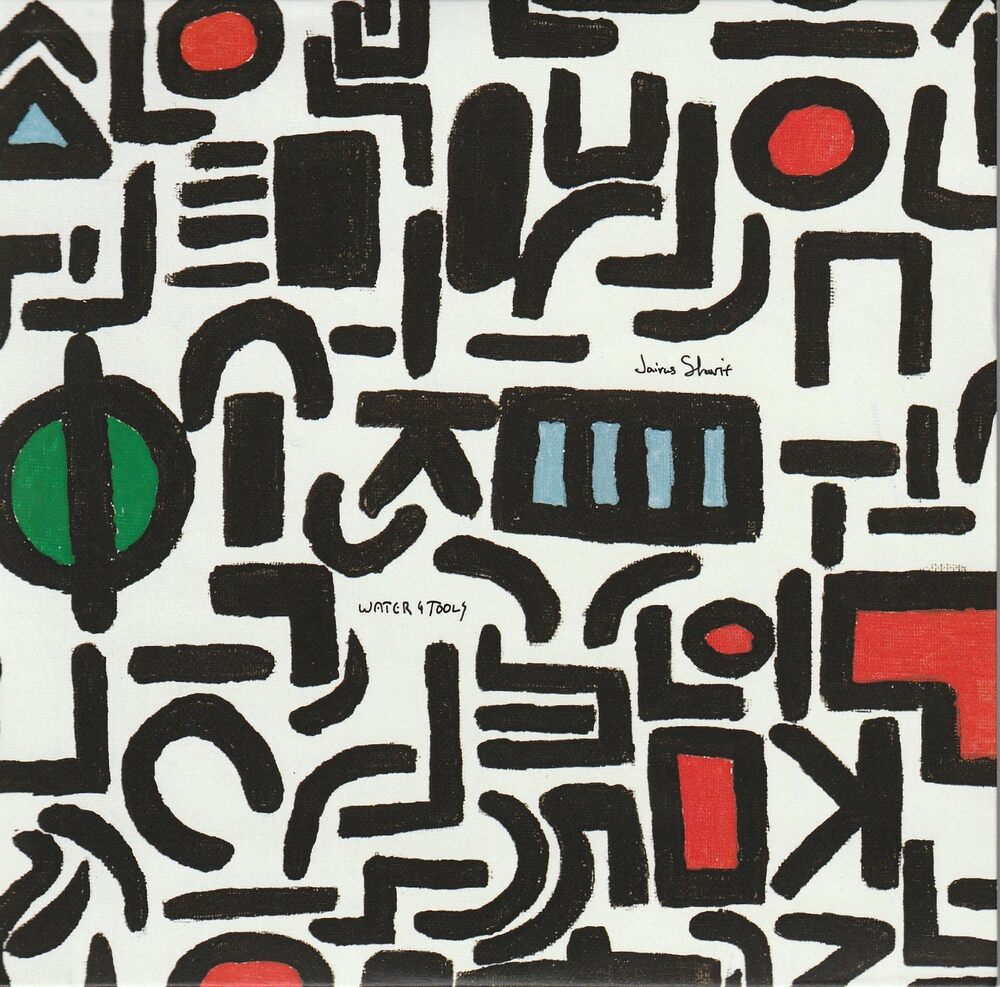
The textures and shapes the music evokes bears a striking resemblance to the vibrant cover art. While sounds coexist altruistically, there is also a separation created in the way they disrupt each other, creating concrete space between these expressions. On the track Earth III, the drum groove moves like it spitefully diverges from the electronic blips, each additional snare hit feeling like an evasive maneuver. Maximilian “Twig” Turnbull is credited with mixing this album and what he pulls off is nothing short of astonishing. Dissonance is embraced, but so is clarity.

15 Micro NapMicro-Nap
Walking Cliché Sextet (SeaJun Kwon)
Endectomorph Music EMM-013 (seajunkwonmusic.com)

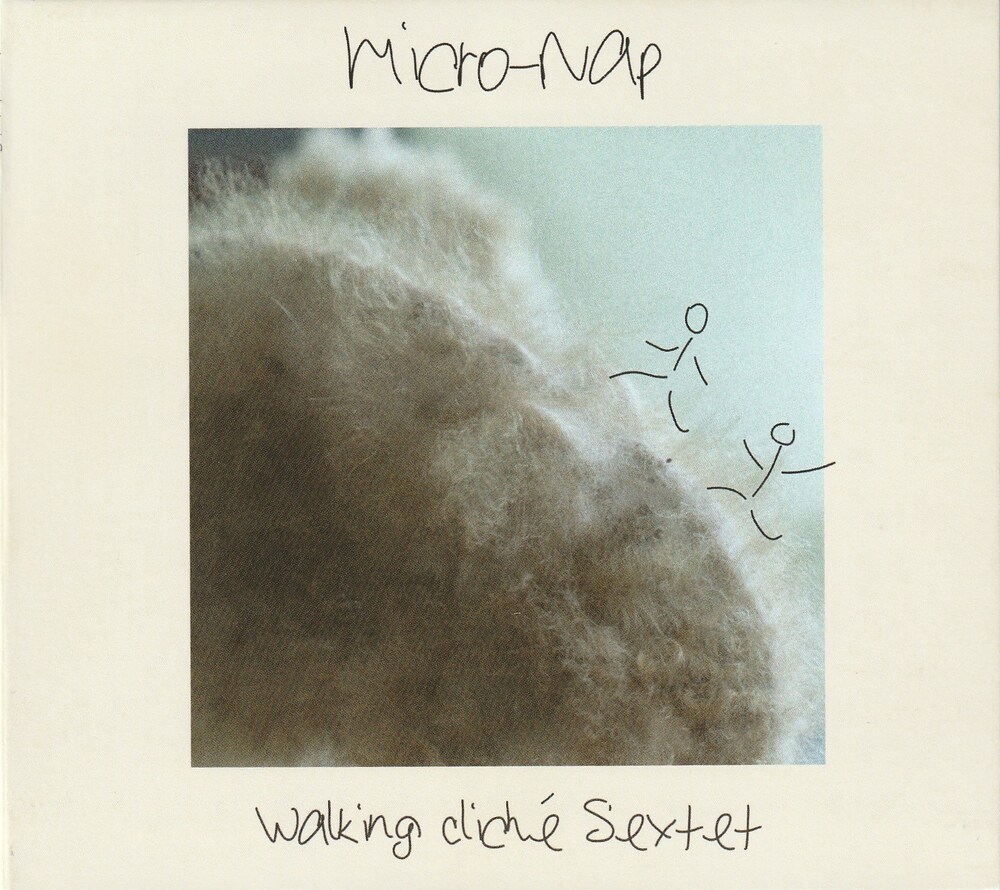
Have you ever been drifting off into a much needed, deep afternoon nap; still lingering in that in-between state that acts as a transition from wakefulness to dreamland? These types of liminal spaces, where uniformity and chaos coexist are what the Walking Cliché Sextet attempt to reflect within their music on this latest release. Korean-born, New York-based composer, bassist and improviser SeaJun Kwon, has always been fascinated by liminal spaces and the duality within them and so decided to gather a fantastic group of musicians and classmates to give this concept a musical voice. Featured in the backing band are rising stars such as Aaron Dutton on alto sax, Jacob Shulman on tenor sax and Erez Dessel on piano.

Throughout the album, songs reflect that aforementioned duality incredibly well; even allowing for a clear image unique to each piece to be called forth in the listener’s mind. Muad’dib is a track where dissonance and consonance, peace and chaos co-exist, taking the listener on a true dream-like journey. Possibly most intriguing, intense mental imagery aside, is the way that both traditional and modern aspects of jazz have been incorporated into the pieces and how they peek through; constantly toeing the line between the familiar and unfamiliar. A truly unique example of contemporary, experimental jazz, this album would be a great addition to the collection of the adventurous aficionado.

Listen to 'Micro-Nap' Now in the Listening Room

16 ason Kao HwangUncharted Faith
Jason Kao Hwang; J.A. Deane
Tone Silence Music/Blue Cross Music TSM 00013 (jasonkaohwang.com)

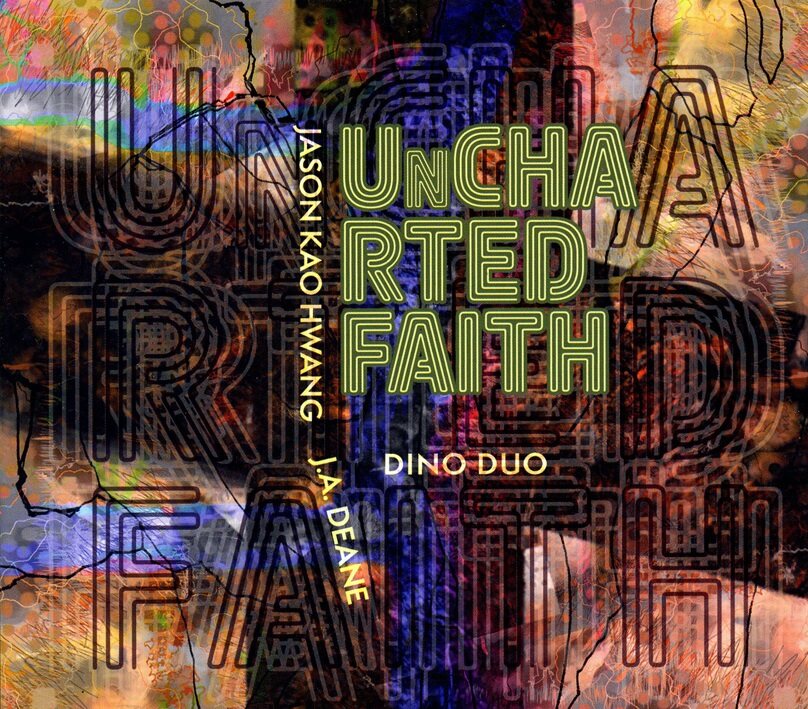
A combination of triumph and tragedy, this devastating six-track project was created over a two-month period as New York violinist Jason Kao Hwang and Colorado synthesizer/software expert J.A. Deane improvised live sounds sent to one another over the Internet, which were then tone-shifted, synthesized, mixed and mutated into this comprehensive program. Believing in spiritual transition, Deane, 71, had already refused treatment for his illness and died of cancer just as the CD was completed.

Using electric and acoustic violins, Hwang’s initial and overdubbed string sweeps and strained buzzes are amalgamated with a series of watery whooshes and constantly rotating live processes from Deane whose screaming and gonging reflect fiddle glissandi at the same time as they mutate them. The mid-point Shamans of Light moves the timbre fusion to even higher levels as two separate layers of string stops and strums become audible. As granulated synthesized tones widen into thunderous drones, Hwang’s angled violin swipes include brief lyrical interludes. These remain during the climactic title track. A concluding sequence, Uncharted Faith, finds Deane’s processed wash of interlocking textures projecting an organ-like tremolo continuum over which near-melodic violin drones pitch-shift, connect and highlight disparate parts of the reconstituted improvised mixture. 

A fitting memorial to an electroacoustic pioneer, the CD once again confirms the sympathetic interaction of Hwang’s playing in many and some seemingly difficult contexts.

17 Dave DouglasSongs of Ascent, Book 1 – Degrees
Dave Douglas Quintet
Greenleaf Music GRE-CD-1096 (davedouglas.com)

Trumpeter Dave Douglas is a musician so prolific that he has been hard not to notice over the past handful of years. While Douglas may not yet be a household name, achieving this kind of notoriety within the jazz and improvised music realm is a feat unto itself. Douglas’ label Greenleaf Music has been a brilliant springboard for the trumpeter’s ample releases under his own name, while simultaneously fostering a space for likeminded talents to produce and promote their music.

Greenleaf employs a smart business model, offering traditional sales and streaming of album-length content alongside subscription only “optional extras.” Songs of Ascent, Book 1 is offered in the former format, with Book 2 available only when curious listeners subscribe to Greenleaf Music. This writer was only given a copy of Book 1 to review, but this was enough of a journey to make me curious about what lies on its counterpart recording. 

Several noteworthy things jumped out during my first listen, namely the smooth high-quality studio sound. This is almost a contrast to the often-avant-garde music heard on the disc, but makes for an immersive listening experience. The sound quality of the band as a whole is even more impressive given that this album was recorded remotely.

Early tracks are loose and ethereal in nature, but from the very start of Peace Within Your Walls listeners are offered more traditional sounding song forms. The contrast between loose and composed moments sets a precedent for the rest of this exciting album.

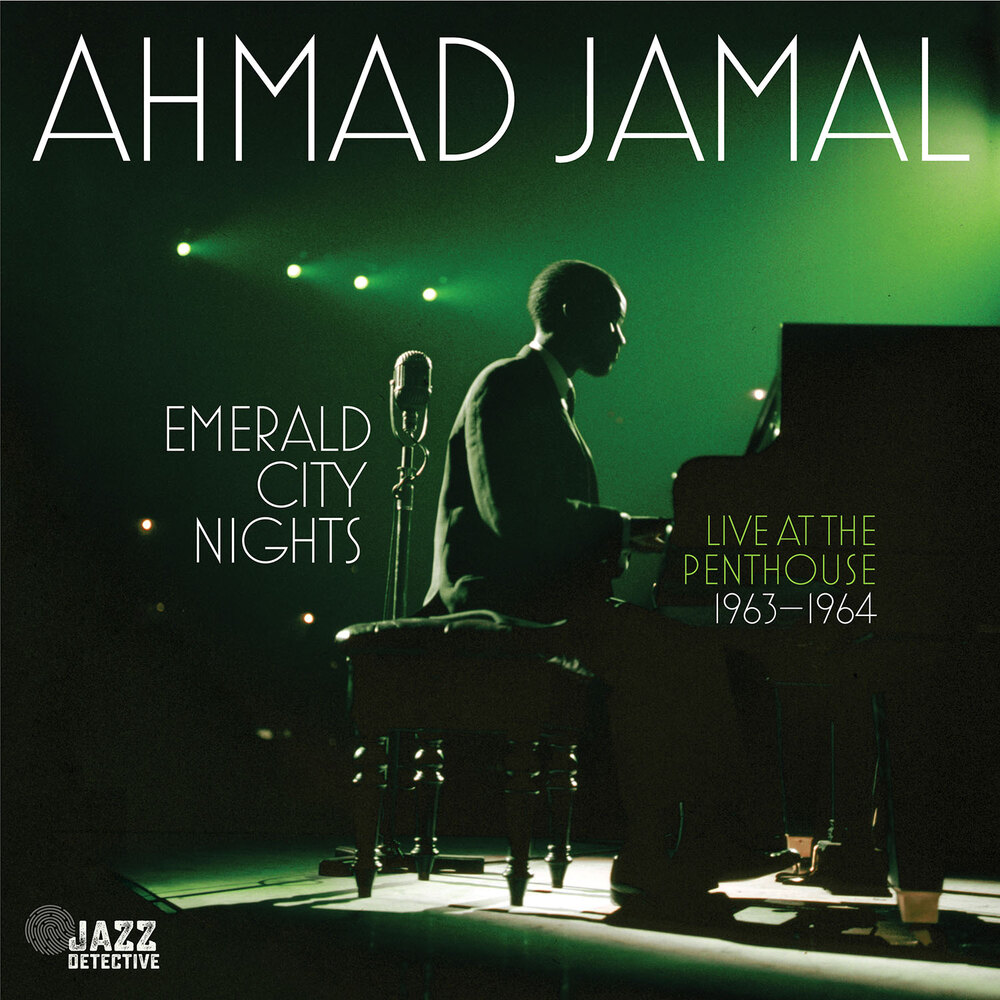
18a Ahmad Jama 1963 1964 Emerald City Nights: Live at The Penthouse 1963-64
Ahmad Jamal
Jazz Detective DDJD-001

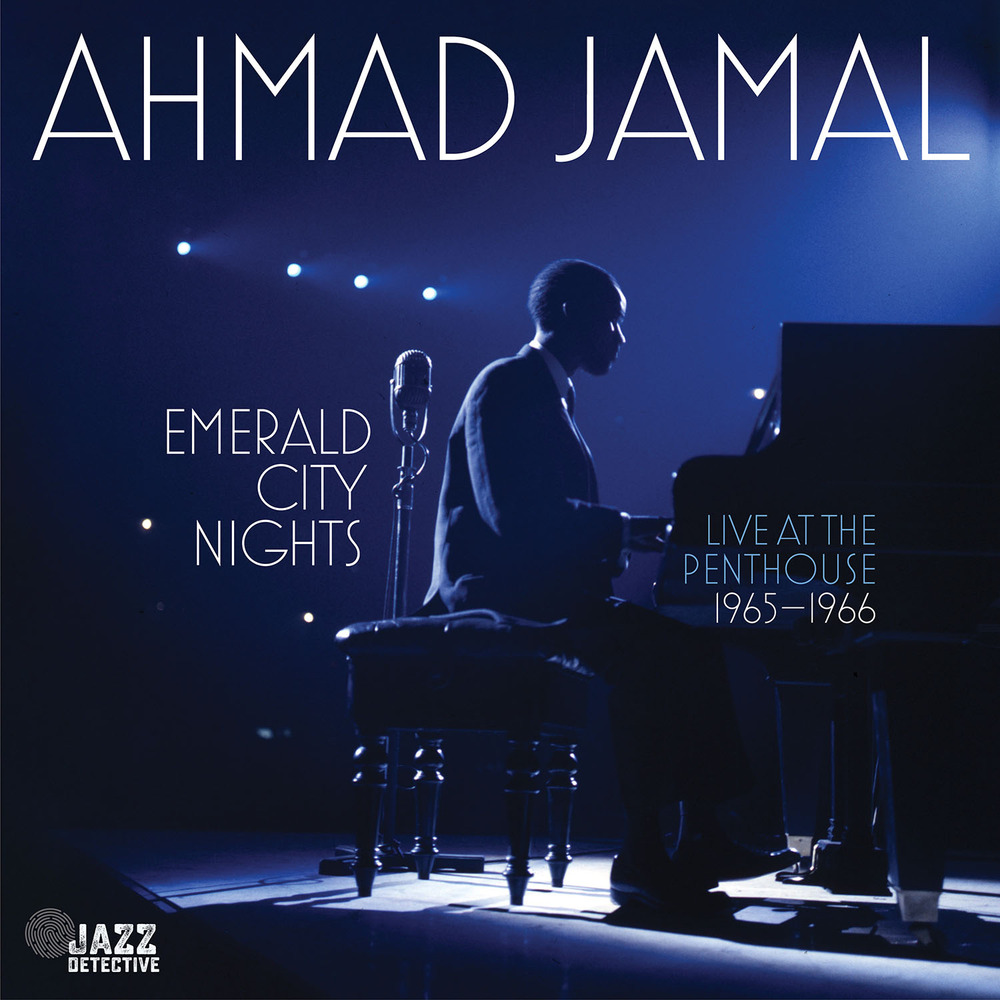
Emerald City Nights: Live at The Penthouse 1965-66
Ahmad Jamal
Jazz Detective DDJD-002
www.deepdigsmusic.com

At 92, Ahmad Jamal can look back on a brilliant career, one reaching levels of success unimaginable to most jazz musicians. Cited by major figures such as Miles Davis and Keith Jarrett as an influence while often being dismissed by critics, Jamal explored unusual formal and textural dimensions, concentrating on rhythmic invention in a distinctive way and organizing his tunes into elaborate patterns of vamps and riffs that expanded on the kinds of big-band formal practices developed by Duke Ellington.

18b Ahmad Jamal 1965 1966These two 2CD sets come from 1960s performances at the Penthouse, a prominent Seattle jazz club of the period at which Jamal performed frequently. Originally recorded for radio broadcasts, the sound is excellent, with each set covering appearances over a two-year period. Jamal is joined by a series of rhythm section pairings, including bassists Richard Evans and Jamil Nasser and drummers Chuck Lampkin and Vernel Fournier, each team forming a vital partnership in executing Jamal’s complex extrapolations, combining detailed arrangements and fluid improvisations. Works here often develop at length, including a crystalline version of Jamal’s own Minor Moods and a virtuosic I Didn’t Know What Time It Was, one approaching the quarter-hour mark, the other exceeding it, but there are no empty segments, each one a model of focused musicality. The contemporary Feeling Good, a hit for Nina Simone, sounds like it was written for Jamal. Meanwhile, Jamal’s art is also an allusive one, whether he’s inserting Nat Adderley’s Work Song into that Bricusse-Newley pop hit or Charlie Parker’s Now’s the Time into Cole Porter’s All of You

Jamal’s multi-dimensional art, already set deep in jazz traditions, might be linked with the architectural dimension of his faith. In 1959, following travels in Muslim Africa, he moved to Chicago where he opened an alcohol-free night club called the Alhambra. Hearing the compound, suddenly shifting patterns that he and his bandmates bring to Richard Rodgers’ Johnny One Note, from delicate tinkling upper-register figures to rolling bass crescendos and sustained drum rolls, one might readily imagine that 1959 trip very likely included a visit to Spain and that other Alhambra: the palace in Cordoba. Like the palace, a Jamal performance can be a hypnotic series of abstract signs, whether geometric forms, an unknown alphabet or both, organized into fluid patterns, ones in which abstraction and attraction can arise, often free of specific meaning, everything in celebration of a transcendent symmetry.

01 So Long SevenOnly Elephants Know Her Name
So Long Seven
Independent SLS003 (solongseven.bandcamp.com/releases)

Canadian instrumental quartet So Long Seven – Neil Hendry (guitars), Tim Posgate (banjos), William Lamoureux (violin) and Ravi Naimpally (tabla, dumbek, udu, percussion) – is back with an eight track release featuring their unique flavourful, original compositions and tight performances blending classical, folk, blues, jazz and world traditions from India, Africa, Europe and the Americas. Hendry’s liner notes provide backgrounds to the tracks.

My favourite animals each have a composition here… The title track only elephants know her name was written for a Kenyan elephant with almost ground-touching tusks. Superimposed repeated jazzy and rock-like styles, fun percussion rolls and orchestral strings lead to Posgate’s virtuosic contrasting colour and rhythmic banjo solo. Mara is about an Asian elephant that worked in a circus until 1995 and on retirement moved to a zoo in Argentina and then, during the pandemic, to a sanctuary in Brazil. It features the mesmerizing guest, Hindustani vocalist Samidha Joglekar, singing a haunting folk-like melody, reciting a Ganesh prayer her mother taught her, above a held-note and rhythmic beats backdrop. Now to the hopping Frolic of the Monsoon Frogs, inspired by Naimpally’s Indian childhood post-monsoon memories of puddles full of dancing frogs. Upbeat rock/jazz time-to-party percussion and bass drive the repeated almost atonal shots, instrumental solos including guest strings, background clapping and vocal screams.

Violinist Lamoureux produced the release, and arranged guest string performers’ parts to some tracks like L’unique étoile de la tolérance, a calming soundscape of held-notes washes, closing plucks and his slow violin melodic lines. The closing Ghost Ocean has thoughtful, reflective quartet sounds.

A big welcome to So Long Seven’s great new release!

Listen to 'Only Elephants Know Her Name' Now in the Listening Room

02 Miguel ZenonMúsica de las Américas
Miguel Zenón
miel music (miguelzenon.com)

All of the eight elegantly constructed tracks on this inspired project were composed by noted NYC-based alto saxophonist Miguel Zenón, who cites the American continent’s fascinating and complex history as his inúspiration (including the near genocide of untold numbers of indigenous peoples that occurred under the boot European colonialism). Zenón has surrounded himself with a superb ensemble, featuring his long-time quartet of Luis Perdomo on piano, Hans Glawischnig on bass and Henry Cole on drums. Special guests include percussionist Paoli Mejias, Victor Emmanuelli on barril de bomba, congero Daniel Diaz and the renowned Puerto Rican ensemble Los Pleneros de La Cresta.

The first track is Tainos y Caribes where bittersweet, percussive, contrapuntal modalities embody the clashing of the peaceful, agrarian Tainos and the conquest-driven Caribes. Exquisite alto work from Zenón stirs the soul and invigorates the emotions – incorporating future bop modalities with ancient rhythmic forms, while the rhythm section manifests the matrix of creativity. Perdomo shines here with a piano solo par excellence. A clear standout is Navegando (Las Estrellas Nos Guían), which evokes the seafaring culture of the Indigenous Carribean peoples, who travelled incomprehensible distances in open canoes, simply by an advanced knowledge of the stars, and the contribution of Los Pleneros de la Cresta take the listener on a viaje encanto

The gorgeous closer, Antillano (Indigenous peoples from the Antilles) also features dynamic and visceral congas courtesy of Diaz. This is a CD not to be missed and Zenón is, without question, one of the leading lights of Afro/Latin/jazz fusion. Additionally, this sumptuous project has been dedicated to the memory of the late master musician, and dear friend of Zenón, Héctor “Tito” Matos.

03 Carlos CardozoMeu Mundo – My World
Carlos Cardozo
Lula World Records LWR026A (carloscardozo.ca)

Brazilian-Canadian musician Carlos Cardozo has for many years enriched Toronto’s music scene, as he seems to be on every Brazilian music group’s first call list. If there’s a Brazilian music gig, Cardozo will almost surely be there. Now he can add songwriting to his long list of musical accomplishments, alongside singing and playing cavaquinho, guitar and percussion. Dozens of his musical compatriots, both in Brazil and Toronto, have added their talents to this album either through co-songwriting (in particular Elias Barros), arranging or playing on the tracks. Credit for much of the beautiful production and several of the arrangements goes to the uber talented guitarist, André Valério. 

While those of us who aren’t fluent in Portuguese won’t be able to fully understand the lyrics, we can still easily appreciate the sentiment and the exceptional musicality of Meu Mundo. The first track Amor ao meu Sertão, a gorgeous tribute to a region in the northeast of Brazil, sets the tone for the album, which is in large part a love letter to Cardozo’s homeland. From the gentle samba and dreamy strings of Beija-flor da Fumaça (loosely, about a hummingbird) to Forró de Pernambuco (forró is a genre of traditional music from the northeast) or Uma volta na Veneza brasileira (a funky 70s-style tribute to Recife, known as the Brazilian Venice), Meu Mundo takes us on a musically rich and heartfelt journey and we are the better for it. Find the album and videos on Cardozo’s website.

04 Jacqueline SchwabI Left My Lamp
Jacqueline Schwab
Sono Luminus DSL-92257 (sonoluminus.com)

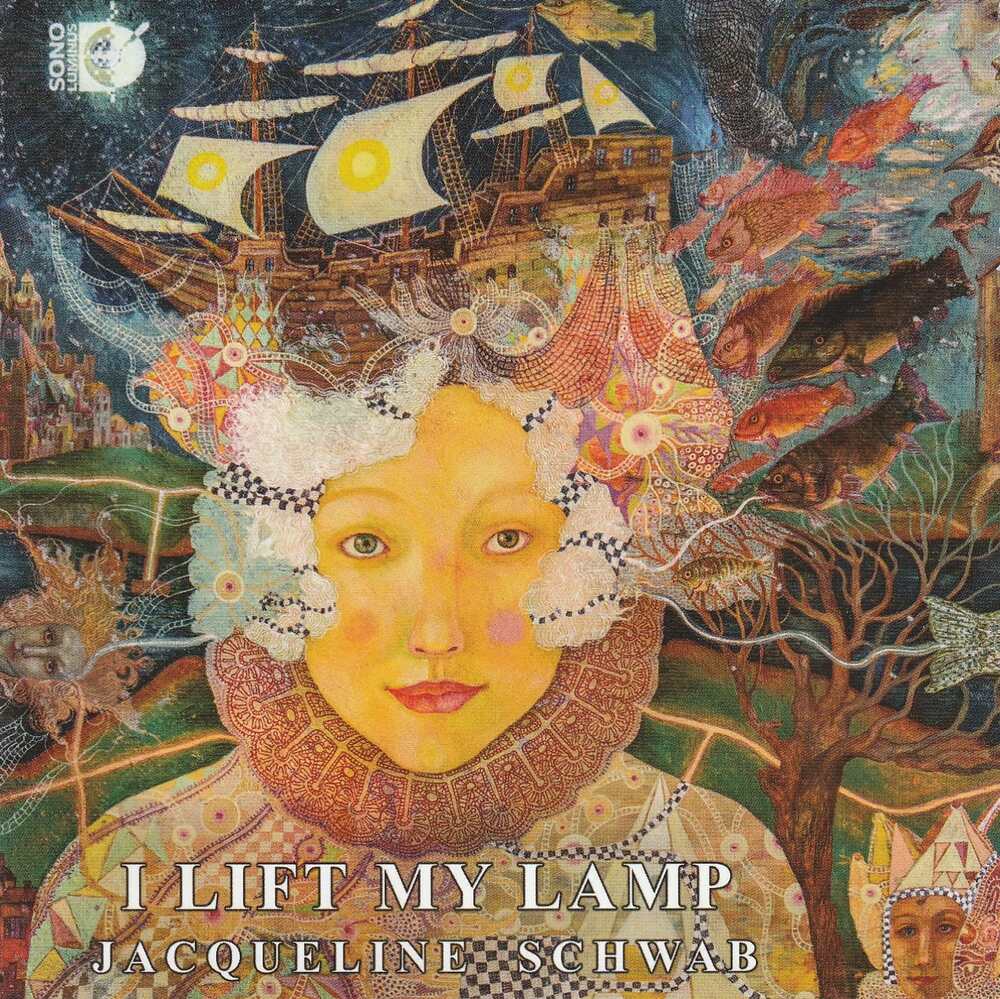
American pianist Jacqueline Schwab is renowned for her musicianship in many Ken Burns documentaries including The Civil War, Baseball and Benjamin Franklin. Here, she performs a collection of her solo piano arrangements of 19 traditional decades-spanning classic songs associated with American immigrants from many cultures 

Schwab’s respectful, well-thought-out arrangements and performances are simultaneously true to the original song form while incorporating her unique artistic vision. The opening track, the air For Ireland I’d Not Tell Her Name is a free flowing, sensitive musical performance which is followed directly by the upbeat, high-pitched melodic jig, The Blarney Pilgrim. Schwab amazingly sets three Scottish fiddle tunes successfully to piano, like the second reel Miss Dumbreck being held together by low-pitched left-hand accompaniment. Her straightforward, harmonic, “very classical” playing of Sibelius’ Finlandia Hymn is coupled with the Swedish waltz Vals efter Soling Anders with its free time and singalong quality. The well-known habanera La Paloma is played surprisingly, successfully slower than usual, featuring full melodic right hand. There is a moving darker improvisational feel to Schwab’s blues-flavoured rendition of the spiritual Sometimes I Feel Like A Motherless Child. Other tracks feature music from Brazil, Bulgaria, Italy and more.

Schwab “travels the musical immigrant America” in her intelligent, clear, balanced piano performances and arrangements, complemented with clear production sound quality and Stephanie Smith’s detailed informative liner notes. This is a fabulous cross-section of American immigrant music.

A Rodney Dangerfield in most musical configurations, the double bass doesn’t get much respect since its workhorse qualities are used for accompaniment rather than upfront. That changed in the 20th century, especially in jazz, and then more prominently in improvised music. Innovators such as the UK’s Barry Guy, France’s Joëlle Léandre and American Barre Phillips all recorded notable solo bass discs in the 1970s and 1980s and since then many others bassists have tried their hand(s) at the challenge. What follows are a few recent examples.

01 BjornhornConcentrating on the bow, Sweden’s Johan Berthling, known for his Fire! trio with Mats Gustafsson, scratches and slices pitches and thumps from his instrument’s strings and wood on Björnhorn (Thanatosis Productions THT 12 thanatosis.org). Often sul tasto and frequently spiccato, his strained low pitches and scrappy mid-string forays frequently work up to near bagpipe-like tremolos. As on Björnhorn III, resolution is usually projected with stentorian drones. His clenched hand-on-bass-neck techniques concentrate most billowing buzzes into a solid mass, yet on Björnhorn V he spackles high-pitched colours to lighten the narrative. While the presto and staccato friction projected by his bow work sometimes suggests the strings are a millisecond away from literally bursting into flames, his one turn to pizzicato thumps out wide spatial suggestions. Furthermore when he assays Charlie Haden’s balladic For Turiya, his buoyant vibrations show he’s also capable of melodic storytelling.

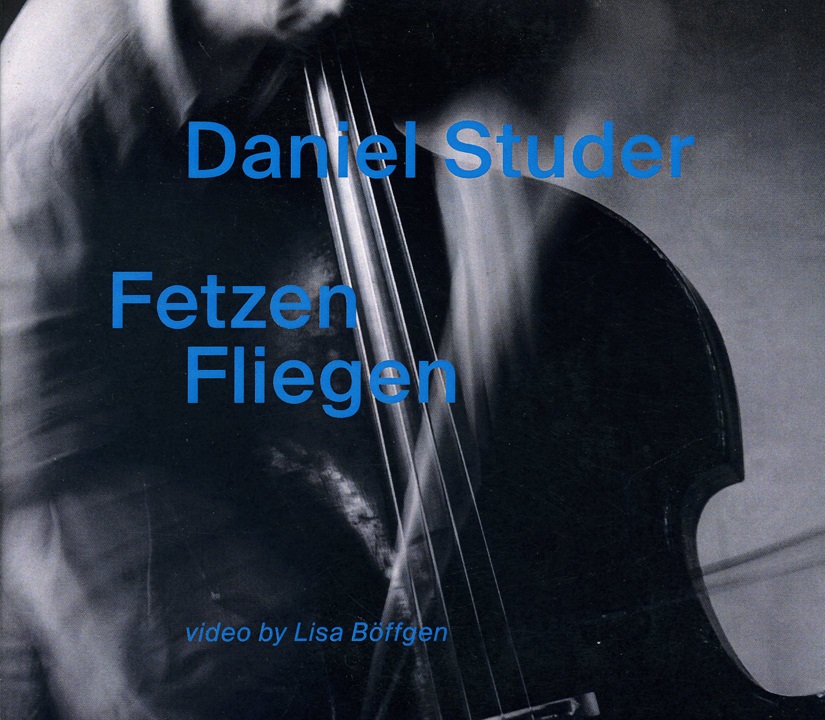
02 Daniel StuderIf there are so many notes and tones in Berthling’s solos to almost make them feel cramped then Swiss bassist Daniel Studer takes the opposite approach on Fetzen Fliegen (Wide Ear Records WER 064 wideearrecords.ch). Recorded from various points in an anechoic chamber, Studer, who besides working with many groups, teaches improvisation at Bern University, uses this spatial situation to layer his sounds with as many extended silences as pressurized string trembles and swells. Making a virtue out of slowness, hard string thumps, clanking arco variations and the scraping friction which introduces the final two variations of four are magnified even more to contrast with the silent interludes. But the session is more than singular arco slices or frog-against-string accents. Cumulative friction at the end of Fetzen Fliegen 2 is so thick that jet plane engine noises are suggested before the tone thins to bow strokes. With col legno slides, Studer at junctures also creates responsive echoes between that technique and throbbing string plinks. Managing to nearly replicate recorder-like whistles with spindly stings and drum-like rumbles, his brief pivots into metallic discord only add to the expositions. Emphasizing sound shards among the quiet, Studer offers a unique definition of all that a double bass can do at a slow, anything but easygoing, pace.

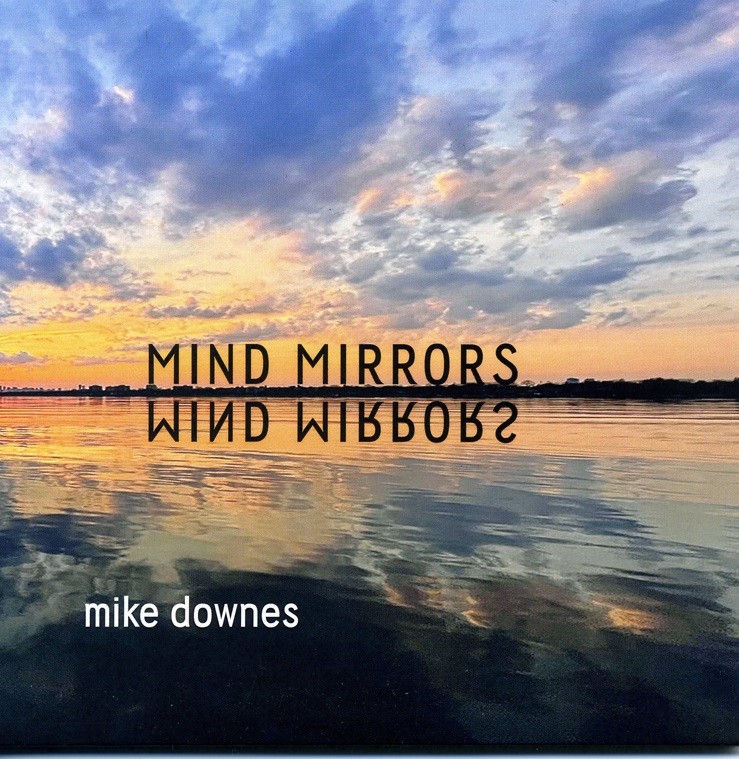
03 Mike DownesFor a complete change of pace though, there’s Mind Mirrors (MMusic mikedownes.com) by veteran Toronto bassist Mike Downes. Perhaps it’s because he’s Canadian, the multiple Juno Award winner has created 11 solos, which are tasteful and somewhat gentle, but without ever letting go of the underlying beat. Still, who else but a Canuck would title the folksy, but powerful variations on one track Campfire Waltz? He’s also the only bassist here to play a standard, I Fall in Love Too Easily. Yet he’s crafty enough to avoid familiarity by offering up balanced variations on it before subtly revealing the melody. Crucially though, Downes is adventurous enough to mate field recordings of crackling thunder with the dynamic modifications from the triple stopping and reflecting tones of a Yamaha SLB200 hollow-body electric bass on Thunder. He sticks to the regular double bass on the other tracks, showing his arco and pizzicato skills. In fact on Morning Sun Ringing he alternates plucking slippery vibrations from the instrument’s strings and wooden body, while at the same time creating a warm connection with measured arco triple stops. Some pieces are foot tappers, as he modulates up and down the strings with rumbling bow work. Elsewhere he preserves the rhythm impetus on a track like Alone or Together with lighter strokes that take on flamenco colourations and darker ones which suggest Charles Mingus-like soulfulness.

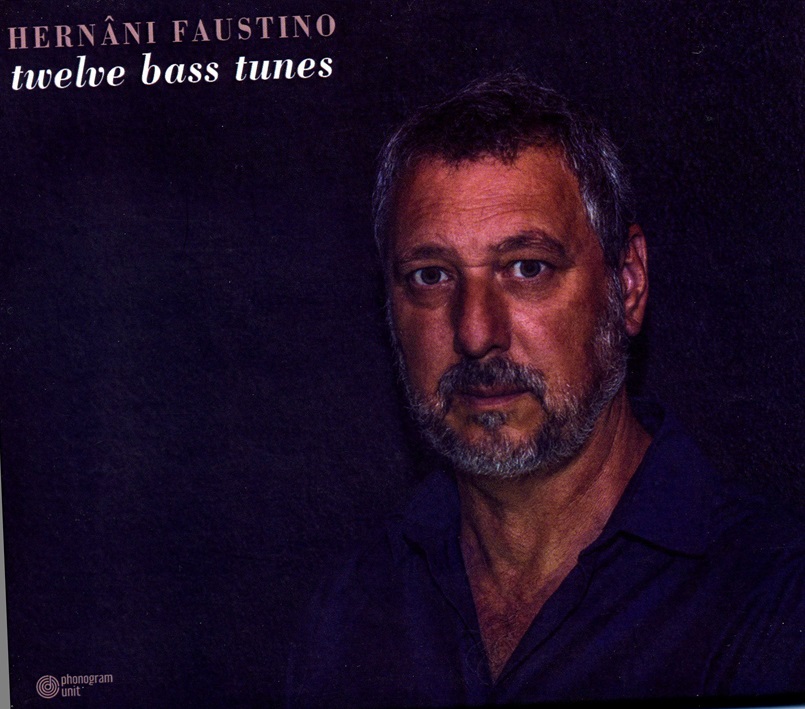
04 Hernani FaustinoSomeone who evolved from playing electric bass in rock bands to creative music with the likes of Carlos Zingaro is Portuguese bassist Hernâni Faustino. His work is characterized by a deep dark tone which he displays throughout Twelve Bass Tunes (Phonogram Unit PU 5 CD phonogramunit.com). While the percussiveness and power he lays out link him to jazz stylists like Mingus and Ray Brown, his upper register echoes and col legno vibrations and recoils show that he’s firmly attuned to 21st-century improv. In fact, the first sound on Sequência, the CD’s opening track, is a buried bomb-shelter thick strum. But soon powerful string pulls give way to an agile up-and-down theme projected with guillotine-sharp slices before returning to squeaky friction. This orthodox-offbeat dichotomy plays out during most of the other 11 bagatelles with some tracks as melodious as if they were being vocalized by an operatic basso and others dedicated to string experiments. While rappelling along the string set on a track like Tríptico da Virgem de Lamego for instance, Faustino extends his multiphonic expression with thrusts that sound as if he’s also digging into the instrument’s wooden body. He can also double and triple string stop at the same time as he speeds up the exposition as on Co’ Os Olhos deepening and darkening them as it evolves. At lento and adagio tempos he can outline the timbre of each string as he touches it as on Pertença do Gato Grande, yet subtly elevate to reverberating andante lines before the conclusion. Even a rare move to arco playing on Serra das Meadas mates expressive melancholy with torqued pressure as he emphasizes bridge-centred tones. Concurrently nearly every note sounded comes out balanced and well-rounded as his multi-string and atmospheric asides are firmly grounded with straight-ahead and carefully measured plucks.

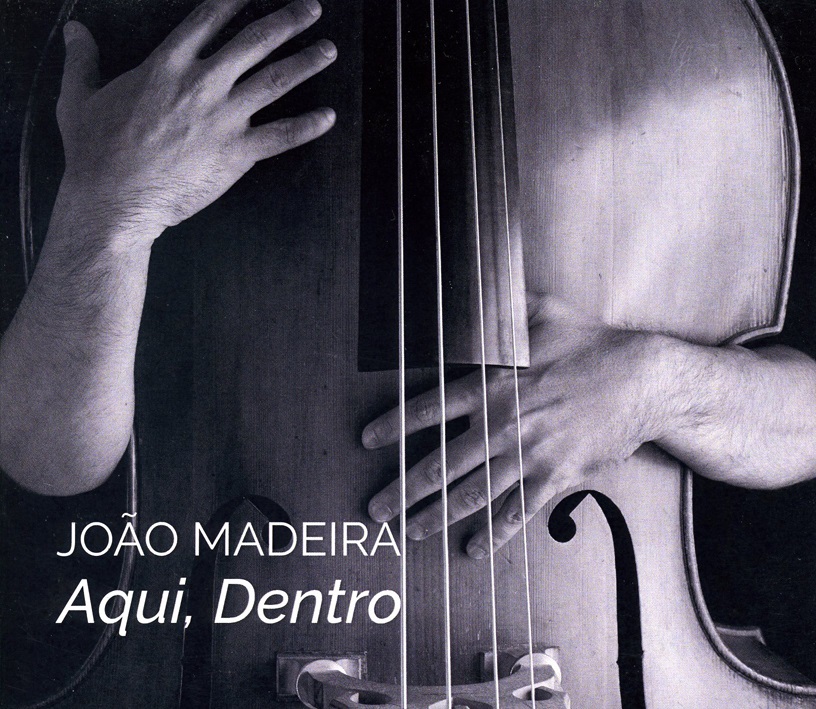
05 Joao MadeiraConcentrating on arco invention, fellow Portuguese bassist João Madeira cycles through all manner of burly drones on the two extended instant compositions which make up Aqui, Dentro (Miso Music MCD 49 22 misomusic.me). Lisbon-based Madeira, who is part of other free jazz configurations, including a double bass duo with Faustino, concentrates on using sul ponticello and sul tasto slices to extrude a chunky interface that’s almost impenetrable. Nearly, but not completely. For among the reoccurring drones, tone gradations can also be heard. At points, elevated shrieks are heard, as if he’s cutting into the instrument’s wood as well as stroking the strings. At times, these high-pitched motifs take on viscous bassoon-like suggestion or bagpipe-like hums. Emphasizing ripples across the strings as tempos shift from lento to allegro, the heavy drones even maintain their shape elsewhere when Madeira’s progress ascends to allegrissimo and prestissimo. Often, emphasized passages are repeated so frequently in sequence that you begin to fear there’s a recording fault, until he exposes new singular textures that he buzzes to a resolution. Moving into the second selection, simultaneous warm vibrating plucks and knife-sharp strokes display his facility with both techniques. As intermittent frails move to the foreground so does a touch of melody. But the key to Aqui, Dentro is how nearly oppressive bulk can be made to express polychromatic tones with an inventive strategy.

Each player here has designed a solo double bass procedure that goes far beyond expected approaches. As time evolves, it’s certain that even more novel strategies for the bulky instrument will be discovered.

12 ZwilichThe Montreal-based cellist Elinor Frey is back with a second volume of premiere recordings of works by the cellist-composer Giuseppe Clemente Dall’Abaco (1710-1805!) on The Cello According to Dall’Abaco, accompanied by Catherine Jones (cello), Federica Bianchi (harpsichord) and Michele Pasotti (theorbo) (Passacaille PAS 1122 elinorfrey.com).

Frey’s critical edition of the 35 accompanied cello sonatas of Dall’Abaco is published by Walhall Editions; five sonatas were featured on the first CD (PAS 1069) and a further three – in G Major ABV28, E-flat Major ABV37 and D Minor ABV45 – are heard here, together with all three of Dall’Abaco’s cello duets: the Duetto in G Major ABV47, the Duo in F Major ABV48 and the Duo in A Minor ABV49. No composition dates are known, but the music is probably from the 1730-1750 period.

The second cello adds depth to the continuo in the sonatas, while in the quite lovely duos the roles of melody and accompaniment are continually exchanged between the two performers.
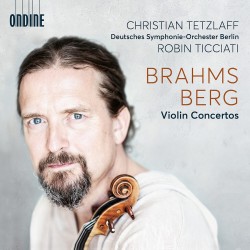
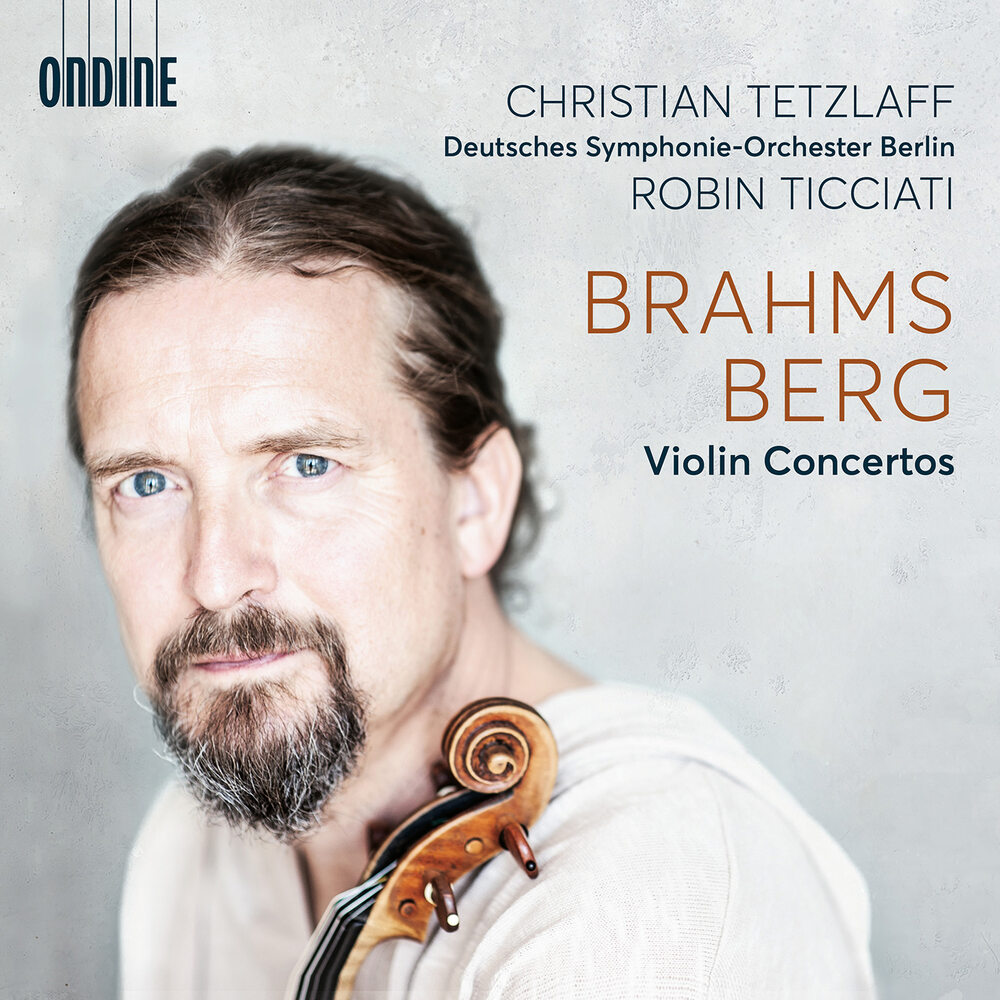
02 Brahms Berg ViolinViolinist Christian Tetzlaff cites “reasons of substance” to justify pairing the Brahms & Berg Violin Concertos on his latest CD, with the Deutsches Symphonie-Orchester Berlin under Robin Ticciati, both works searching the depths of the soul and having a lot to say about pain (Ondine ODE-1410-2 ondine.net).

Tetzlaff has been playing both concertos for 40 years for a combined total of over 300 performances, and it shows. The Brahms is immensely satisfying, but the real joy here is the Berg, long recognized not only as a requiem for the 18-year-old Manon Gropius but also for Berg himself, the composer dying just four months after finishing the work. Moreover, the concerto is a deeply personal autobiography, full of intimate details of Berg’s life – tellingly, Tetzlaff’s detailed booklet essay is almost entirely about the Berg and its inner references. This is a performance by someone who knows this work inside out, and who finds the Bach chorale ending “incredibly beautiful whenever I play it.” And so it is.
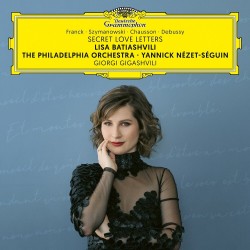
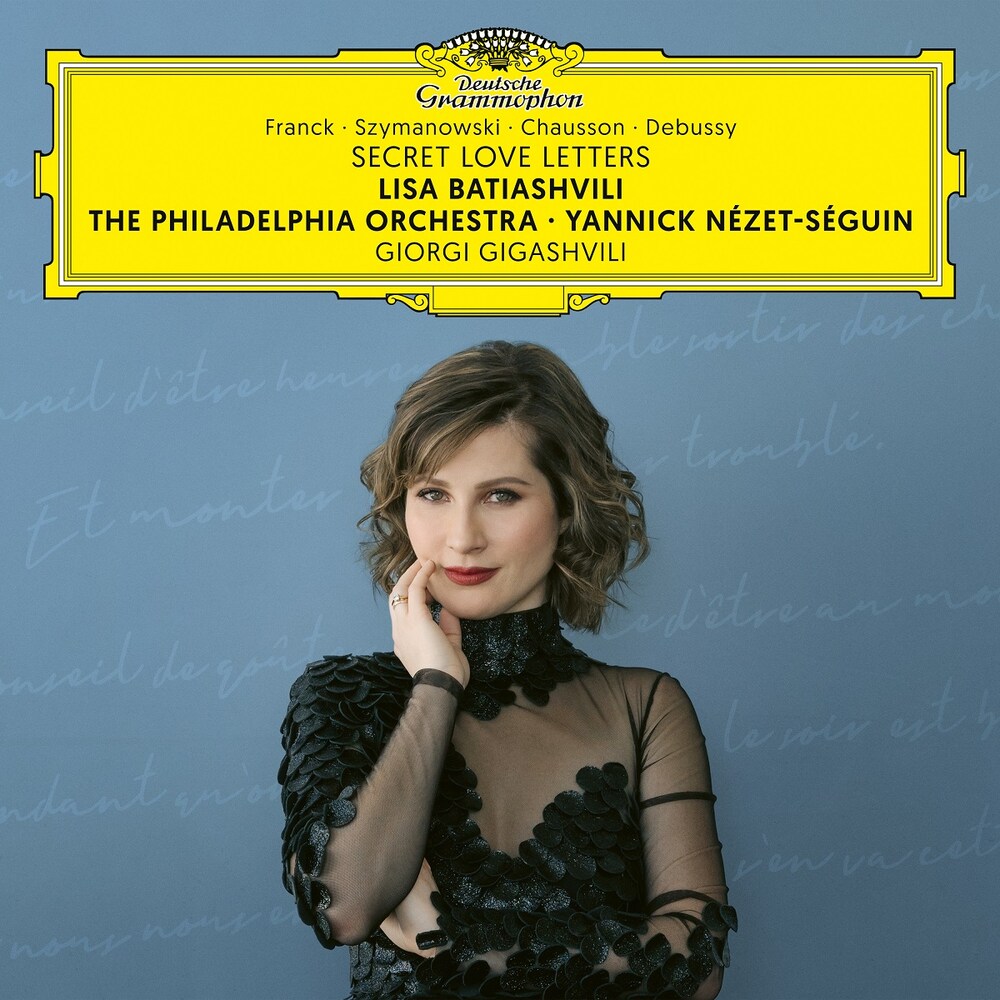
03 Batiashvili Secret Love lettersSecret Love Letters, the latest CD from violinist Lisa Batiashvili celebrates the concealment of the message of love in music, noting that so much of the message is secret and intimate (Deutsche Grammophon 00028948604623 lisabatiashvili.com/). 

Pianist Giorgi Gigashvili joins the violinist in an electrifying performance of the Franck Sonata in A Major. Batiashvili’s shimmering tone and strength in the highest register are fully evident in Szymanowski’s Violin Concerto No.1 Op.35 with its gorgeous and heart-rending main theme, the Philadelphia Orchestra under Yannick Nézet-Séguin providing the accompaniment here and in Chausson’s Poème Op.25, originally called Le Chant d’amour triumphant.

Nézet-Séguin is the pianist for the Heifetz arrangement of Debussy’s Beau soir which ends a CD that adds to Batiashvili’s already impressive discography. 

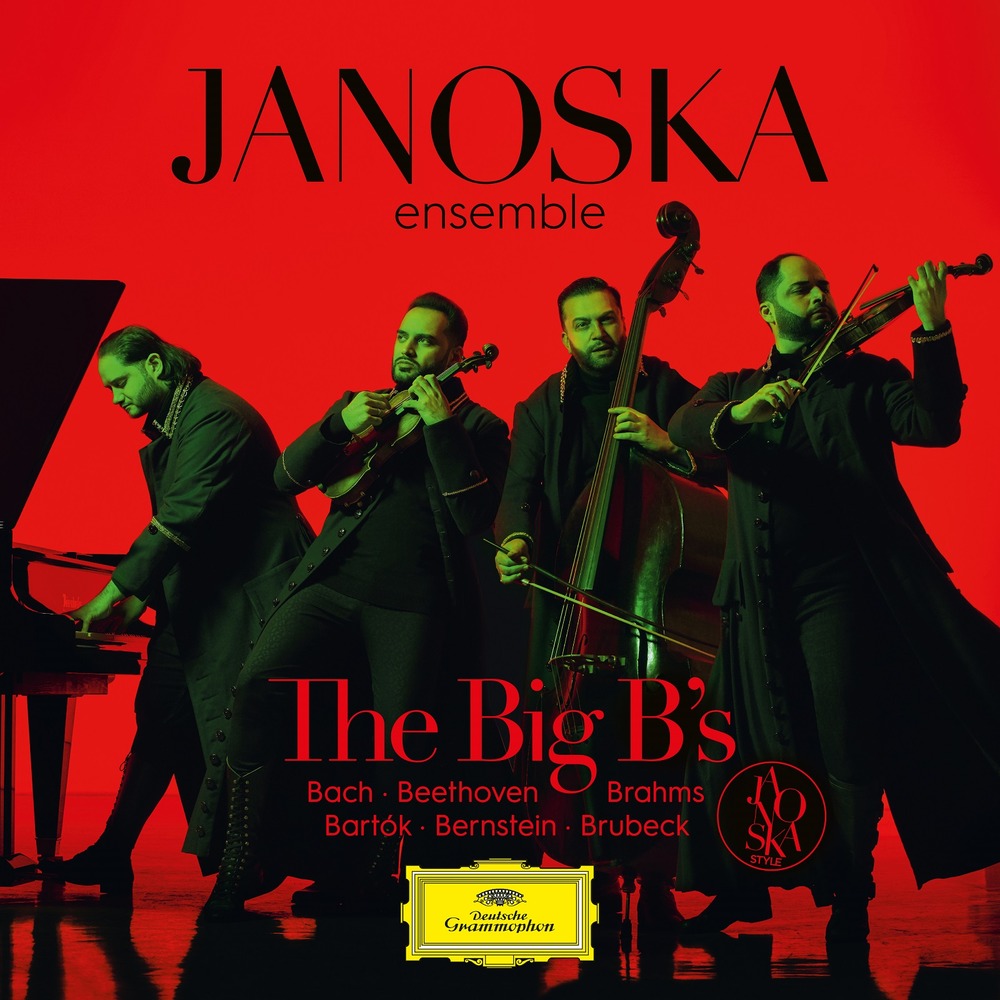
04 Janoska TheBigBsThe Big B’s, the third CD from the fabulous Janoska Ensemble of Bratislava-born Janoska brothers Ondrej and Roman on violin and pianist František, with brother-in-law Julius Darvas on bass, features music by Bach, Beethoven, Brahms, Bartók, Bernstein and Brubeck, all delivered in the inimitable virtuosic and semi-improvisational Janoska style (Deutsche Grammophon 00602445962075 deutschegrammophon.com/en/catalogue/products/the-big-bs-janoska-ensemble-12750).

The Bach Double Violin Concerto in D Minor BWV1043 sees the second violin take an improvised jazz approach. Two violins intertwine beautifully in the slow movement from Beethoven’s Pathétique Piano Sonata, and Brahms’ Hungarian Dance No.1 is a blast, as are Bartók’s Romanian Folk Dances. There’s great piano in the Brubeck Blue Rondo à la Turk and superb ensemble in Bernstein’s Candide Overture.

There are four original pieces inspired by the brothers’ children, and the CD ends with František’s riotous Beethoven paraphrase of Nine Symphonies in Nine Minutes. Wonderful violin playing and terrific piano anchor a dazzling CD which is a pure delight from start to finish.
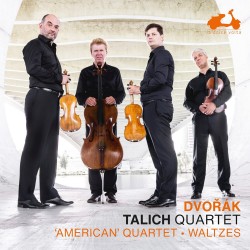
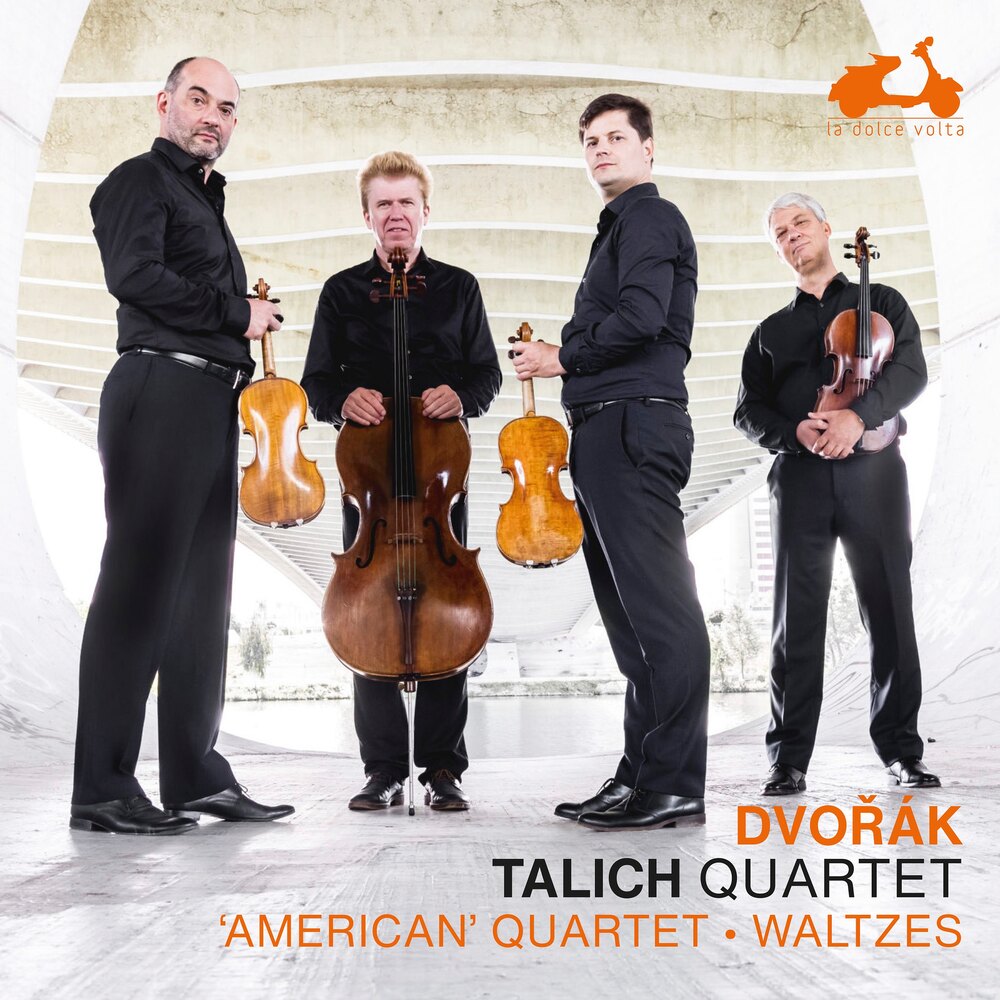
05 Talich DvorakIt’s hard to imagine more appropriate performers for a Dvořák string quartet recital than a top Czech ensemble, feelings more than borne out by listening to the Talich Quartet, originally formed in 1964 on their latest CD Dvořák American Quartet & Waltzes, their first recording with their new lineup (La Dolce Vita LDV101 ladolcevolta.com/?lang=en).

The Eight Waltzes for Piano Op.54 B101 date from 1879-80; two were transcribed for string quartet by the composer himself, with the remaining six being transcribed for the Talich Quartet in 2020 by violist Jiří Kabát. They are an absolute delight.

The Quartet Movement in F Major B120 from October 1880 was intended as the first movement of a new quartet but abandoned; not premiered until 1945, it was published in 1951.

A beautifully warm performance of the String Quartet in F Major Op.96 B179 “American” that simply bursts with life and spontaneity closes an outstanding CD.
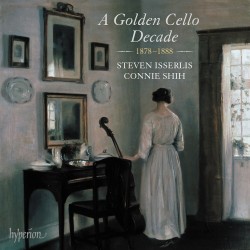
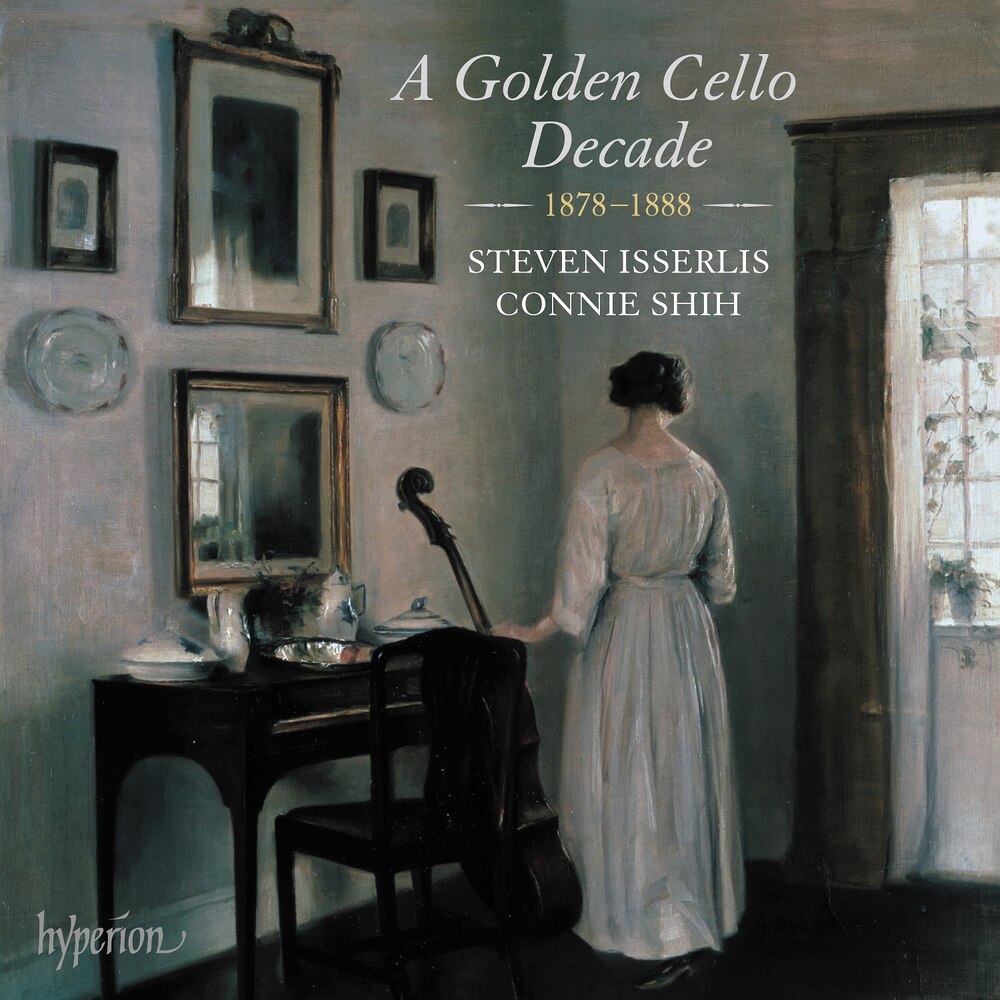
06 Isserlis ShihThe wonderful Steven Isserlis is back with another engrossing CD, this time celebrating a period which saw a huge expansion in the cello and piano repertoire on A Golden Cello Decade 1878-1888 with Canadian pianist Connie Shih (Hyperion CDA68394 hyperion-records.co.uk/dc.asp?dc=D_CDA68394).

Bruch’s Kol Nidrei Op.47 from 1881 opens the disc, the sumptuous richness of Isserlis’ 1726 “Marquis de Corberon” Strad heard to full effect. Olivia Jageurs adds the harp part.

The 15-year-old Richard Strauss and the 30-year-old German composer Luise Adolpha Le Beau both submitted cello sonatas to an 1881 competition, but neither won. At least Le Beau had her Sonata in D Major Op.17 published, but Strauss withdrew his Sonata in F Major Op.6 and rewrote it in 1883; the original sonata heard here was finally published in 2020. Le Beau’s 1878 sonata is a rarely heard gem, and deserves to be much better known.

Dvořák’s 4 Romantic Pieces Op.75 from 1887 are heard in an arrangement by Isserlis, and two Footnotes close the disc: Ernst David Wagner’s Kol Nidrei and Isaac Nathan’s Oh! weep for these, the melody used in the second part of Bruch’s Kol Nidrei.
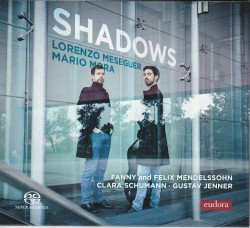
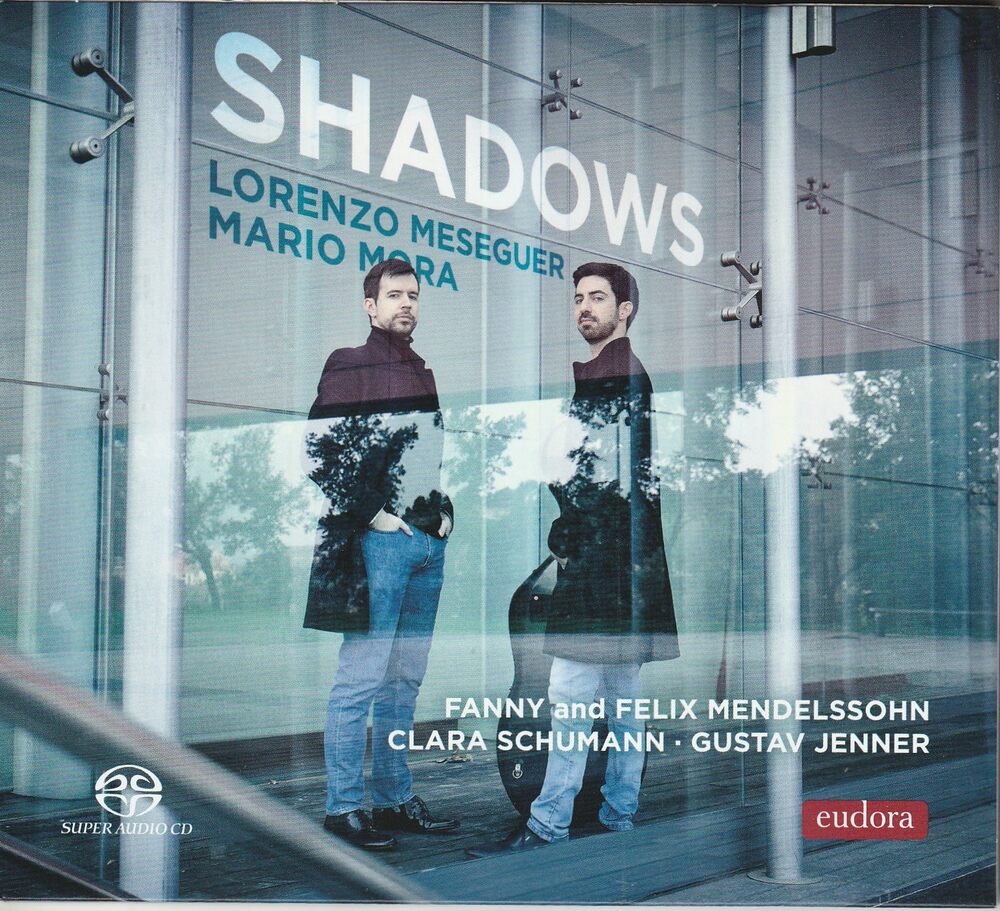
07 ShadowsShadows, the new CD from cellist Lorenzo Meseguer and pianist Mario Mora features works by Fanny and Felix Mendelssohn, Clara Schumann and Gustav Jenner, the connection apparently being “people living in the shadow of other composers” (Eudora EUD-SACD-2204 eudorarecords.com).

 Certainly Fanny and Clara were overshadowed by their brother and husband respectively, and Jenner, Brahms’ only compositional student clearly qualifies, but it’s an extremely tenuous link to Felix, who seems to be regarded here as under-appreciated more than overshadowed.

No matter, for there’s so much to enjoy and admire on this disc, from Fanny’s lovely but infrequently performed Fantasia in G Minor through Felix’s Sonata No.2 in D Major Op.58 – its really tricky passage-work in the Molto Allegro e vivace finale handled superbly – to Clara’s Drei Romanzen Op.22 (originally for violin and piano and transcribed here by the duo) and Jenner’s unsurprisingly quite Brahmsian Sonata in D Major.

Fine, rich playing and a beautifully full, clean and resonant recording make for a quite outstanding CD.
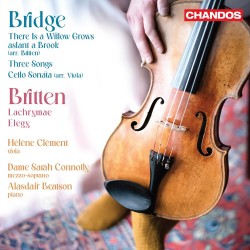
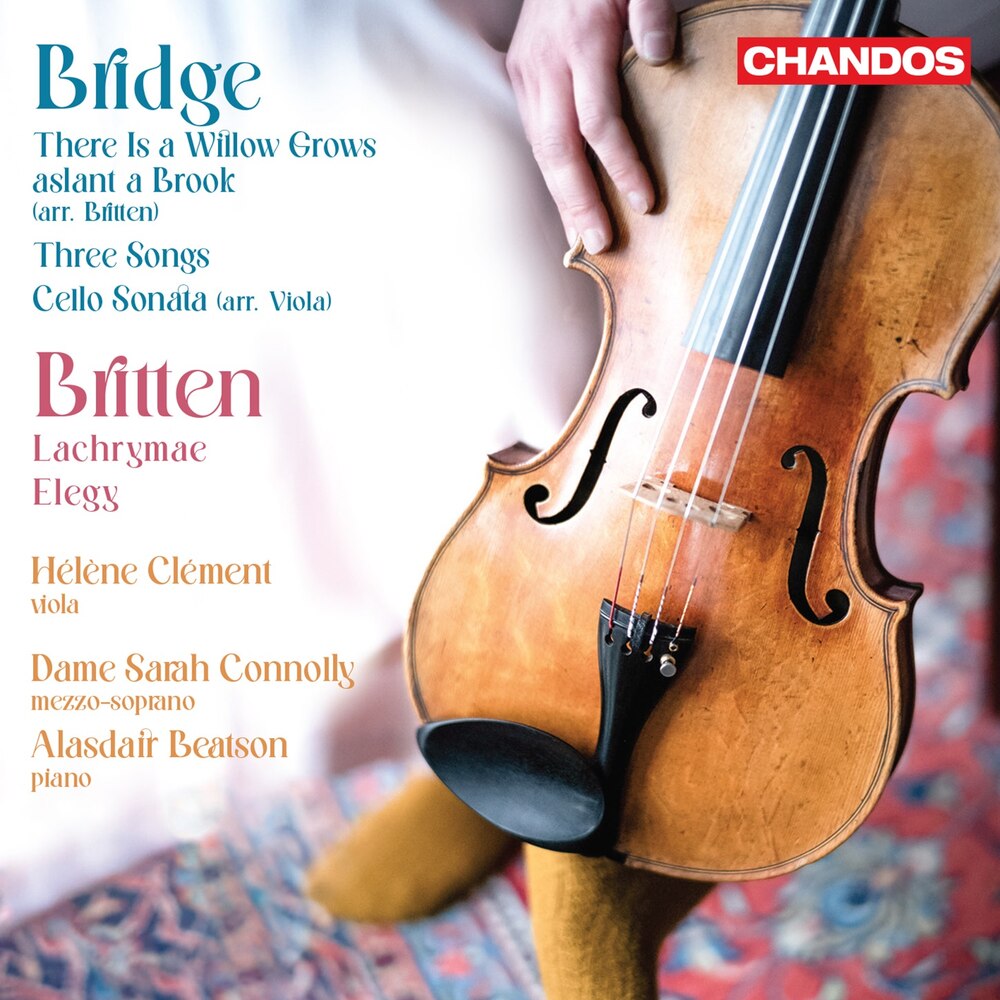
08 Britten BridgeOn Bridge/Britten: Viola Works the violist Hélène Clément plays the 1843 Francesco Giussani viola, on loan from Britten Pears Arts that was owned by Frank Bridge and gifted by him to Benjamin Britten in 1939, calling the CD “a testament to both composers and the instrument that binds them all together.” She is accompanied by pianist Alasdair Beatson (Chandos CHAN 20247 chandos.net/products/catalogue/CHAN%2020247).

Bridge’s Cello Sonata in D Minor from 1913-17 is heard here in Clément’s arrangement for viola. There is a Willow Grows aslant a Brook: Impression for Small Orchestra from 1927 was arranged for viola and piano by Britten in 1932. Mezzo-soprano Dame Sarah Connolly is the soloist in the Three Songs for Medium Voice, Viola and Piano from 1906-07, not published until 1982.

The two Britten works are the 1930 Elegy for Solo Viola and the Lachrymae: Reflections on a Song of Dowland Op.48 from 1950, revised in 1970.

The knowledge that both composers played this instrument and would have had its sound in mind when writing for viola certainly adds to the impact of an excellent CD.
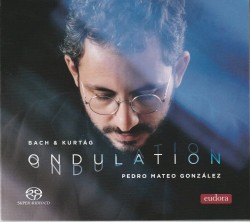
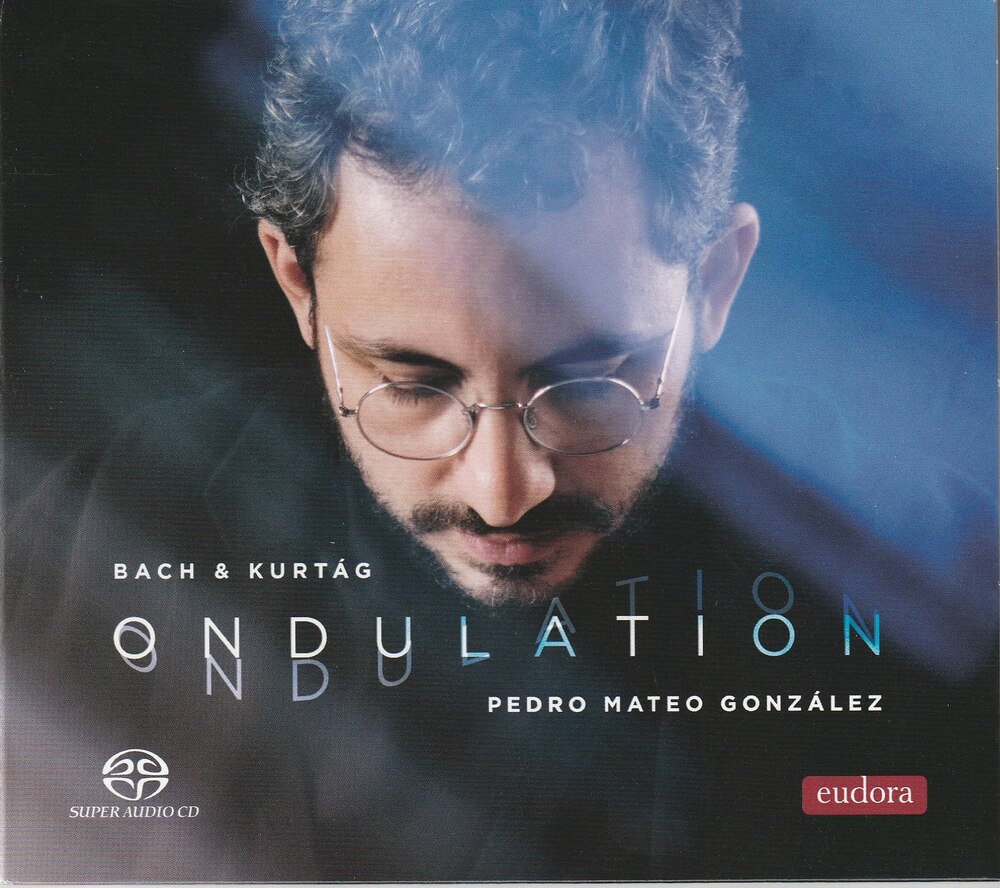
09 OndulationThe CD Ondulation: Bach & Kurtág features outstanding playing by guitarist Pedro Mateo González (Eudora EUD-SACD-2202 eudorarecords.com).

The three Bach works are the Lute Suite in C Minor BWV997, the Cello Suite in G Major BWV1007 and the Violin Partita No.2 in D Minor BWV1004. The Lute Suite is rhythmically bright, with crystal-clear ornamentation; the Cello Suite is sensitive and quite beautiful. There are some added bass notes and the occasional filling out of chords in the Partita, and brilliant clarity in the rapid runs in the challenging Chaconne.

First recordings of four extremely brief pieces from the Darabok a Gitáriskolának by the Hungarian composer György Kurtág (b.1926) act as interludes between the Bach works. González is technically flawless, with a superb sense of line and phrase. With its beautifully clean playing and recording it’s as fine a guitar CD as I’ve heard lately.
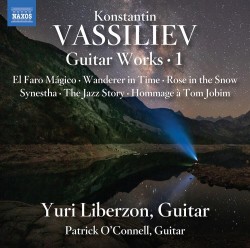
10 Yuri Liberzon Guitar Works Vol. 1Yuri Liberzon is the guitarist on Konstantin Vassiliev Guitar Works 1, a recital of works by the Russian-born German composer that merge jazz, Russian folk music and contemporary Western trends in beautifully-crafted and entertaining short pieces (Naxos 8.574315 naxos.com/Search/KeywordSearchResults/?q=8.574315).

One piece here – Fatum – is from 1996, with the remaining 11 composed between 2005 and 2019; three were written specifically for Liberzon. There are some fascinating and innovative percussive effects in the bossa nova-inspired Hommage à Tom Jobim, and some lovely melodic writing in numbers like Cavatina and Rose in the Snow. Patrick O’Connell, Liberzon’s partner in the Duo Equilibrium is the second guitarist on Obrío and on the Two Russian Pieces that close the disc.

Recording quality, produced and edited by Norbert Kraft at St. Paul’s Anglican Church in Newmarket, Ontario is of the usual top-notch Naxos level.
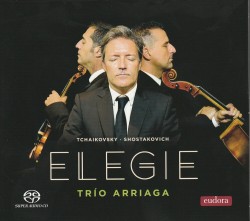
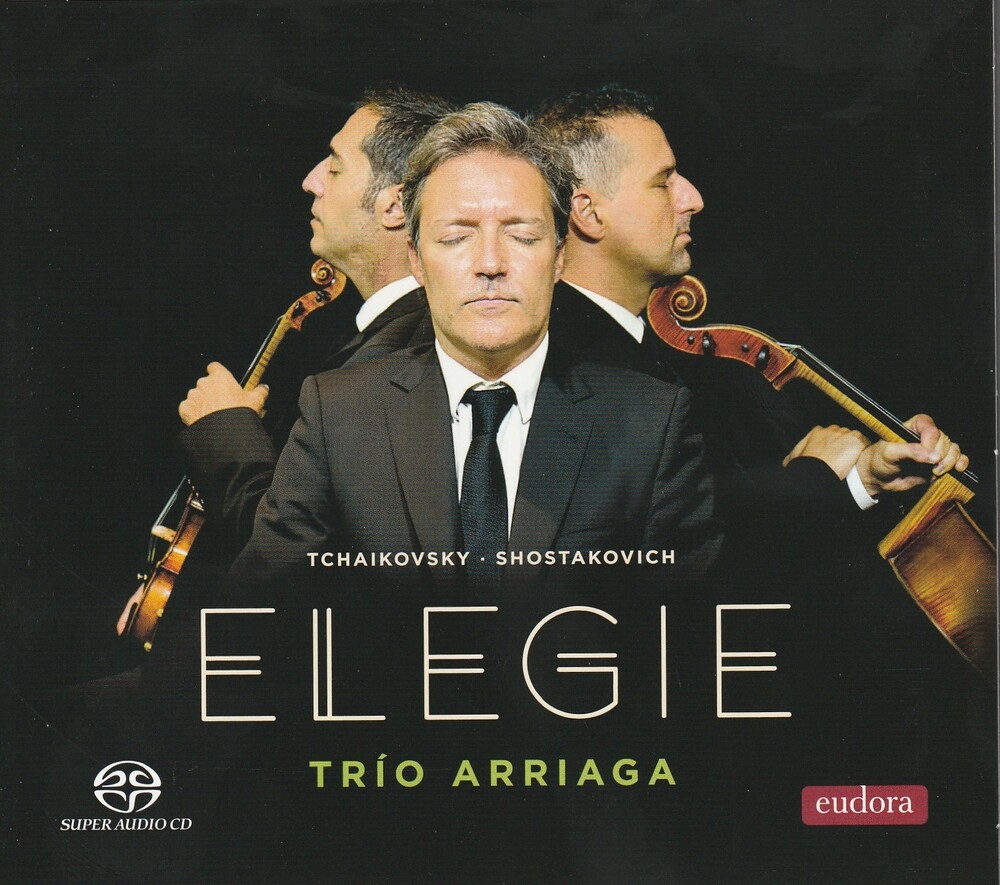
11 Trio Arriaga ElegieTwo elegiac piano trios honouring the memory of a close friend are featured on Elegie, the new CD from Trio Arriaga (Eudora EUD-SACD-2201 eudorarecords.com).

Tchaikovsky’s Piano Trio in A Minor Op.50 was composed in late 1881, the March 1882 premiere marking the first anniversary of the death of pianist Nikolai Rubinstein, founder of the Moscow Conservatory. It’s a large work with an interesting structure – a lengthy and rhapsodic opening Pezzo Elegiaco followed by an even longer Tema con variazioni, with virtuosic piano writing throughout.

Shostakovich’s 1944 Piano Trio No.2 in E Minor Op.67 was in memory of the death of Ivan Sollertinsky, artistic director of the Leningrad Philharmonic. More than a lament for a lost friend, the work also reflects the growing awareness of the Nazi wartime atrocities.

There’s outstanding playing and ensemble work throughout an excellent CD.

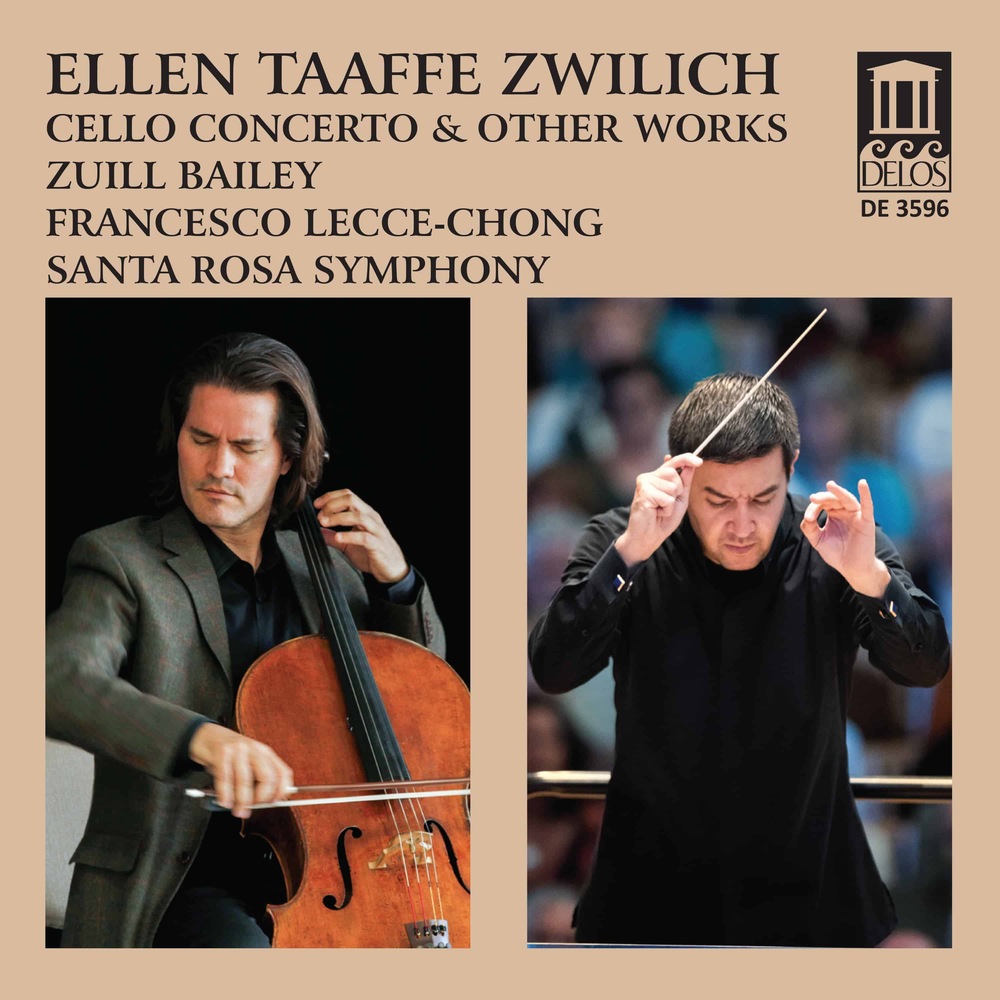
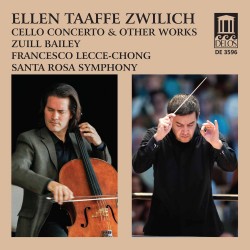
12 ZwilichDuring the pandemic lockdown the Santa Rosa Symphony under Francesco Lecce-Chong presented a series of live concerts recorded for a virtual audience, with Ellen Taaffe Zwilich the featured composer. The new CD Ellen Taaffe Zwilich Cello Concerto & Other Works is devoted to works that were performed during those concerts (Delos DE 3596 delosmusic.com).

The Cello Concerto from 2019-20 is performed by Zuill Bailey, for whom it was commissioned. The third of its three fairly short movements in particular exploits the singing, lyrical nature of the instrument.

Elizabeth Dorman is the soloist in Peanuts® Gallery for Piano and Orchestra, six short pieces written in 1996 on commission for a Carnegie Hall children’s concert and featuring characters from the Charles Schulz cartoon strip.

Violinist Joseph Edelberg brings a warm, rich tone to the quite lovely 1993 Romance for Violin and Chamber Orchestra, and the Prologue and Variations for String Orchestra closes an entertaining disc.


Back to top