On a pleasantly cold February evening, Toronto Masque Theatre held one of its last shows. It was a program of songs: Bach’s Peasant Cantata in English translation, and a selection of pop and Broadway numbers sung by musician friends. An actor was on hand to read us poems, mostly of Romantic vintage. The hall was a heritage schoolhouse that could have passed for a church.

The modestly sized space was filled to the last seat and the audience enjoyed the show. I noticed though what I notice in a lot of other Toronto song concerts – a certain atmosphere of everybody knowing each other, and an audience that knows exactly what to expect and coming for exactly that.

I was generously invited as a guest reviewer and did not have to pay the ticket, but they are not cheap: $40 arts worker, $50 general audience, with senior and under-30 discounts. And the way our arts funding is structured, this is what the small-to-medium arts organizations have to charge to make their seasons palatable. Now, if you were not already a TMT fan (and I appreciate their operatic programming and will miss it when it’s gone), would you pay that much for an evening of rearranged popular songs and a quaint museum piece by Bach?

The stable but modest and stagnating audience is the impression I get at a lot of other art song concerts in Toronto. Talisker Players, which also recently folded, perfected the formula: a set of readings, a set of songs. Some of their concerts gave me a lot of pleasure over the last few years, but I knew exactly what to expect each time. Going further back, Aldeburgh Connection, the Stephen Ralls and Bruce Ubukata recital series, also consisted of reading and music. It also folded, after an impressive 30-year run. It was largely looking to the past, in its name and programming, and it lived in a cavernous U of T hall, but it could have easily continued on and its core audience would have continued to come. Stable audience, yes, but also unchanging.

The issue with a stable and unchanging audience is that the programming will suffer. It’ll go stale, ignore the not already converted, abandon the art of programming seduction. And the ticket will still cost at least $50.

I’ve also sat in the Music Gallery’s contemporary music recitals alongside the audience of eight so it’s not entirely the matter of heritage music vs. new music. Empty halls for contemporary music concerts are as depressing as book events in Toronto, to which nobody, not even the writer’s friends, go. (I know this well; don’t ask me how.)

So, where is art song performance in Canada’s largest city going?

Due to the way they’ve been presented for decades now, there’s a not-negligible whiff of Anglican and Methodist churchiness to Toronto’s art song concerts. They usually take place in a church (Trinity-St. Paul’s, Rosedale United, Trinity Chapel, St. Andrew’s, etc) or a place very much like a church (Heliconian Hall). They are often programmed as an occasion for personal edification – as something that’ll be good for you, that will be a learning opportunity. Why are we being read to so much in recitals – instead of, for example, being talked to and with? Does anybody really enjoy being read to in a music concert?

I sometimes wonder if the classical music infrastructure of concertgoing, its comportment etiquette, regulation of space, fussy rituals of beginning, presentation, breaks and ending wasn’t built to control and disguise classical music’s visceral power over humans? And to keep tame its community-expanding, boundary-blurring potential?

In other words, getting out of the church and the U of T will benefit Toronto’s art song performance. Classical music, including art song, is a pleasure, not homework; it’s inviting the stranger over, not getting together with the same group each time. Some of those who program art song and chamber music in Toronto are already grappling with these questions, fortunately.

Collectìf

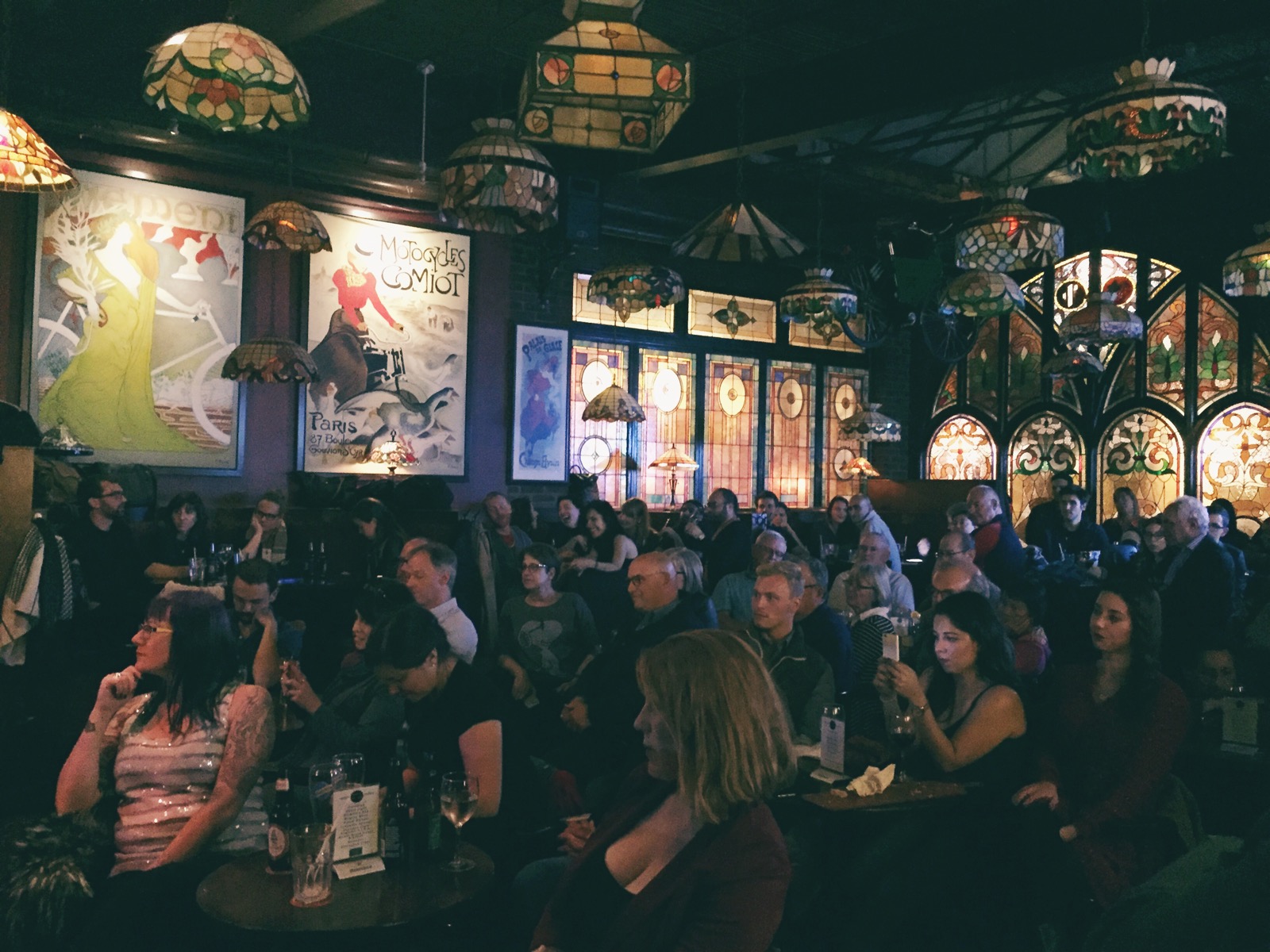
Among them is the ensemble Collectìf, consisting of three singers and a pianist: Danika Lorèn, Whitney O’Hearn, Jennifer Krabbe and Tom King. They scour the city for locations and choose places off the beaten path. They held a recital in an Adelaide St. W. loft, and a raucous songfest at an old pub in Little Italy. For a Schubert Winterreise, performed in the more familiar quarters of Heliconian Hall, Danika Lorèn had prepared video projections to accompany the performance and the singing was divided among the three singers, who became three characters. For an outing to the COC’s free concert series, they created their own commedia dell’arte props and programmed thematically around the poets, not the composers who set their poems to music. Collectìf is a shoestring operation, just starting out, yet already being noticed for innovation. Lorèn is currently member of the COC’s Ensemble Studio, which is why the Collectìf somewhat slowed down, but when I spoke to her in Banff this summer, she assured me that the group is eager to get back to performing. Winterreise toured last fall to Quebec and an art song program around the theme of nightmares returns to the same festival later in the year.

Happenstance

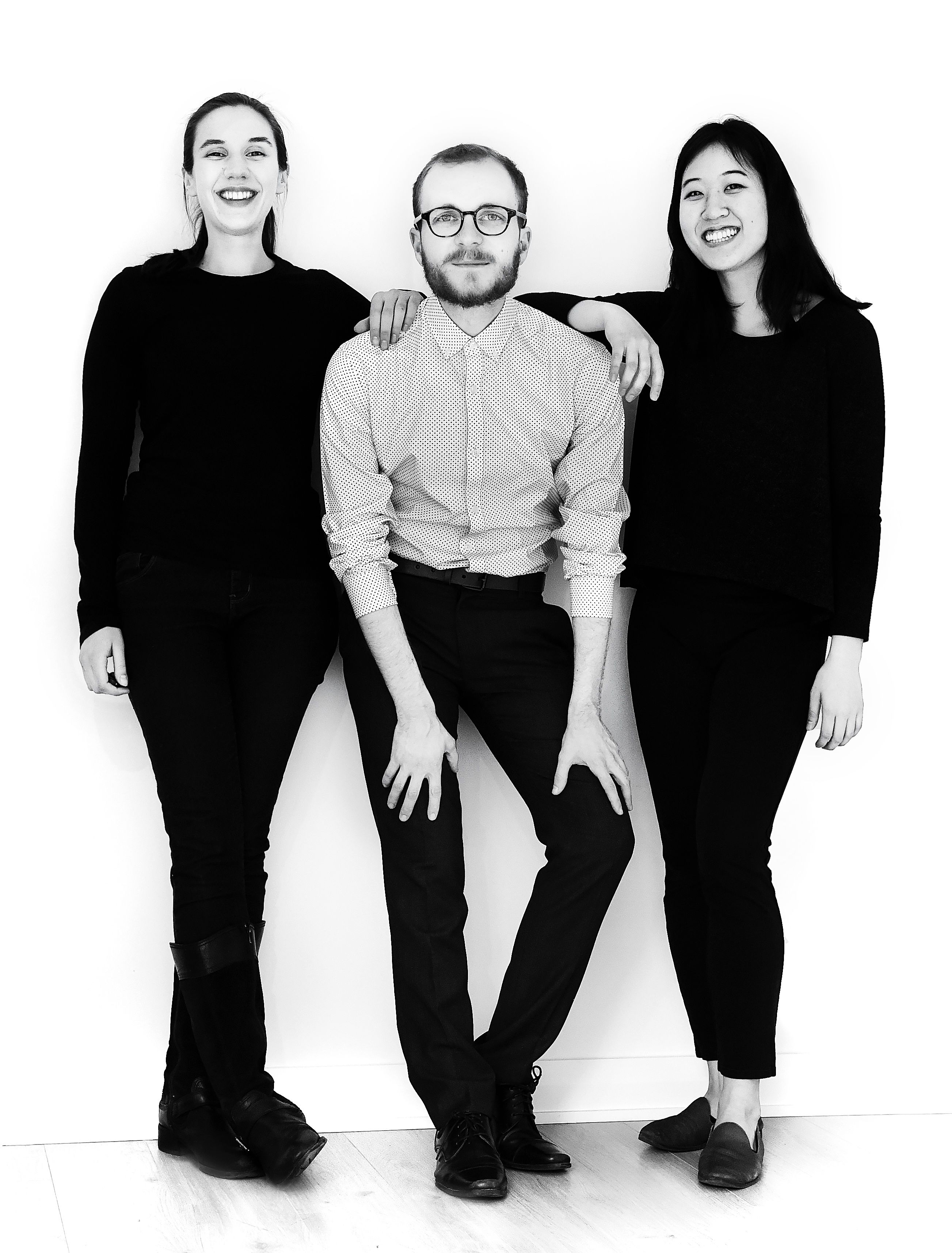
Another group that caught my eye did not even have a name when I first heard them in concert. They are now called Happenstance, the core ensemble formed by clarinettist Brad Cherwin, soprano Adanya Dunn and pianist Nahre Sol. That’s an obscene amount of talent in the trio (and check out Nahre Sol’s Practice Notes series on YouTube), but what makes them stand way out is the sharp programming that combines the music of the present day with musical heritage. “Lineage,” which they performed about a year ago, was an evening of German Romantic song with Berg, Schoenberg, Webern and Rihm and not a dull second. A more recent concert, at the Temerty Theatre on the second floor of the RCM, joined together Françaix, Messiaen, Debussy, Jolivet and Dusapin. The evening suffered from some logistical snags – the lights went down before a long song cycle and nobody but the native French speakers could follow the text – but Cherwin tells me he is always adjusting and eager to experiment with the format.

Cherwin and I talked recently via instant messenger about their planned March concert. As it happens, both the pianist and the clarinettist have suffered wrist injuries and have had to postpone the booking for later in March or early April. Since you are likely reading this in early March, reader, head to facebook.com/thehappenstancers to find out the exact date of the concert.

Happenstance (from left: Adanya Dunn, Brad Cherwin and Nahre Sol)In the vocal part of the program, there will be a Kurtág piece (Four Songs to Poems by János Pilinszky, Op.11), a Vivier piece arranged for baritone, violin, clarinet, and keyboards, and something that Cherwin describes as “structured improv involving voice”. “It’s a structured improv piece by André Boucourechliev that we’re using in a few different iterations as a bridge between sections of the concert,” he types.

I tell him that I’m working on an article on whether the art song concert can be exciting again, and he types back that it’s something they’ve been thinking about a lot. “How can we take everything we love about the chamber music recital and take it to a more unexpected place. How can repertoire and presentation interact to create a narrative/context for contemporary music. How can new rep look back on and interact with old rep in a way that enhances both?”

He tells me that they’re looking into the concert structure at the same time – so I may yet live to see recitals where the pieces are consistently introduced by the musicians themselves.

Will concerts continue to involve an entirely passive audience looking at the musicians performing, with a strict separation between the two? There were times, not so long ago, when people bought the published song sheets to play at home and when the non-vocational (better word than amateur) musicianship enhanced the concert-goers’ experience of music. Any way to involve people in the production of at least a fraction of the concert sound or concert narrative?, I ask him, expecting he’ll politely tell me to find a hobby.

“We’ve thought a lot about that actually,” he types back. “It’s a difficult balance. Finding a way to leave room for collaboration while also having a curated experience.” Against the Grain Theatre, the opera company where he now plays in the permanent ensemble, also wants to push in that direction, he tells me.

Boldly Go

There is a corner of the musical avant-garde, it occurs to me as I thank him and log off from our chat, that actively seeks out non-professional participation. There are Pauline Oliveros’ tuning meditations, of course, but more locally there is also Torontonian Christopher Willes, whose various pieces require participation and are fundamentally collective and collaborative. Though he isn’t a musician, Misha Glouberman’s workshops in social behaviour, like Terrible Noises for Beautiful People, are arguably a process of music-making.

But how to achieve an active audience in the small, chamber or lieder situations? It’s easier with choruses and large production, where sing-alongs are possible – some smaller opera houses are already doing it, for example Opéra-Comique in Paris. The Collectìf trio did get the audience to sing at the Monarch Tavern that one time (the Do Over, January 2016) but the experiment hasn’t been repeated in Toronto.

Speaking of pub recitals, Against the Grain’s Opera Pub is a glorious project (first Thursday of every month at the Amsterdam Bicycle Club), but it’s more operatic than art song, at least for now. ClassyAF are a group of instrumentalists who perform in La Rev and The Dakota Tavern, no vocals. Drake One Fifty restaurant in the Financial District has just started the Popera Series with opera’s greatest hits performed in a restaurant full of people, but again, it’s opera, the more glamorous and easier-to-sell sibling to the art song.

Against the Grain's Opera Pub at the Amsterdam Bicycle ClubWill Happenstance, Collectif and similar innovative upstarts, and their more established peers like Canadian Art Song Project, endure over the years, obtain recurring arts council funding and renew art song audience?

With that goal in mind, my immodest proposal for the present and future art song presenter: move out of the churches and university halls. Musicians, talk to people, introduce the pieces. Program the unfamiliar. Always include new music, maybe even by composers who can be there and say a few words. If the music is danceable, allow for concerts with audience dancing. (I’m looking at you, Vesuvius Ensemble.) Engage the people. If live music is to be different from staring at the screen, make it different from staring at the screen.

Some March highlights

Meanwhile, here are my March highlights, which are of the more traditional Toronto kind, though still of interest.

March 19 at 7:30pm, Canadian Art Song Project presents its 2018 commission, Miss Carr in Seven Scenes by Jeffrey Ryan. Miss Carr is Emily Carr, and the song cycle, based on her journals, was written for Krisztina Szabó and Steven Philcox. At (alas) U of T’s Walter Hall.

March 4, as part of Syrinx Concerts Toronto, mezzo Georgia Burashko will sing Grieg’s Lieder with Valentina Sadovski at the piano. Baritone Adam Harris joins her in Schumann duets for baritone and mezzo, whereas solo, he will sing Canadian composer Michael Rudman’s The City.

March 11 at Temerty Theatre, Andrea Botticelli will give a lecture-recital (I like the sound of this) on the Koerner collection, “Exploring Early Keyboard Instruments.” Vocal and keyboard works by Purcell, Haydn and Beethoven on the program with tenor Lawrence Wiliford singing. The only U of T chapel to which I will always gladly return, the Victoria College Chapel, hosts the Faculty of Music’s Graduate Singers Series, also on March 11.

Finally, if you are in Waterloo on March 7 and up for some Finnish folk, the U of W’s Department of Music presents the EVA-trio (cellist Vesa Norilo, kantele player Anna-Karin Korhonen and soprano Essi Wuorela) in a noon-hour concert.

Am I wrong about the future of art song in Toronto? Send me an email at artofsong@thewholenote.com.

The opening Kyrie of the Bach Mass in B Minor is one of the hardest starts of any major work for a choir; with no starting pitch, the precisely placed hard “K” prior to any other sound, and careful phrasing that starts right away – the opening has much to say about how the rest of the performance will play out. Bold and full should be the effect. Bach’s masterpiece is not a light undertaking for any choir. This April, it’s safe to assume that Tafelmusik will take up this estimable work with its usual intense professionalism, deep artistry and impeccable technique.

“This is the seventh time Tafelmusik has [programmed] the Mass, with some 25 performances behind us,” shares Charlotte Nediger, Tafelmusik harpsichordist and organist. Instrumentalists and choristers alike relish revisits to Bach’s work, finding “new details and more depth in the score every time.” Nediger continues: “The Bach Mass in B Minor is a very challenging piece on every level, for all performers on stage …[It] demands an extremely high level of skill, virtuosity and artistry of every single singer, and the combined result is astonishing.”

Ivars Taurins takes the reins with early music soloists. Dorothee Mields, a German early music specialist, takes on the soprano. Laura Pudwell, Canadian, is the mezzo-soprano. English tenor Charles Daniels joins Canadian Tyler Duncan to round off the soloists. The essential horn solo in the Quoniam will be performed by Scott Wevers.

On the performance, Nediger concludes: “To say that it is inspiring is an understatement – it is also humbling, in the best sense. Tafelmusik is an ensemble in which everyone brings absolutely everything they can to every performance, and I think you sense that in the audience.” Nediger herself has an enviable position to take it all in, placed at the heart of the stage in front of the orchestra. With the surrounding forces of Tafelmusik Baroque Orchestra and Chamber Choir, she is uniquely positioned to enjoy the music as she works her way through the intense score.

Tafelmusik performs Bach’s Mass in B Minor April 5 to 7, 8pm, April 8, 3:30pm at Jeanne Lamon Hall, Trinity-St Paul’s Centre and April 10, 8pm at George Weston Recital Hall, Toronto Centre for the Arts.

As discussed elsewhere in this issue, on March 30 at 7:30pm at Metropolitan United Church, the Metropolitan Festival Choir and Orchestra also perform the Mass in B Minor for Good Friday, with a top-notch set of soloists: Ellen McAteer and Gisele Kulak, soprano; Christina Stelmacovich, mezzo-soprano; Charles Davidson, tenor; and Daniel Lichti, baritone. Metropolitan United Church.

Hilary Apfelstadt and the University of Toronto at Lincoln Center

Hilary Apfelstadt, (soon to be retiring) director of choral activities at the University of Toronto, last visited Lincoln Center, New York City, to perform as part of the Distinguished Concerts International New York City (DCINY) concert series for an International Women’s Day concert in March 2014. This month she returns for DCINY’s March 17 concert, conducting the combined forces of singers and orchestra in the major choral work on the program, Luigi Cherubini’s Requiem. Among the 200 singers from across the US and Canada, including the Luther College Choir from Regina, will be singers from Toronto’s Kingsway-Lambton United Church Chancel Choir and a few dozen singers from the four major choirs of the University of Toronto Faculty of Music. The Cherubini shares the ticket with a set of smaller choral works conducted by Martha Shaw, and the premiere of a concerto for flute, harp and orchestra by DCINY composer-in-residence Dinos Constantinides, led by DCINY principal conductor Jonathan Griffith.

Hilary ApfelstadtOf the Cherubini, Apfelstadt says: “It’s a lovely work, a little unusual, in that it has no soloists. The choir is singing almost nonstop. It was performed at Beethoven’s funeral because he admired it so much, but was originally created for the memorial of King Louis XVI of France.” This work follows the standard requiem format, but with Romantic and Classical elements reflecting the transition period beginning in 19th-century European music. The opening two movements are performed without violins. The deeper sound and broad crescendos provide a dramatic edge without the higher pitches. Apfelstadt also notes that the instrumentation lacks flutes, further contributing to a profound bass and heaviness in the music.

Early Romantic ideals are apparent in the bombastic Dies Irae, with the unusual programming of a gong. The same movement also shows a more classical ideal, with fugal runs and strings typical of Mozart and other classical contemporaries. The choir provides the dramatic energy of the piece, consistently singing in chorale throughout. The fugal runs of the Offertorium are particularly exciting.

Apfelstadt is mindful of the intense time commitments and existing rehearsals music students must juggle. “From a pragmatic point of view, when you’re teaching at school, you’re always trying to find things that are vocally challenging, without being overtaxing.” The goal is to set up the students for success and the Cherubini represents “a choral piece that is a challenge, with enough elements in it to be surprising.”

“They seem to like it, have a feel of accomplishment,” says Apfelstadt. “Virtually none of the students have encountered [Cherubini’s] work, or heard much about this composer. It’s really well written, bits remind me of Mozart, bits remind me of Beethoven. And because Beethoven was such a fan of the work, it’s like a stamp of approval.”

Those students who join Apfelstadt in New York will have the privilege of experiencing Lincoln Center from the stage. Here in Toronto, later in the month, on March 24 at the MacMillan Theatre, you can catch the entire massing of the four main faculty choirs, the Women’s Choir, the Women’s Chamber Choir, the Men’s Chorus and the MacMillan Singers, along with the University of Toronto Symphony Orchestra as they present the Cherubini Requiem. With 200 singers and the power of the U of T Symphony Orchestra at her fingertips, Apfelstadt looks forward to this performance capping off her distinguished career at the University of Toronto.

QUICK PICKS

Mar 8 and 9: Soundstreams presents Tan Dun’s Water Passion. David Fallis helms this performance with instrumentalists and Choir 21. Dun has not often composed for choir and this complex work invokes the circular passage and flow of life, intimated by the story of Christ, and evoked by the presence and sound of water. Helmuth Rilling, founder of the Internationale Bachakademie Stuttgart, commissioned four new interpretations of the Passion of Christ from the four Gospels in 2000. Tan Dun was given the commission for St. Matthew’s. Mar 8, 7:30pm at the Isabel Bader Theatre, Kingston; Mar 9, 8pm at Trinity-St. Paul’s Centre, Toronto.

For a more conventional performance of the Bach St. Matthew Passion, Chorus Niagara under Robert Cooper performs it the week prior. Mar 3, 7:30pm at FirstOntario Performing Arts Centre, St. Catharines.

Mar 28 and 30, 7:30pm: The Toronto Mendelssohn Choir presents “Sacred Music for a Sacred Space.” All the choristers (myself included) always love this annual Easter tradition. Performing on Good Friday, in the aural and visual splendour of St. Paul’s Basilica, maintains an annual tradition of emotionally deep a cappella music presented by Toronto’s finest. Artistic director Noel Edison has programmed a horn of plenty including Eric Whitacre’s Sleep, John Tavener’s Song for Athene, Rachmaninoff’s Bogoroditse Devo and works by Bruckner, Mendelssohn, Łukaszewski and others.

Mar 30, 3pm: The Trinity St. Paul’s United Church Choir are joined by VIVA! Youth Singers and the Oakville Choir for Children and Youth in presenting “Good Friday Choral Concert.” Part of the programming is Andrew Balfour’s Take the Indian: A Vocal Reflection on Missing Children, a remarkable piece built from the pain of the Canadian government’s residential school atrocities and the longstanding institutionalized racism and neglect of missing and murdered Indigenous women and girls. Balfour, himself an Indigenous child taken by and into state care, is artistic director of Camerata Nova, an early, contemporary and Indigenous-infused music ensemble based in Winnipeg. Balfour is being brought in to help prepare the choirs. If sufficient weight is given to the work’s performance, its power and its discomforting narrative, I anticipate a significant and moving display.

Mar 31, 7:30pm: The Guelph Chamber Choir bids farewell to conductor Gerald Neufeld after 37 years at the helm. Neufeld, a longstanding music educator, has taught in the faculties at the University of Guelph and Western University. His final performance will be Brahms’ masterpiece: A German Requiem at the River Run Centre, Guelph.

Follow Brian on Twitter @bfchang. Send info/media/tips to choralscene@thewholenote.com.

This column will offer more questions than answers, more speculations than solutions, and may offend some. This is not intended and I will try to deal with any potential fallout later on, but first, the idea for this column, which was suggested by a musical evening several months ago.

This past November 6, I attended the gala concert by John MacLeod’s big band, the Rex Hotel Orchestra, held in the dining room of the Old Mill. The event doubled as a launch of the band’s new CD, The Toronto Sound, and was an unqualified success in both musical and box-office terms.

The 19-member band played all the selections from the new disc over two generous sets, most of them arranged and composed by MacLeod himself, with single charts provided by Rick Wilkins (Canada’s greatest living arranger, also present this night and a major inspiration to MacLeod), and band members Terry Promane and Andy Ballantyne. Like MacLeod himself, the very absorbing music reflected both traditional and modern elements, sometimes within the same piece, and there was tremendous solo work all around – along with their stellar ensemble playing, just about everyone in the band is an accomplished jazz soloist.

John MacLeodIt was a special evening, but perhaps more so for me than most. John MacLeod and I met in high school some 45 years ago where we began playing jazz together; indeed, you could say John was responsible for me taking up the bass (I was an aspiring guitarist at the time when he inducted me into the Dixieland band he began leading after school hours). We have been musical friends ever since and have played together countless times in all kinds of bands, including the Boss Brass for many years. Going so far back with him and sitting just a few feet away, listening to the rousing sound of his compositions emanating from this band he created, I was overwhelmed: I felt enormously proud of him, and for him. The band has been around for years now, but this felt like a step forward, a culmination of much blood, sweat and tears, and probably some laughs too. Oh, and by the way, the beautifully recorded CD sounds every bit as good as the band did live. Buy one immediately, if not sooner.

As is often the case with musical events at this particular venue, this one was presented through the auspices of JAZZ.FM91 and bore its imprimatur. Ross Porter and Jaymz Bee each made (mercifully) brief speeches, and Fay Olson was her usual tireless self in organizing and promoting the whole affair. But the real founder of this musical feast, and of the CD it celebrated, was an individual who I won’t name because he’d likely prefer to remain anonymous, so I’ll call him “DT,” short for “Deep Throat”. A passionate jazz fan since the mid-1930s (!), DT has been a major benefactor of jazz in this city since the late 60s, when the Boss Brass and CJRT-FM got under way. He has drummed up interest in jazz with his considerable oratorical skills but time and time again has put his money where his mouth is, so to speak, by donating to countless recordings, tours, festivals, bands, concerts, broadcasts and other jazz projects.

In the case of MacLeod’s new CD, DT not only footed the considerable bill for its overall production, but also contributed to the promotion of the event as well by inviting at least two large tables’ worth of people – friends, musicians and/or both – to attend as his guests and picking up the tab for everything – admission, dinner, drinks. I would have attended anyway, but Mrs. W and I were among these guests and it wasn’t the first time I’ve been floored by DT’s class and generosity.

DT is getting on and in the last couple of years has expressed a concern for the future of jazz in Toronto and a keen desire to get local government involved in supporting it beyond the usual cosmetic ribbon-cutting measures. He is well connected and has been trying to sell local politicos, including our mayor, on the idea of establishing a permanent performance home for jazz in Toronto, funded by both public and private money. He was hoping this could perhaps be a part of the Massey Hall revitalization project, for example.

DT was hoping to use the release of The Toronto Sound – a partially strategic title – as a means of demonstrating to local politicians the viability of jazz in Toronto – the high quality of the music and the enthusiastic support for it among local music fans. He invited Mayor Tory and others to attend, only to run into a brick wall of shrugging indifference.

This apathy caused DT no small chagrin, so I’ve decided to take up his cause here by asking a few pointed questions. Why is it after all these years that jazz in Toronto still doesn’t have a dedicated and permanent performance centre, the way other art forms like opera, ballet, theatre or symphonic music do?

Yes, we’ve had clubs, but those have taken a hit in recent times. Wouldn’t you think a city the size of Toronto, where jazz is taught at three post-secondary institutions (York University, U of T and Humber College) and which boasts a 24/7 jazz radio station in JAZZ.FM91, could support – and deserves – such a venue? The TSO has Roy Thomson Hall, the COC and the National Ballet of Canada share the Four Seasons Centre and there are numerous other venues for various forms of theatre and dance.

Most, if not all, of these rely upon some sort of government funding as well as a well-orchestrated pipeline of private donors to keep them running. I realize jazz – usually the out-of-town, big-ticket variety – occasionally sneaks into these places as an interloper – and that jazz is sporadically heard at Koerner Hall, Massey Hall, the Sony Centre and other theatres. I also realize jazz is not as big a ticket or as entrenched as some of these other art forms, but neither is it a cultural Johnny-come-lately; it has existed for over a century now and has a long and rich history in Toronto. The talent has certainly always been here but the support for it has been sorely lacking in any official sense.

I’m not suggesting that jazz needs anything as grand as some of these cultural palaces. I’m proposing a centrally located and modest-sized concert hall with the usual amenities, seating perhaps 400, with an adjoining club space for more casual presentations, the screening of jazz films, lectures and so on.

So why is jazz treated as a second-class citizen here? Is it because it’s seen as an American import? Well, don’t look now, but most of the music played at the aforementioned venues is European in origin. And if nationalism is your game, then consider this: as a primarily improvised music, jazz comes from inside the musicians playing it, so jazz played by Canadians is directly Canadian. When you listen to a Mike Murley or a Neil Swainson or a John MacLeod play, you’re listening to quintessential Canadians.

The notion of a dedicated jazz centre isn’t as far-fetched as it sounds. Many cities in Europe, which values art and culture more highly than North America does, have full-time state-sponsored jazz orchestras with composers-in-residence performing and broadcasting regularly in state-of-the-art venues. Canadian composers are frequent guest artists with these groups – why doesn’t Toronto have something like this?

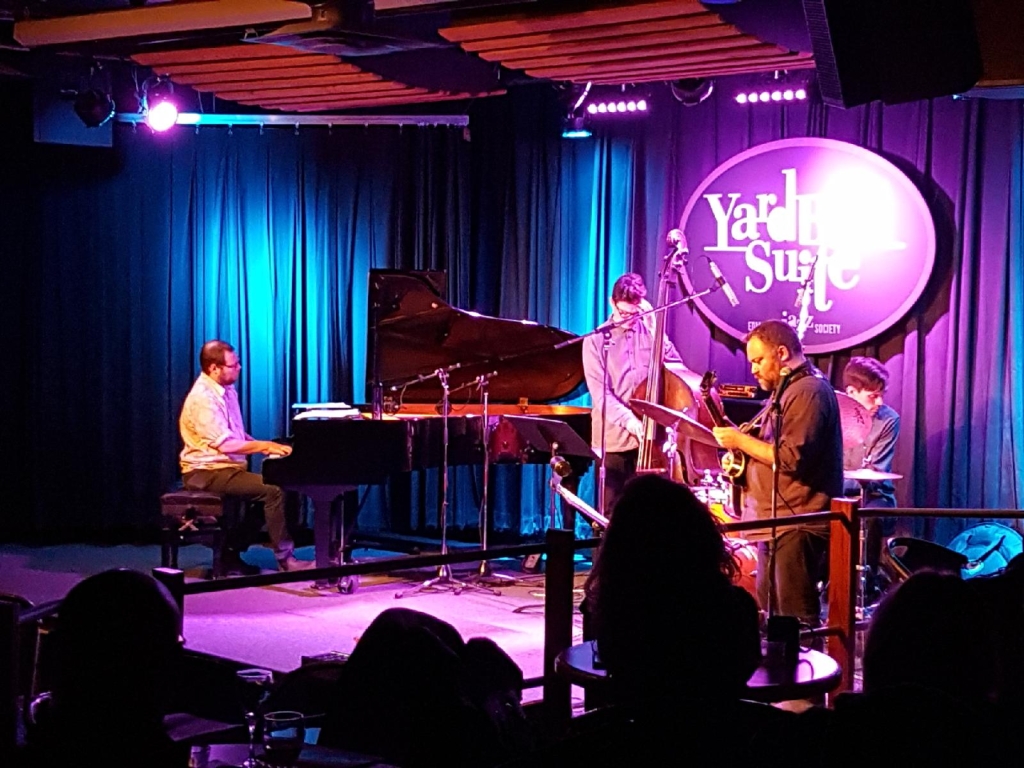
Harley Card Quartet at the Yardbird Suite, November 2017We needn’t look as far away as Europe though. Let us consider Edmonton, which for 60 years now has had the Yardbird Suite, entirely run by volunteers from the city’s jazz society. It’s easily the best jazz club in Canada and recently received a much-needed renovation, courtesy of the Alberta Heritage fund. Yes, that’s right, government money being poured into jazz. The recently and lamentably departed Tommy Banks, an Edmonton cultural icon and senator, likely had much to do with this, but that only demonstrates what political support of jazz can achieve. If a smaller and more isolated city like Edmonton has this, why can’t Toronto? What’s our excuse?

My advocacy for a full-time jazz performance centre is not intended to take anything away from other Toronto jazz institutions such as The Rex, Jazz Bistro, Home Smith Bar, JPEC, or JAZZ.FM. Their contributions are all laudable and essential – it’s just that Toronto jazz could use more of a central home which could work hand-in-hand with these other sites and organizations.

Such a centre would not only require political support, but that the Toronto jazz community mobilize itself and get organized. So if all you hardcore jazz fans – and I know you’re out there – want to know what you can do, try writing a letter to your local representative urging greater support for jazz. Or the next time you’re in a club that doesn’t have a cover charge for the music, suggest to the management that they institute one so the band could be paid better. I know it sounds crazy, but it might just work. For years now, Toronto has in its heart of hearts wanted to be New York. Well, New York has Lincoln Center and Toronto has nothing of the kind; New York also has citizens who know that jazz costs money. Coincidence? I think not.

If any of this sounds bitter or querulous, it’s not. I’m not personally bitter because I’m 61 and have been playing jazz successfully for over 40 years, with just about everybody imaginable. I’ve had my innings; it’s the future of jazz and young musicians I’m speaking on behalf of. This may seem like a longshot jazz fantasy but we have to start somewhere, perhaps with just the articulation of this simple wish and idea. Besides, as the old song asks, I can dream, can’t I? 

Toronto bassist Steve Wallace writes a blog called “Steve Wallace – jazz, baseball, life and other ephemera” which can be accessed at wallacebass.com. Aside from the topics mentioned, he sometimes writes about movies and food.

Shortly after I wrote my February 2018 column I had the unexpected opportunity to see a show that at first I wouldn’t have categorized as belonging to music theatre but which, after seeing, I think fits this category as much as it fits any category at all. Brodsky/Baryshnikov offered the extraordinary experience of listening to the great dance artist Mikhail Baryshnikov speak the poetry of his friend and fellow Russian exile, Joseph Brodsky, intermittently breaking into poetic and achingly evocative moments of choreographed movement in reaction to and interpretation of a soundtrack consisting of profound and mostly darkly sorrowful poetry spoken in the recorded voice of his friend. Not a play, not a musical, there was no music at all except for the sonorous quality of the two male voices, mellow and alternately melancholic and passionate, speaking in the traditional Russian poetic cadence. A fascinating evening.

February continued with exciting variations on the music theatre theme with the latest edition of Tapestry Opera’s Tap:Ex (a series created to explore the future of opera, particularly through cross-disciplinary hybrids). Tap:Ex Forbidden, based on an idea of Iranian-born composer Afarin Mansouri, combined her mix of classical Persian music and opera with a libretto by Afro-Caribbean hip-hop artist Donna-Michelle St. Bernard, in the service of a story that featured a very strong and talented small cast and an unexpected use of Lucifer as an instigator of rightful rebellion. The show equates the biblical eating of the apple to not only the acquiring of knowledge but, through that knowledge, the freedom and strength to rebel against a wrongfully authoritarian regime and to rise up for what is right. This heady mix of genres (including rapping in Farsi) gave power to the expression of a Persia aching to find a new modern identity. Seeing many members of the Persian/Iranian community in the audience clearly moved by the experience only added to the power of the evening.

February also saw the homecoming to the Royal Alexandra Theatre of Irene Sankoff and David Hein’s heartwarming, hilarious, foot-stomping and inspiring Canadian musical Come From Away, with an almost entirely Canadian cast who astound with their talent and versatility. This innovative, deceptively simple yet complex musical – based on the true events of 9/11 when 38 planes carrying 7000 passengers were stranded for five days in Gander, Newfoundland – grabs at the heart while also making you laugh. So explosively positive was the opening week that the run was immediately extended another six weeks to October 21. (I reviewed the opening performance on our website and can’t wait to see the show again.)

March on, March on!

March looks to be equally full of musical highlights, the biggest of which is the world premiere at Canadian Stage’s Bluma Appel Theatre of The Overcoat: A Musical Tailoring, with music by Canadian composer James Rolfe and libretto and direction by prolific theatre creator and director Morris Panych. (Please see the feature article elsewhere in this issue.) In terms of categories, this new Overcoat could be seen as part opera (it is sung through) but also as part musical, in terms of pace and drive, in both the words and the music, in the service both of the narrative and of breaking open the ideas at the heart of Gogol’s original short story

Fides KruckerAlso at Canadian Stage is another experimental work on a smaller scale: in this body (March 14 to 18), a new creation by acclaimed Canadian vocalist Fides Kruker and her ensemble, along with some of Canada’s top contemporary dancers, Laurence Lemieux, Heidi Strauss, and the luminous Peggy Baker who also choreographs. (Peggy Baker is very much on the Toronto scene these days having also just presented Map By Years with her own company at the Theatre Centre last month, a retrospective of her solo creations with a new solo created for her by Sarah Chase.) Using choreography and voice, in this body will explore “the wilderness of a woman’s heart” through a score made up of Canadian popular song by Joni Mitchell, Alanis Morissette, k.d. lang, Feist and more.

Meanwhile, over at Soulpepper, their extremely popular concert series turns to Paris in the 20s for A Moveable Feast, interweaving song and story to bring alive the world of post-WWI expats and European artists in the City of Light.

An American at the Princess

Paris is also at the heart of another big musical coming to Toronto’s Princess of Wales Theatre towards the end of the month: An American in Paris. The 2015 Tony Award winner and Broadway and London hit is finally coming to Toronto, starring McGee Maddox, a favourite of ballet fans as a beloved former principal dancer with the National Ballet of Canada.

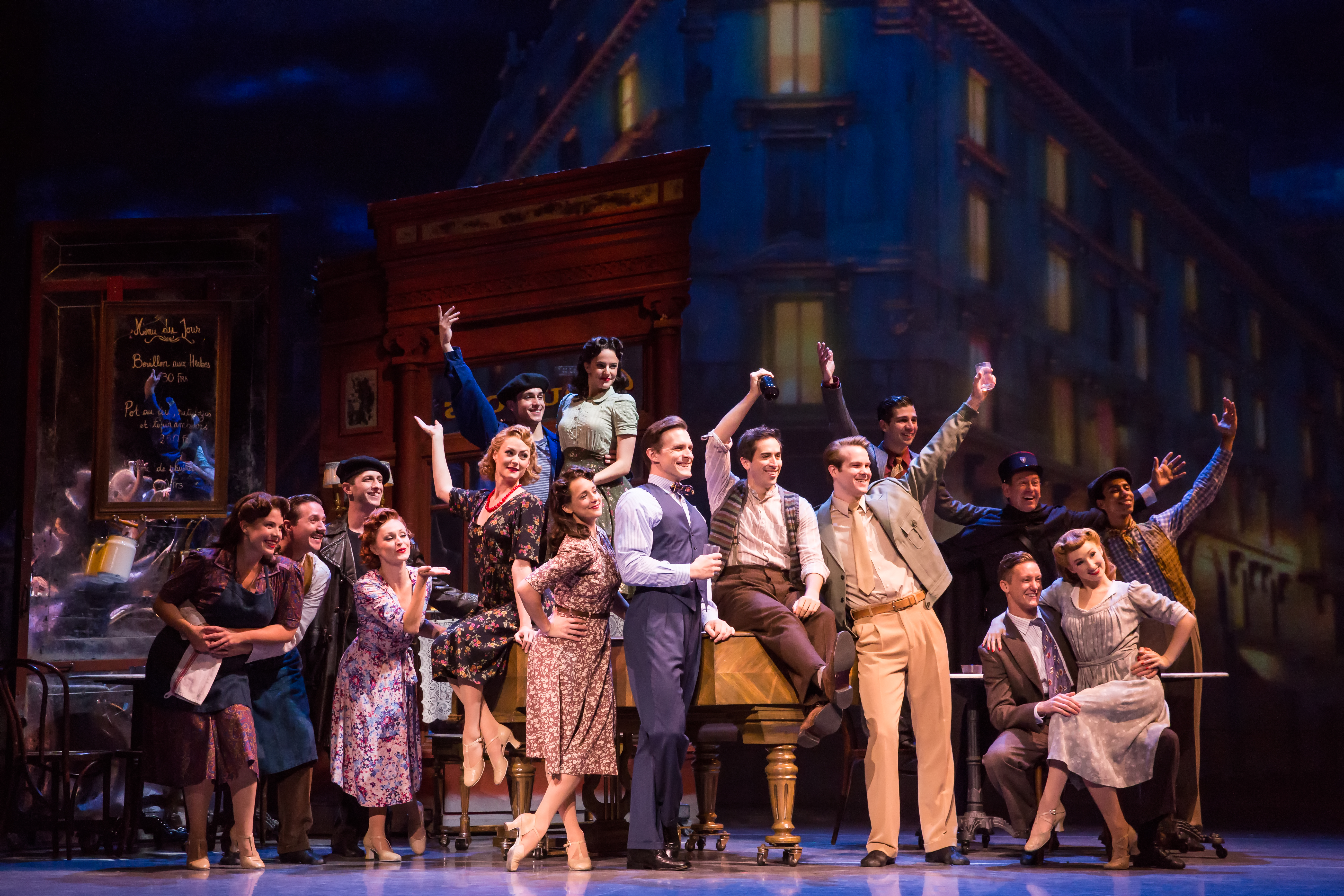
An American in Paris touring company The 1951 film starring Gene Kelly and Leslie Caron has always been one of my favourites (as it is of many people) so I am curious to see how I will feel about this new stage version. Although inspired by the film and its beloved Gershwin score, it has also gone beyond those templates to try and create a darker or more realistic version of a Paris recovering from the ravages of occupation and privation during WWII.

So why try to recreate this beloved movie onstage when you can watch it any time? The answer, it seems, was that the success of the 1990s Gershwin musical Crazy for You (developed by Mike Okrent from the original Girl Crazy) prompted the Gershwin estate to inquire into making a stage musical out of An American in Paris as well. According to broadway.com, they approached producers Stuart Oken and Van Kaplan with this idea but it took years to find the right path and the right creative team. Eventually Craig Lucas (Prelude to a Kiss, Light in the Piazza) came on board to write the book, and ballet dancer and choreographer Christopher Wheeldon (who had choreographed An American in Paris as a ballet for the New York City Ballet in 2005) came on board as director and choreographer.

What Lucas and Wheeldon have brought to the original story of Jerry, an American G.I. painter staying on in Paris after the war and falling in love with Lise, a sweet but spunky Parisian girl, is the added dimension of a Paris more affected by the war, and characters also with a darker or sadder side. There are hints of this in the original movie (Lise’s parents worked for the resistance, Jerry fought through and survived the war and doesn’t want to return to the States), but here they are given more emphasis. Oscar Levant’s role of Adam (Jerry’s concert pianist friend in the film) has also been given more depth, and Lise has been made an aspiring ballet dancer, so that, as Christopher Wheeldon has said, the new version plays on two fronts: “the friendship and the bonding and the love story,” but also the “creation of art and the struggle to create art.”

Adaptation is a difficult and fascinating art whatever the original material; while this adaptation of a beloved classic film musical has been lauded and given many awards, it will be interesting to see for ourselves how well it works for Toronto audiences. I am curious about the added darkness (Leslie Caron herself suffered through the occupation of Paris so it must have informed her original performance despite how Hollywood-happy the movie is). I’m curious as well about the choreography and how well it will stand up to Gene Kelly’s original dances for the film (for which he received an honorary Academy Award). When something is that iconic and entrenched in people’s memories, how do you match it?

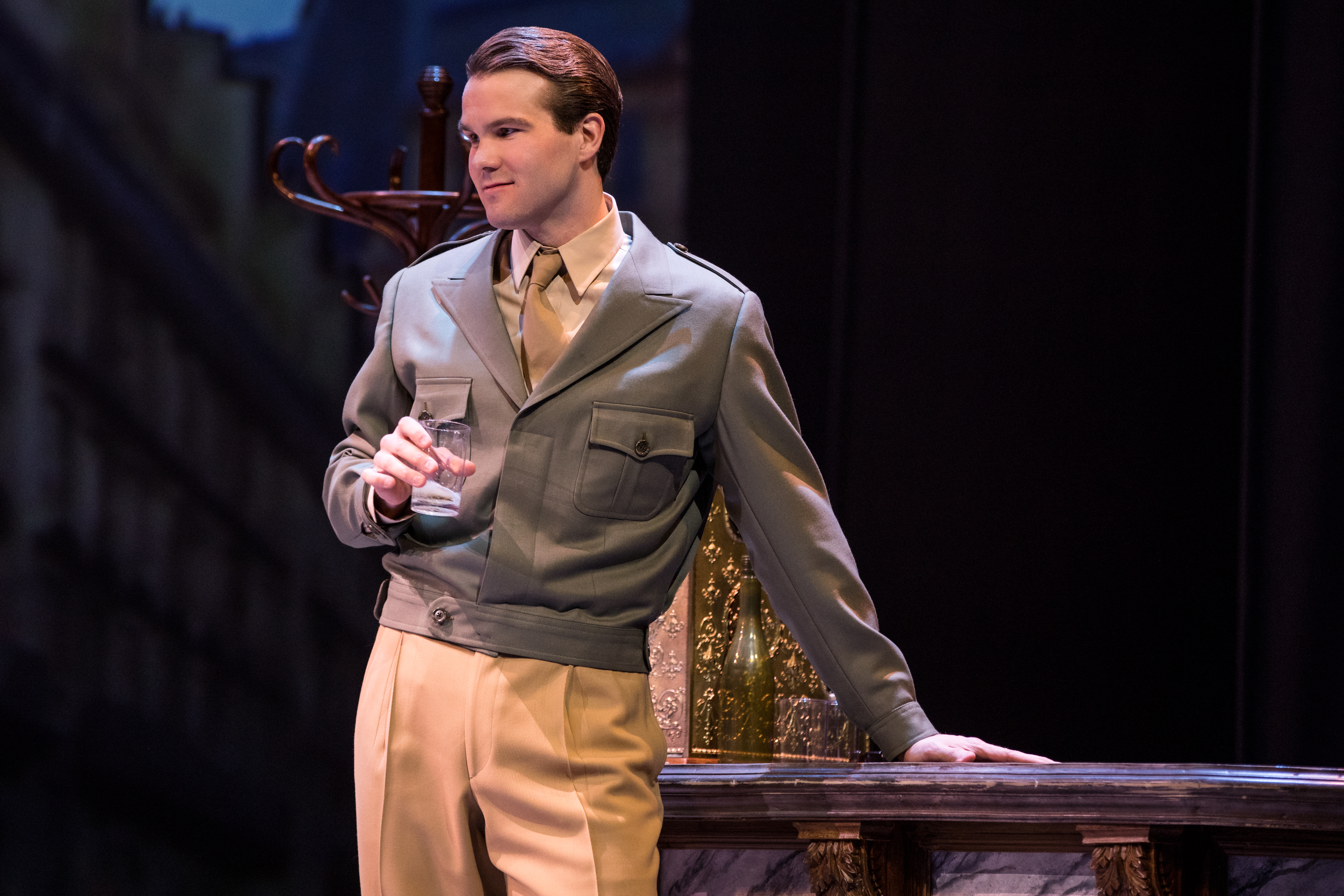
McGee Maddox as Jerry in An American in ParisFinding the right triple threat performers for the two main leads has reportedly been a difficult and time-consuming process, but if the choice of McGee Maddox as Jerry is any indication, we’re in luck. Already very familiar with Wheeldon’s choreography, Maddox made a considerable impact as Leontes, the role of the jealous king in Wheeldon’s ballet version of Shakespeare’s The Winter’s Tale (a ballet created after An American in Paris, but seen in Toronto both in 2016 and this past fall).

Altogether, March is shaping up to be an exciting month for music theatre in the city.

News has just broken as I write this that a year from now Dear Evan Hansen, the musical by Benj Pasek and Justin Paul (music and lyrics) and Steven Levenson (book) which won the Tony award for best musical in 2017, will have its first international production beginning in Toronto in March 2019, in partnership with David Mirvish. Another good opportunity for Canadian music theatre performers, and exciting for music theatre fans.

QUICK PICKS

Mar 8 to 18: Rudolph Nureyev’s version of the classic Petipa ballet Sleeping Beauty, to Tchaikovsky’s beloved score, features his famous introspective solos for the prince, as well as the classic rose adagio for Princess Aurora and the fabulous fun of the wicked fairy Carabosse. National Ballet of Canada at the Four Seasons Centre for the Performing Arts.

Mar 14 to 25: Gobsmacked at the newly renamed CAA Theatre (formerly the Panasonic) sounds intriguing as it promises an evening of interwoven stories told solely through a cappella singing from “traditional street corner harmonies to cutting-edge, multi-track live looping.”

Mar 16 to 17: newly rebranded Toronto Musical Concerts (TMC), a professional not-for-profit company with a mandate to provide educational and community outreach through the performing arts, presents a staged reading of Sondheim’s classic Company at Eastminster United Church (310 Danforth Ave.) to benefit The Canadian Safe School Network (647-298-9338).

Mar 16 to 25: On the community music theatre front, the North Toronto Players present Lear Incorporated, their own new “operetta meets musical comedy” version of Shakespeare’s tragedy King Lear, featuring music by Arthur Sullivan, Bizet and others.

Toronto-based “lifelong theatre person” Jennifer (Jenny) Parr works as a director, fight director, stage manager and coach, and is equally crazy about movies and musicals.

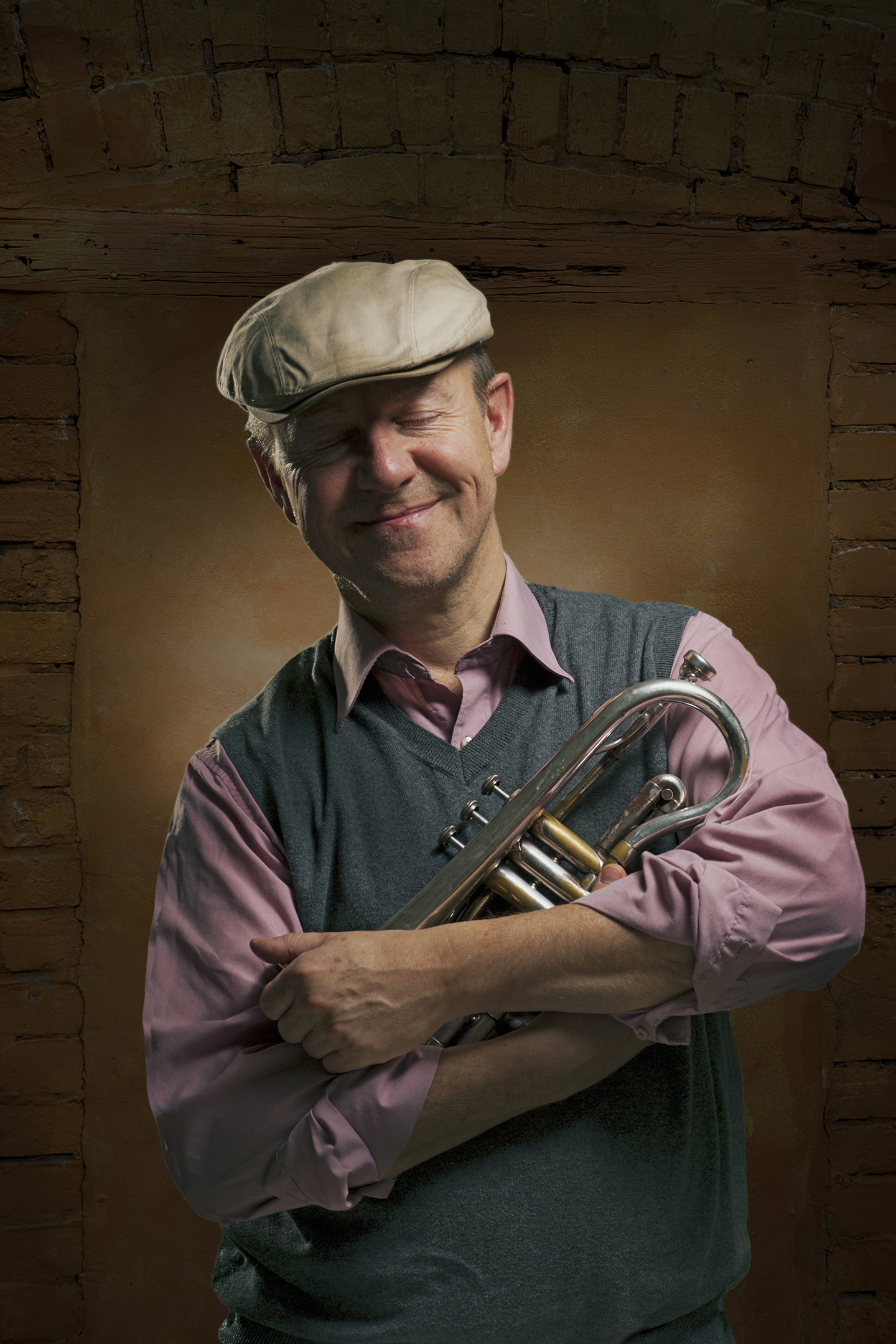
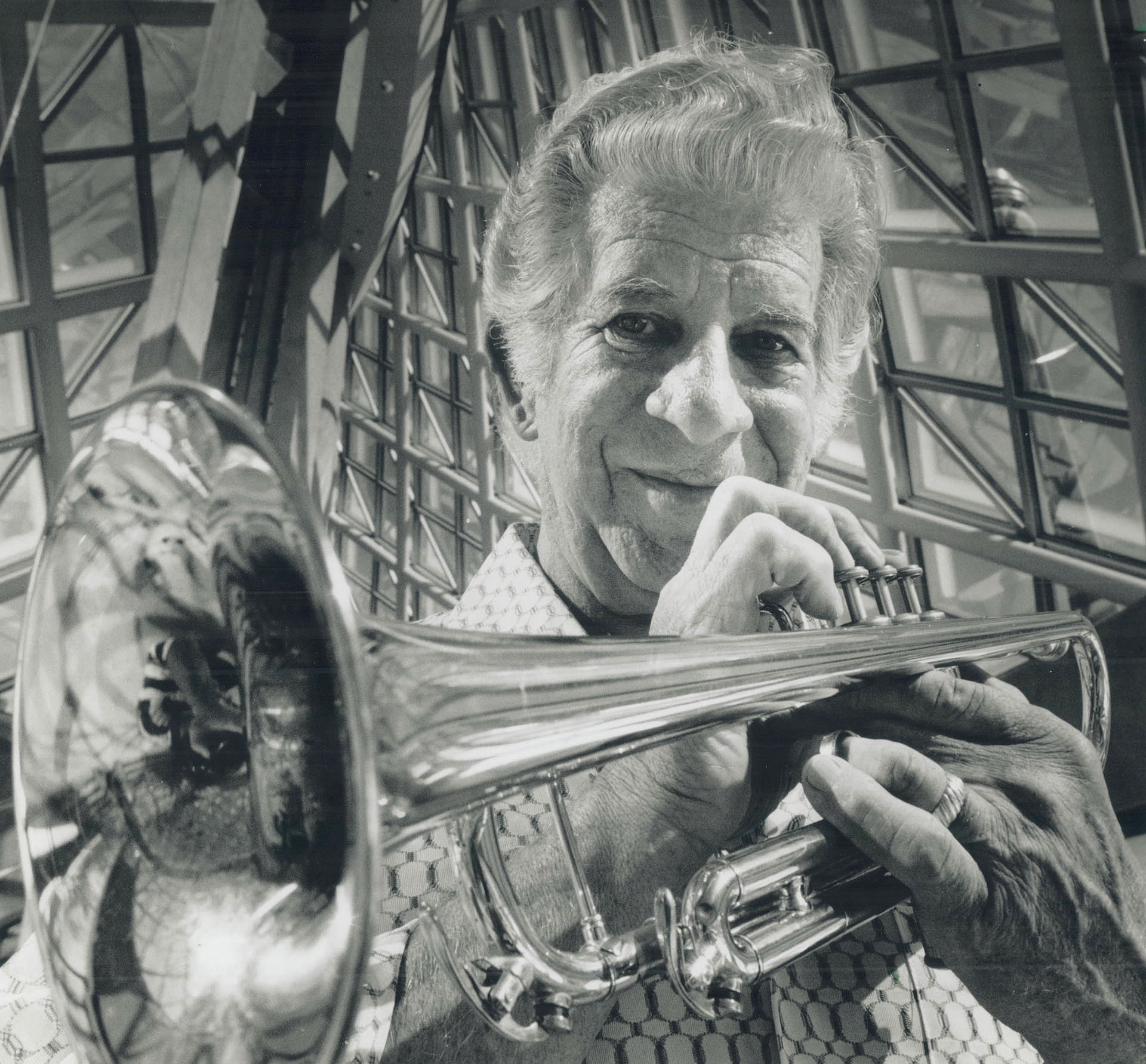
It is with deep sadness that I have to report on the loss of another giant from our musical world. On January 22, just 11 days after his 92nd birthday, we lost Johnny Cowell, one of Canada’s most outstanding trumpet soloists. Rather than write some form of formal obituary, I would prefer to just recall a few situations over the years where our paths crossed. As is so often the case in the world of music, I cannot state with any certainty when or where I first heard the name Johnny Cowell or when I first met him. As I have mentioned in previous columns, there was a time when band tattoos were a significant part of summer festivities in many towns in southwestern Ontario. I know that his first band experience was with the Tillsonburg Citizens’ Band. At that time, I was a regular member of the Kiwanis Boys’ Band in Windsor. In a conversation with Johnny a few years ago I learned that we had both played in many of same tattoos. I know that he had played trumpet solos in some of these events. I may well have heard his solos then. However, the only young star trumpet player from those days that I remember was Ellis McClintock, later with the Toronto Symphony for many years.

Johnny CowellFast forward 20 or more years, and there I was playing in the same band as Johnny, with Ellis as the leader. It was a band, now long forgotten, for the Toronto Argonaut football club. Yes, even though the Argonaut head office appears to have no record of this band, from 1957 to 1967 the Argos had a 48-piece professional marching band which performed fancy routines on the field at all home games. Why would musicians of Johnny’s stature play in a football club band. Well, if you like football, why not get well paid union fees to watch a game? Since I was playing trombone in the front row and Johnny was playing trumpet in the back, we certainly had no contact with each other during rehearsals or performances. However, that is where we first met.

During the times between rehearsals and performances there were usually small groups chatting. Frequently, the topic would turn to Johnny’s many compositions, particularly those on the hit parade. His 1956 ballad Walk Hand in Hand, which was just one of his many hits, could be heard on every radio station in those days. Actually, it was reported that at one time Johnny had more numbers on the US hit list than any other writer of popular music. However, his writing wasn’t limited to that genre. He was equally at home writing for trumpet and brass ensembles. I frequently play selections from the Johnny Cowell CDs in my collection. I am amazed at the gamut his trumpet works run. At one end of the spectrum there is his dazzling Roller Coaster and on the other end, his Concerto in E Minor for Trumpet and Symphony Orchestra.

My contact with Johnny was limited over the years, but there are a few meetings that come back to me regularly. Shortly after I began writing this column, I arranged to meet Johnny to get an update on his musical activities. Our meeting was anything but formal. It wasn’t at his home or at The WholeNote office. It was on a park bench in the town of Stouffville, not far from my home and close to the home of a family member of his. A few years after that it was a chance meeting during a break in one of the Hannaford Silver Band’s weekend events. Along with Jack Long of Long & McQuade, we discussed a somewhat less-than-serious subject, i.e. whether or not the names that we were using were the names on our birth certificates. The name “Johnny” was, in fact, the name on his birth certificate. For the other two of us, “Jack” was not our given name.

Then there was the time two years ago when I had the privilege of attending Johnny’s 90th birthday party. During that event, for a short while, I was flanked by two great figures in the Canadian music scene, Johnny and Eddie Graf. Now we have lost them both. At times one wonders how things might have been if Johnny had not turned down attractive offers which might have brought him fame by writing for stage productions or getting involved in the Nashville scene. While the trumpet was his all-abiding first musical love, that for his wife Joan and their family always had precedence.

By the time this issue is released, the Encore Symphonic Concert Band will be presenting a “Tribute to Johnny Cowell” in their regular noon hour concert, playing many of Johnny’s arrangements, on Thursday March 1. I’m sure that similar tributes will be presented by many other bands in the area over the coming months. Tell me about them and I’ll pass the word along.

A public memorial/celebration of life for Johnny will be held on Monday, March 12 at 7:30pm. It will take place at Scarborough Bluffs United Church, 3739 Kingston Rd, near the intersection of Kingston Rd. and Scarborough Golf Club Rd.

Junior Bands

Speaking of junior bands, it has just come to our attention that the 2018 National Youth Band will be hosted this year in Montreal by the Quebec Band Association. The guest conductor will be Wendy McCallum from Brandon University. We understand that this will be taking place in May, but don’t yet have confirmation on precise dates or location. The Yamaha Guest Soloist, on clarinet, will be Simon Aldrich from McGill University.

Changes

Over the years new bands spring up, old ones disappear and some undergo a significant transition. One group undergoing a major transition is the several New Horizons Bands in the Toronto area. Since their beginning close to ten years ago, the man at the helm has been Dan Kapp. However, not only is Dan relinquishing his leadership on the Toronto New Horizons scene, he is moving to Wolfville, Nova Scotia, soon after his wife Lisa retires from her teaching post this coming June. Rather than have a single person at the helm, now with quite a number of New Horizons bands in the Toronto area, there is scheduled to be a governing committee made up from the membership of the various NH bands. I hope to have more details on New Horizons activities soon.

It is always refreshing to learn of new groups arising from scratch. We just learned of a new swing band which is starting to make its mark. A frequent dilemma is how to give a new band a distinct name for people to associate with them. So, last summer a group forming up in Aurora decided that they should have a name that was unique, but easily recognized as having an affiliation with the name Aurora. Their name: the Borealis Big Band. The band is under the musical direction of Gord Shephard, a longtime resident of Aurora. He is the music director of the Aurora Community Band, as well as an instructor and conductor at York University where he is a PhD Candidate studying community music.

I was invited to attend one of this band’s rehearsals on January 31 and was almost blown away by a group that had just had its first rehearsal in September 2017. I heard a real powerhouse with a repertoire unlike that of any group that I have known. I asked a couple of members to describe this, and I received a variety of answers. The answer from Shephard was: “The Borealis Big Band was set up to provide an opportunity for members to play a wide variety of big band jazz styles including swing, funk, smooth and Latin/Cuban, and to play it to the highest quality possible with lots of room for improvisation for all interested members.” Unlike most such groups, when the band was formed they had designated leaders for each section. Their Debut Concert” went amazingly well. In the words of bassist Carl Finkle: “It was so much fun playing to a sold-out house for our first ever gig.” Their next scheduled performance will be on Friday June 22 at 8pm at the Old Town Hall, Newmarket, 460 Botsford St. We’ll have more on that in a later column.

Coming

On Sunday, March 4 at 3:30pm, the Wychwood Clarinet Choir will present their “Midwinter Sweets” program featuring an assortment of selections arranged by Roy Greaves, Alan Witkin, Richard Moore, Maarten Jense and Frank J. Halferty. Featured will be Five Bagatelles, Op.23 by Gerald Finzi, with artistic director Michele Jacot as clarinet soloist. Steve MacDonald, as tenor saxophone soloist, will perform Hoagy Carmichael’s Georgia on my Mind. Also on the program will be Minuet from “A Downland Suiteby John Ireland, Rikudim, Four Israeli Folk Dances by Jan Van der Roost and Henry Mancini’s Baby Elephant Walk. This concert will be held at The Church of Saint Michael and all Angels, 611 St. Clair Ave. W.

While it is a bit in the future, we might as well look ahead a bit to spring. The Clarington Concert Band’s annual spring concert will take place at 7:30pm on Saturday April 21 at Hope Fellowship Church in Courtice. As always, the program has something for everyone, with music from the band Chicago, to jazz and Broadway standards sung by their popular vocalist, Liza Heitzner. Clarinetist Katherine Carleton will perform Gordon Jenkins’ Blue Prelude and alto saxophonist Liz Jamischek will pay tribute to longtime Ellington soloist Johnny Hodges, with her rendition of Harlem Nocturne. The band’s regular conductor will be away and the band will be under the direction of Shawn Hills. Now retired after decades of heading the music program at Bowmanville High School, she is excited to direct her inaugural post-retirement concert with the Clarington Concert Band.

Jack MacQuarrie plays several brass instruments and has performed in many community ensembles. He can be contacted at bandstand@thewholenote.com.

In the February issue of HalfTones, our between-print-issues e-letter, we ran a story by Sara Constant on this year’s recipients of the TD Toronto Jazz Discoveries Series Awards, now in its eighth year.

As described in that story, the series started in 2011 as a part of the TD Toronto Jazz Festival’s outreach to local performers creating original work, and to year-round, multi-venue jazz programming in the city. “Each year, an assembled Toronto Jazz Fest jury selects four projects to receive support and funding from the festival. Over the last eight years,” the story continues, “the series has accumulated an alumni list that serves as a veritable who’s who of local jazz innovators –[helping] transform the festival from an annual affair into a year-round showcase of local music-making.”

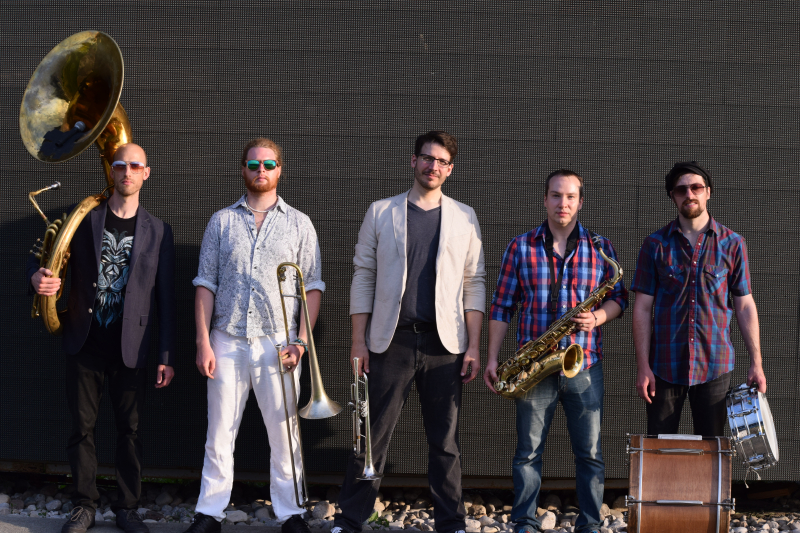
It’s not hard to see how this year’s four recipients fit the bill: Harley Card’s Sunset Ensemble at Lula Lounge, March 1; the Heavyweights Brass Band at Lula Lounge, March 29; Adrean Farrugia and Joel Frahm at Gallery 345, April 27; and a show curated by Aline Homzy titled The Smith Sessions Presents: Bitches Brew at Canadian Music Centre, April 28.

Just as interesting as the alumni, from the perspective of this column, is taking a look at the venues that have been the most active participants in this initiative over the years, both the ones you’d expect to find mentioned regularly here, and also the ones you might not usually associate with jazz.

The Heavyweights Brass BandLula leads: of the usual venues you’d expect to be involved, Lula Lounge leads the pack, starting with the series’ first-ever concert, a Fern Lindzon CD release in April 2011. Since then the Dundas St. W. venue has hosted series concerts by Jaron Freeman-Fox in February 2013, a Heavyweights Brass Band CD release concert in March 2014, Alexander Brown in March 25, Sundar Viswanathan’s AVATAAR in March 2016 and Chelsea McBride’s Socialist Night School CD release in January of last year. And this year the beat continues with Harley Card, March 1 and The Heavyweights in a return visit on March 29.

The Rex and Jazz Bistro: as you might expect, the city’s two premier mainstream venues are both in the running for silver and bronze, with three appearances each over the eight years. The Rex has been venue of choice for a Barry Elmes Quintet CD Release in March 2011, a Nick Fraser double-CD release in May 2016, and The Further Adventures of Jazz Money (Dillan Ponders, Apt and Ghettosocks) in March 2017. And the Bistro has hosted a Beverly Taft Meets the Nathan Hiltz Orchestra CD release concert in April 2014, a first big gig for the Alex Goodman Chamber Quintet in April 2015 and Robi Botos’ Movin’ Forward CD Release in March 2015.

Gallery 345: When you get past those three obvious choices, though, you’re entering some interesting territory – venues with audiences more often in other genres but offering fertile ground for jazz. Gallery 345 on Sorauren heads the list: Mike Downes in March 2012, Shannon Graham and The Storytellers in April 2013, and the Nancy Walker Quintet in 2014. Adrean Farrugia and Joel Frahm (April 27 this year) will actually push Ed Epstein’s little-gallery-that-could ahead of its more storied mainstream colleagues into the silver medal spot.

The Best Rest

Space doesn’t permit the same level of detail for the rest of the venues used to date for the series, but the point is that there are venues out there for putting on shows for audiences that are there to listen. The Music Gallery, previously at St. George the Martyr Church on John St., and its new housemates at 918 Bathurst Cultural Centre have been used four times so far. Small World Music Centre, Alliance Française, the late-lamented Trane Studio, the Lower Ossington Theatre, Knox Presbyterian and Beit Zatoun have also all been used. This year the Canadian Music Centre on St. Joseph joins the list.

If the series continues to encourage adventurous venue hunting as much as it does adventurous music-making, it will continue to serve a worthwhile purpose.

publisher@thewholenote.com

This article appears in The WholeNote as part of our collaboration in the Emerging Arts Critics programme.

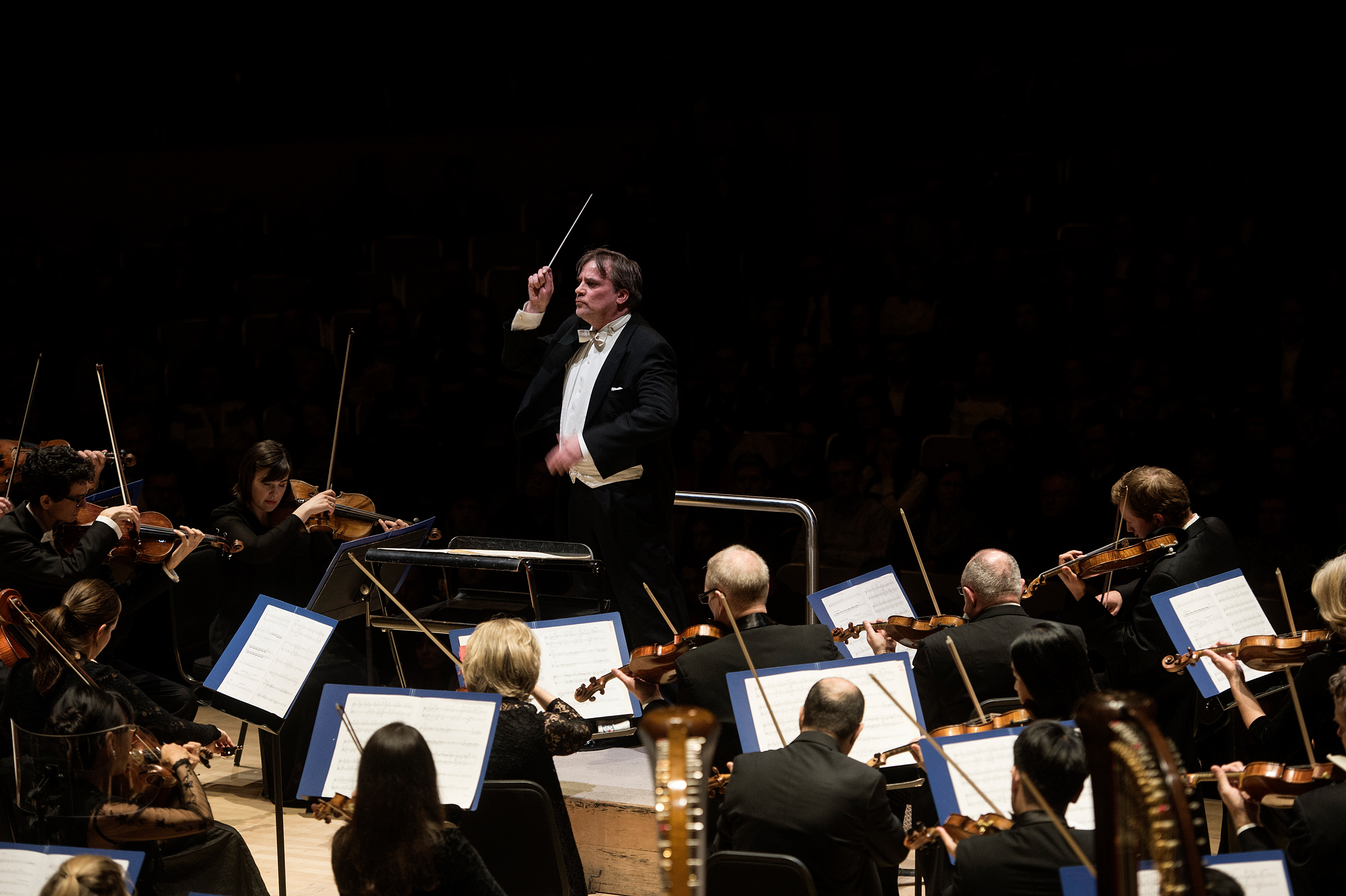
John Storgards conducts The Planets with the TSO. Photo credit: Jag Gundu.On the evening of January 25, I walked one lap around Roy Thomson Hall’s circular theatre lobby before ascending to my mezzanine seat, and felt the world starting to spin. Attending a performance of Gustav Holst’s The Planets by the Toronto Symphony Orchestra, I questioned whether the pieces on the program would work together – a composition by a 20th-century Russian-born composer, a new Canadian work, and a widely-known orchestral masterwork – but under the expert leadership of guest conductor John Storgårds, they did. Common dynamics and dispositions threaded together feelings of mystery and triumph, and recurring arpeggiated motifs created circular orbs of sound that seemed to spin themselves right out to space. Storgårds’ energizing style, and ability to draw out these common threads, made this one of the most exciting orchestral concerts I have ever seen.

The concert opened with the Canadian premiere of Igor Stravinsky’s recently rediscovered Funeral Song, which he wrote in honour of his deceased mentor, Russian composer Nikolai Rimsky-Korsakov. It was thought lost for years until musicologist Natalia Braginskaya and librarian Irina Sidorenko unearthed it in 2015 from the Rimsky-Korsakov State Conservatory archives in St. Petersburg. It began almost inaudibly, with rapid wavering notes from the basses that denoted a sense of tantalizing horror. Storgårds thrust his baton in the air, ordering the strings into stammering phrases. I originally anticipated a nostalgic mood for music in remembrance of the dead, but was surprised to experience an eerie tone that almost signified a fear of death – magnificent enough to reach beyond the piece’s 12-minute length.

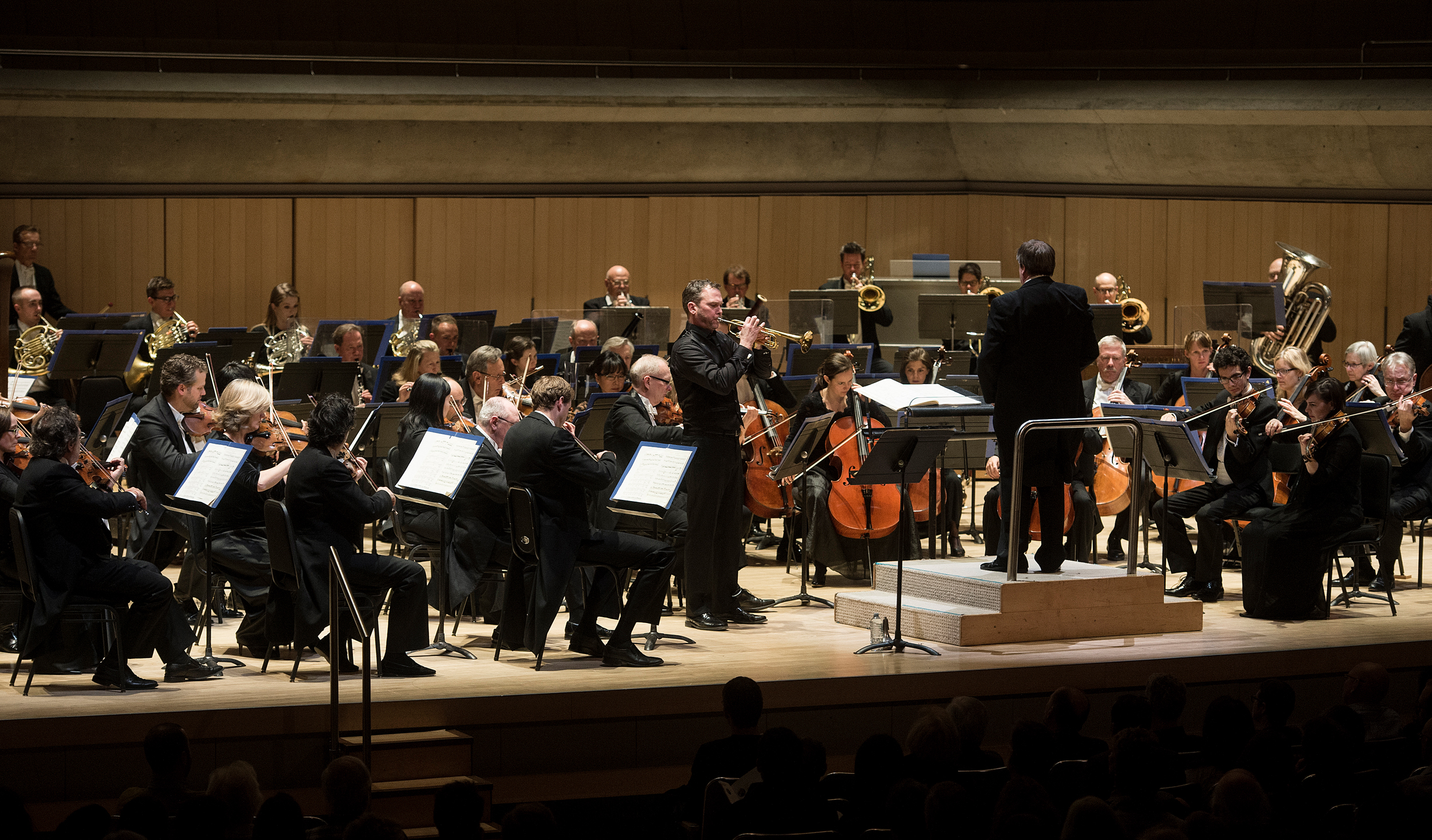
There was a short transition on the stage before JUNO-nominated John Estacio’s Trumpet Concerto, featuring TSO Principal Trumpet Andrew McCandless as the soloist. The three movements took inspiration from Greek mythology – particularly Poseidon’s son Triton, whose conch shell was used as a trumpet to control the ocean waters.

The first movement, “Triton’s Trumpet,” reminded me of a coastline thunderstorm, with the trumpet and orchestra ruthlessly battling. The strings sounded like gusts of wind hitting cliffs, while the trumpet – the determined bird – dodged dynamic bursts of percussive lightning. At one point, McCandless put his trumpet mute in as if to indicate that he was finally being overcome, but this was short-lived. He played so frequently that he often wiped the condensation on his upper lip. After a climactic finish, the audience hesitated to clap, until he spoke up, saying: “It was really hard work!”

The following “Ballad” movement sounded, in contrast, like the morning after a storm, while the final “Rondo” movement had a quicker tempo and triumphant trumpet lines. With an abrupt ending to the concerto, McCandless hit a final note, as if a ribbon of hope was being pulled out of his horn. The act ended with a heartfelt embrace between him and Storgårds.

After the intermission, the hall was buzzing with excitement over the impending planetary phenomenon. Composed by Gustav Holst from 1914 to 1916, The Planets is his most popular work, with seven movements inspired by seven different planets.

The first – “Mars, The Bringer of War” – is believed to have a connection to the First World War with its cold resonance. The high-energy pace was dictated by the strings’ bouncing bows, with Storgårds literally jumping into phrases. This movement in particular shares similarities with Star Wars’ “Imperial March” – and in fact, Holst was a big inspiration for John Williams when composing for the film.

The second movement phased from night to day. “Venus, The Bringer of Peace” was calm and collected, while the harp delicately fluttered overtop smooth and quietly executed harmonies. This paved the way nicely for “Mercury, The Winged Messenger” – which, for the smallest and fastest-spinning planet, proved to be an act of swift call-and-response with a sudden finish.

The brass section came back in full force for the majestic “Jupiter, The Bringer of Jollity.” Here, their warm tones made me feel the safest I had felt all night. A gentle beast – the sound of the biggest planet – this movement was triumphant and celebratory, with playful tambourines reminiscent of happy movie music.

“Saturn, The Bringer of Old Age” was a bit of an odd movement. With two wavering notes that slowly repeated throughout, I was reminded of an ancient grandfather clock, ticking ever so slowly enough to lull me into a trance. Following this, the start of “Uranus, The Magician” was like an elephant parade entering the circus. Storgårds worked hard to keep up with the varying tempo, and began to look like a magician himself as he cast the cymbal crashes. At one point, the bass and cello players seemed almost to headbang in time, and I wanted to put up my devil horns – rock on!

The final movement – “Neptune, The Mystic,” inspired by the farthest known planet at the time – capitalized on the mysterious nature of space. The side stage door eerily opened to a wormhole of darkness. The phosphorescent tone and pace seemed to slowly create a glowing orb of light sparkling with magical dust. Coming from the darkness offstage were the voices of the Elmer Iseler Singers, who mesmerized patrons with haunting phrases until the door slowly shut and their voices diminished into near-silence.

The expertly curated program and Storgårds’ elaborate conducting style deserved the explosive standing ovation. It was a night that felt larger than life, and looking down at the full-size orchestra, the higher elevated seats proved to be the best place to hear the orchestra’s sound. I left the performance feeling as though I could take on the strength of any planet.

The Toronto Symphony Orchestra presented “Holst The Planets” from January 25 to 27, 2018 at Roy Thomson Hall, Toronto.

Arianna Benincasa has a lifelong passion for all things music and currently works at an audio post-production and recording studio. With a dedication to sharing her many concert experiences, she now is in pursuit of starting her own music blog. It is her goal to continually support the arts and culture communities in Toronto.

This article appears in The WholeNote as part of our collaboration in the Emerging Arts Critics programme.

Andrew McCandless (trumpet) plays Estacio's Trumpet Concerto, with the TSO under John Storgards. Photo credit: Jag Gundu.Music, one suspects, could take an audience travelling through time and space. It captures sentiment, it encases zeitgeist, and it embodies so much truth for those who are passionate about it. On the evening of January 25, when I settled in for “Holst The Planets” at Roy Thomson Hall, the musician-laden stage seemed to me like a full-fledged starship bridge. Within two hours’ time, a mundane life could be decanted and fermented; the imagination could be set free to relish every moment in the past, present and future.

Under the baton of Finnish conductor John Storgårds, the Toronto Symphony Orchestra (TSO) took its audience on a celestial journey, which included three orchestral works: Igor Stravinsky’s Funeral Song for Orchestra, Op. 5., John Estacio’s stunning Trumpet Concerto and the titular Gustav Holst’s The Planets.

It started with the Canadian premiere of the 12-minute Funeral Song. For 106 years the piece had been lost, after its first and only performance in 1909. After years of searching, the sheet music was miraculously rediscovered in the archives of the St. Petersburg Conservatory.

“There is not one living person who had this music performed…” said Valery Gergiev, who conducted its modern premiere in 2016. Despite the vicissitudes of the past century, the music itself remains intact, free of dust or rust: it opens with the murmuring double bass, soon joined by dark tones in the brass and woodwinds. Solemnly heavy, it reveals Stravinsky’s sorrow – that of a student’s towards his beloved teacher, Nikolai Rimsky-Korsakov’s, death. The strings amplify his lament, sustained by the lowest instruments of the orchestra, with piercing flutes afloat overtop. At one point, a tribute to Rimsky-Korsakov’s chromaticism starts to weave in and out; Storgårds handles it with subtlety, as if he is speaking in the language of music with the two Russian maestros. During the standing ovation following the piece, Storgårds held the full score in his hand and saluted the audience, and I saw in him and the orchestra a sincere fulfillment at having retrieved the lost gem – an expression almost like faith.

John Estacio’s newly-composed Trumpet Concerto, featuring TSO Principal Trumpet Andrew McCandless, followed. The first movement, “Triton’s Trumpet,” begins with a misty sea of strings, in which the opening ascending trumpet melody stirs up the brutal waves of a storm. McCandless captures all of these changes in texture, with a rendition that possesses some romantic softness. In an introductory online video about the piece, McCandless says of the second movement “Ballad”, “…it reminds me of the kind of music that might be playing as you sit in the planetarium on your back, gazing at the ceiling to see the stars.” The last movement, “Rondo”, with flashbacks of the first, is vigorous and vivid – like a Flamenco fan being flicked open and shut, with notes running along the folds.

Then Holst’s The Planets takes off. Written to capture the astrological character of the planets, this suite can be considered a precursor to cinematic sci-fi music composition. With Storgårds’ precision and tastefulness, “Mars, The Bringer of War” is full of vital force and energy. The strings, playing col legno (using the wooden part of the bow to strike the string), bring a crisp clarity to the menacing opening. The fanfare soon follows, and ignites a jumping flame. Then in the second movement, “Venus, The Bringer of Peace,” all the musicians quickly immerse themselves in supreme tranquility and sweetness. The contrast is beautifully executed by the violins, harps and flutes; their voices are scattered throughout the delicate orchestration.

Playfulness is prominent in “Mercury, The Winged Messenger,” where an ostinato cascades between different instruments to create a light-hearted atmosphere. Storgårds’ interpretation of “Jupiter, The Bringer of Jollity” is on the slow side – likely only slightly faster than Eugene Ormandy’s 1977 rendition with the Philadelphia Orchestra. Majestic and powerful, it is the earworm that perpetually encourages one to explore outer space, or in a sense, the realm of gods.

In “Saturn, The Bringer of Old Age” and “Uranus, The Magician,” it is as if one can hear time being compressed, warped and distorted, particularly with the metallic touches from the harps, brass and percussion. The ethereal women’s choir at the end of “Neptune, The Mystic” that concludes the suite – here sung offstage by the Elmer Iseler Singers – resembles a black hole devouring all of the instrumental power. I was left spellbound.

One interesting thing to note was the etiquette for clapping. After McCandless gave a sublime performance of the first movement, the audience was eager but somewhat hesitant to applaud (due to the conventional “no clapping between movements”) – and he gestured as if to say “go ahead.” Later, some excited audience members burst into applause between movements of The Planets, but were hissed at by some others who obviously considered it a faux-pas.

In researching this further, I found a riveting special report on applause by The New Yorker music critic Alex Ross. He made note of a conversation with pianist Emanuel Ax, where Ax said, “I think that if there were no ‘rules’ about when to applaud, we in the audience would have the right response almost always.”

I came away happily concluding that the TSO is attracting people with new ears, such that it continues to be a starship taking new passengers on unprecedented adventures. Classical music, to trained ears, is intriguingly about forms, concepts and styles, on the conscious level; subconsciously, to everyone, going to a concert is an inexpressible act of love. Norms and traditions are constantly changing – but from the intricate sections of folded time and place where music lies, one can always find moments to enjoy.

The Toronto Symphony Orchestra presented “Holst The Planets” from January 25 to 27, 2018 at Roy Thomson Hall, Toronto.

Wei Shen studied management and finance at the University of Toronto. Passionate about literature, classical music and visual arts, she is launching her career as a film director.

The year 2017 was one in which women broke barriers in speaking up against abuse, particularly within the powerful corridors of the entertainment industry, political institutions and the media. Time magazine honoured this historical breakthrough by naming their Person of the Year for these women who dared to speak up, calling them “The Silence Breakers.”

Yoko Ono Revisited

In the autumn of 1961, Yoko Ono created her Voice Piece for Soprano, a conceptual score with instructions to “Scream
1. against the wind; 2. against the wall; 3. against the sky.” In the late 50s, Ono was part of a constellation of creative people connected to composer John Cage, and began experimenting with what she called “instruction works,” meaning “paintings to be constructed in your head.” Her Voice Piece for Soprano was one of these works, and was published a few years later in 1964 as part of her book Grapefruit. She speaks of this work as giving her an opportunity to express her rebelliousness as a woman and the need to scream against certain situations in life. She also saw it as an act of resistance, stating in a 2015 interview connected to a performance of her Voice Piece, that if women don’t express their emotions, they can become ill.

This coming February 23, in a co-presentation between the Music Gallery and the Gardiner Museum, Ono’s Voice Piece for Soprano will be explored by three local artists who have been invited to respond to Ono’s instructions for screaming. These performers include Lillian Allen, a pioneering voice of dub poetry in Canada; the Element Choir, an improvising choir directed by Christine Duncan; and Mamalia, the former lead singer of the JUNO-nominated contemporary jazz troupe Sekoya. The concert, titled “Voice Pieces,” is being held as a companion event for the Gardiner Museum’s exhibition Yoko Ono: THE RIVERBED, running from February 23 to June 3.

Ono’s resistance piece remains as timely now as when first created, since the need for women to speak out with force against how they have been treated within patriarchal institutions has reached a tipping point. However, I’m certain that Ms. Ono would not concur with the descriptive phrase used in the Music Gallery’s press release, describing this voice as the “out of control female voice pushed to its supposed limits,” nor with using the word “hysterical” to describe the type of voice that engages in therapeutic screaming. It’s time to reframe how we think of the female voice, long held in contempt, mistrust and suspicion from the days of early Christianity up to the present.

Lillian Allen

I approached Allen to speak about her work as a leader in spoken word and dub poetry, her understanding of the voice, and of her plans for the Voice Pieces concert at the Gardiner Museum. Back in 1988, I had interviewed Allen for Musicworks magazine, and so I began with asking her how she would describe the evolution of her career over these past 30 years. She described her work as “helping to innovate, motivate and originate the form of spoken word which has become so important in the worlds of hip-hop and rap.

“I went out into the culture, combining words, music and experimentation and this influence can be traced in the work of many people, including Canadian rappers Saukrates and Drake. This hidden influence has given me great satisfaction. As Leonard Cohen says in his song: ‘There’s a crack in everything, that’s how the light gets in.’ I helped to make a crack in a few things. I could have gone the pop commercial route myself, but I stayed with my own work of writing, performing and touring, and also went into teaching at OCAD, which gives me an opportunity to be out there and to give back. I’m still involved in initiating and supporting groups, individuals, and the whole movement of putting voices out in the world.”

Lillian Allen. Photo by Karen Lee.Allen continues to be both excited and challenged by her work. In 2012 she released her album Anxiety, created through a process of working in her living room with various audio devices to create layerings and sonic manipulations of her voice. She explored pre-language sounds and misconfigurations of the voice while also staying close to language in order to bring out a narrative message. She did it for the love of exploration, and not with any preconceived ideas of whether it would become a product or if it would sell. “I was just grooving with it, listening to it, having a conversation with it, and being there with the totality of it.” Her approach was to simply “work and experiment, and out of that I could then pull something.”

On Voice

We then turned to speaking about the voice and I asked her to comment on the voice itself and her relationship to her own voice. “Voice is the thing that gives you motion, gives you vibrational motion. It is vocalized emotion that makes you larger than whatever moment you are in, both in sound and in what you have to say. There is a time to be still, and the inner voice is there. But the voice itself is so full of life, it’s almost a symbol for life and growth. It is that channel inside the unknown, it gets into things we don’t know we know, or that we know but forget. It’s like a path in a forest that you either cut or make. In your psyche, the voice makes that path for you, and you can journey with it, see things and go into imaginary places. It’s the power of YOU, its part of your heartbeat, it’s the power of your lungs, your muscles, it’s not just your fingers on a keyboard. You connect with it, it’s floating in and out of you.

“The physical resonance of the voice is something I love. The resonating voice is almost like beings existing, as if you are creating beings and they are existing in each note, in each sound. You can feel that vibration in the room, in your body. It’s a beautiful thing, and is the reason I love performing and being out there. It creates real magic. Everybody connects to sound. They might not connect to a phrase or image in the English language, but they’ll connect to sound. That was so evident when I did a tour in the UK and France with my CD Anxiety. People connected to the sound – it needed no interpretation.”

She then spoke about the fears people have around the voice. “I do find that people are scared of sound, scared of hearing their voices, scared of messing with language. They need permission. I find adults to be more like this. They feel confronted because they wonder – what does this new territory mean, where will it take me? But once they get into it, once they’re in the water and the waves are there, they can’t help but smile and be happy.”

We spoke about Yoko Ono’s Voice Piece for Soprano, the scream, and so-called uncontrolled sound. “This is an artist construction, highly crafted, highly controlled. There’s a sophisticated thought process in even arriving at that concept, it’s a breakthrough. Then to shape it, to rehearse it at different levels – in your mind, on a mic, in a room – you want to know what the impact is, you want your artistic vision to land in a certain way. Women have always gone outside the strictures of language and the hierarchy of various language forms to express themselves. Maybe that’s where the original scream comes from. Do not control, do not get us to conform to your realities and your knowledge that shapes that reality. We know that more exists and that the emotive parts of our existence are essential and important to our lives. We know it’s important to create and communicate something more meaningful and textured that people can connect to.”

Allen is still reflecting on the nature of her contribution to the Voice Pieces concert but plans to include some pieces from her Anxiety album. She will also likely bring in either students or young people from the community to join her, something she now does regularly when performing. She also envisions layering and texturing the sounds, pushing the sound and the conversation into different aspects. “Right now as I prepare, I’m listening and working with my concept, bringing in materials from my own experience as well as researching history.” I may place the students in the space to echo or reverb what I’m producing, and the performance could also include creating a sound improvisation with the audience.”

I expect that this event will be another important moment in the reclamation of the female voice. All three invited artists will add their own unique perspective on the power of vocal expression, and in particular, “the scream.”

Not So New Creations

John Adams

Other upcoming events include the Toronto Symphony’s New Creations Festival, running this year from March 3 to 10. In a departure from previous years, there will be no featured guest composer or curator. Instead the programming will feature three concerts of TSO music director Peter Oundjian’s personal favourites as a way of celebrating his 14th and final season as music director, which has included the successful New Creations Festival. We will hear works by Vivian Fung, Larry Alan Smith, Daníel Bjarnason (March 3); Wolfgang Rihm, James MacMillan and the festival composer competition winner (March 7); and Esa-Pekka Salonen, Gary Kulesha and John Adams (March 10).

Last year’s festival curated by indie musician Owen Pallett highlighted a diverse array of composers and performers, attempting to address issues of race and gender inclusion. Alas, I note that it appears this initiative was not continued in this year’s offerings.

Wendalyn Bartley is a Toronto-based composer and electro-vocal sound artist. sounddreaming@gmail.com.

I look forward each February to focus my column’s lens on Black History Month as celebrated in music. Last year I mentioned that the City of Toronto became the first municipality in Canada to proclaim BHM in 1979, recognizing “the past and present contributions that African Canadians make to the life of Toronto….”

It was only as recently as 2016 however, that Ontario passed legislation to formally recognize February as BHM on a continual annual basis. Its history is ever evolving. Therefore I recently asked Andrew Craig, the Toronto-based vocalist, multi-instrumentalist, composer, broadcaster and musical director of high-profile tributes to Quincy Jones and Oscar Peterson, for his views of its relevance today.

“Black History Month, in my estimation, continues to grow in importance and significance. In recent years, our many screens have become flooded with increasingly negative images of people of African descent in compromised or disempowered circumstances. The media is quick to latch on to stories depicting people of colour in well-worn stereotypical roles. What gets far less airtime are stories, both past and present, of the incredible contributions African descendants have made to the development of our contemporary society and culture.

“Despite the fact that these accounts of heroic and exemplary Blacks are so often relegated to the margins of the history books, a fresh retelling of their struggles and triumphs provides inspiration to all, regardless of one’s background or colour,” Craig concluded.

Andrew CraigPortraits, Patterns, Possibilities: a Black Canadian Trilogy

Craig puts his ideas into action on February 23 at Eglinton St. George’s United Church. Culchahworks Arts Collective, of which he is the founder and artistic director, presents a hybrid live action/videotaped evening titled “Portraits, Patterns, Possibilities: a Black Canadian Trilogy.”

This theatrical event, conceived, written and directed by Craig, paints a portrait of three important Black Canadians and the historical milestones they set. Portrayed by actors, the characters collectively observe that despite their considerable accomplishments the struggles they fought for continue to this day. Nevertheless a core theme of optimism permeates Trilogy, the show envisioning a “brighter future for all of us,” as Craig puts it.

The first landmark covered is the 225th anniversary of the passage of the Emancipation Act of 1793. Craig notes that the Black slave woman Chloe Cooley was the catalyst for the introduction of this legislation, the first to limit and ultimately abolish slavery in the British Empire.

As well, this year is the 195th birthday of Mary Ann Shadd Cary (1823-1893), the first Black woman publisher in North America, notable also as the first woman publisher in Canada. In addition, she was a pioneer in the desegregation of schools, worked for women’s suffrage and graduated as a lawyer at the age of 60! The third milestone being celebrated is the 60th anniversary of the breaking of the NHL colour barrier by Boston Bruins hockey pioneer Willie O’Ree, known as the “Jackie Robinson of ice hockey.”

To aid in telling these inspiring stories Craig has programmed music drawn from a mix of sources. It ranges in time and genre from a cappella choral music evoking field hollers and Negro spirituals, up to instrumental music in the style of the post-WWII era. Much of the score will be by Craig himself.

The evening will be videoed live with the public invited to be part of the studio audience. Join me in commemorating these compelling Black Canadian figures and witness the making of Portraits, Patterns, Possibilities, an essential story in our complex national narrative.

Africa Without Borders

Much earlier in the month, on February 3, Alliance Française de Toronto and Batuki Music Society mark BHM with a concert, “Africa Without Borders,” at the Alliance Française’s Toronto venue. The Okavango African Orchestra, winner of the 2017 JUNO Award for Best World Music Album of the Year, is featured. OAO recorded their album in front of a jammed house at the CBC’s Glenn Gould Studio during BHM.

The eight accomplished African-born musicians in OAO now live in Toronto and Montreal. They include Daniel Nebiat (krar, vocals) from Eritrea, Donne Roberts (guitar, vocals) from Madagascar and Tichaona Maredza (marimba, nyunga-nyunga, hosho, vocals) from Zimbabwe. In addition Kooshin (kaban, vocals) is from Somalia, while Sadio Sissokho (kora, tama, djembe, vocals) came from Senegal, Nicolas Simbananiye (vocals) is from Burundi, while Kofi Ackah (percussion, vocals) and Ebenezer Agyekum (bass) both hail from Ghana. The group’s Batuki Music Society artist page neatly sums up the numbers: “Okavango African Orchestra: 12 instruments, 10 languages, 7 countries … one special concert.”

“The orchestra takes its name from the Okavango Delta, a basin in the Kalahari Desert in Botswana, where many different animal species come together to feed and find water. Similarly, the Okavango African Orchestra brings together the traditional music and instruments of several major African cultures that historically have had little or no interaction. The musicians of Okavango have created a common meeting place for these disparate cultures, and a new musical language that harmonizes their different tuning systems, rhythms and timbres. The multicultural spirit of modern-day Canada bridges ancient African solitudes.”

The group draws on music genres like Somali jazz, Tigrinya folk music, Malagasy ballads and salegy, hybrid sounds of Shona folk and popular music of Zimbabwe, West Africa griot music and Ghanaian highlife, all vital elements in the successful musical recipe cooked up by OAO.

OAO’s Facebook event page closes with the group’s aspirational message: to continue its collective “journey to an Africa without borders … before the borders were created.”

Waleed Kush African Jazz Ensemble and Kaia Kater

On February 24, the Aga Khan Museum partners with Batuki Music Society to present its BHM-themed concert,” Kaia Kater and Waleed Kush African Jazz Ensemble,” at the Museum. In an exploration of “Black/African diasporic cultural expression in all its many forms,” this concert draws on traditional and contemporary instruments, genres and performance styles. The music ranges from “Nubia to Harlem via Appalachia, New Orleans and Mississauga.”

Ruth Mathiang. Photo by Cari Flammia.The double bill brings together Waleed Kush Jazz Ensemble with guest singer Ruth Mathiang, and banjo player, singer-songwriter Kaia Kater, to explore musical expressions of the African-Canadian experience.

Of African-Caribbean descent, the Quebec born Kaia Kater grew up between two worlds. In her Toronto home she experienced her family’s ties to Canadian folk music firsthand; in West Virginia on the other hand, she immersed herself in the deeply rooted musical traditions of Appalachia. Her debut album Sorrow Bound (2015) referenced this divide. Kater’s second album, Nine Pin (2016), delves even further into the realities faced by people of colour in North America. Her restrained but idiomatically spot-on banjo finger picking provides an elegant support for her expressive voice.

The Waleed Kush African Jazz Ensemble combines African rhythms and melodies, melding them with jazz harmonies and song forms. Led by the Sudan-born Toronto multi-instrumentalist, composer and vocalist Abdulhamid, band members include local musicians Aaron Ferrera, John Ebata and Cory Sitek. The group writes that “just as Toronto is a harmonious mix of culture and people … [so] the inspiration for our music … is the harmonious mixing of rhythm and harmony.” Poet and singer-songwriter Ruth Mathiang, also born in Sudan but commencing her musical career in Kenya, is the group’s guest vocalist.

Angélique Kidjo

We wind up our non-definitive look at BHM (for many more concerts please check The WholeNote’s listings) with Angélique Kidjo’s concert at Koerner Hall on March 3.

Angélique KidjoThree-time Grammy Award winner, dancer, songwriter, author and social activist, Angélique Kidjo is among the top tier of international singers today, a creative force with some 15 album credits. I was immediately struck by her powerful voice and commanding stage presence when I saw her perform live at Toronto’s Harbourfront at the beginning of her very active touring career. Time magazine has since acclaimed her “Africa’s premier diva.”

As well as performing her original songs Kidjo’s music ranges across ethnicities, boundaries and genres, cross-pollinating the West African music of her native Benin with R&B, soul, gospel, jazz, French Caribbean zouk, Congolese rumba and Latin music. She does it all with “irresistible energy and joie de vivre.” (Los Angeles Times)

Though for many years unconvinced of the value of European classical music, Kidjo has however maintained a lifelong curiosity and transcultural ambition. It’s a trait she says she learned from her father. 2014 marked the beginning of her work with European symphony orchestras with the release of her Grammy Award-winning album Eve. It included Orchestre Philharmonique du Luxembourg among many other top collaborators. The same year she collaborated on a song cycle based on Yoruba poems with American composer Philip Glass. The result was Ifé, Three Yorùbá Songs, scored for orchestra and Kidjo’s eloquently impassioned vocals. For its 2015 American premiere performance with the San Francisco Symphony, Philip Glass wrote in the program notes, “Angélique, together we have built a bridge that no one has walked on before.”

Her latest album, Sings (2015), continues her journey with the orchestra in a collection of nine songs arranged by Gast Waltzing and performed with his Orchestre Philharmonique du Luxembourg. The stylistically ambitious recording combines the formal, reserved qualities of European classical music with the freedom of jazz and the emotional intensity and rhythmic verve of African and Brazilian rhythms. It won her another Grammy.

Kidjo’s Koerner Hall appearance however will be with a considerably more streamlined touring band including guitarist Dominic James, bassist Ben Zwerin, drummer Yayo Serka and percussionist Magatte Sow.

Thanks for reading my BHM picks. Now get out and enjoy some live music!

QUICK PICKS

Feb 1: Aga Khan Museum/Instituto Italiano di Cultura Toronto.” Musical Inventions by Paolo Angeli featuring Dr Draw.” Angeli, playing a unique 18-string hybrid of guitar, violoncello and drums, performs music rooted in the Sardinian tradition but influenced by avant-garde aesthetics. He’s joined by electric violinist Dr. Draw.

Feb 9: Alliance Française de Toronto. “Exoria: Songs of Exile.” Montréal Greek music-centered Ensemble Rebetika examines the 20th-century Greek experience of exile through songs.

Feb 10: Music Gallery/Native Women in the Arts. “Mother Tongue” features Joanne Shenandoah, Salia Joseph, Kwiigay Iiwaans and Nelson Tagoona. The event is the first of its kind, a showcase for musicians working to revitalise their Indigenous mother tongues. 918 Bathurst Centre for Culture, Arts, Media and Education.

Feb 16: Aga Khan Museum.” Four Skies, Four Seasons: Under the Indian Sky.” The East-West-bridging Montreal collective, Constantinople, welcomes the renowned Indian flautist Shashank Subramanyam in a “tribute to Indian music.”

Feb 17: Lula Lounge presents “Salsa Saturday: Conjunto Lacalu, plus DJ Santiago Valasquez.” Rooted in the Cuban sonora genre, this group adds a dynamic three-trumpet horn section to a rhythm section featuring Afro-Cuban hand percussion, piano, bass and tres. Dance lessons with Dreyser Garcia are available.

Feb 17: Canadian Music Centre. “Momentary.” New works for solo kamanche (4-string Persian spike-fiddle) by Shahriyar Jamshidi composer, singer and creative Kurdish kamanche improviser.

Feb 17: Japanese Canadian Cultural Centre/Nagata Shachu. “Yukiai.” Nagata Shachu (Kiyoshi Nagata, artistic director) is joined by Chieko Kojima, a founding member and principal dancer of the best-known of all taiko groups, Kodo, in an evening of dance, drums and song at the Japanese Canadian Cultural Centre.

Feb 22: Living Arts Centre presents the Lemon Bucket Orkestra in Hammerson Hall, Living Arts Centre, Mississauga.

Feb 24: Royal Conservatory of Music presents the New Canadian Global Music Orchestra at the Isabel Bader Centre for the Performing Arts, Kingston.

Feb 24: Toronto Centre for the Arts. “Idan Raichel: Piano Songs.” Israeli singer-songwriter and musician Raichel, best known for his fusion of electronics, Hebrew texts and Arab and Ethiopian music returns to his first love, the piano.

Feb 24: The Toronto Symphony Orchestra marks the Chinese Year of the Dog with a celebratory concert. Wen Zhao, pipa; Adrian Anantawan, violin; Xiaoqiu Lin, erhu; Mark Rowswell (“Dashan”), host; Carolyn Kuan, conductor. Roy Thomson Hall.

Feb 27: St. Michael’s Concerts presents the Vesuvius Ensemble performing music from southern Italy circa 1600 – traditional folk music about the Sorrowful Mother and other works – featuring Francesco Pellegrino, tenor, chitarra battente; Marco Cera, mandolin, ciaramella; Lucas Harris, lute, theorbo, Baroque guitar. St. Michael’s Cathedral Basilica. clip_image001.png

Andrew Timar is a Toronto musician and music writer. He can be contacted at worldmusic@thewholenote.com

How does it happen that a young conductor from Birmingham, UK makes his Canadian debut leading the Kitchener-Waterloo Symphony in a pair of concerts? How is it that a young Taiwanese-American violinist makes his Toronto debut at Mooredale Concerts? And what accounts for a young German-French cellist making his Toronto debut at Koerner Hall? The coincidence of three emerging young professionals all arriving in our area over the next few weeks sparked the above questions (and several more). Their answers in a series of emails mid-January were as diverse as their backgrounds but all shared the common thread of personal connections.

Alpesh Chauhan, the 27-year-old conductor from Birmingham, told me that his management are on very good terms with the management of the Kitchener-Waterloo Symphony and keep in touch sharing information on their clients. The invitation to guest conduct on February 9 and 10 developed out of interest on the orchestra’s part; a grateful Chauhan attributes it to strong trust between the parties.

Twenty-seven-year-old Paul Huang’s route to his February 18 Toronto recital travelled directly through pianist Wonny Song, Mooredale’s artistic director, who is also artistic director of Quebec’s Orford Music Festival. Huang, the recipient of the prestigious 2015 Avery Fisher Career Grant and the 2017 Lincoln Center Award for Emerging Artists, told me, “Both Wonny and I have won the Young Concert Artists International Auditions at some point in our careers and Wonny first heard me during a trip to New York and we were introduced through a patron of YCA.” That meeting led to Song booking Huang for his Canadian debut last summer at Orford. “He must have liked what he heard and here I am, making my first visit to Toronto!”

Versatile soloist and chamber musician, 35-year-old Nicolas Altstaedt, was chosen by Gidon Kremer to succeed him as artistic director of the Lockenhaus Chamber Music Festival; and he was selected by Adam Fisher to follow him as artistic director of the Haydn Philharmonic. Altstaedt spoke to RCM executive director Mervon Mehta, who books their concerts at Koerner Hall, in March of 2016 when the cellist visited Toronto with his friend and sometime chamber music partner, violinist Vilde Frang, who was giving a recital at Koerner Hall at the time. Altstaedt expressed his desire to play there and the confluence of this season’s cello series and Mehta’s familiarity with pianist Fazil Say (Altstaedt’s collaborator) sealed the deal for the March 2 recital.

Alpesh Chauhan. Photo by Patrick Allen.Alpesh Chauhan: Chauhan first discovered classical music at school, when a cello teacher performed in his school assembly in Birmingham. He was instantly hooked, and went home later that day with a cello under his arm, much to the surprise of his parents who were born in East Africa (father in Tanzania and mother in Kenya) of Indian descent (Gujarati). He became increasingly passionate about classical music throughout school and later studied cello at the Royal Northern College of Music, while at the same time conducting friends in concerts he arranged for charity. “That was my first real conducting experience and I knew it was something I wanted to pursue,” he said. “I quickly grew an obsession with the people at the front, and the sound they created from the podium.

“Following several years of training, studying and being mentored by great conductors like Andris Nelsons and Edward Gardner, I have now conducted two concerts at the BBC Proms, a production of Turandot at the Teatro Lirico di Cagliari, the BAFTA-winning children’s film Ten Pieces II with the BBC Philharmonic and a main season concert at the Barbican Centre with the London Symphony Orchestra. I also became principal conductor of the Filarmonica Arturo Toscanini last year.”

Asked specifically which conductors inspire him, Chauhan continued: “I love the gestural genius of such conductors as Carlos Kleiber and Gennady Rozhdestvensky,” he said. “One learns so much about the interaction between conductors and the sounds they wish to inspire (and the success thereof) from both of these conductors. I am very inspired by Sir Simon Rattle too as well as other visiting conductors that I assisted as guests at the City of Birmingham Symphony Orchestra [where he held the position of assistant conductor] including Edward Gardner, Walter Weller and Vassily Sinaisky. A huge inspiration for me was Andris Nelsons who I was assistant to at the CBSO in his period as music director. Some of what I learned from him includes trust and respect of the orchestral musicians, freedom in performance and concert and strength of musical ideas and interpretation.”

Paul Huang. Photo by Marco Borggreve.Paul Huang: “I was mesmerized by the sound of the violin when I was a kid,” Huang told me. “It was the singing quality and the sound that is so close to the human voice that drew me to the instrument. As a child, I was terribly shy and was not good with words, so playing the violin was a way to express myself without using words!”

I asked who his musical idols were in his formative years and he told me it was a hard question to answer. “But I will say that there are several violinists (mainly the ones from the past) that I would constantly listen to (and still do), people like Kreisler, Oistrakh, Milstein, Hassid and the young Menuhin. Outside of the violin world, Frank Sinatra and Judy Garland are some of the singers that I constantly listen to and find myself feeling so inspired every time I listen to their voices.”

As to what violinists inspire him, he said those violinists who have a strong viewpoint and a voice that is convincing and unique. “I find that most of the violinists from the past generation all have a sound that is so distinctive from each other. They are all inspiring to listen to.”

Nicolas AltstaedtNicolas Altstaedt: When I asked Alstaedt what drew him to the cello he told me that his father played the piano a bit as well as the cello. His older brother started playing piano so when he was six he picked up the cello. “Once I started playing, I didn’t think of doing anything else in my life.”

He never “idolized“ interpreters he told me, “though I have certainly been influenced by artists I admired such as Gidon Kremer or Nikolaus Harnoncourt. I have always found deep fascination in the process of composing and creating an artwork. There is a danger in our society in idolizing performers rather than recognizing and understanding the achievements of true creators.”

As to whom he considers to be his musical mentors, he pointed to violinist and chamber musician Eberhard Feltz as the most influential figure in his life for almost ten years. “I met him through the Quatuor Ébène, who have been working with him for a long time. They regularly came to Berlin, staying at my place while i was attending classes for sometimes up to eight hours a day. I started to study with him in 2009 and still see him on a regular basis. He keeps surprising me every time and each encounter leaves food for thought for several weeks.”

Next, I asked each musician to comment on the repertoire they will be performing.

AC: We have a great program for my KWS debut. A flashy overture by Magnus Lindberg, Aventures, which quotes many popular classical music works including Prokofiev’s Classical Symphony and even Berlioz’s grand fantasy-themed Symphonie Fantastique which we perform in the second half of the concert. In between we’re joined by pianist André Laplante for Beethoven’s Fourth Piano Concerto. I have a long relationship with the Berlioz as I conducted rehearsals as an assistant in Birmingham, went on to assist it a couple of times in my time at the CBSO and then conducted it in Scotland in 2016 in a program that also included Debussy’s La Mer!

PH: In general for my recital programs, I want to give audiences a variety of musical styles and a sound world palette which the violin is able to convey. For this program with my duo partner Helen Huang, we will be bringing the Dvořák Sonatina, a piece which Dvořák wrote while in America but very much had nostalgia towards his roots, with several joyful Czech dances throughout the movements. The Prokofiev F-Minor Sonata is perhaps one of the darkest sonatas ever written (like a Russian epic novel). It was written during WWII, a sonata that almost in a way documents history through the notes. In the second half we have prepared two miniature pieces (Sarasate and Kreisler) to lighten up the mood from the dark first half and make a transition to the finale of the program, which will be the colourful and brilliant Saint-Saëns’ Violin Sonata, a piece that is very dear to my heart.

NA: The repertoire for Altstaedt’s recital consists mostly of the works on his recent Warner Classics CD with his Koerner recital partner, Fazil Say. “I met Fazil seven years ago and commissioned a sonata while I was on the BBC New Generation Artist scheme. We started to play recitals and the following program evolved. I have a strong passion for the music at the beginning of the 20th century; Janácek and Debussy are two very different exemplary masterpieces of that period. Shostakovich has been the most influential composer in my childhood and his sonata is very similar to Fazil’s in term of architecture.”

I concluded my virtual symposium by asking each musician the question: What do you find most rewarding and most challenging in your professional life?

AC: I think one of the most important elements of my professional life is the musical and emotional reward I enjoy when playing and conducting live music. The most challenging, however, is the travel and unsettled lifestyle, which can be very tiring. I also find constantly changing repertoire to be a challenge! For example, the week before I conduct the Kitchener-Waterloo Symphony, I will be in Italy conducting Shostakovich 11. I’ll then travel straight to KWS for Berlioz Symphonie Fantastique, followed by the Netherlands to conduct Tchaikovsky 4 and then back to Italy for Shostakovich 10!

PH: Very often when I get together with musicians we ask each other is all the stress, travelling, hours of practising, the nerves of getting on stage night after night, is this really worth it? But the answer at the end is always yes. Because when I see people coming up to me after concerts telling me how much they enjoyed the evening or sometimes how it made their lives more meaningful or even made some positive impact in their lives, for me, that’s what makes everything worth it. I believe music is the most wonderful and powerful way of bridging different roots, different cultures, different languages, different religions and different backgrounds. In the world of music, we are all on this wonderful musical platform where we are all the same and can share something in common and can understand and respect each other on a much deeper level.

NA: It is very rewarding to spend your life communicating with people in the most diverse and powerful language. I am very aware and grateful for that every day. I am currently working on The Seasons by Haydn and it has been a revelation. The same goes for pieces I have already performed like the concertos by Dutilleux and Dvořák and the complete Bach Suite Cycle, that I am playing the following week. To be in touch and discover artworks that widen your awareness on a daily basis is the most wonderful thing to grow in life.

George Li

Last month I did a Q&A with pianist George Li whose Toronto debut recital in Koerner Hall on February 4 has been postponed with no new date announced as of press time. The Q&A prompted a comment by New England Conservatory visual assets manager Andrew Hurlbut who pointed out that Li’s musical education owed a great debt to the NEC and to his studies with Wha Ryung Byun as part of the NEC/Harvard dual degree program. “It seems to me that long through line in his training is at least somewhat responsible for his current well-deserved success,” he wrote in an email. We appreciate and welcome the comments of readers far and wide.

QUICK PICKS

Feb 5: The Kitchener-Waterloo Chamber Music Society is taking full advantage of charismatic clarinetist Dionysis Grammenos’ stint as assistant conductor for the COC’s production of Mozart’s The Abduction from the Seraglio. K-WCMS is connecting him with the popular piano quartet, Ensemble Made in Canada, for a performance of Brahms’ Clarinet Quintet Op.115, another exquisite work from the composer’s last creative output. The performance will be repeated Feb 7 in Toronto as part of the COC’s free noontime concert series.

Feb 11: Anyone who was fortunate enough to experience the electricity of Stravinsky’s Petrushka at David Jalbert’s and Wonny Song’s duo piano Mooredale Concerts recital January 14 need not be reminded of Jalbert’s next appearance in our area. For his K-WCMS solo concert, the Ottawa-based virtuoso will burnish his reputation as one of Canada’s finest pianists with three Prokofiev sonatas – Nos. 2, 3 and 5 – on the same program.

Feb 15: TSO principal violist Teng Li brings her warmth and sensitivity to a program of transcriptions by the celebrated 20th-century violist William Primrose in a free noontime recital at U of T Faculty of Music’s Walter Hall. Lydia Wong is the collaborative pianist.

Feb 16: Leon Fleisher, who turns 90 later this year, conducts the Royal Conservatory Orchestra performing Beethoven’s Egmont Overture, Strauss’ Four Last Songs and Sibelius Symphony No.1 in Koerner Hall. He will give masterclasses in Mazzoleni Hall Feb 11 and 17. Masterclasses with Fleisher are inspirational and memorable, strewn with anecdotes. It’s no surprise, considering his close connection to Beethoven through his teacher, Artur Schnabel, a student of Theodor Leschetizky, who studied with Beethoven’s pupil, Carl Czerny. A few years ago, Fleisher said he once had “the pleasure of performing with three guys named Jascha, Grisha and Bill [Heifetz, Piatigorsky and Primrose]. And it really was a pleasure.”

Feb 22: Music Toronto presents the Apollon Musagète Quartet in a program of Haydn, Arensky and Grieg. The dynamic young Polish quartet made a memorable debut in the Jane Mallett Theatre in November 2015 and their return is eagerly anticipated.

Feb 25 and 26: Canzona Chamber Players give us another chance to hear Brahms’ great clarinet quintet (along with with Hindemith’s) with Canzona co-founder Jonathan Krehm joining Csaba Koczo, Jessica Tong (violins), Robin Howe (cello) and Pocket Concerts’ Rory McLeod (viola).

Mar 1: Lang Lang, recovering from tendinitis in his left arm, will share the keyboard with 15-year-old Maxim Lando (a Lang Lang International Music Foundation Scholar) in a piano four hands arrangement of Gershwin’s exuberant Rhapsody in Blue. Peter Oundjian conducts the TSO. 

Paul Ennis is the managing editor of The WholeNote.

Back to top