onopera feng yi ting  5  photo by julia lynnThis summer there is not quite as much opera on offer in town as there has been in past seasons. Out of town, however, there is a burgeoning of opera productions and opera-related concerts.

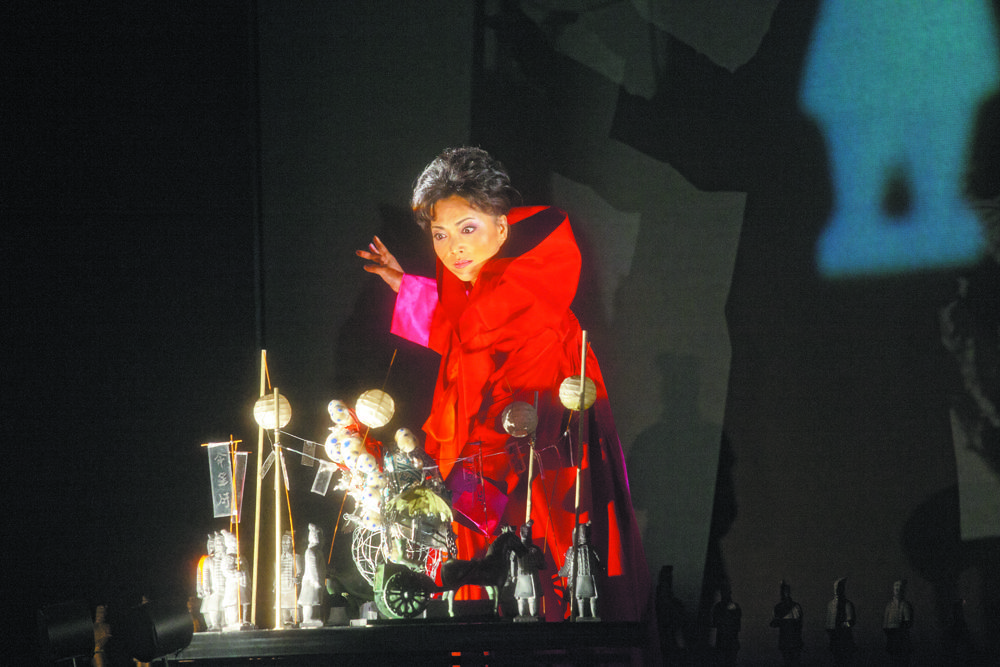
June: In Toronto Luminato (luminatofestival.com) has included opera in each of its past six seasons. This year the focus is on the Canadian premiere of Feng Yi Ting by Chinese composer Guo Wenjing. The opera had its world premiere at the Spoleto Festival in May 2012 and is notable because the three organizations that commissioned the opera (Spoleto, the Lincoln Center Festival and the Chinese organization Currents Art & Music) chose Toronto’s own Atom Egoyan as the stage director.

The opera, only 55 minutes long, explores the tale told in the 14th-century novel Romance of the Three Kingdoms of Diao Chan, one of the fabled Four Beauties of ancient China, whose seductive charms ignite an empire-threatening rivalry between a ruthless warlord and her lover, the brave general Lu Bu. It focuses on the pivotal moment when Diao (Shen Tiemei) and her lover (countertenor Jiang Qihu) meet in the Feng Yi Ting (“Phoenix Pavilion”), where she urges him to eliminate his nemesis. One of China’s most respected contemporary composers, Guo fuses Chinese and Western classical styles to create a score that sounds at once both ancient and modern. The opera is sung in Mandarin with English and Mandarin surtitles and runs for only three performances from June 20 to 22. For ticket holders Egoyan leads a pre-performance talk about the creation of Feng Yi Ting each evening at 7:10pm at the MacMillan Theatre.

The only other large-scale opera-related production in Toronto this summer is the latest opera/theatre hybrid created by Austrian playwright Michael Sturminger called The Giacomo Variations. Torontonians may recall that Luminato presented Sturminger’s Infernal Comedy: Confessions of a Serial Killer in 2010 starring John Malkovich as the killer whose victims, rather than speak, sang selected arias from Baroque operas. The Giacomo Variations also stars Malkovich, this time as the famous adventurer Giacomo Casanova (1725–98), whose memoirs, Histoires de ma vie, were so scandalous they were not published in full until 1960. In Sturminger’s piece the dying Casanova looks back on his life where his conquests and opponents are characterized by selected arias from the Mozart/Da Ponte operas accompanied by Orchester Wiener Akademie and conducted by Martin Haselböck. This time Show One, not Luminato, presents the work which runs June 7 to 9 at the Elgin Theatre.

For operas in concert in June, one must look to the Toronto Summer Opera Workshop productions led by vocal coach Luke Housner (lukehousner.com). Concert performances with surtitles are the culmination of intensive 10- to 14-day workshops whose purpose is to expose young singers to the rigours of learning roles. The TSOW performs Mozart’s Don Giovanni from June 4 to 6 and Humperdinck’s Hänsel und Gretel from June 12 to 14, both held at St. Simon-the-Apostle Anglican Church.

July-August: For staged operas with piano accompaniment in Toronto in July and August, Summer Opera Lyric Theatre is always reliable. This year SOLT (solt.ca) is presenting Handel’s Alcina (1735) in Italian on July 26, 28, 31 and August 3. Running with it in repertory is Bellini’s I Capuleti e i Montecchi (1830), also in Italian, on July 27, 31, August 2 and 4 and Puccini’s familiar La Bohème sung in English on July 27, 30, August 1 and 3. All performances take place at the intimate Robert Gill Theatre on the University of Toronto campus.

For opera outside Toronto, one need only look at the increasing number of summer music festivals. The operatic highlight of the 26th annual Brott Music Festival in Hamilton (brottmusic.com) is a concert performance with the National Academy Orchestra of Verdi’s Aida on August 1 at Mohawk College’s McIntyre Performing Arts Centre. Sharon Azrieli Perez sings the title role with David Pomeroy as Radames and Emilia Boteva as Amneris. Other opera-related concerts include “Last Night at the Proms Meets Gilbert & Sullivan” on July 27 with David Curry singing all the comic male roles and Brian Jackson conducting the NAO.

This year the Elora Festival (elorafestival.com) also includes opera in concert. On July 27 it presents Handel’s Acis and Galatea with the Elora Festival Singers and musicians of the Toronto Masque Theatre conducted by Noel Edison. On August 3 it presents Gilbert and Sullivan’s The Mikado with Jim White as Ko-Ko, Allison Angelo as Yum-Yum, Thomas Goerz as Pooh Bah, Jean Stilwell as Katisha, David Curry as Nanki-Poo and Michael Cressman as the Mikado. Edison conducts the Elora Festival Orchestra and Singers. Opera-lovers should also note that to celebrate Verdi’s bicentenary, the Elora Festival opens on July 12 with Verdi’s Requiem with COC favourites Yannick-Muriel Noah, Anita Krause, David Pomeroy and Robert Pomakov as the soloists.

A bit farther from Toronto is the Highlands Opera Studio in Haliburton (highlandsoperastudio.com) where Richard Margison is the artistic director. On August 6, 8 and 16 it offers a program of “Operatic Highlights.” On August 11 there is a concert “Richard Margison & Friends” where the famed tenor and some of his closest friends come together to raise funds to support the HOS. The summer culminates in fully staged performances of Verdi’s La Traviata on August 23, 25, 27 and 29. Ambur Braid and Luiza Zhuleva will trade off in the roles of Violetta and Annina, Adam Luther sings Alfredo and Geoffrey Sirett sings Germont. Valerie Kuinka directs and Miloš Replický conducts.
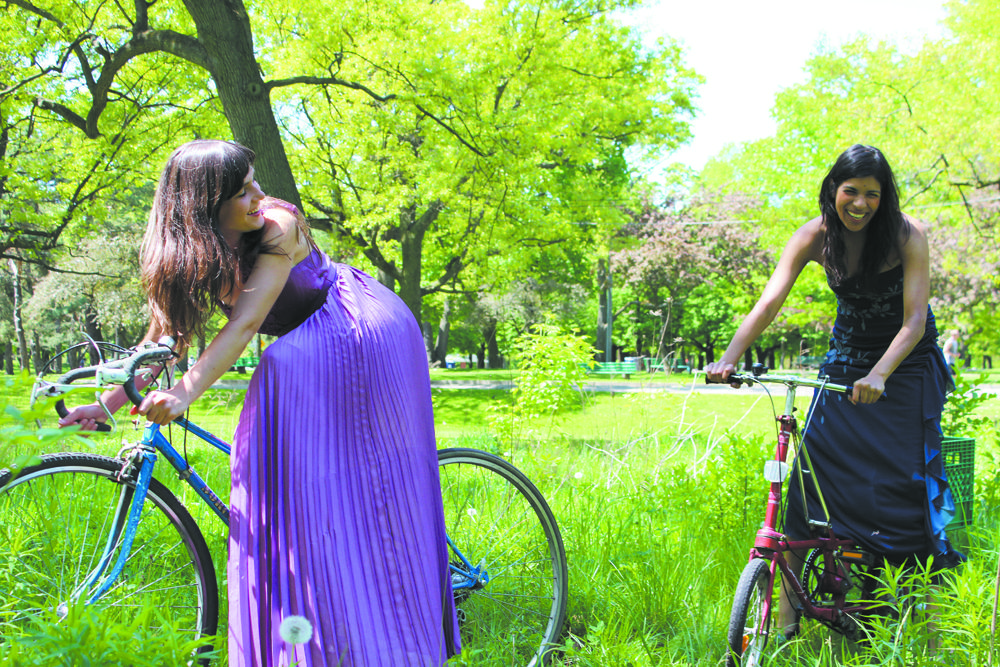
on opera bicycle-operaTo the west, the ever-expanding Stratford Summer Music (stratfordsummermusic.ca) is presenting the unusual group known as The Bicycle Opera Project, July 26 to 28. The group (bicycleopera.ca) was formed to bring Canadian music to people who might otherwise have little opportunity to hear it and to work to close the distance between audiences and opera singers through performances in intimate spaces. It focuses on operatic repertoire that deals with contemporary issues. At Stratford’s Revel Caffè it will perform two programs. The first will include scenes from the operas Rosa by James Rolfe, Slip by Juliet Palmer and Cake by Monica Pearce. The second program features excerpts from Little Miss All Canadian by Lemit Beecher, The Enslavement and Liberation of Oksana G. by Aaron Gervais and Trahisons liquides (in French) by Stacey Brown. The performers are soprano Larissa Koniuk, mezzo Michelle Simmons, baritone Geoffrey Sirett and tenor Will Reid with music director Wesley Shen at the piano, Katherine Watson on flute and Leslie Ting on violin. Michael Mori is the stage director. Outside Stratford, The Bicycle Opera Project will make stops in Toronto, Hamilton, Elora, Fergus, Kitchener, Waterloo, Bayfield and London.

To the northeast of Toronto the Westben Arts Festival (westben.ca) in Campbellford is mounting a fully staged production of Bizet’s Carmen on July 5, 6 and 7. The UBC Opera Ensemble is directed by Nancy Hermiston, and Leslie Dala conducts the Westben Festival Orchestra. On July 21 Richard Margison and John Fanning, with accompanist Brian Finley, offer “Sunday Afternoon at the Opera,” a celebration of Wagner and Verdi in honour of the composers’ bicentenaries. On July 25, 26, 27 and 28 well-known singers Virginia Hatfield, Brett Polegato and James Levesque take a break from opera to explore musicals from The Wizard of Oz to Les Misérables.

If you’re looking for major rarities and would rather stay in Canada, simply head to Quebec. The Montreal Baroque Festival (montrealbaroque.com) runs June 21 to 24. In concordance with this year’s theme “Nouveaux Mondes,” on June 21 Ensemble Caprice and Atelier Lyrique de l’Opéra de Montréal present the Canadian premiere of Vivaldi’s opera Motezuma [sic] from 1733. The opera focuses on the last hours of the Aztec king Moctezuma II (died 1520) as he languishes in captivity under the Spanish conquistador Hernán Cortés. This being an opera, librettist Girolamo Alvise Giusti had no trouble in inventing a love story involving Fernando’s (i.e. Hernán’s) brother Ramiro and Mo(c)tezuma’s daughter Teutile. The score, thought lost, was discovered in 2002 in Berlin, though part of Act 1 and most of Act 3 are missing. Various baroque music experts have created reconstructions of the missing portions, the first concert performance since the 18th century occurring in 2005 in a version by Federico Maria Sardelli. For the MBF, Ensemble Caprice’s conductor Matthias Maute has created his own reconstruction.

Besides this, La Compagnie Baroque Mont-Royal will present a concert called “L’Opéra de Frédérick II” on June 24 which will explore the type of opera that the Prussian king encouraged to flower at court after his ascension in 1740. Fans of ballet should also note that Les Jardins Chorégraphiques and Les Boréades de Montréal have teamed up to present a famous ballet more often recorded than seen — Les Élémens of 1737 by Jean-Féry Rebel (1666–1747), which depicts no less than the creation of the world out of chaos. The performance takes place June 24.

Not far from Montreal is the site of the Festival de Lanaudière (lanaudiere.org). The highlight of the festival is a concert performance of Wagner’s Lohengrin (1850) on August 11 with Yannick Nézet-Séguin conducting the Orchestre Métropolitain and Choeur de l’Orchestre Métropolitain de Montreal. Brandon Jovanovich sings the title role, Heidi Melton is Elsa, Andrew Foster-Williams is Telramund and renowned soprano Deborah Voigt makes her role debut as Ortrud.

Since 2013 is also the 200th anniversary of the birth of Verdi, the festival is offering a starry “Gala Verdi” on August 3 with Jean-Marie Zeitouni conducting the Orchestre du Festival et du Choeur St-Laurent. Soprano Marjorie Owens, mezzo Jamie Barton, tenor Russell Thomas and baritone Quinn Kelsey are the soloists. The concert will feature arias, duets, ensembles, choruses and overtures from 13 of Verdi’s operas from Nabucco to Falstaff.

Enjoy the summer! 

Christopher Hoile is a Toronto-based writer on opera and theatre. He can be contacted at opera@thewholenote.com.
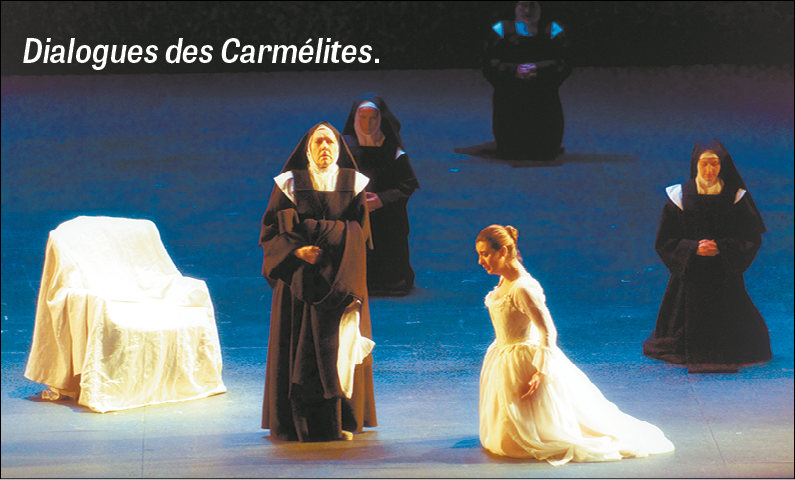
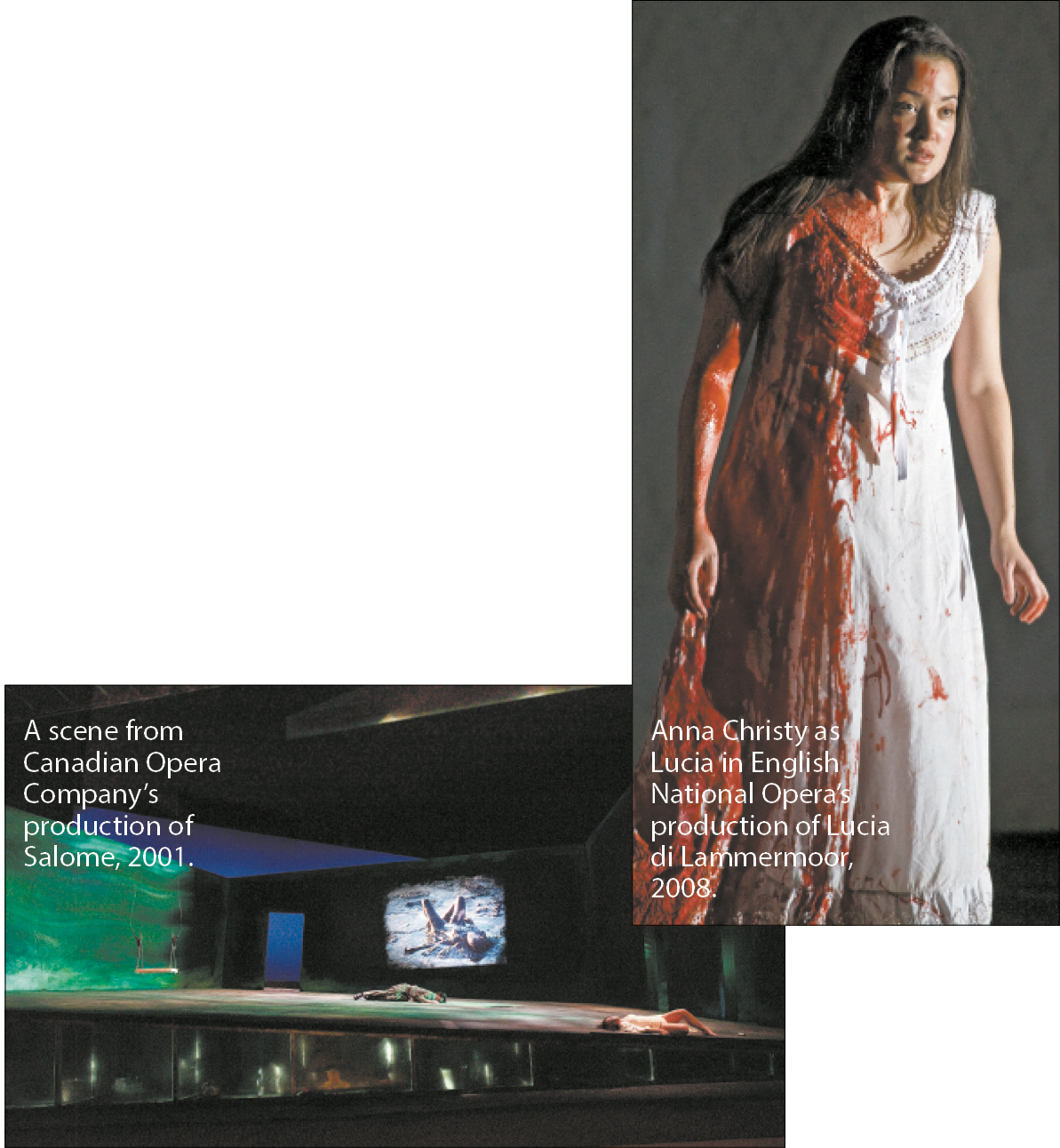
1808-operaApril has become a month so replete with opera that May, which used to be rather quiet, is beginning to fill up with opera as well. The Canadian Opera Company’s production of Salome continues to May 22 and its production of Lucia di Lammermoor to May 24. They are joined on May 8 by the final opera of the 2012/13 season, Dialogues des Carmélites. What is usual among the other offerings this month is the high concentration of 20th- and 21st-century operas.

Dialogues des Carmélites (1957) by Francis Poulenc has not been seen at the COC since 1997. The opera is based on the true story of the 16 Carmelite nuns of Compiègne who were martyred during the Reign of Terror on July 17, 1794. The upcoming production is notable for its high concentration of Canadian talent. The cast unites such stars as Isabel Bayrakdarian as Blanche de la Force, Judith Forst as Madame de Croissy, Adrianne Pieczonka as Madame Lidoine, Hélène Guilmette as Soeur Constance, Frédéric Antoun as the Chevalier de la Force and Jean-François Lapointe as the Marquis de la Force. Except for the role of Mère Marie sung by Russian mezzo Irina Mishura, all the remaining roles are sung by such well-known Canadian singers as Doug MacNaughton, Megan Latham, Rihab Chaieb, Michael Colvin and Peter Barrett.

The production is directed by Canadian Robert Carsen who created it for De Nederlandse Opera in 1997 and is designed by Canadian Michael Levine, who designed the COC’s Ring cycle. The physical staging is minimalist, relying on a few significant props and the use of light to set the many different scenes. Carsen’s staging, however, uses more than 100 supernumeraries to evoke the constant threat of the French Revolution that Blanche does not escape by taking the veil. The opera runs May 8 to 25 with Johannes Debus conducting the COC Orchestra.

Among the new operas is the welcome return of Laura’s Cow: The Legend of Laura Secord composed by Errol Gay to a libretto by Michael Patrick Albano. The 75-minute opera written for the Canadian Children’s Opera Company, premiered in 2012 during Luminato as part of the commemoration of the War of 1812. It was specifically written to include all levels of the 200-voice CCOC from oldest to youngest, with the addition of three professional adult singers. Emily Brown Gibson and Mary Christidis alternate in the role of Laura Secord, Andrew Love sings the roles of Caller, Balladeer and Lt. FitzGibbon as he did last year; and Tessa Laengert sings the delightful role of the Cow. Having reviewed the opera last year for The WholeNote blog, I can testify that it is an ideal opera for the whole family. Laura’s Cow runs from May 3 to May 5 at the Enwave Theatre. Michael Patrick Albano directs and Ann Cooper Gay conducts the 14-member orchestra.

From May 10 to 12, Toronto Masque Theatre presents the world premiere of The Lesson of Da Ji by Alice Ping Yee Ho to a libretto by Marjorie Chan. The one-act opera plays on a doublebill called “The Lessons of Love” with John Blow’s 1683 opera Venus and Adonis and thus provides a view of the masque from past and present, West and East.

The story is inspired by real events in the Shang dynasty (c. 1600–1046 bc). In the version by Ho and Chan, Da Ji, the king’s concubine, takes music lessons from the young nobleman Bo Yi to play the guqin, a type of zither. The king becomes jealous and exacts a grisly revenge on Bo Yi.

The singers include Vania Chan, Charlotte Corwin, Benjamin Covey, Alexander Dobson, Derek Kwan, Marion Newman, Xin Wang and Timothy Wong; the dancers are Marie-Nathalie Lacoursière and traditional Peking Opera dancer William Lau. Derek Boyes directs and Larry Beckwith conducts the TMT ensemble. Ho’s composition blends period baroque instruments (recorders, violins, viola da gamba, lute and harpsichord) and Chinese instruments (guqin, pipa, guzheng, erhu, gongs and drums).

On May 14 and 15, the COSI Connection will present the world premiere of The Wings of the Dove by Canadian composer Andrew Ager based on the 1902 novel by Henry James. The story concerns Kate Croy and Merton Densher who are engaged but too poor to marry. The entrance of the rich but terminally ill Milly Theale complicates and completely alters the couple’s relationship.

Toronto audiences will remember Ager as the composer of the opera Frankenstein, first performed by TrypTych Productions in January 2010. When Ottawa’s Thirteeen Strings premiered the Interlude from the opera in 2011, the Ottawa Citizen declared, “It’s gorgeous, if intensely wistful. Ager’s writing is subtly layered, its emotions being persistent and powerful without ever venturing into a hint of melodrama.”  “COSI” stands for the Centre for Opera Studies in Italy that commissioned the work. Ager’s opera will launch the COSI Connection which intends to bring back to Canada the fruit of the labour and training Canadians have received at the centre in Sulmona, Italy.

The staged production at the Heliconian Hall in Yorkville will feature soprano Leigh-Ann Allen, baritone Bradley Christensen, soprano Clodagh Earls, mezzo Stephanie Kallay and baritone Dimitri Katotakis. Michael Patrick Albano is the stage director and the composer will provide the piano accompaniment. After the produc-tion in Toronto, the opera will be produced in July at COSI in Italy, with full orchestra, choir and soloists.

Opera by Request has several operas-in-concert on offer in May. There is Janáček’s Jenůfa on May 5, Mozart’s Così fan tutte on May 24 and Puccini’s La Bohème on May 27. The rarest of the offerings, however, is Douglas Moore’s 1956 opera The Ballad of Baby Doe on May 11. The plot is based on the true story of the “Silver King” Horace Tabor (1830–1899), who built the opera house in Central City, Colorado, his wife, Augusta, and the woman, Elizabeth “Baby Doe” McCourt, with whom Tabor had an affair before divorcing his wife. Lisa Faieta sings the title role, Keith O’Brien is Horace Tabor, Eugenia Dermentzis is Augusta and Tracy Reynolds is Baby Doe’s mother. All the Opera by Request performances this month take place at the College Street United Church and are accompanied by William Shookhoff at the piano. OBR takes a new step withBaby Doein that the performance will not be in concert but semi-staged, with Lisa Faieta as the director.

Those seeking out 20th-century operas from Spain need look no further than the double bill by Opera Five of Goyescas (1915) by Enrique Granados and El retablo de maese Pedro (1923) by Manuel de Falla. The singers include mezzo Catharin Carew, soprano Emily Ding, soprano Rachel Krehm, baritone Giovanni Spanu and tenor Conrad Siebert. Maika’i Nash is the music director and pianist.Aria Umezawa directs. Performances on May 1 and 2 take place at Gallery 345.

From May 2 to May 5, Toronto Operetta Theatre presents Offenbach’sLa Vie Parisienne(1866) as its season finale. Last staged in 1992, the new production stars Elizabeth DeGrazia as the Swedish baroness with Stuart Graham as her wayward husband. Adam Fisher and Stefan Fehr play Parisian rogues ready to show the two foreigners a good time and Lauren Segal is the glamorous comedienne, Métella, ready to gamble for love. Christopher Mayell sings the role of the billionaire Brazilian whose masked ball concludes the madcap proceedings. Larry Beckwith conducts TOT Orchestra and Guillermo Silva-Marin directs. 

Christopher Hoile is a Toronto-based writer on opera and theatre. He can be contacted at opera@thewholenote.com.
On OperaApril, as has become usual, offers the most concentrated number of opera productions of any month in the year. Every April we can always count on large-scale productions from the Canadian Opera Company and Opera Atelier and the spring production from Toronto Operetta Theatre, while smaller companies and operas in concert serve the important function of adding variety and breadth. If we artificially extend the month to May 10, an opera lover can sample the whole history of opera from the 17th century to the present.

1683: Venus and Adonis by John Blow on May 10, 11 and 12 by Toronto Masque Theatre. The oldest opera presented in this six-week period tells of the love of the goddess Venus (Marion Newman) for the mortal Adonis (Alexander Dobson). The opera, fully staged with the TMT Orchestra conducted by Larry Beckwith, is on a double bill with the world premiere of The Lesson of Ja Di (below).

1733: La serva padrona by Giovanni Pergolesi on April 5 and 7. Metro Youth Opera was founded by Kate Applin in 2010 to give Toronto’s young opera singers the chance to perform complete roles. The company’s third production is a triple bill of comedies, the earliest of which is Pergolesi’s important work, often seen as the bridge between the baroque and classical periods. The plot is about how the maid Serpina (Applin) tricks her bachelor master (Janaka Welihinda) into marrying her. Alison Wong directs with Blair Salter at the piano.

1790: Così fan tutte by Wolfgang Amadeus Mozart on April 27 only. Opera by Request presents the third of Mozart’s collaborations with librettist Lorenzo Da Ponte. Jonathan MacArthur is Ferrando, Josh Whalen is Guglielmo, while Naomi Eberhard and Alexandra Beley are the fiancées, Fiordiligi and Dorabella, whose faithfulness they test. William Shookhoff provides the piano accompaniment.

1791: Mozart’sThe Magic Flute on April 6, 7, 9, 10, 12 and 13. Opera Atelier remounts its much-loved production of Mozart’s fairy-tale opera with a cast of OA favourites. Colin Ainsworth sings Tamino, Laura Albino is Pamina, Ambur Braid is the Queen of the Night, João Fernandes is Sarastro with Olivier Laquerre as Papageno and Carla Huhtanen as Papagena. David Fallis conducts the Tafelmusik Baroque Orchestra and Marshall Pynkoski directs.

1816: Il Barbiere di Siviglia by Gioacchino Rossini on April 6 only. Opera by Request presents Rossini’s well-known opera based on the first of Beaumarchais’ plays about the wily barber Figaro. Jay Lambie sings Figaro, William Parker is his friend Count Almaviva and Nicole Bower is Rosina, the object of the Count’s desire. William Shookhoff provides the piano accompaniment. For those interested in comparisons, the Soulpepper Theatre Company presents an adaptation of Beaumarchais’ play itself with previews beginning May 9.

1835: Lucia di Lammermoor by Gaetano Donizetti on April 17, 20, 26, 30 and May 9, 12, 15, 18 and 24. The COC presents the acclaimed production of Donizetti’s bel canto masterpiece created by director David Alden in 2008 for soprano Anna Christy and the English National Opera. Christy herself sings the title role with Stephen Costello as Edgardo, the man she loves, and Brian Mulligan as Enrico, Lucia’s brutal brother who forces her to marry someone else. Stephen Lord conducts the COC Orchestra.

1853: Il Trovatore by Giuseppe Verdi on April 18 and 20. Now in its eighth season, Opera Belcanto of York will present a fully staged production at the Richmond Hill Centre of Verdi’s opera about gypsies and children switched at birth. Guest soloists from the Yerevan State Opera include Tatevik Ashuryan as Leonora, Hovhannes Ayvzyan as the troubadour Manrico and Nariné Ananikyan as Azucena with Canadian Jeffrey Carl as the Conte di Luna. OBY founder David Varjabed conducts and Gabriele Graziano directs.

1866: La Vie Parisienne by Jacques Offenbach on May 2, 3, 4 and 5. The final offering of the season from Toronto Operetta Theatre is Offenbach’s first full-length operetta dealing with contemporary life in Paris rather than the mythological satires like Orphée aux Enfers (1858) and La Belle Hélène (1864) that made him famous. The story involves the first visit to Paris of a Swedish baron and baroness whose tour is confounded by the actions of a Brazilian millionaire and a Parisian courtesan. The cast includes Elizabeth DeGrazia, Lauren Segal, Christopher Mayell and Adam Fisher. Larry Beckwith conducts and Guillermo Silva-Marin directs. The TOT last staged this operetta in 1992. In an odd coincidence L’Opéra de Québec will later present the work May 11, 14, 16 and 18 in Quebec City.

1901: Rusalka by Antonín Dvořák on April 19 only. Opera by Request presents the first of two Czech operas that form a study in contrasts. Though separated by only three years, Dvořák’s opera is fully romantic, while Janáček’s Jenůfa is realistic. Janáček’s new style of composition based on Czech speech patterns is a break from Dvořák’s more traditional symphonic style. Deena Nicklefork sings the title role of the water nymph who falls in love with a mortal, Ryan Harper is the prince she loves, David English is Vodník, the ruler of the lake, and Karen Bojti sings Ježibaba, the witch who changes Rusalka into a mortal at a terrible cost. William Shookhoff is, as usual, the piano accompanist.

1904: Jenůfa by Leoś Janáček on May 5 only. Unlike Rusalka’s world of supernatural beings and courtiers, Janáček’s Jenůfa focuses on peasant life. Kostelnička (Monica Zerbe), stepmother of Jenůfa (Michèle Cusson), forbids her to marry Števa (Lenard Whiting), unaware that Jenůfa is already pregnant by him. Meanwhile, Števa’s half-brother Laca (Paul Williamson) loves Jenůfa and can’t understand her indifference to him. William Shookhoff is again the piano accompanist.

1905: Salome by Richard Strauss on April 21 and 27 and May 1, 4, 7, 10 16 and 22. For the first time since 2002, the COC revives Atom Egoyan’s acclaimed production of Richard Strauss’ shocker based on Oscar Wilde’s one-act play. Erika Sunnegårdh sings the title role, Richard Margison is her dissolute father Herod, Hanna Schwarz is her stern mother Herodias and Martin Gantner (April 21 to May 4) and Alan Held (May 7 to 22) sing John the Baptist, the object of Salome’s depraved desire. Johannes Debus conducts the COC Orchestra.

1915: Goyescas by Enrique Granados (1867–1916) on April 29 and May 1 and 2. Opera Five helps us fill in our knowledge of opera by presenting a double bill of two one-act operas from Spain. The title of Granados’ opera is best known as a piano suite reflecting various paintings by Francisco Goya. The composer was encouraged to turn the suite into an opera and so, contrary to usual procedure, Granados’ librettist had to write a libretto to fit the music. The story deals with two men, Fernando (Conrad Siebert) and Paquiro (Giovanni Spanu), who fight a duel over Rosario (Emily Ding), the woman they both love. Maika’i Nash is the music director and pianist and Aria Umezawa is the stage director. Performances take place at Gallery 345. 

1922: Mavra by Igor Stravinsky on April 5 and 7. This rarely performed work is part of Metro Youth Opera’s triple bill of comic operas. (The COC last performed it in 1965 on a double bill with Salome.) Based on a story by Pushkin, the opera tells how the young Parasha (Laura MacLean) tries to deceive her Mother (Sarah Hicks) by smuggling her lover Vassili (Jan Nato) into the house disguised as the new maid “Mavra.” Alison Wong directs with Blair Salter at the piano.

1923: El retablo de maese Pedro by Manuel de Falla on April 29 and May 1 and 2. The second work on Opera Five’s Spanish double bill (see above) is a rarely performed one-act opera based on an episode from Don Quixote and usually translated as Master Peter’s Puppet Show. The opera focusses on the reactions of Don Quixote (Giovanni Spanu) to a puppet play presented by Pedro (Conrad Siebert) depicting Charlemagne’s adoptive daughter being abducted by Moors. As might be expected, Don Quixote cannot control his anger on viewing such an outrage.

1957: Dialogues des Carmélites by Francis Poulenc on May 8, 11, 14, 17, 19, 21, 23 and 25. The COC’s final offering of the 2012/13 season is Robert Carsen’s production of this 20th-century masterpiece created for the Lyric Opera of Chicago in 2007. Isabel Bayrakdarian starred as Blanche de la Force in Chicago and does so again in Toronto. Daughter of an aristocrat, Blanche decides to become a nun to escape the chaos of the French Revolution only to find herself caught up in it after she joins the convent. The starry cast includes Judith Forst, Adrianne Pieczonka, Hélène Guilmette, Irina Mishura, Frédéric Antoun and Jean-François Lapointe. Johannes Debus conducts the COC Orchestra.

1961: Le magicien by Jean Vallerand (1915–94) on April 5 and 7. The third work on Metro Youth Opera’s triple bill is the rarest of all. It is the only opera by Québecois composer Vallerand, written for Jeunesses Musicales as a curtain-raiser for their tour of Debussy’s L’Enfant prodigue. The libretto, also written by Vallerand, concerns a magician who brings the marionettes Colombine and Arlequin to life only to find that they refuse to return to their former state. Though it was performed more than 100 times in the 1961–62 season and recorded in by the CBC in 1967, it lapsed into obscurity until it was revived in concert in Montreal in 1989. MYO does us a great service in giving us the chance to see it now.

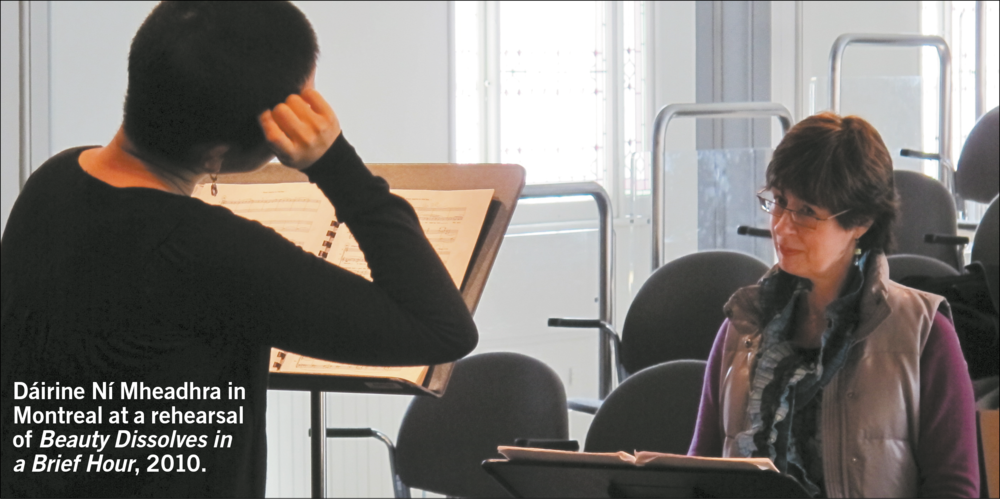
2013: Inspired by Lorca by Chris Paul Harman on April 30 is not an opera but a song cycle now titled La selva de los relojes (The Forest of Clocks) based on the poetry of Spanish poet Federico García Lorca. I include it here because it is the last piece that the much-loved Queen of Puddings Music Theatre will produce before it dissolves at the end of August. Mezzo-soprano Krisztina Szabó is the soloist and QoP co-founder Dáirine Ní Mheadhra conducts a chamber ensemble of piano, harp, cello, flute and percussion. The performance takes place at the Richard Bradshaw Amphitheatre in the Four Seasons Centre and is free.

2013: Ruth by Jeffrey Ryan on May 4 only. This is a workshop performance given by Tapestry Opera (formerly Tapestry New Opera) of Ryan’s opera to a libretto by Michael Lewis MacLennan that reimagines the Biblical story as an immigrant tale about the struggle to find welcome in a new country. The performance takes place at the Ernest Balmer Studio in the Distillery District.

2013: The Lesson of Ja Di by Alice Ping Yee Ho on May 10, 11 and 12 by Toronto Masque Theatre. The newest opera presented in this six-week period is a world premiere written as a companion piece to the oldest opera here, John Blow’s Venus and Adonis (above). Based on a true story from the Shang dynasty (second millennium B.C.), it tells of the horrific revenge that a King wreaks on his concubine Da Ji for falling in love with her music teacher, the nobleman Bo Yi. Larry Beckwith conducts the TMT Orchestra on period instruments, augmented on this occasion with traditional Chinese instruments such as the erhu, pipa and guzheng.

Enjoy the bounty on offer in these six weeks and create your own opera festival. 

Christopher Hoile is a Toronto-based writer on opera and theatre. He can be contacted at opera@thewholenote.com.
1806 on operaQueen of Puddings Music Theatre announced on February 8 that it would conclude operations at the end of August of this year. For many it comes as a shock that Toronto should be losing a company that for the past 20 years has brought an uncompromising vision to the development and production of new Canadian chamber opera. Their legacy is a series of works, acclaimed by critics and audiences alike, which have redefined not only what a Canadian opera can be but also what opera itself can be. Beatrice Chancy (1998–1999) by James Rolfe and George Elliott Clarke was the first opera about black slavery in Canada and launched the career of soprano Measha Brueggergosman. The Midnight Court (2005–2007) by Ana Sokolović and Paul Bentley was the first Canadian opera — and QoP the first Canadian company — invited to the Linbury Studio at England’s Royal Opera House, Covent Garden.

In contrast to these narrative-based works, QoP also explored the boundaries of opera. Love Songs (2008–2011) by Ana Sokolović, a solo opera that set various love poems and the words “I love you” in more than 100 languages, was declared the best production at the Zagreb Biennale and was subsequently presented at the prestigious Holland Festival. Beauty Dissolves in a Brief Hour (2010) by Pierre Klanac, John Rea and Fuhong Shi, presented three poems in medieval French, English and Mandarin in the form of a ritual that was hailed by EYE Weekly as “an exquisite piece of music theatre.” In 2012, co-founder and co-artistic director Dáirine Ní Mheadhra was awarded the Canada Council Molson Prize in the arts in recognition of her lifetime achievements and ongoing contributions to the cultural and intellectual life of Canada.

Why should Ní Mheadhra and co-founder and co-artistic director John Hess choose to end such an enterprise when it has reached the peak of its success? In some ways the question answers itself. The co-founders have decided that Queen of Puddings should end on a high note.

In an email interview near the end of last month, Ní Mheadhra agreed that she and Hess would answer a number of questions about QoP, its legacy and the future. Here it is:


Why did you decide that QoP should cease operations? Do you feel that QoP has achieved all the goals it was set up to achieve?

We decided that QoP should cease operations because after nearly 20 years we feel we’ve achieved what we set out to do, which was to commission and produce original Canadian opera to a high artistic standard and to develop an international profile for this work. In this current season the company is thriving, with the great success and critical acclaim for our production of Ana Sokolović’s opera Svadba-Wedding, now touring nationally and internationally. Coming up on April 30thwe are presenting the premiere of a new vocal chamber work, Inspired by Lorca, by composer Chris Paul Harman, sung by Krisztina Szabó with our ensemble at the Richard Bradshaw Amphitheatre.

We’ve been considering our decision for some months, and while we realize that it’s unusual to cease operations when an organization is extremely healthy, it felt like the right decision for us both in this phase of our lives and in the life cycle of QoP. The end of our season in August 2013 feels like a very natural artistic ebbing point, and it also coincides with the end of our current three-year operational funding, and thus feels like the right moment to close the company. We want to conclude in a year like this, which is full of artistic highlights and the fulfilment of our goals — with continued financial stability due to a deficit-free track record.

What do you feel are QoP’s greatest achievements over its existence?

Probably our greatest achievement has been never to accept “received wisdom” about the state of new music/opera in Canada, but to have furrowed our own path with our individual beliefs. Just one example: when Dáirine arrived in Toronto from Ireland in 1994 we were told that there were only two singers in Toronto who could possibly sing new opera. We thought that was a load of old rubbish. It would never have occurred to us to segregate new opera from middle opera or old opera. For us it’s all a continuum — Monteverdi, Mozart, Puccini, Strauss, Shostakovich, Andriessen, Sokolović, Rolfe ... and the singers who sing those operas also sing contemporary Canadian opera — there’s no difference.

We think another very important achievement has been the international touring we’ve done of new Canadian opera, which hardly existed before QoP. That was hugely important to us. Before Dáirine came to Canada, she had no real impression of what new Canadian music was like as it didn’t have a strong profile internationally. But we’ve discovered that the best singers in the world live in Canada and that there’s huge composer talent here too. It has been our mission to deliver this news to the world!

For example, we’ve wanted to bring Ana Sokolović’s music back to her Serbian homeland for ten years, and last October we felt such inordinate pleasure walking down a main street in Belgrade with a big poster of Ana and Queen of Puddings outside the Atelje 212 Theatre announcing a performance of Svadba that night. In the performance the singers sang Serbian so well that we were asked how we ever managed to find six Serbian-Canadian singers! Shortly afterwards, we brought Svadba to Dublin (Dáirine’s hometown) and the audience could not believe the virtuosity of the singers and the sheer imagination and verve of the music. But all of this we knew all along, and knew that audiences outside of Canada just needed to hear these Canadian singers and music, and they would be bowled over. And they certainly were.

Are you worried that the gap left by the departure of QoP
will leave a gap in the creation of new opera in Canada,
or are you confident that QoP’s success as a deficit-free arts organization has left a model that others can build on?

We’d never have the hubris to think that we’d left a gap in new opera in Canada! People are very resilient and if there is a gap, it would be filled sooner or later. Now the deficit-free business, well that’s another story! That was a personal aesthetic — we would have been mortified to ever show up at a board meeting announcing that we’d gone into deficit. So along with our producer Nathalie Bonjour, we just made sure we never spent more than what we thought we could fundraise.

What will happen to the many works that QoP created? Will other companies have permission to perform them, or will they disappear along with the company?

QoP has an excellent track record of repeat performances of new operas. When we commission a new opera, we have exclusive rights for a few years after, but that being said we’ve never turned anyone away who wanted to do their own production of a QoP work. That’s what we all want — more productions of new operas! Just last week, the Peabody Conservatory in Baltimore presented their own production of Svadba and in fall 2013 there will be another US production of Svadba. Our 2009 production, Love Songs, has already had three other versions performed in Canada with a fourth coming up in a few months. And so on. We consider the new operas we have commissioned as living organisms which will continue to be performed well into the future and form a vital part of the emerging canon of Canadian opera.

What plans do you have for the future?

John has a recital with soprano Erin Wall on March 7 at the St. Lawrence Centre in Toronto and then a BC recital tour with Ben Heppner. For Dáirine, she’s been approached about a few projects, but in the short term she’ll probably take a break after August 31st and fuel the imagination with walks in the mountains in County Kerry and long coffees on the Avenida da Liberdade in Lisbon. Then she’ll start having ideas for new projects and be back knocking on someone else’s door!

Let me give you my deepest thanks for truly enlivening the world of opera in Canada.

We’ve had a marvellous run of 20 years and experienced huge generosity, support and warmth from our friends and colleagues in Canada. They’ve all been integral to our work and we couldn’t have given the best of ourselves without their belief that we would do no less. 

Christopher Hoile is a Toronto-based writer on opera and theatre. He can be contacted at opera@thewholenote.com.
onopera-feb2013On january 23 Canadian Opera Company General Director Alexander Neef announced his 2013/14 season. Neef has assembled a particularly starry line-up of singers and directors, but what is immediately striking about this season, the COC’s 64th, is that three of the seven operas have never been presented by the COC before. This is only the fourth time since 1990 (1991/92, 2008/09 and 2011/12 were the others) that this has happened. Having their COC premieres, back to back in spring 2014, will be Handel’s Hercules, Donizetti’s Roberto Devereux andMassenet’s Don Quichotte. Adding spice to the season is that Hercules is also one of three COC-commissioned new productions.

The 2013/14 season opens, in fact, with one of these new productions: Puccini’s La Bohème. The opera was last seen here in 2009 and this will be its 15th appearance making it the COC’s most often staged opera. The new production, opening October 9, will be directed by Canadian-born British director John Caird, who directed Verdi’s Don Carlos for the company in 2007, and is probably most famous for the original production of Les Misérables, which has been running in London since 1985. Italian conductor Carlo Rizzi leads the COC Orchestra and Chorus. Alternating in the role of Mimì are Italian soprano Grazia Doronzio and Canadian soprano Joyce El-Khoury. The role of Rodolfo, Mimì’s lover, is shared by young tenors, Mexican David Lomelí (Rigoletto, 2011) and Romanian Teodor Ilincăi.

Alternating with La Bohème will be a production of Benjamin Britten’s Peter Grimes,  celebrating the centenary of the composer’s birth, and starring Ben Heppner in the title role. Last at the COC in 2003, this Grimes will be the company’s third. Australian director Neil Armfield, who directed Ariadne auf Naxos here in 2011, A Midsummer Night’s Dream in 2009 and Billy Budd in 2001, directs, and COC Music Director Johannes Debus makes his Britten debut. Three COC Ensemble Studio alumni appear — soprano Ileana Montalbetti, tenor Roger Honeywell, and baritone Peter Barrett. Alan Held, last year’s Gianni Schicchi, sings Captain Balstrode.

 The winter season opens on January 18, 2014, with Mozart’s Così fan tutte  running in repertory with Verdi’s Un ballo in maschera. Così will be a new COC production by Canadian film director Atom Egoyan, his third production for the COC (Salome, 1996 and Die Walküre, 2004). Debus conducts. Cast as the sisters are two Canadians — soprano Layla Claire in her COC debut as Fiordiligi and mezzo-soprano Wallis Giunta returning for a second season in a row, this time as Dorabella. The sisters’ two suitors are American tenor Paul Appleby (Ferrando) and COC Ensemble graduate bass-baritone Robert Gleadow (Guglielmo). Beloved Canadian soprano Tracy Dahl returns to the COC stage after a 19-year absence in the role of the wily servant Despina. Famed baritone Thomas Allen makes his COC debut as Don Alfonso.

For Un ballo in maschera Canadian soprano Adrianne Pieczonka and Greek-American tenor Dimitri Pittas make their role debuts as lovers Amelia and Riccardo. British baritone Roland Wood is Renato, Amelia’s husband; acclaimed Canadian mezzo-soprano Marie-Nicole Lemieux is the fortune teller Ulrica; and rising Ensemble Studio graduate, soprano Simone Osborne, is Oscar the page.

A question that always arises with Ballo is where it will be set — in 18th-century Stockholm, as Verdi intended, where King Gustav III was assassinated in 1792, or in Boston during the British colonial period, where censors forced him to move the action because of its incendiary plot. The directing duo Jossi Wieler and Sergio Morabito stir the pot again, by locating this production from the Berlin Staatsoper in the American South of the 1960s with its resonances of Kennedy-era tensions and assassinations.

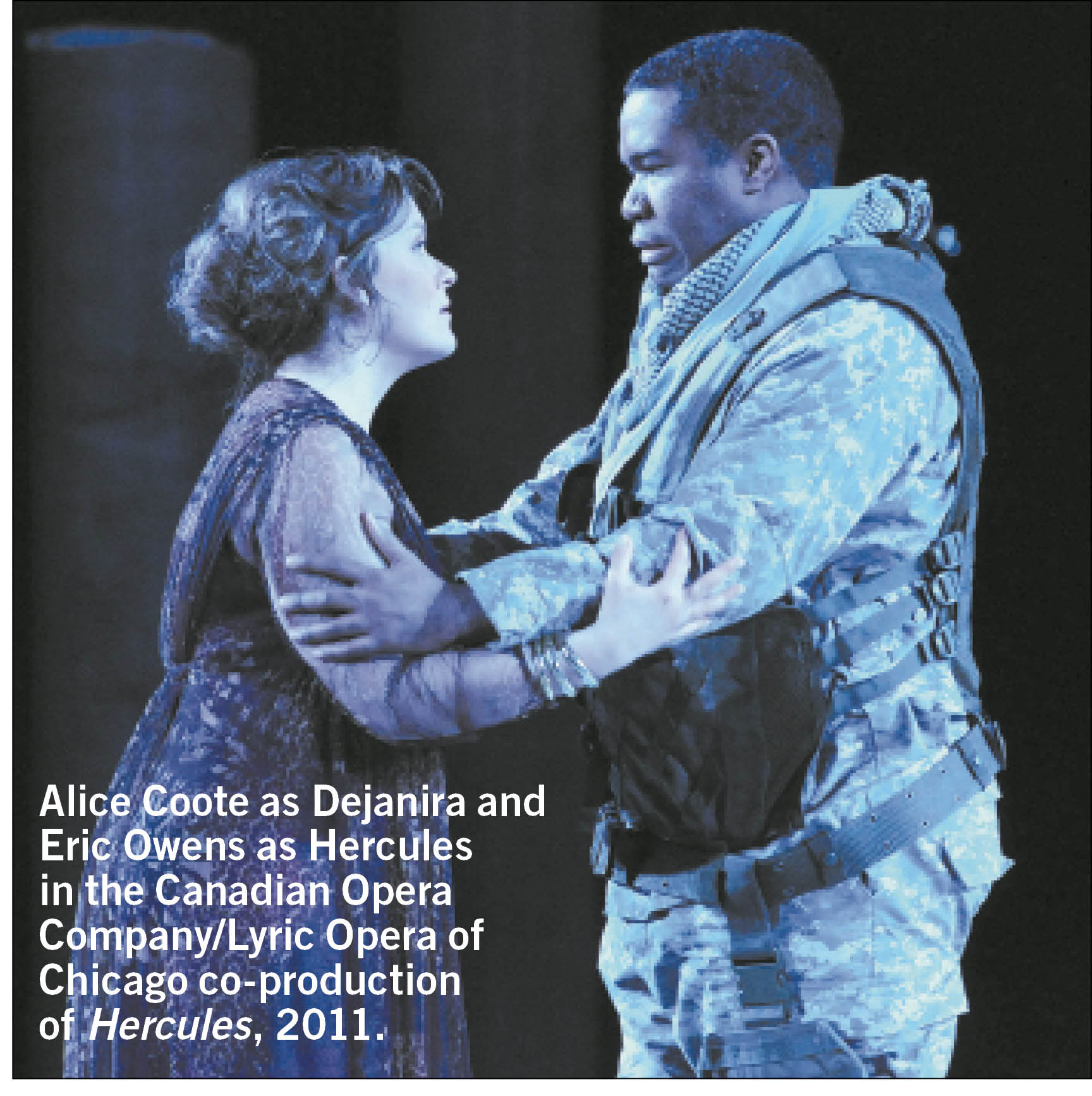
Spring 2014 brings the three premieres. First up on April 5 is Handel’s Hercules (1745) in a new co-production with Lyric Opera of Chicago directed by the renowned Peter Sellars. Sellars’ production which moves the action from mythological Greece to the present day won universal acclaim when it premiered in Chicago in 2011. The COC presentation will use the Chicago cast, and what a cast. American bass-baritone Eric Owens makes his COC debut as Hercules; British mezzo-soprano Alice Coote is Hercules’s wife Dejanira; American countertenor David Daniels returns to the COC as Hercules’ trusted aide, Lichas; American tenor Richard Croft returns as Hercules’ son, Hyllus; and British soprano Lucy Crowe makes her COC debut as Iole, a princess Hercules has taken captive. Conducting is Baroque specialist and COC favourite Harry Bicket. In 2012 Tafelmusik presented a staged concert version of Hercules directed by Opera Atelier’s Marshall Pynkoski. Anyone who saw it will know that it is a powerful drama told in glorious music.

Beginning April 25, 2014, is a real rarity, Donizetti’s Roberto Devereux (1837). This opera, along with Maria Stuarda (1835) and Anna Bolena (1830), comprises what is sometimes called Donizetti’s “Three Queens” trilogy. It was first presented as a trilogy in 1972, with Beverly Sills as the slighted British monarch in each production. From 2007 to 2010 Dallas Opera mounted all three directed by Stephen Lawless and using a set inspired by Shakespeare’s Globe Theatre. The COC’s Maria Stuarda was part of the Dallas Opera series and so is this Roberto Devereux. Is there an Anna Bolena in the wings?

American soprano Sondra Radvanovsky, our Aida in 2010, makes her role debut as the central character Elisabetta, in love with the courtier Devereux. Making his COC and role debut as Devereux is Italian lyric tenor Giuseppe Filianoti. Also making role debuts are COC favourites, Canadian baritone Russell Braun and mezzo-soprano Allyson McHardy as the Duke and Duchess of Nottingham. Italian conductor Corrado Rovaris makes his COC debut.

The final presentation of the 2013/14 season is another rarity, Don Quichotte (1910), one of the last operas by French composer Jules Massenet (1842–1912). The last time the COC presented an opera by Massenet was Werther in 1992. Don Quichotte has become a showcase work for great basses with Samuel Ramey, José van Dam and John Relyea recently essaying the role. Italian Ferruccio Furlanetto makes his COC debut in the title role of the iconic idealistic dreamer. Metropolitan Opera star, Russian mezzo-soprano Ekaterina Gubanova, makes her COC debut as Quichotte’s beloved Dulcinée. American baritone Quinn Kelsey, acclaimed here for his Rigoletto in 2011, returns to makes his role debut as Don Quichotte’s realistic sidekick, Sancho Panza. American Linda Brovsky, who helmed this production at the Seattle Opera, makes her COC debut as director. Johannes Debus conducts. Many see this opera not only as Massenet’s loving study of Cervantes’ hero but as the composer’s farewell to the age of romanticism that had inspired him throughout his life and that he saw fading with the dawn of the 20th century. The opera runs May 9 to 24, 2014. Visit coc.ca to inquire about subscriptions. 

Christopher Hoile is a Toronto-based writer on opera and theatre. He can be contacted at opera@thewholenote.com.
There were so many opera performances crammed into November that it may come as a relief to opera fans that the pace lets up a bit for the last month of 2012 and the first of 2013. The period takes on a distinctly Germanic flavour with the COC’s GrimmFest (a tribute to the 200th anniversary of the Grimm brothers’ collection of fairy tales), Toronto Operetta Theatre’s production of The Merry Widow and the COC’s production in January of Wagner’s Tristan und Isolde. The key, though, is that there is opera available to appeal to a wide range of tastes.

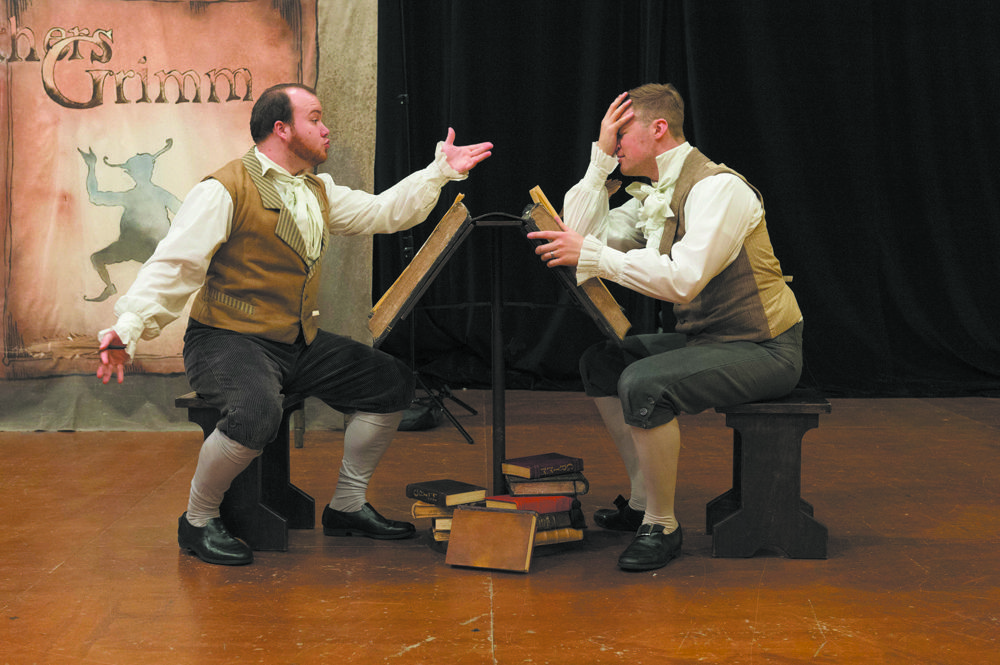
onopera coc-grimm-7520GrimmFest: December begins with the COC’s GrimmFest (coc.ca/GrimmFest) running from December 4 to December 8. The occasion is the 200th anniversary of the publication in 1812 of Kinder- und Hausmärchen (Children’s and Household Tales) by linguists, cultural researchers and brothers, Jacob and Wilhelm Grimm. One of the effects of the rise of Romanticism was research into folk traditions in an effort to uncover the strands of national identity. Besides that, people were aware that with the rise of industrialization, the traditions of an oral culture were gradually dying out and many scholars set out to record oral poetry and stories before they were lost. There is some dispute about the sources that the Grimm brothers used, but the result of their work gave us such famous stories as “Rapunzel,” “Hansel and Gretel,” “The Fisherman and His Wife,” “Cinderella,” “Little Red Riding Hood,” “The Bremen Town Musicians,” “Tom Thumb,” “Sleeping Beauty,” “Snow White” and “Rumpelstiltskin” among the two hundred tales collected.

The centrepiece of GrimmFest will be the 500th performance of the children’s opera The Brothers Grimm by Dean Burry. The anniversary performance by the COC Ensemble Studio takes place on December 7 at Daniels Spectrum in Regent Park with two more performances on December 8. The opera was commissioned by the COC in 1999 and has since become the most performed Canadian opera of all time. Wilhelm and Jacob Grimm are characters and the 45-minute opera shows how they were inspired to write “Rapunzel,” “Rumpelstiltskin” and “Little Red Riding Hood.” It has been a staple of the COC’s annual school tour since it premiered in 2001. In March 2012 it had its European premiere in Cardiff, Wales.

According to Burry, “When The Brothers Grimm premiered in 2001, I never expected that we would be celebrating its 500th performance 11 years later. It means so much to have been a part of this incredible journey and to have introduced so many young people to opera through the magic of these incredible fairy tales.”

Toronto Operetta Theatre (torontooperetta.com) will, as usual, present an operetta during the immediate pre- and post-New Year’s Eve period with a gala performance on New Year’s Eve itself. This year the work will be that ever-popular evocation of turn-of-the-century Paris, The Merry Widow (1905) by Franz Lehár. This will be the TOT’s fourth staging of the piece after productions in 1995, 2000 and 2007, bringing it equal with Johann Strauss, Jr.’s Die Fledermaus as the company’s most performed operetta.

Anyone who found the COC’s recent production of Die Fledermaus rather too concept-heavy should know that the TOT has always placed its emphasis on a work’s musical values above all else. The story involves the plan of the ambassador of Pontevedro, a bankrupt Balkan country, to find a Pontevedrian husband for Hannah Glawari, the country’s richest citizen, so that her money will remain in the country. With the current monetary crisis in the European Union, this amusing plot has acquired a strange new relevance. For the TOT production Leslie Ann Bradley sings the title role; former COC Ensemble member Adam Luther is Count Danilo, the man sent to woo her; David Ludwig is the ambassador Baron Zeta; Elizabeth Beeler, a former Hannah Glawari herself, is his wife Valencienne; and Keith Klassen is Camille de Rossillon, Valencienne’s admirer. Derek Bate, assistant conductor at the COC, conducts and Guillermo Silva-Marin directs. The operetta runs from December 28, 2012, to January 6, 2013.

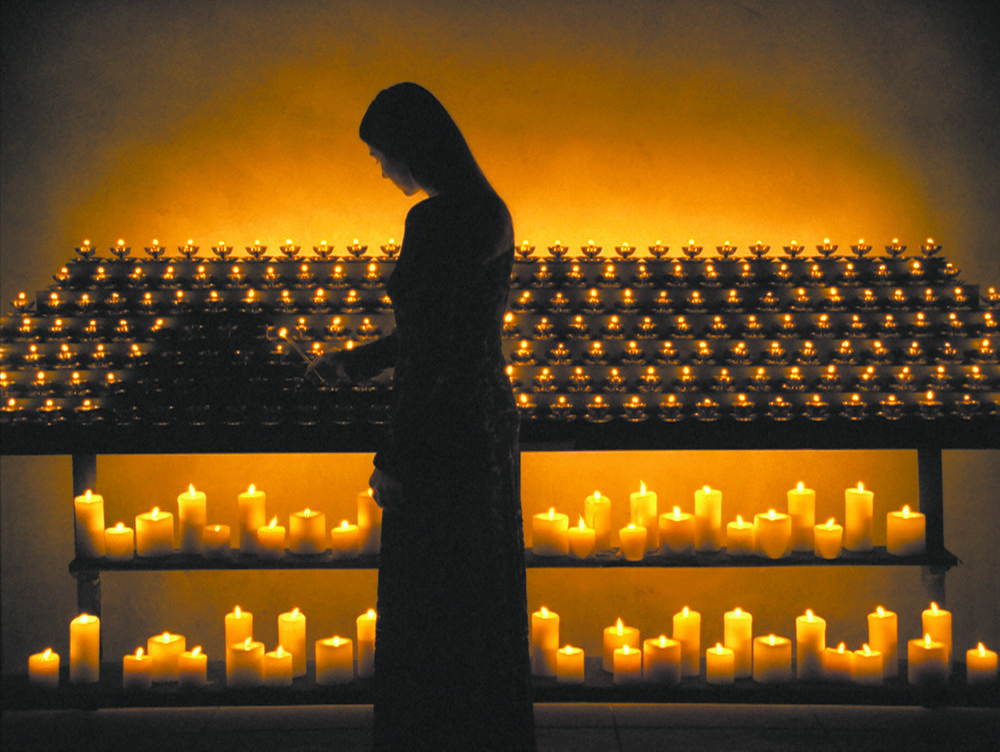
onopera tristanbillviola-videoparis2005Tristan: One of the most anticipated offerings of the COC’s 2012-13 season is its production of Wagner’s Tristan und Isolde, the company’s first production of the masterpiece since 1987. This staging is also notable as the COC debut of renowned American director Peter Sellars. Sellars first created this vision of Tristan in 2005 for Opéra Bastille in Paris. Its most notable aspect is the use of a film by video artist Bill Viola that is projected on a colossal screen above the singers’ heads throughout the entire length of the work. The film can be justified on the grounds of Wagner’s goal of creating a Gesamtkunstwerk or “total work of art” in the theatre that would combine the various artistic disciplines. Wagner’s own view of the role of the visual arts in opera was rather conventional as can be seen in sketches of the first production of the Ring Cycle, where stagehands push the Rhinemaidens mounted on trolleys back and forth behind painted waves. Sellars’ notion is that Viola’s film will serve not just as the set but will provide an ongoing visual commentary on the action as a parallel to Wagner’s concept of the orchestra as chorus.

Using extreme slow motion, Viola’s video uses actors to portray the metaphorical action behind Wagner’s story. He views the first act as an extended ritual of purification for the two lovers, while on stage the two characters maintain a strained stance of indifference to each other. As one can see from the examples on the COC website, Viola makes much use of fire and water imagery. Viola’s video has accompanied concert performances of Tristan in Los Angeles in 2004 and in New York, Los Angeles and Rotterdam in 2007. Only at the Bastille Opera in Paris — and now recreated for the COC — has the video been used for staged performances.

Ben Heppner, who sang Tristan for the premiere of Sellars’ production in 2005, sings the role January 29, February 2, 14, 17 and 20, with German tenor Burkhard Fritz of the Staatsoper Berlin taking over on February 8 and 23. German soprano Melanie Diener sings Isolde on the same dates as Heppner with American Margaret Jane Wray taking over opposite Fritz. Franz-Josef Selig sings King Marke, to whom Isolde is engaged. Daveda Karanas is Isolde’s maid Brangäne, who misguidedly concocts a love potion for her mistress, and Alan Held sings Kurwenal, Tristan’s loyal servant. At the podium is the world-renowned Czech conductor Jiří Bělohlávek, who has recorded widely for Chandos, Harmonia Mundi and Deutsche Grammophon among other labels.

In his program note for the original production, Sellars described the love duet in Tristan by saying, “We hear the celestial voice of compassion expounding Buddha’s four noble truths to mortals.” Given the influence of Buddhism on Wagner via the philosophy of Arthur Schopenhauer (1788-1860), this statement is not as far-fetched as it might at first appear. Sellars aims to present Tristan as an exploration of spirituality, rather than sex as past directors have done. Whatever the result, the chance to see Tristan und Isolde in Toronto after such a long absence and to see Sellars’ work in our own Four Seasons Centre will start the new year on an aesthetic high.   

Christopher Hoile is a Toronto-based writer on opera and theatre. He can be contacted at opera@thewholenote.com.
November sees the continuation of the large scale operas that opened in October from the Canadian Opera Company and Opera Atelier and adds to the mix fully staged operas from smaller companies and opera schools. Enriching the month still further is the impressive number and variety of operas in concert — some with orchestra, some with piano.

The operas continuing from October are Johann Strauss’s Die Fledermaus and Opera Atelier’s period instrument production of Carl Maria von Weber’s Der Freischütz, both of which conclude on November 3. For a fully staged professional opera production the next option is Opera York’s staging of Verdi’s La Traviata on November 1 and 3 at the Richmond Hill Centre for the Performing Arts (operayork.com). Mirela Tafaj is Violetta, Ricardo Iannello is Alfredo and Jeffrey Carl is Germont. Sabatino Vacca conducts and Penny Cookson directs. The wood-lined auditorium of the Richmond Hill Centre seats only 600 and makes an ideal venue for opera.

25-26onoperaggsOpera Schools: For other fully staged opera performances one has to look to the various opera schools busy preparing the stars of tomorrow. The University of Toronto Faculty of Music Opera Division (music.utoronto.ca) is presenting Gaetano Donizetti’s L’Elisir d’amore from November 22 to 25. The work, one of the most popular of all comic operas, hasn’t been seen fully staged in Toronto since 1999. It tells of the naive peasant Nemorino, who attempts to woo a wealthy young woman with the help of a love potion (only alcohol) bought from a visiting charlatan. Sandra Horst, best known as the chorus master for the COC, is the conductor; Michael Patrick Albano directs.

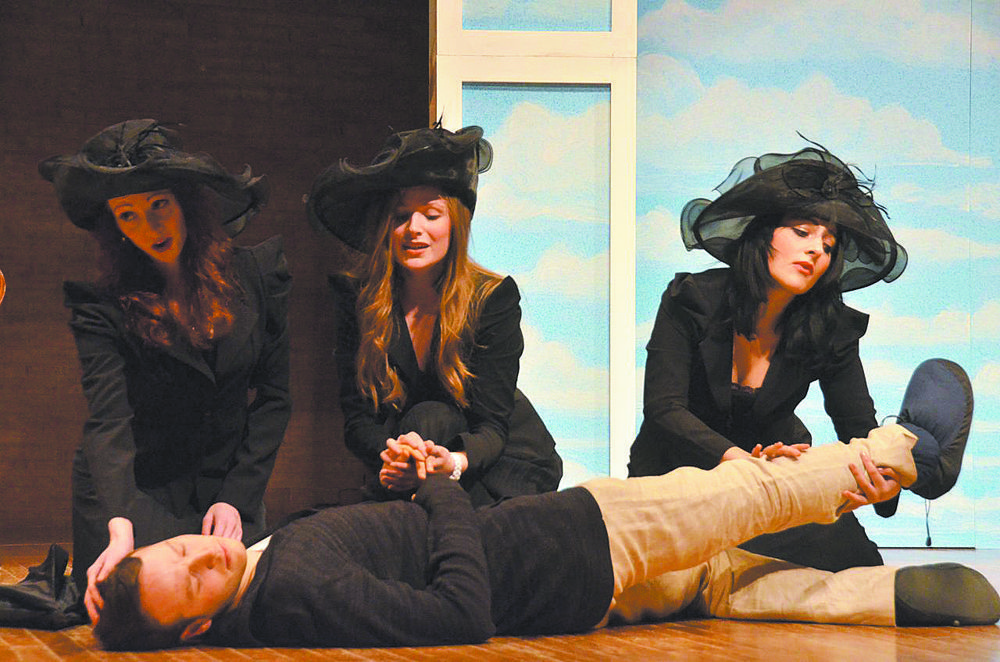
25-25onoperahorst-copyOver at the Royal Conservatory, the Glenn Gould School (performance.rcmusic.ca) has quite an unusual double bill on offer. On November 16 and 17 the students present Three Sisters Who Are Not Sisters (1968) by American composer Ned Rorem (born 1923) and Le Lauréat (1906) by Québécois composer François-Joseph Vézina (1849-1924). For Three Sisters, a 1943 play by Gertrude Stein provides the libretto. The work is a nonlinear murder mystery about three sisters (who are not sisters since they are orphans) and two brothers (who are brothers) who decide to play a game of murder. During the course of the 35-minute work, four of the five characters are killed or found dead, yet at the end the voices of all five are heard. They wonder, “Did we act it? Are we dead?” Coincidentally, or not, the only character to remain alive tells the others that it is time to sleep, raising the question of whether the action we’ve seen is real or imagined.

Le Lauréat is one of three opéras comiques along with Le Rajah (1910) and Le Fétiche (1912) that Vézina completed before his death. Vézina is perhaps best known as the conductor of the first-ever performance of “O Canada” in 1880. The libretto by Félix-Gabriel Marchand (the 11th premier of Quebec) concerns the love of Paul and Pauline, who are about to graduate from university. Pauline however, is penniless, and Paul’s uncle threatens to disinherit him should he marry her. The situation is saved by a deus ex machina in the form of a letter containing new information about Pauline. For both works Peter Tiefenbach is music director and Ashlie Corcoran is the stage director.

In Concert(1): For those who enjoy operas in concert with orchestra, there are two attractive choices. On November 1 and 3, the Toronto Symphony Orchestra (tso.ca) presents the hour-long, one-act opera La vida breve (1913) by Manuel de Falla (1876–1946) in Spanish with English surtitles. The all-Spanish cast includes mezzo-sopranos Nancy Fabiola Herrera, Cristina Faus and Aidan Ferguson, along with flamenco musicians and dancer Núria Pomares. The libretto written by Carlos Fernández-Shaw in Andalusian dialect concerns the gypsy Salud (Herrera) who is in love with the wealthy man Paco. He has led her on, not telling her he is already engaged to be married to a woman of his own class. Salud’s uncle and grandmother know Paco’s secret and try to dissuade Salud from interrupting Paco’s wedding. But all is in vain and tragedy results. The conductor is Rafael Frühbeck de Burgos. The program also includes Beethoven’s Symphony No.8.

Those who seek out new music need look no further than the Canadian premiere of Airline Icarus by award-winning composer Brian Current on November 25. Co-presented by the Royal Conservatory, where Current has been a faculty member since 2006, Airline Icarus is an opera-oratorio about the intersecting thoughts of passengers on a flight aboard a commercial airline. It is scored for nine musicians and nine singers. In 2005 it won Italy’s international Premio Fedora Award. Last year Current conducted the first fully staged performance in Verbania, Italy. The Toronto performance will include such well-known singers as Carla Huhtanen, Krisztina Szabó and Alexander Dobson. Jennifer Parr is the stage director and Current conducts. The Canada Council and the Ontario Arts Council will help fund a recording of the work.

In Concert(2): This month opera in concert with piano accompaniment is especially well represented.Those who seek out rarities by well-known composers should head to the performance of Rossini’s Armida (1817) by VOICEBOX: Opera in Concert (operainconcert.com) on November 25. Toronto opera-goers are probably most familiar with the story from the presentations of Lully’s French baroque opera Armide (1686) staged by Opera Atelier earlier this year and in 2005. The plot of Rossini’s Armida is inspired by the same sections of Torquato Tasso’s epic poem Gerusalemme Liberata as Lully’s Armide. It should be fascinating to see how Rossini approaches the material. The work fell into neglect until 1952 when Maria Callas appeared in its first modern production. Since then June Anderson and Renée Fleming have sung the title role. For VOICEBOX, Raphaëlle Paquette takes on Armida, Edgar Ernesto Ramirez sings Rinaldo, Christopher Mayell is Goffredo and Michael Ciufo is Genardo. Michael Rose is the music director and pianist. Robert Cooper directs the chorus.

While Opera In Concert has been around since 1974, Toronto Opera Collective (torontooperacollaborative.com) will embark on its first season with a performance of Beethoven’s Fidelio on November 10 at the Bloor Street United Church. Kristine Dandavino sings the title role, Jason Lamont is Florestan and Michael Robert-Broder is the villainous Don Pizarro. Nichole Bellamy is the pianist and conductor.

For quite a different style of German opera, Essential Opera (essentialopera.com) begins its third season on November 7 with The Threepenny Opera by Kurt Weill and Bertolt Brecht. Jeremy Ludwig sings Macheath, Maureen Batt is Polly, Erin Bardua is Lucy, David Roth is Peachum, Heather Jewson is Mrs. Peachum and James Levesque is the Narrator. Cathy Nosaty is the music director, pianist and accordionist. The performance in German and English takes place at Heliconian Hall in Yorkville.

Finally, Opera by Request (operabyrequest.ca), where the singers choose the repertory, has a wide range of operas in concert on offer. On November 3 it presents Donizetti’s L’Elisir d’amore, on November 9 Mozart’s Don Giovanni, on November 16 and 25 Tchaikovsky’s Eugene Onegin and on November 17 Bizet’s Les Pêcheurs des perles. All performances, except Onegin on the 16th, take place at the College Street United Church and are conducted by the indefatigable William Shookhoff from the piano. 

Christopher Hoile is a Toronto-based writer on opera and theatre. He can be contacted at opera@thewholenote.com.
One of the most notable developments in Toronto’s opera scene this season is Opera Atelier’s first-ever production of an opera from the 19th-century — Der Freischütz (“The Marksman”) from 1821 by Carl Maria von Weber (1786–1826). Even though the opera is standard repertory in central Europe, it has never had a fully staged professional production in Toronto as far as anyone can determine. The OA production will be the work’s first period production in North America.

on opera pages 34-35der freischutzWhat marks Der Freischütz as the first important Romantic opera is its use of local folk legend as the subject matter, as opposed to classical history or mythology, and local folk music as inspiration for many arias and themes. Set in Bohemia near the end of the Thirty Years’ War in 1648, the story centres on the forester Max (Krešimir Špicer), who loves Agathe (Meghan Lindsay) and is set to succeed her father Kuno (Olivier Laquerre) as head forester if he can pass a test in marksmanship. During practice, however, Max continually fails and his fear of losing brings him under the influence of the malevolent Kaspar (Vasil Garvanliev), whose soul is already forfeit to the Devil and who hopes to substitute Max in his place. Max persuades Kaspar to cast seven magic bullets for him to use in the contest. This occurs in the mysterious Wolf’s Glen where Kaspar calls upon the infernal spirit Samiel (Curtis Sullivan) for assistance in the midst of frightening images and demonic sounds. Meanwhile, Agathe, filled with foreboding, is consoled by her friend Ännchen (Carla Huhtanen). The contest itself brings a series of unexpected mishaps but concludes with the advice of a wise hermit (Gustav Andreassen) on how to cope with the outcome.

In a telephone interview with OA co-artistic director Marshall Pynkoski, I learned how OA came to make this leap into the 19th century and how it came to choose Weber’s opera as its first experiment. Pynkoski says, “For a long time Jeannette [Lajeunesse Zingg] and myself and our designers had talked about the concept of a ‘period production.’ It’s hard to believe now, but our first conflict on this point came when we announced we were going to do a period production of The Magic Flute [in 1991]. People told us the idea was ridiculous, that the work was standard repertory and asked why we would do this. We had to draw a line in the sand and say, ‘No, we think there is a very important and legitimate statement to be made by hearing Mozart on period instruments and looking at a period-sensitive production that is unique and has not been said in a long time.’ Now no one even thinks there’s anything odd about Mozart on period instruments.

Freischütz simply takes the basic concept of Flute and pushes the envelope farther which we’ve wanted to for some time. It’s been a long time since we’ve used the word ‘baroque’ in our company description. We call ourselves a ‘period opera and ballet company’ and our point now is that a ‘period production’ can be a reference to any period. That’s what fascinates. Of course, our initial focus was the baroque and that remains our first love, particularly the French baroque. But it is only natural as you start to explore these things that it keeps pushing you into new directions. It pushes you back and it pushes you forward, into earlier repertoire and into later repertoire. I think it’s a natural progression. The whole reasoning behind it is, ‘What was the original intention of the composer, of the librettist, of the designers? Where does it sit musically, dramatically, politically, artistically? What have we lost touch with over time? Have we lost anything worthwhile that is worth coming back to re-examine and that can challenge us in a new way?’

“I don’t want to do a museum production of Freischütz and I don’t think Freischütz will ever have looked like what we are doing. What we are doing is a Freischütz that explores all the possibilities that would have been open to performers in the early 19th century. Those ‘restrictions’ for want of a better word, have become the most thrilling take-off point, just as they were with Flute, and it has made us make huge jumps musically, dramatically and in terms of design. It’s taken us in directions we never dreamed we were going to go.

“Just to take one example: For the famous Wolf’s Glen scene, full of those wonderful, frightening satanic visions, there is no record of how they were created at the time. My first impulse was that they must have used a cyclorama, a huge painting that passed by on rollers. But such a technique would be far too expensive nowadays. Of course, we have our dancers and they are a tremendous asset. We thought of the magic lantern coming into use at the time, but slide shows have a negative resonance for us today that they did not have in the period. Then we thought if we use images what would they be of? Samiel is referred to as the ‘Black Huntsman’ so images of the hunt seemed natural. I looked at Géricault with his violent scenes of lions and cheetahs tearing animals apart, but they were too exotic. Then I thought of the crazy painting ‘The Nightmare’ by the Swiss-born British painter Henry Fuseli [1741–1825], an exact contemporary of Weber. The more I looked through his catalogue of works, the more I realized his visions of horror were a perfect match for the atmosphere Weber conjures up in the Wolf’s Glen. So it will be images from Fuseli that we will project on stage during that scene in the mode of a period phantasmagoria. We will be doing nothing that was not available to artists in the early 19th century. We will just be using 21st century technology to recreate it.”

How did OA come to choose Der Freischütz as its first foray into a new period? Pynkoski had considered doing a 19th century work for some time and had first considered Beethoven’s Leonore (1805), as the first version of his Fidelio is called. But it was conductor David Fallis, who suggested about three years ago that he and Jeannette Lajeunesse-Zingg have a look at Der Freischütz. What galvanized their attention happened in April last year when Krešimir Špicer was singing the title role in La Clemenza di Tito. Pynkoski, wondering when he and Špicer might ever work together again, said, “Kreš, tell me something you’re dying to do. We’ll do it for you. We just want you to come back. And he said instantly, ‘Well, I think you should be doing Freischütz and I should be singing Max.’” Pynkoski and Zingg went home, immediately listened to the CDs Fallis had given them, were overwhelmed by the work and told Špicer the next day they would be doing it — they didn’t know when — but they would be mounting it as a vehicle for him.

The 19th century may be new territory for Opera Atelier, but it is not for their orchestra, Tafelmusik. Tafelmusik has already played Beethoven’s symphonies to great acclaim and has programmed Chopin for next year. The most practical challenge is that the opera requires a 40-piece orchestra and David Fallis is still trying to figure out where to fit everybody in and around the pit at the Elgin Theatre.

Meanwhile, Pynkoski was bubbling over with news on a completely different topic. Two weeks after Freischütz closes, he and Zingg fly off to Salzburg to begin rehearsals for Mozart’s early opera Lucio Silla (1772), written when he was only 17. As it happens early music conductor Marc Minkowski has become the head of the Mozarteum in Salzburg. Ever since Minkowski first conducted for OA, he, Pynkoski and Zingg have longed to work together again, but Minkowski’s growing fame made scheduling trips to Toronto too difficult. Now he has asked the OA co-artistic directors to direct for him in Salzburg. Lucio Silla will premiere at the Mozarteum during Mozart Week on January 24, 2013, then travel to Bremen and Halle before returning to Salzburg in the summer.

But before that happens, Pynkoski and Zingg are focussing on Der Freischütz. Like The Magic Flute it is a singspiel, with spoken dialogue and sung arias. For Freischütz, the dialogue will be spoken in English and the arias sung in German with English surtitles. Flute and Freischütz make an excellent pairing. Both deal with the supernatural and both move from darkness to light, but Mozart’s focus is on the rational while Weber’s is on the irrational that lies just below the surface in everyday life. Der Freischütz runs from October 27 to November 3 at the Elgin Theatre. For tickets and more information visit www.operaatelier.com.

Christopher Hoile is a Toronto-based writer on opera and theatre. He can be contacted at opera@thewholenote.com.
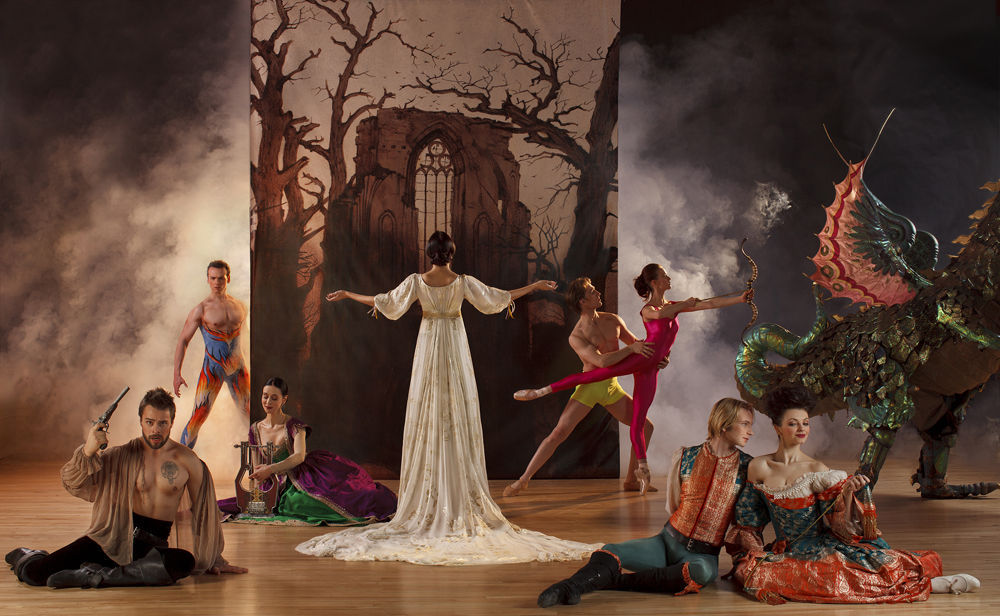
The 2012/13 season has a more conservative aura than have the past several seasons. For the large companies, this is likely a result of the perception four to five years ago when choices were made, that patrons with tighter resources would be less inclined to be adventurous. Nevertheless, while there is more standard repertoire on offer, there are still enough small companies in the city to offer the diversity we have grown used to.

COC:Compared to the past few seasons the upcoming choices of the Canadian Opera Company (www.coc.ca) are decidedly mainstream. The fall season opens Verdi’s Il Trovatore, not seen at the COC since 2005. The production from L’Opéra de Marseilles runs September 29 to October 31, 2012, and stars Ramón Vargas as Manrico, Elza van den Heever as Leonora, Elena Manistina as Azucena and Russell Braun as the Conte di Luna; Riccardo Massi sings Manrico on October 28 and 31. Marco Guidarini conducts and Charles Roubaud directs.

36 opera amburbraid and mireilleasselin  2 photo by sn biancaAlternating with Il Trovatore is a new COC production of Die Fledermaus by Johann Strauss, Jr. The operetta was once one of the COC’s most performed works with eight productions between 1955 and 1991, but neither it nor any other operetta has been staged by the COC since then. The fact that the COC has commissioned its own new production suggests that we will be seeing Die Fledermaus more often. Michael Schade sings Gabriel von Eisenstein, Tamara Wilson is Rosalinde, Ambur Braid and Mireille Asselin alternate as Adele, Peter Barrett is Dr. Falke and, following tradition, Prince Orlofsky is played by a woman, Laura Tucker. The production is directed by Christopher Alden, who has directed the COC’s Der fliegende Holländer and last year’s Rigoletto. Johannes Debus conducts.

The winter season brings the first staging of Wagner’s Tristan und Isolde by the COC since 1987. It runs from January 29 to February 23. Ben Heppner is scheduled to sing Tristan with Burkhard Fritz taking over on February 8 and 23. Melanie Diener will sing Isolde with Margaret Jane Wray taking over on February 8 and 23. Famed director Peter Sellars will recreate his production for L’Opéra national de Paris that makes extensive use of video by Bill Viola. Renowned Czech conductor Jiří Bělohlávek will wield the baton. In repertory with Tristan, from February 3 to 22, 2013, is Mozart’s La Clemenza di Tito, not seen at the COC since 1991. Michael Schade sings the title role in Christopher Alden’s production created for the Chicago Opera Theater. Johannes Debus conducts.

In the spring season we have Donizetti’s Lucia di Lammermoor, not seen since 2004, running from April 17 to May 24, and starring Anna Christie in the title role. In repertory with Lucia is a revival of Atom Egoyan’s staging of Salome, not seen since 2001, running from April 21 to May 22. Erika Sunnegårdh sings the title role with Richard Margison as Herod. In May the two operas are joined by Poulenc’s Dialogues des Carmélites, not seen since 1997, which runs from May 8 to 25. Isabel Bayrakdarian sings Blanche de la Force with Judith Forst as Madame de Croisy. The production from De Nederlandse Opera is directed by Robert Carsen.

36 opera vasil garvanliev  credit phil crozierAtelier: In 2012/13 Opera Atelier (www.operaatelier.com) breaks exciting new ground with its first-ever production of a 19th-century opera, Der Freischütz (1821) by Carl Maria von Weber. Even though the opera is standard repertory in central Europe, it has never been staged by the COC. The OA production will be the work’s first period production in North America. While the 19th century may seem a stretch for OA, it is not for the Tafelmusik Baroque Orchestra that has already played Beethoven’s symphonies to great acclaim and has programmed Chopin for next season. Der Freischütz, running October 27 to November 3, stars Krešimir Špicer as the title marksman Max, with Vasil Garvanliev as the villain Kaspar and soprano Meghan Lindsay as Max’s beloved Agathe, whom he hopes to win as his bride in a contest of marksmanship. As usual Marshall Pynkoski directs and David Fallis will conduct Tafelmusik.

In the spring, OA revives its beloved production of Mozart’s The Magic Flute, running April 6 to 13. Since both Der Freischütz and The Magic Flute are singspiele (using spoken dialogue instead of recitative) and since both involve the supernatural, they make a fine pairing — Mozart emphasizing the triumph of reason over the irrational and Weber portraying just the opposite. The Magic Flute features many OA favourites including Colin Ainsworth, Olivier Laquerre, Ambur Braid and João Fernandes.

TOT: Toronto Operetta Theatre (www.toronto-operetta.com) will present only two works this season. The end-of-year treat is Franz Lehár’s The Merry Widow from December 28, 2012, to January 6, 2013, starring Leslie Ann Bradley, Elizabeth Beeler, Adam Luther and Keith Klassen. In the spring, TOT has Offenbach’s 1866 operetta La Vie parisienne, not seen at the TOT since 1992, which runs from April 30 to May 5. It features Elizabeth DeGrazia and Lauren Segal, and is conducted by Larry Beckwith.

Beckwith is also the artistic director of Toronto Masque Theatre (www.torontomasquetheatre.com). From May 10 to 12, TMT will present a operatic double bill combining new and old, East and West. The first work will be Venus and Adonis (1683) by John Blow. The second will be the world premiere of The Lesson of Da Ji by Toronto composer Alice Ping Yee Ho to a libretto by Marjorie Chan based on the Ming Dynasty fantasy novel The Investiture of the Gods. Beckwith will lead an orchestra of combined baroque and Chinese instruments.

OH:For further fully staged operas, Torontonians will have to take a trip down to Hamilton. Opera Hamilton (http://operahamilton.ca), which now performs in the more congenial Dofasco Centre rather than in Hamilton Place, will present Verdi’s Rigoletto on October 20, 23, 25 and 27, 2012, and Bizet’s The Pearl Fishers on March 9, 12, 14 and 16. OH has Jason Howard and Simone Osborne lined up for the Verdi and Brett Polegato and Virginia Hatfield for the Bizet.

In concert: Operas presented in concert help give breadth to the season. On November 1 and 3, the Toronto Symphony Orchestra (www.tso.ca) will present a double bill of Beethoven’s Symphony No.8 with Manuel de Falla’s one-act opera La Vida breve (1913) with a cast of singers and flamenco dancers from Spain conducted by Rafael Frühbeck de Burgos. On February 15 and 16 the Toronto Consort will present the Canadian premiere of The Loves of Apollo and Daphne (1640) by Francesco Cavalli with Charles Daniels, Katherine Hill and Laura Pudwell.

Opera in Concert (www.operainconcert.com) which is rebranding itself as “Voicebox,” has scheduled the Canadian premiere of Rossini’s Armida (1817) for November 25, 2012, Handel’s Orlando (1733) for February 3 accompanied by the Aradia Ensemble, and Massenet’s Thaïs (1894) for March 24, starring Laura Whalen. Meanwhile, Opera by Request (www.operabyrequest.ca) has immediate plans for Umberto Giordano’s Andrea Chenier (1896) on September 22 and Wagner’s Die Walküre (1870) on September 29 with Rachel Cleland as Brünnhilde.

June opera: June was once devoid of opera — but no longer. Sometime in June the upstart company Against the Grain (againstthegraintheatre.com), known for staging opera in non-traditional venues, plans to present a new version of Mozart’s Le Nozze di Figaro titled Figaro’s Wedding, rescored for piano and string quartet. And also sometime during the month Tapestry New Opera (www.tapestry-newopera.com) will present the Toronto premiere of Shelter by Juliet Palmer to a libretto by Julie Salverson about “a nuclear family adrift in the atomic age” with a child who glows in the dark. Tapestry will also present a workshop production of Ruth by Jeffrey Ryan to a libretto by Michael Lewis MacLennon based on the book in the Old Testament but applying the moral “your people shall be my people” to contemporary Canadian society.

And coming full circle: Speaking of Tapestry New Opera, too late to deal with fully in this column, but just in time for this note, this September 21 to 23 will be the presentation of Tapestry’s 12th annual “Opera Briefs,” featuring the best of the new works arising from its invigorating annual summer composer-librettist workshop affectionately known as the “LibLab.” See the listings, and the Tapestry website, for details. 

Christopher Hoile is a Toronto-based writer on opera and theatre.  He can be contacted at opera@thewholenote.com.
For toronto opera-goers, summer is usually a time to leave town to sample the myriad musical festivals outside Canada. Yet there are a number of intriguing productions to see in Toronto over the next two months and at festivals nearby.

For staged operas with piano accompaniment, Summer Opera Lyric Theatre has been an oasis for opera since 1986. This year SOLT (www.solt.ca) offers an especially interesting program by presenting operas based on all three Figaro plays by Pierre-Augustin Caron de Beaumarchais (1732–99). Everyone knows the first two of the Figaro trilogy. Beaumarchais wrote The Barber of Seville 1773 and it served as the basis of Rossini’s opera in 1816. Beaumarchais wrote the sequel to Barber, The Marriage of Figaro, in 1778, which became the basis of Mozart’s opera in 1786. Other composers used the plays as plots for their own operas such as the Barber by Giovanni Paisiello in 1782 or the Marriage of Figaro by Gaetano Rossi in 1799, but time has crowned Rossini’s and Mozart’s versions as the most successful operatic treatments of their respective sources.

Less known both in the theatre and on the opera stage is the third part of Beaumarchais’s Figaro trilogy, La Mère coupable (The Guilty Mother) written in 1792. If you thought that The Marriage of Figaro revealed the relationship of Count Almaviva and his Rosina as rather less than happy, La Mère coupable goes even further. Set 20 years after the previous play, it appears that the Countess did have a relationship with Cherubino and that the product was a son, Léon. Meanwhile, the Count, although he has had an illegitimate child of his own named Florestine, is intent on punishing the Countess for her betrayal and prevent Léon from inheriting a sou. Figaro and Susanna are still happily married but must solve this problem, especially when they discover that Léon and Florestine have fallen in love with each other.

There are two main contenders for operatic treatments of the third Figaro play. The first is La Mère coupable by Darius Milhaud from 1966. The second is The Ghosts of Versailles by John Corigliano of 1980 which includes a performance of the third play as a part of a larger plot set in the afterlife. SOLT has chosen the Milhaud which has a Canadian connection. It was Louis Quilico who created the role of Milhaud’s Count Almaviva at the world premiere in Geneva.

SOLT is thus offering what is likely the first chance ever in Canada to see operas based on the entire Figaro trilogy in repertory. The Barber of Seville will be performed in English on July 28, 31, August 2 and 4 with Maika’i Nash as music director. The Marriage of Figarowill be performed in English July 27, 29, August 1 and 4 with Jennifer Tung as music director. And La Mère coupablewill be performed in French July 28, August 1, 3 and 5 with Nicole Bellamy as music director. All performances take place at the intimate Robert Gill Theatre on the University of Toronto campus.

For another French rarity in concert, Opera by Request (www.­operabyrequest.ca) will present Léo Delibes’ Lakmé (1883), famed for its “Flower Duet” and the “Bell Song”, on August 10 at the College Street United Church. Soprano Allison Arends sings the title role, tenor Christopher Mayell is her British lover Gerald, and baritone Michael York is Nilakantha the High Priest who disapproves of their love. William Shookhoff is the pianist and music director.

For fully-staged opera, Torontonians will have to wait until August 20 to 31 when the renowned Volcano Theatre (www.­volcano.ca) teams up with music director Ashiq Aziz and his Classical Music Consort (a period instrument band) to present A Synonym for Love at the Gladstone Hotel. Synonym is in reality the 1707 cantata Clori, Tirsi e Fileno by George Frederic Handel given a modernized English libretto by Deborah Pearson. Rather than a love triangle of two shepherds and a shepherdess, Pearson has turned it into a triangle among three guests at the hotel and the audience will follow the singers as their drama moves through hallways and bedrooms of the hotel.

The score of the cantata was thought to be lost until 250 years later a single copy was discovered in Germany. This will be the first fully-staged production of the work in Canada. Soprano Emily Atkinson, countertenor Scott Belluz and soprano Tracy Smith Bessette will be the singers, Ross Manson will direct and Ashiq Aziz will conduct. 

The Shaw Festival (www.shawfest.com) has presented both musicals and operettas in the past, but this year it is presenting its first opera, the one-acter Trouble in Tahiti by Leonard Bernstein from 1952. The 45-minute opera with a libretto by Bernstein depicts a day in the life of a typical suburban couple who suspect that their perfect life is missing something. Meanwhile, a Greek-style chorus comments on the action. Mark Uhre plays the husband Sam and Elodie Gillett his wife Dinah. Jay Turvey directs and Paul Sportelli conducts. The opera runs as a lunchtime show at the Court House Theatre July 7 to October 7.

Further afield, the Westben Arts Festival (www.westben.ca) in Campbellford opens its season with the world premiere of The Auction with music by John Burge to a libretto by Eugene Benson. Based on the children’s story of the same name, the opera tells of how a grandfather explains to his grandson (and himself) why he has to sell the family farm and why things must change. The seven-member cast includes Bruce Kelly, Kimberly Barber and Keith Klassen. Philip Headlam conducts the Westben Chamber Orchestra and Allison Grant directs. The premiere is June 30 followed by only one more performance on July 1. Let’s hope for a revival in the future.

Just as a reminder, fans of Opera Atelier may wish to head down to Cooperstown, New York, to cheer on the company. OA has been invited to stage its highly acclaimed production of Lully’s Armide as one of the four offerings of music theatre at Glimmerglass Opera (glimmerglass.org) this summer. Armide, with the same cast that played in Toronto last April, runs in repertory with Verdi’s Aida, Weill’s Lost in the Stars and Willson’s The Music Man July 21 to August 23.

Have a great summer! 

Christopher Hoile is a Toronto-based writer on opera and theatre.
He can be contacted at opera@thewholenote.com.
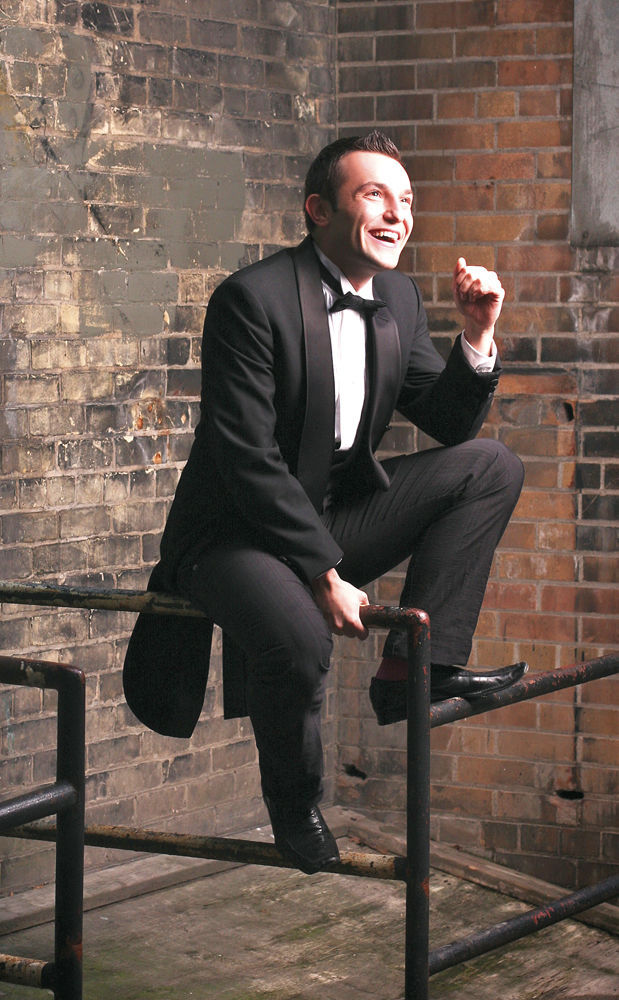
opera_robertwilson_and_philipglass_photo_by_lucie_janschThe operatic highlight of the year arrives this June as part of Luminato. It’s the Canadian premiere of Philip Glass’ iconoclastic 1976 opera Einstein on the Beach in its first new production in 20 years. The New York-based organization Pomegranate Arts premiered the new production in Montpellier, France, with the express purpose of touring it to places where it had never before been seen. As a seminal creation that redefined what opera is, it is the one work this year that no lover of modern opera can afford to miss.

Einstein on the Beach resulted from the collaboration of composer Philip Glass, director Robert Wilson and choreographer Lucinda Childs. The notion was to create a plotless, image-driven, multimedia exploration of the world-changing ideas of one great man. The title itself combines the name of the subject with the title of Nevil Shute’s 1957 novel On the Beach, about the end of life on earth due to a nuclear holocaust.

Einstein on the Beach breaks all of the rules of conventional opera, including the relationship among the work’s creators. Robert Wilson did not write a traditional libretto but rather created a series of storyboards suggesting structure and designs that inspired Glass’ music. Non-narrative in form, the work uses the development of powerful recurrent images as its main storytelling device in juxtaposition with abstract dance sequences created by Lucinda Childs.

opera_einsteinonthebeach_2_photo_by_lucie_janschEinstein on the Beach is structured in four acts connected by five danced “knee plays.” The four acts of the opera –Train, Trial 1 & 2 and Field/Spaceship — refer to Einstein’s theories of relativity and his hypothesis of unified field theory, with the “Trials” focussed on the misuse of science as implied in the second half of the title. Instead of a traditional orchestral arrangement, Glass composed the work for his own amplified ensemble consisting of three reed players — flute (doubling piccolo and bass clarinet), soprano saxophone (doubling flute), tenor saxophone (doubling alto saxophone); solo violin (played by the non-singing character Einstein on stage) and two synthesizers/electronic organs. The cast requires two females, one adult male and one male child in speaking roles with a 16-member chorus with one male and female soloist. Because of its nearly five-hour length, there are no traditional intervals. Instead, the audience is invited to enter and exit at liberty during the performance.

Einstein on the Beach was Glass’ first opera and the first collaboration between Glass and Wilson. For the new production, they are working with a number of their long-time collaborators, including Lucinda Childs, who will serve as choreographer, as she did for the original production and for the revivals in 1984 and 1992. All of these artists are now in their 70s, with this production the cornerstone of Glass’ 75th birthday year.

Speaking of the new production, Glass has said, “For Bob and me, the 2012-13 revival of Einstein on the Beach will be a most significant event, since in all likelihood, this will be the last time that we will be together and able to work on the piece. For audiences, few of whom have experienced Einstein apart from audio recordings, this tour will be a chance finally to see this seminal work.

“In this production, my composition will remain consistent with the 1976 original. The technology of theatre staging and lighting has improved to such an extent that it will be interesting to see how Bob uses these innovations to realize his original vision.”

Wilson has said, “Philip and I have been always been surprised by the impact that the opera had and has. I am particularly excited about this revival, as we are planning to re-envision Einstein with a new generation of performers, some of whom were not even born when Einstein had its world premiere. Aside from New York, Einstein on the Beach has never been seen in any of the cities currently on our tour, and I am hoping that other cities might still be added. I am very curious to see how, after nearly 40 years, it will be received by a 21st century audience.”

Einstein on the Beach is the first of what later came known as Philip Glass “portrait operas,” each centred on a man who changed the world not through force but through the force of his ideas. Einstein was followed by Satyagraha (1980) about Mahatma Gandhi and Akhnaten (1984) about the Egyptian pharaoh (14th century BC) who was the first man in recorded history to promote monotheism. In all, Glass has written 13 full-scale operas and five chamber operas, of which only one has ever been seen in Toronto — La Belle et la Bête (1995), one of his trilogy of Jean Cocteau film operas.

Glass’ musical style has been called “minimalist,” a term he dislikes, preferring to call it “music with repetitive structures.” Notable features include a prominent steady pulse, consonance (rather than dissonance) and repetition leading to the gradual additive transformation of musical phrases. Glass’ early works like Einstein feature near constant arpeggiation of each note of the melodic line. As Glass explains it, “My main approach throughout has been to link harmonic structure directly to rhythmic structure, using the latter as a base. In doing so, easily perceptible ‘root movement’ (chords or ‘changes’) was chosen in order that the clarity of this relationship could be easily heard. Melodic material is for the most part a function, or result, of the harmony.” Once a minority style in the 1960s, then still dominated by serialism, it has now become the most popular experimental style in classical music as represented by such different composers as Steve Reich, John Adams, Michael Torke, Michael Nyman, and the so-called spiritual minimalists Henryk Górecki, Arvo Pärt, Sofia Gubaidulina and John Tavener. For more information and tickets visit www.luminato.com.

Christopher Hoile is a Toronto-based writer on opera and theatre. He can be contacted at opera@thewholenote.com.

Back to top