1906 artsongThere have been a number of suggestions in recent months that in Toronto the vocal recital is in a very delicate state. The music critic John Terauds referred in his blog to “the near extinction of the vocal recital from Toronto’s concert scene over the past two seasons.” It is easy to back up that statement: the Aldeburgh Connection ceased to be after 31 glorious seasons; the celebrity recitals at Roy Thomson Hall all but disappeared a few years ago; the four-recital series at the Glenn Gould Studio, which was not well publicized and which was poorly attended, has gone. Mervon Mehta, RCM’s executive director of performing arts, said in a recent interview that Koerner Hall was simply not the right place for vocal recitals. He mentioned that the tenor Ian Bostridge, whose 2005 recital in Roy Thomson Hall had been well attended, drew only a small audience there.

But not everything is doom and gloom. As Terauds acknowledged, there have been many vocal recitals in the (free) lunchtime series in the Richard Bradshaw Amphitheatre in the Four Seasons Centre; Music Toronto, although its programs centre on the piano and on chamber music, has in the last two years presented Erin Wall and Phillip Addis; a new (four-concert) series has started at Rosedale Presbyterian Church directed initially by Rachel Andrist and John Greer and now by Andrist and Monica Whicher. Vocal recitals have also come back to Koerner Hall: recently we had the bass-baritone Luca Pisaroni and the baritone Dmitri Hvorostovsky will be singing there on June 1; the 2014-15 season promises the tenor Marcello Giordani, the baritone Christian Gerhaher and the mezzo-soprano Anne Sofie von Otter. Last summer Toronto Summer Music gave us Philippe Sly and Sanford Sylvan. Their line-up for the summer of 2014 has not yet been announced but we already know that the baritone François Le Roux and the collaborative pianist Graham Johnson will be among the mentors. And we should not forget that young singers (or their agents) from time to time book venues like the Heliconian Hall for song recitals.

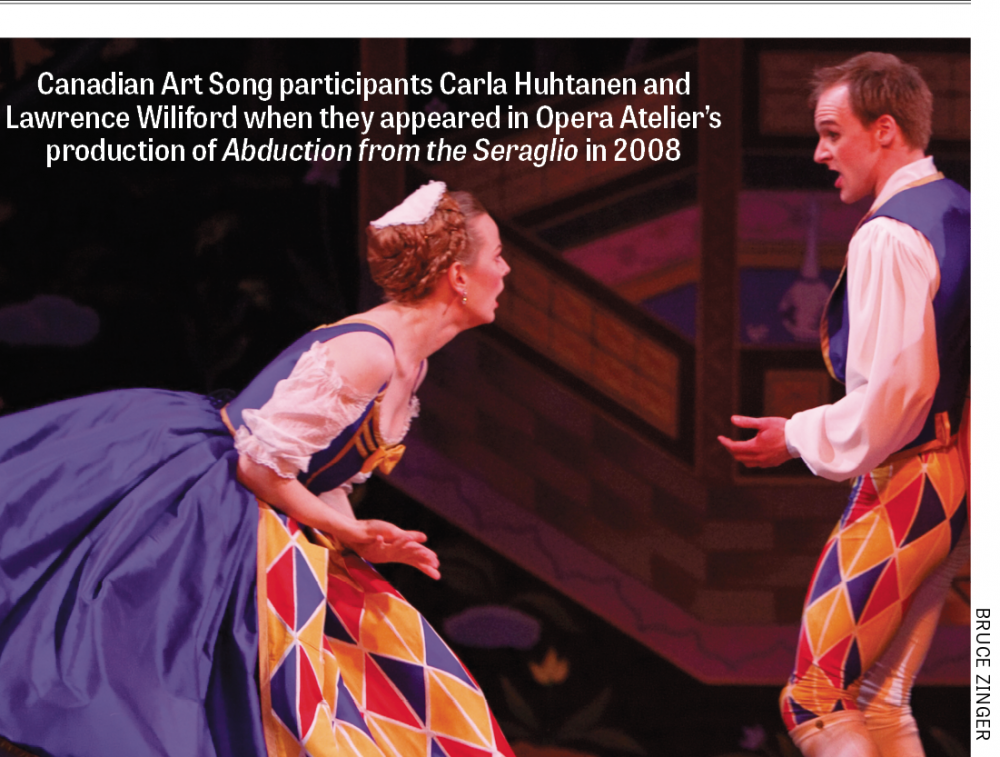
Wiliford and Philcox: One of the most interesting recent developments is the Canadian Art Song Project, initiated and directed by the tenor Lawrence Wiliford and the collaborative pianist Steven Philcox. The aims of the Project are best given in its mission statement: “To foster the creation and performance of Canadian repertoire by commissioning Canadian composers to write for Canadian singers; to facilitate a collaborative process between the composer and the performer; and to promote artistic excellence and the Canadian experience in the living art of song.” Past commissions have included Sewing the Earthworm by Brian Harman (2012; sung by the soprano Carla Huhtanen), Cloud Light by Norbert Palej (2013) and Extreme Positions and Birefringence by Brian Current (also 2013; recently performed by the soprano Simone Osborne). 2014 brings us Moths by James Rolfe (text by Andre Alexis) and a new work by Peter Tiefenbach (text by James Ostine; to be performed by the baritone Geoffrey Sirett). For 2015 Marjan Mozetich will be writing a new work to be sung by the mezzo Allyson McHardy; for 2016 there are plans to perform and perhaps record unpublished songs by Healey Willan (apparently 100 or so exist!); for 2017 Canada’s sesquicentennial will be marked by a new composition by Ana Sokolović for soprano, mezzo, tenor and bass with texts from across Canada, to be performed by members of the Ensemble Studio of the Canadian Opera Company.

This month the Canadian Art Song Project will unveil its first CD, on the Centredisc label. All the works on the disc are by Derek Holman and they include Ash Roses (1994; written for the young Karina Gauvin), Now Sleeps the Crimson Petal (2007), The Four Seasons (2009; written in commemoration of Richard Bradshaw) and three Songs for High Voice and Harp (2011). The CD will be launched at a recital by Mireille Asselin, soprano, Lawrence Wiliford, tenor, Liz Upchurch, piano, and Sanya Eng, harp (Canadian Music Centre, March 7). The songs performed by Wiliford were written with his voice in mind; he also gave the first performances of The Four Seasons (with Upchurch) and the Songs for High Voice and Harp (with Eng). The Holman disc will also be available at “A Celebration of Canadian Song” in the free lunchtime series at the Richard Bradshaw Amphitheatre on March 27. At this concert the premiere performance of James Rolfe’s Moths will be given by Brett Polegato, baritone, and Steven Philcox; Colin Ainsworth will be singing excerpts from Derek Holman’s A Play of Passion; the soprano Monica Whicher will perform songs by the young British Columbia composer Matthew Emory as well as a set by Pierre Mercure. Ainsworth and Whicher will be accompanied by the pianist Kathryn Tremills.

Clearly this is a very worthwhile project; it deserves everyone’s support. Tax-deductible donations can be made through the Project’s website (canadianartsong project.ca). Anyone interested in commissioning a new work should contact Wiliford or Philcox (canadianartsongproject@gmail.com).

The Ukrainian Art Song Project: a recording of songs based on the poetry of Taras Shevschenko is now available. It features the bass-baritone Pavlo Hunka and a number of Canadian singers: Russell Braun, Krisztina Szabó, Benjamin Butterfield, Allyson McHardy, Elizabeth Turnbull, Colin Ainsworth, Monica Whicher and Isabel Bayrakdarian. A second CD with 80 Galician songs will be launched in November. Hunka will also sing on March 23, along with local Ukrainian choirs and the Gryphon Trio at Koerner Hall.

Other Events in the GTA:

On March 8 Measha Brueggergosman will sing works by Brahms, Ravel, Turina, Copland, Ellington and Joni Mitchell at the Flato Theatre, Markham.

March 16 and 18The Talisker Players present “Creature to Creature: A 21st-Century Bestiary,” with Norine Burgess, mezzo, and Geoffrey Sirett, baritone; works by Poulenc, Rappoport and Hoiby (Trinity-St. Paul’s Centre, March 16 and 18).

March 26: Jennifer Taverner and Lesley Bouza, soprano, Jennifer Enns Modolo, mezzo, Isaiah Bell, tenor, and Michael York, baritone, are the soloists in the Toronto Mendelssohn Choir’s performance of  Bach’s B Minor Mass at Koerner Hall.

On March 30 Kristine Dandavino, mezzo, and Dillon Parmer, tenor, will be the soloists in a performance of Mahler’s Das Lied von der Erde at the Kingsview United Church, Oshawa.

On April 3 Claire de Sévigné, soprano, Charlotte Burrrage, mezzo, Andrew Haji, tenor, and Gordon Bintner, bass-baritone, are the singers in Brahms’ Liebeslieder Walzer, a free noon-hour concert at the Richard Bradshaw Amphitheatre.

And beyond the GTA:

On March 8 Leslie Fagan will be the soprano soloist in Schubert’s Shepherd on the Rock. The program will also include Brahms’ Clarinet Sonata no.2 and his Clarinet Quintet at the Maureen Forrester Recital Hall, Wilfrid Laurier University, Waterloo.

March 22: Mendelssohn’s Elijah. Daniel Lichti sings Elijah and other roles are taken by Anne Marie Ramos, soprano, Sophie Roland, alto, and Chris Fischer, tenor at River Run Centre, Guelph.

March 23: Allison Angelo, soprano, Jennifer Routhier, mezzo, Christopher Mayell, tenor, and Bruce Kelly, baritone, will be the soloists in Mozart’s Requiem  at the Kingston Gospel Temple.

A Correction: A mistake crept into my February column as it moved from an e-mail attachment into print. I had tried to make a distinction between the Purcell Consort directed by Grayston Burgess and the Deller Consort directed by Alfred Deller (and after his death, by his son Mark). In the printed version of the column the two were conflated.

Hans de Groot is a concertgoer and active listener. He also sings and plays the recorder. He can be contacted at artofsong@thewholenote.com.
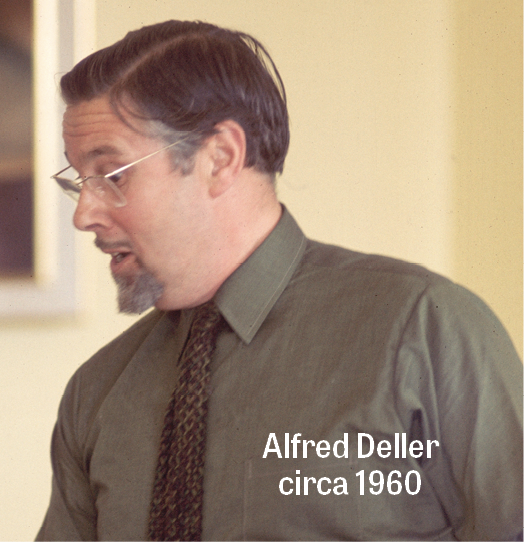
It must be well over 50 years ago (I think I was still an undergraduate) that I heard a recital by the countertenor Alfred Deller. I remember that the reviewer in the student newspaper was rather unkind. He said something like: “It is said that Deller never had any voice lessons and I can well believe it.” I liked Deller’s performance well enough, even if he never aspired to the kind of virtuosity that we can now admire in singers like Philippe Jaroussky or Max Emanuel Cencic.

bbb - art song - alfred dellerCountertenors were an important part of English music in the time of Purcell and Handel. The tradition was kept alive in the Anglican cathedral choirs, as it was here in Toronto, at St. James Cathedral, St. Simon-the-Apostle and Grace Church on-the-Hill. Deller was an alto at Canterbury Cathedral and his emergence as a soloist was the result of being discovered by the composer Michael Tippett, who conducted Deller in a Purcell concert at Morley College in 1944. Soon there were others, notably John Whitworth and, in the U.S., Russell Oberlin, who founded the New York Pro Musica Antiqua in 1952. A slightly younger singer was Grayston Burgess, who had been the head chorister at Canterbury Cathedral at the time that Deller was singing alto there. Burgess sang in Handel’s Semele at Sadlers Wells in 1958; he founded the Purcell Consort of Voices in 1963. Deller’s son Mark, who had become a member of the consort in 1962, directed the group after his father’s death in 1979.

Interestingly, a number of modern composers have started to write for the countertenor voice, beginning with Constant Lambert in The Rio Grande (1927), in which the alto part was sung by Albert Whitehead. Benjamin Britten wrote for the countertenor voice in A Midsummer Night’s Dream (the role of Oberon), in Death in Venice (the voice of Apollo) and in two of the Canticles. More recently, Peter Eötvös, in his opera Three Sisters (1996-97), based on the play by Chekhov, has the roles of all four young women sung by countertenors.

In Canada the pioneers were Theodore Gentry (who died in 2003), Garry Crighton (who died in 2012) and Allan Fast (who died, far too young at 41, in 1995). Gentry sang the alto solo in Handel’s Messiah (with the TSO and the Toronto Mendelssohn Choir) and the role of Osric in the North American premiere of Humphrey Searle’s Hamlet. He performed the role of the King in R. Murray Schafer’s Ra, a part written for him, and also the title role in Schafer’s The Black Theatre of Hermes Trismegistus. His career was cut short by a stroke in 1996. Crighton was a founding member of the Toronto Consort and the male sextet The Gents. He was also the alto soloist in St. James Cathedral and sang with The Musicians of Swanne Alley. He taught at the University of Toronto and the Royal Conservatory of Music. He left Toronto in 1983 and was active in musical groups in Belgium and Germany for many years after that. I heard Allan Fast once, a magnificent performance. His singing can be heard on two recordings of Buxtehude with the McGill Chamber Singers and Collegium Musicum and on a recording of Bach’s cantata Was Gott tut, das ist wohlgetan, conducted by Joshua Rifkin.

Frank Nakashima had been a student of Crighton in high school. Crighton encouraged him to sing countertenor and he did so at St. Thomas on Huron Street, at St. Mary Magdalene and at St. Simon’s. He too was a founding member of the Toronto Consort, where he sang both tenor and countertenor. In recent years he has been a central figure in the organization of the Toronto Early Music Centre. Carl Stryg sang alto at St. Simon’s under Derek Holman in the early 80s. He had a relatively brief solo career and is now chiefly known as a maker of shortbread.

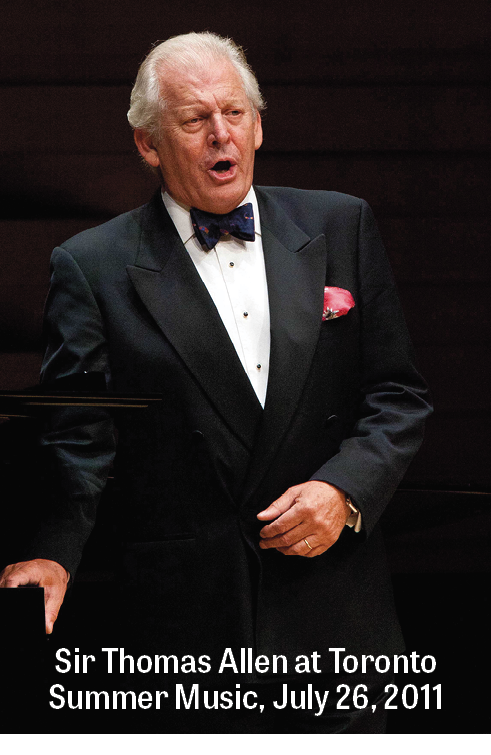
bbb - art song - sir thomas allenNow there are many Canadian countertenors: Scott Belluz, Gary Boyce, Stratton Bull, Daniel Cabena, Stephen Chen, John Cowling, Richard Cunningham, Peter Mahon, Andrew Pickett, Matthew White, Richard Whittall, Timothy Wong. The best known Canadian countertenor is Daniel Taylor. Taylor studied privately with Allan Fast and later at McGill with the late Jan Simons. We have had a number of recent opportunities to hear him in Toronto and he has a large and impressive discography. In 2001 he founded the Theatre of Early Music. He is now also the head of Historical Performance at the University of Toronto and he directs the Schola Cantorum there, a group that consists partly of professionals and partly of music students. In January both groups sang in performances of Purcell’s Dido and Aeneas and in a reconstruction of the Coronation of King George II with music by Gibbons, Purcell, Tallis and Handel. Still to come is a concert of music by Schütz (Musikalische Exequien) and Buxtehude (Jesu meines Lebens Leben). Taylor will also be the alto soloist in the Tafelmusik performances of Handel’s oratorio Saul (Koerner Hall, February 21 to 23). The other soloists are: Joanne Lunn and Sherezade Panthaki, sopranos, Rufus Müller, tenor, and Peter Harvey, baritone.

Free Concert Series in the Richard Bradshaw Amphitheatre: there are a number of vocal recitals: Tracy Dahl, soprano, and Liz Upchurch, piano, on February 4; Paul Appleby, tenor, and Anne Larlee, piano, on February 11; Sir Thomas Allen, baritone, and Rachel Andrist, piano, on February 13; artists of the COC Ensemble Studio and the Atelier lyrique de l’Opéra de Montréal on February 20; the Capella Intima and the Toronto Continuo Collective with La Dafne by Gagliano on February 26. These recitals begin at 12 noon and end at 1pm. There will be additional performances of La Dafne on February 22 at the MacNeill Baptist Church, Hamilton, and February 23 at Trinity-St. Paul’s Centre.

Other events: Opera in Concert will perform Hippolyte et Aricie by Rameau on February 2 at the Jane Mallett Theatre. The soloists are Meredith Hall, soprano, Allyson McHardy, mezzo, Colin Ainsworth, tenor, and Alain Coulombe, bass.

At the University of Toronto, Faculty of Music, Sir Thomas Allen will give the Geiger-Torel lecture in Walter Hall, February 3 and Tracy Dahl will be giving a masterclass in the Geiger-Torel Room, February 7.

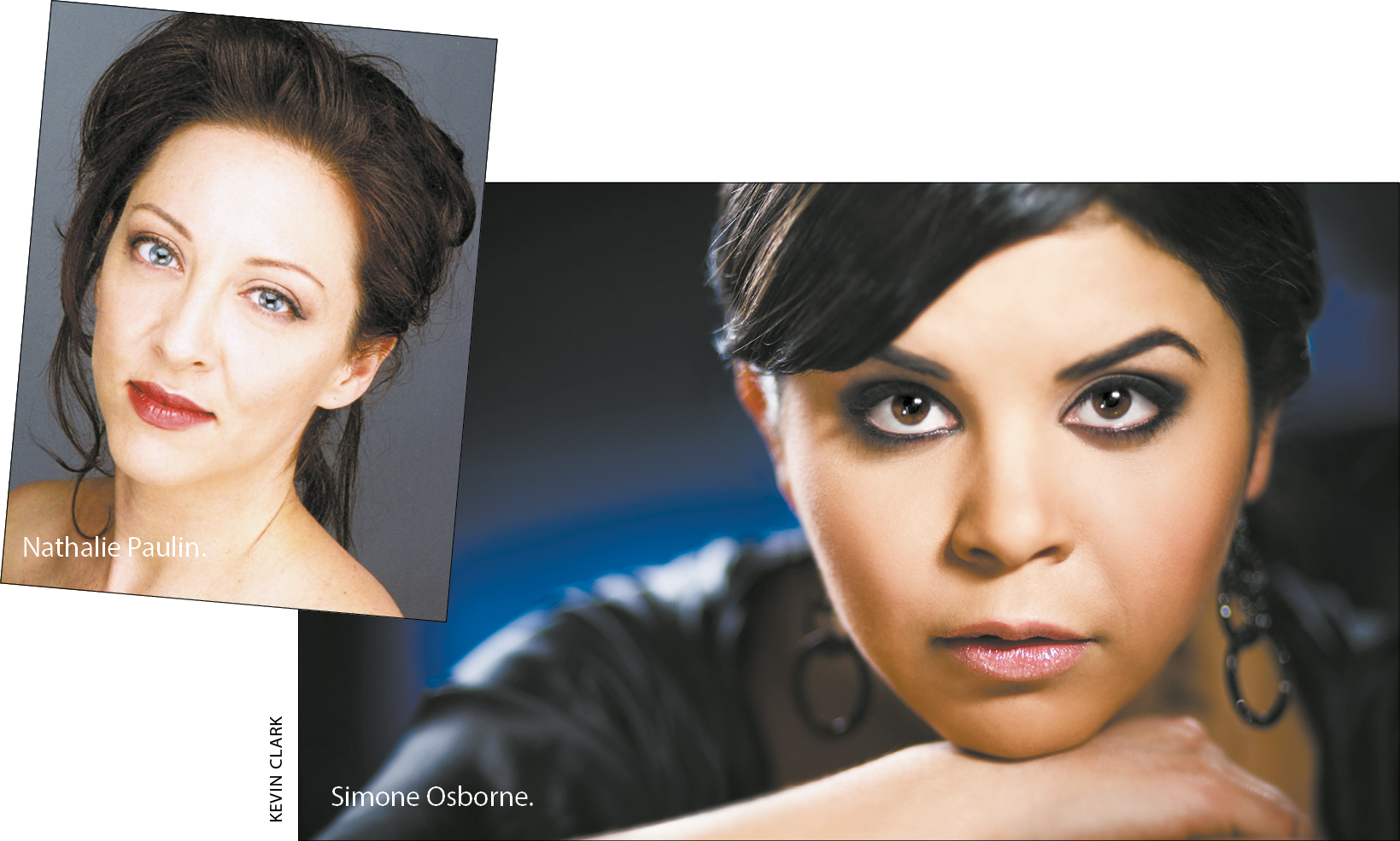
The third concert of the Recitals at Rosedale series will take place at Rosedale Presbyterian Church on February 9 at 2:30. Its title is “Love...Actually” and it will feature Nathalie Paulin, soprano, Lauren Segal, mezzo, Zachary Finkelstein, tenor, and Anthony Cleverton, baritone.

Brenna MacCrimmon will sing new works inspired by Persian and Balkan traditions at Hugh’s Room on February 16. The concert will launch a new CD release by the Ladom Ensemble.

Catherine Arcand-Pinette, soprano, and Erika Bailey, alto, will be the soloists in Pergolesi’s Stabat Mater at St. John’s United Church, Oakville, March 1 and March 2 at Mary Mother of God, also in Oakville.

A Postscript: In 2012 the competition for entry to the COC Ensemble Studio was held in the Richard Bradshaw Auditorium with piano accompaniment. Last November, for the first time, the competition took place on the main stage at the Four Seasons Centre with the COC orchestra under Johannes Debus. The soprano Karine Boucher, who had wowed the audience with a performance of an aria from Handel’s Giulio Cesare, won both the Jury and the Audience Prize. Second prize went to Jean-Philippe Fortier-Lazure and third prize to the bass-baritone Iain MacNeil. All three will be members of the 2015/16 COC Ensemble Studio, where they will be joined by the collaborative pianist Jennifer Szeto.  

Hans de Groot is a concertgoer and active listener. He also sings and plays the recorder. He can be contacted at artofsong@thewholenote.com. 
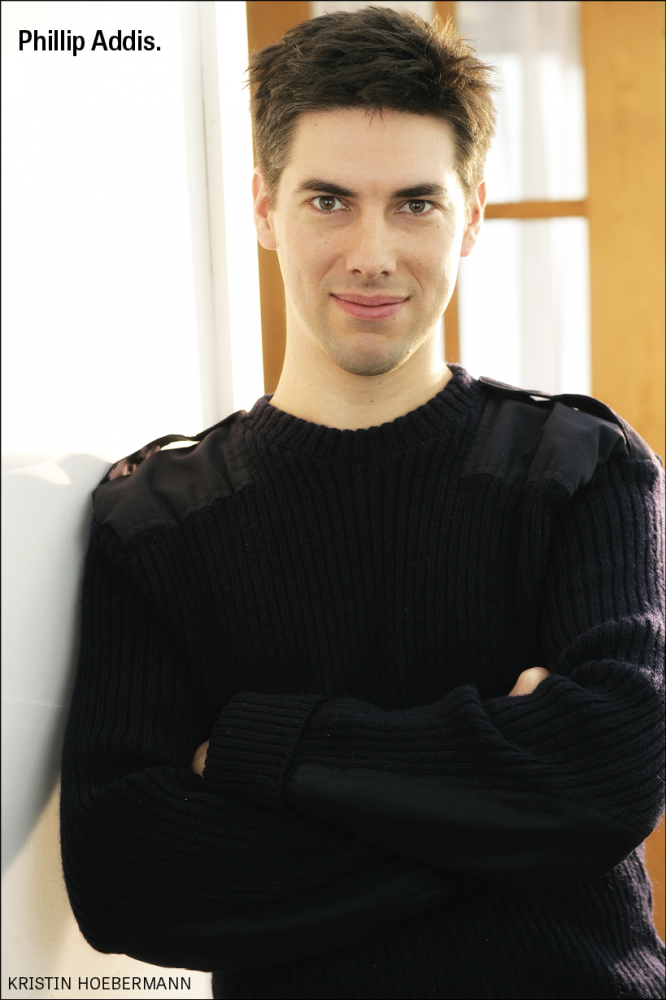
1904 art song 1A number of well-known singers will perform in Toronto in December: on December 13 the tenor Marcello Giordani will sing arias and songs by Tosti, Bizet, Cilea and Puccini; on December 15 and 16 soprano Natalie Dessay will sing items from the Michel Legrand songbook; Richard Margison will perform “The Great Songs of Italy” on December 10 (all at Koerner Hall; there will be another performance of the Margison recital on December 7 in the Regent Theatre, Oshawa); on New Year’s Eve at Roy Thomson Hall “Bravissimo” will present a number of singers, including two Canadians (Wallis Giunta, mezzo, and James Westman, baritone). But the recital which I am most looking forward to is the one to be given by Phillip Addis, baritone, and Emily Hamper, piano, on December 19 at the Jane Mallett Theatre, St. Lawrence Centre. The main works on the program are Britten’s Songs and Proverbs of William Blake and Poulenc’s La fraîcheur et le feu. The program will also include Abendbilder by Wolf, two songs by Korngold and three new songs by Erik Ross.

Addis spent his high school years in Toronto. At that time he played the tuba and the euphonium. At one point he intended to become an engineer but at the last moment he decided that he would study music instead, a choice that we can all be grateful for. So he went to Queen’s, still intending to be a tuba player. But singing took over: after Queen’s, Addis studied for a diploma in operatic performance from the University of Toronto, which was followed by an apprenticeship at the Atelier lyrique de l’Opéra de Montréal. Since then he has sung many parts in many opera houses: he sang the high baritone role of Pelléas in Debussy’s Pelléas et Mélisande (at the London Proms last summer; under John Eliot Gardiner, no less); yet he has the lower sonorities which have allowed him to sing the title role in Mozart’s Don Giovanni. He is no stranger to lieder, having sung Schubert’s Winterreise and Schwanengesang, Schumann’s Dichterliebe and Mahler’s Lieder eines fahrenden Gesellen.

Last summer, after his performance as Pelléas, a reviewer wrote that he sounded “like a young Thomas Allen.” I asked Addis about that and his reply was both diplomatic and sensible. It was not, he said, a claim he would himself wish to make but, if others thought of him that way, then it was a compliment that he would try to live up to. I heard Allen a number of times when I was young (and Allen was even younger); the performance that I especially cherish is one that I saw and heard on a video, that of the title role in Britten’s Billy Budd. That is a role that Addis has not yet sung. It is a part that, for both dramatic and musical reasons, needs a young singer. I certainly hope that sometime in the near future Addis will be given the chance to sing it.

We saw Addis most recently in the COC production of Puccini’s La bohème, where he sang in all performances, some of the time as Marcello, in other performances as Schaunard. After that it was off to southern California, where he sang in Britten’s War Requiem and as the Sprecher in Mozart’s Die Zauberflöte and where on December 6 he will perform in Britten’s The Prodigal Son. After the Toronto recital he will travel to Paris, where he and Hamper will repeat the Toronto program and go on to sing Pelléas at the Opéra Comique. But what Addis is especially excited about is the production next July of Kevin Puts’ opera Silent Night, a work that dramatizes the brief Christmas truce during the first year of the First World War. The opera (first performed in St. Paul, Minnesota, in 2011) is based on the film Joyeux Nöel and Addis will be singing the role of the French lieutenant Audebert.

In the Toronto recital, Addis will be accompanied by Emily Hamper (we have in recent years trained ourselves to use the term “collaborative pianist,” but Hamper assures me that “accompanist” is good enough for her). She is also Addis’ wife and the mother of their young son Sebastian. As a vocal coach she is much in demand; she has worked with distinguished Canadian singers such as Gregory Dahl, Thomas Goerz, Roger Honeywell, Michael Schade, John Tessier — and, of course, Phillip Addis.

The return of Jennie Such: In an earlier column I wrote about singers who have retired and who have gone on to do other things. Among them was the soprano Jennie Such. Well, she is back. She is singing the first soprano part in a performance of Bach’s Magnificat along with the VOCA chorus of Toronto, conducted by Jenny Crober. The other soloists are Claire de Sévigné, soprano, Marion Newman, mezzo, Andrew Haji, tenor, and Alexander Dobson, baritone, at the Eastminster United Church, December 7.

Other events: JohnPizzarelli and Daniela Nardi will sing songs by Paolo Conte and Frank Sinatra at Koerner Hall, December 7.

At the Kingston Road United Church, December 8, Eve Rachel McLeod, soprano, and Jason Nedecky, baritone, are the soloists in a concert by the Toronto Beach Chorale, which will include music by Finzi, Holst and Vaughan Williams

There will be a chance to hear the winners of the Jim and Charlotte Norcop Prize in Song and the Gwendolyn Williams Koldofsky Prize in Accompanying on January 7 at Walter Hall.

Jennifer Enns Modolo, mezzo, and Bud Roach, tenor, will sing selections from the Cole Porter songbook, with the Talisker Players at Trinity-St. Paul’s Centre, January 12 and 14.

The Toronto Symphony Orchestra and the Amadeus Choir are performing Mozart’s Coronation Mass with Leslie Ann Bradley, soprano, Lauren Segal, mezzo, Lawrence Wiliford, tenor, and Gordon Bintner, bass-baritone, at Roy Thomson Hall, January 15 and 16.

Last June Domoney Artists Management presented “The Star of Robbie Burns” consisting of songs by Burns as well as selections from the musical Brigadoon.There will be a repeat of this concert in the Church of the Redeemer on January 25. Benjamin Covey, baritone, will sing again but there is a different soprano (Charlotte Corwin), a different pianist (Christopher Bagan) and a different narrator (Andrew Gillies).

Tracy Dahl, soprano, and Liz Upchurch, piano, will perform art songs and arias in the Richard Bradshaw Amphitheatre, February 4.

Stephanie Blythe is the John R. Stratton Visitor in Music at the Faculty of Music, University of Toronto. She will give an art song masterclass on January 21, a masterclass on opera arias on January 23 and will perform, along with voice and collaborative piano students, in “An Evening of English Song” on January 24. Also at Walter Hall there will be free performances featuring voice studies and collaborative piano students on December 3 and January 14. On February 3, Walter Hall is the venue for the distinguished baritone Sir Thomas Allen to give the Geiger-Torel lecture. Tracy Dahl will give the Ricky Turofsky masterclass in voice on February 7 in the Geiger-Torel Room.

And in Oshawa: At the College Park Church on December 8, Allyson McHardy, mezzo, will be the soloist in a concert of works by Bach, Handel and Vivaldi given by the Durham Philharmonic Choir. 

Hans de Groot is a concert-goer and active listener, who also sings and plays the recorder. He can be contacted at artofsong@thewholenote.com.

art of song - vmas offer early singing startLast summer my daughter Saskia turned 12. Turning 12 is a rite of passage since most primary schools in Toronto do not go beyond grade six. Saskia chose, with encouragement from her parents, to move to the Downtown Vocal Music Academy on Denison Avenue, a stone’s throw from Toronto’s Kensington Market. The two VMA schools in Toronto (the other is the suburban Heather Heights PS in Scarborough) are the brainchild of Mark Bell, a man known in musical circles for his leadership of Canada Sings, a community singalong that meets every second Tuesday of the month somewhere in East Toronto (the next meeting is on November 12 at Mustard Seed, 791 Queen St. E.).

In February 2007 Bell convened a meeting of directors and managers of children’s choirs and officials of the Toronto District School Board to explore the possibility of setting up one or more schools which would specialize in singing. The TDSB came onside and a few years later Bell became vice-principal of the Downtown VMA and started preparing the 2012-13 school year. That year the program began in grade four and went up to grade six. This year grade seven was added and grade eight should follow next year. Bell would like it to continue until grade 12 eventually but there are no immediate plans for that. For now the intention is to steer students to high schools that specialize in the arts, such as Rosedale Heights.

Every day the last period at the Downtown VMA is choir (except for the afternoon, once a week, when the pupils go swimming) but there is also singing at other times during the day. It was felt impractical to offer an extended program in instrumental music, but on Friday there are after-school optional classes in piano and guitar (in cooperation with Soul Music of the University of Toronto) as well as steel pan (in cooperation with the Regent Park School of Music). Violin classes were also offered but there were no takers. At present the children are preparing for their first concert of the season December 3, “The Four Elements: Celebrating the Power of Nature in Song.” The total number of students participating is 90, but we shall also be able to hear them in smaller groups. The concert will also include the inauguration of the newly restored Heintzman grand piano.

Suzie LeBlanc is a lyric soprano, especially known for her early music performances. But her concerts are not confined to early music. A glance at her discography shows that she has also recorded classical (Mozart, Gluck), modern (Messiaen), contemporary (Peter-Anthony Togni) and traditional Acadian music. Of particular interest is a new disc with songs set to texts by Elizabeth Bishop (the composers are Emily Doolittle, Christos Hatzis, Alasdair MacLean and John Plant). She will be singing Purcell and Carissimi, with the tenor Charles Daniels and the Tafelmusik Orchestra and Chamber Choir November 6 to 10. There will be another chance to hear her this month with the viol consort Les Voix Humaines for the Women’s Music Club on November 21. That concert will be repeated November 23 in Sault Ste. Marie and November 24 in Brantford. LeBlanc will also lead a master class at the Faculty of Music at the University of Toronto November 20.

Simone Osborne is a former member of the Canadian Opera Studio Ensemble and has since performed several major roles for the COC: Pamina in Die Zauberflöte (while a member of the Studio Ensemble), Gilda in Rigoletto, Lauretta in Gianni Schicchi and, most recently Musetta in La Bohème. Next spring she will return to the COC in the role of Oscar in Un ballo in maschera. She is the inaugural winner of Jeunesses Musicales Canada’s Maureen Forrester Award Tour. One of the concerts on this tour will be a noontime recital in the Richard Bradshaw Auditorium on November 12. She will sing Schumann’s song cycle Frauenliebe und-leben as well as songs by Bellini, Strauss, Hahn and Current. The concert will be repeated at Midland, November 21 and at Prescott, December 6.

Other Events

Voice performance classes in the Faculty of Music, University of Toronto, will be held on November 5, 19, 26 and December 3 at Walter Hall.

Adi Braun is the singer in a concert based on the songs and letters of Kurt Weill and Lotte Lenya at the Richard Bradshaw Amphitheatre, November 6.

Erin Bardua and Maureen Batt, soprano, Stefan Fehr, tenor, and Giovanni Spanu, baritone, will be the soloists in a performance of Haydn’s L’isola disabitata at Heliconian Hall, November 8.

Eleanor James, mezzo, will be the soloist in Tanzlied by R. Murray Schafer. The concert will also feature the harpists Judy Loman and Angela Schwarzkopf and will include music by Brophy, Livingston, Buhr and Lau in the Mazzoleni Concert Hall, November 10.

Shannon Mercer, soprano, Krisztina Szabó, mezzo, Christopher Mayell, tenor, and Jesse Clark, bass, will be the soloists in a performance of Mozart’s Requiem at the Cathedral Church of St. James, November 13.

Students from the Glenn Gould vocal program will perform The Silent Serenade by Korngold at the Royal Conservatory, November 15 and 16.

Sara Papini, soprano, will sing compositions by Andjelika Javorina at the Glenn Gould Studio, November 15.

Janet Obermeyer, soprano, will sing Der Hirt auf dem Felsen by Schubert at Metropolitan United Church, November 16.

Nathalie Paulin is the soprano soloist in a concert of 20th century music at Walter Hall, November 18.

York University Department of Music presents vocal masterclasses with Che Anne Loewen, November 19 and with Leslie Fagan, November 22 at Tribute Communities Hall, November.

Lesley Bouza, soprano, and Colin Ainsworth, tenor, will be the soloists in a Britten concert by the Toronto Mendelssohn Choir at Yorkminster Baptist Church, November 20.

Darlene Shura, soprano, Jacqueline Gélineau, contralto, and John Holland, baritone, will sing selections from Bach’s cantatas at Heliconian Hall, November 30.

At Calvin Presbyterian Church November 30, Allison Cecilia Arends, soprano, and Stanislas Vitort, tenor, will be the soloists in Mendelssohn’s Symphony No. 2 (Lobgesang) with the Oakham House Choir. The concert will also include a number of works composed or arranged by John Rutter.

Recitals at Rosedale presents “Opera nella chiesa” with music by Handel, Massenet and Menotti. The singers are Laura Albino, soprano, Laura Tucker, mezzo, Timothy Wong, countertenor, and Anthony Cleverton and Jason Howard, baritone, at Rosedale Presbyterian Church, December 1.

And beyond the GTA:Bethany Hörst, soprano, Bud Roach, tenor, and Alexander Dobson, bass, will perform baroque opera arias, with the Bach Elgar Choir at the Royal Botanical Gardens in Burlington, November 9 and 10.

Nicholas Phan, tenor, and Martin Limoges, horn, will perform Britten’s Serenade for Tenor, Horn and Strings with the Kitchener-Waterloo Symphony. The concert will also include Tchaikovsky’s Symphony No. 6 at the Centre in the Square, Kitchener, November 29 and 30.

Charlene Pauls, soprano, Erica Iris-Huang, mezzo, Bud Roach, tenor, and James Baldwin, bass, will be the soloists in a performance of the Magnificat by Bach and the Magnificat by Rutter at St. Matthew Catholic Church in Oakville, November 30.

The first of many complete Messiahs will arrive on December 6 and 7 presented by the Bach Elgar Choir. The soloists are Jennifer Taverner, soprano, Michele Bogdanowicz, mezzo, Chris Fischer, tenor, and Andrew Tees, bass at Melrose United Church in Hamilton. 

Hans de Groot is a concert-goer and active listener who also sings and plays the recorder. He can be contacted at artofsong@thewholenote.com.

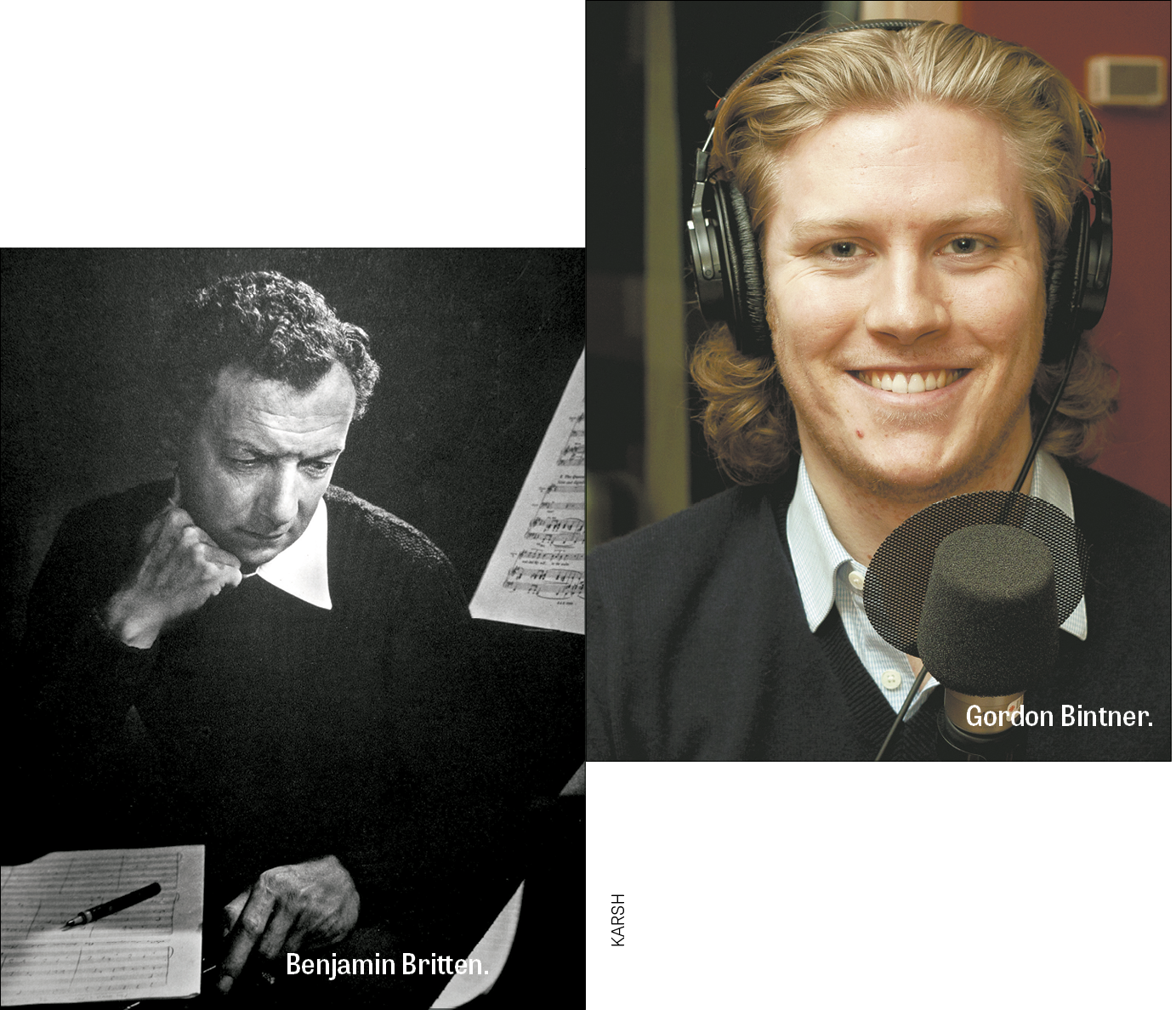
This is the centenary year of the birth of Benjamin Britten and we have already had the opportunity of hearing a great deal of his music, notably in the mini-festival with which the Aldeburgh Connection ended its final season. This month we can see Peter Grimes, Britten’s breakthrough opera, in a production by the Canadian Opera Company (the first night is October 5). The opening concert of the Elmer Iseler Singers “Saint Cecilia Sings” will include music by Howells, Schubert, Vaughan Williams and Daley as well as Britten (October 20). The Toronto Symphony Orchestra will perform the Serenade for Tenor, Horn and Strings, with Nicholas Phan, tenor, and Neil Deland, horn (October 31 to November 2). The November 5 concert by the Orpheus Choir includes the 1938 pacifist cantata, World of the Spirit.

The free lunchtime performances in the Richard Bradshaw Amphitheatre at the Four Seasons Centre include five concerts in October with music by Britten. Of these several are vocal concerts: a selection of his songs and song cycles on October 9; an afternoon of English song on October 22; highlights of Albert Herring on October 23.

art songGordon Bintner: Thebass-baritone Gordon Bintner will perform in the October 9 recital at the Four Seasons Centre. He will sing Tit for Tat, a cycle that Britten wrote as a teenager but did not put together until 1968. The texts are by Walter de la Mare and they explore the mental world of the child.

I only know of three earlier occasions in which Bintner sang in Toronto: in 2012 he was one of the Art of Song fellows in the Toronto Summer Music program; he sang Schubert with the Aldeburgh Connection last spring; he won both the jury prize and the audience prize at the competition for entrance to the COC Ensemble Studio last year. But he has a great deal of experience elsewhere. He studied at McGill and it is in Montreal that he gave many of his performances: he sang Lescaut in Massenet’s Manon for l’Opéra de Montreal. As a student he sang Don Giovanni as well as the Speaker in Die Zauberflöte and Argante in Handel’s Rinaldo for Opera McGill. In 2011 he performed Figaro in Le Nozze di Figaro for Opera NUOVA (Edmonton). In 2012 he was a Merola fellow in San Francisco and performed the role of Nardo in Mozart’s La finta giardiniera there. He also sang Mozart and Donizetti with the San Francisco Opera Orchestra.

This year he has small parts in the COC productions of La Bohème and Donizetti’s Roberto Devereux. He will also be covering the roles of Swallow in Peter Grimes, Don Alfonso in Mozart’s Così fan tutte and Sancho in Massenet’s Don Quichotte. He will sing Don Alfonso in the COC Ensemble Studio performance of Così in February. And there are going to be other engagements: Messiah in Okanagan, a recital and a masterclass in Yellowknife and Mozart’s Coronation Mass with the Toronto Symphony Orchestra. While it may be a bit early to talk about an international career, it is worth mentioning two events: Bintner has sung Colline in La Bohème in a production by Angers Nantes Opera in France and this November he will perform in Berlin in Leonard Bernstein’s A Quiet Place with the Ensemble Modern under Kent Nagano.

Bintner is clearly at home in song, in opera and in oratorio. He says that he loves the three genres equally and that given the right opportunities he will sing all three!

OTHER EVENTS

October 6: The opening concert in the Recitals at Rosedale series, “The Seven Virtues,” features Leslie Ann Bradley, soprano, Allyson McHardy, mezzo, Peter Barrett, baritone, Rachel Andrist and John Greer, piano. They will perform works by Purcell, Mozart, Mendelssohn, Schumann, Brahms, Strauss, Duparc, Vaughan Williams and others (Rosedale Presbyterian Church).

October 6: Bernie Lynch sings “Tenor songs through the ages.” (St. Anne’s Anglican Church).

October 11: A Wagner program will include scenes from Die Walküre, Tristan und Isolde and Götterdämmerung; the singers are Susan Tsagkaris, soprano, Ramona Carmelly, mezzo, and Stuart Graham, baritone (First Unitarian Church).

October 11: Melody Moore and Rufus Wainwright sing works by Wainwright with the Toronto Symphony Orchestra (Roy Thomson Hall).

October 15: Robert Pomakov, bass, will sing a new work by Bohdana Frolyak based on a text by Taras Shevchenko (Richard Bradshaw Amphitheatre).

October 24: Miriam Khalil, soprano, and Julien LeBlanc, piano, will perform a recital of French and Spanish art songs (Gallery 345).

October 25 to 27: Katherine Hill is the soprano soloist in a program based on Aubrey’s Brief Lives (Young Centre).

October 26: Stanislav Vitort, tenor, and Zhenya Yesmanovich, piano, perform a program presented by the Neapolitan Connection (Montgomery’s Inn).

October 26: Maryna Svitasheva, mezzo, and Brian Stevens, piano, perform works by Schumann, Moniuszko and others (Bloor Street United Church).

October 27: Lindsay Kesselman is the soprano soloist in a program of works for clarinet, piano and voice (Gallery 345).

October 31: Alexa Wing, soprano, and Peter Bishop, piano, perform (Metropolitan United Church).

November 1: Michele Bogdanowicz, mezzo, Ernesto Ramirez, tenor, and Rachel Andrist, piano, will perform works by Chopin, Viardot, Palej and Grever (Gallery 345).

November 2: Francesco Pellegrino is the tenor soloist in a program of traditional Italian music and Mediterranean jazz (Koerner Hall).

November 6: Adi Braun sings Kurt Weill (Richard Bradshaw Amphitheatre).

AND BEYOND THE GTA

October 3: At the Colours of Music Festival in Barrie Jennifer Krabbe, soprano, and David Roth, baritone, will sing works by Mozart, Mendelssohn, Brahms, Britten, Barber and Duke (Burton Avenue United Church).

October 3: Also at the Colours of Music Festival, songs from wartime will be performed by Wendy Nielsen, soprano, and Patrick Raftery, tenor (Burton Avenue United Church).

October 9: MarionSamuel, soprano, and Anna Ronai, piano, perform “Sassy women – art songs” (Conrad Grebel University College, Waterloo).

October 19: TheGrandPhilharmonicChoirwillperform Britten’s WarRequiem with soloists Leslie Ann Bradley, soprano, Thomas Cooley, tenor, and Russell Braun, baritone (Centre in the Square, Kitchener).

October 22: Richard Cunningham, countertenor, will give a recital accompanied by our own Benjamin Stein, theorbo (Convocation Hall, McMaster University).

October 25: A postmodern cabaret celebrating the legacy of Kurt Vonnegut. (Maureen Forrester Recital Hall, Wilfred Laurier University, Waterloo).

October 26: David Moore, tenor, and Katie Toksoy, horn, will perform Britten’s Serenade for Tenor, Horn and Strings, along with works by Elgar and Janáček (Trinity Anglican Church, Aurora).

October 26: Sara Laux Chappel, soprano, Luke Fillion, baritone, and Brian Turnbull, piano, perform songs by Schubert, Mendelssohn, Brahms and others (Centenary United Church, Hamilton).

November 2: Meredith Hall, soprano, and Isaiah Bell, tenor, will be the soloists in Chorus Niagara’s performance of music by Handel (Calvary Church, St. Catharines).

November 3: A concert by Wellington Winds includes Canteloube’s Songs of the Auvergne; the soprano soloist is Caroline Déry (Grandview Baptist Church, Kitchener). 

Hans de Groot is a concert-goer and active listener who also sings and plays the recorder. He can be contacted at artofsong@thewholenote. com.

There is, in ontario, a number of companies which have long histories: the Toronto Choral Society was founded in 1845, the Toronto Mendelssohn Choir in 1894, the Bach-Elgar Choir of Hamilton in 1905, the Toronto Symphony Orchestra in 1922, the Canadian Opera Company in 1950, the National Ballet of Canada in 1951. But there are, in Toronto and Southern Ontario, other more recently founded companies.

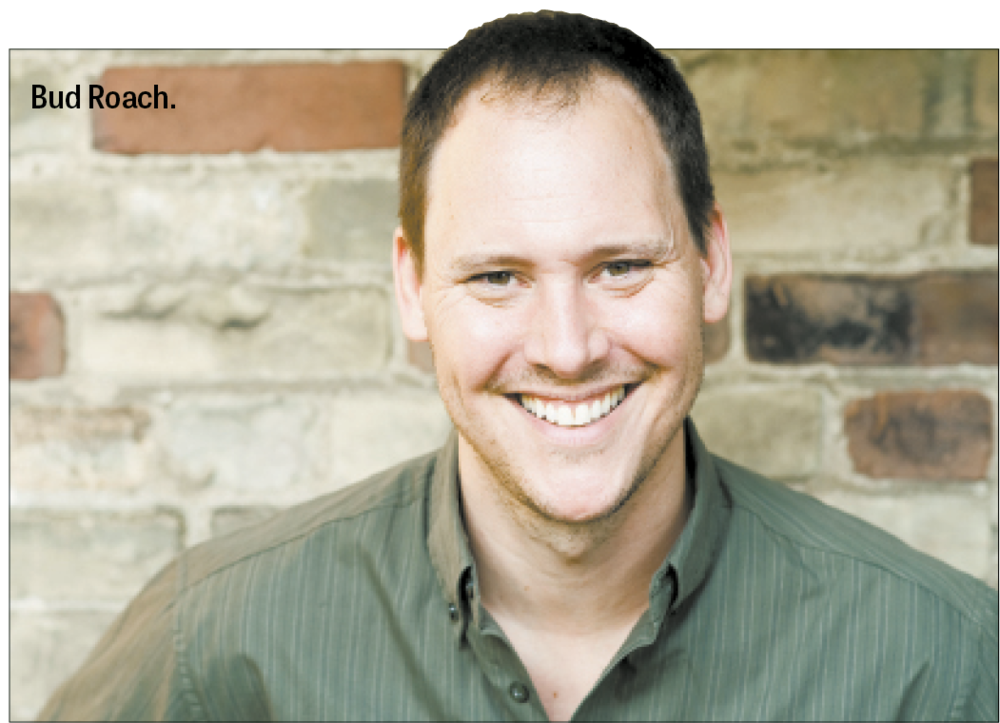
art of songOne such company is Capella Intima, founded and directed by Bud Roach. Roach decided to start this ensemble in 2008 and the initial performances were in 2009. Before Roach became a tenor, he was a professional oboist; he was a member of a number of orchestras including the Toledo Symphony Orchestra and the Buffalo Philharmonic. In his high school years he had been a rather weak baritone who conked out when confronted by a high F, so he put thoughts of singing aside in favour of the oboe. But in 2005, after having left the orchestral world, he discovered that he had high notes after all and from then on he has concentrated on singing. He managed to persuade Lydia Adams to allow him to sing in the Amadeus Choir’s performance of Bach’s Mass in B Minor. Adams must have liked what she heard and, soon after, Roach became a member of the Elmer Iseler Singers. We have also been able to hear him in appearances with ensembles such as the Toronto Consort and the Aradia Ensemble. He now enjoys an active solo career. At the Fringe concerts in last June’s Boston Early Music Festival he performed excerpts from the third volume of arias by Alessandro Grandi (1626), accompanying himself on the baroque guitar. These performances are now also available on CD (on the Opera Omnia label).

Capella Intima specializes in the performance of 17th-century Italian sacred works, sung one to a part with a small instrumental ensemble. Last spring it gave three performances of the oratorio Giuseppe, which may or may not be by Luigi Rossi. This September Capella Intima will perform music by Chiara Margarita Cozzolani (September 21 in Hamilton at McNeil Baptist Church; September 28 in Toronto in the Great Hall at St. Paul’s Anglican Church on Bloor St.; both at 3pm) in a program titled “Celestial Sirens” which the ensemble first presented in 2010 and has since performed at the New Hamburg Live Festival and, most recently, at the Bach Festival of Canada in Exeter. (Another concert, also titled “Celestial Sirens” and featuring music by Cozzolani and others, was given by the Toronto Consort in May 2011.) It is only in recent years that the music composed by 17th-century cloistered Milanese nuns, like Cozzolani, has been given the attention it deserves by both musicologists and performers. I am myself greatly looking forward to this concert.

The other comparatively new company is the Toronto Masque Theatre, directed by Larry Beckwith, now entering its tenth anniversary year. When I first knew Beckwith, he was primarily a tenor (he was a member of the Tafelmusik Chamber Choir). As time went by, he became more interested in playing the baroque violin and performing chamber music. Before founding the Toronto Masque Theatre, he was a member of the Arbor Oak Trio along with Stephanie Martin, harpsichord, and Todd Gilman, viola da gamba (replaced by Mary-Katherine Finch after Gilman left Toronto). The Trio did not confine itself to chamber music but also staged several 17th- and 18th-century operas, including Love in a Village by Thomas Arne and John Gay’s ballad opera, The Beggar’s Opera. (I played the Beggar in the latter. Can I call it the title role?)

Literary historians tend to define “masque” rather narrowly and see it as a 16th- or 17th-century courtly entertainment with strong allegorical elements. Beckwith has always thought of the masque in a much wider sense, as a work that provides a fusion between opera, dance, song, chamber music, theatre, puppetry, visual art and film. The company has performed several 17th-century operas such as Purcell’s Dido and Aeneas and John Blow’s Venus and Adonis but it has also commissioned a number of new works by composers like James Rolfe and Dean Burry. Its most recent commission was The Lesson of Da Ji (music by Alice Ping Yee Ho, text by Marjorie Chan), which won a Dora Mavor Moore award.

The first TMT event of the new season is a ten-year retrospective salon on September 30 at 21 Shaftesbury Ave. Beckwith and others will speak and there will be musical contributions by, among others, soprano Teri Dunn and lutenist Lucas Harris. Tickets for a suggested donation of $20 are bookable through the TMT website or by phoning 416-410-4561. Their first regular concert will give us Patrick Garland’s dramatization of Brief Lives by John Aubrey with actor William Webster and soprano Katherine Hill at the Young Centre, October 25 to 27. It will be followed by the cabaret Arlecchino Allegro featuring mezzo Laura Pudwell at the Enoch Turner Schoolhouse, January 23 to 25. The final concert on April 25 and 26 at Trinity-St. Paul’s Centre, will give us three versions of the myth of Zeus and Europa; the soprano soloist will be Suzie LeBlanc.

Other Events

On September 26 at the Richard Bradshaw Amphitheatre, in a free noon hour concert, the young artists of the 2013/14 Canadian Opera Company Ensemble will introduce themselves by singing their favourite arias.

The season at Koerner Hall will open with a concert on September 28 featuring Audra McDonald. She will sing a mix of Broadway show tunes, classic songs from movies and pieces specially written for her.

Soundstreams opens its season at Koerner Hall on October 1 with a concert devoted to the music of Arvo Pärt, James Rolfe and Riho Maimets. Shannon Mercer will be the soprano soloist.

The opening concert of the Recitals at Rosedale series will be on October 6 at 2:30pm at the Rosedale Presbyterian Church. Its title is “The Seven Virtues” — the series will pair that concert with “The Seven Deadly Sins,” but not until May.

And beyond the GTA

The Colours of Music Festival in Barrie will include “A Song in the Air” on October 3, including music by Mozart, Mendelssohn, Brahms and Britten sung by mezzo Jennifer Krabbe and baritone David Roth. “I’ll Be Seeing You” on October 6 features songs from wartime, sung by Wendy Nielsen, soprano, and Patrick Raftery, tenor. Both concerts will be at Burton Avenue United Church. 

Hans de Groot is a concert-goer and active listener
who also sings and plays the recorder. He can
be contacted at artofsong@thewholenote.com.

artofsong philippe-slyIt seemed only yesterday (though it was probably 18 years ago) that I travelled up to North York to hear Elly Ameling's farewell recital in the George Weston Recital Hall. A fabulous concert it was. Well, Ameling is back – this time as a mentor to the eight singers and four collaborative pianists who have been selected as fellows in this festival. Other mentors will be baritone Sanford Sylvan and pianist Julius Drake. Sylvan will also perform Le bal masqué by Poulenc in Walter Hall, July 19 at 7:30pm.

Read more: Toronto Summer Music Festival 2013: Performers, Mentors and Fellows

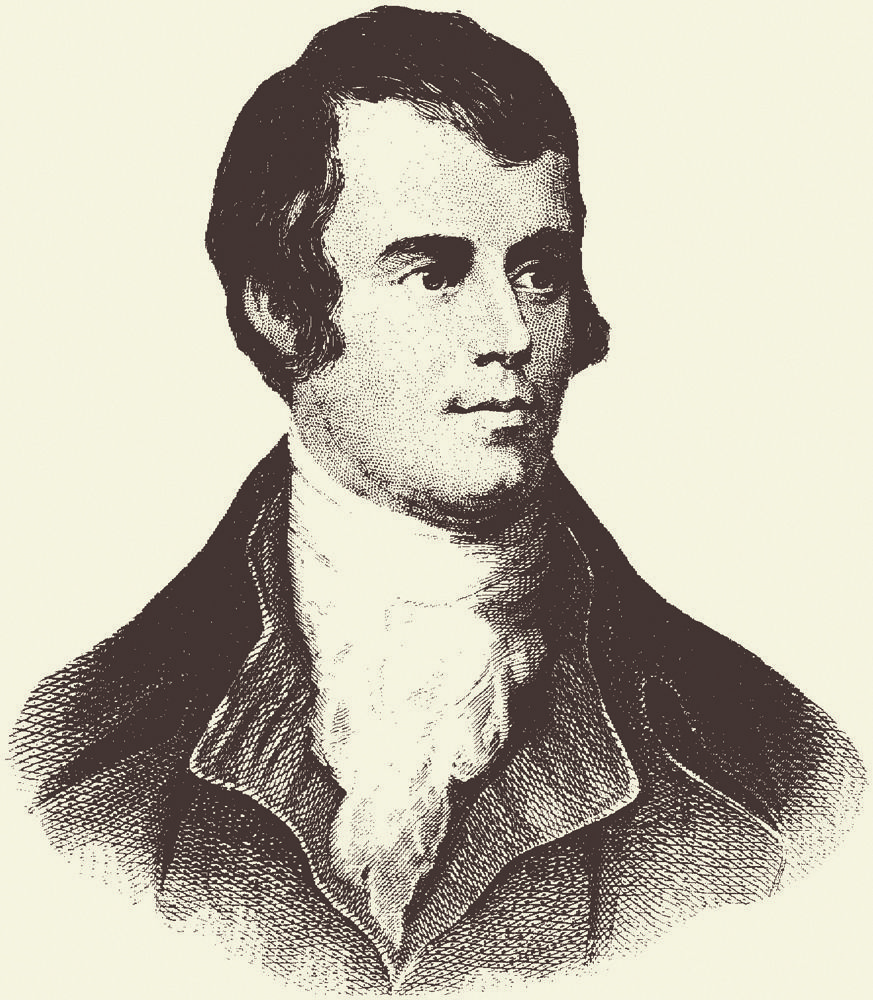
artofsong robbie burnsRobert Burns was not a musician but he liked music; he was especially fond of traditional Scottish airs. He wrote several times that his main goal in writing texts for them was to preserve the music. After Burns’ death, that process was reversed by composers like Schumann and Loewe, who wrote new settings for Burns’ texts. More recently, Benjamin Britten did so in A Birthday Hansel, a song cycle beautifully performed at the Royal Conservatory on April 14 by soprano Lucy Fitz Gibbon and harpist Ingrid Bauer.

The relation between text and music in Burns is actually more complicated than his own statements would suggest. O My Love is Like a Red Red Rose was first published by Pietro Urbani, an Italian musician active in Scotland. Burns gave him the words of the song and essentially told him to use them as he saw fit. Urbani then came up with his own composition, an elaborate setting featuring two violins, viola and harpsichord, with an instrumental introduction and with the notation “Largo con Molta Espressione.” James Johnson republished the song in 1797 and used the tune that Burns had himself suggested, Major Graham. Then in 1821, long after Burns’ death, Robert Archibald Smith proposed an alternative tune, Low Down in the Broom. It is that tune that is now generally used. The case of Auld Lang Syne is different but also complicated. Burns wrote, in a letter, that he “took it down,” that is to say he took the words down, from an old man’s performance. Johnson published it in 1796 to an old tune, but two years earlier Burns had already written to another publisher, George Thomson, that he did not like that tune; he added that there was another, which “you may hear as a Scottish country dance.” It is that other tune that everyone now knows. It is clear then that in some cases Burns wrote, or wrote down, the texts first and then looked for a traditional melody that he liked and that fit metrically.

art of song virginia hatfieldSeveral Toronto musicians sing Scottish songs. Lorna Macdonald has done so in a number of her recitals, Allyson McHardy included a set in a recent concert and there is a fine performance of a Burns song on an ATMA CD by Meredith Hall with Ensemble La Nef. There will be another chance to hear songs by Burns in a concert entitled “The Star of Robbie Burns,” with Virginia Hatfield, soprano, and Benjamin Covey, baritone at the Church of the Redeemer, June 7. R.H. Thomson will narrate Burns’s life, while the second half of the concert will feature songs from the musical Brigadoon. The pianist is Melody McShane. And just in case that is not enough, the ticket price includes tea and shortbread. The concert will be repeated at the Festival of the Sound at the Charles W. Stockey Centre for the Performing Arts, Parry Sound, but with a different soprano, Charlotte Corwin. A different Burns/Brigadoon concert will be given at the Westben Festival in Campbellford with Donna Bennett, soprano, Colin Ainsworth, tenor, and Brian Finley, piano, July 13. You will also be able to hear Burns’ songs Ae Fond Kiss and Auld Lang Syne in a concert titled “A Celtic High Tea” at St. John’s Church, Ancaster, August 11.

Read more: The Songs of Robert Burns

1808-artsonIn Virginia Woolf’s novel, To the Lighthouse, the painter Lily Briscoe is much troubled when she recalls a young ambitious male academic saying: “Women can’t write; women can’t paint.” Nobody has ever doubted that there have been great women performers. Just think of the concerto delle donne in late 16th-century Ferrara or the girls who were trained at the Ospedale della Pietà in 18th-century Venice, of actresses like Sarah Siddons, Sarah Bernhardt and Eleanora Duse or dancers like Anna Pavlova. But the ability of women to become creative artists has in the past been questioned. It was sometimes asserted that women could never become great poets since they lacked creative power. I suspect that this attitude goes back to a long discredited physiological theory that held that only men could create, since the homunculus was already present in the sperm and that a woman simply provided a space where the embryo could develop.

Of course, there have been a number of important women composers from Hildegard von Bingen in the 12th century to Germaine Tailleferre and Lili Boulanger in the early 20th and Kaija Saariaho, Sofia Gubaidulina and Ana Sokolović in our time. I also suspect that there would have been others had the intellectual climate been more sympathetic to the female composer. Several women composers have been close relatives of more famous men: Francesca Caccini was the daughter of Giulio Caccini; Clara Schumann was the wife of Robert Schumann; Fanny Mendelssohn was the sister of Felix Mendelssohn; Pauline Viardot was the daughter of Manuel García. As a consequence they are sometimes seen as pale reflections of the male figures to whom they were related.

Sometimes too, a woman may have been content to be a “helpmeet.” There are two extant manuscripts of Claudio Monteverdi’s last opera, L’incoronazione di Poppea; one of these shows that Francesco Cavalli, Monteverdi’s pupil and successor, had made a number of revisions. But two-thirds of the manuscript is in the hand of Cavalli’s wife Maria. We know little about her: she was a widow when Francesco married her in 1630; she began copying in 1650 (her hand has been detected not only in the Monteverdi but also in several of Cavalli’s own operas); she died in 1652. She must have been musically literate to be able to do this work. Could she have become a composer herself? We shall never know. When Gustav Mahler courted Alma Schindler (who had studied composition with Alexander von Zemlinsky), he insisted that she could not be a composer, as it would be wrong to have more than one composer in the family. Like Maria Cavalli, she became a copyist of her husband’s music. (Mahler was to change his mind about Alma’s compositions later.)

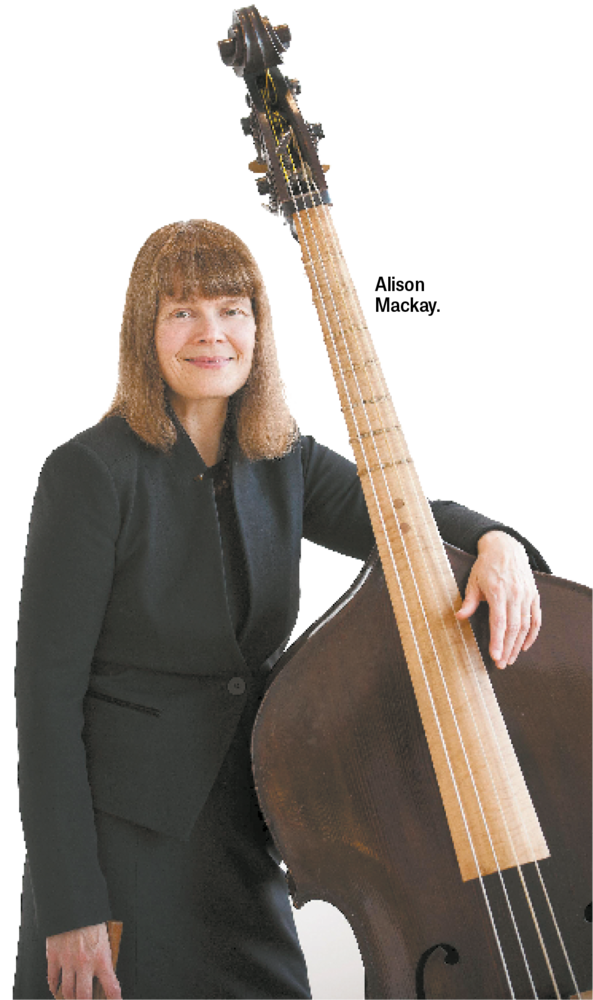
Alison Mackay has played violone and double bass for Tafelmusik since 1979. For Tafelmusik she has created several highly successful multi-media projects: “The Galileo Project;” ‘The Four Seasons;” “The House of Dreams.” Her next project is for the Toronto Consort: “A Woman’s Life” on May 24 and 25 at 8pm and May 26 at 3:30pm at Trinity-St. Paul’s Centre. The program will explore the lives of women composers and singers from the Middle Ages, the Renaissance and the early Baroque. It will feature vocal music by von Bingen, Francesca Caccini and Barbara Strozzi.

Other events: Tafelmusik presents arias and choruses from Handel’s oratorios with Sophie Daneman, soprano, and Rufus Müller, tenor, at Trinity-St. Paul’s Centre, May 1 to May 4 at 8pm and May 5 at 3:30pm, and at the George Weston Recital Hall, May 7 at 8pm.

The Aldeburgh Connection continues its Britten Festival of Song with “The Song Cycles,” with Shannon Mercer, soprano, and Susan Platts, mezzo at the Glenn Gould Studio, May 7 at 8pm and “A Time There Was,” with Virginia Hatfield, soprano, Scott Belluz, countertenor, Colin Ainsworth, tenor, and Geoffrey Sirett, baritone, at Walter Hall May 26 at 2:30pm.

On May 7 and 8 the Talisker Players presents a program of works that evoke birds. It includes music by Telemann and Arvo Pärt. The singers are Erin Bardua, soprano, and Vicki St. Pierre, mezzo, at Trinity St. Paul’s Centre at 8pm.

I met R.H. Thomson more than 40 years ago when we were both in a production of the crucifixion scene from the York Mystery plays. Thomson played Pilate and I was one of the malefactors who torment Christ. This may have been the high point of my theatrical career but Thomson’s had barely taken off. Over the years he has become one of our most distinguished actors. Earlier this season he performed (for Tafelmusik) the fictional memoirs of an early 18th-century oboist. On May 10, Thomson appears in an Eybler Quartet performance titled “An Evening with Michael Kelly” at the Heliconian Hall; repeated at St. Barnabas Church, St. Catharines, May 12 at 2pm. Although the works played are instrumental, the program will be of interest in relation to the history of vocal music. Kelly was an Irish tenor, who created the roles of Don Curzio and Don Basilio in The Marriage of Figaro andThomson’s performance will be based on Kelly’s Reminiscences. Thomson will also perform in “The Star of Robbie Burns” (Church of the Redeemer, June 7) with Virginia Hatfield, soprano, and Benjamin Covey, baritone.

The Toronto Masque Theatre will give its final concert of the season on May 10 and 11 (at 8pm) and May 12 (at 3pm; all at the Al Green Theatre). The program consists of John Blow’s masque, Venus and Adonis, and a newly commissioned opera by Alice Ping Yee Ho, The Lesson of Da Ji. The singers are Vania Chan, Charlotte Corwin and Xin Wang, soprano, Marion Newman, mezzo, Timothy Wong, countertenor, Benjamin Covey and Alexander Dobson, baritone.

Klara Ek, soprano, and Gerald Finley, bass-baritone, will be the soloists in Brahms’ German Requiem, with the Toronto Symphony (Roy Thomson Hall, May 22, 23 and 25). The first two of these concerts will also include Lieberson’s settings of poems by Neruda.

Recitals at Rosedale kicks off its 2013/14 season with a special launch concert on June 1 (Rosedale Presbyterian Church at 7:30pm).

This month in its free Vocal Series the COC presents: Anna Christy, soprano, the star of the current production of Lucia di Lammermoor, in recital on May 21; a concert by the graduating artists of the COC Ensemble Studio on May 23; and a sneak preview of this year’s Toronto Summer Music Festival on May 30. All three concerts are in the Richard Bradshaw Amphitheatre in the Four Seasons Centre from 12 noon to 1pm and are free.

And beyond the GTA: Leslie Fagan, soprano, Laura Pudwell, mezzo, Adam Bishop, tenor, and Peter McGillivray, baritone, will be the soloists in a performance of Bach’s B Minor Mass (George Street United Church, Peterborough, May 11 at 7:30pm).

A postscript: I enjoyedthe lively performance of Mozart’s Don Giovanni by students of the Glenn Gould School (although I have always seen the opera more as an account of frustrated desire than as an indulgence in bunga bunga). The Don (Diego Catala) sang a beautiful “Serenade” and Don Ottavio (Justin Stolz) was terrific in “Il mio tesoro.” The finest performance came from Beste Kalender as Zerlina. She sang with warmth and had just the right mixture of naiveté, spontaneity and artfulness. 

Hans de Groot is a concertgoer and active listener. He also sings and plays the recorder.

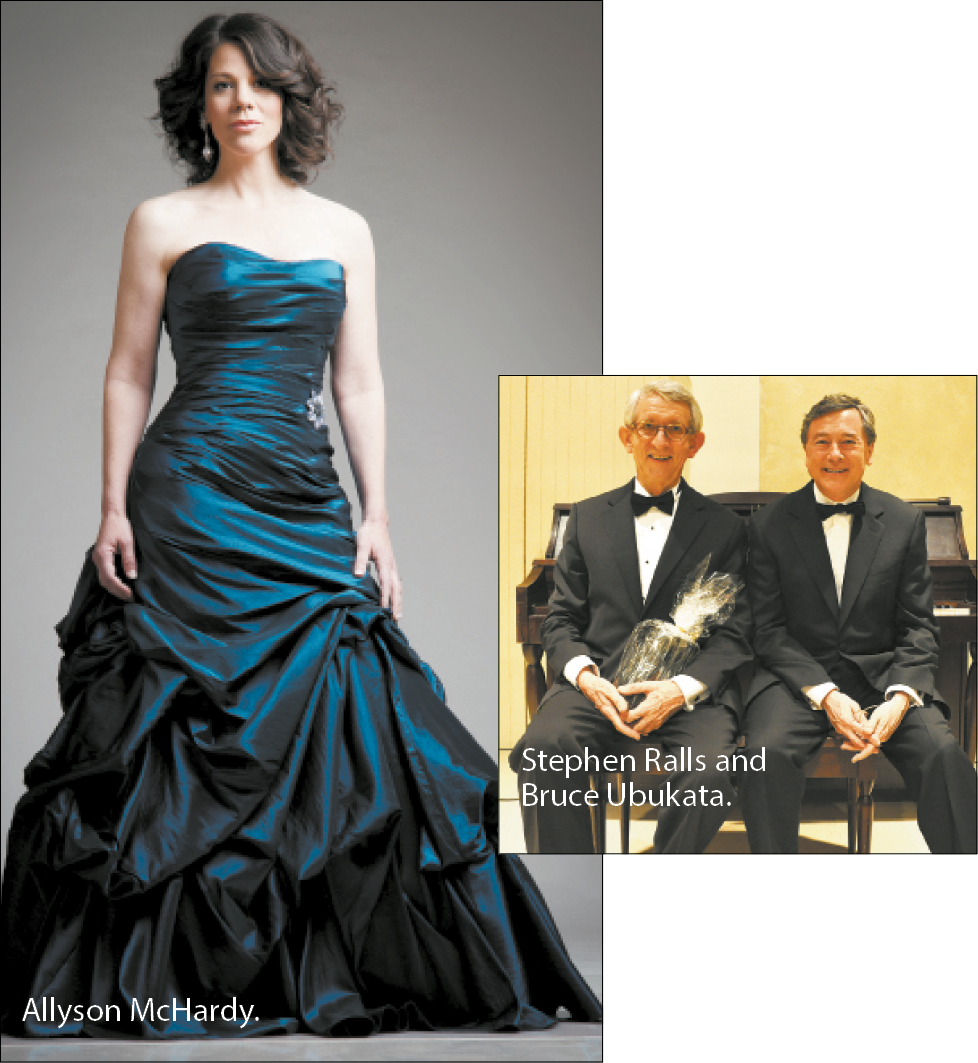
Art of SongLast September Stephen Ralls and Bruce Ubukata, the artistic directors of the Aldeburgh Connection, announced that this season, their 32nd, would be their last. Sad news, but nobody would want to force the directors to see the series as a life sentence. In any case, they want to end things now rather than wait until the time when people would say, “they have obviously run out of ideas,” however remote and even hypothetical that must seem at present.

Ralls’ work at Aldeburgh, the seaside town in southeast England, and his professional involvement with the operas of Benjamin Britten, began in 1972 when he worked as pianist and vocal coach on A Midsummer Night’s Dream; subsequently he played the piano in Britten’s final opera, Death in Venice (he can be heard as the pianist on the opera’s original recording). Ubukata arrived in Aldeburgh in 1977 with the intention of auditing some of the masterclasses, but there was a last minute vacancy and he stayed as a coach and accompanist instead. It was then that Ralls and Ubukata first met but they realized they could have met four years earlier when Ubukata was in the audience at an Edinburgh performance of Death in Venice, in which Ralls played the piano.

The Aldeburgh Connection’s main goal has always been to help young Canadian singers gain experience in the song repertoire. Recently I have been struck by the way Aldeburgh’s concerts have maintained a balance between emerging singers and established artists. Its most recent concert, for instance, had the well-known soprano Monica Whicher but also the tenor Isaiah Bell and the bass-baritone Gordon Bintner, neither of whom is at all well known in Toronto. (That is bound to change now that Bintner has become a member of the COC Ensemble Studio.) But the established singers were also young emerging singers at one time and many were given important professional experience by the Aldeburgh Connection early in their careers. That is as true of singers who retired many years ago (Henry Ingram, Ingemar Korjus, Catherine Robbin, Janet Stubbs) as it is of those who are still in the middle of successful careers (Colin Ainsworth, Russell Braun, Brett Polegato, Michael Schade). A number of singers made their first professional appearance with the Aldeburgh Connection: Alexander Dobson, Virginia Hatfield, Joni Henson, Benjamin Covey and Lucia Cesaroni. Over the years the Aldeburgh Connection has commissioned a number of works. Several of these were recorded on the CD Our Own Songs, with Adrianne Pieczonka, Monica Whicher, Elizabeth Turnbull, Colin Ainsworth and Mark Pedrotti.

Ralls and Ubukata have always acknowledged the help they received from their patrons. First and foremost was Peter Pears, Britten’s partner and the singer for whom he wrote many of his works. Another was Greta Kraus, pianist and harpsichordist, vocal coach and accompanist. It is in her memory that the Aldeburgh Connection established its annual Schubertiad.

One of the finest things about the concerts of the Aldeburgh Connection is the work that the directors have done to establish the cultural contexts of the songs. The first of their concerts that I attended was based on songs that were performed in Jane Austen’s family. To prepare for that concert Ralls and Ubukata travelled to the Jane Austen’s House Museum (in Chawton in Hampshire) where they examined the music that Austen had copied out. The first half of their most recent concert consisted of Schubert songs with texts based on the poetry of Ovid, Virgil and Catullus. It is those poems that were read (Ralls and Ubukata are excellent readers). There have also been contributions over the years by leading Canadian actors. There my finest memory is Christopher Newton’s reading of the Christmas dinner chapter from James Joyce’s Portrait of the Artist as a Young Man. Incorporating readings is now a feature of many concerts, a practice no doubt influenced by the Aldeburgh Connection. The danger is that these readings are often rather loosely related to the music. That has never been true of the Aldeburgh Connection.

Special attention has always been given to the anniversaries of composers: Schubert, Poulenc, Hugo Wolf. It is fitting that in this, their final year, they will finish with three concerts devoted to the work of Britten, who was born 100 years ago. The first of these concerts, at Glenn Gould Studio on April 26 at 8pm, presents three of the Canticles as well as The Ballad of Little Musgrave and Lady Barnard and Britten’s Purcell Realizations. The soloists are Daniel Taylor, countertenor, Benjamin Butterfield, tenor, and Alexander Dobson, baritone. The second of the concerts will take place on May 7 in the Glenn Gould Studio at 8pm, featuring Shannon Mercer, soprano, and Susan Platts, mezzo, as soloists in On this Island, A Charm of Lullabies, The Poet’s Echo and some of the folksong arrangements. A Charm of Lullabies and The Poet’s Echo have a special meaning for Ralls and Ubukata as they were written for singers whom they knew and remember fondly: Nancy Evans and Galina Vishnevskaya. “A Britten Festival of Song” (and indeed the Aldeburgh Connection) will end with a vocal tapestry, “A Time There Was” in Walter Hall, May 26 at 2:30pm. The soloists are Virginia Hatfield, soprano, Scott Belluz, countertenor, Colin Ainsworth, tenor, and Geoffrey Sirett, baritone.

I feel confident about the continuing presence in Toronto of Ralls and Ubukata. Ralls will be the collaborative pianist in a recital with Allyson McHardy featuring works by Berlioz, Schumann, Rossini and Jonathan Larson, as well as Scottish folksongs, on April 14 in Glenn Gould Studio at 2pm. Last month Ubukata travelled to York University to direct a masterclass with the students of Catherine Robbin and Norma Burrowes. But I am less sanguine about the continuing presence of song recitals in Toronto. The celebrity recitals at Roy Thomson Hall were discontinued a couple of years ago and there is now very little vocal music at Koerner Hall. To some extent the slack has been taken up by the four-concert series “Canadian Voices,” organized by Massey Hall/Roy Thomson Hall and given at the Glenn Gould Studio, but, unlike the concerts of the Aldeburgh Connection, these concerts feature established singers, not emerging artists. There are, of course, other concerts that may feature songs. One of the finest things I have heard in a long time was the staged performance of Janáček’s The Diary of One Who Disappeared, given by Against the Grain Theatre with Colin Ainsworth, Lauren Segal and Christopher Mokrzewski.

Other series will incorporate sung performances next season: Isabel Bayrakdarian will perform with Tafelmusik in April 2014 and Philip Addis sings for Music Toronto in December of this year. Addis will also pay tribute to the music of Britten: his recital includes the Songs and Proverbs of William Blake as well as one of Britten’s Purcell Realizations. The Toronto Symphony Orchestra program for next season includes Britten’s Serenade Op. 31 for tenor (Nicholas Phan), horn (Neil Deland) and strings, Alban Berg’s Seven Early Songs (Erin Wall), Mozart’s Coronation Mass (Leslie Ann Bradley, Lauren Segal, Lawrence Wiliford and Philippe Sly), a range of soprano-mezzo duets (Yulia Van Doren and Wallis Giunta), an evening of music by Lerner and Loewe (Amy Wallis, Colin Ainsworth and Jonathan Estabrooks) and Richard Strauss’ Four Last Songs (Sondra Radvanovsky). Many singers now organize their own concerts at venues like the Heliconian Hall on Hazelton Ave. It is there that recently we have been able to hear Meredith Hall (with Brahm Goldhamer), John Holland (with William Shookhoff), Isaiah Bell (with Stephen Ralls) and several others.

The new series that comes closest to what the Aldeburgh Connection has given us is Recitals at Rosedale (Rosedale is short for Rosedale Presbyterian Church), directed by Rachel Andrist and John Greer. The series opens on June 1 at 7:30pm with a special launch concert; the subsequent recitals are on October 6, December 1, February 9 and May 25 (all Sundays at 2:30pm, a day of the week and a time inherited from the Aldeburgh Connection). Like the Aldeburgh Connection, Recitals at Rosedale is committed to using only Canadian singers (their lineup includes major talents like Ambur Braid and Lauren Segal, Colin Ainsworth and Gregory Dahl). I am looking forward to these concerts but I have to add that the emphasis in their advance publicity on “renowned Canadian artists” does not suggest that bringing out emerging singers will be one of their priorities.

OTHER EVENTS

On April 5 and 6 in Trinity-St. Paul’s Centre at 8pm, the Toronto Consort presents Emma Kirkby, soprano, and Jakob Lindberg, lute, in a concert of music by Dowland and Purcell. Kirkby will give a masterclass on April 7 at 2:30pm, also at the Trinity-St. Paul’s Centre.

On April 11 and 13 in Roy Thomson Hall at 8pm, Measha Brueggergosman, soprano, will sing four songs by Duparc and Samuel Barber’s Knoxville: Summer of 1915 with the Toronto Symphony Orchestra.

Lucy Fitz Gibbon, soprano, will give a free recital in Mazzoleni Hall at the Royal Conservatory on April 14 at 5pm. The program includes songs for voice and harp — Rubbra’s Jade Mountain and Britten’s A Birthday Hansel, with Ingrid Bauer — and works for voice and piano — Hymnen an die Nacht by Vivier, Cinq mélodies de Venise by Fauré and The Ugly Duckling by Prokofiev, with Peter Tiefenbach. Fitz Gibbon will also sing at the Canadian Music Centre (20 St. Joseph St.) on April 13 at 5:30pm.

There are four free vocal performances at the Richard Bradshaw Amphitheatre in the Four Seasons Centre next month, all at noon: “A Celebration of Canadian Art Song" on April 16 includes a world premiere of a work by Norbert Palej performed by Lawrence Wiliford, tenor, a new work by Andrew Ager, dedicated to and performed by Shannon Mercer, soprano, and songs by Jean Coulthard sung by Peter McGillivray, baritone — Stephen Philcox is the collaborative pianist; songs from Newfoundland sung by tenors Michael Barrett and Adam Luther are featured on April 23; the April 30 concert, “Inspired by Lorca,” showcases La selva de los relojes, a new chamber work by Chris Paul Harman with Krisztina Szabó, mezzo; and “Sérénade Française,” French arias and art songs with the COC Ensemble Studio takes place on May 2.

Greece to Granada,” a program of Greek, Balkan and Spanish music, will be performed on April 26 at 8pm in the Heliconian Hall. The singer is the mezzo Maria Soulis and the instrumentalists are William Beauvais, guitar, and Julian Knight, violin. Soulis has had a busy career in Europe, where her roles included the title role in Carmen and Rosina in The Barber of Seville. She has recently returned to Canada. Here she has sung, among other parts, the role of Clara in a workshop production of the second act of The Enslavement and Liberation of Oksana G. (music by Aaron Gervais and libretto by Colleen Murphy) for Tapestry Opera. 

Hans de Groot is a concertgoer and active listener. He also sings and plays the recorder. He can be contacted at artofsong@thewholenote.com.
1806 art of songOne of the most accomplished accompanists (or, as we now prefer to say, collaborative pianists) of the late 19th and early 20th centuries was Coenraad V. Bos. It was Bos who played the piano in the first performance of Brahms’ Vier Ernste Gesänge in 1896. In his autobiography, The Well-Tempered Accompanist (1949), Bos wrote about his long association with singers like Helen Traubel and Elena Gerhardt but he also mentioned an unfortunate experience with the Wagnerian tenor Ernest van Dyck. In a London recital van Dyck and Bos were performing Schumann’s song “Ich grolle nicht,” a song which ends with a piano postlude. Bos was disconcerted to find that people started clapping before he had had a chance to play that postlude. He was even more disconcerted when he found out why. Van Dyck had bowed as he sang his last note and left the stage. Bos insisted on playing the postlude and managed to silence the applause. Van Dyck was furious.

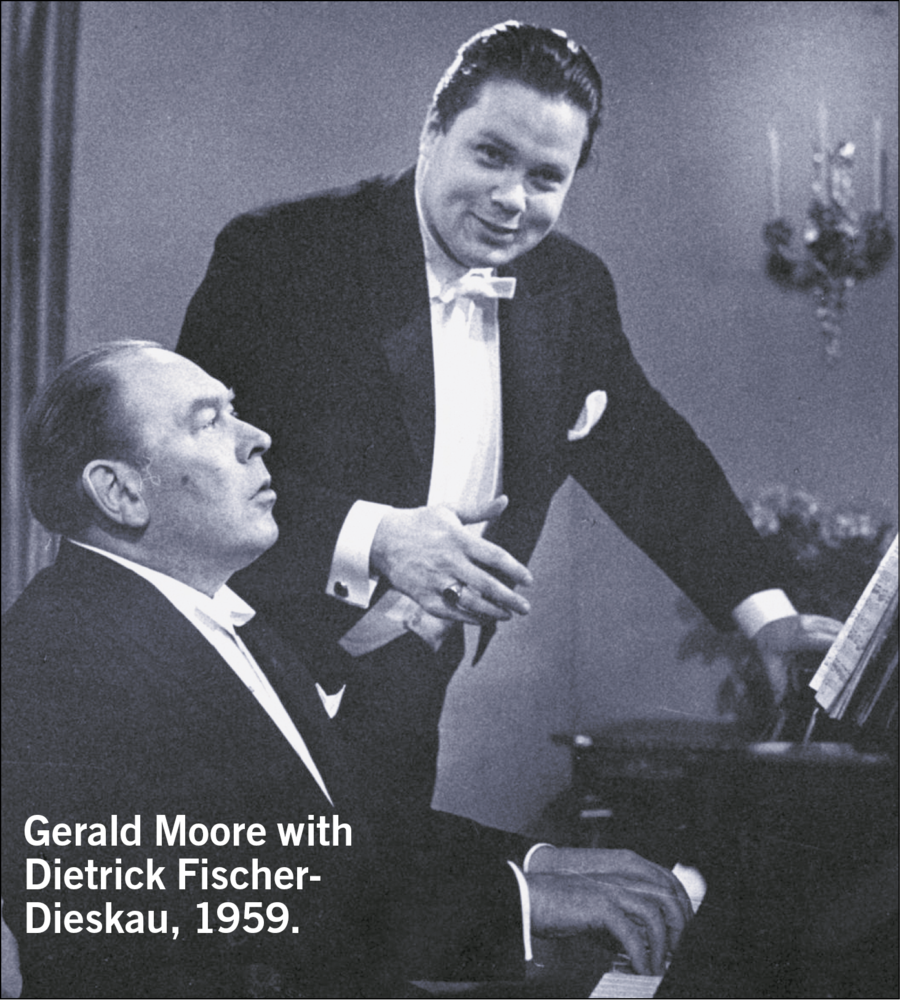
A central figure in Bos’ autobiography is the tenor Raimund von zur-Mühlen. While von zur-Mühlen was initially very critical of Bos’ playing, he became more appreciative later. At one point, after a recital in Berlin, he sent Bos a note which read: “Last night you must have played well, because I was not conscious of your playing throughout the recital.” When Gerald Moore came to write his autobiography, the ironically titled Am I Too Loud? (1962), he quoted that passage and expressed his dissent, something that would not surprise anyone who had read Moore’s earlier book, The Unashamed Accompanist (1943). Throughout the autobiography Moore expressed his appreciation for the singers and instrumentalists with whom he had worked, but like Bos he too had some unfortunate experiences. One of these was with the soprano Frieda Hempel. A recital she was giving with Moore included two songs by Hugo Wolf with substantial postludes. Hempel told Moore: “Just play a chord when the voice part ends — else my applause will be spoiled.” Moore wanted none of this — as one would expect.

Moore, more than anyone else, raised the profile of the accompanist through his recitals, his recordings and his books. He had a long career: when he was quite young (“my voice still unbroken”), he became the organist of St. Thomas’s Church on Huron Street in Toronto. His career ended with a farewell recital in 1967. The other performers were Elisabeth Schwarzkopf, Victoria de los Angeles and Dietrich Fischer-Dieskau. Moore had the last word — the concert ended with a piano transcription of Schubert’s song “An die Musik.”

We are fortunate that in Toronto we have many accomplished collaborative pianists: in recent months we have been able to hear Sandra Horst (with David Pomeroy), Steven Philcox and Rachel Andrist (in the COC Ensemble Studio competition), Jennifer Tung, Brahm Goldhamer and Peter Tiefenbach (with the artists of the Glenn Gould School at the Royal Conservatory) and Stephen Ralls and Bruce Ubukata (in the concerts of the Aldeburgh Connection).

On March 7 at the Jane Mallett Theatre at 8pm, John Hess is the pianist in a recital with the soprano Erin Wall. The program will include works by Schubert, Korngold, Strauss and Ricky Ian Gordon. Hess is especially known as an authority on contemporary opera and song in Canada. He has worked with many singers, including Valdine Anderson, Jane Archibald, Ben Heppner and Wendy Nielsen. He teaches in the Faculty of Music at Western University.

On March 10 at 2:30pm at Walter Hall, Stephen Ralls and Bruce Ubukata present the Aldeburgh Connection’s annual “Schubertiad.” The singers are Monica Whicher, soprano, Isaiah Bell, tenor and Gordon Bintner, bass-baritone.

Also on March 10 Peter Longworth will be the pianist in a concert with Melanie Conly, soprano, and Anita Krause, mezzo, in works by Fleming, Chausson, Raum, Schubert, Barber and Delibes in the Heliconian Hall at 3pm.

The Canadian Voices concert at 2pm on March 24 in the Glenn Gould Studio features New York-based pianist Ken Noda with mezzo Wallis Giunta. Noda has worked with many distinguished soloists including Jessye Norman, Kurt Moll and the late Hildegard Behrens. The main work on the program is Kurt Weill’s Die sieben Todsünden, a work originally produced as a sung ballet in 1933. The text is by Bertolt Brecht. As the work’s full English title, The Seven Deadly Sins of the Bourgeoisie, makes explicit, the emphasis is on what sin means in a capitalist society. Giunta is a former member of the COC Opera Studio Ensemble and is at present a member of the Lindemann Young Artist Development Program at the Metropolitan Opera in New York. We recently saw her as Annio in the COC production of Mozart’s La clemenza di Tito — a tomboy Annio because that is how the director, Christopher Alden, saw the part. She will return to the COC next January as Dorabella in Mozart’s Così fan tutte, a roleshe sang in an acclaimed Lindemann/Juilliard production in New York last fall.

Other events: On March 5 and 6, 8pm at Trinity-St. Paul’s Centre, the Talisker Players presents a program of musical settings (by Buczynski, Finzi, Good and Toch) of poems by de Pizan, Hardy and others on the changes that time will bring. The soloists are Carla Huhtanen, soprano, and Peter McGillivray, baritone; Stewart Arnott is the reader.

On March 9 at Metropolitan United Church at 7:30pm there will be a concert of music from the French baroque including the achingly beautiful Leçons des Ténèbres by Couperin. The soloists are Ariel Harwood-Jones, soprano, and Christina Stelmacovich, mezzo. Another concert at Metropolitan will present music by Gilles, Duruflé and Lili Boulanger on Good Friday, March 29, at 7:30pm.

March 12, in a 7pm free concert at University of Toronto’s Scarborough campus, AA303 Arts and Administration Building, tenor Lenard Whiting will sing Schubert’s Die schöne Müllerin with the pianist Brett Kingsbury.

On March 16 at 7:30pm in the Bloor Street United Church, Capella Intima performs the anonymous 1650 oratorio Giuseppe. The soloists are Lesley Bouza and Emily Klassen, soprano, Laura McAlpine, alto, Bud Roach, tenor, and James Baldwin, bass. The same program will take place at McNeill Baptist Church in Hamilton on March 16 at 2pm and at Kingston Road United Church in Toronto on March 17 at 2pm.

On March 26 in the Richard Bradshaw Amphitheatre, there will be a free concert at noon of art songs and poetry by the artists of the University of Toronto’s Voice and Collaborative Piano departments. The conductors are Darryl Edwards and Steven Philcox.

On April 3 the Toronto Latvian Concert Association presents Vestard Shimkus, piano, and Elina Shimkus, soprano, in works by Wagner, Vasks, Shimkus, Mozart and Rossini at 7:30pm at the Glenn Gould Studio.

And beyond the GTA: on March 10 at 3pm Primavera Concerts presents Shannon Mercer, soprano, and Andrew Ager, organ, in a concert of works by Bach, Ager and others at St. Barnabas Church in St. Catharines. 

Hans de Groot is a concertgoer and active listener. He also sings and plays the recorder. He can be contacted at artofsong@thewholenote.com.
Back to top