2209 Choral 1Alot of musical organizations go on break over the summer, but that doesn’t mean the end to opportunities for amazing music. Southern Ontario is lucky to have within a few hours’ drive several world-class music festivals, where there are lots of opportunities to see local and international artists at play. I’ve highlighted a few options for festivals and other exciting performances with a choral flavour.

Peter Oundjian at the helm

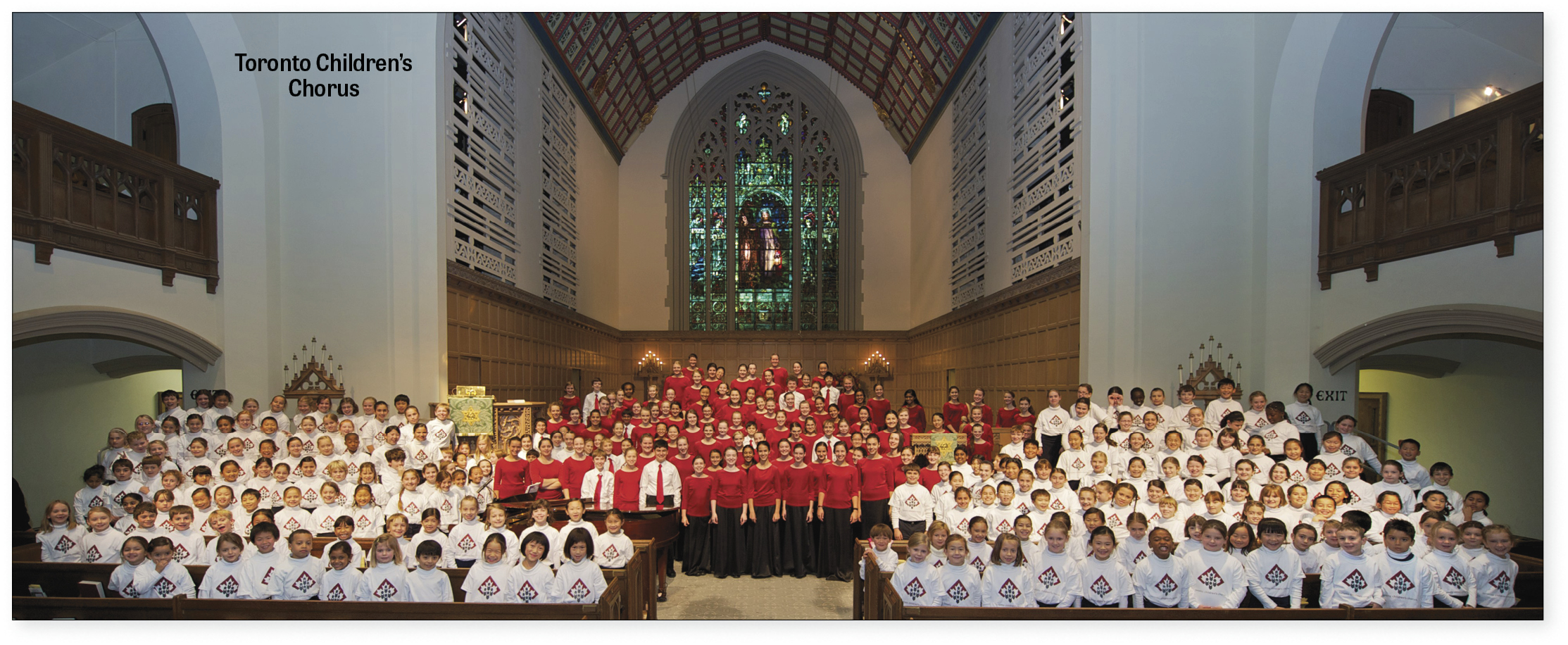
The Toronto Symphony Orchestra, the Toronto Mendelssohn Choir and the Toronto Children’s Chorus are joined by soloists for Carl Orff’s Carmina Burana, for four performances June 21 to 24. This mainstay of choral performance is going to be a fun time. It also marks one of a handful of choral performances remaining in which you can catch Peter Oundjian on the podium before his tenure ends in 2017/18. In his remaining year, there are only three other opportunities to see him in action with a choir in Toronto before his departure. In September, Oundjian leads the Toronto Mendelssohn Choir in Brahms’ A German Requiem. In March 2018, he leads the Toronto Children’s Chorus in the premiere of Scottish composer James MacMillan’s Little Mass. And finally, his great send-off will be at the helm of Beethoven’s Nineth Symphony in June 2018. Flag these in your agendas and calendars. If you are a fan of choral music and Peter Oundjian, don’t miss!

The National Youth Choir of Canada

This year as part of Canada 150, the National Youth Choir of Canada (NYC) will tour Eastern Canada, performing alongside the National Youth Orchestra of Canada (NYO) as part of the NYO’s Edges of Canada Tour. “This is a really unique year; we don’t usually do the choir every year,” says Hilary Knox, executive director of Choirs Canada. Just last year, the choir was convened under the baton of Michael Zaugg. “This year,” she continues, “the National Youth Orchestra was able to get a massive heritage grant to do a tour and to do collaborations as part of Canada 150.” Part of this work includes the National Youth Choir, who will perform and tour alongside the orchestra while also performing in their own concerts through Southern Ontario.

This year, the 40 singers of the choir are made up of musicians from every province and the Northwest Territories. Knox talks about their first-time use of YouTube auditions to have a broader reach for participants. “YouTube auditions allow us access to a number of singers we couldn’t reach otherwise.” Beverley Rockwell, a member from the Northwest Territories, enjoyed the YouTube option. “I found it quick, easy and painless,” she says. “Uploading to YouTube and sharing the link to the NYC committee was a good way to get everyone’s auditions easily, and for us to use the resources provided to us in this technological age.”

The NYC gives participants broad-based exposure to not only the choral world of Canada, but also the wider artistic community in the country. Rockwell is looking forward to this new experience. “To be experiencing it on the national scale is amazing,” she shares. “In the Northwest Territories, our choirs are small and everyone knows one another, very much like a family, but you can get quite stuck in the comfort of your surroundings…. Also, it’s a chance to gain perspective on how other singers from Canada grew up singing and how they view the wonderful country that is Canada.”

Calgary-based conductor Timothy Shantz – chorus master of the Calgary Philharmonic, artistic director of Spiritus Chamber Choir, and founding director of Luminous Voices – will lead the NYC in its a cappella pieces and solo concerts this year.

It’s a big year and an exciting one for the NYC – a chance to not only learn and perform but also to share in the intense artistry of performing with the National Youth Orchestra. “For us, to do a collaboration is so fantastic; it speaks so beautifully to our mission,” says Knox. “To bring the kids together, have them work together…it’s kind of unprecedented. The discussions we’re having with the orchestra are exciting.”

Catch them in action across Eastern Canada:

July 18 – Knox Presbyterian Church, St. Catharines, ON.

July 19 – The NYC stops by the Elora Festival to sing with the Elora Singers. Knox Presbyterian Church, Elora, ON.

July 20 – Stratford Summer Music. Edges of Canada Tour with the NYO. Stratford, ON.

July 22 – Edges of Canada Tour with the NYO. National Arts Centre, Ottawa, ON.

July 23 – Edges of Canada Tour with the NYO. Maison Symphonique, Montreal, QC.

July 25 – Toronto Summer Music Festival. Edges of Canada Tour with the NYO. Koerner Hall, Toronto, ON.

The Elora Festival

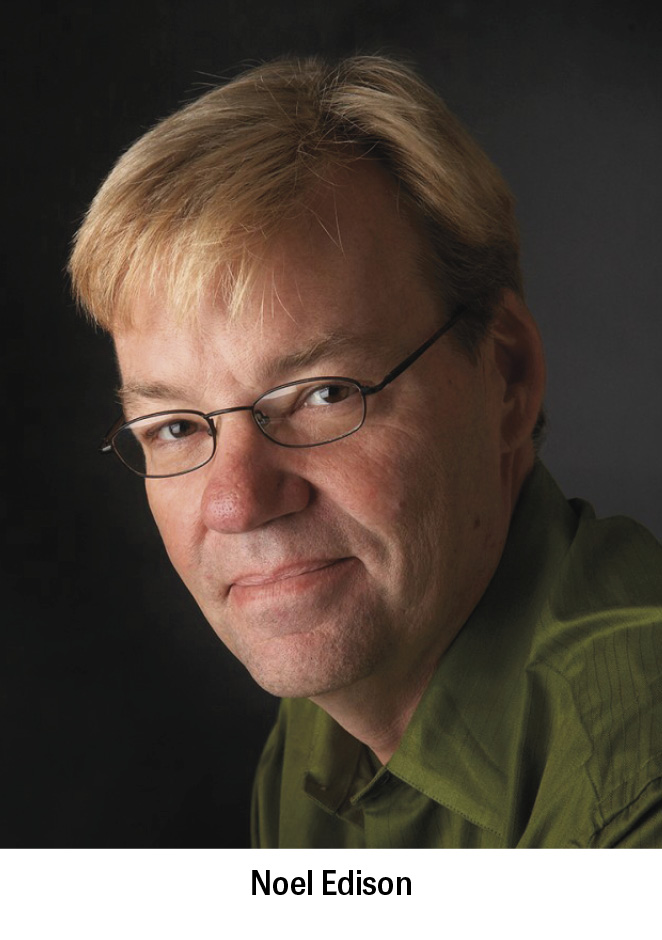
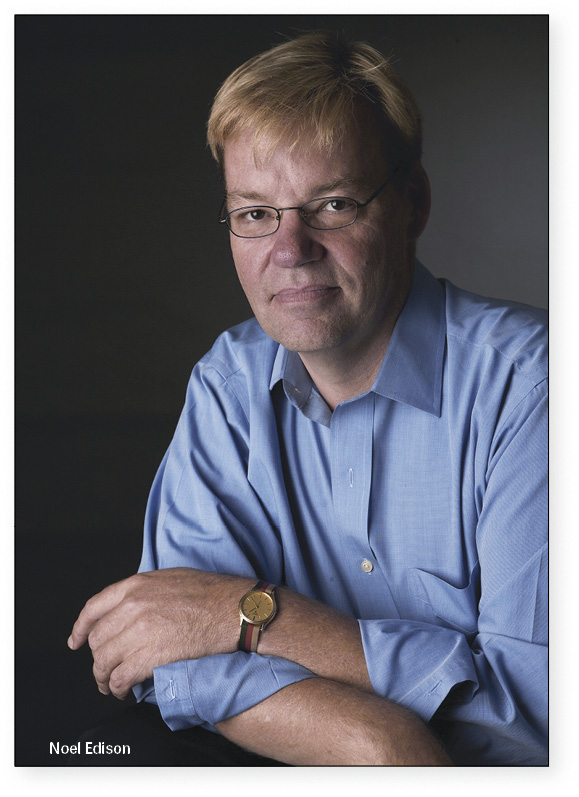
The Elora Festival takes place in Elora, Ontario, from July 14 to July 30, and is without doubt the biggest Ontario festival featuring choral music. A mainstay in the quintessential Ontario village of Elora, Noel Edison – artistic director of the festival, the Elora Singers, and the Toronto Mendelssohn Choir – has programmed a pretty awesome feast of choral fun. The extensive choral highlights are below:

July 14 – Opening Night Gala: “Night of the Proms.” Under the baton of Vancouver Symphony Orchestra maestro Bramwell Tovey, the EFS will be joined by the Toronto Mendelssohn Choir for a colonial British romp to start the festival. Gambrel Barn, Elora.

July 16 – The Elora Festival Singers are joined by the Guelph Youth Singers and the Festival Orchestra in Benjamin Britten’s Saint Nicolas cantata. Lawrence Wiliford (tenor) takes the lead as the storied Bishop of Smyrna. St. John’s Church, Elora.

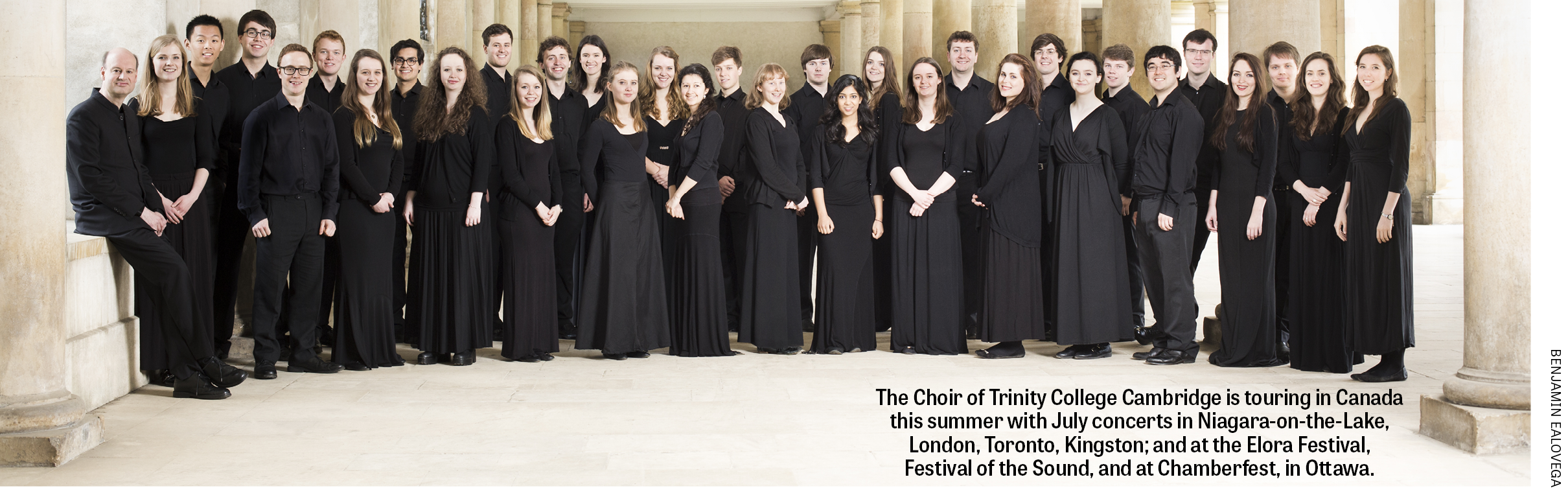
July 21 – The Trinity College Choir of Cambridge University, UK, joins Michael York (bass) and Zach Finkelstein (tenor). This delightful concert will feature two Magnificats written by J.S. Bach and his son C.P.E. Bach. Gambrel Barn, Elora.

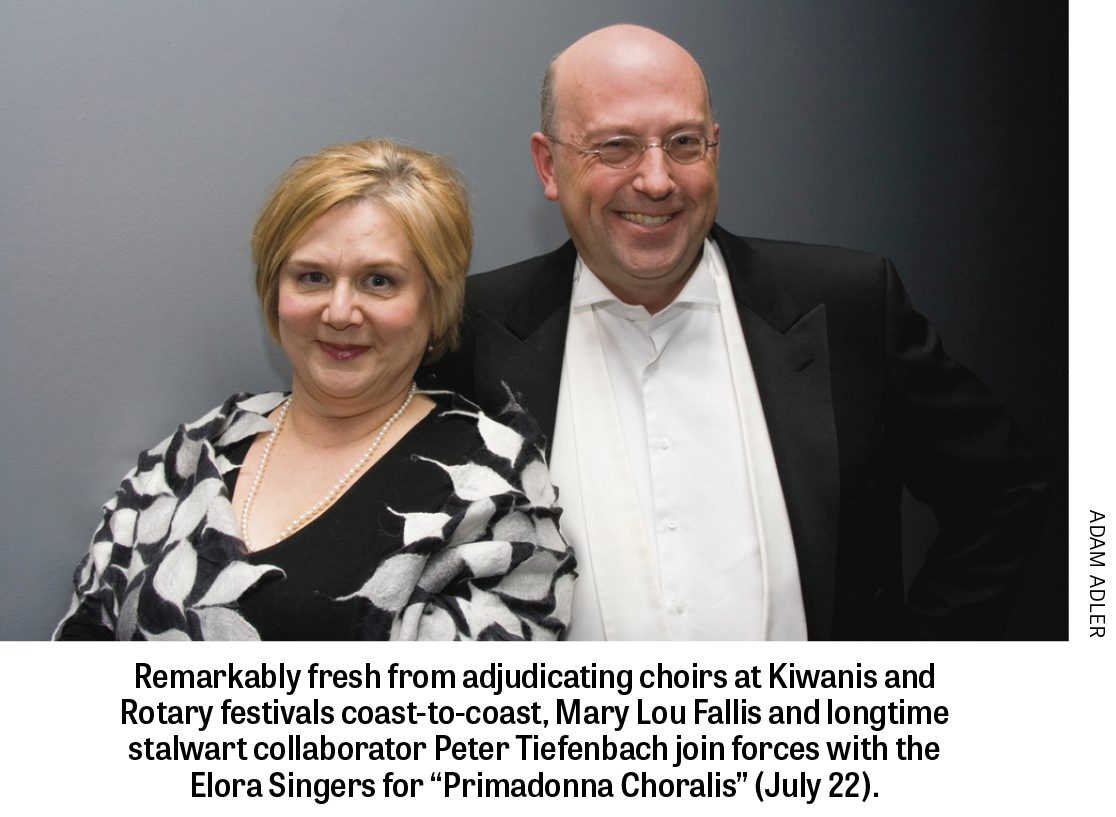
July 22 – Mary Lou Fallis brings a comedic touch to choral singing with the Elora Singers and pianist Peter Tiefenbach in “Primadonna Choralis.” St. John’s Church, Elora.

July 23 – The Elora Singers and Festival Orchestra perform Bach’s Brandenburg Concertos No.1, No.5 and Wachet Auf. Knox Presbyterian Church, Elora.

July 23 – The Trinity College Choir of Cambridge University performs works by Arvo Pärt, William Byrd, Henry Purcell, and more! Gambrel Barn, Elora.

July 27 – Celebrated countertenor Daniel Taylor joins the Elora Singers and Festival Orchestra in a performance of Pergolesi’s Stabat Mater and Purcell’s Dido and Aeneas. St. John’s Church, Elora.

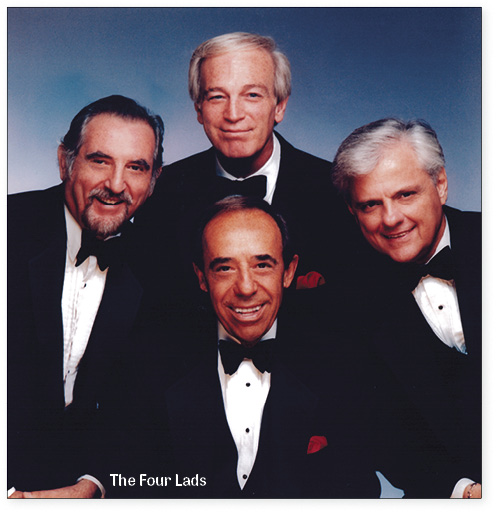
July 28 – Cantus, an American men’s ensemble, visits the festival performing songs from the all-male canon. Gambrel Barn, Elora.

July 29 – Celebrating the 150th year since Confederation, a multimedia, multi-artist performance will be staged at the Gambrel Barn featuring the Elora Singers, Richard Margison, Martha Henry, Jackie Richardson and Hugh Brewster.

July 30 – The Elora Singers close off with a concert of hymns that will include audience participation. St. John’s Church, Elora.

The Bach Festival of Canada
2209 Choral 2The Bach Festival of Canada takes place in South Huron, Exeter, Ontario from July 6 to 16. Gerald Fagan, who co-founded and leads this festival, is one of the most distinguished choral conductors at work in the country. Earlier this year, he was made a Member of the Order of Canada for his dedication and work. As an existing Order of Ontario recipient, he is known for his work with Chorus London, the Concert Players Orchestra, CHOR AMICA, the Gerald Fagan Singers, and the Toronto Mendelssohn Youth Choir.

There are two choral concerts at the tail end of the festival. Fagan leads his choir, CHOR AMICA, in an intimate performance on July 15. Then, closing off the festival will be “Our Home and Native Land,” featuring the Festival Massed Choir, Festival Symphony Orchestra and soloists John Avey, Anita Krause, Leslie Fagan, and Colin Ainsworth, in performances of works by Ontario-based composers.

Elise LeTourneau, Jeff Smallman, Matthew Emery and Stephanie Martin will all have world premieres of their work at this festival. Matthew Emery, a talented and prolific composer, premieres A Song of Canada. Using thematic elements of Canada’s diversity alongside physical characteristics of its landscapes, Emery has crafted a 12-minute work for orchestra, mixed choir, children’s choir and four soloists. Emery’s text comes from the poem A Song of Canada, written by Robert Reid in 1913. “I adapted the final phrases of the work to exemplify what being Canadian means to me – the freedom to be loved and to feel safe,” Emery says. This adapted text reads: “I hear the voice of Freedom, Sing me joy, Sing me peace, Sing me worth, Sing me love, Voicing your notes that the world may hear, Sing me a song of Canada!”

July 15 – CHOR AMICA and the Festival Symphony Orchestra. Trivitt Memorial Anglican Church, Exeter.

July 16 – Gala Closing Performance: “Our Home and Native Land,” South Huron Recreational Centre, Exeter.

Quick Picks

June 3 – The Toronto Mass Choir presents “Gospel Island Grooves” in anticipation of their mission trip to the Dominican Republic. This is their big fundraiser for the trip, with guests Roberto Sanchez and Joy Lapps-Lewis. Humber College (Lakeshore Auditorium), Toronto.

June 4 – Acquired Taste is hosting their first performance, as part of Pocket Concerts! Rory McLeod, co-founder of Pocket Concerts, shares: “Acquired Taste is an amateur choir for professional musicians who normally use instruments to make music (many of whom play in top orchestras and chamber groups in Toronto). For this project, we’ve put our instruments aside and embraced the spirit of the amateur musician, learning how to sing while rediscovering the joy of making music for fun.” Mitchell Pady leads the group in its first performance, including works by Brahms, Fauré, Healey Willan, Palestrina, Thomas Tallis, and more. St. Martin-in-the-Fields Anglican Church, Toronto.

July 25 – Further north than Elora, you can catch the Trinity College Choir at the Festival of the Sound. Charles W. Stockey Centre for the Performing Arts, Parry Sound.

July 26 – Countertenor and early music specialist Daniel Taylor returns to the Stratford Summer Music Festival with the Theatre of Early Music. This incredibly refined, art-focused ensemble continues to be a pleasure whenever they perform. A choreographed presentation of the Allegri’s Miserere is on the program. The Avondale, Stratford.

August 11 – The Elmer Iseler Singers stop by the Festival of the Sound. Charles W. Stockey Centre for the Performing Arts, Parry Sound.

Follow Brian on Twitter @bfchang Send info/media/tips to choralscene@thewholenote.com.
2208 Choral Scene 1In a month when The WholeNote Canary Pages celebrates choral music and and features opportunities to participate in it, it’s fitting that there’s an incredible amount of amazing choral performance happening around the region. In this month’s column, on top of some great quick picks, SING! The Toronto Vocal Arts Festival runs throughout most of the month; I’ve dug into the fantastic upcoming Royal Conservatory 21C Music Festival launch featuring the Canadian Opera Company Orchestra, Elmer Iseler Singers and the 21C Ensemble; and finally, Elisa Citterio, Tafelmusik’s new artistic director takes the stage for Mozart’s Mass in C Minor. What a bounty indeed!

SING! – A Guinness World Record Attempt!

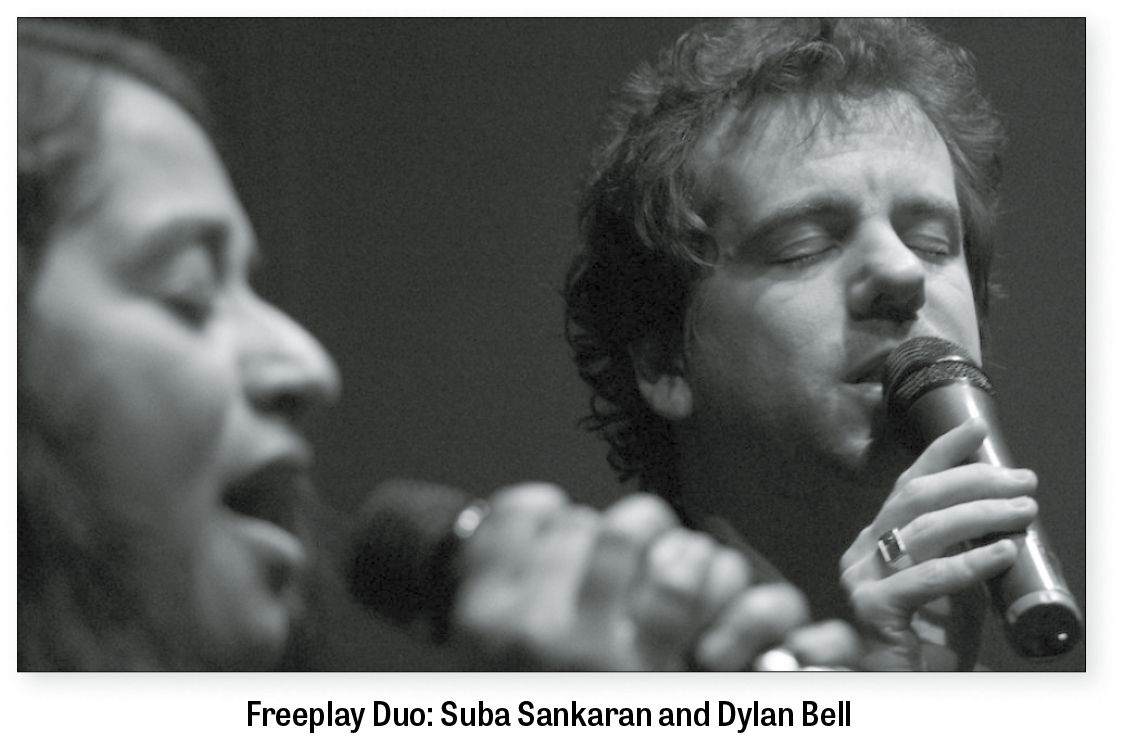
SING! The Toronto Vocal Arts Festival makes its return with events between May 11 and 28. This year marks the first for artistic directors Dylan Bell and Suba Sankaran, partners in FreePlay Duo, and masters of jazz and a capella arranging. “What makes SING! stand out is the sheer array of vocal artistry we offer in our various programs,” says Sankaran. “The ‘SING! In Concert’ series offers world-class groups from New York, and from our own backyard. ‘SING! In The Clubs’ offers a more intimate vocal experience, while ‘SING! Free,’ in the Distillery District, offers a weekend of multicultural and multi-stylistic acts, representing Canada’s unique cultural diversity, all free to the public. And ‘SING! and Learn’ offers educational outreach to schools, as well as public masterclasses where participants can work face-to-face with some of the greatest vocal ensembles in the world.”

During the festival, organizers hope to break two Guinness World Records: the most nationalities singing a national/regional anthem simultaneously; and the most nationalities in a simultaneous popular music sing-along. Bring your passports to show Guinness adjudicators and get ready to belt out O Canada. The pop song will be Rise Up led by Lorraine Segato, formerly of Parachute Club. On May 13 at 1pm, Distillery District Stage. Free!

Give Me A Head With Hair (please!)

Segato will also perform as part of the “O Canada! The Golden Age of Canadian Pop” concert, May 25 at the St. Lawrence Centre for the Arts. Organizers have gathered the members of the original Toronto cast of Hair which premiered here in 1969. The musical, which opened Off-Broadway in 1967, shaped a generation and provided the groundwork for the modern musical as we know it, creating a fusion of rock, culture and social commentary in music theatre. This is a remarkable chance to see the cast throw back 50 years.

“We’re pleased to be a part of this one-of-a-kind festival celebrating vocal talent from Toronto and around the world, bringing the best performers and facilitators together at Canada’s premier a cappella festival,” says Bell. “We look forward to bringing our experience and observations to SING! Toronto, and to building on the momentum of the last six years to make SING! 2017 the best festival yet.”

21C – The RCM Welcomes the Canadian Opera Company Orchestra

The Royal Conservatory’s new music festival, 21C, is a gem of contemporary art, now providing its fourth year of programming with nine concerts, five days, 31 premieres, (12 world premieres) and 90 percent Canadian artists. Mervon Mehta, RCM’s executive director of programming, says, “We are thrilled to welcome the Canadian Opera Company, the Canadian Art Song Project and Soundstreams as our artistic collaborators and to have Unsuk Chin, a composer of international stature, in residence.”

The festival begins May 24 at 8pm in Koerner Hall with Johannes Debus conducting the Canadian Opera Company Orchestra and the Elmer Iseler Singers with Lydia Adams, conductor and artistic director, and the 21C Ensemble. Featuring a host of Canadian and international composers, this promises to be one of the highlights of the festival. The concert will feature the Canadian premiere of American Matthew Aucoin’s The Orphic Moment taking inspiration from the “primal self-justification and self-glorification” of the story of Orpheus and Eurydice. Aucoin calls this a “dramatic cantata” exploring what would have happened if Orpheus had made the conscious decision to turn around escorting Eurydice back to the living as a deliberate choice of ultimate tragedy and, ultimately, of unparalleled inspiration.

Celebrated South Korean composer Unsuk Chin’s opera Alice in Wonderland first began as the composition snagS&Snarls. This scenic piece invokes the various parts of the beloved story. Canadian Samy Moussa, recently awarded the 2017 International Hindemith Prize by the Schleswig-Holstein Music Festival and his popular piece, Kammerkonzert will be featured.

The evening also features Toronto-based composer Brian Current presenting the world premiere of Nàaka (Northern Lights), the third movement of his River of Light multi-movement cycle, projected to be completed in 2018. Based on Dante’s Paradiso, Current’s inspiration for the entire cycle is the line: “And I saw a light in the form of a river, radiant as gold, between banks painted with wondrous springs.” Current furthers his thoughts on the piece: “No matter where we come from, or whom we pray to, a fascination with transcendence into light permeates nearly all of our religious beliefs and unites us. We are all part of the River of Light.”

Richard Van Camp, an indigenous storyteller, and Elder Rosa Mantla, both of the Dogrib (Tłįchǫ) First Nation in Fort Smith, Northwest Territories, provided language and cultural contexts for Nàaka. Recognizing the deep cultural and physical relationship of the northern lights to the Tłįchǫ, Nàaka forms the Canadian contribution to the River of Light cycle.

The concert will also include Current’s The Seven Heavenly Halls, another movement of River of Light, which won the inaugural Canadian Azrieli Music Project Prize in 2015. The Seven Heavenly Halls (2015) was inspired by the Zohar (The Book of Enlightenment), the most important work of Jewish mysticism (Kabbalah). Central to the story is the concept of the Sefer Hekalot (the Seven Heavenly Halls) described loosely as the complexity of forgiveness within light, figurative and physical. Current describes the work as “a 12 minute journey for choir, orchestra and solo tenor based on the Zohar that traces a mystical progression where each of the seven ecstatic states is described by an orchestral colour.”

Tafelmusik – Elisa Citterio in Action at Koerner Hall

A momentous occasion is upon us May 4 to 7 in Koerner Hall with Italian violinist and early-music specialist Elisa Citterio taking the reins of Tafelmusik Baroque Orchestra and Chamber Choir for the first time at Koerner Hall since her appointment as artistic director. Marking the end of Tafelmusik Chamber Choir’s 35th season, Citterio and Ivars Taurins lead the inimitable Mozart Mass in C Minor and Haydn’s Symphony No.98 in B-flat Major. British sopranos Julia Doyle and Joanne Lum are joined by Asitha Tennekoon, tenor, and Joel Allison, bass-baritone, as soloists. Don’t miss these performances!

QUICK PICKS

There are a host of music-theatre-themed concerts in May.

May 6: The Oakville Children’s Choir presents a fun set of showtunes in “The Best of Broadway!”

May 6: Further east, the Mississauga Festival Choir is also presenting pops in “From Broadway to Hollywood” at the Living Arts Centre on the same day.

May 7: Even further east you can catch Florivox, a treble choir, in “Be Our Guest” featuring songs from popular musicals like Wicked and Hamilton.

May 10: The Cardinal Carter Academy for the Arts presents Missa Gaia/Earth Mass featuring 170 voices and the premiere of Paul Halley’s In the Wide Awe and Wisdom of the Night.

May 12: The Upper Canada Choristers and their Cantemos Latin Ensemble, with guests École Secondaire Catholique Saint-Frère-André Choir, present “Ubi Caritas et Amor” featuring Vivaldi’s Gloria, the Fauré Requiem and Ola Gjeilo’s Northern Lights amongst many others.

May 17: Elite ensemble Opus 8 presents another free concert in their series “H2O” – described as “no mere offering of sea shanties, but a phantasmagoria of all things aquatic, shipwrecked and watery.” If you didn’t know what a phantasmagoria was (like me) it’s a series of images like those of a dream.

May 21: The grand, sumptuous, spine-tingling, incredible, massive, tremendous, bone-shaking, tear-inducing, emotional powerhouse – Mahler’s Symphony No. 2 “Resurrection” is presented by the Niagara Symphony Orchestra and Chorus Niagara.

May 25: The Leaside United Church Chancel and Junior Choir present “Broadway Bedazzled.”

May 27: VOCA Chorus of Toronto takes on Carl Orff’s hair-raising masterpiece Carmina Burana. Other selections include a world premiere setting for two marimbas of Ola Gjeilo’s The Spheres. Torq Percussion Quartet joins Elizabeth Polese, soprano, Michael Nyby, baritone, and Christopher Mayell, tenor, for a sure night of choral fire.

June 2 and 3: Right at the beginning of June you can catch the Toronto Symphony Orchestra and the Toronto Mendelssohn Choir (in which I sing) with guests, the Huddersfield Choral Society in William Walton’s bombastic Belshazzar’s Feast. This huge British work will be led by conductor laureate Sir Andrew Davis. Part of the continuing Decades Project, this epic work was chosen by Peter Oundjian forthe decade 1930-1939. Later, at the end of June, Carmina Burana featuring the Toronto Mendelssohn Choir finishes off the Decades Project for the 2016/2017 season.

Follow Brian on Twitter @bfchang Send info/media/tips to choralscene@thewholenote.com

The Easter season is upon us for April and as usual, the choral community has many fantastic offerings of sacred music to mark the occasion. First, we’ll focus on the Pax Christi Chorale’s Canadian premiere of grand Edward Elgar oratorio, The Apostles. For the non-sacred music inclined, Echo Women’s Choir has a fantastic concert inspired by American singer MILCK’s #ICANTKEEPQUIET campaign. Finally, a host of Quick Picks for the season are included.

Canadian Premiere of Elgar’s The Apostles

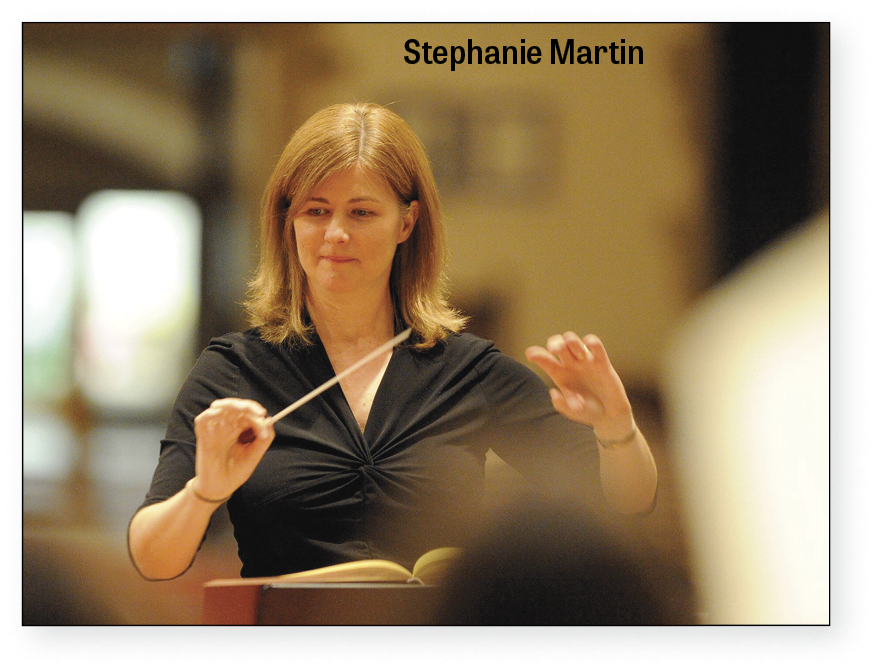
2207 Choral 1Edward Elgar died in 1934, aged 76. His work is well known to students of British classical music but he is best known for the eternal graduation hymn – Land of Hope and Glory, the end of Pomp and Circumstance March No. 1. Equally gifted at orchestral and choral composition, often both, his work can usually be described as thick, dense and powerful. It is unusual that one of his grandest and biggest works, The Apostles, has never before been performed in Canada. Pax Christi Chorale under maestro Stephanie Martin is taking up the grand work.

Choral lovers here are more familiar with Elgar’s The Dream of Gerontius, last performed in fall 2014 with the Amadeus Choir, Elmer Iseler Singers and the Toronto Symphony Orchestra. Elgar’s Enigma Variations makes frequent appearances on orchestral programs. The Apostles is the biggest piece he wrote. It requires the forces of six soloists, semichorus and double choir on top of arge orchestral forces. The personnel demands are one of the reasons why Martin believes the work hasn’t been programmed in Canada before. Pax Christi Chorale is joined by a stellar cast of Canadian talent: Meredith Hall, Krisztina Szabó, Brett Polegato, Lawrence Wiliford, Daniel Lichti, Michael Uloth and the Etobicoke School of the Arts chamber choir alongside an orchestra.

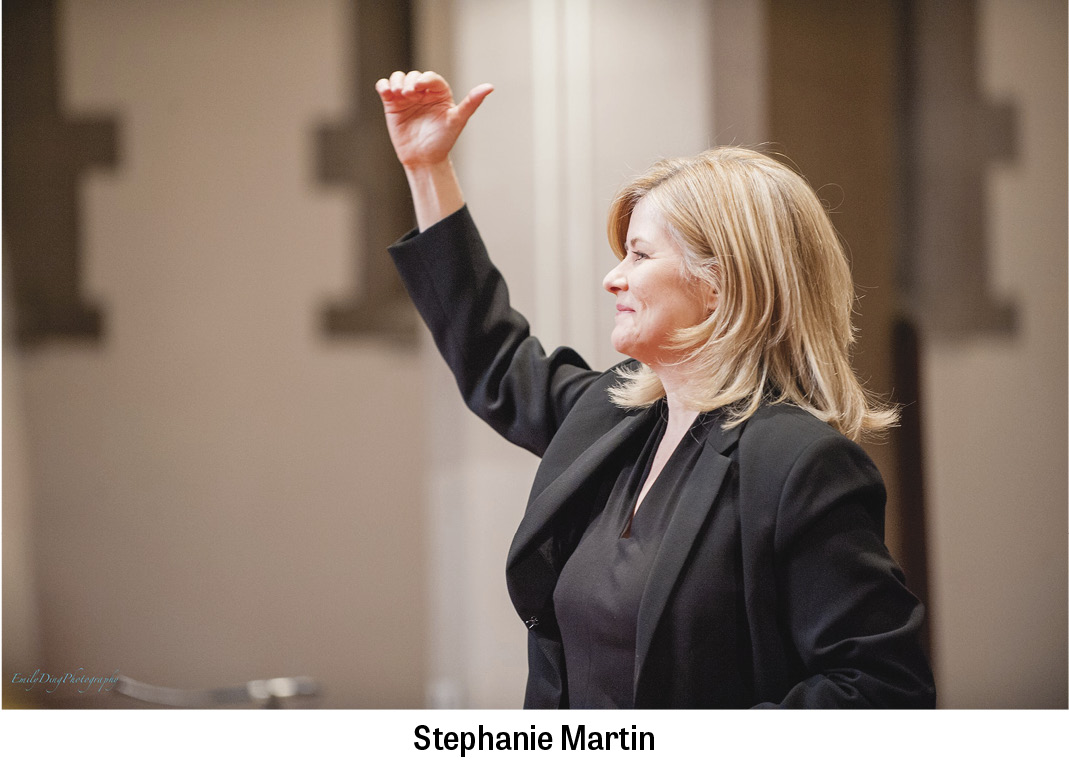
Pax Christi is no stranger to grand oratorios, having performed Elgar’s The Kingdom in 2012, and recently taking on Mendelssohn’s grandest work – Elijah – in the fall of 2016. Stephanie Martin conducts the two performances of The Apostles as her finale after 20 years at the helm of Pax Christi Chorale. She’s thoughtful and insightful about the music, identifying four key leitmotifs out of the many in Elgar’s masterpiece. She describes the work of singing through The Apostles as “peeling back the onion skin to reveal the leitmotifs that shape the music.”

Elgar was influenced by Wagner, who used the same compositional technique to inform the narrative of his musical stories. “It almost gives the music a sense of being a collage,” says Martin. “The music changes quickly, tonal messages change very quickly” throughout the music as Elgar delves into this story of Jesus and his followers. Many of the messages are hidden and not clear to a listening audience. Most interestingly, the final words of Christ “Eloi Eloi, lama sabachthani (My God, my God, why have you forsaken me?)” appear not in any sung lines but in a melody through the orchestra, words written above the orchestral line. Martin is superbly capable at leading her choirs through this work and deeply insightful at the hidden messages of the music.

As with the Verdi Requiem, the solos and choral lines are not separate and flow in and out of one another throughout The Apostles. “The oratorio is not constructed in a conventional way,” Martin says. “The soloists and choirs are integrated.” Usually singing different texts, overlaying each other, the resulting effect can be triumphant and bombastic as in “In Caesarea Phillipi” or unsettling and creepy, as in the “Tower of Magdala.”

Part IV of The Apostles, “The Betrayal” makes up the bulk of the second half of the concert. It focuses on the story of Judas Iscariot, sung by bass Michael Uloth. Elgar took great time and energy to humanize the story of Judas, showing him to be, as Martin says “remorseful” for his actions, ultimately believing in Jesus and his work. At the end of “The Betrayal,” Judas “falls apart as he realizes what he has done” as Martin describes, and he decides to take his own life. (Participants in the Toronto Mendelssohn Choir’s Singsation on March 18 were treated to Uloth’s Judas and Martin’s approach as they read through The Apostles.)

Pax Christi Chorale presents the Canadian premiere of Edward Elgar’s The Apostles. April 29, 7:30pm and Sunday April 30, 3:00pm at Grace Church on-the-Hill.

#ICANTKEEPQUIET

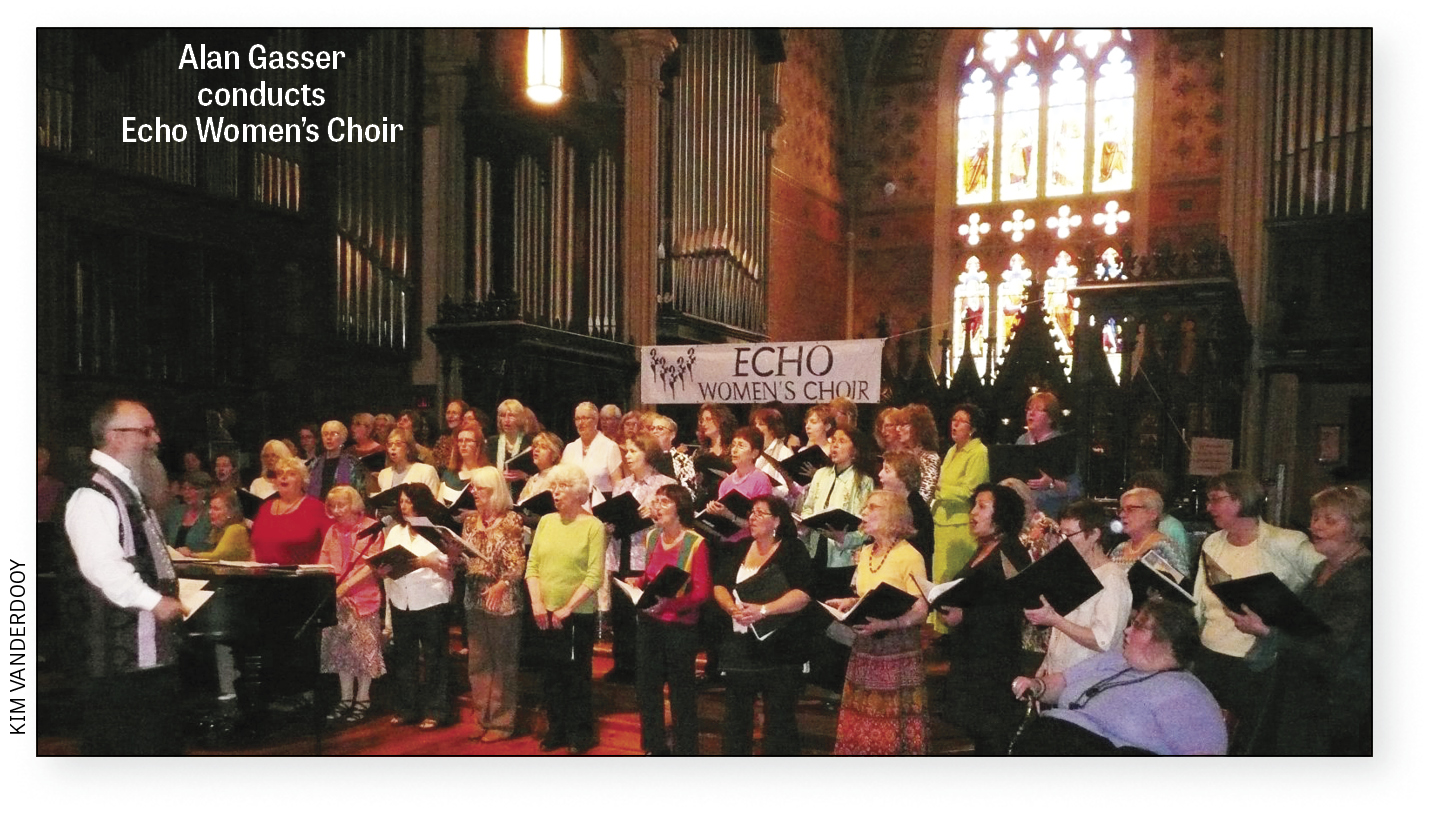
2207 Choral 2Echo Women’s Choir, celebrating 25 years, continues to provide unique offerings that bridge the classical and contemporary choral spheres while always maintaining a strong commentary on issues facing our world. Their concert “We Can’t Keep Quiet!” takes its name from the #ICANTKEEPQUIET campaign created by American musician MILCK based on her song Quiet. An artist that “finds comfort in discomfort,” MILCK created the campaign to be a rallying call to break cycles of oppression and fear. The song was performed by a guerilla choir during the Women’s March on Washington, DC, on January 21, 2017.

Echo will be joined by a host of friends under the leadership of Becca Whitla and Alan Gasser. Frequent collaborator and artist-in-residence Annabelle Chvostek will take the reins for her song Firewalker. Including a host of different songs, Echo recently had a workshop with Hussein Janmohamed. Janmohamed is an Ismaili Canadian composer, performer, and educator who led Echo in what Gasser calls “a cultural and spiritual encounter.” Based on the title “Composing Pluralism: Music at the Intersections,” Janmohamed led the choir on a shared musical journey with inspirations from Christian, Muslim, folk, and other traditions.

“The whole thing was a big exercise in trust,” says Gasser. “Normally a workshop leader will work carefully to make a performance piece that’s almost satisfying to sing, all in one day… . But what he did was to open us up, as if he were operating on our compassionate hearts, and to trust that we’d understand how to make ourselves whole and ready to perform.” Janmohamed is a unique arts educator in his ability to open our ways of knowing and coming to music. He was similarly featured along with Shireen Abu Khader at SingOntario!, the recent annual Choirs Ontario festival, with a similar experience.

Gasser continues: “Hussein used a combination of the folk song Shenandoah, with an Islamic chant. He also trusted our community enough to sing the [Islamic] call to prayer (Azan), in an intimate way, that kept us open to sacred silence as a response.” Another song explored was the Dona Nobis Pacem, musically intertwined with a chant that asks Allah to bless Mohammed (peace be upon him) and his household with peace.

The choir will share the musical results of this journey they were led on by Janmohamed. Other features include Leonard Cohen’s Sisters of Mercy, a set of Georgian folk songs and Peggy Seeger’s Ballad of Springhill.

Echo Women’s Choir presents “We Can’t Keep Quiet!” celebrating their 25 th anniversary, Sunday, April 30, 3pm at Church of the Holy Trinity.

Sacred Music Quick Picks for the Easter season

The Easter season is second only to Christmas in activity for the choral community. Many choirs are presenting concerts themed around Easter and many fall on Good Friday. The offerings are wide and fantastic.

Apr 12, 14: The Toronto Mendelssohn Choir presents “Sacred Music for a Sacred Space.” (I sing tenor in the choir.) Always a highlight of the TMC concert season, two performances are offered this year, a chance to catch some beautiful choral highlights including the transcendent Lux Aeterna based on Elgar’s Enigma Variations, the Allegri Miserere and some not-often performed gems from Healey Willan: How They So Softly Rest, written to commemorate the lives of servicemen lost from Willan’s congregation to World War II and his grand work An Apostrophe to the Heavenly Hosts.

Apr 13, 14, 15, 16: St Anne’s Anglican Church presents “Holy Week and Easter” featuring sections from Schütz’s Johannes-Passion; Handel’s Messiah, and Mozart’s Exsultate Jubilate.

Apr 14: The Toronto Beach Chorale presents “Mozart’s Requiem and More.” Featuring the eternally popular Mozart Requiem, the Chorale is including performed monologues from Peter Shaffer’s play, Amadeus. Salieri’s Te Deum is also on the evening’s program for the evening.

Apr 14: The Grand Philharmonic Choir presents Beethoven’s second most popular choral work, the Missa Solemnis, under the baton of Mark Vuorinen. This incredibly challenging work is a sure treat for choral lovers. Bach’s Mass in B Minor and the Missa Solemnis are hallmarks of the common mass. Pay special attention to the end of the Credo with its exceptionally difficult fugue in “Et vitam venturi saeculi.”

Apr 15: The Niagara Symphony Orchestra is joined by the Faith Chorale Gospel Choir, and the Laura Secord Secondary School Concert Choir in “Too Hot to Handel! –  The Gospel Messiah.” This glorious performance will feature blues, gospel, funk, jazz and more, all with familiar melodies we know and love. The original Gospel Messiah was the brainchild of the legendary Marin Alsop who conducted the premiere in 1993.

Apr 19: Edmonton’s Axios Men’s Ensemble visits Toronto’s St. Paul’s Bloor Street to present “Resurrection: Music from the Ukrainian Sacred Choral Tradition.” The feature is Father John Sembrat’s setting of the Resurrectional Divine Liturgy. Axios will be joined by Pro Coro Canada and a host of international friends including Boyan Ensemble of Kyiv (Revutsky Academic Male Capella), the Chorus of the Armed Forces of Ukraine, the Homin Municipal Choir of Lviv, and the Vydubychi Church Choir of Kyiv.

Apr 29, 30: Musikay presents Handel’s Messiah in two performances, one in Hamilton, the other in Oakville. The work, normally performed at Christmas, was meant to be performed at Easter according to Handel.

Follow Brian on Twitter @bfchang Send info/media/tips to choralscene@thewholenote.com.
2206- BBB - Choral 1.jpgMozart’s Requiem has captured the imagination of singers for centuries and continues to be a staple of choral repertoire the world around. It is wrought with emotion and feeling. Instrumentalists appreciate the compositional techniques and the understandable, intuitive flow of the music. Singers love the shape, grandness and dynamism of the music. Listeners love how it all fits together. But the Requiem is unfinished, which makes it the greatest piece of unfinished music ever written.

There is so much to like with the Requiem, from the powerful choral exclamation of “Rex Tremendae” and the gentle fragility of “Lacrimosa,” to the energetic fugue that finishes the written portion with “Cum Sanctis.” Many a chorister has fallen in love with this piece while hearing it or singing it for the first time. Many choristers are choristers because they heard and fell in love with this piece at some point in their life. Such is Mozart’s enduring legacy and ability. There is an extraordinary number of Requiem performances in the month ahead. It is also quite remarkable that none of these performances conflict; you could, in theory, see every single performance.

March 4, 7:30pm, the MCS Chorus presents Mozart’s Requiem. The program will also include Salieri’s Te Deum and short dramatic excerpts from the play Amadeus by Peter Schaffer at First United Church, Mississauga.

March 11, 8pm, Cathedral Bluffs Symphony Orchestra along with the Hamilton Bach Elgar Choir, Saint Joseph’s Church Parish Choir and the Grand River Chorus presents a requiem double bill with Fauré’s Requiem and Mozart’s Requiem, both in D Minor at P.C. Ho Theatre, Chinese Cultural Centre of Greater Toronto, Scarborough.

March 25, 8pm, Voices Chamber Choir presents “Tallis and Mozart.” Ron Cheung conducts Mozart’s Requiem and Tallis’ Lamentations of Jeremiah. Church of St Martin-in-the-Fields, Toronto.

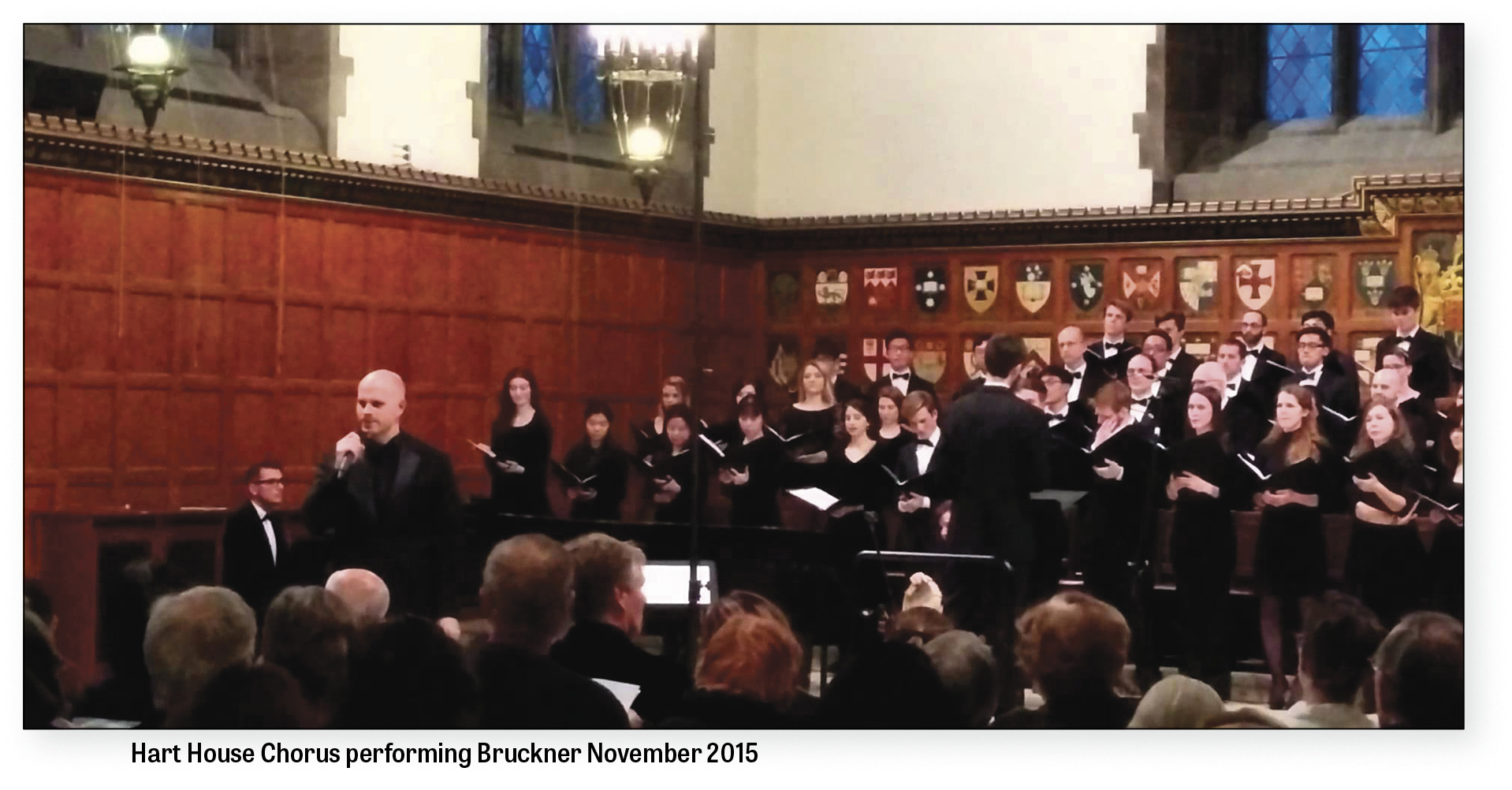
March 26, 2pm, David Bowser, artistic director of the Mozart Project, and newly appointed conductor of Pax Christi Chorale, presents “Requiem and Farewell to a Soul Ascending.” Featuring a world premiere of Bowser’s own work, Farewell to a Soul Ascending, it will also include Mozart’s Requiem performed by the Toronto Mozart Players and the Hart House Chorus at the Church of the Redeemer.

April 1, 7:30pm, the Etobicoke Centennial Choir takes on the Mozart Requiem under conductor Henry Renglich. Other smaller works will be performed from Brahms, Rutter, Poulenc, Duruflé and Schubert at Humber Valley United Church, Etobicoke.

April 2, 2pm, the Hart House Chorus presents Mozart’s Requiem. This wonderfully unique, storied choir continues to be a high-quality ensemble made up of students, faculty, staff and community at the University of Toronto. David Bowser conducts at Hart House, Great Hall, University of Toronto.

April 2, 4pm, the Eglinton St George’s United Church Choir presents “Magnificent Mozart,” featuring a host of smaller works including Handel’s Zadok the Priest, Whitacre’s Alleluia and Mozart’s Requiem under conductor Shawn Grenke.

Get thee Hence, Elijah! Another great choral staple is Felix Mendelssohn’s Elijah. As some readers will recall, in November last year, three of the largest choral groups in Ontario performed it on the same weekend, Pax Christi Chorale, Chorus Niagara and the Toronto Mendelssohn Choir. This work is larger and more grand than Mozart’s Requiem; as such, it is hard to marshal the necessary forces to perform it effectively.

When sufficient power, technique, rehearsal and judicious artistic interpretation combine, there is nothing quite like a full performance of Elijah. It is discomforting with its praise and worship of Baal, it is exalting with its “Thanks Be to God,” it is comforting with its hymns “He Watching over Israel,” the ethereal “Lift Thine Eyes,” and the heartbreaking “Cast Thy Burden upon the Lord.” Elijah has, in my opinion, the most beautiful musical setting of the Beatitudes ever composed with “Blessed Are the Men Who Fear Him.” Elijah also has one of the most significant bass solos of any grand oratorio, “It Is Enough; O Lord, Take My Life.” It is the song of a broken man, lost in the wilderness, in need of guidance and love set to an evocative string accompaniment featuring a solo cello. Mendelssohn accomplished a unique success with Elijah. Once more popular than Handel’s Messiah, it is easy to see why the piece is so loved.

March 5, 2:30pm, the Georgetown Bach Chorale will be presenting “Choruses from the Great Masses and Oratorios.” The performance will include Haydn’s “The Heavens Are Telling” from the Creation, “Qui Tolis” from Mozart’s Mass in C Minor, “He Watching over Israel” and “Thanks Be to God” from Mendelssohn’s Elijah, as well as selections from Brahms’ A German Requiem. Though not an entire presentation of Elijah, it will be a treat to hear this work presented along with other great songs from signature oratorios and masses across the choral canon.

March 25, 7:30pm, the Stratford Concert Choir presents Mendelssohn’s Elijah. With a host of soloists and a full orchestra, the ensemble will be led by Ian Sadler at St. James Anglican Church, Stratford.

QUICK PICKS

2206- BBB - Choral 3.jpgIf Mozart’s Requiem or Mendelssohn’s Elijah isn’t enough to satisfy your thirst for the great symphonic choir, there are a host of other grand options ahead. I’ve further highlighted a selection of other interesting choral performances throughout the region.

Mar 3 and 4: The Toronto Consort has been providing some exceptionally captivating music of late. For “Triptych: The Musical World of Hieronymus Bosch,” they are welcoming Dutch early music group Cappella Pratensis to Toronto. Conducted by Canadian Stratton Bull, the eight-member, all-male ensemble specializes in the music of Josquin des Prez amongst other composers of Renaissance polyphony. For this particular concert, they are presenting Triptych: The Musical World of Hieronymus Bosch.Typical for the ensemble, they will perform around one large book using original notation as well as the Brabant pronunciation of Latin; at Trinity-St. Paul’s Centre.

Mar 19: York University’s Concert, Chamber and Men’s Choirs present Carmina Burana. This big, bombastic, iconic choral work of Carl Orff is well-loved for its eccentricity, technical breadth, and satisfying aural experience. Lisette Canton conducts at Tribute Communities Recital Hall, Accolade East Building, Toronto.

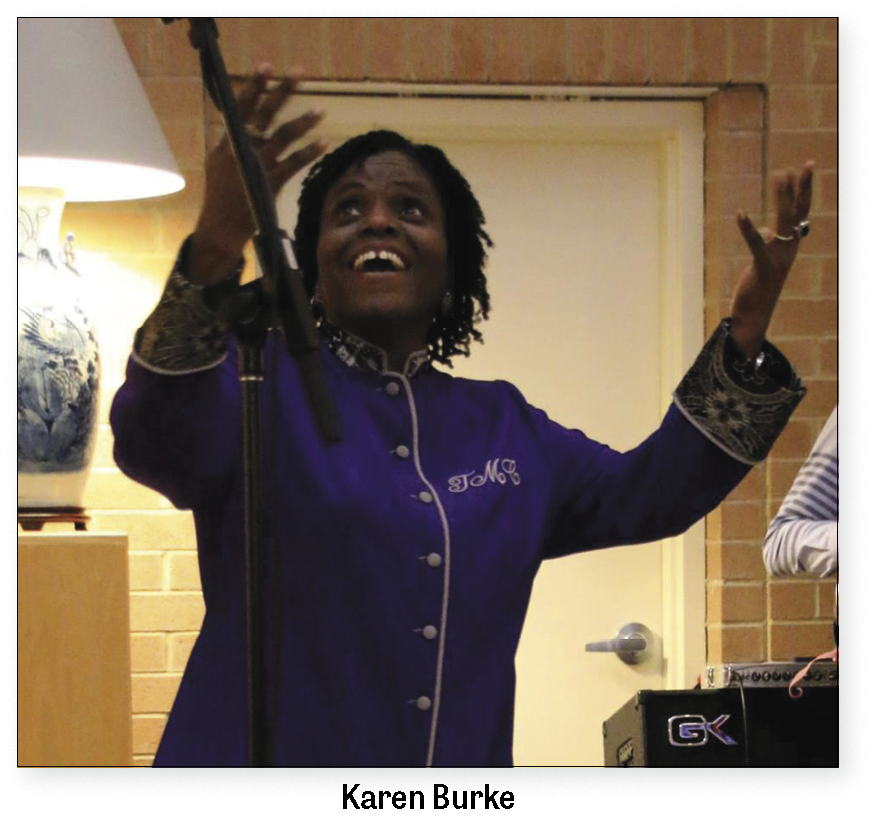
Apr 1:The York University Gospel Choir performs with Karen Burke at the helm at the same venue.

Mar 19: Music At St. Thomas’ presents the “Choir of Men and Boys from Christ Church Cathedral, Ottawa.” Matthew Larkin is the conductor of this all-male choir that was founded in 1891 and remains the only remaining all-male choir in service of an Anglican Cathedral in Canada. Here they perform a run-out show at St. Thomas’ Anglican Church, Belleville.

Mar 25: The Elmer Iseler Singers help celebrate renowned soprano Isabel Bayrakdarian’s new CD. “The Journey to Canada from Armenia” will feature Armenian sacred music of the 13th to 20th centuries with Lydia Adams at the helm; St. Anne’s Anglican Church.

2206- BBB - Choral 2.jpg

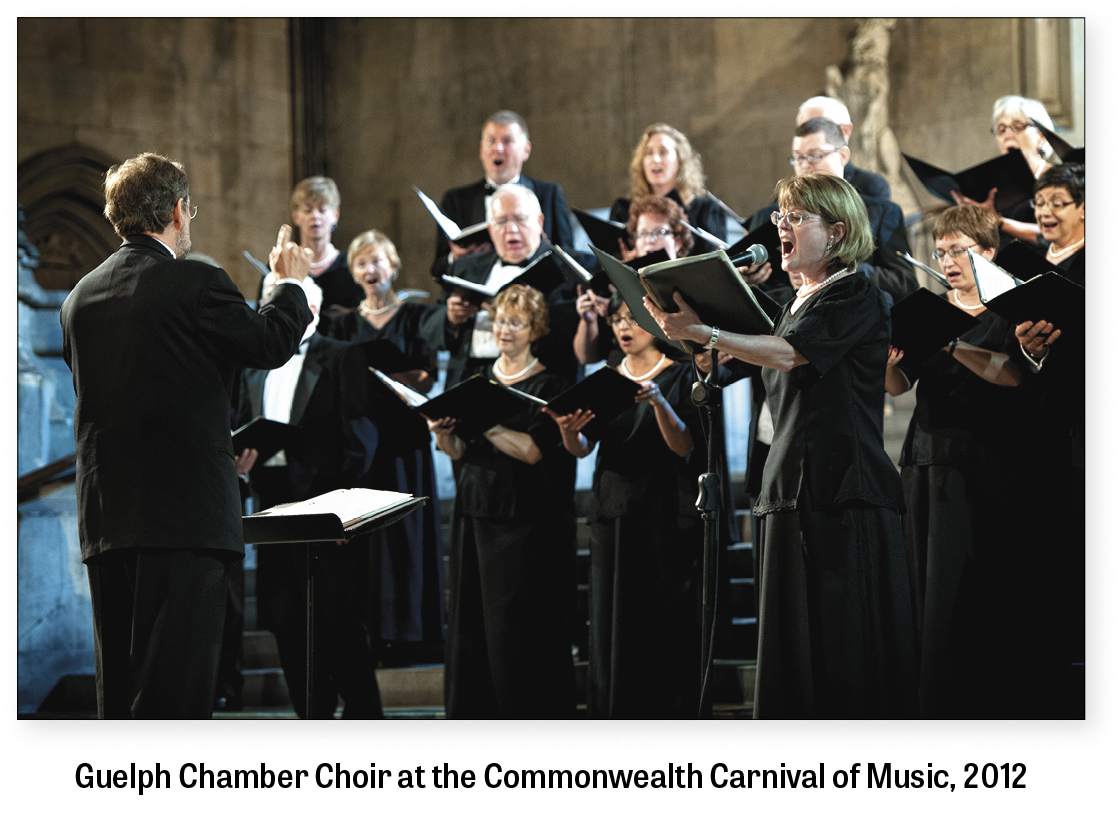
Apr 1: The Guelph Chamber Choir presents Bach’s St. John Passion. This is another great staple of grand symphonic choral works, but like any Bach, notoriously difficult to prepare and execute. The Guelph Chamber Choir under Gerald Neufield will present this concert with tenor James McLean in the lead as the Evangelist; at River Run Centre, Guelph.

Apr 1 and Apr 2: Masterworks of Oakville Chorus and Orchestra present Brahms’ German Requiem. Another great choral symphonic work, Brahms’ Requiem is a musical setting of several passages from the Bible selected by Brahms. It is not a Latin requiem mass like Mozart’s or Verdi’s setting, but rather, a requiem in the German language; at St. Matthew’s Catholic Church, Oakville.

Apr 4: Take advantage of this opportunity to see the University of Toronto Faculty of Music’s Annual High School Choral Festival.” Local high schools like Unionville H.S. and Lawrence Park C.I., among others, will be joining director of choral activities, Hilary Apfelstadt and other faculty for a one-day intensive. Featuring individual performances and workshopping, the various choirs will also workshop a combined piece which they will perform together at the end of the day with Faculty of Music ensembles including the Men’s Chorus, the Women’s Chamber Choir and members of Young Voices Toronto. The workshops are free to attend and run from 9am until 12pm and then 1pm to 3pm at the Faculty of Music, University of Toronto.

Follow Brian on Twitter @bfchang Send info/media/tips to choralscene@thewholenote.com

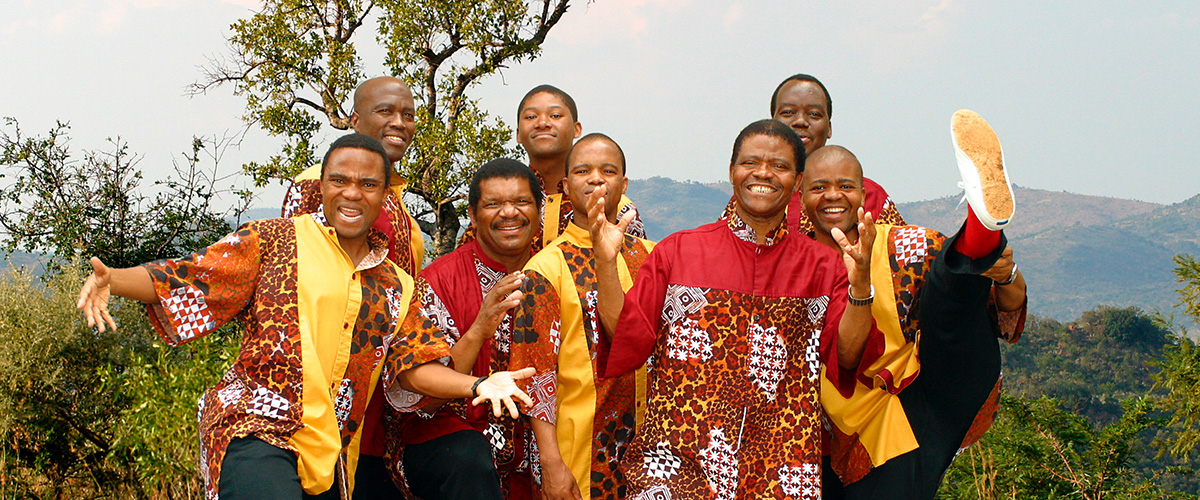
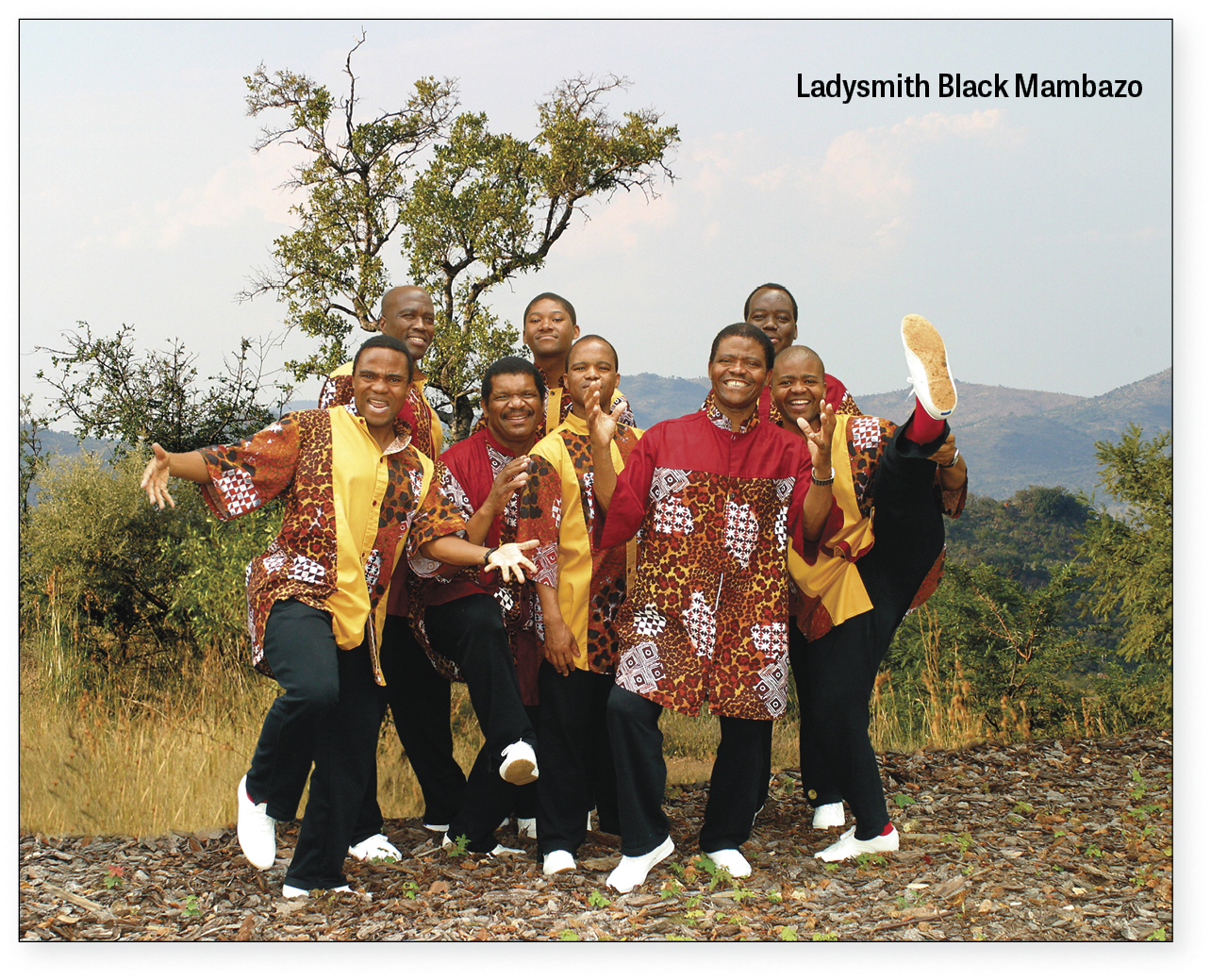
2205 Choral 1South Africa has very strong choral traditions, among them the call-and-answer style known as isicathamiya; a strong male tenor-lead melody contrasted against repeating chord progressions shapes this music. You’ll know the famous The Lion Sleeps Tonight of Solomon Linda; that is indigenous South African choral music from the 1920s. Now Ladysmith Black Mambazo, one of best-known practitioners of the form, and one of the oldest and most successful choral groups in South Africa, is coming to Toronto.

The name isicathamiya derives from a Zulu verb, cathama, meaning to tread softly. Isicathamiya has been a staple of culture in South Africa for almost a hundred years. Culturally Zulu, this a cappella musical style has its roots in a much more robust foot-pounding centuries-old traditional Zulu culture of singing and dance. Structural reshaping of the economy under colonial rule in the early 20th century made traditional lifestyles of many indigenous people impossible. Men had to leave for work in white-owned industries, unable to own land, farm, raise cattle, receive education, or own property in many cases. In a colonial and apartheid-era urban context the strong movements of traditional Zulu mbube (“lion”) vocals and dance were both feared and frowned upon by European populations who believed that the men were fighting. So the dances were adjusted to fit this reality; tiptoes and slower, deliberate movement became the new vocabulary. Isicathamiya was born and has become over time an important social and cultural force for urban populations forced to work far away from homes and far from family. Communities would convene on Saturday evening, as they had Sunday off in respect of the Christian Sabbath. Now-legendary Saturday gatherings in Durban and Johannesburg are often all-night competitions due to the number of groups involved. Hundreds of people attend. The only times these competitions do not take place are during Christmas and Easter.

While isicathamiya has morphed and changed over the decades through colonialism and apartheid, dancing remains as a core part of the tradition, with choreography to match the vocals. It is a philosophical and physical approach to music connecting myriad influences of music, dance, indigenous culture, external influences and, importantly, Christianity.

You know some of the sounds of isicathamiya if you’ve listened to the Lion King soundtrack. Lebo M., a South African composer and artist, is the powerful voice that opens the soundtrack with Circle of Life. If you’ve seen the musical adaptation, Grasslands Chant and One by One are Western examples of this music tradition alive. (Read more about this collaboration in Chip Stern’s June 2003 Playbill article on Mark Mancina and Lebo M.’s “African Sound for Lion King.”) Ladysmith Black Mambazo was also featured on the Lion King II soundtrack.

Joseph Shabalala founded Ladysmith Black Mambazo in the 1960s and continues to lead the group. The choir is prolific, having recorded over 50 albums. They have received 18 Grammy nominations and four Grammy awards for their work. The documentary of the group On Tip Toe: Gentle Steps to Freedom was nominated for an Academy Award. They’ve worked with some of the biggest names in entertainment including Stevie Wonder, Dolly Parton, Paul Simon, Lebo M. and Michael Jackson.

There are four opportunities along the Canadian side of Lake Ontario to catch Ladysmith Black Mambazo in action as they tour North America: February 14, Koerner Hall; February 15, the Grand Theatre, Kingston; February 16;the London Music Hall, London; and February 17, FirstOntario Performing Arts Centre, St Catharines.


Some great shows in store. As mentioned before the year turned, the Toronto Symphony Orchestra is joined by the Amadeus Choir and the Elmer Iseler Singers in Fauré’s Requiem. February 1 and 2. Another early presentation by Soundstreams sounds especially promising: the Estonian Philharmonic Chamber Choir performing Rachmaninoff’s Vespers, works by Arvo Pärt and more, February 2, St. Paul’s Basilica.

2017 is an especially auspicious year for the Tafelmusik Chamber Choir as it celebrates its 35th anniversary. With Ivars Taurins at the helm, A Bach Tapestry, February 9 to 12, features a collection of songs from the extensive Bach library. Joined by instrumentalists, the choir will present several Bach works never before performed by Tafelmusik including the Kyrie and Gloria from the Lutheran Mass in G Major, commonly known as the German Organ Mass. The meat of the concert will be various cantatas selected by Taurins from the over 200 cantatas attributed to Bach.

To round off the end of the Tafelmusik season, the orchestra and choir will present Mozart’s Mass in C Minor. This eternally cherished piece is sure to please. May 4 to 7 at Koerner Hall.

The Peterborough Singers present “Canadian Women of Song” February 25 at Calvary Church, Peterborough. The choir’s director Syd Birrell has arranged popular tunes for the choir with Steve McCracken orchestrating the music for the accompanying band. Featured are works such as Susan Aglukark’s O Siem, k.d. lang’s Constant Craving, Jully Black’s Seven Day Fool, Jann Arden’s Good Mother, Carly Rae Jepsen’s Call Me Maybe and Buffy Sainte-Marie’s Up Where We Belong. This performance is conducted by Pam Birrell, who will be joined by MC Linda Kash. Saturday February 25, 2017, 2pm. Calvary Church, Peterborough.

The Musikay Choir and Orchestra under maestro Stéphane Potvin present “Love is…” in Waterdown on February 11 and Oakville February 12. Coming just before Valentine’s Day, the ensemble will present a host of small works all influenced by stories of love. The light and beautiful selections include Handel’s gorgeous Lascia ch’io pianga (Let Me Weep), Monteverdi’s Lamento d’arianna lasciatemi morire (The Lament of Arianna, Let Me Die), and Orlando di Lasso’s Mon Coeur se recommande à vous (I Give to You All of My Heart).

The 150th anniversary of Confederation is being celebrated across the country throughout 2017. The Orpheus Choir presents the first large choral concert in the region to mark the occasion with “Beginnings: With Glowing Hearts.” Ruth Watson Henderson’s The Magic of God’s World and Derek Holman’s Laudis Creationis are featured alongside two commissions by Mark Sirrett and Laura Hawley. The Toronto Children’s Chorus will also make a guest appearence, February 26 at Grace Church on-the-Hill.

Conductor Noel Edison leads the Toronto Mendelssohn Choir (in which I sing) and the Yorkminster Park Baptist Church Singers in “Sing Joyfully!” on March 4. Healey Willan’s not-often-performed An Apostrophe to the Heavenly Hosts makes an appearance. This grand work, written for TMC in 1921, is perfectly suited to the choir. John Cameron’s arrangement of Elgar’s Nimrod, Lux Aeterna is always a delight. The program will also feature common hymns for sing-along.

Chorus Niagara presents their first concert of 2017, “The Farthest Shore: A Celtic Celebration.” Artistic director Bob Cooper leads Chorus Niagara, the Chorus Niagara Children’s Choir, Chorus Niagara’s Side-By-Side High School Chorale, soloists Maeve Palmer, Ryan Moilliet, Michael Driscoll and musicians of Celtic Connection alongside the Chorus Niagara Brass Quintet. Irish dancers will also join the musicians. The main feature is Welsh composer Paul Mealor’s The Farthest Shore on March 4 at FirstOntario Performing Arts Centre, St. Catharines.

And finally, Tanya Tagaq, Christine Duncan, Jean Martin, Jordan Pal and Andrew Staniland are all featured in the first concert of the New Creations Festival of the Toronto Symphony Orchestra curated by Owen Pallett. This concert, March 4, will have strong improvisational and vocal elements and a guaranteed dynamic evening of music making.

Film Fun and Games: The Toronto Children’s Chorus presents “Celebrate at the Movies.” Alongside Andy Morris on percussion and Stan Klebanoff on trumpet, the choir invites the audience to dress up and sing along with hits from beloved children’s movies, February 25, 5pm at Randolph Theatre.

Speaking of film (and with apologies for straying far from my choral beat), there are lots of musical options for film, TV and game buffs in the coming months.

The Toronto Symphony Orchestra presents “Disney-Pixar Ratatouille in Concert” February 18 at 11:30am and 4pm. This warm and hilarious movie is screened with the orchestra playing live under the baton of Sarah Hicks. (“Indiana Jones and the Raiders of the Lost Ark with Live Orchestra” on March 29 has been sold out for months).

The TSO’s Canada Mosaic Project is a pan-Canadian initiative designed to be part of the Canada 150 celebrations. Among many other concerts, “Lights, Camera…Orchestra!” is a special film-themed concert conducted by Earl Lee, the resident conductor of the TSO. It features a world premiere, and TSO co-commission with TIFF Kids, of Kjell Boersma’s film DAM! The Story of Kit the Beaver set to music by Erica Procunier played live by the orchestra. With additional fun provided with highlights from Star Wars, Jaws and Mission Impossible, this concert at 2pm and 4pm on February 25 is sure to be fun. Family friendly!

The Sony Centre also has some unique offerings in the coming months that will be great musical experiences. Presenting innovative and grand musical experiences, the Sony Centre gives us unique opportunities to experience global phenomena here in Toronto. “Pokémon: Symphonic Evolutions” hits Toronto with full symphonic arrangements of every Pokémon game written in the last 20 years, May 6 at 7:30pm. This is a guaranteed sellout so buy early!

And we know that the Sony Centre is beginning a multi-year presentation of the Harry Potter films live in concert. Harry Potter and the Philosopher’s Stone runs June 27 and 28 at 7:30pm. Harry Potter and the Chamber of Secrets runs October 12 and 13, 7:30pm. Expect to see all eight movies in the coming years. Tickets will sell out. Don’t get stuck on the platform; board the Hogwarts Express!

Just an FYI on the “Game of Thrones Live” concert March 4 at the Air Canada Centre I’ve already mentioned a few times. Top tier tickets began at $641.50 making this one of the most expensive musical experiences ever offered in the city. The entire concert is sold out.

Follow Brian on Twitter @bfchang. Send info/media/tips to choralscene@thewholenote.com.
Update Feb 1, 11am EST: The Toronto Mendelssohn Choir will not be performing Healey Willan's An Apostrophe to the Heavenly Hosts at their March "Sing Joyfully" concert, and will instead perform this work at their Good Friday concert, titled "Sacred Music for a Sacred Space." For details, visit www.tmchoir.org.

2204 Choral Scene 1Festive! Festive! Festive!

Holiday music is inseparable from the joy of the season. Every choir has a performance in the next few weeks and while you check out your favourites and traditional hits, try something new and different. There are a host of options in my column this month. Financially, these concerts can help solidify revenue for arts organizations. Just like Indigo sells more in the holiday season than the rest of the year combined, choirs rely on the revenue from holiday concerts to be in the black. The National Ballet of Canada does this with an entire month of productions of The Nutcracker. Arts organizations are desperately in need of solid sales so that new and innovative programming continues to fill the rest of our months. So here we go. Onward into a season of staples!

Oh Lord, Messiah:

Ask a chorister about Handel’s Messiah and you will get a lot of opinions, mostly favourable. Some scathing. Some complicated. This time of year, almost every choir will perform Messiah in its entirety or at least the iconic Hallelujah movement.

Along the way, something is often forgotten – Messiah is not easy. It’s long and technical. It is nuanced and requires diligence and a strong artistic interpretation. It requires musical instinct for appropriate accents and separation, stresses and vowel placement on fugal runs. Sure, an average singer can jump in and go for it and muddy their way through the music but the result is just that – mud. I’ve heard so many versions of choirs belting out Hallelujah at the top of their lungs without regard for blend or nuance. I admit that this is a thrill and a delight to sing, but let’s not get carried away.

Any chorister who tells you they can do the runs of For unto Us a Child Is Born flawlessly every single time is probably not a very good listener. His Yoke Is Easy is another challenging number. Try saying the vowel “ee”. Now try saying it 12 times in four seconds. Then add various rhythms and try to get 20 people in a section to sing it all the same way. Another continuous sore spot is the tuning in the exposed Graves of Since by Man Came Death. Exposed chorales like this are tuning death for unprepared and undisciplined choirs. It is challenging! But also, incredibly fun.

Handel’s writing is also quite forgiving of mistakes. Since by Man Came Death, if heading towards tuning death, is suddenly whipped back into shape with a very loud Allegro from the orchestra. There are very few parts in which the various voicings of the choir are not supported by instrumentation.

I have sung over 20 performances of Messiah over the last few years, a rare chance to get to know a piece of music so intensely that I’ve developed my own personal approach to performing it. For me, the songs mark out a roadmap for the evening. After the doors close, latecomers are permitted to enter again usually after And the Glory of the Lord, which is about eight minutes into the whole performance. So I don’t usually relax until the bass soloist begins For Behold, Darkness Shall Cover the Earth. It isn’t the first time we hear the bass, but when he begins so quietly and begins a build over the 16ths, the effect is exquisite. The second half is my favourite. Getting to the Hallelujah isn’t even the highlight for me. My favourite aria The Trumpets Shall Sound usually hails the end of the final chorus. (Sometimes, Worthy Is the Lamb follows; however, it depends on the edits of the conductor.)

For me, there is no greater movement than Worthy Is the Lamb followed by the epic Amen. The grand D-major chord is a powerful opener to the end of the masterwork. On the very last page, the sopranos hit a high A followed by the tenors a few bars later. This is always the flashing exit gate to the song. For choirs, this is a moment of collective inhalation and exhalation that brings the grand work to an authoritative close. Pure joy when done right!

Oh Lord, Recorded Messiahs:

Toronto has played home to two iconic recordings of Messiah and may well add a third to the mix. Tafelmusik under Ivars Taurins released a recording of the work on period instruments in 2012. For many, this is a gold standard for Messiah interpretations. In 1987 (the year I was born), Sir Andrew Davis recorded a modern interpretation of the work including the forces of the Toronto Mendelssohn Choir and the Toronto Symphony Orchestra. This recording has long been a staple of Messiah listeners across the world. Little did I know that I would then be part of the Toronto Mendelssohn Choir for a new recording to be released for the 2016 holidays. (See David Olds’ review in this month’s Editor’s Corner.) This new version (in which Worthy Is the lamb, by the way, is the final chorus) is the grandest interpretation of the work ever. These are all very different interpretations of the work and show the diversity of sound with the same music. (Tafelmusik doesn’t have a lost sheep braying though).

Oh Lord, Big Messiahs:

This year is unusual for the two biggest Messiahs. Normally Tafelmusik and the Toronto Symphony Orchestra productions overlap. This year, they barely do, with Tafelmusik all but done before the TSO starts. Tafelmusik Baroque Orchestra and the Tafelmusik Chamber Choir perform a period interpretation on period instruments under the baton of perennial favourite Ivars Taurins at Koerner Hall December 14 to 17. The ever-popular “Sing-Along Messiah” celebrates its 30th anniversary December 18 at Massey Hall.

The biggest game in town is always the Toronto Symphony Orchestra and the Toronto Mendelssohn Choir at Roy Thomson Hall, December 18 to 21 and 23. Notably, the conductor changes every year. This year it’s Nicholas McGegan, conductor of the Philharmonia Baroque Orchestra and Chorale who leads.

Oh Lord, More Messiahs:

Elmer Iseler Singers and the Amadeus Choir: December 2, 8pm at Metropolitan United Church.

Soundstreams presents “Electric Messiah,” a stripped-down four-voice, guitar and electronics concept. Vocal improv goddess Christine Duncan is one of the featured soloists: December 5 to 7, 8pm at the Drake Underground.

London Pro Musica and the #WePlayOn (former musicians of Orchestra London) re-create the Dublin Messiah: December 7, 7:30pm at First St. Andrew’s United Church, London.

Chorus Niagara is joined by the Talisker Players: December 10, 7:30pm at FirstOntario Performing Arts Centre, St. Catharines.

Oh yeah, there’s other music this season!

The Upper Canada Choristers and Cantemos present a different take on holiday music with “Noche de Paz: an Old World and New World Christmas.” The feature is Argentianian composer Ariel Ramirez’s Navidad Nuetra representing a distinctly Latin American sound and rhythm. Cantemos, an 11-voice Latin ensemble made up of members of the Choristers, will perform a few smaller carols from Colombia and Peru: December 2, 8pm at Grace Church on-the-Hill.

The Tallis Choir of Toronto presents “Monteverdi: Vespers of Christmas Eve.” Artistic director Peter Mahon promises a period interpretation and performance that will evoke a Renaissance Christmas Eve in St. Mark’s, Venice: December 3, 7:30pm at St. Patrick’s Church, Toronto.

Singing OUT! presents “Not Another Fa La La.” There’s always choreography! Saturday December 3, 7:30pm at Jane Mallett Theatre, St. Lawrence Centre for the Arts.

The Oakville Children’s Choir presents three different sets of concerts. The first is “Stories, Songs, and Snow” featuring Lineage by Andrea Ramsey and Ngoma by Moira Stanley. Both composers workshopped with the choir on their visit to the Pacific International Choral Festival earlier this year: December 3, 7pm at St. John’s United Church, Oakville. The second, “Community Carol Concerts,” also at St. John’s United Church, takes place December 10 at 1:30pm and 4pm. The choir then joins the Oakville Symphony Orchestra to perform carols and the fun Suite from John Williams Christmas in the 14th annual “Family Christmas Concert”: December 11, 1:30pm and 4pm at the Oakville Centre for the Performing Arts.

The Toronto Mendelssohn Choir presents “Festival of Carols” with the Salvation Army Canadian Staff Band. (I’ll be in the tenors!): December 7, 7:30pm at Yorkminster Park Baptist Church.

Exultate Chamber Singers present “A Time for Celebration: A Canadian Christmas.” University of Toronto professor Hilary Apfelstadt’s Exultate Chamber Singers are always a delight. Featuring Ring Wild Bells by Stephanie Martin, O Magnum Mysterium by Timothy Corlis and a premiere of a new arrangement of Silent Night by Exultate singer/composer J. Scott Brubacher: December 9, 8pm at St. Thomas’s Anglican Church.

Univox presents “Serenity, Hope, Light” celebrating all the various holidays of the season. The feature is Bach’s Lobet den Herrn alle Heiden (Praise the Lord, all ye nations): December 9, 8pm at Christ Church Deer Park.

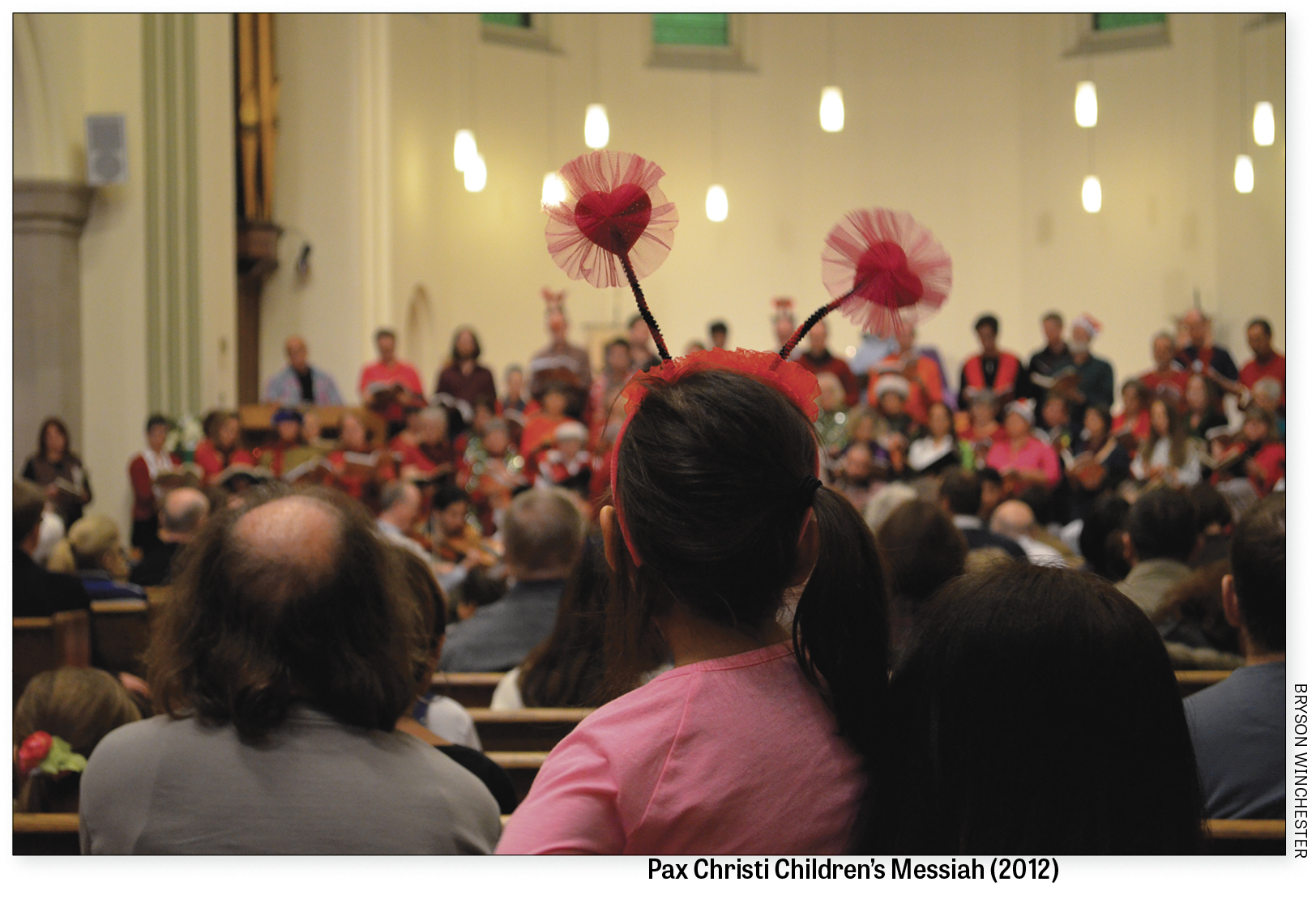
Pax Christi Chorale presents Ode on the Nativity by C.H.H. Parry with the Aslan Boys Choir and other guests: December 10, 7:30pm and December 11, 3pm at Grace Church on-the-Hill, as well as their eighth annual Children’s Messiah, at 4pm December 17 at Church of St. Mary Magdalene.

Echo Women’s Choir celebrates its 25th anniversary with “Ain’t Life Sweet.” Special guest Annabelle Chvostek joins the choir with a special arrangement of her song Black Hole. The choir will feature songs and arrangements by Vermont artist Brendan Taafe and Penny Lang among others: December 11, 7:30pm at Church of the Holy Trinity.

The super accessible and diverse City Choir presents “This Shining Night, a Bright-Hearted Concert.”: December 13, 7:30pm at St. Peter’s Church.

Incontra Vocal Ensemble (which I also sing in) performs “O Nata Lux:” December 14, 7:30pm at Regis College, University of Toronto.

That Choir: “Carols.” Most fun a choir can have, legally. ’Nuff said: December 18, 8pm at St. Andrew’s Presbyterian Church, Toronto.

The huge conglomeration of the Toronto Children’s Chorus ensembles (nine of them!) come together for their annual Roy Thomson Hall concert – “A Child’s Christmas.” Special guest, Stratford Festival veteran Geraint Wyn Davies will narrate the evening. A variety of instrumentalists including TSO musicians will join in the fun: December 17, 2pm at Roy Thomson Hall, Toronto.

The JUNO award-winning Toronto Mass Choir presents “A Gospel Christmas,” featuring special guests and a truly uplifting concert experience: December 17, 7pm at Bayview Chapel, Tyndale University College.

Oh Lord, a New Year!

Our double listing for December 2016 and January 2017 would be remiss without some highlights early in 2017.

Every year the Toronto Mendelsohn Choir hosts five or six emerging conductors in a weeklong intensive. This culminates with a free concert featuring the choir and the Elora Festival Singers: January 28, 3pm at Yorkminster Park Baptist Church.

The Toronto Symphony Orchestra is joined by the Amadeus Choir and the Elmer Iseler Singers in a performance of Fauré’s Requiem: February 1 and 2, 8pm at Roy Thomson Hall.

Soundstreams presents the Estonian Philharmonic Chamber Choir featuring Rachmaninoff’s Vespers and more. February 2, 8pm at St. Paul’s Basilica.

Follow Brian on Twitter @bfchang. Send info/media/tips to choralscene@thewholenote.com

2203 Choral Scene 1Movies and music are a match made in heaven. Several fantastic opportunities are coming up in the next few months to enjoy and experience live music set to films. One of my favourite Oscar moments is seeing the nominees for Best Song, Best Score and Best Soundtrack. Music in films can be incredibly impactful. Yet, even a choral singer like me can overlook or miss some of the important sounds and textures being created by compositions, while listening to the music when not able to see it being performed.

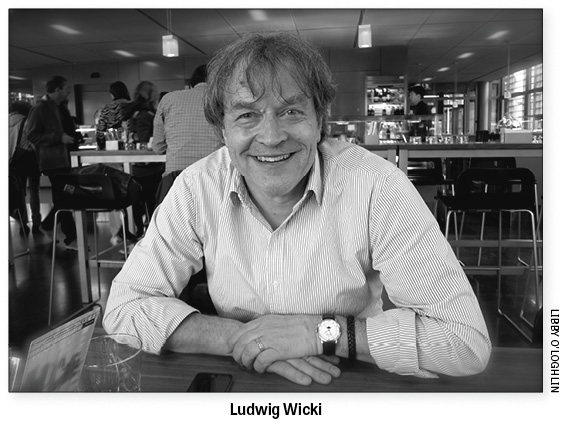
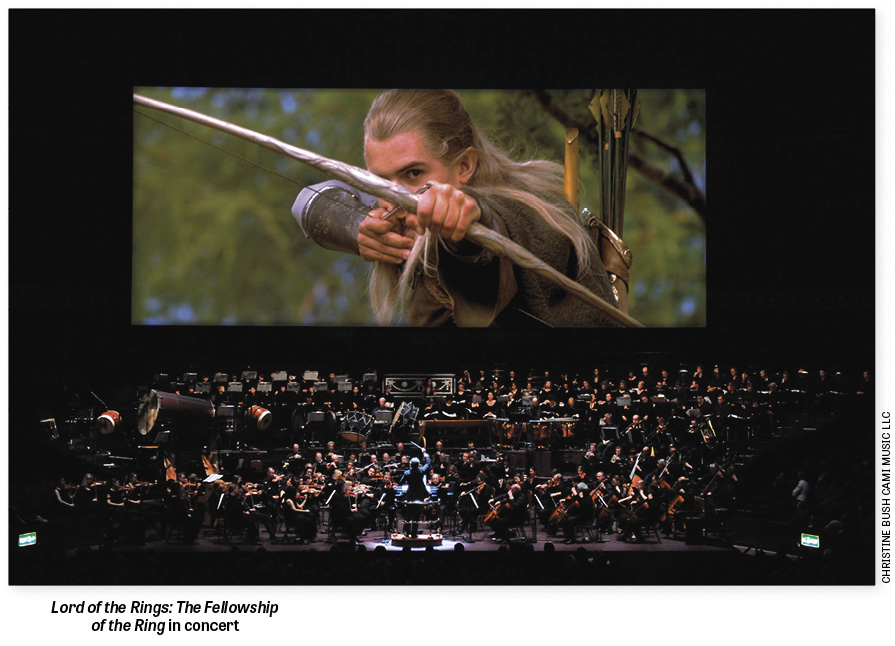
2203 Choral Scene 1aThe Lord of the Rings is one such example and we have a fantastic and unique opportunity to see a Canadian musical team in action for the screening of The Lord of the Rings: The Fellowship of the Ring which will be brought to life by the Toronto Symphony Orchestra and the massed power of the Toronto Mendelssohn Choir (including me in the tenors!). Ludwig Wicki, who helms the musicians, specializes in the performance of film music and premiered all the LOTR films with live performance of the full soundtrack. All of the TSO live film performances this year are in partnership with the Toronto International Film Festival.

The original film soundtrack – by prolific composer Howard Shore, who wrote the music to all of Peter Jackson’s LOTR and The Hobbit films – is quite frankly one of the most exquisite pieces of film music available. For many in my generation the iconic trumpet theme in The Ring Goes South (as the Fellowship marches across the mountains after leaving Rivendell) is instantly recognizable. But it is the choral richness of Shore’s writing that provides the texture and energy that drives this remarkable score. The accented harshness of the Elvish can be found energizing the chase of the Nazgul. There are soft chorales throughout the music that help accentuate important moments (when Gandalf lights the main hall of the Dwarven city Dwarrowdelf, for example).

And then there is the ending to the Bridge of Khazad-Dum after Gandalf is lost. The entire previous scene is sounded with accented rhythms from the male voices. These give way as the Fellowship escapes into the sunlight. Soft cellos accompany a rich chorale with a delicate treble voice on a slow, piercing descending line. It is remarkably poignant writing. Rehearsing this section the other day reminded me just how powerful music can be in evoking feelings and emotion.

The magic of these performances lies in hearing music with your own ears. Soundtracks are meticulously mixed, balanced and produced to create a specific sound. Often, choral music and the textures of live voices cannot translate very well into recordings. Live, your ears will notice choral lines in places you never would have known: little hidden gems of gentleness or punctuations of energy. It’s a pleasure to learn this music and at the same time engage a brand new understanding and appreciation of it.

There are three opportunities to see The Lord of the Rings: The Fellowship of the Ring in action: December 1, 2 and 3 at 7:30pm, Roy Thomson Hall.

Other film and TV music performances in the coming months include:

Itzhak Perlman’s “Cinema Serenade” with the TSO conducted by Peter Oundjian features iconic violin highlights from film scores by Ennio Morricone, John Williams and others, plus Beethoven’s Symphony 7, November 22 at 7:30pm, Roy Thomson Hall.

The Sony Centre and Film Concerts Live present E.T. The Extra-Terrestrial live in concert. Hear John Williams’ iconic score performed by the Motion Picture Symphony Orchestra under the baton of Kingston Symphony Orchestra music director Evan Mitchell, December 29 and 30 at 7:30pm, Sony Centre.

The TSO presents Disney-Pixar’s Ratatouille in concert featuring Michael Giacchino’s Oscar-winning score under the baton of Sarah Hicks, principal conductor of Live at Orchestra Hall at the Minnesota Orchestra, February 18, 2017 at 11:30am and 4pm, Roy Thomson Hall.

The Kitchener-Waterloo Symphony Orchestra presents “Music from the Movies,” featuring music from Titanic to The Avengers, under Daniel Bartholomew-Poyser, assistant conductor of the KWS, February 24, 2017 at 8pm and February 25, 2017 at 2:30pm and 8pm, Centre in the Square, Kitchener.

The TSO presents Indiana Jones and the Raiders of the Lost Ark, score by John Williams. This live performance screening of the very first Indiana Jones movie is led by pops conductor Steven Reineke, March 29, 2017 at 7:30pm, Roy Thomson Hall.

Livenation presents Game of Thrones live featuring a huge multimedia, 360-degree stage, screens, special effects, orchestra and choir under direction of composer Ramin Djawadi, March 4, 2017 at 8pm, Air Canada Centre.

The Diary of Anne Frank

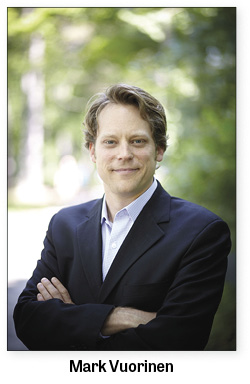
2203 Choral Scene 2The Grand Philharmonic Choir presents the Canadian premiere of James Whitbourn’s choral work, Annelies: A Cantata on the Words of Anne Frank, November 19, 7:30pm at Maureen Forrester Hall, Wilfrid Laurier University, Waterloo. Based on a translation of the Diary of Anne Frank, this choral work is set for soprano, choir and instruments under music director Mark Vuorinen and featuring the Grand Philharmonic Chamber Singers.

To mark the occasion, the Grand Philharmonic Choir has partnered an exhibition with the Kitchener Public Library. There will be displays on Anne Frank’s life from the Anne Frank Centre for Mutual Respect, New York City. A special performance of Annelies by the Grand Philharmonic Chamber Singers under Vuorinen will be held in the Central Library Reading Lounge on November 13..Beth Slepian, education director for the Anne Frank Centre, will be a guest speaker for this interactive, family-friendly presentation. The library exhibition runs to November 15.

Whitbourn’s musical setting follows selected entries from Anne Frank’s actual words. Translated from the original Dutch, Whitbourn has assembled them chronologically to frame the story. Her writing is remarkable in its intimacy and simplicity. Whitbourn uses repetition of her own words to shape the music. At times, this intimacy is highlighted with solo soprano, at times with chorale. At times minimalist and dissonant, he uses plainchant, military, music hall, solo violin, solo clarinet and more. Whitbourn has also used a lot of repetition. When I queried Vuorinen’s thoughts on this compositional tool he said it requires the interpretation to be “deliberate and thoughtful” with each iteration. He also understands that “the repetition is there for emphasis, to hammer home the message. Which is a whole different approach to express these in a deliberate way to bring home the point.” It is remarkable to hear the repeated invocations of the choir repeating “We are Jews in chains.”

The fifth movement, Life in Hiding, finishes with repetition of the text: “One day this terrible war will be over, and we’ll be people again, and not just Jews.” Her words are a deeply powerful tapestry to set music to. Whitbourn’s interpretation is evocative and challenges the listener to bear witness to this history. Vuorinen notes: “The text is important. Trying to get the voice of this girl. To hear this voice. It’s quite incredible to read these words, of a girl who is incredibly optimistic. There is optimism in this music. But there is juxtaposition of musical styles and it is crushing and very emotional. It is something the singers have to learn to deal with.” Vuorinen revisited Anne Frank’s diary over the summer in preparation for rehearsals and encouraged his singers to do the same.

All the text is from her writings except for the Kyrie in the eighth movement, Sinfonia, and excerpts from the Book of Psalms and Lamentations in the 13th, penultimate movement of the work. We all know that Anne Frank and her companions were betrayed, captured and later died in a concentration camp. Her diary remains a poignant reminder of the impacts of racism, intolerance, hatred, and state-sponsored violence. Again, Anne’s words are best: “As long as you can look fearlessly at the sky, you’ll know you’re pure within” (February 23, 1944). This must be a remarkable experience for the Grand Philharmonic Chamber Singers and it will be for their audience as well.

Other great opportunities

Nov 13: The Amadeus Choir presents “Aurora Borealis: Magic and Mystery,“ featuring works by Timothy Corlis, Ola Gjeilo, Eric Whitacre, Eleanor Daley, Morten Lauridsen and Ēriks Ešenvalds at Eglinton St. George’s United Church.

Nov 19: The Orpheus Choir of Toronto presents “Stories: Myths and Mysteries,” the first concert in their “Identities” theme for 2016/2017. This one includes a premiere of The Farthest Shore by Paul Mealor, with guests Young Voices Toronto at Grace Church on-the-Hill.

And: Get out there and check out the huge variety of Christmas and holiday music. December is coming fast and you want to make sure you have tickets! Check out thewholenote.com for all the latest offerings!

Follow Brian on Twitter @bfchang Send info/media/tips to choralscene@thewholenote.com.
2202-Choral1.jpgWhat are the odds that there would be three separate performances of Felix Mendelssohn’s final completed oratorio, Elijah, all taking place this coming November 5? It’s not as though there’s some particularly significant Mendelssohnian anniversary in the offing: he was born in 1809 and died in 1847, at age 38, 14 months after Elijah premiered, in English, at the Birmingham Town Hall, as part of the Birmingham Festival. But by one of those odd twists of planning and timing (and without any discussion among themselves), Toronto Mendelssohn Choir, Pax Christi Chorale and Chorus Niagara have all scheduled the work, same day and time, as a major part of their respective 2016/17 seasons.

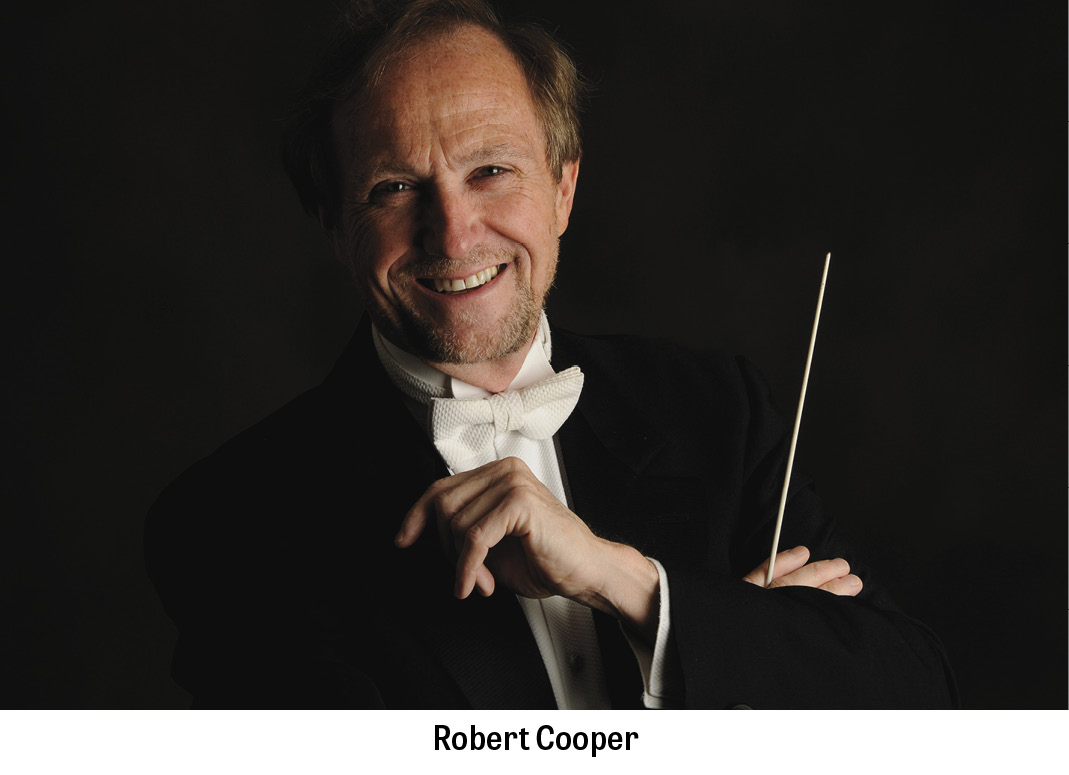
Chorus Niagara’s conductor Robert Cooper shrugs off the coincidence, at first: “if it’s not Mendelssohn’s Elijah, it’s Carmina Burana, one or the other – the two works seem always to collide, with several choirs doing them at the same time but it’s purely coincidence.”

Stephanie Martin and Noel Edison, on the other hand, are both entering significant anniversary seasons (20th) with their choirs – Edison with the Toronto Mendelssohn Choir and Martin with the Pax Christi Chorale – and acknowledge that in some way that might have influenced their decisions to mount this particular work at this time. For Martin this will be her last season at the Pax Christi helm, and it’s an opportunity to revisit a work with which she has a history, with the choir, singing it before conducting it. Edison’s Toronto Mendelssohn Choir performed the work for the first time in 1933, and has remounted it regularly; “I know Elmer [Iseler] did it several times, and Sir Ernest [MacMillan],” Edison says. This will be the third time Edison himself has done it with the choir, most recently in 2009. “It’s the great choral period piece,” he says.

Interestingly, for Robert Cooper the choice to take on the work this year has very little to do with how long he has been with Chorus Niagara (one of four choral or vocal ensembles he conducts). But it has everything to do with the availability of a particular singer to sing the role of Elijah. He explains:

“Last year Chorus Niagara celebrated its first year performing in the new FirstOntario Arts Centre in downtown St. Catharines, so I had other kinds of mandates regarding what we needed to perform in the first year. But I’m not going to be with Chorus Niagara forever; I’ve done the work four times already with them, and really want to do it again, it’s a magnificent score.” The very first time he did it, he explains, his Elijah was none other than Russell Braun. “Russell was a student and singing in my Opera in Concert Chorus – he was at the Glenn Gould School, and this year I thought I really want to get him back. So it’s coincidence again – the timing worked for Russell and I wanted to do it and I thought now’s the chance – now’s the time to get us back together again, because he cut his teeth for his first Elijah with me, and it’s one of his signature pieces now – he sings it all over the world. So I get him to come down to St Catharines to our new arts centre and do Elijah yet again with us.”

2202-Choral2.jpgSinger of stature: Right from the first performance in Birmingham in 1846, the success of the oratorio has revolved around the choice and calibre of the soloists, particularly the bass-baritone that sings the title role. Mendelssohn’s Elijah at that first performance was an Austrian bass-baritone Josef Staudigl, who had become something of a fixture at Covent Garden over the preceding few years, and brought significant operatic presence to the role.

“You have to have a singer of real stature for the role,” says Cooper, “someone who has a real sense of personality, who can take charge. It’s a very operatic piece. You want someone who can stand up there and bring all of the operatic fervour that they can and I personally only use Canadian artists…there are certainly a few other gentlemen who can do it but for me Russell is the signature Elijah. So I wanted to grab him while I could.”

Toronto Mendelssohn Choir’s Edison concurs when it comes to the type of performer needed for the role. “Our Elijah is not known in Canada at all; his name is David Pittsinger, making his role debut. When I was searching I wouldn’t say he was my first choice but I’m glad now that he is. He comes from a musical theatre and opera background and he has done some significant oratorio; he’s very well-known in the States. I definitely wanted someone with that theatrical background for this role. It’s quite an imposing role, and it’s a monumental sing, both emotionally and physically. You need somebody that has a very flexible voice and somebody that has got some good theatrical thinking about their musical phrasing because it’s a real pull-and-push piece. And it’s [a role that’s] got to connect in and out of choruses and with other singers. [Elijah] is the constant, the main voice of the oratorio. And it’s his first Elijah!”

Pax Christi’s Elijah will be Canadian Geoff Sirett. “It’s his first Elijah as well, believe it or not,” Stephanie Martin says. “I just heard him recently sing Prince Igor with Bob Cooper’s Opera in Concert (we’re all connected, here, right?)….” But in the case of Sirett, Pax Christi is actually getting all four soloists as an intriguing package deal.

2202-Choral3.jpgPlaying up the drama: Martin explains: “We have decided to play up the dramatic elements by collaborating with a wonderful young group, the Bicycle Opera Project, who basically perform new opera – a lot of new Canadian opera – so its a stretch for them to sing a big Romantic piece and it’s a stretch for us to do a bit of dramatization. It will not be operatic in the sense that there will be sets flying in and out and anything like that but I think that essentially what Mendelssohn wanted in his libretto was an exchange between characters, a meaningful dialogue, not just singing to the book or parking and barking. It was to be a real dramatic exchange between the four soloists. So BO is going to animate it in that way and we have a lighting designer. We are just trying to break down some of the conventions of oratorio that are maybe strange to a younger audience. Bicycle Opera will do this because they will really bring it off the page. So it’s a little bit of a different approach.”

The four soloists in the Pax Christi production are Bicycle Opera’s four core singers: “Geoff Sirett is our Elijah, Christopher Enns is our tenor; Larissa Koniuk (BO’s artistic director) is the soprano, and Marjorie Maltais is the mezzo. So we’ve hired the entire company…they are used to working together; they can spin ideas and when someone does something they can react because they know and trust each other very well on stage.”

The collaboration will extend to a few kinetic elements for the choir as well. “The choir’s going to try to break a few oratorio conventions. They won’t be wearing black, they’ll be dressed a little differently so the lights will reflect off them nicer, and a group of them will be doing a bit of action – not over the top but just to bring it a little bit closer to our audience, to break down that fourth wall a bit.”

Attempts to overlay operatic elements on orchestral or stand-and-sing repertoire can fail spectacularly unless the work in question suggests the need for them. There is little chance of that happening here. From the earliest days of the oratorio’s gestation, Mendelssohn appears to have been inspired precisely by the story’s most intensely dramatic elements. According to a lovely detailed preface to the New Novello Choral Edition Mendelssohn Elijah, as early as 1836 Mendelssohn was grumbling in a letter to a friend, Karl Klingemann (who was busy arranging a performance of Mendelssohn’s St. Paul in Liverpool), that he wished Klingemann “would give all the care and thought you now bestow on ‘St. Paul’ to an ‘Elijah’ or a “St. Peter,’ or even an ‘Og of Bashan’.”

And as momentum on the work built over the ensuing decade, one finds Mendelssohn’s librettist, the Rev. Julius Schubring admonishing Mendelssohn that “the thing is becoming too objective – an interesting, even a thrilling, picture…we must diligently set to work to keep down the dramatic and raise the sacred element.” To which Mendelssohn responds: “I figure to myself Elijah as a thorough prophet, such as we might again require in our own day…in opposition to the whole world and yet borne on angels’ wings…I would fain see the dramatic element more prominent, as well as more exuberant and defined – appeal and rejoinder, question and answer, sudden interruptions etc., etc.”

Edison concurs. “The principles of oratorio, chorus, soloists, orchestra, recits, arias, are all there, but for me it’s not an oratorio, it’s an opera – it is Mendelssohn’s opera. It’s through-composed, it never stops except at intermission. It chugs right along, it tells the biblical story, it’s got hellfire and brimstone, it’s all Old Testament, Book of Kings, the Psalms, the resurrection of a dead youth, the ascension of Elijah in a fiery chariot, all the components of an opera. There are love duets, like the one between the Mother and the bass, the heavenly choir and the earthly chorus…In its scope, within its oratorio confines, it’s quite operatic.”

Cooper is even more emphatic: “I’ve always had a passion for things operatic. When I was at the CBC, as you may or may not know, I created the show called Saturday Afternoon at the Opera which I produced for 30-plus years, and I’ve been with Opera in Concert for over 30 years and I’ve always loved working in the theatrical world. But when you look at that score, it’s very clear, that feeling of being through-composed. It may have 41 [separate] numbers but it’s not 41 numbers, it’s little dramatic choral scenas and they go lambasting the one into the other and that makes it hard to conduct. You really have to be on your toes and know what’s coming next to get all the transitions and the tempos. And interestingly for an oratorio of this period, you have scenes where you have the soloist with these dramatic little recitatives and arias interspersed with little choral moments of four or five measures, so it’s quite clear that Mendelssohn meant this to have the thrust and parry of an opera…it’s meant to go attacca…bang, bang, bang.”

Assembling the forces: “Bang, bang, bang” certainly describes how the first Birmingham performance must have gone, based on the forces assembled for it: an orchestra of 125 and a choir of 271 (79 sopranos, 60 male altos, 60 tenors and 72 basses).

“Pax Christi has 100 singers,” Stephanie Martin says, “but we’d never accommodate an orchestra that big (mostly because it would cost a great deal). But you see a lot of those Victorian oratorios where you do see an optional group doubling and playing to get a really huge sound. Ours will be a little bit scaled back from that, but really with modern instruments the balance is better with a smaller orchestra. In 1846, those people would probably still have been playing on gut strings, trombones with smaller bores. That makes a huge difference because Elijah is often accompanied by a chorus of trombones – modern trombone just blows the singer away. The 1846 orchestra would have been just a little bit lighter, so you could accommodate a few more players. And a lot of those back bench players would only have played at a few very climactic points when everyone is playing and it’s very exciting and the big Birmingham Town Hall organ would have been screaming away and it would have been quite grand. On our tour this summer, Pax Christi visited Birmingham because it was such a hotbed for oratorio composition and it was great to be there and see where Mendelssohn premiered Elijah, where [Hubert Parry’s] Judith was premiered, where [Elgar’s] Dream of Gerontius and Apostles were premiered…it was an amazing centre for innovation at the time.”

Edison expands: “Back in 1846 everything was much grander then, even the work itself speaks to that Victorian sentiment of grandiosity. Messiah performances were often hundreds, even thousands of people, a city endeavour where everyone was involved. So that was the thinking and the makeup of the performances back in that generation. Stephanie referred already to the development of the modern instrument; but there’s also the development of the modern singer. They are much stronger, more focussed, more educated…and I think generally more equipped as artists in a singing ensemble. Mendelssohn’s Elijah or any of those big Victorian works – they do require a certain force in order to come off the page, I mean you can’t scale it down like you’re doing a Bach motet but you don’t need quite the grand numbers that they once did. I think our orchestra for this performance is about 50 and the choir is 120, 130. But I work hard to make sure that they are thin and refined and disciplined not lazy overly cholesterol-ridden, vocally. Otherwise this Victorian writing can turn into sentimental garbage really quickly and become very saccharine. Because it’s one bloody nice tune after another. I remember Bramwell Tovey once said to me ‘I don’t know why you like this piece, Noel. It’s like God is in every bar.’”

For Cooper’s Chorus Niagara the scalability of the piece offers some extra challenges and opportunities this time round. “Well it’s a challenge for us in the Niagara region because you know for 27 years we’ve been singing in churches and we’ve always been thrilled to have our place packed, but now we’re in an 800-seat performing arts centre which requires more singers on the stage and a much larger orchestra to really give the room the velocity and the volume of the sound that you want. So we have a chorus of 100-plus at Chorus Niagara but I am also bringing in a group from Redeemer College, which is a very important Bible college down in the Niagara region with a very good music program, so they are bringing more singers to join us as well…”

QUICK PICKS

Nov 5 7:30: Toronto Mendelssohn Choir. Elijah. Mendelssohn. Noel Edison, conductor. Lesley Bouza, soprano; Christina Stelmacovich, mezzo; Michael Schade, tenor; David Pittsinger, bass-baritone; Festival Orchestra. Koerner Hall.

Nov 5 7:30: Chorus Niagara. Elijah. Mendelssohn. Robert Cooper, conductor. Russell Braun, baritone; Leslie Ann Bradley, soprano; Anita Krause, mezzo; Adam Luther, tenor; Niagara Symphony Orchestra; Redeemer College Alumni Choir. FirstOntario Performing Arts Centre, St. Catharines.

Nov 5 7:30 and Nov 6 3:00: Pax Christi Chorale. Elijah. Mendelssohn. Stephanie Martin, conductor. Guest: The Bicycle Opera Project (Geoff Sirett, baritone; Christopher Enns, tenor; Larissa Koniuk, soprano; Marjorie Maltais, mezzo.) Grace Church on-the-Hill.

David Perlman can be reached at publisher@thewholenote.com.

2201_-_Choral_Scene_1.jpgMuch as I'd like to be enjoying more of summer sitting on a Muskoka chair in my backyard with the sun beaming down on me, the pull of the new arts season is beckoning us all forward into fall.

Exciting things are ahead over the next few months: a 20th anniversary celebration of Noel Edison at the helm of the Toronto Mendelssohn Choir with Mendelssohn’s Elijah; composer Ola Gjeilo (whom I wrote about at some length in last April’s issue) is being featured as part of the third edition of Choral Encounters – “Luminous Festival”; The Lord of the Rings – The Fellowship of the Ring is being done by the Toronto Symphony Orchestra and the Toronto Mendelssohn Choir at the beginning of December; and this is just a taste of the big events coming up this fall for our choirs (and of the intensity of the rehearsal and preparation about to get under way).

If you’re like me and want to hold on to summer a bit longer, our summer festival greats, the Stratford Shakespeare Festival and the Shaw Festival, continue to offer some tantalizing  musical theatre munchies: A Chorus Line and A Little Night Music at Stratford and Sweeney Todd and Alice in Wonderland at Shaw. Closer to home, the Lower Ossington Theatre productions of Mamma Mia! or West Side Story may entice. Mirvish Entertainment’s Matilda continues to be the hottest ticket out there right now. Dates and locations vary. Check our listings.

If you’re looking for choral concerts, most won’t be forthcoming until October or later, as ensembles return from summer and spend September adjusting and rehearsing. An exception: MOSAIC Canadian Vocal Ensemble presents a concert featuring Karl Jenkin’s Te Deum, and his well-known work The Armed Man: Mass for Peace. September 24 at 7:30pm in St George’s Cathedral, Kingston.

Check into your subscription series for choral music and other artistic endeavours across the region. Subscriptions are important stabilizers in our artistic communities. From Buddies in Bad Times Theatre to the Orpheus Choir to the Aga Khan Museum, subscribers are a key component for the financial viability of our arts organizations. Subscriptions also ensure that you have access to some of the world’s best art across the region including access to the best seats, sightlines and acoustics. Make sure your subscriptions for the upcoming year are set!

A Luminous Choral Experience

As mentioned, Ola Gjeilo comes to Toronto as part of Choral Encounters 2016 – “Luminous Festival.” Gjeilo is sponsored by Yorkminster Park Baptist Church, in collaboration with the University of Toronto Faculty of Music and the Orpheus Choir of Toronto. His work is increasingly becoming part of standard choral repertoire; the GTA region routinely features many of his dozens of compositions.

The majority of the festival is private masterclasses and sessions with Gjeilo and other choral teachers from the region. But the festival culminates with “Luminous Night” a gala concert on October 15 at 7:30pm in Yorkminster Park Baptist Church, Toronto. This grand celebration of his work will include a full presentation of Sunrise Mass with the Talisker Players and also includes Ubi Caritas, Northern Lights, Eternal Sky, and (one of my top choral songs) Serenity. Voices will be provided by the massing of Exultate Chamber Singers, Orpheus Choir, Resonance, the University of Toronto MacMillan Singers and Women’s Chamber Choir and Yorkminster Park Baptist Church Choir. See more at luminousnightfestival.com.

I have written on the Sunrise Mass before, a remarkable collection of Latin text set to lush beautiful melodies. Using the cycle of a day, from morning to evening to mirror that of life, Gjeilo’s work is an evocative invitation to contemplation and intimacy. It is indeed his art and skill as a composer that the music is both grand and thick in sound, yet intimate and personal in execution. He writes in the notes to his piece Contrition: “I feel that my music should be bigger than me, bigger than my everyday concerns as a human being – concerns that may seem incredibly important in the moment but, in the grand scheme of things, really don’t amount to much when compared to the great mystery of life and the universe.”

Gjeilo is especially good at combining quicker, energized vocal lines (or string lines) with slower, poignant melodies. These undulating lines, such as those in Tundra, Contrition or Movement 2 of Sunrise Mass, give an insistence and texture to his music. In setting up listener’s ears to hear these lines, he is most successful in reaching the thick, large chords that texturize his music later on. Appropriately, the word “lush” is most often used to describe his work.

A perceptive listener will notice that incremental semi-tone movement both up and down amongst his lines will create a sparkling essence to the music. Invariably, the sparkle resolves towards the end of the piece, leaving a consonant sound. Most often, it is that Gjeilo introduces the start of a chord with its dominant note before providing the full chord one or two bars later. It’s an accessible, pleasing way that music hits the ear.

2201_-_Choral_Scene_2.jpgCraving Nostalgia: As a child in the early 90s, I grew up listening to the Motown records my father played frequently. Doo-Wop and golden age pop have influenced my musical tastes since then. Remarkably, many of these groups that began in the 50s and 60s continue to perform. ARB Productions, a Toronto based company, specializes in nostalgia performers.

ARB presents the Four Lads and the Four Aces at the Palais Royale on September 26 at noon and 7pm for a full meal and dinner. The Four Lads are homegrown talent having gone to St. Michael’s Choir School and most found fame with their hit Moments to Remember and No, Not Much. The Four Aces hail from the U.S.A. and have had their share of hits including Love is a Many-Splendored Thing and Stranger in Paradise.

This should prove to be a lovely lunch or dinner at an unparalleled historic location. Lunch, martini, a dance or two right on the waterfront – it sounds lovely!

Choir Open Houses

With all this great fun ahead for the start of the musical season, you should join a choir! Many choirs host open houses to see how rehearsals go, check out the conductors and experience the overall vibe of a choir. Most choirs will be happy to welcome spectators for the first few rehearsals. Consider going and more importantly, joining! A few I know about are:

Hart House Singers, September 12 and 19, 7:45pm Hart House Great Hall, University of Toronto.

Orpheus Choir, September 13, 7pm, Yorkminster Park Baptist Church.

Etobicoke Centennial Choir, September 13, 7:30pm, Humber Valley United Church.

Westeros: Finally, later this year, on March 4, 2017 for one night only, Westeros will descend on the Air Canada Centre. Game of Thrones Live is coming with composer Ramin Djawadi at the podium. I’m mentioning this early as this event already has incredible buzz and will completely sell out, so you will thank me later! Featuring a full orchestra and a full, mixed-voices choir set to a multimedia show including pyrotechnics, this isn’t an event to miss. Tickets available on Ticketmaster.

Follow Brian on Twitter @bfchang Send info/media/tips to choralscene@thewholenote.com

As we voyage into the beauty of summer and the winding down of the regular 2015/2016 choral season, it has been my pleasure to write this column over the last year. One fascinating theme for me, as an active singer and performer, and as a regular attendee of concerts in the region, has been how often choral music finds itself at the crossroads of the secular and the sacred. From a Eurocentric perspective this comes as no surprise: much of what we revere as choral singers is deeply rooted in biblical and church liturgy - Handel’s Messiah, Mendelssohn’s Elijah, countless requiems, oratorios based on stories and teachings from scripture. Less evident, from that perspective, is the extent to which choral music is inseparable from global spirituality. We are lucky to be in Toronto, a truly global village where we can  interact with, learn from, and be humbled by the myriad diversity of the human voice, human spirituality and music.

One great case in point is the Aga Khan Museum which has hosted a variety of fabulous musicians from across the world. Qawwali is a devotional, passionate music inspired by Sufi tradition and the California-based Fanna-Fi-Allah Sufi Qawwali Party will perform it at the museum, August 4. This youthful group will bring us sounds and words that have been part of South Asian culture for over 700 years, showing us the harmony of the sacred and secular at play. I hope their programming goes from strength to strength, and that more institutions like this emerge as our city’s cultural landscape continues to change.

Reflecting on the past season, the year has been an extraordinary choral soundscape: 1000 performers in Luminato’s staging of Murray Schafer’s Apocalypsis; several opportunities to experience contemporary throat singing with Tanya Tagaq; fans coming together to sing choral tributes to David Bowie and Prince; a diverse series of Ismaili and other South Asian works by the Aga Khan Museum; an unusual Messiah under Sir Andrew Davis with the Toronto Mendelssohn Choir and the TSO; and the voices of so many children, in the region’s children’s choirs and guests from around the world. Choral City isn’t just humming, it is belting a message of hope across the region!

Choral_Scene.png

Gospel Music – Community in Action: Karen Burke, a York University professor specializing in music education and gospel music, is also the director of the Toronto Mass Choir. She’s incredibly in demand as a clinician and teacher. She talks about the music, but it is clear that people are the key to her approach and to her appeal as an educator and expert. The community that is built, the stories, the personalities, and the love of them all coming together – this is the core of gospel music. An opportunity to talk to Burke immersed me in all the things I like about choral music – love, sharing music in ensemble and being part of something much greater than ourselves.

One of the key abilities of a great conductor is to be able to build an ensemble of people, not just singers. As a professor, Burke takes a unique approach. “Our first class is about making memories. How do you intentionally learn the names of your children so they feel like people and not just voices?” She tells a story that shows how deeply she cares about the singers she works with, and how she is changed by those experiences. In this way, grief becomes joy, and fear can become wonder – for everyone involved – and it all comes out in the music.

I reveal to her my own ignorance of the place of gospel music in Canadian history, and it prompts our conversation. Burke situates gospel music in its Toronto context citing the work of colleagues who have  studied the growth and experience of gospel music, in the region and in how it has shaped the very fabric of choral history. “It is part and parcel of our history here; our choral history, our musical culture,” she says. “And then it’s only a few steps away from remembering how much gospel music is part of our mainstream and what it has done in terms of making our ears more familiar to the different harmonies we hear. And especially how it is has influenced popular music. That is why, working with young people, it is so readily accessible and why they love it. So many [mainstream] harmonies and performances are taken directly from gospel music. So it’s an easier sell to people we want to reach as we try to keep choral music alive.”

She’s absolutely right. So much popular music has been directly influenced by gospel music. It is a musical vernacular that everyone is familiar with, even if they don’t know what it is. Examples include: Lisa Fischer and the backing vocals in Gimme Shelter with the Rolling Stones; NSync’s bridge in This I Promise You; Beyoncé’s chorus in Halo; the end of Lady Gaga’s Born this Way; the Book of Mormon’s Hasa Diga Eebowai; and pretty much anything ever done by Motown. We know the sounds, the harmonies, the bridges into a full-step key change, the call and response, the dominant harmonies – gospel has been part of music for a very long time. This is indeed our music. Is it any wonder that Burke can get youth engaged in choral music and singing at the top of their lungs? This is accessible music and it is also youthful music with a deep local history.

She also talks about how the rote nature of most gospel music requires musicians to use their skills in a different way instead of relying too heavily on sheet music: “What’s on paper is only three quarters of what you need…there’s this phenomenal thing called listening. It’s an incredible tool.” She finds herself constantly surprised by the hesitancy of choristers who don’t think they can sing without music, and then “their eyes come up out of the folders, out of the music, and the sound is just there.” It’s transformative not only for choristers but their directors as well.

Every time one performs gospel, she says, the energy, the feeling, the personality will be different (in contrast to much Eurocentric choral music where we seek to evoke the original intention of the composers as exactly as possible. Gospel music often demands of us to be different and new, every single time. “It’s about what you do for the music personally. When you’re given that permission to be personal, and the choir relates to it, it provides a whole different take on things. People can give more,” she says.

Choral_Scene_2.pngThe Toronto Mass Choir is a prolific performing and recording group. I highly encourage you to check them out; their full gamut of experience is available on Google Play. Karen Burke and the Toronto Mass Choir will present a concert as part of the TD Toronto Jazz Festival on Sunday June 26 at 12:30pm, Nathan Phillips Square.

Summer Festivals: As the regular musical season winds down, there are still many opportunities to catch fantastic music across the region. I hope to see you at some of the performances I have highlighted here, and please look at the listings of the other summer festivals in the region. There is choral music happening everywhere!

The Elora Festival: The Elora Festival continues to provide world-class musical performances in an adorable rural Ontario setting. There is a lot of choral programming over its 16 days. On Friday July 8 at 7:30pm the Toronto Mendelssohn Choir joins the Elora Festival Singers and the Festival Orchestra in an opening night gala featuring a brand new commission, River of Life by Timothy Corlis, as well as Mozart’s Requiem. July 10 at 4pm is “The Glory of Bach” featuring Bach’s Mass in G Minor and more. The incredibly popular all-male chorus Chanticleer performs on Friday July 15 at 7:30pm. Don’t miss a chance to hear Haydn and Mozart on Friday July 17 at 4pm featuring the Elora Festival Singers and the Festival Orchestra in Mozart’s Vesperae solennes de confessore and Haydn’s Lord Nelson Mass, a fantastic double bill. The Elora Festival Singers present “Choral Mystics II” including two new premieres by British composer Patrick Hawes. Hawes will be present as the singers record these premieres on Thursday July 21 at 7:30pm. In the year of Queen Elizabeth’s 90th birthday, the festival presents “Coronation Anthems,” music by Handel on July 23 at 4pm. The festival closes on July 24 at 2pm with the Montreal Jubilation Gospel Choir. See elorafestival.ca for all the listings and locations. Most performances are in a variety of intimate venues.

Toronto Summer Music presents the Theatre of Early Music with Daniel Taylor in a reconstruction of the music that accompanied King George II’s ascension to the throne in 1727. Music by Handel, Purcell, Gibbons and Tallis is featured, Tuesday July 26 at 7:30pm, Walter Hall.

The Brott Music Festival presents its 29th season, featuring a variety of fantastic music across the Hamilton area. The first choral performance is Beethoven’s Ninth on Thursday June 30 at 7:30pm at St. Thomas the Apostle Church, Waterdown. Brott presents Classic Blend in“Songs of the Seasons in Ladies Barbershop Style,” a rare chance to hear a female barbershop ensemble, Saturday July 23 at 7:30pm, Zoetic Theatre. The season closes with Verdi’s Requiem on Thursday August 18, 7:30pm at the Mohawk College McIntyre Performing Arts Centre.

Follow Brian on Twitter @bfchang Send info/media/tips to choralscene@thewholenote.com

Choral_1.jpgI sing in the Toronto Mendelssohn Choir (TMC) as a tenor and have for the last three seasons. It’s my primary musical outlet. What is surprising to some people is that we have to audition every year. Every year we have to audition to get back into the choir. When I mention this to non-TMC choristers, they shudder. It is uncommon and stressful to do this year after year. Most people audition once for their choirs.

The result, though, is a rather rigorous process that allows an artistic director of an ensemble to choose and build the sound they are looking for. I’m happy to say that I’ve been part of that “sound” for the last few years and I hope to for many more. So yes, I am auditioning this year yet again, and this time I’ve chosen an Aaron Copland ditty. A sweet little folk song, 90 seconds long. Perfect for an audition.

Auditions can be a scary process unique to the arts. Most other professions will interview once for a job and that’s it – they’re set. Performing artists must repeatedly subject themselves to scrutiny and criticism. Ultimately, I believe this leads us to be stronger artists, but auditions can also be demoralizing and disempowering. However, none of us choristers feel the pressure of auditions the way a dancer or actor does – their very livelihood depends on successful auditions. So my once-a-year audition for the Mendelssohn Choir is just fine with me. I encourage you all to go out and audition for an ensemble – great things could lie ahead for you!

(There are 116 choirs, some auditioned, some not, for you to choose from in this issue’s WholeNote Canary Pages, so no excuses!)

(May)Days of Performances

Sing! The Toronto Vocal Arts Festival runs from May 7 to 15 with events throughout the city. A few to highlight: The Ruach Singers present their unique contemporary a cappella take on the traditional Shabbat morning service on May 7 at 9:45am, Beth Sholom Synagogue, Toronto. Festival headliners, Naturally 7, blend their stunning voices into a mind-blowing instrumental collage in their always-fun take on a cappella music on May 13 at 7:30pm at Jane Mallett Theatre, St Lawrence Centre for the Arts. And after 39 years, Toronto-based group The Nylons are heading towards retirement (although it will take them a year to get there!)with a Farewell Toronto Concert May 14 at 8pm also at Jane Mallett Theatre.

Oakville Children’s Choir presents “Raise Your Voice!” featuring the mass power of 200 kids from all six program choirs that make up the organization. Repertoire includes an arrangement of Phillip Phillips’ Home, Indodana a traditional Xhosa arranged by Michael Barrett and Ralf Schmitt, and The Little Road by Moira Smiley. The OCC Senior Choir will be working with Smiley as guests of the Pacific International Choral Festival in Oregon in July. Catch them on Saturday, May 7, at 3pm at the Oakville Centre for the Performing Arts.

Toronto Children’s Chorus presents “Music of the Spheres” featuring mezzo-soprano Krisztina Szabó. Features include Franz Schubert’s Ständchen and John Greer’s Beginning of the World. Saturday May 7 at 3pm, Toronto Centre for the Arts.

WomEnchant Chorus and Drummers and guests, the Rainbow Chorus, offer a presentation titled “Sing and Drum for Peace, Justice, and Our Planet,” featuring works by Jeff Hale, Eric Whitacre, and much more. Saturday May 7 at 7pm, Trinity United Church, Grimsby.

Mississauga Festival Chamber Choir presents “Choralia Canadiana” this month. At their Spring Serenade concert last month of Ola Gjeilo’s Sunrise Mass, artistic director David Ambrose encouraged audiences to check out this rambunctious show. Featuring Mary Lou Fallis, of Primadonna fame, and piano sidekick Peter Tieffenbach, the show will be a hilarious musical history of choral singing from cavemen to the modern day. The more ordinary works featured will include Canadian Imant Raminsh’s In the Night We Shall Go In, Stan Roger’s arrangement of Fogarty’s Cove, and Scott MacMillan’s Celtic Mass for the Sea. Saturday May 7, at 8pm, Hammerson Hall, Living Arts Centre, Mississauga.

Tri-City area jewel – the Grand Philharmonic Chamber Choir presents “The Spirit Sings,” with excerpts from Rachmaninoff’s Vespers, Christos Hatzis’ De Angelis, and John Tavener’s Syvati. Saturday May 7, at 7:30pm, St Matthew’s Lutheran Church.

Elmer Iseler Singers present “Musical Friends,” including Jason Jestadt, the winner of the 2015 Ruth Watson Henderson Choral Composition Competition. The Bach Chamber Youth Choir will join the Singers. Sunday May 8 at 4pm, Eglinton St George’s United Church.

Upper Canada Choristers present “Our Home and Native Lands” featuring an interesting mix of diverse music. Highlights include Stephen Hatfield’s Cantando flores, Laurie Evan Fraser’s Who Can Sail, and songs from Japan, Korea, France, and Ecuador. The Choristers will be joined by the Junior Choir of Montrose Public School and Cantemos. Friday May 13 at 8pm, Grace Church on-the-Hill, Toronto.

The Music Department of North Toronto Collegiate Institute presents Mozart’s Requiem featuring the North Toronto Choral Ensemble and the North Toronto Symphony Orchestra. Two performances: May 13, 7:30pm and May 14, 6pm at North Toronto C.I.

The Toronto Symphony Orchestra presents Shostakovich’s Symphony 13 “Babi Yar.” Last month, WholeNote publisher David Perlman featured a conversation with York University music professor emeritus, Sterling Beckwith, on the work. A monumental piece of art that emerged from the Soviet Union, Babi Yar is a political statement that responds to the Nazi massacre of over 100,000 people in World War II. The Russian text is difficult and hard to sing and the task falls to the basses of the Amadeus Choir and Elmer Iseler Singers, augmented by many others, recruited by Iseler/Amadeus conductor Lydia Adams. Holding the baton is Andrey Boreyko, a Russian conductor trained at the Rimsky-Korsakov Conservatory in Saint Petersburg and formerly music director of the Winnipeg Symphony Orchestra for six years. The TSO presents this “Civic Oratorio” on May 13 at 7:30pm and May 15 at 3pm.

Tallis Choir of Toronto: Shakespeare’s myriad works have long inspired great music, much of it choral. In “Our Good Wills: The World of Shakespeare & Byrd,” the robust and talented Tallis Choir of Toronto under Peter Mahon will present several of these inspirations from works such as All’s Well That Ends Well, Hamlet, Twelfth Night, The Merry Wives of Windsor and The Tempest. Several pieces by Shakespeare’s contemporary, William Byrd, will be featured as well, including his popular Te Deum. Saturday May 14, at 7:30pm, St. Patrick’s Church, Toronto.

The Yellowknife Youth Choir visits Toronto and joins the Bach Children’s Chorus and the Bach Chamber Youth Choir in “Songs of the Wanderer: A Spring Celebration.” Both Bach Choirs visited Yellowknife and Western Canada in late March 2016, so this is a reciprocal visit. They combine again to feature works by Mendelssohn and Rodgers & Hammerstein. Saturday May 14, 7:30pm, Toronto Centre for the Arts.

ChoralWorks Chamber Choir presents “A ChoralWorks Tapestry,” featuring Gabriel Fauré’s Requiem and music from Les Misérables, May 14, Trinity United Church, Collingwood.

City Choir, a super-accessible and welcoming ensemble, performs “Freedom is a Voice.” The family-oriented set list features arrangements of popular songs such as MLK by U2, Blackbird by Sarah McLaughlin and Freedom is a Voice by Bobby McFerrin. Tuesday May 31, 7:30pm, St Peter’s Anglican Church.

And speaking of super-accessible, the VIVA! Youth Singers of Toronto have a fun, new, world premiere of  The Sword in the Schoolyard, a children’s opera by Dean Burry, with music and libretto by Burry, music direction by VIVA! artistic director, Carol Woodward Ratzlaff, and direction by David Ambrose; June 3 and 4 at 7pm, June 5 at 2:30pm, Daniels Spectrum.

The Amadeus Choir performs “Serenade to Music,” featuring Ralph Vaughan Williams Serenade to Music, Schubert’s To Music, Britten’s Hymn to St Cecilia and more; June 5 at 7pm, Eglinton St Georges United Church.

21C: the Royal Conservatory’s new works festival has a host of very interesting pieces to check out. The festival runs from May 25 to May 29 with all performances at the RC’s Telus Centre for Performance and Learning. A couple of highlights:

In my columns I frequently mention Tanya Tagaq and her unique, powerful interpretation of throat singing. She will be performing with one of the most prolific new music ensembles in North America – The Kronos Quartet. They open the festival with a host of premieres including Sivunittinni (The future children) by Tagaq herself, May 25  at 8pm, Koerner Hall.

“21C After Hours: Blackout,” brainchild of composer John Oswald, will take place entirely in complete darkness. Presales for it were so successful a second performance was added to meet demand. As we go to press, there are still tickets available for the 8pm show (the 10:30pm is officially sold out). There will be four world premieres featuring the Element Choir under artistic director Christine Duncan. A master of improvisation and a pioneer of choral improvisation, Duncan is also known for her frequent and fruitful collaborations with fellow 21C performer Tanya Tagaq. The Element Choir will be joined by the Radiant Brass Ensemble and we’ve also been promised special surprise guests; May 27 at 8pm and 10:30pm, Conservatory Theatre.

Follow Brian on Twitter @bfchang Send info/media/tips to choralscene@thewholenote.com.
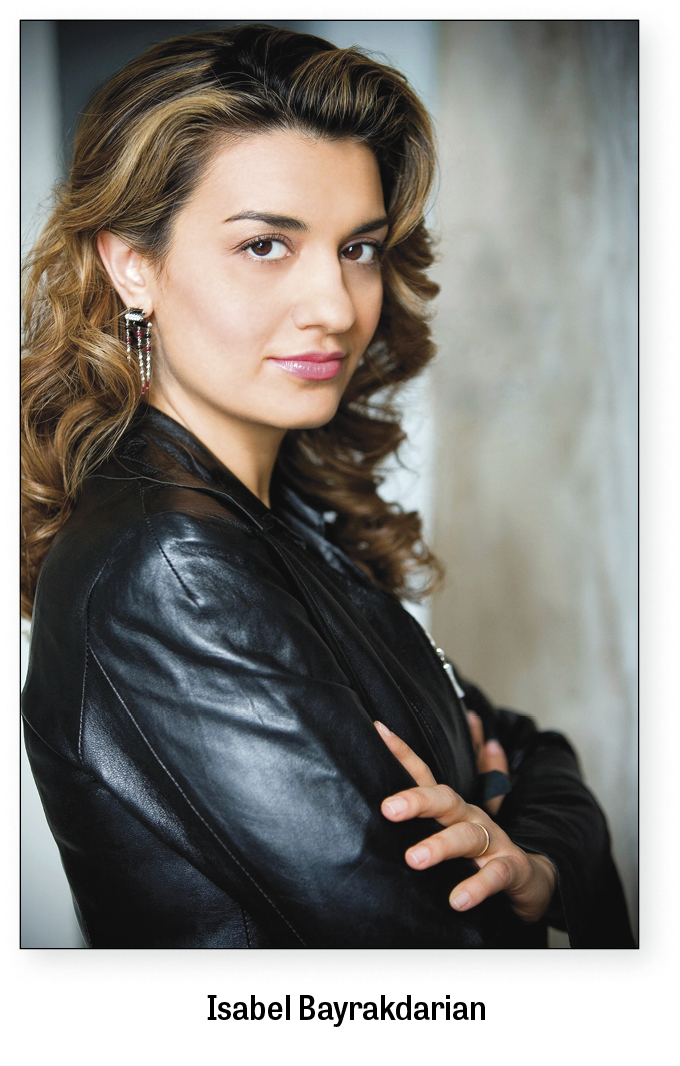
Back to top