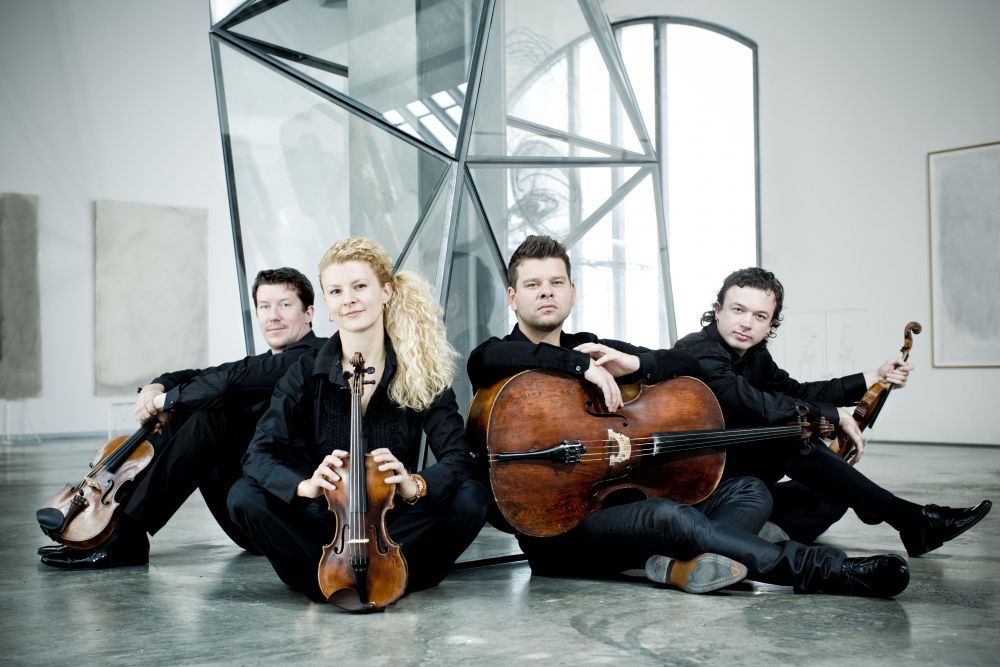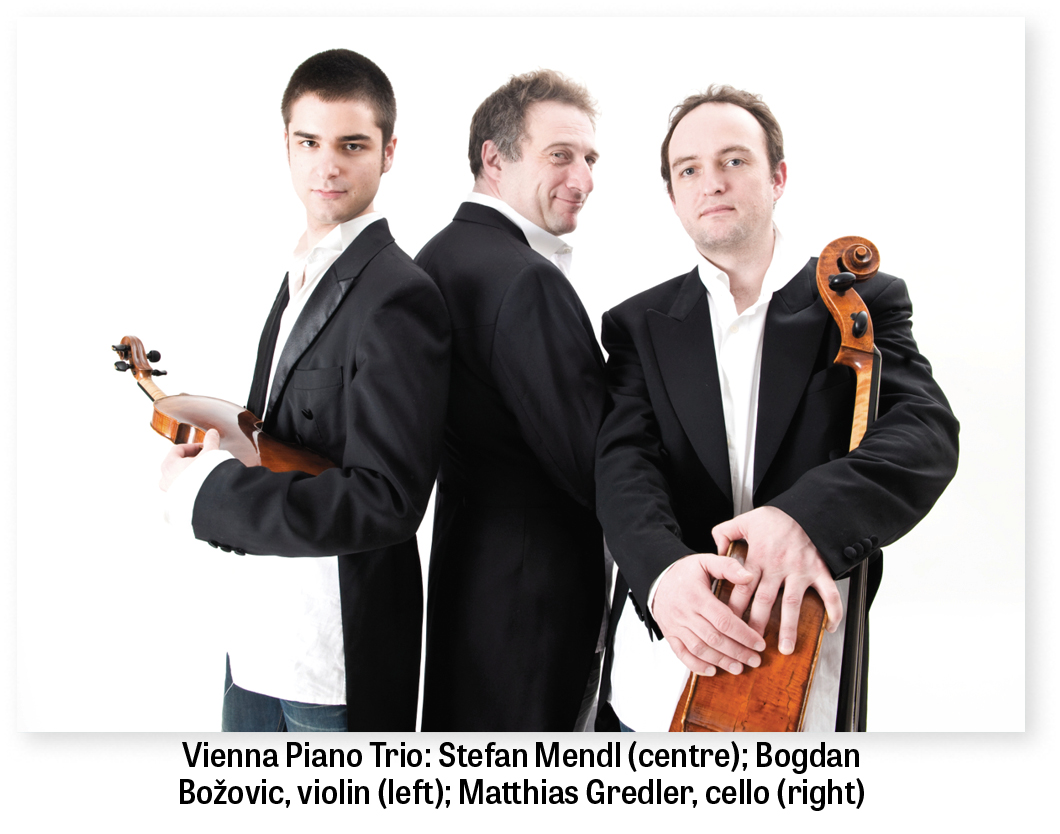
2006-Classical-Vienna_Piano_Trio.jpgThe Vienna Piano Trio’s previous Toronto appearances – with the Women’s Musical Club in November 2005 and three visits to Toronto Summer Music from 2010 to 2012 – were greeted with widespread acclaim. So it’s no surprise that they are highly anticipating their Mooredale Concerts recital March 8. That’s what the gregarious Stefan Mendl, the trio’s pianist and last remaining of its founding members, told me recently by phone from Vienna, the city where he has lived since his birth.

I asked him about the particular sensibility that typifies a chamber musician. “From scratch you must have the urge to find a special sound that is the group sound,” he answered. “You should not be so restrained that nobody can hear you but neither are you so predominant that you drown out the others. It must be your goal from the beginning that you find this sound; if you have a good ear and if you have the will to do this, then you are off to a good start.

“Then, of course there is experience, knowing when you can really play out and when you have to combine with the strings; when you have to give them more bass or less bass. You have to put aside your own ambitions and have the will to find a sound that blends.”

In his own case, right from his first experience on stage, chamber music felt better. “I discovered early on in my soloist days [born in 1966, he founded the trio in 1988] that I enjoyed playing concertos much more than recitals. I think that sometimes you get more ideas or better ideas when you have the chance to interact with others. At least for me that’s the case and I feel very, very comfortable with friends and with colleagues on stage. I don’t feel that comfortable when I’m on my own.

“And of course there is the wonderful music that is written for piano trio, piano quartet and piano quintet [he regularly performs with the Hagen Quartet]. Sometimes, all of our greatest composers put a lot of their inner feelings and emotions into their chamber music. I find it all very fascinating, still,” he said, with a laugh that underlined the hold the music still has on him.

The key thing to a trio’s success he believes is to have three people of equal musical and technical skill who have similar musical goals. “You need a rich palette of ideas and colour. Everybody needs their own opinion amidst the common goal.”

I wanted to know how he relates to the music the trio will be performing on the upcoming Sunday afternoon in Toronto. “Beethoven’s Kakadu Variations is really a fantastic piece of music,” he replied with palpable verve. “The very late opus number [Op.121a] is a bit misleading. No one hearing the very heavy introduction would expect it to turn into this funny theme, but there are hints, hidden in a minor key in a delicate, funny way. One slow variation before the finale is very deep and serious. Like all of Beethoven, the deepest and most serious is right next to the fun, almost grotesque or rude side. He was never shy, even in his greatest works to put little bits of his feelings right next to the really funny things. These variations are a really good way to experience that; in a very short amount of time he does all these turns and twists.”

This was a good opportunity to bring up the relationship between recording and live performance since the trio released the Kakadu variations along with Beethoven’s Trios Op.70, on their latest MDG Gold CD last year. “Recording something always affects your live playing because you get so close to it. You listen more to detail than you would otherwise ... sometimes you get things brought out that you probably wouldn’t have discovered before and then your performance is altered. Of course, your performance always changes over time,” he said.

Mendelssohn’s Trio No.1 Op.49 in D Minor, the concluding piece on the March 8 program, is the more famous of the composer’s two trios, but for Mendl, they are both on the same genius level. The trio plays them frequently and loves both of them. Mendl particularly enjoys the “gorgeous and brilliant and skillful piano writing which hardly any great composer has accomplished to that extent.

“It works so well for the medium of the piano trio because Mendelssohn had all these great melodies – mainly he wrote in the strings – and the texture for that is this incredibly bubbling piano part which makes a fantastic contrast. He does this in a very, very idiomatic way so that his piano trios will always be at the top of the list of the greatest trios both for performers and the audience. And a beautiful lyrical slow movement, a quicksilvery light scherzo – the type of scherzo so different from what anybody else wrote in those days ... The scherzo is perfect; there can’t be a more perfect scherzo imaginable.”

Mendl reminded me that Schumann had written a famous review raving about that D-Minor trio, calling it the role model of a piano trio. Very interesting in light of the preceding work on the Toronto recital, Schumann’s Fantasiestücke Op. 88. Despite its late opus number, it was written earlier than the composer’s piano trios but published later and less often performed. Schumann called them fantasy pieces because they didn’t conform to the trio form. The first and third pieces, the slow ones, are especially close to the pianist’s heart and “contain some of Schumann’s best piano trio writing ... they are in no way second rate.”

I was curious about the formidable list of mentors on the Vienna Piano Trio’s website, almost all of whom the trio met during a memorable two-week chamber music workshop in New York in 1993. “We’d never been to New York before so it was a double experience, really mind-blowing I would say, without exaggeration.” They got several lessons from Isaac Stern, the Guarneri Quartet (Arnold Steinhardt and Michael Tree), from Henry Meyer of the LaSalle Quartet and from the Kalichstein-Laredo-Robinson Trio. Mendl still remembers the kindness of Jaime Laredo who brought them back to New York for a concert series.

Most important was the enormous impact the intense workshop had on the group’s musical goals. It brought a “kind of down-to-earth quality” to what had been the “very polished style of trio playing we had experienced with [earlier mentors] the Trio di Trieste.”

Finally, I wondered, did living in Vienna inspire him, since the City of Dreams had been a place where many composers lived and died.  “And died especially,” he laughed. “I personally live very, very close to where all these Beethoven memorial places are ... and although I don’t want to do this too consciously, sometimes I’m touched when I wander around in this area and I feel that Beethoven wrote so much music there and lived there for a great while.”
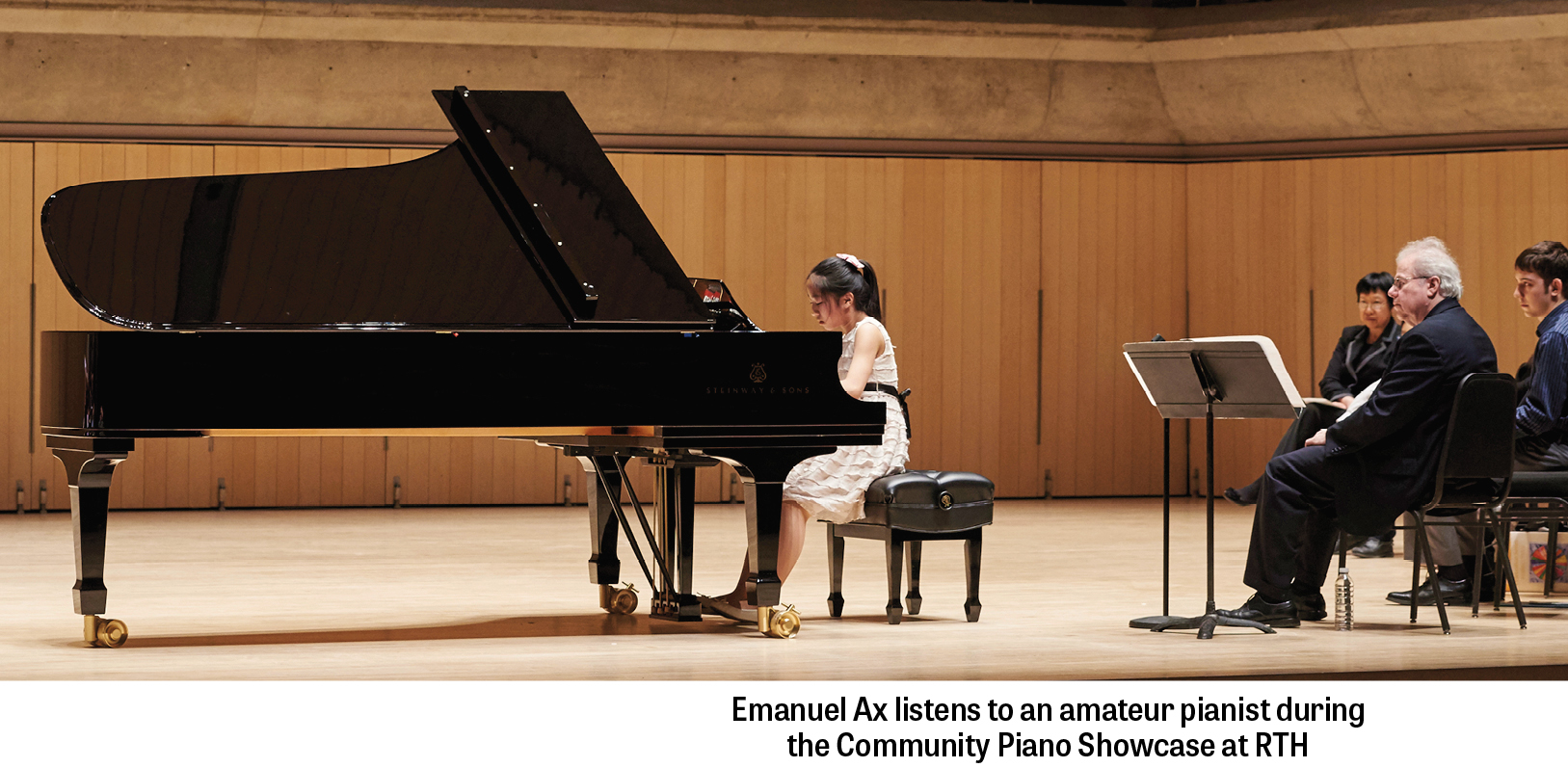
2006-Classical-Emanuel_Ax.jpgSeen and Heard:The RBC Piano Extravaganza – or “Ax-travaganza” as Mervon Mehta dubbed it – took the city by storm over an 11-day period attracting approximately 14,000 to events at RTH alone. In addition, 27 amateurs performed on the hall’s newly acquired New York Steinway during the Community Piano Showcase; including the Young People’s Concert programs, 20 pianists performed on the RTH stage during the festival; and 200 people played the five Steinways in the festival’s inaugural event, Pianos in the City, February 4 between 11am and 2pm.

My immersion in the Extravaganza began on its second day, Thursday February 5, with festival curator Emanuel Ax’s introduction of two young pianists at a COC free noontime concert. Siberian-born Pavel Kolesnikov, the 2012 Honens Competition winner now studying with Maria João Pires in Brussels, learned three Liszt transcriptions of Wagner operas, including the “Pilgrim’s Chorus” from Tannhäuser, especially for the event. Impressive. American pianist Orion Weiss, who left his native Cleveland for Juilliard, specifically to study with Ax for his integrity and revelatory playing, brought a singing touch to a pair of Granados Goyescas. Several hours later they played a dynamically well-matched Rachmaninoff Symphonic Dances for two pianos that preceded a TSO concert that included the orchestral version of the same piece.

Ax began that program with an agreeable, self-effacing rendition of a Schubert impromptu followed by Mozart’s Piano Concert No. 14 K449. Round tones of limpid liquidity gave the impression that the pianist was opening a musical jewel box.

The four-hour and twenty-minute Pianopalooza Sunday afternoon included 16 disparate performers selected by the RCM in a musical cavalcade that came close to filling Koerner Hall and concluded with a show-stopping, two-piano-eight-hands version of Tchaikovsky’s 1812 Overture complete with recorded cannon shots. The event featured two bona fide highlights: Robi Botos’ jazz set was an uninterrupted 20-minute piece of spontaneous joy; Ax’s melodic, technically assured performance of Chopin’s Scherzo No. 2 was piano playing at its best.

Three days later, Ax joined Jan Lisiecki for Mozart’s heavenly Concerto for Two Pianos K316a/365 and Saint-Saëns’ delightfully entertaining The Carnival of the Animals.

The next day in a pre-concert performance, Ax displayed his chamber music skill set in an immensely satisfying reading of Schumann’s Piano Quintet Op. 44. The string parts were taken by the first chair TSO players, concertmaster Jonathan Crow, principal second violinist Paul Mayer, prinicipal violist Teng Li and principal cellist Joseph Johnson. The players faced the choir loft, which overflowed into the adjacent sections of the hall. No one who heard them will forget the strings’ strength, the way Ax was able to emerge from the background to point out the melody and the assured playing of this propitious gathering.

Later that evening Ax demonstrated a deft curatorial touch in an adventurous program pairing a two-piano piece with its orchestral equivalent. Ax and Stewart Goodyear, more or less balanced in selected pieces of Carl Maria von Weber, returned for an exciting performance of Ravel’s La Valse. In between Anagnoson & Kinton proved to be very well-matched in an apparently seamless gambol through Brahms’ Variations on a Theme by Haydn. As in the previous week’s Rachmaninoff Symphonic Dances, the orchestral colour was more varied than the keyboards’ but the unique opportunity to hear the difference was welcome.

Ax spoke of his love of the word “metamorphosis” when he introduced that program. The next morning he became its agent at a master class for Glenn Gould School students. He was his usual combination of self-effacing and endearing as his analysis and advice transformed a student’s performance of Chopin’s Barcarolle, a piece he called “ecstatic” and which he linked forward to Wagner and back to Bach. He continued his delicate balance of dispensing compliments, ever careful that his suggestions would not be construed as outright criticism.

He recalled an encounter he had as a young man with Pablo Casals when the cellist was 96 and spending his last summer at Marlboro. “[When] the music goes up, [play] loud; music goes down, soft,” Casals instructed. “We all thought he was out to lunch,” Ax said. “But the older I get, the more I see how right he was.”

Quick Picks:

Mar 6 Siberian-born violinist Vadim Repin, the interview subject of my last month’s column, makes his eagerly awaited Toronto recital debut at Koerner Hall in a diverse program of Bartók, Debussy, Ravel, Stravinsky and Tchaikovsky.

Mar 8 at Koerner Hall KahaneSwensonBey, who re-formed in 2012 after a 25-year hiatus, perform piano trios by Mozart, Schumann, Ravel and Schoenfield. In an unfortunate scheduling conflict their afternoon concert occurs at the same time as the Vienna Piano Trio’s Mooredale recital in Walter Hall just minutes away.

On the evening of Mar 8 violinist Moshe Hammer and pianist Angela Park perform works by Brahms, Franck and Sarasate at the Aurora Cultural Centre.

Mar 11, 12 and 14 Gianandrea Noseda conducts the TSO in a program featuring Beethoven’s Symphony No. 7, which is all you need to know to make plans to attend. The program also includes Adrianne Pieczonka performing Wagner’s Liebestod from Tristan und Isolde and Richard Strauss’ divine Four Last Songs, which further certifies it as a must-see. Rising star Krzysztof Urbanski and the TSO are joined Mar 27 and 28 by the captivating Sol Gabetta in Dvořák’s masterpiece, his Cello Concerto in B minor, Op. 104, a work they have played together many times. Then Urbanski leads the orchestra in Stravinsky’s rhythmic revelry, The Rite of Spring. Another must-see.

 TSO associate principal clarinetist Yao Guang Zhai is joined by pianist Jeanie Chung for Luigi Bassi’s Concert Fantasy on themes from Verdi’s Rigoletto in a free COC concert also featuring Gershwin, Brahms and three solo pieces by Stravinsky at the Richard Bradshaw Amphitheatre Mar 12.

Mar 14 is crystal ball gazing time when students from the Phil and Eli Taylor Performance Academy for Young Artists give a free concert in Mazzoleni Hall. On Mar 31 another Mazzoleni Hall free concert (ticket required) features solo and chamber works performed by Rebanks Fellows from the Glenn Gould School. Apr 2 three of the Rebanks Fellows perform Brahms’ gorgeous Trio for horn, violin and piano in a free noontime COC concert.

Mar 15 Trio Arkel with guests, cellist Amanda Forsyth and violinist Aaron Schwebel, perform Schubert’s sublime String Quintet in C in the Church of the Holy Trinity.

Mar 16 group of 27 presents Payadora Tango Ensemble and g27 violinist Rebekah Wolkstein in a recital at Heliconian Hall.

Don’t miss your chance Mar 19 to hear the Elias String Quartet, the “excellent” (New York Times), “exuberant” (The Guardian) young British ensemble making their local debut presented by Music Toronto, in works by Haydn, Mozart and Mendelssohn.

Mar 22 Alliance Française presents Stravinsky’s tuneful fable The Soldier’s Tale featuring Jacques Israelievich, violin, with Uri Mayer conducting.

Mar 27 Violinist Lisa Batiashvili, Till Fellner’s trio partner (along with Alfred Brendel’s son Adrian) is joined by pianist Paul Lewis in his first Toronto appearance since his remarkable debut opening the Women’s Musical Club’s 115th season in the fall of 2012. Their program includes Schubert’s “Grand Duo” and “Rondeau brilliant,” Beethoven’s Violin Sonata No.10, Op.96, Telemann’s Fantasia No.4 for Solo Violin and Busoni’s arrangement of Bach’s Chorale Prelude “Nun komm’ der Heiden Helland” for solo piano.

Mar 27 and 28 the incomparable Kitchener-Waterloo Chamber Music Society presents concerts 13, 14, 15 and 16 in the Attacca Quartet’s ongoing series performing all 68 of Haydn’s quartets. Each concert features quartets drawn from the early, middle and later period of the composer’s life.

YouTube star Valentina Lisitsa’s piano playing has struck quite a few chords based on upwards of 80 million views. Before her Royal Albert Hall recital in front of an audience of 8000 in June 2012 her fans had the chance to vote online for their preferred program – a form of audience participation that has become one of Lisitsa’s trademarks. Will the contents of her BravoNiagara! solo concert Apr 4 be similarly chosen?

Paul Ennis is the managing editor of The WholeNote.
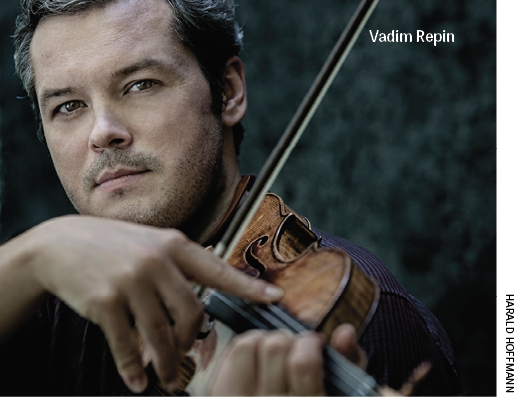
2005_-_Beat_-_Classical_-_Vadim_Repin.pngRussian-born Vadim Repin may just be the best violinist you’ve never heard of. Unless you happened to catch his TSO appearance in 2007 playing Prokofiev’s Violin Concerto No.2 with guest conductor Thomas Dausgaard, his only exposure here has been through recordings (most recently with Deutsche Grammophon) and YouTube clips. The clips span almost 30 years of an acclaimed career that took international flight after he won the prestigious Queen Elisabeth Competition in Brussels in 1989 when he was only 17.

In a recent telephone conversation the warm and gracious violinist described how he felt at that time: “The competition itself was really tough, very difficult psychologically and [physically]. It goes forever [one month]. For the next four years it put me in the spotlight of the music world but then there was a new winner, so forget about it. You have to do other things to get noticed and get the spotlight.”

This virtuoso, for whom technique is always a means to a musical end, never an end in itself, began violin lessons at five by “pure chance.” His mother, who had been encouraging her son to play with musical toys since he was three, took him to school intending to sign him up for accordion studies. Only violin places were available so he took up the violin. By age seven, chance took him under its wing again; his teacher advised studying with Zakhar Bron (who later taught Maxim Vengerov and Daniel Hope), a relationship which would continue for 13 years.

Read more: Ax to Repin: What a Month

Classical 19Seen and Heard: After each standing ovation that followed his performances of three Beethoven piano concertos with the TSO in November, 19-year-old budding superstar Jan Lisiecki would take a seat at the piano and confidently greet the RTH capacity crowd with the words “Good evening.” He added at the last of his six concerts, “As has become traditional, I will now play some Chopin.” The Nocturne No. 20 in C Sharp Minor, Op. Posth. followed, flowing as naturally as the encores in the first two programs, the Prelude Op.28 No.1 and the Etude Op.25 No.1. Like putting on a comfortable shirt.

Lisiecki’s playing of the first movement of the Fourth Piano Concerto on November 12 had an almost fortepiano quality; the melancholy second movement had a conversational tone until it time-travelled into the future before meeting up with the impetuous Rondo. At intermission TSO composer advisor Gary Kulesha asked Lisiecki to compare Beethoven to Mozart and Chopin, the latter two composers having supplied the contents of the pianist’s two Deutsche Grammophon CDs.

“In Mozart you’re completey exposed – elegant; in Chopin you can play the concerto without the orchestra; in Beethoven you’re a member of the orchestra,” he responded.

“My modus operandi is to make the piano sing,” Lisiecki said. Along with a wonderful tone, that’s his approach to every piece he plays.

Kulesha wondered how Lisiecki would characterize the three Beethovens. The Third “has a similar ferocity and darkness as the D minor Mozart K.466 which it parallels”; the Fourth “pushes the boundaries . . .  [it] begins from the soul of the piano”; the Fifth “broadens what can be done in a concerto.”

Three days later came a first-rate performance of the Third. It had great cohesion, its architecture proceeding organically from the propulsive Allegro con brio and delicacy of the Largo to the pure joy of the inverted theme after the Rondo’s cadenza. You could feel the composer’s notes straining against classical convention but revelling in it. In the Chopin etude, Lisiecki demonstrated the beauty of tone over technique.

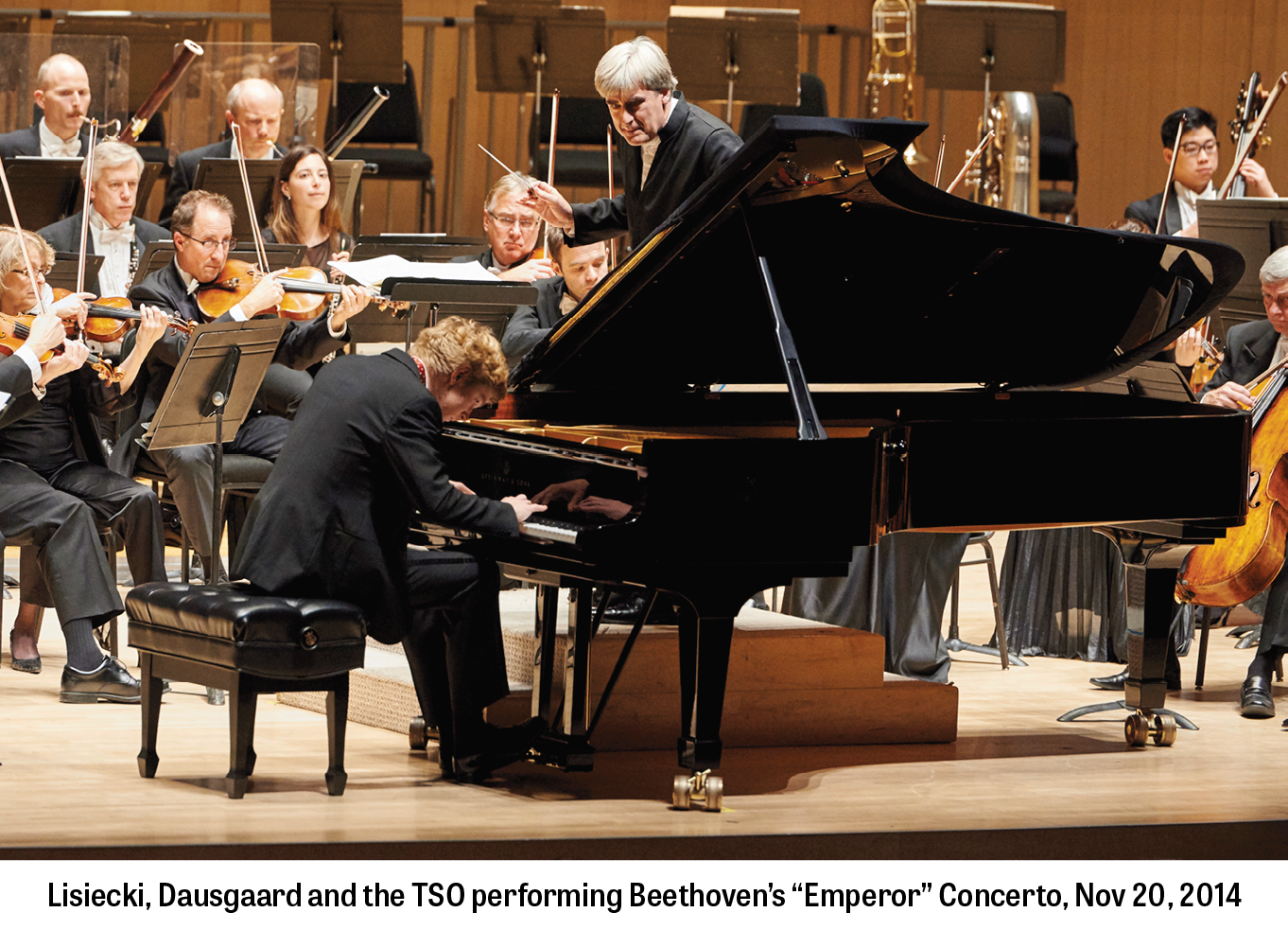
Lisiecki’s playing of the “Emperor” the following Saturday was dynamically diverse yet always controlled, from the wondrously hushed non-cadenza of the Allegro and the magical Adagio which felt as though the piano’s notes were walking on air, to the radical contrasts of the Rondo.

In a conversation with William Littler during intermission, Lisiecki divulged that a teacher in pre-school had suggested that the five-year-old child be given piano lessons. It took most of that year and a generous gift of a 100-year-old upright from a family friend before his parents agreed. Curiously, the Third Piano Concerto was the first piece by Beethoven he can remember as a child. Lisiecki also revealed that if he doesn’t practise he doesn’t feel right: “You don’t want to be around me.”

Talking about his instrument and the fact that every pianist is at the mercy of the venue where he performs, he raved about the piano at Koerner Hall, declined to comment on those at RTH and gushed over the one he played in Hamburg. “Not knowing what to expect forces us to create art in the moment,” he said.

Lisiecki’s Beethoven coincided with a series of three symphonies by the Danish composer Carl Nielsen, all under the enthusiastic baton of Neilsen’s countryman Thomas Dausgaard. Judging by the orchestra’s generous applause and responsive playing, their connection to the guest conductor was genuine. For his part, Dausgaard exudes joy on the podium, which manifests itself occasionally as open-mouthed. And he often lowers his arms and lets the orchestra play on their own, trusting them for bars at a time. He turned away from the audience in his introduction to the final concert and spoke directly to the players: “Can I say to you Toronto Symphony – you own this music.”

Lisiecki too fell under his spell as the two musicians intently locked eyes at the beginning of the finale of the “Emperor,” the young Canadian drawing on the Dane’s energy.

Classical 21

Trifonov Trifecta: Daniil Trifonov, only 23, the 2011 Tchaikovsky Competition multi-award-winner, having already proved his technical prowess at the Arthur Rubinstein International Piano Master Competition earlier that year, seemed intent on establishing his artistic reputation with three programs available to Toronto audiences this season. The first, a dazzling performance of Rachmaninov’s Rhapsody on a Theme by Paganini with the TSO took place in September. An ambitious solo recital December 9 at Carnegie Hall will be live streamed on medici.tv (and available free for 90 days thereafter). Consisting of Bach’s Fantasy and Fugue for Organ in G Minor, BWV 542 (transcribed for piano by Franz Liszt, S. 463), Beethoven’s Piano Sonata No. 32 in C Minor, Op. 111 and Liszt’s Transcendental Etudes, it will likely add to his burgeoning reputation.

Then on January 20 at Koerner Hall, Trifonov turns to chamber music with the great Gidon Kremer. Mozart’s Violin Sonata No. 33 in E-flat Major, K. 481. Schubert’s Fantasy in C Major, D. 760 and Rachmaninov’s Trio élégiaque No. 2 in D Minor, Op. 9 comprise a program that will certainly reveal yet another side of this talented Russian-born phenom.

A Trio of Quartets: Music Toronto presents the latest incarnation of the Juilliard String Quartet January 8 in a program headed by Webern’s shimmering Five Movements, Op.5. Three weeks later the mighty St. Lawrence String Quartet returns for its annual visit to its first home. The exuberant Geoff Nuttall will lead us in a “Haydn Discovery” followed by the father of the string quartet’s Op. 33, No.2 “The Joke.” A major new work by John Adams fills the concert’s second half. On January 6 the New Orford String Quartet treats us to Beethoven’s Op. 95 and Brahms’ Op. 51, No.1 before premiering a new work by Gary Kulesha. The New Orford then teams up with Amici February 1 for one of the most interesting programs of the new year, “Bohemian Contrasts.” They join cellist David Hetherington and violist Teng Li in a performance of Schulhoff’s String Sextet and Joaquin Valdepeñas in Brahms’ unforgettable Clarinet Quintet in B-minor, Op.115. Pianist Serouj Kradjian fills out the rest of the program with piano works by Liszt and Janáček.

KWCMS’s 40th: The Kitchener-Waterloo Chamber Music Society has designated the week of November 28 to December 7 to mark its considerable achievement. Over the years the cumulative volume of talented performers who have made their way to Jan and Jean Narveson’s home is astonishing enough, but it is the KWCMS’ penchant for programming complete cycle concerts that really makes one sit up and take notice. [For a glimpse into how they do it, see my October 2013 Classical and Beyond column.] Two cycles over the December-January period caught my eye: Trio Celeste’s complete traversal of Beethoven’s Piano Trios December 12, 14 and 16; and the scintillating Duo Concertante performing Schubert’s complete music for violin and piano January 29 and 31. It promises to be  an even more musically satisfying event than the Beethoven. Schubert’s music in this case is consistently of the highest order, charming and melodious; the opportunity to hear all of it should not be missed.

Quick Picks

Dec 6 the prodigious Stewart Goodyear performs Tchaikovsky’s The Nutcracker entirely on the piano joined by dancers from the National Ballet School of Canada and Ballet Creole, and singers from the Toronto Children’s Chorus.

Dec 7 two recent Glenn Gould School appointees, celebrated pianist John O’Conor and former first cellist of the Cleveland Orchestra, Desmond Hoebig, team up for Beethoven’s serene Cello Sonata No.3 in A Major, Op.69. O’Conor will play a selection of Nocturnes by his Irish countryman John Field and by Chopin; Yehonatan Berick, Cordelia Paw and Barry Shiffman join them for Schumann’s masterful Piano Quintet in E-flat Major, Op.44.

Dec 7 two admirable pianists make their Toronto debut in Mooredale Concerts’ “Piano Dialogue.” Wonny Song will play Beethoven’s Moonlight Sonata and David Jalbert Poulenc’s Les soirées de Nazelles before coming together for duets by Ravel and Schubert and Rachmaninoff’s Suite No.2 in C Major, Op.17 for two pianos.

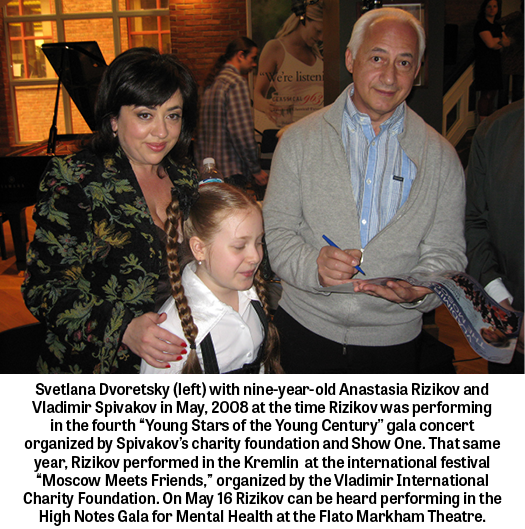
Dec 12 Anastasia Rizikov brings her already considerable 15-year-old experience to Chopin’s Piano Concerto No.1 accompanied by Sinfonia Toronto before performing a staggering KWCMS solo concert Jan 24. Bach, Chopin and Liszt lead in to Mussorgsky’s Pictures at an Exhibition; then after intermission Chopin and Mozart precede Balakirev’s fiendishly difficult Islamey.

Jan 9 Angela Hewitt, the subject of this month’s cover story, is joined by mezzo-soprano Anne Sofie von Otter in a program rich in songs by Beethoven, Schubert, Brahms, Fauré, Debussy and Chaminade. Interspersed between them Hewitt will play piano music by Schubert, Brahms and Chabrier.

Jan 14, 15, 17 and 18 mark the beginning of the TSO’s Mozart@259 festival curated by Les Violons du Roy’s Bernard Labadie. The impressive young British conductor and keyboardist Matthew Halls leads the orchestra in three varied programs showing Mozart’s range as an instrumental composer.

Jan 22 to 25 will see the Montreal Symphony’s Kent Nagano make a rare foray into the forest of period instruments as he leads Tafelmusik in performances of Beethoven’s Symphony No.5 in C Minor, Op. 67 and his Mass in C Major, Op.67. It will be fascinating to compare this performance of the symphony to that in Nagano’s recent recording [reviewed by Richard Haskell in this issue of The WholeNote].

Feb 7 Pinchas Zukerman makes his final Toronto appearance as music director of the National Arts Centre Orchestra in an RTH program with two of Brahms’ most beloved concertos. Zukerman is joined by NAC principal cellist Amanda Forsyth for the Double Concerto for Violin and Cello in A Minor, Op.102; Yefim Bronfman is the soloist in the Piano Concerto No.2 in B-flat Major Op. 83, the epitome of 19th century romanticism.

Paul Ennis is managing editor of The WholeNote. He can be reached at editorial@thewholenote.com.

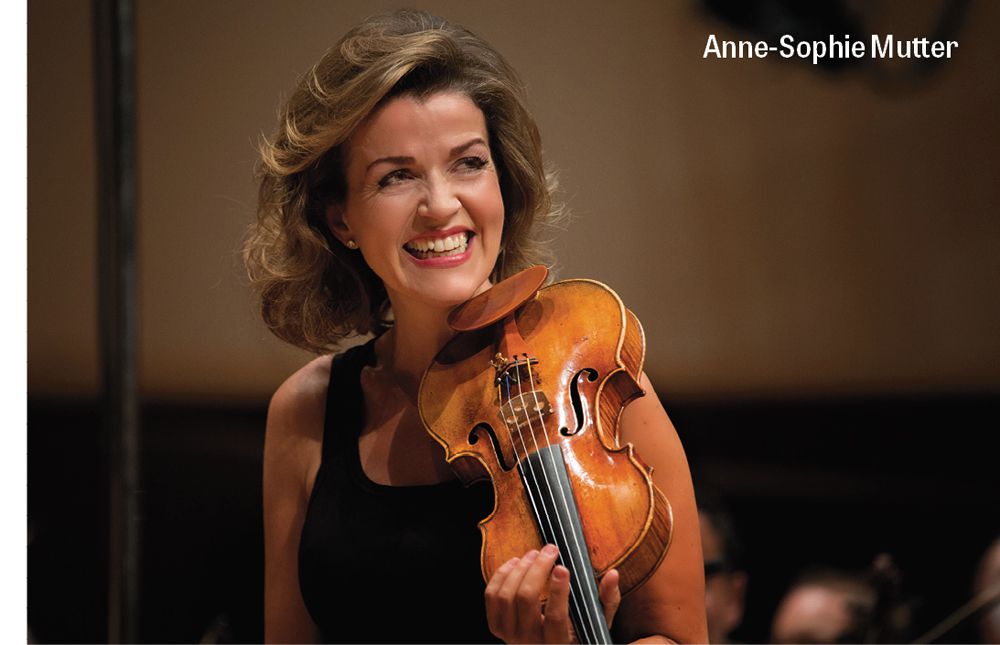
beat - classicalAnne-Sophie Mutter was only 22 years old when she started her first foundation in aid of young string players; it was limited to the area of Germany at the foot of the Black Forest where she was born. As a teenager if had become clear to her – she told me in a recent telephone conversation – that “we string players sooner or later run through the same circle of problems mainly to do with finding the right teacher but also with finding an instrument which can be a musical partner for life, and hopefully financially obtainable as well. So my first foundation was sort of a tryout, how I could help younger colleagues.”

Now in its 16th or 17th year, the Circle of Friends of the Anne-Sophie Mutter Foundation provides instruments for the foundation’s chosen scholars as one attempt to help. Another is commissioning new works. The Toronto program of Anne-Sophie Mutter and the Mutter Virtuosi in Roy Thomson Hall on November 21 opens with a commission by the Circle of Friends for double bass -- Ringtones by the American Sebastian Currier.

“Obviously throughout history the double bass has been one of the important pillars of the orchestra but there have been very few solo performers,” she said. “Roman Patkoló was one of my first scholars and I was totally blown away by his talent, by his artistry and great passion,” she continued. So even though her original plan had not included the double bass that much, it became “really a main focus of my foundation” with four pieces commissioned for Patkoló starting with “a beautiful double concerto” written and recorded by André Previn, “a very pizzazz-y solo piece by Penderecki,” as well as “a very intellectual spherical piece” by Wolfgang Rihm.

Ringtones is a very serious piece but also leaves room for fun,” she continued, explaining that it’s a way to build a case for the virtuosity of the bass. Showing off her sense of humour, she dead-panned: “Ringtones are for the very first time in a concert welcome!”

As to what it’s like to perform with her students and former students -- who comprise the Mutter Virtuosi with whom she’s sharing the RTH stage – she recounts how when she was 13, Karajan treated her as an adult, addressing her with the German equivalent of “vous,” not “tu,” which would be normal in speaking to a 13-year-old. She points this out to indicate that experience and age are irrelevant to the “all-embracing strength of musical language.”

“No matter how young we are,” she went on. “At the end of the day it’s really your personal viewpoint, and of course, a certain skillfulness, that we only have to share.

“Of course I’m looking with great love and devotion into the lives of the ones I’ve been a small part of for 10 or 15 years and it’s beautiful to see how all of them have found their place in music... it is really the Olympic ideal to make the best out of what you have that is the driving force behind the [foundation’s] selection process.”

Mendelssohn’s great Octet is on the program in Toronto, so I asked Ms. Mutter why she admires the composer so much. Her answer was especially revealing. She began by saying that it was only eight or ten years ago she re-started learning the Violin Concerto:

“My wonderful teacher Aida Stucki never seemed to be quite taken by what I did with the piece and I never felt quite free with what my vision was. So it wasn’t one of the pieces I felt comfortable with and when it was up to me to decide what repertoire I would delve into I thought, ‘Well if no one likes my Mendelssohn playing, I’ll just stop playing it.’

“Then many years ago, I think around Kurt Masur’s 75th or 80th birthday [80th in fact, in 2007] he said ‘I want a gift from you: Restudy the Mendelssohn and let’s do it together.’ Of course, when Kurt Masur wishes something I’ll go to the end of the world for him, so the least I could do was restudy the piece and come to different conclusions. And he gave me wonderful insights.

“I came to admire Mendelssohn as the humanist he was and actually today he’s for me a perfect example of what I expect a musician to be, also [what I expect] of the younger generation: someone who is socially engaged and open-minded and goes with open eyes through life.”

She explained that Mendelssohn built the first music school in Germany for “students of all cultural and financial backgrounds,” and of course, “he resurrected Johann Sebastian Bach.” She summed up her feelings: “Somehow I seem to admire an artist in general even more if he also turns out to be a useful member of human society, apart from being very skillful at what he’s doing.

“Obviously the Octet stands for all these qualities. There’s such a beautiful quote from Mendelssohn who used to say, particularly about the Octet, that when he is writing or making chamber music he hopes that it is ‘like a conversation between very well-educated and interesting friends.’

beat - classical 2“And this is pretty much how I feel when I am playing with my young colleagues. We all bring our own viewpoints to it and there’s a lot of freshness and passion in the air, which is the main ingredient really of rediscovering what we think we know.”

I had read that Ms. Mutter had recently begun using a baroque bow to perform Bach, so I asked her if she would be using one in the Toronto performance of Vivaldi’s The Four Seasons, only to discover that new regulations involving animal materials made it difficult to bring even copies to North America. She told me that she will continue to play Bach with it wherever she is able mainly “because the original phrasing in the Bach scores is only to be obtained by bows which are much lighter in the frog [the bottom part of the bow that is nearest to the hand] which was the case in Baroque times.”

While they don’t use baroque bows in their playing of the Vivaldi, it’s nevertheless much less dense and more transparent playing today than what she thought was proper in the 1980s. In Toronto she and her Virtuosi would be keeping that “transparent and very airy sound in mind, for sure.”

I was quite curious about what led Ms. Mutter to take up the violin as a child since I knew that she didn’t come from a family of musicians. She spoke of growing up “kind of a tomboy” with two older brothers in a house with a lot of classical music and literature. Her father was a journalist who later became a newspaper editor. As engagement presents her parents gave each other recordings by Furtwängler and by Menuhin. “That shows how much that was part of their life and how much that became part of our life at home.”

“We listened to a lot of classical music as well as jazz,” she continued. “And that is probably the reason for my deep-rooted love of jazz because I felt so comfortable and basically soaked it up like mother’s milk.

“So for my fifth birthday – it must have been the constant presence of that violin sound which made me want to try it for myself. And I’m still trying it,” she added, almost seriously.

I asked her about the violinists who made an impression on her in her youth and the depth of her answer was quite telling: “The great, unforgettable David Oistrakh definitely left the deepest impression: his presence on stage, the warmth of his personality. I remember there were students sitting literally at his feet ... Yes, I was six years old and he played the three Brahms sonatas.

“A few years later I was fortunate enough to hear Nathan Milstein who became another of my [favourites]; I obviously also played with Menuhin at a later stage of his life; I heard Isaac Stern in person; I was rather close to Henryk Szeryng. I was really very fortunate to hear all of these icons of violin playing at a still fabulous age and in great shape.”

As to what makes a great violinist great, Ms. Mutter responded that “we’re all trying to be a well-rounded musican.” She finds the idea of being a specialist rather boring, caught up with technical details and perfecting them without really having the scope to see the bigger picture. She thinks it’s wonderful that the violin is “an instrument which is best in company with someone else, with another musical partner.” At the same as she extols the virtues of “just being a useful part of the whole” she says, “Of course you have to find – as violinist, pianist or conductor – you have to find an angle where music is newly or freshly or whatever ... it has to bring a spark to something.”

She spoke of shattering the illusion of the listener who might think he knows what you’re playing already and may feel slightly tired of it. “Of course that illusion has to be taken away the moment that the particular artist goes on stage,” she explained. ”Then it really has to be totally fascinating.” When I enthusiastically agree, she responds, “Hopefully.”

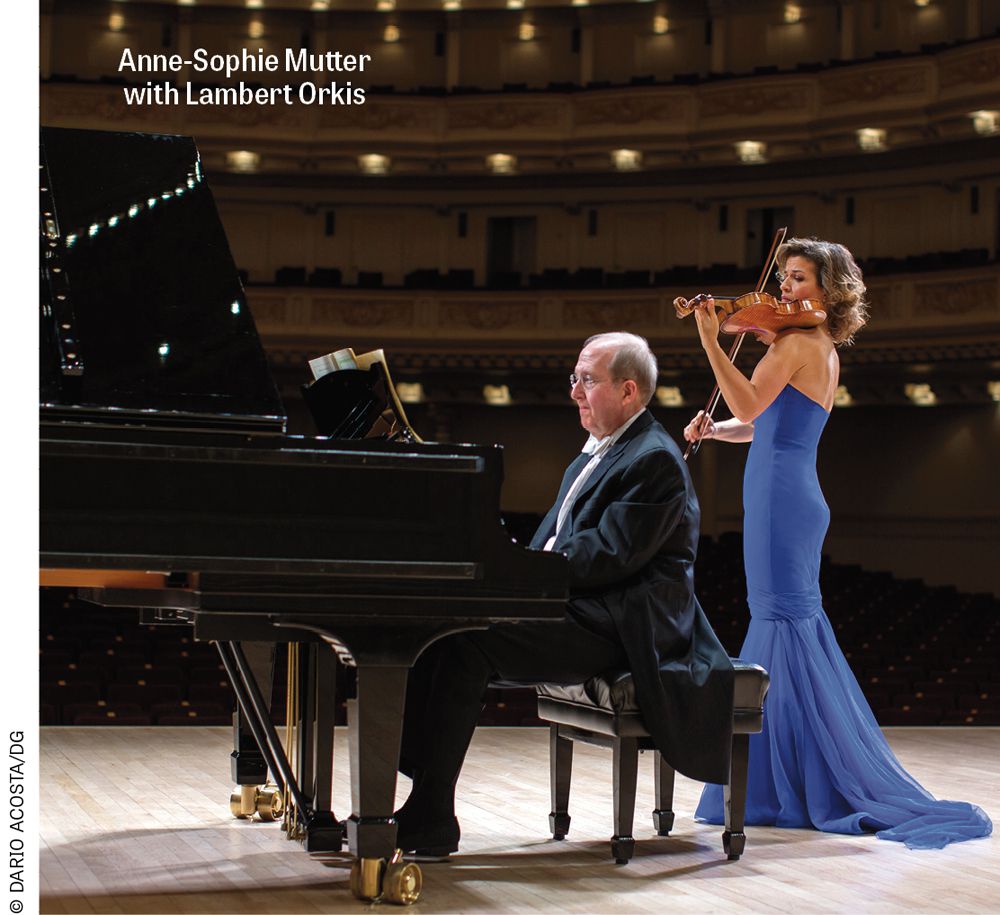
Her extensive discography which began when she was just 15 – Deutsche Grammophon celebrated her 35-year recording career with a 40-CD box set last year and her 25-year collaborative partnership with pianist Lambert Orkis was marked with The Silver Album, a 2-CD compilation this year – prompted a question about what, if anything in the violin repertoire she looks forward to recording.

“Sadly, sadly, of course life is too short,” she responded. She is fascinated, she went on to say, with the great encores that Jascha Heifetz used to play, “a repertoire that is sadly, frowned upon in German-speaking countries.” Listening to two CDs over the course of an evening recently, she remarked how struck she was by the “nobility of this great violinist,” and that for the next few months she would be exploring this repertoire. Beyond that? “The repertoire is endless – you can go in this direction or that, ...Walton, ... Barber, more contemporary music ... the Beethoven string quartets.”

“Yes, Paul, it’s kind of [a mock scream over the phone, as if saying it’s all too much to contemplate]” I counter that it’s something to look forward to; “One after the other,” she replies.

There is so much to do. Even as she takes the Mutter Virtuosi on their first North American tour, their New York appearance is just one part of Carnegie Hall’s Anne-Sophie Mutter Perspectives in which all facets of her musicianship will be on display, from her recent appearance in the Bruch Violin Concerto No.1 with the Berlin Philharmonic under Simon Rattle at the beginning of October, to the Annual Isaac Stern Memorial Concert November 11 (with Orkis on piano for Beethoven’s “Kreutzer” sonata, and a performance of Currier’s Ringtones with Patkoló), to a concert next spring with Yefim Bronfman and Lynn Harrell (including Beethoven’s “Archduke” trio). Playing Sibelius, Berg and Moret with the Danish National Symphony Orchestra and Michael Tilson Thomas’ New World Symphony completes the six-concert series.

WholeNote readers will be interested in the fact that the Mutter Virtuosi Carnegie Hall concert on November 18 will be live-streamed and available on medici.tv for view for 90 days thereafter. Like the concert in Toronto three days later,  the program includes Vivaldi’s Four Seasons but instead of Mendelssohn and Currier the Carnegie program features Bach’s Concerto for Two Violins BWV 1043 and André Previn’s.

What does she think about the live streaming, I ask. “It’s not downloadable but you can look at it and get horrified from another angle,” she jests, before adding more seriously: “I feel very honoured [because very few concerts are being streamed].”

So anyone going to the November 21 Roy Thomson Hall concert (or contemplating it) will be able to get a sneak preview in the few days before, or more likely cement a memory of parts of the Toronto concert any time through mid-February.

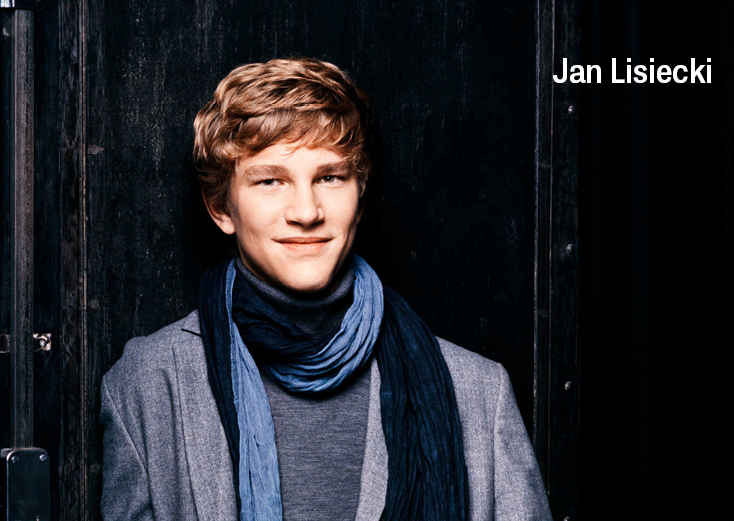
beat - classical 3Jan Lisiecki: Like Mutter, Calgary-born pianist Jan Lisiecki began music lessons at five and started recording for Deutsche Grammophon as a teenager (he was 17). He will bring his musical sensibilities to Beethoven’s third, fourth and fifth piano concertos in a series of concerts with the TSO November 12 to 22. I was fortunate several summers ago to hear Alfred Brendel play all five of the concertos with the Boston Symphony at Tanglewood and I can’t overstress what a pleasure such concentrated exposure can be. Guest conducting the TSO will be Thomas Dausgaard who has paired each concerto with a symphony by his Danish countryman, Carl Nielsen. Nielsen, a contemporary of Sibelius, is known for his energetic post-romanticism, and he was quite explicit about the life force music represented to him. Symphony No. 4 “The Inextinguishable” is particularly expressive in this vein, having been composed during the first half of the First World War. It’s paired with Beethoven’s most lyrical piano concerto, the Fourth, November 12 and 13.

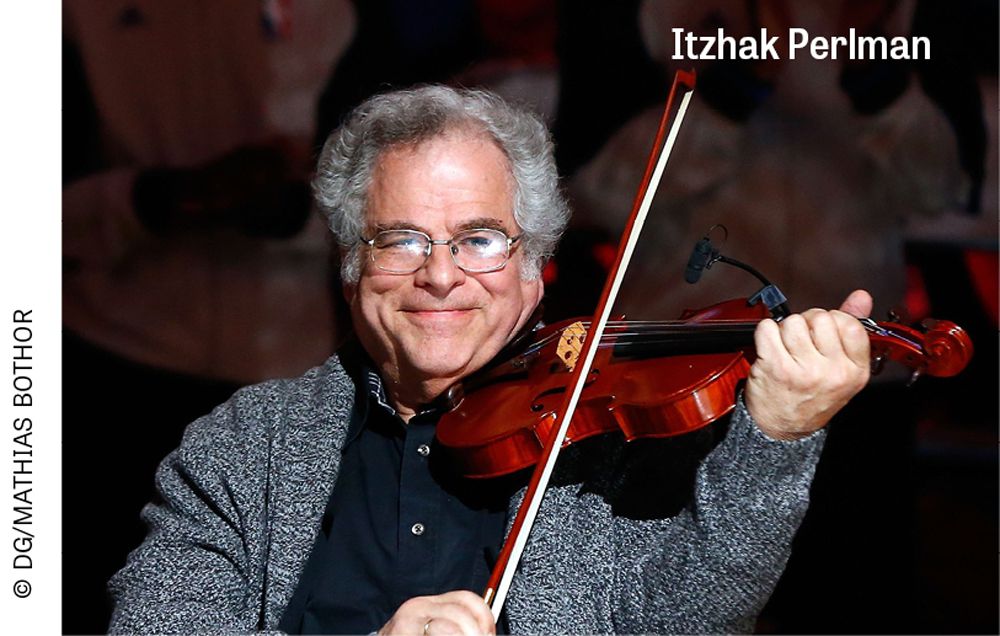
beat - classical 4Itzhak Perlman: Like Mutter, Izhak Perlman is a towering figure on the world violin stage and occupied as well with music education. His upcoming RTH recital December 1 with pianist Rohan De Silva crosses three centuries with music by Vivaldi, Schumann, Beethoven and Ravel. At his concert here two years ago with collaborator De Silva, he introduced the entire post-intermission part of the program from the stage, with the joyful aplomb of a Borscht Belt kibitzer. Any opportunity to hear what he cals his “fiddle playing” should not be missed.

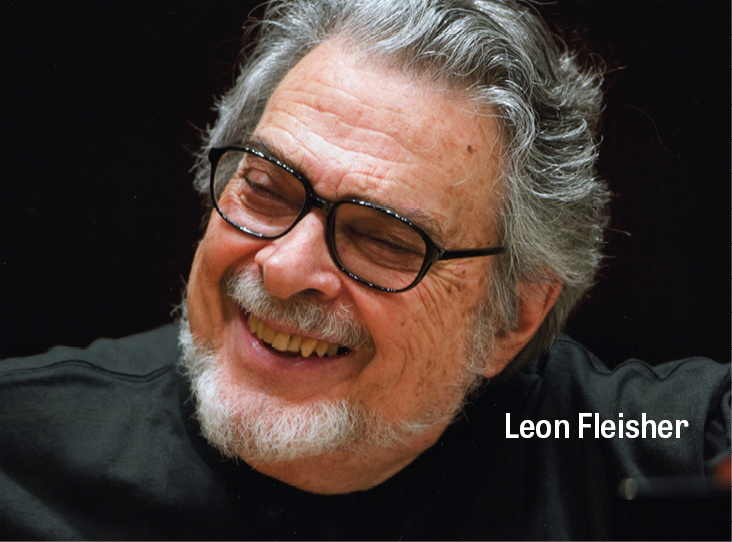
Leon Fleisher: For many years this city has been fortunate to have Leon Fleisher in its midst. As the occupant of the inaugural Ihnatowycz Chair in Piano at the Royal Conservatory, his presence has been felt in teaching, conducting, performing, examining and giving masterclasses. On November 25 at the Bloor Hot Docs Cinema, he will appear on stage in a Q & A after the screening of the fully packed 17-minute film, Two Hands: The Leon Fleisher Story, which documents his battle to overcome focal dystonia, a movement disorder that affected the use of the fourth and fifth fingers of his right hand. Watching him rise from the depths of despair at the peak of his concert career to remake his life as a musician is thrilling to behold. Take advantage of the opportunity to meet him in person.

beat - classical 5Three days later on November 28, Fleisher conducts the Royal Conservatory Orchestra in a program that includes Mozart’s Symphony No.39 and Brahms’ Symphony No.3. On the mornings and afternoons of November 29 and 30 he will give masterclasses in Mazzoleni Hall. He will share a musical legacy traceable back to Beethoven directly through his teacher Artur Schnabel and Schnabel’s teacher Theodor Leschetizky who studied with Carl Czerny who studied with Beethoven. Anton Kuerti can claim a similiar connection through another pupil of Leschetizky, Mieczysław Horszowski, who taught Kuerti.

The evening at the Bloor also includes the feature-length, documentary Horowitz: The Last Romantic, a true curiosity by the noted filmmakers Albert and David Maysles (best know for Salesman, Grey Gardens and Gimme Shelter). The impish pianist and his shrewd wife Wanda (Toscanini’s daughter) are filmed in their apartment where Horowitz is recording an album at the age of 81. The up-close camerawork devoted to his fingers is just one of the attractions of this fascinating film.

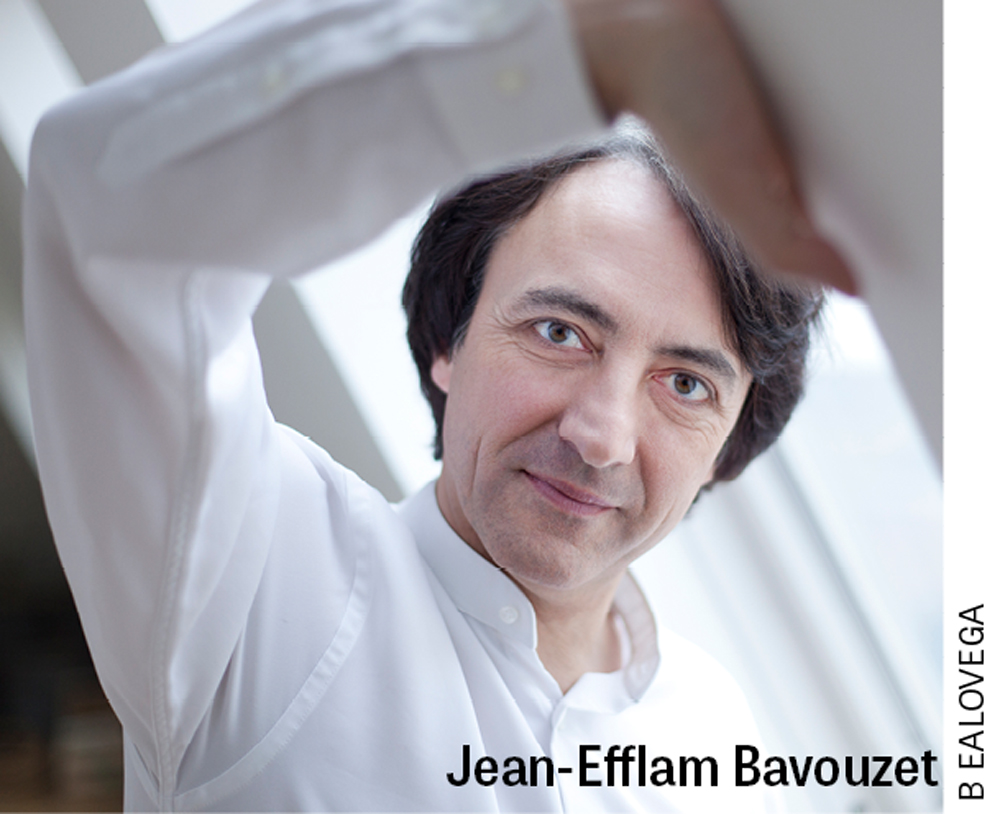
Bavouzet and the LPO: Coincidentally, pianist Jean-Efflam Bavouzet, who recently played Prokofiev’s Piano Concerto No. 3 at RTH October 17 with an energetic London Philharmonic Orchestra under Vladimir Jurowski, suffered from functional dystonia that affected his right hand from 1989 to 1993. In the Prokofiev Bavouzet moved confidently from wistful calm to devilish passagework, from idiosyncratic note picking to mysterious pianissimos as he revealed the composer’s Russian soulfulness. In the evening’s other major work, Shostakovich’s Symphony No.8, the LPO displayed great clarity and airiness including wonderful sound clashes, vibrant searing melodies in the strings, terrific brass work and yeoman flute playing that set up the intermittently febrile march of the second movement  and the sardonic third before the gratifying, sombre conclusion.

And So Much More: MacArthur “Genius” Fellowship-winner Jeremy Denk leads a parade of world-class pianists into November’s concert halls. He’s followed by the inimitable Richard Goode, the dynamic aestheticism of Simon Trpčeski, the elegance of Angela Hewitt (in a program that ranges far and wide from Bach and Scarlatti through Beethoven’s Op.110 to Albéniz and Liszt), to Mooredale Concerts’ “Piano Dialogue” between David Jalbert & Wonny Song and the adventuresome Christina Petrowska Quilico whose name is often found in the pages of TheWholeNote’s CD section.

And then there’s the Dover Quartet, the Daedalus String Quartet, the Cecilia String Quartet, the Windermere String Quartet, the Zuckerman Chamber Players, the Canadian Brass, Leonidas Kavakos & Yuja Wang, Dmitri Levkovich ... It goes on and on. Like Tchaikovsky, Danny Kaye’s famous tongue-twister of a patter song, name after name, concert after concert. What riches there are to be found in this issue’s listings.

Paul Ennis is the managing editor of The WholeNote. He can be reached at editorial@thewholenote.com.
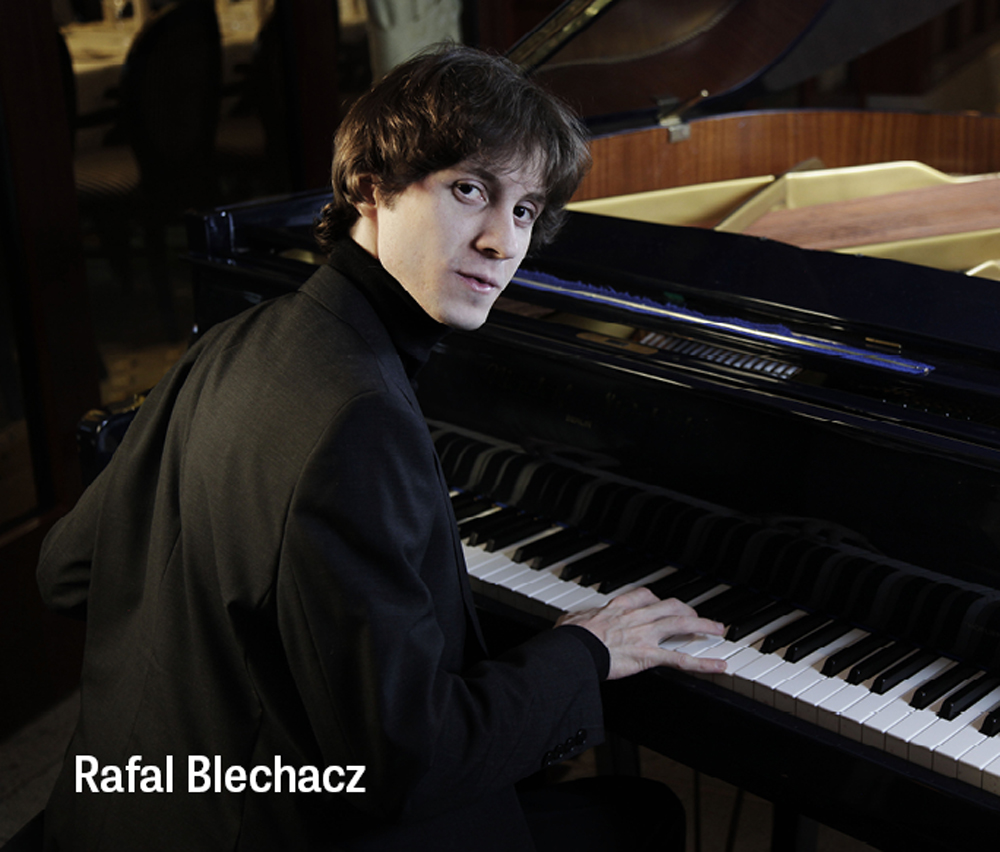
BBB-Classical1When Rafal Blechacz (pronounced BLEH-hatch) won the Chopin competition in Warsaw nine years ago, becoming the first Polish-born competitor to do so in 30 years, the jury saw fit to give no award for second place. Such was the dominance of Blechacz’s performance. The venerable contest, celebrating the Pole with arguably the highest worldwide name recognition, began in 1927 when Lev Oborin (best remembered today as a chamber music partner of David Oistrakh) came out on top. Held every five years since 1955 (when Vladimir Ashkenazy finished second and Fou Ts’ong finished third), the list of winners reads like a who’s who of pianists of the last half century: Maurizio Pollini (1960); Martha Argerich (1965); Garrick Ohlsson (1970, with Mitsuko Uchida second); Krystian Zimerman (1975); Yundi Li (2000, with Ingrid Fliter second).

Twice in recent history (1990 and 1995), the competition declined to award a first prize, saying no one played well enough. Blechacz, by contrast, won every possible prize in 2005: first prizes for Polonaises, Concertos, Mazurkas and Sonatas in addition to the overall First Prize.

Blechacz, whose highly anticipated Koerner Hall debut October 19 is part of the Canadian Chopin Society’s Canadian Chopin Festival, is the seventh and most recent recipient of the Gilmore Artist Award. This $300,000 award recognizes extraordinary piano artistry with some of the most generous financial support given in the musical arts and is conferred every four years to an international pianist of any age and nationality following a rigorous and confidential selection process.

Sometimes referred to as music’s answer to the MacArthur Foundation “genius grants,” the Gilmore is bestowed through a non-competitive process. Pianists are nominated by a large and diverse group of international music professionals. An anonymous, six-member artistic advisory committee appraises the nominees over a period of time and assesses their musicianship and performing abilities through numerous performances under varying conditions. Throughout the four-year process, candidates for the award are unaware they are under consideration.

Blechacz, who is 28, joins such previous winners as Leif Ove Andsnes, Piotr Anderszewski, Ingrid Fliter and Kirill Gerstein.

According to a New York Times story from January 8, 2014, Blechacz is writing a book about musical interpretation. He told Michael Cooper about a performance of Chopin’s Mazurkas that he gave in Hamburg that has stayed in his mind.

“After the last chord, it was extremely silent in the hall. The audience did not applaud. And I felt that there was something unique – it was the greatest reward for me from the audience, because I knew that they were completely in my musical world.

Sometimes, it happens.”

For his Toronto recital, Blechacz has included 3 Mazurkas, Op.56 as well as 3 Waltzes, Op.64, a polonaise and a nocturne by Chopin plus Bach’s Italian Concerto and Beethoven’s “Pathétique.”

“I’ve always enjoyed imagining the timbre of various other instruments when I play certain passages in Classical sonatas,” the pianist has written. “While working on Haydn, Beethoven or Mozart, I’ve often attempted mentally to ‘orchestrate’ the work, or part of it, whenever I had doubts as to articulation, pedalling or timbre. After performing this ‘instrumentation in the mind,’ those doubts about interpretation would disappear ... it would be wrong to suppose that Classical composers felt a different kind of joy, sadness, hope or despair than the Romantics. The fundamental nature of emotion is always the same; only its expression changes. When playing works from the Baroque, Classical, Romantic or even Impressionist repertoire, I often feel that these composers always convey the same substance, feelings and emotions, even though the style and approach of each is unique.”

The Canadian Chopin Festival begins its celebration of the beloved composer October 17, with a Mississauga concert featuring former winners Leonard Gilbert, Anastasia Rizikov and Li Wang, and concludes with the winners of this year’s competition performing in Koerner Hall October 26. In addition to three days each of senior and junior competitors vying for honours, the festival will feature a masterclass with pianist and pedagogue James Anagnoson, the dean of the Royal Conservatory’s Glenn Gould School, a lecture by Dr. Alan Walker, a workshop and demonstration of Polish dances as well as an event October 24 that promises a modicum of intrigue. “Chopin and Friends: 19th Century Salon Recital” features the competition’s jury, pianists Krzysztof Jablonski, William Aide, Bernadene Blaha, Kent McWilliams and Lisa Yui.

Everybody loves Chopin, including Ira Sachs, director of the lovely new film Love Is Strange. “We wanted to use Chopin not unlike how Simon & Garfunkel are used in The Graduate, to create a whole world for the movie while at the same time maintaining the integrity and beauty of the original.” For more see my Music and the Movies blog on thewholenote.com.

BBB-Classical2Janina Fialkowska’s entrée onto the world’s stage was launched in 1974 by Arthur Rubinstein after her prize-winning performance at his inaugural Master Piano Competition in Israel. She plays Chopin with a clarity and rigour that is formidable. Music Toronto hosts her October 28 and the Kitchener-Waterloo Chamber Music Society does likewise October 30 in an identical program that includes three mazurkas and a ballade by Chopin among works by Grieg, Schubert and Ravel.

In her story in People magazine almost 40 years ago, Barbara Rowes told it like it was: “In January 1975 Fialkowska was summoned by Rubinstein to a series of auditions at Manhattan’s Drake Hotel. ‘I was the dessert after his elegant lunches,’ she smiles. He would puff on a cigar and request ‘sonatas and études I hadn’t touched in years.’ Janina would then rush home and practice through the night for the next day’s recital. Mornings, her stomach knotted and her palms turned clammy. The pace was exhausting, and the exacting master showed no mercy as he tested her range, touch and determination. After six days her prowess and endurance were proved, and Rubinstein became her mentor. Lest anyone leer, Janina insists that Rubinstein, an avowed womanizer, never made non-musical overtures to her. But he helped swing a record deal with RCA’s high-toned Red Seal classical series and then helped set up her first series of concerts through his management. ‘For me, he said after one of her performances, ‘Janina was a revelation. I have never heard any pianist play the great Liszt sonata with the power, temperament, understanding, beauty of tone and, above all, the emotion and complete technical command she has shown.’”

Víkingur Ólafsson, Iceland’s award-winning rising star pianist and host of the Icelandic TV series Útúrdúr (roughly translated as OutofTune), makes his Toronto debut October 27 at Remenyi House of Music and October 28 at the Richard Bradshaw Ampitheatre, performing Nordic music while also paying tribute to one of his greatest inspirations, Glenn Gould, in a performance of Bach’s Goldberg Variations.

“I got the idea to do a TV series on music as early as in 2008, when I played the opening phrases from Beethoven’s Sonata Op.101 in an Icelandic TV interview, demonstrating how their impact can change drastically, depending on how one shapes them – you know, direction of line, balance between the voices, dynamics, pedal etc … The reaction I got took me by surprise, quite a few people told me that they really had no idea there was so much involved in playing a seemingly simple phrase, that they had a really vague idea about the elements which we interpreters spend our lives on refining.

“I kept this idea at the back of my mind for a few years (studying among other things the great stuff that Bernstein and Glenn Gould did on TV), and then started working seriously on the project in late 2011.”

Also appearing in a COC noontime concert (October 15) is award-winning 15-year-old Canadian pianist Anastasia Rizikov who, as mentioned earlier, helps launch the Canadian Chopin festival October 17. In this COC concert she showcases her virtuosity and passion in a demanding program of Russian repertoire: Tchaikovsky’s Romance in F Minor, a selection of Rachmaninoff preludes, Mussorgsky’s Pictures at an Exhibition and Balakirev’s knuckle-busting Islamey.

BBB-Classical3Bavouzet with the London Phil: French pianist Jean-Efflam Bavouzet joins Vladimir Jurowski and the London Philharmonic Orchestra October 17 in Roy Thomson Hall for Prokofiev’s Piano Concerto No.3. Bavouzet’s Chandos recording of all five of Prokofiev’s piano concertos with the BBC Philharmonic under Gianandrea Noseda was recently named the Gramophone award-winner in the concerto category. Toronto audiences are fortunate to be able to hear the most popular of these concertos. Rob Cowan wrote in the magazine that Bavouzet’s “superb cycle of the concertos promotes a combination of lyricism and chutzpah that lies at the very heart of these endlessly fascinating works” and that Bavouzet’s “way with the Third is chipper and cool.”

The Moscow-born Jurowski will undoubtedly connect with the emotional core of the major work on the program, Shostakovich’s Symphony No.8, which was composed at the height of WWII in 1943 and confronts the catastrophic violence and suffering Russians were being forced to witness daily in chilling, tragic and mysterious ways.

TSO: Shostakovich’s formidable Violin Concerto No.1 alternates profound melancholy with searing sarcasm; it highlights the TSO program October 22 and 23 conducted by Stéphane Denève. Scottish-born and Sistema Scotland-raised Nicola Benedetti will tackle this complex work that David Oistrakh premiered in 1955 – written in 1948, the composer wisely deemed it too dangerous to play in public until after Stalin’s death. Oistrakh reportedly begged Shostakovich to give the opening of the finale to the orchestra so that “at least I can wipe the sweat off my brow” after the daunting solo cadenza that concludes the third movement.

Earlier in the month, October 8, 9 and 11, another violinist, Tokyo-born and Montreal-raised Karen Gomyo, will play Sibelius’ shimmering, sensuous Violin Concerto and string quartets. Guest conductor Jakub Hrůša will lead the TSO in Dvořák’s tuneful audience favourite, Symphony No.9 “From the New World.”

A Sextet of Quartets: Music Toronto is bringing two world-class string quartets to the St. Lawrence Centre this month. The St. Petersburg String Quartet was formed in 1985 by graduates of the Leningrad Conservatory under the guidance of Vladimir Ovcharek, the first violinist of the Taneyev String Quartet.  As glasnost settled in and the Cold War thawed, their fame grew and their name changed from Leningrad to St. Petersburg just as the city’s did. Their complete Shostakovich string quartet recordings were greeted glowingly – Shostakovich’s String Quartet No.8 Op.110 from 1960 is included in their October 9 Toronto program. That program concludes with Tchaikovsky’s exquisite String Quartet in D Major Op.11, the composer’s first chamber work, a masterpiece by the 30-year-old Russian, noteworthy as the first work of Russian chamber music. Its second movement contains one of classical music’s greatest hits and, according to Tchaikovsky’s own diary, it moved Tolstoy to tears.

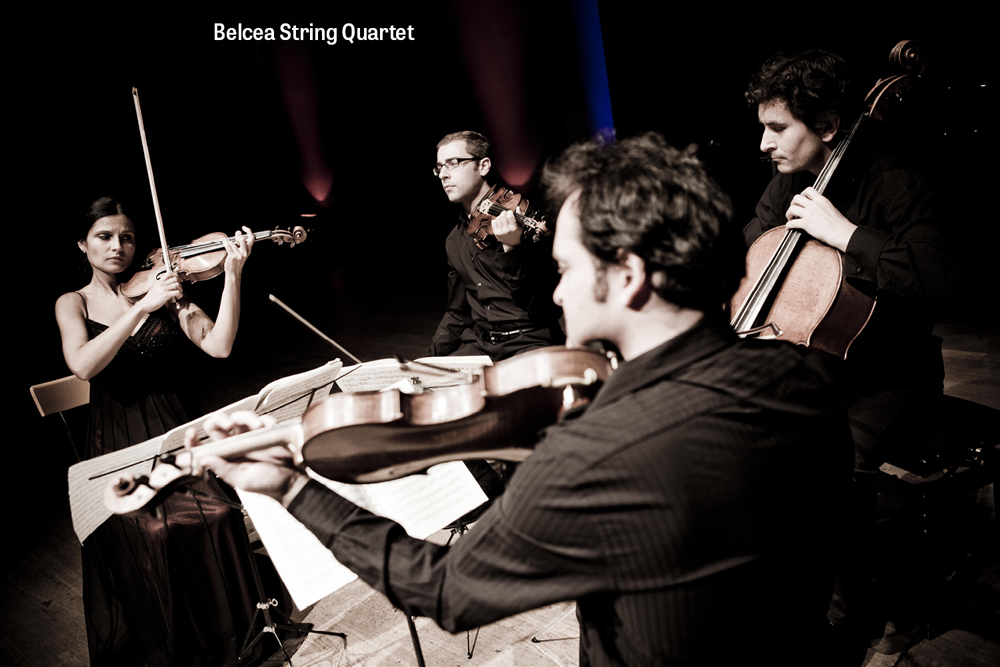
The Belcea (pronounced BEL-chah) are musicians of diverse cultural backgrounds, a characteristic that may account in part for their dynamic and free interpretative style. Founded at the Royal College of Music in London in 1994, the Belcea Quartet is based in Great Britain. However, Romanian violinist Corina Belcea and Polish violist Krzysztof Chorzelski, the two founding members, bring a very different artistic provenenance to the ensemble while drawing from the best traditions of string quartet playing received from the quartet’s mentors: the members of the Alban Berg and Amadeus Quartets. Their October 23 Toronto recital includes Beethoven’s Third Quartet as well as the First by Brahms and Schubert.

On October 9, the U of T Faculty of Music’s ensemble-in-residence, the Cecilia Quartet, is joined by the Gryphon Trio for an exploration of humour, play and games through the lens of chamber music in a free noontime concert at Walter Hall.

The Attacca Quartet continues its historic traversal of all of Haydn’s 68 string quartets October 24 to 26 under the auspices of the Kitchener-Waterloo Chamber Music Society.

The legendary Talich Quartet, recognized since 1964 as one of Europe’s finest, is evolving as a more youthful ensemble under the leadership of Jan Talich, Jr., who took over the first violin post from his father. Chamber Music Hamilton presents them October 26 in a characteristic program that includes Dvořák’s String Quartet No.13 animated by its Czech dance rhythms and Smetana’s moving String Quartet No.1 “From My Life.”

Finally, Mooredale Concerts presents the New Orford String Quartet November 2 in a program that includes Ravel’s ravishing String Quartet in F Major. Violinists Jonathan Crow and AndrewWan are concertmasters of the Toronto and Montreal Symphony Orchestras, Brian Manker is principal cellist in Montreal and Eric Nowlin is assistant principal viola of the TSO. They will be joined by TSO principal violist Teng Li for Mozart’s String Quintet No.4 in G Minor K516. The program will be repeated at The Isabel in Kingston November 4.

Paul Ennis is managing editor of The WholeNote. He can be reached at editorial@thewholenote.com.


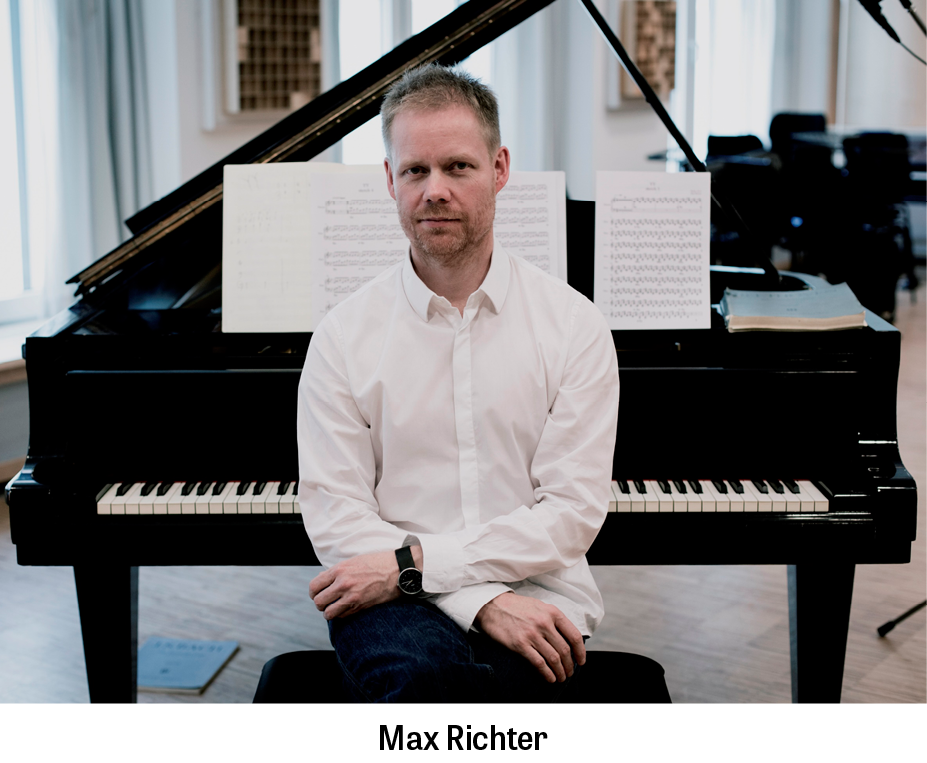
“You know, my piece doesn’t erase the Vivaldi original. It’s a conversation from a viewpoint. I think this is just one way to engage with it.” – Max Richter

bbb - classicalThe opening notes seem to emanate from otherworldly ether, tentatively falling into the familiar notes that begin The Four Seasons, but there’s something quite different that’s engaging us. In a November 2012 interview with NPR’s Audie Cornish, German-born, British composer Max Richter elaborated on the opening bars of his recomposition: “I took the opening motif, which I always thought was a dazzling moment in the Vivaldi, but in the original it’s only four bars. I thought, ‘Well, why don’t I just treat this like a loop, like something you might hear in dance music, and just loop it and intensify it, and cut and paste – jump-cut around in that texture, but keep that groove going.’”

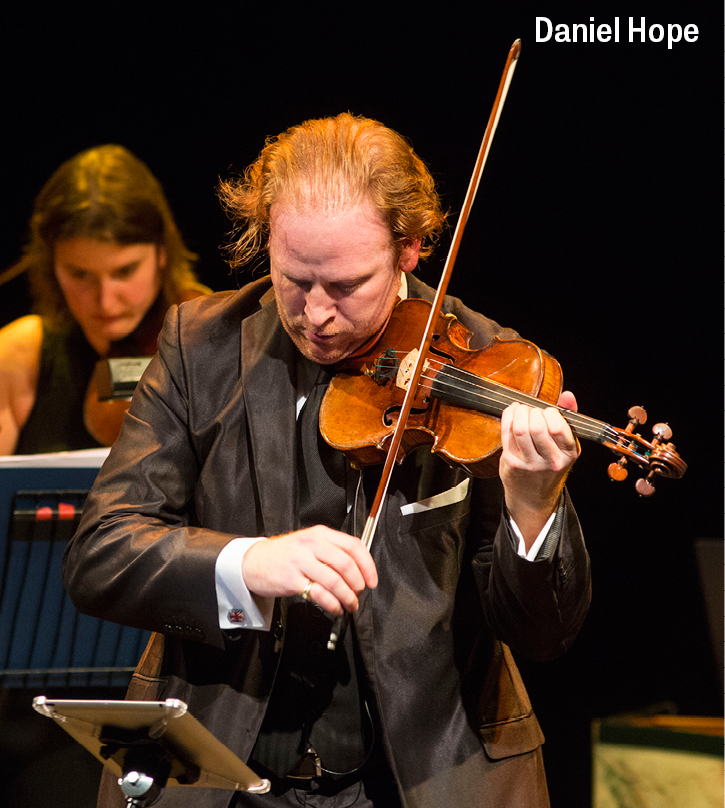
The essence of the music that was once the most recorded piece in the classical music catalogue is there but it’s got a contemporary feel, definitely not staid, bursting with energy, but not the heightened propulsion of Il Giardino Armonico, for example. In fact the clarity of violinist Daniel Hope’s crystalline playing is inviting.

The synth effects are so subtle they’re barely discernible but their presence is palpably modern, sleek and beguiling. The combination of the bones of Vivaldi’s original and the cloak Richter has wrapped it in make for a 21st-century experience that is pleasingly addictive, the kind of piece you put on repeat and listen to over and over and over. It never feels like it’s too much, its novelty easily trumped by its freshness, its mysteries slowly revealing themselves after five, six hearings.

Less than two weeks before he was to perform Richter’s Four Seasons Recomposed at the Ravinia Festival in Chicago, the acclaimed British violinist Daniel Hope participated in a live YouTube chat on June 10, 2013. (In addition to a versatile solo career, Hope was a member of the distinguished Beaux Arts Trio from 2002-2008.) Now more than a year later, in anticipation of the September 30 Toronto premiere of the Richter work, I’m watching the genuinely engaging Hope patiently answer questions.

bbb - classical2“The fact that Max Richter was willing to recompose The Four Seasons was incredibly brave and I think he’s done a fantastic job,” he begins. “I was contacted by [him] about one to one and a half years ago and told about wanting to recompose The Four Seasons,” he continues. “The first thing I said was ‘What’s wrong with the original?’ He laughed and said nothing’s wrong with the original, it’s perfect, it’s a fantastic piece but I feel that in a sense I’ve fallen out of love with it. I’ve been bombarded with it. Every time I go into an elevator or a shopping centre I hear The Four Seasons piped at me. [Max] wanted to rediscover it and by recomposing it he was rediscovering it. He asked me if I would like to take a look at it and I thought that [it] was a really interesting way of revisiting a masterpiece ... As soon as I saw the early sketches for his piece I was absolutely knocked out. I thought this was something really amazing and I wanted to be part of it.”

Hope details his contribution to the process: “I made a number of suggestions. [Richter was very open to suggestions] with regards to the tempos and some of the passagework. It was so well written it didn’t need many changes but it did need to be adapted here and there to make it more violinistic. In the recording session we created it in the moment so a lot happened with sound effects and various colours.”

Asked if he has a “favourite” movement in the piece he hedges: “My favourite season is ‘Summer.’ The Recomposed is a different piece. It has all of the great themes of Vivaldi. It has the inspiration of Vivaldi but it also has its own music. The last movement of Max Richter’s ‘Summer’ is absolutely amazing. But also the last movement of ‘Winter’ is mindblowing.”

When asked if it’s difficult not to get mixed up with the original when playing the recomposed version, Hope – who has already divulged that he’s been playing the original since he was a boy (“It’s still so modern after 350 years”) – talks about the very subtle changes in the passagework, eight notes to seven, for example. He adds that every time they play Recomposed it changes and evolves.

Elsewhere in that 2013 YouTube chat, Hope reveals that when he was four he announced to his parents that he wanted to be a violinist. That got me curious about his musical education. I found a partial answer in a different (ClassicFM) YouTube video where he talked about his crucial relationship with Yehudi Menuhin, whom he knew from an early age: “Menuhin was very, very outward-looking. He’s somebody I think about almost every day – a huge inspiration to me and to many musicians and somebody who really believed in opening your ears to any kind of music. You know his legendary collaborations with Ravi Shankar or Stephane Grappelli are things that I witnessed as a small boy (Hope was born in 1973). I was lucky enough to grow up in that environment. It taught me from an early age that you can find connections in different musical worlds if you take it seriously and you spend the time.”

It has been two years since I discovered Richter’s recomposition on a listening post at Grigorian’s when it drew me in with its compulsive originality coupled with its uncanny resemblance to Vivaldi. Happily, Soundstreams is now making it possible to hear this innovative work live with Daniel Hope as the soloist, in their season-opening concert, September 30.

It’s Still Festive: Summer’s not over until the fall equinox and the Prince Edward County Music Festival (PECMF) in Picton and the SweetWater Music Festival in Owen Sound are taking full advantage of those last seasonal days to launch their 11th editions.

The “superlative acoustics” of St. Mary Magdalene Church play home to several content-rich PECMF concerts. Augmenting the opening concerts, artistic director pianist Stéphane Lemelin joins the Penderecki String Quartet to perform Taneyev’s romantic Quintet for piano and strings in g minor Op.30 on September 19, then accompanies cellist Denise Djokic in Rachmaninoff’s Sonata for cello and piano in g minor Op.19 the following day. September 21 brings André Laplante’s deep musical sensibility to bear on a trio of Liszt piano masterworks. Highlights of the rest of the festival include the young Canadian musicians Nikki Chooi, violin, and Philip Chiu, piano, in a September 25 recital that ranges from Bach to Prokofiev, and Ensemble Made In Canada in piano quartets by Dvořák and Fauré September 26.

St. Lawrence String Quartet violinist Mark Fewer, the artistic director of the SweetWater festival, brings his chamber music versatility to bear in a concert September 19 in the historic Leith church with its ideal acoustics. Vivaldi, von Biber, Schmelzer and Bach supply the music that the celebrated baroque violinist Elizabeth Wallfisch, Lucas Harris (theorbo), Hank Knox (harpsichord) and Fewer will perform.

The next day Fewer joins his St. Lawrence colleagues and soprano Meredith Hall, flutist Leslie Newman, double bassist Joseph Phillips and pianist Kati Gleiser for a program of Haydn and Beethoven. A few days later Fewer and the other members of the St. Lawrence String Quartet, along with Wallfisch, Newman and Phillips, are joined by Brad Turner (trumpet), Drew Jurecka (violin) and David Braid (piano) for a concert showcasing Bach and Braid.

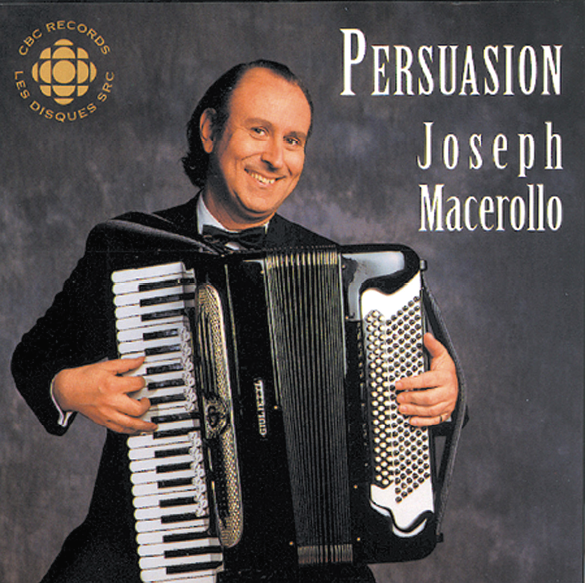
bbb - classical3U of T Faculty of Music: Before travelling to Owen Sound, Fewer, violinist Geoff Nuttall, violist Leslie Robertson and cellist Christopher Costanza (aka the St. Lawrence String Quartet) bring their infectious energy to the opening concert of the U of T Faculty of Music season September 16, which includes Golijov’s tuneful Kohelet and Verdi’s sublime String Quartet. Two weeks later, the Faculty celebrates accordion virtuoso Joe Macerollo’s 70th birthday and his appointment as Officer of the Order of Canada with an accordion extravaganza featuring current and former students and guest artists, and including compositions from Macerollo’s past plus a new commission by Anna Höstman.

Macerollo’s infectious musical spirit was most recently on display July 28 at Church of the Holy Trinity in a Music Mondays re-imagining of the songs of Kate Bush, Prince and Radiohead with soprano Zorana Sadiq where the performers “boiled the songs down to their deep, dark essence – from the Bulgarian sweep of Bush’s pop-scenas to the sweet synth build of Prince’s perfect pop.” Macerollo’s recent CD, Persuasion – The Contemporary Accordion, showed his commitment to contemporary composers Walter Buczynski, Charles Camilleri, Alexina Louie, Torbjorn Lundquist, Norman Symonds and Beverley Johnston. August 30 Macerollo hosted the always interesting CBC Radio 2 program This Is My Music. If you’re quick you can still hear it streamed on the Internet.

Flute Street at Church of the Holy Trinity: Internationally acclaimed piccolo virtuoso Jean-Louis Beaumadier and pianist Jordi Torrent will perform music by Damase, Reichert, Feld, Novak and Gyöngyösi September 26. The legendary Jean-Pierre Rampal wrote about Beaumadier: “Endowed with marvellous technique, he stands out, thanks to his winning personality and his developed artistry. It is a joy to hear him in turn dream and turn pirouettes; he is the Paganini of the piccolo.”

TSO Returns: Back from their successful European tour, the TSO begins the new season September 18 with a trio of romantic orchestral showpieces with the charismatic violinist Joshua Bell as soloist in Lalo’s Symphonie espagnole. September 20 and 21 sees concertmaster Jonathan Crow take the spotlight in Rimsky-Korsakov’s Scheherazade, the first public performance of the piece since its August CD release that marked the TSO’s new recording contract with Chandos Records. The live performance of Beethoven’s Ninth Symphony is incentive enough to hear this iconic work but on September 23 to 25 the TSO is making it even more essential by including Rachmaninoff’s Rhapsody on a Theme of Paganini with piano soloist Daniil Trifonov. No less than the great Martha Argerich said of the young Russian’s touch: “I never heard anything like that – he has tenderness and also the demonic element.”

Two Innovative Presenters: Two of the most creative Toronto series reinforce their programming reputations with the opening concerts in their 2014/15 seasons. September 28, the Jupiter Symphony Chamber Players bring their enthusiasm to a Mooredale Concerts program that includes Beethoven’s invigorating Septet, Dohnányi’s lyrical Serenade in C Major for String Trio and Mozart’s mysterious Clarinet Quartet in B Flat Major after K378.

And I’m particularly looking forward to the Toronto debut of the highly touted France-based Trio Wanderer (after Schubert). Their October 2 Women’s Musical Club of Toronto program includes piano trios by Fauré, Liszt and Tchaikovsky.

Paul Ennis is managing editor of The WholeNote.


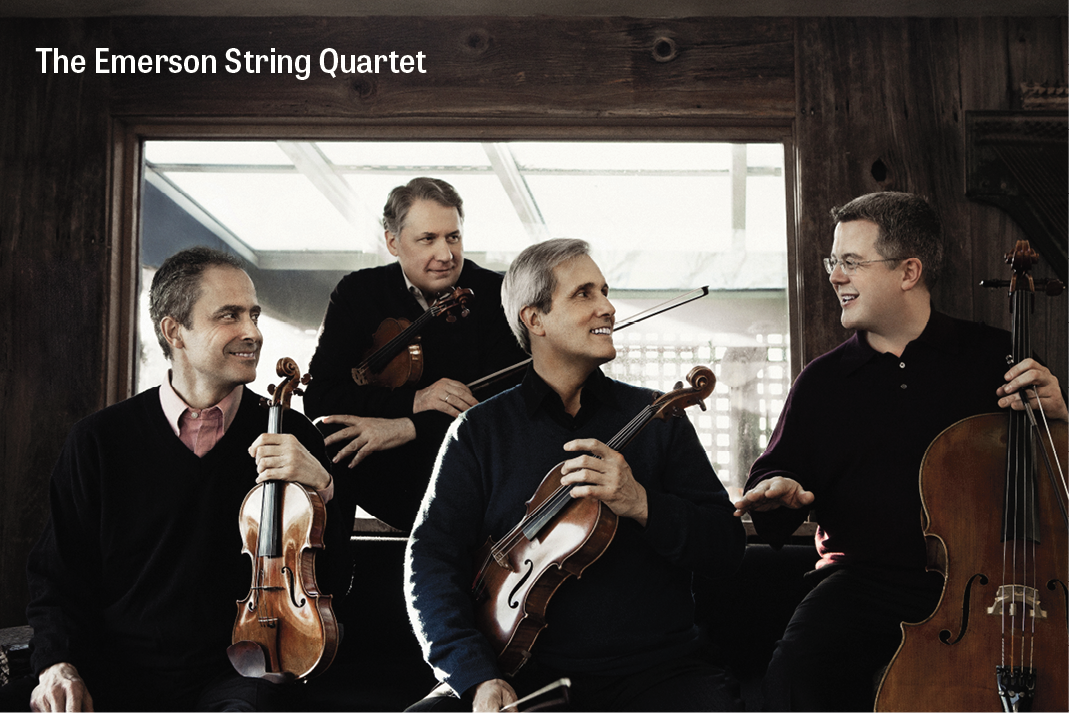
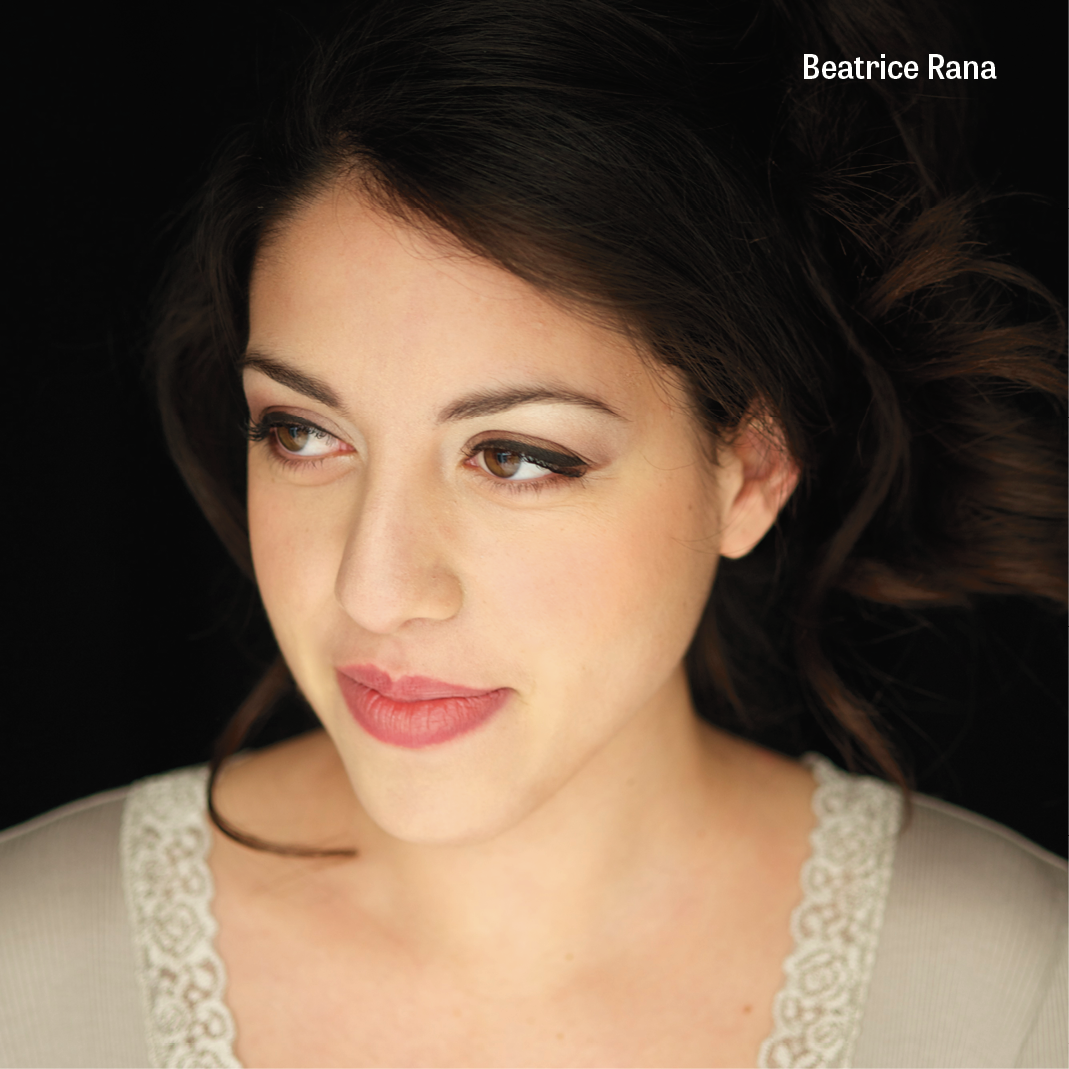
1909 Classical 1When I first opened up the Toronto Summer Music Festival’s brochure several weeks ago, I was struck by the strength of the initial three concerts running from July 22 to 24: the return of the Emerson String Quartet; the debut of the young pianist Beatrice Rana; and the musical marriage of the Orion String Quartet with Peter Serkin. The festival’s theme – The Modern Age – caught my eye next. “What an enticing idea,” I thought.

As TSO musical director Peter Oundjian observed in his recent Conversations@The WholeNote with David Perlman, it’s a fascinating topic to contemplate. “The eruption of 20th-century musical language – romanticism, polytonal modernists, folk-influenced – opens up a completely new world to so many different styles. I think it’s a very interesting period.”

Three chamber music concerts explore this notion. The first, “Romanticism to Modernity” on July 25, positions Berg and Schoenberg as Romantics about to discard tonal roots, comparing them to Frank Bridge and Richard Strauss. The second, August 1, includes polytonal non-modernists Prokofiev and Shostakovich with folk-influenced Vaughan Williams. The third, August 7, takes another folk-based composer, Dohnányi, and juxtaposes his Sextet for Clarinet, Horn and Piano Quartet with Schoenberg’s arrangement of Mahler’s Songs of a Wayfarer and Schoenberg’s and Berg’s arrangements of three waltzes by Johann Strauss. Stirring the pot, indeed.

I had heard the Emerson, one of my favourite quartets, in Koerner Hall’s opening season, as well as in earlier appearances presented by Music Toronto. The inclusion of Beethoven’s Op. 95 “Serioso” quartet in their program brought back a summer music festival experience two decades ago at Tanglewood, when the Emerson performed the prodigious feat of playing all five of Beethoven’s middle-period quartets in one day. After 36 years, the group’s personnel changed in 2013 with new cellist Paul Watkins. Word is he brings a warmth and sense of humour that may have been previously subsumed by the quartet’s superb technique and infallible drive. Britten’s second string quartet inspired by Purcell (which was recently part of the Pavel Haas Quartet’s soulful WMCT concert) and Schubert’s essential “Death and the Maiden” quartet, complete what looks to be a memorable beginning to music in the city this summer.

I have been looking forward to hearing 20-year-old Beatrice Rana, who won the Audience Award at last year’s Van Cliburn Competition (where the judges placed her second), ever since reading Alex Baran’s glowing review of her Harmonia Mundi CD in the February 2014 issue of this magazine.

Peter Serkin brings a sterling record as a chamber musician to his collaboration with the Orion String Quartet, the quartet-in-residence at Lincoln Center. A program containing quintets by Brahms and Dvořák is a tantalizing prospect.

If having concertmaster Jonathan Crow and other TSO members participating in TSM weren’t enough, the entire orchestra will close out the festival August 12 in their first ever concert in Koerner Hall with a preview of their upcoming European tour which includes Claude Vivier’s Orion. “I have the impression that I’m sitting still on an airplane,” Vivier wrote, describing the piece. “I remain in the same place and yet I go from Cairo to Kuala Lumpur.” The TSO is off to Vienna, Amsterdam, Wiesbaden, Helsinki and Reykjavik.

1909 Classical 2Le Festival de Lanaudière bills itself as the largest festival of classical music in Canada. Located in Joliette, about an hour northwest of Montreal, it includes many artists who rarely travel to Toronto, as well as others who do. Pianists Alain Lefèvre (whose recital July 8 features all 24 Chopin preludes and Ravel’s La Valse) and Dejan Lazić (in a program July 14 ranging from C.P.E. Bach and Scarlatti to Britten and Bartók) fall into the former category while Kristian Bezuidenhout, who recently appeared here with Tafelmusik performing a Mozart piano concerto, gives two recitals (July 15 and 17) devoted to eight Mozart sonatas on a fortepiano built in the late 18th century around the time of the composer’s death.

Beatrice Rana plays the same recital in Lanaudière as in Toronto, two days later. Toronto native Stewart Goodyear offers a varied program July 22 of Berg’s Sonata No.1, Bach’s French Suite No.5 and Beethoven’s Diabelli Variations.

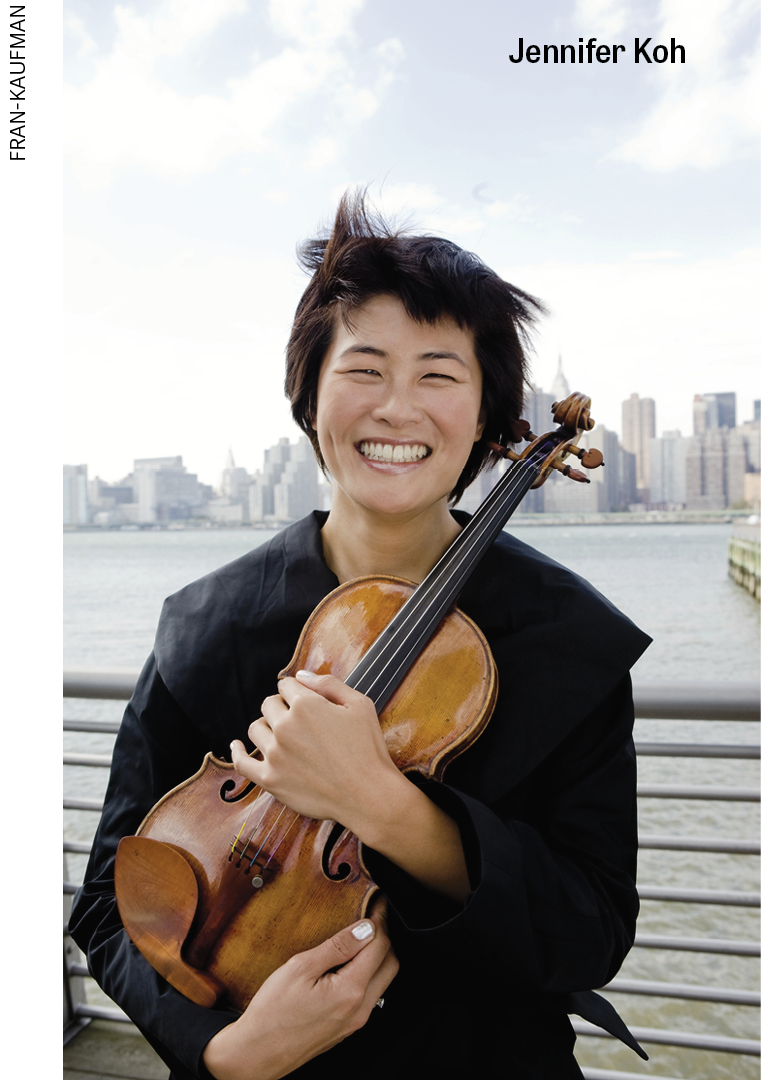
The marvellous Jennifer Koh, whose memorable appearance as the violin-playing Einstein in the 2012 Luminato production of Philip Glass’ Einstein on the Beach was the heart of the opera, performs two Bach sonatas, Berio Sequenza VIII and John Zorn’s Passagen on July 28.

No less enticing is the July 20 Orford Six Pianos concert which includes Mussorgsky’s A Night on Bald Mountain and Pictures at an Exhibition, Ravel’s Pavane pour une enfant défunte and Mère l’oye as well as two suites by Khatchaturian. Paavo Järvi and Die Deutsche Kammerphilharmonie Bremen clearly love Brahms. August 2 finds them performing his second symphony along with Lars Vogt in his first piano concerto, while Brahms’ first symphony and violin concerto (with Christian Tetzlaff) can be heard the following evening.

Yannick Nézet-Séguin leads the Orchestre Métropolitain in a mostly Wagner program August 6 while Debussy and Ravel help Kent Nagano make a big impression with the Montreal Symphony Orchestra August 8. Erin Wall, Susan Platts, Nagano and the MSO  bring the festival to a close with Mahler’s Symphony No.2  August 9. No Canadian summer festival can match these eight days of significant orchestral firepower. 

The Festival of the Sound’s 35th season offers a star-studded cast of performers in 75 concerts, lectures, cruises, dinners and galas over a three-week period from July 21 to August 10. The first week features the Tiberius, New Zealand and Afiara String Quartets, the Gryphon Trio and Richard and Lauren Margison. Pianist Leopoldo Erice, the Magellan Ensemble, violinists Mark Fewer and Drew Jurecka and the Brodsky and Penderecki String Quartets highlight week two. Ensemble Made in Canada, the Cecilia and Lafayette String Quartets and three notable pianists should make the final week exciting. Alexander Tselyakov, Janina Fialkowski and Jan Lisiecki will each give a recital and a masterclass. Lisiecki will also be in conversation with the inimitable Keith Horner.

Clear Lake: The week before his appearance in Parry Sound, Tselyakov curates the Clear Lake Chamber Music Festival just south of Riding Mountain National Park in Manitoba with four packed concerts July 31 to August 3. The week before on July 25, he joins Rachel Mercer, cello, Marie Bérard, violin, Wallace Halladay, alto saxophone, and Leslie Allt, flute, in a wide-ranging program that includes Dvořák’s “Dumky” trio at the KWCMS Music Room, where it’s always a festival regardless of the season.

The Ottawa International Chamber Music Festival celebrates their 20th anniversary July 24 to August 7 with several concerts of interest: the Brentano String Quartet (best-known recently as the soundtrack providers for the film A Late Quartet) July 24; James Campbell and the Cecilia String Quartet in contrasting programs July 28 and 29; brothers Jon Kimura and James Parker, Hinrich Alpers and Pedja Muzijevic in a Debussy-Ravel-Stravinsky eight-hand piano extravaganza July 28; Jon Kimura Parker and the Miró String Quartet July 31; the Lafayette String Quartet August 1; Janina Fialkowska in a program almost identical to her Festival of the Sound recital August 1; the Dover String Quartet, winners of the 11th Banff International String Quartet Competition, August 3; the Brodsky Quartet August 4, again with Beethoven’s Op.95; and the irrepressible Gryphon Trio August 6.

Stratford Summer Music’s highlight, from my perspective, is the August 1 concert combining the considerable talents of violinist Hilary Hahn with pianist Jan Lisiecki and the Annex Quartet in a program comprised of Brahms’ Violin Sonata No.1 and Chausson’s charming Concerto for Violin, Piano and String Quartet. Don’t miss this rare opportunity to hear one of the most unusually scored chamber works of the 19th century.

Stratford’s Grand Piano Series showcases three performers ranging from the 14-year-old Daniel Clarke Bouchard (fresh from an appearance on the Ellen TV show) August 6 to 25-year-old Pavel Kolesnikov (Honens International first prize laureate 2012) August 13 and Bicycle Opera Project’s own Wesley Shen August 20 (in a program that includes Cage’s Suite for Toy Piano and Southam’s Glass Houses).

The Indian River Festival, set within sight of beautiful Malpeque Bay in the world-class acoustical setting of St. Mary’s Church on Prince Edward Island, may be the most idyllic and varied festival of any in Canada. A small sampling of their summer-long 13th season finds cellist Denise Djokic and pianist David Jalbert in a recital July 13, the peripatetic Jan Lisiecki appearing July 27, the traditional folk trio Bon Débarras performing August 8 and Patricia O’Callaghan singing Cohen, Piaf and more accompanied by Andrew Downing, bass, and festival director Robert Kortgaard, piano, August 17.

Forest Festival: Yet it’s hard to picture a more quintessential Canadian experience than listening to the Canadian Brass August 12, the acoustic duo of Greg Keelor & Jim Cuddy August 13 and Measha Brueggergosman August 14 at the Bone Lake Amphitheatre in Haliburton. As the Forest Festival puts it: “Imagine sitting in the middle of a forest away from the lights of the city, in an amphitheatre overlooking a lake listening to live music as the sun sets.”

1909 Classical 3Quick Picks

Yuja Wang joins the TSO and conductor Peter Oundjian June 11 and 12 in Beethoven’s Piano Concerto No.3 and Shostakovich’s triumphant Symphony No.5.  June 14 the Shostakovich is part of Luminato.

June 15 the TSO brings Luminato to a rousing close with a free outdoor concert in David Pecaut Square with music by Weinzweig, Copland, Bernstein, Piazzolla and Ginastera, among others.

The outstanding Austrian pianist Till Fellner returns to the KWCMS Music Room in Waterloo for a program of Mozart, Bach, Haydn and Schumann August 5.

Paul Ennis is managing editor of The WholeNote.

1908-ClassicalSometimes it’s not only what you know but who you know. Show One Productions’ founder Svetlana Dvoretsky came to Canada from St. Petersburg in 1998. Culture was a huge part of her upbringing – her mother, after a brief career as a concert pianist, taught piano – and Dvoretsky wanted to be an arts administrator here, having studied management in show business. So she looked for a job in the arts when she arrived but only volunteer positions were available. Instead she worked in retail – “the immigrant school of learning” – then in the corporate world before scratching her “itch” and launching Show One.

It had taken five years, but she was ready. When violinist-conductor Vladimir Spivakov came to Toronto for a concert she sought him out – he and her mother had been students together – and fortune smiled. She buttonholed him on an elevator from floors one to three, just enough time to garner an invitation to meet his management in New York City. She flew south and returned with Spivakov’s endorsement that she bring him to Toronto for his next concert here. “It was a lot of trust on his part,” she admitted. Show One piggybacked onto Spivakov and the Moscow Virtuosi’s 25th Anniversary World Tour with their concert October 30, 2004 at George Weston Recital Hall.

Working with Spivakov’s charitable education foundation, she launched “Young Stars of the Young Century,” a showcase for the crème de la crème of talent from the vast reaches of the countries of the former Soviet Union, alongside a dollop of young Canadians. Five more concerts followed, ending in September of 2009. Dvoretsky was clearly doing something right.

In between the first two “Young Stars” events, she got her feet wet with two popular vocal concerts, Mikhail Turetsky’s Men’s Choir and a second featuring Svetlana Portnyansky and Yevgeni Shapovalov fronting O. Burman’s jazz quartet. The Moscow Chamber Orchestra with soprano Galina Gorchakova and a memorable performance by the legendary Borodin String Quartet firmly established her presence. Not even 13 months had passed since Show One’s debut.

Dvoretsky broadened her reach by linking into Gidon Kremer and Kremerata Baltica’s Tenth Anniversary Tour in the spring of 2007 and then conquering Roy Thomson Hall with Russian superstar baritone Dmitri Hvorostovsky backed by the Moscow Chamber Orchestra that fall. When Spivakov returned with the Moscow Virtuosi and pianist Olga Kern on their 30th Anniversary Tour, Dvoretsky booked them into RTH. She did the same for premier violist-conductor Yuri Bashmet and the Moscow Soloists the following winter. Two months later, Spivakov was back at RTH, this time with his other regular gig, the National Philharmonic of Russia, featuring Siberian-born piano phenom Denis Matsuev (who would return twice under the Show One banner in solo recitals at Koerner Hall).

Less than a year later she paired Dmitri Hvorostovsky with the fast-rising young soprano Sondra Radvanovsky in RTH. Meanwhile she branched out to Montreal, presenting Valery Gergiev and the Mariinsky Orchestra with Matsuev, and then native son Yannick Nézet-Séguin and the Rotterdam Philharmonic with violinist Victoria Mullova as soloist. She would bring Gergiev back twice more and widen her terrain to include Ottawa, Hamilton and Vancouver.

Over the last ten years she’s presented 30 classical Toronto concerts, 32 pop and dance events and 15 theatrical engagements, the latter exclusively in the Russian language.

She brought Michel Legrand, John Malkovich and Placido Domingo to us as well as cellist Mischa Maisky for the first time since 1976 (with Yuri Bashmet in a superb program commemorating the 20th anniversary of the Moscow Soloists Chamber Orchestra, then last fall in a recital at Koerner Hall).

Dvoretsky will celebrate Show One’s tenth anniversary with two world-class concerts: Spivakov, clearly her backbone, returns for the sixth time, May 9 at RTH with the Moscow Virtuosi Chamber Orchestra’s 35th Anniversary Tour; Hvorostovsky is back for the third time, June 1, in recital at Koerner Hall with pianist Ivari Ilja. May 9 everyone is invited to a post-concert lobby performance and reception at RTH featuring Canadian-Italian Daniela Nardi’s jazz world project Espresso Manifesto. It’s been quite a first decade. What will the second bring?

Recent Events

The unpredictability of events is certainly a boon to the Ontario Lottery Corporation (among others) but when it smiles unexpectedly (as it did on me a few weeks ago) and reveals its serendipitous side it’s capable of bestowing a big gift.

Richard Goode, in Toronto for appearances with the TSO, was scheduled to give three masterclasses at RCM. Circumstances dictated that I was able to attend only one, Friday afternoon, April 4. The first thing that struck me as I picked up the information sheet at the entrance to Mazzoleni Hall was that there was only one piece on the agenda, Mozart’s Piano Concert No.22 in E-flat Major, K482. The name of Goode’s student for the masterclass, Jan Lisiecki, evoked recognition and disbelief in equal measure: Canada’s own wunderkind, Gramophone award winner, with two DG CDs already under his belt, several summer music festival appearances scheduled, and on the horizon this upcoming November, TSO concerts dedicated to Beethoven’s final three piano concertos.

Lisiecki had just turned 19, Goode was well into his 71st year (he made his TSO debut in 1963). Lisiecki began to play, a 750 ml bottle of San Pellegrino on the floor, his tone steely, the notes tight and crisp. Goode characterized Lisiecki’s playing as “very beautiful, natural, satisfying.” Goode offered a few words: “Feel the force of the passage go all the way through.” Pointing to the bottom of a page, Lisiecki asked what Goode thought of “those two bars.”

“I liked it,” Goode answered.

Goode followed the second movement’s dark melody intently, looking at the score, writing something in pencil (he wrote nothing during the first movement). Suddenly, Lisiecki, who has joy, youth and polka dot socks on his side, leapt up to turn the page of the accompanying pianist’s score before returning to his own piano without missing a beat. For his part, Goode had much to offer at the movement’s conclusion. “I think this is a delicate andante,” he pointed out. “It comes down to which notes to stress and which you want to be less important.” He played the five-bar phrase: “The most important thing is to think of the voices as moving not vertical.” And he added that just because Mozart doesn’t write elaborate dynamics, it doesn’t mean he wouldn’t have played them.

Goode then demonstrated his own consummate pianism, showing off his musicianship in phrasing that emphasized the important passages.

Goode interrupted the joyous third movement several times, acting like a conductor, standing, rolling from side to side, commenting, singing his instructions which seemed a more comfortable way for him to communicate his thoughts (Tellingly, he did verbalize one piece of advice, asking Lisiecki to play a little slower “but with the same pizazz.”) Following Lisiecki’s effortless passagework and an admonition not to “upset the serenity of it,” Goode announced to the audience of 20 or so that “Jan will play some Chopin for you.”

The half dozen Preludes were like ice cream on the afternoon’s cake. Lisiecki displayed a more rounded tone than in the Mozart and Goode offered some salient bon mots. It goes without saying that Lisiecki is a brilliant talent; the trick is to tamp down the brilliance when appropriate. The afternoon saw him being schooled by the old school.

Eight days later, Goode brought his consummate skills to the public in a performance of Mozart’s Piano Concerto No.17, K453 with the TSO under Peter Oundjian. The notes of the first movement melted into the keyboard like butter. Goode gave them a liquid quality but with much definition, well-paced, relaxed, unrushed. The pianist quietly underlined the shape of the arpeggios behind the orchestra, his playing emotionally restrained but tonally lush, practising what he had preached in the masterclass by not emphasizing every note, letting many fall in service of the phrasing.

The darkly capricious second movement gained nobility as Goode displayed a brighter tone in the cadenza while the bright finale showed the classicist at work and play.

The following week I was privileged to sit in on a rehearsal of Brahms’ Piano Concerto No.1 with soloist Hélène Grimaud and Andrey Boreyko guest-conducting the TSO. It was fascinating to hear the concert the next day and notice how the orchestra had faithfully followed the conductor’s instructions; for example, Boreyko had wanted exact articulation in the opening of the first movement. “It is not a question of loudness,” he pointed out. The French horn solo on the other hand, was equally gorgeous in casual dress and in tails.

As for the remarkable Ms.Grimaud, her piano playing was strong and convincing in the rehearsal, each chord struck purposefully, each note sounding lyrically. In the concert she displayed a much greater dynamic range adding rounded pianissimos in particular to expand the music’s range. Her intimate pianism exposed the intrinsic beauty of the slow movement written “for Clara,” Schumann’s wife with whom Brahms was enamoured. (In the rehearsal, before taking up the second movement, Boreyko reminded the orchestra that the concerto was Brahms’ emotional reaction to his friend Schumann’s suicide attempt.) And Grimaud entered fully into the passion of the third movement with its rhapsodic cadenza spurring the audience into an immediate standing ovation.

Mozart in a Day

Violinist Jacques Israelievitch and pianist Christina Petrowska Quilico will play the complete Mozart violin sonatas Sunday, May 4 at Gallery 345. The opportunity to hear all 28 sonatas performed live in one day is likely a first for Toronto audiences. The marathon will be divided into four concerts beginning at 11am, 1pm, 3pm and 5pm, with only short breaks in between. 

“Playing the sonatas in one day allows the listener to hear the evolution of the form as the composer goes from featuring mostly the piano to making the violin gradually the equal of the piano,” Israelievitch says. “The earlier sonatas are generally simpler, as Mozart honed his craft. They evolve into works of greater complexity and depth. The performance itself requires a lot of stamina. I am fortunate in having a piano partner who is up to the task.”  

In preparation, the two musicians are doing a lot of stretching exercises.

Quick Picks

Less than two weeks after his Mozart marathon, Israelievitch joins Benjamin Smith, piano, and Jihyun Ahn, cello, in a trio of trios by Beethoven, Shostakovich and Schumann May 16 at Gallery 345.

Sondra Radvanovsky continues her productive sojourn in our city with a performance of Richard Strauss’ exquisite Four Last Songs June 5 and 7 at RTH with the TSO conducted by Shalom Bard.

One of the many standout concerts presented by the Kitchener-Waterloo Chamber Music Society in the coming weeks is by Trio Arkel (Marie Berard, violin, Teng Li, viola, and Winona Zelenka, cello) May 12. Another is the first concert in QuartetFest 2014 by the Penderecki String Quartet June 1. An intriguing follow-up in the same series finds the Chiara Quartet performing their program of Haydn, Bartok and Brahms entirely by memory. More details on this latest incarnation of QuartetFest can be found on the k-wcms website.

The Kitchener-Waterloo Symphony led by Edwin Outwater attractively pairs Aaron Copland’s Suite from Billy the Kid with Leonard Bernstein’s Symphonic Dances from West Side Story May 2 to 4; on May 30 and 31, Karen Gomyo is the soloist in Tchaikovsky’s Violin Concerto in D in a program that also features Stravinsky’s Petrushka and Sokolovic’s Ringelspiel.

Paul Ennis is managing editor of The WholeNote.

classicalandbeyond pavelhaasquartet-credit-marcoborggreveThe Pavel Haas Quartet, the acclaimed Czech string quartet, makes its highly anticipated Toronto debut April 10 in Walter Hall. The music world began to take notice of the group’s youthful vigour three years into the quartet’s life when it won the Paolo Borciani competition in Italy in the spring of 2005. A Supraphon record contract soon led to their first two CDs containing material close to their hearts, Janáček’s two string quartets and Pavel Haas’ three. Their penultimate recording, a disc of Dvořák’s String Quartets No. 12 in F major “American” and No. 13 in G major, was greeted with widespread critical acclaim culminating in Gramophone magazine’s Record of the Year award in the fall of 2011.

I’m looking forward to their performance of Brahms Quartet No. 2 in A minor with its lovely opening movement’s dusky poignancy. Like The Young Person’s Guide to the Orchestra, Britten’s String Quartet No. 2 in C Major celebrates the work of Henry Purcell, whom Britten rightly called “the last important figure of English music.” I’m also eagerly anticipating the Pavel Haas Quartet’s venture into such a singular British realm, in particular the last movement theme and variations chacony that ends with a huge celebration. They’re certainly familiar with the U.K., having performed in Wigmore Hall and beyond and been artists in residence for three years in Glasgow Royal Concert Halls.

First violinist Veronika Jarůšková formed the group with fellow students of Milan Škampa, the legendary violist of the celebrated Smetana Quartet. An interview on Tokafi.com in 2007 soon after their first recording, revealed that Škampa was their biggest artistic influence: “He taught us about quartet dialogue and about life as a quartet.” Their idea of what constitutes a good live performance continues to be their byword: “Most important is to hand over our feeling through music to the audience.”

In an email exchange I asked founding PHQ violist Pavel Nikl how the quartet chose its name:

“It was a coincidence,” he said. “At the time when we were trying to find a suitable name, a good friend of ours showed us a recording of the second string quartet composed by Pavel Haas and we liked it very much. So we asked his daughter, who still lives in Brno to get her consent to name our group after her father. She agreed. And all of us are happy that such great music [of Pavel Haas] will not fall into oblivion despite the fact he died very young [at 45] in a concentration camp and a lot of his music disappeared with him.”

In a 2010 interview with Graham Strahle in the Adelaide Review, PHQ cellist Peter Jarusek (Jarůšková’s husband) said that their namesake is a beacon for what the quartet seeks to achieve on an artistic level. “It is the unwavering genuineness of the man and what he did that means a lot to us. We are a young group, but that doesn’t mean that we consciously set out to be more attractive, stylistically innovative or anything like that. We just try to communicate the best we can to our audience, that is with intimacy and no artifice.

Haas’ music is all highly personal, original music from a man who believed very deeply in what he was doing. Throughout his music he uses many Jewish melodies, and you can feel it is Jewish. At the same time, he was fearlessly innovative. His Second String Quartet, for instance, which he called ‘From the Monkey Mountains,’ actually includes percussion in the last movement, and it’s an absolute riot. It really is like big band music for string quartet.”

In response to a question about the way the group chooses its material Nikl replied: “We try to choose pieces from every period of classical music to achieve a rich repertoire. We are lucky that no one is forcing us to play what we ourselves do not want to play. So we simply choose what we would like to play. The repertoire for string quartet is so rich that we are not able to play so much beautiful music during a lifetime. “

The quartet’s most recent recording was released last September. Featuring Schubert’s String Quartet No. 14 “Death and the Maiden” and the Cello Quintet with Danjulo Ishizaka, the CD has generated a major outpouring of praise. Here’s an example from British blogger Peter Smith: “The Times reviewer wrote ‘If CDs had grooves I would already have worn out these marvellous recordings  … the perfect fusion of virtuosity and profundity.’ Indeed. These performances are of a quite unworldly quality, deeply felt yet utterly thought-through, the most passionate you have heard but with moments of haunting delicacy, with an overarching architectural vision always holding it all together.”

The Gramophone reviewer wrote about their “fearless risk-taking, their fervency” and “insanely memorable phrasing,” calling the PHQ “absolutely mesmerizing” and “raw, visceral, and with an emotional immediacy that is almost unbearable.”

Their upcoming concert presented by the Women’s Musical Club of Toronto is comprised of Shostakovich’s String Quartet No. 1, in addition to the Britten and Brahms, all from the same C major tonal family. When I pointed this out to Nikl, he said it was coincidence, something he had not realized until now. These pieces have only been part of the quartet’s repertoire for a short time, about a year for the Brahms and Britten but less for the third. “The Shostakovich quartet is almost a new piece for us,” he said.

Replying to a question about live performance versus studio work, Nikl piqued my curiosity once more about their April 1o debut. “Our approach is always the same. We try to play hard and do not distinguish whether we are playing on the concert stage or whether we are recording. But there is a fundamental difference. Unlike recording, on the stage we have just one shot for all ...”

Recent Events

Stephen Hough’s masterclass at RCM’s Mazzoleni Hall March 3 overflowed with insights from that most discerning of pianists:

•“Have the courage to do nothing sometimes.”

•“Late Chopin – he became more interested in counterpoint – needs clarity; the right hand has to be able to whisper and still the accompaniment must be softer.”

•“Descending chromatics in Western music from the Renaissance on is all about suffering.”

•“Let’s find a real pianissimo so that it’s floating from the elbow; a real pianissimo in the concert hall makes an audience listen [as Hough’s blissful unveiling of Schoenberg’s Six Little Pieces in his March 2 Koerner Hall recital illustrated].

•“We have evidence (Horowitz’s Rach 3) where you don’t have to play all the notes; sometimes you need to thin things out – this was Horowitz’s great trick. Rubinstein admitted he left out notes in Iberia by Albéniz to get the ‘lift.’”

•“Some kind of musical clarity is more important than playing all the notes.”

Gustavo Dudamel’s visit to Roy Thomson Hall March 19 ignited his orchestra, the Los Angeles Philharmonic, and electrified the near-capacity crowd. His stellar status stems from his musical approach which energizes his players and invigorates the notes they play. The Toronto concert juxtaposed John Corigliano Jr.’s Symphony No. 1, an alternately tuneful and violent reflection of the composer’s reaction to the AIDS epidemic, with Tchaikovsky’s Symphony No. 5, with its own brand of fateful splendour.

Dudamel turned Corigliano’s massive outpouring of pain and beauty (written at the end of the 1980s and inspired directly by the death of three of his friends) into a showcase for his superb orchestral instrument. The conductor laid bare the work’s many textures, from an offstage piano quoting Albéniz to double tympani at opposite ends of the stage, from a heavenly solo cello to the stark shrill of three piccolos at triple fortissimo.

But it was the Tchaikovsky that confirmed Dudamel’s reputation and justified an immediate standing ovation. He revealed the visceral power of the music, making the familiar fresh -- with great clarity throughout and restraint when appropriate, from the snark of the brass to the anguish of the strings, with perfectly phrased moments and bars snapped off as if by a bullwhip, even unearthing a note you’ve never really heard before.

And then, at the end, with an elegance that acknowledged his love and respect for the orchestra, he disappeared into their midst to soak up the applause.

Concert-copia

The Toronto Symphony Orchestra bids farewell to a stellar month April 30 and May 1 with Sir Andrew Davis conducting Mahler’s essential Symphony 9 in D. April 17 and 19 finds the fascinating pianist Hélène Grimaud as soloist in Brahms’ Concerto No. 1 under the baton of Andrey Boeyko, music director of the Düsseldorf Symphony Orchestra. On April 11 and 12 Mozart’s vivacious Piano Concerto No. 17 comes under the scrutiny of the highly respected Richard Goode while Peter Oundjian also leads the orchestra in Richard Strauss’ gloriously hubristic Ein Heldenleben.

The Kindred Spirits Orchestra celebrates Good Friday April 18 with Rimsky-Korsakov’s Russian Easter Overture, Andre LaPlante performing Beethoven’s Concerto No.5 “Emperor” and Schumann’s Symphony No.1 “Spring.” Kristian Alexander conducts.

April 6 the Royal Conservatory concludes another season of Sunday afternoon piano recitals with a power-packed program by Khatia Buniatishvili. Liszt’s Piano Sonata and Chopin’s Second Sonata bookend Ravel’s iconic La valse. Stravinsky’s Three Movements from Petrushka conclude the breathtaking proceedings.

Music Toronto brings back Kikuei Ikeda, former violinist of the beloved Tokyo String Quartet, to join the Parker Quartet as a violist April 10 in a performance of Dvořák’s Quintet in E-flat Op.97 while April 28 finds the Associates of Toronto Symphony Orchestra playing Mozart’s String Quintet No.3 in C, K515 and Brahms’ String Quintet No.2 in G Op.111.

In their program May 4, the Windermere String Quartetnote that “the 13th quartets of Haydn and Beethoven [the lyrical Op. 130] bookend the era of the classical quartet: from the making of the mould to the breaking of it.”

The Kitchener-Waterloo Chamber Music Society offers an alternative interpretation of Britten’s String Quartet No.2 when they present the Enso Quartet April 11, one day after the Pavel Haas Quartet plays it in Toronto. On April 15 pianist Philip Chiu includes his own arrangement of the Suite for Oboe and Piano by Pavel Haas in his free noontime concert “Music in the Time of War” at the Richard Bradshaw Ampitheatre.

Two Grammy Award Winners: April 4 Jeffery Concerts presents James Ehnes accompanied by Andrew Armstrong performing LeClair’s Sonata No. 3 in D major, op. 9, Brahms’ Sonata No. 3 in D minor, op. 108, a new work by Alexina Louie and Richard Strauss’ Sonata in E-flat major, op. 18 while the iconic Canadian Brass concludes the Mooredale Concerts current season April 27.

  Paul Ennis is managing editor of The WholeNote.

1906 classical dudeGustavo Dudamel is widely considered the most exciting and gifted young conductor working today. His meteoric rise – he was appointed music director of the Simón Bolívar Youth Orchestra in 1999 at the age of 18 and he’s now already in his fifth year as music director of the Los Angeles Philharmonic -- has been well documented. Winning the inaugural Bamberger Symphoniker Gustav Mahler competition at 23 was the first international signpost; being named one of Time magazine’s 100 most influential people five years later bumped up his media quotient. Two years later readers of Gramophone voted him Artist of the Year; two years after that Music America named him 2013 Musician of the Year.

Toronto audiences will welcome him and the LA Philharmonic March 19 when he returns for the first time since 2009. Then, he conducted the Simón Bolívar Youth Orchestra in support of his mentor José Antonio Abreu, at the time Abreu was awarded the Glenn Gould Prize for his monumental music education work in Venezuela. Having celebrated its 39th anniversary on February 12 – and yes, Dudamel was in Caracas that day, leading a youth orchestra from his hometown of Barquisimeto – El Sistema is thriving with more than 500,000 students.

Dudamel spoke to the Los Angeles Times about the experience of conducting the orchestra in which he grew up playing violin, the orchestra he had conducted at age 12.

“’All these young people,’ Dudamel enthused. ‘I felt like I was still one of them. [In Sistema] . . . We teach tolerance and respect. Whatever you think, you have to work together to play in an orchestra. Whatever your differences are, you have to solve problems to make harmony. The best example there is of what a community can be is the orchestra. . . Elsewhere in the world, music is a philanthropic enterprise. In Venezuela it is a right.”’

He’s fully committed to music as an engine for social change.

Abreu’s Glenn Gould Prize sparked David Visentin to launch Sistema Toronto in September 2011 with Abreu’s’s blessing. (You can read about it in The WholeNote’s March 2013 issue.) About 150-175 students of Sistema Toronto will not only be attending the LA Philharmonic concert but performing in the Roy Thomson Hall lobby for gala attendees in advance of the show. The Corporation of Roy Thomson and Massey Hall is bringing them to the concert free of charge as part of its Share The Music program.

Toronto is the fifth stop on a seven-city nine-concert L.A. Philharmonic North American tour, six concerts of which are comprised of John Corigliano’s Symphony No. 1 (1989) and Tchaikovsky’s Symphony No. 5. It’s a heavily romantic program, the two works composed about a century apart. Corigliano has written that his symphony “was generated by feelings of loss, anger and frustration” after the loss of many of his friends and colleagues to the AIDS epidemic affected him deeply. He decided to relate the first three movements of the symphony to three lifelong musician friends and recall still others in the third movement  “in a quilt-like interweaving of motivic melodies.” He pointed out that Berlioz, Mahler and Shostakovich were also inspired by important events in their lives.

The current tour follows the LA Philharmonic’s recent Tchaikovsky Fest in which the orchestra split the six Tchaikovsky symphonies with Dudamel’s other ensemble, the Simón Bolívar Orchestra (it lost its “Youth” tag in 2011 as its members aged), so we should expect the players to have an even greater familiarity with this symphonic staple with its famous recurring Fate motif and iconic slow movement. (One can’t help wondering what Tchaikovsky’s fate would have been had he been born 100 years later.) Dudamel’s ability to reveal the soul of a piece of music will be put to the test. But watching the conductor rehearsing Tchaikovsky’s Romeo and Juliet without a score (!) on YouTube inspires great confidence and anticipation of a passionate and uninhibited performance.

1906 classical edwinEdwin Outwater and the KWSO: California-born Edwin Outwater, the music director of the Kitchener-Waterloo Symphony since 2007, has also been celebrated for his work in music education and community outreach. In 2004 his education programs at the San Francisco Symphony were given the Leonard Bernstein Award for Excellence in Educational Programming. At the San Francisco Symphony, he conducted Family Concerts as well as Adventures in Music performances, heard by more than 25,000 students from San Francisco schools each year; and Concerts for Kids, which reached students throughout Northern California. In Florida, Outwater designed the Florida Philharmonic Family Series and its Music for Youth program, attended annually by more than 40,000 fifth-grade students in South Florida.

In Kitchener-Waterloo, he redesigned the orchestra’s education series and initiated myriad community connections. He’s known for his Intersections program. Blogging about it last November he called it “a place for artists who didn’t fit into a particular musical category — people like violinist/fiddler Gilles Apap, composer/DJ Mason Bates, Western/Indian musician Suba Sankaran and others.”

He continued: “But it quickly became a home for people who wanted to try something with orchestra: saxophonists, scientists, chefs, yogis, videographers, you name it.  It became a place where an orchestra can do anything, and by my estimation, one of the coolest, riskiest endeavors attempted by any orchestra in North America.

“From the beginning, people took notice.  A lot of our shows were played at Koerner Hall in Toronto, thanks to the good faith and adventurous spirit of Mervon Mehta.  I’ll never forget when our music/neuroscience show with Daniel Levitin, Beethoven and Your Brain, sold out there a week in advance... It confirmed my belief that orchestras don’t exist in a vacuum, but in the world of thought, emotion, and ideas.”

His innovative approach to programming is evident in the way he constructs and rationalizes a more traditional concert such as the one featuring Jon Kimura Parker on March 21 and 22. He’s subtitled the Piano Concerto No. 1 in D minor  “Brahms the Progressive” and Verklärte Nacht “Schoenberg the Romantic,” seemingly turning conventional wisdom upside down – until it sinks in that Schoenberg’s “Transfigured Night” is one of the most romantic pieces in the repertoire.

Two Recent Concerts: Benjamin Grosvenor’s Music Toronto recital was a revelation, more than justifying the acclaim that preceded his debut last month. The first half of his program consisted of Mendelssohn, Schubert and Schumann pieces written within 12 years of each other ending in 1839. The 21-year-old Englishman played with a sensitivity and finely calibrated tonal palette coupled with a technical prowess that was always at the service of his exceptional musicianship. Schubert’s Impromptu in G flat, Op. 90 No. 3 (D899) evoked memories of Dinu Lipatti with its warm sound. After intermission came three superbly spacious miniatures by Mompou, two Medtner “Tales,” the second of which, “March of the Knights” was a favourite of Horowitz, himself a favourite of Grosvenor. Ravel’s Valses nobles et sentimentales shimmered but was not insubstantial while Liszt’s  Valse de l’opéra Faust de Gounod showed off the pianist’s chops without sacrificing any part of the music’s well-entrenched musical lines.

Kent Nagano’s coherent, exciting performance of Mahler’s Symphony No. 7 with the Montreal Symphony Orchestra at Roy Thomson Hall not long ago has me looking forward to his forthcoming appearance with Tafelmusik next January when he will be conducting Beethoven’s insdispensable Symphony No. 5 and underrated Mass in C Major.

Two Parts of Triple Forte: When he hosted This Is My Music on CBC Radio 2, Ottawa-based pianist David Jalbert spoke about how he had been intimidated by Glenn Gould’s Goldberg Variations until hearing Murray Perahia’s version showed him that there are other ways to play the piece. On March 11 the Music Toronto audience will get a chance to hear how Jalbert’s interpretation of Bach’s seminal masterpiece has evolved since his CD of it was released to wide acclaim (including Christina Petrowska Quilico’s review in the May 2012 WholeNote) two years ago.

Coincidentally, on March 20 the Women’s Musical Club of Toronto is presenting  the impressive cellist Yegor Dyachkov, Jalbert’s partner in the Triple Forte trio (violinist Jasper Wood is the third member), in a tantalizing program with pianist Jean Saulnier that includes the world premiere (and WMCT commission) of Atonement by Christos Hatzis.

Beethoven’s middle cello sonata as well as Britten and Shostakovich’s contributions to the repertoire complete the afternoon’s recital.

And More: The redoubtable Kitchener-Waterloo Chamber Music Society has six concerts on tap this month and two in the first week of April. Of particular interest: James Campbell performs Brahms’ second sonata for clarinet and piano (with Leopoldo Erice) on March 8 then joins the Penderecki String Quartet for the composer’s sublime Clarinet Quintet. Trio Voce includes Marina Hoover, founding cellist of the St. Lawrence String Quartet, violinist Jasmine Lin and pianist Patricia Tao. Their March 21 evening features trios by Haydn, Dvorák and Brahms.

On March 16, Mooredale Concerts presents Guillermo González performing his own edited version of Albéniz’s Iberia Suite. Judging by his 1998 Naxos recording, González clearly transmits the Spanish character of this keyboard masterpiece in an engaging rough-hewn manner compared to the more elegant style of his fellow Spaniard Alicia de Larrocha. (For sheer virtuosity, Marc-André Hamelin’s luminous, impressionistic version is unmatched, however.)

Angela Hewitt continues her recent foray into Beethoven’s universe (see this month’s DISCoveries) with her TSO appearance  March 20 and 22 playing the composer’s Piano Concerto No. 5 “Emperor.” Guest conductor Hannu Lintu also leads the orchestra in Sibelius’ thrilling Symphony No 5.

Paul Ennis is managing editor of The WholeNote.

The most acclaimed British pianist of his generation, the remarkable Stephen Hough, makes his Koerner Hall debut March 2, his first solo recital in Toronto since his Music Toronto appearance seven years ago. A few weeks earlier his 21-year-old countryman Benjamin Grosvenor, who’s been not so quietly building a burgeoning career of his own appears on Music Toronto’s Jane Mallet stage February 11, following that up February 14 and 15 as piano soloist with the Kitchener-Waterloo Symphony in Saint-Saëns’ Piano Concerto No.2 (which Grosvenor plays with the Royal Liverpool Philharmonic on his latest Decca CD).

bbb - classical 2 - grosvenorGrosvenor: In one so young – he’s only 21 – we expect the notes and hope for the music; in this case there are good reasons to be hopeful. The Times said of Grosvenor’s first recording (which included Chopin’s Four Scherzi and Ravel’s Gaspard de la Nuit) that “he jumps inside the music’s soul.”

Just who is this pianist upon whom the venerable magazine Gramophone bestowed its “Young Artist of the Year” and “Instrumental Award” in 2012?

At 11, Grosvenor’s exceptional talent was revealed when he won the keyboard section of the BBC Young Musician of the Year. At 19, shortly after becoming the first British pianist since the legendary Clifford Curzon to be signed by Decca, he became the youngest soloist to perform at the First Night of the Proms.

The youngest of five brothers, his piano teacher mother shaped his early musical thinking. He divulged in a 2011 video that he decided at ten he would be a concert pianist and wasn’t fazed at all by playing on the BBC shortly thereafter. Only when he became more self-aware at 13 or 14 did he suffer some anxious moments. On the video, a piano excerpt from Leonard Bernstein’s Age of Anxiety follows, the musical core of which he expresses beautifully both literally and figuratively, before adding: “The pieces you play the best are the ones you respond to emotionally.”

In a May 2013 YouTube webcam chat in advance of a return engagement in Singapore, he spoke of his musical taste. From the beginning he was attracted to Chopin but over the years hearing Schnabel for the first time led to an attraction to Beethoven and hearing Samuel Feinberg opened his ears to Bach. He’s a bit of an old soul in that he has a great interest in recordings by pianists like Moriz Rosenthal, Ignaz Friedman, Benno Moiseiwitsch, Shura Cherkassky and Vladimir Horowitz made in the early half of the 20th century. “Their primary concern was in imitating the voice especially in romantic repertoire,” he explained. “Horowitz was obsessed with the voice. They were the masters of that asynchronization of the hands.”

In a profile in The Guardian three years ago when Grosvenor was 18, Tom Service wrote that he “talked of his early years as if he’s a seasoned professional looking back on the sins of his youth. But he’s talking about 2004.”

“Listening back to the Chopin D-Flat Major Nocturne I did when I was 12 -- I think it’s really interesting, some of the expressive things I do, like the asynchronization of the hands.” Asynchronization, Service went on to explain, is “a technique where the left hand plays a microsecond before the right, something associated with pianists of an earlier age ... and frowned on by today’s virtuosos.”

Grosvenor continued: “I don’t really know where that came from; I hadn’t heard any of those early 20th-century recordings by then ... If you compare the way people perform Mozart now with, say, Lili Kraus’ recordings, or Schnabel’s Beethoven with today’s players – today, things are so much blander and more boring. They were each so unique back then ... Maybe it’s because of recording and the pressure to make things note perfect, or the influence of competitions, but we’ve lost touch with that tradition of playing, with its imagination and expression.”

The Independent has described Grosvenor’s sound as “poetic and gently ironic, brilliant yet clear-minded, intelligent but not without humour, all translated through a beautifully clear and singing touch.” After his Wigmore Hall recital last fall, which contained much of what he will be playing in Toronto, International Piano compared Grosvenor to a young Krystian Zimerman. I’m looking forward to it.

bbb - classical 2 - houghHough: It had been eight years since Stephen Hough became the first classical musician to receive the MacArthur Fellowship, the so-called “genius award,” so it was only fitting for him to be named by The Economist in 2009 as one of 20 polymaths the magazine determined to excel in diverse fields (in Hough’s case: pianist, poet, composer, writer on religion – this was before his first solo exhibit of paintings in the fall of 2012 at London’s Broadbent Gallery).

In the last two years Hough has been profiled and/or interviewed in Le Monde, Classical Music, the Houston Chronicle, Sunday Times, New York Times and London Evening Standard, all of which are available on his well-ordered website. There you can also link to the blog he writes for The Telegraph, where you may read his highly literate, well-argued thoughts, insights and reminiscences on everything from religion (he’s a sceptical Catholic) to the death of Lou Reed:

“In my teenage bedroom – dark purple ceiling, light purple walls, joss sticks a-burning – I used to listen to Lou Reed: ‘Take a walk on the wild side’ he suggested with that ironic, sing-song, cooler-than-cool voice. I didn’t take his advice in the end and went back to Beethoven, despite years of neglecting the piano and neglecting to do my homework. But in those voice-breaking years as I lounged around in my flared jeans covering my (purple) platform shoes, and as the LP, scratched and coarse, spun lazy circles in the smoke, I did feel a certain coming of age. I felt maturity arriving as if a shoot in a plant pot pushing out of the brown soil (no, not that plant). I was wrong; I was still a kid; it was a false Spring. But writing this in night-time New York, realizing that such a force of nature as Lou Reed is now a dead leaf beyond the Autumn of life, is strange and poignant.”

And he tweets, which is where you’ll find him showing his cheeky side, diaristically sharing choice words on whatever catches his fanciful fancy, revealing his peccadilloes (he loves shoes) or offering insights on the news of the day. An example, this tweet from the day  Claudio Abbado died:

“I did a German tour w/@londonsymphony & #Abbado in the mid 80s. ‘I’m Claudio’: my youthful nerves instantly removed RIP”

Or these:

“My weird, wonderful life: solo on stage for 2000 people ... then 20 mins later solo slice of pizza @UnionStation_DC”

“Frank Sinatra on the speakers in the restaurant: comforting sounds before comforting food. That masterly swoop with its agogic accent. [continued] I think piano students can learn more from Frank Sinatra about phrasing and rubato than from most classical instrumentalists.”

Indeed. By the nature of the medium, the musical insights on twitter may outnumber those onstage or in recordings. In any case, they’re a most welcome way to keep up with this uncommon musician whose live appearances here are all too rare a gift. On March 3, Hough will give a masterclass at RCM. I was fortunate to attend a similar event at RCM’s temporary home in 2007. It buoyed me for weeks while providing invaluable insights into my own modest world of piano playing. I’m looking forward to being reinvigorated.

The Year of the Horse: Celebrate the Chinese New Year February 3 with the TSO and an all-star lineup of guests including conductor Long Lu, the scintillating pianist Yuja Wang (playing Rachmaninov), the soulful violinist Cho-Liang Lin (in a Dvorak Romance) and Deutsche Grammophon recording artist Yian Wang (performing Tchaikovsky’s delightful Variations on a Rococo Theme) plus popstar Song Zuying (a household name in China) and a new work by Tan Dun (incorporating music from his best-known film scores).

Double Duty: Cellist Winona Zelenka brings her singing tone to Bach, Haydn and Beethoven in the Associates of the TSO concert February 10 at Trinity-St. Paul’s Centre and then wears her Trio Arkel hat as part of Chamber Music Mississauga’s Belated Valentine concert February 22 in The Great Hall of The Unitarian Congregation of Mississauga.

Not To Be Missed: The Attacca Quartet’s foray into the complete string quartets of Haydn presented by the Kitchener-Waterloo Chamber Music Society continues February 7, 8 and 9 in Waterloo with four concerts, each one including an early, middle and late quartet, and two introduced by a talk by violist Luke Fleming. For more information on the Haydn 68 series see my article in WholeNote’s November 2013 issue.

Paul Ennis is the managing editor of The WholeNote.
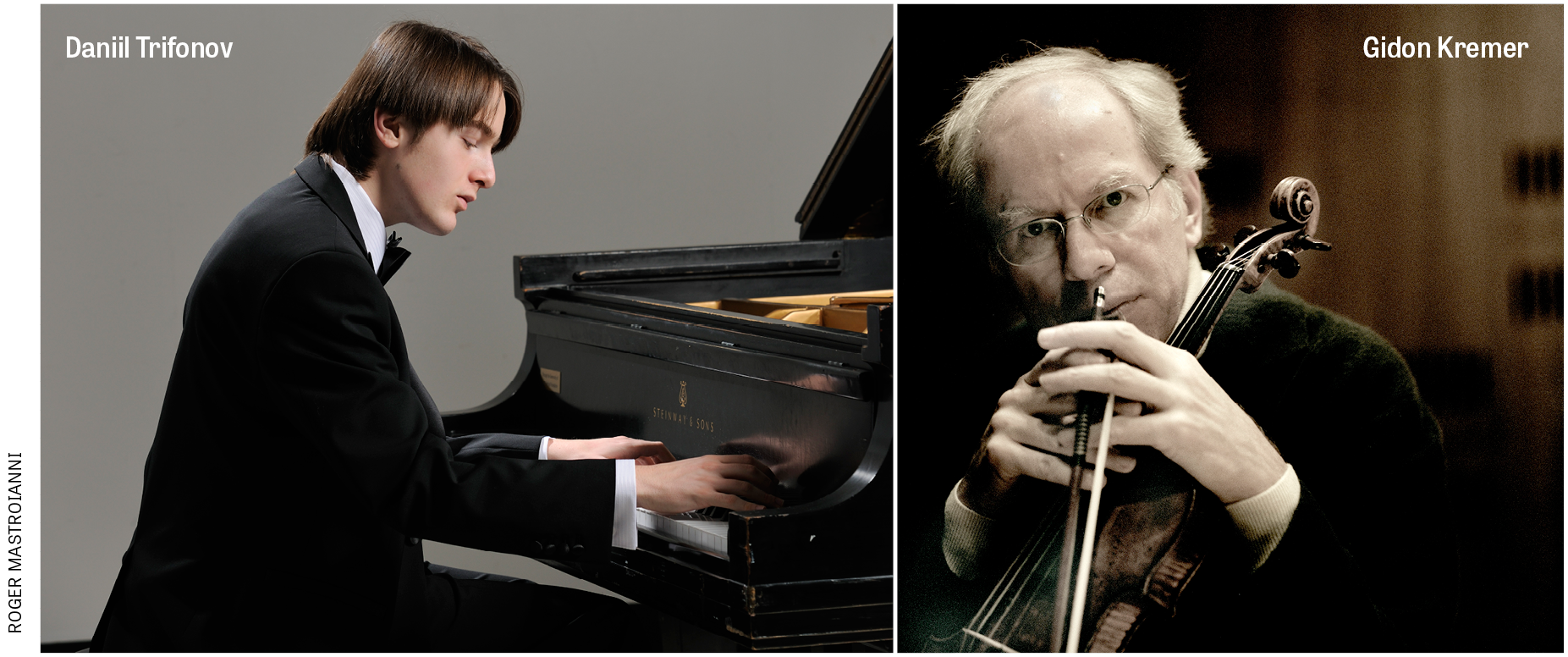
Back to top