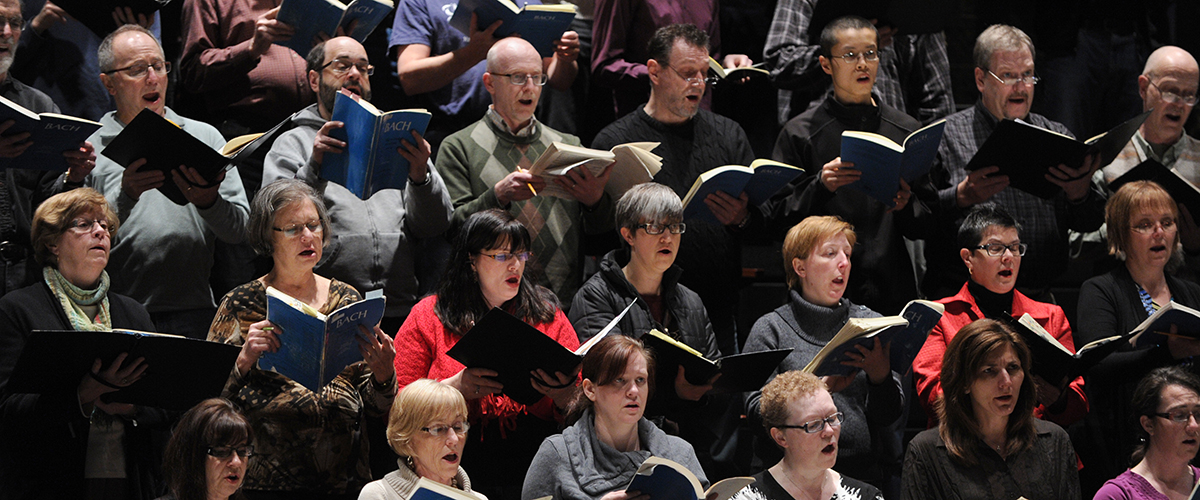
Portrait of Mendelssohn by the German painter Eduard Magnus, 1846. Why do we love Mendelssohn’s Elijah? For many conductors, performers and listeners, it is the perfect oratorio, combining all the dramatic musical elements required to bring this colourful story to life. 

A more puzzling question is why do we love this character, Elijah? In the oratorio’s opening scene, the cantankerous prophet bursts into ominous incantation, pre-empting the overture with a curse. He condemns his people to drought and famine to force their allegiance to Jehovah, and then massacres the prophets of Baal at Kishon’s brook to ensure his rival cult will never rise again. But unlike other bad boy baritones (like Scarpia) or terrible tenors (like Pinkerton) or murderous mezzos (like Clytemnestra), we have sympathy for Elijah, thanks to librettist Julius Schubring’s careful management of Biblically inspired text. Elijah’s fiery, public character is balanced with his gentler, private self, with intimate scenes of tender compassion toward a widow and her child, his humble loyalty to his people, and his gratitude. Ultimately, in his own emotional wilderness scene, he confronts his self-doubt and contemplates suicide. He is saved by a group of angels who sing “Lift thine eyes to the mountains.”

Read more: The unsung heroes of Mendelssohn's Elijah

Vol 7 No 8, May 2022I recently bumped into violinist Larry Beckwith, Artistic Producer of Confluence Concerts, who told me he had an idea for a choral story. We were at New Music Concerts’ tribute evening, at Longboat Hall, honouring NMC’s founding artistic director, flutist Robert Aitken who has just stepped aside after 50 extraordinary years. Beckwith’s story idea was, however, for someone else who put in 50 years service to our musical scene, transforming it as he went! 

This May, Beckwith reminded me, is the 20th anniversary of Nicholas (Niki) Goldschmidt’s third, and most triumphant, Toronto International Choral Festival, titled “The Joy of Singing (in the Noise of the World).” As Dawn Lyons described it in our May 2002 cover story, the festival was designed, with typical Goldschmidtian understatement, “to fill May 31 to June 22 with choral music from across Canada and around the world.” (“Fill” is no exaggeration: audiences aside, there would end up being over 1,000 active participants in the event! By 2002, the 94-year-old Goldschmidt (born in Austro-Hungary in 1908) was without equal in the art of organizing a really festive festival!

He had arrived in Toronto in 1946, invited to head up the University of Toronto’s new opera school, the first in the country. He was astounded by the talent he found waiting for him on the first day he walked into the Conservatory. “Soon he needed a marketplace to display his fine crop of young Canadian singers,” Dawn Lyons wrote, “a place for them to see, hear, work with and take their measure against singers from around the world.” The Goldschmidt solution? Found the Canadian Opera Company! “It was the beginning of 50 years of creating what we would now call cultural infrastructure…” Lyons wrote: “If the word festival is in the title, and the program bulges with acknowledgment of partnerships, look for Niki in the credits.” 

Read more: The Joy of Singing in the Noise of the World

A Message from PODIUM 2022 video screenshotIt might as well be spring

The WholeNote has been keeping track of the (mostly southern) Ontario choral scene for almost exactly 20 years, and during that time Ontario choirs have followed a predictable winter-to-spring ritual as predictable as swallows to Capistrano. December brings holiday fare, then it’s down to serious business. Choirs gear up over the course of the spring for one last big  performance for the season, often involving their most ambitious or at least newest repertoire. After which, by early June at the latest, the choral tents get folded, the slightly more dog-eared scores get carefully stored, and it’s hugs all round and fond farewells until the fall.

WholeNote Canary coverAs a small part of that predictable ritual, for over two decades, dozens and dozens of Ontario choirs have signed up for The WholeNote’s annual “Canary Pages Directory of Choirs.” First published in May 2003 as our ”Focus on the Choral Scene,” including just over one hundred choirs, it became an annual feature of our May print edition, eventually expanding to include year-round updates on our website. Almost immediately, choirs started using it to describe themselves to prospective choristers: the repertoire they like, where and and how often they rehearse; audition requirements if any, and how often they perform. It became like an annual snapshot of the choral community gathered together – a reminder of how the choral community is more than the sum of its parts. 

A reliable spring ritual: that is, until COVID struck, and choral music was the first casualty, going from the euphoria of drawing collective breath and turning it into music into bewildered masked isolation when the air breathed to sing together became lethal. 

Read more: As the Songbirds Return

Jean-Sébastien Vallée. Photo by Tam Lan TruongI recently connected, twice, with the Toronto Mendelssohn Choir’s recently appointed artistic director, Jean-Sébastien Vallée (the eighth conductor in the choir’s 127-year history). The first time was on September 20, when I visited a TMC rehearsal; the second on October 4, for a chat in The WholeNote office. Both visits were on Mondays, because, at time of writing anyway, Mondays are Vallée’s only Toronto day.

Read more: Understanding what a choir needs - Introducing Jean-Sébastien Vallée

The finale of VOCA's spring cabaret on Apr. 17, 2021: Morten Lauridsen's Sure On This Shining Night, conducted by Jenny Crober (in the middle) with Elizabeth Acker, accompanist (not pictured). vocachorus.caLockdowns! Vaccines! Homemade focaccia! Yes, we are still talking about the pandemic. The media cacophony rises like the tides: job losses, school closures, suspension of hobbies, failing businesses, whole sectors with the rug swept out from under them, including live performance and gathering to make music. 

Happily, with survival depending on reevaluation, creativity and adaptation, we are witnessing an unexpected resurgence among musical ensembles finding ways to get together, even at a time when gathering in person is met with finger-wagging (not from the conductors) and hefty fines.

Regular readers know that May is usually the month when The WholeNote publishes its Canary Pages Choral Directory, but that in May 2020 the period for joining the directory was extended from May right through September, with choral profiles being posted to the website as soon as received. Well, it’s May again, and while uncertainty still prevails for many choirs, a heartening number have already signed up. So I reached out to several of these “early adopters” who have already submitted profiles for this year’s Canary Pages, to try to get a feel for how they weathered the past year and how, if at all, their plans for the coming season are further along than at this time last year. 

Many expressed frustration, mostly due to the shift of being predominantly online. Most are in agreement, however,  that the show, and the opportunity to sing together, must go on. And although more muted than usual, choral directors and choristers are still working together behind the scenes to keep the music in the air. Figuratively speaking, of course.

Read more: “Click Unmute!” How the Zoom Boom is Shifting the Choral World

Against the Grain’s Elliot Madore. Photo ATG THEATRENo performing arts organizations can pretend they don’t exist in a specific time and place – responding to cultural and political moments of the right now, even when the music they perform comes from very different times. Choirs are grappling with the loss of rehearsals and live performances, but they are also grappling with the overlapping realities of fighting for justice and emancipation in a very complex world.

Messiah/Complex is an upcoming new digital performance from Against the Grain Theatre (AtG). Artistic director Joel Ivany and his innovative team are taking the Handel and Jennens masterwork and breathing it alive with diverse voices, languages and cultural inspiration of people across Canada. Ivany has been joined by Reneltta Arluk, director of Indigenous arts at the Banff Centre. Together they have assembled a vast collection of performers representing every province and territory. The WholeNote had a chance to connect with artistic director Joel Ivany to share just what a complex Messiah looks like in our times. “There are complex layers to this work,” AtG’s Ivany shares. “Handel, himself, had investments in the Royal African Company. This means that he profited off of slave trade during the 1720s and 30s.” 

Connecting the history of the work to its time and place is necessary to connect to our time and place, he says. “We’ve asked Indigenous artists to learn settler music set to Biblical text. They have interpreted it and now sing it in their own language. We want to reconcile our relationship with First Nations, but it’s not easy; there are layers and it is complex. We want to support our Black, Indigenous and People of Colour community, but there’s no easy answer or quick fix.”

Read more: A Messiah for our Complex Times

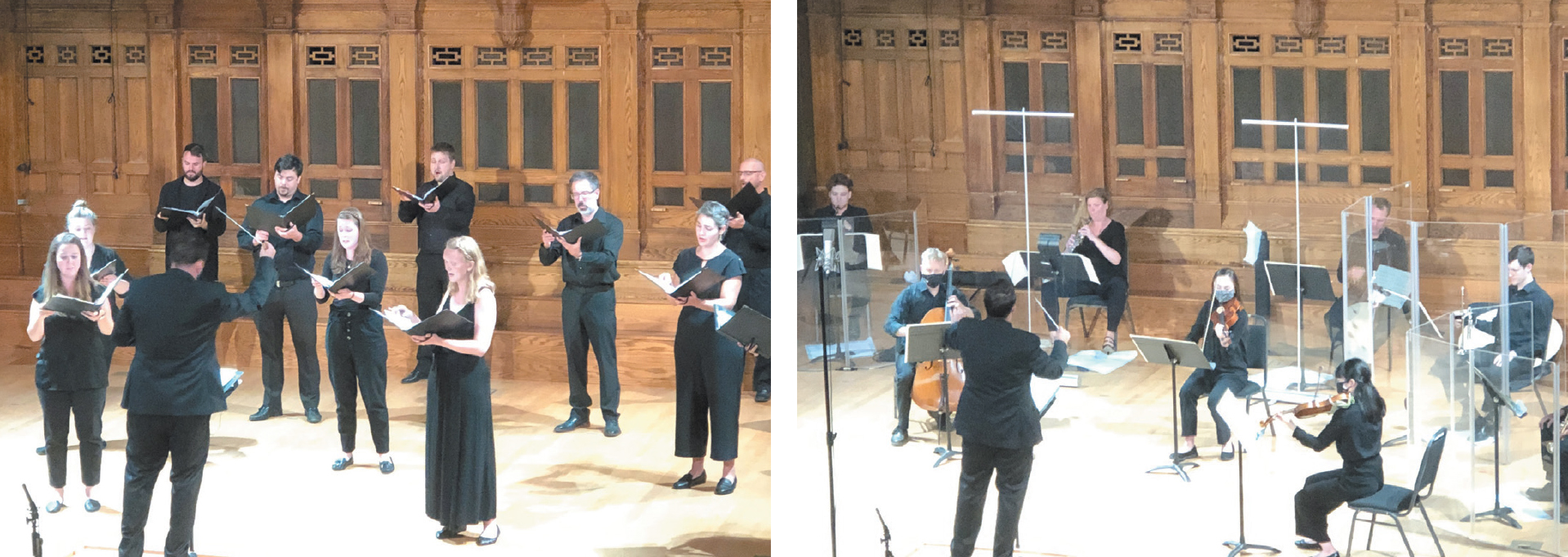
TMC recording sessions, at Trinity-St. Pauls Centre: daily health questionnaires and temperature checks; the stage marked with physically distanced spots for each singer and each orchestra musician (recorded at different times); all participants wore masks, artists removed theirs only in place, to record. Photo by Anne LongmoreThese are challenging times to be a musician. Empathy and compassion is a crucial part of a pandemic response, but it is easily forgotten in the immediate dangers of trying to protect oneself from an unmasked person, or trying to plan out the next month’s rent without income from performing. For some, returning to work, be it the arts or offices or restaurants, isn’t a matter of choice – it’s the difference between having somewhere to live next month or being able to afford dinner that day. The arts are workplaces with livelihoods on the line and right now, we’re all struggling. 

For singers and wind musicians in particular, current circumstances are particularly difficult. Crises are intersecting in our arts communities at the moment and are demanding ever more complex responses from the choral world than ever before if we are going to find a way through. There are real and serious dangers to consider as choristers return to action. 

Speaking with choristers, there is already so much anxiety and lack of knowledge about how to proceed with doing what we love in a time of pandemic. So it is additionally hard to find oneself in a community of interest where, as in society as a whole, some of those voices are pandemic deniers, vehement anti-maskers, who participate in the pandemic conspiracies and spout the paranoia of “state compliance” and our loss of “bodily sovereignty.” The unfortunate truth is that these people are part of our choirs, part of our choral communities, and they present dangers. 

This month, I’m presenting some of my thoughts on recent scientific data and what you can expect from digital rehearsals and upcoming digital concerts.  

Read more: Lessons from Skagit Valley and Beyond: Choral Music in a Time of Pandemic

Achill Choral Society, in happier days.The Canary Pages choral directory in this issue has been a fixture of the May WholeNote for the past 17 years. Until this year, that is, when the magazine decided to hold it back to September, given the climate of uncertainty that has gripped the choral community since March. 

Better late than never: the directory remains welcome a reminder that hundreds of choral organizations across Ontario sustain and uphold communities that celebrate art and beauty from the largest cities to the smallest communities throughout Ontario. 

March feels a long time ago now. Seasons shuttered, theatres closed, rehearsals stopped, and as the shutdown continued, choirs started thinking towards the fall and onwards. If you look at the language amongst the Canary profiles, there’s new terminology that has become standard – postponed, indefinite hiatus, online rehearsals, Zoom, suspended, TBD. The good thing is, the choirs and the people who make music are still around.

Read more: Just a bit different as choirs forge ahead

Grand Philharmonic ChoirAnyone who sings in a choir has likely seen the tragic story of the Amsterdam Mixed Choir where after a performance of the Bach St John Passion, 102 of the 130 choristers were sickened by COVID-19. One of those members would pass away from the virus in the following weeks, just as news also broke of the Skagit Valley Chorale in Washington State where 52 members would ultimately be infected, with two deaths. Smaller group outbreaks were noted in other choirs around the world such as the Berlin Cathedral Choir and in many faith-based settings. The headlines are enough to make any person take pause. The choral community has been shaken particularly hard by these stories as, for many, choir is their escape from the pain and stress of the world, not the cause of it. 

In the absence of clear scientific evidence, the precautionary principle has provided the only guidance available to choirs throughout much of the pandemic so far. Organizations have not waited to take strict action, instead choosing to comply with blanket safety, quarantine and shutdown measures. For every choir in Ontario, it is now over three months since any rehearsals. Seasons were ended early, summer festivals are cancelled, tours are out of the question, and uncertainty reigns, with planning for next season made difficult by differing assumptions of what may be. 

Read more: In the Absence of Singing, Uncertainty

Come What May

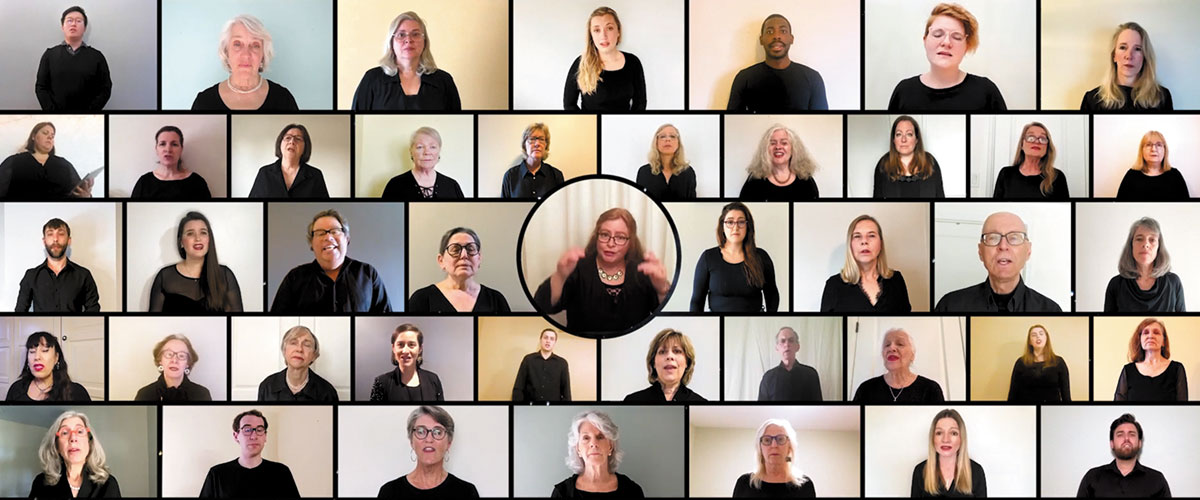
Readers of The WholeNote know me primarily as the Choral Scene columnist and an active participant in choral music in Toronto. My involvement and experiences in the rich cultural offerings of Toronto isn’t purely journalistic though, I’m also an avid theatregoer and it feels strange to me to go more than a few weeks without live art of some kind. This month I’m expanding our “What May Be” exploration beyond the choral world for some other touchpoints in the world of performing arts that I will miss.Choral Scene columnist Brian Chang at home recording a vocal part for a virtual choir project with the Toronto Mendelssohn Choir and Toronto Symphony Youth Orchestra.. Photo by Jeff Slater.

What Was, and Yet Again May Be, Thoroughly Enjoyed

The biggest theatre event of the year, hands down, was the Toronto arrival of the touring production of Hamilton. Toronto was home to the “Phillip” cast of the tour, and this was the biggest selling, most expensive set of tickets ever released for a Toronto music theatre show. The state of emergency happened a month into the Toronto run. I had early tickets in February, a trick of luck with the subscription my mom and I have had for a decade. And then I was lucky enough to catch it again when a friend’s tickets became available and my boyfriend snatched them up so he could see it as well. I’m lucky, so very lucky to have experienced this magnificent theatre magic twice.

Read more: Maybe Soon? Or Maybe Not

The end of March and beginning of April mark a special time for anyone in the post-secondary education sector. The term comes to a close, the academic school year settles into its final exams, papers, and for music students – final concerts. This month we’re exploring the end-of-term concerts at Western University, University of Toronto (my alma mater), and York University.

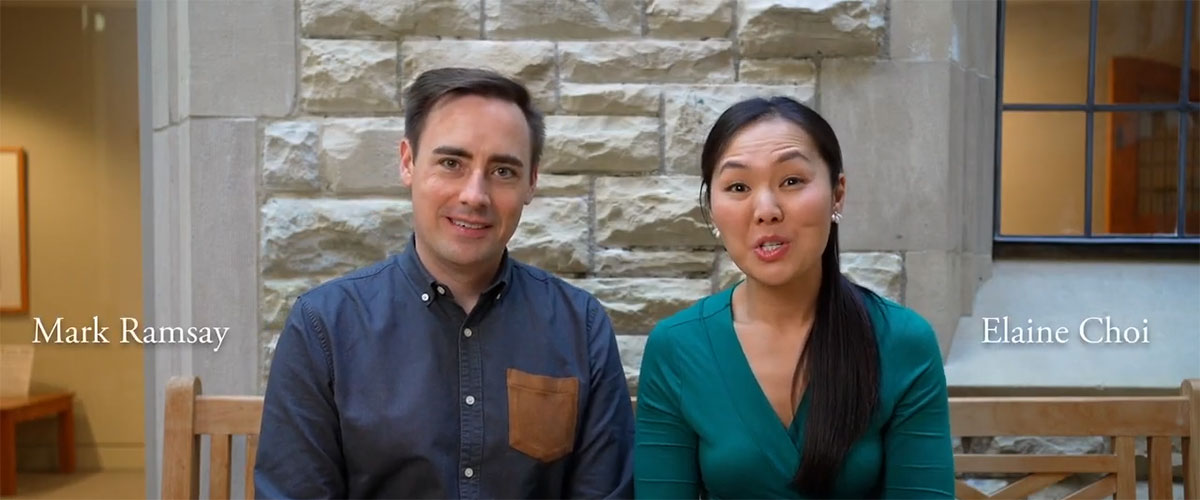
University of Toronto is lucky in its breadth of ensembles and guests. The program is also very large with four major choral ensembles and over 200 students across the various ensembles. As conductors Mark Ramsay, Elaine Choi, Lori-Anne Dolloff, and David Fallis share, this work begins the previous year before the students even start classes.

It’s a delicate balance to program works that are familiar while challenging; pedagogical, but fun. Not all the music needs to be new, because as Ramsay shares, “Working with a new conductor and/or singing with new colleagues can bring a fresh perspective to a familiar work. Singers also sometimes note [by revisiting familiar works] that their own skills have improved. Elements such as break management, vowel unification and dynamic control that were challenging the first time, may now be easier.” But they note, “It’s important to have some challenging music late in the season to keep a goal to strive for.” The MacMillan singers, under David Fallis also have the pleasure of singing a composition written by one of their own, Katharine Petkovski’s The Angels.

Read more: Graduation With High Honours in Song
Back to top