Review

01 David JalbertDavid Jalbert already has five recordings in the ATMA catalogue. His newest is Stravinski – Prokofiev Pétrouchka, L’oiseau de feu, Roméo et Juliette – Transcriptions pour piano (ATMA Classique ACD2 2684). It shows why he’s considered one of the younger generation’s finest pianists. His performance of Danse russe from Pétrouchka explodes into being with astonishing speed and alacrity. Jalbert possesses a sweeping technique that exudes ease and persuasive conviction.

The three extracts from L’Oiseau de feu require, and Jalbert obviously has it, complete command of the keyboard for the Danse that begins the set. Equally demanding is the introspection necessary for the following Berceuse. The Finale builds to a colossal orchestral finish that loses nothing in this transcription for piano.

According to the disc’s informative liner notes, the ten pieces from Prokofiev’s ballet Romeo and Juliet Op.75 are from Prokofiev’s original piano score, and owing to the composer’s facility with the instrument, are highly idiomatic. One of the set’s most engaging pieces is The Montagues and the Capulets, driven rhythmically by its relentless bassline. Jalbert has a complete understanding of these three stage works and the contemporary language their composers used to tell their stories.

Review

02 MathieuAlain Lefèvre has recorded an intriguing work with the Buffalo Philharmonic Orchestra under Joann Falletta: André Mathieu – Concerto No.3 (Analekta AN 2 9299). Written at age 13 while marooned with his family in North America by the outbreak of WWII, unable to return to France where he had been studying on a scholarship from the Quebec government, the work was intended to launch Mathieu’s career with the influential decision makers of the New York music scene. Unfortunately, not much came of it until 1946, when a newly created Quebec production company approached Mathieu for the rights to use his Concerto No.3 in a film (La Forteresse/Whispering City) to be shot entirely in Quebec. As things turned out, only major portions of the second movement were used in the film score. Until recently, this had been the only record of the work. Mathieu himself recorded it in 1947, and this same version, revised by Marc Bélanger, was recorded by Philippe Entremont in 1977 and made famous by Alain Lefèvre in 2003. Eventually renamed the Concerto de Québec, the recording by Jean-Philippe Sylvestre with the Orchestre Métropolitain and conductor Alain Trudel was reviewed here in October.
In 2008 the original autograph score for two pianos was discovered in Ottawa. Since then, composer and conductor Jacques Marchand has prepared a critical edition that is faithful to the original manuscript. This is its first full recording. It has all the sweeping gestures of its period and a devilishly difficult piano part. Lefèvre’s performance at the keyboard is masterful. He and the BPO perform the work with astonishing authenticity, restoring a fascinating chapter to Canadian music history of that period.


03 David Glen HatchAmerican pianist David Glen Hatch exploits his pianistic link to Brahms in Brahms & Rubinstein (Centaur CRC 3565/3566). Brahms’ student Carl Friedberg taught at Juilliard in the late 1940s; Hatch’s own teacher Joanne Baker won an audition to study there with Friedberg. Hatch recalls numerous instructions from Baker, handed down by Friedberg from Brahms, about his intentions for various passages in the Piano Concerto No.1 in D Minor Op.15. It’s fascinating to consider the extent to which Hatch’s performance is connected to the composer in this way. Hatch’s approach overall is quite deliberate in his slightly slower tempi. The second movement in particular reveals numerous opportunities to dwell on phrases and Brahms’ characteristic harmonic shifts.

As substantial as the Brahms concerto is, the Rubinstein Concerto for Piano and Orchestra No.4 in D Minor Op.70 seems an even grander conception. It may have to do with Rubenstein’s orchestrations, but somehow Hatch seems truly in his element with the composer’s great pianistic gestures. The concertos are an excellent pairing for this two-disc recording.
Review

04 Piano a deuxRobert and Linda Ang Stoodley style themselves as Piano à Deux. Their new disc, France Revisited – Music by Onslow, Debussy and Poulenc (Divine Art dda 25132) is an example of piano four hands performance at its very best. One of the disc’s many treats is the appearance of music by George Onslow. Because his oeuvre is largely for chamber strings, his very few piano works tend to be overlooked. The unique voice of this 19th-century composer is deeply intriguing as heard in the Sonata for Piano Four Hands No.1 in E Minor Op.7. It’s surprisingly forward looking despite its early catalogue entry.

Petite Suite delivers all the rich impressionistic orchestrations with which we associate Claude Debussy, and Piano à Deux are consistently excellent in how they portray the composer’s lightly programmatic intent.

The duo has also transcribed the Poulenc Chansons de l’amour et de la guerre, and done so with a gifted ear that preserves the wistful nostalgia that Poulenc infused into each song.

05 Jose MenorJosé Menor is an extraordinary pianist with a fearsome technique and unrivalled fluidity of touch. His new recording Goyescas – Enrique Granados (IBS Classical IBS-82017) demonstrates how he brings these gifts to his exploration of this major composition of Spanish piano music. Menor goes to considerable effort in his liner notes to explain how this music captured his imagination and compelled him to study it from a composer’s perspective rather than just a pianist’s. His study of the original manuscripts recommended by the Granados family helped him profoundly in discerning the composer’s intent in writing the suite, which deals with the course of love and death.

Menor admits being attracted by the work’s many, deep contrasts and its expressive intensity. This is most powerfully evident in El amor y la muerte. It’s astonishing to imagine that this century-old work contains such modern tone clusters and rhythmic freedom. Under the hands of Menor it becomes a revealing expression, ahead of its time, and potently magical. The suite is slightly abridged for lack of recording space but the disc does include a rare performance of a single short manuscript, Crepúsculo, that may have been Granados’ first draft of some of the suite.

Review

06 MathiesonHarpsichordist Gilbert Rowland has completed a substantial project with his recording Johann Mattheson 12 Suites for Harpsichord (Athene ath 23301.1 divineartrecords.com). The three-disc set is a valuable document shedding some light on the music of a hitherto obscure composer. Mattheson was a contemporary of Handel and came to know him well as a friend and colleague. He is said to have written numerous operas, oratorios, sacred works and music for organ. Most of these manuscripts were kept in Hamburg, where Mattheson lived and worked for much of his life. Allied bombing of the city during WWII destroyed most of the Mattheson documents, leaving little for modern scholars to study. Fortunately, the 12 Suites for Harpsichord, dating from 1714, have survived. They are well-conceived mature works written in the French dance suite style. Rowland plays a 2005 copy of a French instrument from 1750 by Goermans.


Review

07 Operatic PianistAndrew Wright has recorded a second disc in his series of operatic transcriptions, The Operatic Pianist II (Divine Art dda 25153 divineartrecords.com). Opera transcriptions were, in their day, the equivalent of pop song covers. They also provided travelling pianists with ample popular repertoire for performance. Liszt may be the best-known contributor to the form, although a great many composers dabbled in the genre. Wright clearly has a wonderful working grasp of this repertoire and knows how to bring forward the vocal line as well as how to portray the orchestral colour that any given emotional moment requires. His playing is consistently fabulous, whether he’s pounding out Liszt’s Rienzi Fantasy or Saint-Saëns’ Concert Paraphrase on Thaïs. It’s easy to understand how these transcriptions achieved “hit” status in the time before the gramophone and digital access to opera performances.

Review

08 Janacek BachMisuzu Tanaka has, at first blush, twinned a pair of unlikely composers in her new release, Janáček, Bach - In concert (Concertant Classics CD PR201601 concertantclassics.com). She admits, however, that in the process of the recording she discovered that both were having the same effect on her. Tanaka’s performance of the Bach Partita No.6 in E Minor BWV 830 reveals her strict adherence to the perfection of Bach’s structure. It also uncovers the emotional richness of the minor key. This last consideration is where she makes the link to Janáček. His Moravian heritage and his links to Czech folk music are reflected in the emotional content of On an Overgrown Path, Books 1 and 2. Minor keys are prevalent. Melancholy is pervasive. In its own way, this shared feature is, for Tanaka, the point of connection.

Tanaka approaches Janáček with an intent to uncover the inspired simplicity of his music. She moves through the numerous parts of Books 1 and 2 with thoughtful deliberation, capturing the essence of the composer’s evocative titles: Words Fail, Unutterable Anguish, In Tears, for example. Her playing is as perfect for Janáček as it is for Bach. What a wonderfully unlikely pair.


09 WeisgallMartin Perry’s third recording Martin Perry Piano – Hugo Weisgall, Piano Sonata & Paul Hindemith, Ludus Tonalis (Bridge 9467) continues his artistic focus on contemporary piano music, and specifically on substantial forms. The disc opens with a three-movement Sonata for Piano by Hugo Weisgall, a Moravian immigrant to the US in 1920 whose serious pursuit of music study at Peabody and Curtis, and privately with composers like Roger Sessions, helped form the rigorous approach he developed in his own writing. His language tends towards a 12-tone, relaxed serialism where the musical ideas are rather long. There’s a good deal of highly contrasted emotional content that Perry handles beautifully, giving the sonata what the liner notes call an “operatic” quality.

In the same vein, the Hindemith Ludus Tonalis has an illuminating subtitle: Studies in Counterpoint, Tonal Organization and Piano Playing. Hindemith writes a fugue in each of the 12 major keys, joined by interludes that help establish the new key. The opening Praeludium is played inverted and in reverse as the Postludium. It’s all rather cerebral, but Perry uses the distinct character of each fugue and interlude to colour the work in the most creative way. It’s a very engaging performance.

10 Villa LobosAndree-Ann Deschenes describes herself as a “French-Canadian pianist specializing in the passionate music of Latin and South America.” Currently doing doctoral work at California State University in LA, her latest recording Villa-Lobos / Castro (191061746096 aadpiano.com) is a rich program revealing the skill and artistic mastery of this very gifted pianist. Opening with the Villa-Lobos four-part Ciclo Brasileiro W374, Deschenes establishes her credentials as a serious student of these Latin composers. With an unerring sense of rhythm for every turn of phrase and ornament, she navigates through the Villa-Lobos and the five Tangos para Piano by Juan José Castro, finishing with a brilliant performance of Festiva by José Maria Vitler. It’s a terrific recording with a tremendous amount of energy, humour and astonishing talent.

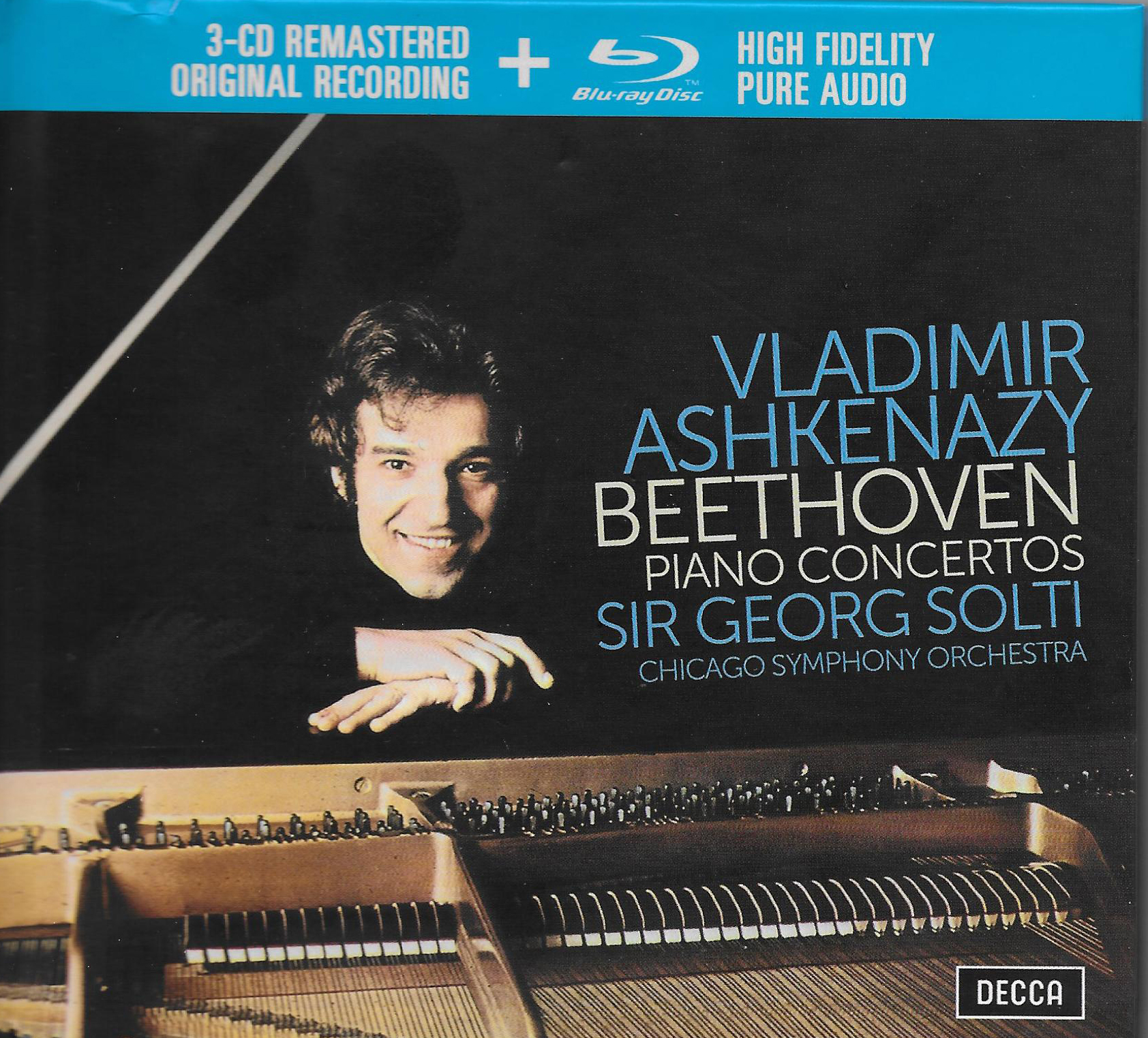
11 Norman KriegerNorman Krieger puts two wonderful standard repertoire items on his newest CD: Beethoven Piano Concertos No.3 Op.37 & No.5 Op.73 (Decca DD41154 / 4815583). The Buffalo Philharmonic Orchestra under Joann Falletta performs beautifully with Krieger. They appear to have an agreement that the Concerto No.3 will not be overly furious and that the “Emperor” will similarly not be too imperiously grand. The outer movements of the concertos are sufficiently strong and emphatic where they need be, and the middle, slow movements are given ample space to breathe. The Concerto No.5 is especially effective in this way. The playing throughout is excellent. To top things off, the recordings are live concert performances that bring their own unique energy to the music. It’s a successful collaboration that shows promise.
01 Boccherini ConcertoLuigi Boccherini - Arie da Concerto
Amaryllis Dieltiens; Capriola di Gioia; Bart Naessens
Evil Penguin Records Classic EPRC 0023 (eprclassic.eu)

This is an ensemble on a mission – what it calls rehabilitating Boccherini. Overshadowed by Mozart and Haydn and receiving mixed comments in Grove’s Dictionary, Boccherini’s few vocal compositions – few because Boccherini’s patrons overwhelmingly demanded instrumental music – convey, according to Capriola di Gioia, a rare insight into the potential of the human voice. And so to the seven pieces selected by the Capriola di Gioia. Caro padre, a me non dei is a worthy introductory piece with an almost jaunty interpretation by Dieltiens – an approach repeated in Se non ti moro allato.

And yet, the heart of this CD is its intense concentration on classical themes. As perhaps might be expected from a piece with an inspiration of this nature, Caro luci, che regnate begins with a more stately character, a tone taken up by Dieltiens as she sings of Jason’s predicament in Issipile. Misera, dove soni is a worthy combination of a classical theme with a text and instrumental scoring for strings which could have been written by any of the great Baroque composers who preceded Boccherini.

Capriola di Gioia’s varied choice of Boccherini’s Arie da concerto allows the listener to make up his or her mind as to whether the composer has actually been rehabilitated. This CD from Dieltiens and Naessens means Boccherini does deserve to be listened to. Indeed, the final track Se d’un amor tiranno with its sprightly string playing, deep continuo and pleading voice encapsulates all the reasons for doing just that.

03 Ottawa Bach Choir’Twas But Pure Love
Ottawa Bach Choir; Lisette Canton
Canto 2016 (ottawabachchoir.ca)

The splendid choral offerings on this recording range from Renaissance to contemporary works and it was recorded just in time for the holiday season last year in celebration of the Ottawa Bach Choir’s 15th anniversary. It includes recording premieres for two Canadian works. The first, Sailor’s Carol by Matthew Larkin (director of music, Christ Church Cathedral, Ottawa), is based on a text by Cornish poet Charles Causley. With a lovely harp intro and simple chordal accompaniment, three descriptive verses lead to the chant Ave maris stella, creating a sense of great awe at the everlasting guidance of a star. The Darkest Midnight in December by Kelly-Marie Murphy again features lovely passages by harpist Caroline Léonardelli, while the women of the choir present a gentle, yet sublimely shimmering interpretation of a 1728 text by Irish priest, Fr. William Devereux. Early works performed beautifully by the full choir include Tomás Luis de Victoria’s O magnum mysterium, an unaccompanied motet realized in all its haunting splendour. Bach’s Lobet den Herrn, alle Heiden, BWV 230 provides a lively contrast with its double-fugue passages, showcasing each of the choirs’ sections and their superb tonal and rhythmic agility, as well as deftness of hand (and foot) by organist Jonathan Oldengarm.

04 SiegfriedWagner – Siegfried
O’Neill; Goerne; Cangelosi; van Mechelen; Melton; Hong Kong Philharmonic Orchestra; Jaap van Zweden
Naxos 8.660413-16

Siegfried is the real McCoy of the Ring Cycle, the epicentre packed with scenes of high drama, superhuman achievement and much of the Ring’s most beautiful music. And it’s also the most optimistic part of the Cycle; each act ends on a high note, reserving the best to the end with the most unusual love duet ever written. There is a fairy-tale atmosphere, a happy ending as well as unforgettable musical and dramatic highlights that usually translate into a glorious night at the opera.

This dramatic new Ring is the brainchild of Dutch conductor Jaap van Zweden, former concertmaster of the Royal Concertgebouw Orchestra. Discovered by Leonard Bernstein, he is now music director of four major orchestras, fulfilling a dream to record his own Ring Cycle with an orchestra he would whip into a Wagnerian superpower and pick the best possible singers available today. Each opera was recorded as a live concert performance, one per year beginning in 2015, so this is the third installment.
The title role, Siegfried, is the biggest casting problem of any Ring attempt, but fortunately New Zealand heldentenor Simon O’Neill, a young, athletic fellow who could look good even on a rugby field, solves this problem wonderfully. He is a natural, not only powerful, enthusiastic and tireless, but also sensitive and tender. Wotan, here called the Wanderer (as he is no longer in charge of things), is Matthias Goerne, another excellent choice, one of the greatest baritones in the world today. David Cangelosi became the audience favourite with his characterful, incisive singing as Mime, the evil dwarf. In closing, it’s worth buying this set for the famous Forging Song alone. There were sounds coming out of the Hong Kong Cultural Centre never heard before!

05 MacMillan Stabat MaterJames MacMillan - Stabat Mater
The Sixteen; Britten Sinfonia; Harry Christophers
CORO COR16150

James MacMillan gained his early prominence with the orchestral piece The Confession of Isobel Gowdy. Since then he has generally been recognized as the leading Scottish composer of his generation. He is a Roman Catholic in a largely Protestant country. Sacred music has always been central to his creative work. In the last half decade he has developed a close relationship with the outstanding chamber choir The Sixteen (conducted by Harry Christophers). This CD gives us a sense of that collaboration. The Stabat Mater is an anonymous 13th-century Latin poem that depicts the Virgin Mary at the foot of the Cross and proceeds to meditate on her sorrow and appeals to her as an intercessor with her son.

There have been a number of previous attempts to give musical shape to the text. The versions by Josquin and Pergolesi are especially notable. On this CD the hymn is given in the form of the Medieval plainsong. The following four tracks give us MacMillan’s elaboration. It is a brilliant work, dazzlingly performed by the full choir, the soloists (all of them members of the choir) and the accompanying chamber orchestra, the Britten Sinfonia. In a prefatory note in the CD booklet, Christophers ranks MacMillan as one of the three great composers of religious music, along with Victoria and Poulenc. If one is only looking at the Catholic world, it is hard to disagree with that.

06 James RolfeJames Rolfe – Breathe
Suzie LeBlanc; Alexander Dobson; Monica Whicher; Toronto Consort; David Fallis; Toronto Masque Theatre; Larry Beckwith
Centrediscs CMCCD 24517 (musiccentre.ca)

The title track, Breathe, in its performance here, is by far one of the most extraordinarily beautiful recordings experienced in recent memory. The blending of texts, ancient (Hildegard von Bingen, Antonio Scandello) and modern (Anna Chatterton), is mirrored by the use of period instruments for new music. Composer James Rolfe infuses the work with connections between human emotion and the natural world represented by the four elements – water, earth, air and fire – so exquisitely. For example, we enjoy the sensation of love overflowing (as water does) with undulating chordal textures and an abundance of cascading note sequences as Suzie LeBlanc, Katherine Hill and Laura Pudwell magically intertwine their voices.

The two masques on the recording further demonstrate this Toronto composer’s exceptional gift for intermingling qualities of early music with contemporary techniques whilst coaxing subconscious elements to seep through in performance. In Europa, the roles of the title character (Suzie LeBlanc) and her long-searching fiancé Hiram (Alexander Dobson) are both composed and sung with an extraordinary measure of pathos as they submit themselves to the will of the gods. And a refreshing new interpretation of the mythical Aeneas and Dido provides a much more intimate view of the doomed romance. As Dido, Monica Whicher is both stately and vulnerable, Alexander Dobson both bold and conflicted as Aeneas, while characters such as the spritely Mercury (Teri Dunn) and the Goat (Vicki St. Pierre) provide comic relief, if somewhat malevolent. Kudos to Larry Beckwith and David Fallis for their direction of these performances.

07 John GreerSing Me at Midnight - Songs by John Greer
Tracy Dahl; Kevin McMillan; Delores Ziegler; John Greer
Centrediscs CMCCD 24717 (musiccentre.ca)

This Canadian Art Song Project CD features works for voice and piano by noted Canadian accompanist, conductor and pedagogue John Greer. Spanning the past 30 years, the four song cycles comprise 20 songs with a variety of genres, voice types and moods. I am particularly partial to the cycle Sing Me at Midnight (1993) sung by lyric baritone Kevin McMillan, whose rich sound and ringing top suits these dramatic settings of sonnets by Wilfred Owen. Adept chromatic harmony conveys the pain of How Do I Love Thee, while percussive clusters accentuate the Anthem for Doomed Youth’s white-hot anger. Greer offers effective settings of evocative, religiously based poetry by Marianne Bindig in the cycle The Red Red Heart (1995). Tracy Dahl’s agile soprano handles the high tessitura well and is also attractive at the lower end in the opening, dancing song The Beginning.

The late Romantic style of The House of Tomorrow (1986) raised my eyebrows, till I tuned in to the evocation of childhood in these songs. The centrepiece, Midnight Prayer, a setting of the pensive poem by Aleksey Khomyakov in translation, is given a rich, expressive performance by American mezzo-soprano Dolores Zeigler. Finally, A Sarah Binks Songbook (1988) brings us mock-serious ditties wittily set by Greer, with allusions to various vocal genres. Tracy Dahl becomes the Canadian “prairie songstress,” her operatic persona elevating the work with perfect diction and much humour. John Greer’s collaborative pianism is exemplary throughout.

01 Lestro dOrfeoAltri canti d’amor - 17th Century Instrumental Works
L’Estro d’Orfeo; Leonor de Lera
Challenge Classics CC72760 (lestrodorfeo.com)

This is a CD with two pleasant surprises. One is a track from undervalued Renaissance composer, Barbara Strozzi. The other is a contemporary set of divisions on a Renaissance theme composed by the present-day artistic director of the CD, Leonor de Lera. Instrumental this collection may be, but the traditional description of the cornetto as being the closest instrument to the human voice is borne out by Josué Meléndez’s playing of Monteverdi’s Sinfonia; it is as if an ethereal choir is in attendance. Meléndez’s cornetto returns in L’Eraclito Amoroso by Strozzi, here as an example of diminuzioni, or extemporixed ornamentations.

The contribution from de Lera is her own diminuzioni on Apollo’s Lament, originally by Francesco Cavalli. De Lera’s playing probes the qualities of her Taningard violin built in Rome in 1739. She is admirably complemented by the plucked instrument playing of Josep Maria Martí.

The selection on this CD is enhanced by the inclusion of variations on popular tunes from the Renaissance. Fuggi dolente core is one such set, again played on Baroque violin; while this piece is often scored for voice, listeners to this particular variation will not miss that human aspect.

L’Estro d’Orfeo’s choices are centred on Venice’s prolific output and yet there is still room for pieces by Marco Uccellini of Modena. Listen once again to the brilliance in every sense of the word of the Baroque violin and basso continuo in Uccellini’s Ninth Sonata. And in his Aria Quarta sopra la “Ciaccona.”

02 Tafelmusik Two CitiesTales of Two Cities
Trio Arabica; Alon Nashman; Jeanne Lamon; Tafelmusik Baroque Orchestra

Tafelmusik Media TMK 1035 DVDCD (tafelmusik.org)

Tales of Two Cities is an enchanting musical journey through the palatial worlds of two prominent 18th-century cities – Leipzig and Damascus. Although separated by 3,000 kilometres, these cities shared a surprising number of common threads; both were located at the intersections of major trade and travelling routes, both were known as cultural and learning centres, and both nurtured a tradition of coffee houses in which music performances were flowing. Cleverly conceived, programmed and scripted by the creative mind of Tafelmusik’s own Alison Mackay, and narrated by the charming Alon Nashman, Tales of Two Cities comes as a DVD/CD combo, featuring the music portion of the concert on CD. The DVD includes a filmed live performance at the Aga Khan Museum, a video on restoration of the Dresden Damascus Room, behind-the-scenes footage from rehearsals and a split-screen video of the orchestra performing Bach’s Sinfonia.

I absolutely loved Tales of Two Cities. The inventive combination of music and literary selections coupled with stunning images and historically informed narration was only transcended by the excellence of all the musicians involved. Tafelmusik Baroque Orchestra presents a fresh, vibrant, theatrical interpretation of music by Telemann, Handel and Bach (all onetime residents of the city of Leipzig). The virtuosity of Dominic Teresi (bassoon), Patrick Jordan (viola) and Aisslinn Nosky (violin) is just as entertaining as it is admirable. Trio Arabica, featuring Maryem Tollar (voice, quanun), Naghmeh Farahmand (percussion) and Demetri Petsalakis (oud), evokes the longing, beauty and delicacy of Damascus of the past with gorgeous performances of the traditional melodies. The final number, an intriguing combination of Telemann and traditional Arabic music, unites all the performers and brings the narrative to a conclusion by telling the story of young, present-day Syrian scholars working alongside German mentors on restoring the Damascus Room in Dresden. Highly recommended.

03 Brahms TriosBrahms - The Piano Trios
Emanuel Ax; Leonidas Kavakos; Yo-Yo Ma
Sony Classical 88985 40729 2

The Piano Trios form a critical, if less well-known feature of Brahms’ creativity within the world of chamber music. To an extent, Brahms picked up the torch at the point at which Beethoven had laid it down, but although he used Beethoven’s music, along with that of Schubert, as a point of departure, these trios are highly singular creations, with a sound world that is altogether unique. Each of the three instruments is stretched to its limits as if Brahms wanted to create orchestral depth and colour using just three players.

Another fascinating aspect of The Piano Trios – particularly in Piano Trio No. 3 in C Minor Op.101 – is Brahms’ treatment of the string players as soloists, giving both the violin and cello some sonorous passages that are ideally suited to their respective characteristics. Also noteworthy is the fact that Brahms’ wealth of powerfully sculpted ideas amply rewards attentive listening.

These performances of The Piano Trios by Emanuel Ax, Leonidas Kavakos and Yo-Yo Ma are without question the most authoritative and distinguished accounts of the works. Ax, Kavakos and Ma play with unique breadth of insight and a feeling of spontaneous inspiration, a quality that comes all too infrequently to studio recordings like these. The Sony recorded sound is at once brilliant and truthful, but it also has exceptional spaciousness.

04 Vaughan WilliamsVaughan Williams – Fantasia on Sussex Folk Tunes and other works
Martin Rummel; Deutsche Staatsphilharmonie Rheinland-Pfalz; Karl-Heinz Steffens
Capriccio CD C5314

This collection of shorter delights, lollipops so to say, opens with the jaunty overture to the comic opera, The Poisoned Kiss, a “romantic extravaganza.” The most interesting work is the Fantasia on Sussex Folk Tunes for cello and orchestra. Vaughan Williams was a collector of folk music and as Bartók did with Hungarian tunes, he incorporated them into his compositions. Vaughan Williams was quite familiar with Sussex County and had been collecting material there since his school days in the village of Rottingdean in East Sussex. His Fantasia, a work new to me, was premiered in 1930 with Pablo Casals as soloist. Instantly recognizable as Vaughan Williams, there are five folk tunes incorporated in a conversation between soloist and orchestra, making this a compelling and interesting workout for cellist and orchestra. It deserves to be popular.

The earliest work, the Bucolic Suite of 1900, also known as the Pastoral Suite, is just that, euphoric thoughts of countryside life. In the Fen Country is no stranger to the catalogues and paints a picture of the lonely and desolate Fen country in the east of England. There are three movements – Explorer, Poet and Queen – arranged from the 1957 inspiring film, The England of Elizabeth. The five works add up to a novel and interesting collection, brilliantly played and recorded. The Elizabeth of Three Portraits from “The England of Elizabeth” refers to the Elizabeth of the 16th century. The Armada and all that.

01 ConNotationsConNotations
Mei Yi Foo; Philipp Hutter; Bartosz Woroch; Ashley Wass; Britten Sinfonia
Orchid Classics ORCH100065 (orchidclassics.com)

ConNotations is a very impressive disc. It features pianist Mei Yi Foo with a trumpeter (Philipp Hutter), a violinist (Bartosz Woroch) and another pianist (Ashley Wass) together with the Britten Sinfonia conducted by Clement Power. The superlative recording owes much, first, to the choice of repertoire. The Shostakovich Piano Concerto in C Minor Op. 35 for strings, piano and solo trumpet is a combination as unusual as the concerto’s form, which consists of four through-flowing movements which sound like just one. Foo’s playing makes the music rise up like a ferocious beast and both Foo and Hutter are brilliant throughout.

On Alban Berg’s Chamber Concerto for piano and violin with 13 wind instruments there’s a fruitful tension between the soloist’s expansive Romanticism and the no-nonsense rigour of Power, a tension that matches the composer’s ideals. Berg restricts the concerto’s accompaniment to 13 wind instruments, yet he ingeniously produced some marvellously unusual colourings. Foo’s piano is given the solo duties in the first movement, Woroch’s violin in the second and then they finally combine together in a show of rousing, immediate expressiveness in the finale.

While Camille Saint-Saëns may have written The Carnival of the Animals mainly for the amusement of his friends in 1886, its serious beauty should never be underestimated. In the hands of Foo and Wass there are moments of great magic, with the most beautiful and spectacular of all heard during the rippling arpeggios of the mysterious Aquarium (VII).

02 Diana Pantonsolstice/equinox
Diana Panton
Independent (dianapanton.com)

solstice/equinox by Diana Panton is another gorgeously perfect recording that the Hamilton jazz singer makes a nearly annual habit of releasing with ease. Multiple albums into her discographic career at this point – and in the exceptional company of multi-instrumentalist Don Thompson and guitarist Reg Schwager – the trio (fleshed out here with Guido Basso and Phil Dwyer) sounds not like a collection of hired musicians, but rather like a working jazz group that exhibits simpatico and a shared investment in the music heard here. Panton sings effortlessly throughout and swings with a bubbly buoyancy that reminds this listener of not only Blossom Dearie, but trumpeter Art Farmer, who also prefigured a relaxed and swinging time feel. Further, Thompson’s always beautiful musical arrangements and the thoughtful repertoire choice create the perfect casting for Panton’s voice and delivery to shine. With the theme of seasonal change threading through the recording and tying the repertoire together, Panton and band offer up a true jazz vocal recording that captures all involved at their musical finest. The recording quality is also of note, and helps to create a sonic space that is intimate and revealing. Nearly a decade into this group’s affiliation, here’s hoping that theirs is a musical relationship that continues for many more.

05 Mikkel PlougAlleviation
Mikkel Ploug
Songlines SGL 1623-2 (songlines.com)

Mikkel Ploug is a Danish guitarist who works regularly with his own jazz groups as well as Equilibrium, a trio with singer Sissel Vera Pettersen and clarinetist Joachim Badenhorst, a fascinating improvising chamber group that has found a home with Vancouver’s Songlines label. This solo acoustic guitar disc continues Ploug’s association with the label.

Both the solo and acoustic aspects are departures for Ploug, who recounts his discovery and acquisition of a particularly apt mid-40s Gibson Bannerhead guitar, a steel-string, mahogany-bodied, flat top more apt to supply chorded accompaniments to a folk singer. Instead it’s inspired some of the most beautiful and unexpected solo guitar music one might wish to hear. On one level it’s distinguished by Ploug’s investment in its special sound store, its fret clatter and squeaks, the kind of string noise some seek to surmount and that others love. Its resonance is even more appealing, with Ploug using finger picking on most pieces, exploring the instrument’s warm account of triads and seventh chords then extending the spectrum to create dense weaves of contrasting harmonic languages, sometimes beginning a phrase in one world and ending in another.

One of the most lustrous is Couleurs d’Olivier, a Messiaen inspiration in which diatonic scales ascend into dense chromaticism; another is Circle Wind, a cycling piece inspired by Steve Reich that creates an added dimension with metallic fret noise. This is consistently engaging music, bridging many genres.

06 Gordon Grdina QaurtetInroads
Gordon Grdina Quartet
Songlines SGL 1623-2 (songlines.com)

Since his 2006 debut, Think Like the Waves with jazz greats Gary Peacock and Paul Motian, Vancouver guitarist Gordon Grdina has pursued multiple musical paths, setting his guitar amidst his jazz-based ensembles, the classically influenced third stream music of the East Van Strings or Dan Mangan’s rock band, while concurrently exploring the oud, a Middle Eastern lute, in both traditional and contemporary applications. Inroads summarizes and synthesizes that decade of exploration, while presenting Grdina in a stellar group of New York-based musicians: Oscar Noriega on alto saxophone, clarinet and bass clarinet; Russ Lossing on piano and electric piano; and Satoshi Takeishi on drums.

Grdina’s disparate influences here range through Béla Bartók, the rock band Soundgarden and free jazz, while his compositions pass through divergent moods, densities and methodologies. The opening Giggles is limpidly beautiful unaccompanied piano, while Not Sure is chameleon-like, moving from rapid-fire guitar aggression through lyrical piano and alto saxophone passages and then on to thrashing drums and howling saxophone, presenting many of Grdina’s elements in a single piece.

Some of the most affecting pieces are also models of brevity. Kite Flight is a tantalizing explosion of lower register guitar, raucous bass clarinet and elemental percussion, while Semantics, a guitar/clarinet duet, is subtly evanescent. That same delicacy informs the longer Fragments in its blend of piano and oud, while contrasting Middle Eastern elements energize Apocalympics. It’s a fascinating program in which Grdina takes his materials in very different directions.

07 Emie RousselIntersections
Emie R Roussel Trio
Effendi Records FND148 (effendirecords.com)

It is quite impossible not to be seduced by the cultivated and masterful pianism of Emie R Roussel, whose music on Intersections is patently expansive and at times a veritable masterclass in how to build assiduous climaxes, how to intelligently scale one’s dynamics and how to balance the music’s massive textures in sonorously judicious proportions. Her music is vivid. Each piece is a unique narrative. Musical character is well rounded and each piece is always fully developed before its natural denouement announces a natural demise.

On three occasions the trio is expanded into a quartet and on each resulting work the addition of another musician – whether the vocalist on Away, the trumpeter on De Tadoussac à Auckland or the bassist on Tout le monde ensemble – is timely and perfectly placed. It’s surely an indication that the ideas and the material dictate the direction that the music should take. Rhythm is also an essential tool throughout and Roussel depends greatly on her left hand bass lines, together with the flights of fancy by her drummer, Dominic Cloutier and bassist, Nicolas Bédard, as a means of communicating ideas as well as shaping the structure of each piece.

Each piece also has its own unique charisma, and flowing from this each gathers momentum, swinging to its climax with the wind of melody and harmony under its proverbial wings. All of this yields a magical and quite unforgettable album from a pianist of whom much is expected in the future.

Back to top