When Toronto trumpeter Lina Allemano recently set up shop part of the year in Berlin it wasn’t much of a surprise. She joined other musicians from Canada and around the world who have made the German capital arguably second only to New York as a place to perform creative music. Cheaper living accommodations and efficient travel links to other areas of Europe are part of the appeal. So is the welcome given to new ideas in all the arts. Whether COVID, gentrification and evolving political currents will change this, as it did for Paris in the 1920s, is an open question. But right now, the situation remains stable.
 Manchester, England’s loss was Berlin’s gain years ago when pianist Julie Sassoon moved across the channel. Voyages (Jazzwerkstatt JW 218 jazzwerkstatt.eu) is an ample exhibition of her talents as player and composer. With her quartet of Dutch saxophonist/clarinetist Lothar Ohlmeier, Austrian drummer Rudi Fischerlehner and German bassist Meinrad Kneer, the half-dozen tracks reflect moods from buoyant to bleak. The first adjective introduces the set on Missed Calls as stop-time pulses from the bassist and drummer undergird Ohlmeier’s snarly then stuttering tones, as the pianist’s rolling glissandi boost intensity that eventually turns to moderated and impressionistic vamps. Cymbal etching and reed whistles confirm the second sentiment on Jerusalem, as a buzzing arco bass line and fragmented slurs and slides from the saxophonist swirl through multiphonic vibrations to eventual reed/keyboard harmony. Each composition is geared to individual quartet members’ skills, with tracks fully defined when all kick in after an individual’s introduction. Distinctive motifs like the drummer’s sophisticated slapping, the bassist’s double-stroking ostinatos, the reedist’s outputting of gentle or strained tones and piano motifs that can be delicately cooperative or contrapuntally challenging, are all part of the mix. It also means that Sassoon has created a spectrum of group music that highlights her writing skill.
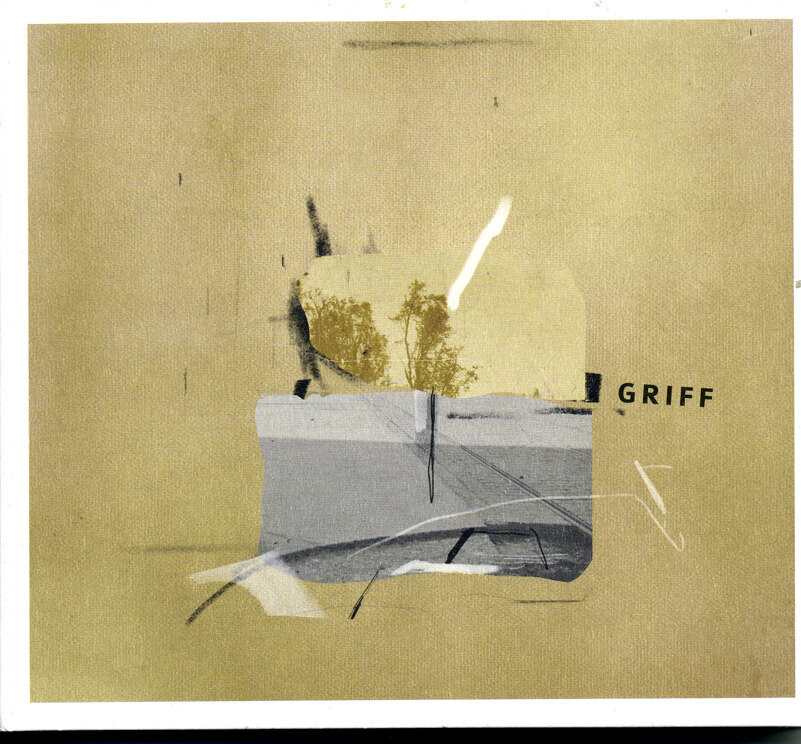
 If Sassoon had to cross the Channel to establish herself in Berlin, other Berlin improvisers come from even farther afield. Vibraphonist Emilio Gordoa is Mexican and the cooperative GRIFF trio (Inexhaustible Editions ie G25 emiliogordoa.com) features Danish bassist Adam Pultz Melbye who also resides in Berlin and Austrian pianist Ingrid Schmoliner, who so far, still lives in Vienna. With the pianist mostly dedicated to plucking, pinching or stoppering the instrument’s internal strings and Gordoa clanking, rasping or slapping his instrument’s metal bars, the harmonies produced are, in the main, percussive. Currents of sound refract among all three when the bassist adds string pops so that timbres become threatening rather than tuneful. Yet when bell-pealing-like vibraphone tones and dynamic keyboard patterning intersect, reflective lyricism is also present. Making effective use of silences – there’s no sound on the concluding Moss Rock until keyboard chops and vibe reverb are heard two minutes in and the exposition still proceeds with many pauses – the unique set-up also infers extended sound colours. This occurs when Schmoliner’s assembly line of echoes and clinks meets up with equivalent patterning from vibe reverb with the motor switched off. While some sequences are taken staccato and allegro, coordination is most notable on Bell Skin, as a polyrhythmic climax is attained by blending metal bar thwacks, double bass string buzzing and prepared piano string shakes and clatters, completed by a coda of paced ringing of single vibraphone notes.
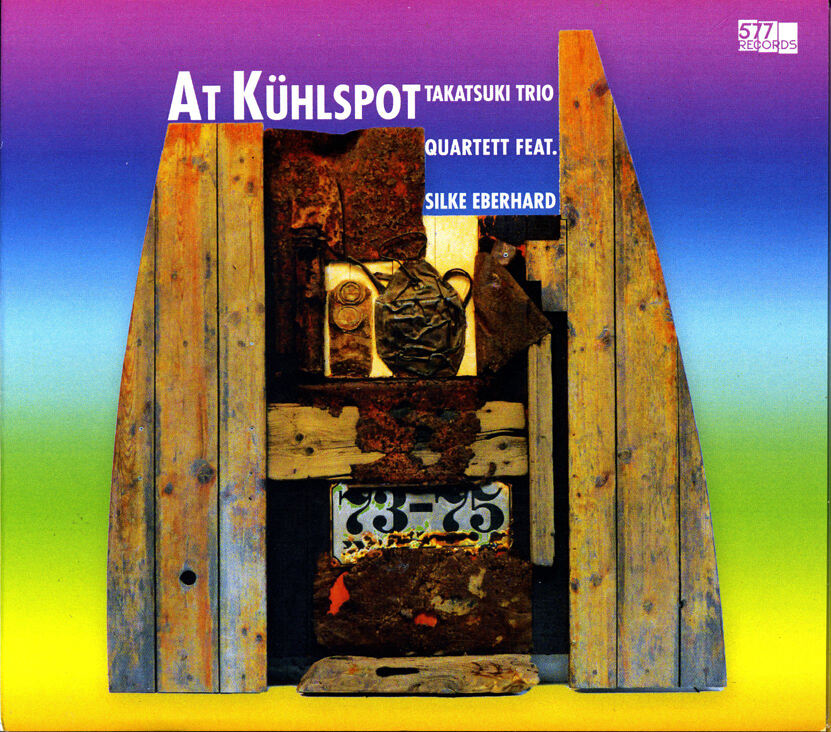
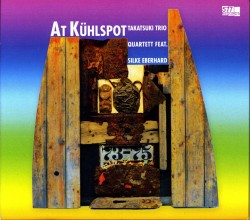 Another Berlin-based international group is the Takatsuki Trio of Finnish bassist Antti Virtaranta, German string player Joshua Weitzel and Japanese pianist Rieko Okuda. On At KühlSpot (577 Records 5874 577records.com) the trio is joined by Berlin alto saxophonist Silke Eberhard for a single, almost 39-minute improvisation. Without needing a percussion instrument, Virtaranta’s authoritative string pulse and Weitzel’s creation of dobro-like clanks from the three-string shamisen or authoritative guitar strums, provide enough rhythmic frails to back the pianist’s metronomic rumbles and staccato stabs as well as the saxophonist’s inventive trills, squalls and flutters. With bass strokes keeping the exposition linear, Okuda has latitude to circle in and out of supplemental melodies and occasionally strum internal strings. Meanwhile Eberhard’s theme reconstitution sometimes takes the form of aviary peeps, flutter tonguing or altissimo split tones. At points these unroll in one direction as the pianist moves in another. With concise snatches of reed lyricism sometimes bubbling to the surface, uncommon connections are made between them and bass-emphasized piano pulses. Doubling the tempo at the halfway point with galloping piano lines and crammed reed note spewing, variations solidify and return to the initial theme. Timbres from each quartet member then subtly combine for a formal ending signified by a thick double bass thump and guitar clanks.
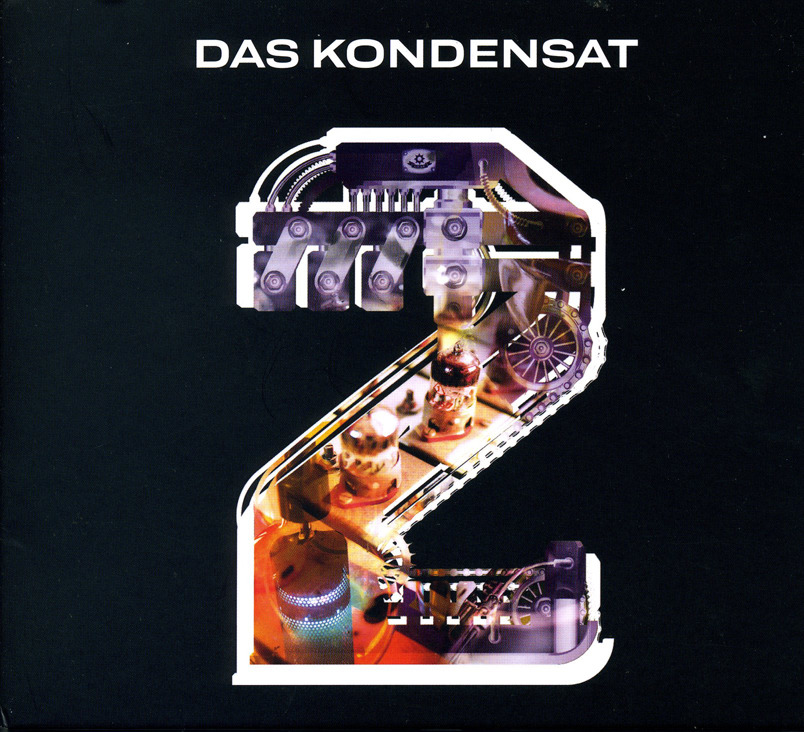
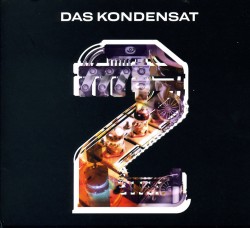 Not all Berlin improvising is acoustic as Das Kondensat 2 (Why Play Jazz WPJ 057 whyplayjazz.com) shows. Created by three veteran German players, who now live in Berlin, Gebhard Ullmann soprano and tenor saxophones, looper and sampler; Oliver Potratz, electric bass, bass synthesizer and analog effects; and Eric Schaefer with drums and modular synthesizer, multiply the number of sound sources available. During 2’s 11 tracks, the trio members are able to straddle the boundaries among solid beats, adept electronica and free improvisation. While a couple of the tracks vibrate with atmospheric buzzes where voltage overlay leads to crossover shakes, alliances with tougher material is evident from Pendulum, the second track, on. As the bassist and drummer actualize a tough funk beat with string buzzes and solid cymbal taps, the saxophonist barks and bites wavering reed elaborations as circular tongue fluttering and irregular vibrations validate a link to energy music. That connection is proven on the separated I Was Born in Cleveland, Ohio (Part 1) and I Was Born in Cleveland, Ohio (Part 2), where the voice of tenor saxophonist Albert Ayler, the Ohio city’s most famous free jazzer, introduces the music and is heard faintly in the background as Ullmann’s tenor saxophone spews a variety of altissimo screams, triple tonguing and choked vibrations, while the others create a churning backbeat. Although (Part 2) adds higher-pitched reed squeaks and programmed wiggles beside percussion snaps, a calmer interlude on (Part 1) references Ayler’s spiritual side. Most of the other tunes migrate to a sophisticated form of fusion with designated bass thumb pops and fuzztones and a resonating backbeat. Yet Schaefer’s skill at switching to Latin rhythms or propelling tunes with only drum stick whacks, plus Potratz’s single string emphasis and broken chord advances negate any resemblance to heavy metal. Similarly, while the band’s use of swirling electronics adds a layer of oscillating textures that thicken the narratives, Ullman’s insertions of nasal slurs, tone flutters, whistles and squeaks roughen the expositions enough to confirm the non-simplicity of the playing and writing.
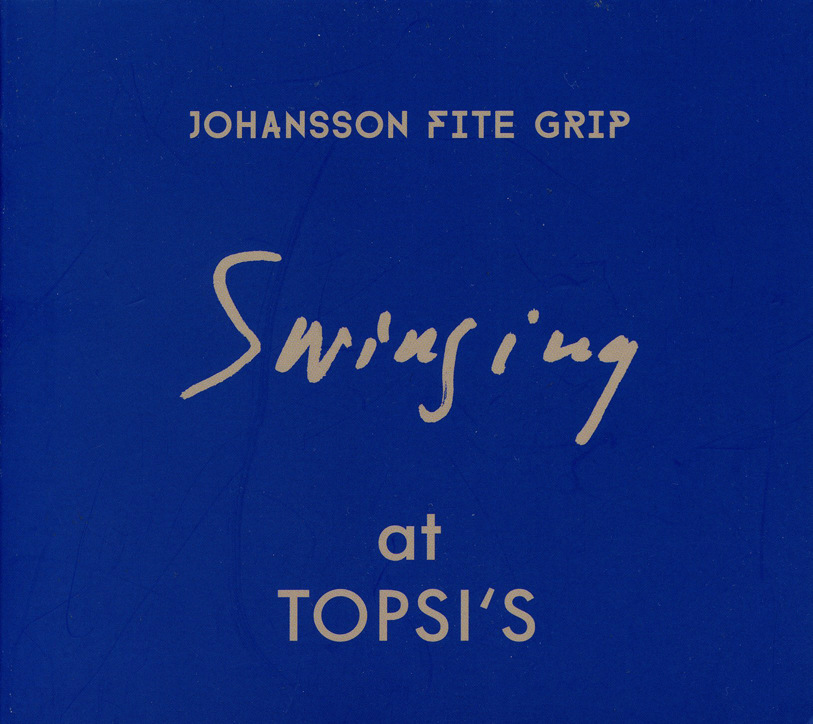
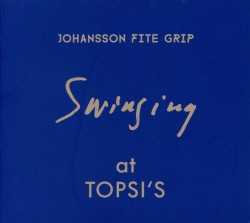 While improvisers keep arriving, Berlin has been attracting musicians from elsewhere for decades. But now players who are more recent settlers get to exchange ideas with older residents who they may formerly have only known by reputation, even if they’re from the same country. That’s the situation on Swinging at Topsi’s (Astral Spirits AS 176 astralspirits.bandcamp.com) which assembles three Swedish improvisers. One of the pioneers of free jazz, drummer Sven-Åke Johansson has been a Berliner since 1968. Bassist Joel Grip made the move early in this century; while guitarist Niklas Fite, who is also 52 years younger than Johansson, was only visiting. Transparently descriptive, the CD title reflects exactly what transpired on this club date. As a coda to their extended improvisations, the trio members take on two familiar standards in full, lilting swing-era mode with Johansson vocalizing on Isn’t It Romantic and Out Of Nowhere. Jumping forward eight decades, the group adapts the flow that comes from consistent rhythm guitar strums, forceful double bass thumps and subtle percussion chromaticism to make the two extended improvisations cadence carefully as well as highlight exploration. Resounding drum rattles and cymbal swishes allow Grip to explore below-the-bridge thwacks when he isn’t timekeeping and Fite to insert unexpected frails and runs when he isn’t fastened on a rhythmic function with flat top twanging. Interestingly, Set 1 is tougher and livelier than the second one, as the guitar moves between spidery and solid comping and the percussionist alternating between barely-there drum top rubs and sudden rumbling explosions. While he has his share of lyrical pulses and lacerating string set probes, Grip maintains the pulse that logically bonds the improvisations and bleeds their textures into those of the subsequent pop ditties.
Over the years Berlin has been the centre of many, mostly political situations that have drawn it in many directions. The direction it has established now though is as a haven for improvised music.


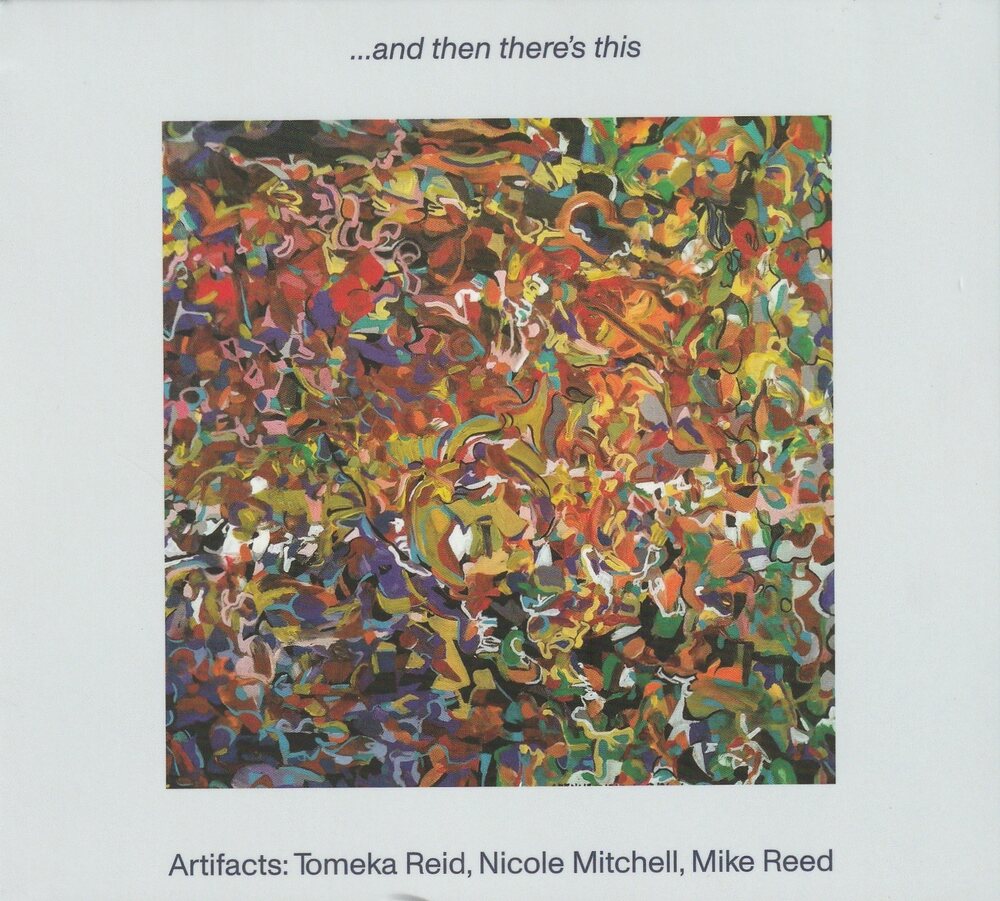 …and then there’s this